Choosing the right white paint is harder than it looks. The wrong undertone can make a room feel cold or flat, while the right one opens up the space and makes everything else look better. This article walks through 34 trendy white paint colors for 2027, showing how each shade works in different rooms and styles.
From soft cream walls that warm up a living room to crisp white finishes that define a Scandinavian bedroom, you will see how the hero color shapes the whole look. The goal is to help you pick a white that feels fresh, not boring, and holds its own against bold accents or natural light.
01 / 35Soft Cream Walls for a Gentle Living Room Ambiance
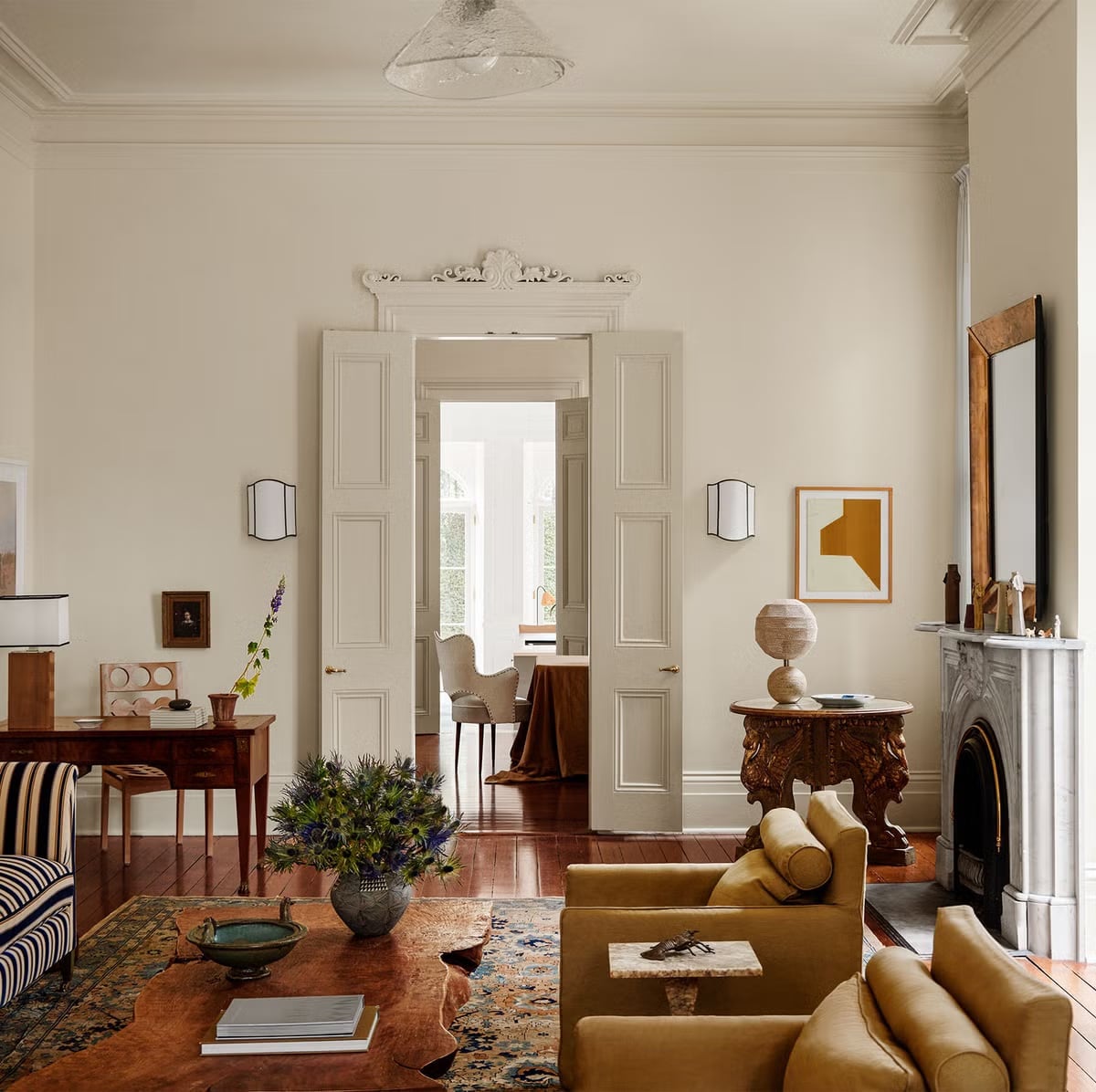
A soft cream paint on the walls sets a quiet tone that lets the space breathe. The living room pairs a cream sofa and armchair with a stone fireplace surround, all in a light, neutral palette. Wall sconces add warm pools of light, while the cream backdrop keeps the wood coffee table and natural light as the main visual anchors. In element mode, the paint color is the hero, and everything else stays simple around it.
02 / 35Off-White Walls as a Neutral Backdrop for Bold Accents
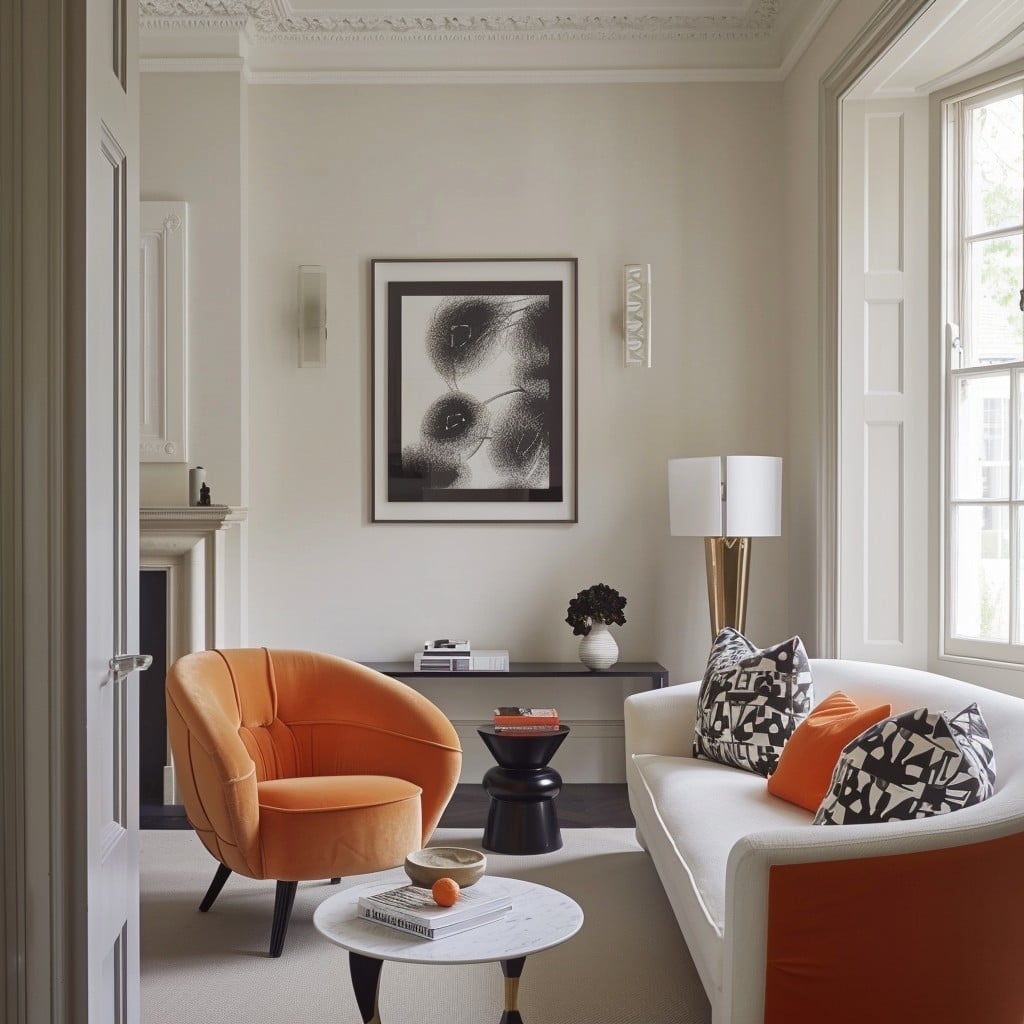
Off-white walls function best when they recede, allowing one or two saturated pieces to own the room. Here a vibrant orange armchair and a white sofa sit in a conversation area, with abstract art and a table lamp adding depth. The off-white backdrop keeps the velvet, marble, and metal accents from feeling cluttered. A practical palette principle: let the neutral wall color cover about 70 percent of the visual field, and give the accent color no more than 15 percent to keep the ratio balanced rather than chaotic.
03 / 35Crisp White Walls for a Bright Scandinavian Bedroom
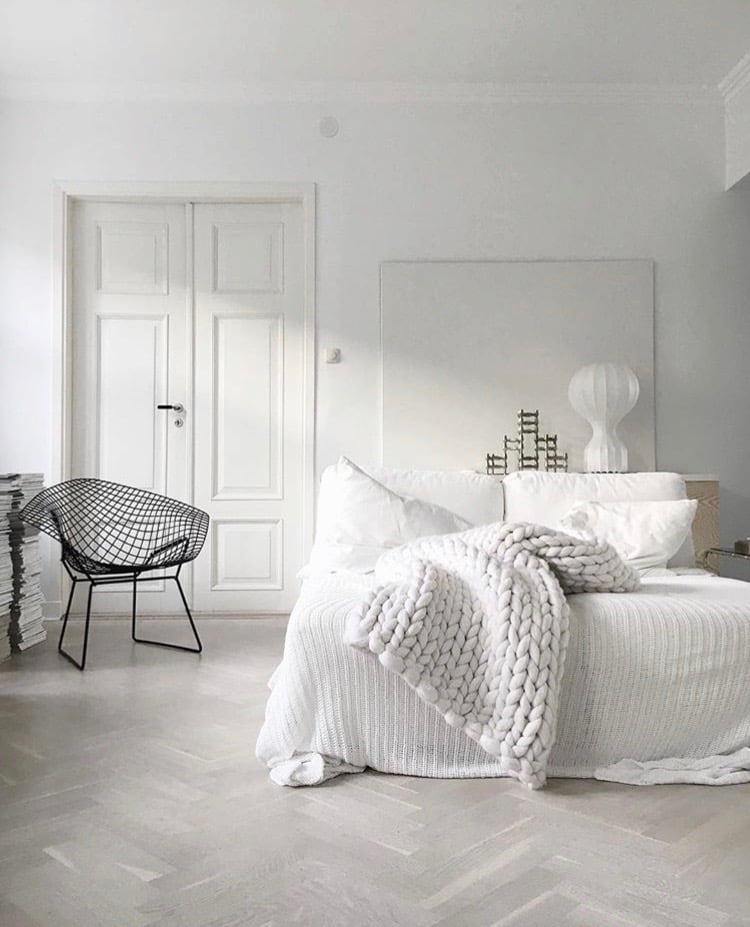
How do you keep a white bedroom from feeling cold or sterile? The Scandi answer lies in texture and wood tone rather than pattern. Crisp white walls and a white bed frame create a clean canvas, while a chunky knit throw and linen bedding bring warmth without competing for attention.
A wire chair and light wood floor continue the pale palette, and natural daylight does the work of making the room feel larger. The trick is to limit the palette to two or three tones, here white and light wood, and let the materials themselves provide the visual interest. That way the room reads as serene rather than sparse.
04 / 35White Brick Exterior for a Modern Farmhouse Facade
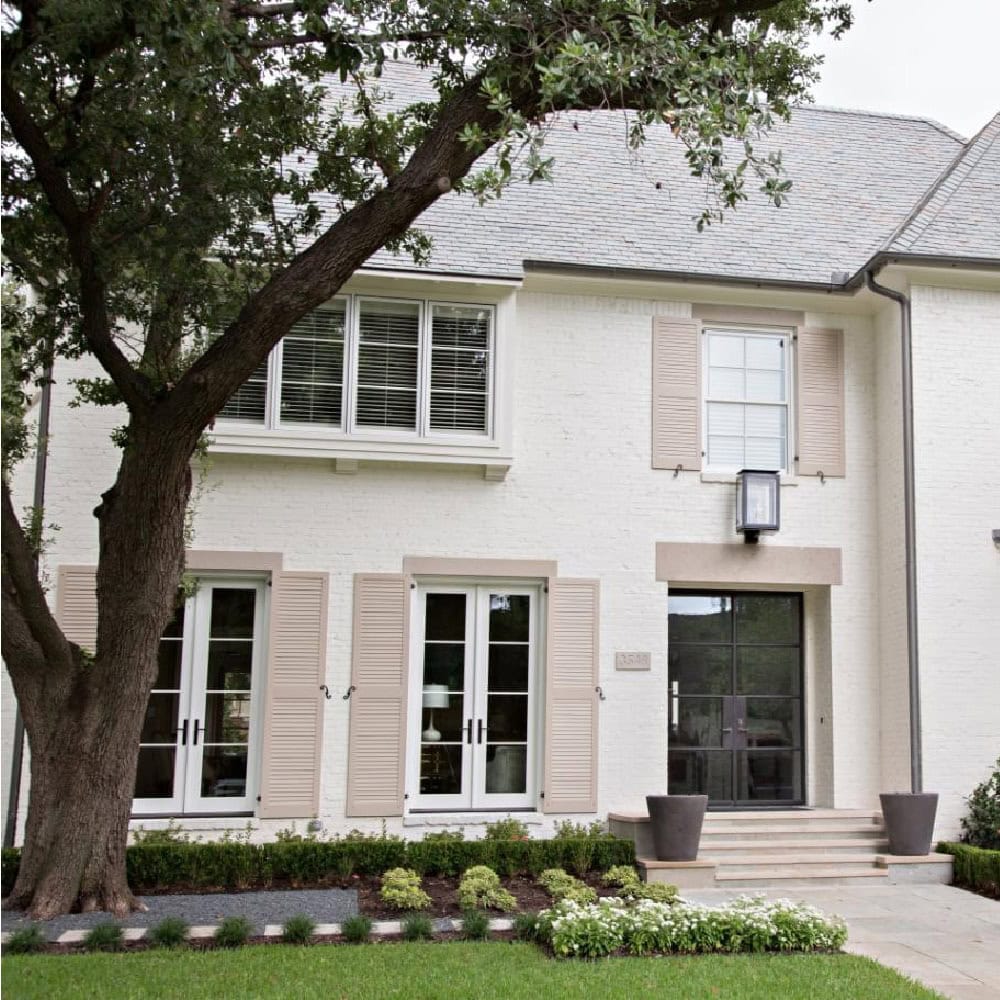
White brick on an exterior facade does more than look fresh. It shifts how the house reads from the curb. The brick texture catches daylight differently than smooth siding, creating subtle shadows across the surface. Paired with wood shutters and stone accents, the white brick grounds the modern farmhouse style without making the facade feel too heavy. A useful materials takeaway: textured white surfaces hide minor weathering better than flat paint, so they keep their clean look longer between cleanings.
05 / 35Off-White Walls with Exposed Beams in a Coastal Living Room
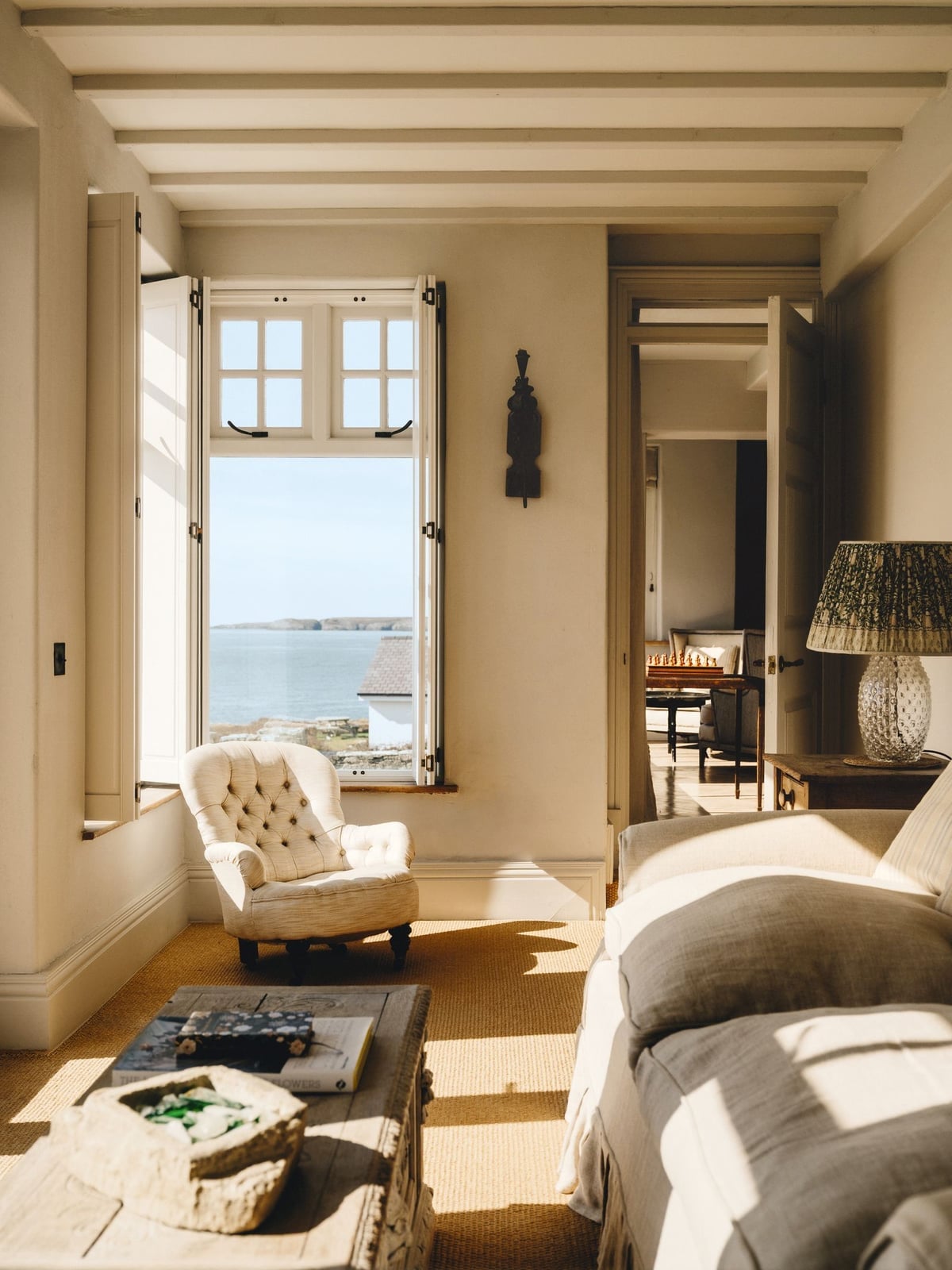
A practical rule for off-white walls in a coastal living room: let the architecture set the limits. Exposed wood beams and white shutters already provide structure and contrast, so the walls only need a soft off-white to tie the room together without fighting for attention. The sofa and armchair in linen and the glass coffee table keep the seating area light and airy, while the view through the shutters extends the palette outdoors. The off-white backdrop lets the blue accents and natural light carry the coastal feel.
06 / 35Soft Cream Walls in a Cozy Farmhouse Bedroom
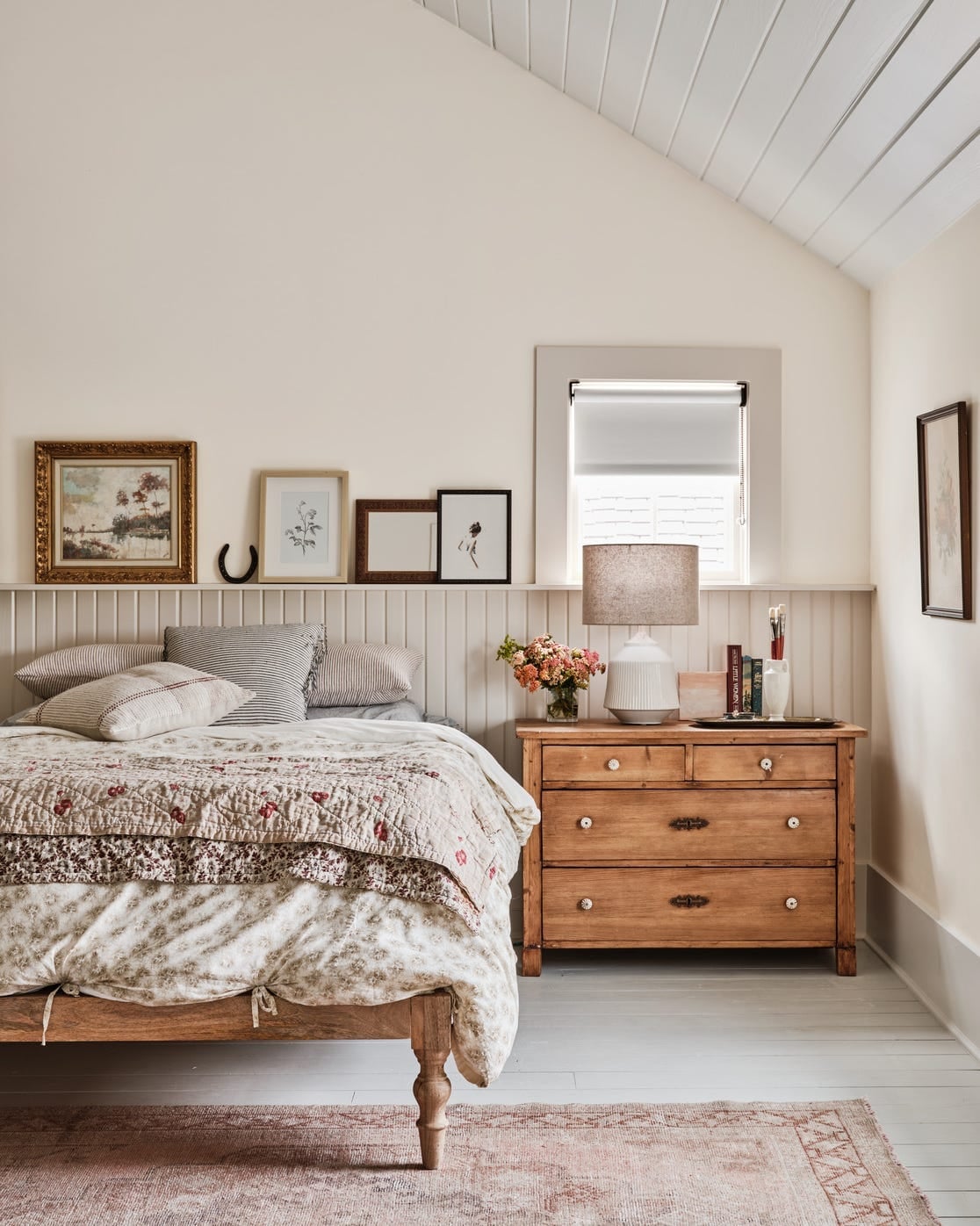
Soft cream walls offer a warmer alternative to stark white, especially in a farmhouse bedroom where the goal is restful and not sterile. The layered floral bedding anchors the palette, with cream and beige tones that prevent the room from feeling washed out. A wood dresser and lamp add natural texture. The key is palette restraint: when the hero element is patterned, keep the wall color within the same tonal family so the pattern looks intentional. This approach works well for anyone looking to add coziness without replacing furniture or linens.
07 / 35Pure White Walls for a Bright Modern Living Room
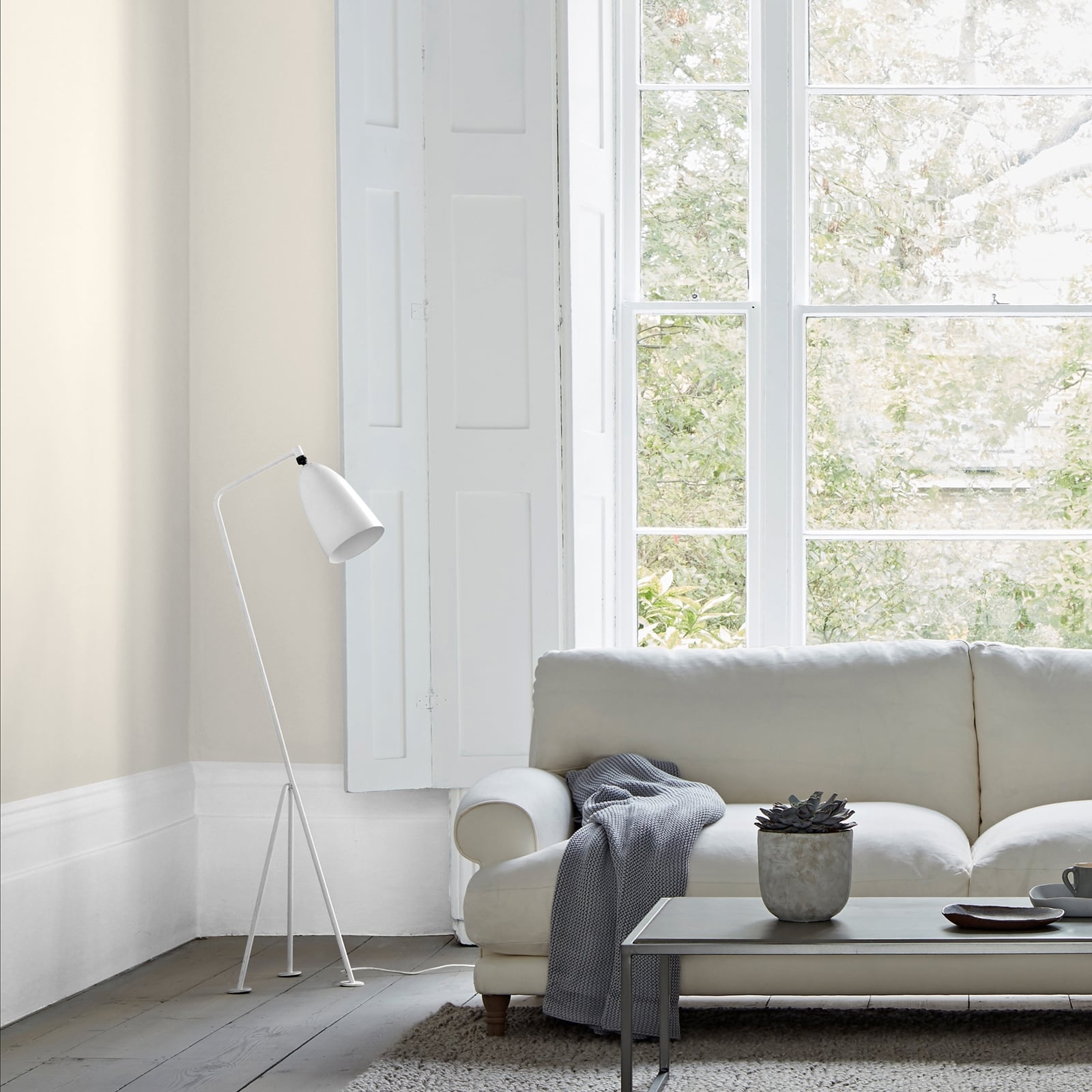
Pure white walls do more than reflect light; they turn the room into a neutral stage for furniture and art. In this modern living room, a large window floods the space with natural light, and the white walls amplify that brightness without competing with the grey sofa or metal floor lamp. The renter-friendly advantage is that pure white is the easiest color to patch and repaint when you move out, and it pairs with any accent palette.
08 / 35Textured White Walls in a Minimalist Living Space
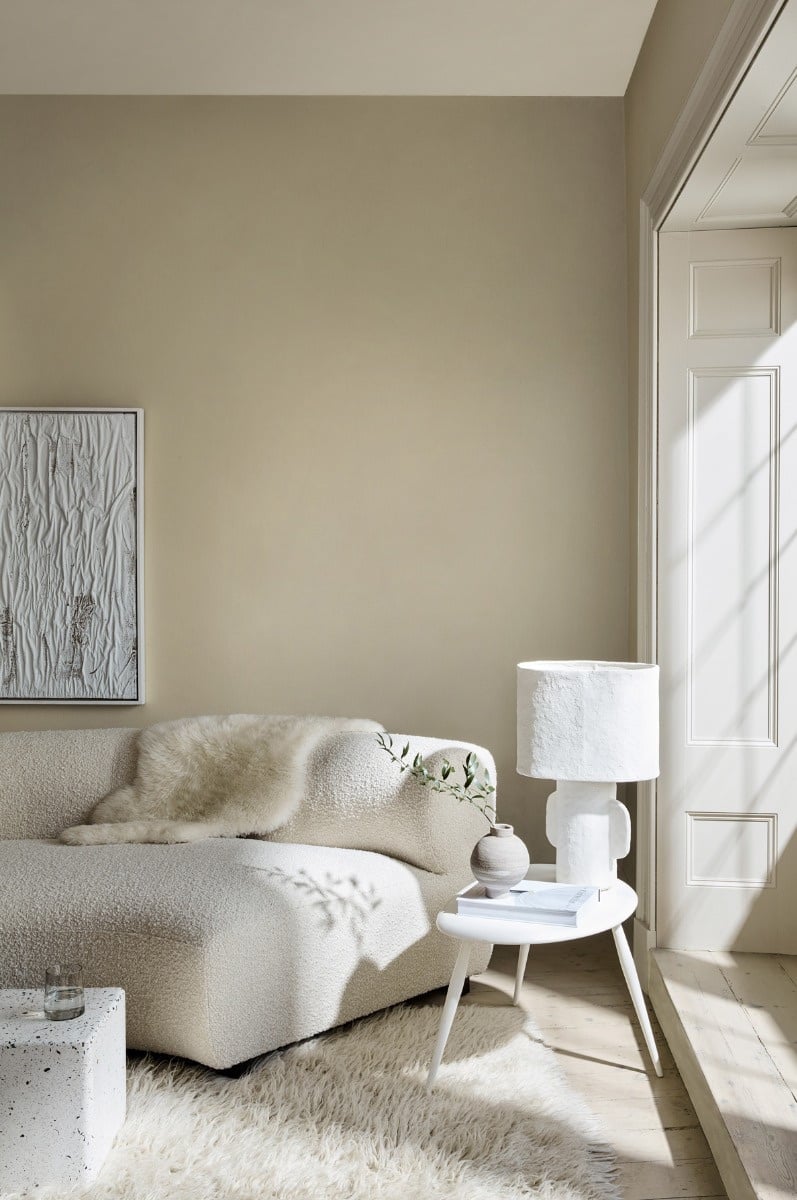
White paint does not have to be flat. In a minimalist living room, textured white walls add visual interest without clutter. The bouclé sofa and sheepskin throw echo that softness, while the wooden floor provides a natural contrast. Sunlight casts shadows that change throughout the day, making the texture more pronounced. The material lesson is that texture in a white space keeps the eye moving, so a room with minimal furniture still feels layered and complete.
09 / 35Off-White Walls with Grey Accents in a Modern Bathroom
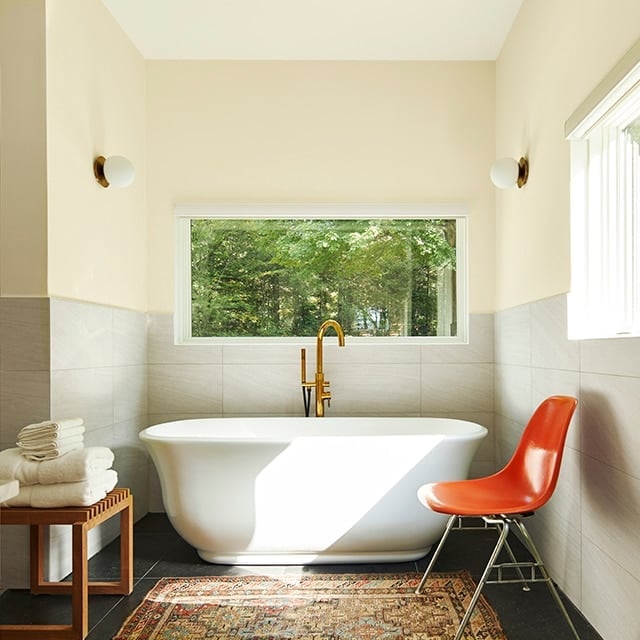
Can off-white walls hold their own in a bathroom with grey tile and a bold orange chair? Yes, if the undertones align. Here the off-white walls bridge the grey tile and the warm wood tones, letting the brass faucet and orange accent chair stand out without clashing. The palette trick is to choose an off-white with a hint of warmth if your tile is cool grey. This keeps the room feeling cohesive rather than disjointed. Natural daylight from the window and wall sconces soften the contrast further.
10 / 35White Shaker Cabinets as the Kitchen Centerpiece
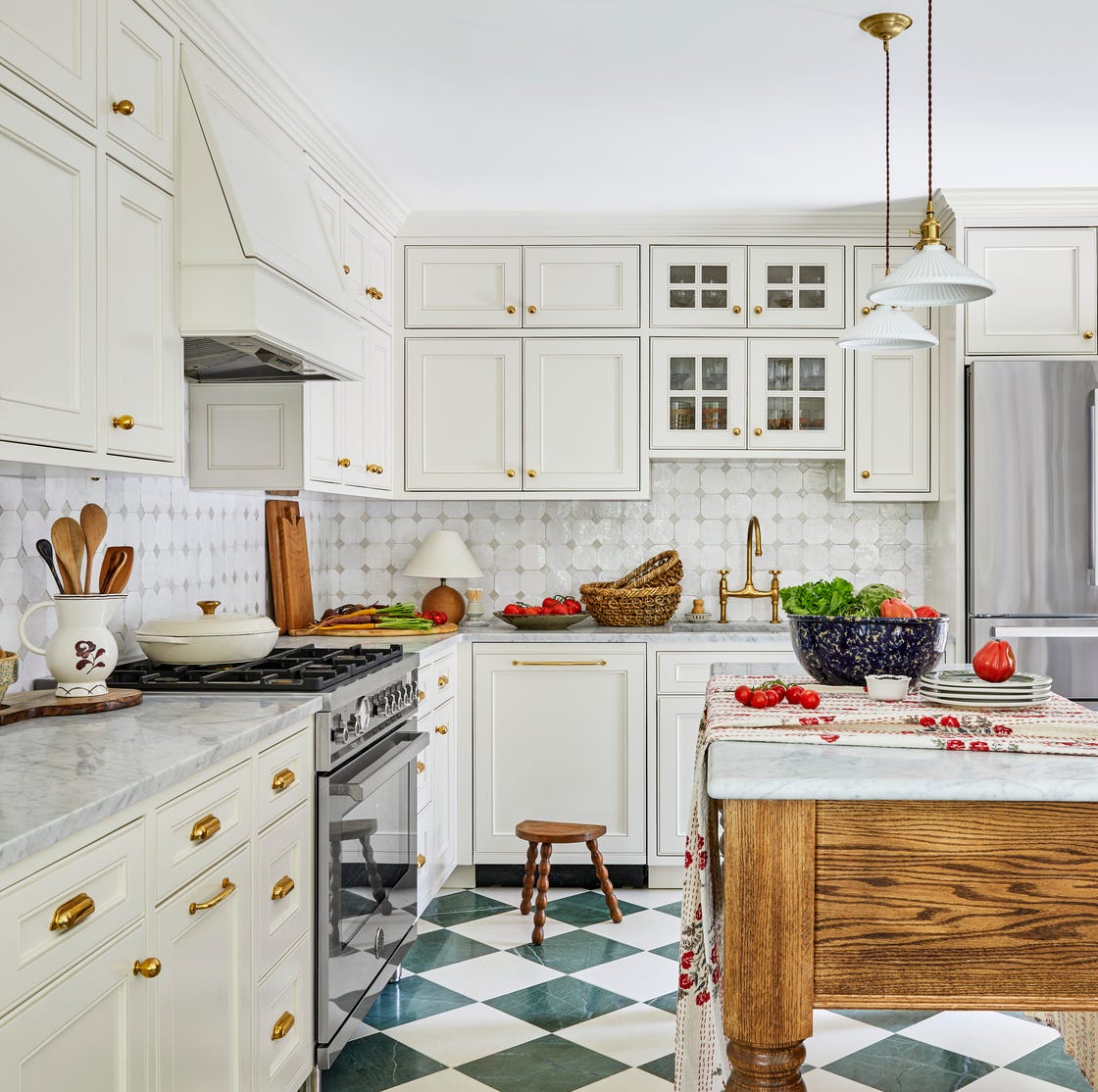
White Shaker cabinets paired with marble countertops create a look that is both classic and clean. The green and white checkered floor adds a playful note without overwhelming the cabinetry. The scale lesson here is that a roomy U-shaped kitchen with an island benefits from a unified upper and lower cabinet color, which visually expands the space. Brass hardware and pendant lights provide warm accents that prevent the white from feeling cold.
11 / 35A Spectrum of White Paint Swatches for Selection
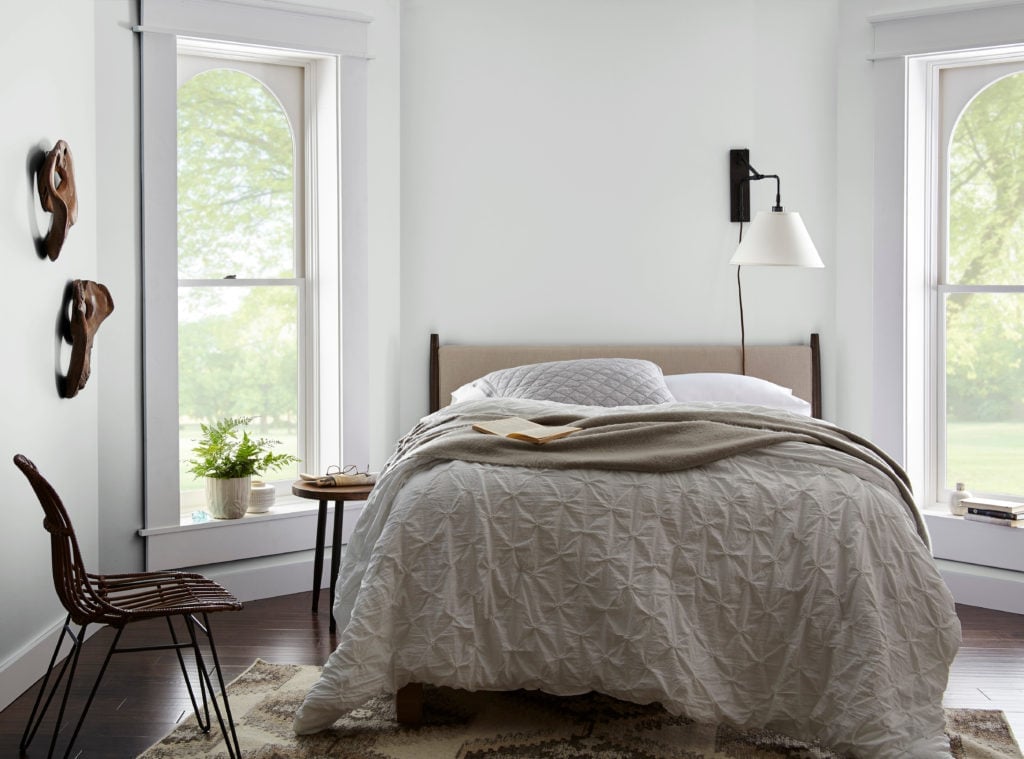
A practical rule for choosing the right white is to look at the undertone next to your fixed finishes. A grid of paint swatches shows how different whites shift from warm cream to cool gray. The textured surface of each sample catches soft studio lighting, making subtle differences visible. The palette here includes several whites, each with a label for reference. When you compare swatches, hold them against your flooring, countertops, and natural light. What reads as a true white in the store can pull pink or yellow on your wall. This is a compact way to narrow your options before committing to a full gallon.
12 / 35Off-White Walls in a Modern Dining Room
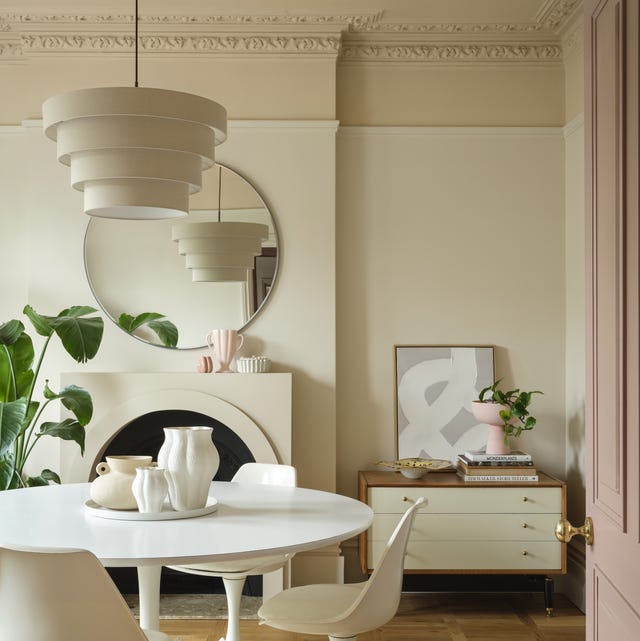
Off-white walls can feel flat if the undertone clashes with your furniture, but a warm off-white with a hint of beige or pink works well alongside natural wood and ceramic pieces. In this dining room, the palette pairs a soft off-white with beige and pink accents, creating a cohesive look that feels modern rather than sterile.
A round dining table and matching chairs sit adjacent to a wooden dresser, with a layered pendant light providing both natural daylight and warm artificial glow. The off-white walls act as a neutral envelope, letting the wood grains and ceramic textures stand out. This choice avoids the starkness of a pure white while keeping the room bright. The key is letting the walls recede so the furnishings become the focus.
13 / 35Cream Linen Sofa in a Modern Organic Living Room
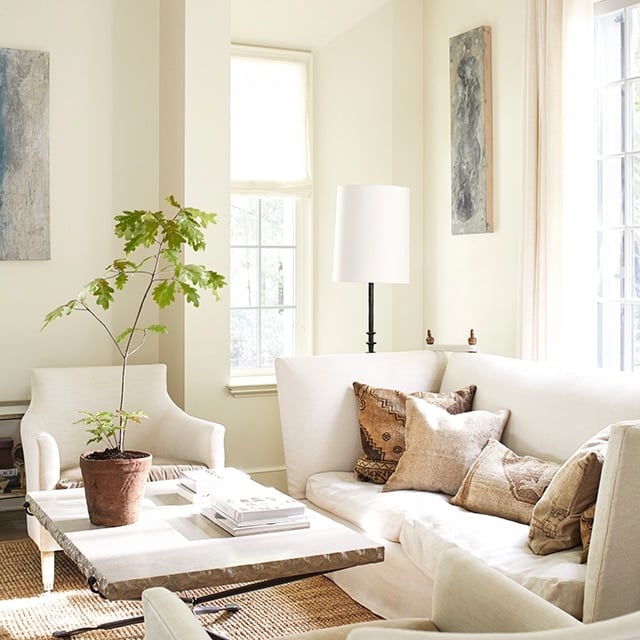
A cream linen sofa anchors this living room with its textured upholstery, offering a soft contrast to the stone coffee table and jute rug. The modern organic style relies on natural materials, and the linen fabric brings a tactile quality that smooth leather cannot match. Paired with a wood-framed armchair, the seating arrangement encourages conversation without feeling crowded. Natural daylight from a nearby window balances the warm lamp glow, keeping the cream tone from looking washed out or too yellow. This sofa becomes the visual anchor without dominating the room.
14 / 35White Subway Tile Backsplash in a Modern Farmhouse Kitchen
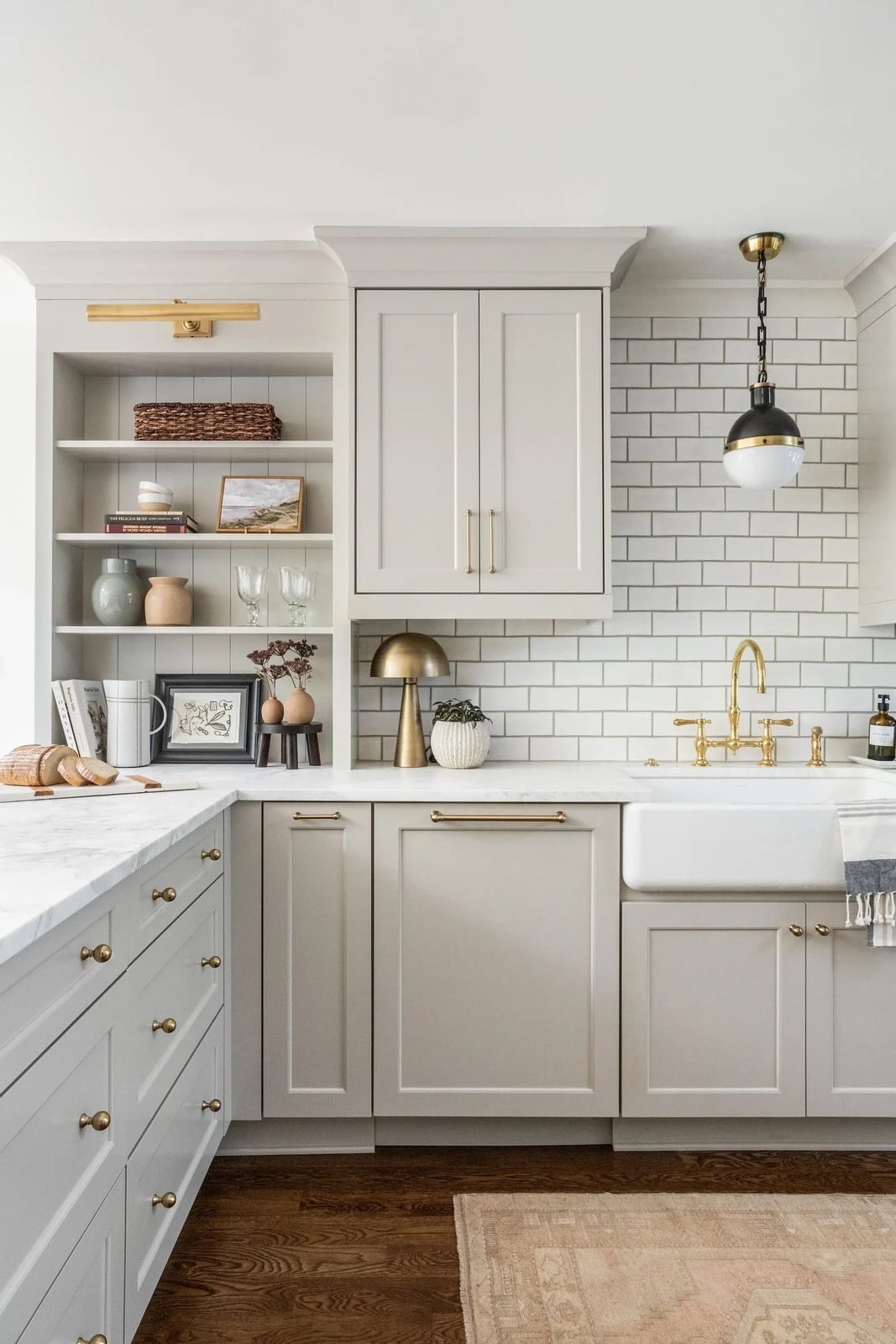
White subway tile is a reliable choice for a modern farmhouse kitchen because it reflects light and keeps the space feeling open. Here, the tile backsplash runs behind a sink with brass hardware, pairing with marble countertops and open shelves. The white and gray palette lets sunlight bounce across the surface, while pendant lights and task lighting add warmth during evening hours. The brass faucet and hardware break up the white expanse, adding a touch of contrast. This layout puts the focus on the cabinets and countertops, with the backsplash serving as a clean backdrop.
15 / 35White Walls with Bold Blue Built-Ins in a Farmhouse Living Room
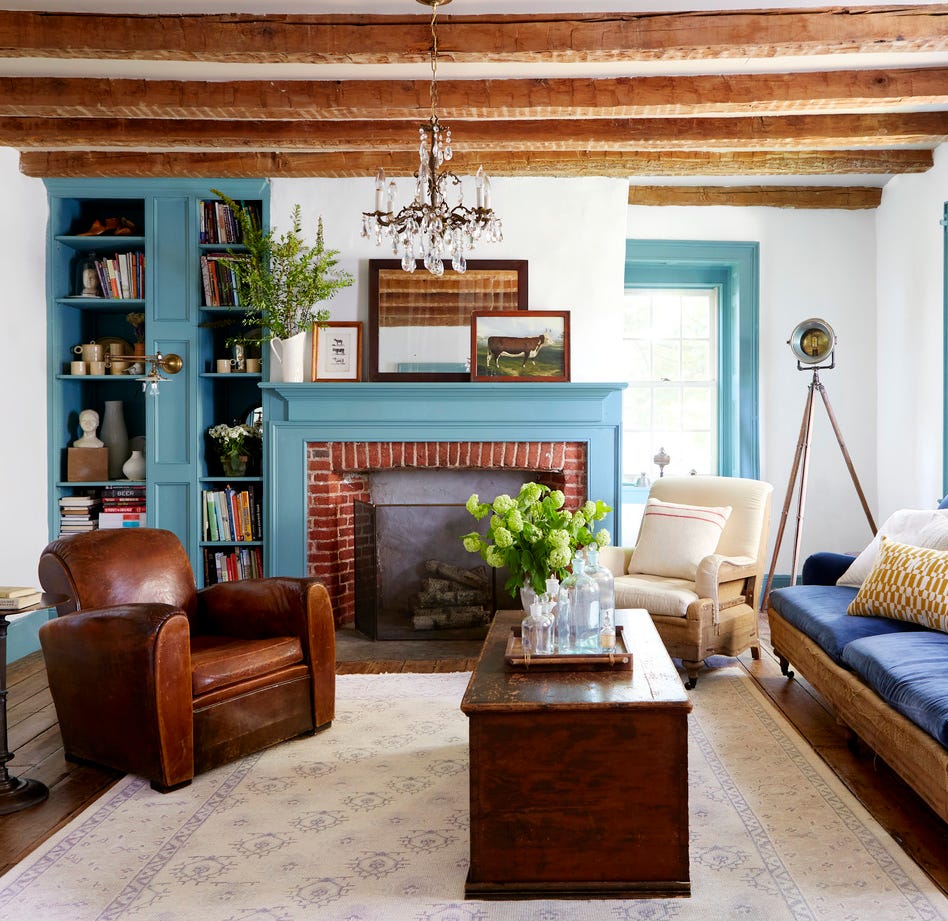
For built-in shelving, a bold color that contrasts with the walls makes the storage a feature. In this farmhouse living room, bright blue built-ins flank a brick fireplace, standing out against white walls. The blue draws the eye, turning practical storage into a design statement.
Two leather armchairs face the fireplace, with natural daylight streaming in and a chandelier adding overhead light. The white walls keep the room from feeling heavy, while the blue shelves provide a punch of color. This approach works because the white backdrop lets the blue appear as a deliberate choice. The brick fireplace adds texture, preventing the palette from feeling too flat. For renters, removable wallpaper or peel-and-stick film on shelves can mimic this look without painting.
16 / 35Large White Kitchen Island as a Modern Focal Point
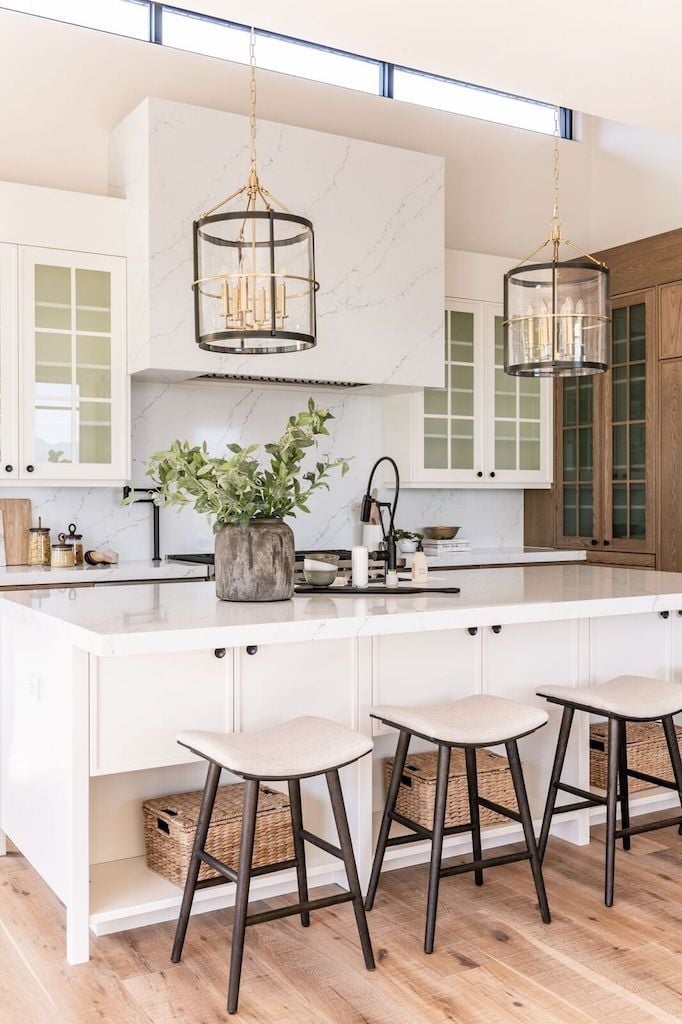
A white kitchen island anchors an open plan with clean geometry, especially when paired with dark bar stools for contrast. Marble countertops and pendant lights above reinforce the modern look without competing for attention. The white finish keeps the island central while wood cabinetry and natural light soften the overall palette.
17 / 35White Walls and Warm Wood Floors in a Bright Bedroom
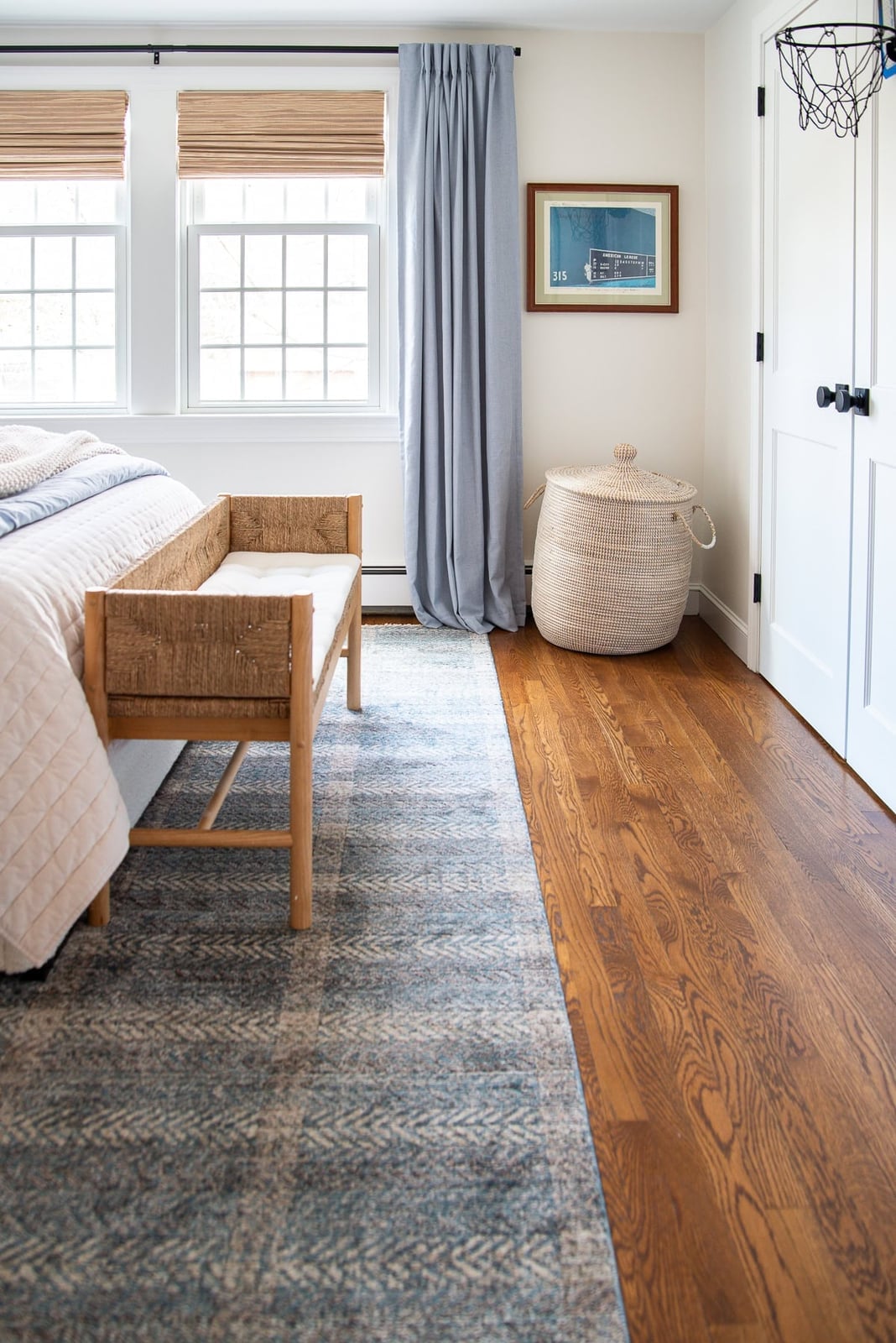
In a modern farmhouse bedroom, white walls carry natural light while wood floors add warmth. A woven bench at the foot of the bed and a basket nearby introduce texture without clutter. Blue accents in fabric or accessories break up the neutral palette just enough. For renters, white walls are a given, so focus on layering warm wood tones and soft textiles to make the space feel put together.
18 / 35Textured Beige and White Bedding in a Minimalist Bedroom
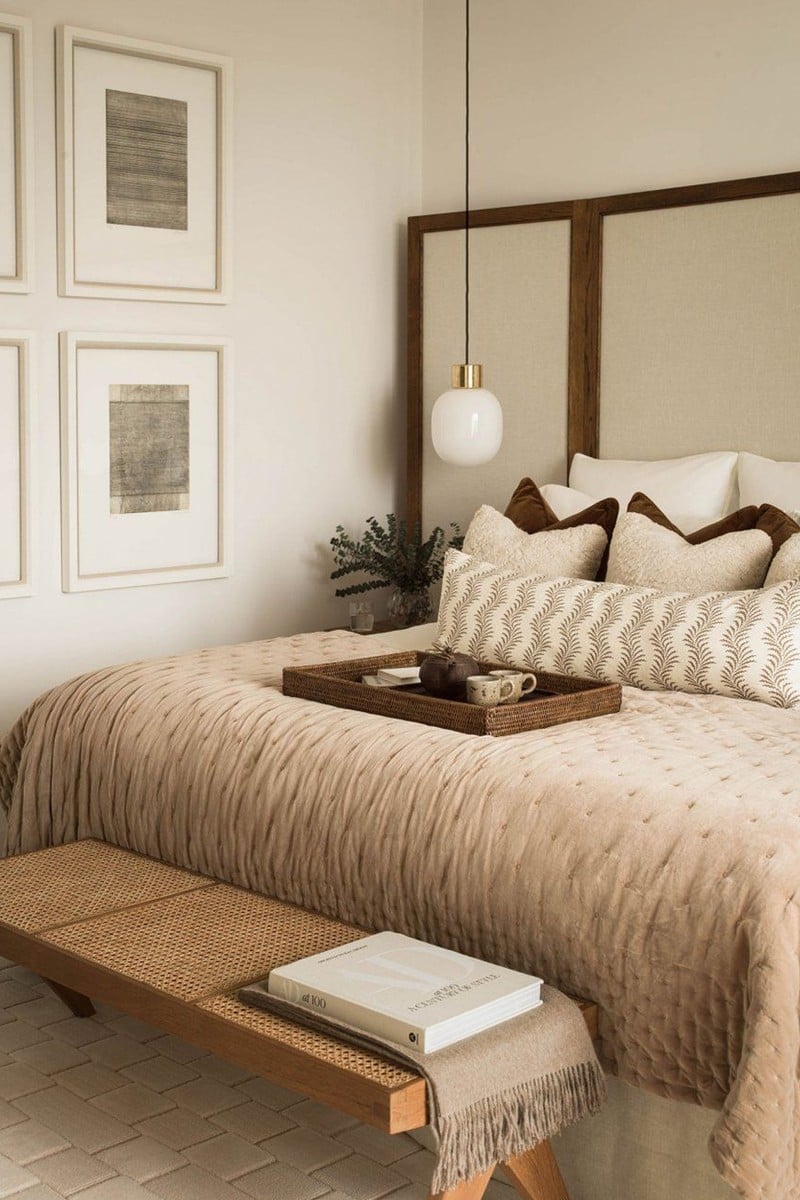
Minimalist bedrooms often lean toward all-white bedding, but textured beige and white layers offer more visual interest without adding clutter. Linen duvets, a woven headboard, and a wooden bench introduce natural warmth.
A tray on the bed or a rattan accent piece breaks up the uniform look while staying true to the minimalist ethos. The key is to vary the texture, so the palette stays calm but the eye has something to land on.
19 / 35White and Blue Striped Bedding in a Coastal Bedroom
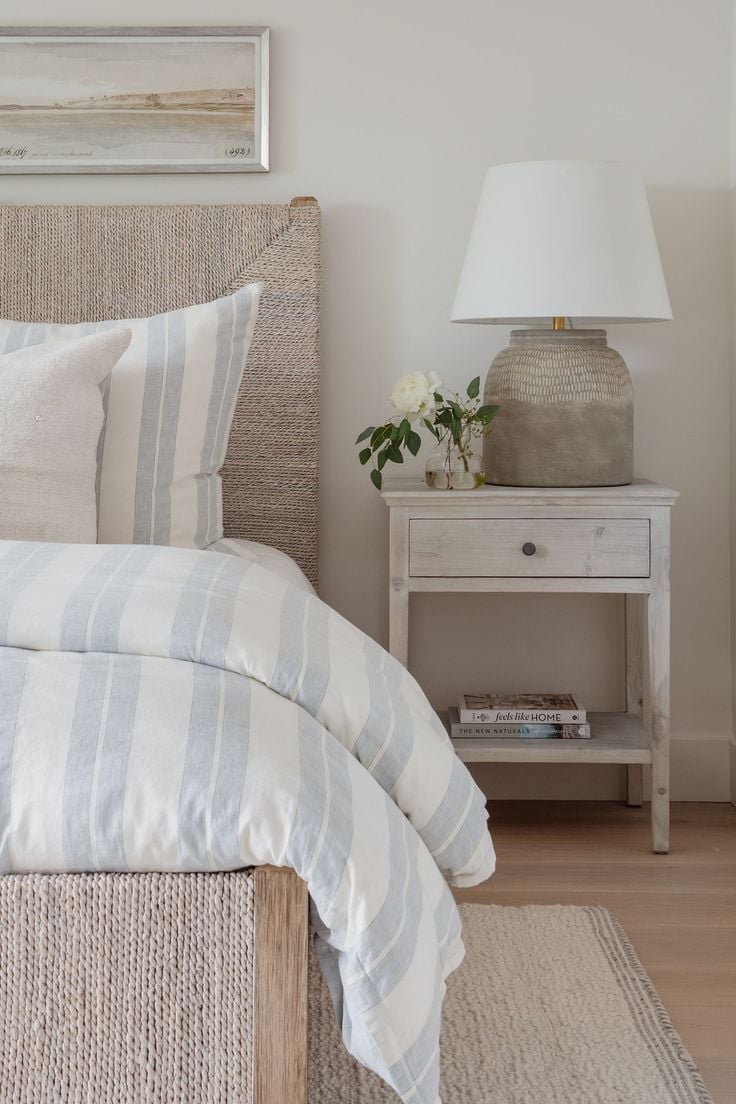
Striped bedding in white and blue reads as crisp and coastal, especially against a woven headboard. A bedside lamp and a compact nightstand keep the vignette balanced without overwhelming the space. The pattern adds movement to an otherwise neutral palette, making the room feel fresh without requiring bold color elsewhere.
20 / 35Clean White Walls for a Modern Farmhouse Living Room
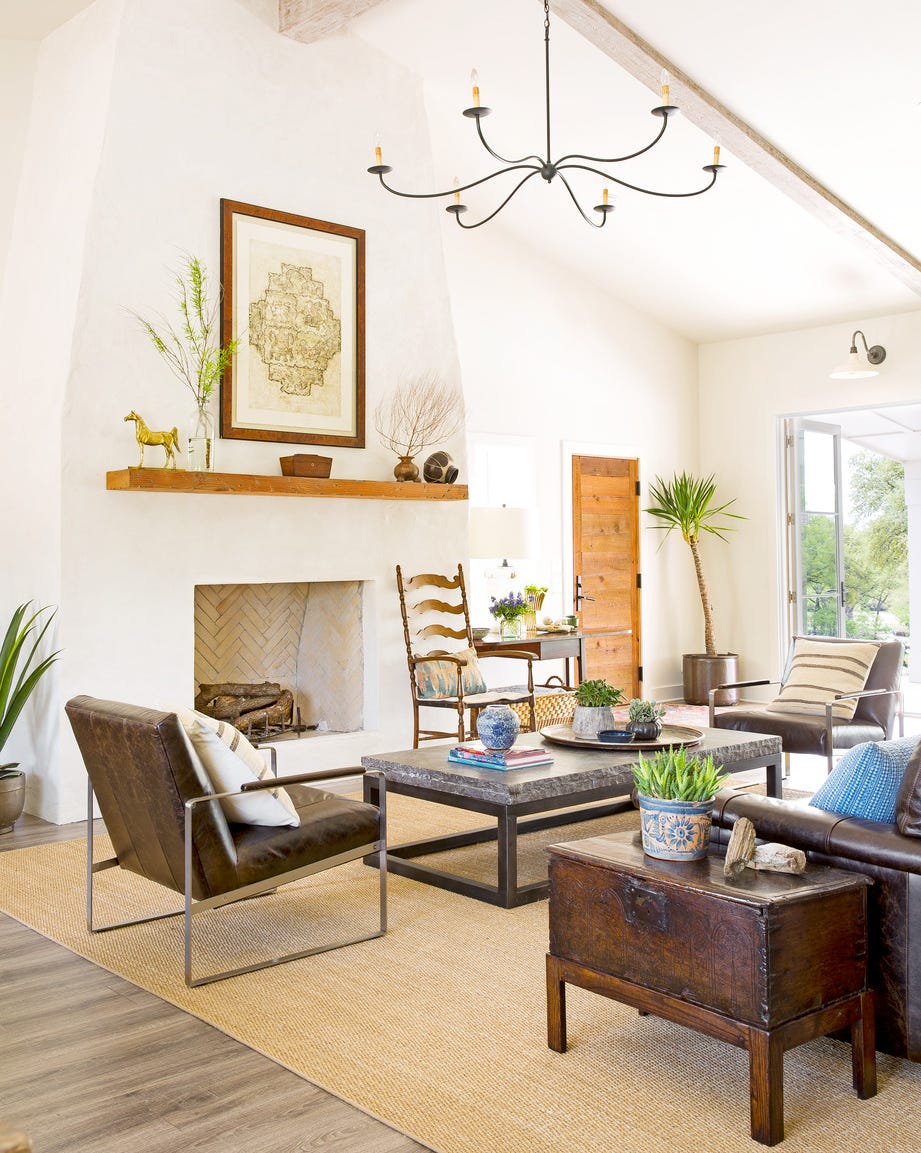
A textured plaster fireplace gives a modern farmhouse living room its focal point, while clean white walls keep the space open and airy. Leather armchairs and a stone coffee table introduce natural brown tones that ground the room. A wooden mantel and a chandelier above add character, but the white walls let each piece stand on its own. The palette stays neutral for a cohesive look.
21 / 35White Walls with Built-In Shelving in a Coastal Bedroom
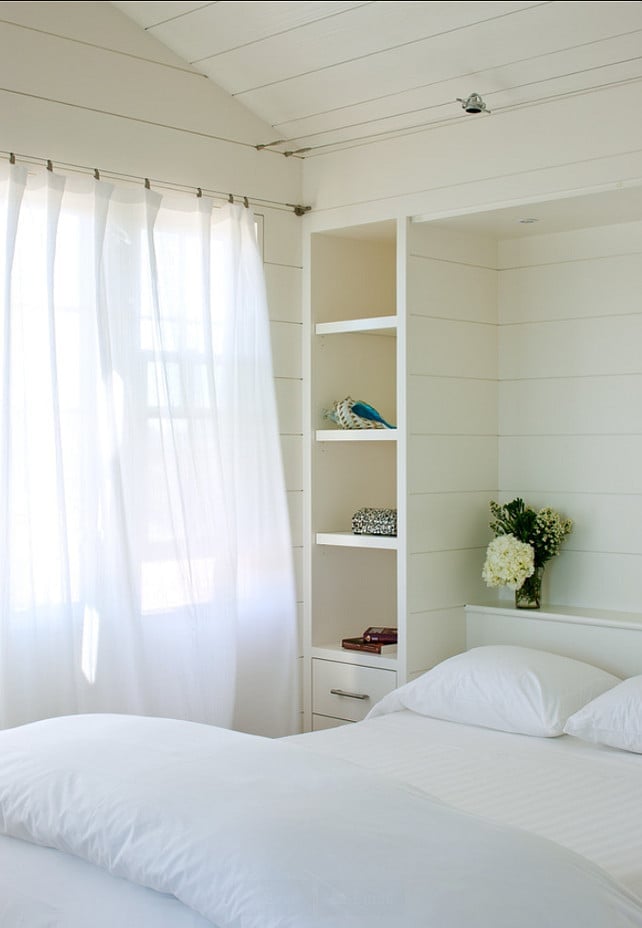
In a bedroom, the wall the bed faces should earn its keep. Here the built-in shelving does exactly that, wrapping the wall in storage that looks like built-in architecture. The white walls keep the unit from feeling heavy, while the light wood shelves and linen bedding hold the coastal tone.
Natural light from the window lands on the glass objects and sheer curtains, so the room stays bright without needing a lot of overhead light. A ceiling fixture handles the evening shift. The bed faces the shelving, which makes the room feel larger than it is: your eye travels across the surface instead of stopping at a headboard.
22 / 35Soft Off-White Walls in a Cozy Living Room Corner
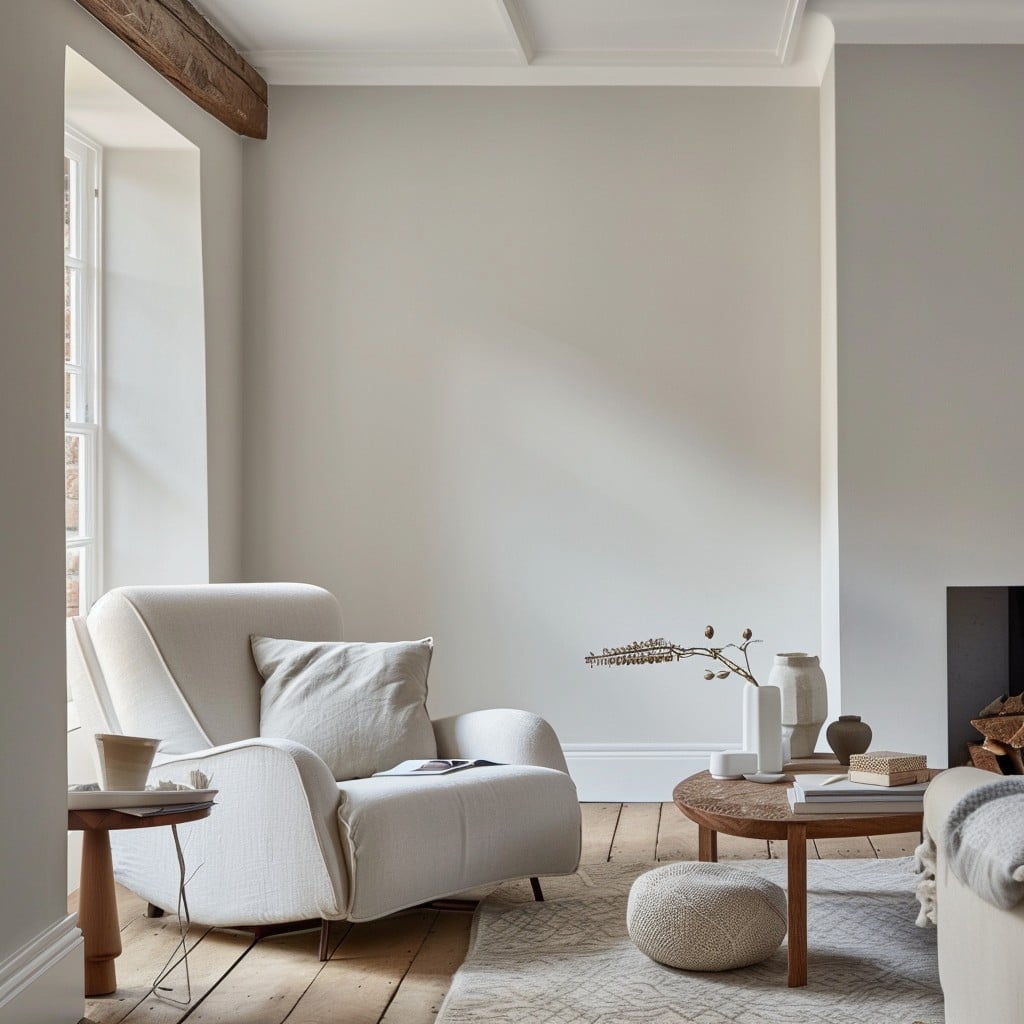
The off-white walls sit between the wood tones of the coffee table and the grey of the armchair, tying the whole corner together. A textured armchair adds the tactile interest that a flat wall color needs nearby, and the fireplace keeps the palette from going cold. The beige pouf and ceramic side table continue the muted line. Nothing here shouts, so the eye moves from the armchair to the fire and back without a hard stop.
23 / 35White Walls with Grey Accents in a Scandi Living Room
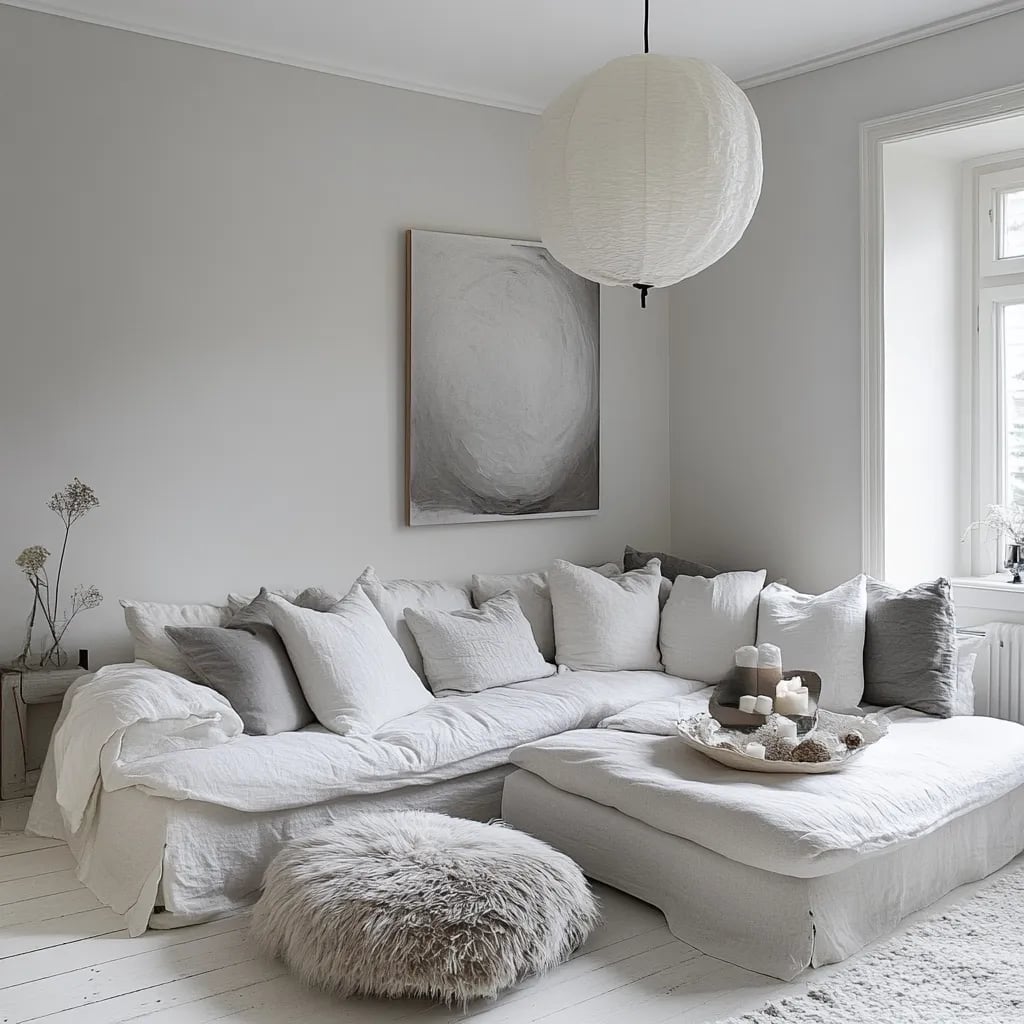
A practical rule for Scandi rooms is that white walls need a partner with enough weight to hold the space. Here the grey sectional does that, anchoring the far corner while the beige ottoman softens the line. The round artwork and large paper lantern keep the shapes light, which matters when the palette stays tight. The natural daylight confirms the white has a warm base, not a blue one. The overhead pendant adds a second light source for evening, but the real trick is the grey: it lets the white feel clean rather than sterile.
24 / 35Cream Walls in a Traditional Corner Vignette
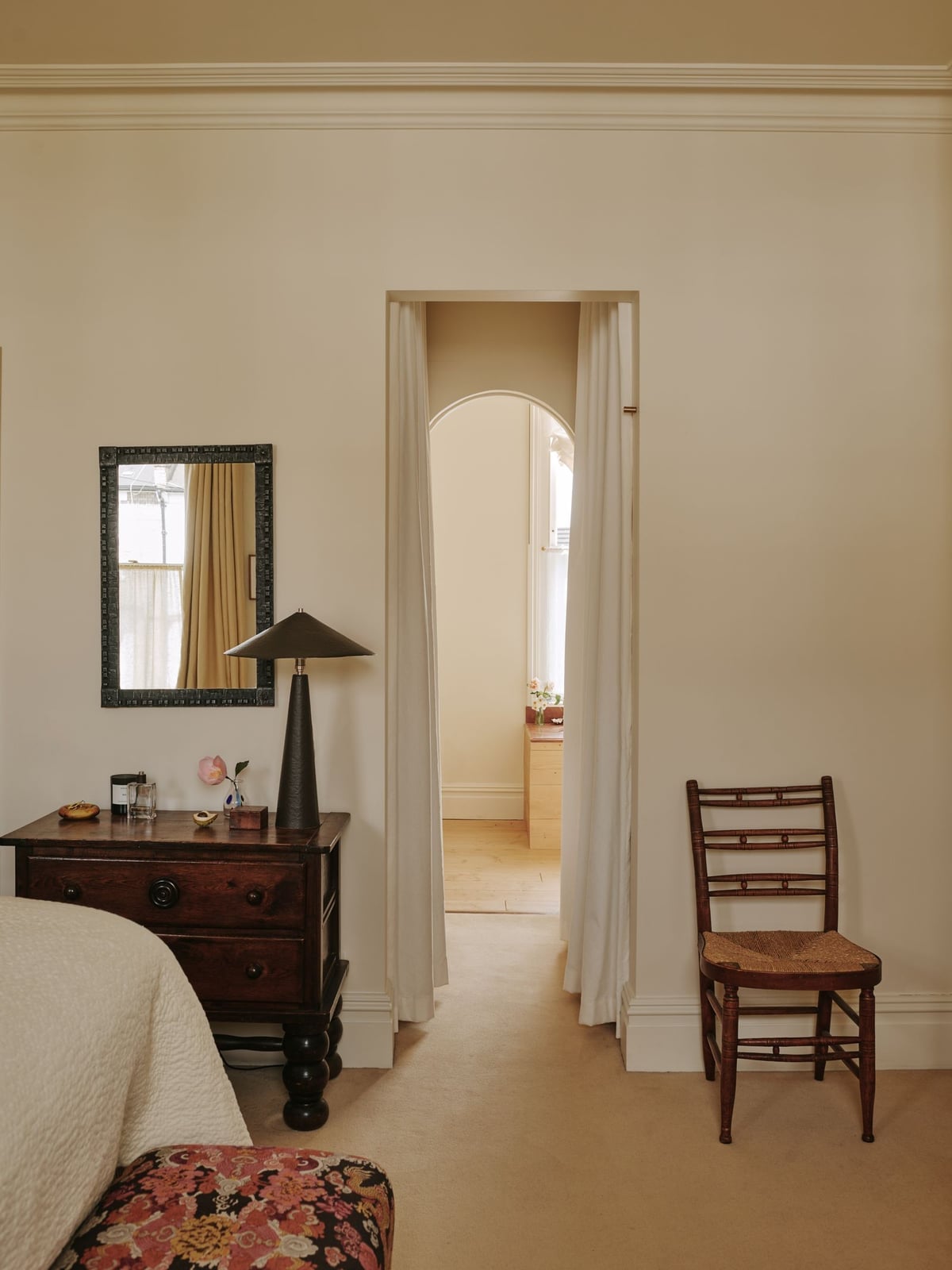
Cream can go one of two ways: either it stays a warm white or it tips into yellow. Here it stays on the right side, helped by the gold tones in the mirror frame and the wood of the dresser. Soft daylight keeps the plaster walls from looking flat, while the lamp adds a second layer of warmth in the evening.
A compact corner like this one needs the cream to do most of the work because there is not a lot of wall space to spare. The ornate mirror bounces light across the chair and curtains, so the whole vignette feels larger than its footprint. The chair is a practical choice: it gives the corner a purpose beyond holding a dresser.
25 / 35A Fan of White Paint Swatches for Diverse Tones
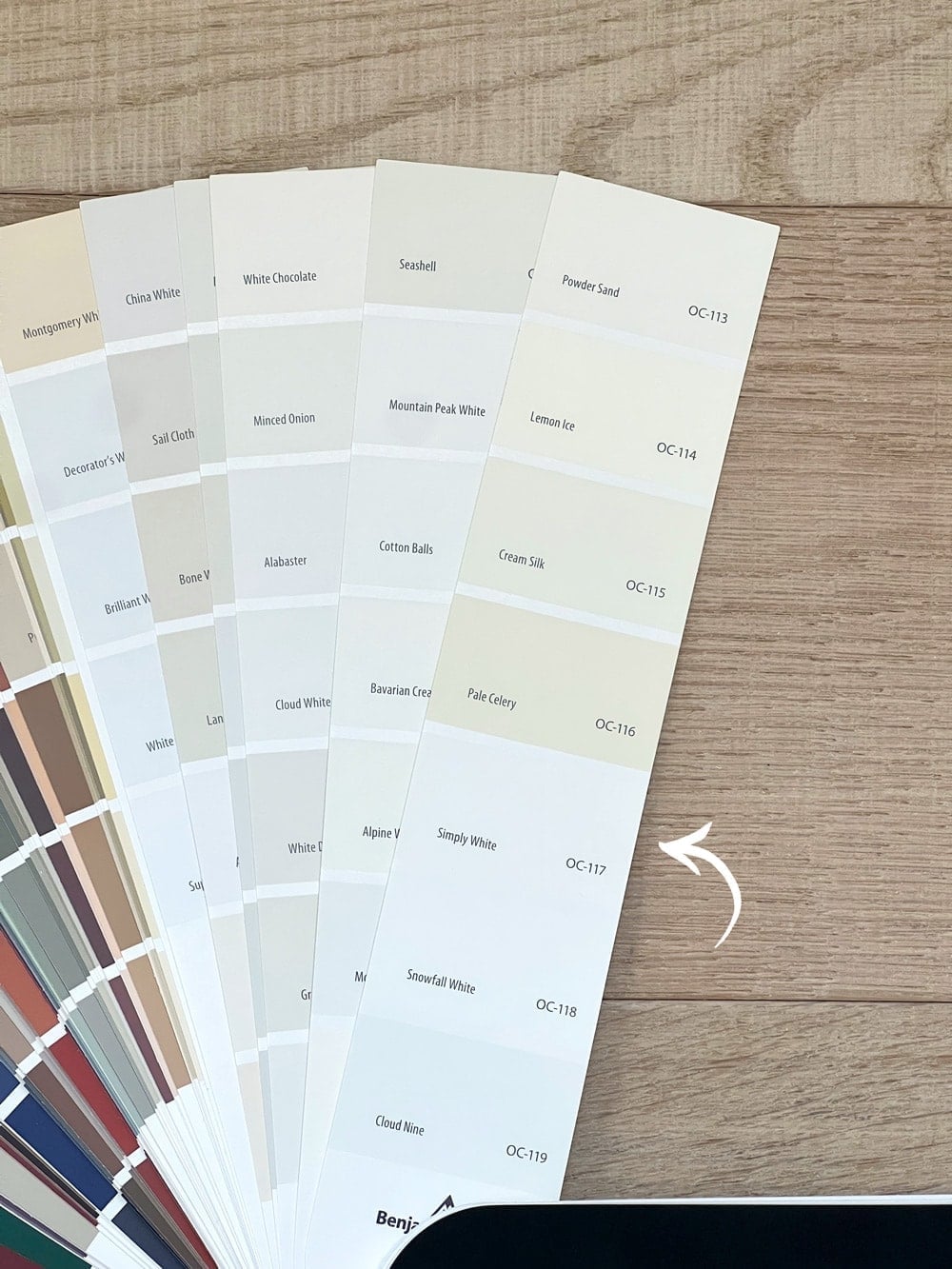
A paint swatch fan laid out on a wood surface shows the range within white: warm tones next to cool ones, creamy beige beside true white. The paper swatches catch the soft ambient light differently depending on their base, which is exactly why you need to look at them in your own room before picking. The wood background matters too. A white that looks crisp on a white paper fan can read as grey against oak floors.
26 / 35Soft White and Grey Palette in a Modern Living Room Corner
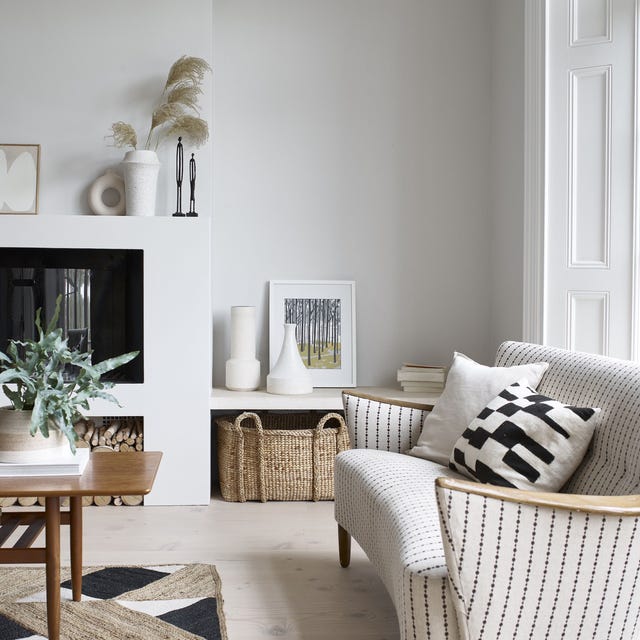
A graphic black and white cushion on a grey sofa pulls the palette together in this compact corner, where a white fireplace anchors the seating area against wood and stone. The woven basket adds natural texture alongside the clean lines of the armchair. A palette built on white, grey, black, and natural tones stays cohesive when you vary the materials: stone for weight, wood for warmth, linen for softness. That single patterned cushion keeps the eye moving around the room.
27 / 35Highlighting ‘White’ from a Paint Fan Deck
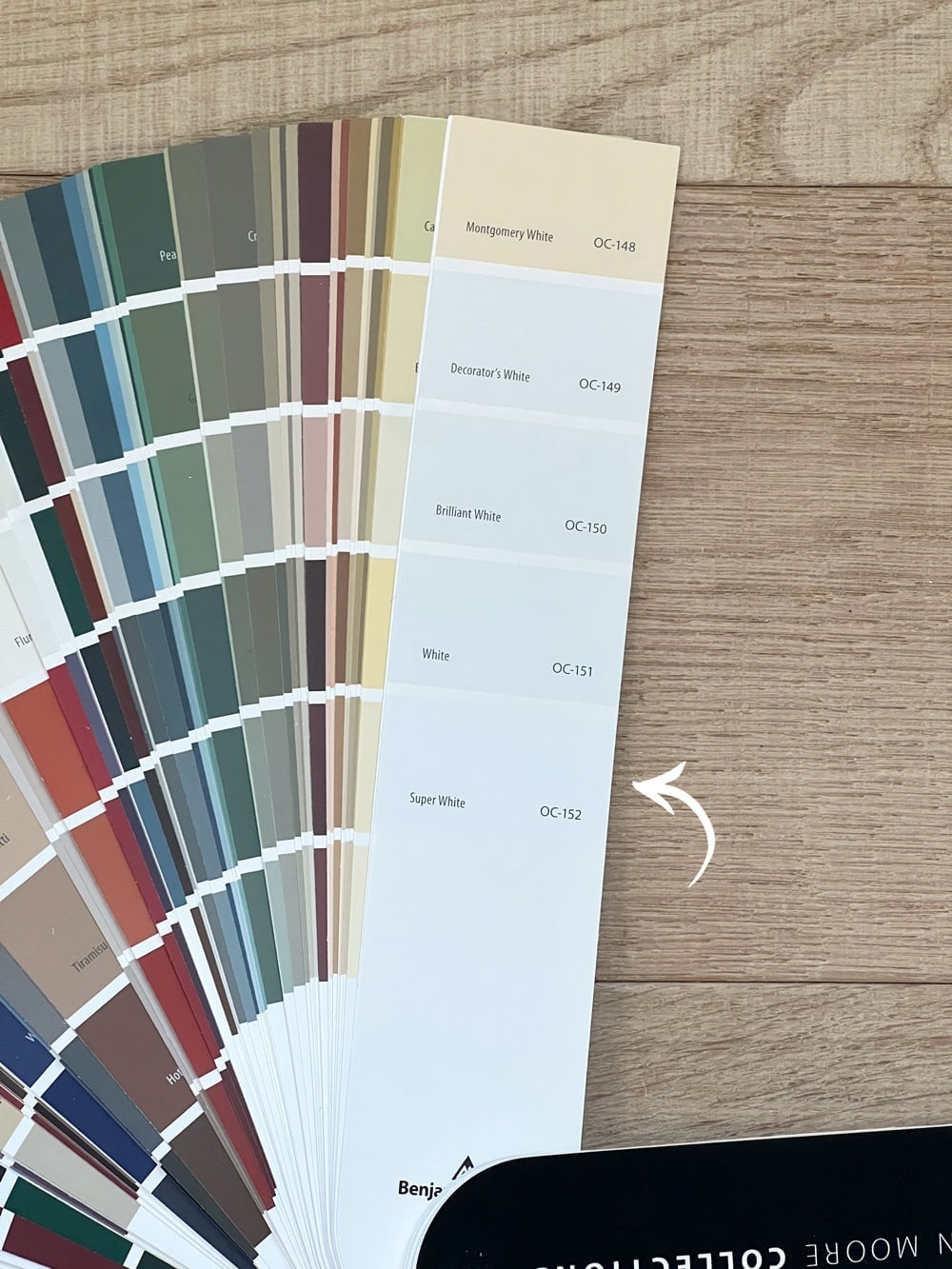
A practical rule for narrowing down white paint is to look at the fan deck in natural light, not under store fluorescents. The spread here shows a Benjamin Moore fan deck open to a full spectrum of whites, creams, beiges, and greys, with an arrow pointing to a single white swatch among the pale neighbors. A green or blue undertone can read completely different once it hits your wall.
For renters who cannot repaint the whole room, hold that swatch against your existing trim and furniture before committing. The wood table underneath the deck is a reminder that your floor tone will shift how the white looks. Take the fan deck home and tape the top contenders on different walls to catch how the light changes through the day.
28 / 35Off-White Hallway Walls with Glamorous Accents
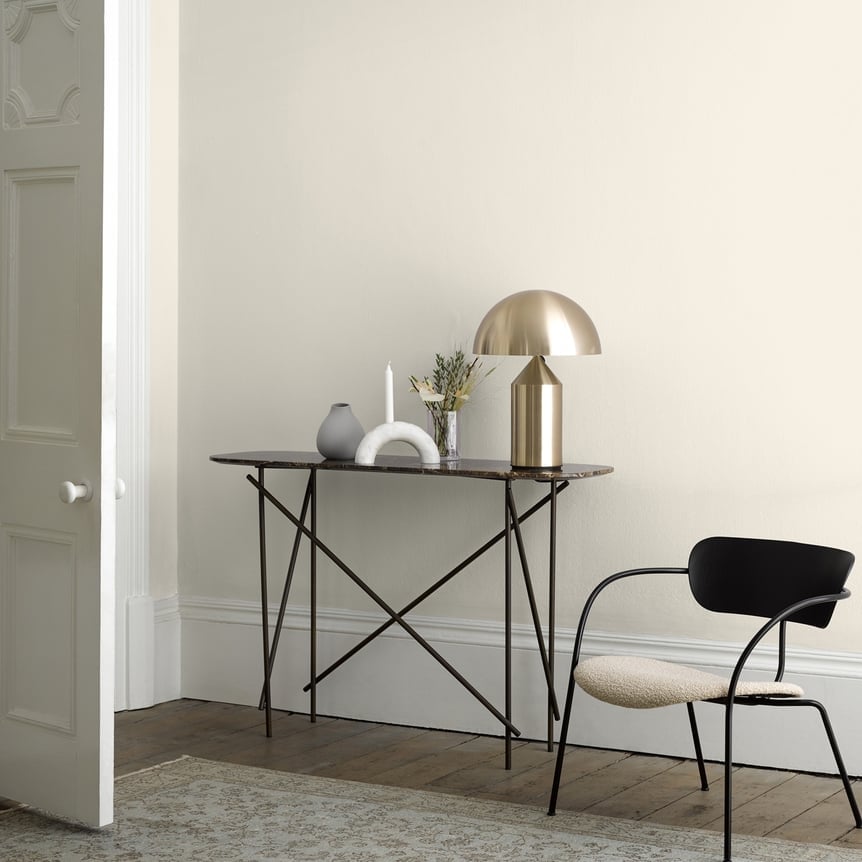
An off-white wall in a hallway can handle a sculptural lamp and a gold-framed console without feeling crowded, because the pale backdrop lets the metal and marble accents stand out. The black chair anchors the vignette while the lamp draws the eye upward in a narrow space. This kind of palette works best when you limit the metallic finishes to one or two pieces so the hallway stays cohesive rather than cluttered.
29 / 35White Fireplace as a Farmhouse Living Room Centerpiece
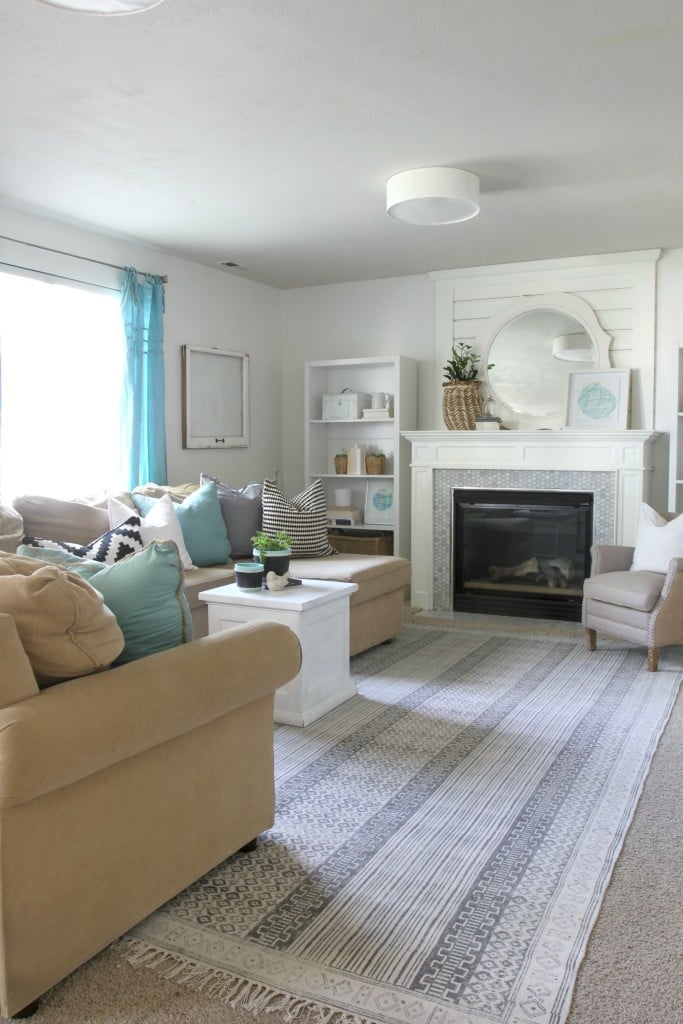
A white fireplace with tile surround becomes the natural focal point in a farmhouse living room that pairs a beige sectional with a blue armchair. The overhead light hits the fireplace first, drawing the eye to the mantel while the linen upholstery softens the surroundings. Keeping the fireplace white against wood floors gives the room a clean anchor against the patterned rug and varied furniture finishes.
30 / 35White Walls in a Coastal Living Room with Wicker Accents
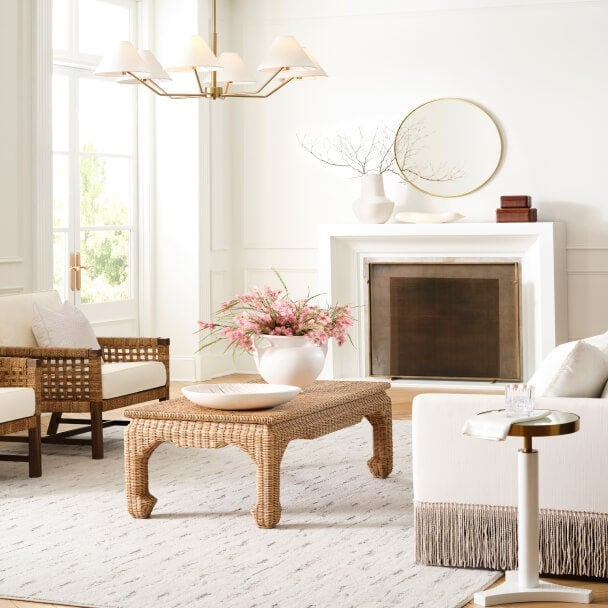
A coastal living room could go heavy on navy and rope, but this one keeps the walls white and lets a large wicker coffee table provide texture. The natural rattan pairs with pink florals on the marble top, while brass accents on the side tables add polish without making the room feel formal. Bright daylight through the windows keeps the white walls from feeling cold against the wicker and wood. The conversational seating arrangement, with a sofa and two armchairs angled toward the fireplace, makes the room feel open but not sparse. Scale matters here: a smaller wicker table would disappear against the floor, but the oversized one holds its own as the focal point of the layout.
31 / 35A Single Drop of Off-White Paint
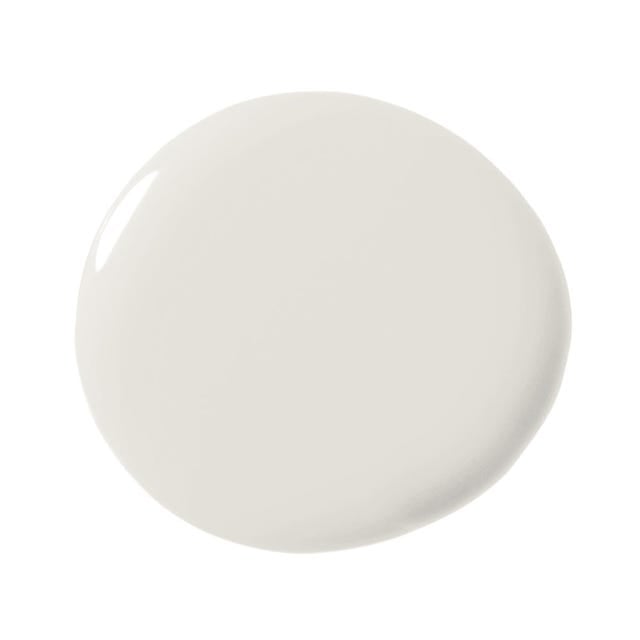
A single drop of off-white paint holds more information than a swatch card. Under studio light, the smooth surface shows no brush marks, just a clean, flat finish. This is the kind of color that reads as off-white, not cream, because it lacks the yellow undertone. In element mode, the paint becomes the hero, and the lesson is about layout: a small sample on a wall lets you judge the pigment in morning and afternoon light before you commit to a full coat.
32 / 35White Linen Bedding in a Farmhouse Bedroom
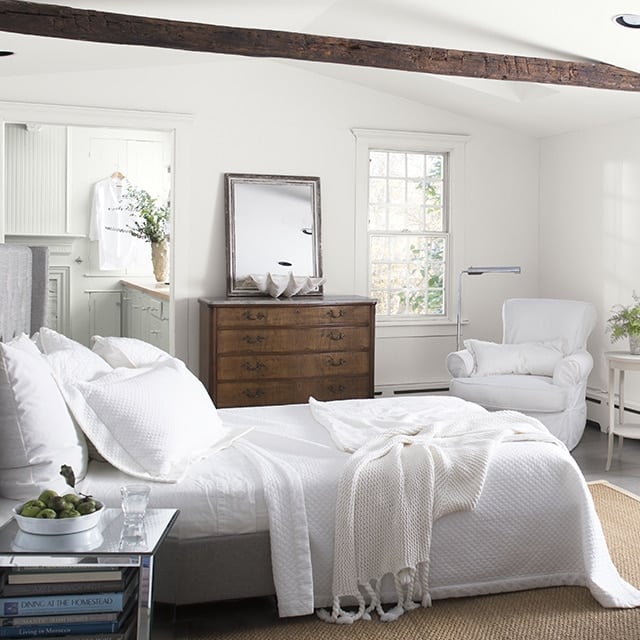
White linen bedding is the anchor of this farmhouse bedroom. The four-poster bed sits centered in a roomy layout, with a dresser and armchair adding balance. Natural daylight and ambient lamps soften the space, while an exposed wooden beam overhead grounds the palette of white and wood tones. The palette principle here is about contrast: the warm wood against the cool white linen keeps the room from feeling sterile. It is a ratio that works because the natural materials do the work, not the color alone.
33 / 35A Perfect Drop of Cream Paint
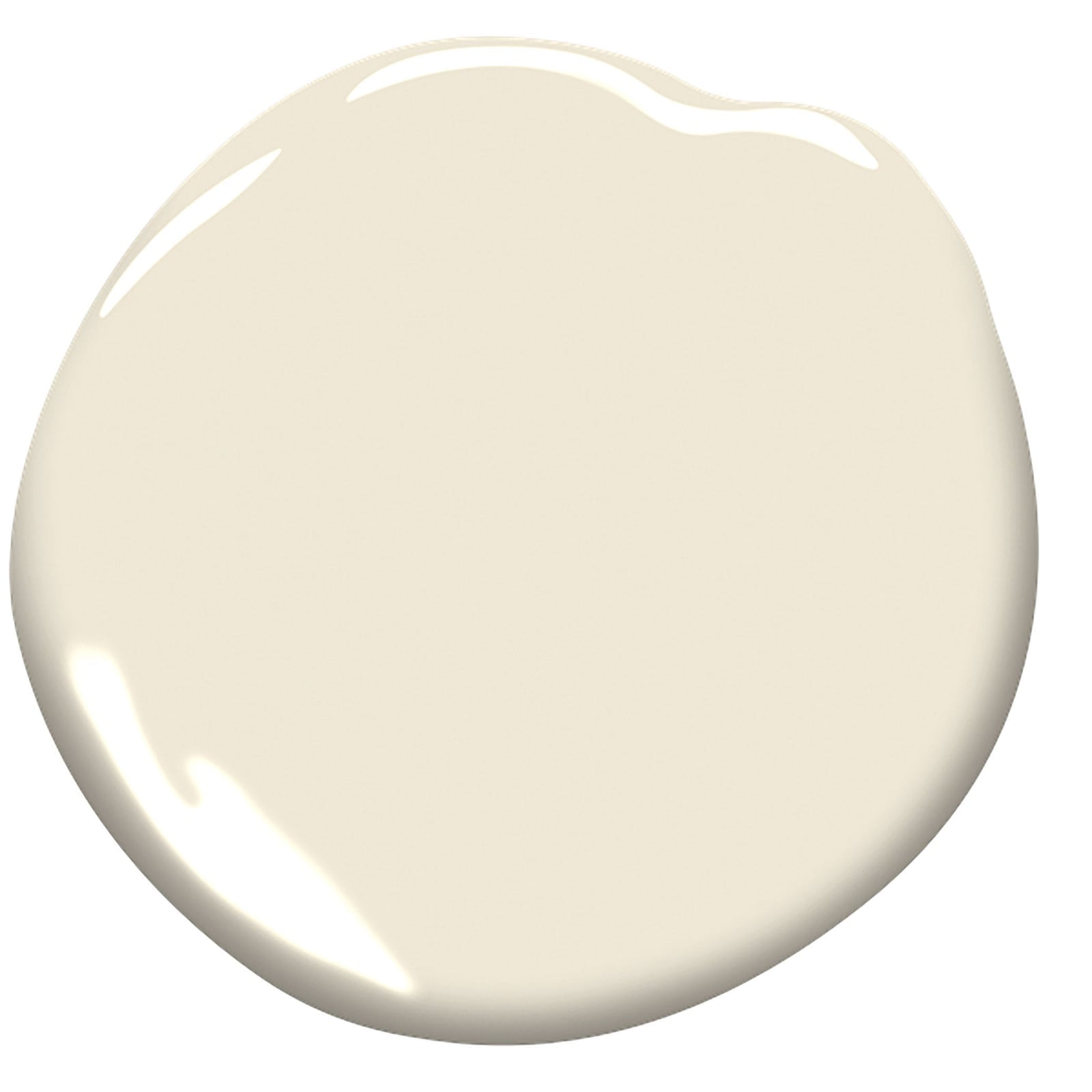
Cream paint sits in a territory between off-white and beige, and this sample shows why the distinction matters. Under studio light, the drop reads as warm but not yellow, a smooth finish that would read as soft on a wall. Where off-white can feel stark in a north-facing room, cream adds enough warmth to keep the space from feeling cold. The materials angle is about the paint itself: a flat finish like this hides minor wall imperfections better than a high-gloss sheen, which reflects every bump. For a rental or a quick refresh, a sample patch in cream tells you if the undertone agrees with your existing trim and furniture.
34 / 35White Fireplace in a Transitional Living Room
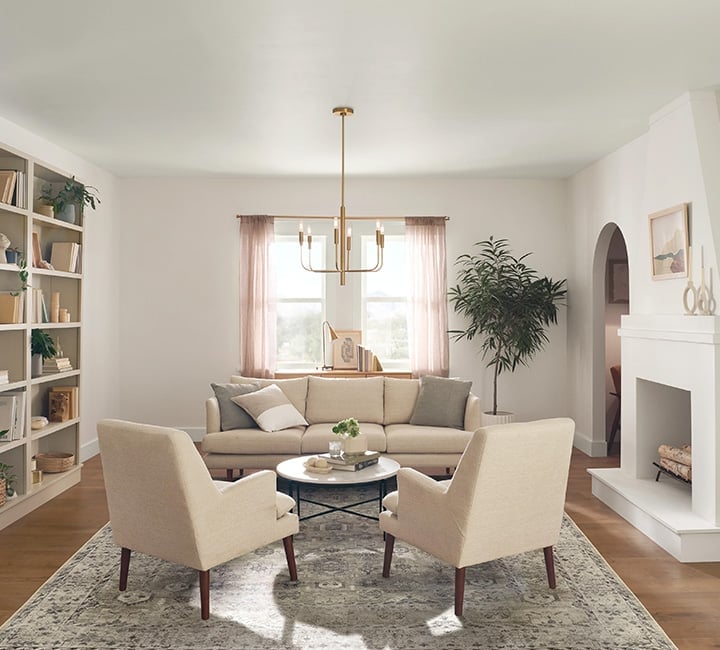
The white fireplace anchors this transitional living room with an ornate surround that draws the eye. Bright natural daylight fills the open, conversational seating area, where a sofa, armchairs, and a coffee table circle the hearth. The palette mixes white, cream, and gold, with materials like wicker, wood, brass, and marble adding texture. The lighting principle is about placement: a white fireplace in a room with good daylight reflects that light back into the space, making the room feel larger without adding a single lamp.
35 / 35Final Thoughts
Choosing a white paint color comes down to light and use. North-facing rooms often need a warm white to avoid feeling cold, while south-facing spaces can handle a cooler tone. Test samples on the wall and look at them at different times of day before committing. The right white makes everything else in the room look better, and that is the whole point.