Tired of the same old lawn? 38 trendy landscaping ideas are here to turn your garden into a modern retreat.
Whether you have a sprawling backyard or a compact patio, these concepts focus on clean lines, smart materials, and a touch of drama. You’ll get practical inspiration for integrating seating, water features, lighting, and planting schemes that feel current and livable.
01 / 39Create a Multi-Level Modern Garden with Integrated Seating
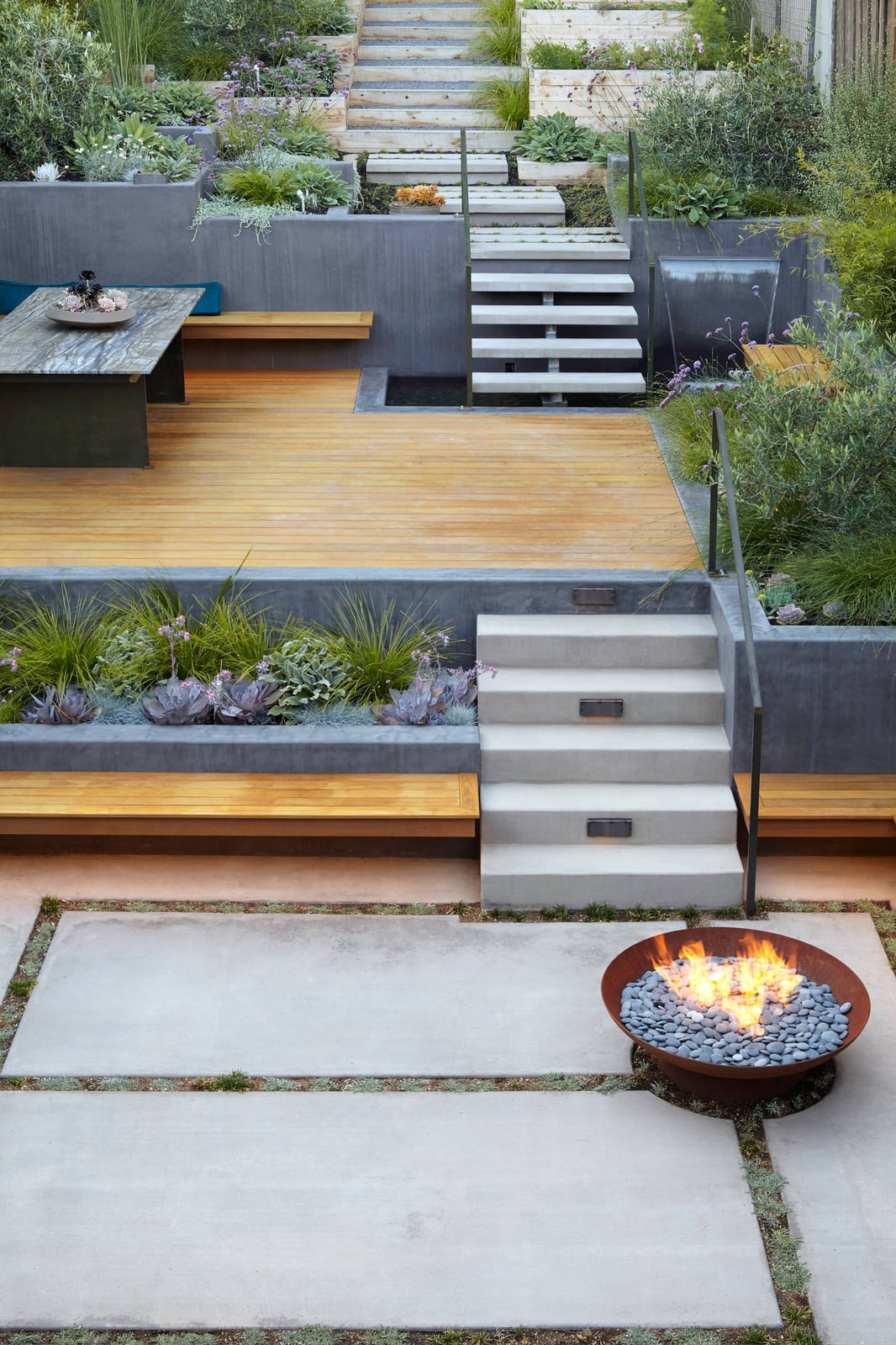
The trick to a multi-level modern garden with integrated seating is letting the structure do the work so the planting can stay simple. Terraced levels built from concrete and wood break up a sloped yard into distinct zones: a raised deck for lounging, a stone pathway that connects them, and a built-in fire pit tucked into the lower level. Integrated step lights guide the way after dark without competing with the firelight. The palette stays restrained grey, warm wood tones, green so the architecture reads first and the plants act as soft punctuation.
02 / 39Design a Contemporary Patio with a Built-In Fire Pit and LED Lighting
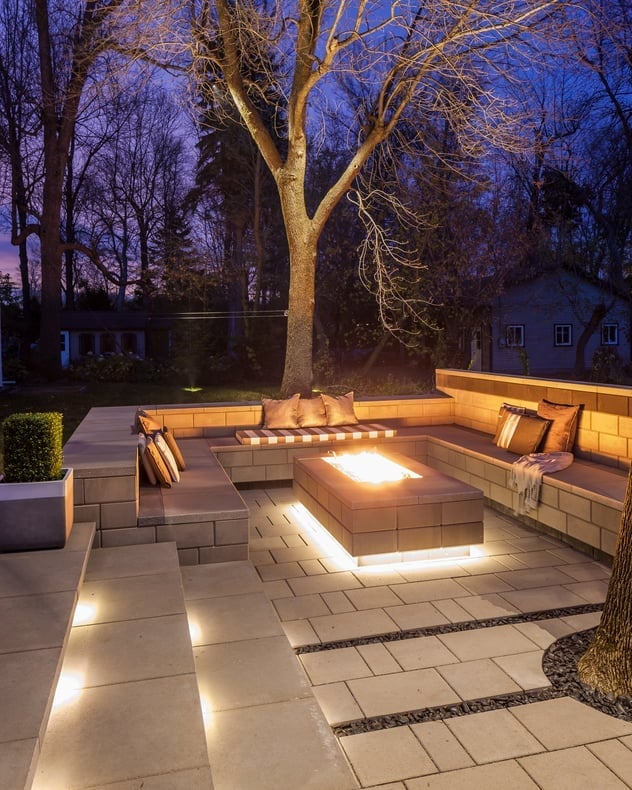
A patio with built-in fire pit and LED lighting works best when the light sources are layered rather than competing. The fire pit casts a warm, flickering glow at eye level, while low-voltage LED strips tucked into the seating risers or along the patio edge provide a steady, cooler light for safe movement. The palette here is quiet grey stone, beige cushions, brown wood tones so the evening light becomes the main event. Circular seating around the fire pit keeps conversation easy and makes the most of the fire’s heat. The LED placement matters: aim for indirect light that outlines the space without shining in anyone’s eyes.
03 / 39Incorporate a Sleek Water Channel in a Modern Garden Design
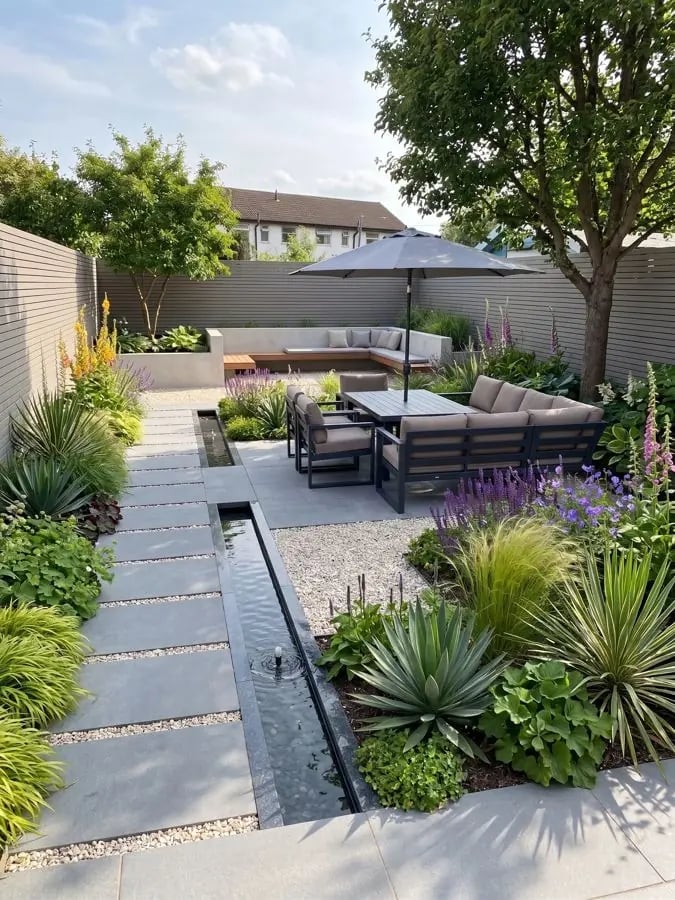
How do you add water without turning the garden into a pond? A sleek water channel: a narrow, straight run of water set flush into stone or gravel. It moves water through the space rather than holding it in one place. In this garden, the channel runs parallel to a pathway, separating seating zones without blocking them. An outdoor sofa and dining set sit on one side; a bench faces the water on the other. The sound is subtle enough to mask street noise but quiet enough for conversation.
The materials keep it modern: grey stone for the channel bed, dark gravel for the path, and metal edging to keep the lines crisp. The water recirculates, so it needs only occasional topping off and a pump check each season. Plant purple and green perennials along the edge to soften the hard lines without hiding them.
04 / 39Maximize Small Patios with a Stunning Vertical Garden Wall
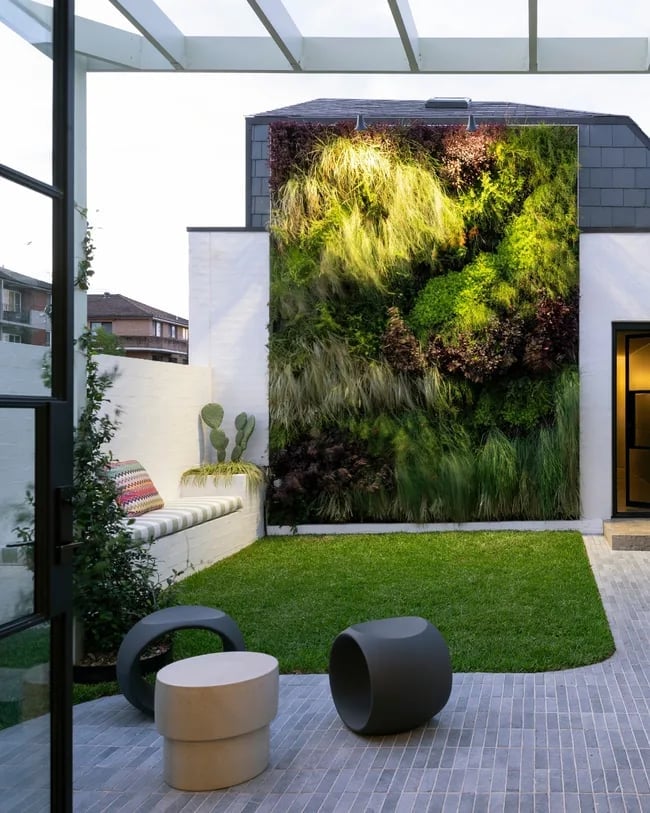
A vertical garden wall turns a blank exterior wall into the main feature of a compact patio. This one uses a mix of leafy greens planted into a modular frame that covers most of the brick surface below. A built-in bench and a pair of modern stools sit on a small lawn patch, leaving the rest of the patio open for movement. The wall does double duty: it adds privacy from neighbors and cools the patio by shading the brick. For renters, a freestanding vertical planter on casters gives the same effect without drilling into the wall.
05 / 39Integrate a Hot Tub into a Wooden Deck for Backyard Luxury
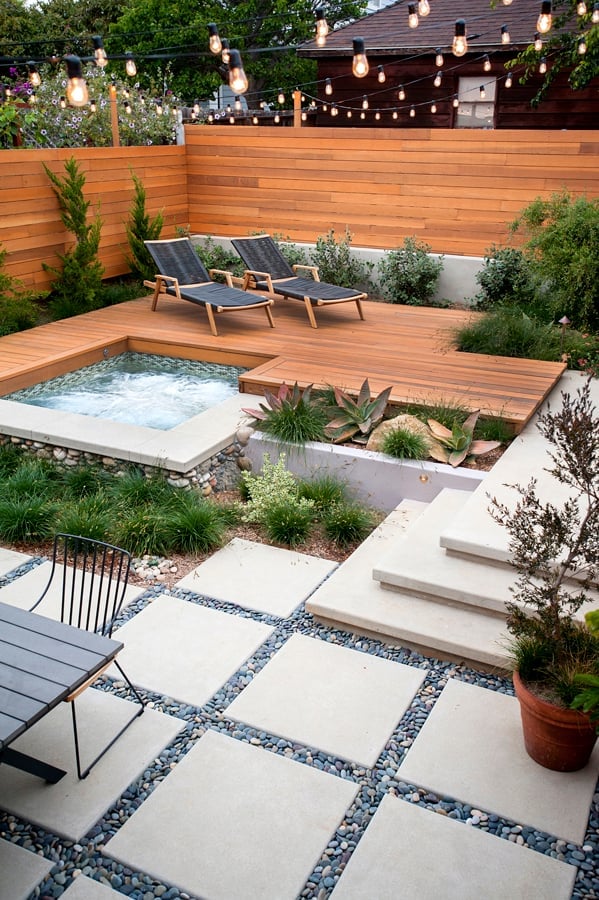
A practical rule for adding a hot tub to a wooden deck: plan the deck framing to support the weight before you install anything. A standard hot tub filled with water and people can exceed 3,000 pounds, so the deck structure needs extra joists and footings. In this backyard, the hot tub sits flush with the deck surface, surrounded by lounge chairs and concrete pavers that break up the wood. String lights overhead soften the utilitarian look. Leave a gap around the hot tub for access to the pump and filter. The deck should be sealed annually to handle the moisture splashed from the tub.
06 / 39Embrace Modern Minimalism with a Large Concrete Planter
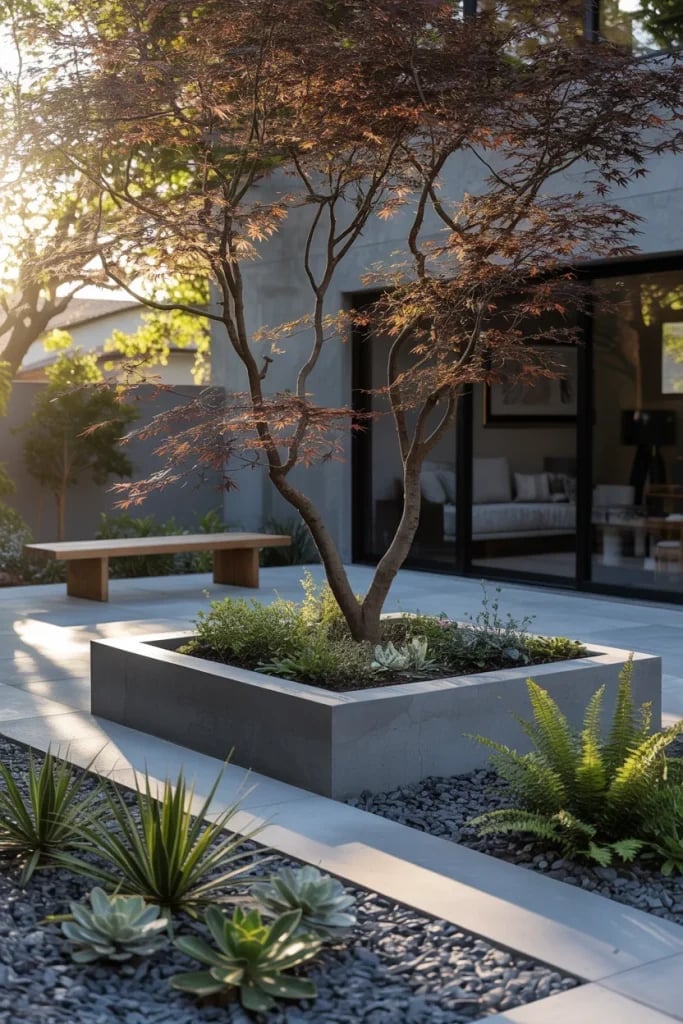
A big terra-cotta pot is the usual go-to for a garden statement, but concrete holds its own with a cooler, more grounded presence. Here a large square concrete planter sits at the center of the garden, anchored by a striking Japanese maple whose red leaves break up all the grey and green. The planter does not compete with the plants inside it. Around it, a simple wooden bench and low ferns keep the layout open rather than crowded. The palette stays restrained: concrete, stone, wood, and the natural brown of the soil. That limited material mix is what makes the space feel deliberate rather than thrown together. A single oversized piece like this planter defines the whole garden without needing much else.
07 / 39Add a Modern Water Feature to a Tiered Garden
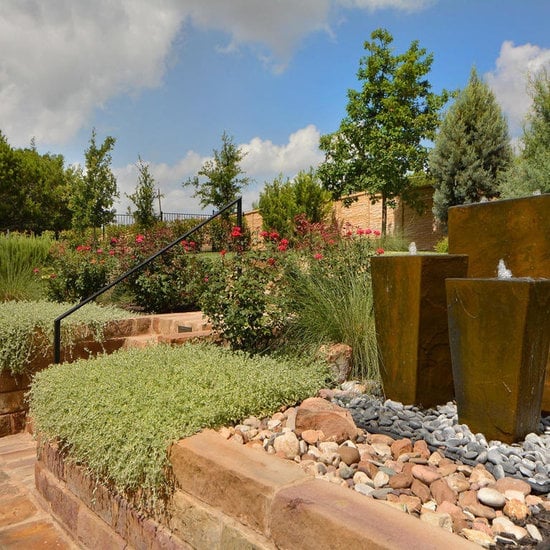
The water feature here is set into a tiered garden, with stone steps leading up past brick-edged beds full of roses. The sound of moving water changes how the whole garden feels, even in a traditional layout. A plug-in fountain or a recirculating pump assembly can be installed without breaking up existing brick or stonework. That makes it a solid option for anyone who wants the sensory lift of running water without a permanent renovation. The tiered structure already directs the eye upward, so placing the water feature near the middle of the slope keeps the visual weight balanced.
08 / 39Create a Modern Gravel Garden with Angular Pathways
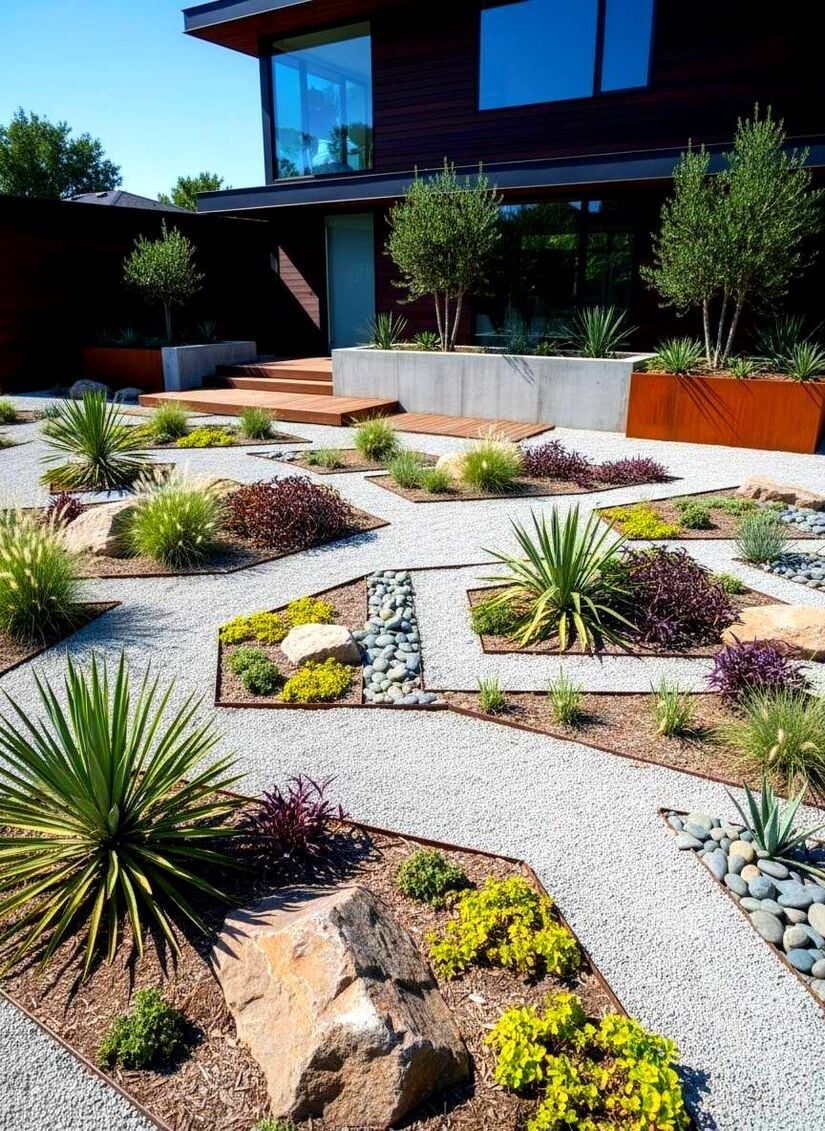
This front garden does not waste space on a lawn. Angular gravel pathways cut through the yard in clean lines, leading the eye past geometric planters, large boulders, and specimen plants. The gravel sits in a warm grey tone that plays well against the rust-colored corten steel planters and the yellow accents in the foliage. The layout is the whole point here. Straight-edged paths and raised beds create a strong grid that keeps the garden looking neat with minimal upkeep. Gravel needs occasional raking to keep the edges crisp, but it drains well and does not require mowing or irrigation. For a front yard that gets steady foot traffic, this is a low-stakes way to go modern.
09 / 39Highlight Your Entryway with a Large Tree and Stone Facade
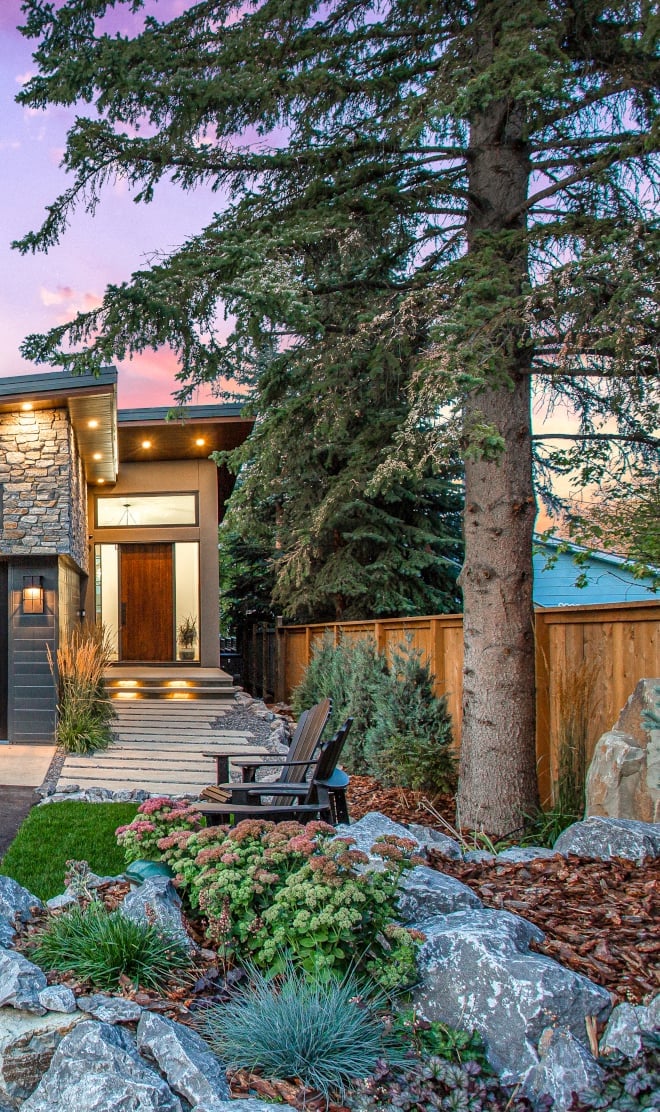
Can a single tree make your house look more established? Yes, if you place it close to the entrance. In this modern front yard, a large tree sits beside a stone facade and a warm wooden door, with a concrete pathway leading up to the house. The tree softens the hard edges of the stone and glass without blocking the entryway. The palette here is simple: grey stone, brown wood, white accents, and green foliage. That mix keeps the front of the house from reading as too cold or too rustic. The tree itself is the anchor. Choose a variety that stays proportionate to the house over time. A fast-growing species might outgrow the space and require removal down the line. A slower grower keeps the balance intact for years.
10 / 39Design a Tranquil Garden with a Cascading Stone Water Feature
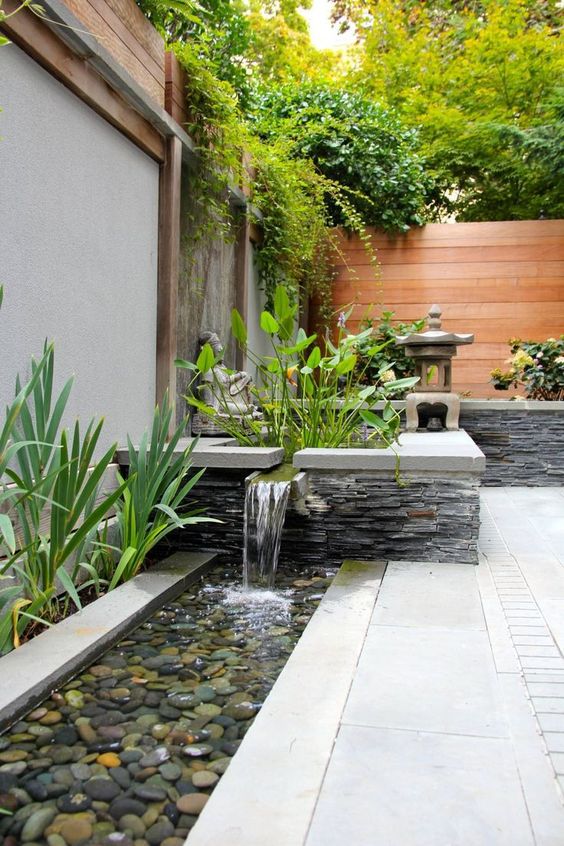
This compact garden uses a cascading stone water feature as its focal point. Water spills over stacked stone into a small pond, with a wooden fence and a stone wall enclosing the space. The sound and movement of the water replace the need for a lot of plants or decor. The palette stays tight: grey stone, wood tones, and green foliage. In a small yard, a water feature this size adds presence without taking up floor space. The key is proportion. The waterfall should feel like part of the garden, not an oversized installation dropped into a corner. A recirculating pump keeps the water moving without wasting resources.
11 / 39Organize Your Garden with Multiple Wooden Raised Beds
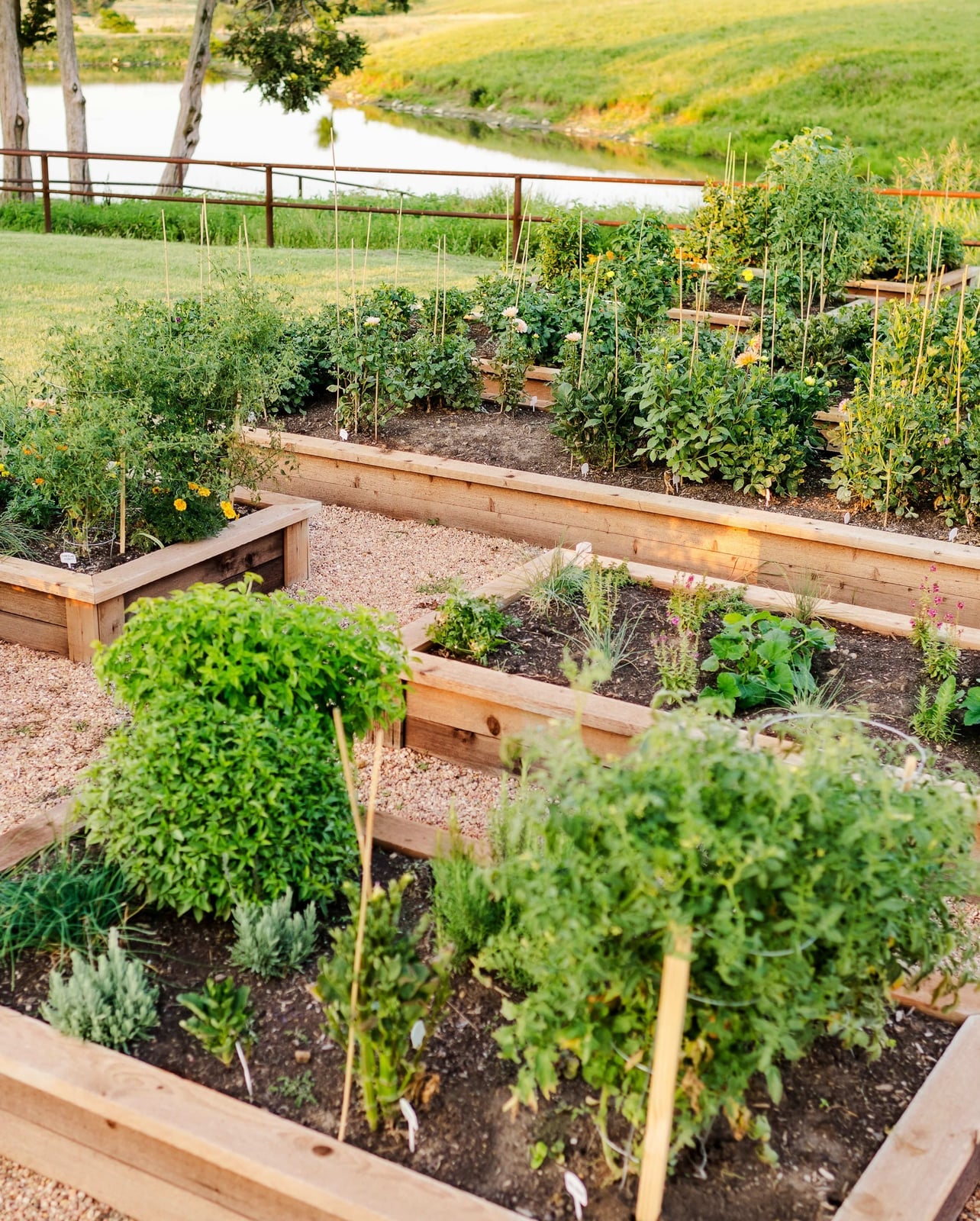
For a large garden, break the space into clear zones with structure. Multiple rectangular wooden raised beds create a grid of planting areas separated by clean gravel paths. The wood tones warm the green of the plants and the beige of the gravel, so the garden feels organized without being stark. The beds sit at a comfortable height for tending vegetables or flowers, and the gravel between them drains well after rain. This layout gives each plant its own home while keeping the whole yard easy to navigate. Evening sun catches the wood grain and makes the garden feel lived in, not just plotted out.
12 / 39Create a Striking Pathway with White Stone and Dark Gravel
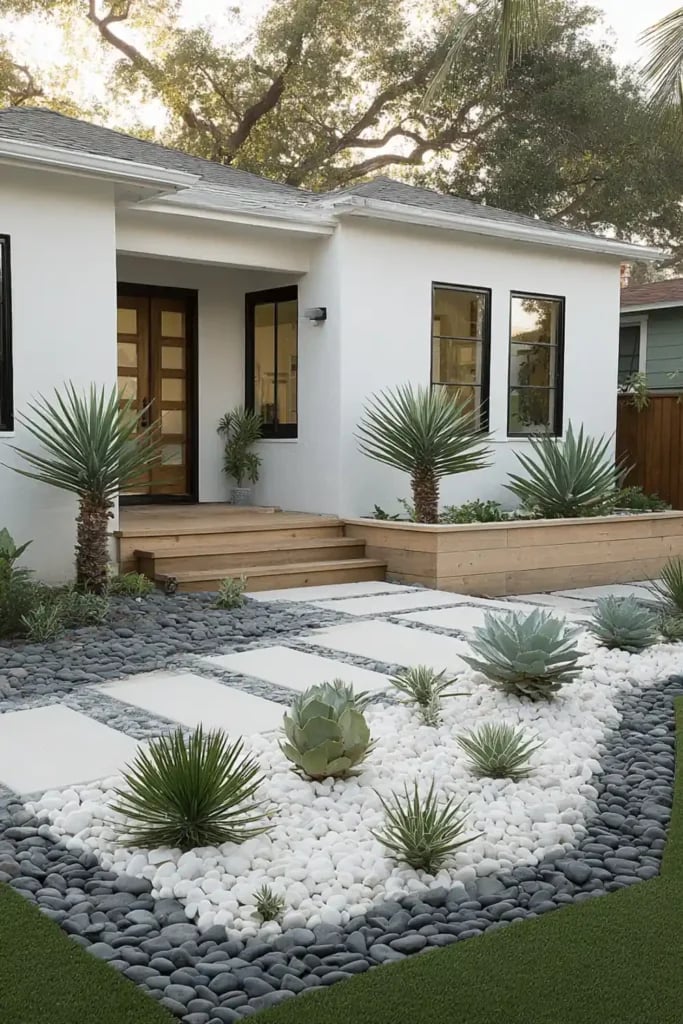
A plain gravel path can feel unfinished, but swapping in a mix of white stone and dark gravel changes the whole front yard. The contrast is immediate: bright stepping stones sit against a deep charcoal base, so the pathway looks deliberate. Large agave and yucca plants anchor the edges, their sculptural shapes softening the hard lines of the stone. Concrete planters repeat the grey of the gravel, tying the palette together. This look suits a modern house where you want the entrance to make a strong first impression. The dark gravel hides dirt well, and the white stones stay clean with an occasional rinse. It is a materials-first approach that lets the ground do the talking.
13 / 39Use Oversized Blue Planters for a Bold Modern Statement
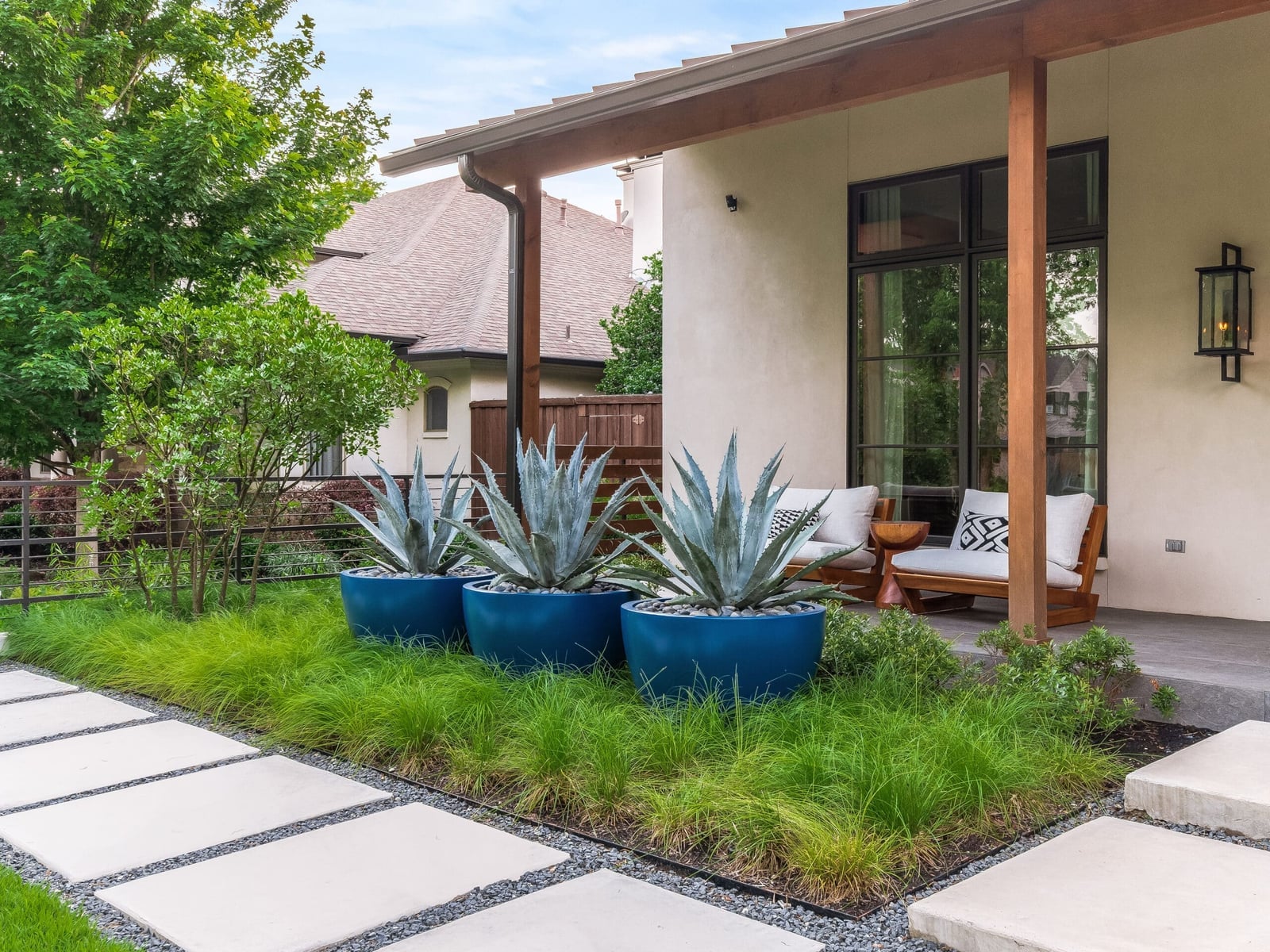
The large blue planters are the first thing you notice. Their scale and color stand out against the cream house facade and the green of the agave inside them, so the patio feels curated. The blue is deep enough to hold its own next to the wood tones of the outdoor seating and the grey of the concrete path. This is a good trick for a garden that needs a focal point without adding a permanent structure. The planters are heavy enough to stay put in wind, and the agave needs minimal water once established. The look is modern but relaxed, with the planters anchoring the whole arrangement.
14 / 39Design a Geometric Pathway with Large Format Concrete Pavers
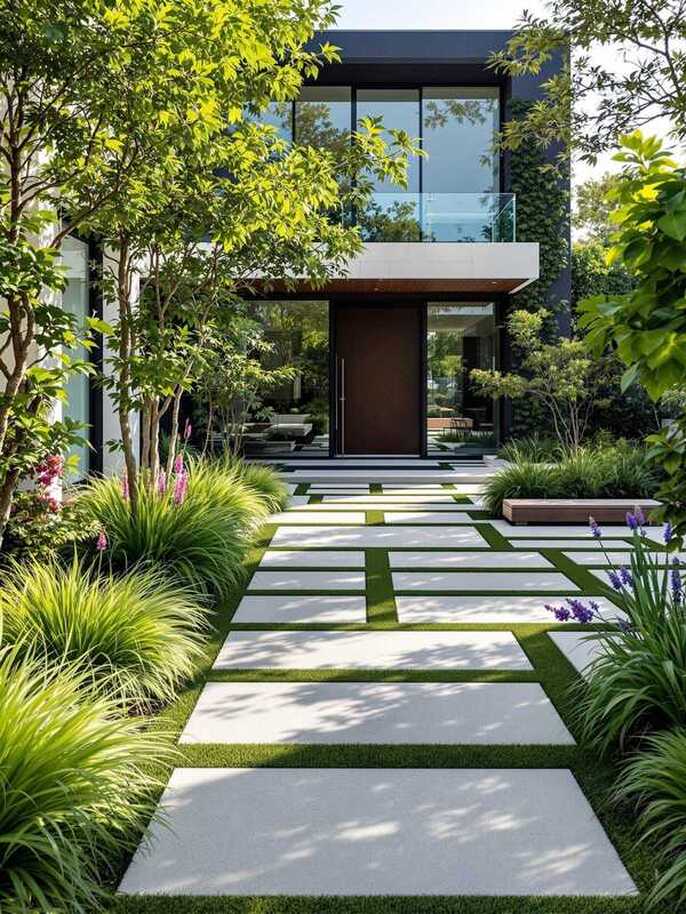
This pathway earns its keep through repetition and scale. Large format concrete pavers form a clean geometric path to the front door, with strips of artificial turf running between them. The grass inlays soften the hard concrete and tie the path to the lawn. Integrated pathway lights sit flush with the pavers, so the entrance stays visible after dark without adding clutter. The house facade picks up the grey of the concrete, and the minimalist planters in black and white repeat the palette. This layout works for a modern front yard where you want a clear, direct route to the door that still feels connected to the garden around it.
15 / 39Create a Compact Courtyard with a Wicker Sofa and Potted Plants
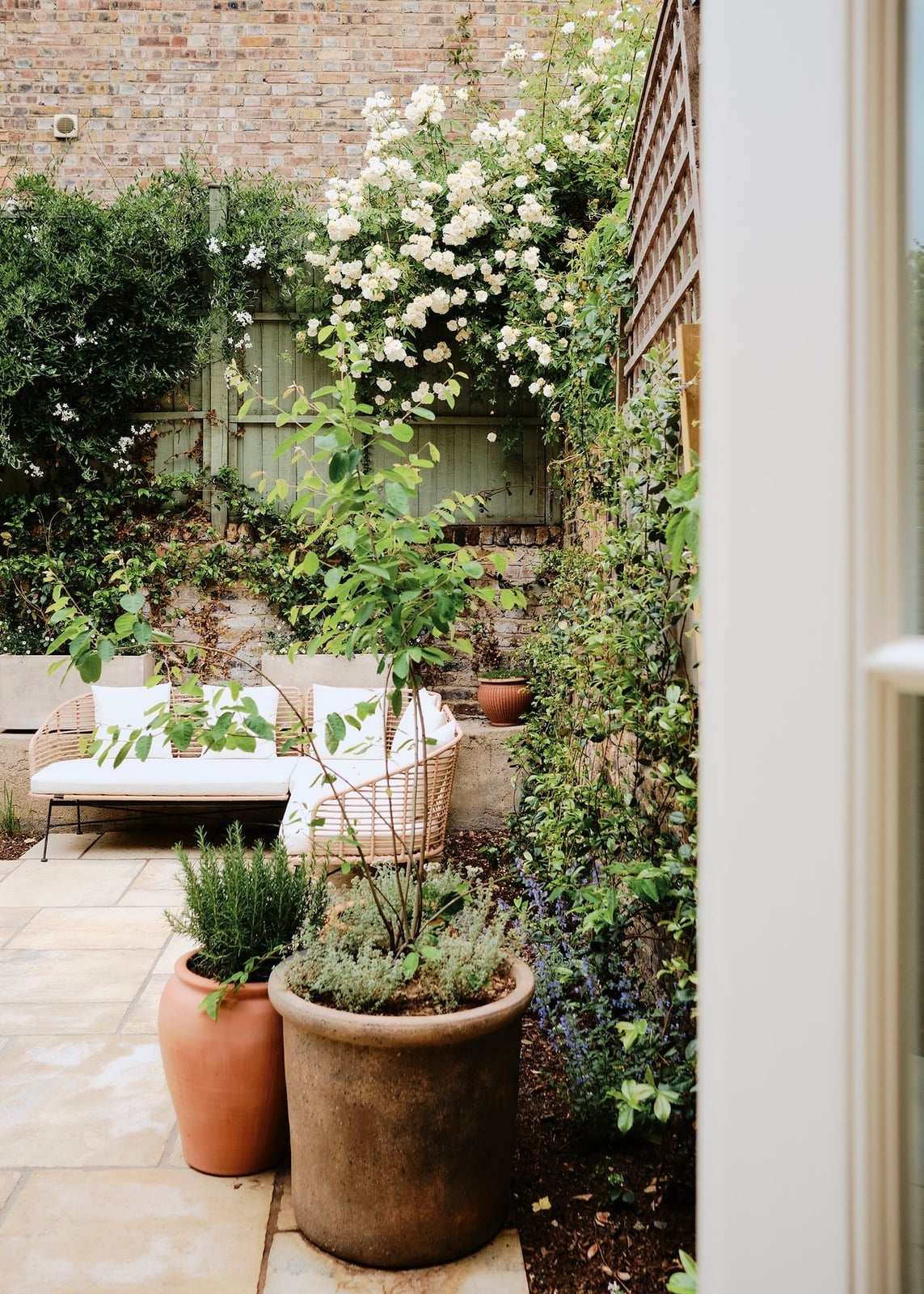
A small courtyard can feel cramped if you try to do too much. The trick is to pick one seating piece and build around it. A wicker sofa in a neutral beige anchors the space without overwhelming it, and it stays comfortable in mild weather. Terracotta pots add warmth and hold climbing roses that soften the brick wall behind them. The stone paving keeps the ground neutral, so the green of the plants and the terracotta of the pots get to stand out. The wall does double duty as a backdrop and a support for the roses, which climb up and create a living screen. This setup gives you a sitting area that feels private and intentional, even in a tight footprint.
16 / 39Combine a Stone Patio with a Lawn and Gravel Garden Beds
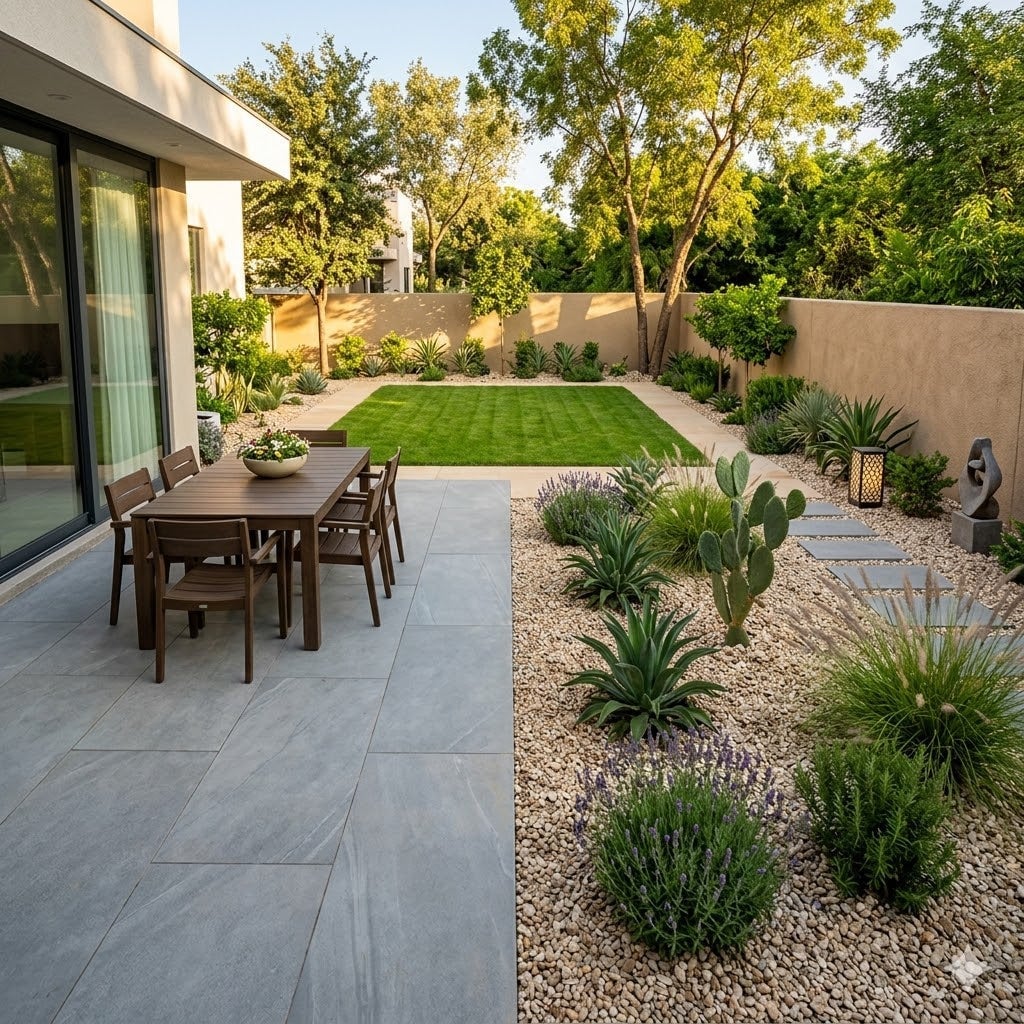
This garden uses three distinct ground surfaces in one open layout: a stone patio with a dining set, a central lawn, and gravel beds. The contrast between smooth stone, soft grass, and loose gravel defines each zone without adding walls or borders. For a similar layout, keep the palette tight. Here it is green, beige, grey, and terracotta. A few warm-toned pots on the patio tie the gravel beds back to the dining area. Daylight and a single lantern handle the lighting, which keeps the setup practical for evening meals without needing permanent fixtures.
17 / 39Introduce a Decorative Tile Pathway in a Naturalistic Garden
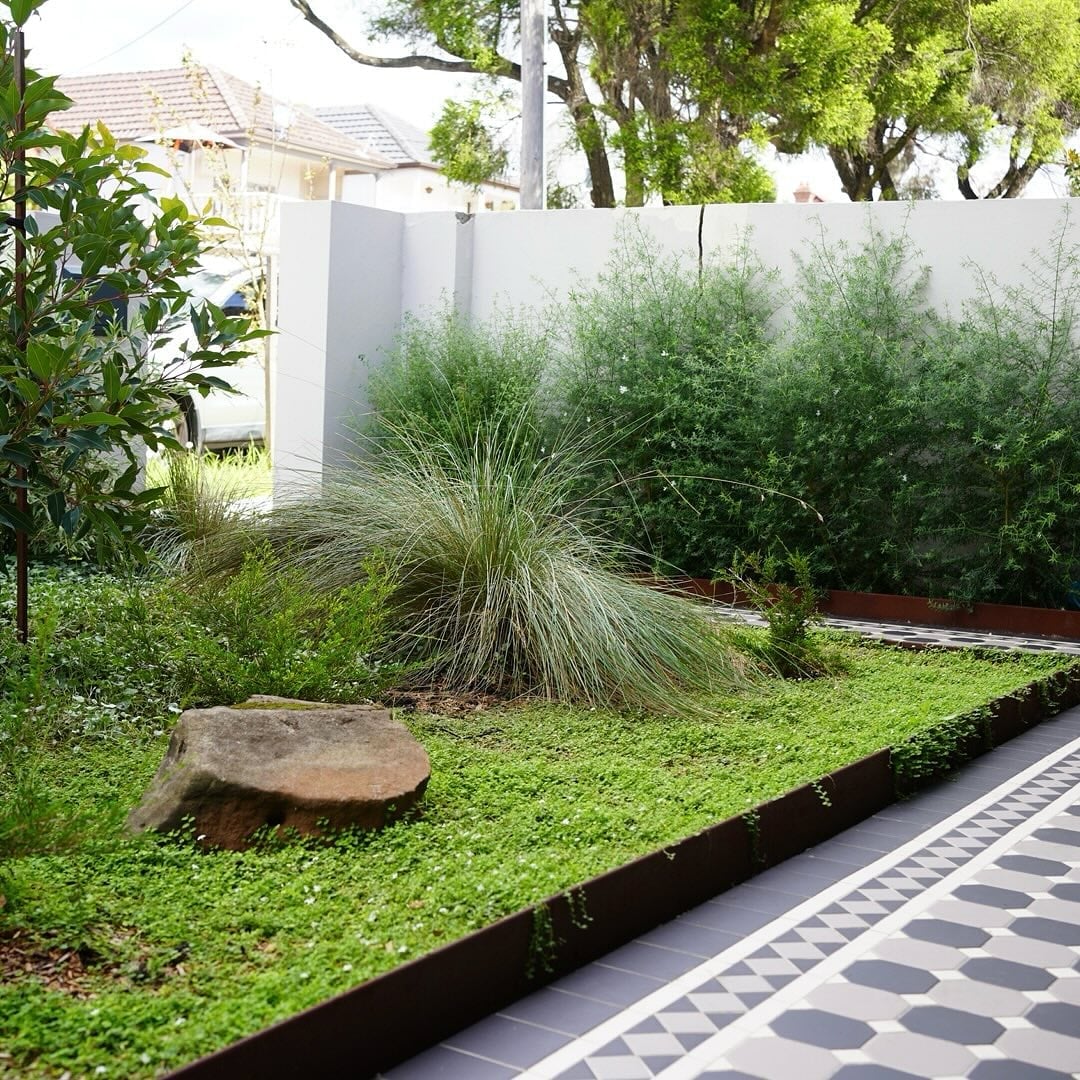
Let the path guide the eye, not the planting. Here a decorative tile pathway with a geometric pattern curves through layered beds of ornamental grass and low ground cover. The tiles add a structured note against the loose, organic growth around them. For renters, this is a smart swap. Instead of pouring concrete or setting permanent stone, lay tiles directly on a prepared gravel base. They sit in place without mortar, so you can pull them up and take them to your next home. The green, grey, and brown palette keeps the tile from competing with the plants.
18 / 39Integrate a Modern Shed with Raised Wooden Planters
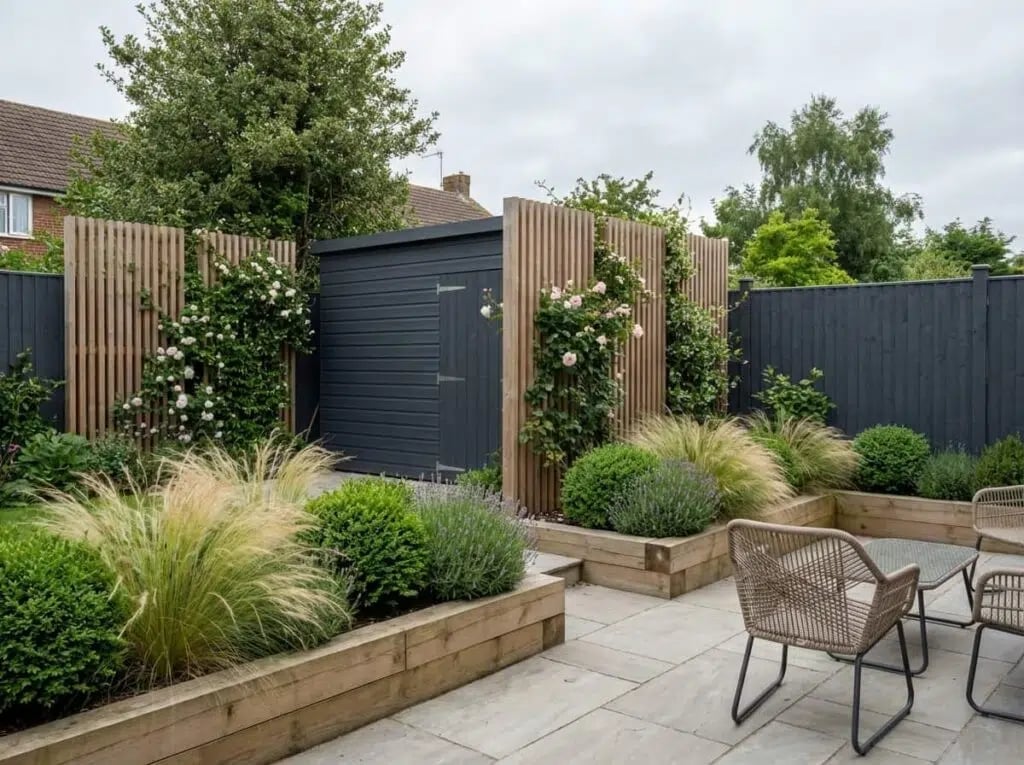
A modern shed with raised planters functions as a dedicated potting station, not just storage. The difference is in how you arrange the space around it. Here multiple raised wooden beds sit in a paved patio area with a rattan chair and an outdoor dining set nearby. The shed itself uses vertical wood screening that echoes the planter material, which makes the whole zone feel like one designed feature, not a shed dropped into a corner.
19 / 39Enhance a Country Garden with a Curving Gravel Pathway
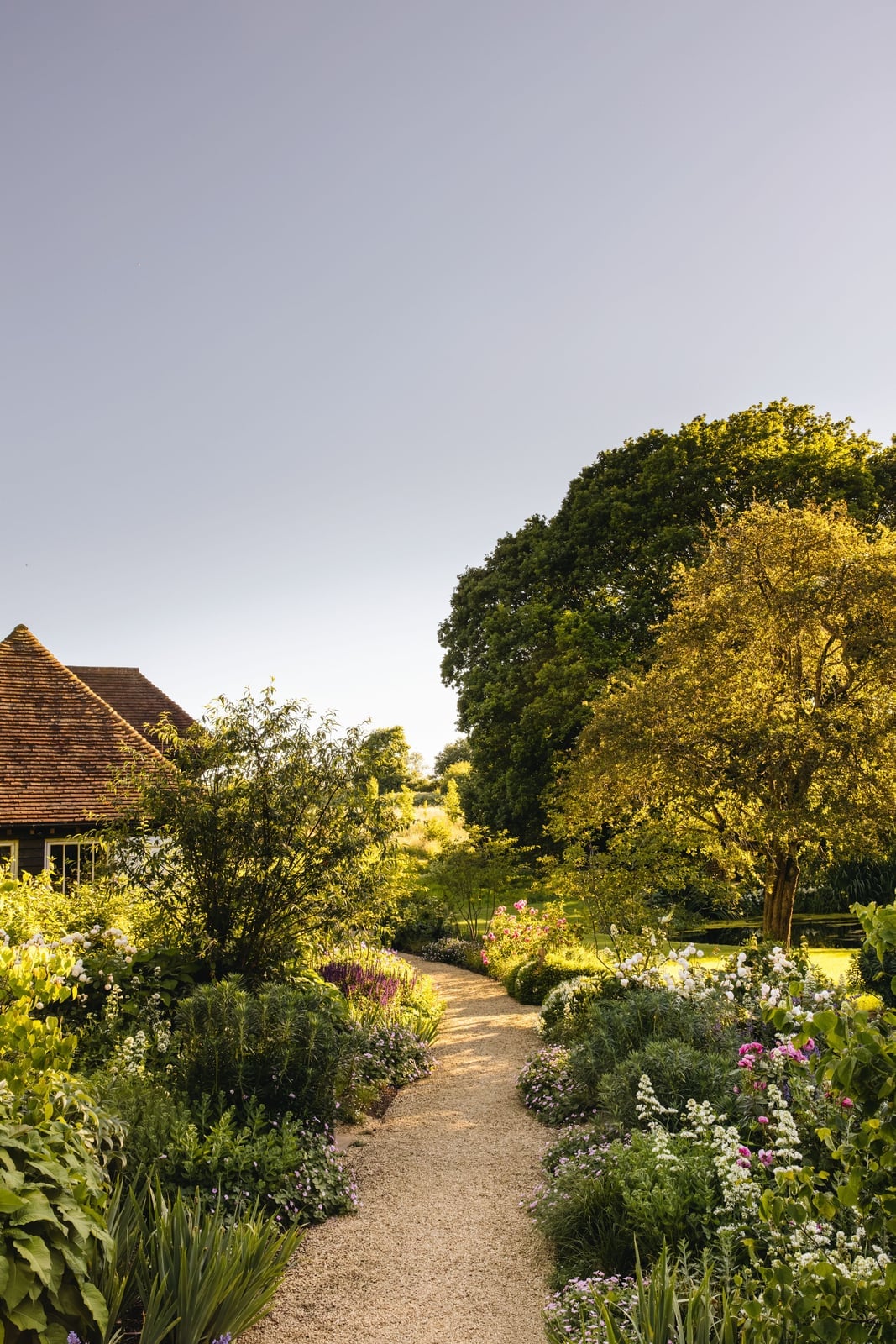
A curving gravel path through mature trees catches golden hour light in a way a straight walkway never could. The warm sunlight hits the beige gravel and pink accents in the planting, while the trees cast long shadows across the turn. This layout works because the path does not fight the existing garden. It bends around the largest trees and follows the natural slope. A tiled roof building at the far end gives the eye a resting point. The gravel stays stable underfoot when edged with stone or wood, which stops it from spreading into the beds.
20 / 39Feature a Circular Metal Gate in an Asian-Inspired Garden
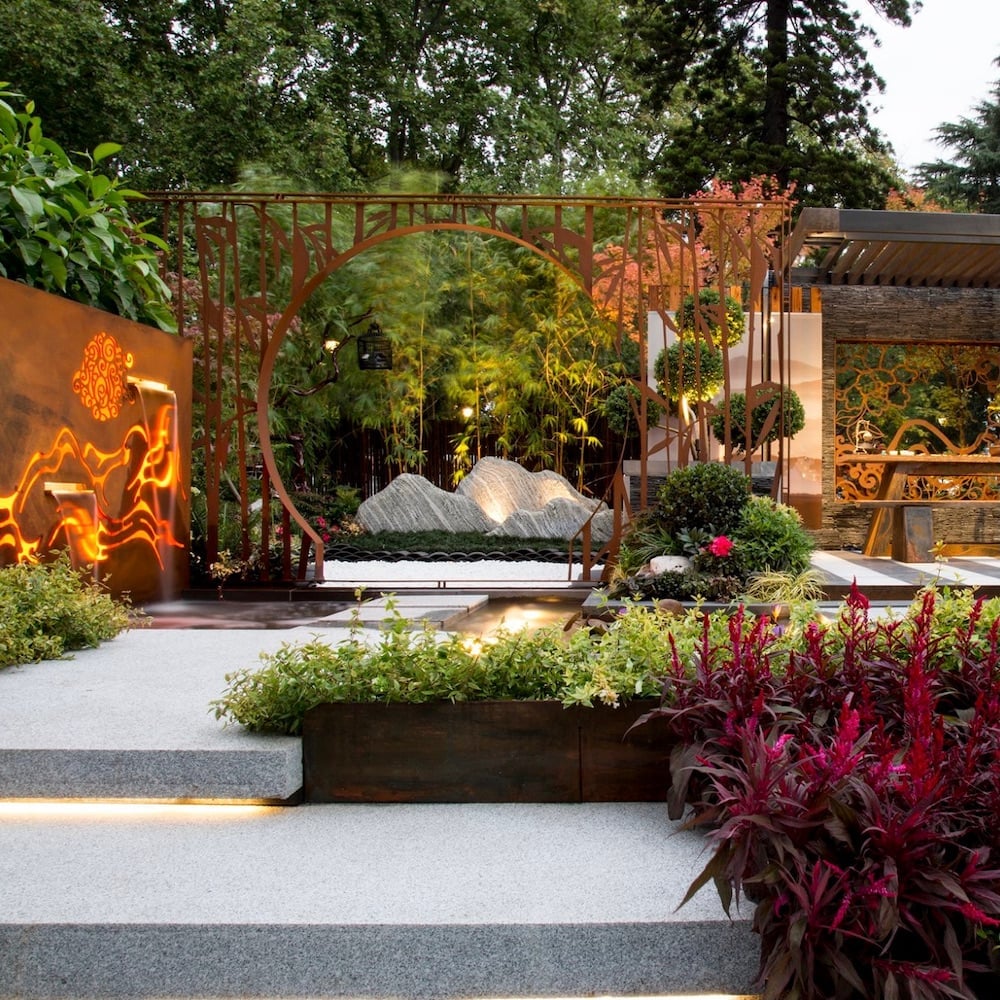
A large circular metal gate anchors this contemporary Asian-inspired garden with a single bold move. The bronze ring sits at the center of the view, with a water feature and stone sculpture placed just beyond it. The circular shape softens the straight lines of the raised concrete planters and gravel pathways. Evening lighting comes from integrated fixtures that wash the gate and water feature in a warm glow. For scale, the gate needs to be tall enough to walk through without ducking, which means it will read as a destination rather than a small accent. The red and green planting around the base keeps the bronze from feeling too industrial.
21 / 39Add Shade and Style with a Modern Wooden Pergola
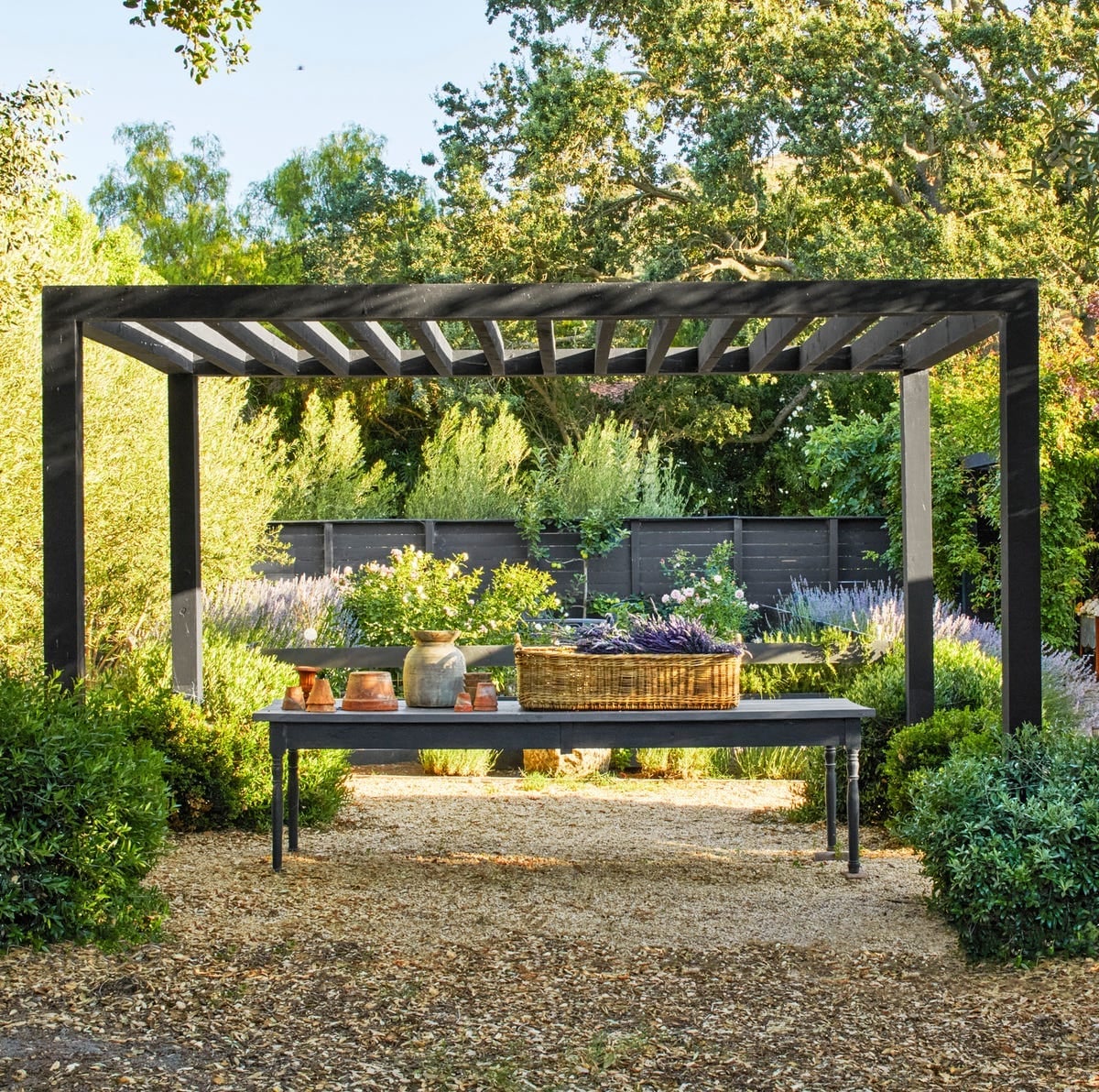
A practical rule for adding a pergola is to treat it as the room ceiling of your backyard. The wooden structure defines the seating area below without closing it in, leaving the sides open to the garden. A large sectional sofa and a coffee table turn the space into an outdoor living room, while string lights add a warm glow for evenings. A ceiling fan keeps air moving on still days, making the spot usable even in warmer weather. The mix of wood, stone pavers, and wicker keeps the look natural and connected to its surroundings.
22 / 39Embrace Midcentury Modern with Organic Stone Stepping Stones
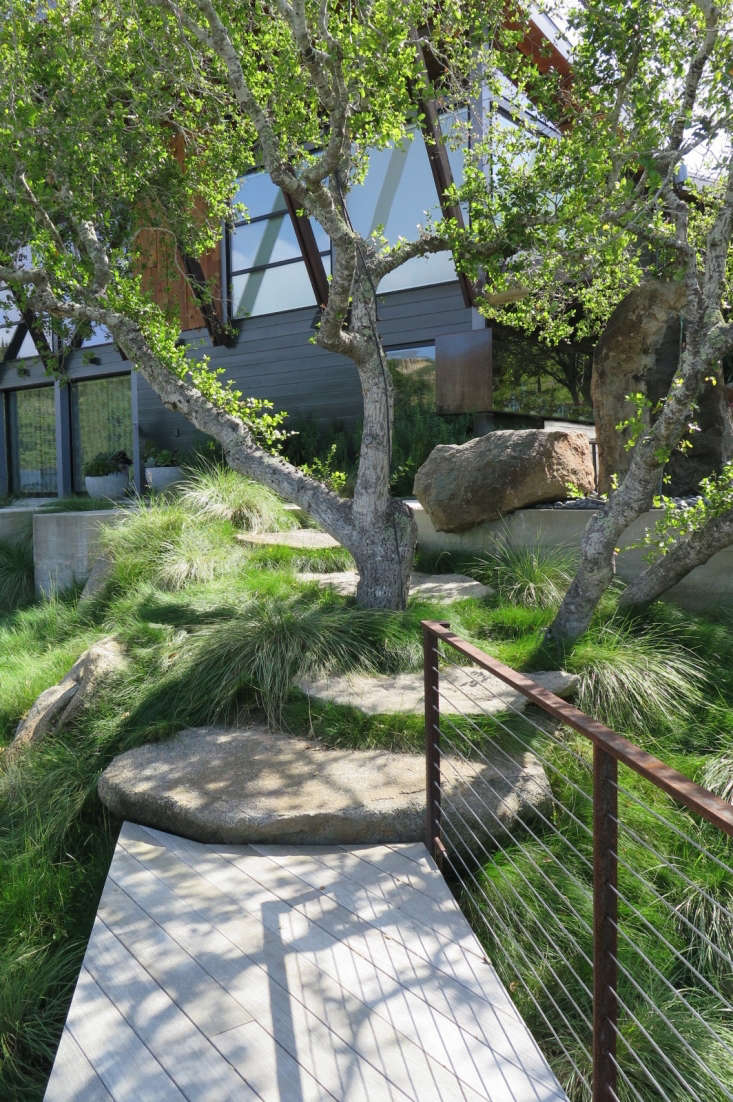
A midcentury modern garden uses organic shapes to soften hard materials. Large concrete stepping stones are set in a random pattern through the grass, with natural stone boulders placed like sculpture among them. Ornamental grasses and the dappled light from mature trees keep the scene from feeling too rigid. The path leads the eye through the garden without forcing a straight line, which is the whole point of the look.
23 / 39Create a Welcoming Approach with a Wide Concrete Paver Walkway
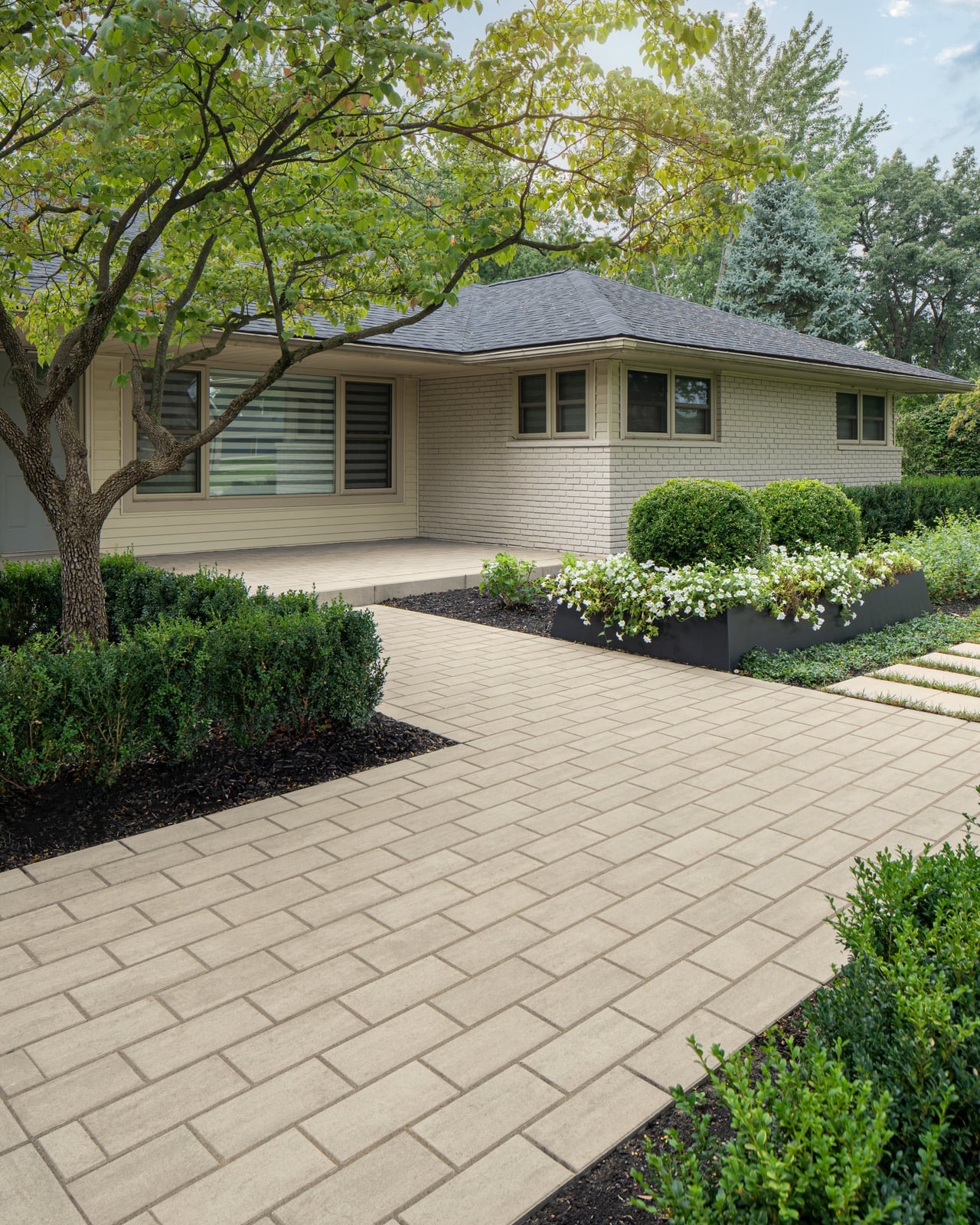
A front walkway should be wide enough for two people to walk side by side. The beige concrete pavers here stretch from the street in a straight line, bordered by dark mulch and manicured shrubs. The generous width makes the approach feel open, while the consistent paver color keeps the look tidy. Gravel edges add a subtle texture break without stealing attention from the main path.
24 / 39Design a Multi-Level Garden with a Large Stone Pathway
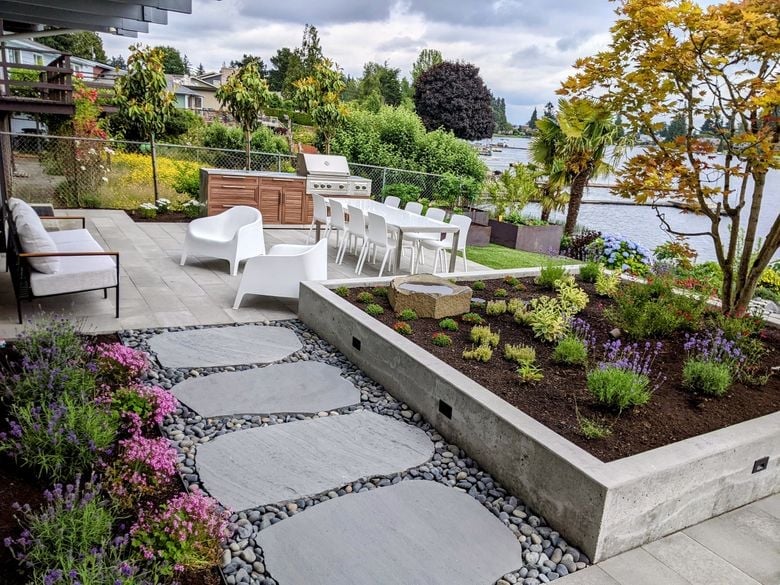
A multi-level garden can feel disconnected, but a large stone pathway solves that by tying the zones together. The wide stone slabs lead from the upper planting beds down past a concrete retaining wall to a lower dining area with a grill. The path gives each level its own purpose while making the whole yard feel like one room. Sunny daylight highlights the grey stone and the green, beige, pink, and blue plants along the edges, so the route between zones becomes part of the experience.
25 / 39Achieve a Modern Naturalistic Look with a Curved Pathway and Lawn
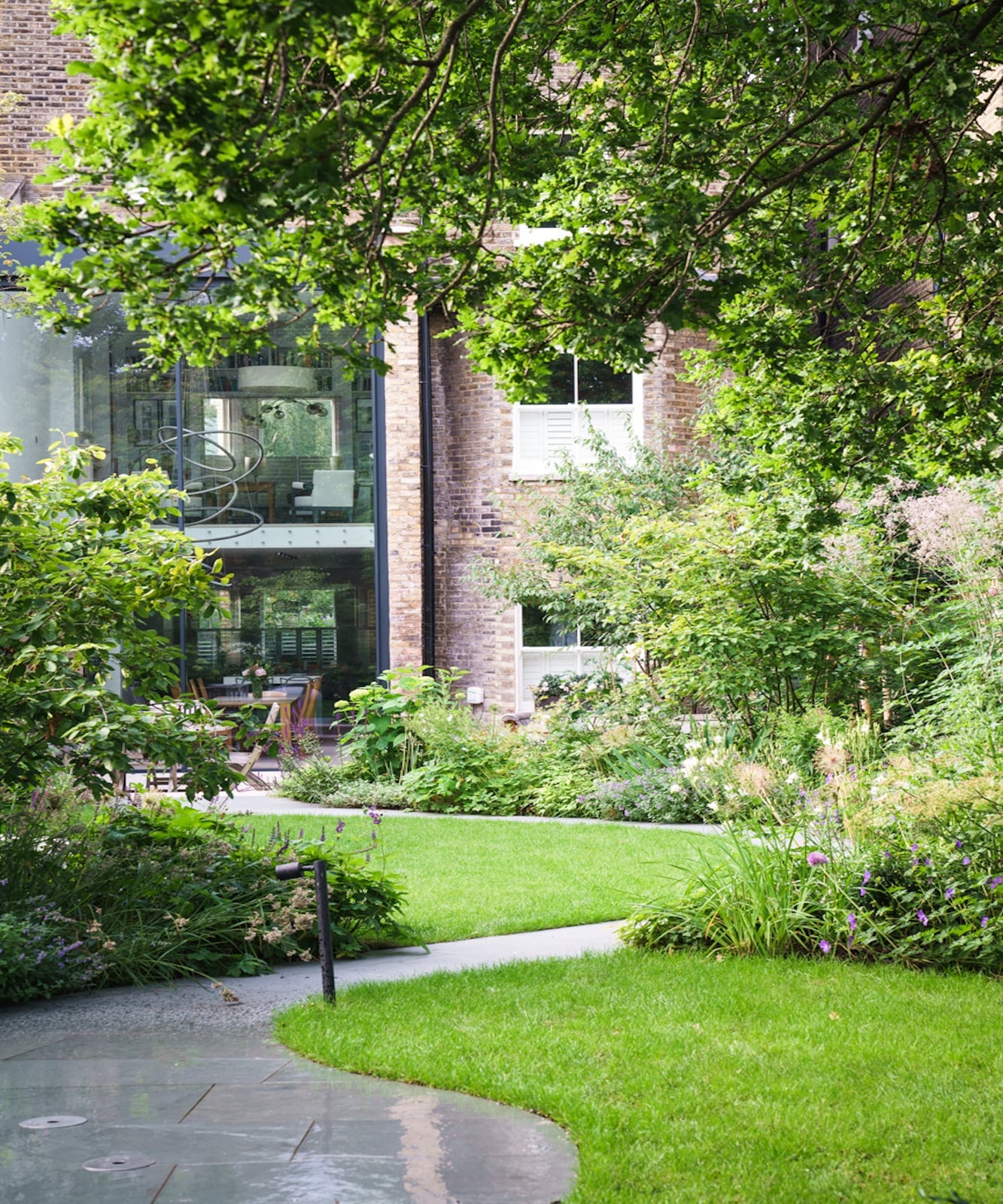
A curved pathway leading to a modern house sets a relaxed tone before you even step inside. The soft line of the path breaks up the manicured lawn, while garden beds in greens and purples soften the grey stone. The curve tells the eye to slow down, which is the opposite of a straight walkway. It is the kind of design that feels natural but is carefully planned.
26 / 39Add Charm with a Rustic Wooden Greenhouse
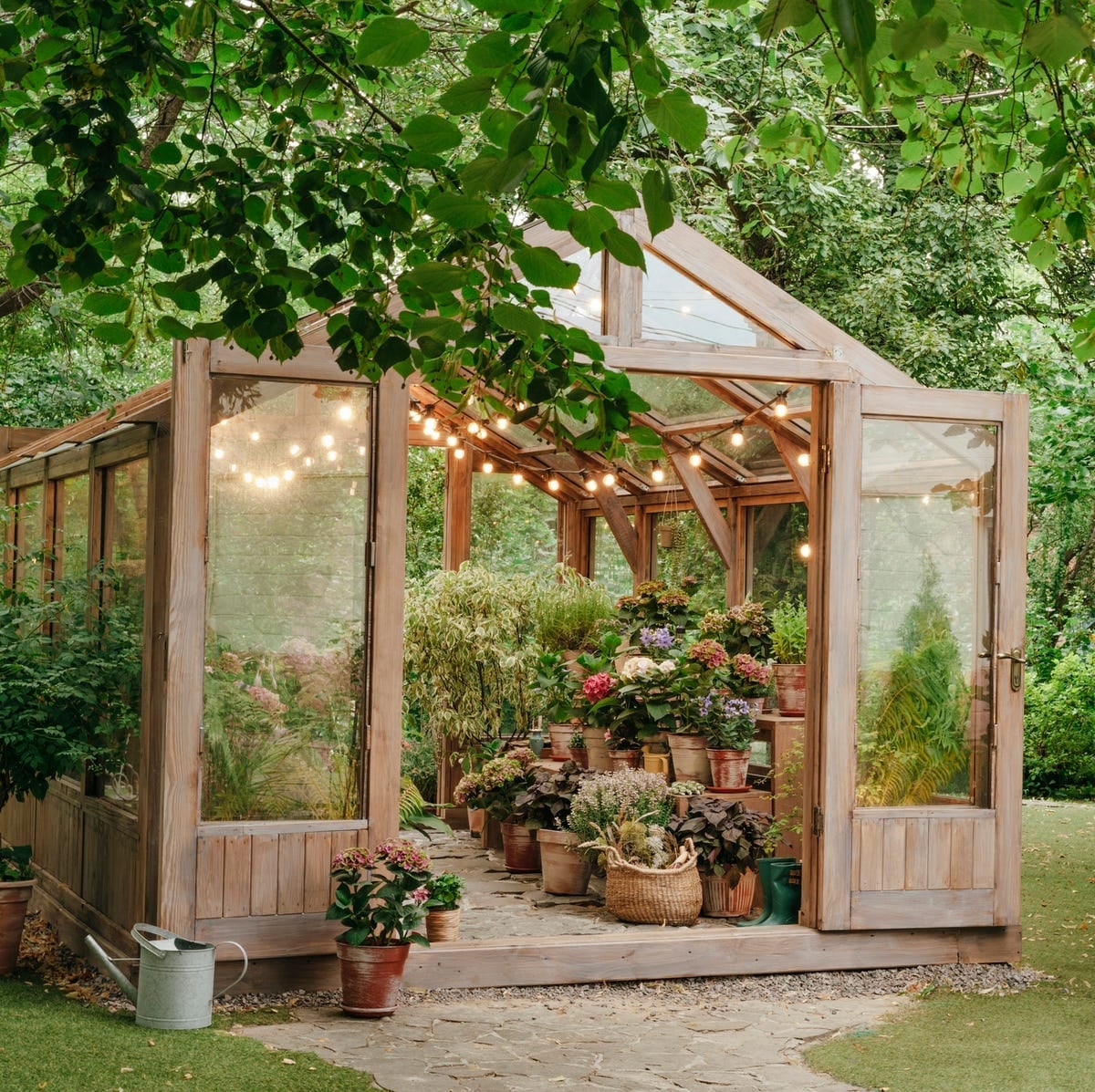
A rustic wooden greenhouse works best as the garden’s focal point, and this compact version with string lights proves the point. The wood frame and glass panels keep the structure feeling light, while terracotta pots and climbing plants in pink and blue soften the edges. This is a cottage garden look that leans on materials rather than perfect symmetry. The greenhouse anchors the space, and everything else, the packed earth path, the metal watering can, the low hedges, plays a supporting role. For renters, a freestanding wooden greenhouse like this is a removable upgrade that adds immediate character without altering the ground beneath.
27 / 39Create a Geometric Garden with Stepping Stones and Artificial Turf
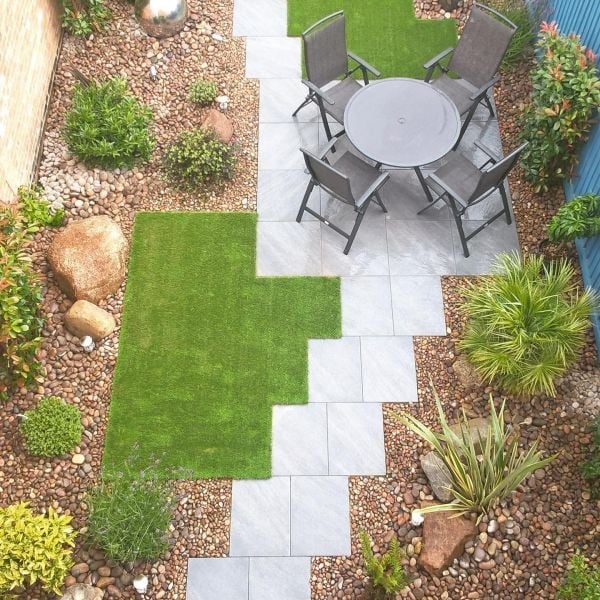
Work with squares and rectangles in a small space to make the yard feel planned rather than cramped. This compact garden uses large grey stepping stones set into gravel, with patches of artificial turf filling the gaps in a clear grid. A round dining table and chairs sit on the main stone area, breaking up all those straight lines with a soft curve. The palette stays restrained, grey, green, beige, so the geometry reads clearly.
For renters, artificial turf and gravel are both surface-level changes that roll out or rake away when you leave. The stepping stones sit on the gravel rather than being mortared in, which means the whole layout can shift or come apart without a trace. No digging, no permanent marks.
28 / 39Incorporate Undulating Grass Mounds with Concrete Pathways
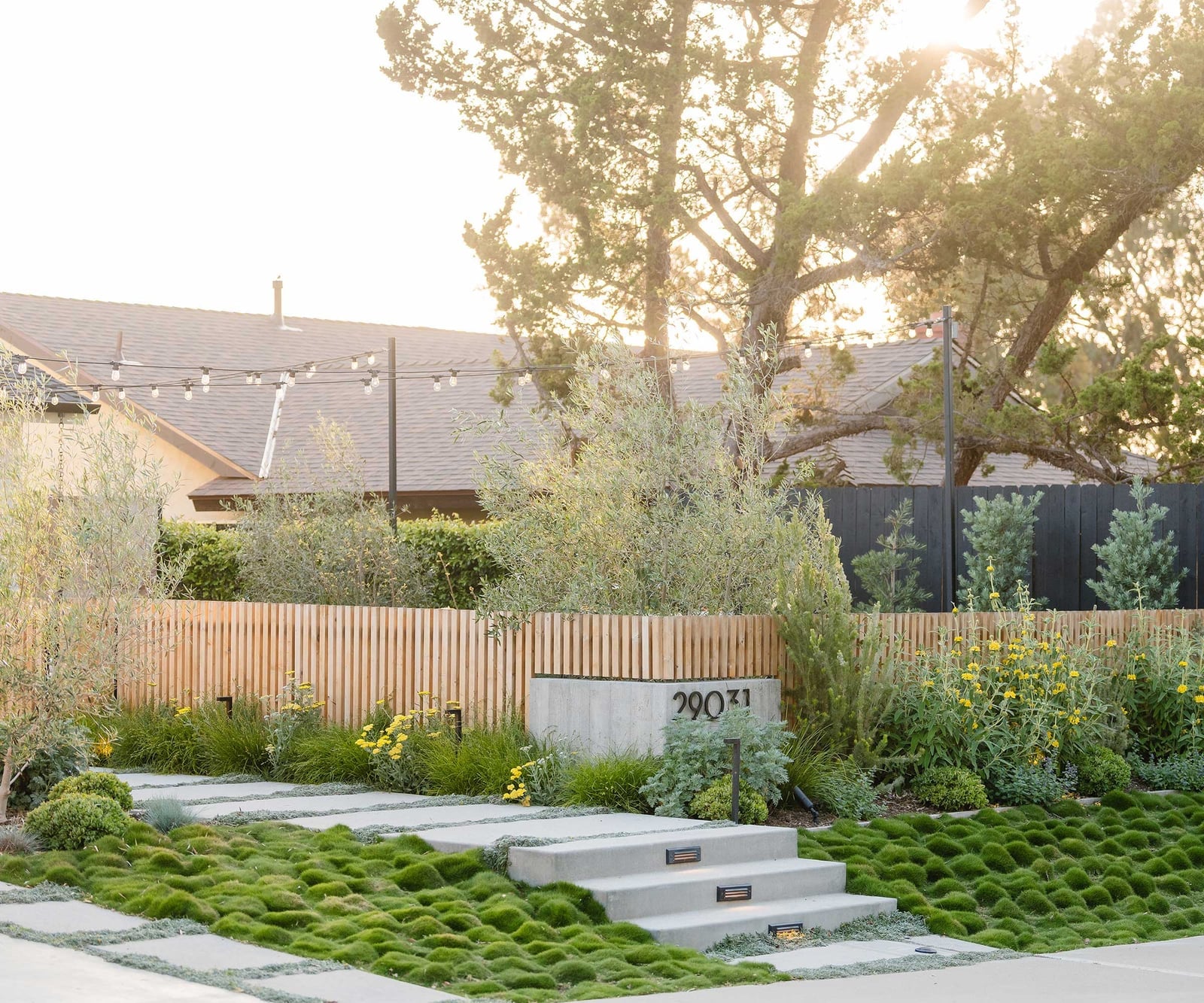
The grass here is not a flat lawn but a series of sculpted mounds that rise and fall between concrete walkways and steps. That simple shift, turning ground cover into topography, gives a modern front yard a sense of movement without adding a single plant. A low wooden fence and subtle step lighting keep the look clean at night. It is a variation on the standard front path that trades straight borders for organic curves, and it works because the concrete stays hard and geometric while the grass softens everything around it.
29 / 39Line Your Pathway with Tall Evergreen Trees for a Formal Look
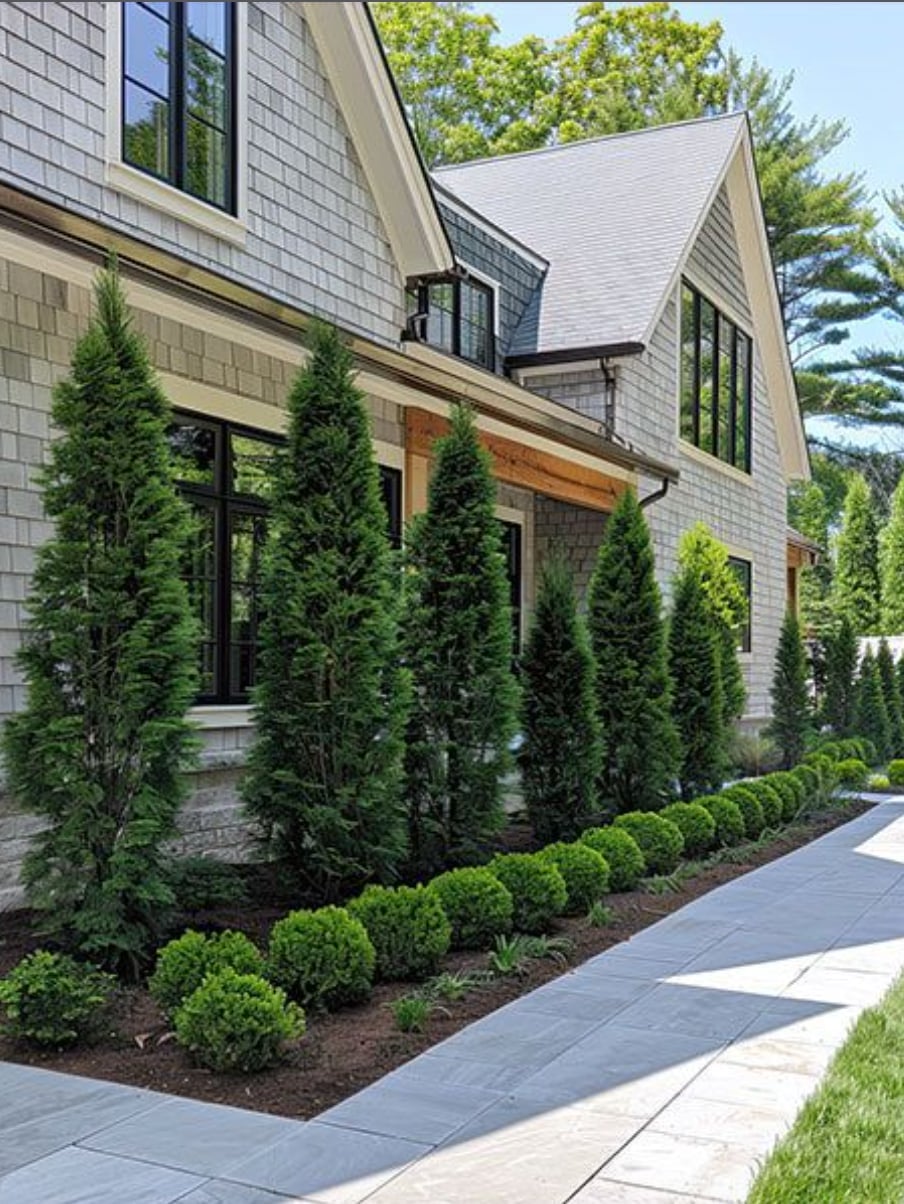
For a formal entry, repeat the same tree at regular intervals along the walkway. Here, tall evergreens stand in a straight row, their narrow profiles framing the stone path and echoing the vertical lines of the house behind them. Manicured hedges at knee height fill in the base, creating a layered green wall that guides the eye straight to the front door. The palette stays simple, green, grey, white shingles, so the repetition of the trees does the work. For year-round structure, evergreens hold their shape when deciduous trees go bare.
30 / 39Add a Contemporary Water Feature with Corten Steel
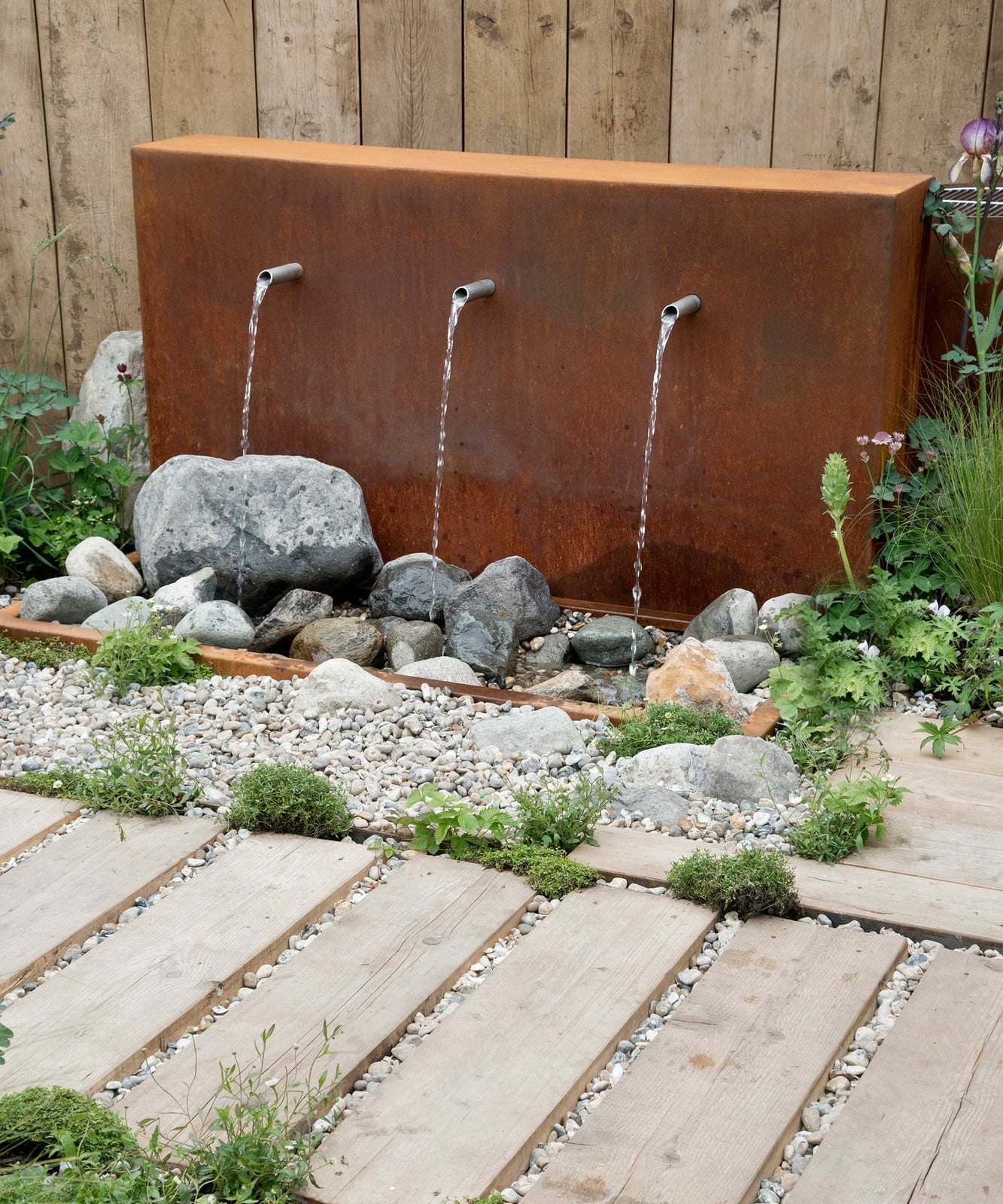
A corten steel water wall reads differently than a stone fountain or a classic birdbath. The rusted finish is warm rather than industrial, and it shifts with the weather, darker when wet, lighter in full sun. This rectangular feature sits at the end of a wooden walkway, with large rocks and gravel at its base to anchor it to the ground. The water sheet falls straight down, so the sound is steady but not loud. For the rest of the garden, keep the palette muted: grey stone, green foliage, and the rust of the steel become the accent.
Corten steel develops its patina over weeks and needs no paint or sealant. The material is a practical choice for a feature that sits outdoors year-round, because the rust layer protects the metal underneath. Just make sure runoff from the steel does not stain nearby concrete or stone, a drip edge or gravel bed handles that.
31 / 39Create a Colourful Country Garden Path with Lavender
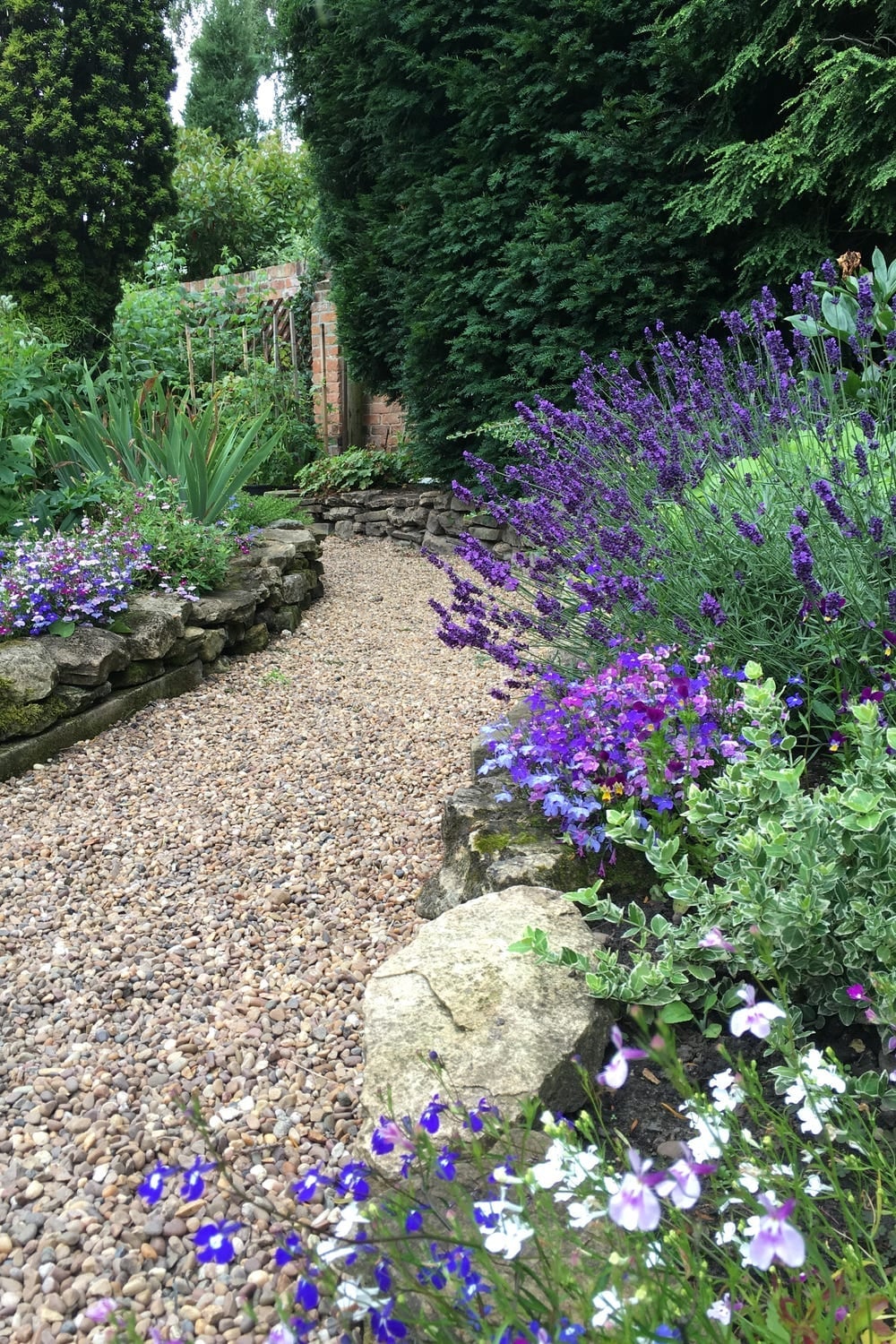
A gravel path lined with lavender and flowering plants offers one of the simplest ways to add color to a country garden. The stone border keeps the loose gravel from spilling into the beds, while the purple and green palette softens the beige and grey of the stone. Plant lavender where it will get full sun and good drainage; it thrives in lean soil and rewards you with fragrance and blooms that return each year. For a similar look in a smaller yard, use a narrower path and compact lavender varieties. The key is keeping the edge defined so the plants look deliberate rather than overgrown.
32 / 39Introduce Vibrant Colours with Raised Planters and a Winding Path
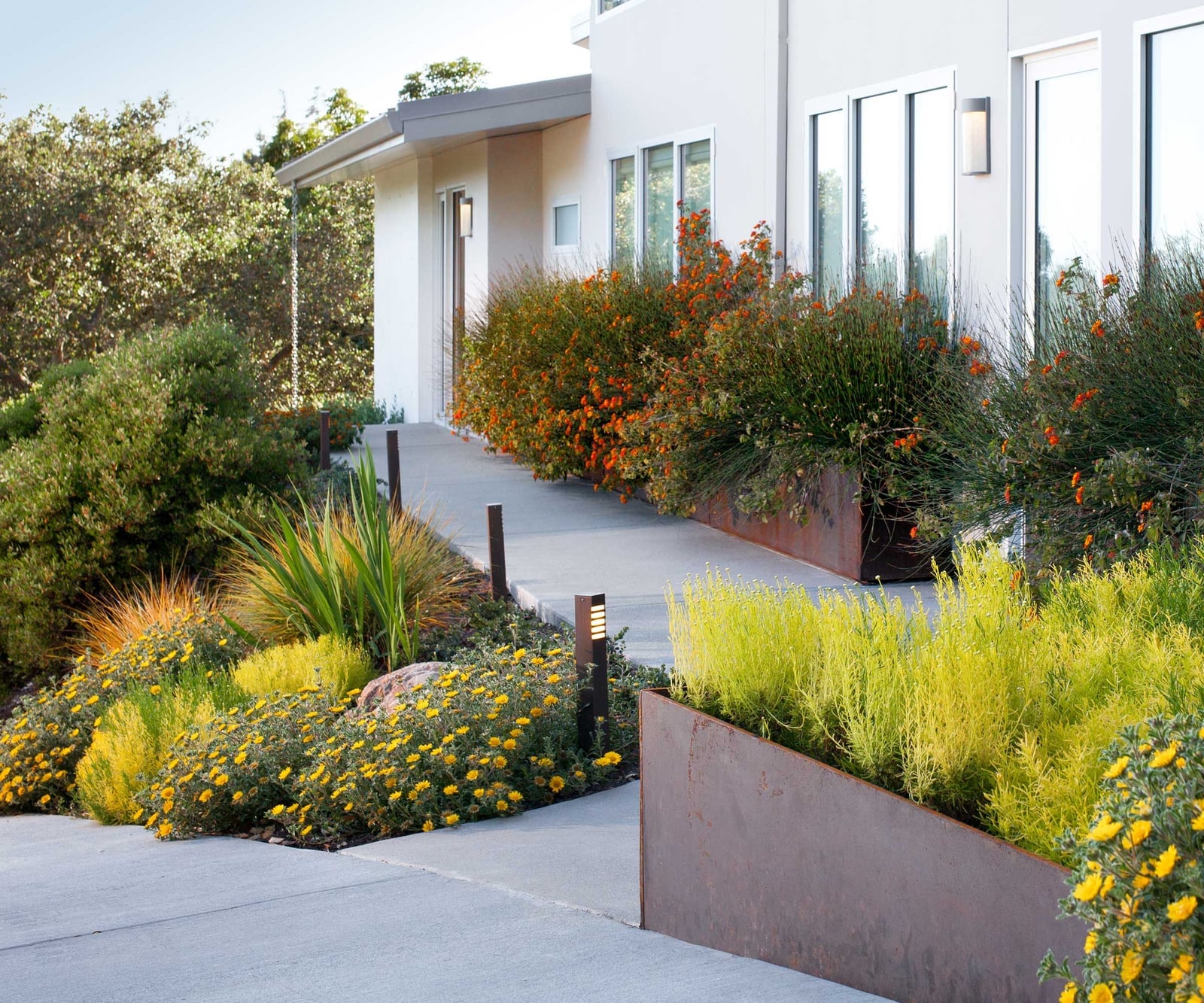
A front yard with raised concrete planters in yellow and orange proves that modern landscaping does not have to be all grey and green. The winding path of stone and gravel guides the view across the space, while the warm plant colors stand out against the cool concrete and metal beds. Integrated path lights along the edge make the planters visible after dark without flooding the yard. Choose one or two warm accent colors and repeat them in the plantings instead of mixing many shades. The raised beds also make the garden feel roomy and keep the pathway clear of stray foliage.
33 / 39Showcase Textured Stacked Stone in a Garden Retaining Wall
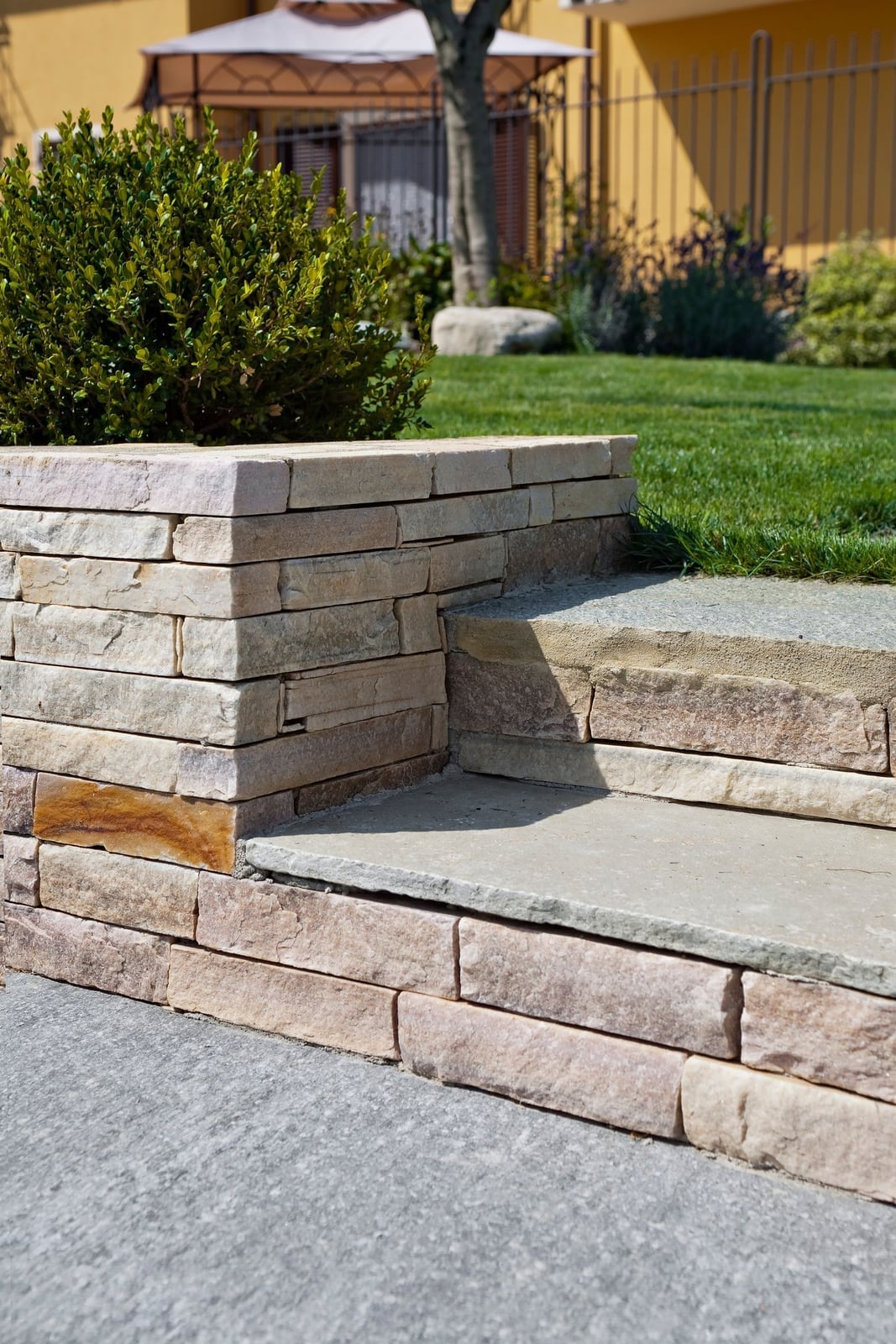
A flat concrete retaining wall does the job, but a stacked stone wall does the job and adds texture. The tan and beige stones catch the light differently depending on the angle, so the wall changes character throughout the day. Stone steps built into the same material carry the look up the slope and make the transition between levels feel natural rather than abrupt.
For a retaining wall under three feet, dry-stacked stone (no mortar) works well in mild climates and allows water to drain through the gaps. Higher walls need a structural engineer to assess soil and load. The key is choosing stones with flat tops and bottoms so they lock together. The irregular surface also hides minor settling better than a poured wall would.
34 / 39Create a Roomy Outdoor Living Space with a Grey Pergola and Sofa
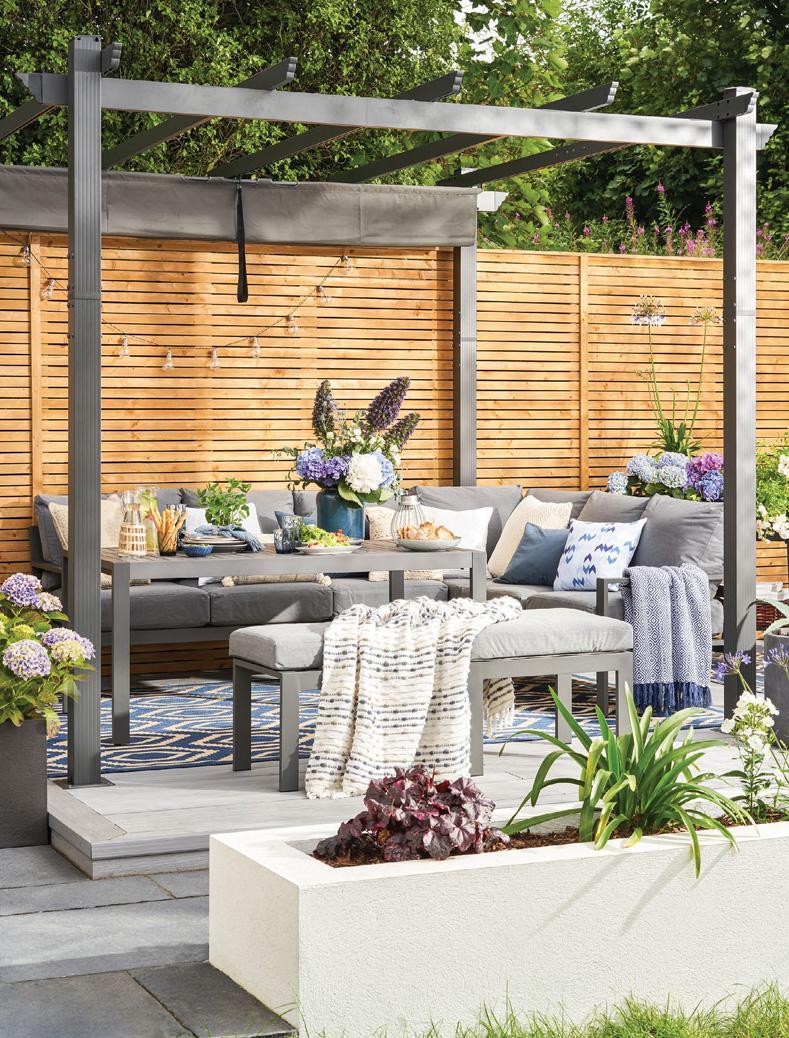
A grey sectional sofa under a matching pergola turns a patio into a true outdoor room. The wood tones of the dining table and the blue of the cushions add warmth without competing with the neutral structure. String lights draped across the pergola beams provide soft illumination for evening use. For a similar setup, choose a pergola that covers at least half the seating area so you have both shade and an open section for sun. A tile floor underfoot helps define the zone and keeps the furniture from sinking into grass or gravel.
35 / 39Add Modern Sculpture with Large Stone Spheres
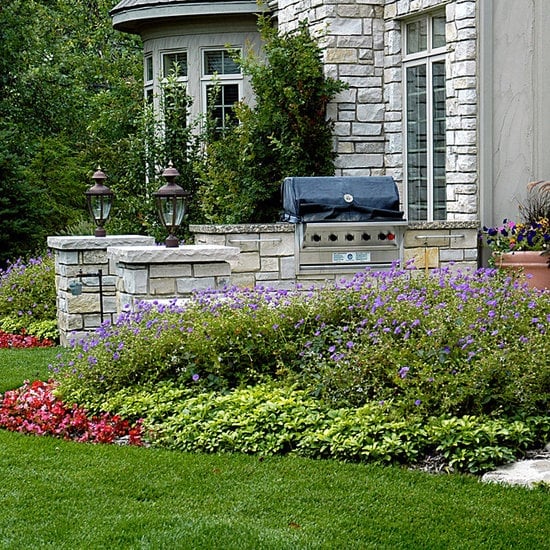
Large stone spheres placed along a gravel path act as sculpture that needs no maintenance beyond an occasional rinse. The grey spheres contrast with the white paving stones and the green of the surrounding plants, creating visual anchors that draw the eye down the line of the garden. A simple bench at the end of the path gives you a place to sit and take in the view. For a similar look, use spheres in odd numbers and vary the sizes slightly so the arrangement feels natural rather than rigid. Path lights set low to the ground keep the spheres visible after dark without washing out the garden.
36 / 39Design a Compact Courtyard with Dark Stepping Stones and Wood Paneling
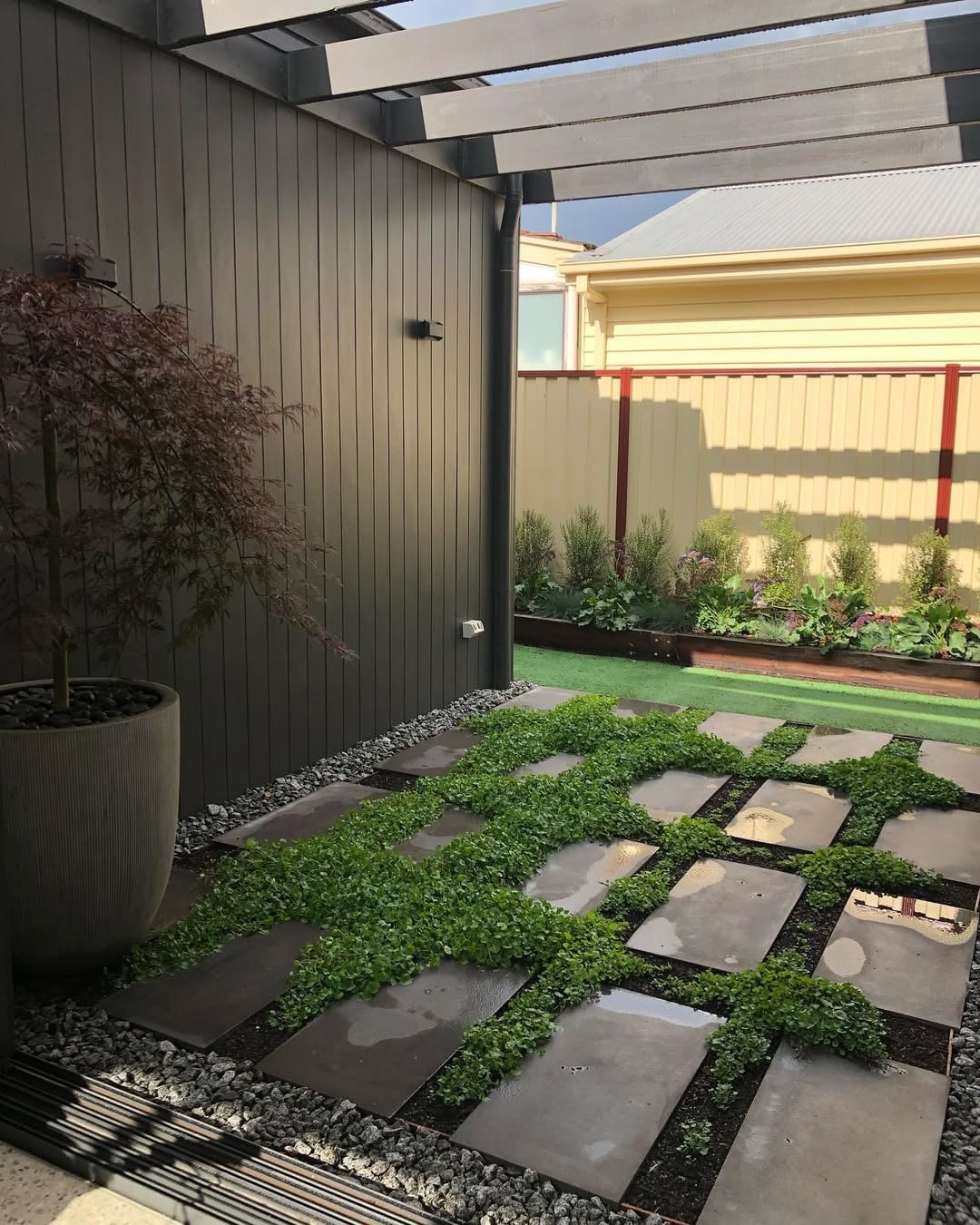
Instead of a solid patio, this compact courtyard uses dark stepping stones set into pale gravel to keep the ground plane open and airy. The stones are large enough to step on comfortably, and the spaces between them are filled with low planting that softens the hard edges. A wall-mounted light casts a warm glow across the wood paneling on the far wall, making the space feel larger after dark. The small tree in a concrete planter adds height without crowding the seating area. Choose stepping stones that are at least 18 inches wide so the path feels deliberate rather than fussy. The mix of dark stone, grey gravel, and warm wood creates a modern courtyard that lives bigger than its footprint.
37 / 39Create a Grand Entrance with Large Fluted Black Urn Planters
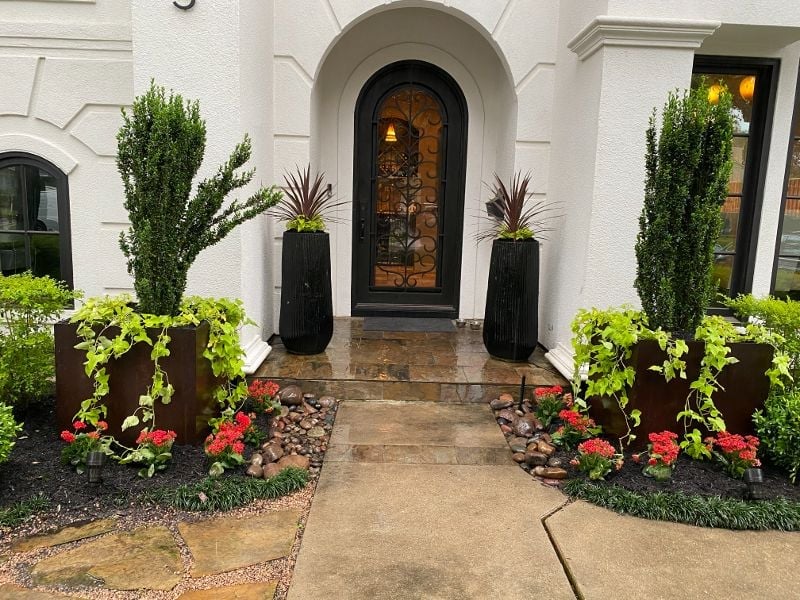
The fluted black urn planters are the first thing you notice, and they do not need to be built in or permanently installed to make an impact. A pair of these planters set on a stone pathway instantly frames a front door with formality. Boxwood shrubs in the urns stay green year-round, while the flowering plants in red add a seasonal pop. For renters, this is a low-commitment way to create a grand entrance: the urns lift off the ground and can move with you. Keep the plantings symmetrical for the most formal look, or swap one side for a taller specimen if you prefer a looser feel.
38 / 39Enhance a Garden with Multiple Wooden Raised Beds and an Archway, Wood
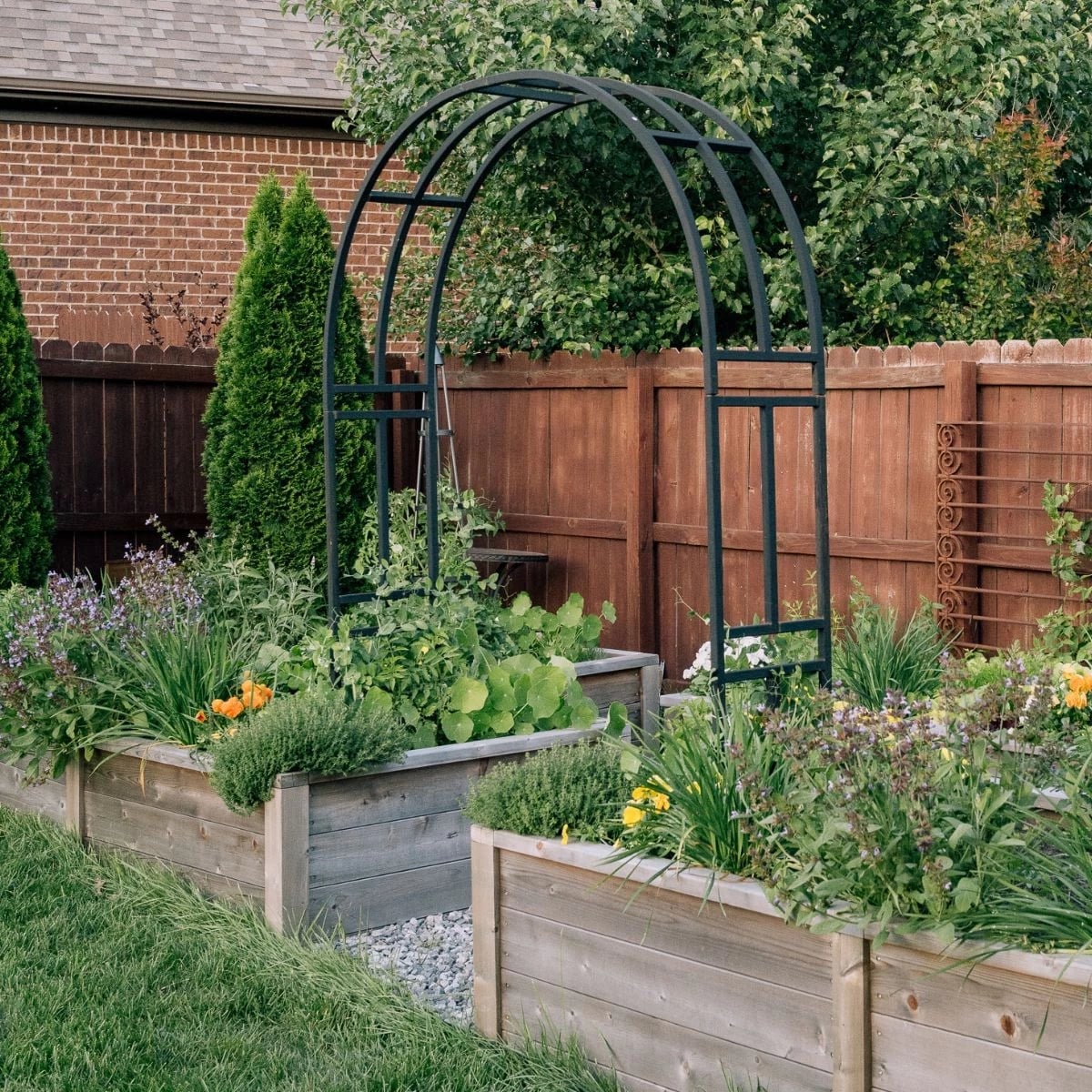
A row of wooden raised beds in a compact garden is a reliable layout for growing vegetables or flowers, but the black metal archway adds vertical structure. The archway sits on the gravel path between the beds, drawing the eye through the garden and giving climbing plants a place to go. The yellow and purple flowers in the beds pick up the warm wood tones of the frames and the dark metal of the arch. For a similar layout, keep the beds parallel to each other with a path wide enough for a wheelbarrow, and place the arch where it frames the view from the house.
39 / 39Final Thoughts
These 38 ideas show that trendy landscaping isn’t about following a single look. It’s about choosing elements that work for your space and climate. A multi-level garden, a sleek water channel, or a simple geometric pathway can redefine how you use your yard. Start with one feature that excites you, then layer in others over time. The best garden plans grow with you, not against you.