Cream cabinets are having a moment. This warm neutral works in any room, from kitchens to wet bars, without feeling cold or stark. 36 real homes show how cream storage can be the star of your space, whether you lean modern or farmhouse.
Each look keeps the cabinets front and center while the room stays simple and supportive. You will see different door styles, hardware choices, and countertop pairings that make cream feel fresh and trendy.
01 / 37Modern Kitchen with Cream Cabinets and Marble Waterfall Island
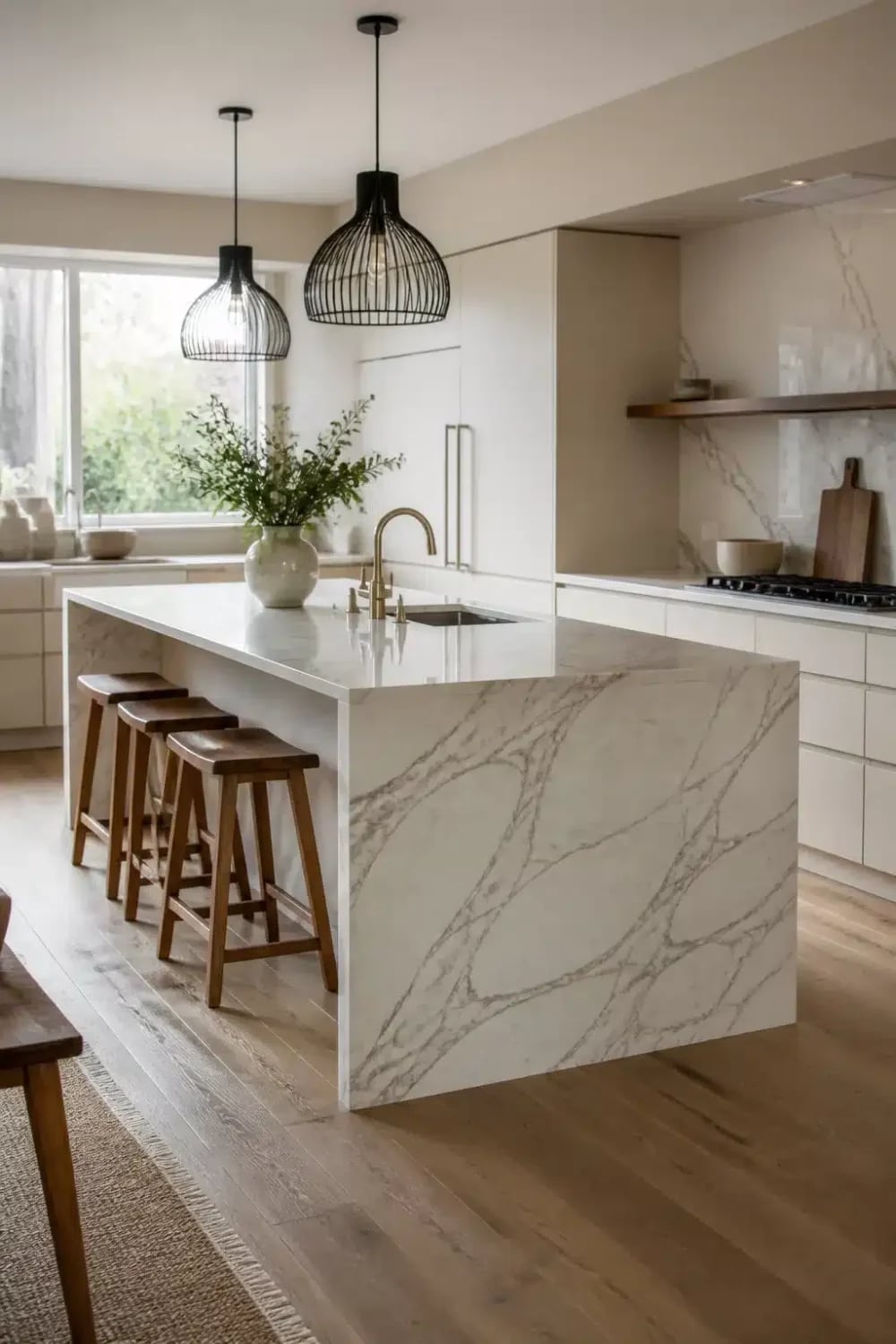
A marble waterfall island anchors this open-plan kitchen, its veined surface drawing the eye past the cream perimeter cabinets and wooden stools. The central layout splits the room into a cooking zone and a seating area, letting natural light and pendant fixtures work both sides. The marble reads as the main event, so the cabinets stay clean and flush.
02 / 37Sleek Cream Cabinets with Integrated Handles and Brass Accents
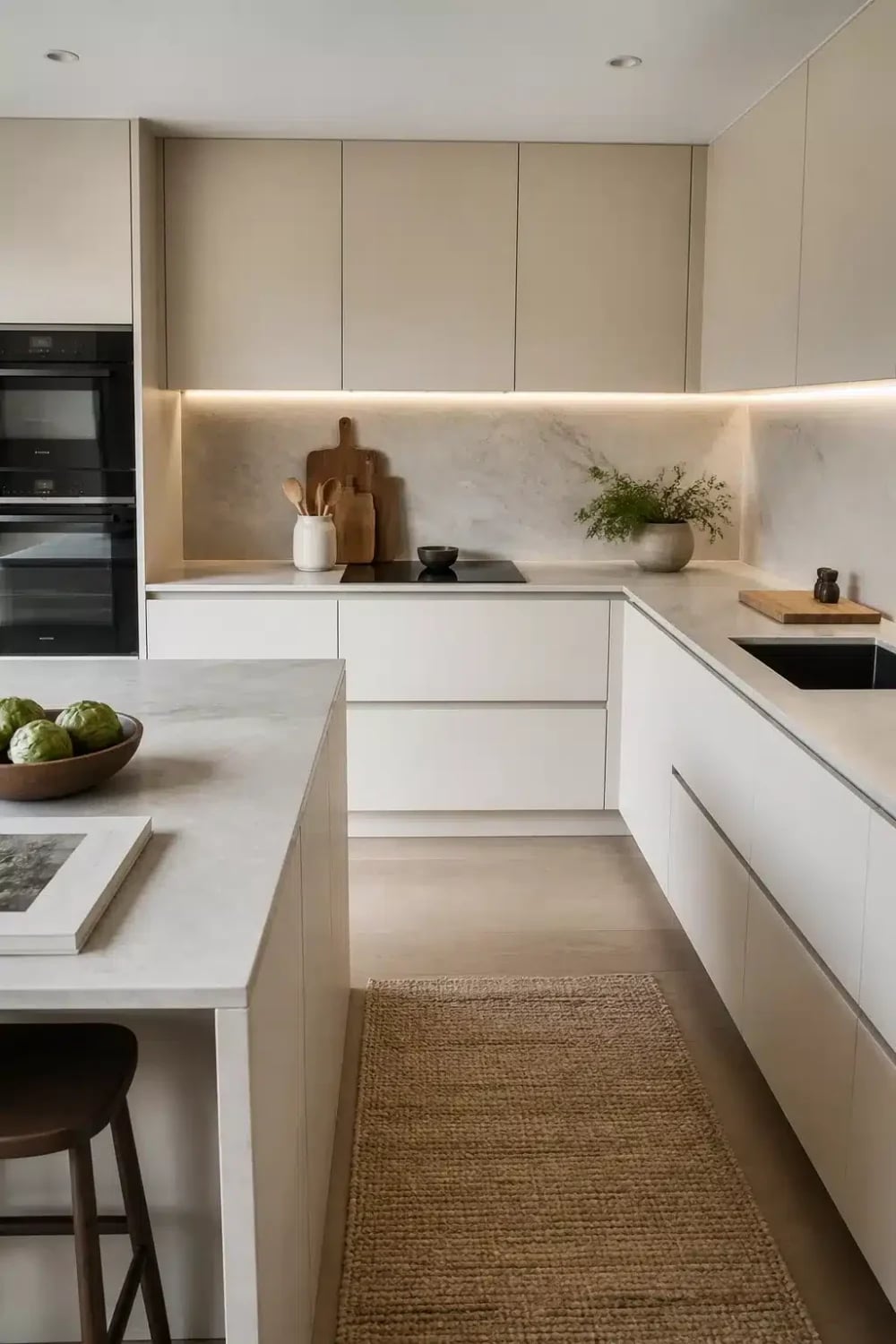
Brass hardware breaks up a long stretch of cream cabinets here, and the trick is keeping the metal consistent. The veined marble island picks up warm undertones from the brass, while the integrated handles on the cabinets keep the sightline smooth. The palette stays within cream, white, gold and gray, which gives the room a cohesive feel without competing with the marble pattern. A single metal finish ties the whole look together.
03 / 37Cream Cabinets with Unique Slatted Wood Fronts
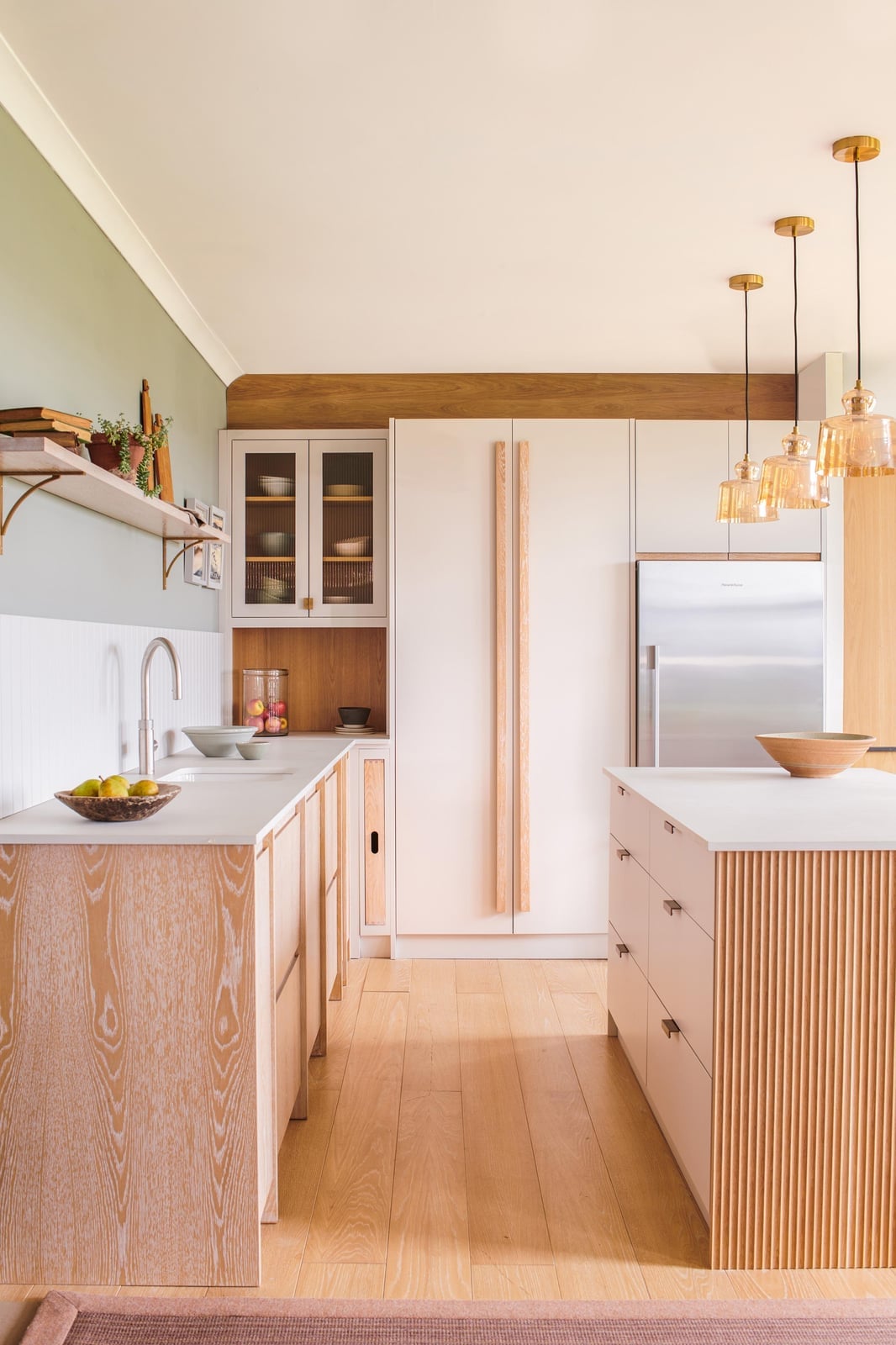
Can a flat cabinet front feel like a design feature? Slatted wood fronts add texture without changing the footprint. The vertical lines draw the eye upward, making the ceiling feel taller, and the cream finish keeps the look light. Integrated handles preserve the clean surface.
The slatted fronts work best when they appear on a single bank of cabinets rather than every one. The island here stays smooth, which gives the eye a resting point. The wood tones in the slats complement the natural light, creating a warm atmosphere without going dark.
04 / 37Cream Wet Bar Cabinets with Textured Tile Backsplash
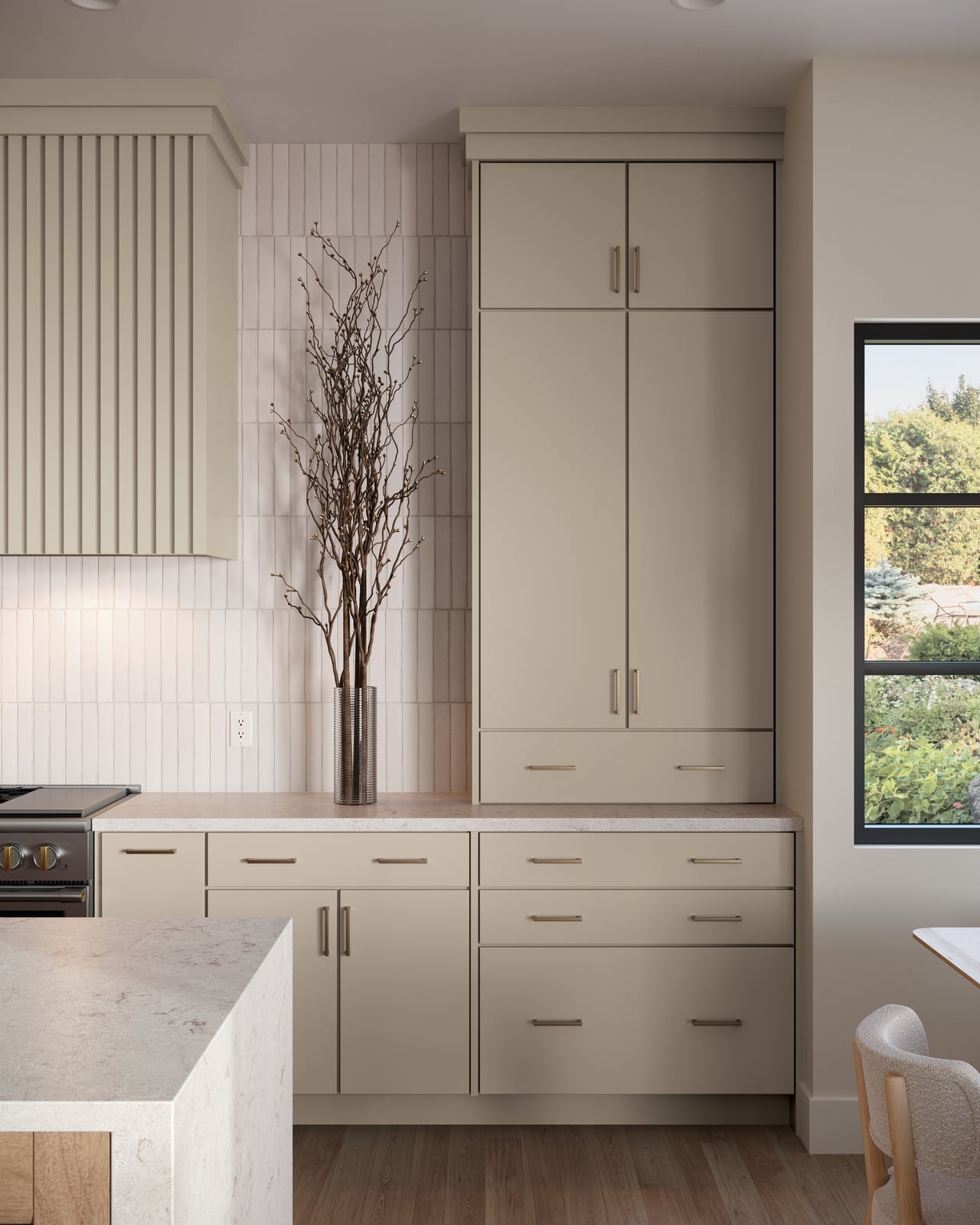
A compact wet bar gets its presence from the tile backsplash behind it. The textured surface catches the light from the wall sconces, while the cream cabinets with integrated handles stay simple. This setup gives a small space a clear visual anchor without adding bulky cabinetry. The tile does the heavy lifting for the whole corner.
05 / 37Elegant Arched Cream Cabinets with Brass Hardware
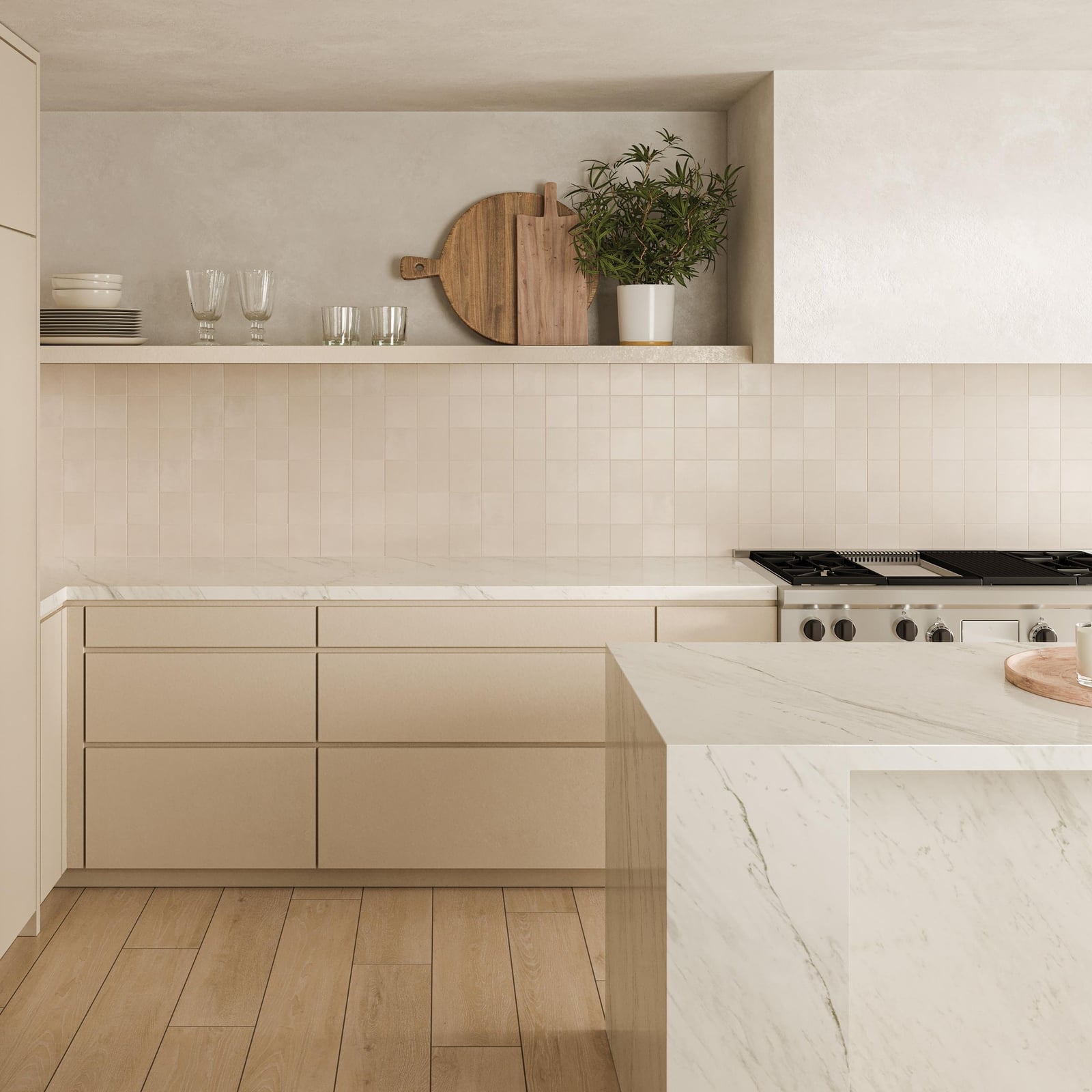
Use arched cabinets sparingly to create a focal point. Here, the cream arched cabinets stand out against a plainer backdrop, with brass hardware repeating the curve in miniature. The marble island picks up the same warm tone as the brass, making the arch feel deliberate. Keep surrounding hardware and countertop in the same metal family for a cohesive look.
06 / 37Compact Cream Wet Bar with Integrated Handles
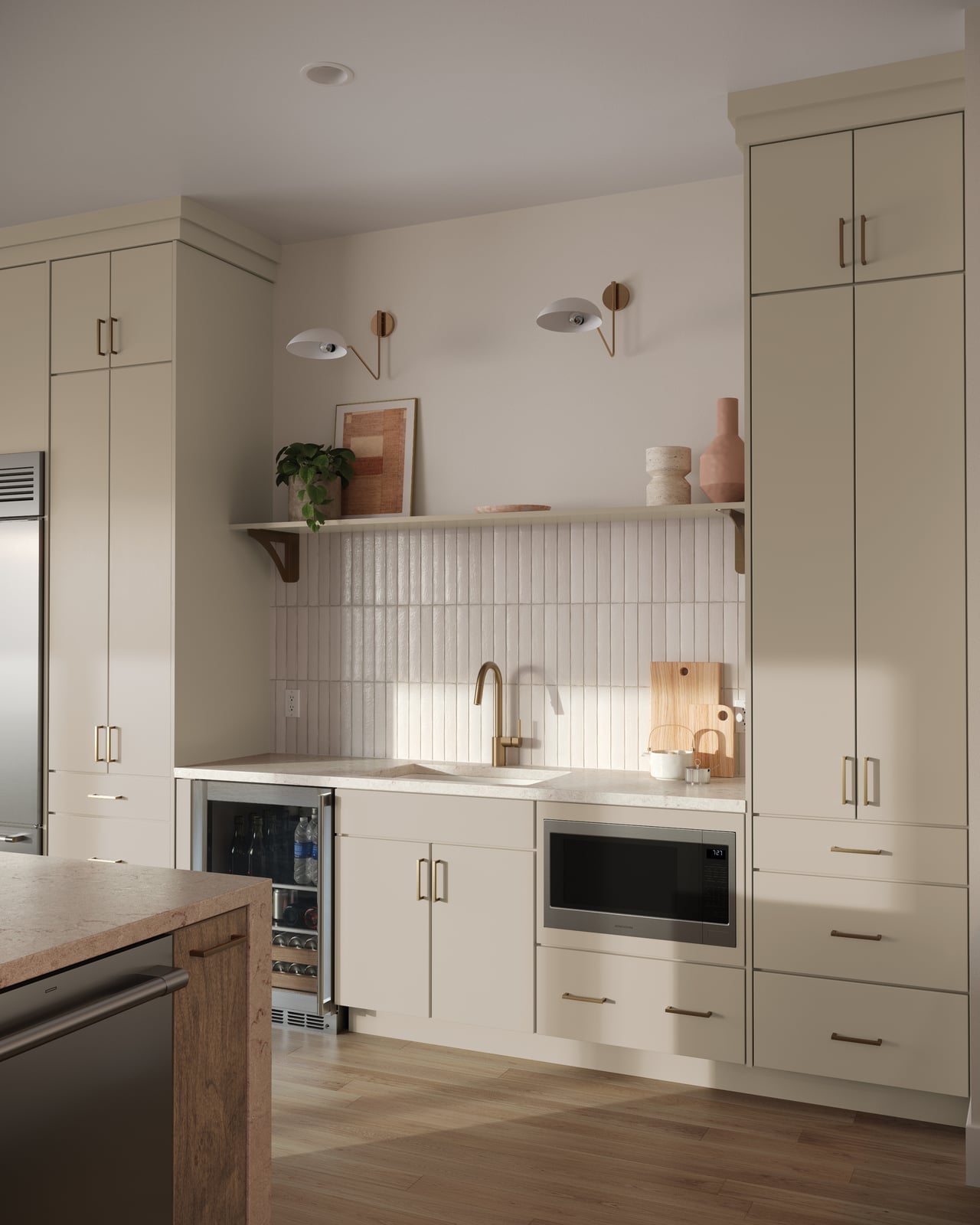
A wet bar built into a kitchen corner often ends up feeling like an afterthought. Swapping bulky handles for integrated ones keeps the run smooth and the footprint tight. The cream cabinets here run from counter to ceiling, with a tile backsplash that adds texture without eating into the small layout. Wall sconces bring focused light right where you need it for pouring or prepping. The gold notes in the fixtures and shelving pick up the warmth in the cream, so the whole zone reads as one intentional piece. It is a good example of how the right hardware choice can turn a tight spot into a functional one.
07 / 37Minimalist Cream Kitchen with Wood Countertops
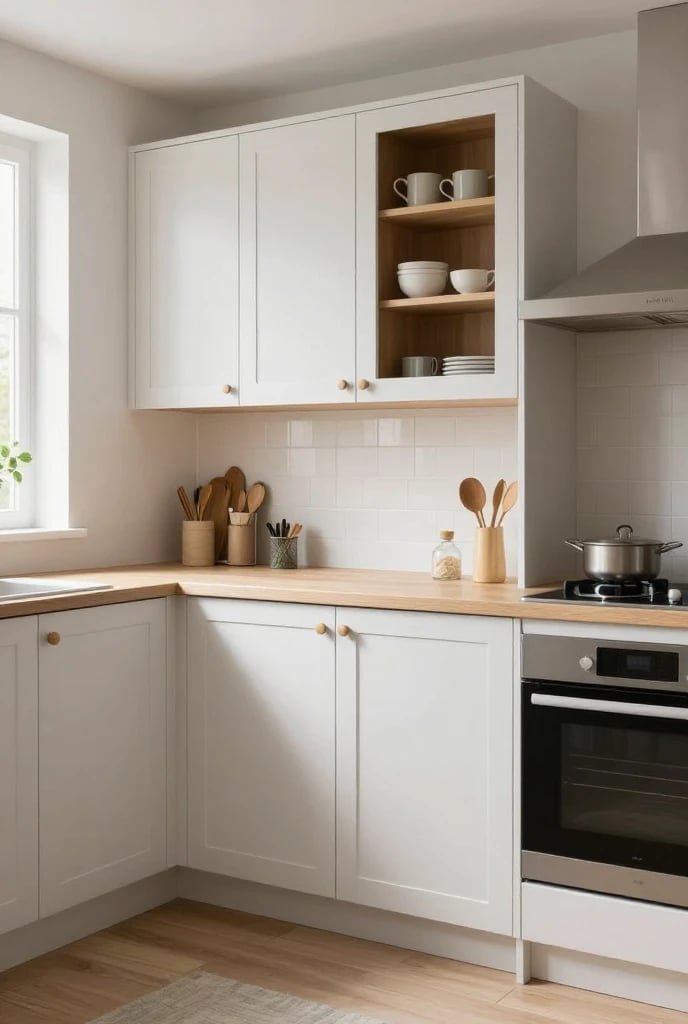
The cream cabinets are clean and flat-front, with no visible hardware to break the line. A wood countertop runs beside the sink and oven, warming up the all-white palette without adding clutter. Natural light from the window and an overhead fixture keep the space bright. For renters, swapping out a countertop is not an option, but a wood cutting board or a butcher block cart can bring in the same warmth without a permanent change.
08 / 37Modern Cream Cabinets with Veined Marble Waterfall Island, Indoor
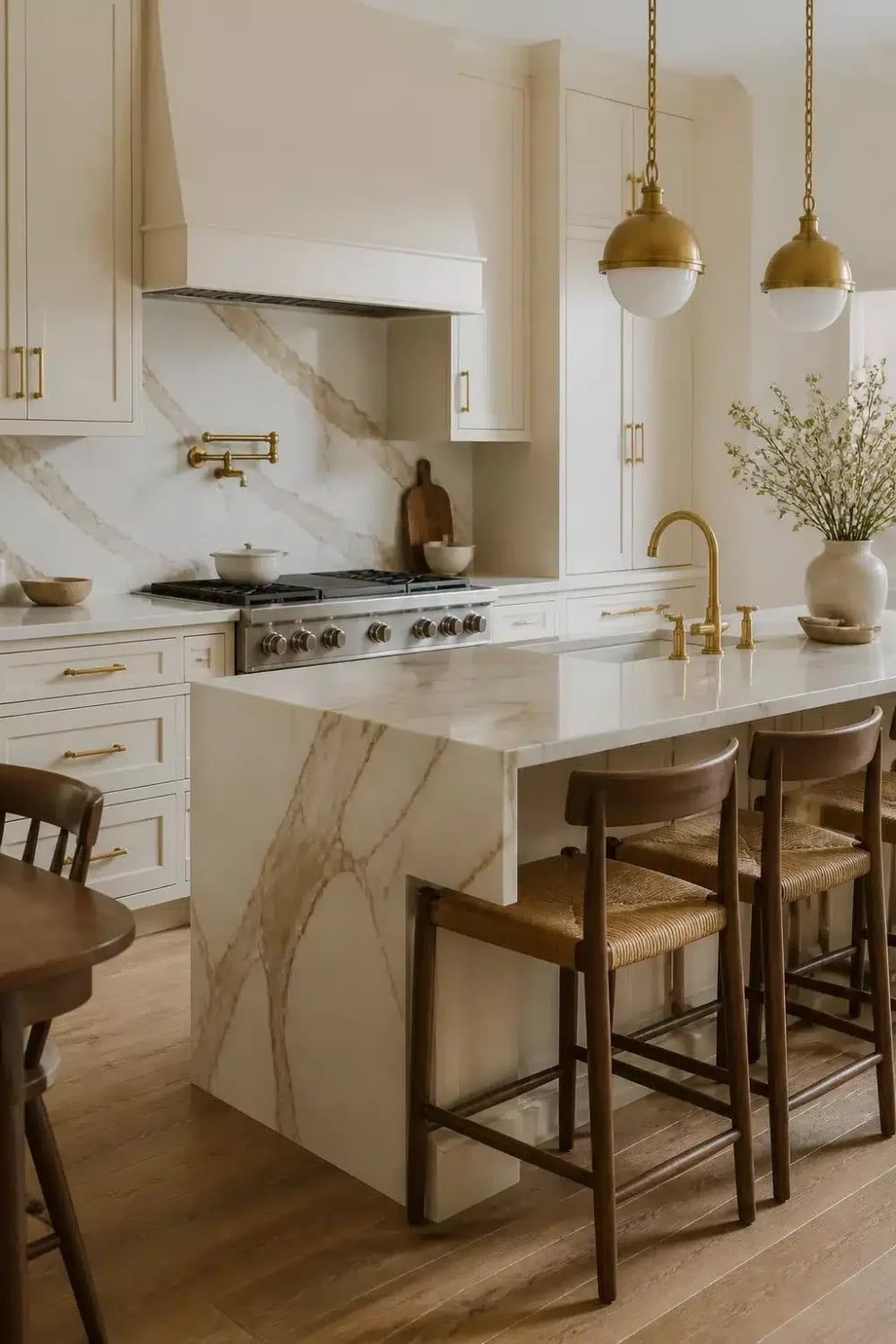
A veined marble waterfall island is the anchor for this modern kitchen. The cream cabinets stay simple and flush, letting the stone take center stage. Brass hardware and pendant lights add a soft metallic layer. The layout works because the island creates a natural separation between the cooking zone and seating, while the waterfall edge draws the eye down and grounds the whole setup. It is a look that relies on letting one material do the talking.
09 / 37Cream Cabinets with Vibrant Yellow Tile Backsplash
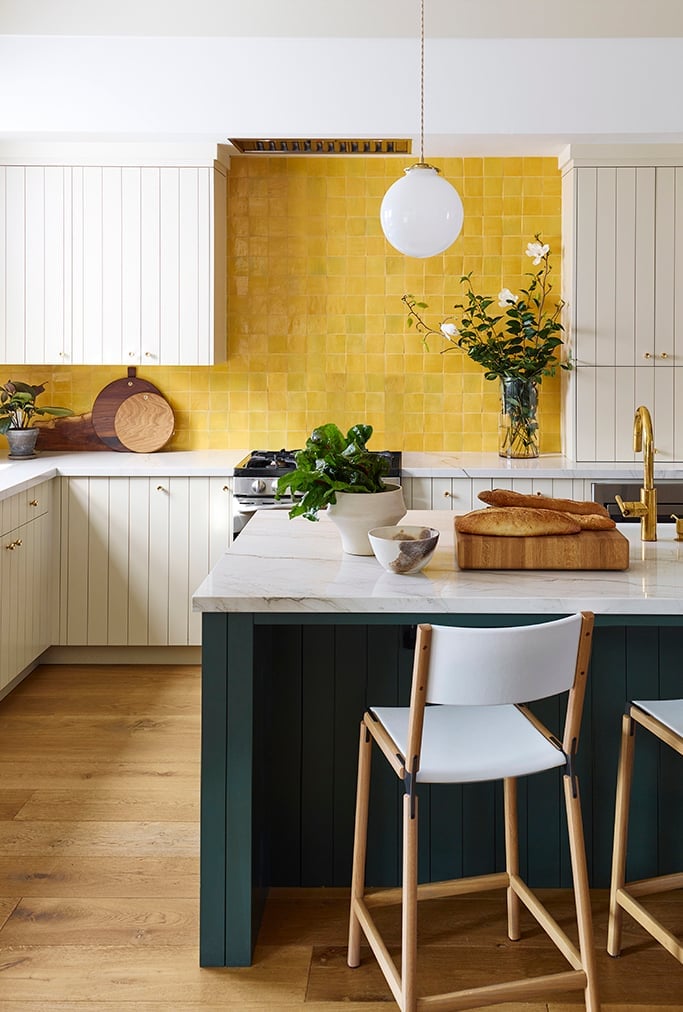
Can cream hold its own next to a bold color? This kitchen says yes. The cream cabinets are the neutral anchor, while the backsplash in vibrant yellow tile runs from counter to hood. A green plant on the island and a pendant light above keep the palette from feeling flat. The cream acts as a buffer, letting the yellow pop without overwhelming the room. The palette stays simple: cream, white, yellow, and green. The yellow tile is the break in an otherwise neutral scheme, and that ratio is what makes it work. Choosing one saturated accent material lets you keep the rest of the finishes calm.
10 / 37Minimalist Cream Cabinets with Black Hardware
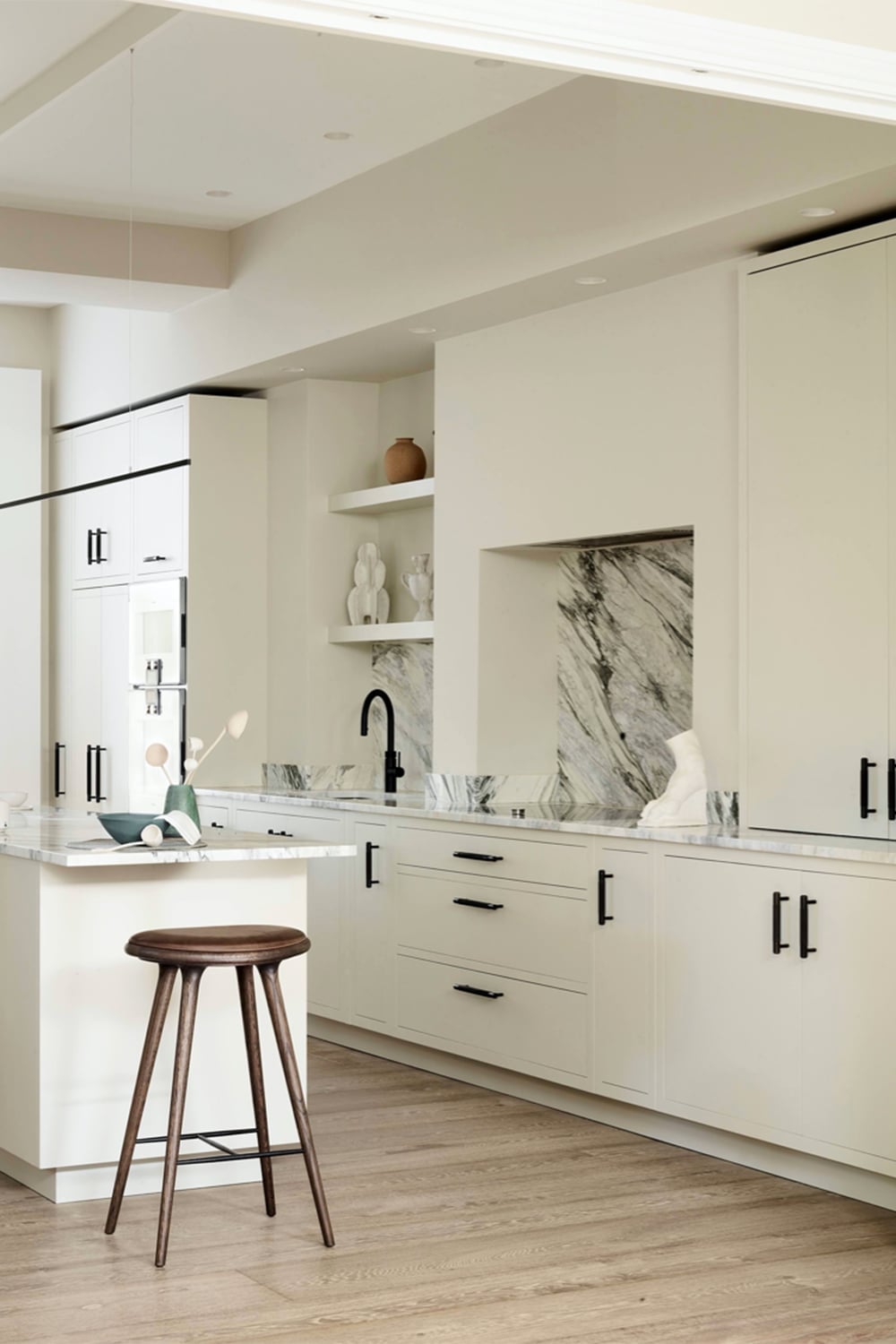
Black hardware on cream cabinets is a direct move. The matte black pulls stand out against the light cabinet fronts without needing any other color. A marble island and recessed lighting keep the palette tight. The contrast is the point: cream and black, with white as the bridge. It works because the hardware is the only dark element, so the eye has one place to land.
11 / 37Farmhouse Kitchen with Cream Cabinets and Wooden Beams
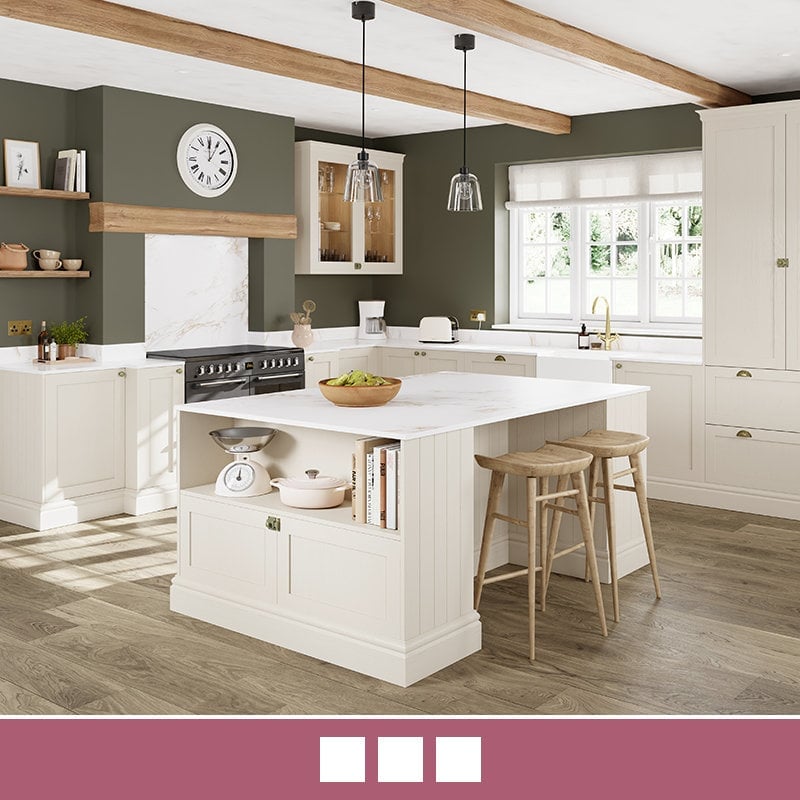
A practical rule for choosing cream cabinets in a farmhouse kitchen is to let the ceiling set the tone. The wooden ceiling beams here are the strongest character piece, so the cream cabinets stay simple with flat panel fronts. The large island in a similar cream finish keeps the kitchen from feeling like two different rooms, while the marble countertop adds a refined surface that contrasts with the rough wood. Pendant lights with metal shades hang at a height that clears sight lines across the island. The palette is cream, white and wood tones, with no busy hardware or trim to compete with the beams. This layout works when the beams are the main event and the cabinets act as a calm backdrop.
12 / 37Modern Cream Cabinets with Light Wood Island Base
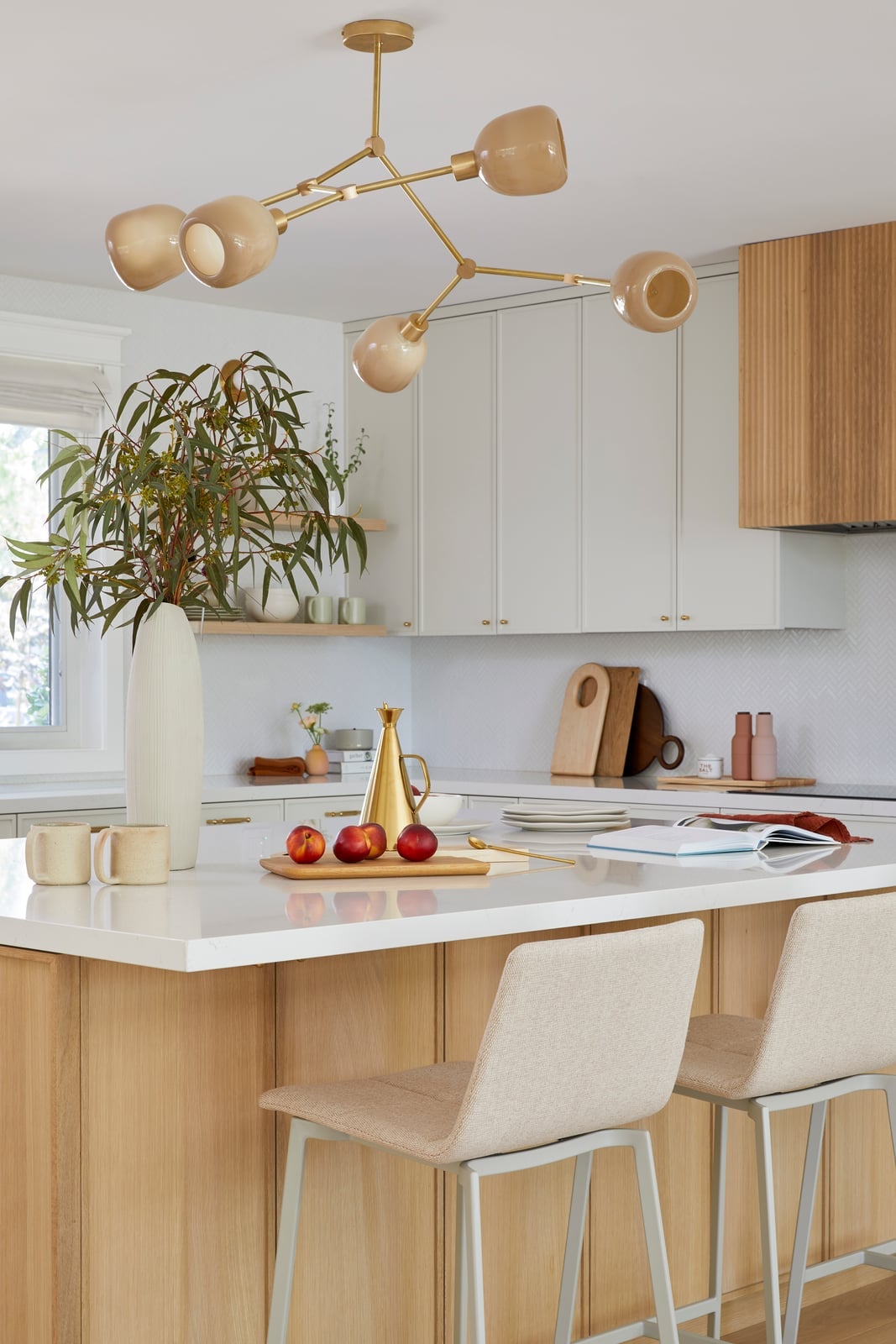
Cream cabinets often get paired with white or gray islands, but setting them against a light wood island base creates a warmer result. The wood base here is a pale oak tone with visible grain, which keeps the island from reading as a block of color. The cream upper cabinets have integrated handles, so the sight line stays clean across the kitchen. A sculptural pendant light hangs above the island in a dark metal finish, adding a focal point at eye level without cluttering the counter. The stone countertop is a neutral white with subtle veining, bridging the cream cabinets and the wood base. This palette works because the wood is the same warmth as the cream, just in a different material. The ratio is roughly two thirds cream cabinetry to one third wood island base, with the dark pendant as a small accent. What breaks the look is if the wood base turns too orange or red, which would fight the cream rather than complement it.
13 / 37Compact Kitchen with White Cabinets and Wood Countertop
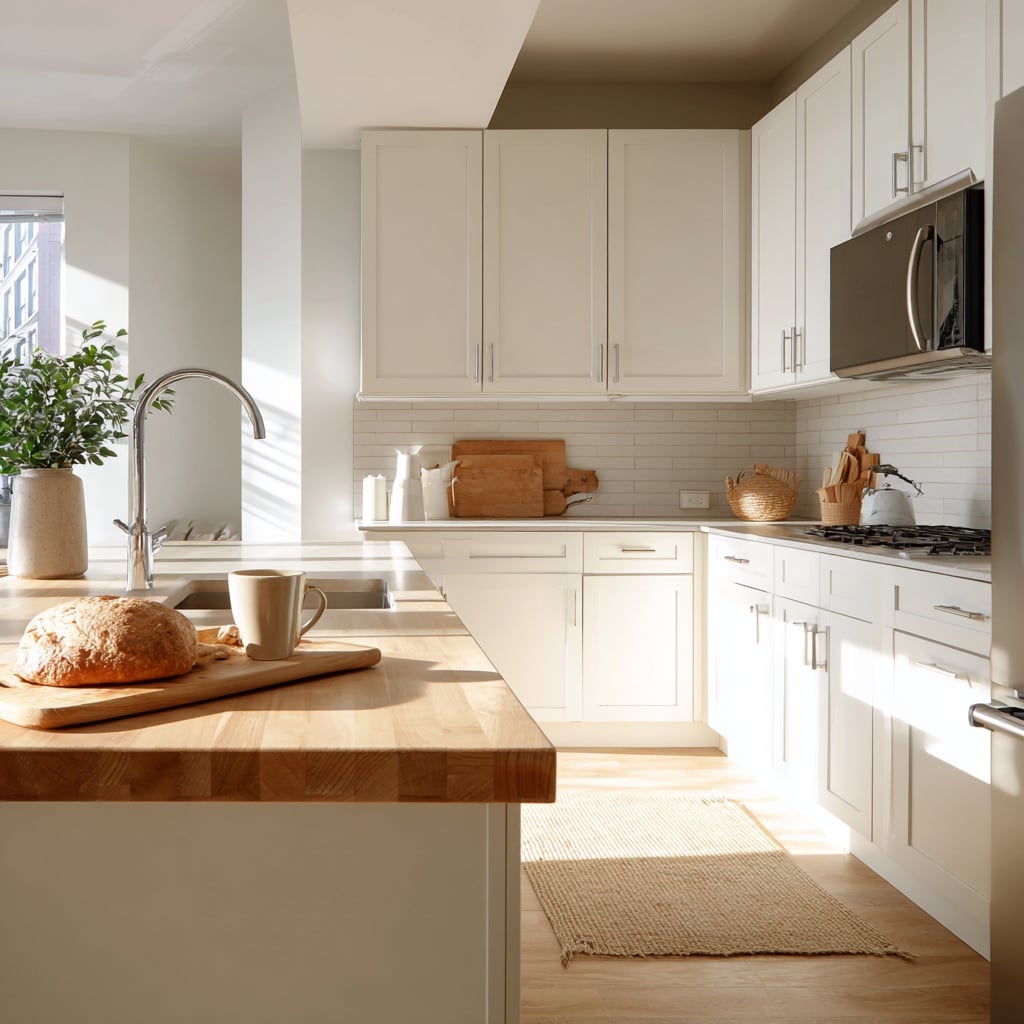
A corner kitchen with white cabinets and a wood countertop makes the most of a small footprint by keeping the wall color light and the counter warm. The white shaker-style cabinets reflect the sunlight streaming in from a nearby window, which opens up the corner. The wood countertop is a warm medium tone with a natural edge, adding texture without taking up visual space. The subway tile backsplash runs in a classic brick pattern, continuing the clean line. This setup suits a compact layout where every surface needs to earn its keep, and the wood counter does that by giving the white cabinets a reason to feel grounded rather than sterile.
14 / 37Farmhouse Kitchen with Cream Cabinets and Open Shelving
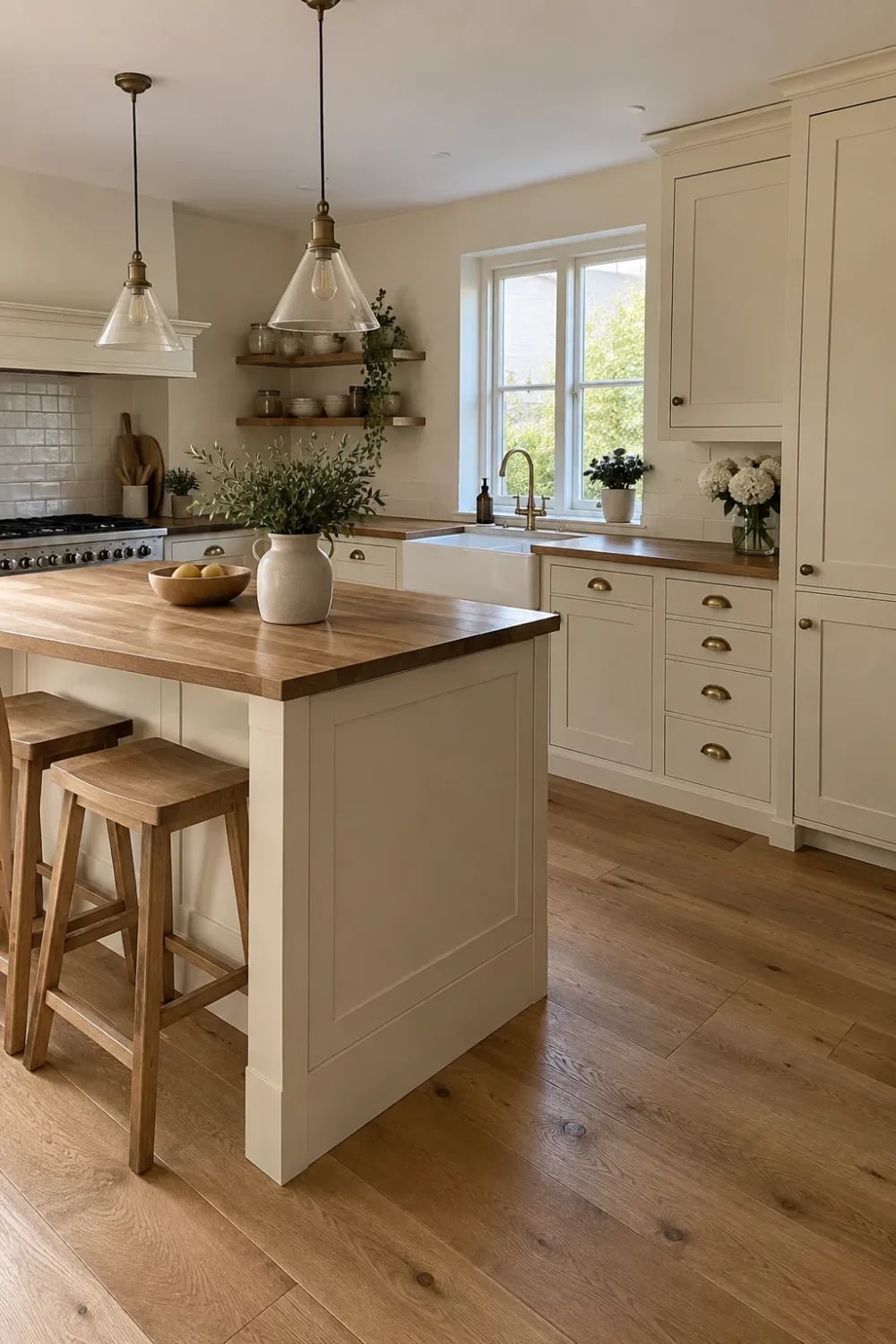
Open shelving in a farmhouse kitchen works best when it balances the storage below. The cream cabinets here are closed storage for the bulk of kitchen tools, while the open shelves above hold a small collection of dishes and glassware. The wood island with a butcher block countertop adds a warm surface for prep, and the marble backsplash behind the range keeps the cooking zone easy to clean. The pendant lights are metal with a matte finish, hung to light the island without blocking the view of the shelves. The window keeps the cream cabinets from looking flat. This arrangement saves the open shelves from becoming dust collectors because they hold only what gets used regularly.
15 / 37Roomy Kitchen with Cream Cabinets and Black Island Countertop
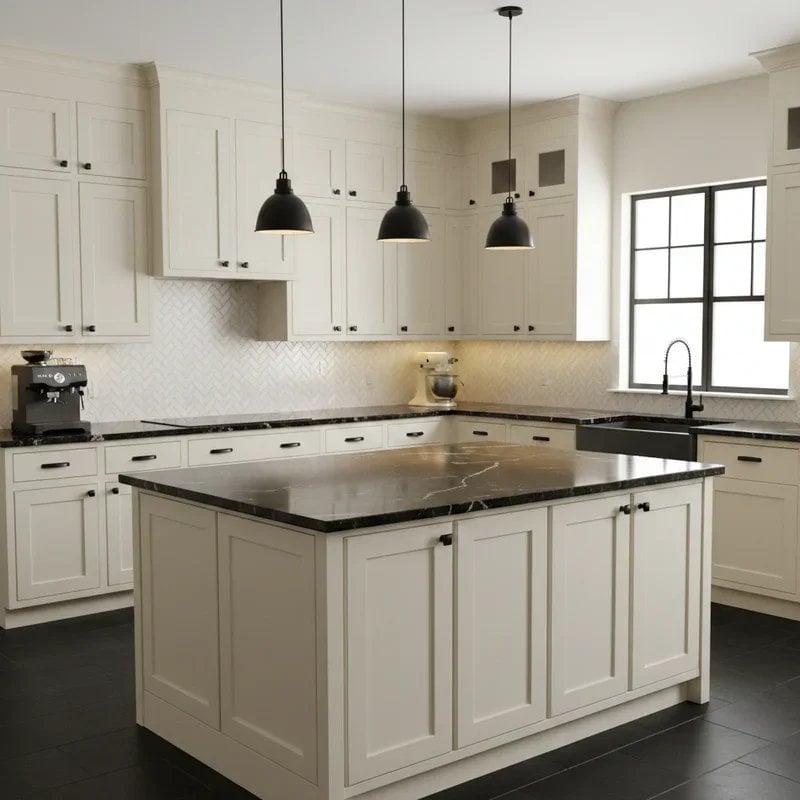
In a roomy kitchen with cream cabinets and a black island countertop, the dark surface serves as a visual anchor. The cream cabinets run along the perimeter with integrated handles, keeping the walls light and airy. The large island has a black stone countertop that grounds the whole layout, while the island base is a lighter wood tone that connects back to the cream cabinets. The pendant lights above the island are a warm brass finish, which adds a metallic note against the black counter. This palette works because the cream and black are high contrast, so the room feels defined rather than washed out. The ratio is roughly three quarters cream cabinetry to one quarter black island top, with the brass pendants as small accents. What breaks the look is if the black countertop is the only dark element and nothing else in the kitchen carries that weight, so the island ends up feeling separate. The open plan layout allows the island to function as both prep space and a casual dining spot, with the black surface hiding the wear that a busy island sees.
16 / 37Open-Plan Kitchen with Cream Cabinets and Marble Island
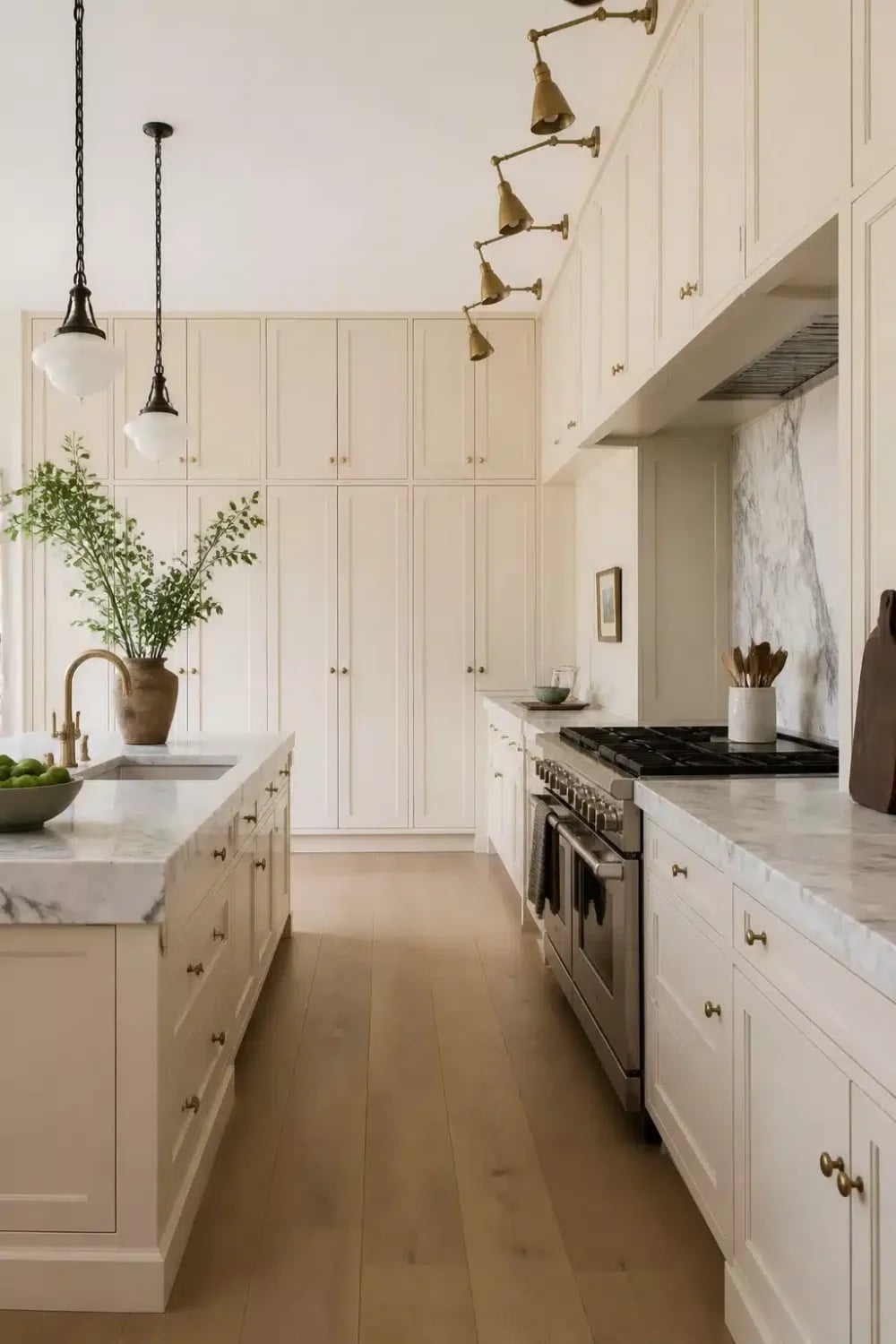
A large marble island with a waterfall edge grounds this open-plan kitchen, its veined surface the main visual weight against cream perimeter cabinets. The island sits central, so the perimeter stays clean, upper cabinets in cream, lower cabinets in cream, no competing colors. With natural light from nearby windows and a pair of pendant lights above the island, the cream finish looks soft, not flat. If your kitchen flows into a living area, using the same cabinet color on both walls helps the space feel continuous and unbroken.
17 / 37Cottage-Style Cream Cabinets with Rustic Plate Rack
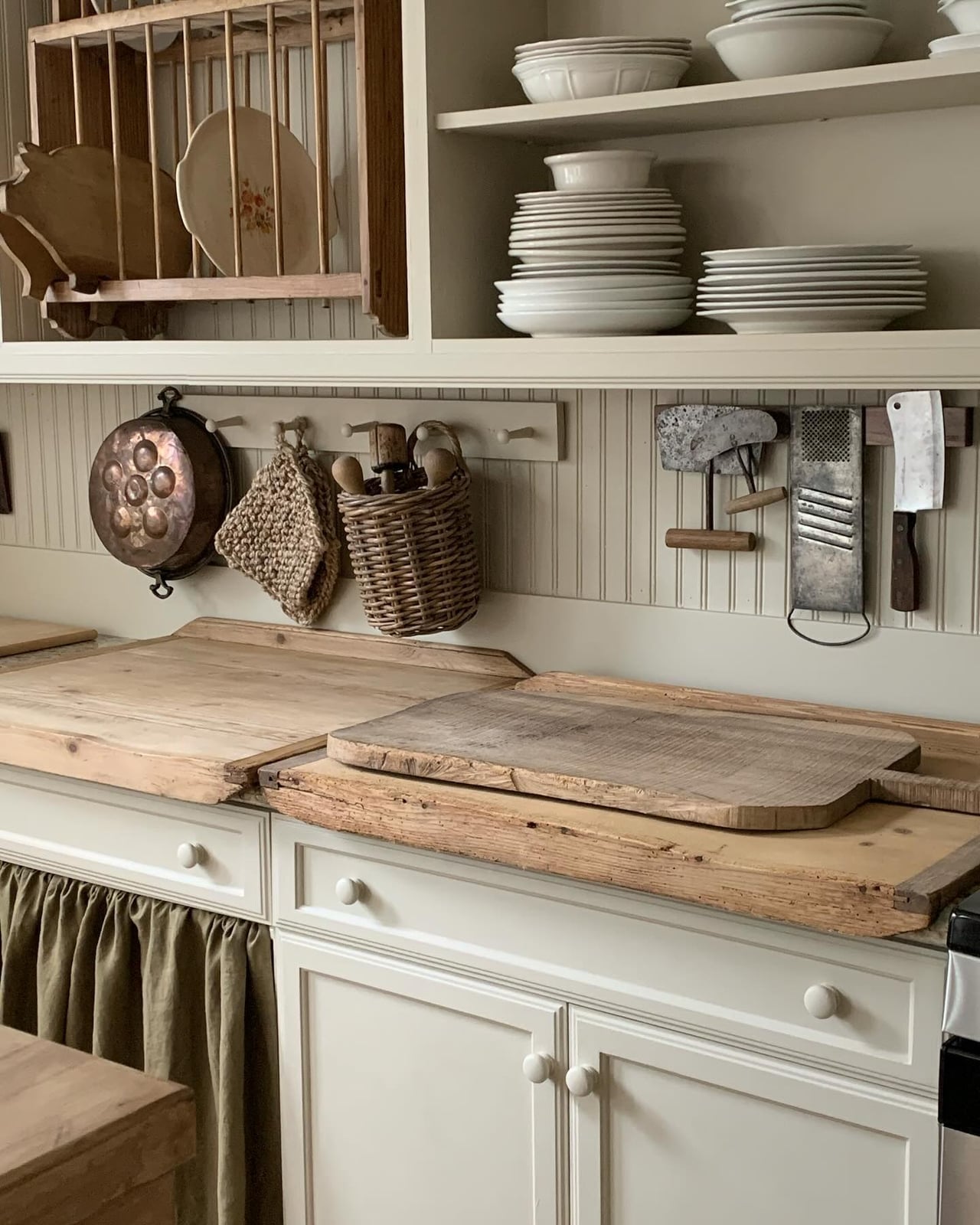
In a compact kitchen, use vertical wall space for storage to keep the counter clear. This cottage kitchen shows it with a wall-mounted plate rack holding white serving pieces above the counter, with cutting boards and a copper pot nearby. The cream cabinets keep the look light, while the wood tones and copper add warmth. An overhead cabinet light directs brightness onto the counter. For renters, a tension-mounted plate rack or a peg rail with hooks can give you that open storage look without drilling into tile or damaging walls. Check your lease before hanging anything heavy.
18 / 37Modern Cream Cabinets with Integrated Handles and Wood Accents
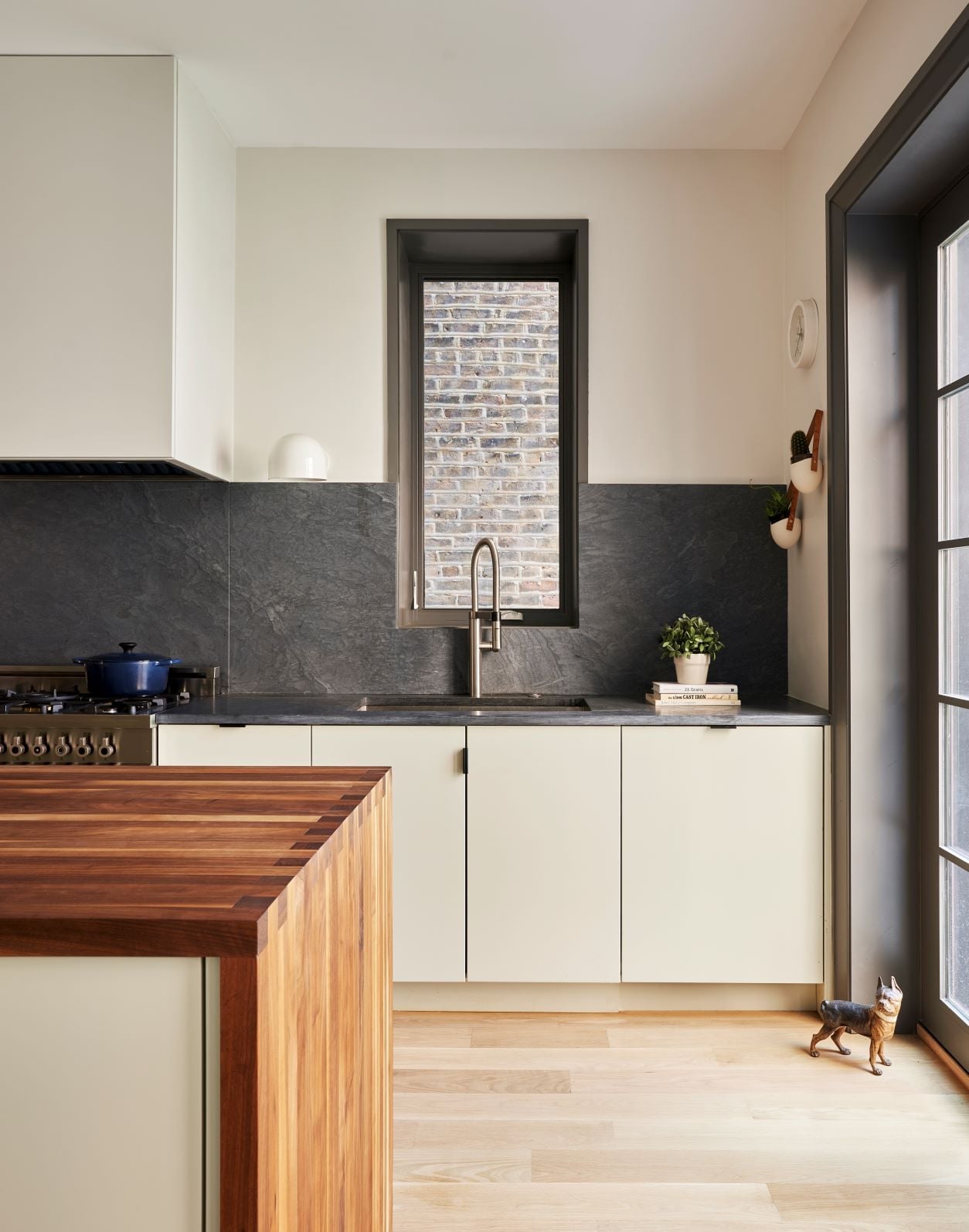
Integrated handles on cream cabinets are a close alternative to traditional knobs or pulls. They give the kitchen a seamless front, with no hardware to catch on sleeves or collect dust around the edges. In this roomy kitchen, the cream cabinets extend to the ceiling, with a marble backsplash behind the range and wood accents on the island base and open shelving. The wood adds warmth without breaking the clean line of the cabinetry.
Recessed lighting keeps the ceiling uncluttered, while natural light softens the contrast between the white marble and the cream cabinets. If you are choosing between integrated handles and visible hardware, think about how often you clean cabinet fronts. Integrated handles mean fewer crevices but require a precise finger grip to open.
19 / 37Cream Glass-Front Cabinets with Gold Hardware
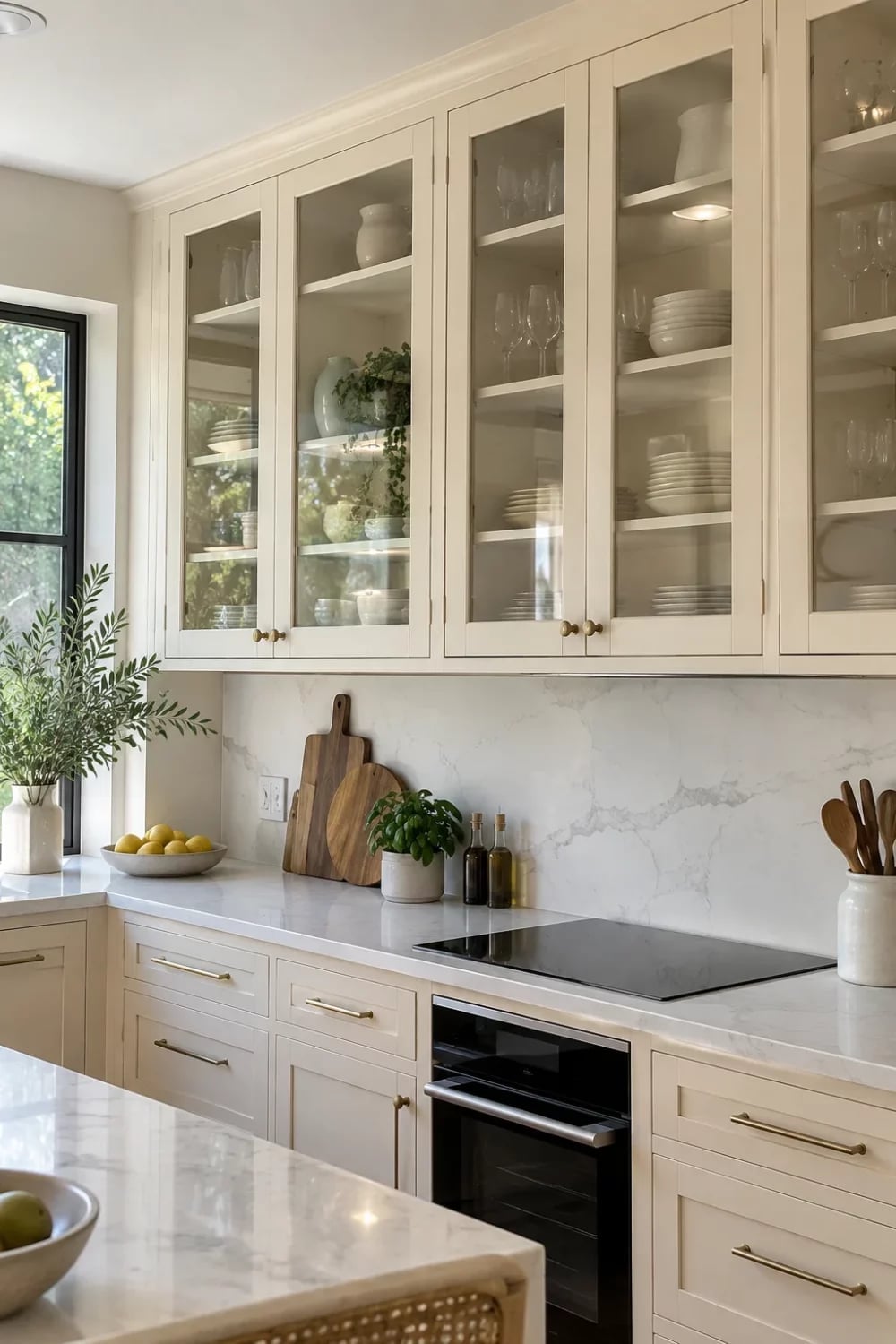
A row of cream glass-front upper cabinets with gold hardware lines one wall of this galley kitchen, their glass panels breaking up what could be a solid cream stretch. The gold pulls catch the light from interior cabinet lights and a nearby window, adding warmth without overwhelming the cream and white palette. A marble countertop below keeps the look refined. Glass fronts work best when you are willing to keep the contents organized, mismatched mugs or杂乱 shelves will be visible. If you like the look but want less upkeep, consider frosted glass, which hides the clutter while still letting light pass through.
20 / 37Modern Kitchen with Cream Cabinets and Integrated Refrigerator
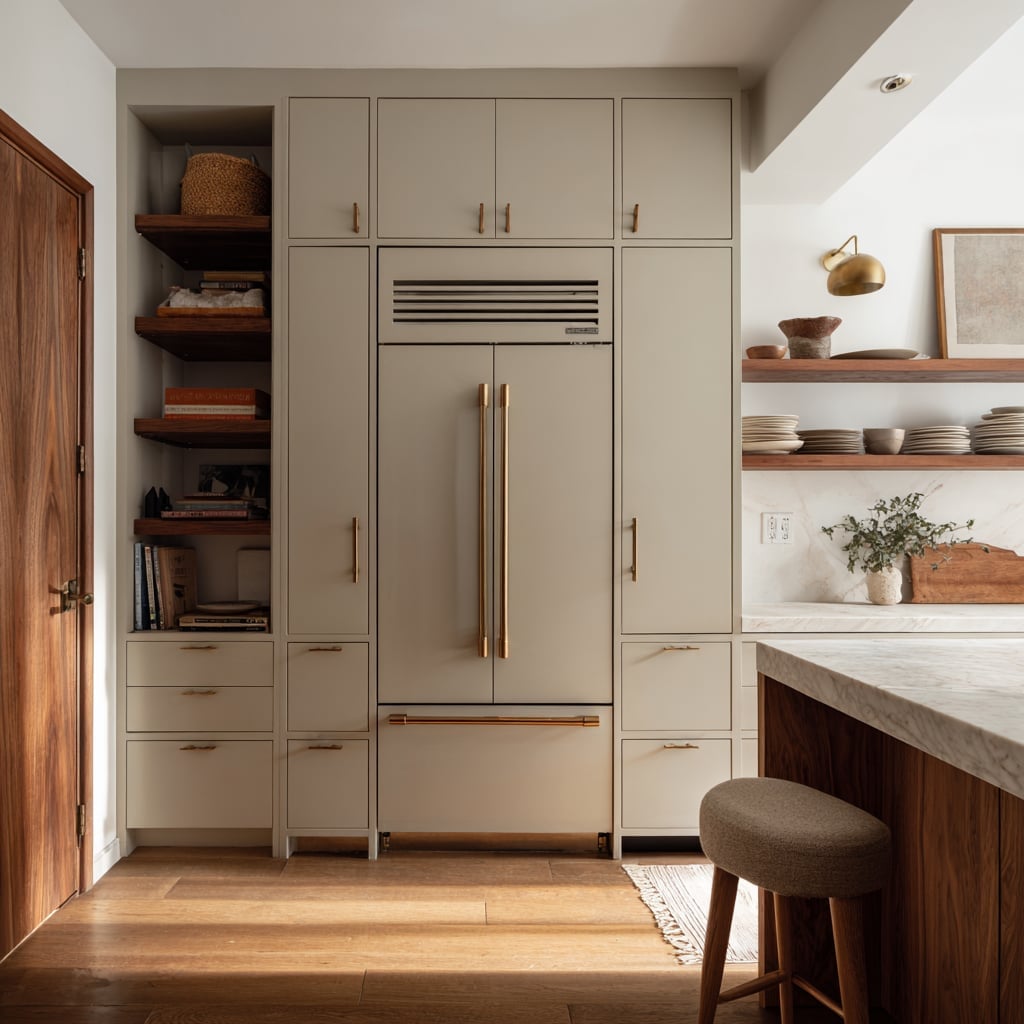
An integrated refrigerator built into a wall of cream cabinets is a clean storage solution for a modern kitchen. The cabinet fronts match the surrounding units, so the refrigerator disappears into the overall design rather than sticking out as a tall metal box. This built-in wall also includes open shelving and closed cabinets, giving you a mix of display and hidden storage. A wall sconce provides focused light near the shelving, while natural light from the room keeps the cream finish looking consistent. Integrated appliances require precise measurements during planning, so measure your refrigerator dimensions before ordering cabinet panels.
21 / 37Farmhouse Kitchen with Cream Cabinets and Large Wooden Island
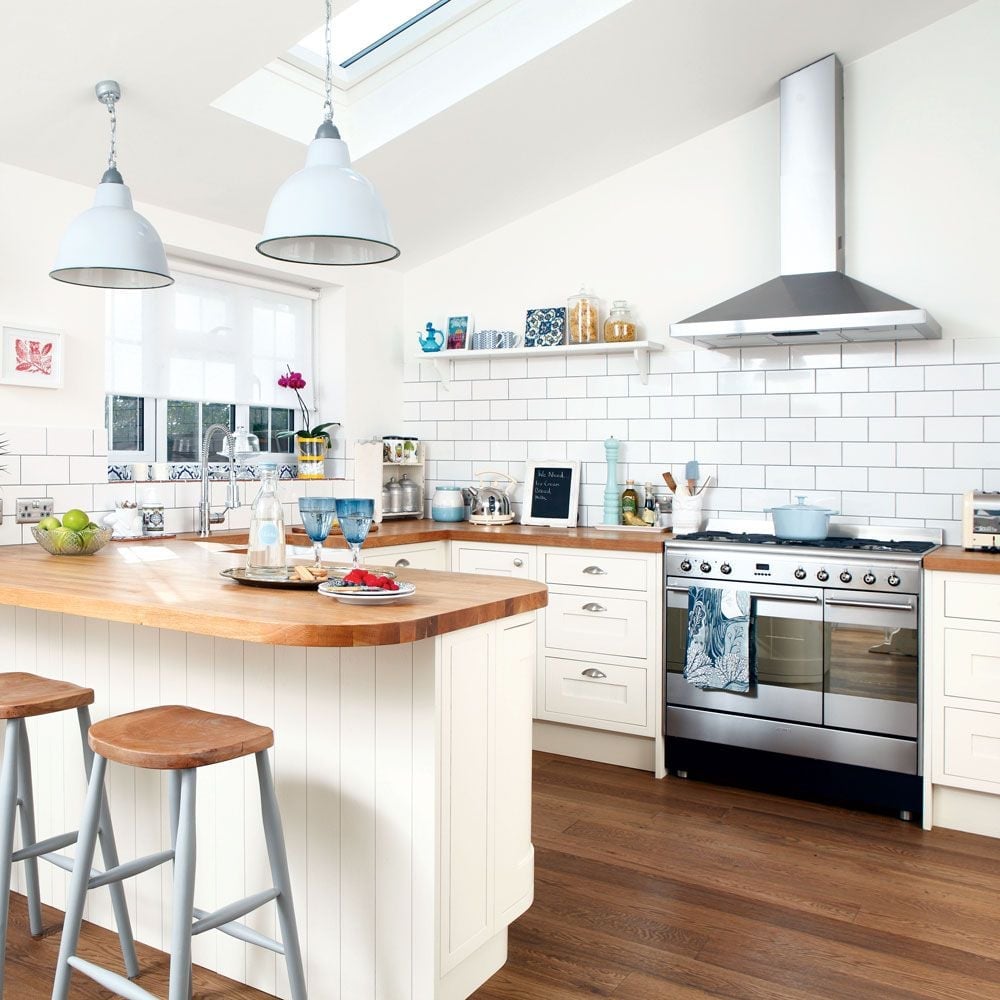
A large wooden island changes the whole feel of a kitchen layout. In a farmhouse setting, it becomes the center of the room, drawing people in without blocking the path to the sink or stove. The cream cabinets keep the space light, so the wood island adds warmth without making things feel heavy. Pendant lights above the island give task light right where you need it, while the natural light from nearby windows keeps the cream tone looking soft through the day.
22 / 37Roomy Kitchen with Cream Integrated Cabinets and Subway Tile
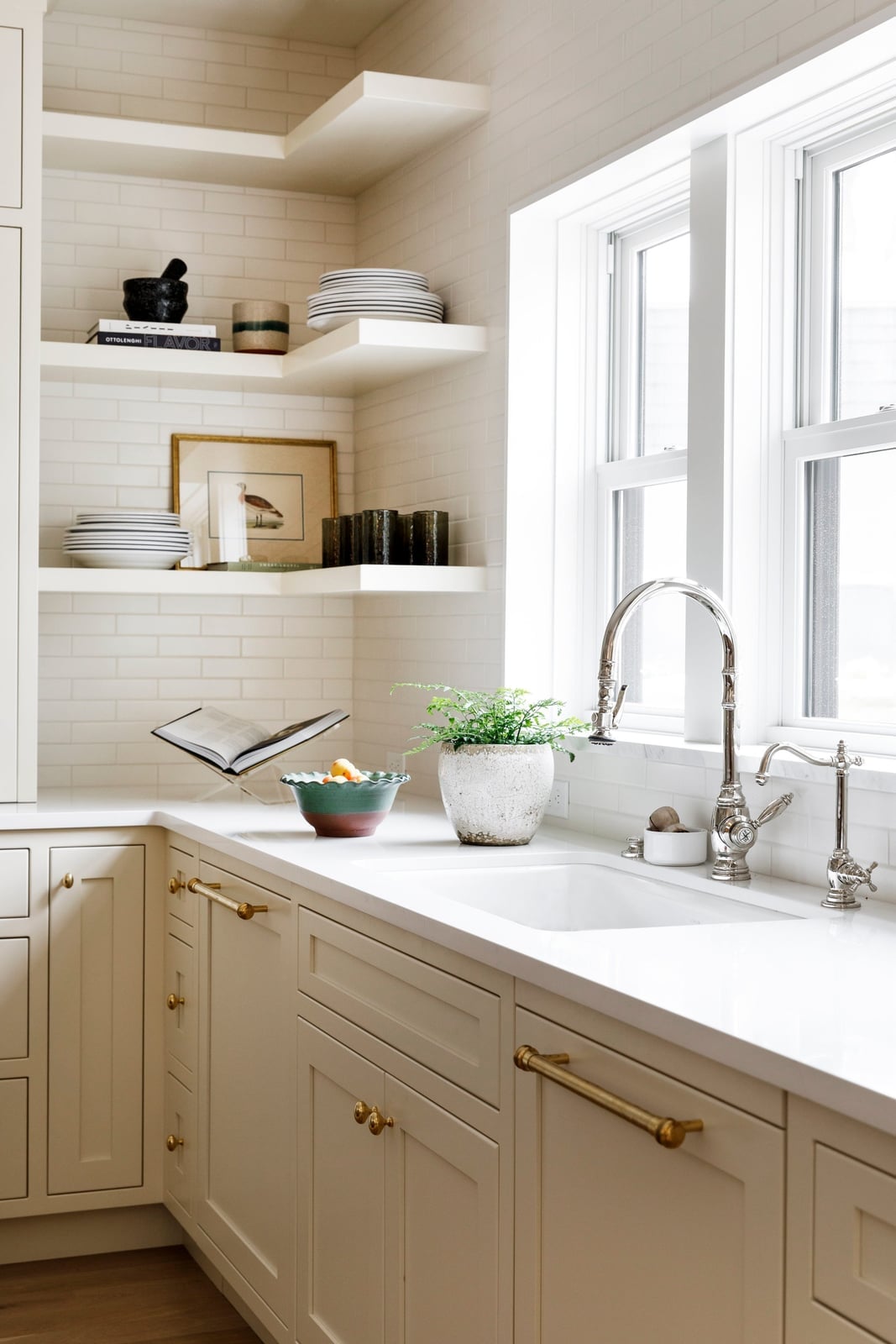
Integrated handles on cream cabinets keep the front flush and clean, which pairs well with white subway tile. The tile runs from counter to upper cabinets, giving the wall a uniform finish that makes the room feel wider. A small plant on the counter adds a soft green note without cluttering the surface. Recessed lighting keeps the gloss on the marble countertop and the matte on the cabinets balanced.
23 / 37Transitional Kitchen with Geometric Glass-Front Cream Cabinets
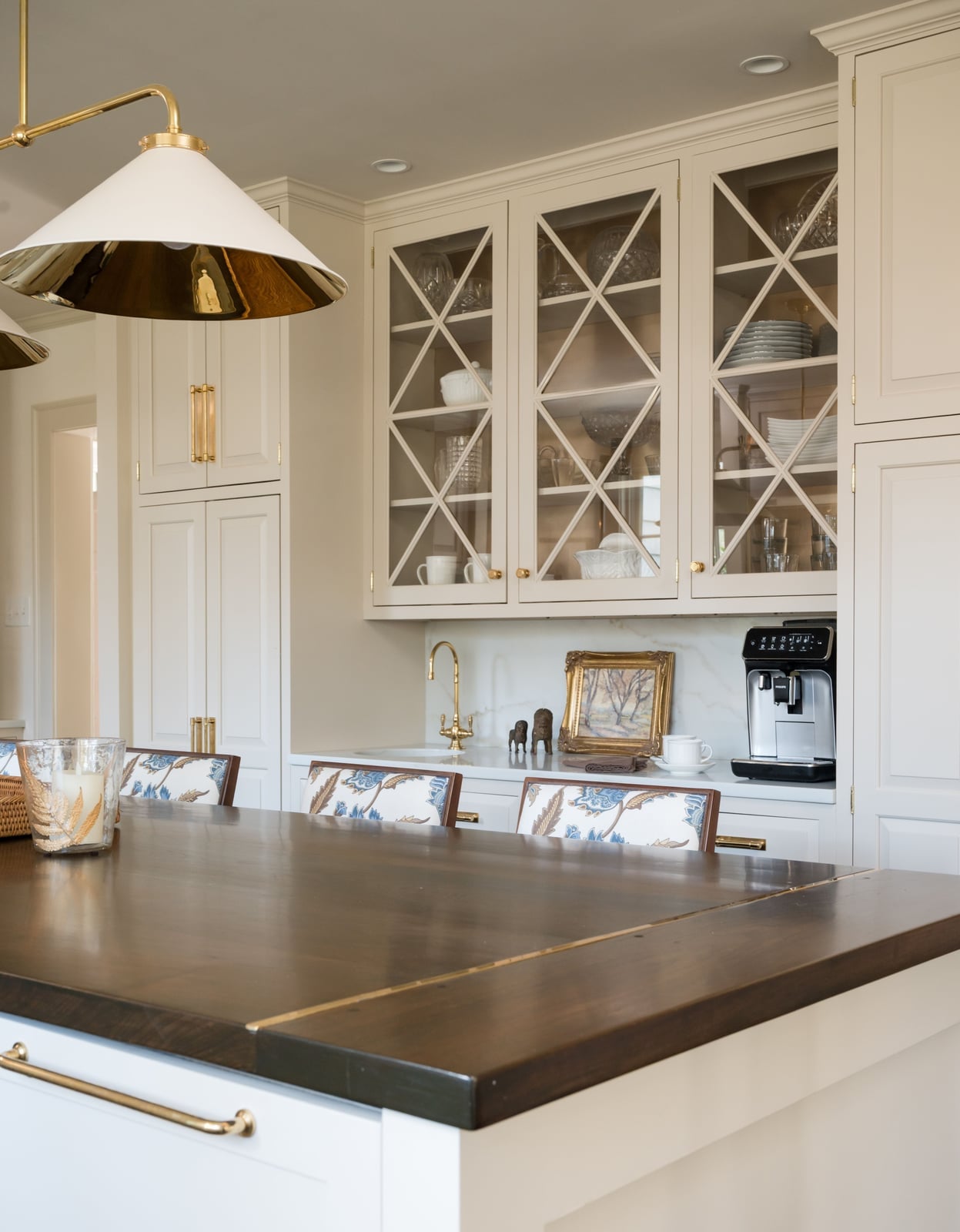
Glass-front cabinets with a geometric pattern let you show off a few dishes without the open shelf dust factor. The cream frame keeps the look soft, while the gold-toned metal in the pattern adds a touch of warmth. A blue island base and matching chairs give the room a color anchor, so the cream does not wash out. Ambient overhead lighting is enough here since the glass reflects light around the upper part of the room.
24 / 37Modern Cream Cabinets with Wood-Paneled Range Hood
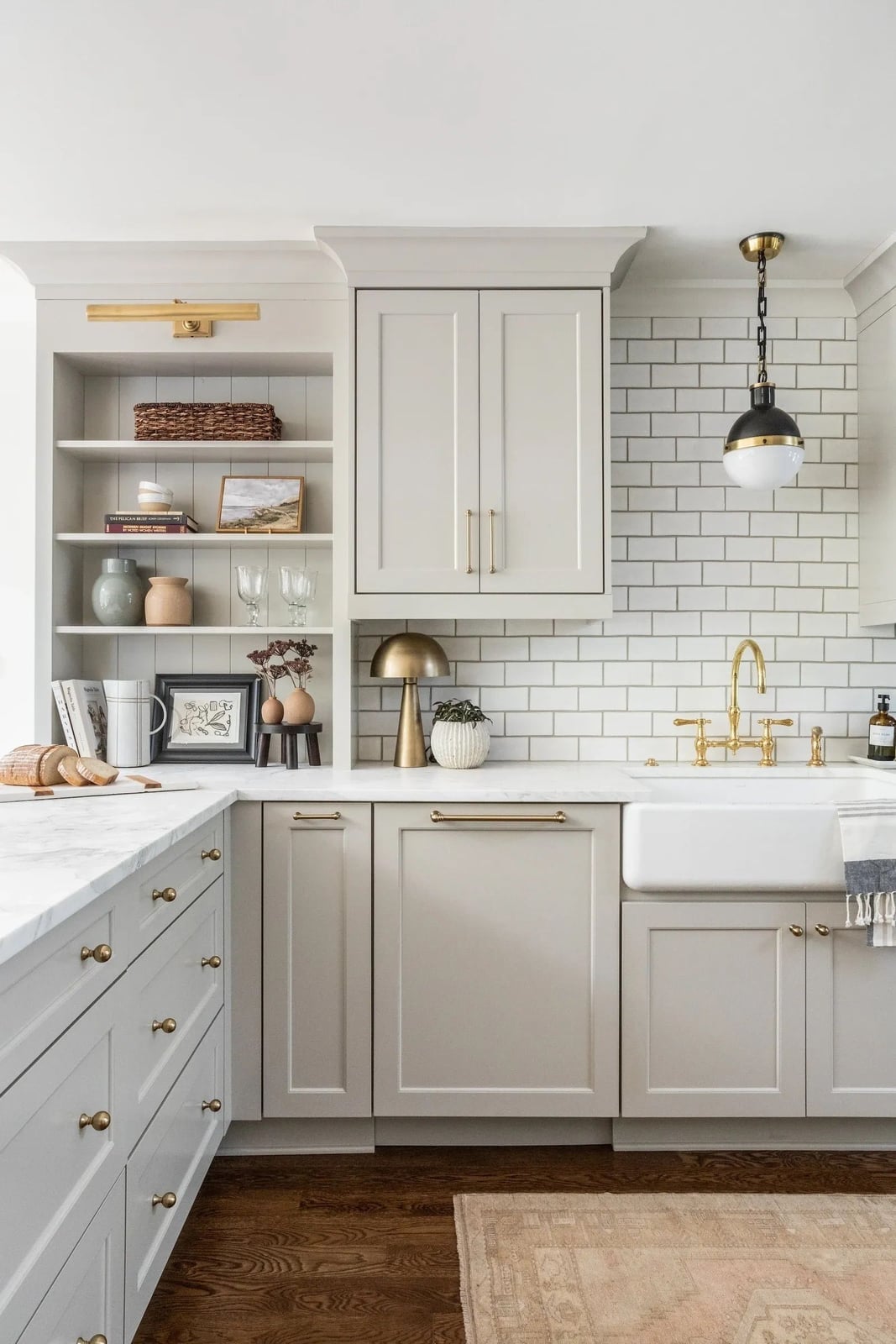
A wood-paneled range hood stands out against cream cabinets because the tone is close but the texture is different. The wood adds a vertical line that draws the eye up, making the ceiling feel higher. A stone countertop on the island keeps the surface cool and practical for prep work. Pendant lights with a simple metal shade match the modern feel, and natural light from the side keeps the cream from looking flat. The wood paneling is a good choice if you want a natural accent without adding a whole wood island.
25 / 37Traditional Cream Cabinets with Glass Fronts and Brass Hardware
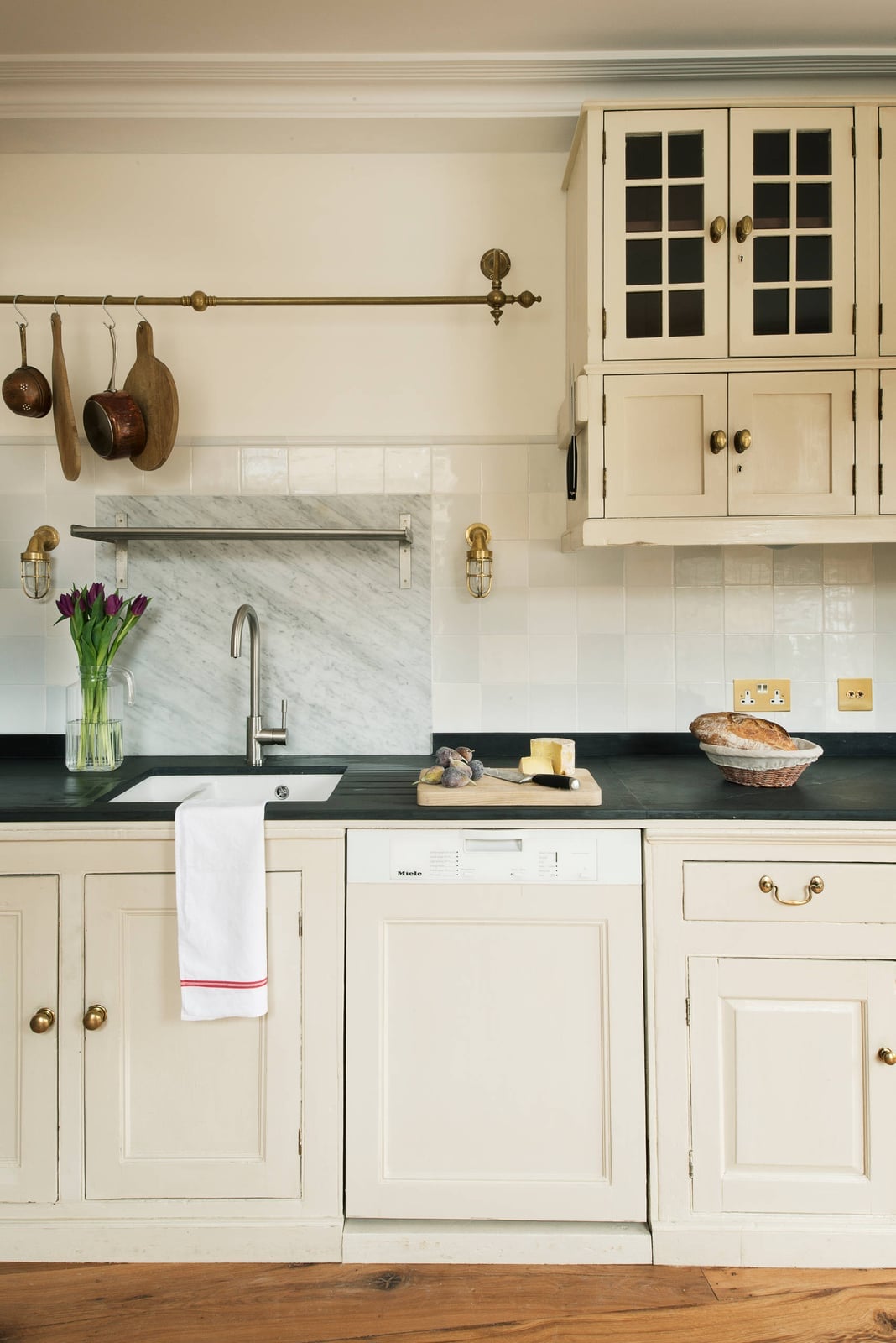
Glass fronts on upper cabinets break up the solid cream run and give you a spot to display glassware or white dishes. Brass hardware on the doors adds a warm gold note that works with the cream base. A marble backsplash behind the counter reflects light from the window, keeping the whole wall bright. Overhead fixtures with a classic shape match the traditional style without competing with the brass pulls.
26 / 37Modern Kitchen with Cream and Black Contrasting Cabinets
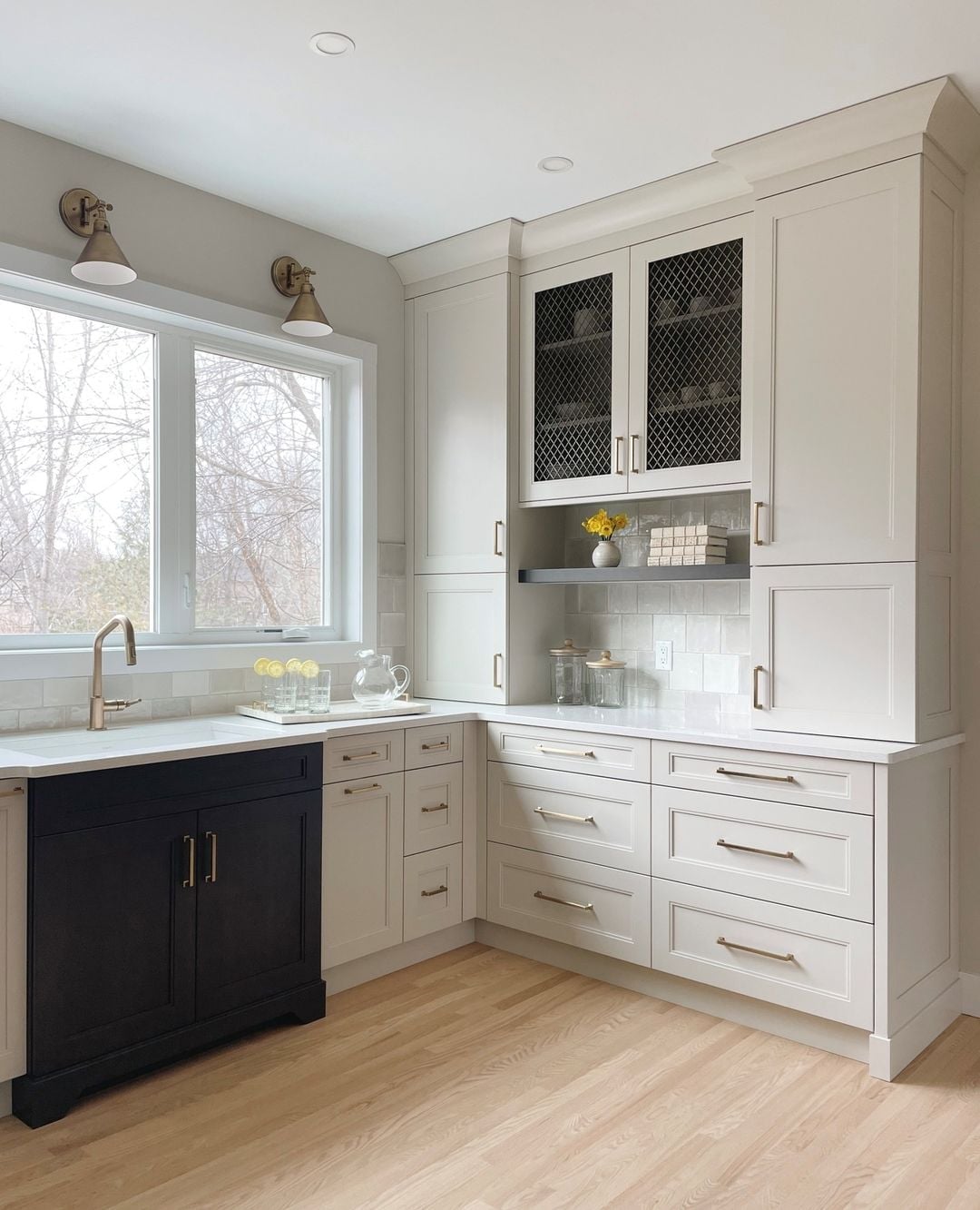
Cream and black is a high-contrast palette that works best when one color clearly leads. Here, cream upper cabinets and a cream island keep the kitchen light, while a single black base cabinet grounds the layout without darkening the whole room. Gold wall sconces and a gold faucet add a warm metallic thread that stops the cream from looking sterile. The window light keeps the cream side bright, so the black acts as deliberate punctuation without overpowering the space. For a two-tone palette, let the lighter color cover at least two-thirds of the visible cabinetry. That ratio gives the eye a resting place and keeps the contrasting cream and black cabinets from feeling split in half.
27 / 37Compact Kitchen Corner with Cream Cabinets and Marble Countertop
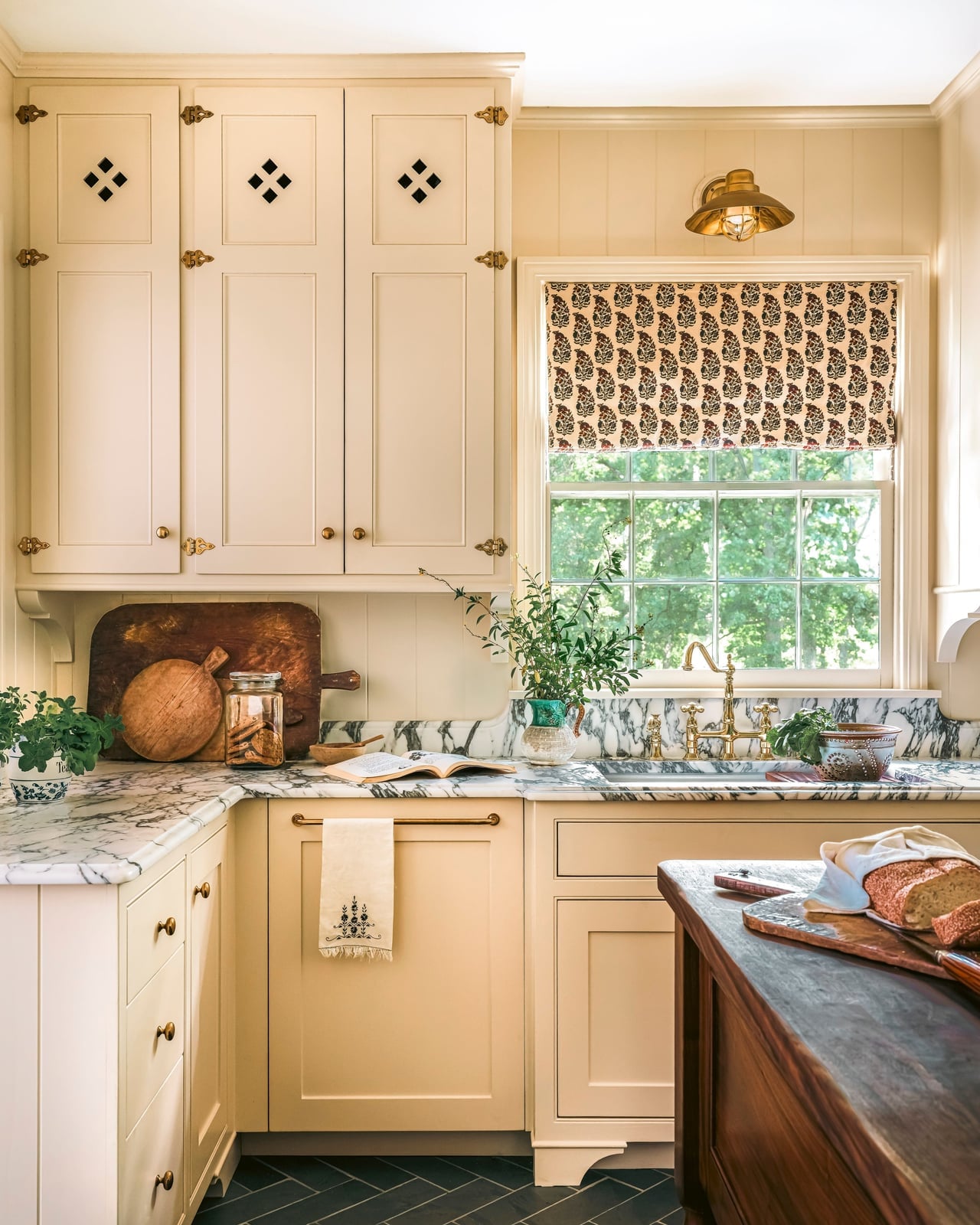
Let one material do the visual work so the rest can stay simple. Here the marble countertop provides that moment of interest, with its natural veining drawing attention to the prep zone without needing extra accessories or a busy backsplash.
The cream cabinets keep the footprint feeling open, since a pale perimeter recedes into the room. The wooden bread board on the counter adds a small warm note, but the overall effect is clean and restrained. For renters, a marble countertop is a fixed element, but the same logic applies to a removable marble butcher block or a large marble cutting board. One singular, high-impact surface can anchor a corner kitchen without requiring permanent changes to the cabinets or walls.
28 / 37Modern Cream Cabinets with Copper Panel Detail
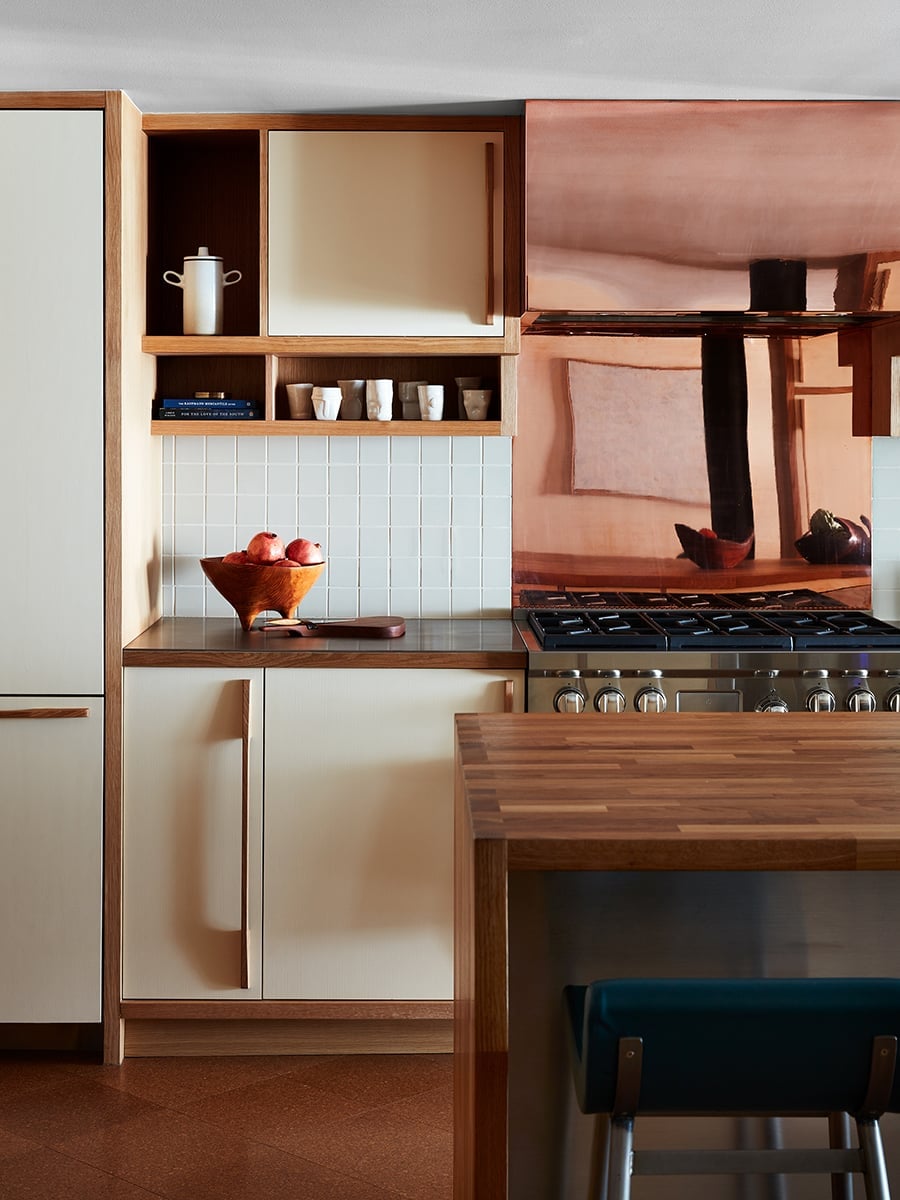
A copper panel behind the stove breaks up a run of cream cabinets without adding hardware or a full backsplash. The material contrast is the point: the cool cream painted finish sits next to a warm, reflective metal surface that catches the overhead lighting differently throughout the day. White tile on the wall above keeps the palette clean, and wood shelving on either side of the copper panel repeats the warm tone so the metal does not feel isolated. For a modern kitchen, a single metal panel like this is a low-commitment way to test a trend. The same idea works with a sheet of brushed brass or stainless steel, cut to fit the space between the counter and the hood.
29 / 37Transitional Kitchen with Cream Cabinets and Neutral Tile Backsplash
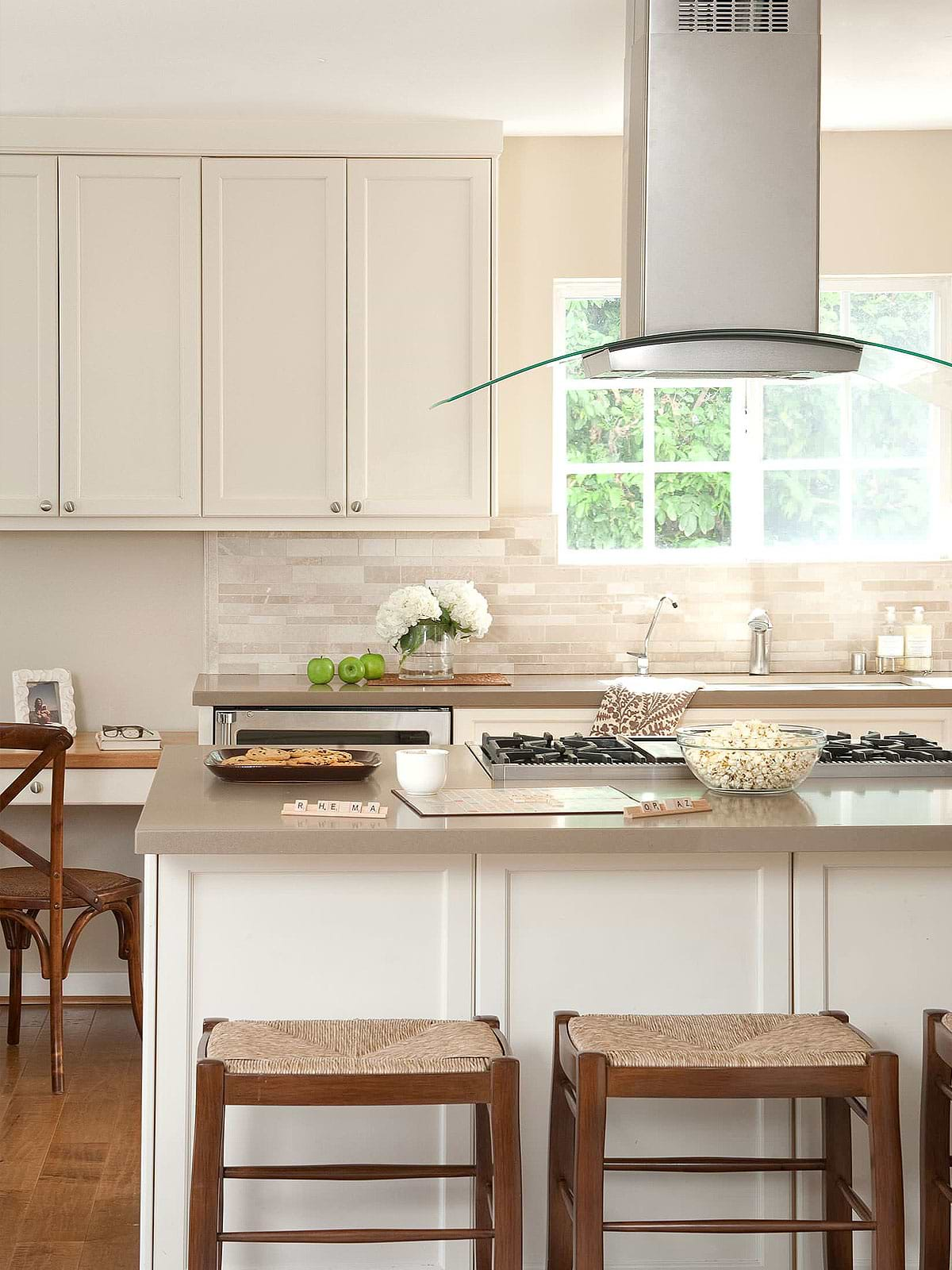
A roomy transitional kitchen with cream cabinets relies on the backsplash to set the tone without competing. Here a neutral beige tile reads as an extension of the cream cabinetry rather than a separate layer, which keeps the eye moving across the whole wall instead of stopping at the counter line. The woven stool seats add a natural texture that softens the stone countertops and recessed lighting overhead. The palette stays in a tight range of cream, beige, and white, so the island does not need a contrasting color to feel like a separate zone. For a transitional kitchen, the neutral tile backsplash is the durable choice because a beige or cream grout hides daily splashes better than a white grout would, and the matte finish does not show water spots the way a glossy tile does.
30 / 37Minimalist Cream Cabinets with Integrated Handles and Coffee Machine
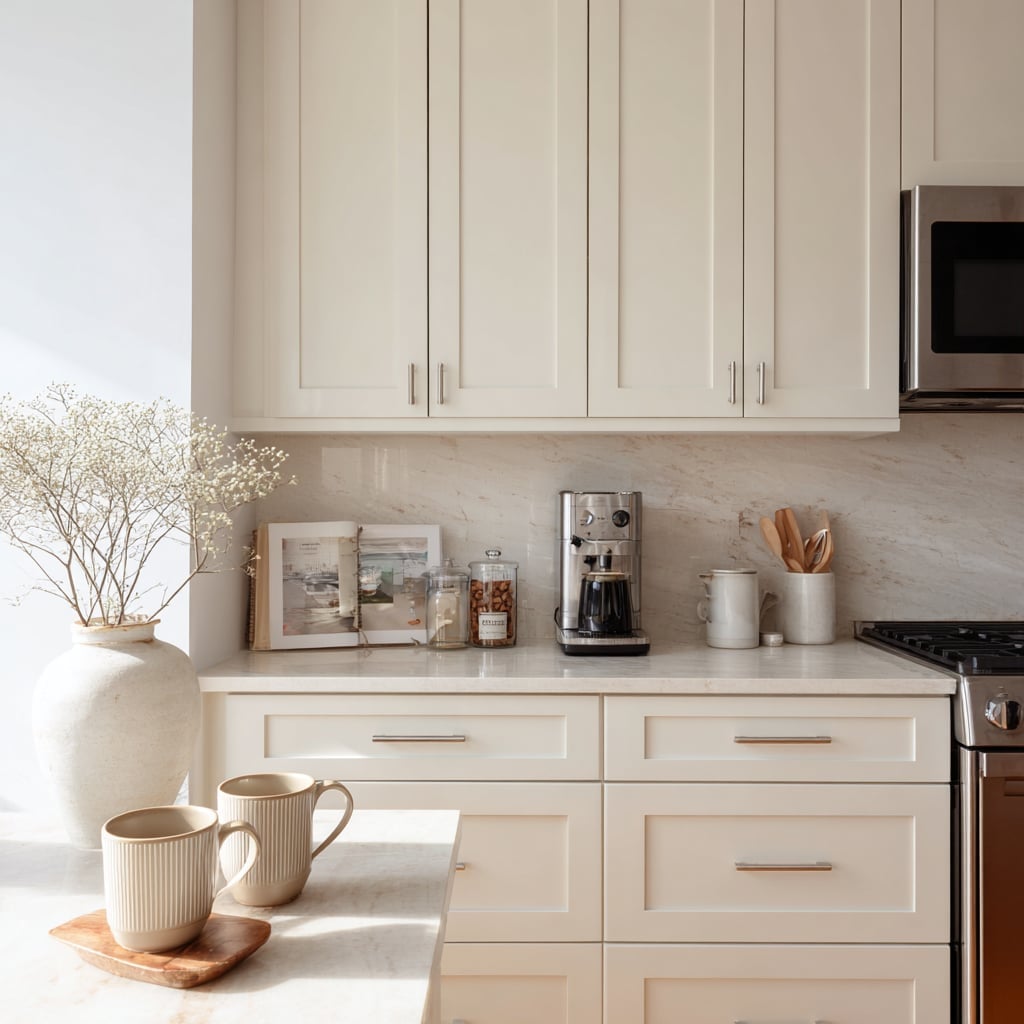
A minimalist kitchen with integrated handles reads as calm, but the trade-off is that every surface needs to earn its place since there is no hardware to distract the eye. Here the cream cabinets run straight along the wall, with a marble countertop providing the only pattern. A coffee machine on the counter becomes the functional focal point, which makes sense for a compact layout where the work zone is also the display zone.
The real storage trick in a minimalist kitchen is the countertop itself. With no upper handles or pulls, the prep zone has to stay clear for the kitchen to look neat. That means the drawers and lower cabinets need to handle the bulk of the daily storage, while the counter holds only the items used every morning. For a compact straight run of cabinets, keeping the marble countertop relatively empty is not a design choice but a practical necessity.
31 / 37Transitional Cream Cabinets with Glass-Fronted Uppers and Ornate
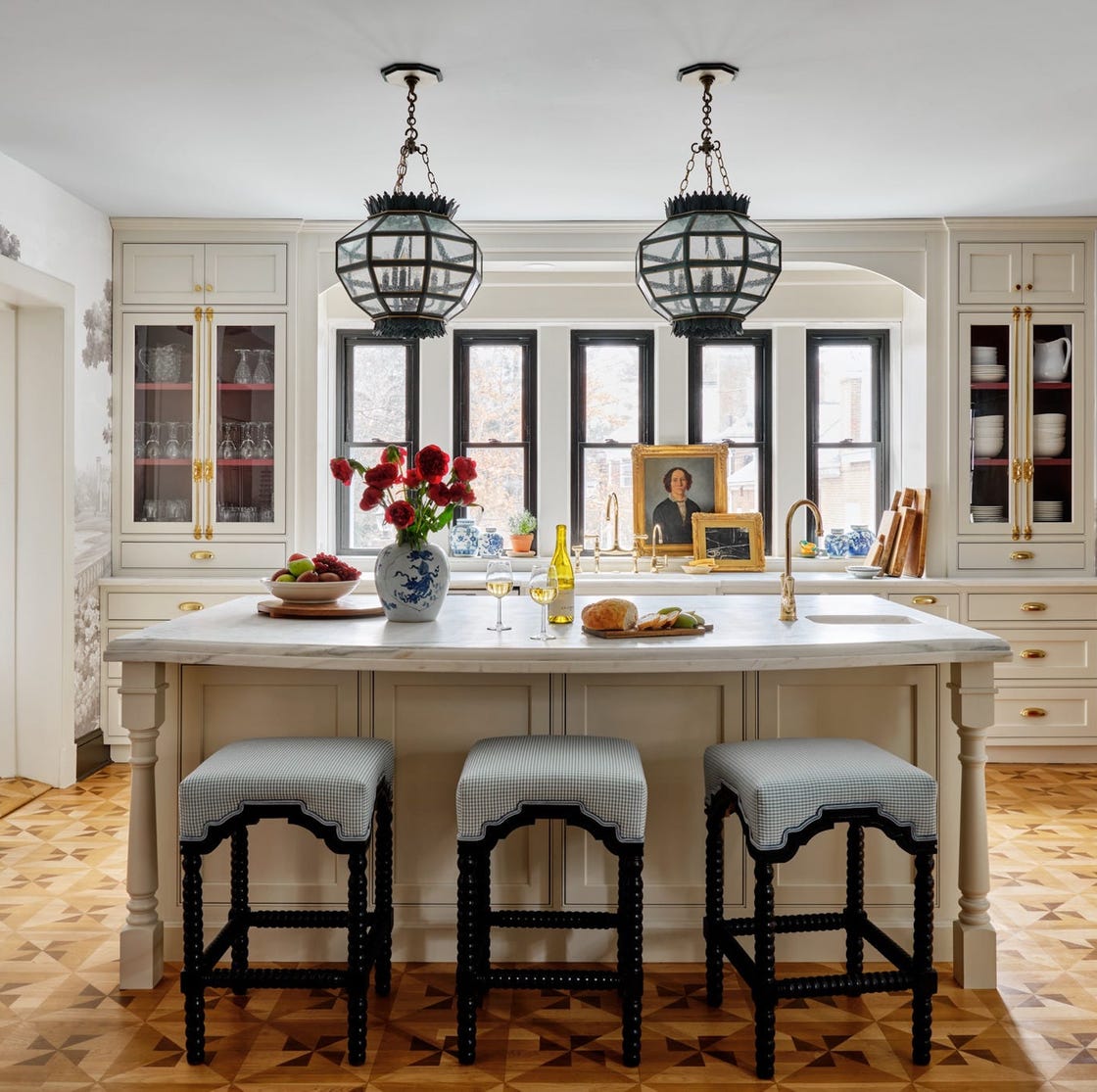
The ornate pendant lights above the island pull this transitional kitchen together, drawing the eye up and away from the busy marble surface below. Cream cabinets with glass-fronted uppers keep the perimeter light, while the blue stools add a quiet contrast that balances the gold accents. Daylight softens the brass fixtures, and the pendants take over at night. If you want this look, let the lighting do the talking and keep the counter styling sparse so the fixtures stay the focal point.
32 / 37Farmhouse Kitchen with White Shaker Cabinets and Beige Brick Tile
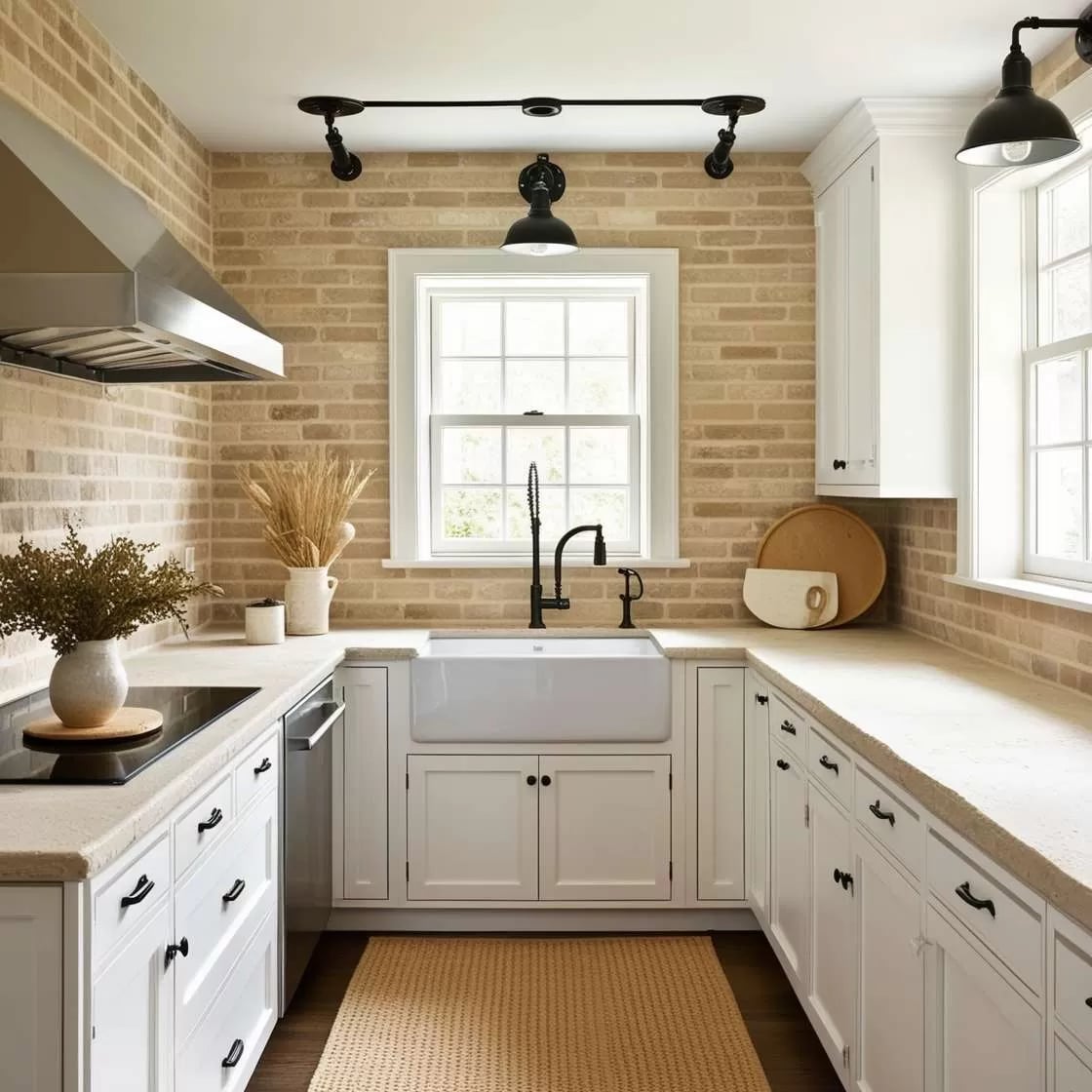
This compact U-shaped kitchen proves that farmhouse style does not need a big room to land well. White shaker cabinets and a farmhouse sink set the tone, and the beige brick tile backsplash adds warmth without competing with the wood countertops. The overhead light keeps the space bright, while the natural window light balances the darker brick tones. The palette stays in a narrow range of white, beige, and wood, which makes the small footprint feel orderly rather than busy. If you are working with a tight layout, keep the upper cabinets closed and let the brick tile be the only pattern in the room.
33 / 37Transitional Kitchen with Cream Cabinets and Wood Elements
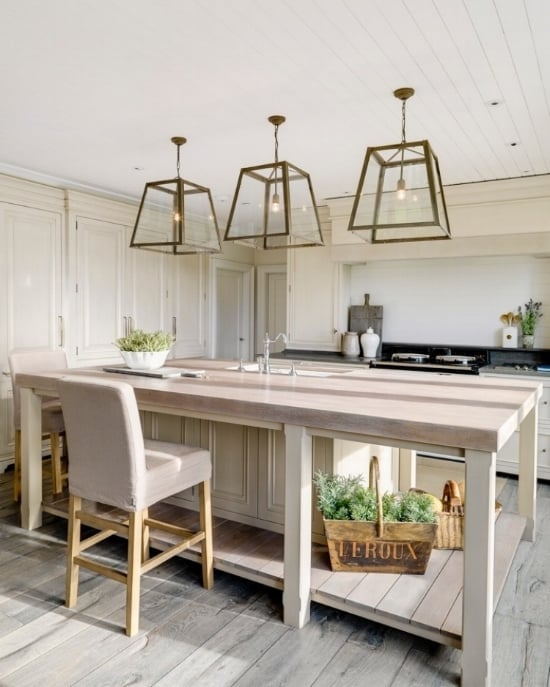
Set these cream cabinets against a kitchen that leans more modern, and you get a cool, sleek room. Set them against wood elements, and you get something warmer and more lived-in. This transitional kitchen takes the second path: a large island with pendant lights above it anchors the open plan, while the cream cabinets blend with the beige and wood tones around them. The stone countertops keep the look grounded, and the fabric on the stools adds a soft layer that hard surfaces cannot. Natural light from the windows and overhead lighting work together so the wood tones read as warm, not dark. The result is a room that feels generous without being stark, which is the point of transitional style. It borrows the clean lines of modern design and the comfort of traditional materials.
34 / 37Modern Kitchen with Cream and White Cabinets and Glass Display
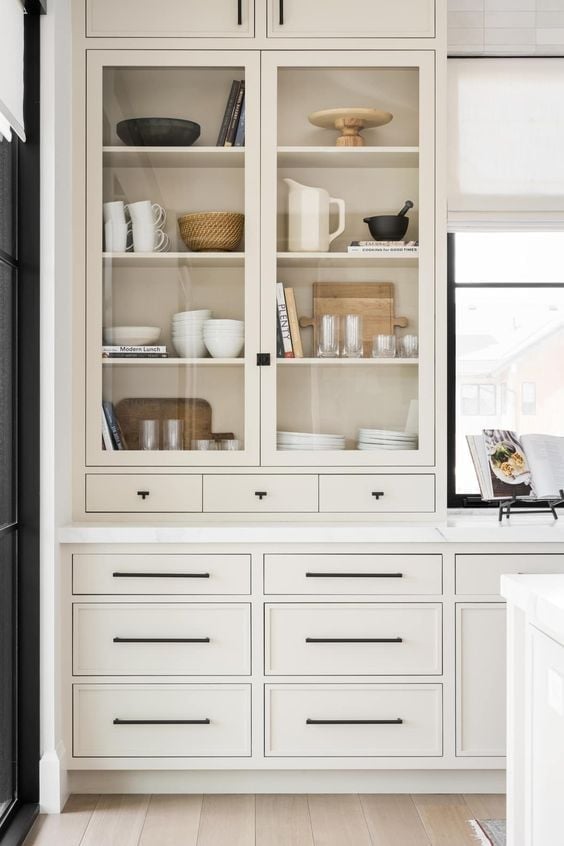
A corner shot can make a small kitchen feel even tighter, but this perimeter layout uses glass-front cabinets to open it up. The cream and white cabinets blend into the walls, and the glass display upper lets the eye travel past the fronts instead of stopping at solid doors. Interior cabinet lighting turns the display into a feature at night, while the natural window light keeps it subtle during the day. If you have a compact kitchen, glass uppers are a storage trick that doubles as decor. They force you to keep the shelves tidy, but the payoff is a room that feels taller and less boxed in.
35 / 37Traditional Kitchen with Cream Shaker Cabinets and Tropical Wallpaper
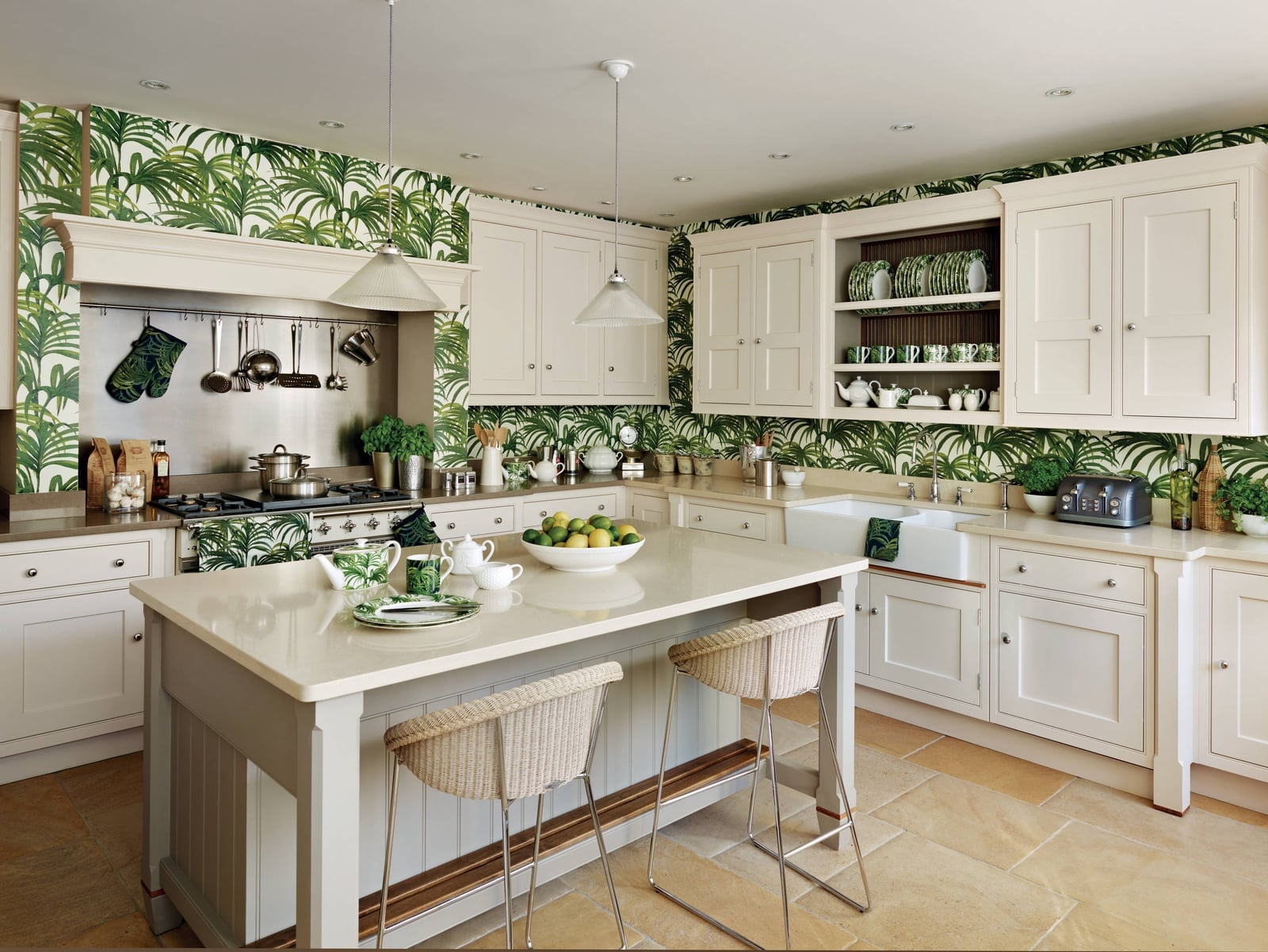
Tropical wallpaper is a bold move for a traditional kitchen, but it works here because the cream shaker cabinets stay quiet underneath it. The green leaves add color, and the wood and stone surfaces ground the space. Pendant lights over the island and a natural window give the kitchen a balanced glow, so the wallpaper never looks too dark. Let the pattern be the only loud element in the room. Keep the cabinets closed, the counters clear, and the hardware simple, and the tropical print becomes a feature instead of a fight. This styling works best in a roomy kitchen where the wallpaper can breathe.
36 / 37Modern Cream Cabinets with Integrated Brass Handles and Gray Island
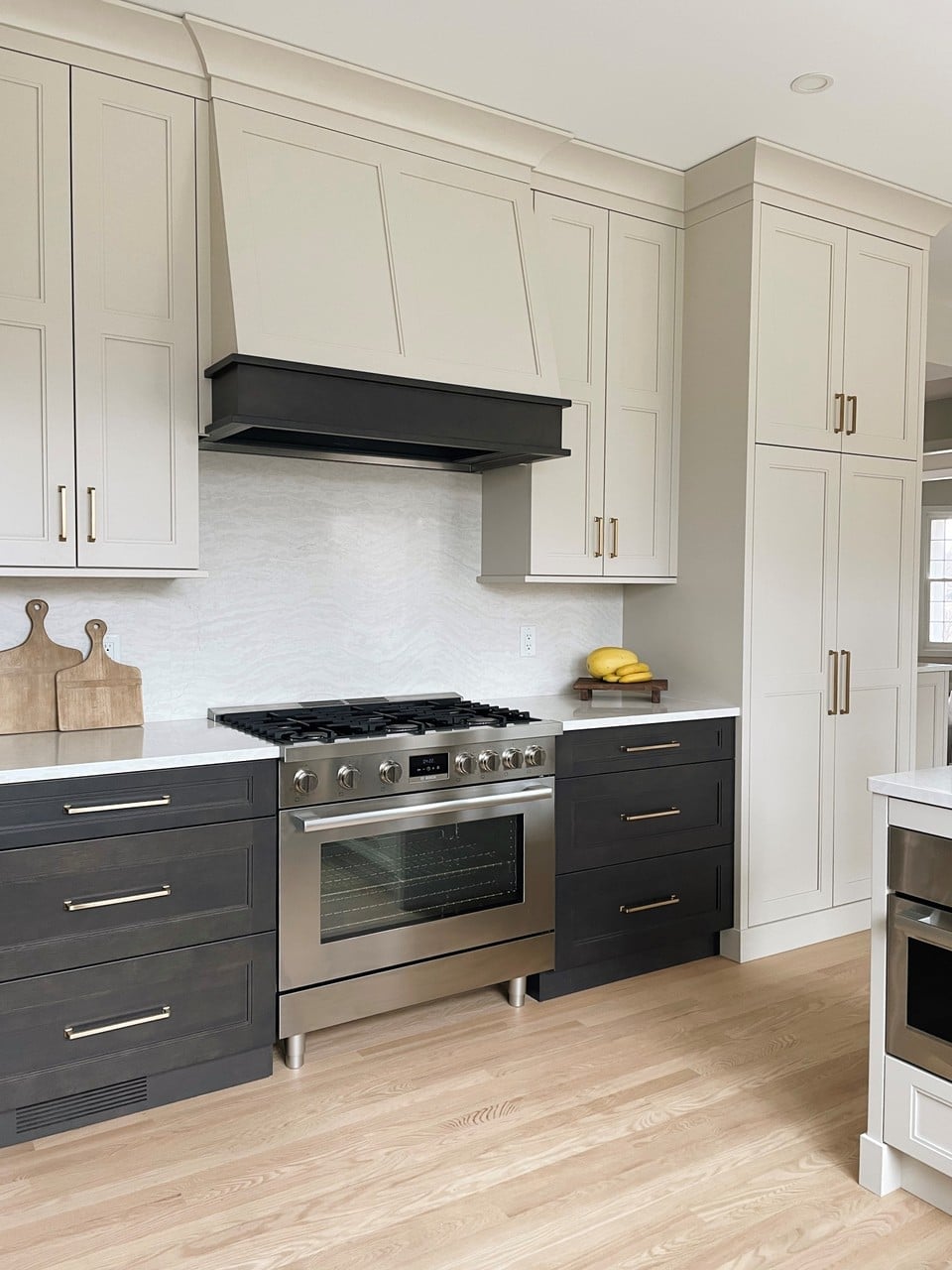
A gray island is a close alternative to the usual white or wood base, and it works here because the cream cabinets with integrated brass handles and gray island set a calm, modern tone. The cream cabinets run along both walls of this roomy galley kitchen, their integrated brass handles adding a warm metallic line without interrupting the flat fronts. The gray island sits in the middle as a separate block, its matte finish contrasting with the glossy cream cabinets and the brass hardware. The backsplash keeps the palette tight, and the overhead lighting and under-cabinet lights keep the surfaces visible without glare. The result is a kitchen that feels put together without extra layers: cream cabinets, a gray island, brass handles, and everything else stays simple.
37 / 37Final Thoughts
Cream cabinets work across styles, from modern slab fronts to traditional shaker doors. The trick is choosing hardware and countertops that play up the warmth without making the room feel dated. Brass, black, and wood all pair well, as do marble and quartz. Keep the look current by mixing in natural textures and a few bold accents. And remember, upkeep is straightforward: a damp cloth and mild soap handle most messes, and a gentle cleaner keeps the finish bright. 36 ideas to consider, but the real takeaway is that cream is a long-term friend, not a passing trend.