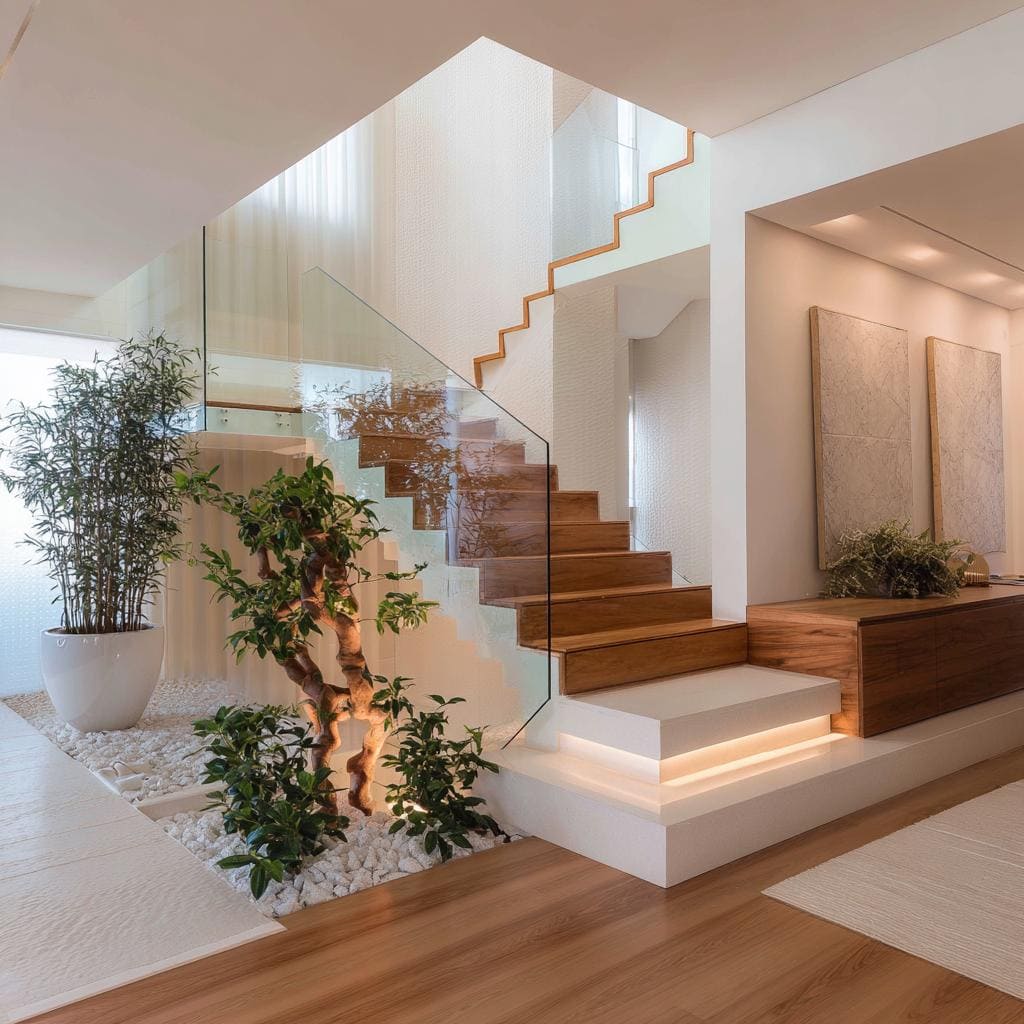
Your staircase is more than a way to get from floor to floor. It is a chance to make a statement in your hallway.
This collection of 34 staircase design ideas shows how to turn that vertical space into something memorable, whether you prefer clean modern lines, bold color, or old-world charm. Expect practical inspiration that fits real homes, from floating treads to patterned runners and painted details.
01 / 35Floating Staircase with Integrated LED Lighting
A straight floating staircase with open risers and glass railing anchors a roomy hallway. The wood treads have integrated LED lighting built in, so the glow comes from the step itself rather than a fixture above. A large green plant and natural light soften the clean lines. The layout uses a simple strategy: when the stair is the focal point, keep the floor and wall finishes neutral so the structure stays the focal point. Wood tones and white do that work without competing.
02 / 35Dramatic Floating Stairs with Glass Railing
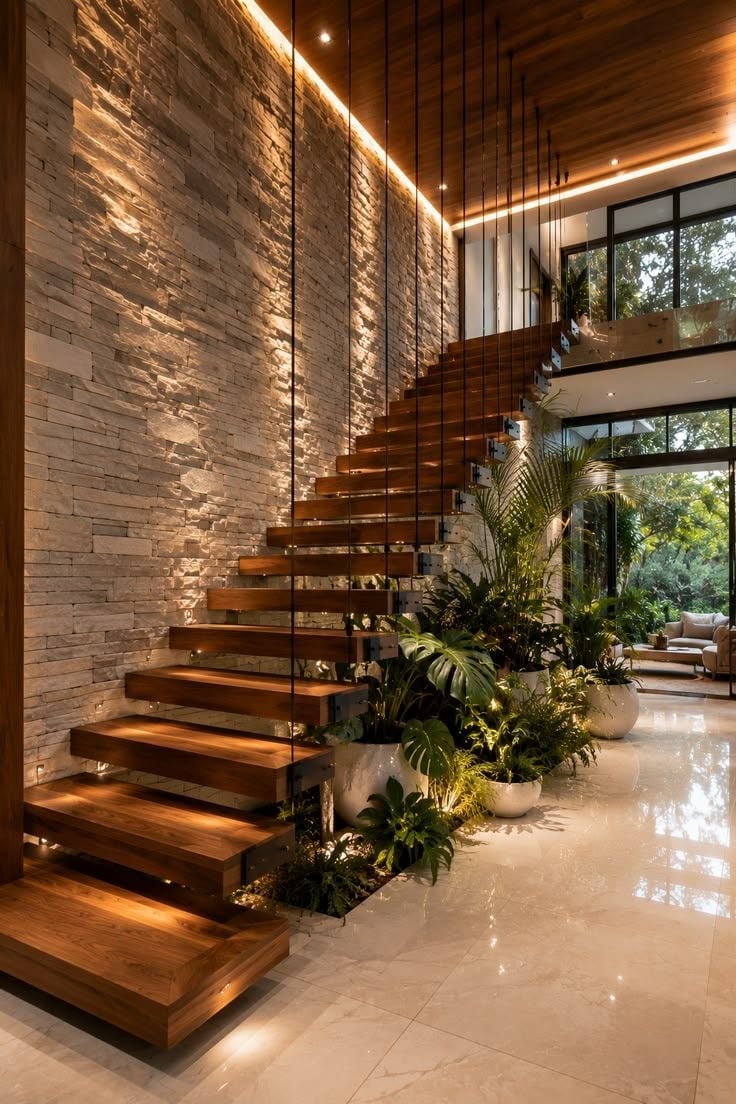
This open-plan hallway uses a central floating staircase with glass railing to keep sight lines clear. The palette is wood, white, and green, with large plants adding life to the transition between levels. Integrated lighting under the treads gives the stairs a suspended look against the wall. The material lesson is about balance: glass lets the wood steps read as the main event, while stone accents on the floor anchor the base. A glass railing works best in a space where you want the eye to travel through the stair, not stop at it.
03 / 35Illuminated Floating Stairs with Integrated Planter
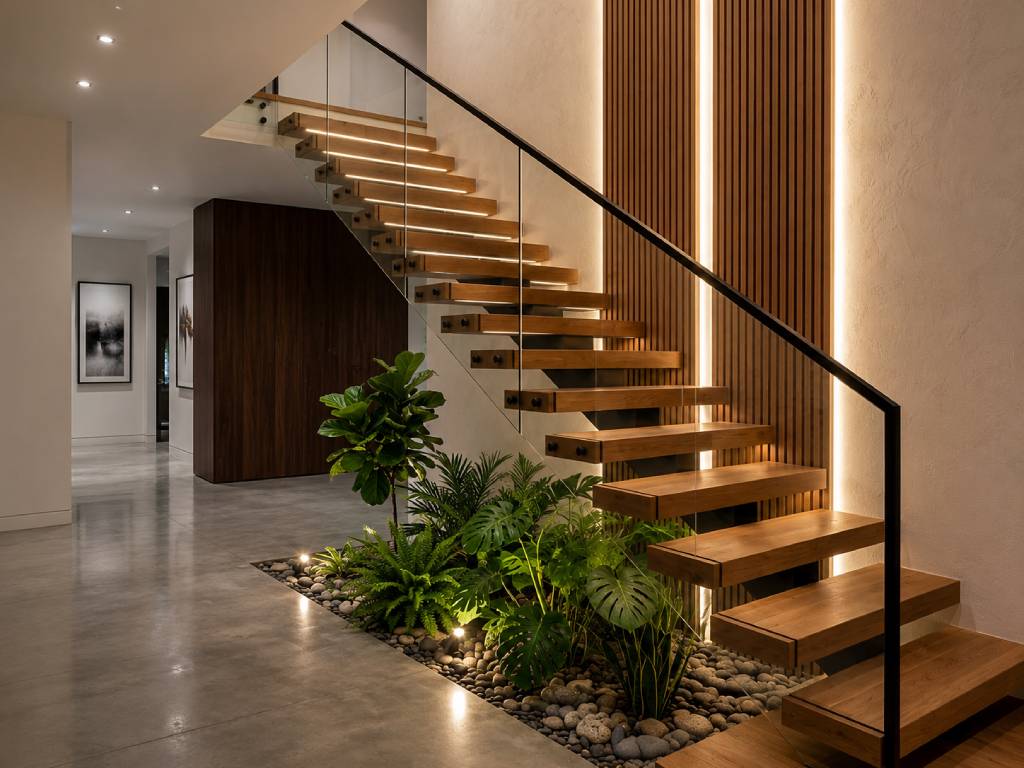
Can a staircase do double duty as a garden feature? This modern hallway says yes. A straight set of floating wood stairs with glass railing has an integrated planter built into the landing, filled with greenery. LED accent lighting runs along the treads, casting a soft glow that makes the steps appear to hover. The layout is open plan, so the planter functions as a natural room divider without blocking light.
The material mix matters here: wood for warmth, glass for transparency, and stone for the planter base. The plants need a spot that gets consistent light, so check your hallway’s exposure before committing to a built-in planter. In a rental, a large potted plant on the landing mimics the look without the construction.
04 / 35Corner Staircase with Illuminated Wood Treads
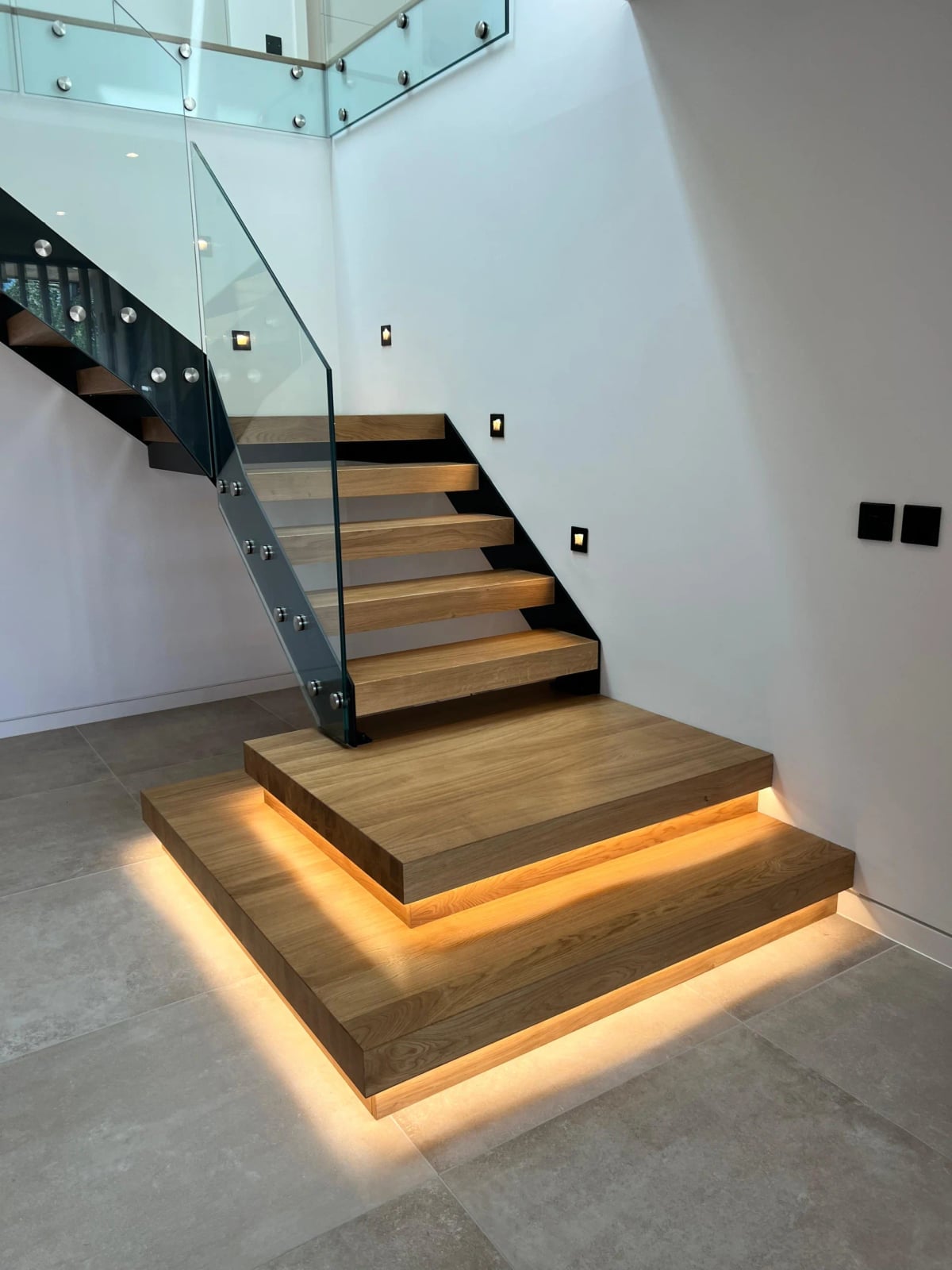
A compact corner staircase with wood treads and glass railing uses integrated step lighting to make the turn feel intentional rather than cramped. The palette stays light with white walls and grey accents, so the warm wood pops against the neutral backdrop. The layout principle for a corner stair is to keep the landing at the turn wide enough for two people to pass. A metal handrail along the wall adds grip without adding visual weight. This design suits a tighter footprint where a straight run would eat into the floor plan.
05 / 35Central Floating Staircase with Minimalist Balustrade
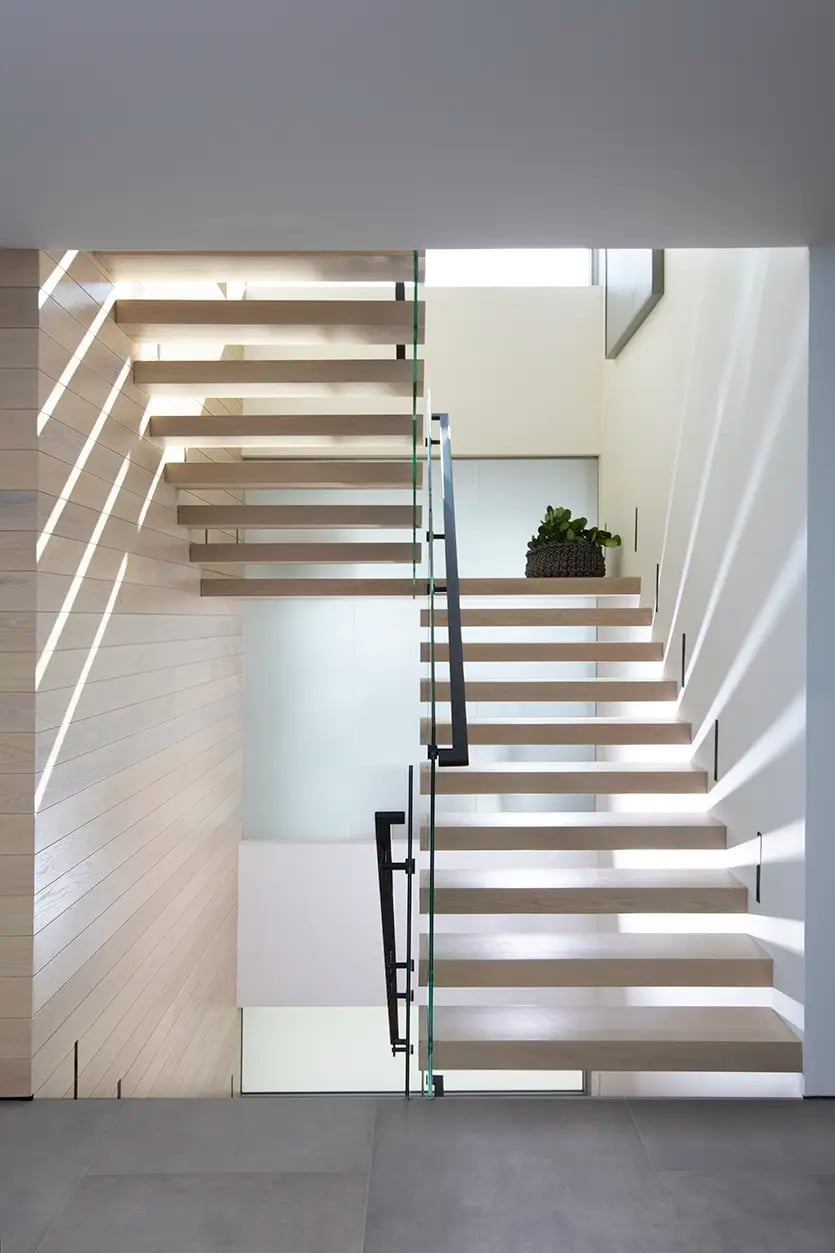
A practical rule for an open-plan hallway: a central floating staircase with a minimalist balustrade keeps the space feeling connected. This design uses light wood treads against white walls, with a black metal handrail and glass panels that let natural light and shadows move through the room. The wide shot of the stair shows how the floating treads create a sense of airiness, with shadows from the steps adding depth to the floor below. The scale principle is that a central stair needs enough clearance on both sides to avoid feeling like a tunnel. A minimalist balustrade helps with that by not boxing in the view.
06 / 35Floating Concrete Stairs with Minimalist Metal Balustrade
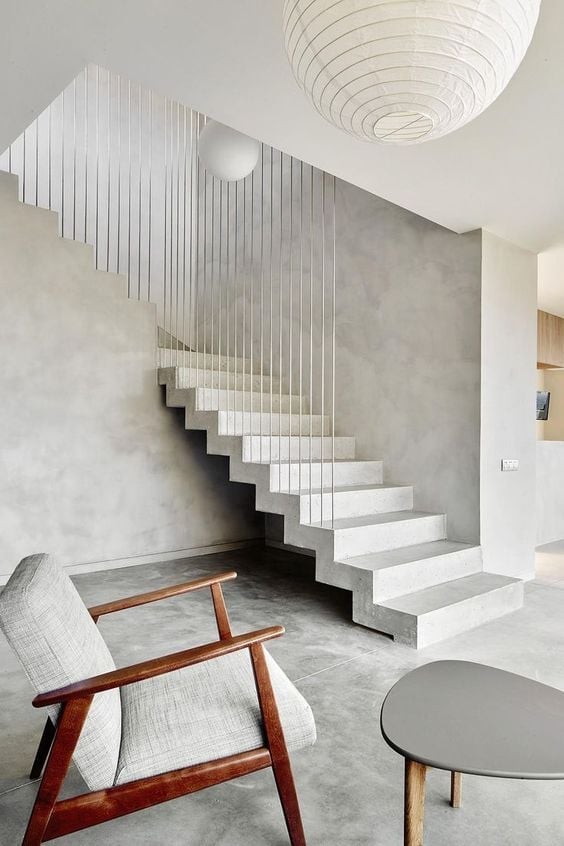
Concrete stairs often read as industrial, but this version lands on the refined side of modern. The floating concrete treads are substantial enough to feel permanent, yet the open riser keeps the hallway from feeling boxed in. A minimalist metal balustrade with slim vertical bars follows the line of the stairs without adding visual weight. The palette stays cool with grey concrete, white walls, and silver-toned metal. Ambient light softens the hard surfaces. To recreate it, look for: wood treads painted in a concrete-look finish for a lighter budget. The visual weight stays low, and the upkeep is straightforward: a dust mop and the occasional wipe keep the treads looking clean.
07 / 35Modern Hallway with Bold Patterned Staircase Runner
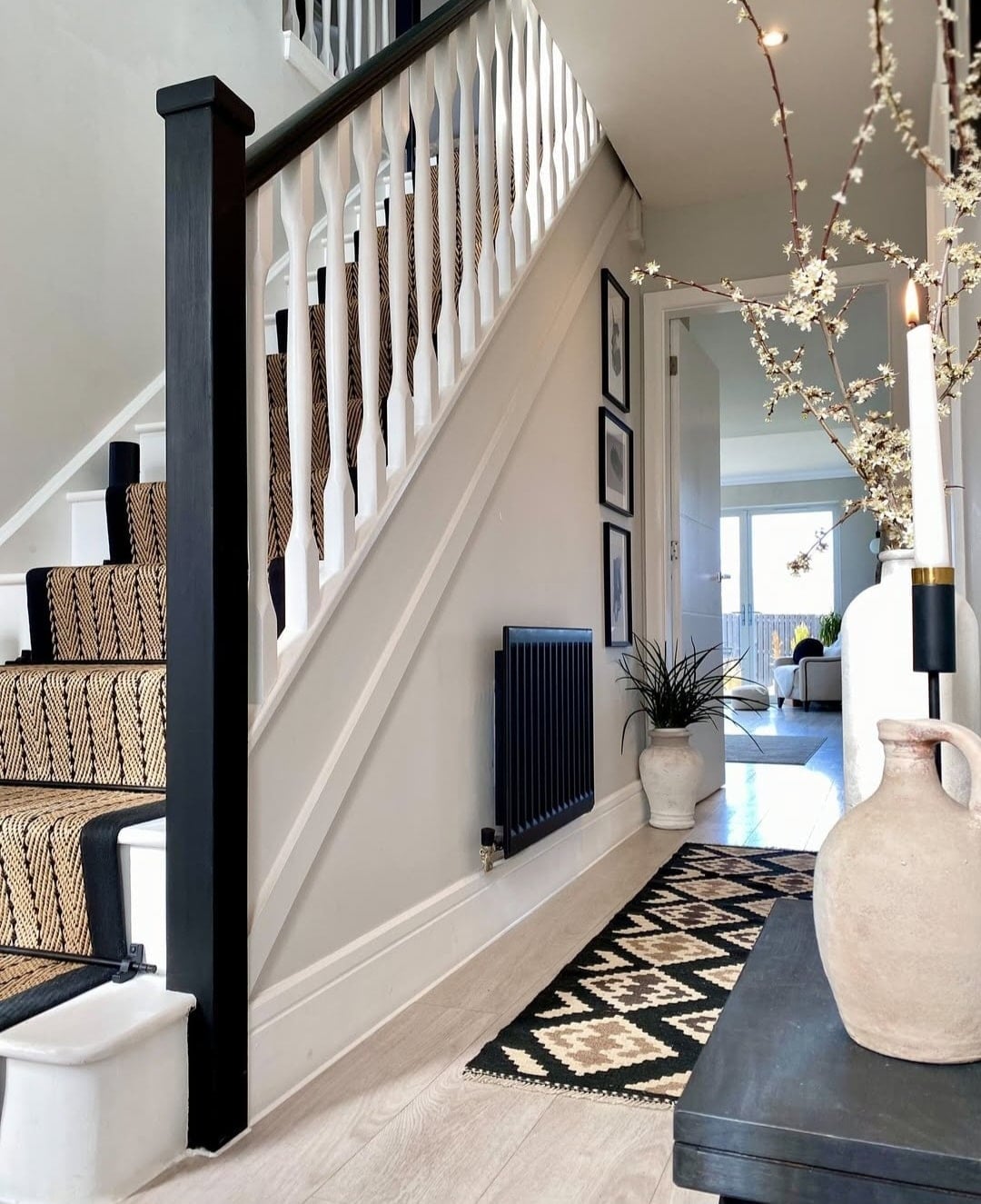
The staircase runner here does not fade into the background. A bold geometric pattern in black, white, beige, and brown runs from the top step to the bottom, anchoring the entire hallway. The wood treads peek out at the edges, which keeps the runner from reading as a full carpet. A console table and a radiator sit against the wall, but the runner is the main event. For renters, this is a smart swap: a runner installs without permanent changes and pulls up easily when you move. The pattern hides daily foot traffic well, and the neutral colors mean it works with most wall colors.
08 / 35Sculptural Curved Wooden Staircase with Glass Railing
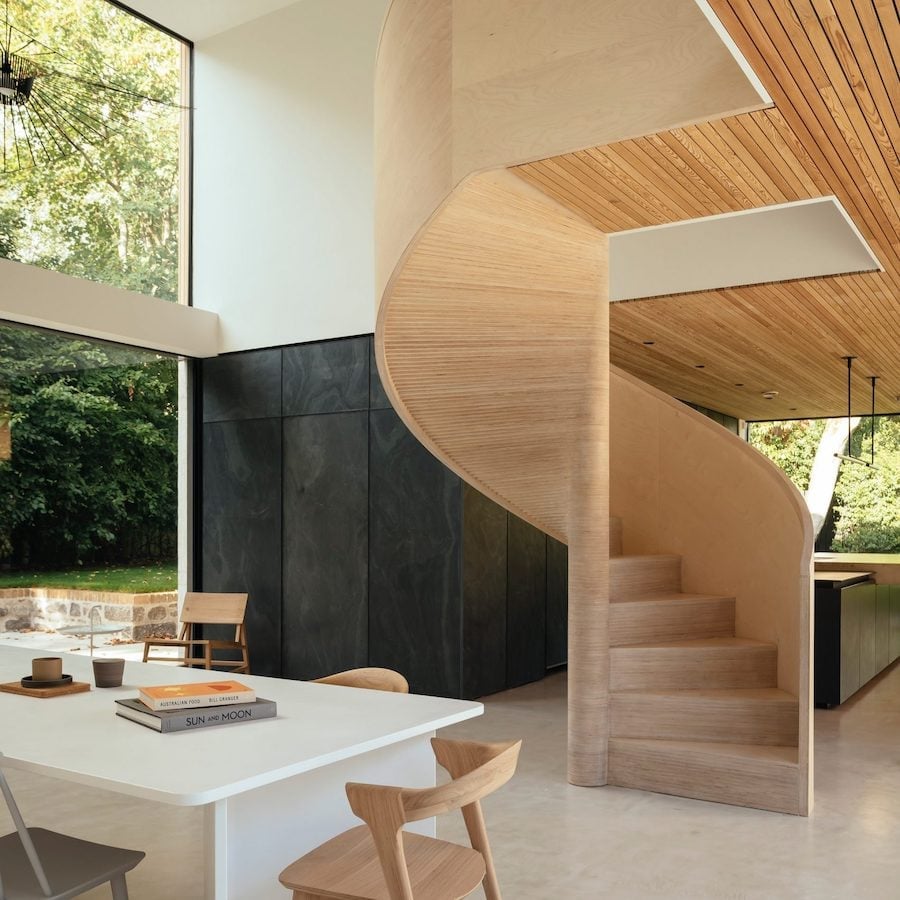
A curved wooden staircase is a layout decision as much as a decorative one. The sweep of the treads creates a natural flow through an open-plan space, guiding the eye upward without a hard turn. The warm wood tones contrast with white walls and a concrete floor, so the staircase reads as the focal point. A glass railing follows the curve without blocking the view, and integrated lighting under the handrail adds visibility after dark. The curve does require more floor space than a straight run. If the footprint works in your home, this layout makes a strong case for letting the staircase shape the room rather than the other way around.
09 / 35Eclectic Hallway with Bold Floral Patterned Risers
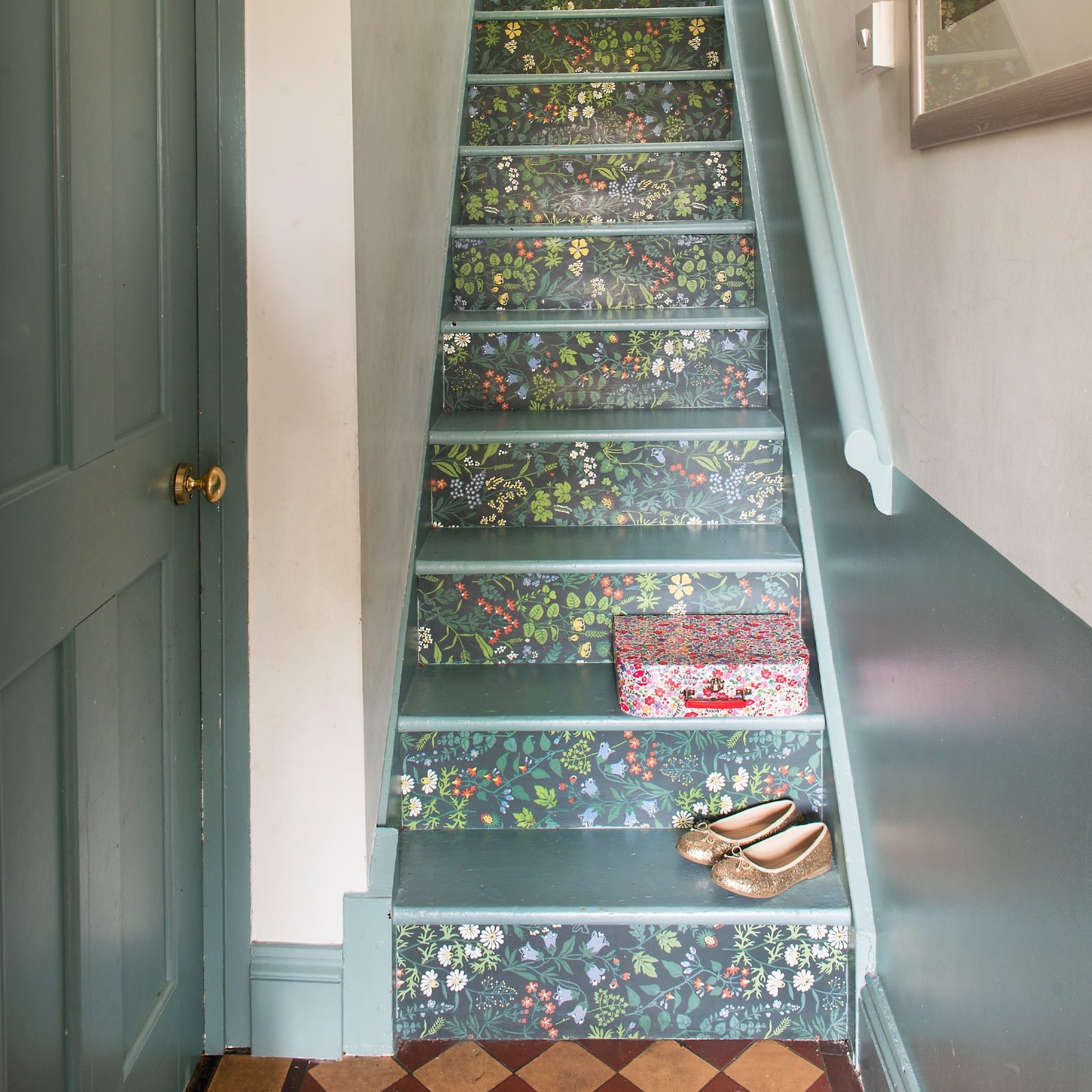
Can a staircase riser carry a pattern without overwhelming the room? In this case, yes. A bold floral wallpaper covers each riser, set against painted wood treads and a teal banister. The dark green background of the floral pattern ties into the teal railing, so the combination feels cohesive. The narrow staircase keeps the pattern contained, and the natural light prevents the dark tones from feeling heavy. For a renter-safe version, use removable wallpaper on the risers. It applies flat, peels off cleanly, and lets you test a bold palette without committing to paint.
10 / 35Floating Wood Treads with Dramatic Black Metal Balusters
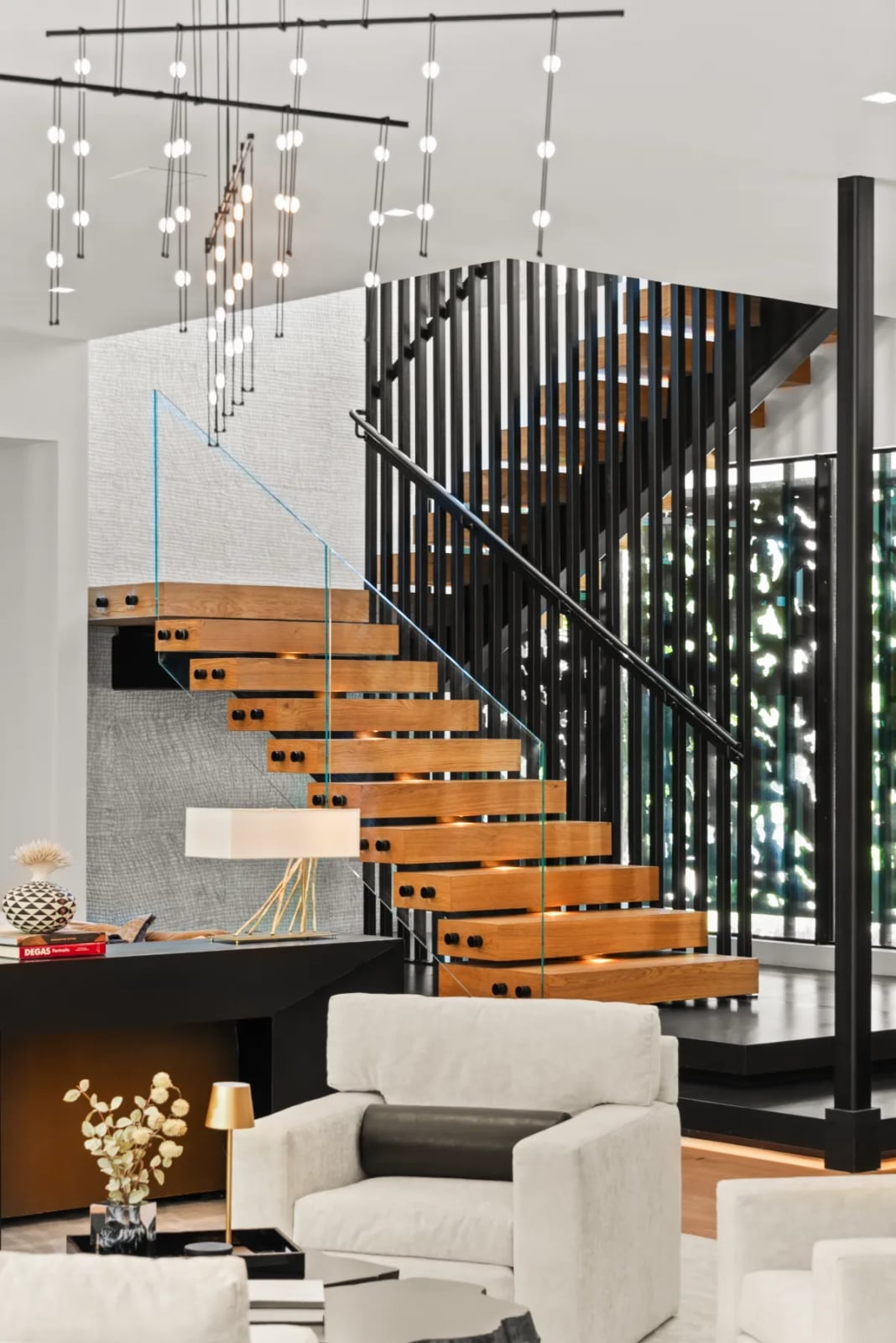
Floating wood treads paired with black metal balusters create a staircase that feels open and structured at the same time. The open riser lets light pass through, so the hallway stays bright even with a solid wood tread. A glass railing panel sits behind the black balusters, adding safety without blocking the view. The wood tones warm up the black and white palette, and ambient lighting from above keeps the treads visible. The balusters are spaced close enough to meet code, but the slim profile keeps them from reading as a solid wall. This setup suits an open plan where the staircase needs to feel like part of the room, not a separate structure.
11 / 35Traditional Hallway with Painted Spindles and Herringbone Floor
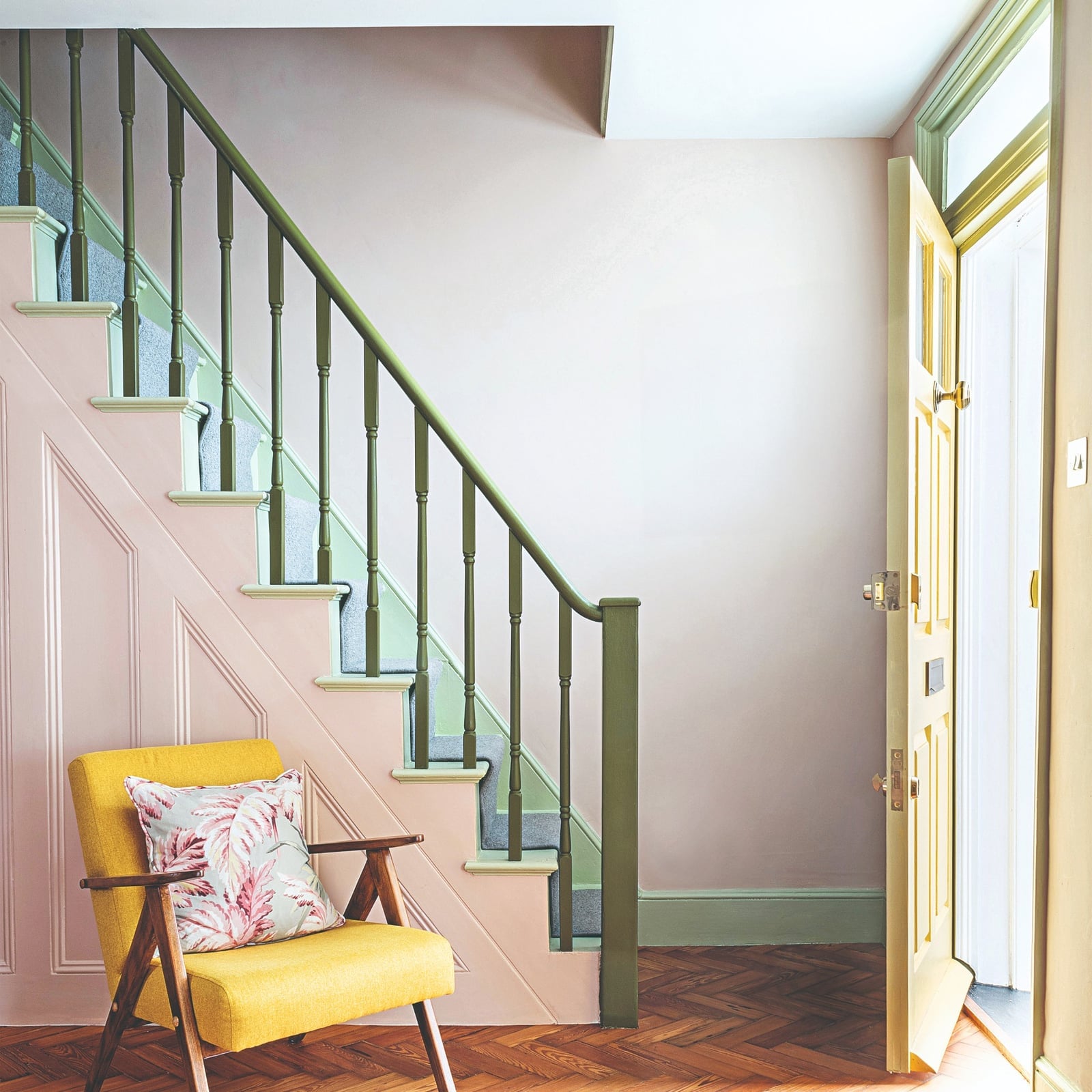
A practical rule for a traditional hallway is to let the staircase anchor the layout and build around it. Here the painted spindles and herringbone floor set a classic foundation, while the yellow armchair by the window adds a spot to sit. The cream, pink, and green palette keeps the space from feeling too formal. The roomy layout works because the furniture stays along the walls, leaving the path clear.
12 / 35Modern Curved Staircase with Mirrored Wall
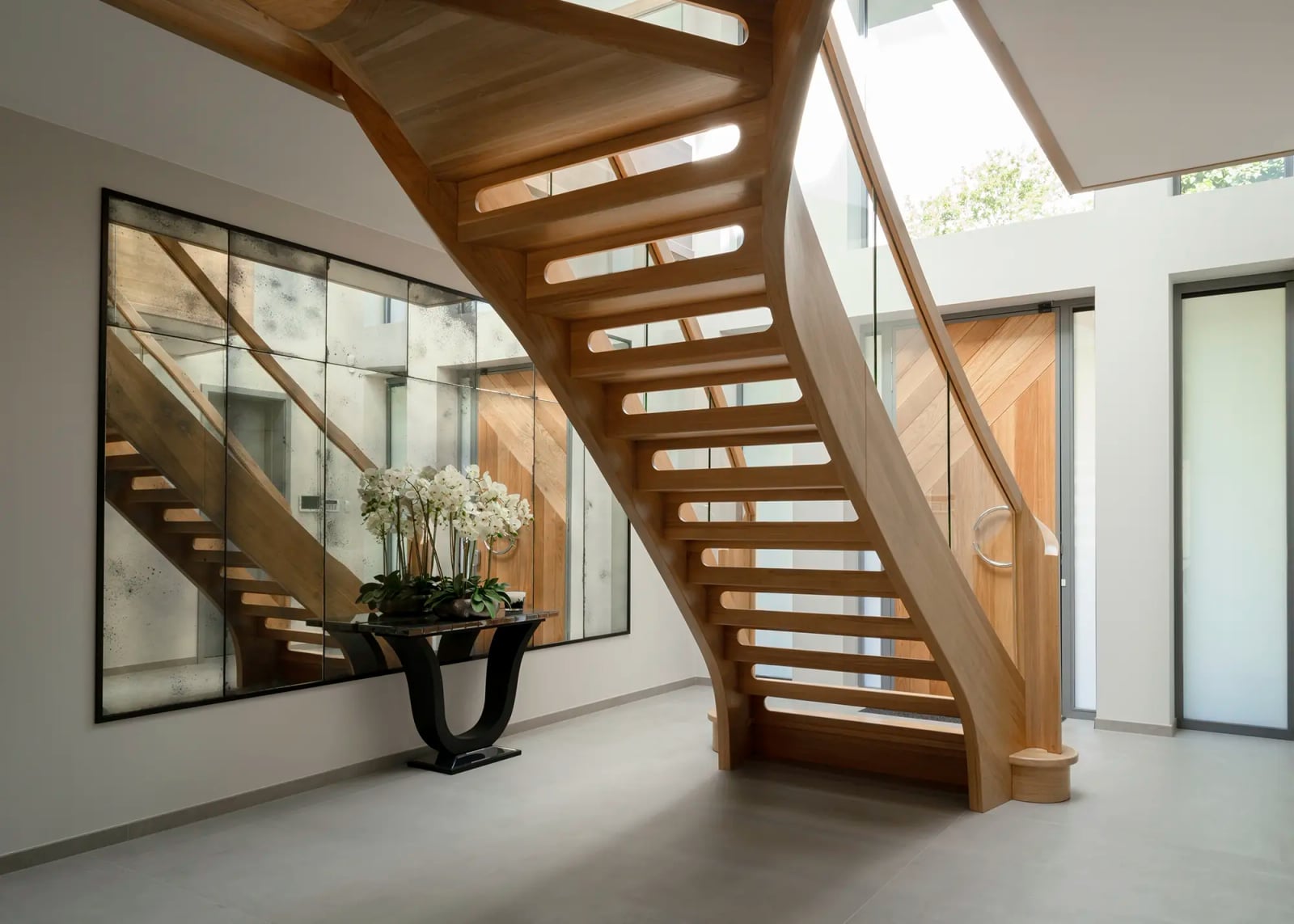
A straight staircase feels direct and efficient, but a curved one asks you to slow down. This modern hallway uses a curved wooden staircase with wood tones and white treads as the main event, then places a mirrored wall opposite it. The mirror reflects the skylight above and the console table below, doubling the natural light without adding a fixture. The grey stone tile floor grounds the space, while the glass railing keeps the view open.
The palette stays restrained: wood tones, white, and grey. What breaks it is the mirror itself, which introduces a soft, shifting element that changes with the light. For the layout, the mirrored wall opposite the stairs means the hallway reads as wider than it is.
13 / 35Transitional Staircase with Peach and Sage Green Painted Treads
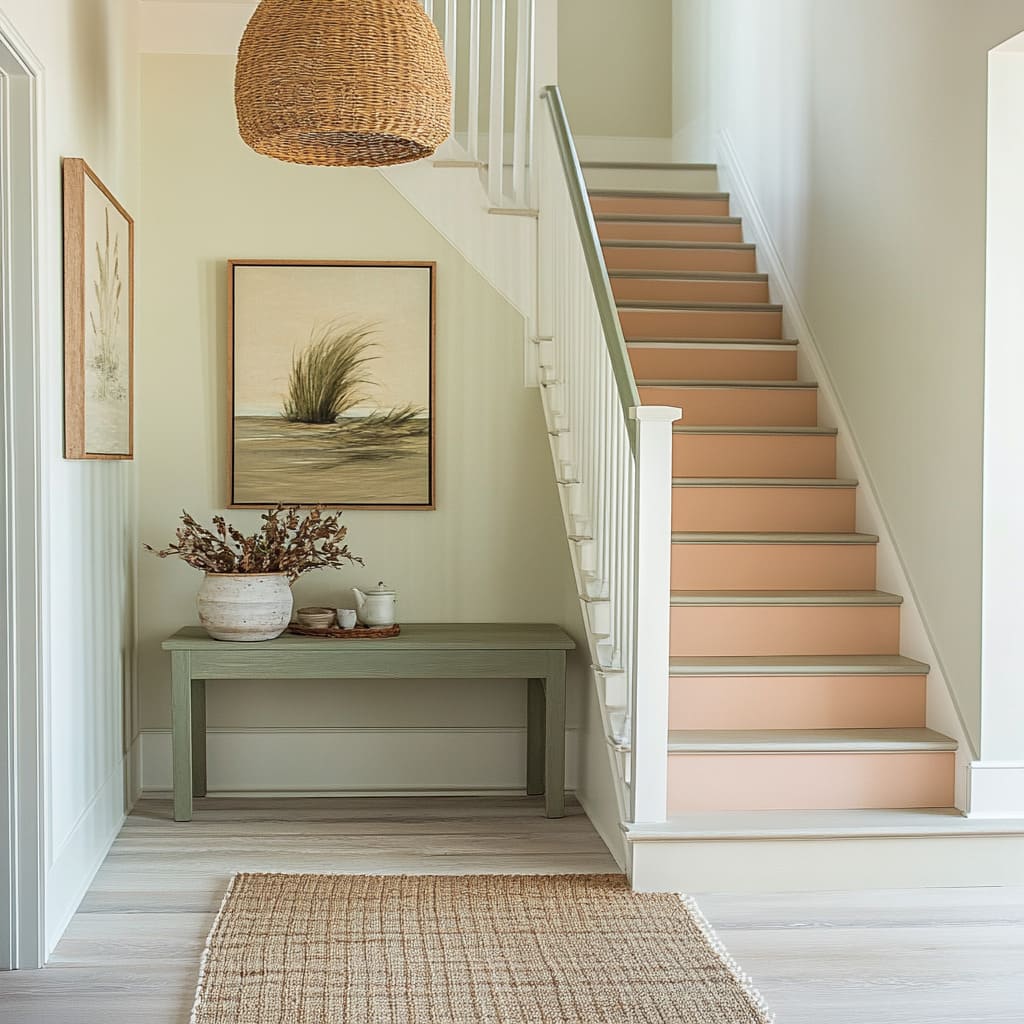
The peach risers sit between sage green treads, a pairing that feels fresh without leaning too far into whimsy. The cream walls and woven pendant light keep the look grounded. This transitional staircase uses paint to add character without changing the structure, which makes it a straightforward update for a compact hallway.
14 / 35Victorian Spiral Staircase with Ornate Cast Iron
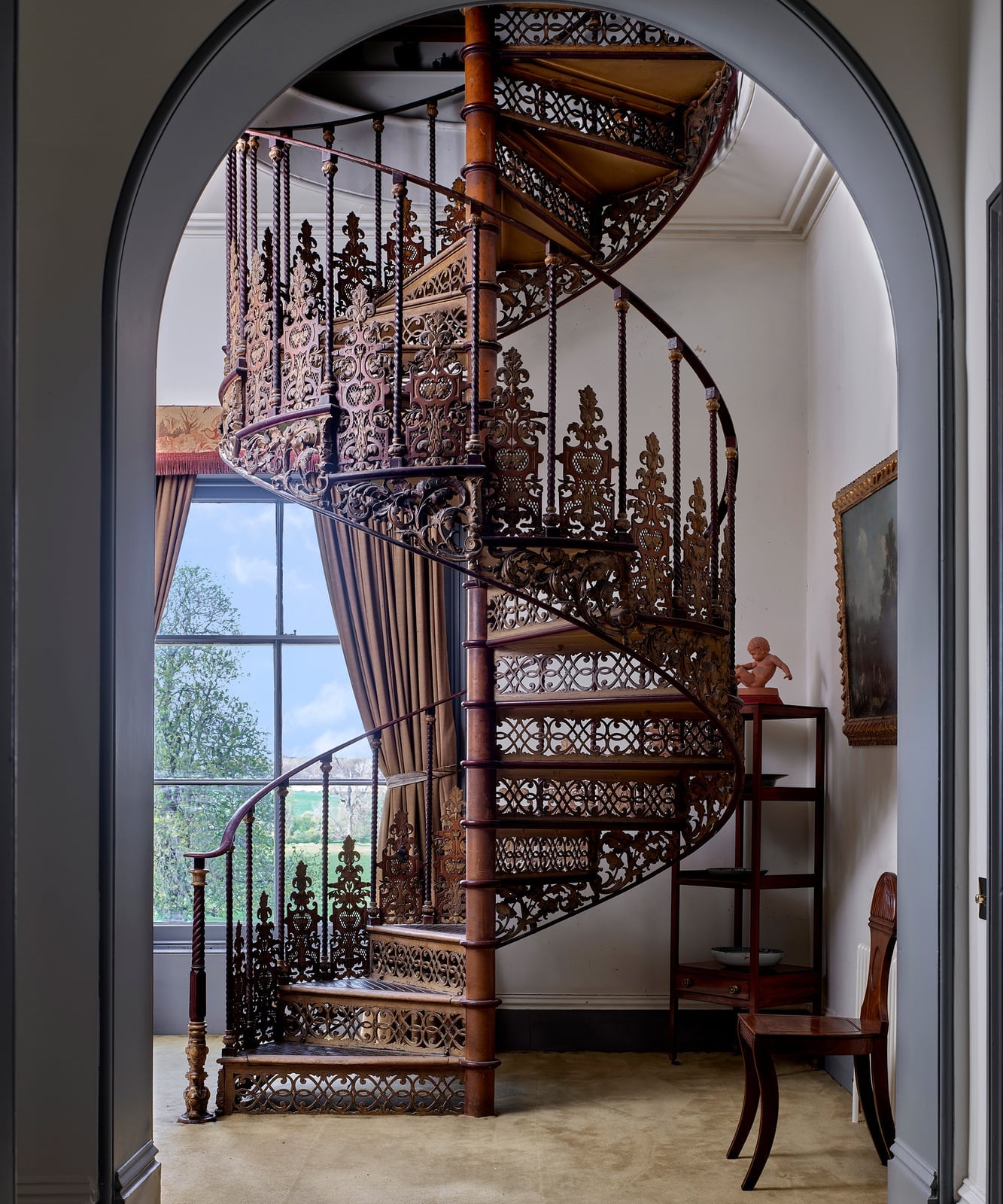
This is a staircase designed to be seen. The intricate cast iron spiral rises through the roomy hallway, with natural light from a window catching the gold and brown tones. A chair and a shelf unit sit nearby, but the spiral remains the focal point. The ornate metalwork defines the Victorian style, while the wood treads and cream walls keep the palette from feeling heavy.
15 / 35Modern Farmhouse Hallway with Blue Staircase Railing
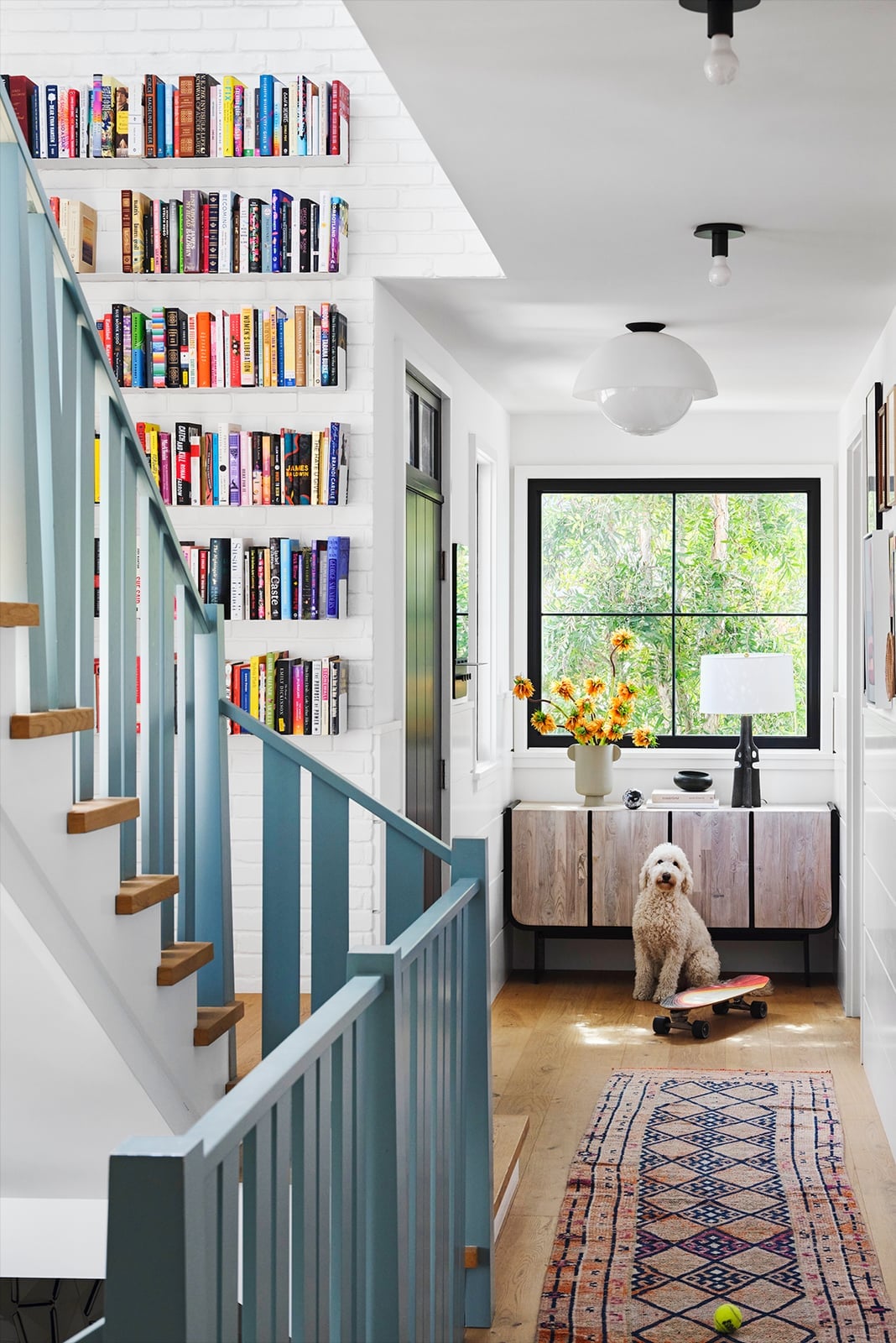
In a modern farmhouse hallway, color on the railing becomes the defining element. Here the vibrant blue railing runs along the staircase on the left, set against a white brick wall and wood tones. The wooden cabinet on the right provides storage without blocking the path. The yellow accents in the palette add warmth.
The blue railing defines the style. The ratio of blue to white and wood is balanced, with the blue making up roughly a third of the visual weight. The window shifts the blue from bright to muted depending on the time of day.
16 / 35Grand Traditional Staircase with Ornate Black Metal Railing
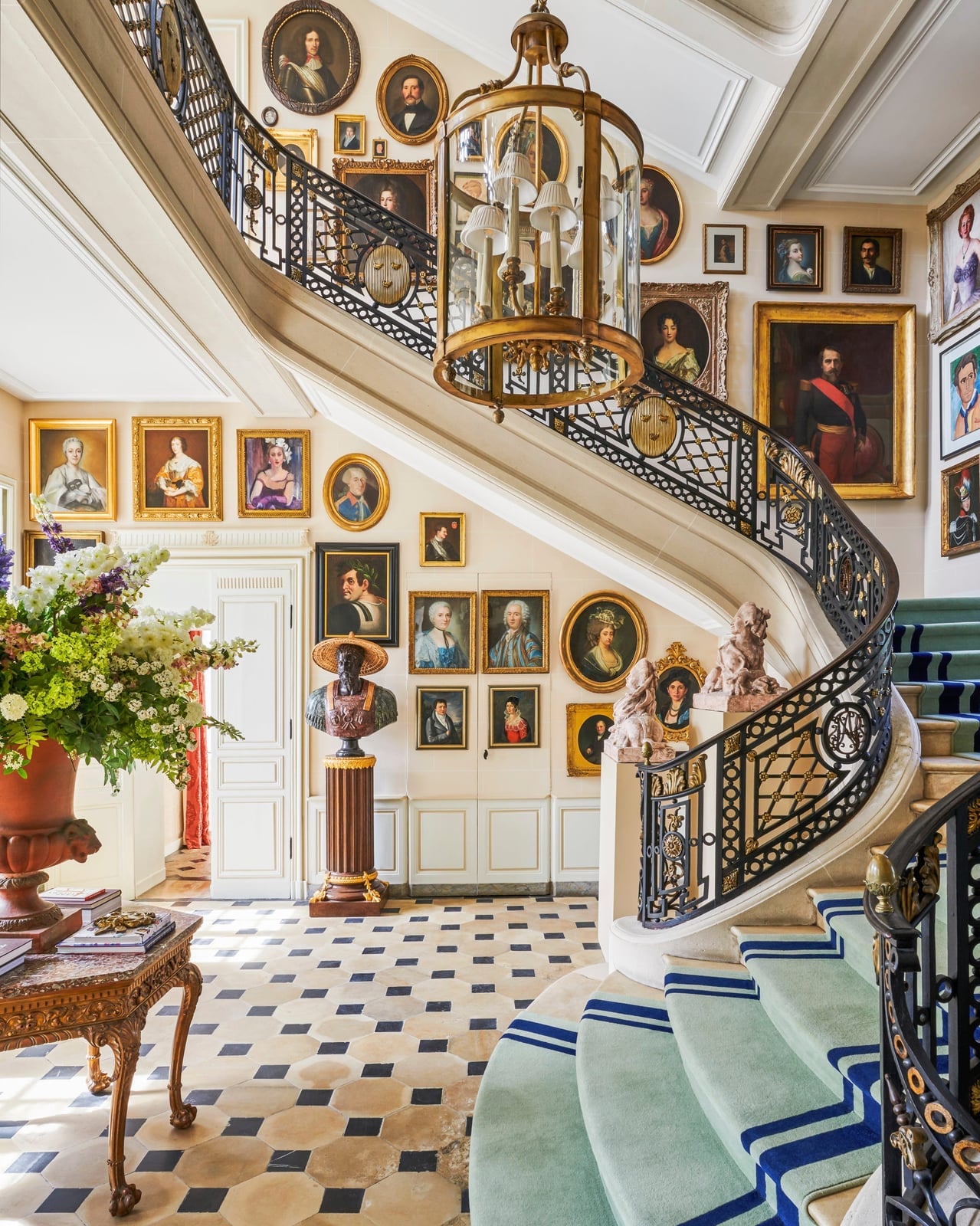
A grand curved staircase sets the pace for this traditional hallway, where the ornate black metal railing weaves through a palette of cream, gold, blue, and green. The sweep draws the eye upward, while the portrait gallery lining the wall anchors the room in a sense of history. The chandelier provides a focal point at the landing, and daylight keeps the rich oil paint and marble from feeling heavy. For layout, let the staircase dictate the traffic flow.
17 / 35Traditional Hallway with Teal-Painted Staircase and Lantern Light
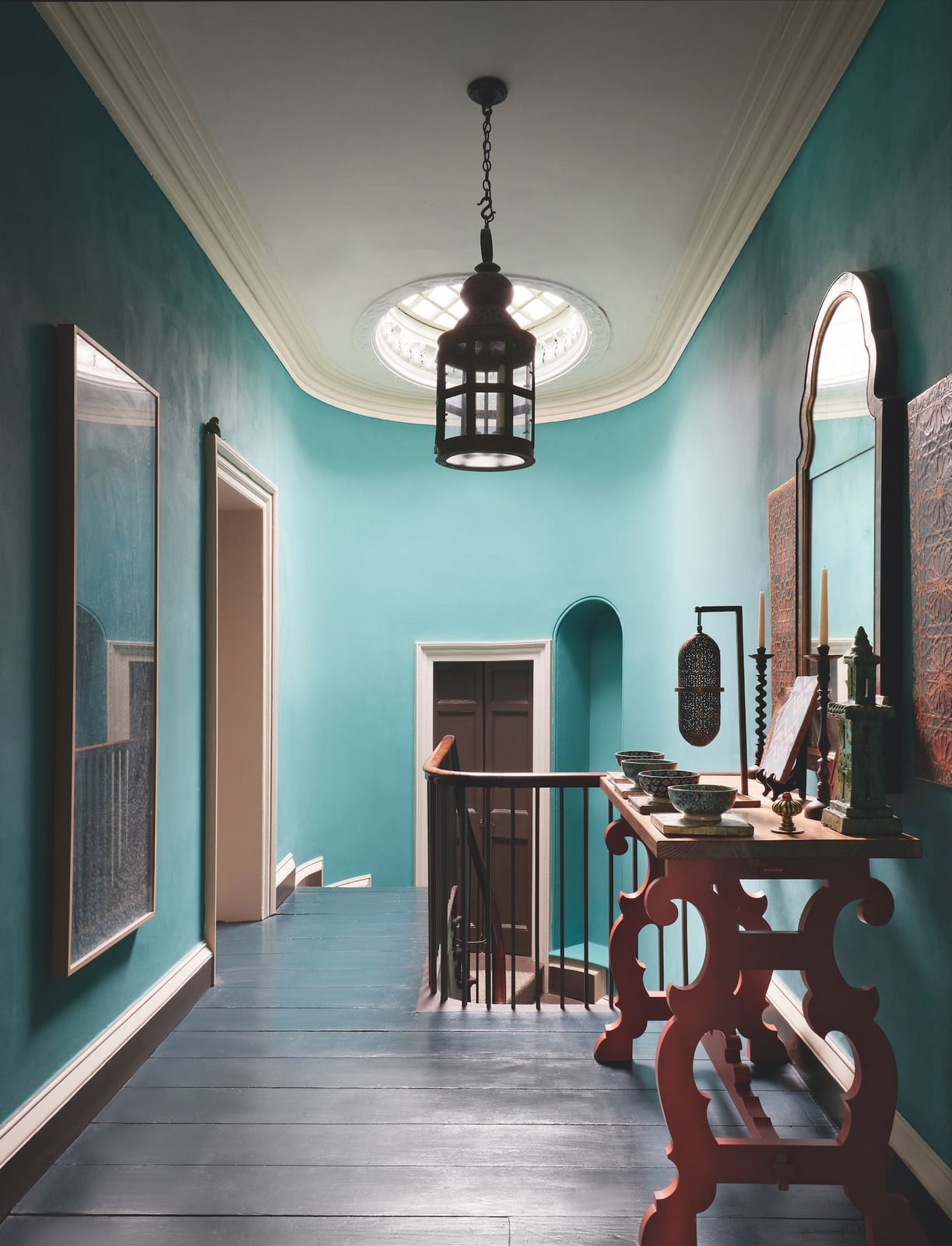
In a hallway with a strong color, let one element lead. Here, the vibrant teal walls define the traditional space, with the staircase, console table, and mirror all working around that hue. The dark wood treads and newel post offer a natural counterpoint, keeping the palette grounded. The overhead lantern casts a warm glow that softens the blue, while natural light from the front door balances the intensity. To recreate it, look for a teal paint for the wall behind the stairs first and let the rest of the room follow that lead.
18 / 35Modern Graphic Hallway with Diagonal Striped Wallpaper
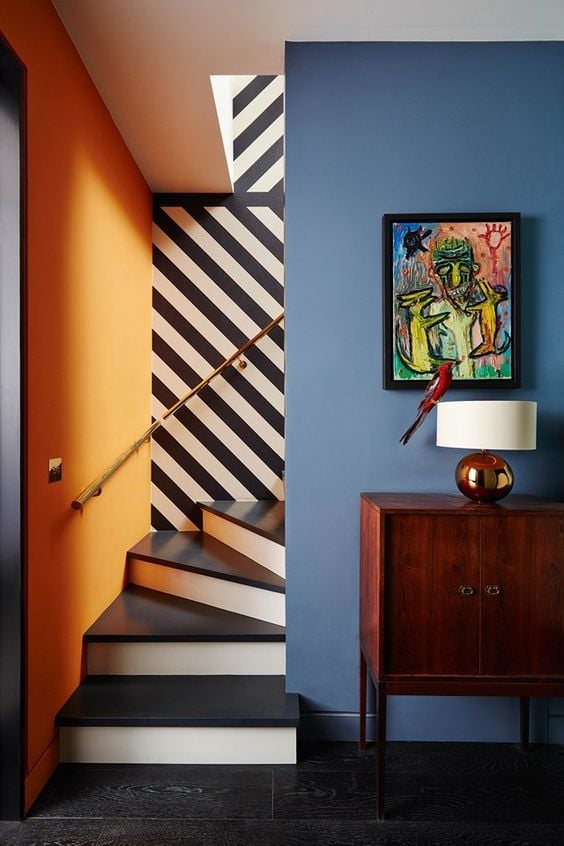
A close alternative to a painted accent wall is a bold wallpaper that does the work for you. This compact hallway uses a striking diagonal striped pattern in orange, blue, black, and white to turn the staircase into a graphic statement. The painted wood treads and risers stay neutral, letting the wallpaper take center stage without competing.
Wall sconces add ambient light, and a small cabinet and artwork complete the composition. Choose a pattern with a clear directional line that echoes the angle of the stairs.
19 / 35Modern Hallway with Contrasting Black Carpet Trim
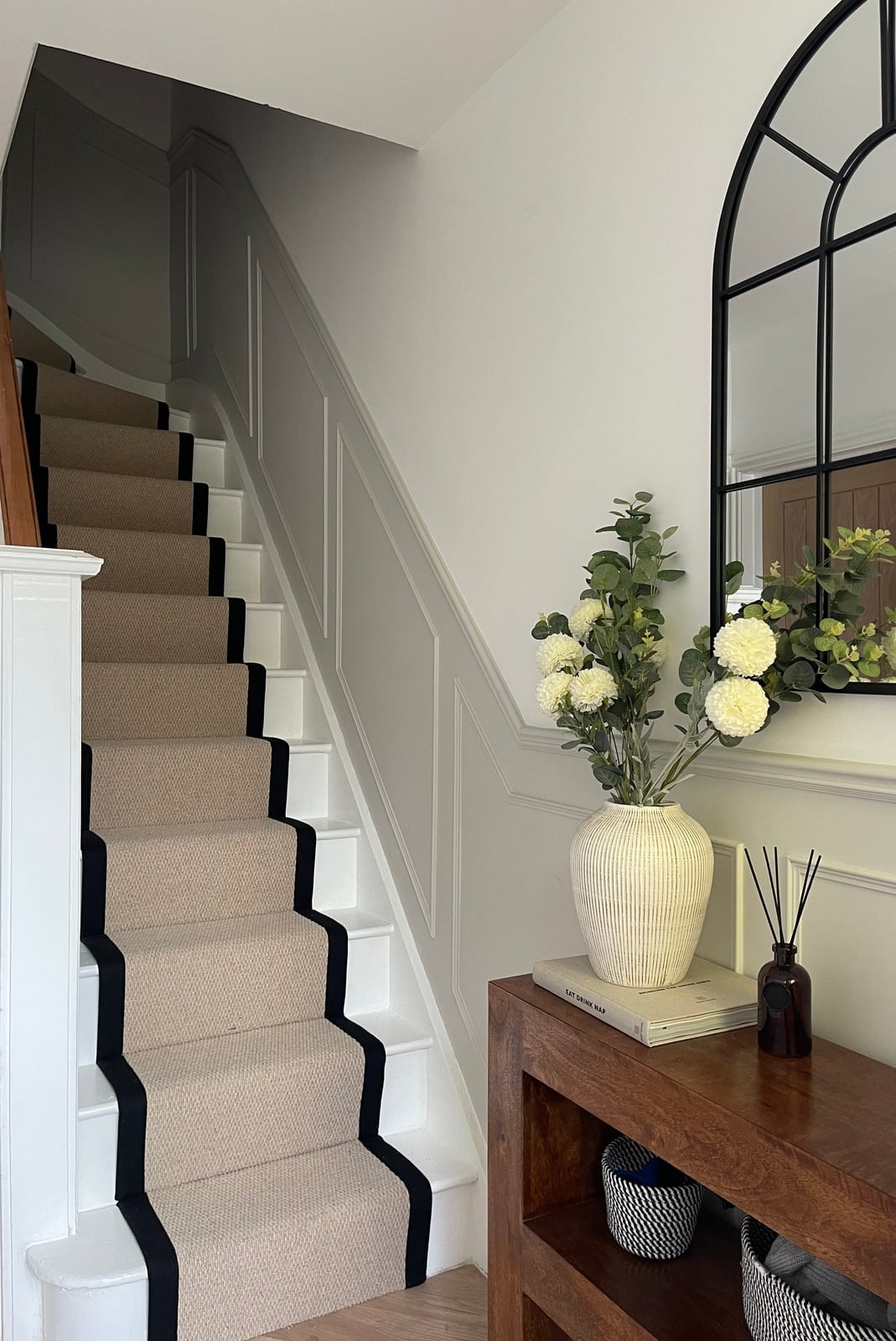
A precise observation about this design is how the contrasting black carpet trim defines each step without overwhelming the overall palette. The neutral beige and wood tones of the hallway stay quiet, while the black edge creates a graphic line that echoes the metal and glass details in the console table and mirror. The natural light from the window and the overhead fixture keep the room feeling airy. For materials, a carpet with a contrasting border adds visual interest without a full pattern, making it a smart choice for a hallway that sees daily traffic.
20 / 35Transitional Curved Staircase with Vibrant Floral Runner
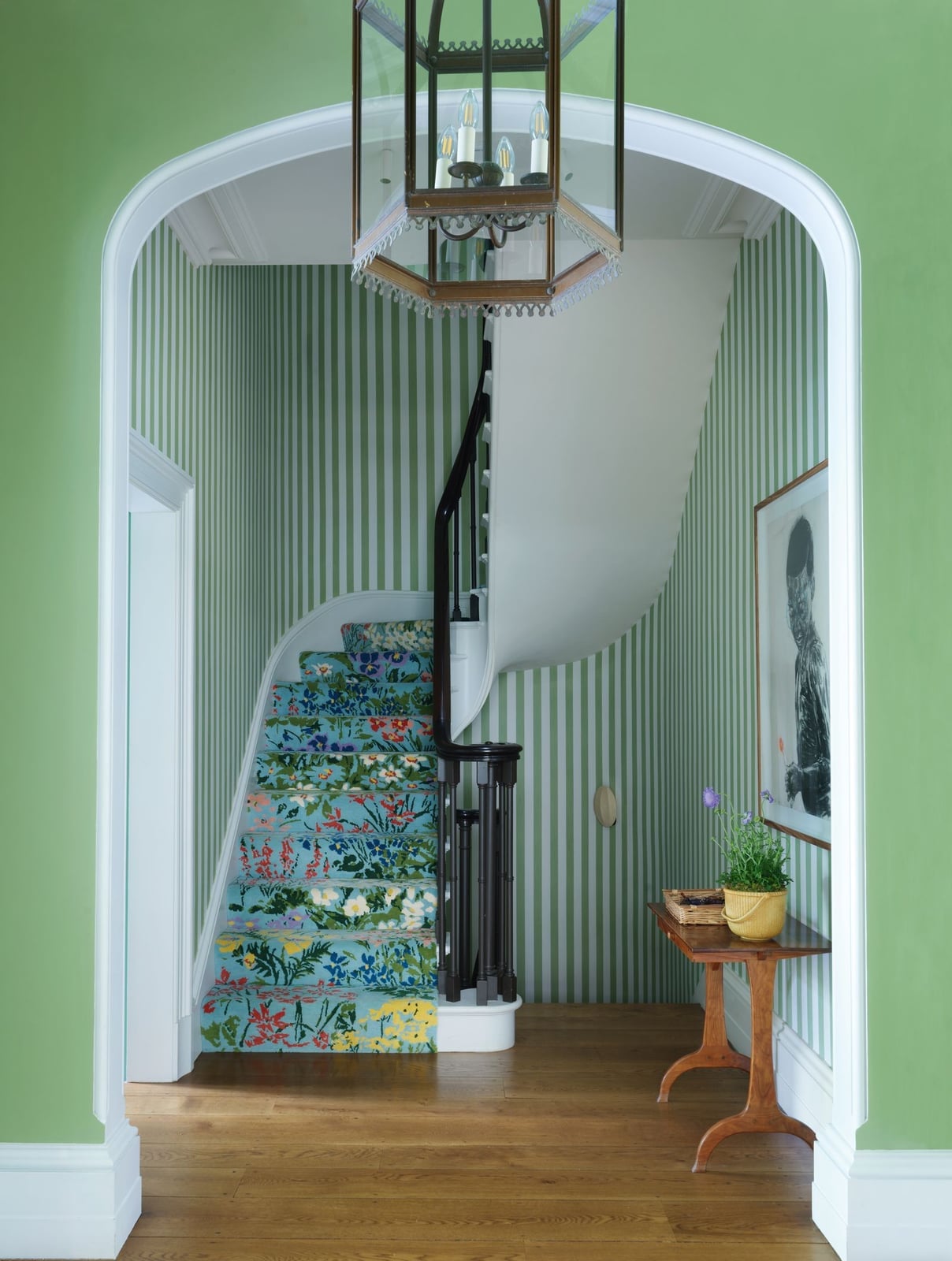
A clear one-line assessment: the floral runner is the hero here, and everything else steps back. The vibrant green and blue multi-color pattern follows the curve of the staircase, drawing the eye from the arched doorway up to the landing. The dark wood banister and painted wood treads provide a neutral frame, while the overhead lantern adds a soft glow that reads as intentional. For a curved staircase, a runner that follows the bend can be tricky to install, so have a professional measure and cut it to avoid bunching at the turn.
21 / 35Modern Hallway with Dark-Painted Staircase and Gallery Wall
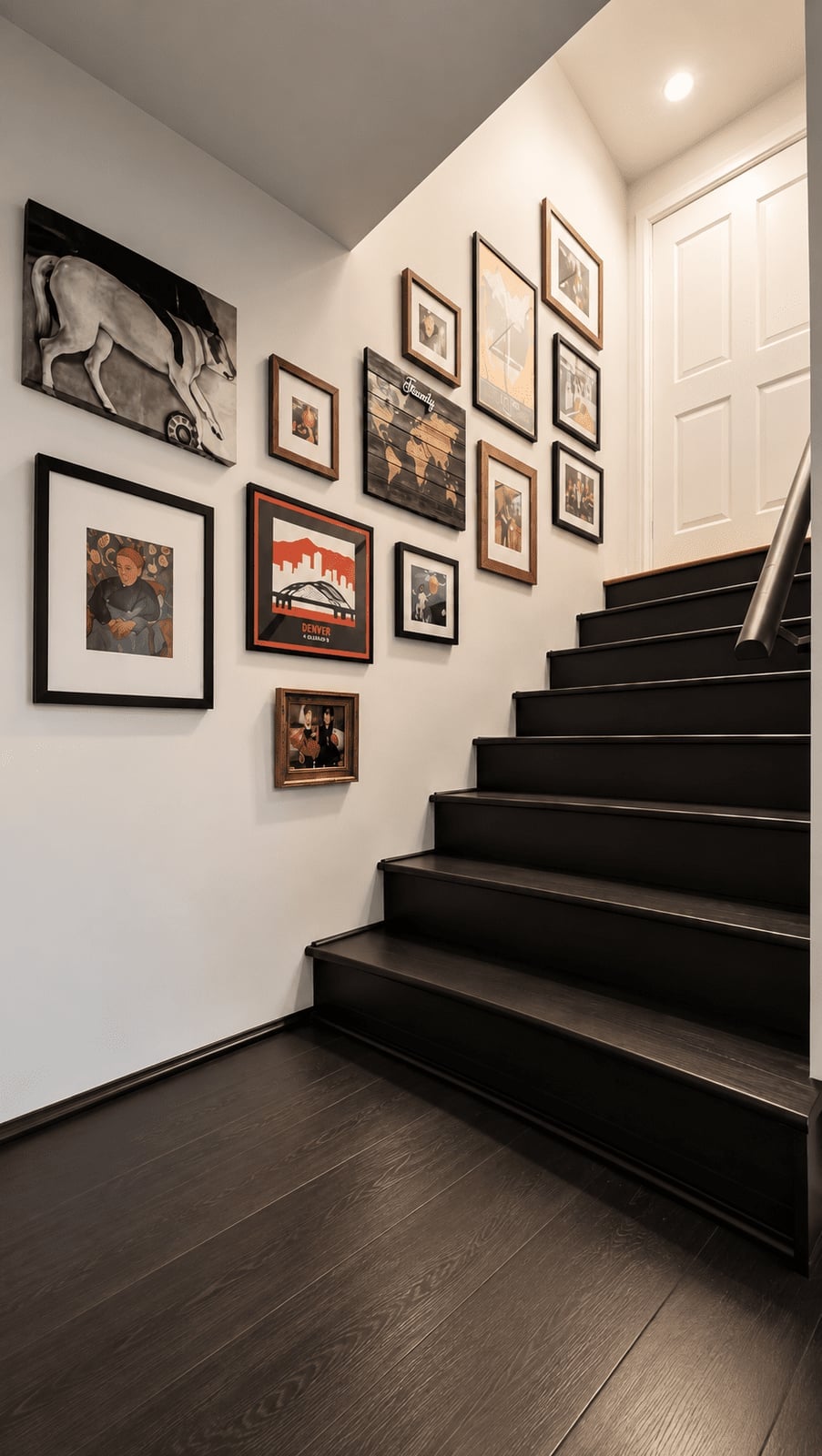
A dark staircase needs enough wall space to balance the weight. Here, black-painted wood treads and risers run straight along one wall, while the opposite wall holds an extensive gallery wall of framed art and photographs in varied sizes. The white walls and light wood floor keep the space open, and the overhead light hits the frames directly, drawing the eye across the hall. This layout turns the staircase into a visual anchor.
22 / 35Traditional Spiral Staircase Against a Stone Wall
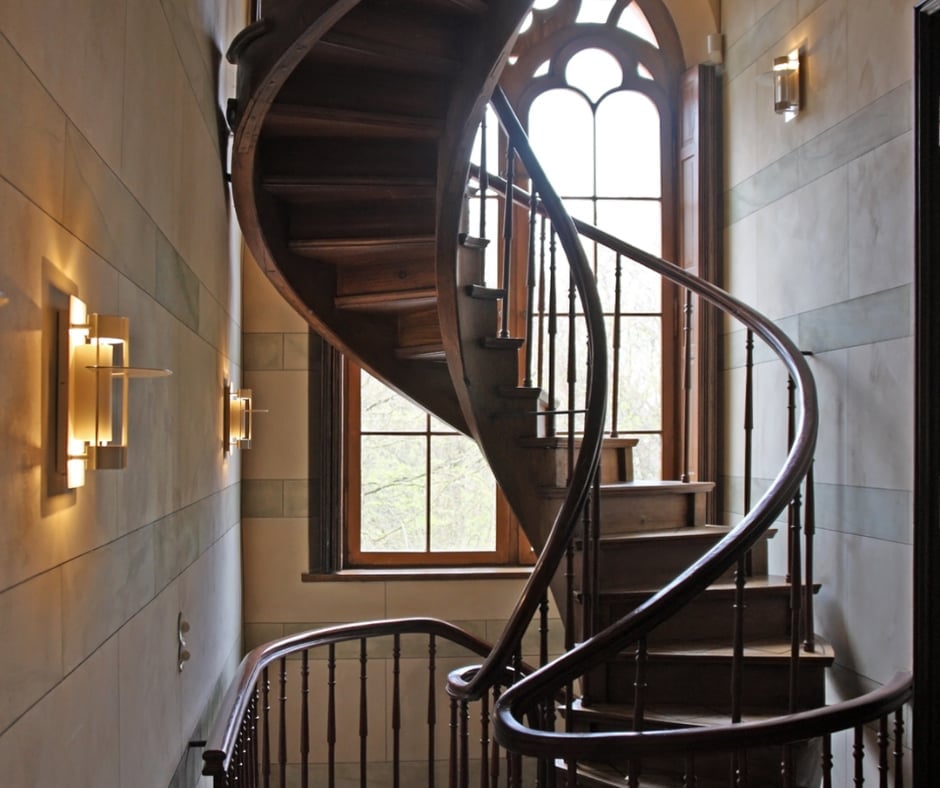
A compact spiral staircase in dark wood winds upward against a rough stone wall, with a gothic window nearby letting in natural light. Wall sconces mounted on the stone cast warm light across the treads, making the narrow footprint feel intentional rather than cramped. The palette stays grounded in deep wood tones against beige stone and touches of green from the window view, so the staircase reads as part of the architecture rather than an add-on.
23 / 35Eclectic Hallway with Checkered Floor and Carpeted Stairs
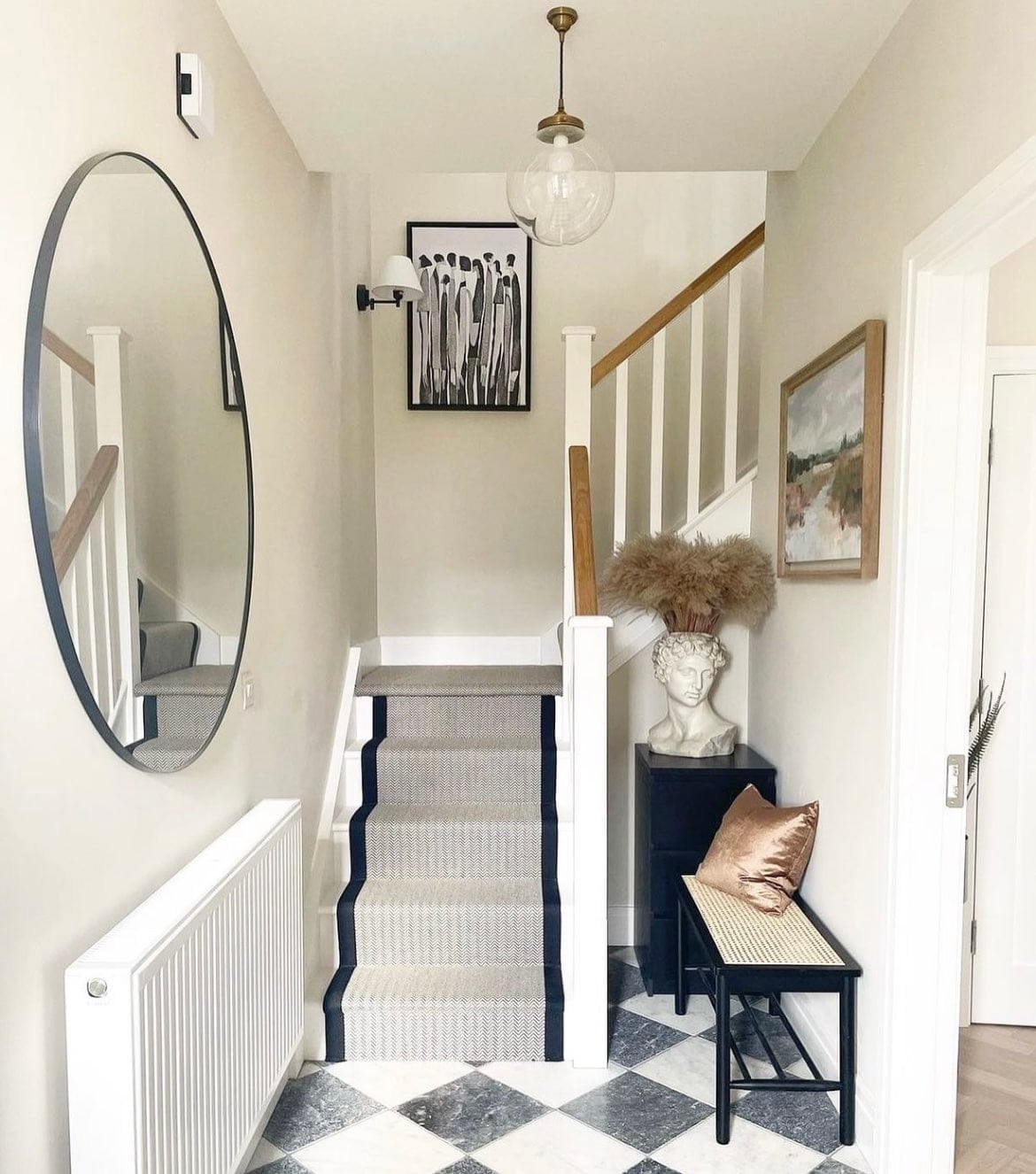
A practical rule for mixing patterns is to let one surface lead and the others follow. Here, a black and white checkered stone tile floor sets the graphic tone, while the straight staircase above it is fully carpeted in a neutral tone that does not compete. A black bench and a large round mirror with a gold frame sit against the wall, and a pendant light and wall sconce add warm light. The checkered floor becomes the anchor, and everything else stays simple enough to let that pattern hold the room.
24 / 35Modern Grand Staircase with Geometric Black Metal Railing
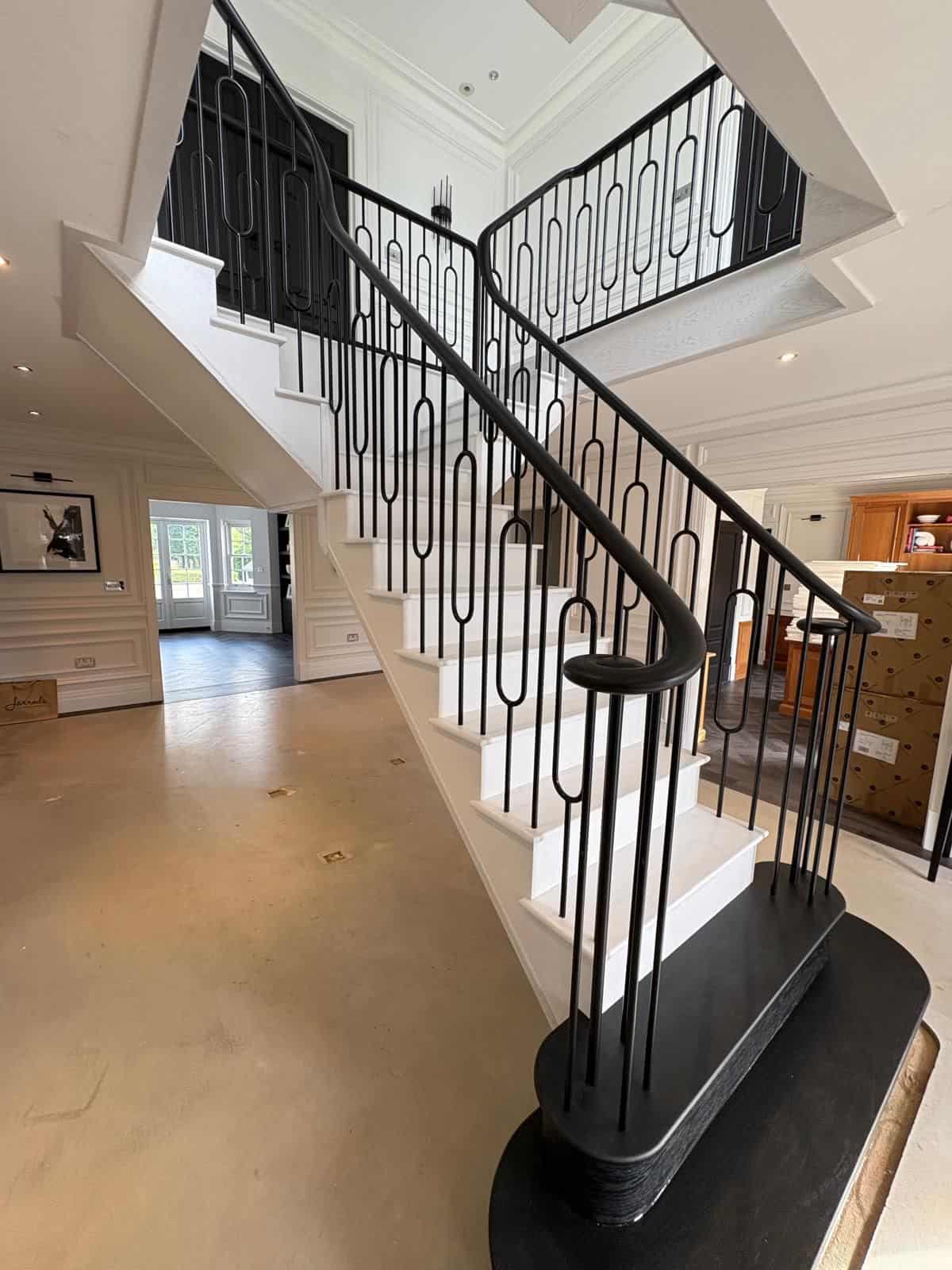
A grand curved staircase with a black metal railing could easily feel heavy, but the geometric pattern of the balusters keeps it airy. The open framework lets ambient light pass through, and the white walls and pale wood treads keep the palette restrained so the railing stands out without dominating. The curve of the staircase guides the eye upward, and the repeating geometric shapes create rhythm without needing additional ornament. It is a design that relies on negative space as much as the metal work itself.
25 / 35Modern Staircase with Navy Trimmed Carpet Runner
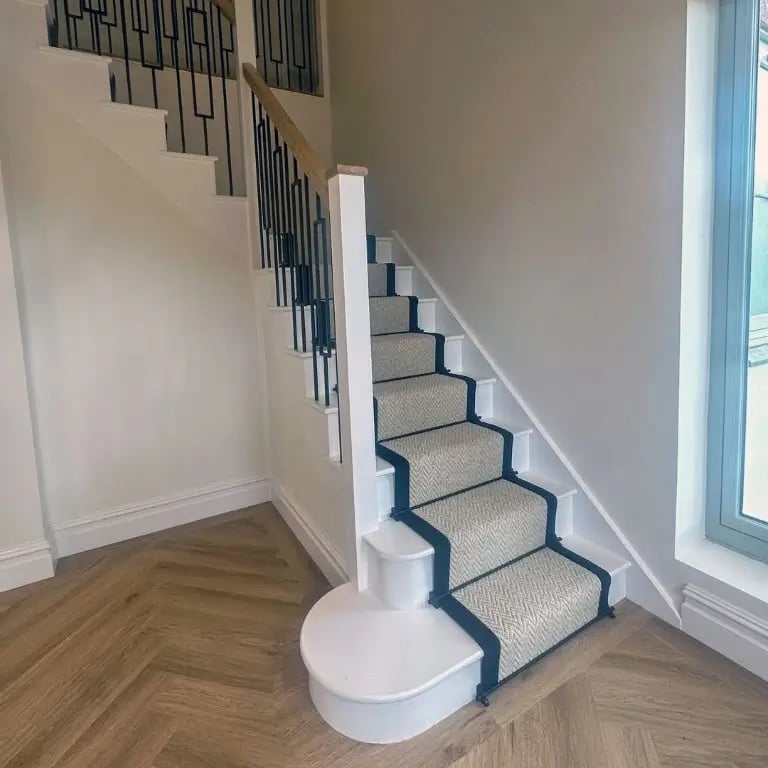
A beige carpet runner runs up the center of a straight wood staircase, with a narrow navy trim along both edges that echoes the black balusters. The window light hits the contrast, making the navy trim a deliberate detail. The trim is a small addition that defines the runner without adding bulk, and it ties the staircase to the darker accents in the hallway without requiring a full color change.
26 / 35Modern Farmhouse Staircase with Black Spindles and Sisal Runner
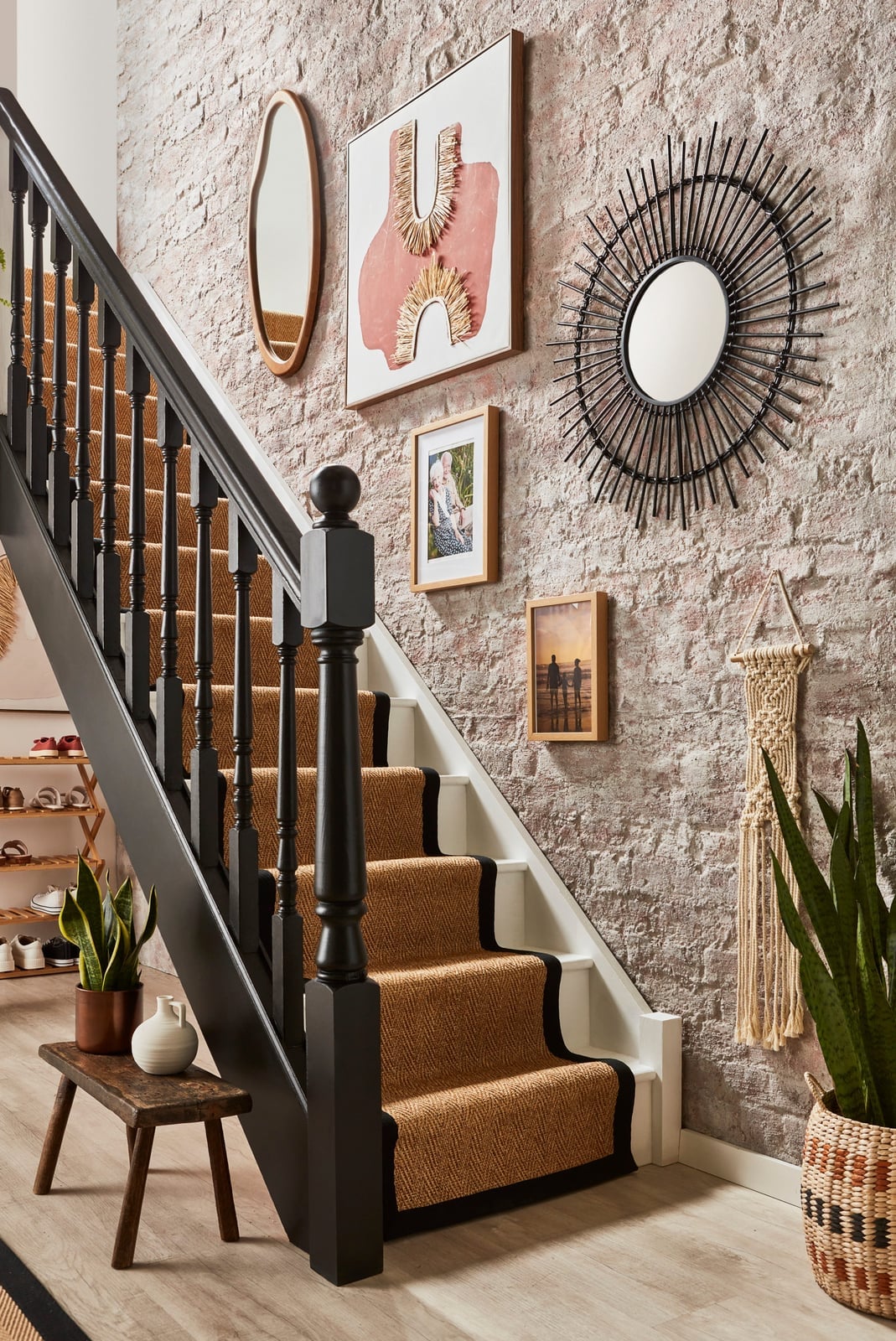
A black spindle staircase with a sisal runner is a modern farmhouse choice that combines structure and softness. The dark painted wood creates a firm line against the warm brick wall behind it, while the woven runner in tan softens every step underfoot. A sunburst mirror and a piece of art on the wall give the hallway purpose, and the window pulls the whole palette of black, tan, and white together. To recreate it, look for a neutral runner and let the spindles carry the contrast, since the brick already brings in plenty of texture.
27 / 35Traditional Hallway with Console Table and Runner Rug
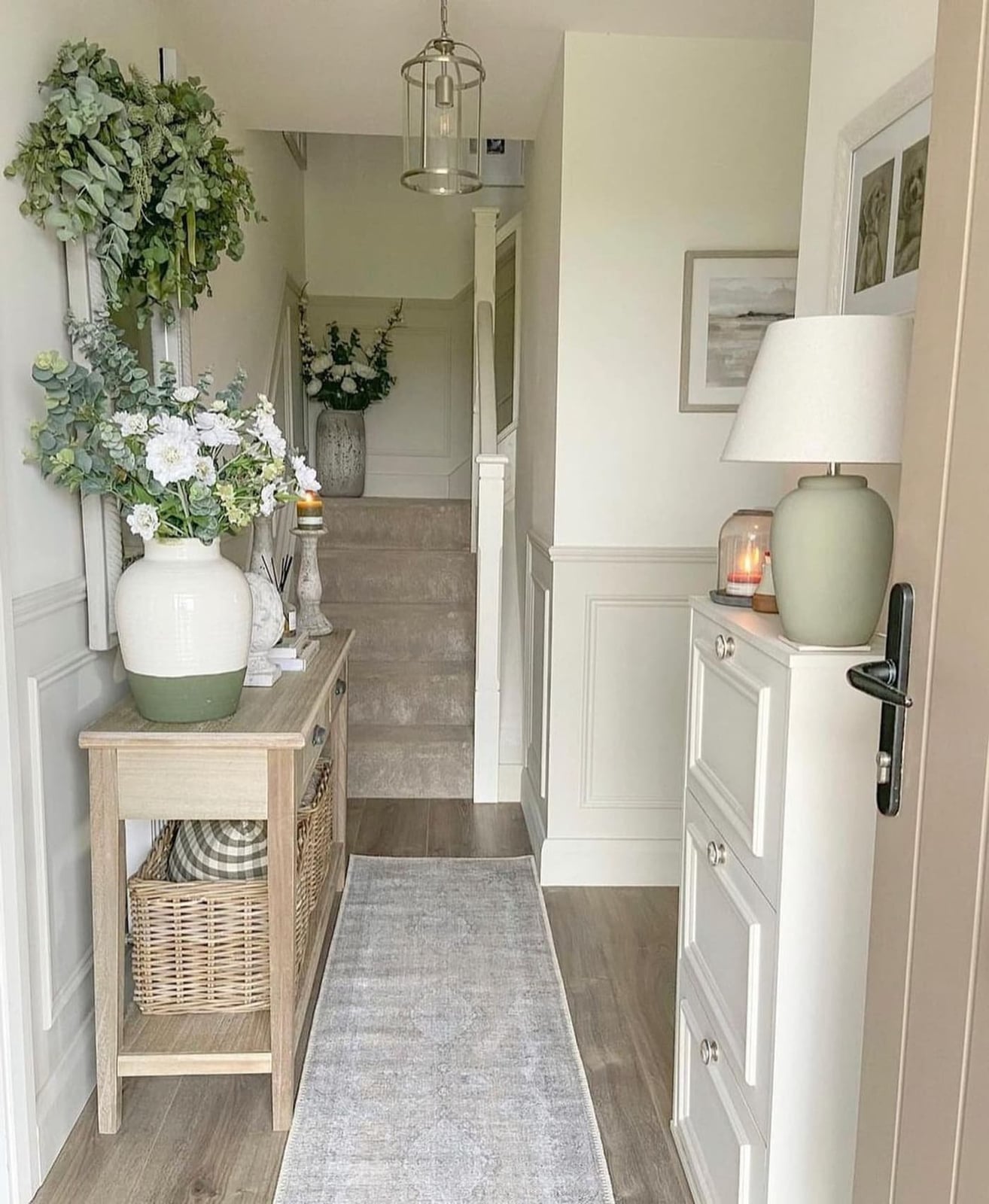
A traditional hallway often benefits from giving the staircase a moment of pause before it climbs. A console table placed along the wall, with a shoe cabinet tucked beneath it, anchors the space and offers a spot for keys or a small stack of mail. The runner rug leads the eye toward the stairs and ties the cream, green, and grey palette together, while a pendant light overhead adds a warm glow that natural light cannot always reach. The wreath hanging on the mirror adds a gentle seasonal touch without demanding attention. This layout works well in a roomy hallway because the furniture fills the width without blocking the path, and the staircase remains the clear focal point as the hallway leads into it.
28 / 35Elegant Sweeping Black Staircase with Ornate Newel Post
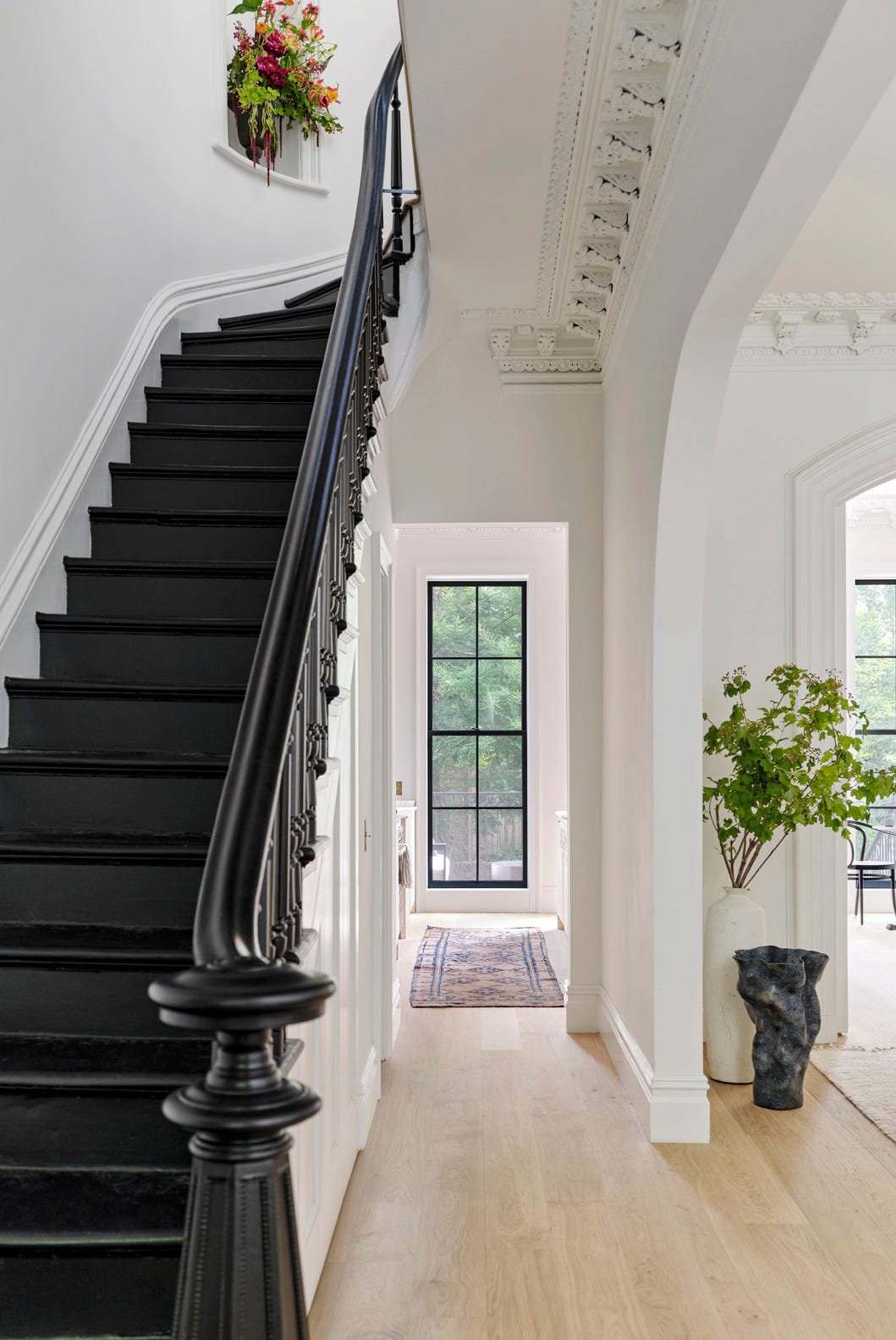
A sweeping black staircase with an ornate newel post turns a roomy hallway into a formal arrival point. The curved painted wood rails and dark balusters stand out against the white walls and natural wood tones, while the arched doorway beyond adds height and a sense of depth. Light from the window catches the curve, and the ambient glow keeps the black from feeling heavy. The ornate post at the base gives the eye a place to land before the stairs begin their climb. This design suits a home that already leans traditional, since the painted finish and metal details echo classic millwork without needing extra ornament elsewhere.
29 / 35Modern Hallway with Black Spindles and Large Round Mirror
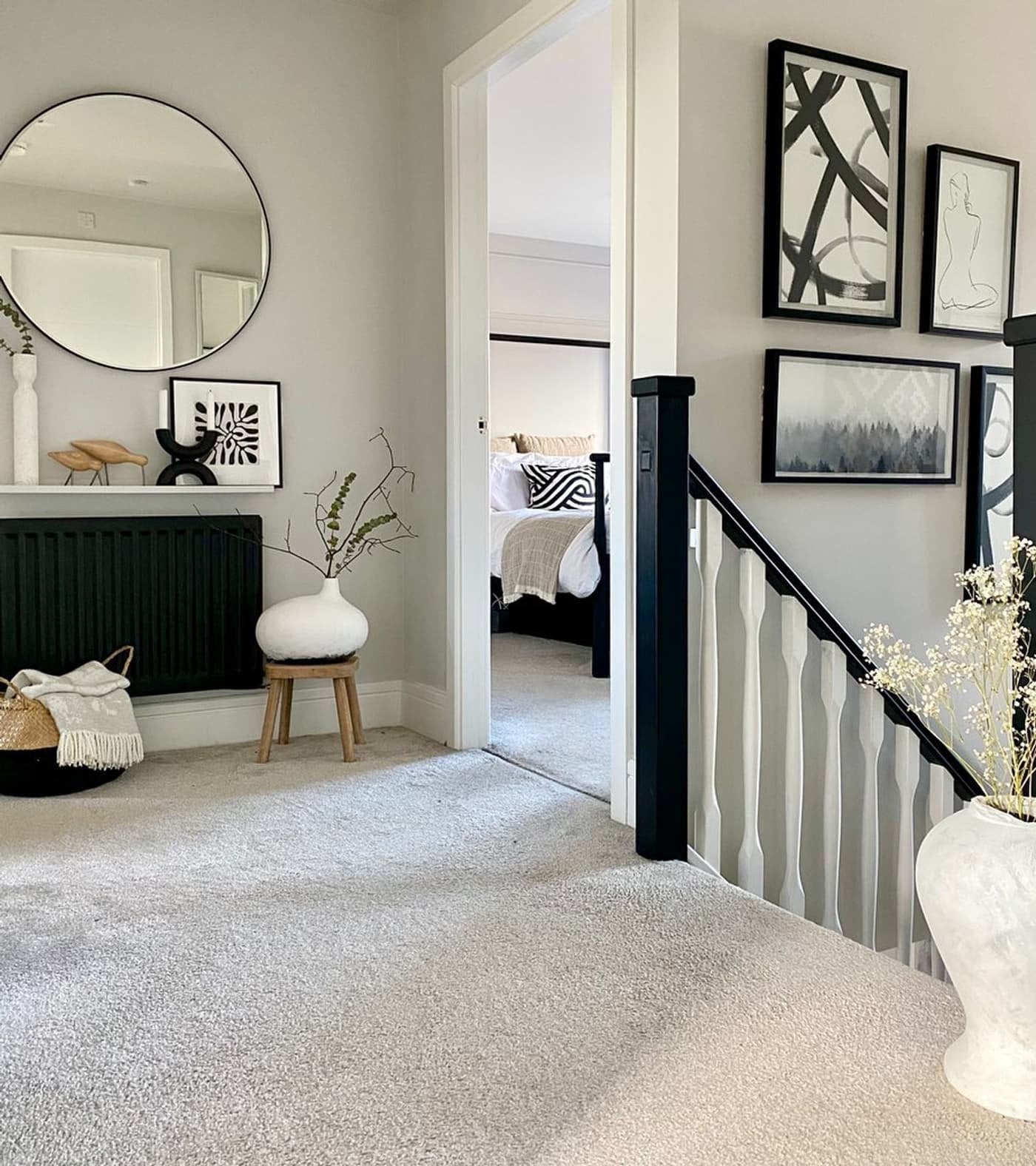
A large round mirror on the wall opposite a straight staircase makes the landing feel twice its size. The black spindles and painted wood railing hold their own against the neutral backdrop, while the mirror reflects the artwork and the ambient light from the doorway, so the hallway never reads as a dark tunnel. The carpeted stairs soften the look and keep footfall quiet, which matters in a roomy home where the staircase is the main route between floors. A round shape breaks the vertical lines of the spindles and adds a soft counterpoint. This setup works because the mirror does the work of a second window without taking up floor space.
30 / 35Modern Staircase with Wood Treads and Black Paneling
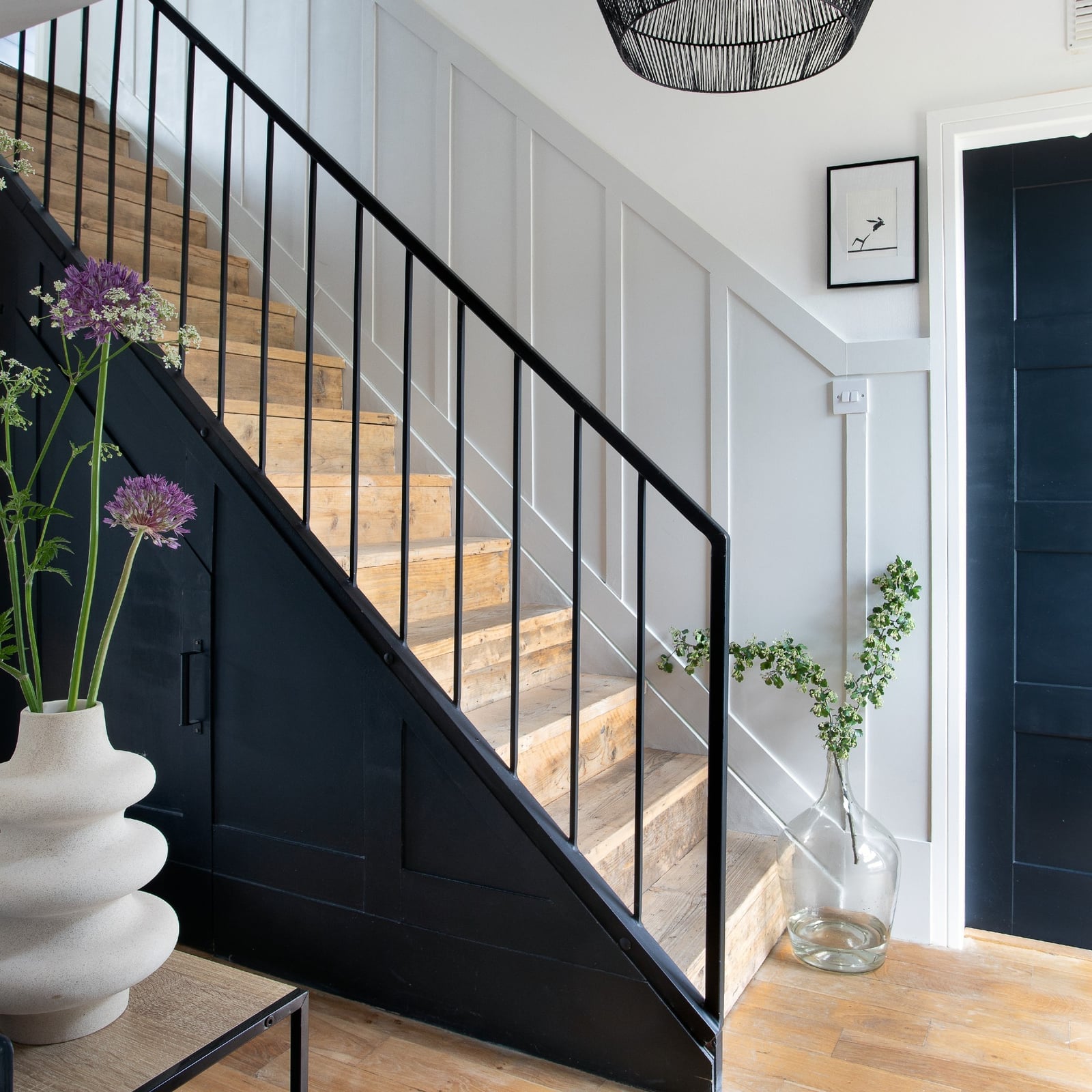
Set this against a fully open stairwell and the difference is clear: a large black panel on the staircase wall gives the design a solid anchor instead of letting it float. The wood treads bring warmth, while the black panel and metal details keep the look crisp and current. White and grey tones around the edges let the staircase stand out without competing with the rest of the room. A vase with plants on the landing adds a soft organic note, and the ceramic and glass materials echo the clean lines of the panel. The scale works because the panel is large enough to matter but not so big that it swallows the stairwell, so the eye moves from tread to tread without distraction.
31 / 35Modern Floating Staircase with Glass Railing and Metal Balustrade
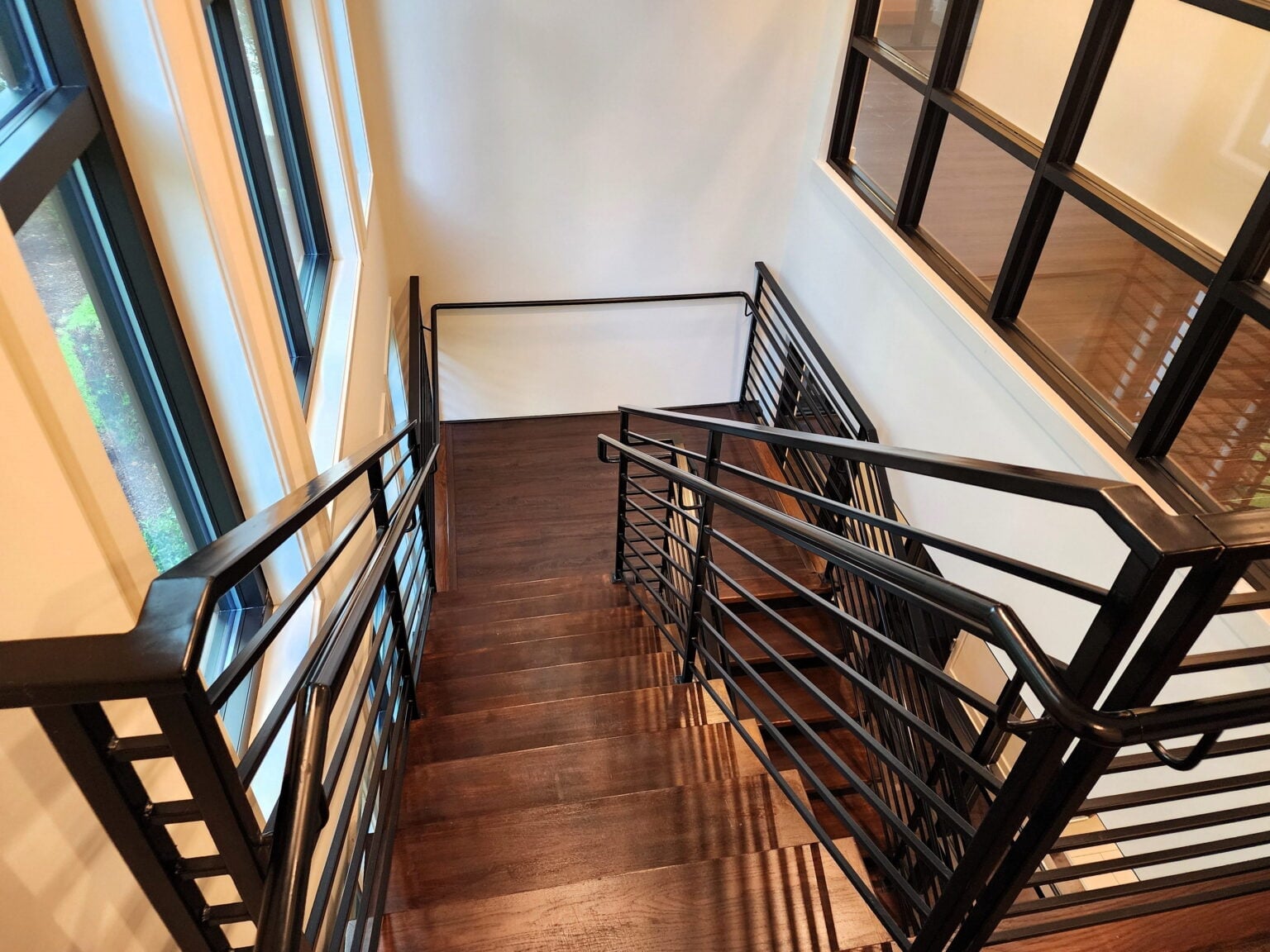
A central floating staircase anchors the hallway. Wood treads appear to hover without visible support, while a glass railing and metal balustrade keep the view unobstructed. Natural light and integrated lighting work together, so the staircase becomes a sculptural element. The room stays simple around it, with white walls and wood tones that let the floating structure hold attention. A practical layout rule: when the staircase is the hero, keep adjacent surfaces neutral so the eye travels up without distraction.
32 / 35Carpeted Wooden Staircase with Floating Shelf and Greenery
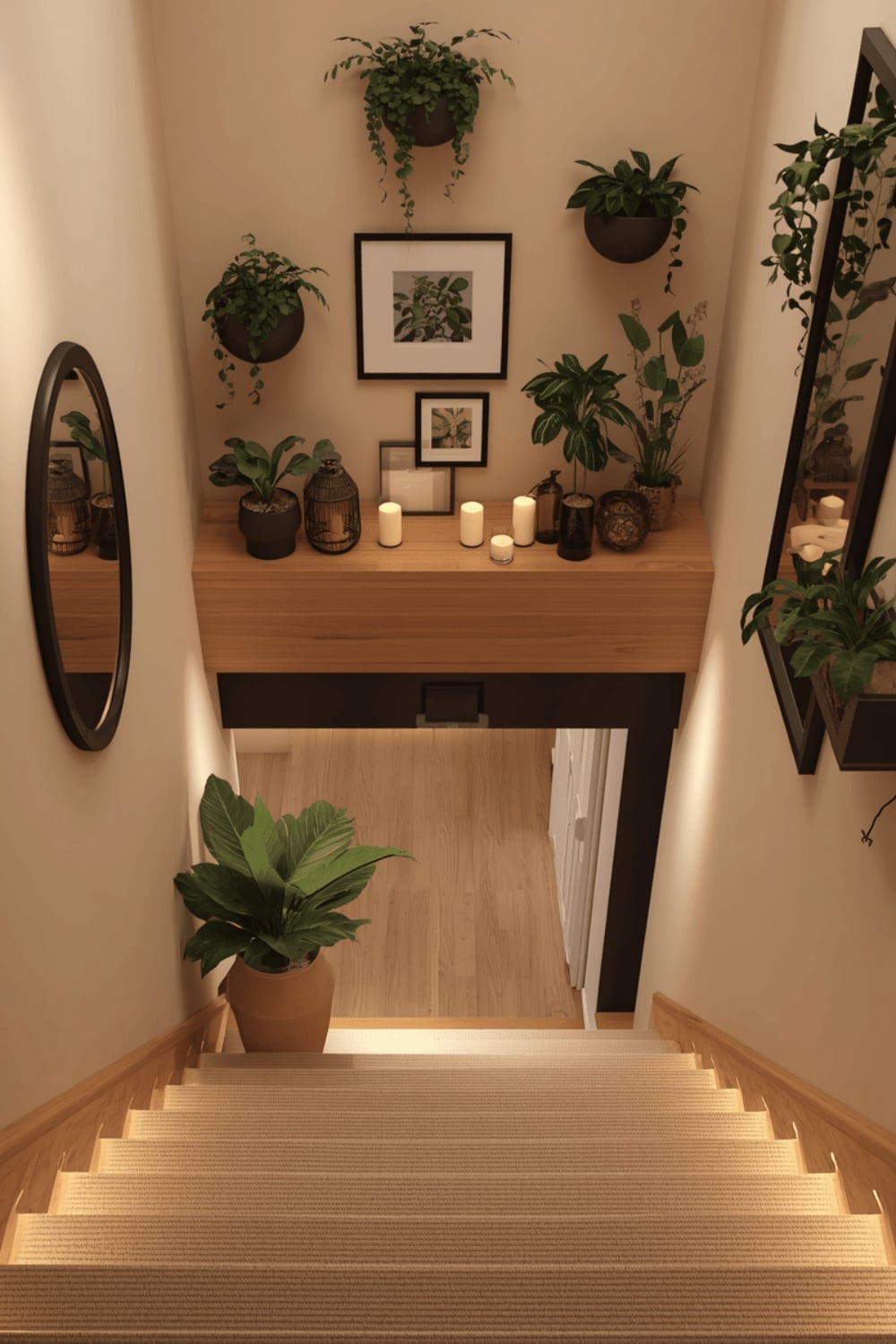
A compact hallway benefits from a palette that mixes neutral carpet, warm wood, and generous greenery. A wooden staircase leads down past a floating shelf loaded with lush plants, with a mirror above to bounce ambient overhead light. The green tones break up the neutral base without adding clutter. For a similar effect in a rental, use a tension-mounted shelf rather than a fixed one, and choose plants that tolerate lower light by checking your USDA zone. The palette works because the greenery is concentrated on one shelf, not scattered across every step.
33 / 35Grand Wooden Staircase with Crystal Chandelier
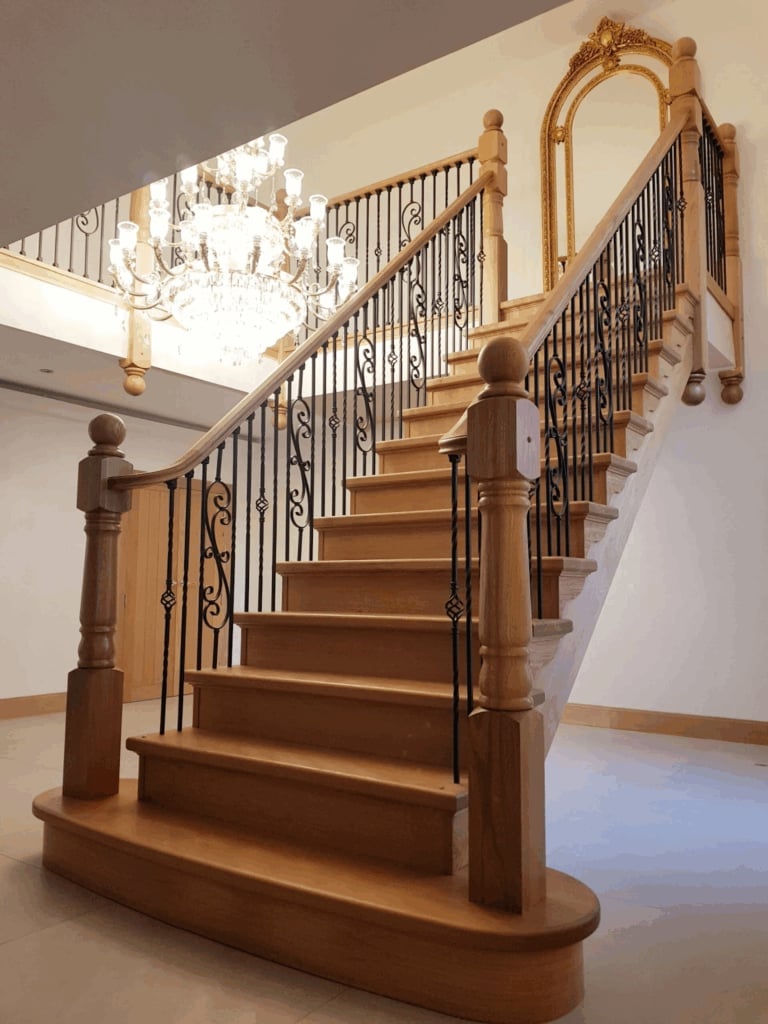
A grand wooden staircase in a roomy foyer often defaults to a wrought-iron chandelier, but crystal changes the equation. The light wood treads and black accents stay traditional, while the crystal chandelier adds sparkle without the heavy look of dark metal. A large mirror on the landing reflects the chandelier, effectively doubling the light in the space. The materials divide cleanly: warm wood for the structure, cool glass for the fixture, black for the railing. That balance keeps the staircase from feeling like a museum piece. For upkeep, crystal fixtures collect dust quickly, so a monthly wipe with a microfiber cloth keeps the shine. The chandelier hangs at a height that clears the tallest person on the landing, a detail worth measuring before installation.
34 / 35Eclectic Staircase with Red Railing and Geometric Wallpaper
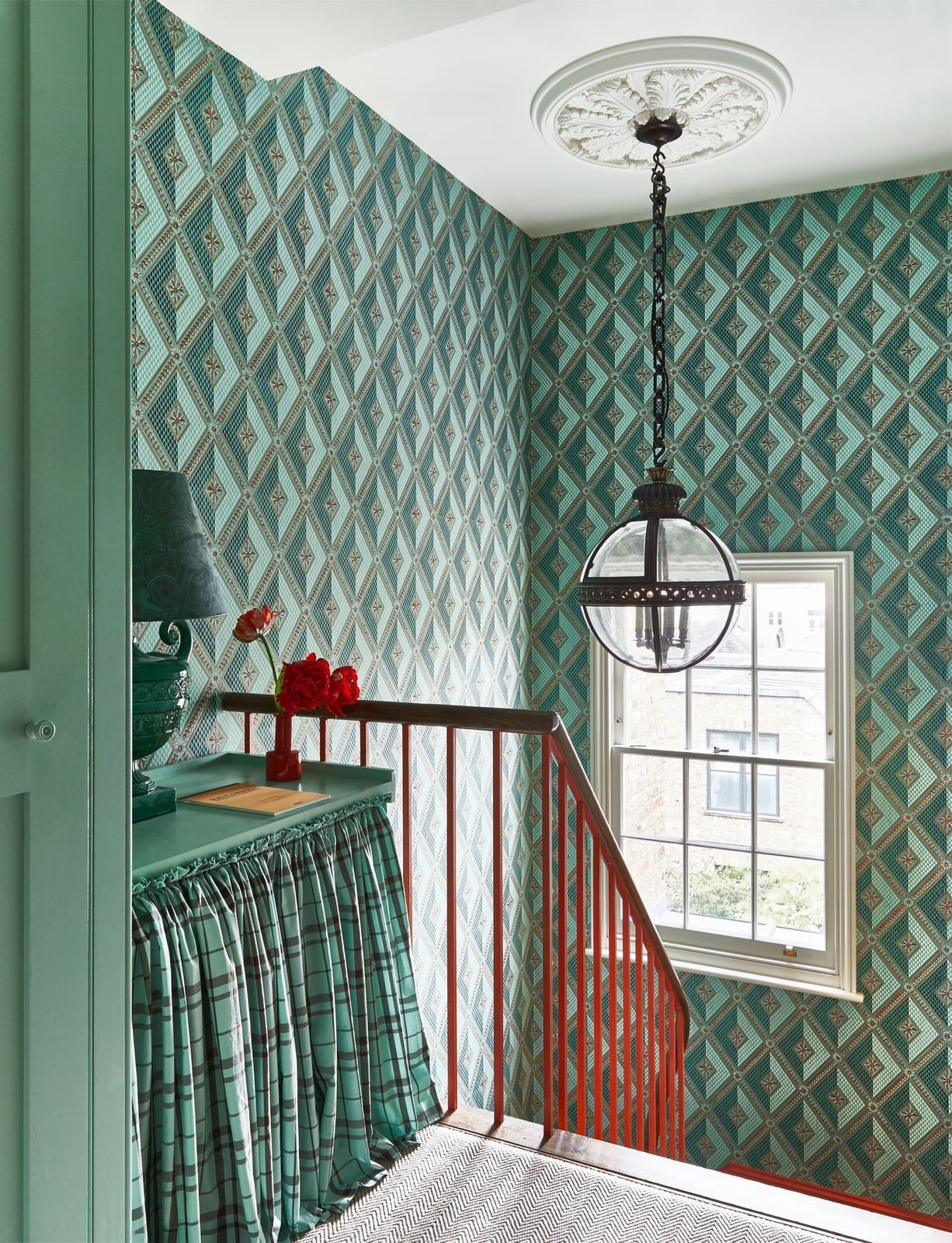
A compact corner staircase with a landing uses bold geometric wallpaper in teal and green as the backdrop for a red railing. A globe pendant light and natural light from a window both hit the wallpaper, so the pattern shifts throughout the day. The red railing breaks the cool palette without competing with the wallpaper, because the geometric print has enough negative space. When mixing a strong pattern with a bright railing, keep the treads neutral so the eye rests between the two bold elements.
35 / 35Final Thoughts
A hallway staircase works hardest when it fits how you actually live. Floating treads open up sightlines and make small entries feel larger. Painted risers and patterned runners add personality without a full renovation. Light placement matters more than most people think, especially with open risers or dark finishes. Landings offer a natural spot for a console or a piece of art. The best approach pairs your daily routine with a material and layout that holds up over time. Keep the balustrade secure and the treads slip-resistant, and you have a staircase that functions well and looks like it belongs.