Stair walls are the neglected canvas of the home. They connect floors but rarely get the attention they deserve, ending up as blank passes-through rather than memorable spaces. Whether you rent or own, these 35 stair wall ideas prove that vertical real estate can hold art, storage, greenery, or pattern without needing a full renovation.
From gallery walls to painted risers and hidden storage, each look works with the architecture you already have. You will find a mix of practical updates and decorative moves that make the climb worth stopping for. No contractor required, just a fresh eye on what is already there.
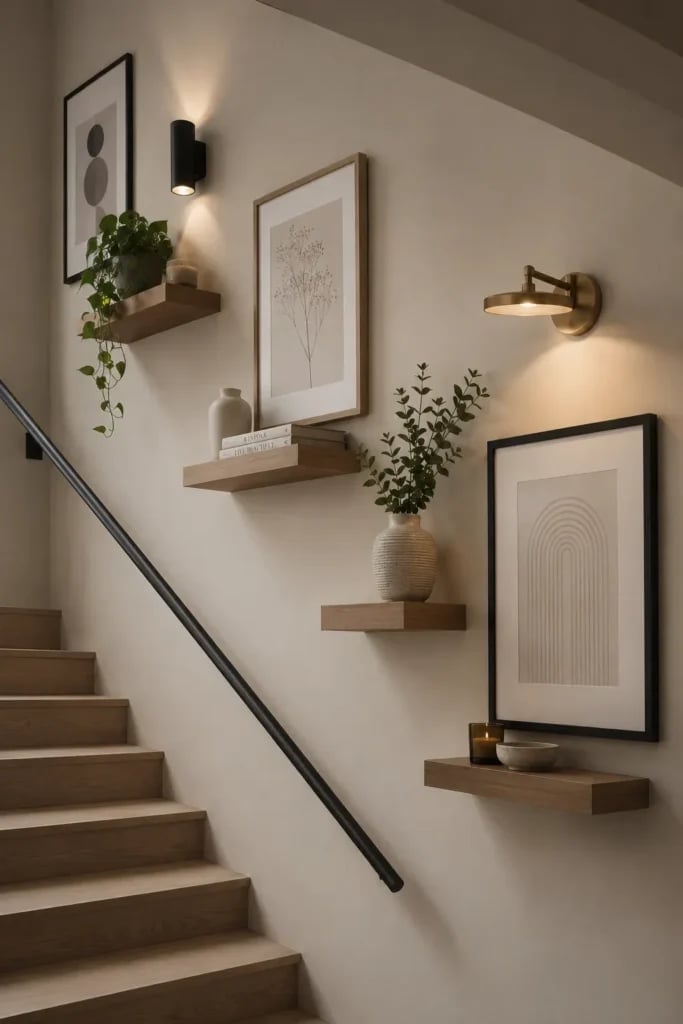
01 / 36Modern Stairwell Gallery Wall with Floating Shelves
A gallery wall that wraps around a stairwell can feel like a permanent installation rather than a random collection. Here, floating shelves break up the vertical run so the eye pauses at each level. Cream walls and black frames keep the palette neutral, while a pair of wall sconces cast soft light across the art and a small plant. The mix of framed pieces with open shelf space means you can swap in new finds without re-hanging everything. It is a layout that reads as intentional without being rigid.
02 / 36Contemporary Staircase with Slatted Wood Accent Wall
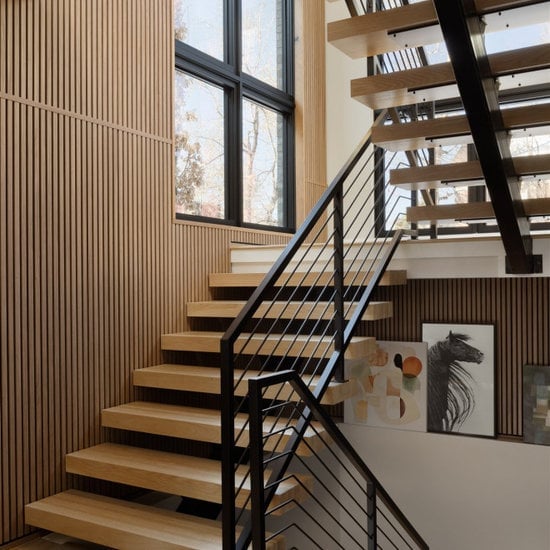
A slatted wood wall running the full height of the staircase turns a functional path into a textural experience. The light wood tones contrast with a black railing and white walls, so the vertical lines feel deliberate rather than busy. Natural light from a nearby window hits the slats at different angles through the day, changing how the wall reads. A glass balustrade keeps the view open, letting the wood texture carry the visual weight. For a material-driven look, the ratio of wood to open wall matters more than the number of slats. This setup leans on contrast: warm wood against cool metal and glass.
03 / 36Oversized Abstract Art for a Dramatic Stairwell
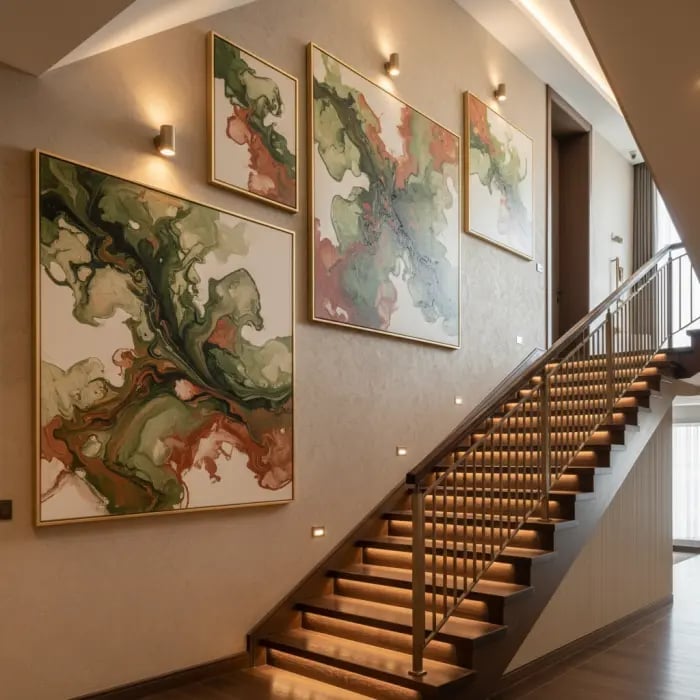
How do you fill a tall stairwell without it looking like a waiting room? One oversized abstract painting can do the job better than a dozen small frames. Here, a large piece with beige, green, and red tones hangs on a textured wall, framed in gold. The stairs themselves have integrated lighting, so the art stays visible even at night.
The scale is the key. A single large painting anchors the whole vertical space, and the gold frame adds a formal edge that keeps the abstract shapes from feeling too loose. The metal railing and wood stairs stay simple so the art remains the focal point. For a similar effect, look for a piece that fills about two-thirds of the wall height.
04 / 36Illuminated Wine Rack Under Staircase Storage
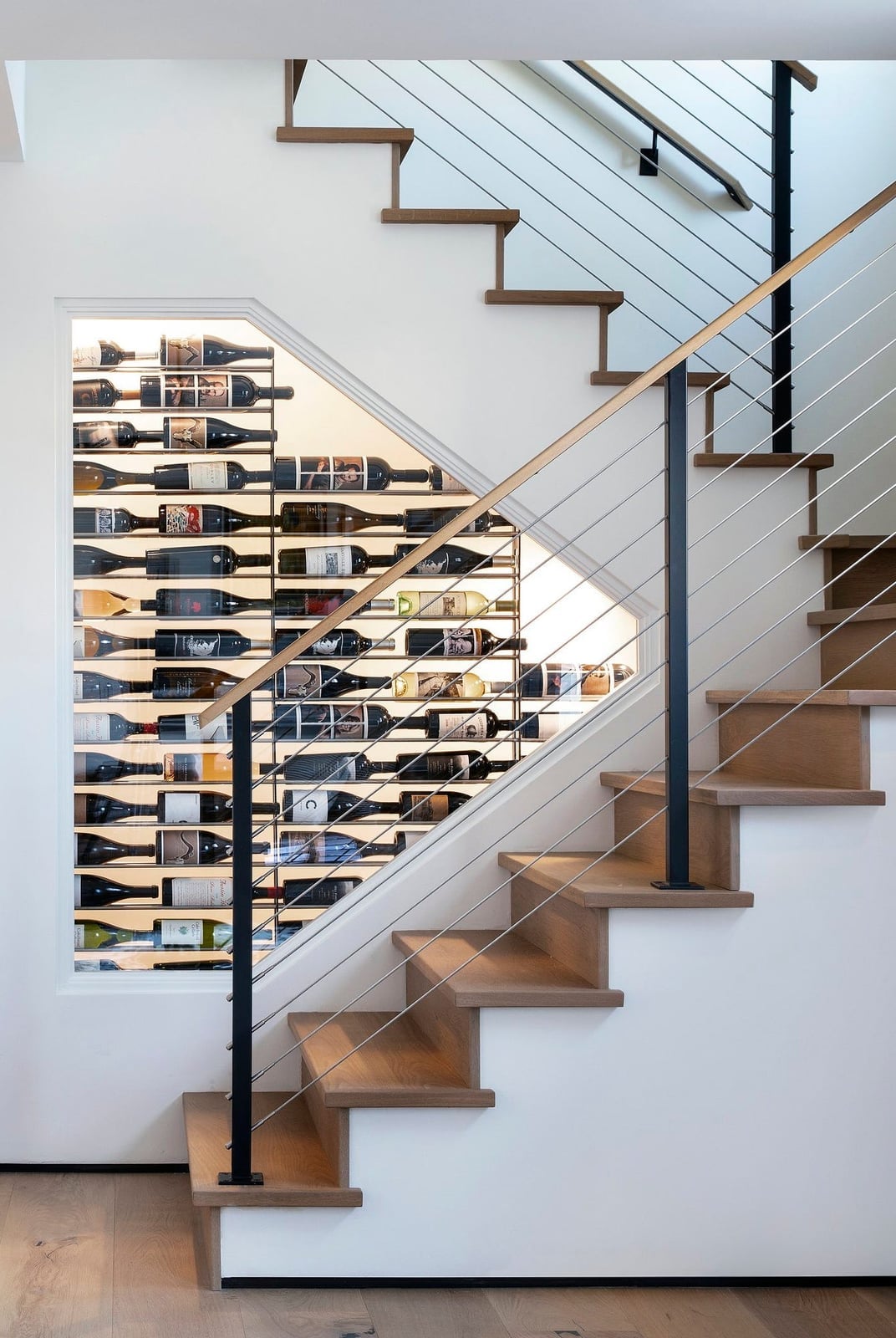
Under-stair storage often ends up as a catch-all closet, but built-in wine racks turn that awkward wedge into a display. This straight staircase uses floating wood steps and a cable railing, with the wine storage tucked into the wall below. Integrated lighting inside the rack makes the bottles glow, so the storage becomes part of the decor rather than a hidden utility. The open-plan layout means the rack is visible from the main room, which changes how you use that corner. For renters, a freestanding wine cabinet can mimic the look without structural work.
05 / 36Grand Foyer with Spiral Staircase and Metallic Art
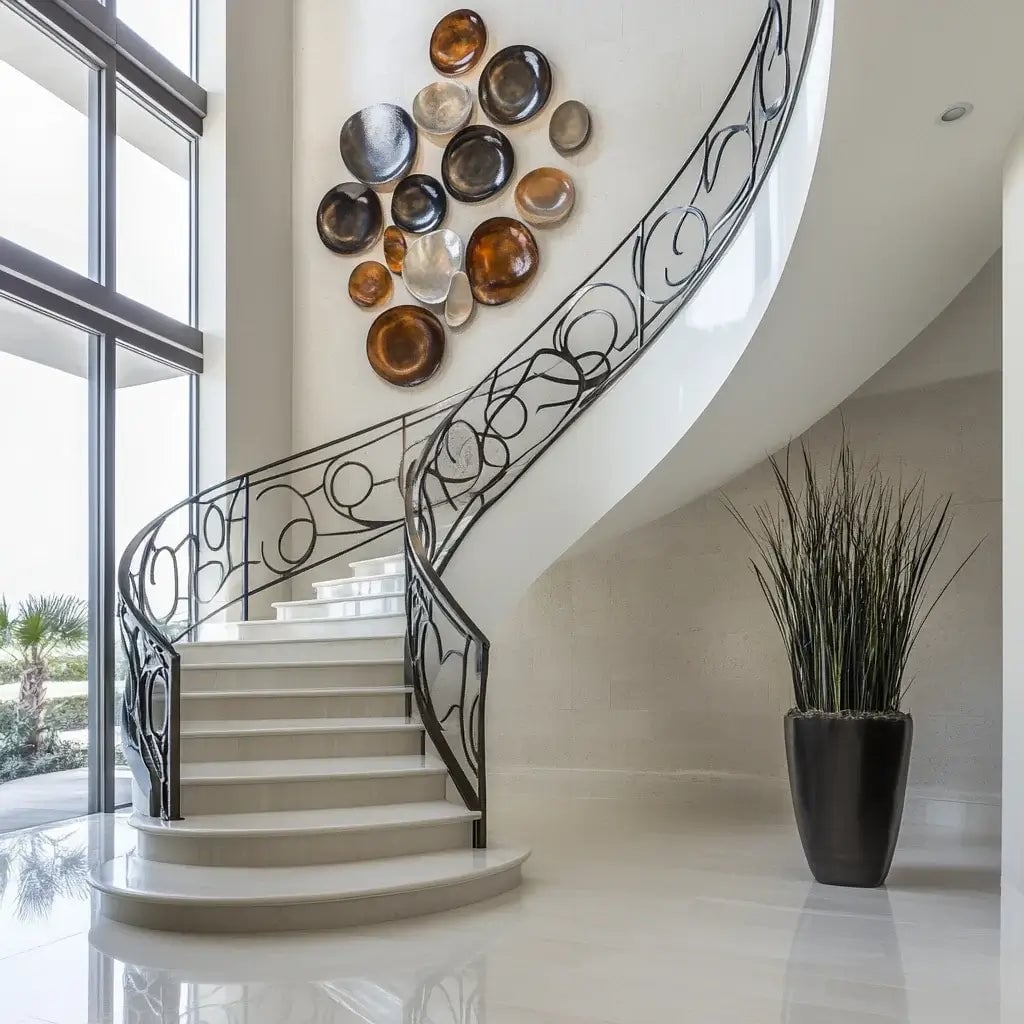
A spiral staircase already commands attention, so the decor around it should support rather than compete. In this foyer, the white marble stairs and ornate black metal railing set a formal tone. A large plant at the base adds softness, while the metallic art on the wall picks up the railing’s dark finish. The natural light from above keeps the space airy despite the heavy materials. For a similar balance, let the staircase define the palette and use art and greenery as accents. The rule here is contrast: hard stone with living leaves, black metal with white surfaces.
06 / 36Contemporary Stairwell with Under-Stair Greenery
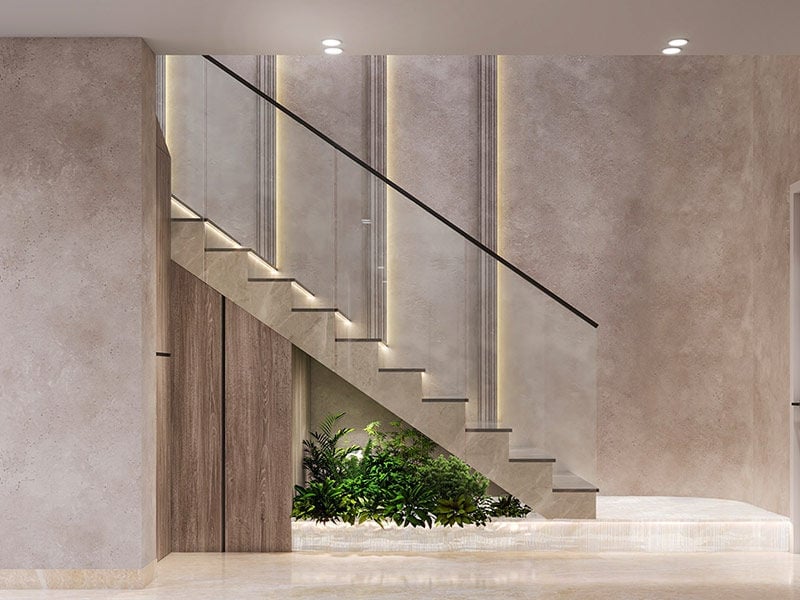
A glass railing and open treads keep a stairwell light, so the real move is adding weight at ground level. The integrated planters under the staircase turn an empty wedge into a miniature landscape with layered greenery. Stone flooring and wood accents keep the palette neutral, while the plants introduce a soft, organic contrast to the glass and metal. A set of ceiling spots and integrated step lights make sure the foliage stays visible after dark, not lost in shadow. The effect is a stairwell that feels more like a conservatory than a passage, with the planting as the anchor rather than an afterthought. For renters or anyone avoiding built-in planters, a row of large floor pots in graduated sizes can mimic the same dense, grounded look without permanent changes.
07 / 36Transitional Entryway with Bold Navy Accent Wall
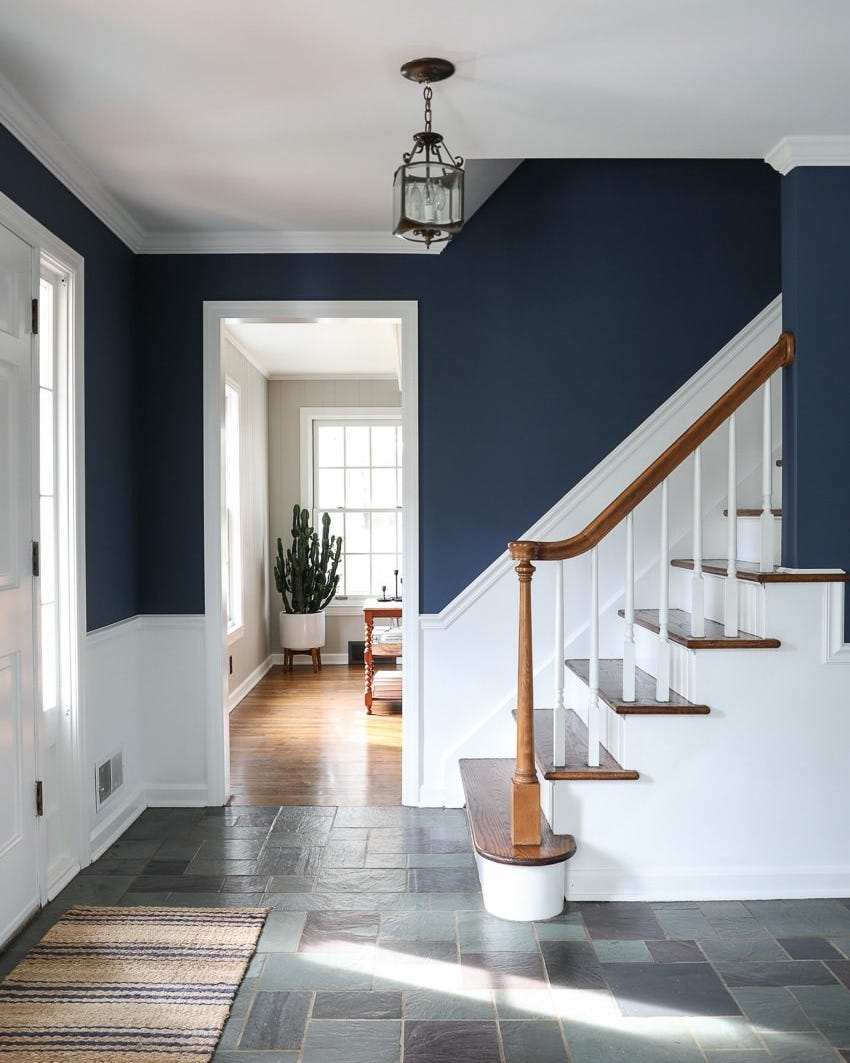
A single navy accent wall running up the stairwell pulls together wood treads, a slate tile floor, and a white banister without any of them competing. The deep blue reads as a backdrop rather than a statement wall, which keeps the entryway from feeling closed in. A pendant light at the top of the stairs adds a warm glow, balancing the cool slate and navy. This palette works because the navy is the only saturated color in the room, so it defines the space without overwhelming it. It is a straightforward paint project that changes the whole feel of a transitional entryway.
08 / 36Modern Organic Stairwell with Woven Basket Wall
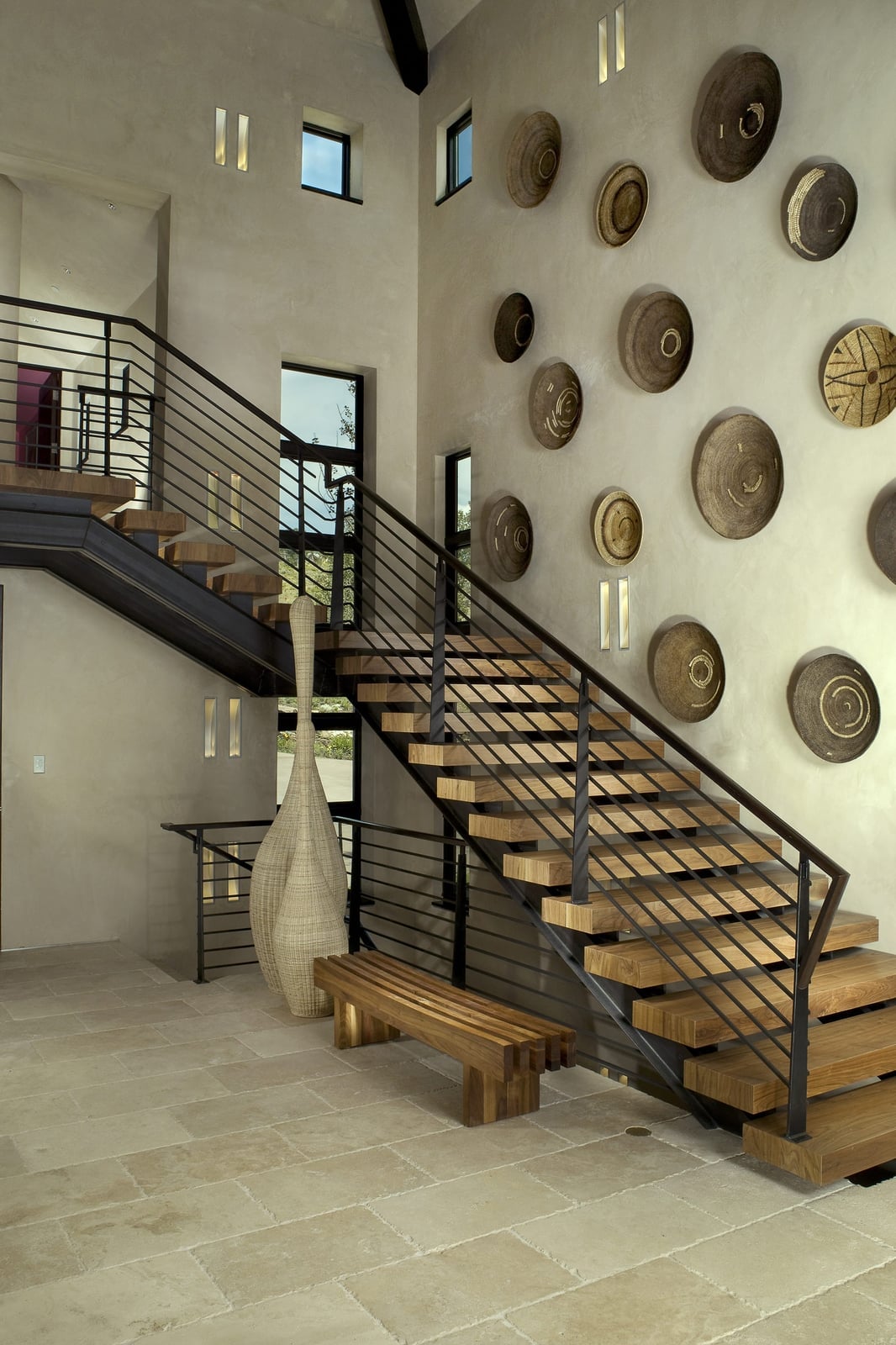
A floating staircase with a neutral palette sets the stage, but the wall of woven baskets is what gives the stairwell its character. The baskets are arranged in a circular cluster, creating a textural focal point that breaks up the straight lines of the stairs and railing. The natural fibers in beige and wood tones add warmth against the harder surfaces of stone and metal. A bench at the base anchors the grouping and turns the landing into a place to pause. What defines the style is the contrast between the sleek staircase and the handmade, uneven shapes of the baskets. The ratio of texture to smooth surface is about one to three, which keeps the look modern rather than rustic. A single oversized basket or a pair of large round mirrors would break the pattern and shift the feel entirely.
09 / 36Modern Staircase Landing Gallery Wall
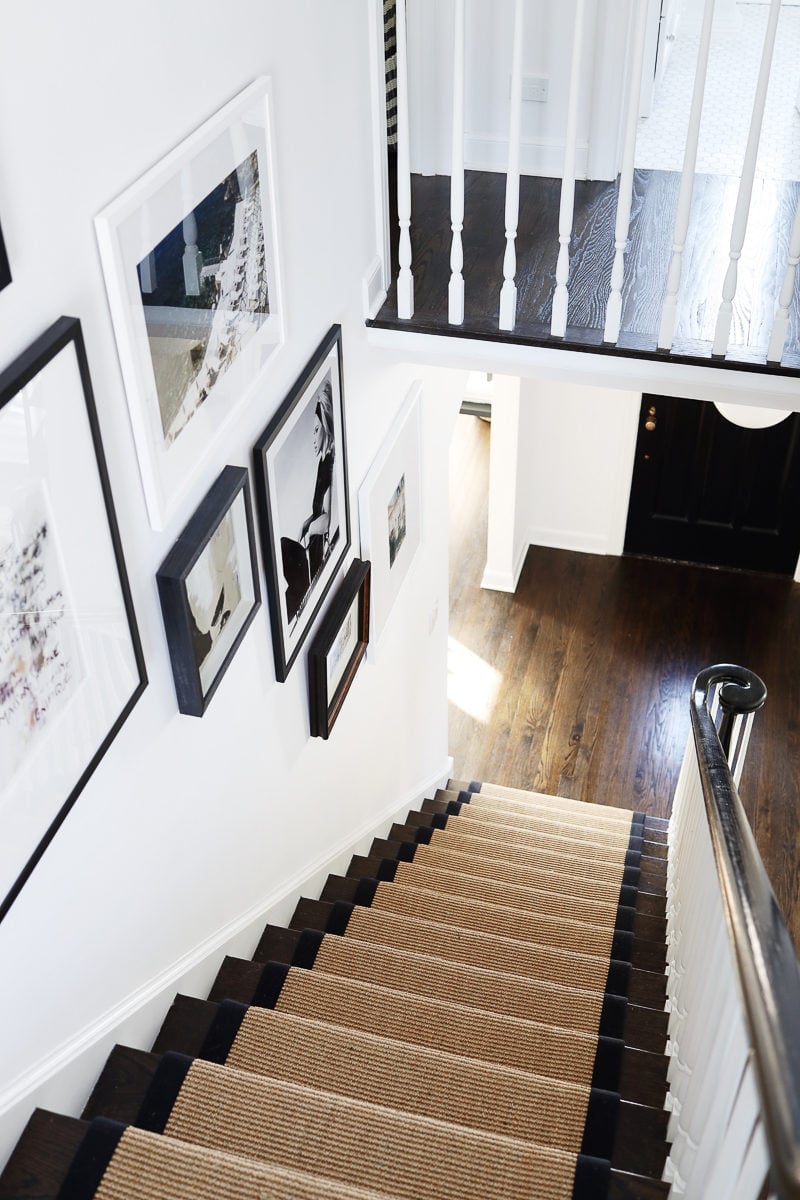
How do you fill a tall wall above a staircase without it feeling random? A landing gallery wall works by grouping framed black and white art in a tight arrangement that follows the angle of the stairs. The monochrome palette keeps the eye moving up the wall without a single piece competing for attention. The wood tones in the frames and banister warm up the black and white prints, so the gallery does not feel cold. An overhead fixture and natural light ensure the art is visible from both the landing and the stairs below. Lay the frames out on the floor first, matching the spacing to the stair rise, so the final arrangement mirrors the rhythm of the steps. This keeps the gallery cohesive, even on a tall, angled wall.
10 / 36Minimalist Staircase Adjacent to Workspace
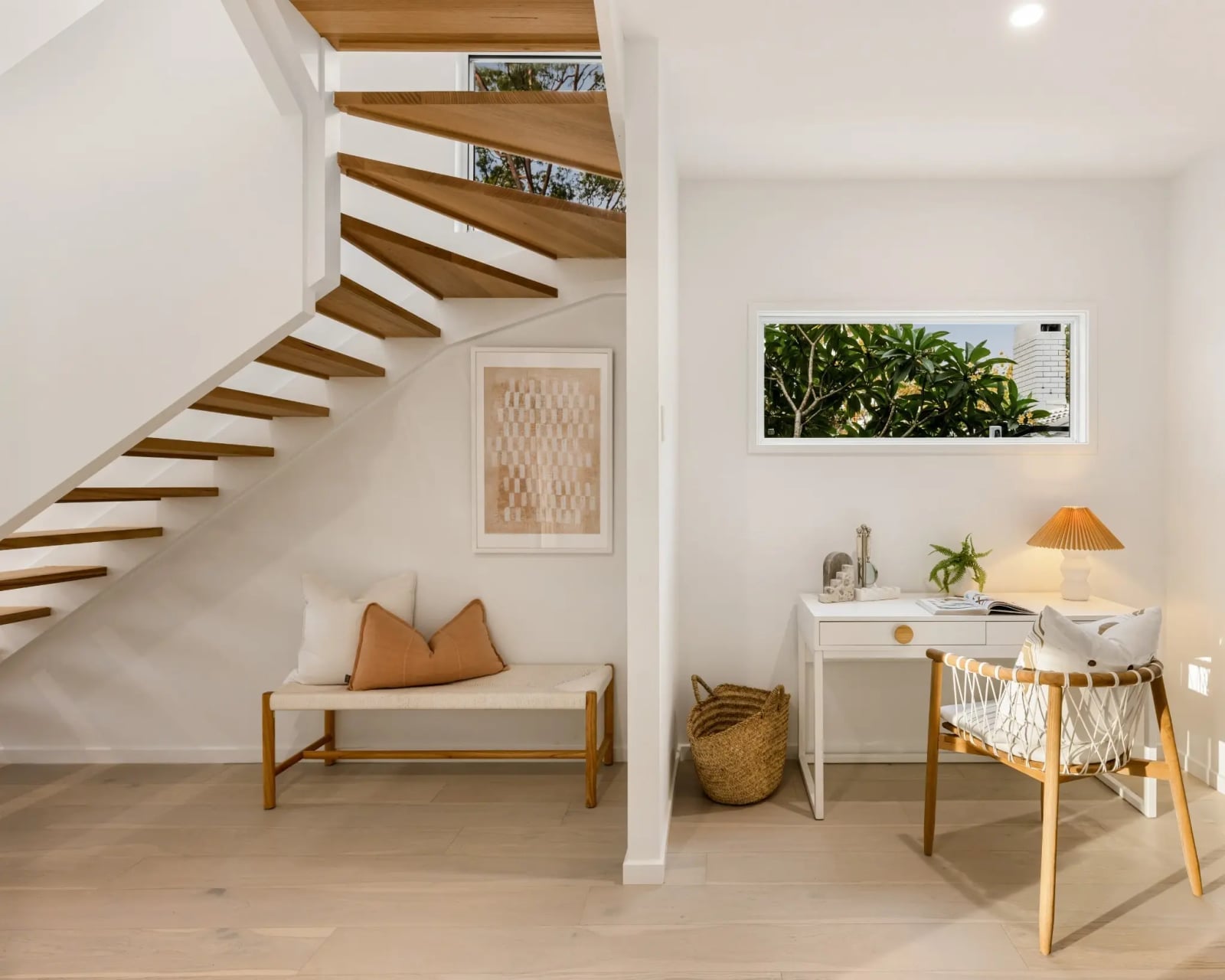
A floating wood staircase with no risers and a thin metal railing takes up almost no visual space, which is exactly what you want when a desk sits right next to it. The open treads let light pass through, so the workspace under the stairs stays bright rather than cramped. A woven chair and a simple desk lamp add just enough warmth to the white and light wood palette. The staircase works as a sculptural element in the room, defining the workspace zone without a wall. This layout proves that a minimalist staircase can double as a room divider, keeping the open plan intact while carving out a dedicated area for a desk.
11 / 36Eclectic Stairwell with Vibrant Art Gallery
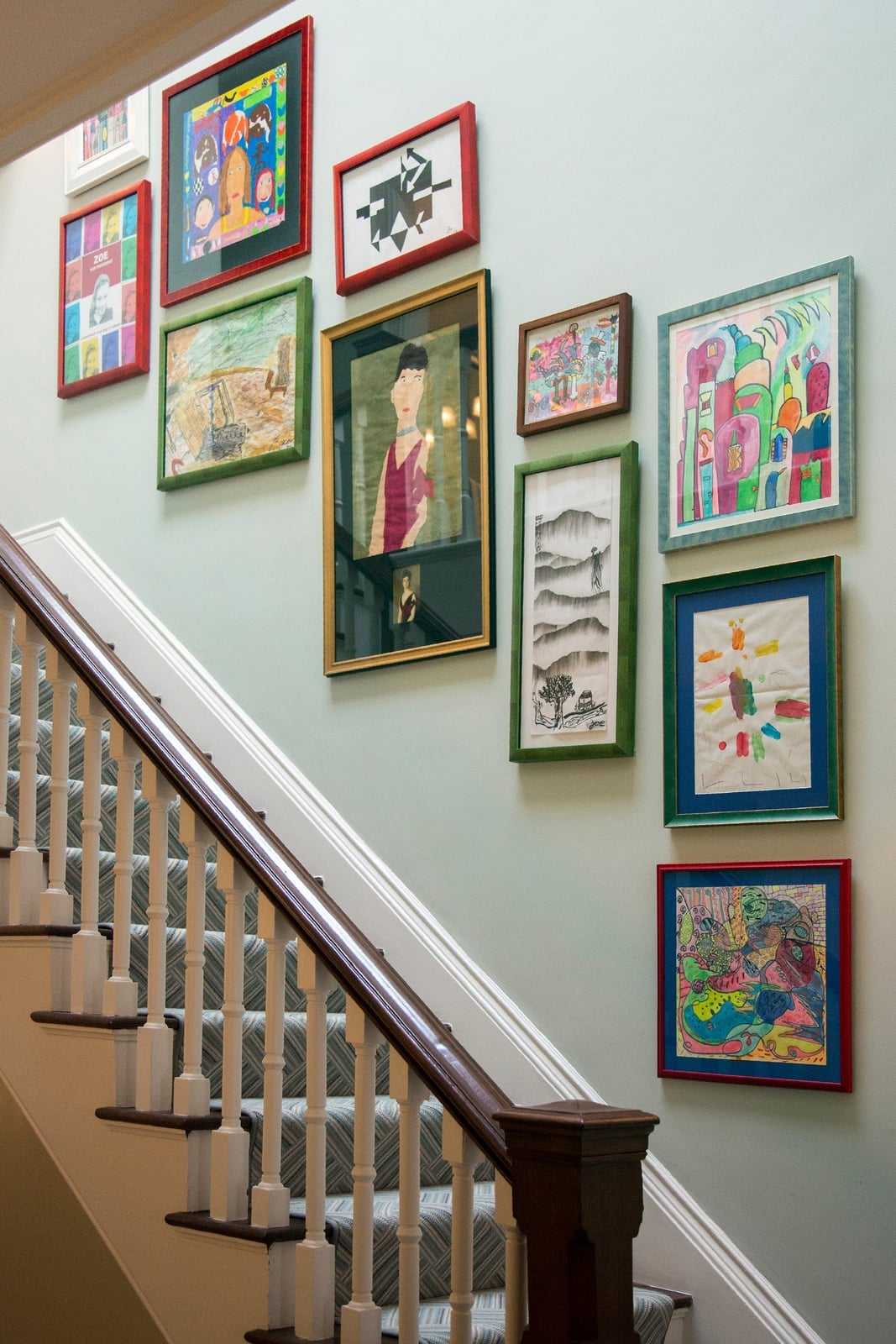
When you mix frame sizes and colors on a stair wall, hang the largest piece at eye level on the landing and let smaller works climb the steps. The palette here stays playful with multi-colored art on a light blue wall, so the wood stairs and white banister read as neutral support. What defines the eclectic style is the ratio of busy to calm: one vivid gallery wall against an otherwise simple stairwell. What breaks it would be adding competing patterns on the risers or a second accent wall nearby. The natural light from above keeps the paper and glass frames from feeling heavy.
12 / 36Biophilic Stairwell with Lush Indoor Garden
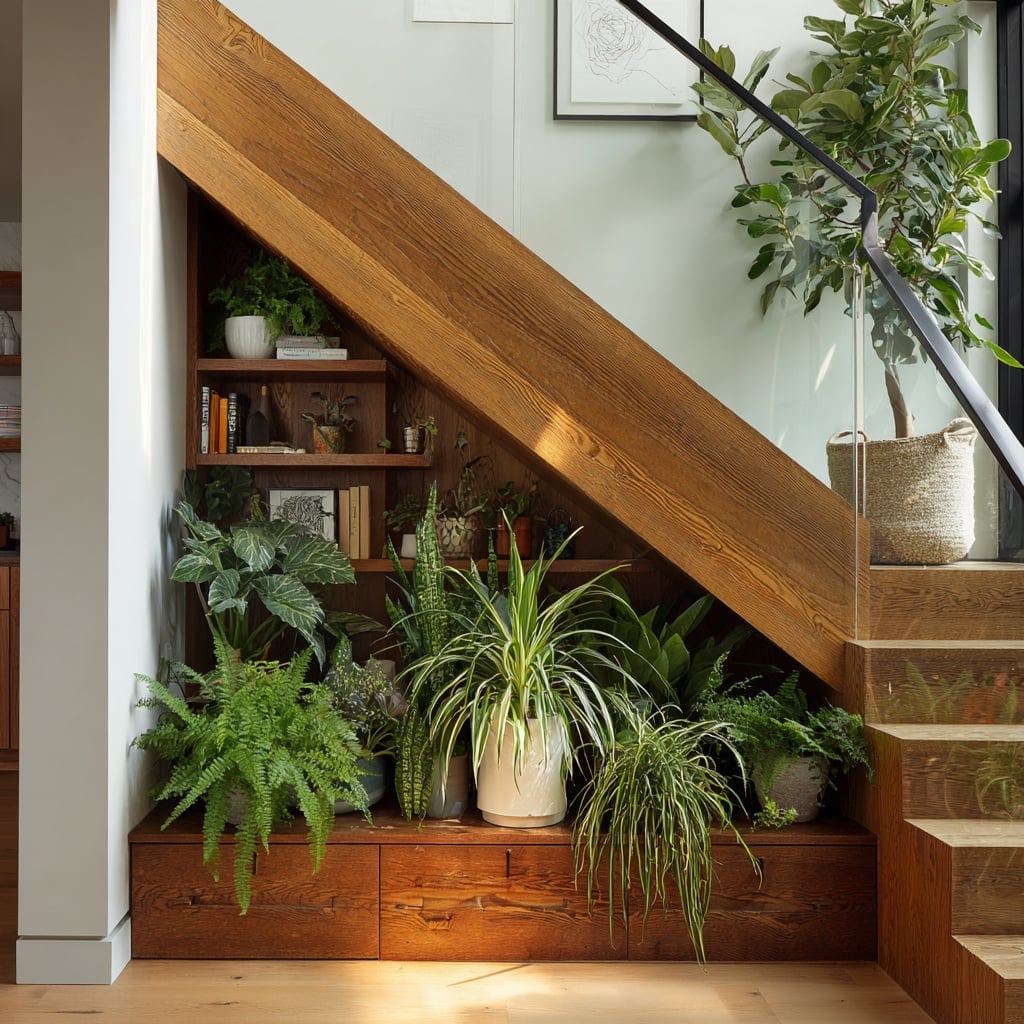
A built-in plant shelf under the stairs reads as more deliberate than a random pot on the floor. The warm wood shelving and white walls let the green plants and ceramic pots take center stage, with soft interior light hitting the glass vases. Closed cabinets on the bottom hold clutter while open shelves above show the plant collection. Plastic plants or dark shelving would compete with the greenery. Choose indoor plants suited for the natural light levels in your stairwell orientation.
13 / 36Modern Staircase with Integrated Recessed Lighting
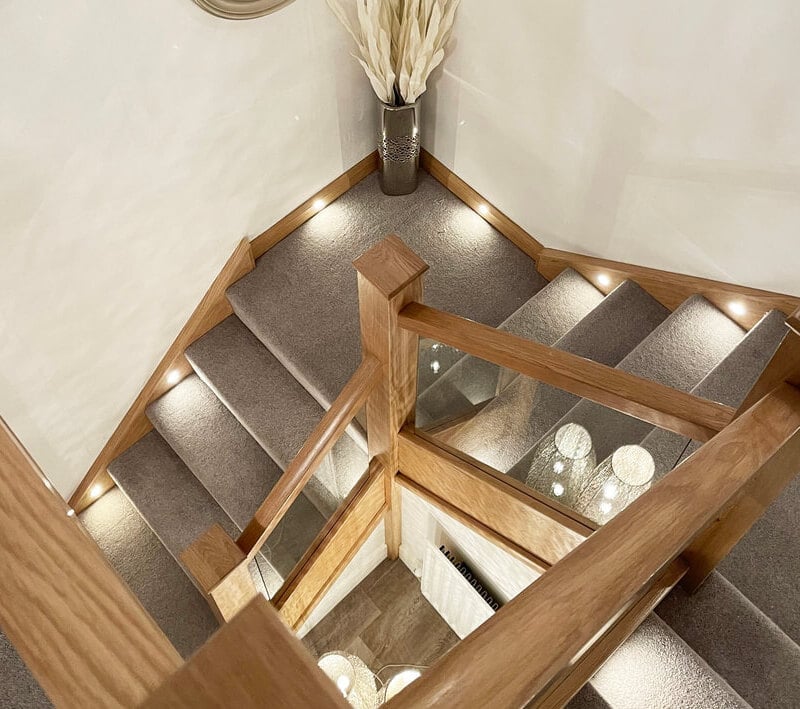
Recessed lights set into the stair risers create a floating effect against the wood tones and grey carpet. The glass balustrade keeps the view open, so the corner landing reads as part of the whole room rather than a separate passage. Modern staircase lighting works because the fixtures are small and low to the ground, guiding each step without competing with the ambient light from the windows above.
14 / 36Contemporary Stairwell Featuring Vibrant Abstract Art
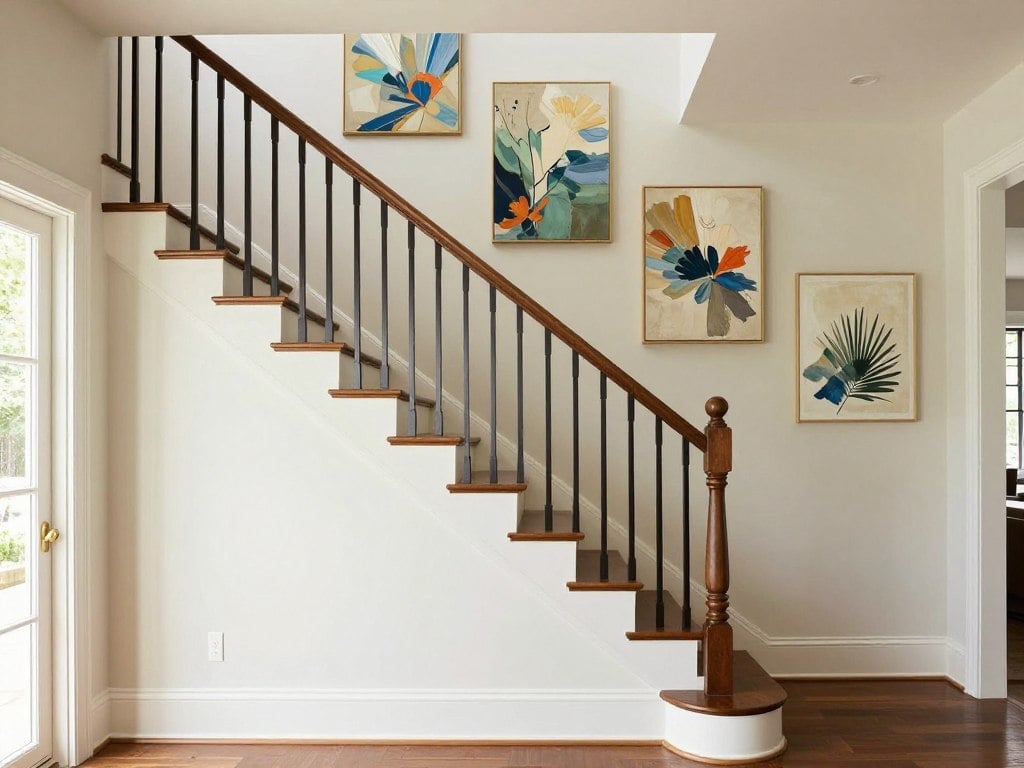
One large abstract painting in blue, orange, beige, and black anchors this stairwell without needing anything else on the wall. The palette works because the warm orange and cool blue balance each other, while the beige walls and wood banister stay out of the way. The modern abstract look depends on the ratio of bold color to neutral space: the artwork covers only part of the wall, leaving room for the eye to rest. Adding smaller frames would compete with the painting’s scale. Light from the top of the stairs hits the canvas evenly, keeping the metal banister from reading as cold.
15 / 36Dramatic Curved Staircase with Dark Wood and Black Railing
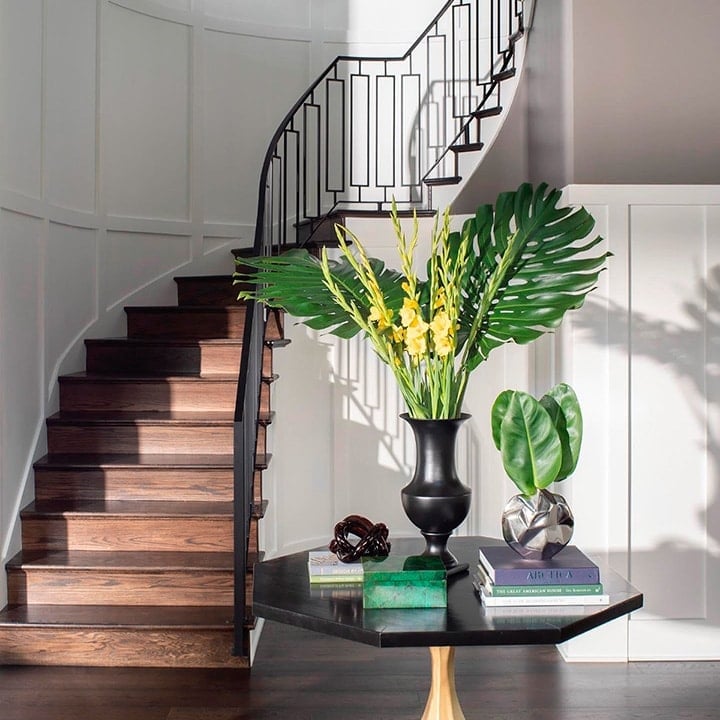
A curved staircase already draws the eye, so keep the wall decor minimal to let the architecture lead. The dark wood steps and black metal railing create dramatic shadows in the natural light, while the white walls and a single large plant at the base soften the traditional look. The rich wood tones and bright walls are balanced by the black railing that ties them together. Busy wallpaper or bright art would compete with the shadows. The stone floor at the bottom gives the room a solid visual anchor without needing furniture.
16 / 36Coastal Staircase Landing with Black and White Photo Gallery
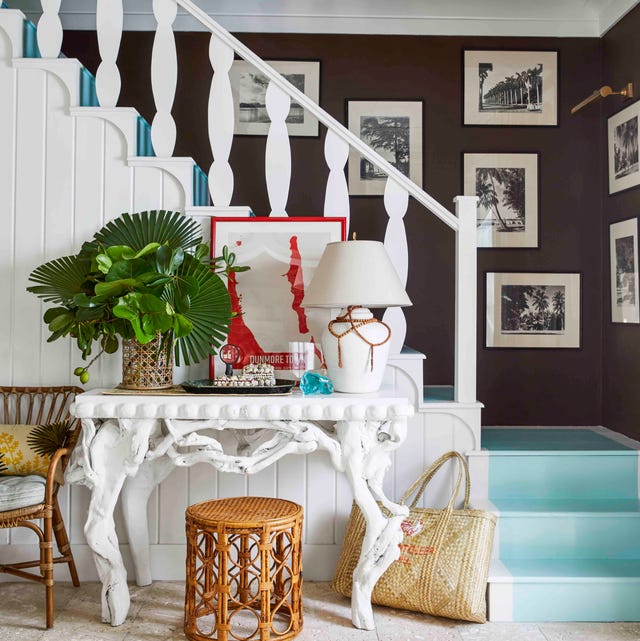
A black and white photo gallery above a console table gives a coastal staircase landing a curated feel without leaning nautical. The white frames pick up the trim, while the blue ceramic vase and rattan stool layered below add texture and warmth. A wall sconce casts soft light across the art, keeping the vignette readable from the stairs. The trick is to treat the landing like a room of its own: anchor the wall with a substantial piece of furniture, then build the arrangement around it. That approach works whether the photos are family shots or vintage finds.
17 / 36Traditional Stairwell with Hidden Under-Stair Door
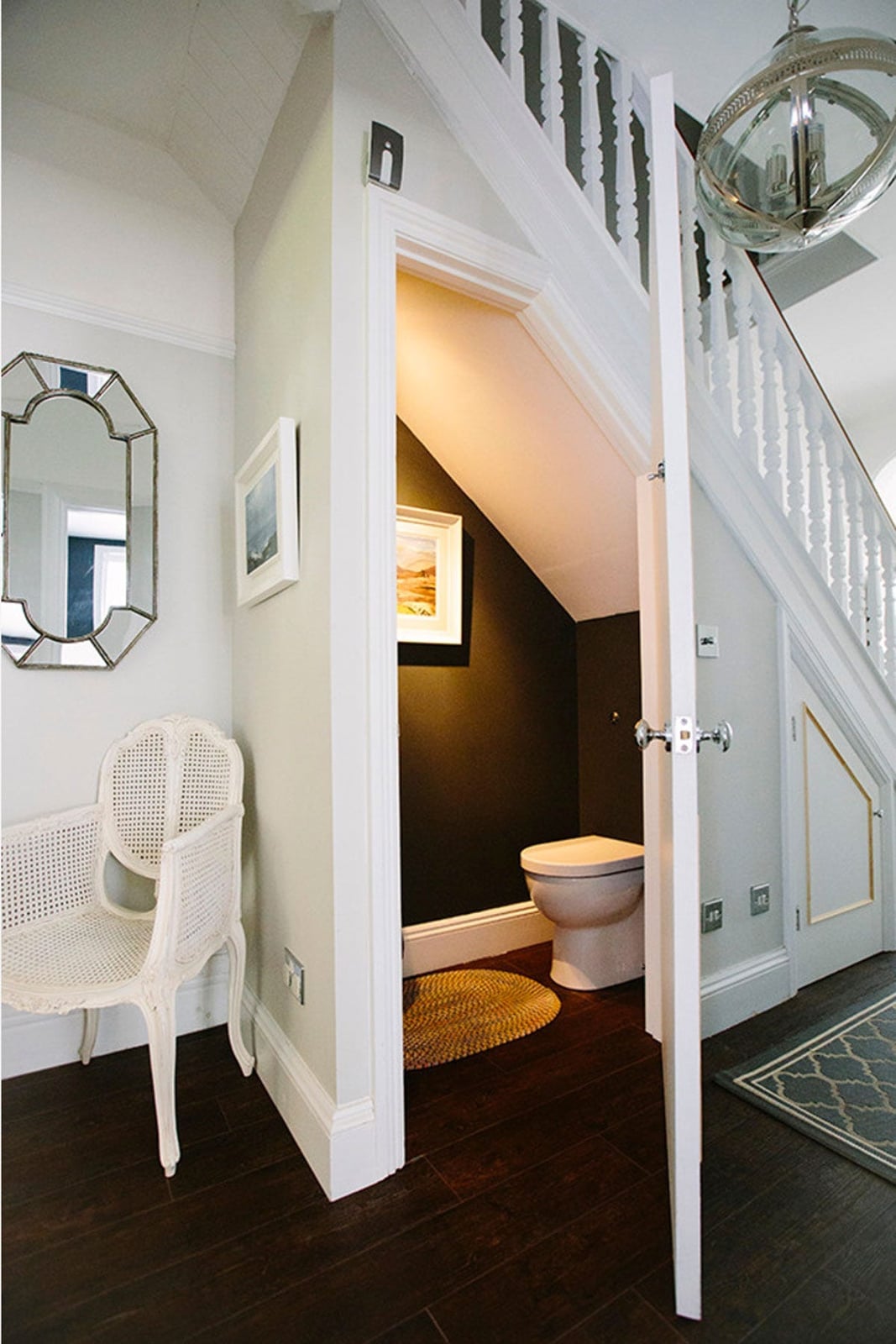
A practical rule for tight stairwells is to treat under-stair access as part of the room, not a secret. In this traditional setup, a hidden door painted to match the wall trim opens to reveal a compact toilet, while the rest of the alcove stays open with a wicker chair and ornate mirror. The dark wood stair rail and cream walls keep the look formal, and the tile floor adds durability for the traffic. For a renter, this kind of disguise is harder to pull off without paint approval, but a tension rod and curtain in the same wall color can mimic the effect without permanent changes.
18 / 36Contemporary Staircase with Botanical and Abstract Art Mix
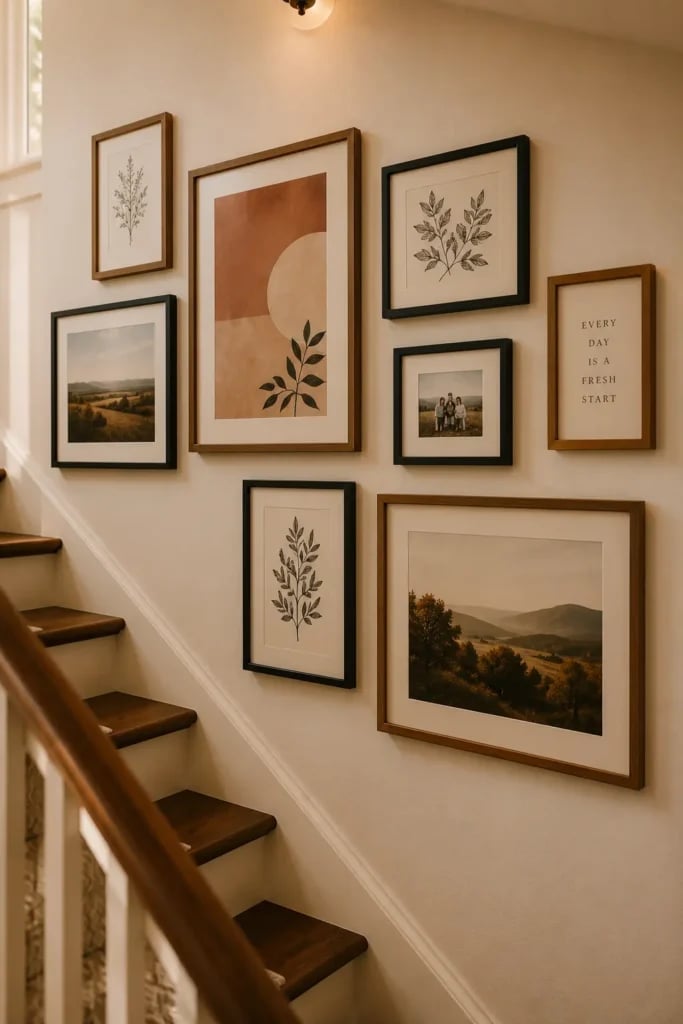
A gallery wall that mixes botanical prints with abstract art can feel disjointed if the frames and spacing don’t coordinate. This contemporary staircase solves that by using similar slim black frames for both styles, so the eye moves easily from a line-drawn leaf to a geometric composition. The warm wood stairs and natural light from the window keep the palette grounded, preventing the abstract pieces from reading as too cold.
What defines the look is the ratio: about two thirds botanical to one third abstract, with the largest abstract piece placed at eye level on the landing. That balance keeps the wall from reading as a random collection. The rule applies to any stair wall with mixed media, repeat one frame finish and limit the color palette to earth tones, black, and white.
19 / 36Modern Stairwell with Bold Graphic Wall Mural
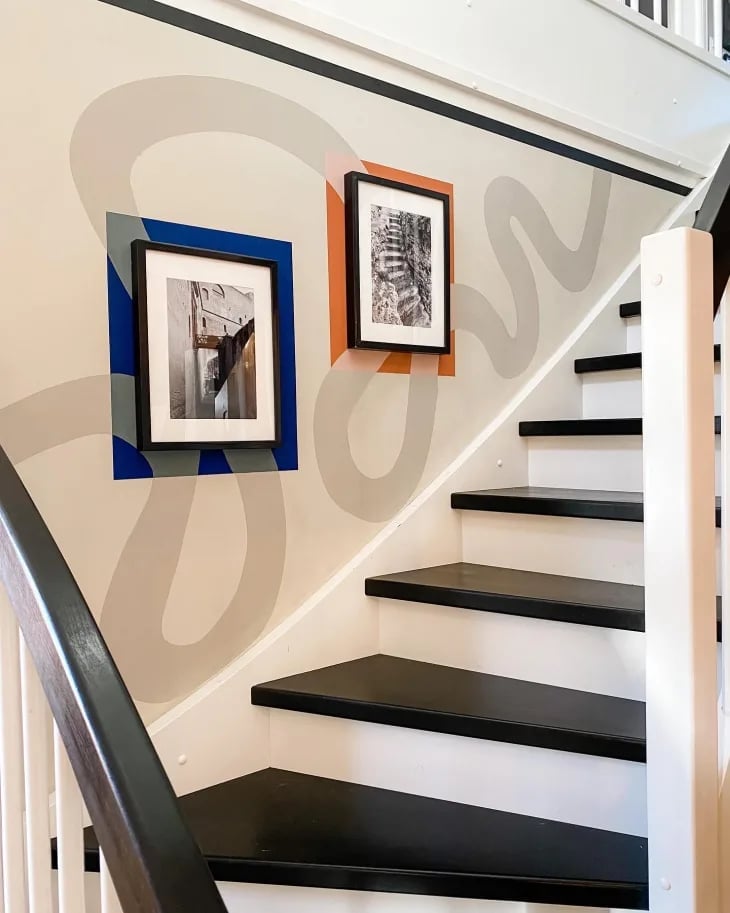
The wall mural here covers the entire stairwell wall in a loose abstract pattern of blue, orange, and grey on a beige ground, with a single framed piece hung off-center for contrast. The black stairs and metal railing keep the look clean, letting the mural do the work. What makes this approach durable is the scale: a full-wall mural eliminates the need for multiple nail holes and frame adjustments over time. If the mural is a peel-and-stick panel, it can be swapped when the color scheme changes, which is a solid option for anyone who wants impact without a permanent commitment.
20 / 36Farmhouse Entryway with Antique Bench and Decorative Plates
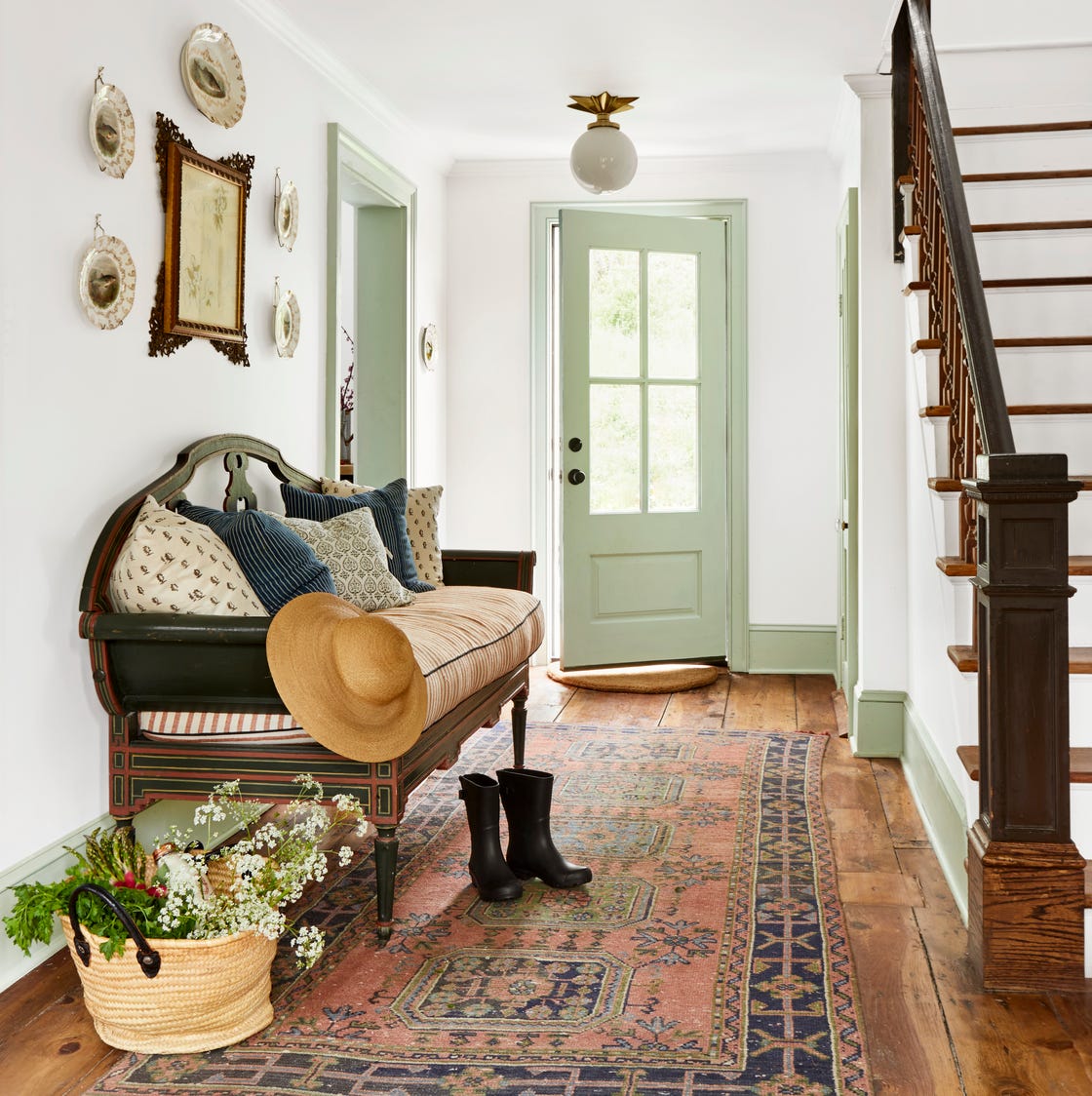
This entryway lands the farmhouse look with a clear one-line assessment: balance the old with the arranged. The antique painted bench in soft green grounds the space, while the vintage rug and woven basket add layers of texture. Above the bench, a collection of decorative plates in cream, pink, and blue forms a circular pattern leading toward the staircase. The front door and ceiling fixture keep the entry bright without washing out the pastel tones. To recreate it, look for plates of similar size and group them in a loose grid, leaving a few inches between each for breathing room.
21 / 36Modern Farmhouse Staircase with Festive Garland
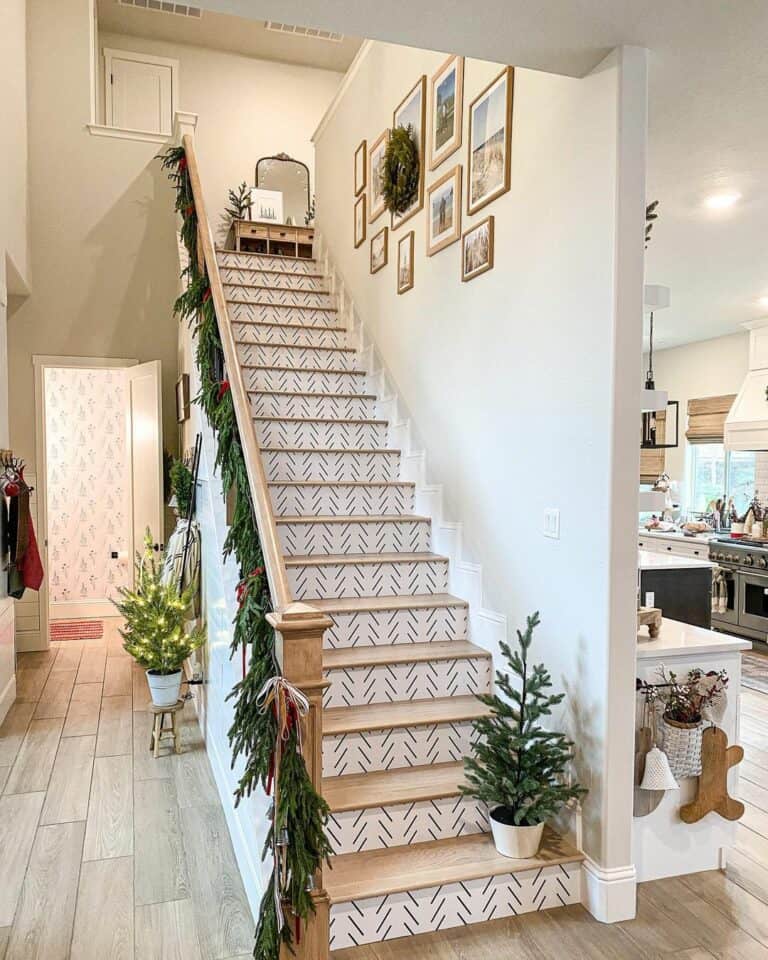
When a garland wraps the banister of a straight staircase, the rest of the room has to stay simple to let that green-and-red line read. This modern farmhouse stairwell keeps the palette white and wood, with patterned risers adding just enough rhythm so the garland does not compete with anything else. A gallery wall on the far wall echoes the same neutral tones, which keeps the eye moving up rather than getting stuck on one busy spot. The overhead light and window light together keep the greenery from going flat, especially on a cloudy afternoon. For a stairwell that already has a lot going on, letting one element carry the season makes the whole landing feel intentional.
22 / 36Classic Stairwell with Botanical Prints on Marble Stairs
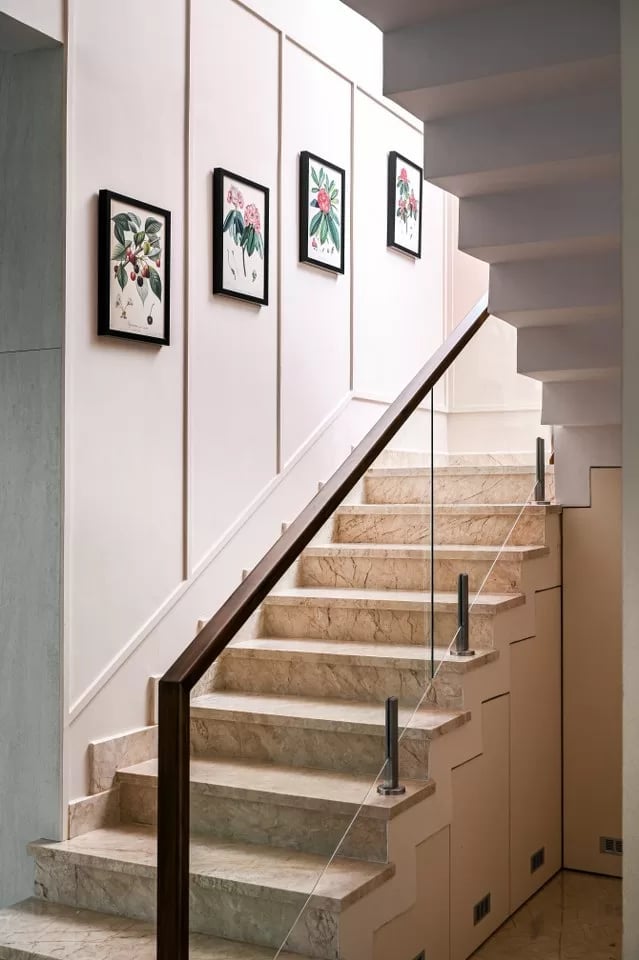
Botanical prints set against a marble staircase create a contrast that feels both crisp and lived-in. The cream, pink, and green of the framed art pick up the soft tones in the stone, while the glass railing keeps the view open so the art does not compete with a heavy balustrade. A vertical arrangement along the wall beside the stairs draws the eye upward, which works especially well in a roomy stairwell where the marble itself is a strong visual anchor. The plaster walls add just enough texture to keep the look from reading as too polished.
23 / 36Traditional Staircase with Detailed Wainscoting
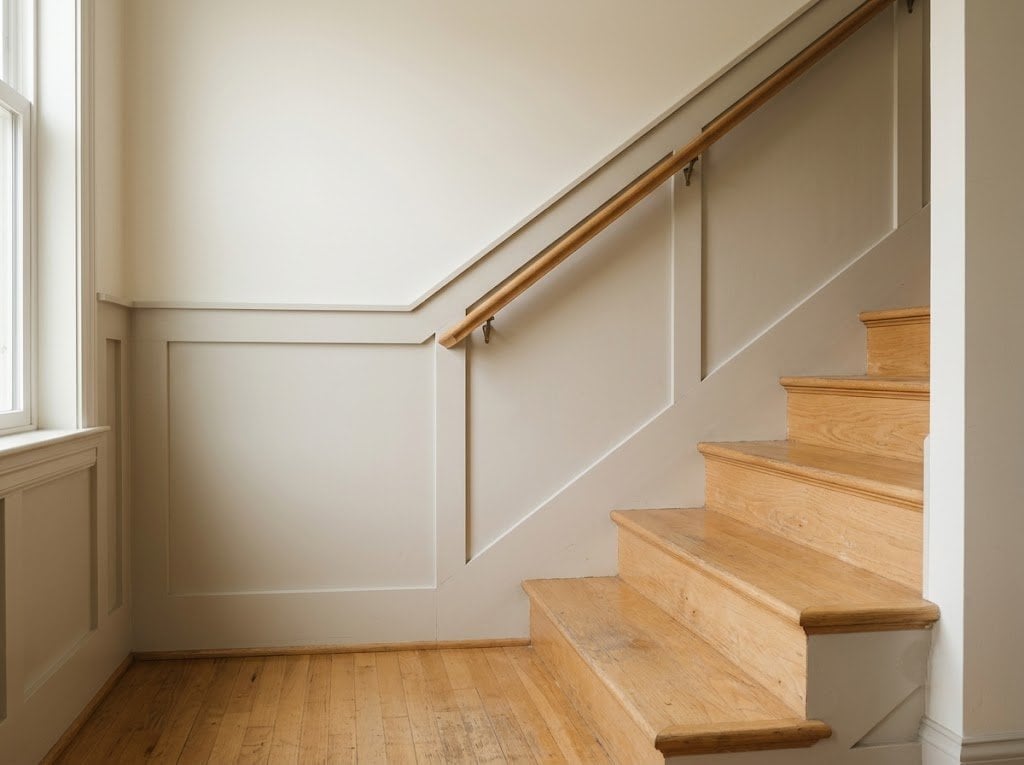
In a traditional stairwell, detailed wainscoting sets the rhythm, and the wall above it stays quiet. Panels run from the floor to chair-rail height in painted wood, with the off-white tone matching the trim so the join looks like one piece. The window light hits the raised panels at an angle, creating a soft shadow line that changes through the day. The handrail and stair treads stay in a similar wood tone, so the wainscoting does not float away from the staircase itself. That repetition of material is what makes a traditional stairwell feel grounded.
24 / 36Traditional Stairwell with Sage Green Gallery Wall
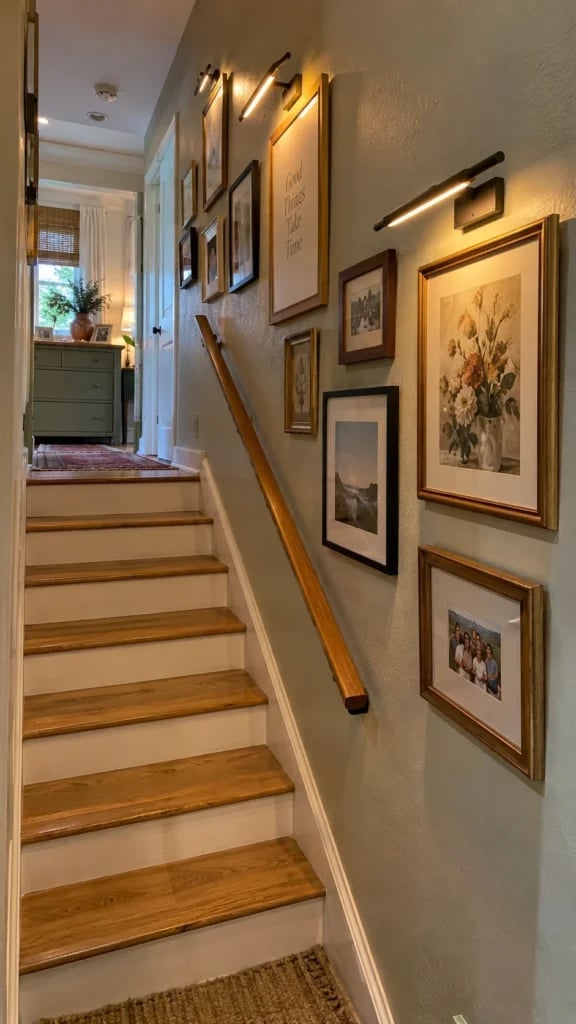
A sage green gallery wall works differently than a white one because the color itself becomes the backdrop, so the frames do not have to do all the work. In this traditional stairwell, the green wall is the anchor, and the mix of wood, gold, and cream frames sits against it without fighting for attention. Track lighting aimed at the art keeps each piece visible even when the rest of the stairwell is in shadow, which matters for a room that often gets only ambient light from the hall. The jute runner on the wooden stairs adds a natural texture that breaks up all the straight lines, and the varied frame sizes keep the arrangement from looking too uniform. The result is a gallery wall that feels collected rather than planned.
25 / 36Boho Staircase with Botanical Art and Terracotta Accents
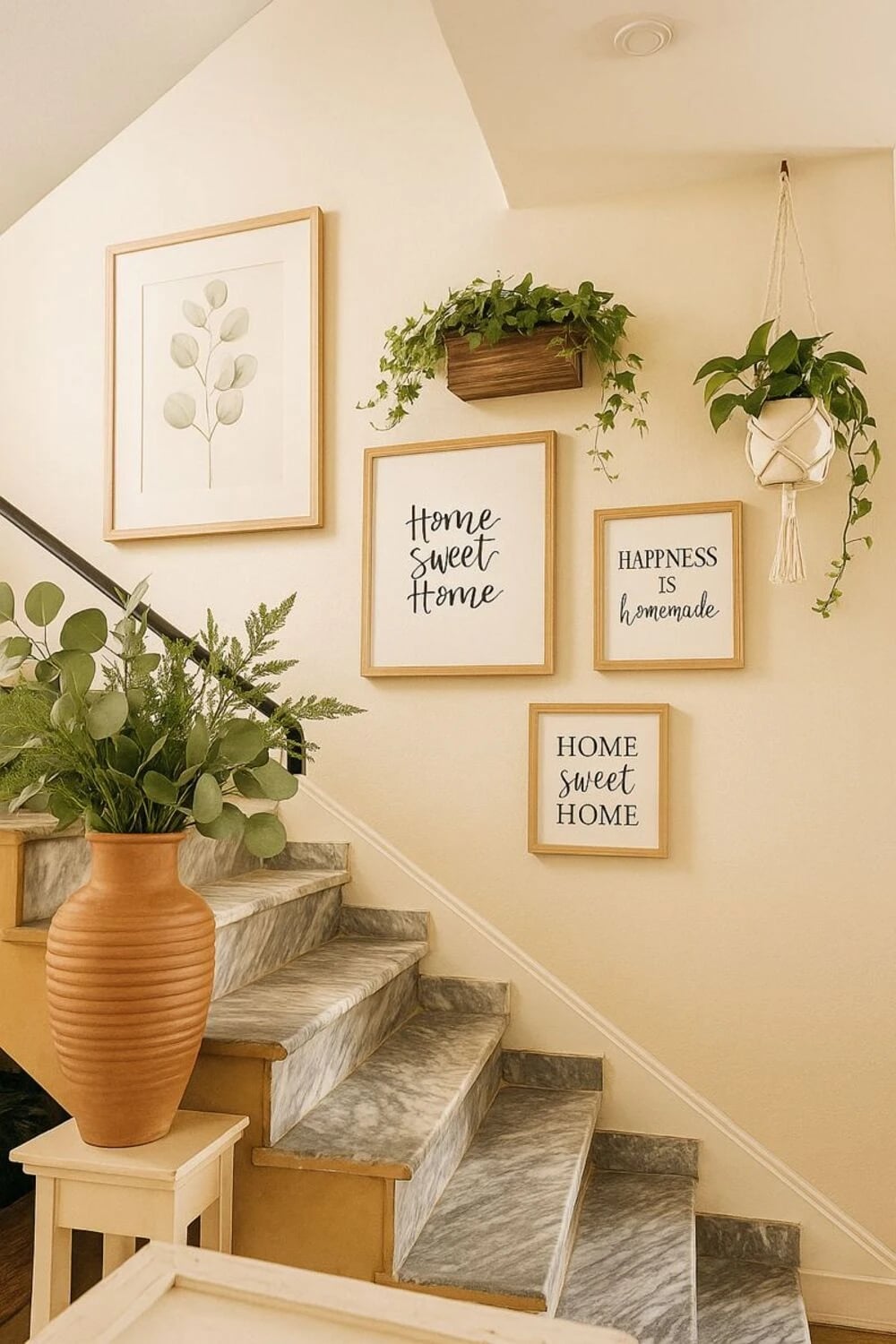
A large terracotta vase with greenery at the base of the stairs anchors the compact landing, while the botanical art above it repeats the same green and cream palette. The marble stair treads keep the look from tipping into too earthy, and the window light keeps the plants and art in balance. For a boho staircase, let one material, here the terracotta, set the warmth, then repeat that tone in small doses so the whole landing feels curated.
26 / 36Boho Modern Stairwell with Dark Accent Wall Gallery
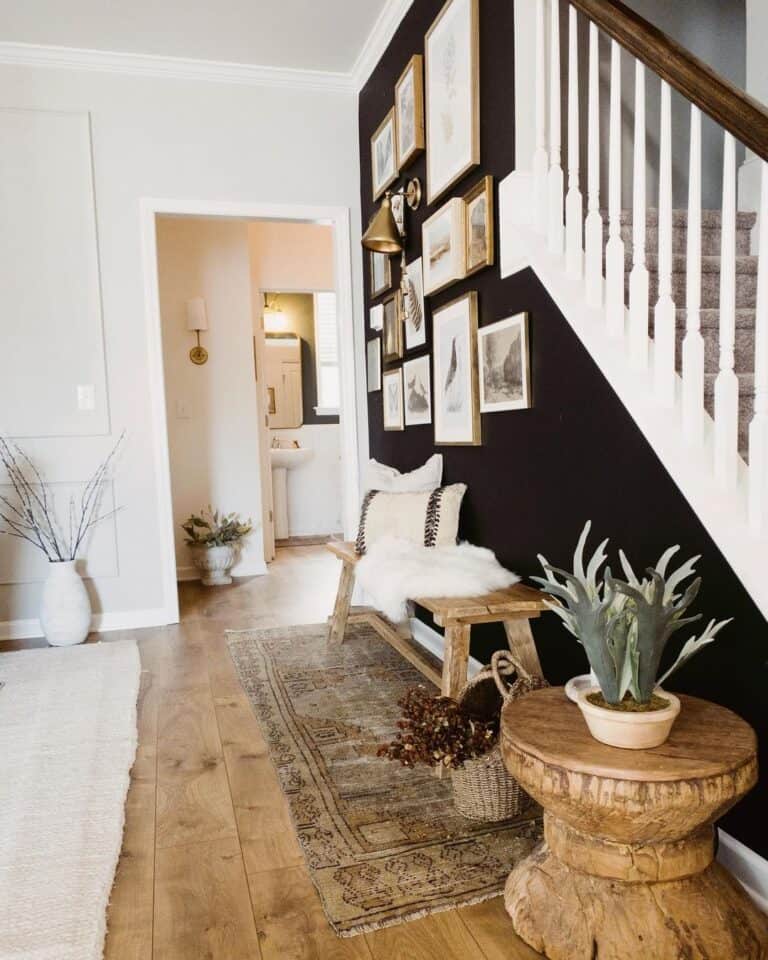
A dark accent wall layered with an eclectic gallery makes a stairwell feel grounded rather than cave-like. The mix of black plaster, cream frames, gold highlights and natural wood bench keeps the palette warm, while the woven rug and large plant bring in the boho side. The dark wall covers one vertical plane, and every other surface stays light or neutral. The gallery itself breaks the rules with a jumble of frame sizes and mat colors, so nothing looks like a formal grid. Wall sconces add soft light without overpowering the art.
27 / 36Transitional Staircase with Large-Scale Landscape Paintings
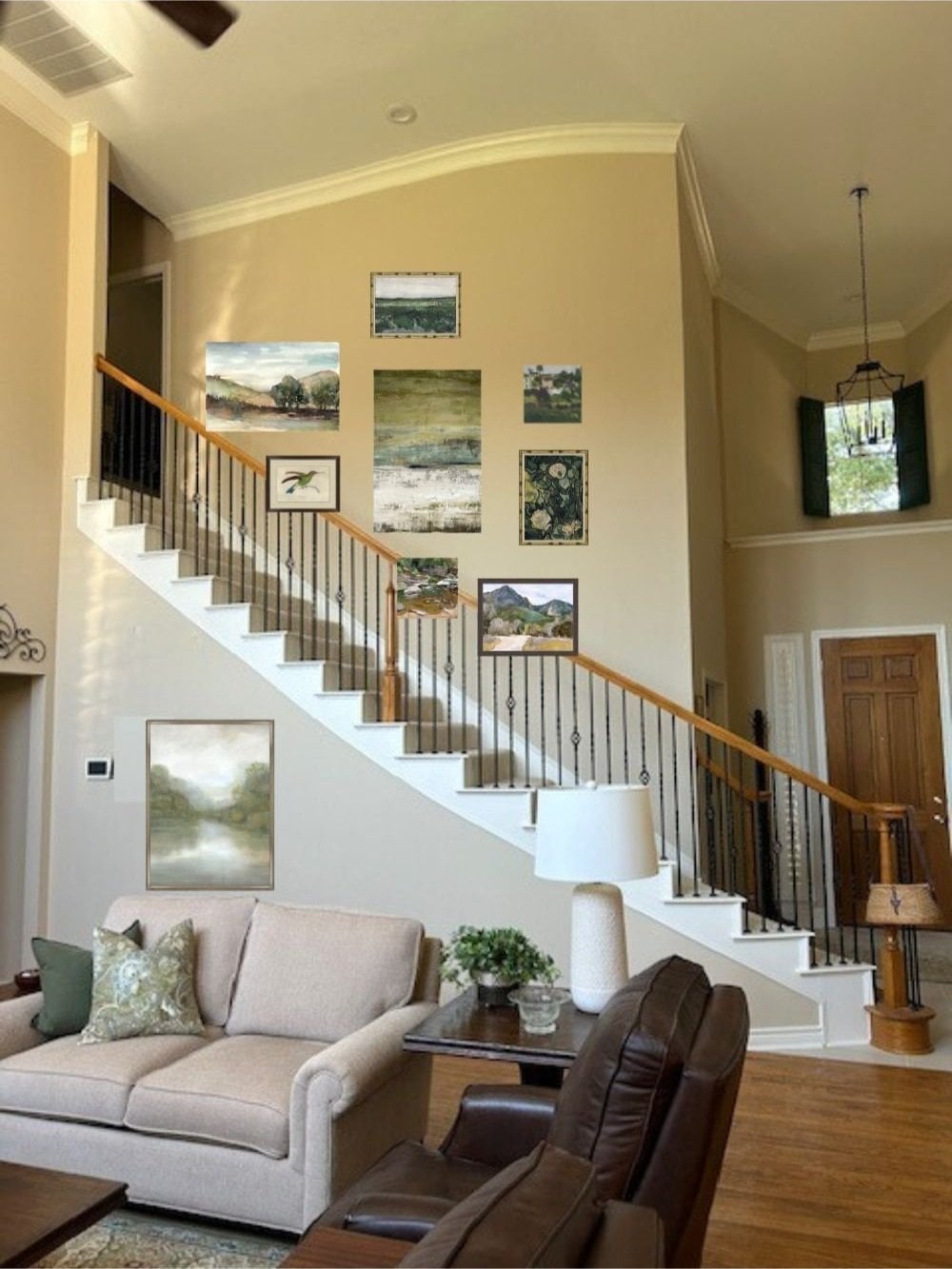
Oversized art solves the problem of a tall, empty stair wall more effectively than a cluster of small frames ever could. A straight wooden staircase lined with large landscape paintings on warm neutral canvas makes the vertical rise feel purposeful rather than awkward. The transitional style here comes from the balance: the wood treads and plaster walls stay traditional, while the scale of the art leans modern. What breaks the formality is the landscape subject matter itself, which softens the architecture and draws the eye upward naturally. A ceiling fixture provides ambient light, but the real anchor is the art’s own internal depth.
28 / 36Eclectic Stairwell with Integrated Wood Cabinets and Patterned Tile
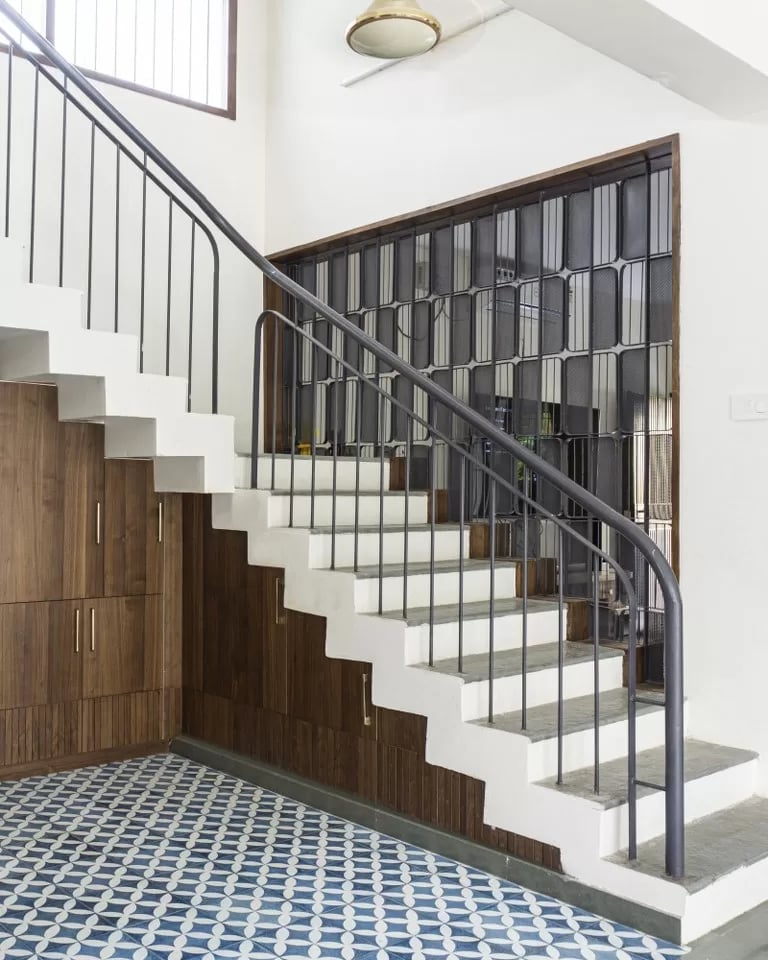
Built-in wood cabinets under the stairs turn a compact footprint into genuine storage without stealing floor space. The white staircase and dark metal railing keep the vertical path clean, while the blue and white patterned floor tile adds a graphic anchor at ground level. Natural light from a nearby window keeps the wood cabinets from feeling too heavy. The eclectic feel comes from mixing the traditional tile pattern with modern cabinet hardware and the industrial railing, a combination that works because the white staircase acts as a neutral bridge between them.
29 / 36Modern Art Deco Staircase with Curved Brass and Fluted Wall
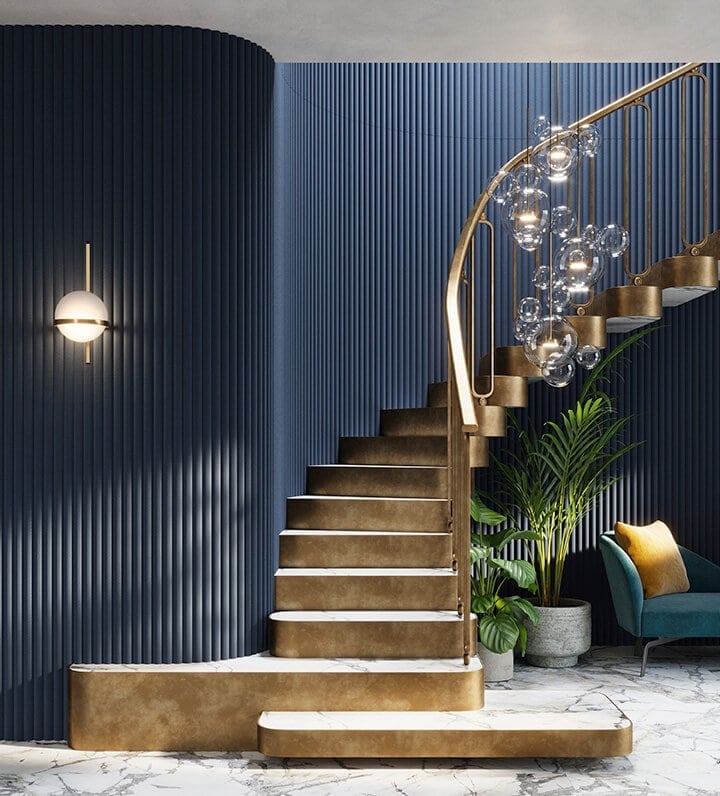
A curved brass staircase against deep blue fluted wall panels creates a stairwell that is equal parts sculpture and circulation. The bubble chandelier hangs at the center of the curve, catching the dramatic accent lighting and throwing sparkle across the marble treads. The fluted wall provides vertical rhythm that echoes the staircase’s own sweep, while the deep blue backdrop makes the gold and brass elements pop. What keeps this from feeling like a hotel lobby is the mix of matte fluted panels with polished metal, a textural contrast that feels intentional rather than fussy.
30 / 36Traditional Staircase with Dark Wood and Black Accents
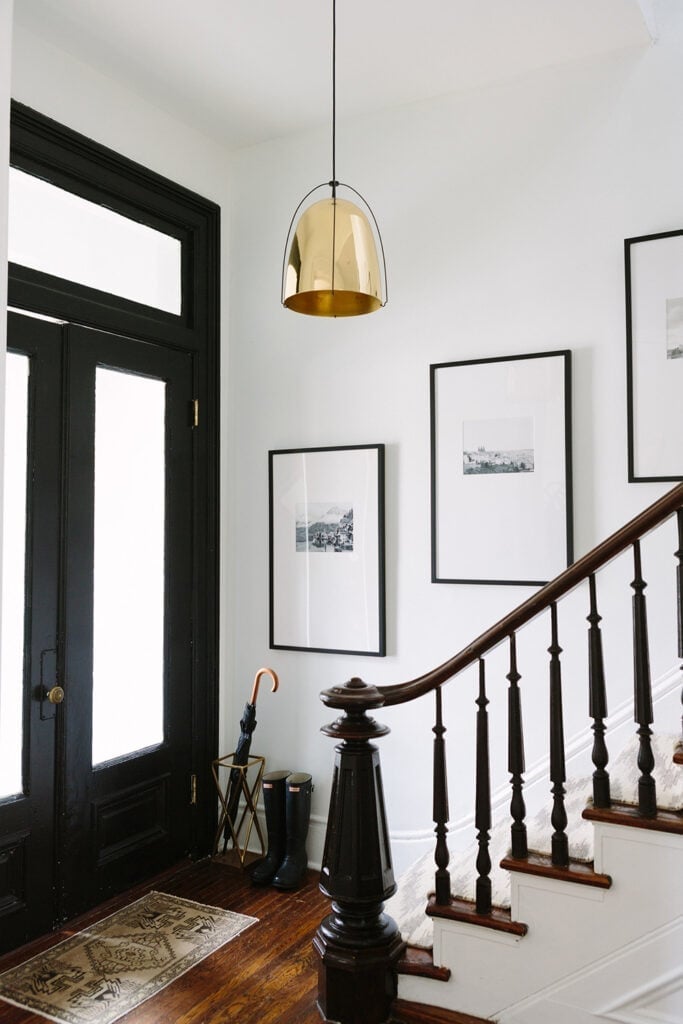
Where many traditional stairwells lean into honey oak and cream walls, this one goes darker with rich wood tones, black doors and a cream palette that keeps the contrast crisp rather than heavy. The dark wood staircase with turned spindles anchors the hallway, while black accents on the doors and trim define the architecture without overwhelming it. A pendant light hangs at the landing, casting warm light that softens the black and white contrast. The framed art on the wall breaks the formality of the dark wood by introducing human scale and a lighter visual weight.
31 / 36Coastal Staircase with Navy Painted Risers
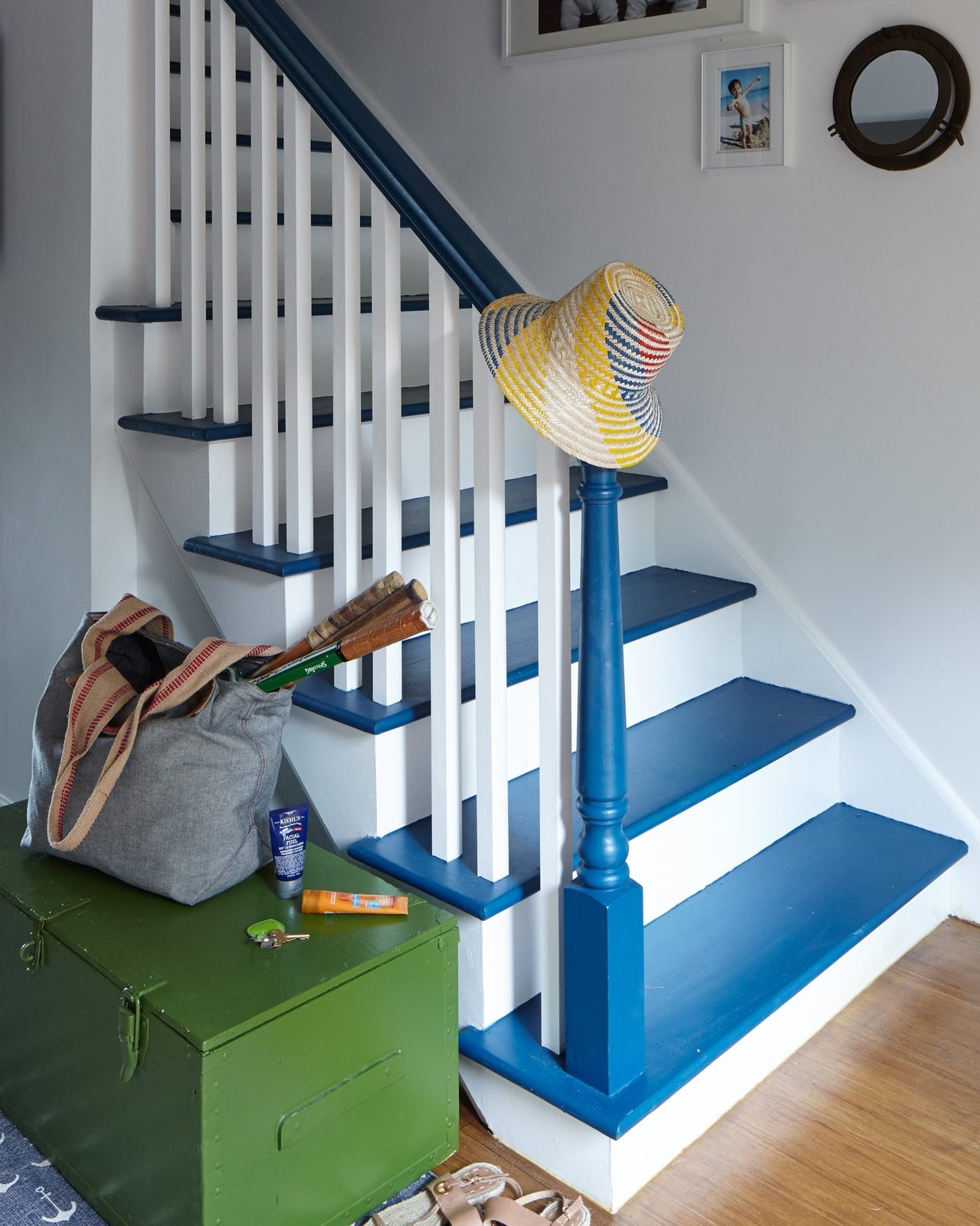
This coastal stairwell keeps the palette simple: white treads, white walls, and a bold navy blue on each riser. The contrast reads clean and crisp, like a beach house that doesn’t lean on seashells. A striped hat, grey tote, and green trunk at the base reinforce the look without crowding it. Navy covers only the vertical face of each step, keeping the space airy. A single warm accent, like the green trunk, breaks the cool palette and keeps it from feeling too nautical.
32 / 36Eclectic Stairwell Gallery Wall on Red Brick
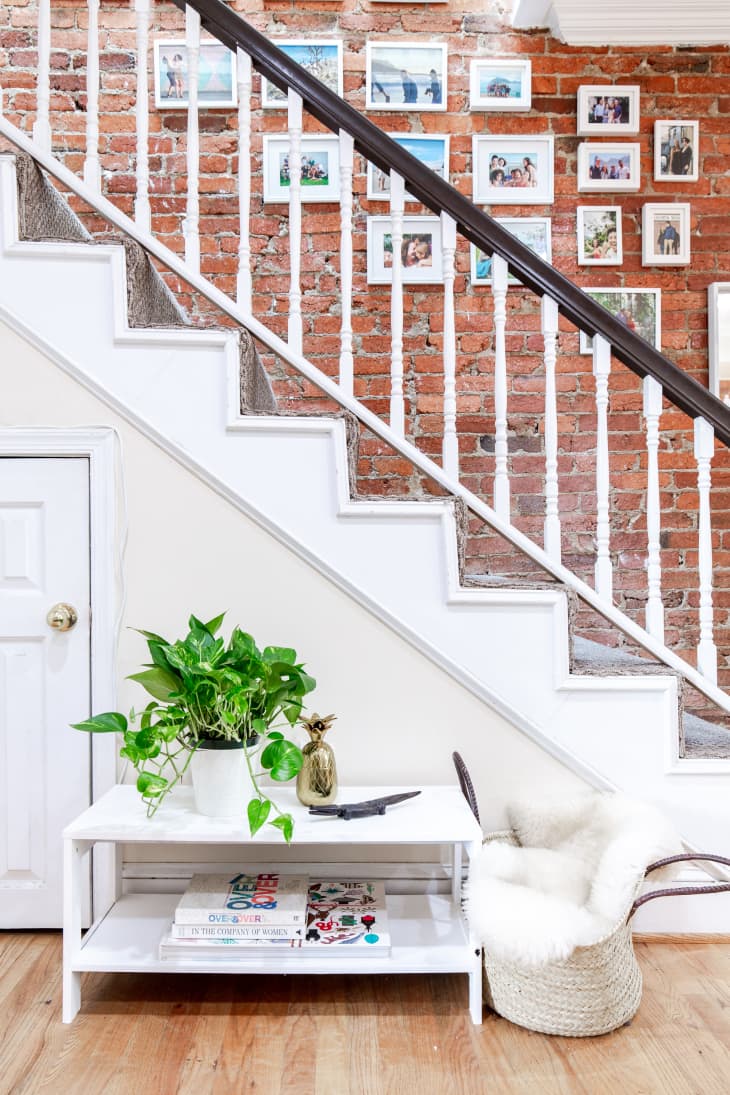
The red brick wall is the anchor here, and the gallery wall leans into that warmth. Wood, metal, glass, and fabric frames mix without matching, which is exactly the point. A potted plant, white bench, and basket at the base give the arrangement a grounded feel. Natural light from a window keeps the brick from feeling heavy. The mix of materials against a single strong backdrop defines the style. The brick is the constant; everything else is a variable. Breaking the pattern with a white bench below prevents the wall from feeling like a museum display.
33 / 36Mediterranean Staircase with Ornate Tiled Risers
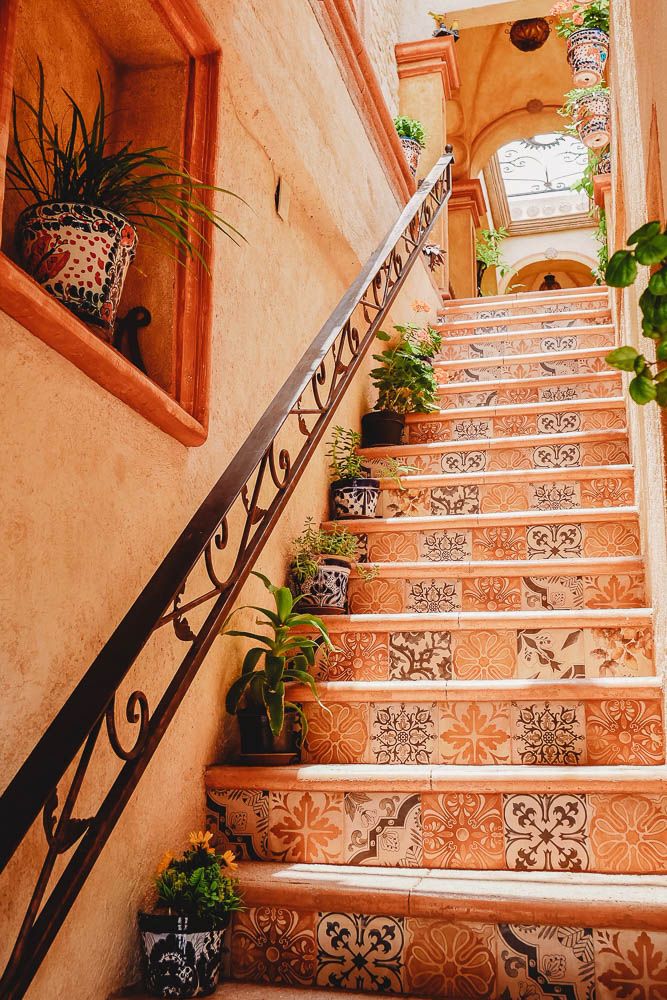
A painted riser is a quick change. A tiled riser is a commitment, but it brings a level of detail that paint can’t match. This Mediterranean staircase uses terracotta, cream, and black tiles on each step, with a wrought-iron railing and plaster walls that reinforce the old-world feel. Potted plants at the base soften the hard edges.
Natural light from above hits the tiles differently throughout the day, which is part of the appeal. What defines the style is the tile pattern itself. It is ornate but not busy, because the palette stays within a tight range of warm earth tones and black. The iron railing breaks the softness of the plaster and tile, adding a necessary structural contrast.
34 / 36Traditional Stairwell with Large Monochromatic Art
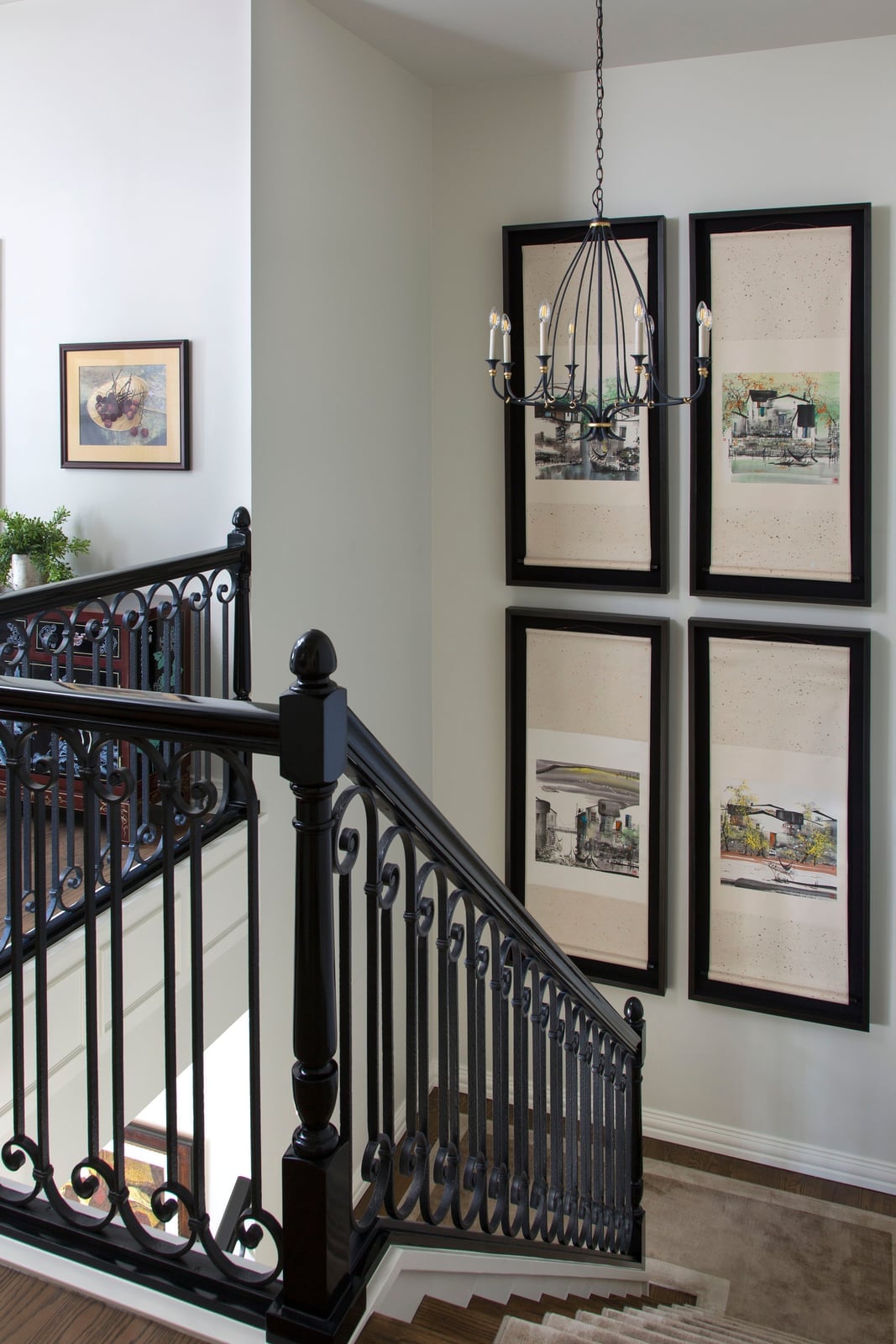
Four large framed artworks in black and white hang on a neutral wall, each one substantial enough to hold its own. An ornate black staircase railing and a chandelier above complete the traditional setting. The scale of the art matters more than the subject. Each piece fills a vertical band of wall space that would otherwise read as empty. The chandelier provides ambient light, but the real trick is keeping the art monochromatic so it doesn’t compete with the railing’s detailing. Nothing breaks the composition because the palette is already restrained.
35 / 36Modern Minimalist Staircase with Color-Blocked Risers
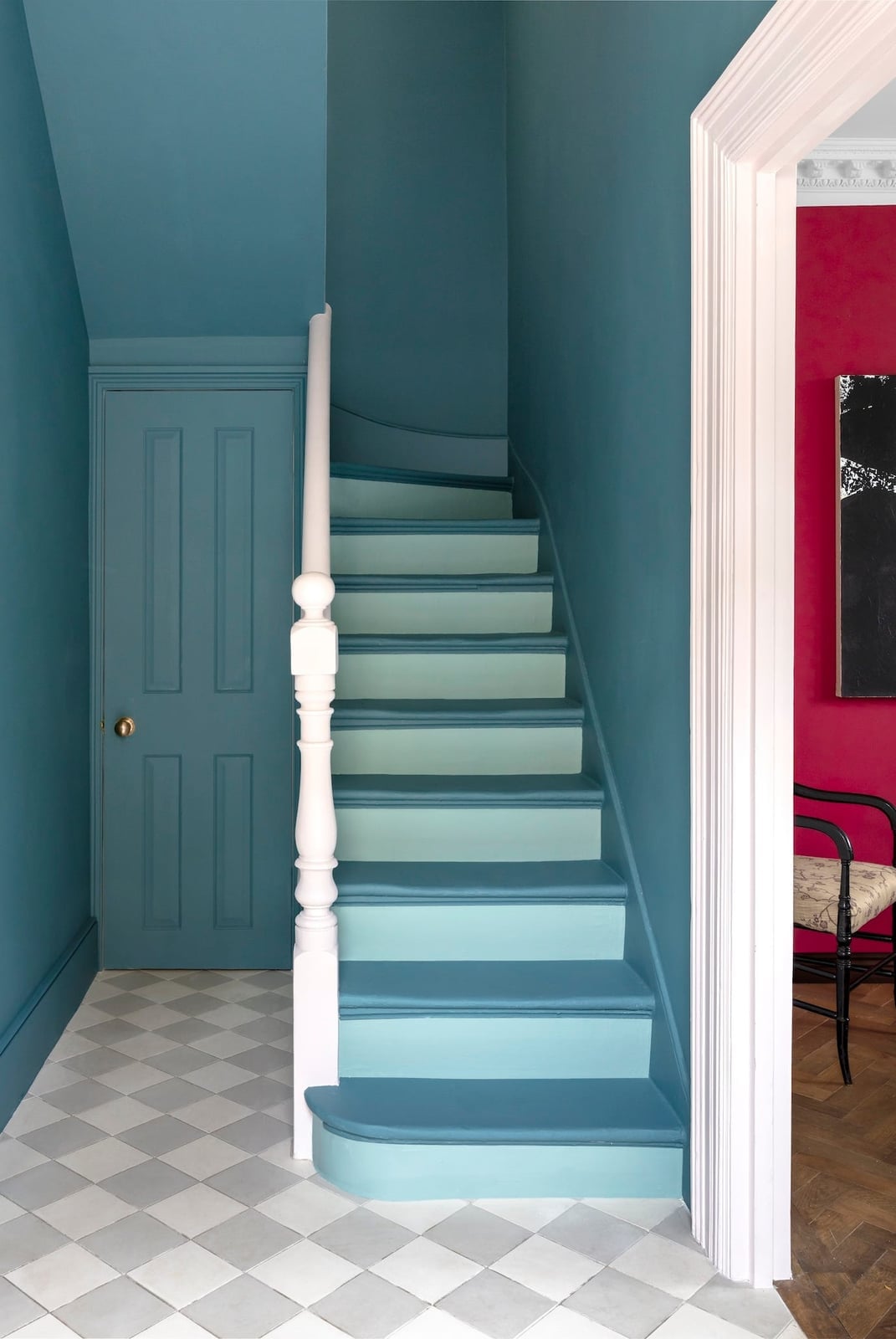
A gradient of teal and mint green on the risers turns a plain stairwell into a deliberate composition. The white baluster and grey tiled floor keep the space quiet so the color stands out. The progression of color moves from deeper teal at the bottom to lighter mint at the top, which gives the eye a path to follow. The ratio of color to neutral is about one to four, which keeps it minimal. A single grey tile on the floor breaks the pattern just enough to remind you that the stairs are the event, not the whole room.
36 / 36Final Thoughts
A stair wall does not need a big budget or a contractor to feel finished. The ideas here show that a little paint, some art, or a few well-placed shelves can change how the whole entry or hallway reads. Pick the approach that fits your home’s style and your own patience for hanging things straight. The best stair walls are the ones that make you smile each time you walk up or down them.