Your front yard is the first thing people see, so making it inviting doesn’t have to mean hours of weekend work. These 27 simple front yard landscaping ideas focus on clean lines, smart plant choices, and easy-to-manage hardscaping that adds curb appeal without the constant upkeep.
From modern xeriscapes with succulents to classic cottage gardens full of roses, each look is designed to be straightforward to install and maintain, giving you a welcoming entry that fits your time and skill level. Expect practical tips on pathways, plant beds, and structural elements that make a big visual impact with minimal effort.
01 / 28Modern Xeriscape with Winding Stone Path and Succulent Garden
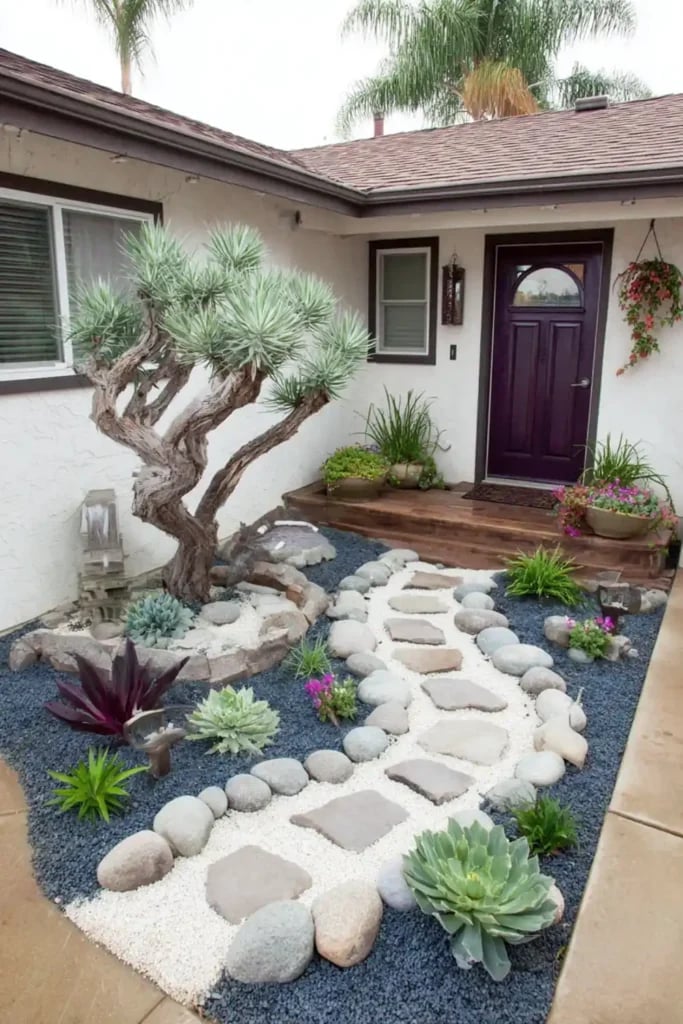
A winding path of stone pavers cuts through a bed of gray gravel and white pebbles, leading past a sculptural gnarled tree and clusters of green succulents. The layout keeps the pathway as the main event, with the rock garden and plants arranged around it rather than competing for attention. Dark blue accents in the succulents and decorative rocks add depth without making the palette feel busy. This is a room-mode approach: the whole front yard works as one composition, and the simple material palette of stone, gravel, and succulents means less watering and weeding than a traditional lawn.
02 / 28Traditional Front Porch with Symmetrical Topiaries and Potted
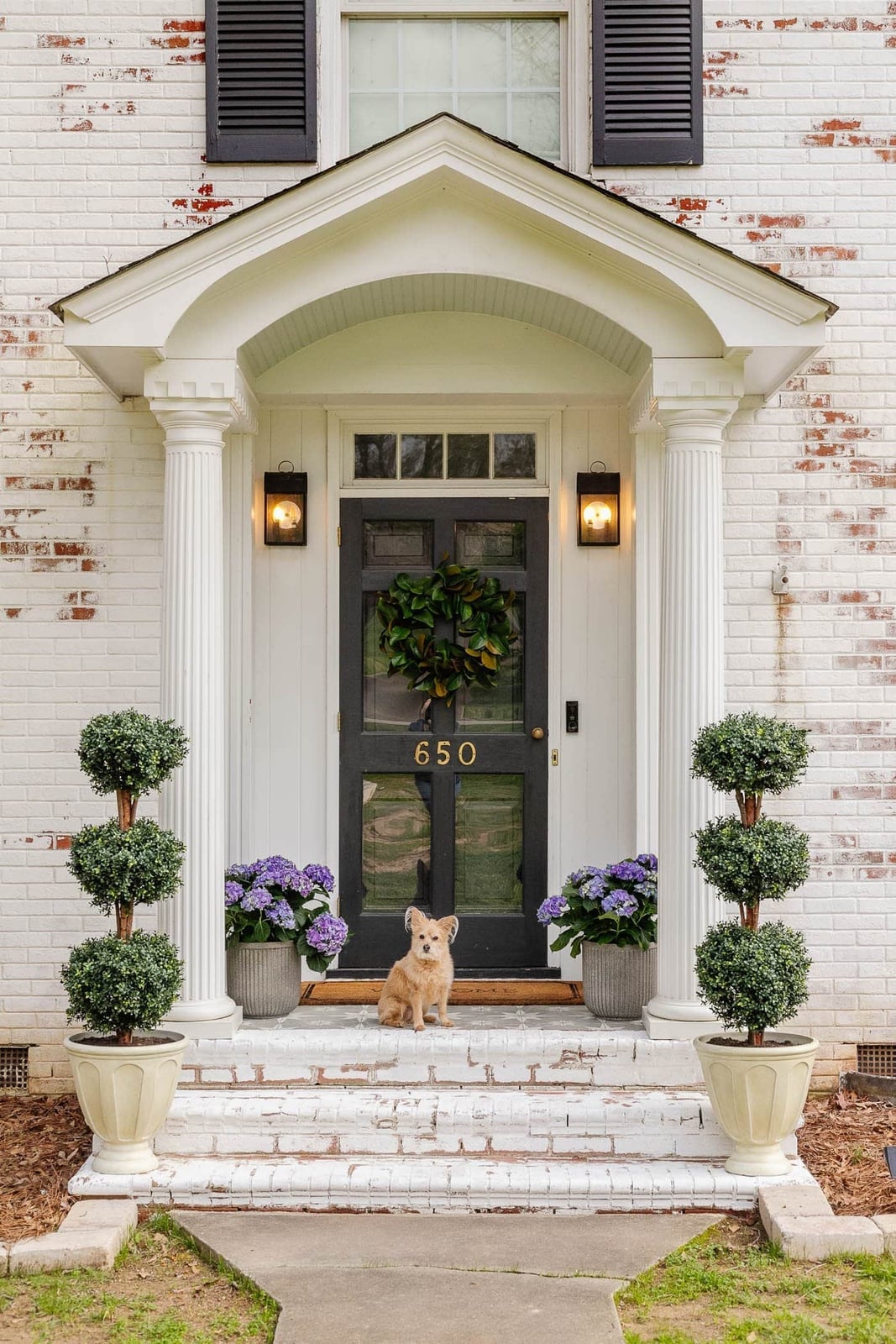
This front porch gets its composed feel from scale and proportion. The front door sits centered, flanked by matching topiary trees in pots that frame the entry without blocking it. Potted hydrangeas and rocking chairs stay low to keep the focus on the door and the lanterns above. The white, black, and green palette keeps the look crisp, and the symmetry feels natural because the planters have a little breathing room from the steps. When you keep the tallest pieces close to the door and lower items farther out, the porch feels balanced without needing a lot of square footage.
03 / 28Modern Front Yard with Curving Stone and Gravel Pathways
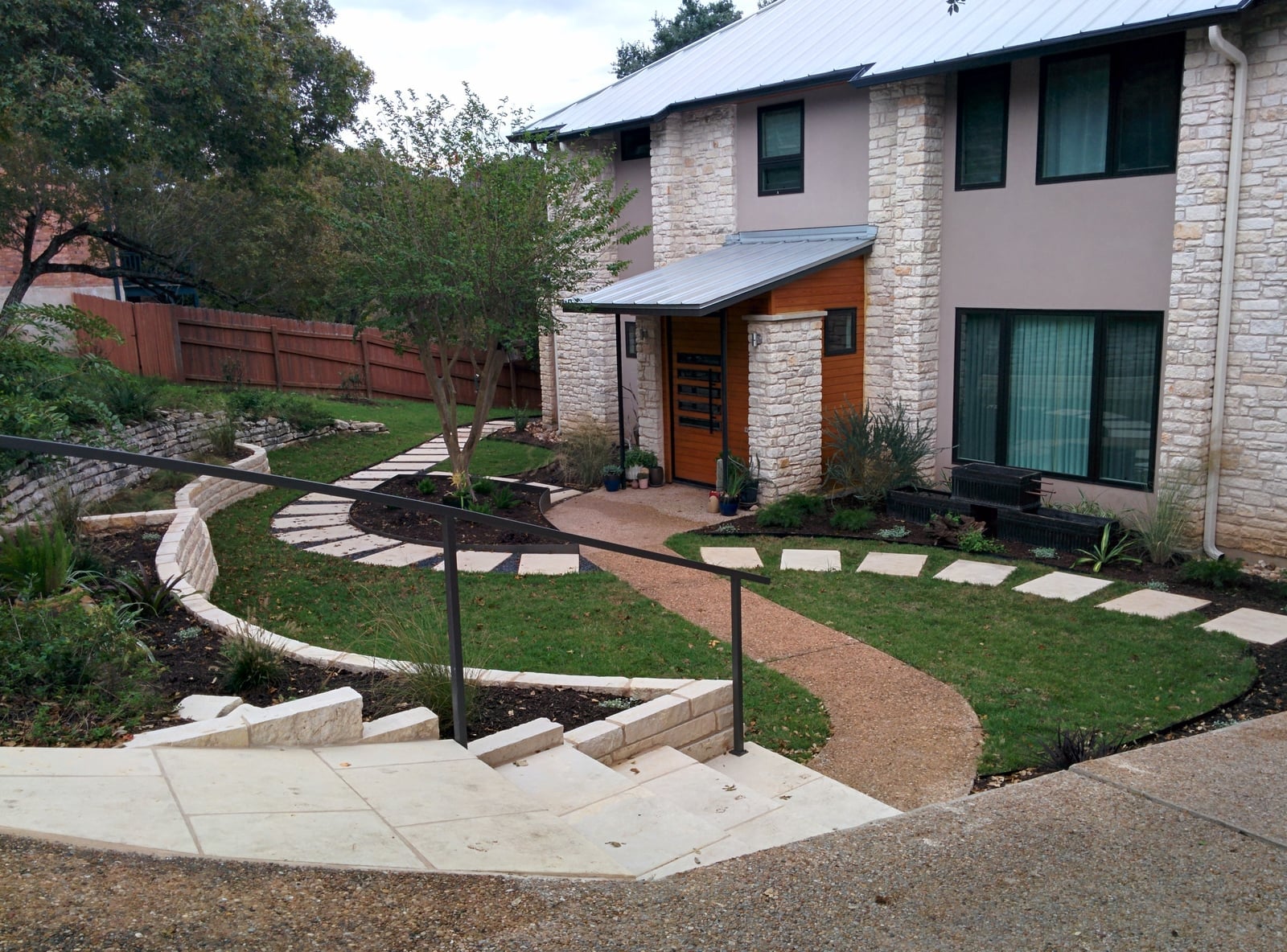
What makes a curving path feel modern instead of meandering? The layout here answers that with a clear destination. The stone and gravel pathway winds through layered planting beds toward the house, and the curve is wide enough to feel intentional. Gray stone, beige gravel, and wood-toned planters tie back to the house’s stone siding, so the path connects to the architecture instead of floating in the yard.
The planting beds sit at different depths along the curve, which softens the transition from path to lawn. A single tree anchors the widest part of the bed, giving the eye a place to rest. The takeaway is that a winding path works best when it leads somewhere visible and the materials echo the house, not when it twists for no reason.
04 / 28Lush Cottage Garden Path with Abundant Flowering Plants
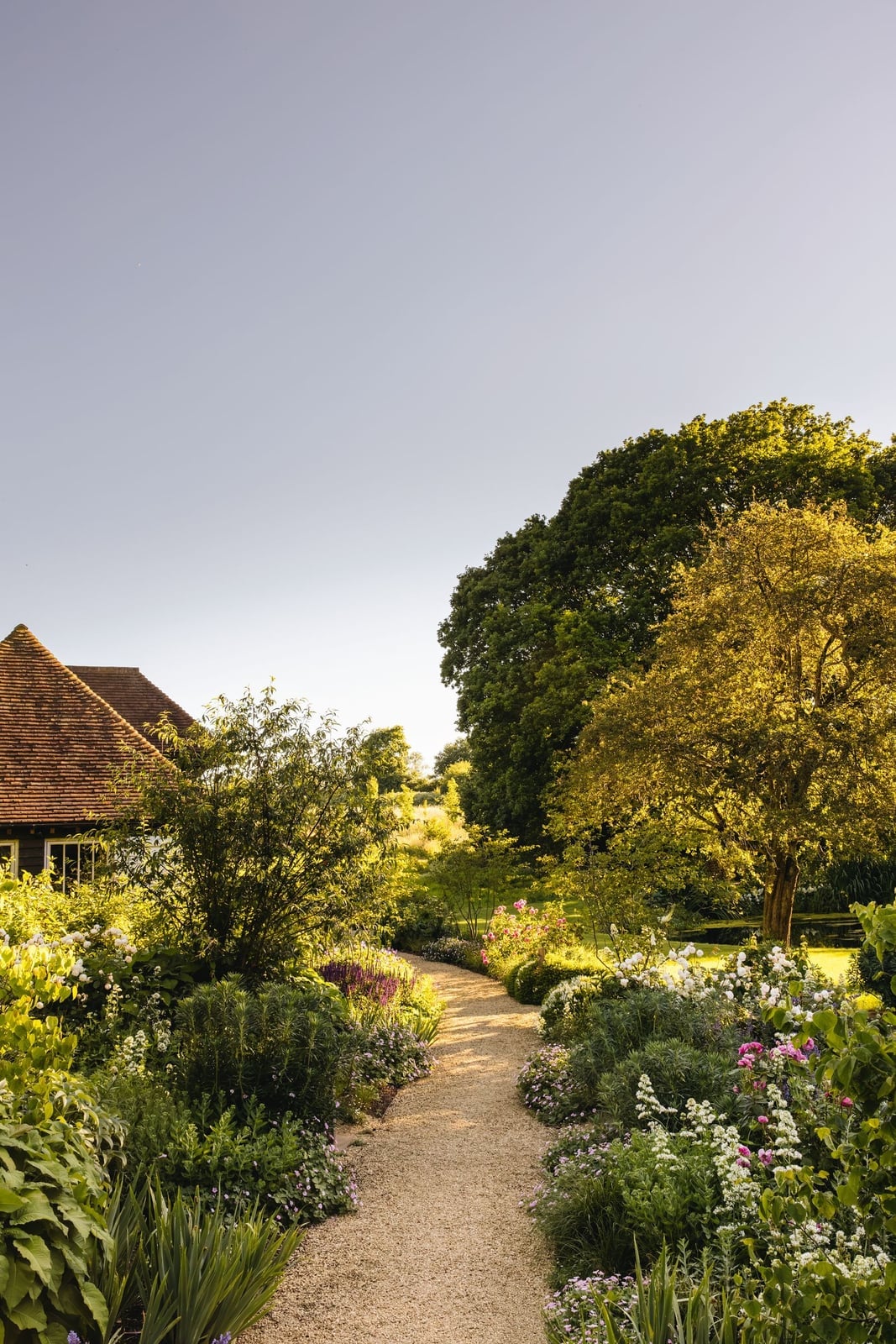
The gravel path here is narrow enough that the flowering plants on both sides almost meet overhead, which is what gives a cottage garden its enclosed, secret feel. Greens, pinks, and purples layer from ground cover up to mature trees, with the path acting as a dark ribbon through the color. Wood and stone edging keeps the gravel from spilling into the beds, a detail that matters more as the planting gets fuller. The soft golden hour light makes the pink and purple blooms pop against the green, but the real trick is that the path stays visible even when the plants are at their peak. A cottage garden path needs a clear edge to keep it from disappearing into the beds.
05 / 28Mid-Century Modern Front Yard with Stepping Stone Path and Pool
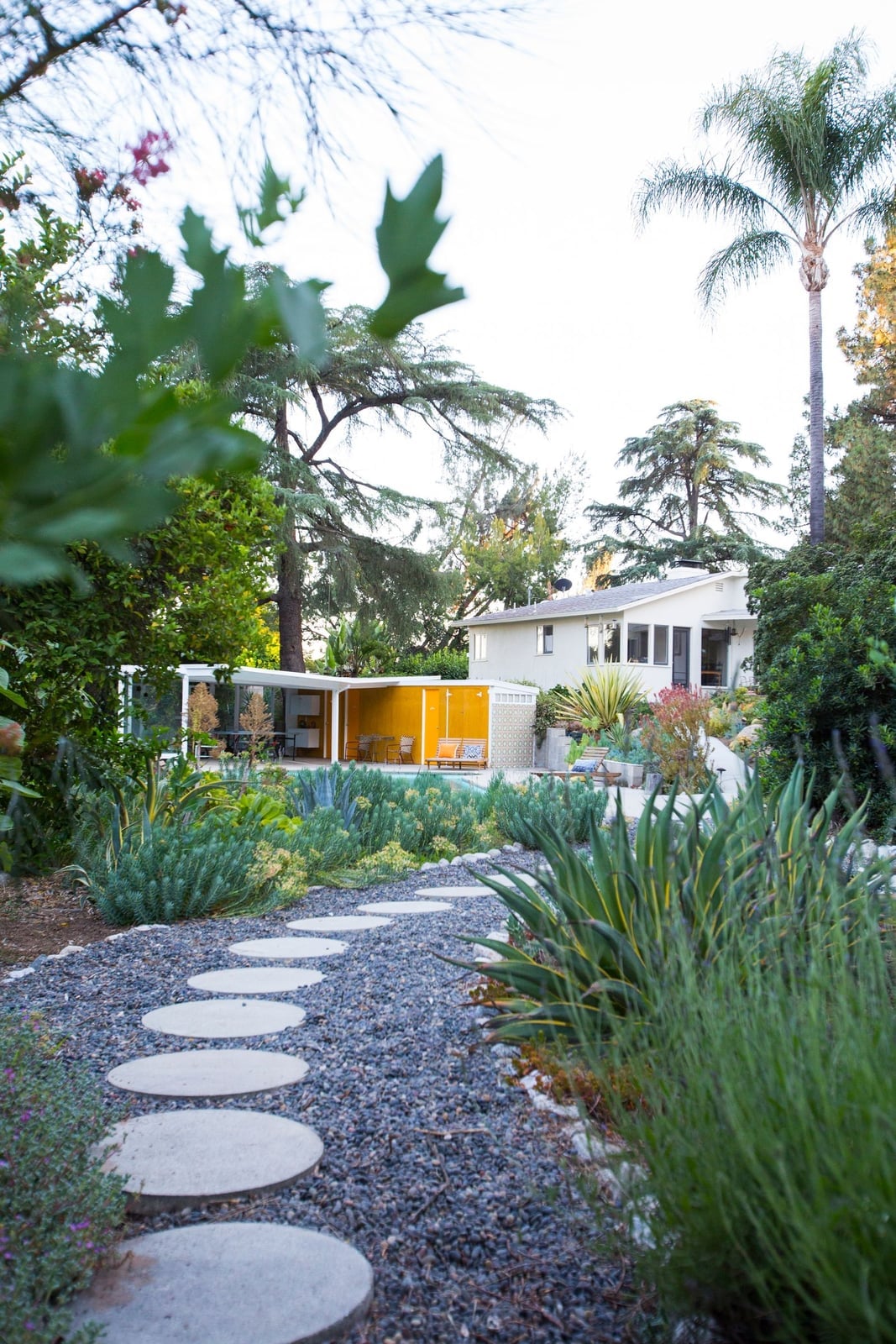
Mid-century modern landscaping uses the architecture to set the lines, then echoes them in hardscape. Here, the stepping stone path runs in a straight shot toward the modern house, with the pool off to one side and lush planting softening the edges. The palette stays tight, greens, grays, white, and a touch of yellow, so the house’s stucco and glass remain the focal point. The path uses concrete squares set into gravel, a low-maintenance choice that keeps the look clean. Style-wise, mid-century modern breaks when you add too many competing textures or colors. The restraint in materials and the straight path make this feel true to the era.
06 / 28Modern Sloping Landscape with Tiered Stone Retaining Walls
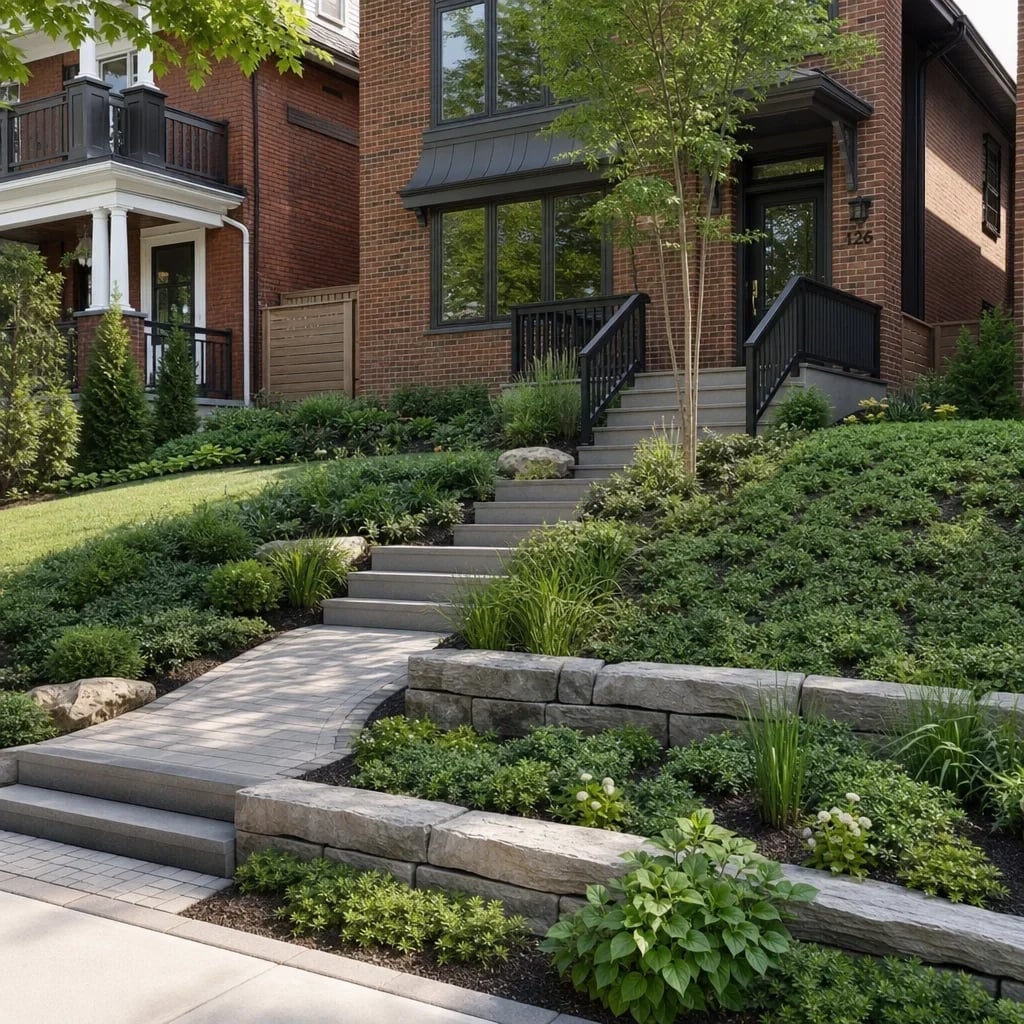
Skip the flat lawn and let the slope do the work. Tiered stone retaining walls turn a tricky grade into a landscape feature, with each level holding its own planting bed. Concrete steps cut through the tiers, making the climb feel deliberate rather than steep. The palette stays quiet, green foliage against gray stone and warm wood accents, so the structure reads first. A layout like this gives a sloped yard room to breathe, with pathways that connect each level without fighting the grade. The trick is keeping the lines clean and letting the stone hold the visual weight.
07 / 28Cottage Garden Front Yard with Vibrant Pink Roses and Boxwood Border
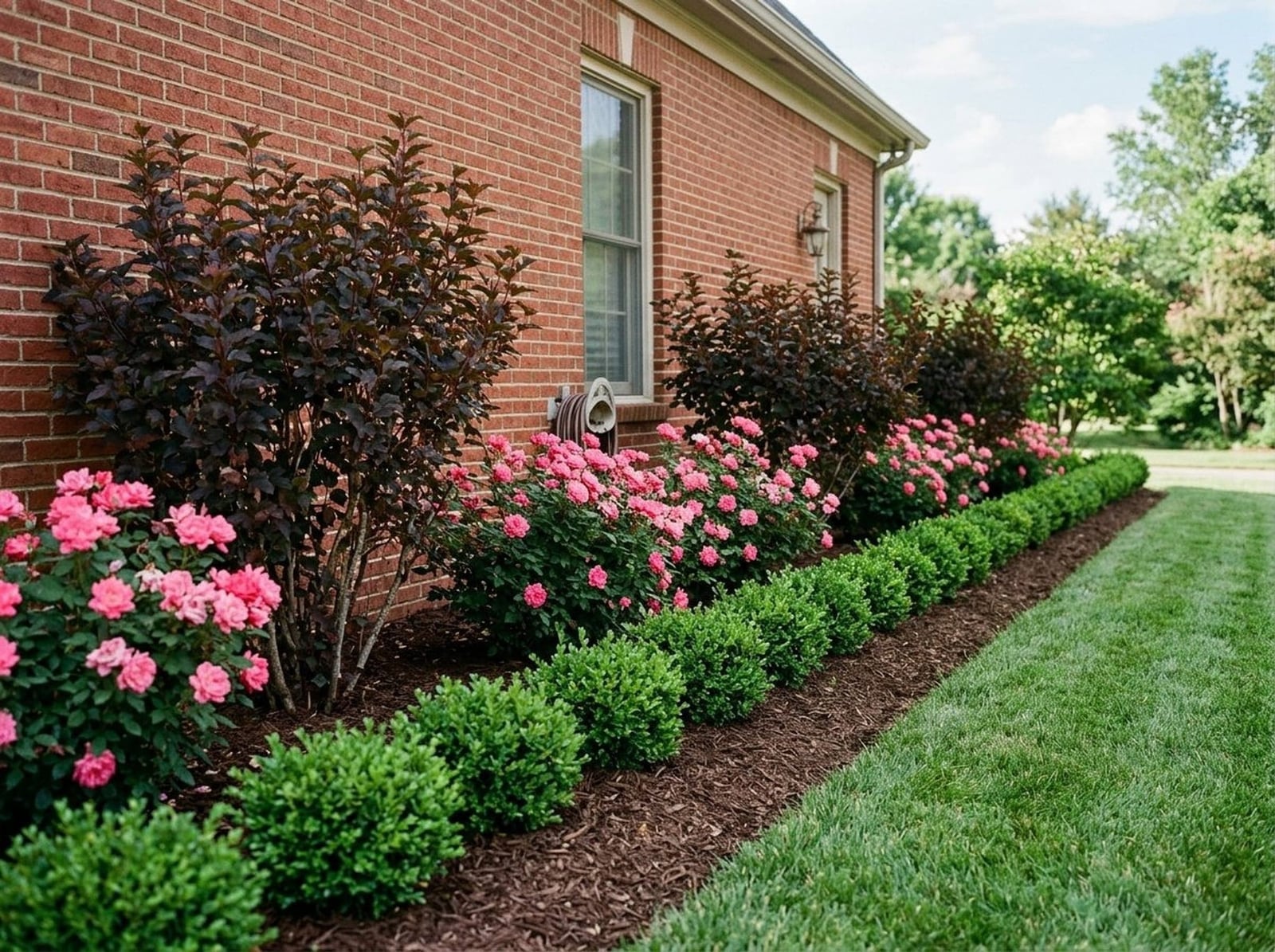
A row of vibrant pink roses running along the house sets the whole cottage tone. Boxwood borders keep the planting from spilling into the path, while dark leaf shrubs add depth behind the blooms. The red brick of the house warms the pink and green palette, even under an overcast sky. This is a renter-friendly look because the roses stay in the ground and the boxwood defines the edges without permanent hardscaping. The color ratio leans heavy on green, so the pink appears as a deliberate pop.
08 / 28Traditional Front Yard with Stone Retaining Wall and Tiered Garden
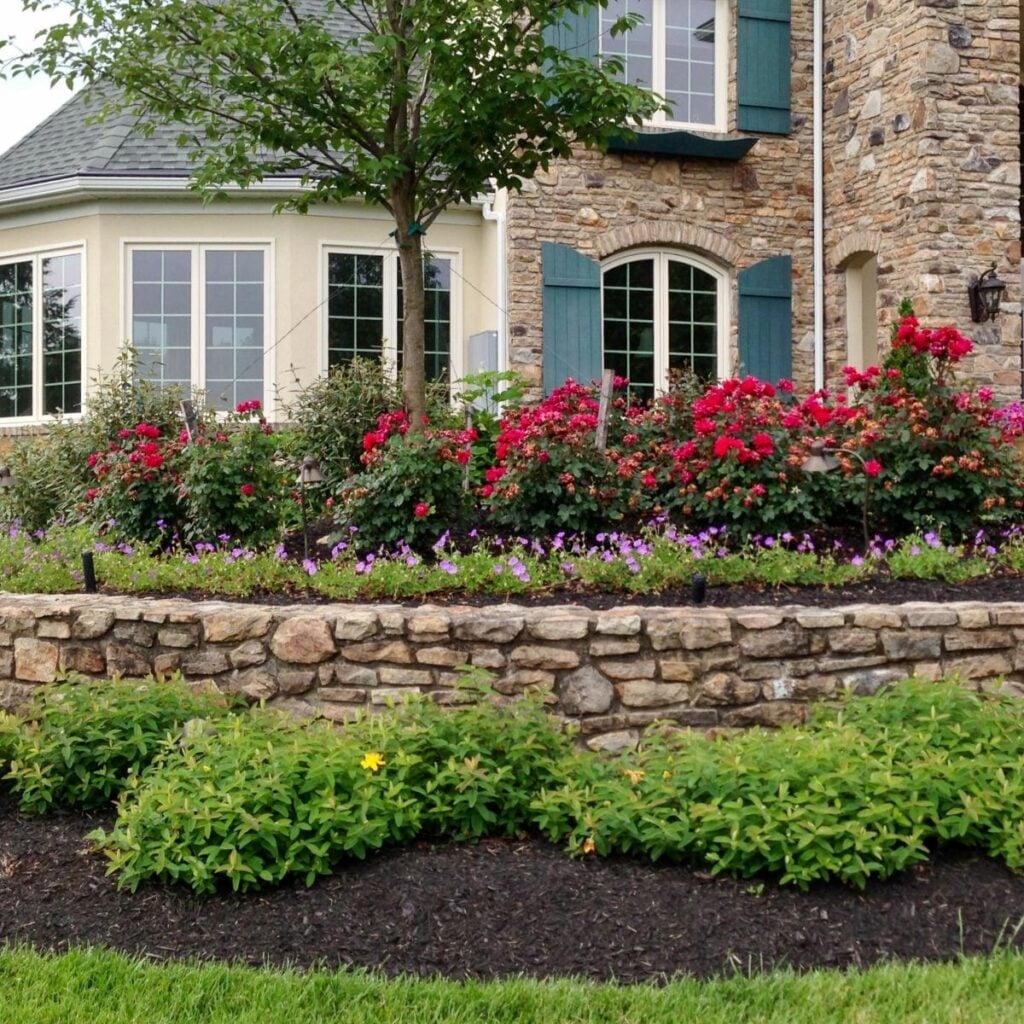
This is a straightforward solution for a yard with natural grade change. A stone retaining wall creates two distinct planting tiers, with the upper bed holding rose bushes and flowering plants in red and purple against the siding of the house. The lower level stays in grass, keeping the whole yard usable. The layout works because the wall does double duty: it holds back soil and frames the garden bed like a raised border. Matching the stone to the house foundation ties the tiers to the architecture. The flowering plants soften the hard edge of the stone.
09 / 28Traditional Facade with Stone Veneer, Wood Siding, and Arched Entryway
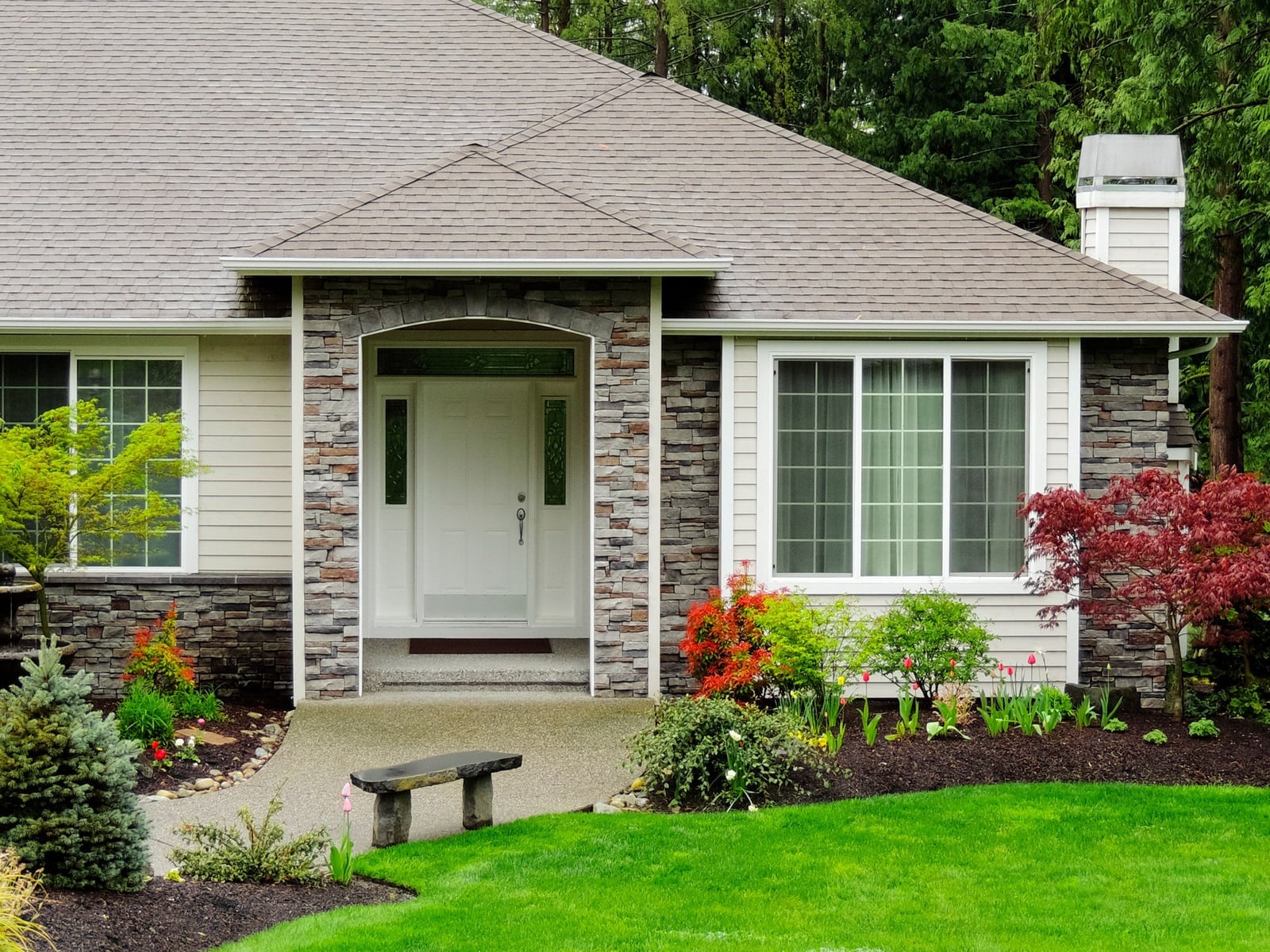
What happens when you mix stone and wood on the same facade? You get a front that looks built to last. The lower half uses tan stone veneer, while the upper stories shift to painted wood siding, with an arched entryway bridging the two. A curved walkway leads to the door, softening the geometry of the house. The stone veneer offers the look of solid masonry without the full structural weight, and it holds up against weather at ground level. A red maple tree and flowering bushes in the beds echo the warm tones in the stone, keeping the palette cohesive from walkway to roofline.
10 / 28Modern Front Yard with Yucca Plants, Ornamental Grasses, and River
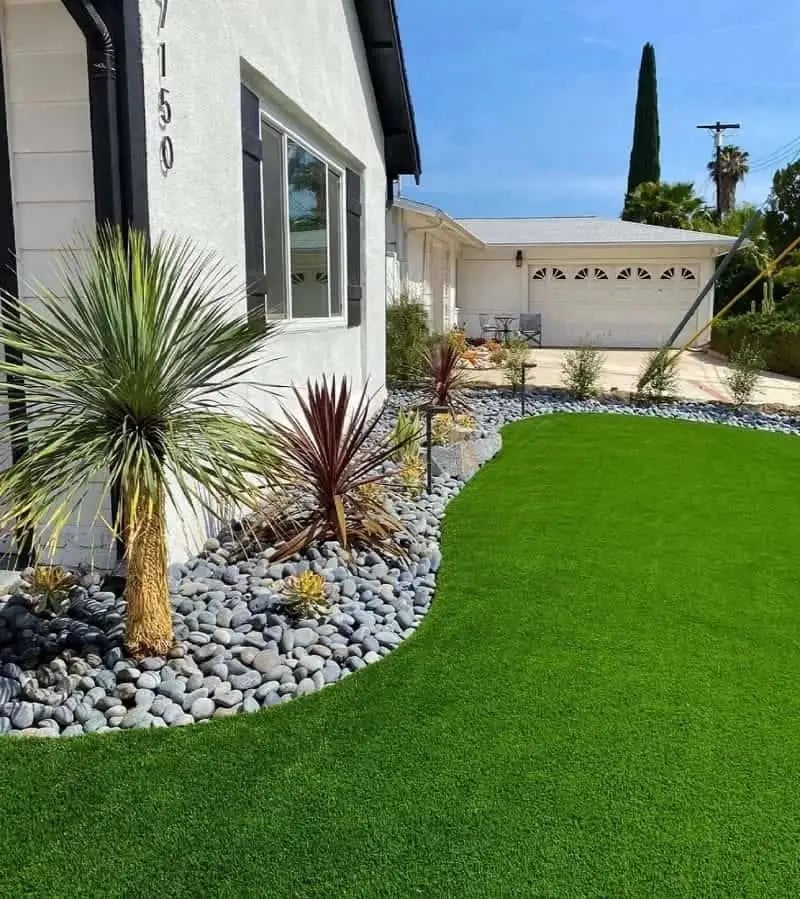
A single yucca plant anchors the front bed, its spiky form standing out against a spread of gray river stones. Red ornamental grass adds a color jolt on the other side of the walkway, while the rest of the yard stays in gravel and artificial turf. The stucco house wall keeps the backdrop neutral. This design relies on scale: one dramatic plant gets the attention, and the smaller grasses and stones fill the ground without competing. The palette is white, green, gray, and black, so the red grass becomes the focal point by contrast.
11 / 28Tropical Side Yard with Paver Pathway and Vibrant Red Foliage
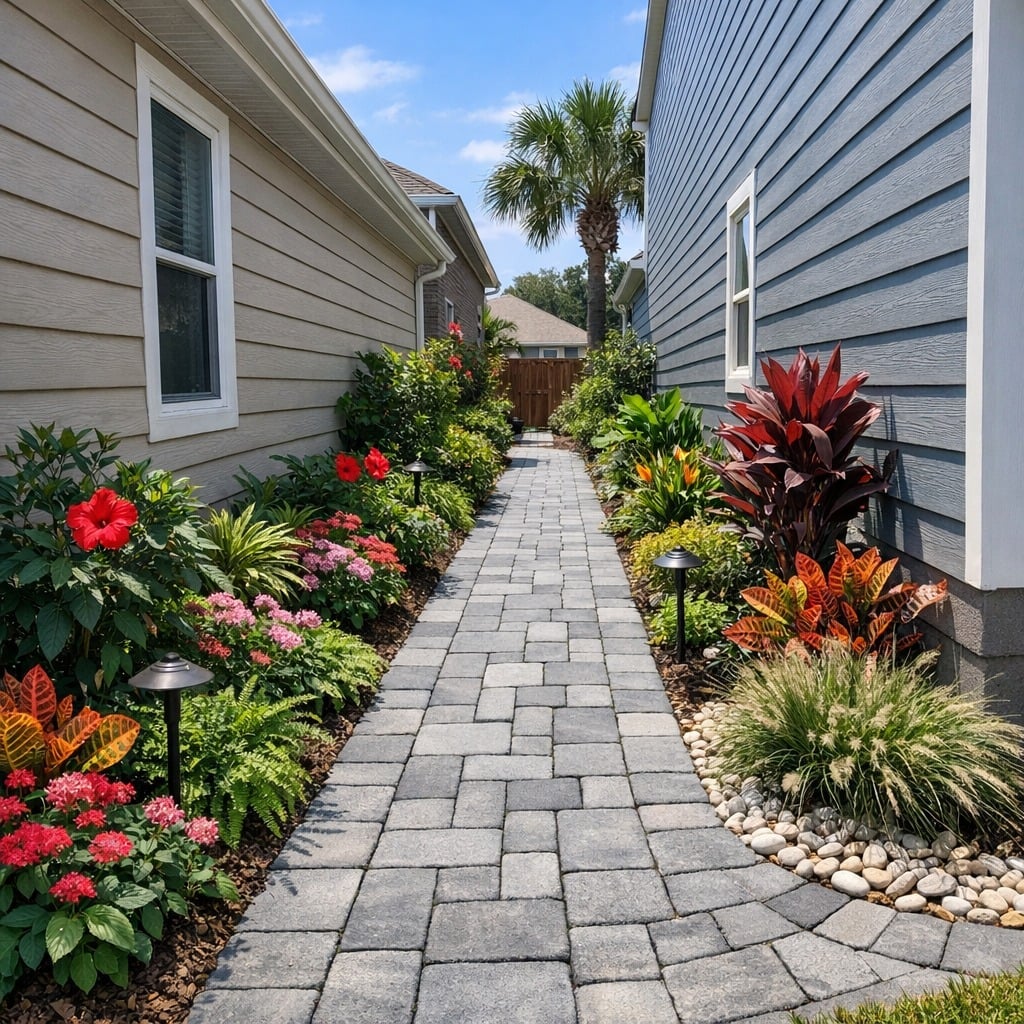
A narrow side yard demands a layout that uses every inch without feeling tight. This one turns the space between two houses into a journey with a paver pathway, flanked by dense planting on both sides. The palette leans into greens, reds, pinks, and whites, with the vibrant red foliage pulling the eye forward. Landscape lights set into the beds keep the path visible after dark and let the leaves glow. The pathway width should feel generous enough for two people to walk side by side, or at least for one to pass with a wheelbarrow.
12 / 28Cottage Garden Front Yard with Abundant Roses and Layered Flower Beds
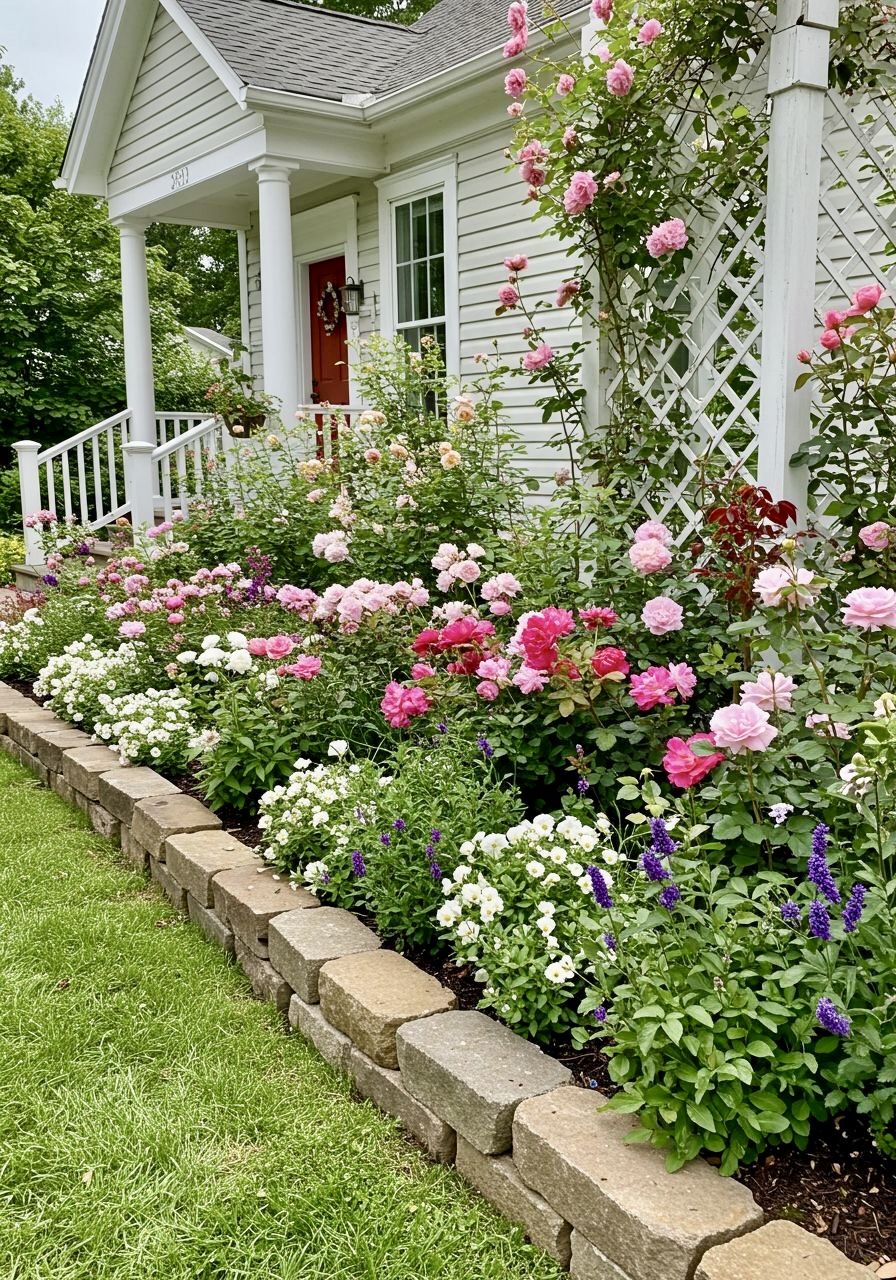
Compared to a structured formal garden, this front yard goes loose and generous with its planting. The flower beds layer roses, lavender, hostas, and a trellis against the house, creating depth from the foundation to the sidewalk. The palette runs pink, white, green, and purple, with the roses carrying the show. A wide shot of the yard shows the beds take up most of the front lawn, so there is less grass to mow and more color to enjoy.
What makes it work as a cottage garden is the mix of heights and textures. The trellis lifts vines off the ground, the roses pile up in the middle, and the lavender spills toward the path. The plants repeat in clusters rather than single specimens, which ties the whole look together.
13 / 28Transitional Front Yard with Winding Paver Walkway and Dark Mulch Beds
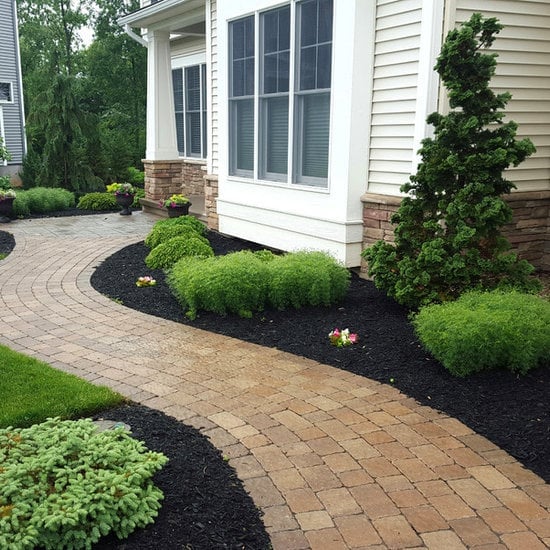
A curved walkway softens the geometry of a house without giving up the structure that traditional yards rely on. This one uses tan pavers that bend gently toward the front door, while dark mulch beds hold manicured bushes and an ornamental tree. The contrast between the light walkway and the black mulch makes the path read clearly from the street. The layout pushes the planting beds forward, so the house feels set back and framed by greenery.
14 / 28Modern Front Yard Landscaping with Curved Bed and Decorative Stone
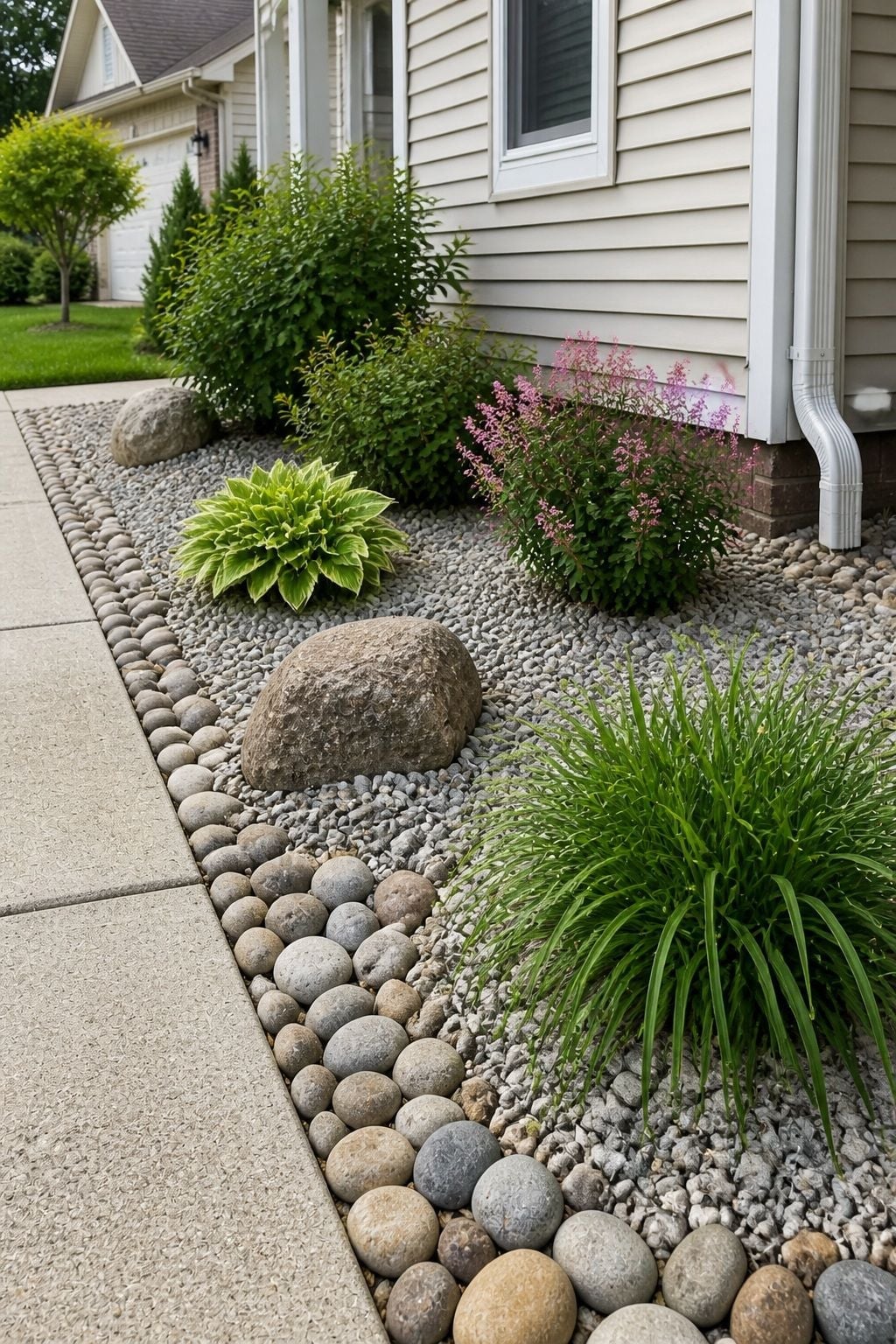
A curved bed along a walkway does two things: it breaks the straight line of the path and gives the house a softer edge. This one uses decorative stone as a border, with hostas and ornamental grass filling the interior under an overcast sky. The palette stays restrained with greens, grays, and a touch of pink from the flowers, so the stone and concrete shapes stay in focus. Gravel sits between the plants as a low-maintenance ground cover that keeps mud off the walkway. The materials work together because the stone border matches the concrete path, creating a continuous line across the yard.
15 / 28Traditional Front Yard with White Railing, Brick Base, and Manicured
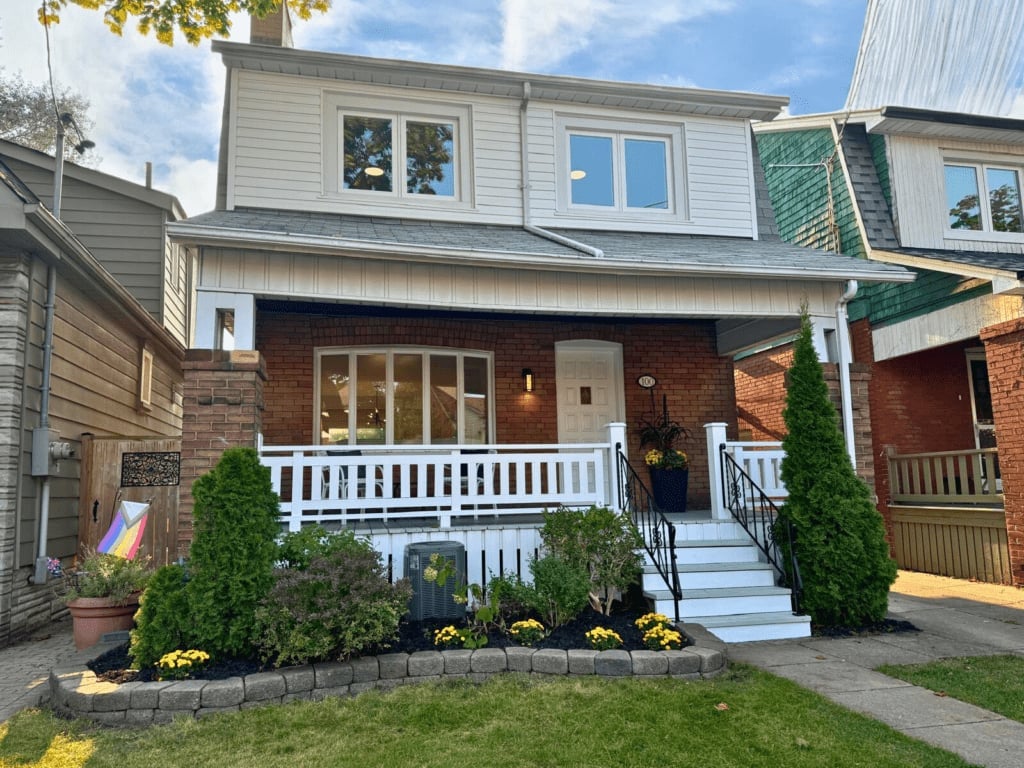
A front yard that matches the house style starts at the foundation. This one has a brick base on the house, white porch railing, and wood siding above, so the planting needs to echo those materials. Manicured shrubs flank the pathway, with flowering plants adding yellow and green accents. The compact layout keeps everything within reach of the porch, so watering and pruning stay easy.
What makes the white railing the hero element is how it reads against the brick. The white trim pulls the eye up from the ground, while the shrubs anchor the house to the yard. The pathway leads straight to the steps, and the flowering plants break the symmetry just enough to feel welcoming rather than stiff.
16 / 28Traditional Front Entry with Covered Porch, Brick Path, and Potted
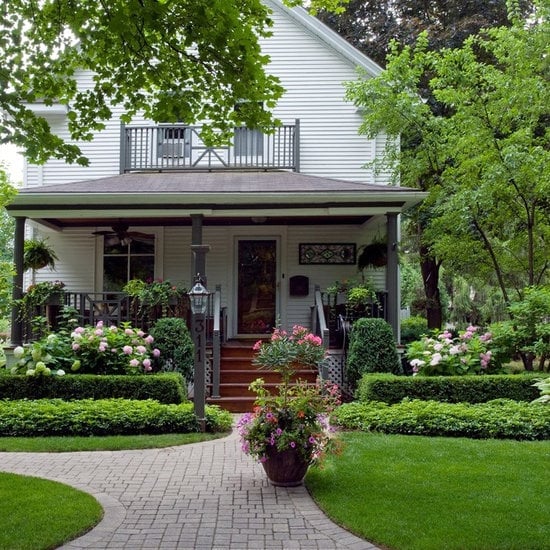
A brick path leading to a covered porch sets the tone for a front yard that feels both formal and approachable. The white railing and wood siding of the house frame the scene, while manicured hedges and flowering bushes add softness. Symmetrical planting along the walkway creates a balanced arrival. Potted plants near the porch steps reinforce the traditional look without requiring a full garden overhaul. This layout works best for compact front yards where every element is visible from the street, making the path the main directional cue.
17 / 28Naturalistic Terraced Hillside with Stone Steps and Colorful Flowers
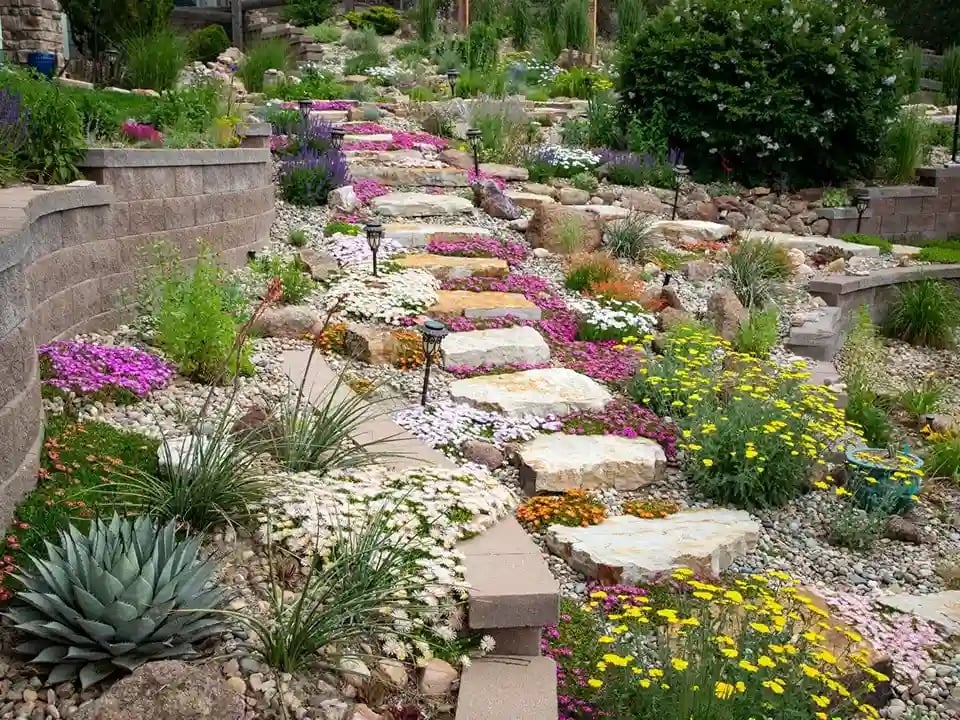
To manage a sloping yard, work with the grade by cutting stone steps into a terraced hillside. This creates a natural path upward, while cascading colorful flowers and succulents soften the hard edges. The multi-color palette of the blooms draws the eye through the space. Gravel between the planting beds prevents erosion and keeps maintenance manageable. This approach turns a challenging slope into a layered garden that reveals itself as you climb. Renter-friendly options include using container plants on each terrace level instead of permanent beds, which can be adjusted or packed up when you move.
18 / 28Informal Cottage Garden with Mixed Perennials and Gravel Paths
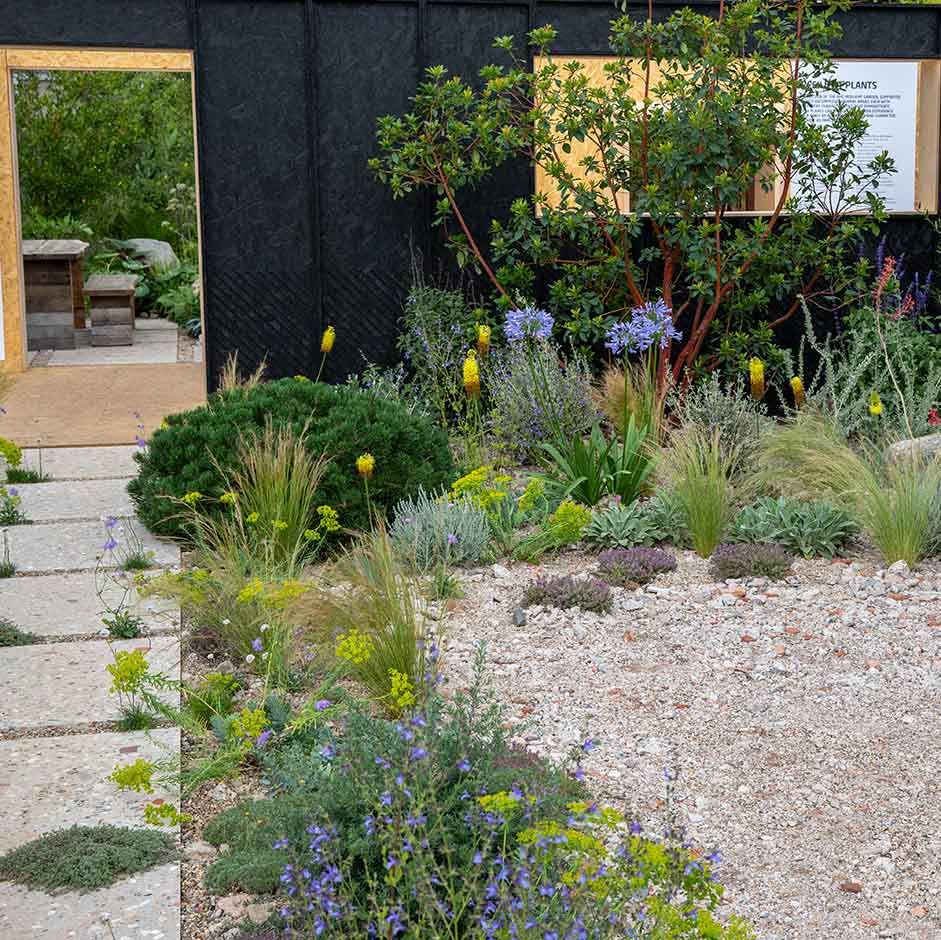
Unlike a structured formal garden with clipped hedges and straight lines, this cottage style leans into a looser arrangement. Mixed perennials in purple, yellow, and white spill over gravel paths, with a wooden structure at the back providing a vertical anchor.
The key to pulling off this look is the ratio of plants to path. Dense, layered planting beds keep the gravel from feeling bare, while the paths themselves are wide enough to walk without brushing against stems. What breaks the informal feel is too much uniformity. Repeating the same flower across the whole bed turns the garden into a stripe. Stick with varied heights and bloom times for that naturalistic effect.
19 / 28Front Yard with Curved Flower Bed, Ornate Fountain, and Wooden Bench
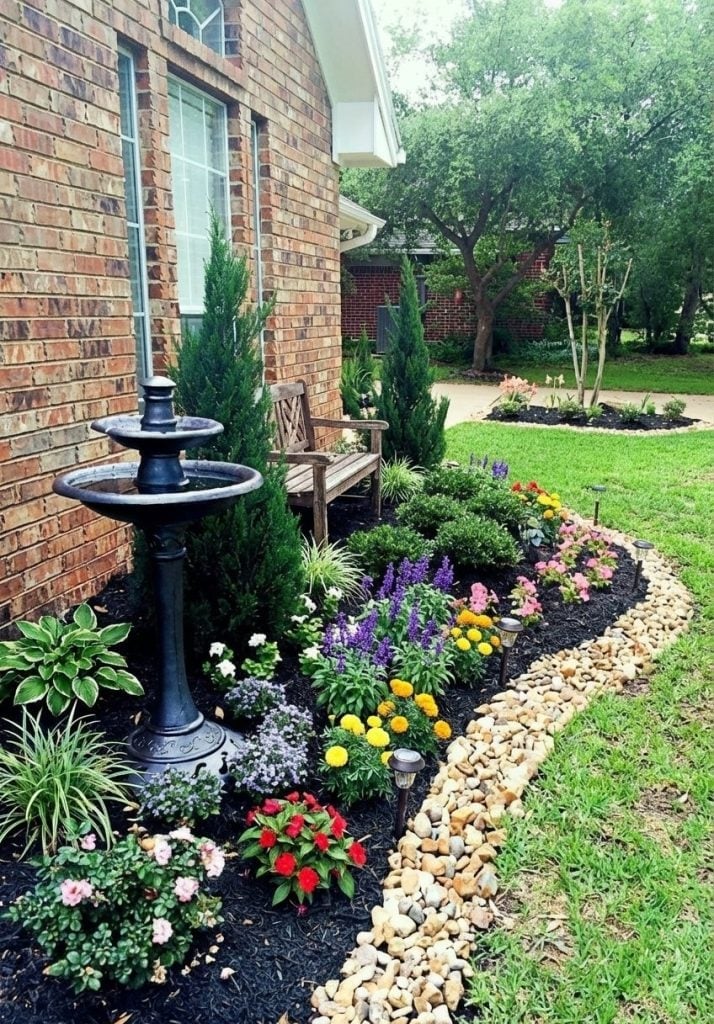
An ornate stone fountain anchors a curved flower bed filled with red, yellow, and purple blooms. The wooden bench nearby offers a spot to sit and take in the garden. The fountain becomes the hero element here, so the planting stays low around it to keep the view clear. Mulch in the flower bed suppresses weeds and holds moisture. This setup suits a front yard that doubles as a sitting area. The curved bed softens the hard lines of the house and draws visitors toward the fountain rather than straight to the door.
20 / 28Modern Front Yard with Curved Bed, Flowering Dogwood, and Large Rocks
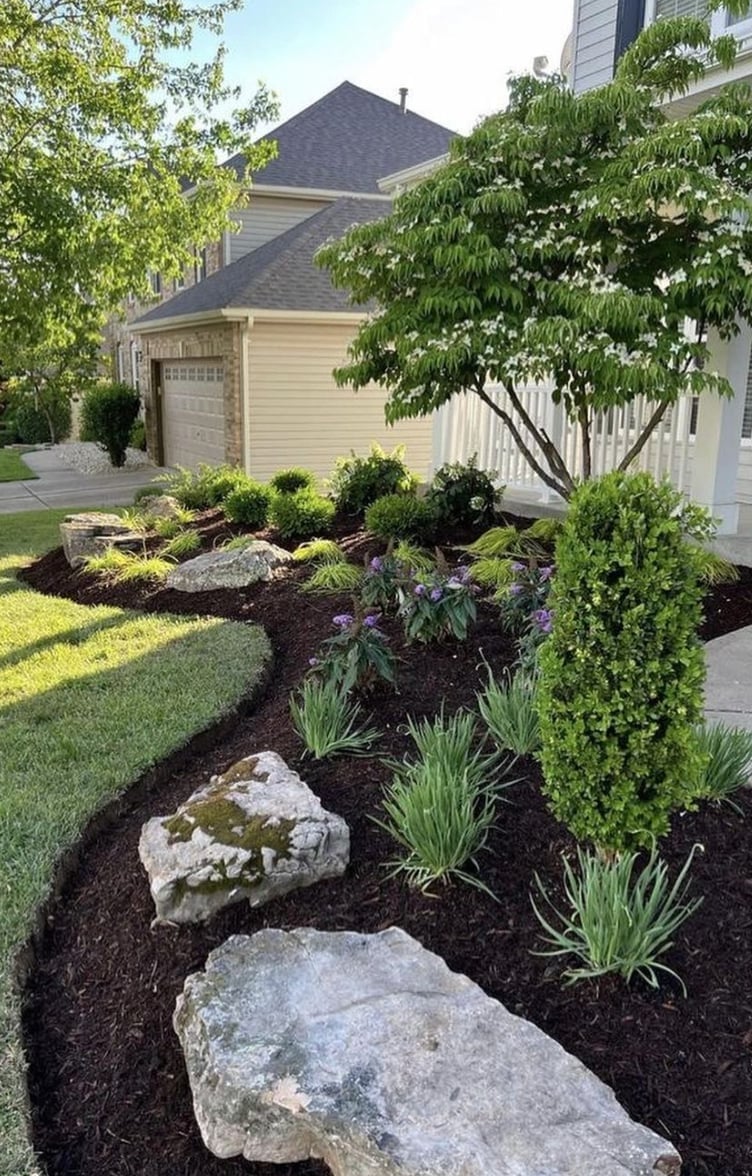
This modern front yard proves that a single tree can anchor an entire planting bed. A flowering dogwood stands in a curved bed, with shrubs and large rocks arranged around it for texture. Brown mulch keeps the palette neutral, letting green foliage and purple accents do the work. The scale of the rocks matters here. They need to be substantial enough to balance the tree’s mature size. Too many small stones would create clutter. This design requires enough room for the tree to spread, so the bed should be generous.
21 / 28Traditional Front Yard with Circular Paving and Small Stone Fountain
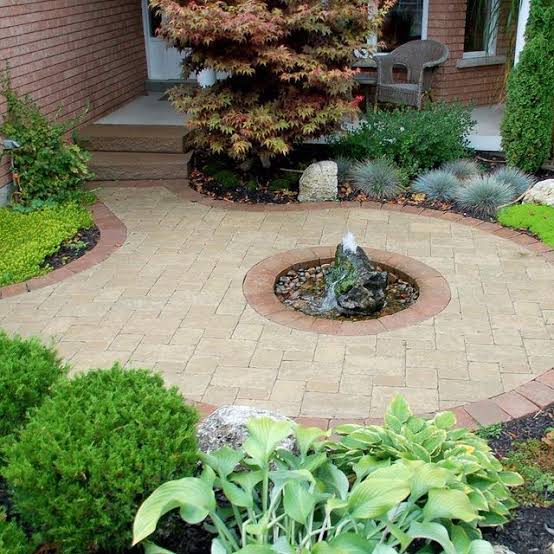
A practical rule for front yard layout is to anchor a hardscape feature at the center of the space. In a compact yard, a circular paved area with a small stone fountain becomes the focal point. The round shape of the paving softens the geometry of the house and draws the eye inward. Manicured shrubs arranged around the circle frame the fountain without blocking it. The tan and brick red tones of the pavers and brick keep the look grounded. This layout works because the hardscape does the heavy work while the plants stay simple and tidy. The fountain adds sound and motion, which makes the front yard feel lived in.
22 / 28Charming Front Yard with Abundant Flower Beds and White-Railed Porch
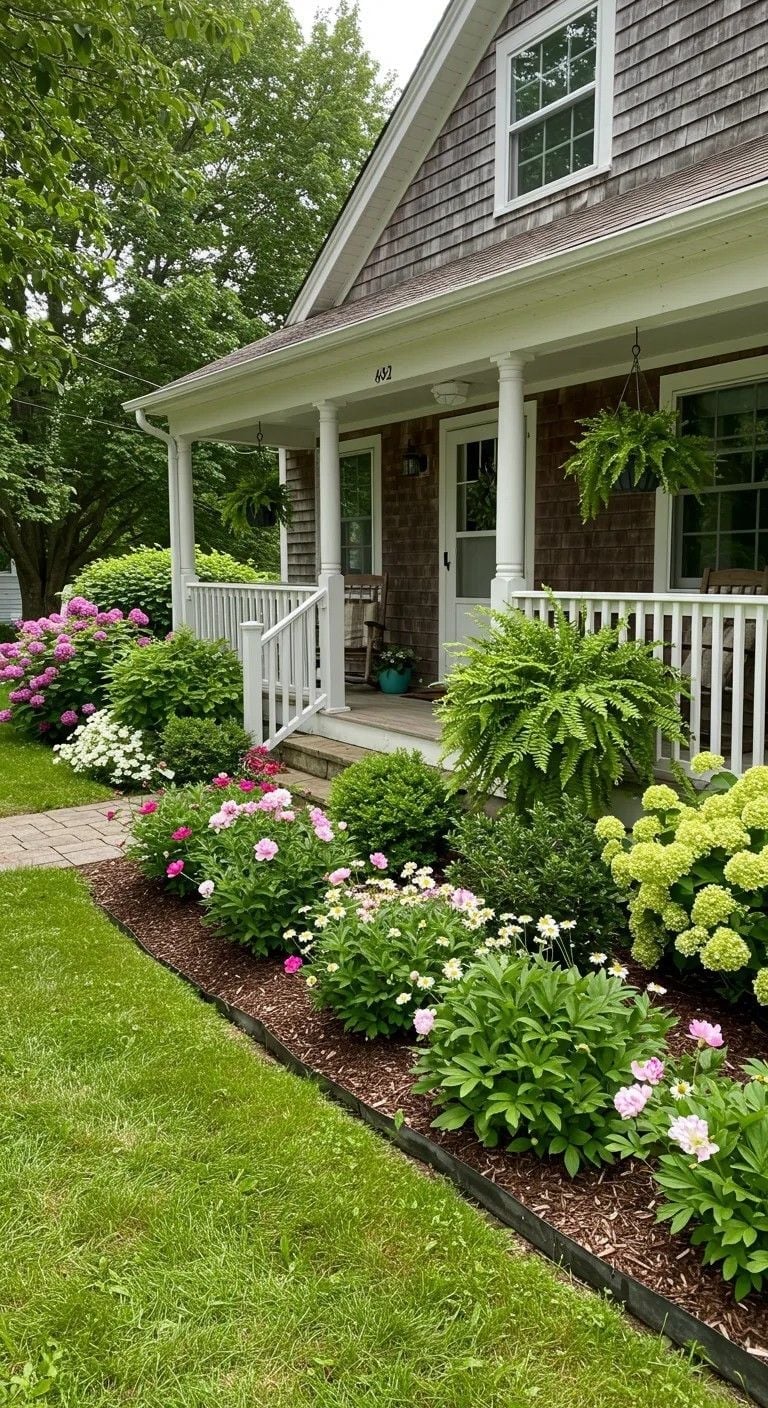
The palette here leans heavily on pink flowers against a white railed porch. Pink is the dominant color, with green foliage and brown mulch providing contrast. White porch railings prevent the look from becoming too sweet. The ratio is about seventy percent pink blooms to thirty percent green. The white railing breaks the pink and stops the front yard from washing out into one color. This palette suits a cottage style where abundance is the point.
23 / 28Modern Low-Maintenance Front Yard with Gravel Beds and Pine Trees
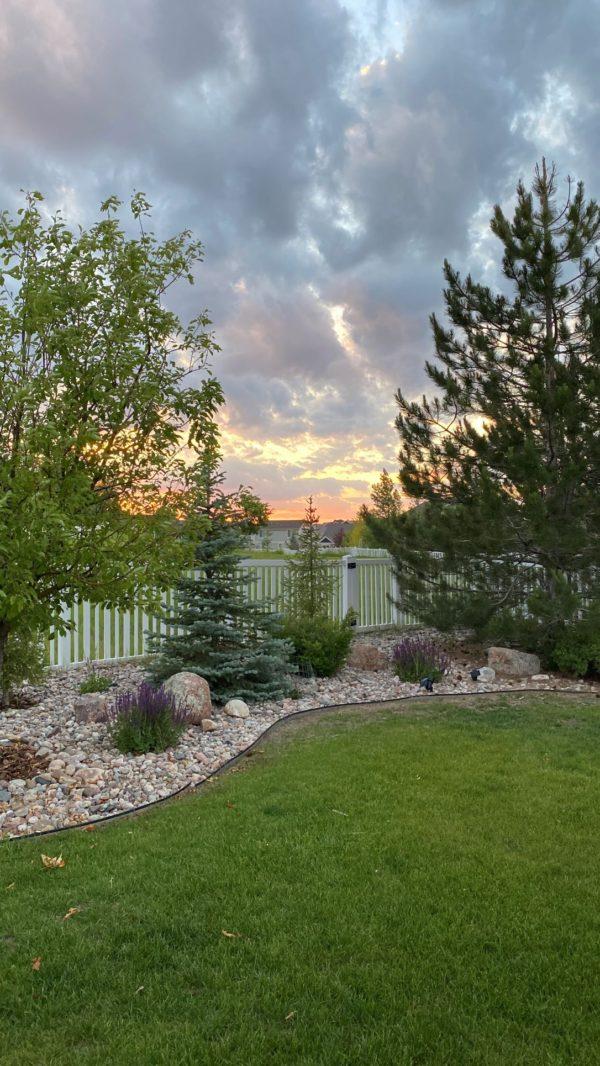
A practical rule for material choice in a low-maintenance yard is to pick surfaces that do not need weekly attention. Gravel beds replace grass in the planting areas, which means no mowing. Pine trees and ornamental grasses provide year-round structure without constant pruning. Large rocks break up the gravel and add weight to the layout. The gray gravel ties to the house while the purple flowers add a small seasonal pop. The sunset light in this yard makes the gray gravel read as warm, but the real value is the reduced upkeep.
24 / 28Modern Backyard Landscape with Stacked Stone Retaining Wall and Tiered
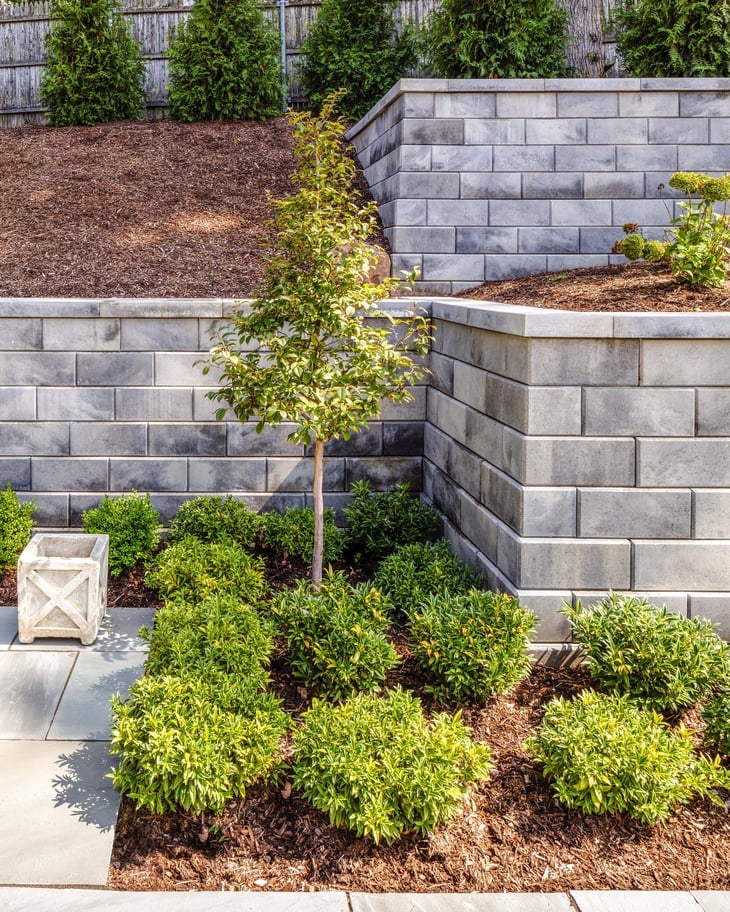
This design sets itself against a flat lawn by using a stacked stone retaining wall to create tiered levels. The wall is built from gray concrete block with a stone veneer, which gives it a modern look without the cost of solid stone. The top tier holds a small tree and manicured shrubs, while the lower level stays open. The sunny daylight makes the gray stone read as clean and crisp. The tiered layout adds depth to a roomy backyard without needing a lot of plants. The wall also helps manage erosion on a sloped site.
25 / 28Traditional Yard with Sweeping Curved Pathways and Manicured Bushes
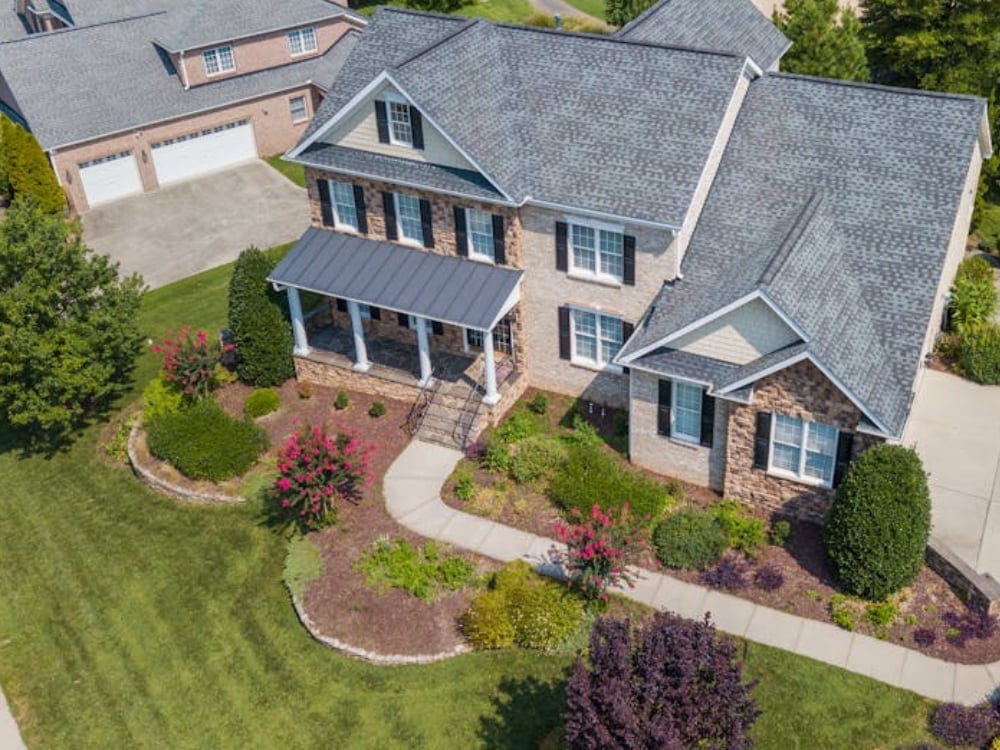
The layout here uses sweeping curved pathways to guide movement through the yard. The brick and stone paths cut through garden beds filled with manicured bushes and flowering trees. The curves make the yard feel larger than a straight path would, because the eye follows the line instead of landing on a destination. The pink and purple flowers add color against the gray stone and green bushes. An aerial view shows how the pathways connect the house to the garden without forcing a straight line.
26 / 28Cottage Garden Front Yard with Brick Path and Abundant Colorful
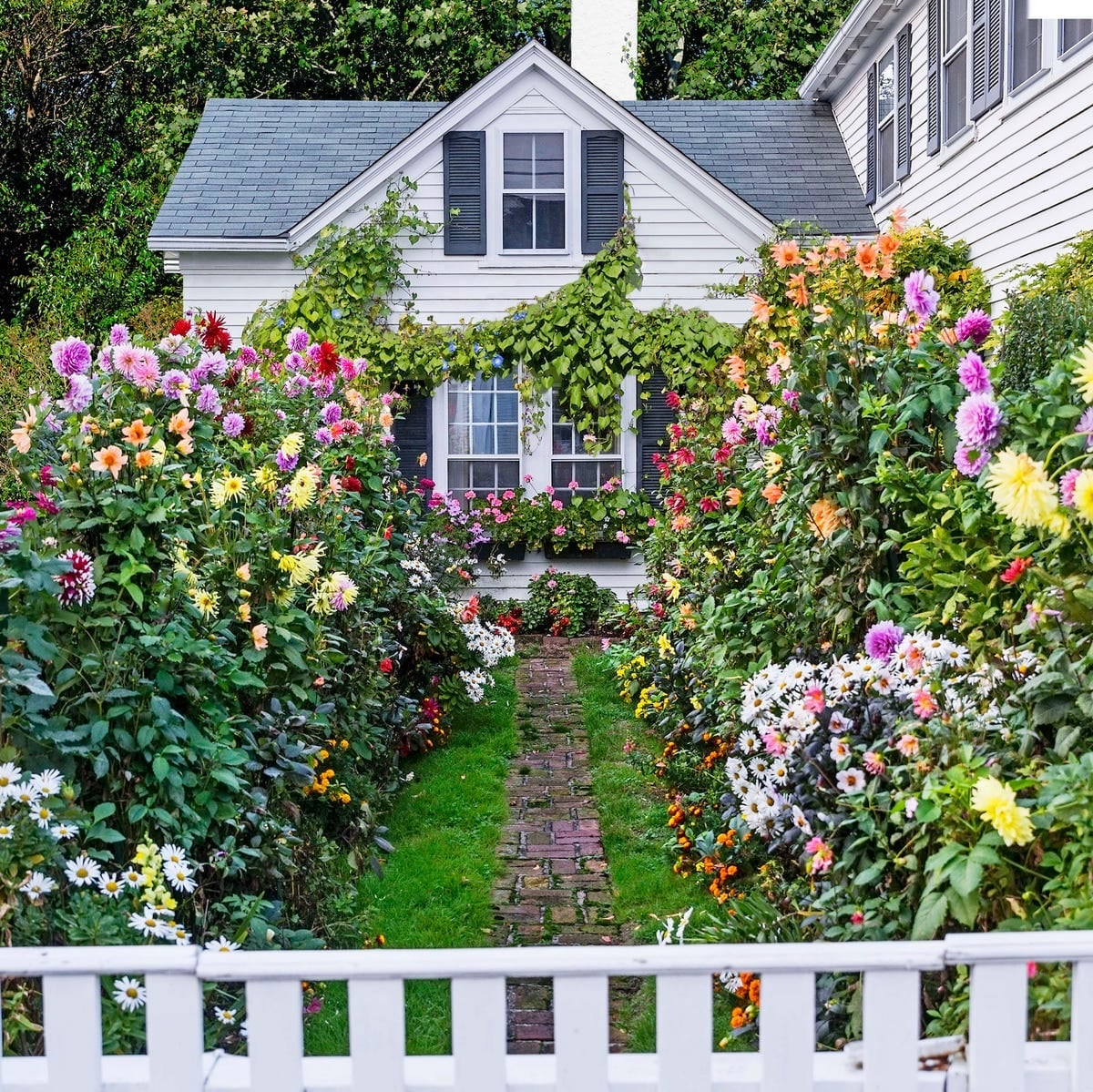
A brick path leading to a white house with a white picket fence is the classic cottage garden setup, and for good reason. The palette here is the star: multicolor floral blooms against green foliage and that white house facade. The path is flanked by dense flower borders that spill over the brick edges, with climbing vines working their way up the fence posts. In room mode, the whole front yard reads as one generous planting bed with a walkway carved through it. A straight or gently curving brick walkway keeps the flowers as the main event.
27 / 28Modern Front Yard with Red Ornamental Plants Against Gray Siding
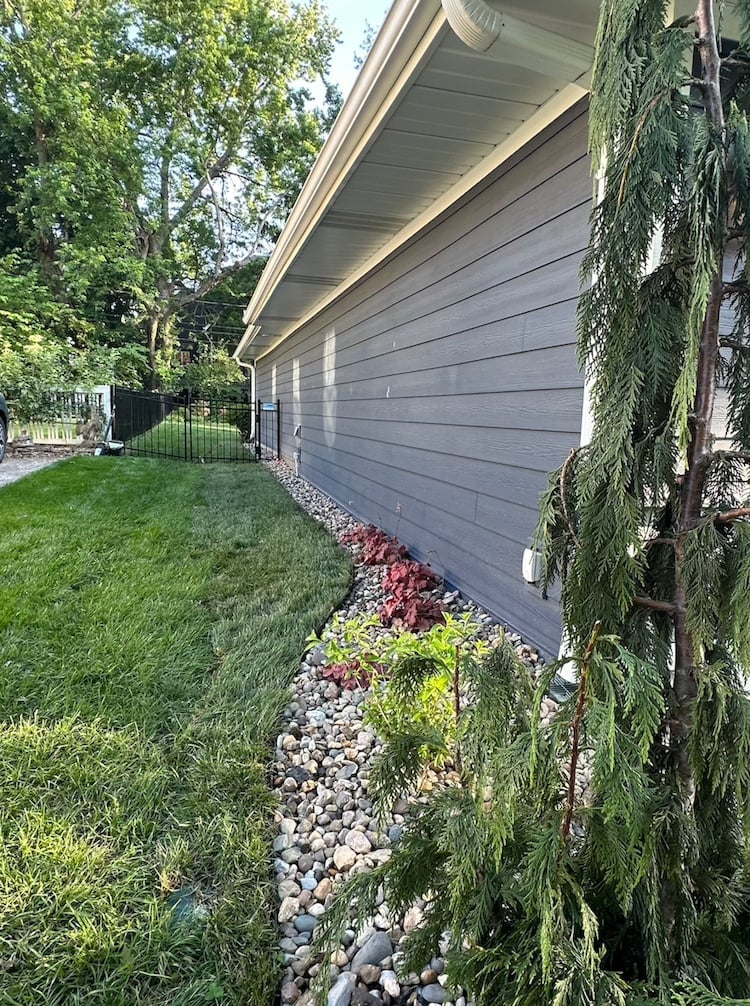
A modern front yard with gray siding can feel a little severe if the landscaping stays all green and brown. That is where red ornamental plants come in. In this compact front yard, a narrow planting bed runs along the house, filled with red plants against the gray siding. Mulch and grass make up the rest of the palette, with a few river stones for texture. The red against the cool gray creates a deliberate color pop without needing a full flower garden.
For renters, the approach is straightforward. You are not digging up the yard or installing hardscape. Red ornamental plants in containers or planted in an existing bed deliver the same contrast. The narrow bed along the siding means you can work with what is there, adding plants that stay compact. The river stones are a renter-safe swap for mulch, since they do not wash away and can be moved when you leave.
28 / 28Final Thoughts
Updating your front yard doesn’t have to mean a full redo. A new pathway, a few well-placed shrubs, or a tidy border of mulch can shift the whole feel of your home’s entrance. Pick the idea that fits your climate and maintenance style, then start small. Over time, even one or two changes add curb appeal that makes coming home better. Check your USDA zone before choosing plants, and remember that gravel and stone need occasional raking or refreshing to stay neat.