Sage green is the color that keeps showing up in the right places. It’s calm enough for a bedroom, grounded enough for a kitchen, and versatile enough to work with wood, marble, or velvet.
This roundup of 26 sage green paint ideas shows how one shade can shift a room’s mood without stealing the show. You will see walls, cabinets, trim, and built-ins, each letting the paint step forward as the quiet anchor of the space.
01 / 27Sage Green Walls: A Foundation for Scandi Serenity
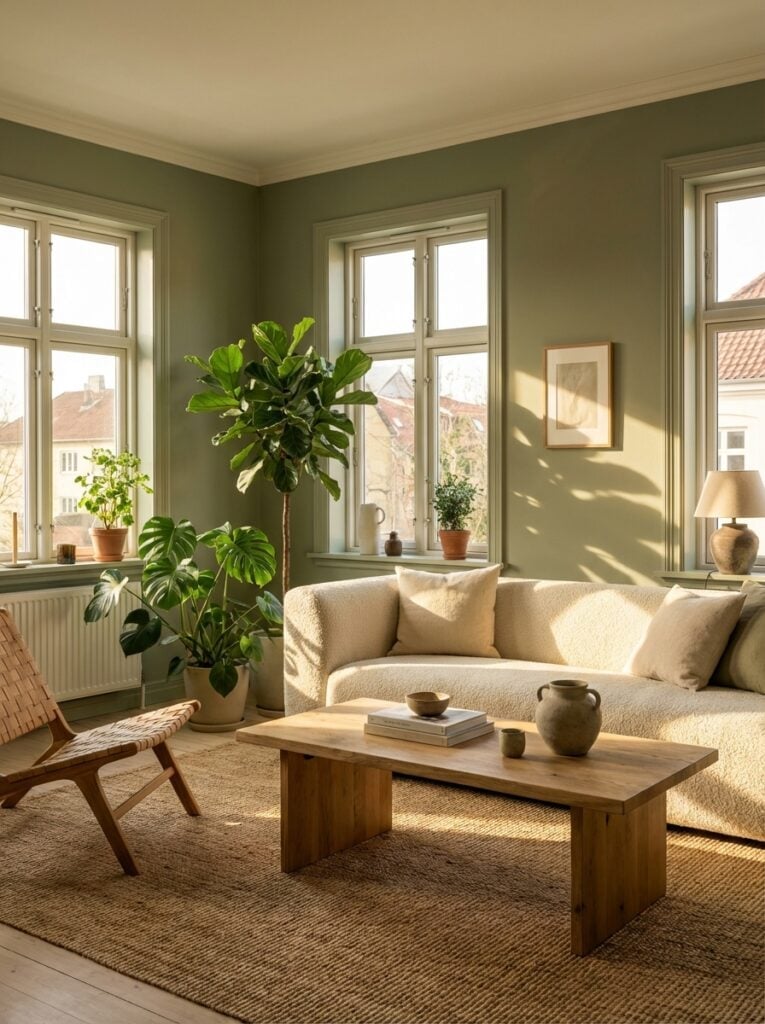
Warm natural light is what makes sage green feel softer than it looks on a swatch, and this Scandi living room leans into that. The curved sofa and wooden coffee table sit on a jute rug, while a large fiddle leaf fig adds a second green that reads as natural rather than matched. Plaster walls and linen cushions keep the palette quiet, so the sage reads as a calm backdrop instead of a color statement. A warm lamp near the seating keeps the room cozy after the daylight fades.
02 / 27Modern Organic Living Room: Sage Green as a Neutral Base
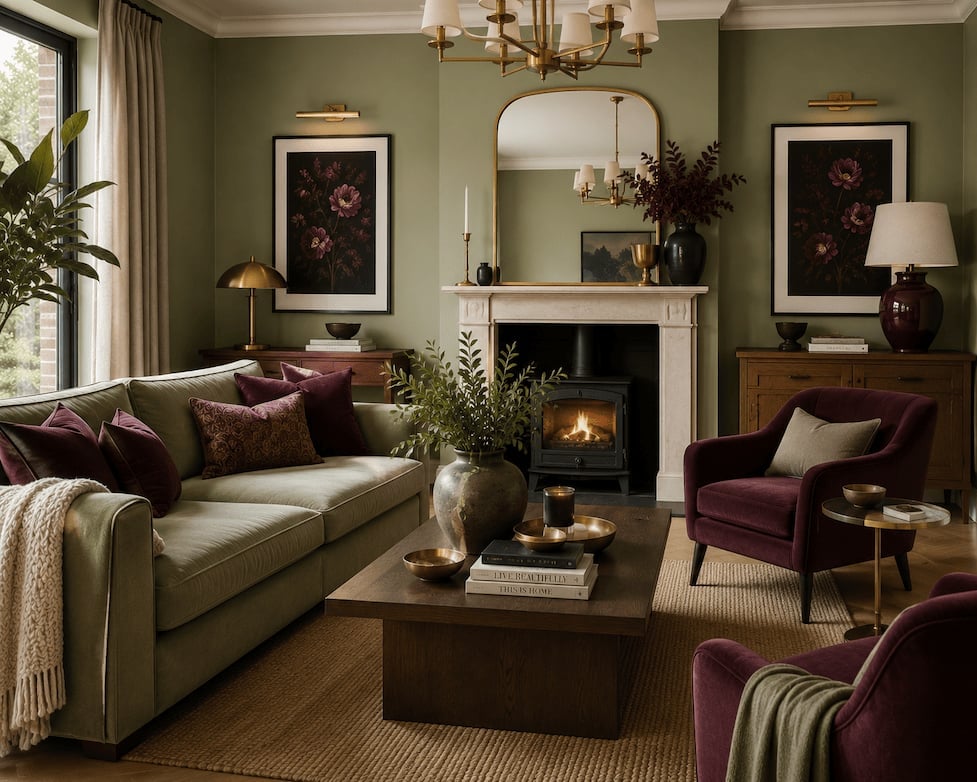
Sage green works as a neutral when the surrounding decor carries the contrast, and this modern organic living room proves the point with a centered fireplace and symmetrical seating. The sage walls sit behind a sofa and armchair in cream and linen, with a burgundy accent and stone coffee table adding warmth. A chandelier and ambient lamps layer the light, so the green shifts from gray in the day to deeper at night. The style holds together because the green is the only cool tone; wood, velvet, and stone all stay warm, which prevents the space from feeling flat.
03 / 27Kitchen Island in Sage Green: A Transitional Statement
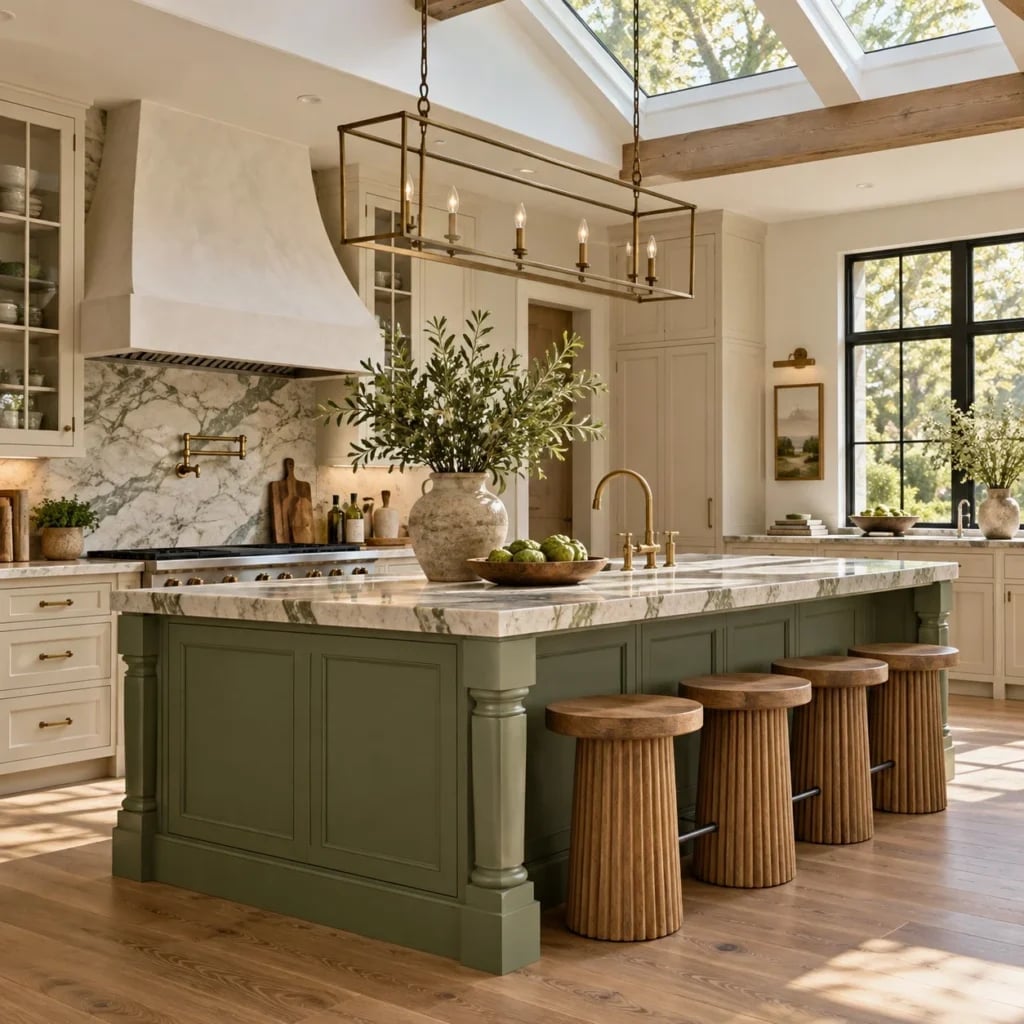
What makes a kitchen island worth painting when the cabinets stay neutral? In this transitional kitchen, the answer is scale and detail. The large island is finished in sage green with fluted details that give the flat front texture, and it anchors an open plan room. Pendant lights hang above the seating, while skylights bring in natural light that makes the green look gray-green in the morning and warmer by afternoon.
A painted island needs surrounding materials with enough contrast. Here, the cream cabinetry and wood stools let the green stand out as the focal point, while the glass shades and marble keep the look refined rather than rustic. If you are considering this for your own kitchen, remember that the island is the one piece you can repaint without touching the rest of the room, so it is a lower-commitment way to test a color you love.
04 / 27Farmhouse Kitchen: Sage Green Shaker Cabinets
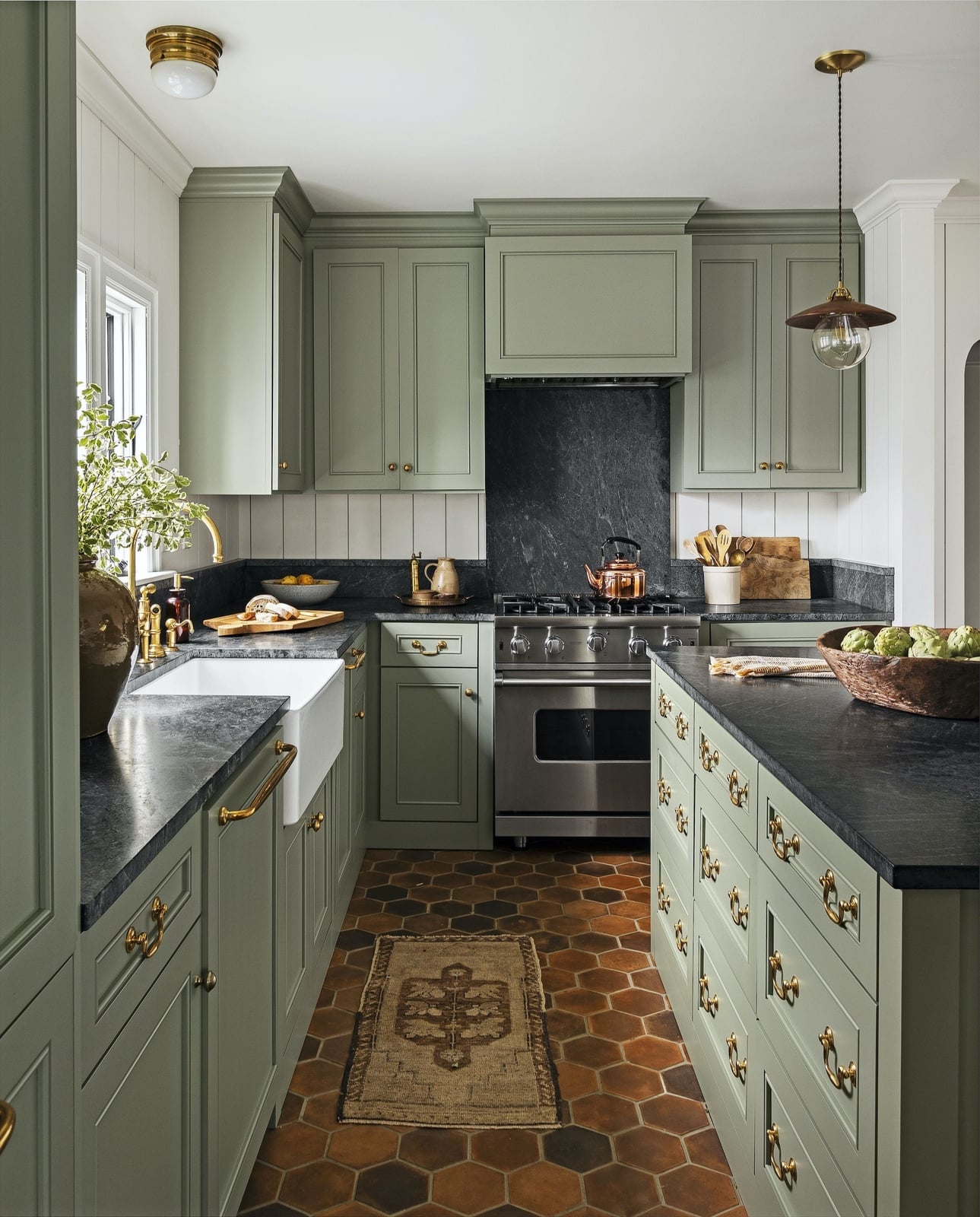
Sage green shaker cabinets take on a different character in a farmhouse kitchen when the floor is hexagonal tile and the counter is stone. The green reads softer against charcoal and brass, while a farmhouse sink and range cooker keep the style grounded. A pendant light above the island and natural light give the cabinets two different looks through the day, which is the real reason to choose this color over a flat white. The galley layout with an island keeps everything within reach, so the green stays a backdrop to cooking instead of a distraction.
05 / 27Vintage Kitchen & Hallway: Sage Green Walls
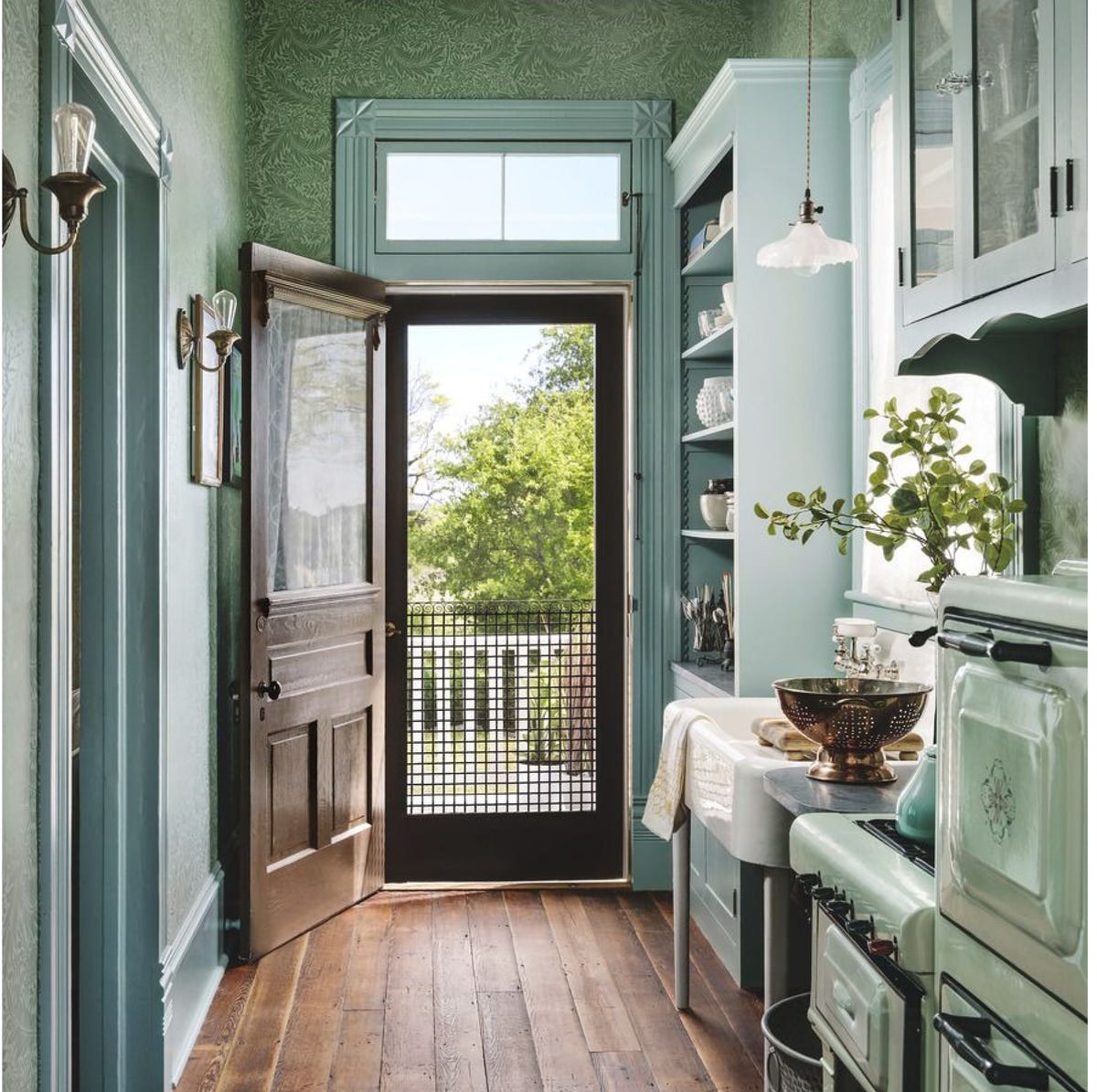
A practical rule for a narrow galley kitchen is to let a single color carry the walls and trim so the space feels longer, and sage green does that work here. The green walls run past the farmhouse sink and vintage stove into a hallway, with a wooden door left open to pull in outdoor light. Light blue accents and painted wood keep the vintage character, while glass and metal details add a little shine. Because the room is compact, the green acts as a unifier rather than a pattern, and the open door gives the eye a place to rest.
06 / 27Contrasting Kitchen Cabinets: Sage and Dark Green
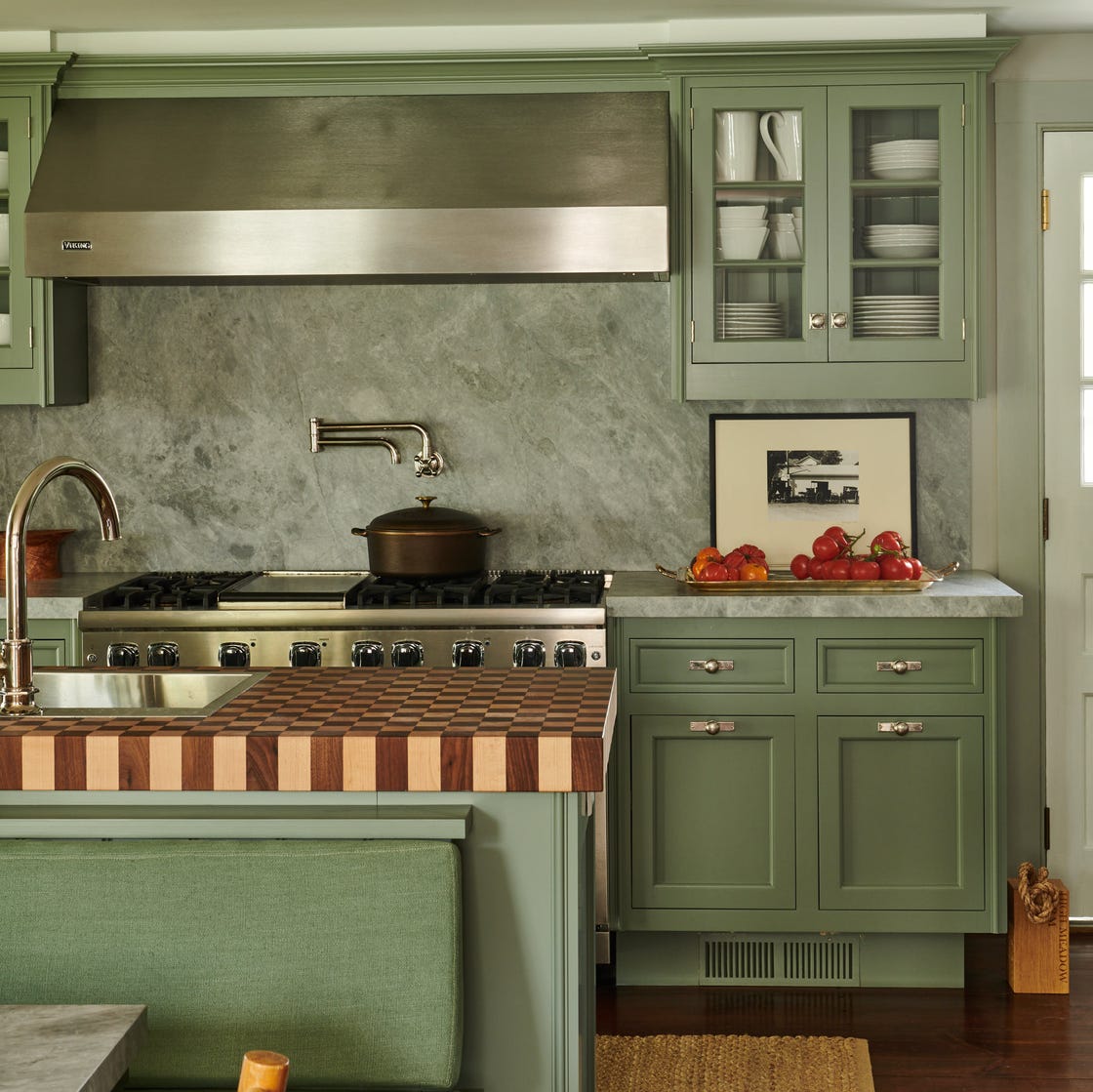
A full kitchen of pale sage cabinets can feel uniform. This corner sink setup answers that by using a dark green on the lower cabinets while keeping the uppers in a soft sage. The two greens read as one family, so the contrast adds structure without a clash. A white marble countertop and a simple tile backsplash sit between them, giving the eye a clear break. The dark base anchors the sink area, while the lighter uppers keep the room open. It is a palette trick that works best when the two greens share the same undertone. Try a cool sage with a deep pine green rather than mixing warm and cool bases.
07 / 27Hallway Harmony: Sage Green Walls and Wood Paneling
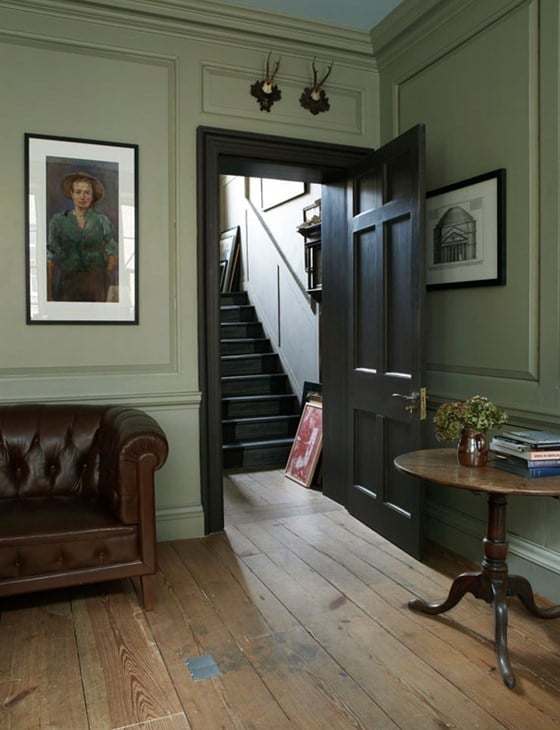
A hallway with sage green walls and dark wood paneling gets its rhythm from the contrast between matte paint and glossy wood. The green feels grounded against the deep wood tones, and a leather sofa in a similar brown adds a soft seating moment. Natural light from the doorway keeps the sage from turning flat. For renters, this look is achievable by using peel-and-stick wood paneling on a single accent wall and painting the others sage. The dark door at the end of the hall becomes a natural focal point against the lighter green.
08 / 27Farmhouse Sink Area: Sage Green Beadboard Backsplash
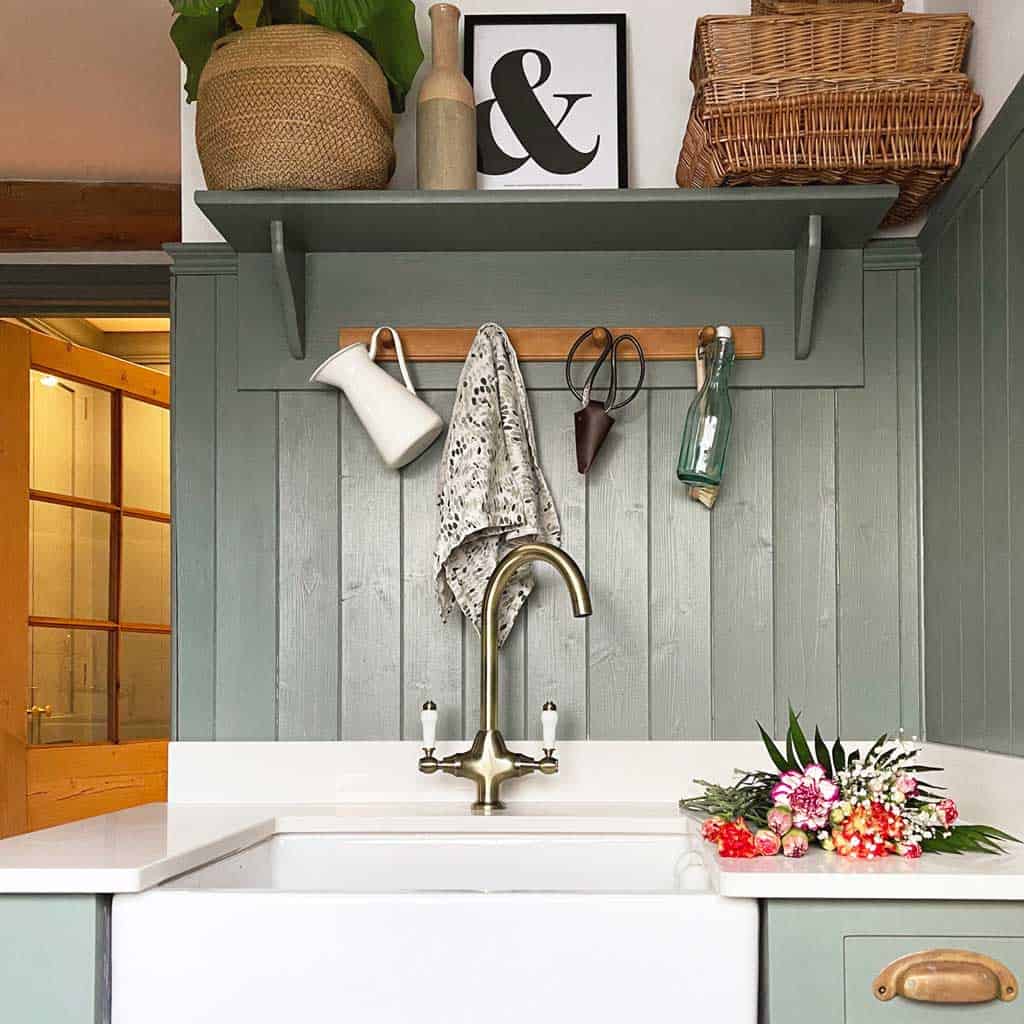
Beadboard as a backsplash is a practical choice because it covers the wall behind a sink without the grout lines of tile. Here the beadboard is painted sage green, which softens the white farmhouse sink and ties into the wooden shelf above. A brass faucet adds a warm metallic note against the matte green. The vertical lines of the beadboard draw the eye up, making the compact sink area feel taller. This setup works well in a kitchen with natural light from a nearby door, since the sage stays true in daylight. For a renter, painting removable beadboard panels is an option that comes off cleanly.
09 / 27Minimalist Bedroom: Calming Sage Green Walls
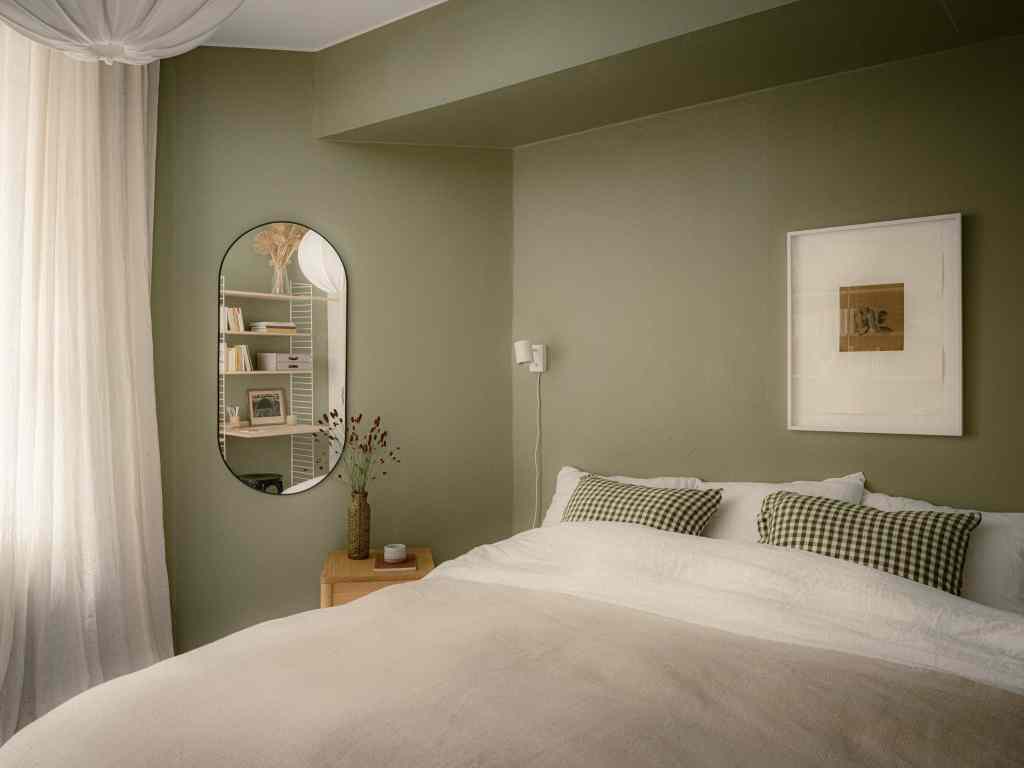
Can sage green work in a minimalist bedroom without adding visual noise? Yes, when the space stays simple. The walls here are a soft sage, and the palette sticks to cream linen bedding, a light wood bed frame, and a simple mirror. The green has enough gray in it to avoid feeling like a garden shade. Natural daylight from a window keeps the room bright, while ambient light in the evening warms the green slightly. The key is to limit the materials to three: painted wall, natural wood, and linen. That restraint lets the sage color be the focal point without competing with patterns or heavy furniture.
10 / 27Farmhouse Kitchen: Sage Green Painted Wood Cabinets
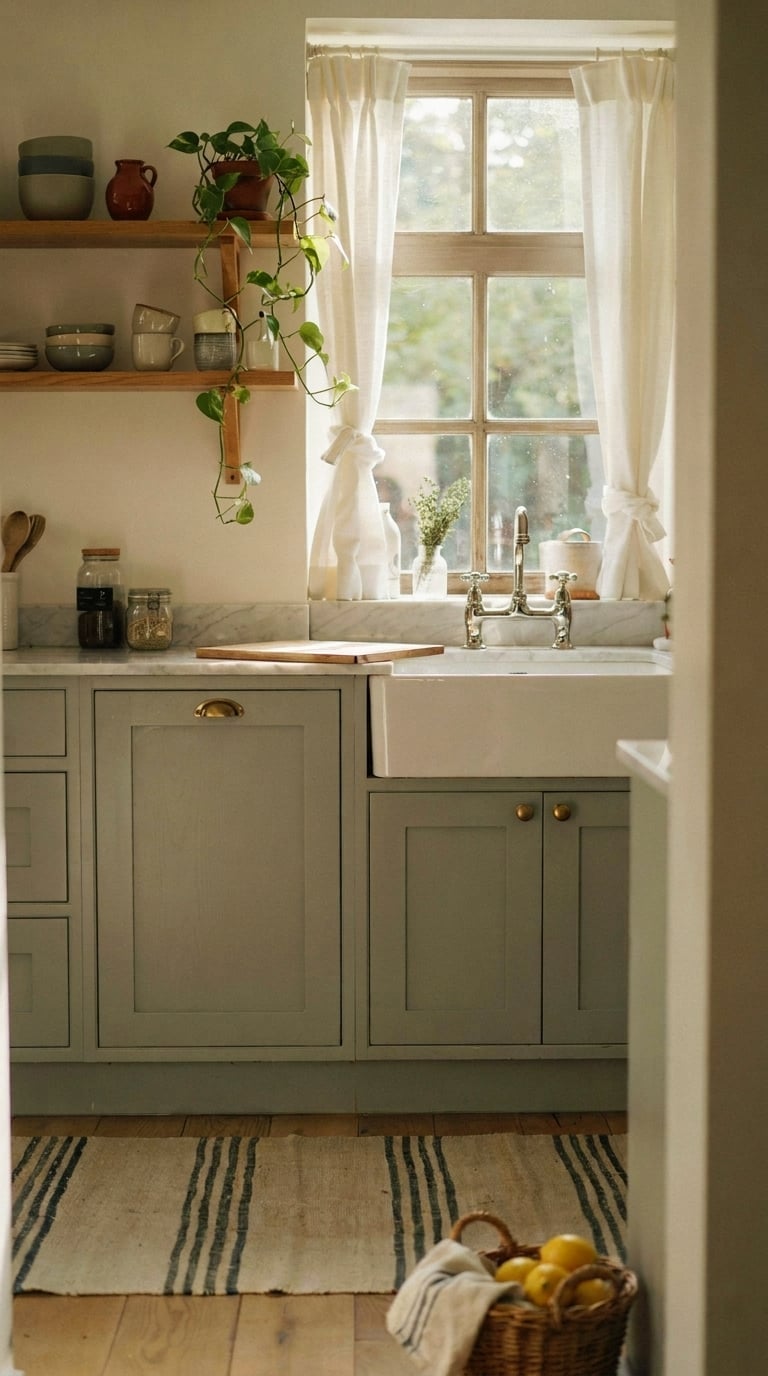
The sage green on these farmhouse kitchen cabinets sits between white walls and a marble countertop, giving the wood a soft presence. A hanging plant near the window adds a living green note that echoes the painted shade. The scale of the color works because the cabinets are the only large painted surface in the room. To recreate it, look for a compact kitchen with a single large painted surface. Limit sage to the base cabinets and keep the upper shelves or walls in a light neutral. The window keeps the green from looking too dark.
11 / 27Home Office: Sage Green Walls and Trim
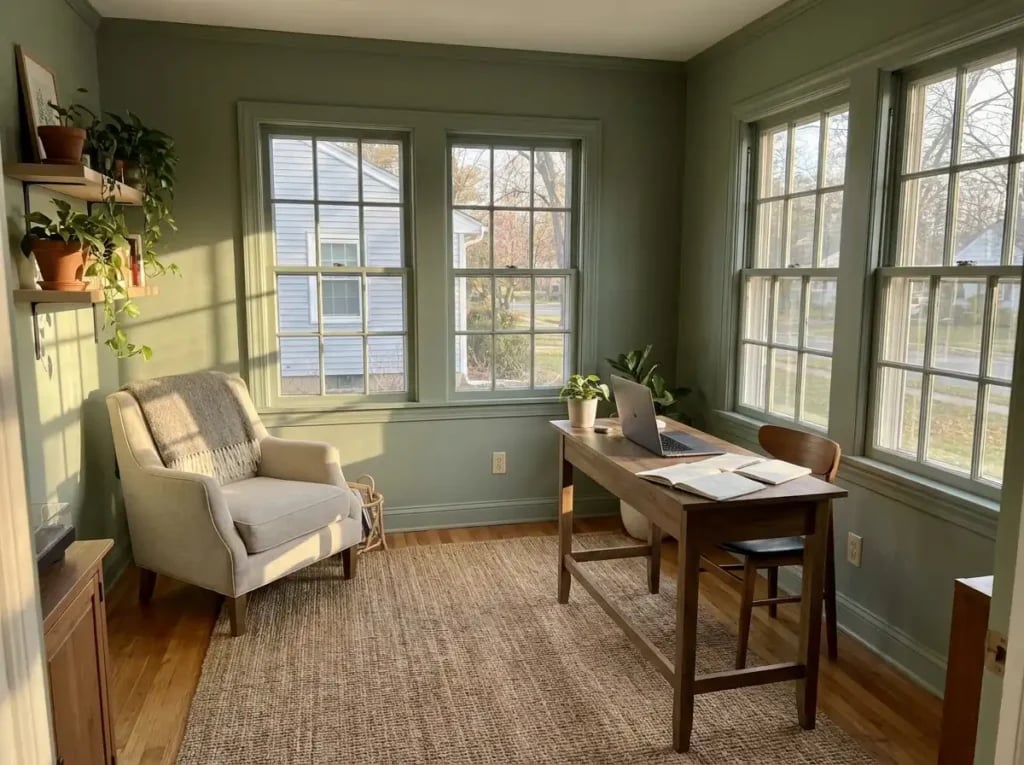
A practical rule for a home office is to use the wall color as a quiet backdrop and let the trim do the defining. Sage green walls and painted trim in a compact room create a calm, traditional setting for a desk facing a window. Natural daylight from that window and a linen armchair keep the space from feeling too much like a study. Wood tones in the desk and shelving add warmth, while glass accents in the storage keep the look light. The painted trim gives the room a finished edge without needing crown molding or wallpaper.
12 / 27Modern Organic Living Room: Sage Green Walls and Fireplace
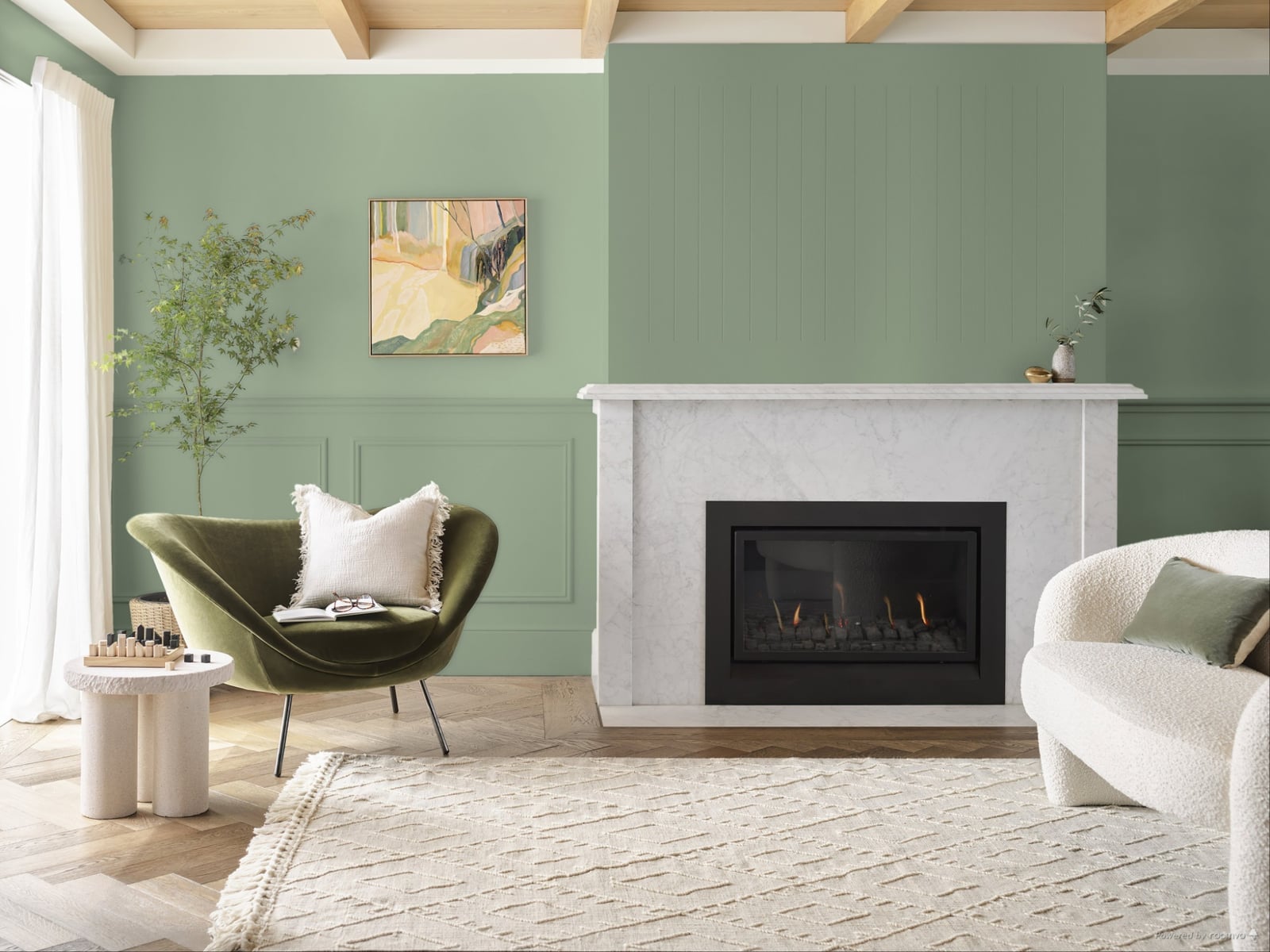
Sage green walls can read as either a warm neutral or a muted color statement, depending on what you put next to them. Against a white boucle sofa and a cream palette, the green stays soft and grounded. But place a green armchair in the same room, and the walls start to feel like part of a deliberate, layered scheme.
A marble fireplace becomes the natural focal point in this open plan layout, with the seating area arranged around it and a coffee table. The fireplace glow and natural light from windows keep the sage from going flat. Wood tones in the furniture and floor add the organic texture the style name promises. The palette stays restrained: sage, cream, and wood, with the green chair as the only real color repeat.
13 / 27Traditional Bathroom: Sage Green Walls and Cabinetry
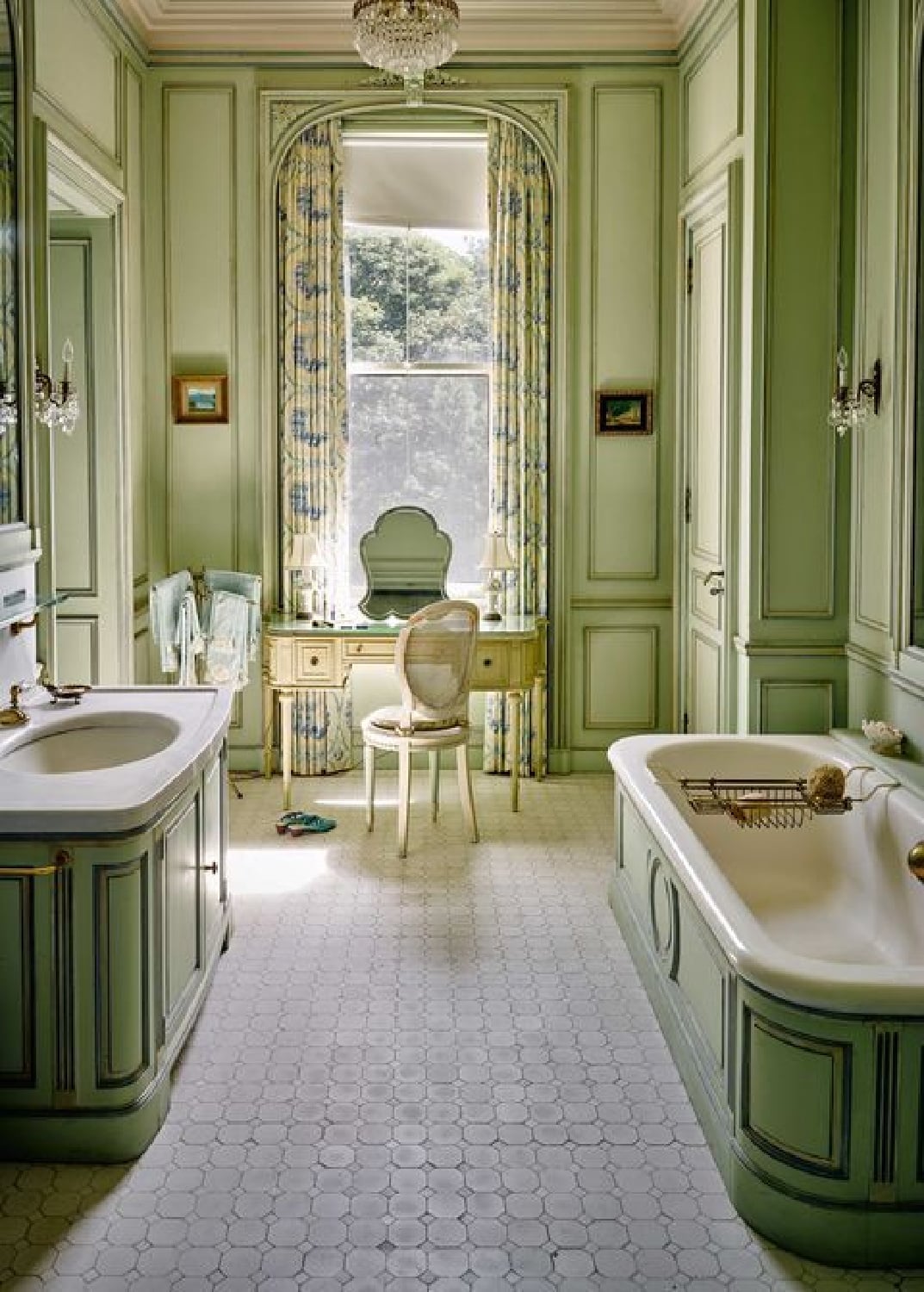
Ornate wall paneling and a freestanding bathtub set a formal tone, but sage green paint adds warmth. The sage walls and cabinetry pair with cream tile, blue accents, and brass fixtures like wall sconces. The traditional style relies on symmetry and scale: the vanity and dressing table match in height, and natural light balances the darker green. Brass and glass details provide shine that complements the wall color.
14 / 27Organized Office Space: Sage Green Walls
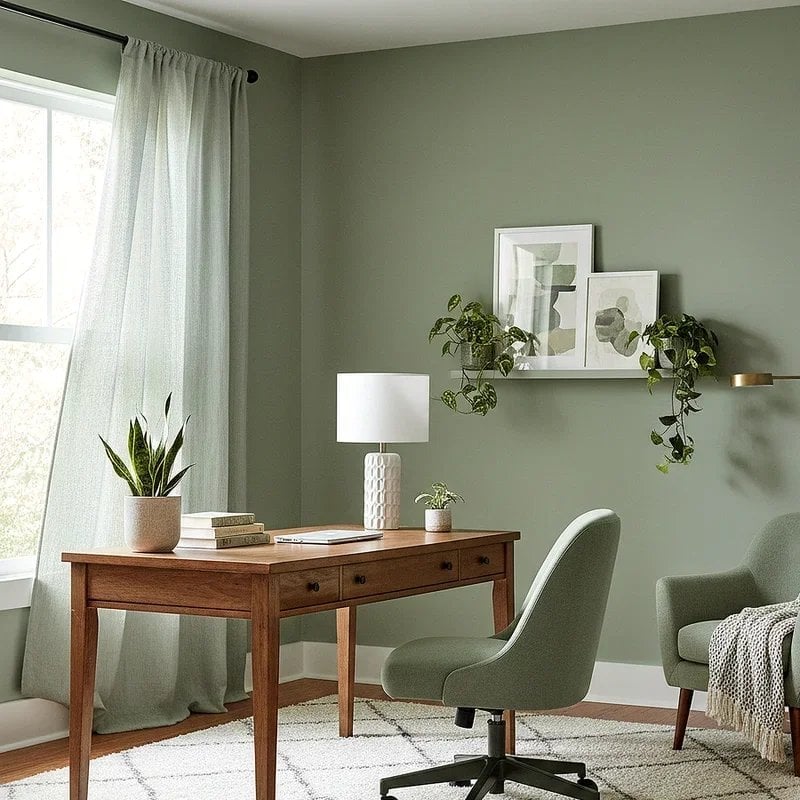
A roomy office with sage green walls can handle a desk facing the window and shelving on the wall without feeling crowded. The modern layout works because the green acts as a neutral base, letting the wood desk and fabric chair take the visual weight. Natural light from the window and a desk lamp provide even illumination across the work surface. The organized shelving with plants adds storage and softness, but the key is that the sage walls don’t demand attention. They sit behind the furniture, making the room feel finished rather than busy.
15 / 27Transitional Living Room: Sage Green Walls and White Fireplace
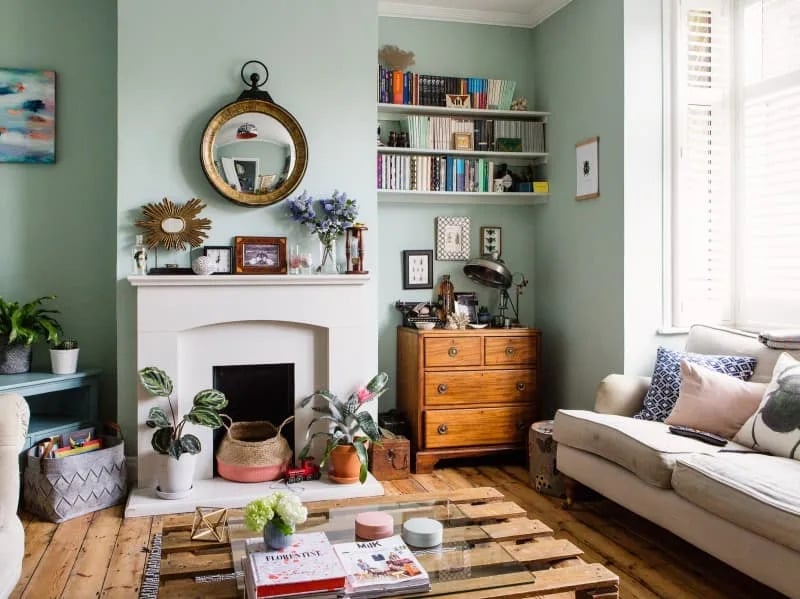
In a transitional room, one element carries the contrast while everything else blends. Here, the white fireplace surround stands against sage green walls, creating a clear focal point without adding a third color. The wood in the coffee table and ottoman frame, along with the stone hearth, bridge the traditional and modern sides of the style.
Natural light from windows keeps the green from darkening the room too much. A neutral sofa and fabric ottoman stay out of the color conversation, letting the wall-and-fireplace combo do the work. The palette is tight: sage, white, and wood. That restraint makes a transitional space feel deliberate, not caught between two looks.
16 / 27Transitional Bedroom: Sage Green Walls and Neutral Bedding
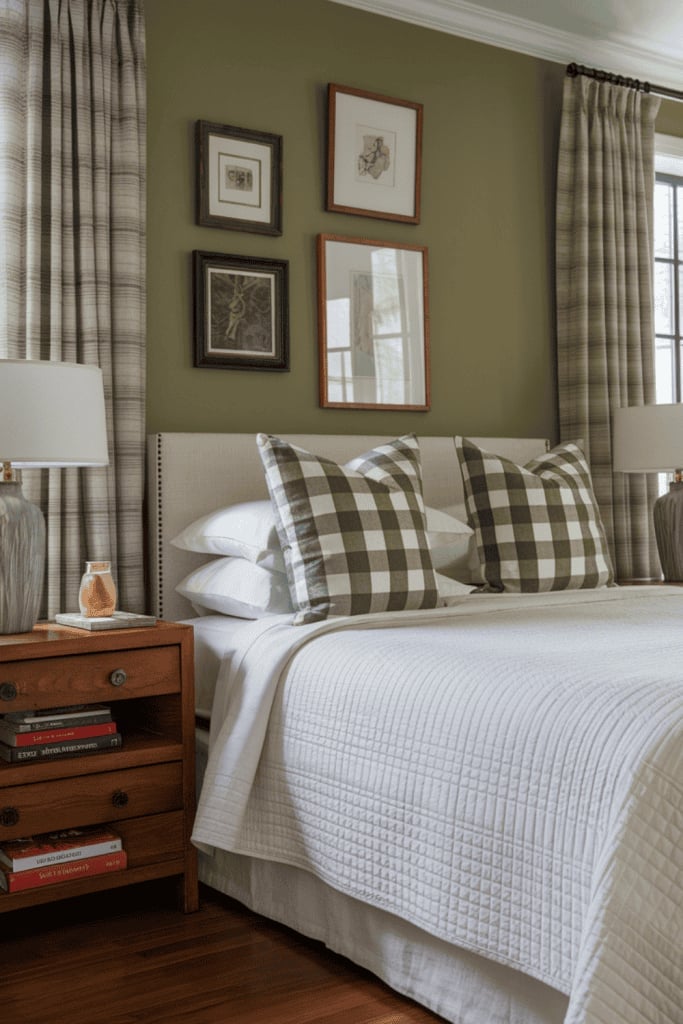
Sage green walls pair with white bedding, a wood headboard, grey pillows, and glass lamps on matching nightstands. The palette stays neutral so the wall color reads as a soft backdrop rather than a strong statement. A room this calm works best when the bedding layers different textures, linen, cotton, a woven throw, to keep the look from feeling flat.
17 / 27Minimalist Bedroom: Soft Sage Green Walls, Indoor
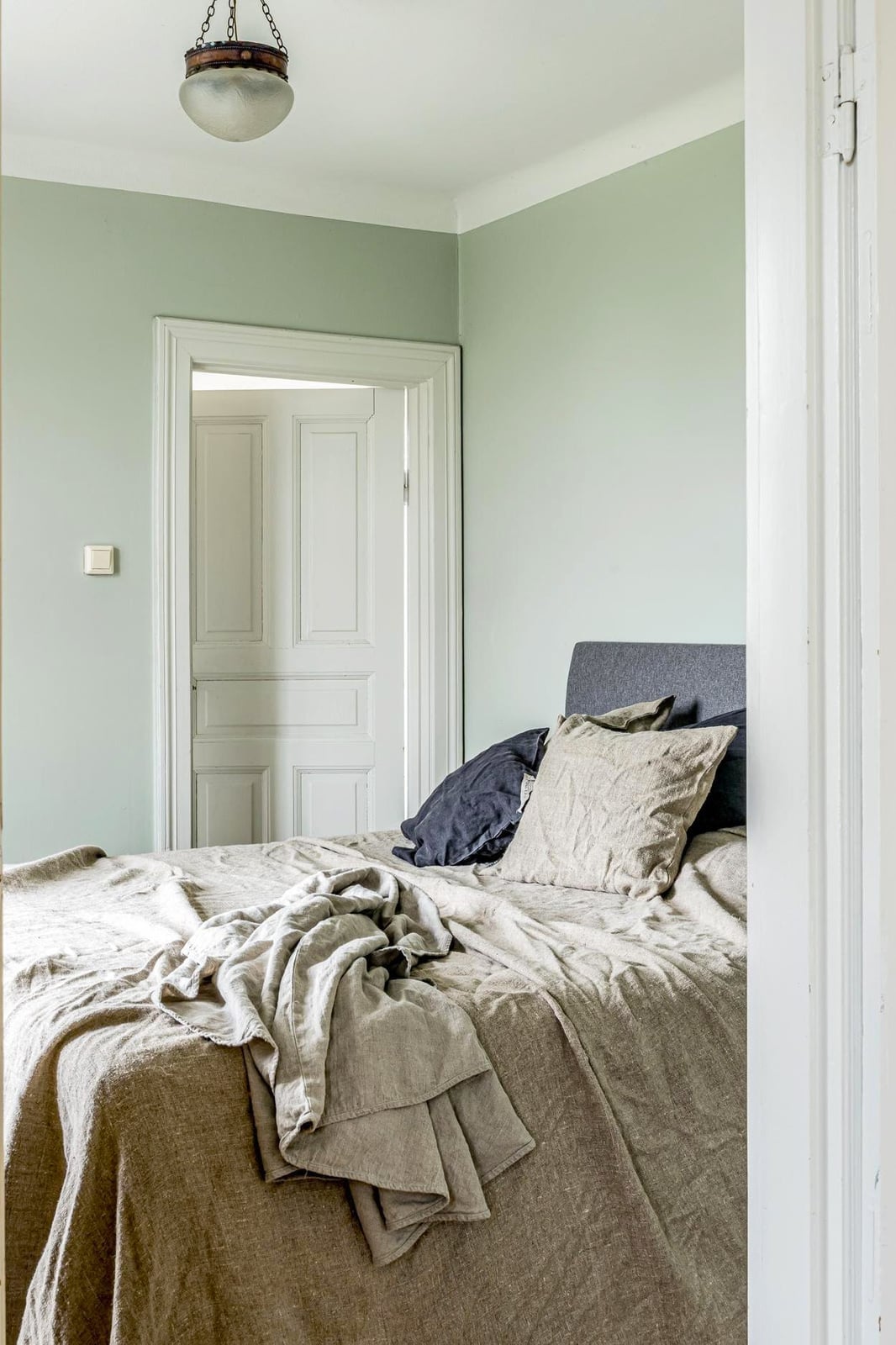
For renters, painting one wall instead of all four is a common approach. Here the sage green wall sits behind a bed with a grey headboard and beige linen bedding, while natural light from a doorway keeps the compact room open. A single painted surface gives the color presence without overwhelming a small space, and it is easy to repaint white before moving out. The remaining walls stay bare, and no extra furniture competes with the wall.
18 / 27Modern Farmhouse Living Room: Sage Green Built-ins
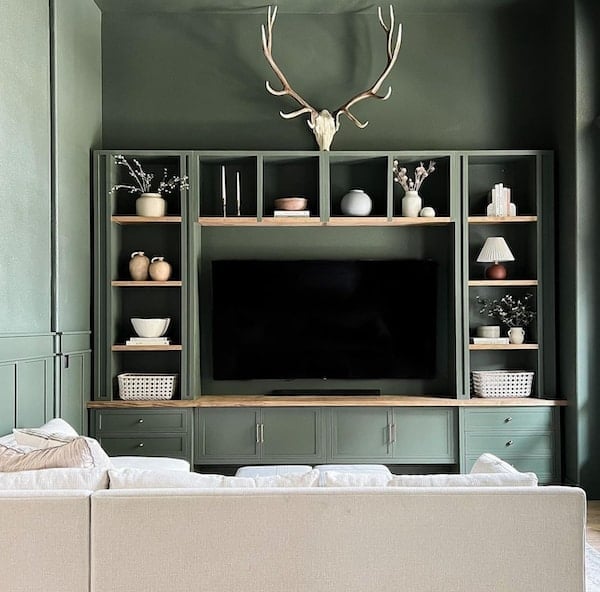
Built-in cabinetry often comes in white, but sage green changes the feel entirely. Here an extensive shelving unit in deep sage green covers one wall, holding a TV and books, with a sofa facing it. The color makes the storage look like furniture instead of just millwork, giving the room a curated appearance.
A roomy space with wall-to-wall storage relies on the finish. Painted MDF holds up well against daily use, and the green tone hides dust better than white. To recreate it without carpentry, paint a large bookcase the same shade as the wall so it blends in.
19 / 27Glamorous Living Room: Sage Green Walls and Velvet Sofa
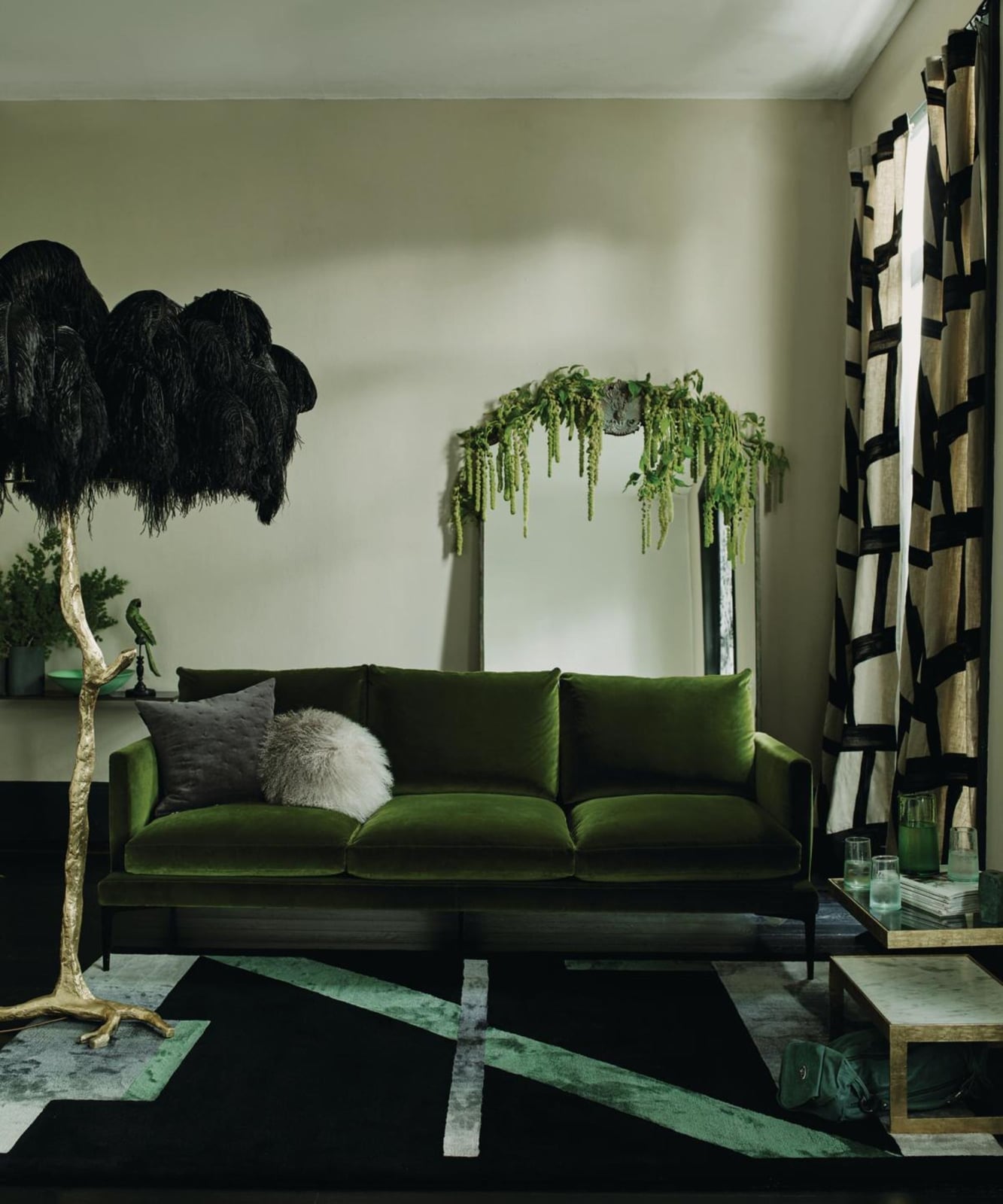
Sage green walls and a green velvet sofa share the same color family, but the room looks glamorous, not flat. Black metal and gold accents, a floor lamp with a feathered shade, a mirror, and a glass coffee table add contrast. Keep the ratio of green to black and gold roughly two to one for a balanced, polished look.
20 / 27Modern Bedroom: Sage Green Walls and Upholstered Headboard
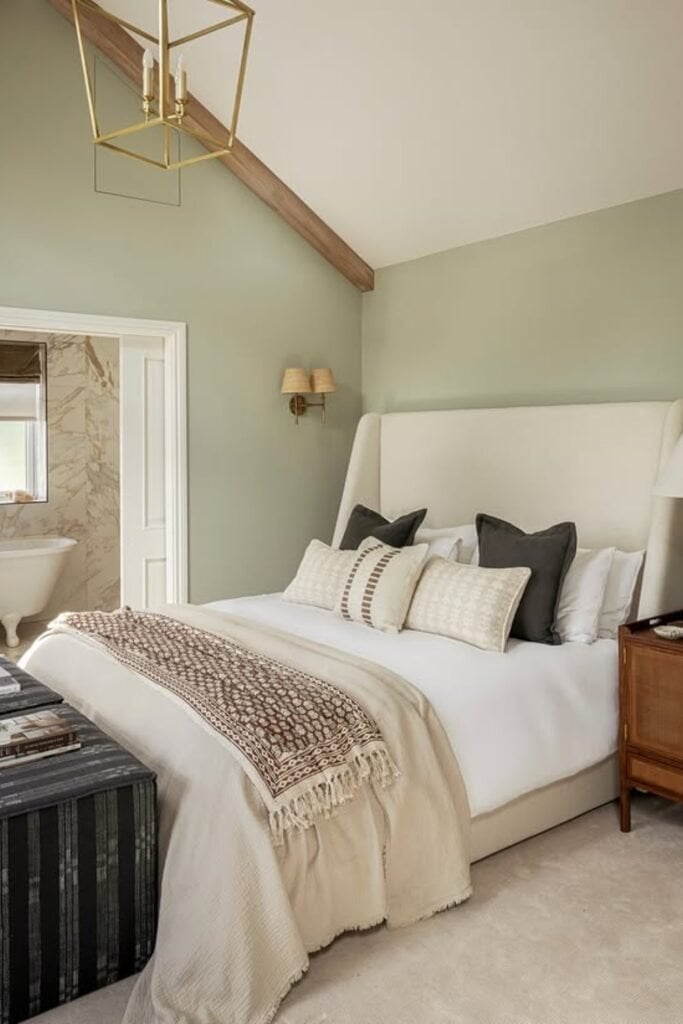
A tall, upholstered headboard in a neutral tone anchors this room visually, with sage green walls providing a quiet backdrop. The bed sits centered, with a bench at the foot and a single bedside table, while wall sconces free up surface space. The headboard height matters here. It reaches nearly halfway up the wall, so the green reads as an accent rather than the main event. Cream bedding and light wood tones keep the palette from feeling heavy.
21 / 27Traditional Bedroom: Sage Green Walls and Fireplace
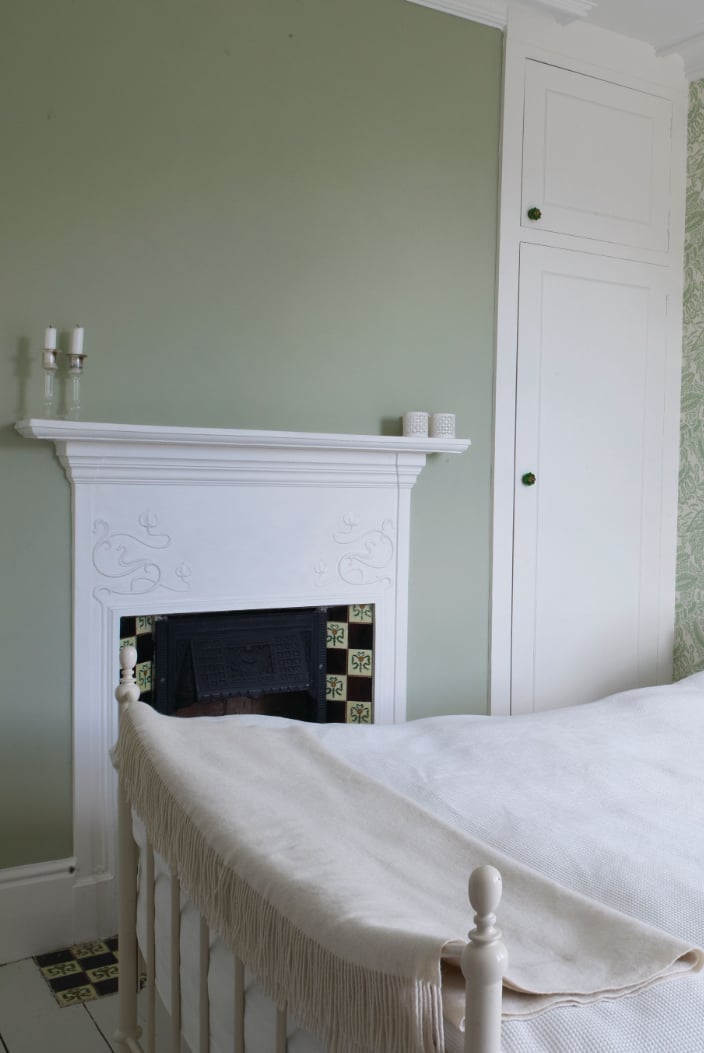
In a traditional bedroom with a fireplace, the paint should sit back so the architecture leads. The sage green walls here do just that, staying quiet against an ornate white fireplace mantel. The palette sticks to sage green, white, and wood, with a wardrobe and bed completing the layout. Natural light from the windows keeps the green from feeling heavy.
The wood tones add warmth without competing with the mantel detail. The mantel becomes the natural focal point, and the sage green acts as a backdrop that supports the architecture. To recreate it, look for a sage green with a hint of gray so it works as a true neutral against white trim and wood furniture.
22 / 27Eclectic Living Room: Sage Green Walls and Fireplace
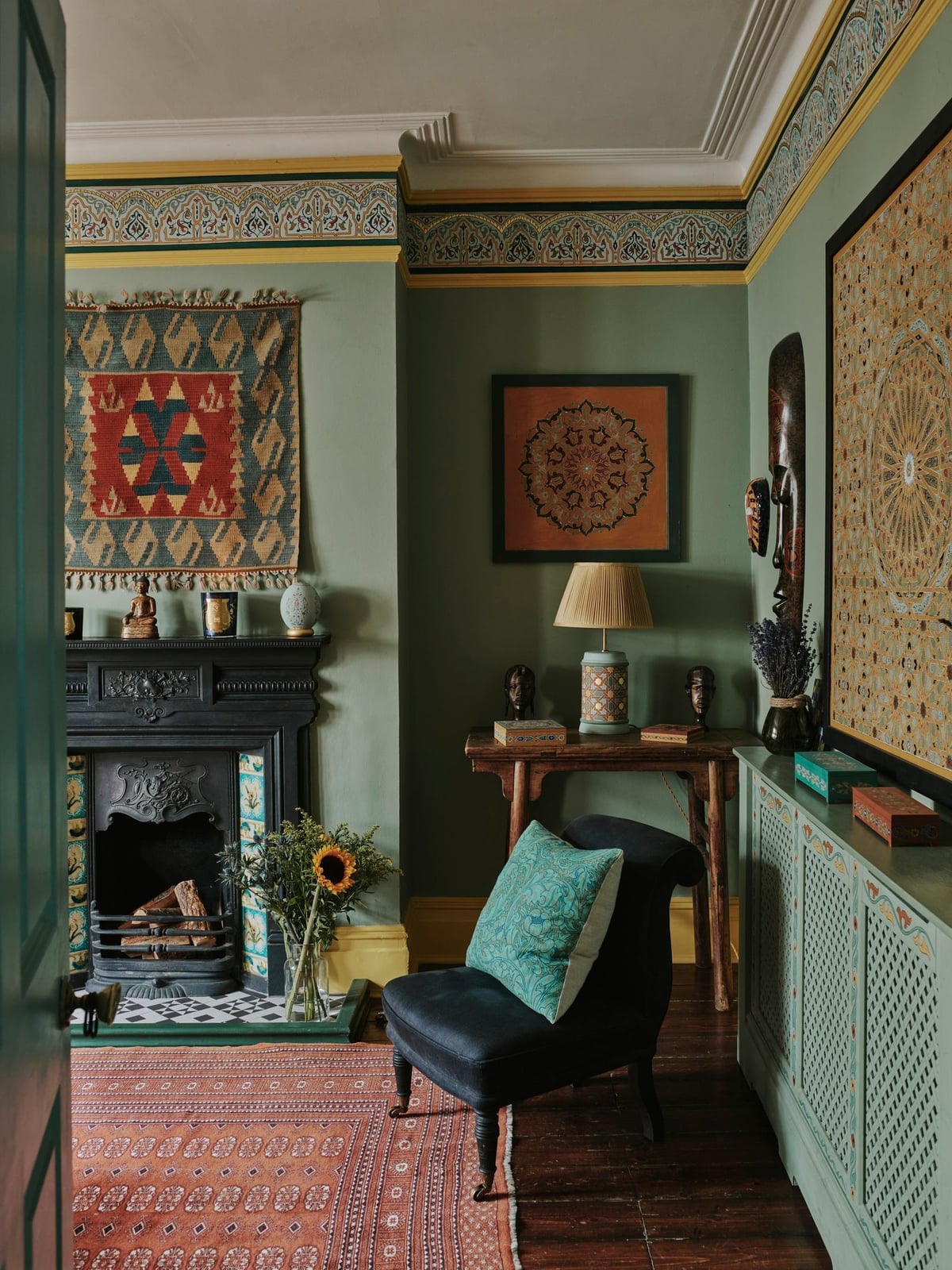
A concrete fact about this design: the sage green paint holds its own against a palette that includes terracotta and yellow. The living room uses a corner vignette with a fireplace, armchair, console table, and cabinet. Natural light and ambient lamps keep the space roomy. The ornate ceiling border adds a layer of detail that the green walls don’t fight. The palette defines the eclectic look; the sage green is the anchor, and the terracotta and yellow are the accents that break the neutrality.
23 / 27Transitional Living Room: Sage Green Walls
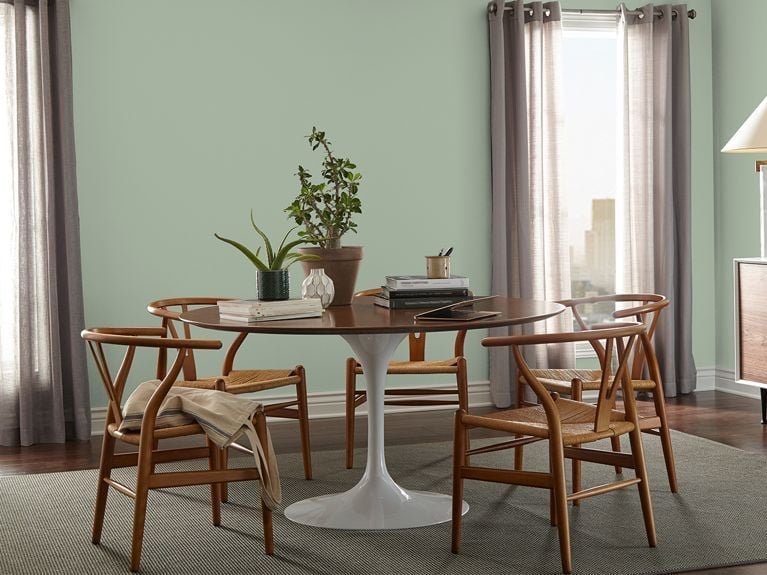
Position the seating so the sage green walls connect the separate pieces. This room has a sofa, armchair, floor lamp, and coffee table arranged in a seating area. The natural light and floor lamp work together to keep the roomy space from feeling flat. The layout matters more here than a strict palette; the green walls tie the wood, fabric, and glass elements together without needing a heavy color scheme. The room feels pulled together without being fussy.
24 / 27Traditional Bedroom: Sage Green Walls and Wooden Dresser
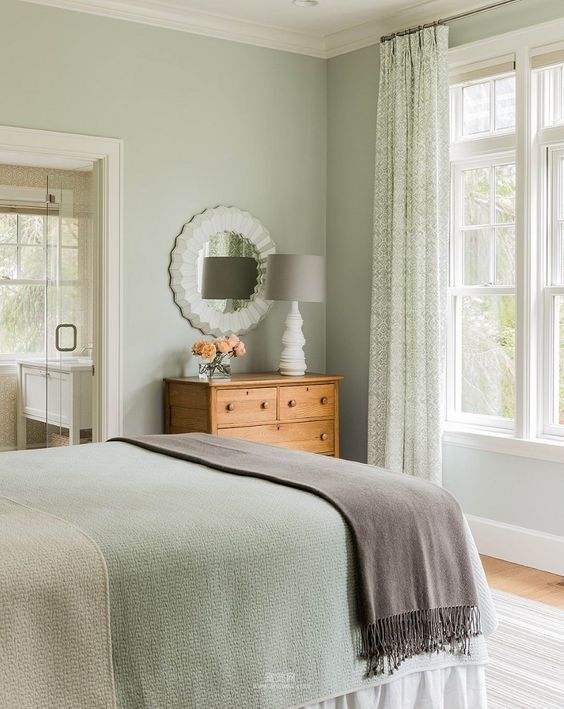
A sage green bedroom with traditional styling can lean warm or cool depending on the light. In this room, natural light from windows hits a palette of sage green, cream, and brown. The wooden dresser and bed anchor the space, while a mirror and lamp add softness. The green reads differently at different times of day: brighter in morning light, deeper in the afternoon.
For a similar setup, consider how your own light shifts. A north-facing room will keep the green cooler, so add cream linens and warm wood to balance it. A south-facing room can handle a cooler green without it feeling flat. The dresser here shows how wood grain breaks up a wall of color, keeping the room grounded.
25 / 27Eclectic Living Room: Sage Green Walls and Abstract Art
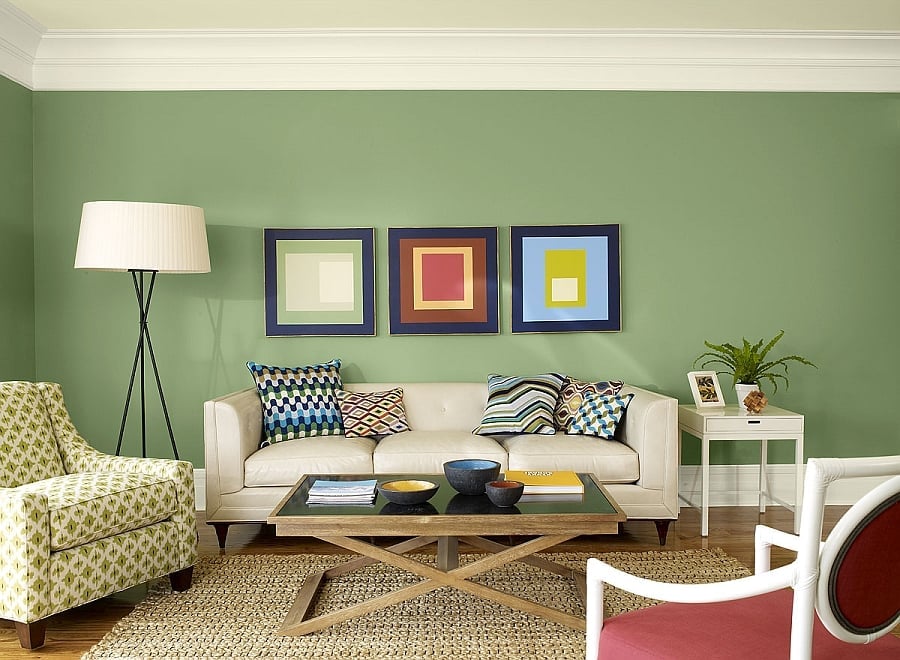
A precise observation about this design: the sage green walls let the abstract square artwork take center stage. The living room seating area includes a sofa, armchair, floor lamp, and coffee table. The palette stretches from sage green and cream to red and blue, with the art pulling the accent colors. Natural light and a floor lamp keep the roomy space bright. The green walls don’t compete with the art; they provide a neutral field that makes the red and blue pop. For an eclectic room, let the art do the talking and keep the walls calm.
26 / 27Farmhouse Bedroom: Sage Green Walls and Vertical Paneling
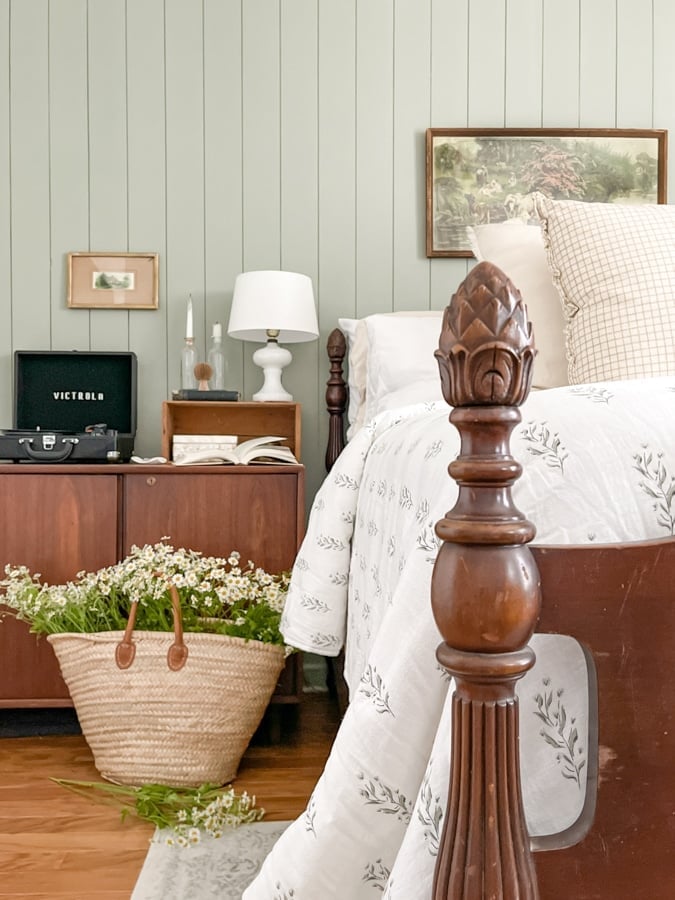
For a farmhouse bedroom, sage green walls with vertical wood paneling give the room a calm, grounded feel without leaning too rustic. The paneling draws the eye upward, which makes the space feel taller and more polished than plain drywall would. The bed sits centered, with a nightstand, a basket, and a record player tucked to the side, so the layout stays simple and the painted walls get to be the main event. White linens and natural wood tones keep the palette quiet, while a table lamp and daylight add warmth. If you are renting or want a reversible change, peel-and-stick wood-look panels over the paint can mimic the same vertical lines without committing to permanent carpentry.
27 / 27Final Thoughts
Sage green paint works because it does not demand attention. It sits behind the furniture, around the trim, and across the cabinets, letting the room breathe. The 26 ideas here share one truth: sage green holds its own next to warm wood, white marble, and dark accents. Keep the finish flat on walls for a soft look, satin in kitchens for easy wiping. Test a swatch in your light before you commit. That is the only rule.