Red kitchens used to feel like a dare. Now they read like a choice, and these 33 ideas show just how livable that choice can be. From a single island to full cabinet runs, the shade works in glossy, matte, or distressed finishes, so you can match the mood without matching the drama.
This is not about painting the whole room and hoping for the best. These kitchens balance red with white, wood, stone, or tile, keeping the space grounded while the color leads. Whether you want a few accents or a bold layout, you will find practical approaches that respect your floor plan and your comfort level.
01 / 34Red Island Layout
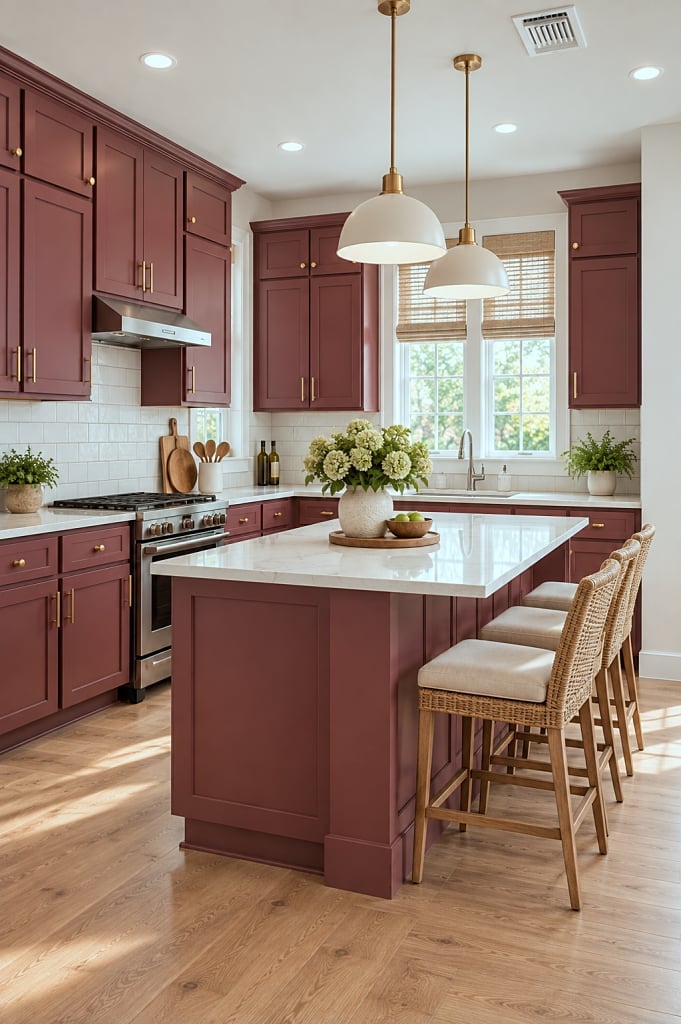
A deep red island holds its own in a transitional kitchen without overwhelming the room. White quartz countertops and woven stools keep the look grounded, while natural wood adds warmth. The island anchors the layout, so the rest of the kitchen stays simple. Pendant lights above draw the eye up, making the space feel open. This setup works for those who want a bold centerpiece without redoing the whole kitchen.
02 / 34Farmhouse Red Cabinet Palette
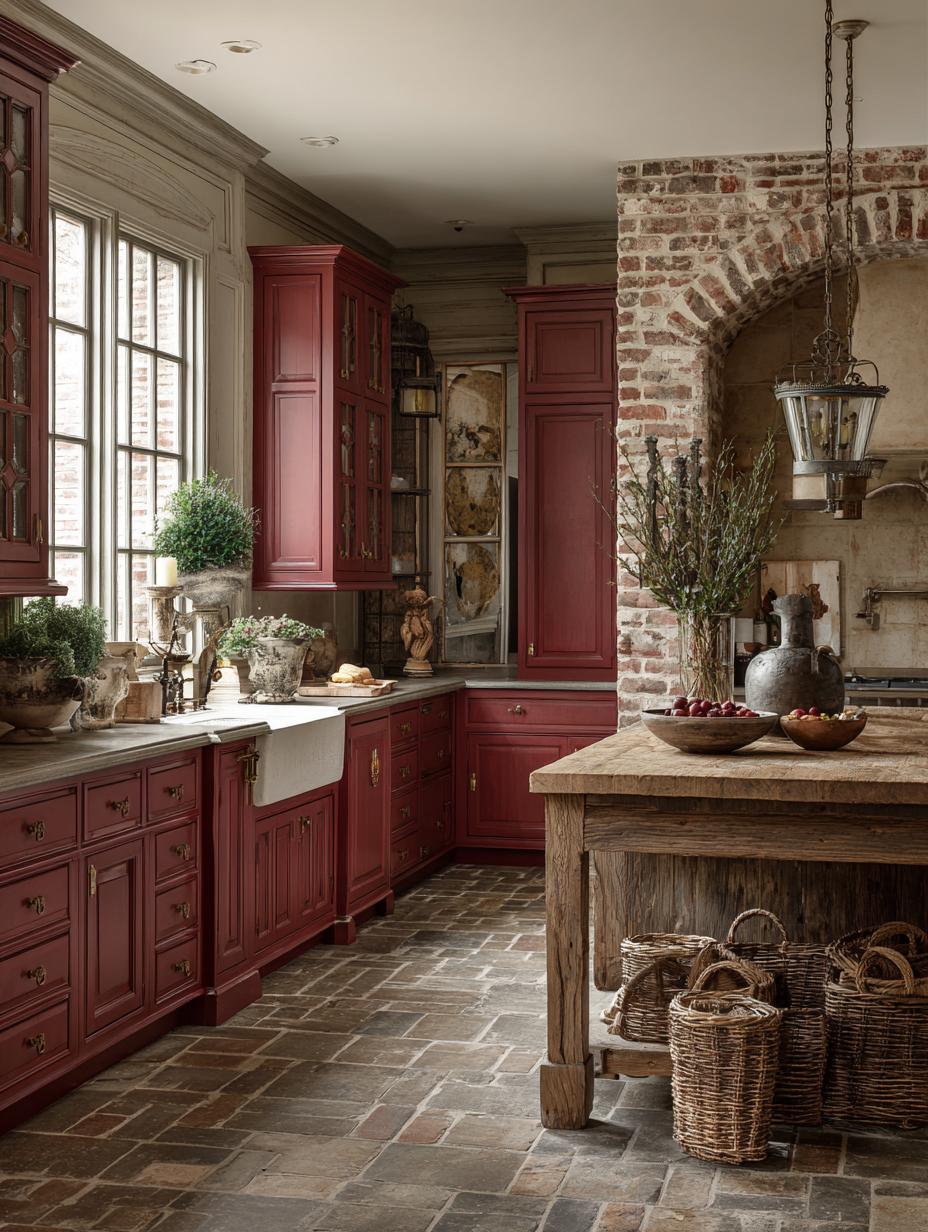
Red cabinets paired with a brick arch and cream tones create a farmhouse palette that feels lived-in. The combination of red, cream, and brick keeps the room from looking too uniform. A wooden island and farmhouse sink add texture, while natural light softens the red. The palette is defined by a roughly 60-30-10 ratio of cream to red to brick. What breaks it would be adding a competing bright color like yellow or blue.
03 / 34Modern High-Gloss Red Materials
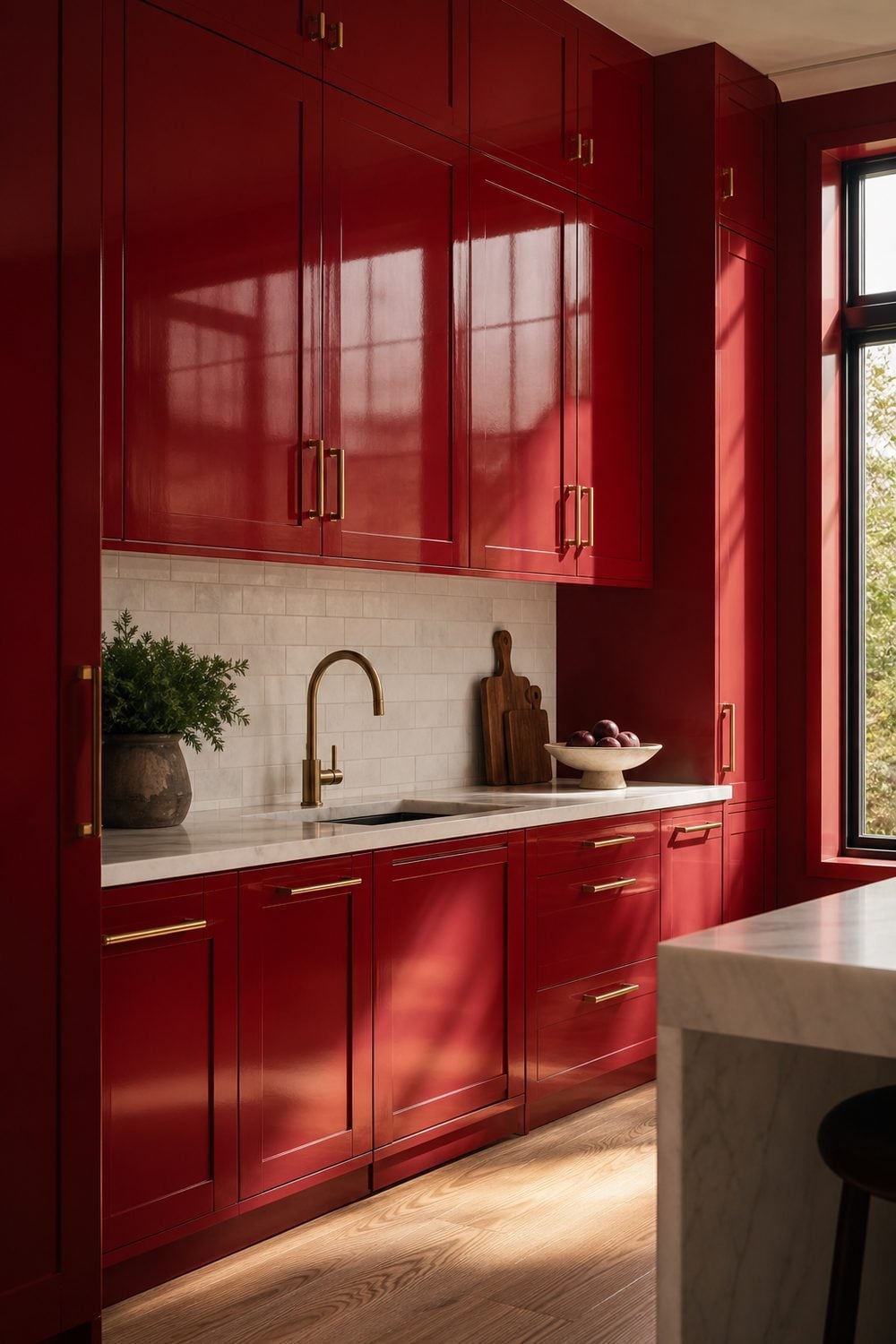
Can high-gloss red cabinets work in a modern kitchen without looking too flashy? The answer is in the mix of materials. High-gloss red laminate cabinets reflect light, so pairing them with matte marble countertops and brass hardware balances the shine. The galley layout benefits from the reflection, making the room feel larger. White and gold accents keep the palette from going dark. This approach suits those who want a polished, contemporary look with a bold color.
04 / 34Matte Red Cabinet Lighting
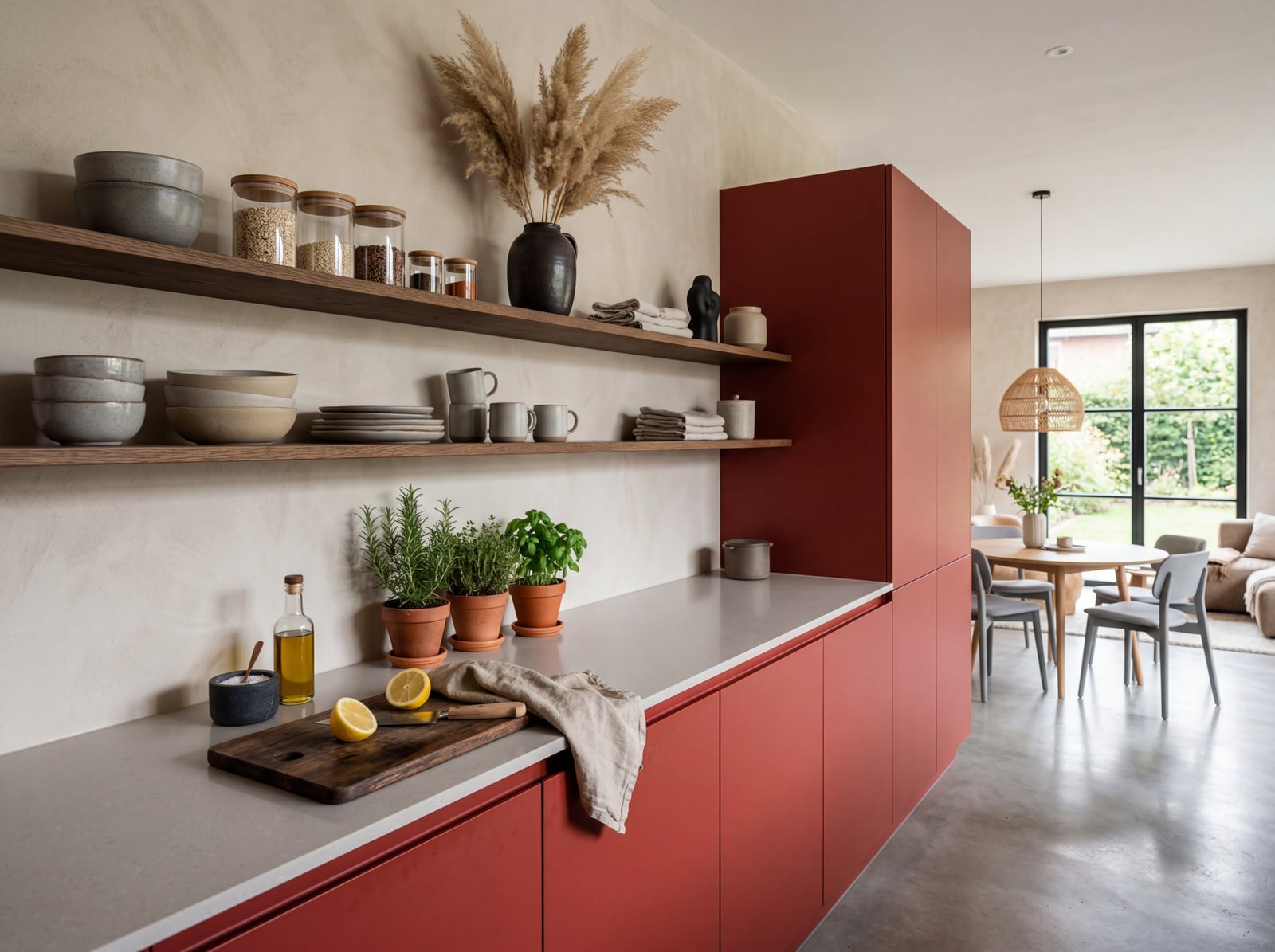
Matte red cabinets absorb light differently than glossy ones, so pendant lights above the island are key. In an open-plan kitchen, the red cabinets stand out against beige walls and wood tones. Open shelving breaks up the red, adding visual breathing room. A dining table nearby benefits from the same light source, tying the space together. For renters, swapping pendant lights is a simple update that changes how the red reads.
05 / 34Cottage Kitchen Storage
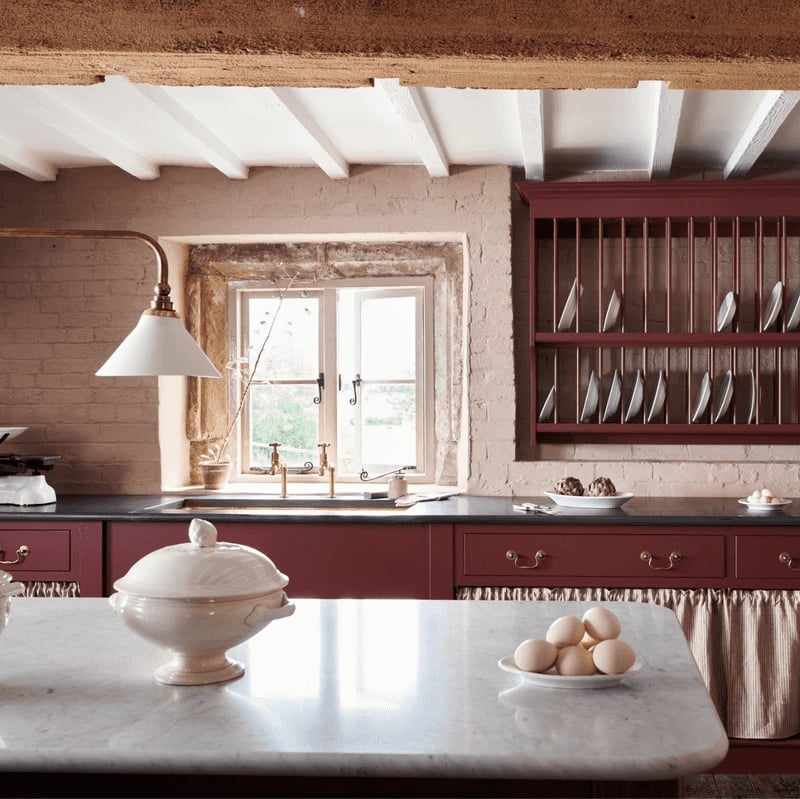
A plate rack above the farmhouse sink makes use of vertical space without adding bulky cabinets. In a cottage kitchen with red cabinets and cream tones, the rack keeps everyday dishes within reach. The sink under the window takes advantage of natural light, making washing up less of a chore. This storage solution works best for those who prefer open shelving to closed cabinets, as it keeps the room airy.
06 / 34Modern Galley Red Cabinetry
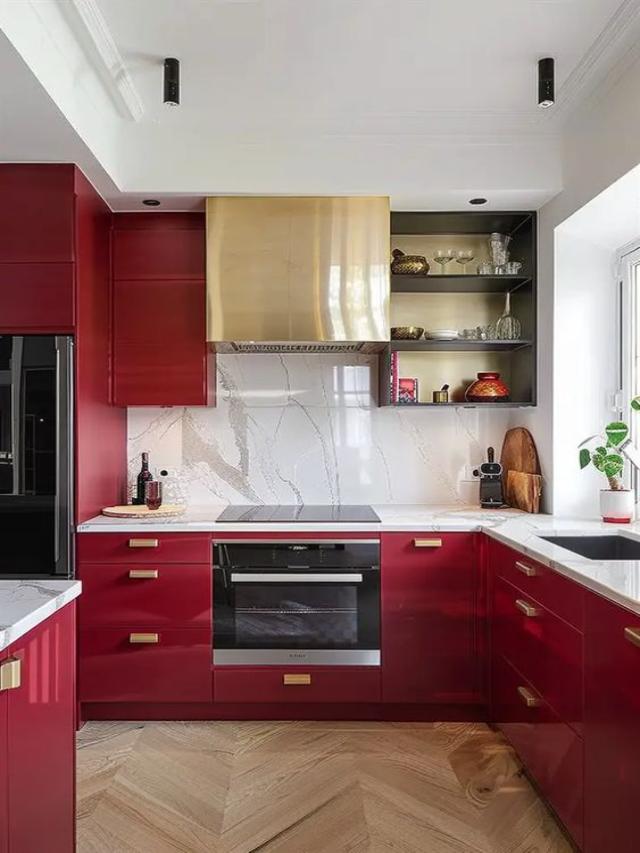
A galley kitchen risks feeling narrow, but this one uses red lacquer cabinets to create depth rather than push the walls in. The high-gloss finish bounces light from the overhead spotlights and under-cabinet strips, so the corridor reads wider than it is. A brass range hood and marble backsplash add contrast without clutter. The gold hardware ties back to the hood, keeping the palette tight. It is a lesson in materials: lacquer reflects, marble grounds, brass warms. For a similar effect in a rental, swap the marble for a peel-and-stick backsplash in a white veined pattern and install stick-on under-cabinet lights. The ratio of red to neutral stays the same, and the room still feels intentional.
07 / 34Traditional Red Cabinet Scale
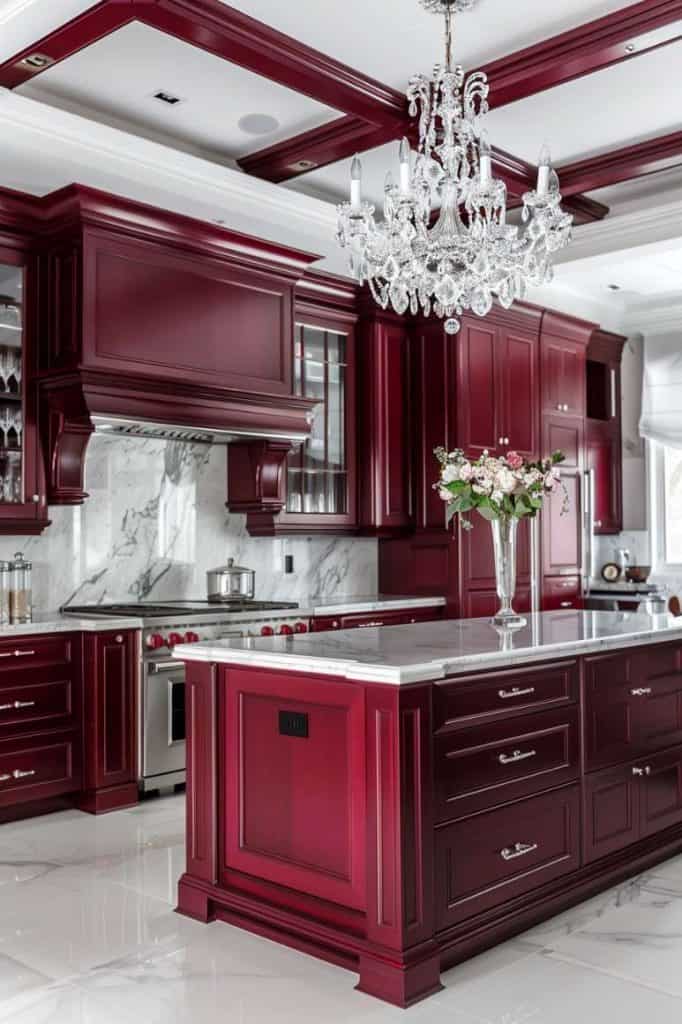
Deep red cabinets in a traditional kitchen can overwhelm a room if they cover every surface. Here, the red is concentrated on the perimeter, while a marble island and crystal chandelier pull the eye up and center. The natural light softens the saturation, keeping the room from feeling heavy. For renters, a large red armoire or a tall red hutch placed against a neutral wall gives the same scale without permanent commitment.
08 / 34Modern Curved Red Island
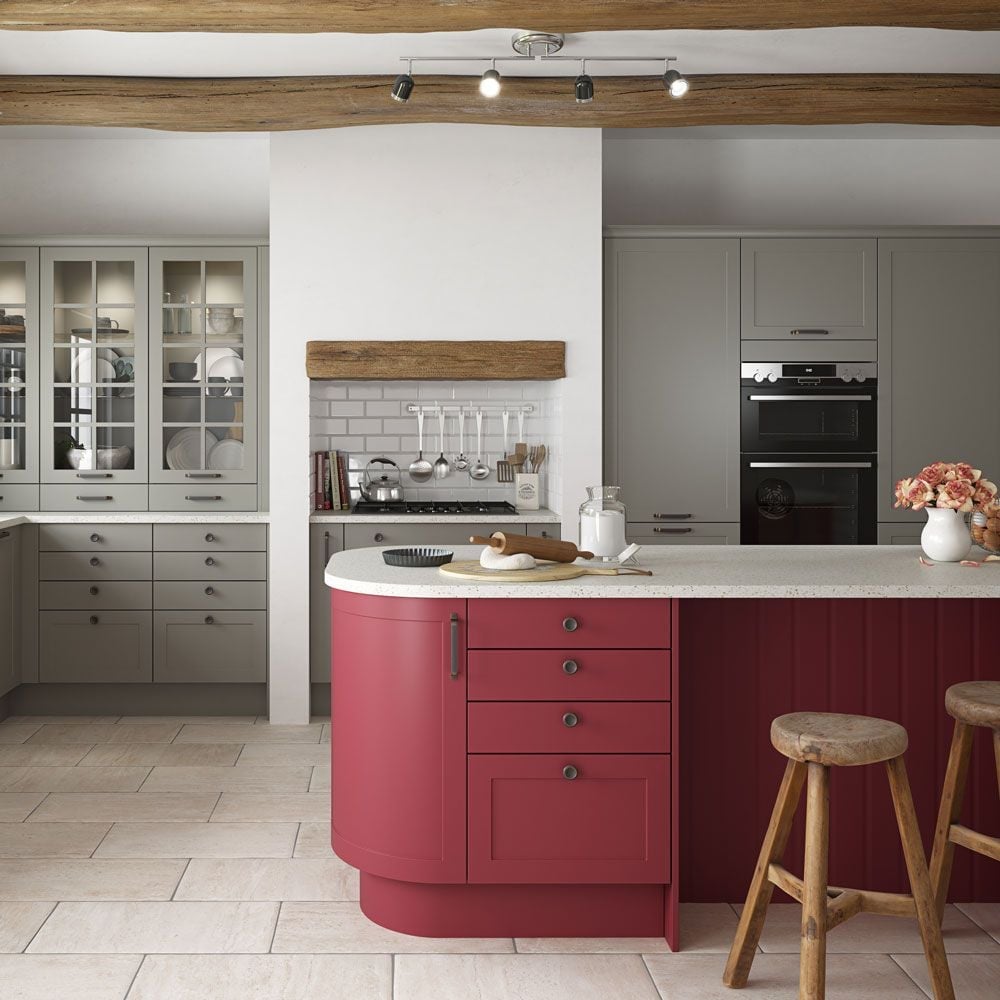
A curved red island is a layout decision as much as a style one. The rounded base softens the kitchen’s geometry, making the open plan feel more fluid. Gray cabinetry and wooden stools keep the red as the focal point without competing. Track lighting above the island reinforces the work zone without casting shadows on the seating side. This is a layout that suits a roomy kitchen where traffic flows around all sides of the island. If your kitchen is tighter, a curved peninsula in the same red lacquer can give the same soft transition without the full island footprint.
09 / 34Bold Red Cabinet and Island Pairing
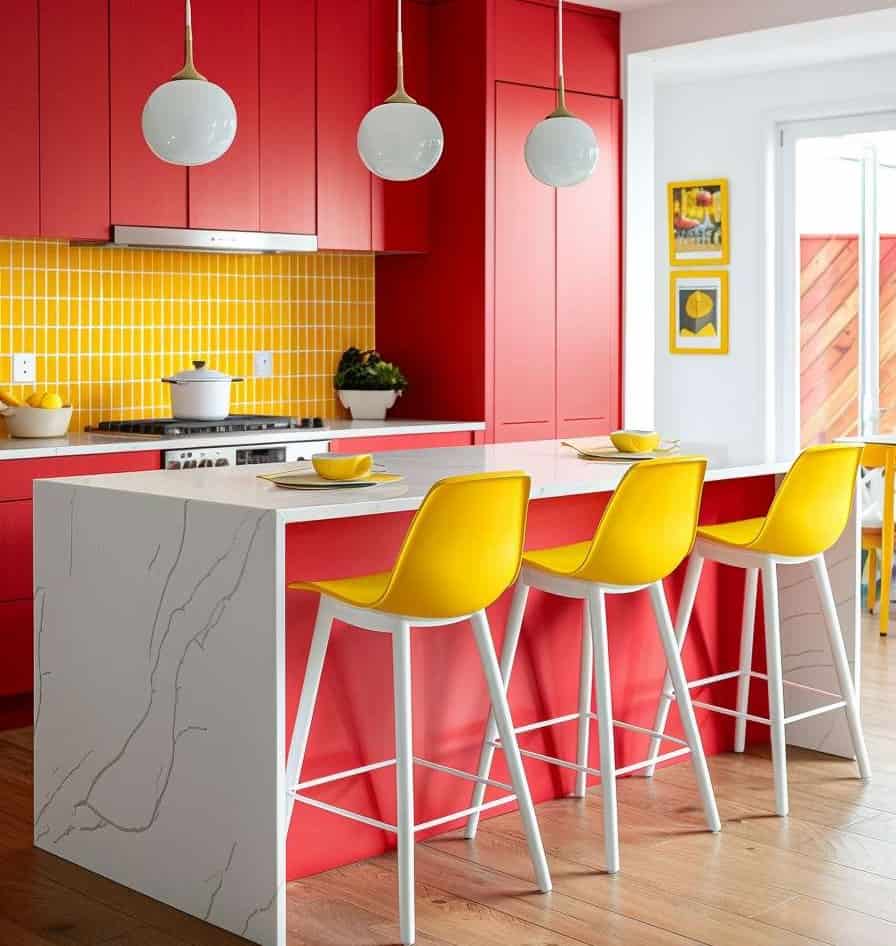
Can red cabinets and a red island live in the same room without it looking like a tomato can? This kitchen says yes, by breaking the red with a yellow tile backsplash and white stools. The yellow is warm but not identical to the red, so the eye registers a palette shift rather than a single color wall. The red on the perimeter cabinets reads as a frame, while the island anchors the center. White quartz counters on both surfaces keep the look clean. The principle is palette ratio: red takes about 60 percent, yellow 10 percent, and the rest white and wood. That balance keeps the bold red from feeling aggressive.
10 / 34Traditional Red Island Elegance
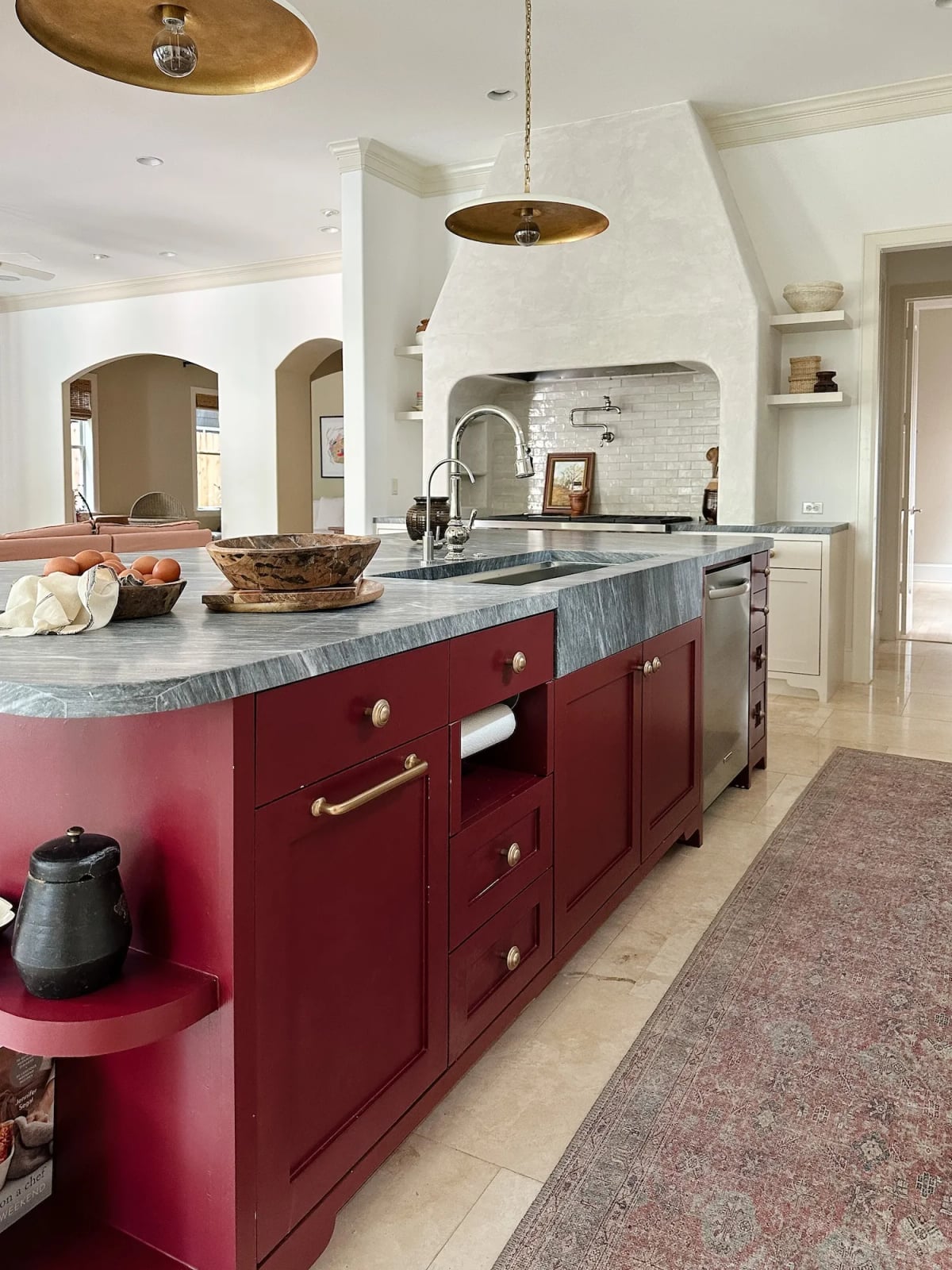
A deep red kitchen island in a traditional open plan works because of its finish. The wood base is painted in a rich, slightly muted red that does not compete with the gray cabinetry behind it. A marble countertop and brass hardware add weight, while a patterned rug under the island softens the transition between cooking and living zones. The natural light from nearby windows keeps the red from reading as dark. This is a styling variation that relies on proportion: the island is large enough to hold the color, but the neutral cabinetry and floor keep it from dominating the room.
11 / 34Modern Red Glass Backsplash
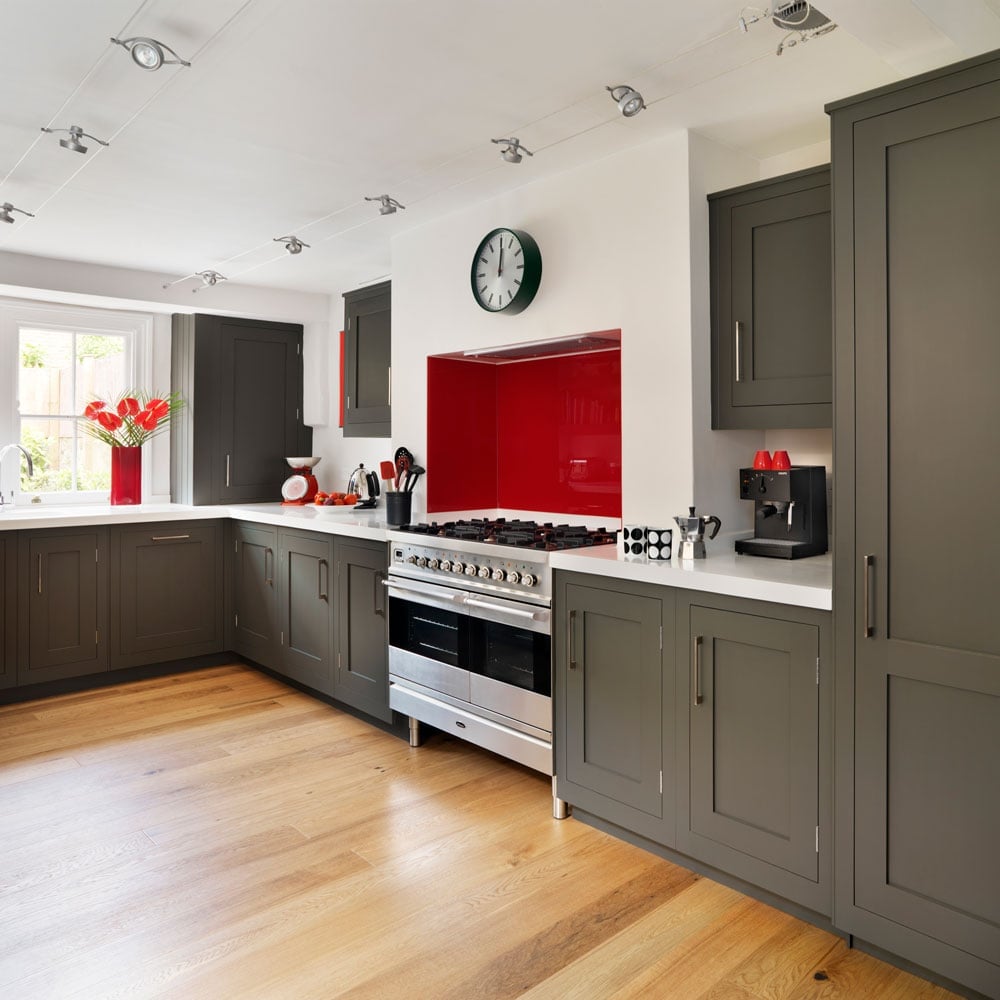
A glass backsplash in a vibrant red works as the main accent in a compact corner kitchen, especially when the room stays neutral. Here, gray base cabinets and a stainless steel range let the glossy red surface stand out without competing for attention. Track lighting above the counter and natural light from a window keep the glass from looking dark or heavy. The practical takeaway is that a single high-impact material in a small space can define the whole room. Keeping the cabinets and counters simple stops the layout from feeling busy, which matters when every inch of counter space is visible at once.
12 / 34Minimalist Two-Tone Red Cabinets
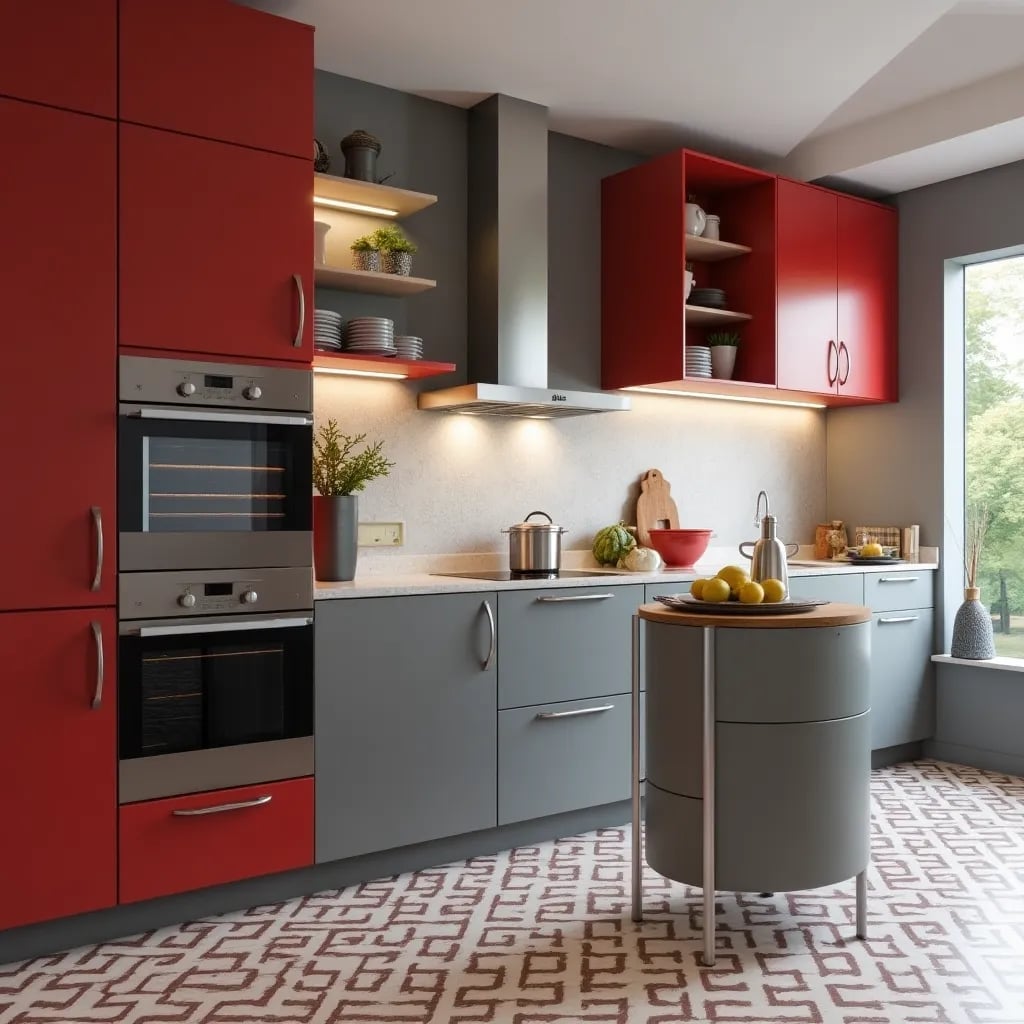
Pairing red cabinets with a second color is a common approach to tone down the intensity, but this kitchen goes a step further by using gray upper cabinets with red lowers in a matte laminate finish. The contrast creates a grounded feel without relying on white or wood to break up the red. Integrated appliances keep the lines clean, and under cabinet lighting makes the lower red cabinets feel deliberate.
The palette ratio here leans toward gray, with red as the accent color on the base cabinets. That balance stops the room from feeling too bold while still letting the red do the work. A stone countertop and tile backsplash add texture without introducing another competing color. For anyone who wants red cabinets but worries about the commitment, keeping red below counter height is a practical middle ground.
13 / 34Compact Red Refrigerator
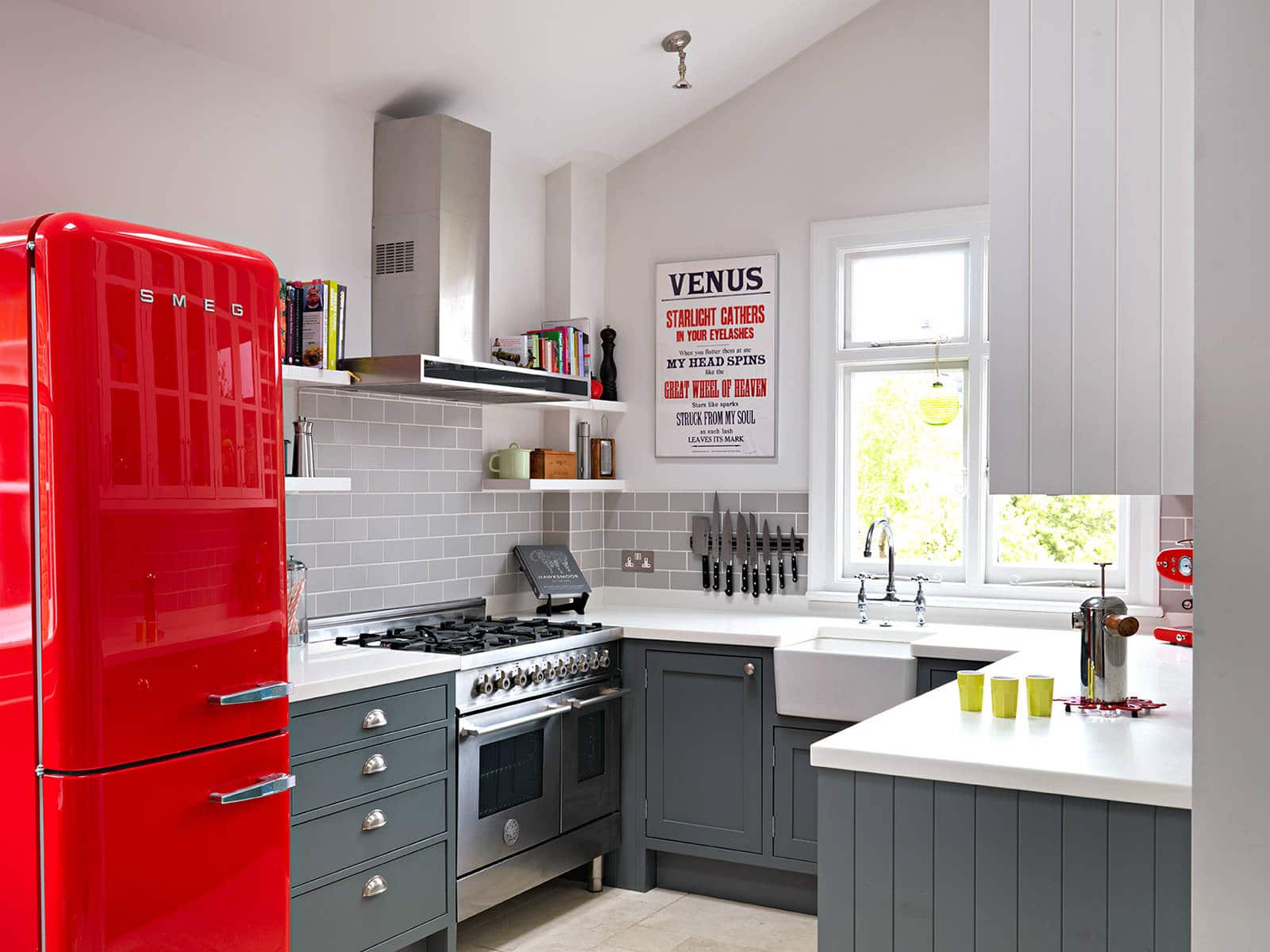
A compact galley kitchen with a red refrigerator proves that a single appliance in a strong color can change the whole feel of a tight layout. The glossy red finish stands out against gray cabinets and a stainless steel range, drawing the eye to the end of the run. Overhead lighting and natural light keep the compact space from feeling closed in. For a small kitchen, choosing one red element and keeping the rest neutral is a straightforward way to add color without overwhelming the room.
14 / 34Eclectic Coral Backsplash
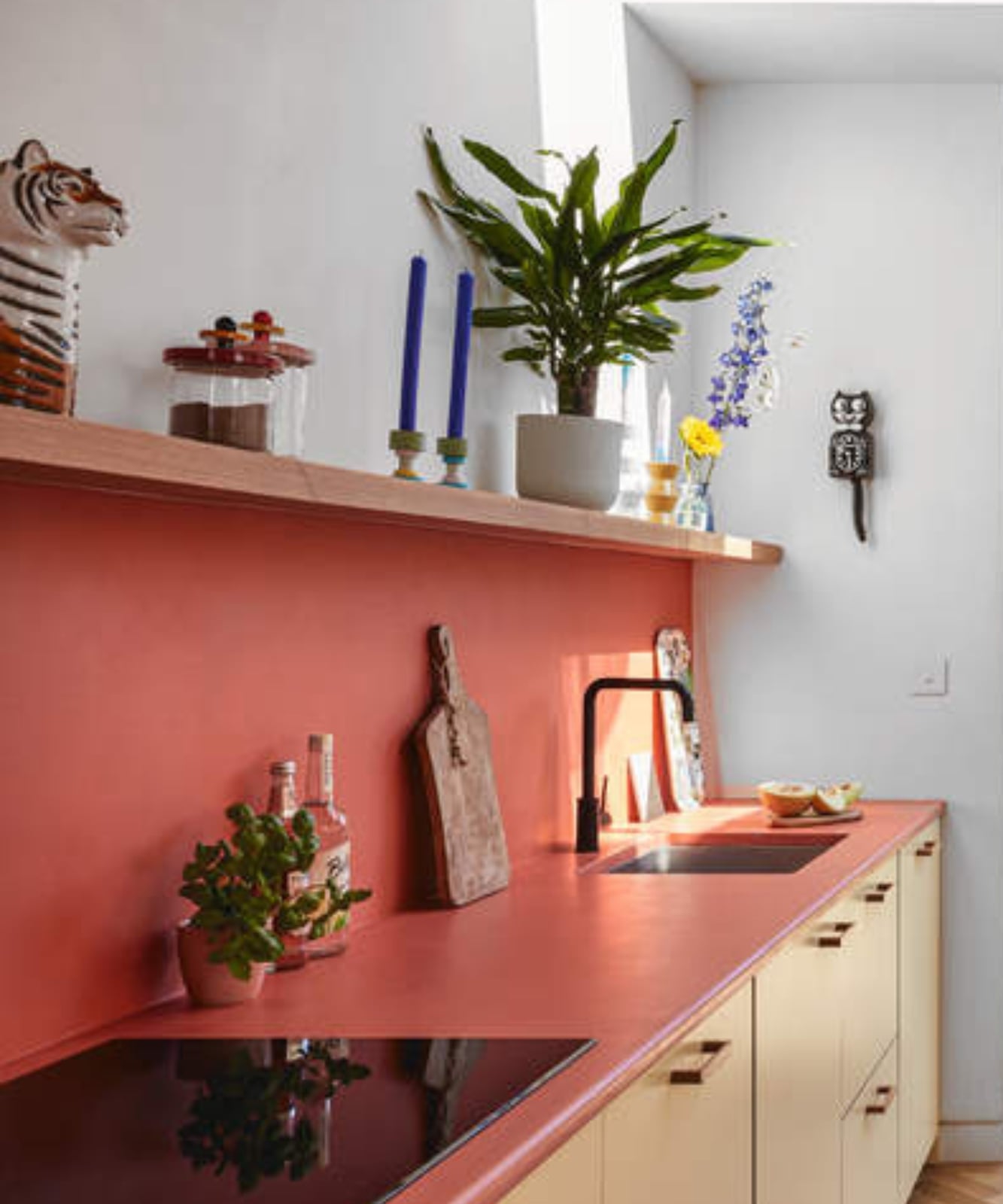
A coral backsplash in a compact galley kitchen reads as warm and collected rather than loud. The coral tone sits between pink and orange, which keeps it from clashing with the cream countertops and black stove. Wood cabinets and a laminate countertop add enough texture to support the color without competing. Natural light and an overhead fixture make the backsplash the clear focal point. The key to making a coral backsplash work in a small layout is letting it be the only bright color in the room, so the eye rests on the tile rather than bouncing around.
15 / 34Traditional Red Accents
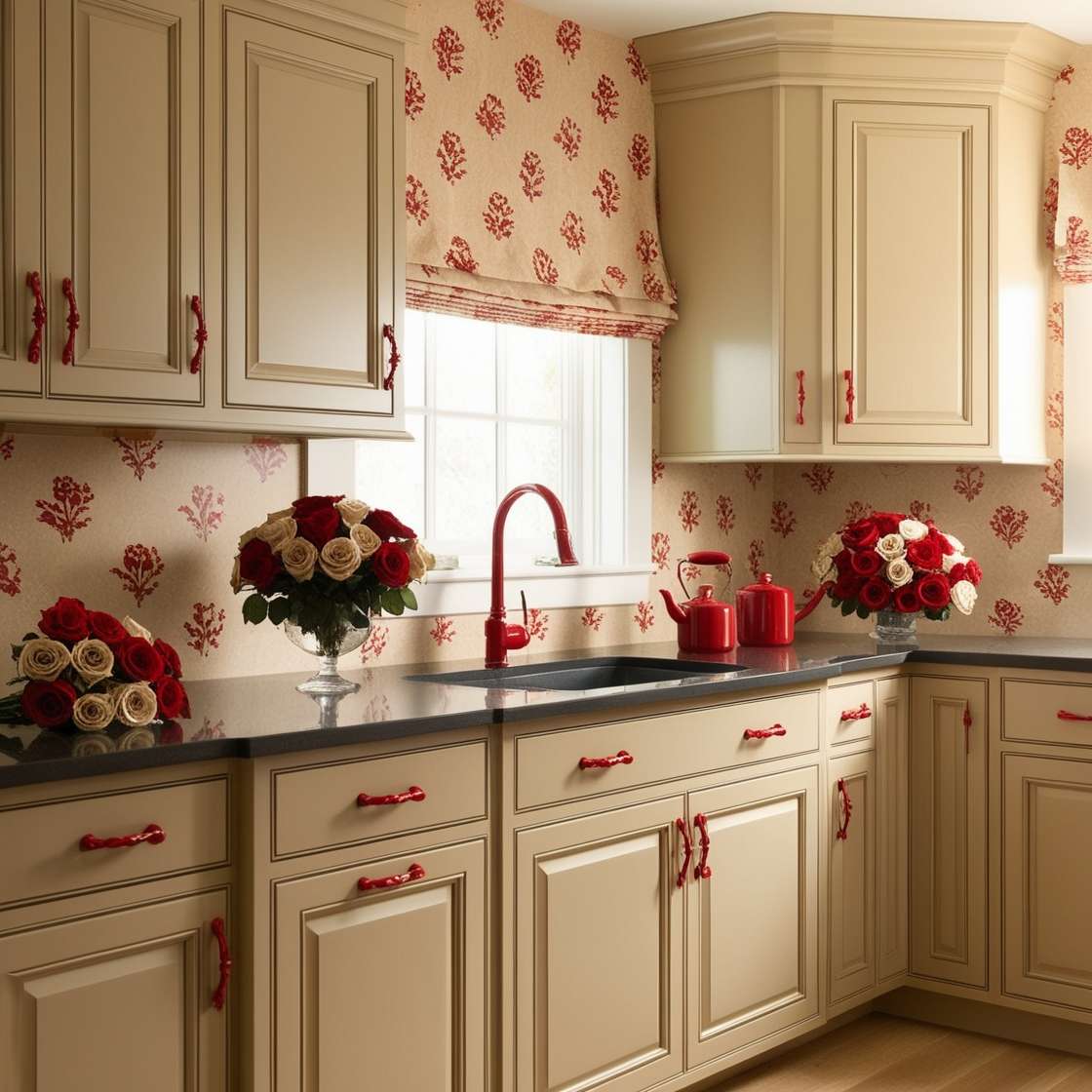
Adding red to a traditional kitchen starts with the small things. In this roomy L-shaped kitchen, the red shows up in the floral wallpaper and the cabinet hardware. The cabinets themselves stay neutral. The beige granite countertops and white shaker cabinets keep the overall palette calm, while the red accents add warmth without demanding attention.
Red floral wallpaper on a single wall creates a focal point behind the sink, and matching red hardware ties the look together. Natural light from a window and overhead fixtures keep the wallpaper from feeling too heavy. For a traditional kitchen that wants a nod to red without a full commitment, keeping the cabinets neutral and layering red through the paper and pulls gives the room personality while staying easy to change later.
16 / 34Eclectic Red Tile Backsplash
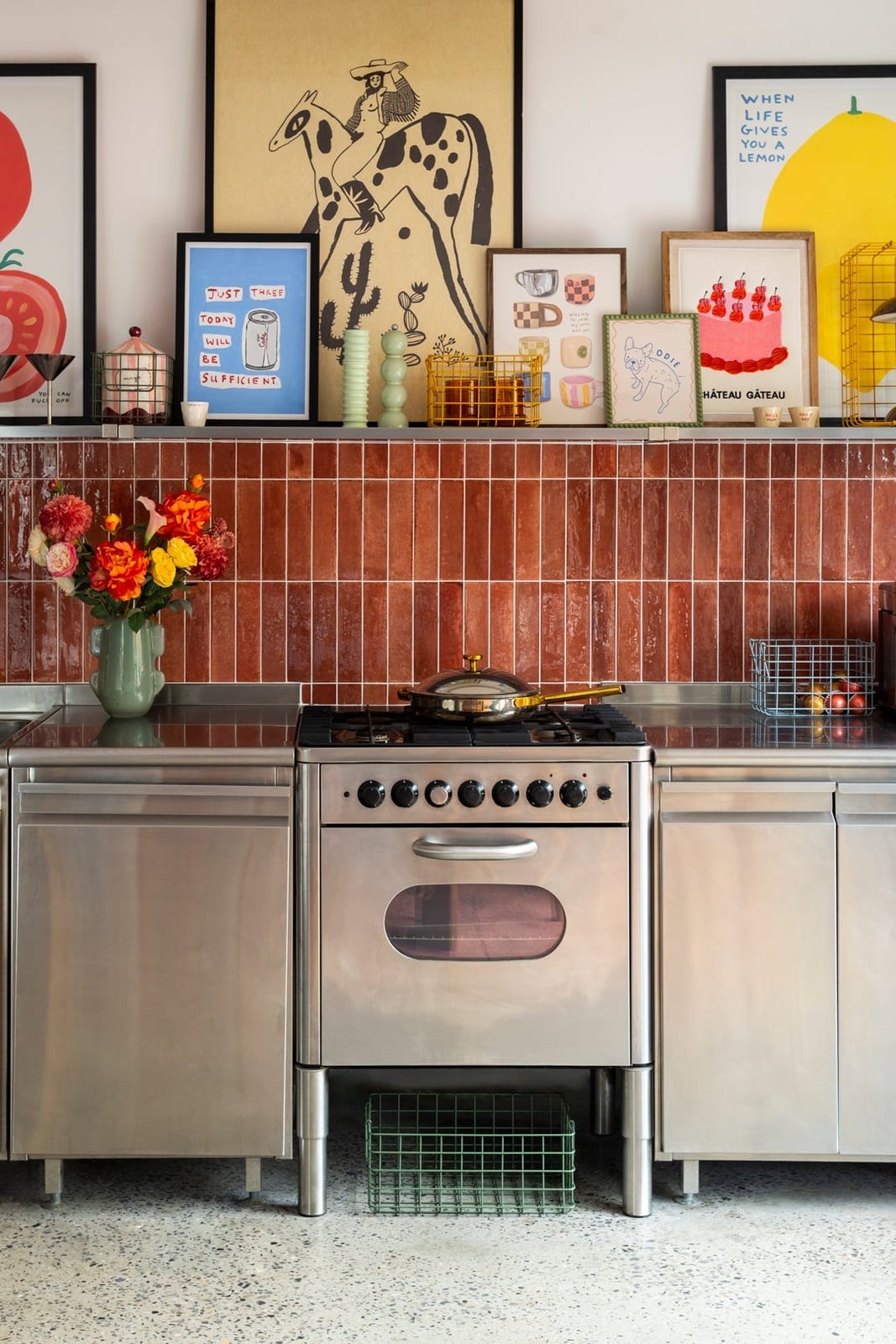
A compact kitchen with a red tile backsplash and a stainless steel range makes the most of a small footprint. The red tile draws attention to the cooking zone, while the surrounding terrazzo countertops and white walls keep the palette from feeling heavy. An eclectic artwork on the counter adds personality. Use the backsplash as the anchor for your color, then let everything else fall into a neutral supporting role.
17 / 34Modern High-Gloss Red Durability, Indoor
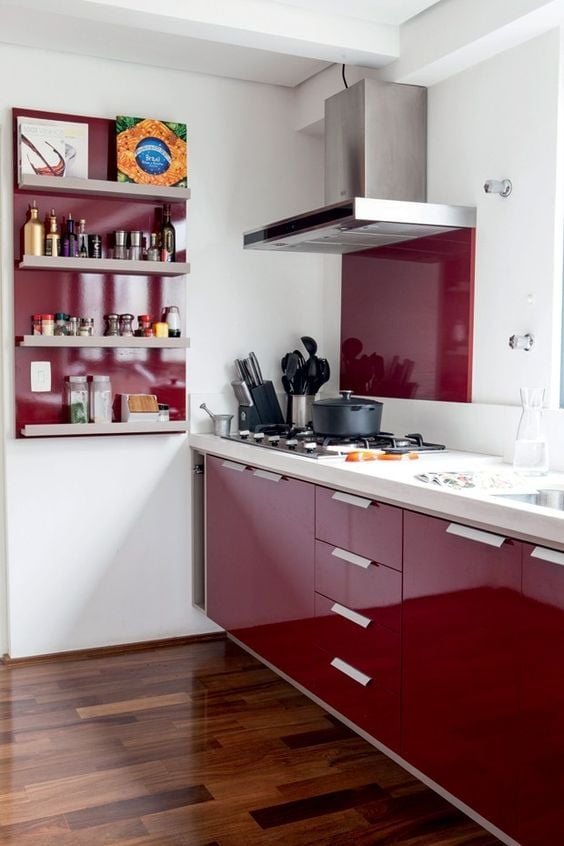
A practical rule for high-gloss laminate cabinets is that they reflect light, which makes a linear kitchen feel larger than it is. In this modern roomy kitchen, the vibrant red high-gloss cabinets line one wall, paired with a stainless steel range hood and white countertops. The glossy surface bounces light from overhead fixtures, keeping the space bright. For renters, high-gloss laminate is a smart choice because it resists fingerprints and wipes clean easily, and it installs without permanent changes to the room.
18 / 34Modern Rustic Red Range
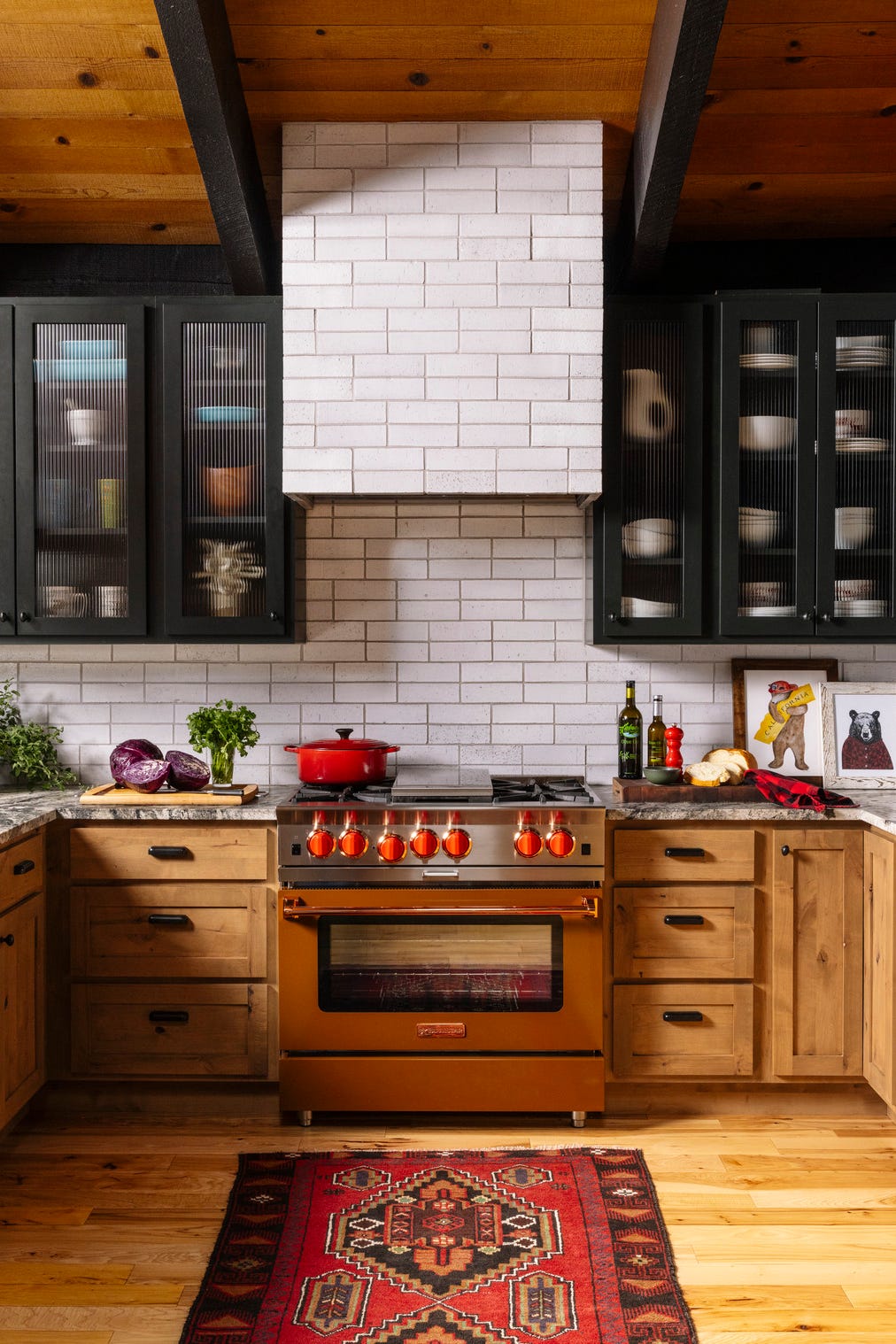
A red range cooker stands out against wood cabinetry and black cabinets, but the look works because the surrounding materials are natural and subdued. The wood tones warm up the red, while the black cabinets ground the two-sided layout. This kitchen feels roomy, with natural light from a window balancing the overhead fixtures.
The alternative to a red range is a stainless steel model, which blends in rather than making a statement. If you want the red to carry the room, keep the other finishes simple. The wood and stone elements prevent the red from feeling too glossy or cold.
19 / 34Modern Red Cabinet Dominance
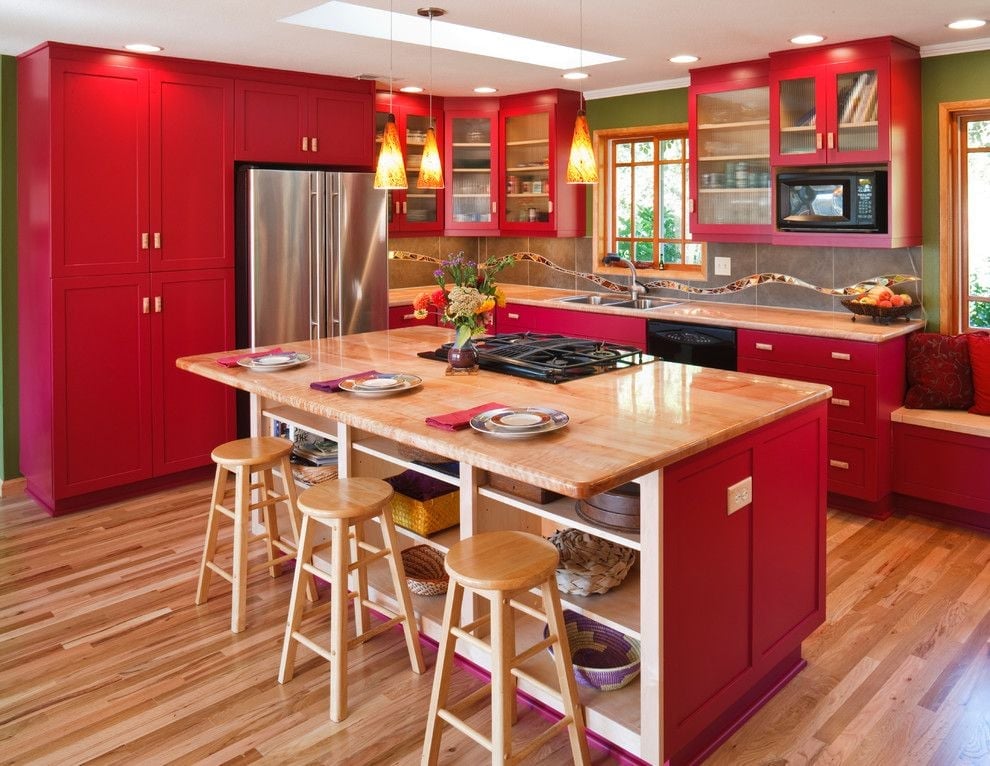
This roomy galley-style kitchen uses vibrant red cabinets on both sides of a central wooden island. The red dominates the space, but the wooden island and stainless steel fridge break up the color. Pendant lights above the island add task lighting while the overhead fixtures handle the general brightness. The layout principle is that a bold color on perimeter cabinets works best when the island uses a contrasting natural material, giving the eye a place to rest.
20 / 34Farmhouse Red Island Style
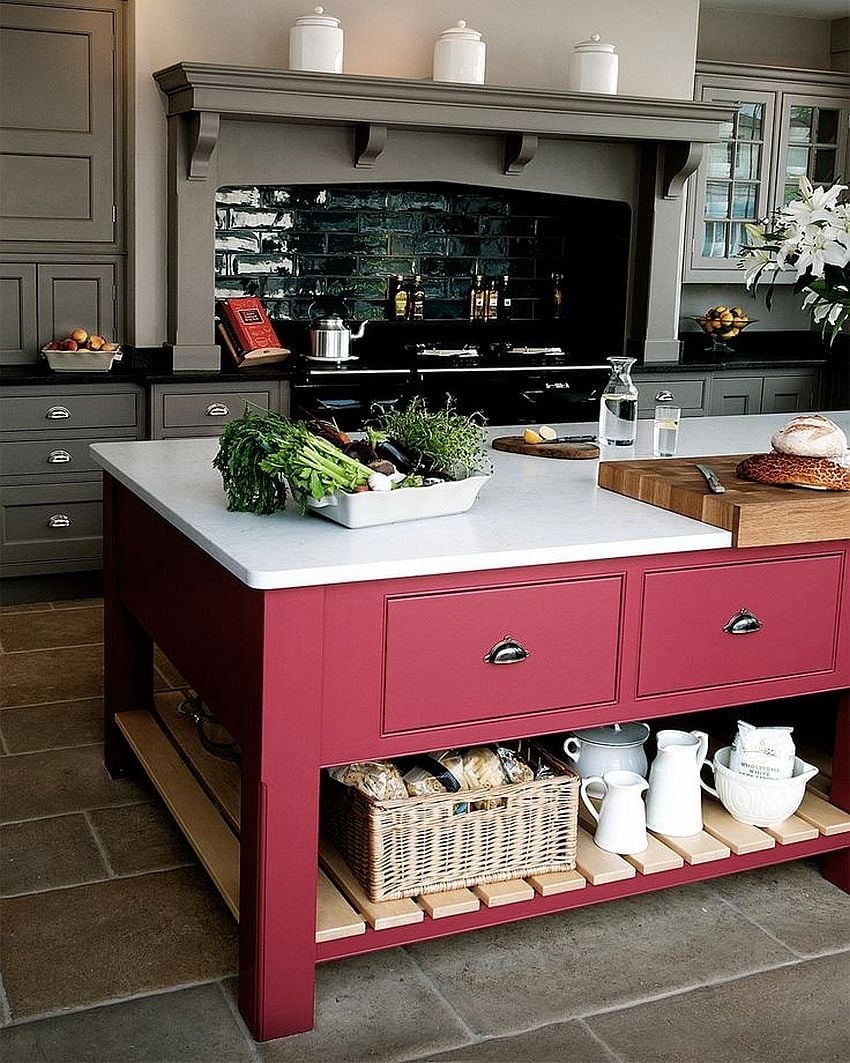
A vibrant red kitchen island with a marble countertop anchors this farmhouse kitchen. The red island is the clear focal point, while the gray cabinetry and stone tile backsplash stay neutral. Light from the window hits the marble, adding a soft sheen that contrasts with the painted wood. The scale of the island works because it has seating on one side, leaving enough walkway space around it. To recreate it, look for an island color that is a few steps bolder than the other pieces in the room.
21 / 34Farmhouse Distressed Red Island
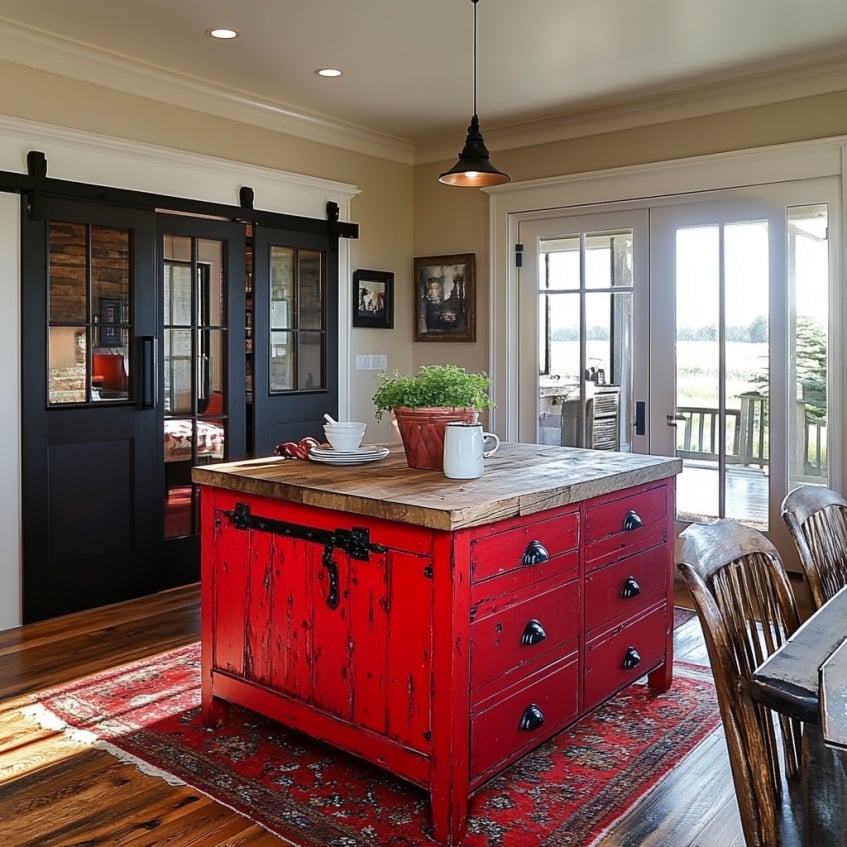
A distressed finish adds texture without demanding perfect upkeep. In this open plan kitchen, the central island is the hero element, painted in a worn red that picks up the wood tones in the flooring and the sliding barn doors nearby. The finish feels lived-in from day one, which is a practical choice for a busy household. The warm wood chairs and black accents keep the palette grounded, while a pendant light above and natural light from the doors balance the richness. The result is a layout where the island anchors the room without feeling precious.
22 / 34Modern Red Stool Accent
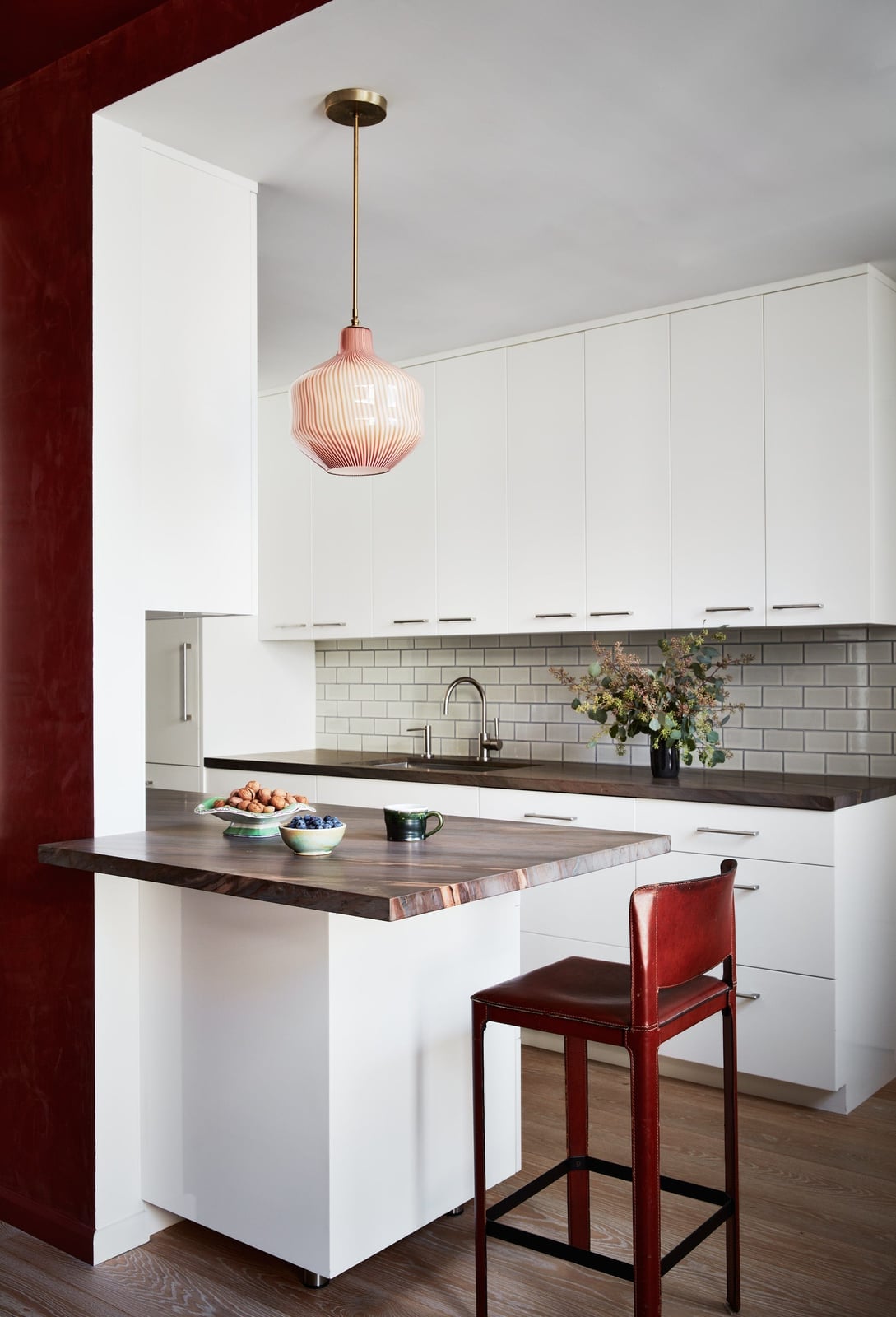
A single red stool shifts the whole palette of this modern kitchen. The island itself is light wood and white laminate, and the pendant light above stays neutral. The red stool is the only saturated note in the room, and it works because the palette is restrained. This is a renter-safe swap: you can change the color of your seating without touching cabinets or counters. The stool becomes the focal point, and the room appears carefully planned.
23 / 34Luxurious High-Gloss Red Cabinets
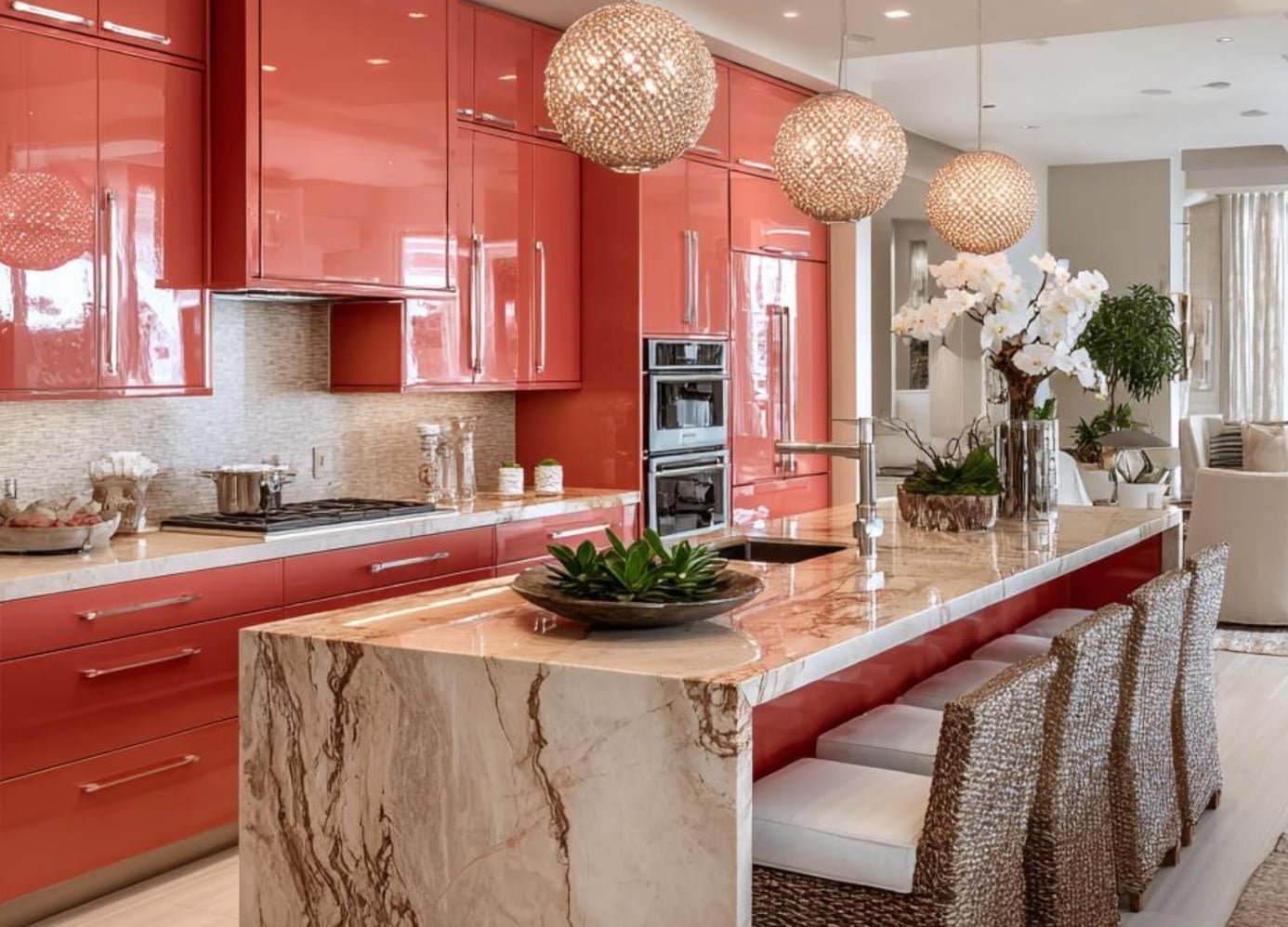
High-gloss finishes reflect light, so they make a room feel larger and cleaner. In this modern kitchen, the red cabinetry is the hero, and the marble island and woven stools provide a neutral counterpoint. The glossy surface bounces light from the pendant lights and recessed fixtures, which keeps the red from reading as heavy. The practical rule for high-gloss laminate is that it resists grease and wipes down easily compared to matte paint. The mix of textures glossy, veined stone, woven seats gives the room depth without competing with the red.
24 / 34Rustic Modern Red Cabinets
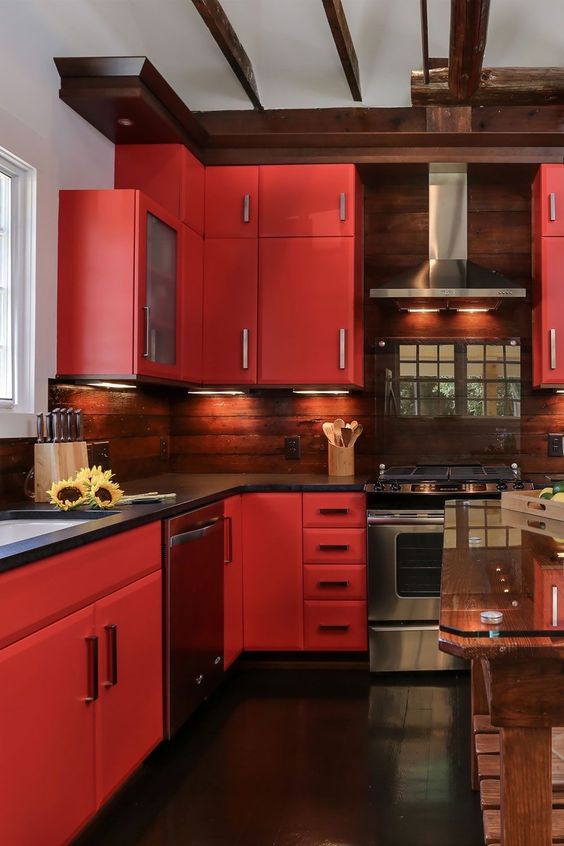
A rustic modern kitchen pairs red cabinets with wood paneling instead of painted drywall. The wood paneling behind the cabinets and the wooden beams overhead add warmth, while the stainless steel range hood and under-cabinet lighting keep the look current. The red cabinets are the bold note, and windows keep them from feeling heavy. The practical takeaway is that wood paneling grounds a bright color like red better than white walls do. It creates a backdrop that feels deliberate, and the L-shape counter keeps the work triangle efficient.
25 / 34Traditional Tall Red Cabinet
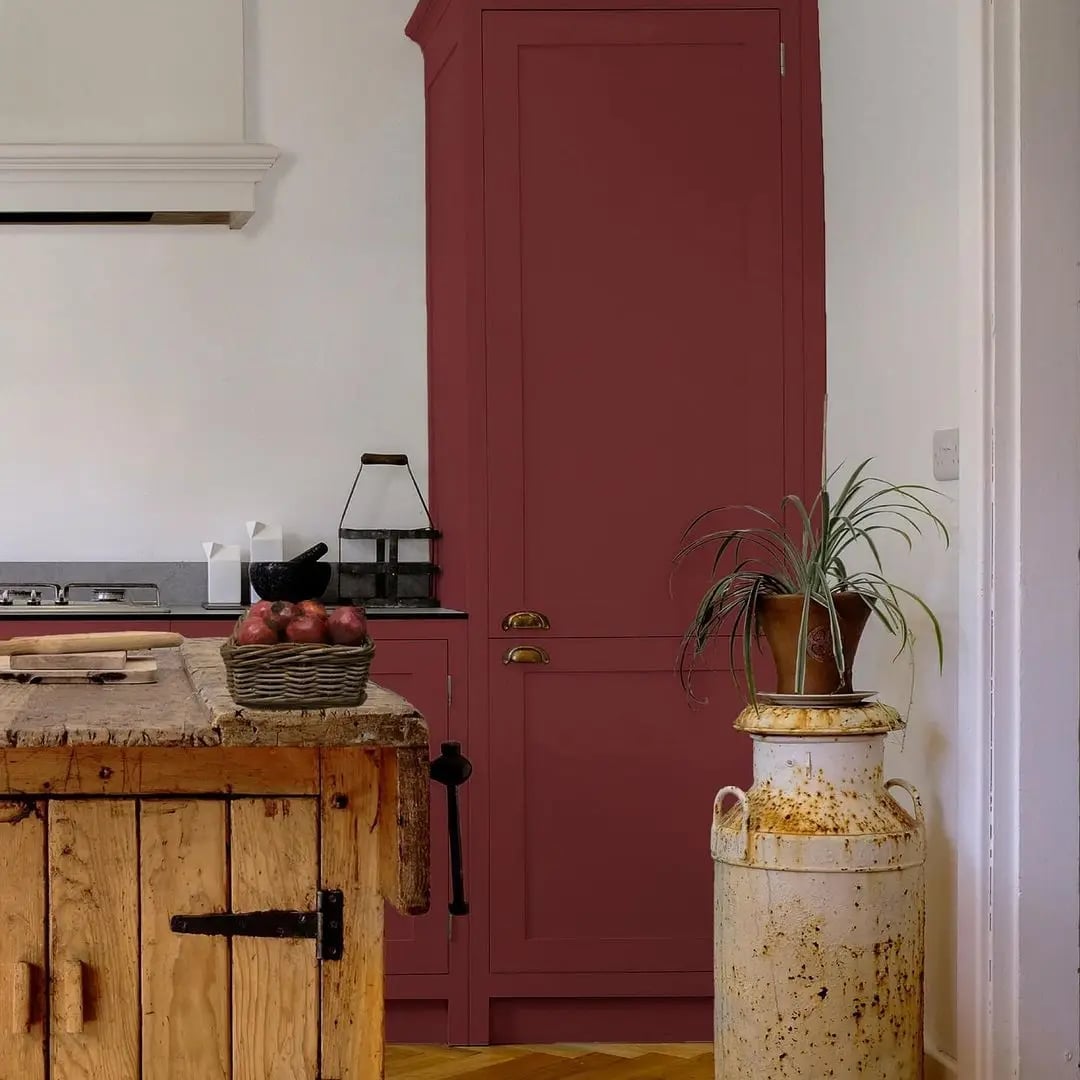
A tall, deep red cabinet in a corner adds vertical storage without taking up floor space. In this traditional kitchen, the tall piece sits next to a wooden island and a potted plant, creating a balanced corner arrangement. The dark red finish looks like a furniture piece, not built in cabinetry, which is a useful trick for renters or anyone who wants to add color without a full renovation. Overhead light and natural light keep the corner from feeling dark. The tall cabinet offers pantry storage that is easy to access and visually anchors the room.
26 / 34Farmhouse Red Cabinets and Stone
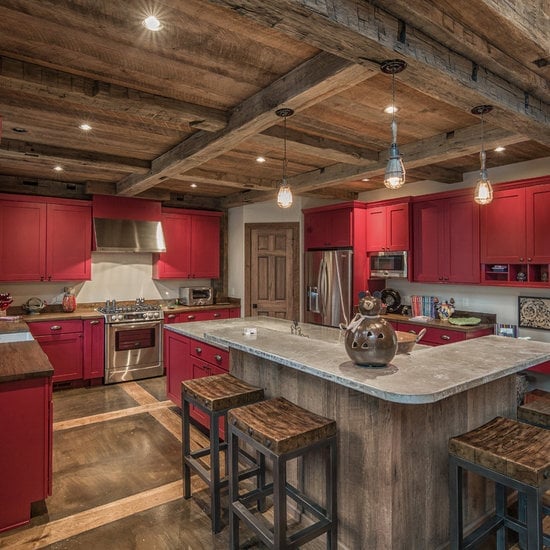
Vibrant red cabinets anchor this farmhouse kitchen, drawing the eye while the stone island keeps the layout grounded. The warm wood beams overhead and the gray stone surface add texture to the space. This room works because the red is concentrated on the perimeter cabinetry, leaving the central island neutral. For a similar balance, pair a bold cabinet color with a stone or butcher block counter that shares an undertone with the wood in the room. The pendant lights over the island and the windows soften the saturation, so the red reads rich.
27 / 34Modern Glossy Red Cabinets
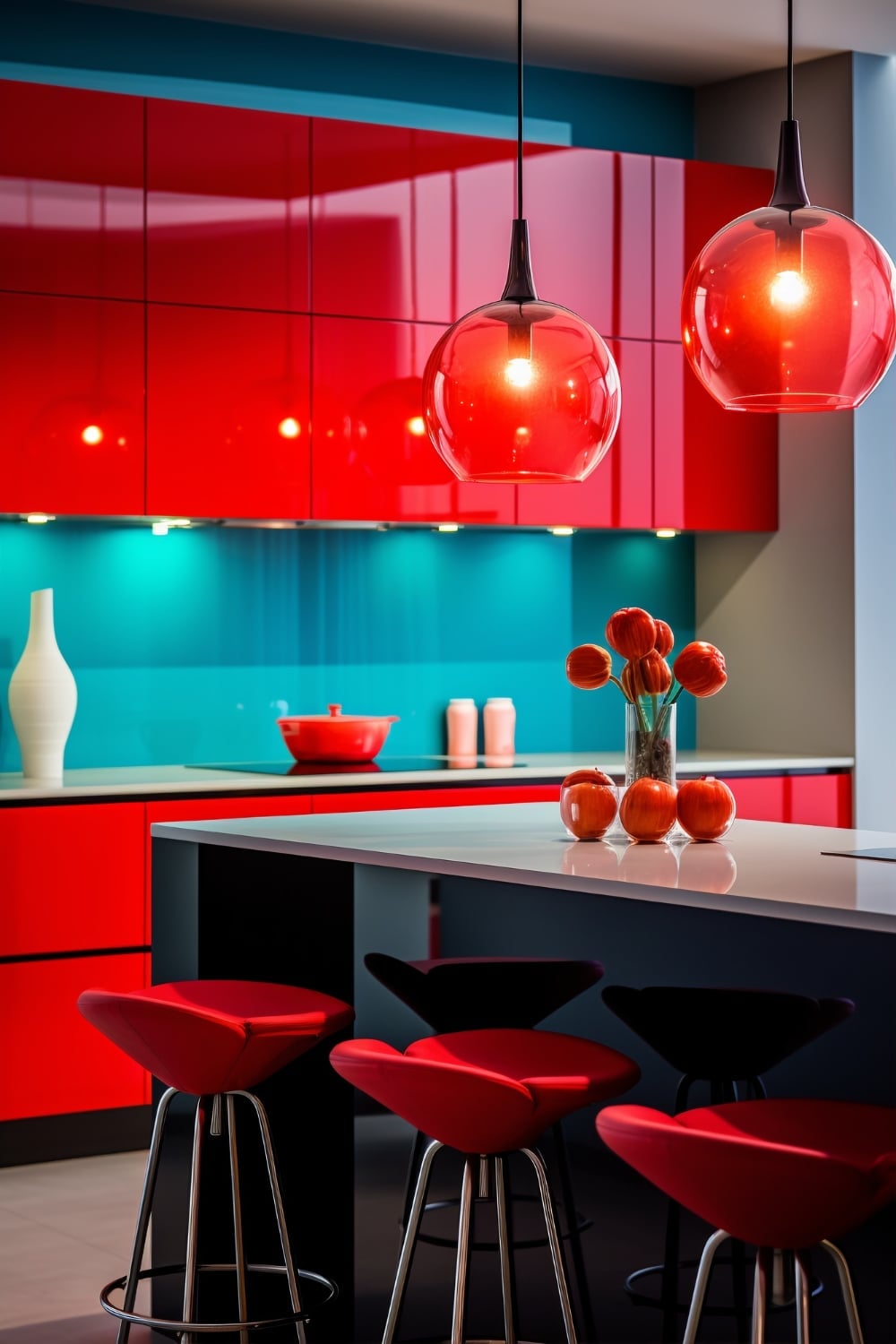
High-gloss red cabinets reflect light, so they need a matte or textured counterpoint. Here, a turquoise backsplash and white island provide that contrast. The glossy surface reflects light from the pendants and under-cabinet strips, making the red appear brighter during the day and deeper at night.
If you rent or want to test red before committing, focus on the backsplash and accessories. A turquoise tile backsplash is a permanent change, but a glossy red peel-and-stick film on the cabinet fronts gives the same reflective effect without altering the original doors. Pair it with white or neutral countertops and metal bar stools to echo the modern look.
28 / 34Farmhouse Red Cabinets Compact
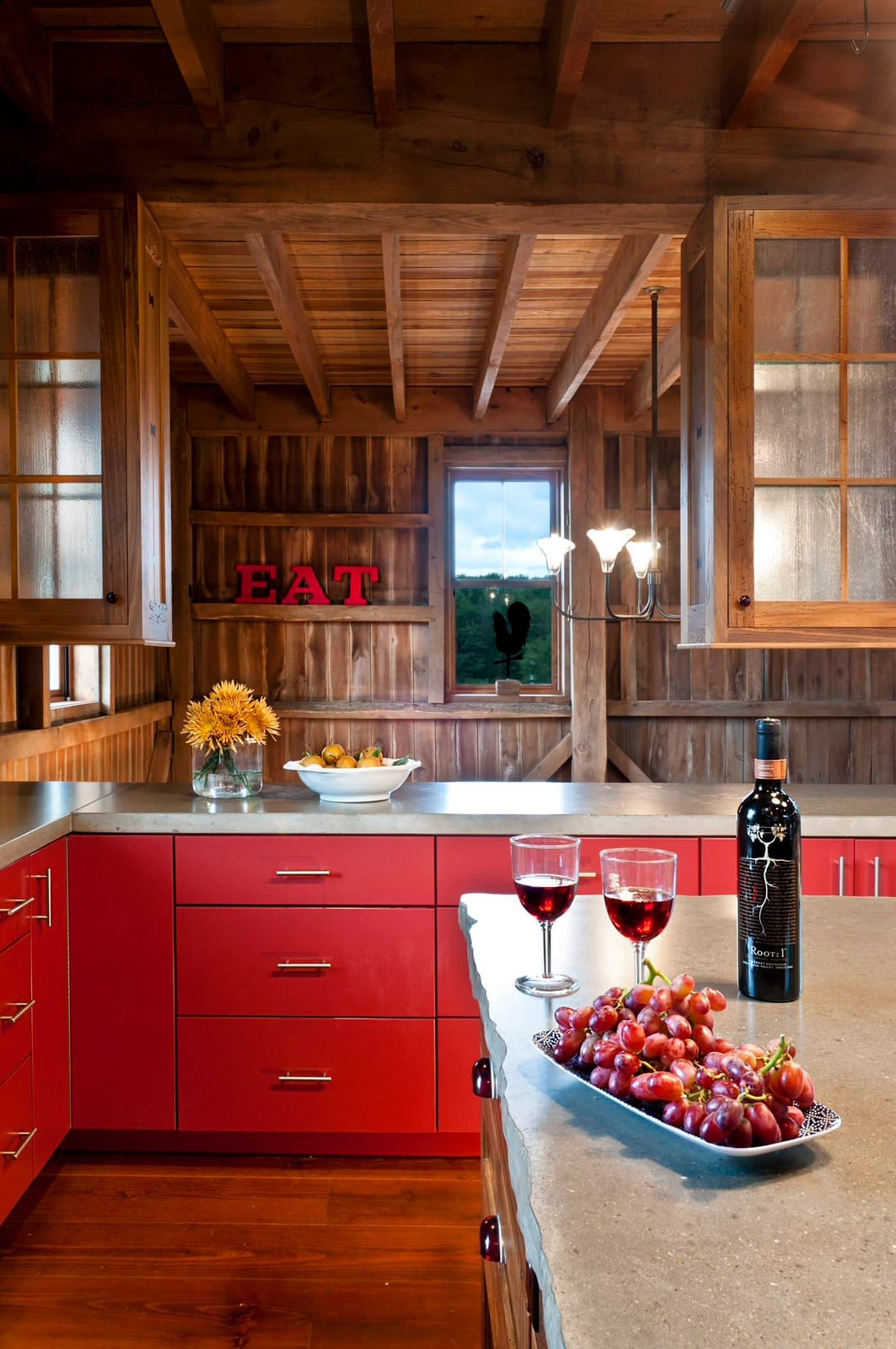
In a compact u-shaped kitchen, red cabinets paired with a concrete countertop keep the room from feeling closed in. The concrete’s gray tone absorbs light, preventing the red from bouncing too much color into a small space. Wooden beams and a chandelier add farmhouse character without taking up floor area. The key is the concrete: its matte, cool surface lets the red cabinets stand out while the u-shaped layout maximizes every inch of counter space.
29 / 34Farmhouse Red Plate Rack Display
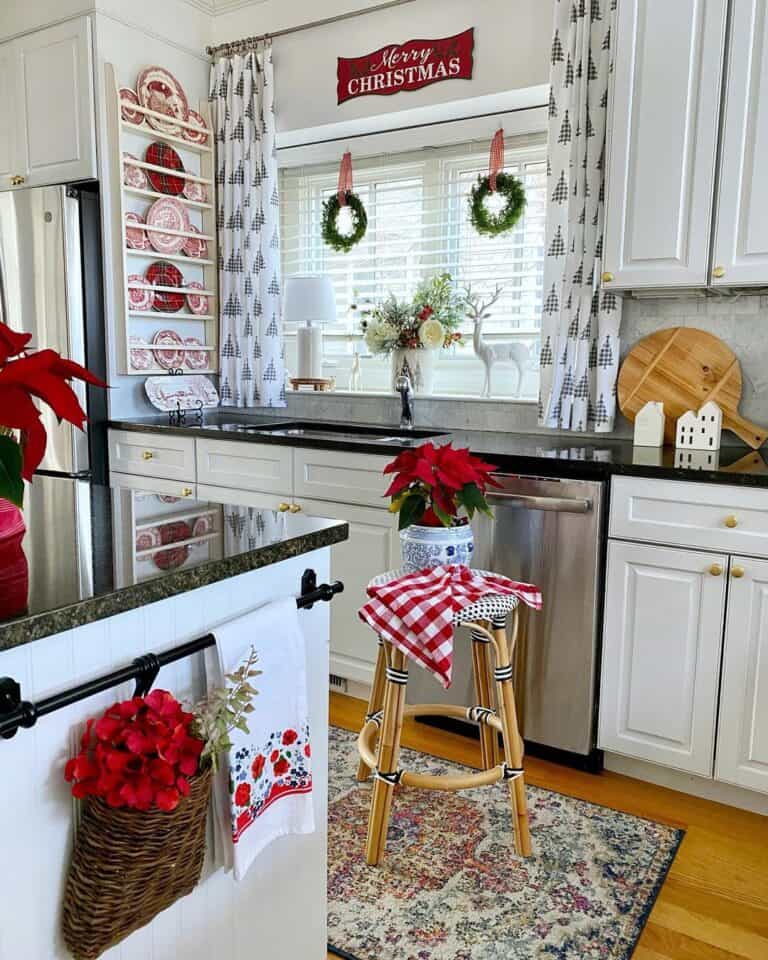
A red plate rack mounted over an open counter turns everyday dishes into a display. The red paint on the rack picks up the warm tones in the wood stool and basket below, creating a cohesive farmhouse look. White plates pop against the red, making the rack itself a focal point. The natural light from the nearby window keeps the display from feeling heavy. For durability, a painted plate rack holds up best when dishes are dry before stacking, as moisture can lift the paint over time.
30 / 34Modern Retro Red Refrigerator
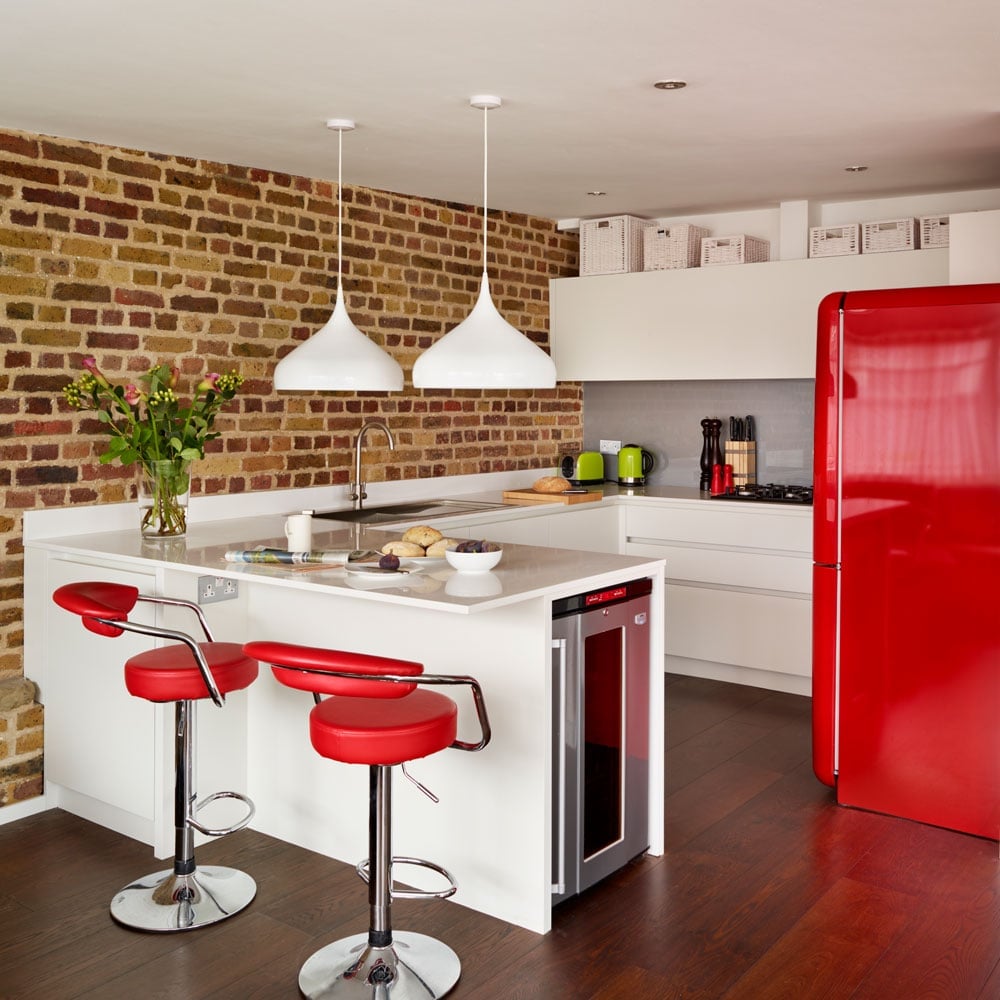
A bright red retro refrigerator reads differently than a full set of red cabinets. It acts as a single accent piece rather than a dominant color field. Here, the red refrigerator stands against a brick wall, with a white island and red stools completing the look. The brick wall adds texture that stops the red from feeling too slick or toy-like.
Proportion matters with a statement appliance. A retro fridge is narrower and taller than a standard model, so it works best in a kitchen where the island or surrounding cabinetry provides enough visual weight to balance it. The white island keeps the layout airy, while the red stools echo the fridge color at a lower height, tying the room together without repeating the red on a larger surface.
31 / 34Modern Red Cabinets White Island
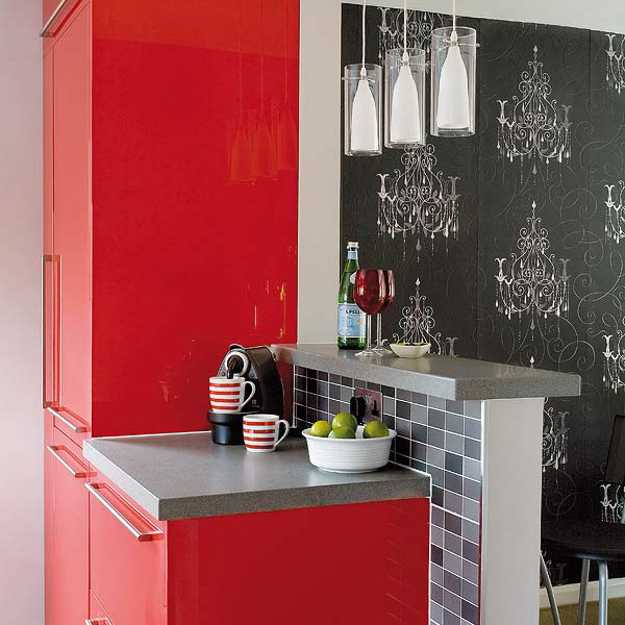
Bold red cabinetry takes center stage here, and the white island keeps the layout from feeling too intense. The red cabinets wrap the perimeter, drawing the eye around the room, while the white island with black chairs anchors the space for seating. Pendant lights above the island add focused task lighting without competing with the overhead fixtures. This arrangement works well in a roomy kitchen because the white island breaks up the red and gives the eye a place to rest. The result is a kitchen that feels energetic but still balanced, with clear zones for cooking and gathering.
32 / 34Compact Traditional Red Base Cabinets
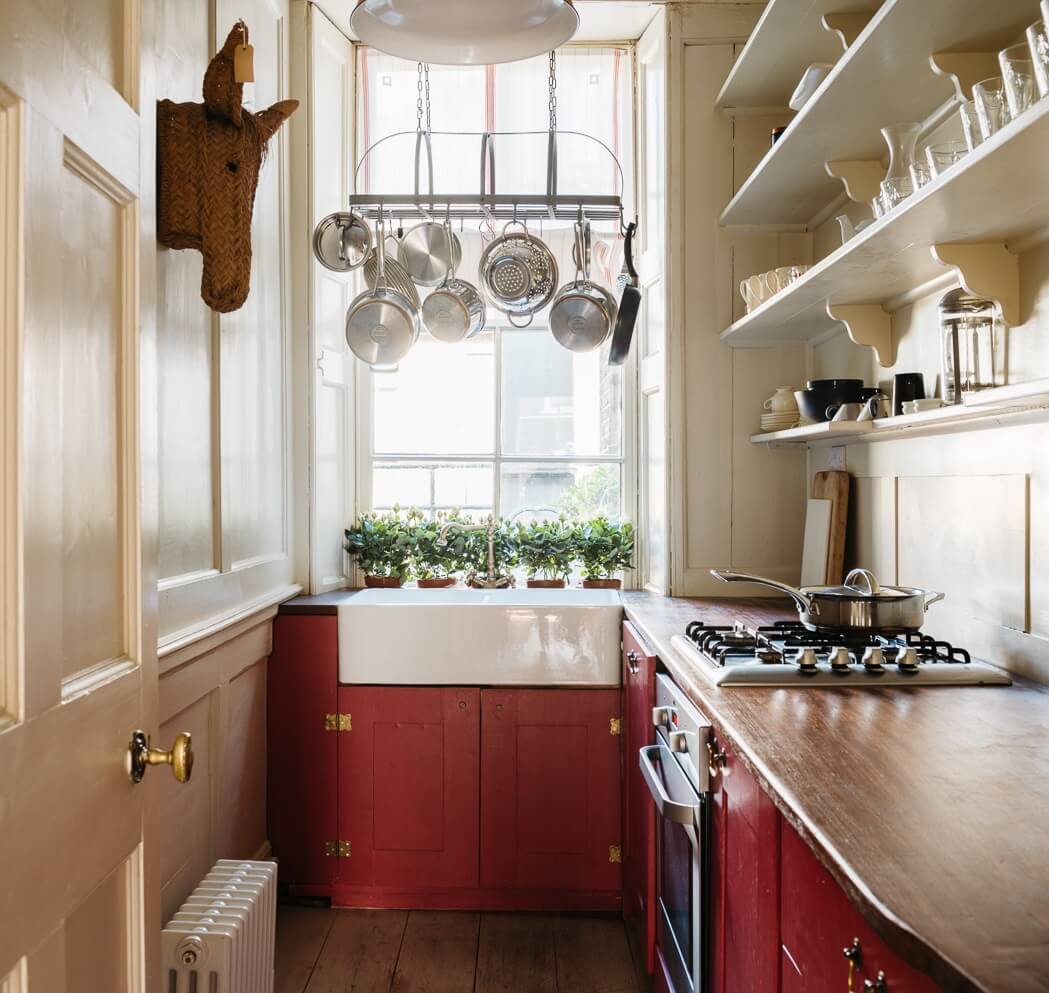
Vibrant red base cabinets bring warmth to a compact traditional kitchen. Paired with cream upper walls and wood accents, the red anchors the lower half of the room without overwhelming it. A farmhouse sink sits under the window, taking advantage of natural light, and hanging pots add a practical touch within easy reach. In a narrow galley layout, keeping the red on the base cabinets creates a grounded look that still lets the space breathe. The cream and wood tones soften the red, so the palette feels traditional rather than loud, which matters in a smaller kitchen where color needs to work hard.
33 / 34Modern Contrasting Red Cabinets
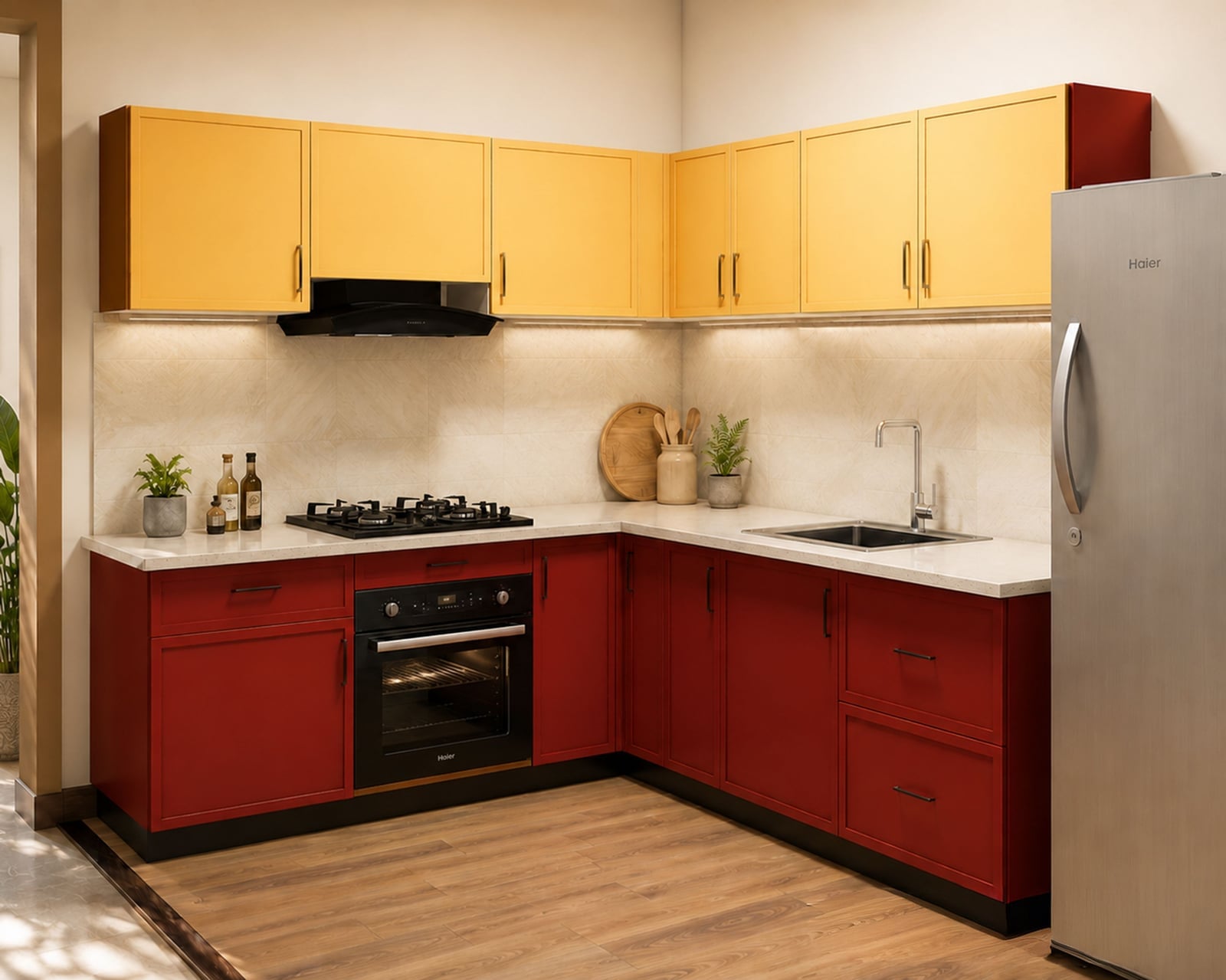
Instead of sticking with one color, this compact L-shaped kitchen pairs red base cabinets with yellow upper cabinets for a playful contrast. The red anchors the lower half, while the yellow draws the eye upward, making the room feel taller. A stainless steel fridge and under cabinet lighting keep the look clean and modern. The key to this palette is using red as the grounding color and yellow as the accent, rather than splitting them evenly. That ratio keeps the kitchen from feeling chaotic. The silver hardware and appliances act as a neutral bridge, letting both colors stand out without clashing.
34 / 34Final Thoughts
Red in a kitchen is not about volume. It is about placement. A single island, a set of base cabinets, or a backsplash can shift the energy without overwhelming the room. The best red kitchens let the color do the work and keep everything else simple. Stick to neutral counters, natural wood, or white walls, and red becomes a feature rather than a flood. That balance is what makes these spaces last. Keep the layout clean, invest in good lighting, and let red be the accent that earns its spot.