Porch columns do more than hold up the roof. They set the tone for your home’s exterior, framing the view and defining the style before you even step inside. Whether you lean toward traditional, modern, or rustic, the right column can shift the whole feel of your porch.
This roundup of 28 porch column ideas shows real homes where the columns are the main event. You will see how materials, proportions, and small details like lighting or trim can turn a structural necessity into a design feature. From stately white pillars to dark wood posts with stone bases, each idea offers a practical take on what works outside.
01 / 29Grand Traditional Porch Columns with Stone Bases, Close-Up Take
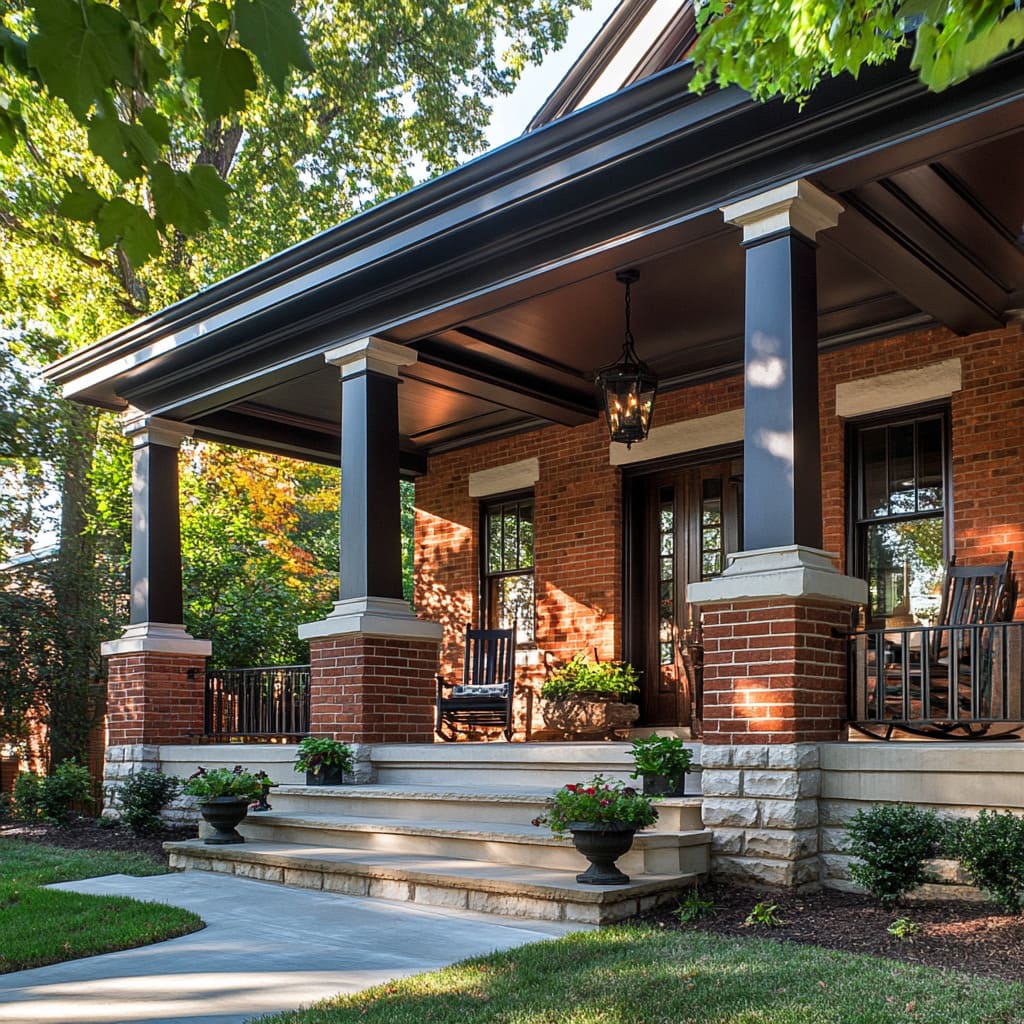
The columns here do not just hold up the roof. They define the entire entrance with their scale, creating a visual gateway from steps to door. Dark wood pairs with stone bases that anchor each column to the brick pathway, while rocking chairs and urn planters sit within the column lines rather than beyond them. The layout uses the columns to mark the edge of the porch, so the space feels roomy without being shapeless. A warm lantern on each side of the door echoes the metal accents in the stone bases, tying the materials together.
02 / 29Modern Porch Columns with Integrated Lighting and Wood Tones
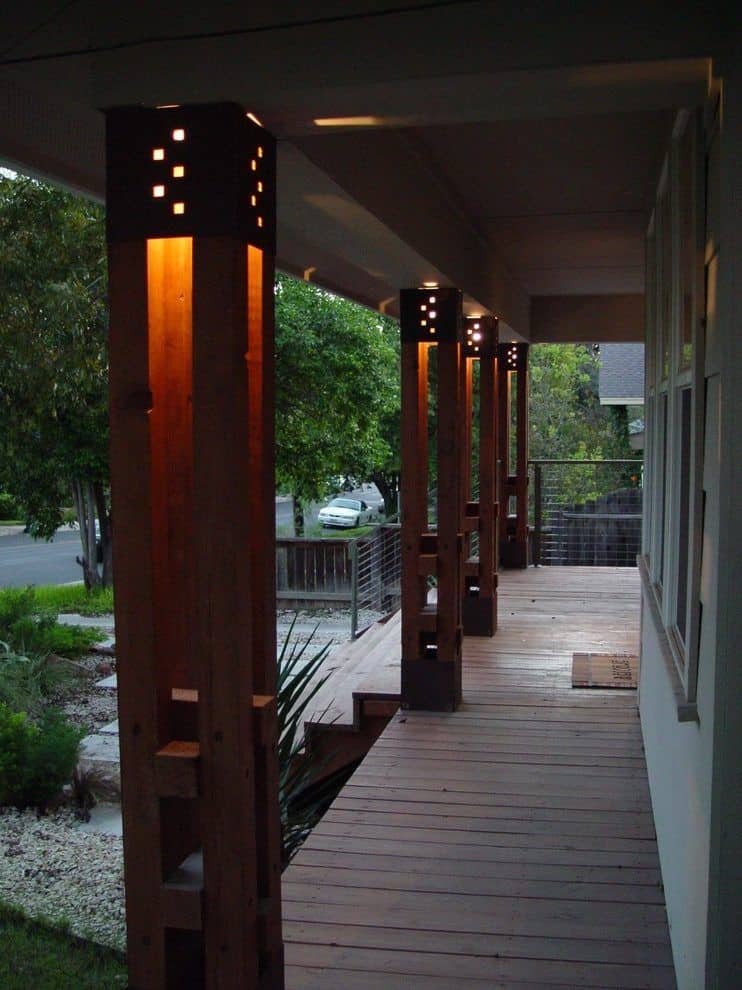
Columns that light themselves change how a porch works after dark. Here the integrated lighting sits at the top of each wood column, casting a warm glow upward rather than flooding the whole space. That focused light keeps the ceiling visible while leaving the seating area in comfortable shadow. The palette keeps the wood tones and black metal railing, with white trim as the only contrast. Because the columns are the light source, there is no need for pendant fixtures or wall sconces competing for attention. The layout follows the column line as a natural path along the porch, turning a structural element into a guide for movement.
03 / 29Tall Dark Wood Columns Defining a Modern Walkway
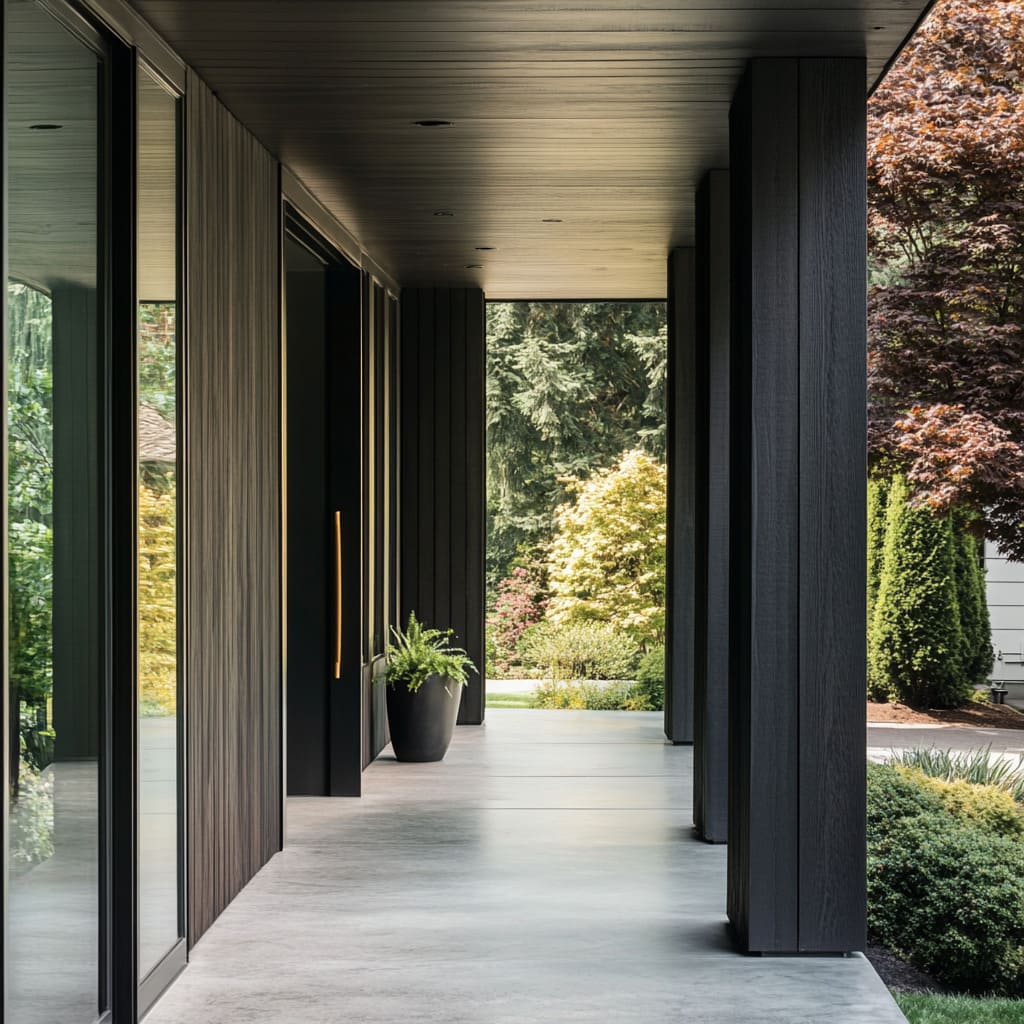
How do you make a covered walkway feel like a room instead of a hallway? The answer here is tall dark wood columns that set a clear rhythm from one end to the other. Each column stands at a regular interval, framing the large glass doors and the potted plant between them. The dark wood reads as solid and grounded against the gray concrete floor and the green landscape beyond.
The spacing between columns matters as much as the columns themselves. Wide enough to keep the walkway feeling open, narrow enough that you know where the path begins and ends. Interior light spills through the glass doors, softening the transition from covered porch to the outdoors. The columns do not compete with the view. They give it a frame.
04 / 29Festive White Columns Dressed in Greenery and Lights, Close-Up Take
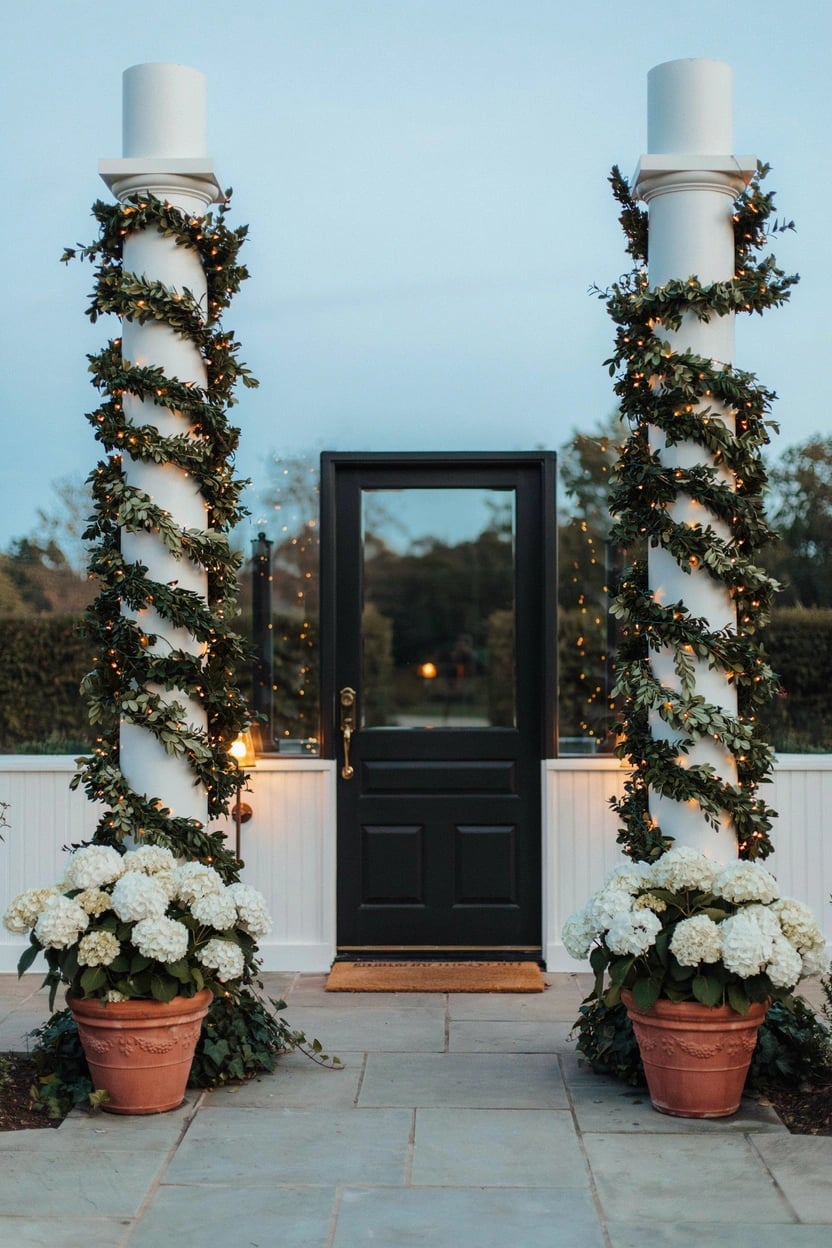
White columns wrapped in greenery and string lights turn a porch into something closer to a garden room. The greenery softens the straight lines of the columns, while the warm lights add glow against the black door and the potted hydrangeas flanking the entrance. The effect is symmetrical but not stiff: the columns frame the door, and the lights pull the eye across the whole porch. A roomy porch can handle this without feeling crowded because the greenery follows the column shape.
05 / 29Traditional White Columns with Casual Seating, Close-Up Take
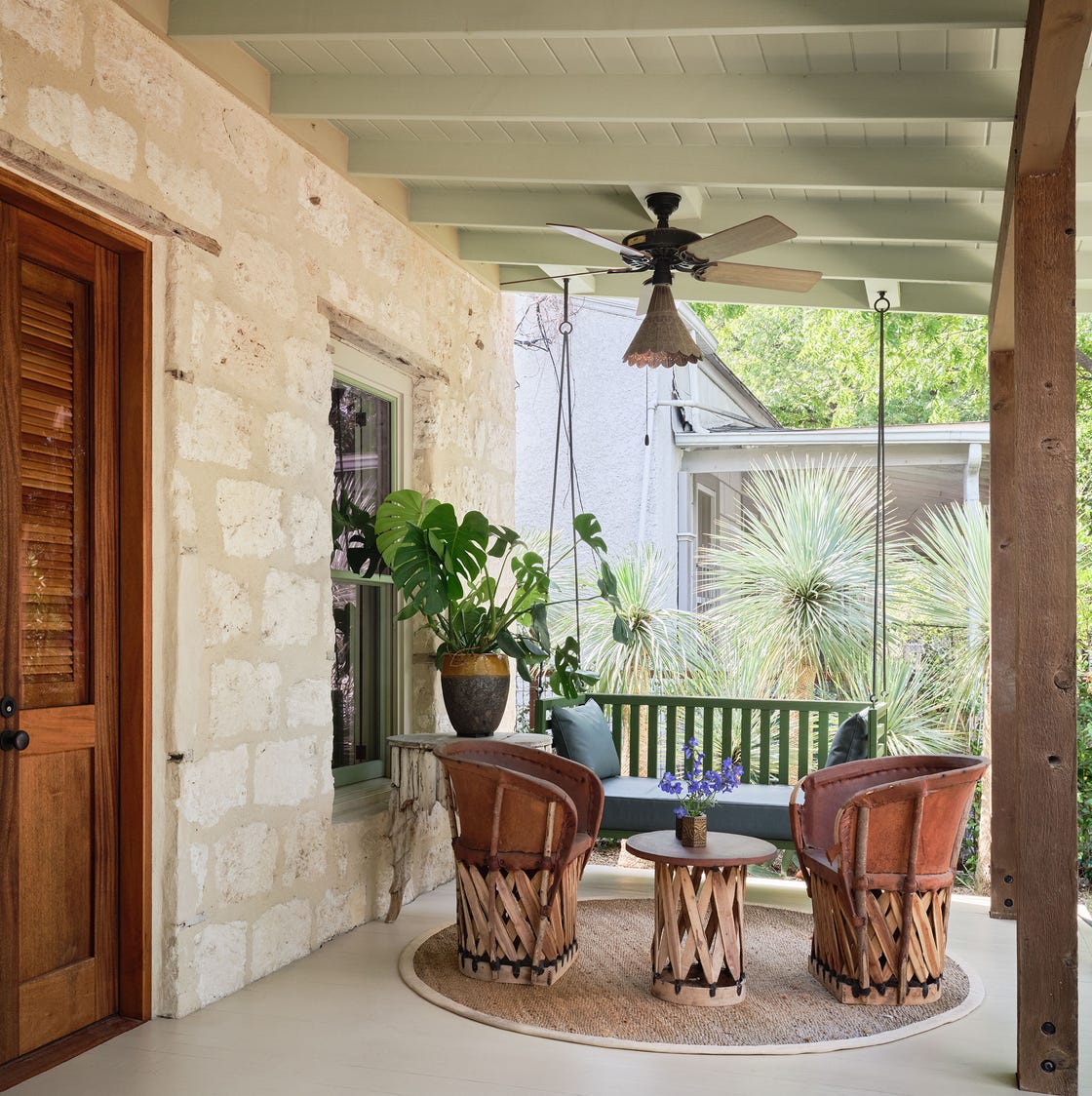
A covered porch with traditional white columns can use seating to define how the space is used. A hanging swing seat sits between two columns, with chairs nearby, creating a natural conversation zone without blocking the path to the door. The white columns match the trim so they blend into the structure and do not compete with the furniture. The ceiling fan light provides overhead illumination during the day, and the stone floor keeps the palette grounded. This layout works because the columns set the boundaries: the seating fits within them and does not spill past, which keeps the entrance clear and the porch feeling like a room.
06 / 29Rustic Porch Columns with Exposed Beams and Antlers
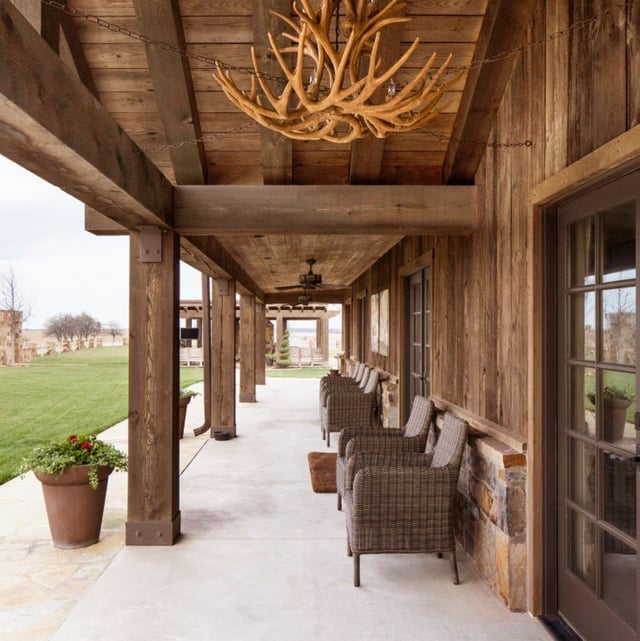
Skip the polished lodge look. This porch leans into its raw side with brown wood columns, a beige stone floor, and concrete planters holding green foliage. The layout is a long covered porch with a seating area, roomy enough for a pair of chairs. The standout is an antler chandelier hanging from the exposed beams, adding a rugged focal point that draws the eye upward.
The palette stays earthy, letting the natural materials speak. If you want the look without the weight of real antlers, a black iron chandelier with similar branching lines keeps the feel while being easier to source. The key is to keep the surroundings simple so the wood and stone remain the main act.
07 / 29Craftsman Style Columns for a Welcoming Entryway
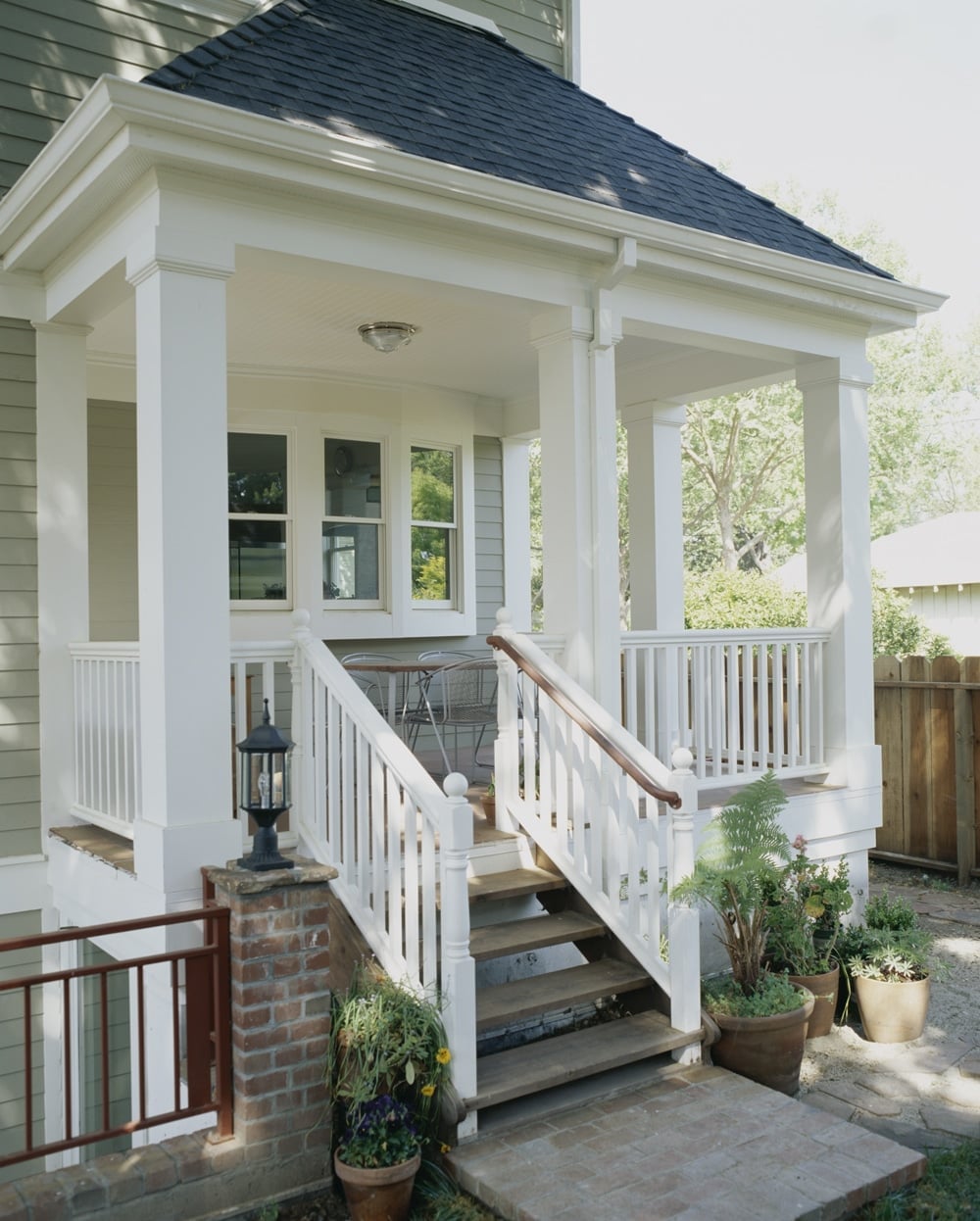
The columns here are the defining feature, with detailed woodwork that gives the compact porch a crafted feel. The palette mixes light green siding, white trim, and black metal railings and a lantern. This entryway uses stairs to lead up to the porch, and the potted plants soften the transition from ground to door. For a renter, adding a lantern-style light and a few black metal planters borrows the Craftsman look without changing the structure itself.
08 / 29Farmhouse Porch with Natural Wood Columns
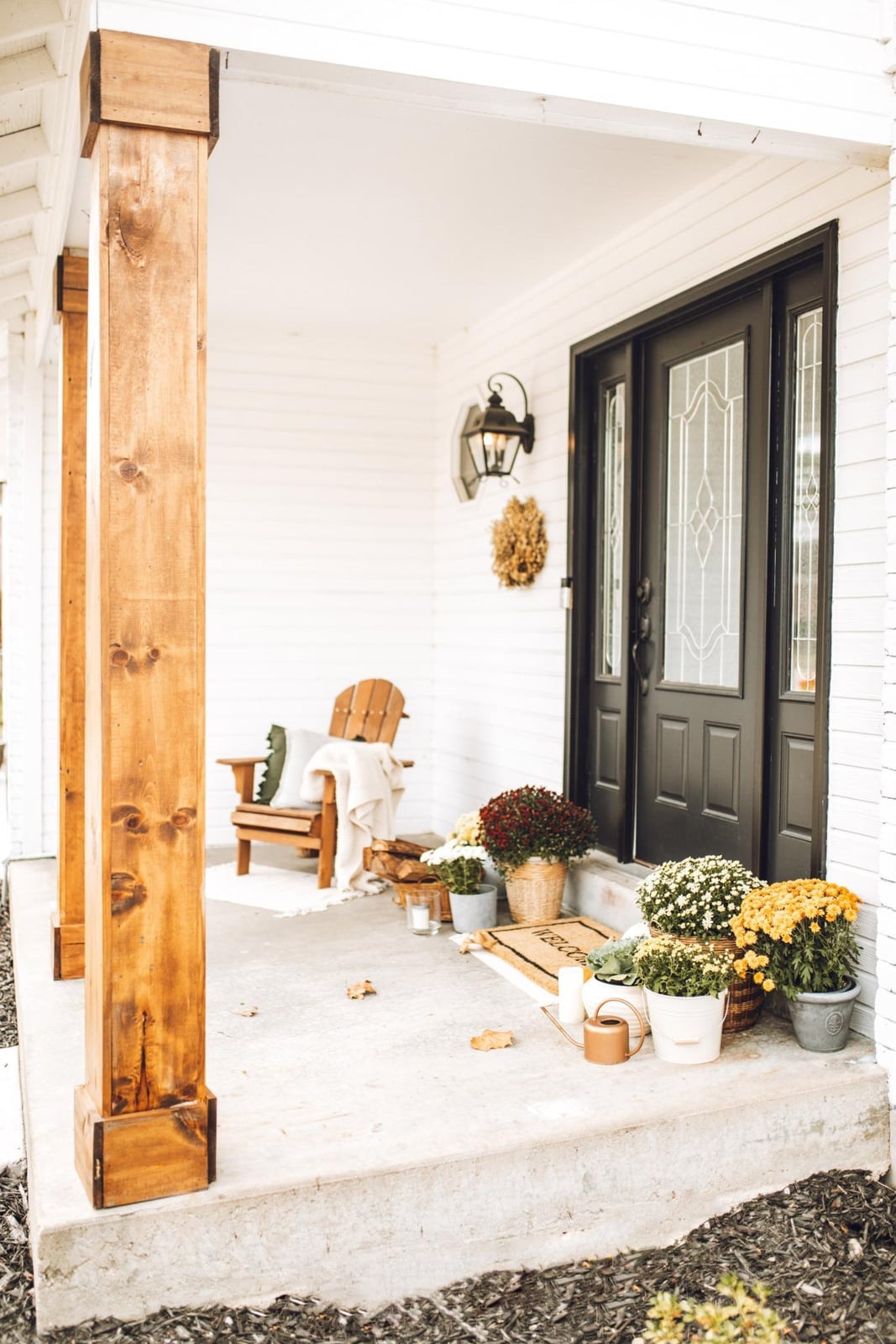
Natural wood columns in a farmhouse setting read as straightforward and honest. The palette pairs white painted wood with the warm brown of the columns, and a single Adirondack chair and some plants keep the front porch entrance uncluttered. A wall lantern adds practical light for evening arrivals. The styling variation here is about restraint: one chair, two columns, and no extra trim. That simplicity makes the wood grain the feature.
09 / 29Ornate Metal Column Wrap for a Decorative Touch
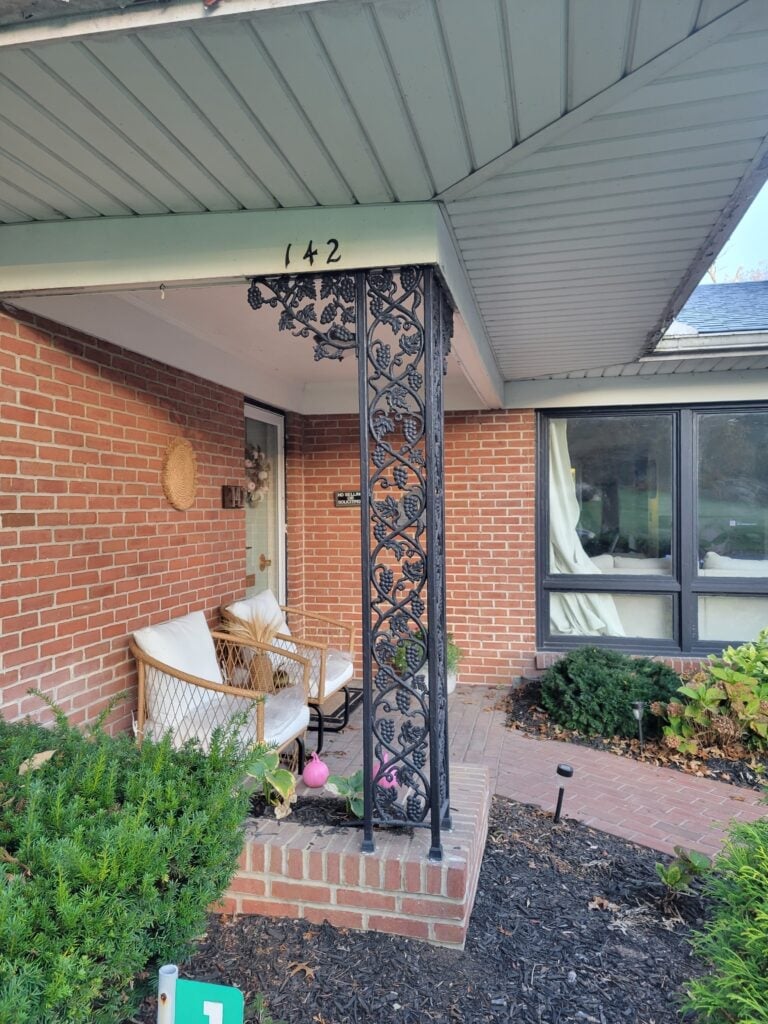
Can a column be both structural and decorative? An ornate black metal wrap does exactly that, wrapping a plain post in scrollwork that reads as traditional without being fussy. The brick red of the house and the white trim keep the palette grounded, and two rattan chairs on the porch offer a spot to sit.
This is a styling variation that adds detail without changing the column itself. The metal wrap is a durable addition that holds up to weather better than painted wood trim. If you want the look but the existing column is a different size, a custom wrap may be needed to fit properly.
10 / 29Expansive Porch Columns Harmonizing with Nature
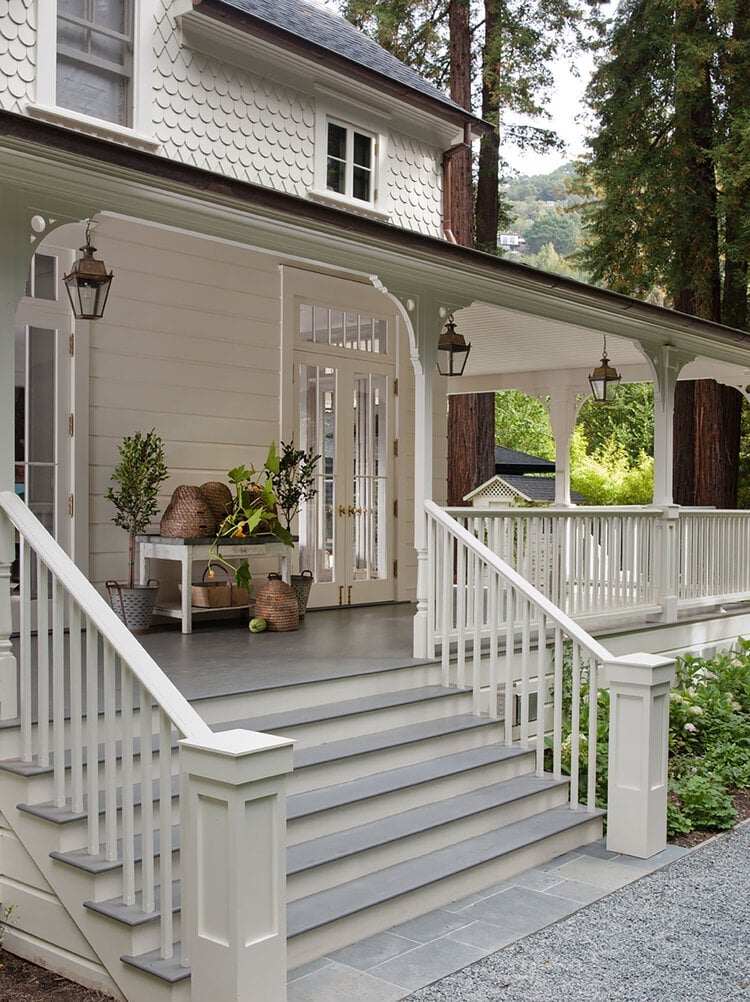
The white columns on this expansive porch frame the view rather than compete with it. The palette uses white, gray, natural wood, and green from the surrounding landscape. Glass doors let the outdoors in, and pendant lights hang between the columns for evening use. The layout uses the columns to define the porch and stairs, creating a transition zone between house and yard. This works because the columns are simple and the materials stay neutral, letting the natural setting be the real decoration.
11 / 29Farmhouse Columns Adorned with Hanging Flower Baskets
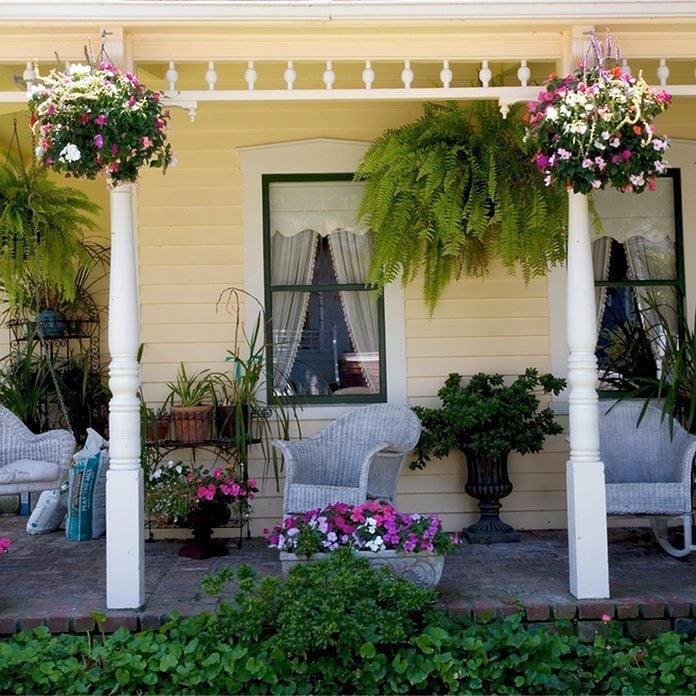
When your columns are white turned wood, hanging flower baskets in yellow and pink make the most of that vertical space without cluttering the porch floor. The wicker seating and a hanging lantern keep the roomy porch feeling like an outdoor room rather than just a walkway. The baskets draw the eye upward and soften the hard lines of the columns, which is a useful layout trick for any porch that feels too tall or empty. It works because the baskets sit at eye level, not way up near the roof, so they connect the column to the seating zone below. For renters, screw-in cup hooks on the column face are a renter-safe swap that avoids drilling into the porch ceiling.
12 / 29Craftsman Columns with Sturdy Stone Bases
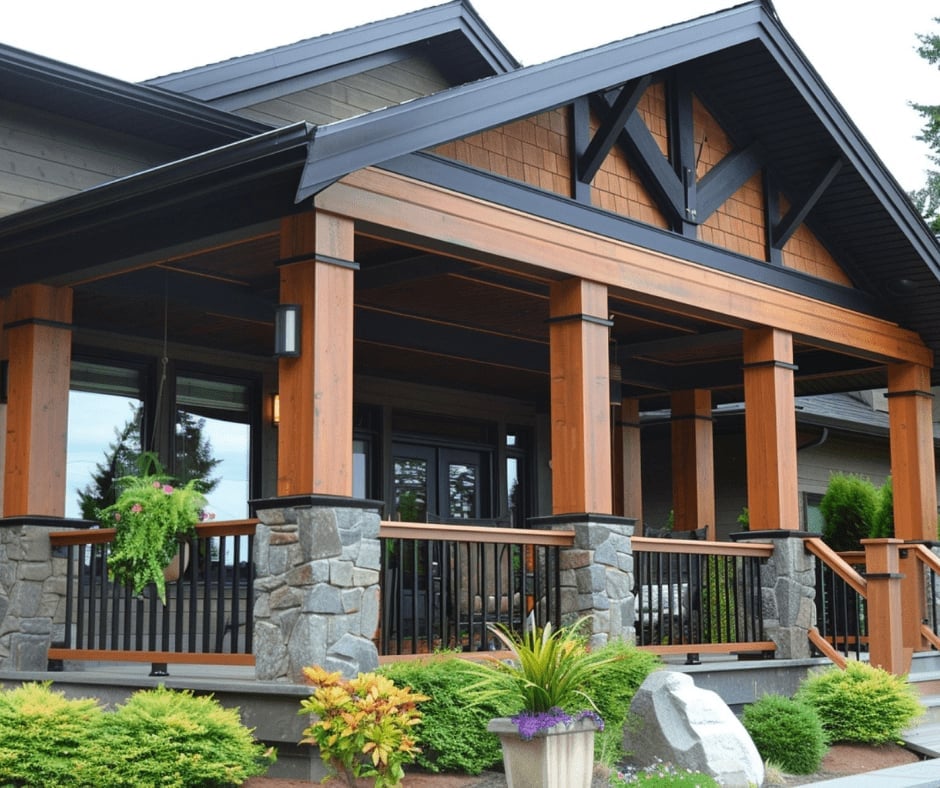
A craftsman porch often pairs wood columns with stone bases, but this version keeps the palette tight: wood tones, gray stone, black railing and green from a single hanging plant. The stone bases do more than resist weather. They anchor the columns so the wood above can be slimmer without looking fragile. The covered porch is roomy enough for the railing to run the full width without feeling crowded. The palette uses three main notes, which keeps the eye moving along the porch instead of stopping at one material. If your existing columns rest directly on a concrete floor, adding a stone base is a moderate DIY project that changes the visual weight of the whole entry.
13 / 29Rustic Stone Veneer Columns with Wood Accents
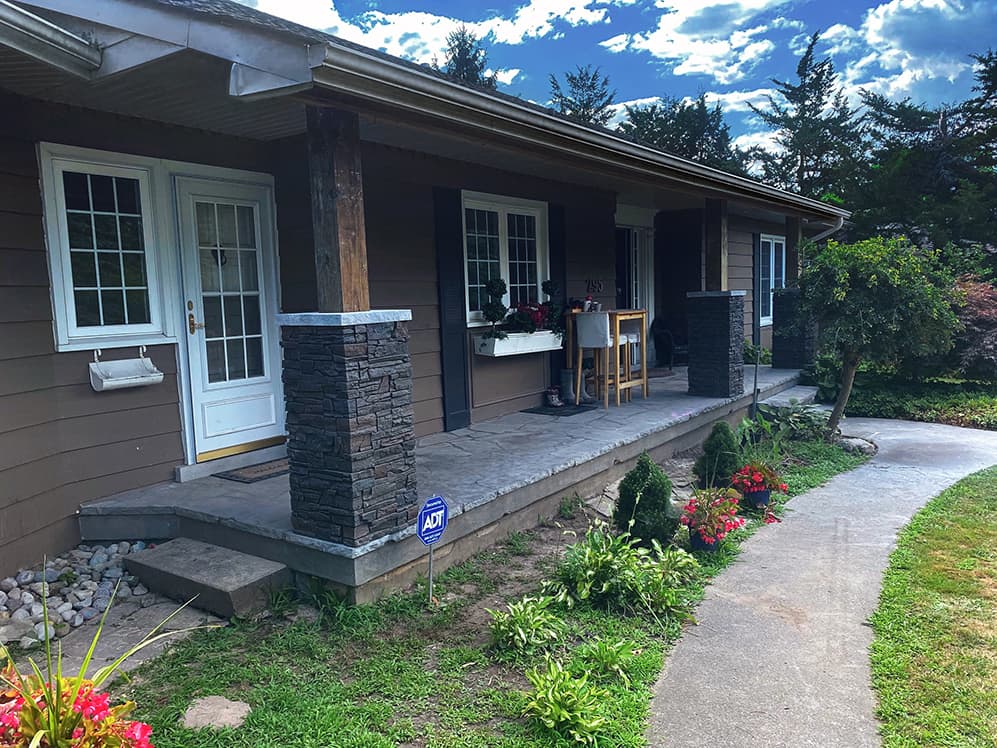
The stone veneer columns here stop short of the roof, leaving a clear band of wood siding above them and wooden beams crossing the porch ceiling. That break in material creates a layered look that a single continuous column would not have. The brown and gray stone picks up the window box below, so the columns feel connected to the planting. For anyone with a porch that looks like one flat wall, this kind of material shift adds depth without changing the footprint.
14 / 29Contrasting Wood Posts and White Stone Columns
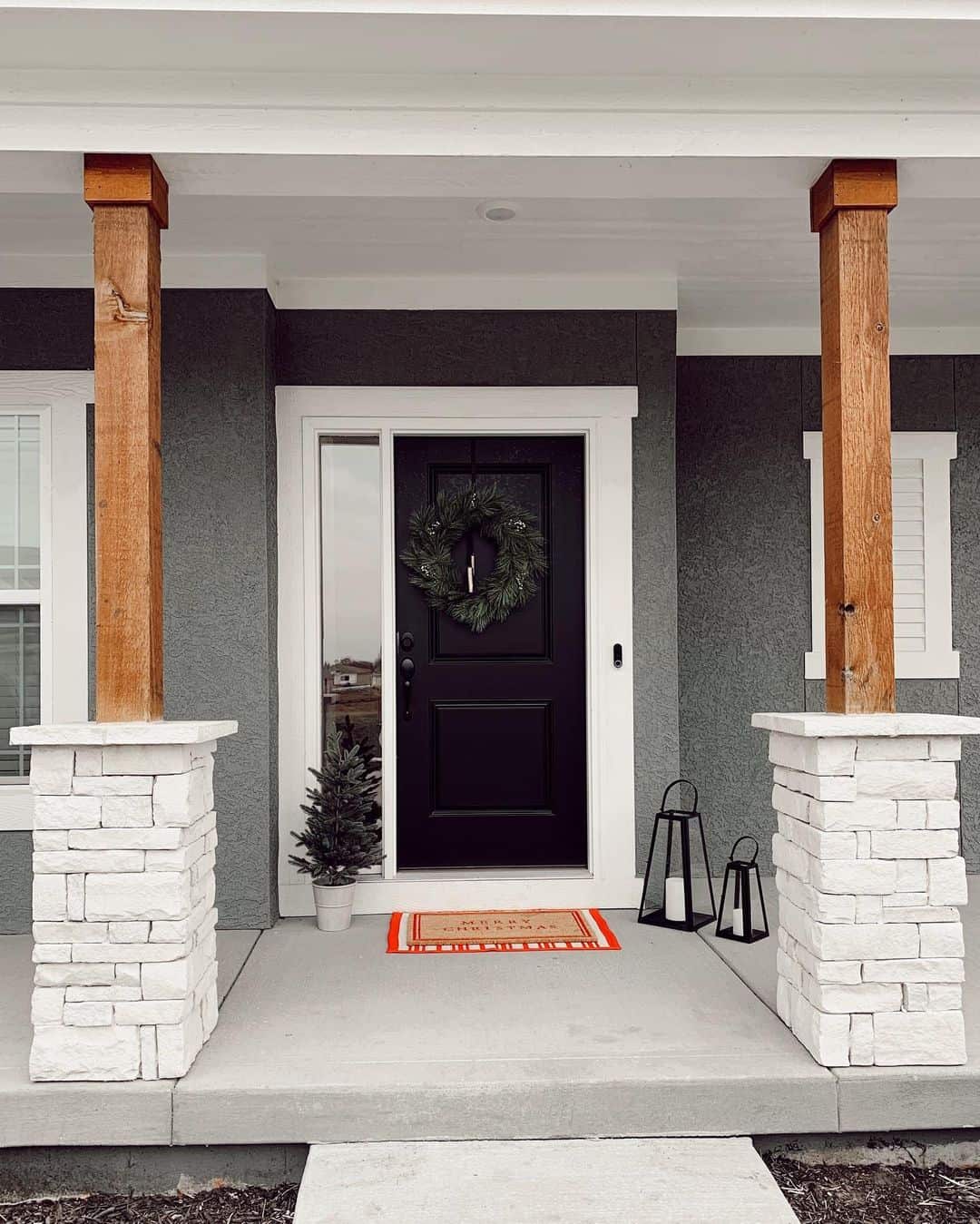
The contrast works because the dark wood posts sit forward and the white stone columns sit back, creating depth across a single entryway. Natural daylight and the lanterns on each side soften the shift between materials, so the entry looks like one composed facade instead of two competing ideas. The palette of gray, white and wood tones keeps the look clean. If your porch has columns that all match, painting the front posts a darker shade and leaving the back ones light is a weekend project that adds the same layered effect without structural changes.
15 / 29Crisp White Columns for a Modern Farmhouse Porch
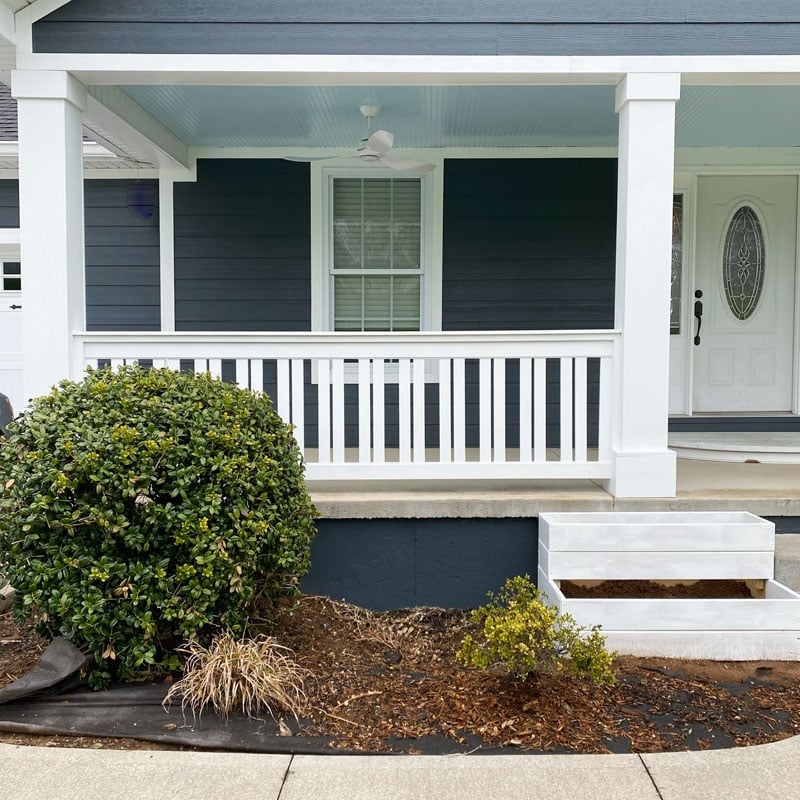
A compact front porch with dark blue siding and a white railing needs columns that hold their own without overwhelming the space. Crisp white columns match the railing and trim, so the porch forms one clean shape. The palette of dark blue, white and green from the planter box keeps the look simple. The ceiling fan keeps air moving on still days, which matters for a small covered porch that can trap heat. For storage, a slim planter box at the base of one column uses dead floor space without blocking the walkway. Renting and stuck with painted columns that show every scuff? A quick touch-up with the same white paint keeps the crisp look without a full repaint.
16 / 29Traditional White Columns with Textured Stone Facade
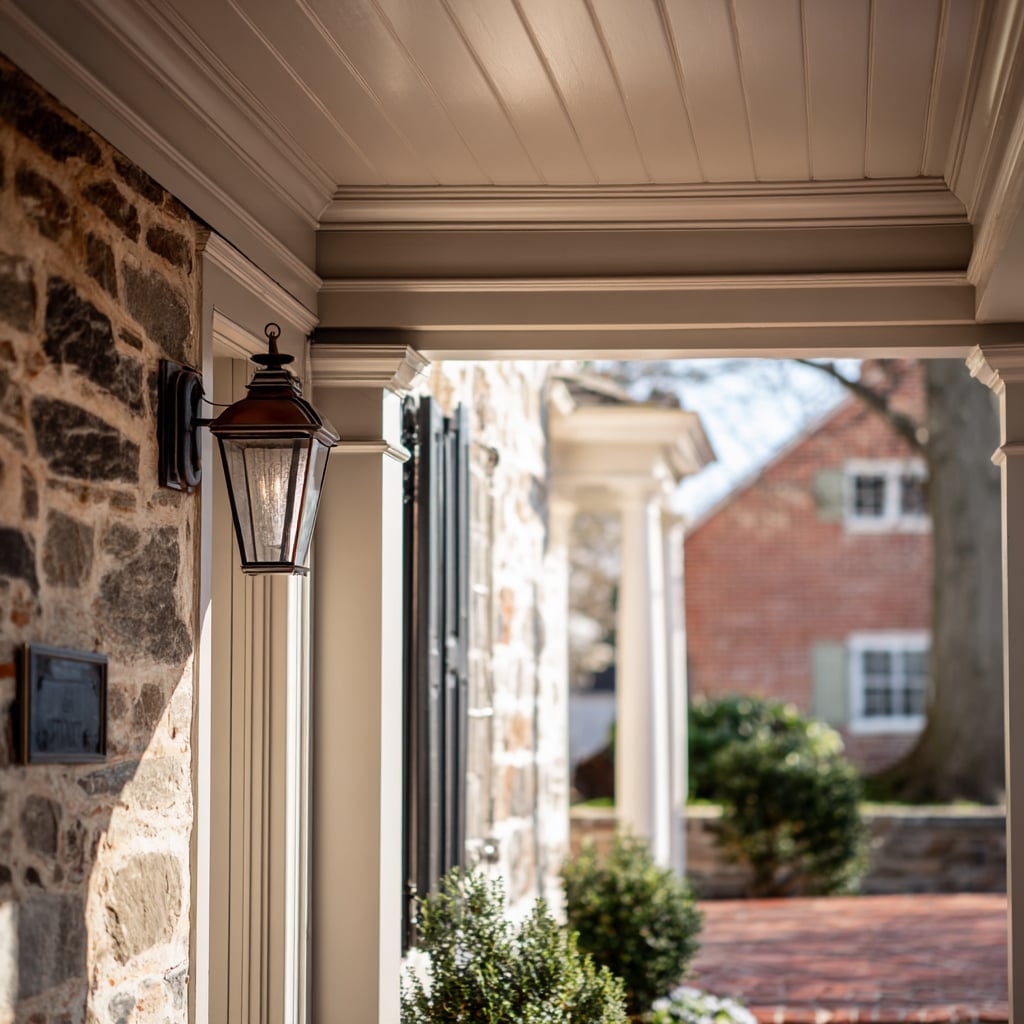
A textured stone facade wraps the lower half of the entryway, grounding white columns that rise to a compact porch ceiling. The mix of rough stone and smooth painted wood gives the entrance weight without making it feel heavy. A wall-mounted lantern in a dark metal finish adds a warm point of light against the stone. Brick red accents from the house exterior keep the columns as a deliberate architectural feature.
17 / 29Transitional Columns with Stone Bases on a Patio
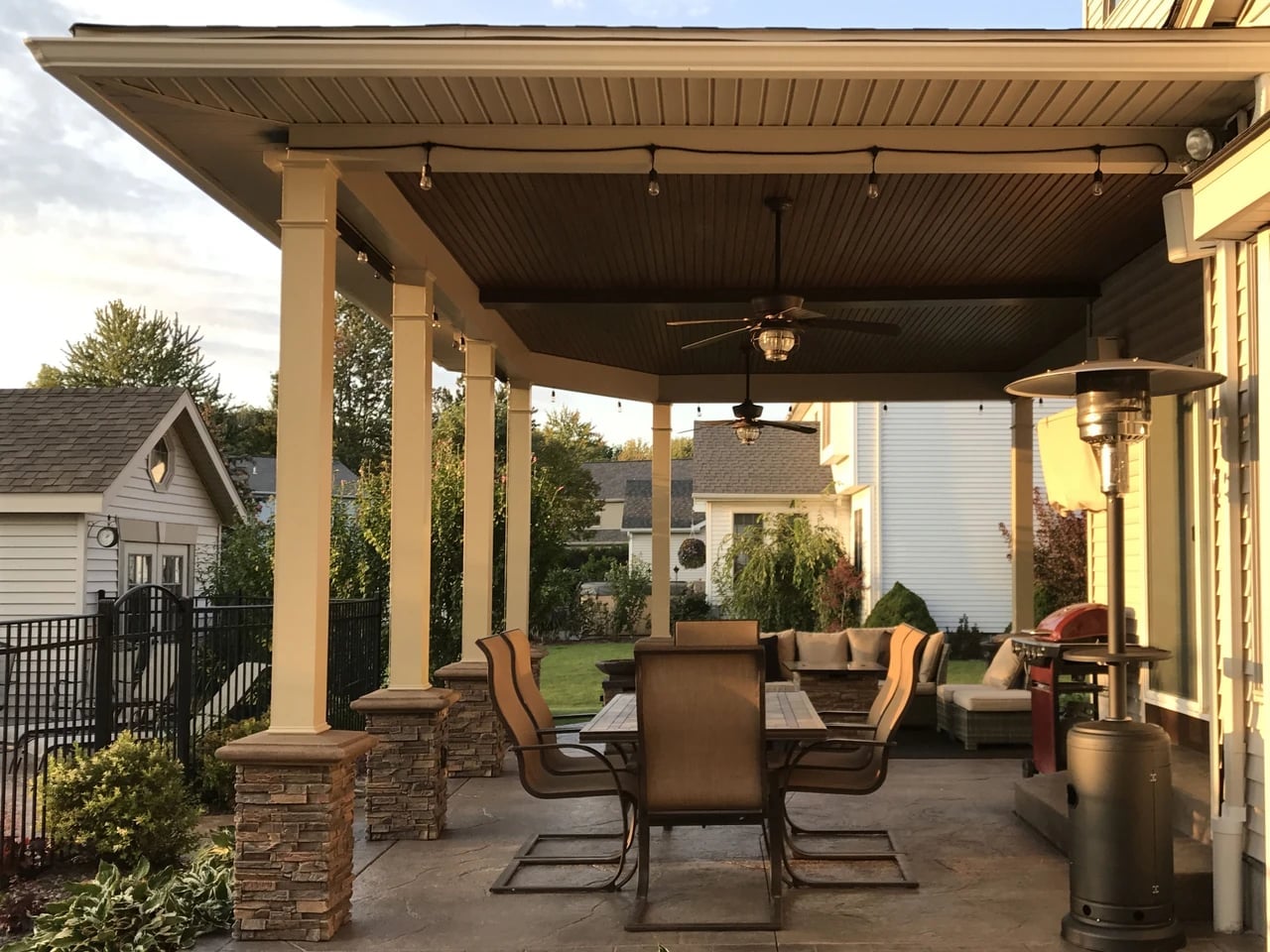
For a covered patio, let the columns set the visual boundary between dining and lounging zones. Here, stone-clad bases on each column anchor the space while a dining set and a separate seating area share the same ceiling. The stone bases repeat the material of the floor and tie the two zones together without a wall. String lights and recessed fixtures handle the evening light, and the beige-brown-gray palette keeps the look calm. For renters, a column wrap in stone veneer can mimic this effect without permanent changes to the structure.
18 / 29Farmhouse Columns with Welcoming Seasonal Decor
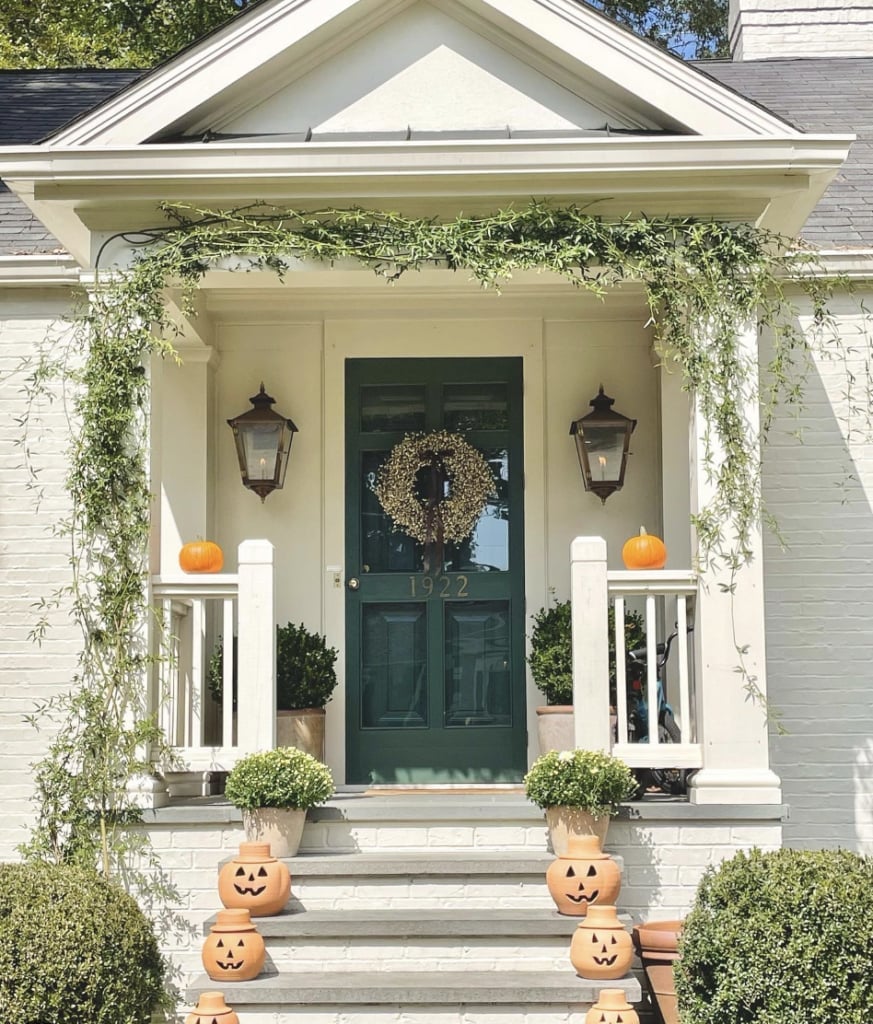
A farmhouse porch with seasonal decor can feel busy if every surface gets a treatment, but this version highlights the columns and the railing. White columns frame the entrance while a wreath on the door and a few pumpkins at the base signal the season without taking over. The greenery and lanterns add warmth, and the brick and wood materials keep the look grounded. The difference between this and a fully dressed porch is that the columns themselves stay bare, letting the eye rest on the architecture. A pair of tall plants near the door would shift the balance toward the entrance, while the current arrangement keeps the porch itself the main event.
19 / 29Modern Farmhouse Tapered Columns in Stone and White
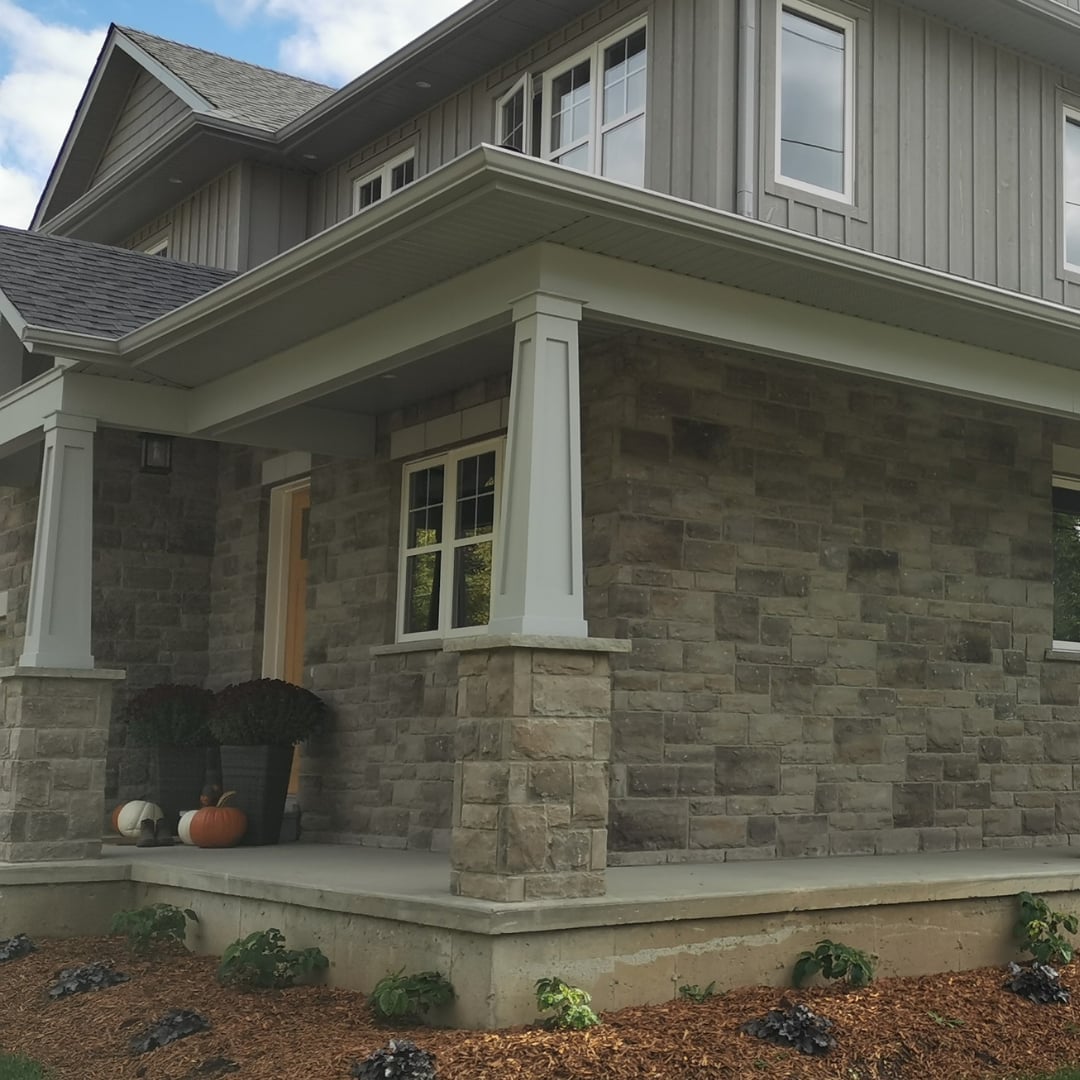
The tapered shape of these modern farmhouse columns draws the eye upward, making the porch feel roomier than a straight post would. A stone base in gray anchors the column while the white upper section matches the siding, creating a clean transition from ground to roof. Potted plants at the base soften the hard lines without hiding the structure. The palette stays in gray, white, and stone, which keeps the look cohesive and lets the taper do the work.
20 / 29Stately White Columns with Abundant Autumnal Decor
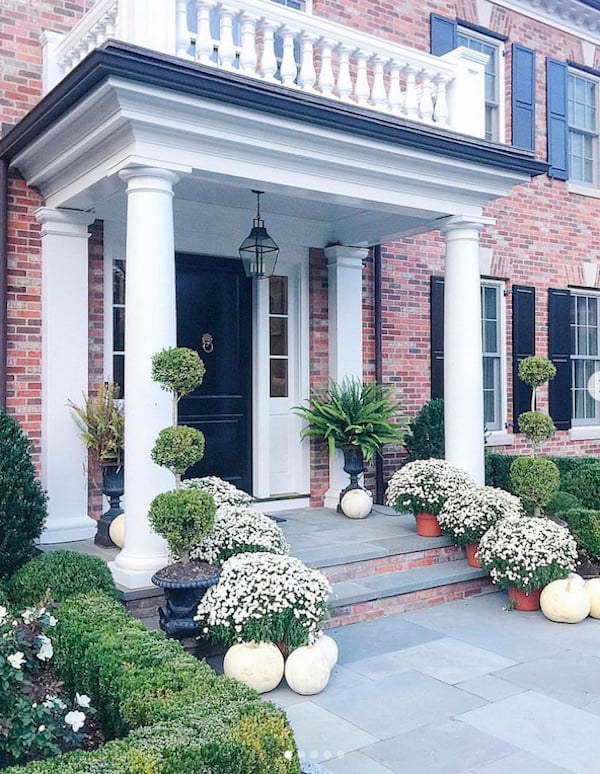
Large white columns need decor that matches their scale, and this porch delivers with abundant mums and pumpkins arranged along the balustrade and steps. The columns frame the entrance and the staircase, so the floral display repeats the vertical rhythm without blocking it. Cream and green tones in the plants soften the white and gray palette, while the pumpkins add a warm orange note. Group the decor in clusters instead of spreading it thin, so the columns remain the main structure and the seasonals stay as the accent.
21 / 29Simple White Columns for a Compact Farmhouse Porch
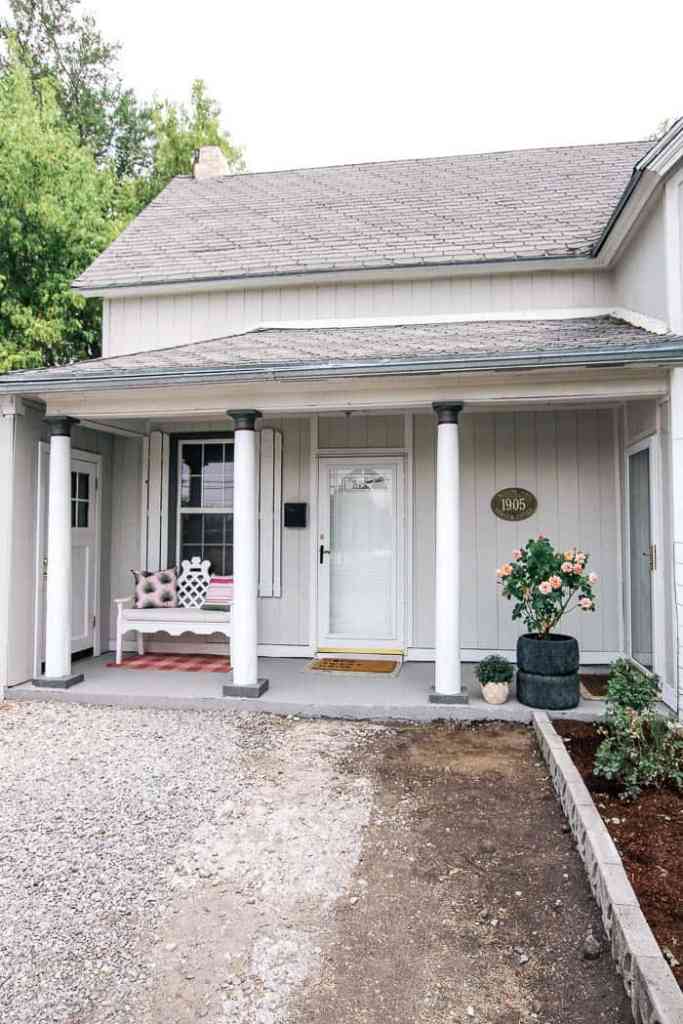
Scale is about making a small space feel complete, not crowded. Simple white columns on a compact farmhouse porch define the edge of the space without making it feel boxed in. The gray painted wood of the house and porch floor keeps the palette neutral, while the white columns and trim form crisp lines that frame the entry.
The room mode here works because the layout is straightforward. A bench and a single potted plant are the only furnishings, which lets the columns do the work of shaping the porch. For a rented home, a coat of white exterior paint on existing wood posts is a permitted swap that changes how the whole entry looks. Keep the furniture low and the greenery simple, and the columns stay the anchor of the design.
22 / 29Elegant Cream Columns Framing a Stately Entrance
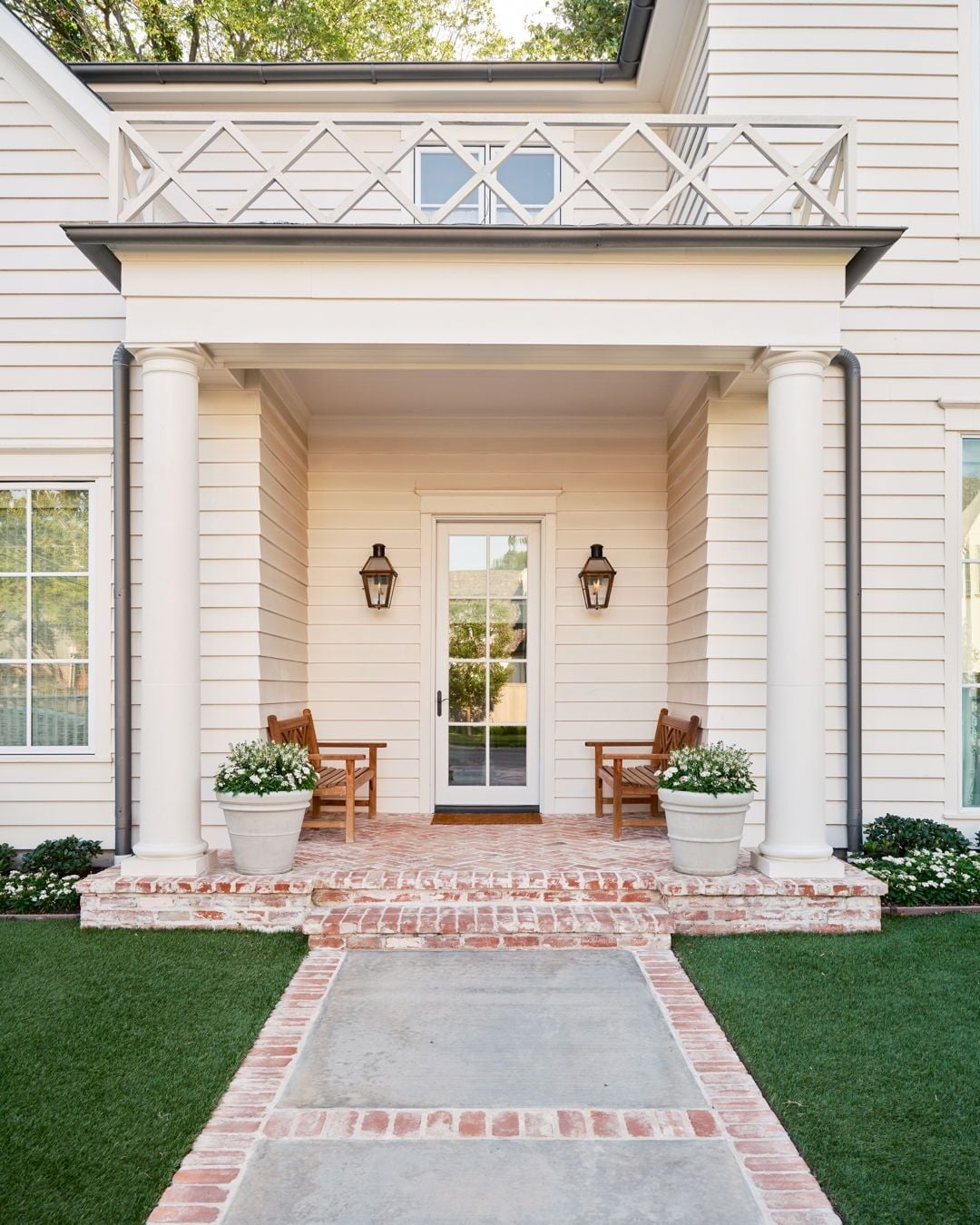
Cream porch columns paired with a brick red facade create a palette that feels established rather than matched. The warm cream tone softens the geometry of the columns, while the brick pathway and green grass anchor the look in natural materials. Black lanterns by the door add a deliberate contrast that stops the cream from washing out. The ratio is roughly two parts warm neutral to one part deep accent, which keeps the entrance stately without feeling cold.
23 / 29Modern Black Square Columns with Brick Walls
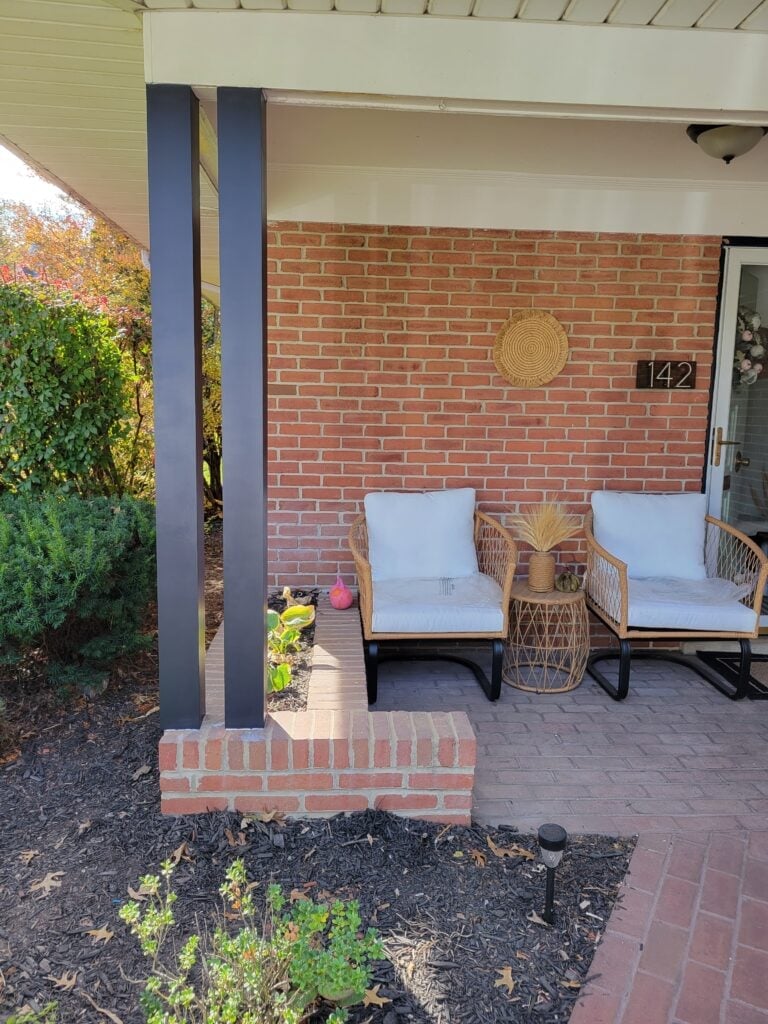
Mixing materials is a reliable way to add depth to a modern porch. Black square metal columns set against exposed brick walls create a clear contrast between industrial and natural texture. The brick reads warm and organic, while the black columns give the seating area a defined boundary. Two rattan chairs and a side table keep the furniture light, so the columns stay as the main structural statement. A single overhead light fixture echoes the black finish and ties the material palette together without adding clutter.
24 / 29Craftsman Stacked Stone Columns with Wood Caps
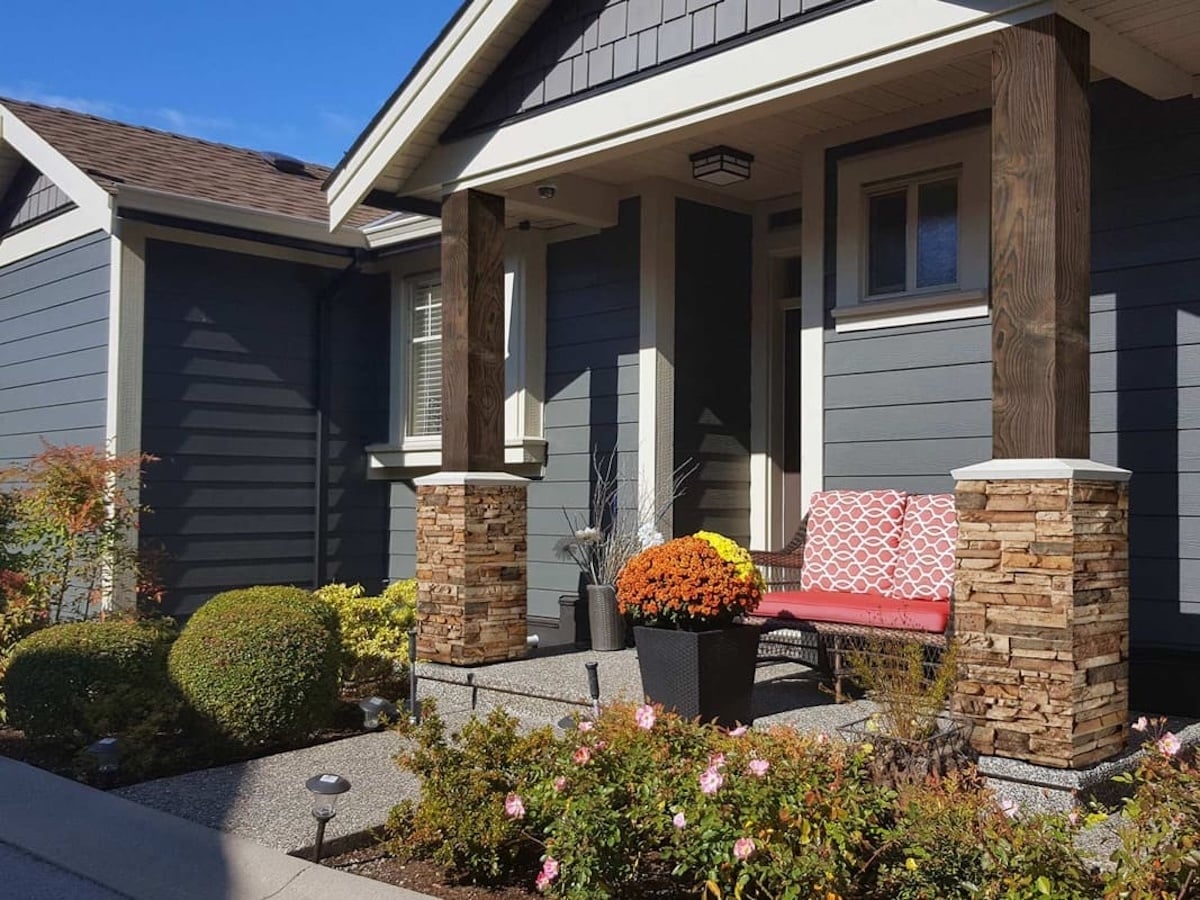
Stacked stone columns with wood caps offer a different feel than painted wood posts. Where painted wood is refined, the stone and wood combination feels grounded and natural. The gray stone picks up the neutral tones of the porch floor, while the wood caps tie into the warm brown of the bench cushion and the potted flowers.
The room mode here works because the materials are doing the decorating. A bench with a soft cushion sits between the columns, and the flowers add yellow and red accents that break up the gray. An outdoor light fixture on the wall echoes the craftsman style. For a rental, a stone veneer wrap over existing posts gives the same look without structural changes.
25 / 29Clean White Columns for a Modern Gray Exterior
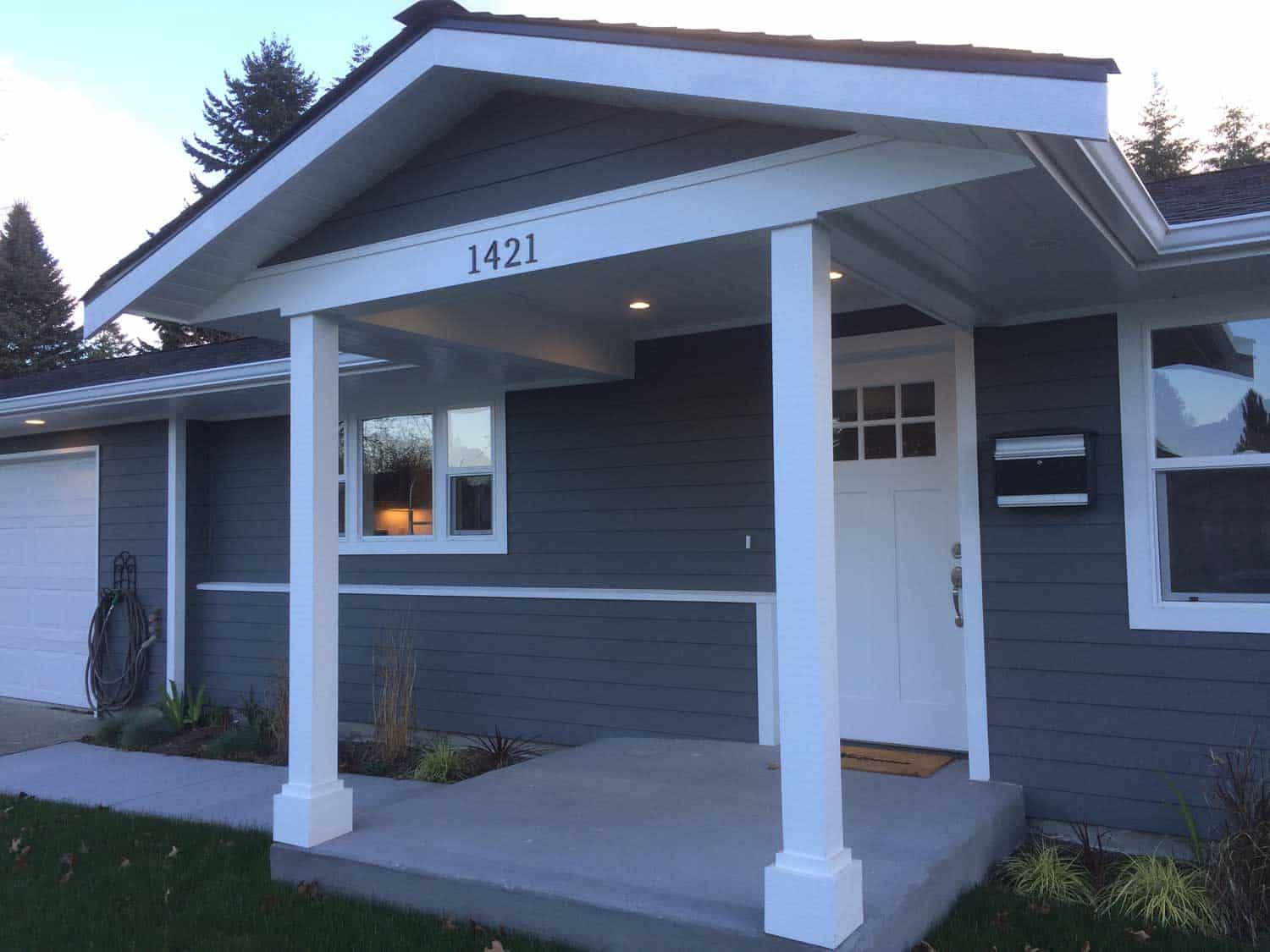
The palette here is intentionally restrained: white columns against a gray house with white trim and a gray door. There is no third color competing for attention, which makes the entrance feel calm and deliberate. The white columns pick up the light from the recessed porch lights and the daylight, keeping the porch bright even on overcast days. A black mailbox is the only dark note, and it anchors the door without disrupting the clean palette.
26 / 29Massive White Columns for a Grand Traditional Entrance, Close-Up Take
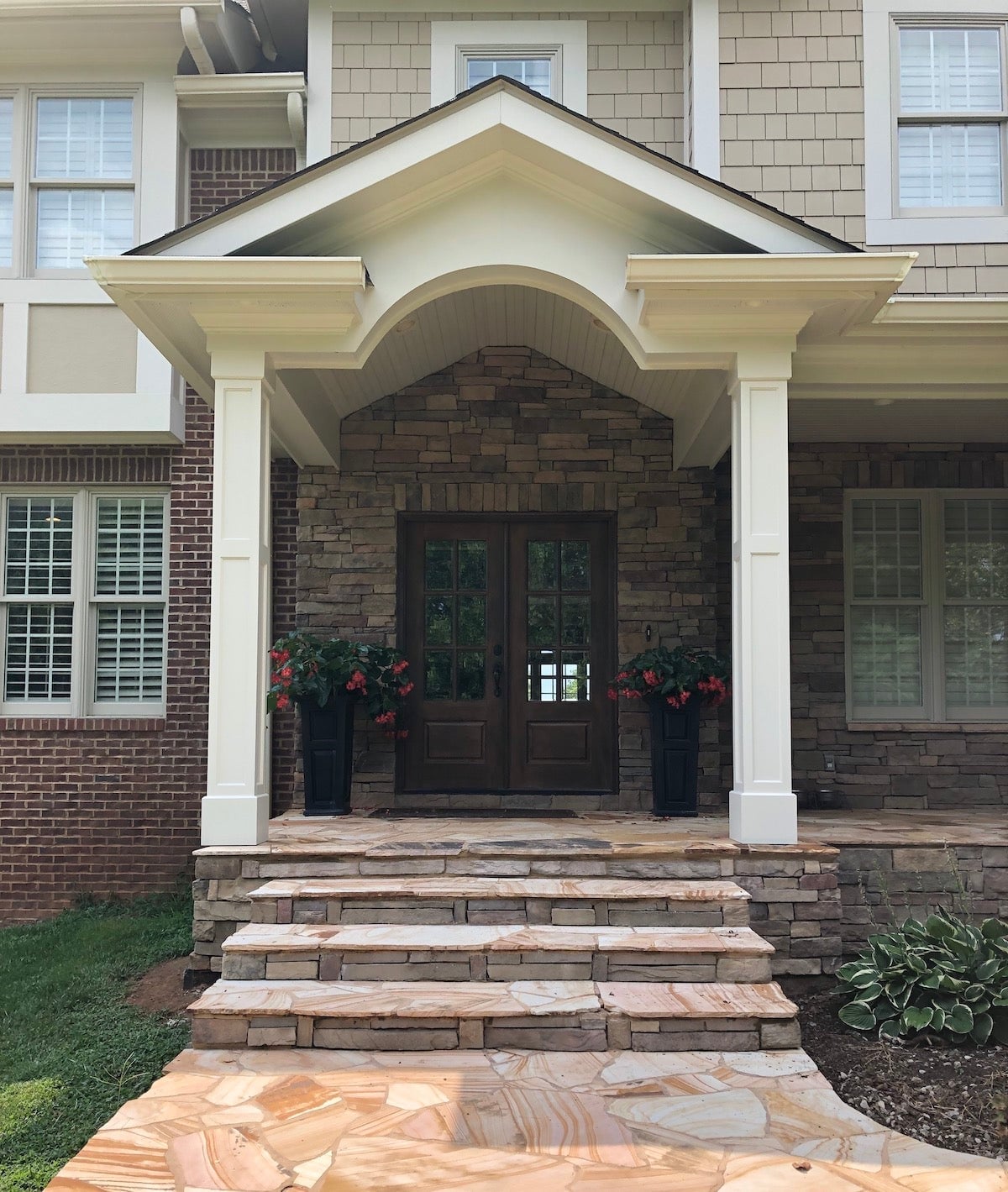
Massive white columns are the single most defining feature of a grand traditional entrance. Here they frame a stone facade and double doors, with lanterns mounted between them for a balanced look. The scale is the point: the columns need to be thick enough to read as substantial against a two-story facade, and white keeps them from feeling heavy. If you want this look without the structural commitment, a column wrap in painted wood can mimic the proportions. The stone base and wood cap add a break in material that keeps the columns from reading as one solid block. The daylight and lanterns work together to cast shadows that emphasize the column depth.
27 / 29Traditional Column with Stone Base Detail
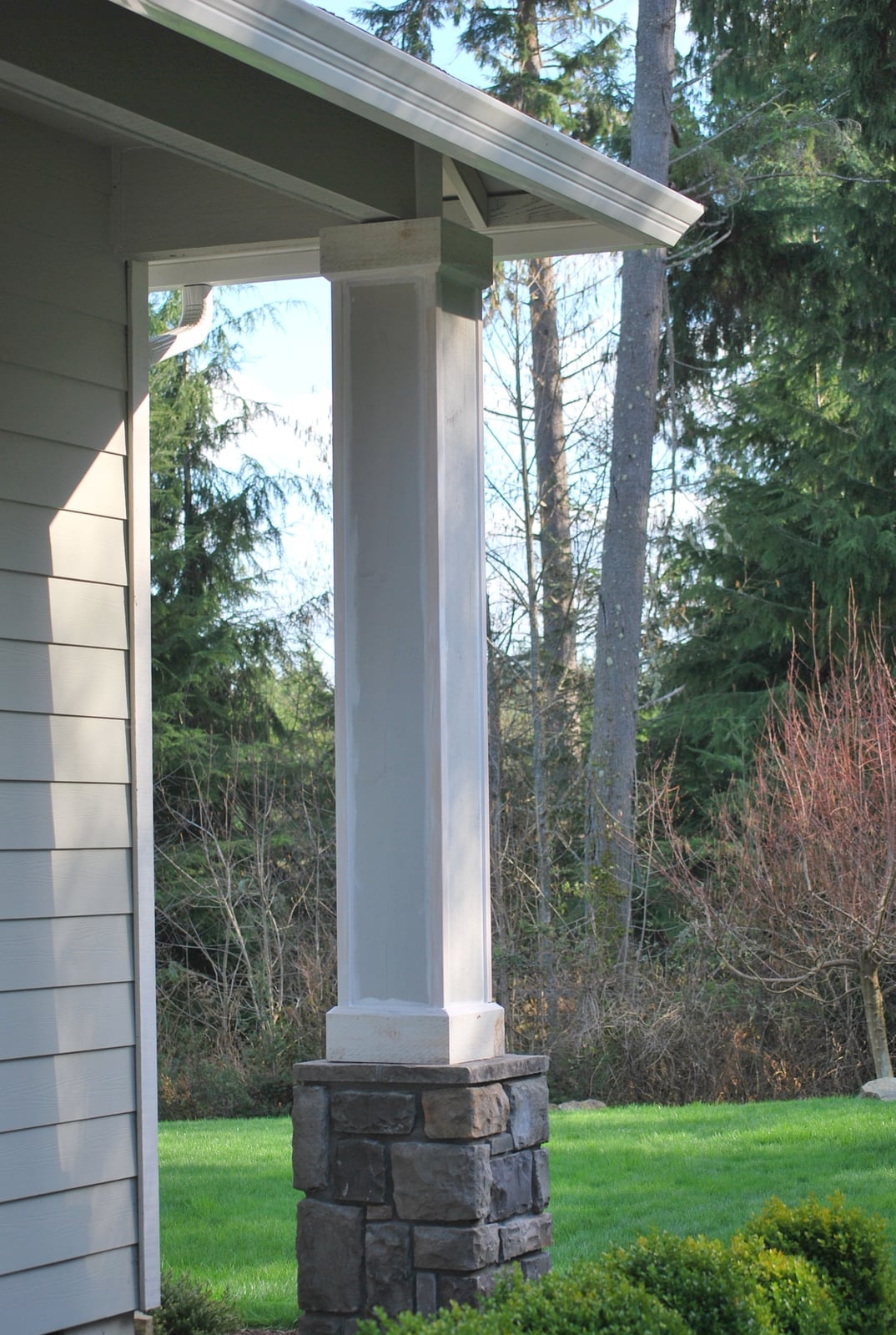
A full stone column can feel permanent and expensive. A painted wood column with a stone base gives the same traditional look without committing to stone top to bottom. The base anchors the column visually, while the painted shaft keeps the overall feel lighter and more approachable. This approach works especially well on a porch corner, where the base can double as a transition between the house and the landscape. If you rent or plan to update later, a stone veneer base applied to an existing column is a swap that can be reversed without major work.
28 / 29Transitional Stone-Clad Columns with Fall Decor
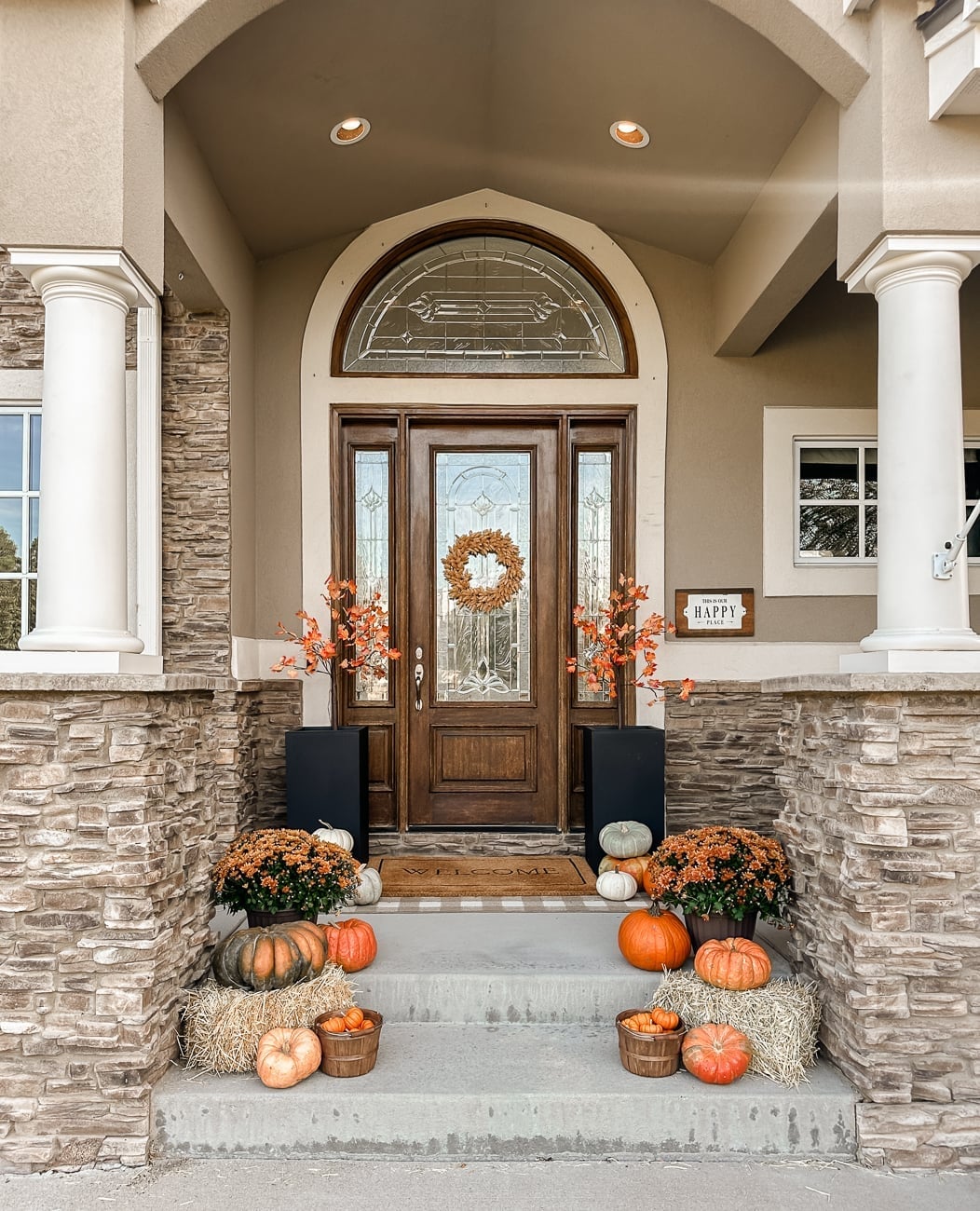
Stone-clad columns bridge the line between rustic and refined. Here the stone texture is the main event, so seasonal decor like pumpkins and a wreath reads as accent rather than clutter. The neutral palette gives you room to change the look each season without repainting. Overhead lighting helps the stone catch the eye after dark, which matters for a welcoming entry.
29 / 29Final Thoughts
Choosing the right porch column comes down to the feel you want for your entry. Stone bases add permanence, wood brings warmth, and dark finishes anchor a modern facade. Think about how the column relates to the rest of your porch, not just as a support but as part of the overall layout and light. Seasonal decor can soften a formal column, while clean lines keep a small space from feeling crowded. Regular upkeep matters: painted columns need a fresh coat every few years, and stone or veneer should be sealed to resist moisture. Let the architecture of your home guide the choice, and the column will do the rest.