Neutral paint does not mean boring. It means you have room to move the furniture, swap the throw pillows, or change the art without repainting the whole house. These 25 neutral paint ideas focus on one shade per room so the color itself stays the hero.
You will see how beige, cream, white, taupe, and even pale pink and olive green work in real homes with simple supporting decor. No complicated palettes, no trendy finishes that date fast. Just clear, livable color that lets the architecture and the light do most of the work.
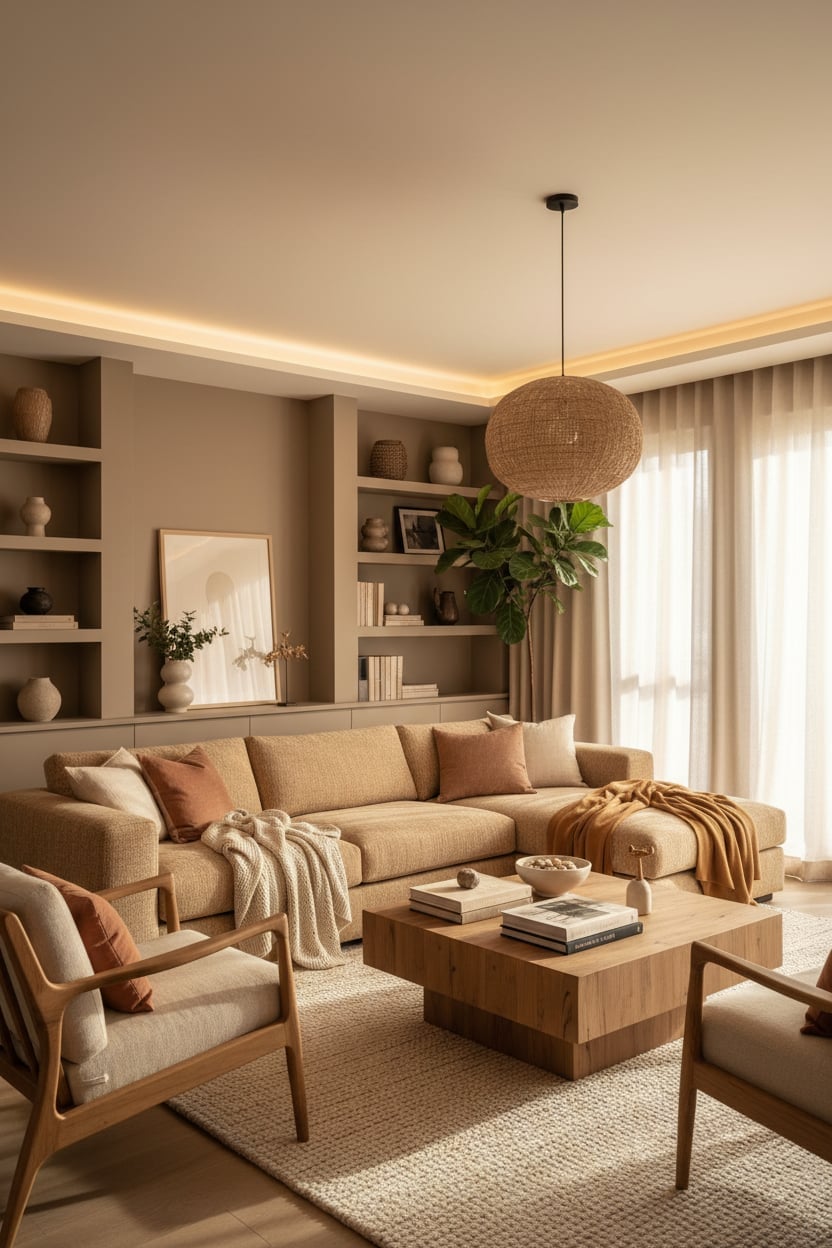
01 / 26Warm Beige and Taupe Walls for an Open-Plan Living Area
A neutral palette of beige and taupe walls sets the stage for a generous open-plan living area. The large sectional sofa in a neutral tone anchors the room, while a wooden coffee table and accent chairs in warm wood and woven textures add depth. Layered ambient and pendant lighting keeps the room feeling balanced, letting the terracotta accents breathe. The trick is to let the wall color recede so the furniture and lighting do the work.
02 / 26Cream and Wood Tones in a Modern Kitchen
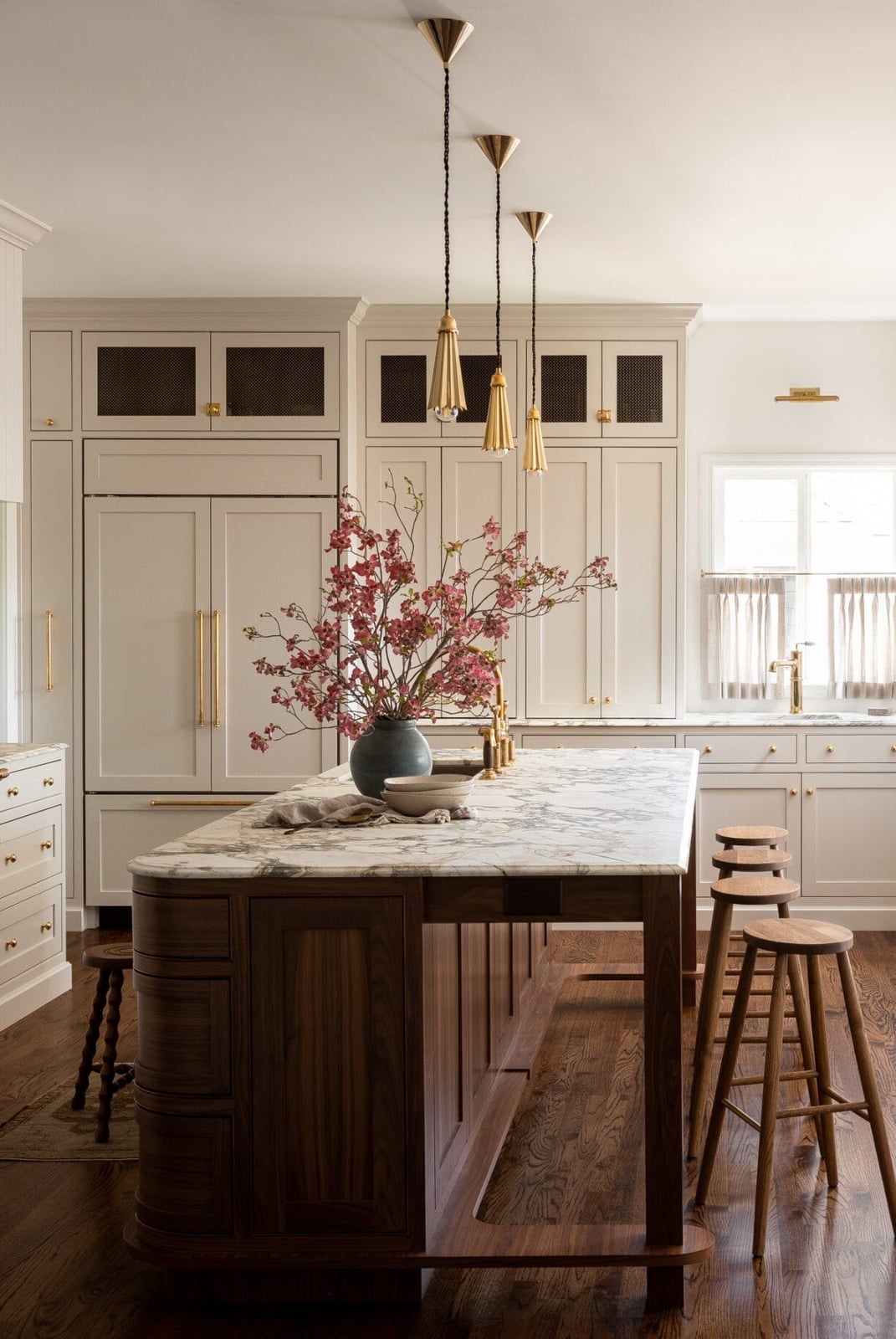
A cream palette paired with warm wood tones makes this modern kitchen feel both airy and grounded. The curved marble-topped island takes center stage, its cool surface balanced by wood cabinetry and brass pendant lights overhead. The cream walls keep the room open rather than busy. To recreate it, look for cream as the main cabinet color and let wood accents add warmth without overwhelming the space.
03 / 26Farmhouse Kitchen with Cream and Beige Cabinetry
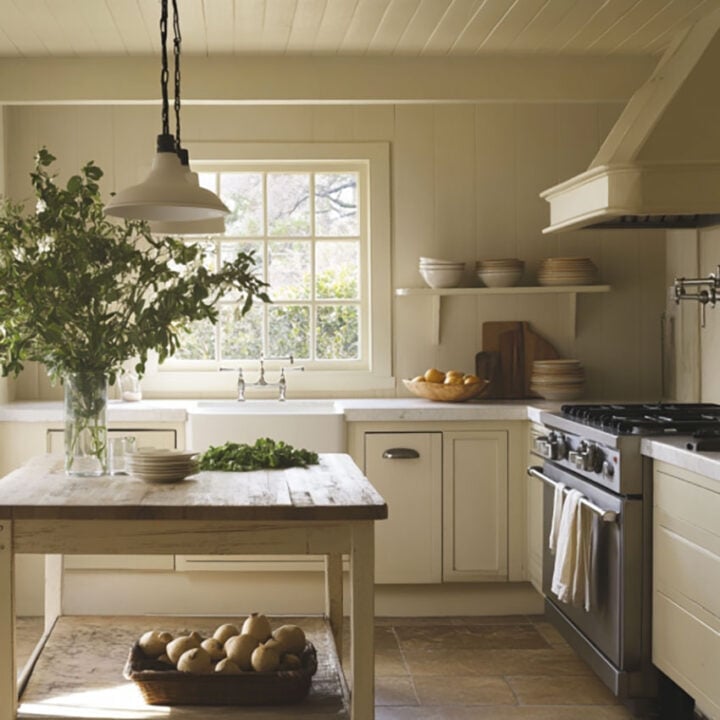
How do you keep a farmhouse kitchen from looking too rustic or too stark? A cream and beige palette on the cabinetry and walls answers that question. The warm neutral tones let the natural wood of the island and the stone countertops stand out without clashing. Pendant lights above the workspace add focused illumination, while the range and sink blend into the background. The result is a kitchen that feels cohesive: the cabinetry in cream sets a soft base, the beige walls add depth, and the wood and metal elements provide structure. This approach works because the neutrals act as a canvas, not a statement.
04 / 26Warm Neutral Beige Paint for Dining Room Walls and Ceiling
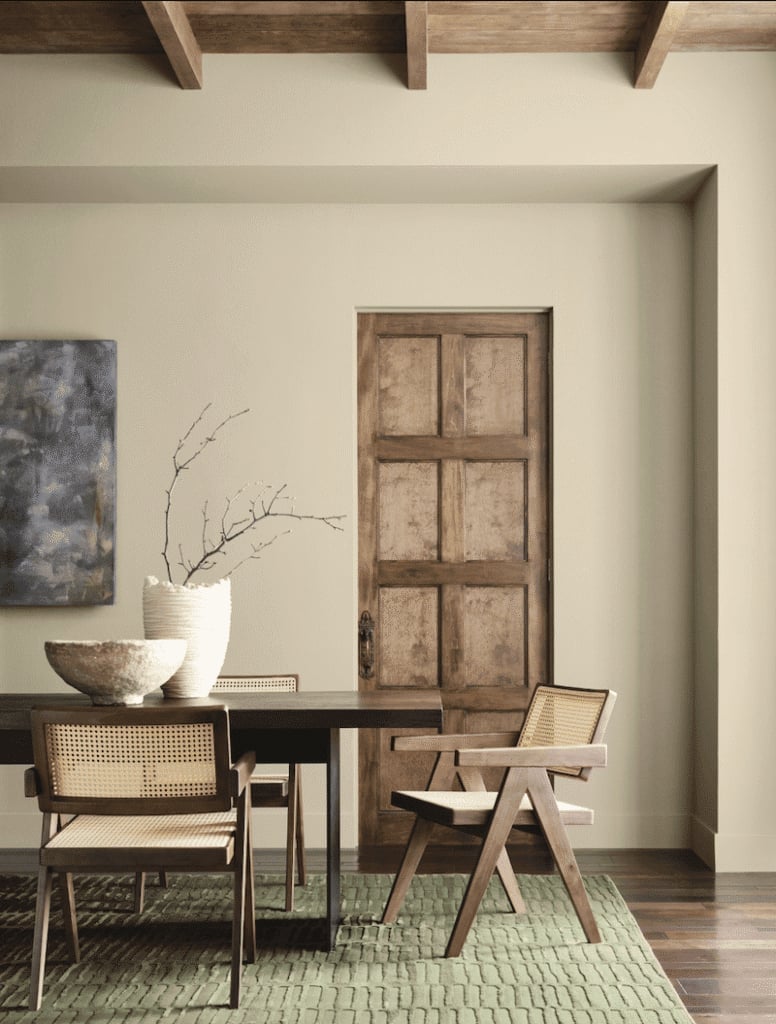
Carrying a warm neutral beige paint from the walls onto the ceiling unifies a dining room and makes the space feel taller. The modern organic style gets a boost from natural materials: a wooden dining table, cane chairs, and a stone accent. Abstract art in green tones adds a focal point, while overhead lighting keeps the room bright. The beige color provides a seamless backdrop that lets the furniture and art take center stage.
05 / 26Soft Neutral Cream Paint in a Hallway with Wood Paneling
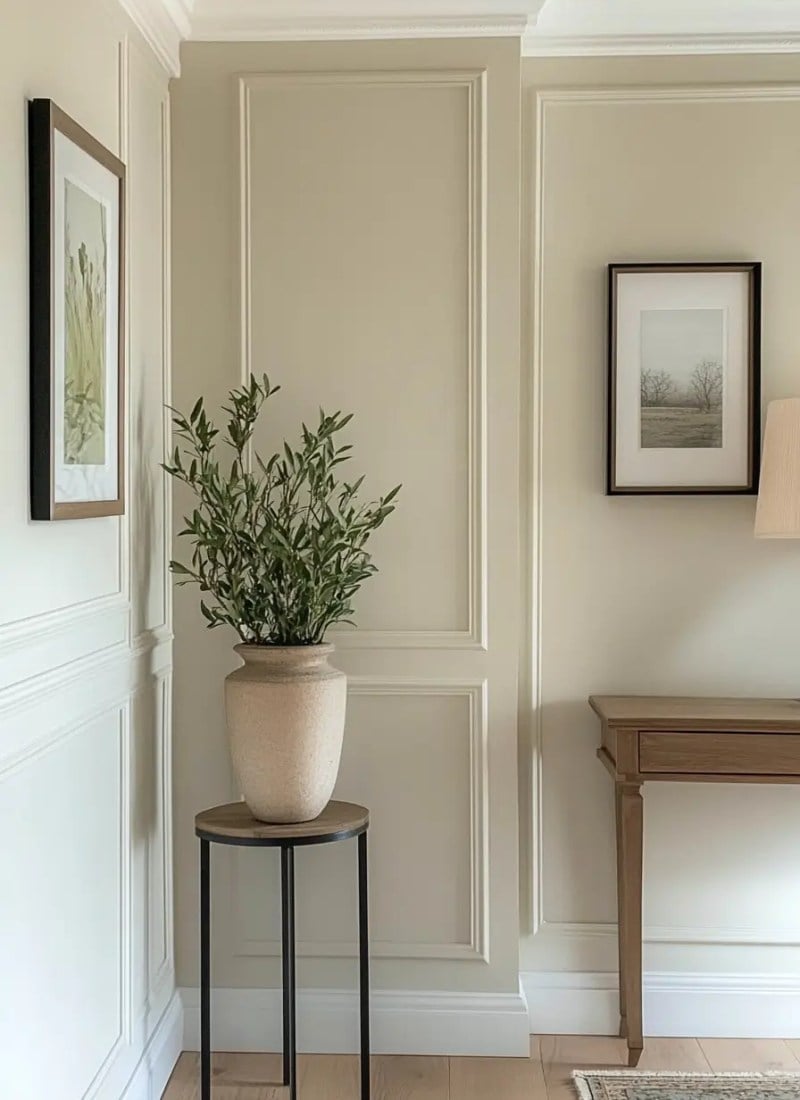
A practical rule for hallways: a soft neutral cream paint on wood paneling makes a compact space feel larger without losing character. The cream finish reflects natural light from a nearby window and pairs well with a wood console table and a large potted plant. A lamp adds warmth for evening, while the beige tones tie the vignette together. This setup suits renters too, since painting existing paneling is a reversible change that updates the look without structural work.
06 / 26Neutral Paint as a Backdrop for Textured Living Room Textiles
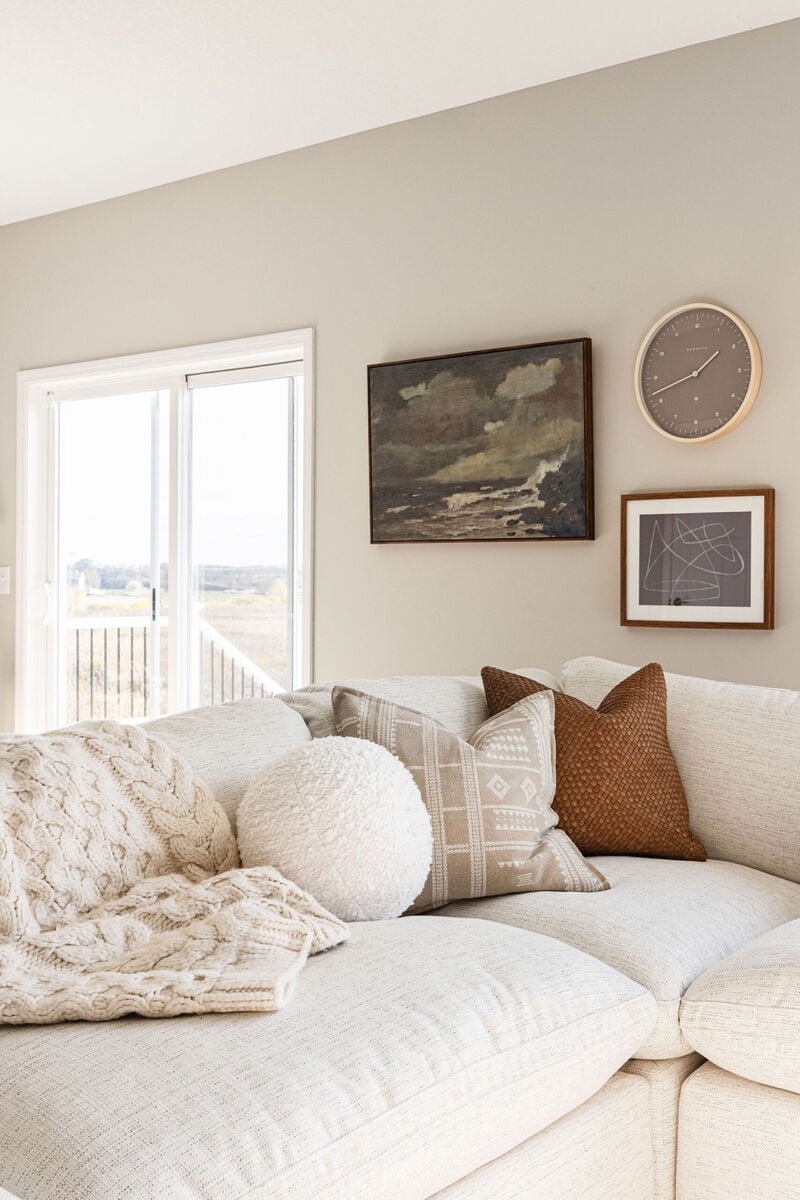
Think of neutral paint as the quiet foundation that lets texture do the talking. Instead of layering pattern on pattern, let a beige wall color support a roomy sectional sofa and let the throw pillows bring the visual interest. Woven textures in brown and natural fibers add depth without competing for attention.
This palette works because the colors stay within the same family. The beige and brown of the upholstery and textiles echo each other, so the room reads as calm rather than flat. For a budget-friendly swap, replace a few solid pillows with textured ones in a similar tone. It changes the feel of the seating area without repainting or buying new furniture.
07 / 26Crisp White Walls for a Coastal Living Room Vibe
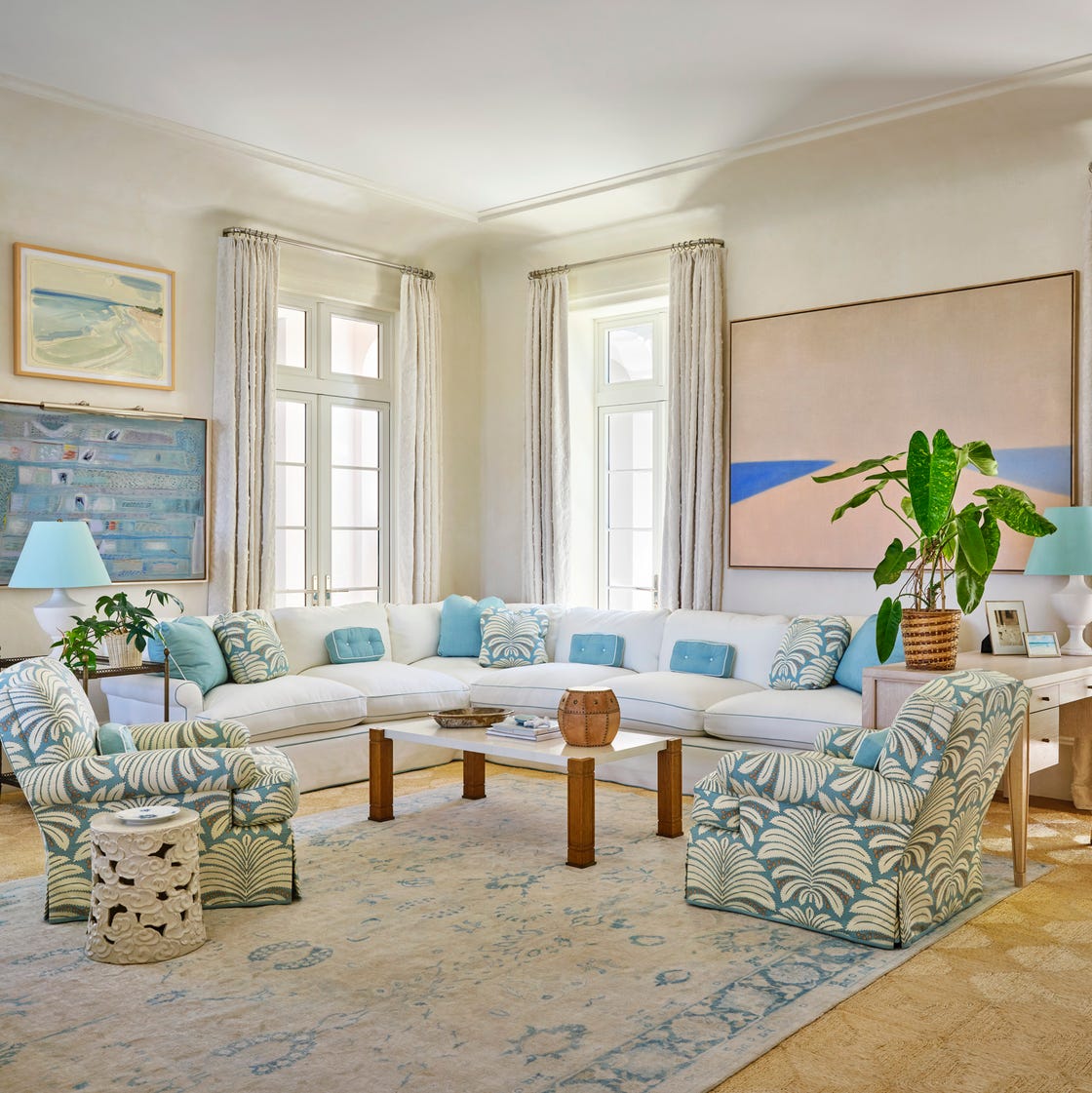
White walls do more than brighten a room; they make blue and beige accents stand out without effort. In a coastal living room, a sectional sofa and armchairs in neutral fabric let ceramic pieces and artwork in blue and white become the focal points. Natural light from the windows and soft table lamp glow keep the palette from feeling cold. This is a renter-friendly approach because the paint stays neutral while the accents can change with your lease.
08 / 26White Walls in a Modern Farmhouse Bathroom
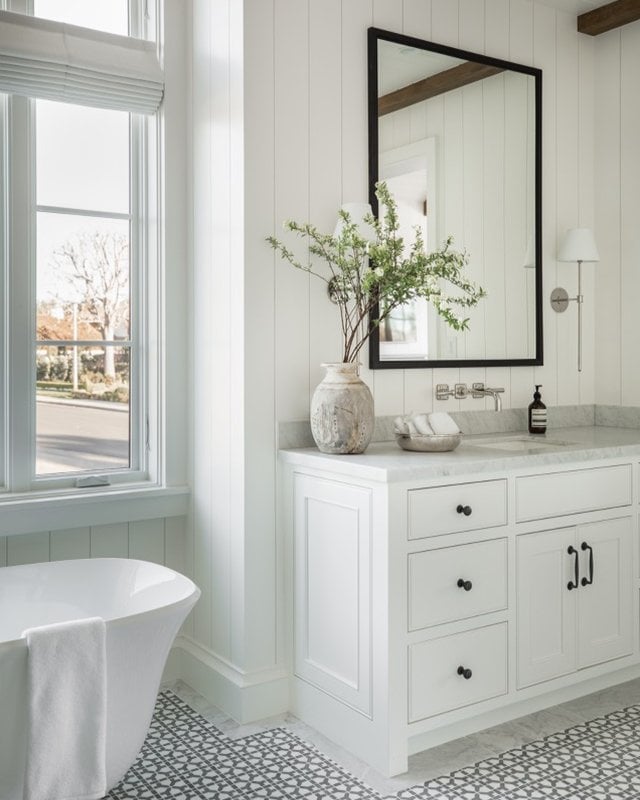
White paint is the most forgiving choice for a bathroom with mixed materials. In a modern farmhouse layout, the white walls let a freestanding bathtub, a wood vanity, and marble countertops each keep their own character. The real trick is scale: the wall color stays simple so the patterned floor tile can extend across a roomy footprint without overwhelming the eye. A wall sconce above the mirror adds task light alongside the natural light.
09 / 26Earthy Beige and Brown Palette for a Traditional Living Room
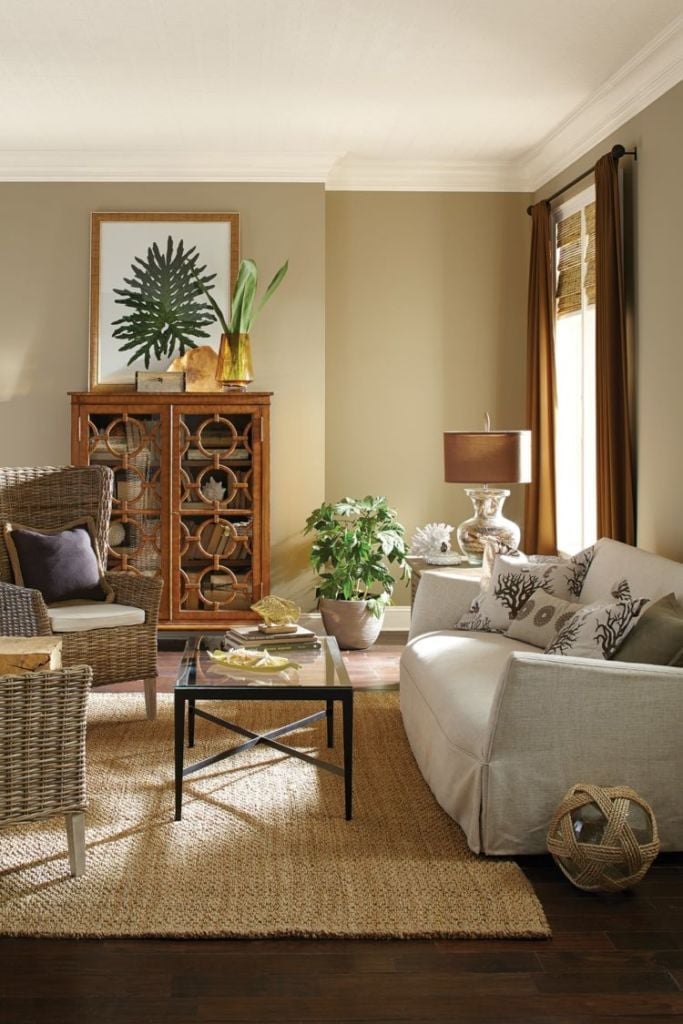
Can a neutral palette still feel layered? Yes, when the paint color is just one part of a larger earth-toned scheme. In a traditional living room, beige walls set the stage for a brown sofa and a cream armchair. The real depth comes from the materials around them.
A rattan cabinet brings in natural texture and a warm brown tone that echoes the sofa. Wood surfaces and fabric upholstery add softness. Natural window light and a table lamp keep the palette from going flat. The trick is to let the paint recede and let the furniture and accessories carry the color story.
10 / 26Neutral Beige Walls in a Scandinavian Living Room
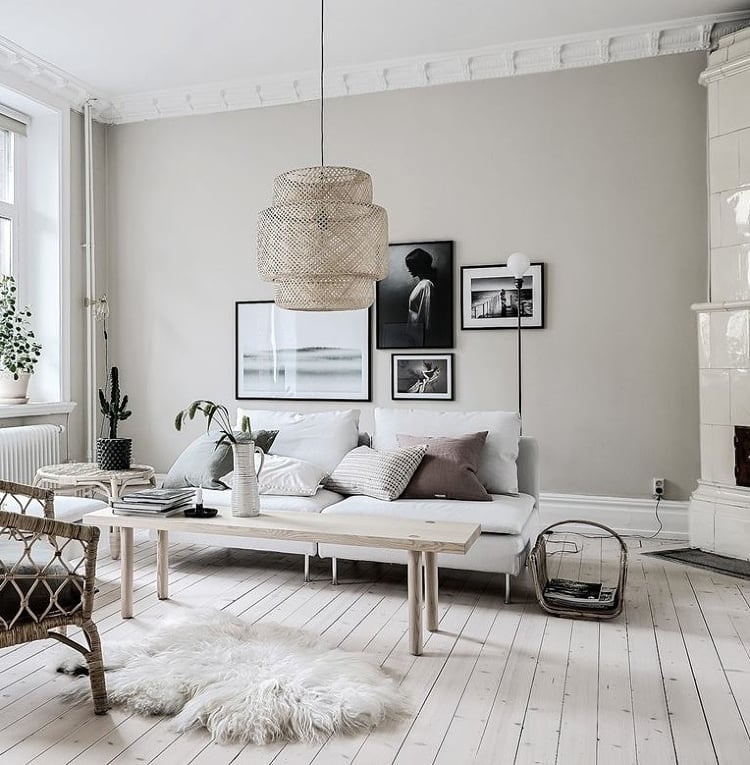
Beige walls in a Scandinavian living room do not read as boring because the design relies on contrast between the wall color and the furniture. A sofa in a lighter neutral faces a fireplace, with a coffee table and chairs in wood and rattan breaking up the beige expanse. The pendant light adds warmth without changing the paint. The room feels roomy because the wall color stays quiet and lets the material finishes stand out.
11 / 26Neutral Walls with White Slipcovered Furniture and Textured Rug
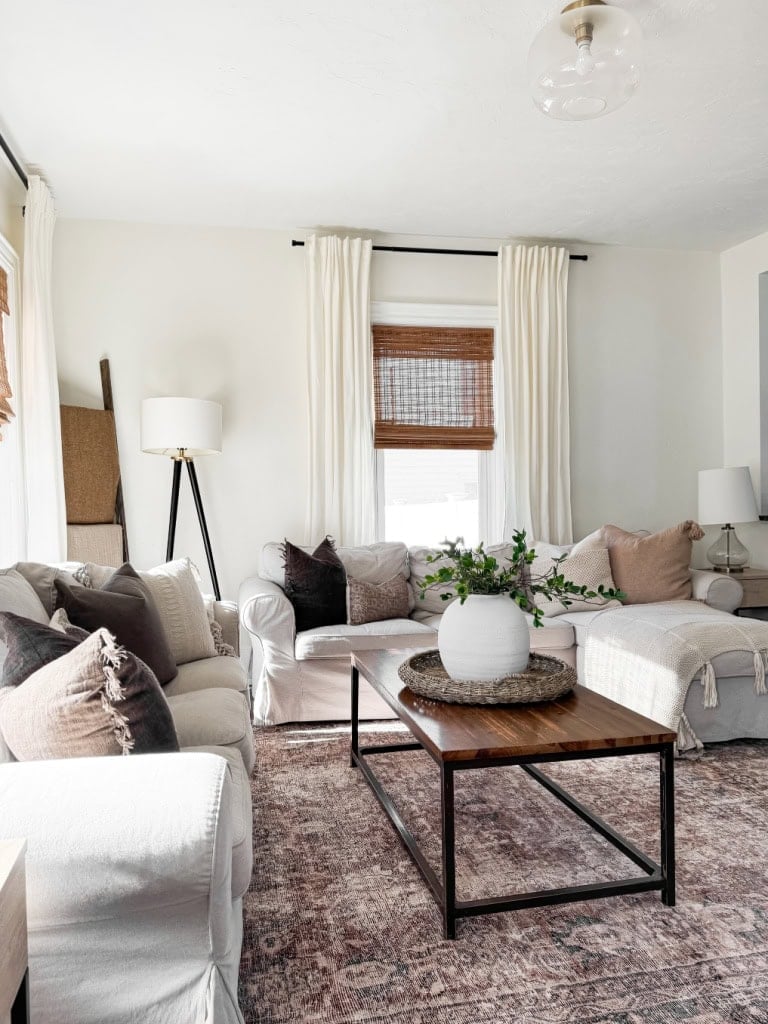
A simple way to keep a neutral room from feeling flat is to mix textures rather than colors. Here, a cream sofa and matching ottoman sit on a rug with visible weave and a rust-toned pattern, while the walls stay a warm off-white. The contrast between smooth slipcovered upholstery and the rug’s woven surface gives the seating area depth without adding a new hue. A wood coffee table and a floor lamp with a natural shade complete the layout. The palette sticks to cream, brown, and rust, so the room reads as layered, not mismatched.
12 / 26Off-White Walls and Ceiling in a Farmhouse Bedroom
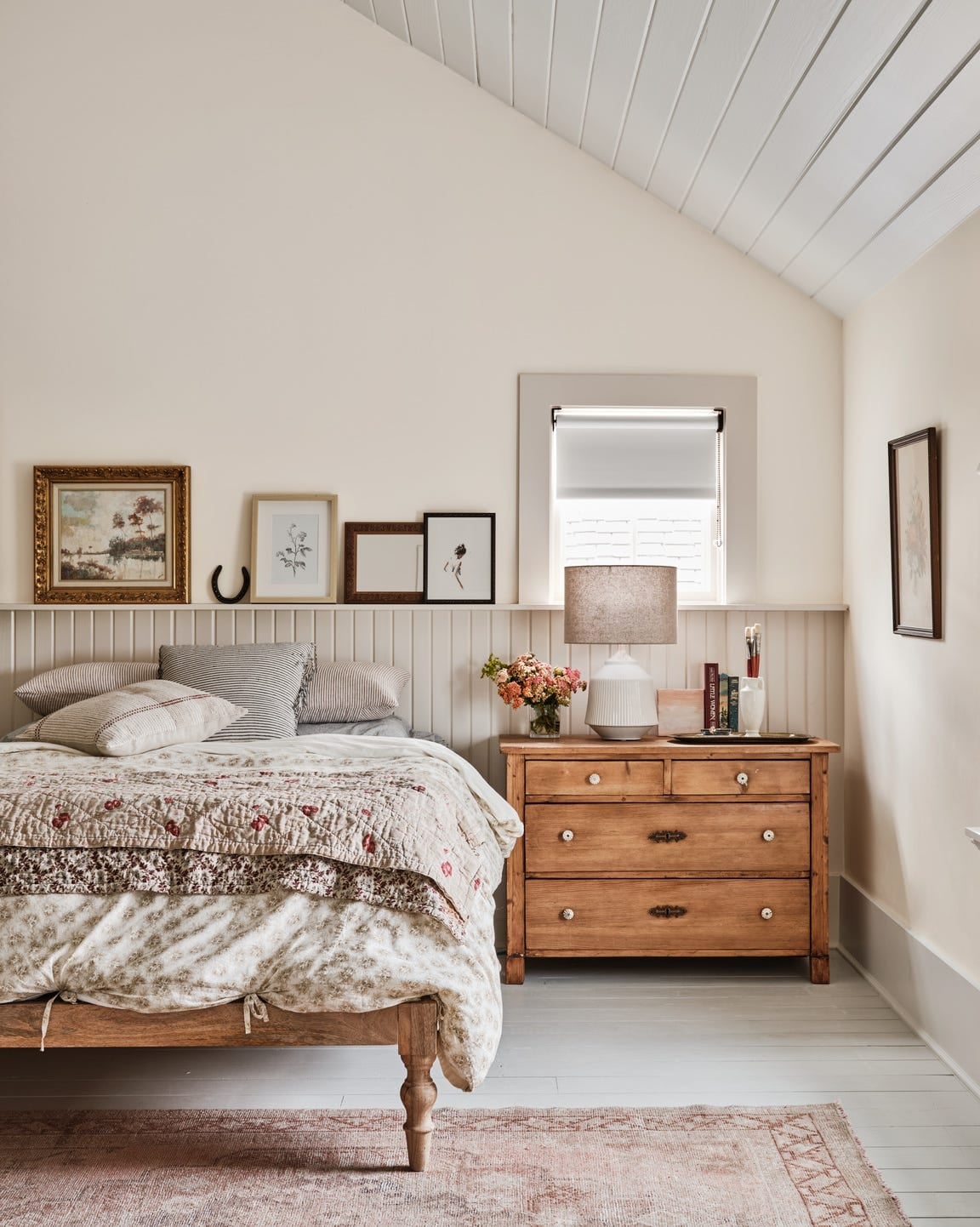
Painting both walls and ceiling the same off-white can make a room feel larger, but the trick is choosing the right undertone. A cool white might read as stark against warm wood furniture, while a beige-leaning off-white keeps the space soft. In this farmhouse bedroom, the walls and ceiling share a warm off-white that complements the wood tones of the bed and dresser. The result is a cohesive backdrop that lets linen bedding and a cotton rug stand out. A bedside lamp with a metal base adds a slight industrial note. For a similar approach, test your off-white against your floor and furniture before committing, because the same paint can look different in north-facing versus south-facing light.
13 / 26Neutral Beige Shiplap Walls in a Rustic Living Room
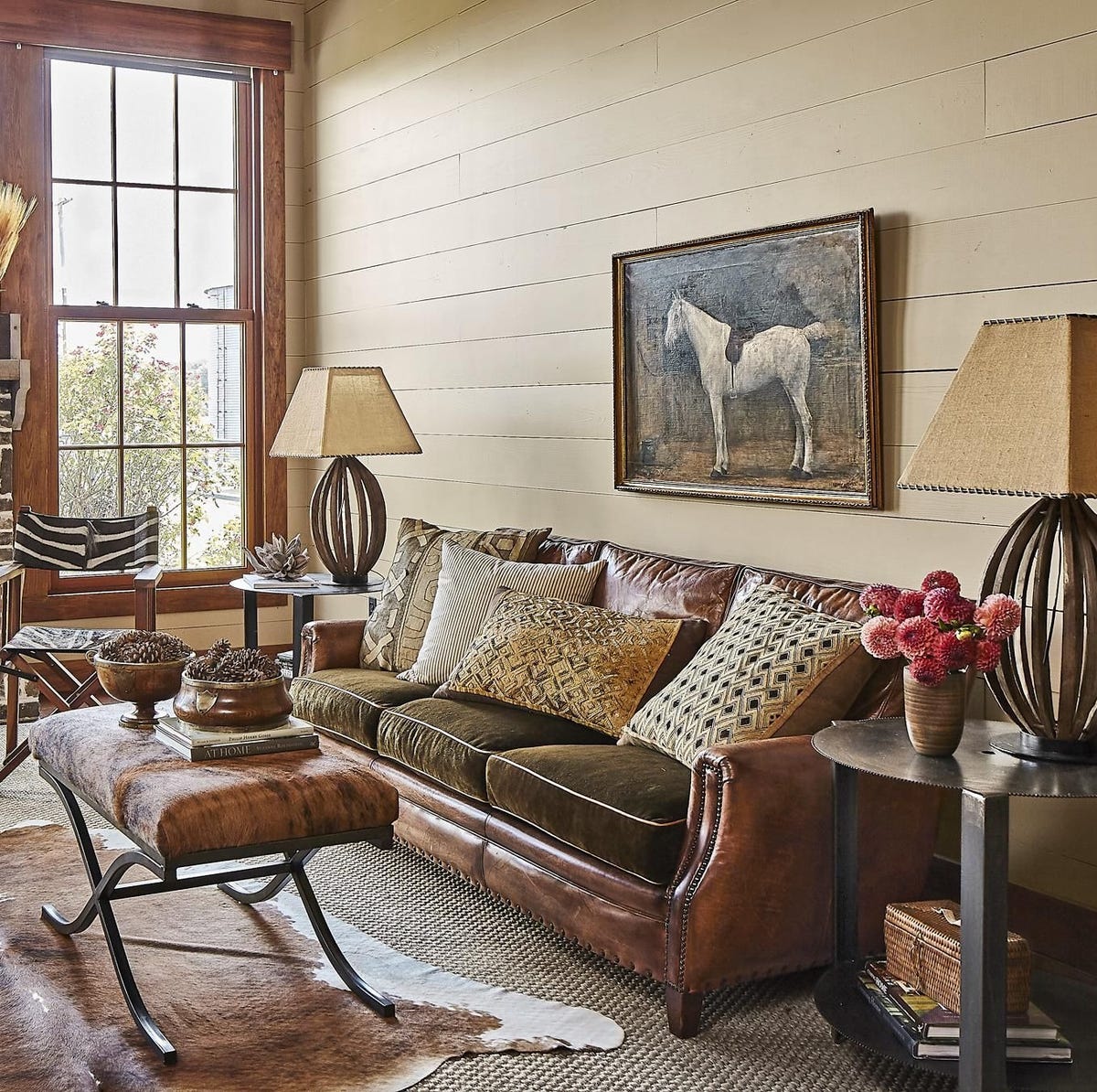
Shiplap painted in a neutral beige does more than add texture, it anchors the room’s rustic character without competing with the furniture. The horizontal lines draw the eye across the space, while the warm beige tone softens the contrast between a brown leather sofa and a cowhide ottoman. Green accents from a plant or throw pillow keep the palette from leaning too brown.
14 / 26Neutral Grey Cabinetry in a Modern Farmhouse Kitchen
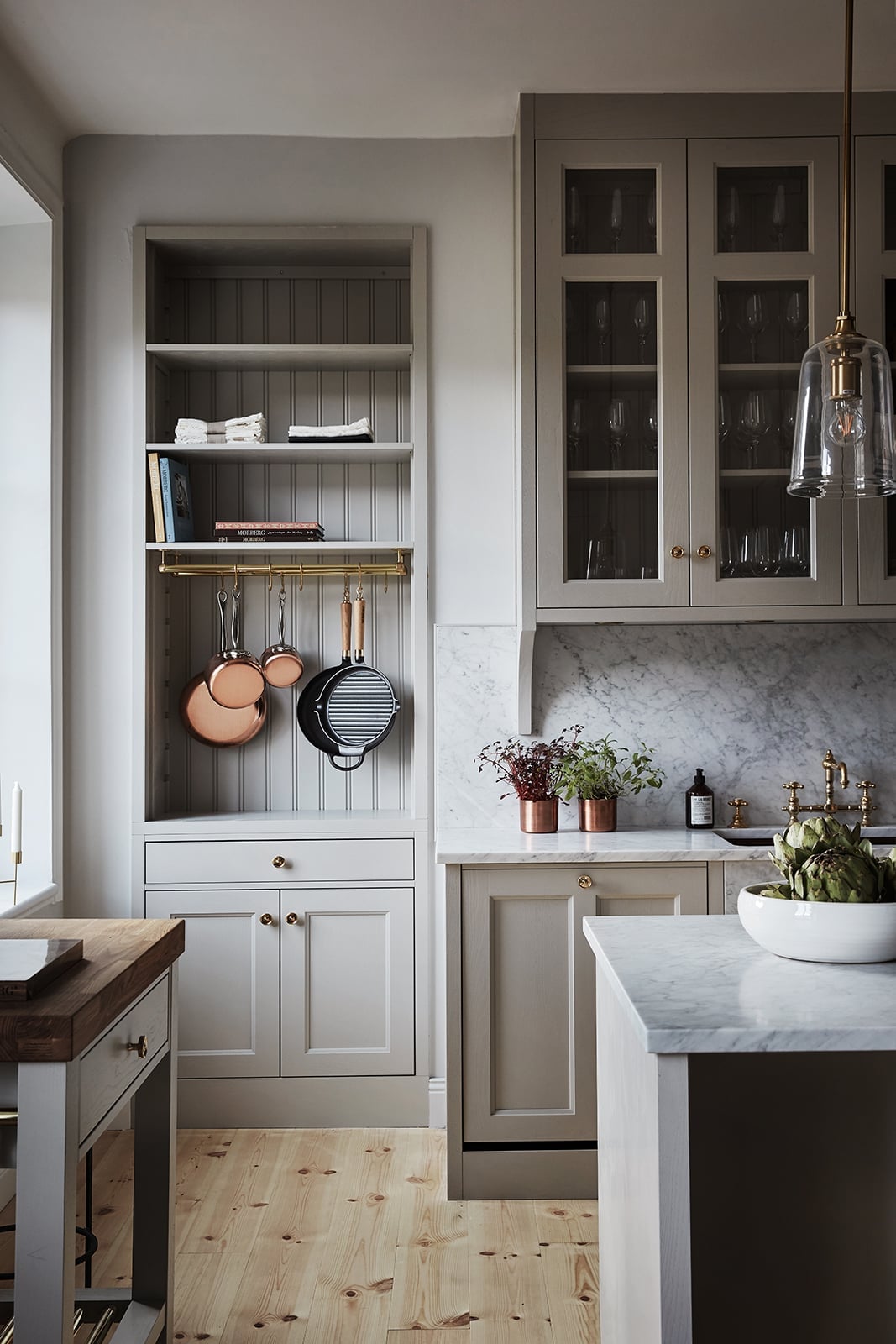
Grey cabinetry strikes a balance between classic white and darker tones, but the shade matters. A neutral grey with a subtle warm undertone works best in a modern farmhouse kitchen because it pairs naturally with wood, marble, and brass. Here, the grey cabinets are complemented by an integrated shelving unit and a cream island, while natural window light and a pendant fixture keep the space bright. The palette stays within grey and cream, so the marble countertop and brass hardware become deliberate accents.
15 / 26Neutral White Walls Complementing a Textured Cream Sofa
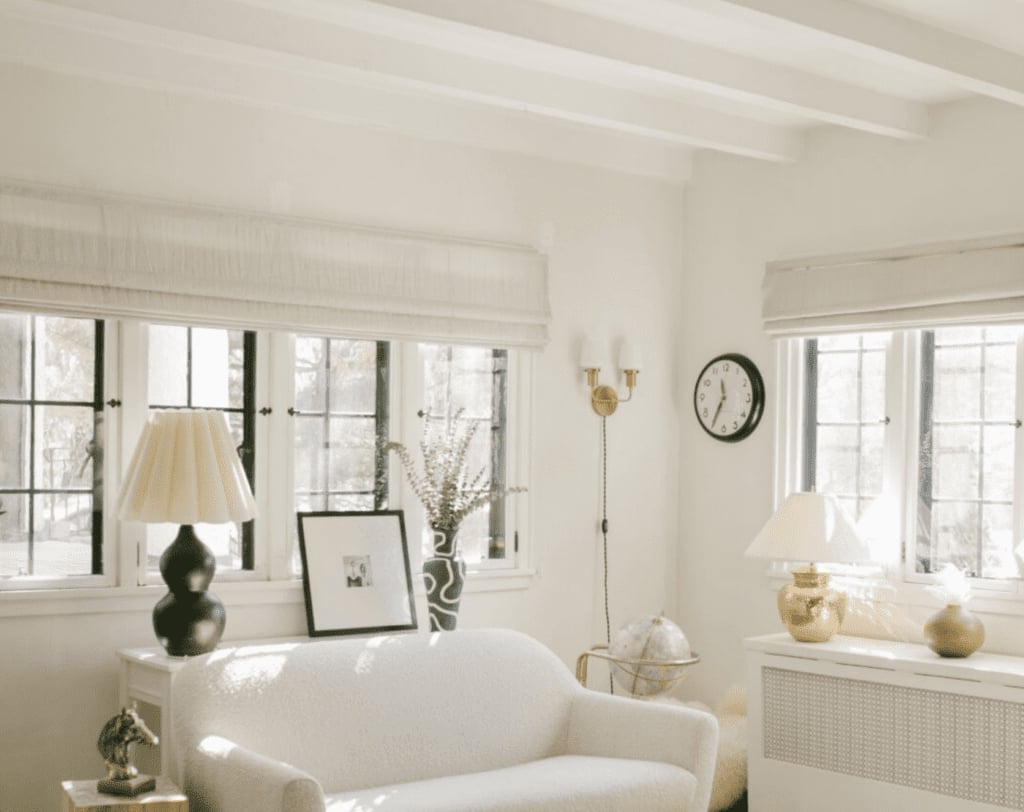
White walls are a dependable choice, but they work best when something in the room has visual weight. In this living room, a cream sofa with visible texture becomes the focal point against the plain white backdrop. The fabric’s weave differs from the smooth walls, creating subtle variation in the neutral palette. Wood and glass accents add warmth without competing. The layout places the sofa facing the windows, so abundant natural light hits the textured surface directly. Choose a sofa with a nubby or ribbed fabric, because the texture gives the white walls a reason to be there.
16 / 26Taupe and Beige Living Room with Sculptural Marble Accents
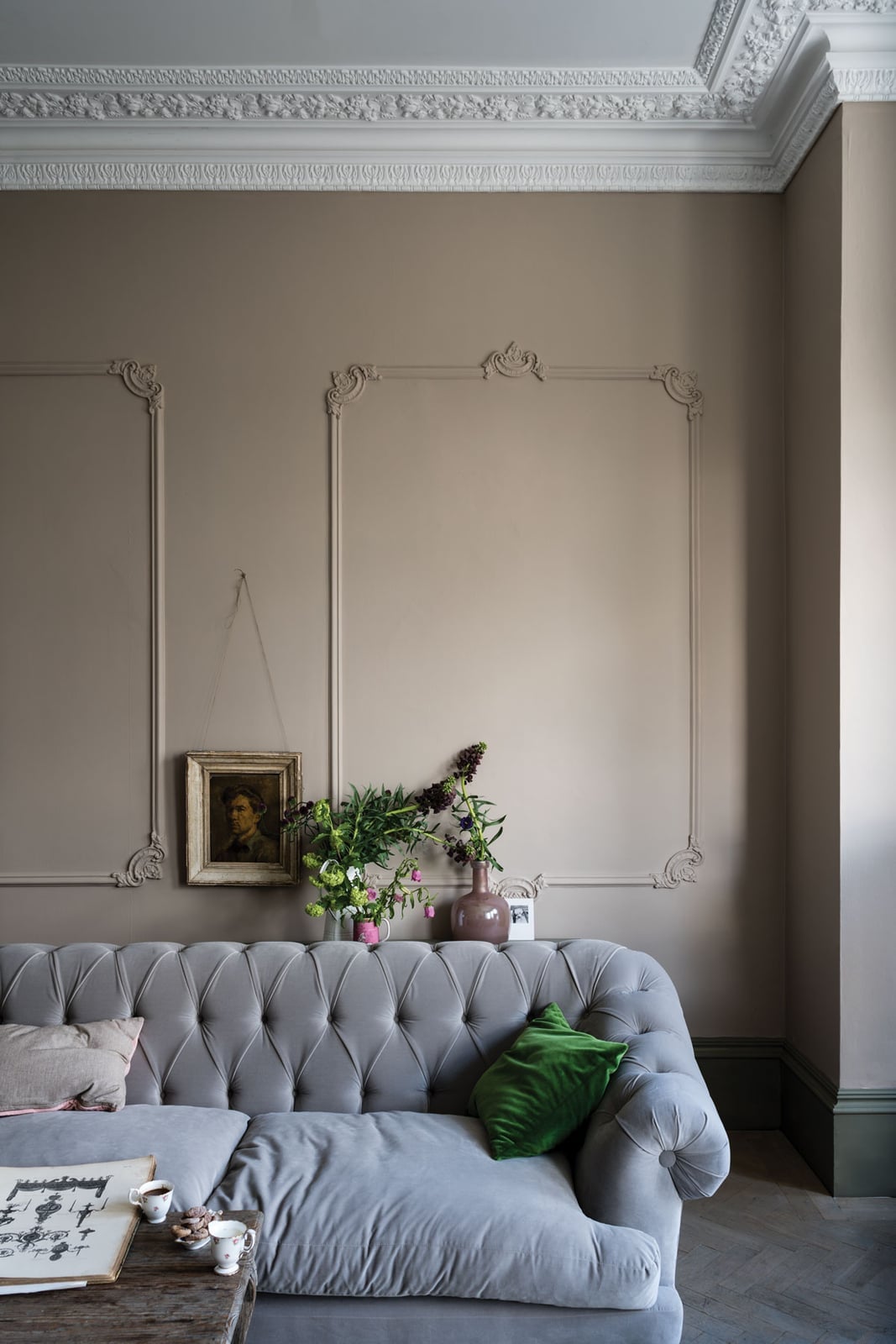
A sculptural marble coffee table with organic curves sits at the center of this taupe and beige living room, its pale veining popping against the soft wall color. The sofa and side tables stay low and simple in cream and wood so the stone piece does the talking. If you want a similar effect without the investment, swap in a large ceramic or resin piece with a marble-like finish. The room keeps its calm palette, and the accent still feels placed on purpose.
17 / 26Neutral Walls and Wood Beams in a Farmhouse Living Room
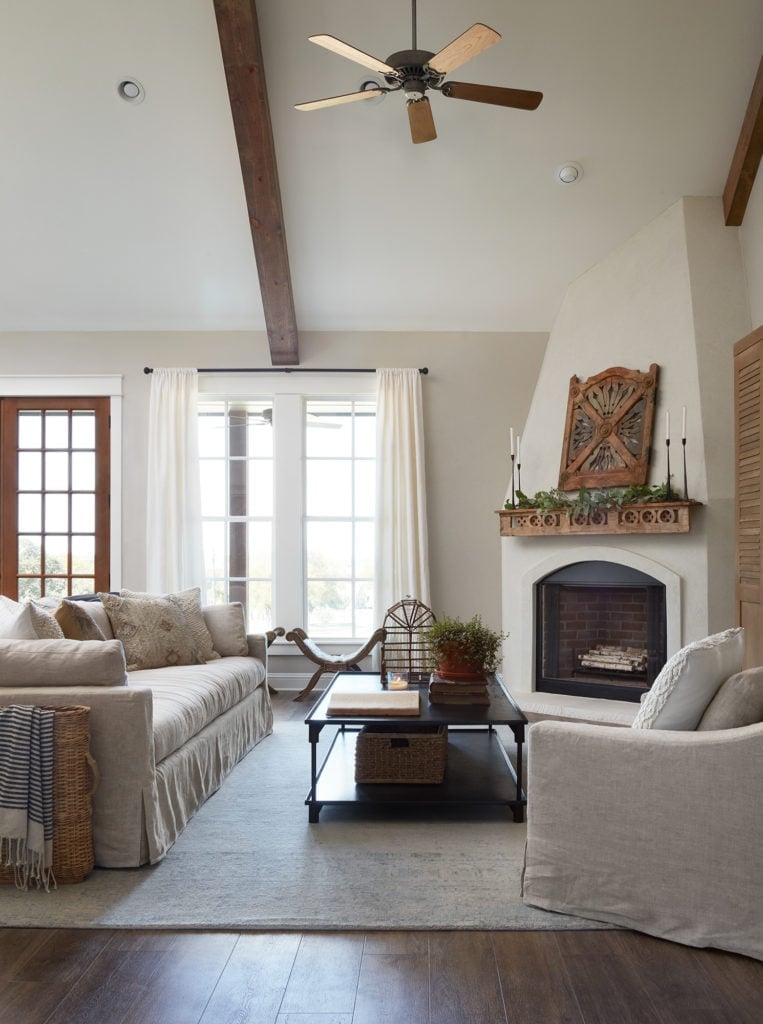
For a farmhouse living room with exposed wood beams and a stone fireplace, keep the walls a soft cream or off-white. The neutral paint lets the darker wood and stone textures stand out. Linen upholstery on the sofa and armchair adds a relaxed, breathable layer that matches the room’s natural material palette. If you rent and cannot paint the beams, use a wallpaper on one wall behind the sofa to echo the wood grain pattern. The symmetrical layout around the fireplace stays the anchor, and the neutral backdrop prevents a heavy feel.
18 / 26Neutral Tones for Built-in Bench Seating Vignette
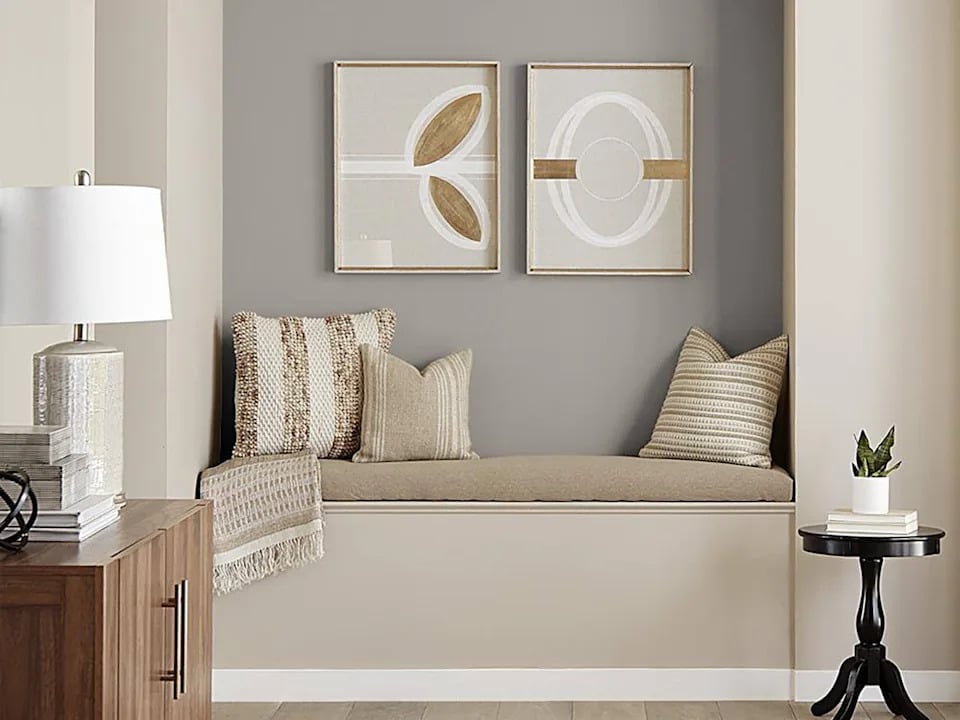
A built-in bench nook can feel too cold or too busy depending on the paint choice, and this corner vignette shows the middle ground. The walls are a warm beige-gray, the bench cushion is a soft cream fabric, and the pillows mix in a slightly deeper beige and a muted olive. The artwork above the bench has organic, flowing shapes that echo the curves in the throw pillows. Stick to two or three neutral shades in the same temperature family, then pull in one accent color from the art or the pillows. The wood trim and the metal lamp base add the contrast without needing a dark wall. The space feels quiet and put together.
19 / 26Soft Pale Pink Walls in a Transitional Living Room
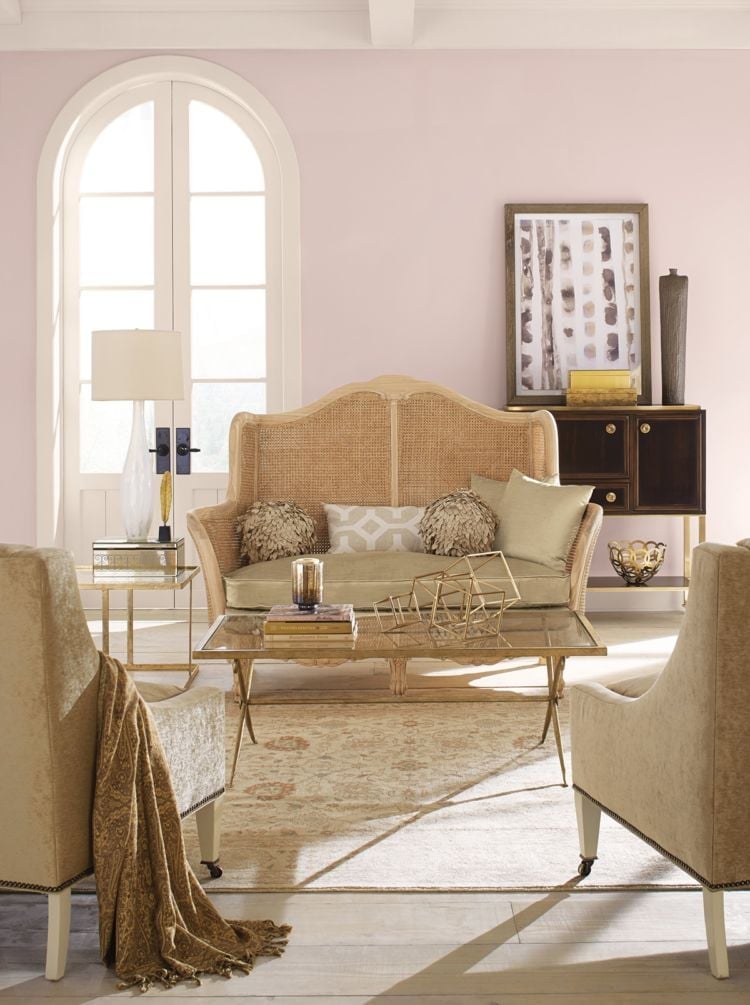
Pale pink walls here act as a neutral, not a pastel, because the undertone leans beige instead of candy pink. The room pairs it with a cream sofa, rattan armchairs, and a gold table lamp, keeping the overall palette warm. The coffee table and console ground the pink so it does not float. If you are testing a soft pink, paint a large swatch and look at it in morning and afternoon light. A pink this subtle shifts with the sun, and the room stays calm either way.
20 / 26Charcoal Grey Accent Wall in a Modern Rustic Bedroom
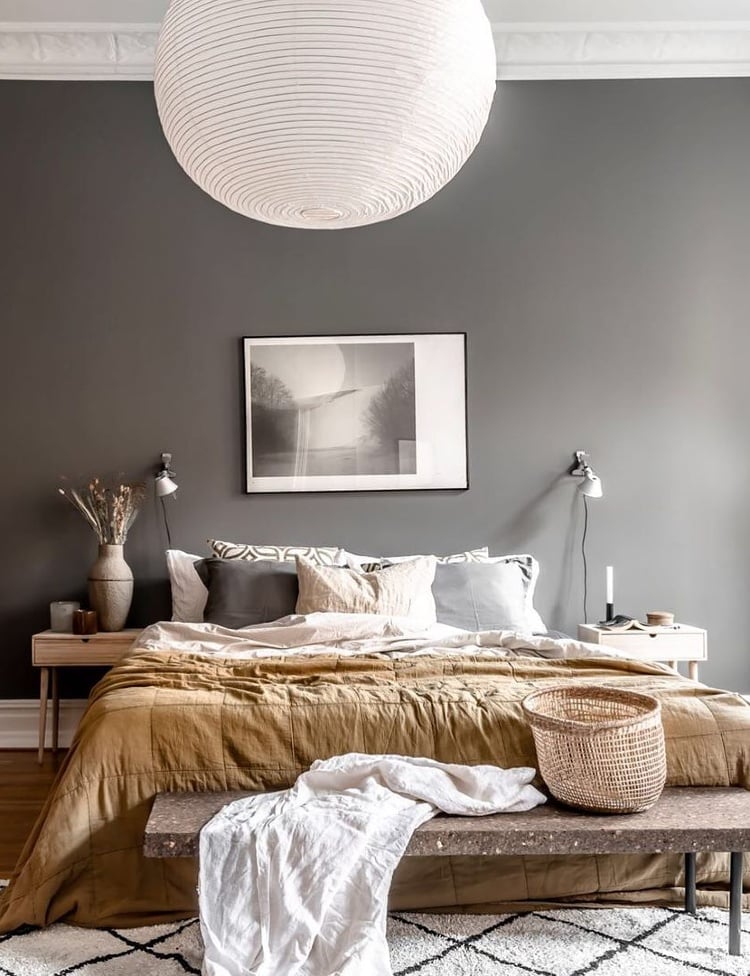
A charcoal grey accent wall behind the bed grounds this modern rustic bedroom without making the room feel smaller. The key is the mustard yellow throw and the white bedding, which keep the contrast high and the dark wall from reading as heavy. The wood bench at the foot of the bed and the stone nightstand add the rustic texture, while the black metal wall sconces and large pendant light stay slim and modern. If you try a dark accent wall, keep the other three walls a light white or cream. The charcoal wall becomes the anchor, and the room stays airy.
21 / 26Grey Cabinetry and White Countertops in a Farmhouse Kitchen
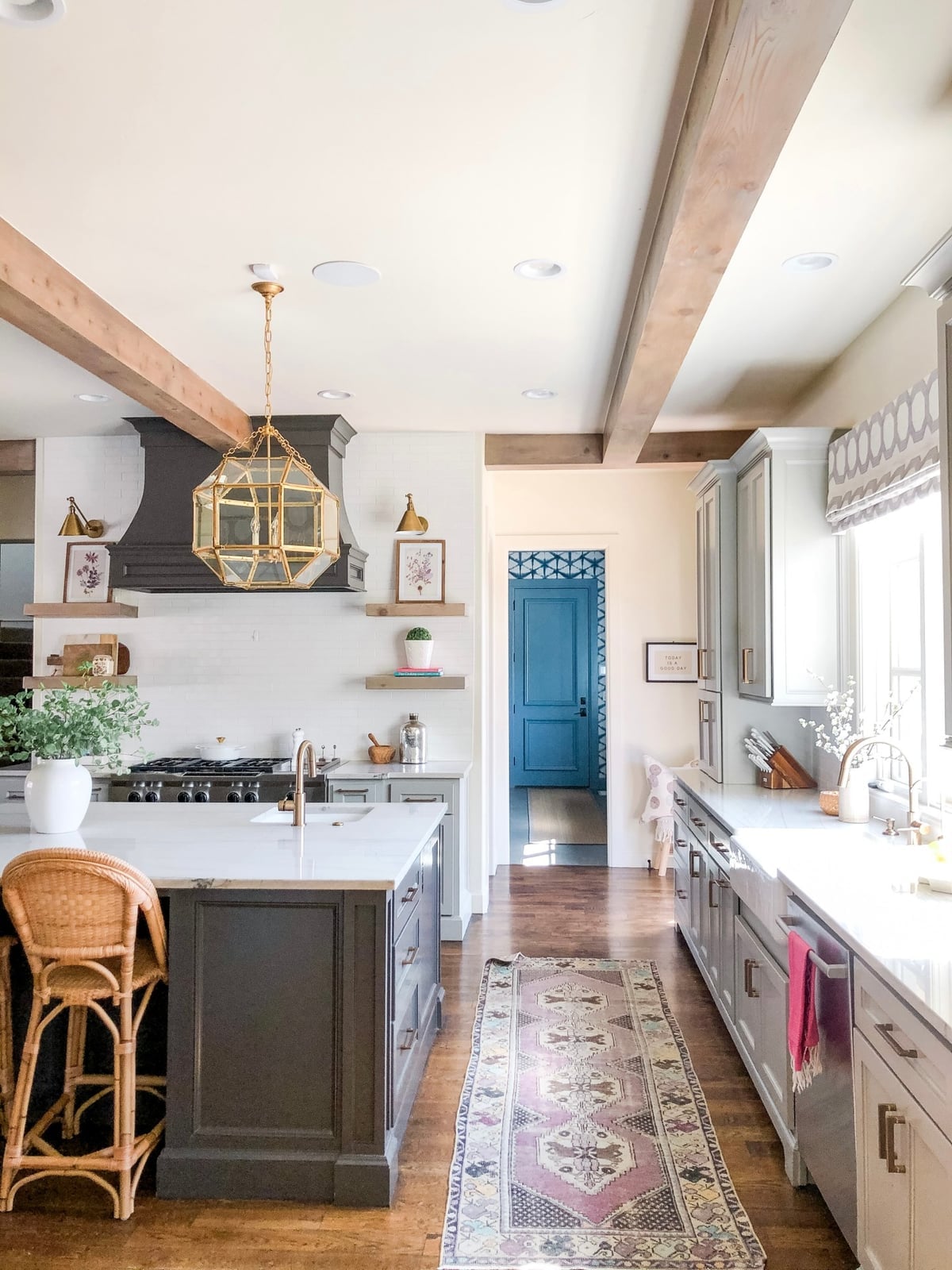
A kitchen with grey cabinetry and white countertops needs metal fixtures to carry the warmth. The large brass pendant light here does exactly that, its glow balancing the cool grey of the island and perimeter cabinets. White countertops and a white range hood keep the palette clean, while the wood floor and the kitchen island surface add a natural anchor. The open plan layout means the cabinetry is one continuous element, not a series of separate pieces. To recreate it, look for a single metal finish for all visible hardware and lighting. Brass, copper or even black will stop a grey and white scheme from feeling flat.
22 / 26Off-White Walls in a Mid-Century Modern Bedroom
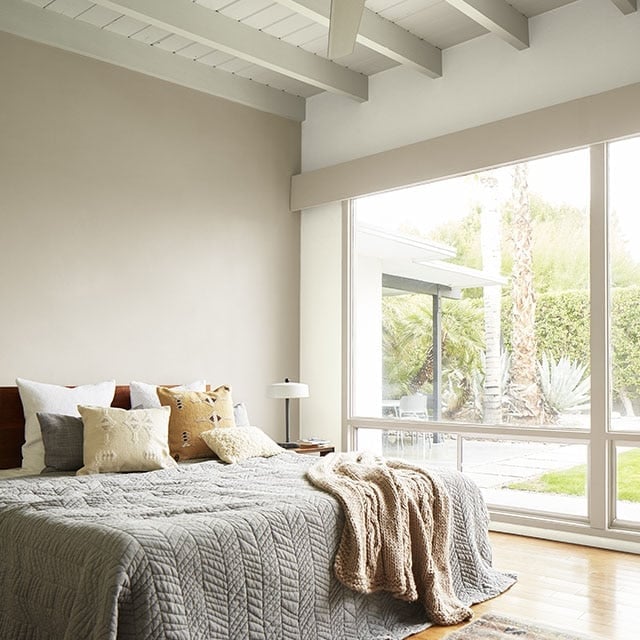
The bed faces a large window, and the off-white walls let the view become the main event. A wood headboard and a beige fabric bed frame keep the palette warm, while a small table lamp on the nightstand adds a soft glow. The room feels spacious because the neutral paint stays in the background. This setup works best for anyone who wants a calm bedroom that centers on natural light.
23 / 26Butter Yellow Walls for a Traditional Dining Room
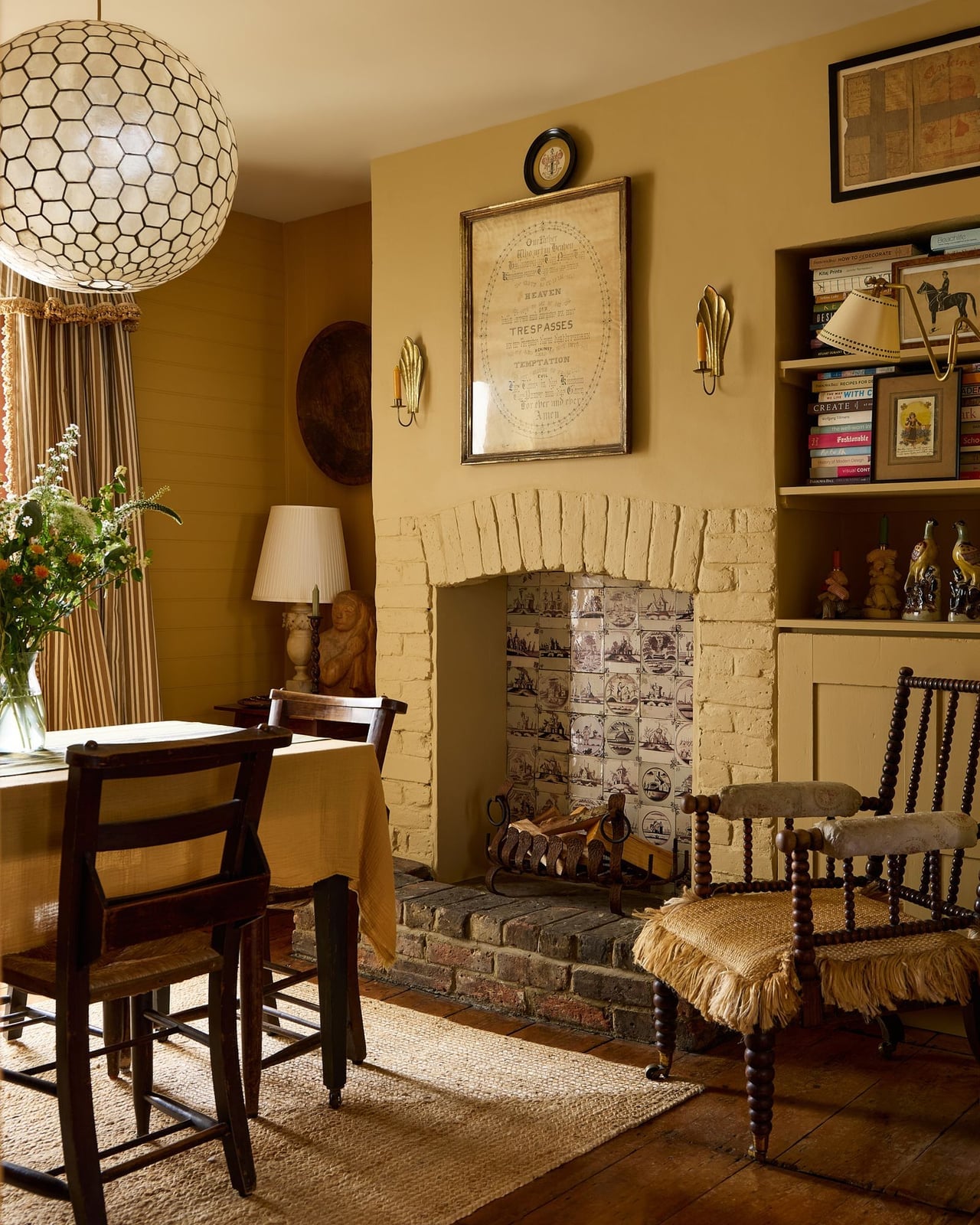
To use butter yellow on dining room walls, pair it with materials that have their own texture. In this traditional dining room, the yellow walls sit next to a brick fireplace and wooden shelves, so the color feels warm. A pendant light above the table and natural light from a window keep the yellow from feeling heavy. The dining table and chairs are wood, which reinforces the earthy side of the palette. For a similar look, choose brick, stone or unglazed tile as a companion material. The slight roughness of those surfaces stops the yellow from becoming too glossy or precious.
24 / 26White Walls with a Sage Green Vanity in a Modern Farmhouse Bathroom
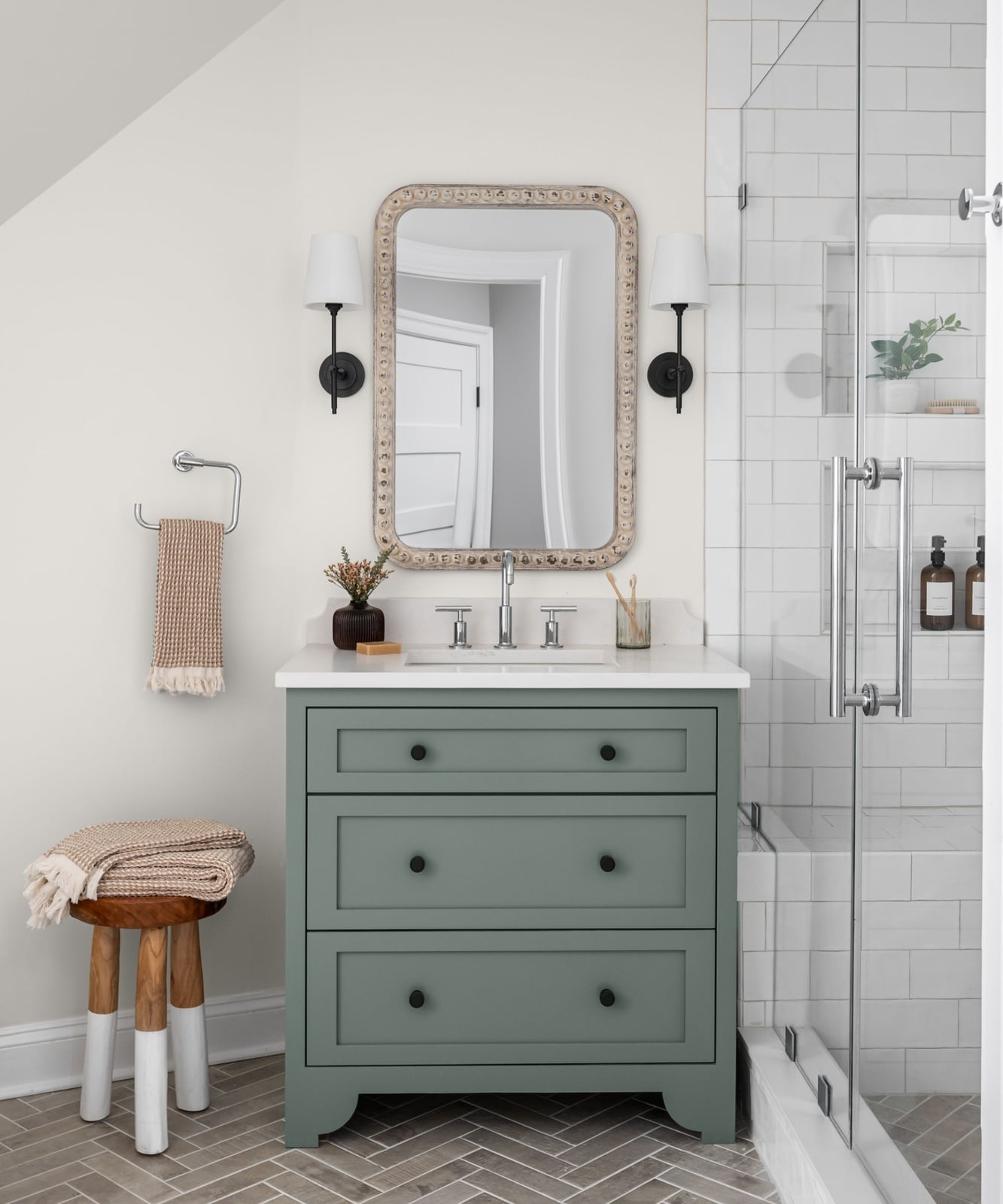
A sage green vanity can feel like a risk in a compact bathroom, but white walls and natural light make it work. The vanity sits under a window, so daylight hits the green paint directly and keeps it from turning muddy. Wall sconces flanking the mirror add a second light source for evening use. The white walls, white tile and white sink let the vanity be the one color note in the room. A small wooden stool and a glass shower enclosure keep the bathroom from feeling busy. Limit the green to one piece of furniture without spreading it across walls or tile. That way the bathroom stays light and the vanity becomes a deliberate accent.
25 / 26Olive Green Walls for an Eclectic Living Room
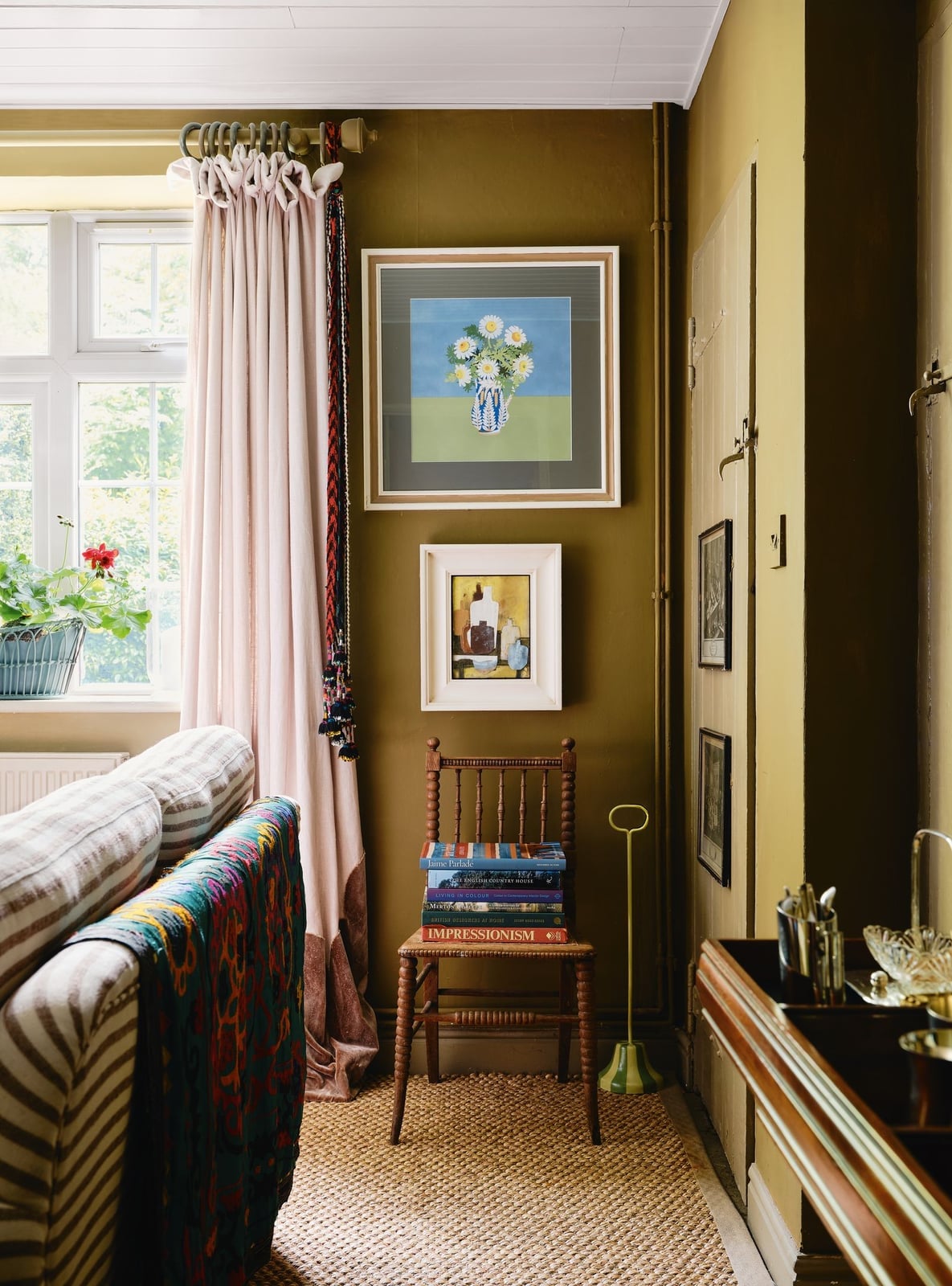
The olive green walls in this living room do not fight for attention. A cream sofa and a multi-color patterned armchair sit against them, and the green acts as a unifying background rather than a loud statement. Artwork on the wall and curtains in a soft fabric add layers without competing. The room feels curated because the wall color ties together the mix of furniture styles. For an eclectic space, olive green is a solid choice because it is strong enough to hold the room together but neutral enough to let pattern and texture take center stage.
26 / 26Final Thoughts
Neutral paint holds up because it does not fight the rest of the room. Each of these 25 ideas proves that one well-chosen shade can define the space while everything else gets to change. The practical takeaway is to test your paint on the wall in morning and afternoon light before committing. Keep the surrounding decor simple at first. Add texture through rugs, wood, or slipcovers only after the color feels right. Neutral works best when it lets the room breathe. That is the whole point.