
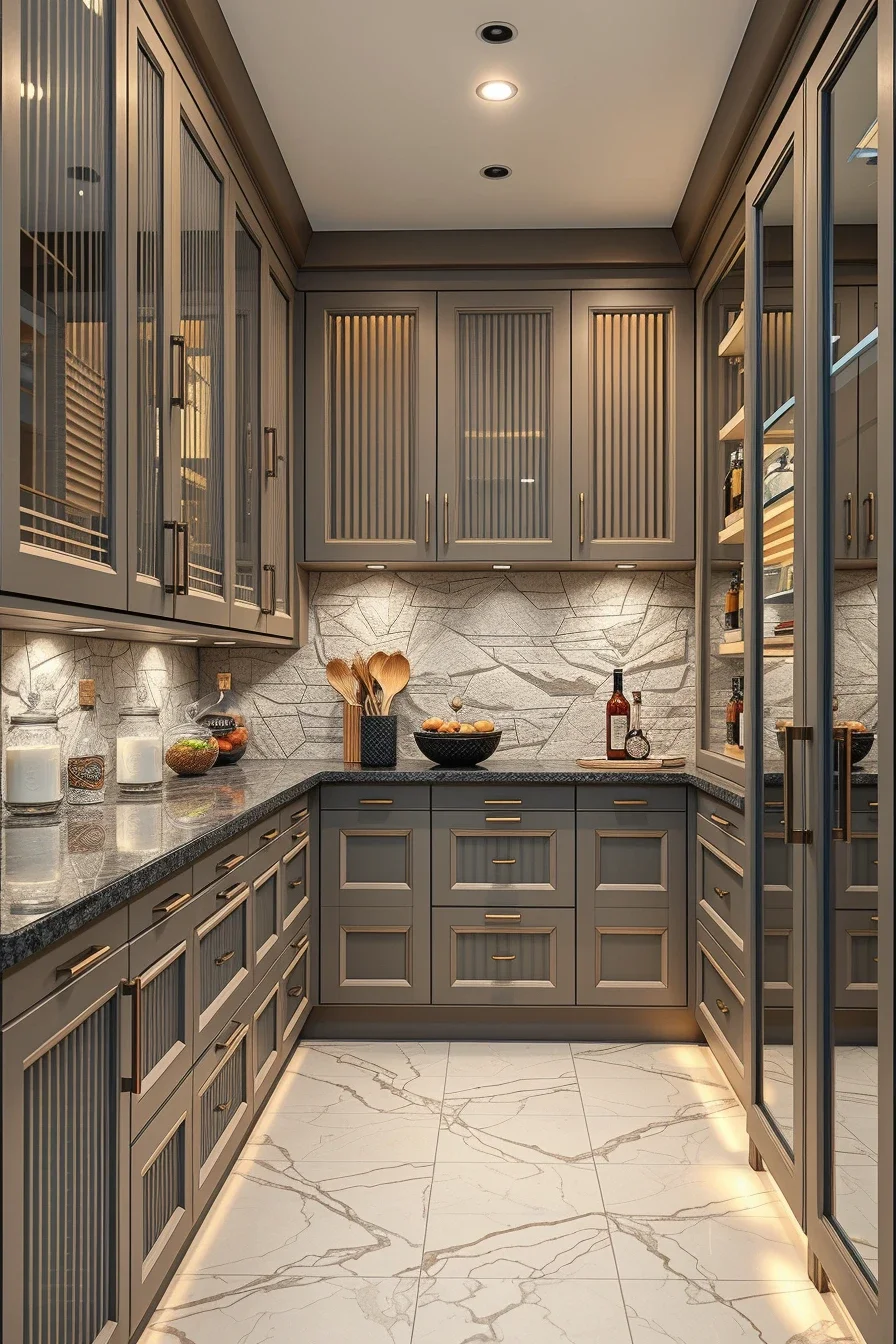
A well-designed pantry is no longer just a place to store groceries—it has become an essential part of a beautiful, organized kitchen. Modern pantry design combines clean aesthetics, innovative storage solutions, and thoughtful layouts to make everyday life more convenient. From spacious walk-in pantries to compact hidden cabinets, today’s designs prove that practical spaces can also be visually striking. Creative materials, sculptural shelving, elegant lighting, and custom storage features help transform an ordinary pantry into a standout design element. Whether you’re planning a complete kitchen renovation or simply refreshing your storage area, the right pantry design can maximize both function and style. In this guide, you’ll discover inspiring modern pantry ideas that bring together organization, creativity, and contemporary elegance for every type of home.
Modern Pantry Design Trends That Transform Everyday Storage
When I plan a modern pantry, I always begin by thinking about how the space will support everyday routines while becoming an extension of the kitchen’s overall style. Today’s pantry is no longer hidden behind a simple door filled with random shelves. Instead, it becomes an intentional design feature with clean lines, integrated lighting, organized storage zones, and carefully selected materials that create a polished appearance. A successful modern pantry design combines beauty with functionality, making every shelf and cabinet feel purposeful while maintaining a calm and uncluttered atmosphere.
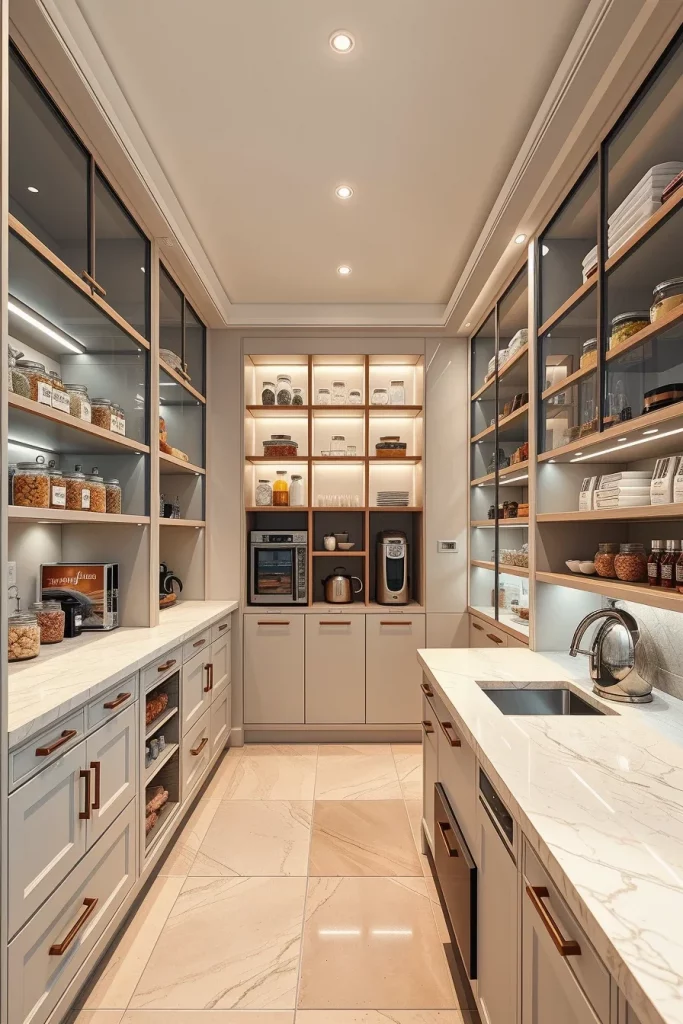
I like incorporating full-height cabinetry, built-in drawers, pull-out baskets, concealed appliance storage, and adjustable shelving that can adapt as storage needs change. Soft LED lighting beneath shelves, seamless cabinet fronts, integrated organizers, and matching countertops create a sophisticated workspace for meal preparation and grocery organization. Decorative glass jars, labeled containers, natural stone countertops, and coordinated hardware help create a cohesive environment without sacrificing efficiency. Every element contributes to a pantry that looks refined while remaining highly practical.
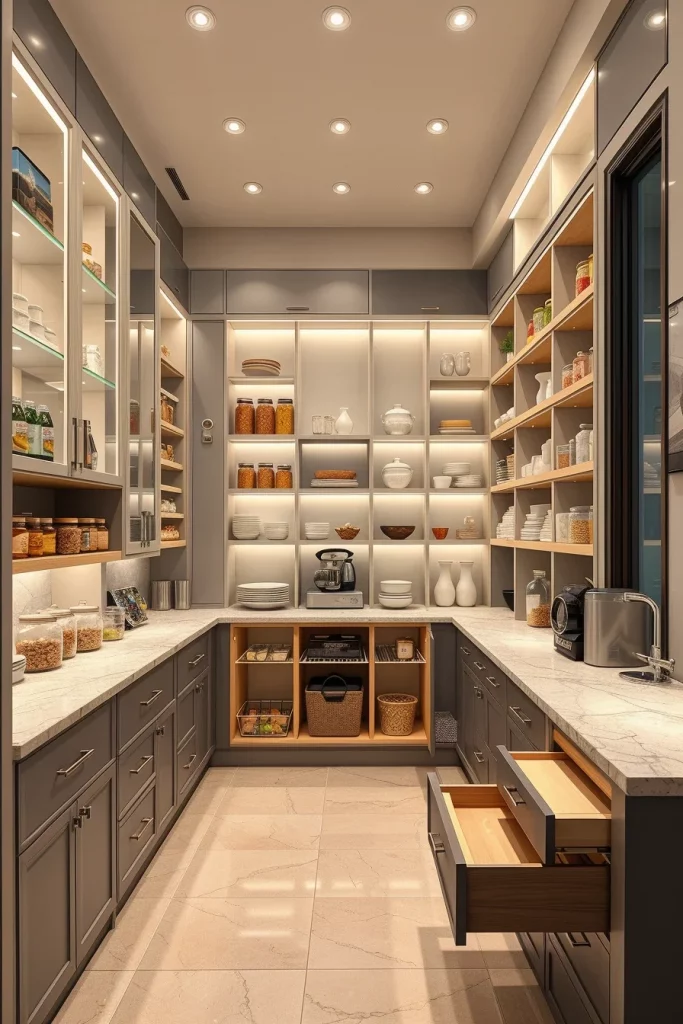
From my experience, professional designers frequently emphasize that organization should always drive the design. Publications like Architectural Digest and House Beautiful often highlight that beautiful storage works best when every item has a designated location. I completely agree because a pantry that stays organized over time always feels more luxurious than one filled with expensive finishes but poor functionality.
If I were expanding this pantry even further, I would include dedicated beverage storage, charging stations for small appliances, hidden recycling compartments, and climate-controlled storage for specialty foods. These additions make the pantry even more versatile for modern family living.
Sculptural Pantry Shelving With Architectural Appeal
I believe shelving should do much more than simply hold food containers. Sculptural shelving transforms the pantry into a visually impressive room where storage itself becomes architectural art. Instead of flat rows of identical shelves, I prefer layered compositions featuring varying shelf depths, floating platforms, curved edges, and asymmetrical arrangements that create movement throughout the room. These details instantly make the pantry feel more artistic, creative, and memorable.
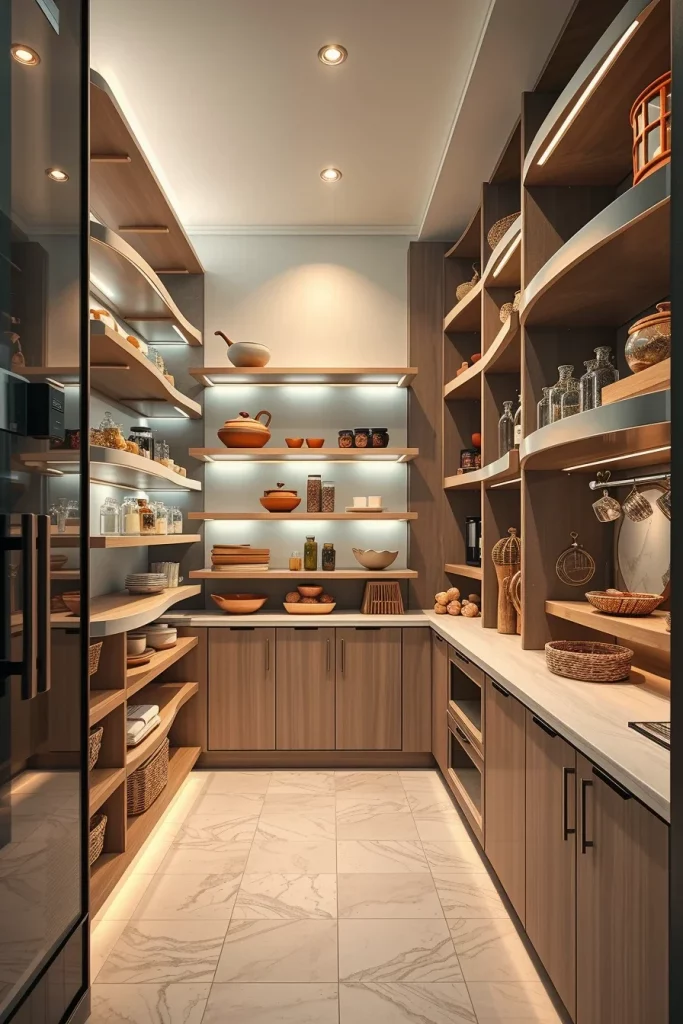
I often combine floating wood-look shelving with matte cabinetry, integrated lighting, vertical dividers, display niches, and concealed supports that make every shelf appear to float effortlessly. Decorative ceramic bowls, woven baskets, glass storage jars, cookbooks, and carefully selected accessories add warmth without overcrowding the design. Adjustable shelf heights also make it easier to accommodate everything from cereal containers to oversized serving pieces while maintaining visual balance.
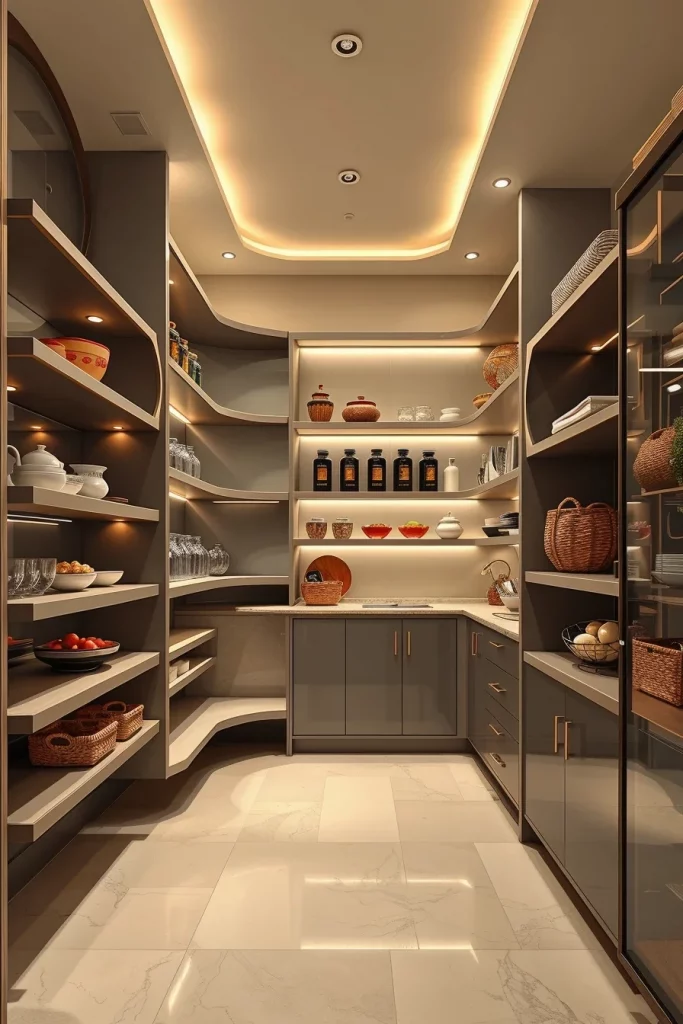
Personally, I find that sculptural shelving works best when restraint is used. Interior designers frequently recommend leaving intentional empty space between displayed objects to create visual breathing room. I have found that this advice helps even fully stocked pantries feel organized rather than cluttered, allowing every decorative element to stand out naturally.
To improve this concept even further, I would introduce integrated accent lighting behind shelving, concealed cable management for countertop appliances, and custom display sections for seasonal décor or specialty kitchen collections.
Floor-To-Ceiling Cabinet Designs For A Seamless Pantry
Whenever I want a pantry to appear larger and more sophisticated, I choose floor-to-ceiling cabinetry. This approach eliminates visual interruptions while maximizing every inch of available storage. Continuous cabinet fronts create an elegant architectural statement that feels custom-built and exceptionally organized. Even relatively small pantries immediately appear taller and more spacious with this design strategy.
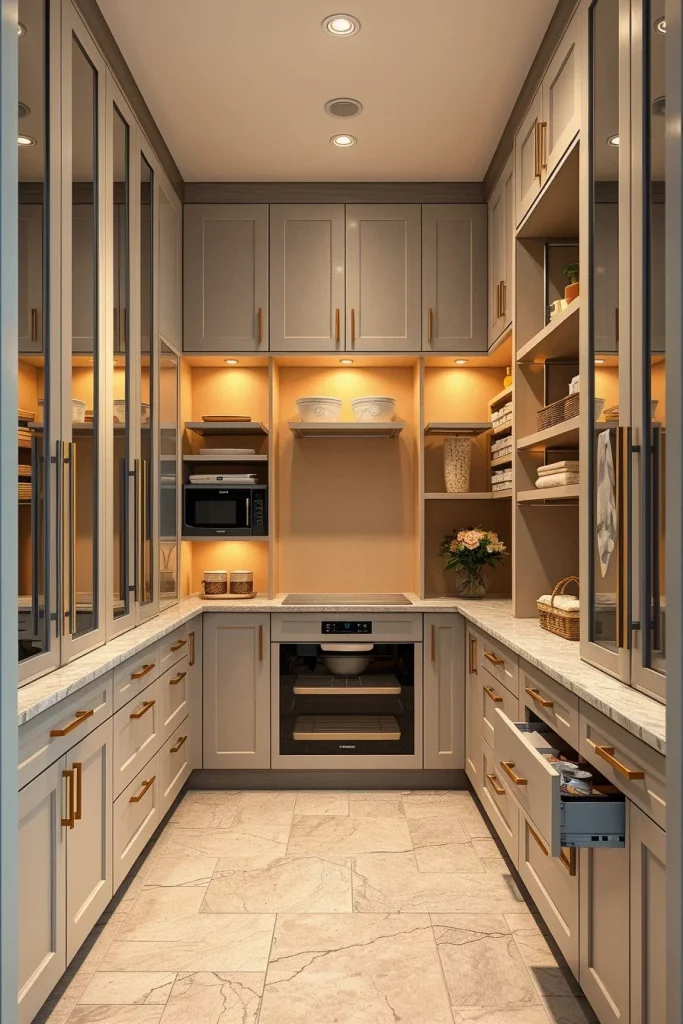
I like using handleless cabinet doors, soft-close hinges, integrated pull-out drawers, hidden spice organizers, appliance garages, and full-extension pantry pullouts behind the clean exterior. Upper cabinets store seasonal kitchenware, while middle sections remain easily accessible for daily essentials. Lower cabinets accommodate heavier appliances, bulk groceries, and storage bins without disrupting the room’s clean appearance. Matching finishes throughout the cabinetry help maintain a unified and stylish aesthetic.
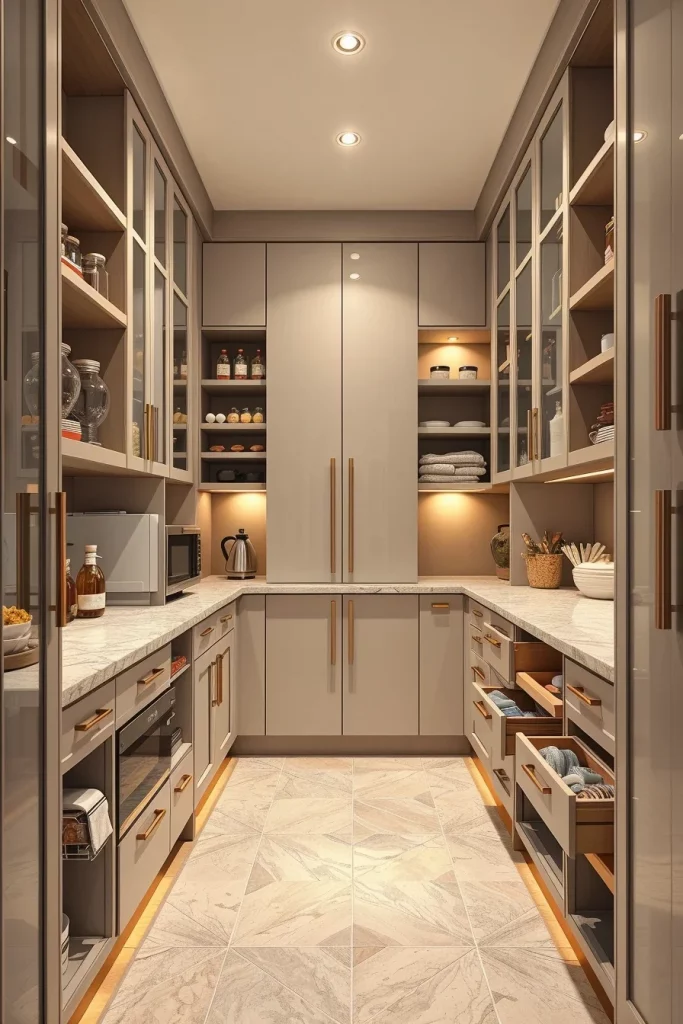
From my perspective, investing in full-height cabinetry delivers long-term value because every inch serves a practical purpose. Many American kitchen designers recommend planning interior cabinet organization before selecting exterior finishes, and I completely support that strategy because efficient storage always outperforms decorative appearance alone.
If I wanted to enhance this pantry further, I would include integrated lighting inside tall cabinets, pull-down shelving systems for upper storage, and hidden charging stations for cordless kitchen appliances.
Walk-In Modern Pantry Layouts That Maximize Space
Whenever space allows, I consider a walk-in pantry one of the most rewarding features of a modern kitchen. A thoughtfully planned layout creates dedicated zones for dry goods, baking supplies, beverages, serving pieces, and small appliances, making everyday cooking noticeably easier. Wide walkways, balanced storage placement, and excellent lighting help the room feel welcoming instead of crowded. The result is a pantry that is both unique and remarkably efficient.
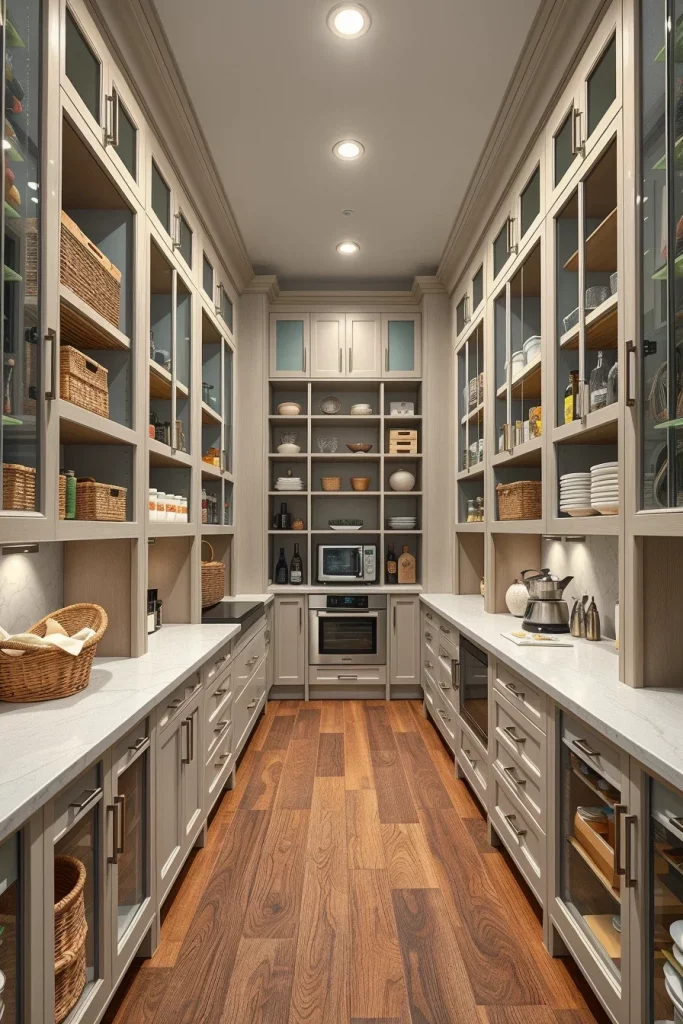
I usually arrange tall cabinetry along one wall while incorporating open shelving, countertop workspace, pull-out storage towers, and deep drawers on the opposite side. If space permits, I include a secondary countertop for coffee preparation or meal prep, along with built-in outlets for mixers, blenders, and other appliances. Large woven baskets, labeled containers, transparent storage bins, and drawer dividers maintain order while preserving a clean contemporary appearance.
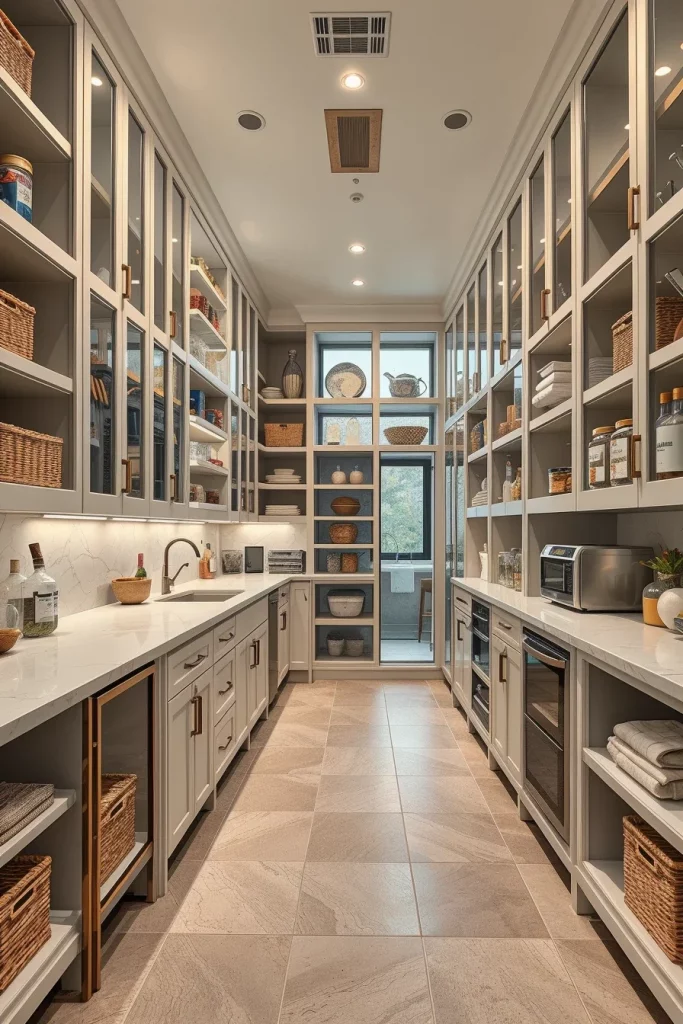
Based on my own experience, the most successful walk-in pantries prioritize workflow rather than simply maximizing storage capacity. Designers featured by Better Homes & Gardens often recommend grouping frequently used items near the entrance while placing seasonal equipment farther inside. I have found this simple adjustment dramatically improves daily convenience and reduces unnecessary movement throughout the kitchen.
To make this layout even more complete, I would add motion-activated lighting, a compact step stool stored inside cabinetry, dedicated pet food storage, and adjustable shelving that can easily adapt to changing household needs.
Hidden Pantry Doors That Blend Into The Kitchen
I appreciate hidden pantry doors because they create an uninterrupted kitchen design while concealing an exceptionally functional storage space. Flush doors finished with the same cabinetry, decorative wall panels, or continuous millwork allow the pantry to disappear completely into the surrounding architecture. This subtle approach feels refined, contemporary, and surprisingly luxurious without overwhelming the overall kitchen design.
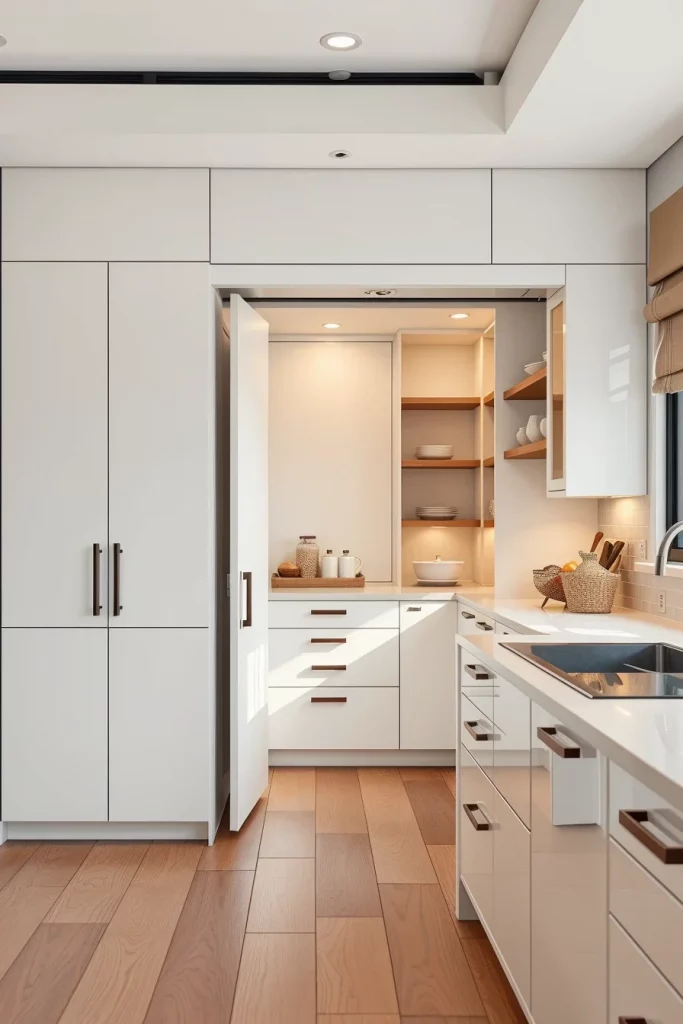
I like pairing concealed doors with touch-latch hardware, full-height paneling, integrated hinges, matching baseboards, and continuous ceiling trim that maintain the illusion of a seamless wall. Inside the pantry, I continue the same color palette using organized shelving, custom drawers, countertop workspace, and layered lighting to create an equally impressive interior. This contrast between the hidden entrance and the beautifully organized storage room gives the pantry an exclusive character.
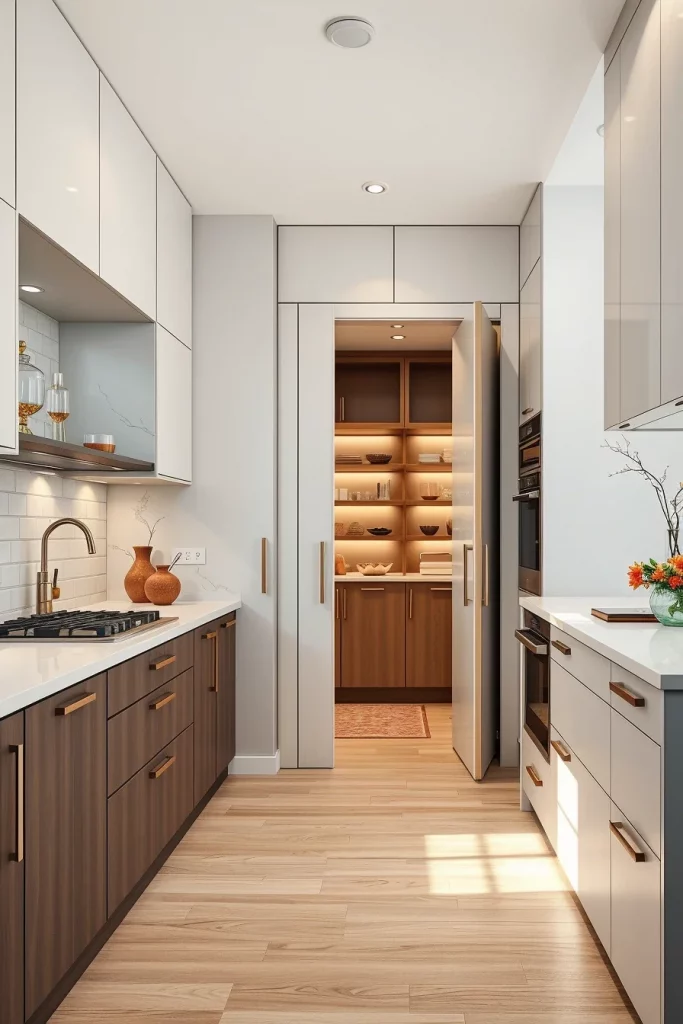
In my opinion, hidden pantry entrances work particularly well in open-concept homes where visual simplicity is important. Many contemporary designers recommend minimizing visible interruptions throughout the kitchen, and I believe concealed storage contributes significantly to achieving that calm, uncluttered atmosphere.
If I were refining this concept further, I would incorporate fingerprint-resistant finishes, automatic door closers, discreet ventilation, and integrated smart lighting that activates immediately upon entering the pantry.
Glass-Enclosed Pantry Designs With Contemporary Style
I love the way glass-enclosed pantries bring openness to a kitchen while still maintaining an organized storage area. Instead of hiding everything behind solid walls, glass partitions allow the pantry to become part of the overall design. Clear or fluted glass panels create a sophisticated architectural feature that makes the room feel larger while showcasing a carefully organized collection of shelves and cabinets. This approach creates a pantry that feels both functional and exceptionally stylish.
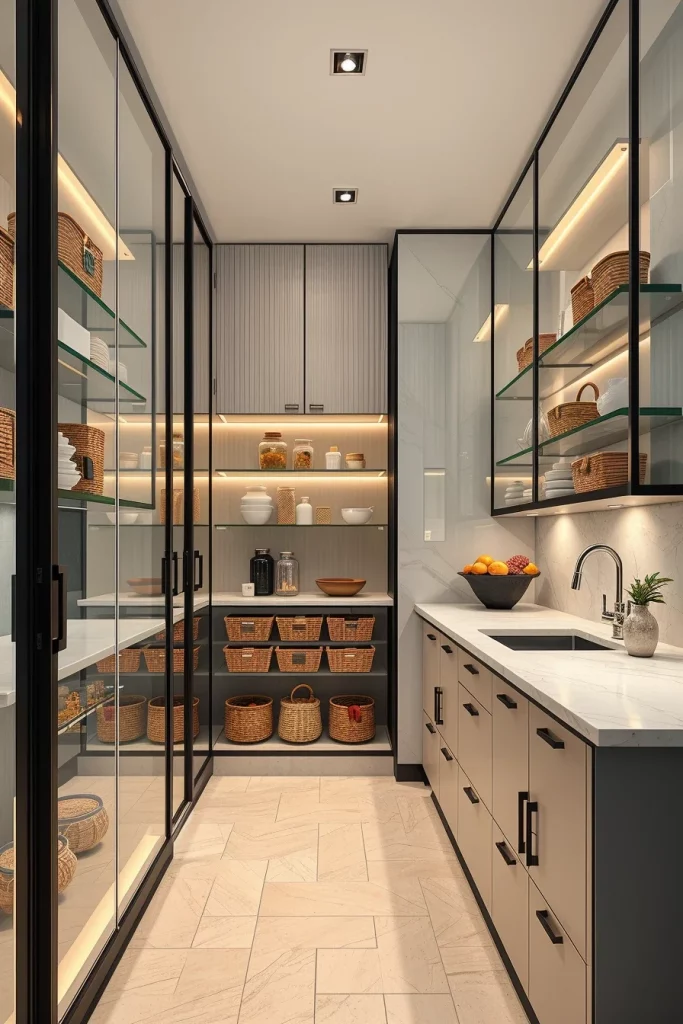
I usually combine slim black or bronze metal frames with large glass panels, floating shelves, built-in cabinetry, stone countertops, and warm LED lighting. Glass jars, matching storage containers, woven baskets, and decorative serving pieces become part of the visual display rather than items that need to be hidden away. I also like using soft-close cabinets below the countertops to conceal less attractive everyday necessities while leaving the upper portion visually open.
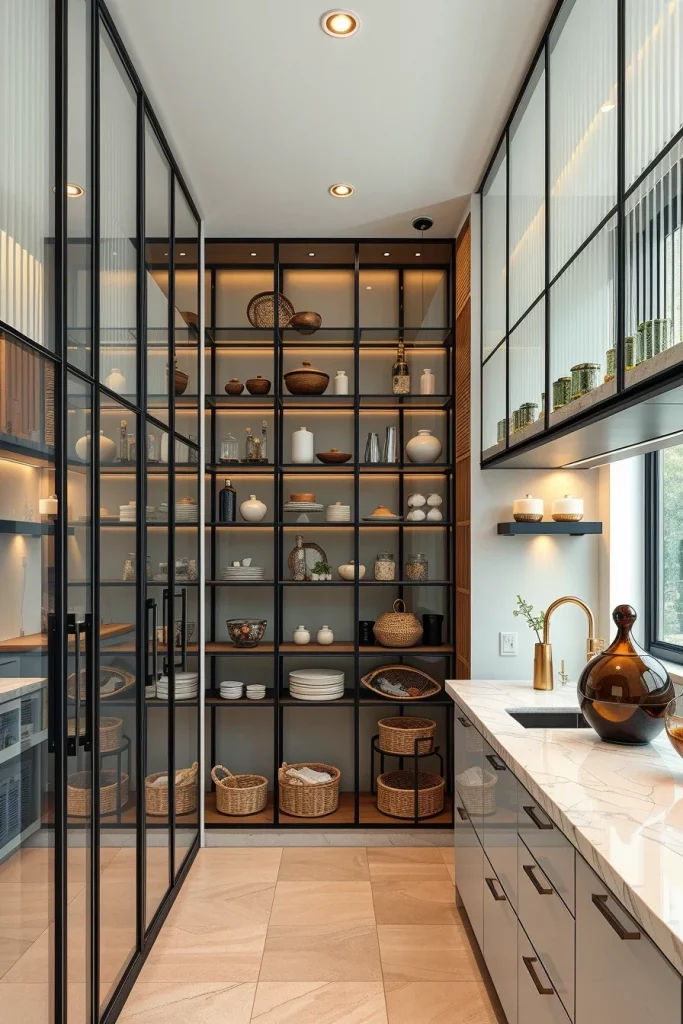
From my experience, glass-enclosed pantries encourage better organization because everything remains visible. Designers frequently note that visible storage naturally motivates homeowners to maintain a cleaner appearance, and I have found that to be true in many projects. A well-organized glass pantry becomes a decorative feature that complements the entire kitchen.
To improve this concept further, I would add smoked glass options for partial privacy, integrated lighting inside shelving, and decorative ceiling details that visually connect the pantry with the surrounding kitchen.
Curved Pantry Shelving That Softens Modern Interiors
Straight lines dominate many contemporary kitchens, which is why I enjoy introducing curved shelving inside a pantry. Rounded forms immediately soften the architecture and create a more welcoming atmosphere. Curved shelving adds a subtle sculptural quality while improving circulation and reducing harsh visual transitions between storage areas. The result feels both artistic and highly functional.
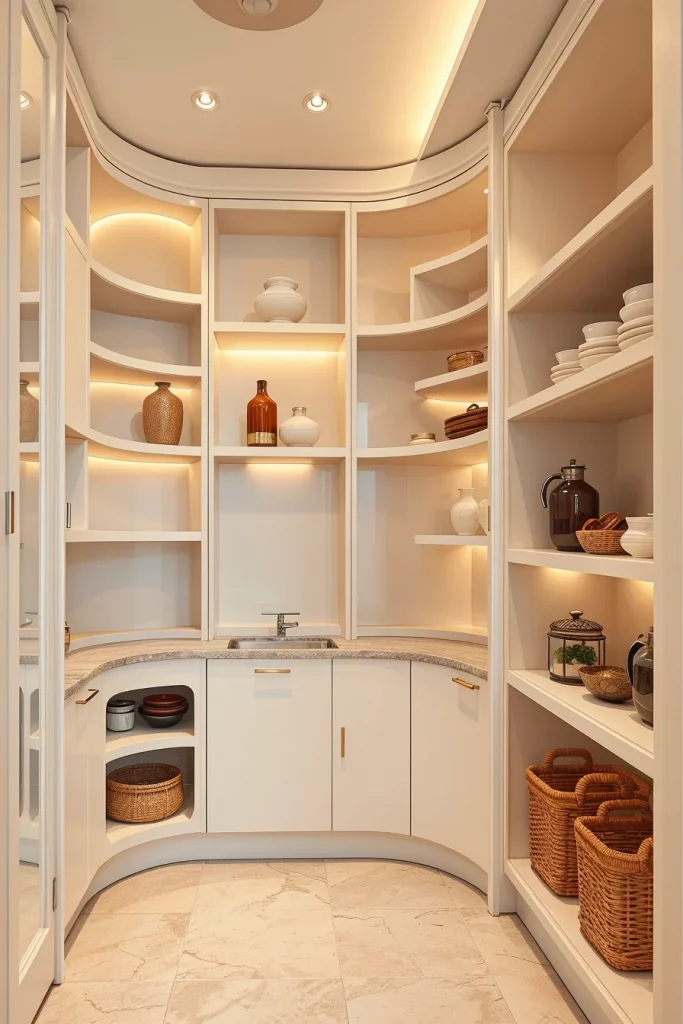
I often incorporate rounded corner shelving, curved end cabinets, oval display niches, floating shelves with softened edges, and integrated lighting that highlights the graceful forms. Decorative ceramics, glass canisters, wooden cutting boards, cookbooks, and carefully selected accessories fit naturally within these flowing shapes. Rounded corners also improve accessibility by eliminating awkward dead space that often appears in traditional pantry layouts.
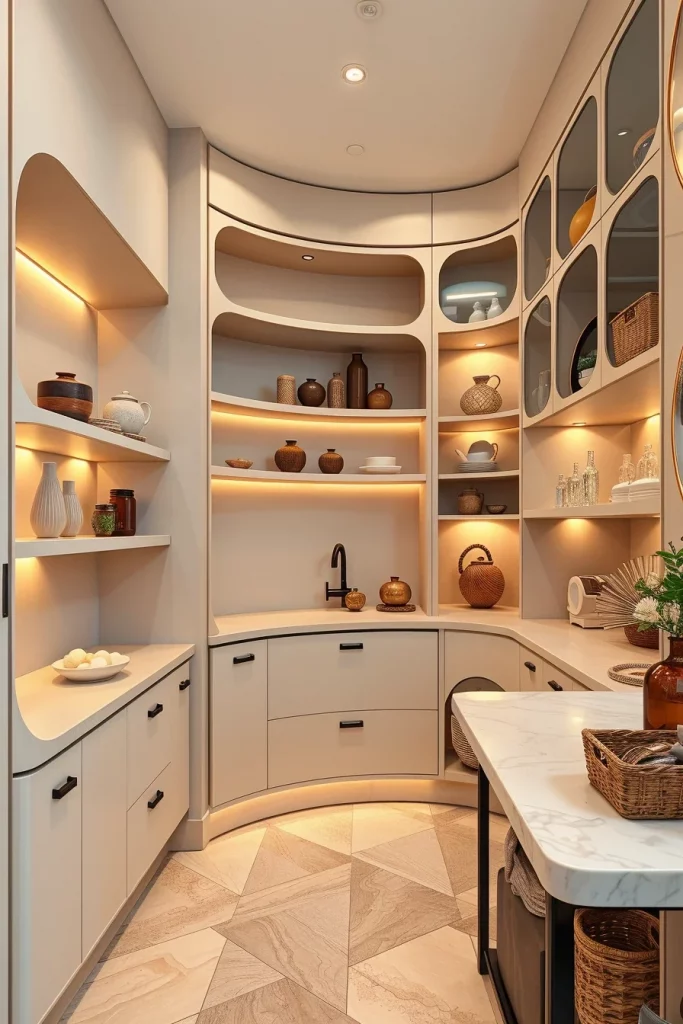
Personally, I appreciate how curved shelving introduces personality without sacrificing practicality. Many contemporary designers have embraced organic forms because they create interiors that feel more comfortable and timeless. I have noticed that clients often respond positively to these softer details because they make the pantry feel less utilitarian.
If I wanted to complete this design, I would include curved ceiling details, rounded countertop edges, custom lighting that follows the shelving contours, and matching curved cabinet hardware for greater visual consistency.
Statement Pantry Islands For Functional Luxury
When a pantry has generous dimensions, I often recommend adding a central island that serves as both a workspace and additional storage. A pantry island transforms the room into a multifunctional extension of the kitchen where food preparation, organization, and entertaining supplies can all be managed efficiently. Rather than simply filling empty space, the island creates a natural focal point that enhances workflow throughout the pantry.
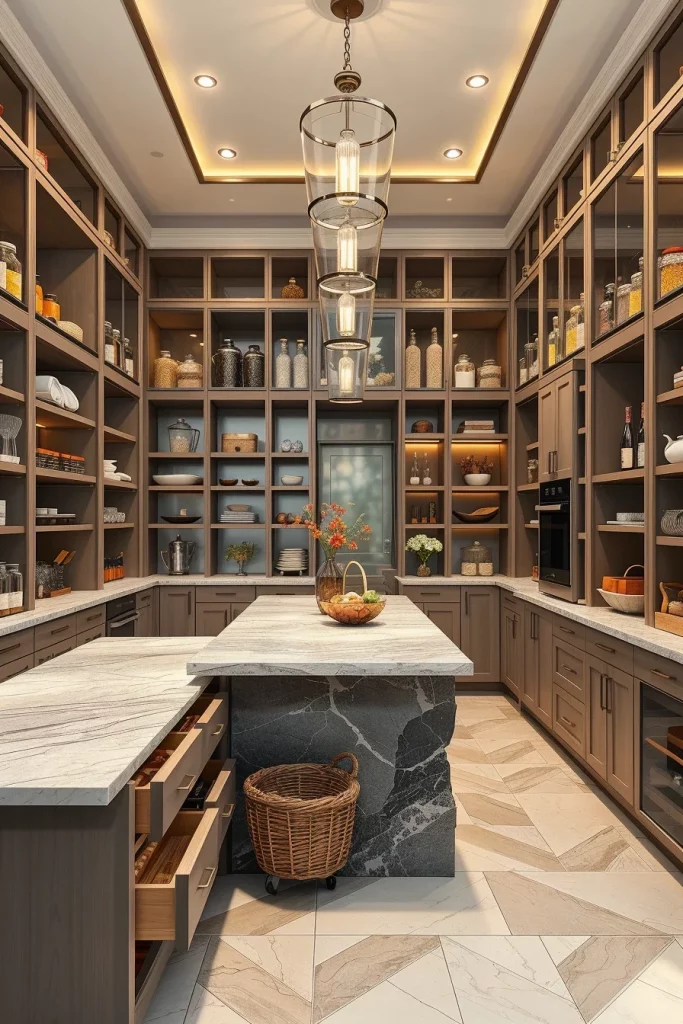
I prefer islands with deep drawers, pull-out baskets, open display shelves, built-in electrical outlets, and durable stone countertops. Additional seating, hidden recycling compartments, appliance garages, and integrated charging stations can further increase the island’s usefulness. Decorative pendant lighting above the island helps define the space while adding warmth and elegance to the overall design.
In my opinion, a pantry island offers long-term value because it increases both storage capacity and workspace. Kitchen designers often recommend maintaining generous clearance around every side of the island to preserve comfortable movement, and I always follow this principle because accessibility is just as important as appearance.
To make this pantry even more functional, I would add refrigerated drawers, dedicated baking storage, custom utensil organizers, and concealed outlets built directly into the countertop.
Minimalist Pantry Designs With Bold Geometric Lines
Minimalism does not have to feel cold or empty. I find that geometric forms create visual interest while maintaining the clean simplicity that defines contemporary interiors. Straight vertical cabinetry, horizontal shelving, recessed panels, and carefully aligned storage create a pantry that feels balanced, organized, and sophisticated. Every element contributes to a calm environment where functionality remains the primary focus.
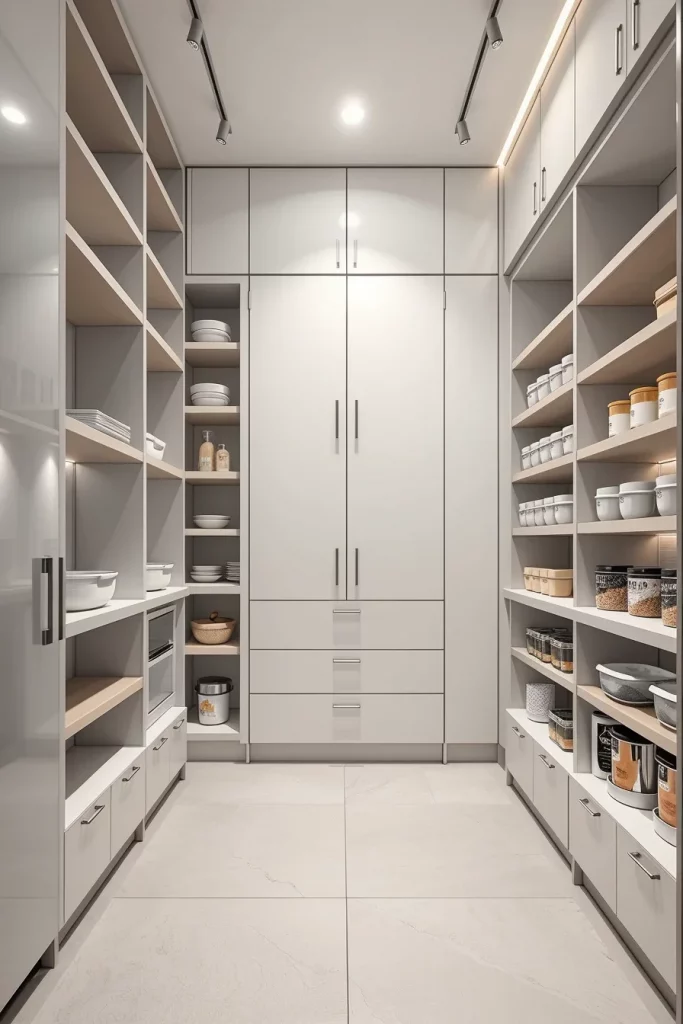
I typically use flat-panel cabinetry, integrated handles, symmetrical shelving layouts, concealed lighting, monochromatic finishes, and precisely aligned storage containers. Decorative elements remain limited but intentional, allowing architectural forms to become the primary design feature. Hidden storage behind clean cabinet fronts ensures that the pantry maintains its uncluttered appearance even during everyday use.
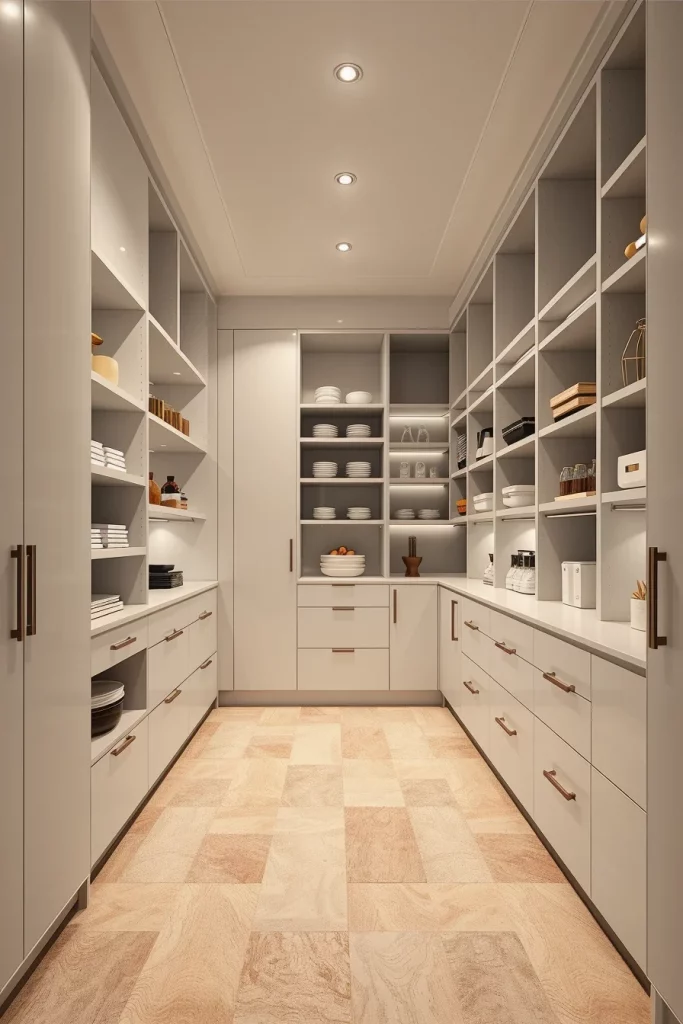
I have learned that successful minimalist interiors require careful planning rather than fewer design decisions. Publications such as Architectural Digest frequently emphasize the importance of quality materials and thoughtful proportions in minimalist spaces, and I fully agree because precision is what creates lasting elegance.
If I wanted to elevate this design, I would include custom drawer organizers, integrated lighting inside cabinets, textured wall panels, and carefully selected natural materials that add subtle warmth without disrupting the minimalist aesthetic.
Open Pantry Concepts That Feel Light And Airy
Open pantry concepts appeal to me because they create an inviting atmosphere where organization becomes part of the kitchen’s visual character. Without traditional enclosed walls, the pantry feels larger, brighter, and more connected to adjacent living spaces. Careful planning allows open storage to remain beautiful while supporting efficient daily routines.
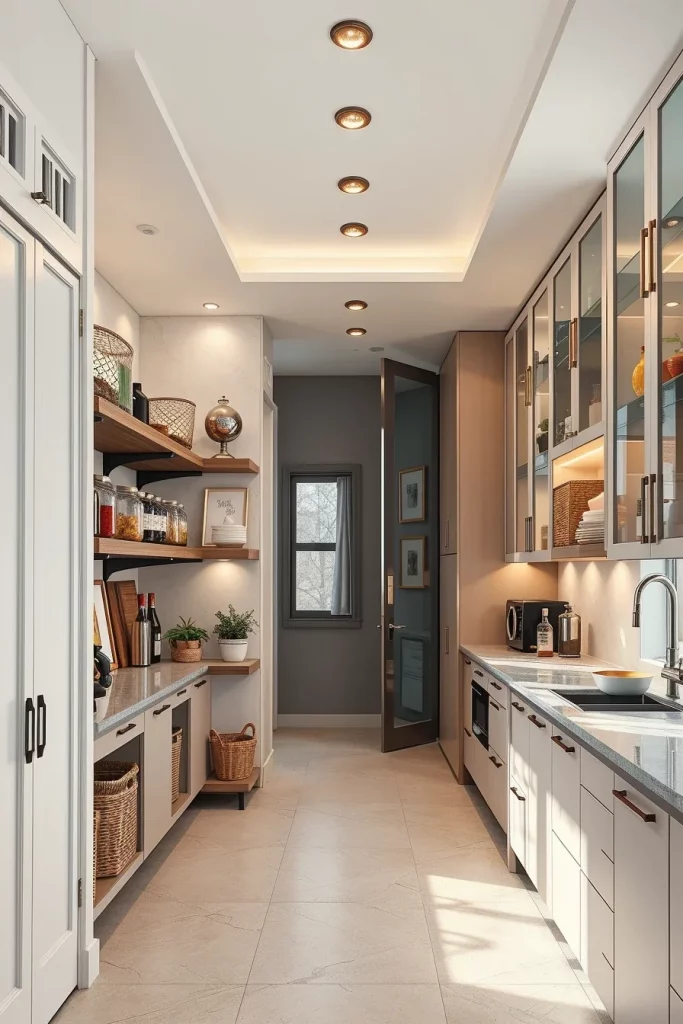
I like combining floating shelves, tall cabinets, countertop workstations, decorative baskets, glass storage jars, integrated lighting, and coordinated containers that create visual harmony. Consistent color palettes, matching materials, and thoughtfully arranged accessories prevent the pantry from appearing cluttered. Every shelf is designed to balance everyday practicality with attractive presentation.
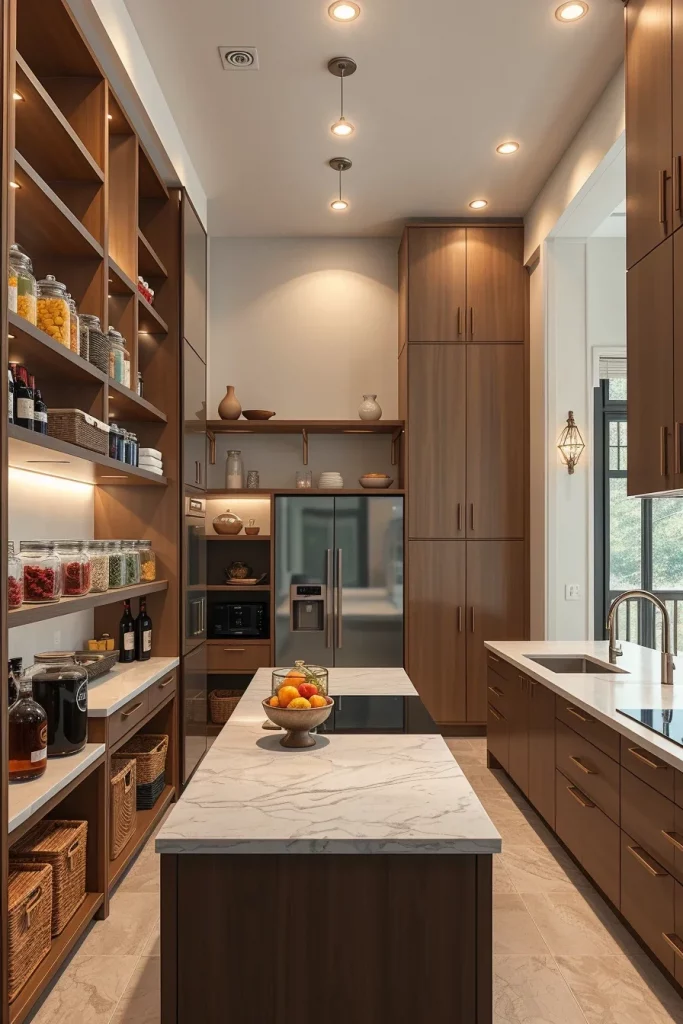
From my perspective, open pantries work best when homeowners commit to maintaining organization over time. Interior designers often recommend limiting visual clutter by using matching containers and grouping similar items together, and I have consistently found that this simple habit keeps an open pantry looking polished throughout the year.
If I were finishing this pantry, I would incorporate concealed overflow storage, seasonal display shelves, integrated cookbook storage, and a dedicated coffee or beverage station that makes the pantry even more enjoyable to use.
Artistic Lighting Ideas That Highlight Modern Pantry Design
Lighting is one of the first elements I consider when designing a pantry because it changes both the atmosphere and functionality of the room. A carefully planned lighting scheme can transform a simple storage space into a refined extension of the kitchen. Layered illumination allows shelves, architectural details, and decorative accessories to stand out while making every item easy to locate. I often recommend combining ambient, task, and accent lighting to create a pantry that feels balanced throughout the day.
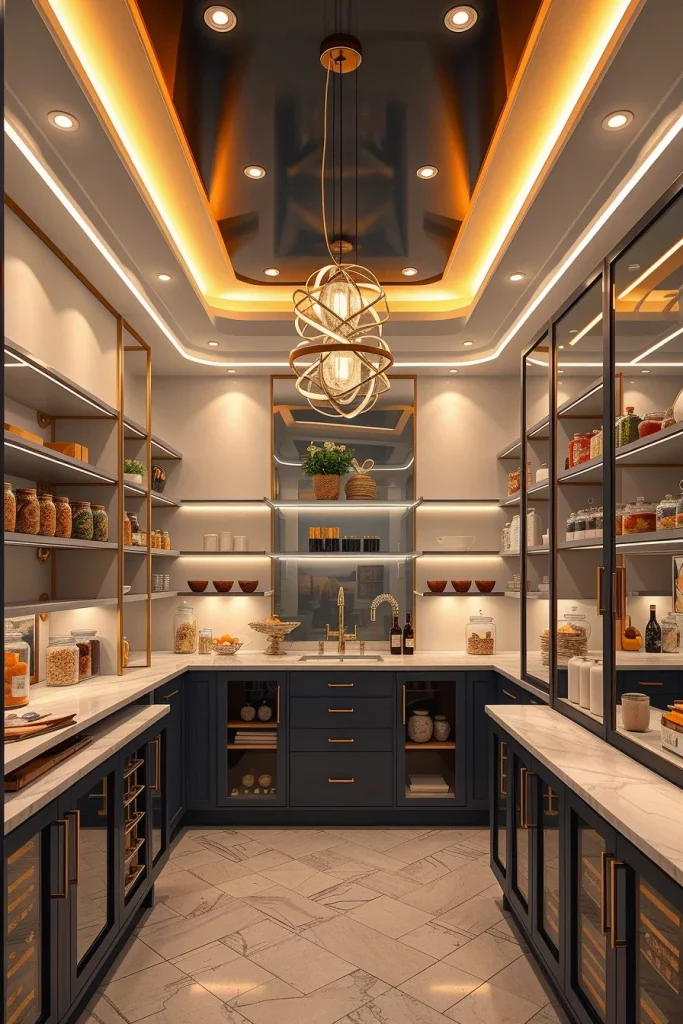
I like incorporating recessed ceiling fixtures alongside slim LED strips hidden beneath floating shelves or cabinet frames. Sculptural pendant lights can become an unexpected focal point in a walk-in pantry, while integrated lighting inside glass cabinets highlights beautiful dishware and pantry jars. Soft warm-white lighting makes natural textures appear richer and creates a welcoming atmosphere without overwhelming the room. Motion-activated lighting also improves convenience while reducing unnecessary energy use.
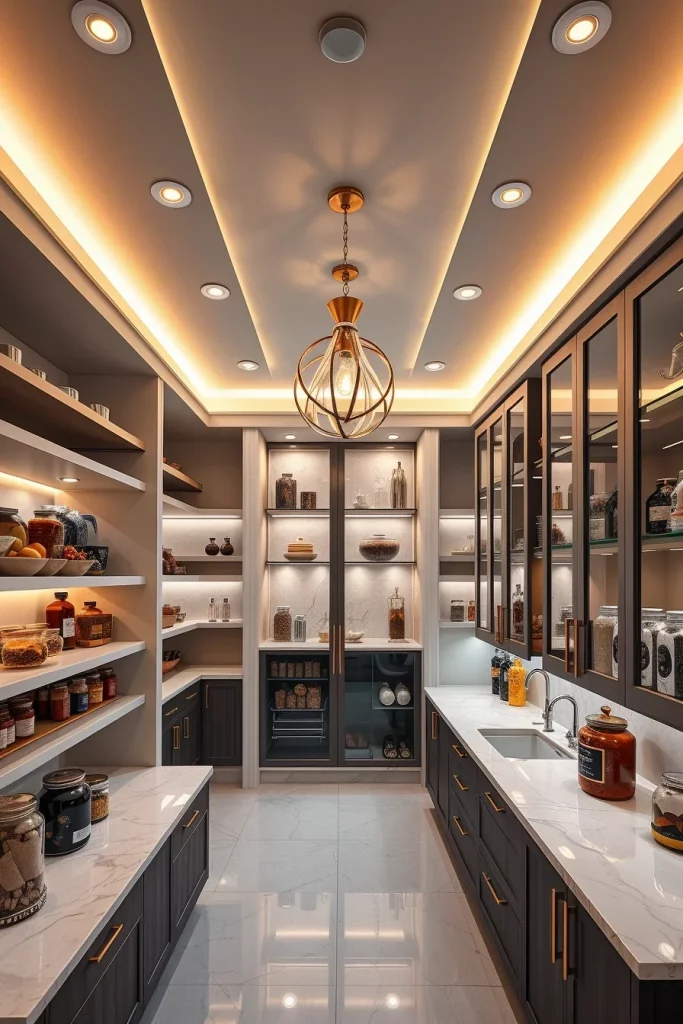
In my experience, thoughtful lighting instantly elevates even a compact pantry. Designers frequently featured by Architectural Digest and House Beautiful emphasize that layered lighting creates depth and makes smaller interiors appear larger. I have found that combining subtle architectural lighting with one statement fixture produces an elegant result that remains timeless rather than trendy.
Whenever I plan a pantry lighting layout, I also leave room for flexibility. Dimmers, adjustable fixtures, and strategically placed electrical outlets make future updates much easier as storage needs evolve.
Mixed Material Pantry Cabinets With Designer Character
One of my favorite ways to give a pantry personality is by mixing complementary materials instead of relying on a single cabinet finish. This approach creates visual depth while maintaining a clean and organized appearance. I often combine smooth painted cabinetry with textured panels, fluted surfaces, stone accents, or smoked glass to achieve a sophisticated designer look. The result feels curated rather than overly decorative.
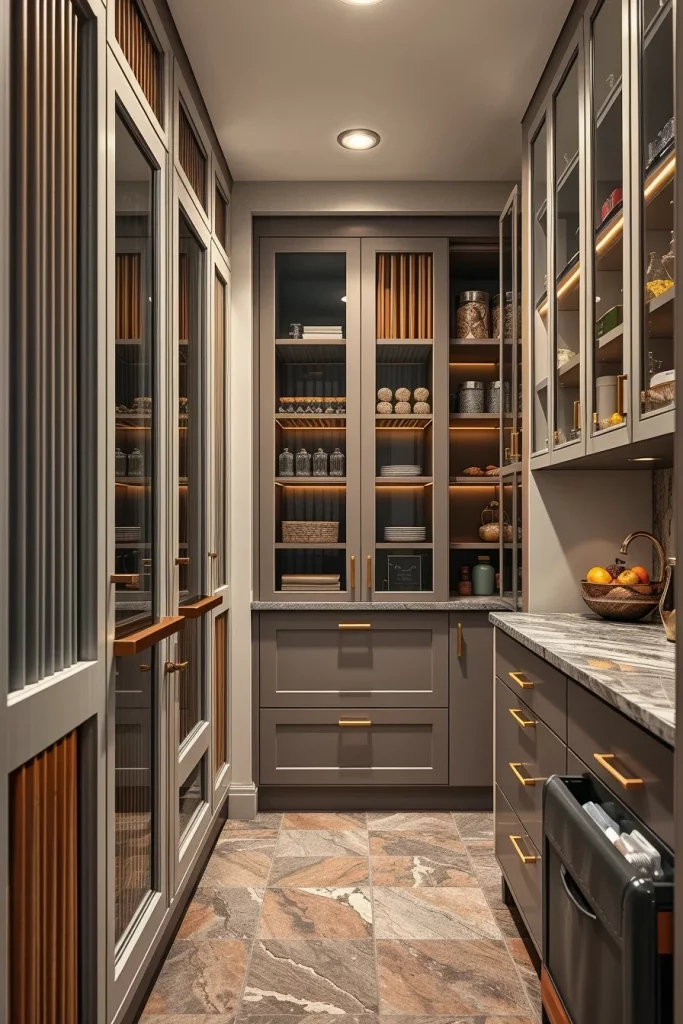
Cabinets remain the foundation of every pantry, so I carefully select finishes that balance durability with style. Matte cabinet fronts pair beautifully with natural stone countertops, while brushed metal hardware introduces subtle contrast. Glass-front cabinets display carefully arranged dishes, woven baskets, or labeled containers without making the space feel cluttered. I also enjoy incorporating vertical wood slats or ribbed glass inserts to introduce texture while maintaining a minimalist aesthetic.
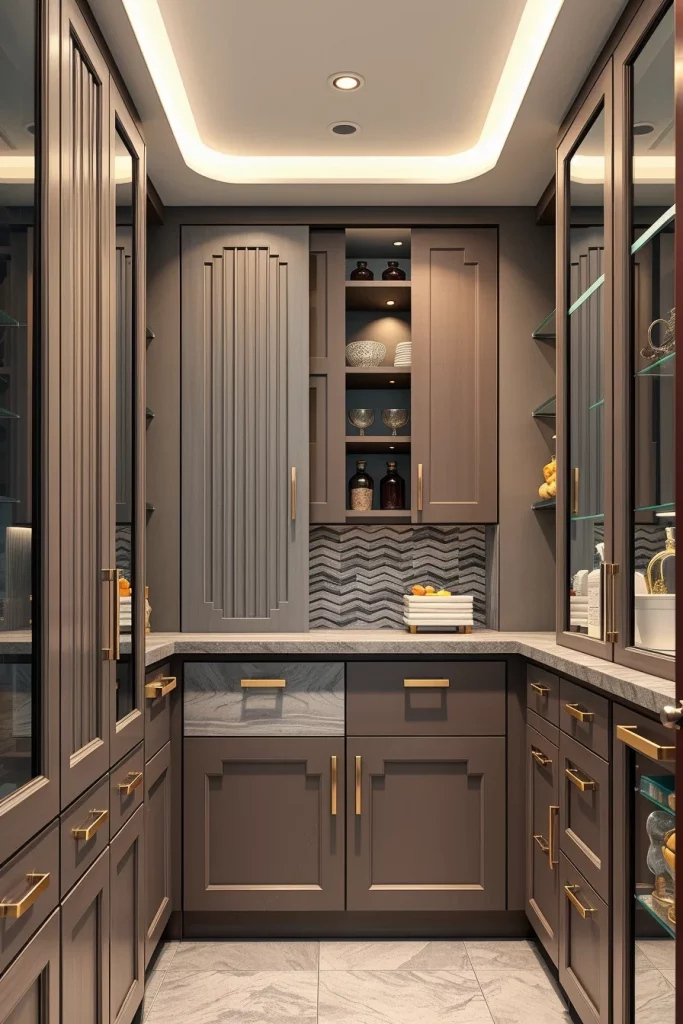
I believe mixed materials create a pantry that feels intentionally designed instead of purely functional. Interior designers from Elle Decor often recommend combining contrasting textures to prevent monochromatic interiors from feeling flat. I have consistently found that this layered approach gives the room lasting character without overwhelming the overall kitchen design.
To complete the composition, I usually include coordinated organizers, concealed waste storage, and integrated appliance garages if space allows. These additions improve daily convenience while preserving the clean architectural appearance.
Floating Shelves That Create A Gallery-Inspired Pantry
Floating shelves can completely change the visual balance of a pantry by making storage appear lighter and more open. I enjoy using them to display frequently used ingredients alongside decorative objects that reflect the homeowner’s personality. The open arrangement encourages organization because every item remains visible and accessible while contributing to the room’s overall design.
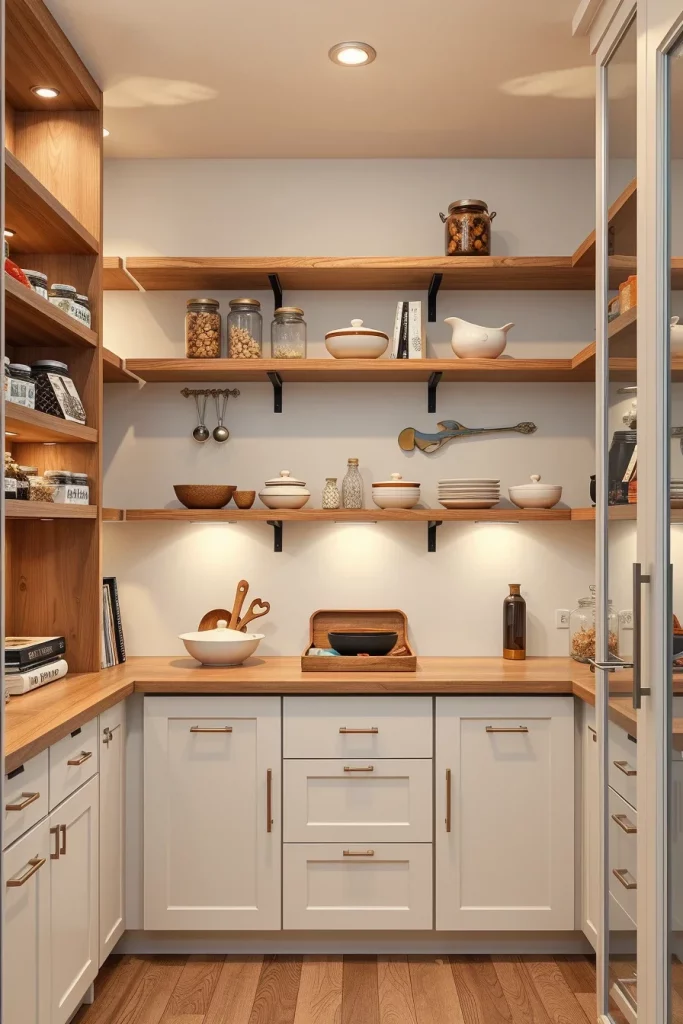
I carefully select shelf thickness, spacing, and materials to create a harmonious composition. Thick floating shelves paired with concealed brackets maintain clean lines, while decorative containers, ceramic bowls, glass jars, and cookbooks add visual interest. I also recommend varying object heights to create rhythm without making the shelves appear crowded. Combining open shelving with closed cabinetry provides the ideal balance between display and concealed storage.
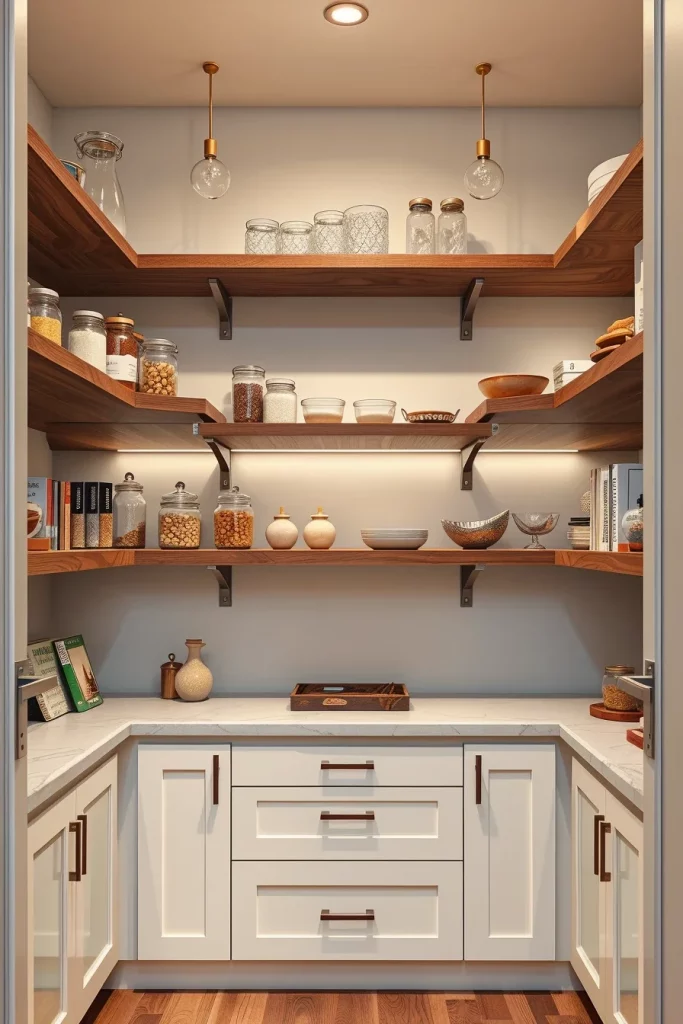
From my perspective, floating shelves encourage homeowners to keep only useful and beautiful items on display. Many kitchen designers featured by Better Homes & Gardens suggest treating open shelving as curated displays rather than simple storage. I have found that limiting the number of displayed objects creates a calmer, more luxurious atmosphere.
I also recommend incorporating subtle LED shelf lighting and decorative trays that group smaller accessories together. These finishing touches improve both organization and presentation while reinforcing the gallery-inspired concept.
Monochromatic Pantry Designs With Sophisticated Depth
A monochromatic pantry does not have to feel plain. I often use varying shades of a single color to create a calming environment with remarkable visual depth. Layering similar tones across walls, cabinetry, shelving, flooring, and accessories produces an elegant appearance that allows architectural details to become the focal point. This strategy works especially well in contemporary homes seeking a seamless transition between kitchen and pantry.
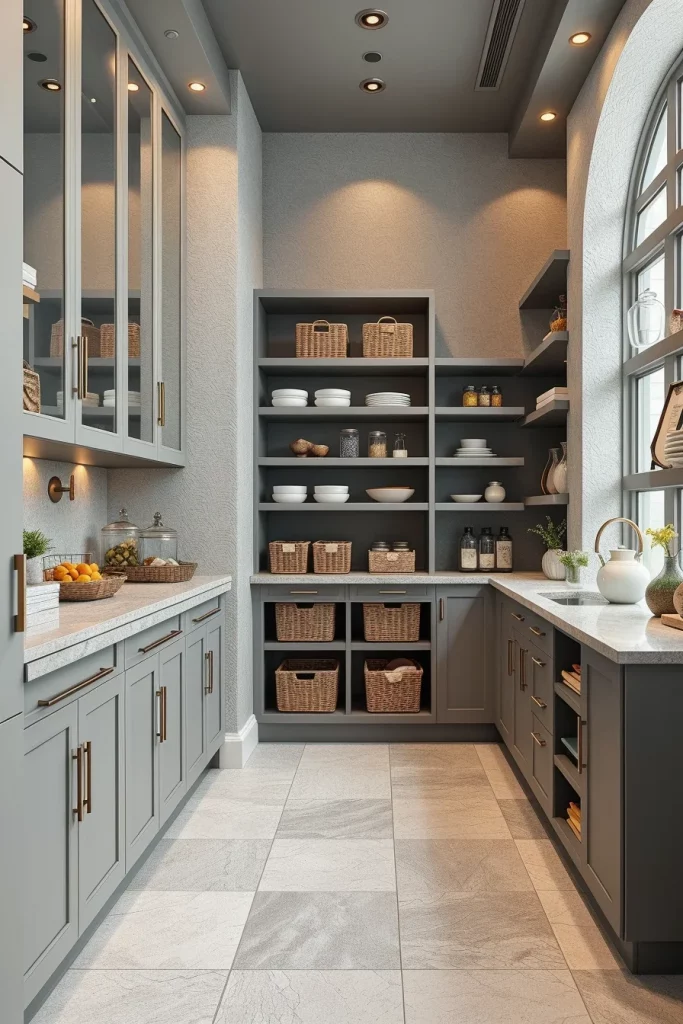
Texture becomes even more important when working within one color family. Matte cabinetry, lightly textured wall finishes, polished stone countertops, and woven storage baskets introduce subtle contrast while maintaining visual harmony. I also incorporate different surface finishes, such as satin and matte, to prevent the room from feeling flat. Glass containers with coordinated labels further enhance the organized aesthetic.
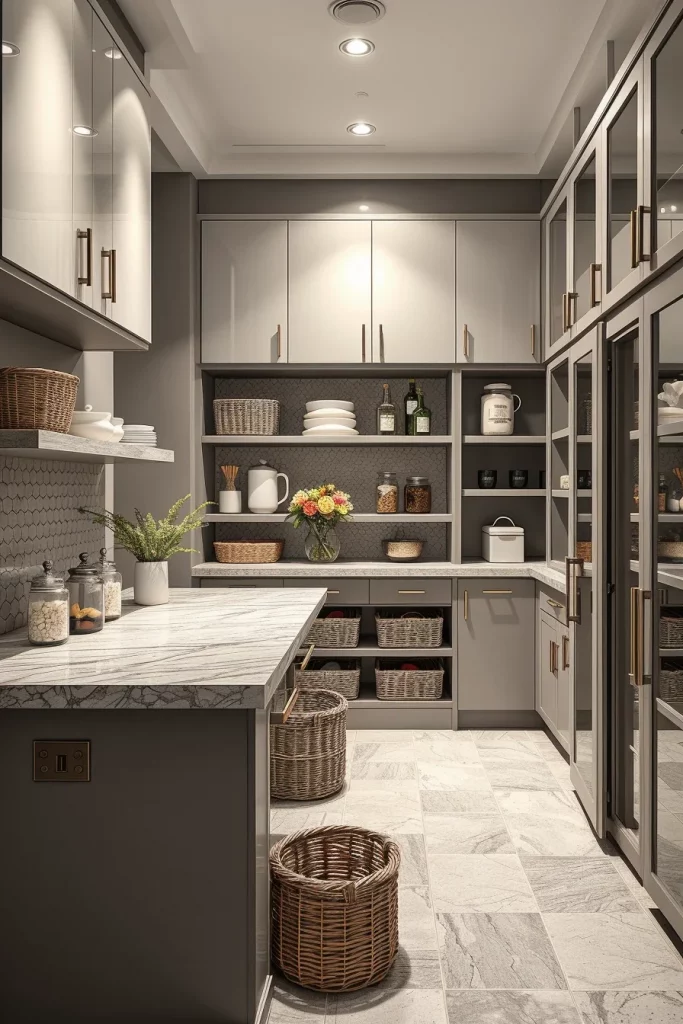
I appreciate monochromatic interiors because they remain timeless despite changing trends. Many professionals featured by HGTV recommend emphasizing texture instead of excessive color variation when designing contemporary spaces. In my own projects, this method consistently creates pantries that feel spacious, refined, and easy to maintain.
To strengthen the overall design, I also add carefully selected decorative pieces, such as sculptural vases, minimalist artwork, or elegant serving trays that complement the chosen color palette without interrupting the unified appearance.
Dramatic Dark Pantry Interiors With Contemporary Elegance
Dark interiors can create an incredibly sophisticated pantry when balanced correctly. I enjoy using charcoal, deep graphite, rich espresso, or soft black finishes to produce an intimate atmosphere that feels luxurious rather than heavy. Careful lighting, reflective surfaces, and thoughtful material selection prevent darker palettes from reducing the sense of space while adding remarkable depth and contrast.
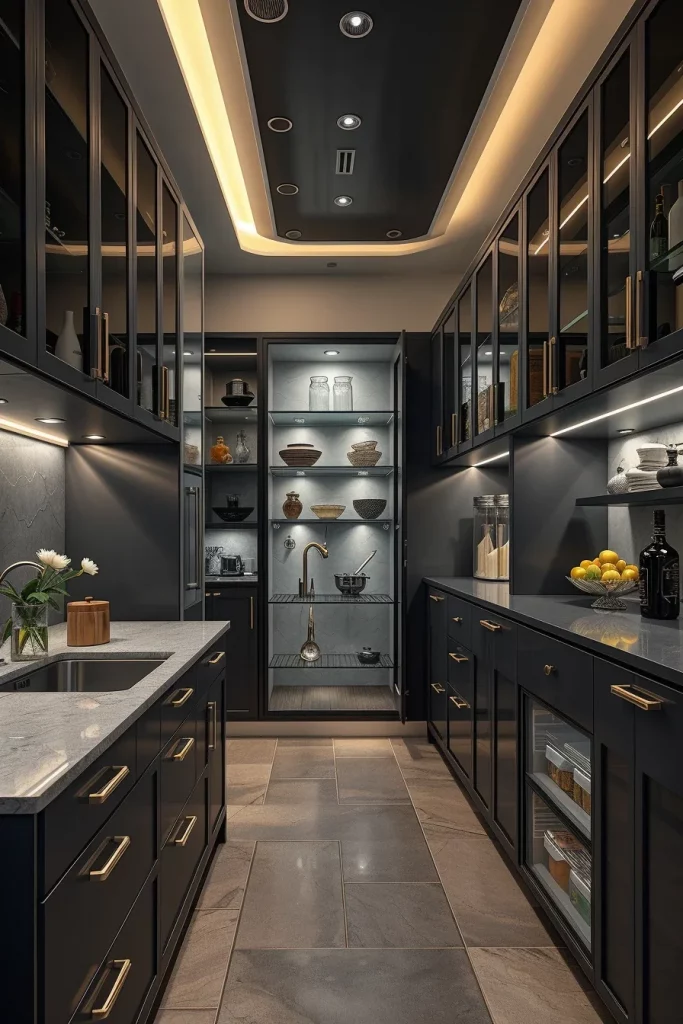
Cabinetry with matte finishes pairs beautifully with quartz countertops, smoked glass cabinet doors, metallic hardware, and integrated lighting. I often include reflective backsplashes or lightly polished stone surfaces that bounce light throughout the room. Open shelves displaying neutral ceramics, glass containers, and carefully arranged pantry essentials soften the darker backdrop while maintaining visual order.
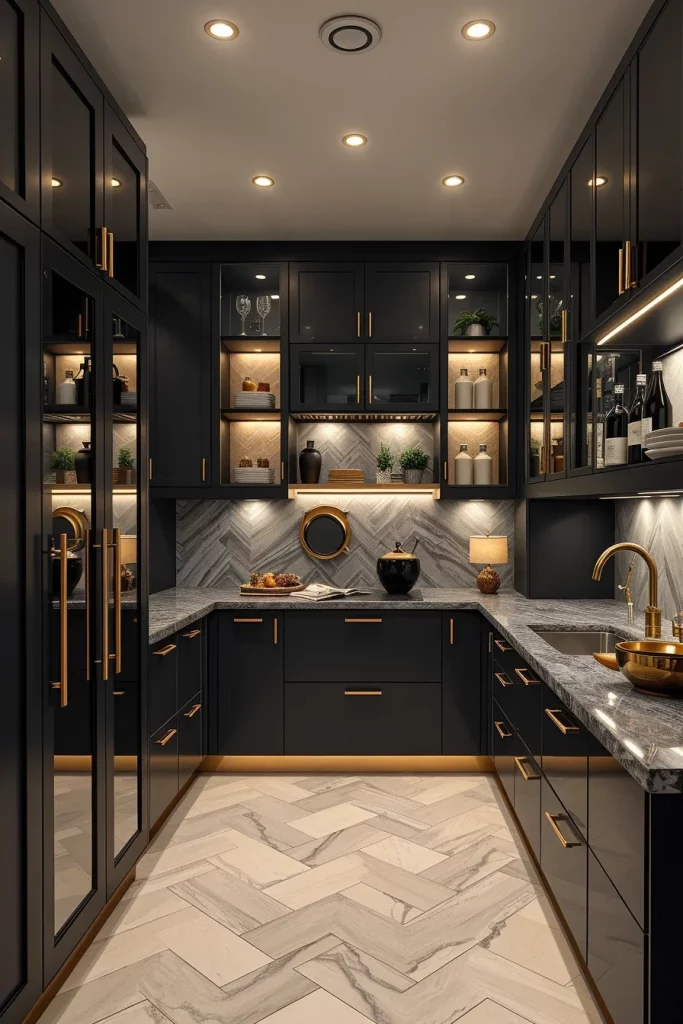
Personally, I find dark pantries especially successful in homes with open-concept kitchens because they introduce contrast without disrupting the overall flow. Interior designers featured in House Beautiful frequently note that darker cabinetry can make architectural details appear more refined when supported by excellent lighting. I have seen this combination create a memorable impression while remaining highly functional.
I also recommend including lighter flooring or a pale ceiling to balance the darker finishes. This combination keeps the pantry welcoming while preserving the dramatic elegance that makes the design stand out.
Bright Neutral Pantry Designs With Timeless Appeal
A pantry designed with bright neutral tones creates an inviting atmosphere that never feels outdated. I often choose soft ivory, warm beige, creamy white, light taupe, and gentle greige to make the room appear larger and more open. These shades reflect natural and artificial light beautifully, allowing even a compact pantry to feel airy. A neutral palette also provides the perfect backdrop for decorative storage containers and carefully selected accessories without overwhelming the design.
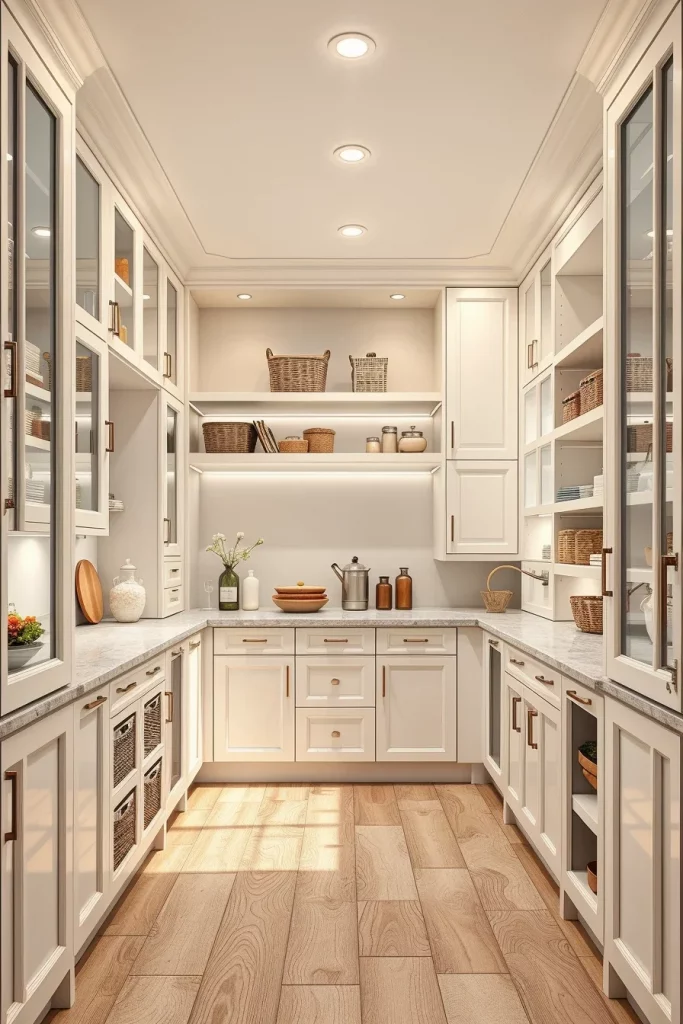
I usually combine smooth cabinet fronts with subtle textured finishes to keep the space visually interesting. Quartz countertops in soft neutral tones, glass-front cabinets, open shelving, woven baskets, and matching storage canisters all contribute to an organized appearance. Simple brushed metal handles, integrated lighting, and concealed pull-out drawers improve functionality while maintaining clean lines. I also enjoy adding a comfortable runner rug and decorative wooden trays to soften the space without introducing clutter.
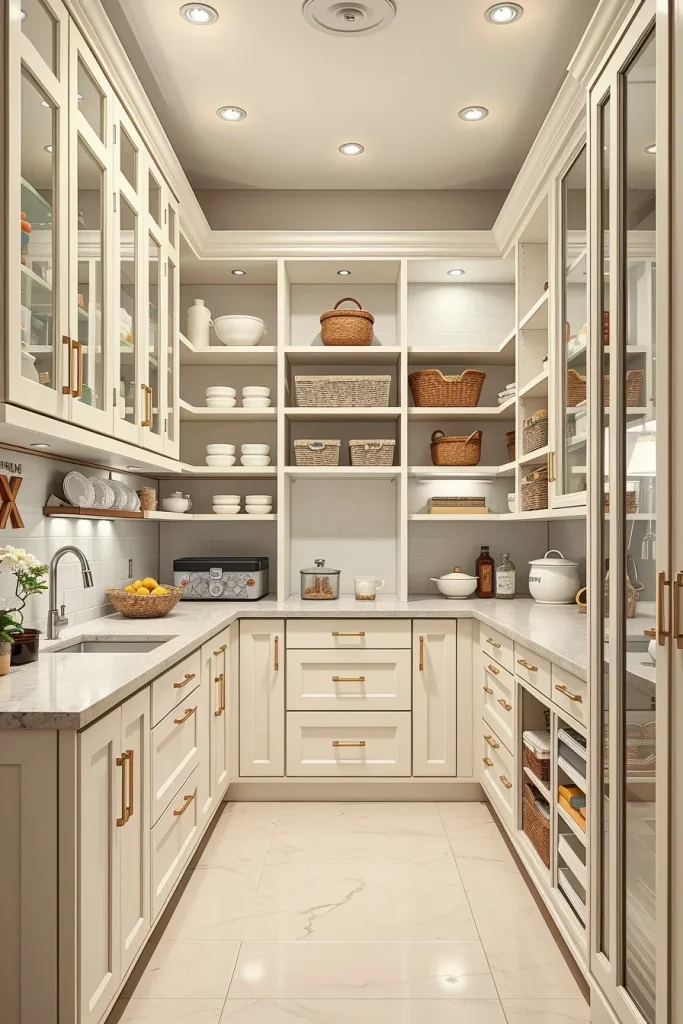
From my experience, neutral interiors remain one of the safest long-term investments because they adapt easily to changing decorating styles. Interior designers featured by Better Homes & Gardens often recommend using timeless colors for cabinetry while allowing smaller decorative accessories to evolve over time. I appreciate this approach because it keeps renovation costs lower while preserving a polished appearance for years.
Whenever possible, I also include a small countertop workspace for unpacking groceries, preparing coffee stations, or organizing meal ingredients. This practical addition makes the pantry feel like an active extension of the kitchen rather than simply a storage room.
Marble-Inspired Pantry Features For A Refined Look
Marble-inspired surfaces instantly introduce sophistication into a pantry without making it feel overly formal. I enjoy using porcelain slabs or quartz with marble veining because they provide the elegant appearance of natural stone while requiring less maintenance. Whether incorporated as countertops, shelving accents, or full-height backsplashes, these surfaces create a refined visual foundation that complements contemporary interiors.
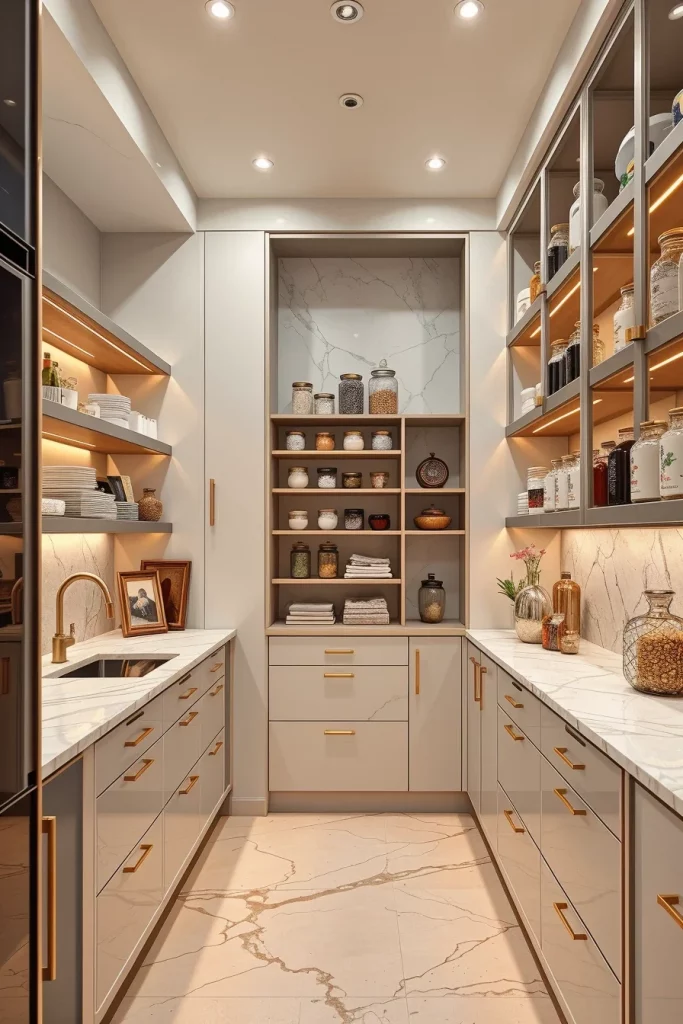
I frequently pair marble-inspired finishes with streamlined cabinetry, integrated storage systems, and carefully coordinated hardware. Glass storage jars, ceramic containers, slim floating shelves, and built-in wine storage all look more luxurious against softly veined stone surfaces. Under-cabinet lighting highlights the natural movement of the material, while open shelving provides space to display attractive serving pieces that double as functional storage.
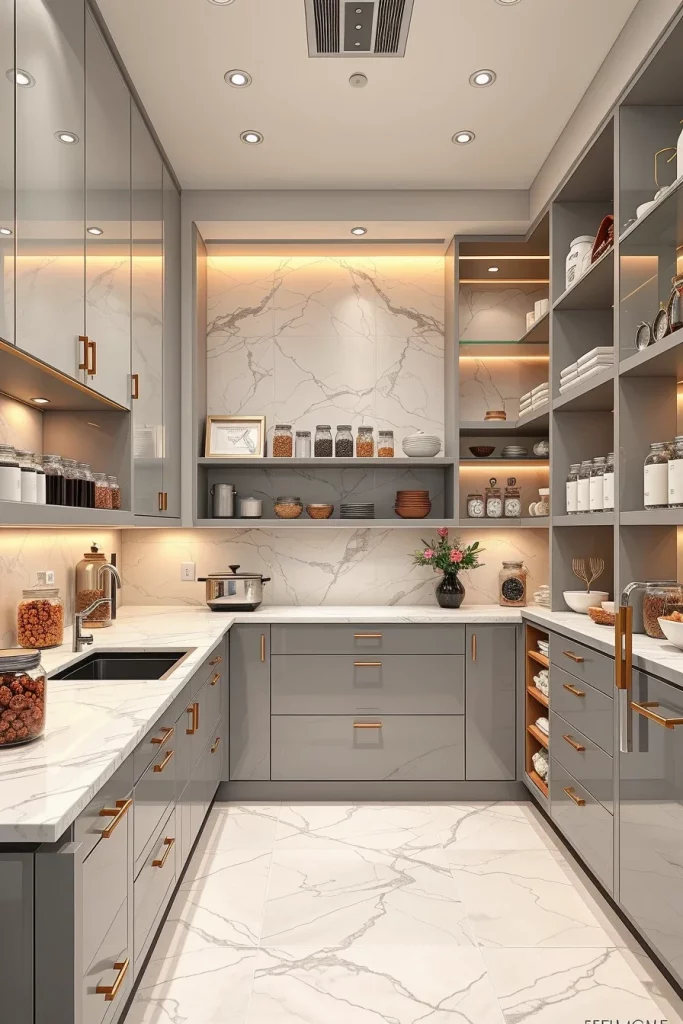
Personally, I appreciate how marble-inspired finishes balance beauty with practicality. Many professionals featured in Architectural Digest recommend investing in durable engineered materials that provide both elegance and everyday performance. I have found that high-quality quartz and porcelain surfaces deliver this balance exceptionally well in busy family homes.
To complete the design, I like incorporating matching stone window sills, decorative trays, or integrated countertop organizers. These small details reinforce visual continuity while helping maintain an orderly pantry.
Metallic Accents That Elevate Modern Pantry Design
Metallic finishes can transform an understated pantry into a sophisticated space without dominating the overall design. I prefer using carefully placed accents that catch the light and add subtle contrast. Whether the finish is brushed brass, matte black steel, polished chrome, or satin nickel, metallic details introduce refinement while complementing contemporary cabinetry and architectural elements.
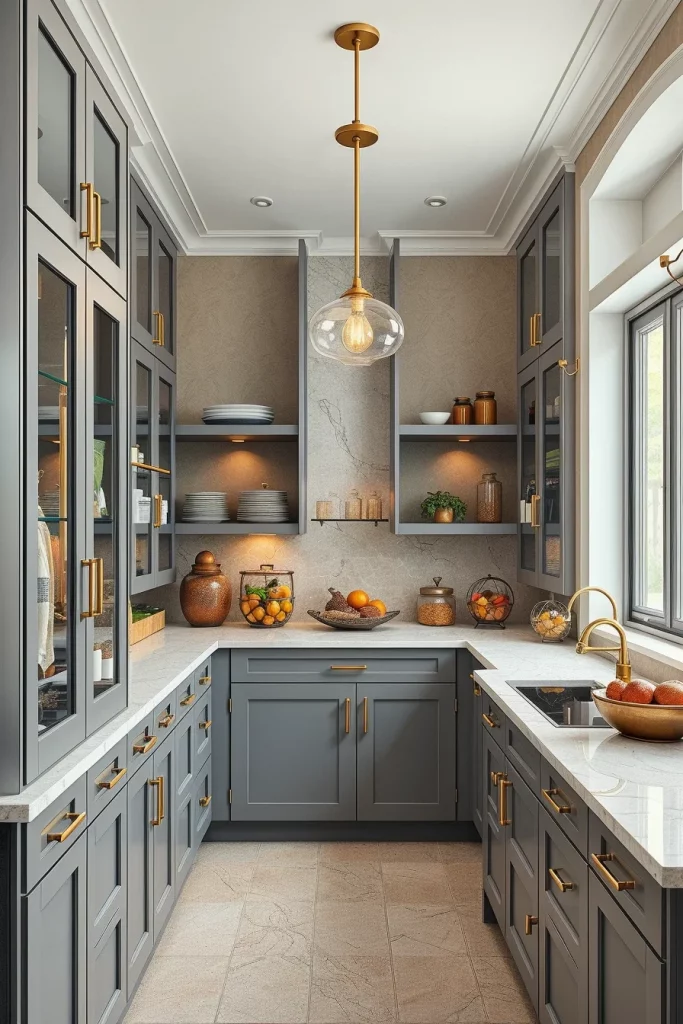
Cabinet handles, shelf brackets, pendant lighting, faucets, sliding ladder hardware, and decorative frames provide excellent opportunities to introduce metallic finishes. I often coordinate these details with appliance finishes in the adjacent kitchen to maintain visual consistency. Glass cabinet doors framed with slim metal profiles also create an elegant display area while keeping pantry essentials visible and organized.
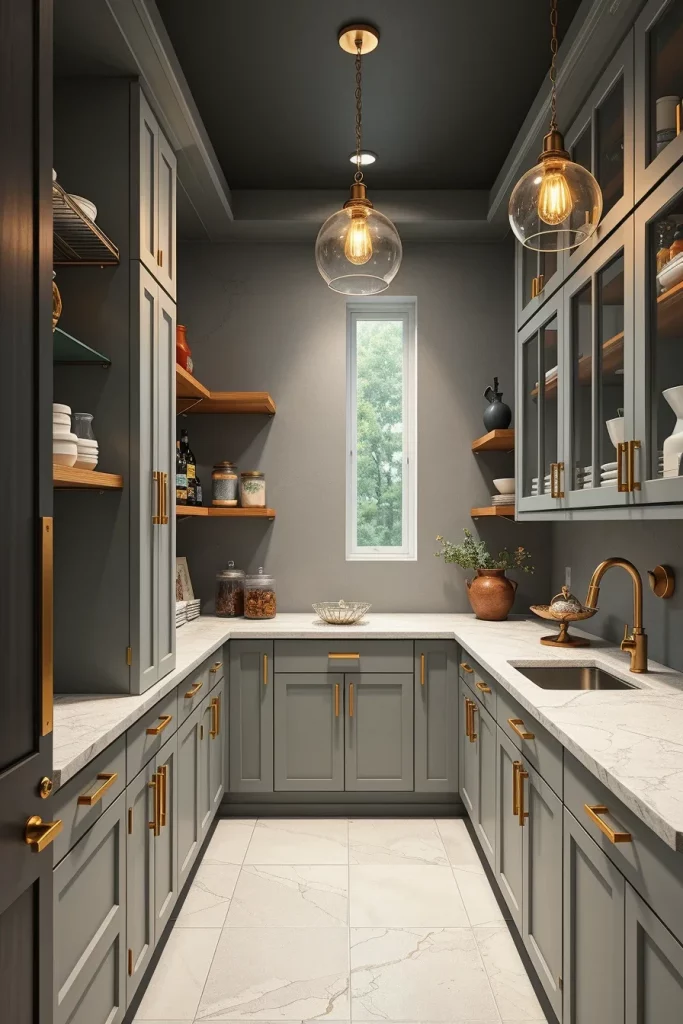
I have learned that restraint is essential when working with metallic elements. House Beautiful designers frequently emphasize repeating one or two metal finishes throughout a room instead of mixing too many competing tones. I follow this advice because it produces a cleaner and more cohesive interior that remains stylish over time.
I also recommend incorporating reflective accessories such as metal storage bins or decorative trays in moderation. These practical pieces enhance both organization and visual interest without distracting from the pantry’s primary function.
Creative Corner Pantry Solutions For Every Home
Corner spaces often become overlooked during kitchen planning, but I believe they offer tremendous design potential. A thoughtfully designed corner pantry maximizes every available inch while improving circulation throughout the kitchen. Whether the pantry occupies a dedicated room or a built-in corner cabinet, efficient planning allows storage to remain accessible without feeling crowded.
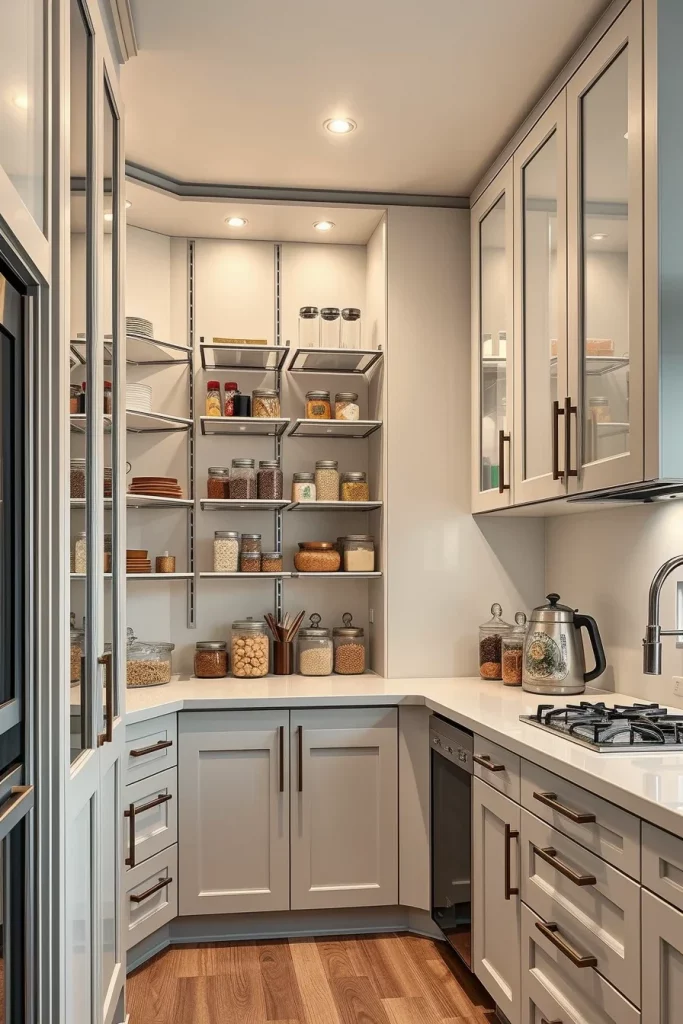
I typically install rotating corner shelving, pull-out storage systems, tall vertical cabinets, and adjustable shelves that accommodate everything from dry goods to small appliances. Glass containers, labeled baskets, and modular organizers keep ingredients visible while preventing wasted space. If the pantry includes enough floor area, I also incorporate narrow countertops and additional upper cabinets to expand functionality.
In my experience, corner pantries often become some of the hardest-working areas of the home. Designers from HGTV frequently recommend custom storage accessories for awkward corners because they significantly improve accessibility. I have consistently found that investing in quality corner hardware makes everyday use much more enjoyable.
Whenever possible, I also add full-height doors, integrated lighting, and durable flooring that extends seamlessly from the kitchen. These details create a cohesive appearance while making the pantry feel intentionally designed rather than secondary.
Compact Modern Pantry Designs For Small Kitchens
Limited square footage should never prevent a pantry from being beautiful and efficient. I enjoy designing compact pantries that maximize vertical storage while maintaining a clean and uncluttered appearance. Every shelf, drawer, and cabinet should serve a clear purpose, allowing the smallest spaces to function surprisingly well. Smart planning is far more important than overall size.
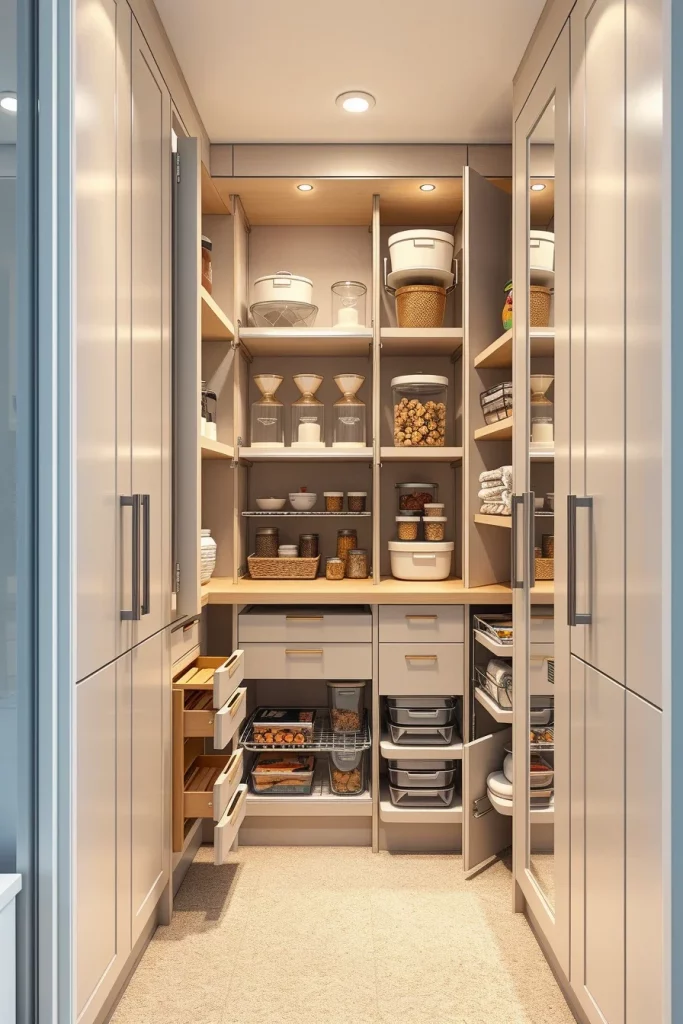
I prioritize tall cabinetry, adjustable shelving, pull-out drawers, narrow spice racks, door-mounted organizers, and stackable storage containers. Light-colored finishes, reflective surfaces, and integrated lighting make compact spaces feel more open. Sliding doors or pocket doors can also save valuable floor space while improving access. Carefully coordinated containers reduce visual clutter and make inventory management much easier.
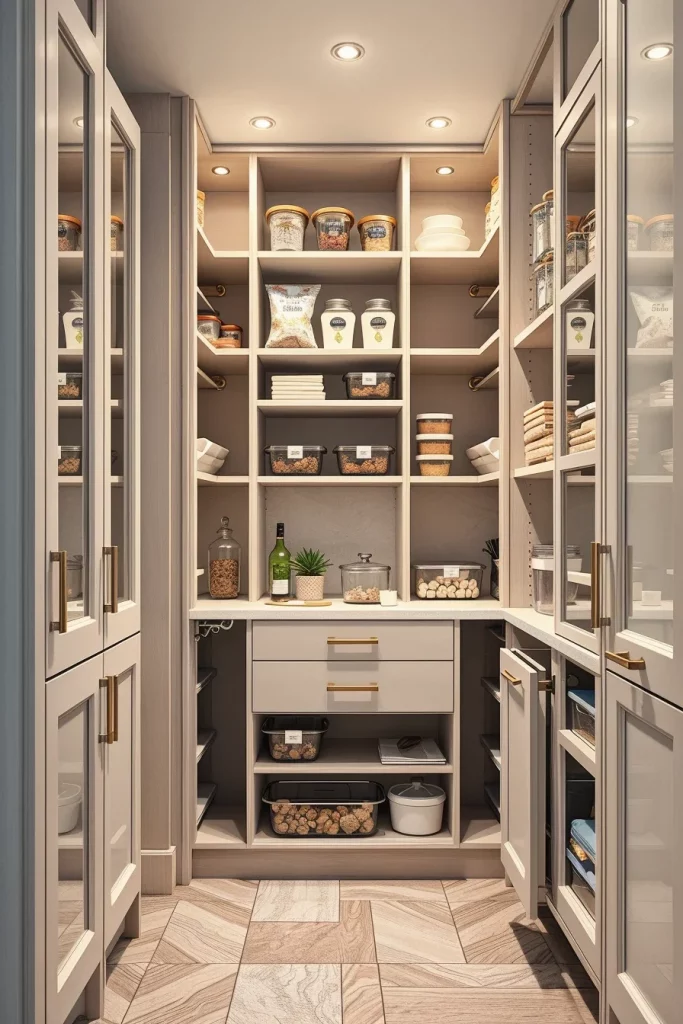
I believe compact pantries demonstrate that thoughtful design consistently outperforms unnecessary square footage. Professional organizers and kitchen designers often recommend editing pantry contents regularly to ensure only useful items occupy valuable storage space. I follow this philosophy because it encourages efficient organization that remains sustainable over time.
To make a small pantry even more functional, I recommend including charging stations for small appliances, labeled storage zones, and flexible shelving that can be adjusted as household needs change. These additions ensure the pantry continues to perform beautifully for years to come.
Large Luxury Pantry Rooms Designed For Entertaining
I believe that a large pantry should do far more than hide groceries. When I design or evaluate spacious pantry layouts, I always think about how the room supports entertaining while maintaining effortless organization. A generous floor plan allows guests or family members to move comfortably, while dedicated preparation zones make serving food and drinks much easier. I find that a luxurious pantry feels open, organized, and welcoming instead of crowded with shelves.
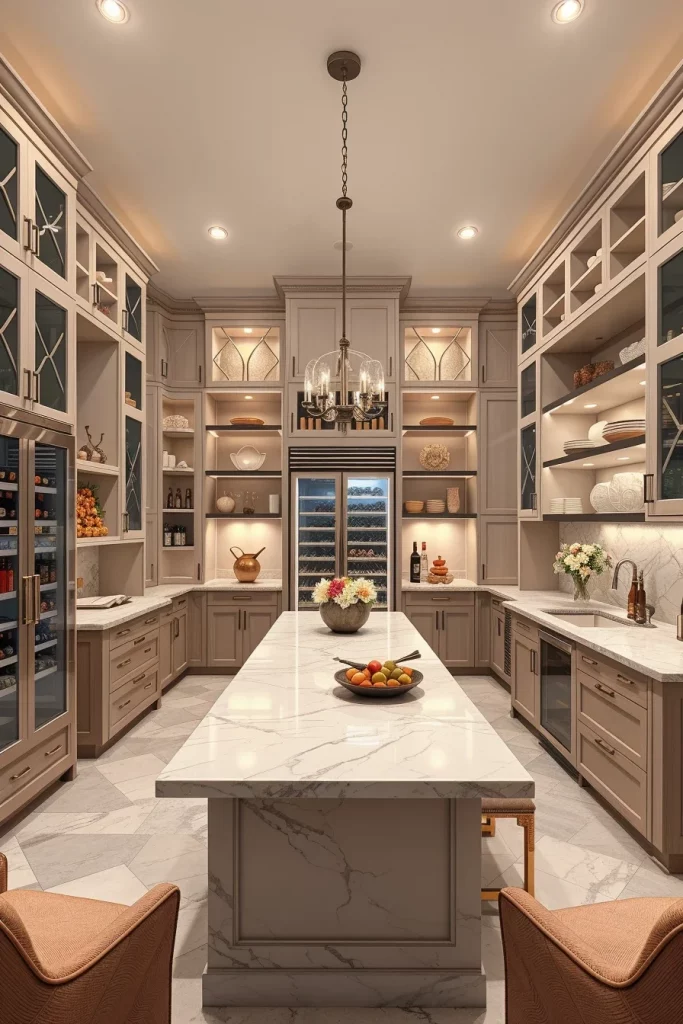
I like combining full-height cabinetry, open display shelving, oversized islands, integrated wine storage, beverage refrigerators, and generous countertop space. These elements create a pantry that functions almost like a secondary kitchen. Glass-front cabinets display attractive serving pieces, while deep drawers keep larger appliances hidden but accessible. Soft lighting beneath shelves highlights decorative accessories and makes every storage area easier to use.
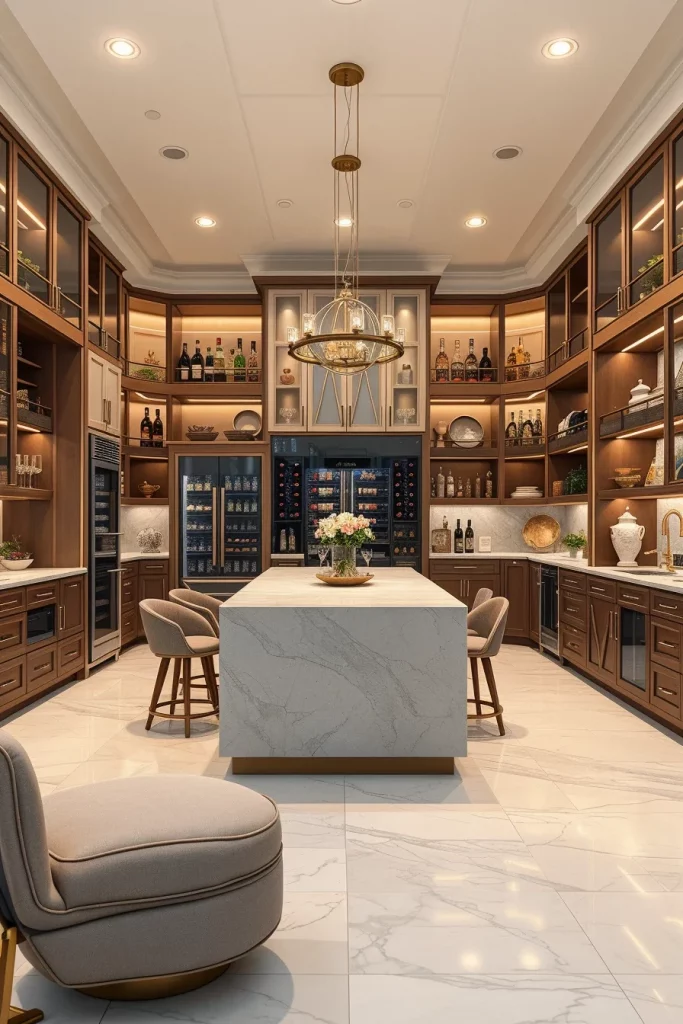
Many designers featured by interior publications such as Architectural Digest often emphasize that entertaining spaces should combine beauty with practicality rather than focusing only on appearance. I agree with this philosophy because I have found that the most successful luxury pantries make every gathering feel easier without sacrificing elegance. Every cabinet and shelf should serve a purpose while contributing to the overall atmosphere.
To complete this type of pantry, I would also include comfortable seating near the island, concealed charging stations for small appliances, premium hardware finishes, layered lighting, and durable flooring that can easily handle frequent entertaining.
Pantry Coffee Stations With Stylish Built-In Storage
I enjoy seeing coffee stations become the centerpiece of a pantry because they simplify busy mornings while keeping the kitchen free from clutter. A dedicated coffee area creates a routine that feels organized and relaxing. When everything has a designated place, preparing coffee becomes faster and far more enjoyable throughout the day.
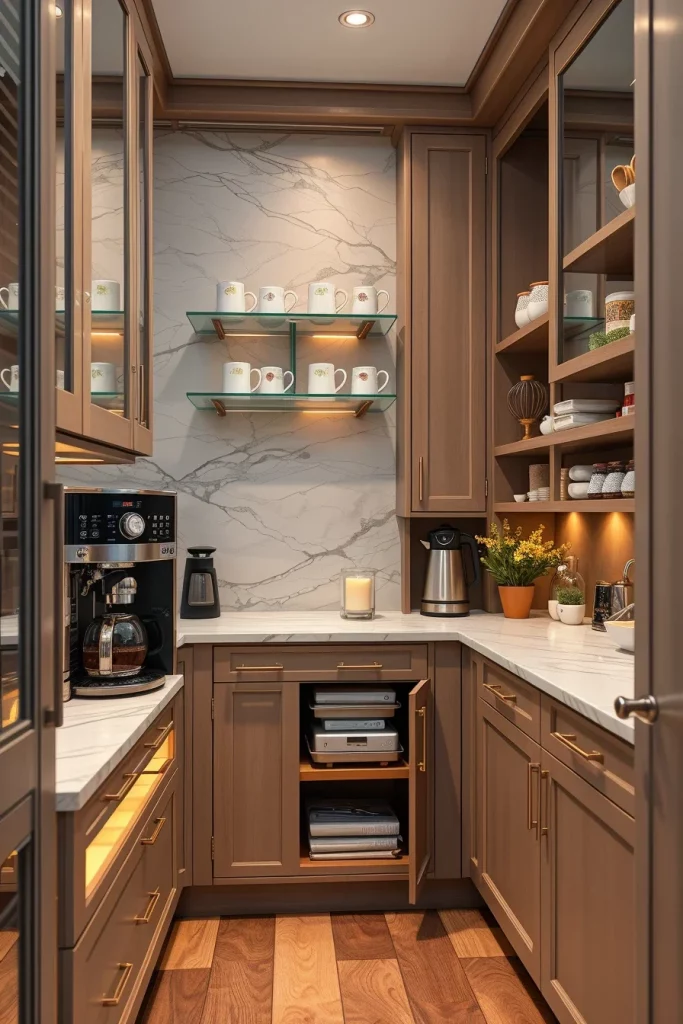
My preferred layout includes built-in cabinets surrounding a coffee machine, floating shelves for mugs, pull-out drawers for coffee pods and accessories, hidden waste bins, and quartz countertops that are easy to maintain. I also recommend integrated electrical outlets inside appliance garages so machines remain plugged in while staying visually concealed. This approach creates a cleaner and more refined appearance.
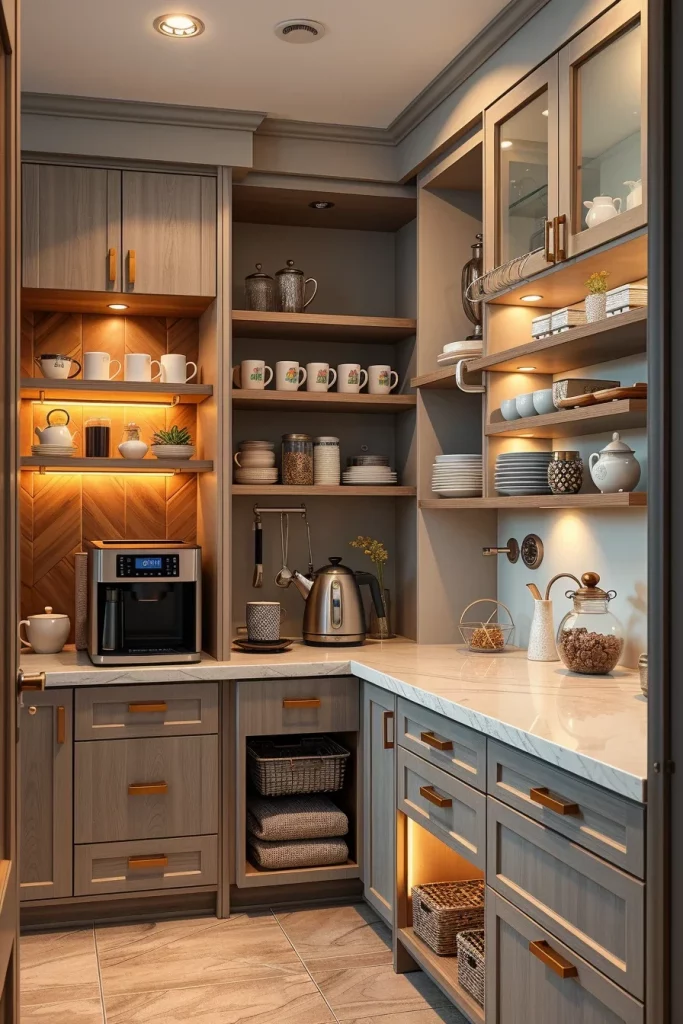
Several American interior designers recommend creating specialized storage zones instead of grouping unrelated items together, and I completely agree. A dedicated beverage station improves workflow and reduces unnecessary movement throughout the kitchen. In my experience, this simple adjustment makes the pantry feel much more efficient every day.
To make this section even better, I would add warm LED shelf lighting, labeled containers for coffee beans and tea, adjustable shelving for future equipment upgrades, and decorative artwork that reflects the personality of the homeowner.
Elegant Pantry Organization Using Designer Containers
I believe organization becomes much more effective when every storage container contributes to the overall appearance of the pantry. Rather than filling shelves with mismatched packaging, I prefer creating a consistent visual system that immediately makes the room feel calm and refined. Beautiful organization also encourages better daily habits because everything remains visible and easy to reach.
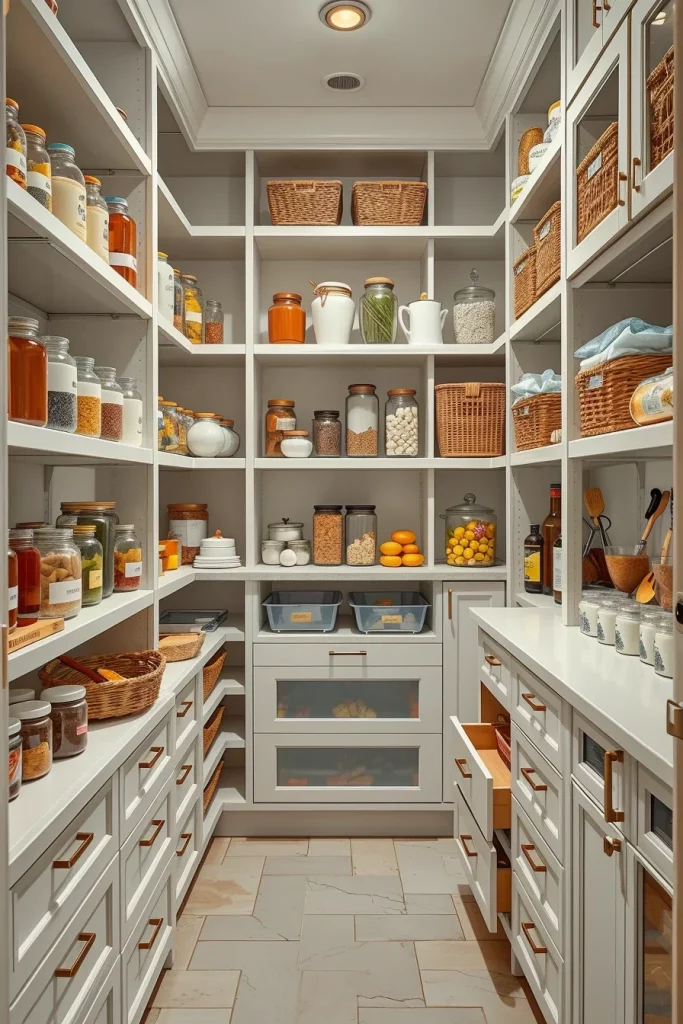
I usually recommend glass jars, ceramic canisters, matching baskets, acrylic bins, pull-out organizers, drawer dividers, and custom labels. Transparent containers simplify inventory management, while woven baskets soften the appearance of shelving and provide excellent storage for larger items. Adjustable shelves allow the organization system to evolve as household needs change.
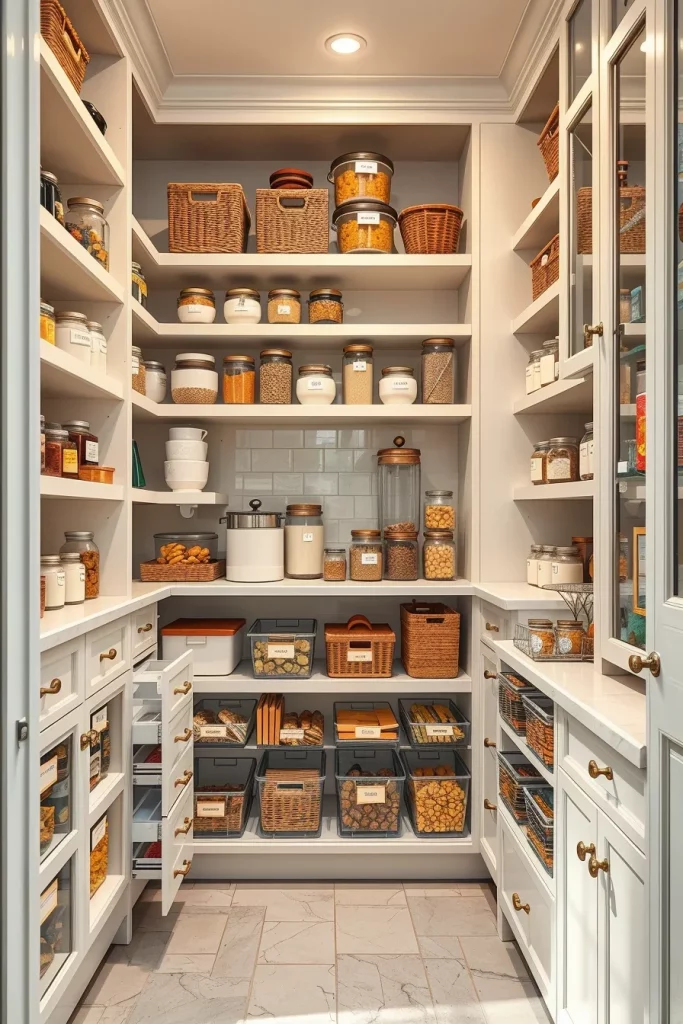
Many professional organizers and design publications encourage homeowners to create categories before purchasing storage products. I have found this advice extremely valuable because attractive containers work best when paired with a logical organization system. Beauty and functionality should always develop together instead of separately.
I would also include step stools that match the cabinetry, rotating turntables for corner shelves, moisture-resistant storage for baking ingredients, and dedicated bins for seasonal entertaining supplies to maximize long-term practicality.
Contemporary Pantry Color Palettes That Feel Fresh
I think color has a tremendous influence on how spacious and comfortable a pantry feels. A carefully selected palette creates visual harmony while making storage areas appear cleaner and brighter. Contemporary pantries often rely on subtle color transitions that provide sophistication without overwhelming the room.
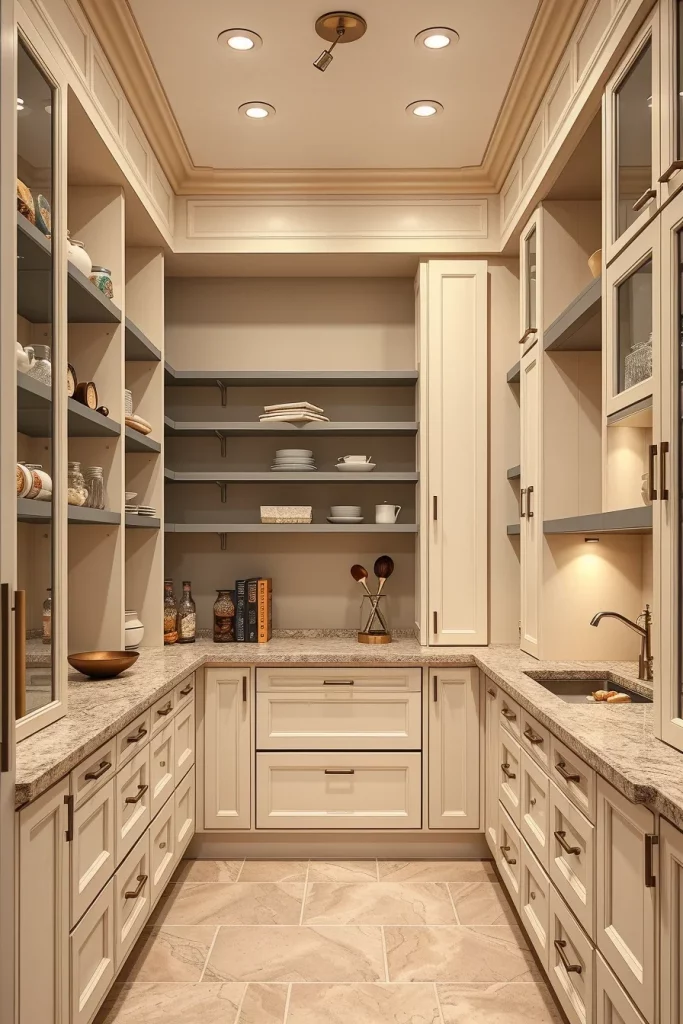
I like combining warm white cabinetry with soft beige walls, muted gray shelving, charcoal accents, natural stone countertops, brushed metal hardware, and integrated lighting. These combinations create balance while allowing decorative accessories and food storage containers to become part of the overall design. Matte finishes also reduce glare and contribute to a calm atmosphere.
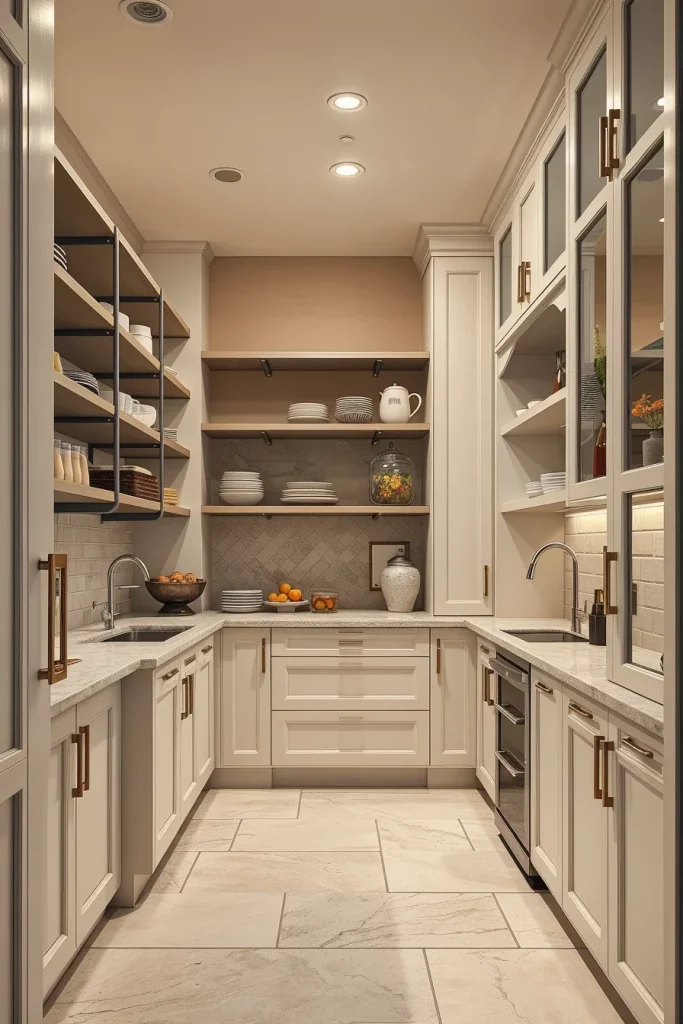
Interior designers frequently recommend using timeless neutral foundations before introducing smaller accent colors through accessories. I have followed this approach in many designs because it provides flexibility as decorating preferences change over time. It also helps the pantry remain visually appealing for years without requiring a complete redesign.
To complete this palette, I would introduce textured wall finishes, decorative cabinet panels, coordinated flooring materials, concealed lighting strips, and carefully selected artwork that complements the overall color scheme.
Textured Finishes That Add Dimension To Modern Pantries
I have always believed that texture gives a pantry its personality. Even a simple layout becomes more memorable when carefully selected materials create visual depth without making the room feel busy. Layering textures allows a pantry to feel refined while remaining highly functional for everyday use.
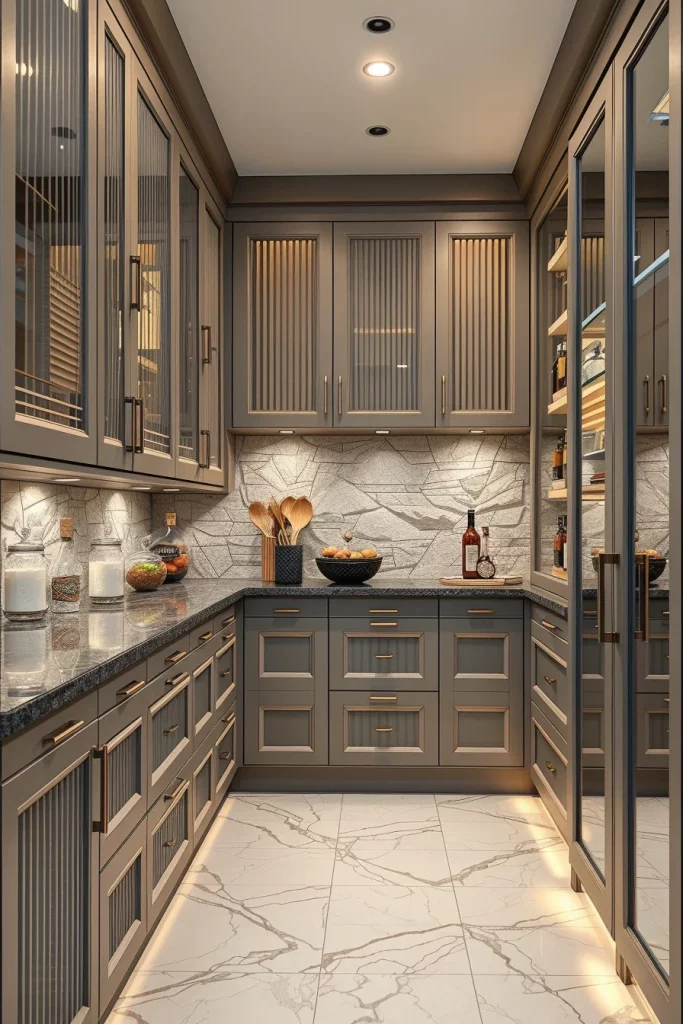
I often combine ribbed cabinet panels, textured stone backsplashes, fluted glass cabinet doors, matte cabinetry, natural-look porcelain flooring, decorative wall panels, and sleek metal shelving brackets. These materials introduce subtle contrast while maintaining a clean contemporary appearance. Soft lighting enhances every surface and highlights the unique characteristics of each finish.
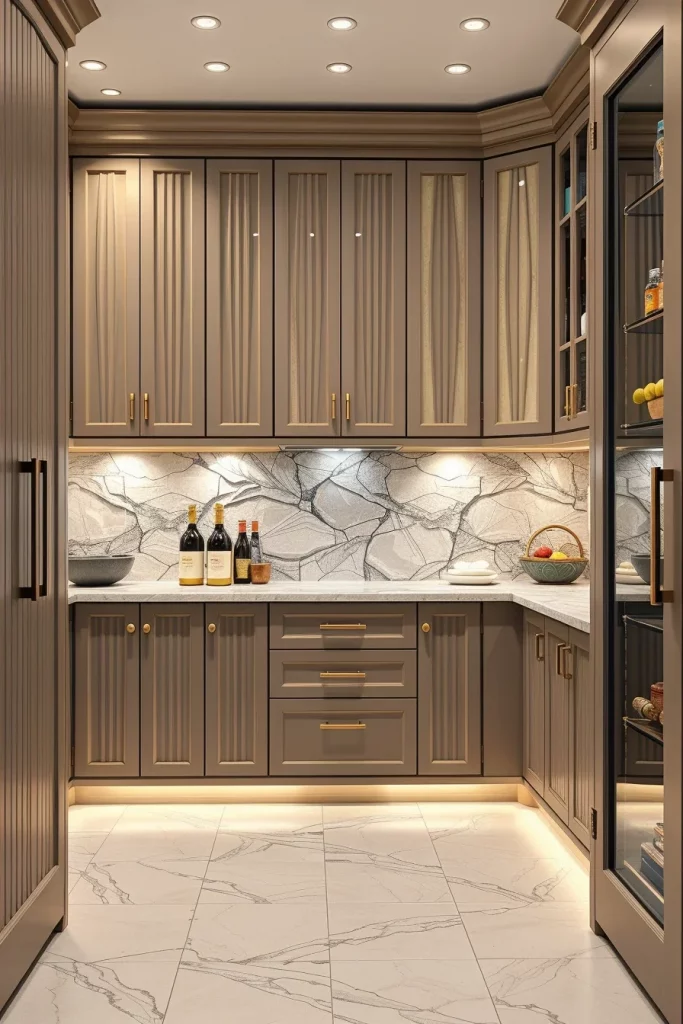
Design experts frequently point out that combining multiple textures creates warmth even within minimalist interiors. I have found this especially true in pantry spaces, where thoughtful material selection transforms ordinary storage into a sophisticated extension of the kitchen. Texture adds interest without relying on excessive decoration.
I would complete this design by incorporating premium cabinet handles, integrated shelf lighting, concealed storage compartments, durable countertops, and coordinated decorative accessories that reinforce the modern aesthetic without creating visual clutter.
Sculptural Ceiling Designs That Complete The Pantry
I have found that the ceiling is often overlooked during pantry planning, yet it can completely transform the atmosphere of the room. A thoughtfully designed ceiling adds architectural character while visually connecting the pantry with the rest of the home. In a modern pantry, I prefer sculptural ceiling elements that create subtle depth instead of overwhelming the space. Even simple geometric details can make the room feel more refined and intentionally designed.
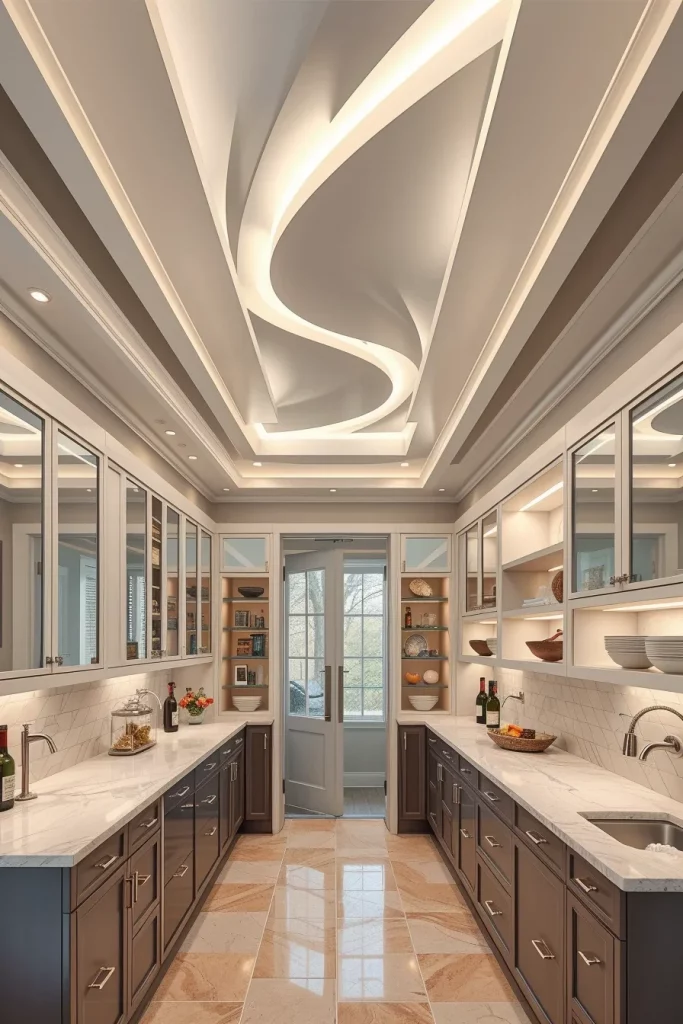
I like incorporating recessed ceiling panels, slim wood-look beams, linear LED lighting, floating ceiling features, concealed ventilation, and carefully positioned pendant fixtures above an island or preparation area. These elements not only improve the appearance of the pantry but also provide balanced illumination for daily tasks. I always consider the ceiling as another design surface that deserves as much attention as the cabinetry and flooring.
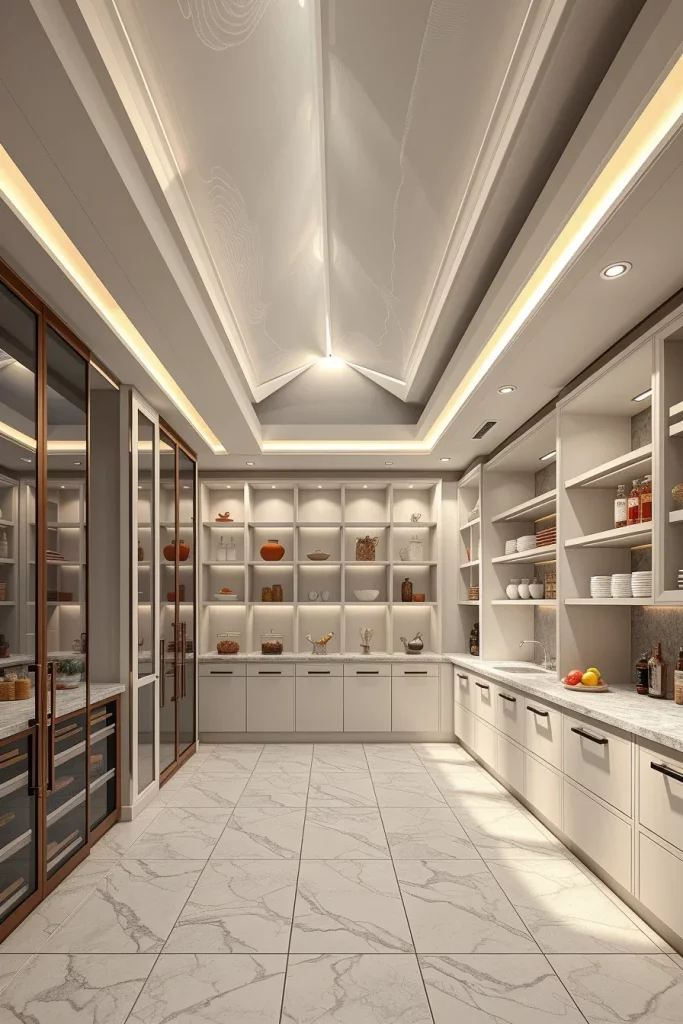
Many contemporary designers emphasize that lighting should be integrated into the architecture rather than treated as an afterthought. I completely agree because layered lighting enhances both functionality and aesthetics. In my experience, sculptural ceilings create a premium feeling without requiring excessive decoration, making the pantry feel cohesive and polished.
To complete this design, I would include dimmable lighting controls, subtle ceiling textures, color-matched trim, acoustic materials that reduce echoes, and coordinated ceiling finishes that complement the cabinetry throughout the room.
Decorative Display Niches That Turn Storage Into Art
I enjoy using decorative display niches because they allow everyday storage to become part of the overall interior design. Rather than hiding every item behind closed doors, I prefer creating carefully curated areas that showcase beautiful serving pieces, cookbooks, ceramics, or decorative accessories. These niches add personality while maintaining the organized appearance expected from a modern pantry.
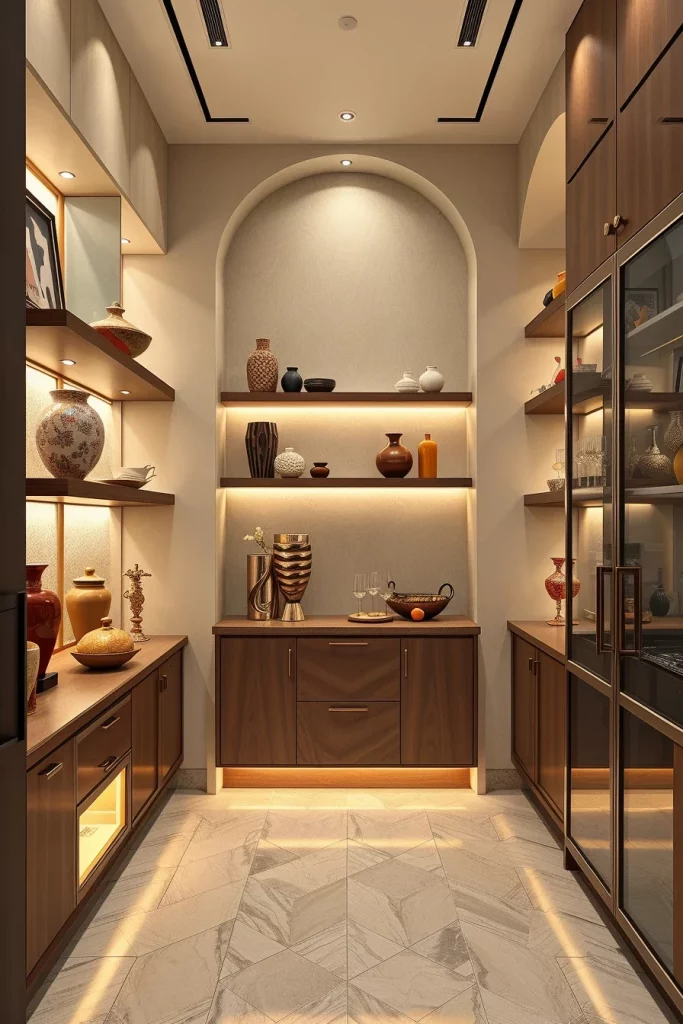
I usually design recessed wall niches with integrated lighting, floating shelves, stone or textured back panels, and carefully proportioned spacing. Decorative bowls, sculptural vases, elegant trays, and coordinated glassware create visual interest without making the shelves feel overcrowded. I always recommend displaying only a limited number of carefully selected objects so every piece has room to stand out.
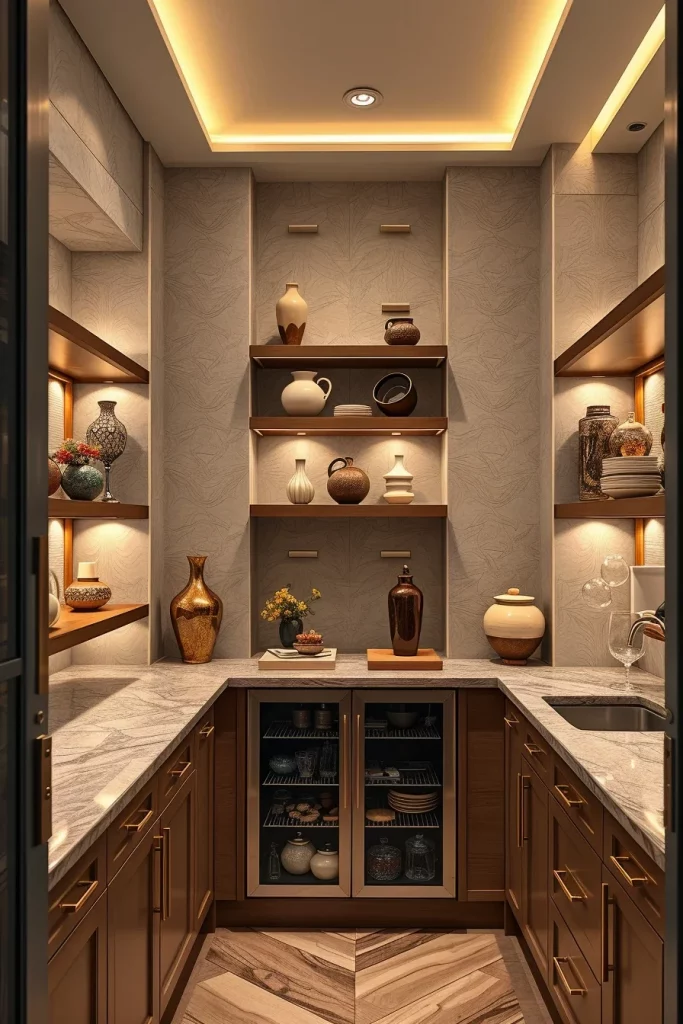
Interior publications often encourage homeowners to mix practical storage with decorative moments throughout the home. I have found this advice especially useful in pantry design because it softens the appearance of functional cabinetry and makes the space feel more welcoming. Display niches help create a room that feels collected rather than purely utilitarian.
I would also add adjustable shelf heights, concealed LED lighting, premium edge detailing, seasonal decorative accents, and coordinated finishes that blend naturally with the surrounding cabinetry.
Smart Storage Features Hidden Inside Modern Pantry Cabinets
I believe the most impressive pantry features are often the ones that remain hidden until they are needed. Smart storage solutions maximize every inch of available space while keeping the room visually calm and uncluttered. I always look for cabinetry that works harder behind closed doors without compromising the clean appearance of the overall design.
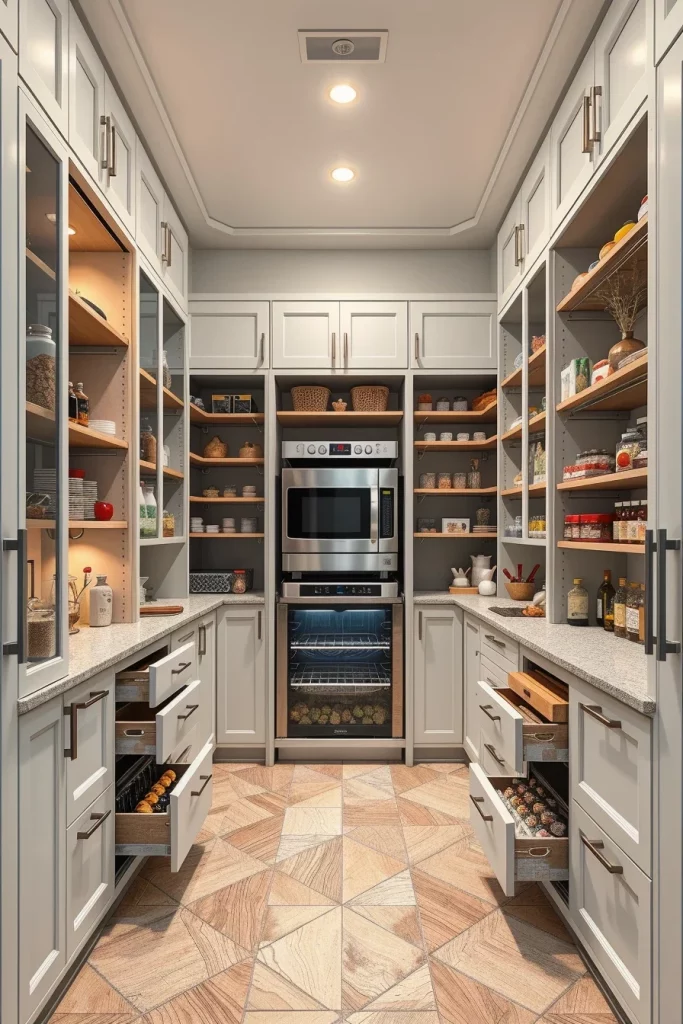
My preferred features include pull-out pantry towers, soft-close drawers, corner carousel systems, hidden appliance garages, vertical tray dividers, integrated spice storage, pull-out baskets, and adjustable shelving. These systems improve accessibility while reducing wasted space. Every cabinet becomes easier to use because items remain visible and within comfortable reach.
Professional kitchen designers frequently recommend prioritizing ergonomics before decorative details. I strongly support this approach because the most beautiful pantry quickly becomes frustrating if daily tasks require unnecessary bending, reaching, or searching. Hidden organization systems create a smoother workflow while preserving the elegant appearance of the room.
To enhance this concept even further, I would incorporate motion-activated lighting, concealed charging stations, removable drawer organizers, hidden recycling compartments, and flexible storage inserts that can adapt as household needs change.
Personalized Pantry Designs That Reflect Individual Style
I think every pantry should reflect the people who use it instead of following trends alone. Personalization makes the room more enjoyable while improving everyday routines. A thoughtfully customized pantry feels intentional because every feature supports the homeowner’s habits, cooking style, and entertaining preferences.
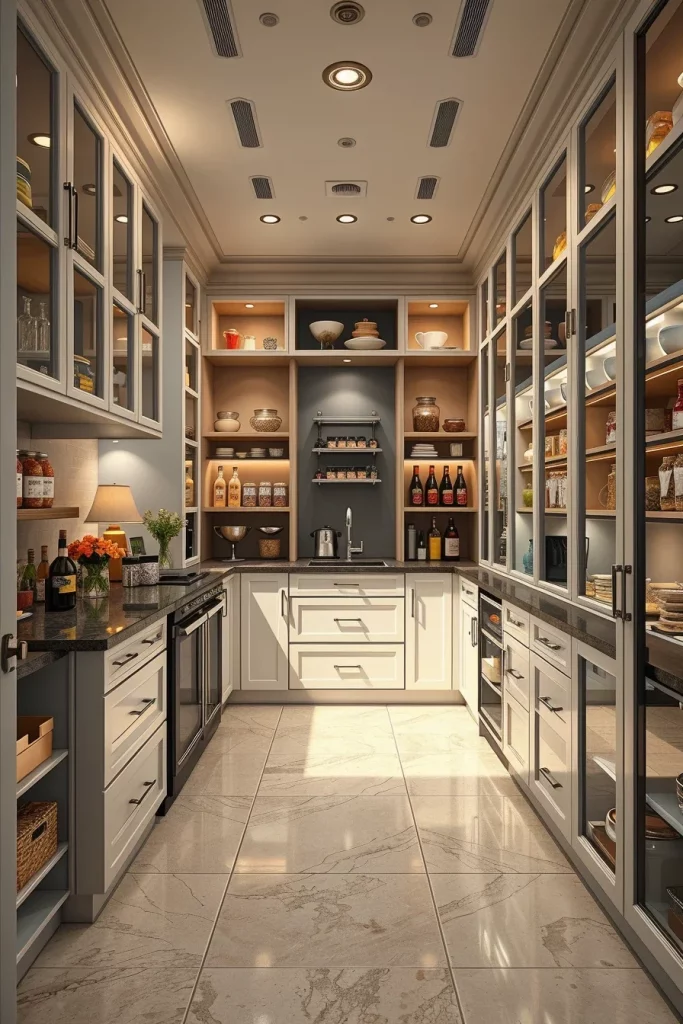
I enjoy designing custom cabinetry, dedicated baking stations, specialty beverage areas, pet food storage, personalized labeling systems, display shelving for favorite collections, and tailored drawer layouts. Selecting finishes, hardware, lighting, and accessories that complement the surrounding interior helps the pantry feel like a seamless extension of the home rather than a separate utility room.
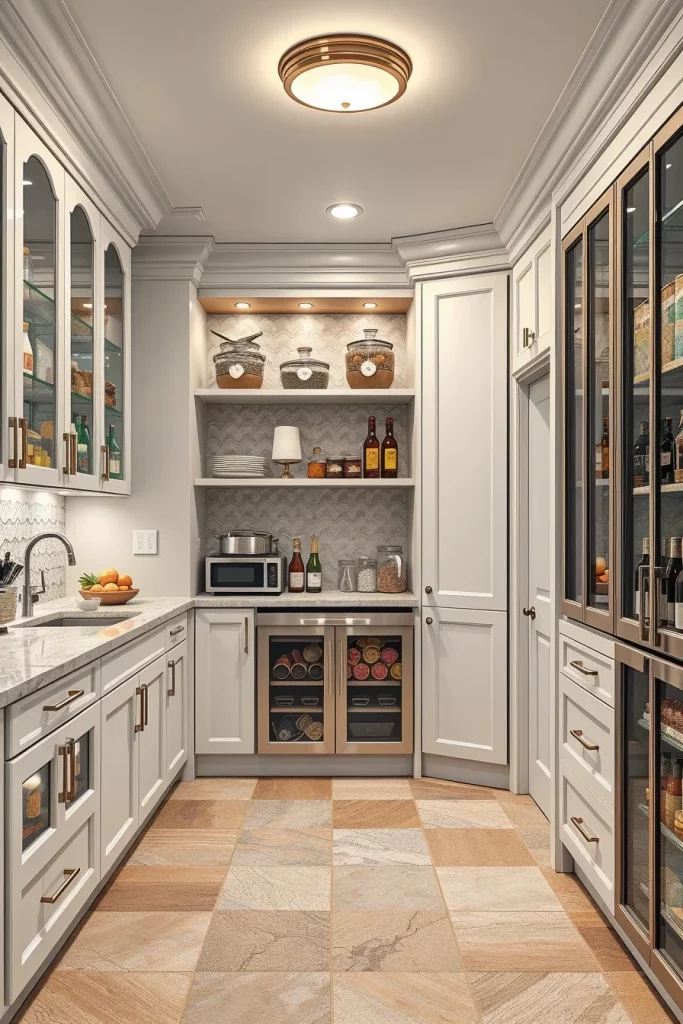
Many respected interior designers encourage homeowners to begin every renovation by evaluating how they actually live instead of copying photographs. I have found this advice extremely valuable because practical customization always delivers better long-term results than purely decorative decisions. A personalized pantry continues to perform well as routines evolve over time.
To complete a personalized pantry, I would include flexible shelving systems, hidden storage for seasonal items, integrated technology where appropriate, decorative artwork, and seating if the available space allows comfortable use.
Inspiring Modern Pantry Design Ideas To Elevate Your Home
I believe the best modern pantry combines thoughtful planning, elegant materials, and practical organization into one cohesive space. Every design decision should improve both appearance and daily functionality. Whether the pantry is compact or expansive, careful attention to layout allows it to become one of the most valuable rooms in the home.
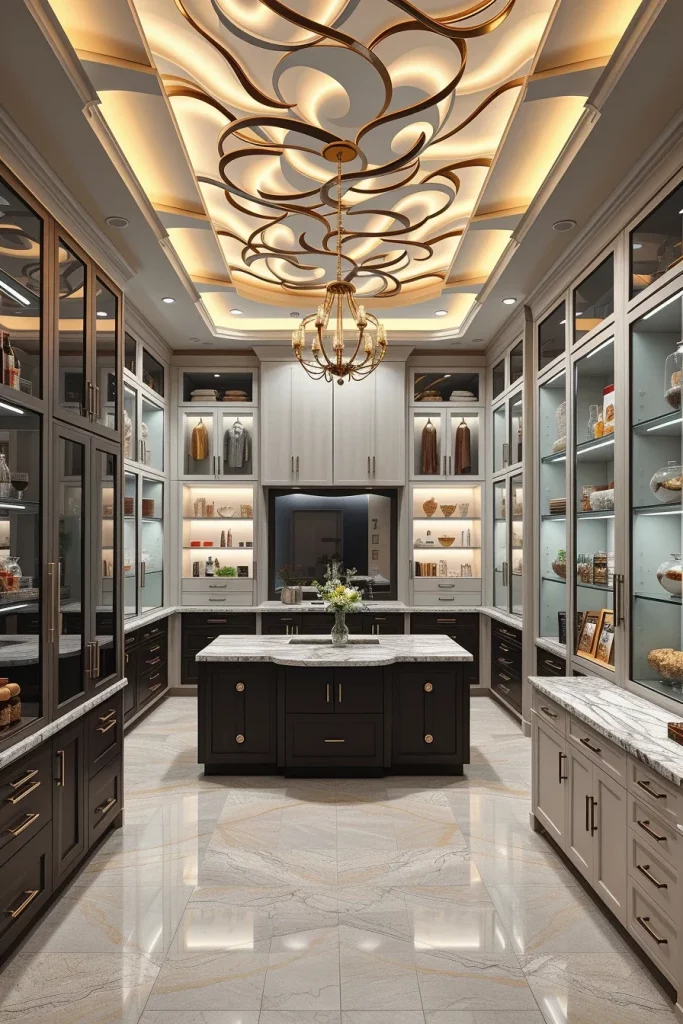
I recommend combining custom cabinetry, layered lighting, premium countertops, organized storage systems, decorative displays, hidden organizational features, sculptural architectural details, and comfortable work surfaces. Together, these elements create a pantry that feels timeless while remaining highly efficient. The balance between beauty and practicality is what truly defines exceptional modern design.
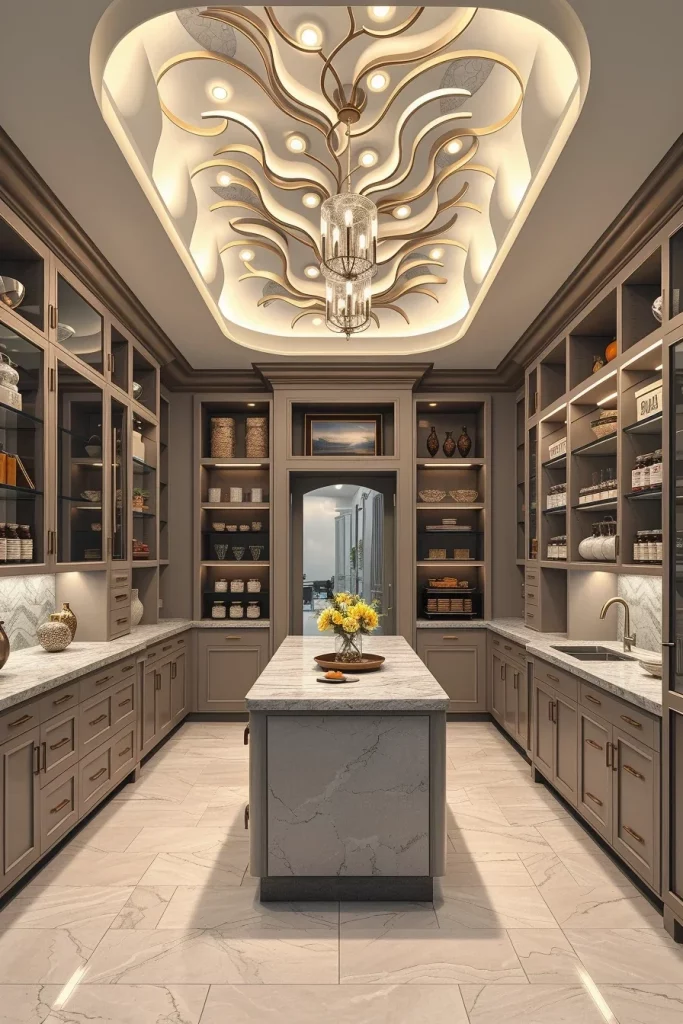
After exploring countless pantry layouts, I have learned that successful designs prioritize the homeowner’s lifestyle above everything else. Advice shared by leading designers consistently reinforces this principle, and I have found it to be true in every well-planned project. Investing in quality materials and intelligent storage almost always delivers lasting satisfaction.
If I were making final improvements, I would carefully review lighting levels, storage flexibility, circulation space, decorative balance, and future storage needs. These finishing touches ensure the pantry remains functional, welcoming, and visually impressive for many years.
Modern pantry design is all about creating a space that is as beautiful as it is practical. Whether you prefer a spacious walk-in pantry or a sleek built-in solution, thoughtful layouts, stylish finishes, and smart storage features can completely transform your kitchen experience. By combining functionality with contemporary design, you can create a pantry that keeps everything organized while adding lasting style and value to your home.