
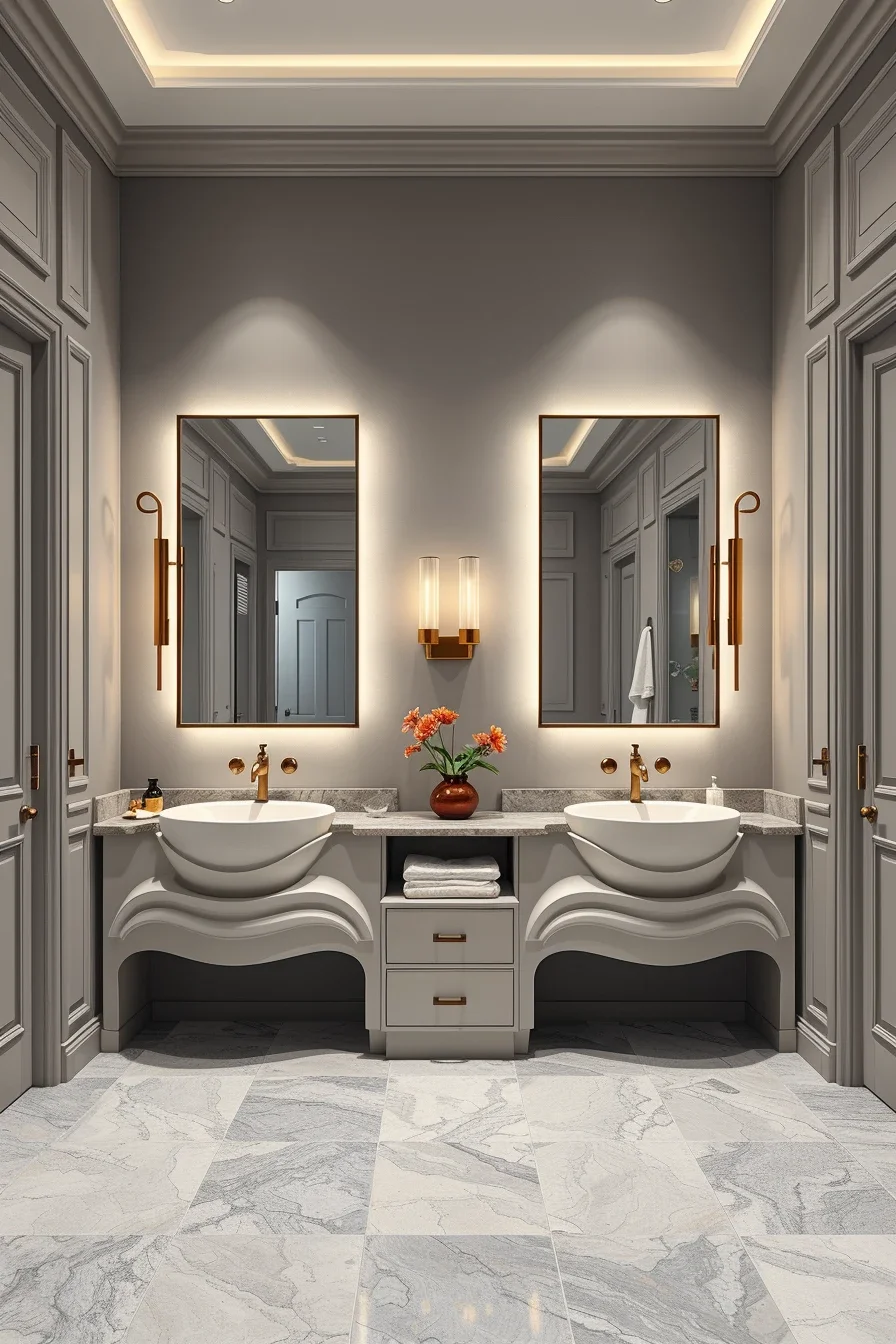
Modern gray bathroom interior trends are redefining contemporary living with their perfect balance of elegance, serenity, and artistic expression. Gray has evolved far beyond a simple neutral, becoming the foundation for sculptural forms, luxurious textures, and sophisticated architectural details. Today’s modern gray bathrooms feature everything from statement stone surfaces and curved silhouettes to seamless storage and ambient lighting. Whether you prefer soft dove gray tones or dramatic charcoal finishes, these interiors create a timeless and calming retreat. Creative materials, layered textures, and unique design elements add depth and personality while maintaining a refined aesthetic. In this article, explore inspiring modern gray bathroom ideas that transform everyday spaces into stylish spa-like sanctuaries.
Sculptural Freestanding Bathtubs In Modern Gray Bathrooms
A sculptural freestanding bathtub instantly becomes the focal point in modern gray bathroom interior trends. I often recommend placing a softly curved or asymmetrical tub in the center of the room to create a gallery-like atmosphere. Gray tones work exceptionally well with sculptural forms because they allow the shape itself to command attention without visual clutter. Large-format porcelain flooring, subtle indirect lighting, and minimalist finishes help maintain a serene and highly functional environment.
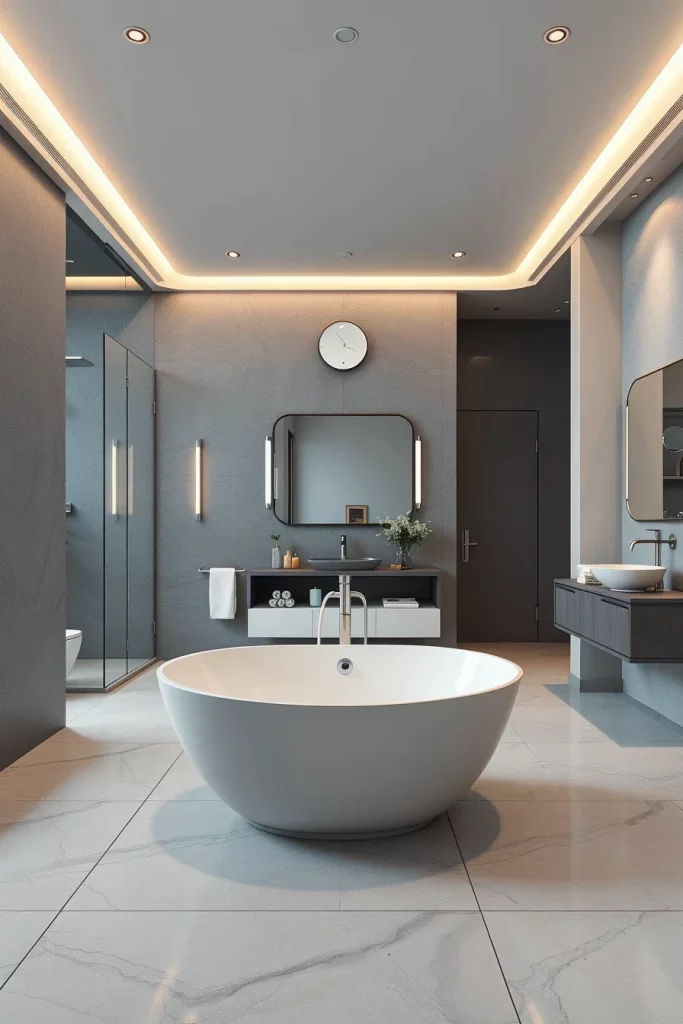
When designing this type of bathroom, I prefer pairing the bathtub with wall-mounted faucets, frameless glass shower enclosures, and oversized mirrors. A floating vanity in matte gray, integrated shelving niches, and concealed storage maintain visual harmony while maximizing practicality. Natural stone accessories, textured towels, and understated metallic accents add refinement without competing with the tub’s artistic presence.
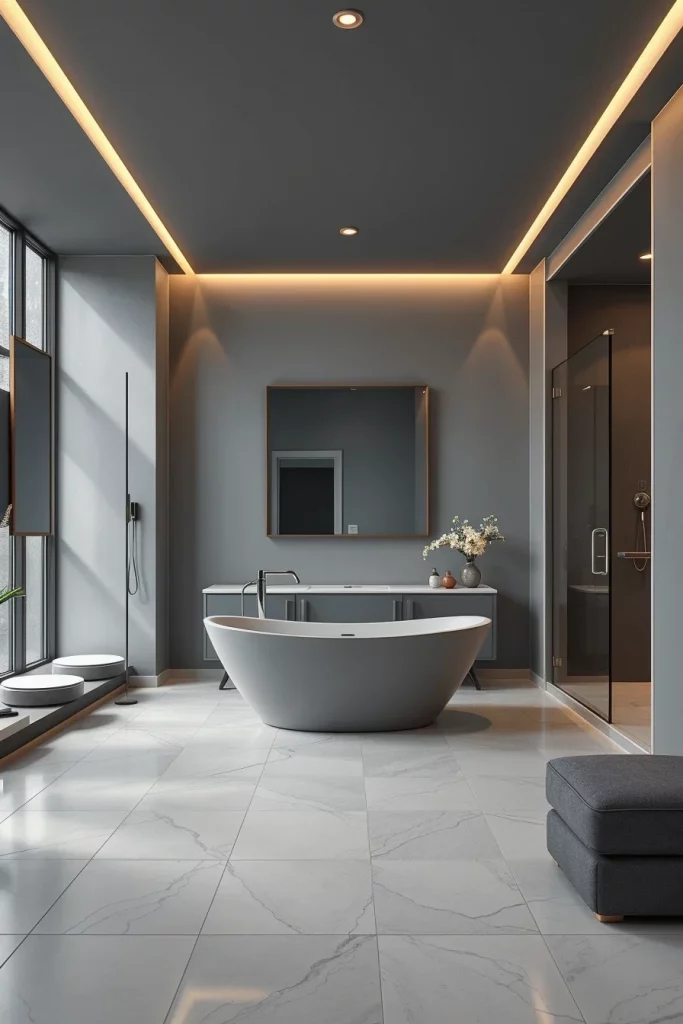
In my experience, designers frequently emphasize the importance of statement bathtubs in contemporary spaces. Publications such as Architectural Digest often highlight sculptural soaking tubs as one of the defining features of luxury-inspired modern bathrooms. I have found that investing in a well-designed tub dramatically elevates the entire space.
I would also add dimmable layered lighting around the bathtub area. Soft illumination enhances the sculptural silhouette while creating a relaxing spa atmosphere during evening use.
Floor-To-Ceiling Gray Marble Bathroom Designs With Artistic Flair
Floor-to-ceiling marble creates one of the most dramatic and stylish interpretations of gray bathroom design. I particularly appreciate how continuous gray marble surfaces visually enlarge the room while introducing depth, movement, and sophistication. Veined marble with striking patterns transforms walls into natural works of art, making the bathroom feel curated and distinctive.
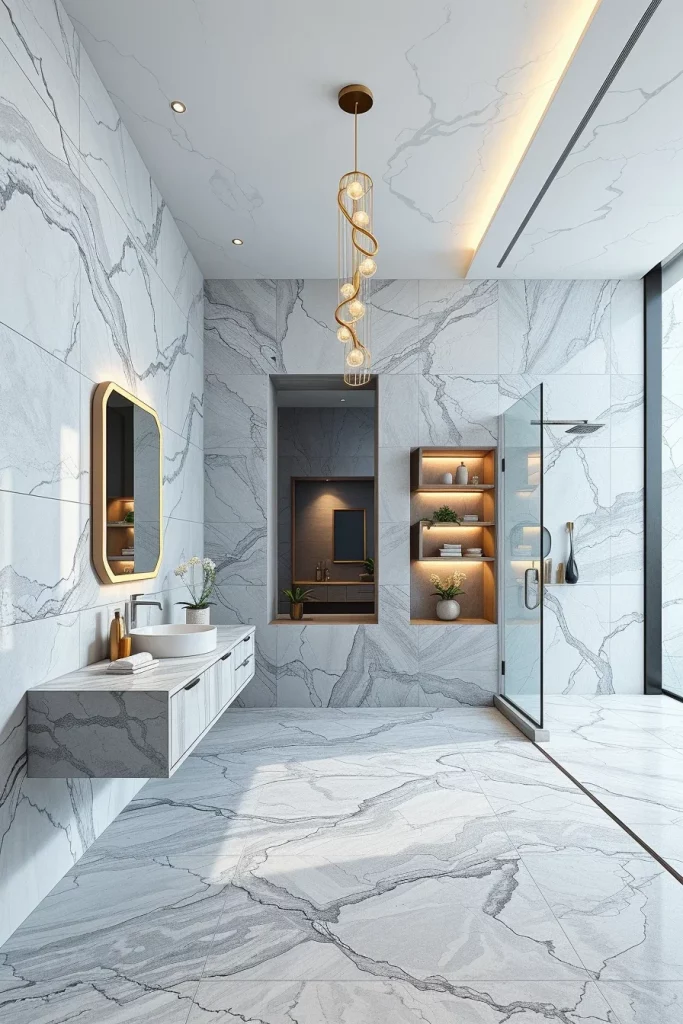
I usually incorporate expansive marble slabs on walls, floors, and even shower surrounds to minimize grout lines and create seamless elegance. Floating vanities in matching stone, backlit mirrors, frameless shower partitions, and integrated shelving contribute to a cohesive appearance. Sculptural pendant lighting and artistic stools can further emphasize the room’s gallery-inspired character.
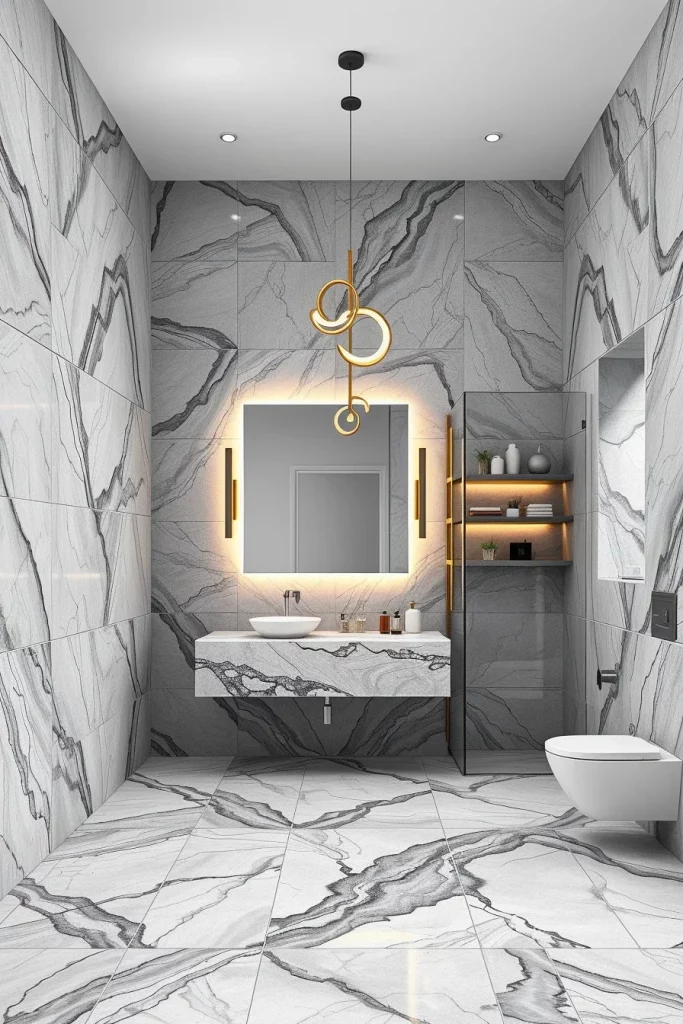
From my perspective, balance is essential when using extensive marble surfaces. I often follow recommendations from interior publications like Elle Decor, which suggest mixing richly veined stone with minimalist furnishings to avoid overwhelming the space. This approach allows the marble to remain the central visual feature.
To complete this design, I would introduce subtle ambient lighting concealed behind mirrors or ceiling coves. Lighting reveals the complexity of marble veining and adds warmth to the predominantly gray palette.
Minimalist Gray Bathrooms With Floating Architectural Elements
Minimalist bathrooms featuring floating elements perfectly illustrate today’s modern gray bathroom interior trends. I frequently design these spaces around clean lines, open floor areas, and architectural simplicity. Floating components visually lighten the room while creating a highly contemporary appearance that feels spacious and calming.
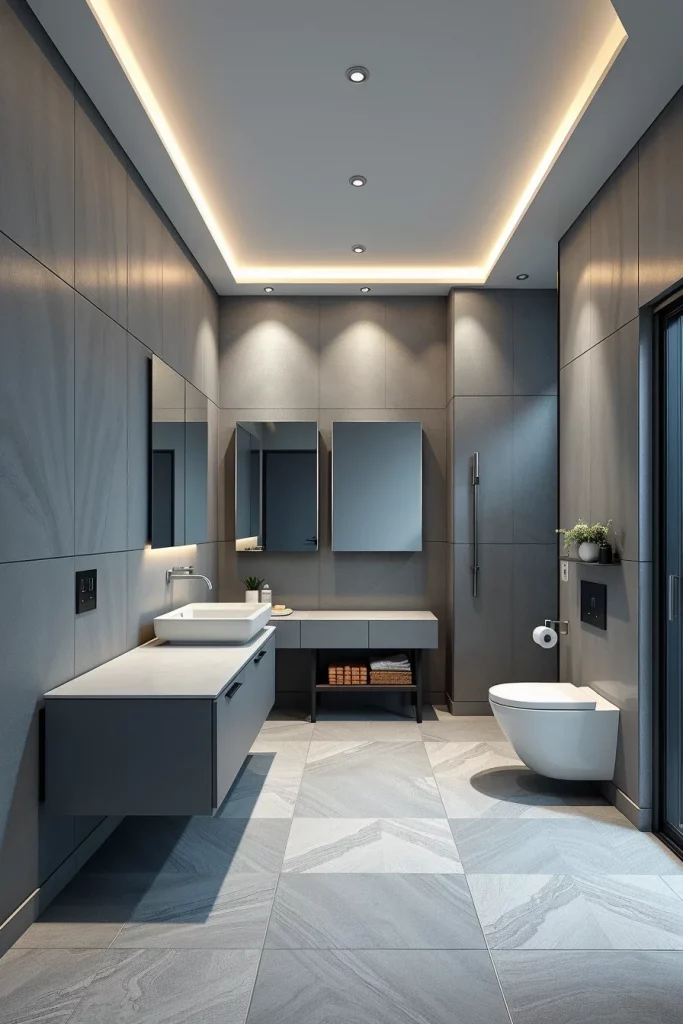
Wall-mounted vanities, suspended toilets, floating storage cabinets, and recessed shelving are essential in this concept. I often combine smooth concrete-look surfaces with matte gray cabinetry and large frameless mirrors. Linear drains, concealed fixtures, and integrated LED lighting reinforce the minimalist aesthetic while improving daily functionality.
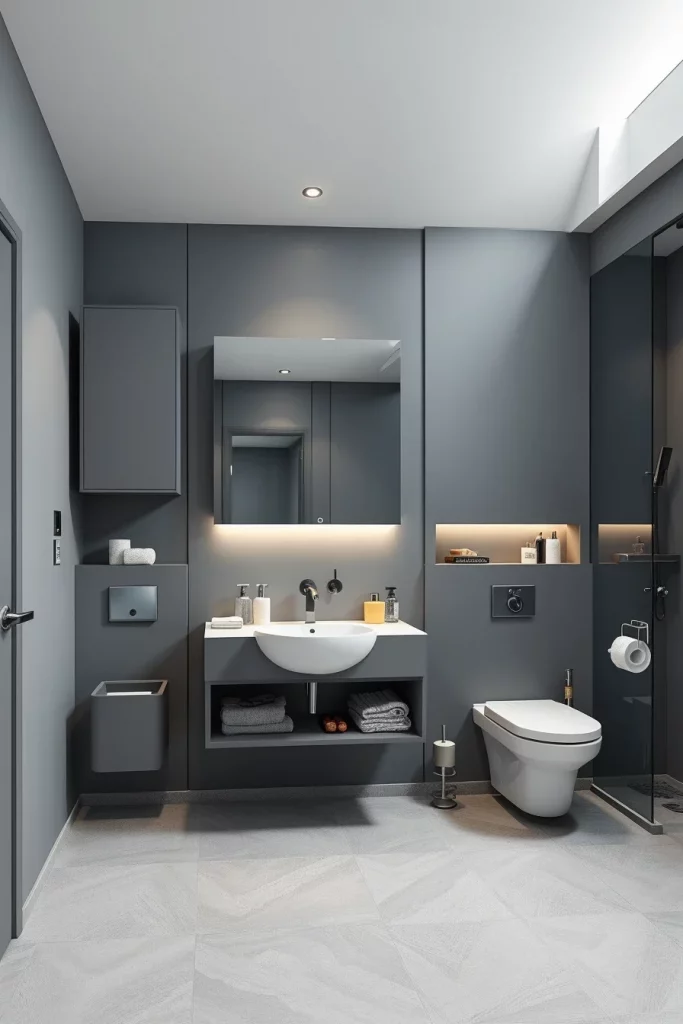
Personally, I believe floating architectural elements provide both visual elegance and practical advantages. Easier floor cleaning, improved circulation, and uncluttered sightlines make the room more efficient. Contemporary designers regularly highlight floating installations as a hallmark of sophisticated minimalist interiors.
For additional refinement, I recommend incorporating subtle texture through ribbed cabinetry fronts, textured stone accessories, or microcement finishes to prevent the minimalist palette from appearing flat.
Charcoal Gray Bathrooms Featuring Curved Statement Walls
Charcoal gray introduces depth and drama while curved statement walls soften the overall atmosphere. I find that combining these two features creates an exceptionally creative and unusual bathroom environment. Curved forms naturally guide movement through the space and introduce architectural interest without relying on excessive decoration.
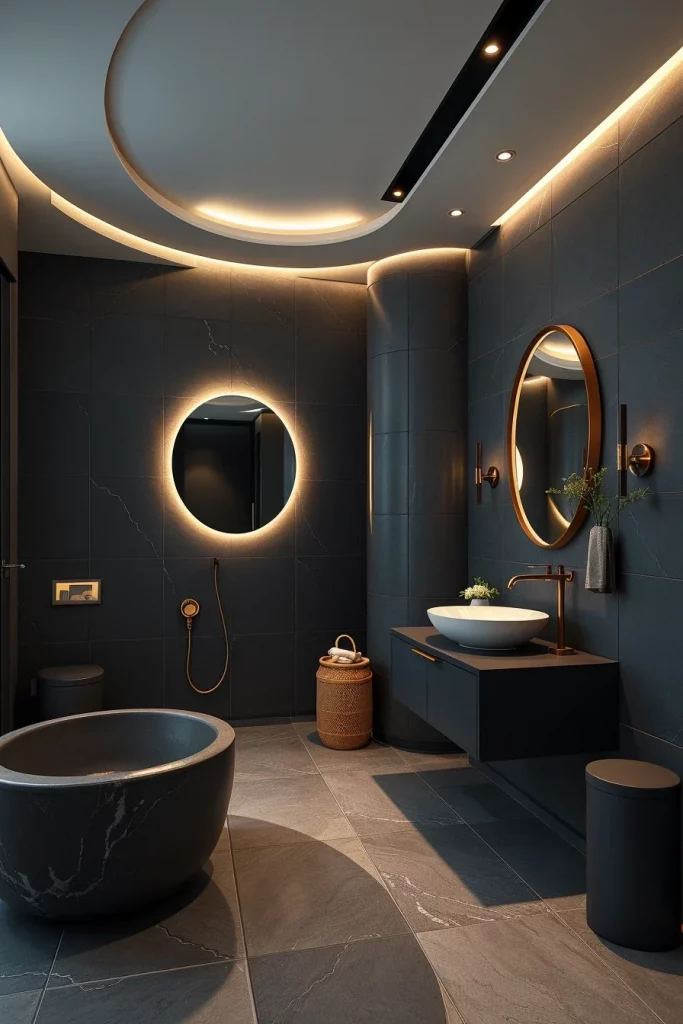
I often use curved walls to define shower zones, frame vanity areas, or conceal storage solutions. Matte charcoal finishes paired with rounded mirrors, sculptural lighting fixtures, and organically shaped basins reinforce the fluid aesthetic. Large-format flooring and concealed lighting ensure the room remains cohesive despite its bold architectural forms.
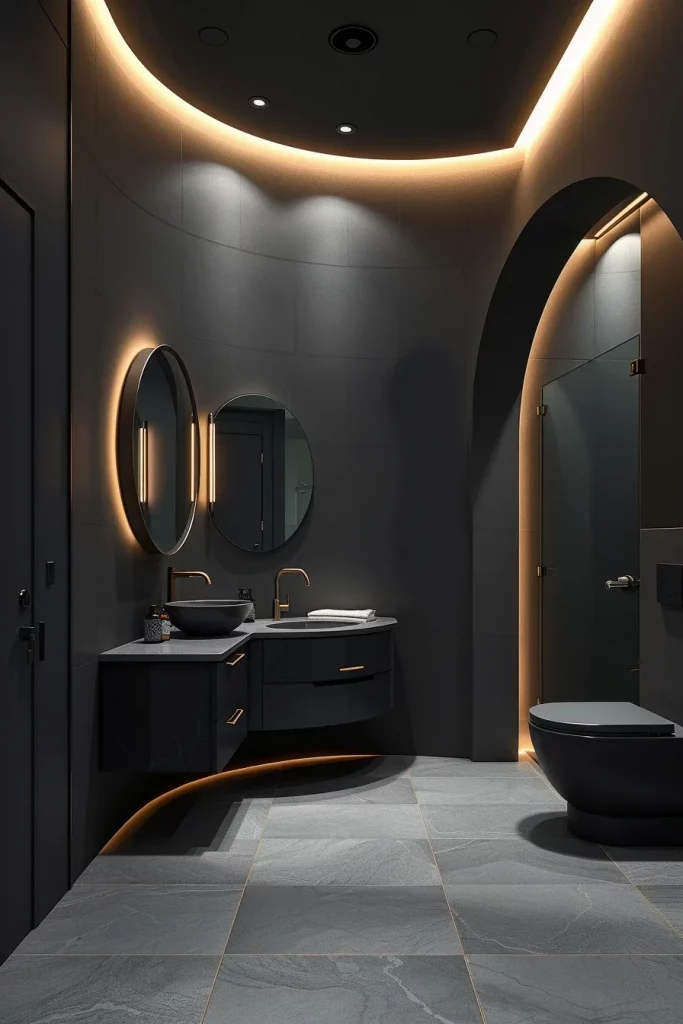
In my own projects, curved walls consistently make bathrooms feel more bespoke and luxurious. Many contemporary designers in the United States increasingly embrace soft architectural geometry because it balances modern minimalism with inviting comfort.
I would further enhance this concept by incorporating indirect LED strips following the wall curvature. This lighting technique emphasizes the architectural shape and creates a sophisticated evening ambiance.
Contemporary Gray Bathrooms With Oversized Stone Textures
Oversized stone textures create powerful visual impact while maintaining the calming qualities associated with gray interiors. I often specify large-format textured porcelain or natural stone surfaces because they introduce scale, depth, and tactile richness. These surfaces help create a highly artistic and unique modern grey bathroom interior without excessive ornamentation.
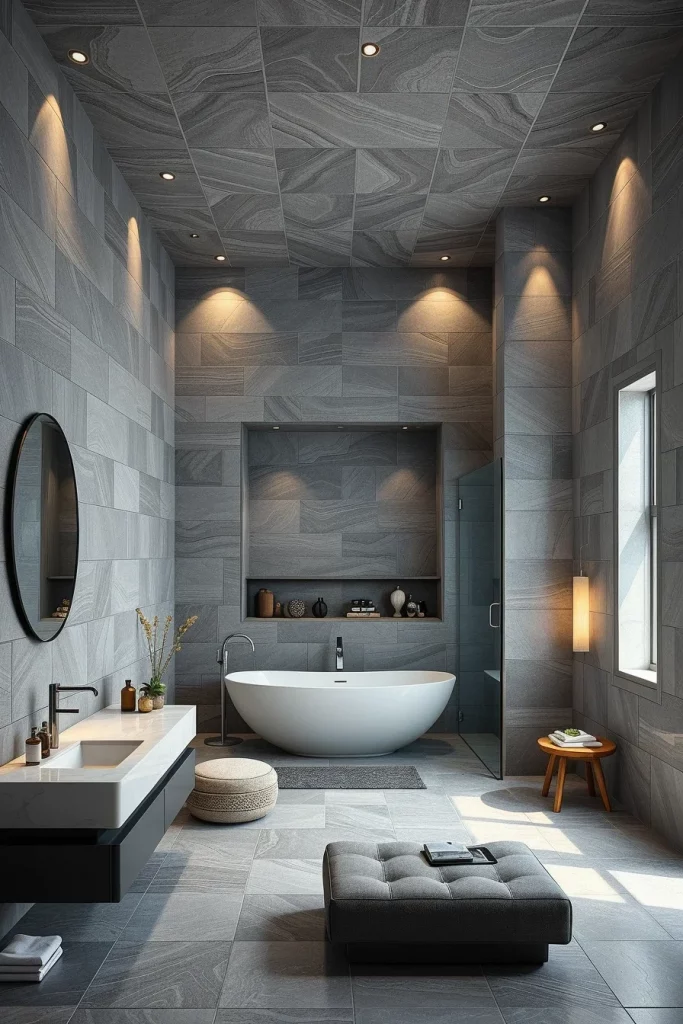
Key furnishings in this design include streamlined floating vanities, frameless shower screens, integrated storage niches, and minimalist freestanding bathtubs. I prefer allowing the textured stone to dominate the visual composition while furnishings remain understated. Soft layered lighting enhances surface details and highlights natural variations within the stone.
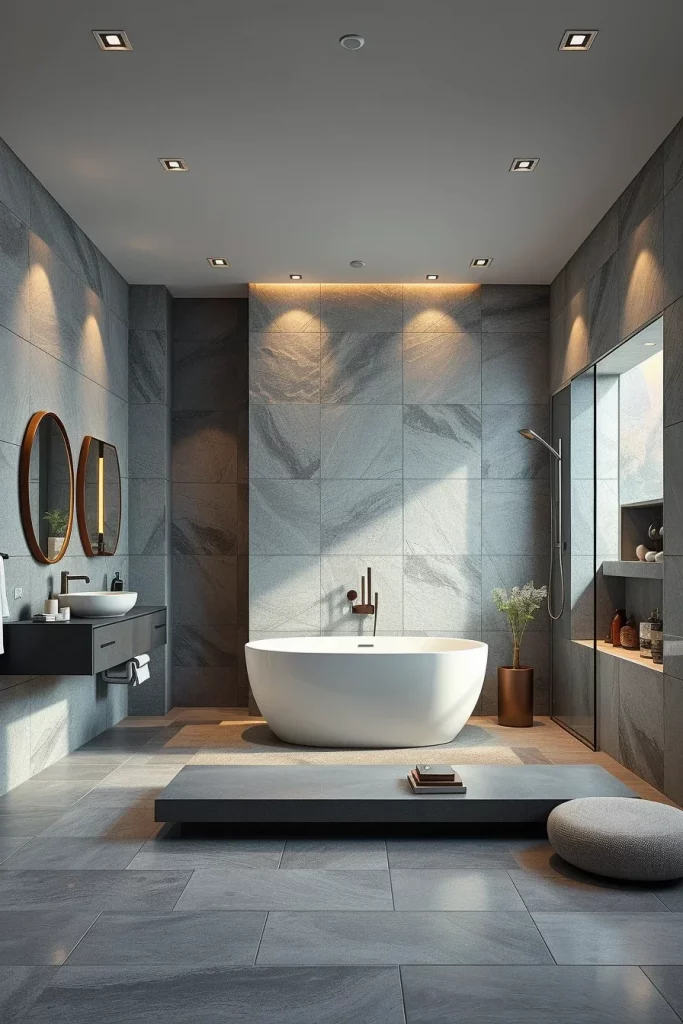
From my experience, oversized textures work particularly well in spacious bathrooms where uninterrupted wall expanses can fully showcase their beauty. Interior experts frequently recommend limiting competing patterns so that large-scale textures remain the primary design feature.
Adding heated flooring and concealed storage would further improve comfort and functionality while preserving the clean contemporary aesthetic.
Dramatic Dark Gray Bathrooms With Ambient Architectural Lighting
Dark gray bathrooms create a sophisticated atmosphere when paired with carefully planned architectural lighting. I often recommend charcoal, graphite, and deep slate finishes because they add depth while maintaining a timeless appearance. Recessed LED strips integrated into niches, ceilings, and under floating elements soften the intensity of dark surfaces and make the room feel larger. This approach perfectly reflects current modern gray bathroom interior trends by balancing moody aesthetics with everyday functionality.
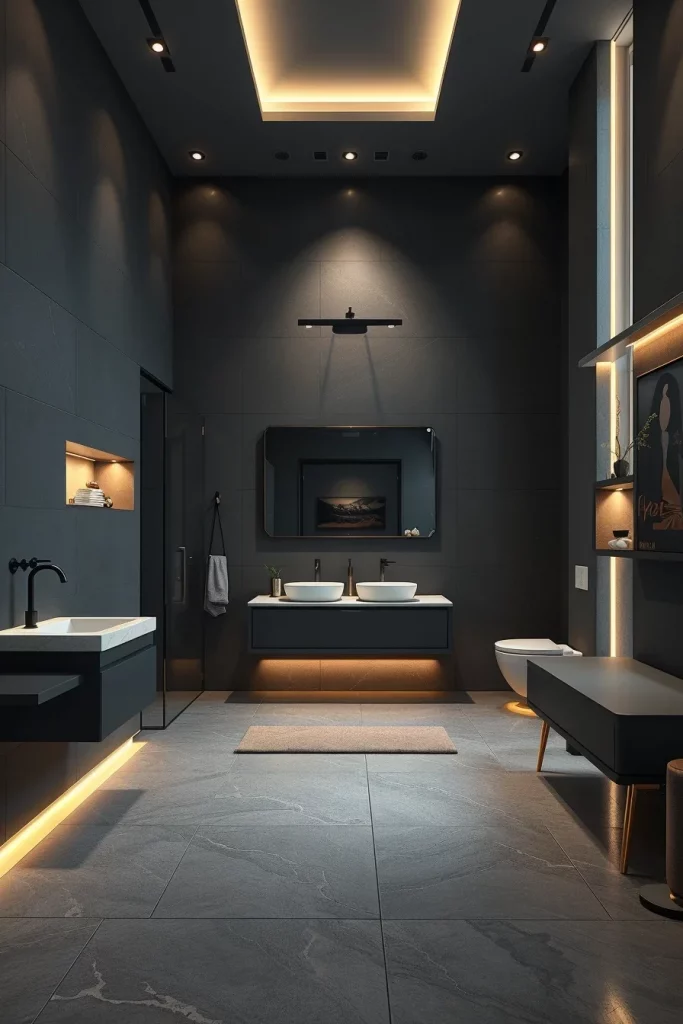
In this type of interior, I usually include floating vanities in matte gray finishes, oversized porcelain slabs, frameless glass shower enclosures, and integrated storage niches. A wall-mounted toilet helps preserve visual openness, while concealed lighting beneath cabinetry introduces subtle illumination. Large-format tiles reduce grout lines and contribute to the seamless, architectural appearance that defines many stylish contemporary bathrooms.
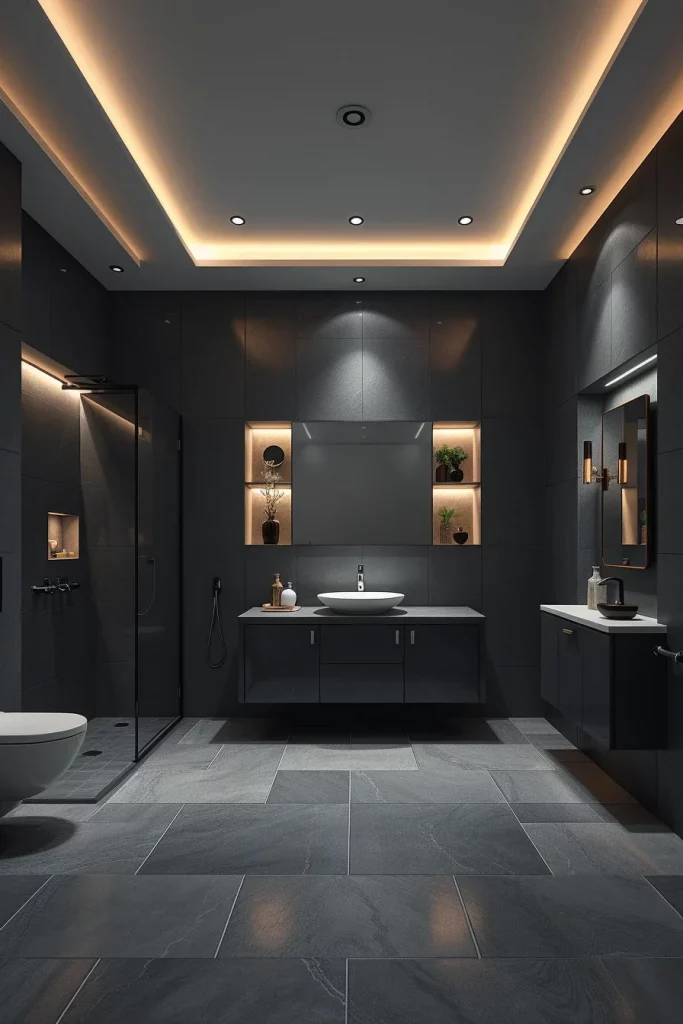
From my experience, layered lighting is essential in darker interiors. Designers frequently featured in Architectural Digest recommend combining ambient, task, and accent lighting to prevent shadow-heavy spaces. I have found that dimmable lighting systems allow homeowners to easily shift from energizing morning routines to relaxing evening rituals.
To complete this interior, I would add smart lighting controls and heated flooring. These features enhance comfort and reinforce the luxurious atmosphere without disrupting the minimalist design.
Modern Gray Bathrooms With Curved Walk-In Shower Designs
Curved walk-in showers are becoming increasingly popular because they soften the strong geometric lines commonly found in modern bathrooms. I find that sculptural curves instantly make a gray bathroom feel more welcoming and visually dynamic. Soft gray microcement walls combined with curved glass partitions create a seamless, spa-like environment that feels both contemporary and inviting.
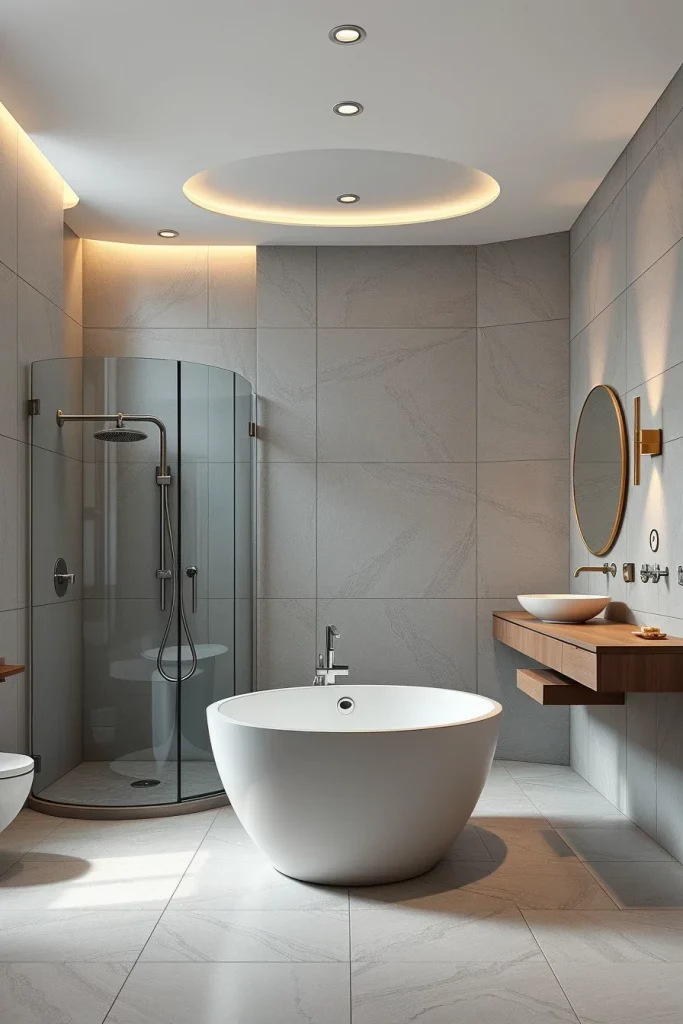
For furnishings, I prefer freestanding oval bathtubs, rounded mirrors, curved floating vanities, and minimalist wall sconces. Curved shower benches add comfort while reinforcing the fluid design language throughout the room. Matte gray finishes paired with brushed nickel fixtures maintain cohesion without overwhelming the space.
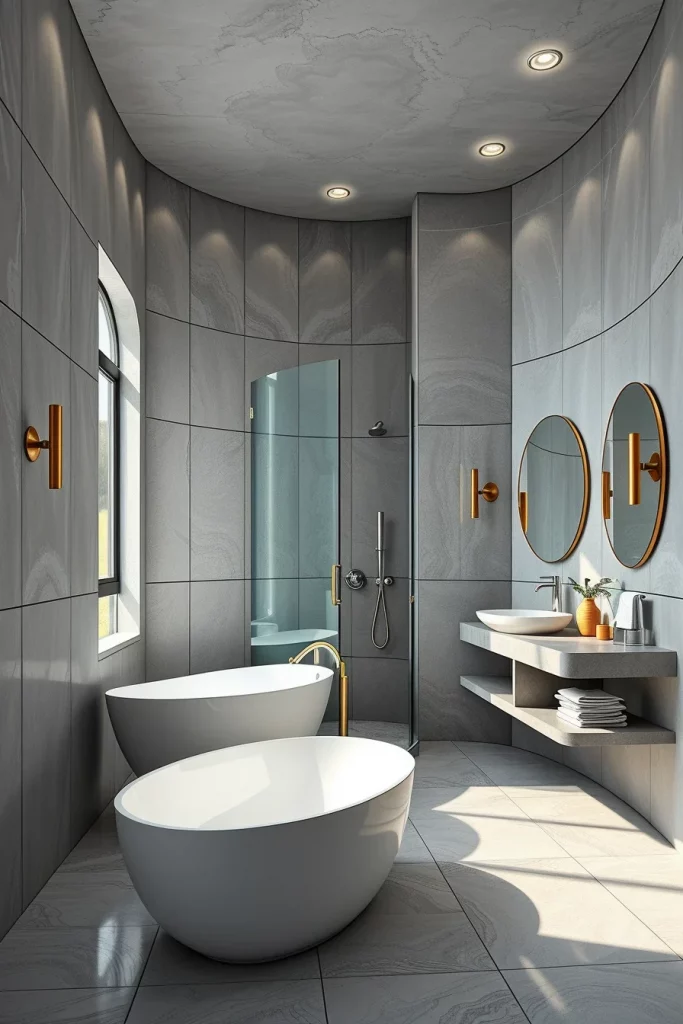
Personally, I believe curved architecture introduces a distinctly artistic quality to modern bathrooms. Many interior designers featured in Elle Decor have emphasized the growing popularity of rounded forms because they create calming environments. In my projects, clients consistently respond positively to spaces that incorporate softened silhouettes.
If I were refining this design further, I would incorporate integrated shower niches with concealed lighting to emphasize the elegant curves and improve everyday usability.
Artistic Concrete Gray Bathrooms With Gallery-Inspired Styling
Concrete finishes are central to many creative and unusual bathroom concepts. I appreciate concrete-inspired surfaces because they offer texture, durability, and a distinctly contemporary aesthetic. When combined with gallery-inspired styling, gray concrete bathrooms become expressive spaces that showcase personality without sacrificing practicality.
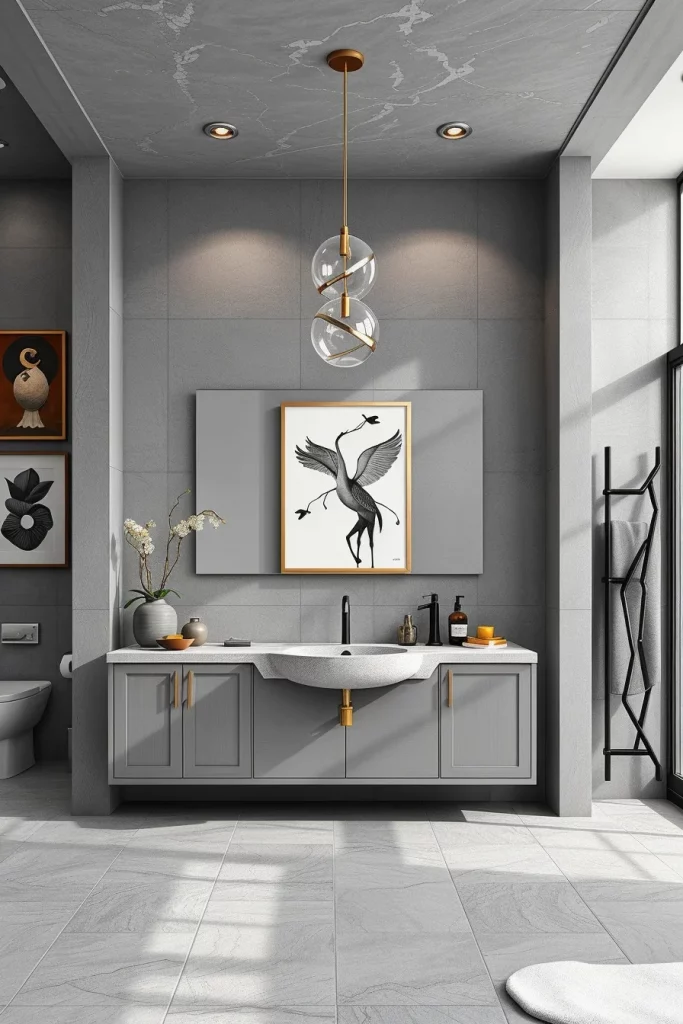
I typically include polished concrete walls, floating stone sinks, minimalist cabinetry, oversized frameless mirrors, and curated artwork. Sculptural pendant lights and pedestal stools introduce visual interest while maintaining an uncluttered atmosphere. Open shelving displaying ceramic objects or monochromatic sculptures reinforces the gallery-inspired character.
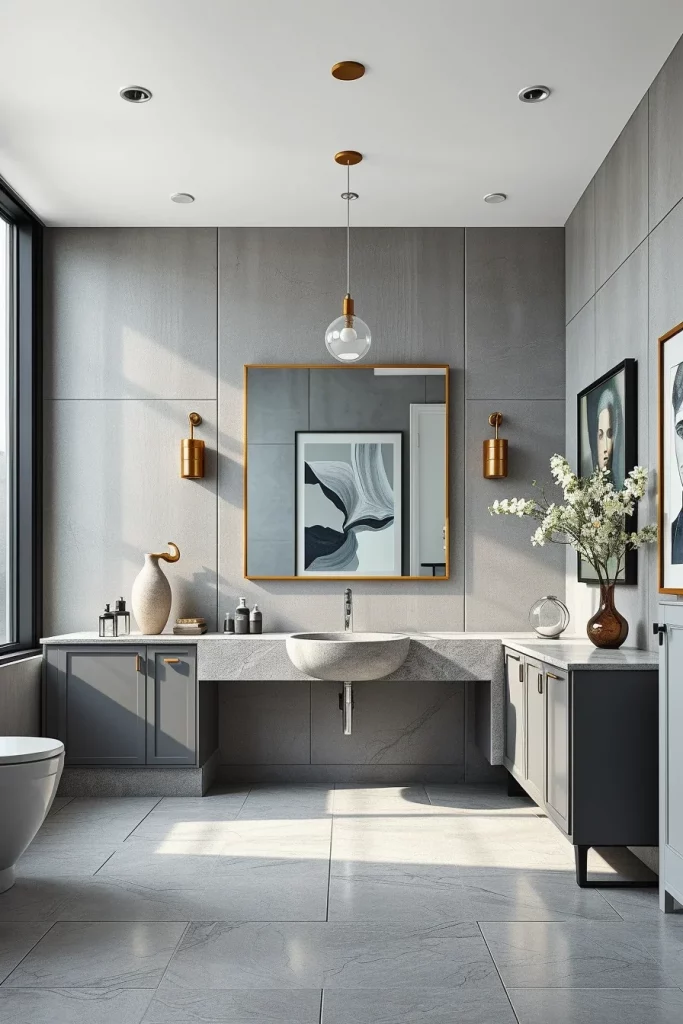
In my opinion, the key to successful gallery styling is restraint. House Beautiful often highlights the importance of carefully edited decor, and I completely agree. Rather than filling every surface, I prefer selecting one or two statement pieces that draw attention while preserving tranquility.
This concept could be enhanced further by introducing museum-style directional lighting that highlights artwork and architectural details throughout the room.
Warm Gray Bathroom Interiors Enhanced By Natural Stone Accents
Warm gray palettes challenge the misconception that gray interiors feel cold. I often use taupe-gray tones combined with natural stone to create bathrooms that feel serene and welcoming. Soft gray walls paired with travertine, limestone, or marble accents introduce warmth and organic texture while maintaining a refined contemporary appearance.
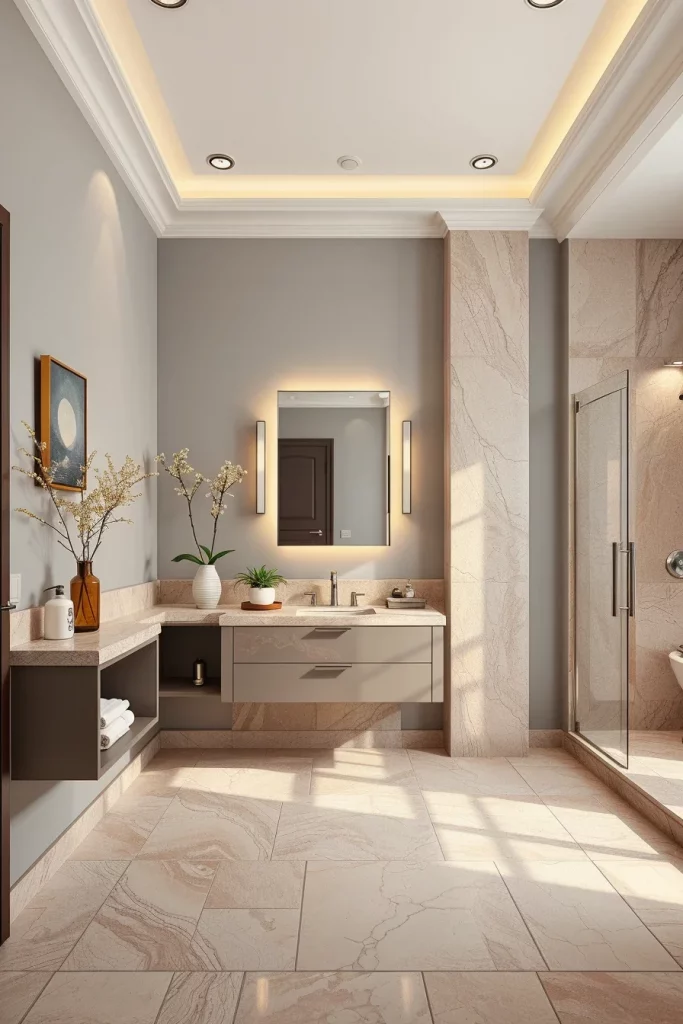
For furnishings, I recommend floating wood-look vanities in warm gray finishes, stone countertops, integrated sinks, and oversized mirrors with subtle backlighting. Natural stone shelving, textured floor tiles, and minimalist seating contribute additional layers of comfort and sophistication. These combinations result in truly unique modern grey bathroom interiors that balance modernity with natural character.
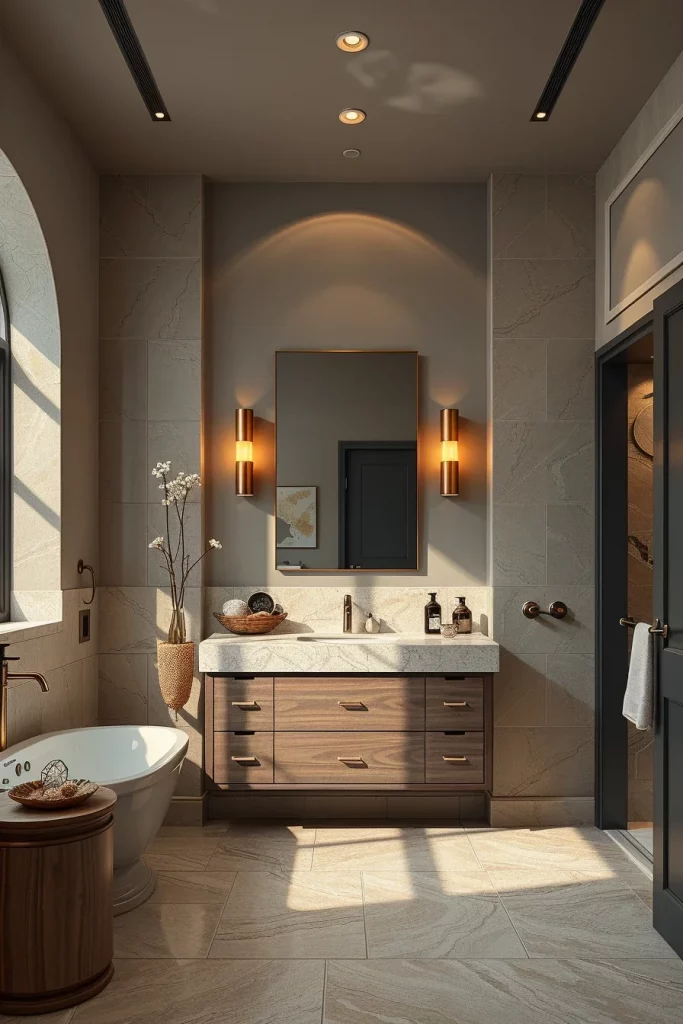
From my experience, incorporating organic materials significantly improves the atmosphere of gray spaces. Designers at Better Homes & Gardens frequently emphasize layering textures to prevent neutral interiors from feeling flat. I have consistently found that natural stone achieves this effect beautifully.
To elevate this design further, I would include linen textiles and subtle metallic accents in brushed brass or warm nickel finishes to enrich the overall palette.
Luxury-Inspired Gray Bathrooms With Sculpted Double Vanities
Sculpted double vanities serve as striking focal points in high-end gray bathrooms. I particularly appreciate vanity designs featuring curved edges, monolithic forms, and integrated basins because they introduce both artistry and functionality. Combined with soft gray wall finishes and premium materials, these vanities establish an elegant, hotel-inspired atmosphere.
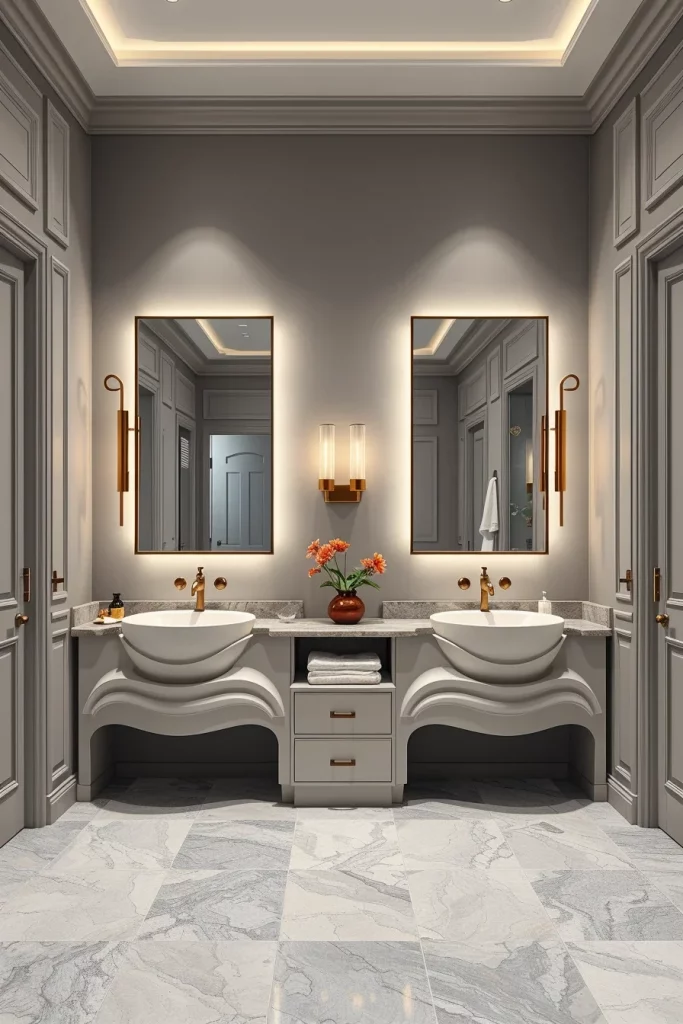
I typically pair sculpted vanities with large illuminated mirrors, integrated storage drawers, wall-mounted faucets, and stone countertops. Symmetry plays a crucial role in these interiors, so matching lighting fixtures and balanced layouts help create visual harmony. Floor-to-ceiling cabinetry can provide additional storage while preserving a clean aesthetic.
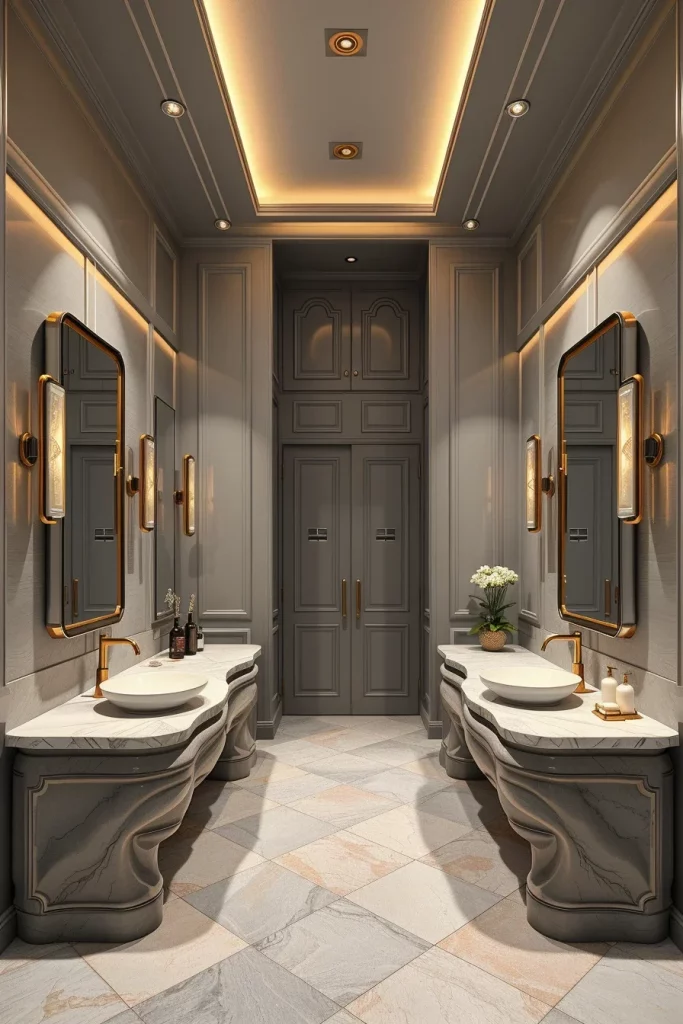
Personally, I believe statement vanities represent one of the strongest modern gray bathroom interior trends today. Publications such as Architectural Digest increasingly showcase sculptural bathroom furniture as functional art, and I see this preference reflected in many contemporary renovation projects.
I would also consider adding upholstered seating or a decorative stool if space allows, as these elements introduce comfort while reinforcing the luxurious ambiance.
Soft Gray Bathroom Interiors With Organic Sculptural Vanities
Soft gray palettes create a calming foundation for bathrooms centered around organic sculptural vanities. I often choose this approach when I want a bathroom to feel serene yet visually distinctive. Curved silhouettes, flowing forms, and sculptural details transform an ordinary vanity into an artistic focal point. Soft gray shades also reflect natural and artificial light beautifully, making the entire room appear larger and brighter.
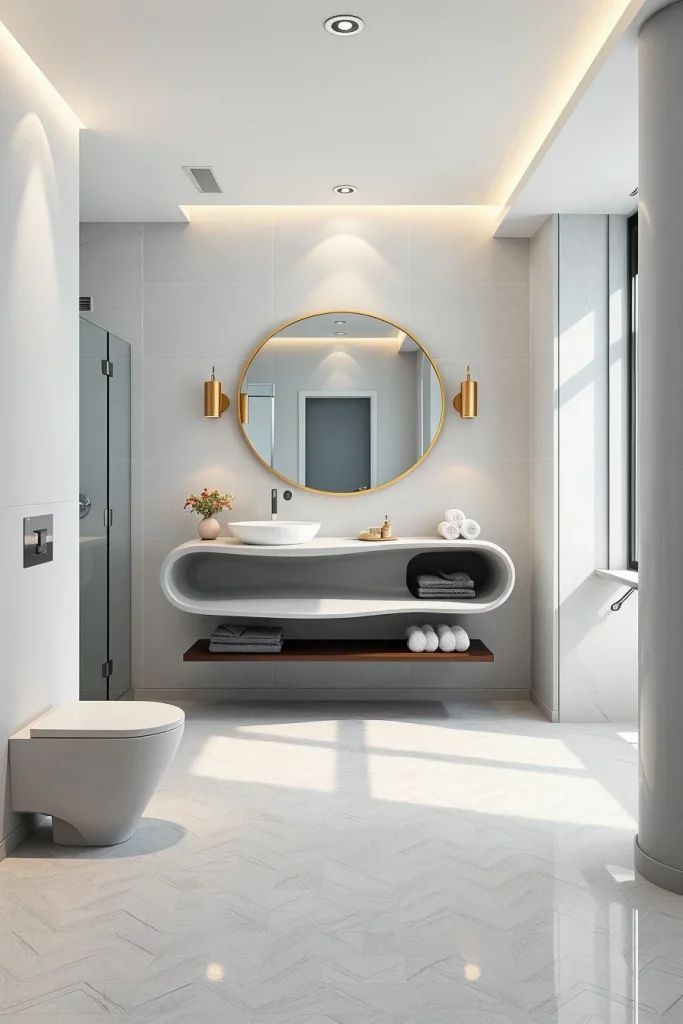
When designing this type of interior, I prefer vanities with rounded corners, integrated sinks, and seamless finishes. Large curved mirrors, wall-mounted faucets, and floating storage units complement the organic shapes while maintaining a clean and contemporary look. I also like to include subtle lighting beneath the vanity because it highlights the sculptural form and creates a sophisticated floating effect.
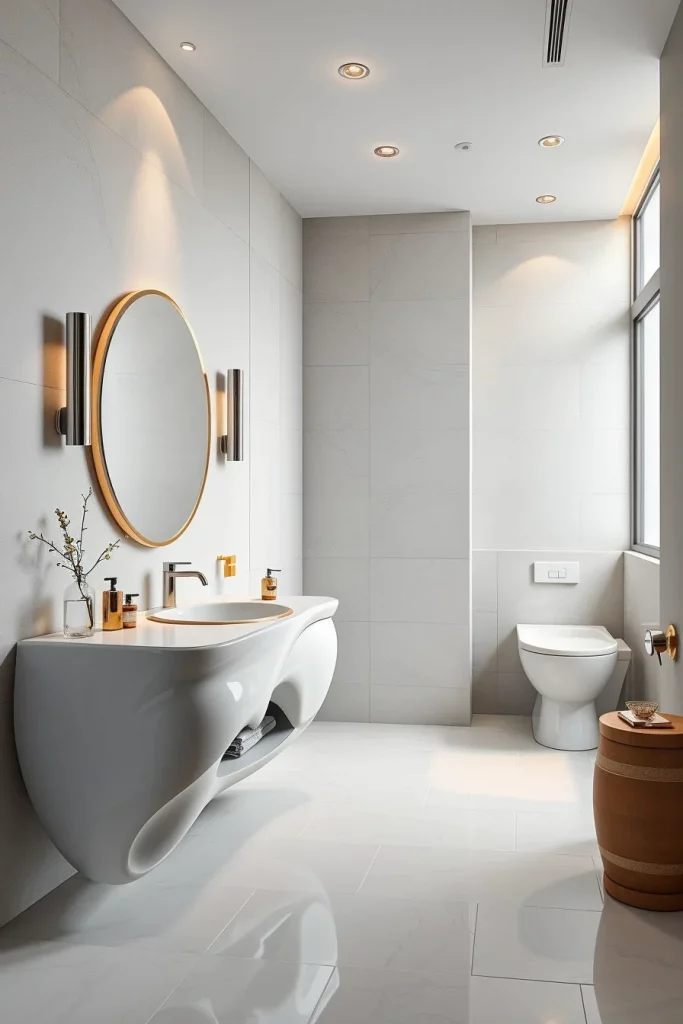
In my experience, introducing organic forms into a contemporary bathroom makes the space feel more inviting. Interior designers frequently featured in House Beautiful recommend balancing minimalist architecture with softer lines to achieve a welcoming atmosphere. I have found that this combination consistently creates interiors that feel both modern and timeless.
To complete this design, I would add textured accessories such as stone trays, sculptural stools, and soft textiles in complementary gray tones. These details enhance the layered appearance without overwhelming the elegant simplicity of the space.
Modern Gray Spa Bathrooms With Monolithic Sink Designs
Monolithic sink designs are among the most impressive elements in contemporary spa-inspired bathrooms. I often recommend oversized integrated sinks crafted from stone or solid surfaces because they deliver a seamless and highly refined appearance. Within modern gray bathroom interior trends, monolithic forms introduce a sense of permanence, calm, and understated luxury.
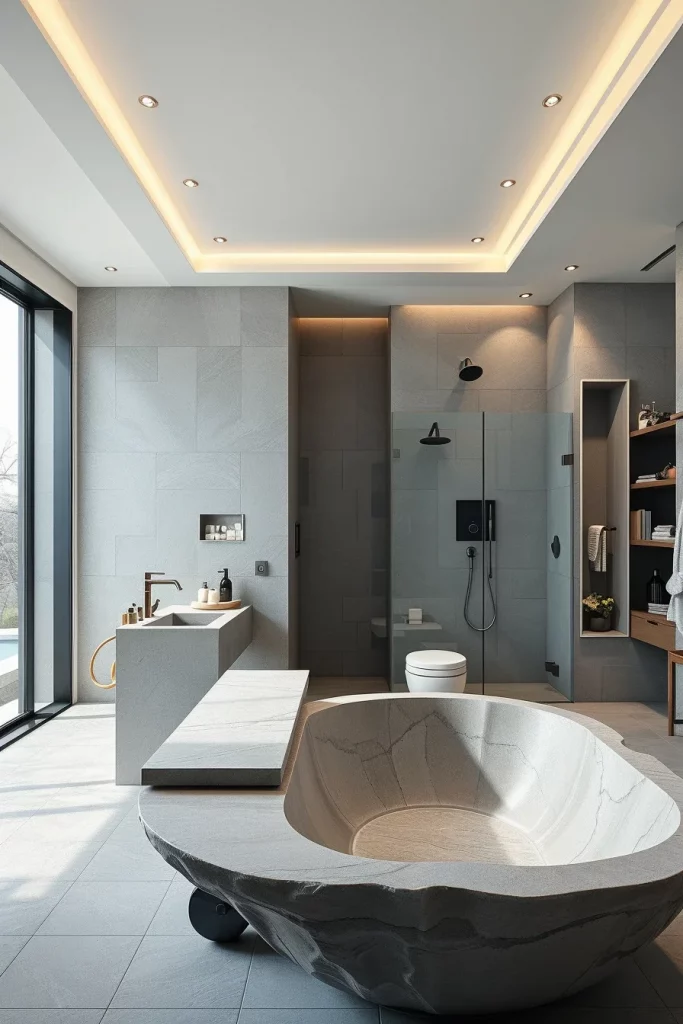
I typically pair monolithic sinks with expansive gray wall surfaces, minimalist cabinetry, and hidden storage systems. Freestanding soaking tubs, frameless shower enclosures, and large-format tiles reinforce the spa-like atmosphere. Recessed shelving niches and carefully selected accessories help maintain functionality while preserving the clean visual aesthetic.
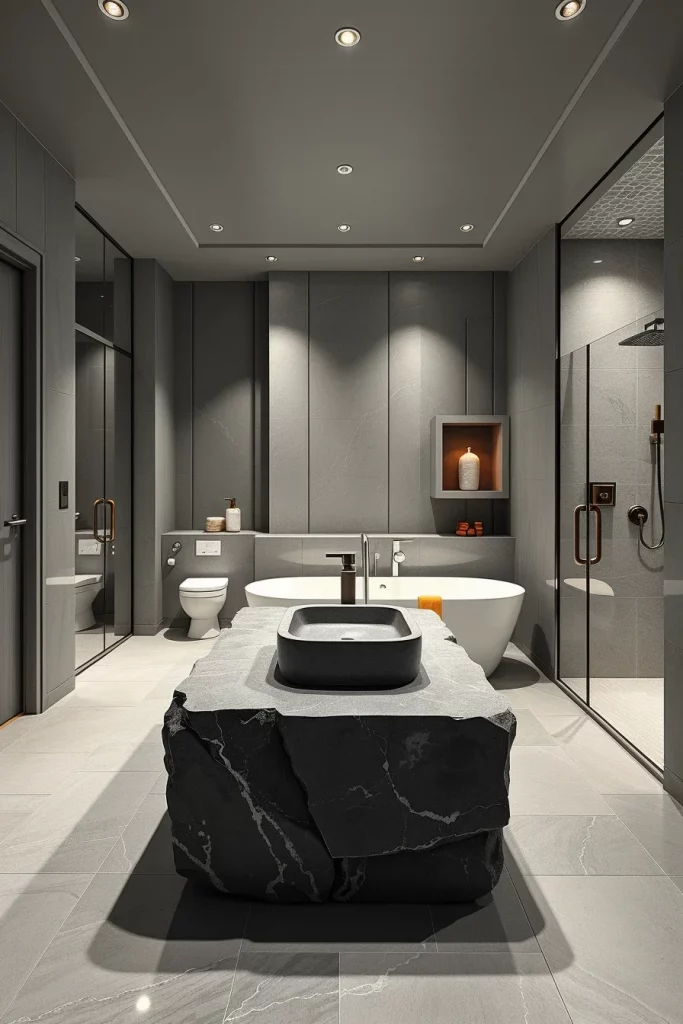
Personally, I appreciate how monolithic sinks simplify maintenance while creating a striking architectural statement. Many contemporary designers advocate for integrated fixtures because they reduce visual clutter and strengthen the overall cohesion of the space. In my projects, these sink designs consistently become one of the most admired features.
I would also incorporate heated floors, dimmable lighting, and subtle aromatherapy elements to further enhance the luxurious spa experience.
Layered Gray Bathroom Interiors With Textured Wall Panels
Layering different shades of gray alongside textured wall panels creates a bathroom that feels sophisticated and multidimensional. I often use this strategy because monochromatic interiors can sometimes appear flat if texture is neglected. Combining smooth and textured finishes introduces depth while preserving the calming effect associated with gray color palettes.
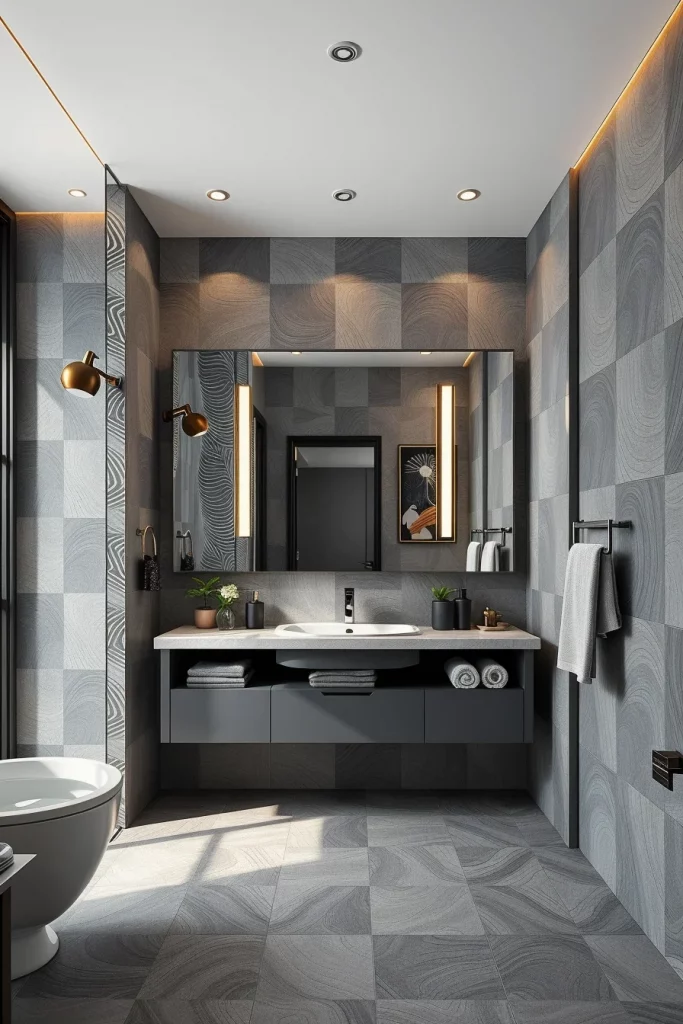
Textured wall panels may feature fluted surfaces, geometric relief patterns, or three-dimensional architectural designs. I generally pair these panels with floating vanities, oversized mirrors, minimalist hardware, and concealed storage solutions. Matte finishes work particularly well because they allow textures to become more prominent without creating excessive visual noise.
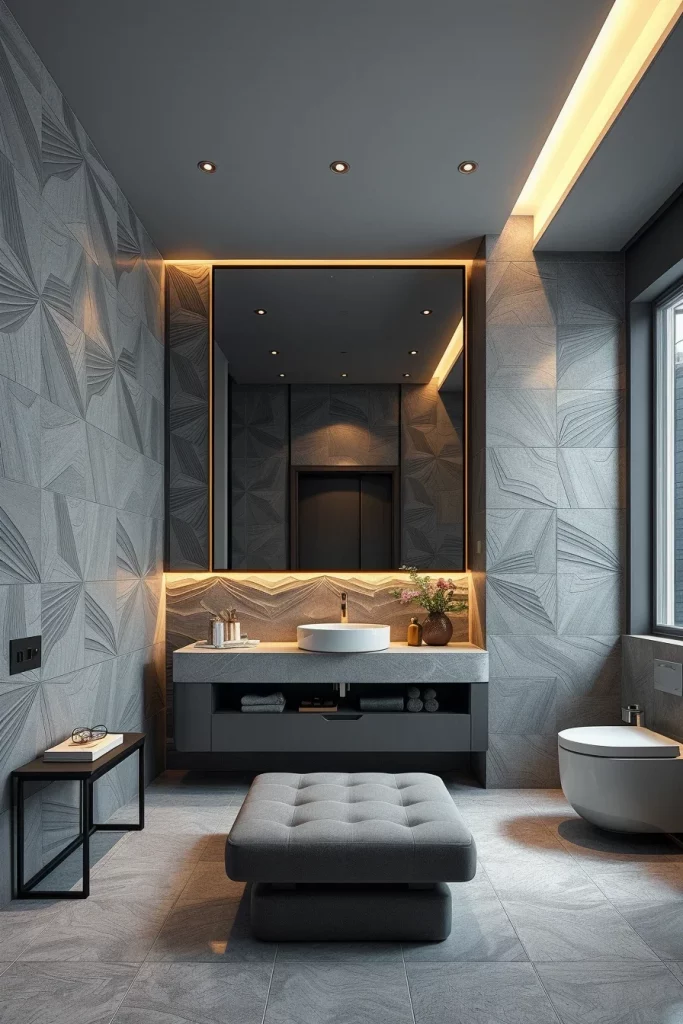
From my perspective, texture is one of the most important aspects of successful gray interiors. Many interior design publications emphasize that layered materials create visual richness without relying on bold colors. I have repeatedly seen textured wall treatments transform simple bathrooms into highly stylish and memorable spaces.
To maximize the impact of textured surfaces, I recommend installing accent lighting that casts subtle shadows across the walls. This technique enhances the architectural details and creates a more dramatic evening ambiance.
Elegant Gray Bathrooms Featuring Artistic Ceiling Details
Ceilings are often overlooked in bathroom design, yet they offer tremendous opportunities for artistic expression. I frequently encourage homeowners to consider sculptural ceiling treatments, recessed geometric patterns, or architectural moldings when creating an elegant gray bathroom. These features draw attention upward and make the room feel thoughtfully designed from every angle.
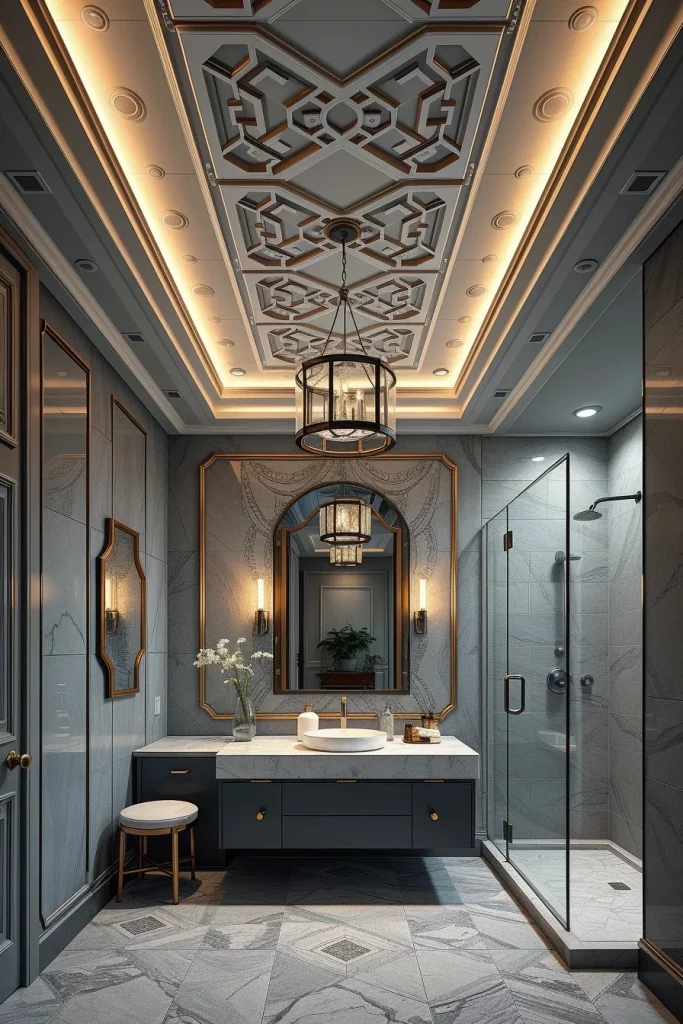
For this concept, I often use coffered ceilings, curved recessed sections, and concealed LED lighting integrated directly into the ceiling structure. Combined with floating vanities, statement lighting fixtures, and seamless wall finishes, these details create a cohesive and highly sophisticated interior.
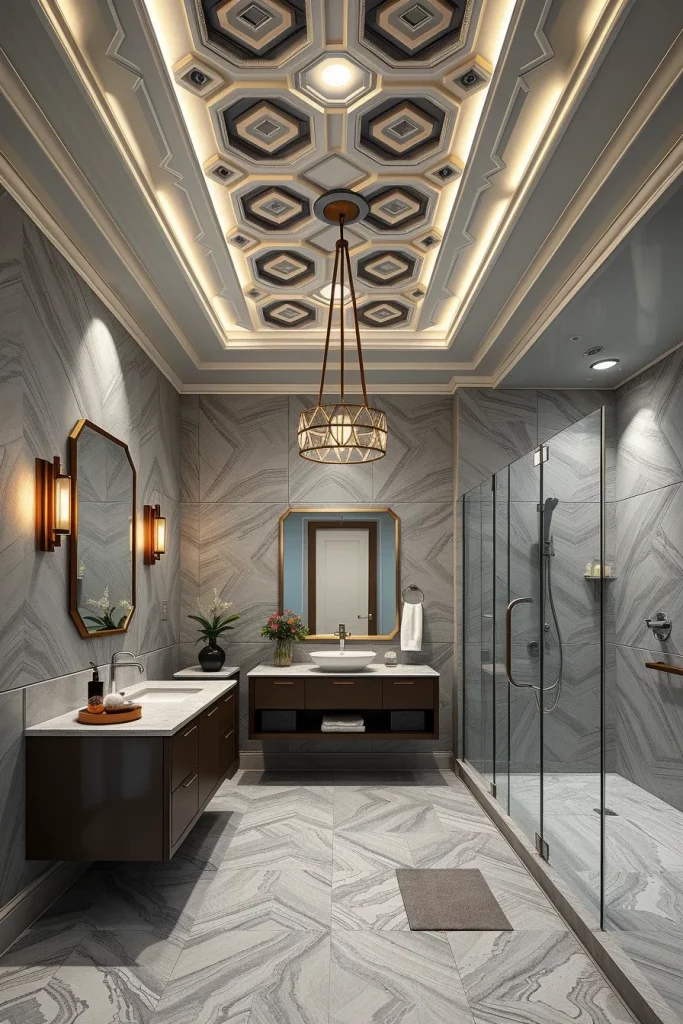
In my experience, artistic ceilings are especially effective in bathrooms with generous ceiling heights. Design experts often point out that distinctive ceiling treatments can significantly increase both the uniqueness and perceived value of a space. I believe these features help elevate a bathroom from functional to truly exceptional.
I would further enhance this concept by adding indirect lighting within ceiling recesses. This approach highlights the architectural forms while creating a warm and relaxing atmosphere.
Light Gray Bathroom Concepts With Seamless Integrated Storage
Light gray bathrooms with seamless integrated storage offer an ideal combination of beauty and practicality. I often recommend this concept to homeowners who want clutter-free interiors that still feel welcoming and sophisticated. Light gray finishes reflect light exceptionally well, helping even smaller bathrooms appear more spacious.
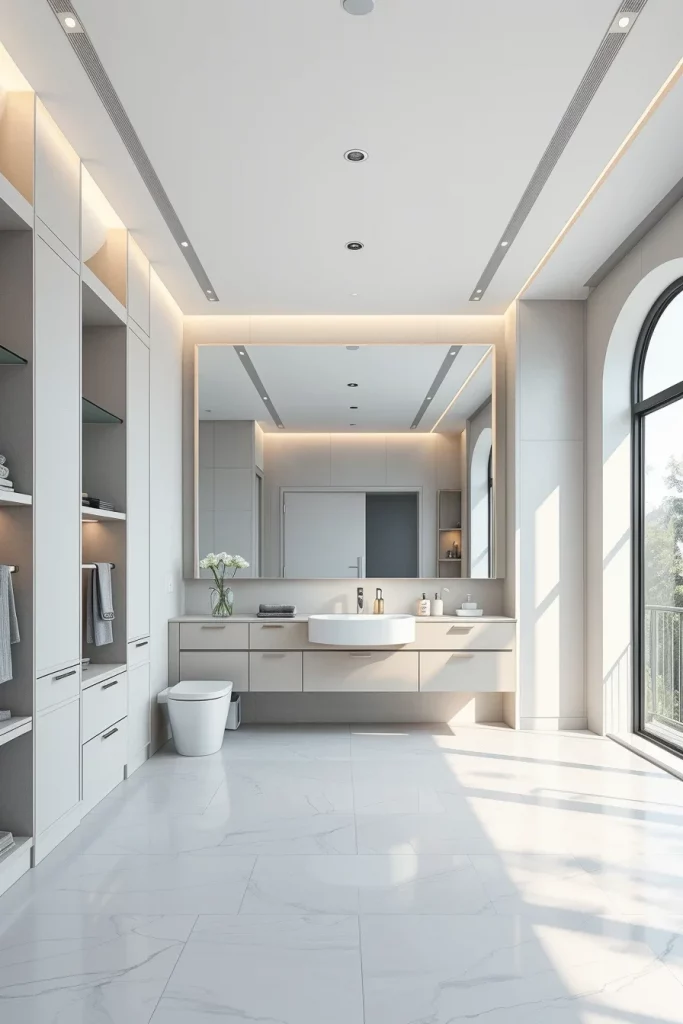
Integrated storage solutions can include recessed wall niches, concealed cabinetry, full-height storage walls, and handleless vanity units. I prefer custom storage systems finished in tones that closely match surrounding walls so that the cabinetry visually disappears. Large mirrors, floating fixtures, and continuous flooring reinforce the seamless aesthetic.
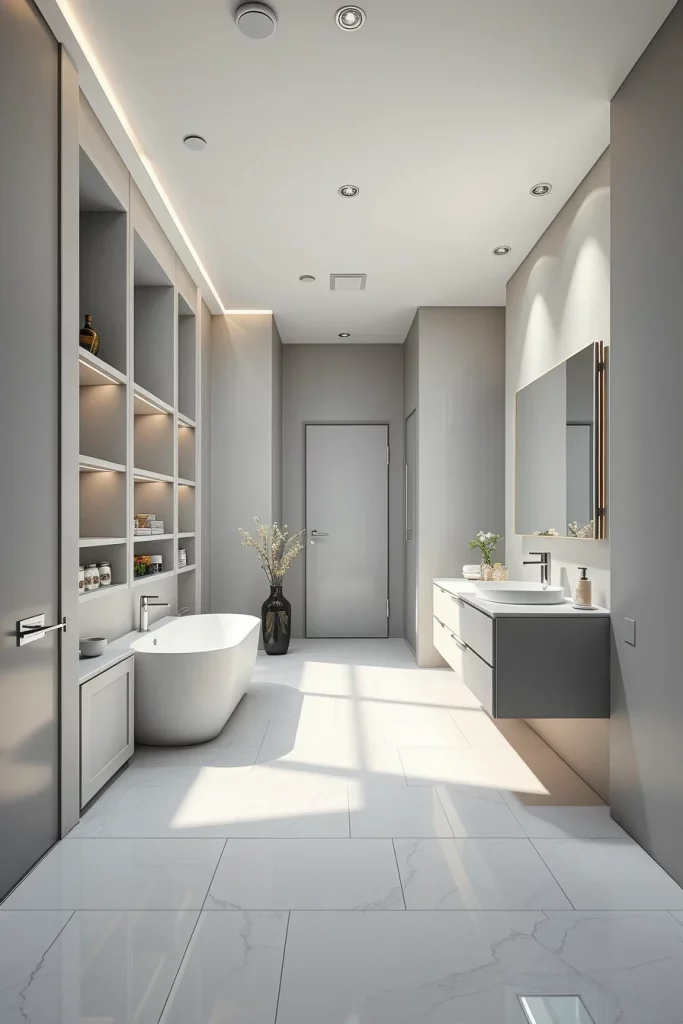
Personally, I believe concealed storage is essential in contemporary bathroom design. Keeping daily essentials out of sight preserves the tranquil atmosphere and allows the architectural details to remain the center of attention. In many of my projects, integrated storage dramatically improves both functionality and visual harmony.
To make this concept even more practical, I would include illuminated niches inside shower areas and near the vanity. These additions provide convenient storage while maintaining the clean minimalist appearance.
Contemporary Gray Bathrooms Featuring Fluted Surface Details
Fluted surfaces have become one of the most recognizable features in contemporary bathroom design. I often use fluted wall panels, vanity fronts, and decorative partitions to introduce subtle texture without overwhelming the space. In gray bathrooms, these ribbed details create depth, catch light beautifully, and add a distinctly sculptural quality that feels refined and current. This approach aligns perfectly with today’s stylish and creative bathroom interiors.
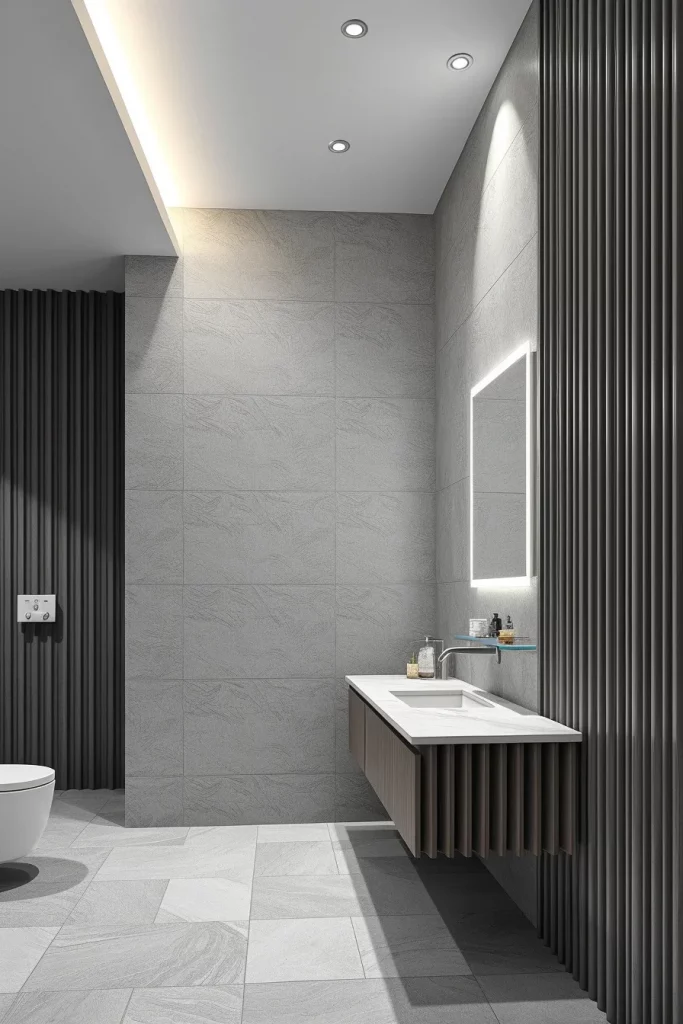
When designing a bathroom with fluted details, I typically include a floating vanity with fluted cabinetry, vertically grooved wall panels, minimalist stone countertops, and sleek wall-mounted faucets. Large frameless mirrors help balance the textured surfaces, while concealed storage maintains visual order. I also prefer integrated LED lighting because it emphasizes the dimensional qualities of the fluted elements throughout the room.
From my experience, fluted textures offer an elegant alternative to traditional decorative finishes. Many designers featured in Architectural Digest have embraced ribbed detailing because it adds visual richness while preserving a minimalist aesthetic. I find that homeowners appreciate how these details elevate even compact bathrooms.
To complete this design, I would consider adding a fluted glass shower partition or textured pendant lighting to reinforce the layered, architectural appearance.
Modern Gray Bathrooms With Floating Stone Platforms
Floating stone platforms create a striking sense of architectural sophistication in modern bathrooms. I appreciate how suspended stone elements introduce visual lightness while showcasing the natural beauty of premium materials. Gray marble, quartzite, or engineered stone platforms can serve as vanity bases, bathtub surrounds, or display surfaces, creating an impressive focal point within the room.
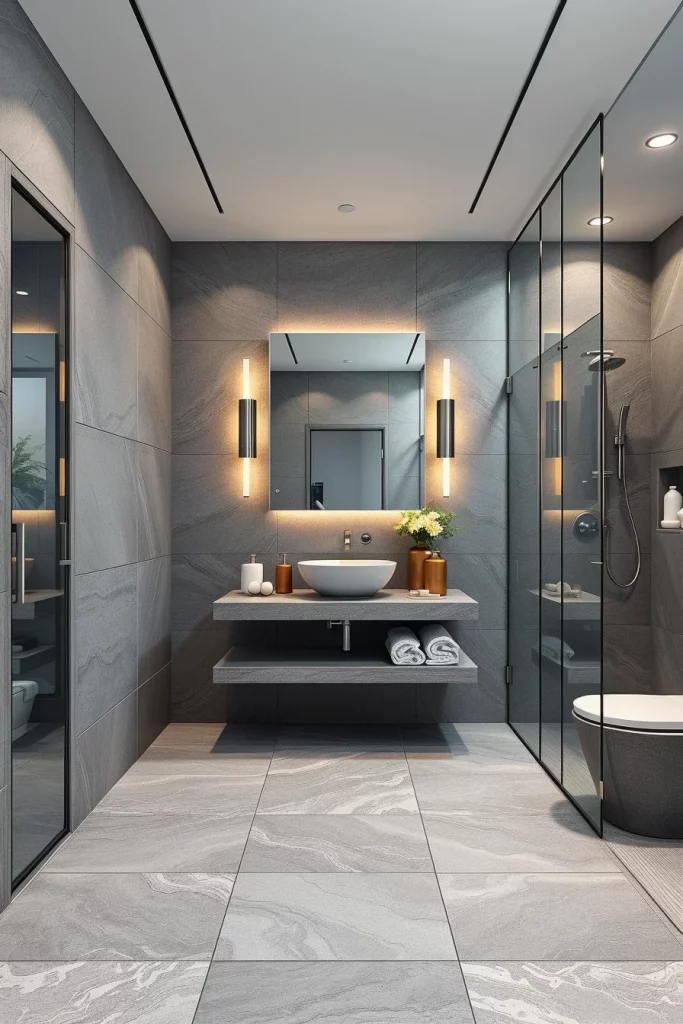
For this interior concept, I usually combine floating stone vanities with integrated sinks, oversized mirrors, frameless shower enclosures, and concealed drainage systems. Wall-mounted fixtures preserve the clean lines, while recessed shelving offers practical storage without disrupting the minimalist composition. Large-format gray floor tiles further enhance the seamless appearance.
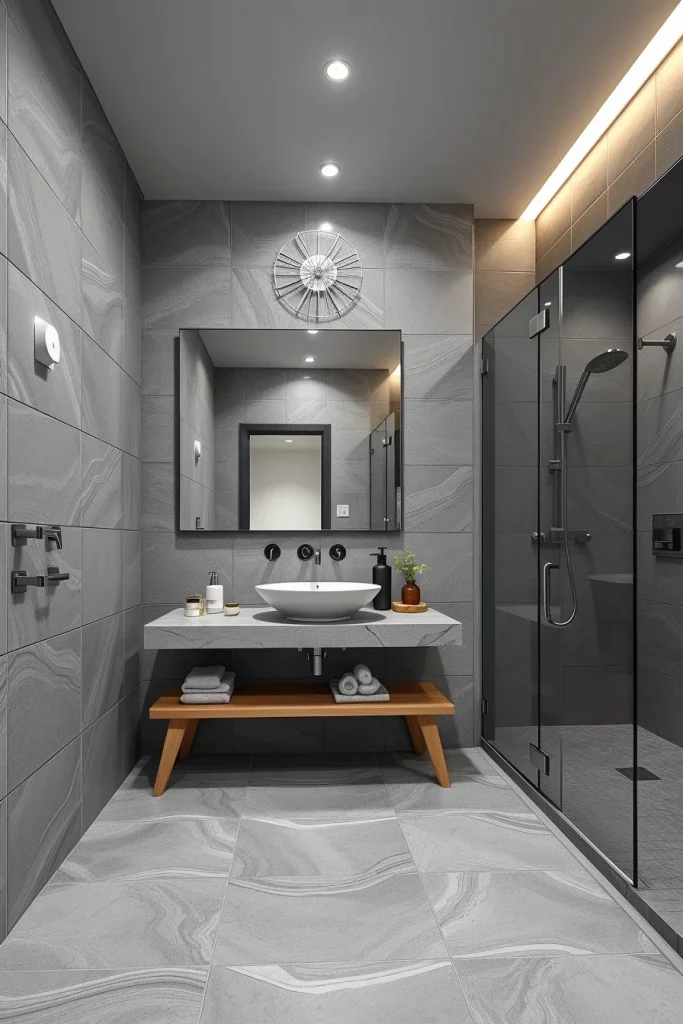
Personally, I believe floating stone features transform bathrooms into highly artistic spaces. Publications such as Elle Decor frequently highlight floating architectural elements because they contribute to a sophisticated, spa-inspired environment. In my own projects, these installations consistently become the centerpiece of the entire room.
If additional functionality is needed, I would incorporate under-platform LED lighting and discreet storage compartments to maximize both practicality and visual impact.
Monochromatic Gray Bathroom Interiors With Layered Textures
Monochromatic gray bathrooms can feel exceptionally elegant when multiple textures are thoughtfully layered. I often work with varying shades of gray because they create cohesion while allowing different materials to stand out. By combining matte, polished, textured, and soft surfaces, it is possible to create unique modern grey bathroom interiors that feel inviting rather than flat.
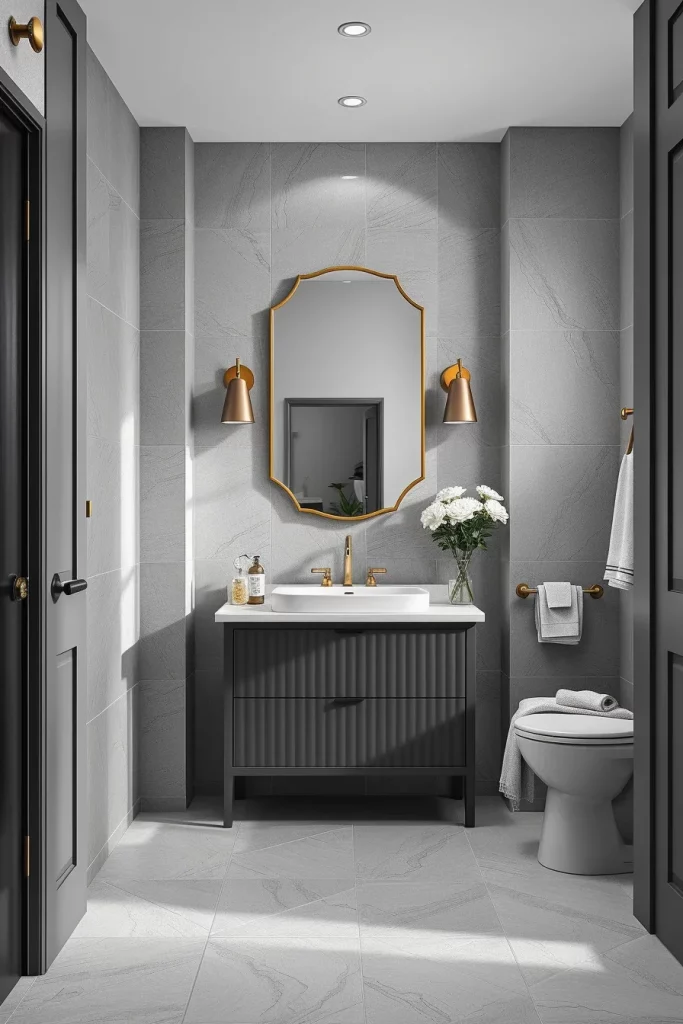
I usually include textured porcelain wall tiles, polished stone countertops, matte cabinetry, plush towels, and soft upholstered seating where space permits. Ribbed surfaces, microcement walls, brushed metal fixtures, and textured area rugs contribute additional depth. A carefully balanced combination of materials ensures that the monochromatic palette remains visually engaging.
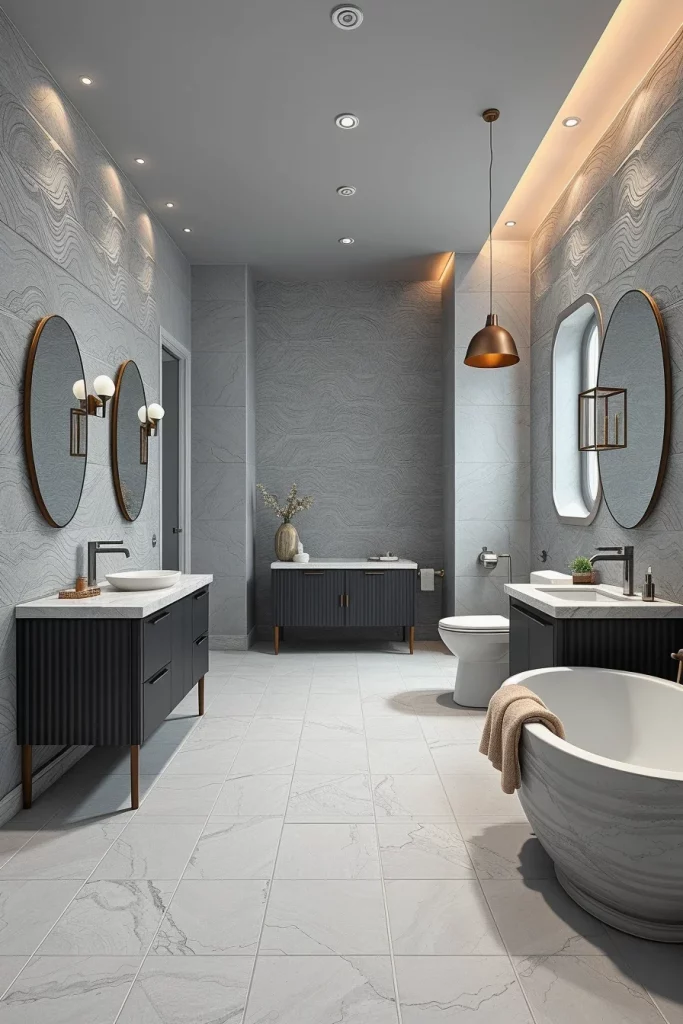
In my experience, texture is far more important than color contrast in neutral interiors. Better Homes & Gardens regularly recommends layering finishes to create warmth and personality, and I strongly agree with this approach. Even subtle variations in surface finish can significantly influence the overall atmosphere.
To further enrich this design, I would add decorative ceramic accessories and softly illuminated shelving to introduce additional dimension without compromising the restrained aesthetic.
Stylish Gray Bathrooms Showcasing Statement Mirror Installations
Statement mirrors have evolved into major design features rather than purely functional necessities. I often use oversized, sculptural, asymmetrical, or illuminated mirrors to create dramatic focal points in gray bathrooms. These installations reflect light, visually expand the room, and contribute a distinctly unusual and stylish character.
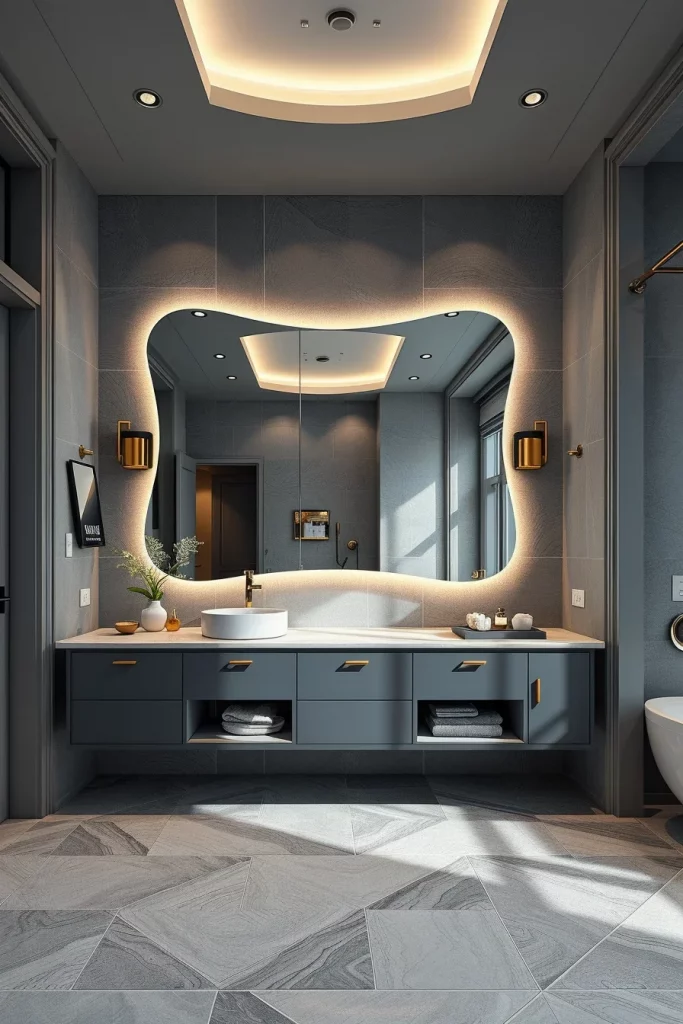
For furnishings, I prefer pairing statement mirrors with floating vanities, integrated sinks, minimalist storage units, and contemporary lighting fixtures. Organic-shaped mirrors work particularly well in spaces featuring clean architectural lines because they soften the composition. Backlit mirrors also enhance functionality by providing flattering illumination for everyday routines.
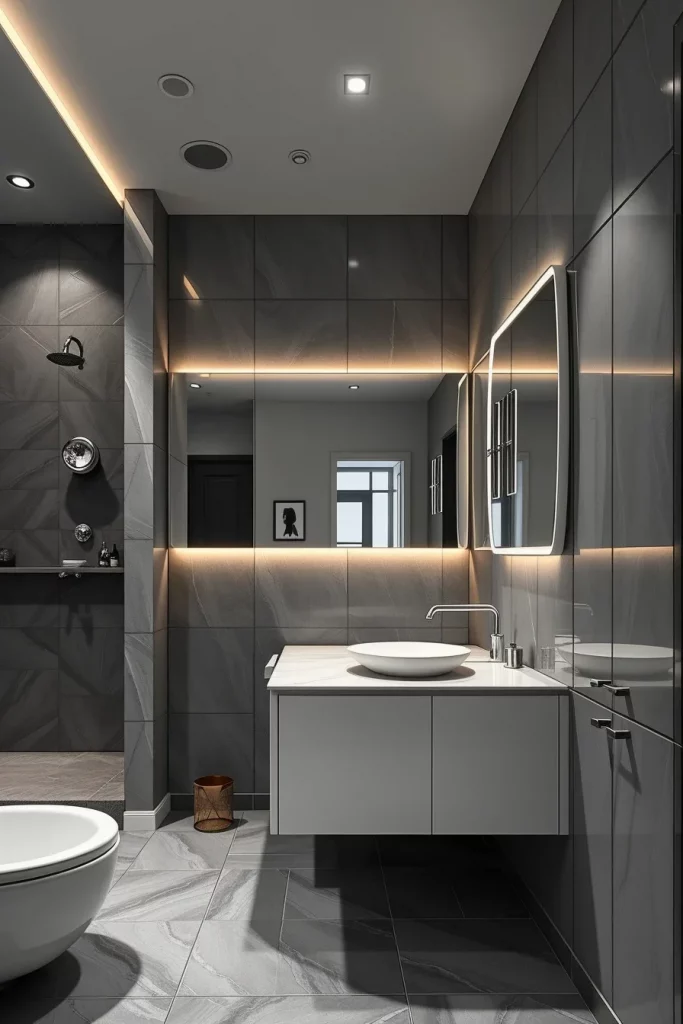
Personally, I have found that a carefully selected mirror can completely transform the perception of a bathroom. Designers frequently featured in House Beautiful emphasize investing in impactful focal points, and mirrors often deliver the greatest visual return. Clients are often surprised by how dramatically a sculptural mirror changes the entire atmosphere.
To elevate this concept even further, I would incorporate complementary decorative lighting or reflective metallic accents that reinforce the mirror’s presence within the overall design.
Modern Gray Bathrooms With Artistic Mosaic Feature Walls
Artistic mosaic walls offer an exceptional opportunity to introduce individuality into modern gray bathrooms. I enjoy using mosaic installations because they add movement, texture, and visual storytelling while preserving the sophisticated neutrality of gray tones. Geometric compositions, abstract patterns, and handcrafted finishes can transform a simple wall into a true work of art.
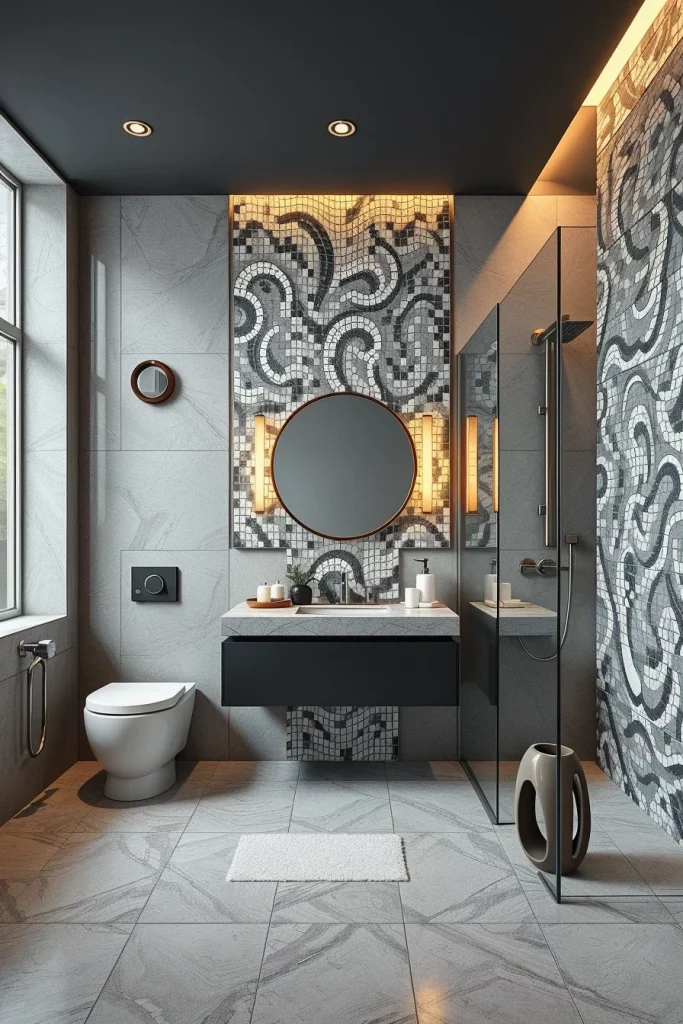
In these interiors, I often combine mosaic feature walls with minimalist floating vanities, frameless showers, understated fixtures, and large-format floor tiles. Keeping surrounding elements simple ensures that the mosaic remains the primary focal point. Integrated niche lighting further highlights the intricate craftsmanship and texture of the installation.
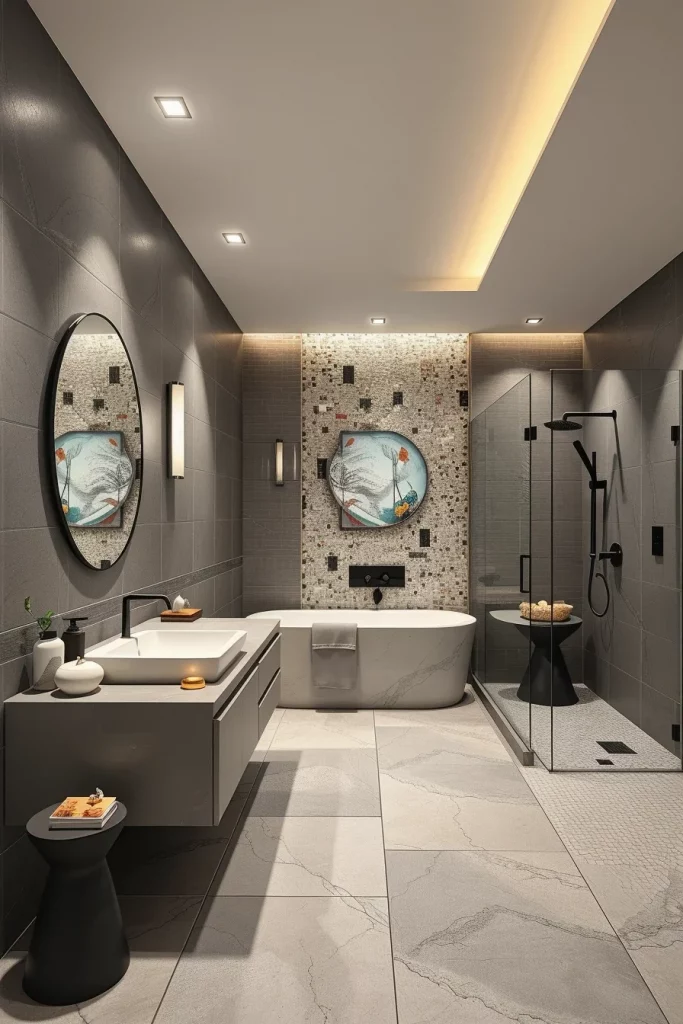
From my perspective, mosaic walls represent one of the most creative directions in contemporary bathroom design. Architectural Digest has repeatedly showcased handcrafted surfaces as an important trend because they introduce authenticity and personality into modern spaces. I find that mosaic installations create memorable interiors that feel highly customized.
To complete this bathroom, I would add sculptural accessories and carefully selected decorative objects that complement the mosaic’s pattern without competing for attention.
Architectural Gray Bathroom Designs With Geometric Forms
I find that geometric architecture instantly gives a gray bathroom a stronger visual identity. In this concept, clean lines, angular compositions, and carefully balanced proportions define the entire room. Large gray wall slabs, rectangular niches, and precise ceiling details create a highly organized environment while maintaining a calm atmosphere. Geometric forms also improve functionality by visually structuring the space and emphasizing movement through the room.
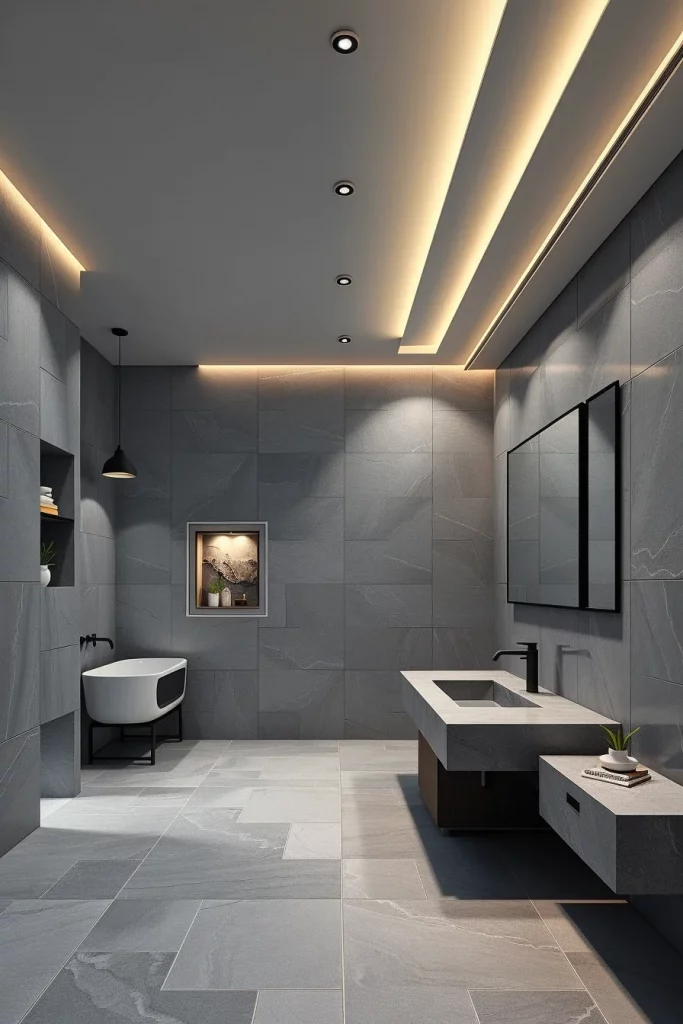
When designing this type of interior, I prefer floating vanities with sharp silhouettes, wall-mounted toilets, oversized rectangular mirrors, and linear drains. A freestanding bathtub with crisp edges reinforces the architectural aesthetic. I often include recessed shelving integrated directly into the walls because it preserves the uncluttered appearance. Minimal hardware in brushed nickel or matte black complements the geometric language without distracting from it.
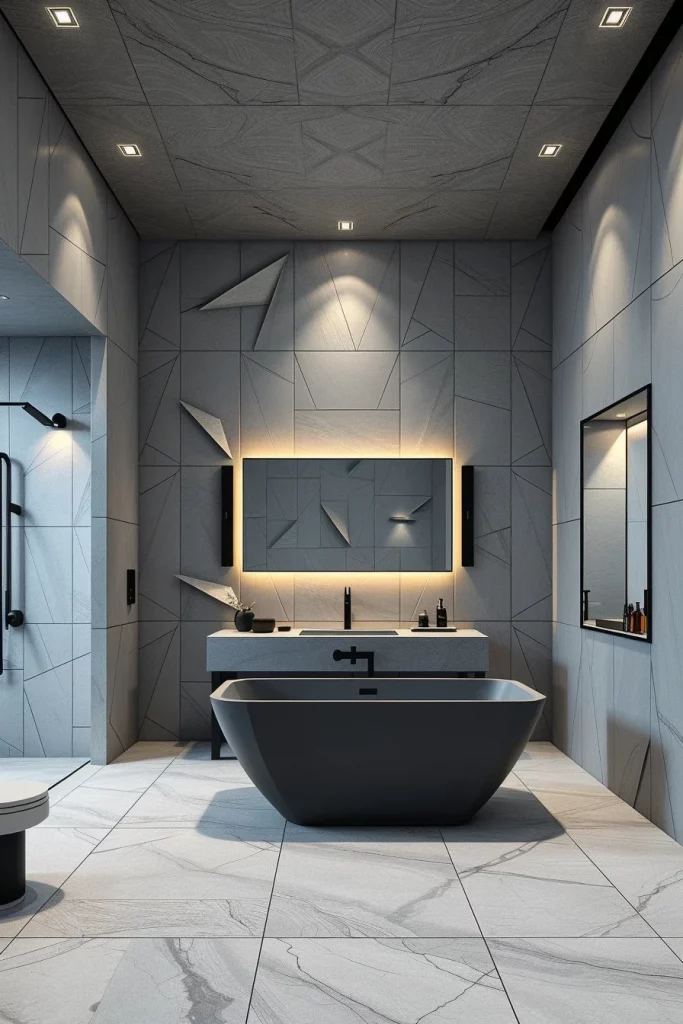
From my experience, many designers featured in publications such as Architectural Digest recommend repeating one dominant shape throughout the room to establish harmony. I agree with this approach because repeating rectangular or hexagonal motifs creates a cohesive, intentional design rather than a collection of unrelated elements.
To strengthen this concept further, I would add sculptural geometric pendant lighting or three-dimensional wall panels that introduce subtle depth while preserving the minimalist atmosphere.
Serene Gray Spa Bathrooms With Zen-Inspired Sculptural Decor
One of my favorite approaches to modern gray bathroom interior trends is transforming the bathroom into a spa-inspired sanctuary. Soft gray tones paired with organic sculptural elements create a tranquil environment that encourages relaxation. Smooth surfaces, balanced proportions, and uncluttered layouts contribute to a peaceful atmosphere that feels restorative every day.
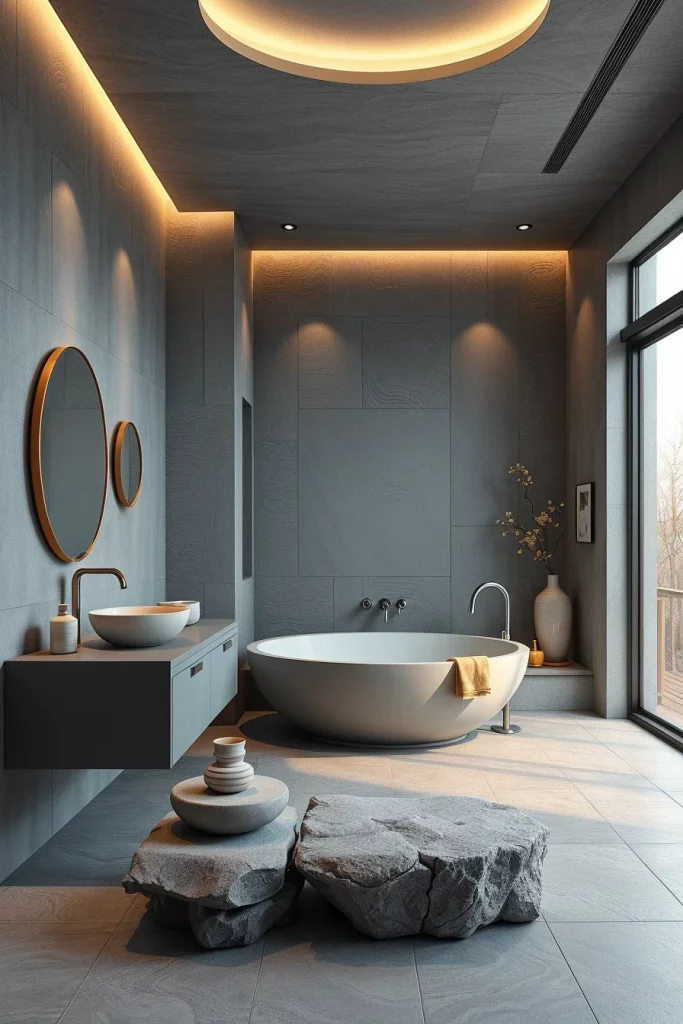
For furnishings, I recommend a floating vanity in warm gray finishes, a deep soaking tub, integrated storage, and minimalist seating such as a small stone bench. Sculptural ceramic vessels, curved décor pieces, textured wall finishes, and softly illuminated alcoves introduce visual interest while maintaining serenity. I always incorporate layered lighting to support both practical tasks and relaxation.
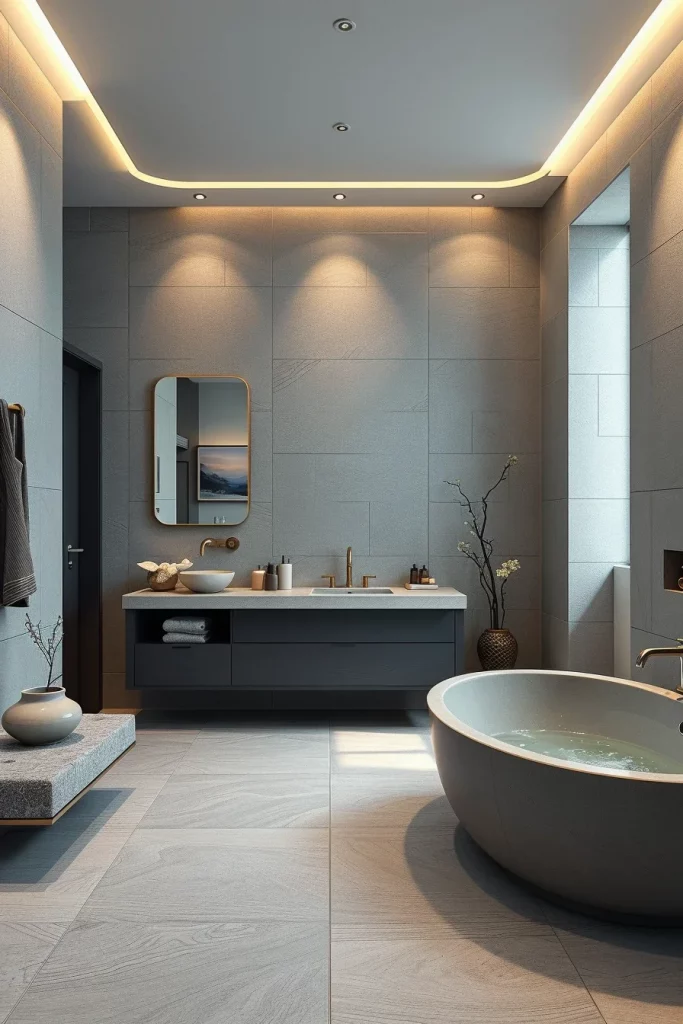
Personally, I have found that incorporating sculptural accessories inspired by Japanese design principles helps create a stronger sense of calm. Many designers associated with wellness-focused interiors emphasize simplicity, natural textures, and visual balance, and I have consistently seen these principles succeed in residential bathrooms.
What I would additionally include in this space is underfloor heating and concealed ambient LED lighting to elevate the spa experience and enhance everyday comfort.
Contemporary Gray Bathrooms Featuring Frameless Glass Elegance
Frameless glass enclosures remain one of the most effective methods for making gray bathrooms feel larger and brighter. I often recommend this solution because uninterrupted sightlines allow every architectural detail and material finish to remain visible. The result is a sophisticated and airy room that reflects contemporary design sensibilities.
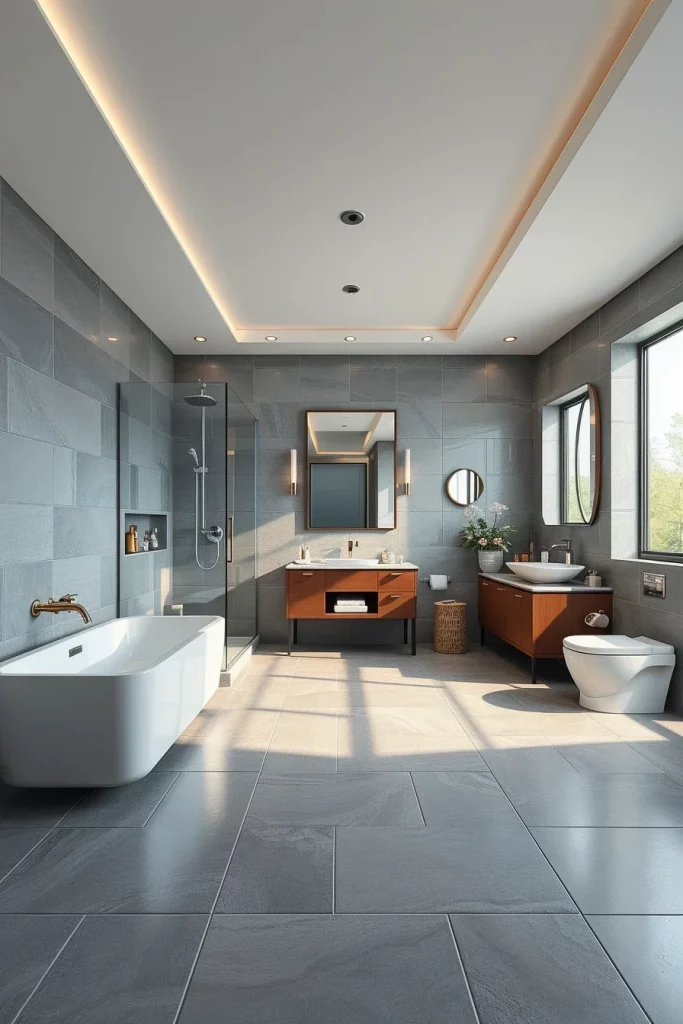
A frameless shower enclosure pairs beautifully with large-format gray tiles, floating cabinetry, and integrated storage niches. I usually specify oversized mirrors, concealed hardware, and wall-mounted fixtures because they preserve the visual openness. Glass panels also maximize natural light distribution, which is especially beneficial in compact bathrooms.
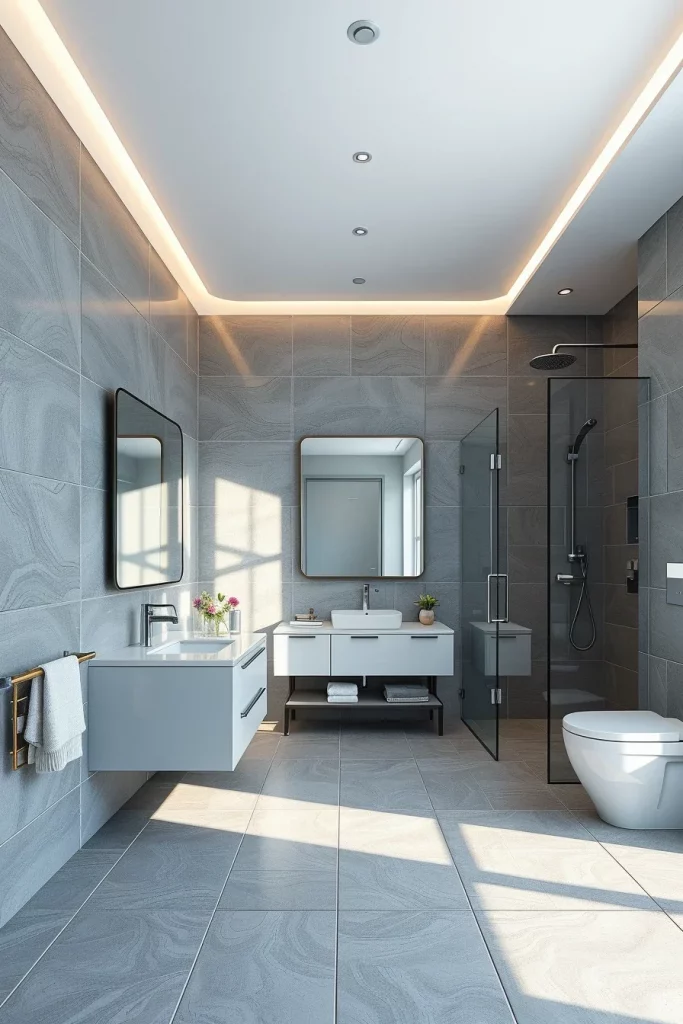
In my projects, frameless glass consistently improves both functionality and aesthetics. Designers frequently featured in Elle Decor highlight transparent elements as essential components of modern luxury, and I agree that they contribute significantly to creating elegant, timeless interiors.
To complete this design, I would consider incorporating subtle LED illumination around mirrors or beneath vanities to emphasize the transparency and architectural simplicity of the space.
High-End Gray Bathrooms With Custom Built-In Niches
Custom built-in niches are among the most practical and refined features in contemporary gray bathrooms. I appreciate how these integrated storage solutions eliminate clutter while becoming intentional design elements. Carefully positioned niches can frame focal points, organize everyday essentials, and contribute to a seamless visual appearance.
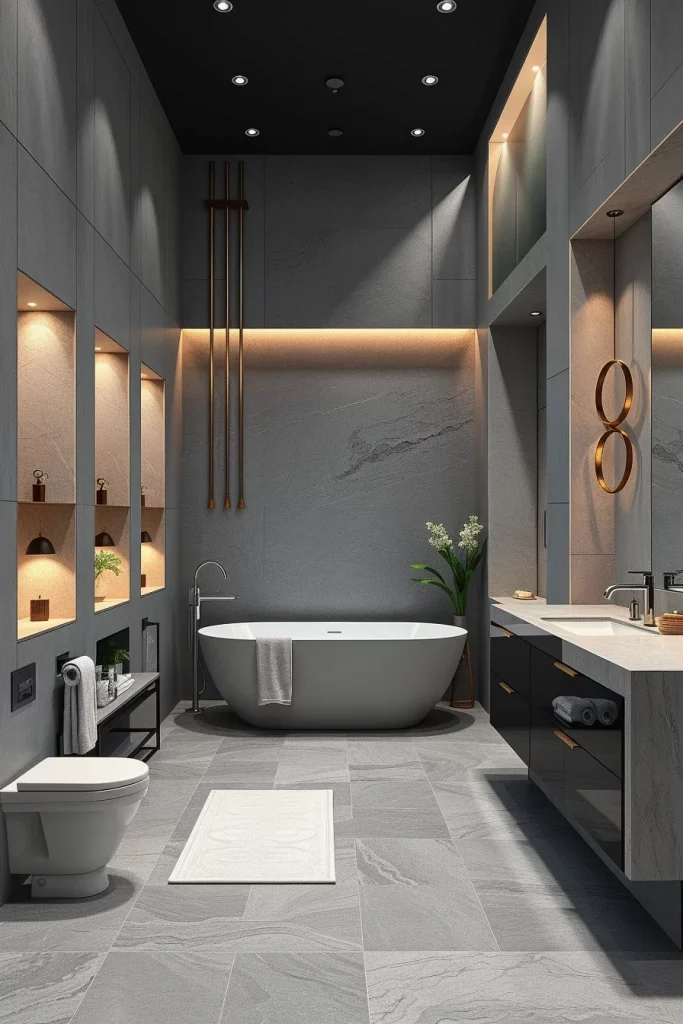
I typically design multiple niches within shower walls, beside bathtubs, and near vanity areas. Finishing these recesses with contrasting stone, textured porcelain, or integrated lighting transforms them into elegant architectural details. Floating cabinetry, concealed storage compartments, and minimalist fixtures further support the sophisticated aesthetic.
Based on my experience, built-in niches significantly improve daily usability while maintaining a polished appearance. Interior experts often recommend planning niche placement early in the design process, and I strongly support this strategy because it ensures proper proportions and functional accessibility.
For additional refinement, I would introduce illuminated shelving within selected niches to highlight decorative objects and reinforce the luxurious ambiance.
Artistic Gray Bathroom Interiors With Bold Lighting Sculptures
Lighting has evolved from a purely functional element into a major artistic statement within unique modern grey bathroom interiors. I frequently use sculptural lighting installations to introduce personality, movement, and visual drama into gray spaces. In a neutral environment, an expressive fixture immediately becomes the room’s focal point.
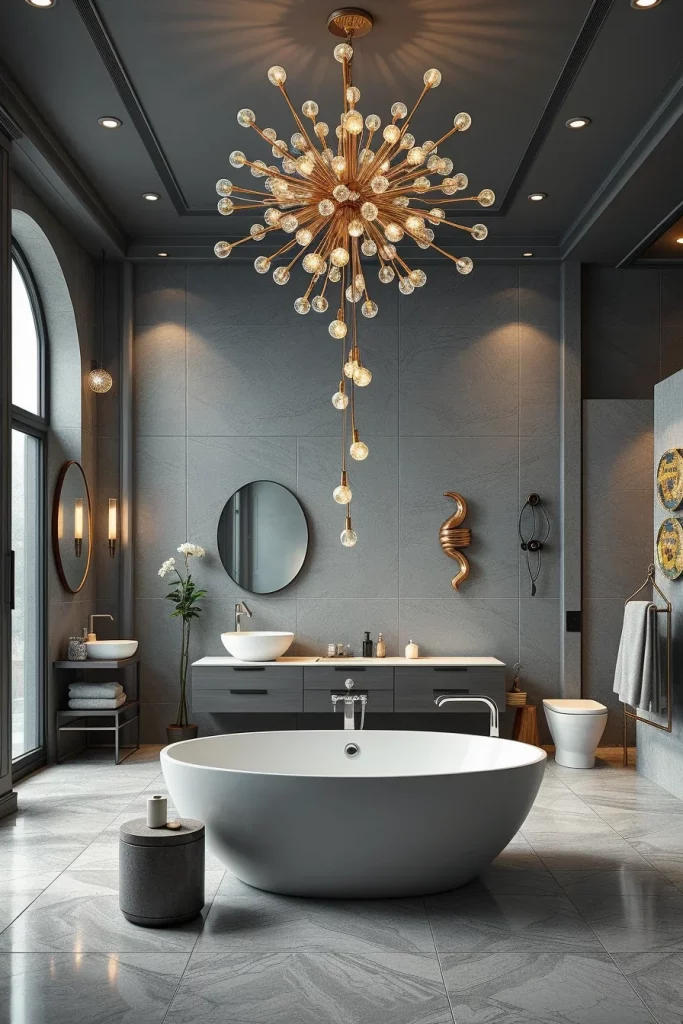
Large pendant lights, abstract chandeliers, illuminated rings, and sculptural wall sconces work exceptionally well in modern gray bathrooms. I prefer pairing these statement pieces with restrained furnishings such as floating vanities, minimalist bathtubs, and simple architectural surfaces so the lighting remains the centerpiece. Dimmable systems provide flexibility while enhancing ambiance.
Personally, I believe lighting offers one of the easiest ways to create a truly artistic and stylish bathroom. Design publications such as House Beautiful frequently emphasize statement lighting as a defining feature of contemporary interiors, and I have found this advice particularly relevant in gray bathrooms.
To make this concept even stronger, I would add layered lighting that combines decorative fixtures with recessed illumination and concealed LED accents for balanced functionality.
Modern Gray Bathrooms Combining Matte And Polished Finishes
I consider the combination of matte and polished surfaces one of the most sophisticated approaches in modern gray bathroom interior trends. The contrast between soft, non-reflective finishes and glossy surfaces adds dimension and visual richness without introducing additional colors. This layered approach prevents a monochromatic gray bathroom from appearing flat while maintaining a refined and contemporary aesthetic.
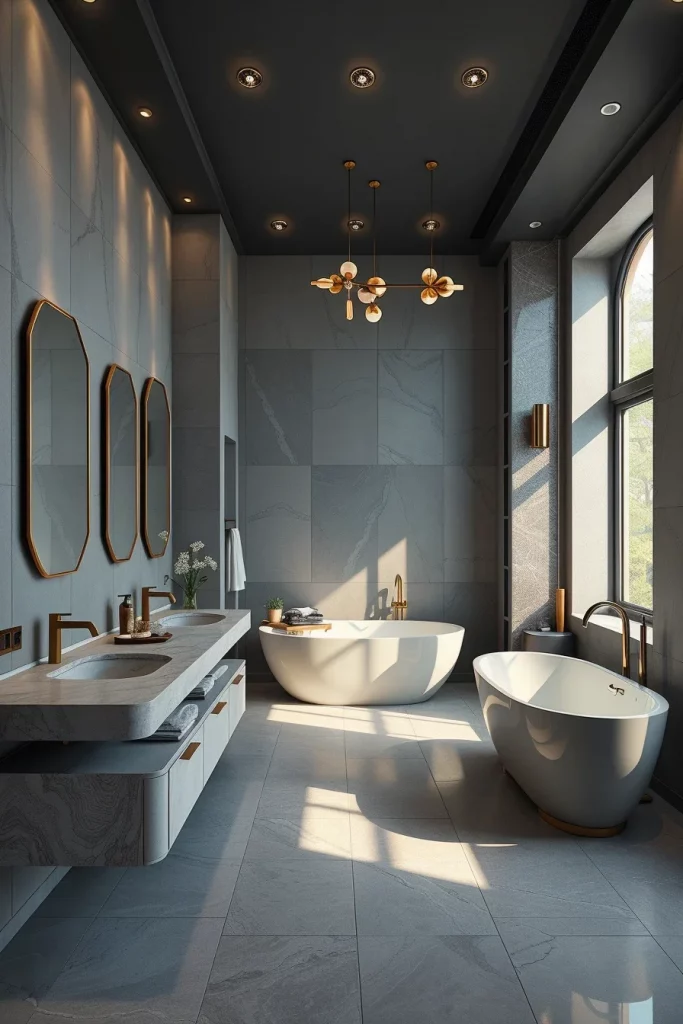
In my designs, I often pair matte gray porcelain wall tiles with polished stone countertops or glossy accent walls. Matte cabinetry, satin-finish vanities, polished chrome fixtures, and reflective mirrors create a balanced interplay of textures. A freestanding tub with a matte exterior and polished interior can also become a striking focal point. These contrasting finishes enhance both natural and artificial light throughout the room.
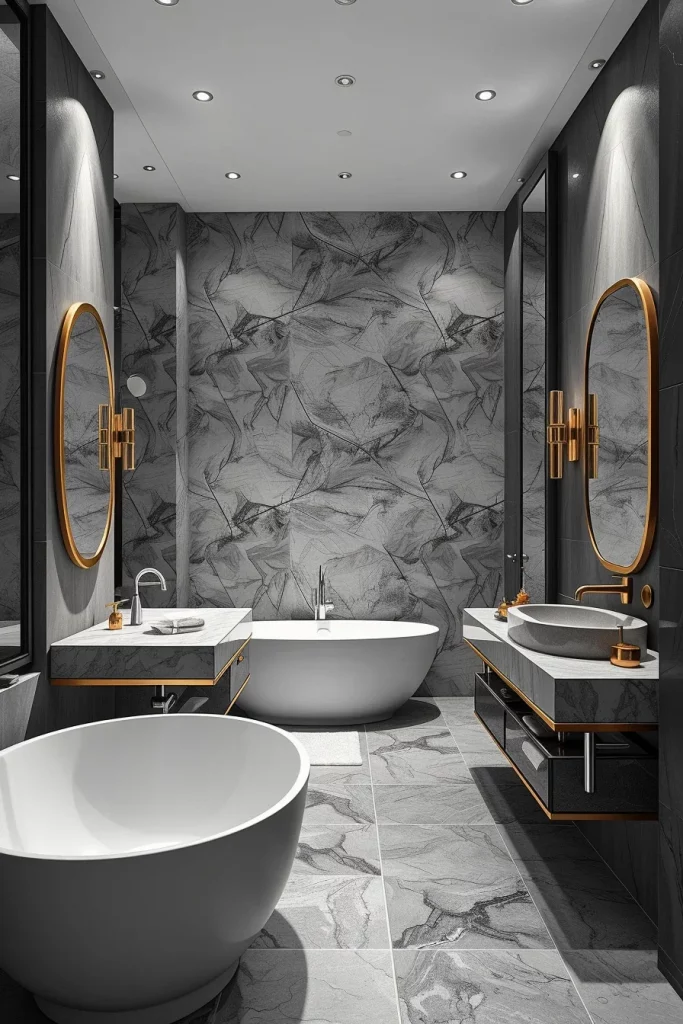
From my experience, designers frequently featured in publications such as Veranda recommend mixing textures rather than relying solely on color contrasts. I have found that combining matte and polished materials creates a more luxurious and thoughtfully designed environment while preserving the calming qualities of gray.
To further enrich this concept, I would introduce textured accessories, sculptural ceramics, or subtle metallic accents that emphasize the contrast between surfaces.
Unique Gray Bathrooms With Asymmetrical Design Features
Asymmetry introduces an unexpected and highly personalized character to gray bathrooms. I often recommend this approach to homeowners seeking unusual and unique modern grey bathroom interiors because asymmetrical compositions immediately create visual interest. Offset mirrors, irregular layouts, and unexpected focal points make the space feel more artistic and dynamic.
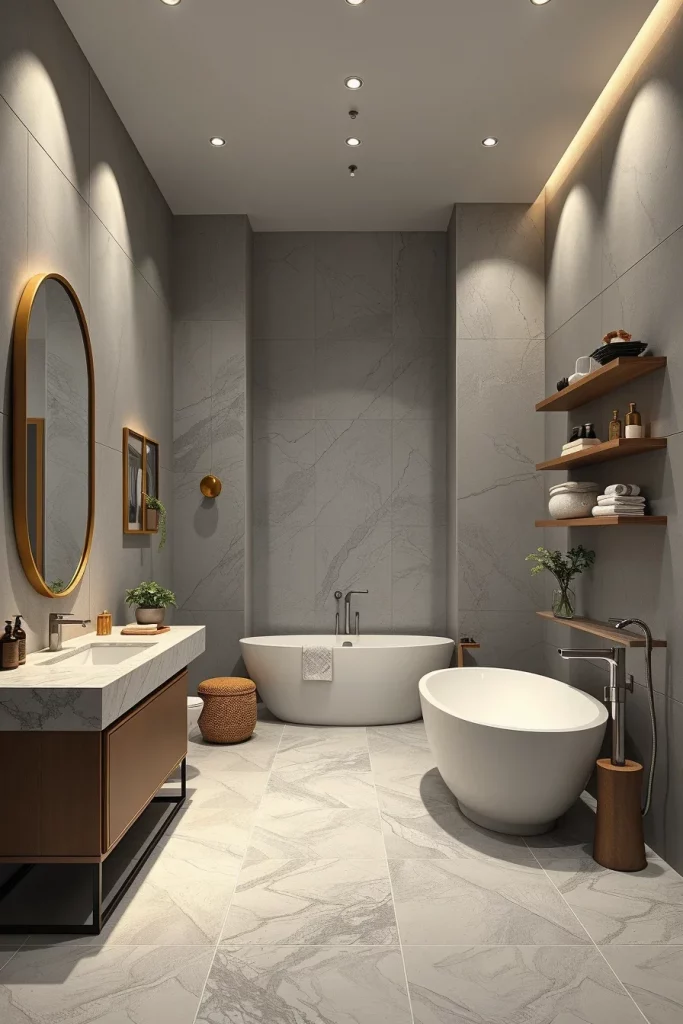
I like incorporating asymmetrical vanities, irregular mirrors, off-center lighting arrangements, and sculptural freestanding bathtubs. Floating shelves placed at varying heights and custom storage units with unconventional proportions further reinforce the concept. When balanced carefully, asymmetry can make the room appear more curated and expressive without sacrificing functionality.
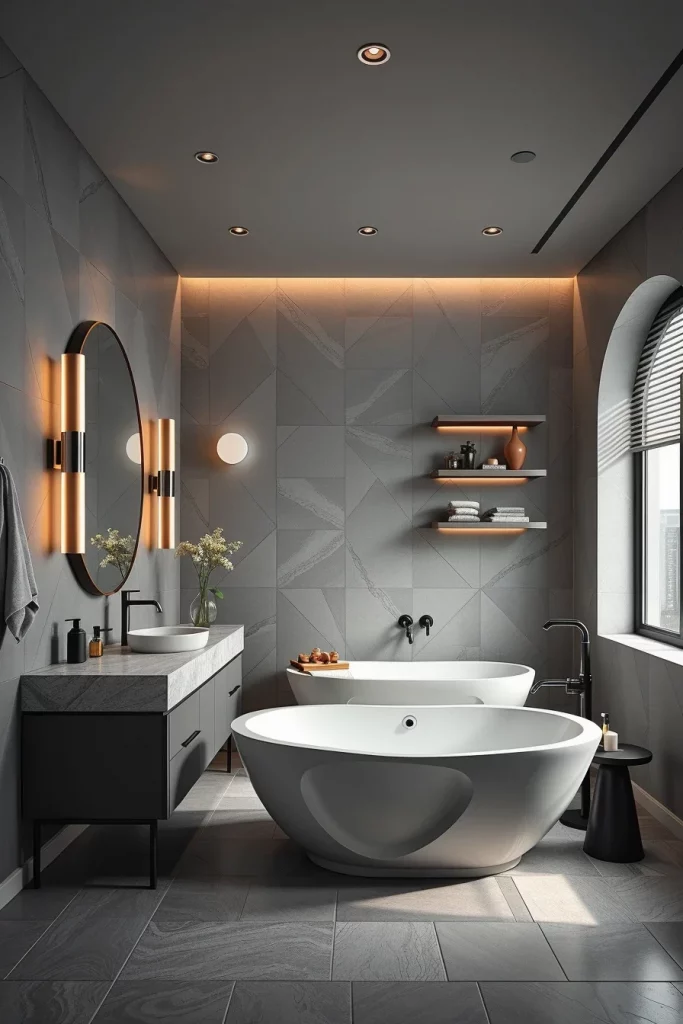
Personally, I believe asymmetrical design works best when paired with a restrained material palette. Many contemporary interior designers advise limiting decorative elements when introducing unconventional forms, and I agree because simplicity allows asymmetrical features to stand out more effectively.
What I would additionally include in this design is custom wall art or sculptural accessories that echo the irregular geometry while maintaining visual harmony throughout the room.
Stylish Gray Bathroom Retreats With Seamless Wet Room Layouts
Seamless wet rooms represent one of the most practical and stylish developments in contemporary bathroom design. I appreciate how this layout removes visual barriers and creates a fluid, open environment. Continuous flooring and minimal transitions make gray bathrooms appear significantly larger while supporting easy maintenance and accessibility.
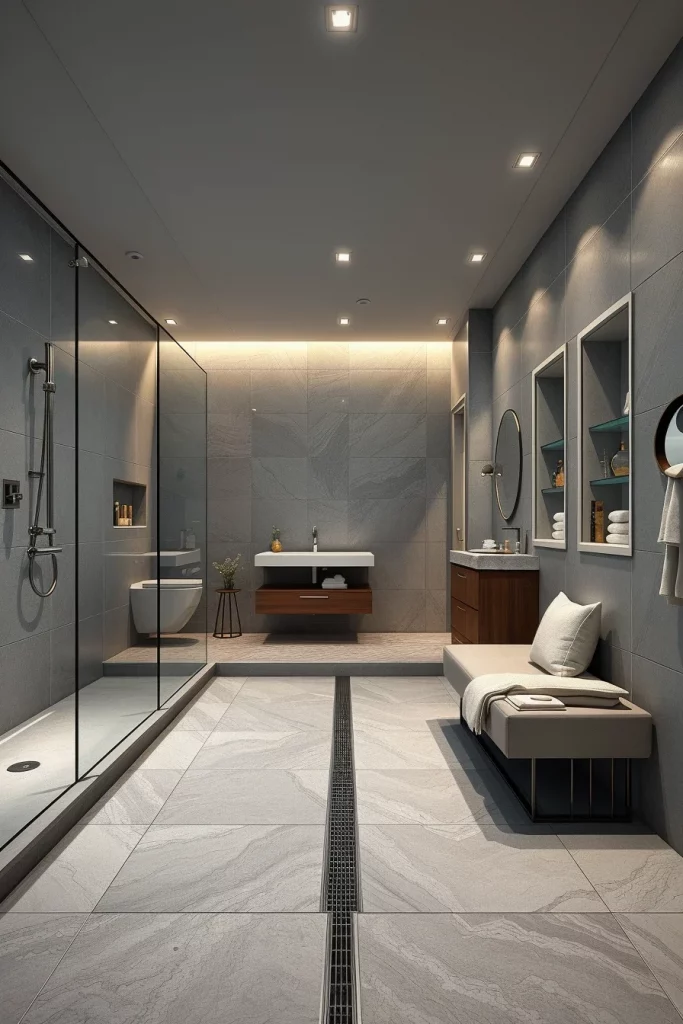
For these spaces, I typically specify large-format floor tiles extending throughout the entire room, frameless glass partitions, linear drains, and wall-mounted fixtures. Floating vanities and recessed storage niches preserve openness while maximizing usable space. I also recommend integrated benches and built-in shelving to improve comfort and organization.
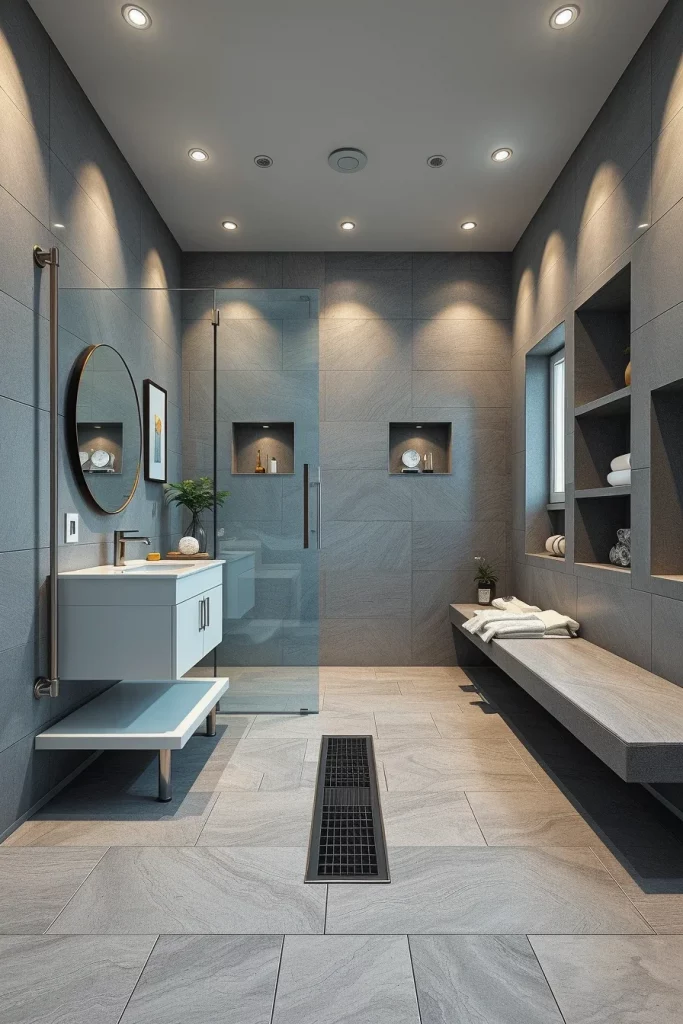
In my experience, seamless wet rooms are particularly successful in both compact and spacious bathrooms. Designers highlighted by Dwell often emphasize continuity of materials in wet room layouts, and I have found that maintaining uninterrupted surfaces creates a luxurious, spa-like atmosphere.
To perfect this design, I would add radiant floor heating and concealed waterproof lighting to enhance comfort and reinforce the seamless aesthetic.
Modern Gray Bathrooms With Large-Format Porcelain Surfaces
Large-format porcelain surfaces have transformed contemporary bathroom design by minimizing grout lines and creating expansive visual continuity. I frequently use oversized gray porcelain slabs because they produce a sleek architectural appearance while offering exceptional durability and ease of maintenance.
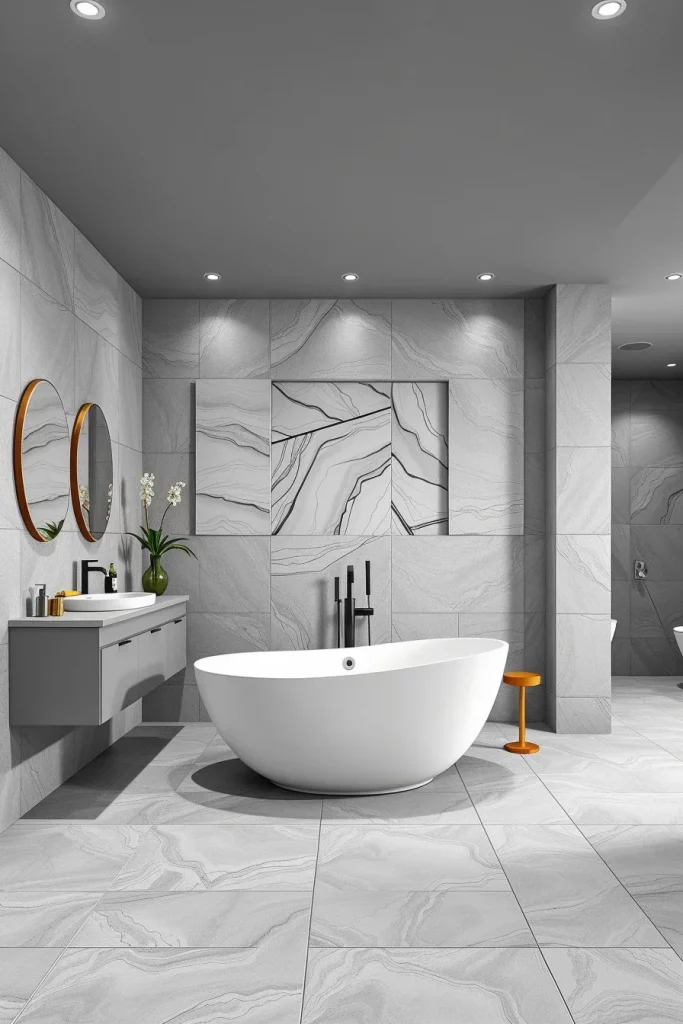
I often extend large-format porcelain across walls, floors, shower enclosures, and even vanity backsplashes. These surfaces pair beautifully with floating cabinetry, integrated sinks, minimalist hardware, and sculptural bathtubs. The reduced number of joints creates a cleaner appearance and makes daily cleaning considerably easier.
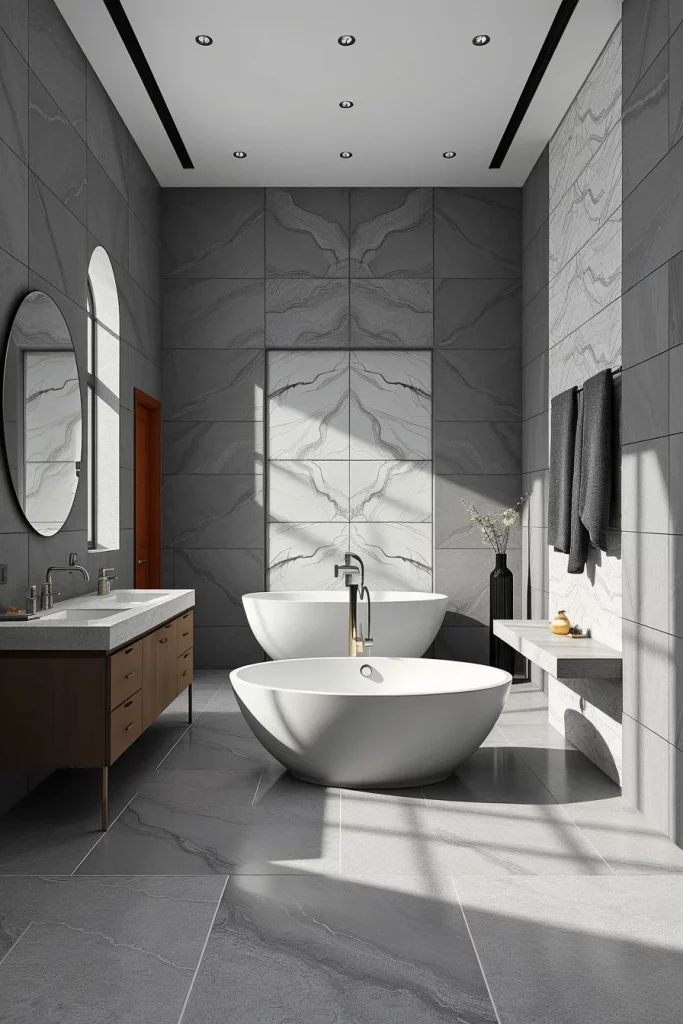
From my professional perspective, porcelain slabs provide an ideal balance between beauty and practicality. Many industry experts recommend large-format materials for achieving a high-end contemporary look, and I consistently see impressive results when incorporating them into gray bathroom interiors.
I would also consider adding subtle book-matched porcelain panels behind the bathtub to create a dramatic focal wall while preserving the minimalist character of the room.
Futuristic Gray Bathroom Interiors With Sculptural Minimalism
Futuristic bathrooms embrace simplicity while introducing bold sculptural forms and innovative technology. I see this design direction as the ultimate expression of creative, sculptural, and artistic gray interiors. Curved silhouettes, seamless surfaces, and integrated smart technology define these forward-thinking spaces.
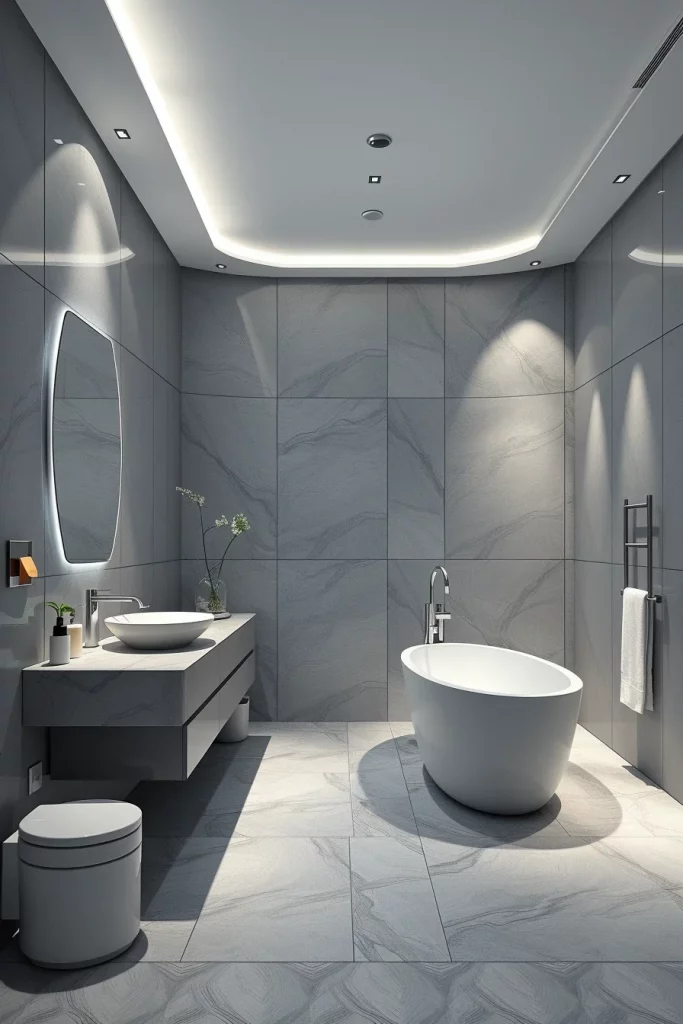
When creating a futuristic bathroom, I prefer floating monolithic vanities, organically shaped bathtubs, hidden storage, touchless fixtures, and integrated smart mirrors. Seamless wall panels, concealed lighting systems, and minimalist furnishings reinforce the sculptural quality of the room. Soft gray tones provide a sophisticated backdrop that allows these innovative forms to stand out.
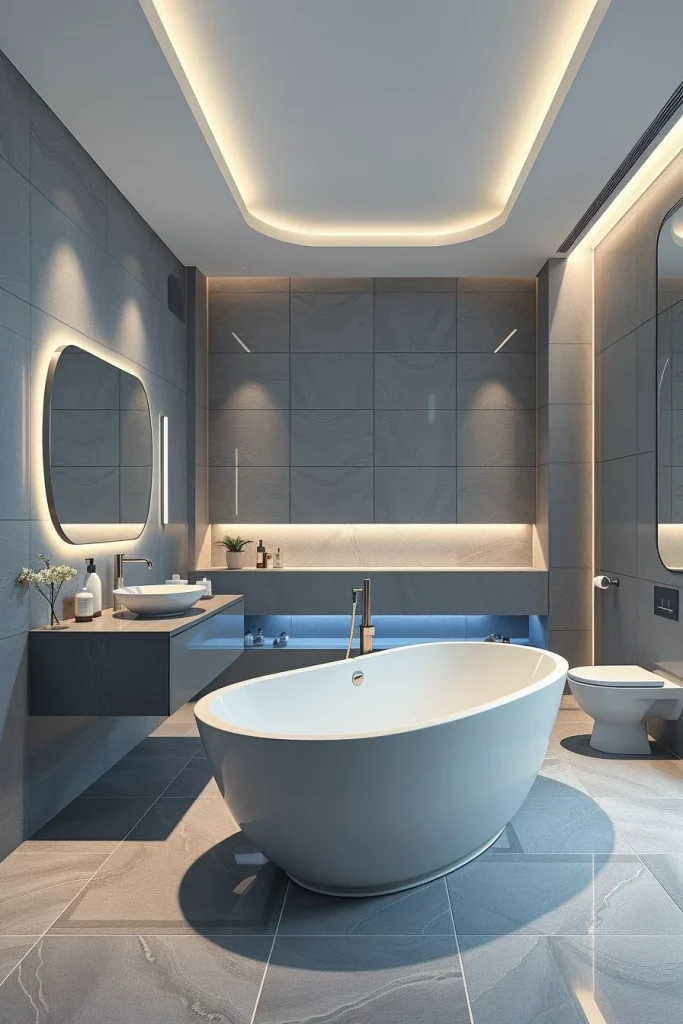
Personally, I believe sculptural minimalism represents the future of bathroom design because it combines aesthetics with functionality. Architectural Digest frequently highlights the growing influence of integrated technology and sculptural forms in luxury interiors, and I have found that these features significantly elevate the user experience.
To complete this concept, I would incorporate programmable lighting scenes and smart climate controls that adapt the atmosphere according to different daily routines.
Modern gray bathroom interior trends prove that neutral spaces can be both sophisticated and full of personality. From sculptural features and artistic details to luxurious textures and innovative layouts, gray bathrooms offer endless possibilities for creating a stylish retreat. By combining contemporary materials with thoughtful design elements, you can transform any bathroom into a serene and visually striking sanctuary that remains timeless for years to come.