Your front door is the first thing anyone sees, and modern design offers so many ways to make that first impression count. From natural wood and glass to bold colors and metal accents, a modern entry can set the tone for your whole home without feeling cold or uninviting.
This article explores 32 modern front door ideas that balance style with function. You will find options that work with different facades, from stone and brick to concrete and stucco, helping you choose a look that fits your home’s architecture and your personal taste.
01 / 33Inviting Modern Entryway with Natural Wood Door and Stone Accents
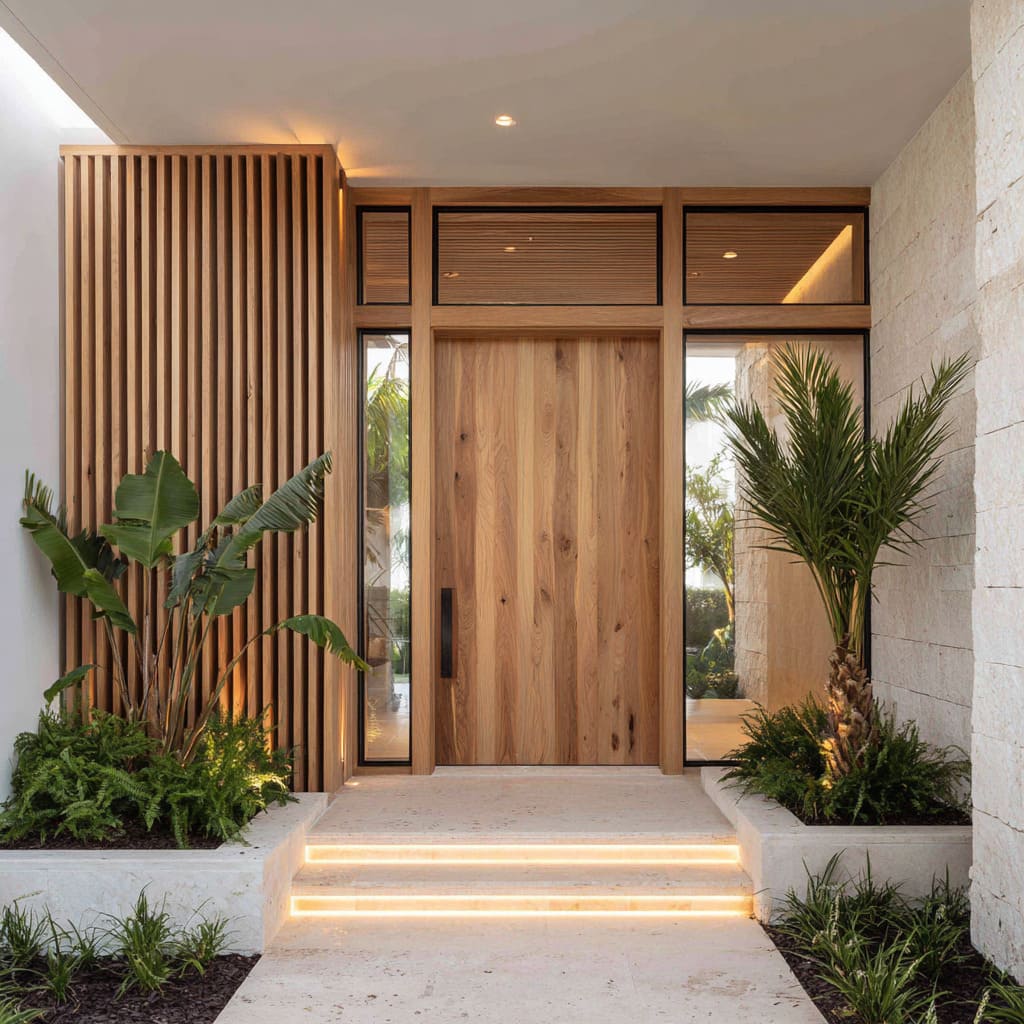
A wide, warm wood door sets the tone for this entryway, flanked by slatted wood paneling and tall planters. The natural wood palette reads as grounded rather than rustic, helped by the clean, straight lines of the slats. Stacked stone on the facade adds texture without competing with the wood. Integrated step lighting and recessed ceiling lights keep the entrance visible after dark. The balance here is between soft and hard materials: wood and plants against stone and metal. What breaks the modern feel would be adding ornate hardware or a busy welcome mat. The palette stays simple, so the door remains the anchor.
02 / 33Tall Wood Front Door with Vertical Glass Inserts and Black Frame
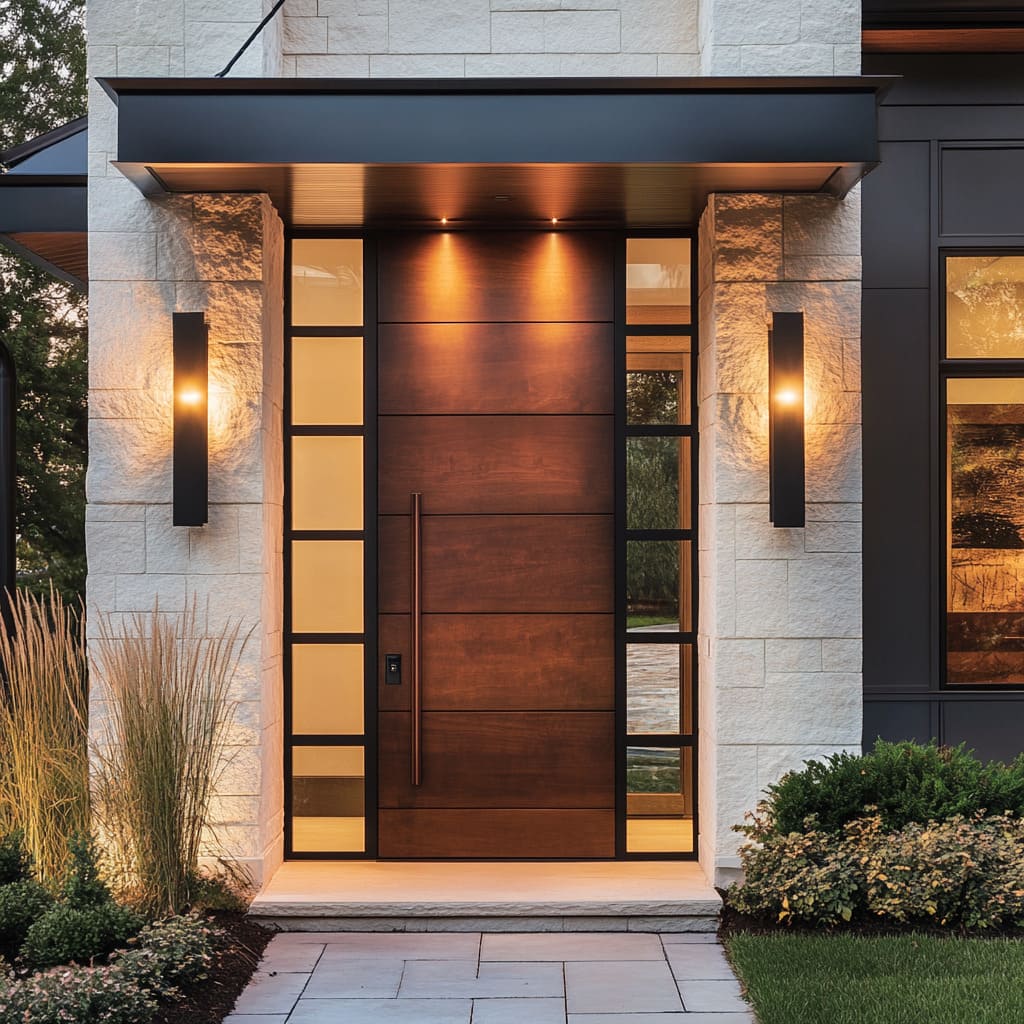
This door earns its presence through height. The tall wood panel is framed in black, with narrow vertical glass inserts that draw the eye upward and let in natural light without sacrificing privacy. Warm exterior lights on either side soften the dark frame against a stone facade. The palette works because it sticks to three colors: warm wood, black, and white. A yellow accent from nearby landscaping adds a seasonal pop. For scale, a door this tall works best when the entry has enough overhang or porch depth to keep the proportions from feeling top-heavy. The vertical lines in the glass and frame echo the door’s height rather than fighting it.
03 / 33Horizontal Slatted Wood Door with Black Metal Frame and Side Glass
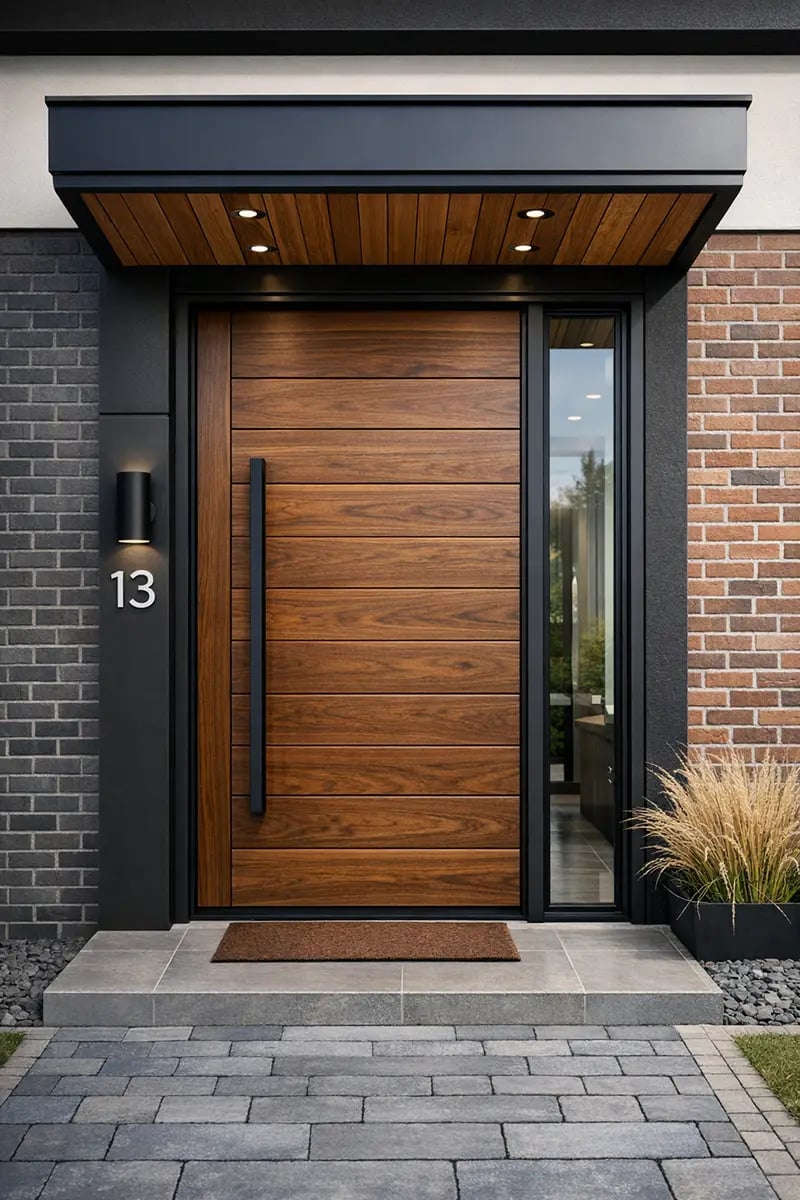
What makes a slatted wood door feel modern instead of barn-like? The direction of the slats and the frame that holds them. Here, horizontal slats run across a warm wood door set inside a black metal frame, with a matching side glass panel that keeps the entry open to the outdoors. The black frame contains the wood’s warmth, while a large black handle gives the door a solid, deliberate feel. A wall-mounted black sconce and integrated ceiling lights keep the palette tight. The stone pathway and concrete wall tie the materials together without adding clutter. The horizontal lines create a sense of width, which works well for a front entrance that sits on a broad facade.
04 / 33Dark Bronze Modern Door with Gold Metal Panel and Stone Facade
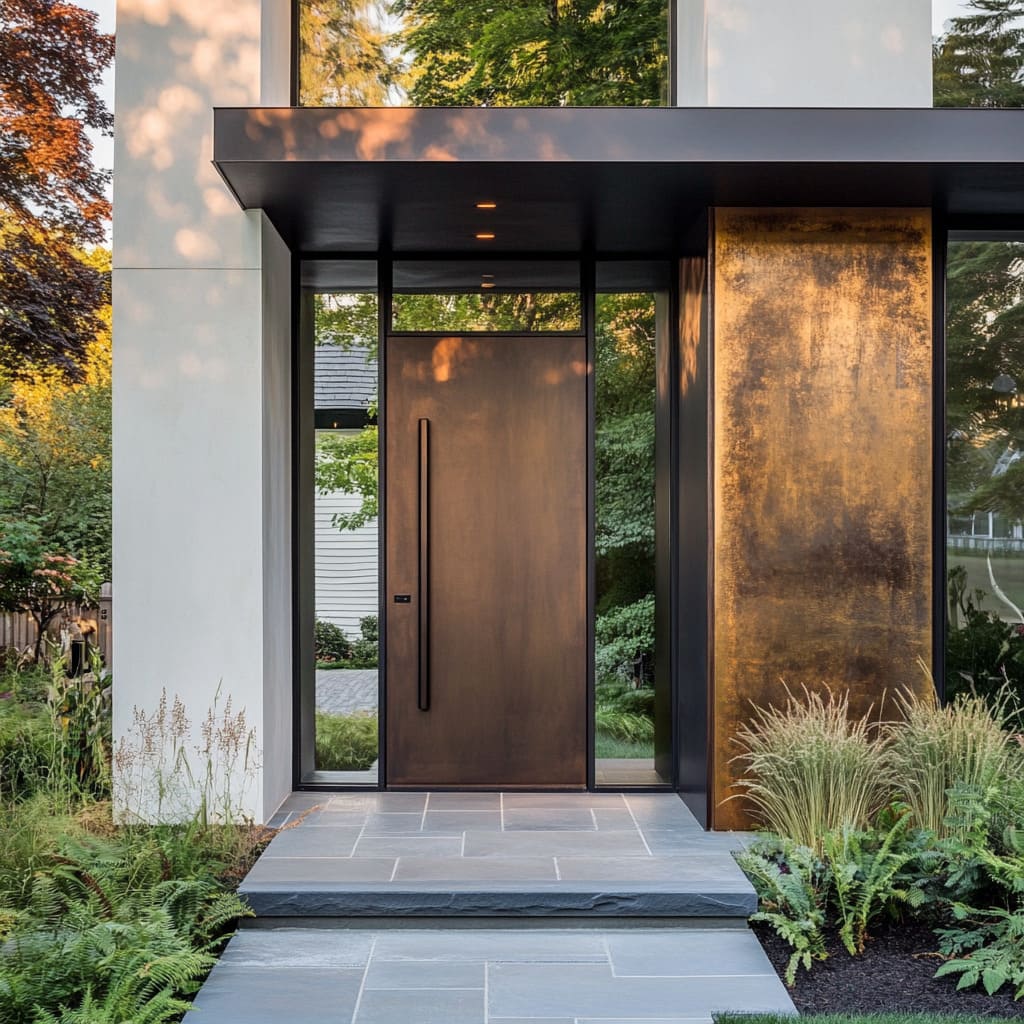
A dark bronze door with a gold metal insert is a palette that works because it limits itself. Bronze and gold read as warm metallics against a white stone facade and green planting. The gold panel is set into the door as a solid rectangle, not a trim or handle, which keeps the look intentional. Integrated ceiling lights help the metallic finishes catch the eye without relying on direct sun. What breaks this palette is adding a third metallic finish, like silver hardware or a brass kickplate. The stone facade stays neutral so the door carries the color. This approach suits a modern home that wants a front door with presence without painting it a bright hue.
05 / 33Modern Wood and Glass Door with Textured Grey Stone Facade
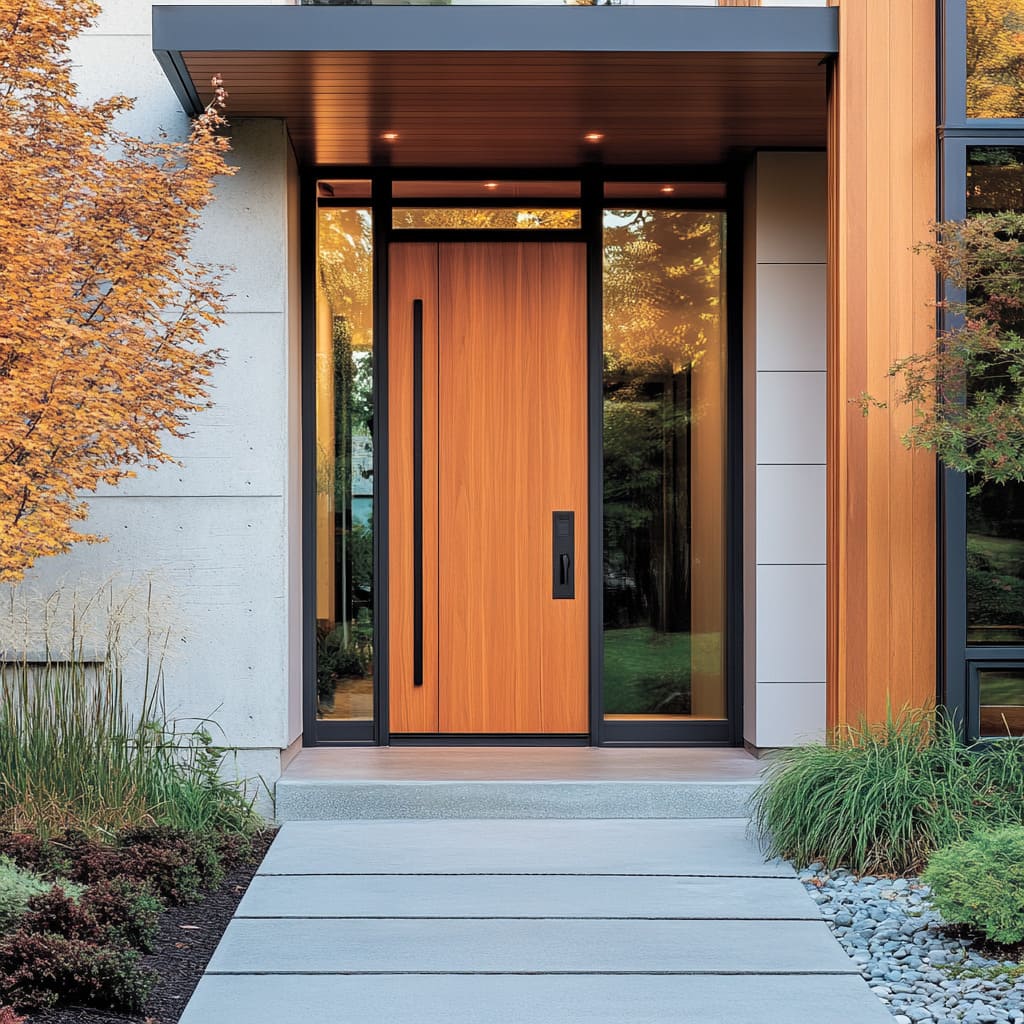
Let one material lead for a modern front door. Here, the tall wood door with a black frame and glass panels is the focus, and the textured grey stone facade stays in a supporting role. The wood’s natural grain provides warmth, while the black frame and glass keep the look clean and current. Recessed ceiling lights above the door keep the entry well lit without visible fixtures. The palette of natural wood, black, grey, and white is safe but effective because no single color dominates. For a door with large glass panels, consider the orientation. A south-facing door will need a UV film or interior blinds to manage heat gain, while a north-facing one keeps the light soft and cool.
06 / 33Oversized Glass Pivot Door for an Expansive Modern Entryway
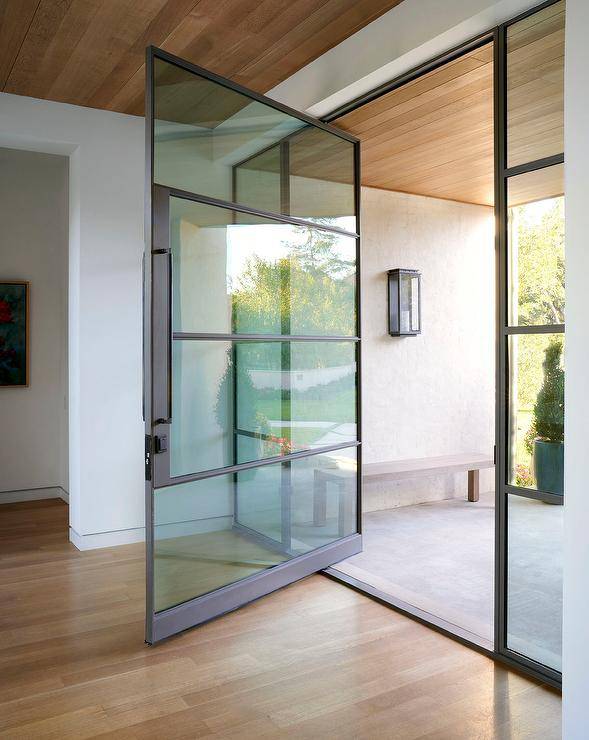
A standard hinged door can feel small against a wide opening, which is where a pivot door changes the feel entirely. This oversized glass pivot door spans the full height of the entryway, with a wooden ceiling extending outward to blur the line between inside and out. The glass panel keeps the view open while the pivot mechanism allows the door to be wider than a traditional frame would permit. A single wall sconce on the concrete wall provides just enough light without competing with the natural daylight. What defines this look is the ratio of glass to solid material: the door is mostly transparent, so the wood ceiling and grey concrete become the visual anchors. A small metal handle or narrow frame would break the clean line, so a minimal black frame keeps the glass as the main event.
07 / 33Warm Wood Door on Stone Facade with Cascading Green Vines
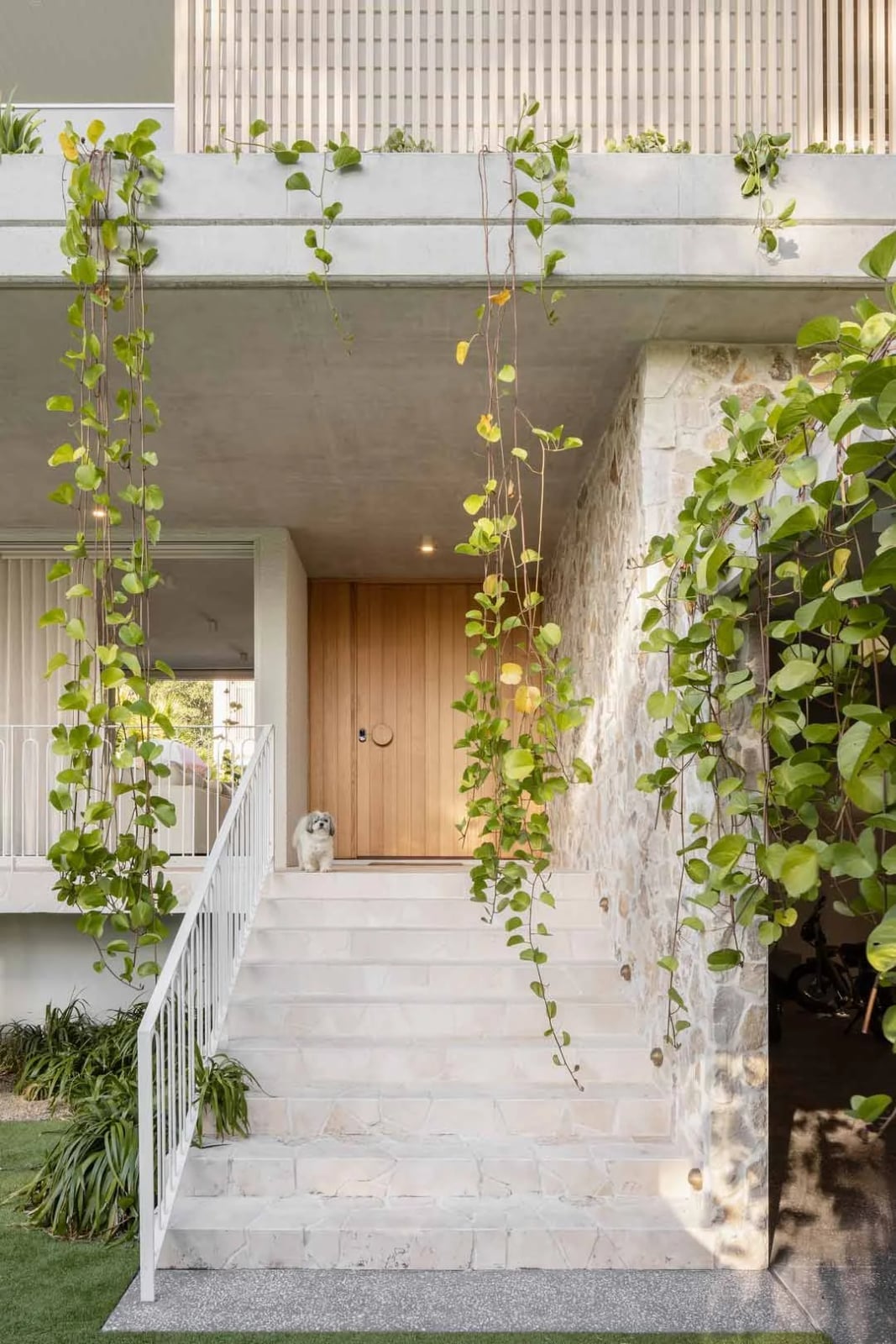
The stone facade here is softened by cascading green vines that spill down either side of the warm wood door, creating a natural frame that looks established. Concrete steps lead up to the entrance, and the vines contrast with the hard, cool surface of the stone. For a renter, this is a low-commitment way to add the same effect: a pair of tall planters with trailing ivy or a hanging basket near the door can mimic the look without altering the facade. The key is choosing a plant that suits your light conditions, so check your USDA zone before buying. The wood door appears warm against the grey stone, and the vines introduce a living element that changes with the season.
08 / 33Ornate Wooden Front Door with Gold Inlay and Wood Cabinets
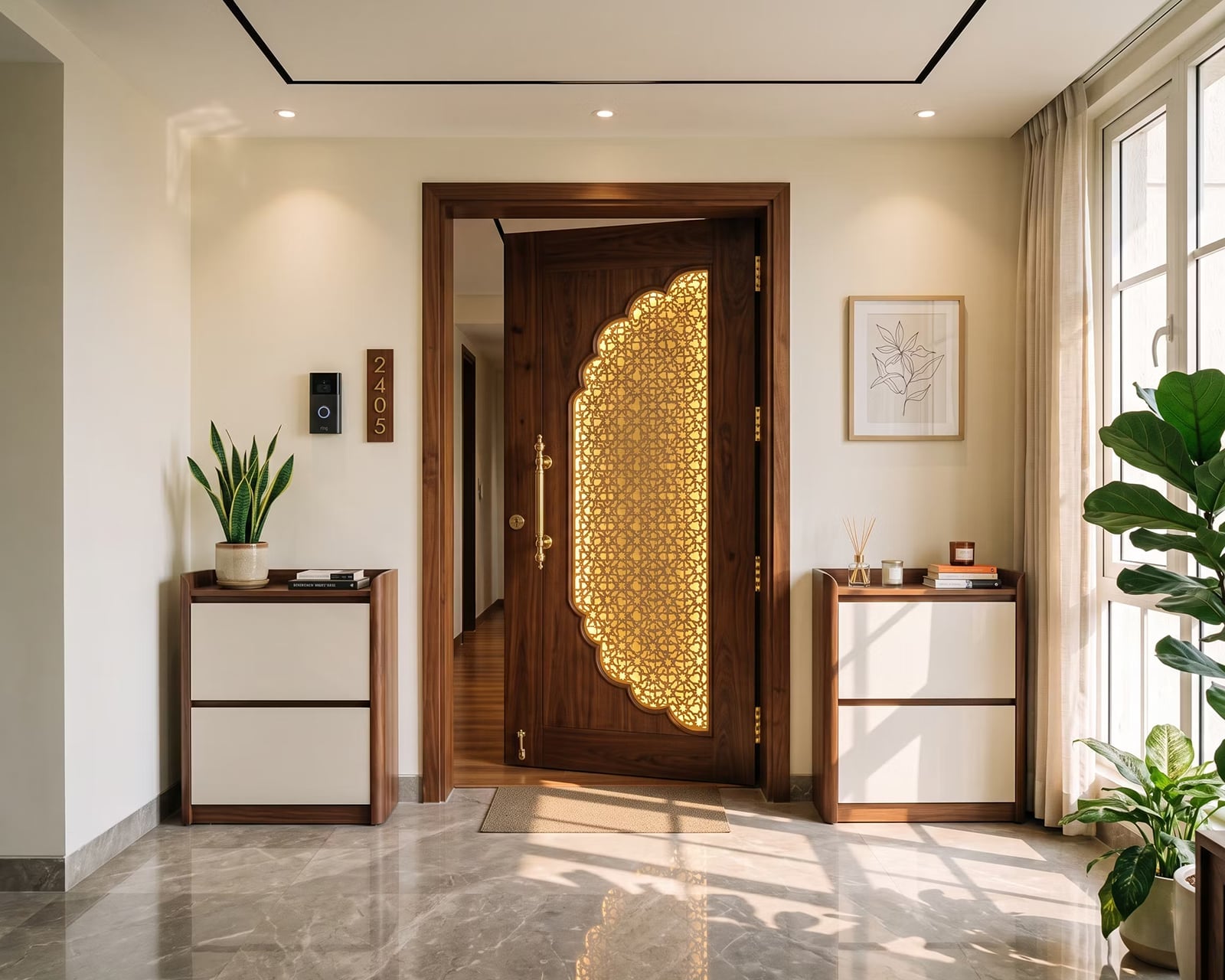
This door uses gold inlay as the focal point, so no statement knocker or bold color is needed. The warm wood panel is carved with a geometric pattern, and thin gold lines trace the design in natural daylight from the window. Flanking the door are tall wood cabinets that double as shoe storage, keeping the entryway tidy without visual clutter. A white marble floor and a potted plant add contrast. The balance between ornate and minimal comes from the detailed door paired with simple surroundings. A busy rug or patterned wallpaper would break the effect, so plain surfaces and one or two green plants are all you need.
09 / 33Slatted Wood and Glass Front Door with Stacked Stone Pillar
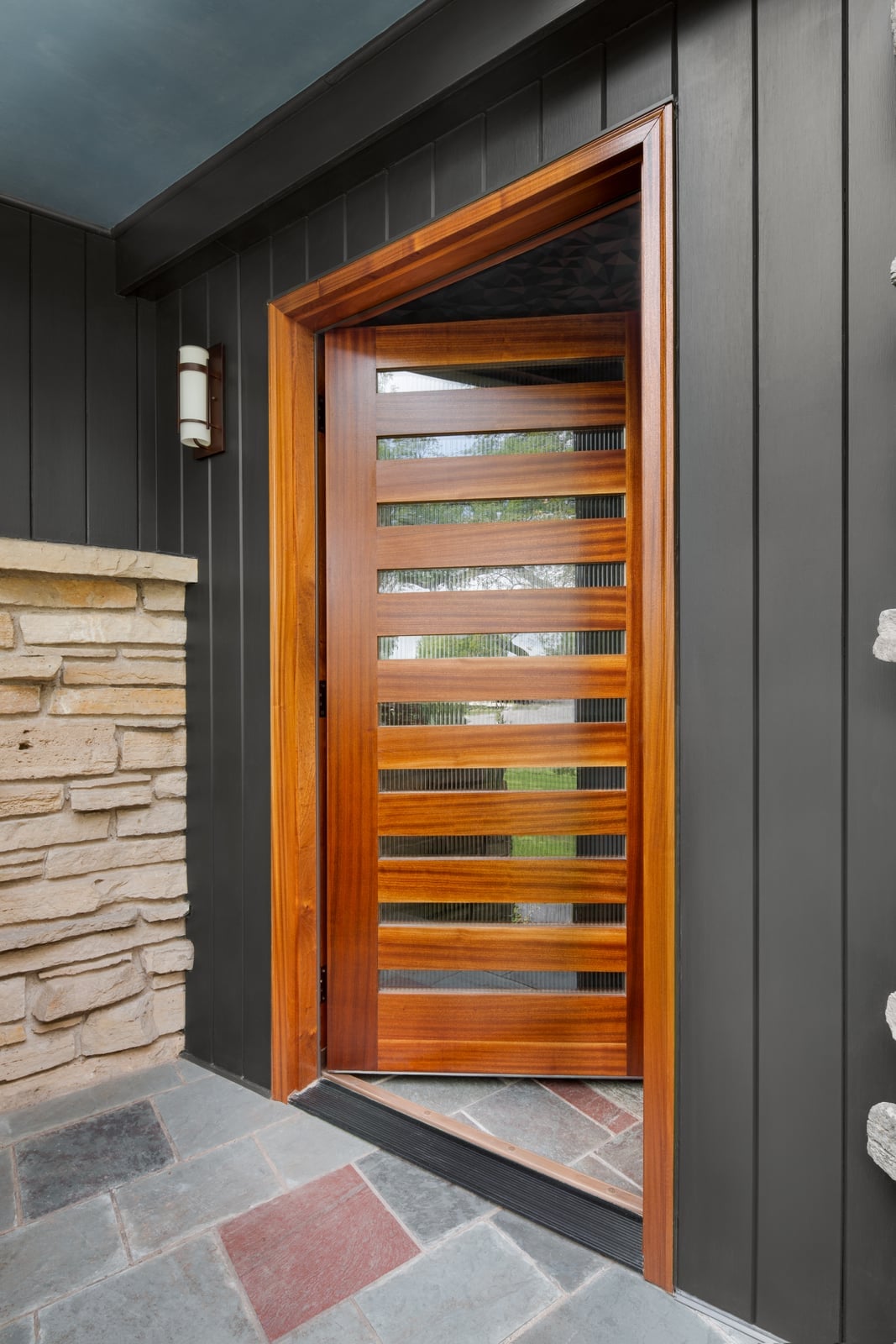
How do you get privacy without blocking light? A slatted wood door with a glass panel behind it is one answer. This version pairs vertical wood slats with a clear glass insert, allowing light to enter while the slats obscure a direct view. A stacked stone pillar to one side adds texture and visual weight, anchoring the door within the entryway. A wall sconce above provides a warm glow in the evening. The slats are spaced closely enough to offer privacy but far enough apart to let light through. The stone pillar is a durable material choice for high-traffic areas, as it resists scuffs and weather better than painted drywall. A simple metal handle in a dark finish completes the look without distracting from the slat pattern.
10 / 33Matte Black Modern Double Doors with Geometric Ribbed Pattern
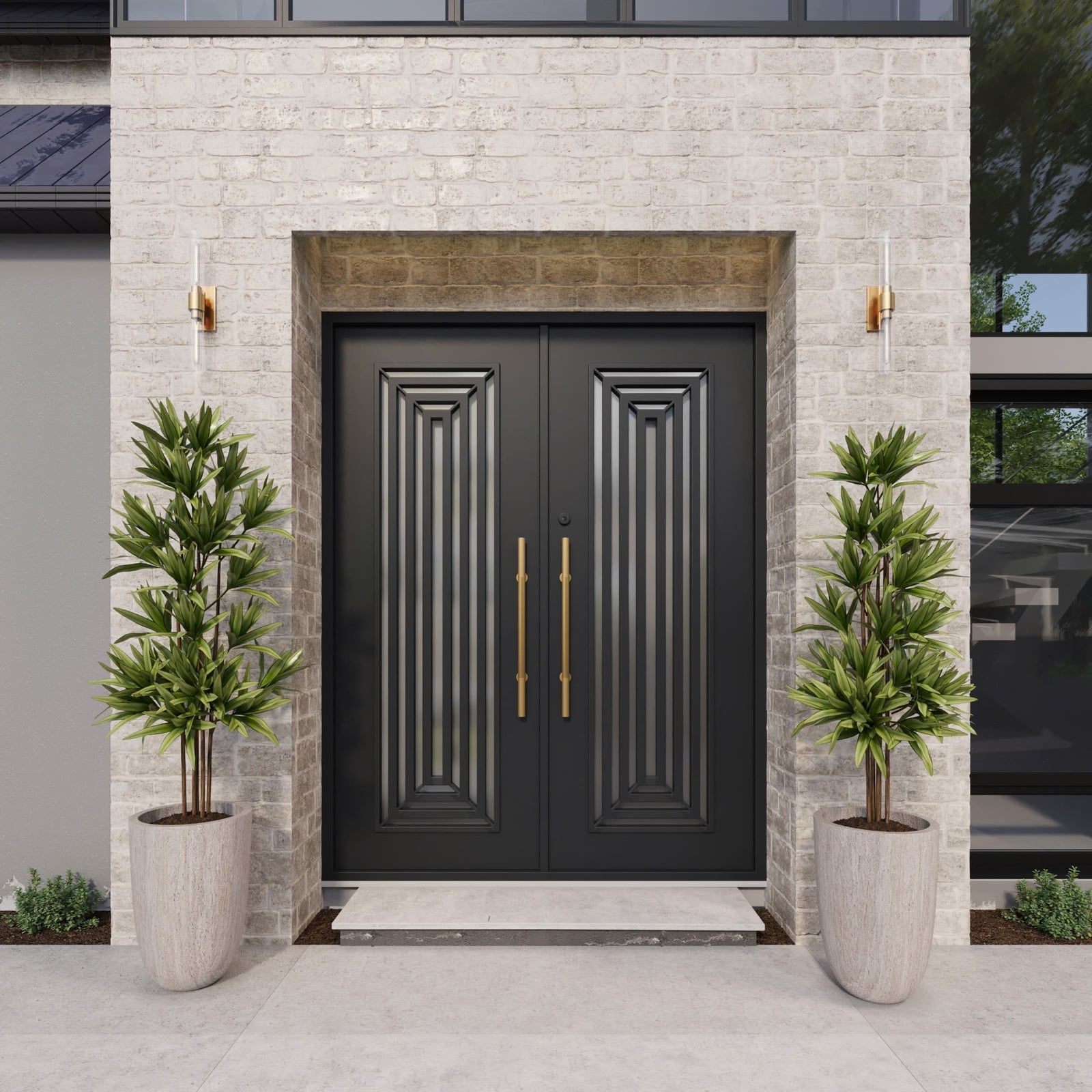
These matte black double doors use a geometric ribbed pattern that repeats across both panels, giving the entrance a cohesive, sculptural quality. Gold handles stand out against the dark metal, and the brick facade behind the doors adds warmth without competing. Wall sconces on either side provide even light, and planters at the base soften the hard lines. The contrast between the matte black surface and the subtle texture of the ribbed pattern is key. A glossy finish or a busy door handle would break that contrast, so the gold handles are kept simple and linear. The brick and concrete materials ground the design, making the doors feel substantial.
11 / 33Geometric Modern Front Door with Frosted Glass Panel
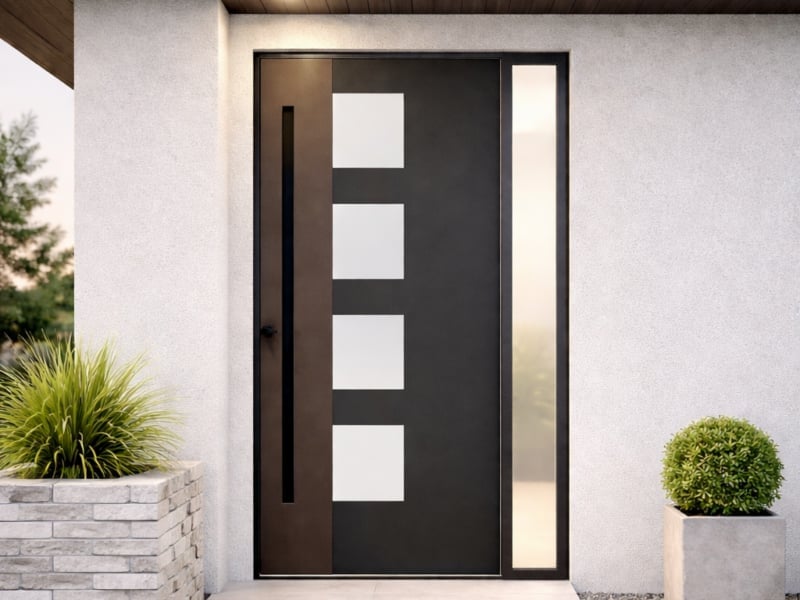
A black metal frame holds white paneling and a frosted glass insert, turning the entrance into a pattern study. The geometric squares break up the door’s height, so it reads less like a slab and more like a composition. Brown wood tones in the side panel and planter keep the look from turning cold. The palette stays neutral, which means the door works with almost any facade color. If you want the geometry to stand out, pair it with simple matte black or white house numbers.
12 / 33Diagonally Slatted Wood Door with Geometric Metal Inlay and Stone
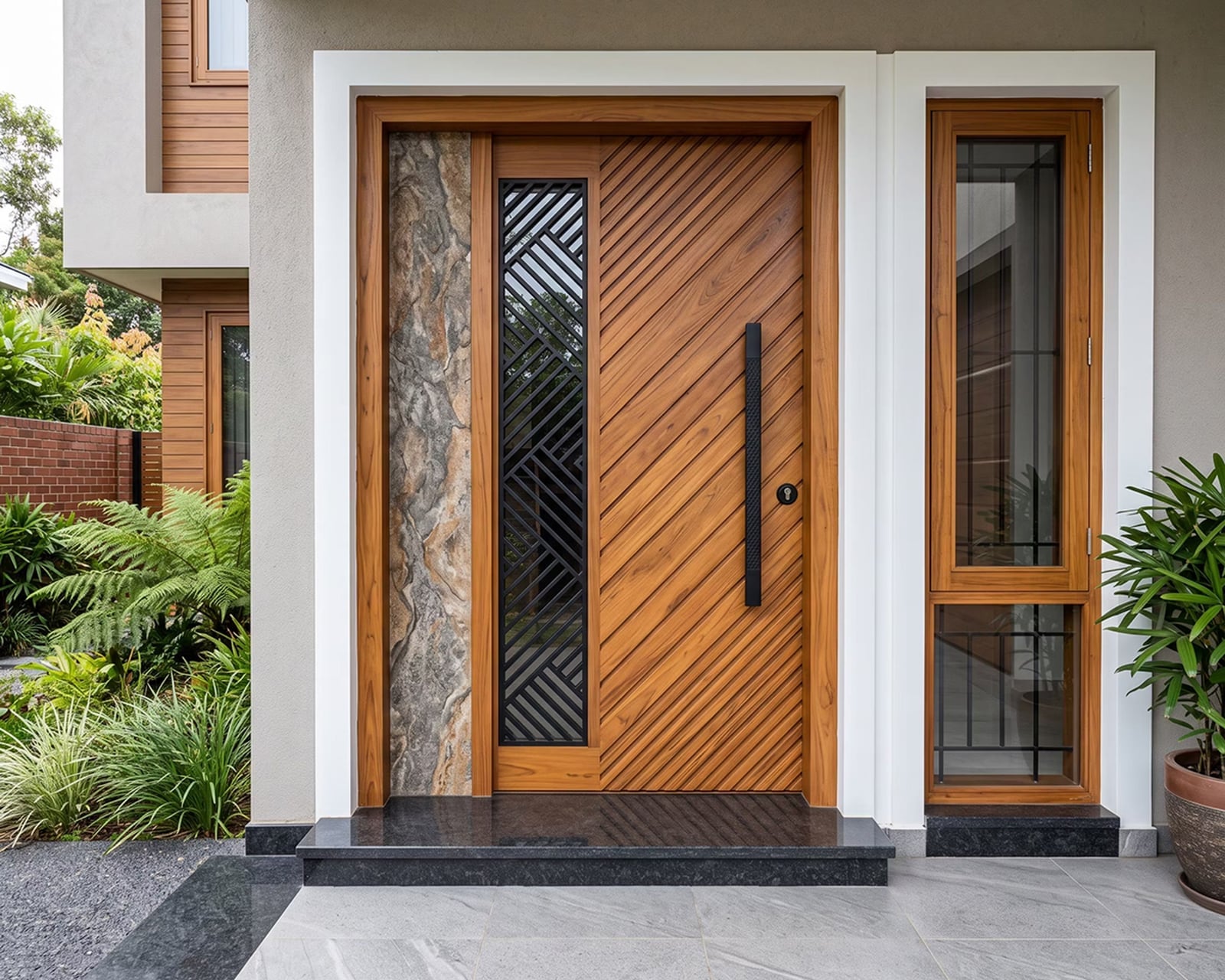
A standard horizontal slat door feels orderly and calm. This diagonal slatted wood door with geometric metal inlay feels deliberate and sculptural. The natural wood grain runs at an angle, catching daylight differently depending on the time of day. A narrow window flanks one side, and a stone accent wall anchors the whole entry in texture.
The metal inlay adds a second rhythm to the wood slats. Where the door could lean rustic, the metal pulls it toward modern. The grey stone and black frame keep the palette grounded. For a renter-safe swap, try a peel-and-stick geometric film on an existing solid door. It mimics the pattern without altering the structure.
13 / 33Sleek Black Double Front Doors with Horizontal Frosted Glass Panels
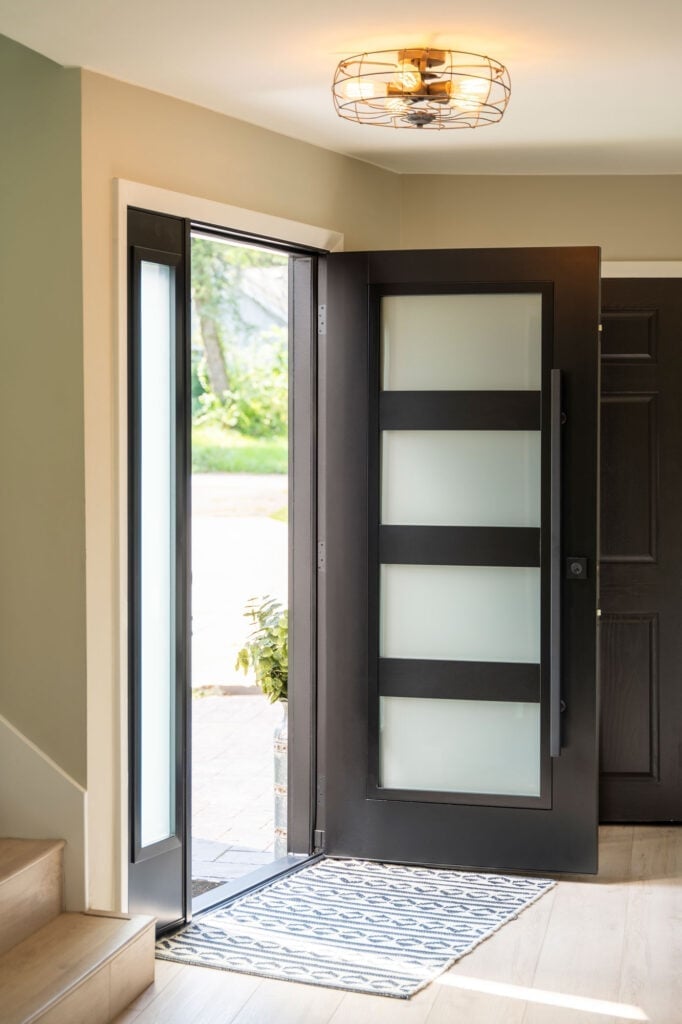
The horizontal frosted glass panels sit flush with the black metal, so the doors form one continuous surface. Inside, wood tones and a green rug warm the entry. The frosted glass lets in daylight while keeping the view obscured. A flush mount overhead light above the doors mirrors the clean lines. The material mix is metal and glass outside, wood and tile inside, and the transition feels seamless.
14 / 33Warm Wood Door with Grid Pattern and Large Glass Side Panel
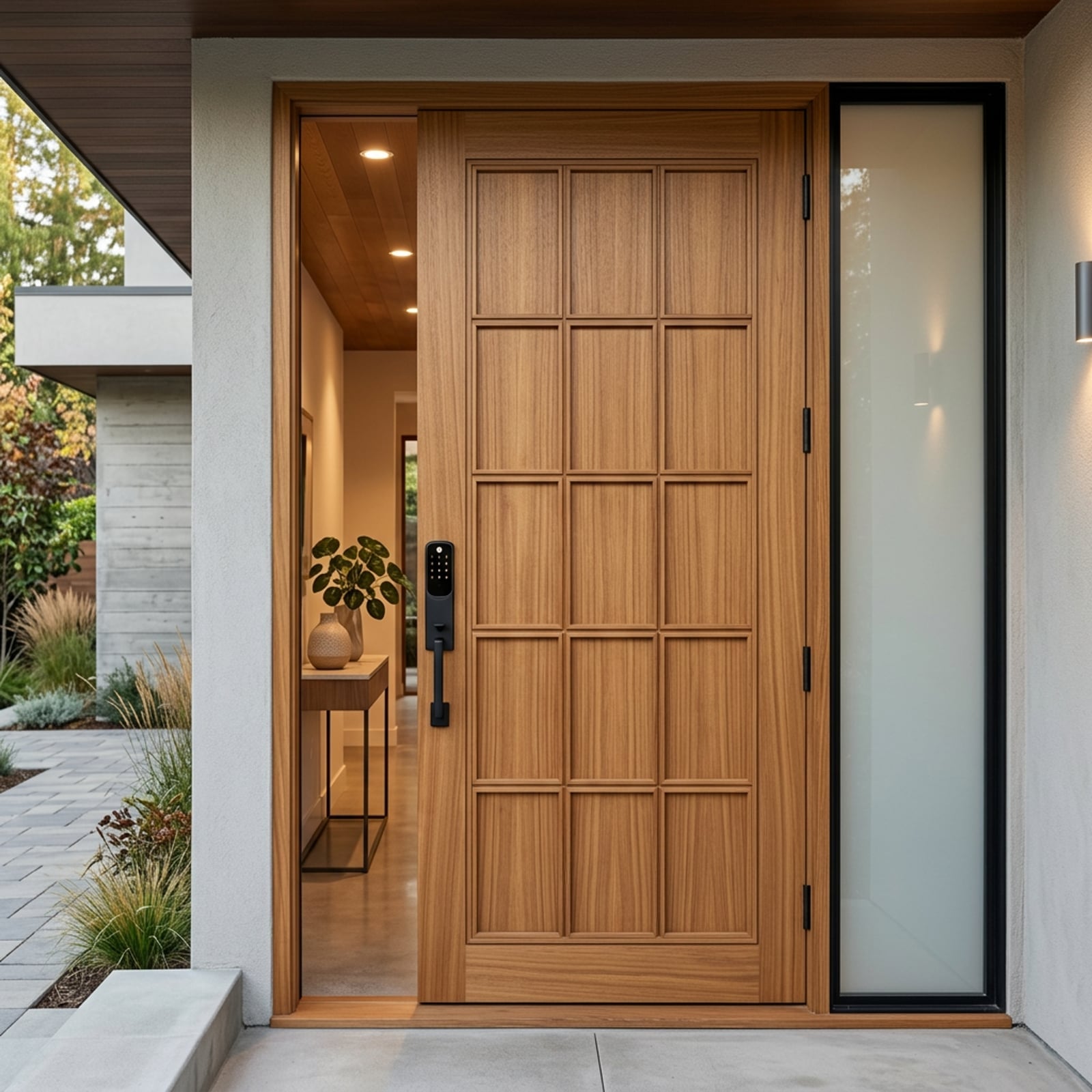
This door does the work of two design moves at once. The grid pattern on the wood gives a classic, crafted feel, while the large glass side panel floods the entryway with natural light. Recessed ceiling lights and exterior sconces keep the entrance lit after dark without glare. The warm wood against grey stone and white concrete softens the modern lines. For a similar effect on a budget, paint an existing paneled door and add a slim sidelight or a tall mirror opposite the door to bounce light.
15 / 33Double Glass Doors with Wood Paneling and Geometric Overhang
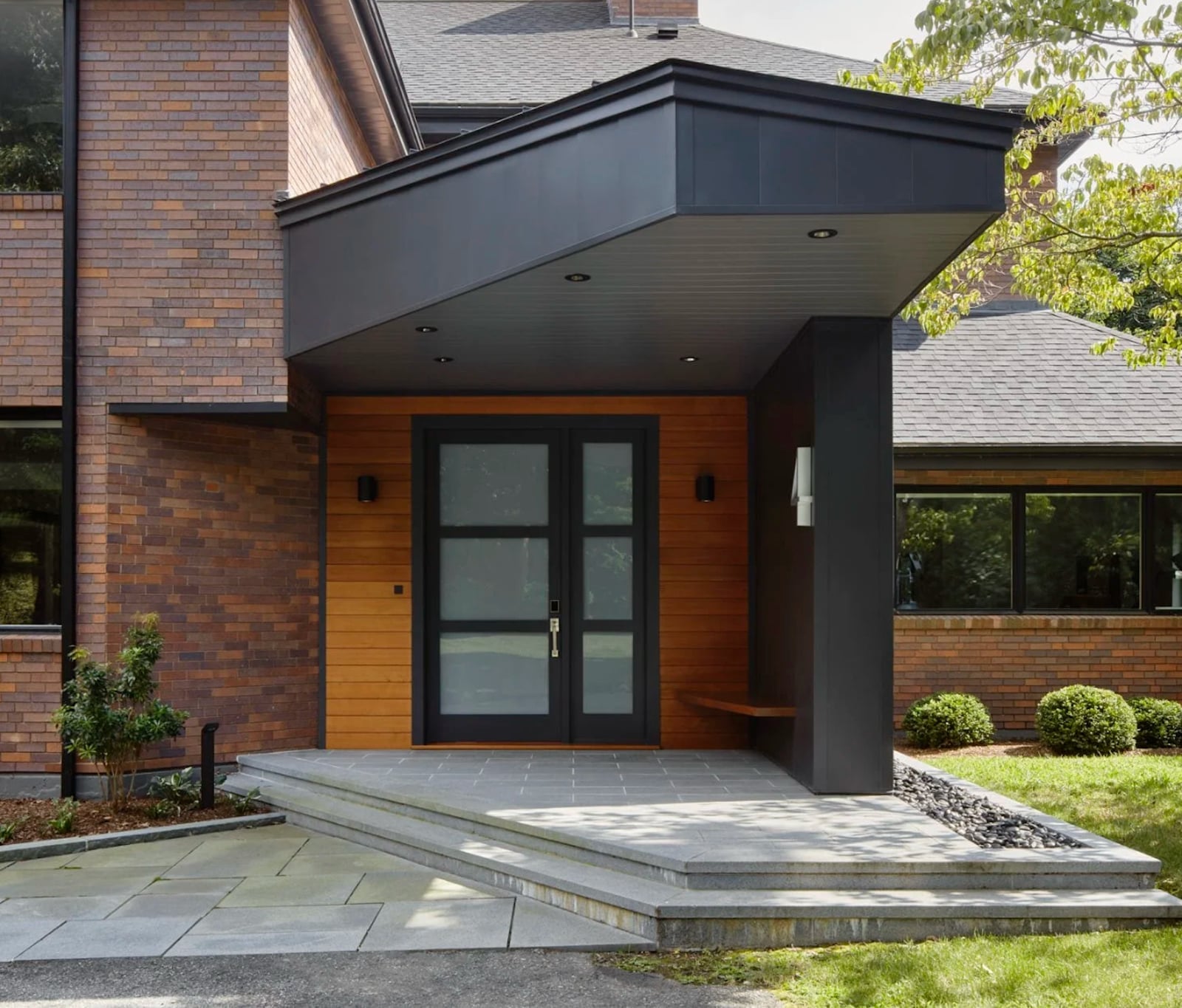
A practical rule for an entrance with double doors and a wide overhang is to treat the whole assembly as one shape. The geometric overhang here extends past the door frame, creating a covered transition that keeps rain off the stone steps. Inside, wood paneling on the doors adds warmth, while the glass lets you see the brick and stone beyond.
The recessed lights in the overhang and a wall sconce next to the door mean you don’t need a porch light fixture. If you have a similar wide entry, think of the overhang as a frame. Keep the area below it clear of clutter so the clean lines stay the focus.
16 / 33Massive Natural Oak Pivot Front Door with Glass Walls
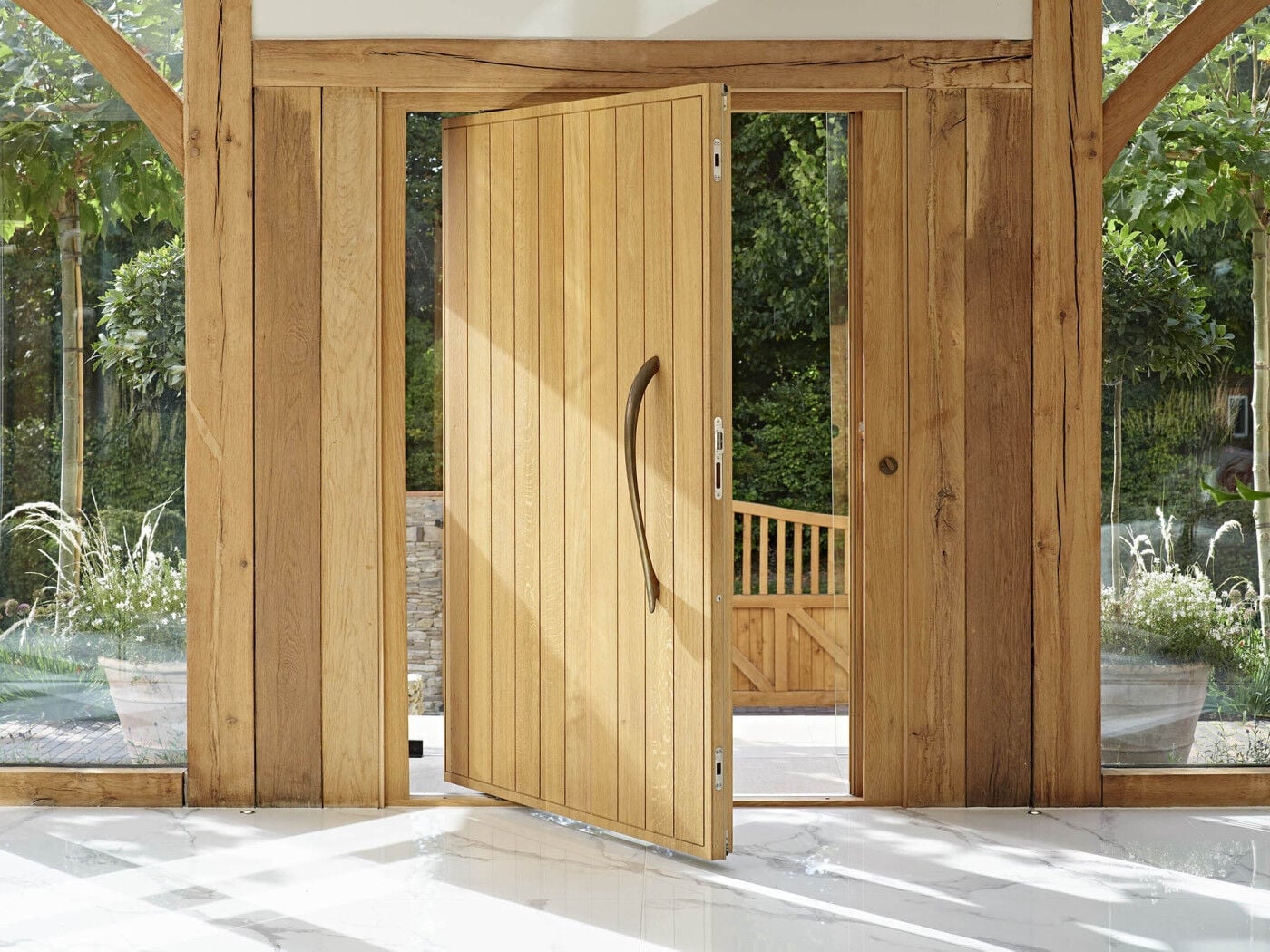
A pivot door this size changes how an entry feels before you even step inside. The natural oak slab swings on a central hinge instead of side hinges, so it can be wider than a standard door without the hardware fighting the weight. Flanked by glass walls and set against a stone floor, the wood becomes the warm anchor in an otherwise airy, open plan. To recreate it, look for a pivot door that is roughly a third wider than your current opening; the mechanism does the work, and the visual payoff is immediate.
17 / 33Vibrant Lime Green Modern Door with Horizontal Glass Panels
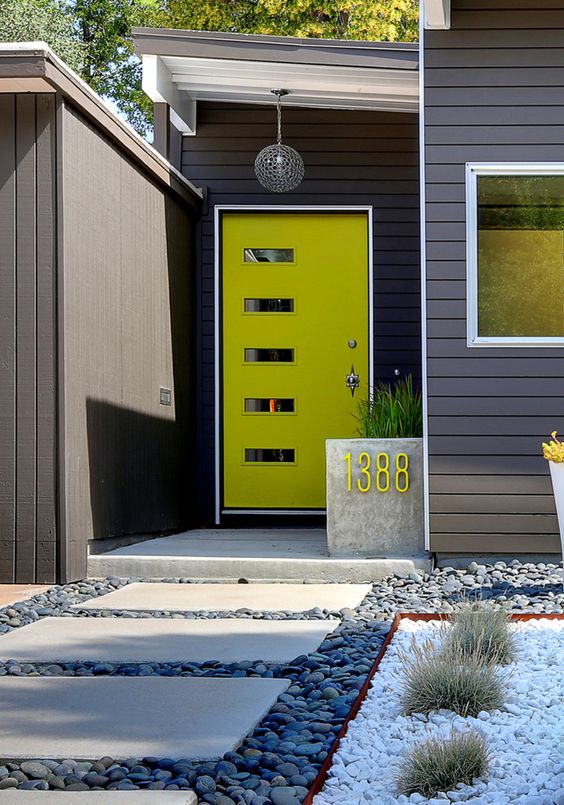
The lime green door with horizontal glass panels stands against grey wood siding and a concrete walkway. The glass panels break up the solid color and let light filter through. A pendant light above the entry draws the eye at dusk. Renters can borrow the idea with a temporary film in a similar green on an existing door. It peels off without residue and gives the same punch.
18 / 33Wide Horizontal Slatted Wood Door with Silver Handle and Glass
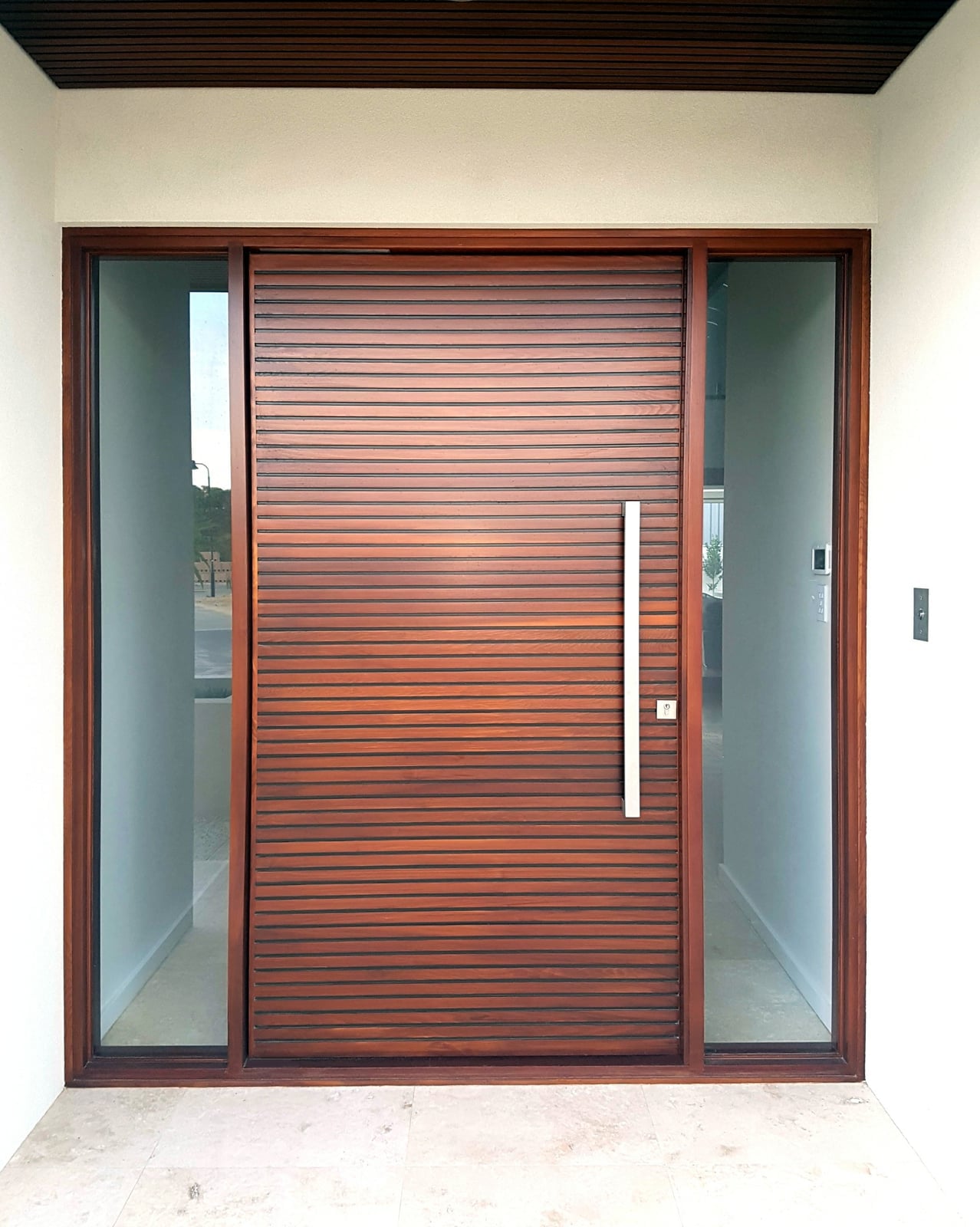
Where a solid wood door can feel heavy, a horizontal slatted version lightens the look by letting texture do the talking. The wide door here pairs slim wood slats with glass sidelights, so the entrance stays open and bright even with the door closed. The large silver handle adds a modern note and gives the hand something substantial to grip, which matters on a door this wide. For a similar feel, match the slat direction to the width of the entry; horizontal lines widen a narrow facade, while vertical slats would draw the eye up. The sidelights also mean you can skip a peephole and still see who is outside.
19 / 33Elegant Double Wood Doors with Horizontal Glass Panels and Metal
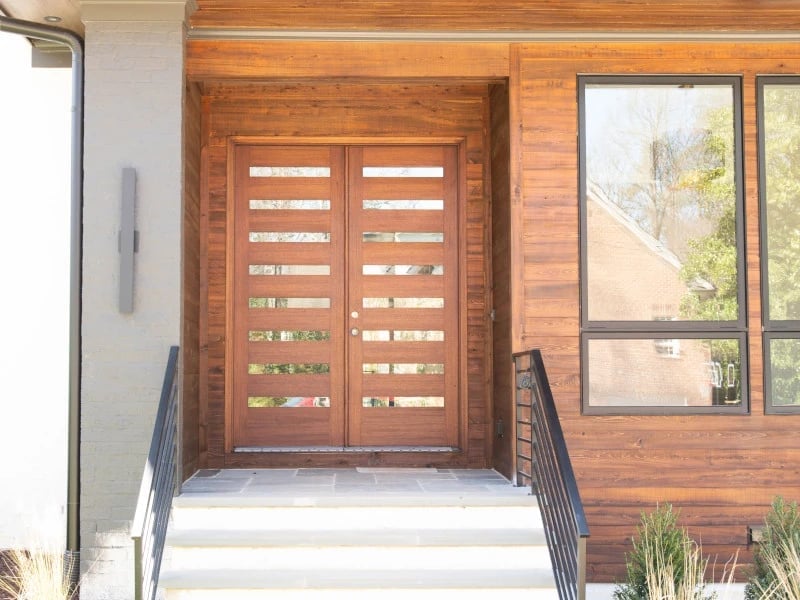
Double doors with horizontal glass panels read as grand without tipping into fussy, thanks to the clean lines of the metal railings beside them. The warm wood grain carries the detail, so the doors do not need carving or ornament to feel special. Stone steps lead up to the entrance, and an exterior sconce adds a soft glow at night, which makes the entry welcoming after dark. If you are choosing between single and double doors, remember that doubles need roughly twice the swing clearance inside; that is the real constraint, not the facade.
20 / 33Oversized Dark Wood Pivot Door Against Textured Concrete Wall
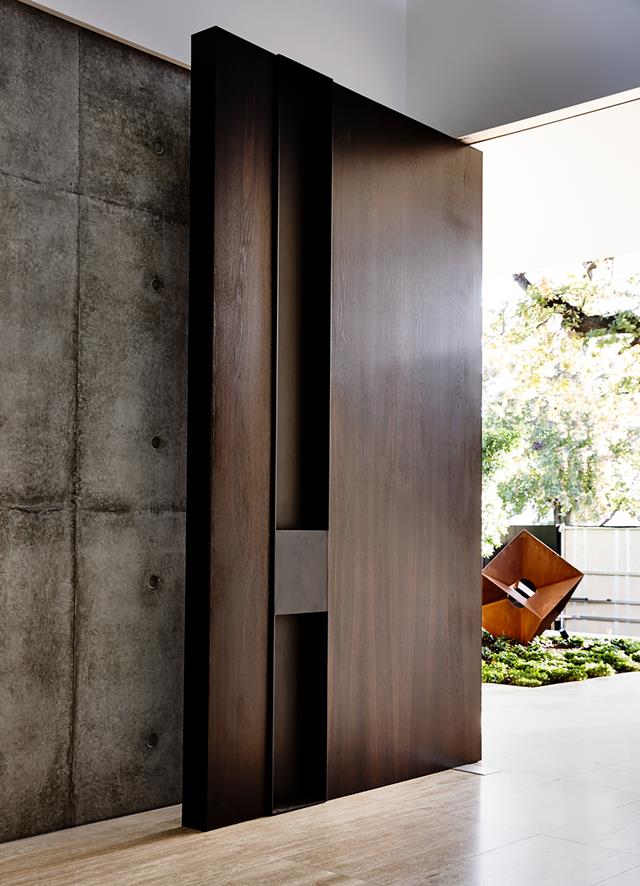
This door is the whole composition, and the room around it wisely steps back. The oversized dark wood pivot door dominates the foyer, set against a textured concrete wall that adds grit without competing for attention. Natural daylight from a large window spills in, softening the dark wood and making the space feel roomy and open. An abstract sculpture on the concrete provides a focal point that echoes the door’s scale. For a similar balance at home, let one massive element lead and keep the palette to neutrals; that is what keeps a bold door from overwhelming a room.
21 / 33Tall Dark Wood Door with Vertical Paneling and Frosted Glass
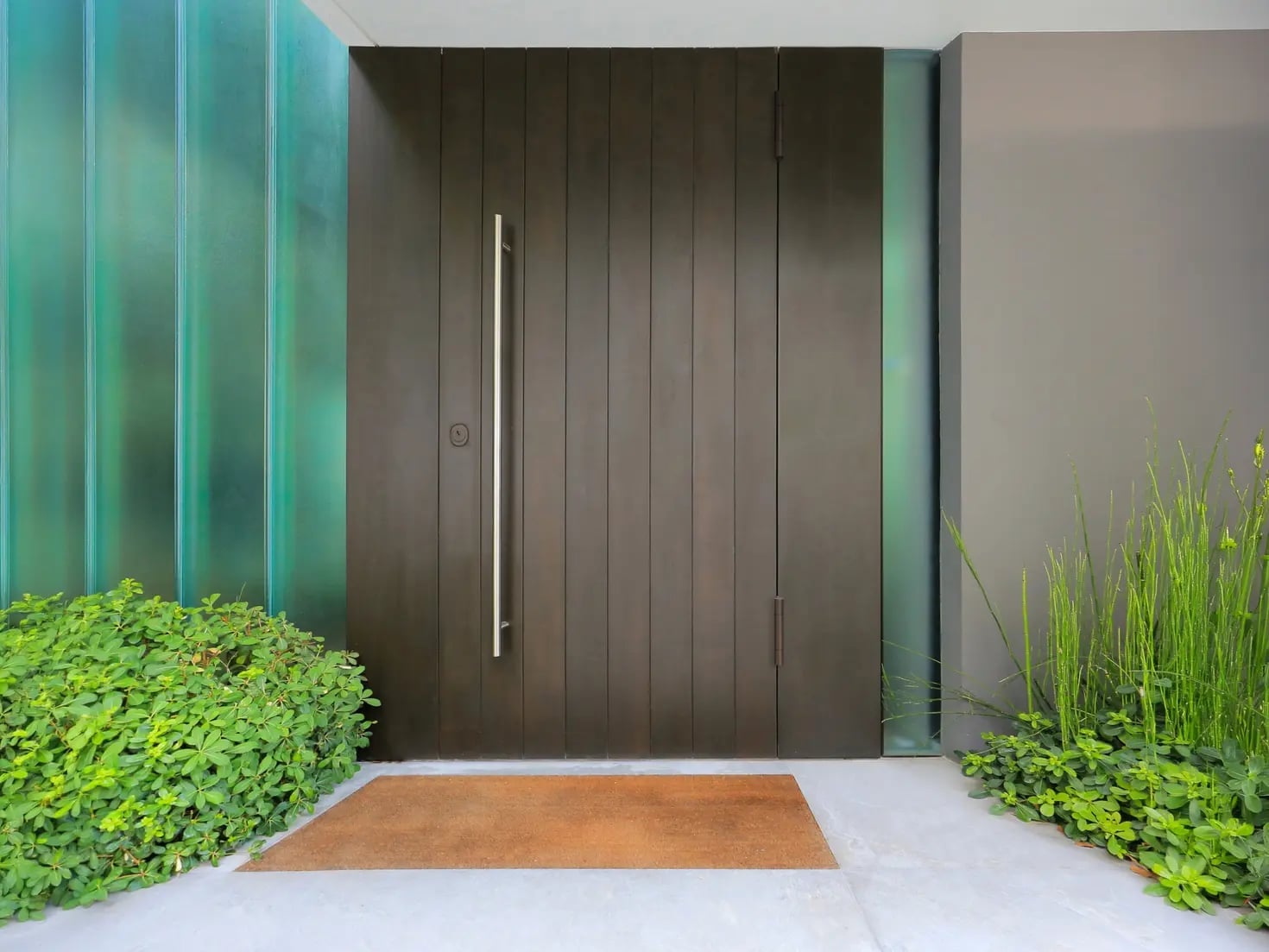
When a door is taller than the walls around it, the whole entryway starts to feel taller too. That is the idea behind this tall dark wood door with vertical frosted glass panels, flanked by narrow glass sidelights that keep the look open. The dark wood sets a serious tone, but the glass brings in enough daylight to stop the entrance from being dim. An outdoor sconce mounted nearby helps after sunset, casting light across the vertical lines and making the door a deliberate focal point. The palette stays restrained: dark brown, green, grey, and white, which lets the door’s height do the talking. The wood clearly dominates the glass. A smaller door with the same treatment would lose the drama, so the height is not optional here.
22 / 33Vertical Slatted Wood Door with Black Handle and Grey Stone Wall
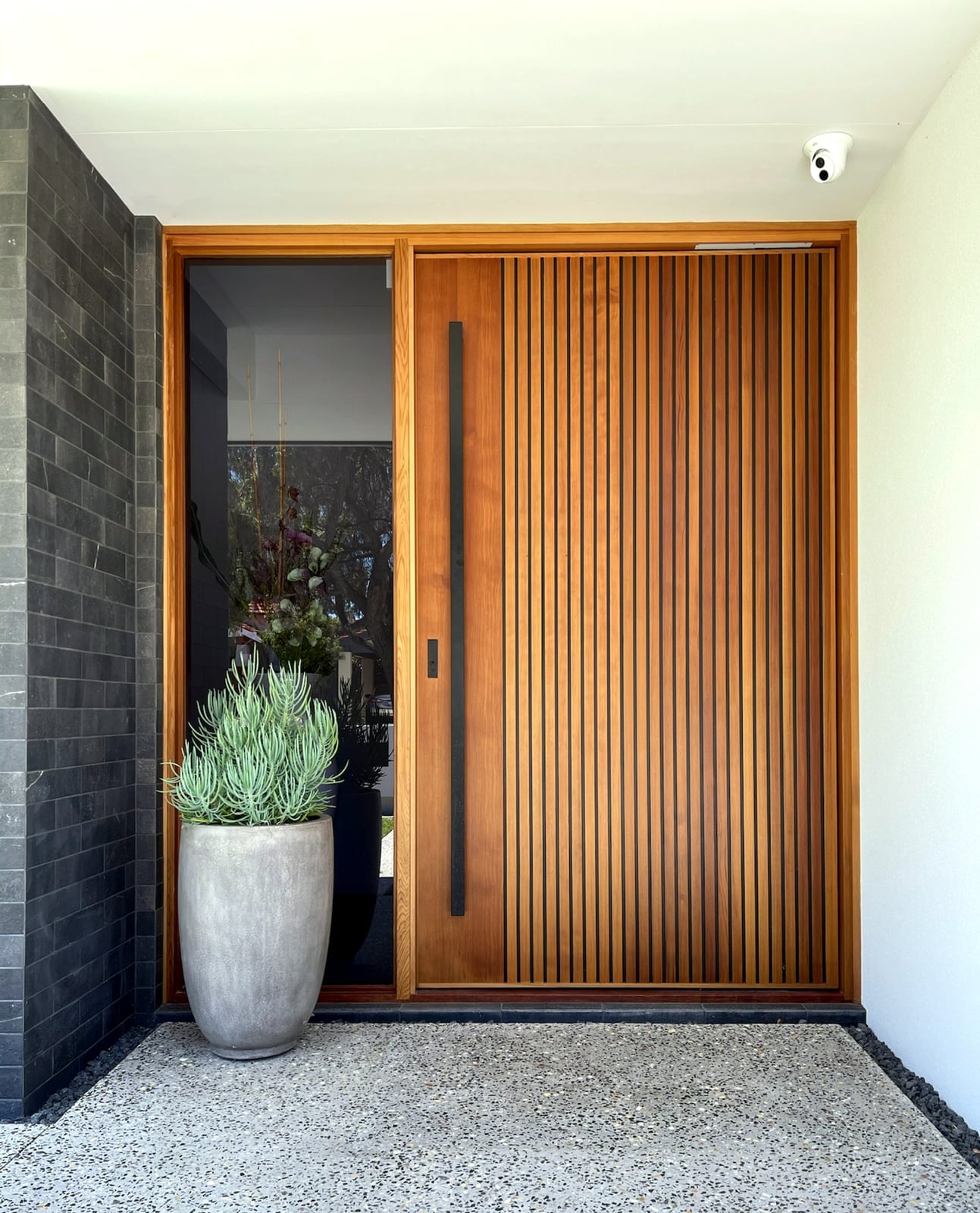
The vertical slats on this wood door run from top to bottom without interruption, creating a rhythm that draws the eye upward and makes the entrance feel taller than it is. A black handle provides a clean visual stop against the wood tones, while a glass sidelight next to the door lets in daylight without breaking the privacy. The grey stone wall behind the door anchors the whole composition with a neutral, grounded weight. A large planter on the ground adds a soft organic shape that contrasts with the strict vertical lines. The palette here is tight: wood tones, grey, and black, with no extra color to distract.
23 / 33Bright Orange Modern Front Door with Glass Side Panel and Brick Facade
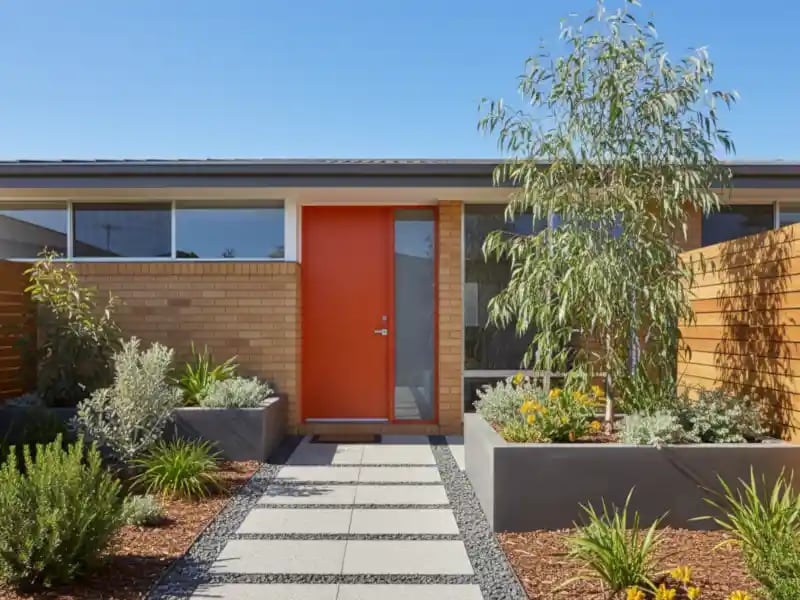
A bright orange door pops against muted surrounding materials. Here, the orange sits against a red brick facade, grey stone, and concrete, with a glass side panel that stops the color from feeling overwhelming. Warm orange against cool grey and earthy brick creates a natural tension that keeps the eye moving. A tree and planter boxes add green, which is the one color that can sit next to orange without clashing. The palette uses roughly one part saturated color to three parts calm backdrop. If the orange were surrounded by another bright color, the look would feel chaotic instead of confident.
24 / 33Frosted Glass Door with Black Frame and Round Mirror Accent
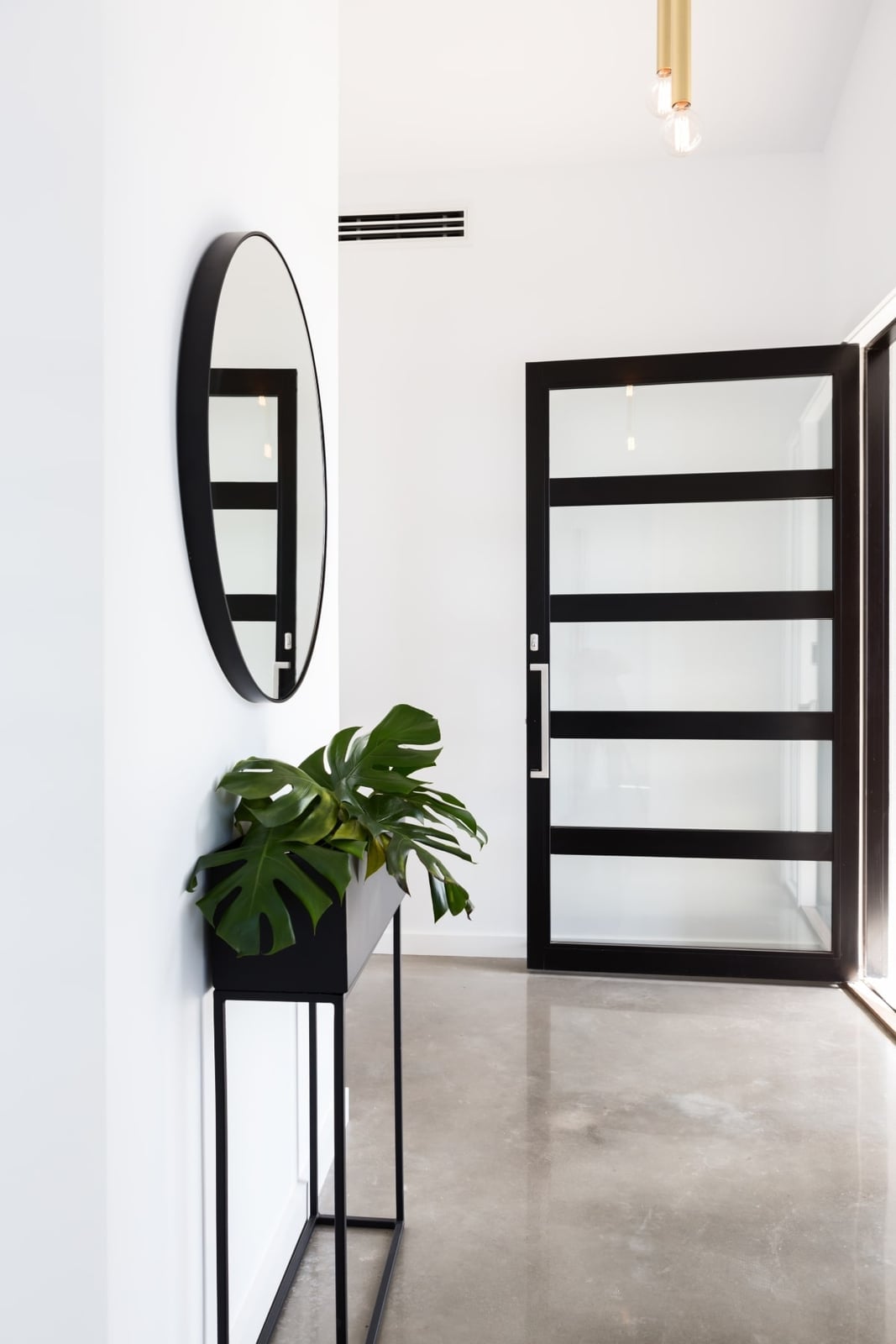
A frosted glass front door is often chosen for privacy, but this version uses the glass as a light diffuser rather than just a screen. The black frame holds horizontal frosted panels that soften incoming daylight and spread it across the entryway floor, while a round mirror mounted on the wall opposite the door bounces that light back into the room. Overhead track lighting adds a second source for evening hours, making the entrance feel bright without relying on a single fixture. A console table with a planter sits below the mirror, anchoring the layout without blocking the door’s view. The styling works because the mirror is not competing with the door. A patterned mirror or a heavy frame would pull focus away from the glass, so keeping the accent round and simple lets the door stay the main event.
25 / 33Oversized Weathered Wood Door Against Grey Panels and Red Brick
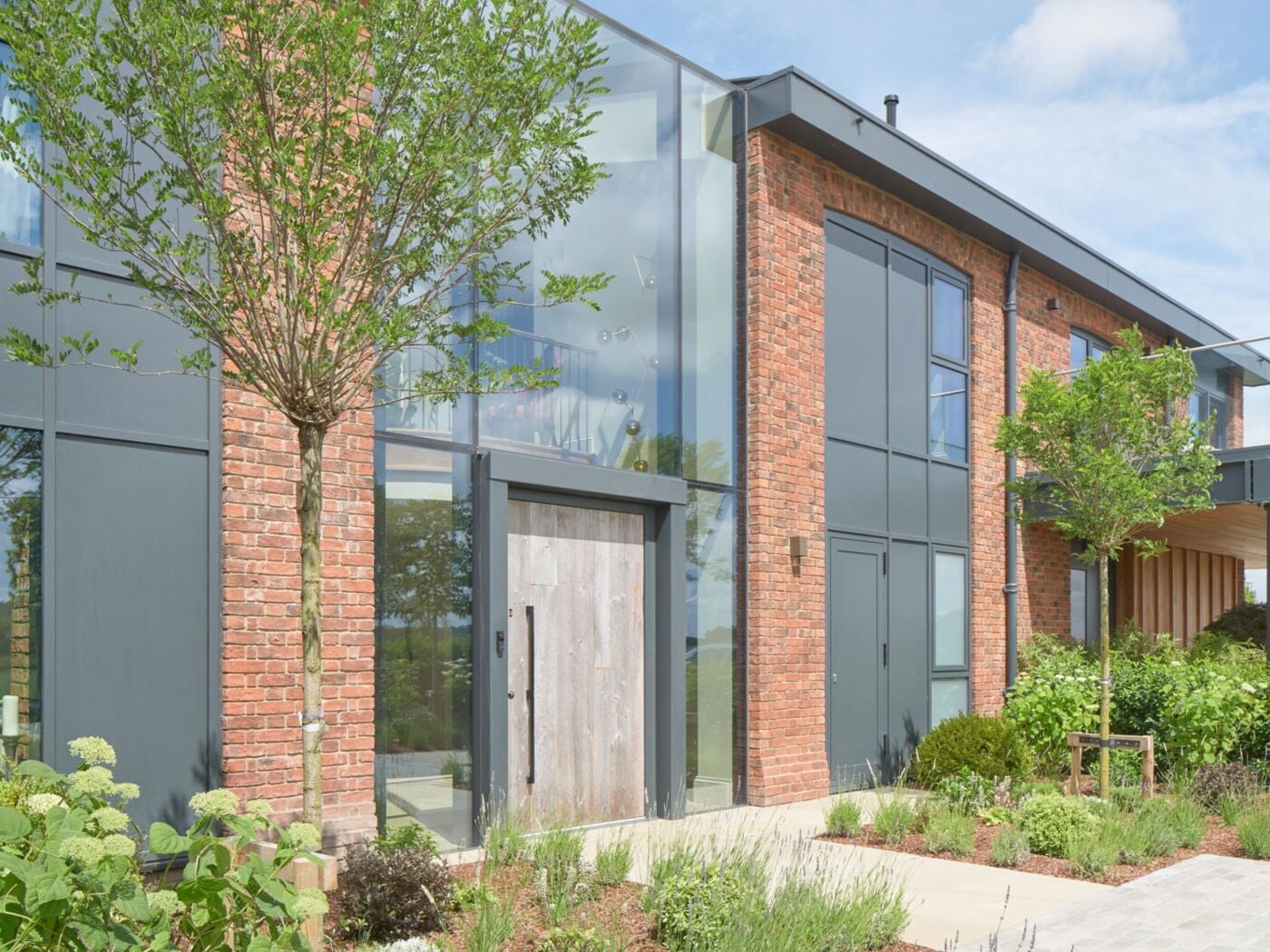
The wood on this oversized door has a weathered finish that catches the light differently than a smooth surface would, giving the entrance a lived-in texture against the crisp grey wall panels and red brick. A full glass facade beside the door keeps the mass of the wood from feeling heavy, balancing rough with transparent. The door is clearly the main event here, with the brick and grey panels acting as a quiet backdrop that lets the wood’s grain and age take center stage.
26 / 33Large Black Pivot Door with Diagonal Slatted Pattern
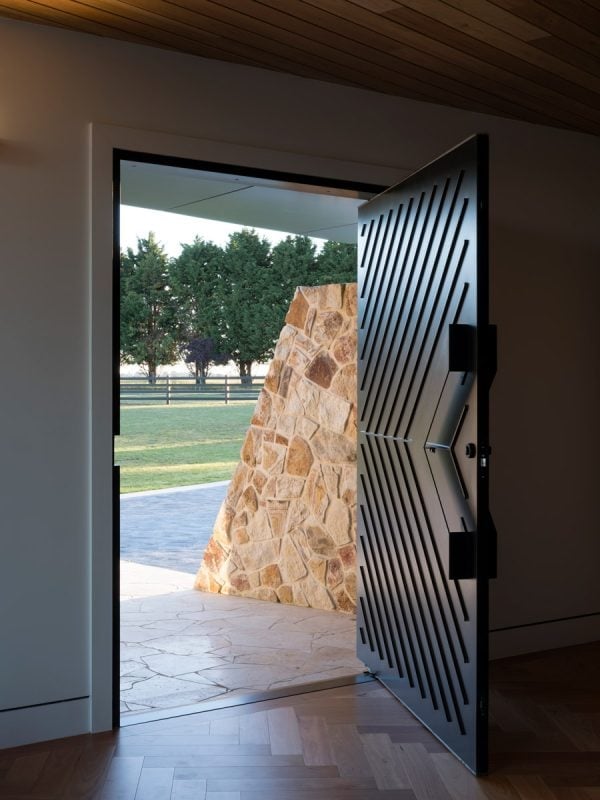
A large black pivot door with a diagonal slatted geometric pattern makes a strong first impression without trying to do too much. The door is open in this view, revealing the outdoor space beyond and making the entrance feel less like a barrier and more like a threshold. The palette stays restrained: black, stone, and green from the surrounding plants. The geometric pattern is what defines the modern style here. It breaks the solidity of the black finish and adds visual rhythm. If you want a similar look with a lighter footprint, consider a black door with a simpler vertical or horizontal slat pattern. The pivot mechanism itself is a statement, so the door can carry a bold finish without the room around it needing to compete.
27 / 33Light Wood Door with Horizontal Panels and Glass Insert on Stone
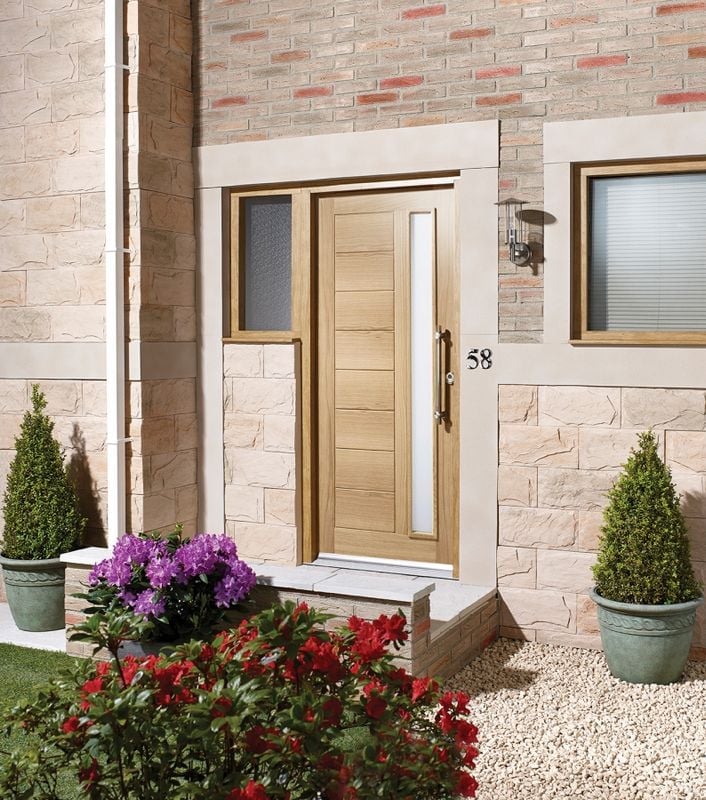
For a rental entryway, if you cannot change the door, change what sits next to it. Here, a light wood door with horizontal panels and a glass insert is set against a beige stone facade. The palette is light wood, beige stone, and white, which keeps the compact entry feeling open. An exterior light fixture adds a warm glow that softens the stone and concrete around it.
The horizontal paneling on the door is the defining style element. It draws the eye across the width of the door, making a narrow entry feel wider. What breaks the pattern is the single glass insert, which adds a modern contrast to the wood. For a renter, adding a similar light fixture or a slim console table beside the door can echo the horizontal line without any permanent changes. Check your lease before adding any new hardware.
28 / 33Oversized Natural Wood Plank Door with Large Glass Panels and Brick
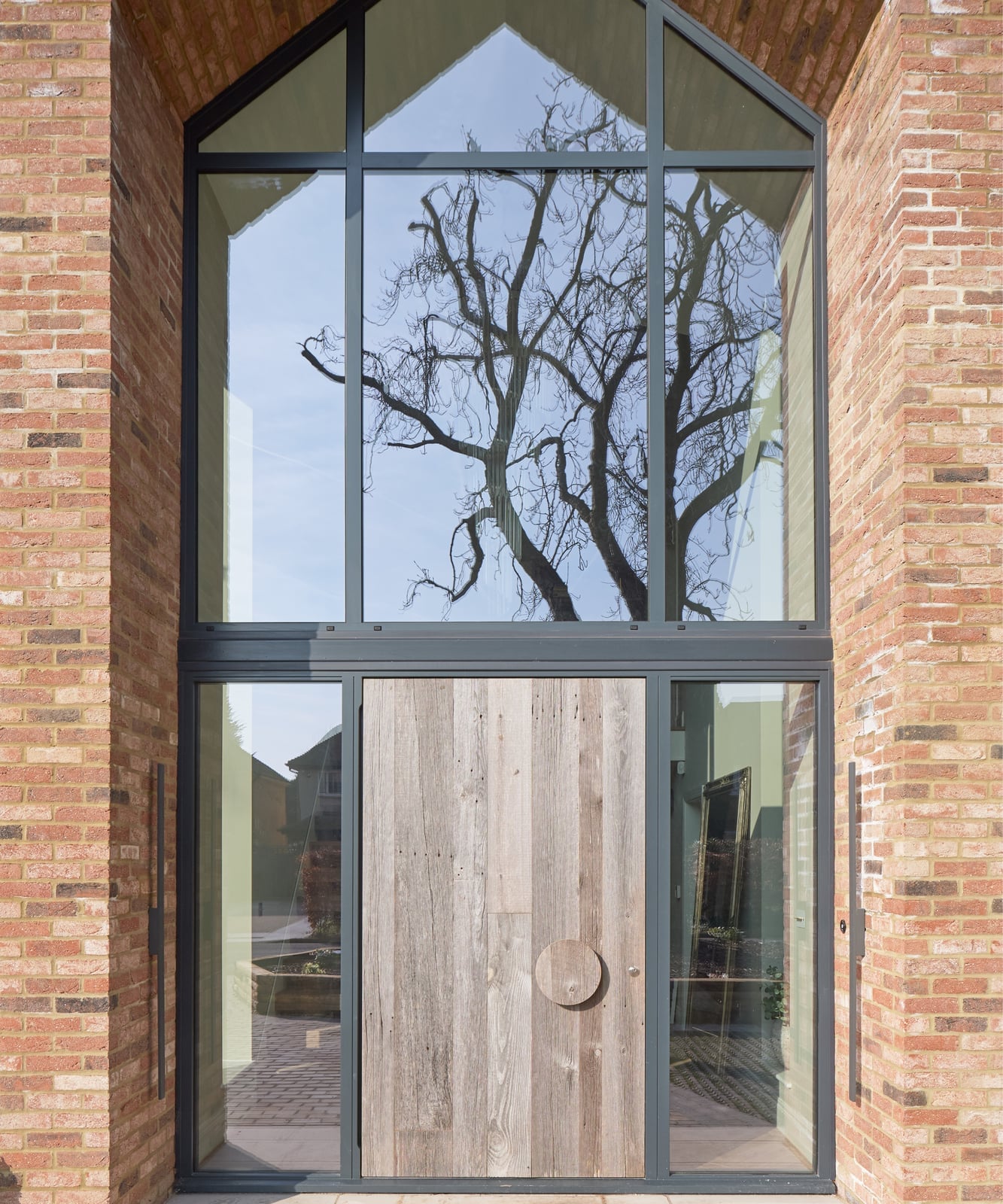
This oversized natural wood plank door uses large glass panels to balance its scale. The wood grain is the hero, but the glass keeps the entry from feeling like a solid wall. The brick facade and grey tones around it stay neutral, so the door does not compete with the architecture. The wide shot shows how the door works with the adjacent windows to create an open, airy feel. The proportion is key here: the door is tall enough to match the windows, and the glass panels are large enough to let light through without making the door feel fragile.
29 / 33Dark Wood Modern Door with Stone and Red Brick Facade
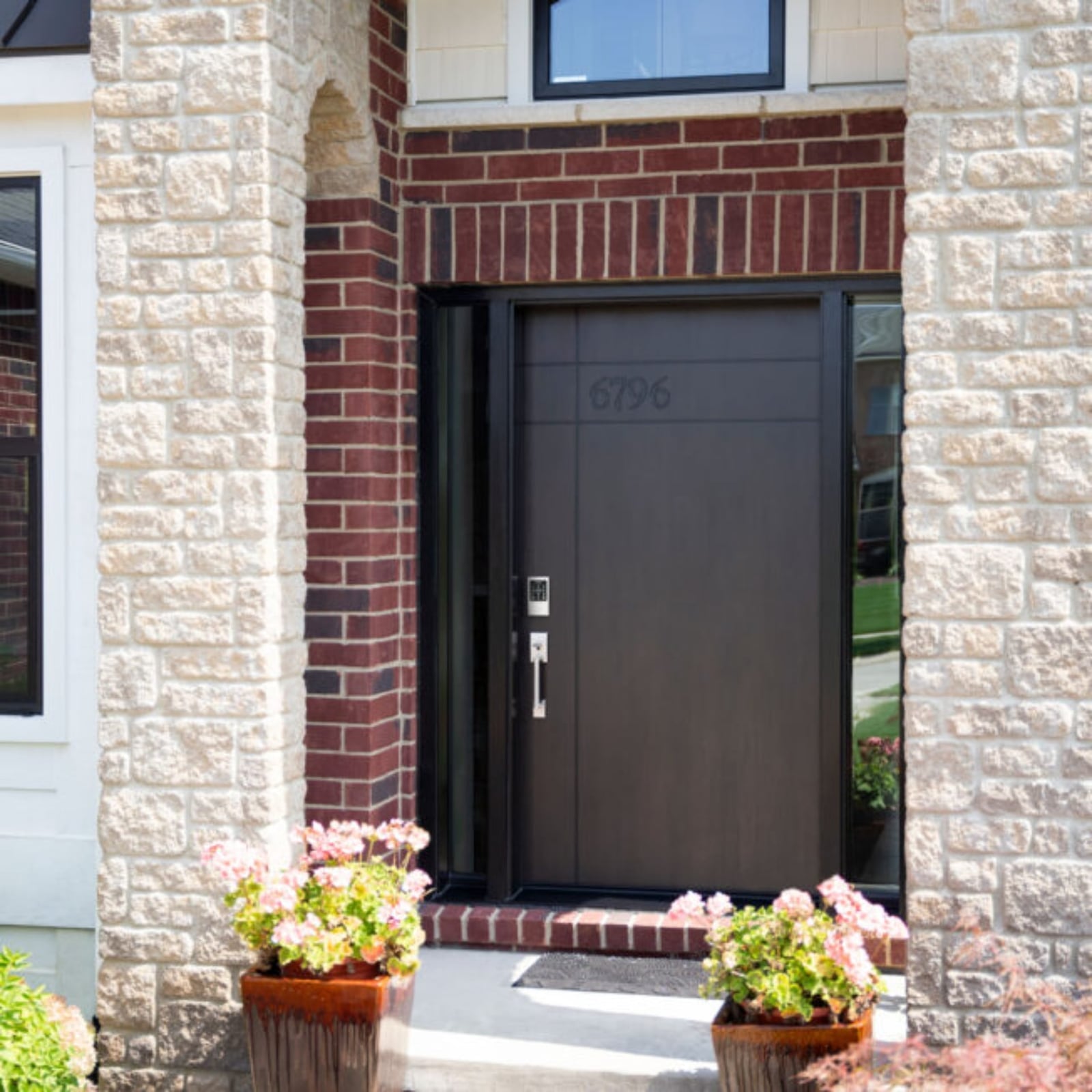
The dark wood modern door here is set within an arched stone entryway, with a combination of grey stone and red brick framing it. The palette of brown, grey, red brick, and white keeps the facade grounded. Potted plants on either side add a soft, organic contrast to the hard materials. The recessed lighting above the door highlights the wood grain without washing out the brick. The mix of stone and red brick is what defines this look. It gives the entry a layered, textured feel that a single material would not achieve. The dark wood door holds its own against the heavy stone arch, so the overall design feels balanced.
30 / 33Warm Wood Door with Glass Sidelight Against White Brick Wall
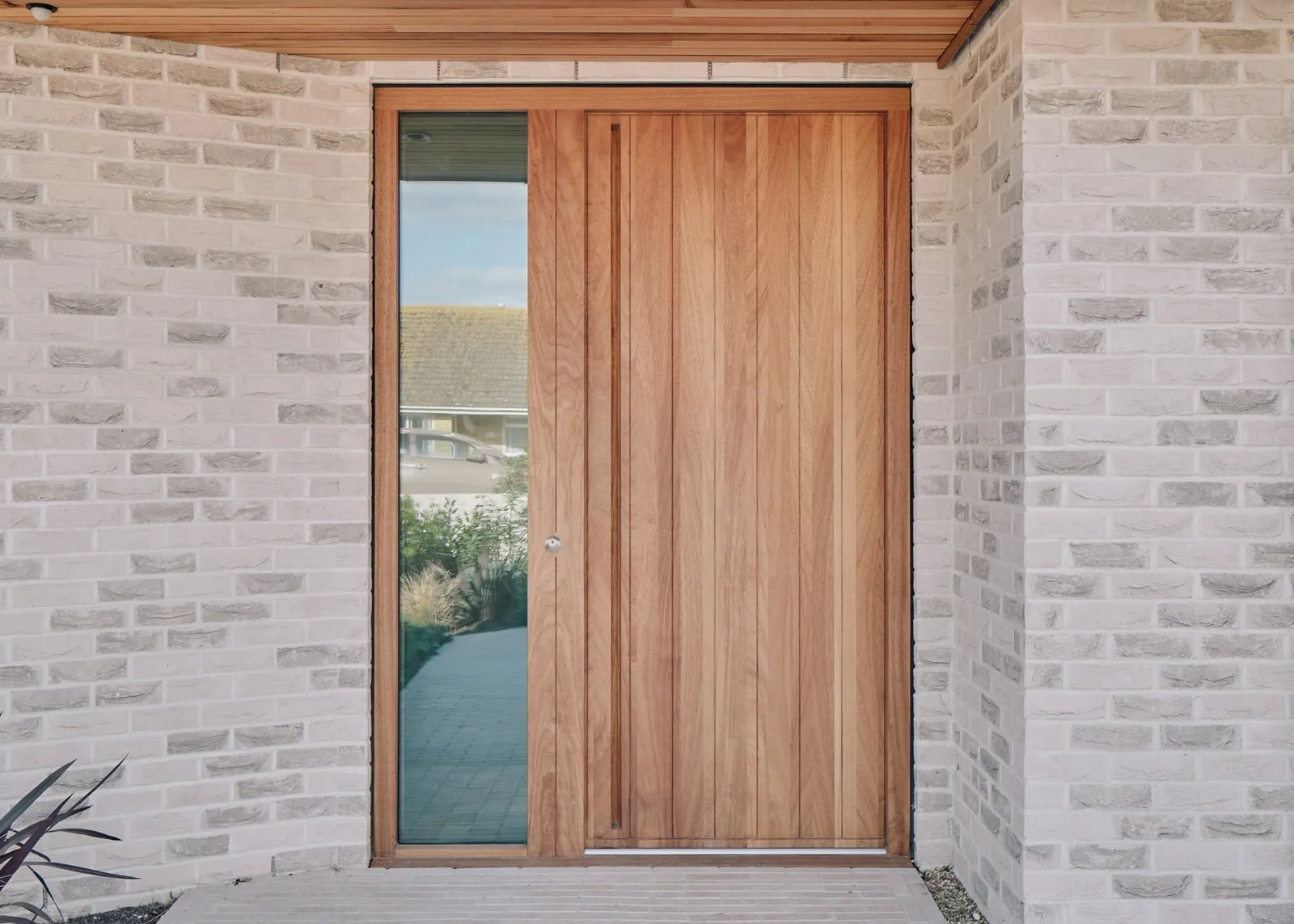
Set this warm wood door against a white brick wall instead of a darker facade and the whole entry changes. The glass sidelight next to the door adds a vertical line that echoes the door’s height, making the front exterior feel more open. The palette stays simple: wood, white, and grey. The natural wood grain is the defining element here. It brings warmth to the white brick, which can read as cold on its own.
What breaks the pattern is the glass sidelight. It lets light pass through the entry so the door does not feel like a solid block. For a similar effect on a budget, try a white brick facade (or even a white brick veneer) with a wood door that has a single glass panel. The proportion works because the door and sidelight are roughly the same height, so the eye moves smoothly across the entry. Keep the hardware in a dark metal finish to anchor the warm wood.
31 / 33Natural Wood Door with Frosted Glass Sidelights and Transom
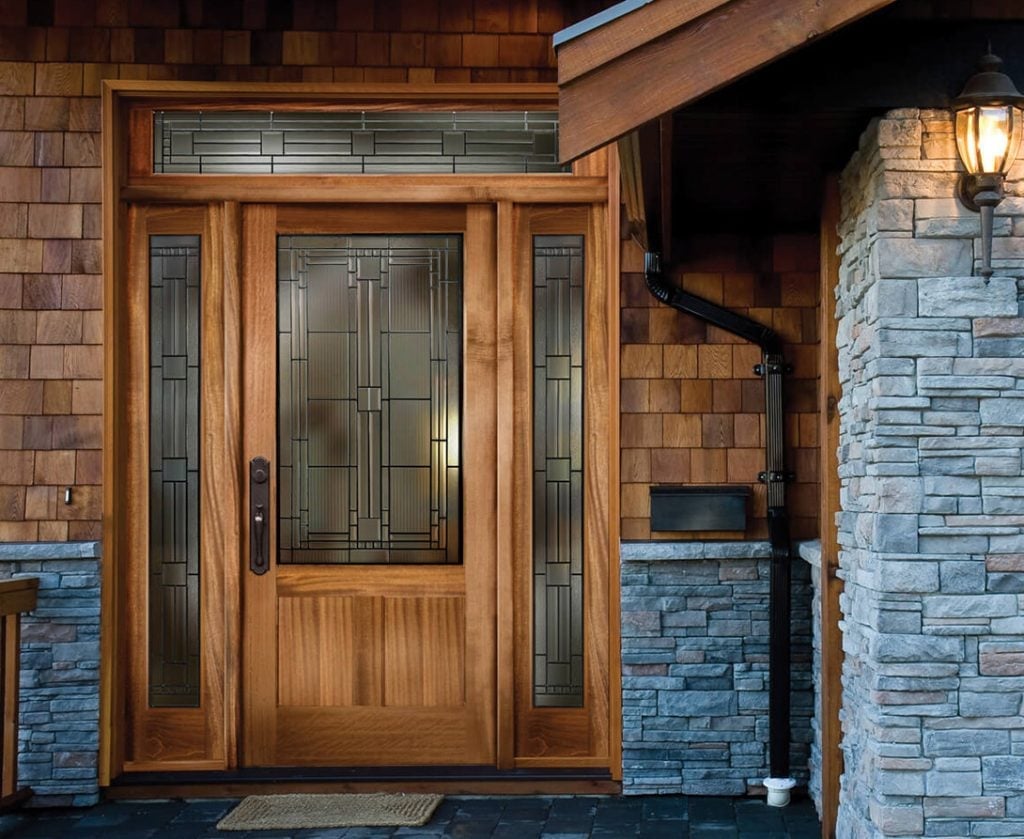
Natural wood grain becomes the quiet anchor here, with frosted glass sidelights and a matching transom that spread daylight across the entry without sacrificing privacy. The exterior lamp adds a warm glow after dark, so the door reads just as clearly at night. This is a style that leans on contrast: the soft, diffuse glass against the solid, textured wood keeps the facade from feeling heavy. A useful lighting principle is to balance natural and artificial sources so the door remains the focal point in any weather or hour.
32 / 33Geometric Frosted Glass Panes on Dark Wood Modern Door
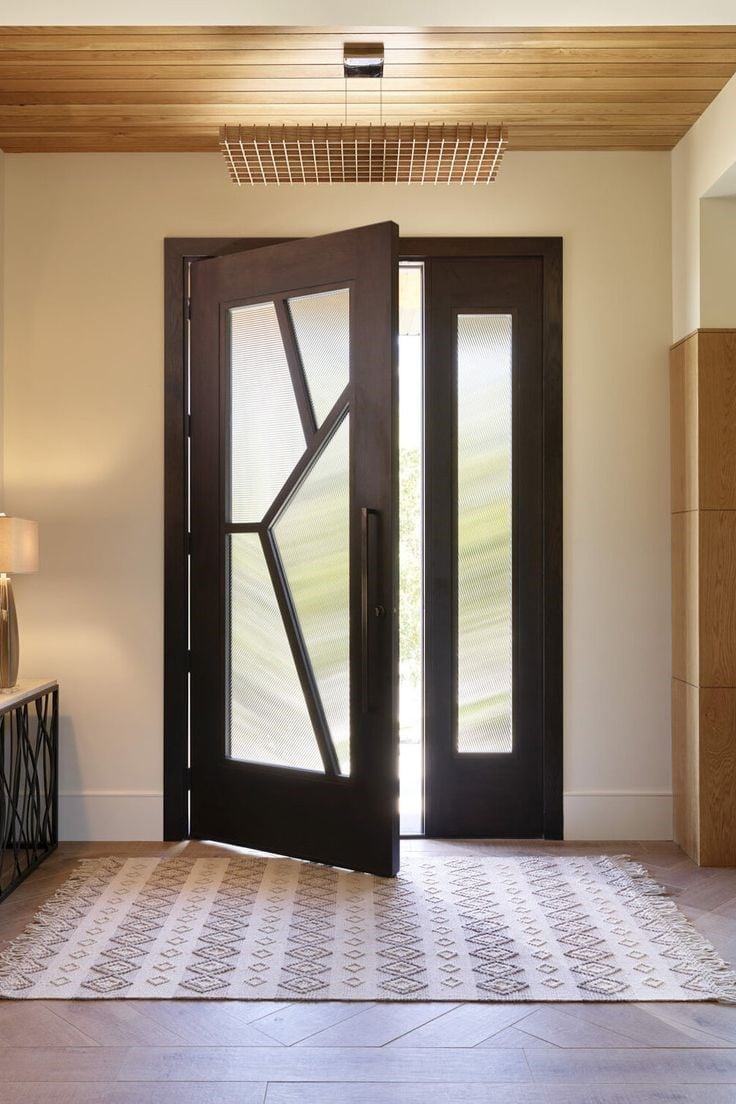
Dark wood sets a serious tone, but the geometric frosted glass panes break it into something more playful. The angular pattern catches light from the overhead fixture and the door itself, casting shifting shadows across the wood flooring and the patterned rug inside. A console table nearby grounds the composition, keeping the entryway from feeling like a corridor. The palette here is cream, grey, and dark wood, with the glass acting as the wildcard. What defines the look is the ratio: about three parts solid surface to one part translucent geometry, which keeps the door modern without going stark.
33 / 33Final Thoughts
Choosing a modern front door comes down to material, light, and proportion. Wood offers warmth, glass opens up an entry, and metal frames add structure. The best door fits your facade without competing with it. Consider upkeep: wood needs sealing, glass needs cleaning, and metal finishes hold up well in most climates. A solid door with a sidelight gives you both privacy and daylight. Whatever you pick, let the architecture lead.