
Fall is the perfect season to rethink the hallway and give this often-overlooked space a warmer, more intentional feel. For Fall 2026, modern hallway decor is all about refined textures, earthy color palettes, sculptural accents, and practical details that make the entrance feel welcoming without looking cluttered. I love how even a narrow hallway can become stylish with the right lighting, a beautiful runner, or one carefully chosen statement piece. Rich browns, warm neutrals, muted greens, and deep autumn tones bring seasonal character while still keeping the overall look contemporary. From sleek consoles and layered lighting to mirrors and textured walls, there are plenty of ways to make the hallway feel connected to the rest of the home. In this guide, I’m sharing modern Fall 2026 hallway decor ideas that balance comfort, function, and effortless seasonal style.
Warm Wood Slat Wall With a Tailored Entryway
The first hallway combines rich wood tones, dark vertical slats, large mirrors, and carefully selected furniture to create a polished modern entrance. I especially notice the full-height slatted wall on the right, where a wall-mounted drawer unit sits above a compact tufted bench. A dark coat hangs directly on the slats, while shoes are positioned underneath. Opposite it, a wood-toned cabinet provides additional storage, and the large mirror visually expands the space. Several pendant lights hang in front of the mirror, adding another layer of visual interest.
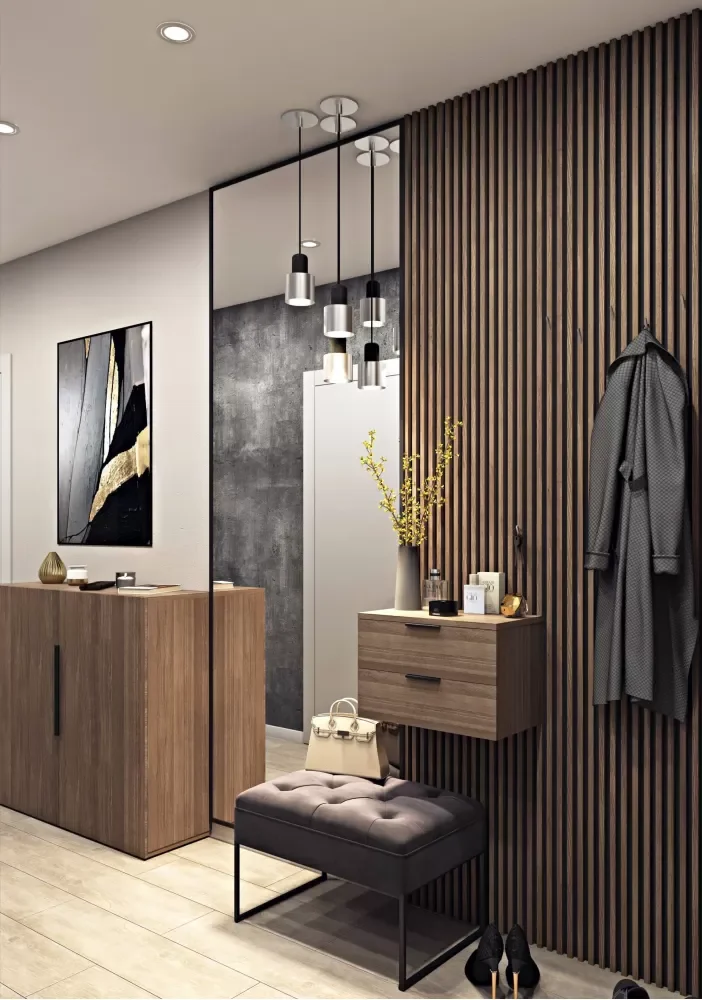
I think this arrangement works particularly well because every major element has a practical role. The bench provides a comfortable place to sit while putting on shoes, the floating drawer offers convenient storage for smaller items, and the tall cabinet keeps larger belongings organized. The mirror is equally useful in an entryway because it gives the homeowner an opportunity for a final check before leaving while making the hallway appear more open. The combination of dark slats, wood cabinetry, black accents, and soft upholstery also gives the space a balanced fall character without looking overly seasonal.
From my perspective, the strongest lesson here is to make the entryway functional first and decorative second. A feature wall becomes much more effective when it also supports everyday use. I would keep accessories restrained, as the vertical wall and pendant lighting already provide plenty of visual structure. For a similar fall look, I would concentrate on warm wood finishes, dark neutral accents, and one upholstered seating element rather than adding numerous decorative pieces.
Soft Neutral Hallway With a Floating Console and Framed Mirror
This narrow hallway takes a much quieter approach, using predominantly white walls, a white interior door, a pale floor, and a slim floating console beneath a large black-framed mirror. Three small black cylindrical wall lights are positioned above the mirror, while the console holds a few restrained decorative objects and a small arrangement of greenery. A light wood-toned horizontal detail runs along the right wall, and a narrow bench is tucked into that side of the passage.
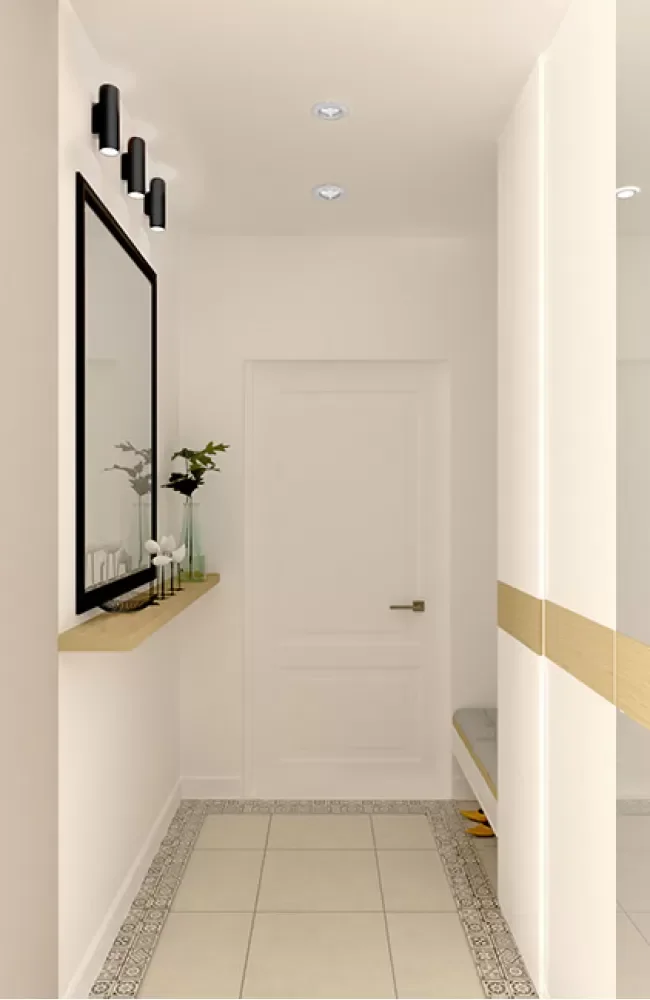
I like how the design keeps the narrow corridor visually open by avoiding bulky furniture. The floating console leaves the floor underneath unobstructed, which helps maintain a sense of space. The mirror also becomes an important practical feature, reflecting the light-colored surroundings and adding depth. The limited palette makes the hallway feel clean and calm, while the black lighting and mirror frame introduce enough contrast to prevent the room from feeling flat.
For me, this is a useful example of how a small hallway can benefit from restraint. When space is limited, I prefer choosing one strong mirror, one compact storage surface, and carefully positioned lighting rather than filling every available wall. The warm horizontal accent is particularly effective because it introduces a subtle change in texture and color without overwhelming the neutral scheme. For a fall-inspired interpretation, I would preserve this simplicity and let the existing warm tones provide the seasonal feeling.
Minimal White Corridor With Marble-Look Flooring
The third hallway is exceptionally light, with white or very pale walls, a large mirrored surface on the left, and a pale floor featuring delicate gray veining. A streamlined wall-mounted cabinet is partially visible along the left side, while a narrow vertical strip of wood-toned detailing appears near the ceiling. At the end of the corridor, a recessed doorway creates depth, and two small potted arrangements sit near the mirrored wall.
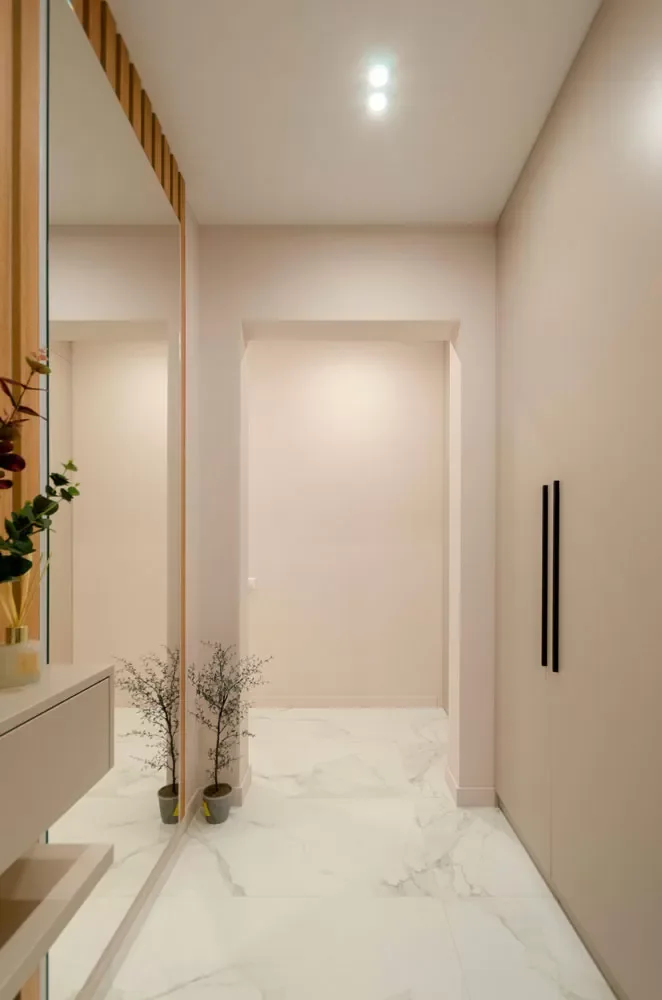
The strength of this hallway is its uncluttered visual flow. I can see how the reflective surface helps make the passage feel wider, while the pale floor carries light through the entire space. The simple cabinetry also keeps storage visually quiet instead of allowing the hallway to become dominated by furniture. Even the small decorative arrangements remain close to the floor and do not interfere with the open sightline.
I would recommend this type of approach for anyone who wants a modern hallway that feels spacious and composed. The important detail is not to introduce too many competing finishes. Here, the pale surfaces, subtle floor veining, mirror, and small amount of wood-toned detailing create enough variation on their own. For fall, I would keep the architecture exactly as restrained and allow only a few warm-toned accessories to soften the overall scheme.
Statement Wall Sconce With a Warm Gold Accent
This hallway introduces warmth through a distinctive wall-mounted light with a rectangular dark shade and a vertical gold-toned element extending behind it. The surrounding walls are light and neutral, while a white door with dark hardware opens toward another space. A tall, narrow planter stands near the doorway, and the floor transitions from a pale marble-look surface in the foreground to a warmer wood-toned floor beyond.
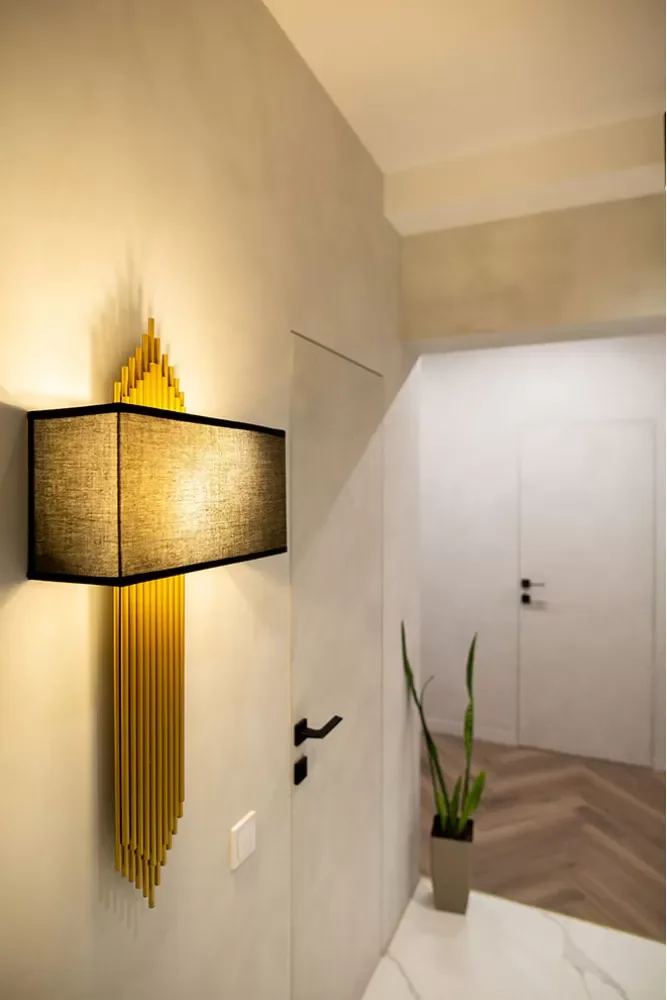
I find the lighting fixture particularly effective because it functions as both illumination and decoration. The dark shade creates a strong graphic outline against the pale wall, while the gold-toned vertical detail adds warmth and height. The composition remains simple because there is no unnecessary furniture competing with the light. The transition between the pale foreground floor and the warmer floor beyond also gives the corridor a subtle sense of progression.
In my experience, statement lighting can be one of the easiest ways to give a hallway personality when there is not enough room for furniture or elaborate decoration. I would treat a fixture like this as the focal point and keep surrounding elements quiet. For a modern fall atmosphere, warm metallic accents and soft neutral walls are especially useful because they add coziness without making the hallway feel themed.
Contemporary Brick Hallway With Geometric Floor Tiles
The fifth hallway takes a much stronger architectural direction, with exposed red-brown brick walls on both sides and a white patterned floor covered in fine geometric lines. A tall white storage unit occupies the left side, while the corridor extends toward a brighter area with a large potted plant. Slim wall-mounted lights are installed against the brick wall, creating focused illumination along the passage.
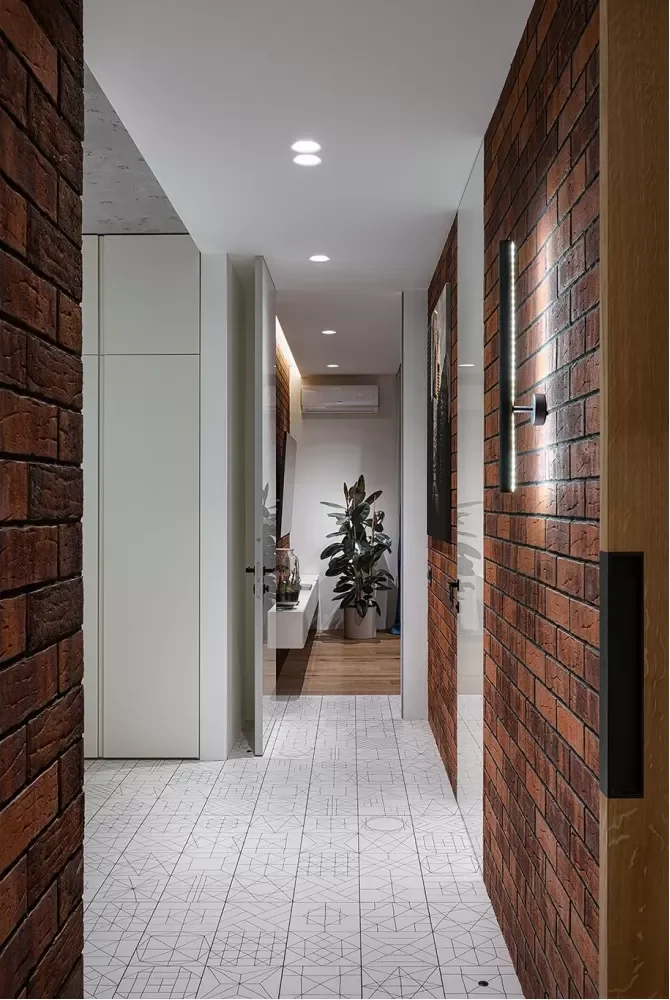
I like the contrast between the textured brick and the highly patterned floor. The brick gives the hallway substantial visual weight, while the light flooring prevents the narrow passage from becoming too dark. The tall storage unit also makes good use of vertical space, and the slim lighting fixtures provide illumination without projecting far into the walkway. The arrangement feels practical because the circulation remains clear from front to back.
For me, this design demonstrates how a hallway can handle several strong surfaces when they are balanced carefully. The brick provides texture, the floor introduces pattern, and the white cabinetry supplies visual relief. I would avoid adding many additional decorative elements because the architecture already does most of the work. For fall, the earthy brick tones are particularly effective, naturally bringing a warmer seasonal quality into the modern setting.
Compact Entry Bench With Light Wood Paneling
This hallway combines a large white storage wall with a compact entry bench and a vertical light wood-toned panel behind it. Three simple geometric hooks are mounted on the panel, with a coat hanging from one of them. A dark bag rests on the upholstered bench, while the surrounding walls remain white and the floor uses a warm light wood finish.
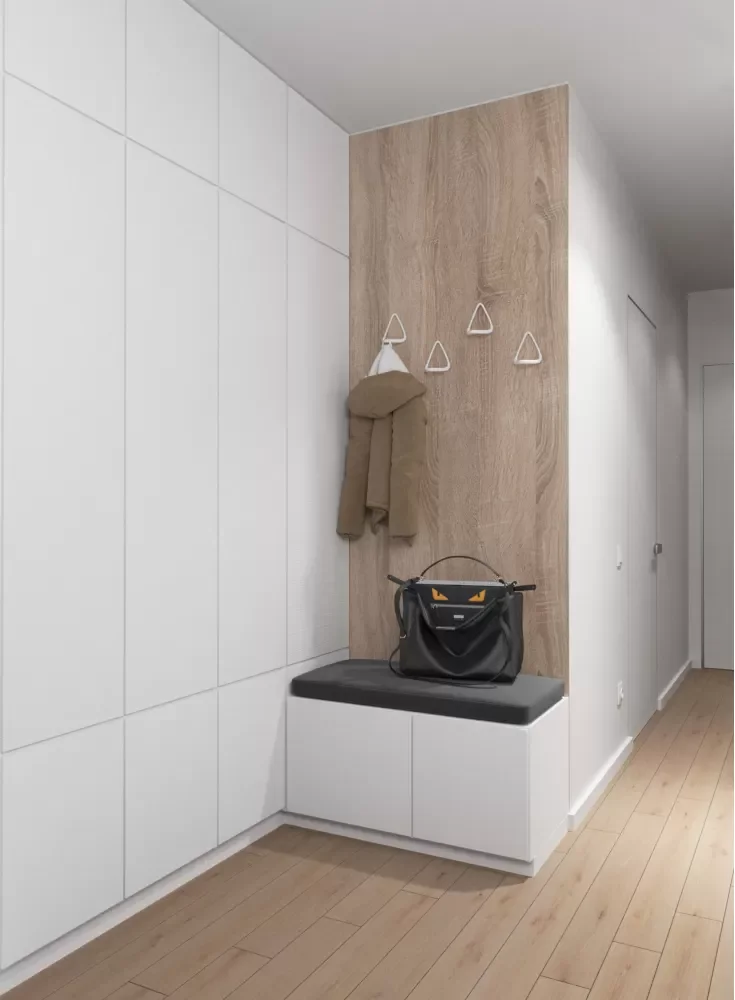
I think this is one of the most practical arrangements in the collection because the entry zone has been concentrated into a very small footprint. The bench creates a place to sit, while the hooks provide immediate access to outerwear. The closed white cabinetry on the opposite side offers substantial concealed storage without visually crowding the corridor. The contrast between the wood panel, dark bench, and white cabinetry also makes the small entry area feel intentionally designed.
When I look at compact hallways, I always pay attention to whether storage is integrated into the architecture rather than added afterward. This example does that particularly well. The narrow wood panel gives the functional hook area a clear visual identity, while the bench makes the space more useful every day. I would preserve the limited palette and simply maintain the surfaces carefully so the hallway continues to feel orderly and calm.
Elegant Hallway With Symmetrical Lighting and a Console
The seventh hallway has a more refined atmosphere, with pale walls, white paneled doors, a large mirror at the far end, and a slim dark console table with a gold-toned frame. A dark upholstered bench sits along the left wall, while matching wall lights frame the central area. The floor is finished in large gray-toned tiles with subtle variation, and the ceiling includes layered trim and recessed lighting.
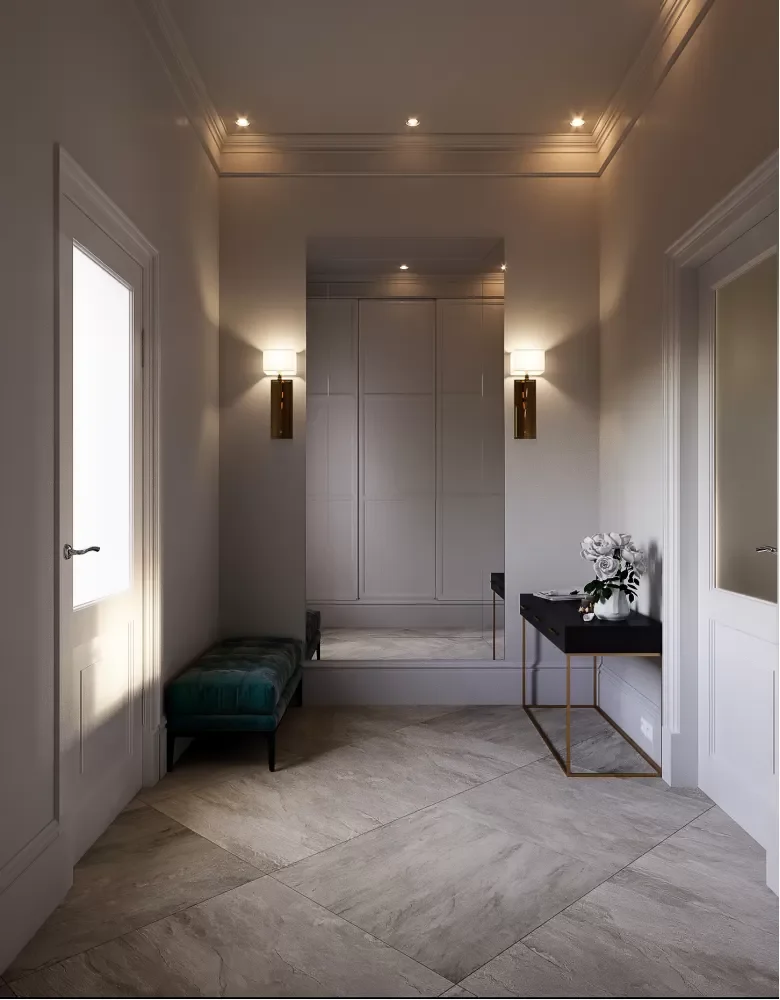
The symmetry is what makes this hallway feel especially composed. The two wall lights visually frame the central mirror, while the console and bench create useful furniture zones on opposite sides. The large mirror extends the perspective of the corridor and reflects the surrounding architectural details. I also like the contrast between the dark furniture and the pale walls because it creates definition without requiring a large number of decorative objects.
For a modern fall interior, I would take inspiration from the combination of muted gray, dark upholstery, pale architectural details, and warm metallic accents. The space already has enough ornamentation through its molding, lighting, mirror, and furniture, so I would resist adding more. In my view, the most successful seasonal styling here would be subtle and focused on preserving the elegant proportions.
Gray Brick Entry With a Dramatic Illuminated Mirror
This compact hallway combines gray brick walls, dark cabinetry, a gray door, and an eye-catching oversized mirror surrounded by numerous round illuminated bulbs. The floor uses a mixture of white and gray geometric and patterned tiles, creating a decorative surface beneath the otherwise restrained palette. A small wall-mounted shelf with decorative objects sits beside the mirror.
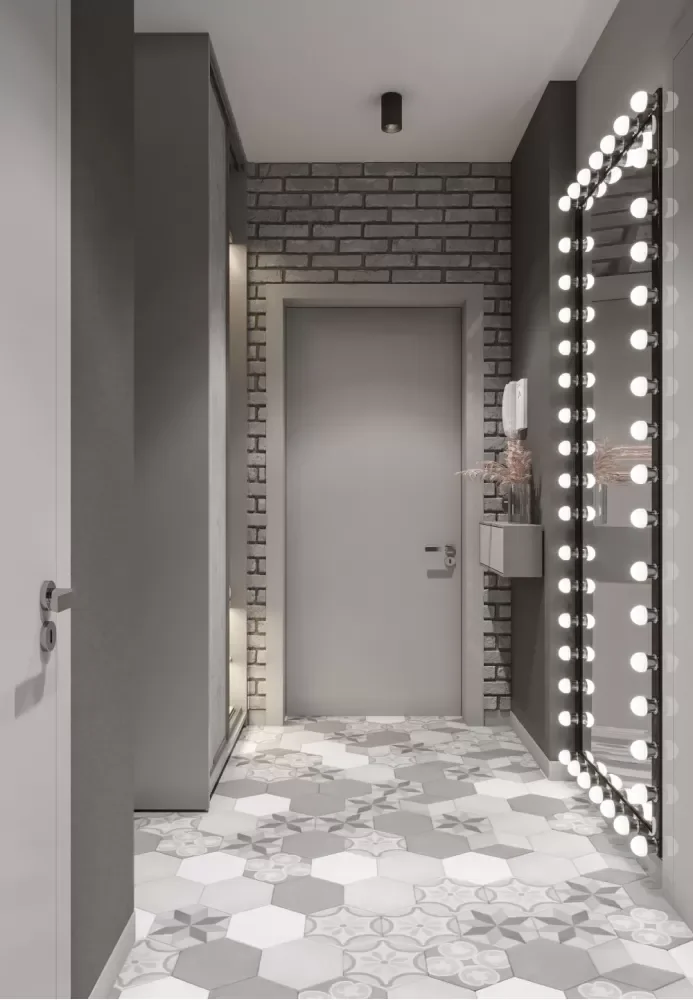
I find the illuminated mirror especially interesting because it immediately establishes the focal point of the space. It provides practical lighting while also creating a dressing-area feeling within the hallway. The dark gray surfaces and brick texture give the corridor depth, while the patterned floor prevents the neutral palette from becoming monotonous. The tall cabinetry on the left also contributes valuable storage without interrupting the main walkway.
This design shows how one highly expressive element can transform a relatively compact corridor. I would keep the rest of the styling controlled so the illuminated mirror remains the visual centerpiece. The gray, white, and black palette is also particularly adaptable for fall because it provides a sophisticated foundation for warmer textiles or small seasonal accents without requiring a complete redesign.
Light Wood Window Frame With a Classic White Door
The ninth hallway is simple and warm, featuring a white paneled door beside a large window framed in light wood. The window has a lowered neutral Roman shade, and two decorative vessels sit on the sill, one containing a small branch arrangement. The floor continues the warm wood tone, while the walls remain a soft neutral color with subtle texture.
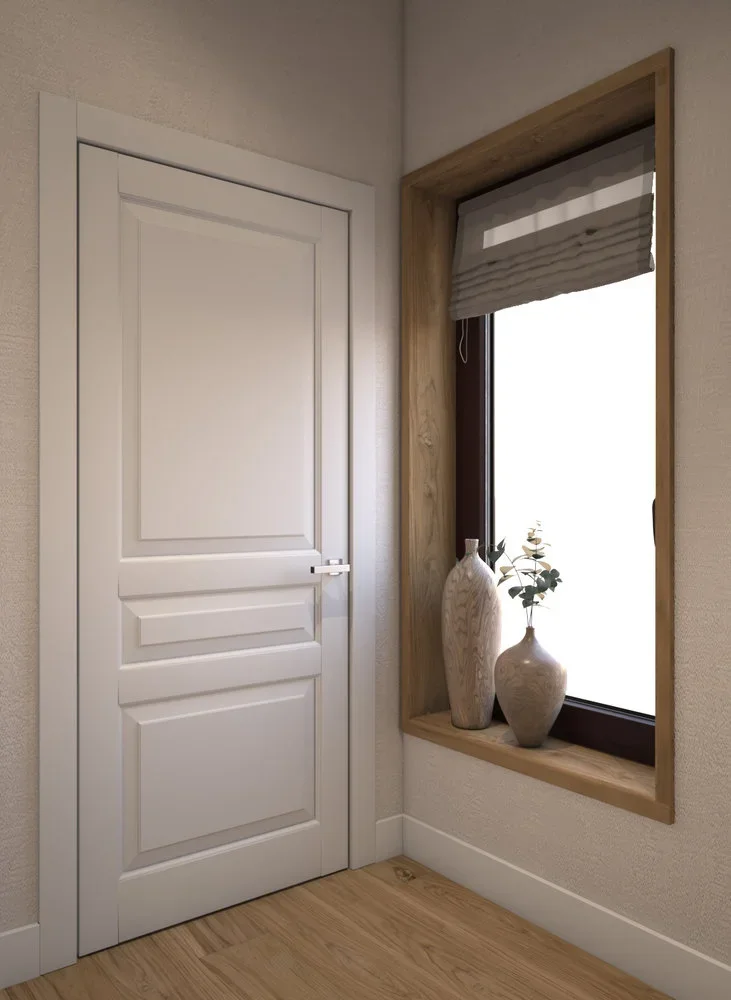
I like the quiet balance between the traditional detailing of the paneled door and the clean simplicity of the window area. The natural light from the window becomes an important feature, while the light wood frame and floor add warmth against the pale walls. The decorative vessels are kept to a minimum, allowing the window itself to remain visually open. It feels like a hallway designed around comfort rather than visual excess.
For me, this is a good reminder that modern hallway decor does not have to mean completely stark or severe. A simple paneled door, warm flooring, and carefully framed window can create a welcoming transition between rooms. For fall, I would emphasize the existing warm wood and neutral tones rather than introducing strong seasonal colors. A restrained arrangement on the sill is enough to maintain the calm character shown here.
Modern Hallway Storage With Wood and Charcoal Cabinetry
The final hallway uses a sophisticated combination of wood cabinetry and large charcoal-colored storage doors. On the left, a long wood-toned built-in includes drawers, open shelving, and a large mirror, with small decorative objects arranged across the shelves and countertop. The tall dark storage units occupy the center and right side, while slim linear ceiling lights illuminate the space. In the background, sheer curtains and a softly lit room add depth to the view beyond the hallway.
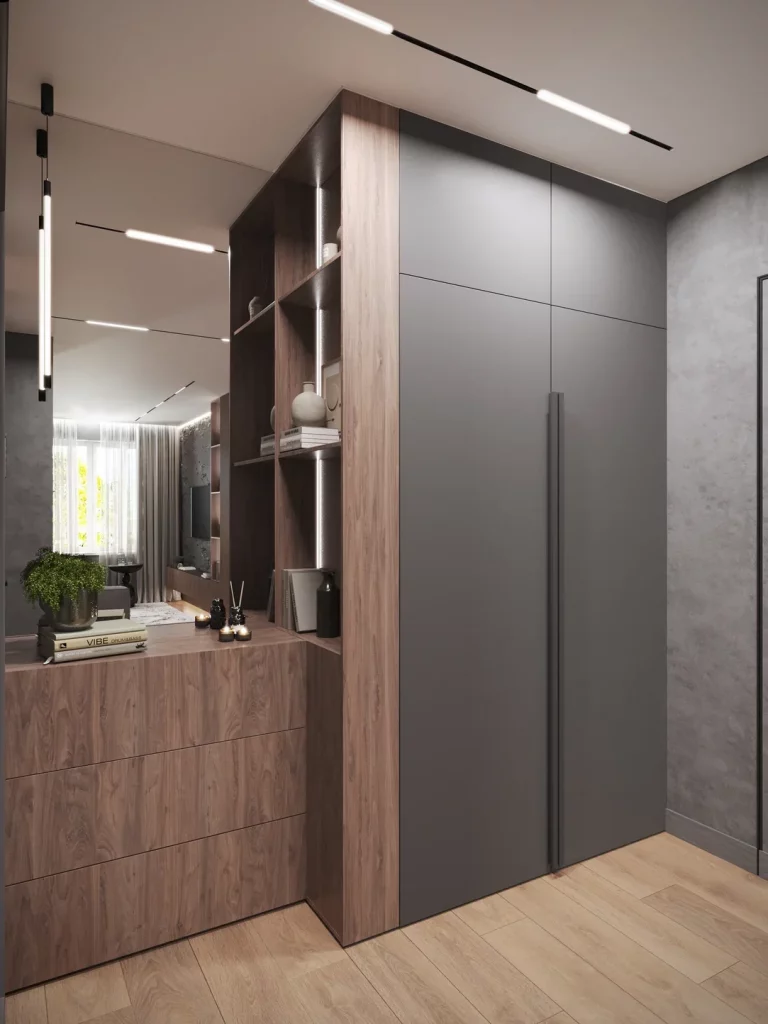
I think this is an excellent example of making substantial storage part of the hallway architecture. The tall cabinets provide a visually continuous storage wall, while the open shelving and drawers break up the large wood surface. The mirror helps reflect light and extends the sense of space, while the long ceiling fixtures provide clean, contemporary illumination. The combination of wood, charcoal, and pale flooring feels grounded and sophisticated without becoming visually heavy.
From my perspective, the biggest takeaway is that storage does not have to look purely utilitarian. When cabinetry is carefully coordinated in color, scale, and finish, it can become one of the defining design elements of the hallway. For a fall 2026 interpretation, I would lean into the existing warm wood and charcoal palette and keep accessories minimal. The result would preserve the modern character while making the entry feel naturally warmer and more inviting.
Soft Neutral Hallway With Illuminated Full-Length Mirror
I love the calm, polished feeling of this narrow hallway, where a large full-length mirror becomes the main architectural feature. The walls are finished in a soft warm neutral, with white crown molding and vertical ribbed wall detailing adding subtle texture along the left side. A floating taupe console provides a compact surface, while concealed illumination around the mirror creates a crisp glow against the wall. A slim vase with dried stems adds a restrained natural accent, and a small upholstered round stool sits below the console area. Pale stone-look flooring completes the quiet tonal palette.
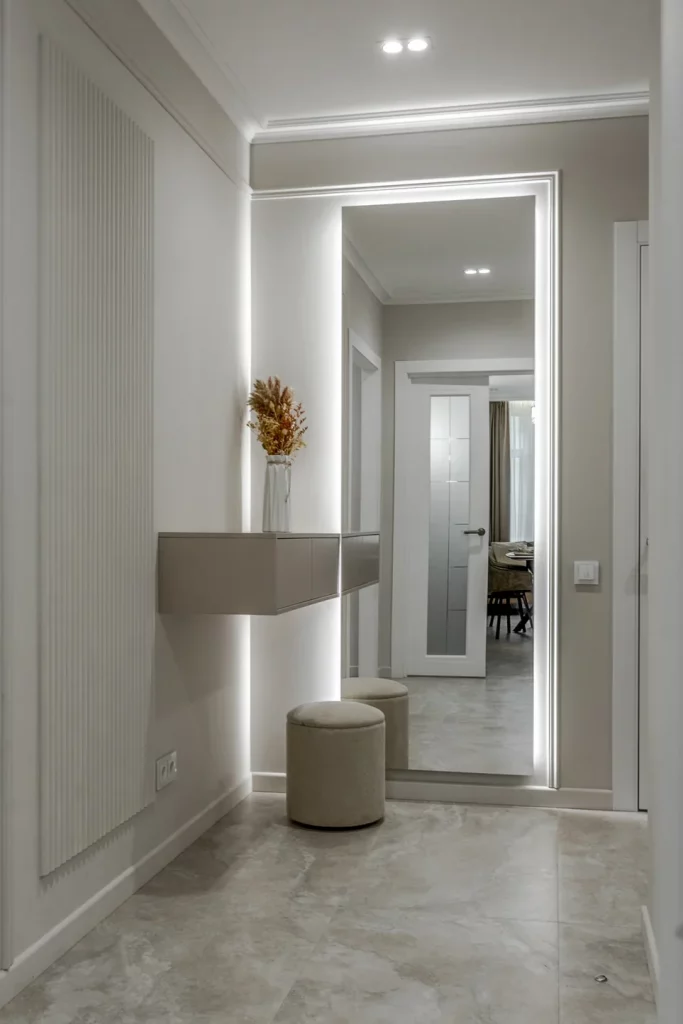
The arrangement works particularly well because almost every element serves a practical purpose without visually crowding the hallway. The floating console leaves the floor open, which helps the narrow space feel less obstructed, while the oversized mirror reflects the corridor and makes the entry appear deeper. I also like the small stool because it introduces a useful place to sit without requiring a substantial piece of furniture.
From my perspective, the lighting around the mirror is one of the strongest details here. Rather than relying entirely on ceiling fixtures, the illuminated frame gives the hallway its own layer of light and makes the mirror feel integrated into the architecture. I would keep the accessories similarly restrained, allowing the ribbed wall surface, molding, mirror, and console to carry most of the visual interest.
Dark and Warm Hallway With Chevron Storage Cabinetry
This hallway takes a much more graphic approach, combining charcoal-colored cabinetry with warm wood accents. A tall built-in wardrobe occupies the central wall, with dark doors featuring fine diagonal detailing and a narrow wood-toned chevron panel running vertically through the center. Beside it, a compact dark cabinet repeats the same combination of charcoal surfaces and wood accents. A cream decorative panel, sculptural vase, and dried stems sit on top, while pale textured walls and darker stone-look flooring provide a contrasting backdrop.
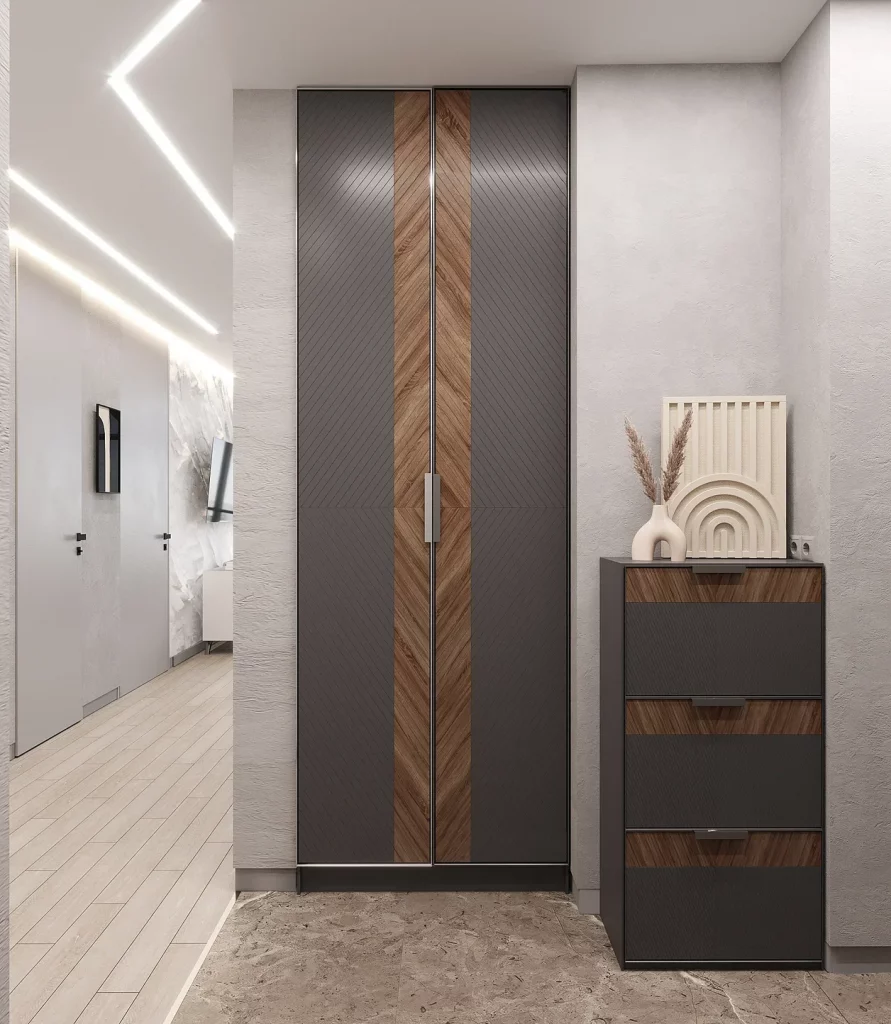
I find the storage strategy especially effective because the tall cabinet uses the vertical wall rather than extending deeply into the hallway. The combination of closed storage and a smaller drawer cabinet provides plenty of visual order while keeping everyday belongings concealed. The repeated wood detail also connects the two pieces, making the storage feel like one coordinated composition rather than separate furniture.
For a similar result, I would pay close attention to proportion and repetition. The narrow central wood panel gives the tall cabinet a strong vertical emphasis, while the diagonal lines add movement without introducing a complicated pattern. In my experience, this kind of restrained contrast works beautifully in an entrance because it gives a practical storage zone a more architectural presence.
Moody Entry Hall With Black Door and Backlit Round Mirror
I find this compact entrance particularly striking because of its dramatic tonal contrast. A nearly black front door anchors the end of the hallway, surrounded by warm gray-beige walls and dark flooring. Two slim black-framed artworks are arranged vertically beside the door, while a rounded mirror with integrated illumination occupies the opposite wall. A small white upholstered bench sits underneath the mirror, creating a bright visual counterpoint to the darker surfaces.
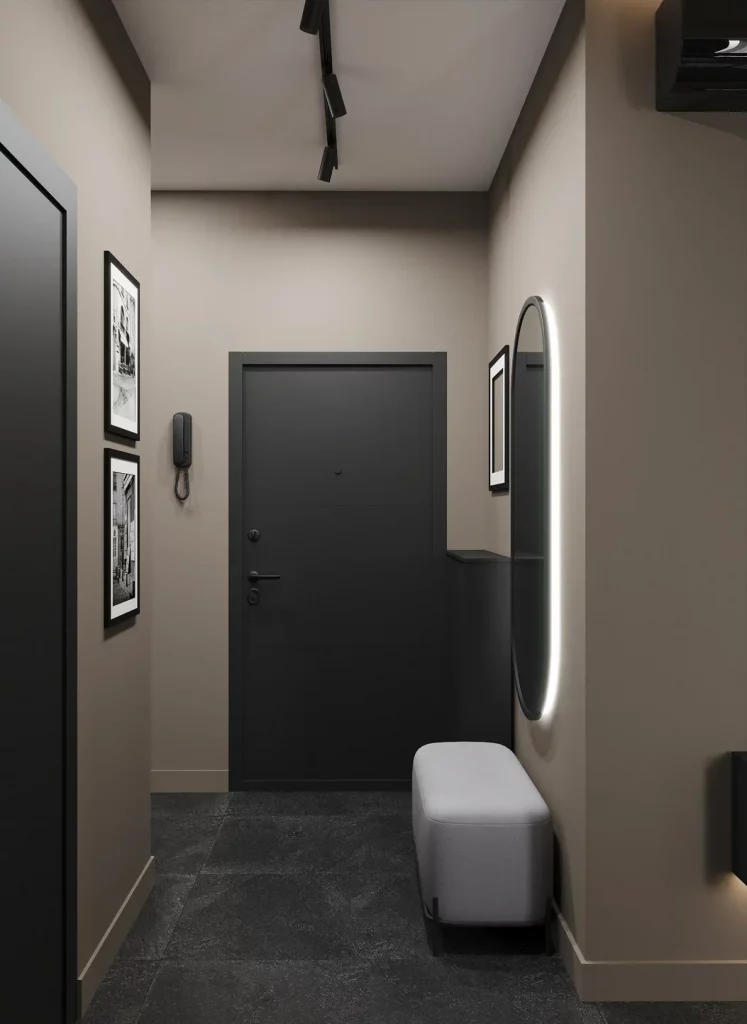
The layout is simple, but every piece has a clear role. The bench provides seating in a compact footprint, while the mirror is practical for a final appearance check before leaving home. The illuminated edge also prevents the darker palette from feeling completely closed in. I particularly like the way the white bench echoes the lighter wall tones and gives the entrance a balanced visual center.
If I were recreating this look, I would preserve the limited palette rather than adding many accessories. The black door, black artwork frames, dark floor, and dark mirror frame already create enough definition. The strongest finishing detail is the warm, soft illumination around the mirror, which gives this small hallway a much more considered atmosphere.
Minimal Hallway With Mirrored Walls and Sculptural Accent
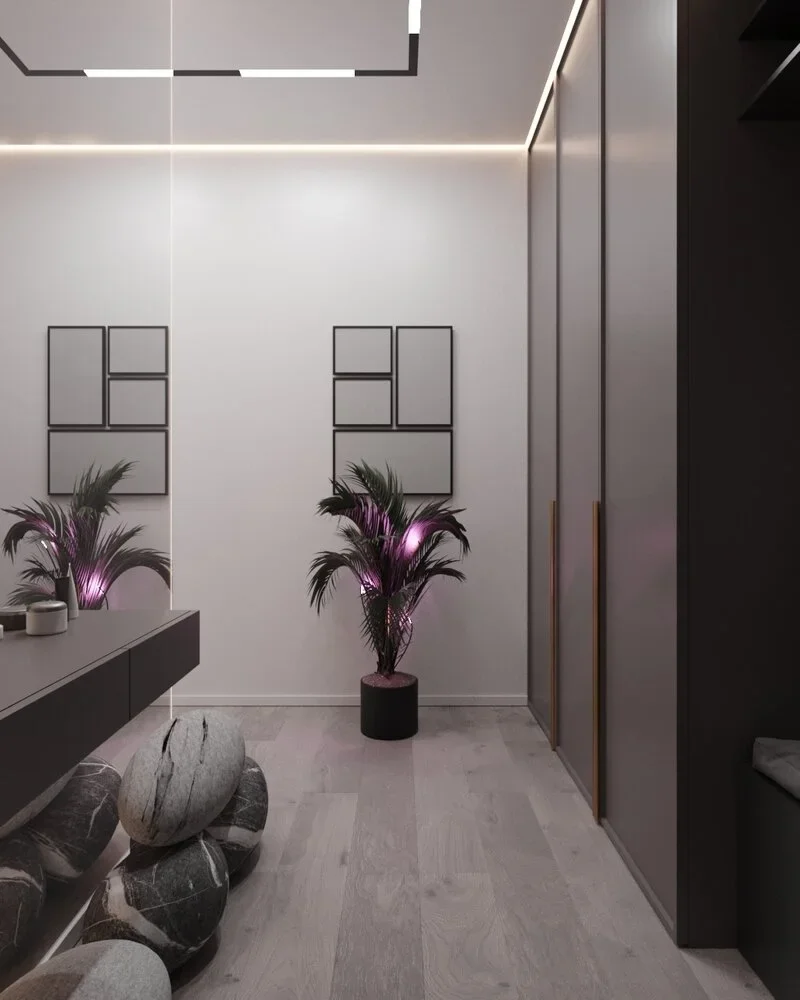
This hallway has an extremely clean contemporary character, with pale flooring, white walls, and large mirrored surfaces creating a sense of openness. A floating dark console extends from the left wall, while a sculptural arrangement of rounded gray forms sits on the floor beneath it. In the center, a potted palm-like plant introduces a strong organic silhouette, with subtle colored lighting illuminating its foliage. A simple arrangement of geometric framed pieces decorates the far wall, and tall dark cabinetry occupies the right side.
The mirrored wall is especially effective here because it visually doubles the narrow corridor and reflects the architectural lines of the space. The floating console keeps the floor visible, while the low sculptural forms add weight without creating a bulky furniture arrangement. I also like the contrast between the clean geometry of the cabinetry and frames and the softer, irregular shape of the foliage and rounded floor objects.
For me, the lesson in this hallway is that a minimalist space does not need to be completely empty. A single sculptural accent, carefully positioned lighting, and a controlled combination of hard and soft forms can create considerable personality. I would use this approach when the hallway itself has limited width and let reflection, vertical lines, and one strong decorative focal point do most of the work.
Warm Hallway With Art, Mirrored Panels, and Compact Console
This narrow hallway feels softer and more residential, with warm beige walls, medium-brown flooring, and a long mirrored panel running along the left side. A slim light-colored console is mounted against the right wall, accompanied by a rounded burgundy upholstered stool underneath. At the end of the corridor, a framed artwork with delicate multicolored botanical imagery creates the focal point. Small rounded wall accents appear beside the doorway, while vertical architectural detailing and warm lighting add depth.
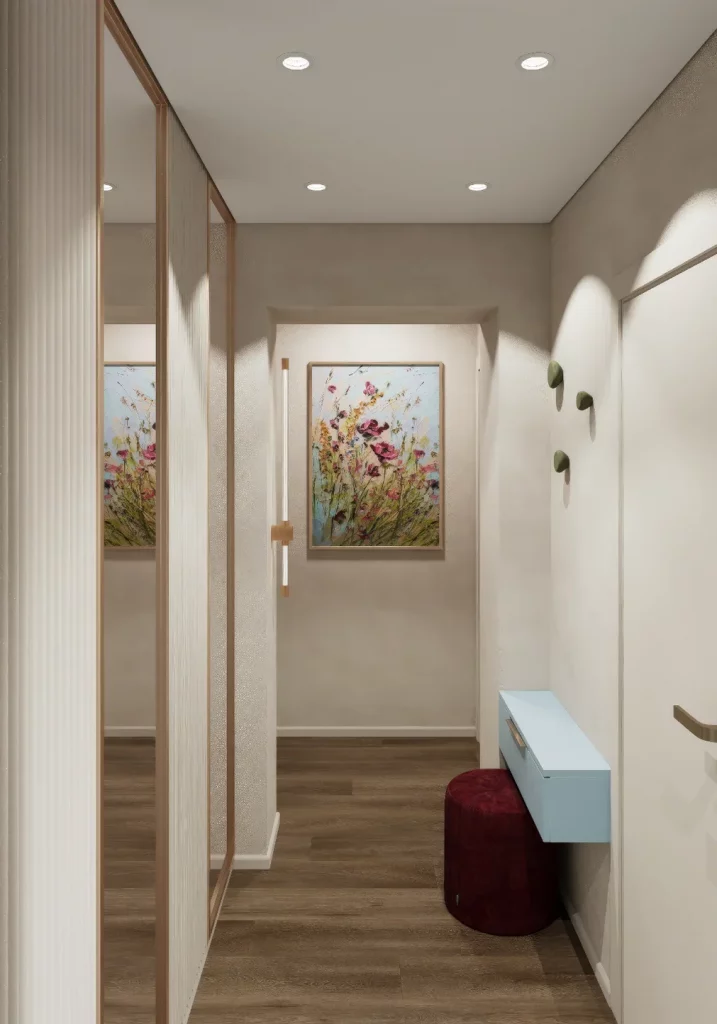
I like how the arrangement uses the length of the hallway to its advantage. The mirror visually expands the corridor, while the slim console provides useful surface space without interfering with circulation. The upholstered stool introduces a richer accent color and a soft shape against the otherwise linear architecture. Because the artwork is positioned at the end of the hallway, it naturally draws the eye forward.
In my experience, long hallways benefit from having a destination point rather than looking like an uninterrupted tunnel. Here, the artwork does exactly that. The combination of the mirror, narrow console, compact stool, and warm wood-toned floor creates a practical composition that still feels decorative without filling every available surface.
Wood-Paneled Entry With Dark Cabinetry and Layered Lighting
This entrance has a much warmer, enveloping character, with horizontal wood-toned wall and ceiling panels surrounding a central taupe-gray door. Dark trim frames the doorway, while tall dark cabinetry occupies the right side of the space. A large mirror on the left reflects the wood detailing, and a compact white floating cabinet sits beneath it. Several black pendant-style fixtures hang along the left side, complemented by small round ceiling lights.
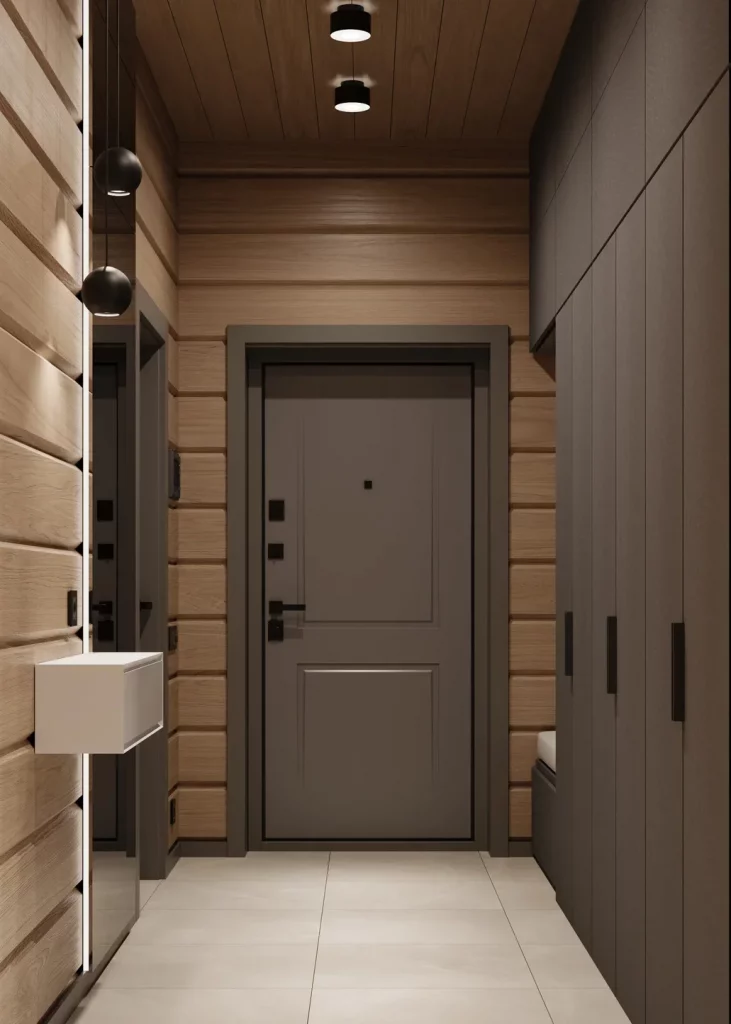
The strength of this design comes from the consistency of its materials and proportions. The horizontal wall panels create a continuous visual envelope, while the dark door frame and cabinetry provide definition. The mirror keeps the entry from feeling too enclosed and also reflects the layered lighting. I particularly appreciate the floating cabinet because it gives the entrance a useful storage surface without adding a large piece of furniture to the floor.
I would approach a similar hallway by treating the wall treatment as the main feature and keeping the furniture visually quiet. The lighting is also important: the combination of ceiling illumination, hanging fixtures, and reflected light creates depth across the wood surfaces. This is a good example of how a hallway can feel warm and substantial while maintaining a very contemporary silhouette.
White Vertical Paneling With Elegant Console Styling
This bright hallway uses vertical wall paneling as its defining feature. The entire composition stays within a soft white and pale neutral palette, with a slim white console placed against the paneled wall. A framed muted landscape hangs above it, while several white ceramic vessels and decorative objects are arranged across the tabletop. Small arrangements of dried stems add delicate texture. Warm concealed lighting runs near the upper edge of the wall, and a pale patterned rug extends across the floor.
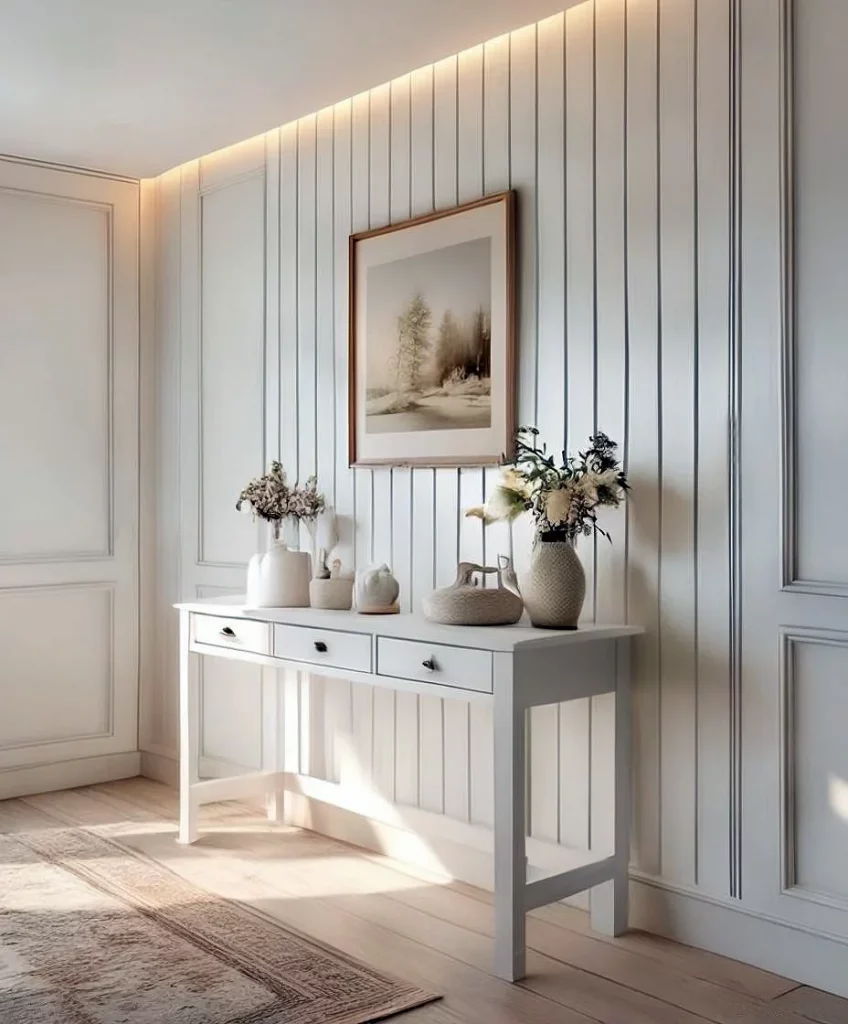
The console works particularly well because its slim proportions respect the hallway’s circulation while still creating a dedicated decorative zone. The vertical paneling emphasizes the height of the room, and the framed artwork breaks up the repeated lines without overwhelming them. I also like the restrained tabletop arrangement: the objects vary in shape and height, but they remain within the same gentle color family.
For a similar fall-ready hallway, I would keep the styling tonal and let texture provide most of the seasonal feeling. The soft light, paneling, ceramic pieces, framed artwork, and dried arrangements already create a sophisticated atmosphere. Rather than adding numerous seasonal decorations, I would allow the existing architecture and warm lighting to create the mood.
Green Fluted Entry With Burgundy Bench
This entry makes a stronger color statement with deep green vertical fluted wall panels surrounding a large black-framed mirror. A long burgundy upholstered bench stretches across the lower portion of the composition, supported by slim black legs. Two small wall-mounted light fixtures sit against the green panels, and a narrow black shelf provides a small practical surface. The surrounding walls and pale flooring keep the colorful focal area from dominating the entire hallway.
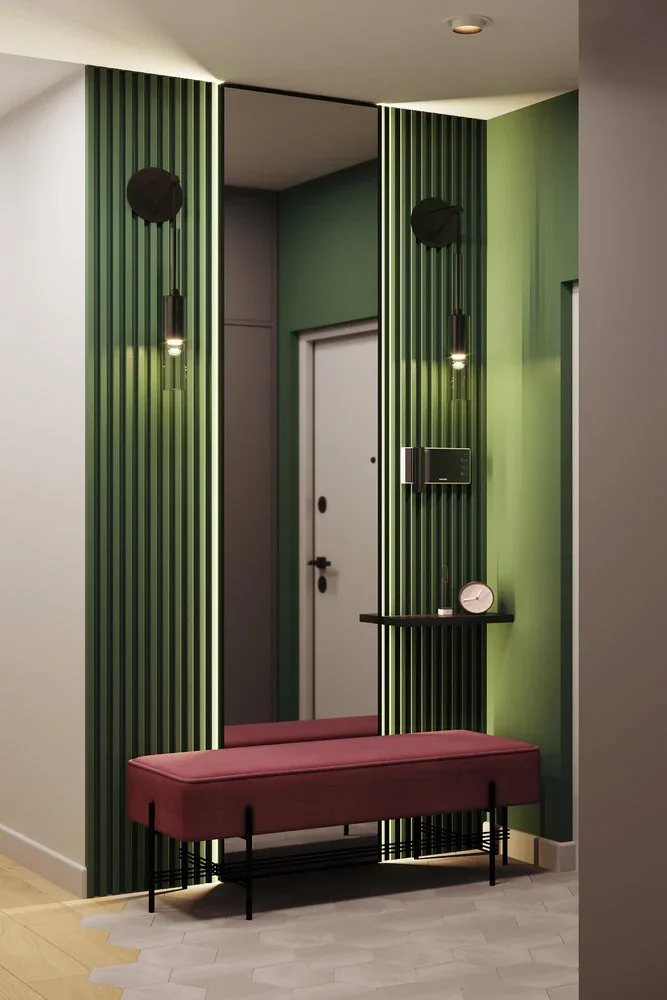
I think the bench is the most functional element here because it offers generous seating while maintaining a relatively light visual profile. The open space beneath it prevents the furniture from feeling heavy, and the mirror adds depth directly behind the seating area. The vertical fluting gives the wall a strong rhythm and makes the relatively compact entry feel taller.
This is also a good example of how one deeper color can completely change the personality of a hallway. I would use the green wall treatment as the main statement and allow the burgundy bench to provide the secondary accent. Keeping the lighting and furniture simple prevents the combination from becoming visually busy, while the black frames and fixtures tie the composition together.
Compact Wood Accent Wall With Hooks and Upholstered Stool
This small hallway corner is designed around a narrow vertical wood accent panel. Several black hooks are mounted directly onto the panel, creating a simple hanging station, while a small upholstered stool sits beneath it. The stool is light beige with slim black legs and is paired with a textured cushion featuring horizontal bands in warm rust, mustard, cream, and gray. A white door occupies the left side, and a large black-framed mirror appears on the right.
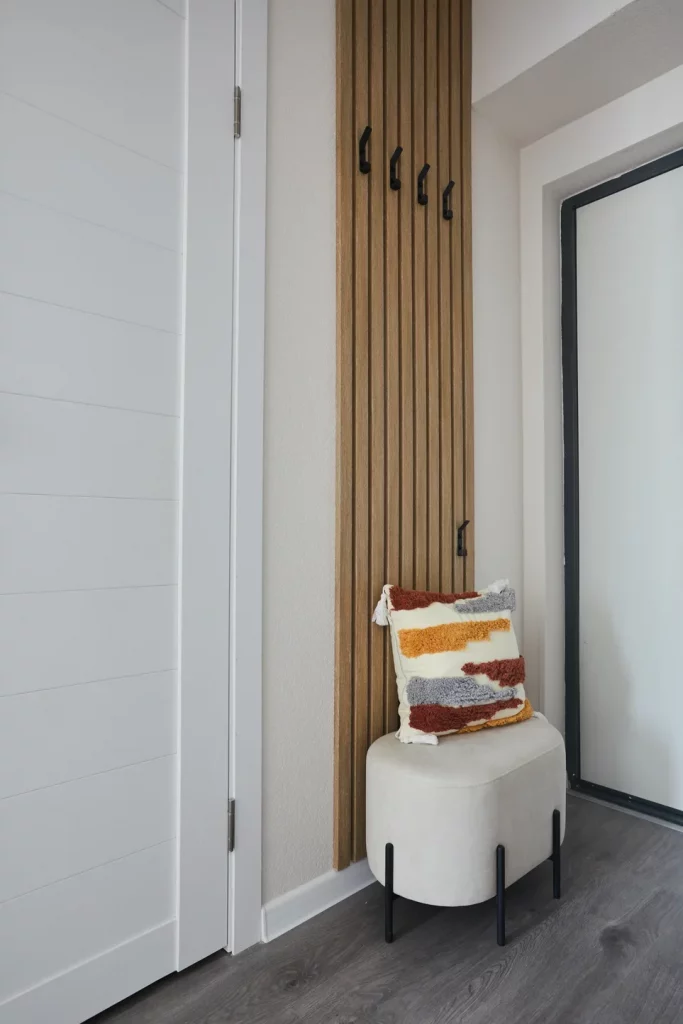
I like this arrangement because it makes excellent use of a very small wall section. The vertical panel clearly defines the entry zone, while the hooks provide practical storage without requiring a bulky coat rack. The stool gives the space a place to sit while putting on shoes, and the cushion adds color and texture without taking over the compact composition.
For me, this is one of the easiest ideas to adapt to an actual home because it relies on a very straightforward combination of elements. A narrow textured wall section, a few hooks, a small seat, and a mirror can turn an otherwise unused corner into a purposeful entry point. I would keep the accessories limited so that the vertical panel remains visually clear and the small space stays easy to navigate.
Elegant Entry With Backlit Mirror and Fluted Console
The final hallway combines classic architectural detailing with contemporary furniture and lighting. White paneled walls surround a large rectangular mirror framed with warm wood-toned vertical detailing. A slim taupe console with finely ribbed drawer fronts sits directly in front of the mirror, supported by slender legs. Soft illumination glows around the mirror frame, while a rounded black-and-white patterned stool is tucked underneath. A large vase filled with greenery and pale flowers sits on the console beside a few smaller decorative objects and a candle.
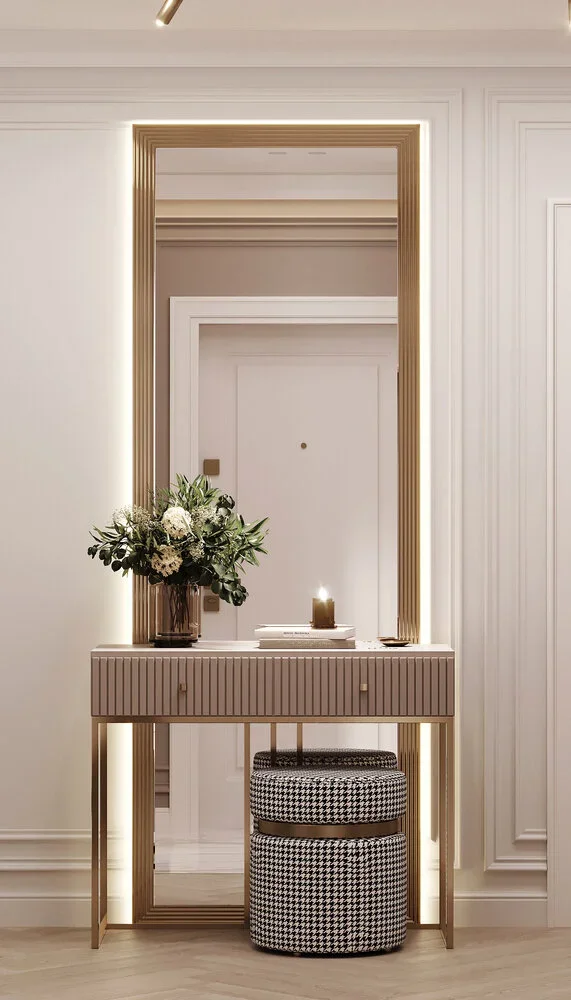
The composition feels balanced because the mirror, console, and stool are arranged almost as one vertical installation. The mirror adds depth to the hallway, while the illuminated frame emphasizes its shape and separates it from the surrounding white wall paneling. The narrow console provides useful surface space without overwhelming the passage, and the patterned stool introduces a compact graphic detail below it.
I would take inspiration from the way this hallway mixes architectural structure with soft decorative elements. The paneled walls establish a formal backdrop, while the ribbed console, warm mirror surround, rounded stool, and carefully arranged accessories make the entrance feel more personal. For a fall interpretation, I would preserve this balance rather than adding excessive seasonal decoration; the warm wood tones, layered lighting, and rich textile pattern already give the space plenty of depth.
Black-Framed Glass Doors With Classic Wall Molding
The first hallway pairs tall black-framed double doors with textured translucent glass, crisp white walls, and refined decorative molding. I particularly like the contrast between the dark door frames and the pale architectural details surrounding them. Black cylindrical ceiling lights reinforce the contemporary feel, while the light herringbone flooring adds a soft, natural-looking foundation. A small wall-mounted console at the far end holds a tall pink-toned vase with delicate branches, introducing a restrained decorative accent without disturbing the clean composition.
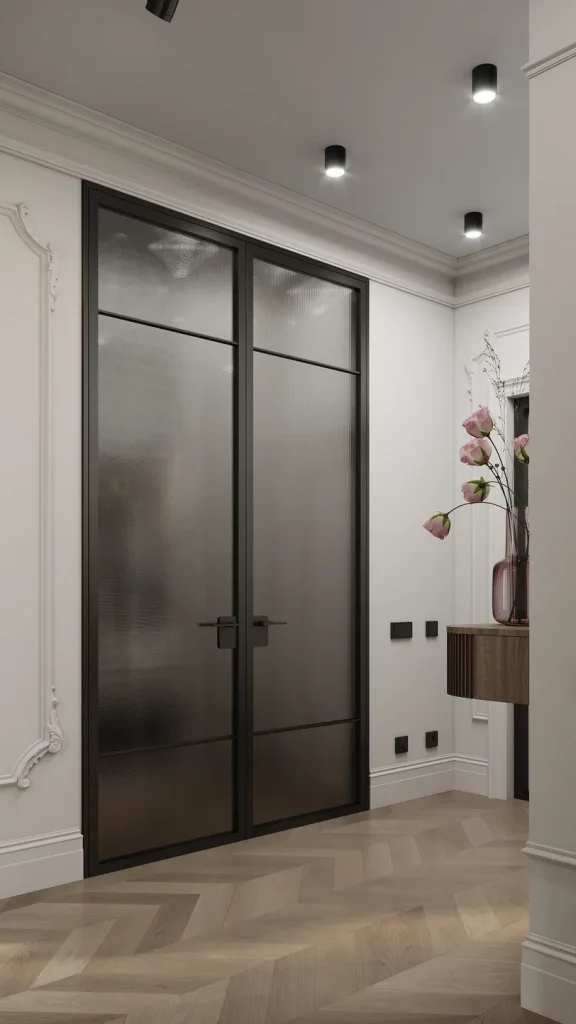
The double doors create a strong architectural focal point while the textured glass provides privacy and still allows light to pass through. I find the herringbone floor especially effective because its directional pattern adds movement to a relatively restrained hallway. The narrow console is another practical choice, giving the space a place for a decorative arrangement without taking up valuable floor area.
For a similar look, I would keep the walls light and let the door framing provide the strongest contrast. Decorative molding can add depth to a hallway, particularly when the surrounding palette remains quiet. I also like using one carefully selected vase or sculptural accessory instead of filling every available surface, because the architecture already provides plenty of visual interest.
White Hallway With Fluted Storage And Curated Details
This bright hallway is built around a tall fluted storage unit with a recessed central display niche. The predominantly white setting includes paneled walls, a large mirror, a marble-look floor, and sculptural ceiling lighting. A decorative vase filled with a colorful arrangement sits inside the niche, while a compact upholstered bench appears along the side. I like the way the vertical ribbed surfaces continue across the storage unit, giving the otherwise pale interior a distinct sense of texture.
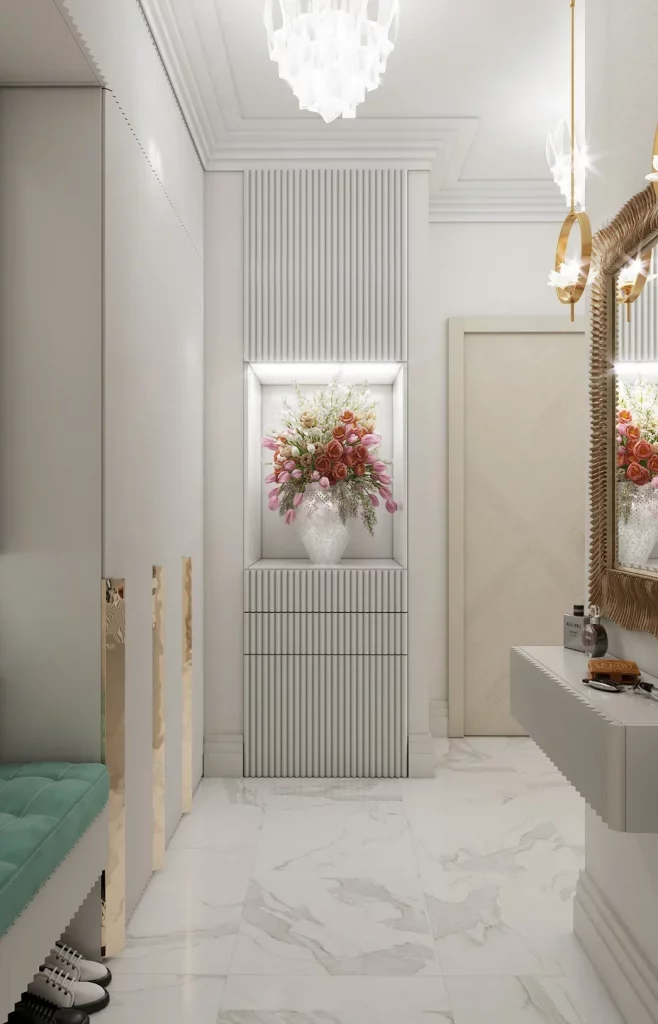
The built-in storage makes particularly good use of the vertical wall because it provides concealed organization while keeping the floor area open. The recessed niche breaks up the cabinetry and creates a natural place for decoration. The mirror also helps the hallway feel more expansive, while the bench provides a convenient spot for putting on or removing shoes.
I would approach a similar hallway by choosing one strong texture, such as the fluted cabinetry shown here, and allowing the rest of the finishes to remain restrained. The combination of built-in storage and a small seating area is especially practical in an entryway. I also appreciate how the decorative display is positioned inside the cabinetry rather than scattered throughout the room, which keeps the overall effect organized.
Rounded Full-Length Mirror With Smoked Glass Lighting
The third hallway takes a quieter, more contemporary approach with a large rounded-rectangle mirror in a dark frame. Matching wall sconces with smoked glass shades sit on either side, creating a balanced arrangement. The walls are soft gray, and a small upholstered stool sits beneath the mirror. A thermostat and switches remain visibly integrated into the wall, showing how practical technology can coexist with a carefully styled entryway.
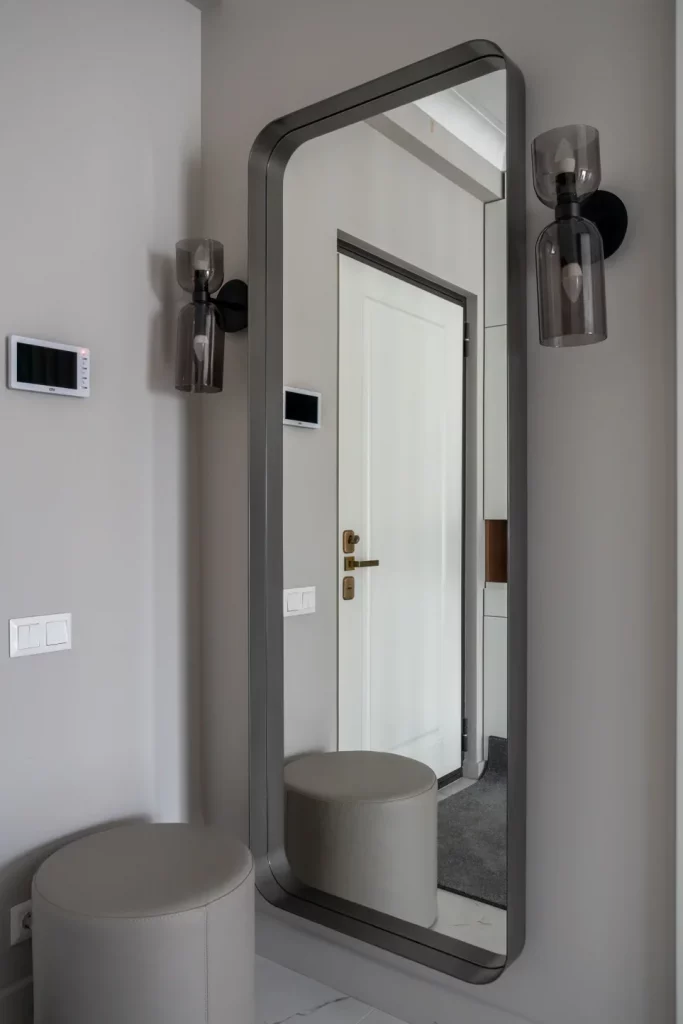
The full-length mirror is both decorative and useful, allowing the hallway to serve as a final check before leaving home. I like the rounded corners because they soften the otherwise straight architectural lines, while the dark frame gives the mirror enough presence to anchor the wall. The compact stool adds function without crowding the walkway.
For a similar arrangement, I would center a large mirror first and then use matching lighting on both sides to establish symmetry. Keeping the surrounding wall relatively uncluttered makes the mirror and sconces feel intentional. In a smaller hallway, I find this approach especially effective because one well-proportioned mirror can provide both visual depth and everyday practicality.
Warm Wood Hallway With Sculptural White Mirror
This hallway makes a much stronger statement through full-height warm wood wall surfaces and a large sculptural white mirror. The mirror has an undulating layered frame that contrasts sharply with the straight wood panels behind it. Two circular wall lights add soft illumination, while the ceiling fixture continues the rounded language. A patterned floor and a softly upholstered bench complete the composition, giving the space a sophisticated and tactile atmosphere.
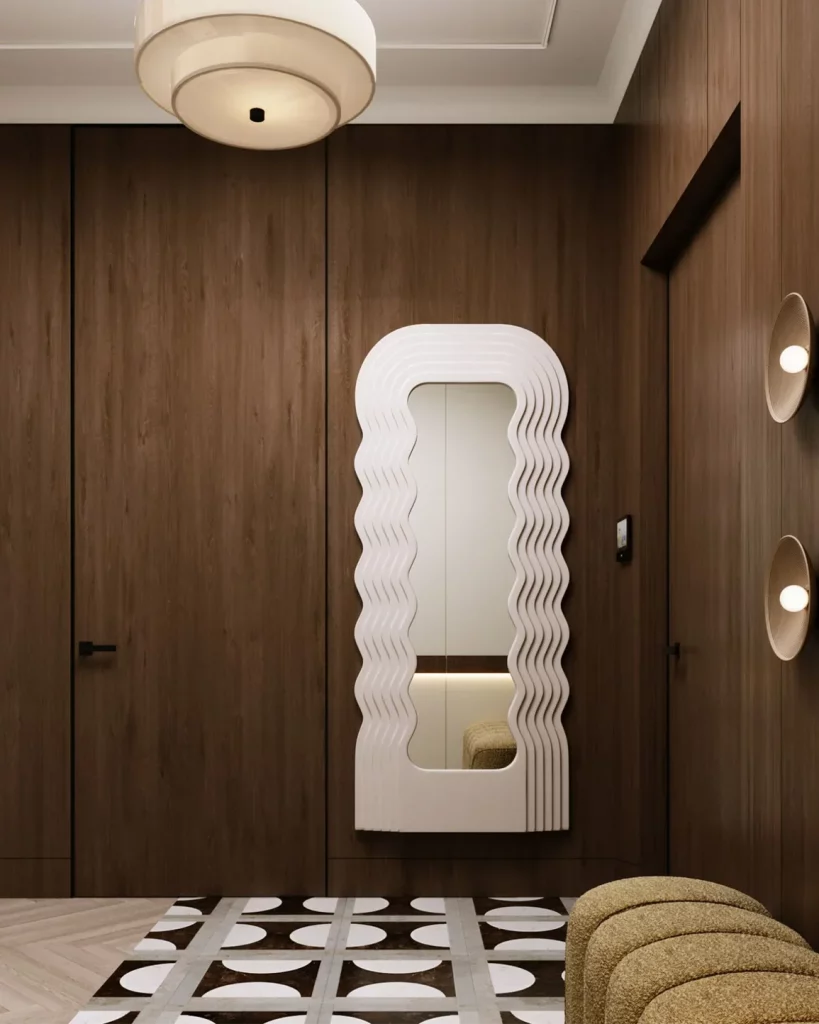
The strongest feature here is the contrast between linear and curved forms. I find that the sculptural mirror immediately becomes the centerpiece because its irregular silhouette interrupts the repetition of the wood wall. The bench provides useful seating while also reinforcing the room’s rounded visual language, and the floor pattern adds another layer of geometry without competing with the mirror.
If I were recreating this effect, I would let one sculptural element do most of the visual work and keep the surrounding furniture simple. Warm wood surfaces can make a hallway feel more enclosed and intimate, while a pale sculptural mirror prevents the darker background from becoming too heavy. Coordinating rounded lighting with the mirror is also a smart way to make the design feel cohesive.
Wood-Paneled Entry With Oversized Mirror And Layered Lighting
This spacious entry combines warm wood wall and ceiling panels with a large irregularly shaped mirror and a striking suspended light fixture. A black upholstered bench sits beneath the mirror, while a slim white pedestal table holds a vase and a small decorative object. Large glass doors and dark framing appear around the perimeter, and the pale floor is bordered by a bold geometric inlay. I like how the room balances warm wood, black accents, white surfaces, and reflective elements.
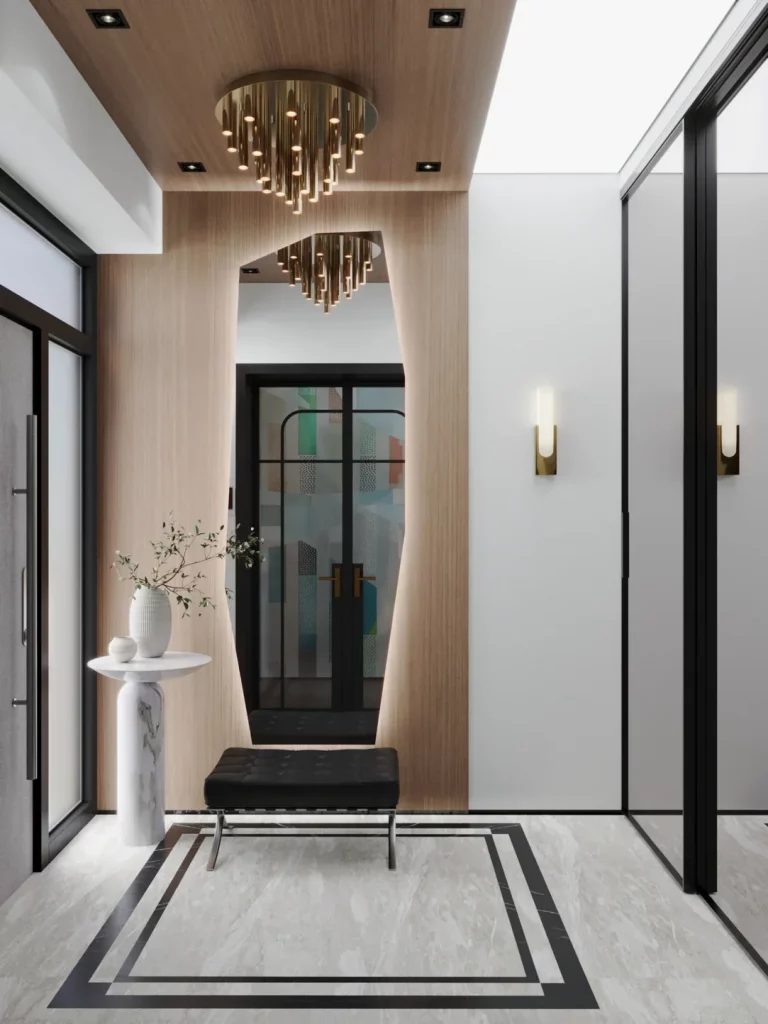
The large mirror visually expands the entry while reflecting the architectural details and lighting around it. The bench introduces a practical seating point without interrupting the generous circulation area. I also find the narrow pedestal table useful because it provides a surface for small decorative pieces while preserving the openness of the floor.
The lighting deserves particular attention here. Instead of relying on a single source, the design combines the central pendant with recessed ceiling lights and wall illumination. I would use the same layered principle in a modern fall hallway because it allows the space to feel bright and functional during the day while becoming warmer and more atmospheric in the evening.
Moody Hallway With Black-And-White Framed Artwork
This hallway shifts into a deeper, moodier palette with taupe-gray walls, dark flooring, black-framed doors, and a white upholstered bench. Four black-and-white framed images are arranged in a precise grid on the central wall, while additional framed pieces are visible along the side. A tall arched mirror adds another reflective surface, and focused ceiling lighting highlights the artwork. The result feels composed and intimate rather than overly decorated.
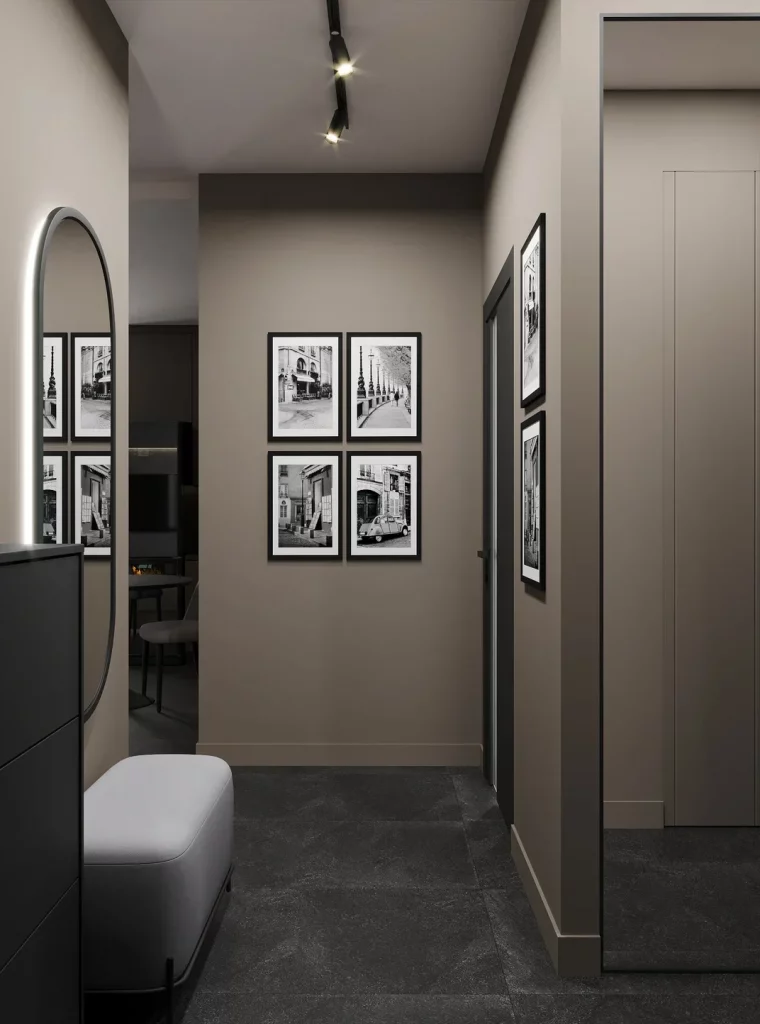
The artwork arrangement gives the hallway a clear focal point without taking up any floor space. I like the four-piece grid because its symmetry brings order to the narrow passage. The upholstered bench adds comfort and provides a useful place to sit, while the arched mirror visually opens the side of the hallway and introduces a softer shape.
For a similar mood, I would choose a limited palette and allow framed artwork to provide the personality. Black-and-white imagery works particularly well here because it reinforces the monochromatic character of the room. I also think directional lighting is important in a darker hallway: it makes artwork easier to appreciate and prevents the deeper wall tones from feeling flat.
Soft Neutral Hallway With Built-In Storage And Landscape Art
This long hallway is wrapped in soft neutral finishes, with tall built-in cabinetry running along one side and a simple black floating console on the other. A large landscape artwork hangs at the end, creating a visual destination along the corridor. Two rounded stools sit beneath the console, accompanied by a tall vase containing delicate dried branches. Recessed and track lighting add subtle illumination, while concealed linear lighting emphasizes the ceiling edges and cabinetry.
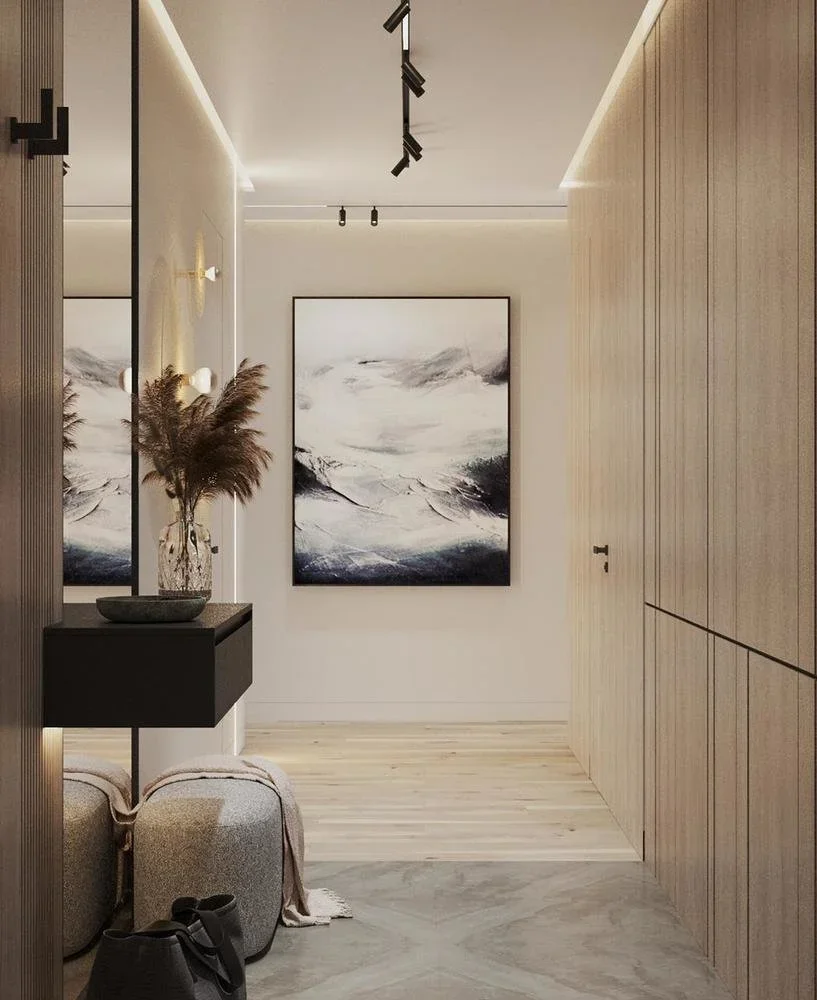
I like how the storage is integrated so smoothly into the architecture that it reads almost as a wall rather than separate furniture. The floating console keeps the floor visually open, and the pair of stools can be moved or used independently when needed. The large artwork at the end also helps draw the eye forward, which is particularly useful in a long hallway.
This is a good example of how a neutral hallway can remain interesting through texture, proportion, and lighting rather than a busy color scheme. I would prioritize built-in storage wherever possible and keep its fronts visually consistent with the surrounding walls. A single oversized artwork can then provide the focal point while preserving the calm character of the space.
Compact Entry With Integrated Bench And Concealed Storage
This compact hallway uses a warm wood-lined recess to create a dedicated entry zone. Full-height light cabinetry surrounds the recessed area, while a built-in bench with a dark upholstered cushion provides seating. A small cabinet sits beside the bench, topped with a simple vase containing bare branches and a small sculptural object. The restrained gray floor and warm wood interior create a comfortable, cocoon-like atmosphere.
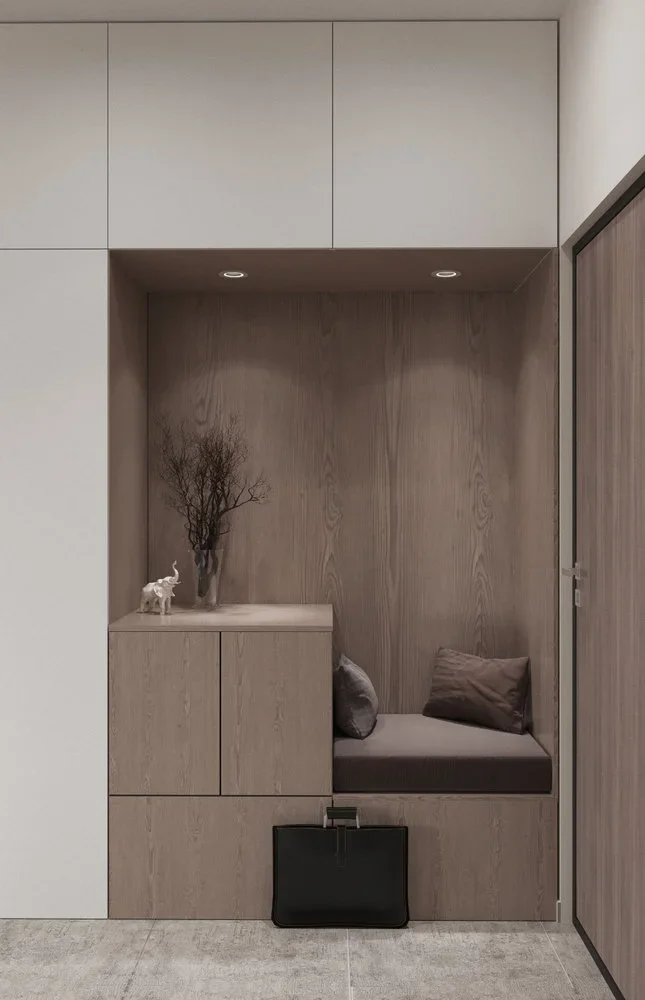
The built-in bench is the most practical feature because it creates seating without consuming additional floor space. Storage cabinets above and beside the recess make the area useful for everyday entryway organization while maintaining a very clean exterior. I also like the shallow decorative surface, which provides just enough room for a few objects without turning the entry into a cluttered display.
For a hallway of similar proportions, I would think vertically and build storage around a dedicated seating niche. Using one material inside the recess helps distinguish it from the surrounding cabinetry and gives the small zone a more intentional identity. The limited decoration shown here is also a good reminder that compact spaces usually benefit from restraint.
Curved Mirror And Illuminated Console In A Refined Entry
This elegant entry is defined by a large curved mirror that follows the shape of an illuminated architectural opening. Beneath it, a slim floating console stretches across the wall, while a rounded upholstered bench sits below. A marble-look vertical surface with subtle veining frames two softly glowing wall lights, and a tall dark vase with pale dried stems adds height. The floor continues the muted stone-like palette, creating a calm and polished setting.
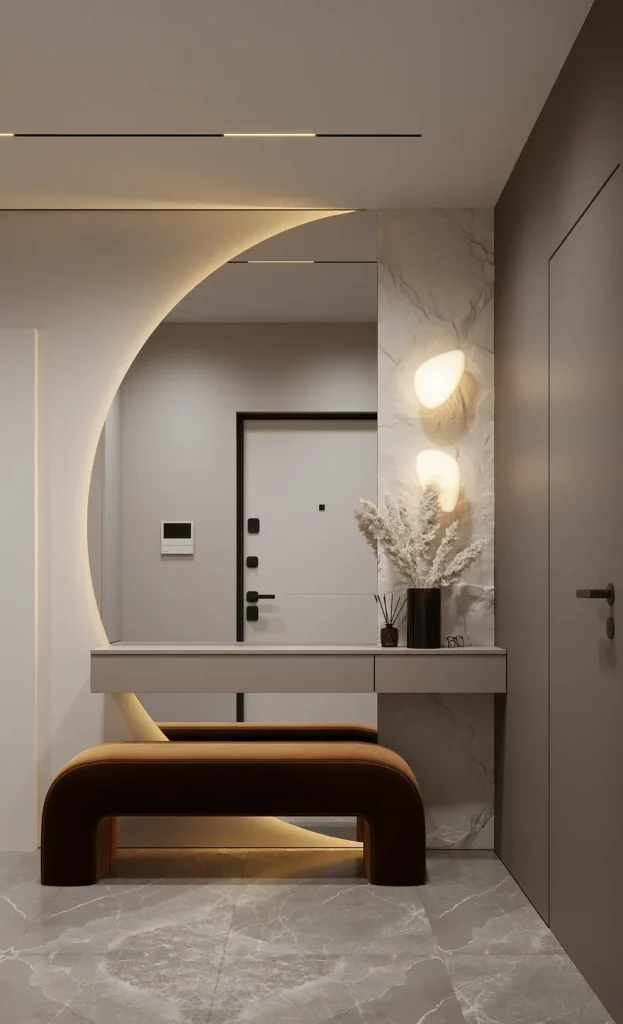
The curved opening and mirror create a strong sense of movement, while the floating console keeps the lower part of the wall visually light. I especially like the way the bench echoes the curves above it. The arrangement provides everything an entry needs—a mirror, seating, a small surface, and decorative storage space—without making the hallway feel crowded.
When working with curves, I find it is most effective to repeat the shape in at least one additional element, as this design does with the bench. Soft integrated lighting also helps emphasize architectural forms after dark. For fall, I would preserve the neutral palette and let warm lighting bring out the subtle depth of the stone-like surfaces.
Organized Entry Bench With Gallery Wall And Storage Baskets
The final hallway combines a warm-toned paneled door with a practical built-in bench and open cubbies. The bench has a dark cushion and a patterned black-and-white pillow, while woven baskets occupy the lower storage compartments. Above the seating area, several black-framed artworks create a compact gallery wall. The patterned floor introduces another decorative layer, while the overall palette remains grounded in warm brown, cream, black, and white.
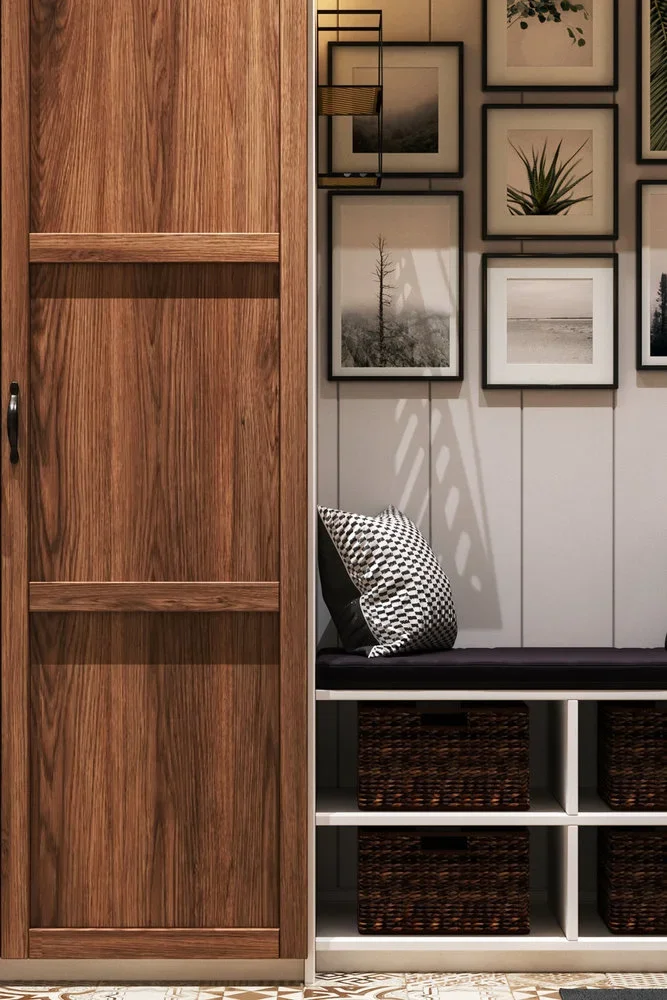
I think this is one of the most practical arrangements in the collection because the seating and storage are integrated into one compact zone. The baskets provide concealed organization for smaller everyday items, while the bench creates a comfortable place to sit. The gallery wall uses the vertical space effectively and gives the functional entry area a more personalized appearance.
For a similar hallway, I would combine closed storage with a few open compartments so everyday organization remains easy without exposing everything. Matching the artwork frames to other dark details in the room helps create visual continuity. I also like the patterned cushion because it introduces contrast without requiring a large decorative object or a major change to the architecture.
Elegant Paneled Hallway With Sculptural Lighting And Round Mirror
I’m immediately drawn to the refined symmetry of this long hallway, where pale paneled walls frame a narrow passage leading toward a round mirror with a substantial textured brown frame. A muted green console sits beneath it, supported by sculptural turned legs, while small decorative objects and a basket occupy the lower shelf. Multiple spherical wall lights and hanging globe pendants create layers of illumination, and recessed ceiling fixtures continue the rhythm overhead. The pale flooring keeps the entire space calm and spacious.
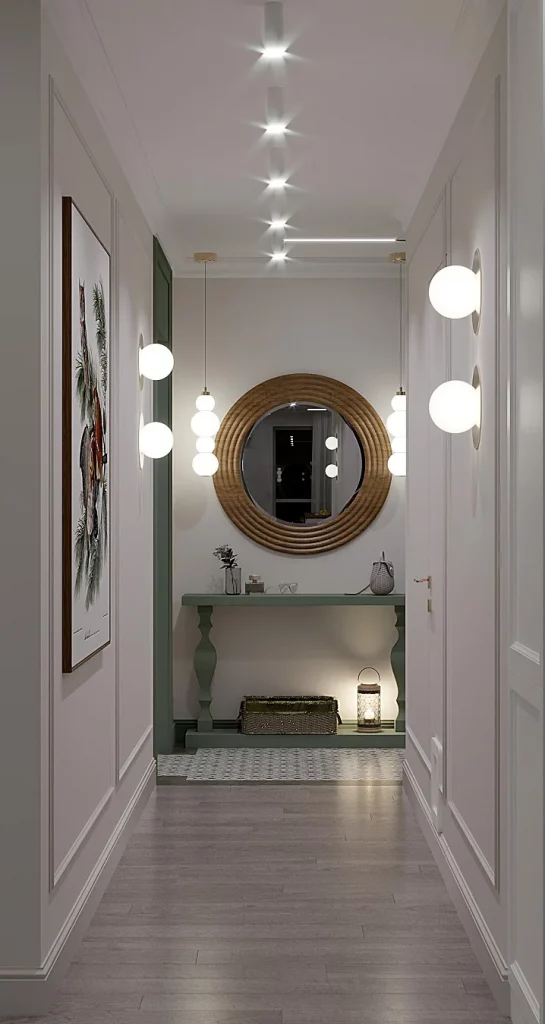
What makes this arrangement work so well for me is the strong visual axis. The console gives the far end of the hallway a clear destination, while the round mirror breaks up the many straight lines created by the wall panels and doors. The combination of soft gray-green, warm brown, white, and subtle metallic details creates contrast without making the narrow corridor feel crowded. Even the small basket and low shelf add useful storage without overwhelming the passage.
For my own decorating approach, I would take particular inspiration from the lighting here. In a hallway, several modest sources can create a much more sophisticated atmosphere than relying on one central fixture. I also like the idea of using one distinctive mirror as the visual anchor and keeping the console styling restrained. The result feels elegant but still practical for everyday movement through the home.
Built-In Hallway Storage Framed By Stone And Dark Wood Doors
This hallway has a completely different character, with a tall built-in storage unit positioned between substantial dark wood door frames. The storage combines pale paneled doors with long slender handles, mirrored sections, and an open recessed area at the bottom where several pairs of shoes are neatly arranged. Light stone-textured walls surround the cabinetry, while the darker ceiling and woodwork add definition. A small framed botanical-style artwork provides a delicate focal point in the center.
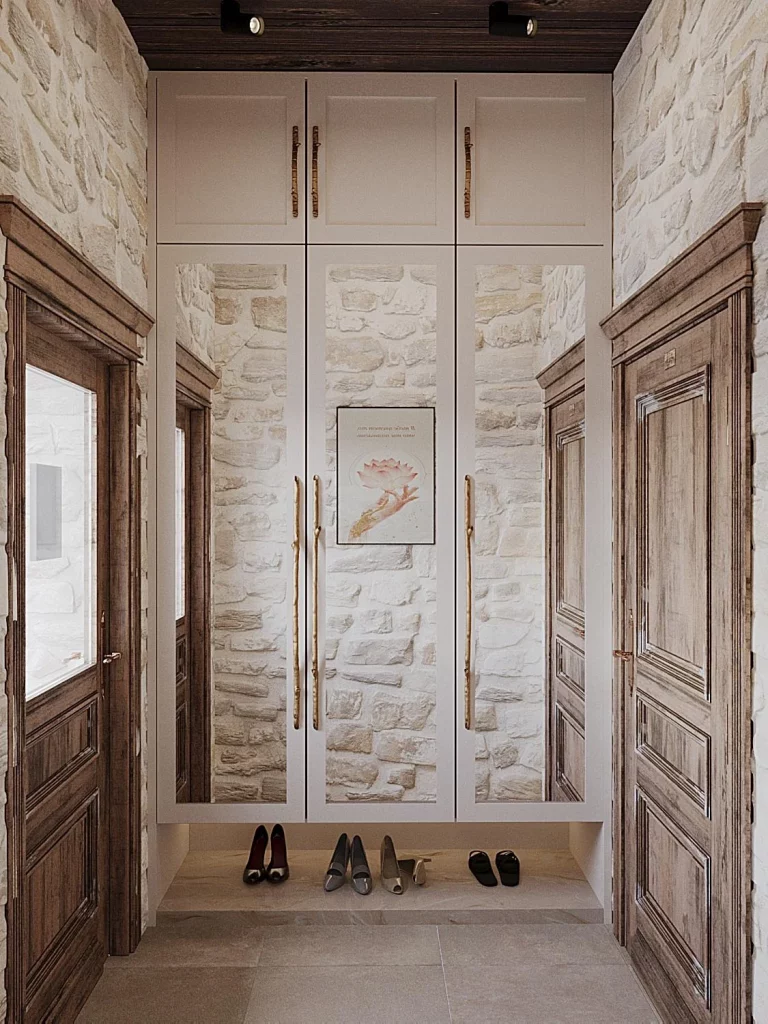
I like how effectively this design uses vertical space. The cabinetry reaches high toward the ceiling, creating substantial concealed storage while keeping the floor mostly clear. The mirrored panels also reflect the surrounding doorway and stone surfaces, helping the compact area feel deeper. The low open section is especially practical because shoes can be placed there without opening a cabinet every time.
When I look at hallway storage, I always pay attention to whether it actually supports daily routines, and this arrangement does. Long handles make the tall doors easy to operate, while the combination of closed and open storage separates everyday footwear from less frequently accessed belongings. If I were recreating this concept, I would preserve the balance between the pale cabinetry and darker architectural framing because that contrast gives the storage wall much more presence.
Soft Neutral Entry With Arched Mirror And Slatted Coat Wall
This welcoming entry combines a tall arched mirror with a slim natural-toned frame, a pale upholstered bench, and a vertical slatted wall with hooks for outerwear. The mirror visually extends the hallway and reflects hanging lights, artwork, and a small console farther inside the home. The floor features a geometric tile pattern in cream and muted brown, while the surrounding walls remain soft white. A light coat hanging on the slatted panel adds an immediate sense of everyday use.
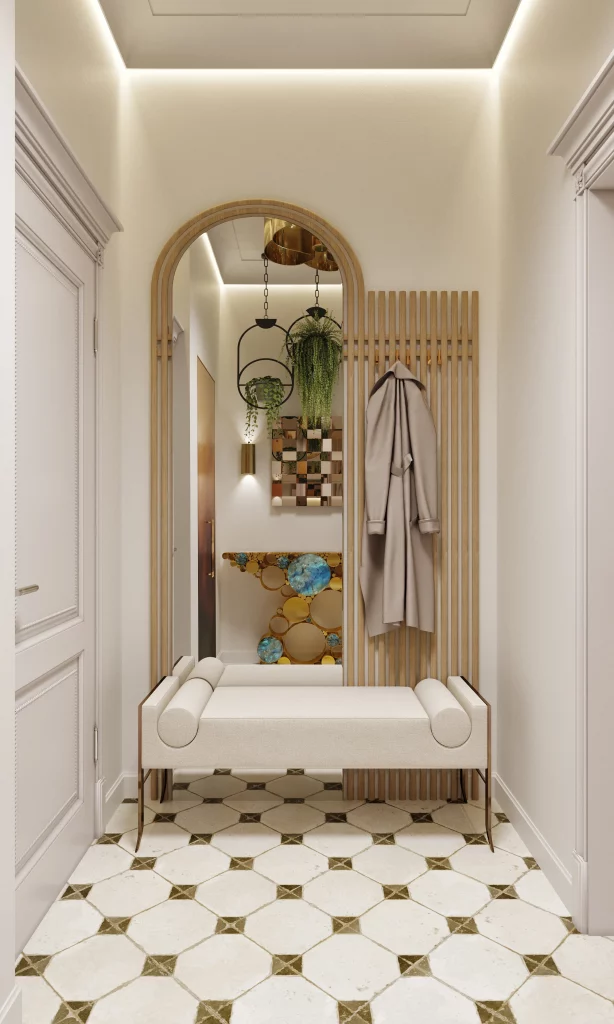
The layout works particularly well because it brings several useful functions together without making the entrance feel overloaded. The bench provides a comfortable place to sit, the hooks keep outerwear accessible, and the mirror offers a convenient final check before leaving home. I also appreciate the way the arched shape softens the vertical lines of the slatted wall and doors. The patterned floor adds personality while remaining connected to the neutral palette.
For me, the strongest lesson here is that a small hallway can accommodate practical furniture and still feel spacious when the pieces have simple silhouettes. A bench with a relatively light visual profile is especially effective in a narrow passage. I would also keep the styling around the mirror restrained, because the floor pattern, arch, and vertical slats already provide plenty of visual interest.
Minimal Entry With Light Wood Paneling And Compact Storage
This modern hallway takes a quieter approach, using pale wood-effect vertical paneling beside a dark charcoal wall and a clean white storage cabinet. A black coat hangs from simple wall hooks, while a rounded upholstered stool provides a place to sit. The large-format neutral floor tiles continue the understated palette, and black track lighting runs along the ceiling. A framed monochrome artwork adds another dark accent above the cabinet.
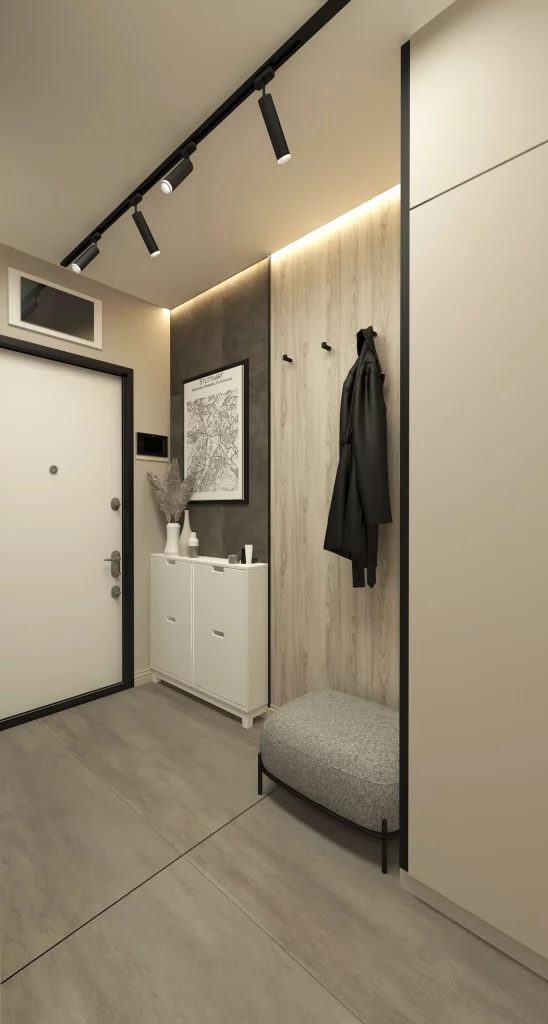
I find this combination particularly successful because the hallway feels organized without relying on a lot of decoration. The tall panel gives the coat area a defined zone, while the compact cabinet provides closed storage for smaller belongings. The upholstered stool adds comfort and makes the entrance more functional, yet its rounded shape prevents the room from becoming too rigid. The black trim around the doorway and ceiling lighting also creates a consistent visual thread.
If I were adapting this idea for a contemporary home, I would focus on the relationship between the pale paneling and the dark accents rather than adding more accessories. This is a good example of how a limited palette can create depth through contrast and texture. The arrangement also demonstrates that a hallway does not need a large console to feel complete; a compact cabinet and practical seating can be enough.
Warm Terracotta Hallway With Black Door And Statement Chandelier
Here, the hallway makes a much stronger color statement with warm terracotta walls surrounding a dark paneled entry door. A narrow dark console with slender metallic legs sits beneath a framed mirror, while a small round upholstered seat occupies the opposite side. The ceiling carries the same warm color as the walls, creating a cocoon-like effect, and a large elongated chandelier adds a delicate sculptural element overhead. The pale floor provides a soft contrast to the deeper wall color.
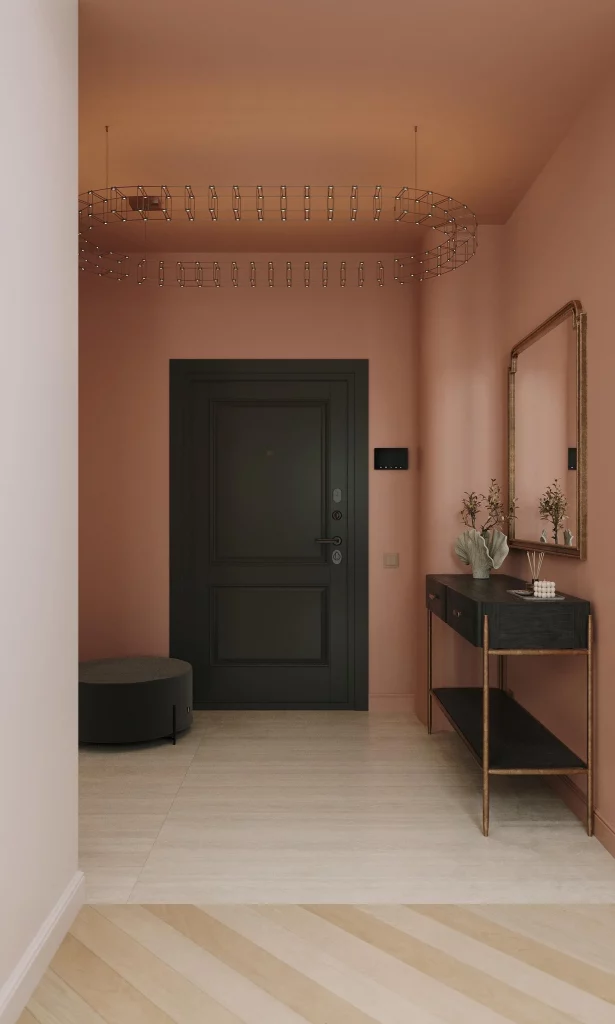
I love how confidently this space uses color without filling the hallway with unnecessary objects. The dark door anchors the composition, while the console and mirror establish a functional focal point on the opposite wall. The chandelier becomes an important decorative feature because the rest of the room remains relatively restrained. The small stool is another smart choice, offering useful seating while occupying very little floor space.
For me, this hallway is a reminder that a strong wall color can completely define an entrance. Instead of trying to make every hallway visually neutral, I would consider allowing the walls and ceiling to create the atmosphere. Keeping the furniture simple, as shown here, helps the color remain the star. The metallic details on the console and mirror also add just enough refinement to balance the warmth of the walls.
Compact White Hallway With Organic Mirror And Shoe Cabinet
This compact hallway is centered around a low white shoe cabinet with four large drawers, topped with a few small everyday objects and a simple vase. Above it hangs an irregularly shaped mirror with a thin dark outline, while a round wall light provides a soft glow beside a set of hooks holding a light-colored garment. A small textured rug sits in front of the cabinet, and the surrounding walls remain a warm pale neutral.
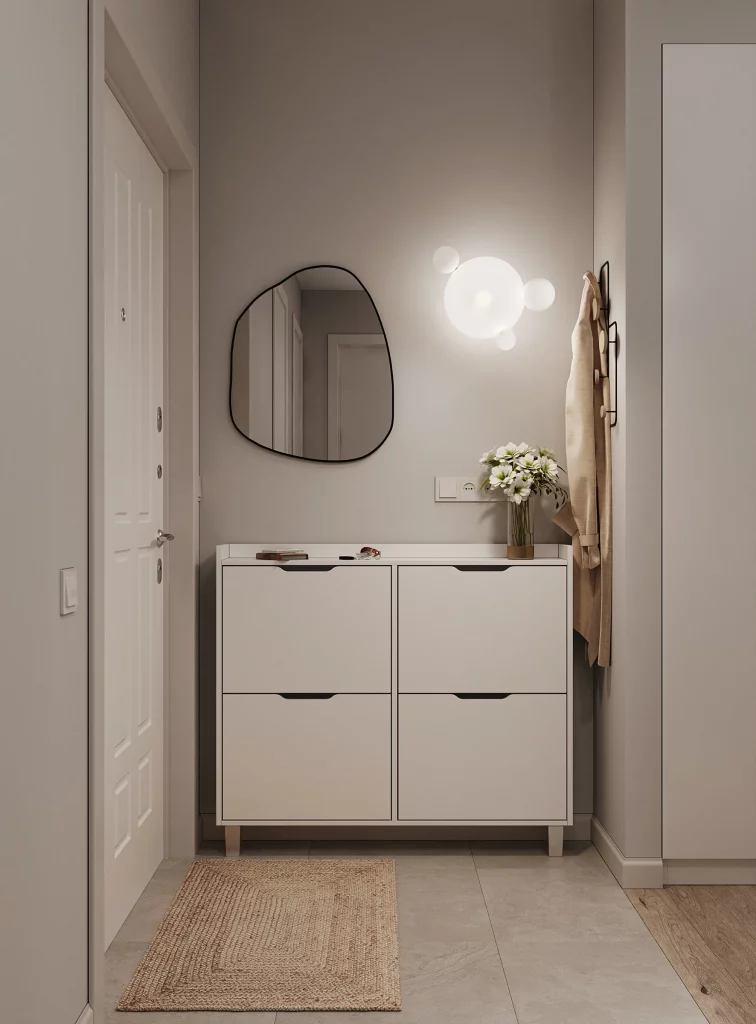
What I appreciate most is how efficiently the limited space has been used. The cabinet provides concealed shoe storage without extending too far into the hallway, while its clean white finish blends into the room. The irregular mirror introduces a gentle organic shape against the otherwise rectilinear doors and cabinetry. Even the small rug helps define the functional entrance zone without visually crowding it.
I would use this arrangement as inspiration for a smaller apartment or narrow entry where every inch matters. A low cabinet can provide much-needed storage while also creating a surface for a few carefully selected objects. I also like the decision to pair it with a non-standard mirror shape, because that small detail gives the minimalist setting more personality without requiring additional furniture.
Wood-Paneled Hallway With Sculptural Console And Built-In Bench
This hallway combines rich wood-textured vertical paneling with a striking white console featuring an undulating sculptural base. A round mirror with layered dark and light framing hangs above the console, while two small pendant lights flank it. On the opposite side, the same wood treatment forms a coat-storage wall with brass-colored hooks and an integrated upholstered bench. Built-in drawers and open shelving continue the storage system toward the right.
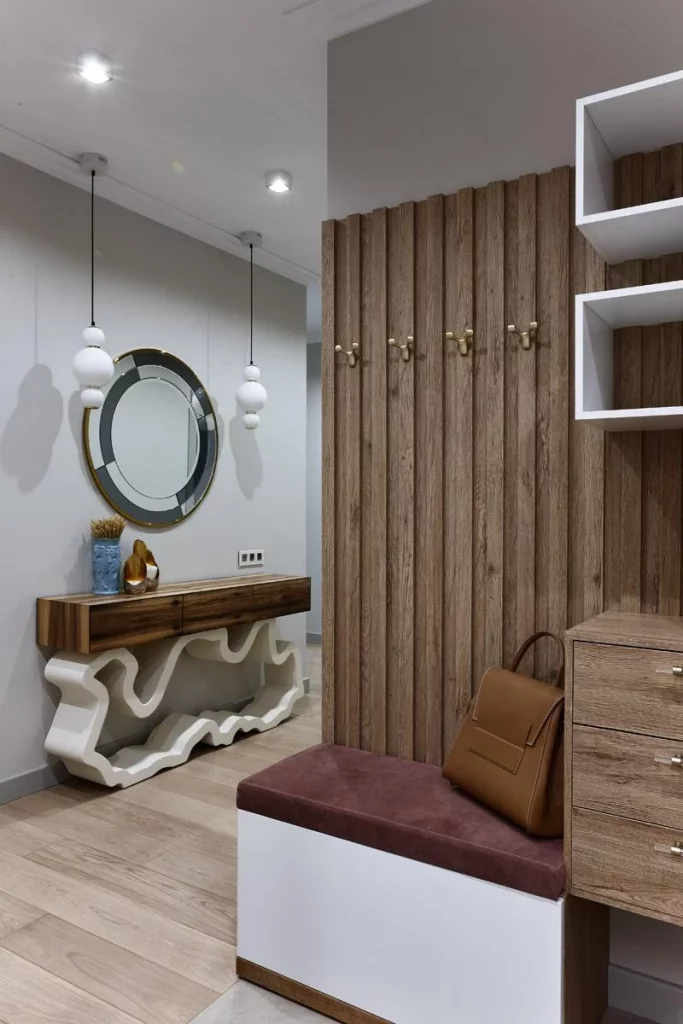
For me, the strongest feature is the way storage has been integrated into the architecture rather than treated as an afterthought. The bench creates a dedicated place to sit while putting on shoes, and the nearby hooks keep coats within easy reach. Meanwhile, the sculptural console provides a visual counterpoint to all the vertical wood lines. The mix of white, warm wood, brass-colored hardware, and muted upholstery gives the hallway a layered but controlled appearance.
I would especially recommend this kind of zoning when designing a family entrance because it separates several daily functions into one cohesive composition. The key is keeping the storage visually consistent, as shown here. Rather than mixing unrelated pieces, the cabinetry, bench, and paneling work together as one system, which makes the hallway look much more intentional.
Bright Neutral Hallway With Woven Pendant Lights And Full-Length Mirror
This spacious hallway uses a very light palette of white walls, pale flooring, and warm natural-toned furniture. A tall rectangular mirror with a simple wood frame leans against the wall beside a chest of drawers, while a rounded woven stool sits underneath. Two large woven pendant lights hang along the corridor, and a tall textured vessel filled with bare branches stands near the center. A long neutral runner stretches through the passage.
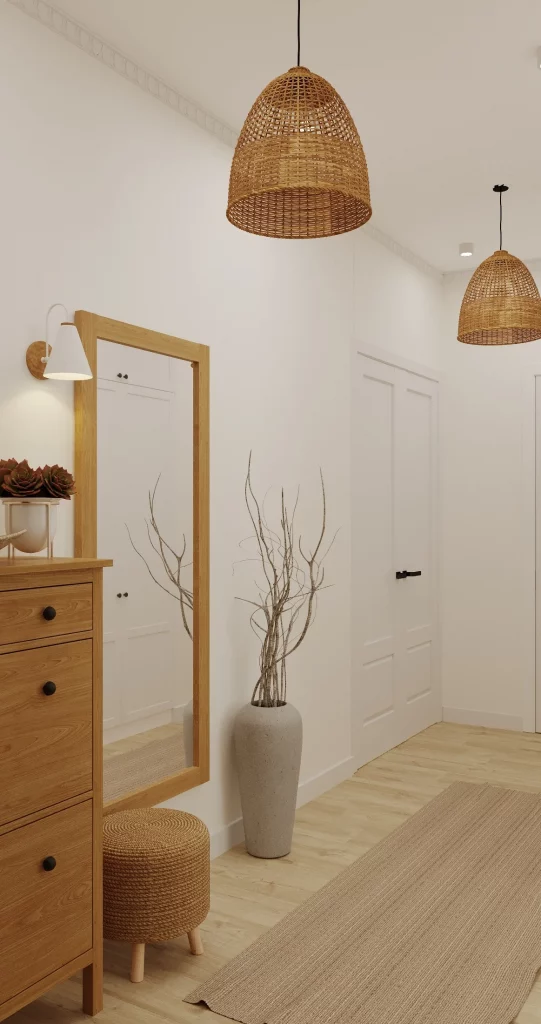
I find the simplicity of this hallway especially appealing because the texture does most of the decorating. The woven pendants, rounded stool, wood-framed mirror, textured vessel, and runner all introduce subtle variation without disrupting the airy white backdrop. The chest provides useful surface and drawer storage, while the full-length mirror is practical as well as visually helpful in a narrow corridor.
From my perspective, this is a good example of how a neutral hallway can feel warm without needing strong color. I would concentrate on varying shapes and tactile finishes instead of adding numerous decorative objects. The tall mirror also helps emphasize the height of the space, while the long runner reinforces the hallway’s generous proportions.
Decorative Hallway With Ornate Mirror And Patterned Ottoman
This elegant entrance features white paneled walls, a white interior door, and warm medium-toned wood flooring. The standout detail is an ornate gold-framed mirror with a highly decorative upper and lower silhouette. Beneath it sits a cylindrical upholstered ottoman covered in a black-and-white geometric pattern. A matching small rug lies near the door, while the ceiling is painted in a muted dusty rose shade with coordinating molding and a compact decorative light fixture.
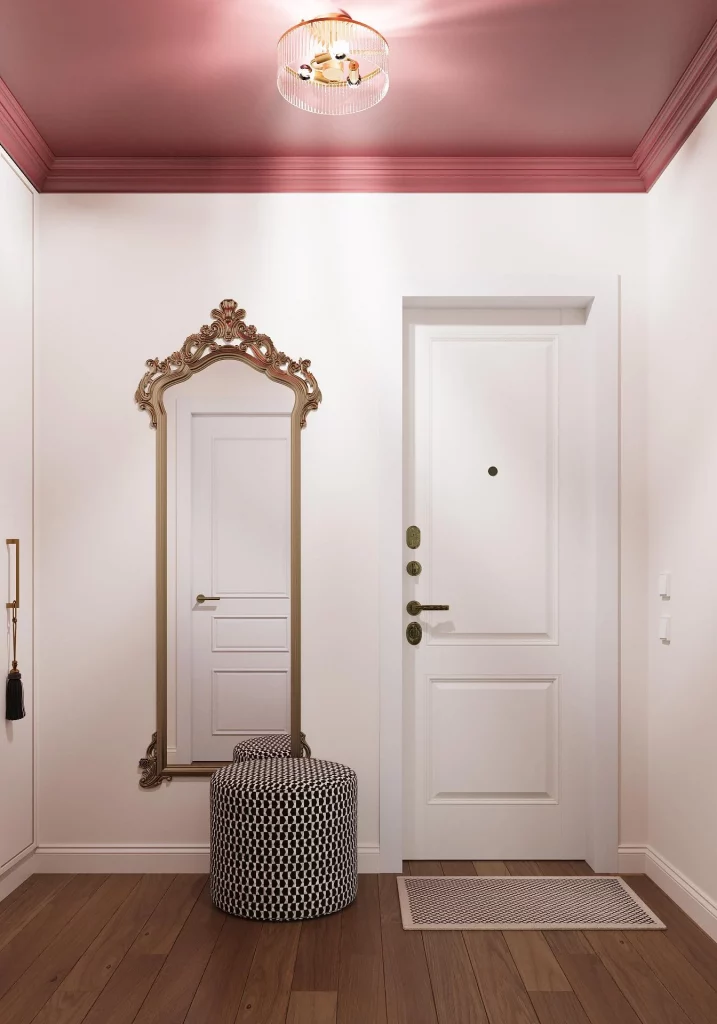
I like the way the hallway balances elaborate and restrained elements. The walls and door remain simple, allowing the ornate mirror to become the main focal point. The patterned ottoman then introduces a second point of interest without competing with the mirror’s detailed frame. Painting the ceiling rather than the walls gives the room another layer of personality while keeping the vertical surfaces bright.
If I were styling a similar entry, I would follow the same principle of choosing one major decorative feature and letting the surrounding elements support it. The ottoman is especially effective because its rounded shape echoes the curves of the mirror while its pattern adds contrast. This arrangement shows that a relatively small hallway can accommodate expressive design when the number of competing elements is kept under control.
Full-Height White Hallway Cabinet With Integrated Coat Nook
The final hallway is built around a substantial white storage unit that fills most of one wall from floor to ceiling. Tall paneled cabinets flank a recessed central niche with three hooks, a shelf, and a small lower bench area with additional cabinets beneath it. A simple chandelier hangs overhead, while pale wood flooring and light neutral walls keep the space bright. The overall composition is highly symmetrical and exceptionally clean.
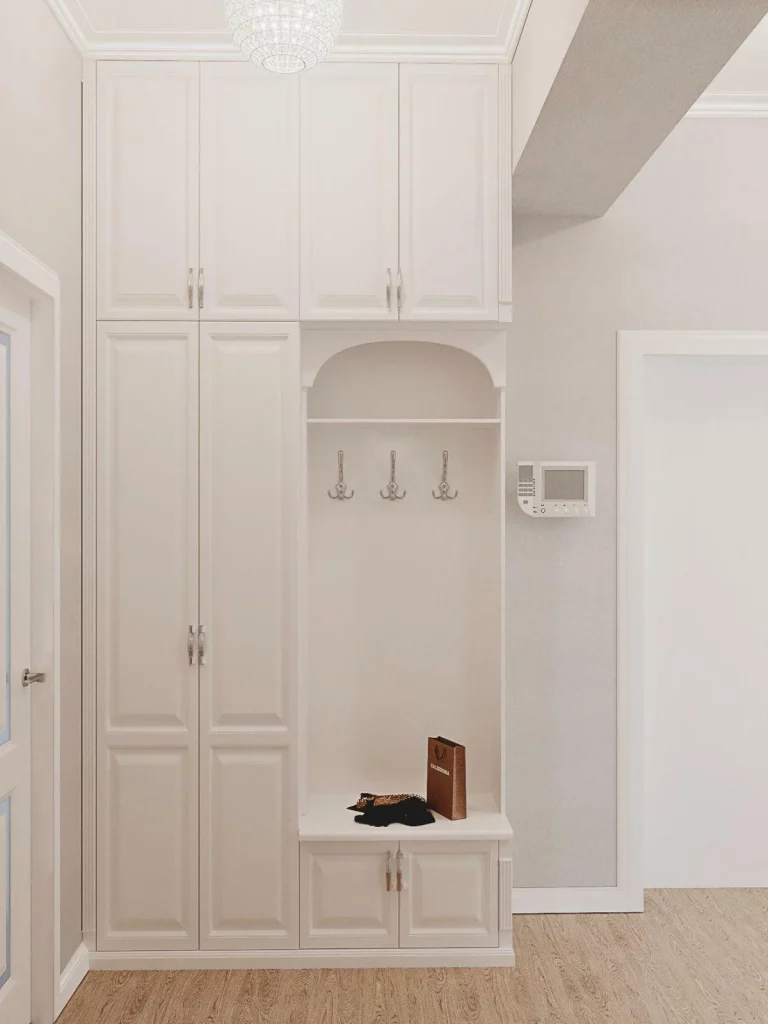
What works best for me here is the amount of storage achieved without making the hallway look visually chaotic. The tall cabinets conceal belongings, while the central niche creates a dedicated place for coats and smaller everyday items. The lower cabinet provides additional storage and a practical surface, making the entire unit function almost like a compact mudroom built directly into the hallway.
For a home where organization is a priority, I would take this integrated approach seriously. The most successful storage does not necessarily need to be hidden completely; creating one carefully planned open section for frequently used items can make daily routines easier. I also like the restrained palette because it allows the cabinetry to read as part of the architecture rather than as a separate piece of furniture.
A well-decorated hallway can completely change the feeling of your home, especially as the seasons shift. For Fall 2026, I’m drawn to spaces that combine warm tones, tactile textures, thoughtful lighting, and clean modern silhouettes. You don’t need to redesign everything—sometimes a new runner, mirror, console accent, or seasonal detail is enough to create a fresh atmosphere. The key is to keep the hallway functional while giving it the same personality and warmth as the rooms beyond it. With a few intentional updates, your entryway can feel polished, welcoming, and perfectly suited to the cozy mood of fall.