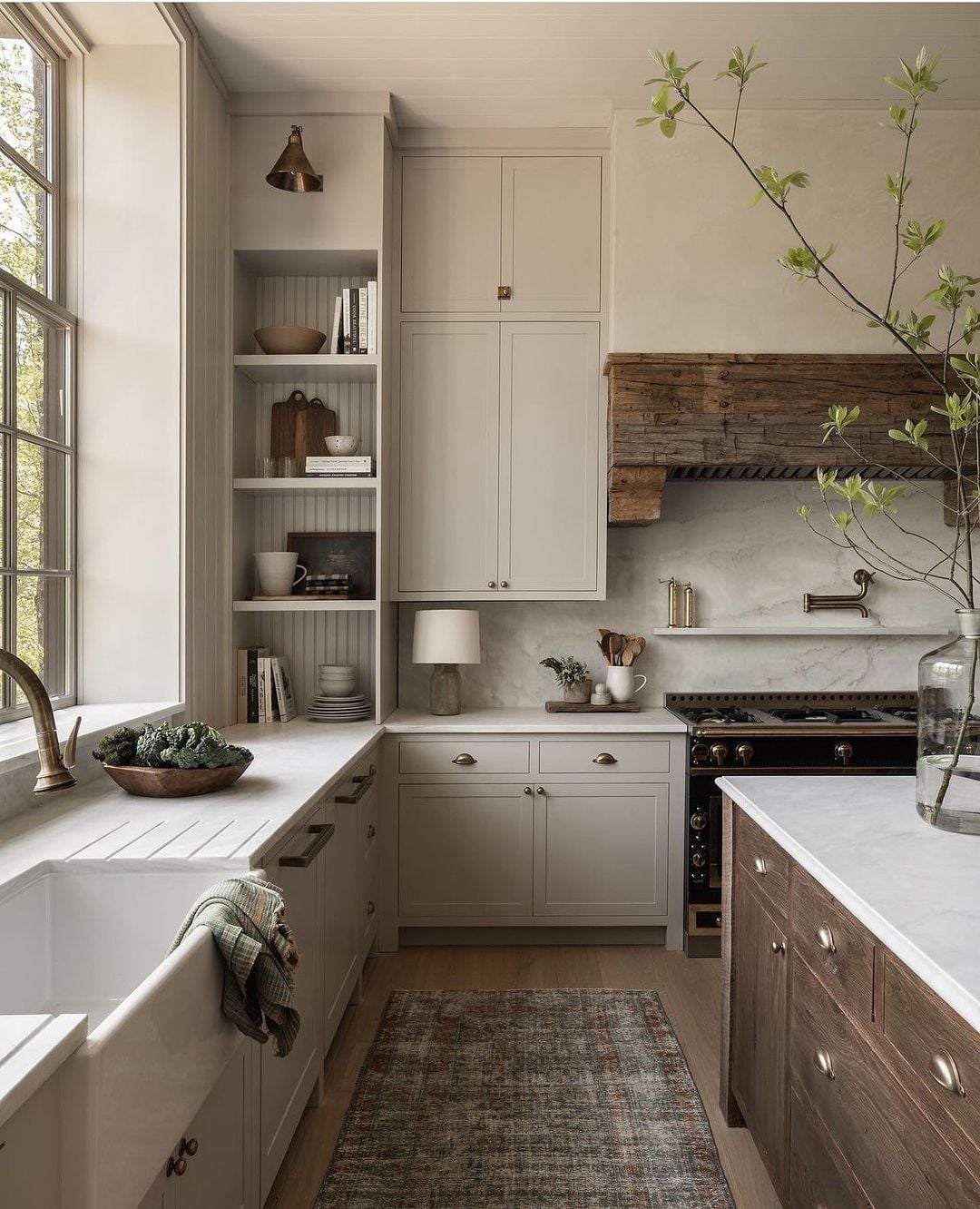
A kitchen runner does more than protect your floors. It anchors the room, softens hard surfaces, and ties your cabinets to your countertops. Whether your style leans modern, farmhouse, or boho, the right rug makes the space feel finished without a full renovation.
This roundup covers 34 kitchen runner ideas that actually work, from bold geometric patterns to natural textures. Each idea focuses on placement, material, and the way a single rug can shift the feel of the whole room. Expect practical advice on scale, upkeep, and how to match a runner to your existing palette.
01 / 35Transitional Kitchen Runner Between Sink and Island
The runner sits in the gap between a farmhouse sink and a wooden island, a spot that usually gets the most foot traffic. The light gray and white pattern picks up the shaker cabinets and marble countertop without competing with the wood tones. By centering the rug in that walkway, the layout solves two things at once: it softens the hard floor surface and defines the work zone without blocking the island access. The result is a transitional kitchen runner between sink and island that reads as practical rather than decorative.
02 / 35Ornate Traditional Runner in a Spacious Kitchen
A pink and blue ornate runner running down the center of a roomy kitchen is a straightforward way to add warmth. The cream and gray cabinets stay neutral, so the rug does the heavy work of introducing color. The traditional pattern, with its repeating floral or medallion motifs, creates a visual anchor in the open floor plan. What breaks the formality is the casual wood island and marble countertops, which keep the look from reading as stiff. The palette ratio here is about one part pattern to three parts solid surface, enough to feel intentional without overwhelming the space.
03 / 35Geometric Boho Runner in a Bright Kitchen
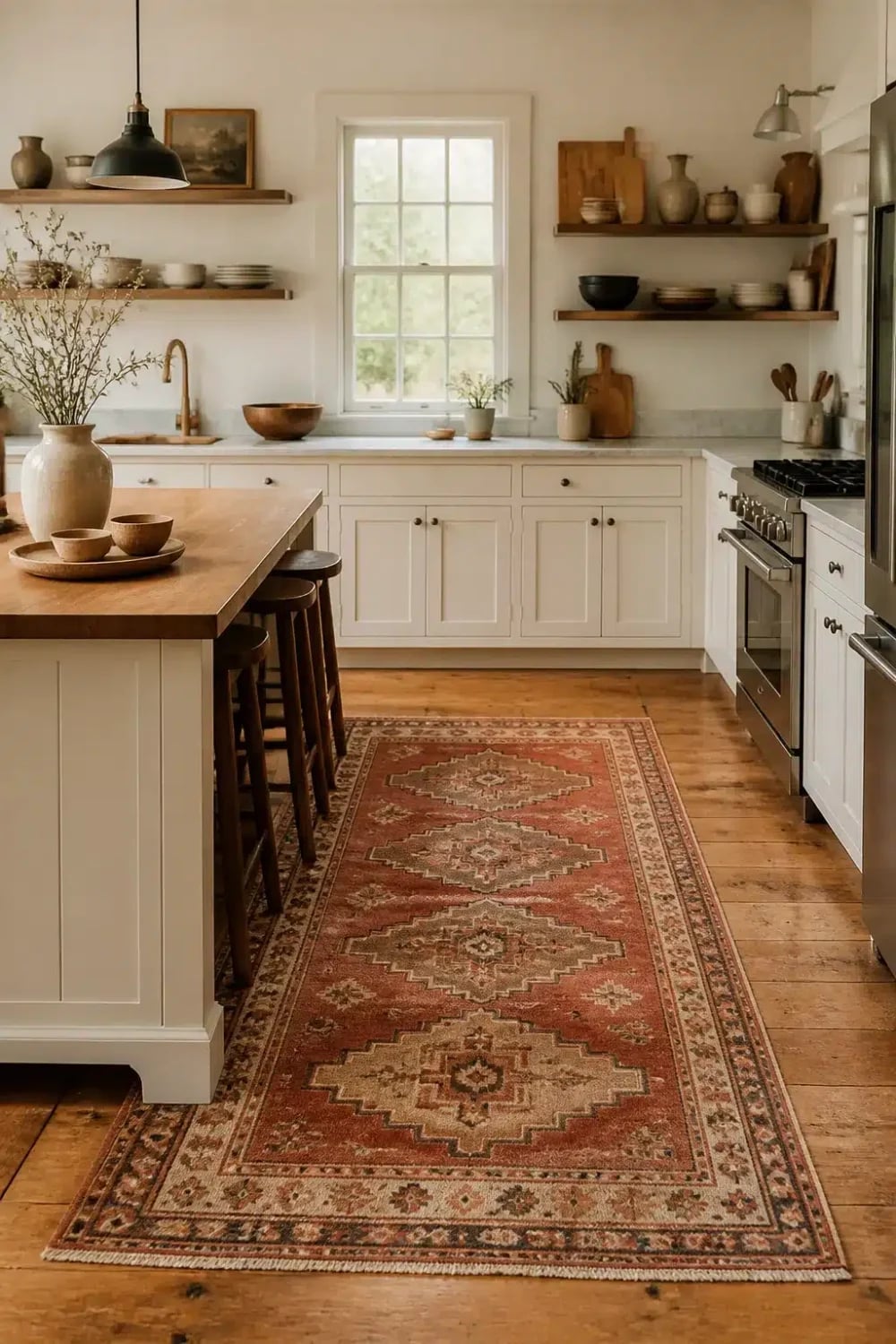
Can a patterned rug work in a kitchen without looking busy? This geometric boho runner in a bright kitchen shows it can, as long as the rest of the room stays simple. The red, beige and brown diamond pattern repeats across a natural fiber base, which gives it texture without adding weight. White shaker cabinets and a wood island let the runner sit as the focal point rather than competing with it.
The material matters here. A flatweave or low-pile construction in natural fibers handles kitchen traffic better than a thick shag, and the geometric pattern hides crumbs between sweeps. The pendant light above the island echoes the rug’s warm tones, tying the whole setup together without needing extra accessories.
04 / 35Ornate Runner Adds Color to Sage Green Galley Kitchen
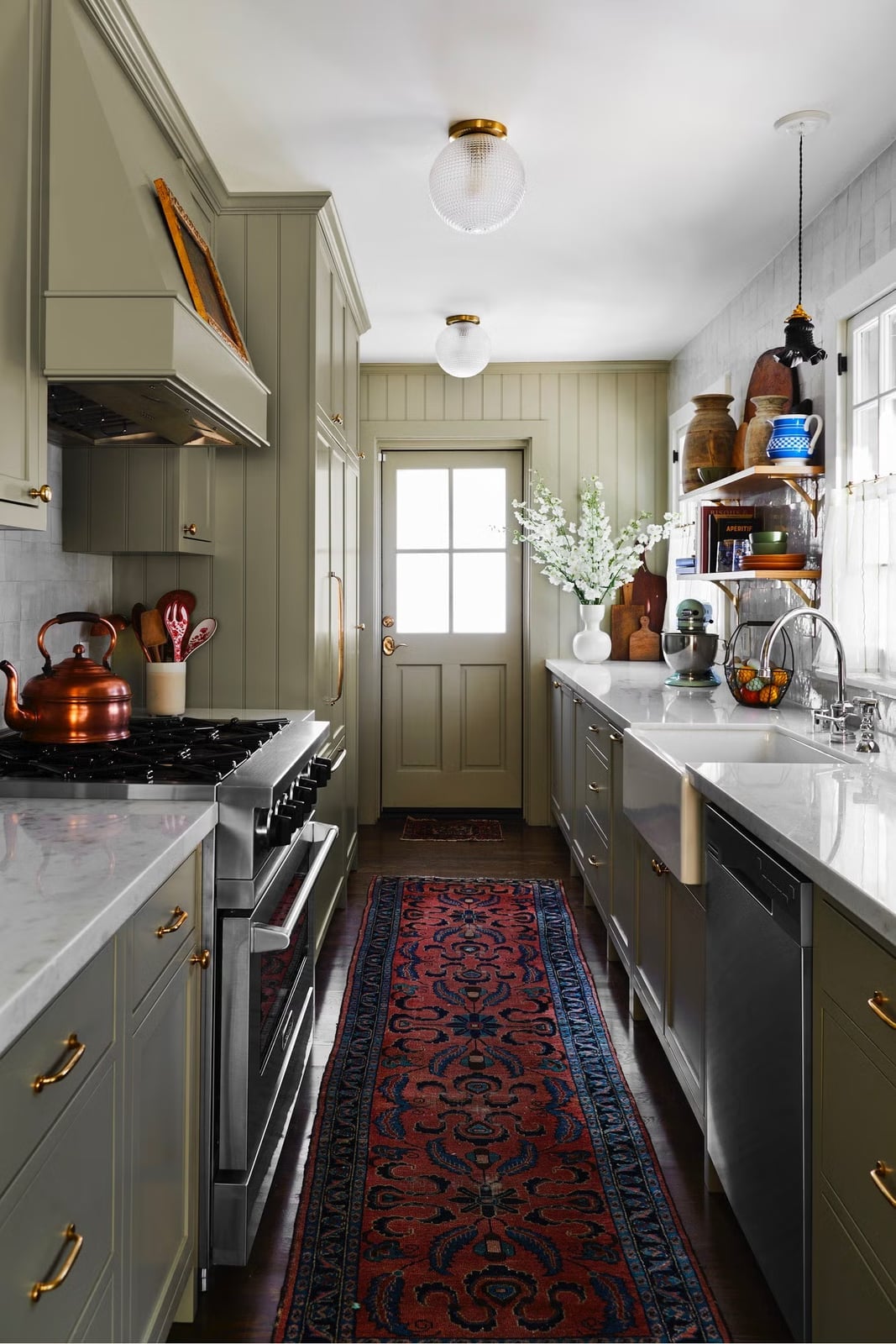
Sage green cabinets can read as muted on their own, but a red and blue ornate runner adds the contrast that makes the green pop. In a compact galley layout, the runner runs the length of the walkway, drawing the eye from the copper kettle on the counter to the overhead fixtures. The red tones in the pattern pull warmth from the metal kettle, while the blue keeps the palette from going too warm. This kind of color layering works because the runner carries both a cool and warm note, bridging the sage cabinetry and the copper accent.
05 / 35Colorful Striped Runner in a Modern Farmhouse Kitchen
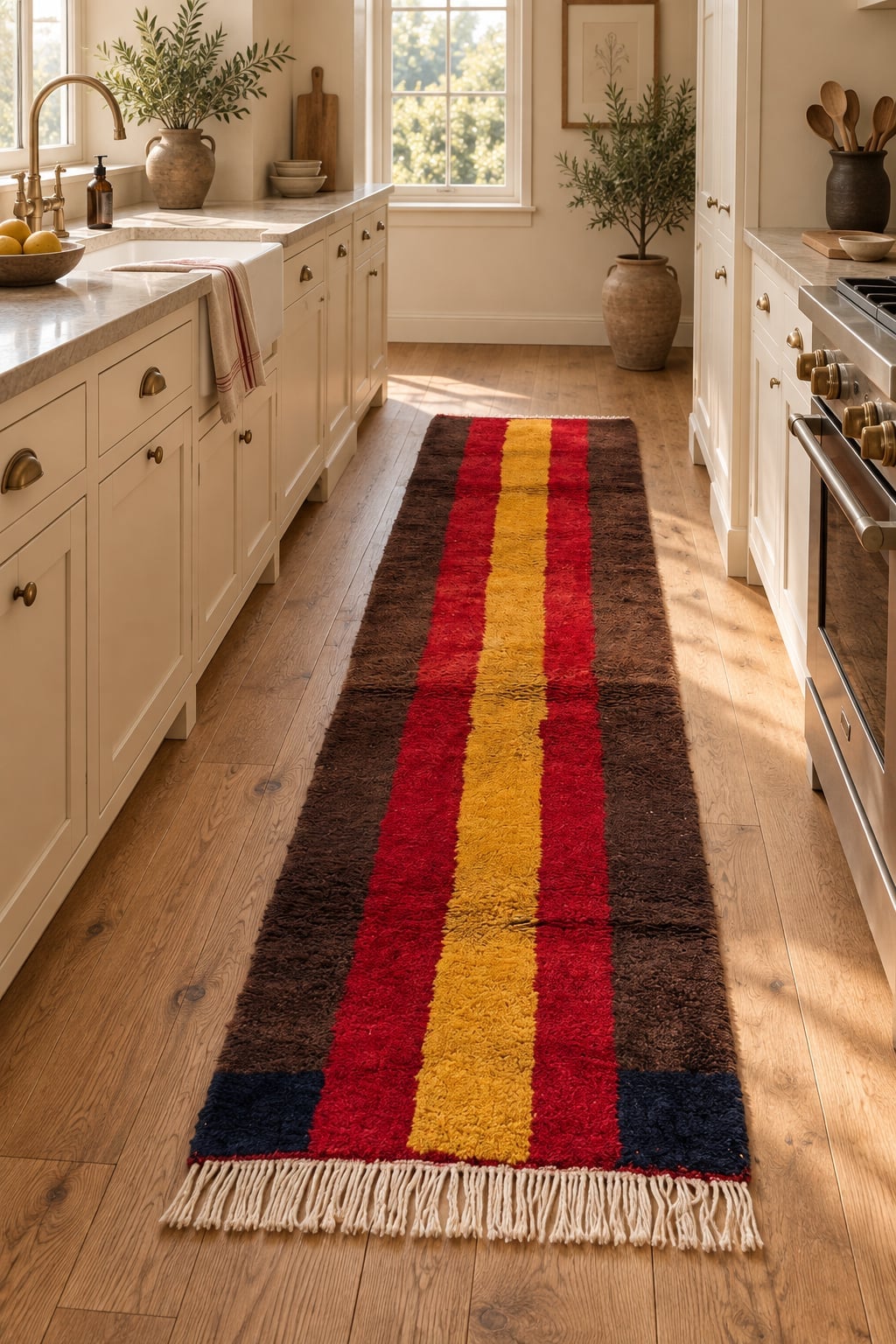
A colorful striped runner in a modern farmhouse kitchen does something plain neutrals cannot: it introduces energy without changing the cabinetry or backsplash. The brown, red, yellow and blue stripes run parallel to the shaker cabinets and wood floor, creating a horizontal line that makes the room feel wider. The runner sits down the center of the aisle, leaving enough floor visible on each side to maintain the farmhouse feel. The palette works because the stripes are saturated but not neon, so they read as rustic. Choose stripes where the background color is close to the floor tone, letting the stripes provide the contrast.
06 / 35Patterned Runner Enhances Farmhouse Kitchen Ambiance
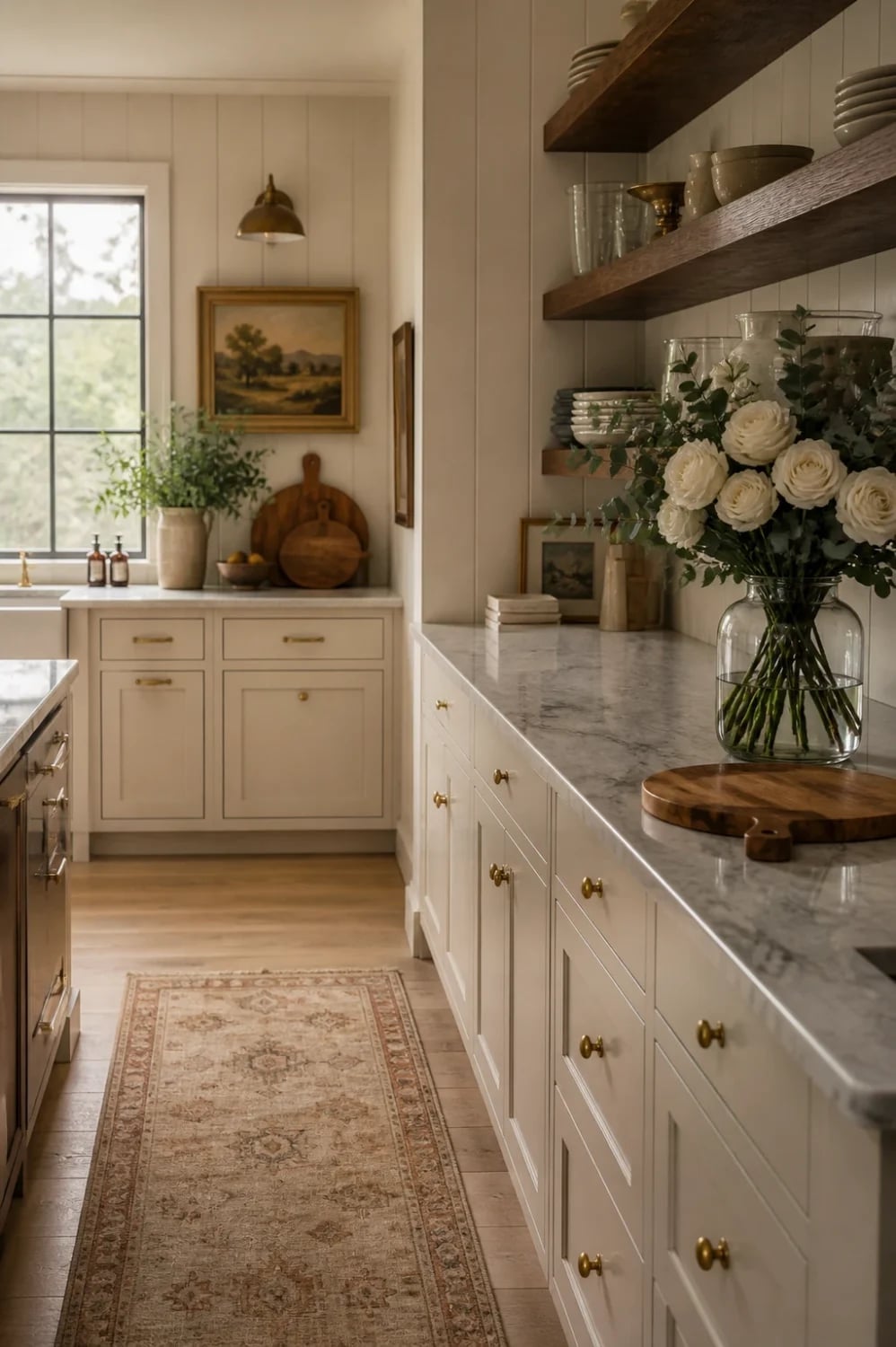
A flatweave rug in rust and cream brings warmth without trapping crumbs the way a thick wool shag would. The runner sits between the sink and island, its low pile easy to sweep. The pattern repeats in small medallions, so a spill on one motif is less of a crisis than on a solid cream fiber. Wood tones in the island and open shelving echo the rust in the rug, while marble countertops keep the look from tipping toward country quaint. The runner is the one soft element in a room of hard surfaces, and it does the job of defining the work zone without blocking traffic.
07 / 35Gray and Blue Runner Complements Black Cabinets
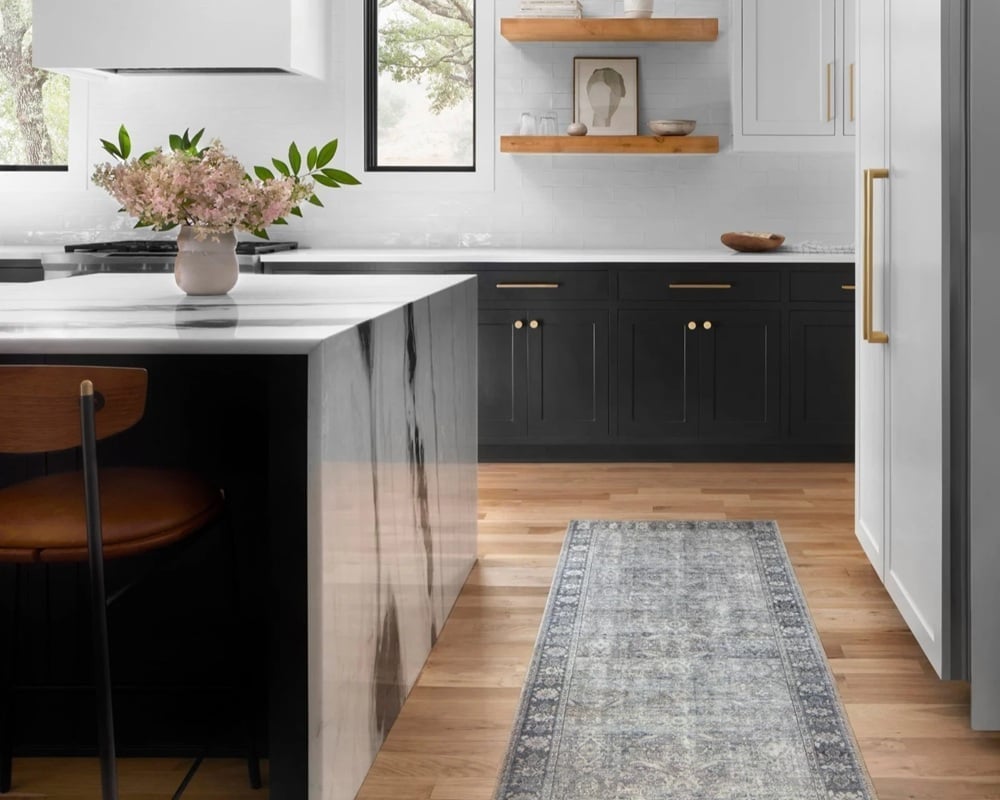
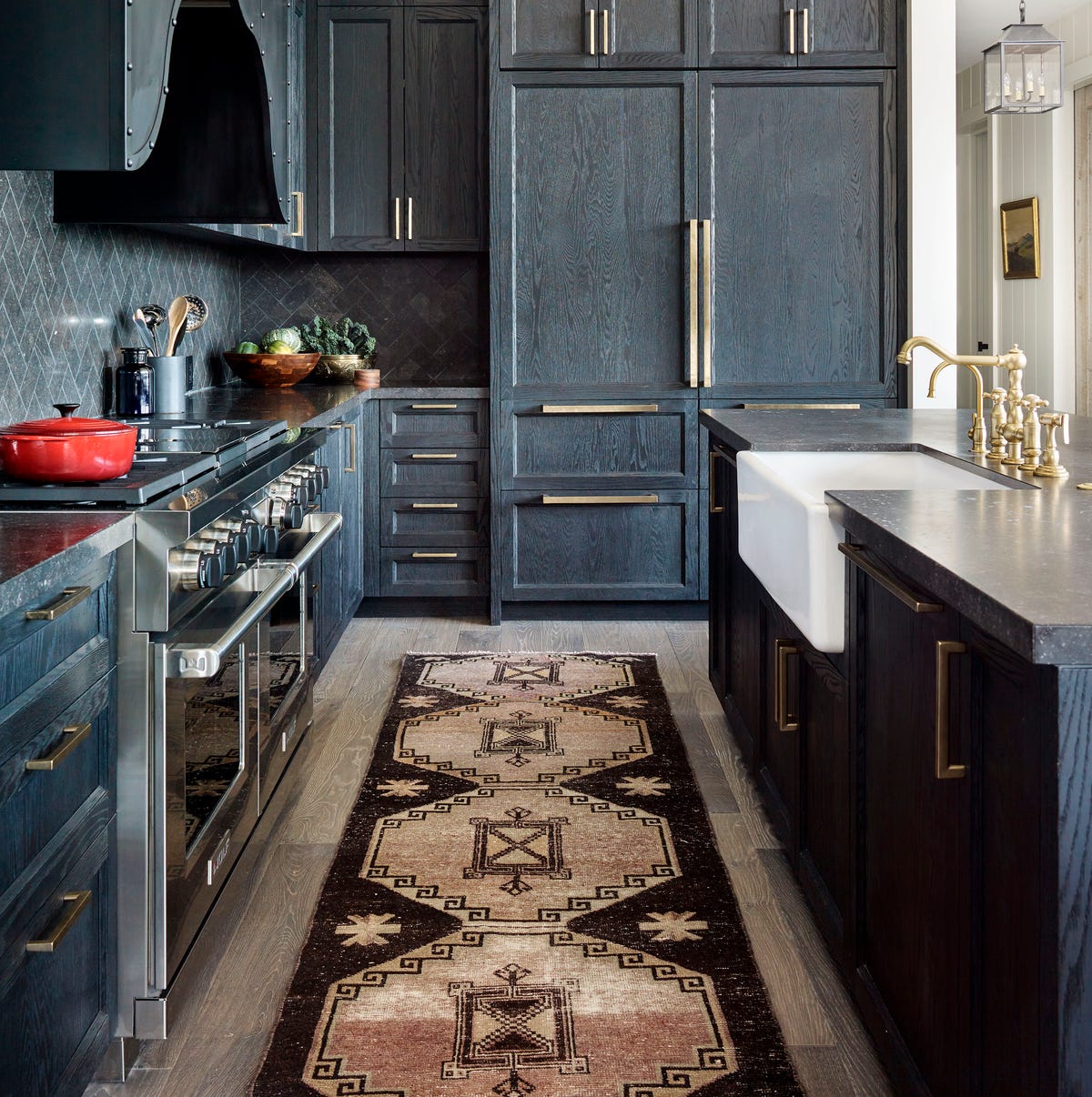
A detailed runner in steel blue and warm gray runs alongside a black kitchen island, softening the contrast between dark cabinetry and white marble. The runner picks up the cool tones in the stone flooring and mirrors the charcoal of the cabinets without matching them exactly. For renters who cannot paint cabinets or swap backsplash tile, a runner this size anchors the whole work aisle and shifts the room’s palette without a single wall coat.
08 / 35Striped Woven Runner in a Boho Galley Kitchen
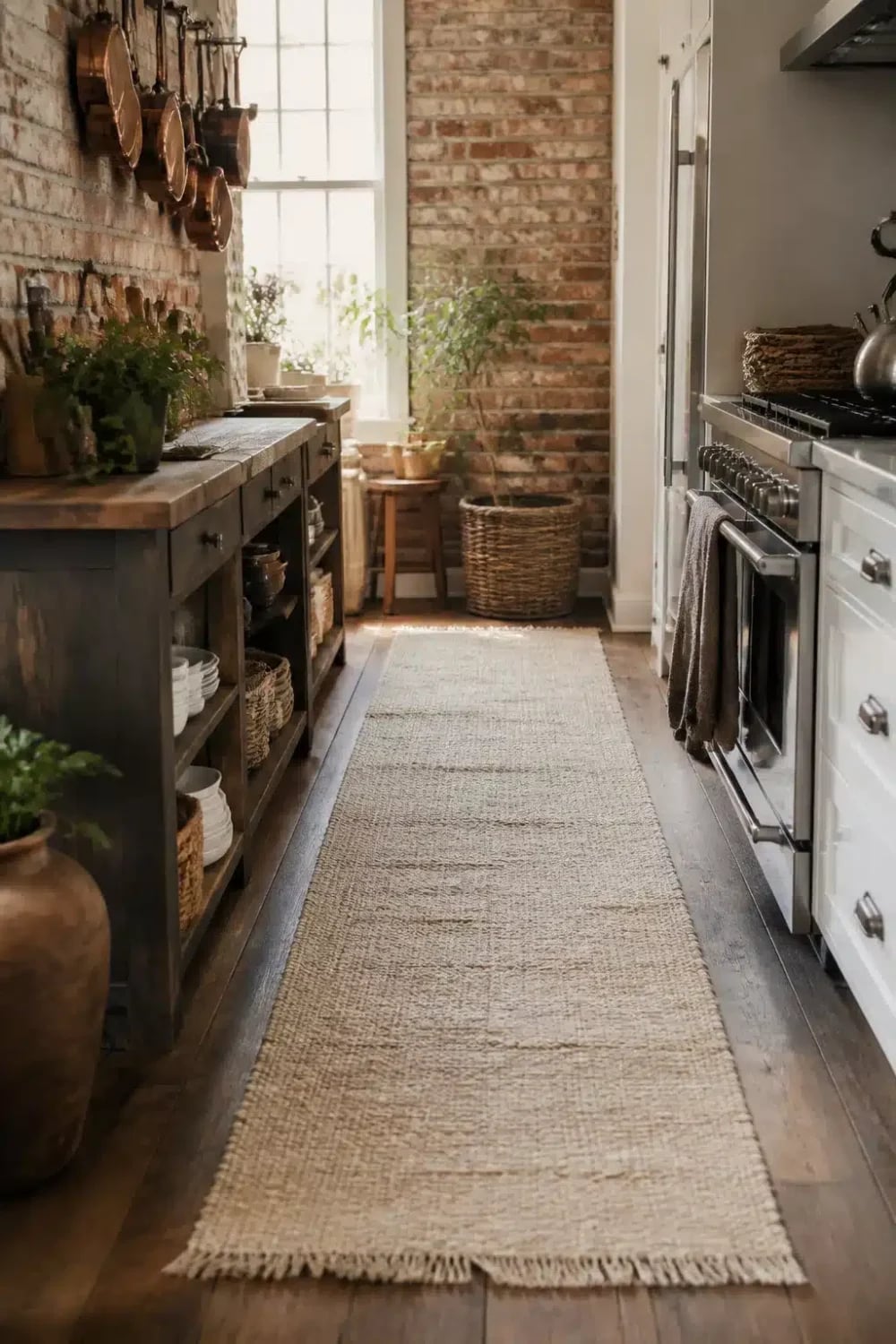
Stripes running lengthwise in this woven runner make a narrow galley feel wider than it is. Sage green cabinets and a beige floor keep the palette calm, while the cream and brown stripe pattern adds a clear focal point. The open weave lets sand and dry crumbs fall through, which means less vacuuming and more broom sweeps. In a compact kitchen where every surface is hard, this runner provides the only layer of visual warmth in the room.
09 / 35Terracotta Runner Adds Boho Charm to Dark Gray Kitchen
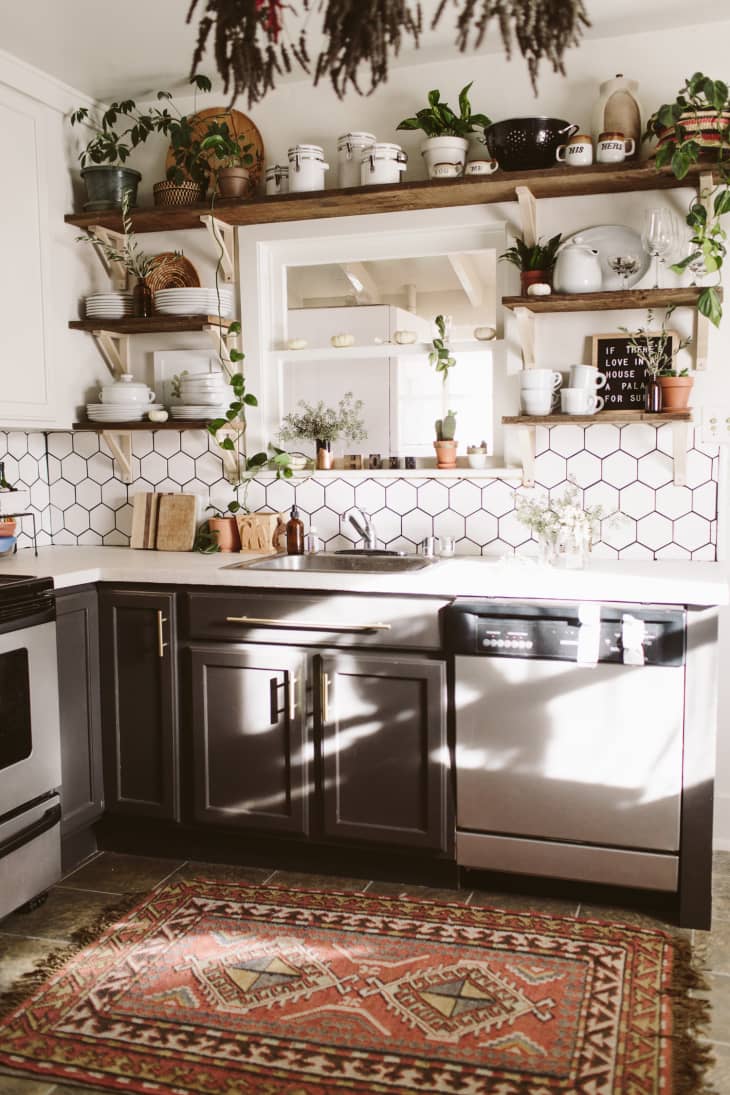
Can a runner survive a kitchen with dark gray cabinets and a sink in the middle of the action? A low-pile terracotta and cream patterned rug can, because the busy print hides minor stains and the fiber dries fast after the occasional splash. The warm clay tone lifts the gray, which can read as cold without a color anchor. Plants on the counter echo the organic feel of the runner, and the overhead light hits the rug’s pattern instead of glossing over a solid floor. This is a practical swap for anyone who wants boho warmth without a full remodel. The runner defines the prep zone in front of the cabinets and sink, and its muted palette keeps the room from feeling cluttered.
10 / 35Patterned Runner on Herringbone Floor with Sage Island
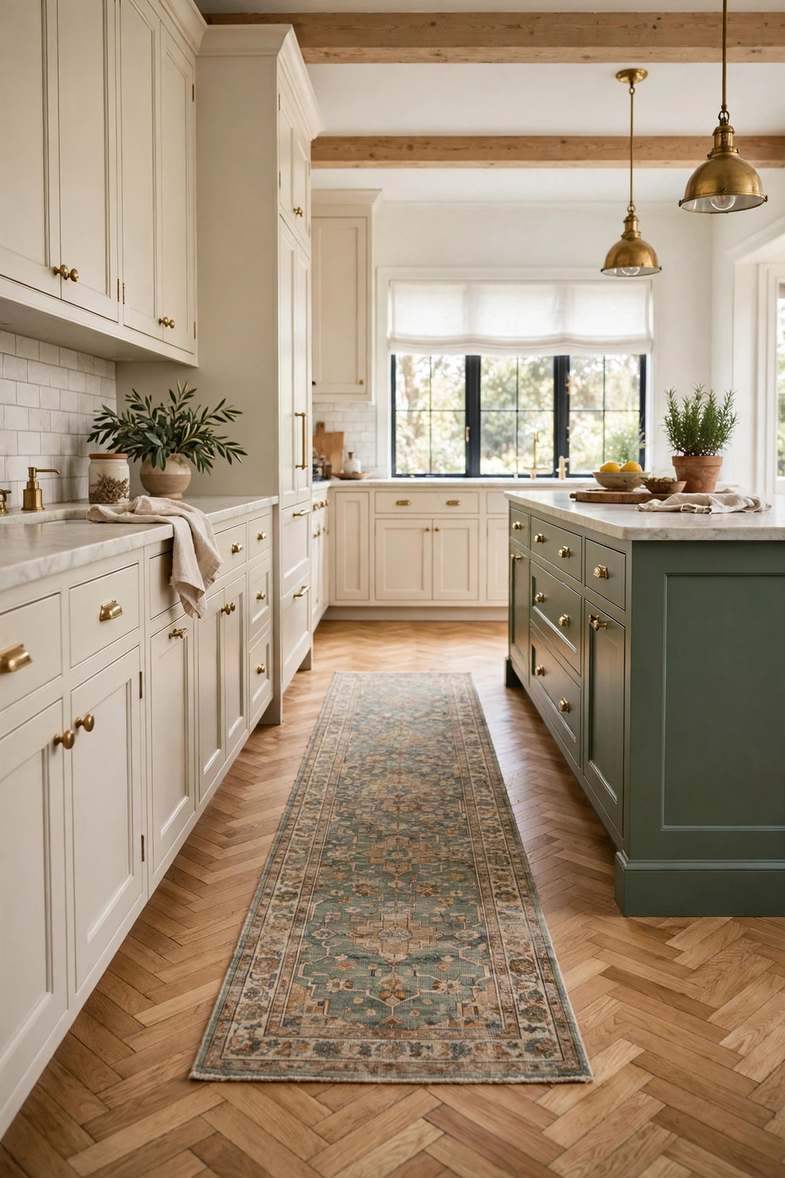
A patterned runner runs the length of the aisle in front of a sage green island, its cream ground and small-scale motif sitting neatly on a herringbone wood floor. The runner is long enough to span the work zone but leaves a few inches of wood visible on each side, which keeps the floor pattern from competing with the rug. Pendant lights above the island echo the brass in the cabinet hardware, tying the runner’s neutral palette back to the room’s warm metal accents.
11 / 35Natural Jute Runner in a Modern White Kitchen
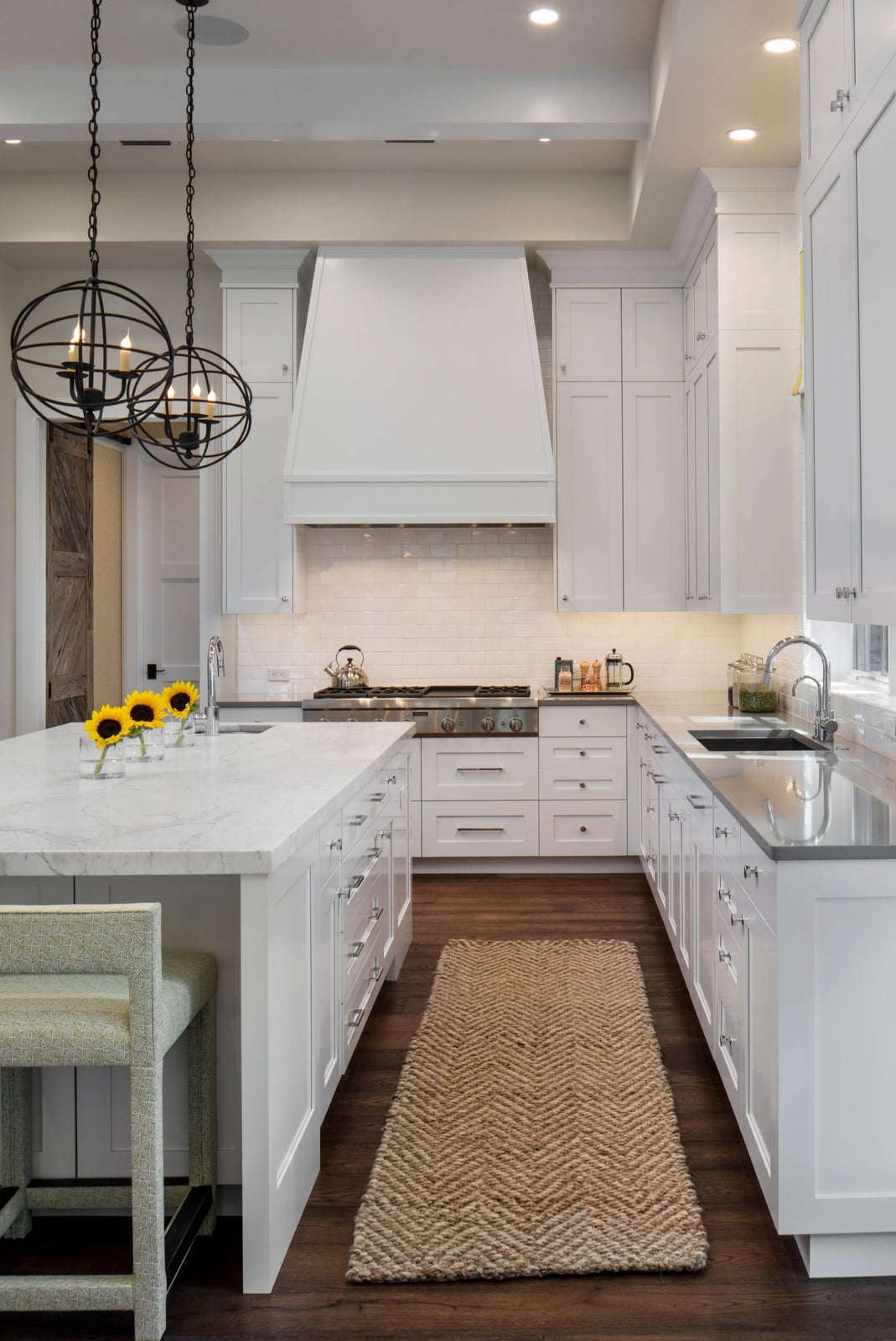
A natural jute runner adds texture to a room full of smooth, cool surfaces. White cabinets and a marble island set a clean, modern backdrop, and the woven fiber introduces warmth without adding color. The runner sits in front of the island, softening the path between the cabinets and the prep area. Pendant lights and natural light keep the space bright, so the jute feels deliberate rather than rustic. For kitchens that lean minimal, a natural fiber runner is a practical choice that brings visual depth without cluttering the palette.
12 / 35Geometric Runner Creates Bold Focal Point in Modern Galley
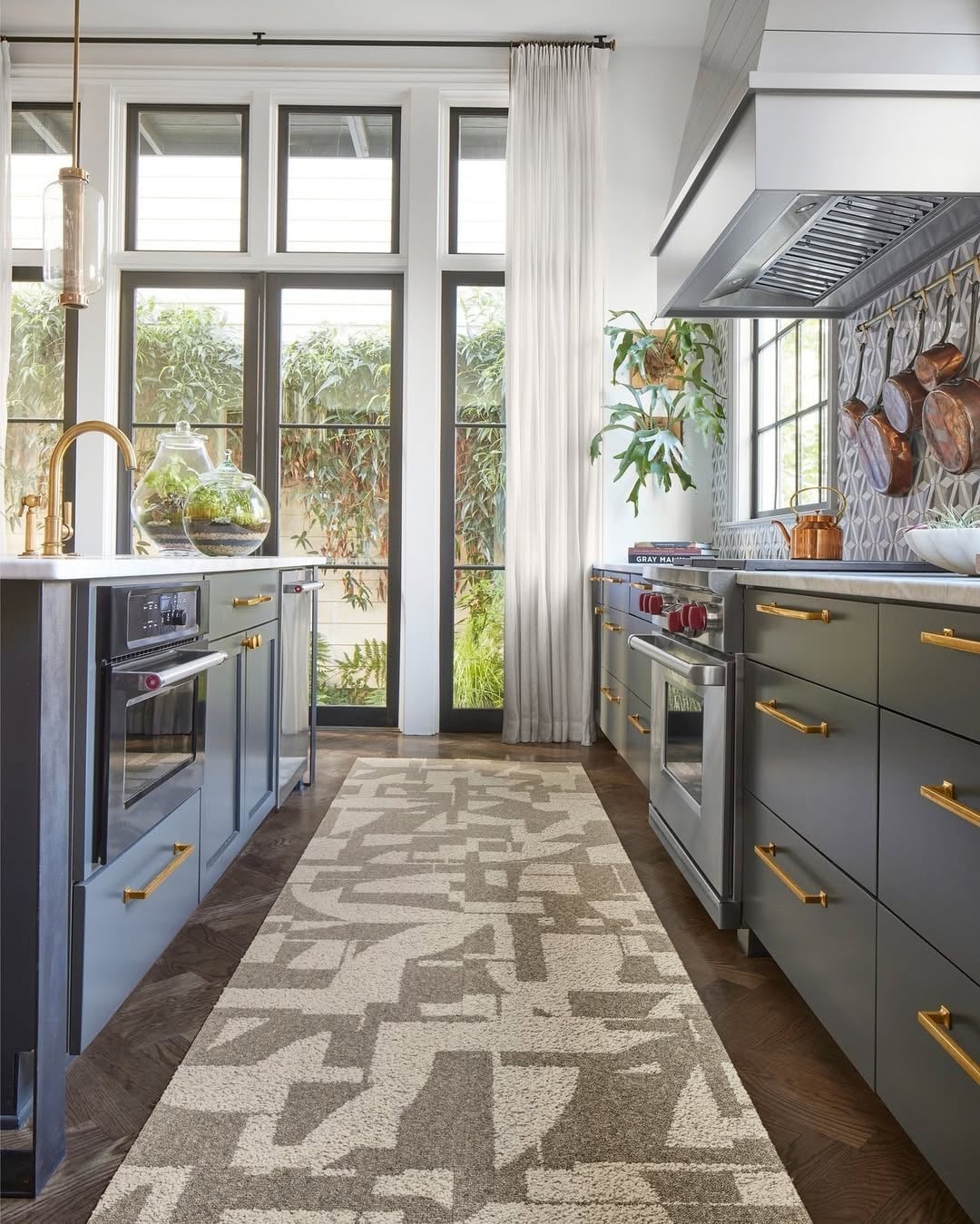
A solid runner in a neutral tone would blend into a galley kitchen, but a geometric pattern draws the eye down the center aisle. Dark cabinets and brass hardware set a moody, modern backdrop, and the runner’s repeating motif becomes the main event on the floor. The gray, beige, and white palette keeps the pattern from feeling chaotic. A pendant light and natural light balance the darker cabinetry. A geometric runner works when the room stays restrained in color and finish.
The layout of a galley kitchen means the runner is the one element that spans the entire length, so it anchors the space. The pattern repeats at regular intervals, which suits the linear nature of the room. Brass hardware and wood tones add warmth, but the runner’s graphic quality keeps the look firmly modern.
13 / 35Dual Patterned Runners Flanking a Farmhouse Island
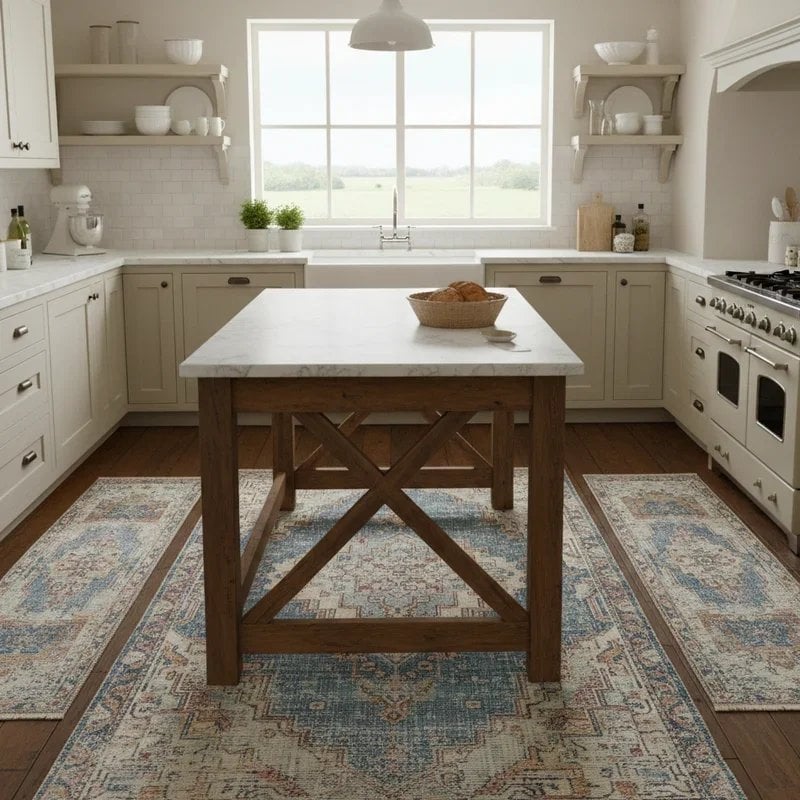
Two patterned runners sit on either side of a farmhouse kitchen island, creating symmetry that defines the work zones. The woven rugs in cream, blue, rust, and wood tones echo the colors in the room without matching exactly. Placing a runner on each side of the island gives equal footing to both the cooking and cleanup sides, and the repetition makes the layout feel intentional. Natural light and overhead lighting keep the space open, and the runners break up the expanse of tile and wood flooring.
14 / 35Floral Runner Adds Vibrancy to Traditional Cream Kitchen
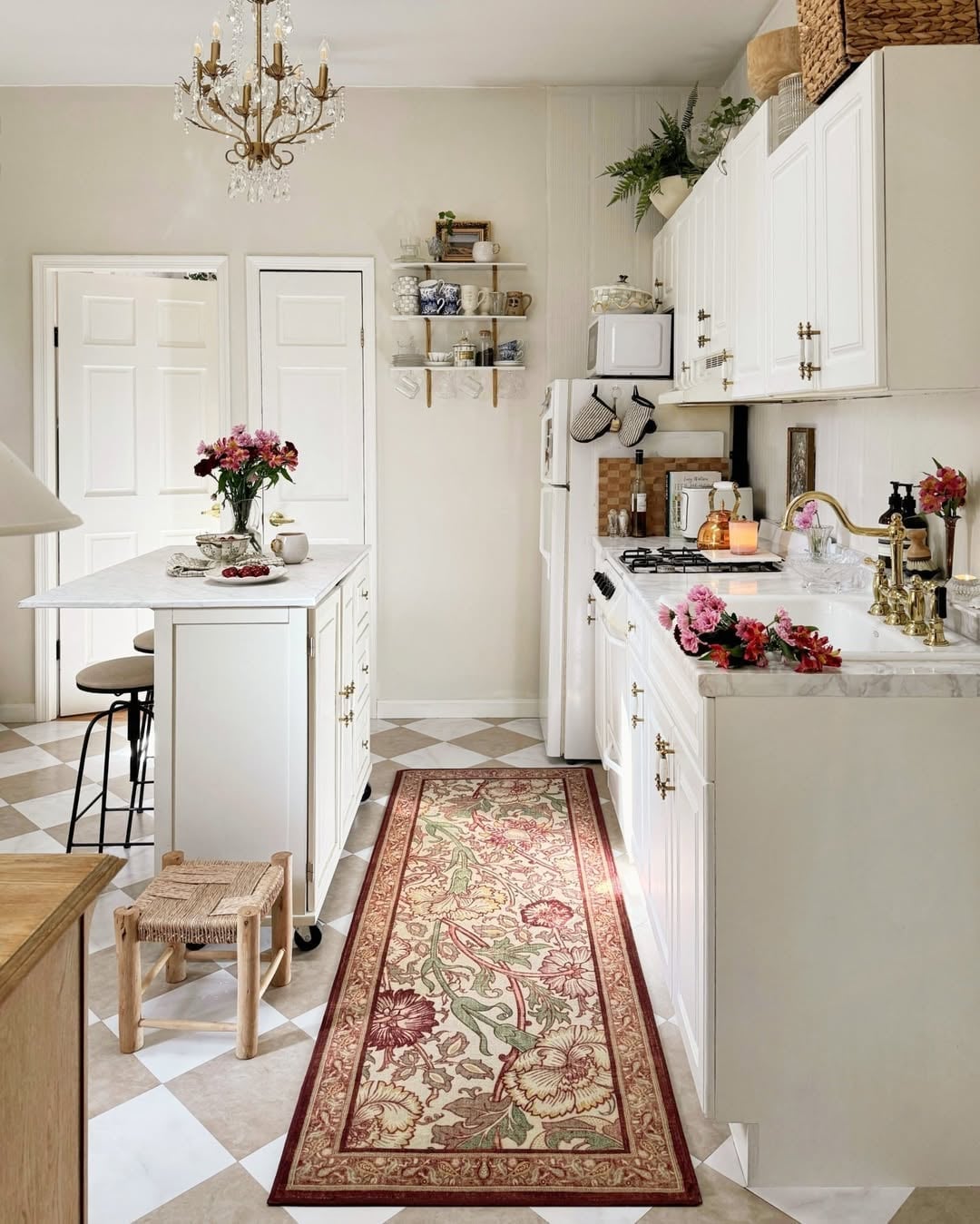
A traditional cream kitchen gets a jolt of life from a floral runner in pink, green, and burgundy. The compact layout means the runner covers a good portion of the floor, so the pattern reads as a major color source rather than an accent. Cream cabinets and marble counters let the runner do the talking, and a chandelier adds soft light that catches the woven details. A floral runner is a direct way to bring garden tones indoors without changing cabinets or countertops. The cream backdrop keeps the look polished rather than busy.
15 / 35Ornate Gray Runner in a Modern Farmhouse Kitchen
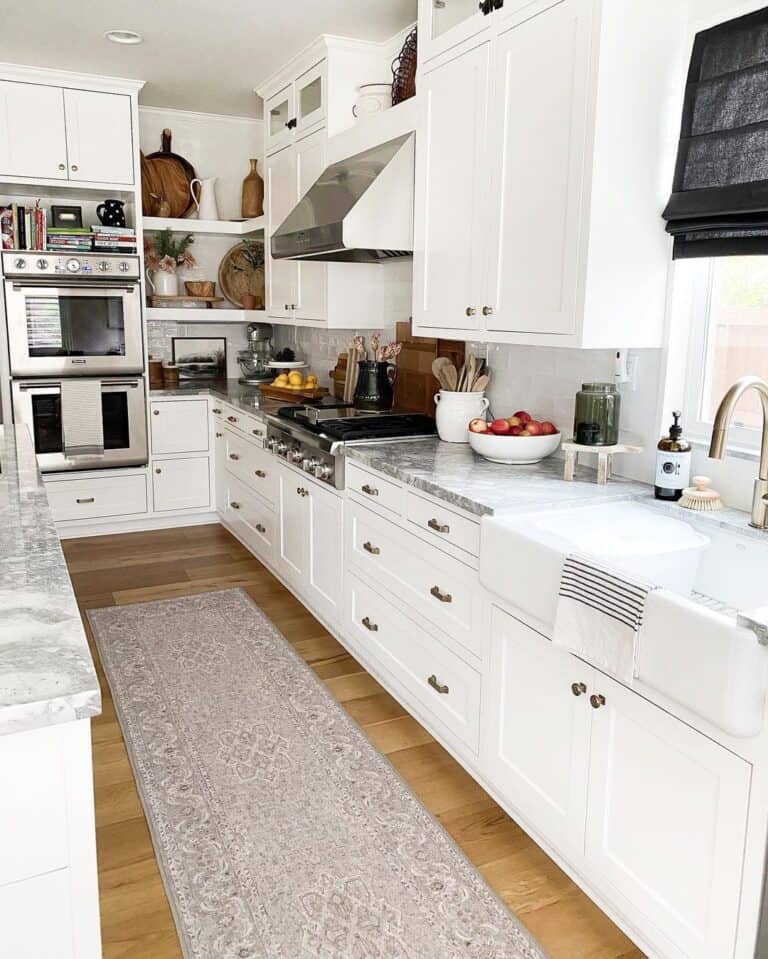
An ornate runner in gray and white adds pattern to a modern farmhouse kitchen without introducing a new color. White cabinets, a farmhouse sink, and marble surfaces stay neutral, and the runner’s detailed motif provides visual interest along the cabinet and sink run. Natural light and overhead lighting keep the space bright, so the pattern reads clearly. An ornate runner works with modern farmhouse because the style already mixes traditional details with clean lines. The gray palette keeps the look cohesive rather than fussy.
The runner’s pattern repeats in a way that suits a linear layout, and the neutral tones let the texture and shape of the design stand out. Wood and tile floors provide a subtle backdrop, so the runner becomes the main textural element. For a kitchen that has both traditional and modern pieces, an ornate runner in a subdued color bridges the two styles.
16 / 35Bold Geometric Runner in a Modern Bohemian Kitchen
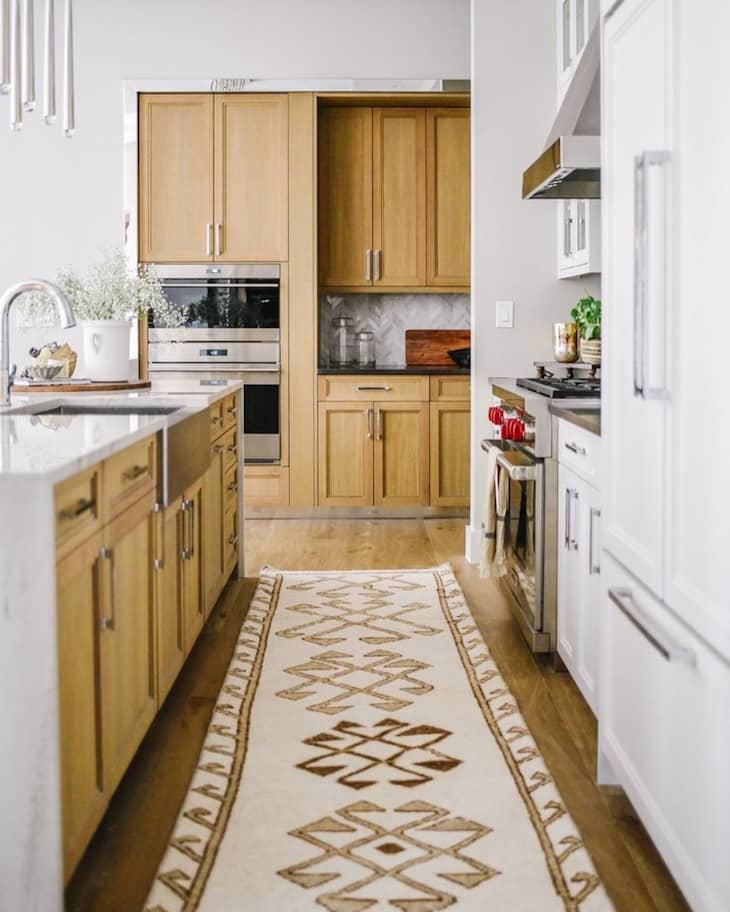
A bold geometric runner anchors the walkway between a marble island and wood cabinets, its tan and brown pattern picking up the wood tones while contrasting with the white marble. The modern bohemian style here relies on that central element to keep the room from reading as too sparse or too busy. The geometric print defines the look, with a ratio of about one-third pattern to two-thirds solid surface around it. What breaks the style is the natural light from the windows, which softens the sharp lines and keeps the runner from feeling stark.
17 / 35Detailed Runner Pattern in a Traditional Kitchen
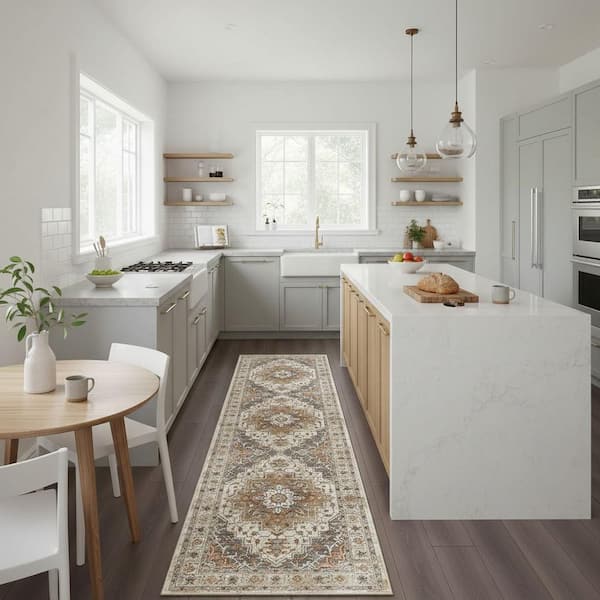
A practical rule for a traditional kitchen is to let the runner carry the pattern while everything else stays quiet. This roomy kitchen uses a detailed runner with tan and brown motifs on a light ground, laid down the center aisle past the island and sink. The laminate and stone surfaces around it are neutral, so the runner does the decorative work without competing with the cabinets or dining table. For a renter, swapping a plain runner for a patterned one is a simple change that shifts the whole room’s feel without touching the permanent fixtures. The pendant lights above pick up the warm tones in the rug, tying the look together.
18 / 35Geometric Floral Runner in a Sage Green Farmhouse Kitchen
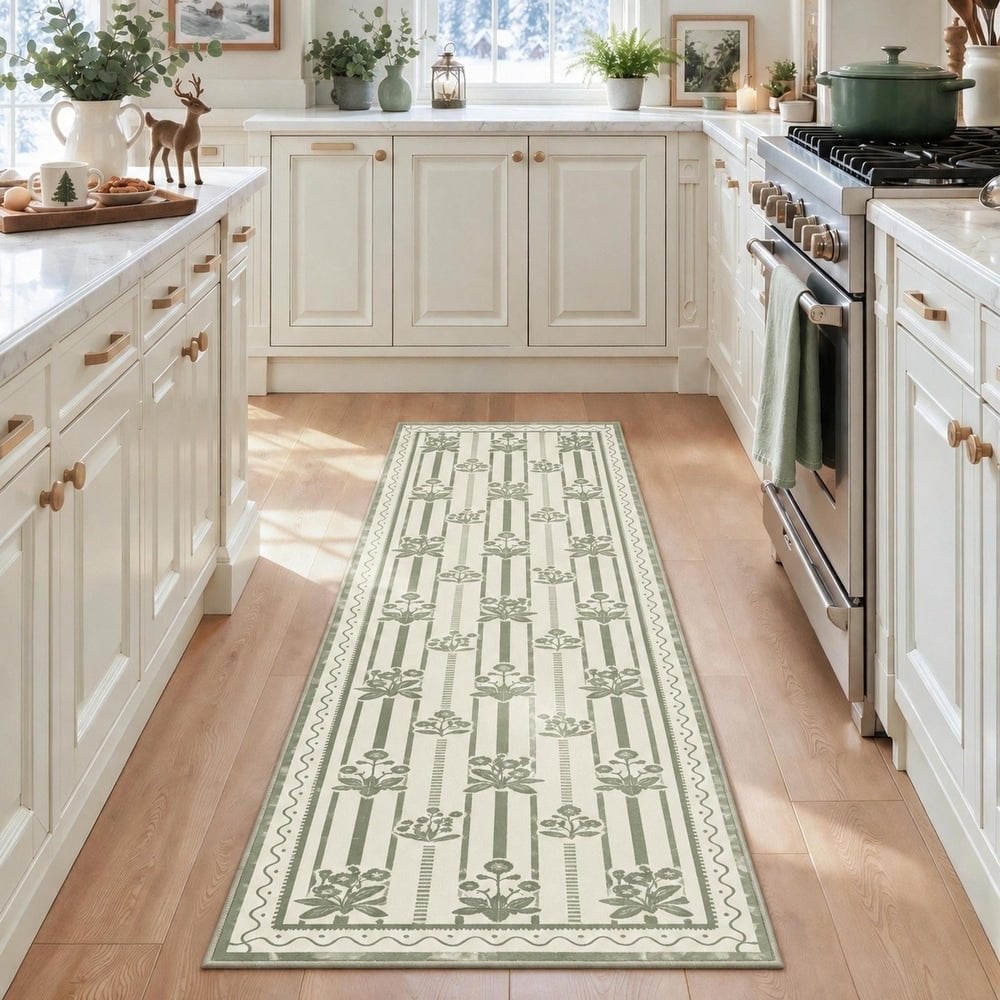
A geometric floral runner might sound like a contradiction, but in a sage green farmhouse kitchen it works as a natural pairing. Where a plain sisal runner would blend into the wood and tile floors, this woven rug introduces cream and sage tones that echo the cabinet color without matching it exactly. The pattern mixes sharp lines with soft petals, so the runner feels both structured and organic against the range and overhead lights. The sage green stays true in natural and overhead light, and the woven texture adds a handmade quality that suits the farmhouse style. To recreate it, look for a runner with a small-scale repeat pattern instead of a large medallion, which can overwhelm a kitchen aisle.
19 / 35Pale Blue Runner in an Airy Coastal Kitchen
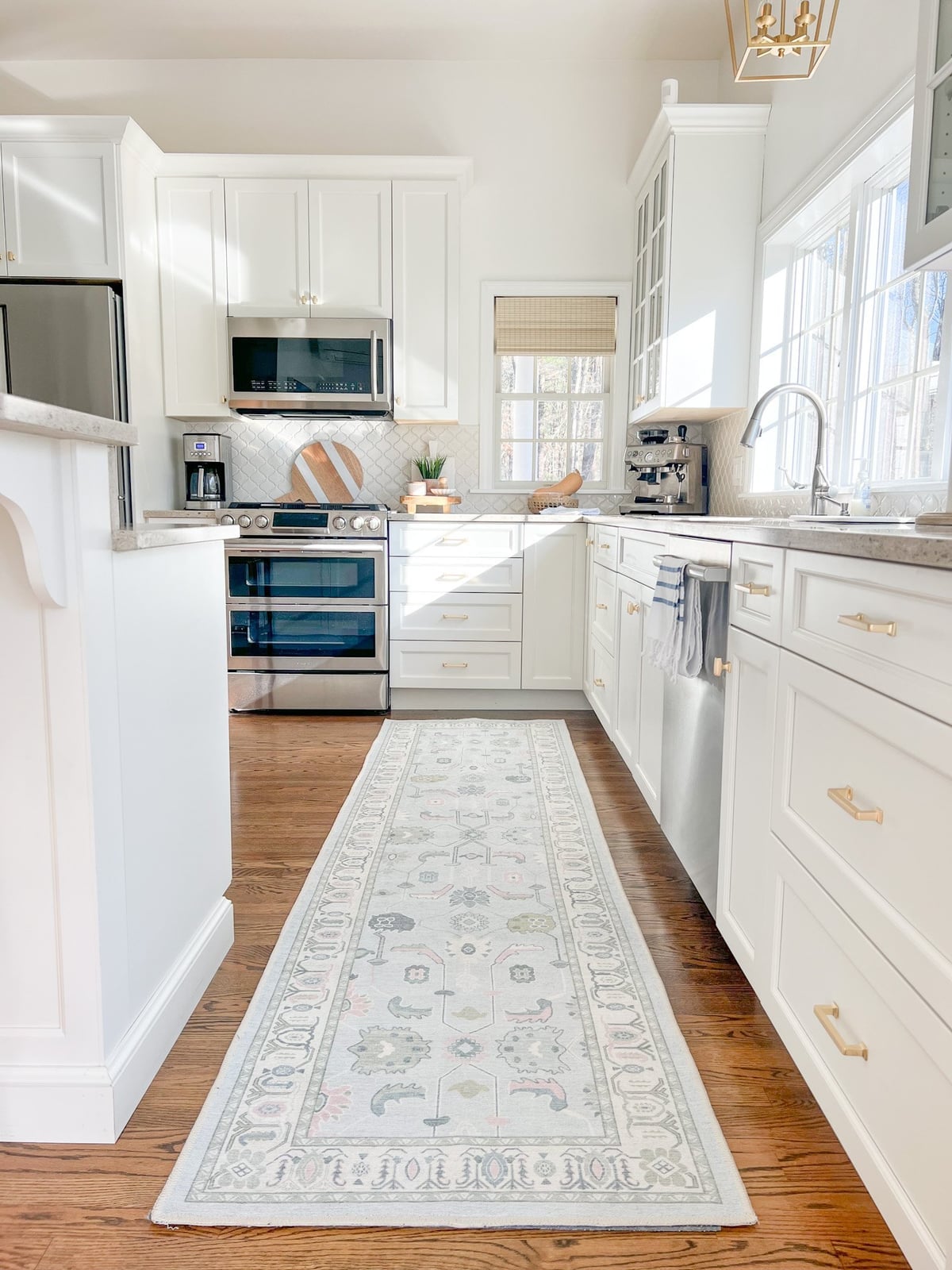
A pale blue runner down the center of a white kitchen with light wood floors and marble countertops sets a coastal tone without a single seashell in sight. The runner’s soft blue picks up the cool undertones of the stainless steel appliances and the recessed lighting, while the white shaker cabinets keep the palette airy. The blue is pale enough that it does not compete with the marble veining, and the runner’s low profile means it does not trip up the flow between island and counters. For a coastal kitchen, a pale blue runner works because it introduces color without weight.
20 / 35Persian-Style Runner Adds Classic Elegance
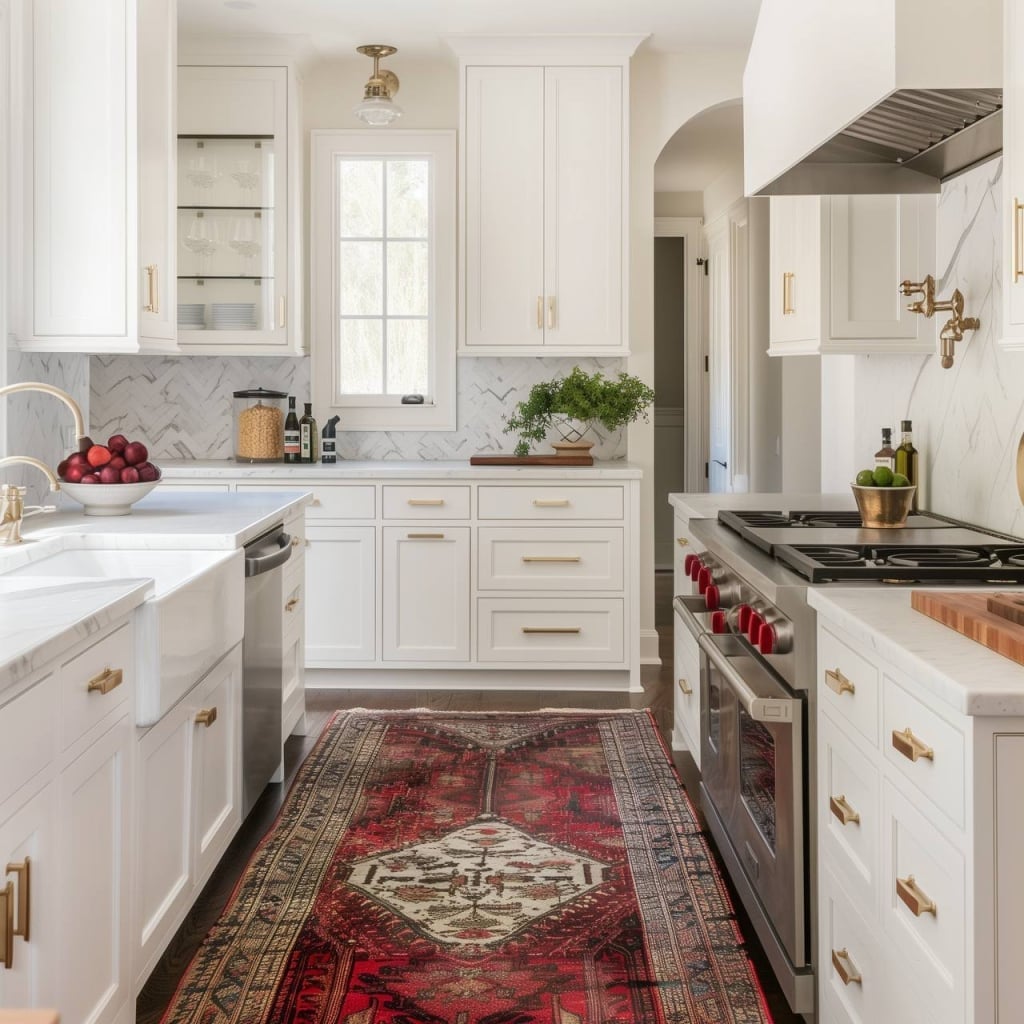
A vibrant red runner with a Persian-style pattern brings warmth and formality to a traditional kitchen with marble counters and wood cabinets. The runner runs along the walkway by the range, its red and cream tones standing out against the neutral white and wood backdrop. A large pattern repeat would dwarf the aisle, but the detailed motifs feel proportional to the roomy kitchen. Overhead lighting keeps the red from appearing too dark, and the runner’s length connects the work zones visually. In a traditional kitchen, a Persian-style runner can carry the whole color story.
21 / 35Striped Runner Complements Blue Island Kitchen
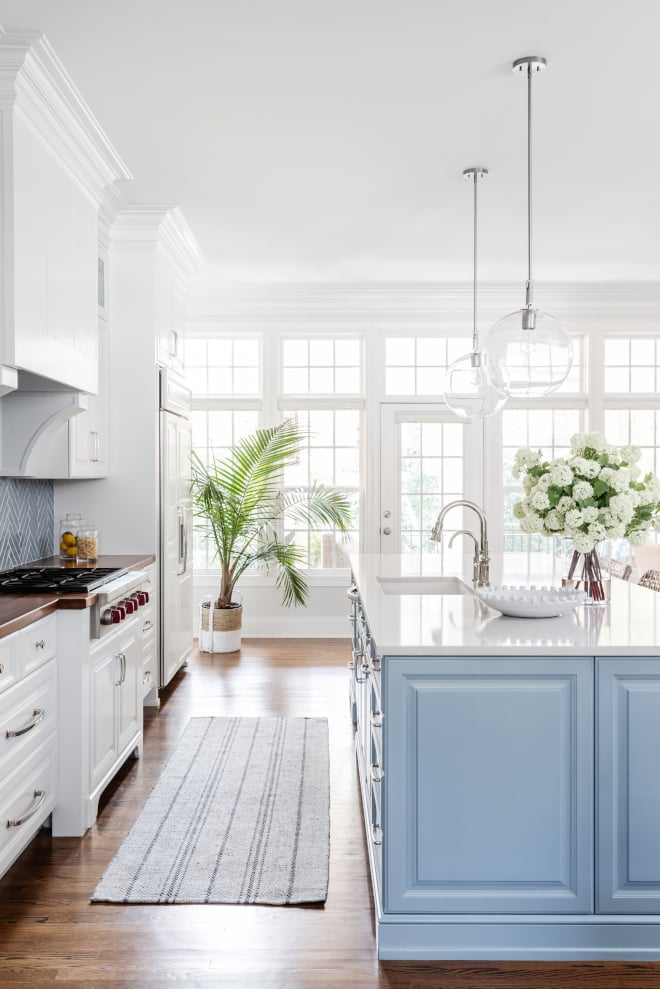
A runner should feel like it belongs to the room, not like something dropped on the floor. In this transitional kitchen, the blue island cabinets anchor the space, and the runner picks up that same cool tone through its stripes. The white cabinetry and marble surfaces keep the palette clean, while the wood floor adds warmth. The runner sits in the walkway between the island and the cabinets, defining the path without blocking the open plan. Pendant lights overhead and natural light make the blue appear consistent from counter to floor. The runner ties the island color to the full room, so the blue feels connected.
22 / 35Checkered Runner Adds Texture to Modern Farmhouse Kitchen
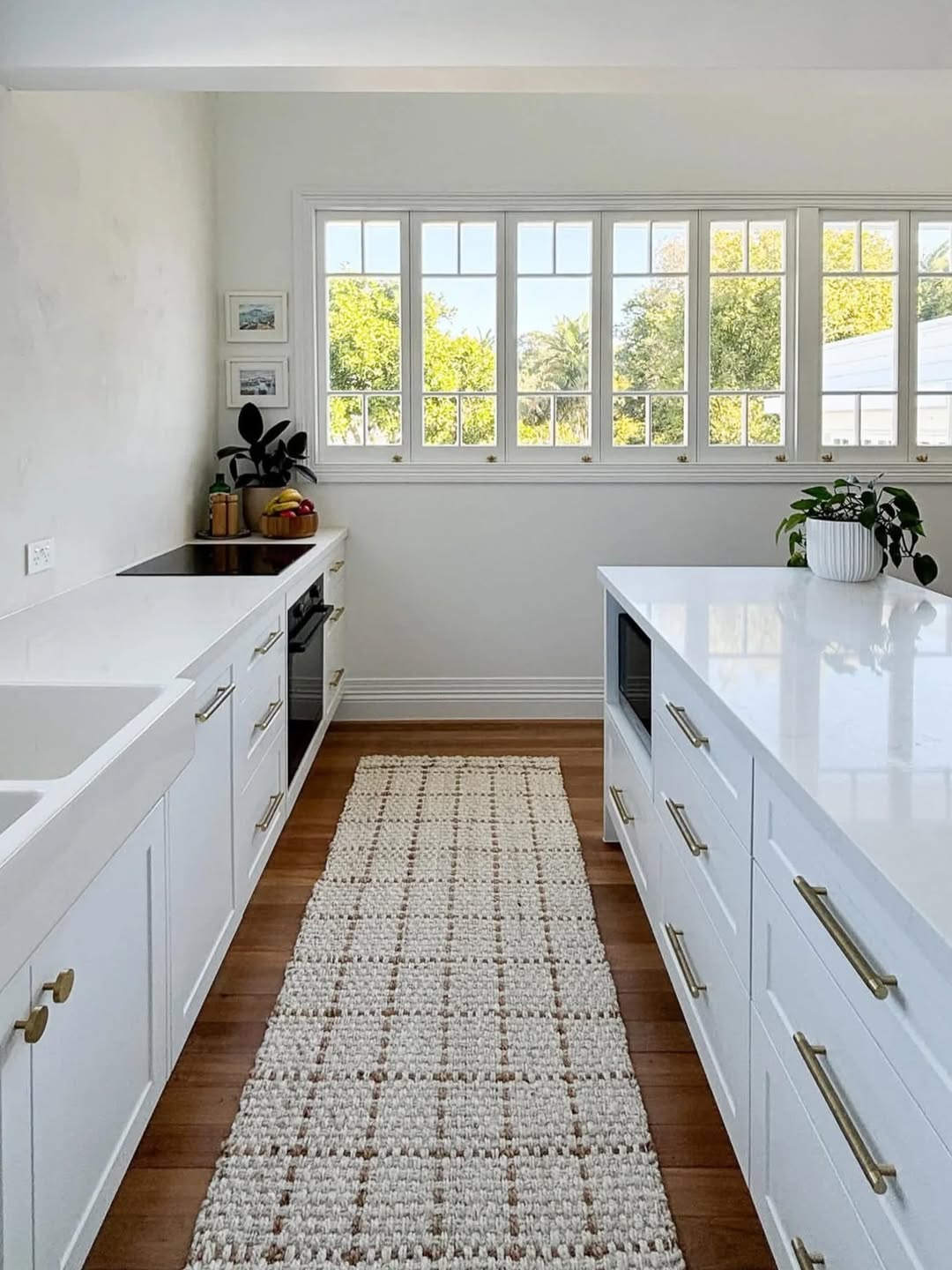
The checkered runner brings a woven texture that the smooth quartz countertops and white cabinets do not provide. In this modern farmhouse kitchen, the runner sits between the island and the cabinets, its beige and white squares echoing the wood tones in the floor. The texture catches the bright natural light, giving the room a tactile layer without adding clutter. It is a simple swap that changes how the materials in the room relate to each other.
23 / 35Textured Abstract Runner in a Modern Gray Kitchen
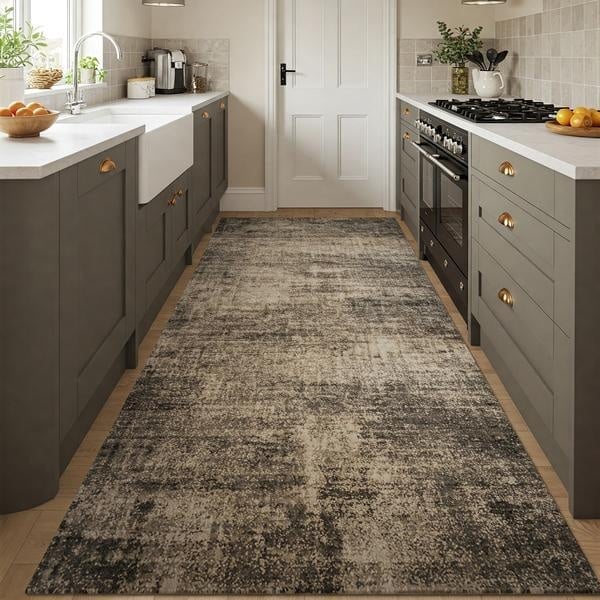
When a kitchen relies on a neutral palette of gray, beige, and black, a textured runner adds depth without introducing a new color. In this modern kitchen, the abstract runner sits between the cabinets and the island, its tactile surface breaking up the smooth stone countertops and metal fixtures. The natural window light and overhead artificial light both hit the runner differently, so the texture shifts throughout the day. The gray and beige tones keep it in line with the room, while the black accents in the pattern prevent it from blending in completely. It is a way to add visual interest to a monochrome space using material rather than hue.
24 / 35Geometric Runner in a Modern Bohemian Kitchen with Dark Island
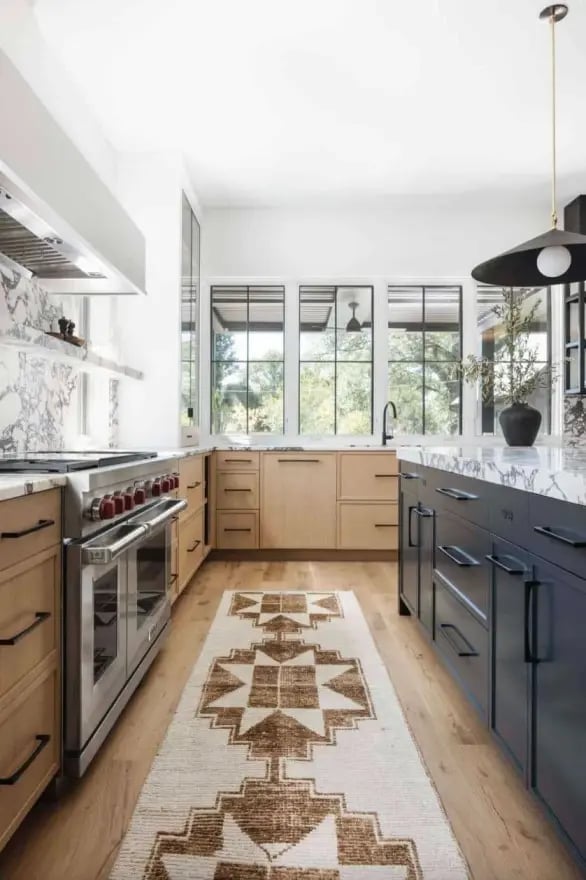
A simple jute runner would fade into the background here, but the geometric pattern steps forward to hold its own against the dark island. In this modern bohemian kitchen, the runner sits between the wood cabinets and the marble-topped island, its tan, white, and black pattern matching the room’s casual mix. The pendant light above the island and the windows both hit the geometric lines, making the pattern visible from either direction. The runner does not compete with the wood floor or the marble; instead, it bridges the dark island and the lighter cabinets. The bold pattern adds structure, so the room feels cohesive rather than like a collection of unrelated pieces.
25 / 35Sage Green Cabinets Paired with Geometric Runner
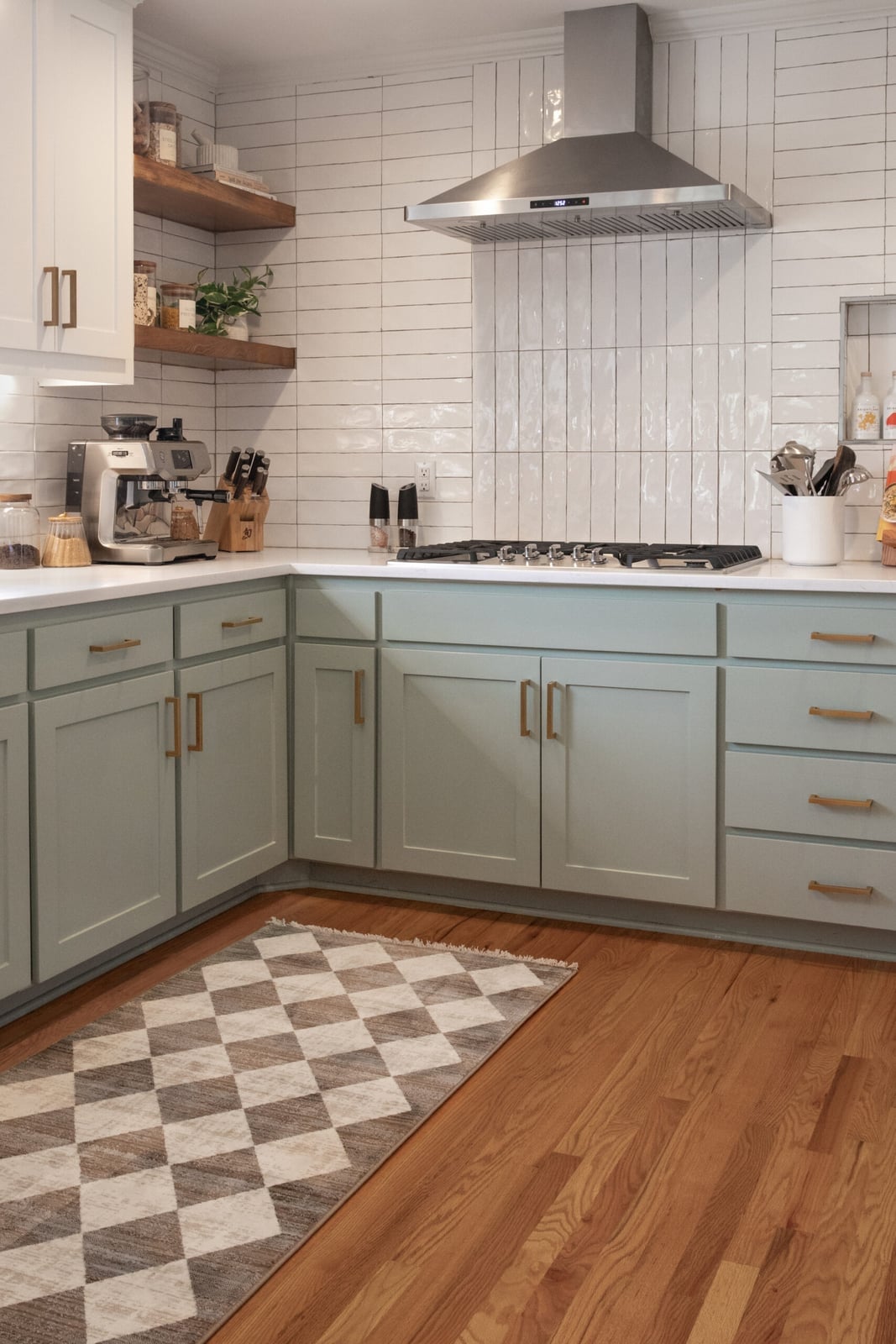
The sage green cabinets take up most of the visual weight in this modern farmhouse kitchen, and the geometric runner mirrors that green in its pattern. The runner sits on the wood floor in front of the cabinets, its repeating shapes echoing the tile backsplash and the metal hardware. The overhead lighting and natural light keep the green from shifting too cool or too warm. The runner pulls the cabinet color down to floor level, so the whole wall reads as a single composition rather than a set of separate parts.
26 / 35Ornate Pink Runner in a Traditional Kitchen
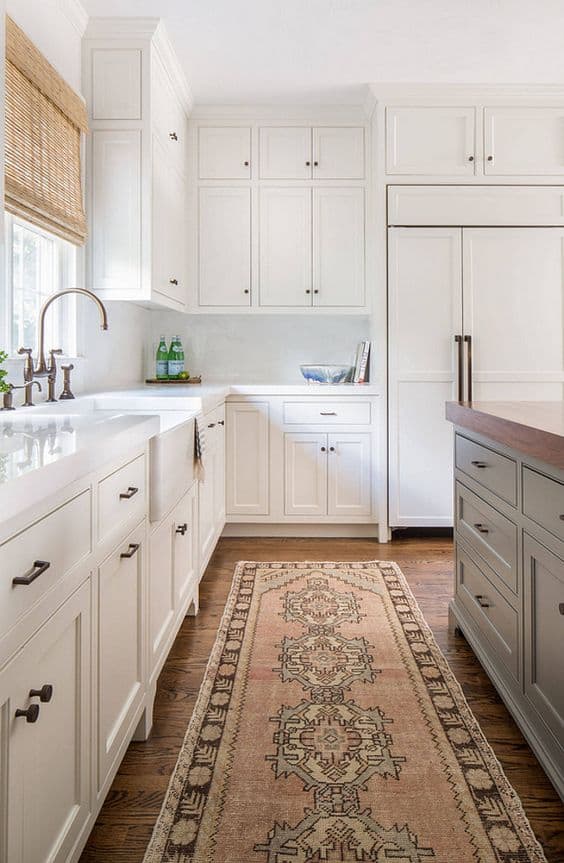
A pink patterned runner is a surprising choice for a traditional kitchen, but it works because the surrounding finishes stay restrained. White cabinets and a gray island keep the palette calm, while the dark wood floor gives the runner something to anchor against. The ornate pattern on the pink runner adds a layer of detail that feels deliberate. Natural light helps the pink appear soft rather than sweet. The style relies on a single bold element breaking the neutral scheme. If the runner feels too dressy for your kitchen, try a smaller kilim or a flatweave with a similar color ratio.
27 / 35Layered Rugs Under a Rustic Kitchen Table
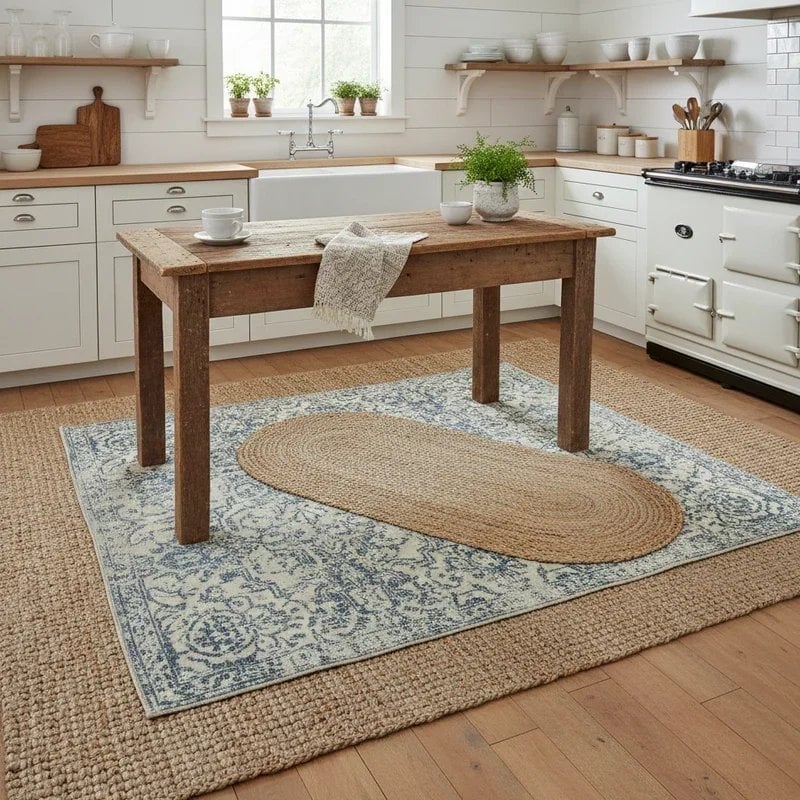
A practical rule for layered rugs under a table is to keep the base rug large enough that chair legs stay on it when pulled out. Here an oval rug sits over a larger natural fiber rug, both set under a wooden table. The cream and blue palette ties into the farmhouse feel without competing with the wood floor. Overhead light and natural light hit the jute base and the woven top layer differently, so the texture reads clearly. For renters, this setup works because the bottom rug protects the floor and both rugs can roll up and move. Layering also lets you swap the top rug seasonally without changing the whole footprint.
28 / 35Geometric Runner in a Transitional Kitchen Aisle
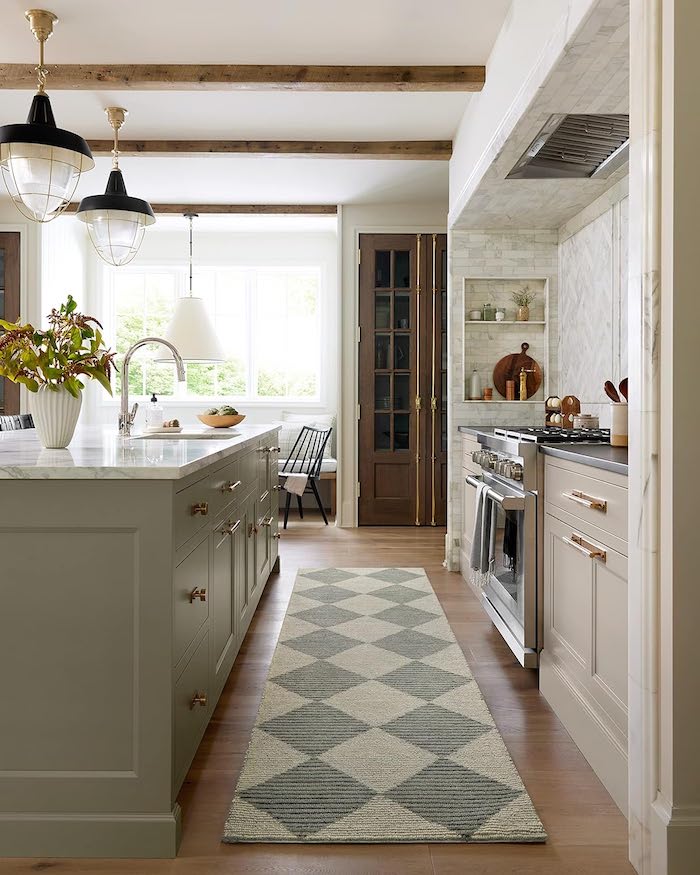
A geometric runner in a transitional kitchen aisle defines the walkway without closing it off. The runner sits between wood cabinets and an island, with stone countertops and pendant lights above. Gray and white tones in the rug echo the cabinetry, while the wood floor adds warmth. The pendant lights and natural light balance each other, so the runner reads clearly at any time of day. The layout works because the runner is long enough to span the main traffic path without bunching near the cabinets.
29 / 35Terracotta Runner Adds Farmhouse Charm to Black Cabinets
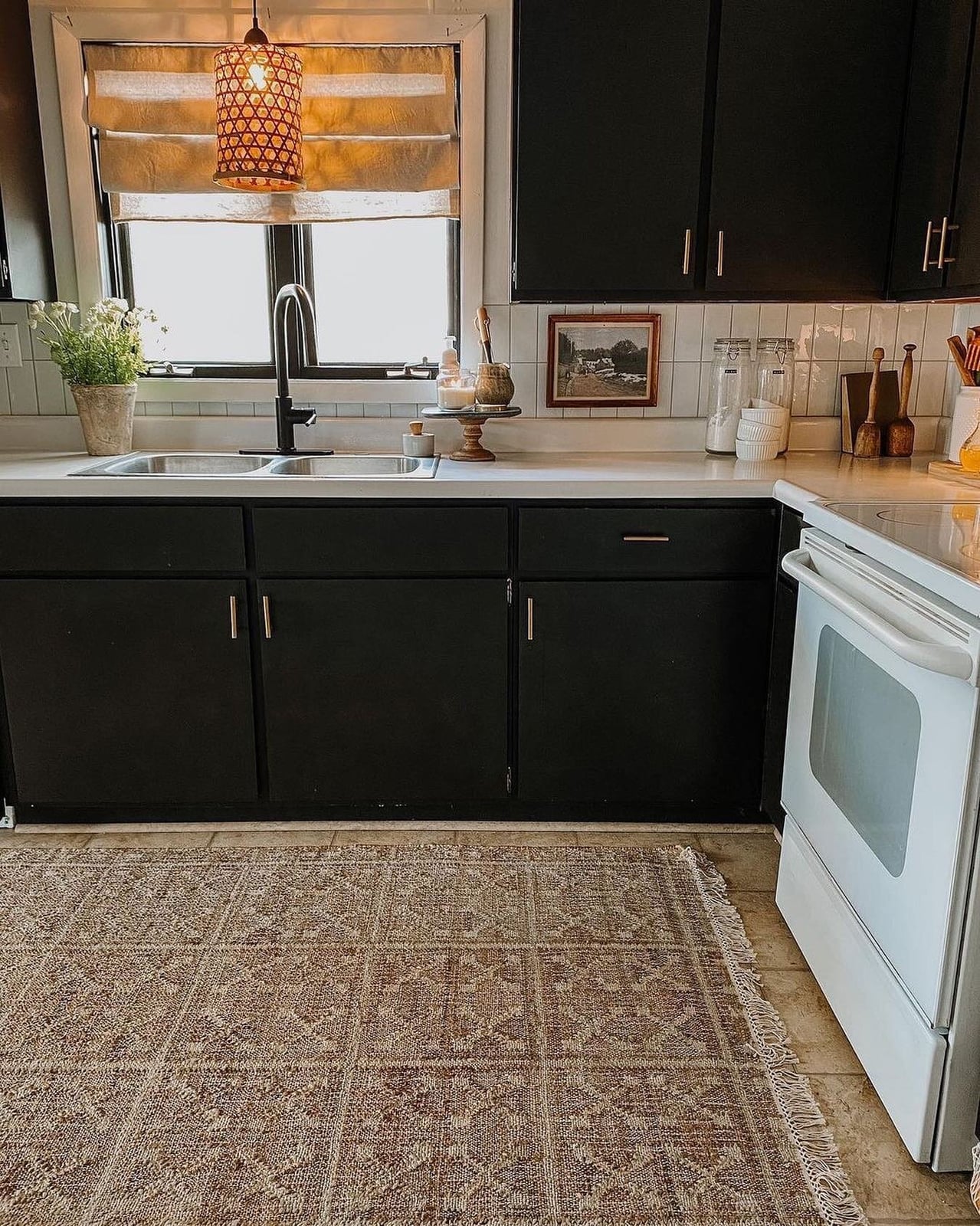
Terracotta against black cabinets is a palette choice that relies on contrast rather than matchy tones. The runner sits in front of the cabinets and a white stove, with a pendant light above and natural light coming in from the side. The terracotta pattern warms up the black and white scheme, adding farmhouse character without extra decor. Wood and tile materials in the room keep the look grounded. For a compact kitchen, a patterned runner like this draws the eye down the length of the room, making the space feel longer.
30 / 35Textured Neutral Runner for a Minimalist Kitchen
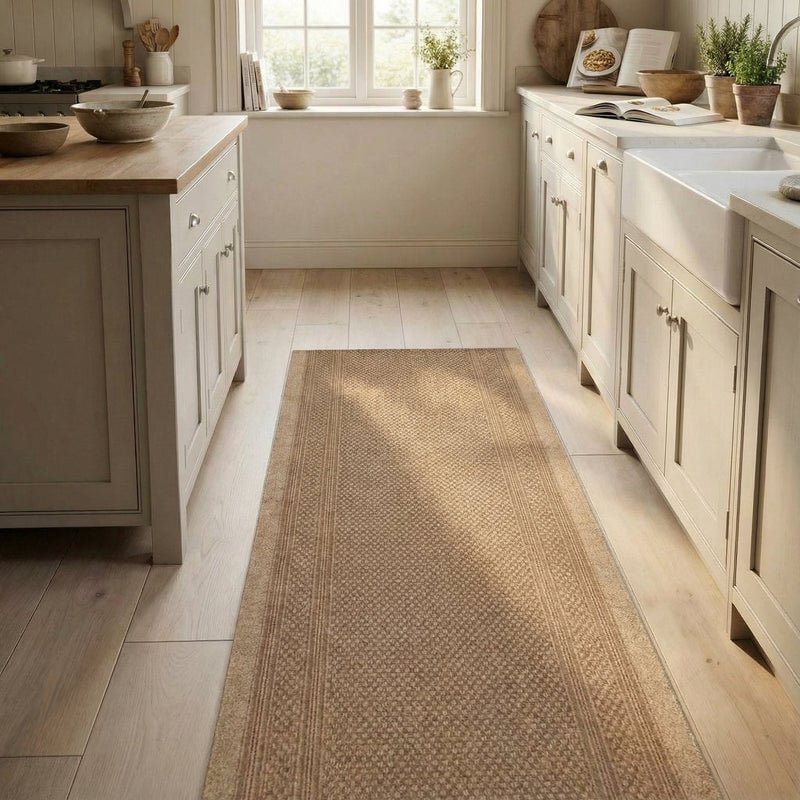
A solid neutral runner risks blending into the floor, but a textured one adds depth without adding pattern. This runner sits in a walkway between cabinets and an island, with wood and stone materials around it. Beige and cream tones in the woven surface catch natural light differently than the smooth cabinetry does. Ambient light keeps the room from looking flat. The style here is restrained: the runner is the only soft furnishing, so it needs to carry the texture on its own. For a minimalist kitchen, the woven finish also hides daily foot traffic better than a flat cotton runner would.
31 / 35Abstract Geometric Runner in a Blush Pink Kitchen
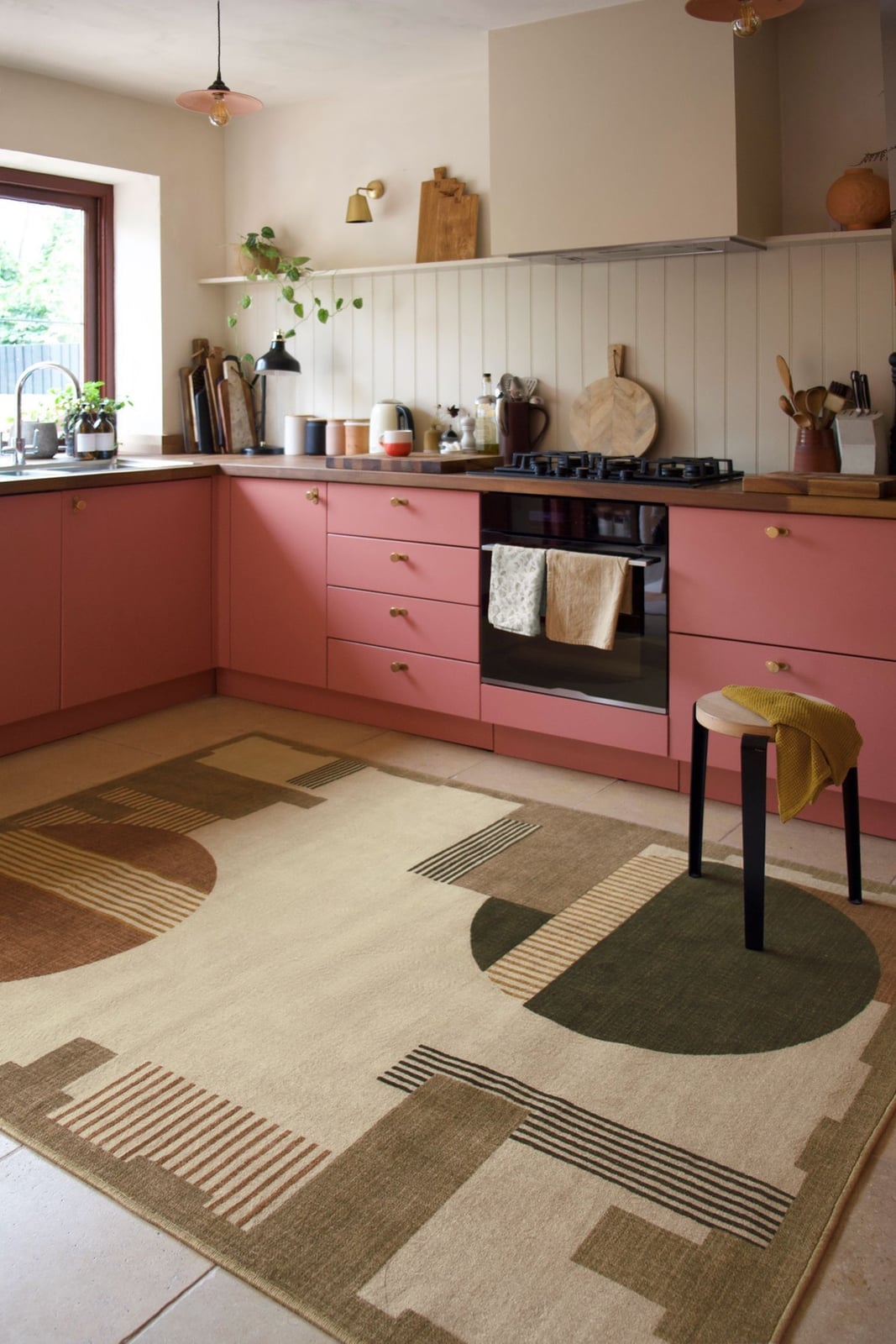
An abstract geometric runner in beige, brown, and green settles comfortably in front of pink cabinets and a wood counter. The pattern is what defines the look here: a mix of organic shapes and straight lines that keep the runner from reading as too feminine alongside the pink cabinetry. A good ratio to aim for is about one-third pattern to two-thirds solid ground, which lets the design catch your eye without competing with the natural daylight and ceiling light overhead. What breaks the look is anything too rigid or matching. The abstraction works because it does not try to echo the cabinet color exactly.
32 / 35Ornate Runner in Dark Gray and Blush Pink
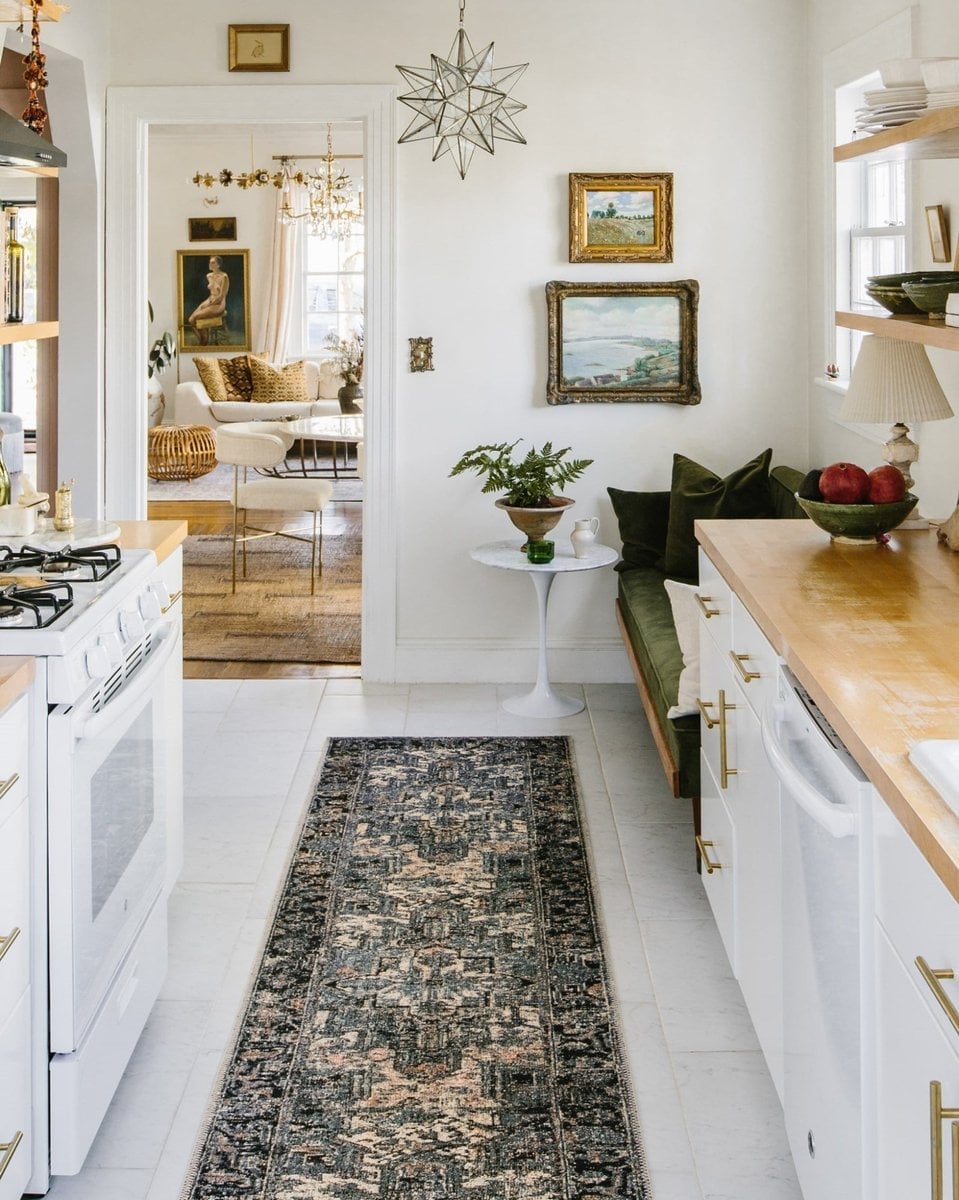
The palette here does the heavy work. Dark gray and blush pink on an ornate runner rug create a contrast that feels deliberate. Cream tones help bridge the gap between the dark gray and the white cabinets, while a green bench on the side adds a third color without crowding the mix. Keep the blush to about twenty percent of the rug’s surface, enough to soften the gray, not enough to read as sweet. The tile floor and wood cabinets stay neutral, so the runner becomes the room’s main color story.
33 / 35Ornate Pink Runner in a Traditional Dark Wood Kitchen
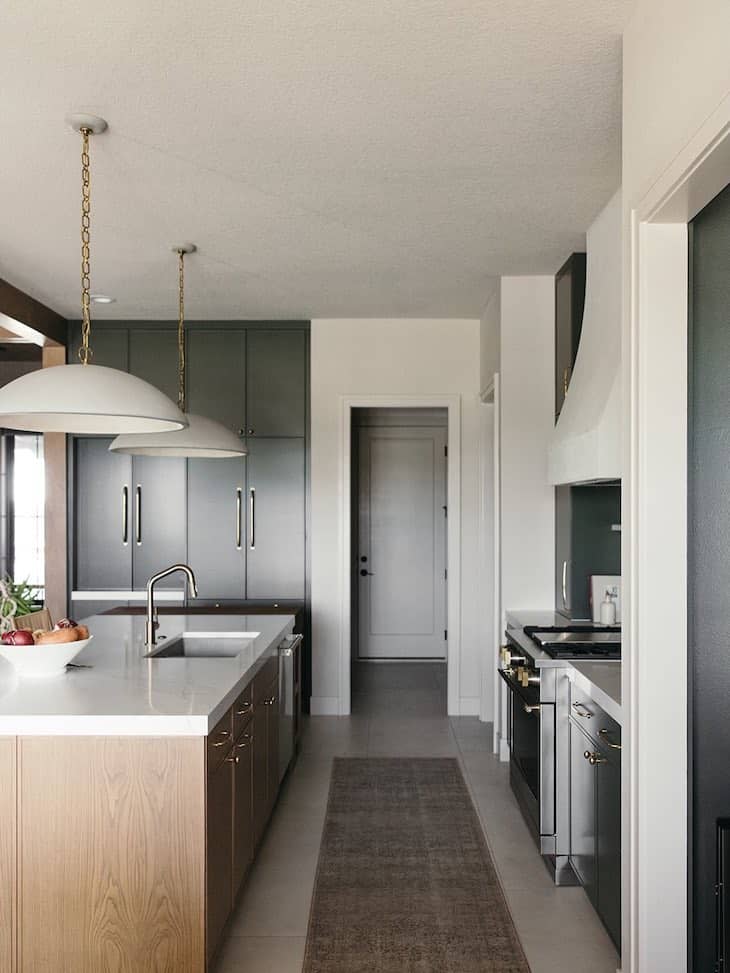
An ornate pink runner might sound like a risky choice for a kitchen with dark wood floors and a gray island, but it works because the pink is warm and muted, not candy-bright. The traditional style of the runner, a repeating floral or medallion pattern, gives the room a formal anchor that a solid pink rug could not. White cabinets and natural light keep the room balanced.
For renters or anyone wary of committing to pink, a runner in cream with a pink undertone achieves a similar softening effect without the bold statement. The key is to match the runner’s warmth to the wood tone: a cool pink would clash with dark wood, while a pink with brown or peach notes looks cohesive. The gray island acts as a neutral buffer, so the runner and the cabinets do not have to compete.
34 / 35Colorful Floral Runner in a Bright White Kitchen
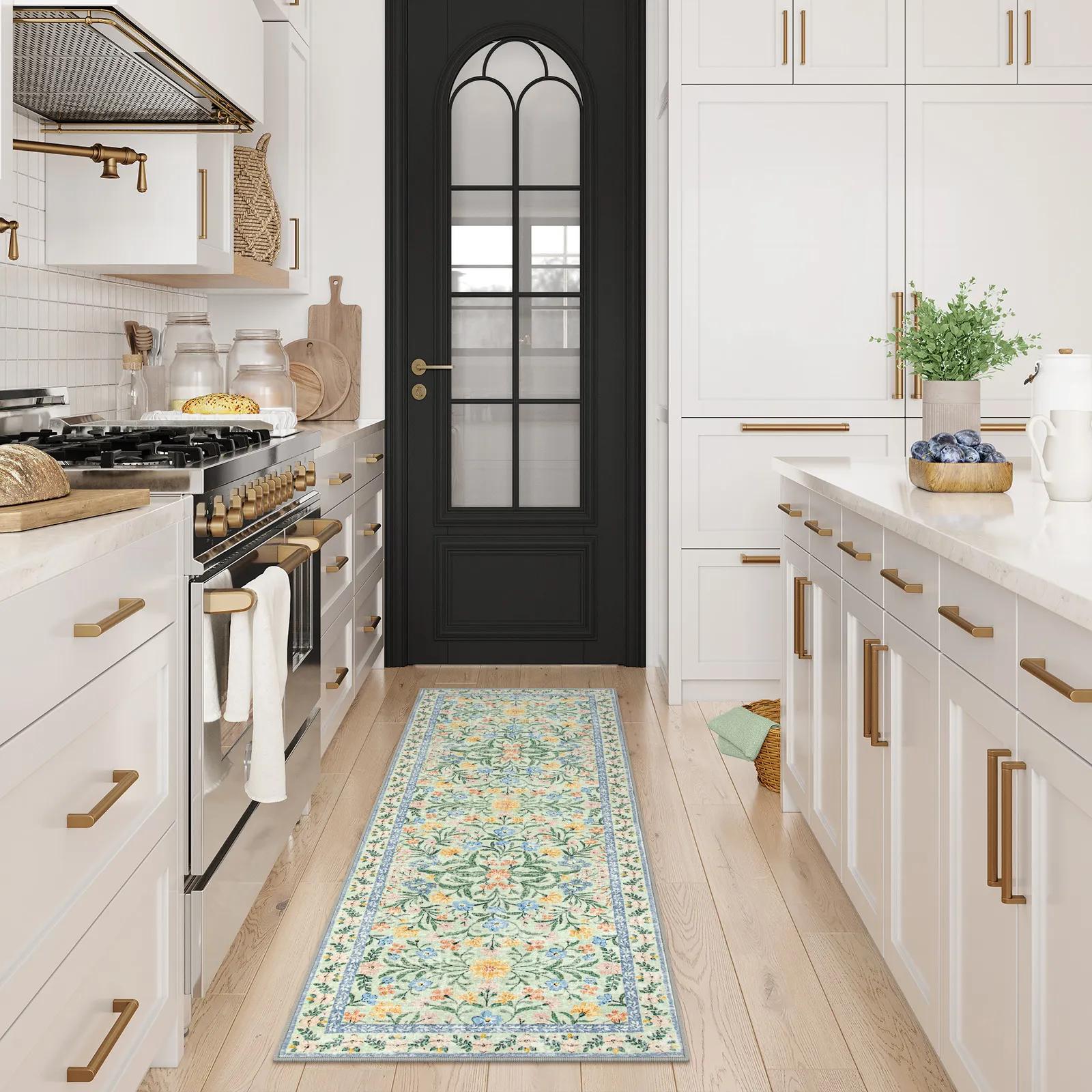
A colorful floral runner in green, yellow, and blue adds a layer of personality to a bright white kitchen with quartz counters and tile floors. The white cabinets and island act as a blank canvas, so the runner’s pattern does not have to compete with other colors. Natural light hits the runner evenly, making the floral shapes stand out without looking washed out. For this kind of setup, choose a runner with at least one color that appears elsewhere in the room, a green that matches a plant or a blue that echoes a dish towel, so the runner feels connected to the space.
35 / 35Final Thoughts
A well-chosen kitchen runner does the quiet work of tying a room together while handling the daily spills and foot traffic. The key is matching the material and pattern to your actual kitchen life. Flatweave and low-pile rugs stand up better to crumbs and moisture. Darker patterns hide stains longer than pale solids. Measure your space and leave a few inches of bare floor on each side. Let the runner lead the room, not fight it. One good rug, placed well, changes how the kitchen lives.