A kitchen hutch can be more than just storage. It’s a place to show off your favorite dishes, keep everyday items handy, and add character to your cooking space. Whether you’re after a farmhouse feel or something more coastal, the right hutch makes the room work harder for you.
We’ve gathered 31 kitchen hutch ideas that range from built-in cabinets to freestanding finds. You’ll see different styles, finishes, and ways to arrange what’s inside. Some lean practical, others are all about display. Take what fits your kitchen and leave the rest.
01 / 32Farmhouse Cream Hutch with Natural Wood Top
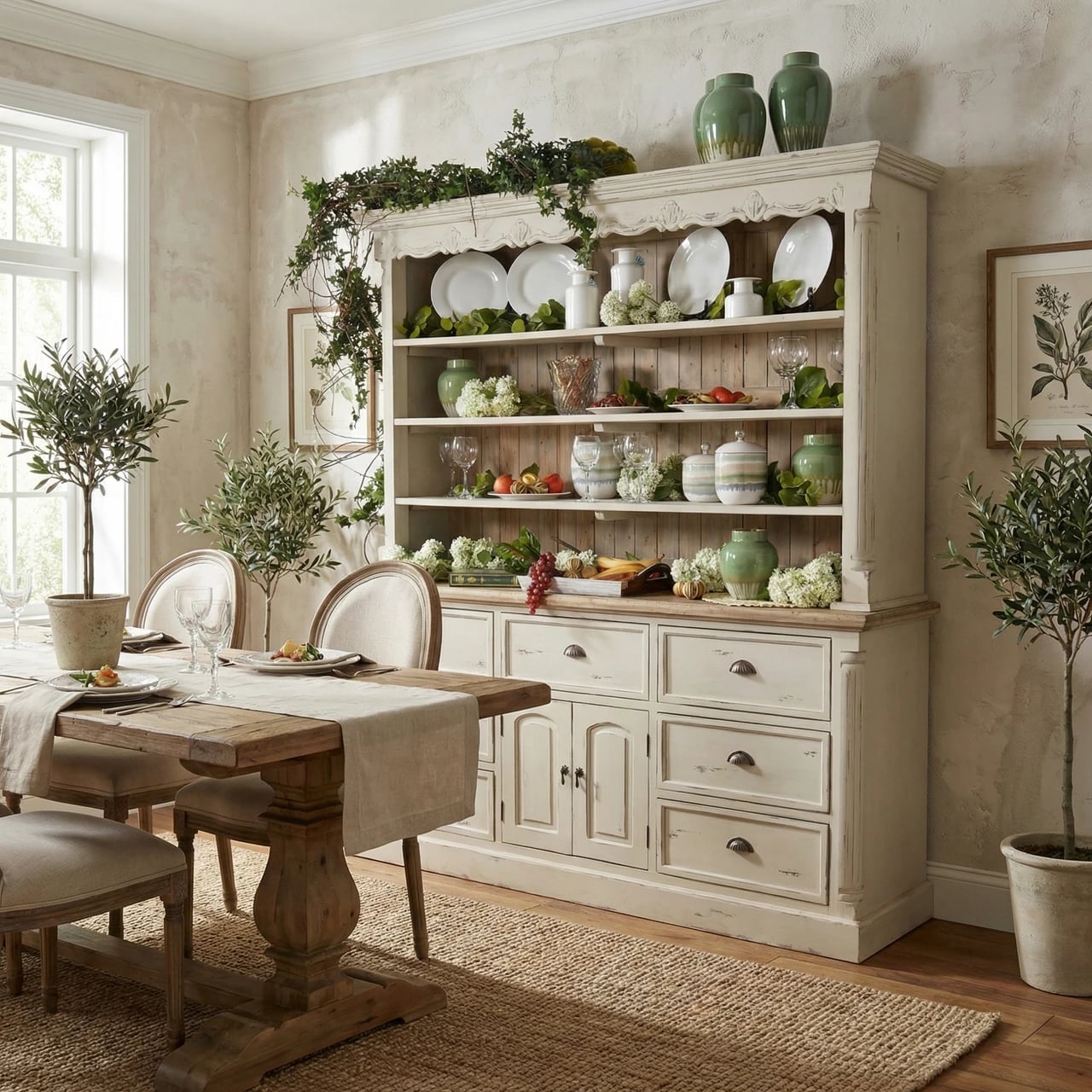
A cream-painted hutch with an ornately carved front and a natural wood countertop anchors the room against one wall, with a dining table and chairs nearby. The cream body keeps the piece from feeling heavy, while the raw wood top adds a practical work surface for setting down a coffee cup or a stack of mail. A few green plants on the shelves bring a soft contrast without competing with the hutch’s own detailing. The layout works because the hutch claims its own zone rather than floating in the middle of the kitchen.
02 / 32Spacious Modern Farmhouse Hutch with Open Shelving
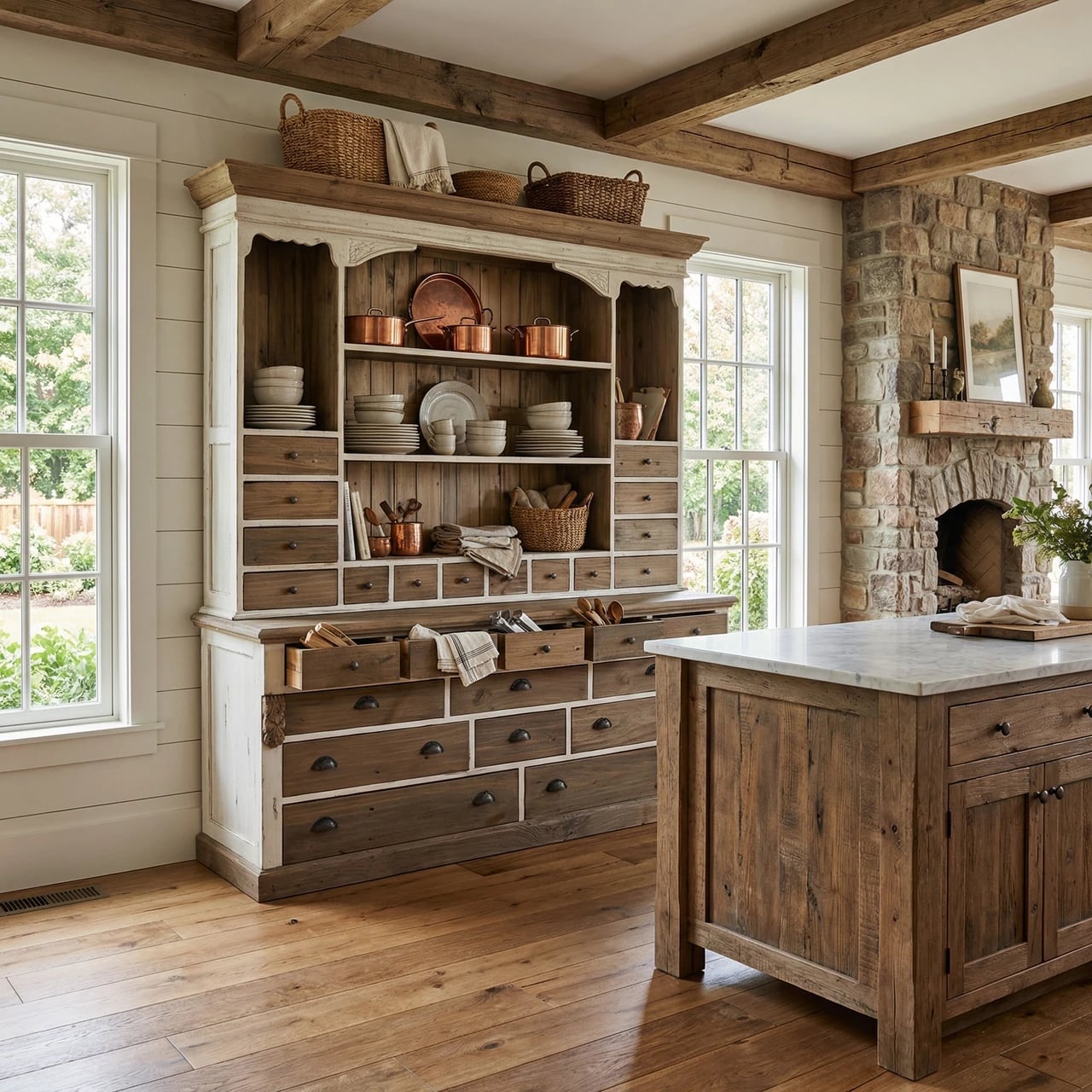
This is a large, multi-drawer hutch that takes up a full wall in an open-plan kitchen. The palette mixes warm wood tones with white cabinetry and copper accents, with a stone fireplace nearby and a marble-topped island in the center. The hutch itself has open shelves that break up its mass and keep the display visible. The scale works because the hutch is substantial enough to hold its own against the island and the fireplace. A room this size needs furniture that fills the wall without leaving awkward gaps, and this piece does exactly that.
03 / 32Coastal White Mahogany Hutch with Glass Doors
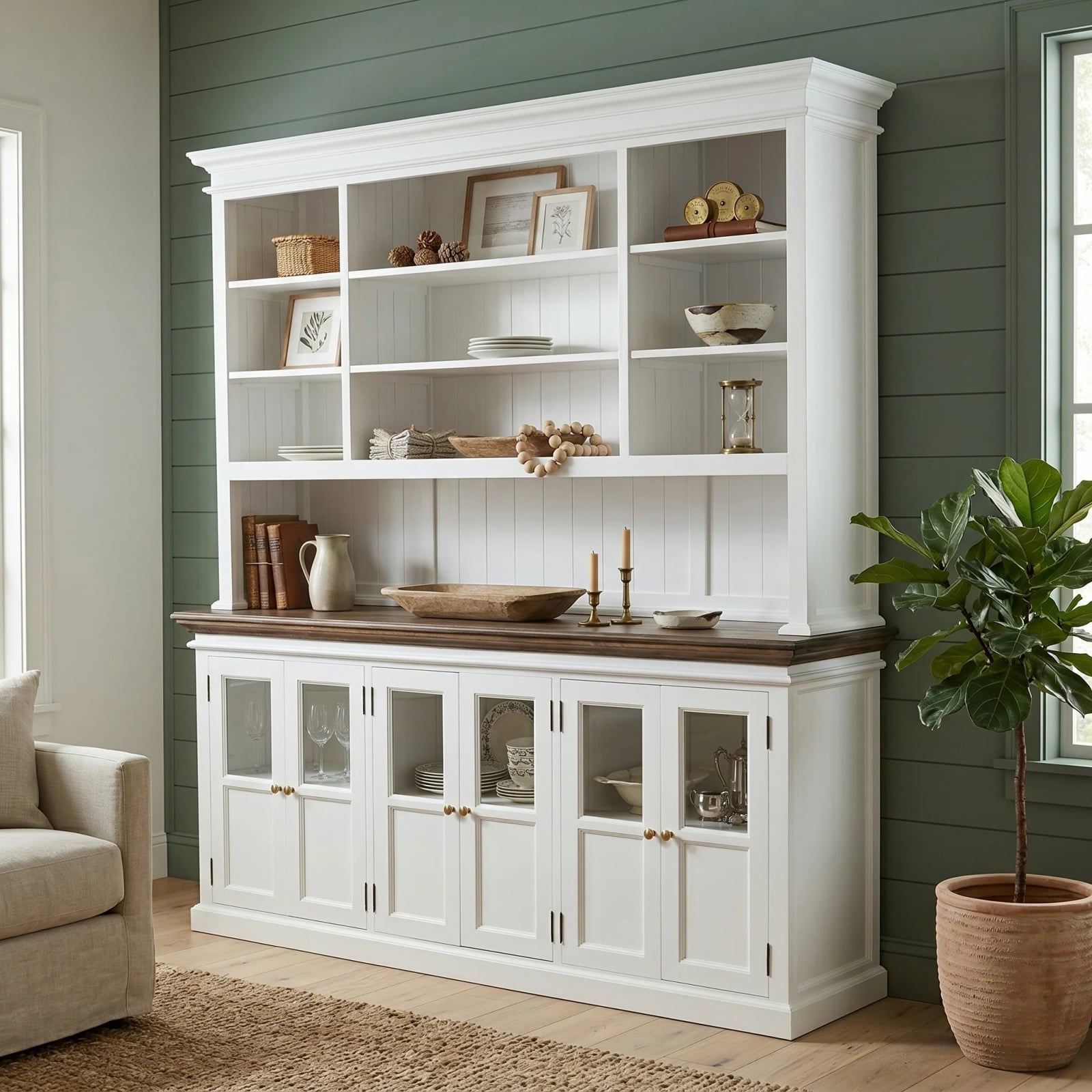
Can a dark wood like mahogany work in a coastal kitchen? This one proves it can, as long as the finish is painted white. The large hutch has glass-front doors that keep the contents visible while protecting them from dust. A single green plant and an armchair nearby soften the formality of the piece. The coastal palette here relies on white as the dominant color, with wood tones from the chair and the floor adding warmth. The glass doors break up the solid front and let the hutch feel lighter than its actual size would suggest.
04 / 32Large Wooden Hutch Filled with White Ceramic Dishes
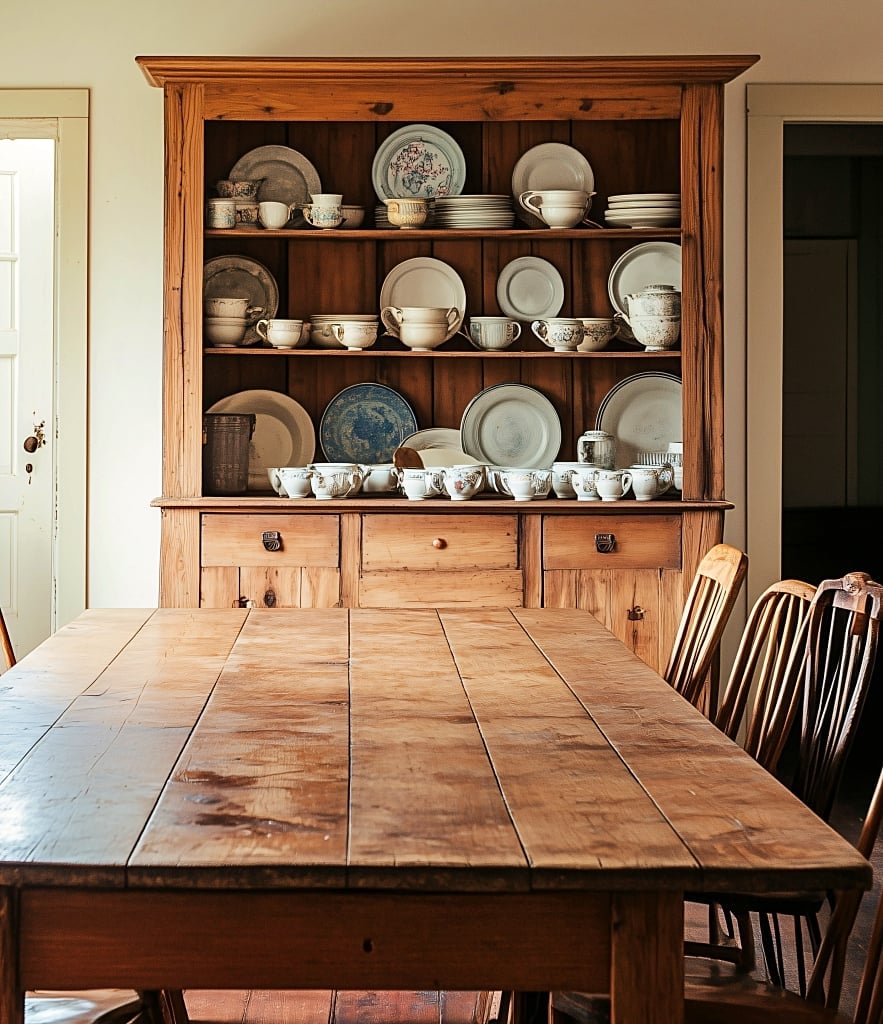
A substantial wooden hutch lined with white ceramic dishes makes a strong visual statement. The natural wood tones warm up the kitchen, while the white dishes keep the display from feeling too dark or crowded. Stacking plates and bowls on open shelves rather than behind closed doors means they become part of the room’s decor, not just storage. The key to making this work is keeping the dishware uniform in color so the eye reads the collection as one cohesive block rather than a jumble of patterns.
05 / 32Traditional Hutch with Glass Doors and Organized Dishes
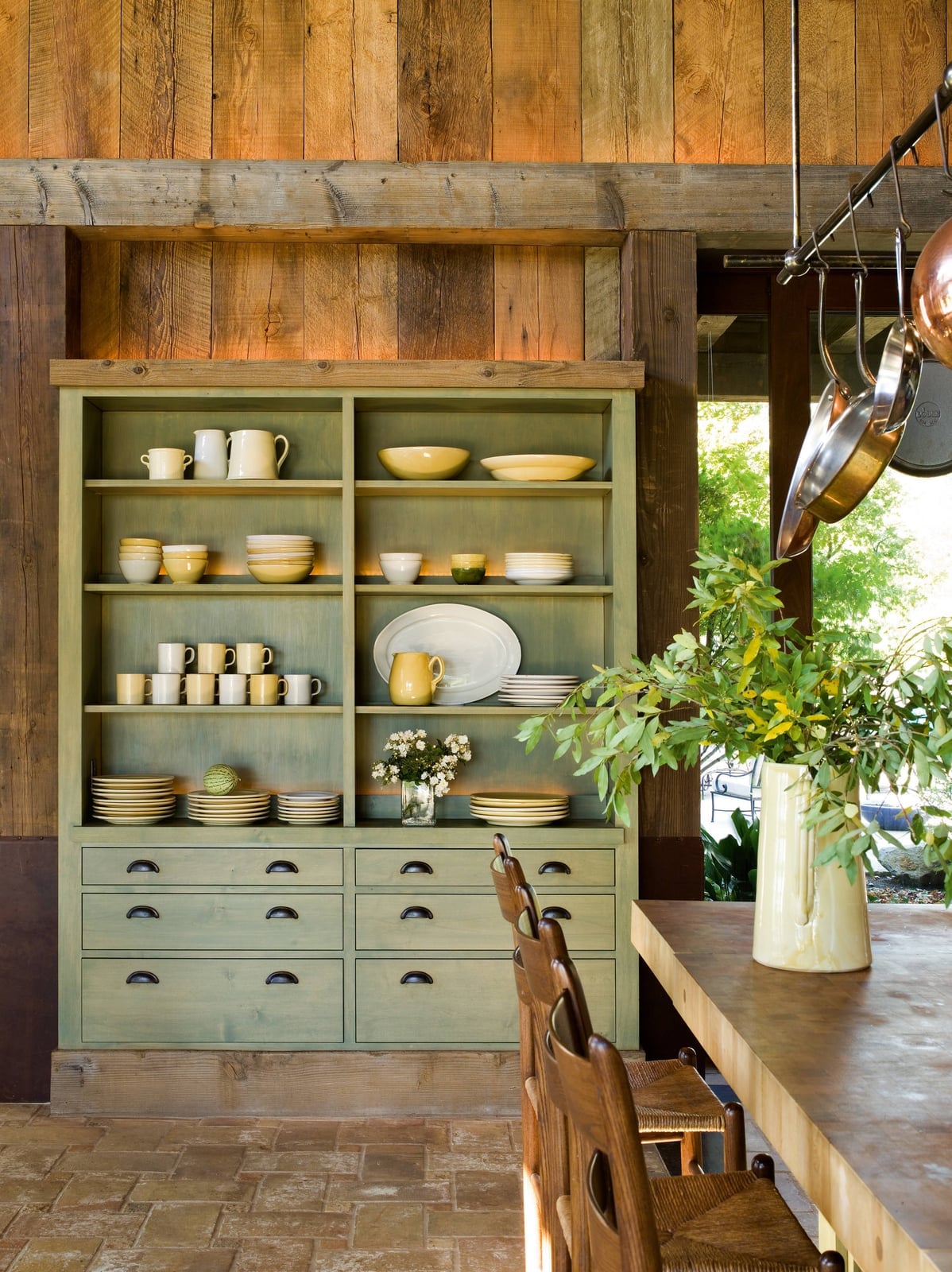
A hutch with glass doors works best when every shelf is treated like a stage. This traditional wooden hutch shows how it is done, with ceramic dishes arranged in neat rows behind the glass. The cream and white palette inside the hutch keeps the display calm, while the wood frame provides contrast. Because the glass lets you see everything, the arrangement needs to look intentional. Grouping similar pieces together and leaving a little breathing room between stacks makes the whole thing feel organized without looking stiff.
06 / 32Transitional White Hutch with Marble Countertop
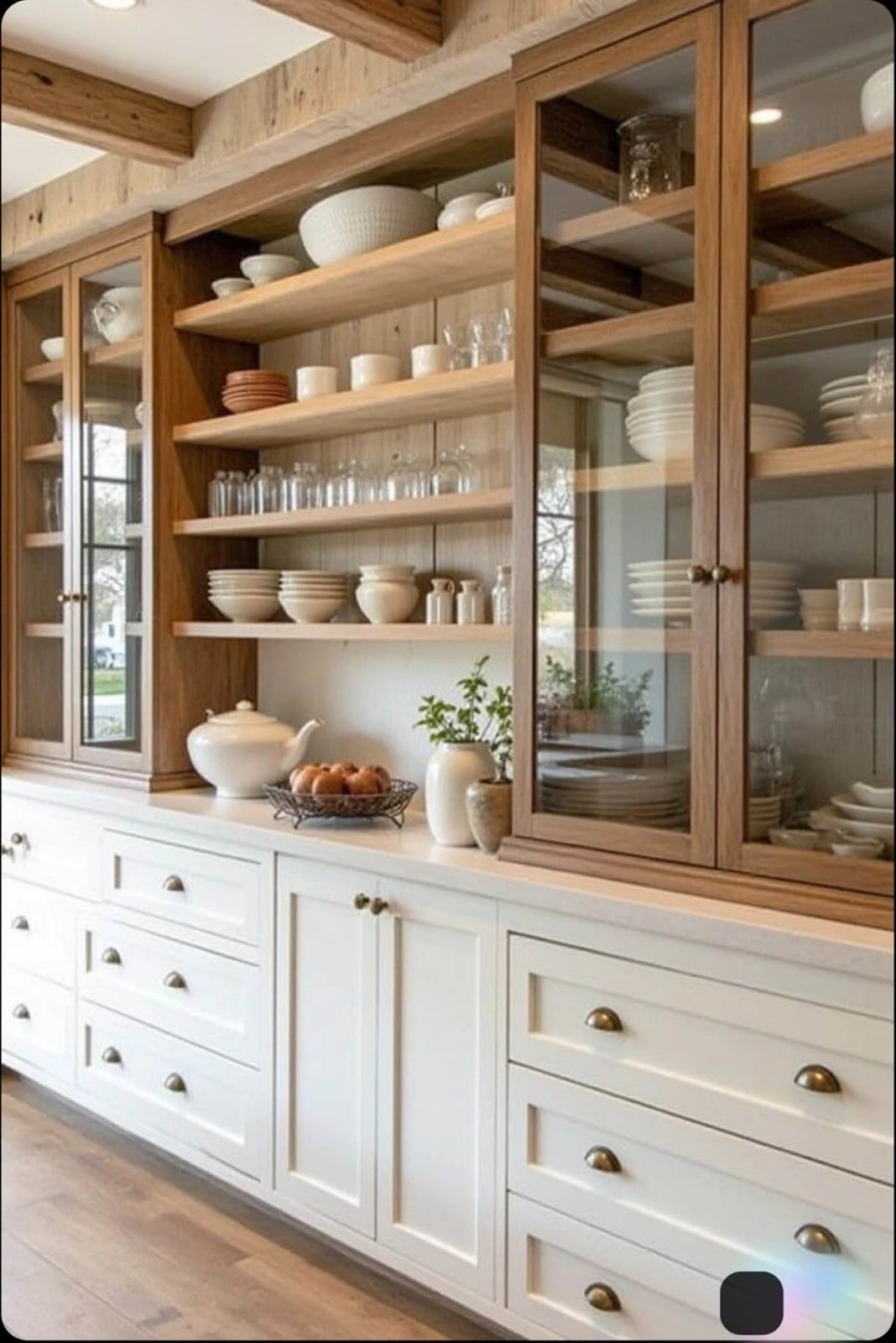
A marble countertop on a white hutch looks like a built-in from the start. This transitional piece pairs a clean white frame with wooden shelves inside and glass doors up top, so the dishes stay visible but behind a layer of protection. The marble surface below adds weight and a slight formality, which keeps the hutch from looking too casual next to standard kitchen counters.
Look for a hutch with a solid surface top instead of a thin veneer. The extra thickness acts like a real counter, not a shelf. White cabinetry and wood-toned shelving prevent a cold feel, and the glass doors let natural light pass through. That mix of materials defines transitional design: it borrows from traditional form and adds a cleaner finish.
07 / 32Rustic Grey Hutch with Stone Fireplace Accent
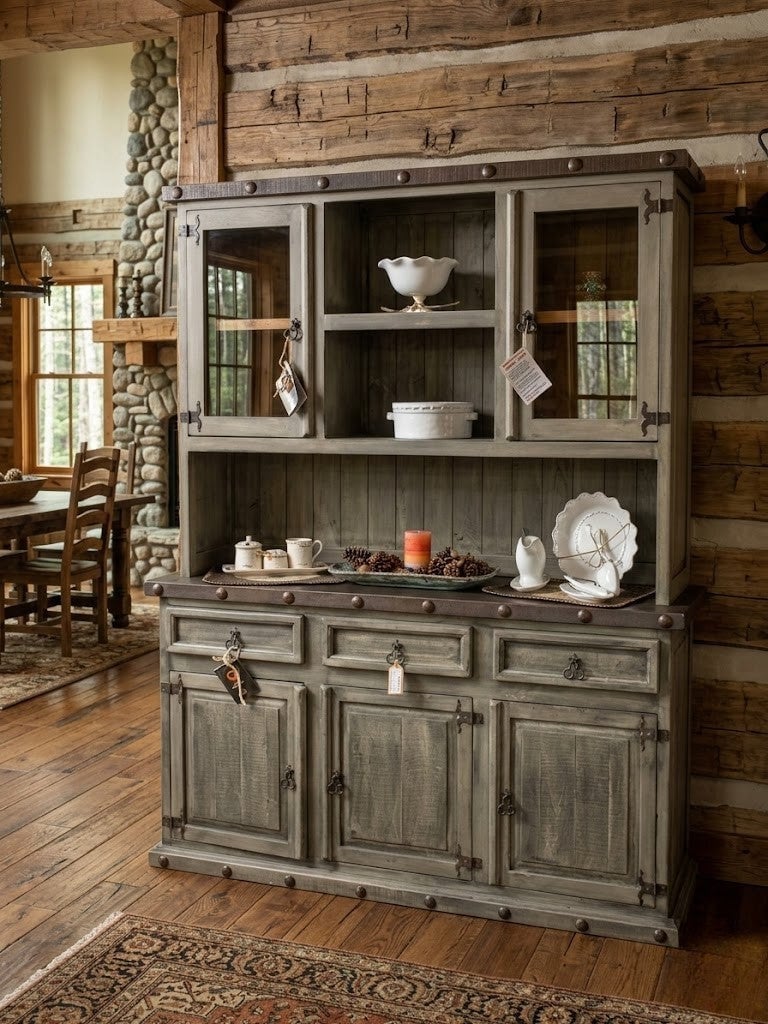
The grey finish on this hutch keeps the wood from reading as heavy, even though the piece itself is substantial. Set against a stone wall with a fireplace nearby, the hutch anchors the kitchen side of the room while the dining area with its wooden table sits adjacent. Natural light from a window and interior lamps balance the darker grey tone, so the piece feels grounded.
For a renter-friendly approach, consider a freestanding hutch in a similar grey wash. The stone wall is the real anchor here, and a large hutch in a neutral tone can pull the same weight without permanent installation. Metal hardware and glass doors keep the look from going too rustic.
08 / 32Ornate Grey Hutch with Yellow Beadboard Backing
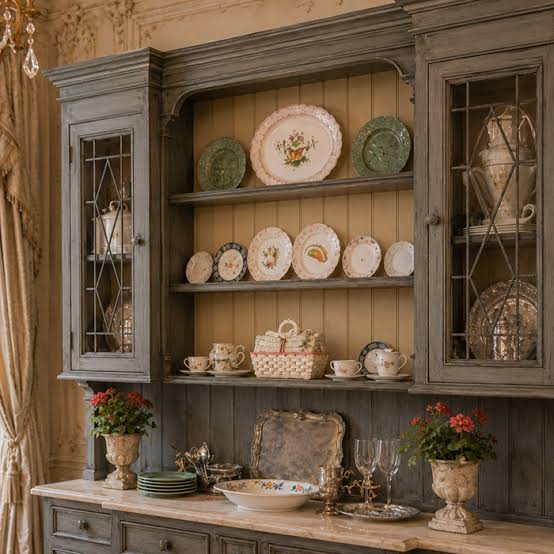
This hutch proves that a traditional shape can feel fresh with the right backing. The grey exterior is expected, but the yellow beadboard inside the upper cabinet shifts the whole look toward something warmer. Display plates in cream and white read clearly against that yellow without competing for attention, and the glass doors let the color peek through without overwhelming the room.
The trick is keeping the hutch neutral. Ornate molding and carved details on the grey frame hold their own, so the yellow backing works as an accent. Ambient light from the room catches the beadboard texture and softens the yellow into something closer to buttercream. It is a small change that redefines the whole piece.
09 / 32Rustic Hutch Decorated for St. Patrick’s Day
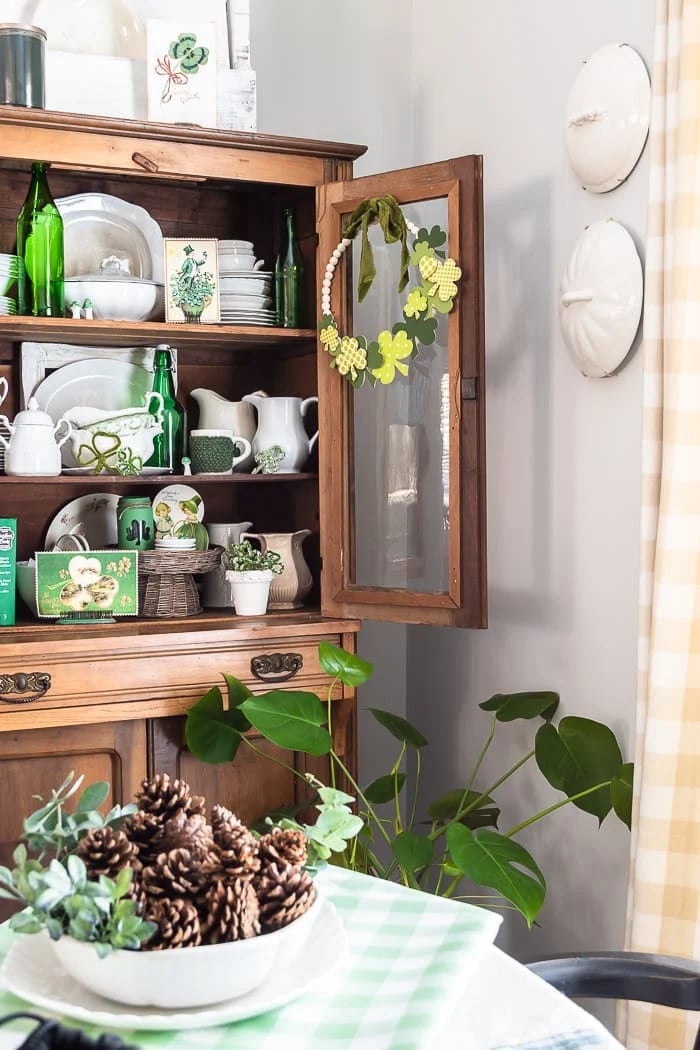
Can a hutch handle seasonal decor without looking cluttered? This rustic piece says yes, with a neutral base. The wooden hutch with its natural wood tones provides a calm backdrop for green bottles, a shamrock wreath on the door, and white ceramic pieces scattered across the shelves. The wreath is the focal point, but the bottles and dishes fill the space without crowding it.
A compact hutch like this one works well for seasonal styling because the smaller footprint means fewer items needed to make an impact. The trick is to keep the palette tight. Here, green and white against warm wood look intentional. Swap out the wreath and bottles for another color when the season passes, and the hutch resets in minutes.
10 / 32Vintage Distressed Hutch with Straw Basket Accent
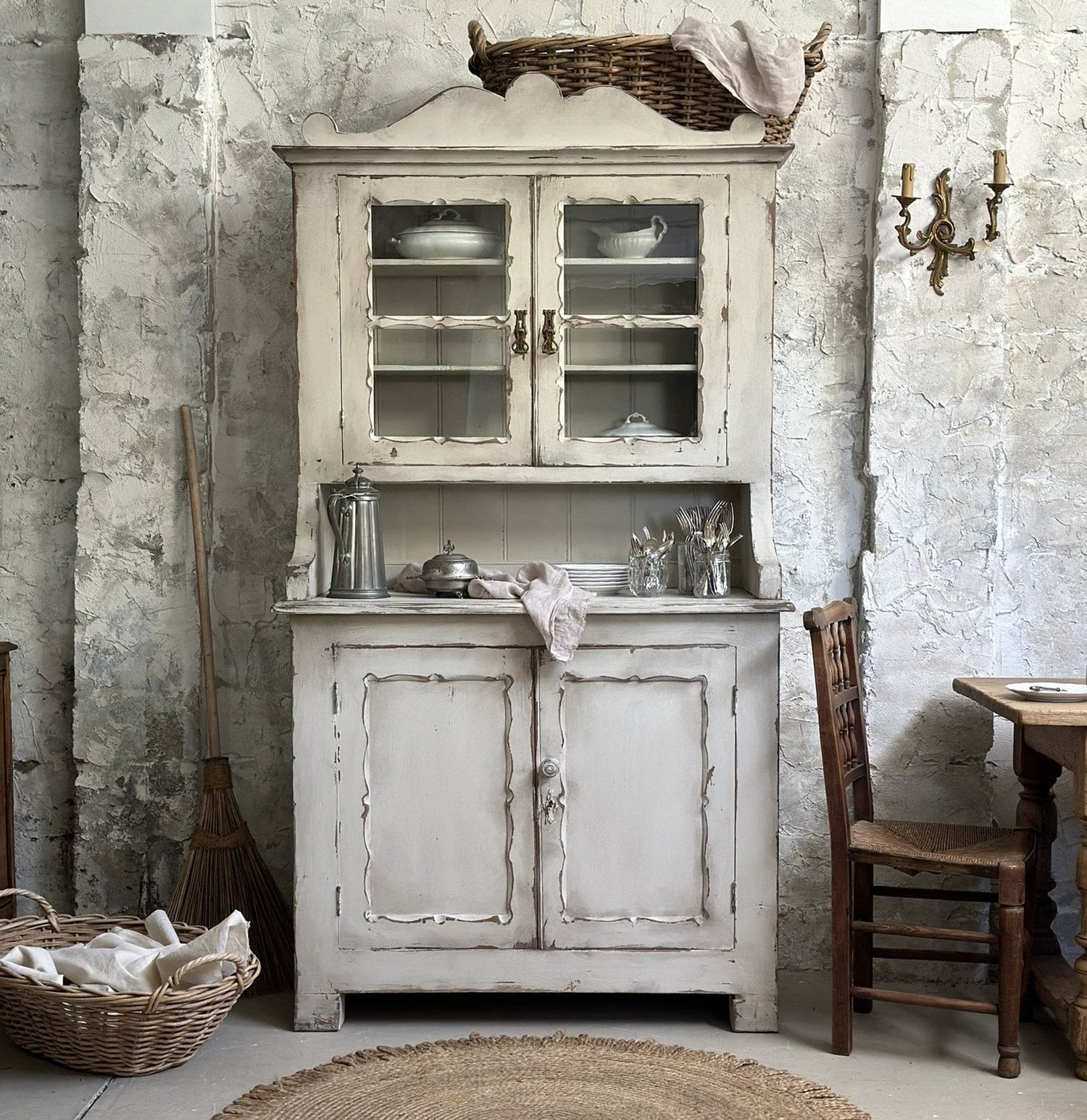
A heavily distressed finish on this hutch gives it the look of a piece that has been in the family for decades. The off-white and grey tones on the wood feel aged without looking damaged, and the glass doors keep the interior contents visible. A straw basket sits on one of the lower shelves, adding a natural texture that softens the hard lines of the hutch. A wooden chair and broom nearby reinforce the vintage kitchen feel.
The scale here is compact, which makes this hutch a good fit for smaller kitchens or breakfast nooks. The distressed finish does not require careful upkeep. In fact, the more worn it looks, the better it fits the style. For renters, a painted finish with a light sanding at the edges can mimic this look without permanently altering the piece.
11 / 32Bright Farmhouse Hutch with Wooden Ladder Accent
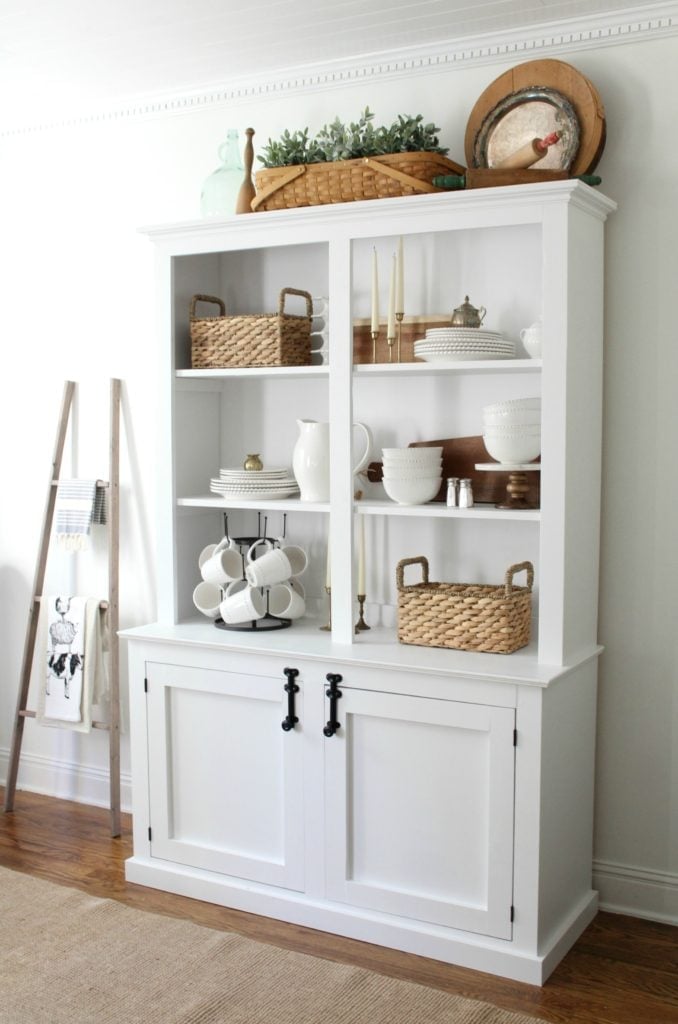
A hutch that blends into the wall fades, but one that stands apart earns its keep. This white farmhouse hutch with black hardware sits against the kitchen wall and anchors the whole room. The wooden ladder beside it is not a shelf or a rack but a vertical line that pulls the eye upward, making the ceiling feel higher. Woven baskets on the lower shelves soften the wood and ceramic dishes above. Natural light keeps the white bright, while an overhead fixture fills in corners. The result is a layout that feels open without being empty.
12 / 32Large Beige Pantry Hutch with Extensive Storage
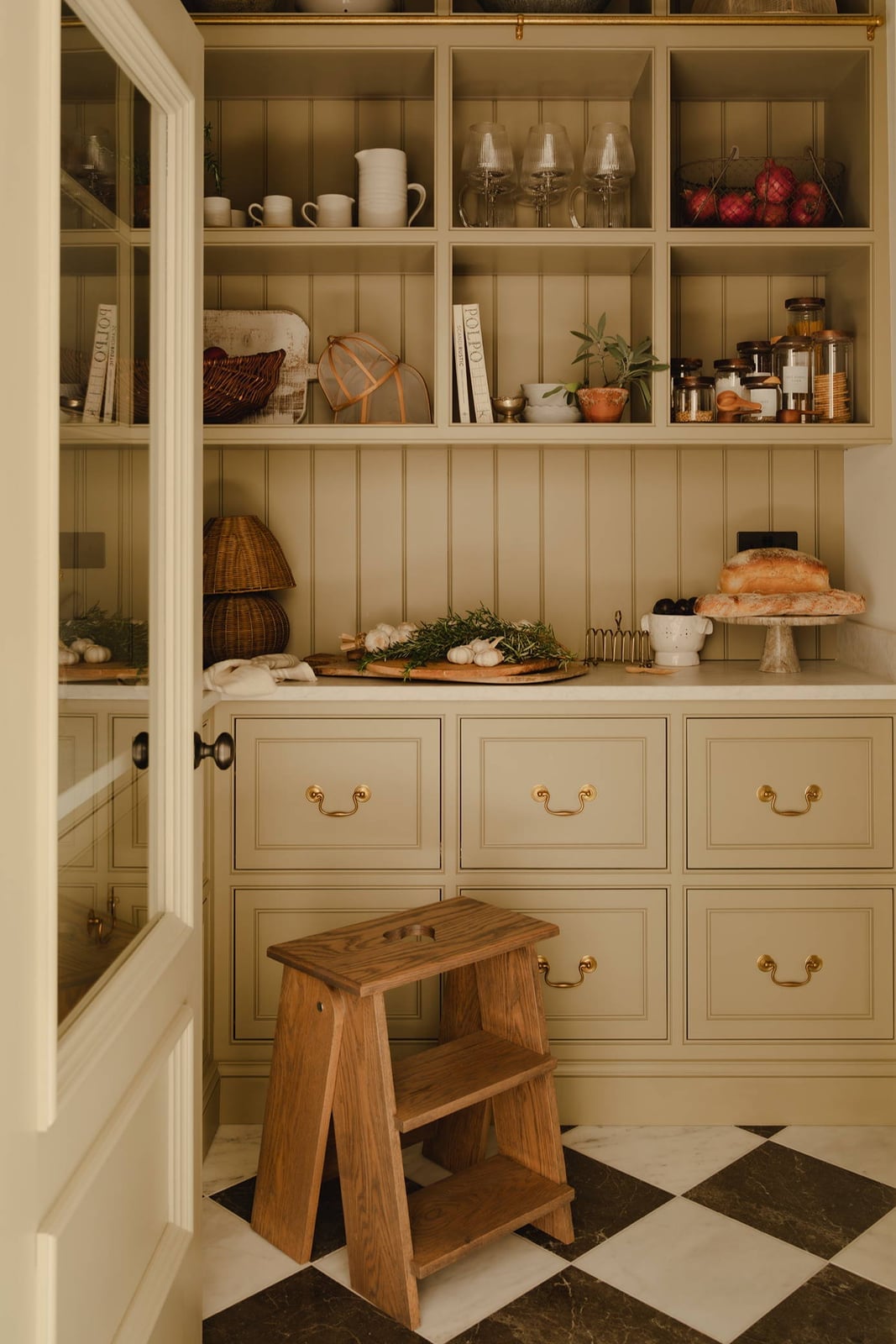
A pantry hutch can look like a closed cabinet or an open invitation. This beige modern farmhouse unit leans toward the second: its upper glass doors show off organized shelves, while deep drawers below hide the clutter. The wood tones and brass hardware warm the neutral palette, and a marble countertop adds a surface for daily use. A small wooden step stool nearby suggests the upper shelves are reachable, not decorative.
The layout mixes open display with concealed storage, which means you can keep everyday dishes close and tuck away bulky cookware. The drawers pull out fully, so nothing gets lost in the back. A built-in feel comes from matching the beige to the wall, but the wood step stool keeps it from feeling too serious.
13 / 32Modern Kitchen Hutch Integrated into Cabinetry
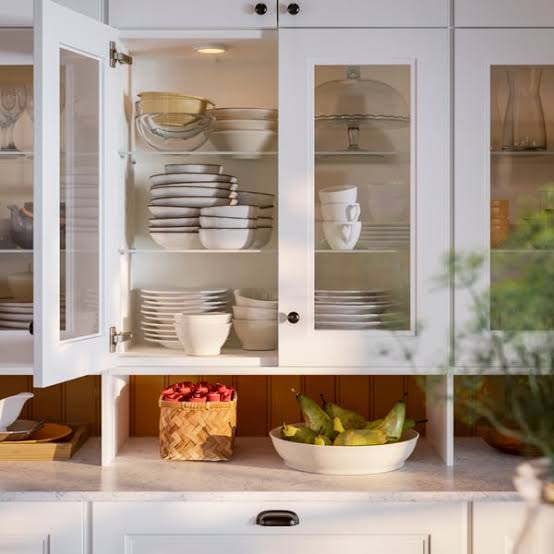
This hutch is part of the original cabinetry, with glass-fronted uppers that blend into the kitchen’s clean lines. The white and grey palette keeps the room open, while the wood island introduces warmth. Spotlights above the hutch highlight the organized glassware inside, and natural light balances the brightness. The integrated design means the hutch does not compete with the kitchen; it just extends the storage without adding visual weight.
14 / 32Dark Wood Vintage Hutch with Copper Molds
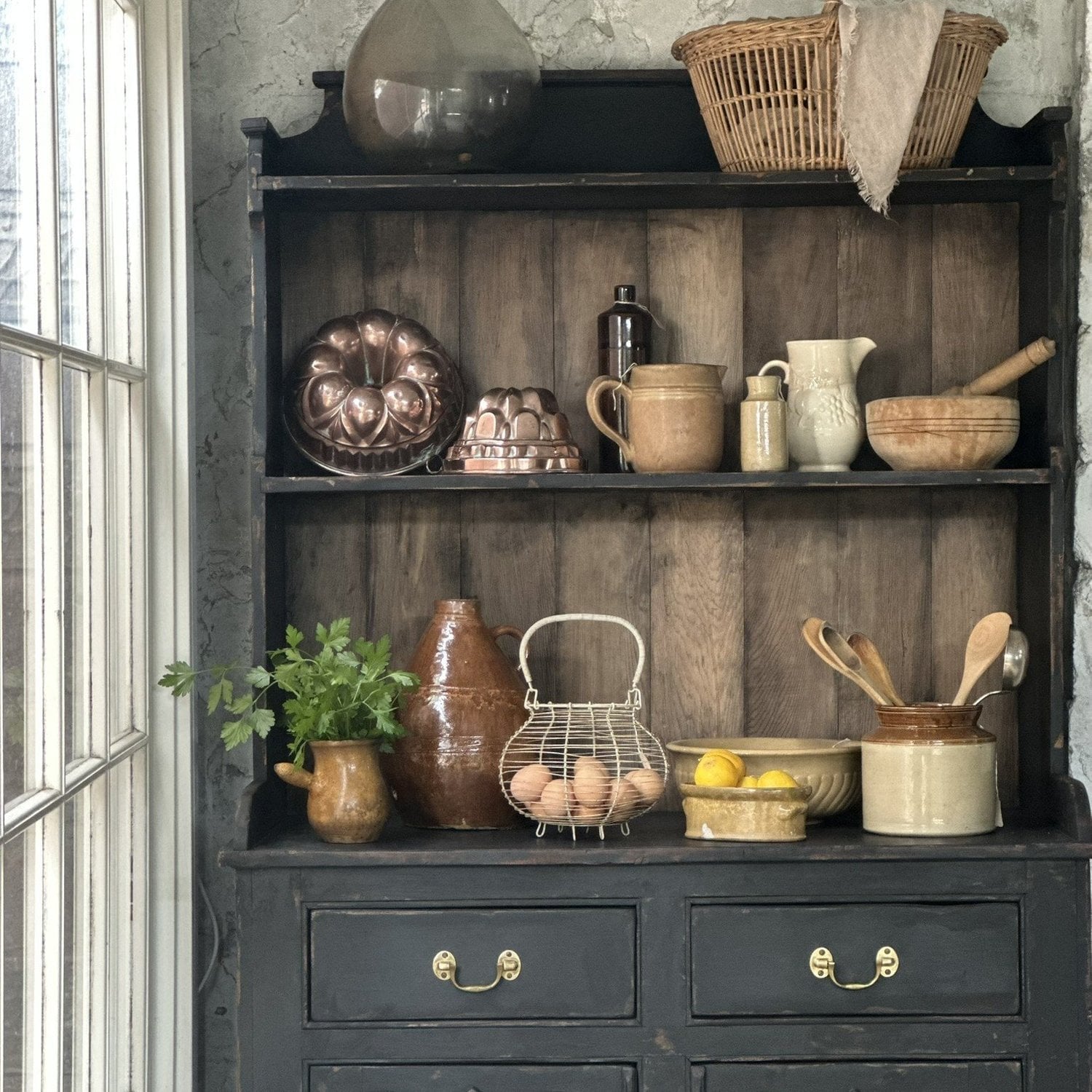
This hutch works because of contrast. The dark wood frame is heavy and traditional, but the copper molds on the open shelves catch the natural light and break up the mass. Cream ceramic jugs and a few eggs in a small bowl add soft shapes that keep the display from feeling like a museum case. The copper is the anchor: its warm metallic tone sits against the dark wood and pulls the eye across the surface. A vintage hutch like this relies on a few standout pieces rather than a full set.
15 / 32Beige Hutch with Glass Doors and Subway Tile Backsplash
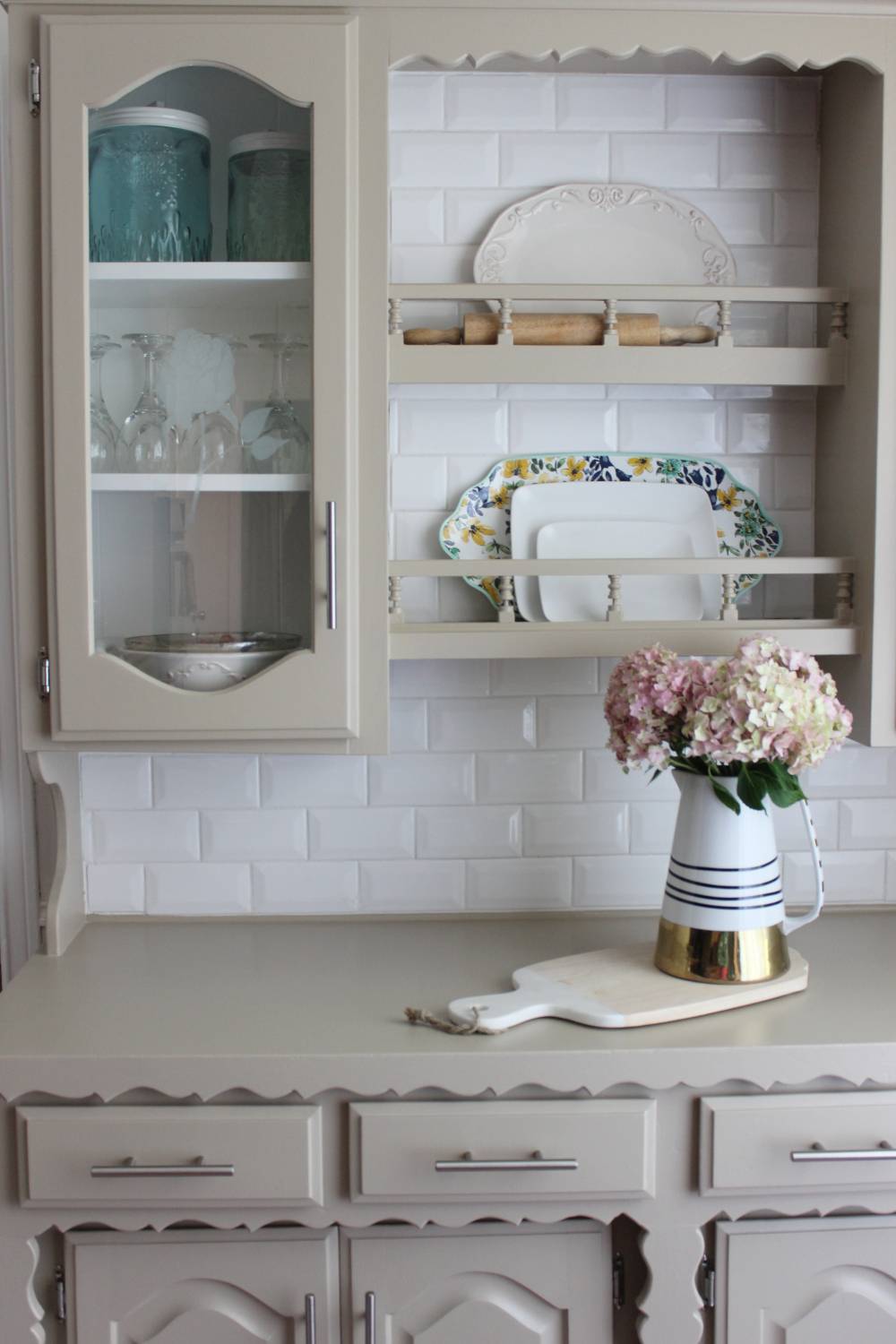
A hutch that shares a wall with a backsplash needs to read as part of the same room. This beige painted wood hutch sits against a white subway tile backsplash, and the two materials do not fight because the tile is neutral and the hutch has a scalloped edge that adds detail without pattern. The glass doors show blue glassware inside, which becomes the color accent for the whole kitchen.
Overhead lighting keeps the display clear, but the real trick is the countertop space below the glass doors. It holds a few everyday items, so the hutch works as storage and as a landing zone. The glass doors mean you have to keep the inside tidy, but that is the trade-off for a kitchen that feels open and deliberate.
16 / 32Ornate Wooden Hutch as Kitchen Focal Point
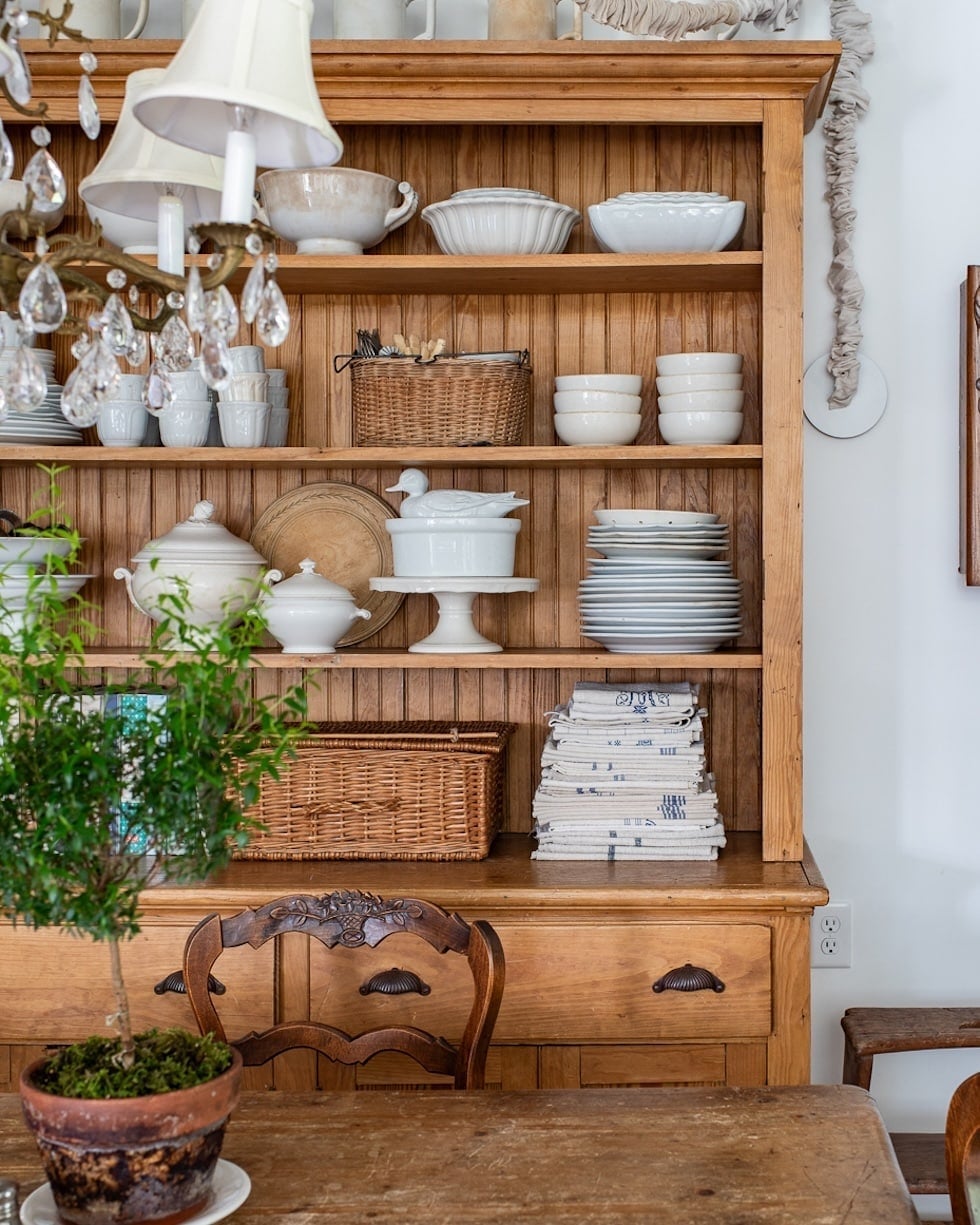
A generously sized kitchen uses an ornate wooden hutch as its visual anchor, with the piece’s carved details and warm wood tones drawing the eye across the room. The surrounding palette stays simple: white walls and green accents keep the hutch from feeling heavy. A chandelier above the dining area adds a second layer of polish. What makes this layout work is proportion. The hutch is substantial enough to hold the space, yet the room around it stays uncluttered, so the piece stands as a deliberate focal point.
17 / 32Peach-Toned Hutch Decorated for Fall
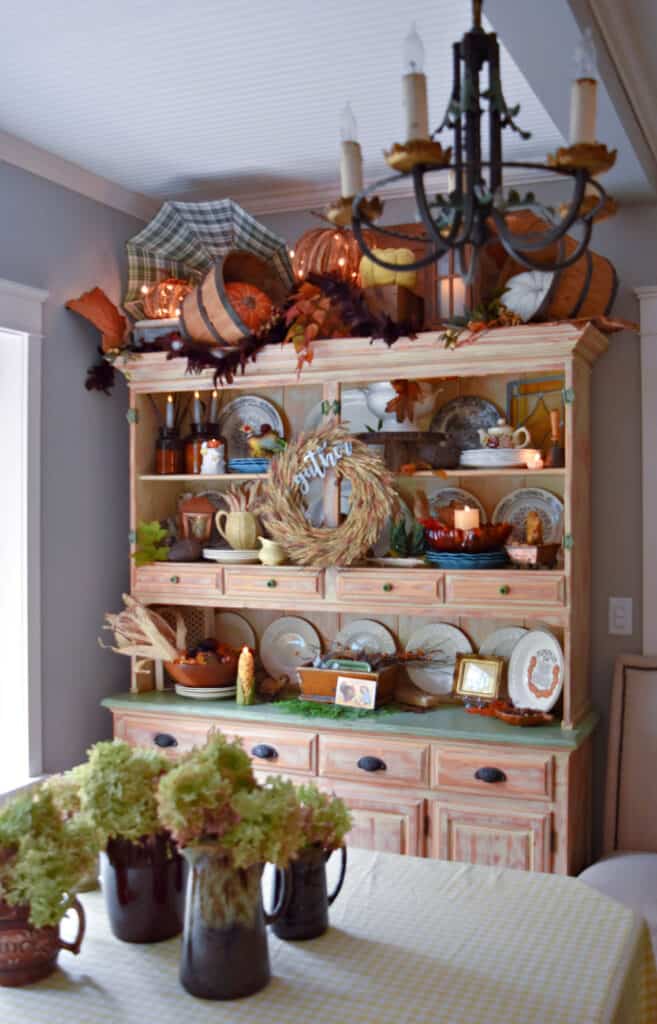
A practical rule for seasonal styling is to let the hutch color guide your decor choices rather than fighting it. Here a peach-toned painted wood hutch holds fall decorations in brown, orange, and green, with ceramic pieces and glass accents that pick up the warm tones. A straw basket adds texture without introducing a new color family. The compact layout keeps everything visible and accessible, which matters when swapping decor between seasons. Ambient lighting from a chandelier softens the display. For renters, this approach works well because the hutch itself is a piece of furniture, not a built-in, so the whole setup moves with you when the season or the lease changes.
18 / 32Built-in Hutch with Dark Wood Interior and Brass Accents
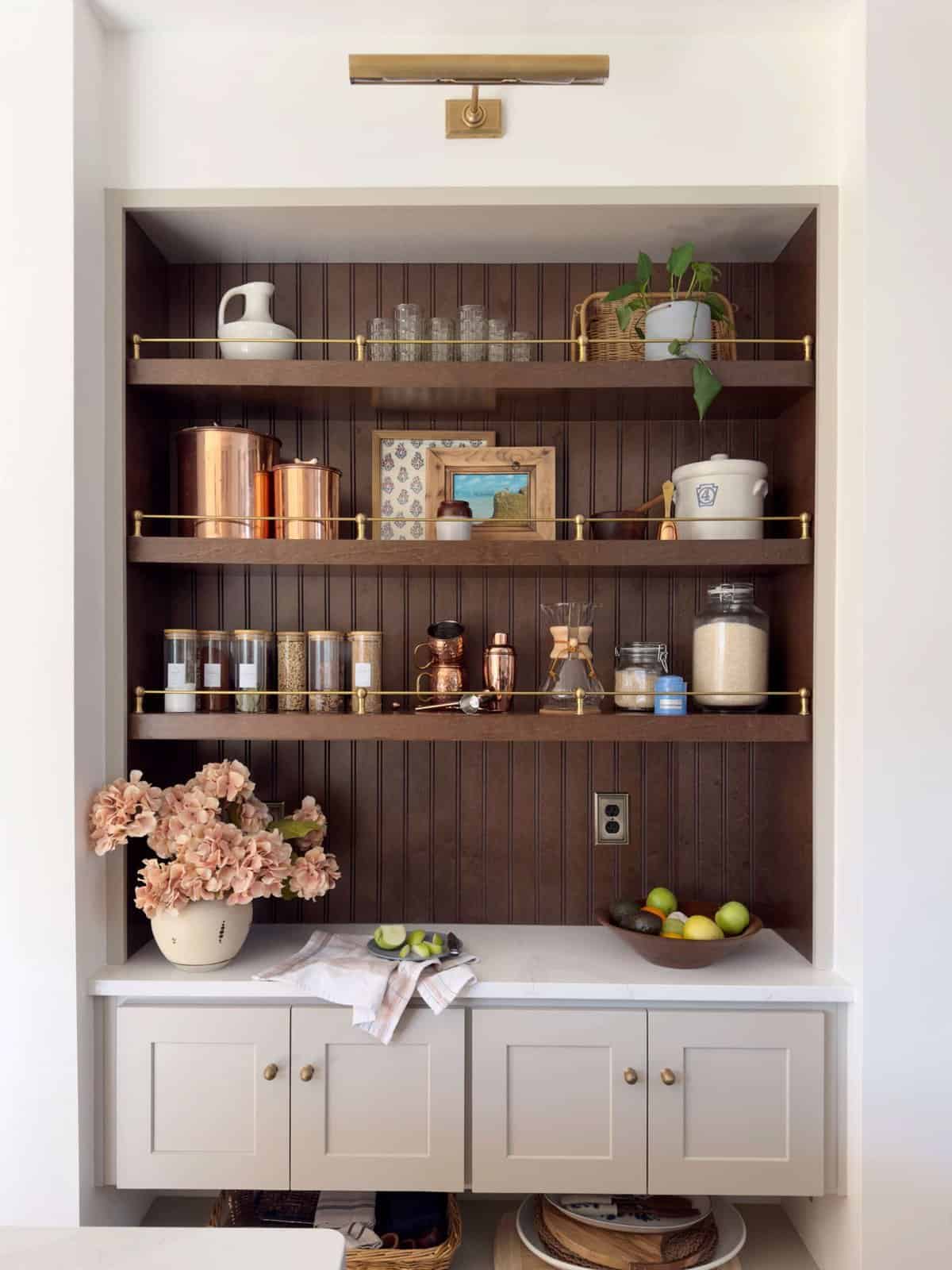
Where a freestanding hutch can feel like an addition to a room, a built-in version feels part of the original architecture. This transitional kitchen integrates the hutch directly into the cabinetry, with a dark wood interior that creates depth against cream-painted outer cabinets. Brass accents on the hardware and light fixtures add warmth without shifting the palette into a different era.
The marble countertop below the hutch ties the look together, bridging the dark wood and cream cabinets with a neutral surface. Overhead and under-cabinet lighting make the interior visible day and night, which matters for a built-in that needs to function as both storage and display. The key material detail here is the dark interior against the lighter surrounding cabinetry. Without that shift, the hutch would blend in with the rest of the cabinetry.
19 / 32Dark Wood Hutch with Tiered Display of Dinnerware
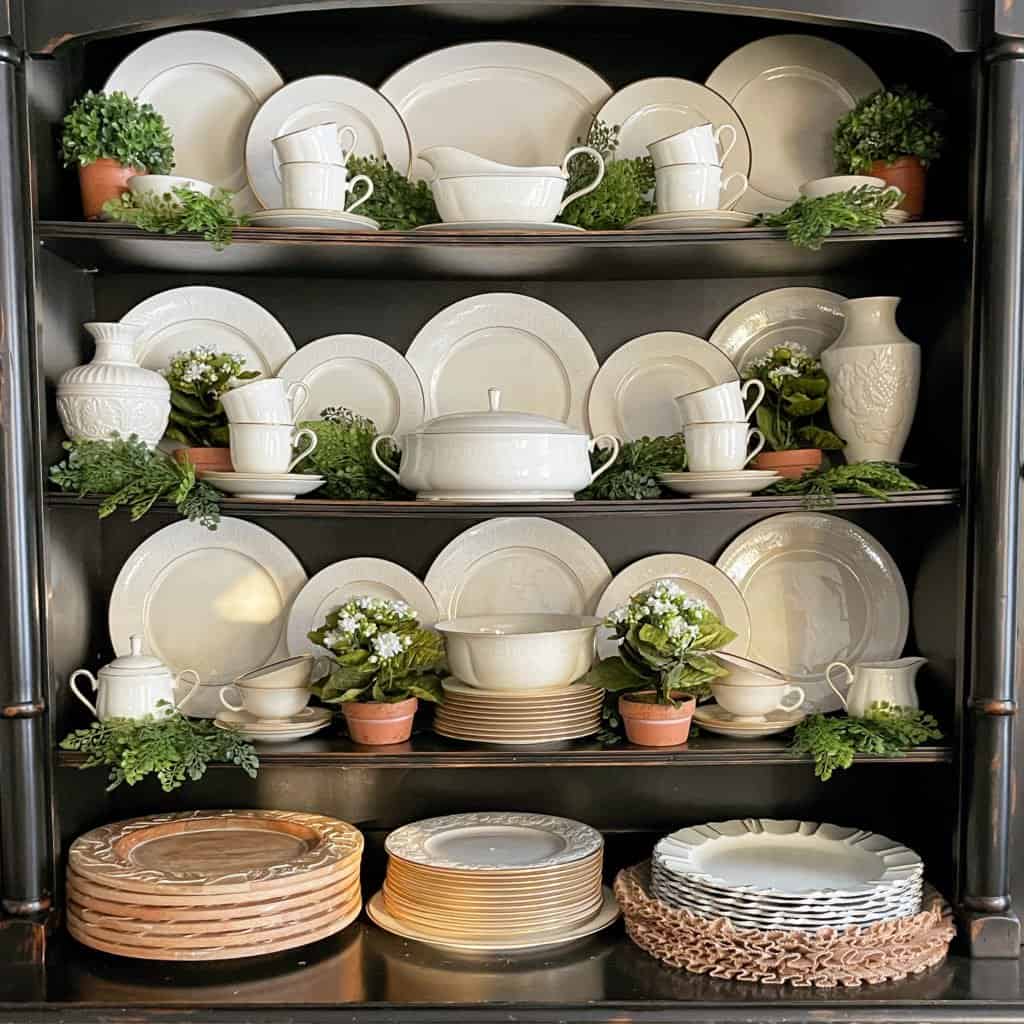
A dark wood hutch with glass front doors uses tiered shelving to turn everyday dinnerware into a deliberate display. White plates and small green accents stand out against the dark interior, and the glass doors keep dust off while still showing the collection. Natural light helps the white ceramics look bright and clean. What makes this arrangement work for storage is the vertical layering. By using plate stands and small risers, the hutch holds more pieces than flat stacking would allow, and each shelf stays visible without one row hiding the next.
20 / 32Modern Farmhouse Hutch with Open Cabinet Doors
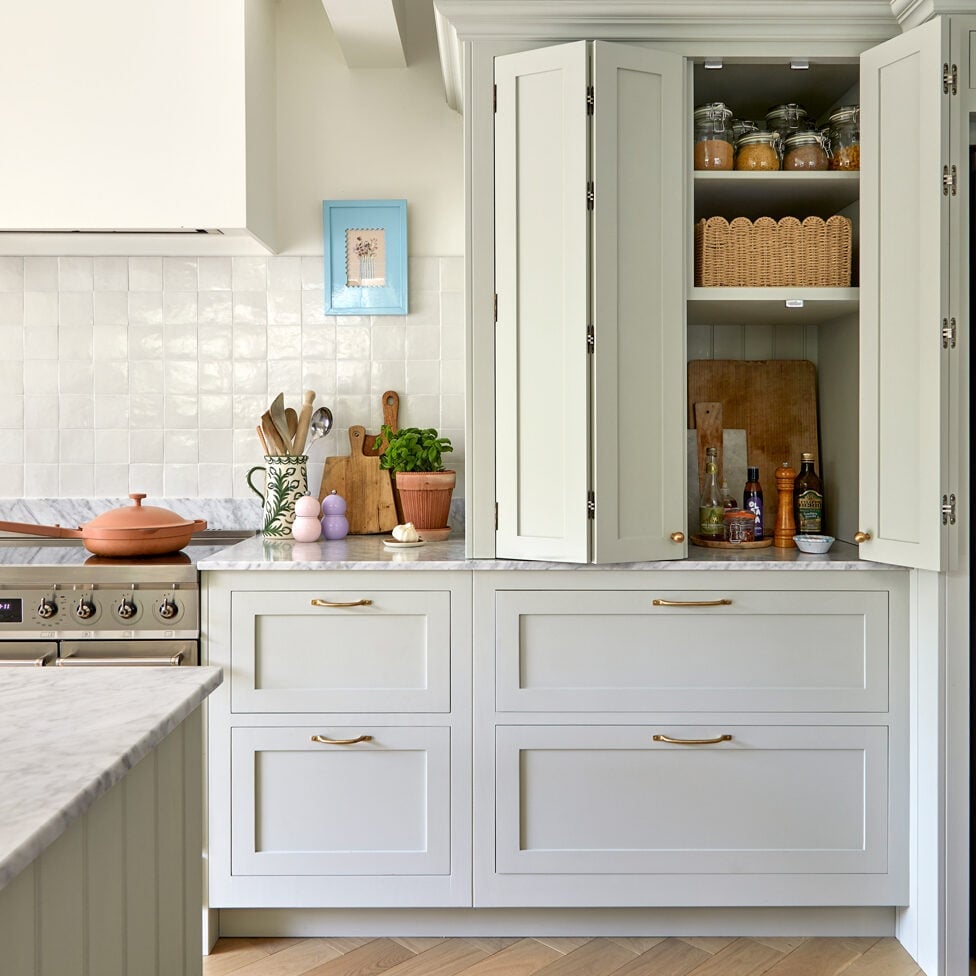
This hutch reads as a natural extension of the kitchen cabinetry rather than a standalone piece. The open cabinet doors reveal storage for everyday glassware and ceramics, with the off-white painted wood and marble countertop keeping the look cohesive with the surrounding shaker cabinets and tile backsplash. A range and island complete the work triangle, so the hutch functions as a landing zone for dishes within arm’s reach of the sink and stove. The open storage means what goes on the shelves matters. Sticking to a uniform palette of white ceramics and clear glass keeps the display from looking cluttered, and the marble surface below provides a spot to set down a cup or a plate without opening a drawer.
21 / 32Traditional Dark Wood Hutch with Granite Countertop
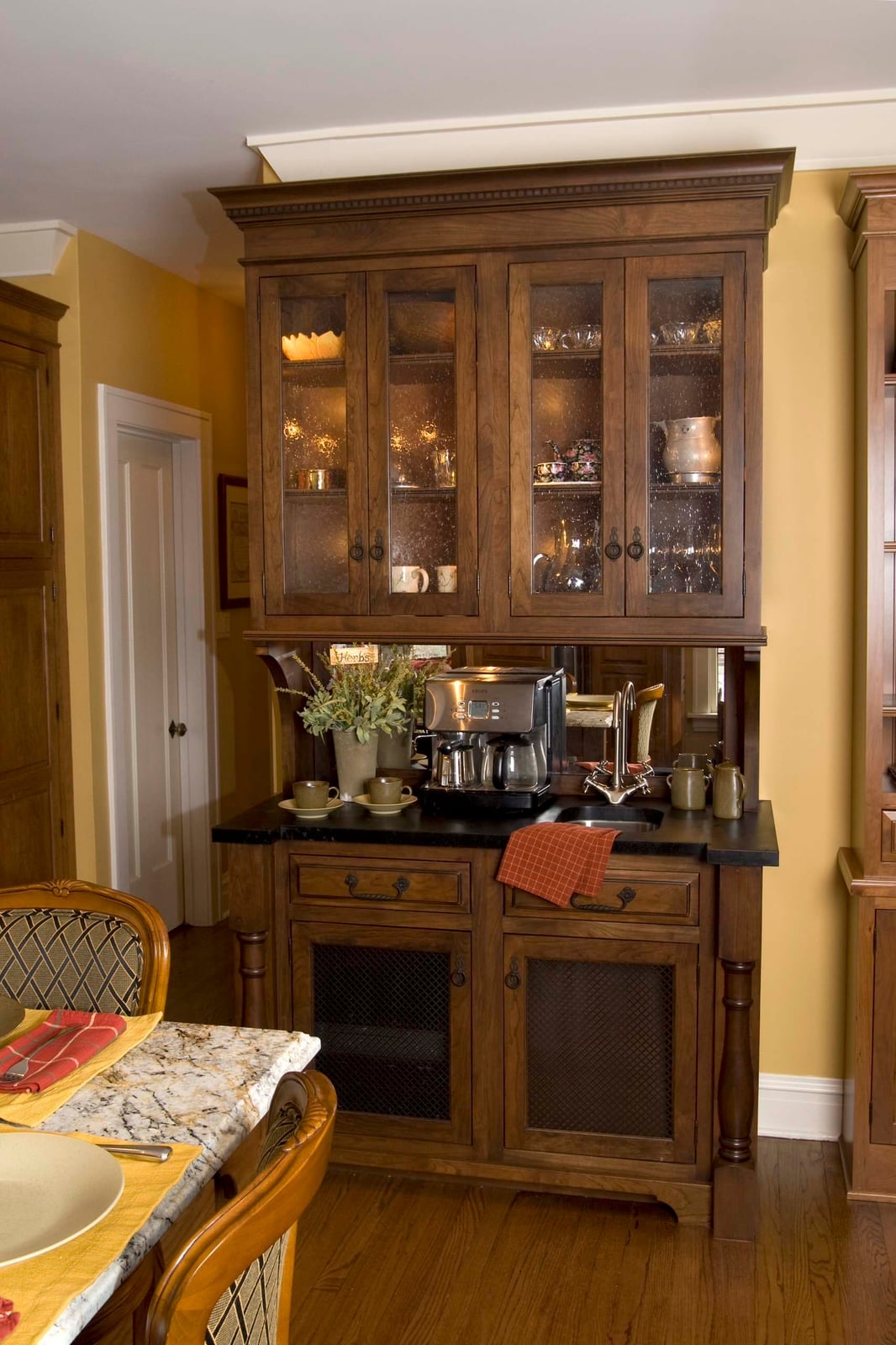
A dark wood hutch with a granite countertop gives you a solid landing spot for daily gear without needing a full remodel. The wood tones here lean warm, with yellow and white in the room balancing the deep finish. Glass cabinet doors let you keep an eye on what is stored while protecting it from dust. A coffee maker on the counter makes the hutch work as a morning station, not just a display piece. Overhead and door light keep the surface visible, which matters when you are reaching for mugs before the sun is up. The layout treats the hutch as a built-in focal point against the wall, with counter space that bridges storage and function.
For a similar effect, try matching the counter material to what is already in your kitchen. Granite holds up to hot mugs and small spills, so it earns its spot near a coffee setup. If your hutch is an antique find, a stone top can be added by a fabricator without changing the wood frame underneath.
22 / 32Sage Green Country Hutch with Plates and Cookware
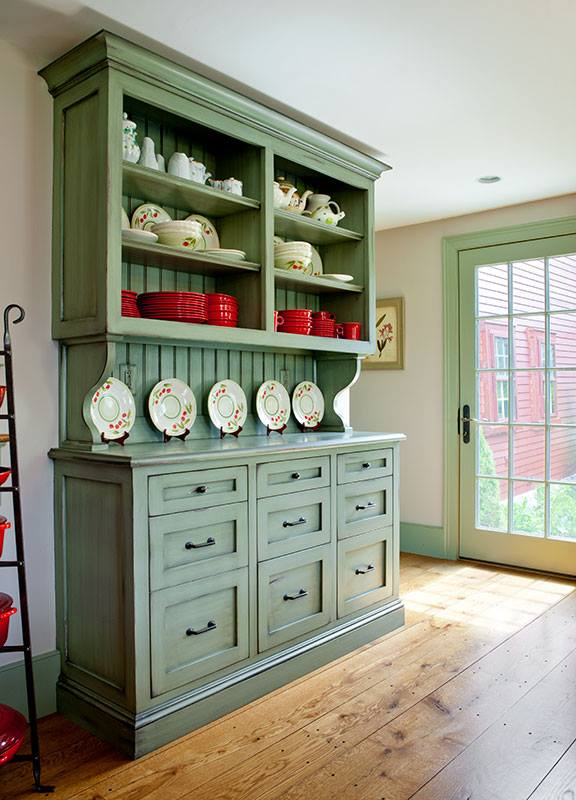
A sage green hutch brings a soft color block into the kitchen without overwhelming the room. The country style here pairs the painted wood with white ceramics and small red accents from the cookware. Natural light makes the green read as muted rather than bright, which helps it sit alongside warm wood floors or neutral walls. The hutch becomes the room’s main color event, so keeping the rest of the palette simple lets the finish stand out.
23 / 32Vintage White Hutch with Green Glass Bottles
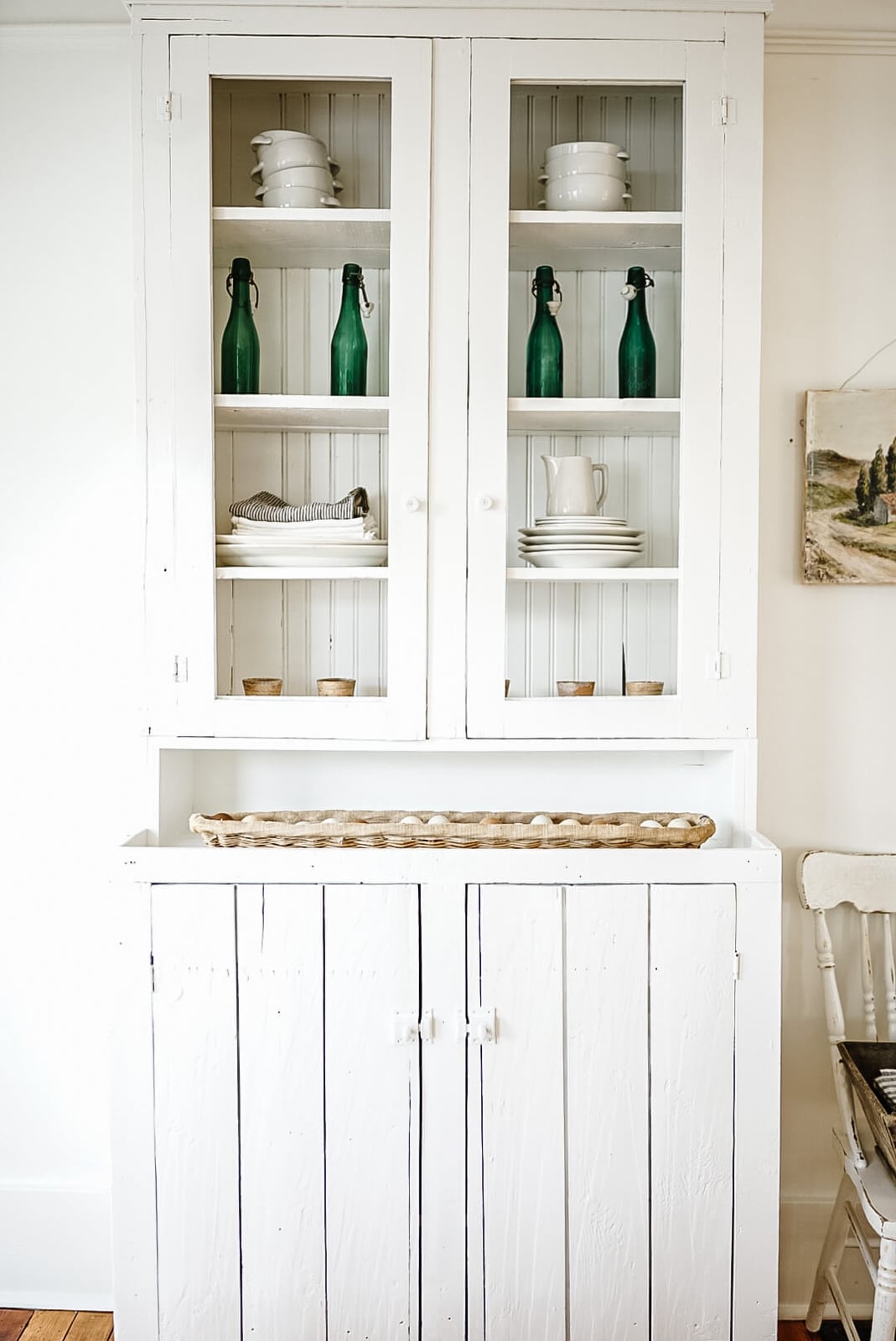
To style a compact hutch, let one color family lead the display. A white painted hutch holds stacked plates and green glass bottles that repeat the same green across different heights. The bottles add vertical interest without cluttering the shelves, and the glass doors keep everything visible but tidy. Natural light passes through the bottles and casts a soft green tone onto the white shelves, a simple trick that costs nothing to copy. Stick to two or three bottle sizes for a collected look.
24 / 32Cream Hutch with Country Landscape Art
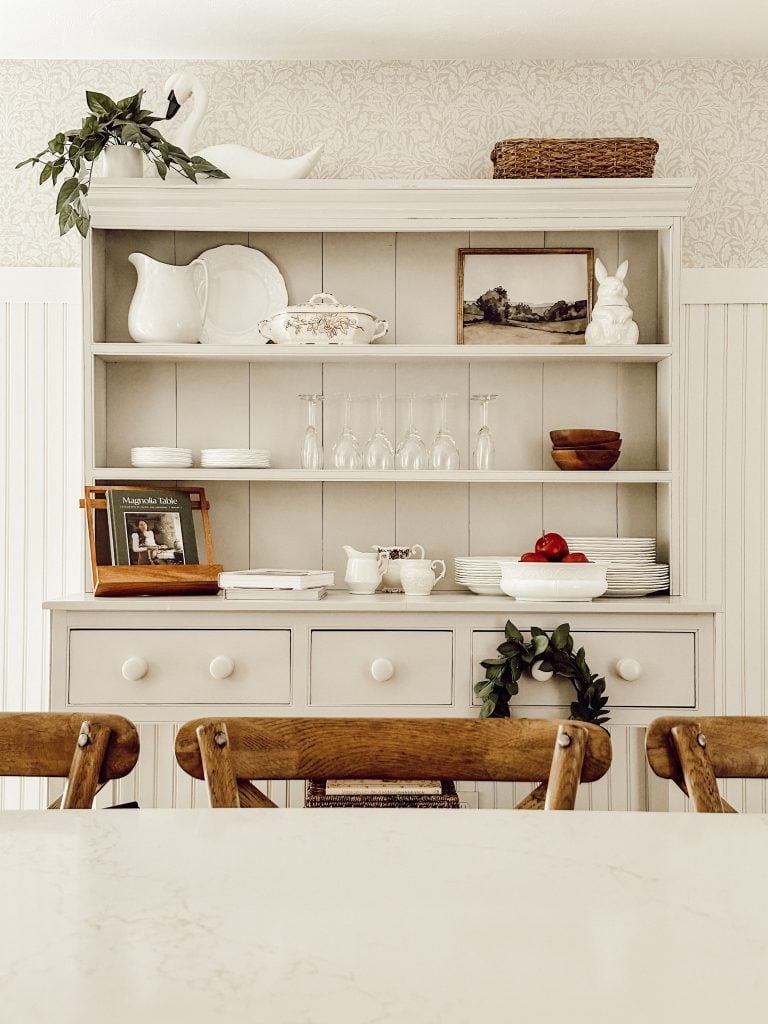
A cream hutch can feel purely functional until you add a piece of framed art on top. Here, the country landscape art shifts the hutch from storage unit to a display anchor, drawing the eye upward and softening the transition between the hutch and the wall. The soft natural light in the room keeps the cream finish from washing out, while the muted wood tones of nearby chairs repeat the warmth in the frame.
Hanging art directly on the wall above a hutch is the more common approach, but setting the frame right on the top surface keeps the silhouette lower and ties the art to the furniture. This works best when the hutch is not too tall and the art is wide enough to span a good portion of the top edge. Stick to one framed piece instead of a cluster so the hutch stays the main event.
25 / 32Eclectic Hutch with Extensive Blue and White Plate Collection
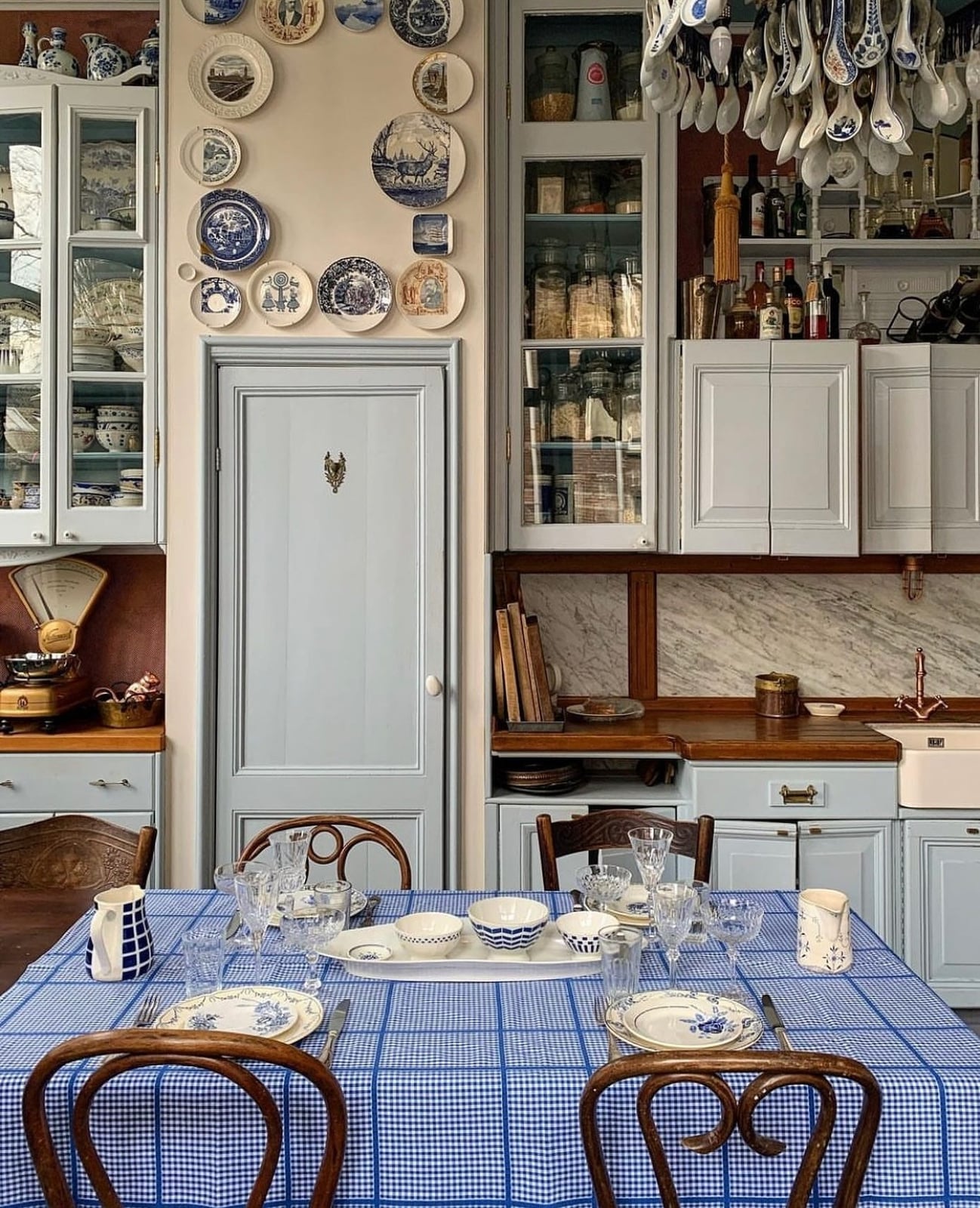
An extensive blue and white plate collection turns a hutch into a gallery wall of ceramics. The hutch here is integrated into the wall, with glass front cabinets that protect the plates while making every piece visible. Overhead and natural light hit the glossy surfaces, which keeps the blue and white pattern crisp even from across the room. The eclectic style means the plates can vary in pattern and size as long as the color story stays consistent. This setup makes finding a specific dish easy because nothing is stacked out of sight behind closed doors.
26 / 32Large Grey Transitional Hutch with Jarred Goods
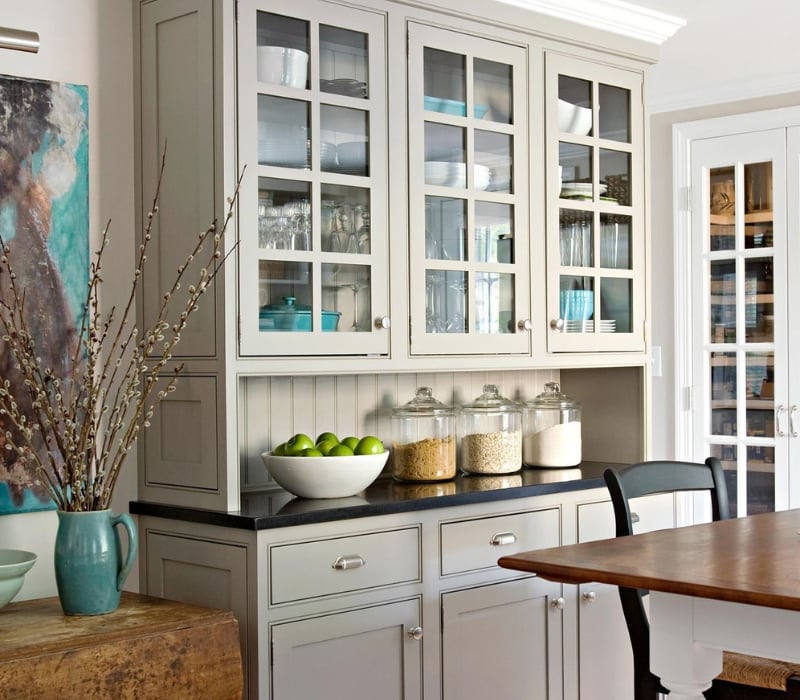
This large grey hutch blends into a roomy kitchen without disappearing, thanks to its transitional style and glass-front doors. The grey finish picks up the darker tones in the stone countertops and the black island base, while the white cabinetry keeps the palette from getting heavy. Inside the hutch, rows of jarred goods create a practical display that reads as intentional. If you have a matching set of pantry staples, this is the easiest way to turn storage into decor. The glass doors keep everything visible and dust-free, which saves you the chore of wiping down open shelves.
27 / 32Farmhouse Kitchen with Open Shelving Hutch Elements
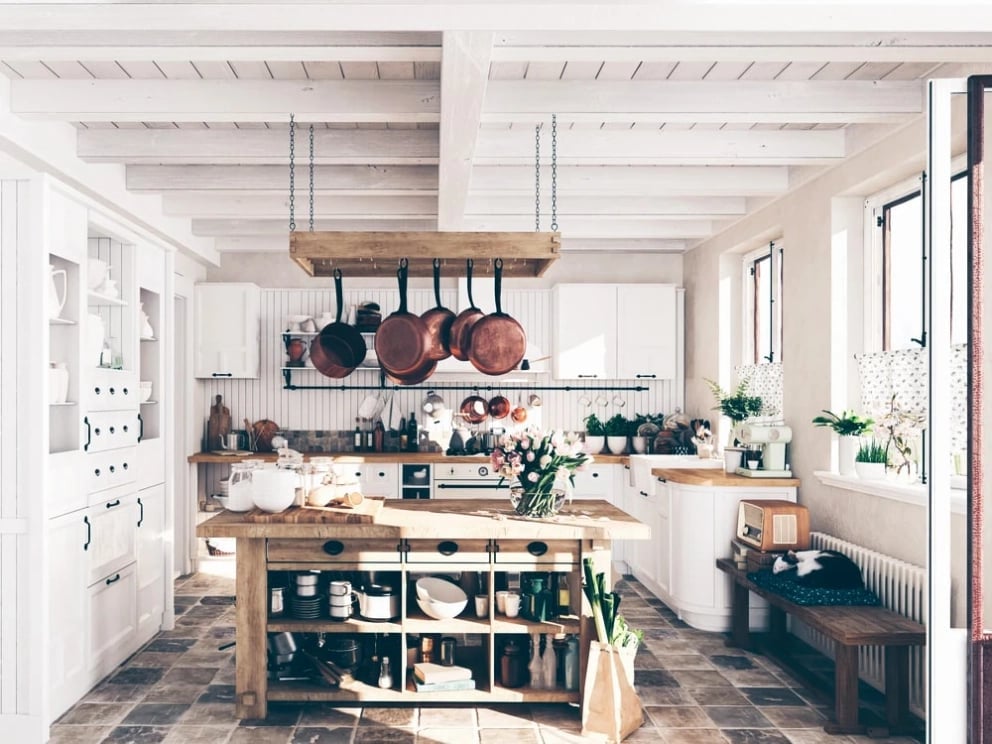
A practical rule for open shelving is to treat it like a hutch: group similar items and keep the most-used pieces at eye level. In this roomy farmhouse kitchen, the hutch and open shelving work together, with white cabinetry and a large wooden island anchoring the layout. The hanging copper pots above the island add warmth and a hit of color against the wood tones.
Natural light from the windows bounces off the white tile backsplash and the stone countertops, making the whole space feel airy. The open shelving displays dishes and cookware the same way a hutch would, but without the footprint of a freestanding piece. If you rent and cannot bring in a hutch, this setup gives you the same look with wall-mounted shelves and a few hooks for copper pots.
28 / 32Charming White Hutch with Organized Pantry Staples
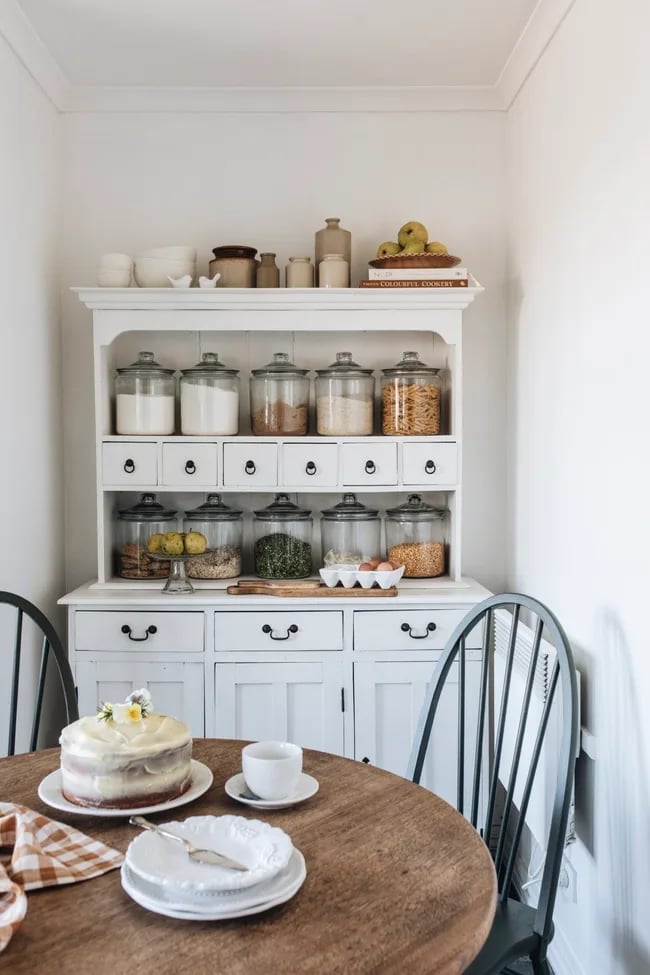
The white hutch in this farmhouse kitchen does double duty as a pantry and a display case. Glass jars filled with staples line the shelves in neat rows, with a cake sitting on the countertop below. The soft natural light keeps the cream and white palette from feeling sterile. What makes this setup work is the consistency of the jars: matching containers turn a collection of dry goods into a curated look. A dining table in the foreground shows that the hutch anchors the wall without crowding the room.
29 / 32Cottage Hutch with Chicken Wire Mesh Doors
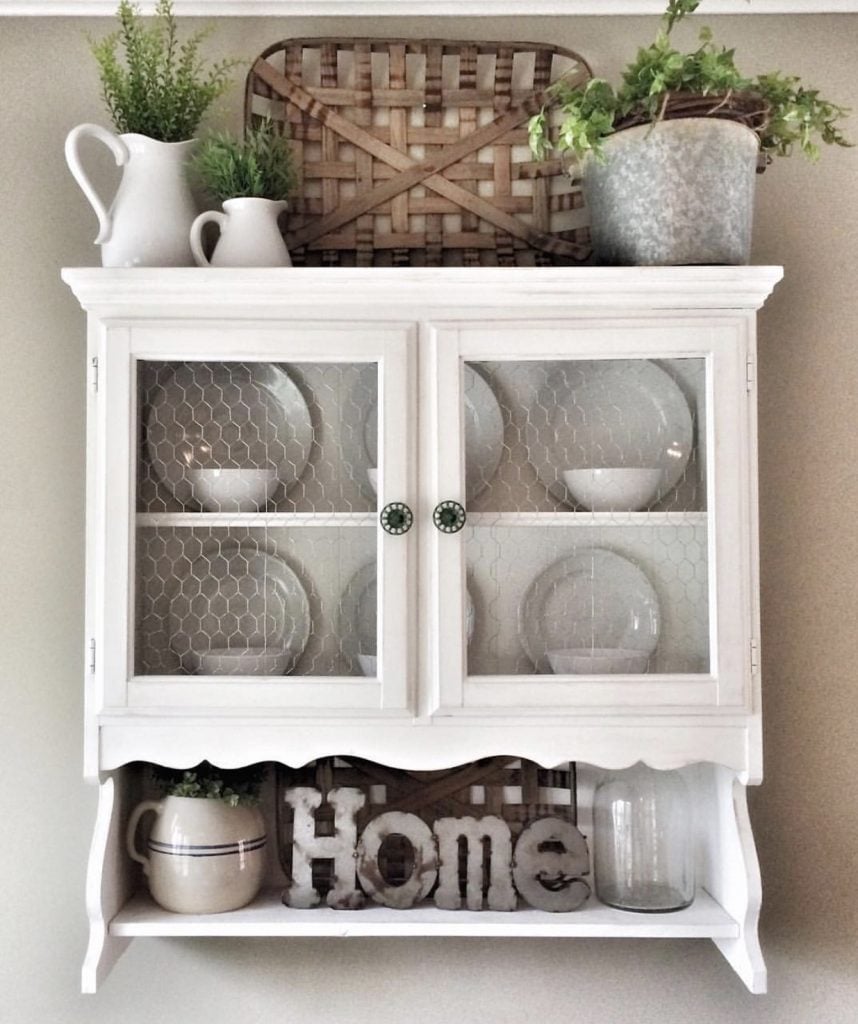
The chicken wire mesh on this compact white hutch is a practical choice for a cottage kitchen. The metal grid lets you see what is inside while keeping items secure, and it is much lighter than solid wood doors, which helps a small space feel less closed in. A ceramic pitcher, a basket, and wooden ‘home’ letters sit on the shelves, with an open shelf below for larger pieces. The soft ambient light and the beige and green accents keep the look gentle rather than busy. If you want the cottage feel without the weight of full glass doors, mesh is a smart swap.
30 / 32Autumn Farmhouse Hutch with White Pumpkins
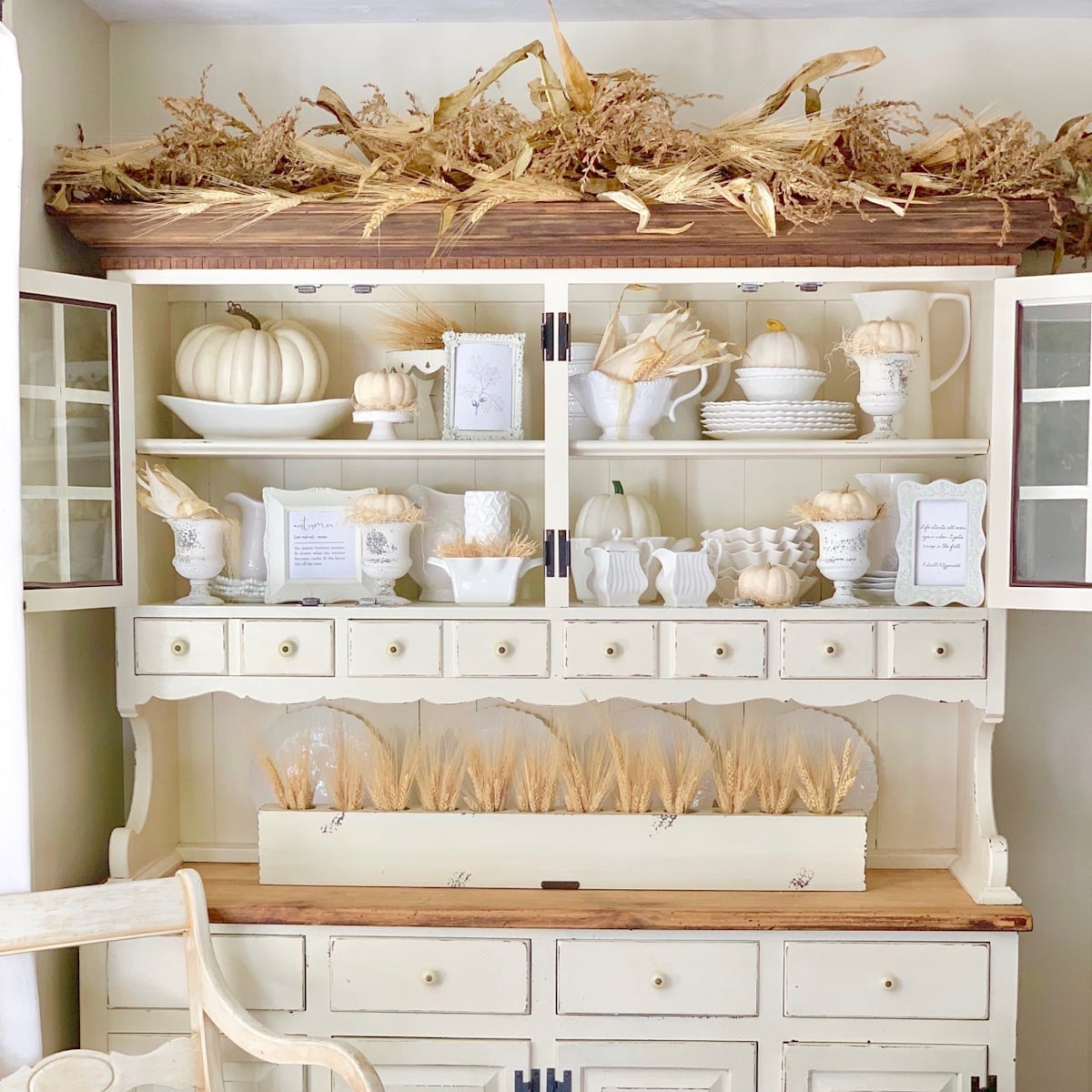
Where a typical farmhouse hutch might stick to neutral dishware year-round, this one leans into the season with white pumpkins, ceramic vases, and wheat stalks. The large white hutch stays the anchor, but the decor changes the feel without cluttering the drawers and glass-door cabinets below. The soft natural light and cream palette keep the seasonal pieces from overwhelming the room.
What breaks the look is the mix of textures: the smooth ceramic pumpkins, the rough wheat stalks, and the matte wood of the hutch all work together because the colors stay in the same beige and white family. If you decorate for fall, sticking to a single color story keeps the hutch from looking like a craft fair exploded on it.
31 / 32Farmhouse Hutch Displaying White Ceramic Dishes
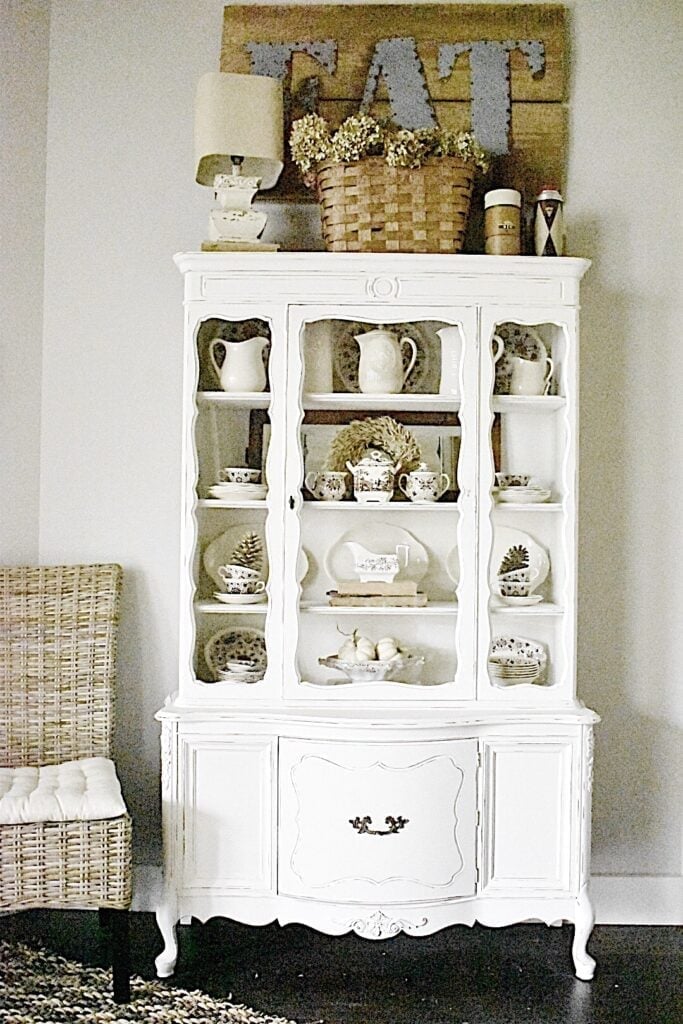
A farmhouse hutch filled with white ceramic dishes looks like a single collection of separate pieces. The creamy white dinnerware stacks neatly across the open shelves, while a few decorative items break up the rows so the display does not look like a store shelf. Ambient light from the kitchen and natural light hit the glossy glaze, giving each plate a soft gleam without harsh glare. The wood frame around the white ceramics keeps the palette warm and stops it from feeling sterile.
32 / 32Final Thoughts
A good hutch pulls double duty: it stores what you reach for daily and shows off pieces you love. The best setups mix closed cabinets for clutter with open shelves for display. Pay attention to the backing color and countertop material, small changes shift the whole feel. If you rent, a freestanding hutch avoids permanent changes. If you own, a built-in can maximize every inch. Seasonal decor works too, just swap a few items rather than restyling the whole thing. Keep the look intentional and the layout practical. Your kitchen will feel more finished without feeling fussy.