A Japanese garden is less about planting and more about shaping a view. Every stone, path, and clipped bush is placed to create a quiet rhythm that changes with the light.
Whether you have a wide backyard or a small corner, these 25 ideas show how to bring that sense of calm and structure into your own outdoor space. From raked gravel patterns to mossy boulders and simple water features, the focus stays on balance and texture rather than flowers or bright color.
01 / 26Zen Garden Elements: Pond, Lantern, and Stepping Stones
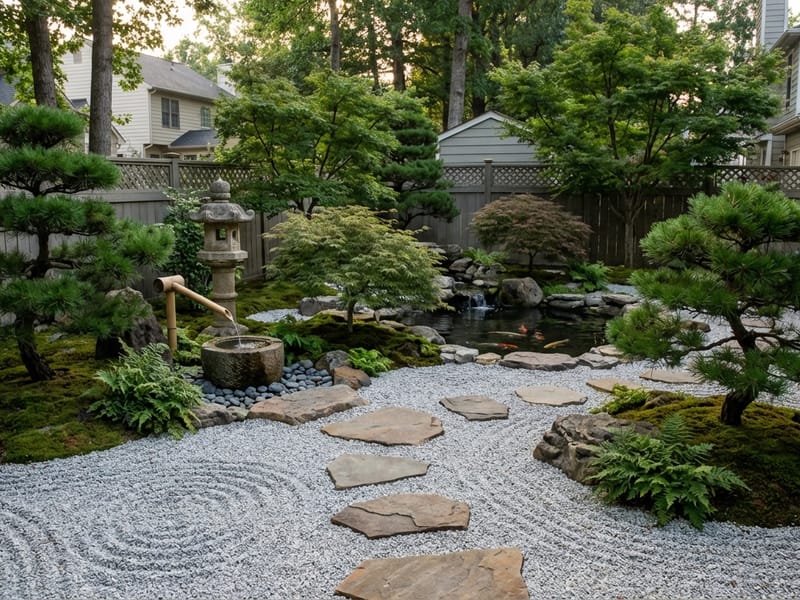
A koi pond anchors this garden layout, with stepping stones leading the eye past a stone lantern and through raked gravel. The path does not cut straight across. It curves, which slows the walk and gives each turn a reason. The lantern sits off-center, not dead center, so the pond reads as the main event. That small shift in placement keeps the whole garden as a cohesive space. A single focal point, the water, does the work.
02 / 26Tranquil Teahouse Retreat in a Lush Japanese Garden
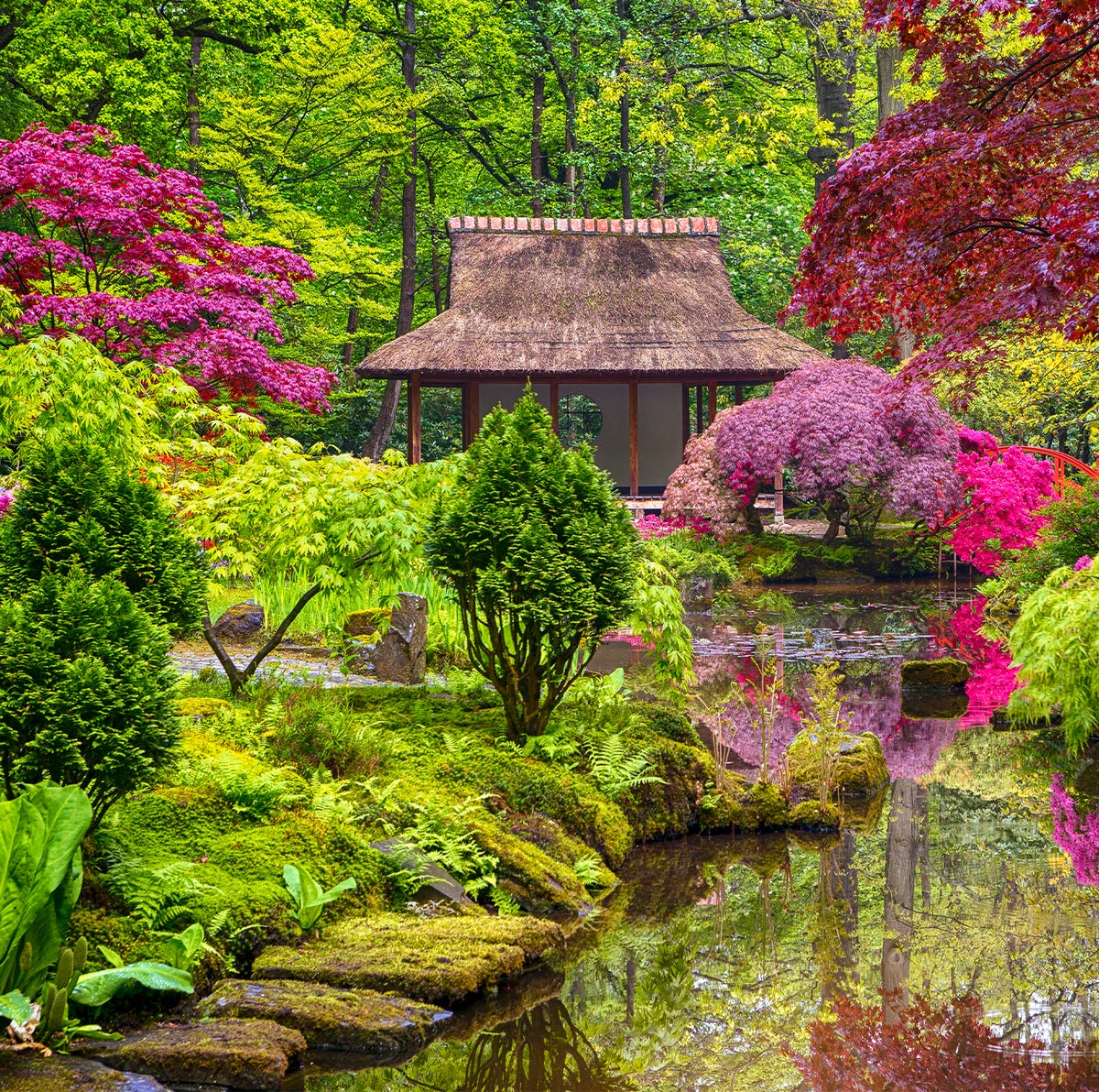
The palette here runs on contrast. Deep green moss and foliage frame the warm brown of a thatched teahouse roof, while pink and red blooms add punctuation. The teahouse sits close to the pond, so the water reflects the roof color and doubles it. Thatch brings texture that flat wood cannot match. It catches the light differently at each hour. If you want a similar feel without building a structure, a bamboo screen or a thick mat of moss on the ground can introduce that same broken, organic surface.
03 / 26Meticulously Sculpted Bushes Around a Stone Lantern
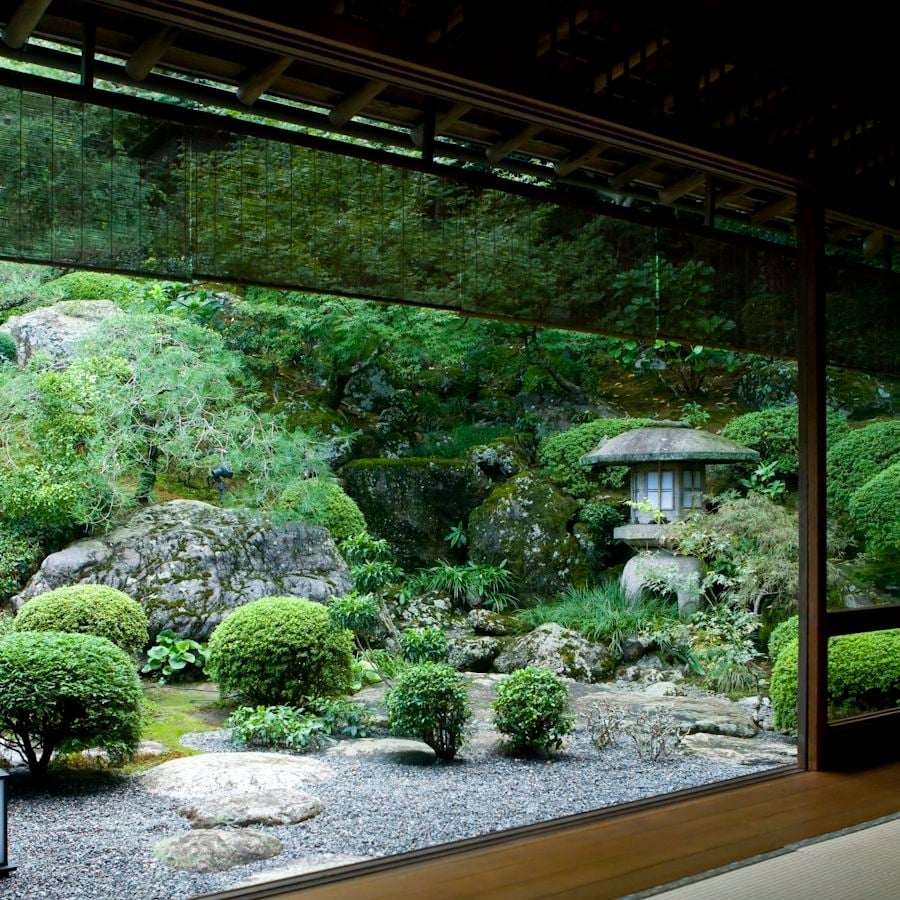
A single stone lantern can anchor a garden when the surrounding elements are carefully scaled. The bushes around this lantern are trimmed into rounded forms that echo the lantern’s own curves, but they stay shorter. They do not compete. The gravel beneath is left open, so the lantern sits on a clear stage of bare stone and raked lines. A larger tree behind it rises well above the lantern, which keeps the eye moving up instead of stopping at the lantern’s top. The lantern becomes a middle note in a three-part composition: low bushes, the lantern itself, the tall tree behind. That vertical spread gives the whole scene room to breathe.
04 / 26Winding Stepping Stone Path Through Colorful Foliage
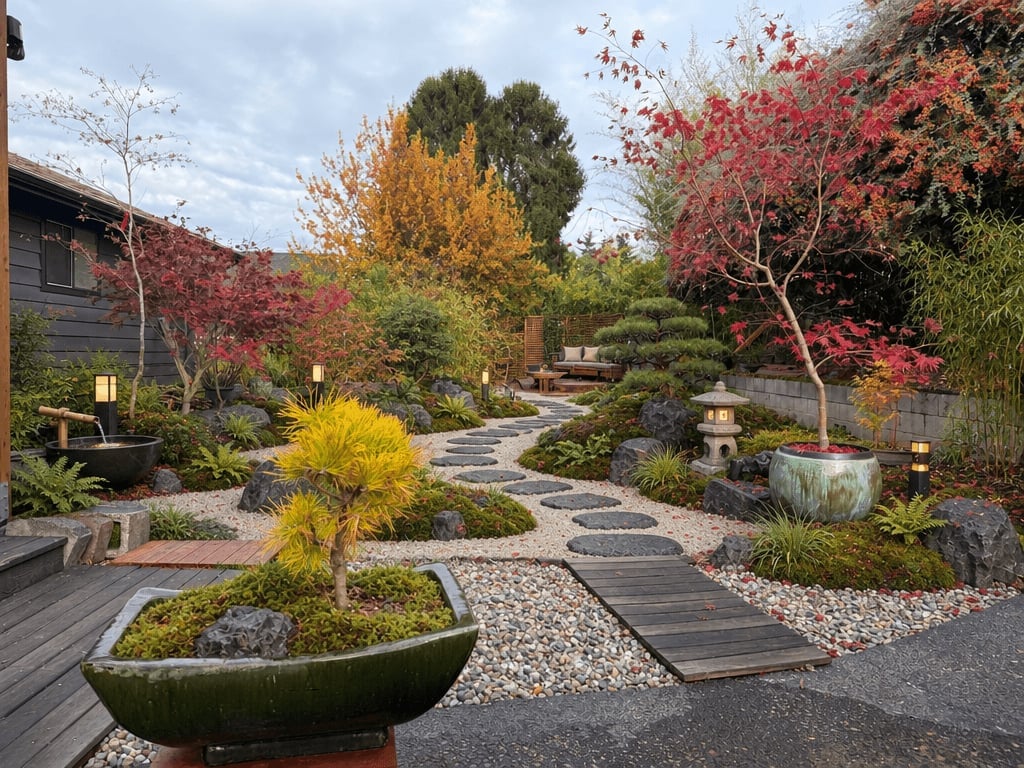
A stepping stone path that winds instead of running straight forces a slower pace. Here the stones are spaced wide enough that you have to watch your feet, which turns walking into a deliberate act. The path passes under a red maple, past a stone lantern, and alongside a small water feature. Each element becomes a discovery rather than a view you can take in all at once. That kind of layout works best when the path itself is the guide and the planting is dense enough to hide what comes next.
05 / 26Arched Bridge Over a Tranquil Pond in an Expansive Garden
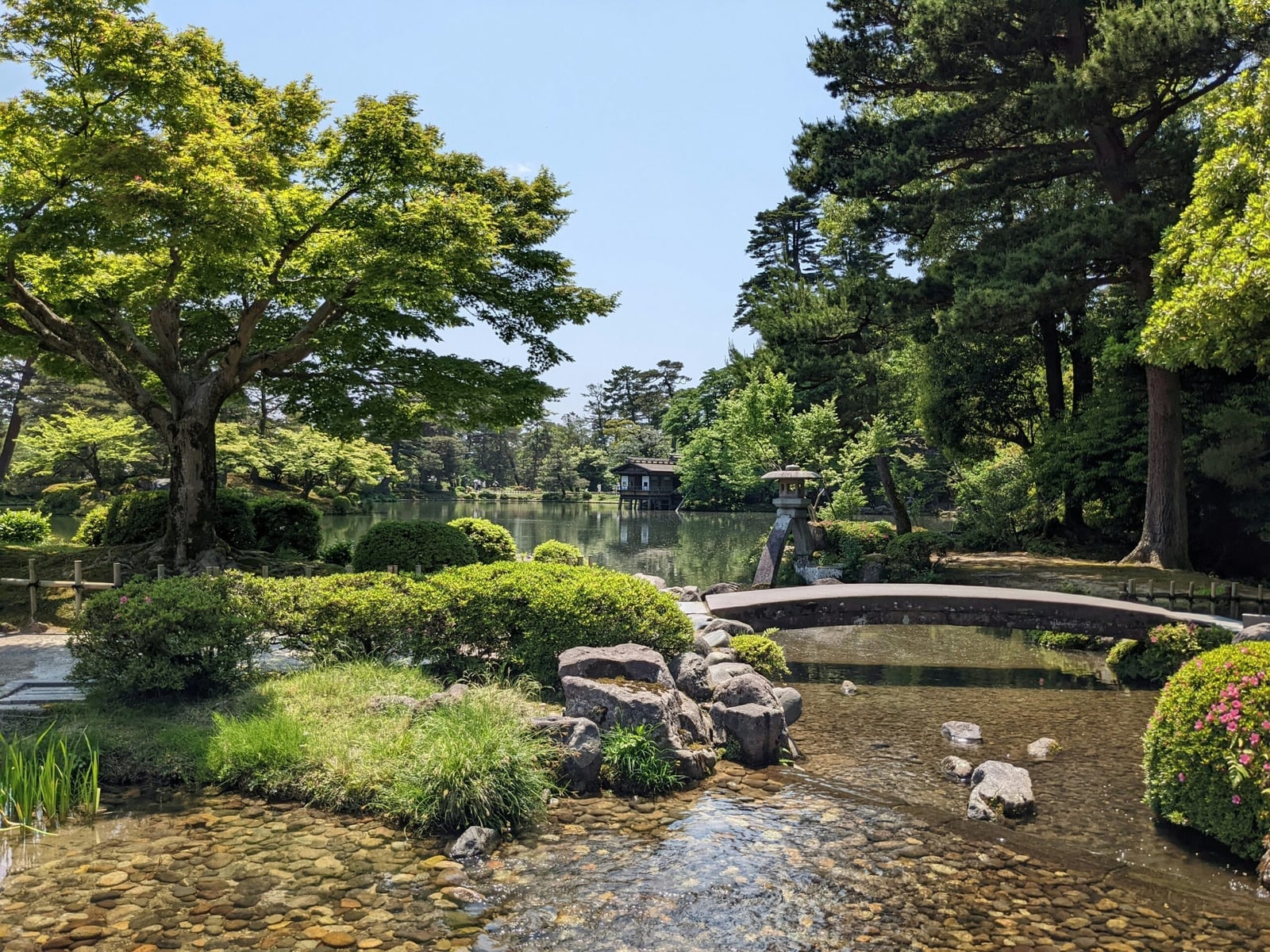
A pond this size does not need a bridge, but the arched bridge changes how you use the space. It gives a reason to cross the water instead of walking around it, which splits the garden into two zones you move between. The stone lantern on the far side becomes a destination. The bridge is painted a warm brown that matches the wood tones in the trees, so it blends rather than shouts. If you have a pond without a bridge, a single large flat stone set just below the water surface can serve the same purpose: a deliberate step that says cross here.
06 / 26Zen Garden with Raked Gravel and Mossy Boulders
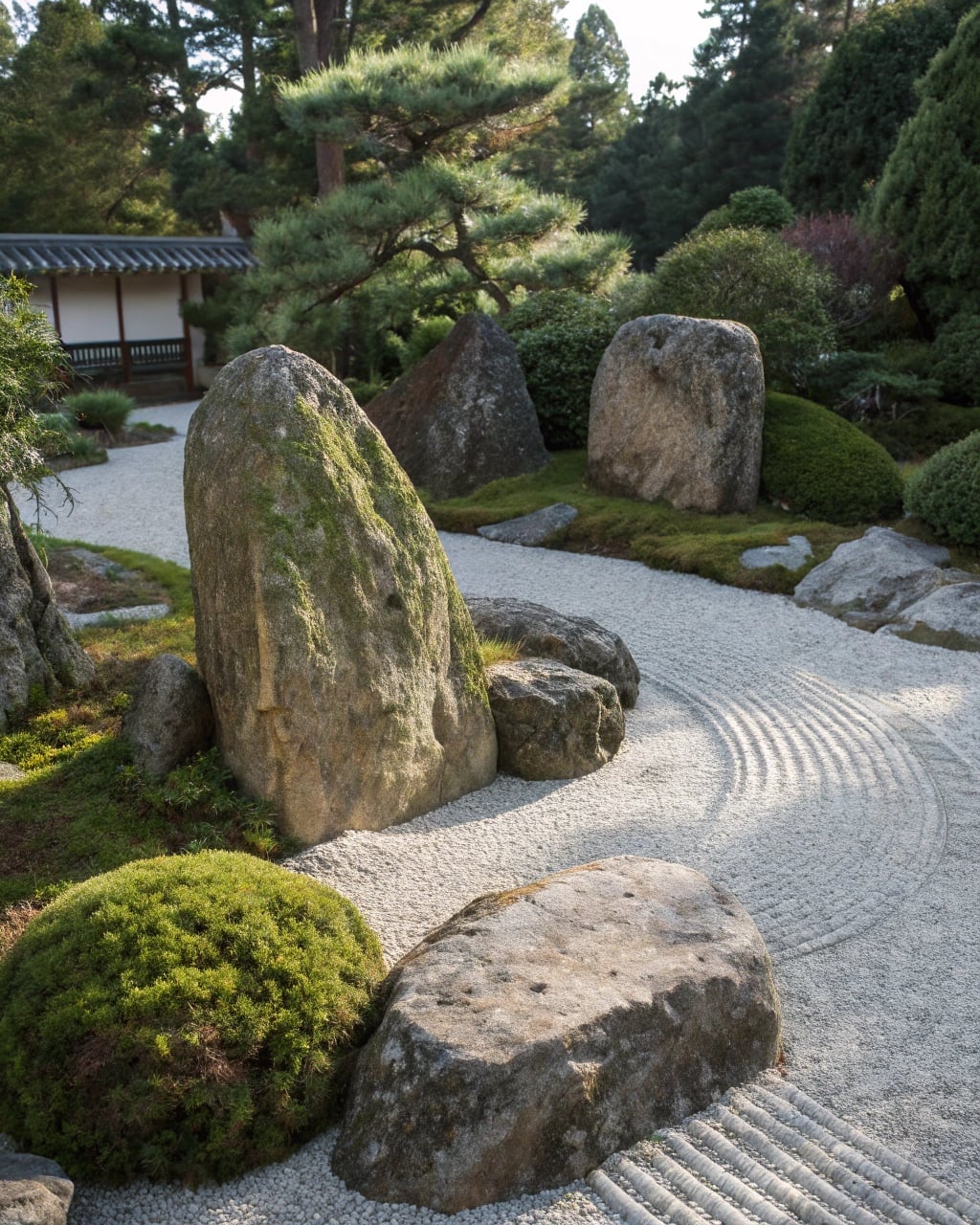
Raked gravel gardens look expensive, but the materials list is short: gravel, moss, and a few boulders. The photo shows a wide garden room where gravel patterns radiate around large moss-covered boulders. Sculpted trees add height without crowding the layout. Grey, green, and brown keep the palette quiet so nothing competes with the stone. Late afternoon light casts long shadows that make the raking lines look like a deliberate texture.
Gravel acts as a neutral floor, and boulders become the furniture. Place the largest rock off-center, then build the raked pattern around it. Moss softens the hard edges of stone, and trees frame the scene without blocking the view. Skip the koi pond and put that budget into one well-chosen boulder and a bag of pea gravel.
07 / 26Stone Pathway Through Lush Greenery and Red Maples
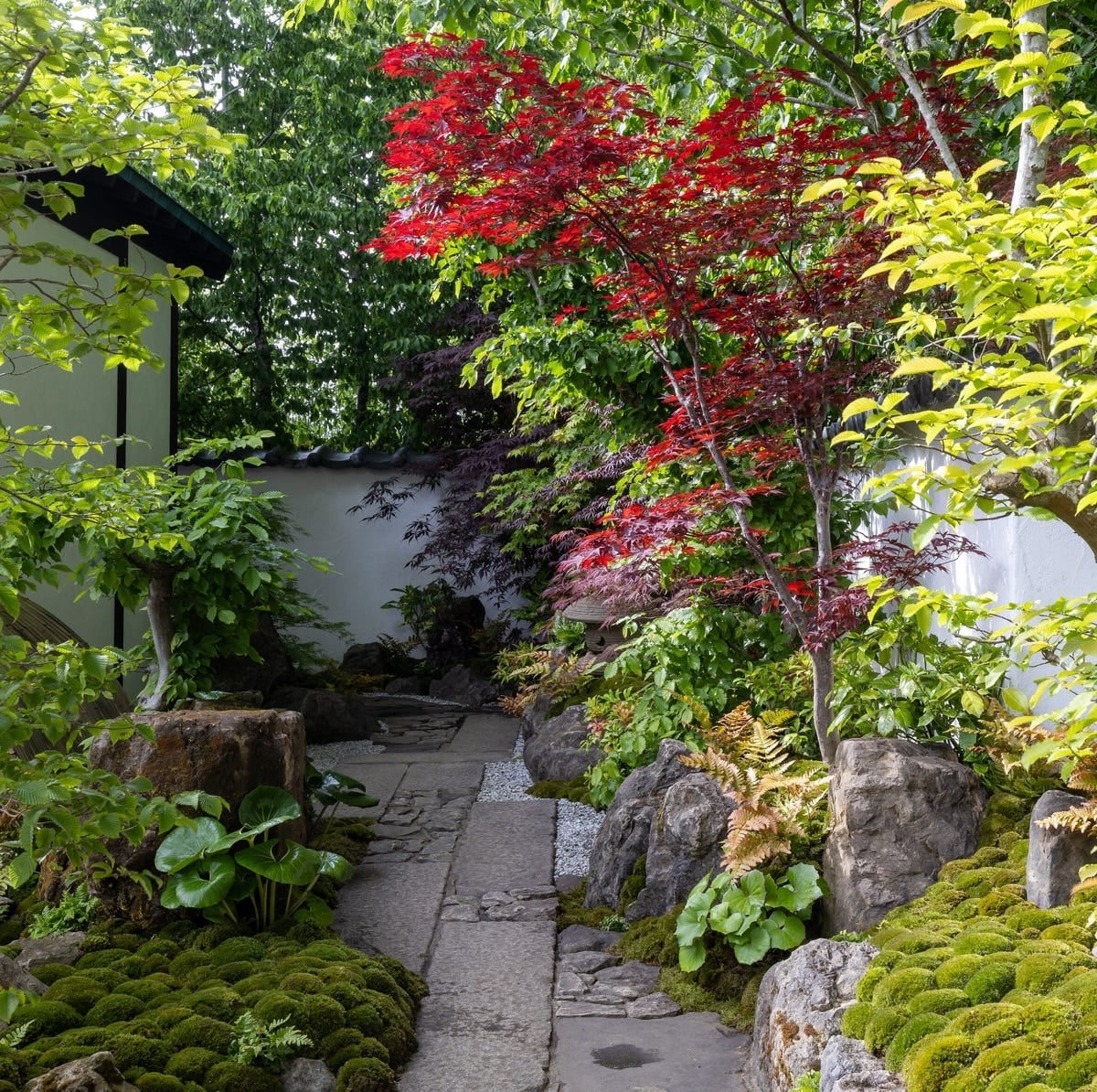
A stone path that winds instead of running straight forces you to slow down. The photo shows stepping stones set into mossy ground, flanked by ferns and a vibrant red Japanese maple. A white wall in the background keeps the greens and reds from feeling too dense. The palette relies on that wall as a neutral break, so the foliage looks like a planned color choice, not overgrowth. Renters can achieve this look by laying flagstones directly on top of existing grass, no digging required.
08 / 26Intricate Raked Gravel Patterns with Traditional Buildings
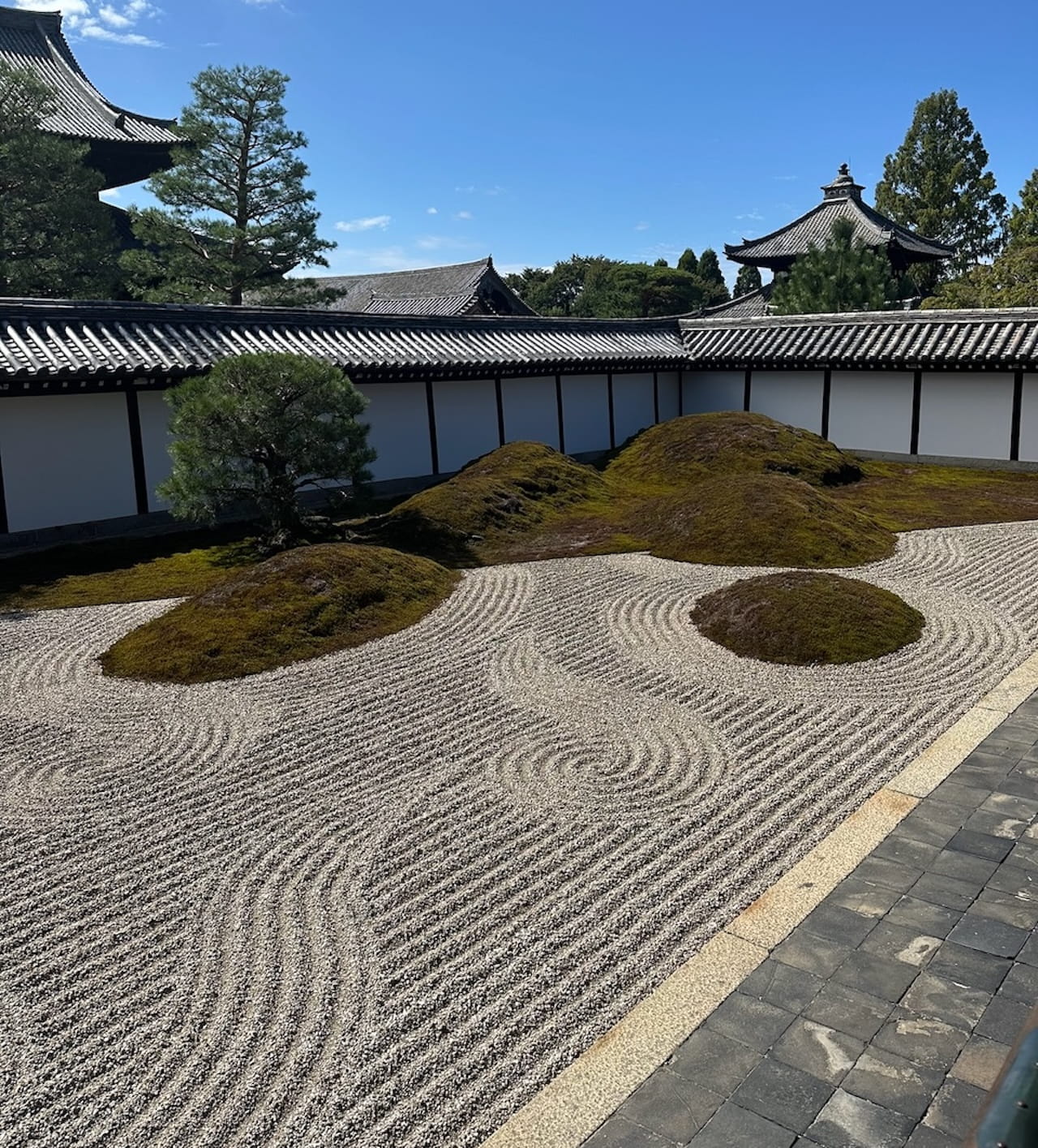
This garden works because the gravel patterns are complex but the overall layout stays simple. The photo shows a wide zen garden with raked gravel, moss mounds, and sculpted trees set against traditional buildings. The white walls and wooden structures anchor the space, so the gravel can be busy without feeling chaotic. Bright daylight reveals every line in the gravel, which means the pattern needs to be crisp. The material lesson is that gravel patterns demand a flat, even surface to start. You rake from the edges toward the center, and you commit to re-raking after rain.
09 / 26Vibrant Autumn Foliage in a Naturalistic Japanese Garden
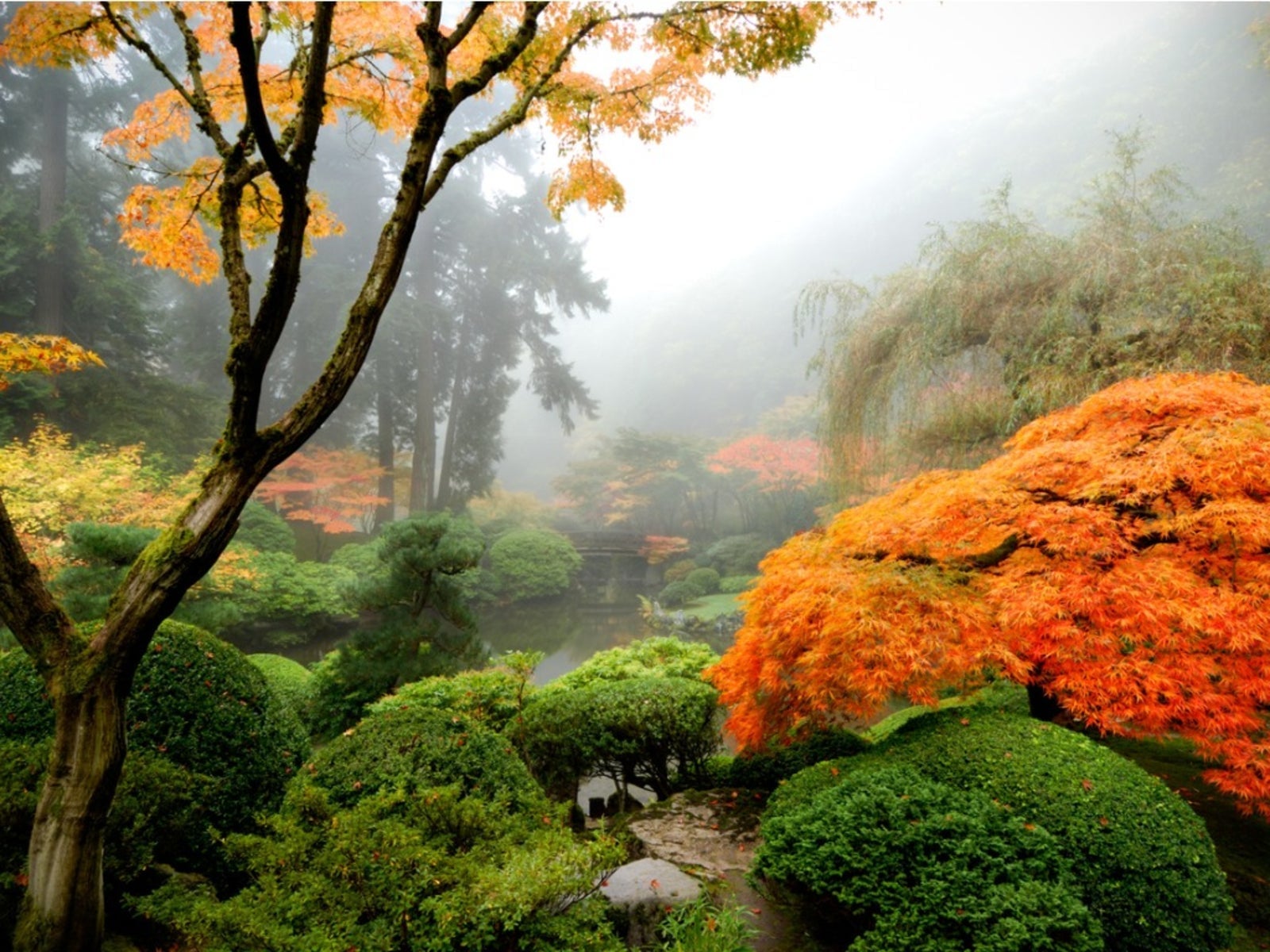
Does the color last when the leaves fall? A misty garden shows orange maple leaves dominating the view, with sculpted shrubs, a pond, and a stone path underneath. The palette is warm: vibrant oranges, greens, and yellows. The misty light means the garden does not rely on harsh sun to show color, so it reads well on overcast days. The durability question here is about the trees, not the layout. Japanese maples hold their color for weeks in autumn, but they need the right climate. Check your USDA zone before planting, because a maple that struggles will drop leaves early.
The winding paths and pond in this garden create a naturalistic flow. The orange foliage is the hero, so the path and pond stay neutral. For a low-maintenance version, choose a single specimen tree and plant it where you can see it from a window. The garden can be simple ground cover or gravel.
10 / 26Blooming Cherry Blossom Tree Over a Pond with Wooden Bridge
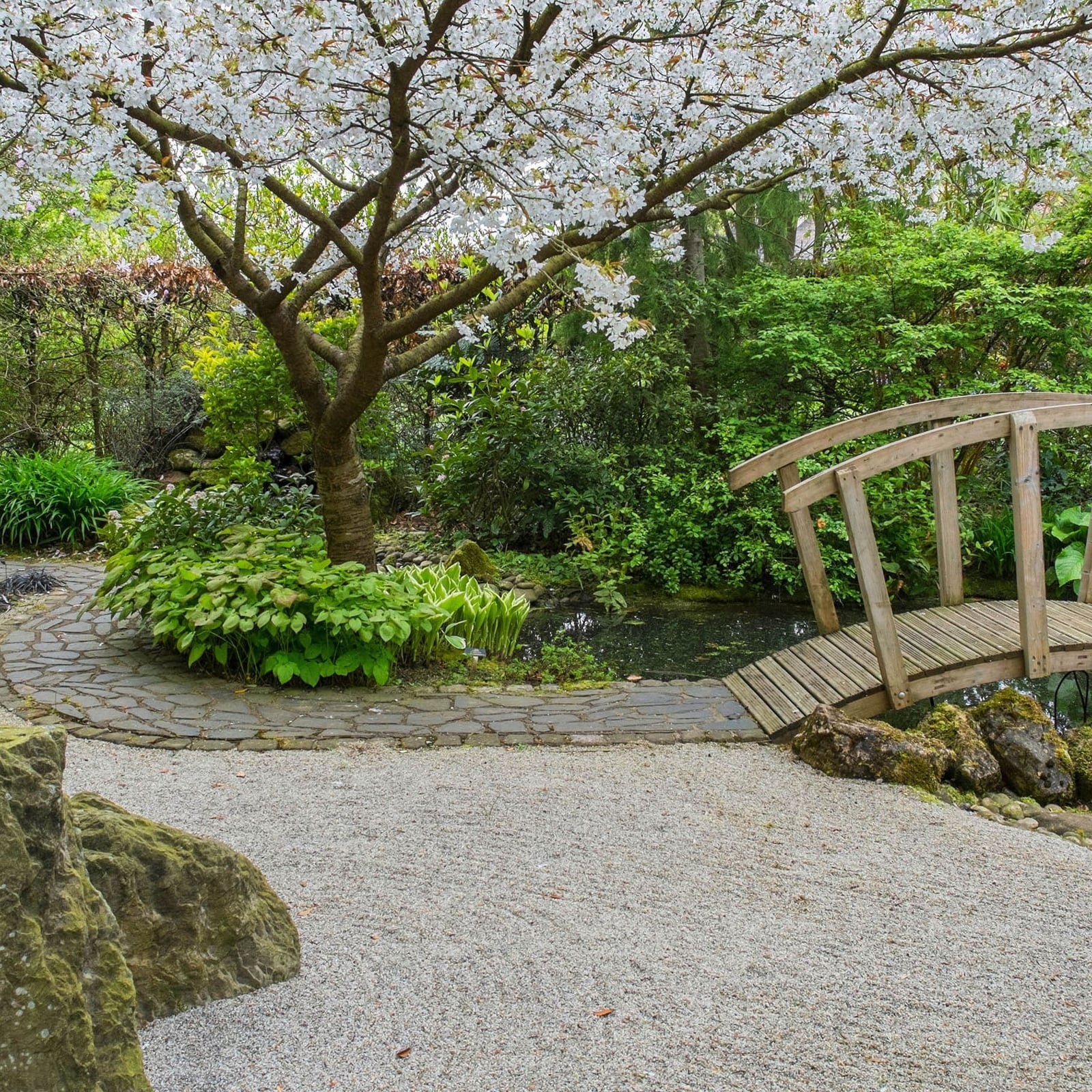
A cherry blossom tree in full bloom is the tallest element in this garden, and everything else is scaled to match. The photo shows an arched wooden bridge crossing a pond, with a stone path winding through the planting. The tree is the anchor, so the bridge and pond stay low and simple. The palette is greens, whites, and browns, with the blossoms as the only pale accent. The scale principle: the tree’s canopy is wide, so the pond below it needs to be wide enough to reflect it. A narrow pond would make the tree feel top-heavy.
11 / 26Sculpted Bonsai Tree as a Central Garden Element
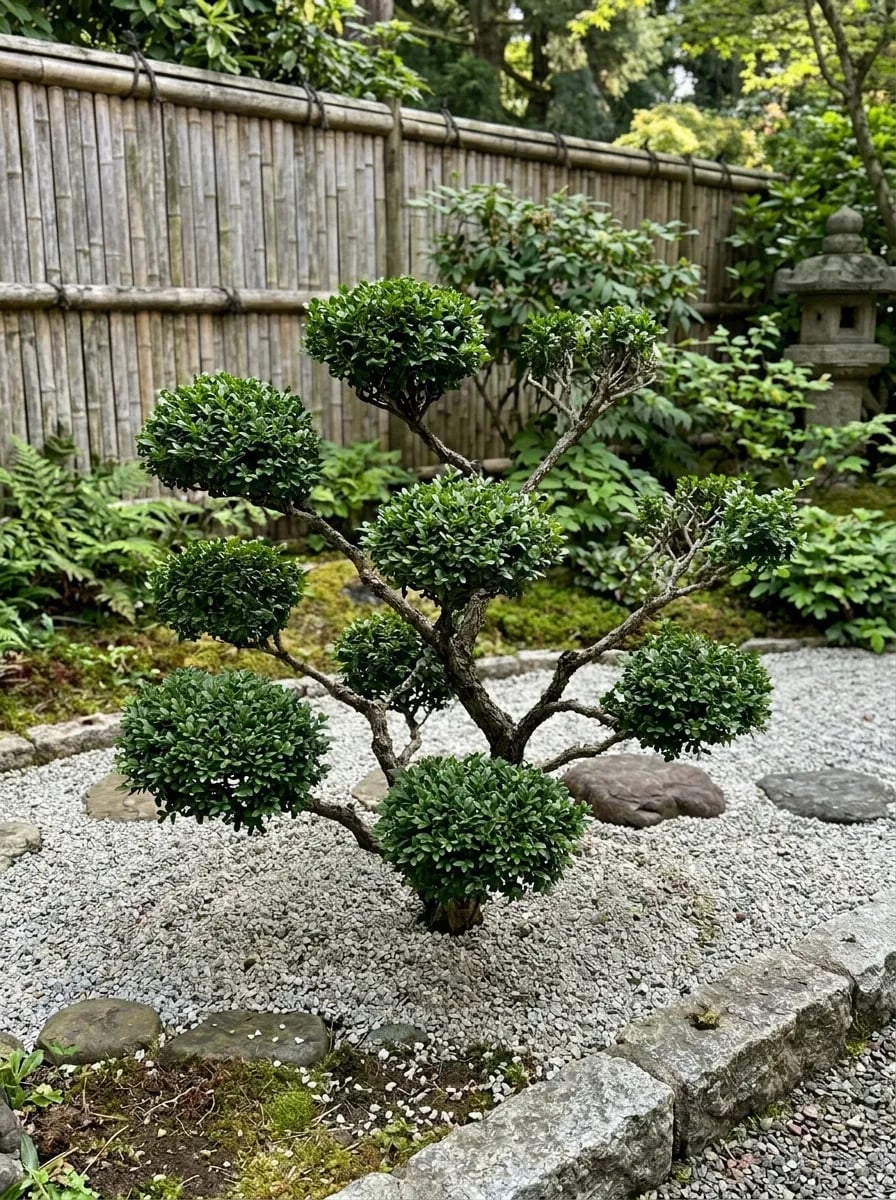
A single bonsai tree can hold an entire garden together. This compact layout centers the sculpted tree in a gravel bed, with stepping stones and a stone border framing the planting. The space stays simple so the tree is the main event. That approach works for any yard: pick one plant or structure to anchor the view, then keep the surrounding materials subdued. Gravel, a few stones, and a clear path are enough to support the focal point without competing for attention.
12 / 26Courtyard Garden with Central Zen Area and Tiled Roof Walkway
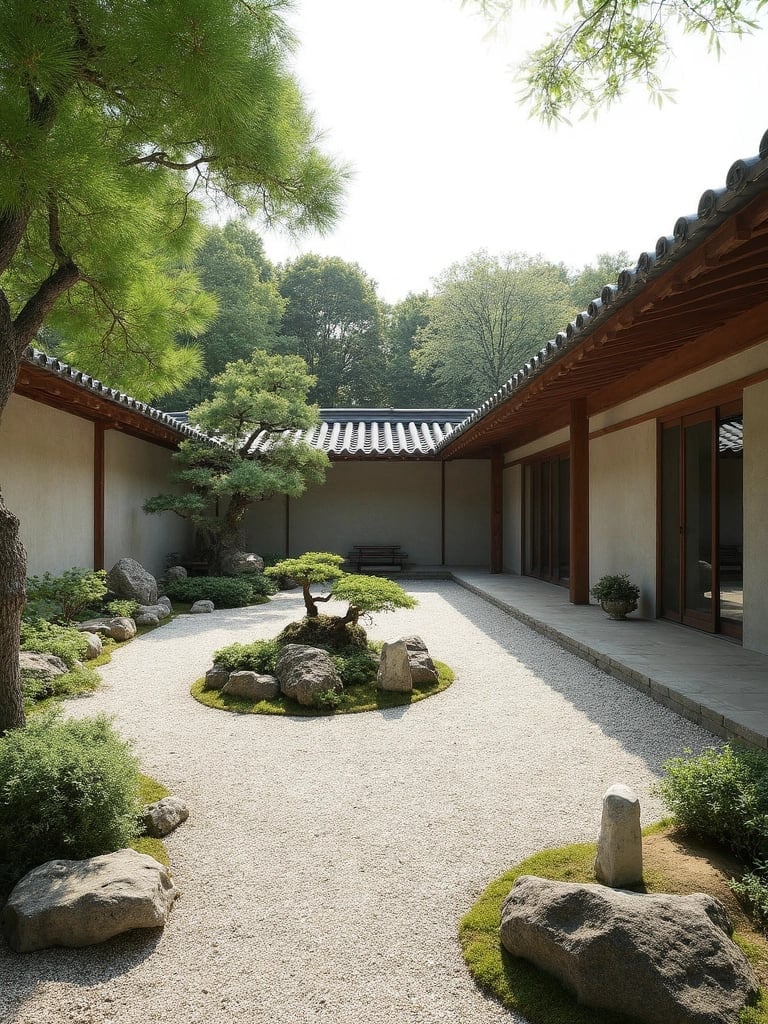
A courtyard garden can feel like an outdoor room. This one places a central zen garden of gravel, rocks, and a bonsai tree at the heart of the space. A covered walkway with a traditional tiled roof wraps around the planting, creating a clear boundary between the quiet garden bed and the path. The palette stays neutral with greens, browns, and soft stone tones, so the geometry of the roof and the texture of the gravel do the work. The walkway also offers a dry route through the garden on damp days, which matters for anyone using the space year-round. If you have a courtyard, try carving out a gravel center and ringing it with a hard surface path. It defines the area without closing it in.
13 / 26Modern Japanese Garden with Wooden Deck and Lounger
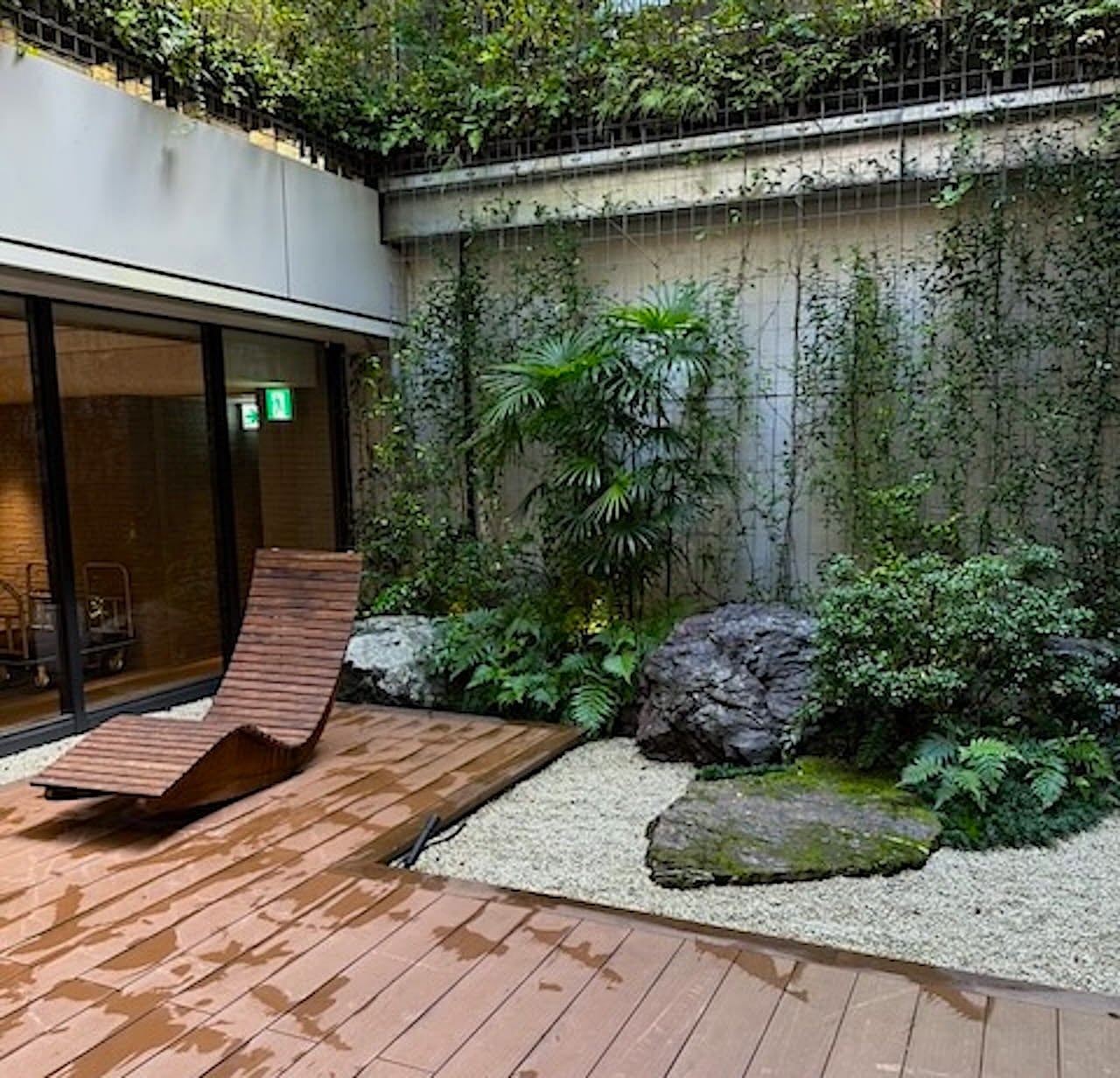
A curved wooden lounger sits on a gravel bed surrounded by lush planting and rocks. The decking keeps the lounger off the ground, which makes the garden feel usable without disturbing the gravel pattern. Overcast daylight softens the browns and greens, so the space appears calm and natural. This setup works for small backyards where you want a sitting spot that does not interrupt the garden’s flow.
14 / 26Cascading Waterfall and Vibrant Foliage by the Pond
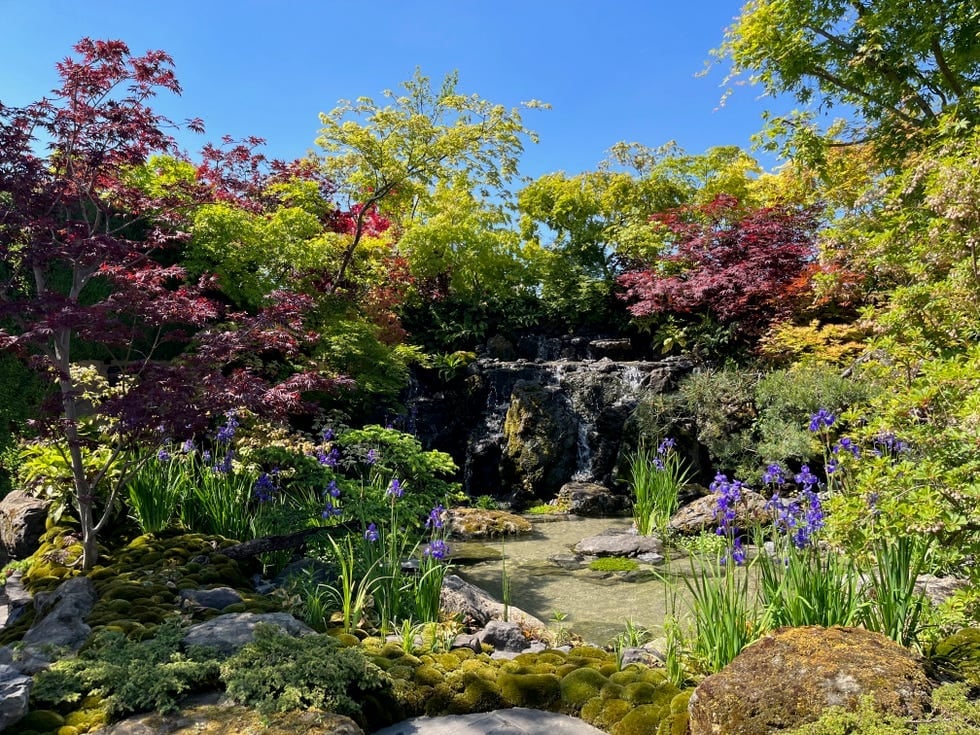
This garden leans into color. A tiered waterfall drops into a pond edged with mossy rocks, while maple trees in red and purple, yellow irises, and blue accents fill the surrounding beds. Bright sunlight makes the foliage pop against the dark rock and water. The palette is the story here: warm reds and yellows balance the cool blues and greens, so nothing overwhelms. If you want a colorful garden, layer warm and cool tones around a water feature. The moving water keeps the mix from feeling chaotic.
15 / 26Raked Sand Garden with Torii Gate and Buddha Statue
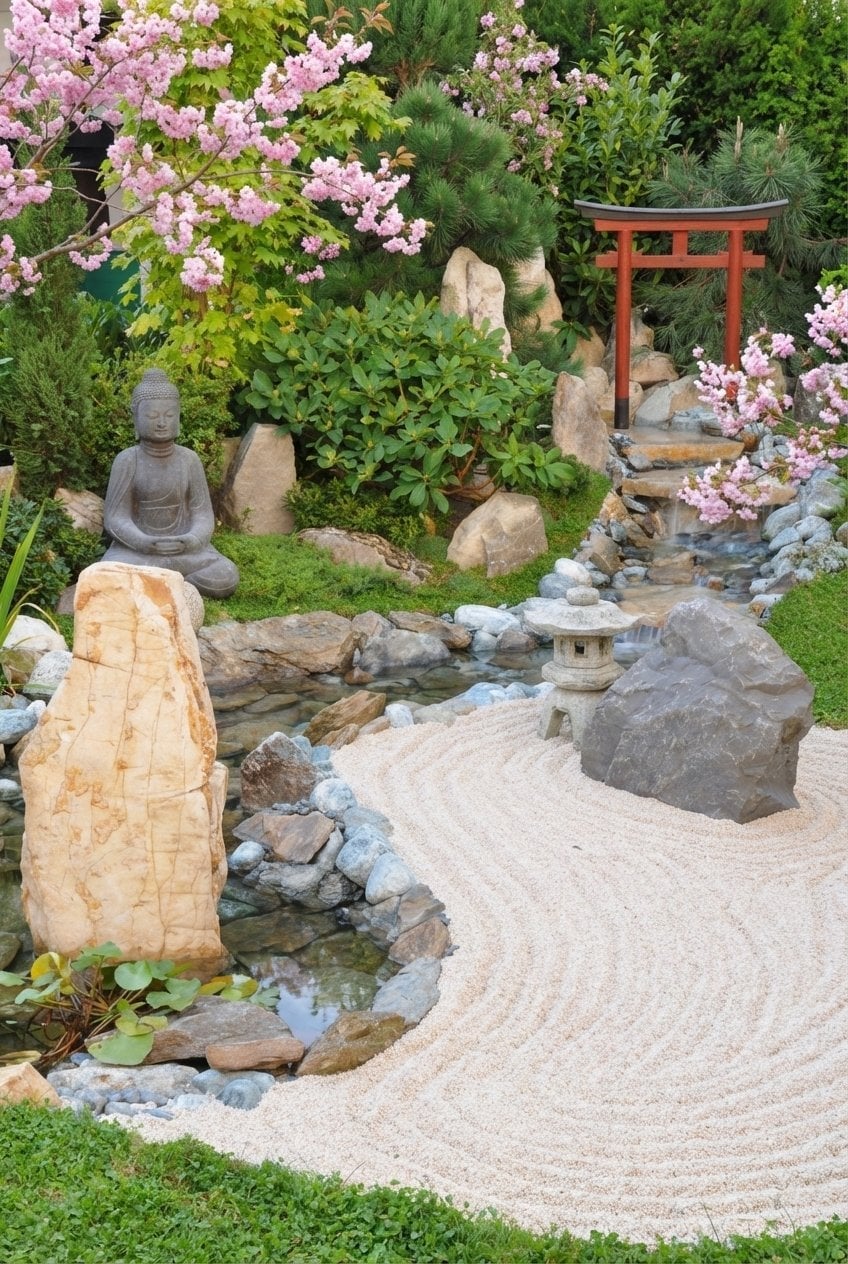
A raked sand garden needs clear anchors to feel intentional. This one places a Buddha statue and a stone lantern on one side, with a torii gate framing the far edge and a small water stream running through the middle. The raked sand patterns spread outward from the stones, giving the whole space a sense of motion despite the stillness. The beige sand and green plantings keep the backdrop neutral, so the pink accents in the gate and statue stand out. Choose one or two sculptural pieces and let the raked ground do the rest. The key is spacing: leave enough open sand between elements for the rake lines to show, or the pattern gets lost.
16 / 26Serene Stone Lantern by a Reflecting Pond
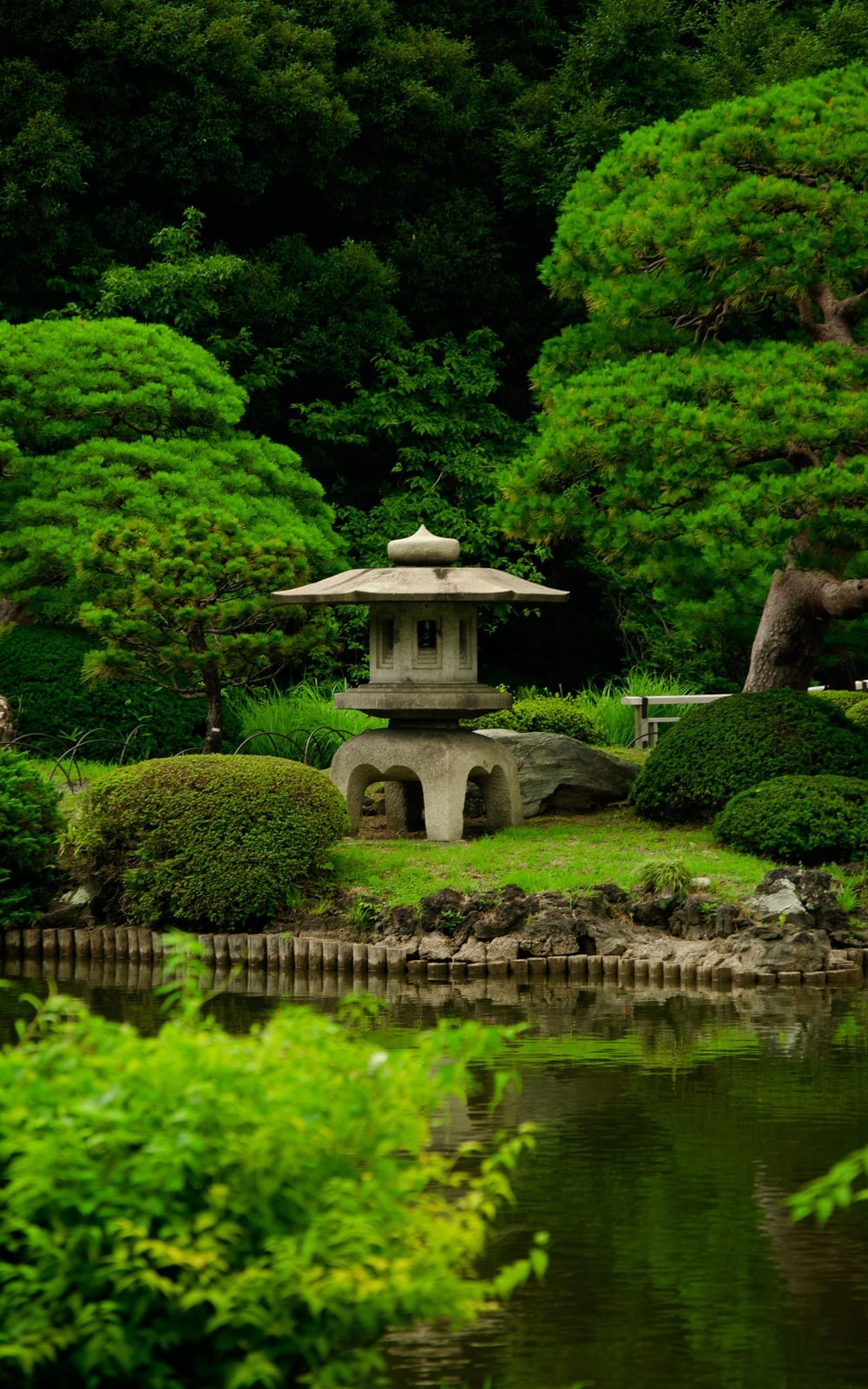
A stone lantern placed near the edge of a pond creates a natural focal point against the surrounding greenery. The pale grey of the lantern stands out against the deep greens of sculpted bushes and the brown tones of gravel and moss. This layout works well in a roomy garden where the lantern serves as a destination. Positioning it close to water provides a clear resting place, which helps the whole space feel more settled. In a smaller yard, use a single stone lantern at the end of a path or near a small water feature.
17 / 26Rooftop Zen Garden with City Skyline Backdrop
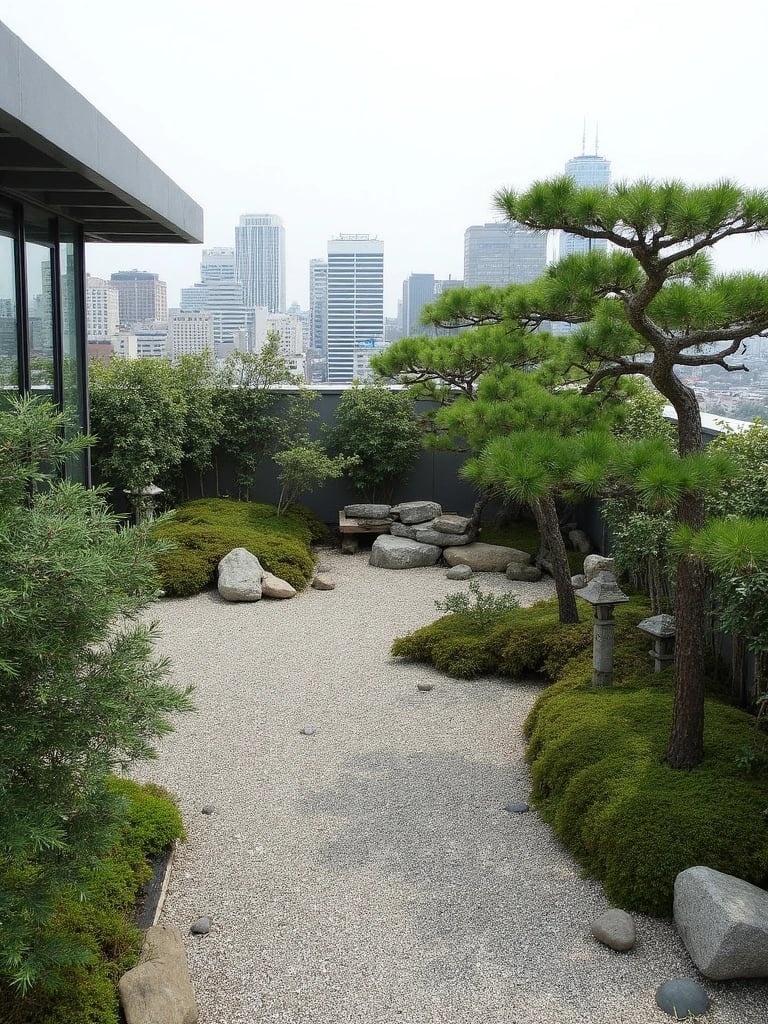
A rooftop garden should start with a simple layout that can handle wind and sun exposure. Raked gravel forms the base, with moss mounds and low stone arrangements that stay put without heavy soil. Pine trees add height without overwhelming the space, and a few lanterns provide vertical interest. The open plan lets the city skyline become part of the composition. Raked gravel needs occasional refreshing after rain, but the overall setup requires less water and weeding than a traditional lawn garden. This approach works well for renters because it relies on containers and surface materials that can be removed or adjusted without permanent changes to the roof.
18 / 26Compact Zen Garden Corner with Bamboo Screen and Lantern
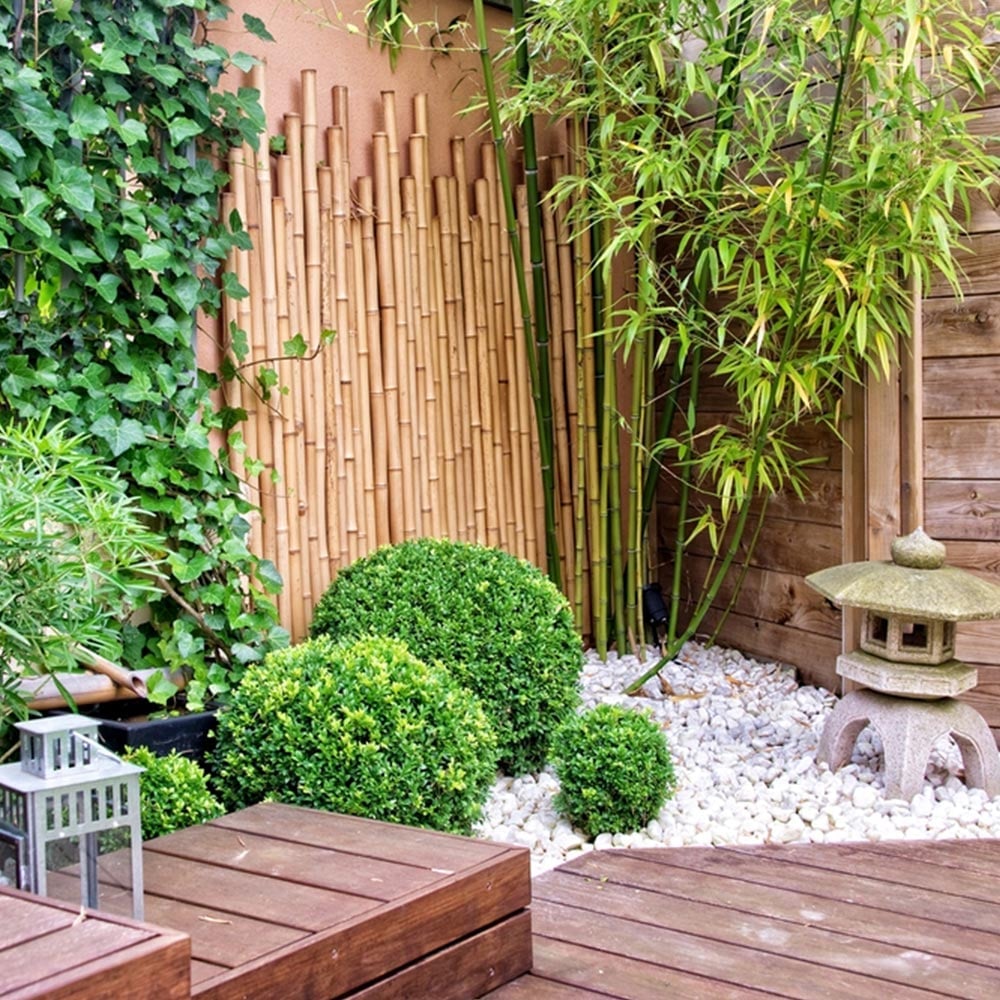
A full zen garden can feel overwhelming in a small yard, but a corner vignette keeps the same calm effect on a smaller scale. A bamboo screen defines the edge, while a wooden deck provides a clean transition from the house to the garden. The stone lantern sits on a bed of gravel, surrounded by manicured bushes that soften the hard lines. The bamboo screen adds privacy and texture without taking up much floor space. This setup suits a compact garden where every element needs to earn its place. The layered arrangement means the eye moves from the deck to the screen, then to the lantern, creating a sense of depth without needing a large footprint. Keeping the palette to greens, browns, and beige prevents the corner from feeling busy.
19 / 26Backyard Zen Garden with Circular Raked Gravel and Bench
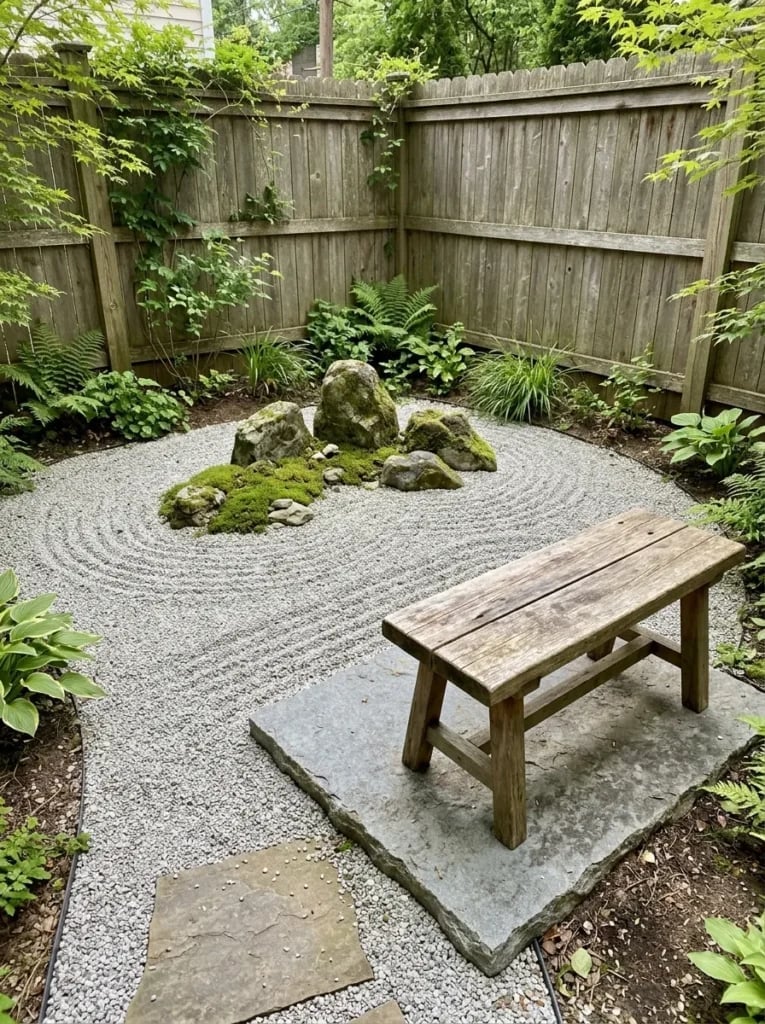
A circular raked gravel pattern gives this small backyard garden a clear center without needing a large footprint. The gravel sits in a bed surrounded by moss and stone, with a simple wooden bench placed at the edge for seating. The bench adds a practical reason to spend time in the space, which makes the garden feel lived in. Bright daylight shows the grey gravel and green moss, keeping the palette simple. This layout works well for a compact yard because the circular shape draws the eye inward and makes the area feel larger than it is. The bench also provides a spot for shoes or a book while you enjoy the garden.
20 / 26Wave-Like Raked Gravel Patterns with Large Stones
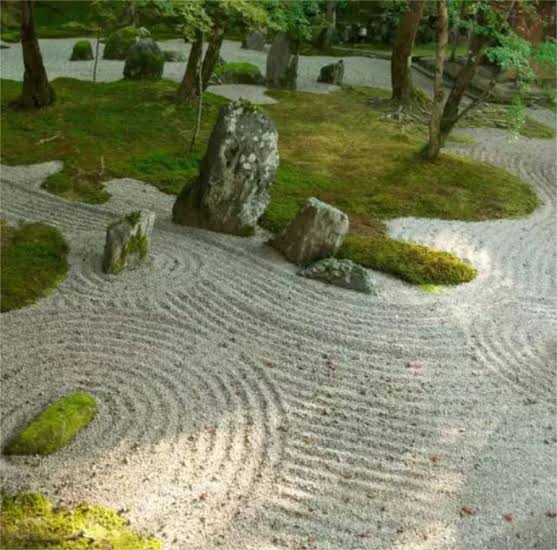
This zen garden relies on sweeping raked gravel patterns that mimic water ripples, with large stones acting as islands. The beige gravel contrasts with green mossy mounds and dark grey rocks, creating a calm, orderly feel. Soft, diffused natural light reduces glare and makes the texture of the gravel more visible. The layout uses a roomy footprint with sparse trees placed at the edges, so the gravel patterns remain the main event. The large stones break up the visual flow and give the eye a place to rest. This style works best in a garden where you can view it from above, such as from a deck or a second-story window, since the patterns read best from a higher angle. The upkeep involves raking the gravel back into shape after heavy rain or foot traffic.
21 / 26Expansive Water Feature with Wooden Bridge and Lily Pads
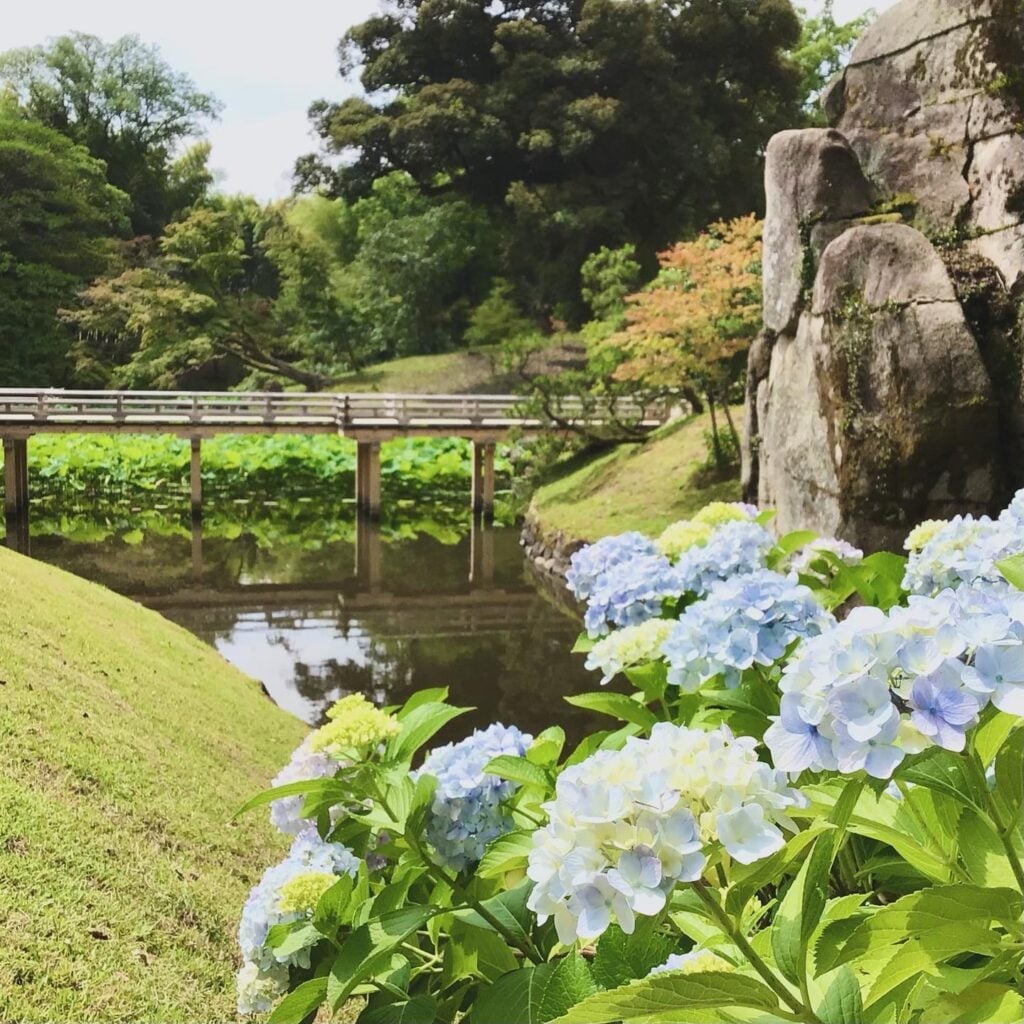
A bridge over water anchors a garden by giving the eye a place to land and a reason to cross. Here the wooden bridge arcs over a broad pond dotted with lily pads, while large rocks and manicured lawn frame the view. The layout works because the water feature stays the center of attention, with the bridge leading across it rather than around it.
22 / 26Authentic Garden with Stone Lantern and Water Basin
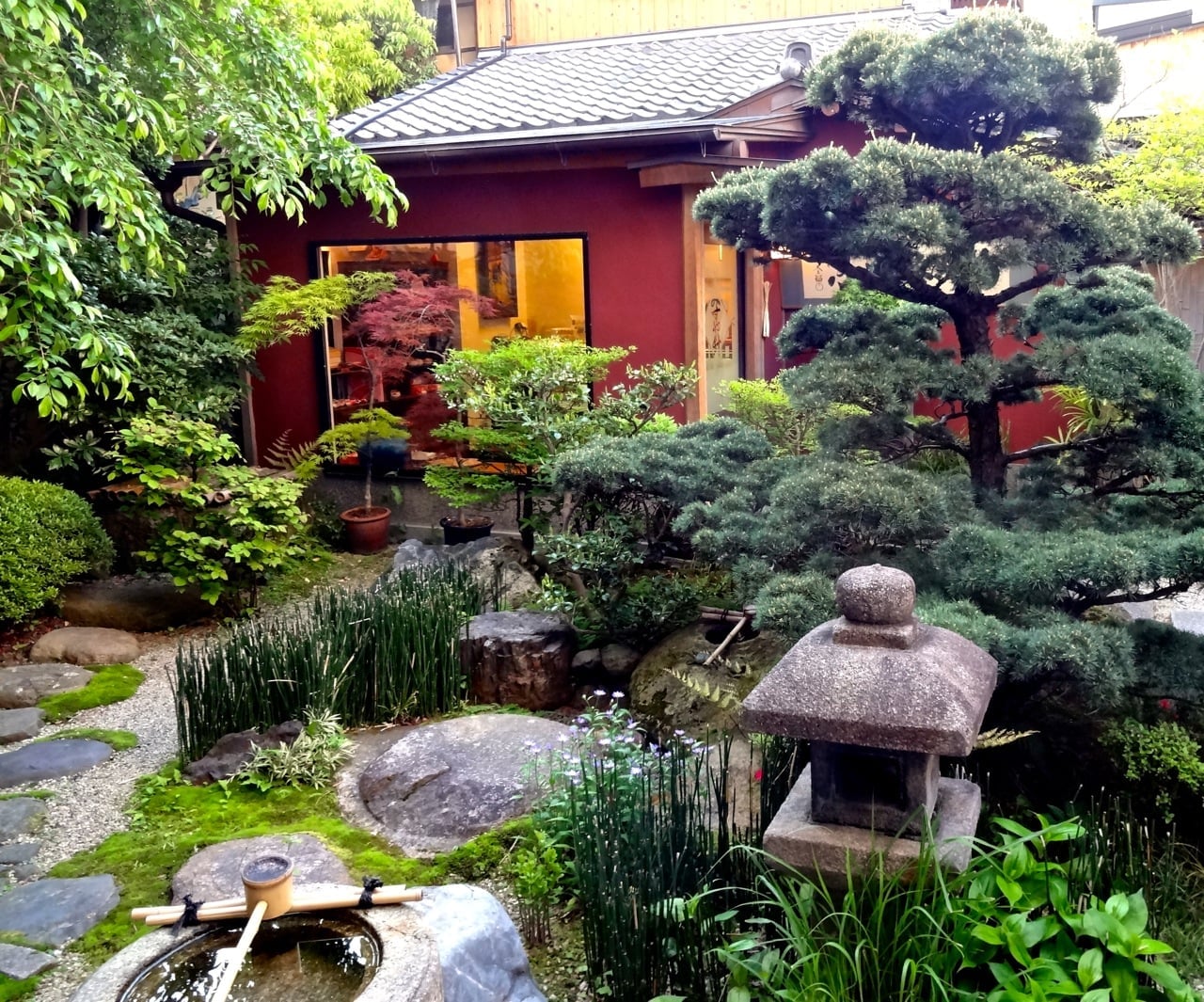
Stone lanterns and water basins appear together often in Japanese gardens, and this compact arrangement shows why. The grey stone lantern sits beside a water basin with a bamboo spout, with bonsai trees and rocks placed carefully around them. A red building in the background adds warmth to the palette of greens, grey, and wood. The basin works as a practical water source and a visual anchor, while the lantern provides a vertical break from the low plantings.
23 / 26Serene Pathway of Stepping Stones in Gravel
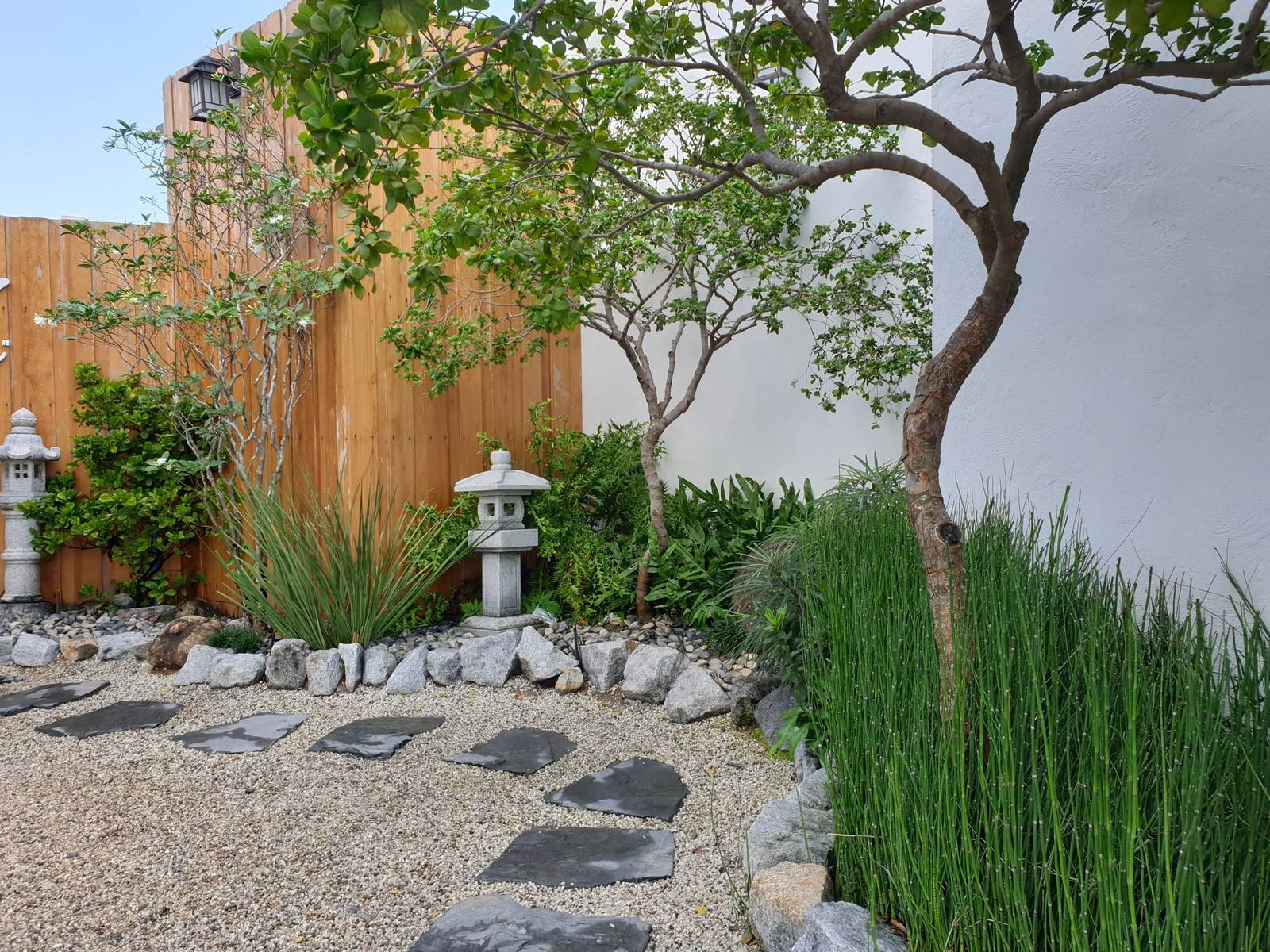
A path through gravel should feel like a discovery rather than a direct route. This one uses flat stepping stones set into light gravel, with ornamental grasses and rocks bordering the way. A stone lantern sits off to the side, giving the eye a destination without forcing a straight line. The gaps between stones slow the pace naturally, making the walk itself part of the experience.
24 / 26Traditional Teahouse Integrated with Pond and Lantern
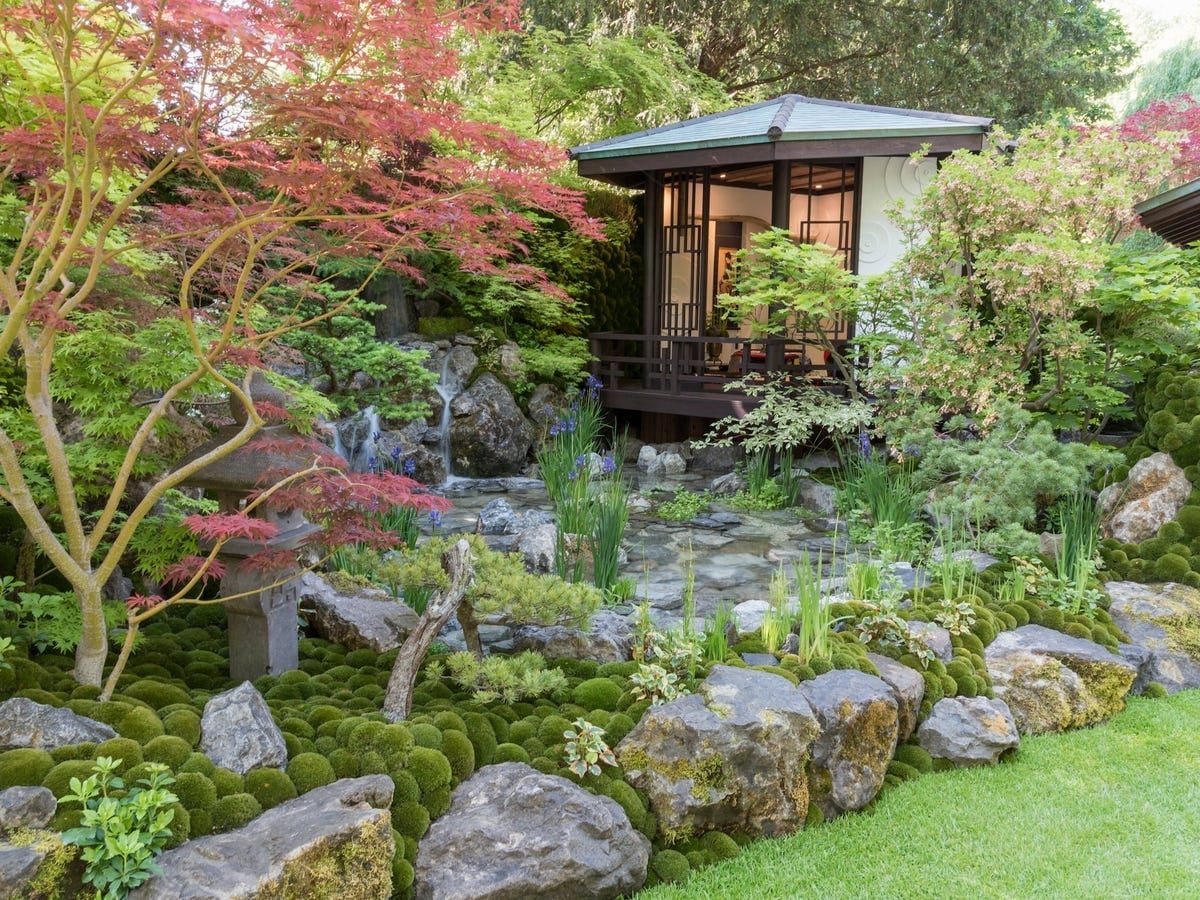
A teahouse in a garden can feel like a separate building or a natural part of the landscape. This one leans toward the latter, with its wood and stone structure set beside a pond and surrounded by sculpted trees and moss. The stone lantern nearby echoes the teahouses vertical lines, while the soft natural light keeps the whole scene from feeling staged. The integration works because the pond, the lantern, and the teahouse share the same materials and scale, so nothing competes for attention.
25 / 26Minimalist Moss Mound with Small Tree and Stone Accents
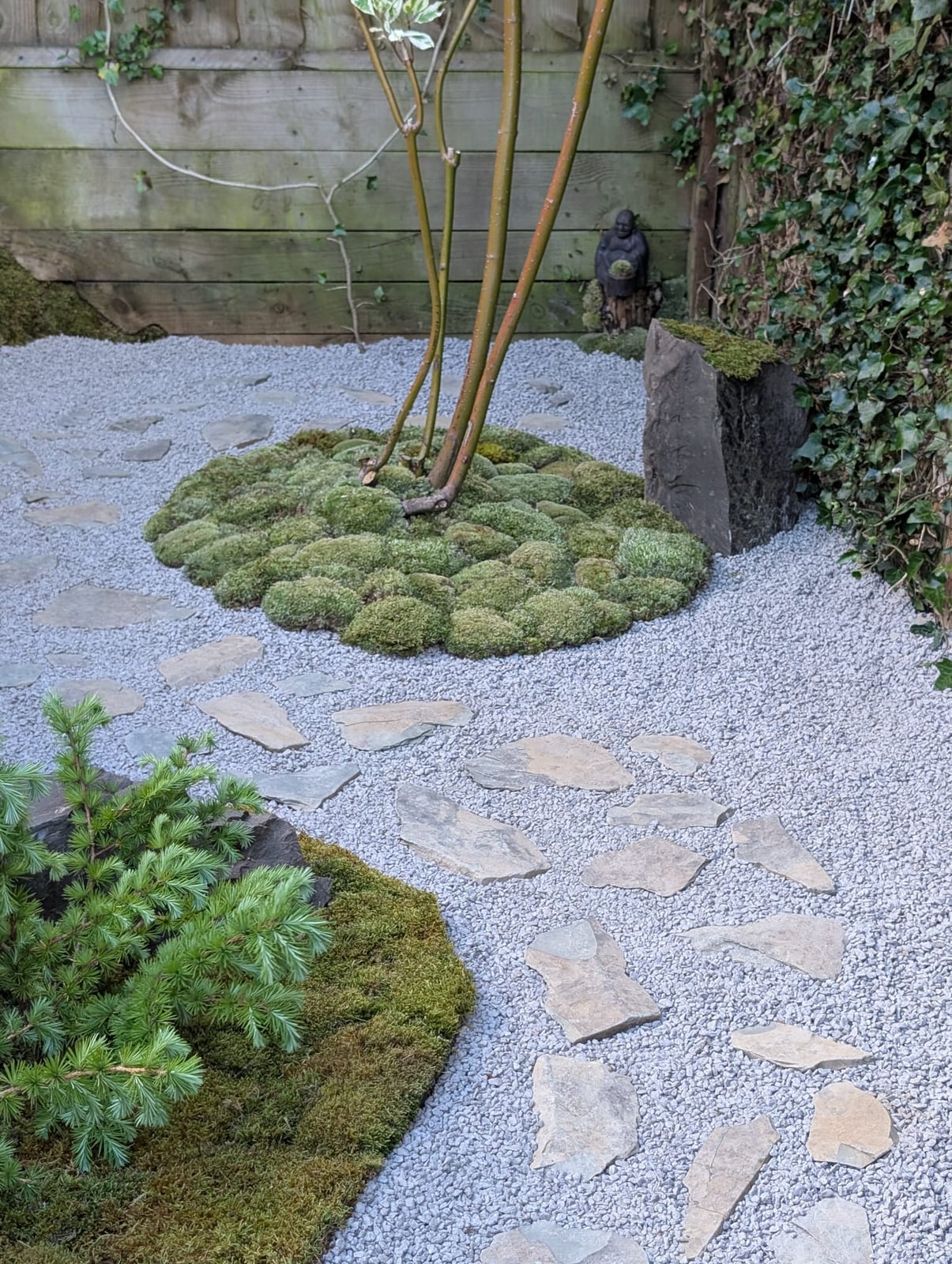
A single moss mound can do the work of a whole planting bed when its shape carries the design. This one rises in a gentle dome, with a small tree growing from its center and a few stones arranged at the base. The surrounding gravel and stone path keep the look spare, letting the vivid green of the moss stand out. The overcast light helps by softening shadows and keeping the focus on texture rather than contrast.
26 / 26Final Thoughts
A Japanese garden doesn’t need a full renovation. Start with one element a stone lantern, a moss mound, or a simple raked patch. The goal is a space that feels settled, not staged. Keep it simple, rake the gravel when you need to clear your head, and let the seasons do the decorating.