
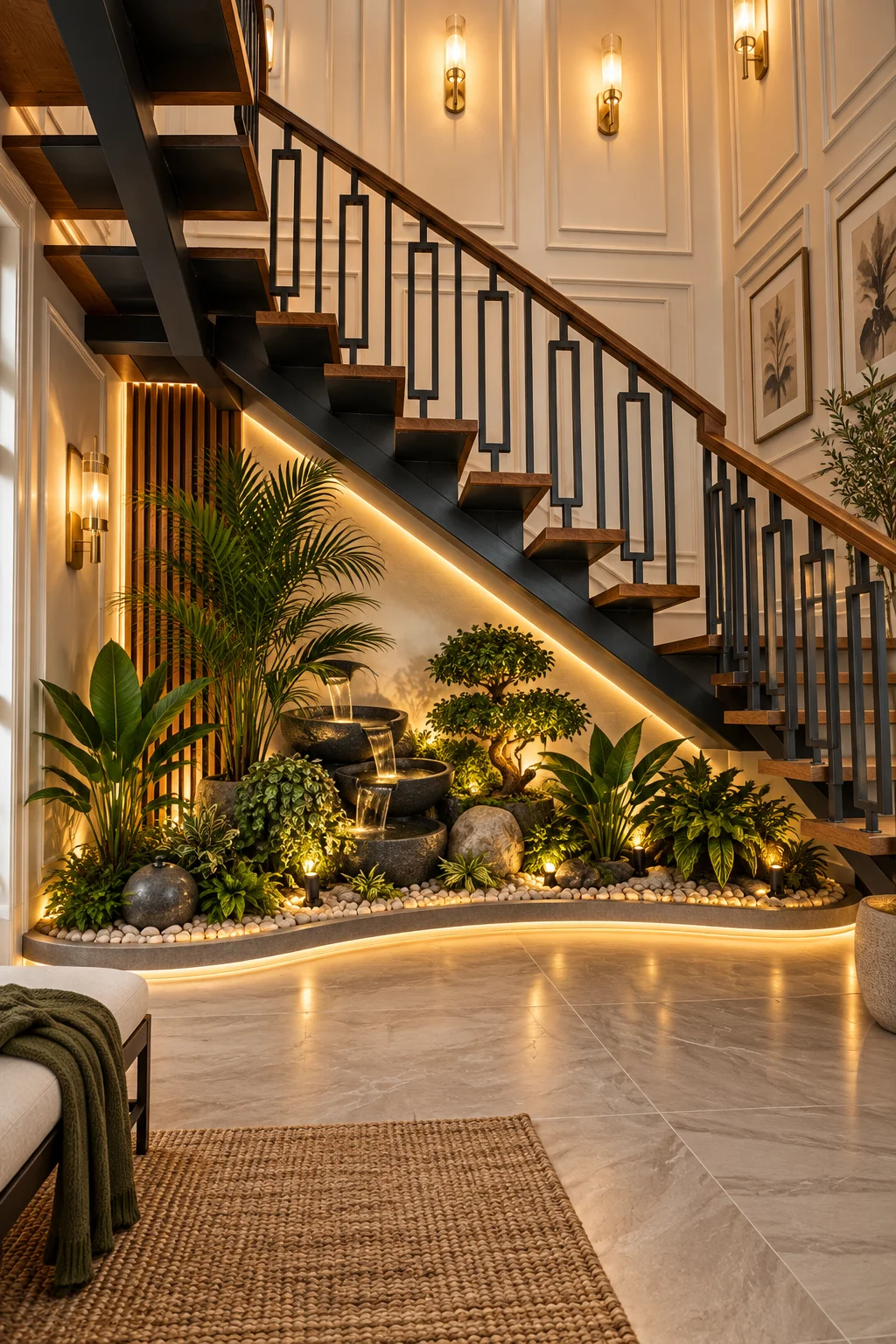
I love how a thoughtfully arranged indoor green corner can make a home feel fresher, calmer, and more connected to nature. Whether you have a spacious living room, a narrow wall, or a quiet corner beside a window, there are so many creative ways to bring greenery into your interior. Shelves, plant stands, terrariums, and statement pots can turn even an overlooked area into an eye-catching feature. I especially like how plants can soften architectural lines while adding texture, height, and a natural rhythm to the room. In this collection, I’m sharing inspiring Indoor Green Corner Ideas for a Natural Home that show how greenery can work beautifully with wood, warm lighting, neutral furnishings, and modern layouts. Which idea would fit naturally into your own home?
Illuminated Floating Shelves Framed by Lush Greenery
I see a narrow vertical wall composition framed by dark vertical wood slats, with several floating wood shelves arranged at different heights. The shelves hold a mixture of small and large potted greenery, including trailing foliage, upright plants, and broad-leaf varieties. Warm integrated lighting underneath the shelves creates a soft glow against the pale wall, while larger plants extend into the lower and side areas of the composition. Neutral ceramic and dark rounded containers keep the display visually grounded, and the combination of wood, greenery, and warm light creates a calm natural atmosphere.
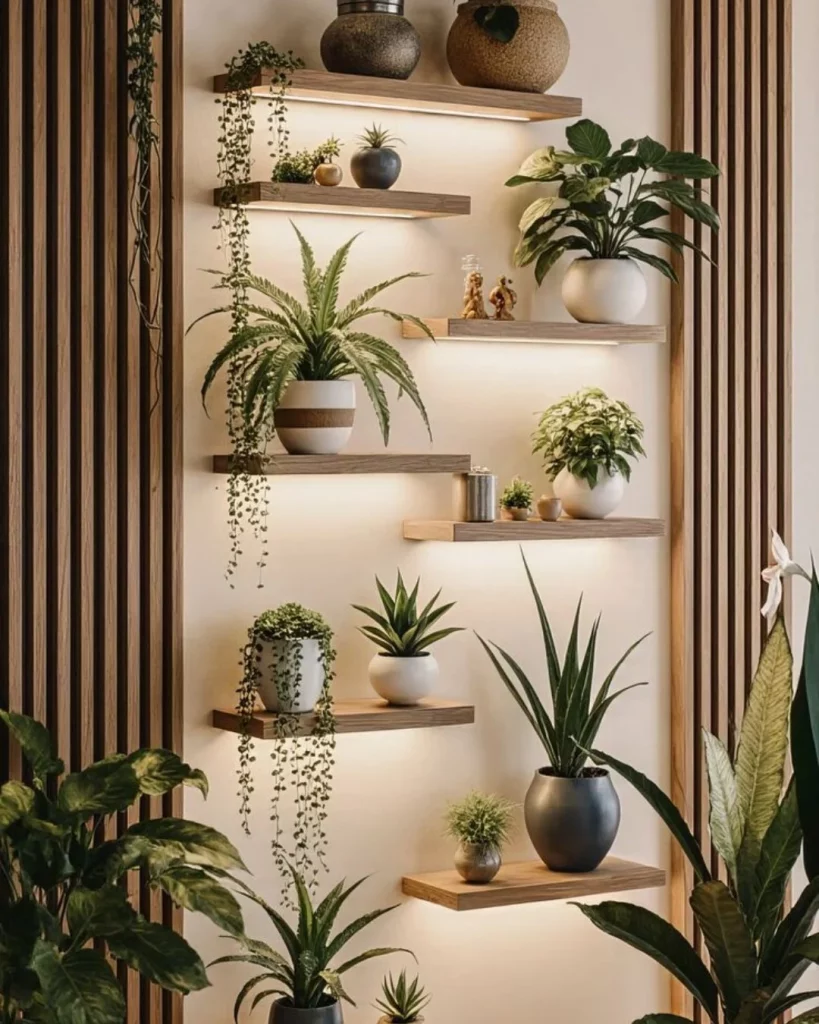
What works especially well for me is the layered arrangement. Instead of placing every shelf at the same height, the design creates movement while still maintaining a clear vertical structure. The different plant sizes make the display feel fuller, and the trailing greenery naturally connects several levels together. I also like the practical use of floating shelves because they turn a relatively narrow wall into a substantial green display without taking up much floor space.
When I create a plant display like this, I would pay close attention to the relationship between the shelf lengths and the size of the containers. The larger pots need enough visual space around them, while smaller plants can fill the gaps between levels. The warm shelf lighting is another detail I would keep because it gives the greenery definition after daylight fades and makes the entire wall read as a deliberate interior feature.
Dark Green Accent Wall With Layered Wood Shelves
I see a deep green wall covered with a striking arrangement of horizontal wood slats that vary in length and project at different points across the surface. Several substantial wood shelves are mounted in front of this textured backdrop and styled with potted greenery, decorative vessels, small objects, and a few stacked books. The plants range from compact forms to taller upright foliage and trailing varieties. Warm recessed lighting beneath some shelves highlights the wood grain and creates a cozy transition toward the adjoining living area visible on the right.
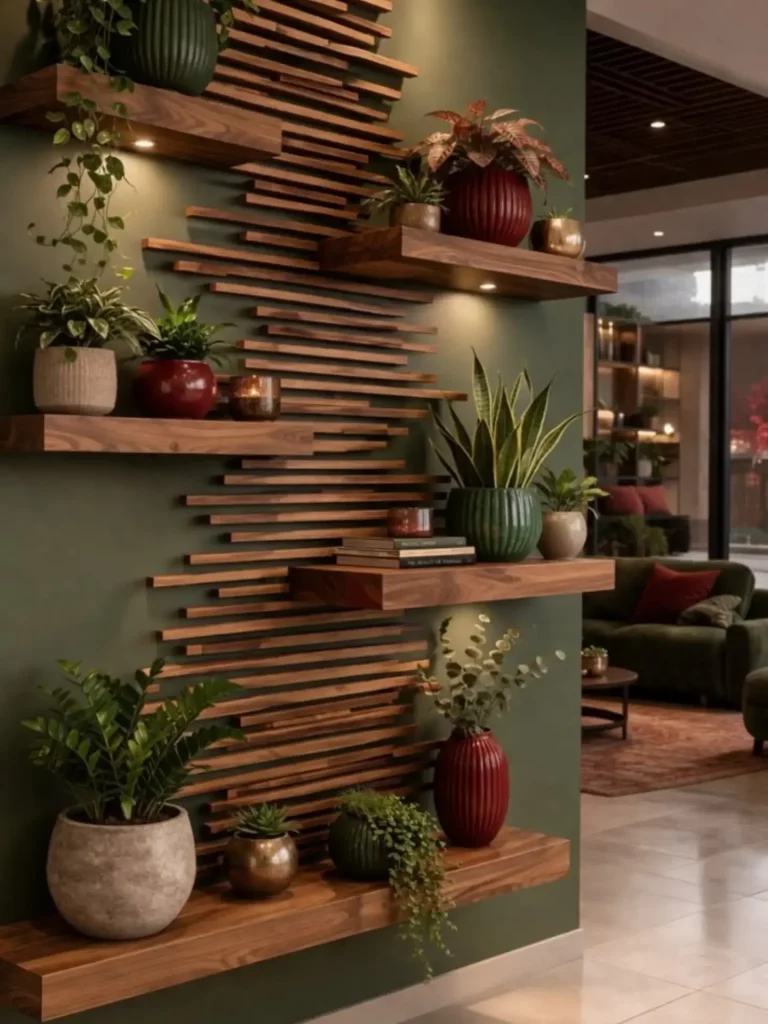
For me, the strongest element is the contrast between the dark wall and the warm wood. The green background visually connects with the plants, while the wood shelves provide enough definition to keep the display from blending together. The staggered wall slats also add depth, so the arrangement feels architectural rather than simply decorative. I particularly like how the lowest shelf brings larger containers closer to the floor, creating a visual connection between the wall display and the rest of the room.
I would approach this idea by treating the wall as one composition instead of decorating each shelf independently. The plants should vary in height and silhouette, as they do here, while the containers can provide repetition. I also like the restrained use of books and vessels because they break up the greenery without competing with it. For someone recreating this look, I would first establish the wood shelving and wall arrangement, then gradually add plants until the display feels full without becoming crowded.
Living Room Green Wall With Symmetrical Wood Shelving
I see a comfortable living room centered around a large built-in plant display. Warm wood slats form the vertical backdrop, while multiple shelves extend outward on both sides in a balanced arrangement. The shelves are filled with potted plants of different sizes, and a tall trailing plant runs through the center of the composition. A light-colored sectional sofa sits in front of the display, accompanied by green cushions, a textured throw, a round wood coffee table, and a large textured rug. Warm shelf lighting emphasizes the greenery and gives the entire seating area a soft evening glow.
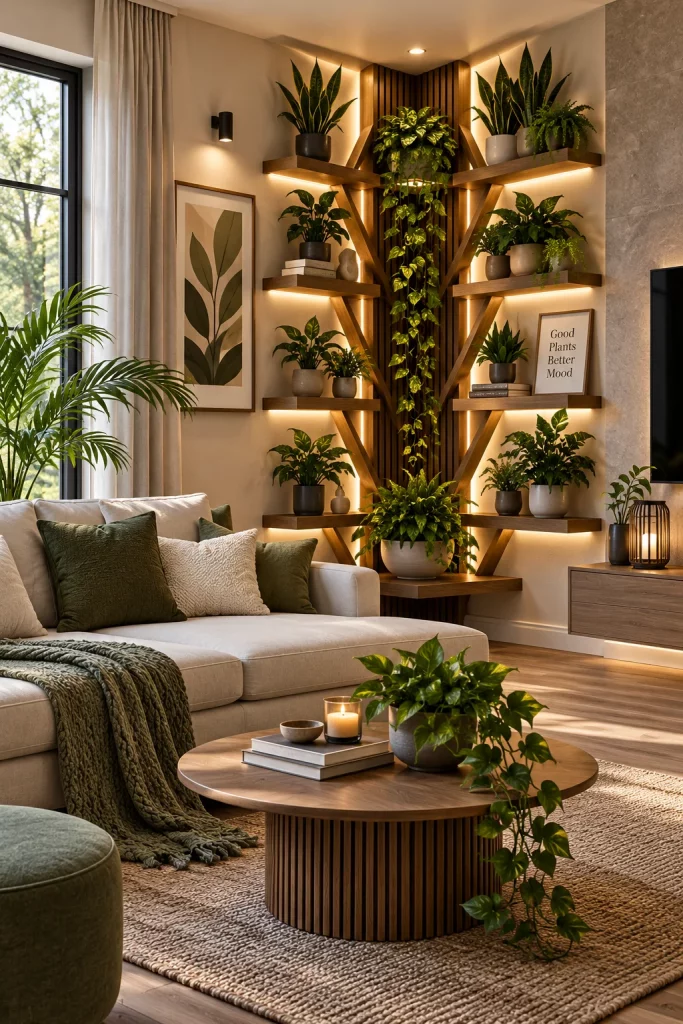
I think this arrangement works because the plant wall becomes a natural focal point without overwhelming the seating area. The sofa remains visually calm and neutral, allowing the greenery and wood structure behind it to provide most of the character. The repeated horizontal shelves also create order across the wall, while the plants introduce organic shapes that soften the straight architectural lines. From a practical perspective, using several shelves makes it possible to display many plants vertically rather than occupying the entire floor with individual pots.
I would use this photograph as inspiration for a living room where a single wall needs to perform several visual functions. The shelving provides display space, the plants create a strong decorative identity, and the warm lighting changes the mood without requiring additional large fixtures. I especially like the connection between the green cushions, the plants, and the warm wood because the colors repeat naturally throughout the room. Keeping the furniture relatively simple would help preserve that balance.
Sunlit Reading Corner With a Tall Plant Display
I see a bright seating corner arranged beside a large window, with a rounded cream-colored armchair positioned in front of a substantial shelving unit filled with greenery. The shelving is built into a warm wood structure, and several levels are illuminated from underneath. Trailing plants spill downward from the upper shelves, while broad-leaf and upright plants occupy the middle and lower sections. A small round wood side table holds books and a patterned cup, and a textured rug defines the seating area. Natural daylight enters through the window and creates soft shadows across the room.
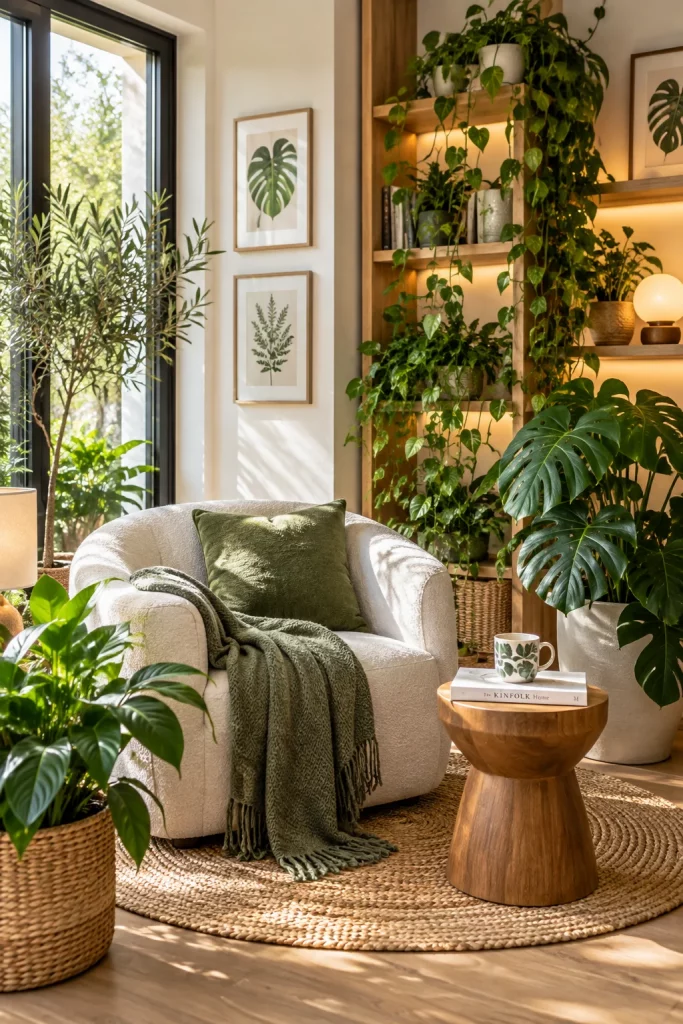
What I find especially successful here is the sense of scale. The armchair creates a cozy human-sized area at the front, while the tall plant display rises behind it and fills the vertical space. The shelves keep the many containers organized, and the warm lighting makes the greenery visible even in areas farther from the window. The small side table is also practical because it gives the chair a convenient surface without making the corner feel crowded.
If I were recreating this corner, I would start with the seating position and available daylight before choosing the plants. The image shows how effective it can be to combine natural window light with warm shelf illumination. I also like the limited furniture around the chair because it leaves the greenery as the main visual feature. A comfortable chair, one compact side table, a textured floor covering, and a carefully arranged plant wall can create a complete little retreat without requiring much space.
Freestanding Tiered Plant Stand With Colorful Containers
I see a freestanding tiered plant stand made from dark stained wood, positioned against patterned wallpaper. Its vertical frame contains several small shelves at different heights, each holding individual potted plants. The arrangement includes white, yellow, green, blue, and terracotta-colored containers, creating more visible color variation than the other displays in the collection. Small decorative stones and simple objects appear alongside some of the plants, while the light wood floor keeps the lower part of the scene visually open.
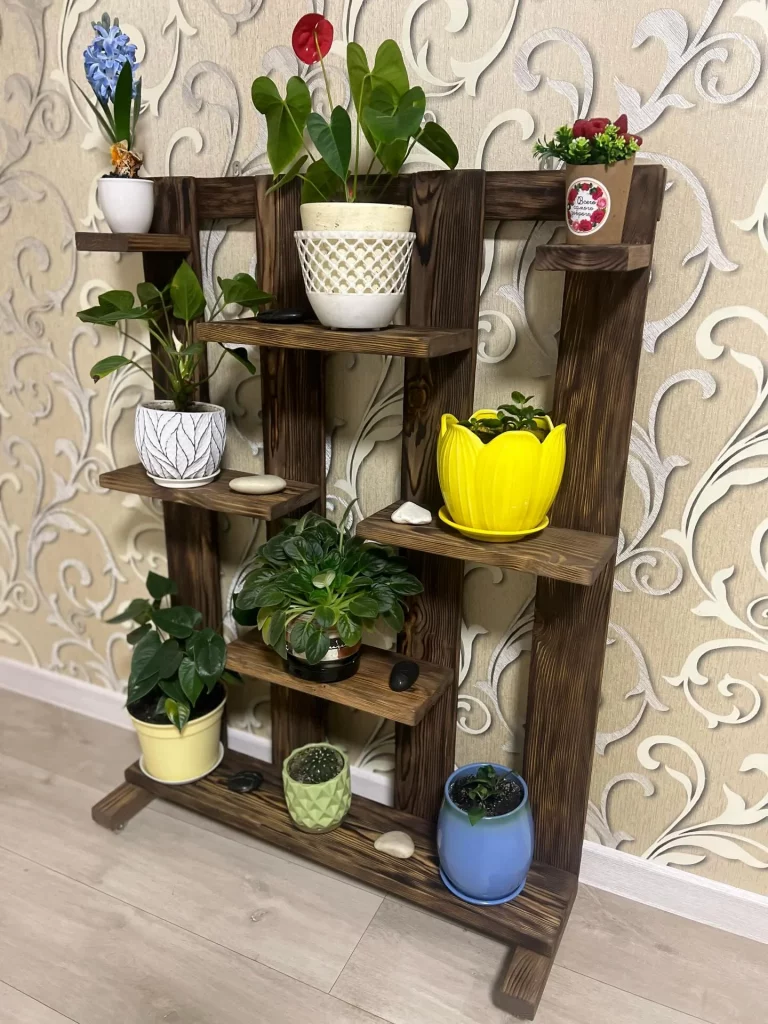
For me, the biggest advantage of this arrangement is its flexibility. Unlike a wall-mounted display, this type of freestanding stand can be positioned where it is most useful and can accommodate plants of different sizes on separate levels. The compact footprint also makes efficient use of vertical space. I like the way the containers themselves become part of the composition, especially because the yellow and blue pieces create small points of color among the greenery.
When I style a freestanding plant stand, I prefer to think about the silhouette from top to bottom. Taller foliage belongs where it can rise without blocking another plant, while smaller pots can occupy the shorter shelves. This photograph also reminds me that containers do not all need to match. The varied colors and shapes give the display personality while the repeated dark wood frame keeps everything connected.
Geometric Glass Terrarium on a Wood Coffee Table
I see a large geometric glass terrarium positioned at the center of a wood coffee table in a softly lit living room. The terrarium has a dark metal framework and contains a miniature landscape of moss, ferns, small leafy plants, stones, and natural-looking pieces of wood. The transparent enclosure allows the entire arrangement to be viewed from several angles. Behind it, the room remains softly out of focus, with additional greenery and neutral upholstered furniture creating a quiet background.
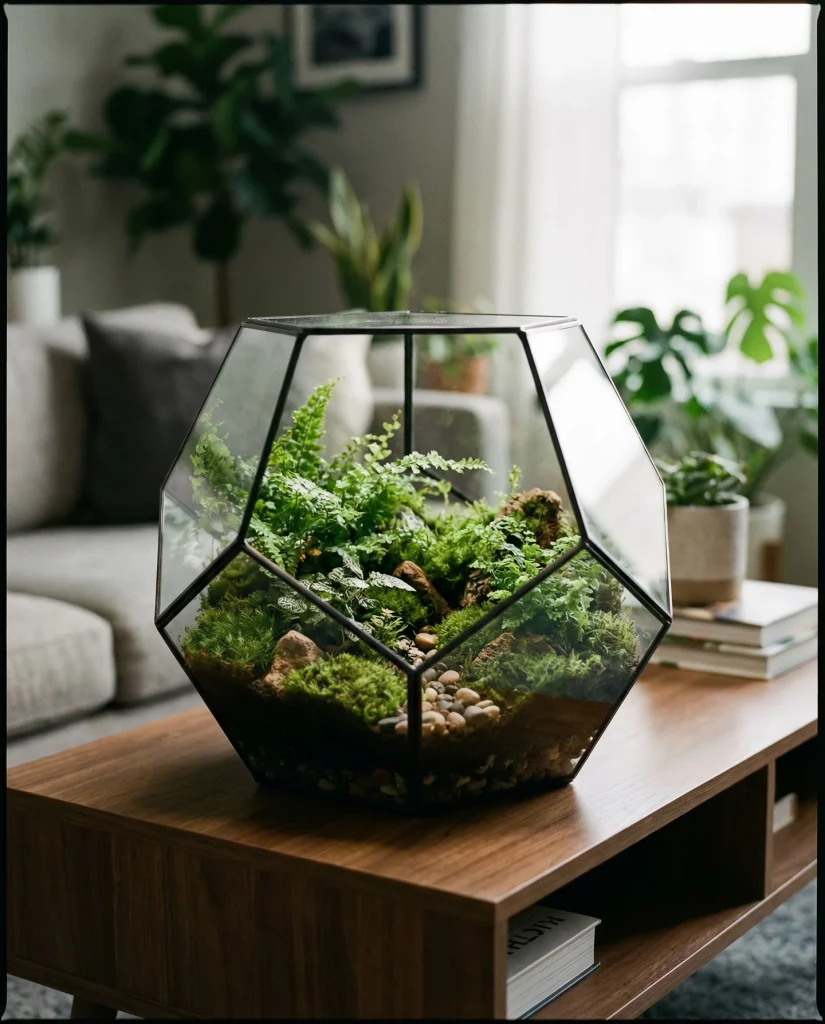
I like this idea because it brings the concept of a green corner down to tabletop scale. Instead of dedicating an entire wall to plants, the terrarium creates a concentrated miniature landscape that becomes a sculptural centerpiece. The geometric glass also introduces a strong contrast with the organic textures inside it. Placing it on the coffee table gives the arrangement a central position where it can be appreciated from the surrounding seating.
For my own styling, I would keep the surrounding tabletop relatively restrained so that the terrarium has enough breathing room. The photograph shows why scale matters: the enclosure is substantial enough to become a focal point, but the simple wood table gives it a quiet foundation. I also appreciate how the transparent sides preserve the visual connection between the greenery inside and the rest of the room.
Sculptural Curved Plant Stand Beside a Bright Window
I see a distinctive freestanding plant stand with a twisting wood structure and several circular platforms arranged at different heights. Each platform holds a potted plant, creating a vertical display that rises beside a bright window. Some containers are simple white ceramics, while others have woven textures. A cream sofa occupies the left side of the room, and a rounded floor covering, light wood furniture, and woven decorative pieces reinforce the soft natural character of the setting. Daylight through the sheer curtains gives the scene a gentle, airy appearance.
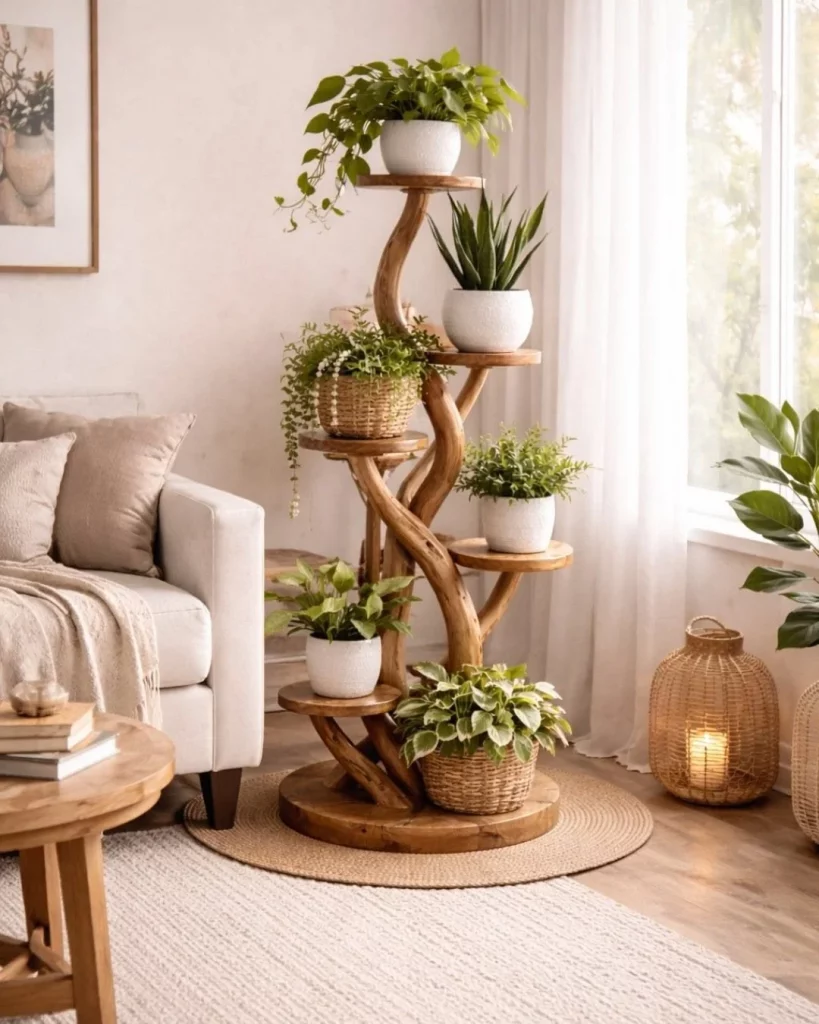
What immediately stands out to me is the sculptural quality of the stand itself. Even without the plants, the curved wood structure would function as a strong decorative element, but the greenery makes its shape feel more organic. The staggered platforms allow every plant to remain visible instead of creating one dense mass. I also like the placement beside the window because the vertical display receives abundant natural light while remaining close to the seating area.
I would choose a piece like this when I want the plant display to feel more like furniture than a collection of individual pots. The important lesson for me is to let the structure remain visible. Overfilling every platform could hide the curved shape, so I would leave enough space around each container to preserve the silhouette shown here. The combination of white pots, woven textures, and warm wood also creates a cohesive look without requiring identical accessories.
Statement Tree in a Large White Pot by the Staircase
I see a tall leafy indoor tree positioned beside a staircase, planted in a large rounded white container. The staircase rises behind it with reddish-brown tiled steps, while the surrounding walls are finished in pale neutral tones. A wood-toned architectural element runs along the lower wall, adding warmth to the otherwise simple setting. The plant has a slender branching form with abundant small green leaves, and its height draws the eye upward alongside the staircase.
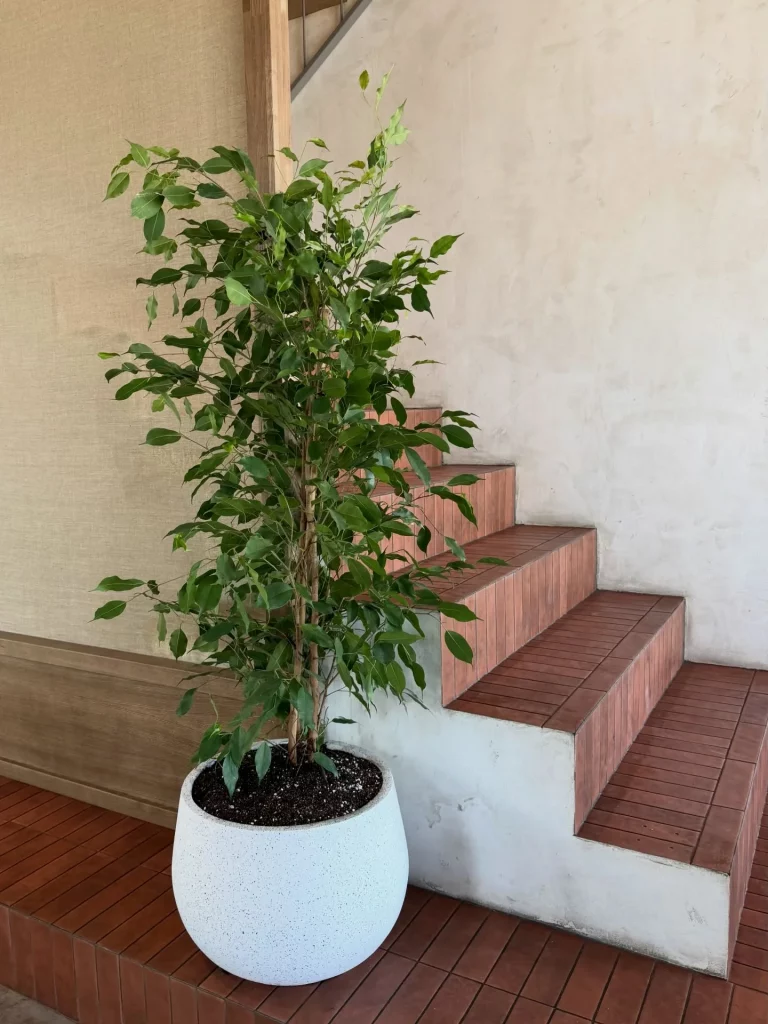
For me, this photograph shows how effective a single large plant can be when there is not enough room for an entire collection. The oversized pot gives the tree a strong base, while the height of the foliage fills the otherwise open space beside the stairs. I particularly like the way the greenery interrupts the hard lines of the staircase without blocking the steps. The result feels intentional while still leaving the circulation area open.
I would use this approach when a hallway, landing, or stair area feels visually empty but cannot accommodate furniture. A single statement plant can provide height and soften a hard architectural setting without requiring shelves or wall installation. I would also keep the container proportionate to the plant, as the large white pot shown here prevents the tree from looking visually top-heavy.
Vertical Slatted Wall With Multi-Level Plant Shelves
I see a tall wall covered with closely spaced vertical wood slats and several broad wood shelves mounted across the surface. The shelves are arranged in an asymmetrical pattern and hold a wide selection of potted greenery. There are trailing plants, upright plants, compact foliage, and larger broad-leaf specimens, with containers ranging from light ceramic to terracotta and dark finishes. The natural wood backdrop creates a warm framework around the greenery, while the pale wall at the side and soft daylight keep the overall composition from feeling too dark.
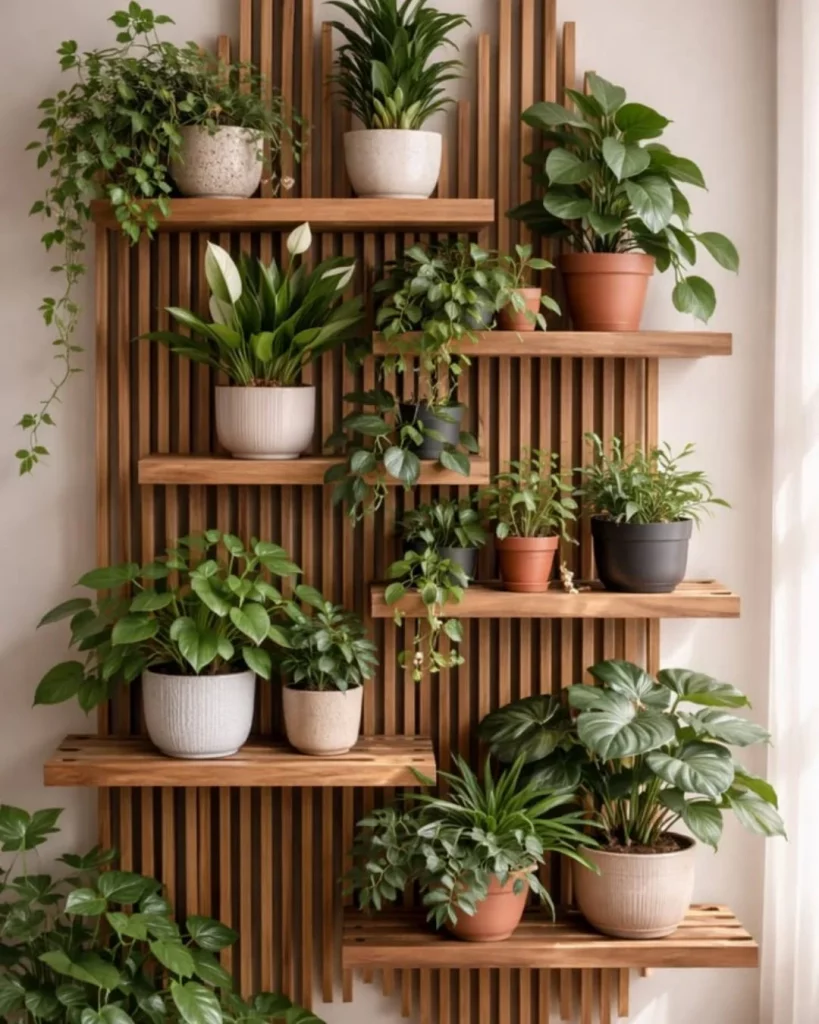
I think this design works particularly well because the vertical slats emphasize the height of the room while the horizontal shelves introduce a contrasting direction. That combination gives the wall a strong architectural rhythm. The different plant silhouettes prevent the display from becoming repetitive, and the varying pot shapes add additional visual interest. At the same time, the repeated wood finish connects all the shelves into one cohesive feature.
If I were building a similar display, I would vary the plant heights rather than lining every container along one visual level. The photograph demonstrates how trailing foliage can soften the edges of shelves while larger plants create stronger focal points. I would also avoid filling every available area immediately. Leaving some visible sections of the slatted backdrop allows the wood pattern to remain an important part of the composition.
Curved Illuminated Plant Wall With a Water Feature
I see an expansive living room featuring a dramatic circular and curved wood-framed plant display on the main wall. Multiple illuminated shelves follow the shape of the composition and hold numerous potted plants, while trailing greenery descends naturally from several levels. To the right, a stone-textured vertical feature incorporates a small cascading water element surrounded by greenery. In front, a light sectional sofa faces a round wood coffee table, and a textured neutral rug covers the floor. Warm lighting throughout the shelving and wall feature creates a soft evening atmosphere.
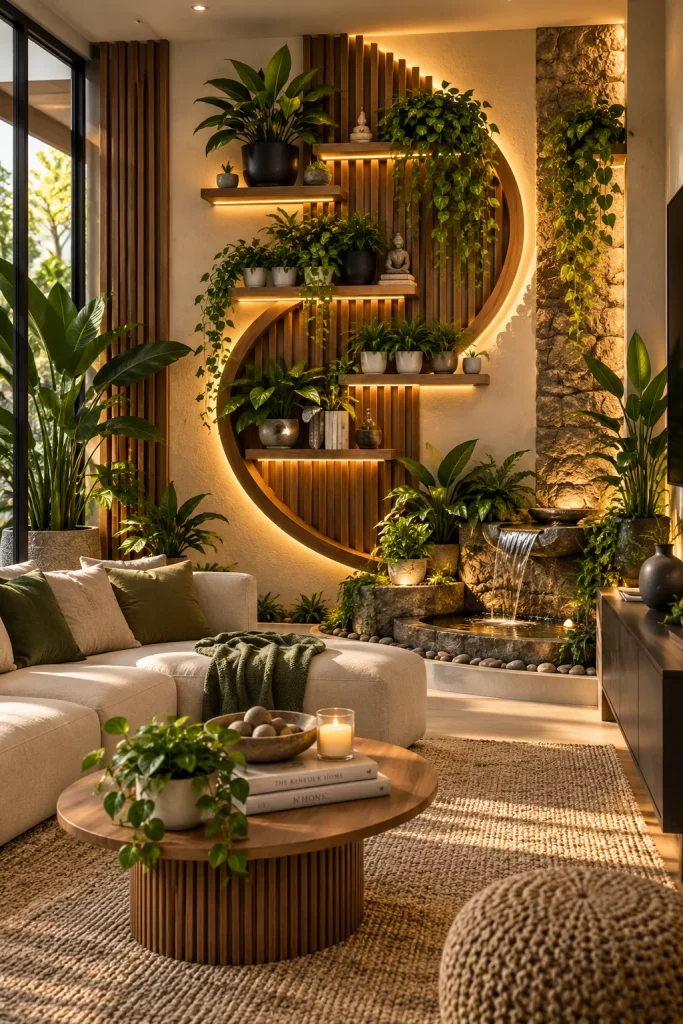
For me, this is the most immersive example in the collection because the greenery is integrated into several parts of the room rather than being confined to one small display. The curved shelving creates a strong visual flow, while the vertical stone feature and water element add another layer of texture and movement. The low round coffee table echoes the rounded shapes on the wall, and the neutral sofa provides a quiet foreground against the much more detailed backdrop. I also like how the plants continue toward the floor, visually connecting the wall display with the seating area.
I would approach a feature like this as a complete architectural composition rather than simply a place to put pots. The photograph shows the importance of repetition: curved forms, warm wood, integrated lighting, greenery, and rounded furniture appear in related proportions throughout the room. If I wanted to recreate the feeling on a smaller scale, I would focus on one strong curved or circular display and use fewer plants while maintaining the same layered relationship between shelves, lighting, and greenery. The key is to make the plants feel connected to the architecture of the room.
Layered Green Wall Behind a Contemporary Seating Area
The first room combines a soft gray sectional sofa, a black-framed round coffee table, and a large rectangular wall covered with dense greenery. I notice how the green feature sits directly behind the sofa, framed by a paneled gray wall and illuminated by several small ceiling spotlights. Tall windows with light gray Roman shades bring daylight into the room, while a dark armchair and a few small potted plants appear near the window. The restrained gray, black, and natural green palette gives the space a calm, contemporary appearance.
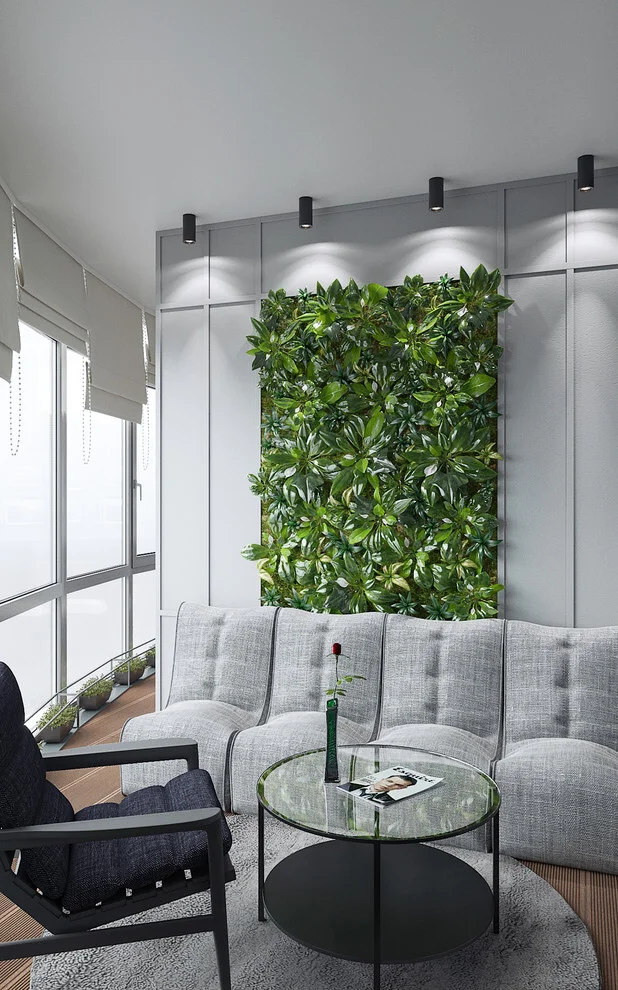
I like this arrangement because the greenery immediately becomes the focal point without taking over the entire seating area. The sofa remains visually simple, allowing the textured green wall to provide contrast and depth. The dedicated lighting is another practical detail I would pay attention to because it highlights the foliage even when natural daylight is limited. Placing the green feature behind the main seating also creates a strong backdrop for the room without interfering with circulation.
From my perspective, this is a smart solution for anyone who wants a dramatic natural element while keeping the rest of the room visually controlled. I would use a similar approach in a living room where one wall feels too plain but there is enough depth for a defined vertical installation. The key lesson I take from this image is to let one concentrated area of greenery do the visual work rather than scattering plants randomly throughout the room.
Curved Indoor Plant Bed Beneath a Modern Staircase
Here, the space beneath an open staircase has been transformed into a long, curved garden-like feature filled with pebbles and leafy greenery. The staircase combines dark structural elements with warm wood stair treads and a striking geometric railing. Along the wall, decorative panel molding creates a refined backdrop, while small wall lights illuminate the area. The planted zone includes tall palm-like foliage, broad-leaf greenery, ornamental grasses, and a small sculptural water-feature-like object surrounded by dark and pale stones.
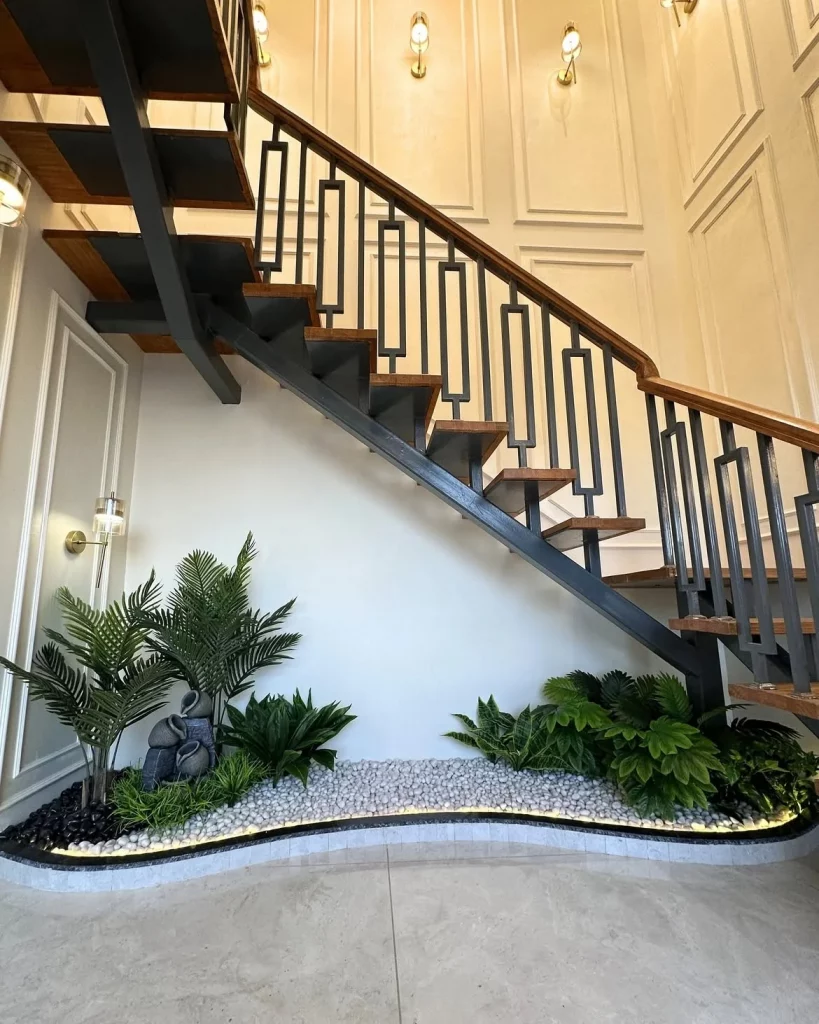
What works particularly well to me is the way the planting follows the shape and position of the staircase rather than competing with it. The curved border visually connects the different sections of the space, while the stones create a clean transition between the greenery and the polished floor. Instead of leaving the difficult area beneath the stairs empty, the design turns it into a deliberate focal point. The lighting along the edge also helps define the planting bed after daylight fades.
I would consider this idea especially useful when an awkward architectural zone needs more visual purpose. The image shows that an indoor green corner does not have to mean placing several pots in a corner; it can also be designed as an integrated landscape feature. If I were recreating the concept, I would first pay attention to the available floor area, the height beneath the stairs, and how easily the plants can be reached for maintenance.
Colorful Balcony Filled With Potted Greenery
This balcony takes a much more decorative approach to greenery, with plants arranged across the railing, floor, wall shelves, and hanging positions. I can see numerous pots in different shapes and colors, flowering plants near the balcony edge, taller leafy plants on the floor, and trailing greenery hanging from brackets. A wood-toned vertical wall panel adds warmth beside a cream-colored wall decorated with framed art, small plant-filled figurines, and additional pots. The view of the city beyond the railing gives the arrangement an airy outdoor connection.
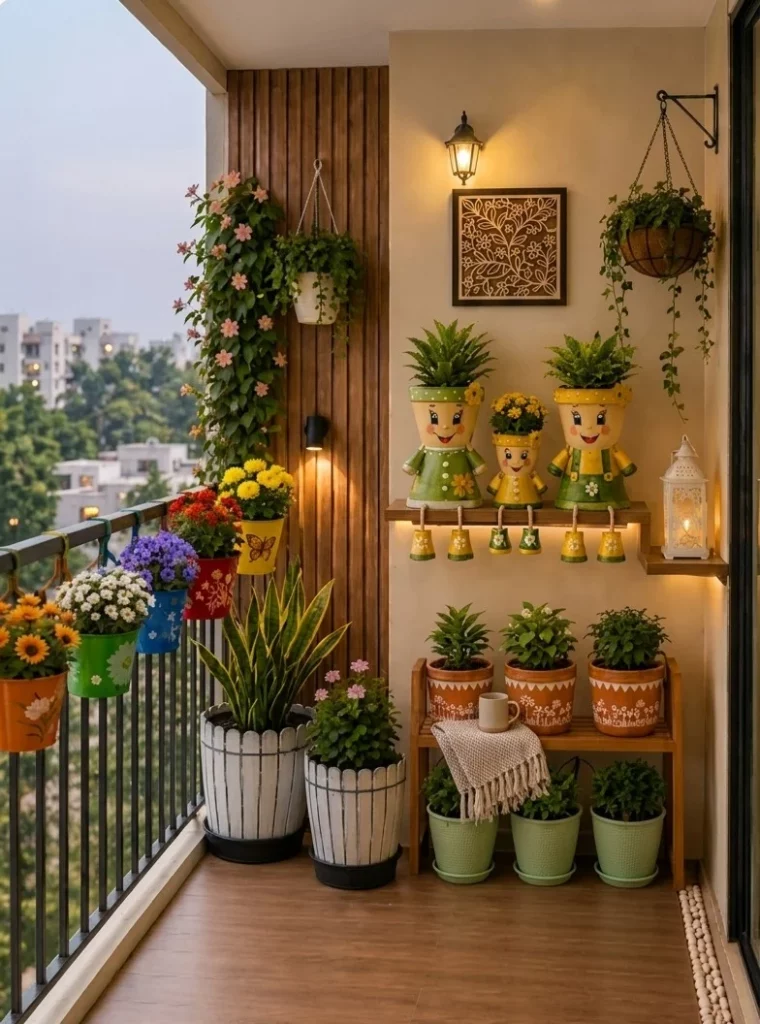
I like the way this balcony uses vertical space so effectively. Instead of keeping every pot on the floor, the arrangement moves upward through hanging containers, wall shelves, and railing displays. That makes the relatively narrow balcony feel much more layered and visually interesting while preserving a central walking area. The variety of pot colors also gives the corner a playful personality that is very different from the restrained interiors in the earlier images.
For me, this is a good reminder that a green corner can also reflect personality through the containers and decorative objects surrounding the plants. I would approach a small balcony in the same way by deciding first where people need to walk and then building the greenery around that circulation path. Keeping taller pieces toward the sides and lower pots along the railing can help maintain an open feeling while still creating a lush display.
Plant-Filled Console Corner With Decorative Accents
The next image shows a light-colored interior corner beside a large window dressed with patterned curtains. A dark console cabinet supports a substantial collection of potted greenery, including a large central plant, a tall snake plant, and several smaller containers. Above the cabinet, three framed decorative pieces and mirrors create a compact gallery arrangement. A seated Buddha figure and several ornamental objects add another layer of decoration, while a trailing plant extends downward toward the floor.
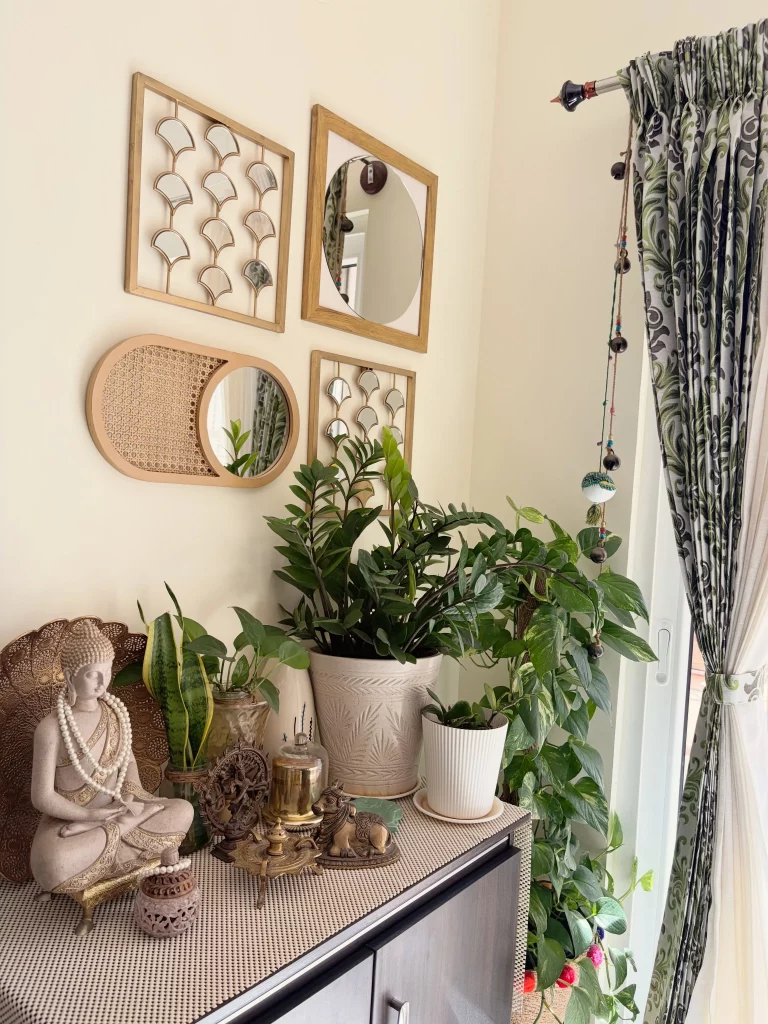
I find this arrangement successful because the plants are grouped around a single piece of furniture rather than spread across the entire room. The large central pot establishes height, while smaller containers fill the surrounding spaces and soften the hard edges of the cabinet. The mirrors and framed pieces above visually extend the composition upward, helping the plant corner feel like an intentional decorating feature rather than simple plant storage.
If I were creating a similar corner, I would pay close attention to scale. One oversized plant can anchor the composition, while smaller plants can fill the gaps without making the surface feel chaotic. The window beside the arrangement is also important because the natural light appears to support the leafy display. I would use this kind of setup when I wanted a natural focal point but did not have enough room for a large freestanding plant installation.
Illuminated Tree Feature With a Serene Buddha Display
This interior features a highly decorative wall composition centered around a sculptural tree with branching forms. The tree rises in front of a softly illuminated circular backdrop, while a seated Buddha sculpture occupies the center of the lower section. Small potted plants are arranged on floating shelves on both sides, and additional greenery and decorative objects sit along the lower ledge. Warm pendant lights hang above the composition, while vertical wall detailing frames the entire display.
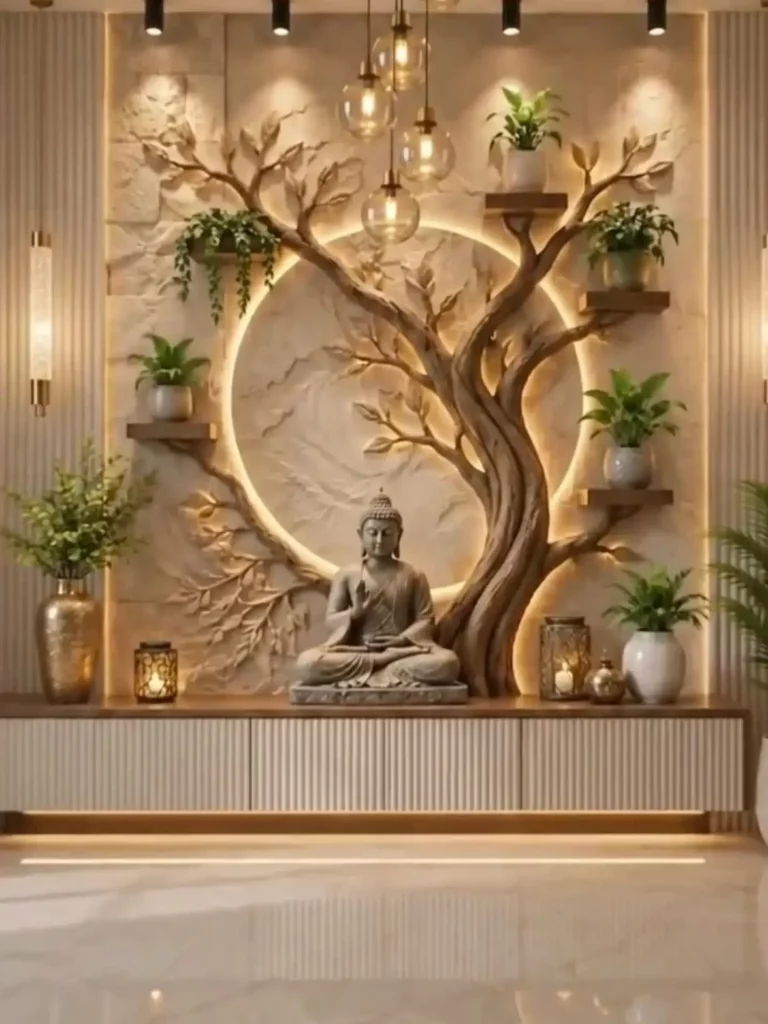
What immediately stands out to me is the strong sense of symmetry. The shelves, small pots, lighting, and branches create a balanced composition around the central sculpture. The warm illumination also gives the installation considerable depth, making the tree and circular backdrop appear more dimensional. Rather than simply adding plants to an empty wall, this design treats greenery as part of a complete decorative scene.
I would take inspiration from the layered heights shown here when designing a smaller green corner. The eye moves from the lower sculpture upward through the tree branches and toward the hanging lights, so the composition feels much taller than a standard arrangement of tabletop plants. For me, the important decorating lesson is to vary height and position while maintaining a clear central point that holds the whole display together.
Soft Green Bedroom With Trailing Wall Greenery
This bedroom uses a muted green wall behind a simple upholstered bed with a warm wood frame detail. The bedding stays within soft green and cream tones, while matching bedside tables hold simple lamps. Above the headboard, trailing greenery is arranged across the wall and intertwined with small warm string lights. Sheer white curtains cover the large window, and additional potted plants sit along the windowsill.
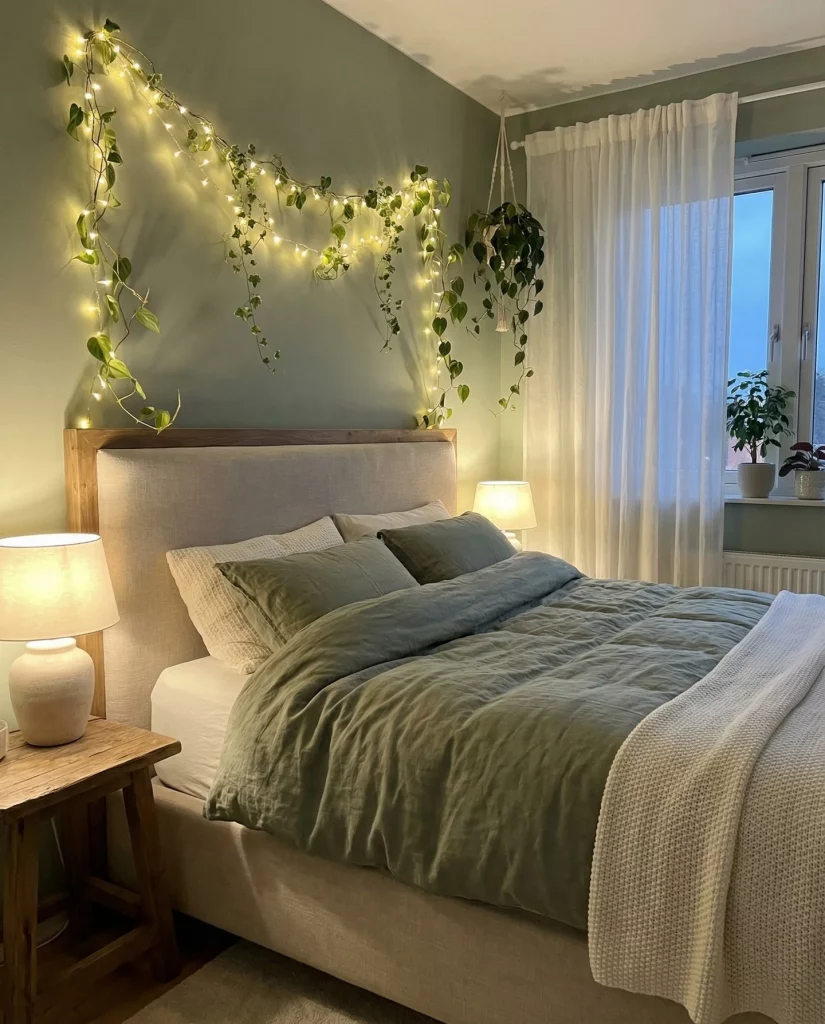
I love how the greenery here is used to reinforce the relaxing atmosphere rather than becoming an overpowering feature. The foliage follows a loose horizontal line above the bed, while the tiny lights add a gentle glow around it. The muted wall and bedding allow the plants to blend naturally into the room, creating a cohesive palette. Even the plants near the window contribute to the overall feeling of continuity between the decorated wall and the brighter part of the bedroom.
In my view, this is one of the easiest concepts to adapt because the green corner does not require a large amount of floor space. A wall above the bed can become the main location for trailing greenery, while a few containers near the window add height at floor or sill level. I would keep the arrangement relatively restrained in a bedroom, as the image demonstrates how a few carefully positioned elements can create atmosphere without visually crowding the sleeping area.
Sunlit Vertical Green Wall in a Cozy Sitting Area
The seventh image places a dense vertical garden beside a large window and a stone fireplace. The green wall is framed by substantial natural-toned beams and contains many different leaf shapes, from delicate fern fronds to large split leaves. In front of it sits a cream upholstered armchair and matching ottoman with a chunky knitted throw. A small side table, a textured rug, and the fireplace complete the comfortable sitting corner, while sunlight enters strongly from the window.
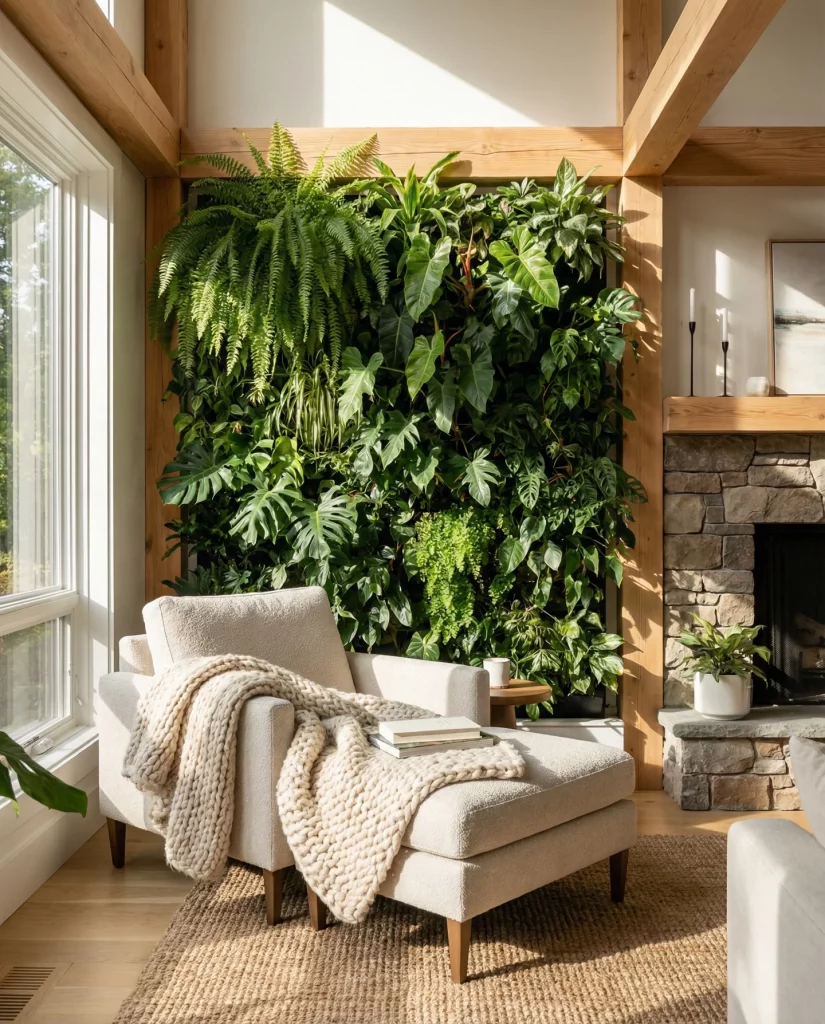
To me, this is an especially effective example of using greenery to create a destination within a larger room. The chair faces the green wall, so the plants become part of the visual experience of the seating area rather than background decoration. The contrast between the dense foliage, pale upholstery, textured throw, wood-toned beams, and stone fireplace creates plenty of visual texture. At the same time, the large window prevents the corner from feeling enclosed.
I would use this idea when a room has enough natural light and an area that can accommodate a substantial vertical planting installation. The image also demonstrates why combining different leaf shapes can create depth without needing lots of decorative accessories. If I wanted to reproduce the overall feeling, I would prioritize the placement of the seating first and then use the greenery to frame that relaxing zone.
Geometric Plant Shelves With Integrated Lighting
This striking corner uses dark geometric shelving arranged symmetrically around a central vertical panel. White pots containing leafy plants occupy the shelves, while a trailing plant hangs down through the center. Small integrated lights beneath the shelves illuminate the individual displays and emphasize the angular structure. A larger bowl-shaped planter sits at the bottom center, creating a visual anchor for the entire arrangement.
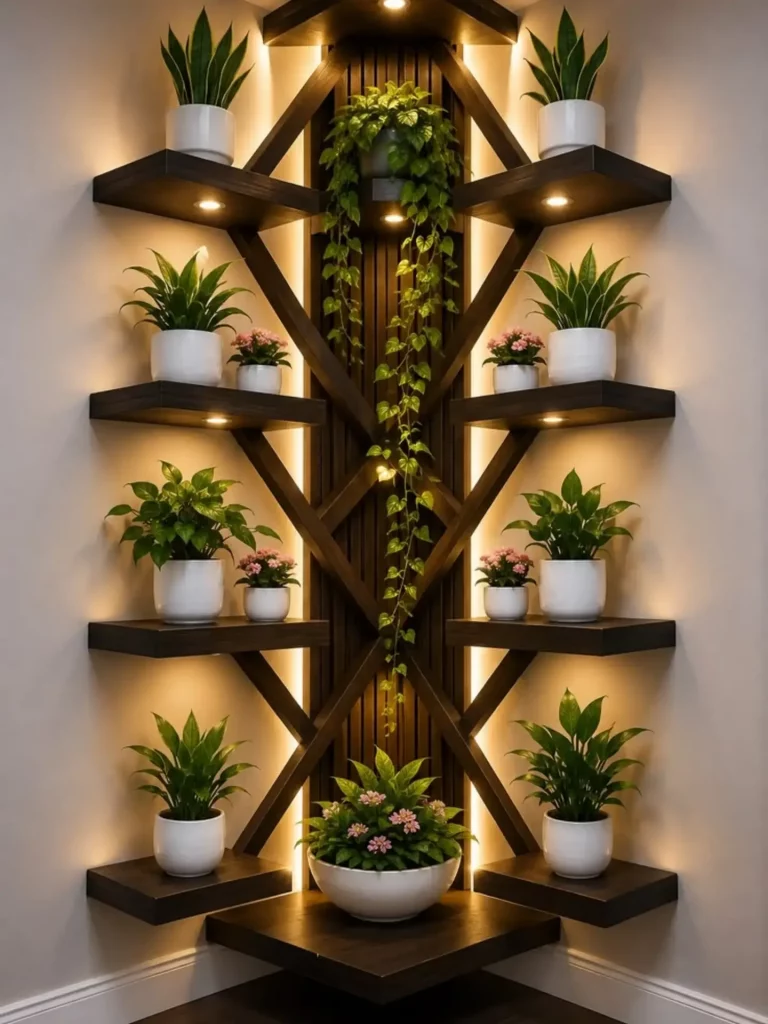
I think the strongest feature here is the combination of repetition and symmetry. Similar pots appear on both sides, but the plants vary in shape and size enough to prevent the arrangement from looking completely uniform. The lighting beneath each shelf also gives every level its own presence, making the entire installation visible as one composition. The central trailing plant breaks up the symmetry just enough to add movement.
For me, this is a useful idea for a blank wall where a conventional bookcase might feel too ordinary. The shelving provides clearly defined locations for plants, which makes the display easier to organize and visually balanced. I would keep the number of plant types controlled when adapting this concept so that the geometric structure remains easy to see.
Vertical Indoor Plant Collection Beside a Bright Window
The ninth image features a tall black vertical shelving structure filled with individual potted plants. The collection includes broad-leaf greenery, delicate trailing foliage, and compact plants arranged at different heights. A larger potted plant stands on the floor beside the shelving, while another plant occupies the nearby window area. A light wood armchair with a pale cushion sits next to the display, creating a comfortable reading or relaxation corner.
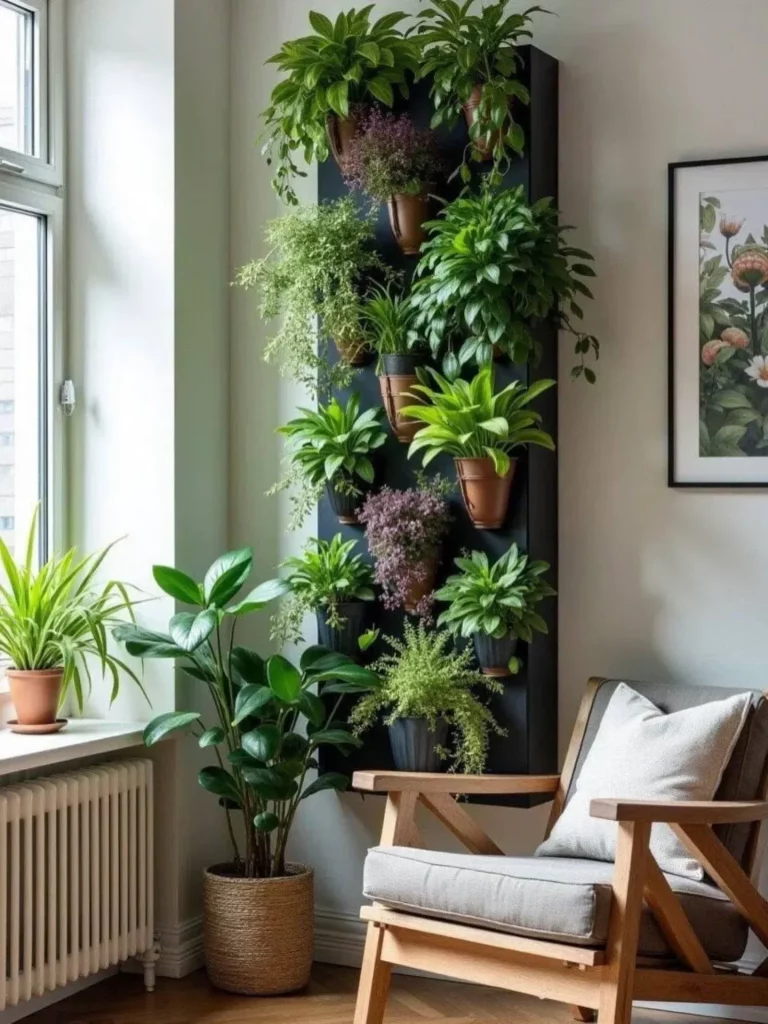
I like how the dark shelving provides a strong backdrop that makes the greenery stand out clearly. The different plant sizes create a layered composition, while the nearby window supplies natural light and helps visually connect the indoor collection with the outside. The armchair also makes the display feel functional rather than purely decorative. It suggests that a green corner can be incorporated into a place where someone actually spends time rather than being treated as an isolated decoration.
I would consider this arrangement particularly practical for people who want a substantial plant collection but prefer to keep it organized. Vertical shelving uses wall height efficiently, while the floor remains relatively open for the chair and larger container. When recreating the look, I would arrange plants according to their visible size and shape, placing fuller specimens where they can balance the open areas of the shelving.
Minimal Pebble Garden With Tall Indoor Greenery
The final image shows a compact indoor garden bed positioned along a pale paneled wall. Smooth white pebbles cover most of the ground surface, with a contrasting section of dark stones surrounding tall palm-like plants and a cluster of low ornamental grasses. A broad-leaf plant fills the opposite side, while a sculptural stacked-stone feature sits among the greenery. A small wall light above the arrangement adds a warm glow, and the curved edge of the garden follows the shape of the floor area.
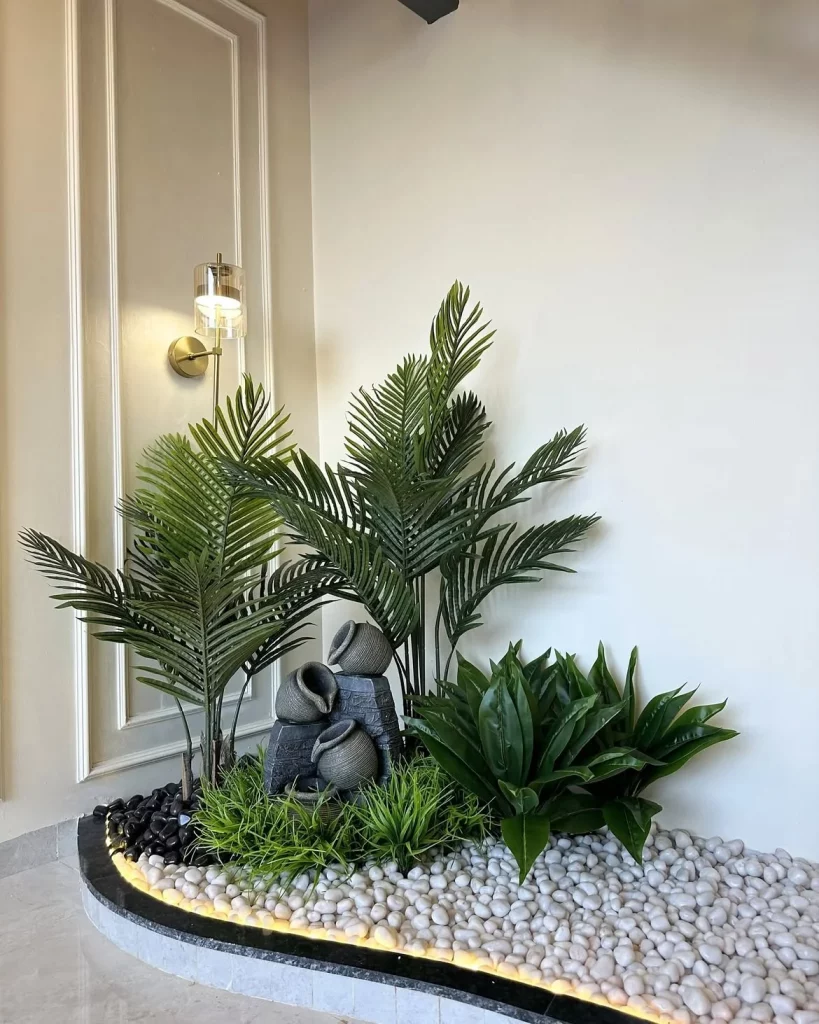
What I find particularly effective is the clean contrast between the pale pebbles, dark stones, green foliage, and light wall. The arrangement is low enough to preserve the openness of the room while still creating a clearly defined natural feature. The curved border also softens the otherwise straight architectural lines, and the small light helps draw attention to the planting after dark.
I would take this concept as inspiration for an indoor corner that needs greenery without a collection of individual pots. The image shows how stones, a few carefully selected plants, and one sculptural accent can create a complete composition. I would keep the surrounding area visually uncluttered so the simple relationship between the pebbles, foliage, and wall remains the main attraction.
Layered Green Corner With Illuminated Plant Shelves
I immediately notice how this living room combines a comfortable cream sectional with a tall sculptural plant display that becomes the main visual feature. Several shelves wrap around a twisting wood-like central structure, holding plants at different heights, while warm integrated lighting highlights both the greenery and the surrounding forms. A small tabletop water feature sits at the bottom among smooth dark stones, creating another focal point. The neutral upholstery, textured rug, round coffee table, and soft lighting give the entire corner a relaxed, welcoming atmosphere.
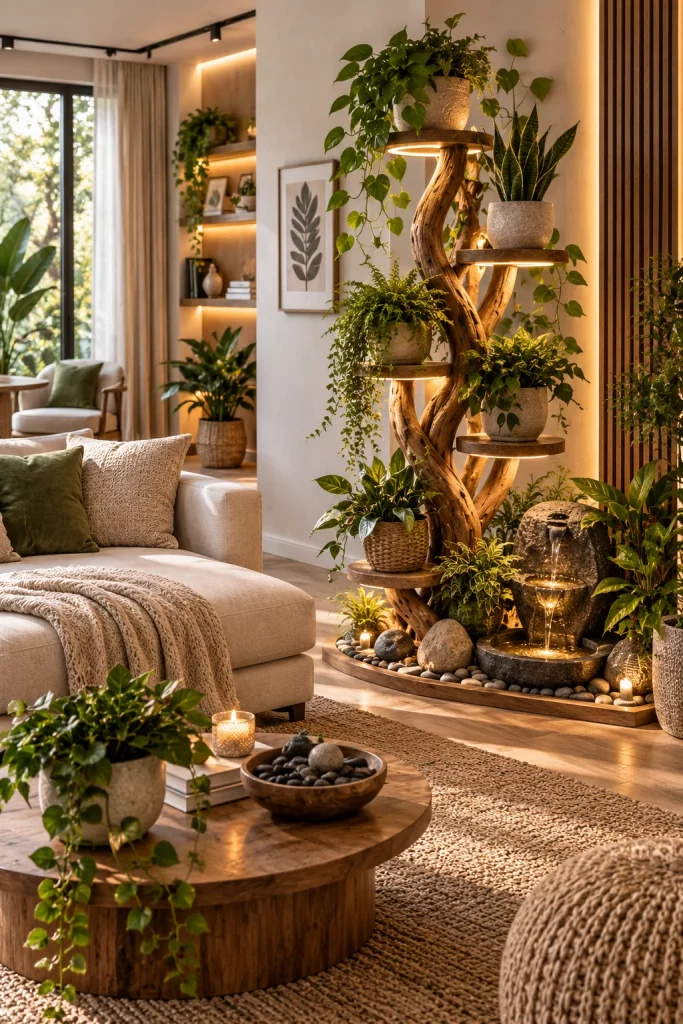
What works especially well for me is the vertical arrangement. Instead of spreading plants randomly around the room, the display concentrates them into one defined composition, making the corner feel intentional while leaving the seating area comfortable and open. The different heights create visual movement, and the illuminated shelves help the greenery remain noticeable even when the room becomes darker. I also like the way the round coffee table echoes the softer shapes of the plant display.
From my perspective, this is a useful approach when I want a green corner to feel like part of the architecture rather than simply a collection of pots. I would keep the surrounding furniture relatively calm, as shown here, so the layered greenery remains the star. Repeating similar neutral tones in the pots, textiles, and furniture can also help a generous plant display feel visually organized rather than crowded.
Curved Wall Display With Warm Backlighting
This interior takes the green-corner concept in a more sculptural direction. I see a large curved wooden form surrounding a central wall area, with several floating shelves illuminated from underneath. Different potted plants fill the shelves, including trailing greenery and larger leafy varieties, while warm lighting traces the curved outline. A dark cabinet sits beneath the arrangement with a folded throw and small decorative objects, giving the display a practical base. The combination of dark wood, warm illumination, and greenery creates a cozy evening atmosphere.
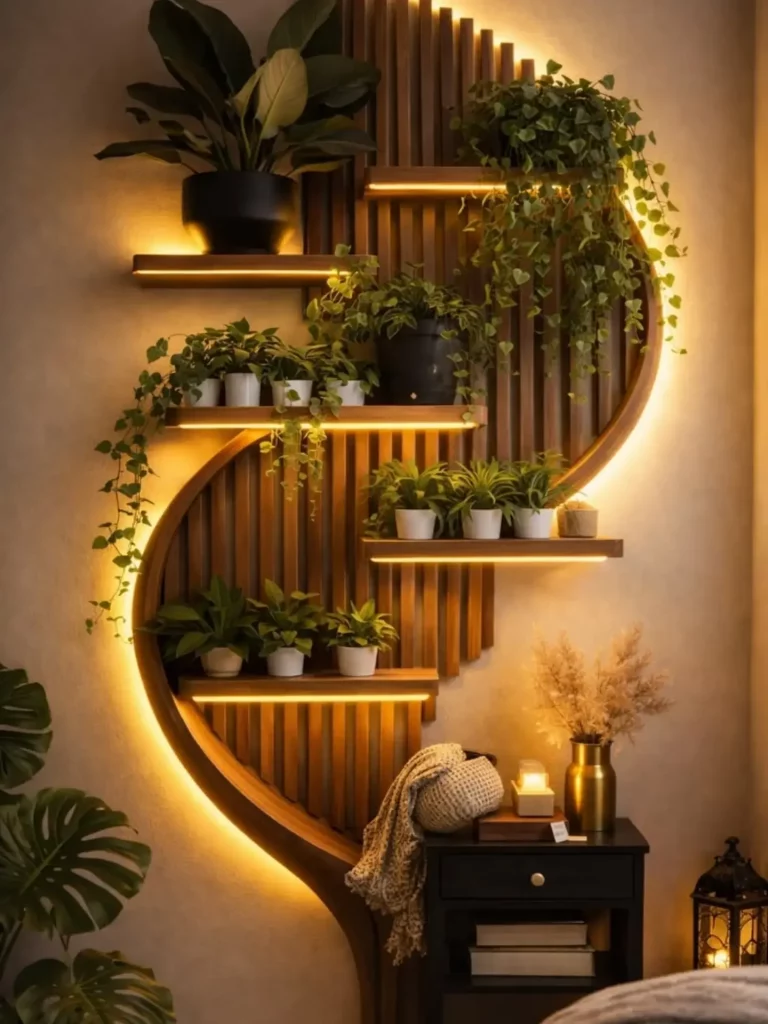
I like how the curved outline gives the entire composition a strong sense of movement. The plants are not simply placed on conventional shelves; they follow the shape of the wall feature and help soften its geometric construction. The illuminated edges also separate the display from the surrounding wall, making it feel almost like a built-in feature. For me, this is a good example of using lighting to give an indoor garden corner more depth without requiring additional decorative elements.
When recreating this idea, I would pay close attention to the balance between larger plants and smaller shelf arrangements. The image shows how trailing leaves can visually connect separate levels, while compact pots keep the shelves structured. I would also make sure the lighting is warm and carefully positioned so it emphasizes the curves without overwhelming the greenery.
Glass Terrarium Centerpiece on a Sculptural Table
Here, the green corner is much more compact and centers on a glass terrarium placed on a striking irregular wood-toned coffee table. Inside the transparent rectangular container, I can see a collection of small succulents, moss-like ground cover, stones, and different leaf shapes arranged across several levels. A larger potted plant stands behind the table, while a dark upholstered chair and a deep purple cushion appear in the background. The glass enclosure gives the greenery a crisp contemporary presentation against the organic shape of the table.
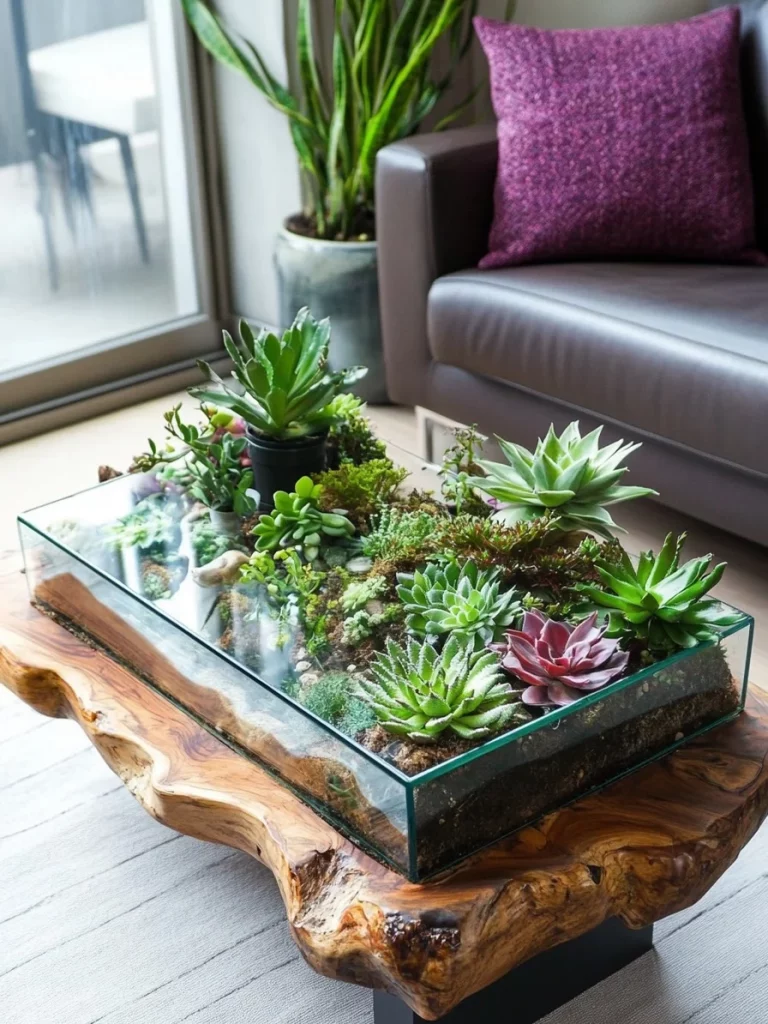
I particularly like the contrast between the precise glass box and the naturally irregular tabletop. The transparent sides allow the entire miniature landscape to remain visible, while the different succulents create variety without needing a large amount of space. This makes the idea especially practical for someone who wants a green focal point but does not have room for a tall plant display.
For me, the strongest lesson here is that a green corner can be created at tabletop scale. I would choose a container that allows the plants and stones to be clearly seen rather than hiding them behind an opaque planter. Placing the arrangement on a distinctive table, as shown, can also make the greenery feel like a deliberate centerpiece instead of an afterthought.
Greenery Against an Ornate Green Wall
This room presents a completely different visual language, with an ornate green-and-gold wall treatment framing a large central recessed area. Several potted plants occupy the lower portion of the composition, including broad-leaf greenery and plants with long, pointed leaves. A framed botanical artwork hangs in the center, while a green upholstered armchair sits to the right. The patterned wood floor and decorative wall detailing add considerable visual character, while the plants bring softer natural shapes into the room.
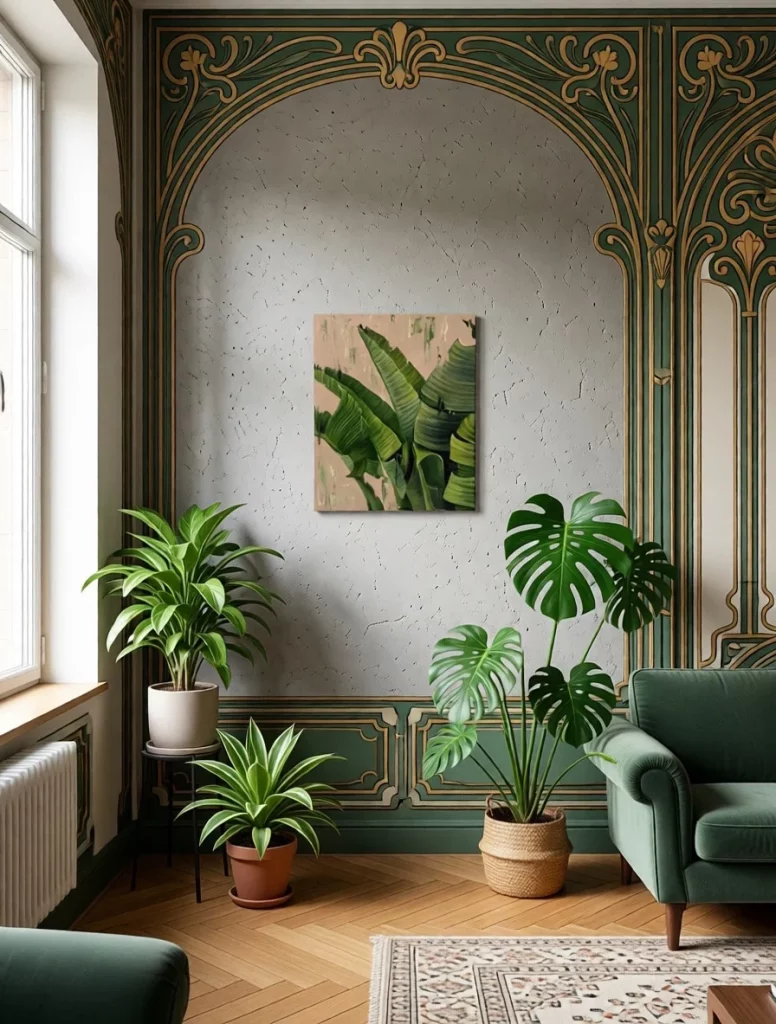
I like the way the greenery balances the highly detailed wall. The plants have varied leaf shapes and heights, so they soften the strong architectural pattern without competing with every decorative line. The large plant near the chair also helps connect the lower furniture area with the botanical artwork above it. To my eye, this creates a layered composition where the green corner feels integrated into the whole room.
I would use this image as inspiration for interiors that already have a strong decorative backdrop. Rather than adding many unrelated accessories, I would let the plants provide the natural contrast. Keeping the pots relatively simple, as shown, helps the foliage remain visually connected to the more elaborate wall surrounding it.
Floor-to-Ceiling Plant Wall in a Contemporary Lounge
This bright living area uses an entire section of wall as a dramatic green display. Tall wood slats form the backdrop, while staggered open shelves hold numerous potted plants, framed botanical artwork, and a few books. Larger plants stand directly on the floor in front of the shelving, extending the greenery outward into the seating area. A cream sofa, textured rug, round coffee table, and warm pendant lights visible in the adjacent dining area keep the room comfortable and cohesive.
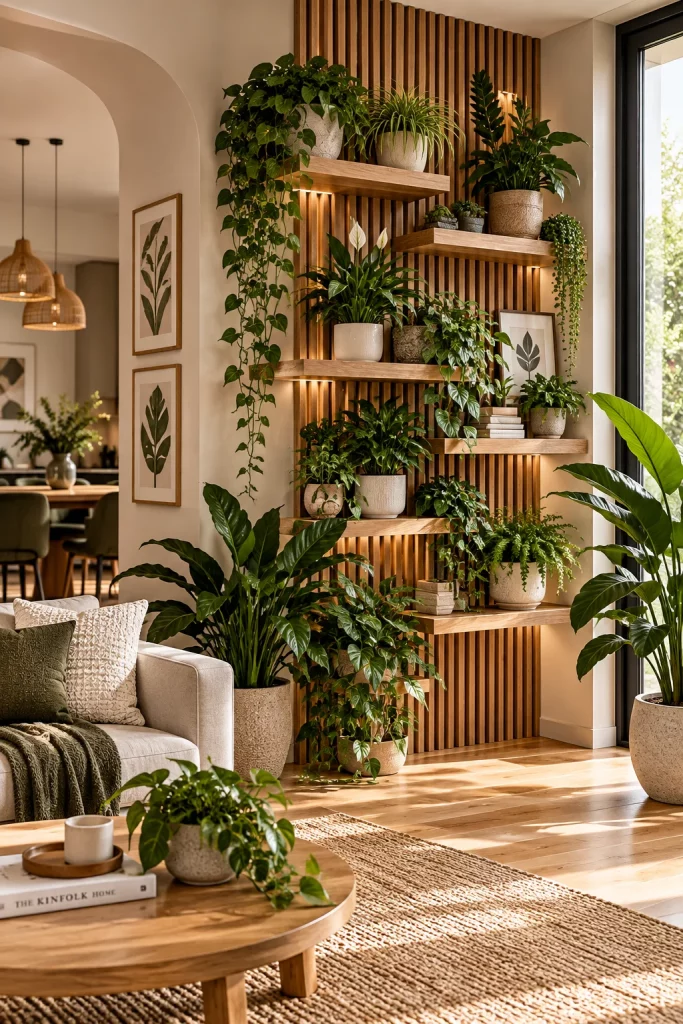
What I find particularly effective is the layering from floor to ceiling. The shelves create a strong vertical framework, but the plants interrupt that structure with soft leaves and trailing stems. The arrangement also gives the room a clear focal wall without relying on a large piece of furniture. For me, this is a smart solution when a blank wall feels underused but there is enough depth for shelving.
If I were creating something similar, I would vary the height and silhouette of the plants rather than placing identical pots in a strict row. The photograph shows how some plants spill over the edges while others remain compact and upright. That variation keeps the composition lively while the repeated shelving provides enough structure to make the abundance feel controlled.
Minimal Green Wall Beside a Large Window
This space takes a much more restrained approach. A tall, narrow section of greenery runs vertically along the dark wall on the left, creating a living visual strip beside a large wall of windows. A light upholstered lounge chair faces the windows, with a small dark round table nearby holding simple cups and a glass vessel. Sheer curtains soften the daylight, while dark flooring and cabinetry create a calm contemporary background.
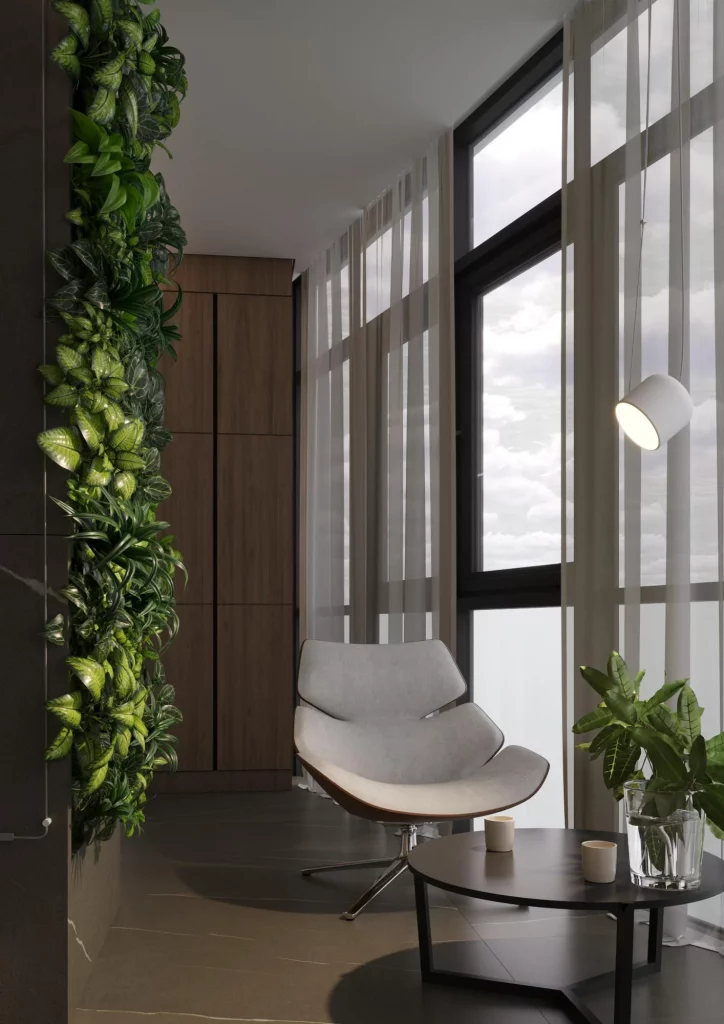
I like how little is needed to establish the green corner here. Instead of filling the room with plants, the design concentrates the greenery into one tall area and allows the windows to remain the dominant source of natural light. The pale chair provides a quiet place to sit, while the dark background makes the foliage particularly noticeable. It is a good example of how a green feature can work even in a minimalist composition.
For me, this arrangement would be useful in a reading or relaxation area where visual calm matters. I would keep the furniture simple and avoid blocking the window, following the spacious arrangement shown in the image. The vertical plant wall also demonstrates how a narrow unused wall can become an intentional design feature without taking up much floor space.
Sunlit Plant Corner With Open Wooden Shelving
This inviting corner places large leafy plants directly beside a tall window, where sunlight falls across the floor and foliage. A light upholstered armchair with wood-toned arms sits in the center, accompanied by a small round side table. Behind it, open shelves display more plants, books, and framed botanical artwork. A large woven-style round ottoman occupies the foreground, while a textured throw adds softness to the chair.
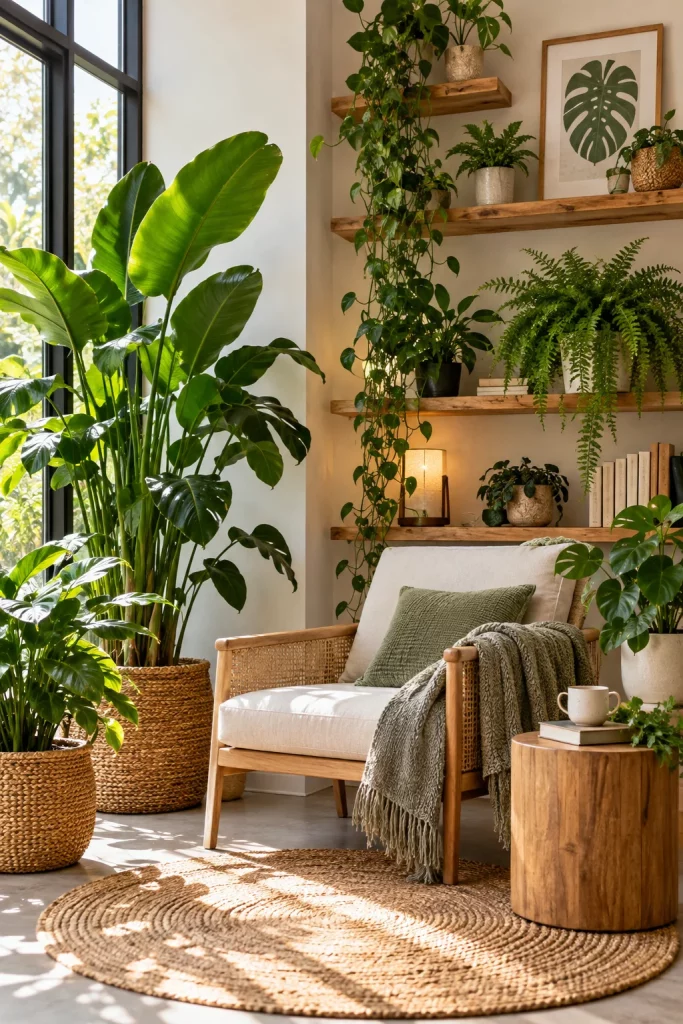
I love the relationship between the window and the greenery in this image. The plants are positioned where natural light can become part of the composition, and the sunlight creates changing shadows across the floor and rug. The open shelving also adds height without visually closing off the corner. For me, the arrangement feels comfortable because the chair provides a clear functional purpose while the surrounding greenery creates the atmosphere.
This is the kind of green corner I would consider when designing a sunny sitting area. I would first observe how daylight moves through the room before deciding where to place the plants, then use shelving to add smaller layers around the larger floor specimens. The restrained palette of the chair, shelves, rug, and pots allows the leaves to provide most of the visual variation.
Illuminated Nature Display in an Entryway
This hallway features a highly sculptural focal point: a large flowing wall form outlined with warm illumination. Branch-like decorative elements extend across the central surface, while a raised base at the bottom contains stones, small greenery, rocks, and a shallow water feature. The surrounding hallway is finished in soft neutral tones with polished flooring, and a glimpse of another room appears through the opening on the left. The composition feels carefully arranged to create a calm transition between spaces.
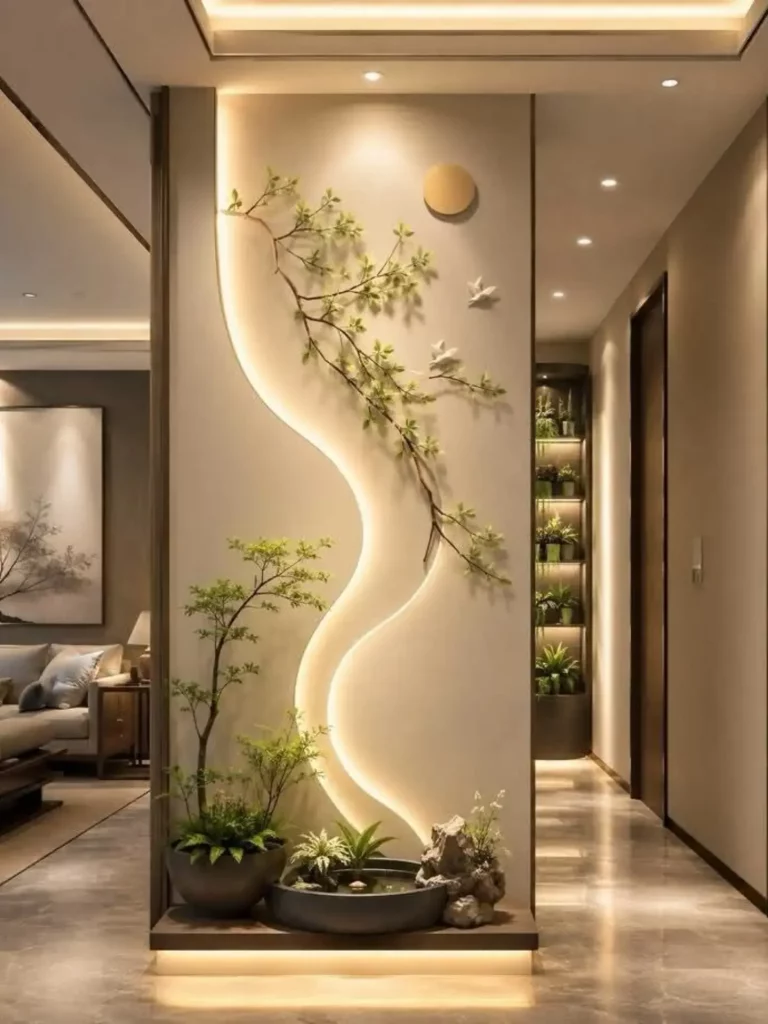
What stands out to me is the way the design combines greenery with water, stone, lighting, and organic shapes in one compact installation. Rather than placing several unrelated objects around the hallway, the elements are gathered into a single focal zone. The illuminated outline gives the display definition, while the darker stones provide contrast against the lighter wall and floor.
I would approach an arrangement like this as a visual destination within a transitional space. The image shows that an entryway or hallway can have its own design identity rather than simply connecting rooms. If using a similar concept, I would keep the surrounding finishes visually quiet so the sculptural feature and its natural details remain easy to appreciate.
Cozy Plant Corner With a Layered Display Shelf
This living corner feels bright and relaxed, with a large leafy plant positioned beside a window and a comfortable chair placed directly in front of an open shelving unit. The shelving contains multiple potted plants, framed botanical artwork, books, and small decorative pieces. A trailing plant descends from an upper shelf, while the round woven ottoman in front of the chair adds another strong textural element. The palette stays close to soft neutrals and natural-looking tones, allowing the foliage to dominate.
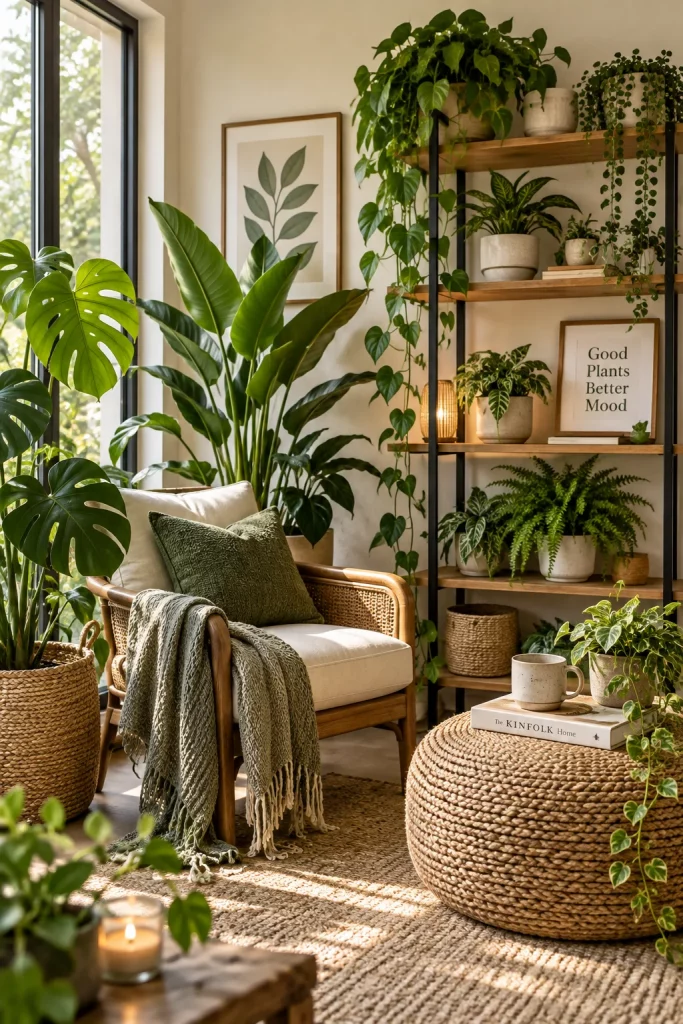
I like the combination of a large floor plant and smaller shelf plants because it creates depth without requiring complicated furniture. The chair remains visually open and usable, while the shelving provides a dedicated place for the smaller arrangements. The round ottoman also makes the seating zone feel more complete without introducing a bulky shape. For me, this is one of the easiest layouts to translate into an everyday home because every major element has a clear purpose.
When I style a plant corner, I find that mixing heights is much more effective than placing everything at the same level. This photograph demonstrates that principle beautifully: tall leaves frame the chair, trailing foliage softens the shelving, and smaller plants fill the gaps. I would also keep enough open space between individual pots so the shelves retain a sense of order.
Elegant Lounge With a Sculptural Botanical Wall Feature
The final image creates a sophisticated indoor nature display in a spacious seating area. Two light upholstered benches face inward toward a large central wall feature depicting a branching tree with numerous leaves. Warm recessed lighting outlines the display, while a long raised planter at its base contains several green plants, pale stones, and other natural-looking elements. The symmetrical seating arrangement, large neutral rug, and softly illuminated ceiling create a balanced and serene setting.
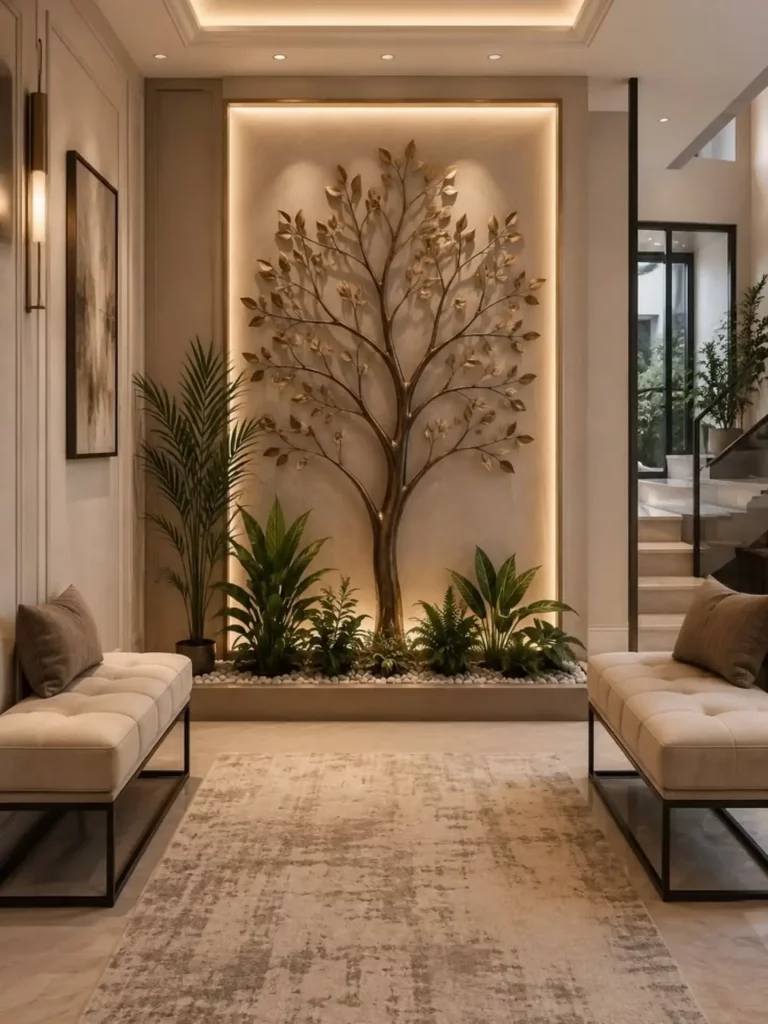
For me, the most interesting part is the combination of a botanical motif and real greenery. The wall sculpture establishes a strong vertical centerpiece, while the plants at the base add living texture and help connect the artwork to the floor. The two benches frame the composition from both sides, giving the room a sense of symmetry and making the central feature immediately noticeable.
I would take inspiration from this arrangement when a room needs one clearly defined focal point rather than many competing decorations. The image shows how lighting can emphasize a feature wall while the furniture remains understated. Keeping the seating simple also allows the branching design and greenery to carry the visual interest without making the space feel overloaded.
Illuminated Green Wall With a Sculptural Water Feature
The first interior makes greenery the centerpiece of the living room. I immediately notice the large illuminated wall panel featuring a sculptural metal tree, surrounded by dense foliage and a layered water feature below. The composition sits behind two soft upholstered sofas, while a round coffee table with a marble-like top and slatted base anchors the foreground. Warm recessed lighting, vertical wood-toned slats, framed botanical artwork, natural stones, and a textured area rug create a cohesive setting. I especially like the way the greenery frames the central artwork without hiding it.
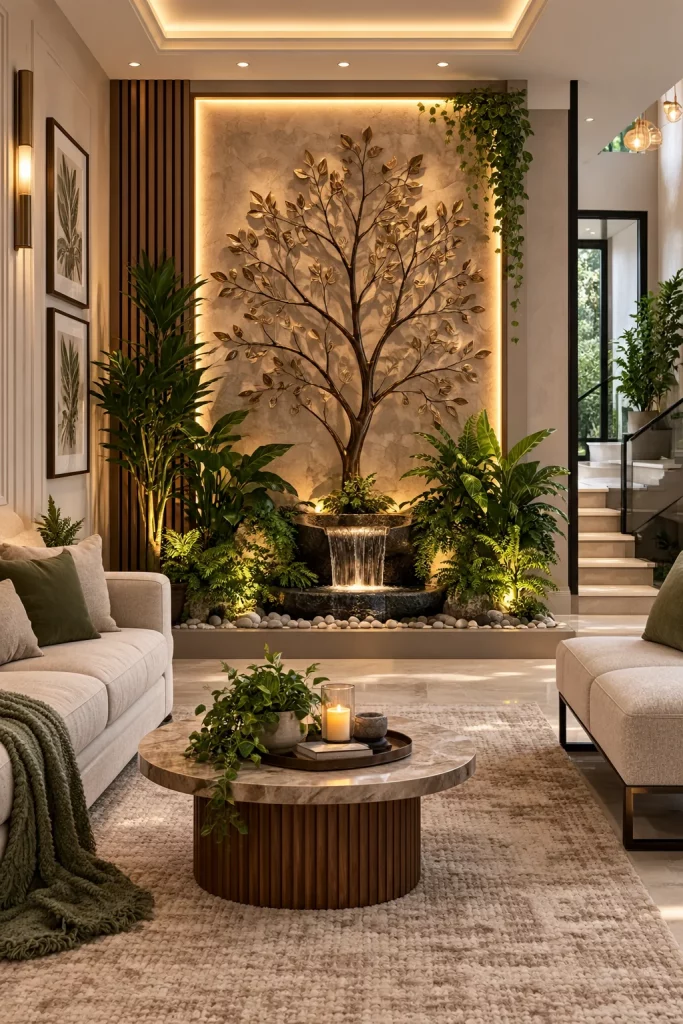
For me, the strongest feature is the relationship between the green corner and the architecture around it. The foliage creates a soft border around the illuminated artwork and fountain, while the repeated warm tones connect the wall, coffee table, flooring, and lighting. The water adds movement and sound to what could otherwise be a static decorative wall. At the same time, the seating remains oriented toward the central feature, making the installation feel like an intentional part of the living room rather than an accessory placed afterward.
I would approach a similar design by choosing one clearly defined focal area instead of spreading greenery randomly throughout the room. The photograph shows how effective layered heights can be: taller foliage rises beside the wall, lower greenery surrounds the fountain, and smaller details fill the foreground. I also like the use of concealed warm lighting because it emphasizes the texture of the wall and metal sculpture once the room becomes darker. The key, in my view, is to keep the arrangement visually organized even when there are many individual elements.
A smaller home could borrow the same idea without recreating the entire installation. I would combine a large framed botanical artwork, a few different-height containers, natural stones, and subtle accent lighting around one compact corner. That would preserve the layered feeling visible here while taking up considerably less space.
Green Accent Wall With Floating Shelves and Water Basins
This room takes a more vertical approach to indoor greenery. I see a deep green accent wall covered with staggered wood-toned shelves, while narrow horizontal slats run upward through the center. The shelves hold containers filled with varied foliage, decorative objects, and candles, with trailing greenery falling naturally toward the floor. At the bottom, a long raised installation contains stones, large rocks, greenery, and a small multi-level water feature. Warm lighting beneath the shelves and along the base gives the entire wall a soft evening glow.
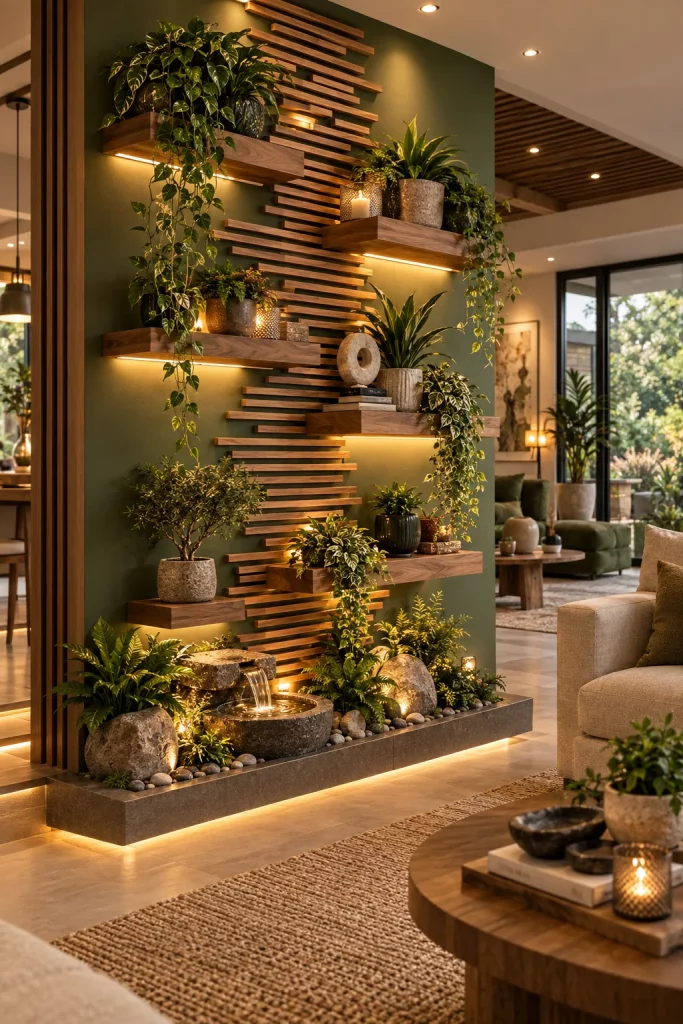
What works particularly well for me is the way the shelves use the wall rather than the floor. The staggered arrangement prevents the display from feeling rigid, while the repeated horizontal lines add structure to all the organic shapes. I also like the practical division between the elevated display and the water feature below. Everything feels connected, yet each level has its own visual purpose. This is a useful solution when I want a substantial green corner without filling the entire room with containers.
From a decorating perspective, I would pay close attention to spacing when creating something similar. The image succeeds because the shelves are distributed across the wall rather than placed in a single straight column. I would also mix upright foliage with cascading varieties, as the contrast creates movement and makes the vertical composition more interesting. Warm integrated lighting is another detail I would keep because it highlights both the greenery and the texture of the shelves without overwhelming the room.
For a practical version at home, I could recreate the principle with three or four staggered shelves and a few carefully selected containers. I would keep the lower section visually quieter and use one small water element if the available space and maintenance requirements allowed it. The photograph shows that a green corner can become an architectural feature when its vertical proportions are planned carefully.
Under-Stair Greenery With Cascading Water Bowls
The third image demonstrates an especially clever use of an awkward architectural area. Beneath the open staircase, I see a long curved-edged garden-style installation filled with layered foliage, smooth stones, rounded decorative forms, and several dark bowls through which water flows. The staircase combines dark structural elements with warm wood-toned treads and geometric railing details. Behind the greenery, vertical slats and concealed warm lighting emphasize the shape of the staircase. A large area of polished flooring keeps the lower part of the room open and allows the installation to remain the main visual feature.
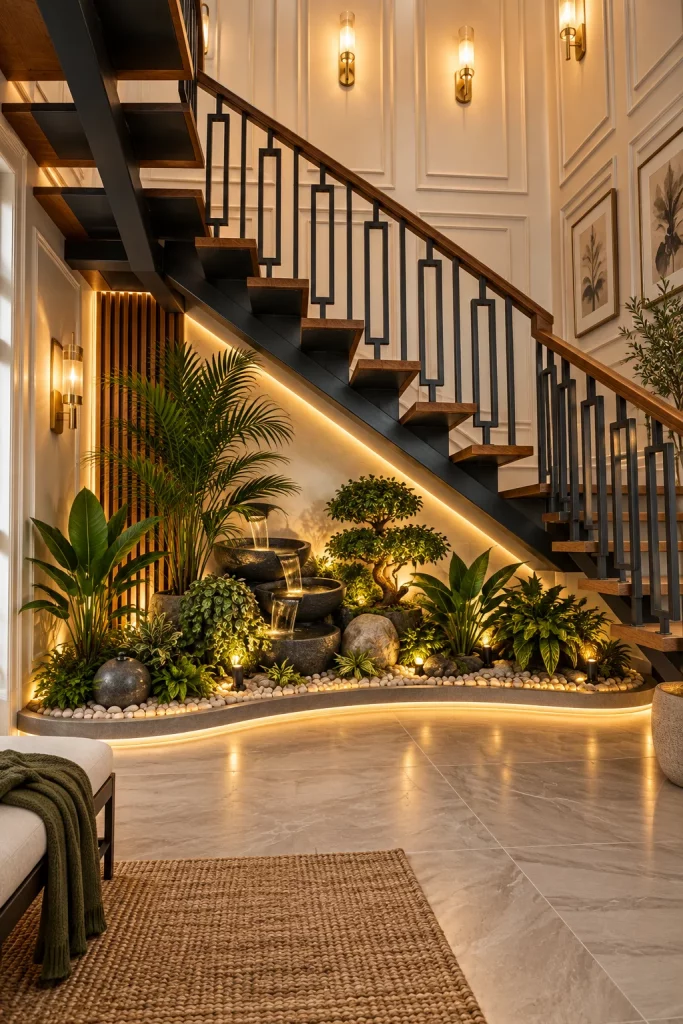
I think this idea works because it transforms otherwise unused space into something purposeful. Instead of leaving the area beneath the stairs empty, the design turns it into a strong visual transition between the architecture and the living area. The low profile is particularly important because it preserves the openness around the staircase. I also appreciate the repetition of rounded water bowls and stones, which creates a natural counterpoint to the straight lines of the stairs and railing.
If I were designing a similar corner, I would start with the available height and depth beneath the staircase. The photograph shows why this matters: taller foliage is positioned where the ceiling rises, while lower greenery follows the descending line of the stairs. That makes the arrangement feel tailored to the architecture. I would also use lighting sparingly but intentionally, concentrating it near the base and behind selected features so the installation remains atmospheric rather than overly illuminated.
For homeowners with a smaller staircase, I would simplify the concept into a narrow arrangement of low foliage, stones, and one compact water bowl. The important lesson for me is not the exact size of the installation but the way it follows the architectural shape. When a green corner responds to the structure of a room, it looks much more integrated.
Glass Tabletop Garden With a Small Indoor Fountain
Here, the green corner becomes a centerpiece for the coffee table rather than an architectural installation. I see a rectangular glass container filled with soil, rounded stones, succulents, low foliage, and a small tiered fountain. A seated Buddha figure provides a calm focal point among the greenery. The display rests on a substantial natural-edge coffee table with dark metal legs, while a cream sofa, muted green cushions, textured throw, and illuminated shelving create a relaxed backdrop. Large windows bring the outdoor landscape into view behind the seating area.
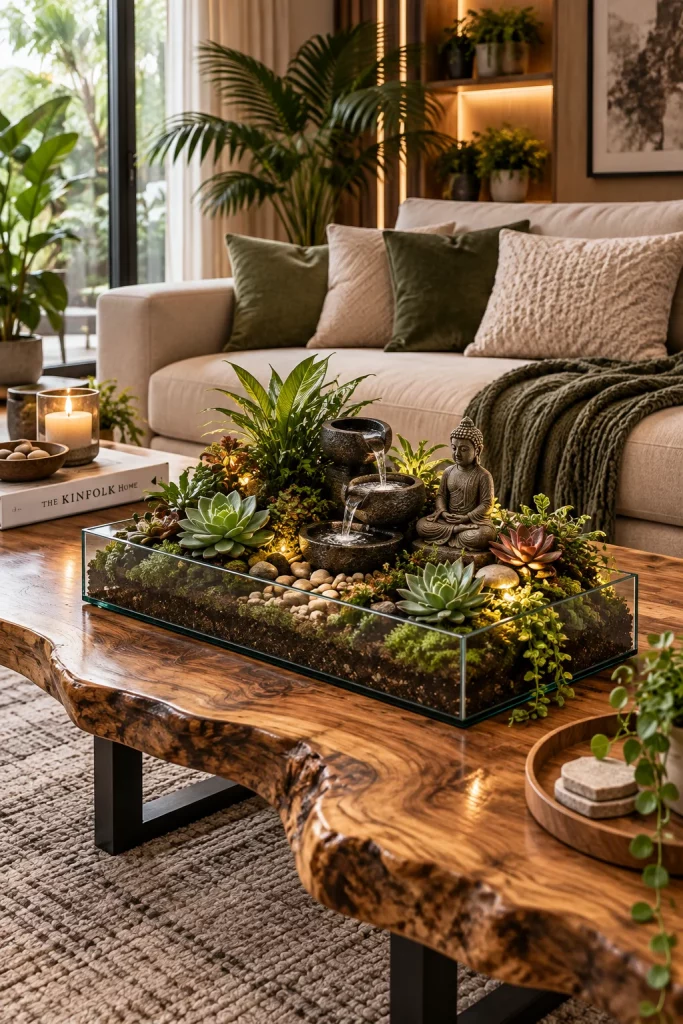
I find this approach especially appealing for someone who wants a natural focal point without dedicating an entire wall or floor area to it. The glass enclosure clearly defines the arrangement while keeping the tabletop visually open. The combination of succulents, small foliage, stones, and flowing water creates several different textures within one compact composition. I also like how the display echoes the larger greenery visible through the windows, making the interior and exterior feel visually connected.
For my own decorating approach, I would treat a tabletop garden like this almost as a miniature landscape. The photograph shows the value of varying height and texture while leaving enough open space around the central fountain. The transparent sides also allow the layered interior to remain visible from different angles. Because the arrangement occupies the center of the table, I would keep surrounding accessories restrained so the display remains easy to appreciate and the table stays functional.
This idea could work particularly well on a coffee table, console, or broad sideboard. I would choose a container whose proportions suit the furniture underneath it and keep the arrangement low enough that it does not interfere with conversation across the room. The image proves that even a relatively small green feature can establish a strong sense of calm.
Indoor Aquarium Surrounded by Layered Greenery
The final interior combines greenery with an aquarium to create a lively focal point along one wall. I see a rectangular aquarium filled with water, aquatic foliage, stones, and small fish, positioned on a long cabinet with woven-style door fronts. Around it are numerous containers of greenery, including tall upright foliage, broad leaves, trailing stems, and compact arrangements. Framed decorative pieces and mirrors cover the wall above the cabinet, while patterned curtains, warm pendant lighting, candles, and a cream sofa complete the setting. Through the large glass door, more outdoor greenery and colorful flowering shrubs are visible.
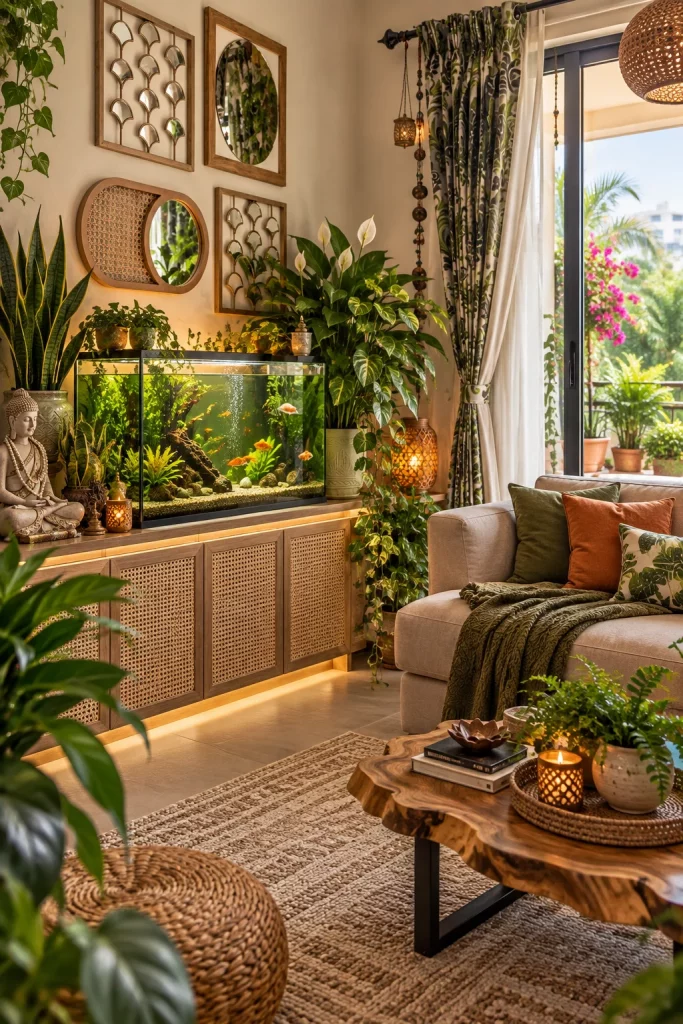
What I like most here is the layering. The aquarium provides a clear horizontal focal point, while the greenery rises around it and creates different visual heights. The cabinet gives the arrangement a defined base, and the mirrors help reflect the surrounding interior. I also notice how the seating area remains close enough to enjoy the aquarium without making the room feel crowded. The result is a corner that combines movement, texture, and visual interest in one carefully organized zone.
From my perspective, an aquarium requires especially thoughtful placement because it becomes both décor and a functional feature that needs regular attention. The photograph shows why surrounding it with carefully positioned greenery can make the aquarium feel integrated into the room instead of isolated. I would also preserve clear access to the aquarium for maintenance while avoiding excessive objects directly around its edges. The balance between the living greenery and the moving fish is what gives this corner its distinctive character.
If I were adapting this idea, I would begin with the aquarium as the anchor and then build outward with a few different foliage shapes rather than filling every available surface. A cabinet with enclosed storage, like the one shown, also helps keep the lower portion visually organized. For me, this image is a reminder that a natural home does not have to rely on one type of greenery; combining water, foliage, glass, stone, and warm lighting can create a much richer atmosphere.
Creating an indoor green corner is a simple way to bring more texture, freshness, and natural character into the home. From layered plant shelves and sculptural stands to terrariums and statement greenery, each idea offers its own way to make an interior feel more inviting. I love how these arrangements can work with different room sizes while adding personality without overwhelming the space. Which Indoor Green Corner Ideas for a Natural Home inspired you the most? Leave a comment and share your favorite idea!