Green is one of those colors that feels both grounding and alive. It can make a room feel calm, dramatic, or playful depending on the shade you choose. If you are looking for green living room ideas, you are in the right place.
This article covers 25 distinct looks that show how versatile this color really is. From soft sage walls to deep emerald velvet, you will see how green works in different styles and layouts.
01 / 26Sage Green Walls and Velvet Sofa for a Biophilic Oasis
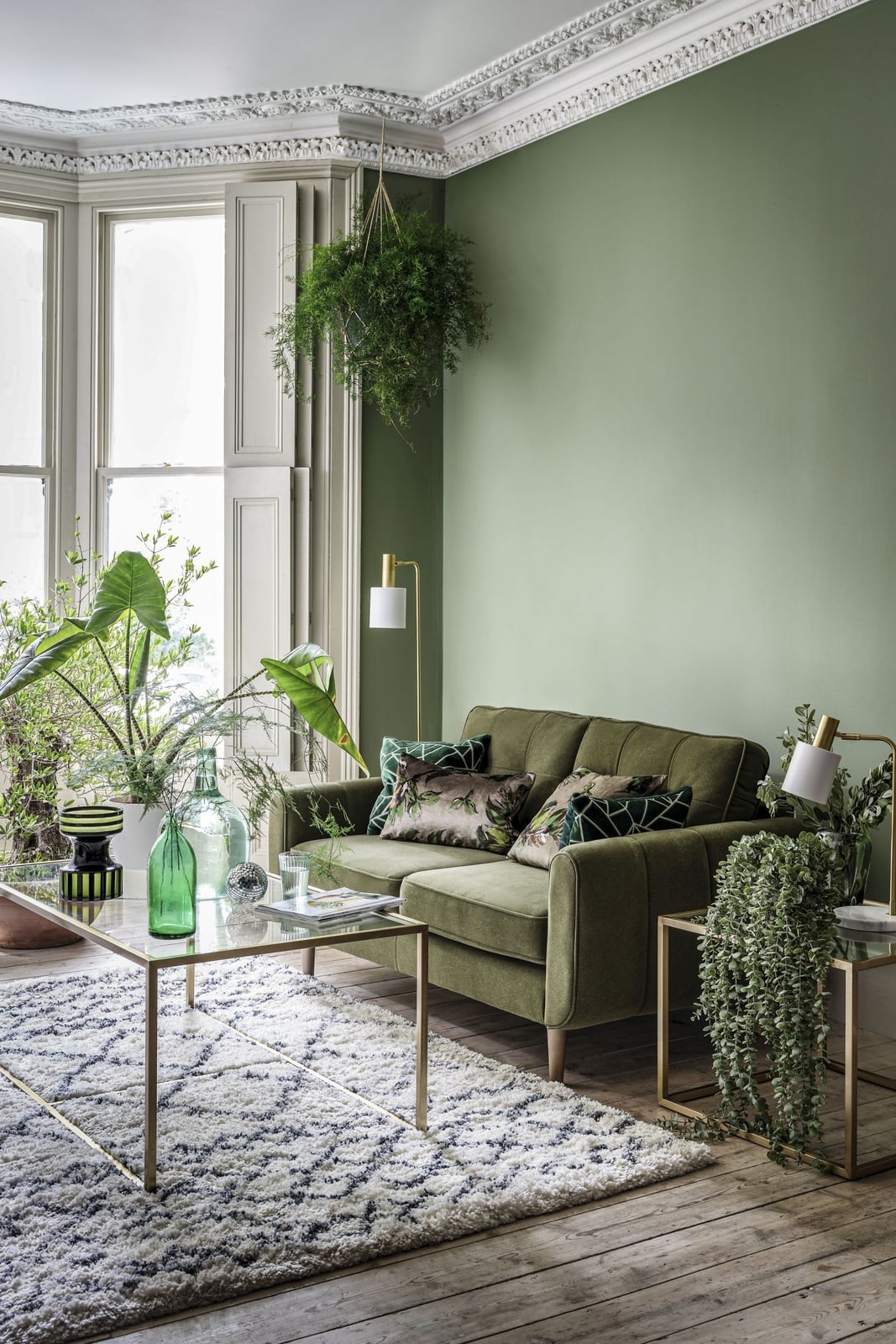
Sage green walls and a matching velvet sofa set the stage for a room that feels less decorated and more grown. The palette stays calm with white and wood tones, while a glass coffee table keeps the airy look intact. Natural light from a large window hits a floor lamp and a crowd of plants, making the green feel like part of the ecosystem rather than just paint. This is a room that lives quietly and lets the plants do the talking.
02 / 26Immersive Dark Green for a Dramatic, Modern Living Room
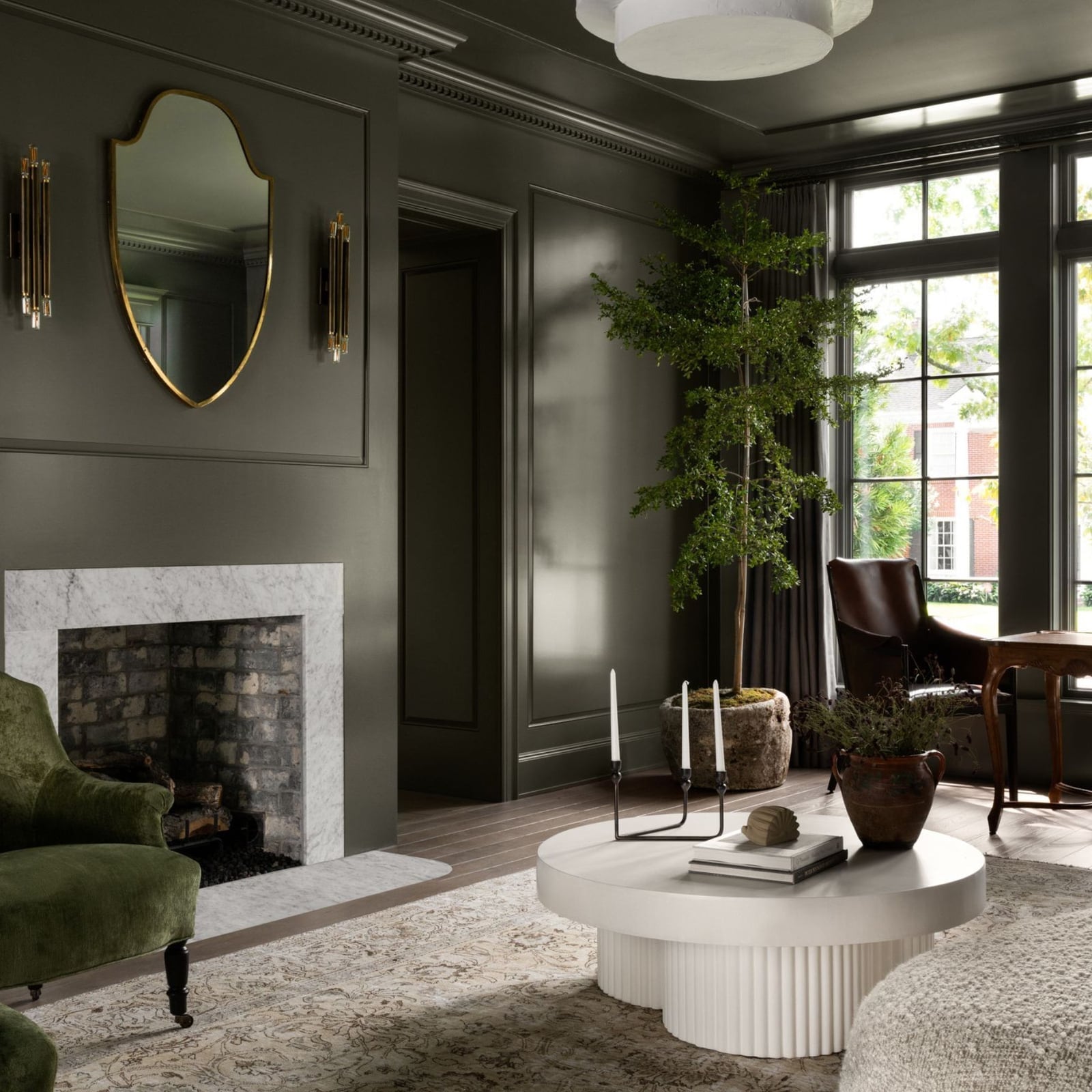
Painting the walls and ceiling the same dark green wraps the room in color and makes the white coffee table and gold accents pop. A green velvet armchair near the fireplace and a large plant by the window keep the monochrome from feeling flat. The palette is the anchor here, and the contrast is the payoff.
03 / 26Eclectic Living Room with Dark Green Walls and Leather Sofa
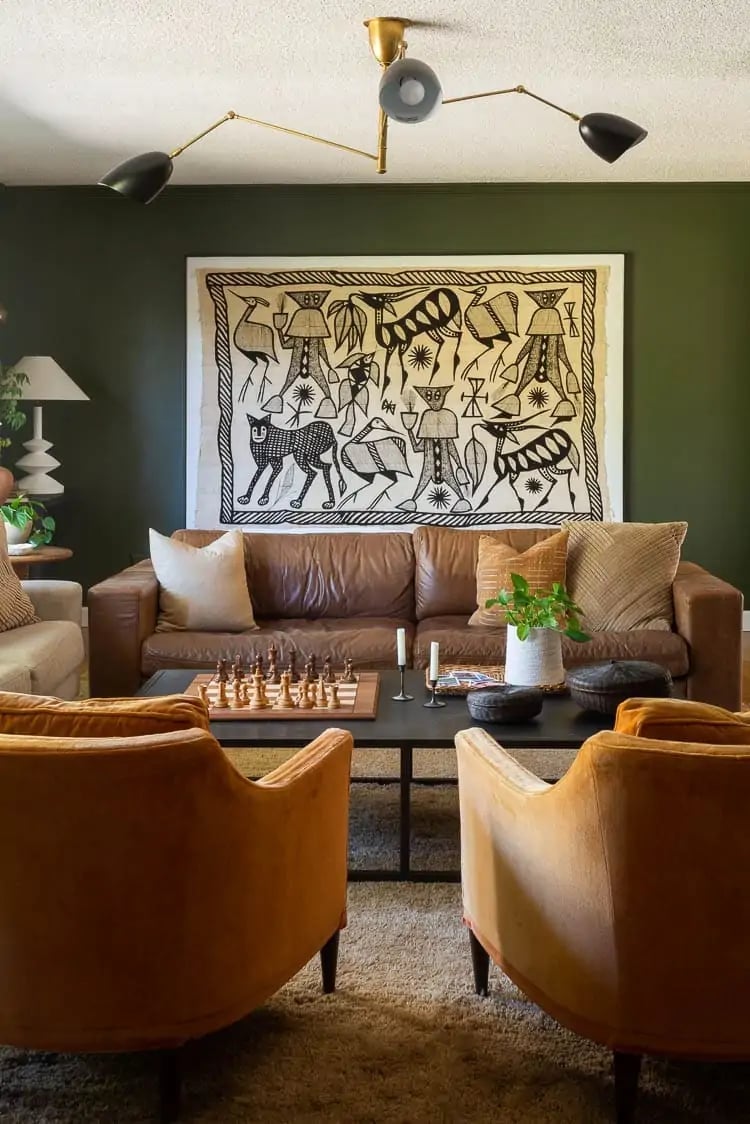
Can dark green walls handle a brown leather sofa without turning muddy? This room says yes, by letting the leather read as warm rather than heavy. The palette gets a lift from ochre velvet armchairs and a large black-and-white graphic artwork that breaks the color into something deliberate. An overhead light and a table lamp keep the cozy scale from feeling dark. The trick is letting each material do its own job: leather grounds, velvet softens, and the artwork gives the eye a place to rest.
04 / 26Muted Olive Green Walls as a Sophisticated Backdrop
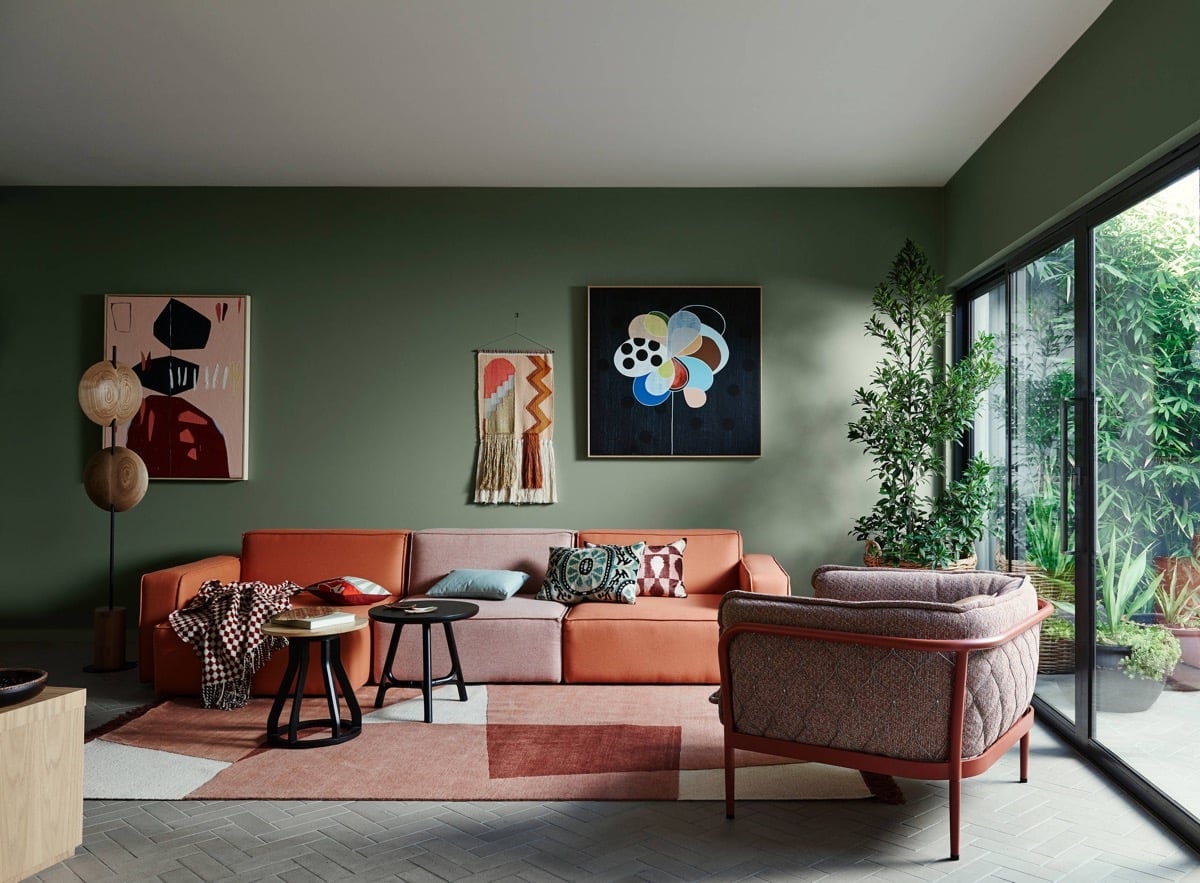
Muted olive green walls hold their own against a modular orange-pink sofa without competing. The palette adds terracotta and blush pink through a textured armchair and abstract art, while natural light from large sliding doors and an ambient floor lamp keeps the open plan from reading as dim. A large plant near the door bridges the indoor-outdoor feel. The green recedes just enough to let the sofa be the event.
05 / 26Bright Green Walls with Vibrant Floral Upholstery
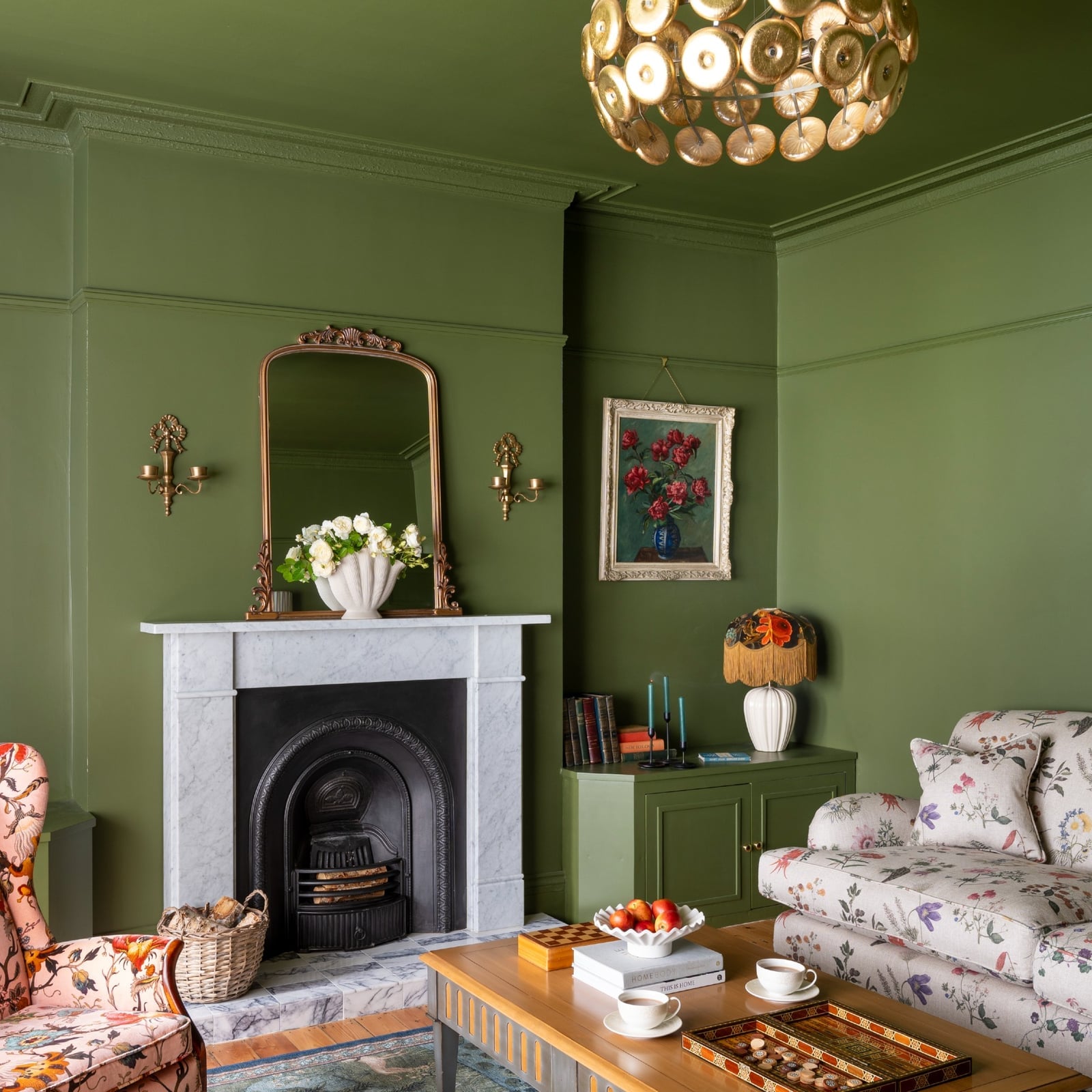
A practical rule for busy patterns: let the walls do the supporting. Bright green walls here frame a floral sofa and matching armchair without letting the room feel chaotic. A green cabinet, marble fireplace, and wooden coffee table add mass without noise, and the decorative ceiling light gives the medium room a clear focal point. The storage pieces stay neutral in shape so the upholstery can carry the personality.
06 / 26Dark Green Gallery Wall for a Modern Statement
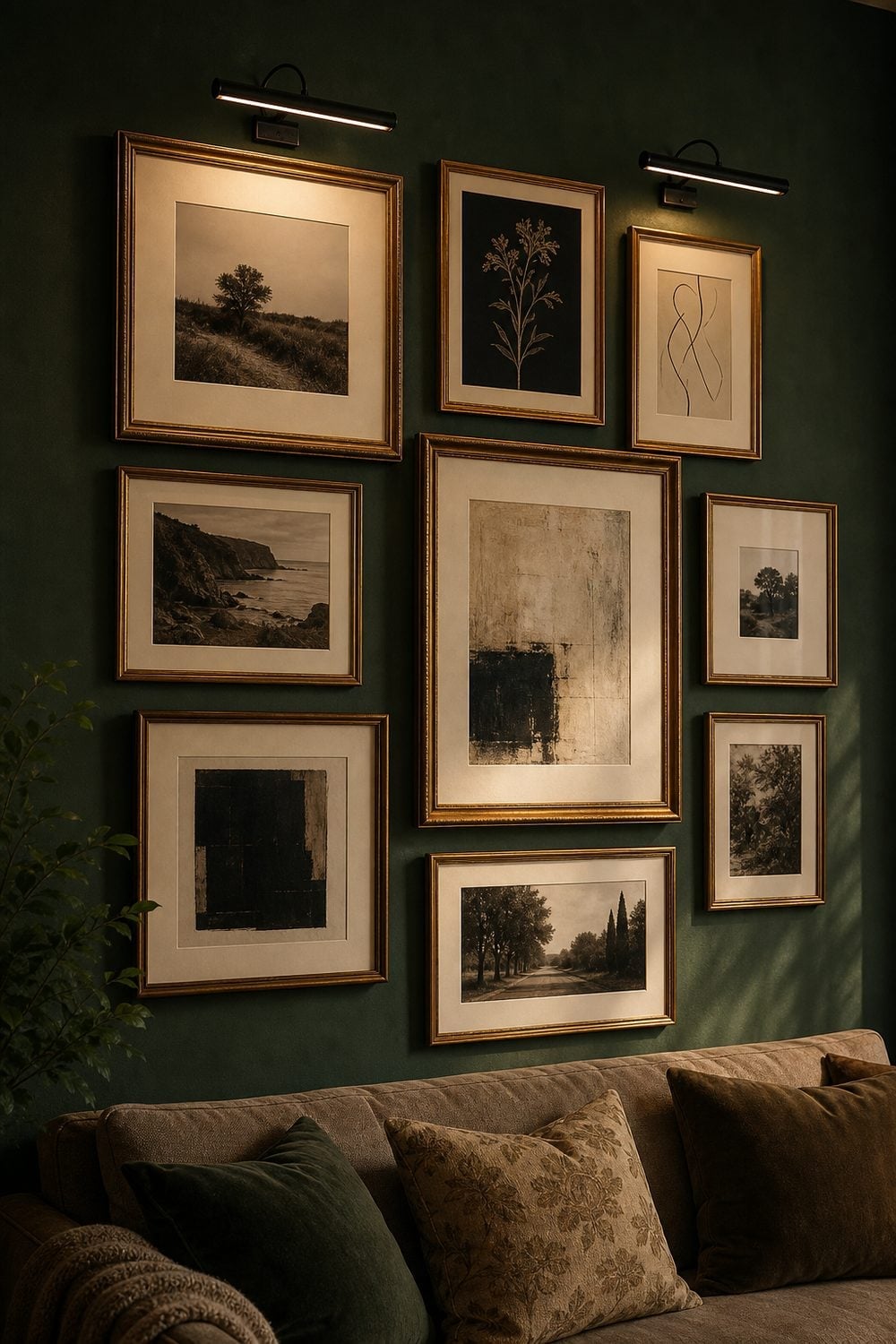
If you love the look of a single oversized art piece but have a wall that asks for more, a gallery wall on dark green paint keeps the focus where you want it. The deep background lets black-and-white prints and gold frames stand out without the visual clutter of a busy wall. A linen sofa below balances the weight, and track lighting aimed at the arrangement keeps the wall from reading as a dark cave. The trick is spacing: keep frames close enough to read as one composition rather than scattered marks. This setup works best for a roomy living room where the sofa sits opposite the entry, so the wall becomes the first thing you see.
07 / 26Deep Teal Green Walls with a Cozy Fireplace
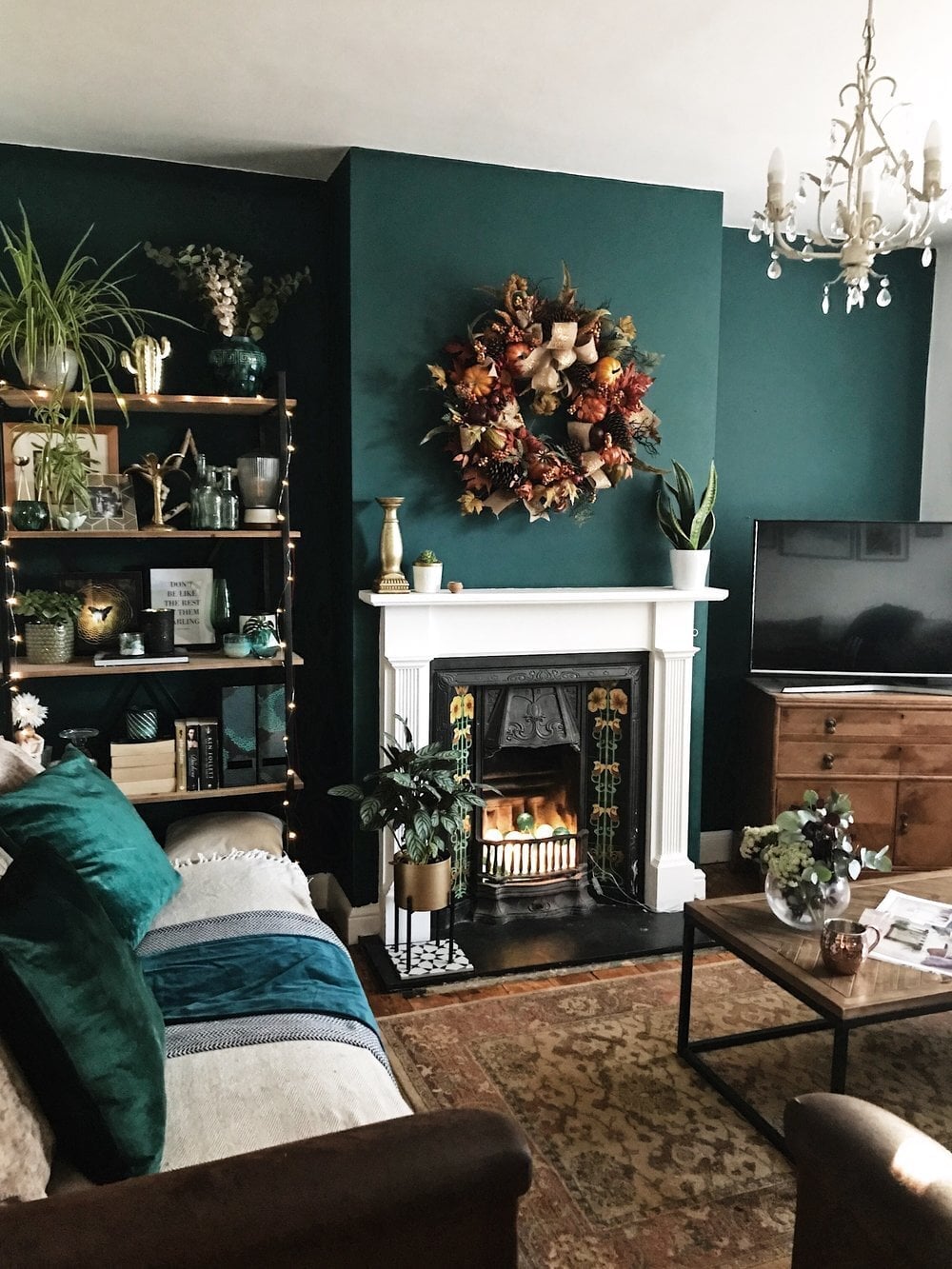
The deep teal green wall behind a white fireplace does not compete with the mantle; it deepens the contrast. A wooden shelf on one side and a decorative wreath above the firebox add texture without crowding the hearth. A cream sofa facing the fireplace and a warm chandelier overhead make the room feel like a reading nook that happens to have a fire. The palette works because the wood tones and cream keep the dark wall from turning the room into a cave. This is a palette that rewards bold commitment: paint the whole room, not just one wall.
08 / 26Traditional Living Room with Sage Green Walls and Wicker
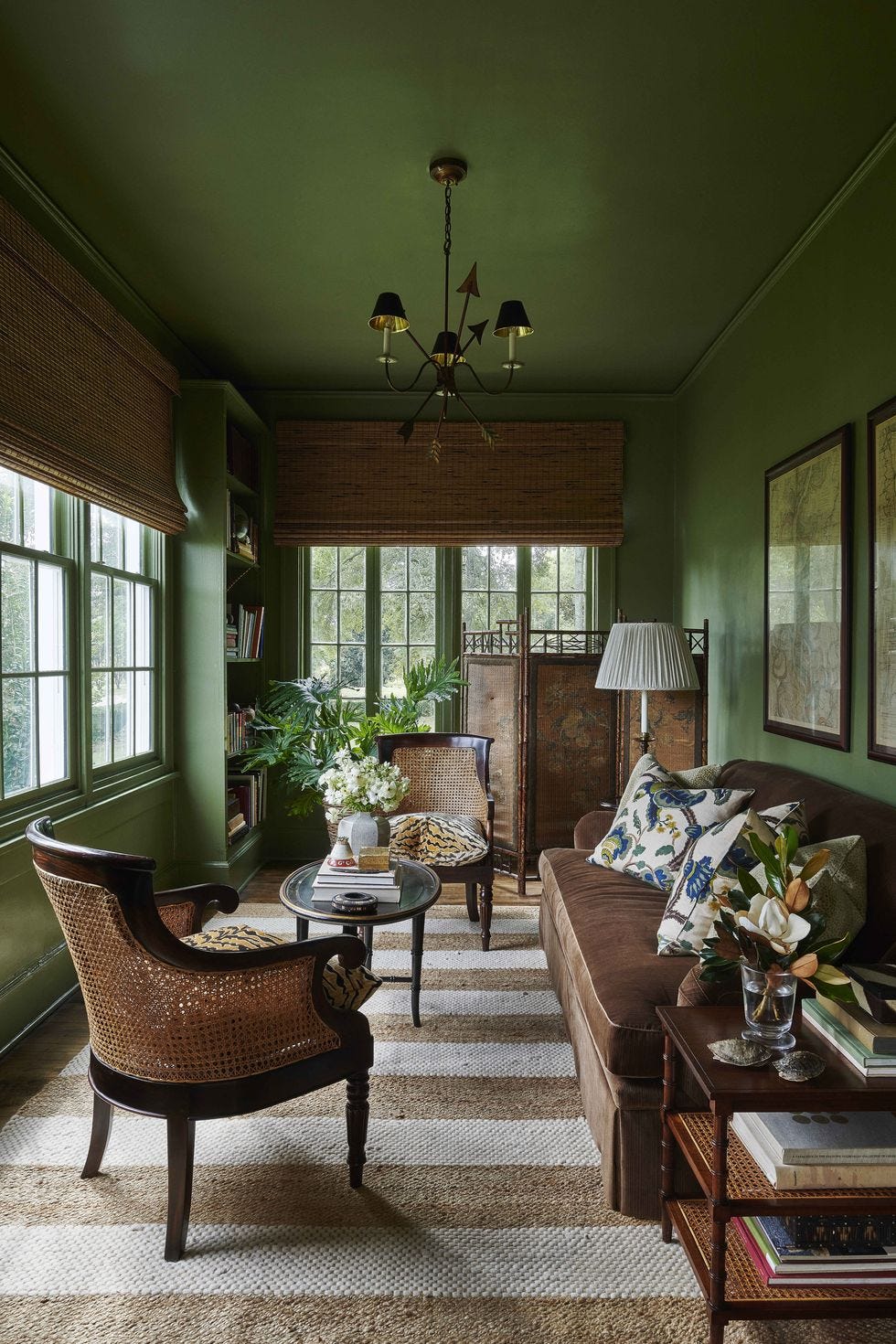
Sage green on walls and ceiling sets a calm, grounded tone that lets traditional furniture breathe. Wicker chairs and a brown sofa anchor the seating area, while a woven rug and a wooden bookshelf add the warmth that sage green needs to feel finished rather than sterile. Linen blinds filter natural light so the green reads soft, not washed out. The key material lesson here is natural textures: rattan, wood, and linen keep sage from leaning too cool. A chandelier adds the formal note the room expects. This is a look that suits a house with existing wood trim or a renter who can paint with permission.
09 / 26Vibrant Lime Green Velvet Sofa as a Statement Piece
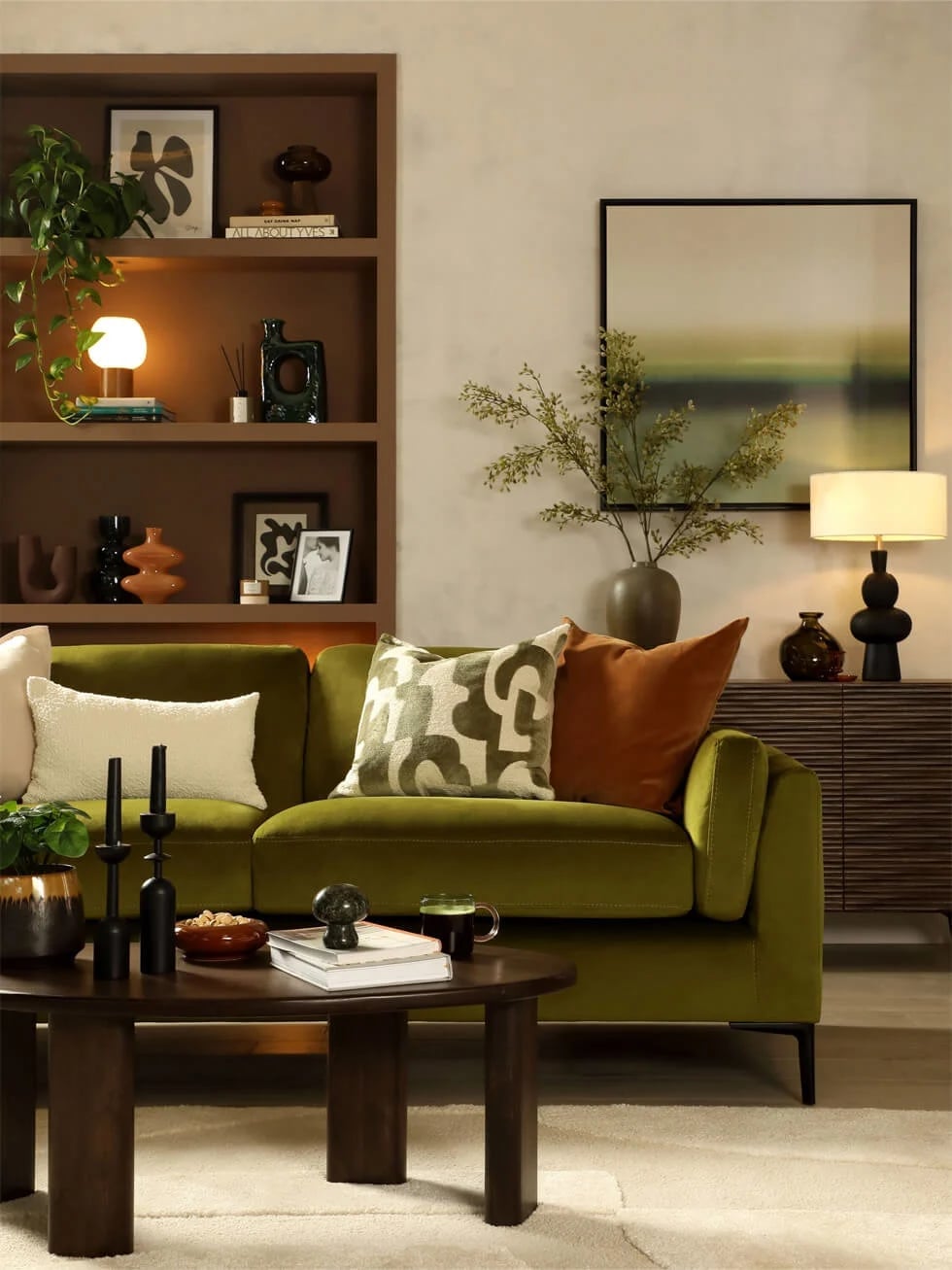
Can a lime green velvet sofa stay in a room without feeling like a party decoration? Yes, when the room plays it straight. A dark wood coffee table and a ribbed cabinet in a neutral tone give the sofa a stable frame. Abstract art on the wall picks up the lime but also introduces terracotta and cream, which are the colors that keep the sofa from floating. A table lamp with a warm bulb softens the velvet’s sheen so it appears rich. The layout is simple: sofa facing the cabinet, coffee table in between, everything else minimal. This is a piece that asks the room to support it, not compete.
10 / 26Blue-Green Walls for a Transitional Living Room
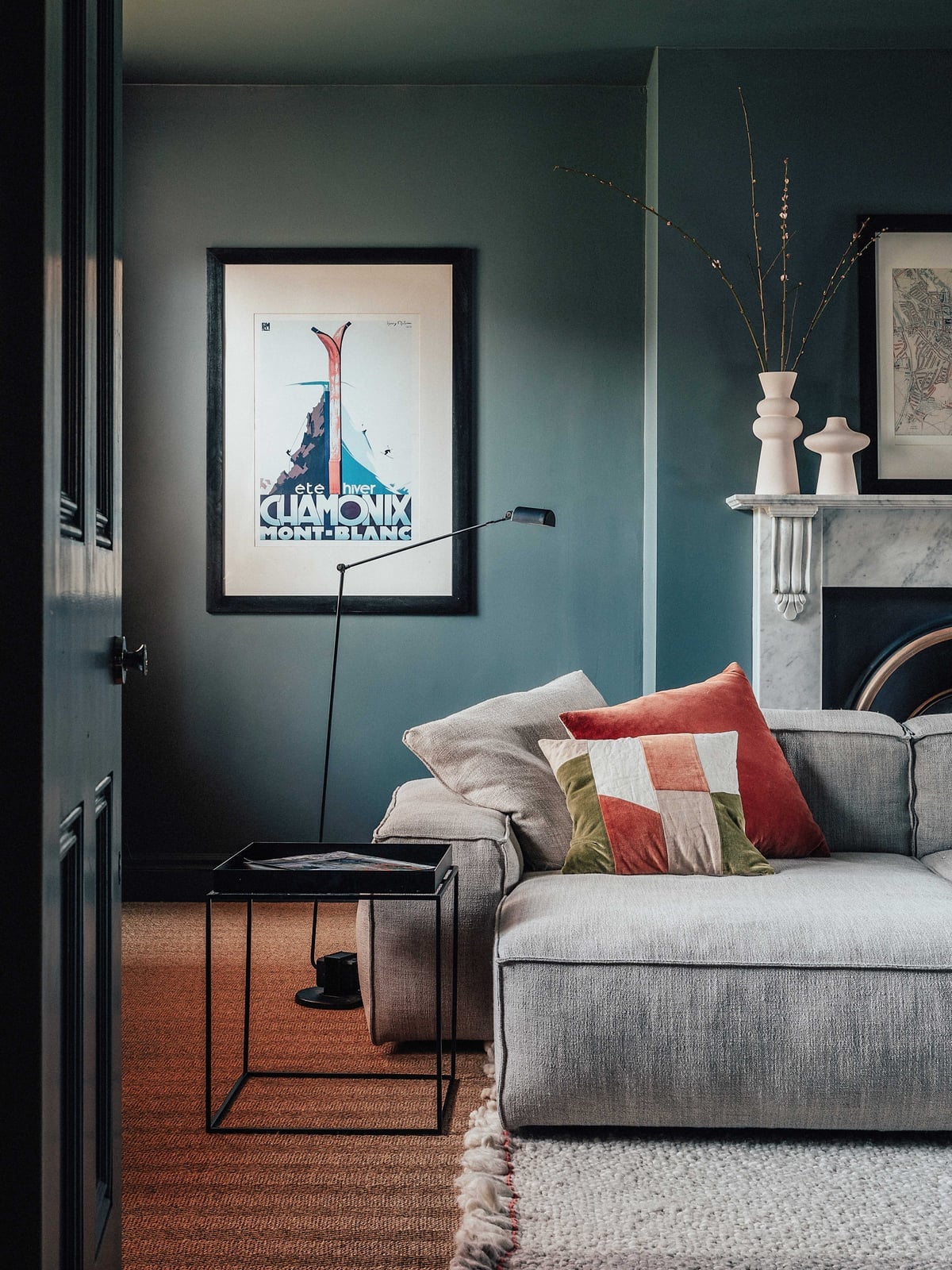
Blue-green walls sit between cool and warm, which makes them a natural fit for a transitional room that mixes traditional shapes with modern finishes. A gray sofa and an orange side table give the wall a complementary anchor, while a floor lamp with a metal base adds a clean line. The palette stays calm because the blue-green is muted, not bright. This is a good choice for a living room that gets morning light, since the blue-green shifts from more blue in the shade to more green in the sun. A single artwork with orange tones ties the whole scheme together.
11 / 26Sage Green Accent Wall with Botanical Art
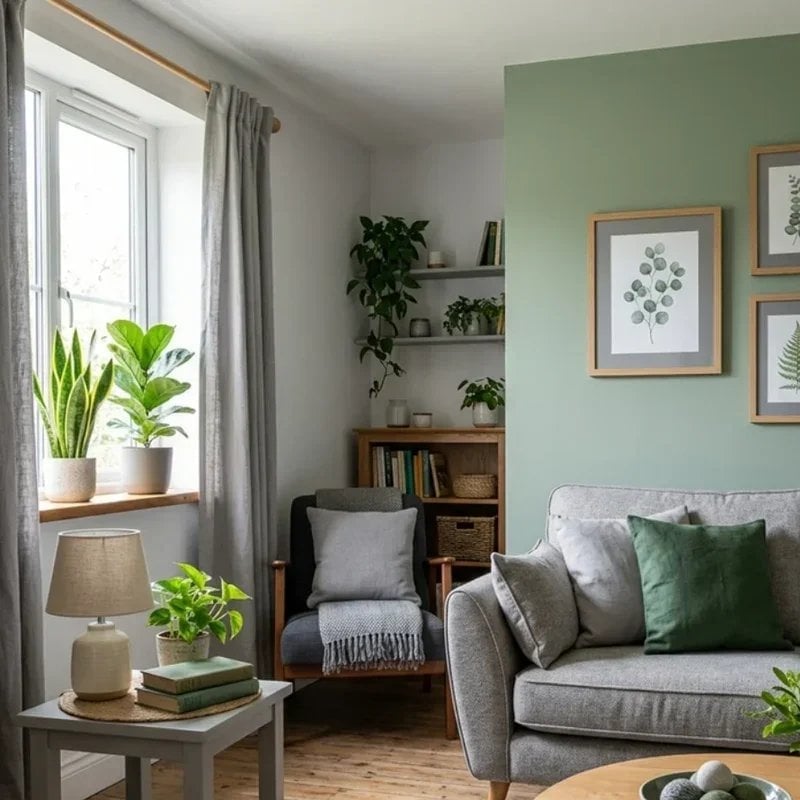
A single sage green wall gives a living room a clear focal point without committing the whole room to a dark color. The gray sofa and armchair face each other for conversation, and the wooden bookshelf against another wall keeps the layout grounded. Window light and a table lamp keep the green from reading as heavy. The botanical art on the accent wall ties the palette together, linking the green paint to the potted plants around the room. This setup works for anyone who wants a touch of color but prefers to keep the rest of the room neutral.
12 / 26Dark Green Paneled Walls in a Traditional Setting
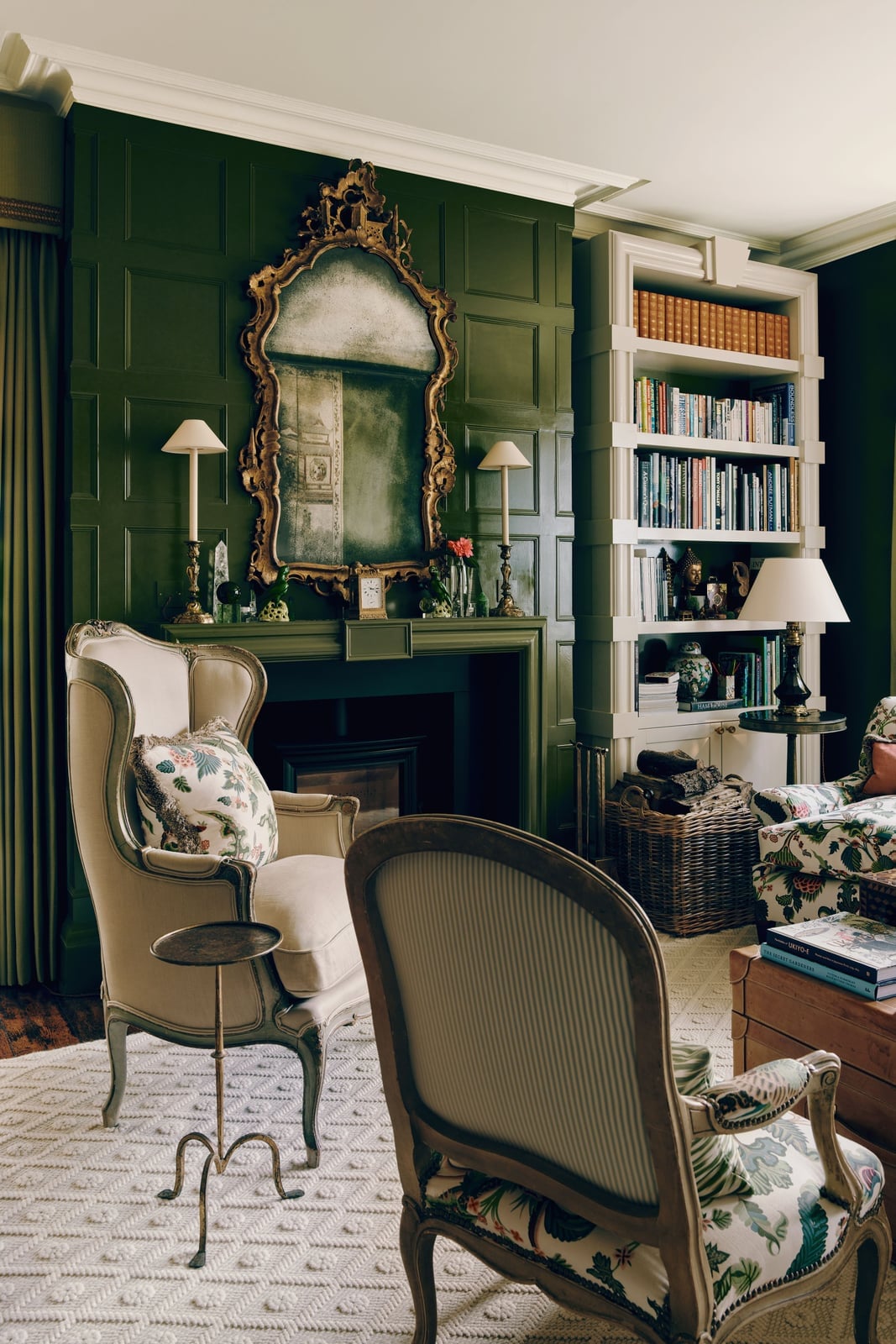
Dark green paneled walls can feel heavy in a small room, but here the traditional setting balances it with cream and gold accents. The fireplace anchors the seating area, and the wingback chair adds a classic silhouette. Ambient lamps and natural light keep the room bright. The mirror reflects light around the space, which helps the dark walls feel cozy and not cramped.
Wood paneling adds texture that flat paint cannot match. The velvet on the chair and the fabric on the bookshelf introduce softness against the hard wood. The gold details in the mirror and accessories break up the dark green just enough. This palette works best in a roomy space with good natural light. Renter-safe swaps include peel-and-stick paneling and a dark green wall decal.
13 / 26Oversized Sage Green Sofa for Minimalist Comfort
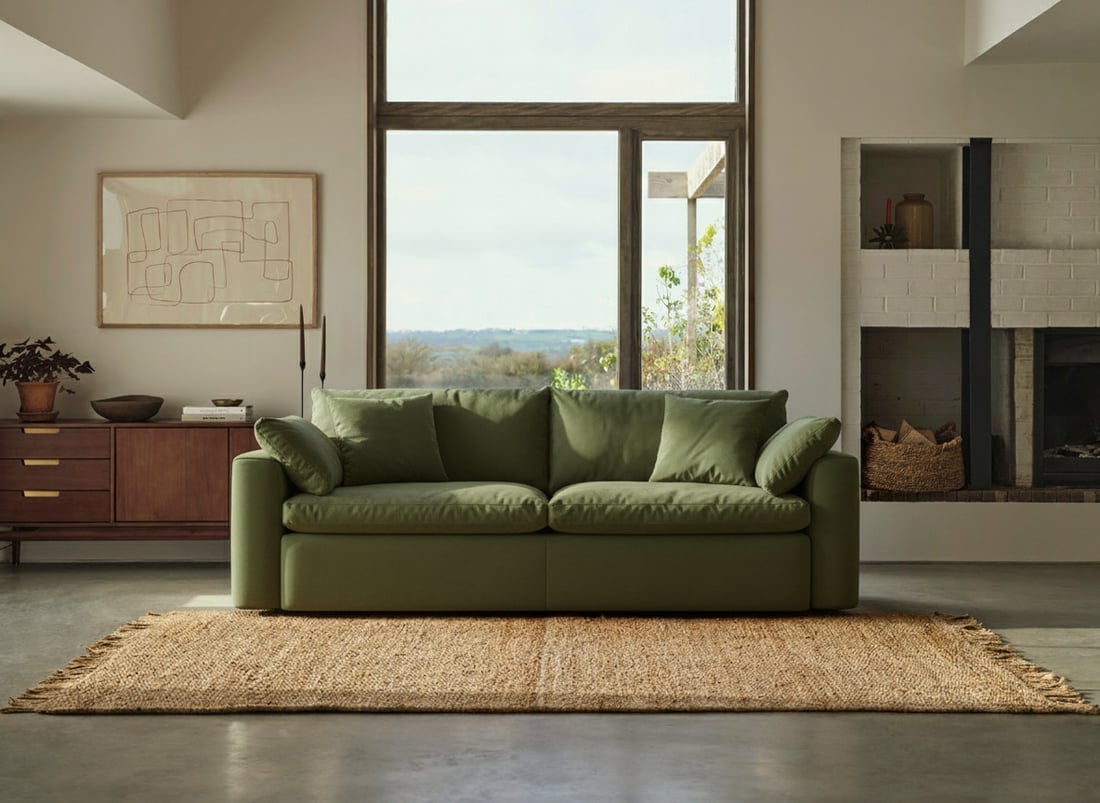
The oversized sage green sofa sits centered on a jute rug, and the low profile keeps the room from feeling crowded. Beige walls and a wooden sideboard let the sofa hold the attention without competition. Natural light from a large window and soft overhead lighting keep the space airy. The large abstract art adds a visual anchor above the sofa. In a minimalist scheme, the sofa provides both color and texture on its own, so the room can stay quiet.
14 / 26Emerald Green Velvet Curtains as a Luxurious Accent
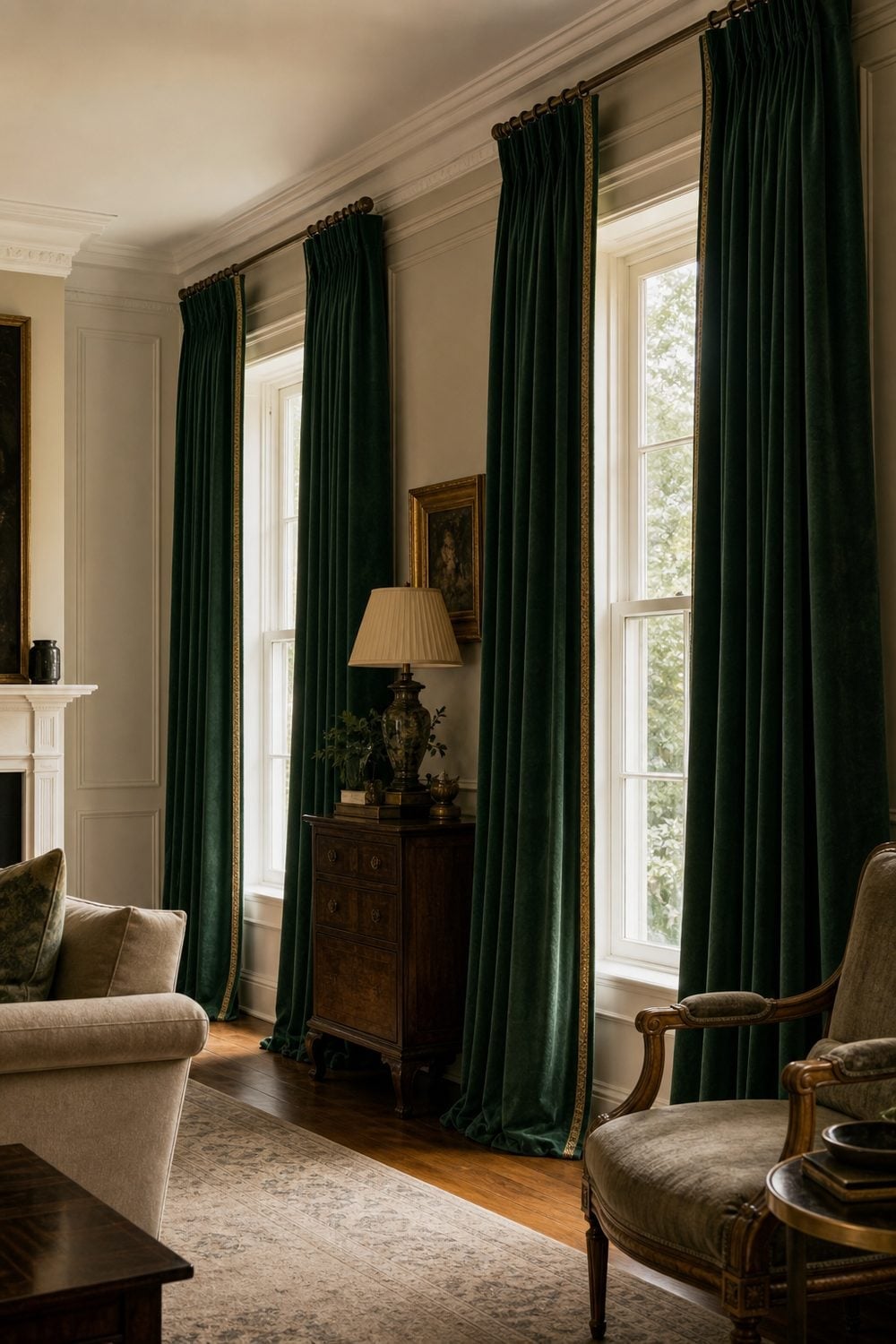
Emerald green velvet curtains bring a dense, saturated color to a room without the commitment of painted walls. The velvet finish softens the room, while the cream and gold details in the armchair and chest of drawers keep the look balanced. A table lamp adds warmth in the evening. The curtains act as a backdrop for the window area, drawing the eye upward and making the ceiling feel taller. In a roomy traditional space, velvet curtains create a deliberate focal point. For renters, this is a low-risk way to test a bold green.
15 / 26Sage Green Tiled Fireplace in a Modern Farmhouse
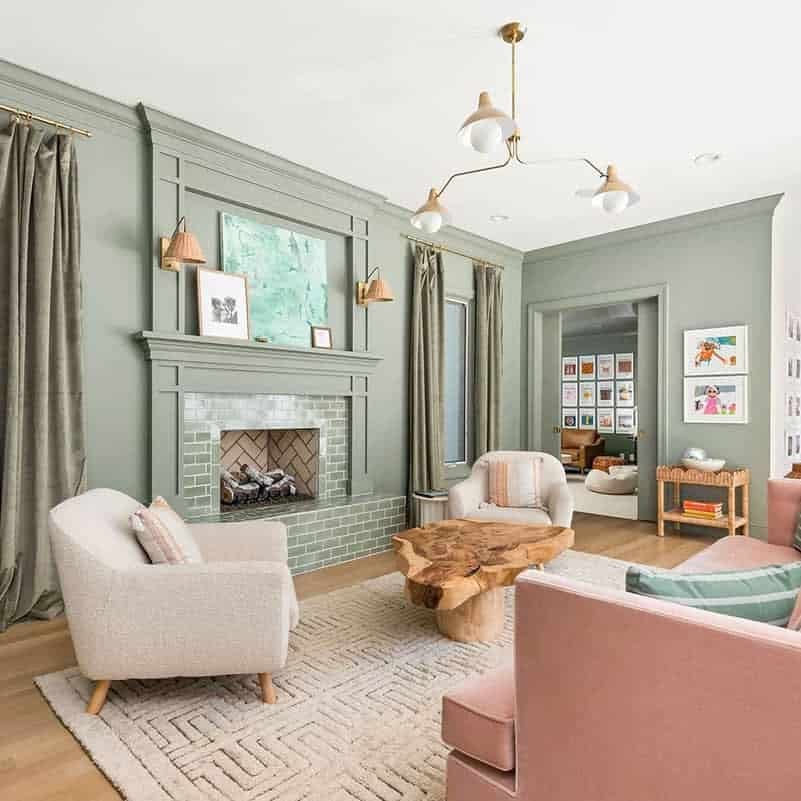
A colorful fireplace surround works best when the rest of the room stays neutral so the tile stands out. The sage green tiled fireplace surround in this modern farmhouse living room does just that. Cream armchairs and a live-edge coffee table keep the palette earthy, while the pink sofa adds a soft contrast that feels deliberate. The windows and overhead lighting keep the green from feeling dark.
The tile around the fireplace gives the room a durable surface that handles heat well. The furniture and stone hearth tie back to the farmhouse style. The seating arrangement circles the fireplace and coffee table, making the hearth the natural gathering point. This kind of tile work is a job for a professional, not a weekend project.
16 / 26Muted Green Walls with a Large Gray Sectional
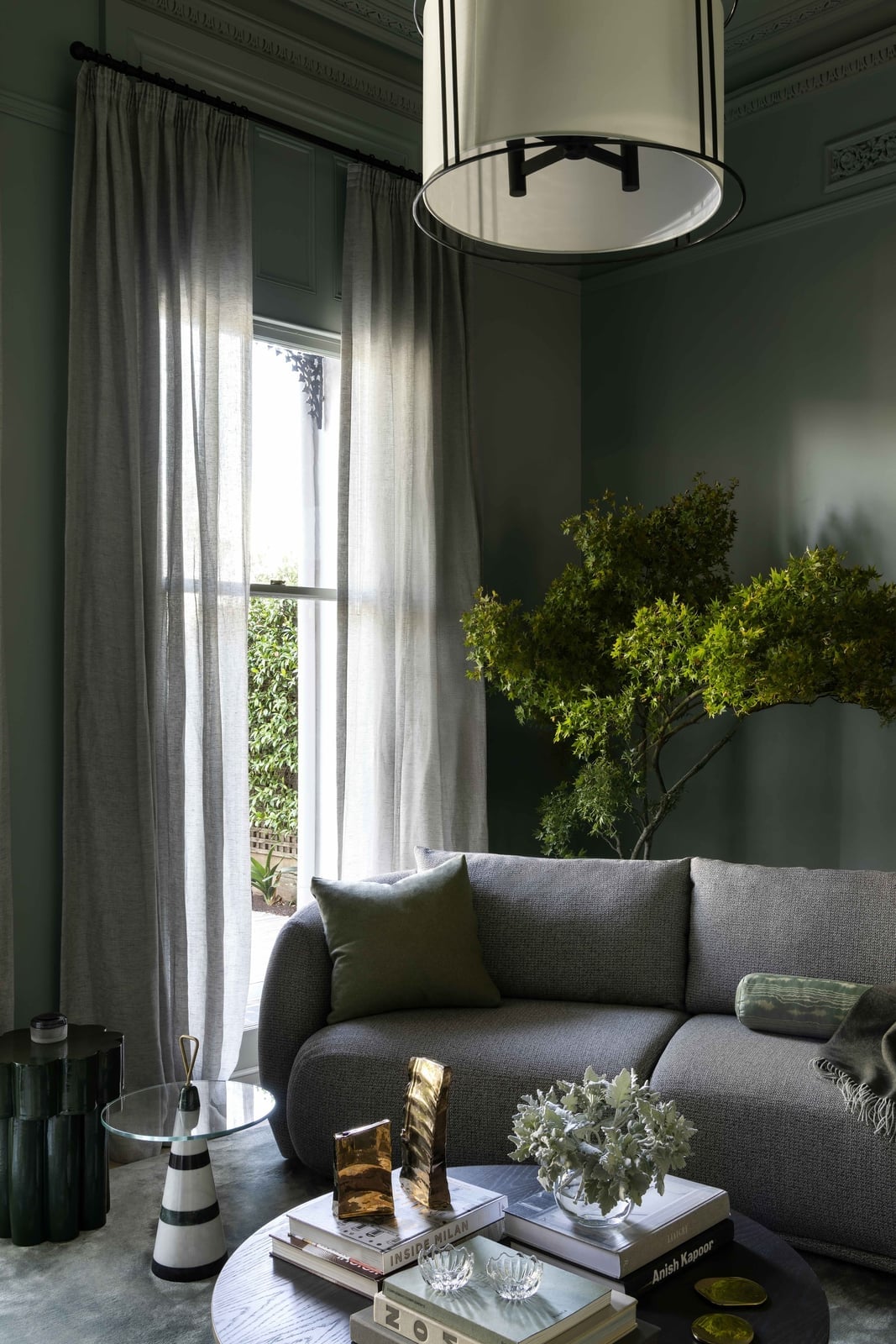
Muted green walls give this open plan living room a calm backdrop for a large gray sectional sofa that faces the window. A glass coffee table in front of the sofa keeps the sightlines open, while large abstract sculptures on the table add weight without blocking the view. The palette is muted green, gray, and white, with natural light and a ceiling light keeping the room bright. For this layout, the sectional is the anchor, so the decorative objects become the conversation pieces.
17 / 26Deep Green Velvet Sofa in a Compact Eclectic Space
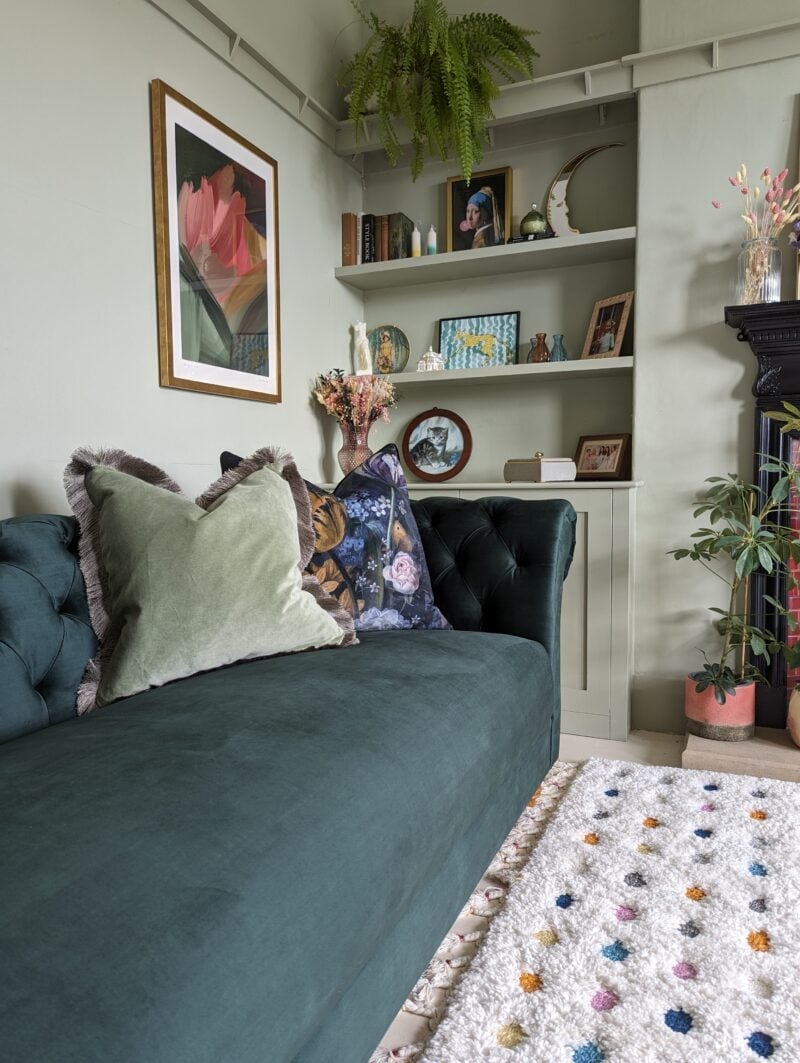
A practical rule for a compact living room is to let one piece do the talking. Here a deep green velvet sofa against the wall anchors a corner vignette, with patterned cushions and a plant adding layers without crowding the floor. The eclectic mix of deep green, sage green, brown, and cream works because the velvet sofa pulls the warmer tones together. Ambient room light and natural light keep the corner from feeling closed off. For renters, this approach means the sofa is the commitment, and everything else, cushions, plants, small ceramics, can shift with your next place.
18 / 26Dark Green Accent Wall Behind a Gray Sofa
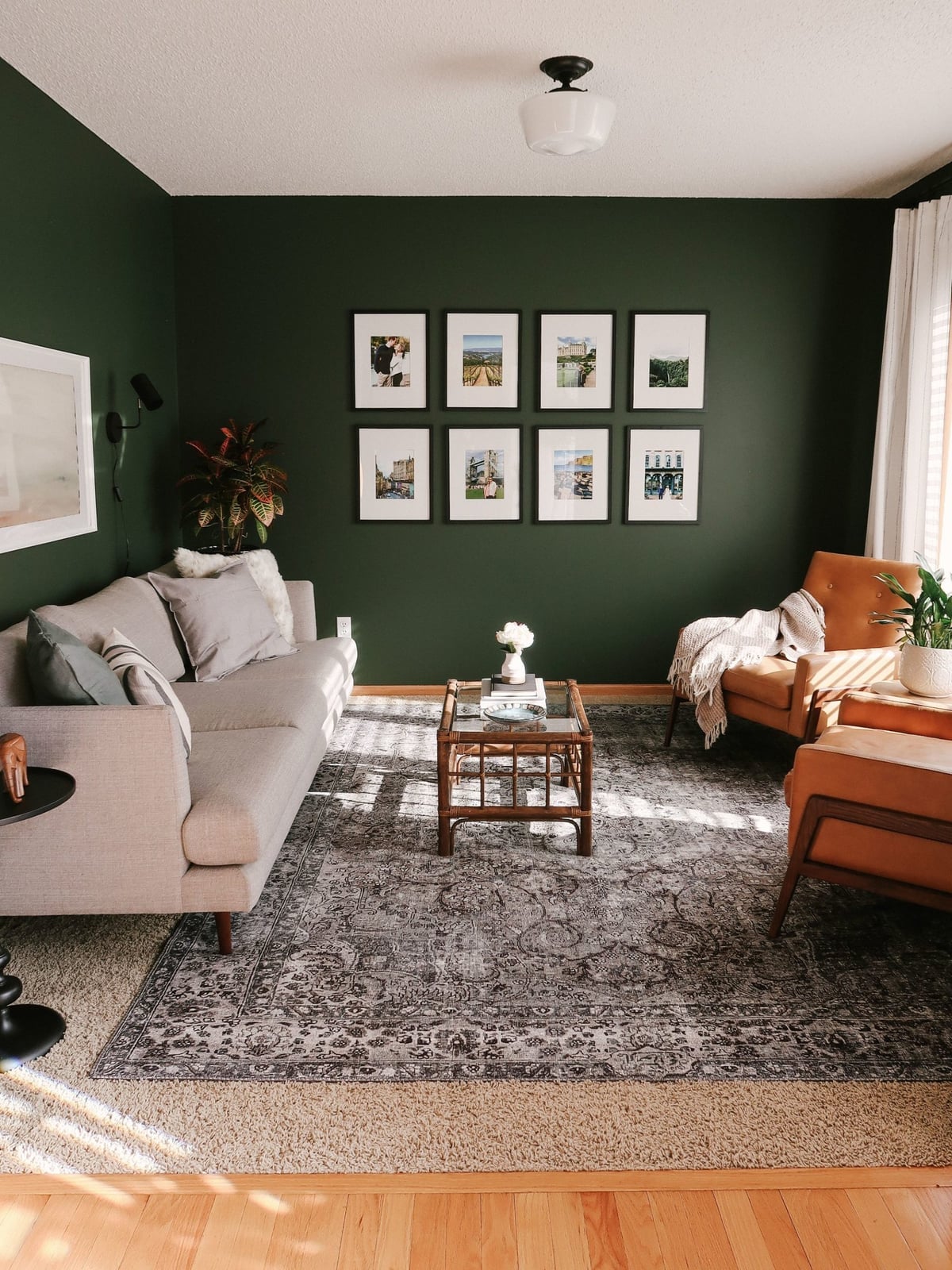
A dark green accent wall can feel heavy if it is the only dark surface in the room. This room avoids that by pairing it with a gray sofa and a tan leather armchair that face each other across a wooden coffee table. The gallery wall behind the sofa breaks up the dark paint, and the wall sconces add light exactly where it is needed. Wood floors and white trim keep the palette grounded and not gloomy.
The layout works because the accent wall is behind the main seating, so it frames the sofa. Natural light from nearby windows and the ambient room light soften the contrast. For anyone considering a dark green accent wall, match it with warm leather or wood tones so the room stays inviting.
19 / 26Lime Green Velvet Sofa for a Modern Pop
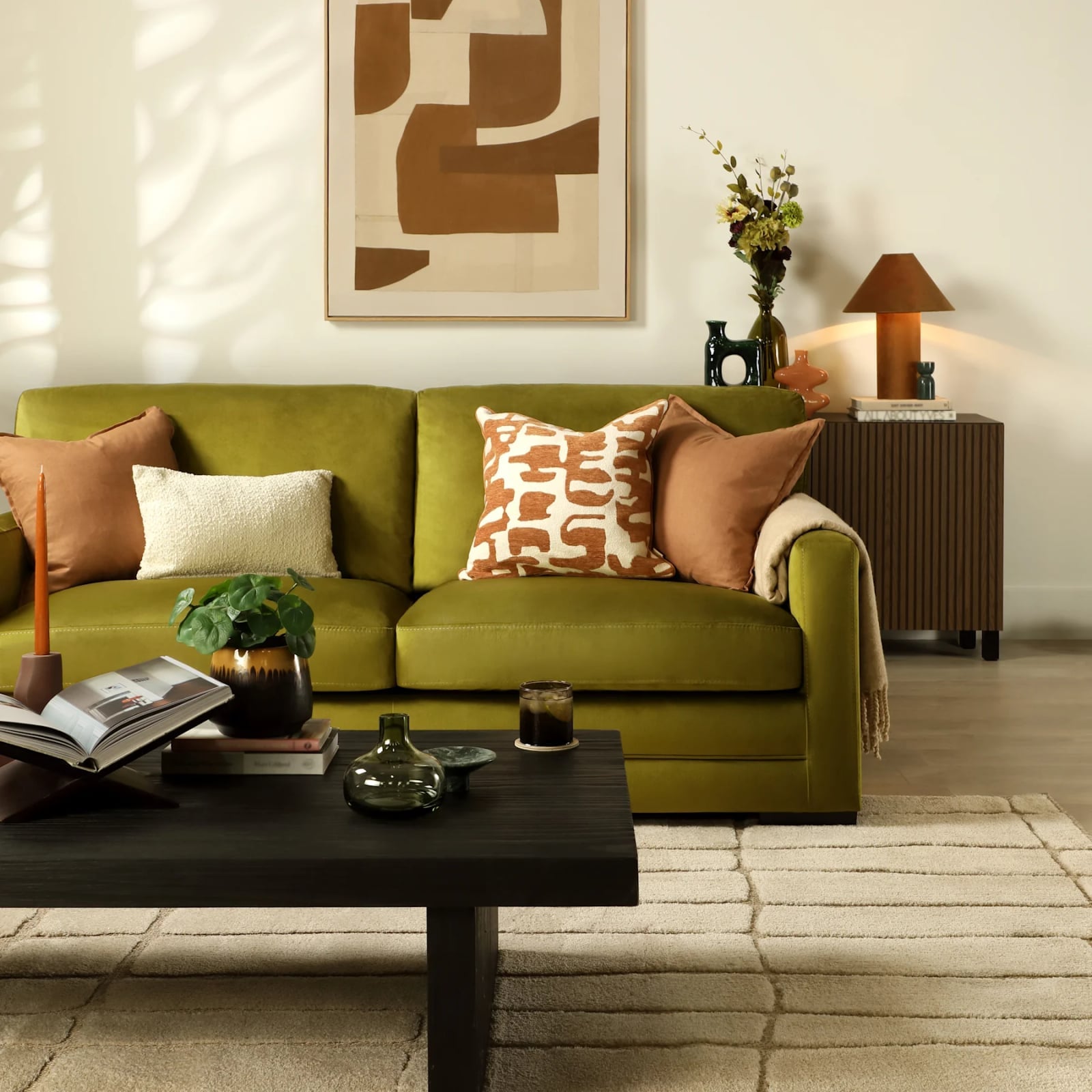
A lime green velvet sofa acts as a focal point in this roomy living room. The bright velvet is balanced by a dark wood coffee table and a ribbed cabinet, with abstract art that picks up the same warm tones. The window and a table lamp keep the lime green from reading as harsh. The sofa faces the coffee table and cabinet, creating a clear conversation zone. For anyone drawn to a bold sofa, let the velvet be the only high-saturation piece and let the wood and ceramic finishes do the quiet work.
20 / 26Sage Green Walls in a Scandi Living Room
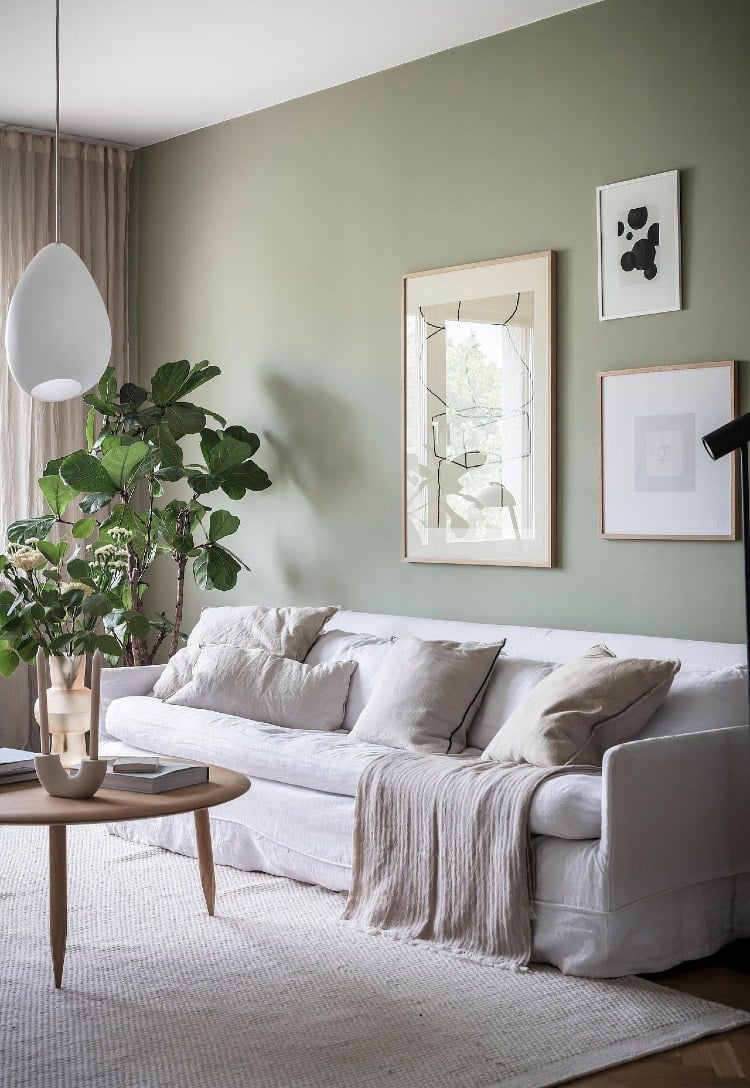
Sage green walls work naturally with Scandi style because the muted green does not fight the white and wood tones. In this roomy living room, a white linen sofa faces a round coffee table, with a large fiddle leaf fig adding height near the window. The palette of sage green, white, beige, and wood tones is simple enough that the pendant light and ceramic accents can stand out. Natural light from the window does most of the work, and the pendant light adds warmth in the evening. For scale, the large plant balances the sofa and keeps the room from feeling too sparse.
21 / 26Sage Green Walls with a Green Coffee Table
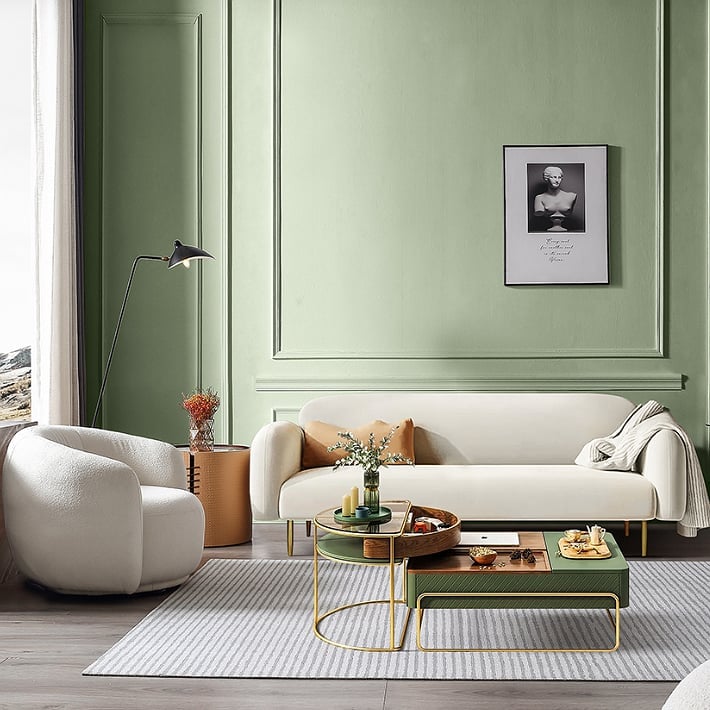
A room with sage green walls benefits from a second green piece that matches in tone, not in finish. Here a green coffee table in a painted wood finish sits between a cream sofa and a sculptural boucle armchair. The table is lower than the sofa seat, which keeps sightlines open across the room. A floor lamp with a metal stem adds a warm glow near the armchair, while natural light from a window softens the whole palette of sage, cream, and wood tones. The coffee table anchors the seating group without blocking the walkway. In a roomy layout where the sofa and armchair face each other, a single green surface that repeats the wall color creates a connected look without needing extra accessories.
22 / 26Olive Green Walls with a Cream Boucle Armchair
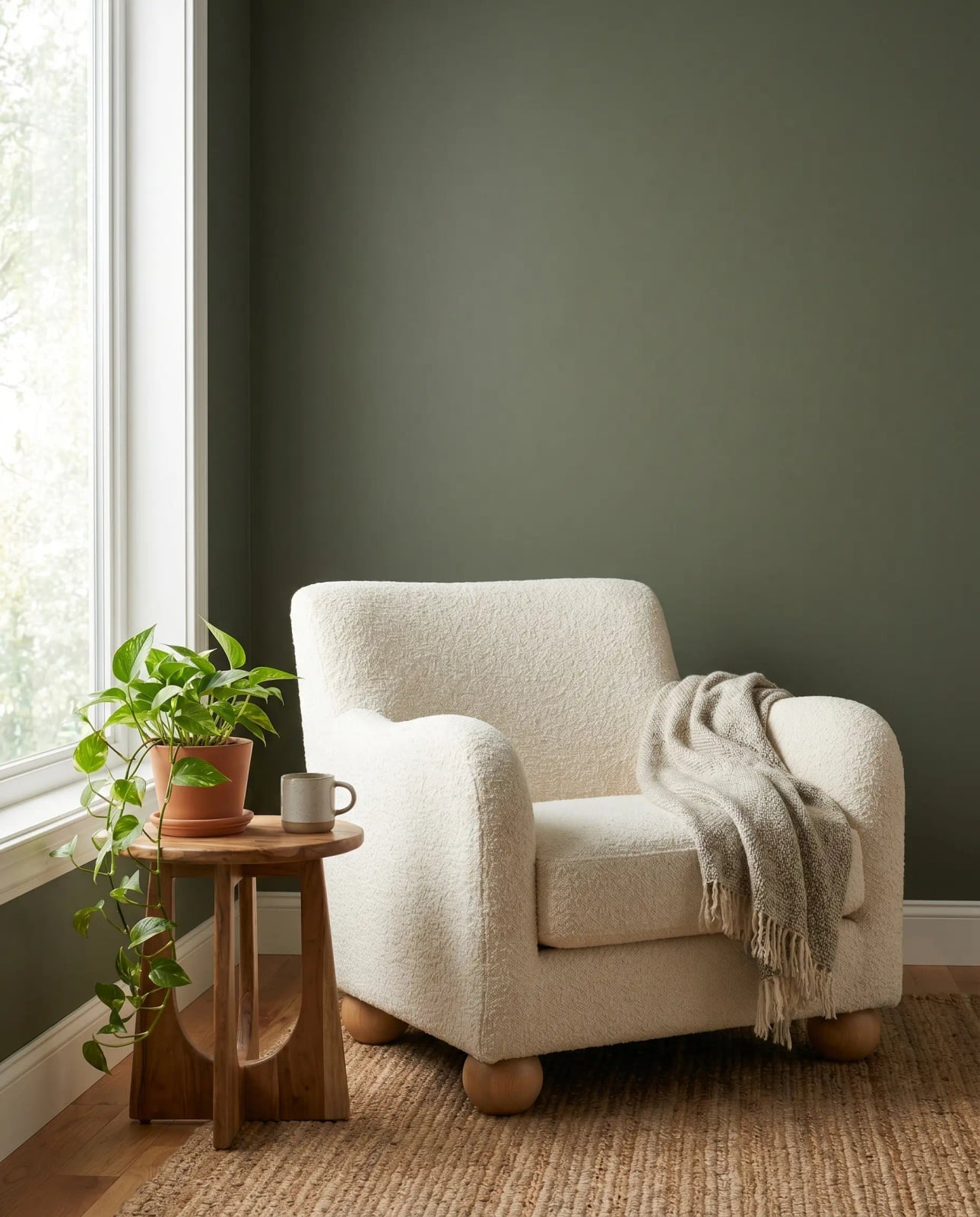
The olive green wall acts as a deep backdrop for a cream boucle armchair placed in a corner with a wooden side table and a potted plant. The boucle texture catches natural light from a window, making the chair the focal point in an otherwise simple vignette. This palette pairing works because the warm yellow undertone in olive green echoes the cream fabric, while the jute rug and wood tones keep the look grounded. In a compact space, one textured piece in a light color stops dark walls from feeling heavy.
23 / 26Sage Green Walls and Terracotta Chair in a Compact Space
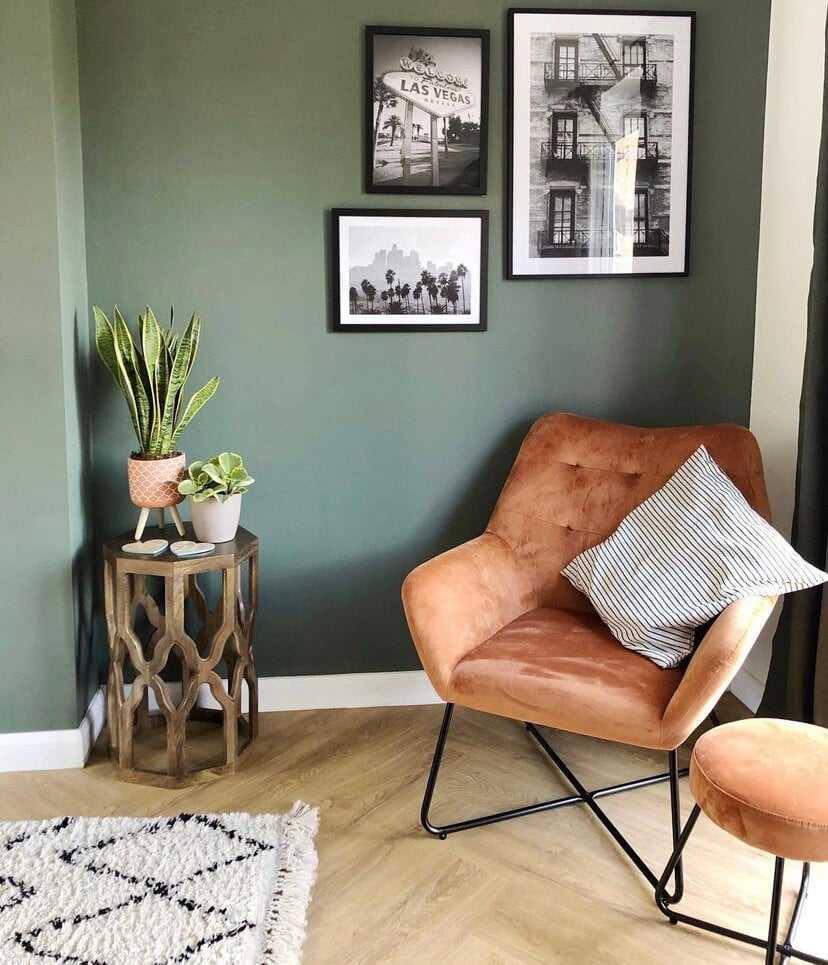
In a compact living room, one warm accent piece can balance cool wall color. Here sage green walls frame a corner with a terracotta velvet chair, a black metal geometric side table, and a snake plant in a ceramic pot. The velvet fabric on the chair adds a soft sheen that contrasts with the matte wall finish. The terracotta shade is warm enough to stand out against the sage without clashing. Natural light and ambient room light keep the corner from reading as dim. In a tight footprint, one upholstered piece in a strong color does the job that several smaller accents would need.
24 / 26Sage Green Sectional Sofa for a Minimalist Haven
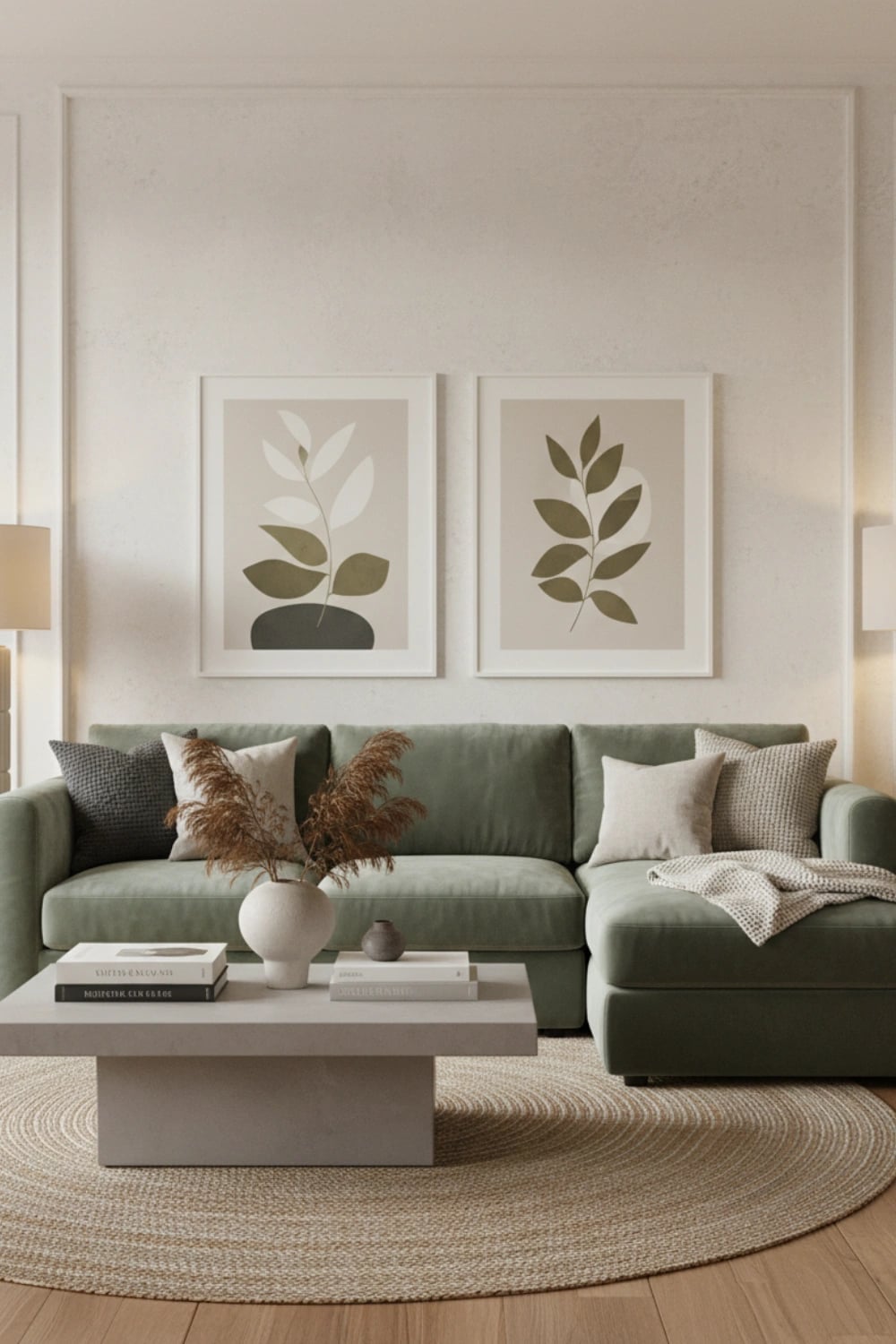
Unlike a sofa in a neutral tone that blends into the background, a sage green sectional becomes the defining shape in a minimalist room. Here an L-shaped sectional in soft sage green forms the main seating zone, paired with a large square coffee table, dried florals, and a jute rug. The beige and white palette around it keeps the eye on the sofa’s clean lines. Soft natural light from windows and lamps makes the sage fabric appear muted, not flat. The sectional’s low back and open legs help the room feel roomy without bulk. In a minimalist space, letting one large piece carry the color means the surrounding room stays calm.
25 / 26Eclectic Living Room with Green Sofa and Patterned Armchairs
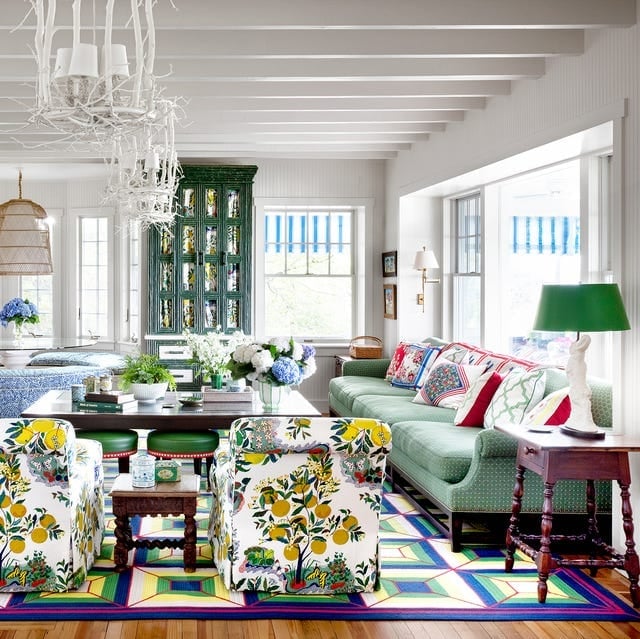
The green sofa sits at the center, but the room’s energy comes from the two patterned armchairs in yellow and blue, plus a colorful geometric rug underfoot. A large green cabinet against the wall ties the seating group together, while a decorative chandelier adds a formal note over the central area. Natural light from windows fills the room, keeping the mix of green, white, yellow, blue, and red from feeling chaotic. In an eclectic layout where the sofa and armchairs face each other around the rug, the cabinet provides visual weight on one side. The balance of neutral and bright patterns makes the room feel collected rather than random.
26 / 26Final Thoughts
Green works because it can be bold or quiet, modern or traditional, without ever feeling like a trend. The key is picking the right shade for your light and your lifestyle. Darker greens add depth and coziness, while lighter ones keep things airy. Pair them with natural textures like wood, wicker, or linen, and let the room breathe. The best green living room is one that feels like you, not like a magazine page.