A front door in green does more than just stand out. It can make a house feel grounded or quietly grand, depending on the shade you choose.
This article rounds up 31 green front door ideas that cover a wide range of styles, from country cottages to Victorian townhouses, so you can see how different greens work with brick, stone, siding, and stucco. You will get a practical look at how paint color, hardware, and landscaping come together to create a welcoming entry.
01 / 32Inviting Sage Green Country Entryway
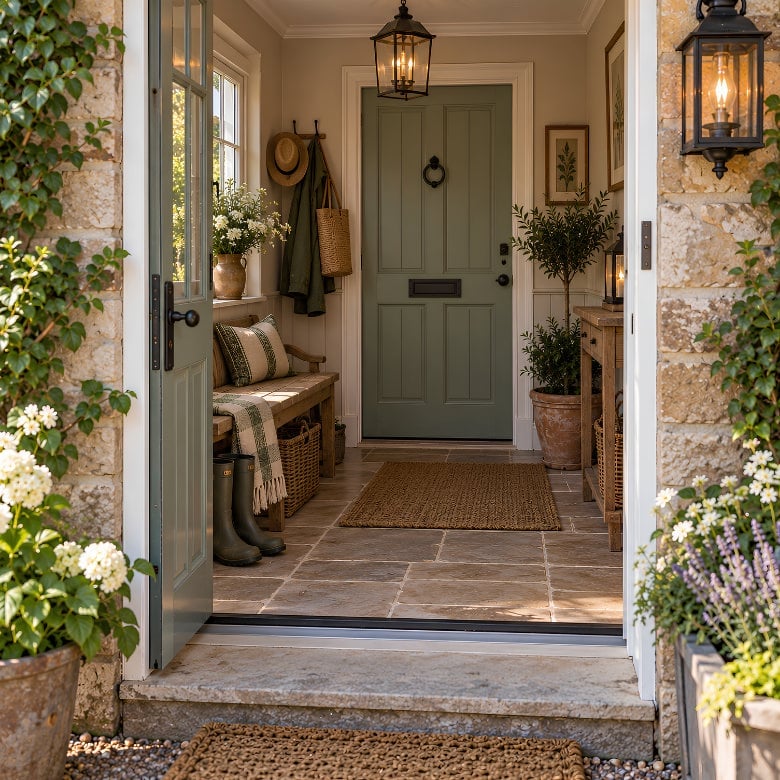
A sage green door sets the tone before you even step inside, and this entryway leans into that calm with a wooden bench, wicker baskets, and a coat rack that keep the space both useful and welcoming. The green pairs softly with beige walls and wood tones, so the door feels like part of the room rather than a loud statement. Natural light from the side and pendant lights overhead make the entry feel roomy. If you want a similar effect, keep the furniture low and let the door carry the color.
02 / 32Grand Emerald Green Victorian Double Doors
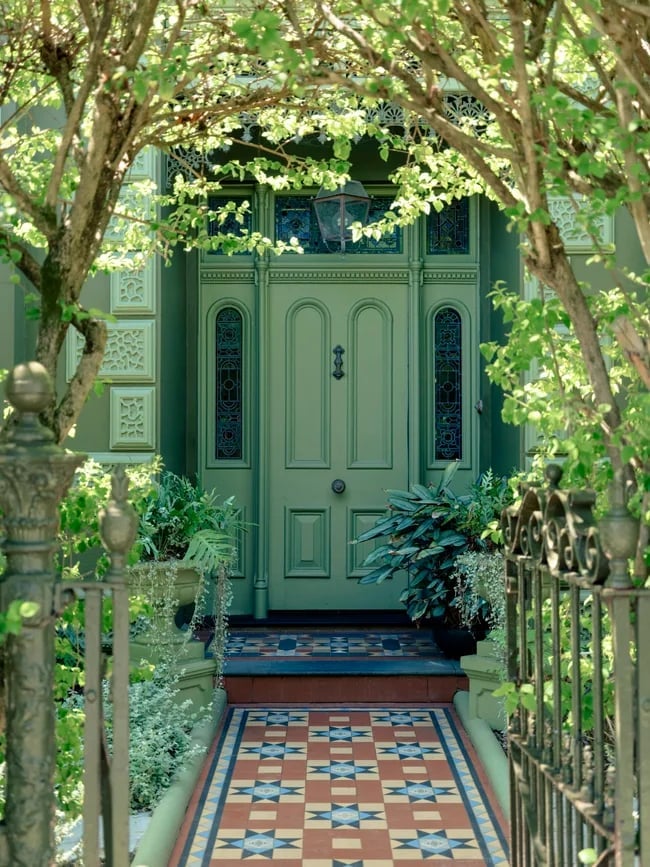
These emerald double doors make a grand entrance because the color is bold enough to hold its own against the ornate tile pathway and wrought iron gate. The Victorian palette of emerald, terracotta, cream, and blue feels rich without being busy. The scale works because the doors are wide and tall, so the deep green doesn’t overwhelm. If you have a similar entrance, match the door color to the intensity of your walkway and gate. A muted green would get lost next to that tile, while a brighter shade would fight it.
03 / 32Pale Green Country Door with Spring Wreath
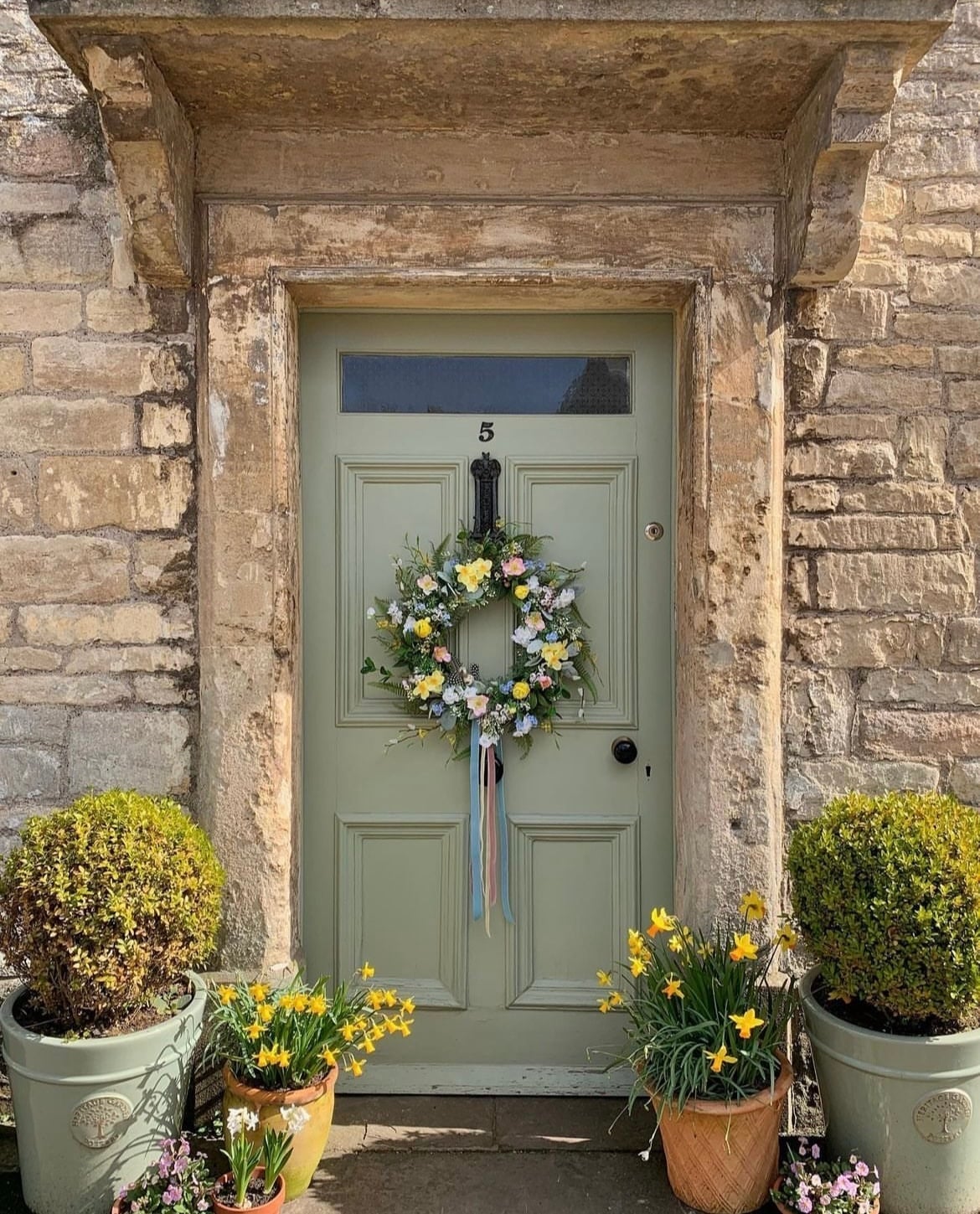
Ever wonder how to make a pale door feel cheerful instead of washed out? This one pairs a soft green paneled door with a floral wreath, yellow daffodils, and boxwood spheres, so the whole entrance reads as a single spring arrangement. The door has a small window, which lets light pass through and keeps the facade from feeling heavy. The stone surround and painted wood give it a country texture that matches the flowers.
For a similar look, choose accents in the same color family as the door’s undertone. Here the yellow flowers and green boxwood echo the warm, sunny quality of the pale green. If your door faces bright sun all day, test a sample first because light can wash out pale shades quickly.
04 / 32Classic Forest Green Door with Brass Accents
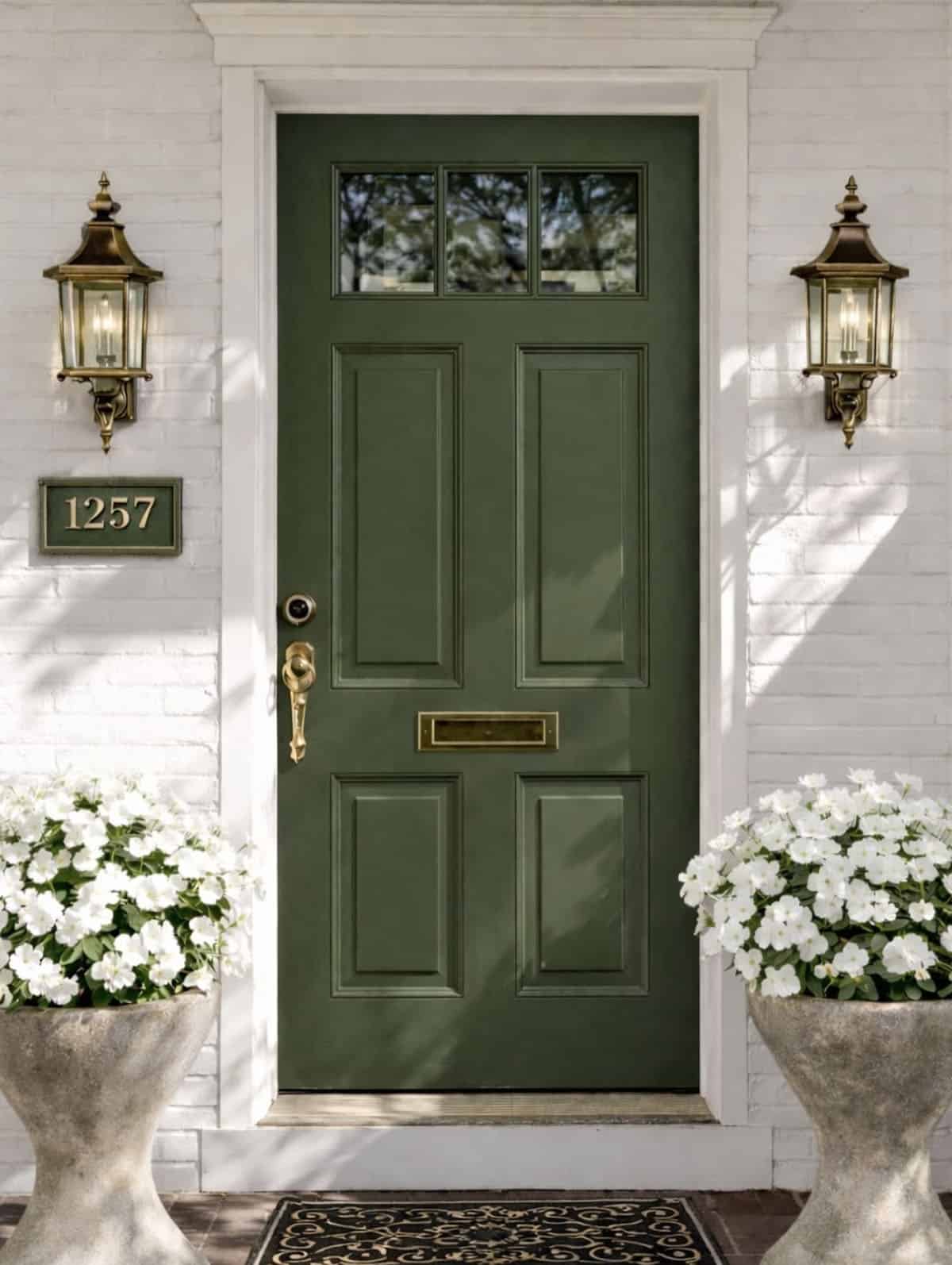
The forest green door here sits centered on a brick porch with brass lanterns on either side, and those lanterns do more than light the way. They add a warm glow that lifts the deep green, especially at dusk when the daylight fades. The white trim and stone planters keep the palette crisp, so the door doesn’t feel too heavy. If you have a similar porch, position your lanterns so they throw light across the door’s surface rather than straight down. That way the brass reflects off the green and makes the entrance feel inviting after dark.
05 / 32Art Nouveau Sage Green Door with Stained Glass
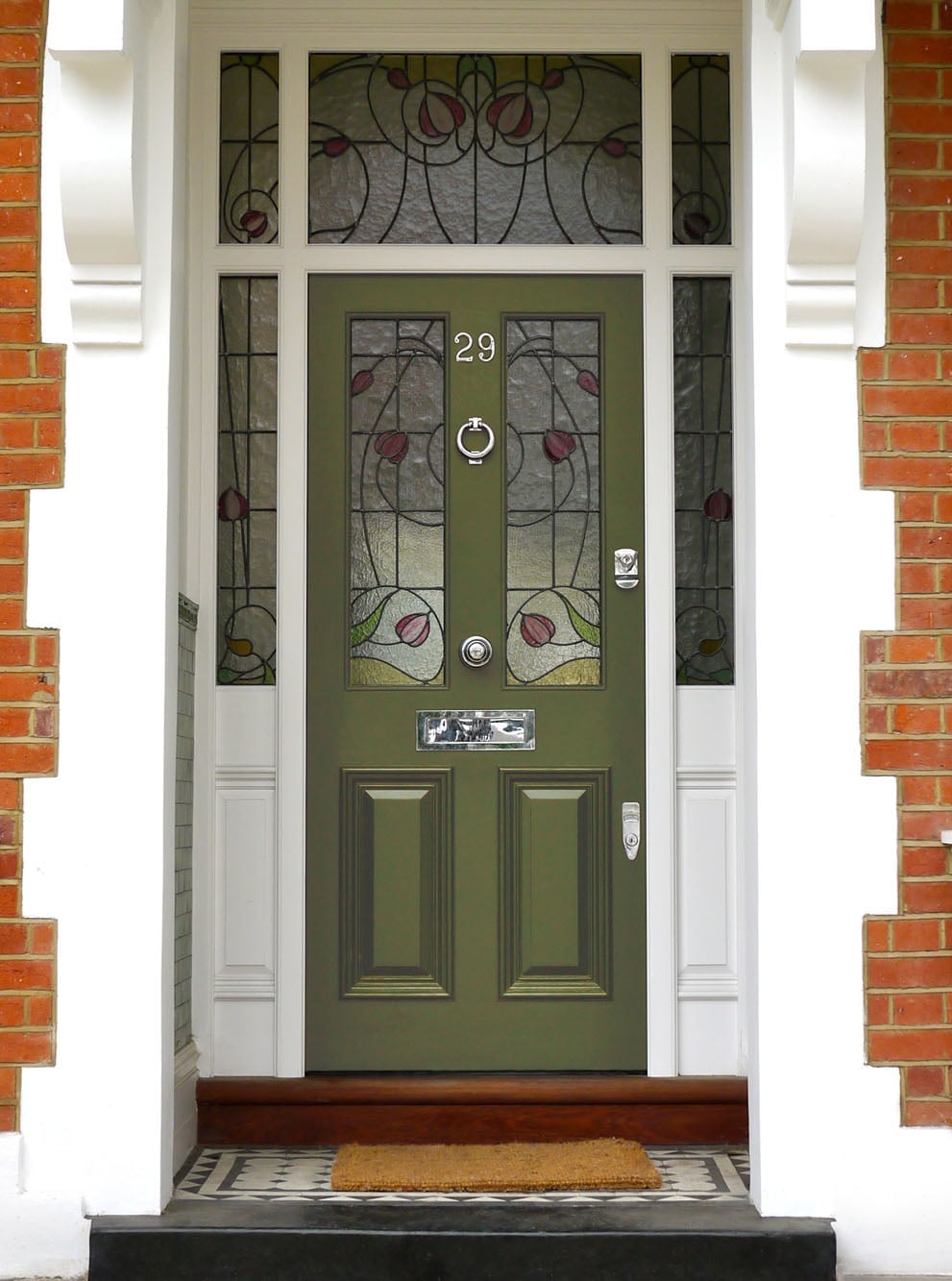
A door with stained glass should let the glass set the color story, then pick a paint that coordinates. This sage green door sits against red brick with cream trim, and the stained glass panels above and beside it add soft blues, greens, and golds. The number 29 and the letterbox are small metal details that echo the art nouveau style. Keep the area around the door clear of clutter so the glass stays the focal point. If you rent, you can still get the look with a removable film on a plain window.
06 / 32Sage Green Cottage Door Amidst Spring Blooms
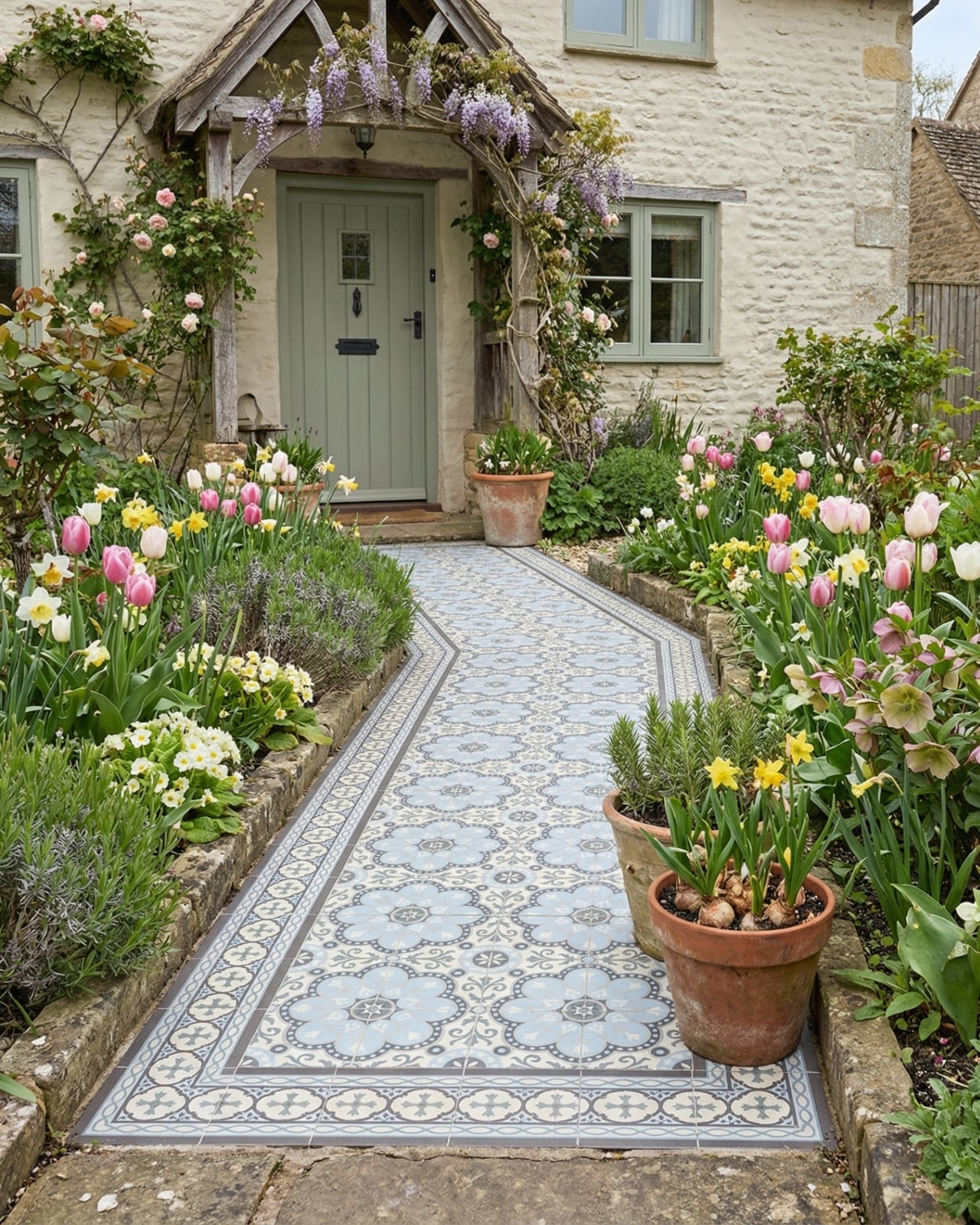
A sage green front door can feel like just another pretty pastel until you set it against a cottage garden in full spring bloom. The stone cottage wall and the patterned tile path lead the eye forward, but it is the abundant flowers in pastel pink, yellow, and blue that make the green read as grounded rather than sweet. The trick is keeping the door itself simple: a solid sage panel with no extra ornament so the planting does the talking. If you rent and cannot paint the door, a temporary peel-and-stick film in a matte sage finish gives the same effect for the season. Check your USDA zone before choosing blooms that will actually overlap with spring. The ratio of green to flower color here is roughly one part door to three parts garden, which keeps the entry from feeling like a prop.
07 / 32Vibrant Green Dutch Door for Modern Farmhouse
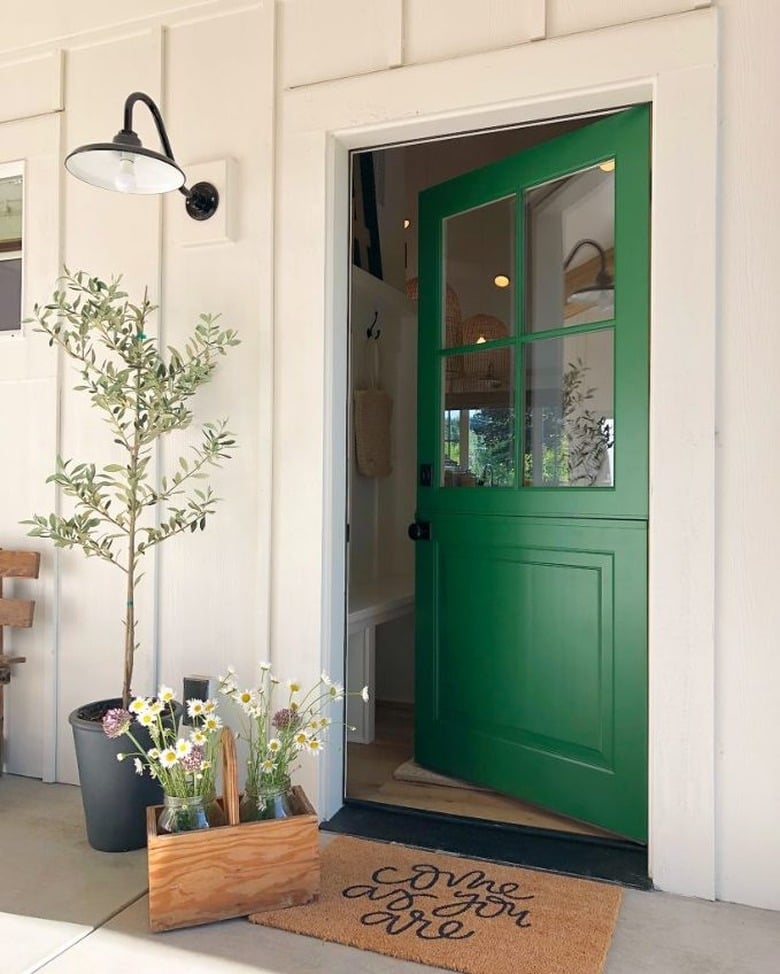
The dutch door splits at the middle, letting the top half swing open while the bottom stays shut, and that single detail changes how the porch lives. In this vibrant green finish with white trim and a black barn light, the door fits the modern farmhouse style. The potted plant on the porch and the glass panes in the top half prevent a heavy feel. A dutch door suits a compact porch because the split creates a natural spot for setting down groceries or leaning out to talk. The layout here is efficient: the door slightly ajar invites you inside without fully committing the entryway to the outdoors.
08 / 32Deep Green Door with Lion Head Knocker Detail
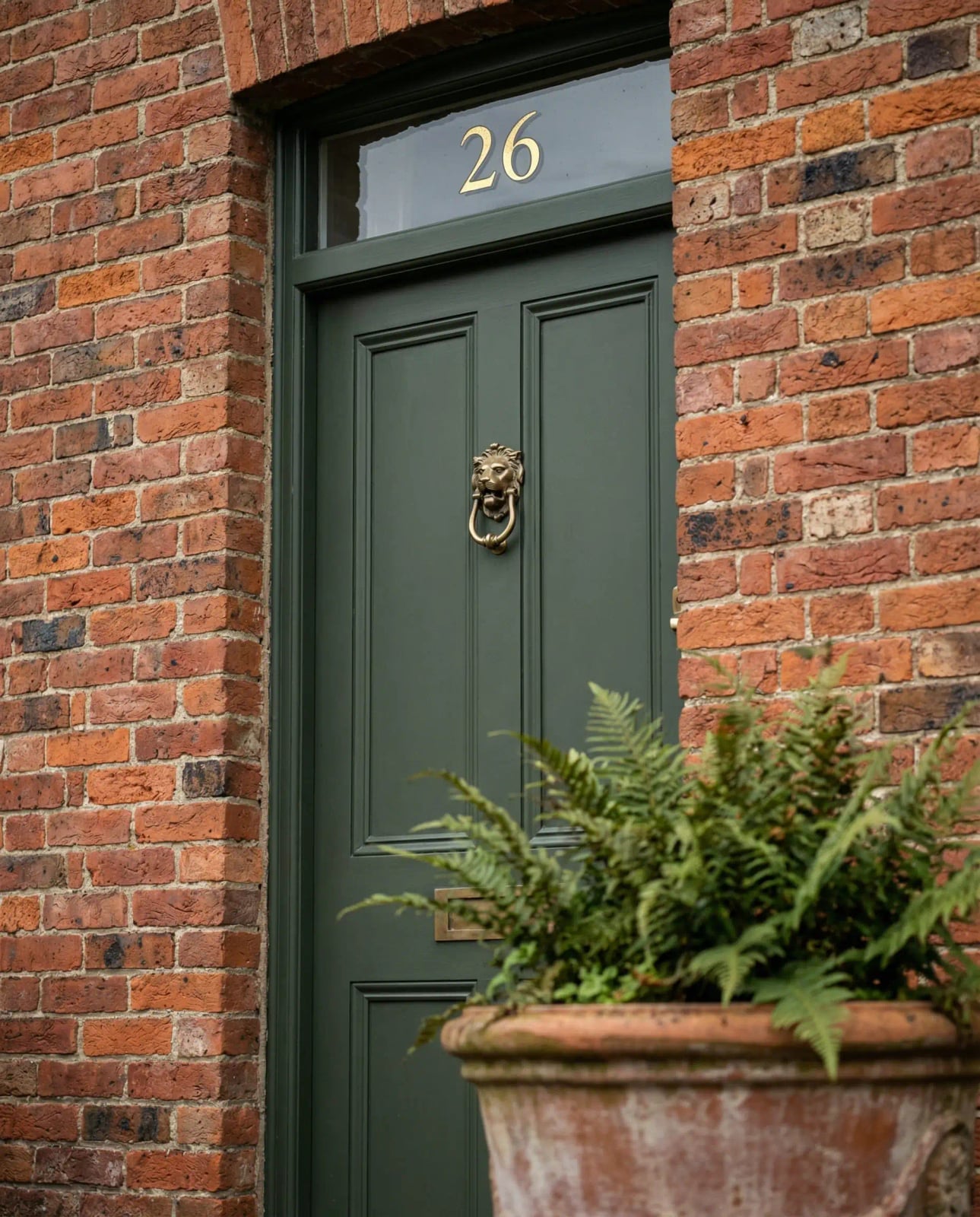
A deep green door with a lion head knocker is the kind of detail that announces itself without shouting. The dark painted wood against the brick wall and the gold-toned metal create a traditional palette that feels settled. The terracotta pot in the foreground adds a warm, earthy note that keeps the brick from reading as cold. The overcast daylight in this shot softens the contrast, so the green and brick red sit close rather than compete. If you are considering a knocker like this, check that the door material can support the weight of cast metal without reinforcing. The lion head works best on a door that is at least thirty-six inches wide, so the proportion does not crowd the panel.
09 / 32Sage Green Door with Brass Mail Slot and Lantern
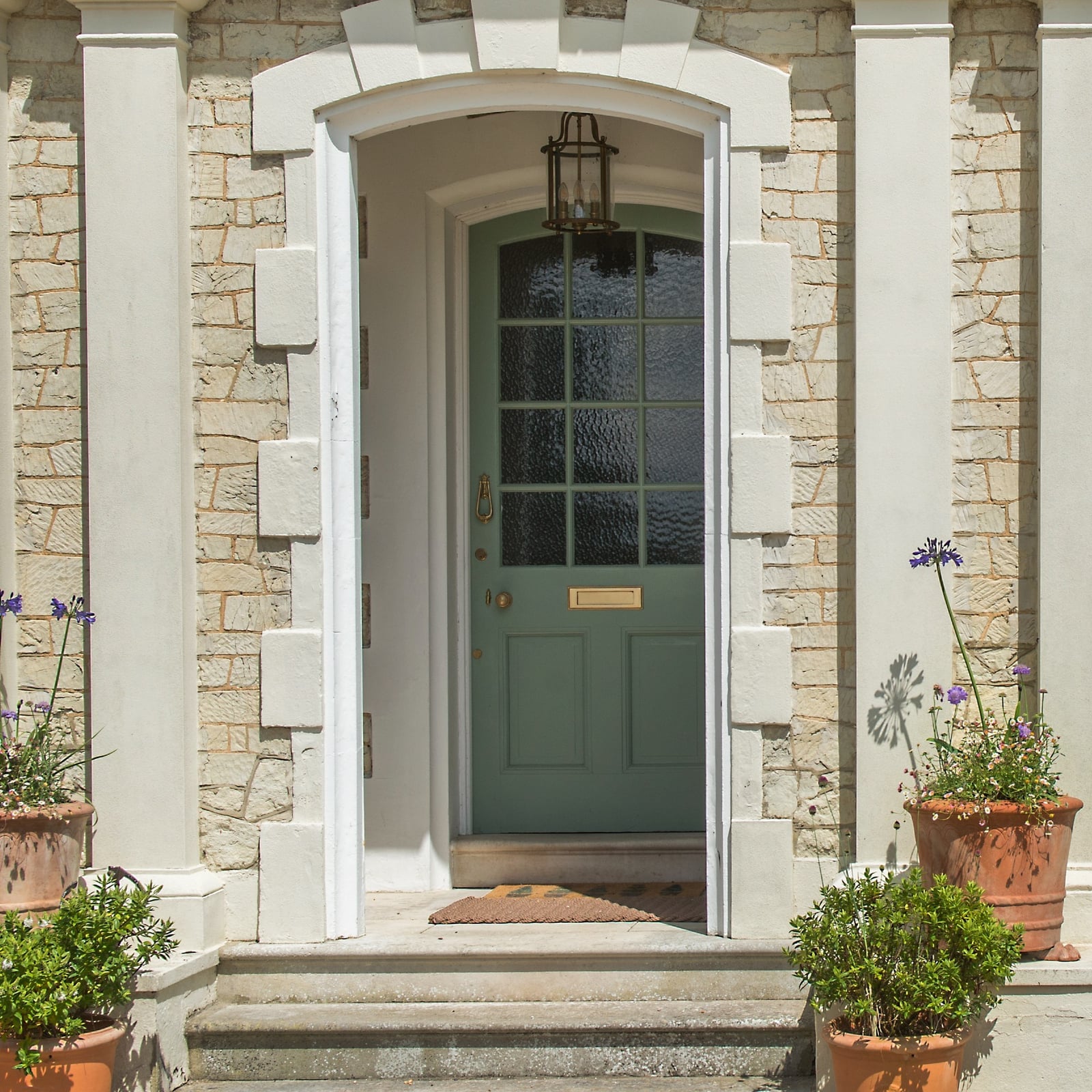
Does a sage green door ever look washed out in direct sun? It can, unless you anchor it with materials that reflect light back into the green. Here, the stone surround and cream trim give the door a recessed feel, and the brass mail slot and lantern catch the daylight in a way that keeps the sage from flattening out. The lantern is not just decorative; it extends the usable hours of the entryway into evening, which matters if the door faces away from street light. The potted plants flanking the doorway soften the stone and keep the composition balanced. For renters, swapping the lantern for a solar-powered wall light on adhesive backing avoids wiring work while keeping the same warm glow.
10 / 32Muted Sage Green Door with Symmetrical Topiaries
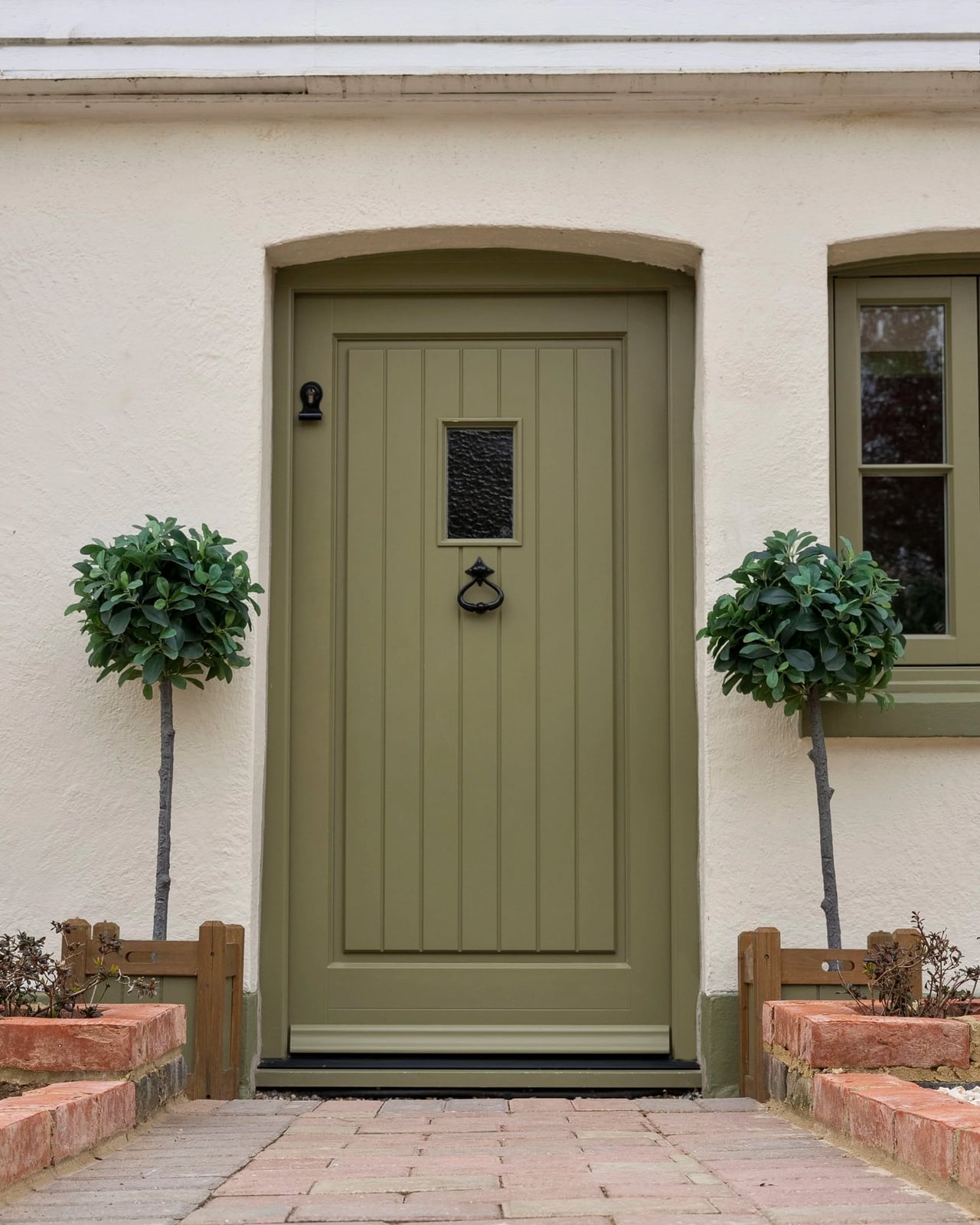
The muted sage green on this paneled door appears almost gray in soft daylight, which is exactly what makes it work with the cream trim and brick pathway. Two topiary trees flanking the entrance create a formal symmetry that lifts the door from simple to intentional. The straight-on view of the door makes the proportions easy to read: the topiaries sit just outside the door frame, not crowding the panels, and their height reaches about two-thirds of the door itself. That ratio keeps the eye moving up instead of stopping at ground level. If you do not have space for full topiaries, a pair of matching potted herbs placed on each side of the step gives the same balanced look without the long-term commitment.
11 / 32Ornate Emerald Green Door with Brass Hardware
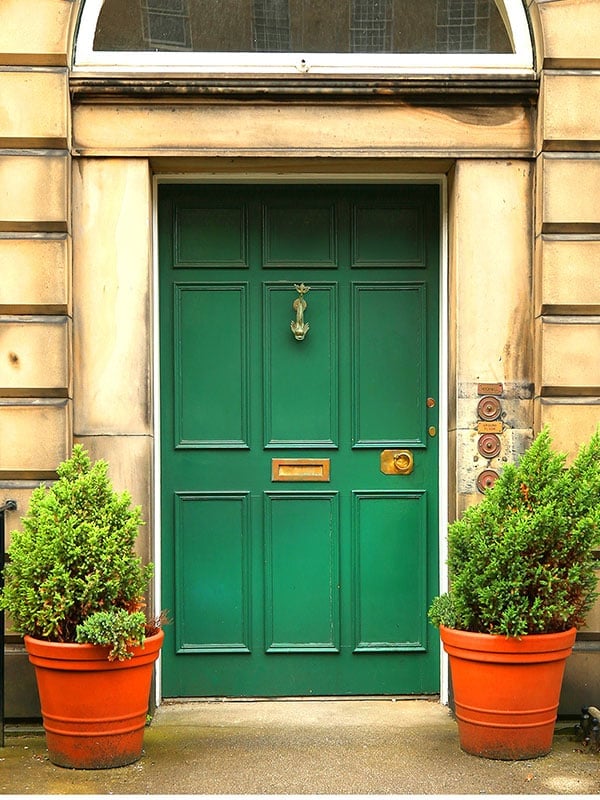
Emerald green holds its own against stone and brick because it has enough blue in it to feel cool rather than earthy. This traditional door uses the depth of the green as a backdrop for polished brass, the knocker, the letterbox, the handle all read clearly against that dark surface. The palette works because brass and emerald share a yellow undertone that keeps them from fighting. A single pair of potted plants by the steps softens the formality without cluttering the entrance. If your door faces direct afternoon sun, check the paint finish every couple of years; glossy or semi-gloss holds up longer on a south-facing facade.
12 / 32Sage Green Fluted Double Doors for Autumn
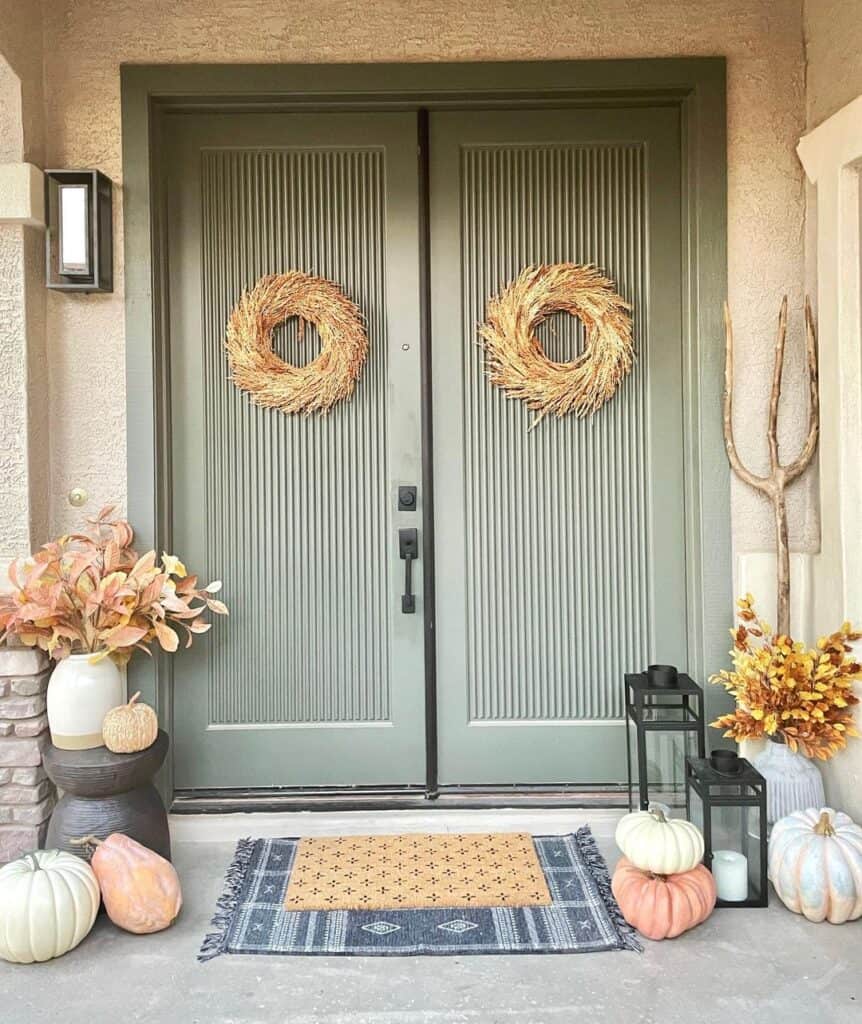
Sage green reads differently than a warm olive or a dark forest green. It sits closer to gray, which makes it a natural backdrop for the orange and yellow of fall decorations without turning the porch into a holiday display. These fluted double doors pair straw wreaths with pumpkins and lanterns on either side, and the symmetry keeps the look intentional rather than scattered.
What defines the style is the ratio of green to decor. The doors take up most of the visual weight, with the wreaths and pumpkins staying low and narrow. That keeps the entrance from feeling crowded. If you have a wider porch, you can add taller lanterns or urns without upsetting the balance. What breaks the look is mixing too many seasonal colors, stick to one warm accent like pumpkin orange and let the sage hold the rest.
13 / 32Dark Green Paneled Door with Transom Window
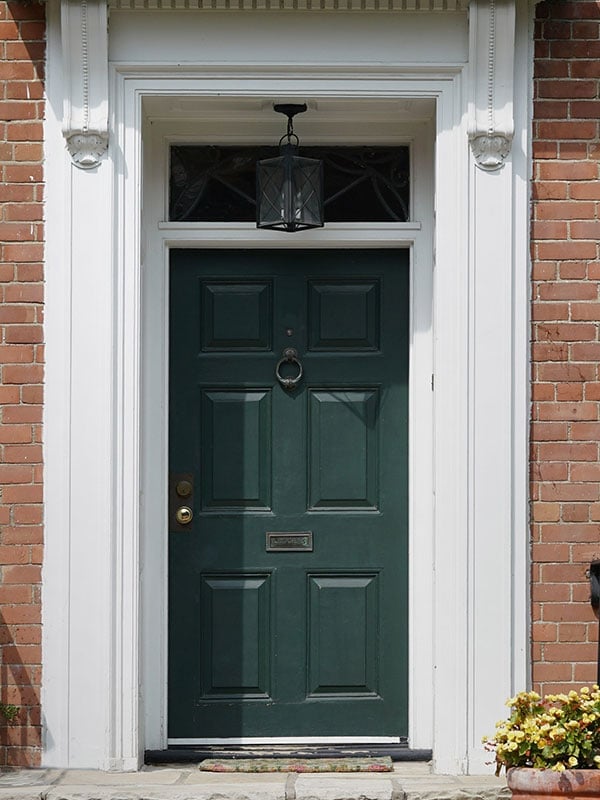
The transom window above this dark green paneled door does more than let light into the entryway. It lifts the eye upward, making the door feel taller and the brick facade more proportional. The hanging lantern reinforces that vertical line without adding bulk. Dark green works here because it absorbs light rather than reflecting it, so the white brick and the glass above become the bright spots. If your entry has a low overhang, a transom or a tall sidelight can add the same sense of height without structural work.
14 / 32Vibrant Lime Green Double Doors with Bee Knocker
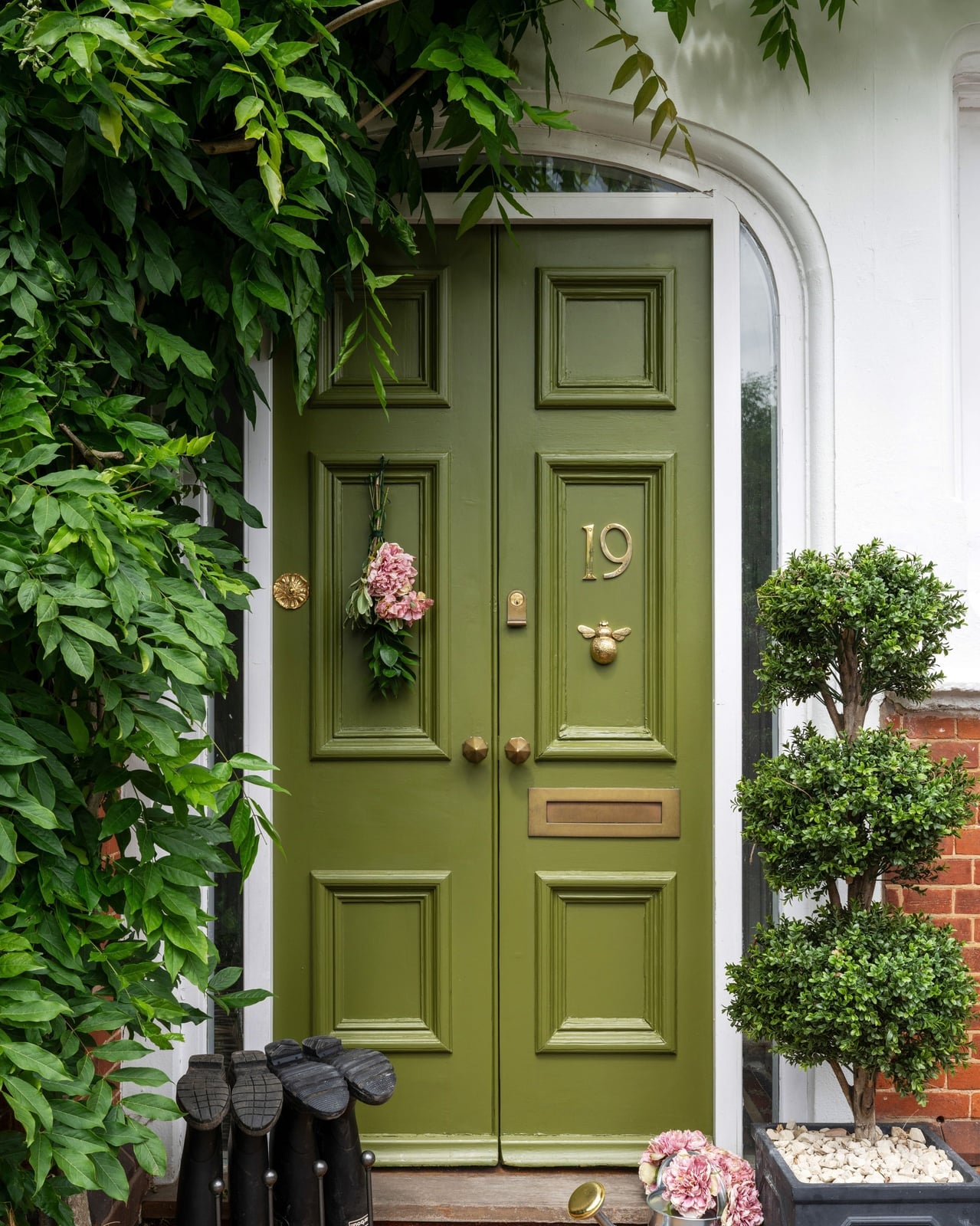
Lime green demands a clear counterpoint to feel deliberate rather than jarring. These double doors get that from the gold bee knocker and the clipped topiary on either side. The warm gold hardware pulls the yellow out of the lime, and the dark green foliage of the topiary anchors the whole composition. The color ratio leans heavily on the door itself, with the hardware and plants staying small in scale. If you try this shade, keep the surrounding brick or siding neutral and let the door carry the energy. A glossier finish helps the lime read as confident instead of chalky.
15 / 32Vibrant Green Cottage Door with Floral Wreath
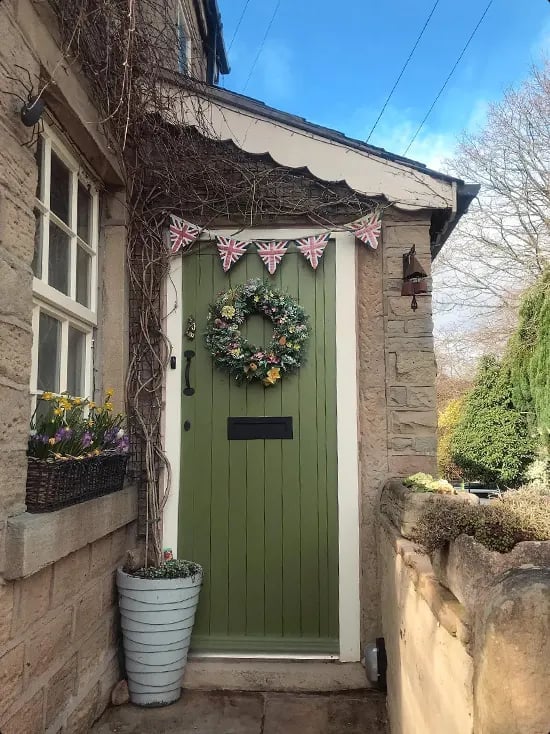
A compact porch needs a door that works with its surroundings. This vibrant green cottage door uses a clear, mid-tone green that stays cheerful without overwhelming the stone and white trim around it. The floral wreath and window box add color at the same height, which keeps the eye moving horizontally.
If you have a small stoop, limit the number of objects on the ground. A single wreath on the door and one window box below it are enough to signal a cottage look. Adding a bench, a mat, and pots creates a cluttered landing that makes the door feel smaller. The green here works because it is not too dark; dark green on a shaded cottage porch can look black by late afternoon. Stick to a green with enough yellow in it to stay visible in the daylight that filters through.
16 / 32Muted Green Door in Golden Hour Light
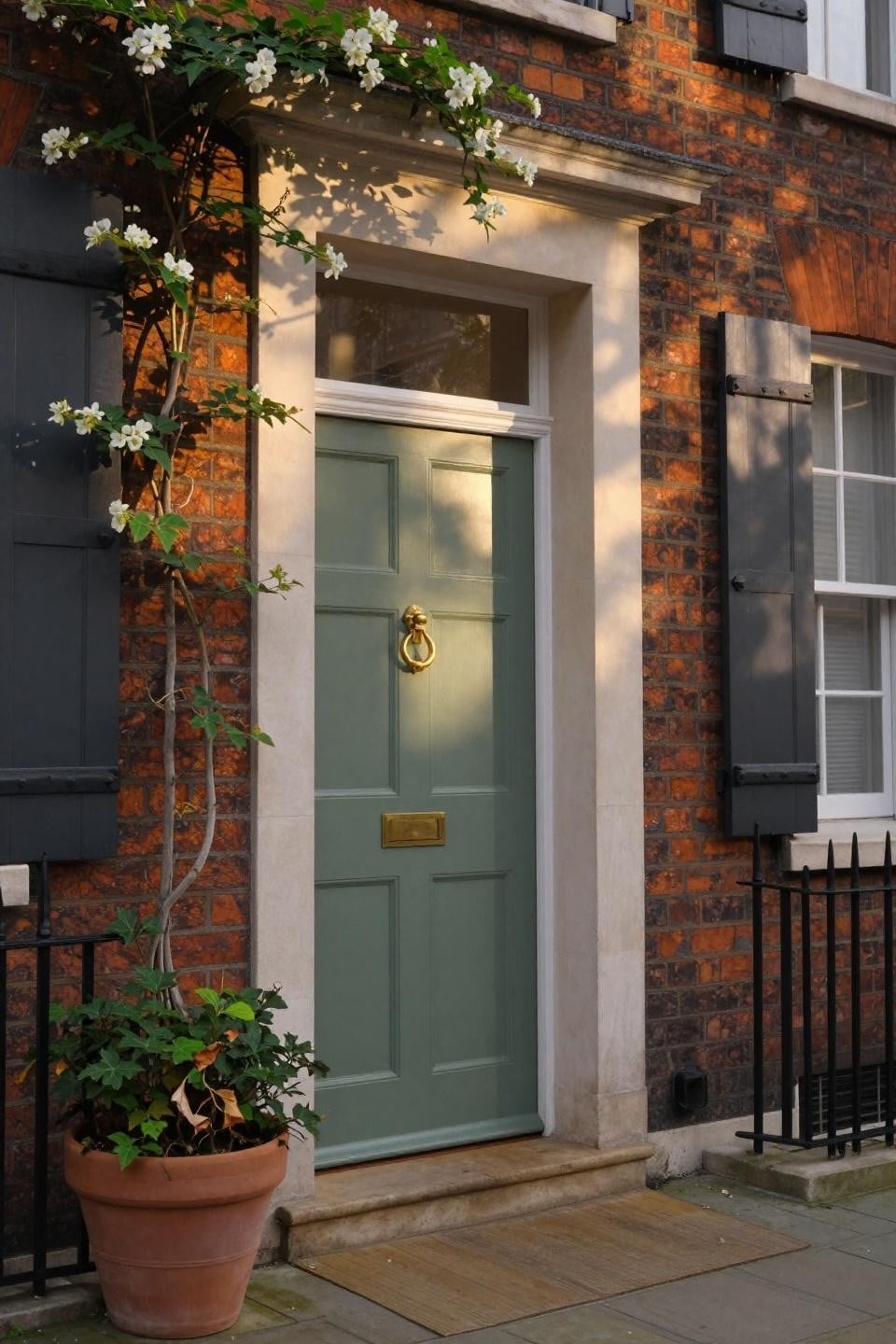
This muted green paneled front door catches the warm golden hour light in a way that makes the flat finish look almost luminous. The traditional style door sits within a stone surround, with a brass knocker and letterbox as the only metal accents. The red brick wall and white stone trim create a classic palette that keeps the muted green from reading too cool. The style works because the door stays simple. What breaks it would be adding more color to the entrance. The brass hardware and warm stone already do the work.
17 / 32Olive Green Door with Lush Ferns and Stone Steps
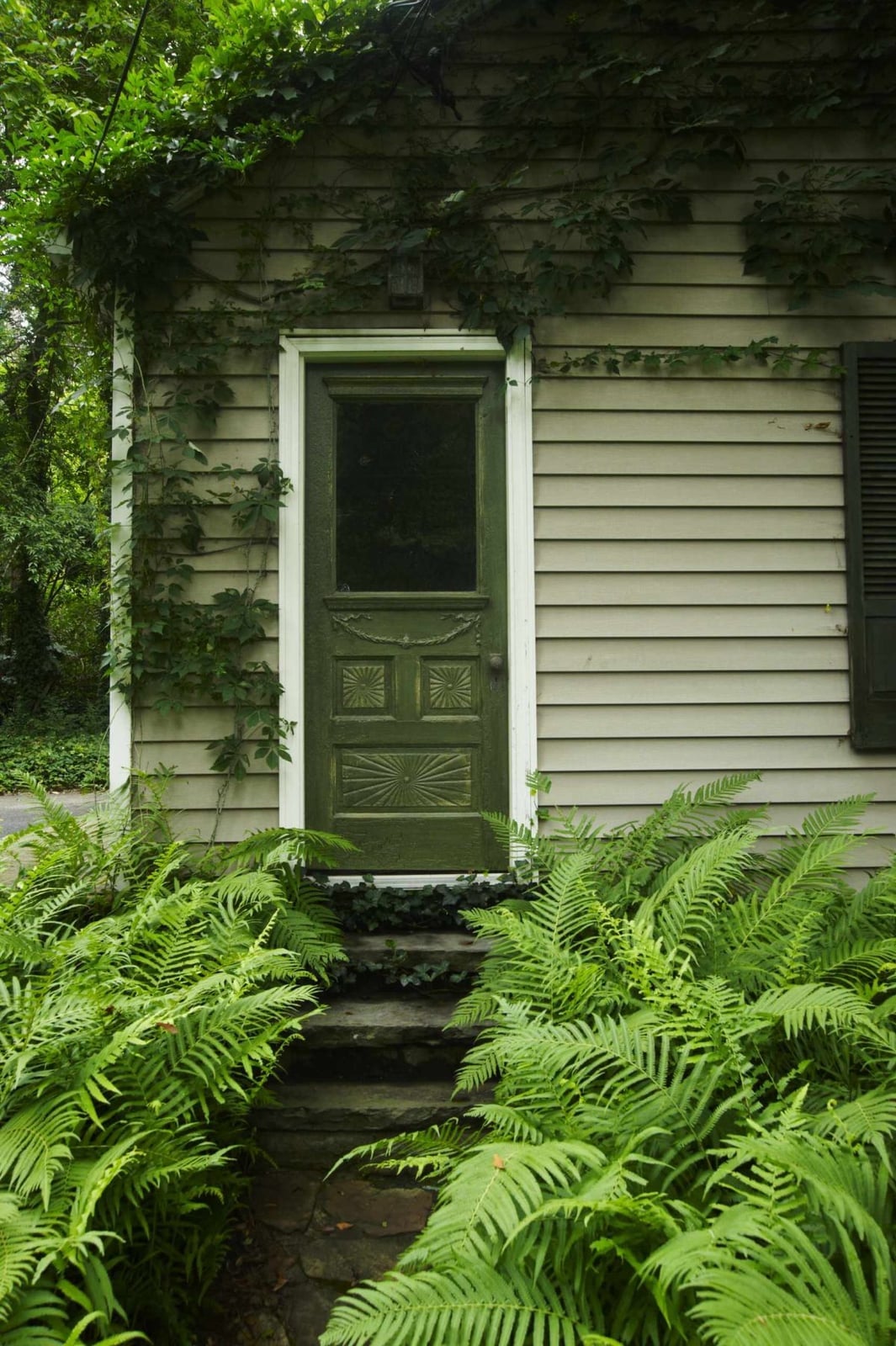
An olive green front door benefits from surrounding plants that soften the transition between the door and the landscape. Here the olive green door sits against beige wood siding with stone steps leading up to it. The ferns on either side are the key material choice. They are lush enough to feel intentional but loose enough to avoid looking formal. The rustic style comes from the mix of painted wood, natural stone, and living greenery. Anything manicured would break the look. The dappled daylight through the ferns keeps the whole entrance feeling like it belongs there.
18 / 32Glossy Dark Green Double Doors with Topiary
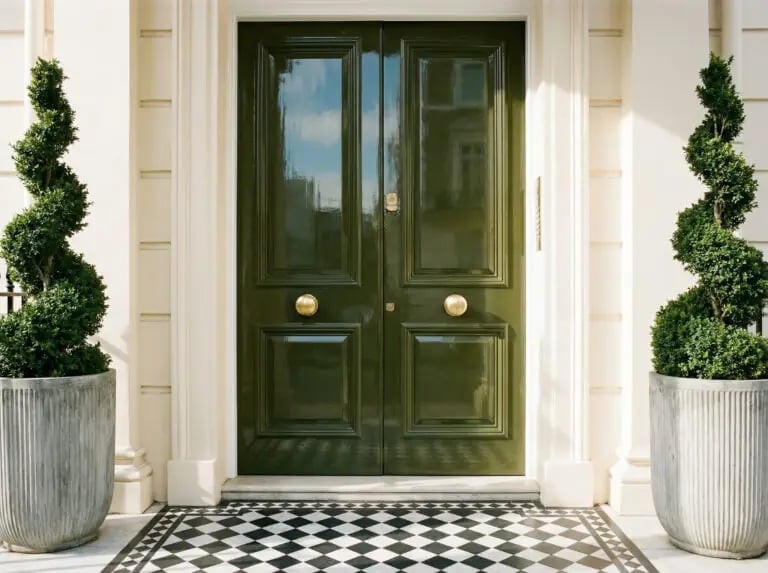
A close alternative to the glossy dark green double doors would be a matte finish in the same shade, but the gloss is what makes this entrance feel grand. The dark green double doors have a polished sheen that catches the daylight across the wide entrance. Two spiral topiaries in cream planters flank the door, and the patterned tile on the threshold adds a graphic element at ground level. The palette stays controlled with dark green, cream, black and white.
The scale works because the double doors need that width to balance the height of the entrance. The glossy finish reflects light so the dark color does not make the space feel smaller. Adding anything else would break the look. The topiaries and tile are enough, and the metal hardware on the doors is a third accent.
19 / 32Teal-Green Door with Autumn Pumpkins
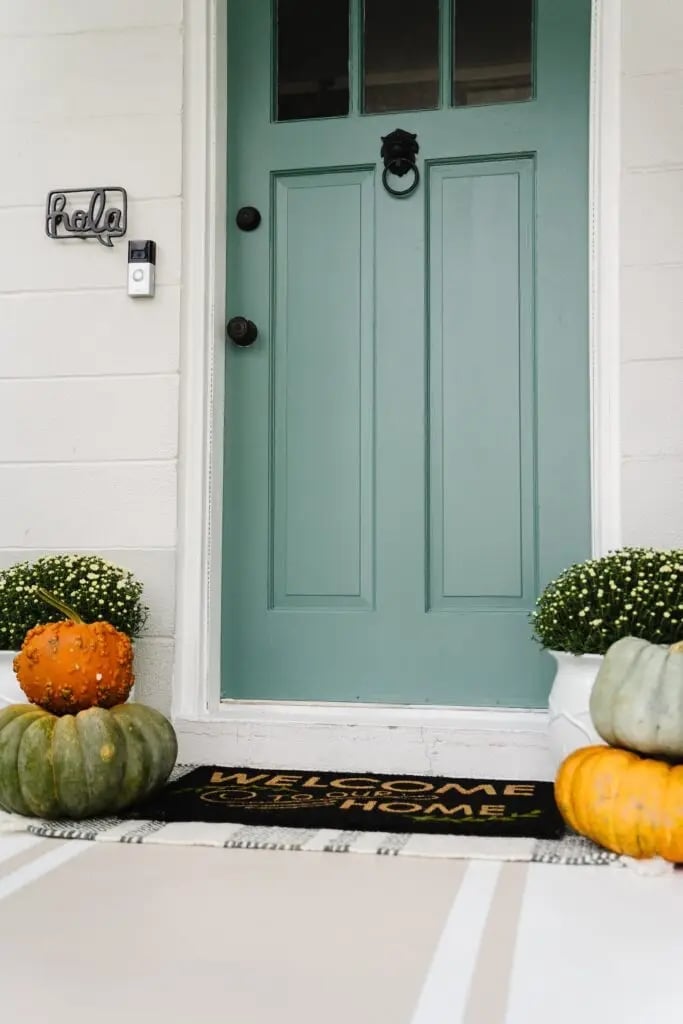
The teal-green front door sits centered on a compact porch with pumpkins and a welcome mat at the base. The teal has enough blue in it to make the orange pumpkins pop. This cottage style entrance relies on the contrast between the door color and the seasonal decor. A few pumpkins in a tight cluster keeps the porch from looking scattered. The natural daylight does the rest, no extra lighting needed.
20 / 32Pale Green Cottage Door with Rubber Boots
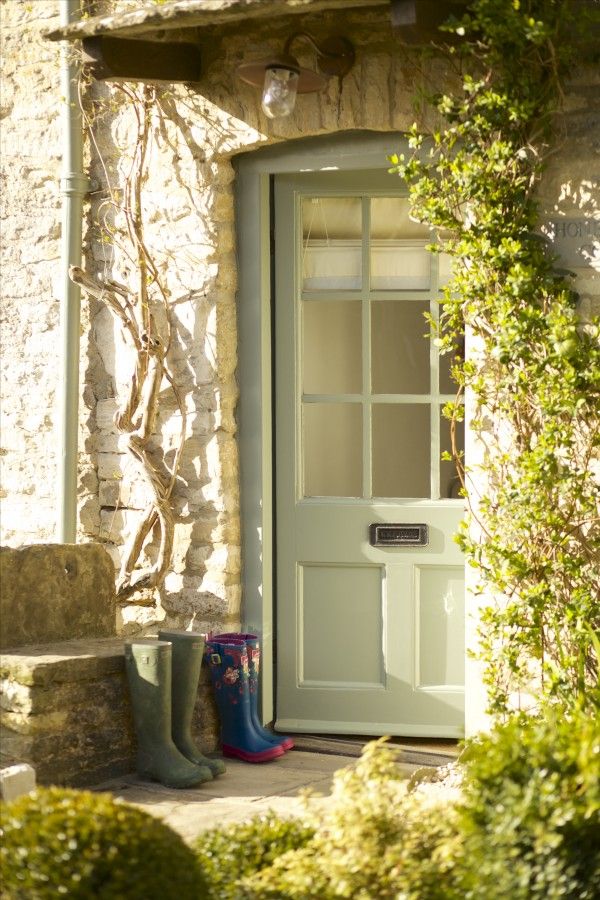
This pale green paneled front door with a small window above reads as pure cottage charm. The bright sunny daylight shows off the pale green against the stone steps and wood door frame. A pair of rubber boots on the bottom step is the one detail that makes the entrance feel lived in rather than staged. The style works because the pale green is light enough that the boots and stone steps provide the visual weight. What breaks it would be adding a wreath or doormat in a competing pastel. The single window above the door lets light into the entry without needing a sidelight, which keeps the facade compact.
21 / 32Dark Green Door with Brick Archway and Ferns
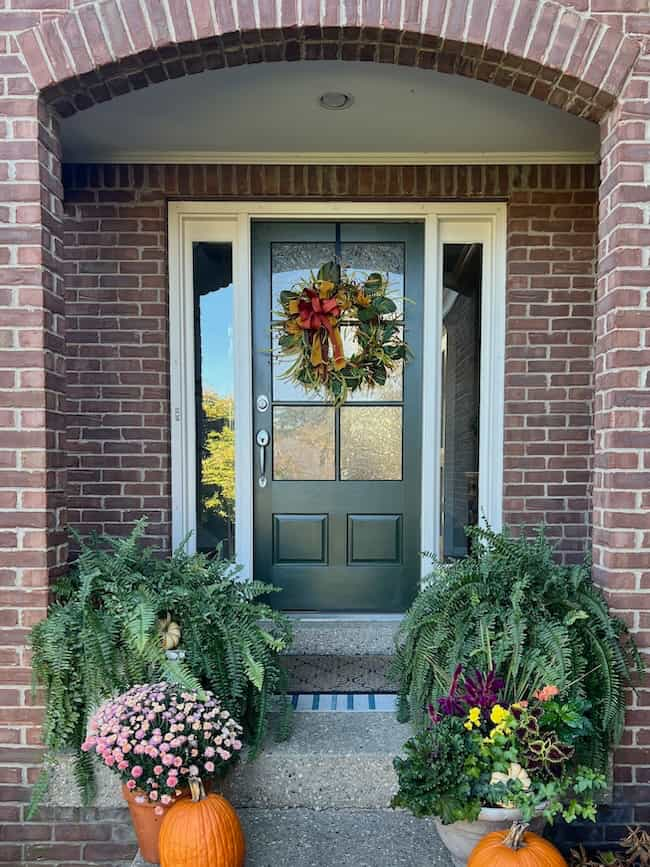
A dark green door against a brick archway reads as a natural pairing rather than a contrast. The wood grain of the door picks up the warm undertones in the brick, while the glass panes keep the entry from feeling closed off. Large ferns on either side soften the hard edges of the arch and add a layer of texture that painted wood and brick cant match. The stone step grounds the whole composition. What defines the look is the ratio of dark green to brick: roughly one part door to two parts archway, which keeps the door the focal point without letting the brick overwhelm it. What breaks it is adding a third competing material, like a metal awning or a second accent color in the trim. Stick to green, brick, and foliage, and the entry stays cohesive.
22 / 32Deep Green Door with Floral Wreath and Topiary
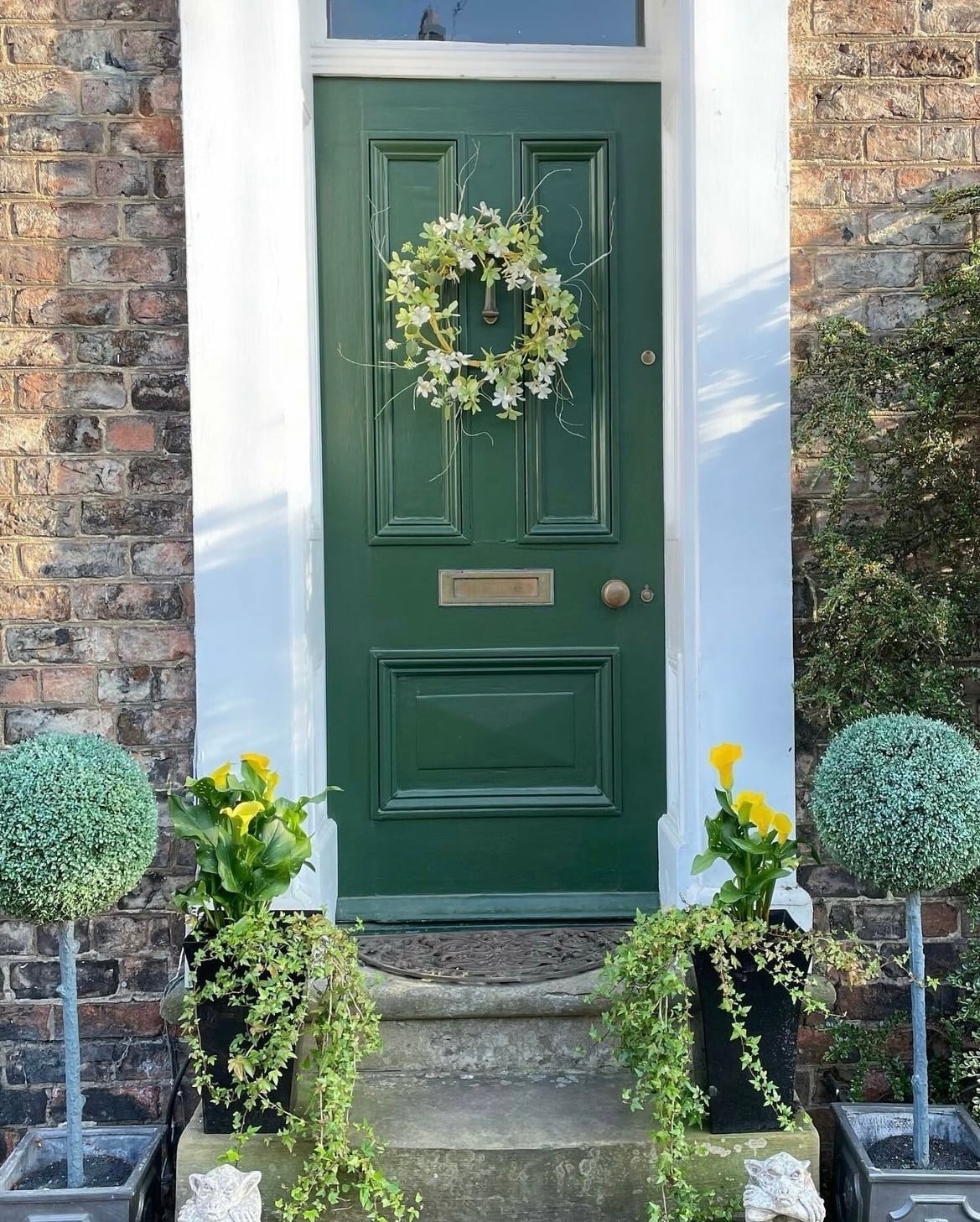
A deep green paneled door sets a formal tone that the floral wreath and topiary balls soften without undoing. The yellow calla lilies in the wreath pull warmth from the brick surround, so the door reads as part of the whole entry rather than a separate color block. The topiary forms echo the vertical panels of the door, creating a rhythm that carries the eye up the steps. What defines the palette is the balance of deep green against small hits of yellow and white. What breaks it is introducing a third floral color, like pink or purple, which would split the attention between the door and the decor. Keep the wreath to one or two accent colors, and the deep green stays in charge.
23 / 32Indoor View of Traditional Hallway to Green Door
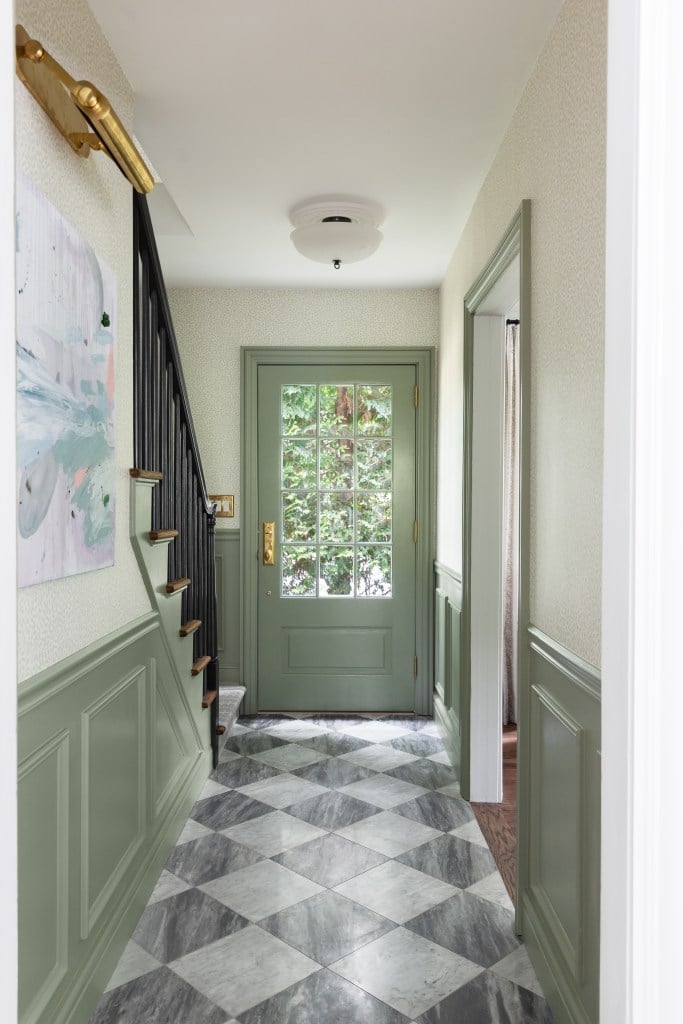
A narrow hallway can make a green door feel like a destination. The checkered floor tiles lead the eye straight to the door, and the glass panes let natural light travel back into the hall, which keeps the space from feeling like a tunnel. The green stands out because the palette stays neutral: gray walls, white trim, wood tones in the floor. The layout rule here is to let the hallway function as a frame. Keep the walls and floor quiet, and the door becomes the natural stopping point. A busy wallpaper or a patterned runner would compete with the door. Let the hall point to the door, not distract from it.
24 / 32Mint Green Door in a Lush Cottage Garden
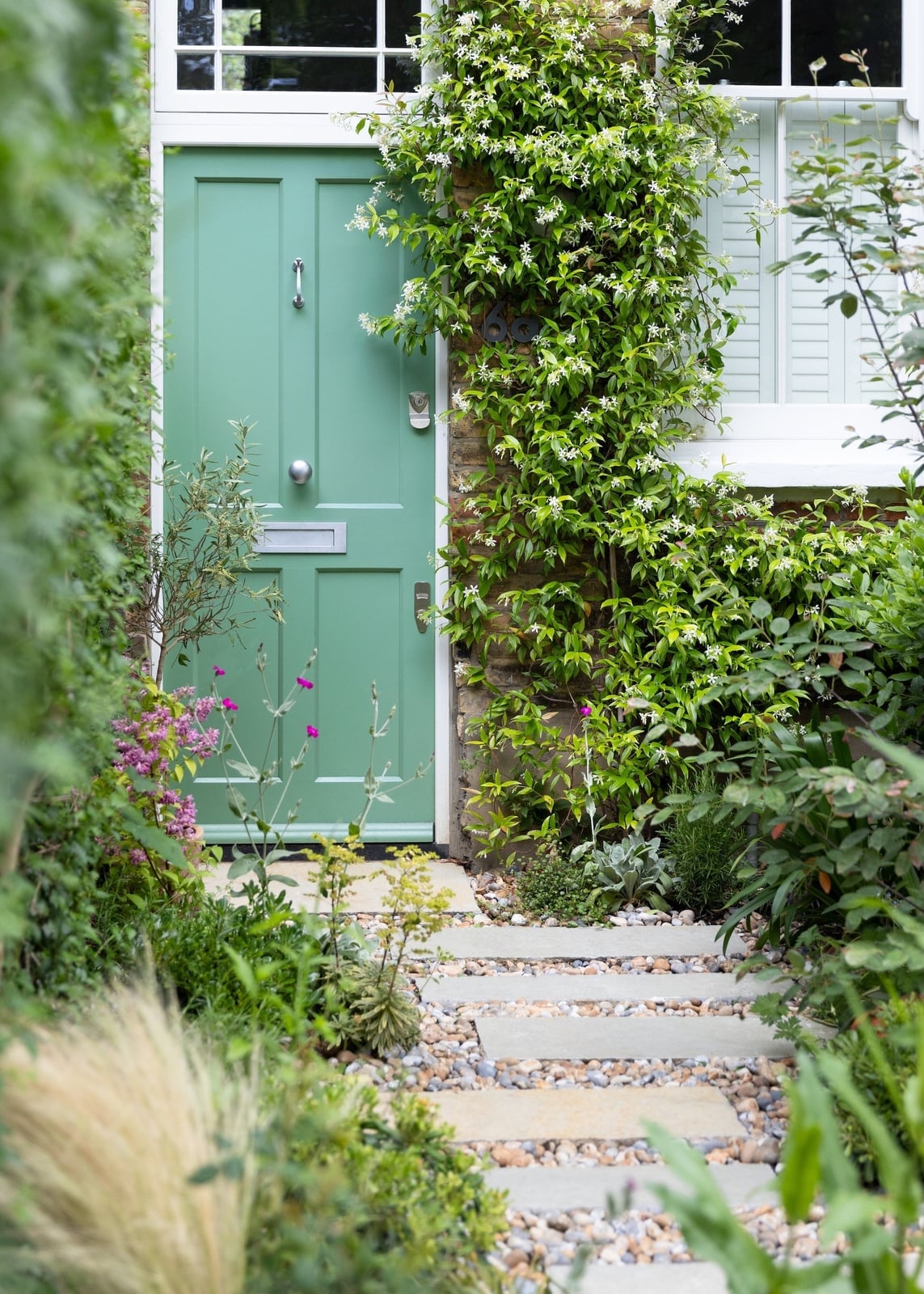
A mint green door can feel too sweet on its own. Put it in a cottage garden with climbing vines and a stone pathway, and the green reads as an extension of the foliage rather than a painted surface. The gray stone and gravel keep the mint from floating, giving the door a solid anchor. The climbing plants on the wall create a soft frame that makes the door feel discovered rather than announced. The palette uses about one part painted mint green to three parts planted natural green. That keeps the door from competing with the garden. Adding a second pastel, like pink or lavender, would turn the entry into a confection. Let the plants do the color work, and the mint door stays grounded.
25 / 32Bright Green Door with White Siding and Urns
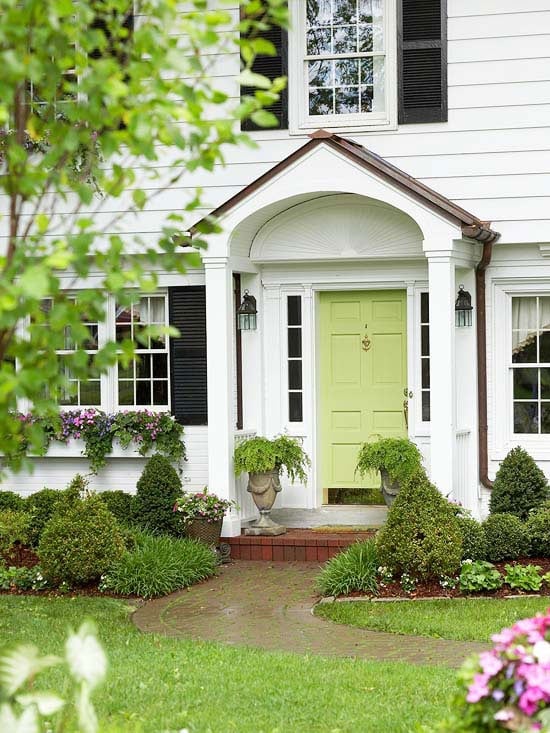
A bright green door on a white siding house is a study in contrast. The white keeps the green from feeling heavy, and the urns on either side add a vertical line that balances the wide porch. The window boxes repeat the green of the door in a softer way, tying the entry together without matching. The amount of white surrounding the green makes the door stand out. The siding, the trim, and the porch ceiling are all white, so the door becomes the single color note. Adding a second bright color anywhere on the porch, like a red mat or a blue pot, disrupts the look. Let the green stand alone against the white, and the entry stays crisp.
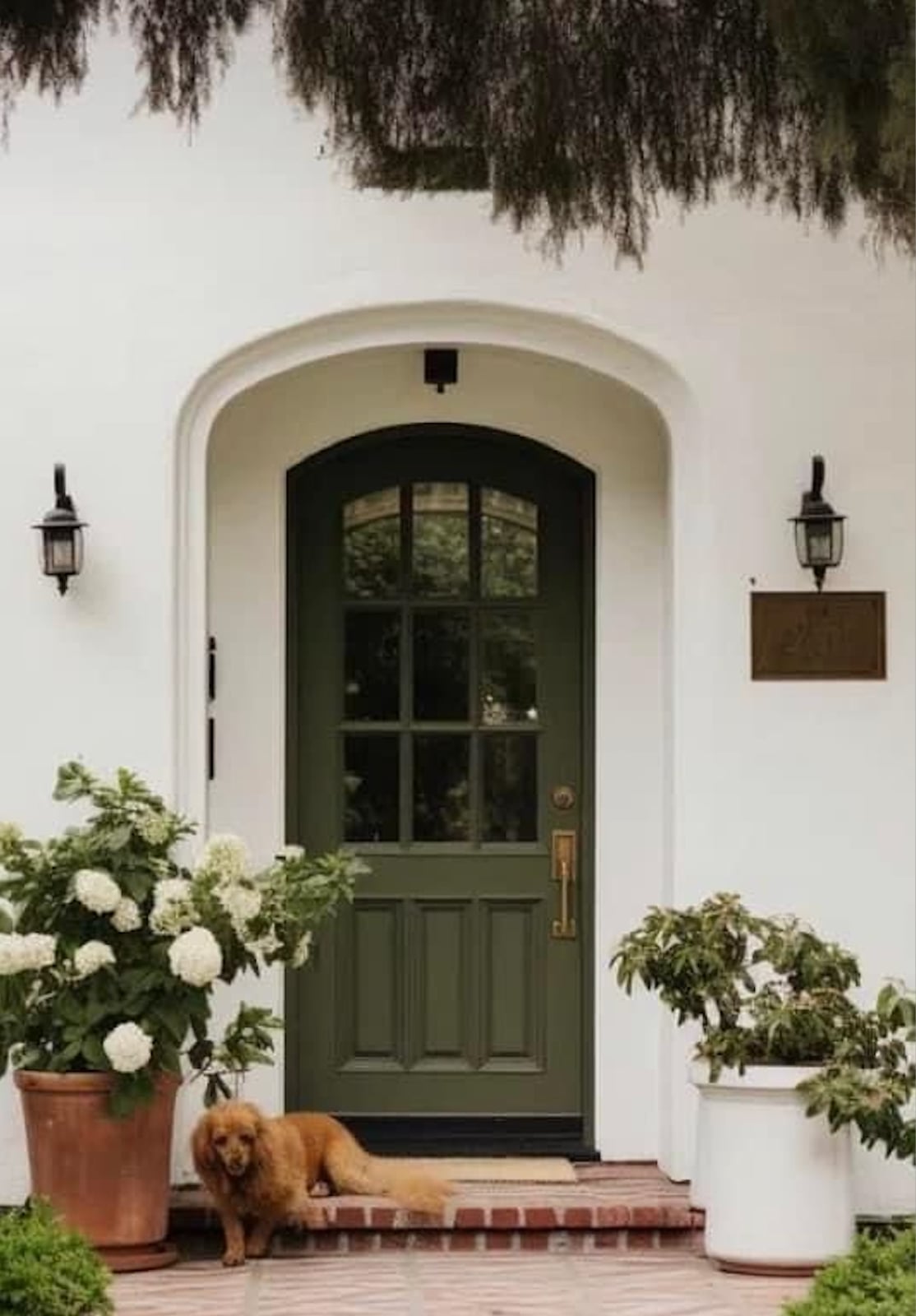
26 / 32Olive Green Arched Door in White Stucco
An olive green arched door set into white stucco suggests Mediterranean style before you notice a single detail. The arch softens the transition from outdoors to indoors, and the brass hardware adds a warm metallic note against the matte paint. Potted plants flanking the entry repeat the green in a living texture, while the terracotta floor and brick accents ground the composition in earthy tones. The balance comes from the ratio of color to neutral surface: the door and planters carry the olive, and the stucco, brick and stone let it breathe. A single brass lantern or knocker would finish the arch without overpowering it.
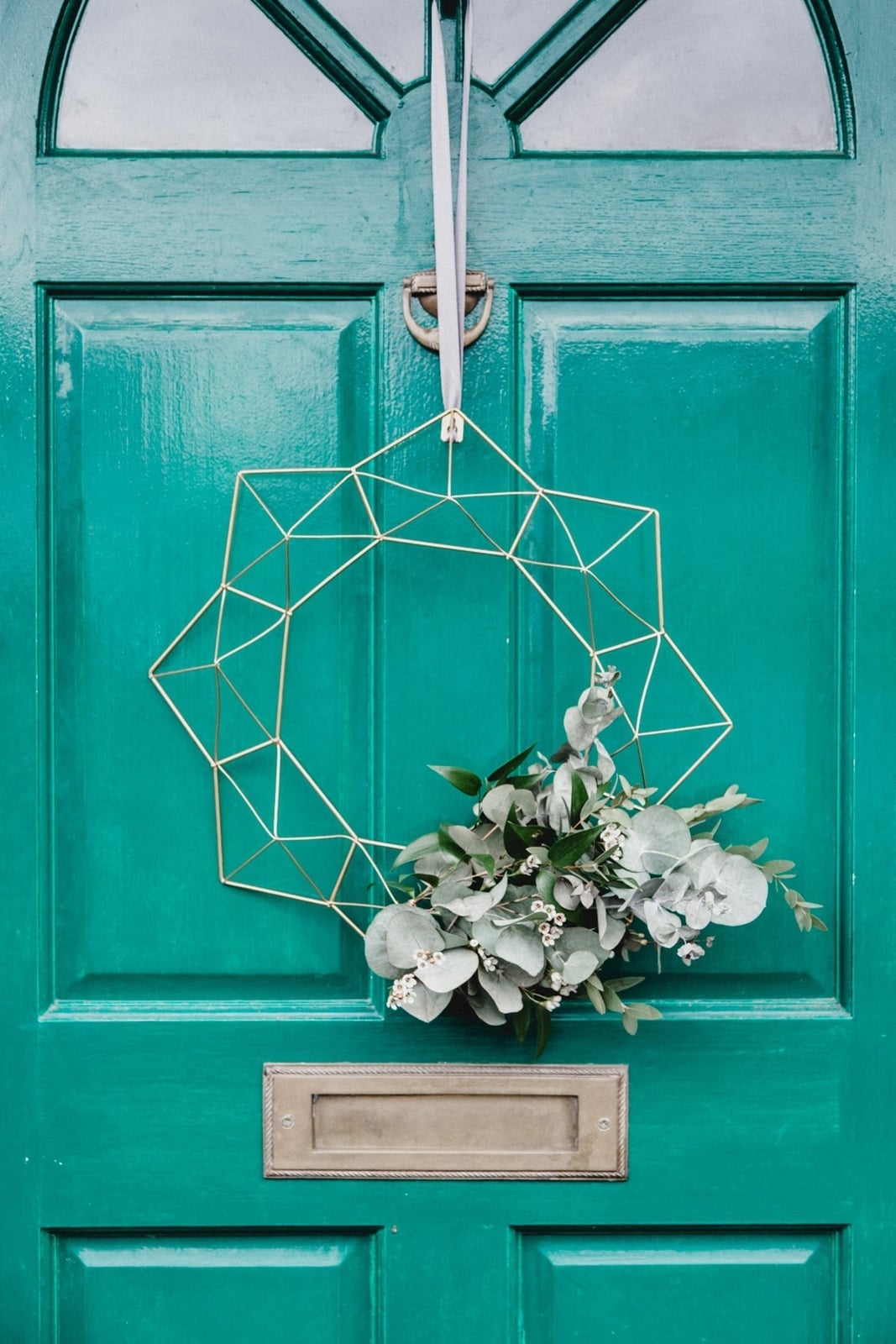
27 / 32Teal Front Door with Geometric Gold Wreath
A practical rule for a rented front door is to change what hangs on it rather than what coats it. A teal door already reads as confident, so the decor should match that energy without asking for paint. A geometric gold wreath does exactly that: metal rings and a few sprigs of greenery create a modern silhouette against the teal surface. The wreath adds texture and a hit of metallic color, and it attaches with a simple over-the-door hook that leaves the wood untouched. A matching gold mailbox repeats the note at a different scale. The whole look is two details that work because the door color carries the weight.
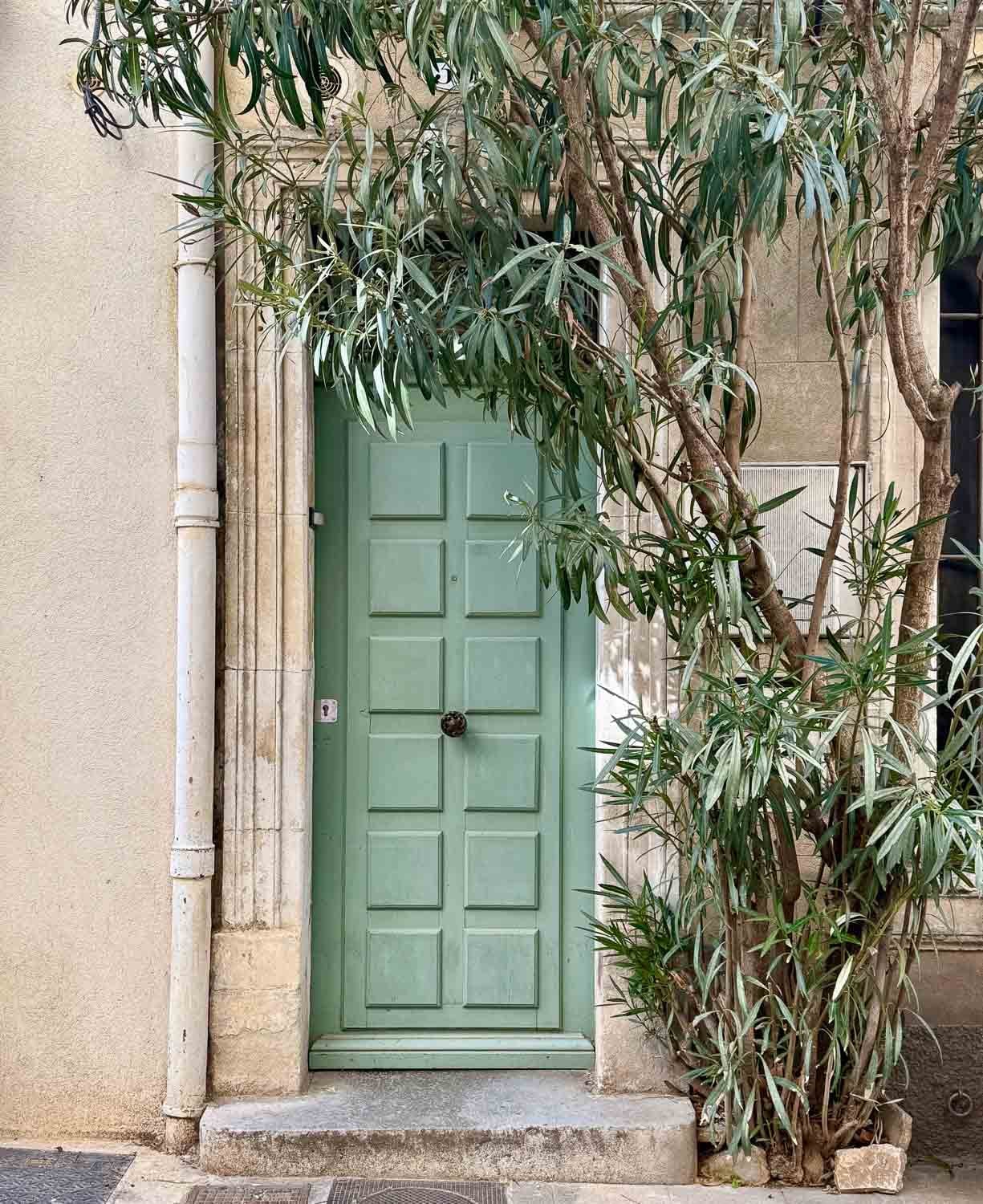
28 / 32Pale Green Door in Stone Wall with Foliage
A pale green paneled door set into a rough stone wall is almost camouflaged by a large tree and surrounding foliage. The stone and concrete path continue the muted natural palette, while the door’s multi-square panels add a geometric rhythm that the organic foliage does not have. What defines the style is the contrast between the man-made grid of the door and the uncontrolled growth around it. The pale green picks up the lighter notes in the stone and leaves, keeping the entrance from feeling like a dark hole in the wall. A single doormat in natural fiber would be enough to mark the threshold.
29 / 32Indoor Sage Green Door with Sidelights and Chandelier
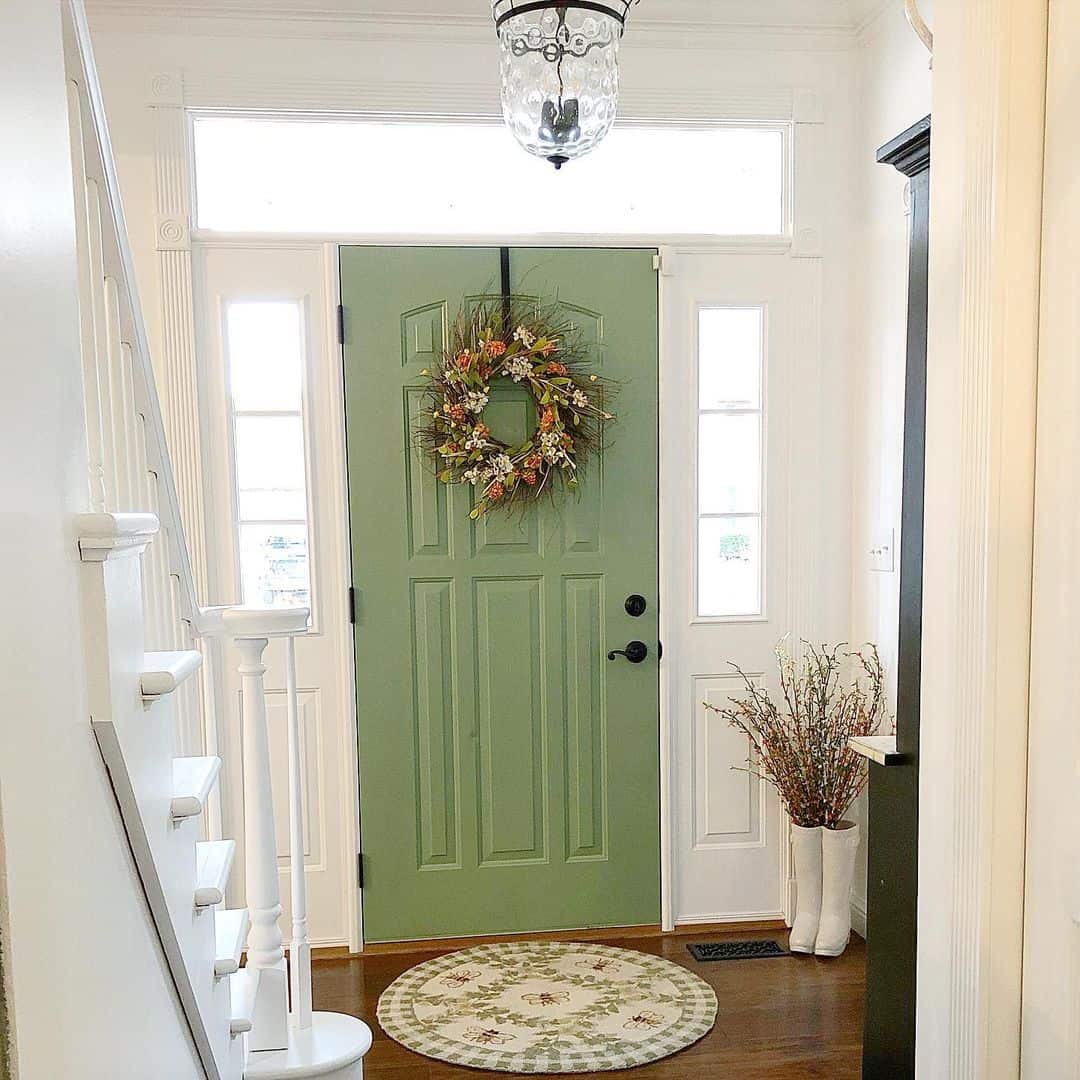
A sage green front door seen from inside the entryway shows how the color works with both natural and artificial light. The sidelights on either side let in daylight that keeps the sage from reading as flat or dark, while a chandelier overhead adds a warm glow in the evening. The view takes in a staircase and wood flooring, which anchor the door in a traditional layout. The glass panels in the door and sidelights also break up the painted surface, so the color does not feel heavy. A simple wreath on the door is the only ornament needed, since the chandelier already provides the sparkle.
30 / 32Sage Green Modern Farmhouse Door with Fall Decor
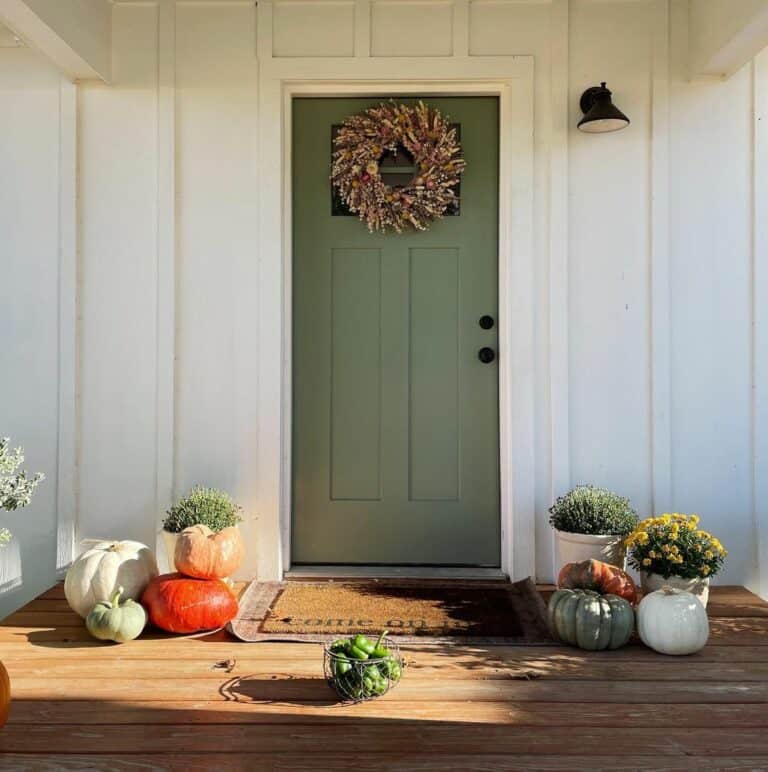
A sage green door on a modern farmhouse could read as too subdued next to the usual black or navy, but fall decor changes the equation. Pumpkins in warm orange and white sit on the porch, lanterns add metal and glass, and a natural fiber doormat ties the arrangement to the ground. The sage green recedes just enough to let the seasonal color stand out, then comes forward again when the pumpkins are put away. The wide porch and roomy layout mean the door does not compete with the decor for space. A pair of lanterns on either side balances the composition, and the soft daylight keeps the whole palette looking natural rather than staged.
31 / 32Glossy Emerald Green Door with Gold Knocker
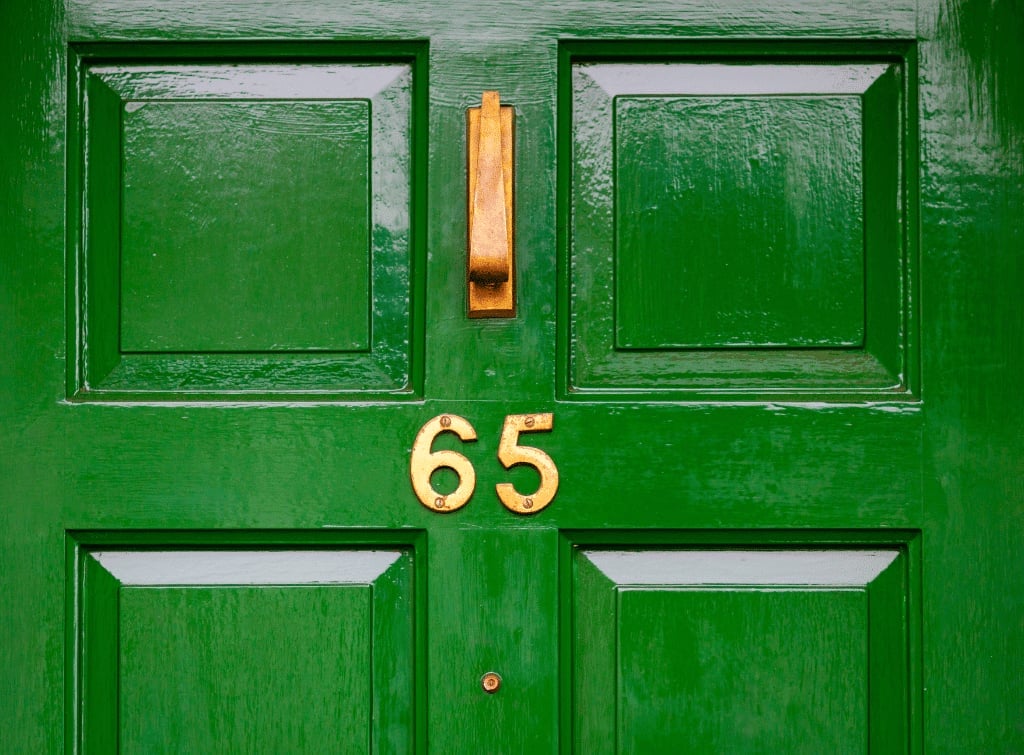
A glossy emerald green door paired with a gold door knocker creates a traditional entry that feels both formal and welcoming. The deep green paint reads almost jewel-like under artificial light, while the warm metal hardware adds a classic contrast that defines the look. What breaks the formality is the finish itself: high-gloss paint reflects light and prevents the door from feeling heavy or imposing. This palette relies on keeping the entry simple so the green and gold can carry the visual weight.
32 / 32Final Thoughts
The best green front door is the one that makes you smile every time you come home. Across these 31 looks, a few lessons stand out. Lighter greens like sage and mint soften a busy street, while deep forest and emerald hold their own against brick or stone. Brass hardware warms up cool shades; black hardware sharpens bright ones. Seasonal touches like wreaths or pumpkins are easy swaps that keep the door feeling fresh. And if you rent, a temporary door wrap or a bold planter can get you partway there. Check your climate before planting climbers or topiaries near the entry. The takeaway: pick a green that fits your home’s architecture and your own taste, then let the details do the rest.