Green is having a moment in kitchens, and the backsplash is the perfect place to let it shine. Whether you lean toward deep emerald or soft sage, these 31 green backsplash ideas show how versatile the color can be in real homes. You’ll see marble, mosaic, subway, and geometric tiles in kitchens, bars, and even outdoor spaces.
Each look keeps the backsplash as the clear hero, with the rest of the room staying simple and supportive. This is about finding the shade and pattern that fits your style without overwhelming the space.
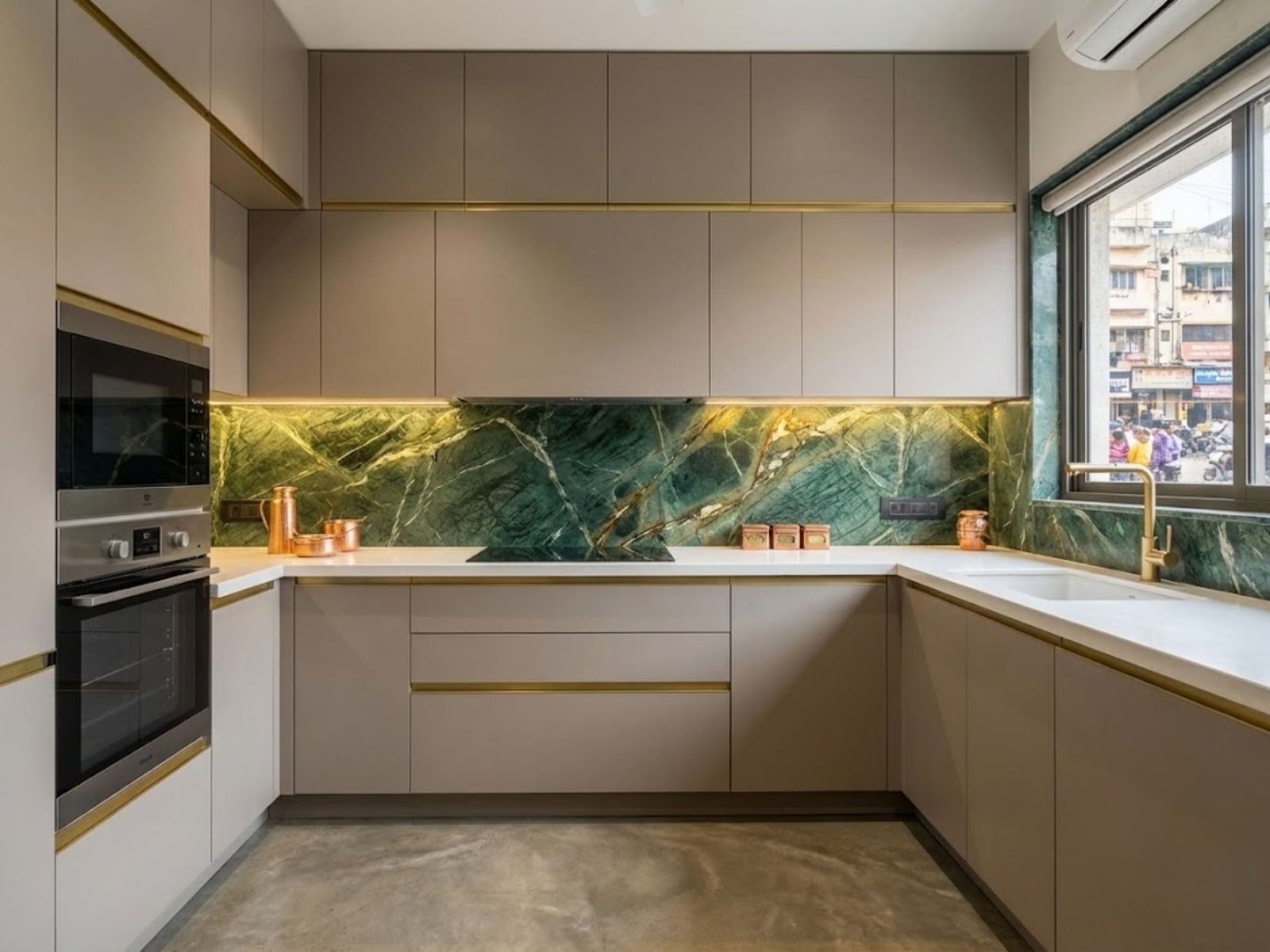
01 / 32Dramatic Green Marble Backsplash with Gold Veining
A dramatic green marble backsplash with gold veining sets the tone for a modern, compact kitchen. The rich green and grey stone anchors the wall, while metallic gold lines catch the under cabinet and natural light. White cabinets and a light countertop keep the focus on the backsplash, so the room feels intentional without competing finishes. A marble backsplash like this works best when the surrounding palette stays neutral, letting the stone do the work.
02 / 32Deep Green Mosaic Tile Backsplash with Metallic Accents
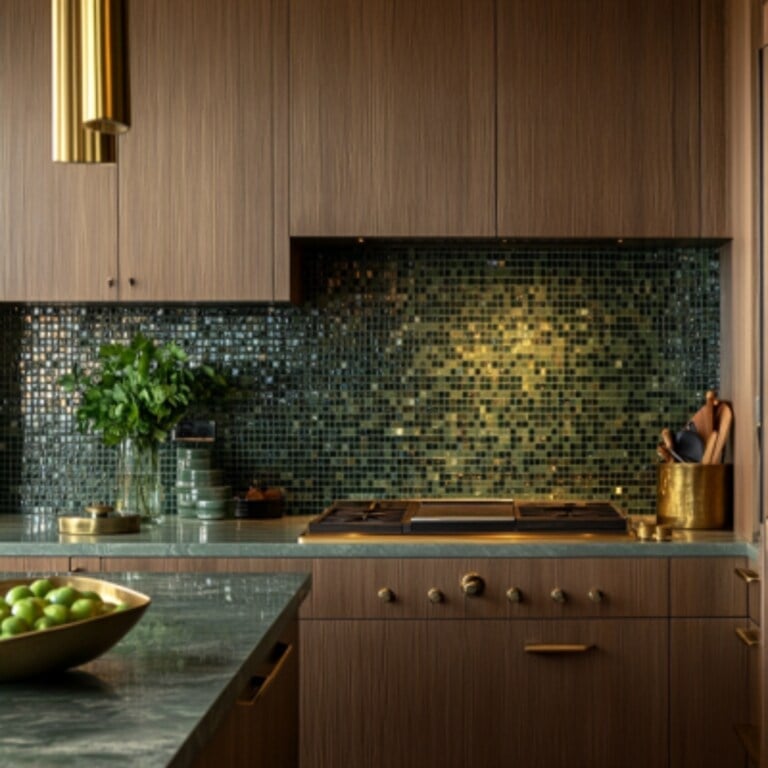
A deep green mosaic tile backsplash brings texture and sparkle to a modern kitchen. The small, dark green tiles catch ambient overhead and accent lighting, creating a surface that shifts throughout the day. Wood cabinetry and a stone countertop ground the look, while gold metallic accents in the range and hardware echo the warmth in the wood. For a similar effect, choose mosaic tiles with subtle variation in shade so the pattern reads as layered rather than flat. The mix of dark green, wood tones and gold keeps the palette rich without feeling heavy.
03 / 32Rich Dark Green Subway Tile Backsplash
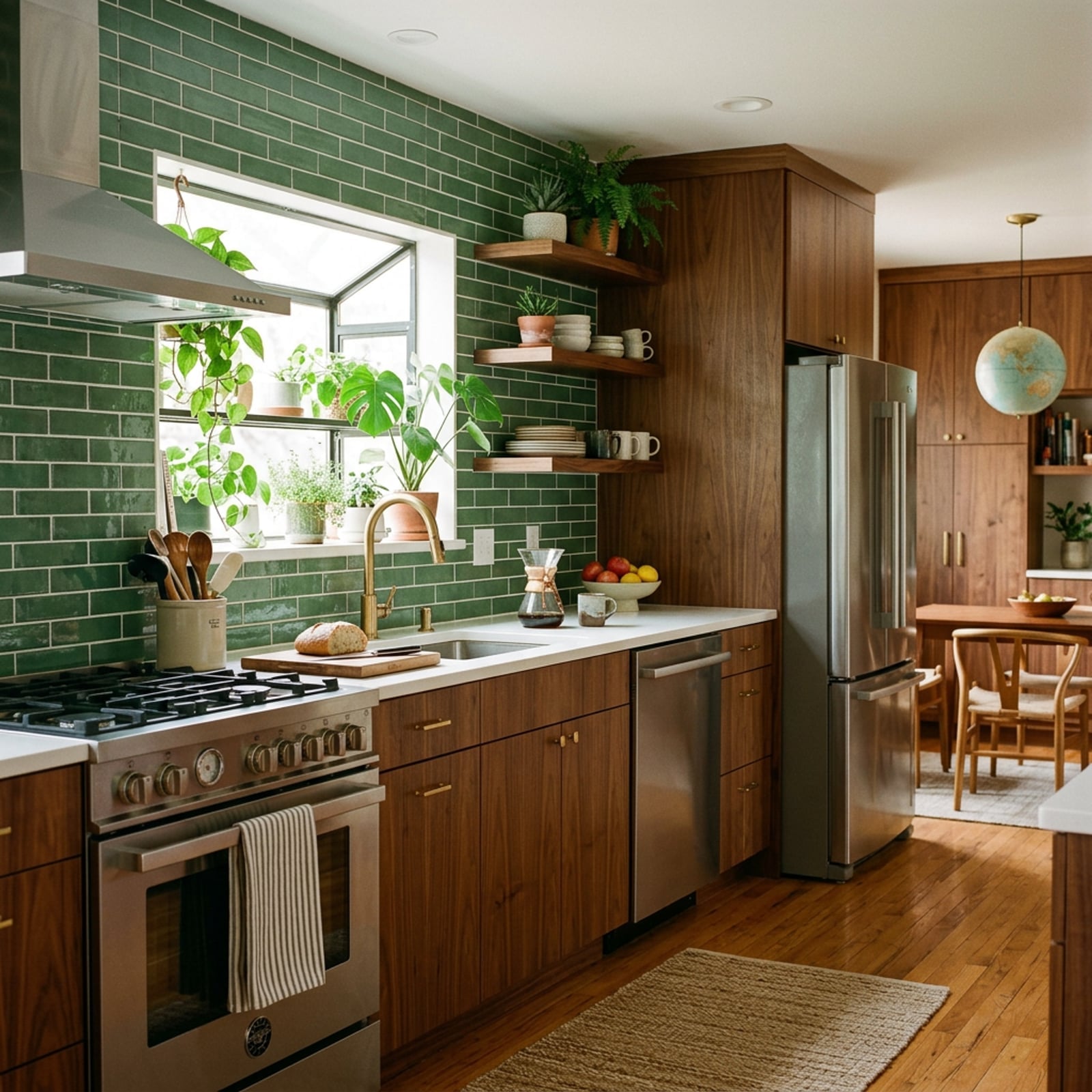
How do you make a dark green subway tile backsplash feel spacious rather than heavy? The answer is in the layout and the light. In this roomy kitchen, the dark green tile runs the full length of the wall behind the stove, sink and counters. Window light and overhead fixtures keep the deep color from closing in the space. Wood cabinets and stainless steel appliances add warmth and contrast.
A continuous run of dark subway tile works best when the countertop and cabinets stay in a lighter or neutral range. That way the backsplash becomes the anchor, not the whole story. The vertical lines of the tile also help draw the eye up, which makes the ceiling feel higher.
04 / 32Vibrant Green Tile Backsplash with Boho Accents
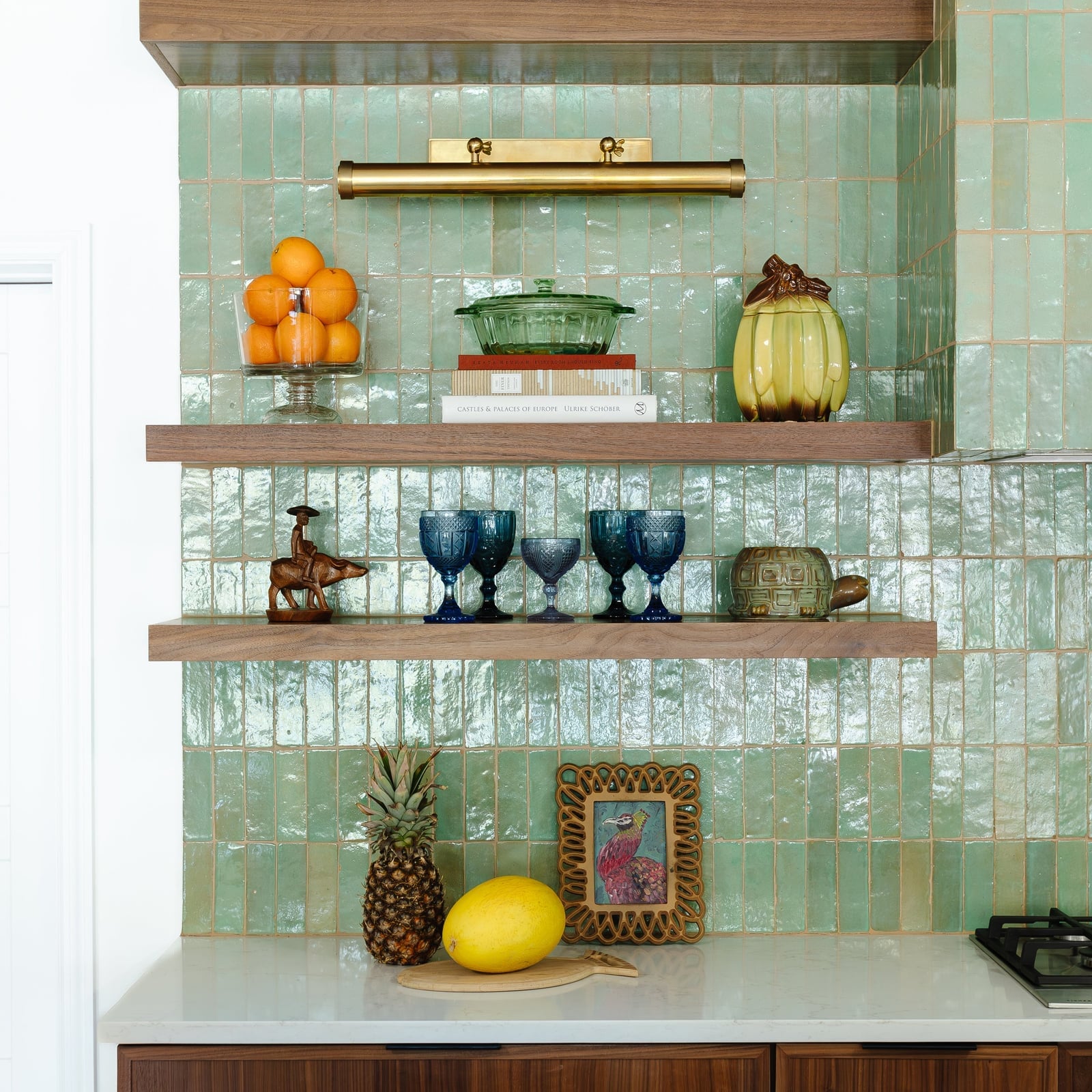
A vibrant green tile backsplash brings energy to a boho kitchen, especially when paired with wood shelves and blue glassware. Overhead task lighting and natural light make the green pop without washing it out. Open shelving keeps the room airy, letting the backsplash act as the focal point behind the counter. For renters or anyone wanting a shift without a full renovation, a bright tile backsplash in a boho palette creates a deliberate look.
05 / 32Dark Green Arched Tile Backsplash
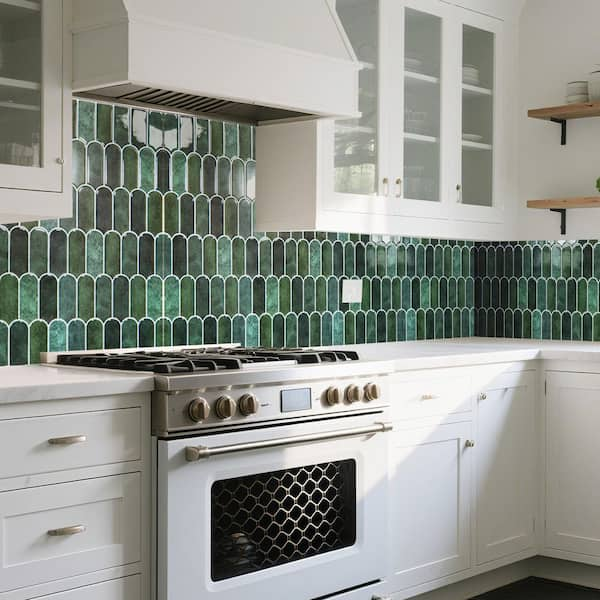
A practical rule for a dark green arched tile backsplash: keep the countertop and cabinets light to balance the color. In this roomy contemporary kitchen, the arched tile pattern runs behind the stove and matches the white marble countertop and light cabinetry. Natural and overhead light reflect off the glossy tile, so the dark green stays rich without pulling the room dim. The arched shape adds a soft, custom feel without requiring structural work. A tile with a marble-like finish echoes the countertop material and ties the whole wall together.
06 / 32Ornate Traditional Green Tile Backsplash
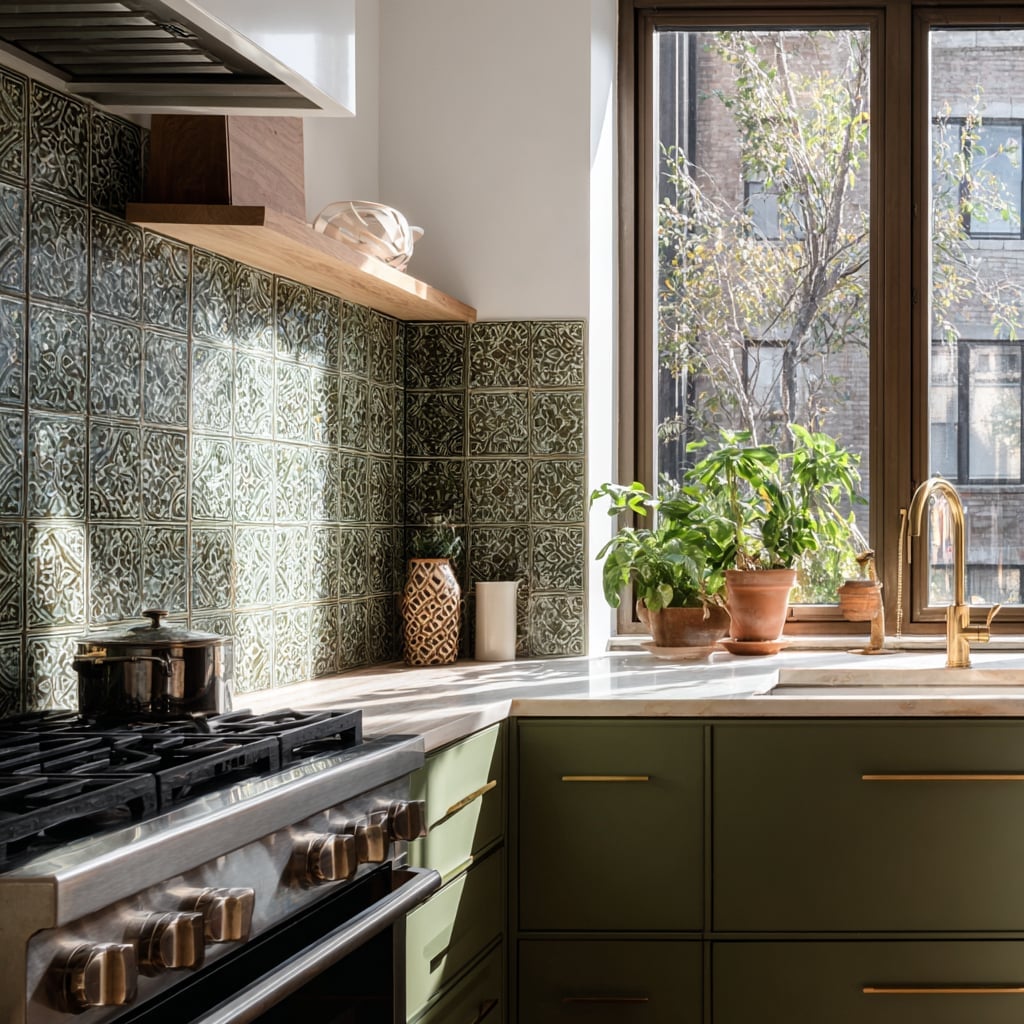
If a solid green tile feels too simple for a traditional kitchen, an ornate pattern adds the detail that plain tile cannot deliver. This compact kitchen keeps the backsplash as the center of attention, letting the green and gold pattern catch the eye while the wood cabinets and range stay neutral. The metal accents in the tile pick up the gold undertones in the wood, so the whole palette looks like one deliberate choice. A traditional kitchen benefits from a backsplash that works with crown molding or paneled cabinets, and an ornate tile pattern achieves that by repeating its motif at a scale that suits a smaller wall. The directional light from above makes the raised parts of the tile visible, which adds depth without needing a second color.
07 / 32Bold Green Geometric Tile Backsplash
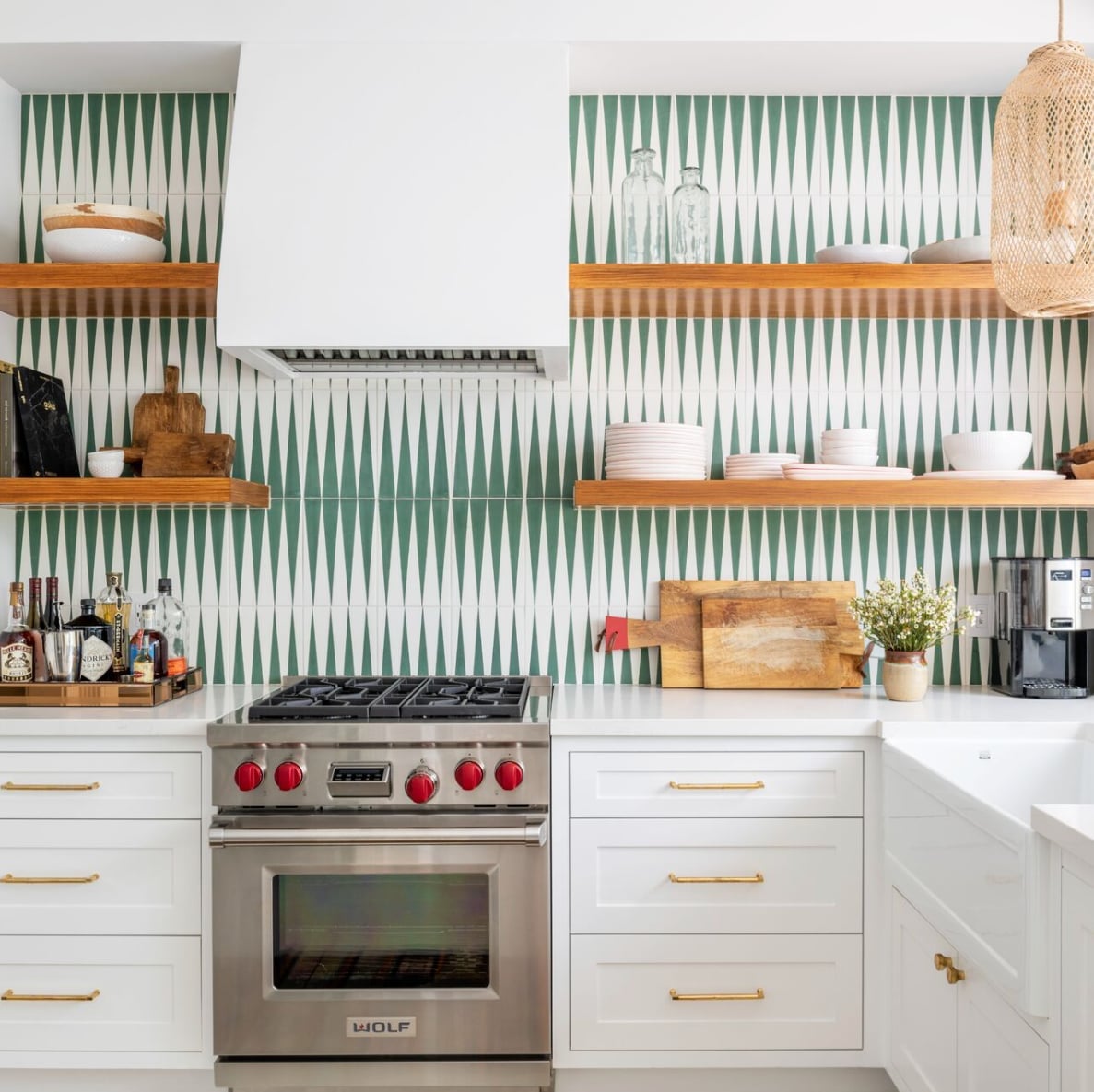
The geometric tile pattern uses repeating angles and lines to draw the eye across the wall, so the backsplash becomes the focal point even with open shelving and a stainless steel range nearby. A geometric tile works well in a modern kitchen because the pattern does the decorating for you. The white cabinets and wood shelves keep the palette clean, letting the green tile stand out without competing for attention. For renters, a geometric tile backsplash is often installed as a peel-and-stick panel or a thin veneer over the existing surface, so the pattern can be removed later without damaging the wall.
08 / 32Emerald Green Square Tile Backsplash
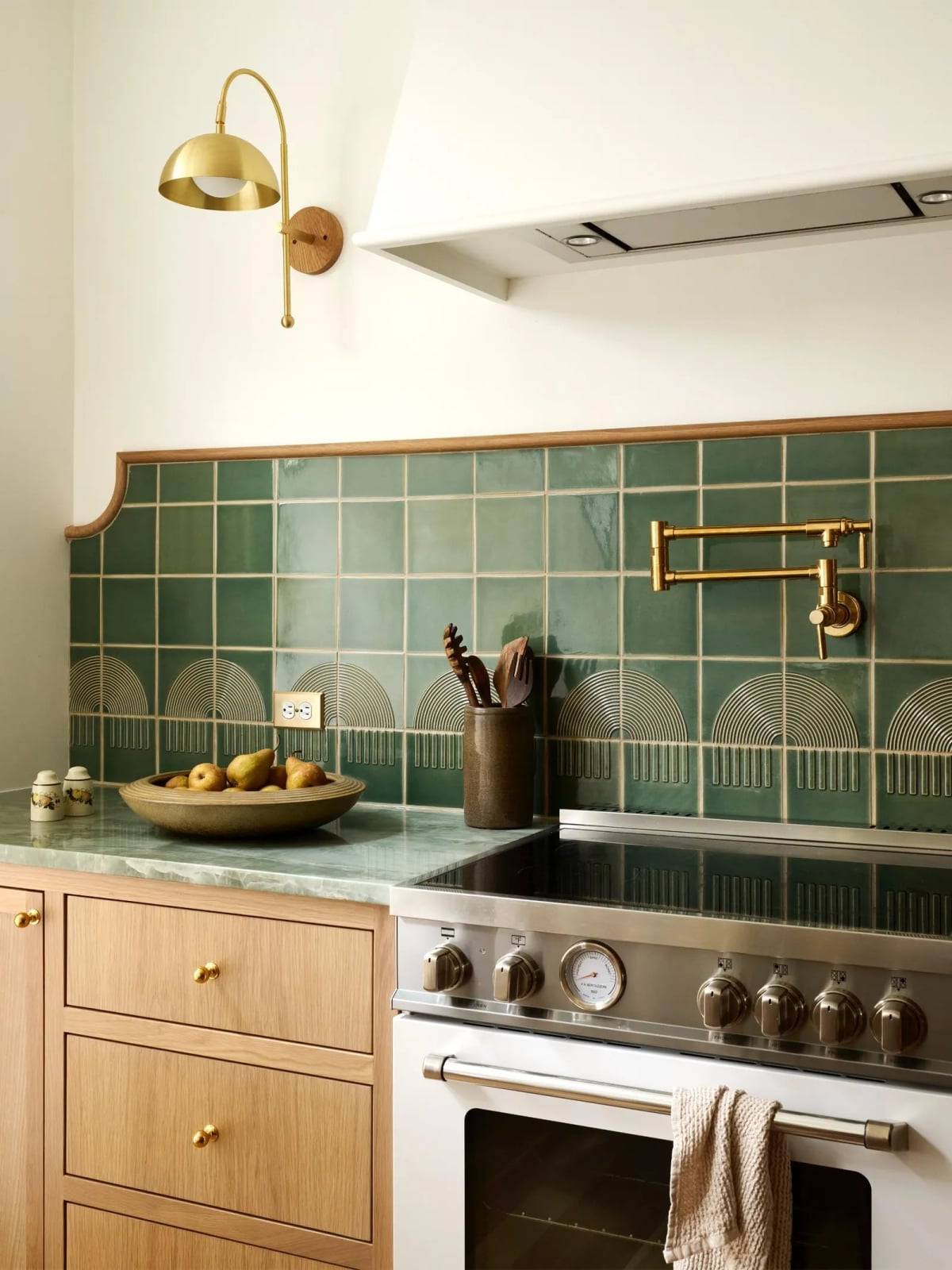
Large square tiles in emerald green give a kitchen a strong color anchor without needing a complex pattern. The size of each tile means fewer grout lines, so the color dominates the wall and the wood cabinets and brass faucet become supporting players. A single bold color on the backsplash can simplify the rest of the kitchen design. When the tile is glossy, it reflects natural light from the window and the wall lamp, which stops the green from feeling too heavy. A large-format tile also means fewer cuts during installation, which can save time for a DIY homeowner.
09 / 32Olive Green Horizontal Tile Backsplash
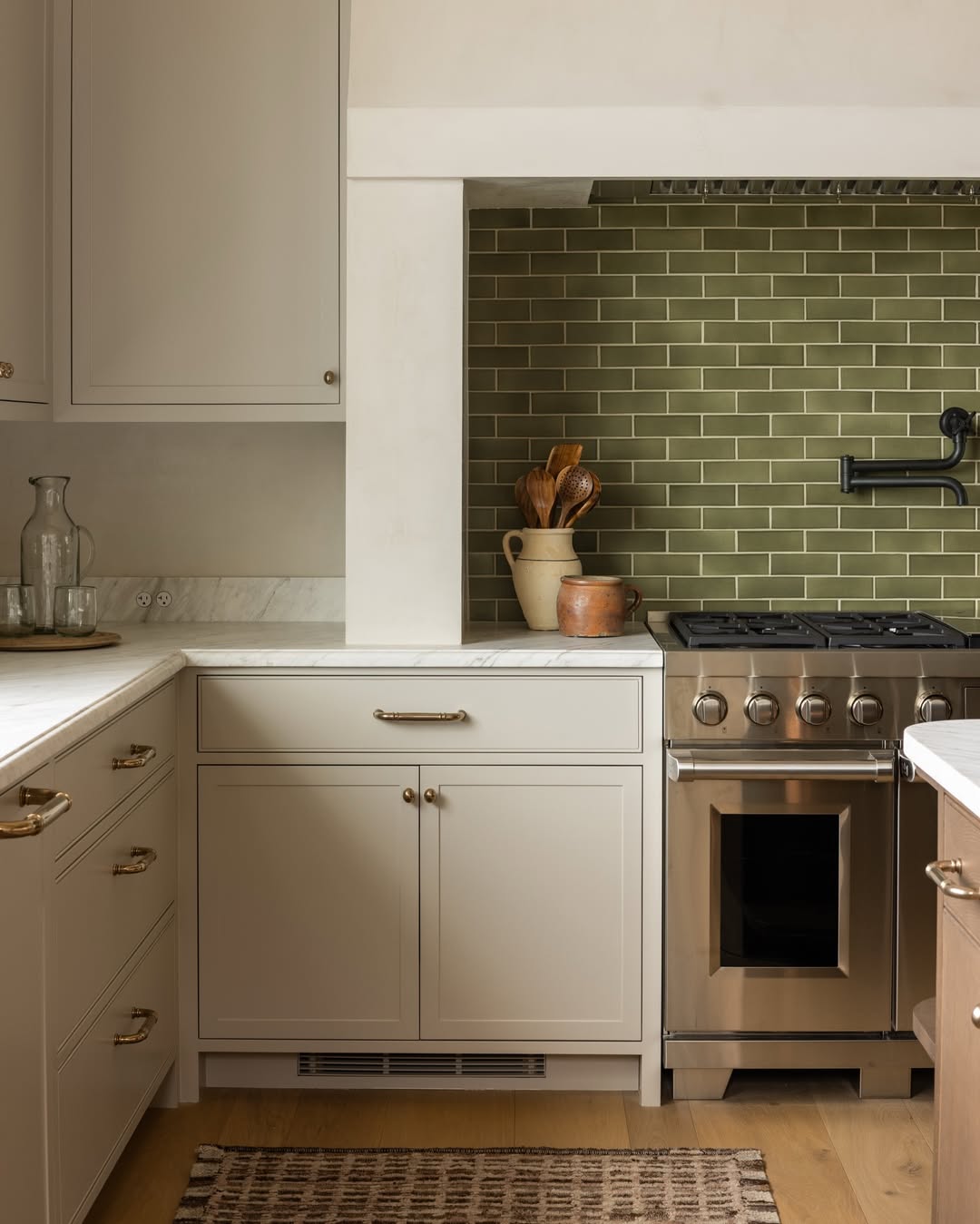
Can a horizontal tile layout make a kitchen feel wider than it is? Yes, because the eye follows the long lines from left to right, which stretches the visual width of the wall. The olive green tile in this kitchen sits behind the range, with beige cabinets and a marble countertop keeping the overall palette warm but not dark. The horizontal orientation also means the tile pattern can wrap around a corner without a visible break, which helps the backsplash feel continuous. The stone countertop adds a subtle texture that keeps the olive green from looking flat, and the stainless steel range provides a clean boundary between the tile and the cooking surface. A horizontal layout is a practical choice for a roomy kitchen because it draws attention to the length of the counter rather than the height of the cabinets.
10 / 32Deep Green Vertical Tile Backsplash, Kitchen
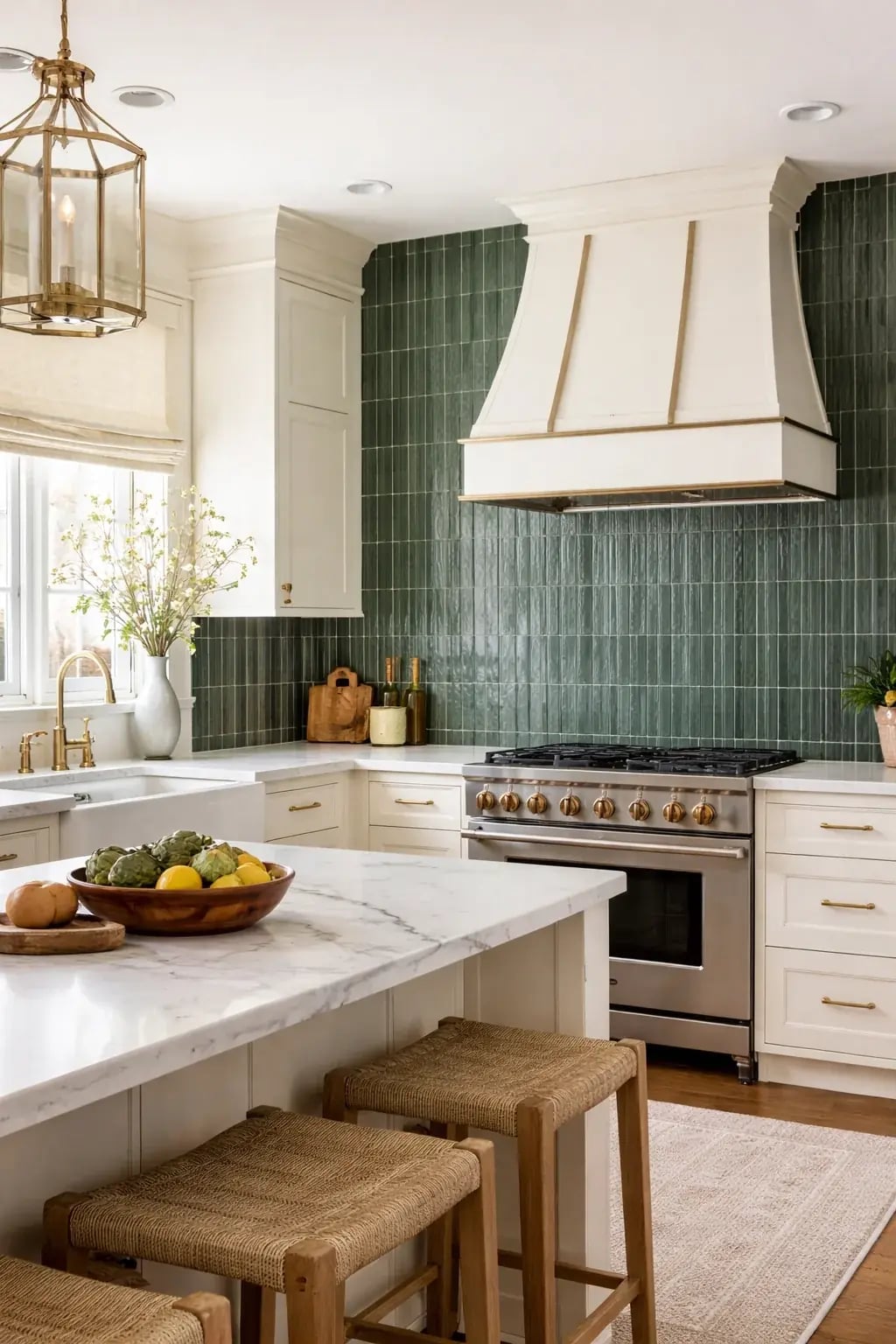
The vertical tile layout runs from counter to cabinet, which makes the wall between them feel taller than it is. In a modern farmhouse kitchen with an L-shaped counter and a central island, the vertical lines echo the tall cabinet fronts and the pendant light’s vertical drop. The deep green tile contrasts with the white marble countertop and the brass fixtures, so the backsplash reads as a deliberate design move rather than a background fill. A vertical tile pattern works best when the grout lines are thin and match the tile color, because the goal is to emphasize height, not the grid.
11 / 32Green Mosaic Tile Backsplash with Ocean View and Farmhouse Sink
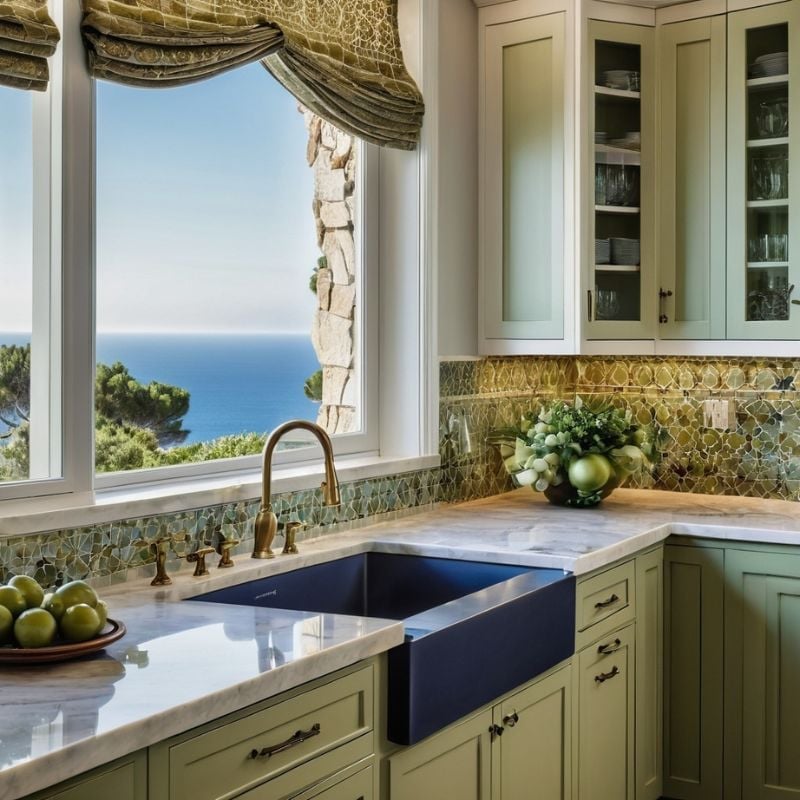
A practical rule for a kitchen with a view: let the backsplash bridge the indoor palette and the landscape. Here the green mosaic tile picks up the blue-green of the ocean through the large window, while the brass faucet and green cabinets echo the warm and cool notes in the tile. The farmhouse sink sits centered under the window, and the tile runs along the counter and up to the window frame, so the wall reads as a continuous surface. White marble on the counter keeps the look from competing with the view. The mosaic’s small pieces catch the natural light differently across the day, which keeps the wall lively without needing a pattern.
12 / 32Dark Green Hexagonal Tile Backsplash for a Bar With Wall Sconces
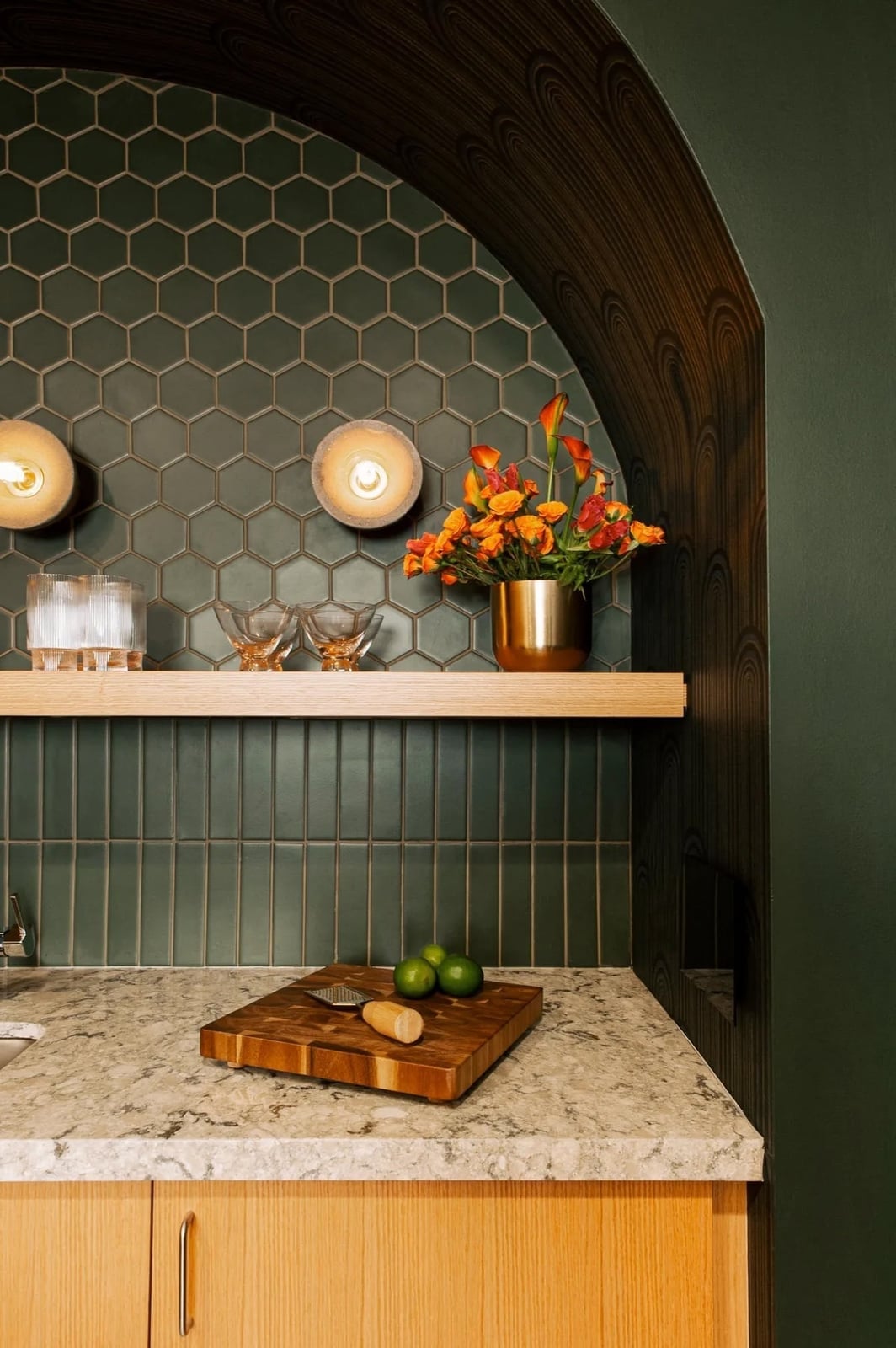
A solid dark green tile backsplash is a safe choice for a bar area, but a hexagonal tile in the same deep green adds geometry without changing the color commitment. The hexagons break the wall into repeating facets, so the dark green reads as a textured surface rather than a flat painted wall.
The wood cabinetry below warms the green, and the gold wall sconces on each side of the shelving hit the tile with warm light that brings out the depth in the glaze. The shelving above the bar keeps the upper wall open, so the geometric tile stays as the main event without competing with upper cabinets. The result is a bar area that feels finished without needing a lot of accessories.
13 / 32Uniform Green Subway Tile Backsplash, Natural Light
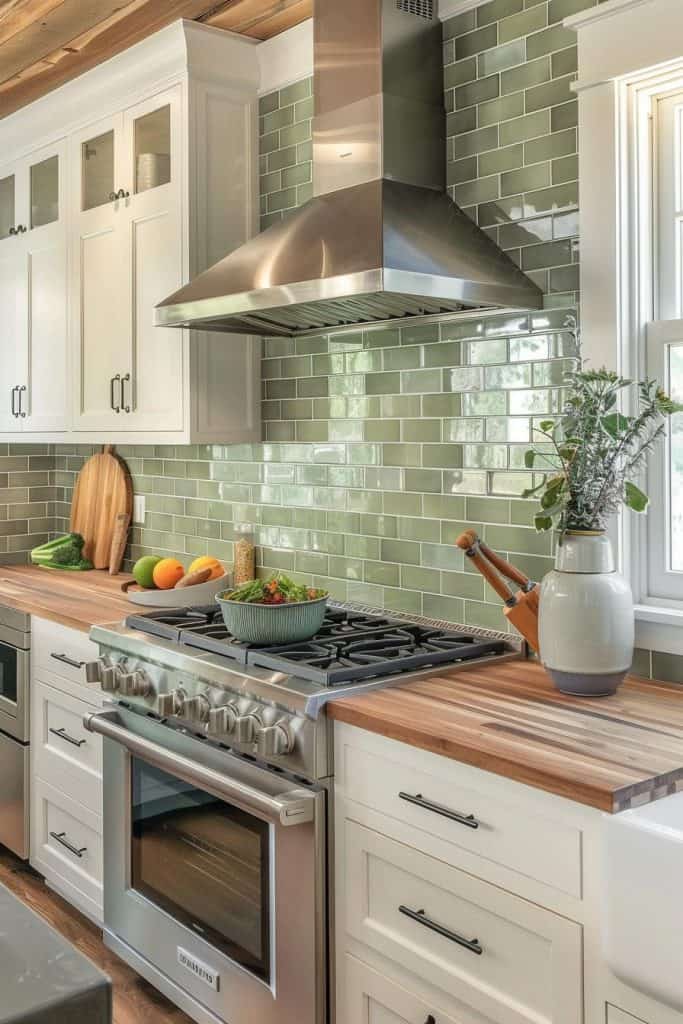
A uniform green subway tile backsplash running behind the range and countertops creates a clean field of color that complements the wood countertops and stainless steel range. The single shade and consistent running bond layout means the eye rests on the tile’s color and finish without pattern variation. Under cabinet lighting and natural light hit the tile evenly, so the green becomes a solid backdrop for the cooking zone instead of a busy accent.
14 / 32Stacked Sage Green Tile Backsplash With Open Shelving
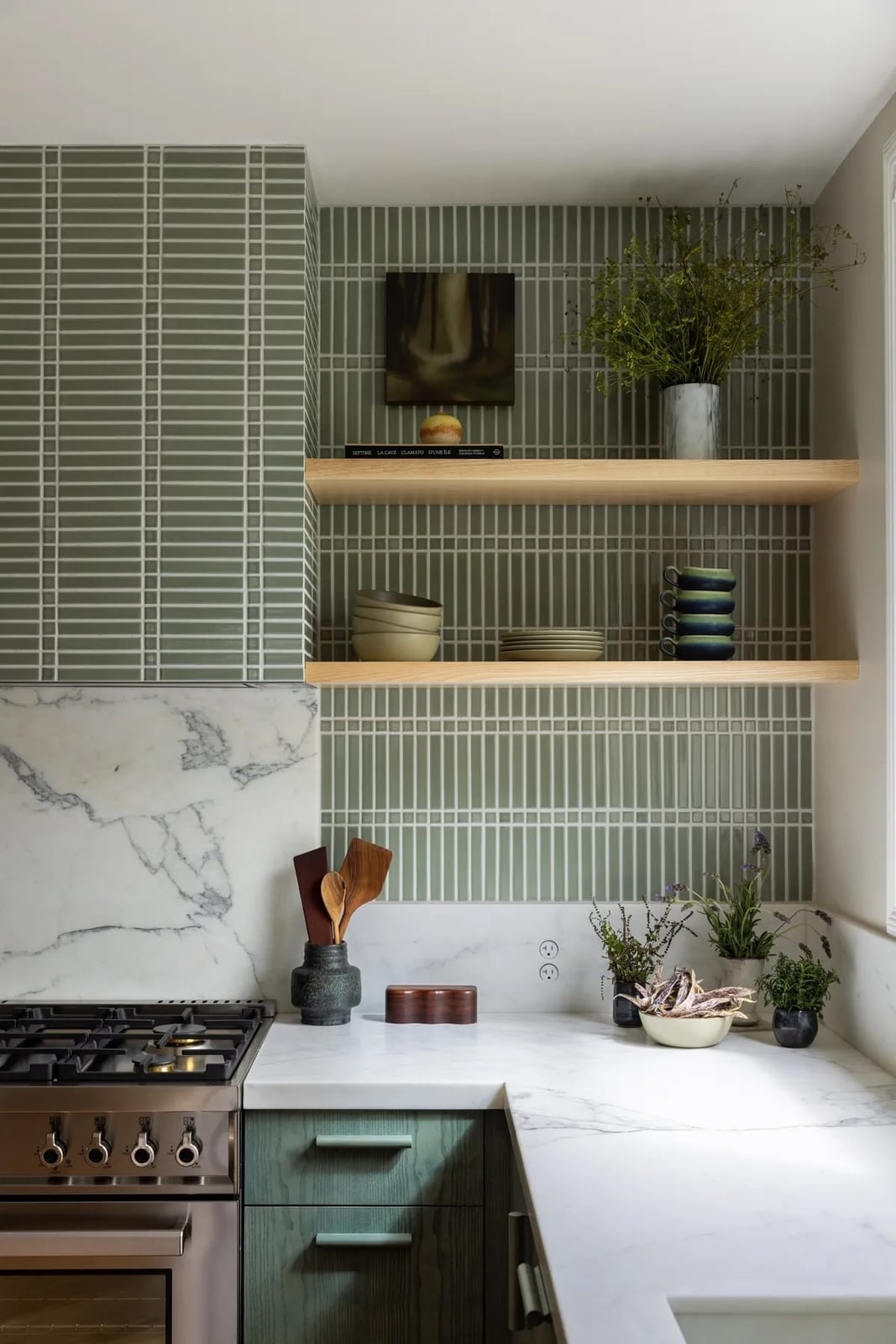
A stacked sage green tile backsplash is a quiet way to add color without the busyness of a pattern. The tiles sit edge to edge in neat vertical columns, creating a single textured surface. The sage green picks up the soft gray undertones in the marble countertop, while the window keeps the shade from feeling flat. Open shelving above the range means the tile is visible from counter to hood, which makes the backsplash feel like a deliberate choice. The wood tones in the shelving and the white of the surrounding walls give the green room to breathe. For a Japandi kitchen, that balance of muted color and clean line is what makes the space feel calm.
15 / 32Deep Green Vertical Fluted Tile Backsplash, Kitchen, Close-Up Take
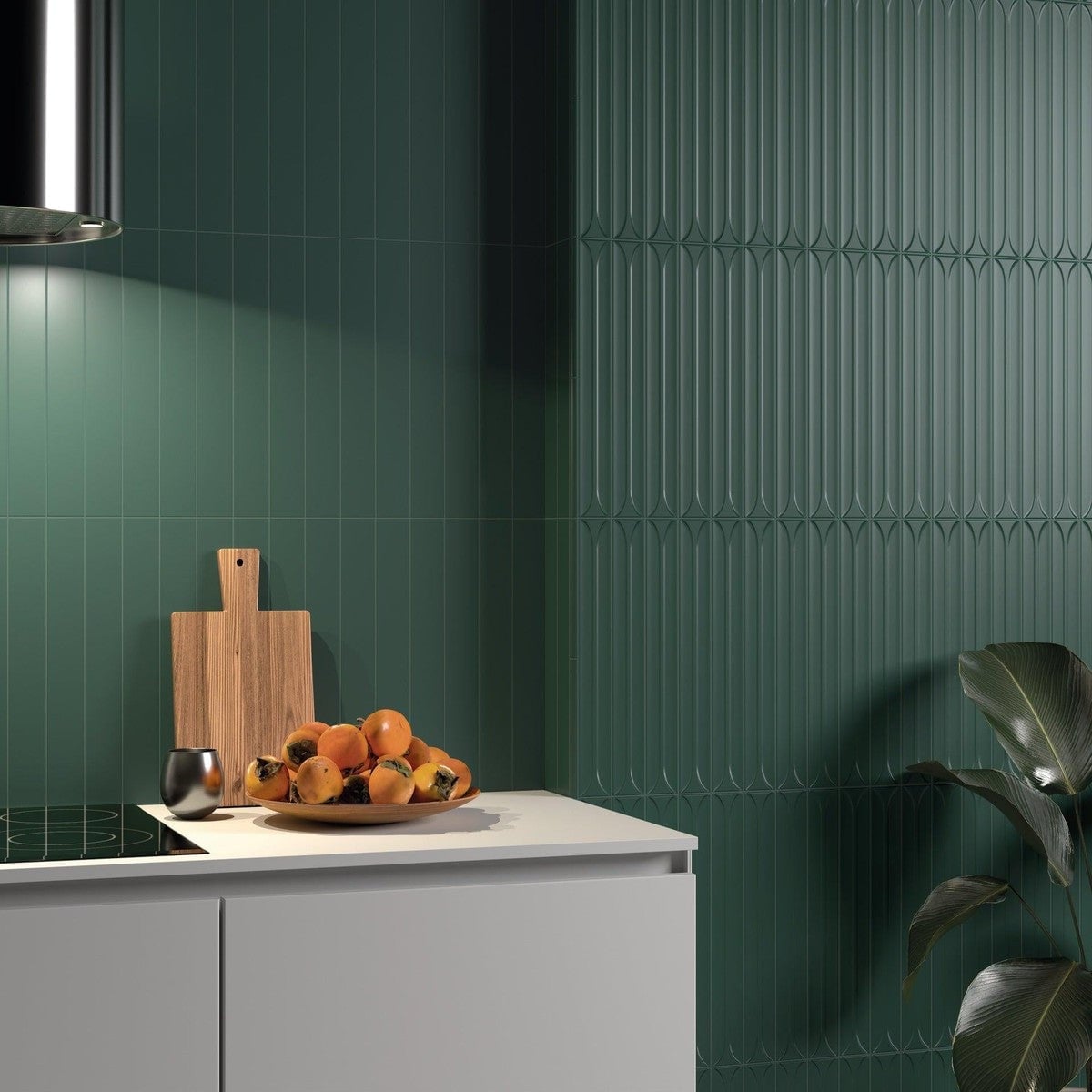
A practical rule for a deep green vertical fluted tile backsplash: let the texture do the talking so the palette can stay simple. The fluted surface catches the spotlight from the range hood and the ambient ceiling light, creating shadows that shift as you move around the kitchen. That means you get visual interest without needing a second color or a pattern. The grey cabinets and white laminate counter keep the look clean, and the deep green of the tile anchors the whole wall without making it feel heavy.
The vertical flutes echo the line of the stainless steel hood and the tall cabinet fronts, so the backsplash pulls the eye up and makes the counter area feel taller. In an open plan kitchen, that upward line helps define the cooking zone without needing a physical divider. The material itself is glazed ceramic tile, which handles splashes and steam well. The only thing to watch is the grout lines between the fluted sections: they are narrower than standard subway tile grout, so they stay cleaner with less scrubbing. If you are considering a textured tile in a kitchen, the fluted shape is a solid middle ground between flat and ornate.
16 / 32Full Wall Emerald Green Tile Backsplash
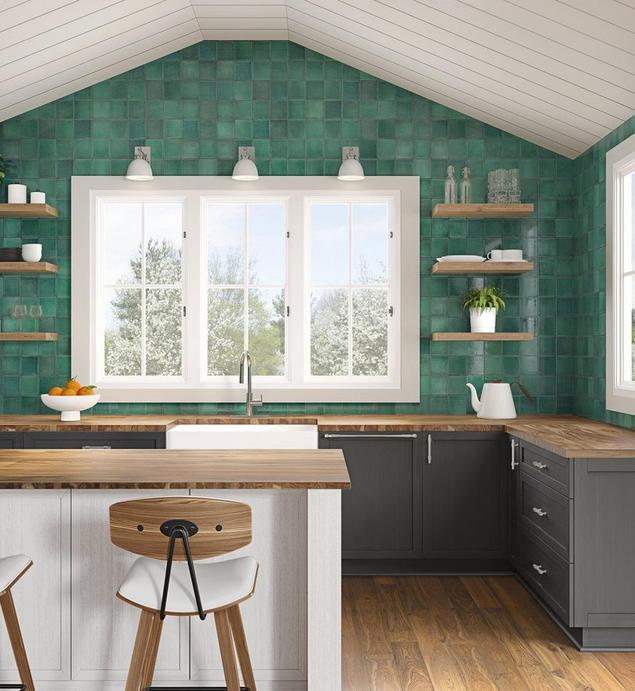
A full wall of textured green tile turns the backsplash into the room’s main event, not a background detail. In a U-shaped kitchen with an island, the emerald green tile runs from counter to upper cabinet line, anchoring the space without making it feel dark. The open wooden shelves and white farmhouse sink keep the palette balanced. A layout like this works because the tile acts as a single, strong visual block that does not need repeating elsewhere. The windows and overhead task lighting keep the finish visible from every angle.
17 / 32Glossy Emerald Green Tile Backsplash
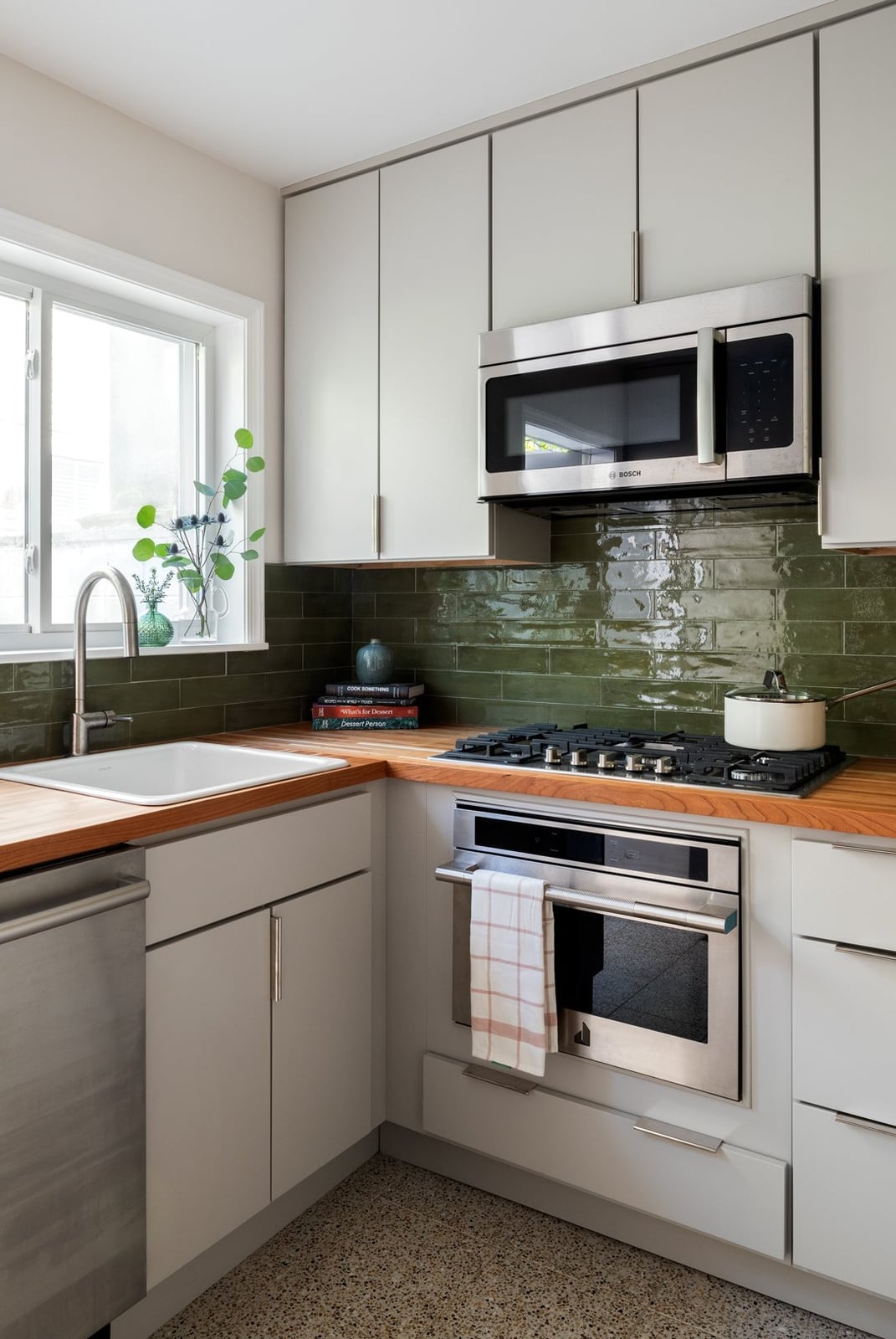
A practical rule for a corner kitchen with limited counter space: let the backsplash do the work. The glossy emerald green tile reflects light from the window and overhead fixture, making a compact layout feel larger than it is. The glossy finish picks up the grey of the appliances and the wood tone of the cabinetry, tying them together without needing a third material. For renters, peel-and-stick glossy tile in a similar shade offers the same light-reflecting effect without altering the wall. The key is to choose a tile with enough sheen to bounce light around, especially in a corner where natural light is indirect.
18 / 32Vibrant Green Tile Backsplash in Outdoor Kitchen
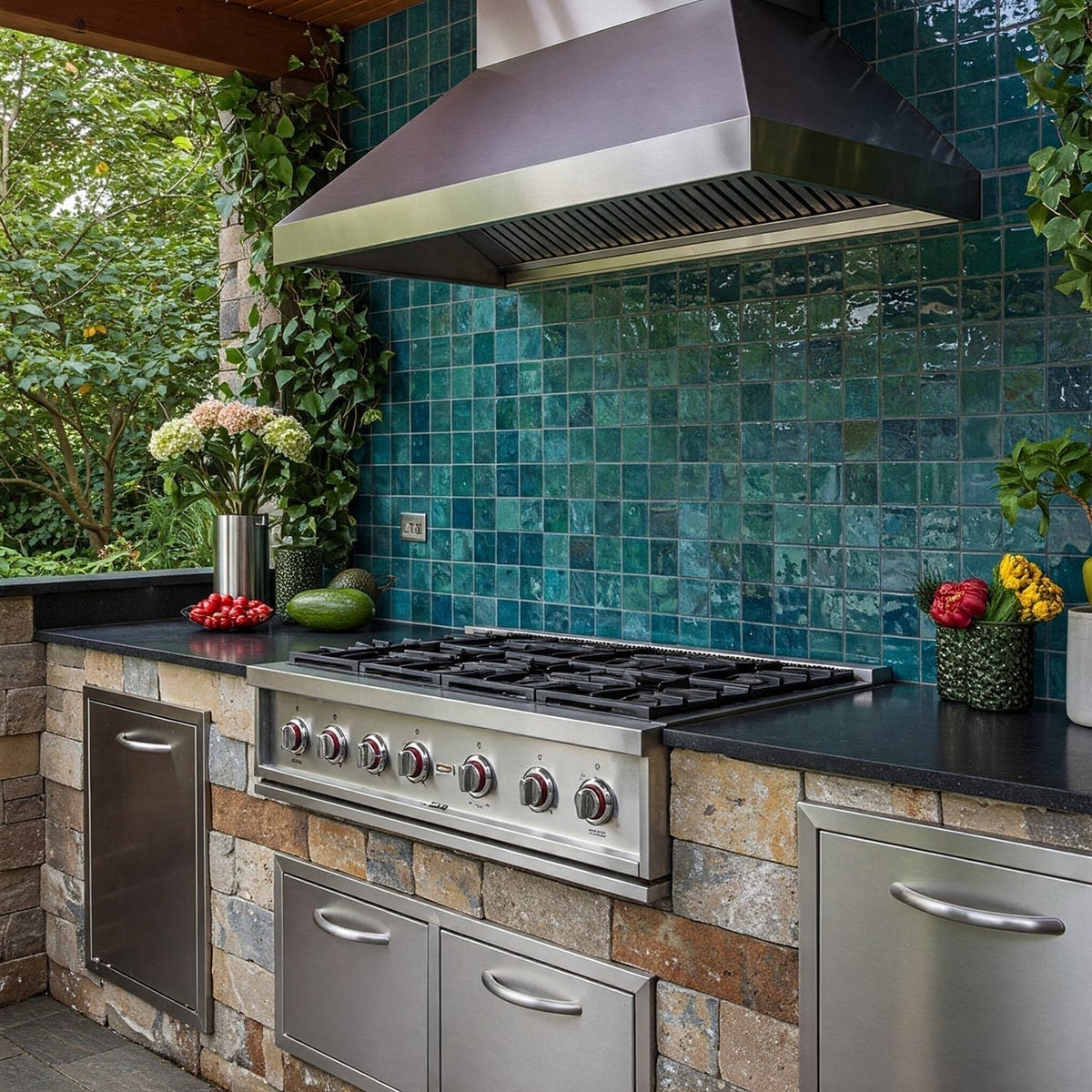
An indoor backsplash is about containing moisture and adding color. An outdoor kitchen backsplash has to handle weather, heat, and direct sun, so the material choices are narrower. The vibrant green tile in this outdoor cooking area sits between a stone base and a stainless steel hood, with a professional range below. The tile adds the color that stone and steel can’t provide on their own.
The open layout means the backsplash is visible from the patio or yard, so it functions as both a work surface and a design feature. The tile’s glaze protects against the elements, but outdoor kitchens in colder climates need a tile rated for freeze-thaw cycles. Check the manufacturer’s specifications before installation, and consider a covered structure if the kitchen sees steady rain.
19 / 32Glossy Green Subway Tile Backsplash with Boho Style
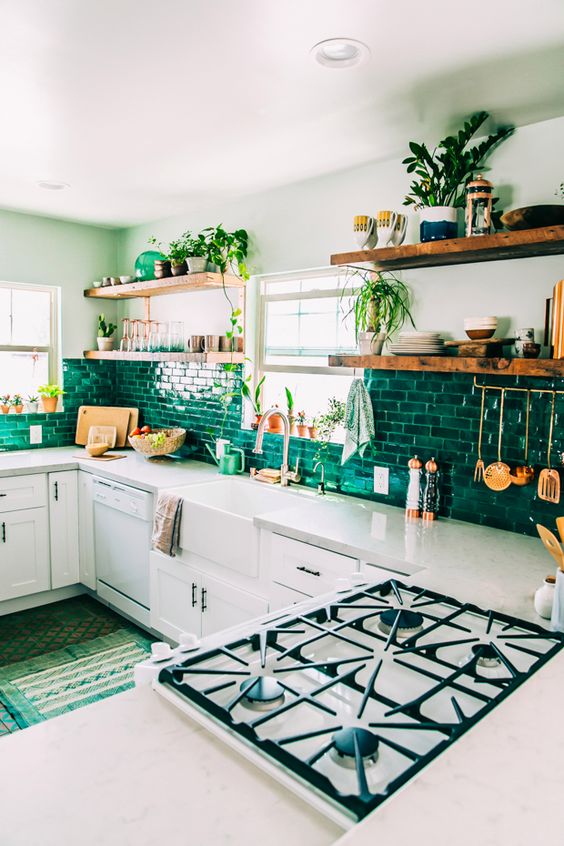
A glossy green subway tile brings a boho kitchen a finish that feels deliberate. The glass tile reflects sunlight, while the white cabinets and farmhouse sink keep the look from feeling heavy. The open shelves above the sink offer a spot for ceramic pieces or plants that echo the boho style without crowding the counter. The glossy surface wipes clean easily, which matters in a compact corner kitchen where the backsplash takes up most of the visible wall.
20 / 32All-Over Deep Green Geometric Tile
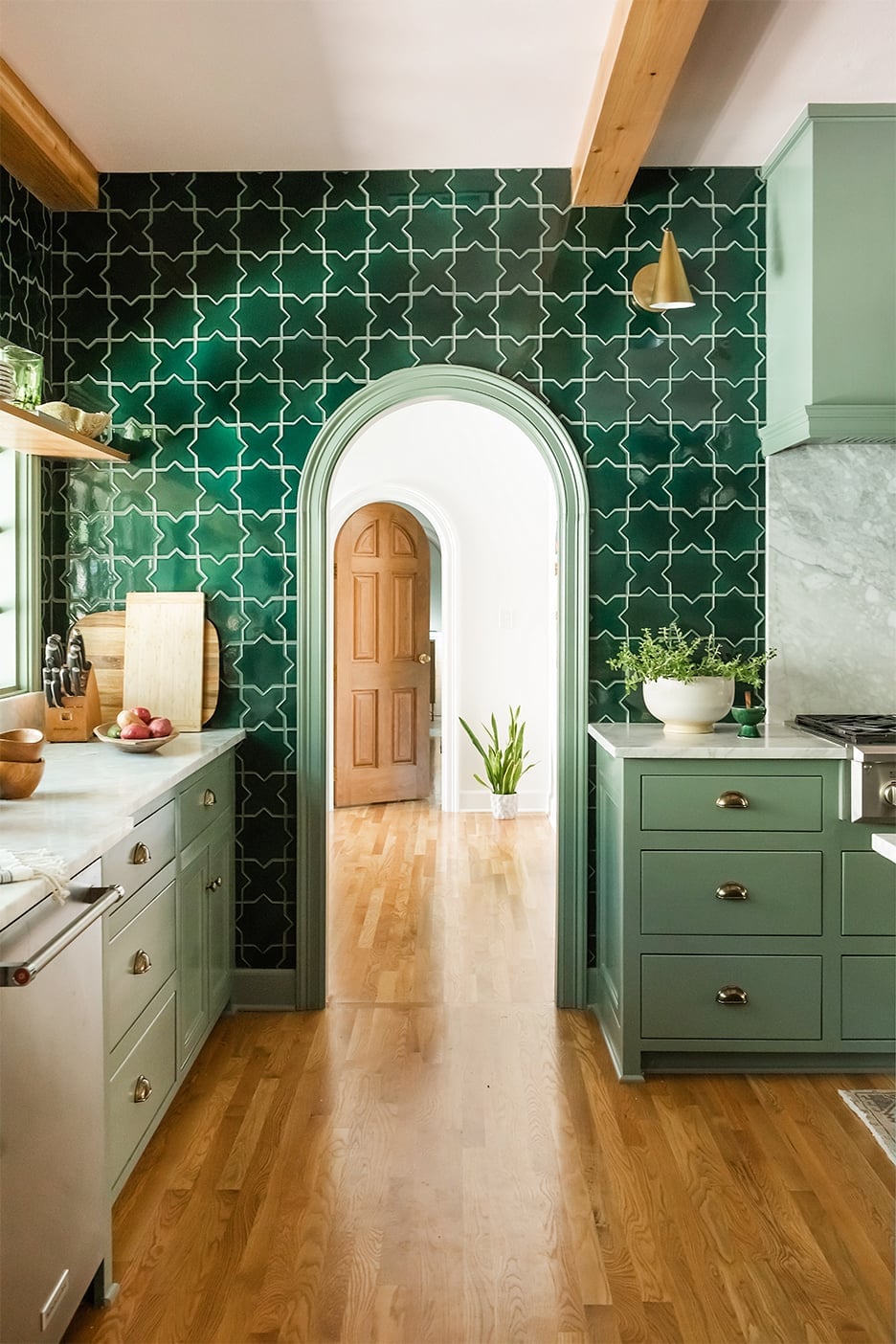
An all-over geometric tile pattern on the kitchen walls is a direct approach: it fills the space with color and shape, leaving no neutral territory. The deep green tile in this kitchen runs across the backsplash area and onto the wall near the arched doorway, creating a continuous visual surface. The green cabinets below match the tile, so the eye reads the whole wall as one piece rather than separate elements. The wood tones in the island and the marble countertop provide the contrast that keeps the deep green from overwhelming the room. The wall sconce adds a warm light that softens the geometric pattern at night.
21 / 32Vertical Stacked Sage Green Subway Tile
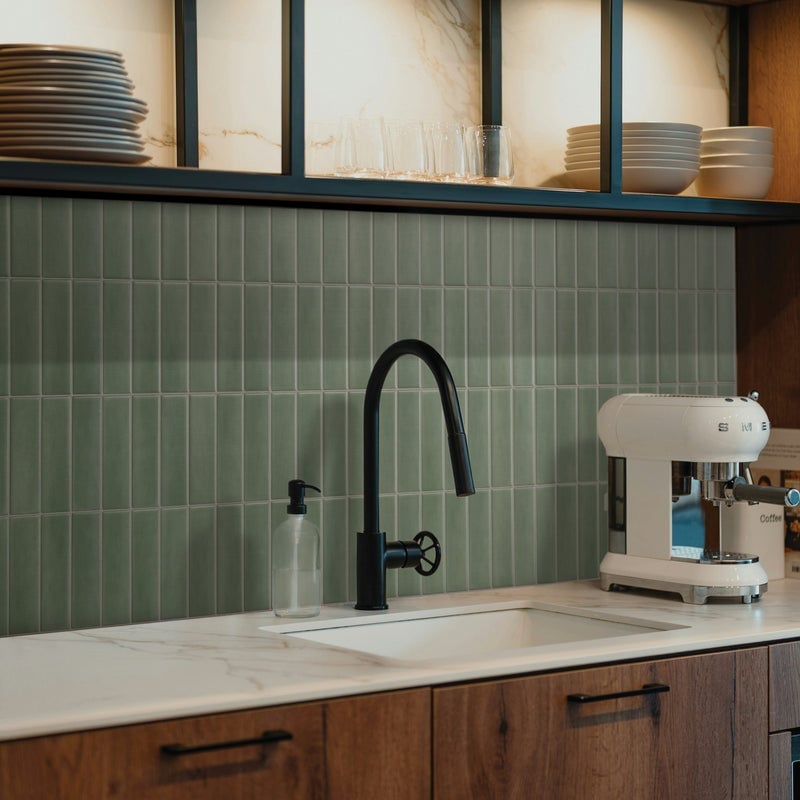
A vertical stack layout draws the eye upward, which is useful when a kitchen feels more compact than you would like. The sage green subway tile runs floor to ceiling behind the counter, and that uninterrupted vertical line adds height without a single horizontal grout line breaking the rhythm. Wood-toned cabinetry and a white marble countertop keep the palette grounded, while the matte finish of the tile keeps the green from competing with the natural wood. The under-cabinet lighting hits the tile face-on, so the color reads evenly rather than pooling in shadows. For a similar lift in a galley or corner kitchen, stack the tile vertically rather than in a running bond. The change is small, but the visual effect on ceiling height is immediate.
This layout choice also works with the compact footprint of the sink-and-appliance zone. The sage green sits quietly behind a modern faucet and a white coffee maker, letting the metal and ceramic pieces stand out against the softer wall. If your countertop space is tight, a vertical stack in a muted green like sage keeps the wall from feeling busy while still adding a deliberate design move.
22 / 32Checkerboard Pattern Green and White Tile
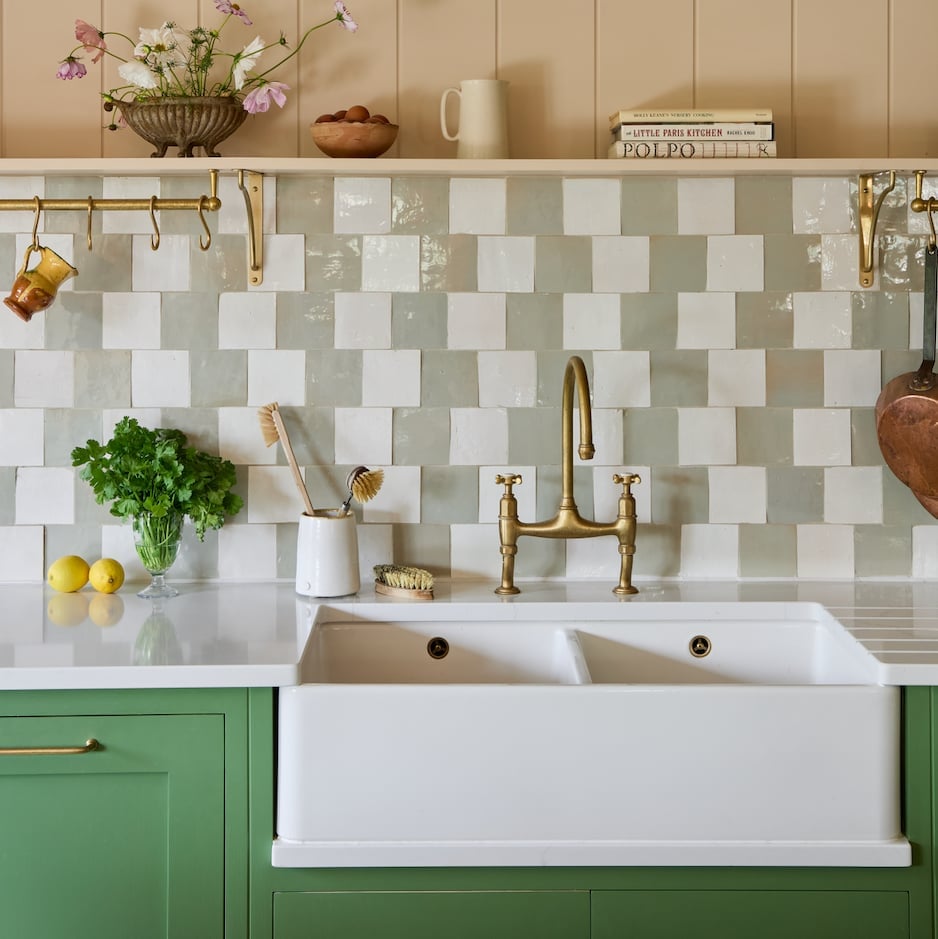
A checkerboard of sage green and white ceramic tiles wraps around the farmhouse sink, with each square sitting flush against the next. The brass faucet and the green cabinetry below pick up the warm undertone in the sage, while the white squares echo the white porcelain sink. The pattern reads as graphic but not loud because the green is soft and the white keeps the contrast from feeling sharp. Natural light from a nearby window hits the tile evenly, so the checkerboard stays crisp rather than turning into a blur of lines.
23 / 32Glossy Dark Green Rectangular Tile Backsplash
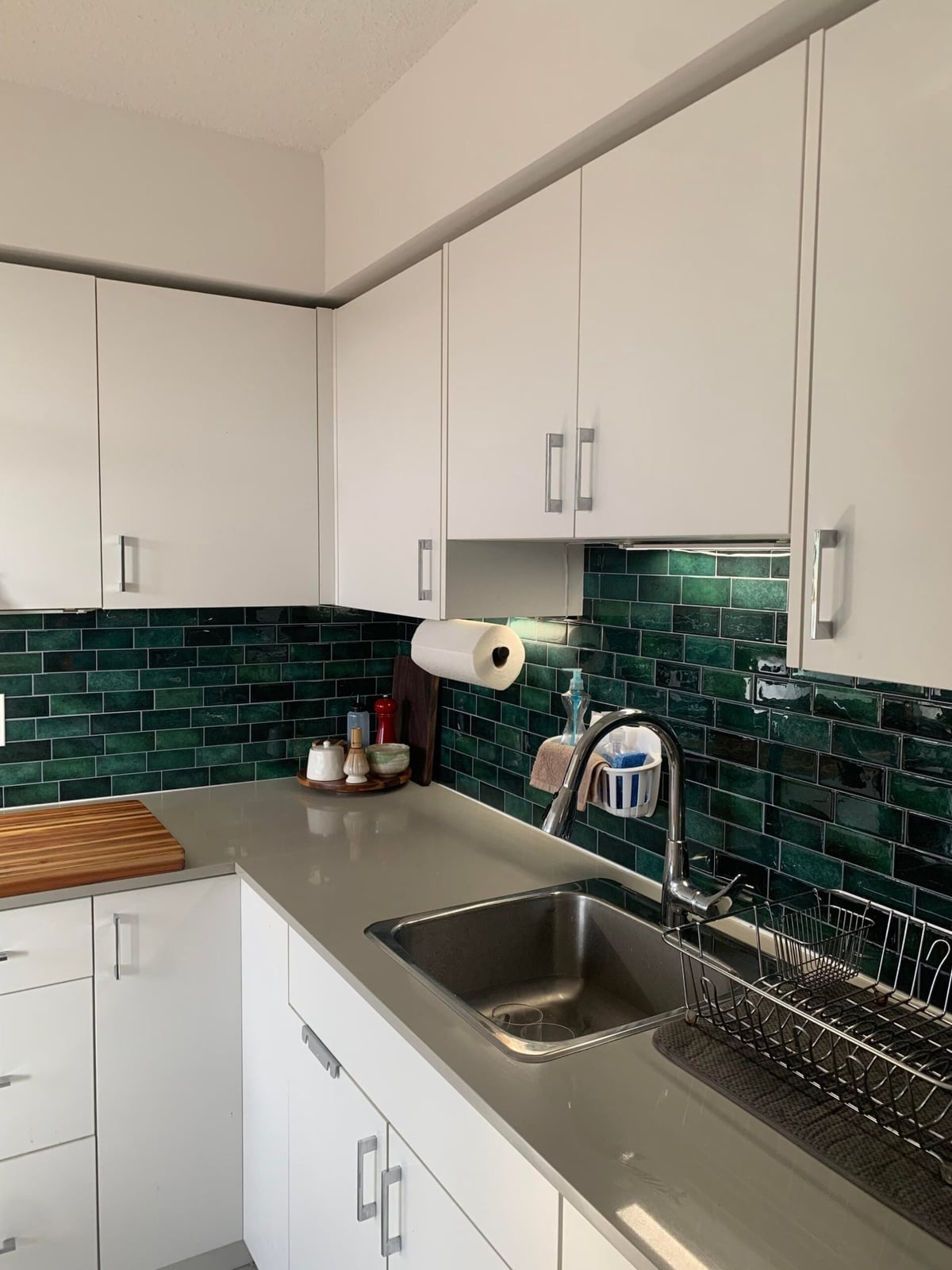
A dark green rectangular tile with a glossy finish reflects the overhead light along the entire backsplash run, which makes the wall feel wider than it is. The tile sits behind a stainless steel sink and white laminate cabinets, and the shine catches the light from the ceiling fixture so the green reads as dimensional rather than flat. The rectangular shape is laid in a straight horizontal stack, which mirrors the long line of the countertop. For a compact corner sink area, a glossy finish on a dark tile keeps the wall from absorbing all the light, so the space still feels open.
24 / 32Glossy Green Subway Tile Backsplash with Wood Cabinets
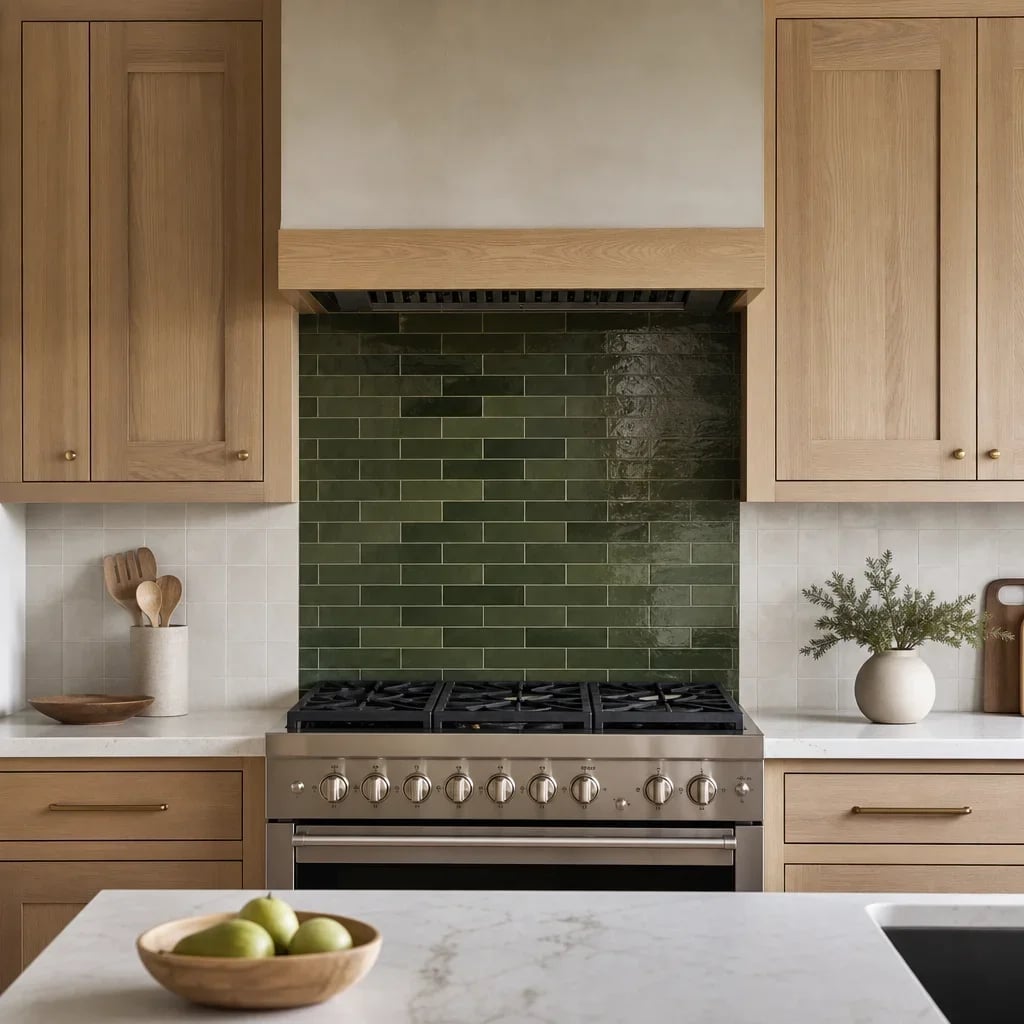
A glossy green subway tile can look cool next to white cabinets, but here it is paired with warm wood cabinets, so the green picks up a bit of that warmth without shifting hue. The tile runs behind a gas range, and the overhead and under-cabinet lights hit the glossy surface from two directions, creating a soft reflection that travels across the whole backsplash. The white marble countertop below the tile keeps the transition from wood to green from feeling heavy. The result is a kitchen where the backsplash ties the wood and the white together.
The roomy layout lets the tile stretch across the full range wall, and the wood cabinets on either side frame the green. If your kitchen has mixed materials like wood and marble, a glossy green subway tile in a mid-tone can bridge the two without needing a third accent color. The gloss level matters here: a matte tile would sit flat, but the glossy finish creates a visual link between the shiny range and the polished stone.
25 / 32Light Green Subway Tile Backsplash
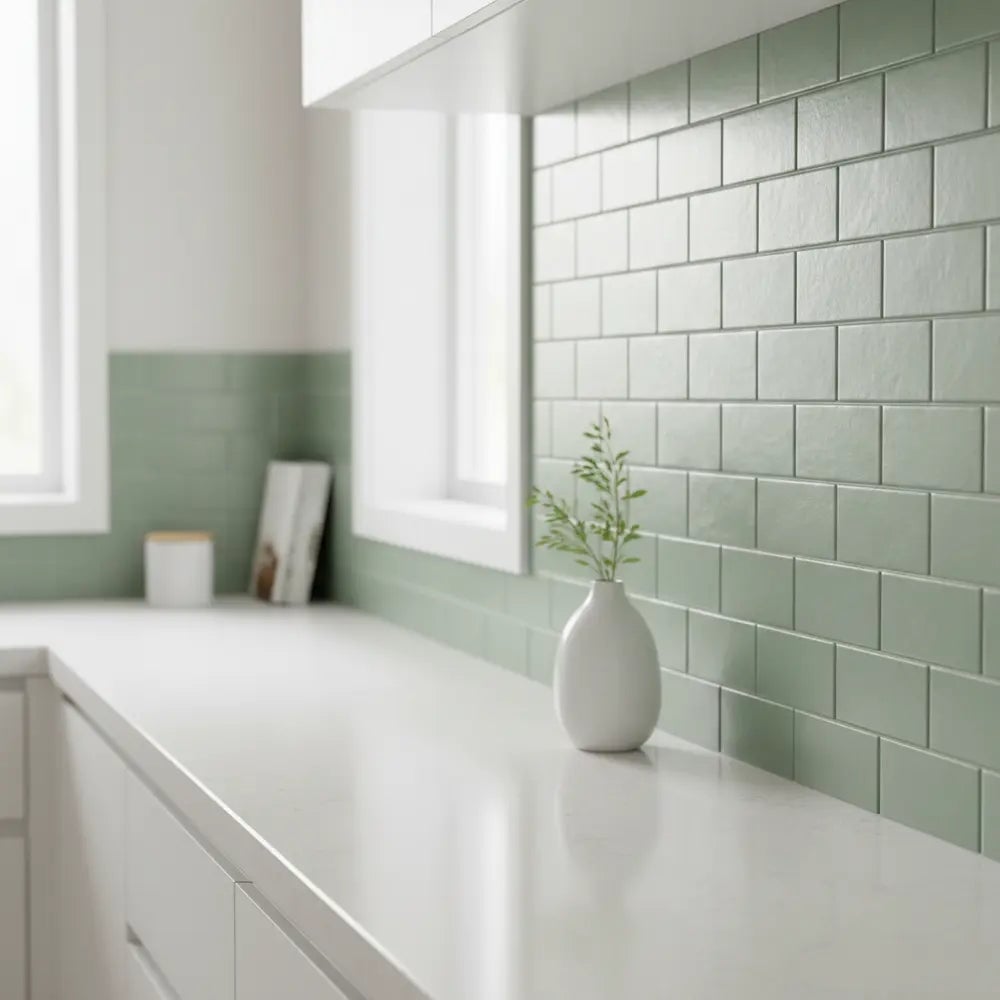
A light green subway tile runs along the counter in a running bond pattern, and the pale shade sits close to the white of the laminate countertop and cabinets. The window fills the wall with daylight, softening the green to a gentle tint rather than a saturated color. The tile extends from counter to upper cabinet, and the even tone means the backsplash does not create a hard visual break between the lower and upper storage. For a kitchen with a lot of white laminate, a light green tile adds a layer of color without demanding a new countertop or cabinet color to balance it.
26 / 32Glossy Green Subway Tile Backsplash with Mixed Cabinetry
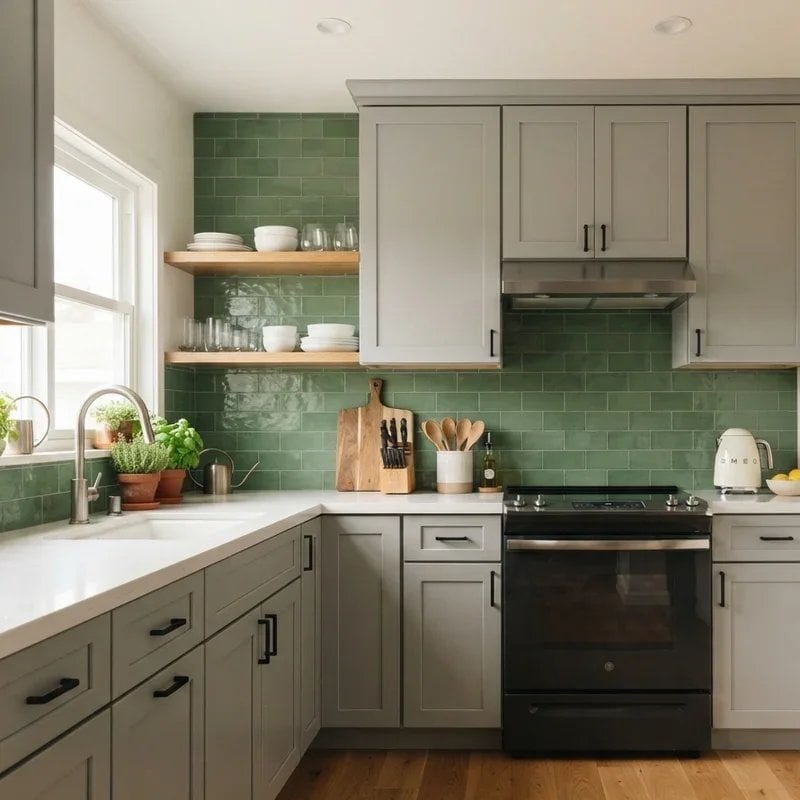
A glossy green subway tile backsplash is a smart palette anchor when your cabinets are two different colors. Here the glossy tiles sit behind a range and a mix of grey and green painted cabinets, with a marble-effect countertop tying them together. The white and grey cabinetry prevents the space from becoming a green box, while the glossy finish on the tile bounces natural light from a wall sconce across the whole counter. If you are swapping cabinets over time, a neutral green tile like this looks finished at every stage.
27 / 32Vibrant Lime Green Herringbone Tile Backsplash
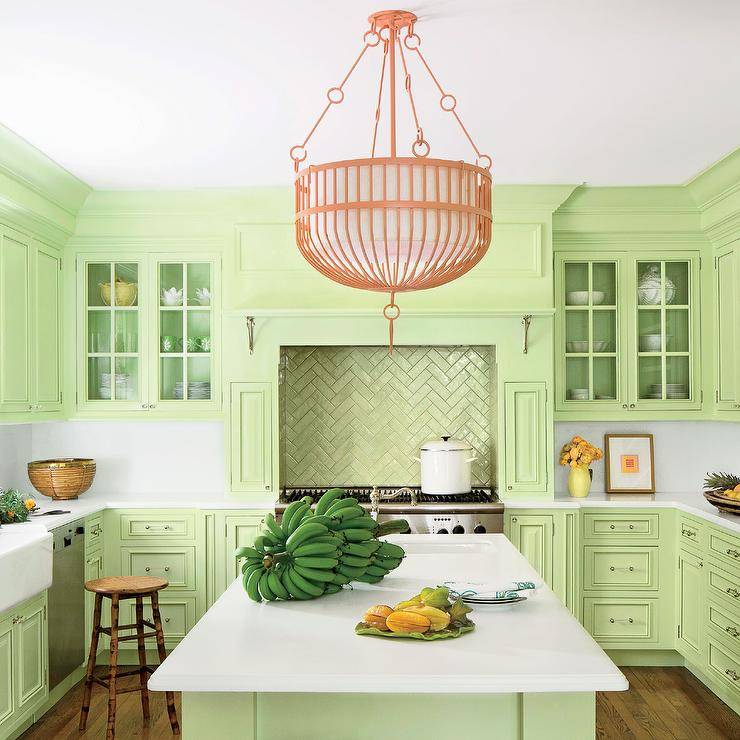
Renters can keep basic white cabinets and let the tile add color. This kitchen uses a vibrant lime green herringbone backsplash and matching green island cabinets to create a cohesive look without changing the main cabinetry.
The herringbone pattern adds texture, and the lime green looks fresh against white marble counters and wood accents. A single pendant light over the island keeps the focus on the tile work. To recreate it, look for peel-and-stick herringbone tile in a bold green and ask your landlord before applying.
28 / 32Emerald Green Herringbone Tile Backsplash
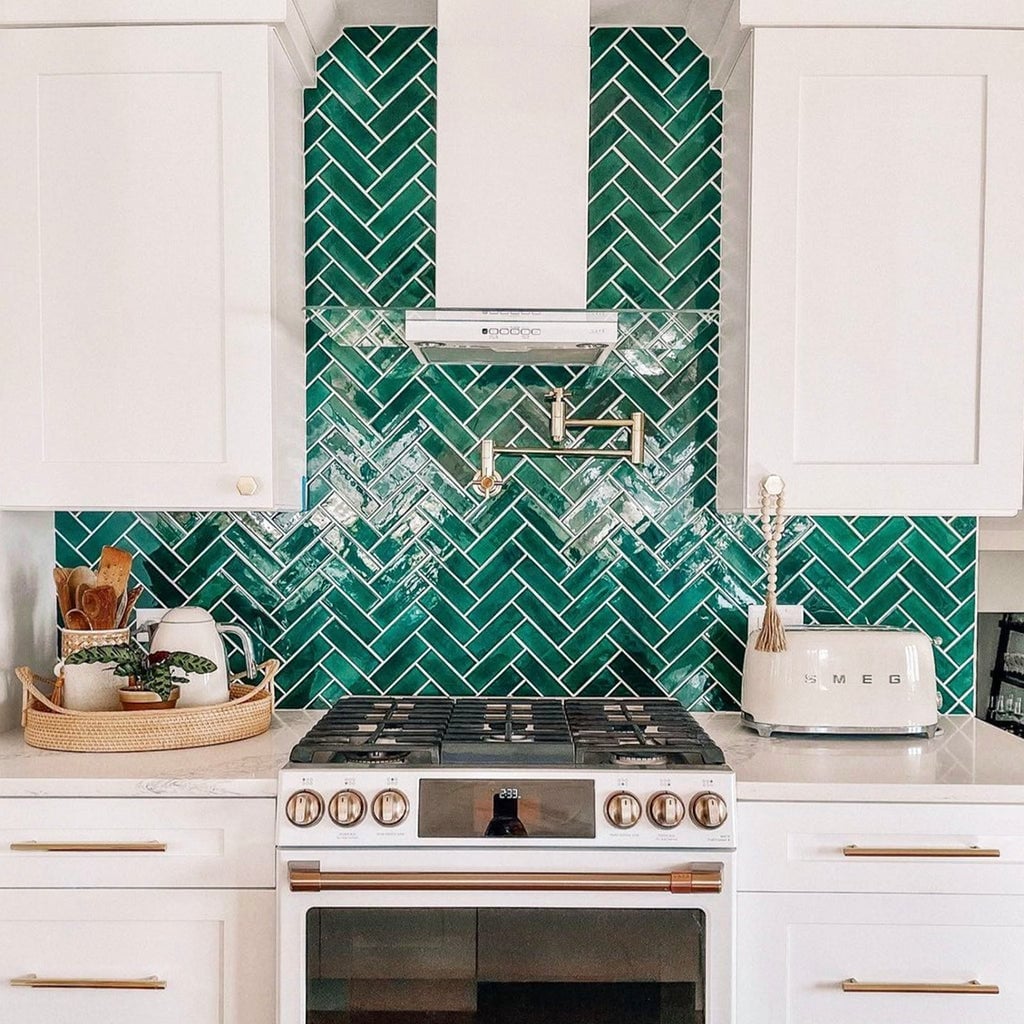
The emerald green herringbone tile covers the full counter height behind a range, with glossy tiles that reflect overhead light and light from a pot filler. White cabinets frame the green, making the color a deliberate accent. The compact layout means the herringbone pattern stays distinct from other elements, making this a strong choice for a small kitchen where you want a punch of color without overwhelming the space.
29 / 32Patterned Sage Green Tile Backsplash
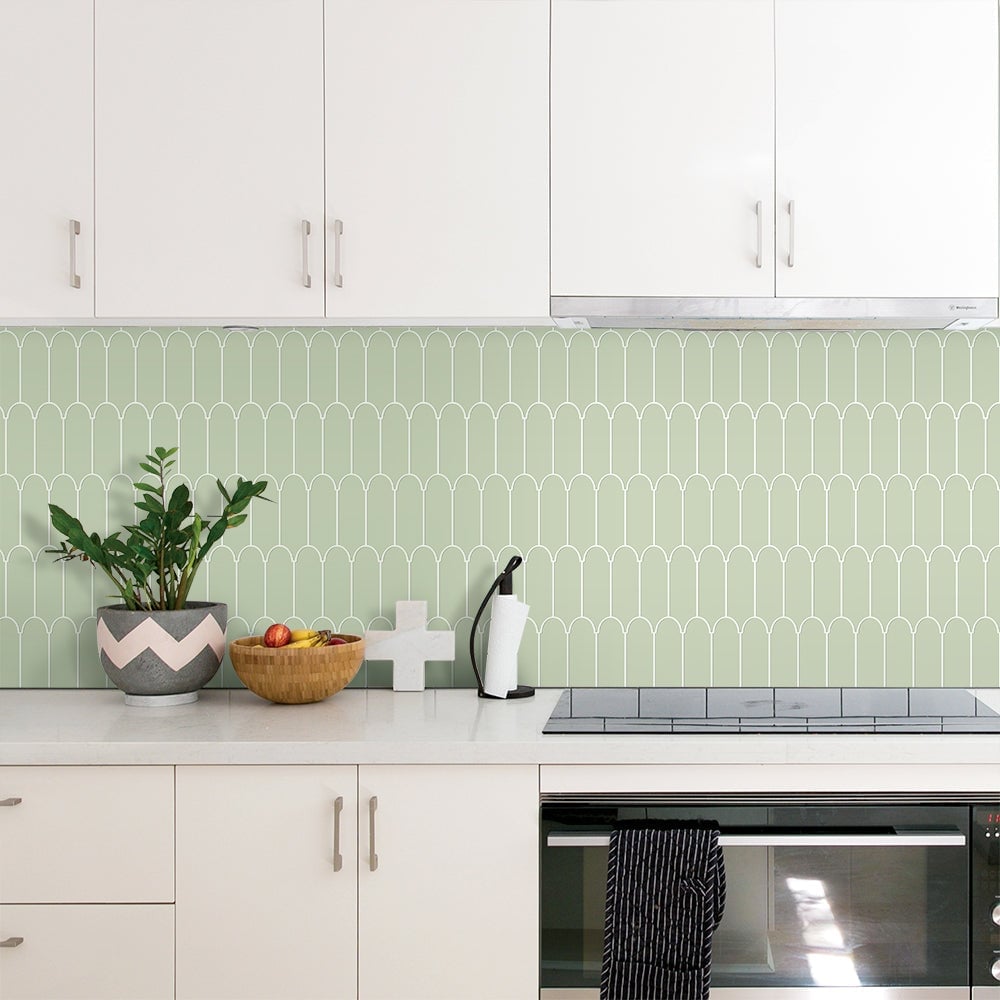
The patterned sage green tile here runs behind a stove and under standard cabinets, with a white laminate countertop that keeps the look clean. The pattern adds visual interest without the upkeep of a solid light color, which tends to show every splash. Sage green reads as softer than emerald or lime, so it works with a wider range of cabinet colors if you plan to repaint later. The overhead and natural light keep the pattern from feeling flat.
30 / 32Extensive Deep Green Subway Tile Backsplash
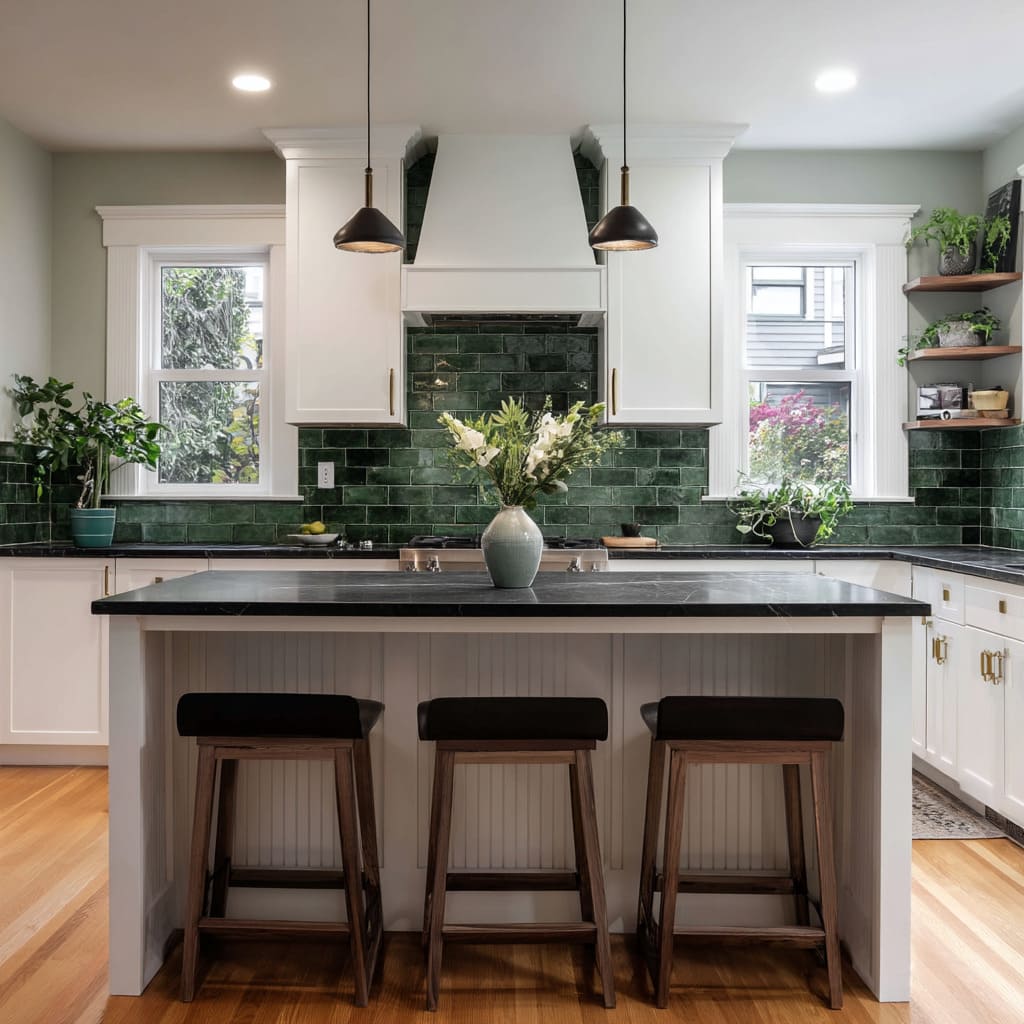
A close alternative to a full wall of deep green subway tile would be a shorter backsplash that stops at the lower cabinets, but this kitchen takes the tile all the way up behind a large island with seating. The deep green reads as a solid field rather than a stripe, which makes the room feel taller and more deliberate.
White cabinets and a wood-topped island break up the green so it does not dominate. Pendant lights and natural window light hit the tile at different angles throughout the day, shifting the green from almost black in shadow to a rich forest tone in full sun. The layout works for an open plan kitchen where the backsplash is visible from the living area.
31 / 32Vertical Green Tile with Natural Stone Pattern
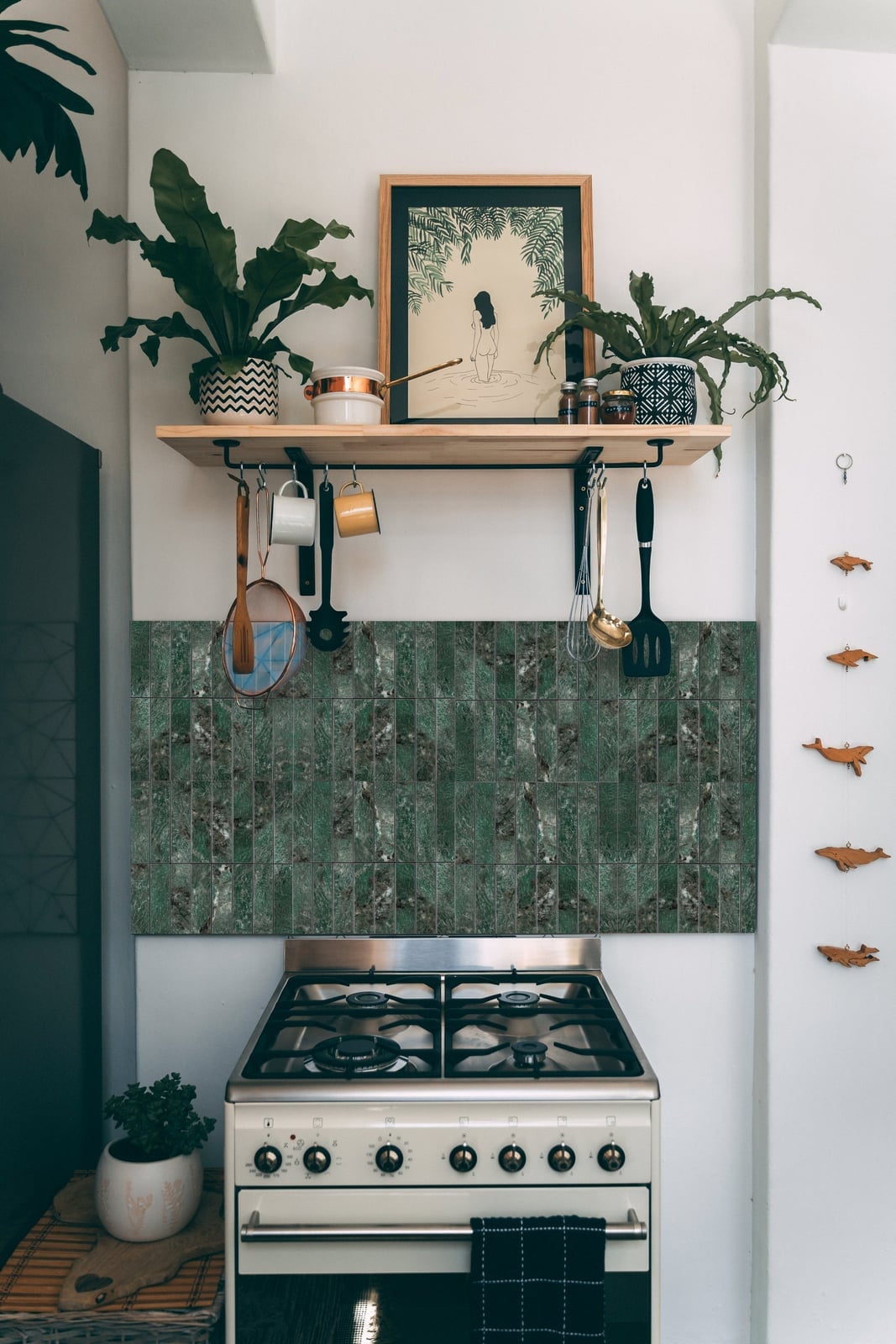
The vertical orientation of these dark green tiles draws the eye upward, making the area behind the stove feel taller than it is. Each tile carries a veined pattern that mimics natural stone, so the wall reads like a single slab rather than a grid of individual pieces. The matte finish and deep grey-green palette keep the look grounded, while the black countertop and hardware anchor the darker tones. A small plant adds the only soft note, which is enough to keep the space from feeling too heavy.
32 / 32Final Thoughts
Green backsplashes offer range from bold drama to quiet calm, and the key is choosing a finish that works with your light and countertops. Glossy tiles bounce light around a smaller kitchen, while matte textures add depth in larger rooms. Grout color matters too: light grout keeps the pattern visible, dark grout lets the green take center stage. For outdoor kitchens, check your climate zone for frost-resistant tile. Whatever shade you pick, let the backsplash lead the room and keep the rest of the decor restrained. One green wall can change how a kitchen feels for years.