Planning a garden layout can feel like staring at a blank patch of dirt. You want something that works for how you actually live, not just a pretty picture in a magazine.
These 28 garden layout ideas cover the ground from formal vegetable grids to winding cottage paths, so you can find a plan that fits your space and your habits. Each one focuses on real outdoor living, not just looks.
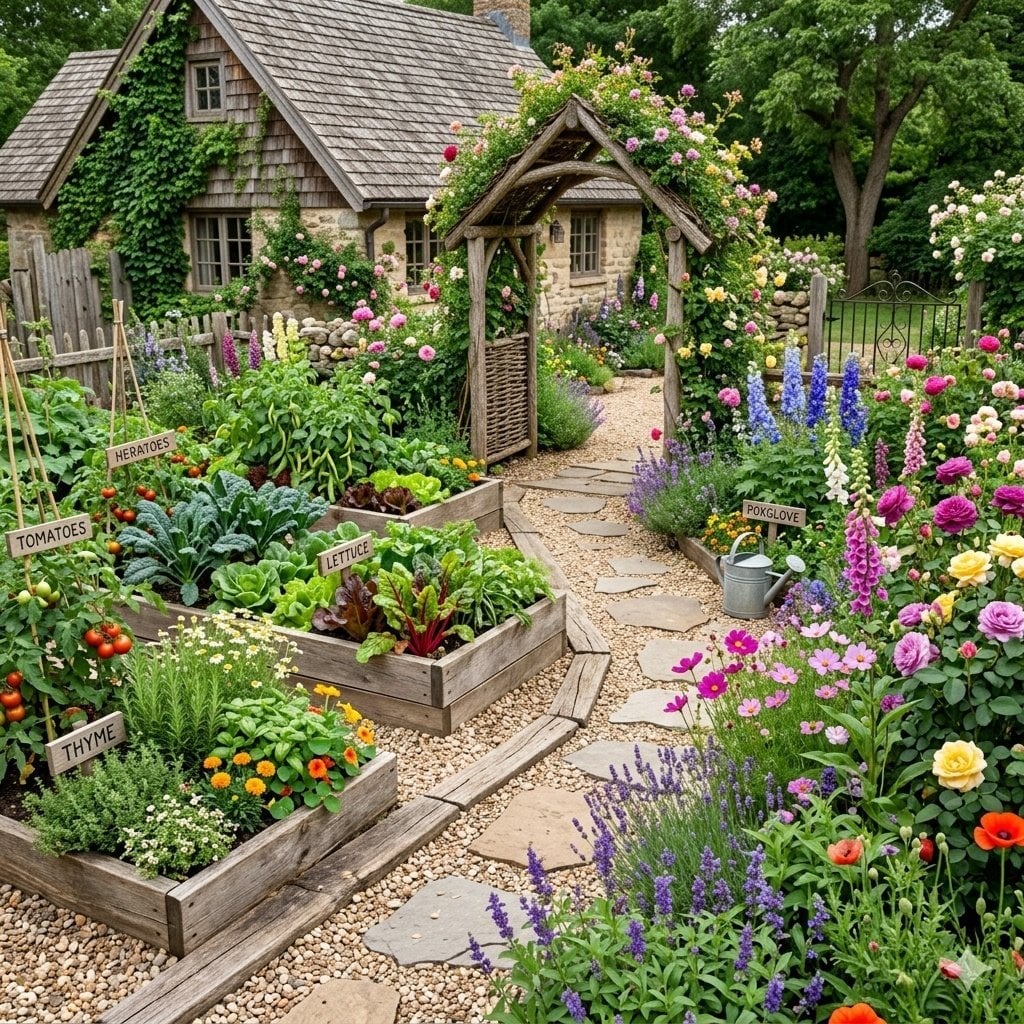
01 / 29Charming Cottage Garden Layout with Raised Vegetable Beds and Archway
A wooden archway marks the entrance to a roomy garden where raised beds sit in a clear pattern, with stone paths running between them. The planting mixes vegetables with flowers in pink and blue, softening the straight edges of the beds. A metal watering can left on the gravel gives a nod to the daily work this layout asks for. The golden hour light catches the green leaves and wood tones, making the whole space feel settled rather than brand new. The layout works because the paths are wide enough to move a wheelbarrow through, which matters more than the exact spacing of the beds.
02 / 29Formal Kitchen Garden Layout with Grid of Raised Beds and Sundial
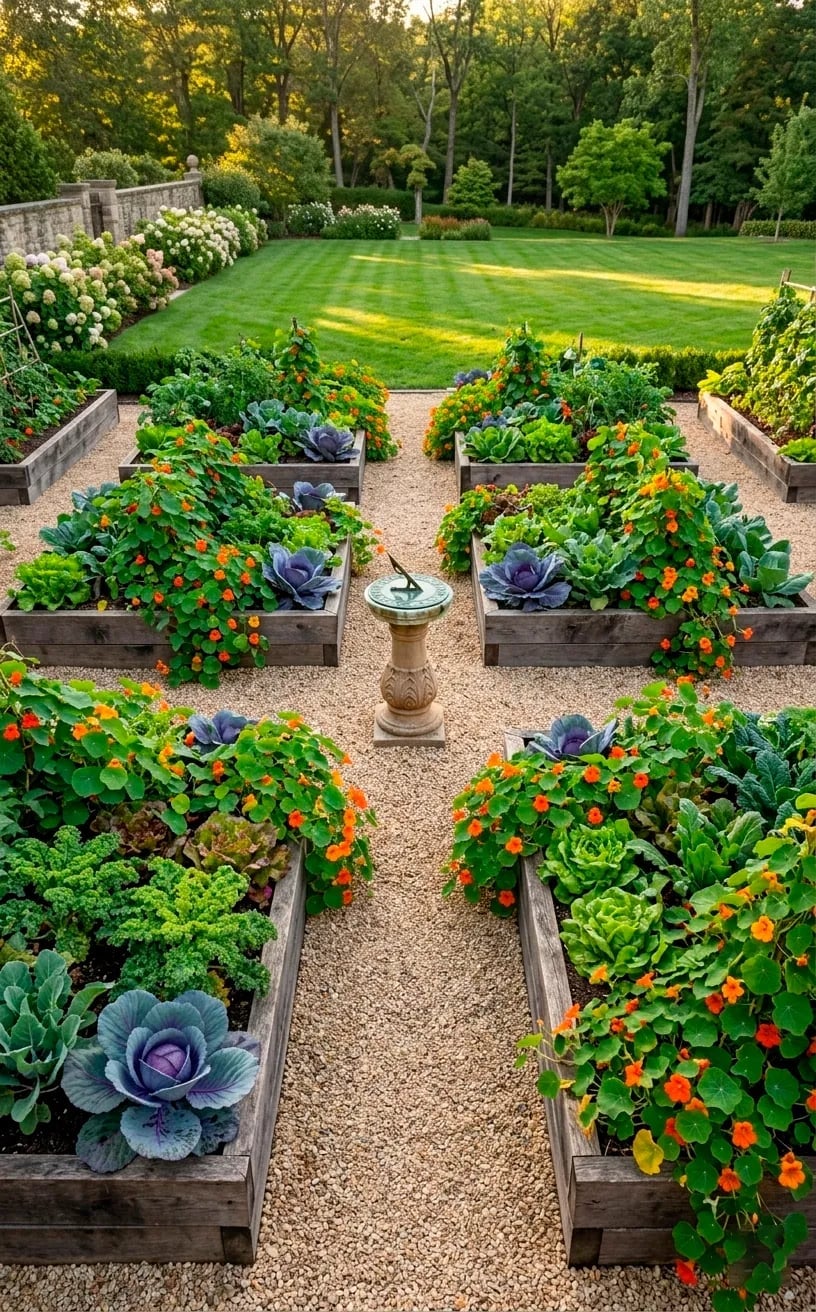
This garden is orderly without feeling stiff. A grid of raised beds holds a mix of vegetables in green, orange, and purple, with a sundial set at the center as a natural focal point. Gravel paths divide the beds into a clean pattern that makes planting and harvesting straightforward. The green and earth tones of the crops are used, with no ornamental flowers competing for attention. The late afternoon sun throws long shadows across the gravel, which helps the grid look planned. A formal layout like this suits someone who wants to walk straight to a bed and know exactly what is growing there.
03 / 29Modern Multi-Level Garden Patio with Distinct Zones
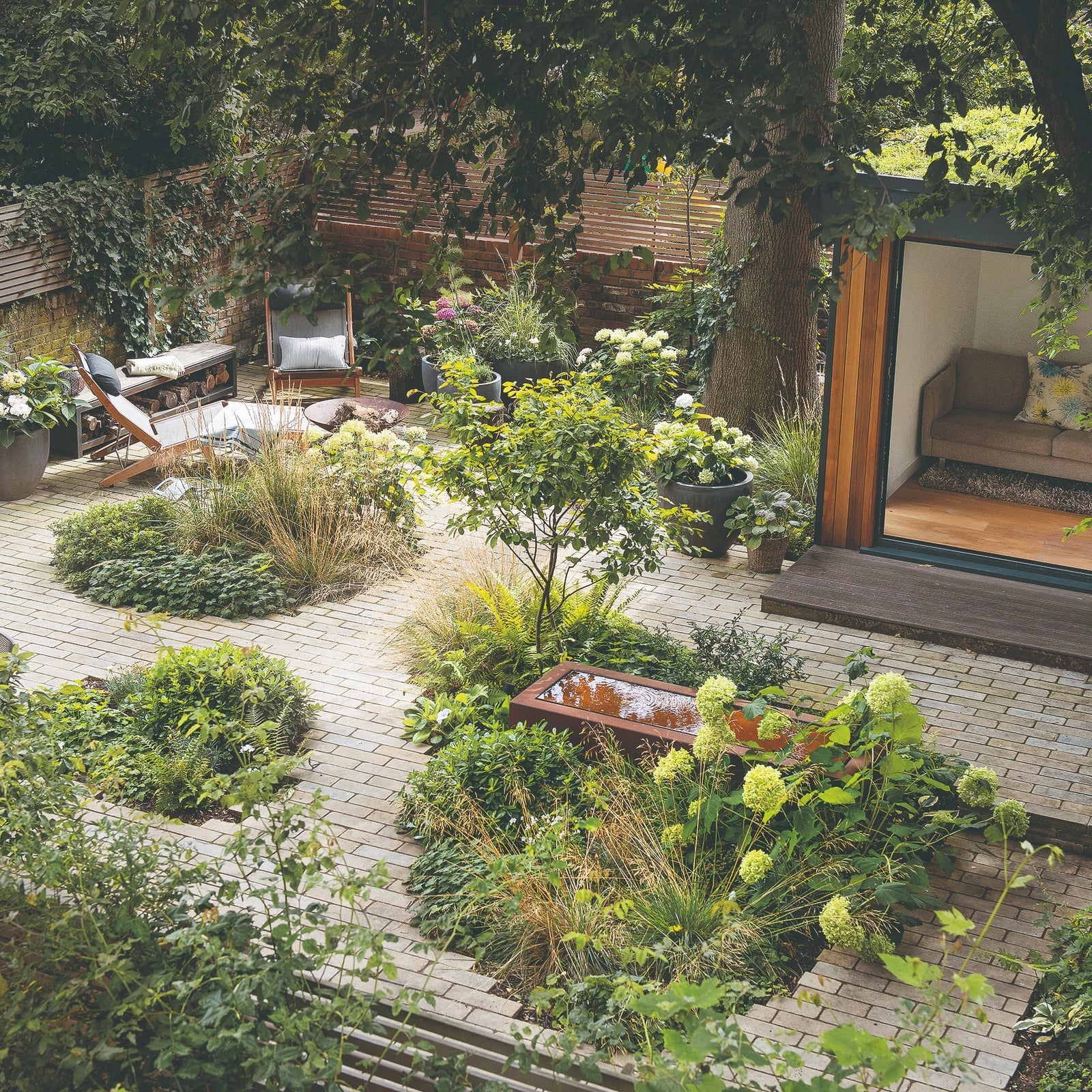
How do you fit a lounge area, a dining spot, and a water feature into one garden without it feeling crowded? This layout uses changes in level to separate each zone. The patio sits on one level with lounge chairs and an outdoor sofa, while a few steps up lead to a fire pit area. Brick, wood, stone, and metal all appear here, but the palette stays simple in green, grey, and white, so the textures do the work.
The dappled light from surrounding trees softens the hard edges of the paving. A water feature on the lower level adds sound without taking up floor space. The trick is that each zone has its own surface material, so your eye knows where one area ends and the next begins.
04 / 29Expansive Formal Garden with Geometric Vegetable Beds
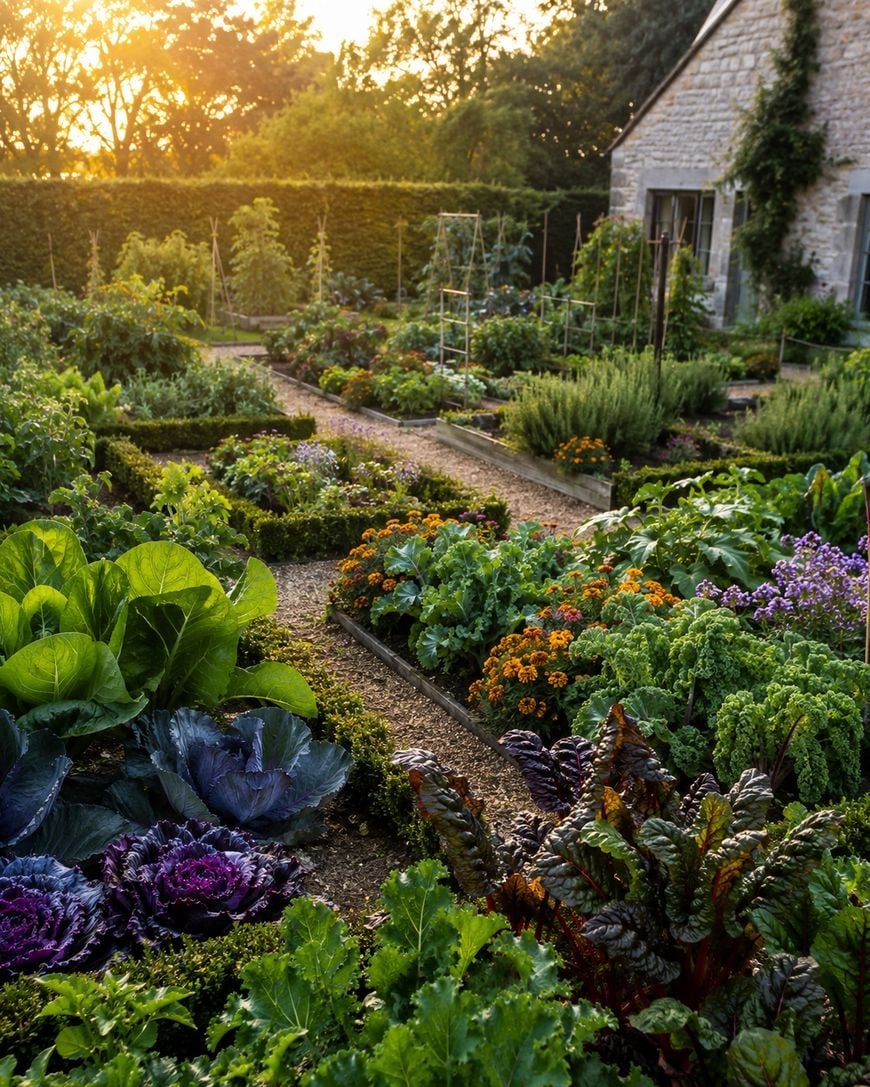
A formal garden layout relies on symmetry, and this one delivers it with geometric beds set into a grid of gravel paths. The beds hold cabbage, kale, and marigolds, whose purple and orange leaves break up the green. Golden hour light skims across the flat tops of the beds, making the vegetables look almost sculptural. The gravel paths are wide enough to kneel on while weeding, a detail that makes a formal garden practical. The layout works because the beds are all the same size, so rotating crops from one season to the next is just a matter of shifting along the grid.
05 / 29Vibrant Cottage Vegetable Garden with Mixed Raised Beds
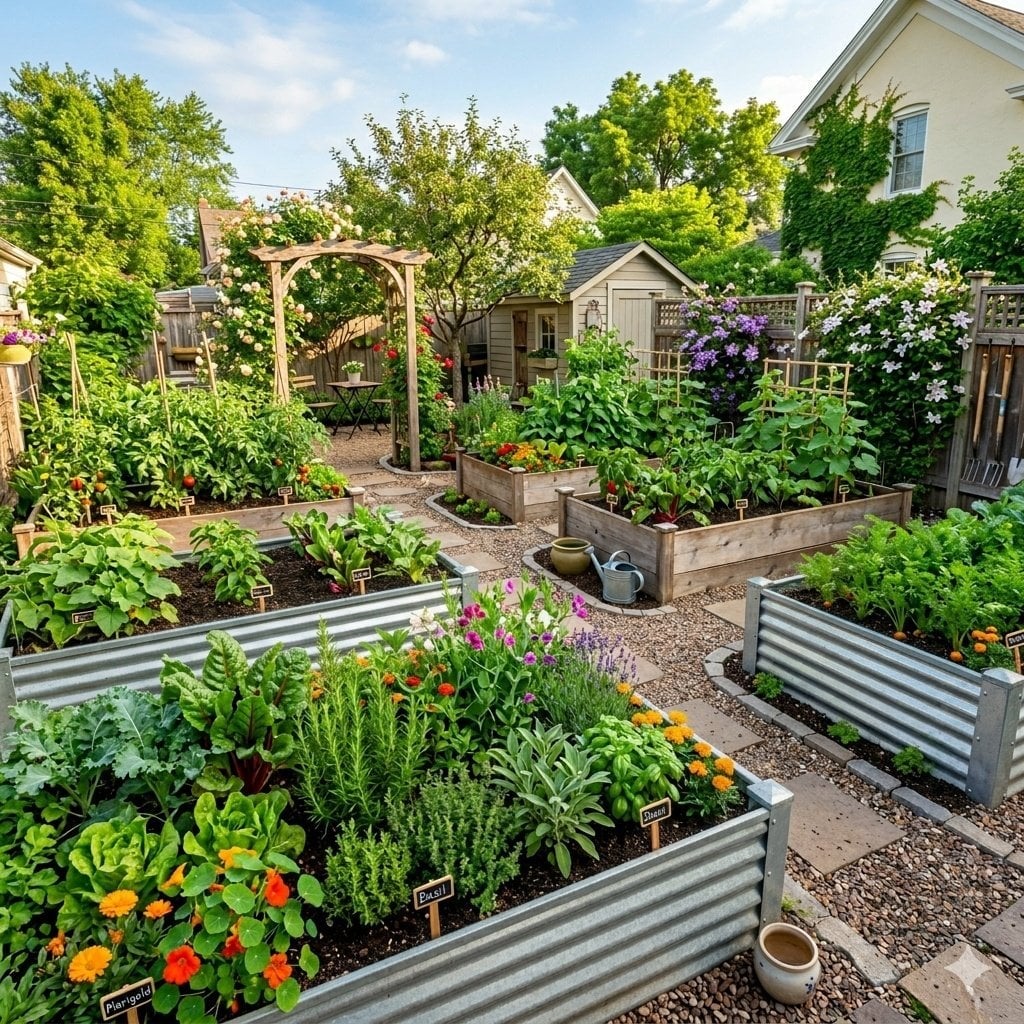
For a vegetable garden that also looks good, mix materials the way this one does. Corrugated metal beds sit next to wooden ones, with an archway linking the two sides. The palette runs from red and orange vegetables to purple flowers and blue blooms, all against green foliage. Bright daylight makes the colors pop, but the mix of bed materials keeps the eye moving. The stone paths between the beds give you dry footing after a rain, which matters more in a cottage garden than in a formal one. The layout stays abundant without feeling chaotic because the paths are straight even when the planting is not.
06 / 29Modern Homestead Garden with Central Glass Greenhouse
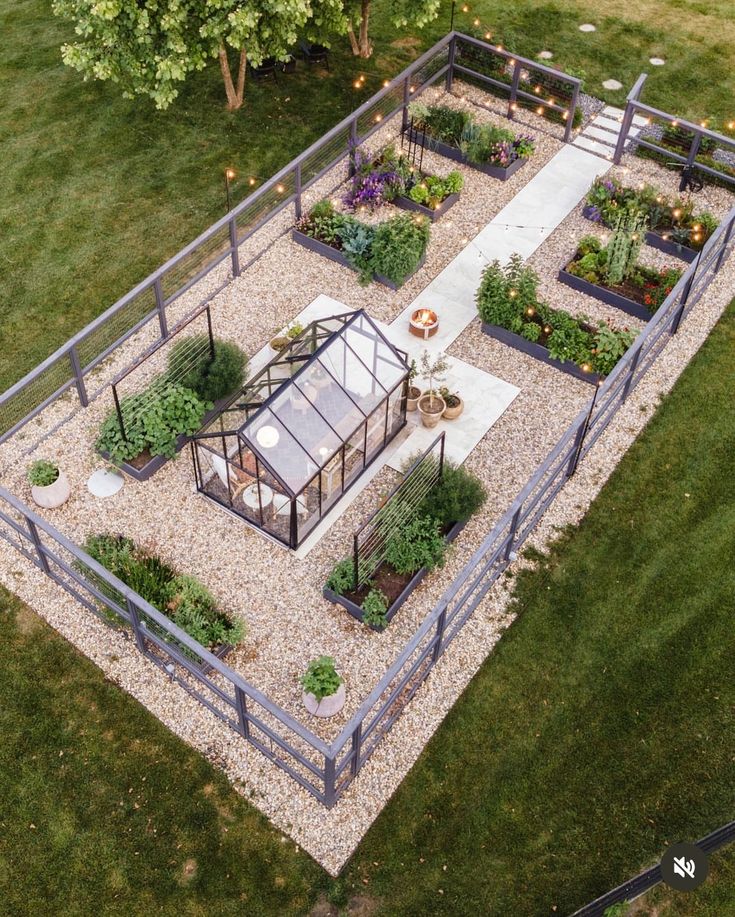
A gravel path leads the eye straight to a glass greenhouse set at the center of this fenced garden. It serves as the anchor of the whole layout. Raised beds ring the greenhouse in neat rows, and a fire pit sits off to one side, so the space works for both growing and gathering. The grey, green, and wood tones keep the greenhouse as the clear focal point. The layout itself is the main idea here. A central structure gives the garden a spine, and everything else radiates from it. That approach works well for anyone who wants a garden that feels organized without strict symmetry. The fence keeps it contained, but the open center keeps it from feeling cramped.
07 / 29Minimalist Garden with Geometric Planting Beds and Gravel Paths
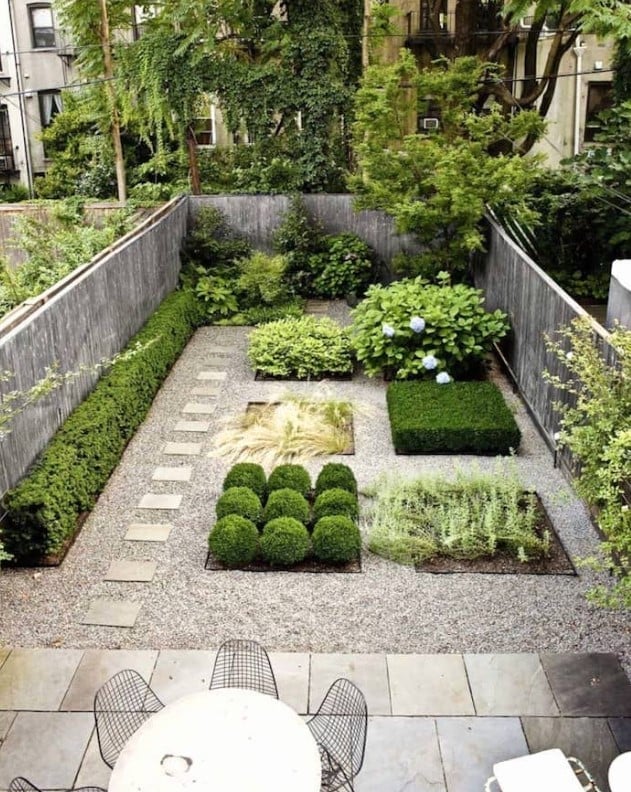
The planting here is cut into sharp geometric shapes, with boxwood spheres and ornamental grass set into gravel paths. This look relies on precise trimming and spacing. For a renter, this layout is surprisingly doable. Gravel paths do not require digging or permanent changes to the ground, and planting in defined beds can be done with portable edging or containers set into the gravel. The overcast light softens the green and grey palette, which keeps the whole space calm. You get the structure of a formal garden without the commitment of built-in hardscaping.
08 / 29Formal Edible Garden Layout with Abundant Raised Beds
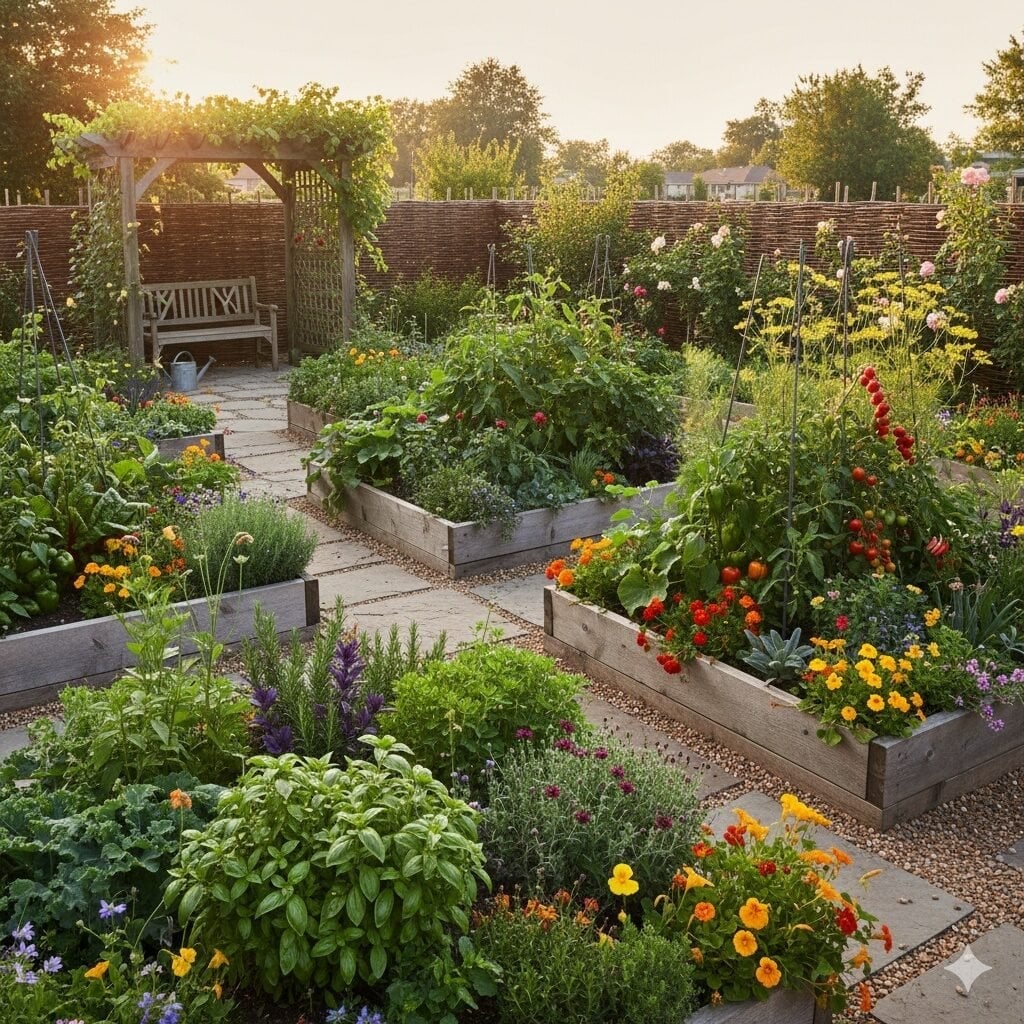
This is a garden that grows food and flowers in equal measure. The raised beds are laid out in a clean geometric grid with stone pathways between them, and a wooden pergola and bench sit at one end. The palette goes beyond green into orange, yellow, red, and blue from the harvest itself. What makes this layout work is the balance between order and abundance. The grid keeps everything tidy, but the plants are allowed to spill over the edges of the beds. It is a formal structure with a relaxed filling. A bench gives you a place to sit and sort through what you have picked, which makes the garden feel lived in, not just looked at.
09 / 29Farmhouse Garden with Geometric Raised Vegetable Beds
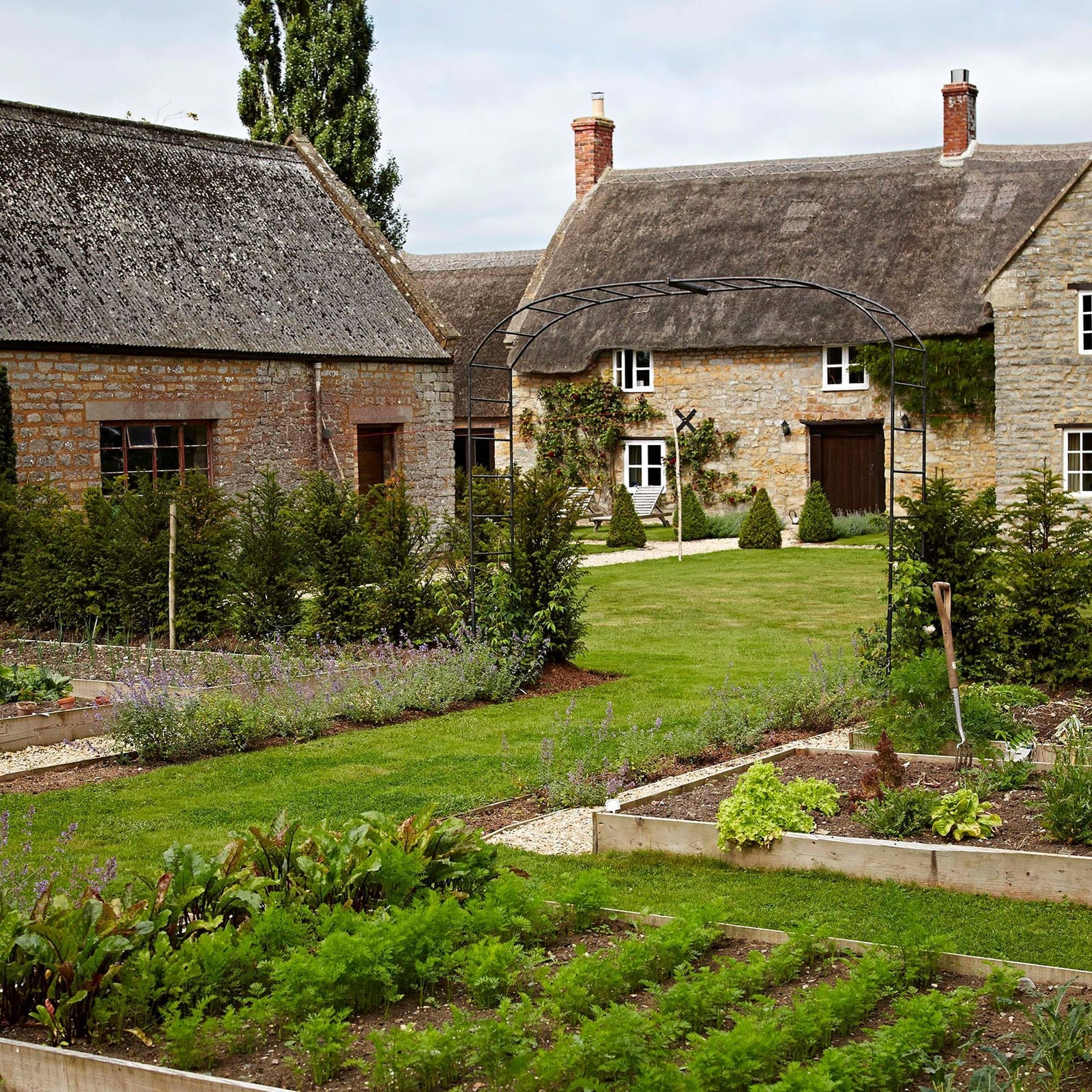
How do you fit a productive vegetable garden into a yard that also has to look good from the house? This layout answers that by keeping the raised beds geometric and the paths between them wide. The farmhouse sits in the background, with a stone archway leading into the garden proper. The materials stay grounded in stone, wood, and gravel, and the palette of green and brown keeps it from competing with the house. The geometry of the beds does the work here. Straight lines and clear edges make a large garden feel intentional rather than sprawling. A thatch or soft brown mulch between the beds ties the whole thing back to the cottage feel of the farmhouse.
10 / 29Modern Compact Vegetable Garden Bed with Grid Planting
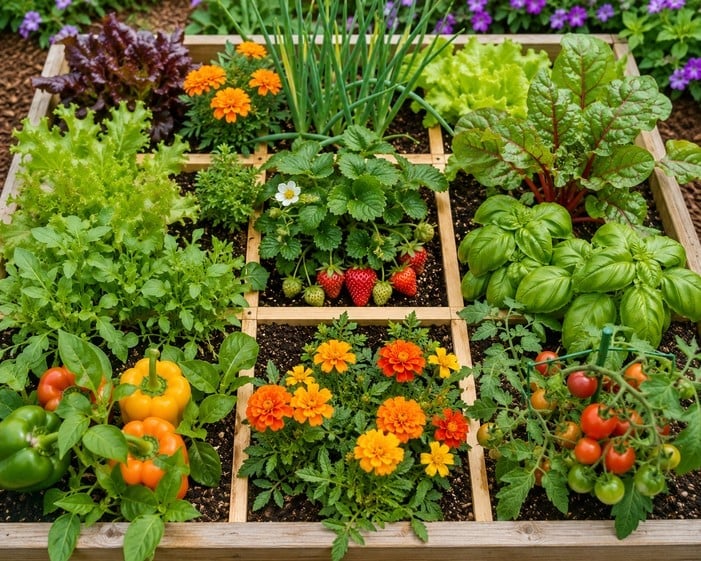
A square wooden planter box with grid dividers packs a surprising amount of edible plants into a small footprint. The grid system keeps each plant in its own section, so you can grow several varieties without them tangling into each other. The palette of green, red, orange, and yellow comes entirely from the produce itself, which means the bed looks colorful without any extra ornament. For a compact space, the grid layout is practical because it maximizes every inch of soil. You can reach each section from the outside without stepping into the bed. It is a smart solution for a patio, balcony, or small yard where every square foot counts.
11 / 29Lush Cottage Garden with Multi-Level Flower Beds
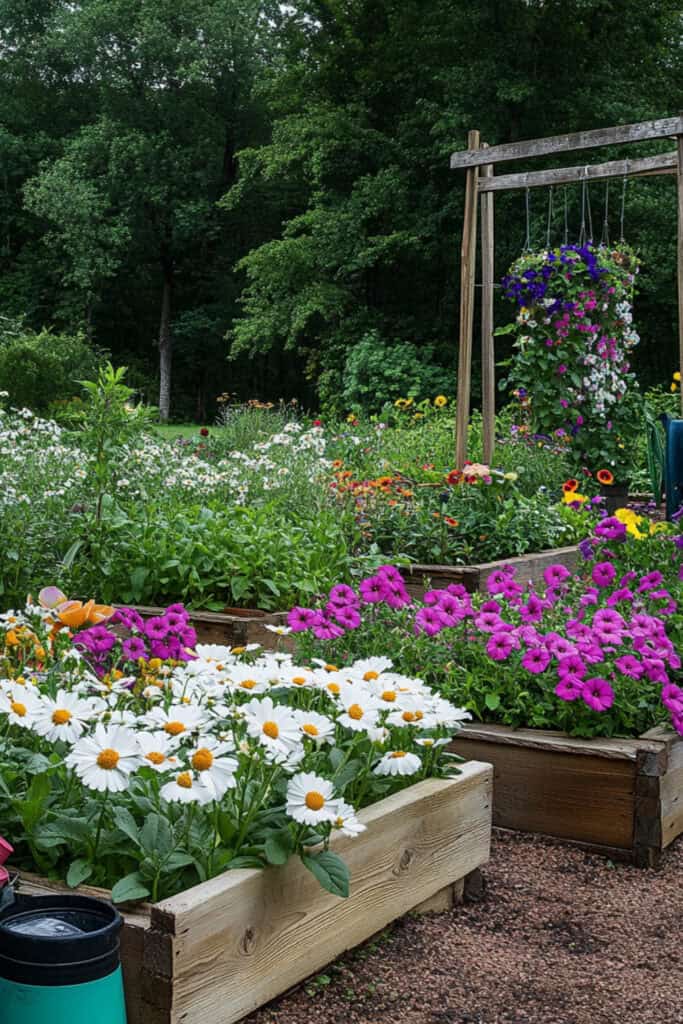
A garden that stacks its planting on multiple levels creates more visual depth than a single flat bed ever can. Here wooden raised beds sit at different heights, each one packed with white, pink, and purple flowers that spill over the edges. A hanging planter adds another layer above, making use of vertical space without crowding the gravel paths below. The result is a roomy garden that feels abundant without being chaotic. For anyone with a modest footprint, this approach lets you fit more blooms into the same square footage by thinking up instead of out.
12 / 29Modern Garden Deck with Integrated Seating and Shed
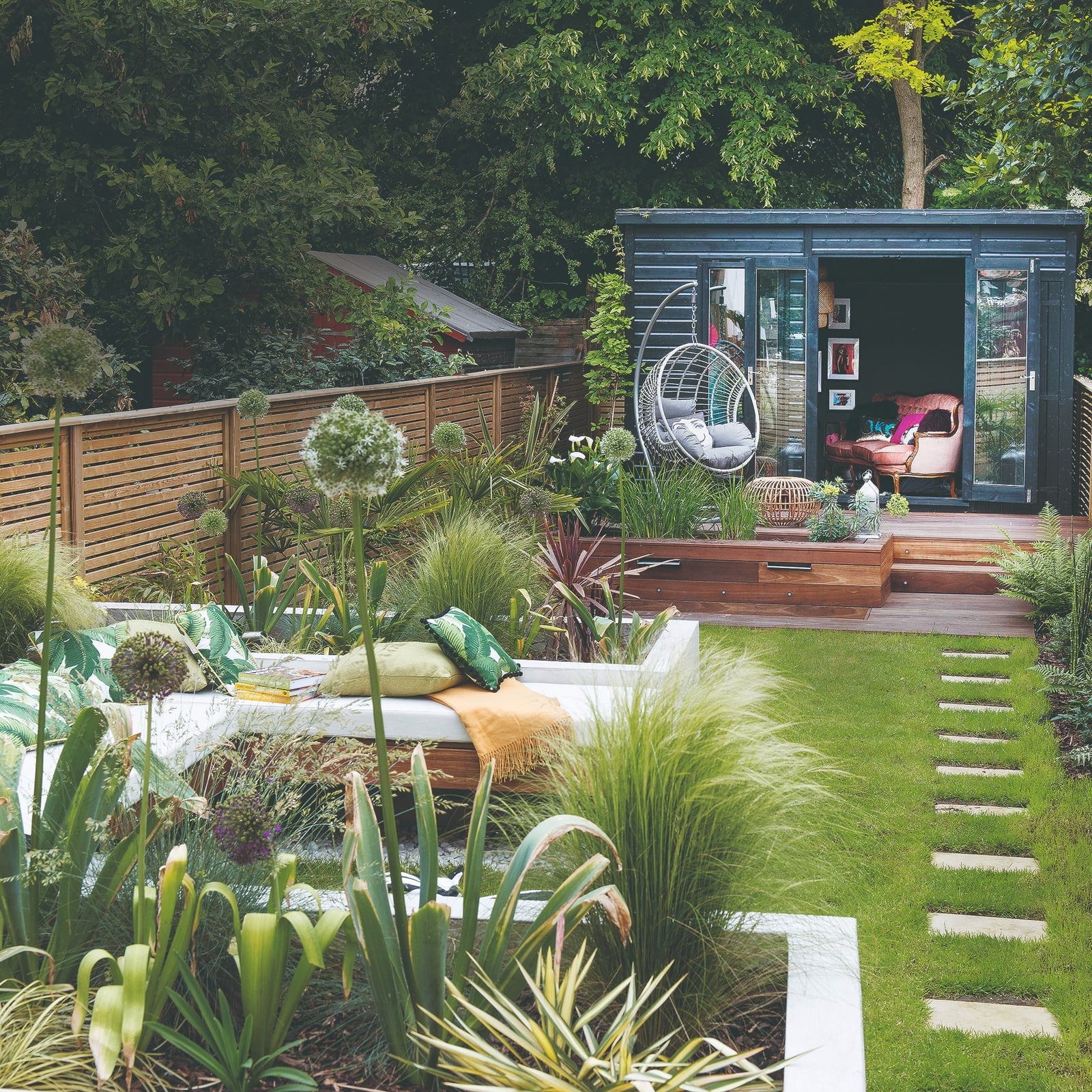
A deck can feel like an afterthought when it is just a flat platform. This one takes a different route by building the seating and storage right into the structure. A built-in bench runs along one edge, paired with a hanging chair that adds a casual spot to sit without taking up floor space. The multi-level design steps down to a lawn path, while a modern shed in grey anchors the far end. The palette stays restrained: green from the grass, white and grey from the hard surfaces, with a pop of orange from the chair fabric. That single warm accent keeps the space from reading as cold, even with all the clean lines.
13 / 29Cottage Garden Pathway with Abundant Terracotta Potted Plants
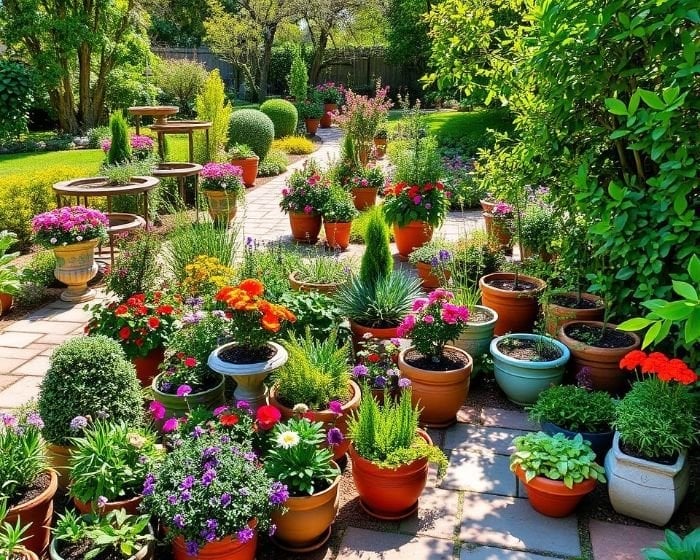
Terracotta pots lined along a stone pathway create a rhythm that draws the eye forward. Here the containers come in varied sizes, each one holding a different flower in pink, red, or orange, with plenty of green foliage filling the gaps. The warm clay color of the pots ties the whole arrangement together, even when the blooms change from season to season. Bright daylight makes the terracotta glow against the gray stone pavers. It is a simple setup that relies on repetition and variety in equal measure.
14 / 29Naturalistic Garden with Tiered Beds and Curving Pathway
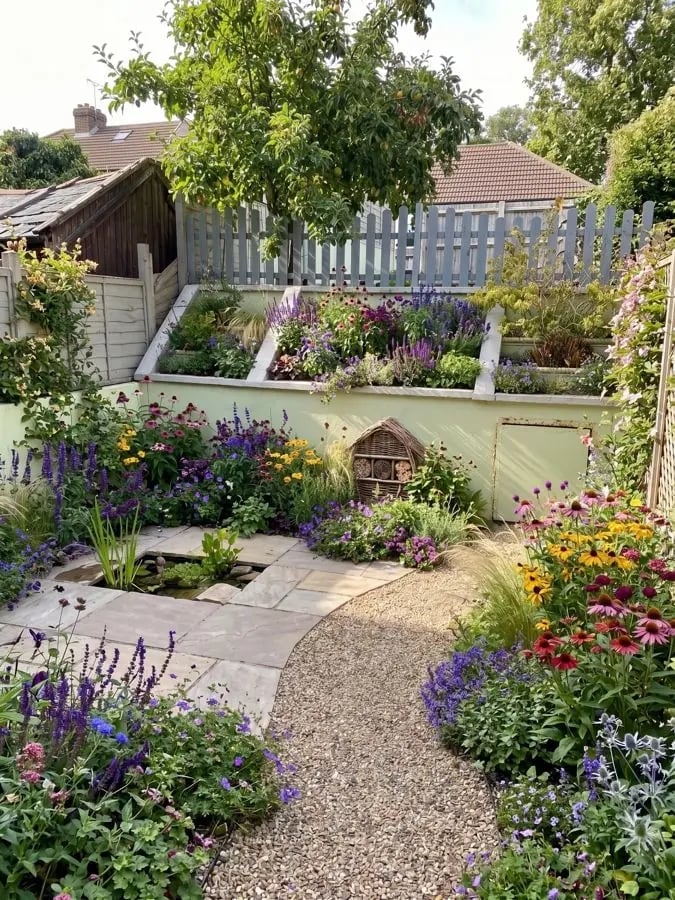
This garden works because it lets the path lead the eye instead of forcing a straight line. A curving gravel walkway winds through tiered stone beds, with flowers in purple, yellow, and pink cascading over the edges. The layout feels compact but layered, with a small pond and an insect hotel tucked into the corners. Soft daylight filters through the greenery, keeping the colors from washing out. The tiers create separate microclimates: lower beds stay cooler and moister, while upper ones drain faster. That is a practical detail worth noting if you are mixing plants with different water needs.
15 / 29Classic Formal Garden with Central Fountain and Clipped Hedges
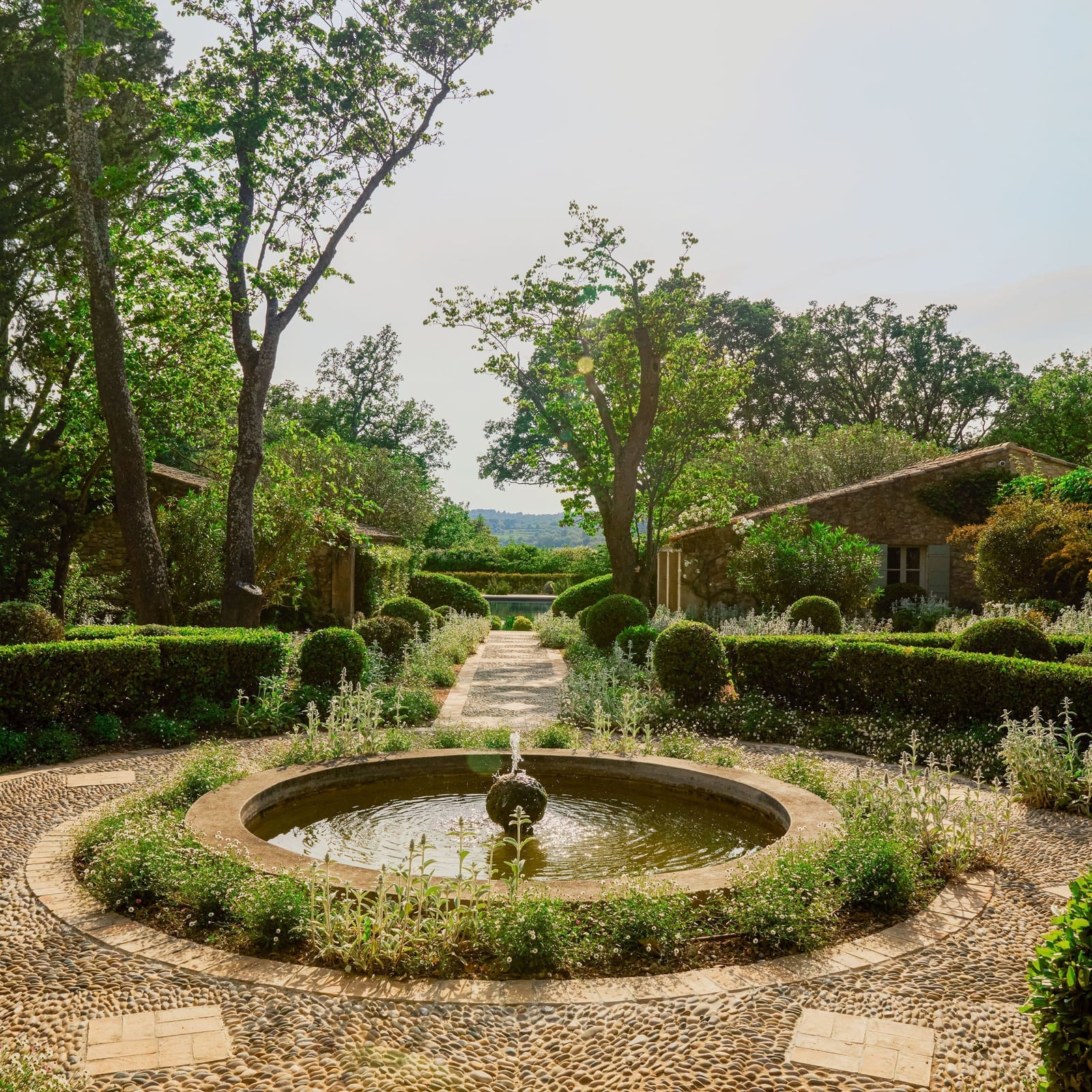
A formal garden relies on symmetry, and a circular fountain at the center makes that symmetry easy to read. Here clipped hedges form neat green walls that define the space, with gravel paths radiating outward from the water feature. The palette sticks to green, grey, and stone, with white flowers adding contrast without breaking the disciplined look. Bright sun highlights the crisp edges of the hedges and the smooth surface of the fountain. For anyone who wants order in the garden, this layout works because the hardscaping does the heavy lifting and the plants simply fill in the lines.
16 / 29English Garden with Winding Pathway and Dense Flower Beds
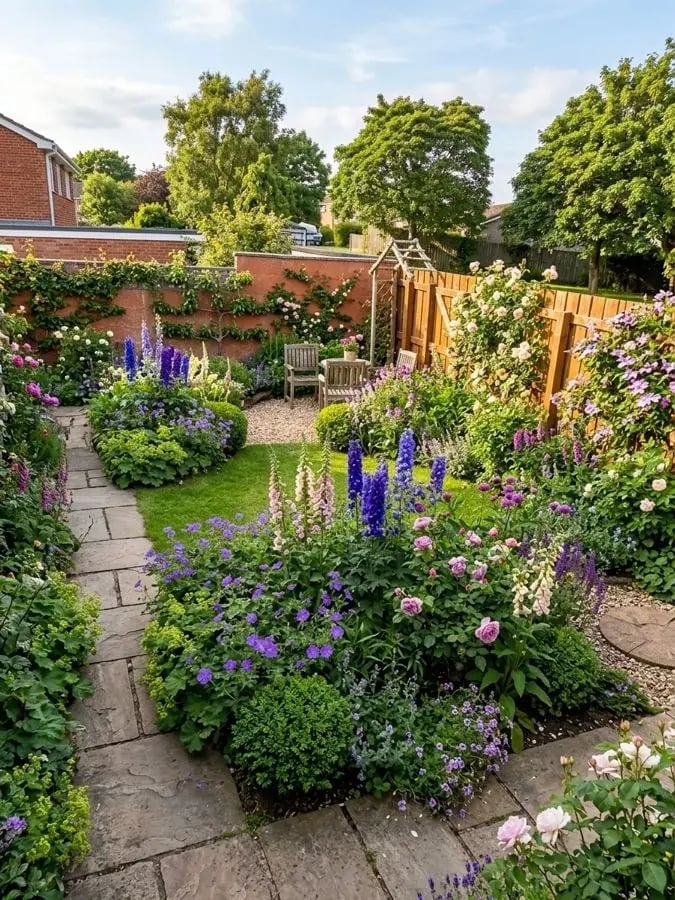
A winding stone pathway disappears into dense flower beds packed with purple and pink blooms, creating a garden that feels older than it is. The layout uses the curve to slow the eye and make the space read as larger, since you cannot see the whole thing at once. A wooden bench tucked against the fence gives a place to sit and notice the layered planting. The palette of purple, pink and green against the stone path and wood fence keeps the look cohesive without matching anything exactly.
17 / 29Cottage Garden with Layered Planting for Dense Floral Display
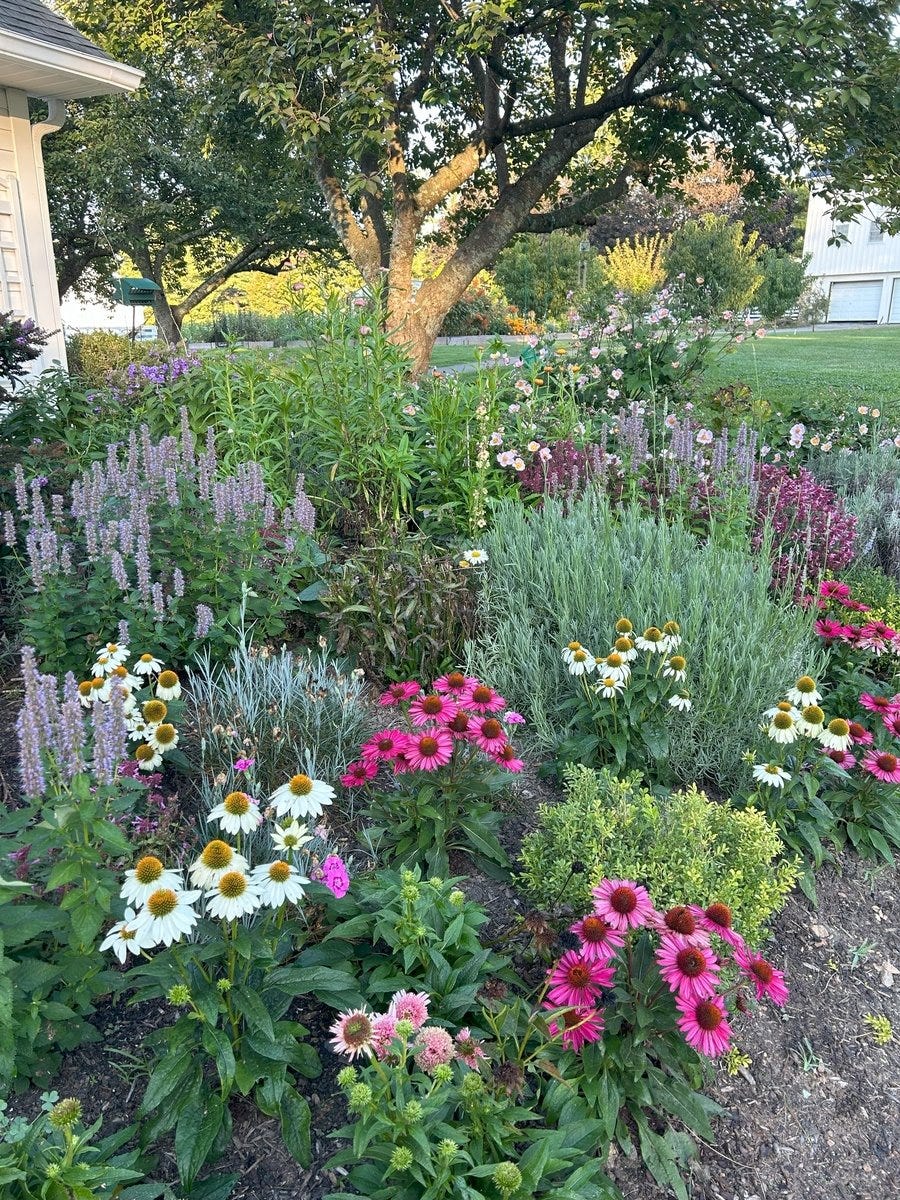
A practical rule for a dense floral display is to plant in layers, putting taller perennials like coneflowers and salvia behind lower clumps of lavender. This cottage garden packs pink, white and purple blooms into a compact space, so every square foot of soil does double duty. The late afternoon light catches the varied heights and makes the bed look fuller than a single row of flowers ever could. Renters can create the same effect using large pots grouped in threes, with a tall plant in the back and a trailing one spilling over the front edge. No permanent digging required, and the arrangement can shift with the seasons.
18 / 29Formal Garden Layout with Symmetrical Raised Beds and Bird Bath
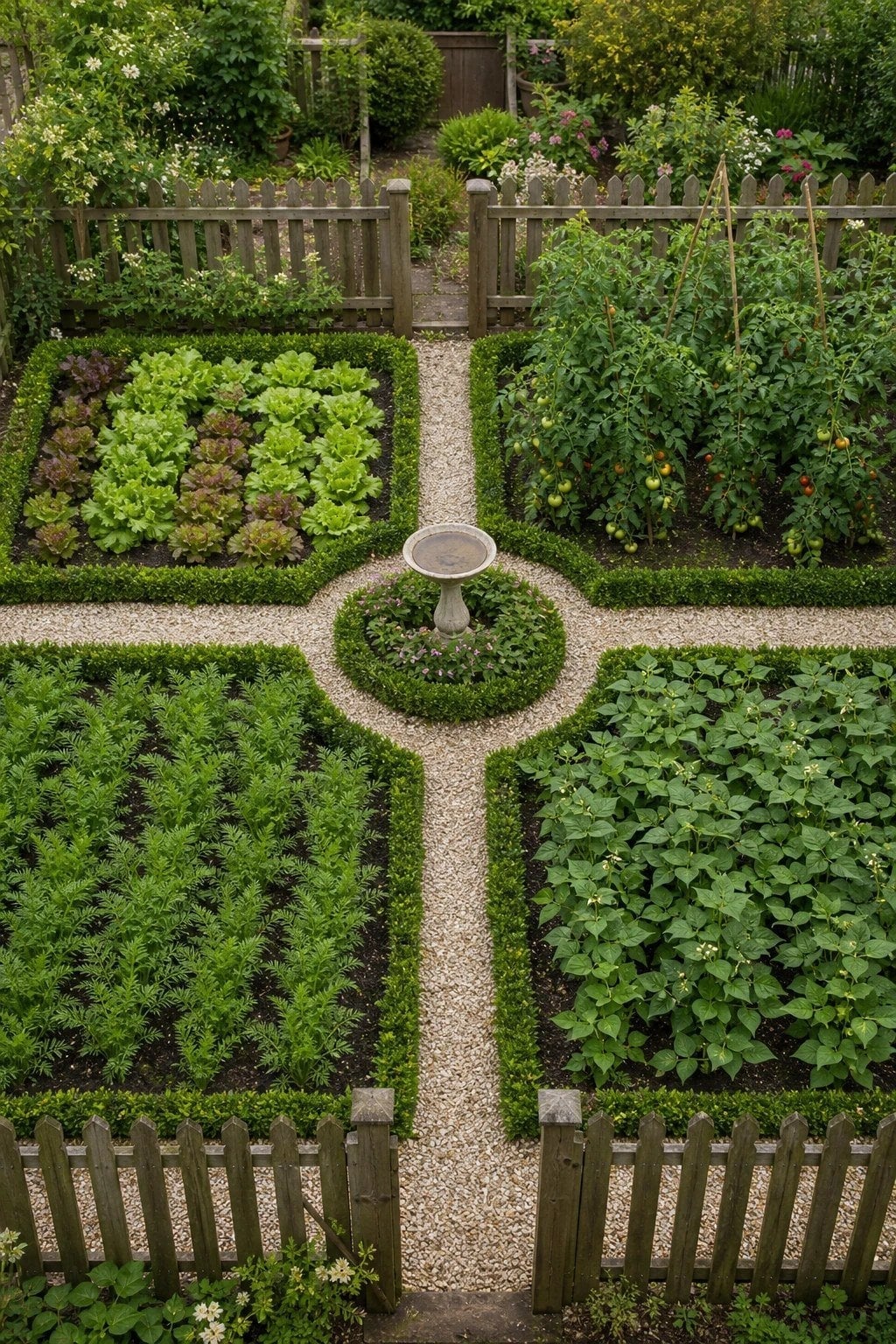
A formal garden layout with symmetrical raised beds and a central bird bath can feel rigid, but this version uses cross-shaped gravel paths that break the grid into manageable quadrants. The overhead view shows four rectangular wood beds arranged around a central stone bird bath, with boxwood hedges adding structure around the edges. The green, brown and red color scheme uses the wood of the beds and the gravel path to contrast with the planting.
The symmetry works because the bird bath acts as the anchor point, so the eye has a clear place to land. Each bed mirrors the one across from it, which makes maintenance easier since you can plant the same crops or flowers on both sides and know they will get similar sun. The gravel paths drain well and keep mud from splashing onto low-growing plants.
19 / 29Modern Garden Layout with Defined Patio and Lawn Areas
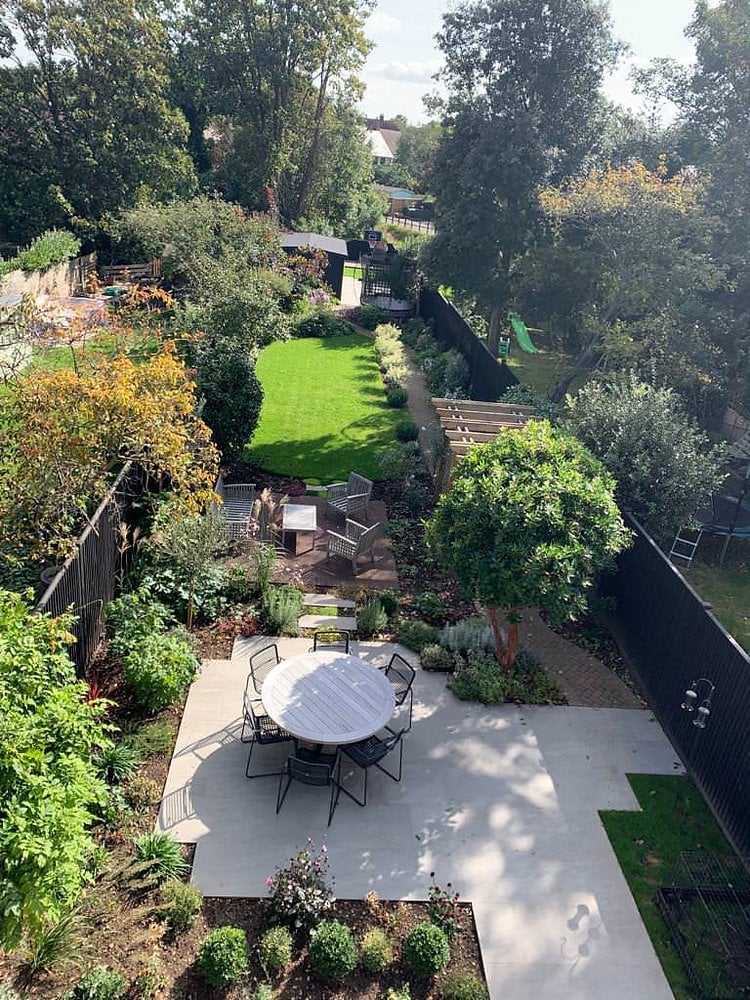
A high angle shot of this garden reveals a clean split between a concrete patio with a dining set and a rectangular lawn bordered by trees and a fence. The layout works because each zone has a distinct surface and purpose, so the eye knows where to go without any visual clutter. The palette of green, grey, brown and white keeps the transition from patio to lawn feeling deliberate. A gravel strip between the concrete and the grass catches runoff and stops the lawn edge from getting ragged.
20 / 29Formal Garden with Symmetrical Pathway and Hedges
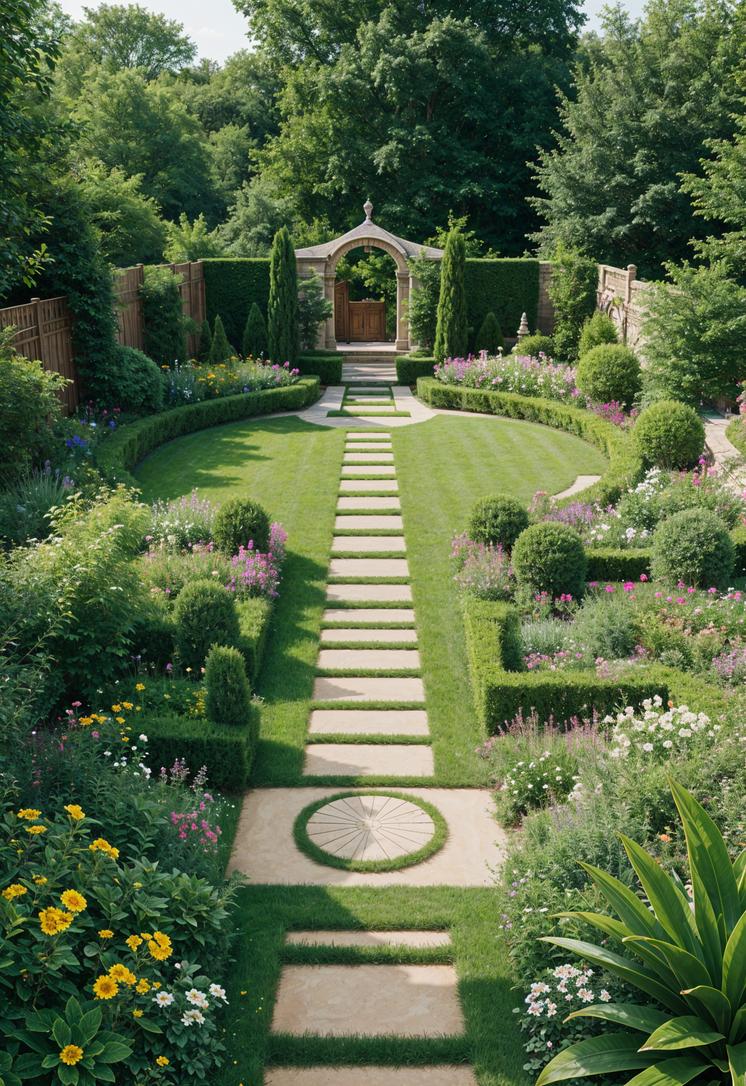
This garden layout is perfectly balanced, with a central stone pathway leading straight to an arched gate and flanked by manicured hedges on both sides. Flower beds in pink, yellow and purple fill the space between the hedges and the path, softening the formality without breaking the symmetry. The bright daylight makes the green of the hedges pop against the stone, and the archway gives the eye a destination rather than letting the path feel endless. The whole design hinges on the hedges staying trimmed and the flowers staying within their borders, which makes it a good fit for a gardener who enjoys regular upkeep and likes things to look the same on both sides.
21 / 29Compact Cottage Garden Corner with Curved Brick Planter
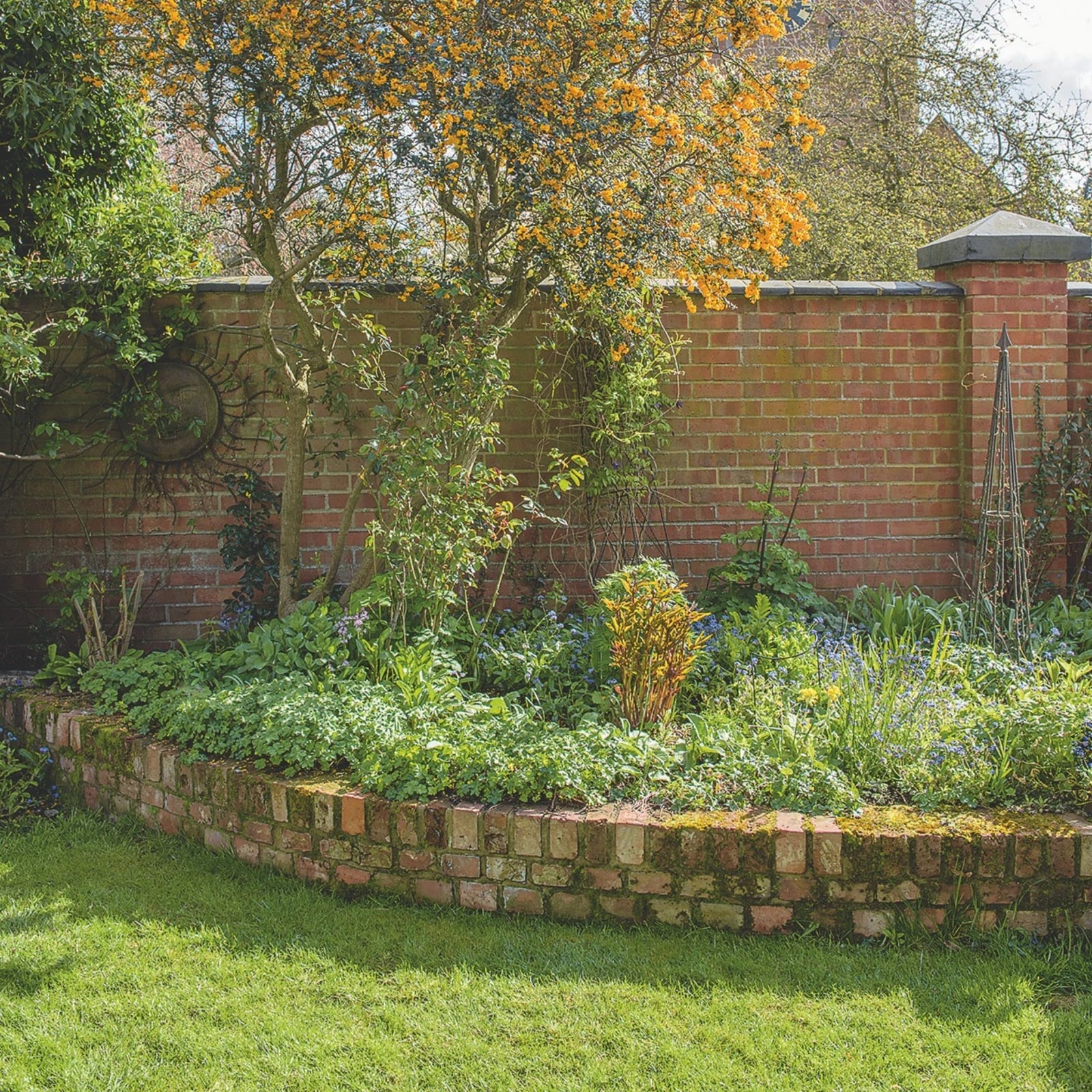
A curved planting bed softens a corner without eating up the whole yard. The weathered brick planter hugs the wall, so the space feels deliberate and not leftover. Yellow flowers pop against the green foliage and red brick, and the metal obelisk adds vertical interest without crowding the tiny footprint. A compact layout like this works for renters too: the brick planter sits on the ground, and the obelisk lifts the eye above the soil.
Keep the corner simple so the curve stays the focal point. The brick wall behind the planter gives the garden a backdrop, and the grass keeps the path clear. This setup proves that a small outdoor corner can hold a lot of charm without needing a full renovation.
22 / 29Coastal Patio with Wicker Seating and Potted Herbs
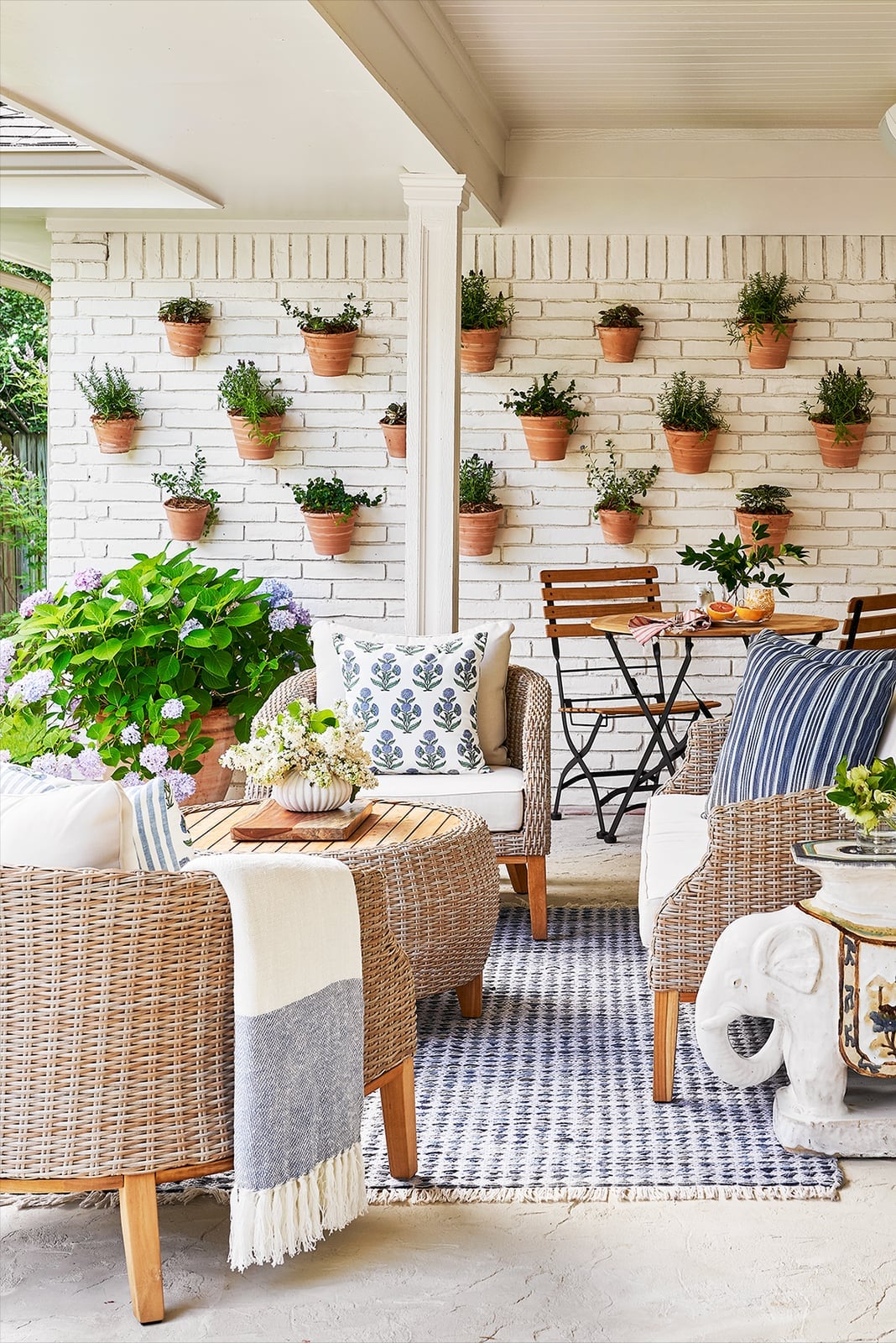
The white wicker seating anchors this covered patio, and the potted herbs on the brick wall bring the palette together. Blue and beige cushions keep the look casual, while the green of the herbs repeats the coastal theme without trying hard. The arrangement feels roomy because the seating stays low and the pots climb the wall, leaving the floor open. A shaded patio like this stays comfortable in warm weather, and the herbs are easy to reach from the chairs.
23 / 29Modern Landscaping with Winding Pathways and Mulched Zones
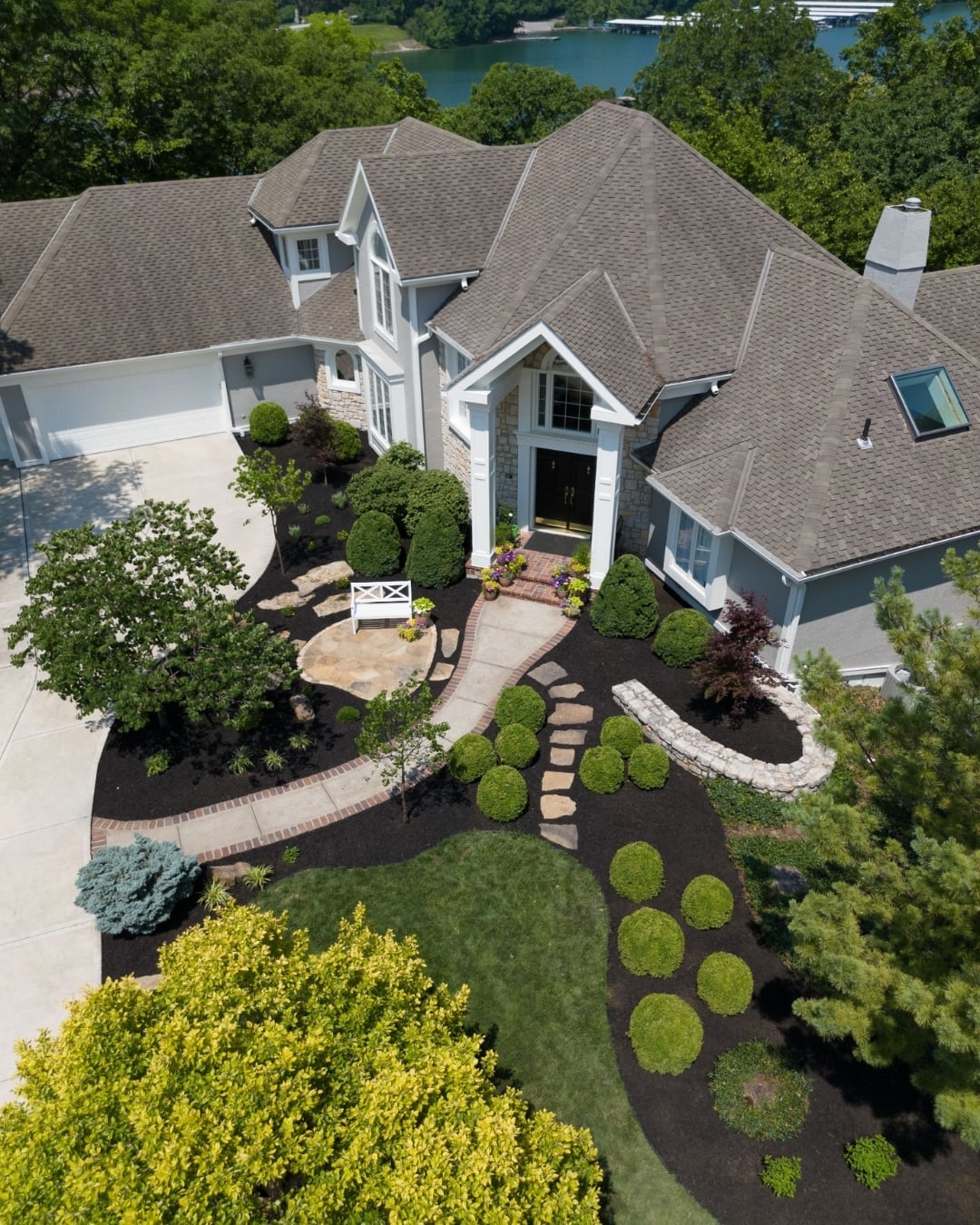
Winding pathways work best when they lead somewhere, and this layout uses the curves to connect distinct garden zones. The grey stone path breaks up the green grass and black mulch, and the white bench provides a visual anchor. The aerial view shows how the mulched beds form their own shapes, so the garden becomes a series of rooms instead of one big lawn. A white bench or a stone accent can anchor a seating area without adding a structure.
24 / 29Modern Edible Garden with Long Raised Beds and Stone Path
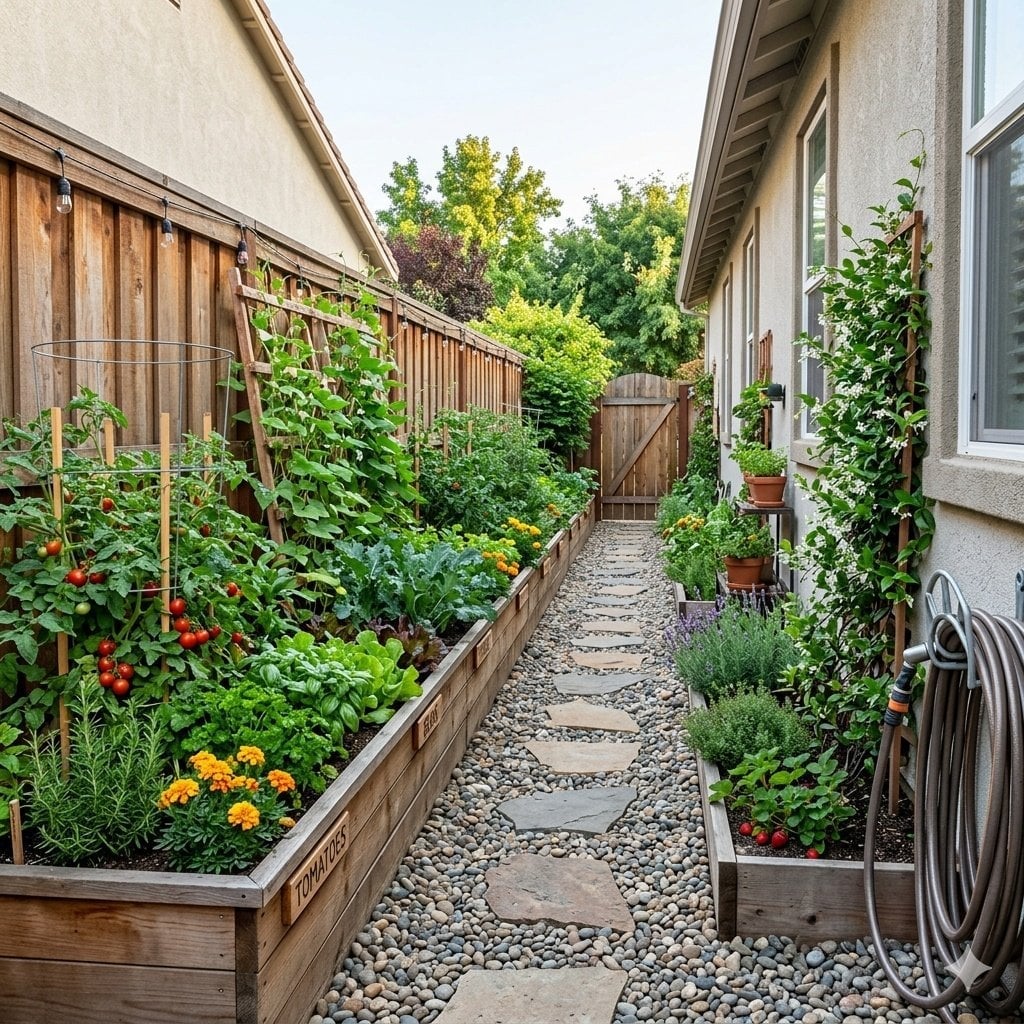
Long raised beds along a fence make the most of a narrow garden, and a stone path down the middle keeps the layout easy to work. The vegetables here are packed in, so there is less bare soil to weed and more to harvest. The wood and stone materials stay neutral, letting the green, red, and yellow of the produce be the color.
Evening light hits the beds differently than midday sun, so consider where the shade falls when you plan the path. The hose stays tucked against the fence, which keeps the walkway clear. A garden like this is about access: reach every row without stepping on the soil.
25 / 29Farmhouse Garden with Organized Raised Beds and Stone Borders
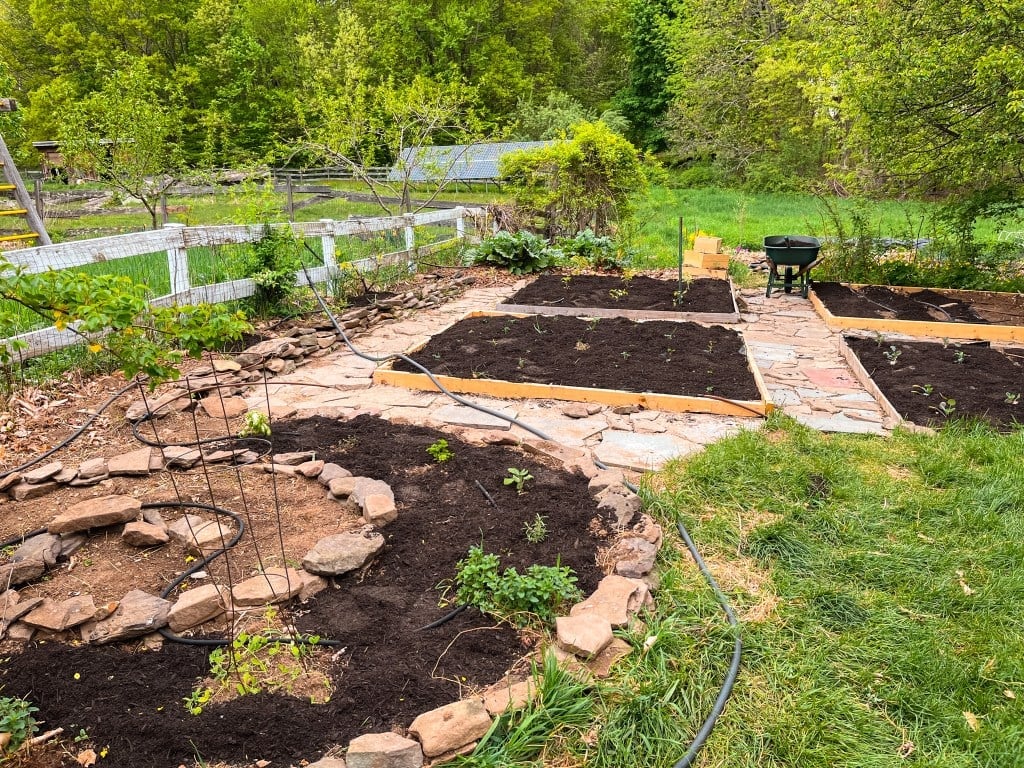
The multiple rectangular raised beds sit in a neat grid, and the stone borders between them keep the paths dry and the soil contained. The brown wood and grey stone feel grounded, and the green of the plants softens the geometry. The fence behind the beds adds a clean line that finishes the farmhouse look. This layout makes it easy to rotate crops or cover beds in a cold snap.
26 / 29Modern Patio with Central Seating and Lush Vertical Planting
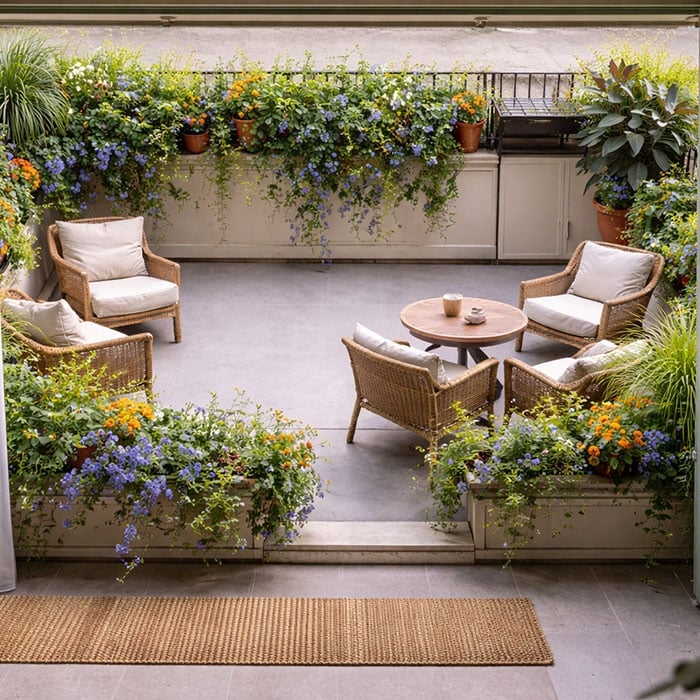
This patio feels like a room with walls of greenery, and the layout is the reason it works. A wicker seating set with a round table sits at the center, while planters around the perimeter and vertical planting on the edges define the space without blocking the daylight. The stone floor and tile accents keep the look clean, so the green, blue, beige and brown palette stays grounded. A central seating area surrounded by plants creates a natural boundary, making even a roomy patio feel intimate instead of exposed.
27 / 29Traditional Patio with Vine-Covered Structure and Dining Set
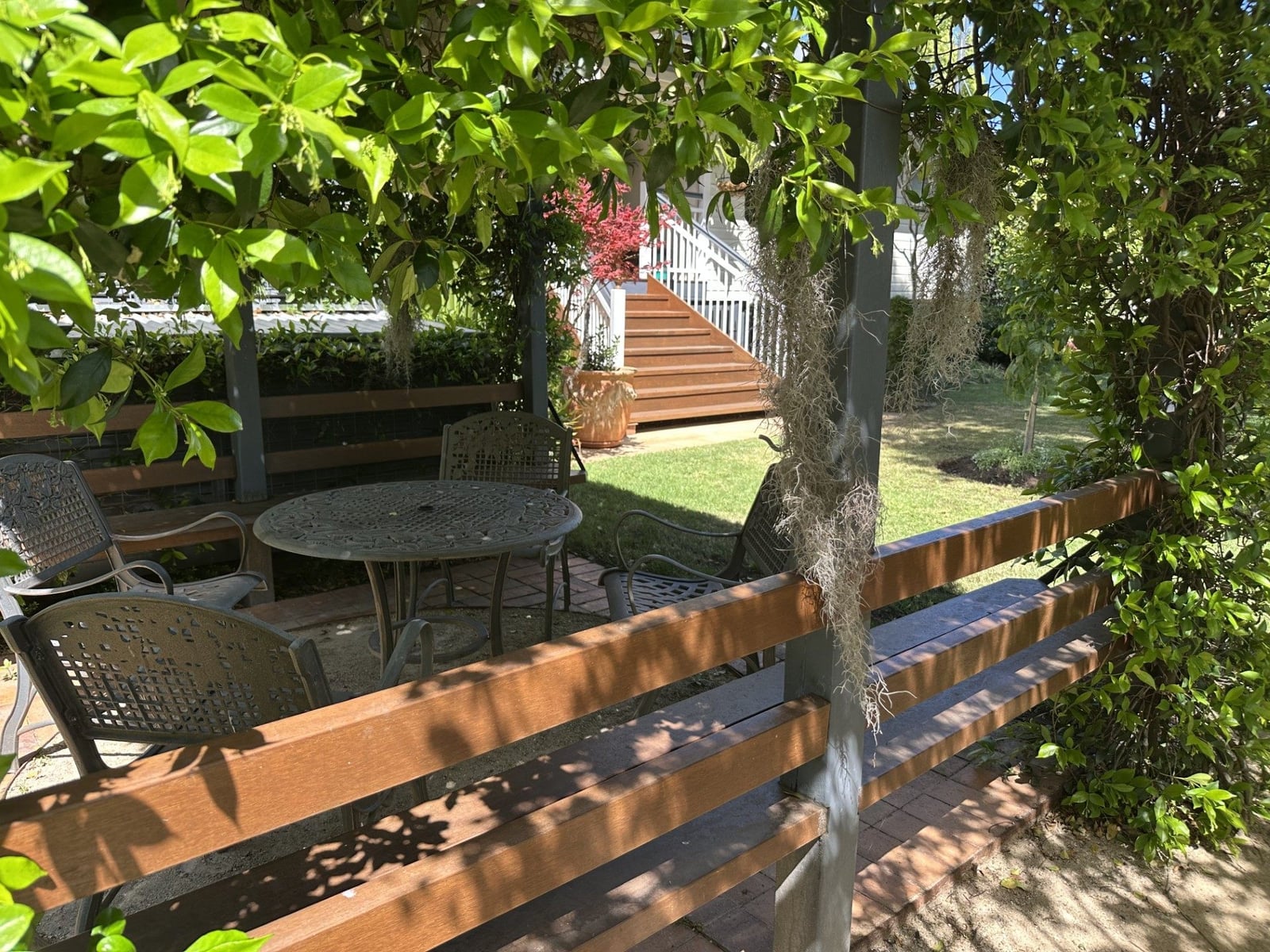
A traditional setup with a vine-covered overhead structure and a metal dining set might seem like a permanent build, but this layout is more adaptable than it looks. The round table and four chairs sit under the wooden frame, with a brick wall and fence adding enclosure.
28 / 29Expansive Farmhouse Garden with Long Vegetable Rows
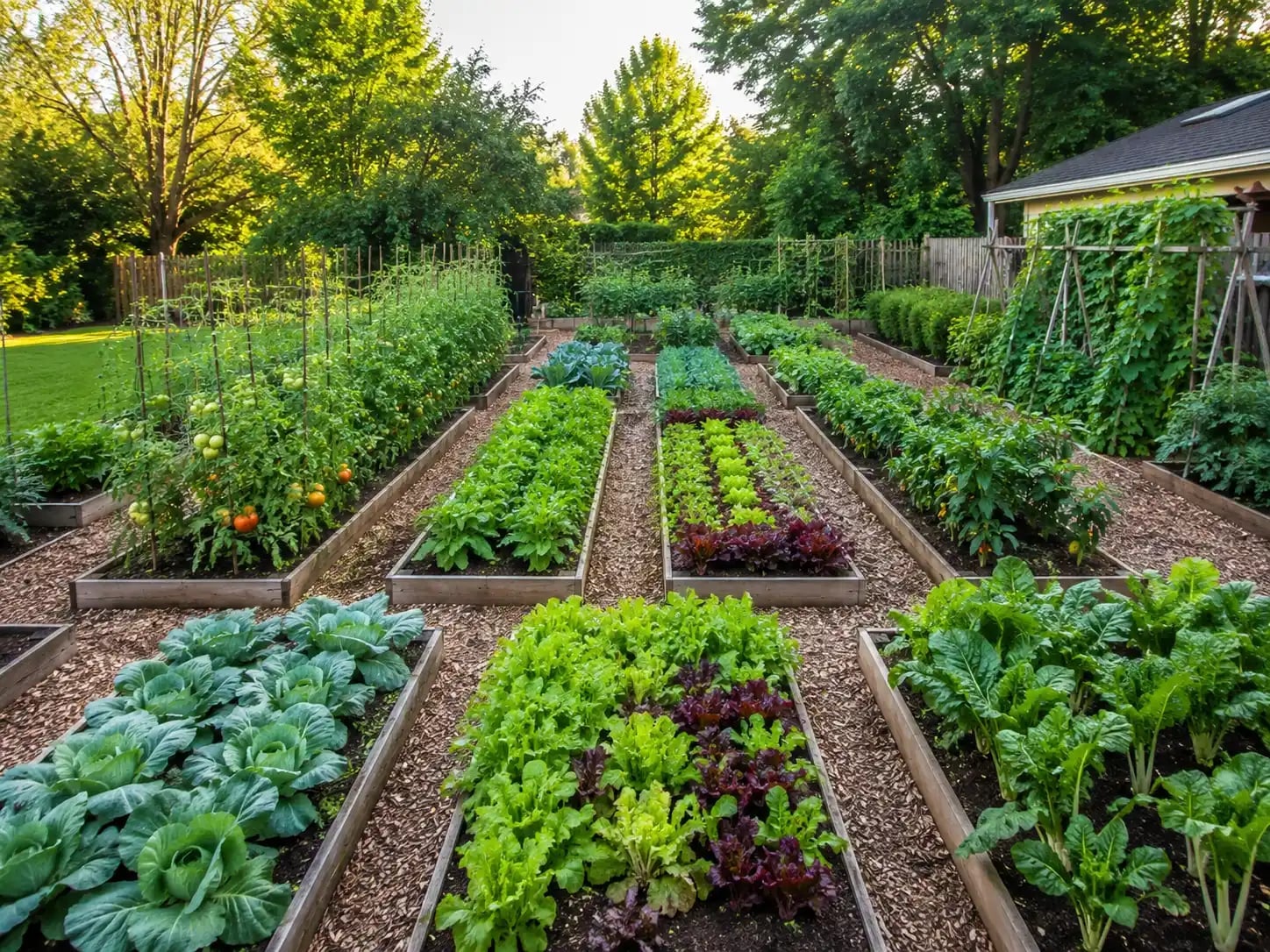
The garden runs in long, parallel raised beds with trellises at the ends, and the layout does the work here. Neat rows of vegetables in green, brown and red fill the beds, with mulch between them to keep weeds down. The bright sun hits every plant evenly because nothing is shaded by a taller neighbor. For an expansive space, parallel rows are the most efficient use of the land, and they make harvesting straightforward.
29 / 29Final Thoughts
These 28 garden layout ideas show that good planning makes any outdoor space more functional and enjoyable. The best layouts balance how you want to use the space with what fits your climate and maintenance time. A formal grid works well for vegetables, while curved paths suit a relaxed cottage feel. Keep pathways wide enough for a wheelbarrow, and group plants with similar water needs together. Whatever layout you choose, start small and let the garden grow with you.