A garden is an outdoor room with its own rules, light, layout, and the way it lives through the seasons. This collection of 25 garden design ideas covers naturalistic paths, compact seating nooks, and coastal retreats, all shot in real spaces without people in the frame.
Whether you’re planning a full overhaul or just a corner refresh, these looks offer practical layout and planting inspiration.
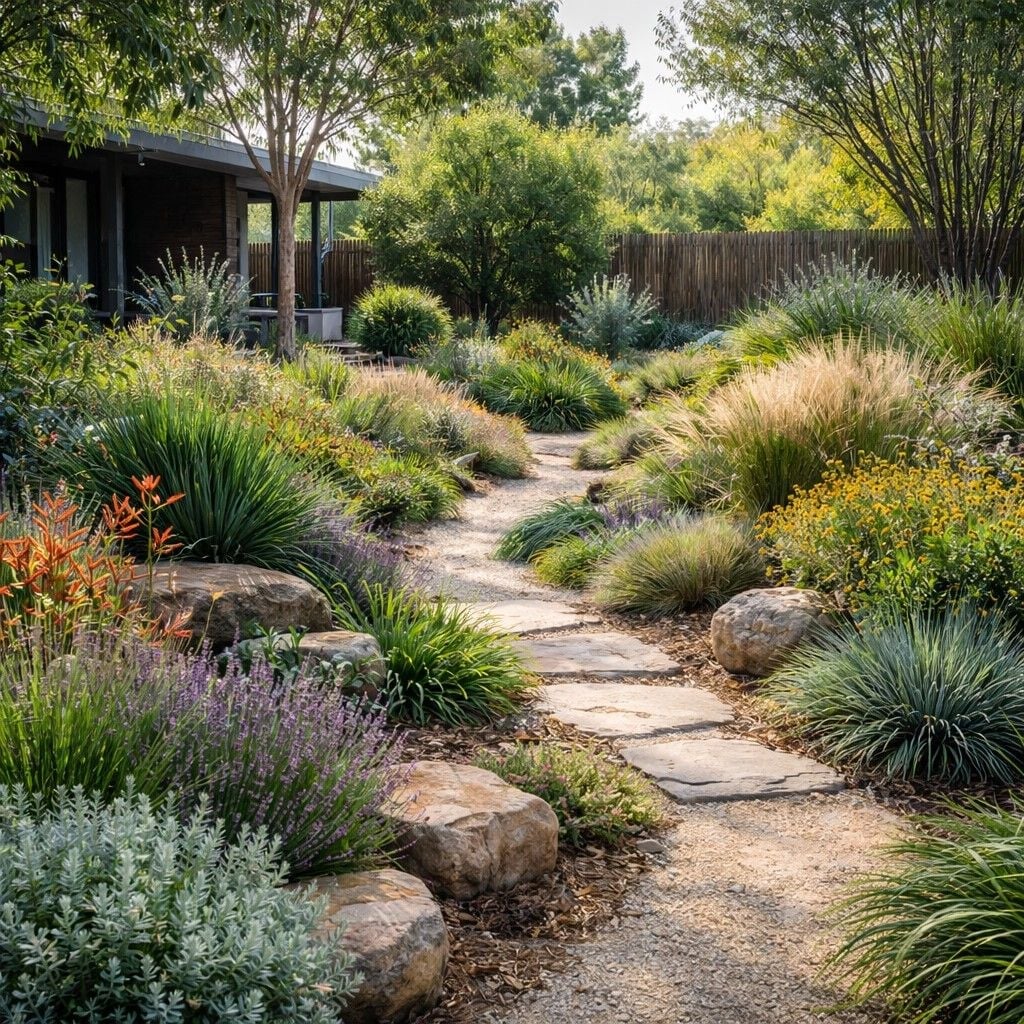
01 / 26Naturalistic Garden with Winding Stone Pathways and Diverse Planting
A garden path that curves out of sight pulls you through the space rather than across it. This layout uses wide, irregular stone steps set into gravel and mulch, with ornamental grasses and flowering perennials spilling over the edges in greens, yellows, purples, and oranges. The path becomes the spine of the garden, and the planting around it softens every transition. A good rule for a winding path is to keep the curves gentle, sharp turns feel staged. Let the walkway disappear behind a rock or a tall grass, and the whole garden feels bigger than it is.
02 / 26Rustic Cottage Garden Raised Beds Overflowing with Vegetables
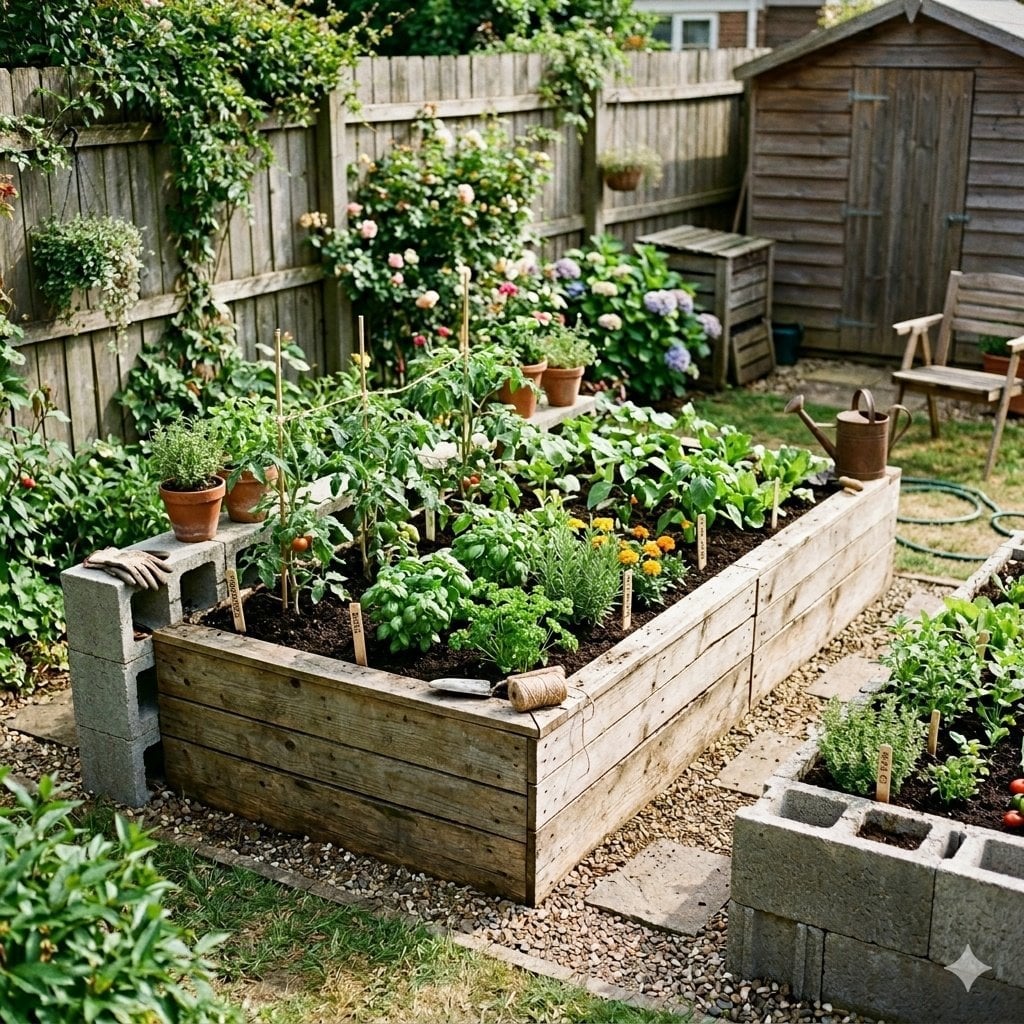
This is a vegetable garden that does not hide its purpose. A large wooden planter sits at the center, surrounded by concrete blocks and terracotta pots, all holding healthy greens and herbs in a palette of green, brown, and terracotta. The materials are rough and honest, wood that weathers, clay that breathes. A gravel path keeps mud from turning the whole thing into a mess. The trick to this look is texture over finish. Skip the stained wood and sealed pots. Let the materials age, and the garden will look like it has been there for years.
03 / 26Coastal Garden Oasis Featuring a Weathered Boat and Beachy Seating
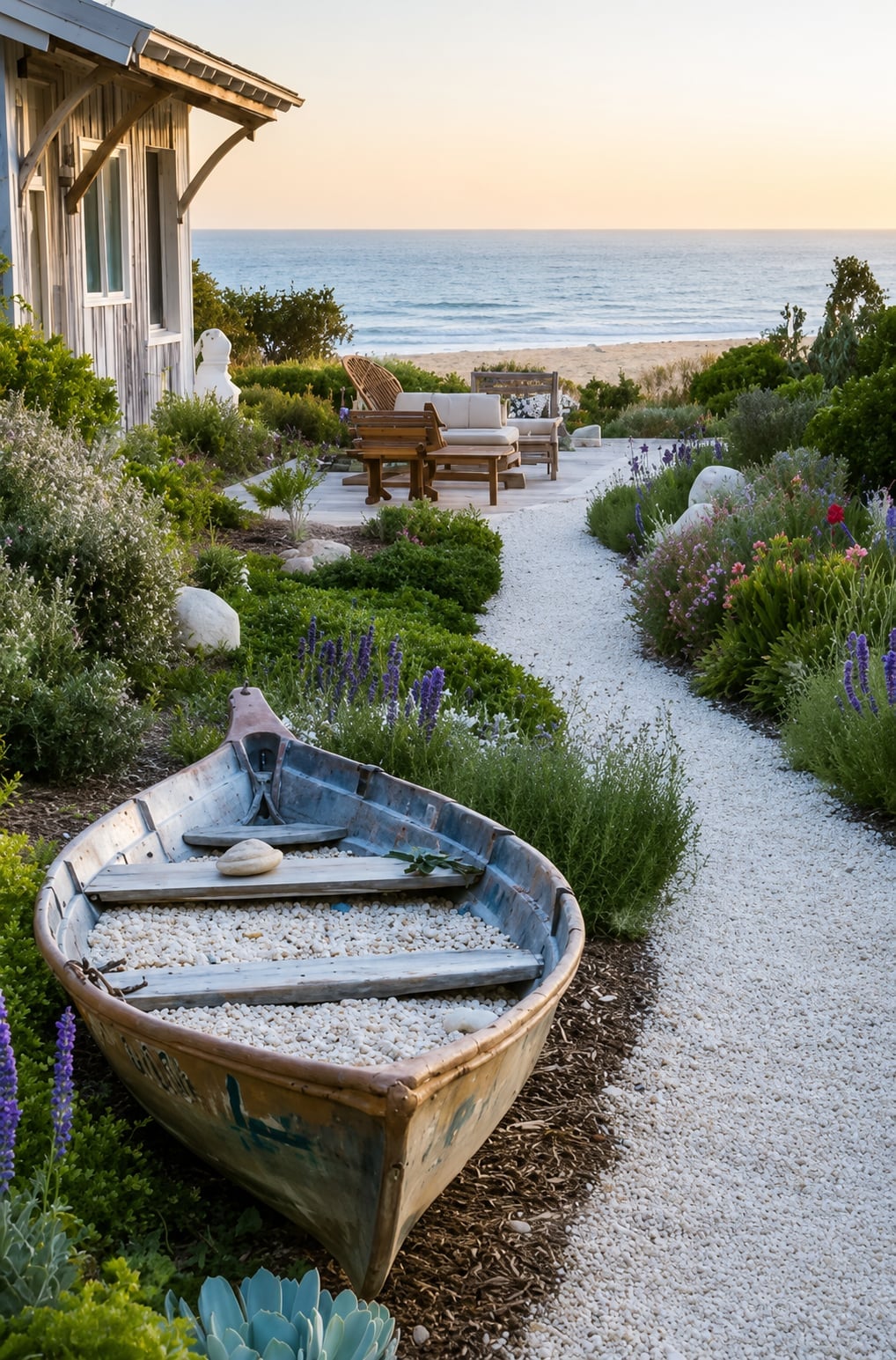
What do you do with a garden that borders sand and salt air? You lean into the decay. A weathered old boat sits among beach grasses, its peeling paint a deliberate part of the palette of blue, green, white, and sand. A wooden bench and chairs face the water, their finish left to fade in the late afternoon sun. The boat works as a sculptural anchor, not a functional one. It defines the seating area without enclosing it.
In a less coastal spot, look for a large found object with patina. A rusted metal cart, a stone urn, or a weathered log can do the same job. Place it where it reads as a destination. Let the plants grow around it so it settles into the landscape rather than sitting on top of it.
04 / 26Modern Garden Design with Slatted Wood Screens and Raised Beds
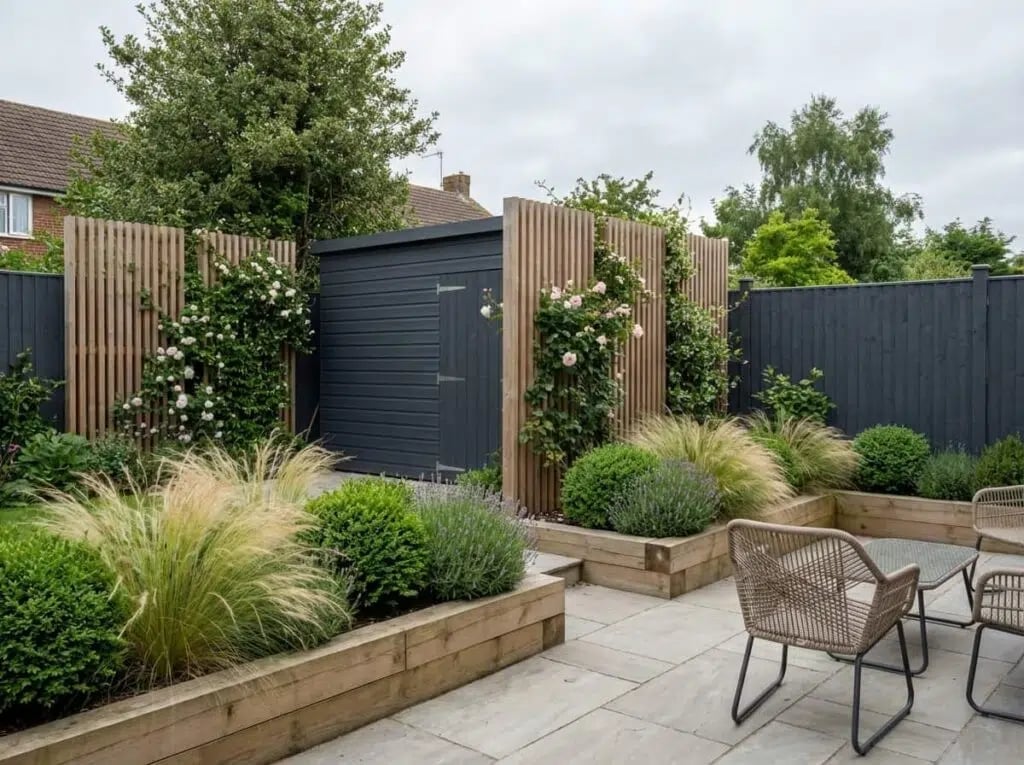
Vertical slatted wood screens divide this garden into distinct zones without blocking the view. The grey wood tones echo the raised beds and the stone underfoot, while ornamental grasses add softness against the straight lines. The screens act as a backdrop for the planting and a visual buffer for the shed behind them. On an overcast day, the light filters evenly through the slats, keeping the space open. Scale matters here: the screens are tall enough to feel architectural but spaced so the garden breathes. Tight spacing would close the room in.
05 / 26Boho Garden Nook with a Textured Wooden Daybed and Lush Plants
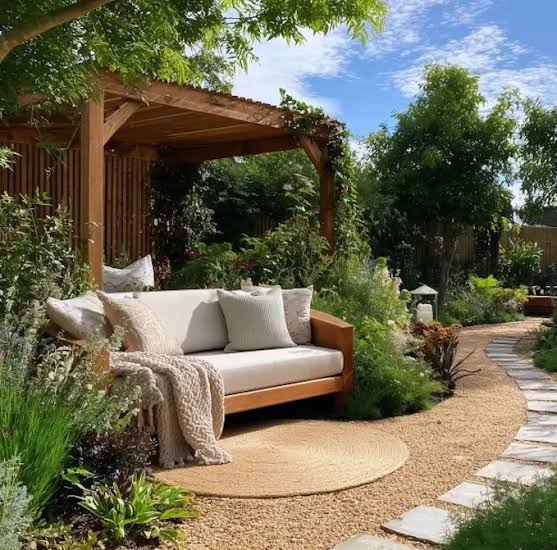
A daybed turns a corner of the garden into a room. The wooden frame is upholstered with cushions and a throw blanket, and a round jute rug anchors the seating on the gravel floor. The dappled daylight makes the neutral palette of wood tones, cream, and green feel soft and private. The practical trick here is to treat outdoor seating like indoor seating, layer textiles, add a rug underfoot, and cluster plants around the edges so the space feels enclosed. The jute rug can handle a season outdoors if you shake it out regularly and bring it in for winter. In a rental, a daybed and an outdoor rug are both portable.
06 / 26Rustic Garden Charm with a Grand Stone Archway and Flagstone Path
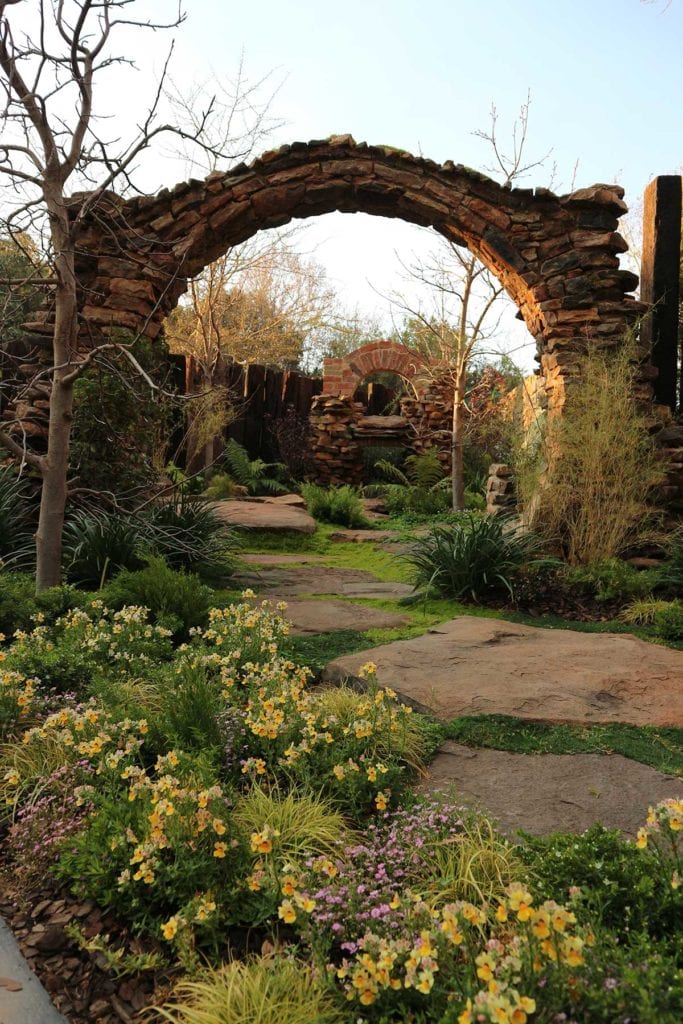
A natural stone arch reads as a permanent garden feature, but a more budget-friendly swap is to build a simple wooden arbor and train climbing roses or clematis over it. The effect softens over a season or two, and the arch becomes a living frame without the cost or permanence of stone. In this roomy garden, the arch anchors a winding flagstone path through lush planting. Late afternoon sun hits the stone and the greenery, making the path feel like a destination. The palette uses greys, greens, and touches of yellow from the flowers, so nothing competes with the arch itself. For a rented space, a freestanding wooden arch in a potted base gives the same vertical draw without digging or permanent installation.
07 / 26Country Garden Patio Layout with Dining and Lounging Zones
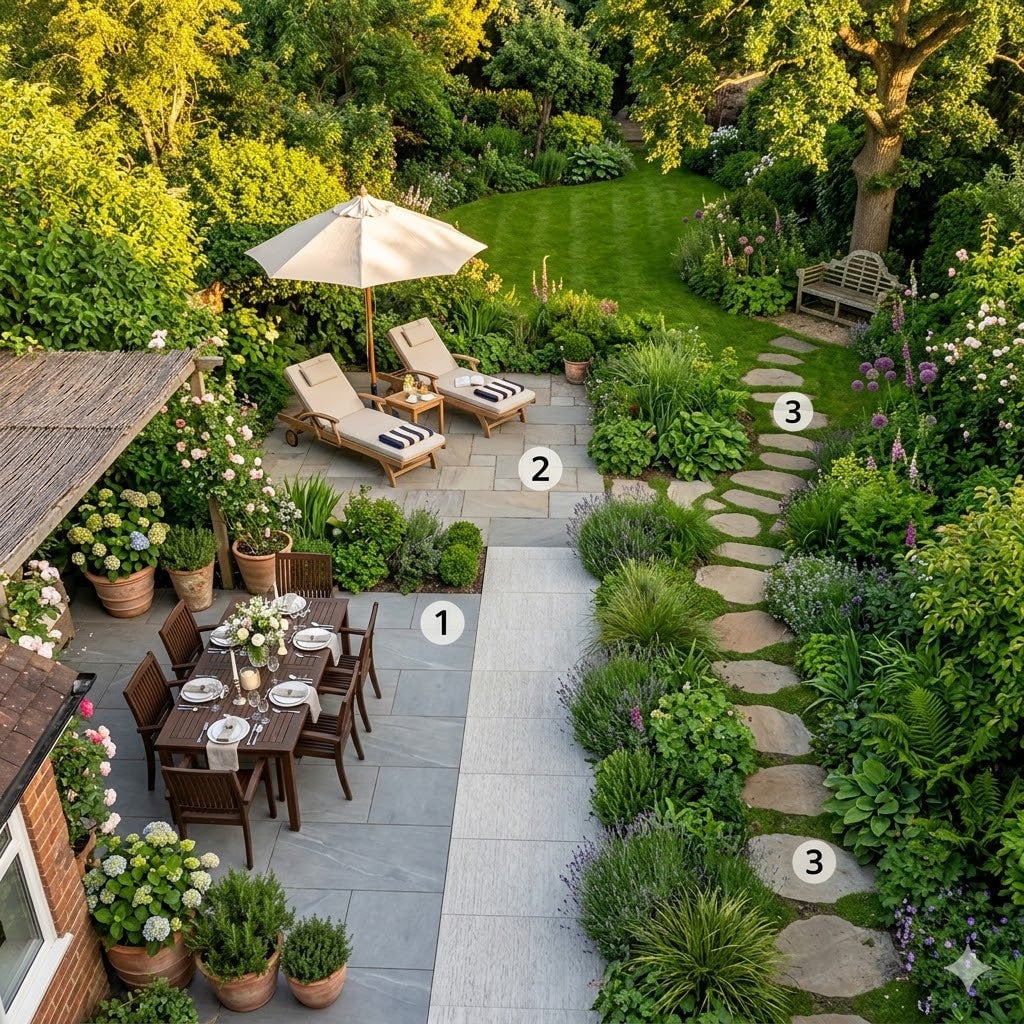
The patio is divided into clear zones: a dining table and chairs under a parasol for meals, and a pair of sun loungers set on the lawn for lounging. A winding stone path connects the two areas without forcing a straight line. The layout keeps the dining zone close to the house for easy serving, while the loungers sit farther back, tucked into the planting. This kind of zoning works for renters because nothing is built in. A large outdoor rug under the dining table defines the zone visually, and the loungers can shift with the sun. The palette of greens, beige, and white keeps the whole patio cohesive, even with two different functions.
08 / 26Compact Backyard Garden Featuring a Modern L-Shaped Bench and Deck
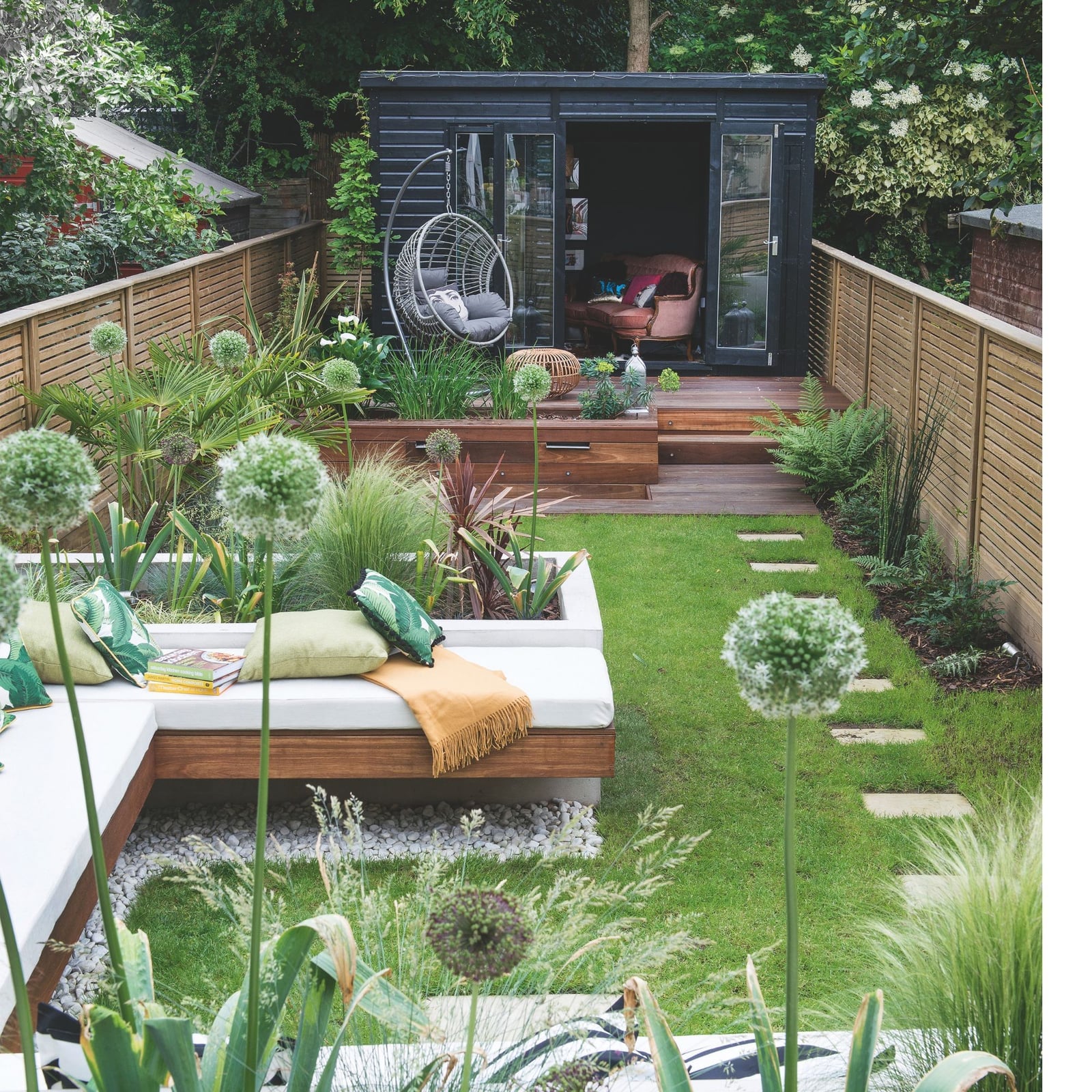
This compact backyard proves that built-in seating is the smartest use of a small footprint. The L-shaped bench wraps around one corner of the deck, creating a natural conversation area without extra furniture. A hanging chair adds a second seating option without taking up floor space. The multi-level layout separates the deck from the gravel path below, and a garden shed tucks into the back corner. The palette of wood tones, white composite, and green plants keeps the space feeling clean and open, not cluttered. In a smaller yard, a simple corner bench with a few cushions achieves the same function without a full build.
09 / 26Minimalist Garden with a Sculptural Curved Bench and Gravel Path
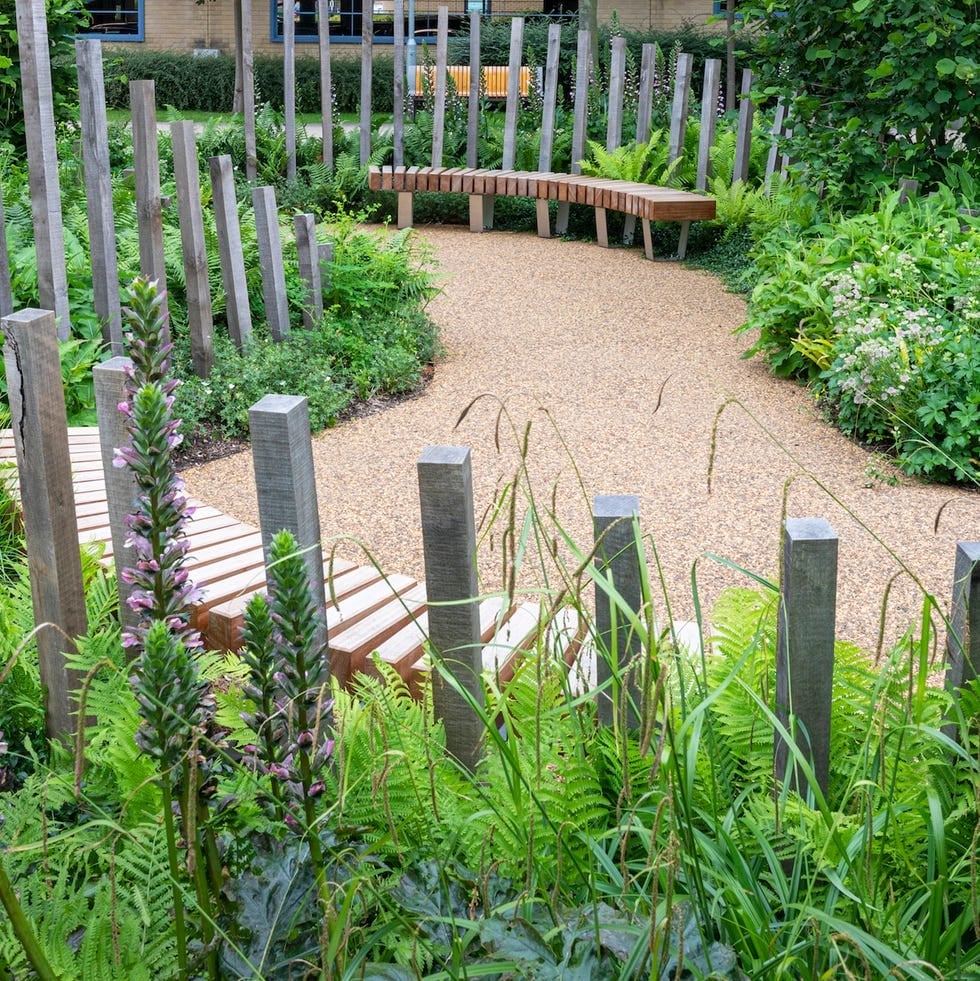
A curved wooden bench makes you wonder if your garden needs more than a straight line. The gentle arc follows the winding gravel path, so the seating feels like part of the landscape. Wooden posts mark the path edge, keeping the gravel in place and adding vertical rhythm. Greens, browns, and beige dominate, with no bright flowers to distract from the bench’s form. This is a minimalist garden, so every element earns its place. The bench works because it is the only seat in the space. A second bench would break the quiet. For a similar look, a single curved bench on a gravel base creates a focal point without needing a full redesign.
10 / 26Naturalistic Garden Accented with Large Driftwood Sculptures
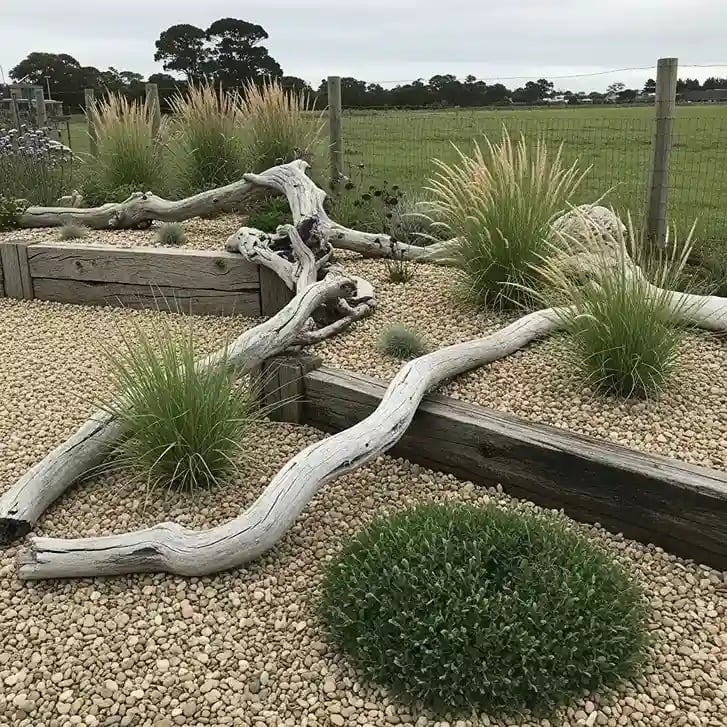
Large driftwood pieces act as natural sculpture in this open garden, rising from a bed of ornamental grasses and gravel. The driftwood adds vertical interest without the maintenance of a living tree, and the weathered grey tones blend with the beige gravel and green grasses. This is a material-driven design: the contrast between smooth driftwood and rough stone ground keeps the eye moving. The raised beds hold the grasses, so the driftwood stays the focal point. For a garden that needs structure without adding more plants, a single large piece of driftwood or a weathered log does the job. It is a low-upkeep way to add height and texture, as long as the wood is treated for outdoor use.
11 / 26Roomy Garden Featuring a Naturalistic Pond with Rock Edging
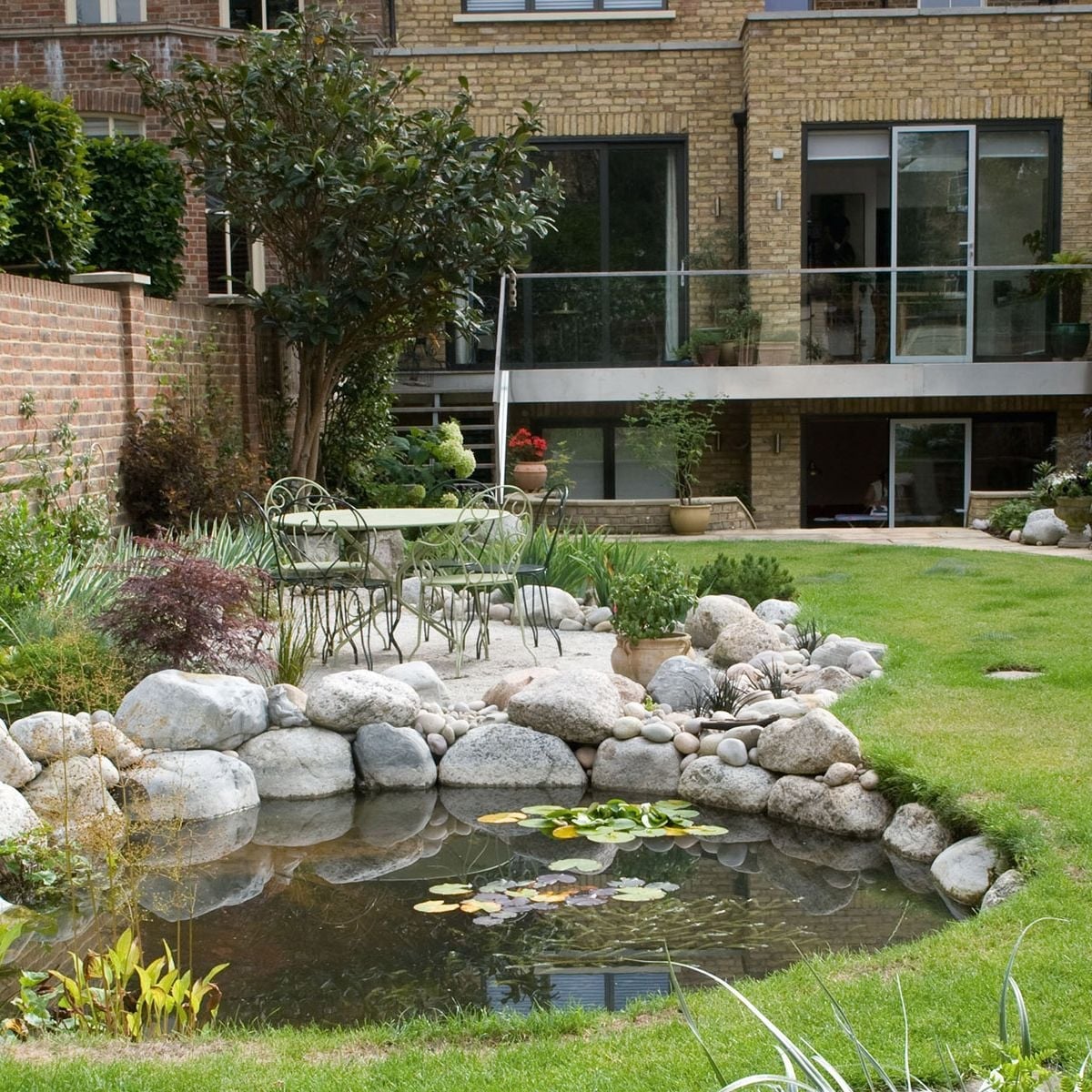
A pond reads best when it sits as the center of the garden. Here the water holds the middle of the space, with a lawn opening around it and seating placed where you can watch the surface from a distance. The rock edging does more than hold the shape; the grey stones echo the building behind, so the pond feels native to the yard. Gravel near the water gives a soft transition from grass to stone. For a naturalistic garden pond design, keep the planting loose and let the rocks vary in size, because a uniform border turns the whole thing into a swimming pool.
12 / 26Minimalist Modern Garden with Geometric Screens and Stone Pathways
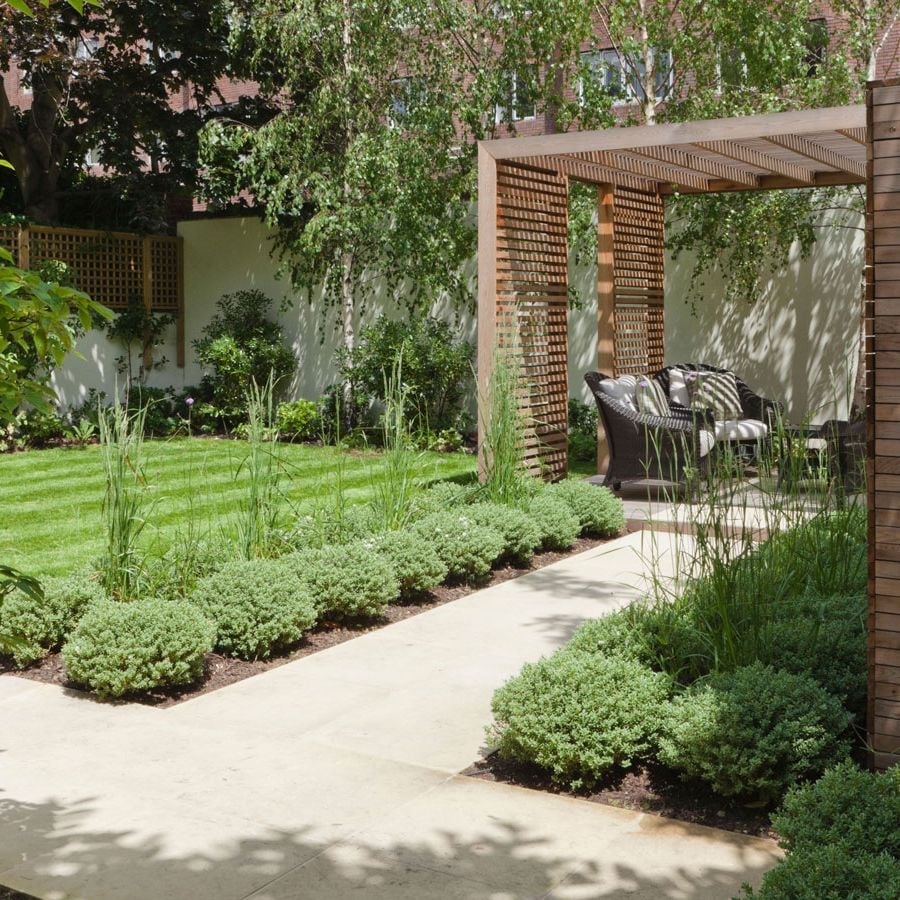
Set against a cottage garden where everything blooms at once, this modern minimalist garden pathway keeps its calm by limiting the palette to greens, greys and beige. Low hedges define the edges, while a stone pathway carries you through the space in a straight line. A geometric wooden screen adds the only real pattern, breaking up the flatness without shouting.
The lesson here is restraint. Each area has a clear job: the path leads, the hedge frames, the screen hides. When every element stays in its lane, the garden feels spacious even when the beds are full. If you want this look, resist the urge to add a third color or a second pattern. One screen, one path material and one hedge shape are enough to hold the whole composition together.
13 / 26Balcony Oasis with Abundant Greenery and Modern White Seating
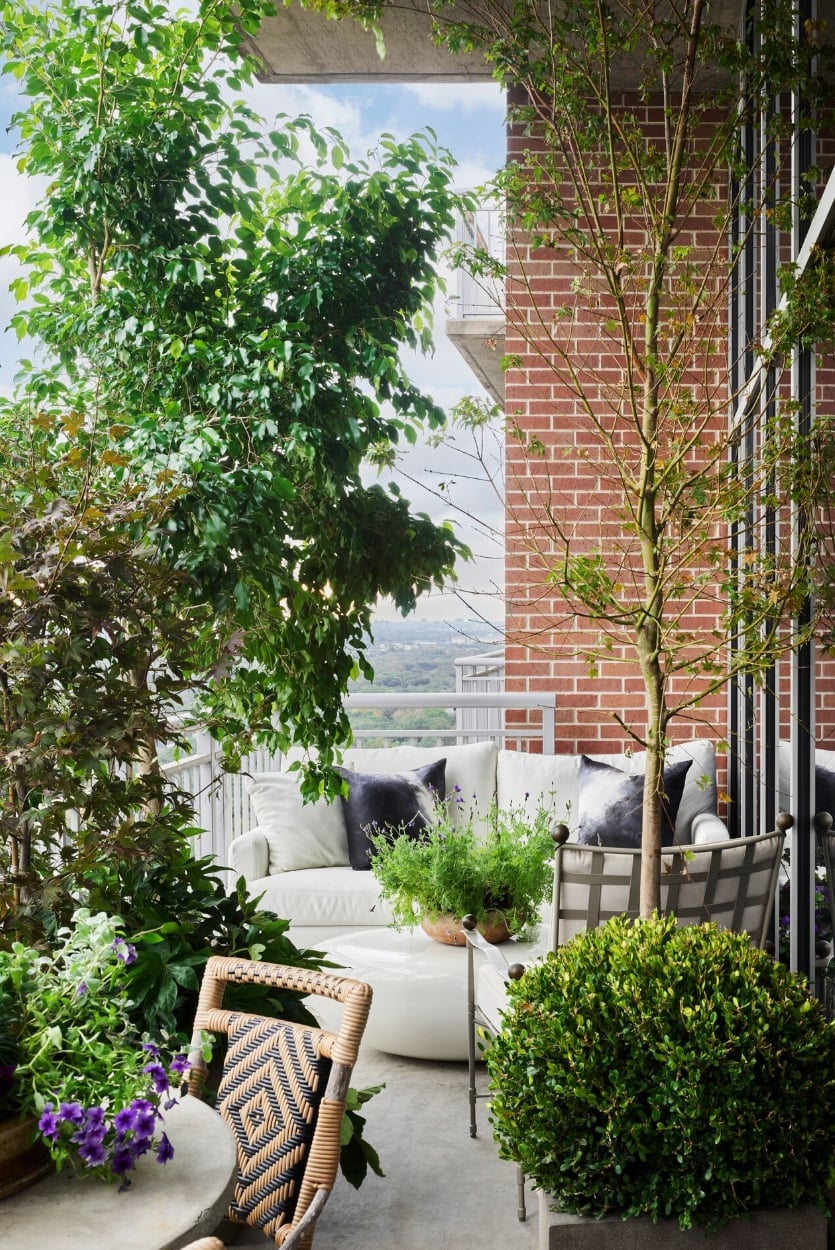
The trick to a balcony that feels like a room is treating the furniture as the anchor and letting the plants do the filling. A white sofa and armchairs hold the seating area, while greenery climbs and spreads around them. On an overcast day the white fabric keeps the space bright, which matters when you are working with a smaller footprint. The metal frames stay slim so they do not eat up visual space. If you are renting, skip permanent planters and keep everything in pots you can move, because a balcony garden with modern furniture should flex with the seasons and the lease.
14 / 26Modern Garden Steps Flanked by Lavender and Potted Plants
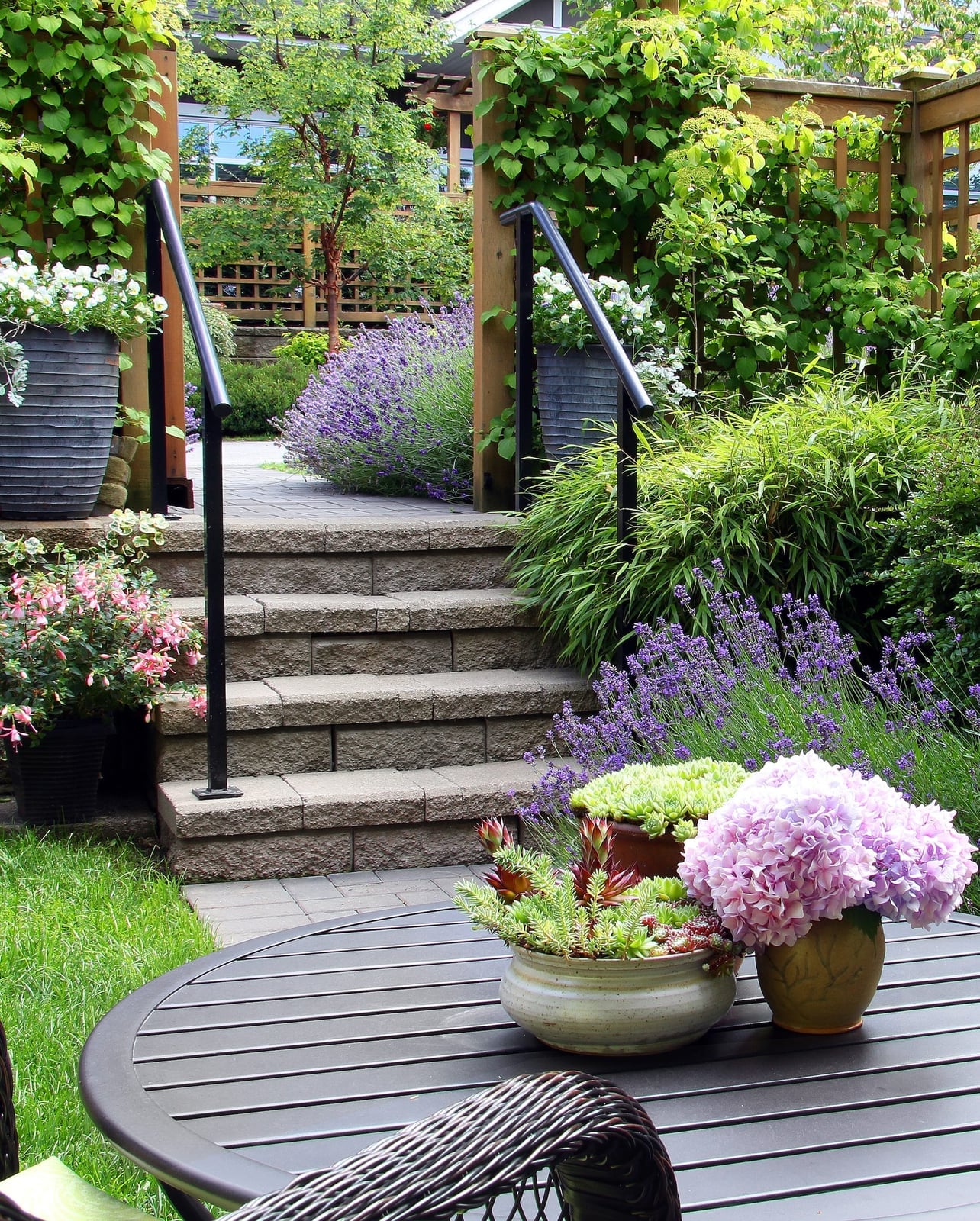
Lavender is the main planting here, and it earns the role. Flanking stone steps with lavender softens what could be a hard, gray climb, and the purple stands out against the pale stone. The potted plants on the upper level break the line so your eye does not just race to the top. Bright daylight makes the foliage look crisp, and the lavender holds its color even in strong sun. For garden steps, keep the planting low and repetitive; a row of matching pots or a continuous lavender border gives the eye a rhythm to follow, which makes the whole tiered layout feel cohesive.
15 / 26Contemporary Garden with a Lush Green Lawn and Layered Planting Beds
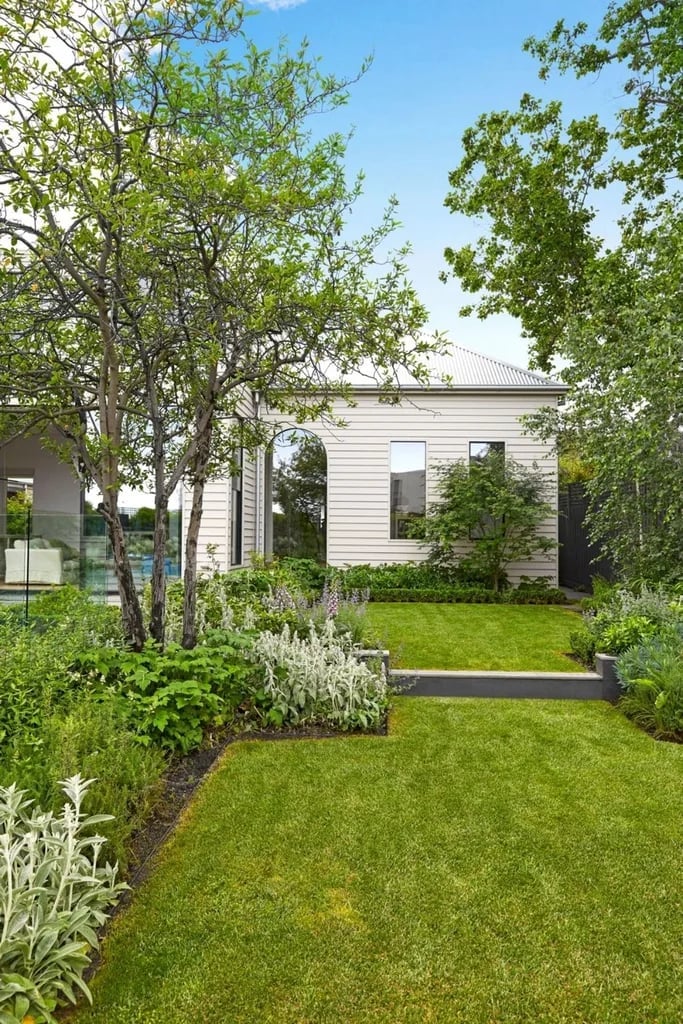
A contemporary garden uses the lawn as a quiet center and pushes all the interest to the edges. Here the manicured grass holds the middle, while layered planting beds build up around it in greens, greys, white and purple. The modern building behind gives the beds a clean backdrop, so the flowers appear as color, not clutter.
This layout gives you room to move. The central lawn stays open for walking or play, while the beds do the showing off. Keep the planting dense enough to look full but varied enough to catch the eye at different heights. A contemporary garden lawn design like this needs regular mowing to maintain the contrast between the tidy grass and the looser beds, so plan for that upkeep before you commit.
16 / 26Cottage Garden Alcove with Wicker Seating and Evening Lanterns
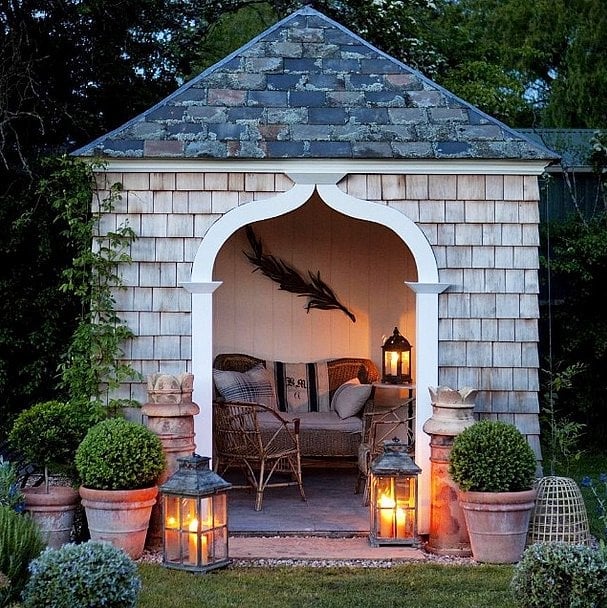
A covered seating area tucked into the garden creates a natural destination for evening hours. The wicker sofa and armchairs stay neutral against wood shingles and terracotta pots, so the space feels settled. A few lanterns on side tables and the ground draw the eye outward after dark. Lighting placed at different heights keeps a compact alcove from feeling flat. Cream cushions and green foliage complete the setup, making the whole area feel like a room you discovered.
17 / 26English Cottage Patio with Wrought Iron Furniture and Red Flowers
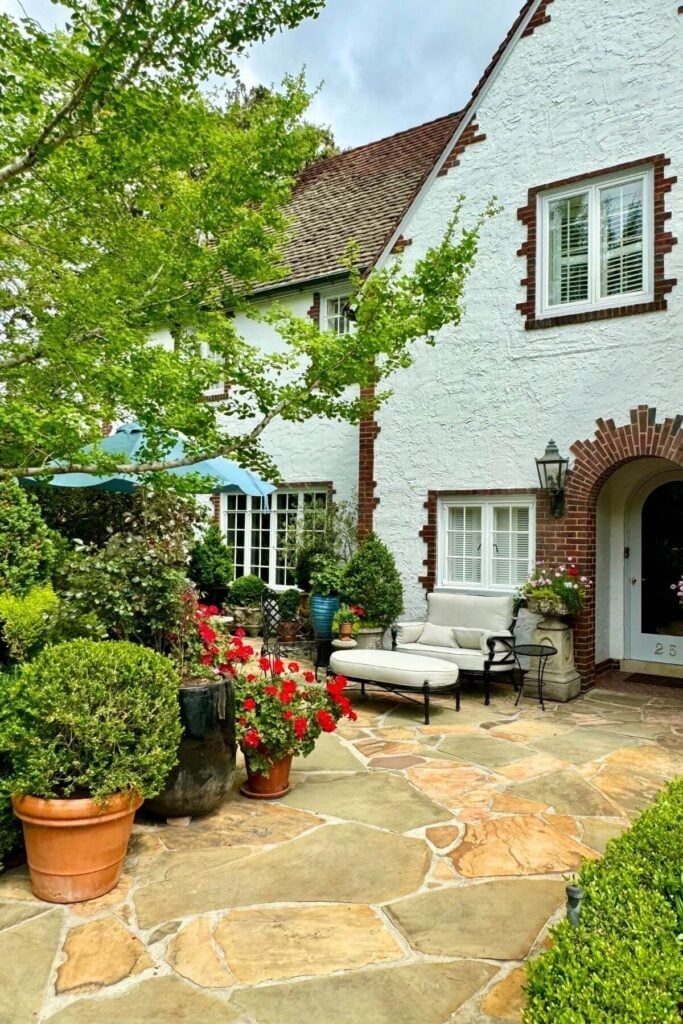
A practical rule for a patio that needs to feel established without permanent changes: anchor it with one heavy material and let the planters do the rest. This english cottage patio uses a wrought iron bench and table on a flagstone base, then fills ceramic pots with red flowers and boxwood shrubs. The white metal stays crisp against the stone and brick, while the red blooms pull the eye across the whole seating area. For renters, this setup works because nothing is built in. The wrought iron pieces move with you, and the pots sit on top of the existing patio. Swap the flowers seasonally or swap the cushion color to shift the palette without touching the bones.
18 / 26Modern Functional Garden with Corrugated Metal Raised Beds and Deck
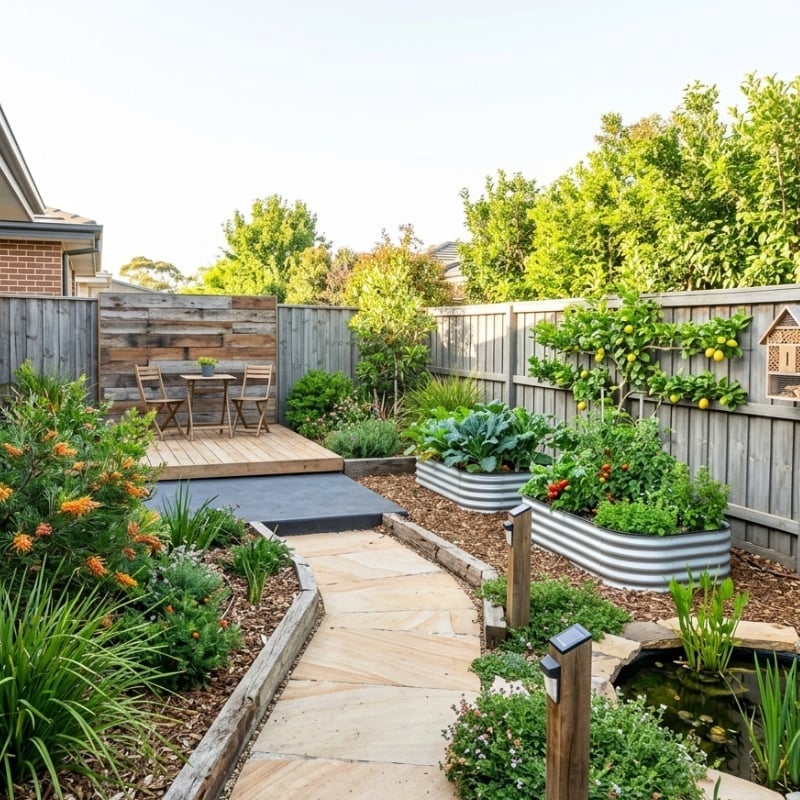
Most vegetable gardens lean rustic, but this one takes a different path with corrugated metal raised beds and a clean wooden deck. The metal panels are the defining material here. They give the planting area a crisp, industrial edge that looks planned and not temporary.
The layout runs a straight pathway from the deck past the beds toward a small pond, which adds a water element without making the garden feel like a landscaping project. The orange and yellow blooms break up all the green and brown, keeping the functional zone from looking too stark. For anyone who wants a garden that works hard but still looks like a designed space, one material, in this case the corrugated metal, sets the tone while everything else stays simple.
19 / 26Expansive Cottage Garden with an Ornate White Gazebo and Abundant
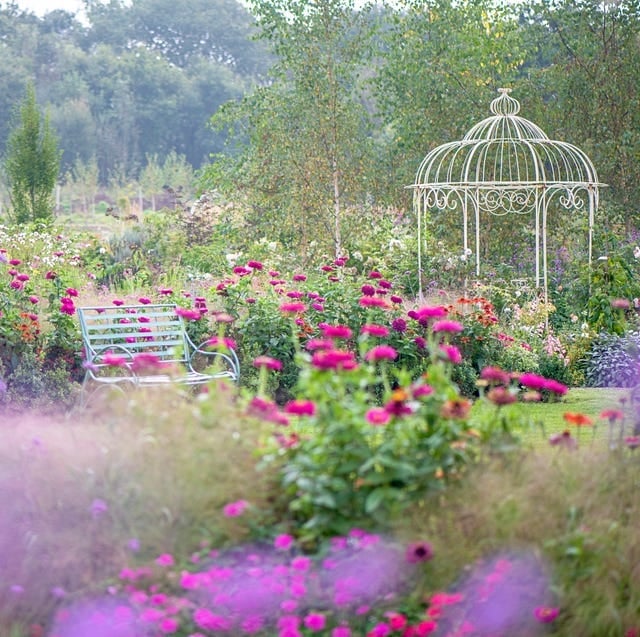
The white metal gazebo sits at the far end of the garden, visible from every angle through the layers of pink and purple flowers. That placement is the whole structural idea: a single ornate piece becomes the destination, and everything else, the green metal bench, the stone path, the drifts of blooms, exists to lead toward it. The overcast light softens the contrast between the white structure and the surrounding greenery, which is worth noting for anyone with a similar garden in a cooler climate. The saturation holds up because the pink, purple, and green tones work together, so nothing fights the white focal point.
20 / 26Japanese Zen Garden Corner with Bamboo Screen and Boxwood
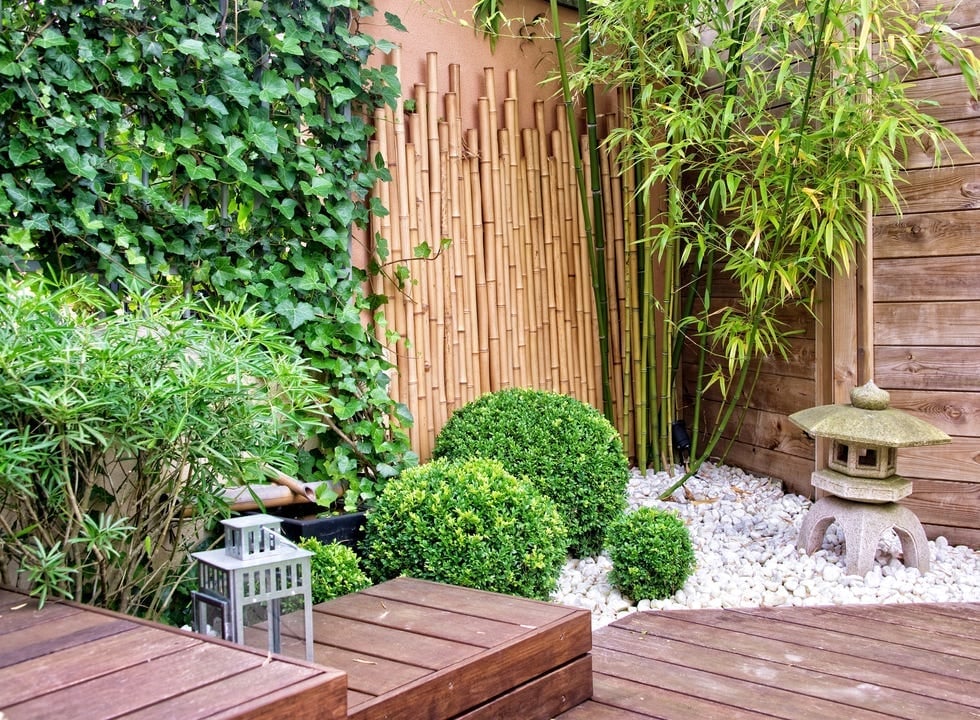
This is a compact corner that functions as a complete room because the bamboo screen sets a firm back wall. The screen, the boxwood shrubs, the stone lantern and the gravel all stay within a tight green-brown-beige palette, which keeps a small space from feeling cluttered. The wooden deck extends the seating zone without adding another material. The style works because the proportions are clear: the screen is the tallest element, the shrubs fill the middle layer, and the gravel and lantern sit low. Nothing competes for attention. In a rental, a freestanding bamboo screen and container boxwoods can create the same layered look without digging or permanent installation.
21 / 26Modern Xeriscape Garden with Golden Barrel Cacti and Gravel

For a dry climate, replacing thirsty lawn with gravel ground cover and low planting cuts water use while keeping the garden interesting. The golden barrel cacti here become the main event, their rounded shapes repeating across the bed so the eye moves naturally from one to the next. Stepping stones set into the gravel let you walk through without compacting the soil, and the terracotta pots add warmth against the grey stone and green leaves.
This xeriscape garden golden barrel cacti arrangement works best when the gravel layer is thick enough to suppress weeds, usually a few inches deep. Choose stones with varied sizes so the surface looks settled rather than dumped. Keep the palette to greens, greys, and terracotta, and the space reads as calm instead of busy. Overcast light softens the scene, which means the planting stays the star even on cloudy days.
22 / 26Cottage Garden Path Leading to Modern Seating Amidst Lush Blooms
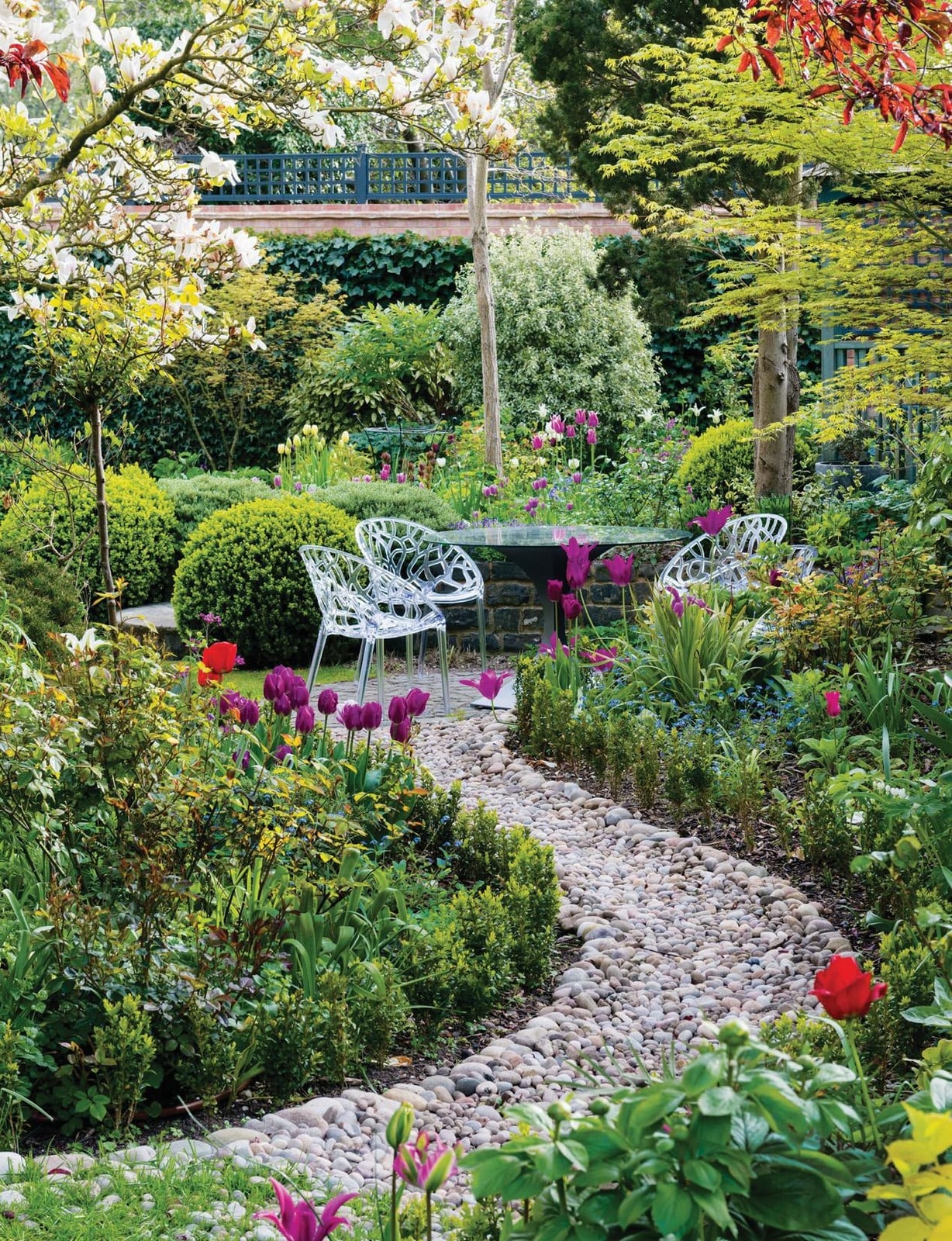
The winding pebble path draws you toward a pair of modern chairs tucked among dense blooms, so the eye follows the curve instead of jumping straight to the furniture. Pink, purple, red, and white flowers mix with green foliage, and the metal chairs and glass table stand out precisely because they are simple. A cottage garden path modern seating setup like this proves that contemporary pieces can sit happily in an overflowing border when the planting is allowed to dominate. Keep the path narrow enough to feel like a discovery, and let the flowers spill slightly over the edges for that relaxed, lived-in look.
23 / 26Traditional Garden Layout with a Large Central Lawn and Brick Pathway
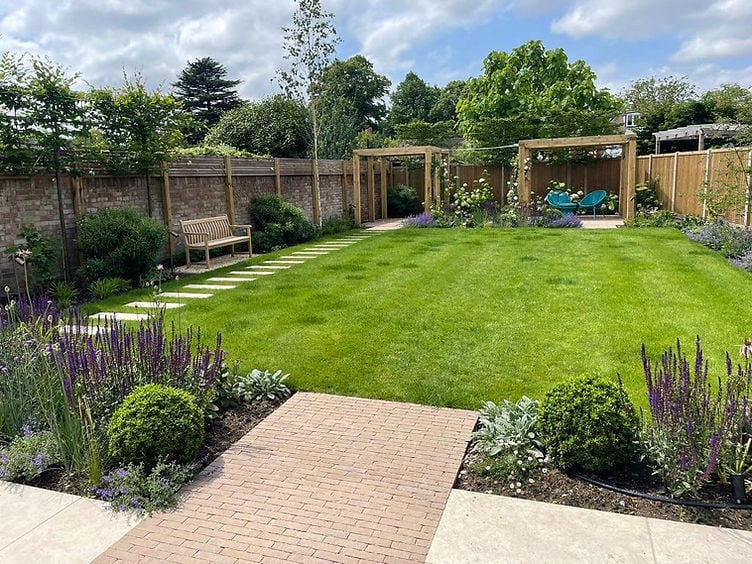
A traditional garden layout starts with the lawn setting the pace, and the paths route around it instead of cutting through it. Here, a large central lawn anchors the space, with brick pathways radiating outward to connect different areas. The wooden bench placed along one edge gives a resting point without interrupting the open sweep of grass. Brick edges keep the lawn tidy and define where planting begins, which cuts down on trimming time. For a traditional garden central lawn layout, keep the paths wide enough for two people to walk side by side, roughly three feet, and choose materials that echo the house. The result is a garden that feels orderly but still inviting.
24 / 26Compact Courtyard with Shabby Chic Bistro Set and Wrought Iron Bench
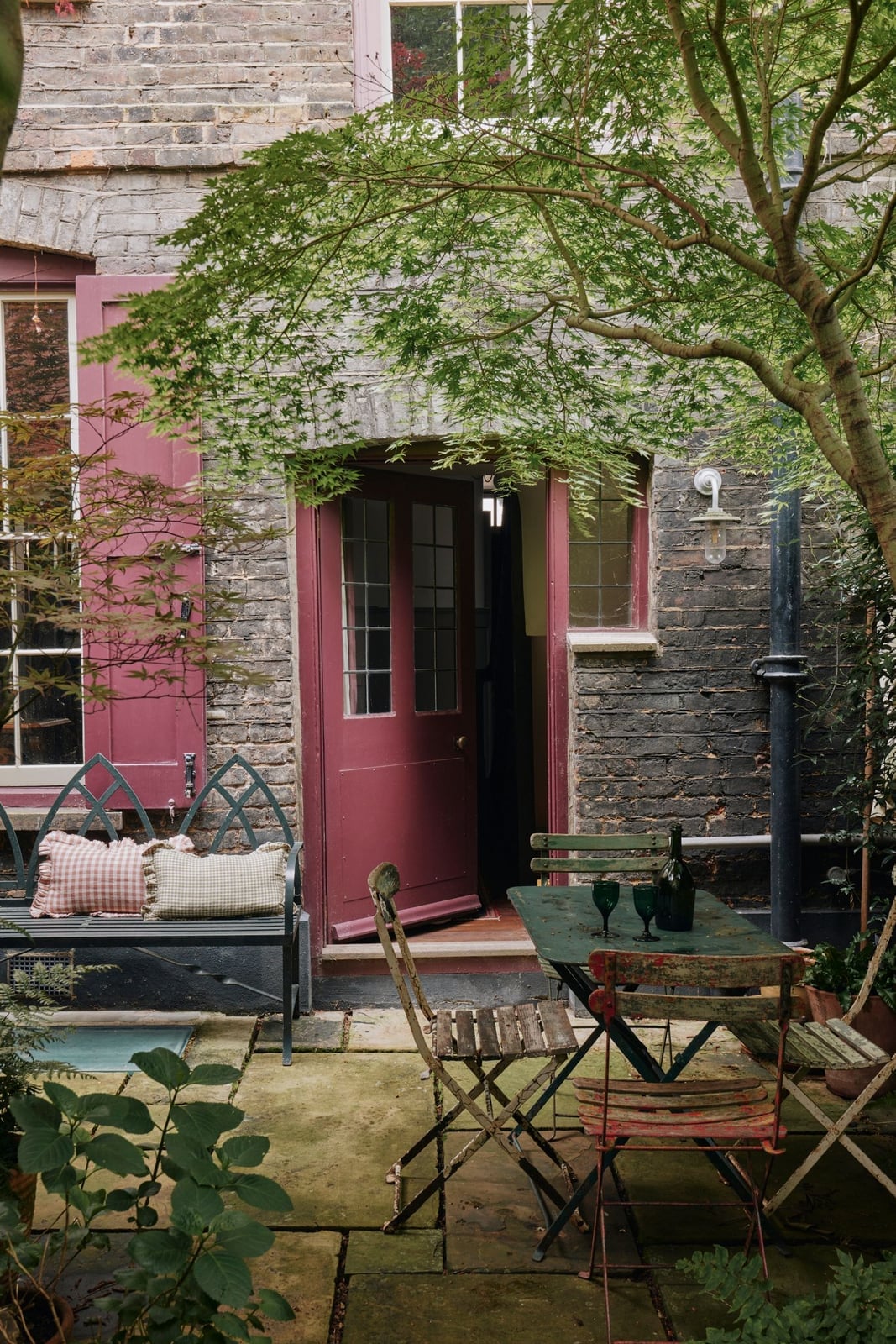
A compact courtyard can feel cramped when every surface is busy, but diffused daylight softens the edges and makes the space seem larger. Here, the distressed metal bistro set and wrought iron bench lean against a brick wall, their worn finish catching the light gently rather than glaring. Cushions add a touch of color and make the hard seating more comfortable for lingering.
For tight patios, choose furniture with a lighter visual weight, like slim metal frames, so the eye can pass through to the planting behind. Keep the layout simple: one seating cluster, one wall of greenery, and let the brick provide the texture. The shabby chic patio furniture look works because the pieces are allowed to age naturally, which means less upkeep and more character over time.
25 / 26Contemporary Garden with Horizontal Wood Slat Wall and Wicker Seating
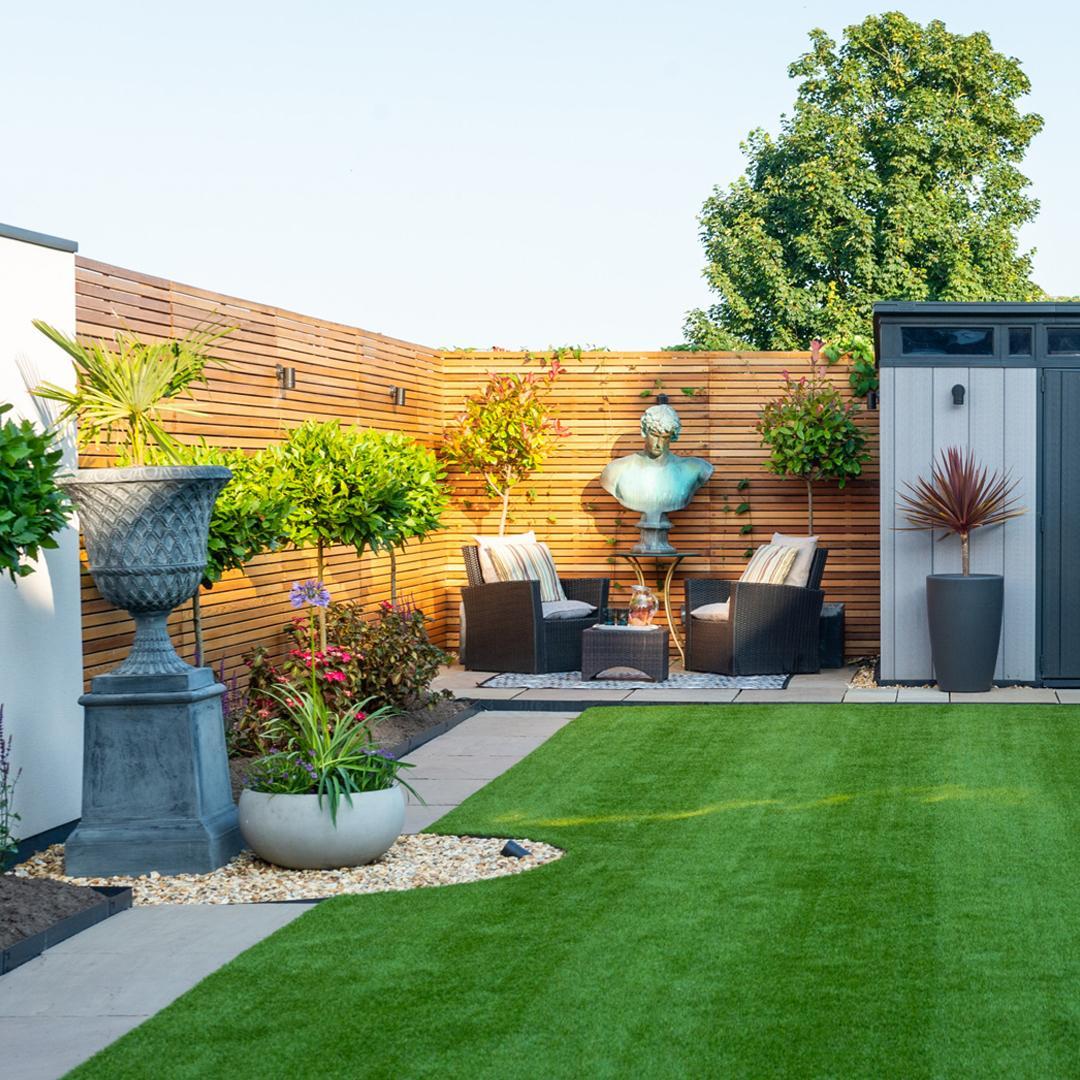
The horizontal wood slat wall does more than screen the seating area; it gives the eye a clean line to rest on, so the wicker chairs and small table feel anchored rather than floating. A contemporary garden wood slat wall like this also creates a natural backdrop for the urn and shed, tying the corner together. The paved path and artificial turf keep maintenance low, which suits a garden that wants to look tidy with minimal effort. Use the wall to hide storage behind it, like tools or pots, and the seating area stays uncluttered.
26 / 26Final Thoughts
Each of these 25 garden designs works because it respects the space’s natural light and existing layout. The best gardens feel like an extension of the house, with clear zones for sitting, walking, and planting. Keep upkeep in mind: stone paths need weeding, gravel settles, and wood screens require sealing every few years. Check your USDA zone before choosing plants, and let the architecture of your home guide the style. A thoughtful garden rewards you with every season’s change.