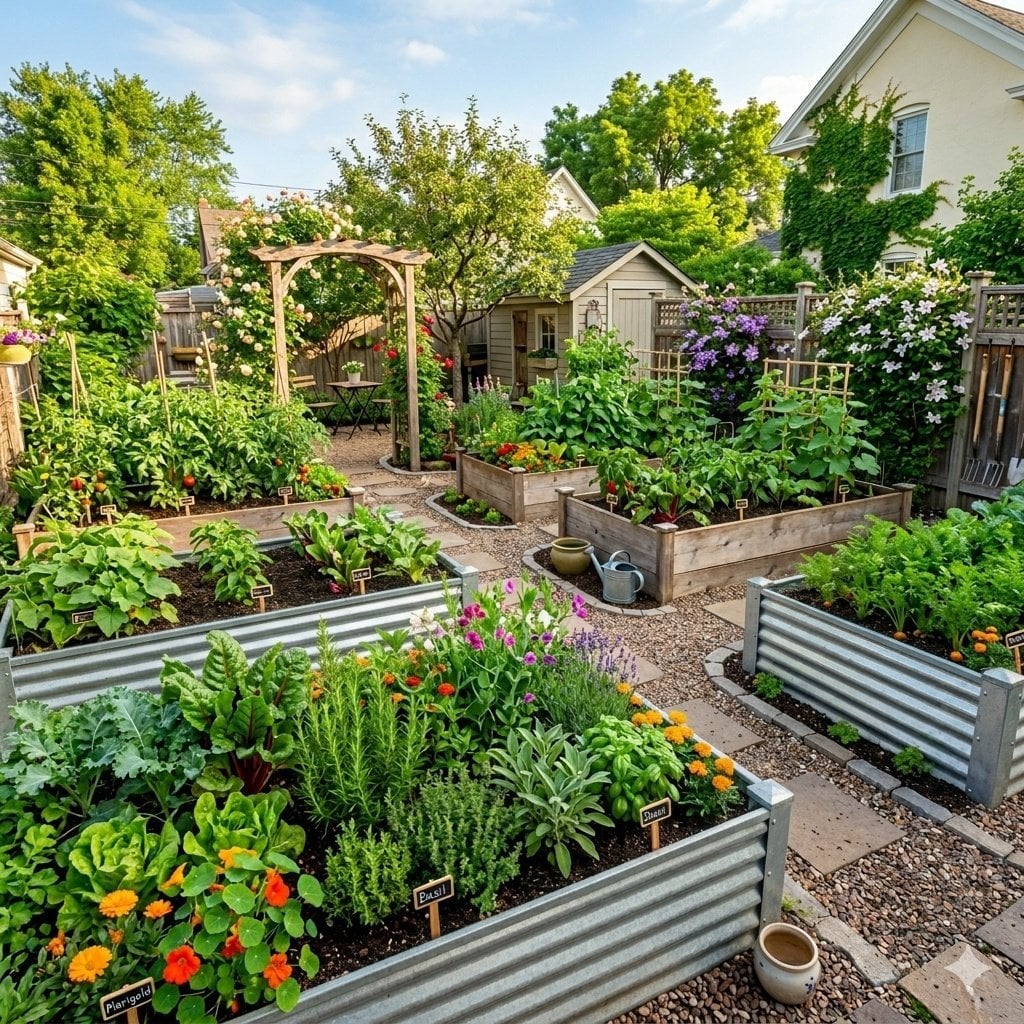
Planning a garden overhaul often starts with the bed itself. Whether you are starting a vegetable patch or redoing the flower border, the structure you choose sets the tone for the whole yard. These 32 garden bed ideas cover materials from corrugated metal to reclaimed wood and brick, so you can match the frame to your planting style.
Each option keeps the raised bed as the main focus, with the surrounding space kept simple and supportive. You will get a clear look at how different shapes, heights, and finishes change the garden’s feel without needing a full redesign.
01 / 33Mixed Material Raised Beds for a Modern Garden Aesthetic
Mixing corrugated metal and wood in the same bed lineup gives a garden an instant modern edge, and this open plan shows how well the two materials play together. The metal panels bring an industrial slickness while the wooden frames soften the look, and the gravel paths between the beds keep the whole scene tidy. Stone accents and colorful flowers break up the gray and green, so the space never feels cold. For a modern garden aesthetic, the trick is to let each material carry its own job: metal for structure, wood for warmth, and gravel to tie the zones together.
02 / 33Crisp White Raised Beds for a Farmhouse Garden Vibe
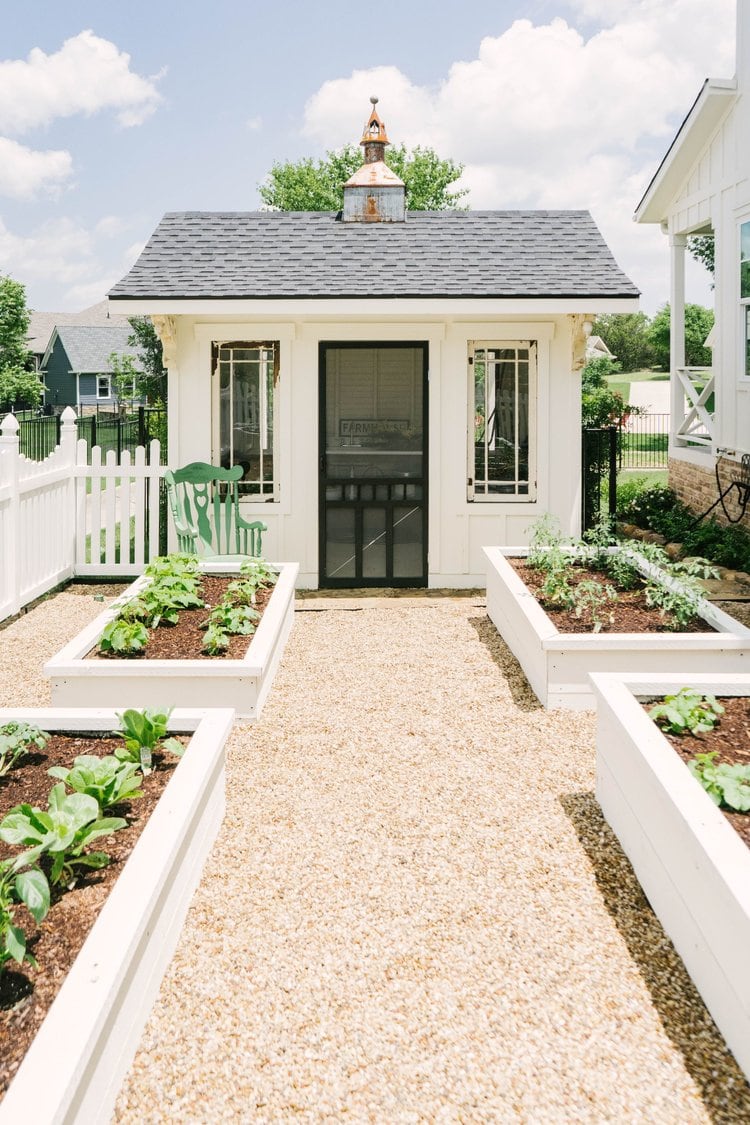
White raised beds against gravel deliver that clean farmhouse look without much fuss. The crisp white paint pops against the green plants and the pale gravel, and the symmetrical arrangement gives the garden a tidy, ordered feel. A small shed and picket fence in the background reinforce the rural character, while the metal hardware on the beds adds a subtle modern touch. The palette stays simple: white, green, and gray, which makes the plants the real stars. To recreate it, look for white raised beds, gravel paths, and let the greenery carry the color.
03 / 33Geometric Wooden Raised Beds with Rattan Accents
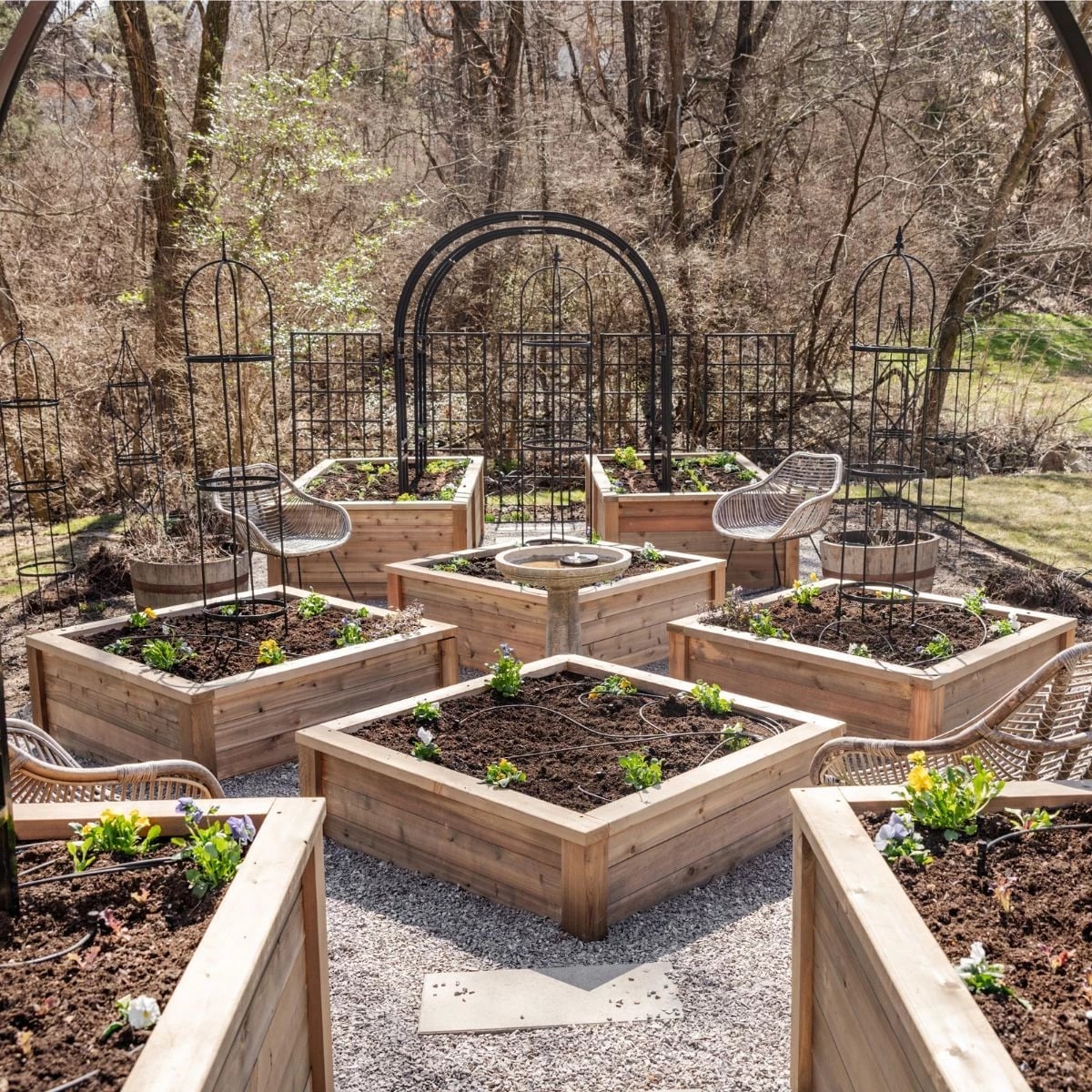
Can a raised bed garden feel like a room you actually want to sit in? This one does. The geometric wooden beds are arranged symmetrically, and the rattan chairs and bird bath turn the space into a small outdoor lounge. The wood tones stay warm and natural, while the gravel and metal details add a cool, modern contrast. The layout is roomy, so each bed gets breathing space and the eye moves easily from the planting to the seating. To carry this style, pair straight-edged beds with rounded accents like the rattan chairs; the contrast keeps the geometry from feeling too rigid. The gray and green palette keeps the whole scene calm, letting the wood grain do the talking.
04 / 33Industrial Corrugated Metal Raised Beds with Wooden Frames
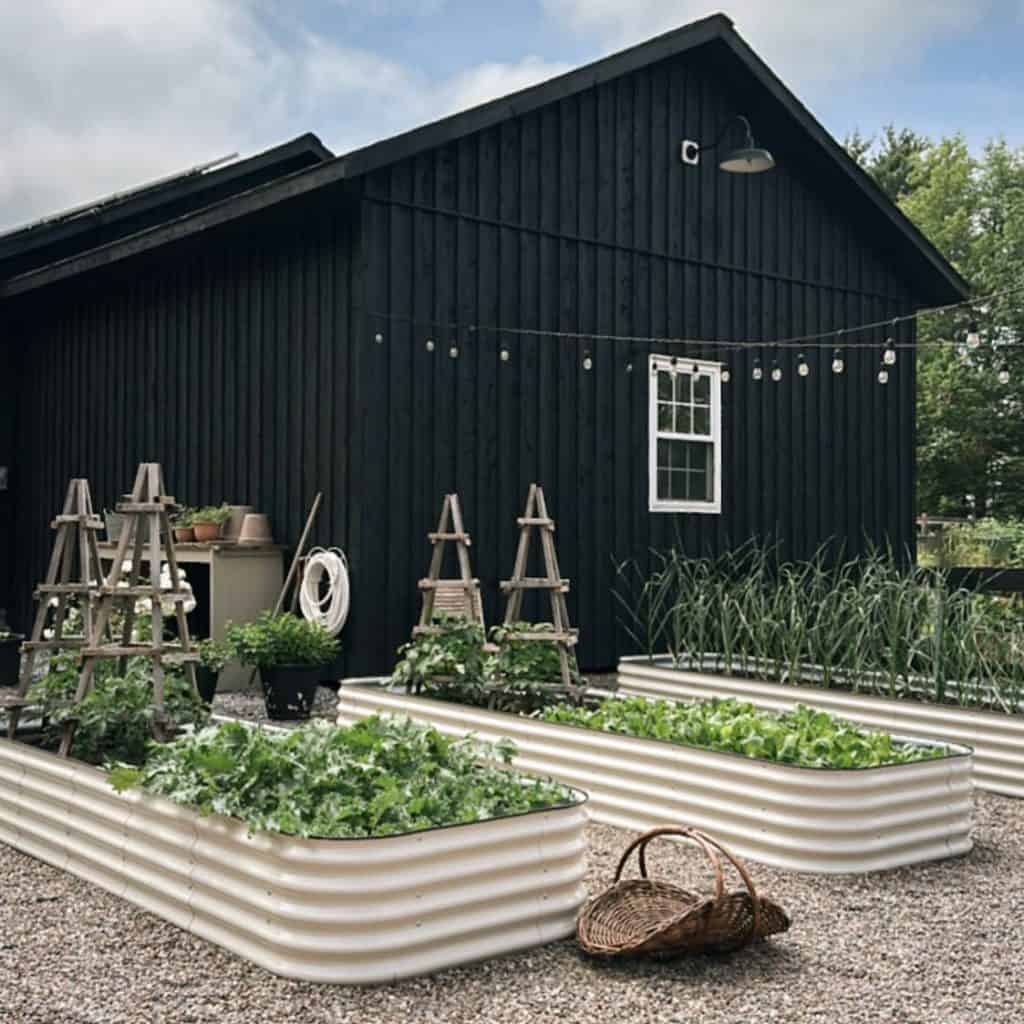
Corrugated metal raised beds set in a gravel area give a garden a sturdy, workshop feel. The black and silver metal catches the overcast light without glare, and the wooden frames on top soften the industrial edge. Trellises stand ready for climbing plants, which will fill the vertical space as they grow. The gravel base keeps mud down and makes the beds feel like permanent fixtures. For an industrial look, keep the metal dark and the wood natural, and let the plants provide the only bright color.
05 / 33Elevated Wooden Planter for a Modern Farmhouse Garden
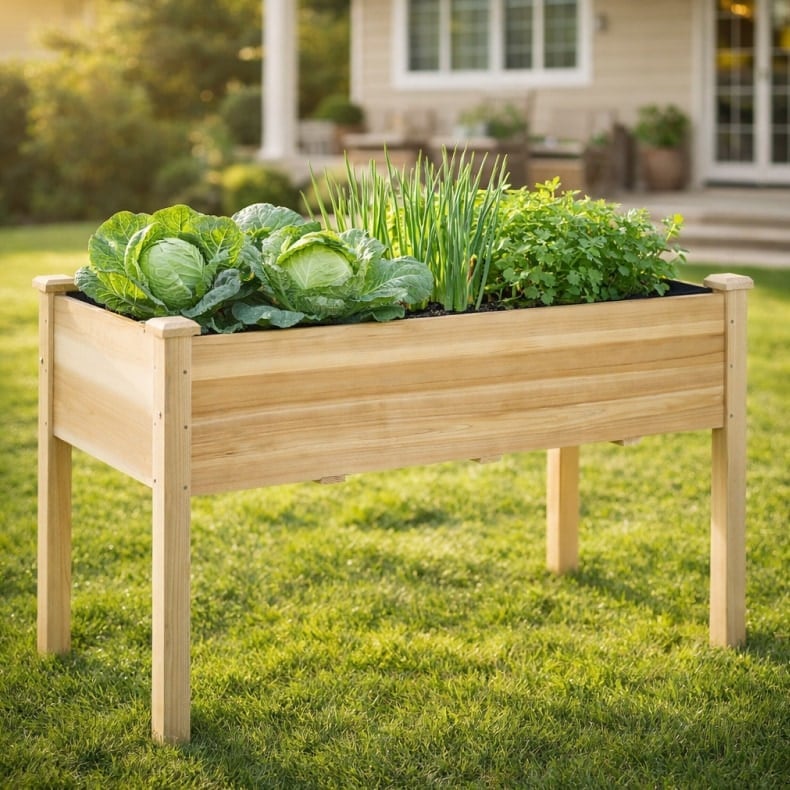
Build a raised planter high enough to tend plants without bending over. This single wooden planter sits in the lawn, its natural wood tone blending with the green grass. The clean, straight lines give it a modern farmhouse feel, and the raised height makes planting and harvesting easier on the back. If you are renting or want to avoid digging, a raised planter like this is a renter-safe swap: it sits on top of the lawn and can move with you. Keep the finish simple and let the plants fill it out.
06 / 33Substantial Wooden Raised Beds for Abundant Vegetable Harvests
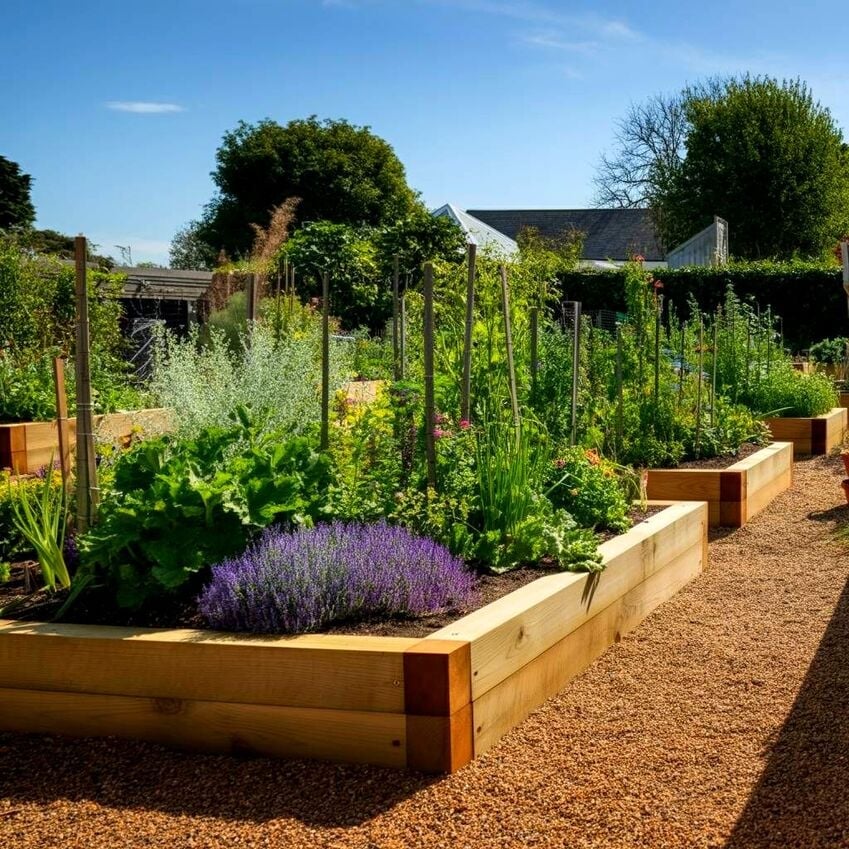
For anyone who has tried to grow vegetables in a few skinny pots, the payoff of a proper raised bed becomes clear the first time you harvest a real crop. These large wooden beds sit in neat rows with a gravel path between them, so you can reach every plant without stepping on the soil. The planting is dense, with greens and the purple and orange of ripening produce filling the frames to the edges.
The layout does the work here. Wide beds give roots room to spread, which means you can plant more per square foot and still keep the garden feeling orderly. Keep the path at least two feet wide so a wheelbarrow fits, and set the beds so you can reach the middle from either side. That simple geometry turns a vegetable garden into a place that is pleasant to move through, not just productive.
07 / 33Tiered Wooden Raised Beds for a Cottage Garden Charm
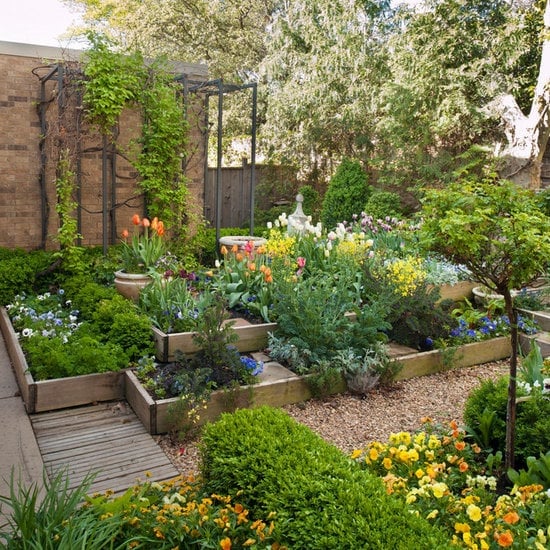
These tiered wooden raised beds stack planting levels the way a cottage garden stacks color, with flowers in yellow, pink, orange, and blue spilling over the edges. A bird bath and a trellis break up the green, and the stone and gravel underfoot keep the whole scene from feeling crowded. The charm comes from the mix, not from matching pieces. For a renter, tiered beds are a smart swap because they give you vertical interest without building anything permanent, and you can move them to a new yard if you change houses.
08 / 33Harmonious Arrangement of Wooden Raised Beds in an Expansive Garden
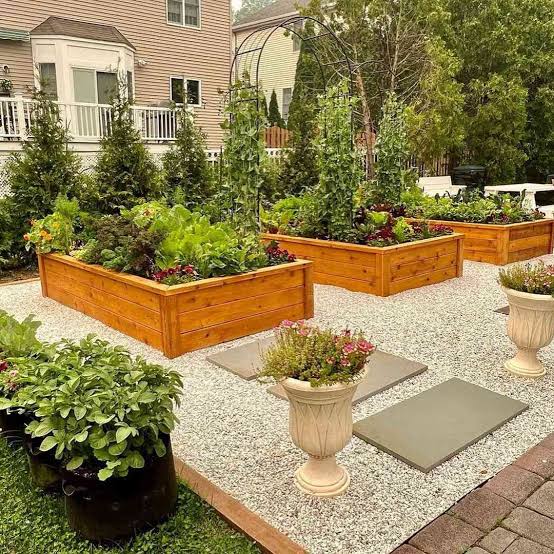
This is what a garden looks like when the beds are placed with intent rather than dropped wherever there was space. Multiple wooden raised beds line up along gravel pathways, with urn planters and stepping stones filling the gaps, so the whole yard reads as one connected design. The warm wood tones against gray stone and cream ceramic keep the palette calm even with a lot of green. For a large lot, treat the beds as a grid you can walk through, and use the spaces between them for decorative planters or a bench. That arrangement makes the garden feel roomy instead of scattered.
09 / 33Stone Raised Beds Flanking a Gravel Path for Formal Gardens
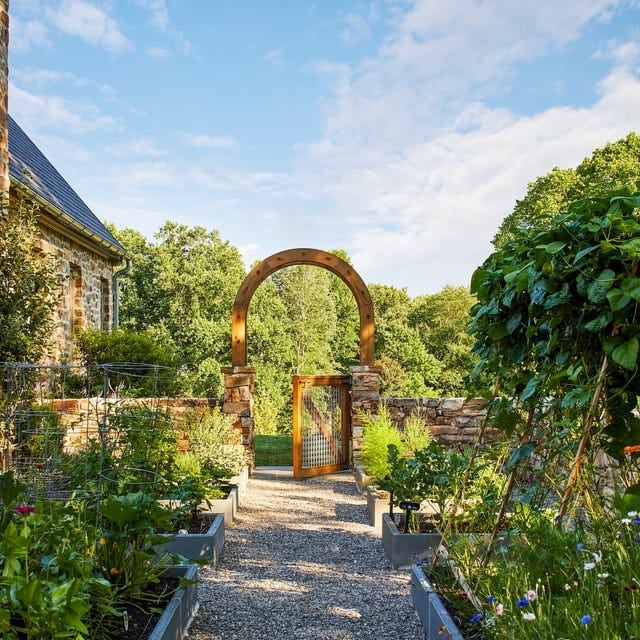
What makes a stone bed worth the extra effort compared to a wooden one? The answer is longevity and a look that only gets better with age. These stone raised beds sit on either side of a gravel path, with a wooden archway drawing the eye down the garden. The gray stone holds its color in bright sun, and the gravel keeps weeds down while letting water drain. Stone does not rot or warp, so it suits a garden you plan to keep for decades. The formal symmetry, beds matching on both sides, gives the space a calm order that wood rarely achieves.
10 / 33Brick Raised Beds with Pergola and Fireplace Accents
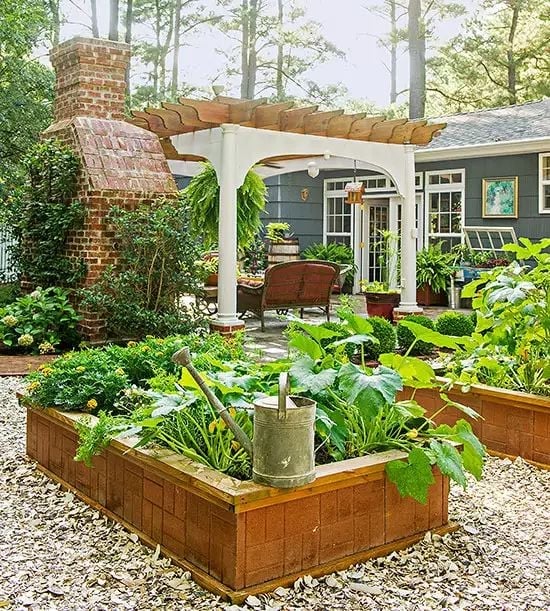
Brick raised beds bring a permanence that instantly ages a garden, and here they sit in the foreground with a pergola and a fireplace beyond, so the eye moves from planting to patio. The brick red repeats in the hardscape, while the green plants soften every hard edge. The scale works because the beds are substantial enough to hold their own next to the pergola, not dwarfed by it. If you are planning a garden with outdoor living areas, let the beds match the masonry of the patio, and keep the planting lush so the structure never feels bare.
11 / 33Dark Wood Raised Bed with Lush, Colorful Planting
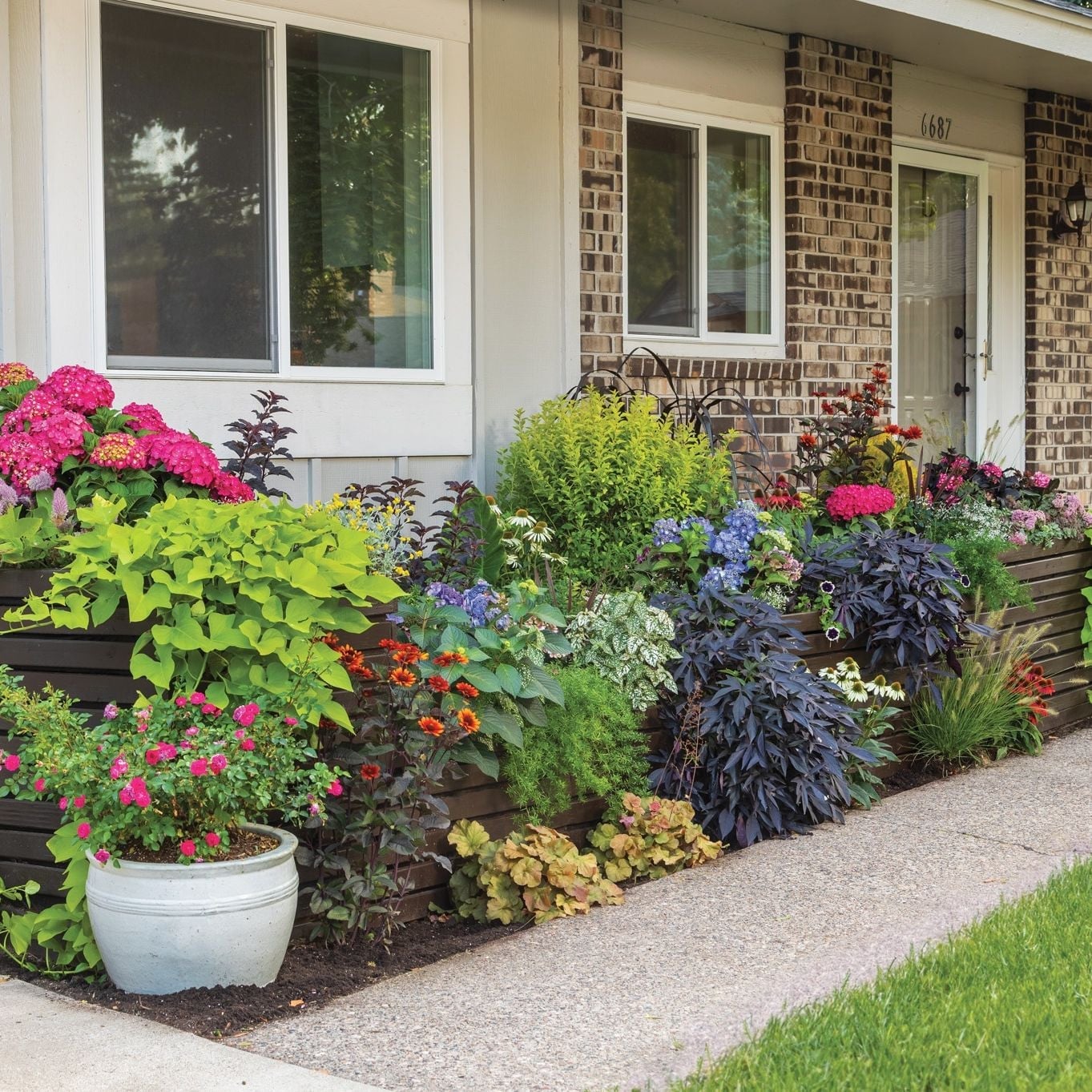
A dark wood raised bed set against a house facade gives the planting a clean frame to work with. The deep brown of the wood anchors the vivid pink and blue flowers, while potted plants in concrete and ceramic add height and texture around the base. The compact layout keeps the bed from feeling like an afterthought along the wall. Choose a dark stain for your bed and let the greenery do the talking rather than adding extra decorative pieces.
12 / 33Cottage Garden Charm with Wooden Beds and Decorative Accents
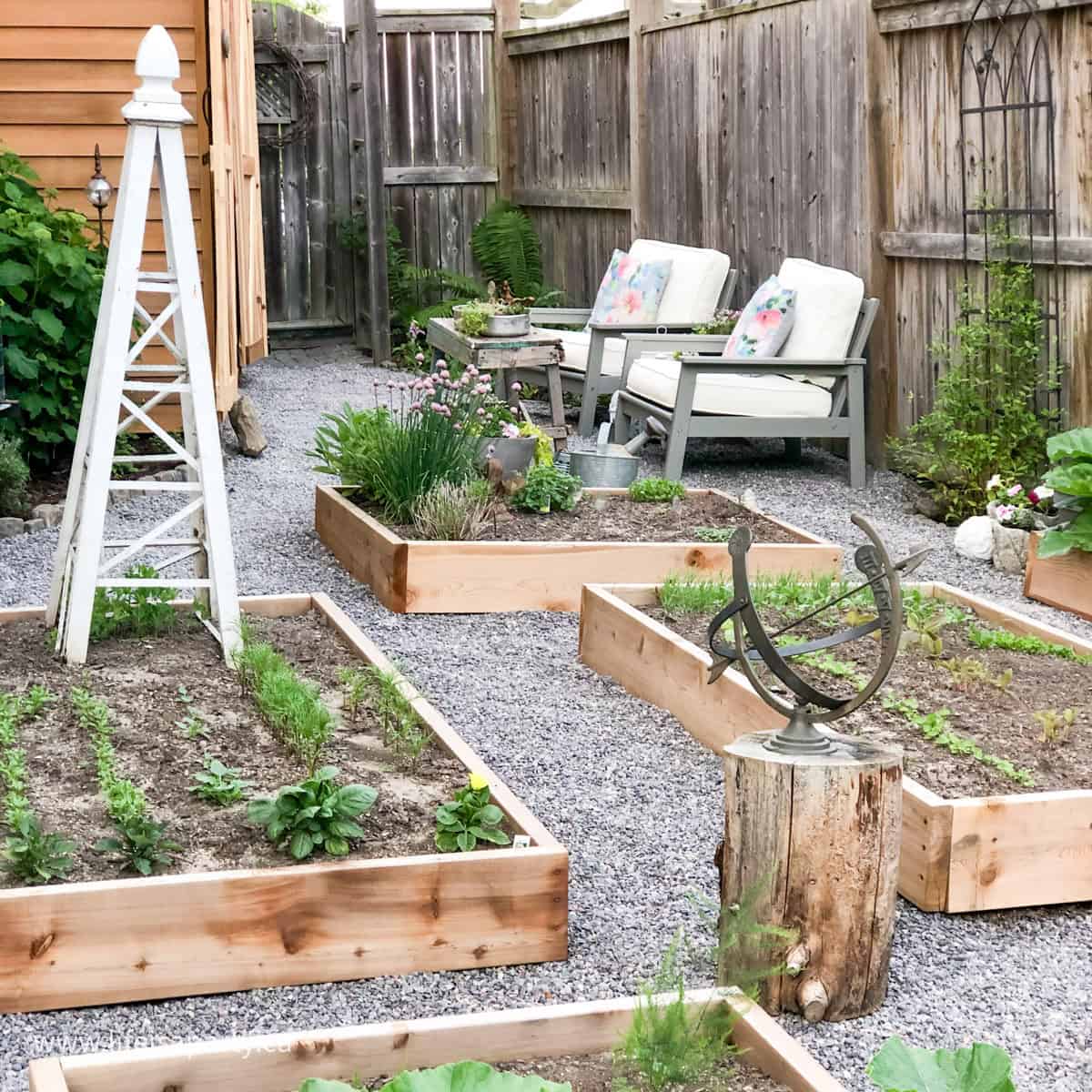
A cottage garden setup like this one avoids the uniform rows of a vegetable patch. Instead, multiple wooden raised beds sit within gravel paths, with a metal obelisk and a stone sundial on a log adding visual stops. The palette is restrained: wood, green, and gray, with the stone and metal accents providing contrast. This approach works when you treat the beds as part of a larger landscape, not isolated planting boxes. The decorative pieces break up the greenery and give the eye a place to rest between beds.
13 / 33Innovative Tiered Wooden Raised Beds for Vegetable Gardens
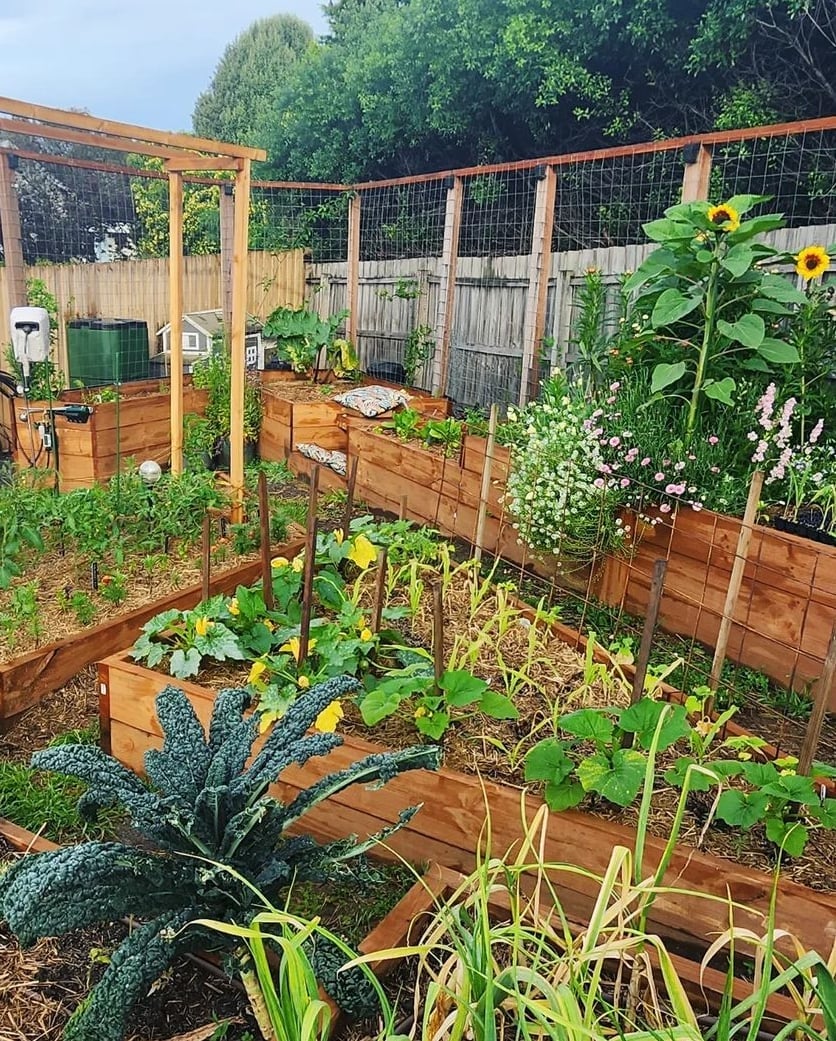
Tiered wooden raised beds make use of vertical space without the need for tall trellises. The staggered heights in this layout allow each level to catch the overcast light, and the metal supports between the wood frames add stability where the soil weight shifts. Vegetables climb the trellises at the back while lower beds stay accessible for tending.
14 / 33Rustic Modern Raised Beds with Wood and Corrugated Metal
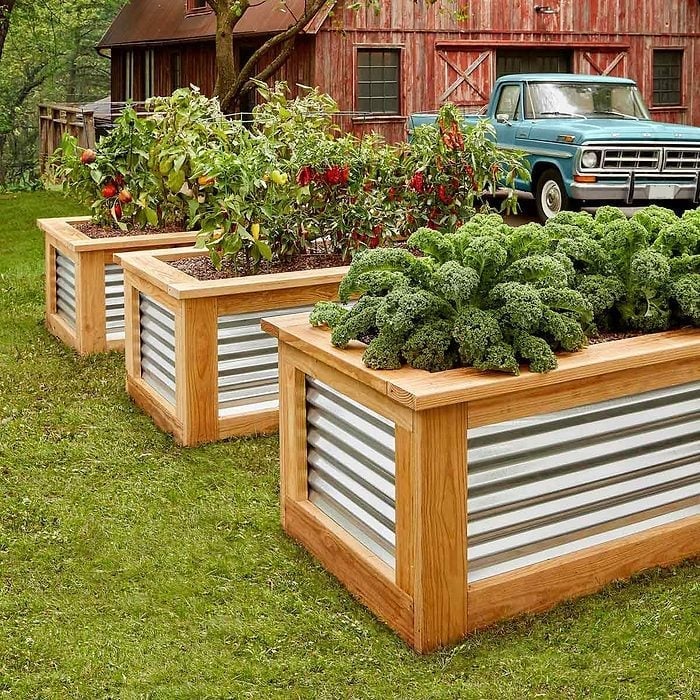
Wood and corrugated metal is a straightforward material pairing that works for a rustic modern garden. The wood frames soften the industrial silver of the metal, while the sunny daylight makes the red and green plantings stand out against the neutral structure. A row of these beds creates a clean line that defines the garden space without overwhelming it. The combination holds up to weather well, as the metal resists rot and the wood can be treated or replaced individually.
15 / 33Natural Raised Bed with a Wicker Border Detail
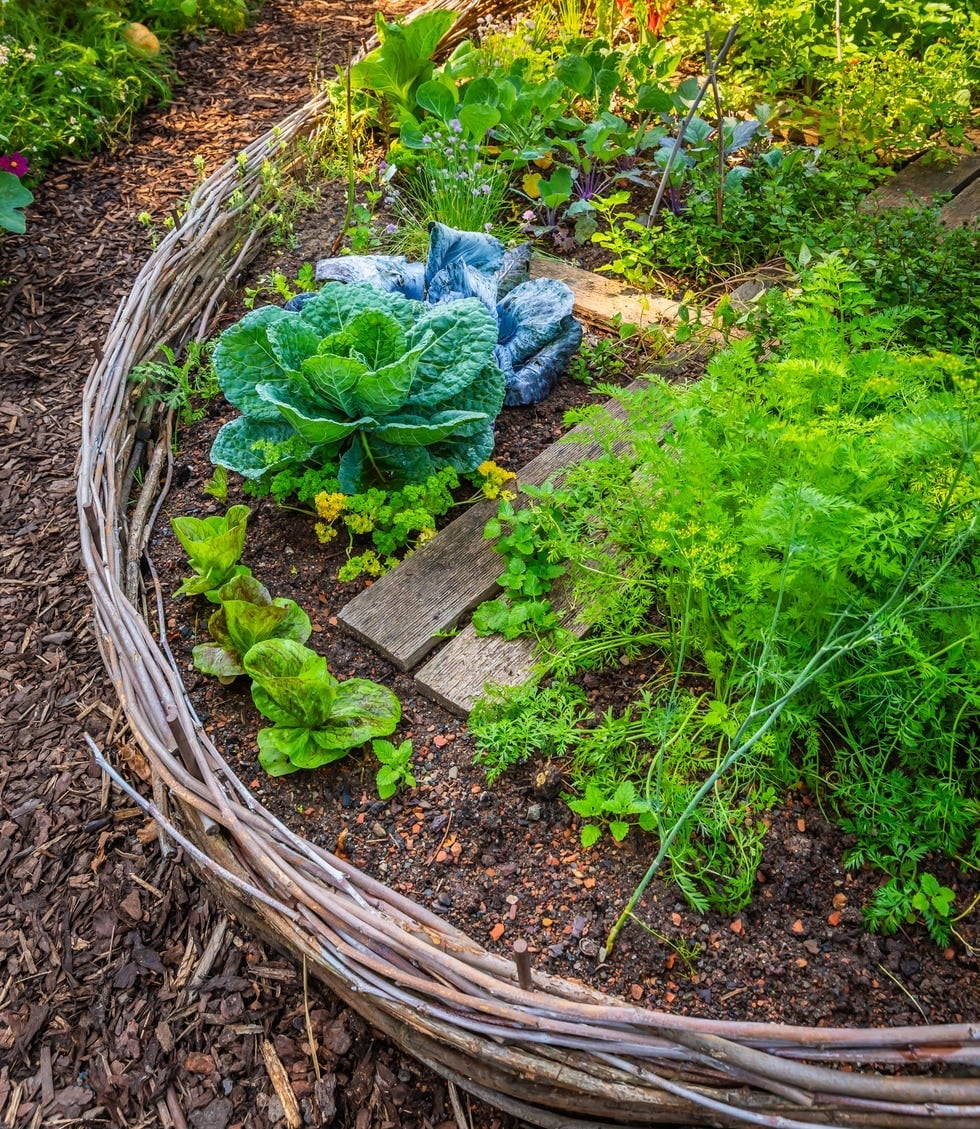
A wicker border around a garden bed adds a natural, handcrafted edge that blends with the soil and mulch. The curved shape softens the bed’s outline, and the dappled light filtering through the leaves gives the wicker a warm brown glow. This detail works best for compact beds where the border is visible from the path. The wicker keeps soil in place and marks the planting zone without the permanence of stone or metal.
16 / 33Neatly Constructed Wooden Raised Bed in a Farmhouse Garden
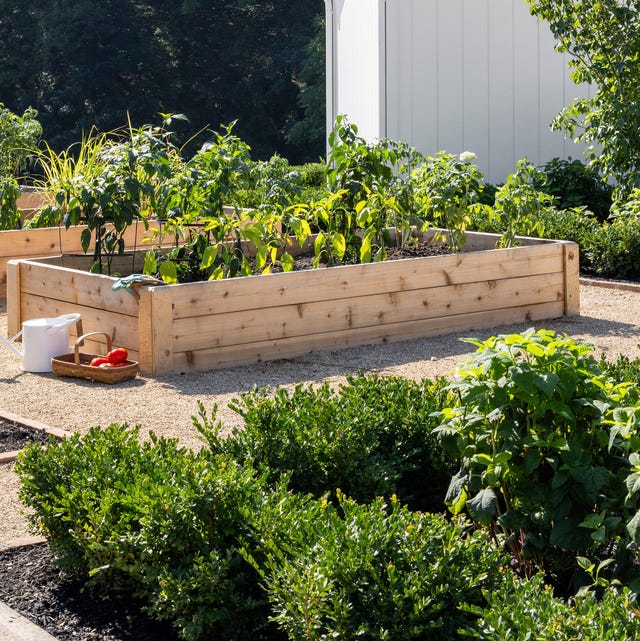
A neatly constructed wooden raised bed stands as the focus of a farmhouse garden, with a gravel path running alongside it. The natural wood tone keeps the look grounded and simple, letting the green of the plants take center stage. A watering can and a basket nearby suggest the bed is part of a working garden, not just a display. The style here is about clean lines and function, with the gravel acting as a low-maintenance floor that defines the bed without competing with it.
17 / 33Stone Paver Pathway Between Wooden Raised Garden Beds
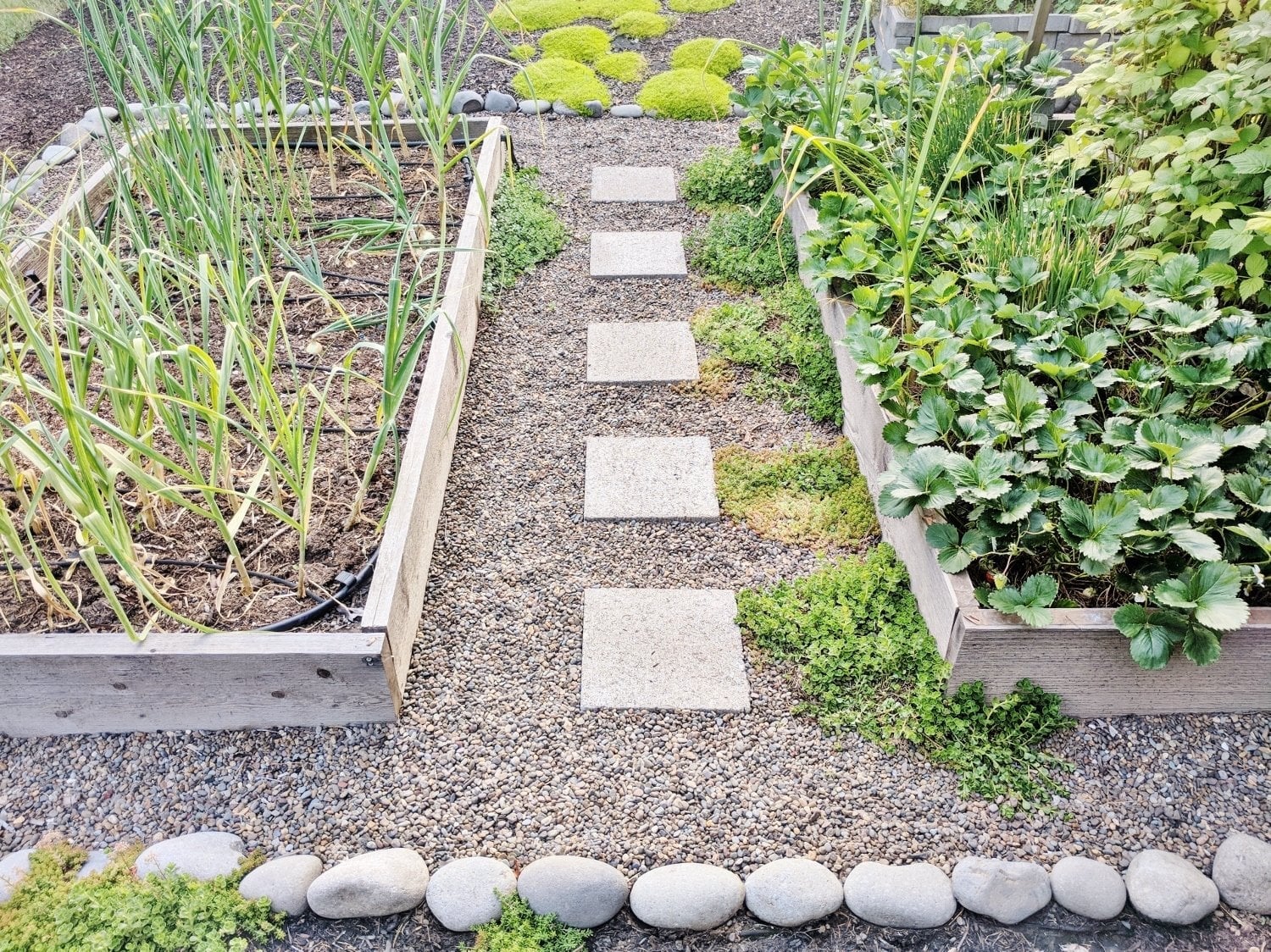
A garden with multiple raised beds benefits from a clear path connecting them. Here, stone pavers form a winding route between wooden beds, creating a natural flow through the space. The stepping stones sit on gravel, which drains well and keeps mud from building up between the beds. For a renter, this setup is a smart swap: instead of pouring concrete, you can lay pavers directly on the ground. The path makes each bed easy to reach without stepping on the soil, keeping the garden organized.
18 / 33Neatly Arranged Wooden Raised Beds in a Farmhouse Setting
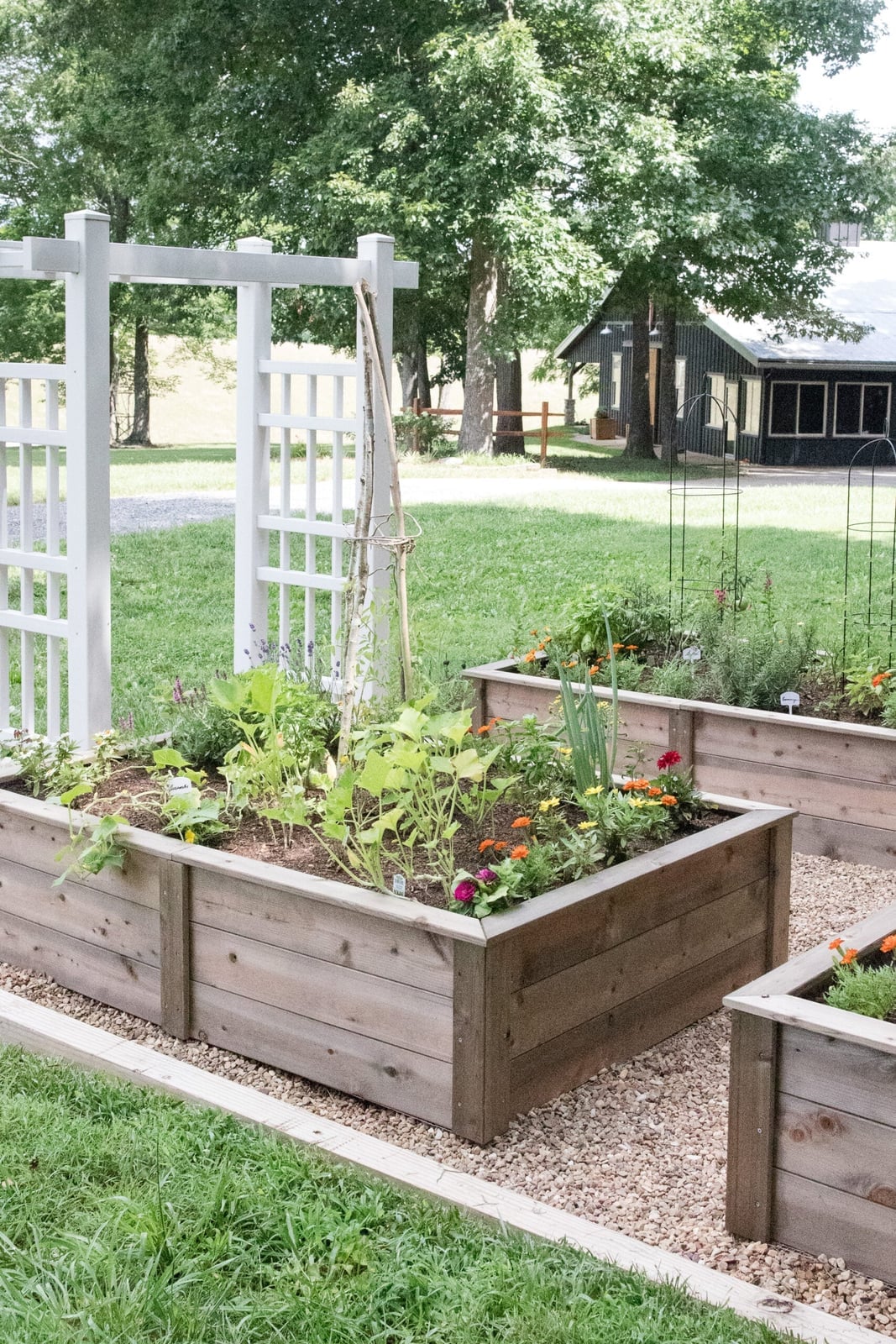
A close alternative to a single large bed is a set of neatly arranged wooden raised beds, each separated by gravel paths. The layout here uses three rectangular beds in a row, with a white trellis behind them. This arrangement makes the garden feel larger than a single big bed would, because the paths create distinct zones. The gravel between the beds serves as a clean border, and the trellis adds vertical interest without taking up ground space. For a farmhouse garden, this setup works well because it keeps the look orderly while still allowing room for a variety of plants. Consistent spacing between beds ties the whole arrangement together.
19 / 33Curved Red Brick Edging for Traditional Garden Beds
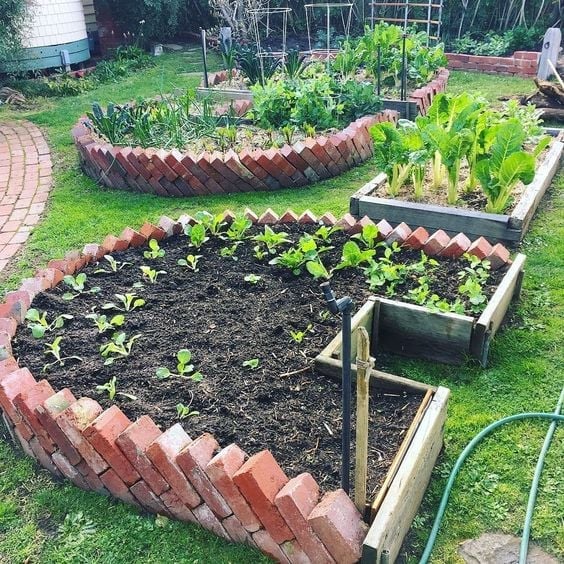
The curved red brick edging here wraps around wooden raised beds, softening the straight lines of the wood. The bricks are laid in a gentle curve, following the shape of the planting area rather than forcing it into a rectangle. This detail adds a traditional feel that suits a cottage or formal garden. The bricks themselves are a durable material that holds up well against weather and foot traffic. The contrast between the red brick, the brown wood, and the green plants gives the garden a layered look that feels settled and established.
20 / 33Wooden Raised Beds Complementing a Greenhouse and Chicken Coop
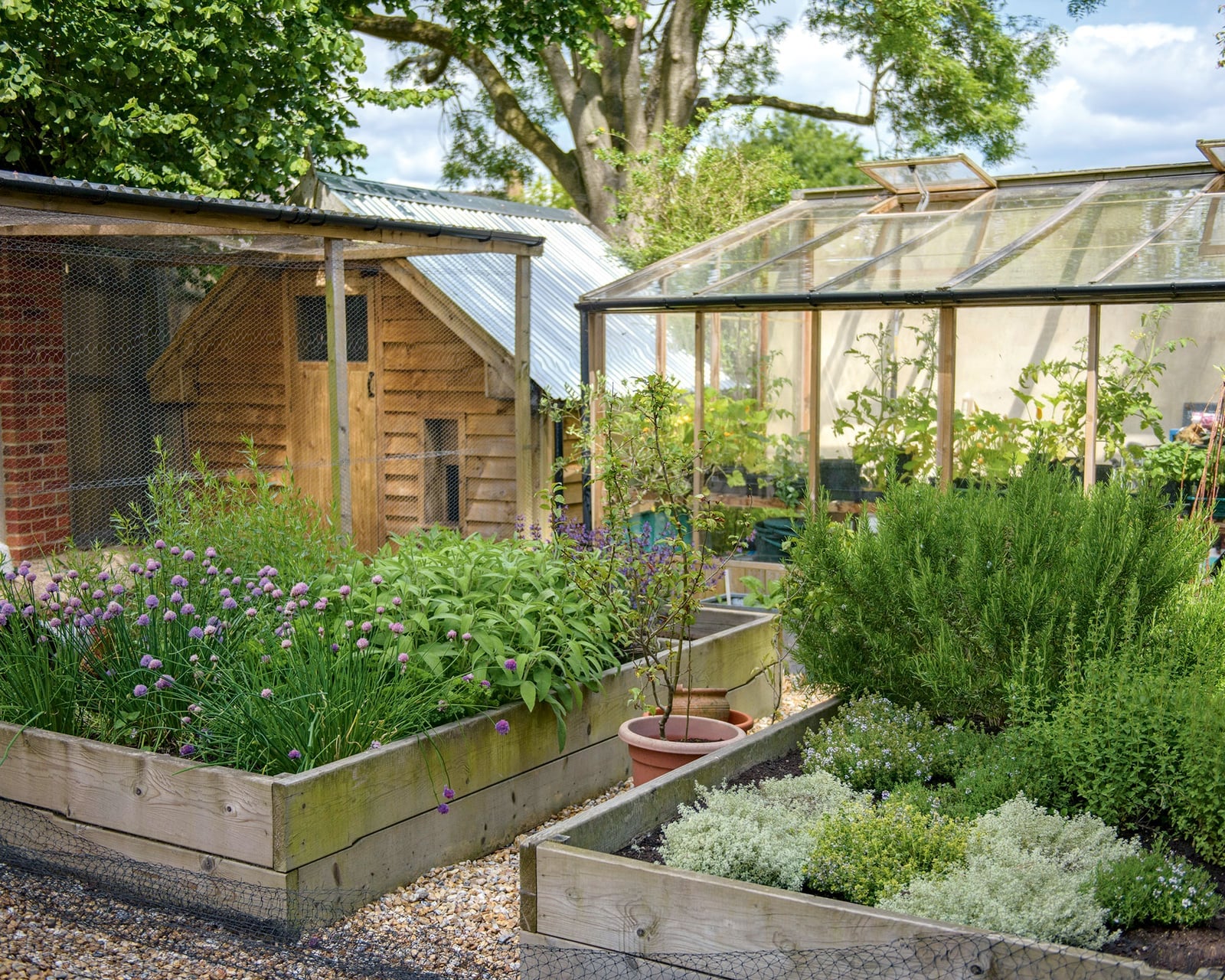
This garden uses wooden raised beds as part of a larger setup that includes a greenhouse and a chicken coop. The beds sit on gravel, with the greenhouse behind them and the coop off to the side. The layout makes sense for a working garden: the raised beds handle the vegetables, the greenhouse extends the growing season, and the coop provides eggs and compost. The scale of each element is matched, so no single piece overwhelms the others. The wood tones tie the structures together, and the gravel keeps the whole area clean and accessible. For a cottage garden, this arrangement is a practical way to make the most of a roomy yard.
21 / 33Vibrant Flower Bed with Stone Pathway and Lanterns
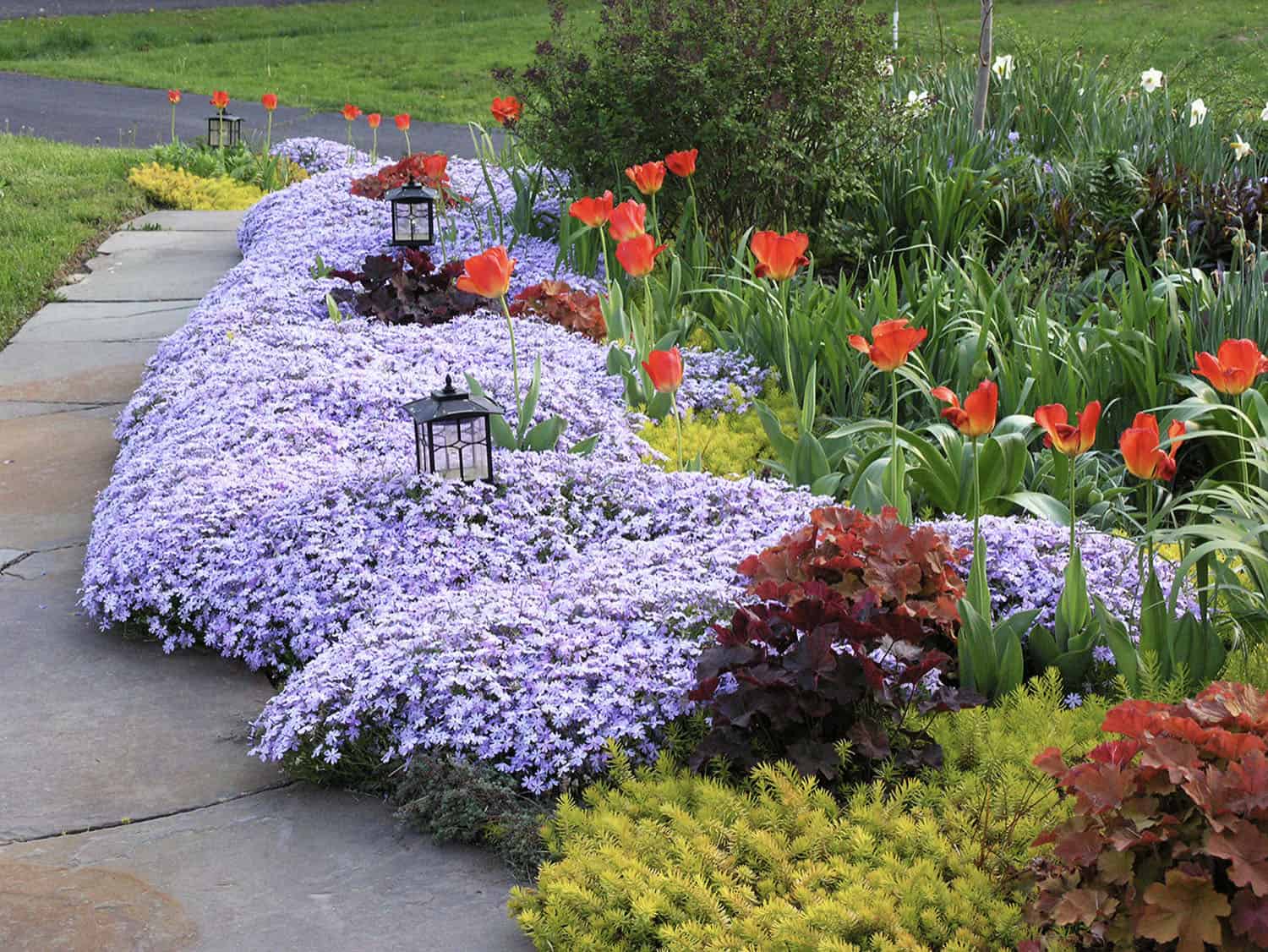
A curved bed softens the line between a stone pathway and the garden, making the path feel like part of the planting. The palette leans into purple ground cover, orange tulips, and red heuchera, with green foliage as the anchor. Lanterns set along the curve add warm points of light at eye level. For a layout that guides the eye, keep the path width consistent so the bed’s arc stays visible. The dense ground cover helps suppress weeds, which cuts down on maintenance along the edge.
22 / 33Stone Retaining Wall Flower Bed with Roses and Lavender
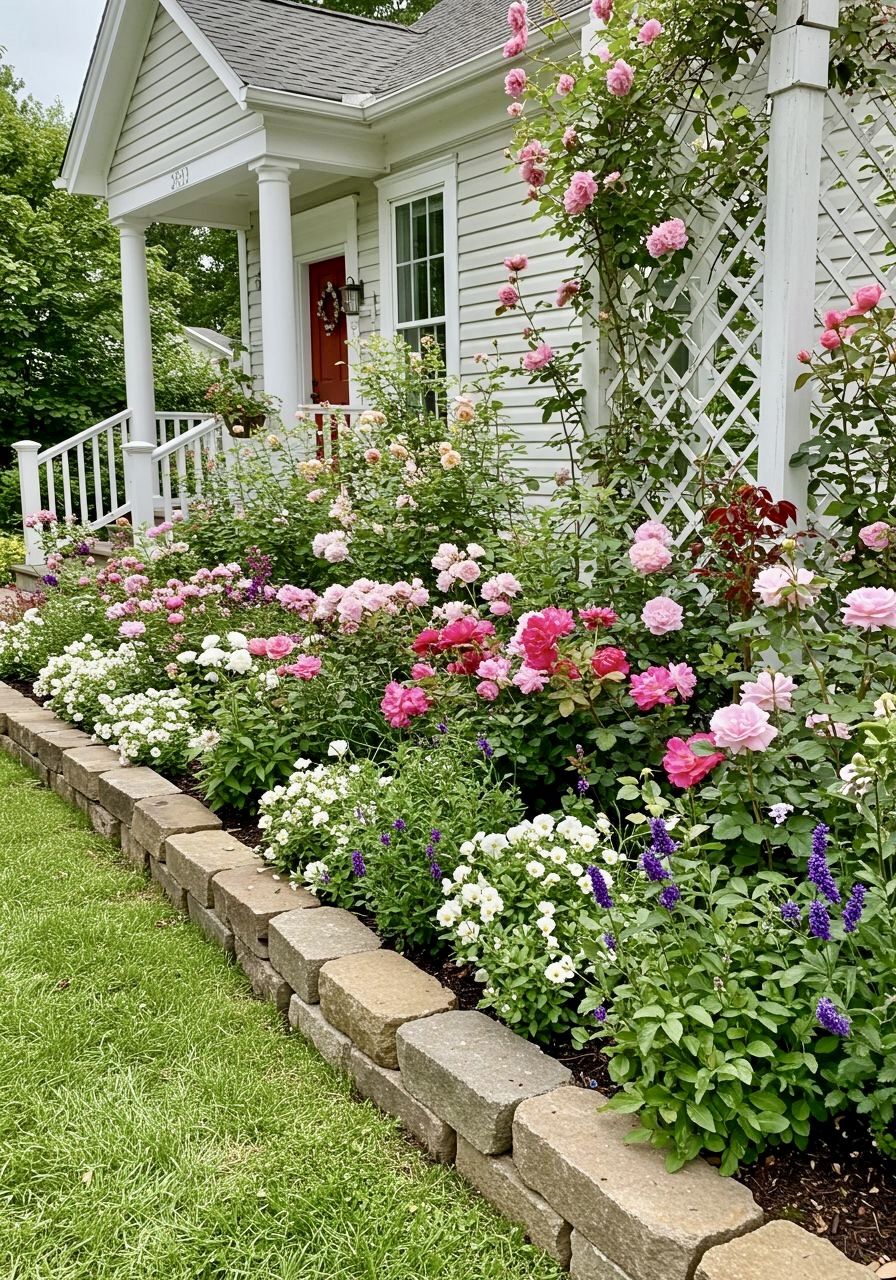
A stone retaining wall does double duty: it holds back soil on a slope and creates a built-in flower bed at its base. The wall’s neutral gray lets the pink roses and purple lavender stand out without competing for attention. The dense planting of roses fills the space from the wall outward, so the bed looks full even in a compact area. For a similar effect, choose a wall height that matches the root depth of the perennials you plan to grow.
23 / 33Rustic Reclaimed Wood Raised Bed with Mixed Plantings
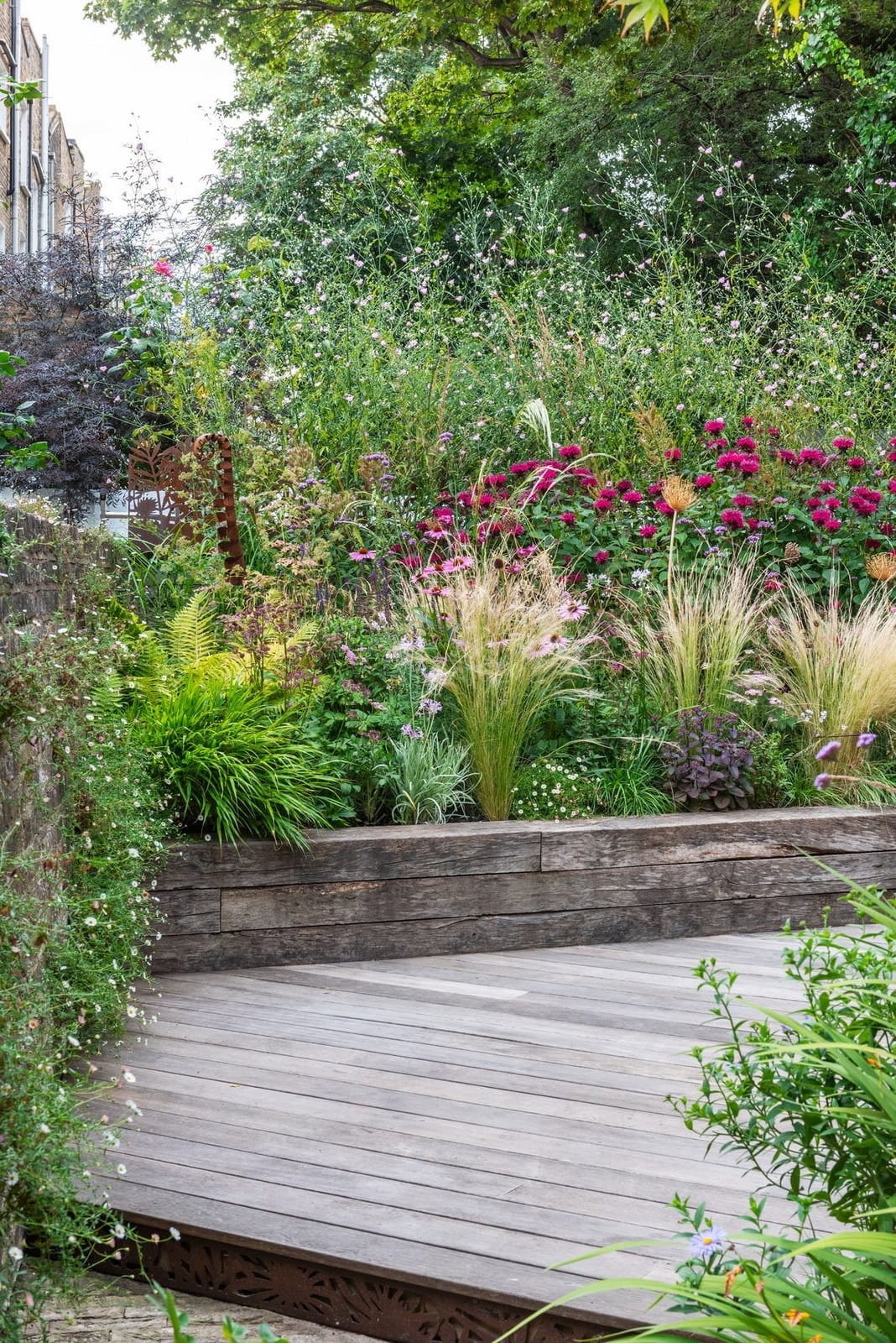
Reclaimed wood brings texture that new lumber cannot match, with weathered grain and subtle color variation that make the bed feel settled from day one. A long, tiered planter keeps different plant heights visible without blocking each other, which matters when you mix flowers and foliage. The rustic surface pairs naturally with stone pathways or gravel mulch for a cohesive look.
24 / 33Clean-Lined Light Wood Raised Beds with Lattice Screens
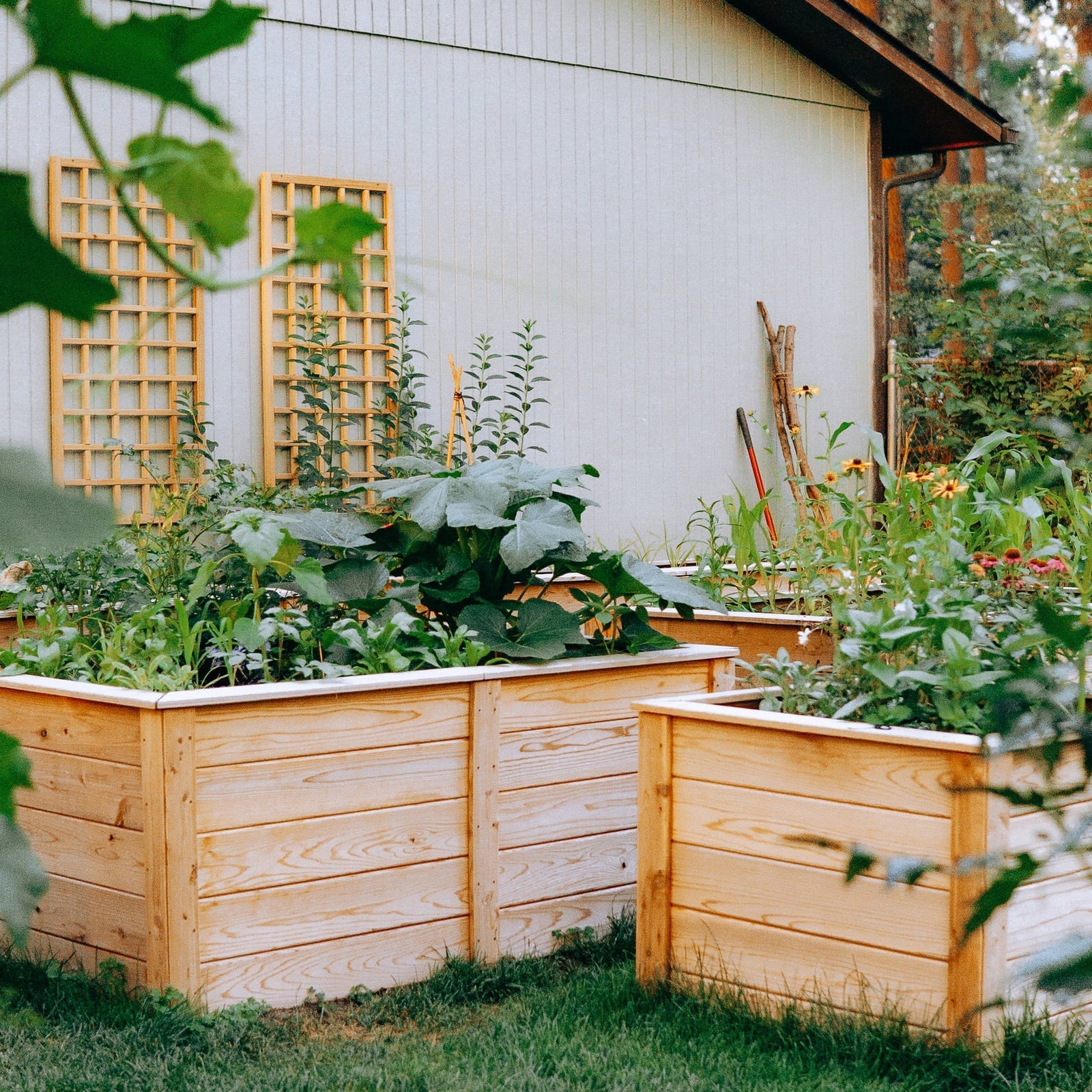
Where dark or stained wood can feel heavy in a garden, light wood raised beds keep the space open and airy. The clean lines and lattice screens add structure without closing the garden in, which suits a modern setting where the plants should carry the color. Multiple beds in a row create a rhythm that guides the eye across the space. For renters, lattice panels can be freestanding rather than attached, so they leave no marks when removed.
25 / 33Unique Multi-Tiered Raised Bed from Stacked Wooden Pallets
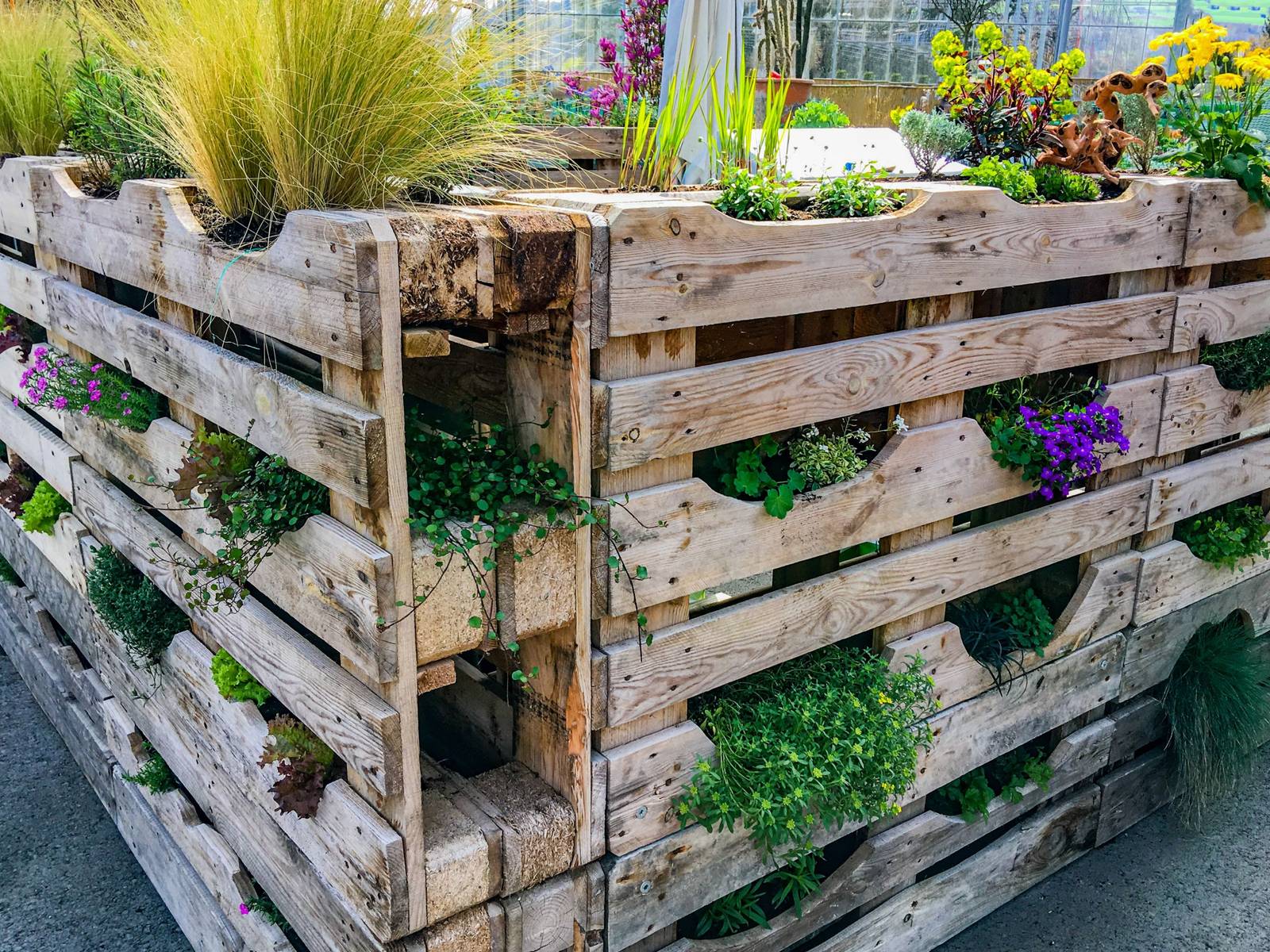
Stacked pallets create a multi-tiered bed that packs more planting area into a compact footprint, with each level catching its share of daylight. The open slats of the pallets allow air to circulate around the soil, which can help with drainage. For a stable structure, stack the pallets so the weight rests on the frames rather than the slats alone. The natural wood palette keeps the bed from competing with the plants, letting purple and green foliage take center stage.
26 / 33Wooden Raised Bed with Lush Plants Under Evening String Lights
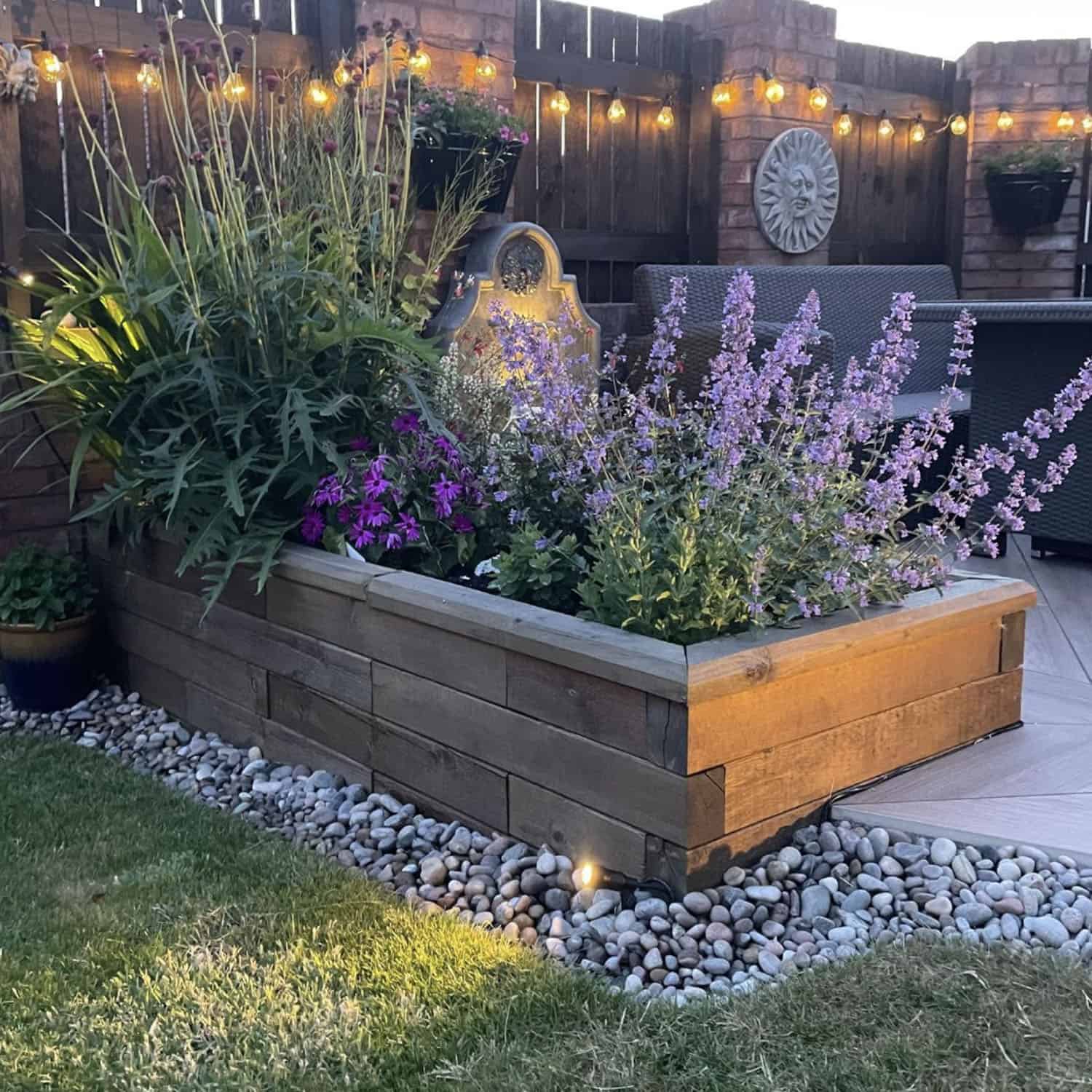
A wooden raised bed really comes into its own as the sun goes down. The warm evening light highlights the green and purple foliage, while string lights overhead add a soft glow that makes the compact garden feel like a room. Gravel and brick keep the ground clean, and a nearby seat makes it a spot you want to linger in. Outdoor lighting defines the zone and extends how long you can use it, just like a floor lamp inside. A simple string light setup can turn a plain raised bed into a destination without changing a single plant.
27 / 33Vibrant Cottage Garden Raised Flower Bed Display
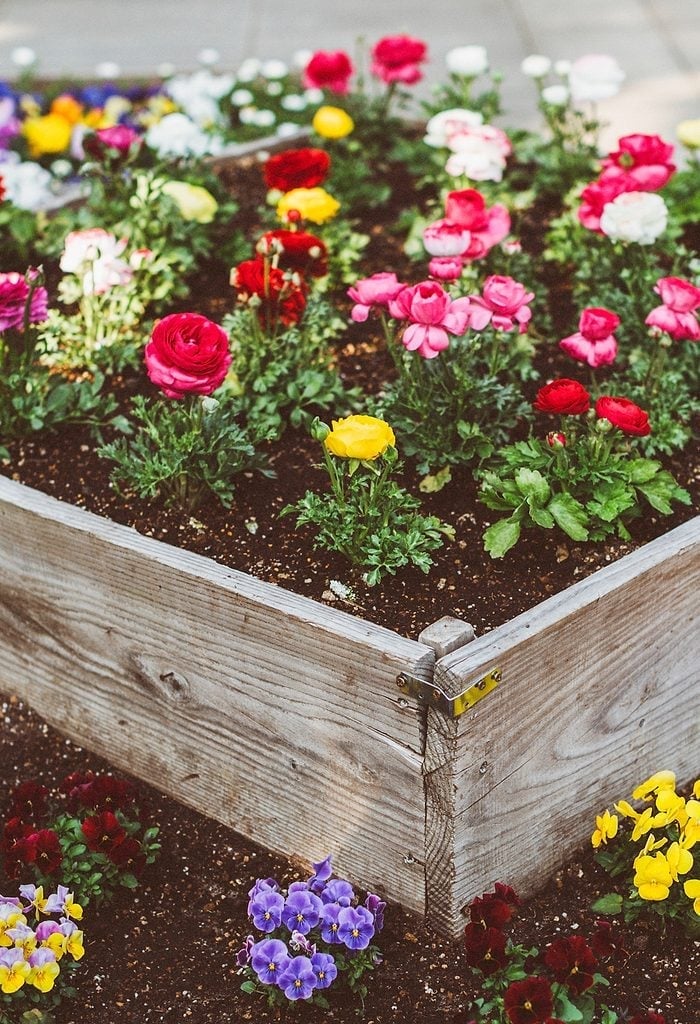
A cottage garden raised bed depends on a dense mix of pink, red, yellow, white, and purple flowers packed in so tightly that the soil barely shows. The wood frame fades into the background against that much color.
The bright daylight makes every shade pop, which is the whole point. A cottage garden look depends on flowers that bloom at different times, so the color ratio shifts through the season. For renters, a raised bed of this size can sit on a patio or balcony without touching the ground, and the wood frame can be disassembled and moved. Just check your USDA zone before picking the plants.
28 / 33Functional Raised Garden Bed with Integrated Benches
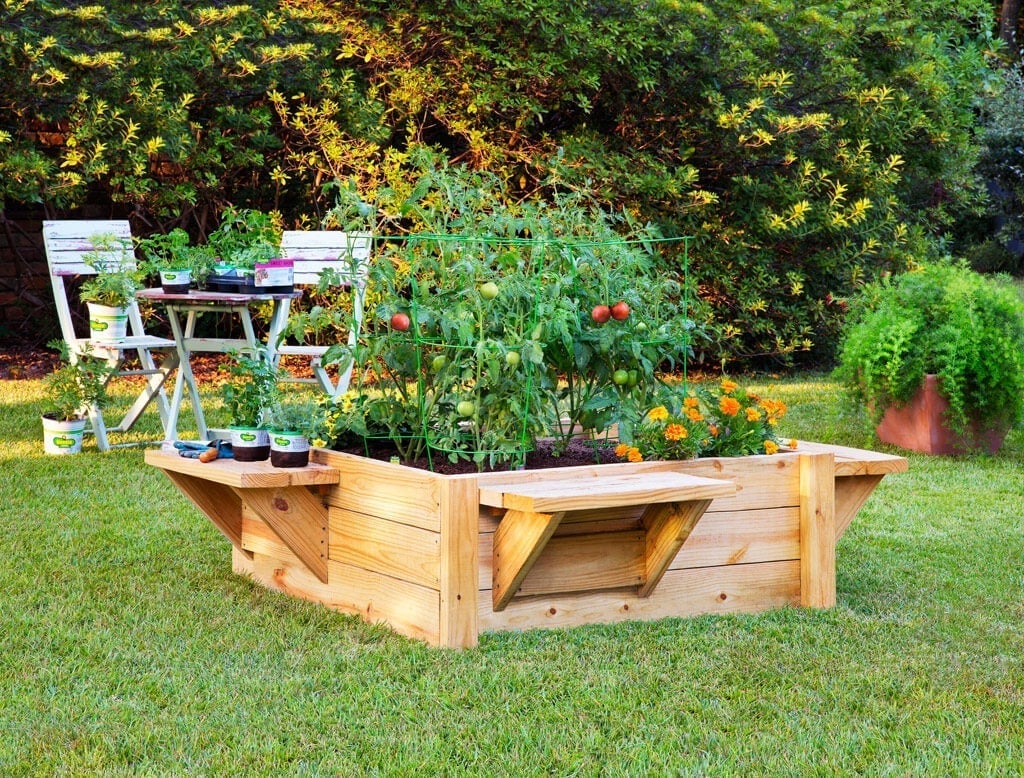
A wooden raised bed with benches built into the sides turns a single structure into both a planting zone and a place to sit. Here, the natural wood frame holds a tomato plant and flowers in warm orange and red, while the benches make it easy to weed or just rest for a moment. This kind of layout works well in a compact garden where every square foot has to earn its keep. The integrated seating saves the space that separate chairs would take, and the metal accents on the bed keep the look from drifting into purely rustic.
29 / 33Abundant Strawberry Plants in Lush Raised Garden Beds
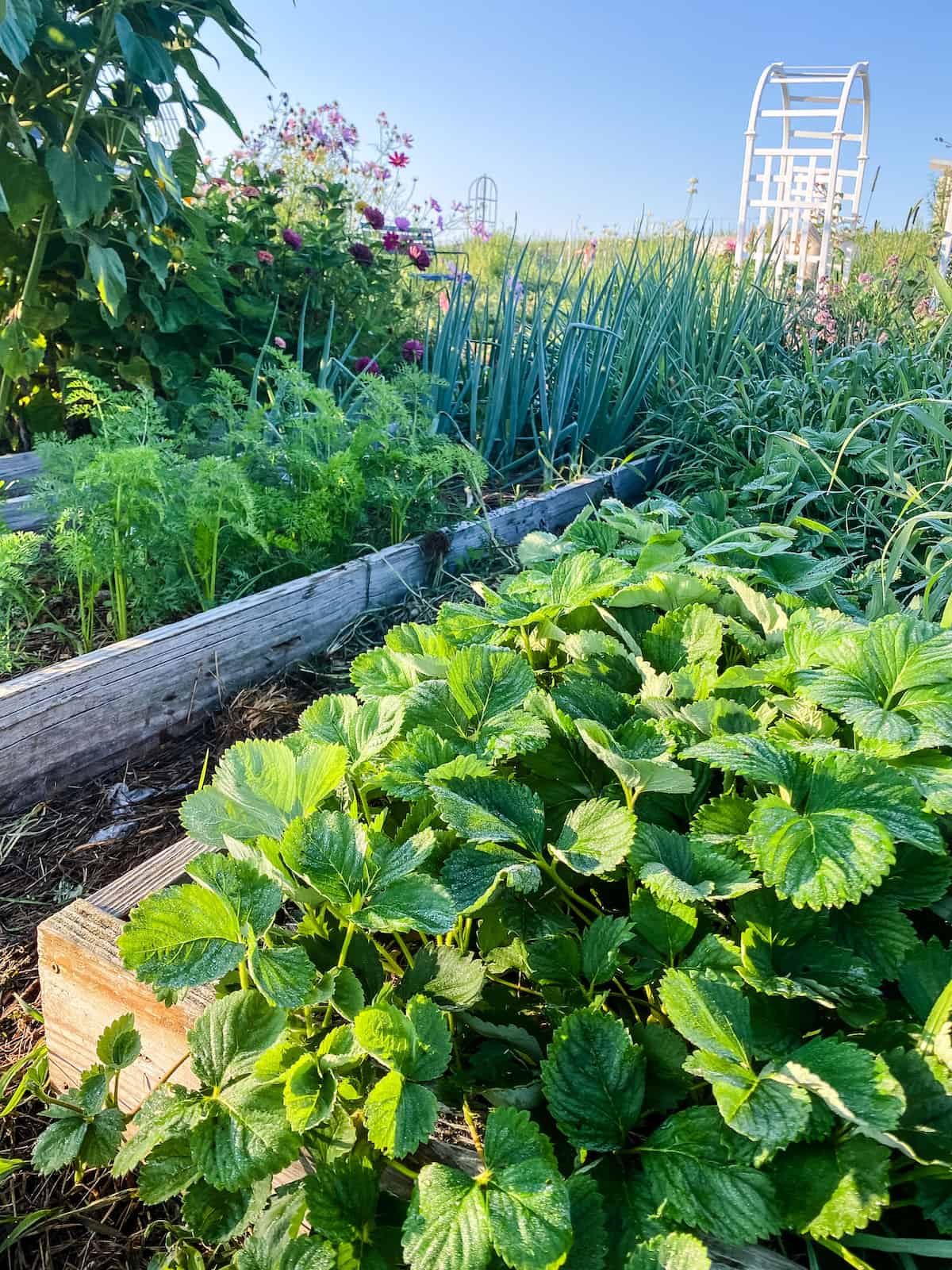
The strawberry plants here are the star, and the wooden raised beds are just the frame. In soft morning light, the green leaves and pink and white flowers spill over the edges, making the beds look abundant rather than neat. The stone path between the rows keeps feet dry and defines the walking lane. A raised bed at this height makes picking easy and keeps the fruit off the ground, which matters for strawberries. The wooden sides hold in the soil without needing a lot of space between beds, so you can pack more plants into a modest garden.
30 / 33Large Wooden Raised Beds for a Modern Farmhouse Garden
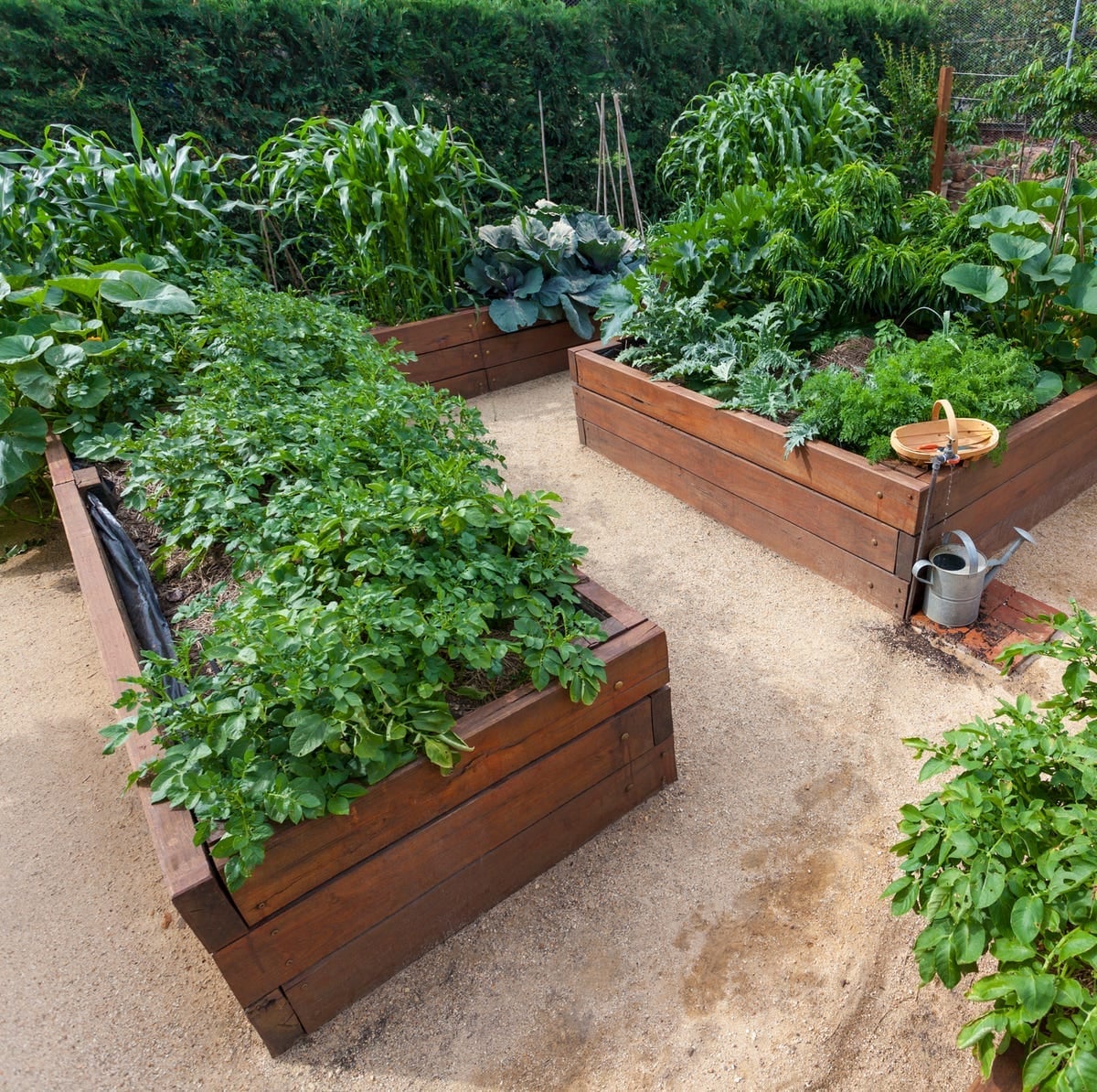
Where a small raised bed can feel like a container, a large one becomes a permanent part of the landscape. These wide wooden beds sit in natural daylight with gravel paths between them, and the scale gives the garden its modern farmhouse feel. The wood tones and green foliage keep the palette calm, and the generous size allows for block planting.
This look requires beds proportioned to the yard. Narrow beds in a wide garden look like afterthoughts, while beds this size anchor the space and make the paths feel deliberate. The gravel also improves drainage and keeps mud off the paths during wet weather. Match the bed width to about half the path width.
31 / 33Naturalistic Garden with Diverse Plant Textures and Colors
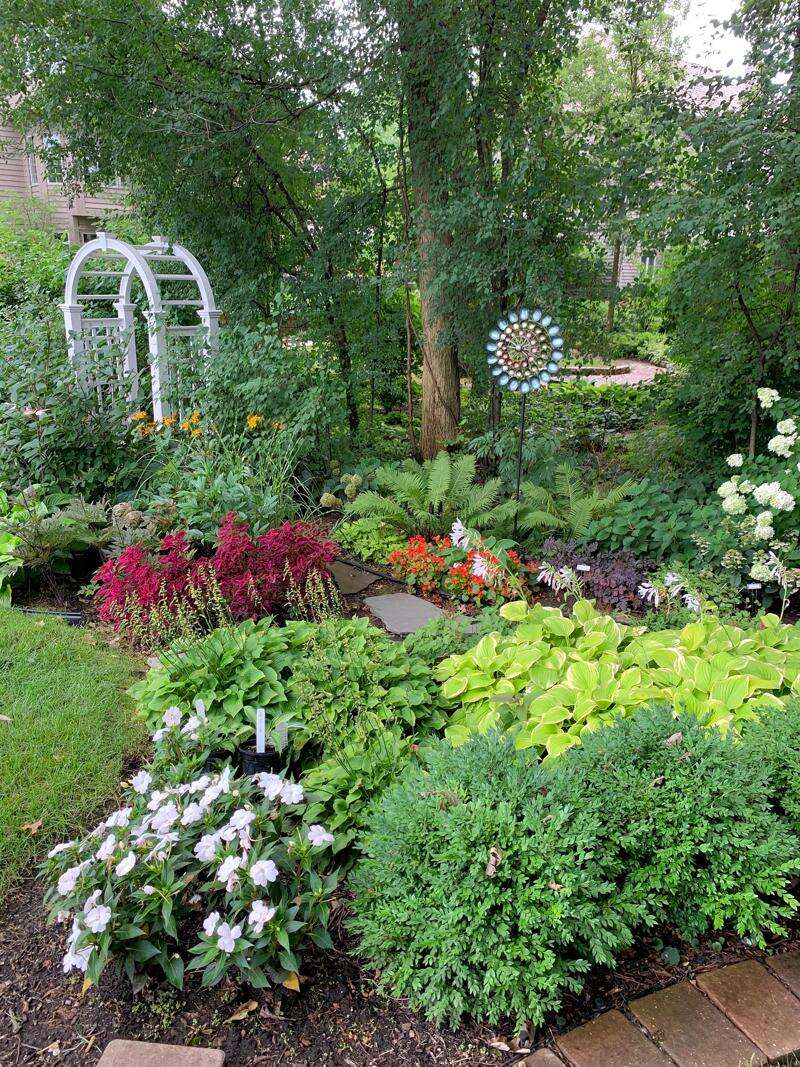
The mix of green, red, orange, and white foliage creates a layered effect that feels more like a wild meadow than a manicured bed. Winding garden paths invite you to wander rather than walk a straight line, and the stone and wood edges keep the looseness from looking messy. This is an element-first approach: the plants do the work, so the hardscape stays simple. A practical takeaway is to repeat a single accent color, like orange, in three or four different plants to pull the whole bed together without forcing symmetry.
32 / 33Geometric Arrangement of Raised Garden Beds for a Formal Design
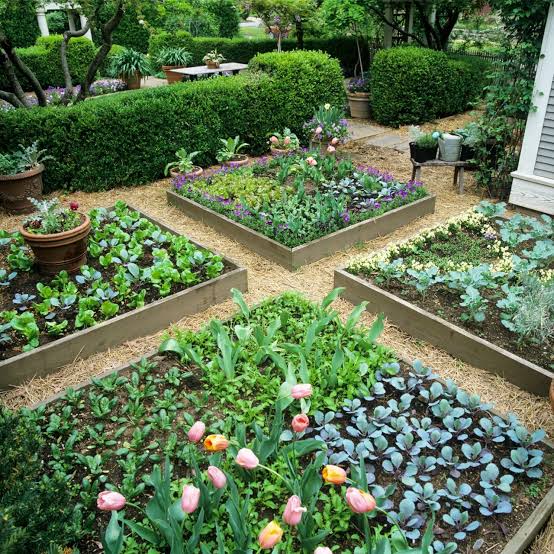
Straight lines and right angles give this garden a planted-in-place precision. The raised beds are set in a clear grid, with gravel paths running between them and potted plants marking the corners. Manicured hedges frame the whole scene, making the green, purple, and pink flowers a controlled palette. For a formal look, keep the paths as wide as the beds themselves. That equal ratio creates a balanced rhythm that holds the layout together even when the plants start to fill in.
33 / 33Final Thoughts
Choosing a raised bed comes down to how you use the garden and what kind of upkeep you want. Wood warms up fast for early spring planting but needs sealing every few years. Metal and brick hold heat longer, which helps heat-loving crops, though they can get hot in full sun. Stone suits permanent layouts but is harder to move later. Pairing a simple path material like gravel or pavers with the bed keeps weeding and harvesting easier on wet days. The best setup is the one that makes you want to step outside and dig in.