Farmhouse flooring sets the tone for the whole house, and the choices are wider than you might think. From wide plank wood to stone tile and checkerboard patterns, each material brings its own character. In this article, you will find 30 farmhouse flooring ideas for 2027, covering kitchens, bathrooms, entryways, living rooms, and more.
Whether you lean rustic or modern, these looks show how the right floor anchors a room without stealing the show. Expect practical notes on upkeep, durability, and how each surface feels underfoot, so you can pick a floor that suits how your home actually lives.
01 / 31Wide Plank Wood Floors in a Rustic Farmhouse Kitchen
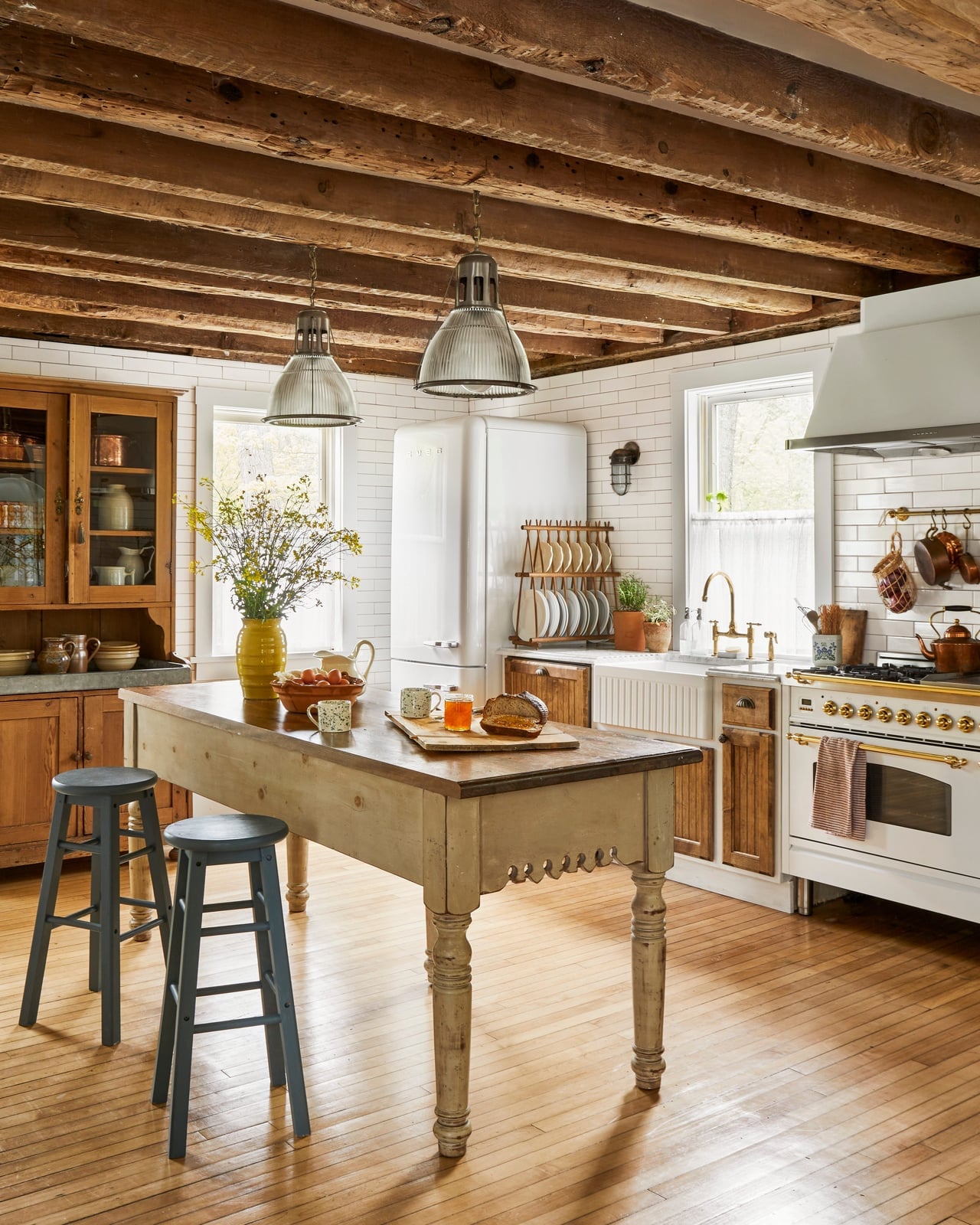
The wide plank wood floor in this kitchen sets the tone before the table or cabinets get a word in. Warm wood tones run from the ceiling beams down to the floor, making the white cabinetry and yellow accents feel grounded rather than stark. The planks are broad enough that each board reads as a distinct piece, not a single flat surface. That texture matters in a rustic farmhouse style, where the goal is a space that looks used and comfortable. The overhead pendant lights catch the wood grain without washing it out, so the floor stays part of the conversation.
02 / 31Warm Wood Flooring Enhancing a Farmhouse Kitchen’s Charm
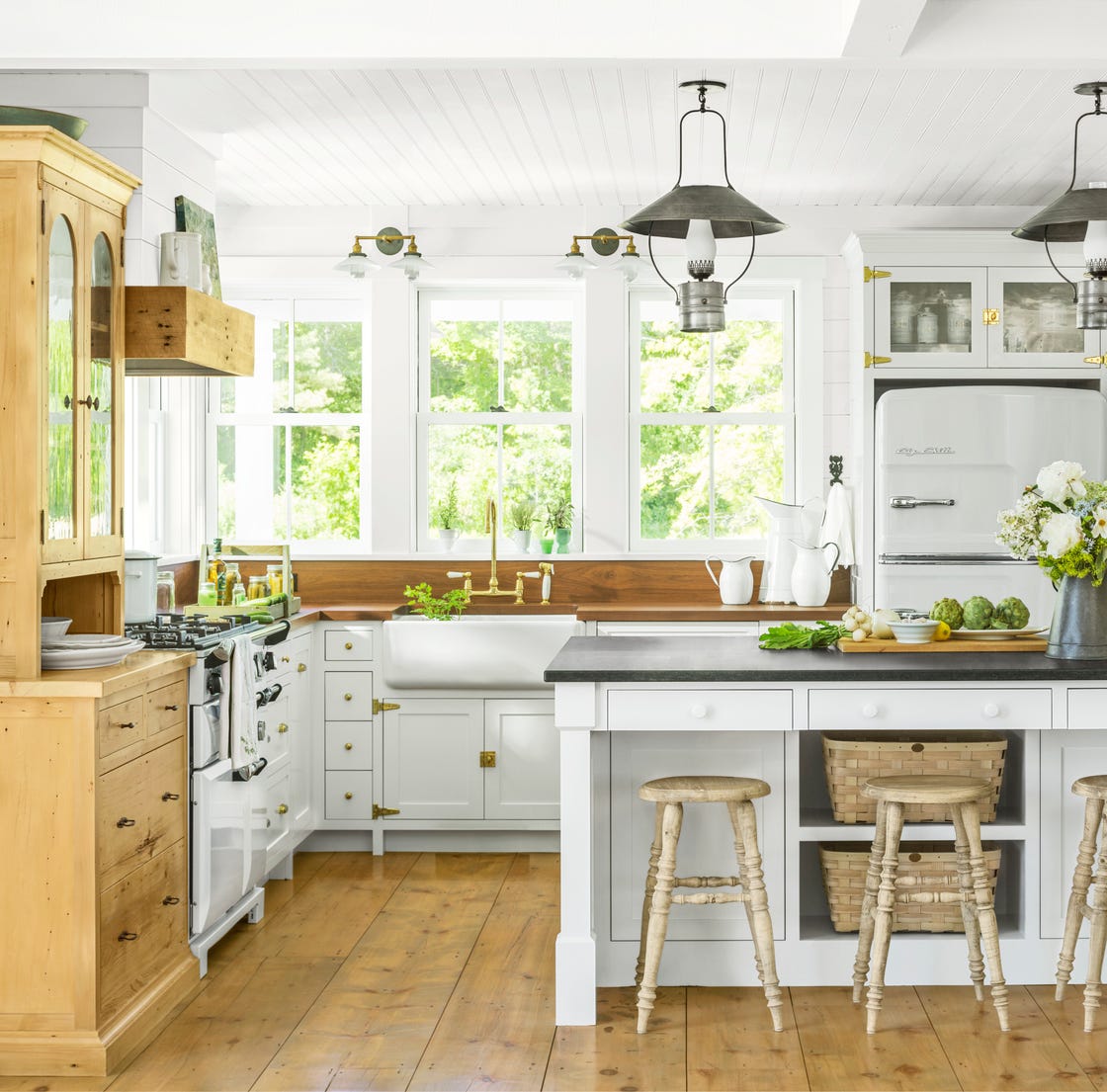
The warm wood floor in this kitchen is the color anchor for everything else. White cabinetry and marble countertops lean cool, so the floor’s honey tones add warmth. Brass hardware and pendant lights pick up the same warmth, creating a palette that feels cohesive without matching. The tile backsplash breaks the wood line visually, but the floor carries the eye across the open plan. If you want a similar balance, let the floor be the warmest surface in the room and pull one accent metal to echo it. That way the palette has a clear anchor and the rest can shift.
03 / 31Light Wood Floors in an Airy Farmhouse Kitchen and Dining Area
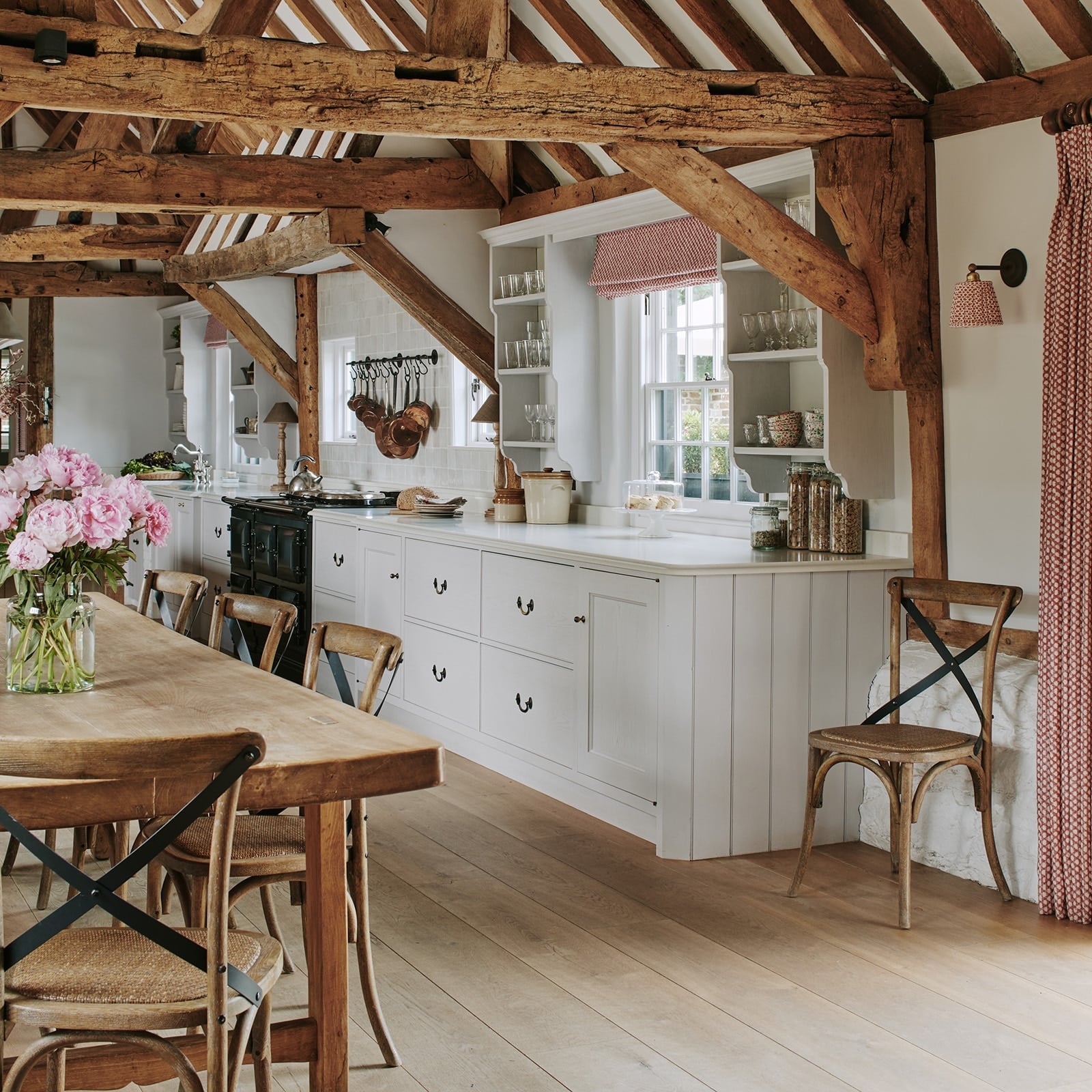
Can a light wood floor keep an open plan from feeling like one long corridor? This kitchen and dining area suggests yes. The pale planks run under both zones without a transition strip, so the room breathes instead of stopping and starting. Exposed beams overhead match the floor’s honey tone, but the wood stays light enough that the white walls and stone counters dominate. The dining table lands on the same planks as the range cooker, which is the point: the floor is the common ground that makes the layout feel connected. A darker floor would shrink the room, while a tile would break the flow. Light wood keeps the air moving.
Natural light from the windows hits the floor and bounces back up, softening the pendant light shadows. That reflection is what makes the pink accents and linen curtains feel soft rather than sweet. If your open plan runs north to south, a light wood floor will hold the daylight longer into the afternoon.
04 / 31Rustic Stone Floor for a Farmhouse Entryway
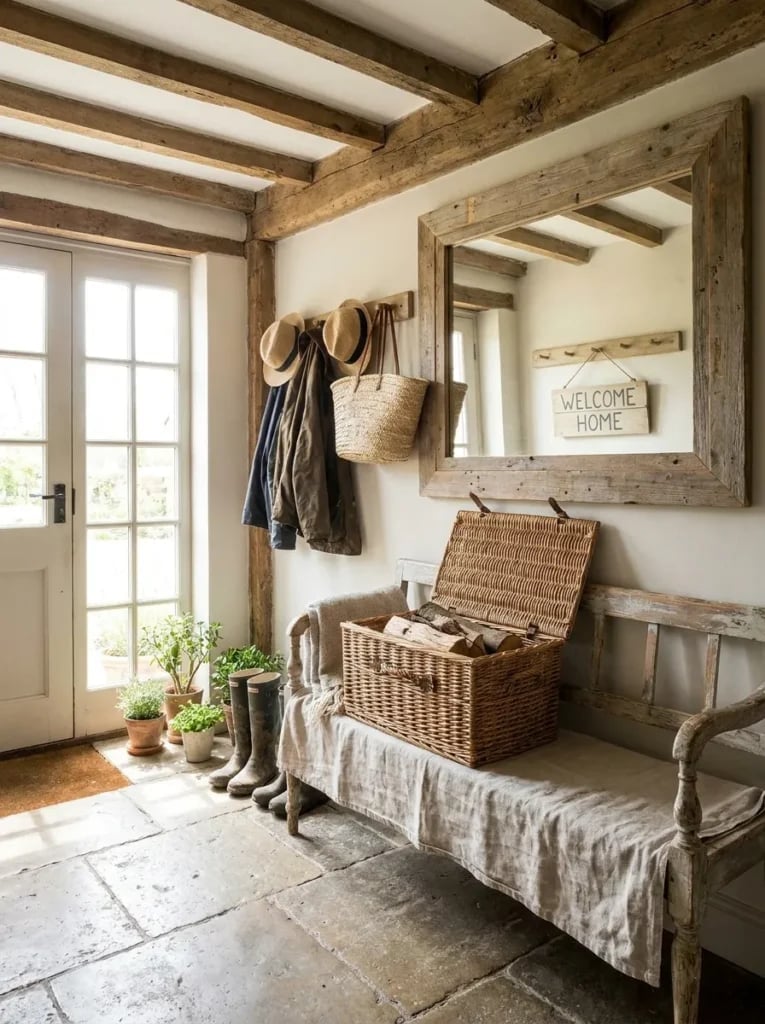
The stone floor in this entryway does not pretend to be delicate. Irregular surfaces and neutral brown tones mean every step lands on something with texture. A wooden bench and large mirror hang above it, but the floor is the element that sets the farmhouse tone. Wicker and linen accessories soften the look, because stone alone can feel like a cellar. For a compact hallway, this floor works because it does not need a rug to define the space. Light from the door hits the stone and makes it look honest, which is the whole point of rustic materials.
05 / 31Distressed Wood Plank Flooring Welcomes Guests
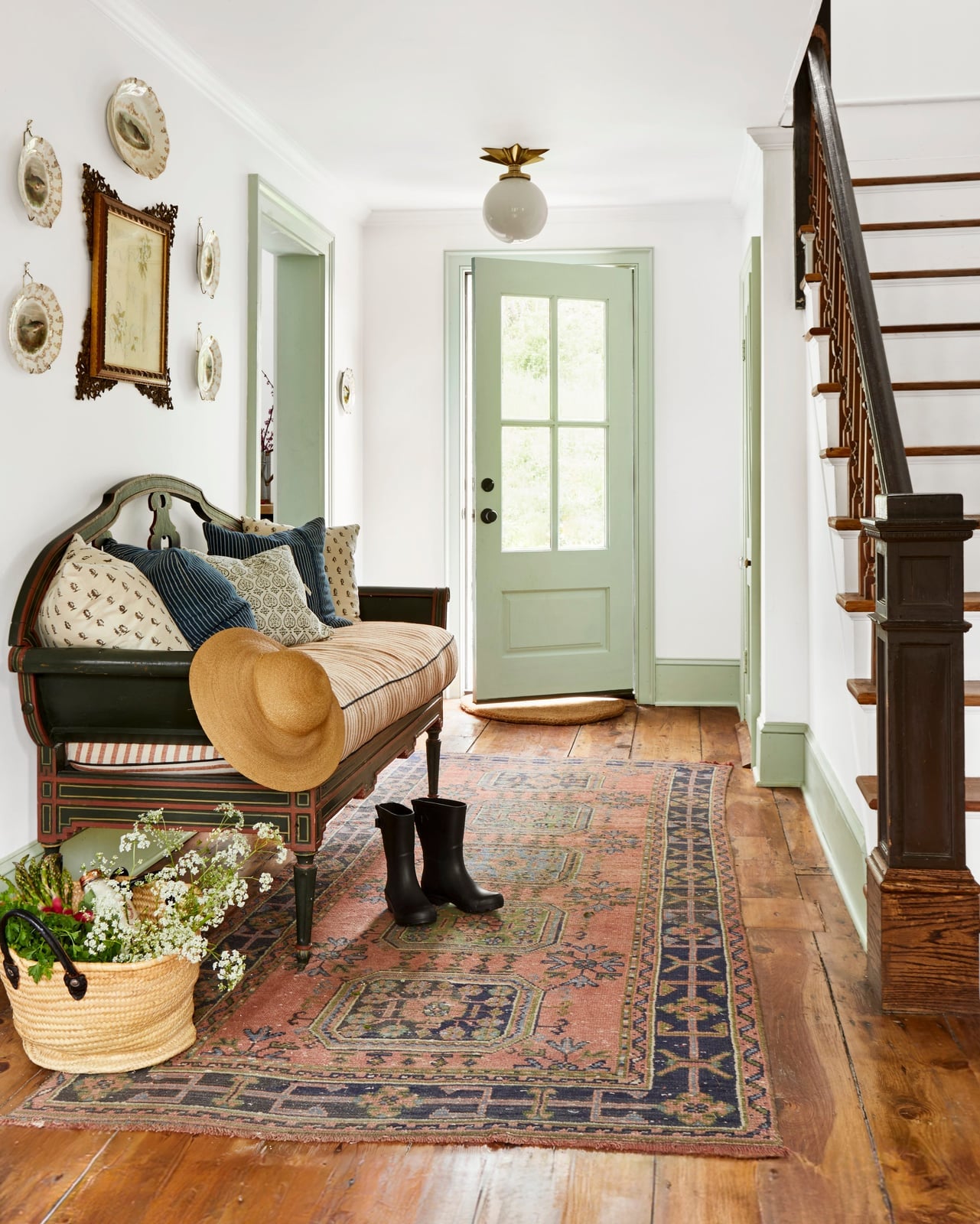
A practical rule for entryways: the floor should accept dirt without a fight. Distressed wood planks come with built-in character, so scuffs and dust blend in rather than show. In this entryway, the floor runs under a patterned rug runner, a wooden bench, and a leaning straw hat. The green, cream, and pink accents pop against the wood tones because the floor does not compete. If you rent and cannot replace tile or vinyl, a runner with a thick pad is the renter-safe swap. It protects the existing floor and adds the farmhouse texture without a permanent change. The distressed finish also means the floor will look better with age, not worse.
06 / 31Warm Hardwood Floors in a Cozy Farmhouse Living Room
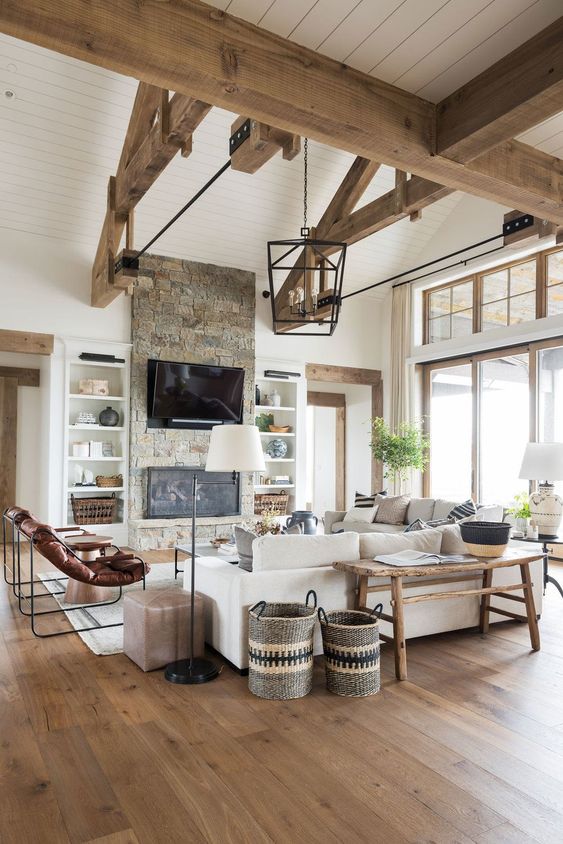
A wool rug or jute runner might be the obvious choice for a living room floor, but this room proves the floor itself can be the center of attention. The warm hardwood planks stretch from the seating area past the fireplace and under the exposed wooden ceiling beams, tying the whole open layout together. The wood tones stay consistent across a wide span, so the floor looks like one continuous surface. What defines this look is the ratio of wood to other materials: the stone fireplace surround and metal coffee table legs break up the warmth just enough to add variety. A few linen pillows on the sofa soften the edges further, leaving the floor to anchor the space.
07 / 31Stone Tile Flooring for a Bright Farmhouse Hallway
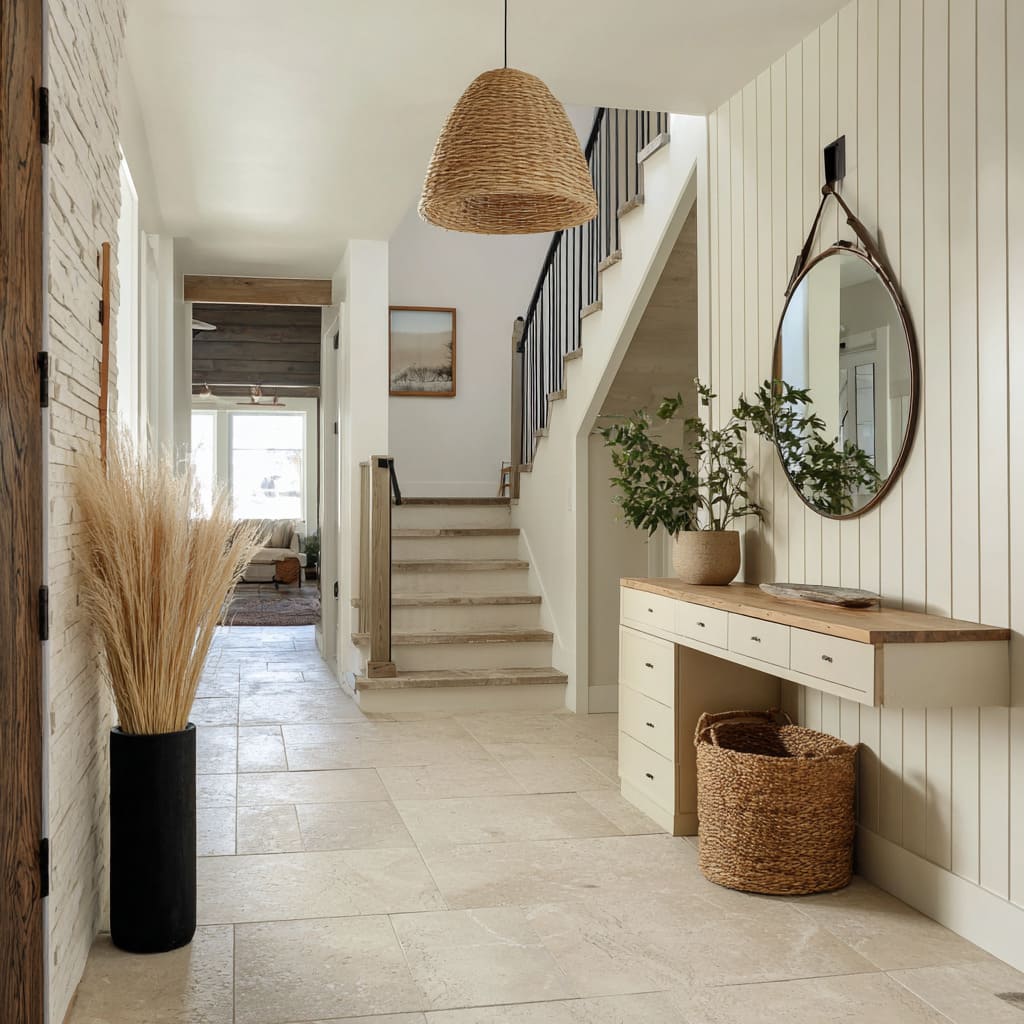
Stone tile in a hallway is a smart choice for high-traffic areas, even for renters. A stone-look tile can mimic the real thing without the permanence or cost of installation. The neutral beige and cream tones in this hallway pair naturally with the wood console table and rattan basket, and the wide layout with stairs lets the tile feel open. A pendant light overhead keeps the space bright.
08 / 31Earthy Stone Tile Flooring in a Rustic Farmhouse Bathroom
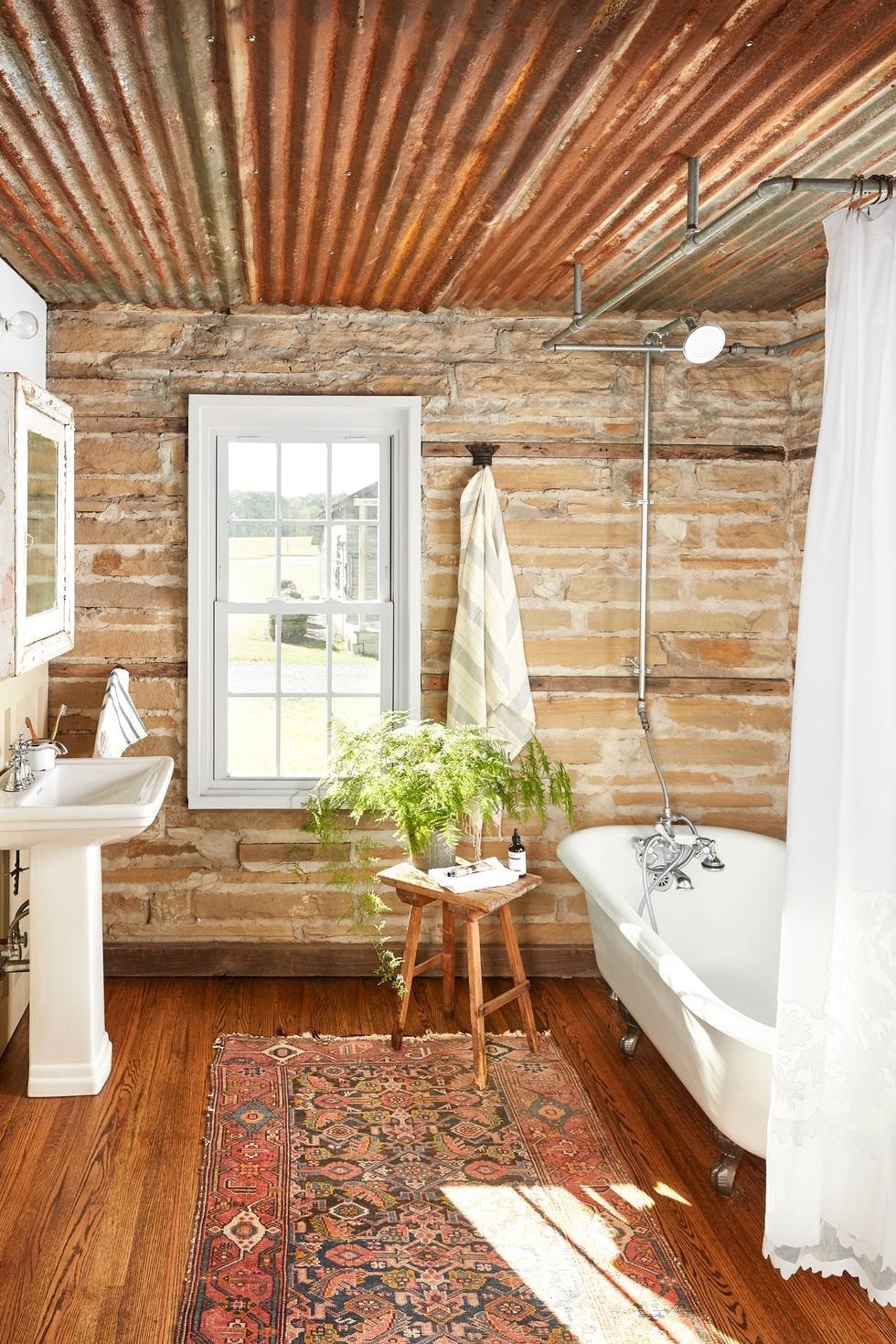
This bathroom proves that compact spaces can handle bold materials. The stone tile flooring in earthy rust and white tones grounds the room, while the clawfoot tub and pedestal sink keep the layout functional and uncluttered. The real surprise is the corrugated metal ceiling, which adds texture without overwhelming the small footprint. A patterned rug on the stone floor softens the transition between the tile and the tub, and the natural light keeps everything from feeling too heavy.
09 / 31Classic Black and White Tile Flooring in a Farmhouse Bathroom
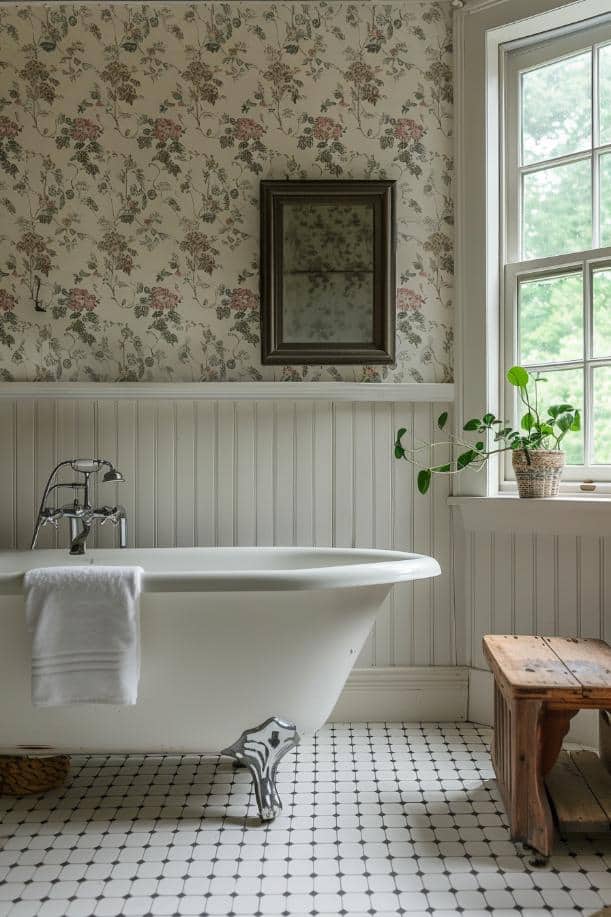
Can black and white tile hold up in a bathroom that sees daily use? Yes, when the tile is porcelain or a durable ceramic. The high-contrast pattern in this compact bathroom feels fresh and modern, and the floral wallpaper on the walls softens the graphic floor. The clawfoot tub and wooden stool ground the look in farmhouse tradition, while natural light prevents the black and white from feeling stark. A small vanity in a light wood tone completes the vignette.
10 / 31Heavily Distressed Wide Plank Floors in a Farmhouse Dining Area
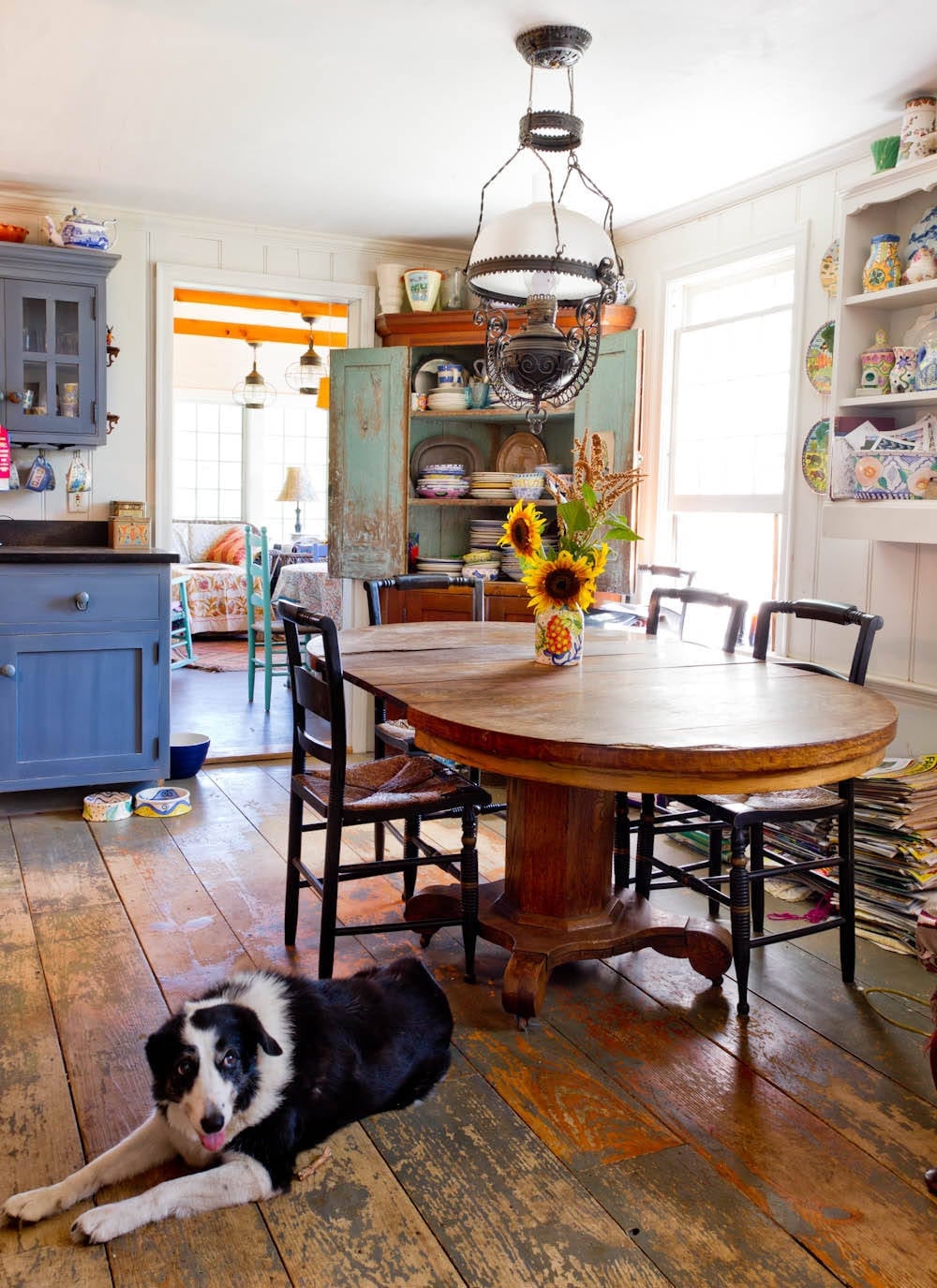
The wide planks in this dining area are heavily distressed, with visible wear in the wood grain and paint layers in blue and yellow. The scale of the planks matches the roomy open layout, and the round pedestal table with mismatched chairs keeps the floor as the main event. An overhead chandelier draws the eye upward, while natural light highlights the texture in the wood. The painted wood hutch in the background echoes the floor’s multi-colored palette without repeating it exactly.
11 / 31Bold Checkerboard Tile Floor in a Farmhouse Entryway
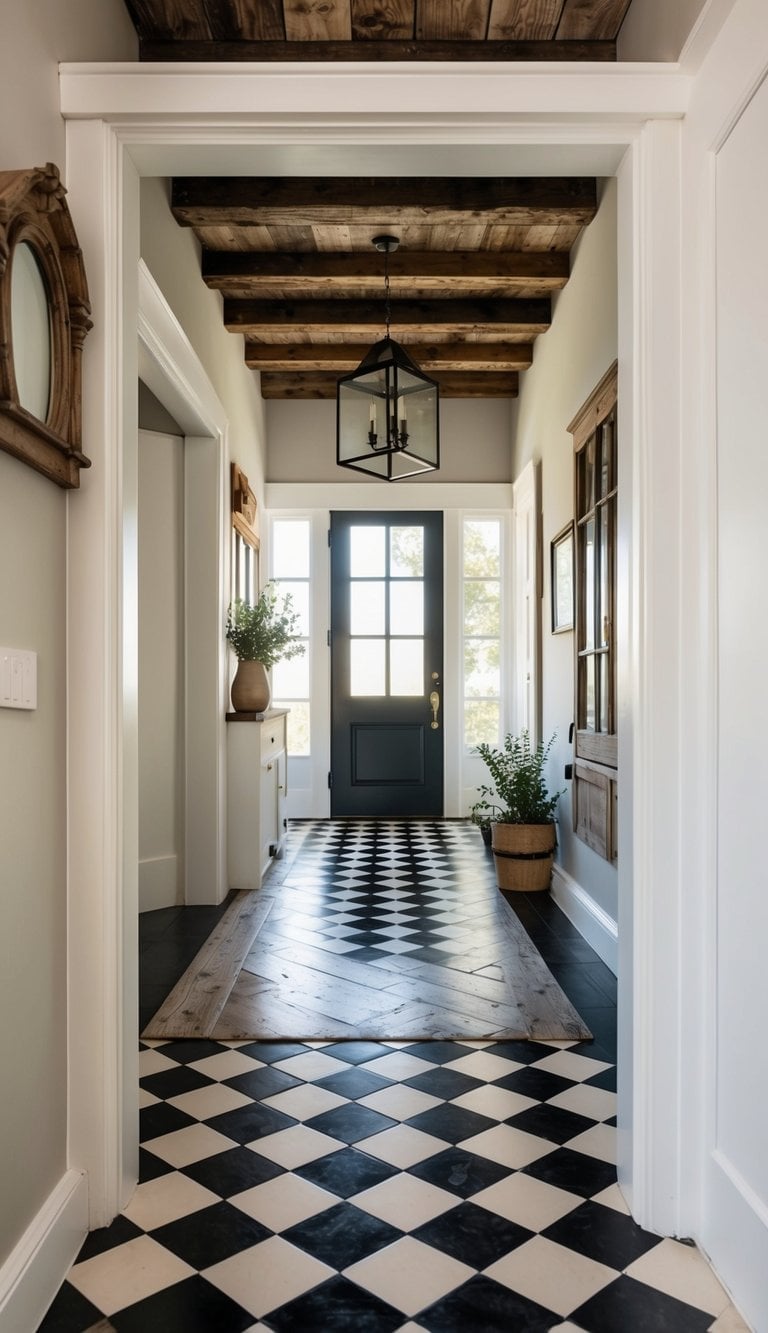
In an entryway, the floor is both a welcome mat and a directional signal. A bold black and white checkerboard tile runner leading from the front door creates a clear path without the need for an actual rug. The pattern draws the eye down the hallway, while the wooden ceiling beams and a mirror on the wall keep the space from feeling too rigid. The layout works because the graphic floor has a defined boundary, so it feels intentional rather than overwhelming. A simple lantern overhead adds light without competing with the floor’s pattern.
12 / 31Irregular Flagstone Floor for a Welcoming Farmhouse Kitchen
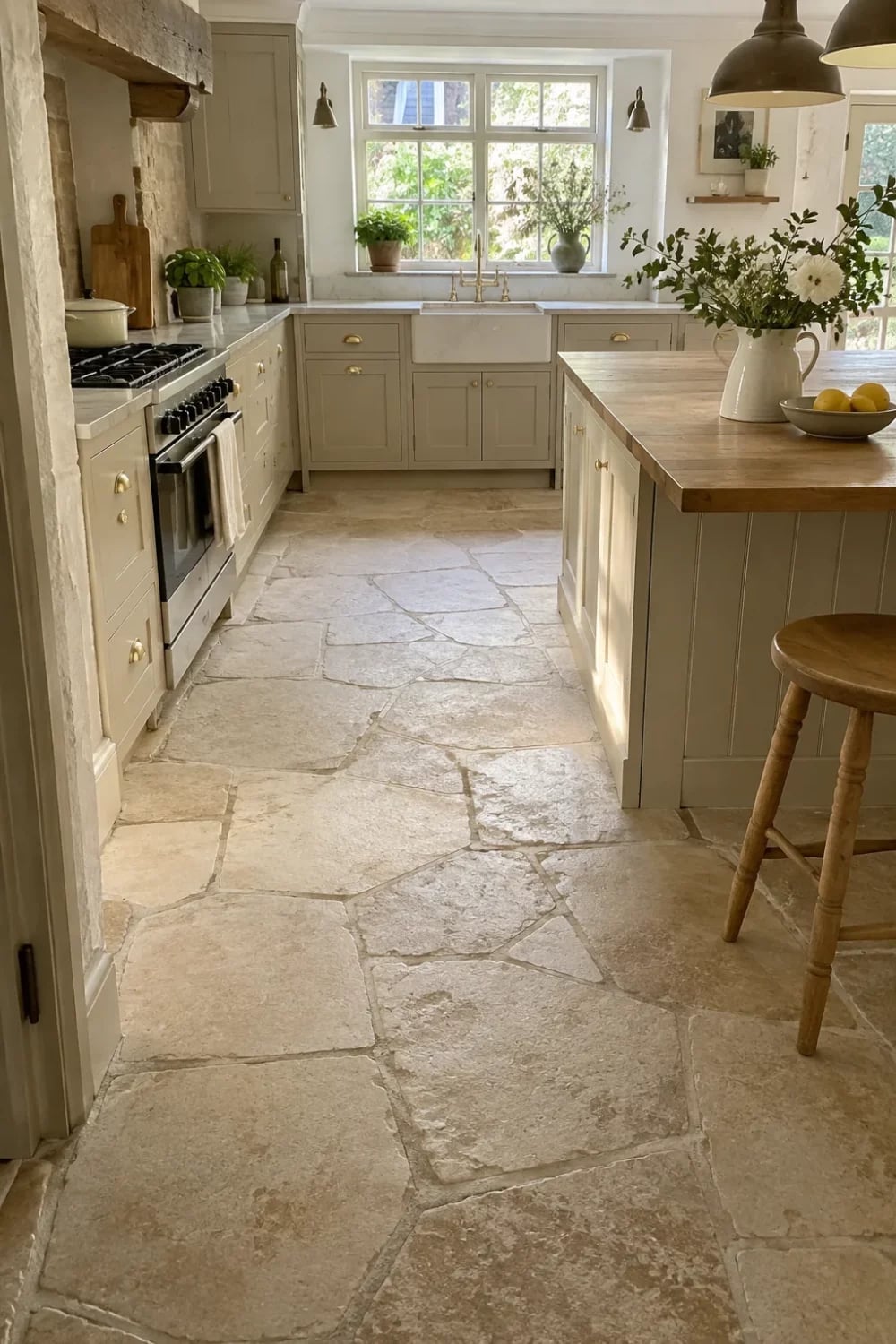
It is easy to assume a farmhouse kitchen needs smooth wood floors, but flagstone offers a different kind of warmth. The irregular stone pieces in cream and beige tones bring a natural, grounded feel that pairs well with the wooden island and range cooker. The varying shapes and sizes of the stones create visual interest without needing a rug or runner.
The palette stays neutral, with the stone’s earthy tones complemented by wood cabinets and a farmhouse sink. The key is to let the floor be the textural anchor, so keep countertops and backsplashes simple. This is a surface that looks like it has been there for decades, which is exactly the point in a farmhouse kitchen.
13 / 31Rich Hardwood Floors in a Modern Farmhouse Living Room
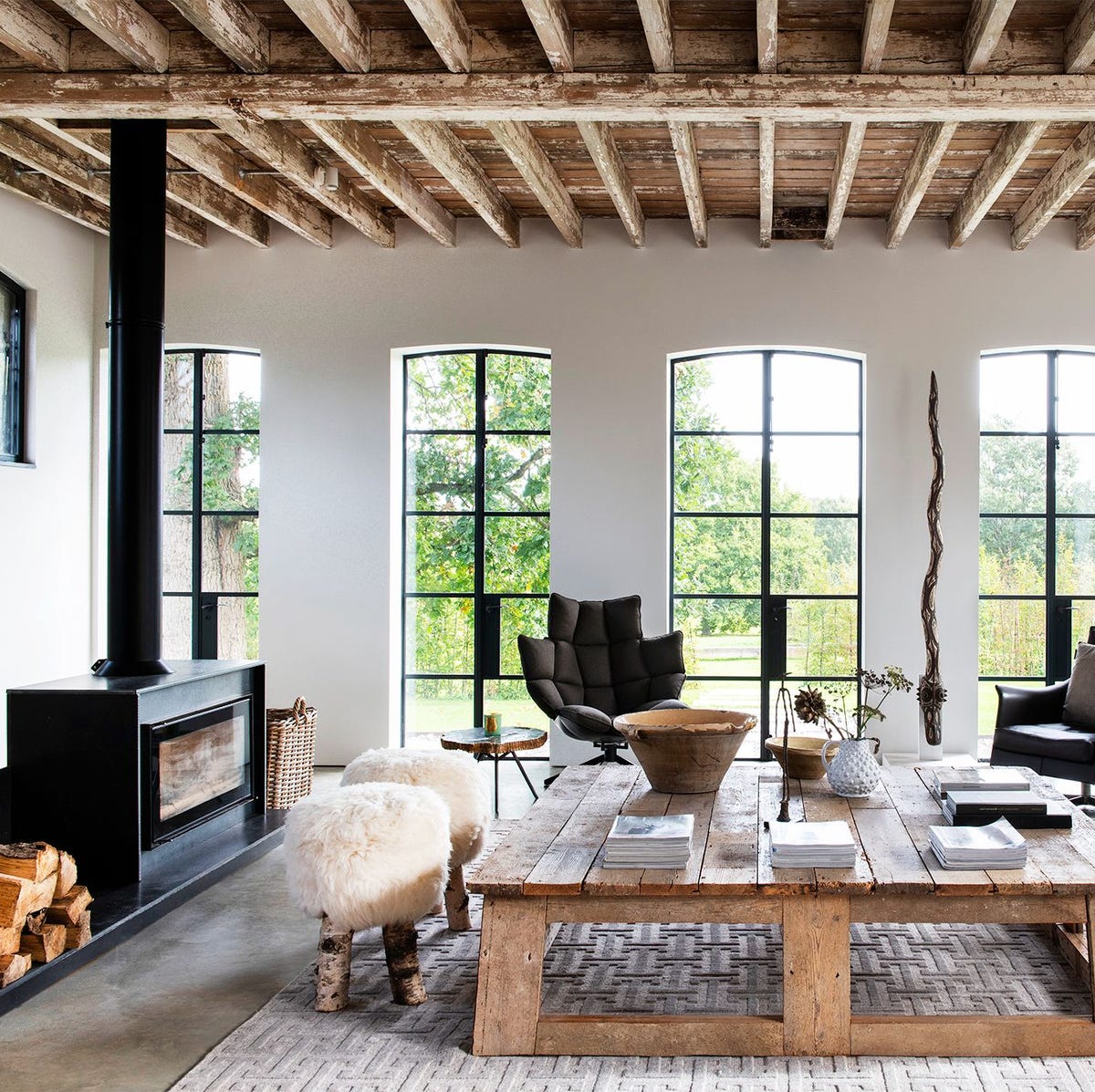
The rich hardwood floor in this living room has a warm, medium-brown tone that bridges the gap between traditional and modern. The planks are wide enough to feel substantial but not so wide that they overwhelm the space. Paired with a neutral sofa, linen armchairs, and a stone fireplace, the floor provides a solid base that anchors the seating area. The large black-framed windows bring in natural light that highlights the wood’s grain, making the room feel both grounded and open.
14 / 31Striking Checkerboard Floor in a Compact Farmhouse Kitchen
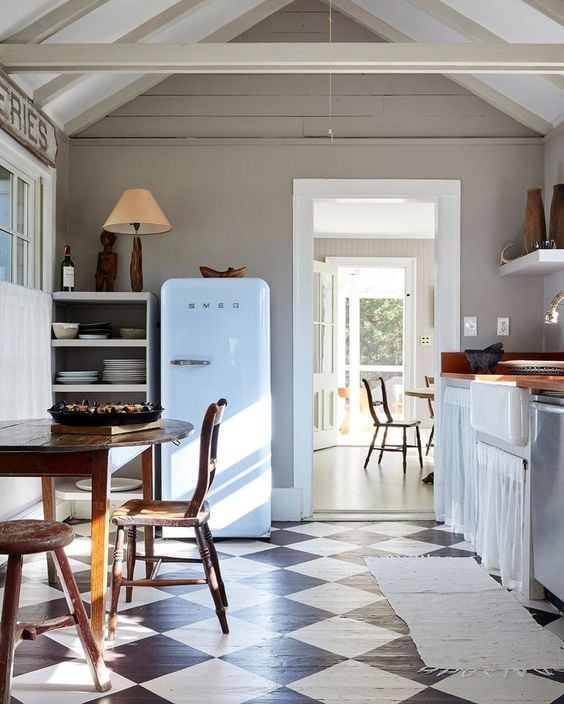
A compact kitchen can handle a bold floor if the surrounding elements stay simple. The black and white checkerboard tile here covers the entire floor, making the small space feel more defined. The vintage refrigerator and wooden table add warmth, while the farmhouse sink keeps the look cohesive. Natural light and a table lamp prevent the dark squares from making the room feel smaller. In a tight layout, make the floor the main event and keep wall colors and countertops light.
15 / 31Patterned Floor Tiles for a Boho Farmhouse Bathroom
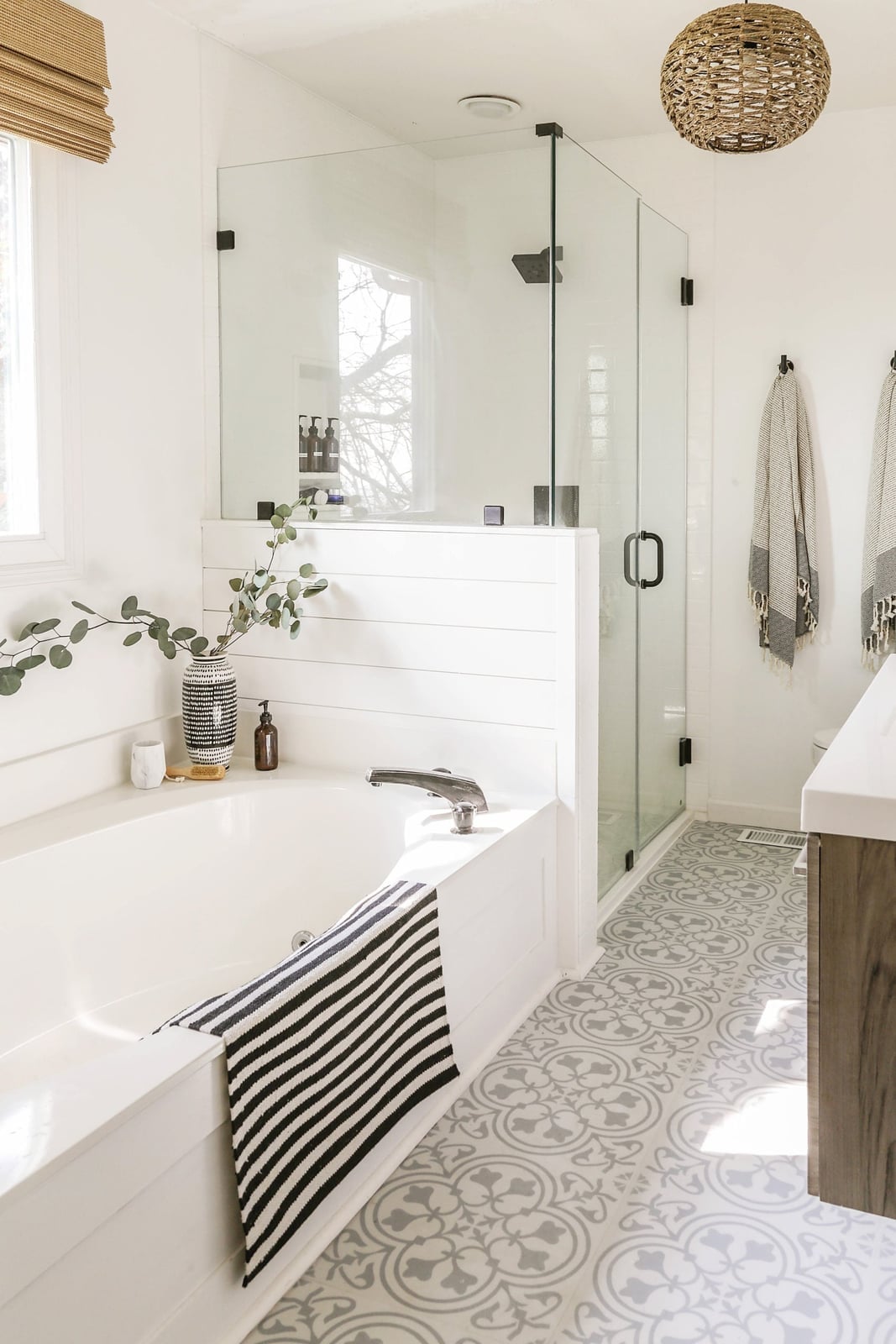
A patterned floor tile can bridge the gap between farmhouse and boho styles without clashing. In this bathroom, grey and white patterned tiles cover the floor, adding detail without overwhelming the room. The freestanding bathtub and glass shower enclosure keep the layout open, while the shiplap walls provide a classic farmhouse backdrop.
For storage, consider a simple wooden shelf or a basket near the tub. The pattern on the floor already provides plenty of visual interest, so storage pieces should be practical and unobtrusive. Natural light from the window lands on the tiles, softening the geometric pattern and keeping the room from feeling busy. This approach works well when you want the floor to do the decorating.
16 / 31Herringbone Brick Flooring in a Farmhouse Laundry Room
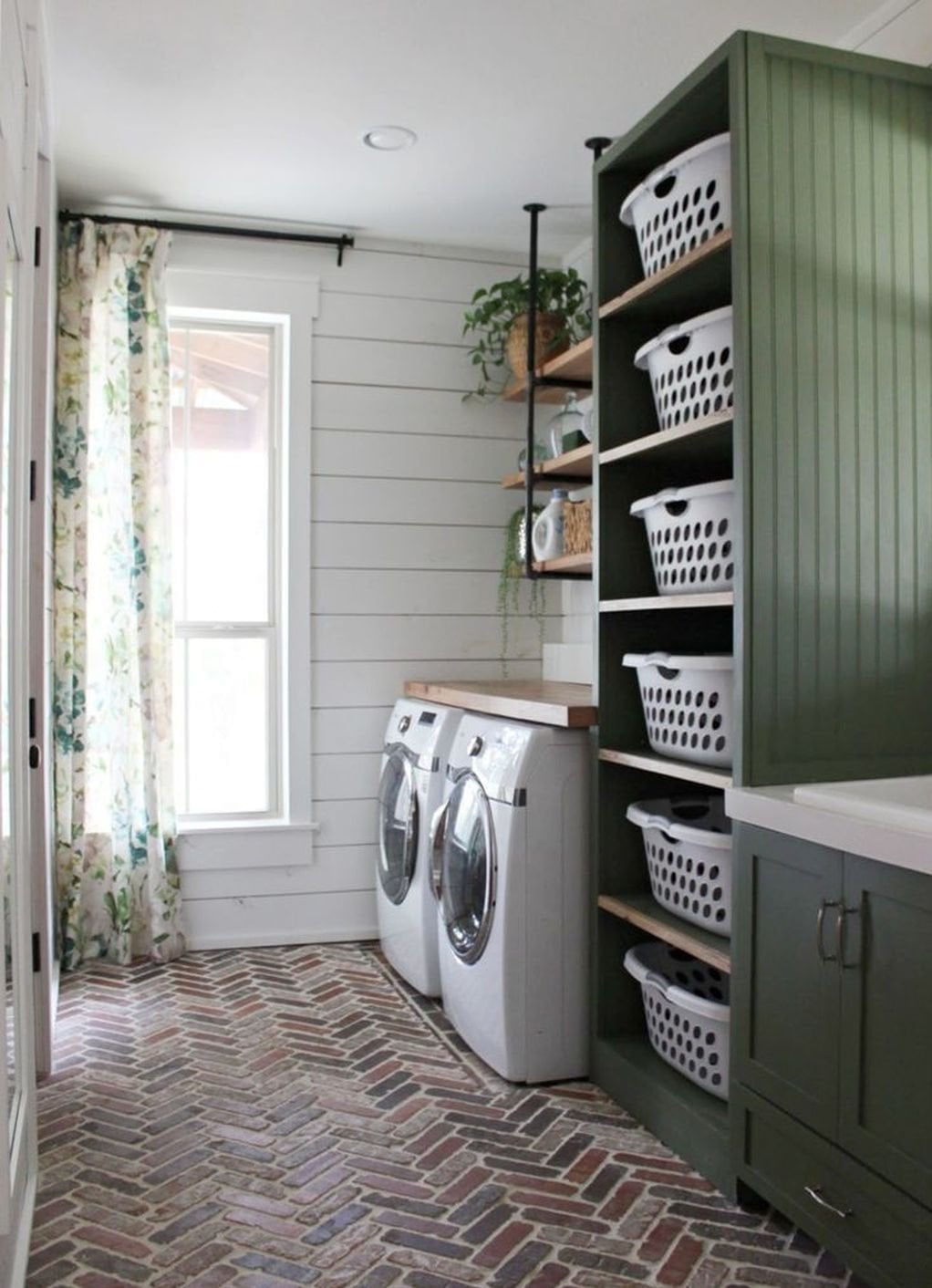
Herringbone brick flooring brings a tactile, handmade feel to a compact laundry room. The warm red-brown tones of the brick anchor the space, while green shelving and white walls keep it from feeling heavy. A floral fabric on the shelving unit adds a soft contrast to the hard floor. The window light catches the brick’s uneven surface, giving the room a lived-in texture. This pattern is traditional farmhouse, but the brick breaks the usual wood monotony. It is a budget swap that turns a utility room into a character piece.
17 / 31Grey Flagstone Floor in an Open-Plan Farmhouse Space
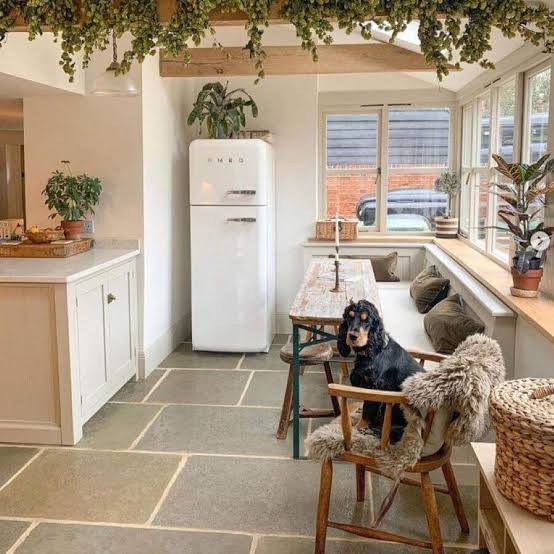
A practical rule for an open plan is that the floor should unify the zones without competing with them. Grey flagstone does exactly that in this kitchen and dining area. The large, irregular stone tiles create a neutral base that lets the cream cabinetry and green accents stand out. A wooden table and wicker chairs add warmth, while the overhead pendant light softens the stone’s cool tone. The palette stays earthy, with grey as the anchor rather than the star. For renters, a large stone-pattern vinyl sheet can mimic this look without permanent installation.
18 / 31Herringbone Tile Floor for a Farmhouse Mudroom
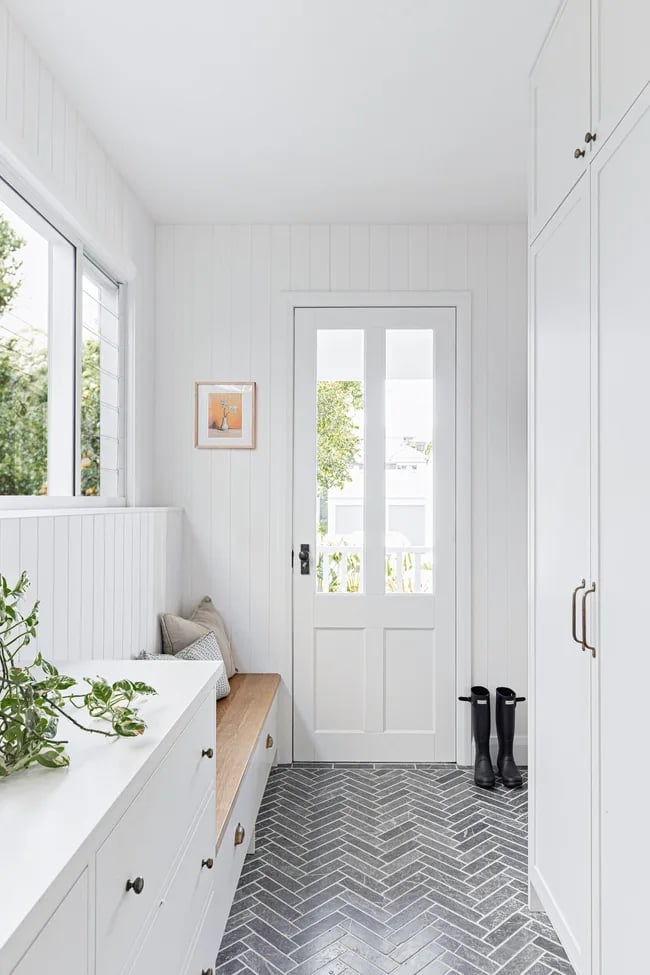
Herringbone tile offers more visual rhythm than a straight lay, making it a natural fit for a mudroom where order matters. In this compact hallway, the white and grey tile pattern draws the eye down the length of the space, making it feel wider than it is. The built-in bench and cabinets above provide storage for boots and bags, keeping the floor clear. The wood tones of the bench warm the grey tile, so the room does not read as cold. The herringbone pattern itself breaks up the horizontal lines of a long room, adding a subtle sense of movement. For a similar effect, choose a tile with a matte finish to avoid slippery surfaces when wet.
19 / 31Grey Slate Tile Floor on a Covered Farmhouse Porch
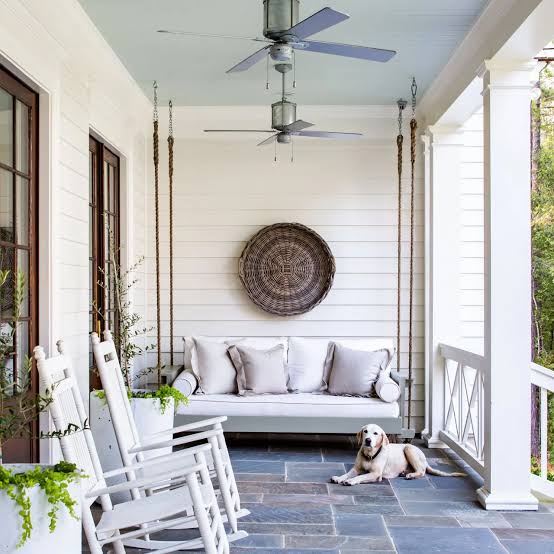
Grey slate tile on a covered porch handles temperature swings and moisture better than wood. The natural cleft surface provides grip underfoot, which matters when the rocking chairs move. A swing bed and white ceiling fans keep the look relaxed, while the slate anchors the outdoor seating area. The wide view shows how the grey stone blends with the surrounding greenery. This floor reads as permanent, but the tile can be installed over a concrete slab without structural changes. Check your USDA zone for freeze-thaw suitability before choosing slate.
20 / 31Light Wood Plank Flooring in a Modern Farmhouse Entryway
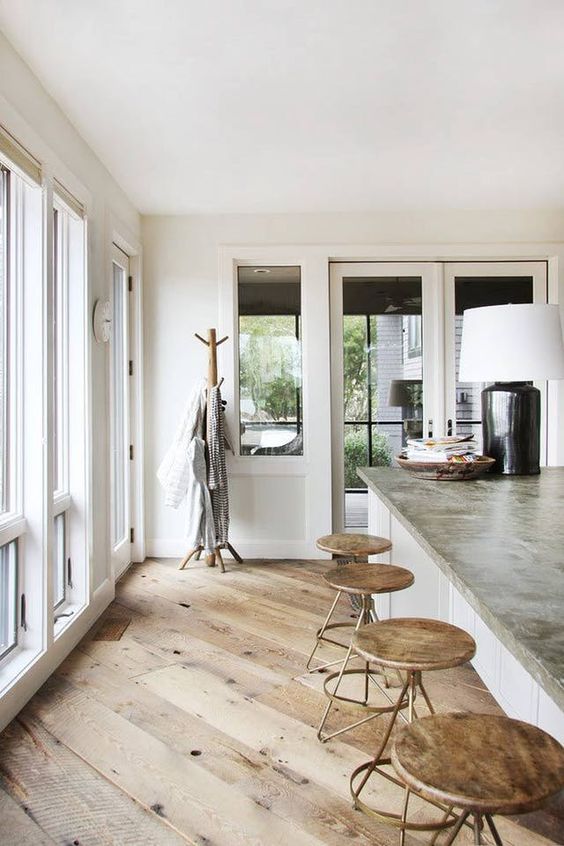
Light wood plank flooring is a solid choice for a modern farmhouse entryway because it reflects natural light and hides dust between cleanings. The pale tone connects the entryway to the living area beyond the arched doorway, creating a seamless flow. Black accents on the console table and chandelier provide contrast without breaking the airy feel. The wide planks emphasize the roomy scale, while the light finish keeps the space from feeling dark. A runner on top would protect the high-traffic area near the door, but the bare planks show off the clean lines of the modern farmhouse look.
21 / 31Expansive Light Wood Plank Floors in an Open-Plan Farmhouse
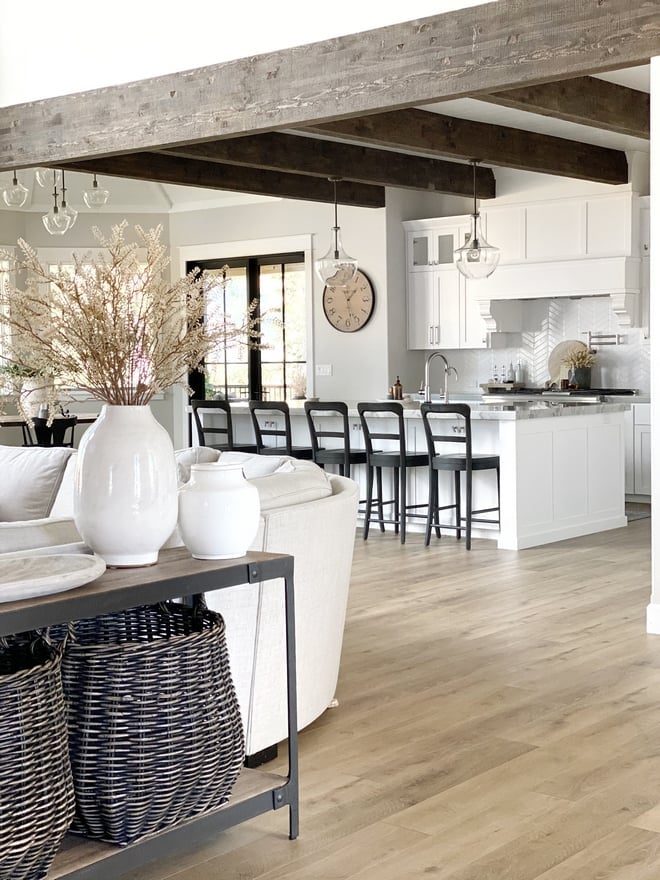
In an open-plan layout, the floor becomes the visual thread that ties zones together. Light wood plank flooring running through a combined living and kitchen area does exactly that, creating a continuous surface that lets the eye travel without interruption. The pale tone keeps the space feeling roomy and airy, while the long planks add a sense of direction, gently guiding movement from the sofa area to the kitchen island. Bar stools, a console table, and pendant lights all rest on this neutral base, making the room feel cohesive rather than choppy. The style reads as modern farmhouse because the wood is neither too polished nor too rough: it lands in a sweet spot that works with white walls, stone counters, and metal accents. What breaks the look is introducing a second floor treatment mid-room, like switching to tile under the island. Keeping one material throughout is what makes the open plan feel generous.
22 / 31Diamond Pattern Tile Floor in a Vibrant Farmhouse Kitchen
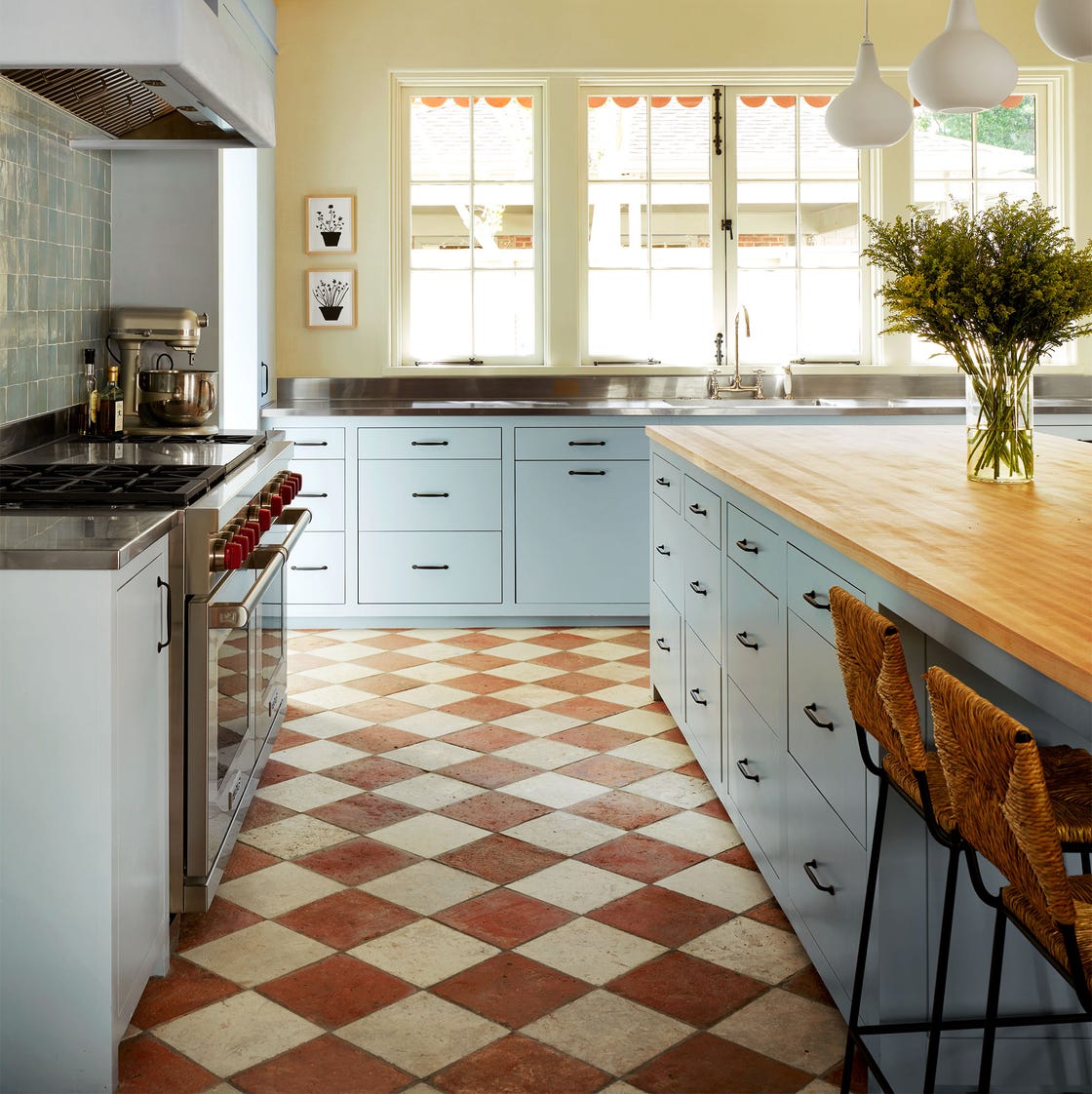
A diamond pattern tile floor brings a graphic energy to a farmhouse kitchen that plain wood cannot match. Here, the tiles pair white with red and blue accents, creating a palette that feels both spirited and grounded. The wood cabinetry and butcher block island soften the geometry, so the pattern never overwhelms. The ratio of color to neutral keeps the floor from dominating the room; it becomes a lively foundation that works with the pendant lights and the range. What defines this look is the boldness of the diamond motif, and what breaks it is pairing it with another strong pattern on the walls or counters. The floor is the one showstopper in this space.
23 / 31Warm Wood Flooring Under Butcher Block Counters
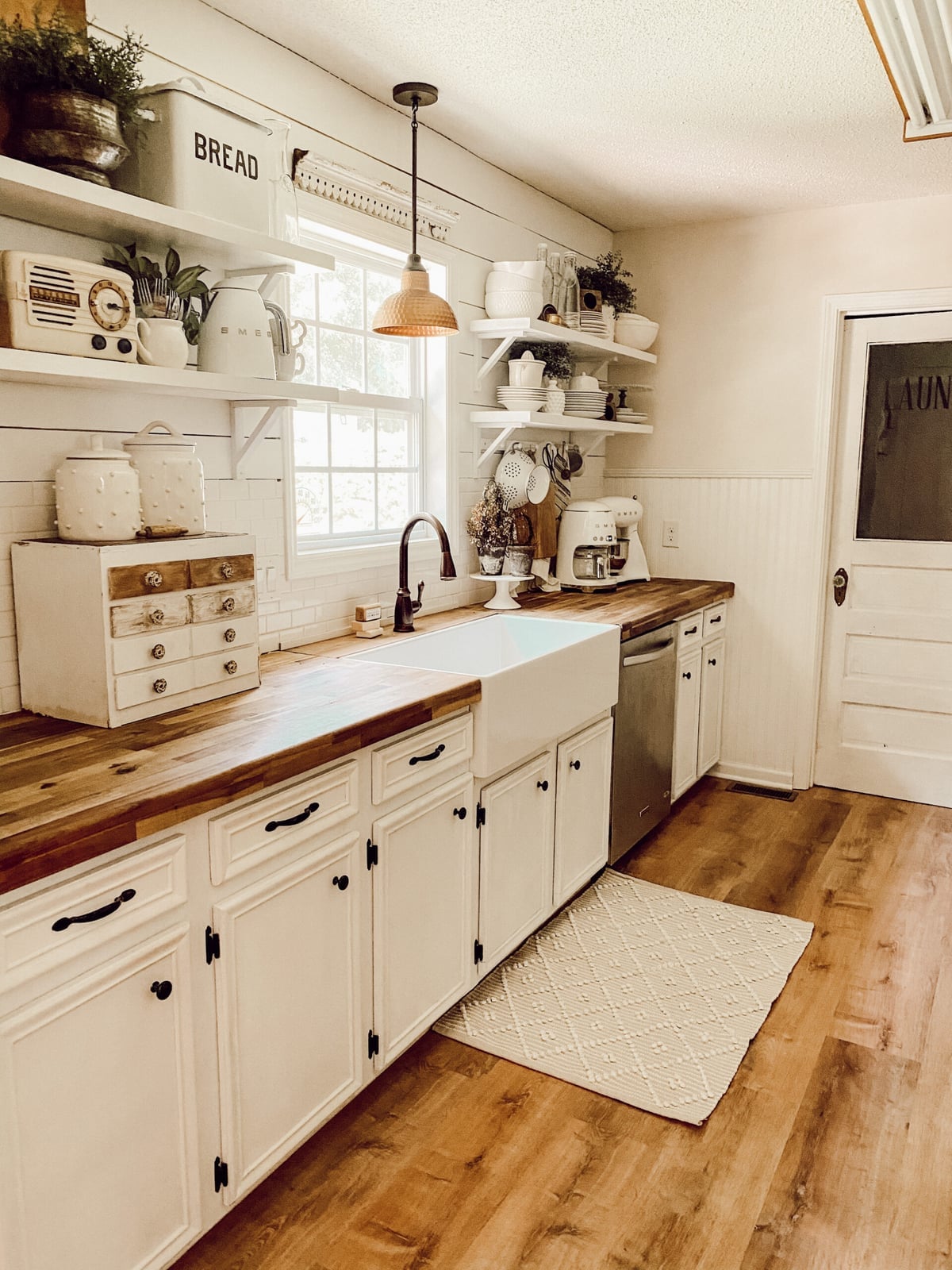
When both the floor and countertops are wood, the trick is letting one finish lead. Here, warm wood flooring sits beneath white shiplap cabinets and butcher block counters, and the floor reads as the warmer, more rustic partner. The wood tones in the floor are slightly deeper than the butcher block, which keeps the two from competing. Black accents, like the farmhouse sink or metal hardware, act as visual pauses between the surfaces. The material story is simple: wood on wood works when the shades are close but not identical, and when a third material like tile backsplash or metal pulls the eye up. This kitchen feels grounded and natural, with the floor providing a sturdy base for the daily work of cooking.
24 / 31Dark Slate Tile Flooring in a Farmhouse Bathroom
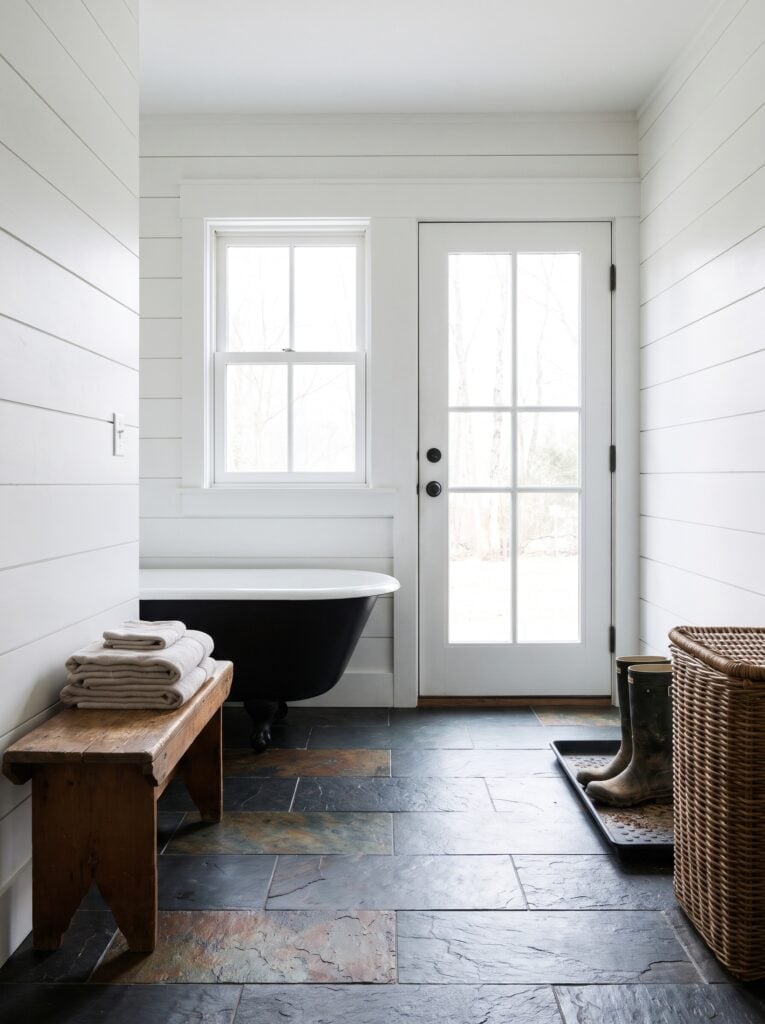
A dark floor in a small bathroom might seem like a risk, but slate tile proves the opposite. Instead of a light wood or white tile that can feel stark, the multi-toned grey and black slate adds depth and texture, anchoring the space. Natural light balances the dark floor, while the lighter wood tones of the tub and bench create contrast. Wicker baskets and metal fixtures add warmth and prevent the room from feeling heavy. The design works because the dark slate is not uniform; its varied tones keep the eye moving. What breaks the look is blocking the sunlight or adding too many dark walls. A white or light wall keeps the bathroom feeling open, even with a floor this rich.
25 / 31Large Stone Tile Floor in a Spacious Farmhouse Kitchen
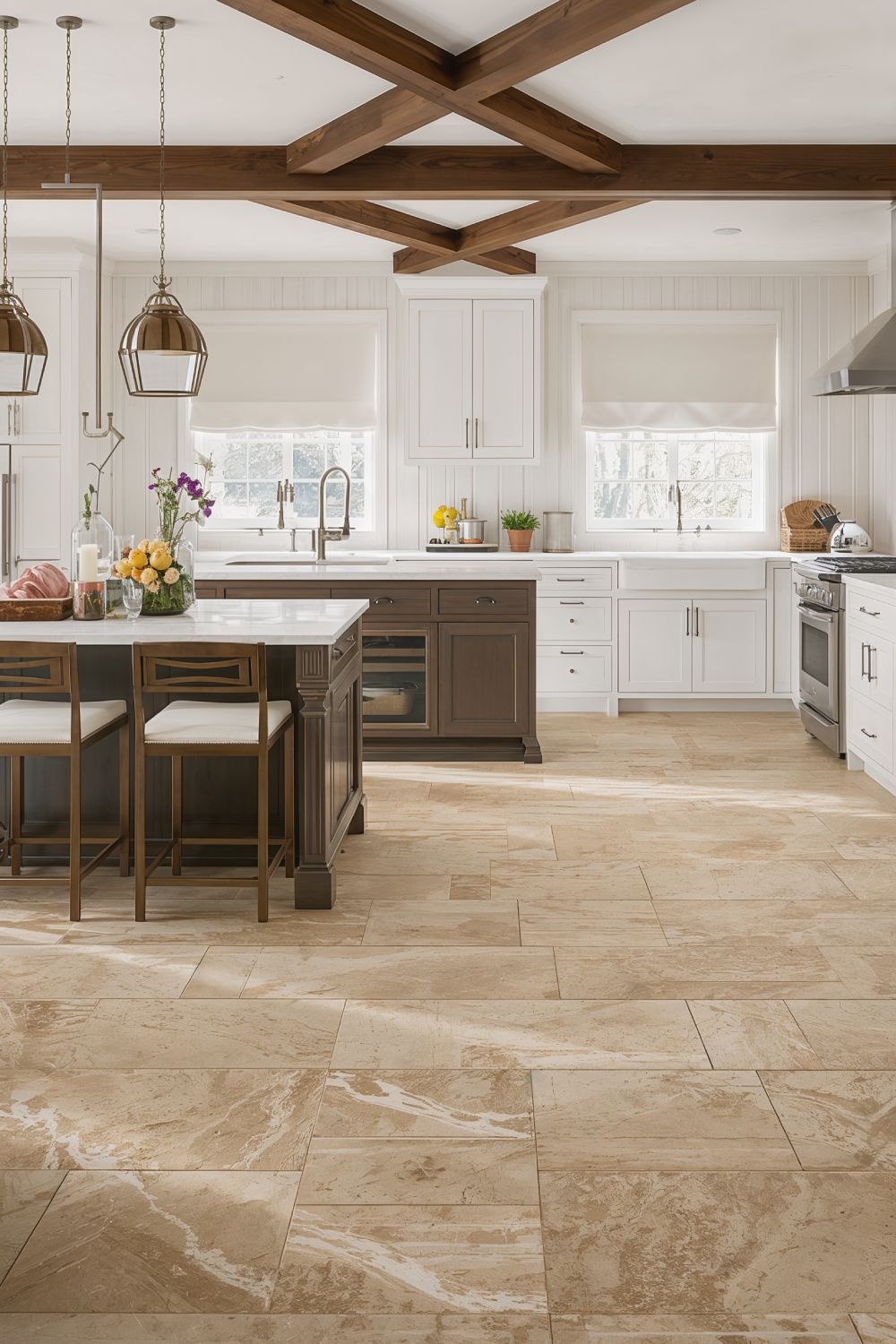
Large format stone tiles in a farmhouse kitchen make a strong case for scale. The generous size of each tile reduces grout lines, which visually expands the already roomy, open plan layout. The stone tone sits between beige and brown, a neutral that grounds the white cabinets and the marble island top without adding contrast. Pendant lights and natural light from windows bounce off the stone surface, keeping the kitchen bright. The design feels substantial and permanent, the kind of foundation that supports a busy kitchen without competing with the cabinetry or the island. What defines the look is the quiet confidence of a single large-scale material covering the floor.
26 / 31Wide Plank Wood Flooring Under Exposed Beams
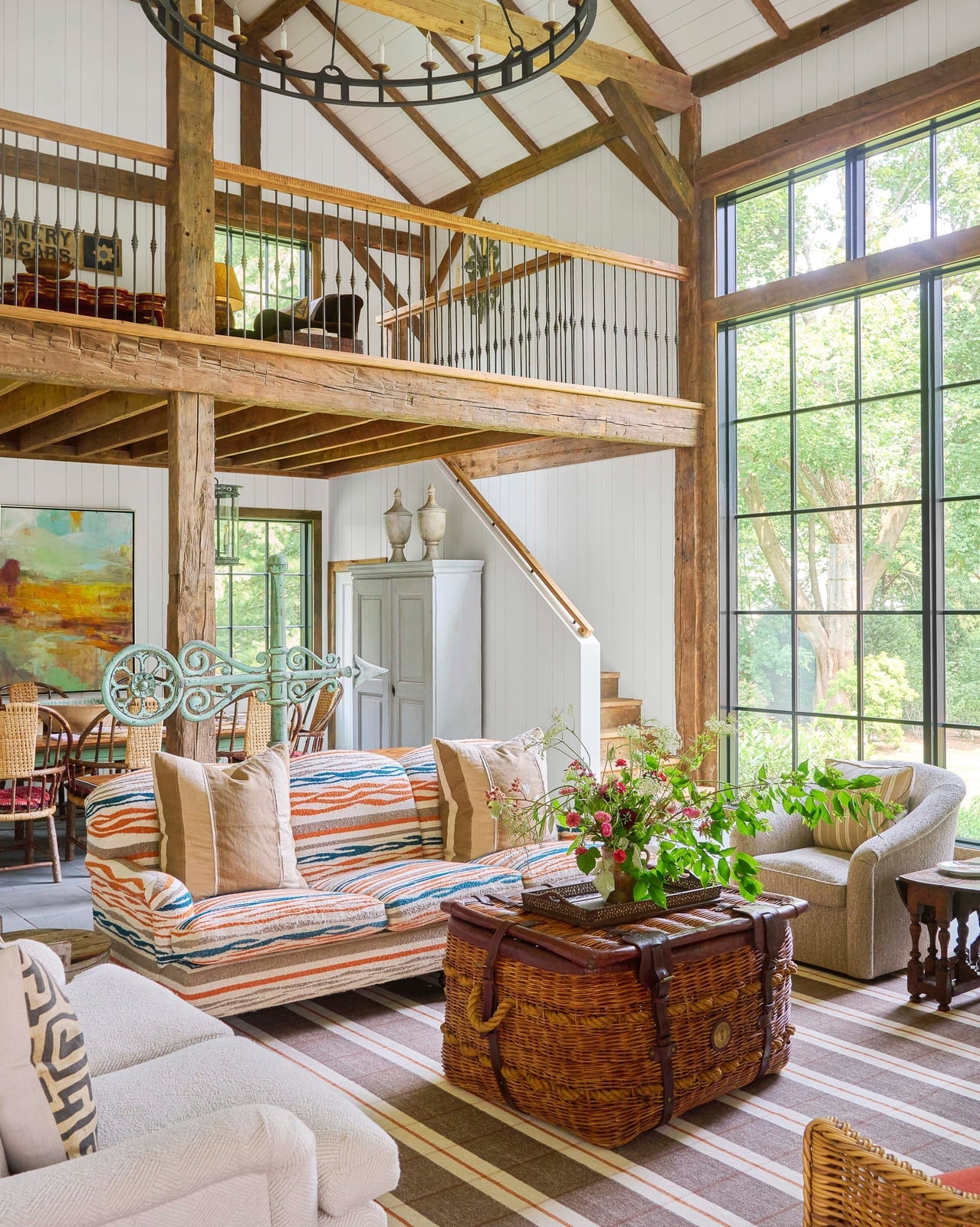
This living room leans on a palette of wood tones and neutrals, with the wide plank flooring and exposed beams working in tandem. The wood has a multi-colored, natural look that reads as aged without being dark. A striped sofa and a wicker trunk coffee table keep the seating area grounded, while the high ceiling and large windows let the floor stay the quiet foundation. The style secret is that the beams and planks share the same tonal family, neither tries to match exactly, so the room feels built rather than decorated.
27 / 31Light Wood Plank Flooring in a Cozy Farmhouse Sunroom
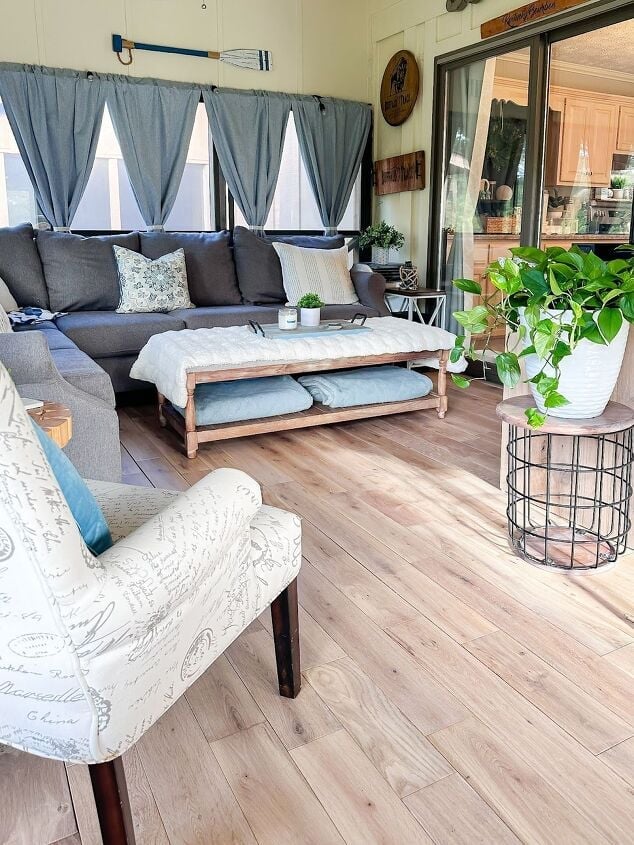
A sunroom can feel like an afterthought, but light wood plank flooring gives this compact space a clear purpose. The pale wood tones lift the grey and blue palette, making the room feel larger than its footprint. A sectional sofa anchors the layout, with a patterned armchair adding a break from the neutral fabric. Overhead lighting and natural light keep the floor looking clean rather than washed out. For a renter, this look is easy to borrow, wide vinyl planks in a light oak finish can go over existing tile or linoleum without permanent changes. The layout stays open, so the floor does all the work of defining the zone.
28 / 31Wide Plank Wooden Floors in a Grand Farmhouse Hallway
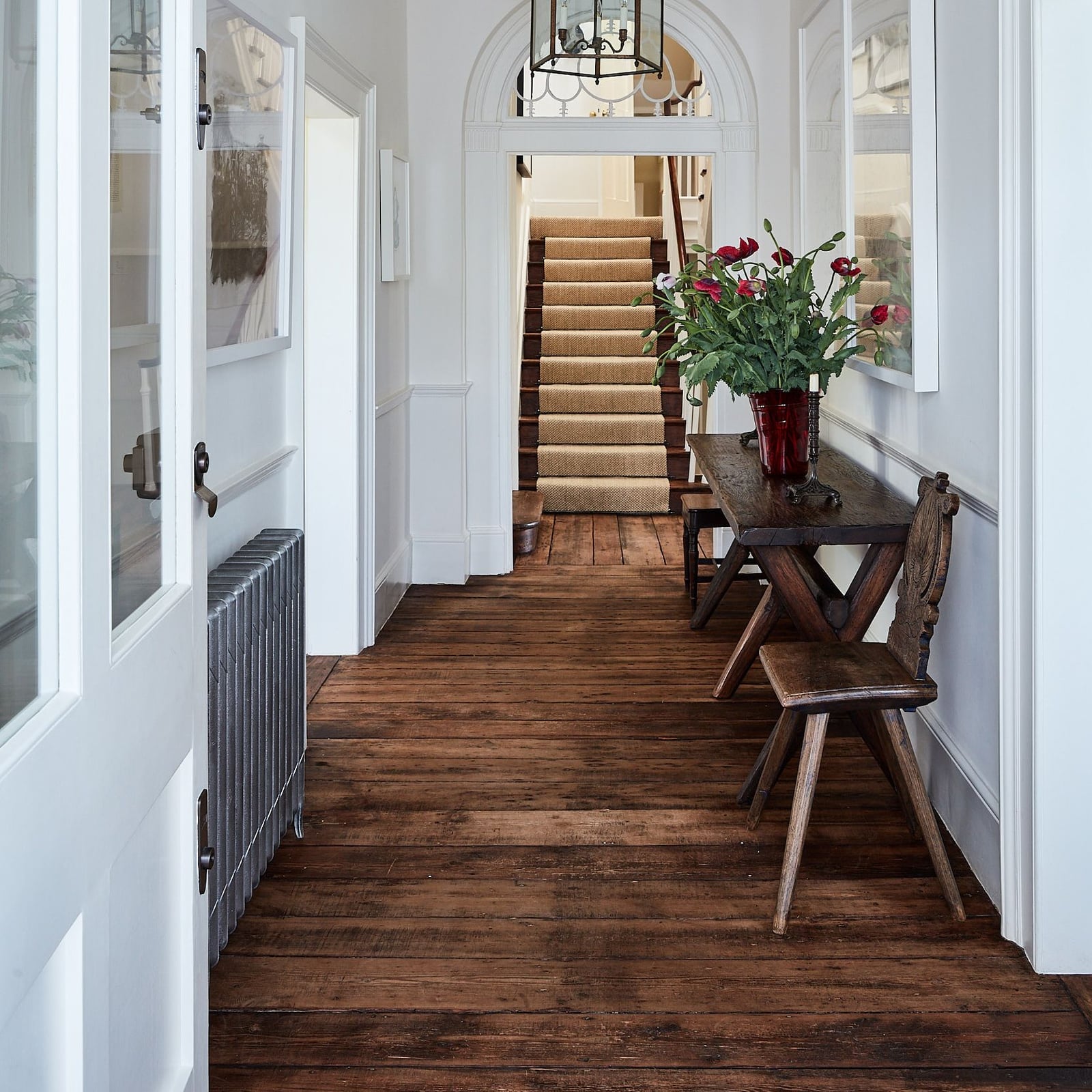
The wide plank floor in this hallway sets the pace for the whole house. Its brown and white palette stretches the roomy corridor toward the stairs, with a console table and a vase of flowers adding softness. A chandelier overhead casts natural light across the planks, so the grain stays visible. The proportion is the trick: wide planks in a narrow hall make the space feel wider than it is, while a busy pattern would close it in.
29 / 31Warm Wood Flooring in a Modern Farmhouse Living Area
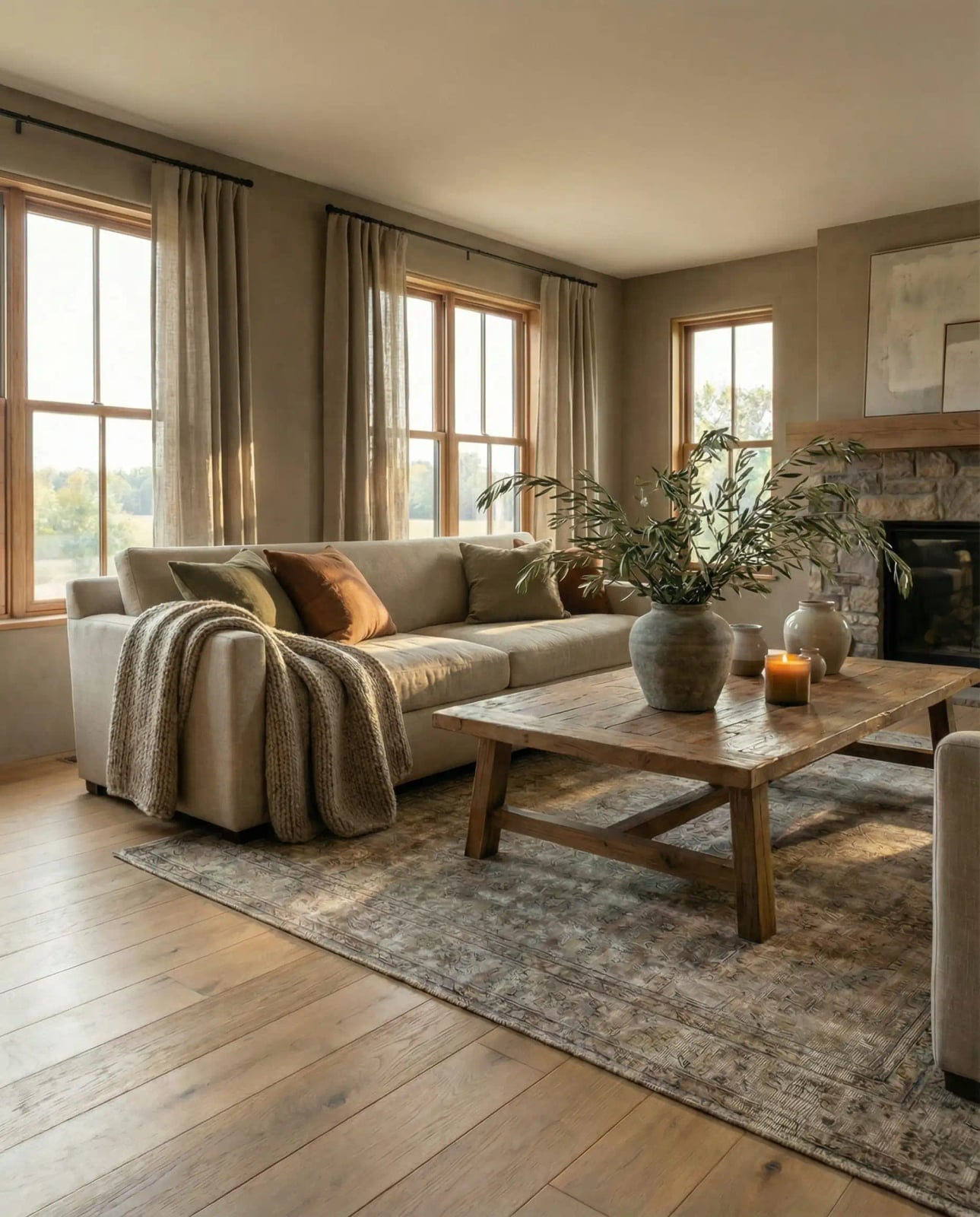
This living room uses warm wood flooring to bridge a neutral palette of earthy tones, beige, and brown. The large sectional sofa faces a stone fireplace, with the wooden coffee table centered between them. Soft natural light from the windows and warm ambient light keep the room from feeling stark. The palette relies on contrast: the wood is medium-toned, not too dark or light, so the stone fireplace and linen upholstery have room to breathe. A textured knit throw blanket adds the only pattern, proving that a warm floor can carry the room without competing.
30 / 31Rustic Wood Plank Floor in a Welcoming Farmhouse Entryway
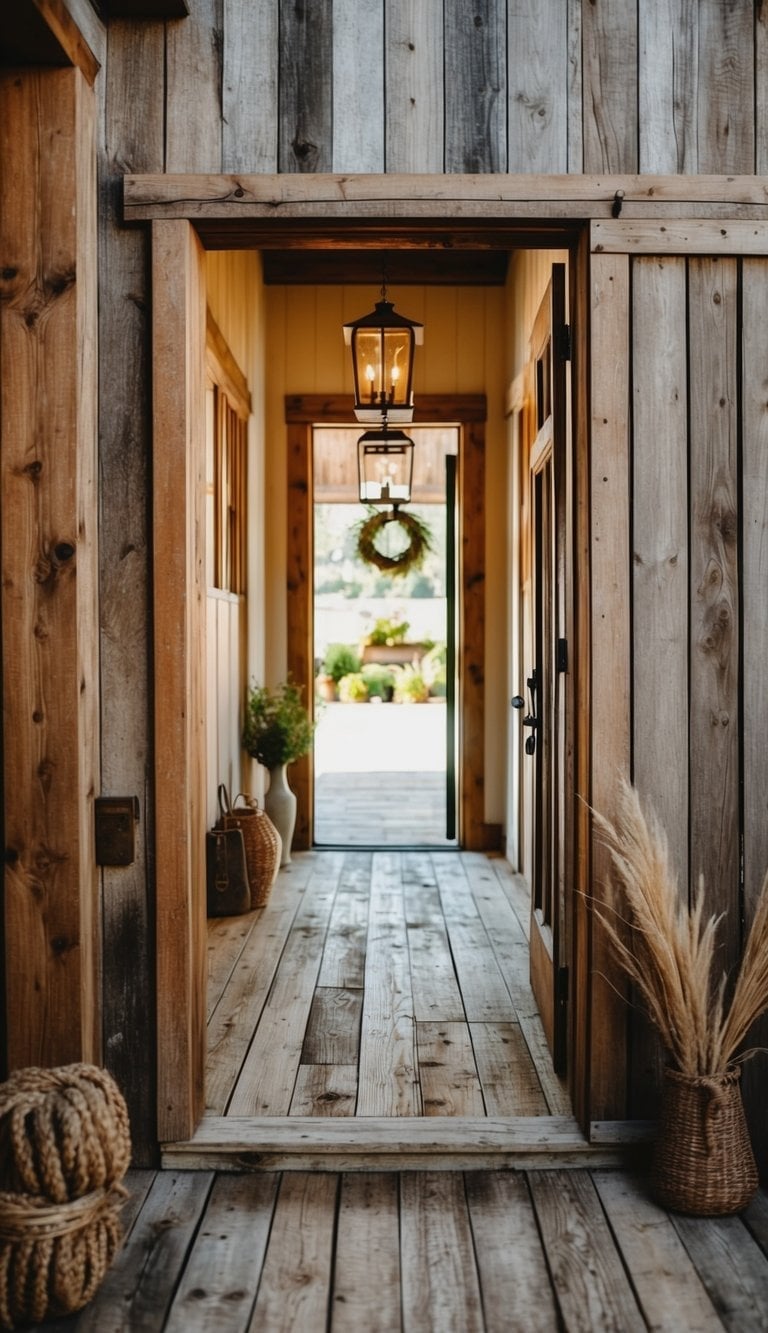
An entryway sets the tone, and rustic wood plank flooring makes that first impression feel solid. The natural wood tones and white palette keep the space open, with a sliding barn door adding vertical heft. Warm ambient light from lanterns softens the wood grain, so the floor appears worn but not rough. The layout leads the eye straight outdoors, but the planks keep the room grounded. A metal and wicker bench or hooks would follow the same material story without competing. Keep walls simple and let the wood do the welcoming.
31 / 31Final Thoughts
Farmhouse flooring comes down to what handles your daily life and still looks like it belongs. Wood warms up a room, stone stands up to boots and paws, and tile adds pattern where you want a surprise. Pick one material per zone to keep the space from feeling choppy. For upkeep, sweep wood regularly and seal stone every couple of years. Check your climate before installing anything on a porch or in a mudroom. The best floor is the one you walk on without thinking about it. These 30 ideas should give you a starting point for your own home.