Turning a basement into a bedroom is a smart way to add space, but it comes with its own set of design rules. Low ceilings, limited natural light, and no windows mean you have to be deliberate about layout, lighting, and color to keep it from feeling like a cave.
This article rounds up 31 basement bedroom ideas that focus on making the room feel bigger, brighter, and more comfortable, no matter your style. You will get practical tips on choosing the right palette, arranging furniture, and picking materials that work with the room’s quirks.
01 / 32Boho Farmhouse Bedroom Layout
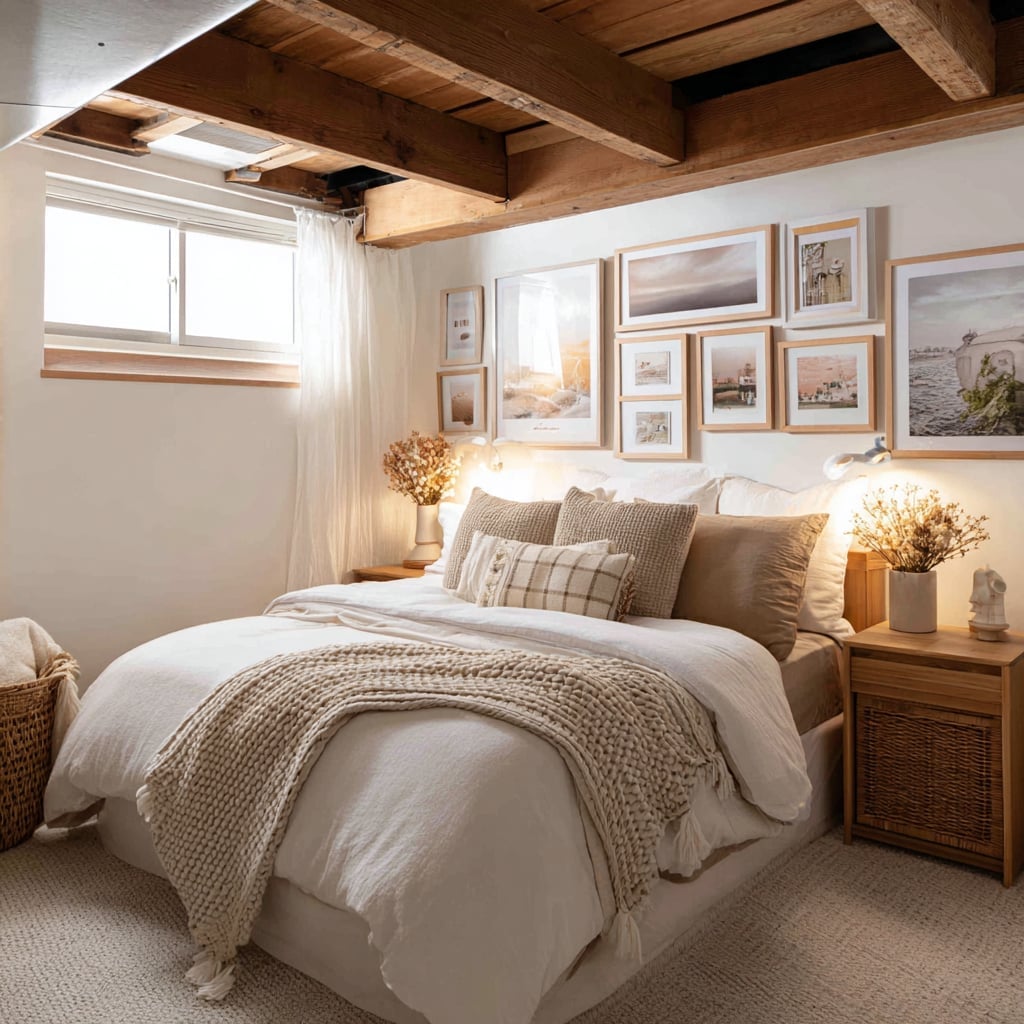
A gallery wall over a bed that sits against the wall is a space-saving layout that still gives the room focus. The cream and beige palette with natural wood and wicker keeps the look light, while the layered linen bedding adds softness. Ambient light from a window and task lamps on a wicker nightstand make the room feel roomy without clutter. The mix of boho and farmhouse works because the gallery wall anchors the bed and the simple materials let the arrangement stand out.
02 / 32Modern Transitional Bedroom Palette
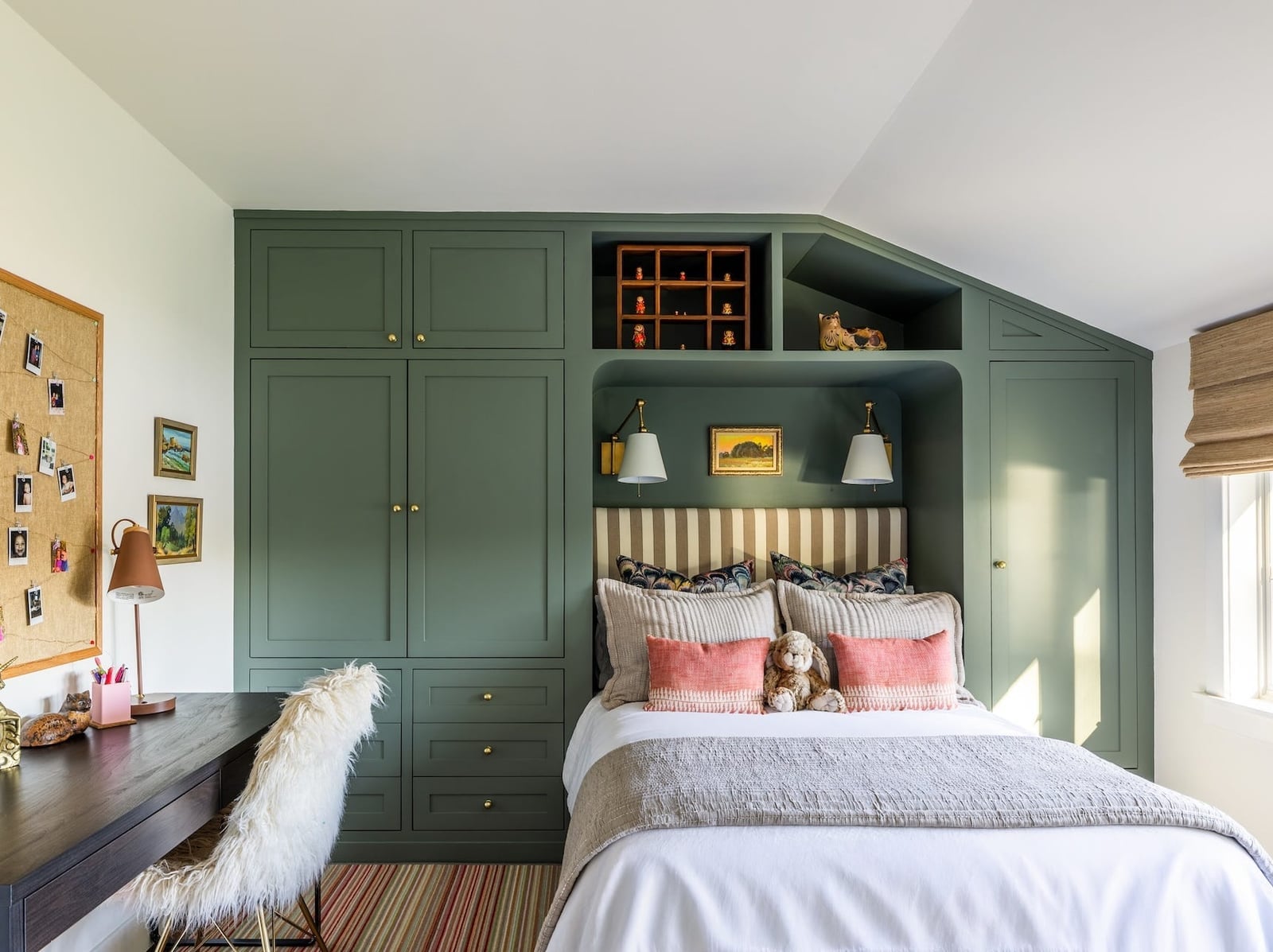
The palette here is a study in contrast: deep green built-in cabinets against beige walls, with white bedding and pink accents. Wood tones from the bed frame and desk warm the space, while a striped headboard in fabric adds pattern. The floor-to-ceiling green cabinetry is the hero element, flanking a centered bed and balanced by a desk to the side. Wall sconces and ceiling light keep the look clean. The deep green reads as modern and grounded, while the pink and beige keep it transitional rather than dark.
03 / 32Bohemian Bedroom Materials
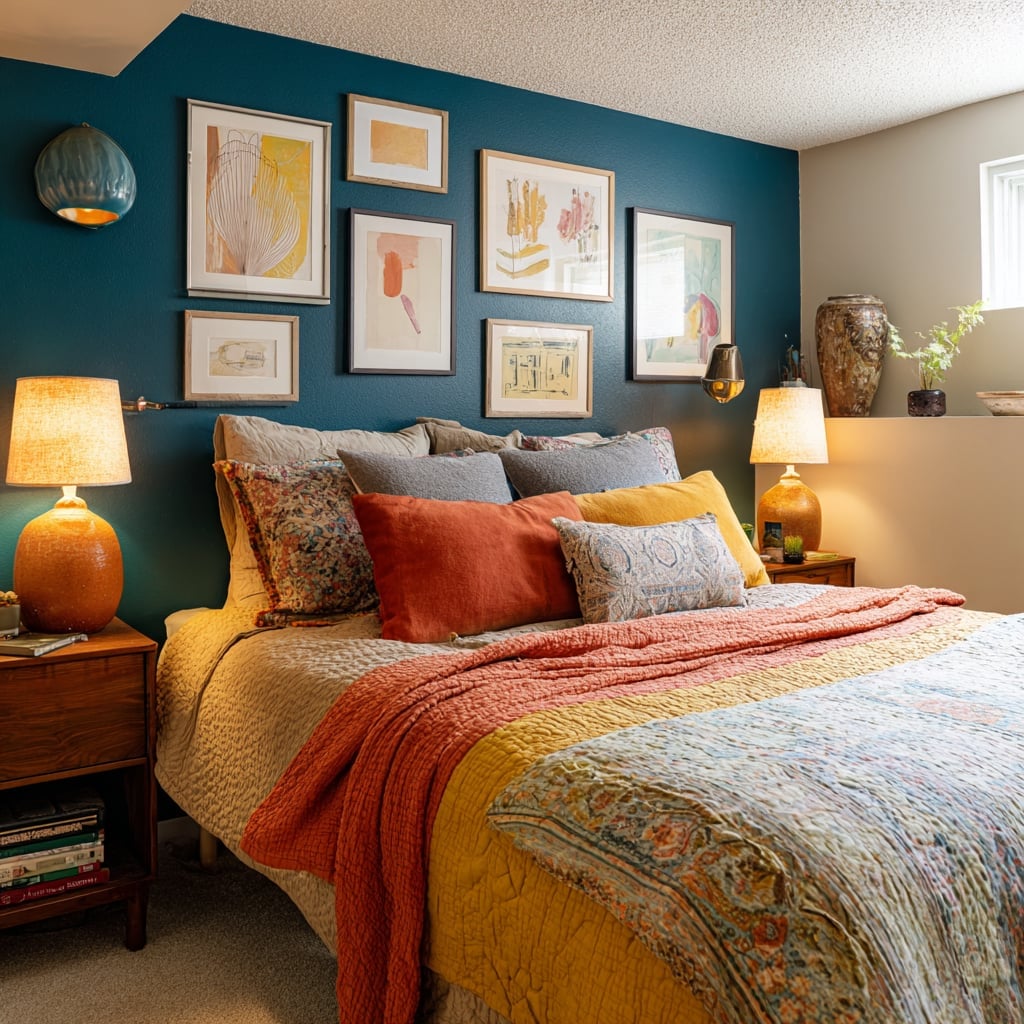
What makes a bohemian bedroom feel layered without looking chaotic? It comes down to how you mix materials. Here, a wooden bed frame sits between matching wooden nightstands, with ceramic table lamps and a wall sconce for light. The standout is a vibrant patterned quilt in teal, rust, yellow, and cream that anchors the whole palette. The wood tones ground the bright colors, and the fabric of the quilt adds texture. The room feels roomy because the materials stay simple around the bed, letting the quilt do the work. A wall sconce keeps the bedside clear, which helps the layout feel open.
04 / 32Cozy Boho Bedroom Lighting
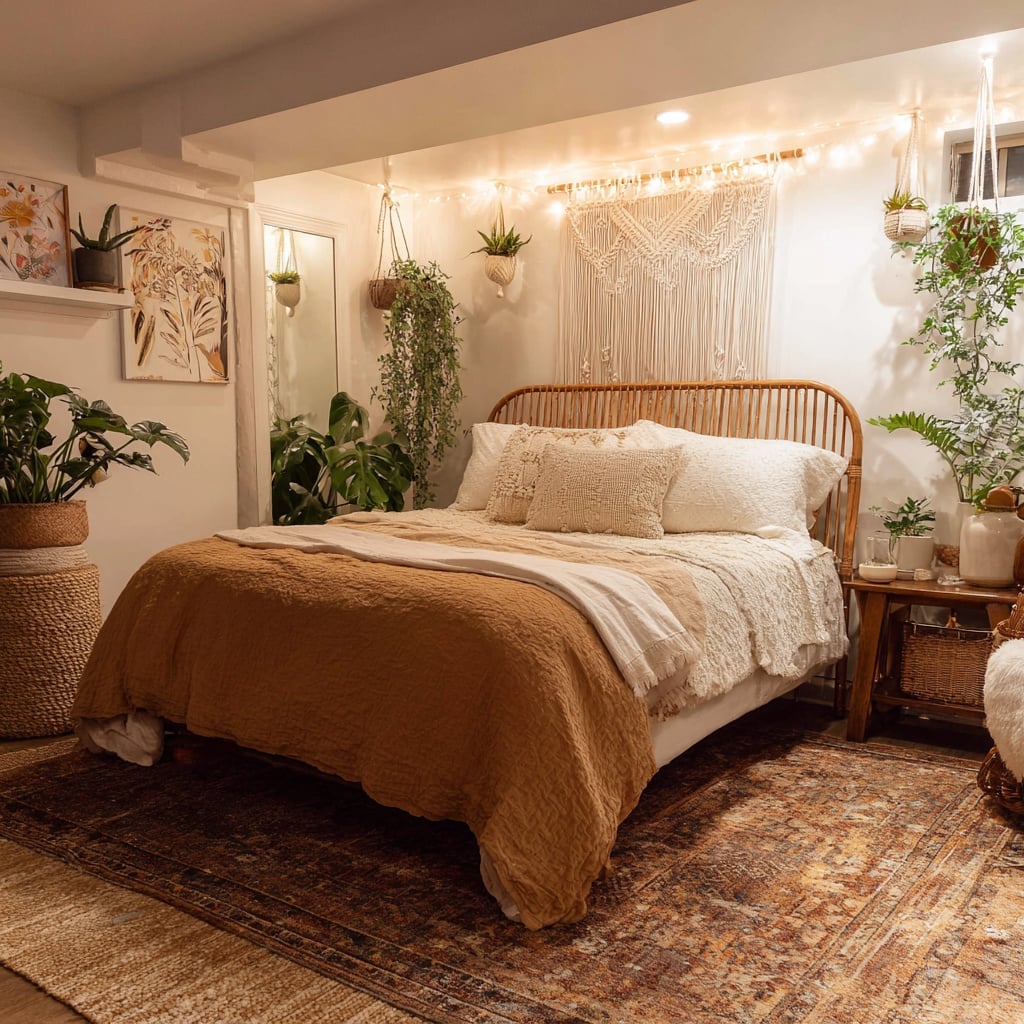
String lights draped near a rattan headboard and macrame wall hanging create a soft glow that suits a basement bedroom with limited natural light. A bedside lamp adds task light for reading while daylight balances the warmth. The brown, cream, white, and green palette stays cohesive because the lighting is layered: ambient from the string lights, task from the lamp, and natural from the window. Plants arranged around the bed benefit from the daylight, but check your USDA zone before choosing indoor greenery.
05 / 32Modern Boho Bedroom Storage
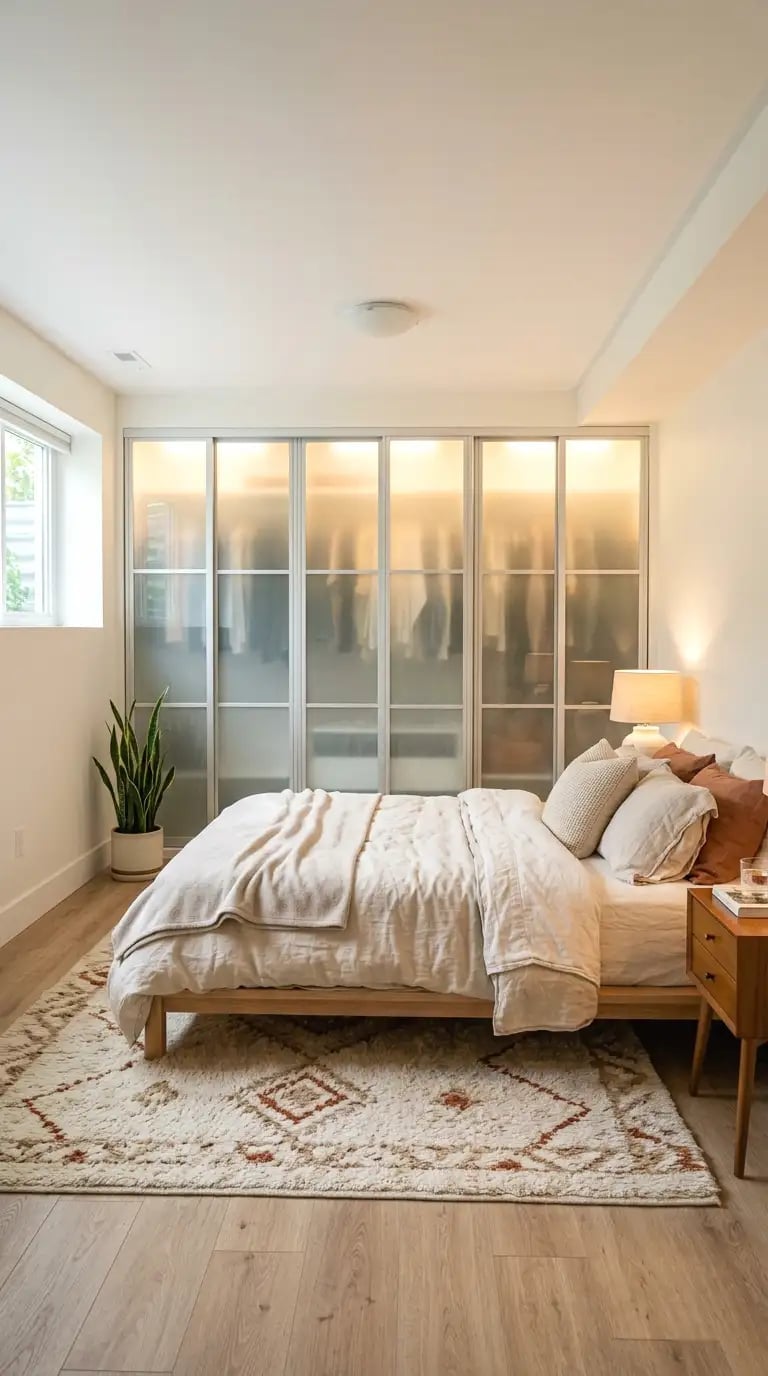
Frosted glass closet doors are a practical choice for a basement bedroom where you want to hide clutter but keep the room feeling open. The cream, brown, and white palette stays light, and the glass lets you see outlines without the visual noise of visible contents. A platform bed and a single nightstand keep the layout simple, while a rug and a plant add warmth. The frosted doors break up the wall without adding weight, which is useful in a room where you want storage that does not dominate the space.
06 / 32Modern Basement Bedroom Layout
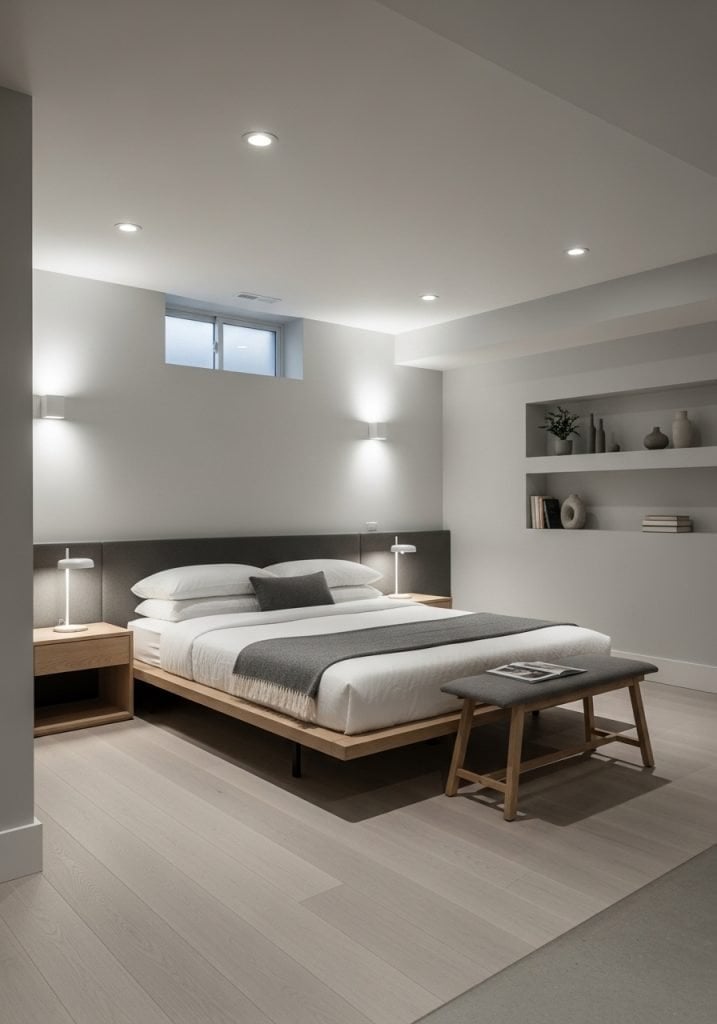
A low platform bed is a smart choice when ceiling height is tight, but going too low can make the room feel sparse. The trick is balancing that profile with something substantial nearby. Here a low platform bed sits centered, with simple nightstands on either side and a bench at the foot. Wall sconces keep the surfaces clear, which helps the minimalist layout breathe. The gray and white palette with wood tones gives the room a calm, open feel. The low bed becomes a grounding element rather than an afterthought when the pieces around it have enough visual weight to anchor the space.
07 / 32Industrial Basement Bedroom Materials
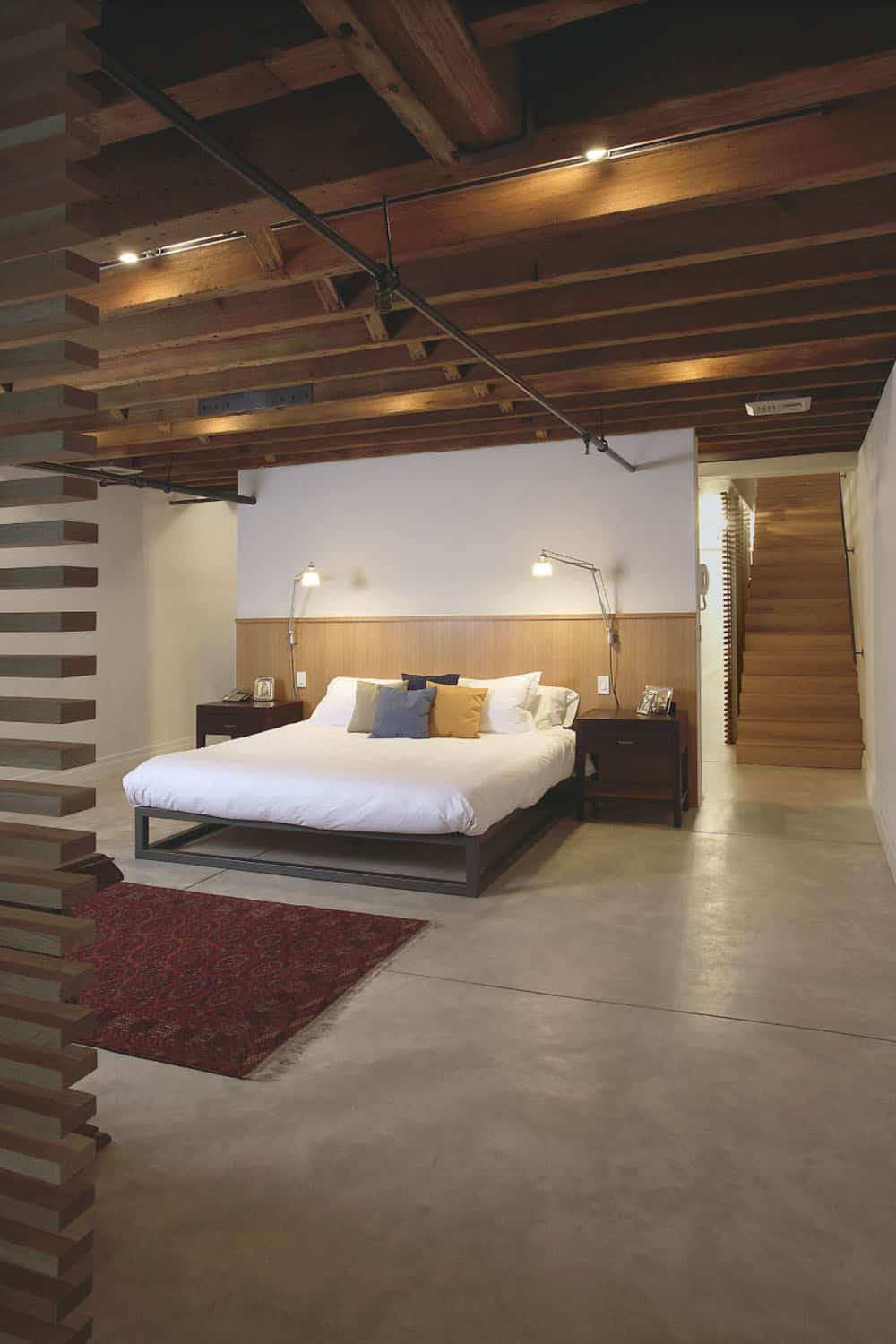
Exposed wooden ceiling beams are the defining feature here, and they bring warmth to what could otherwise be a cold palette of concrete and metal. A slatted screen on one side adds privacy without blocking light, while a rug in front of the bed softens the hard surfaces. The mix of wood, linen, and metal keeps the industrial look from feeling too harsh. If you are renting and can not touch the ceiling, bring in a freestanding screen or a large wooden headboard to echo that same raw texture.
08 / 32Modern Basement Bedroom Lighting
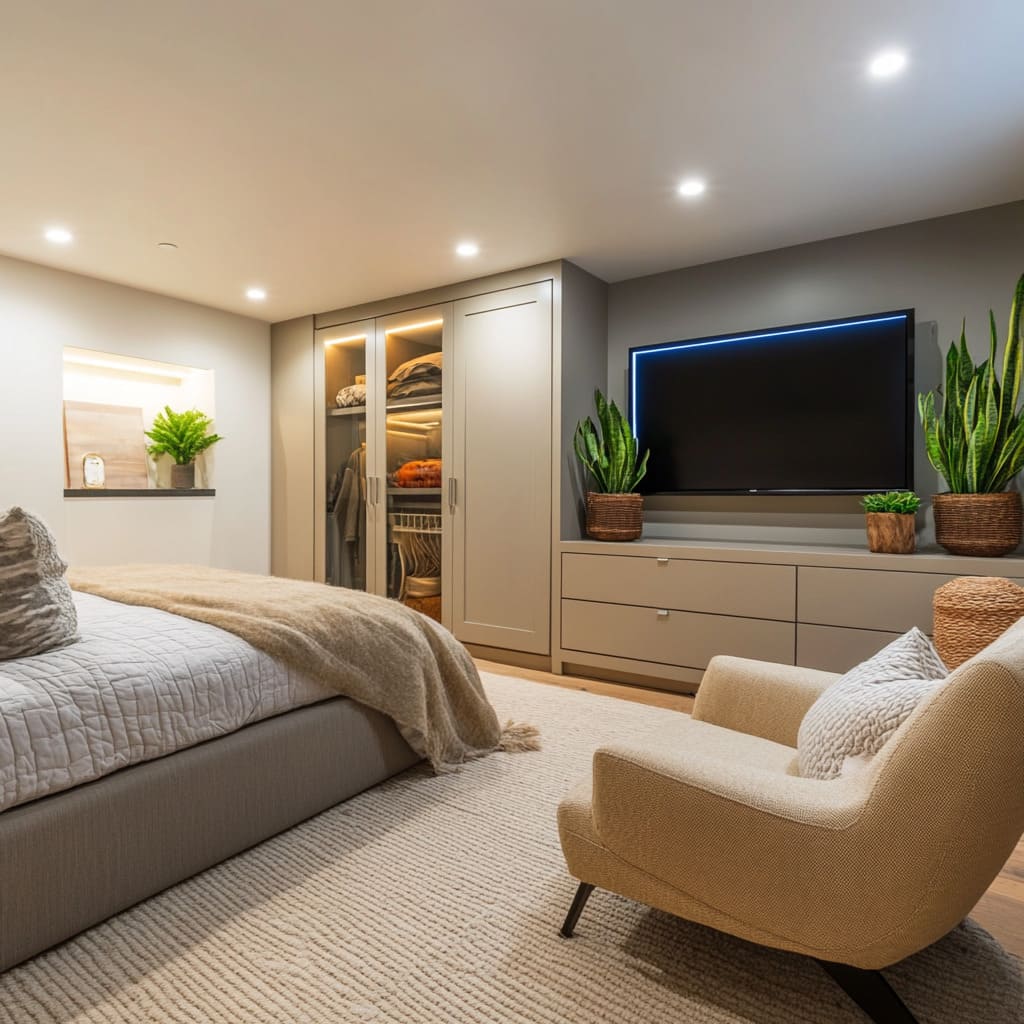
A lit wardrobe interior is a practical way to add function and atmosphere in one move. Here the wardrobe glows from within, making the neutral beige and green palette feel intentional rather than flat. Recessed ceiling lights handle the general brightness, but the cabinet lighting turns a storage piece into a focal point. For a basement with limited windows, this kind of layered light makes the room feel bigger and more finished. A dresser and an armchair round out the layout without crowding it.
09 / 32Moody Bedroom Palette
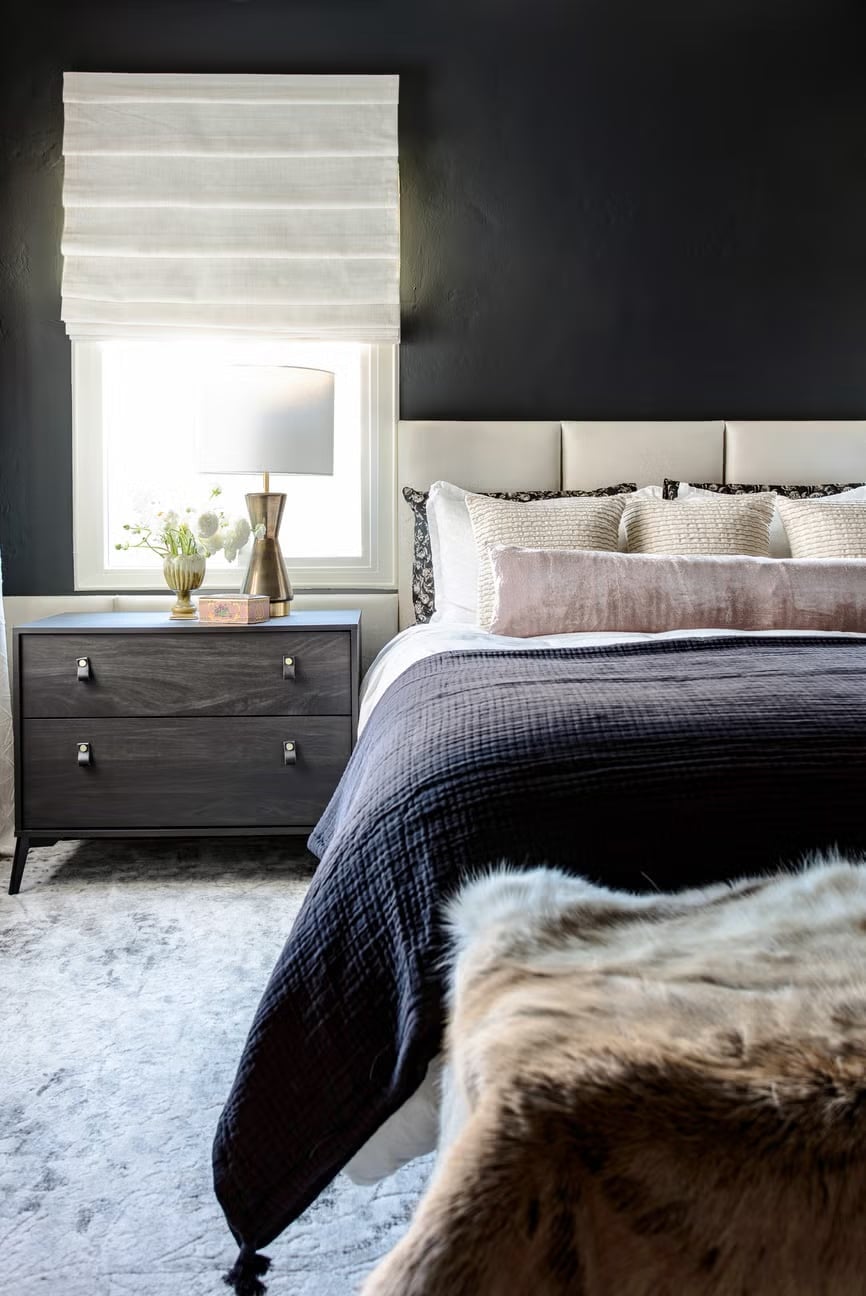
Can a dark accent wall make a small basement bedroom feel cozy instead of cramped? It can, when the palette stays light enough to balance it. A dark gray wall anchors the room, while cream bedding and a blush pink fur throw prevent a cave-like feel. The upholstered headboard in a soft neutral adds texture without weight. A single nightstand and a warm lamp keep the layout simple. The key is keeping the dark shade on one wall only and letting the lighter tones carry the room.
10 / 32Transitional Bedroom Materials
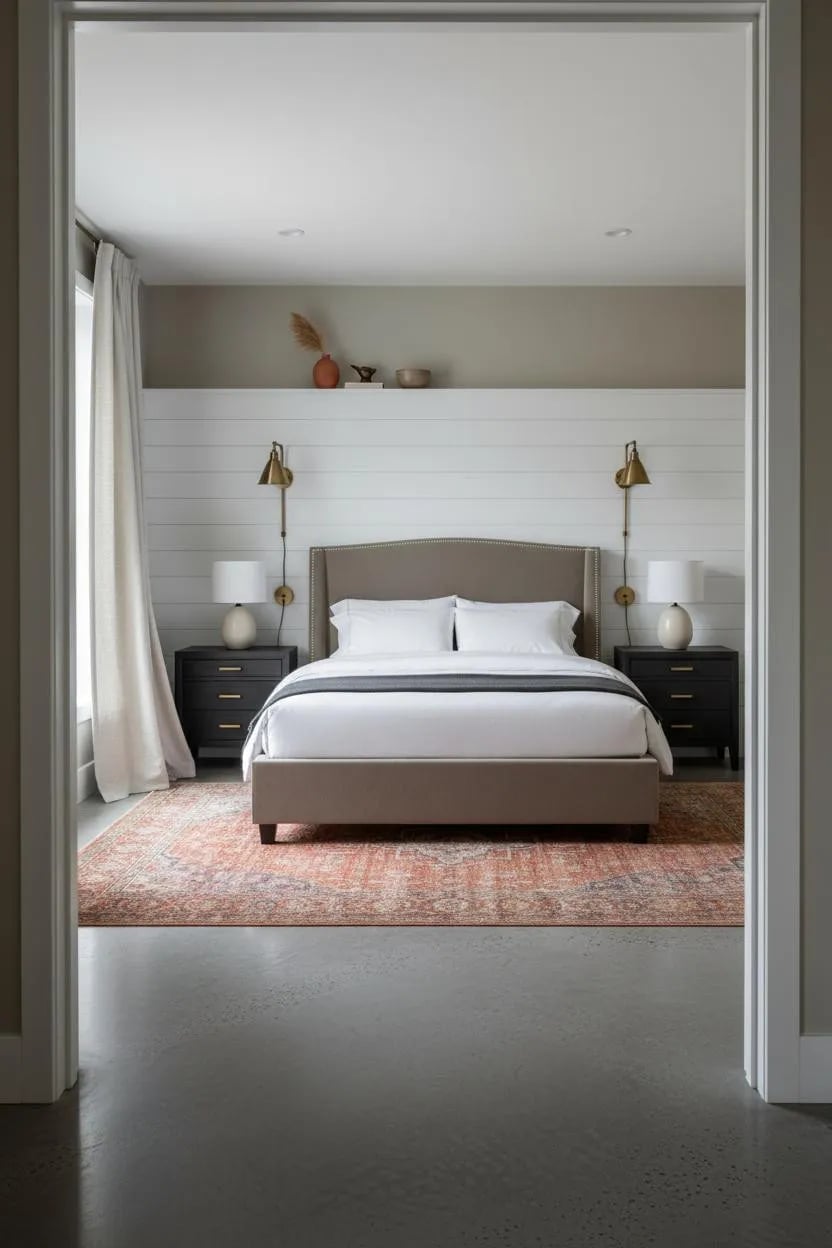
A shingled accent wall adds texture without demanding a full style commitment. Here the shingles run behind the bed in a soft gray, while the rest of the room stays neutral with beige and white. An upholstered bed, linen curtains, and wood nightstands keep the look warm and approachable. The shingles bridge the line between casual and polished, which is the whole point of transitional design. They give the room a finished feel without the formality of paneling or wallpaper.
11 / 32Traditional Bedroom Scale and Proportion
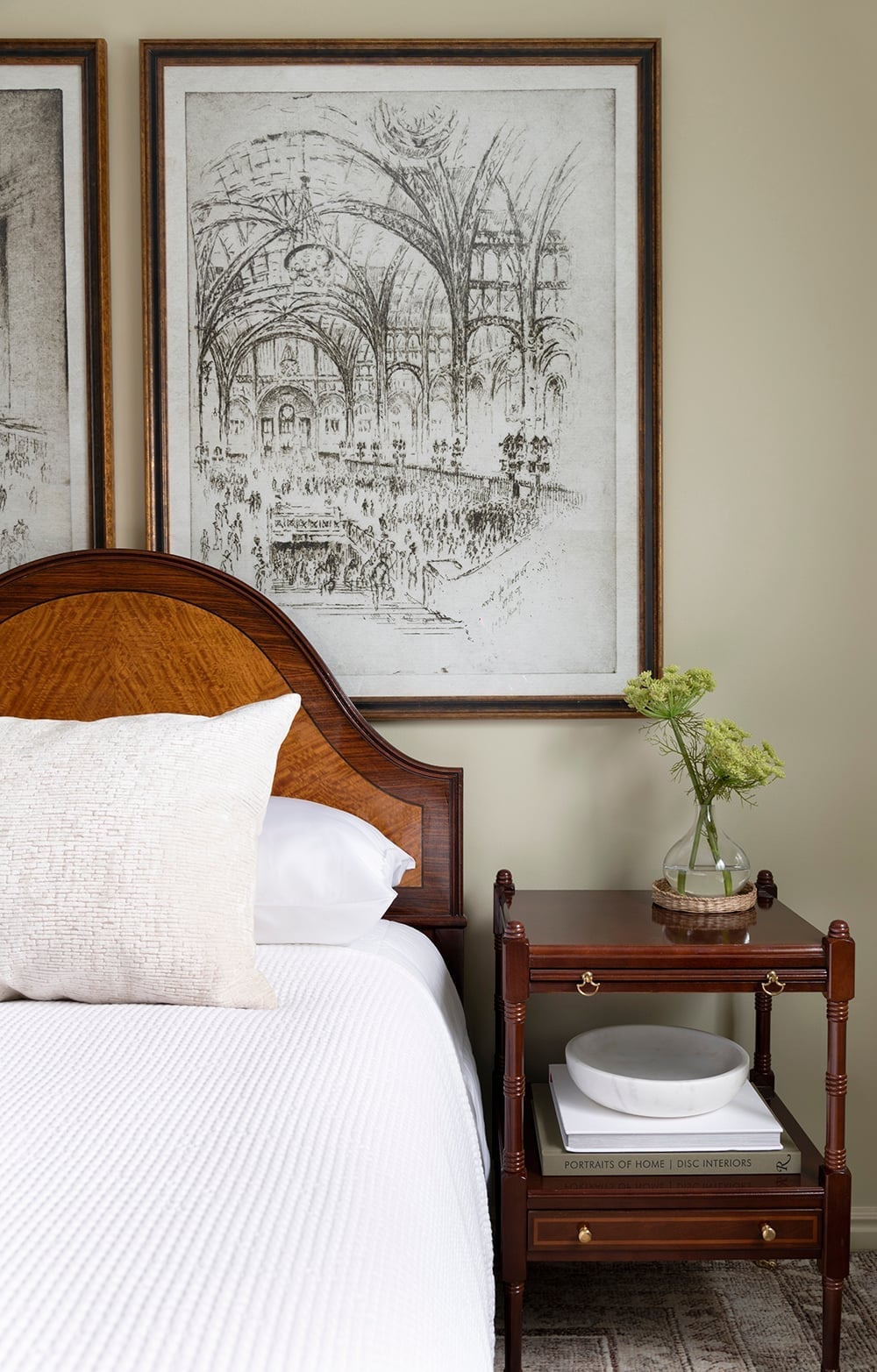
When the nightstand is the anchor, the rest of the room settles around it. A dark wood nightstand with a single drawer and turned legs brings weight to a compact bedside vignette. The bed reads as the logical partner, not the star, which lets the artwork above the nightstand pull the eye upward. That piece of art, a landscape in a simple frame, opens the wall without crowding it. The green and white palette keeps the vignette grounded: the green appears in the bedding and a small vase on the nightstand, while the white walls and linen curtains keep the look airy. A glass lamp with a linen shade adds ambient light without blocking the view of the art. The rule of thumb here is that the nightstand should be roughly the height of the mattress top, so the lamp and decor sit at a natural eye level.
12 / 32Modern Farmhouse Bedroom Styling Variation
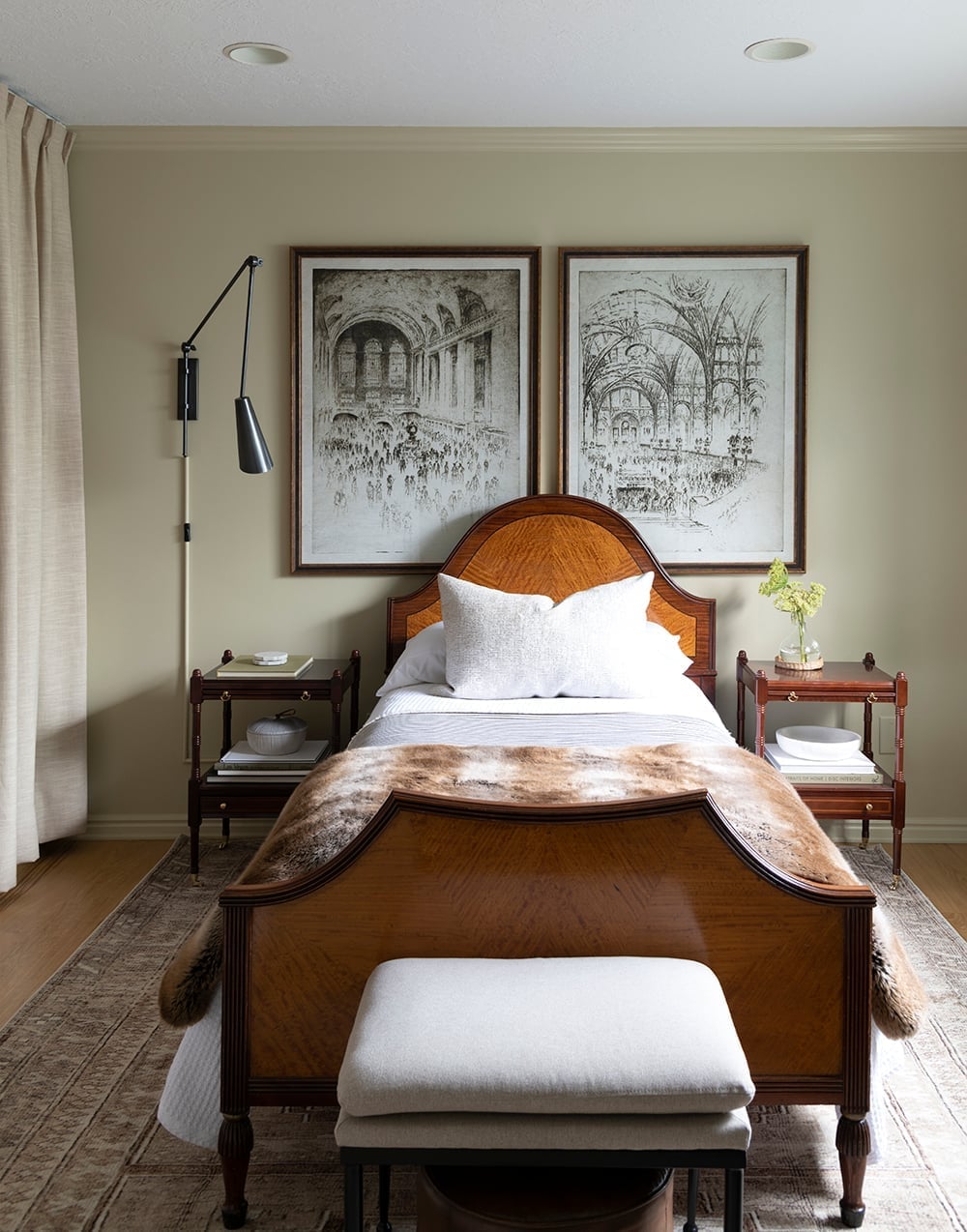
Modern farmhouse leans on contrast, but a close alternative is tonal layering, and this room picks that route. The palette stays in the cream, beige, and gray range, with wood tones adding the only warmth. The bed sits centered between two nightstands, each with a table lamp, and a bench at the foot of the bed anchors the layout. The large wall art above the bed is the element that defines the style. It is a textured piece, likely woven or layered, that breaks the flatness of the wall without adding color. The metal bed frame with a fabric headboard keeps the look soft, while the stone or concrete floor offsets it with a cooler surface. The bedside lamps are the only overhead light alternative, which means the room relies on them for evening warmth. The rule that holds this together is that the art should be roughly two-thirds the width of the bed, so it feels like a natural extension of the headboard, not an afterthought.
13 / 32Modern Minimalist Bedroom Layout
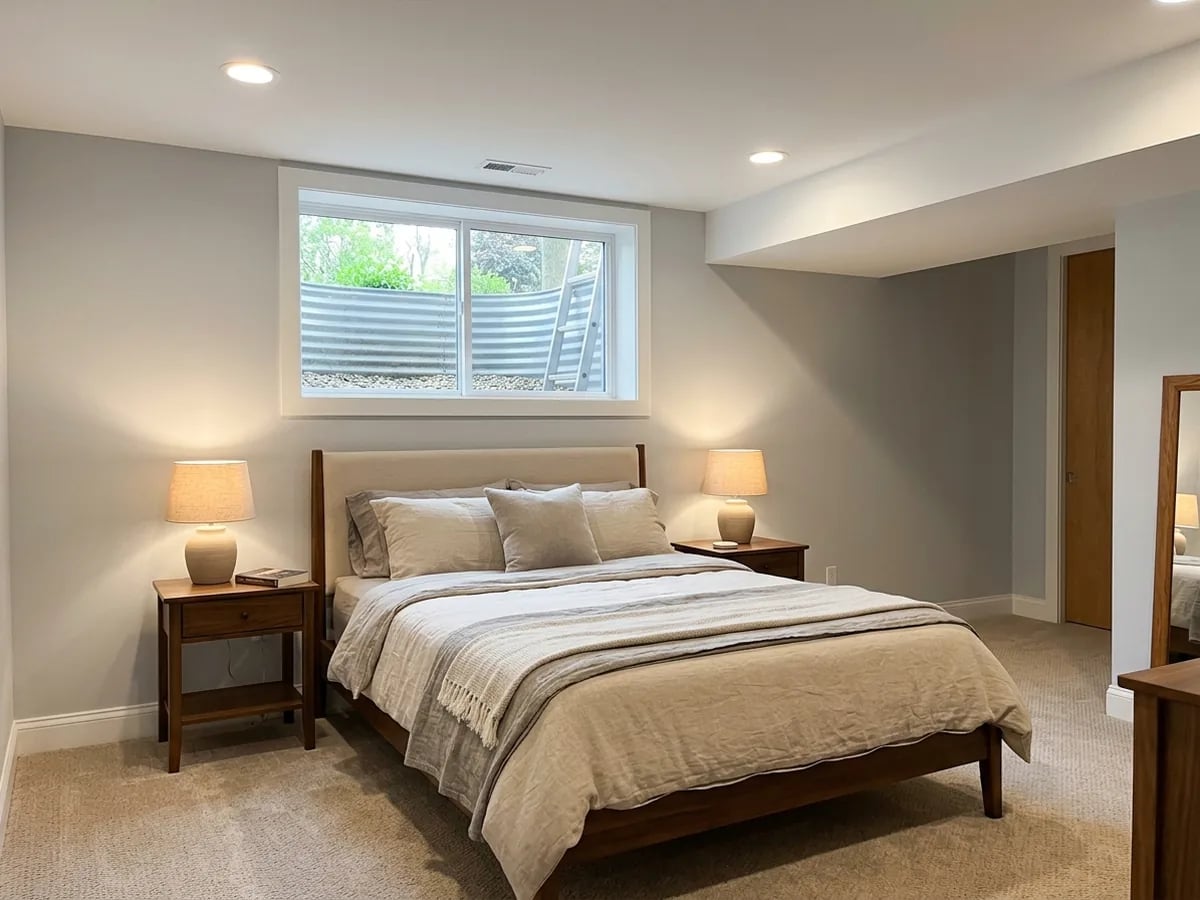
The window is the main source of natural light. The bed is centered on the wall opposite the window, with a mirror on the side wall that reflects the view. The palette stays neutral, beige and gray, with wood tones in the bed frame and nightstands. The recessed lighting provides even ambient light, while the table lamps on each nightstand add task light for reading. The symmetry of the bed and nightstands creates a calm, balanced room. The rule here is that the mirror should be placed to reflect the window, not the bed, so the room feels larger and brighter without a direct glare on sleepers.
14 / 32Traditional Bedroom Materials
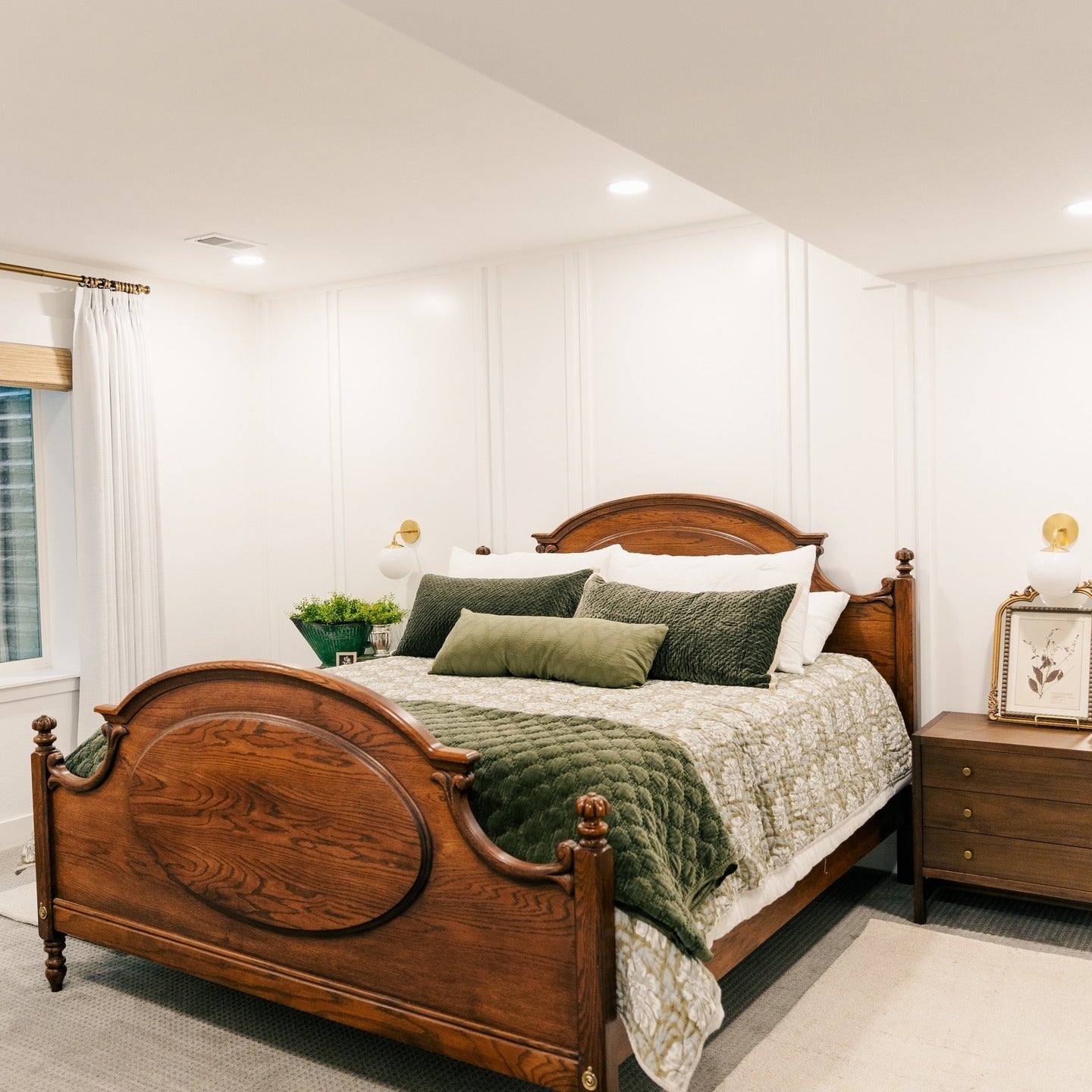
A four-poster bed is the kind of piece that defines a room, and this one does it with turned posts and a carved headboard. The wood is dark, likely walnut or a similar tone, and it stands against a green wall. The nightstand and dresser match the wood tone, creating a unified look. The fabric is limited to the bedding, which is a white linen duvet and a few accent pillows. The wall sconces on either side of the bed provide warm ambient light, and a window on the side wall balances the dark wood. The rule of thumb is that a four-poster bed should have at least 18 inches of clearance between the top of the posts and the ceiling, so the room does not feel cramped.
15 / 32Traditional Bedroom Scale and Proportion With Symmetrical Bedside
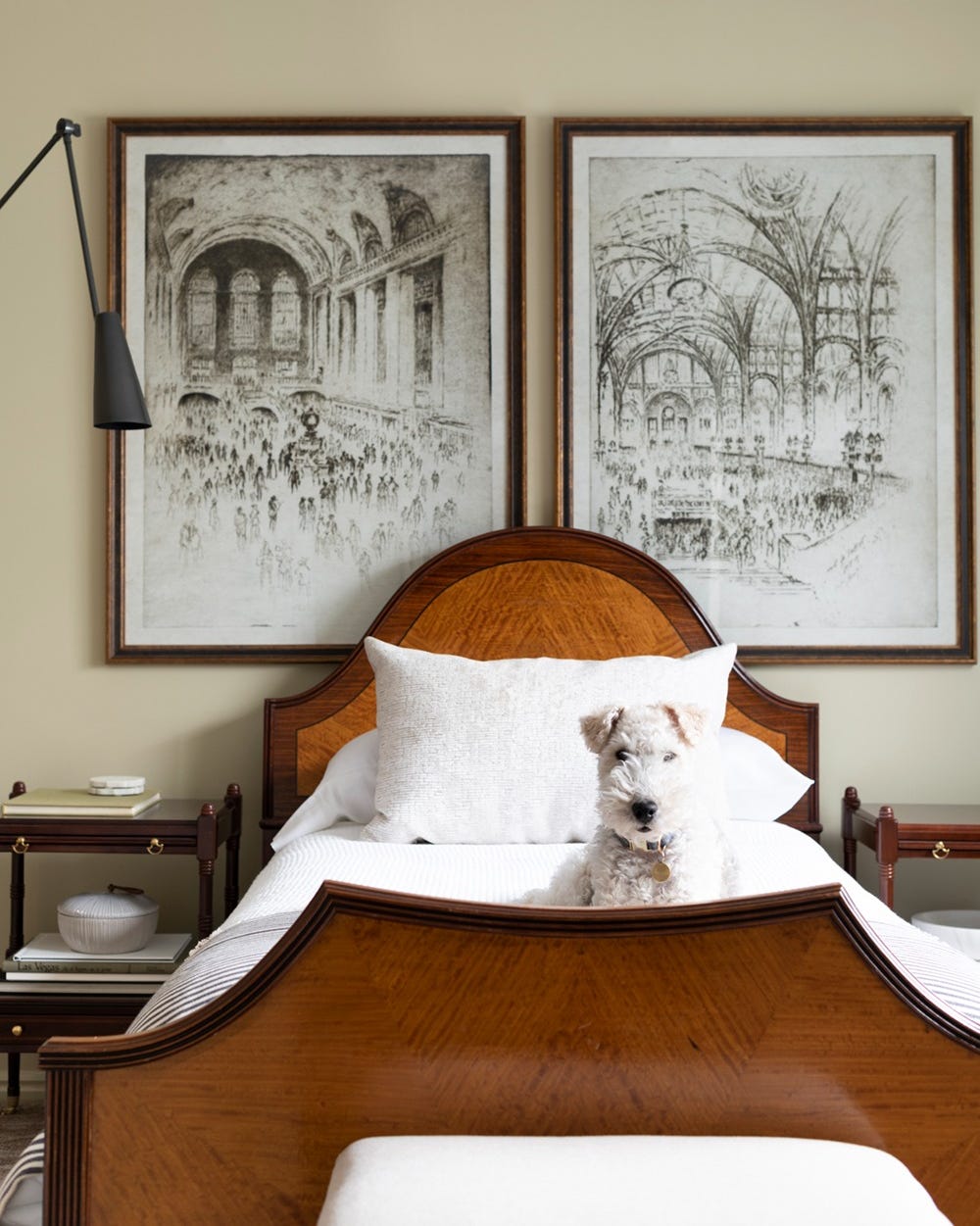
Symmetry is the easiest way to make a small room feel intentional, and this room uses it well. The bed is centered on the wall, with matching nightstands on either side. Each nightstand holds a table lamp with a glass base and a linen shade, and the wall sconce above each nightstand adds a second layer of light. The artwork above the bed is a pair of framed prints, each the same size, and they sit centered above the headboard. The palette is neutral, brown and cream, with the wood tones in the bed frame and nightstands providing the warmth. The layout works because the nightstands are proportional to the bed, roughly the same width as the mattress is tall. The rule that makes this feel complete is that the distance between the top of the nightstand and the bottom of the wall sconce should be about 12 to 18 inches, so the light lands on the nightstand surface, not the wall.
16 / 32Scandi Reading Corner Materials
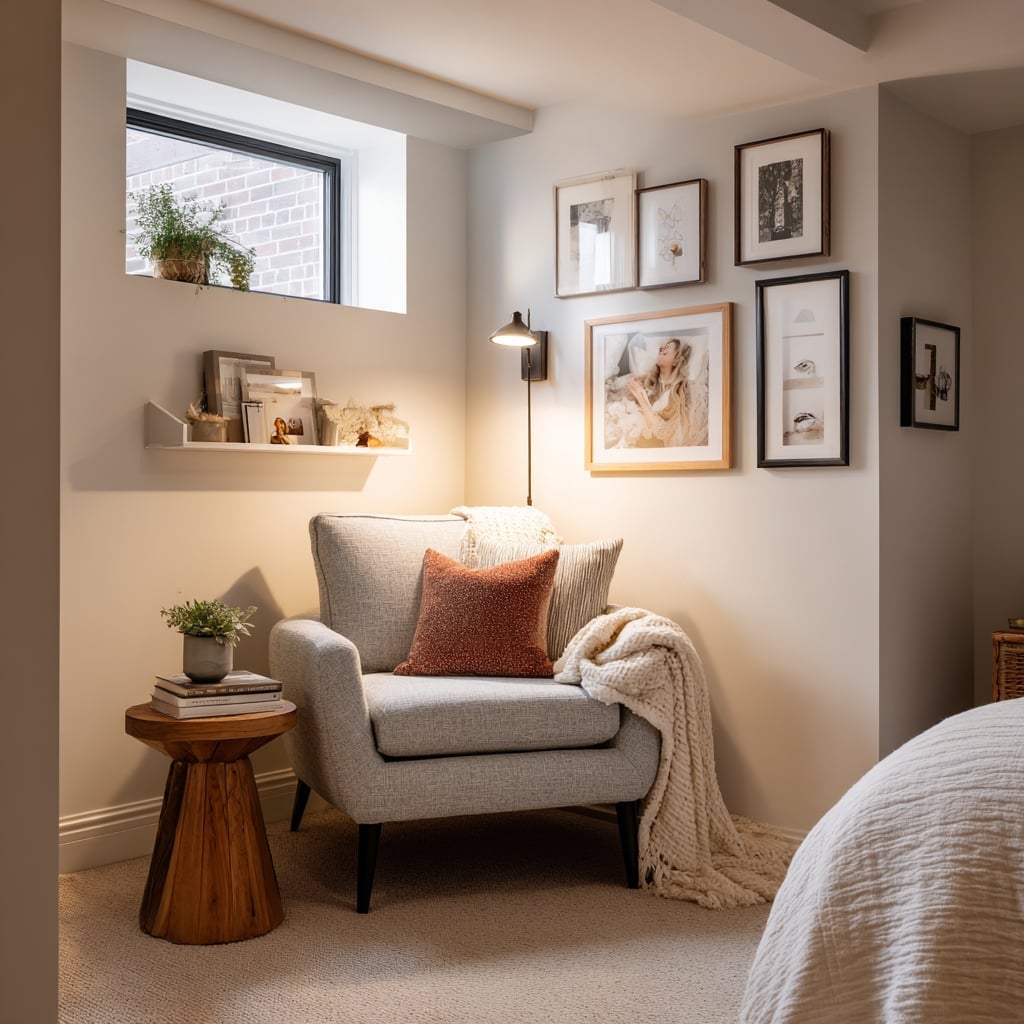
The armchair sits beside a window, a wooden side table within arm’s reach and a folded blanket adding a rust note to the neutral palette. A wall sconce washes light down for reading while the room’s ambient glow stays on. For a basement bedroom where ceiling height is low, anchoring a reading corner under the window keeps the floor plan open. A compact layout like this one works with the window at your back, a layout that frees the room for the bed and storage. The wooden side table grounds the corner without adding visual bulk.
17 / 32Modern Industrial Bedroom Palette
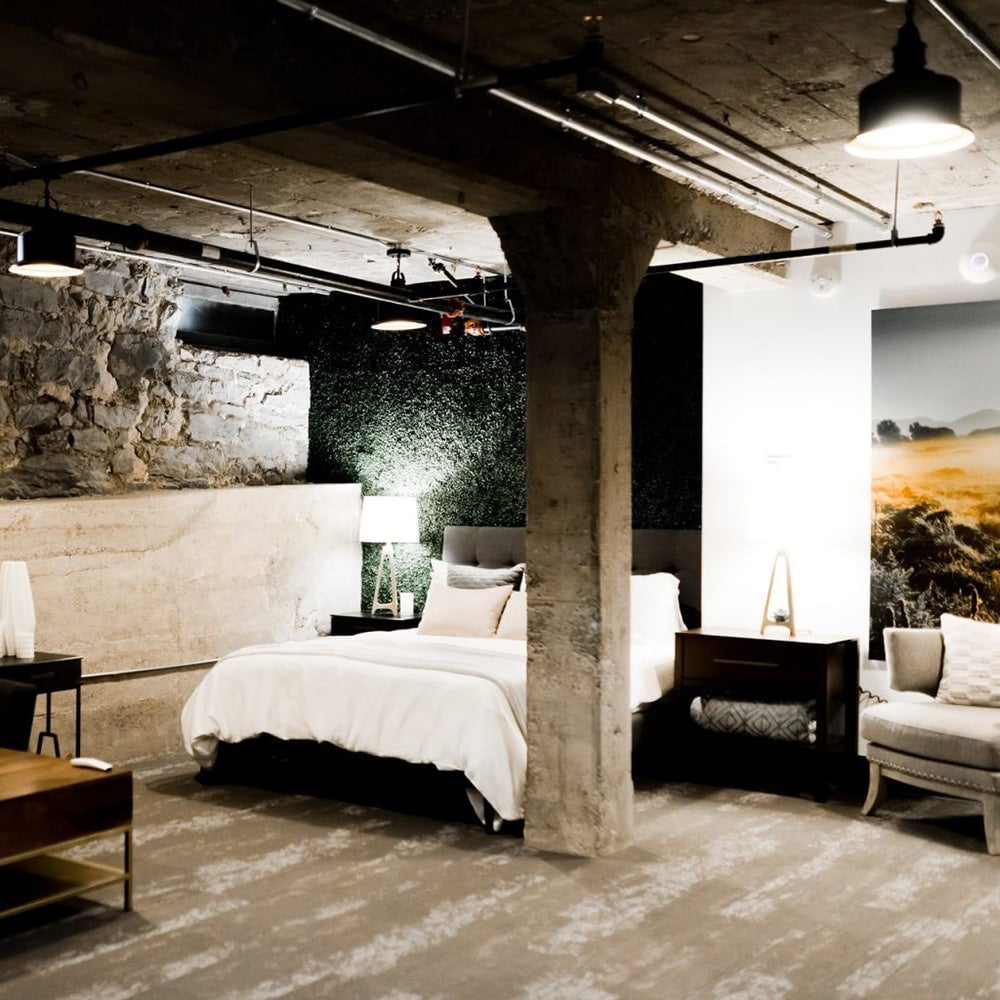
Exposed concrete and stone walls in gray and brown pair with a white bed and green fabric accents. The palette stays in the cool-neutral family, with the brown of the stone and the green of the armchair as the only warm draws. The bed sits centered between two nightstands, a large framed artwork anchoring the wall, while a seating area to the side makes the room feel wider. Overhead lights and bedside lamps keep the ceiling plane clean. For renters, this look is achievable with peel-and-stick concrete wall panels and a stone-finish area rug.
18 / 32Modern Bedroom Lighting, Indoor
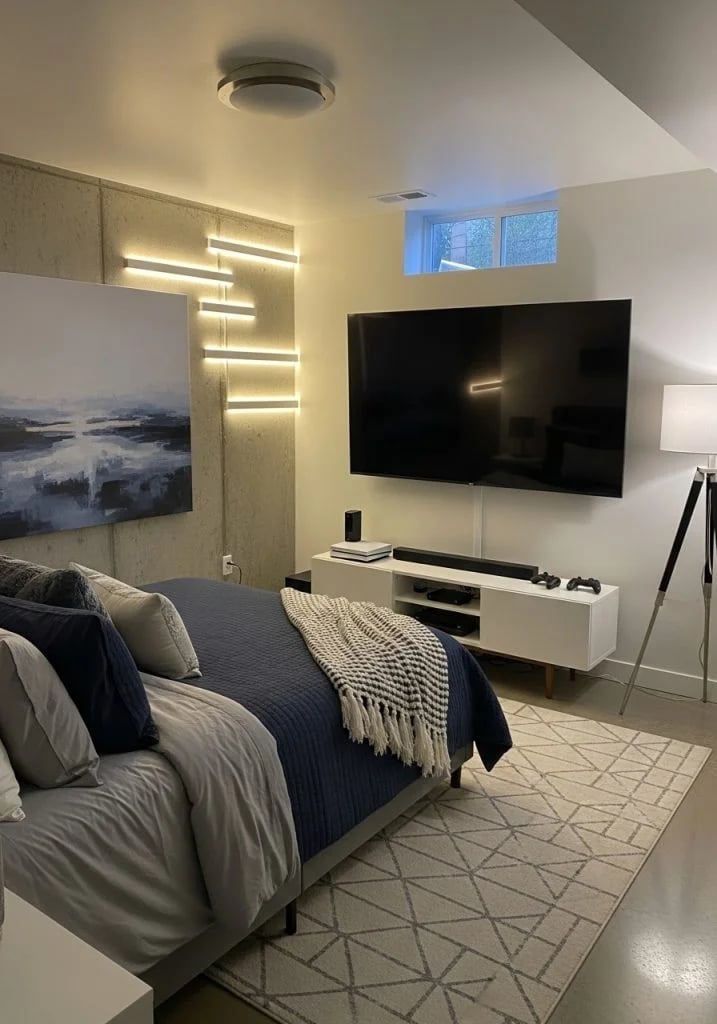
Linear wall lights run vertically beside the bed, a departure from the usual sconce or pendant. In a basement bedroom with low ceilings, this vertical line draws the eye upward and makes the room feel taller than it is. Recessed lights in the ceiling provide general illumination, while a floor lamp near the console softens the edges. The room is open plan, with the TV console on the wall opposite the bed, so the linear lights double as a visual divider between the sleeping zone and the media zone. The palette stays cool with blue, gray, white and beige, and the concrete wall keeps the look grounded. A floor lamp with a fabric shade adds warmth where the linear lights read as cool.
19 / 32Eclectic Bedroom Styling Variation
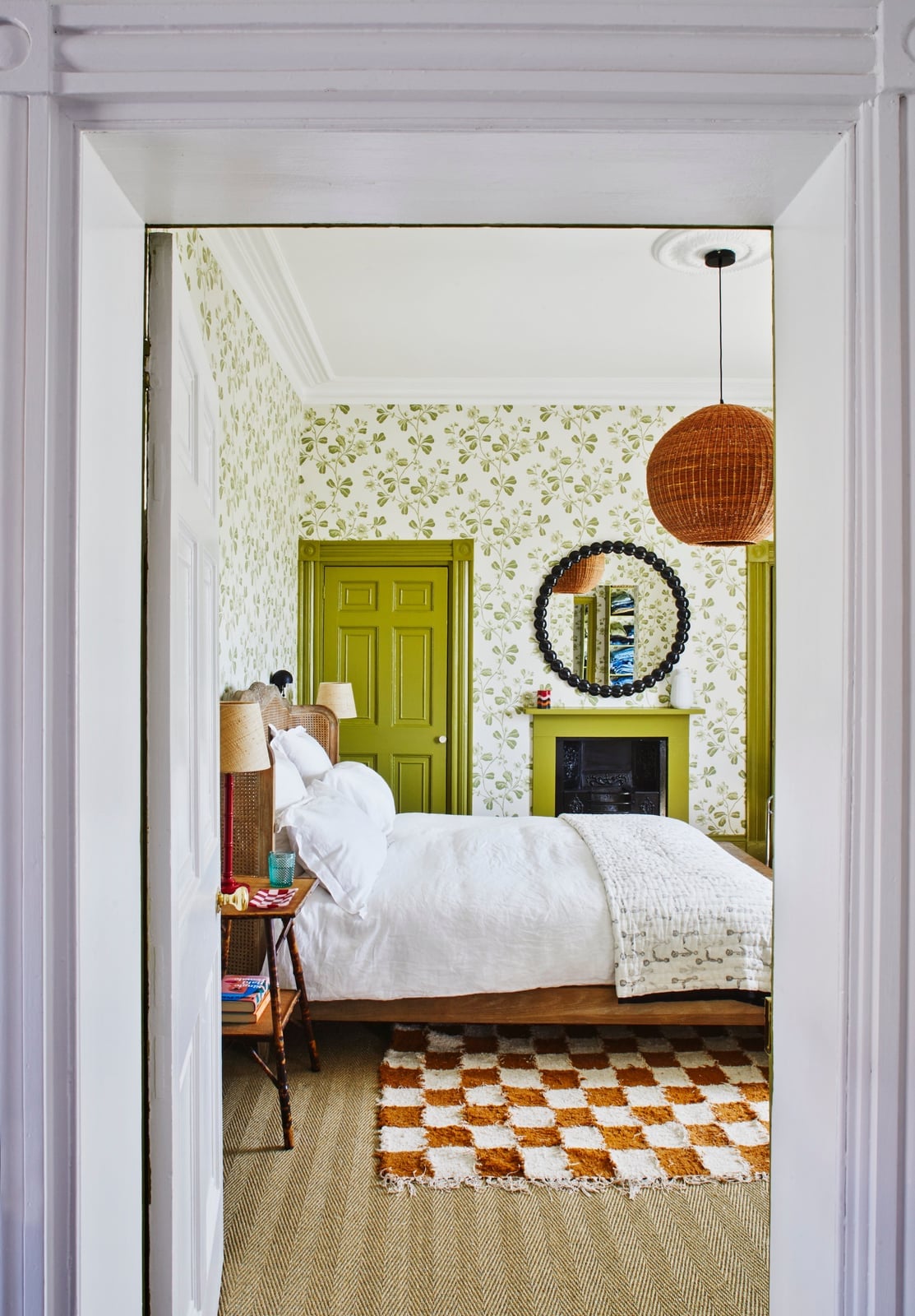
The vibrant green door is the first thing you notice from the doorway, a saturated pop against the brown wooden bed frame and white walls. A checkered rug sits in front of the bed, and a wicker side table keeps the bohemian thread alive. In a basement bedroom, a painted door in a bold color like this green gives the room its own identity without requiring paint on all four walls. The window light hits the green door and bounces a soft tint across the room. The orange and brown tones in the rug and wicker keep the palette from feeling cold.
20 / 32Hygge Bedroom Materials
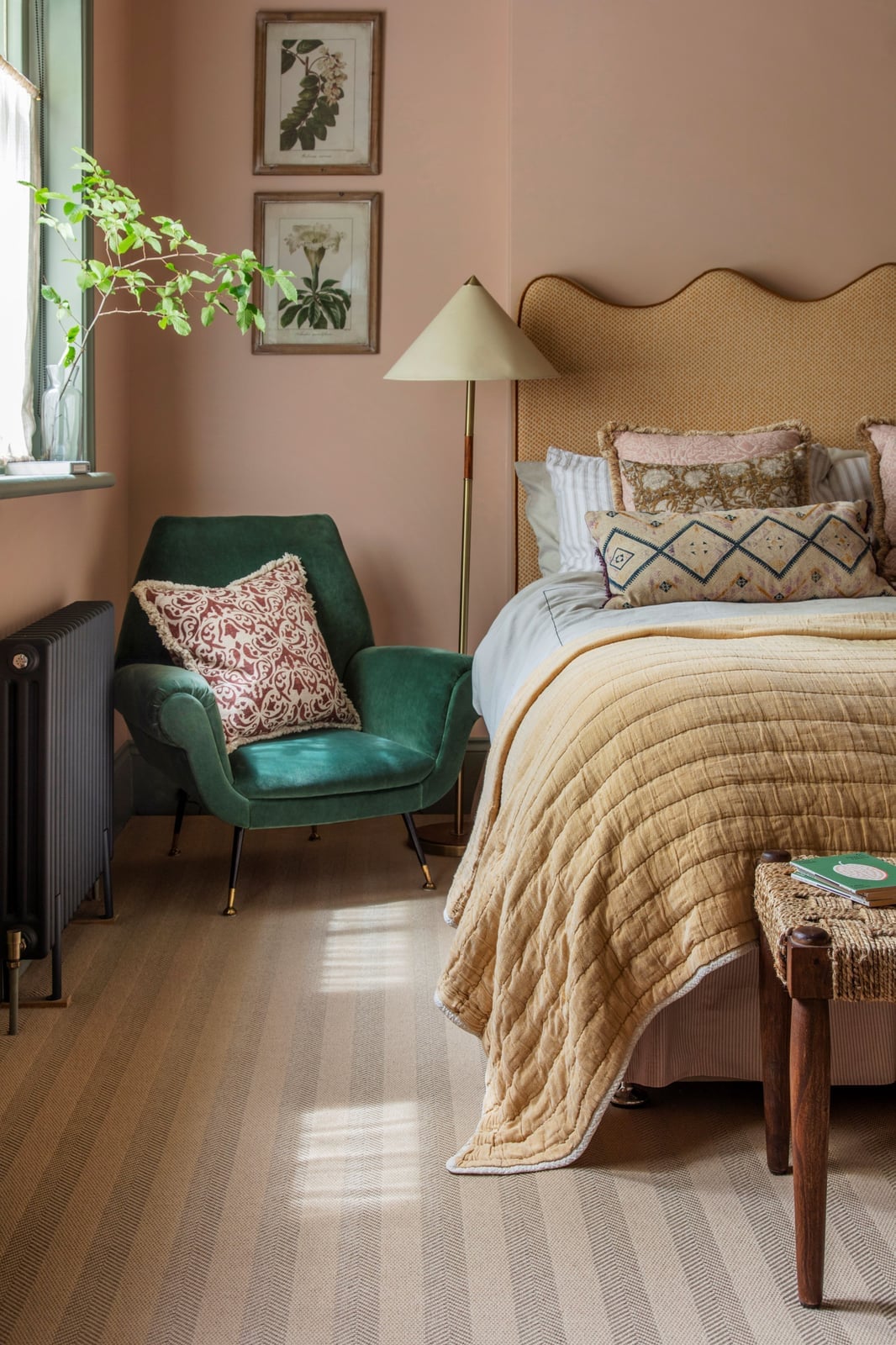
The wicker headboard is the hero here, its natural texture softening the room against the velvet armchair and wood floor. The palette runs blush pink, yellow and green, warm tones that work well in a basement bedroom with limited daylight. A floor lamp casts a warm glow from the corner, and a small stool beside the armchair finishes the seating area. The compact layout keeps the bed and seating zone within a few feet of each other, creating a cozy proportion that suits smaller basement bedrooms. The metal frame of the stool and the wood of the floor keep the wicker from reading as too casual.
21 / 32Modern Farmhouse Bedroom Palette
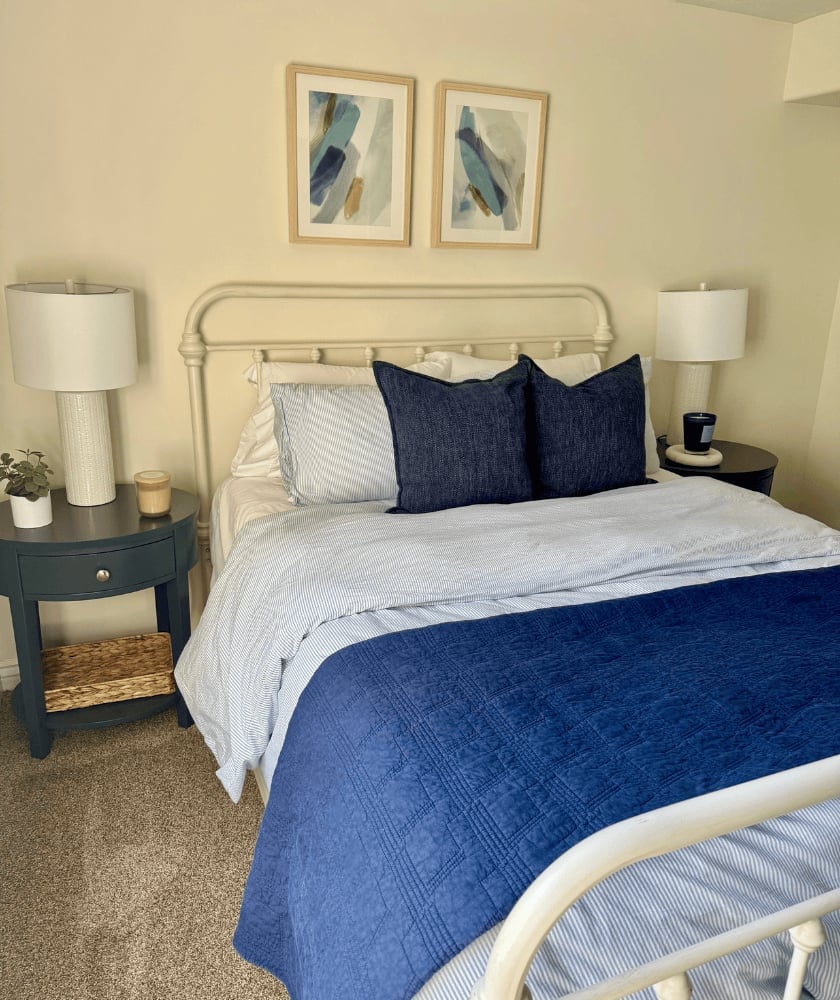
A palette that leans on contrast keeps a basement bedroom from feeling flat. Here, cream walls and bedding set a soft backdrop for navy and light blue stripes that anchor the bed. The metal frame adds a cooler note, while the wood nightstands warm things up again. Table lamps on either side repeat the symmetry the bed starts, which helps the room feel settled. The trick is to let one pattern, the striped bedding, carry the color story without adding competing prints. That keeps the modern farmhouse look clean rather than busy.
22 / 32Modern Farmhouse Bedroom Materials
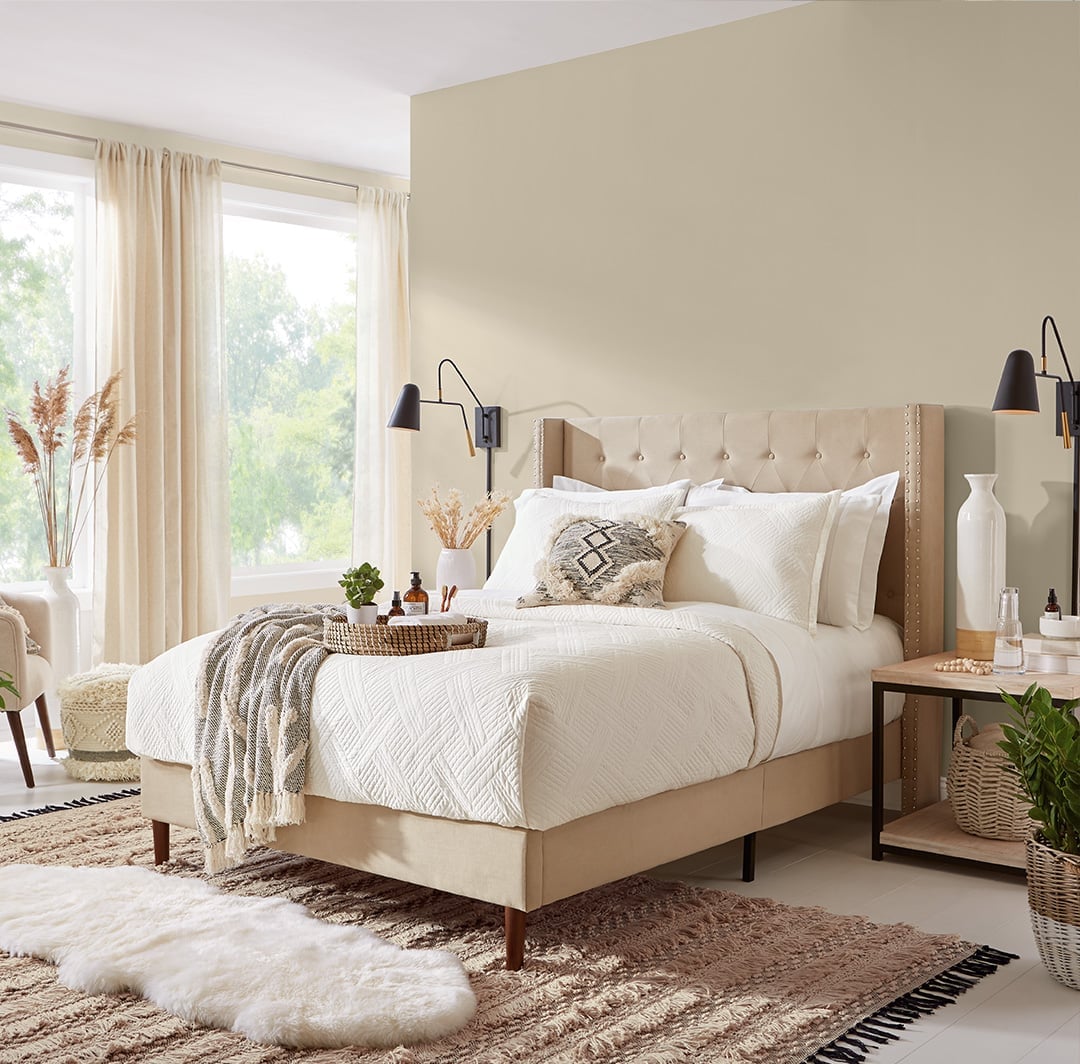
This bedroom mixes a fabric headboard and bedskirt with a glass lamp on a wood nightstand, while a woven rug and a linen armchair add texture. The window and wall lamps soften the contrast between the white walls and the black accents. The mix of smooth and nubby surfaces creates a balanced look that defines modern farmhouse style.
23 / 32Cozy Transitional Bedroom Lighting
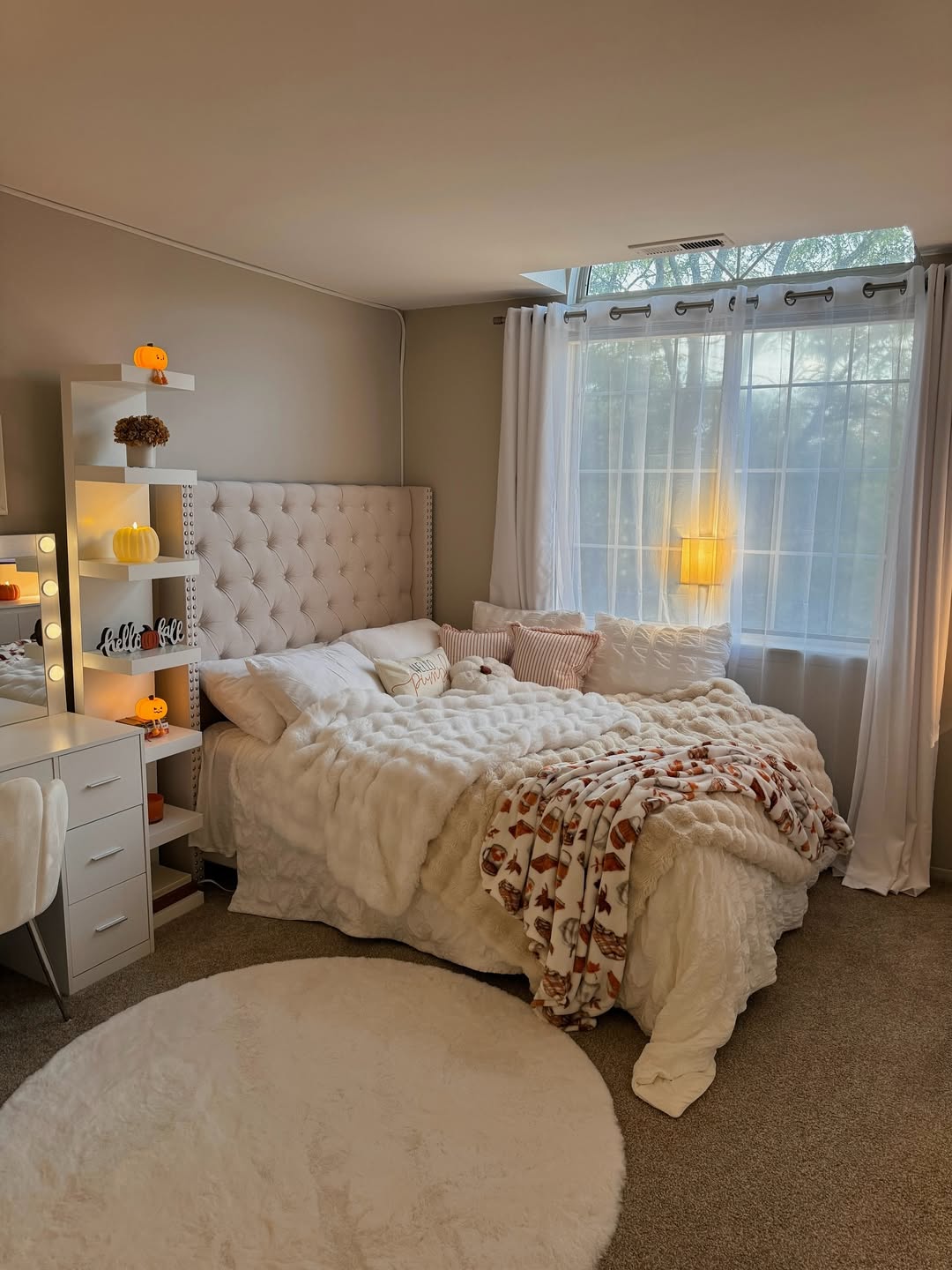
Layered bedding with plush pillows and a tufted headboard already signals comfort, but the lighting is what makes it work. Soft lamp light from the bedside table and natural light from both a window and a skylight spread evenly across the room. The vanity mirror reflects some of that light back, which helps the cream and beige palette feel brighter. A single round rug under the bed ties the fabric and wood elements together without blocking the light that hits the floor.
24 / 32Modern Boho Bedroom Scale and Proportion
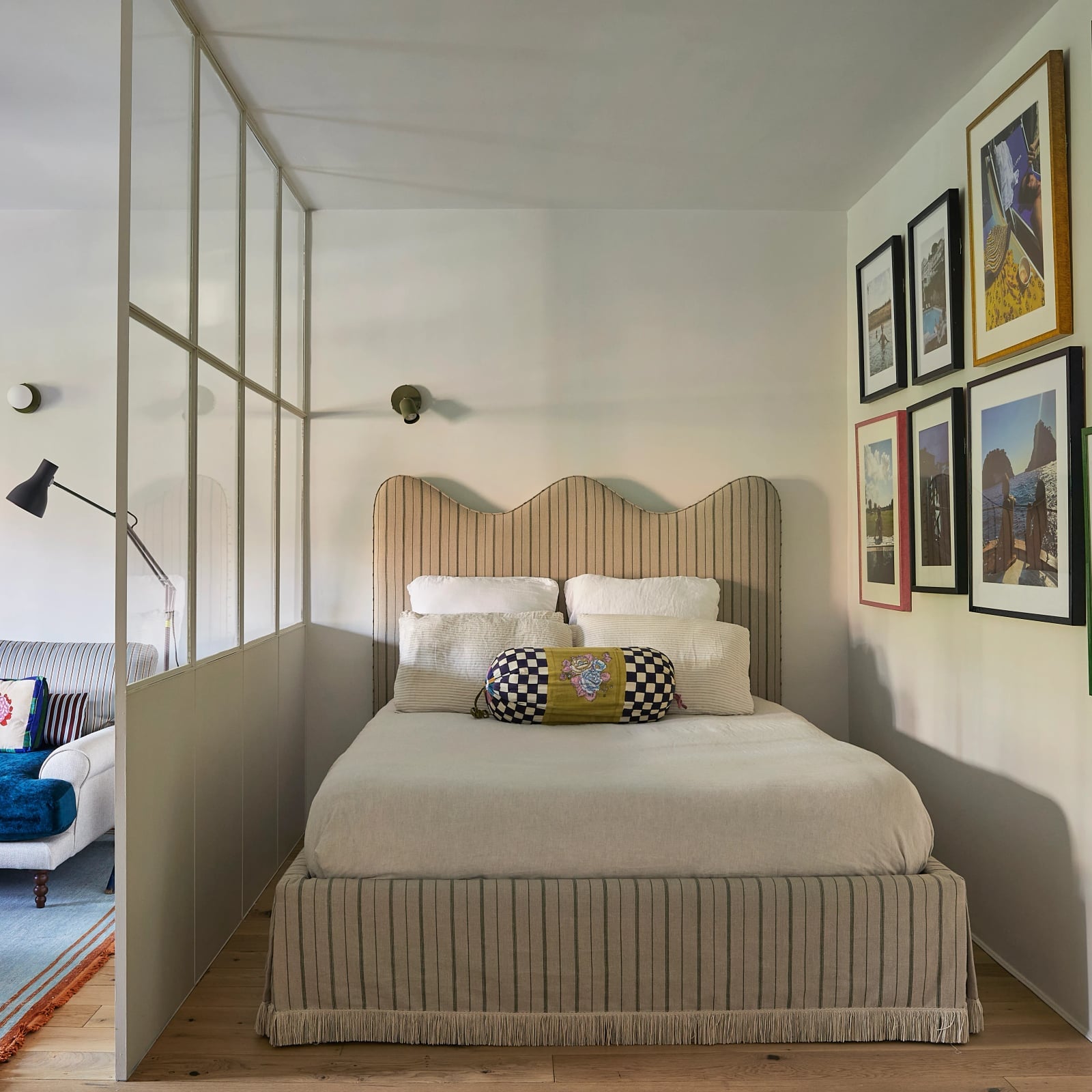
A compact basement bedroom can feel tight with a bulky bed, but a wavy upholstered headboard changes the math. The soft curve takes up less visual space than a tall straight headboard, so the room breathes even with the bed centered. Wall sconces instead of table lamps free up the nightstands, and a gallery wall above the bed draws the eye upward rather than outward. A partition wall defines the sleeping zone without closing it off. The beige, white, and cream palette keeps the wood and rattan accents from feeling heavy. The headboard is the feature, but it does not fight for attention. It just lets the room feel bigger than it is.
25 / 32Transitional Bedroom Materials, Indoor
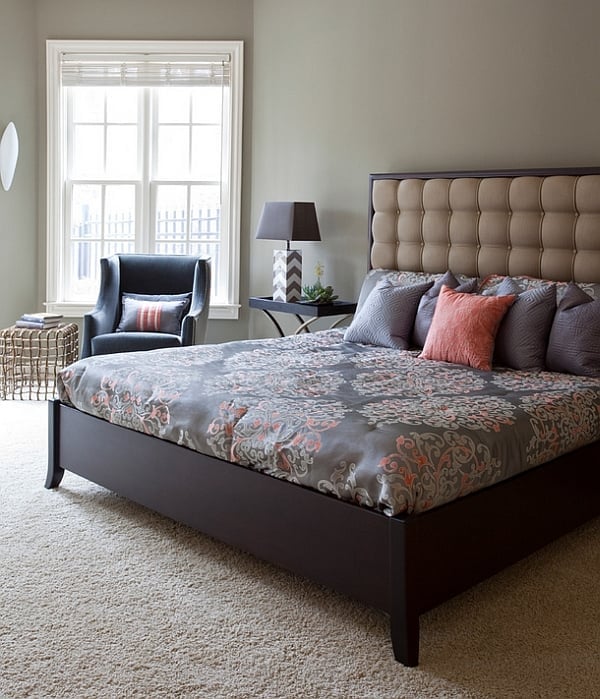
The tufted headboard in a soft neutral fabric sets the tone for this transitional bedroom, where the gray and coral accents on the armchair and side table add a subtle pop. The wood of the bed frame and table legs brings warmth, while the carpet underfoot softens the steps. The window and the table lamp on the side table create a balanced glow that makes the room feel open.
26 / 32Modern Bedroom Palette
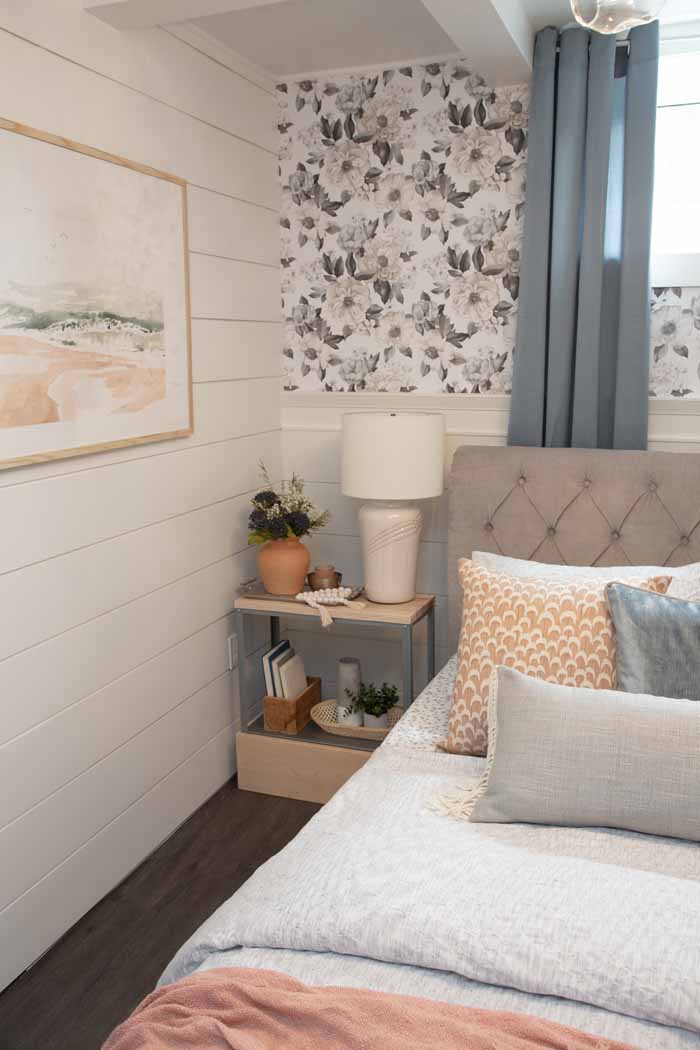
A floral wallpaper can be the sharpest tool in a modern bedroom palette if you treat it like a piece of art. Here the wallpaper covers a compact corner behind the bed, while the walls stay white, gray, and black. The tufted headboard and simple nightstand keep the look grounded, so the floral pattern becomes a deliberate statement. A table lamp and natural light balance the dark tones in the print. The ratio is roughly one patterned wall to three neutral ones, which stops the room from feeling crowded. What breaks the modern edge is any additional pattern nearby, so keep the bedding and curtains solid.
27 / 32Minimalist Bedroom Budget Swap
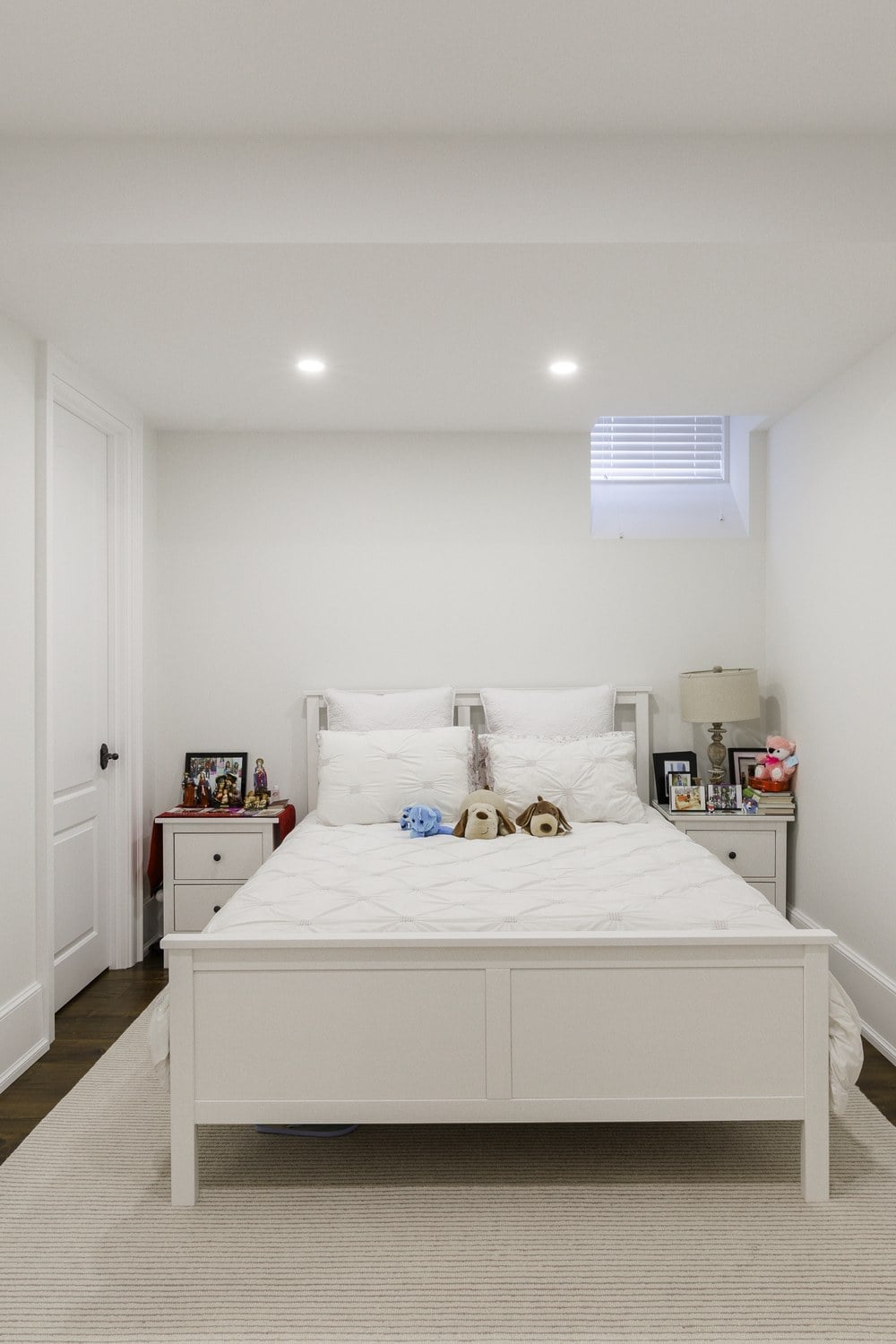
For a basement bedroom with limited natural light, choose a light palette and low furniture. Here a white bed frame and matching nightstands sit on a beige rug, with a small window letting in what daylight there is. The compact layout works because nothing competes for attention. Overhead lights supplement the low window, but the pale floor and walls bounce light around.
For a renter friendly swap, consider a white metal bed frame instead of a bulkier wooden one. It is lighter, costs less to move, and still gives you the same clean lines. White nightstands can be basic pieces from any furniture store. The key is keeping the finish uniform so the room looks cohesive. A beige rug softens the hard edges without adding visual weight.
28 / 32Modern Minimalist Bedroom Layout, Dark Gray
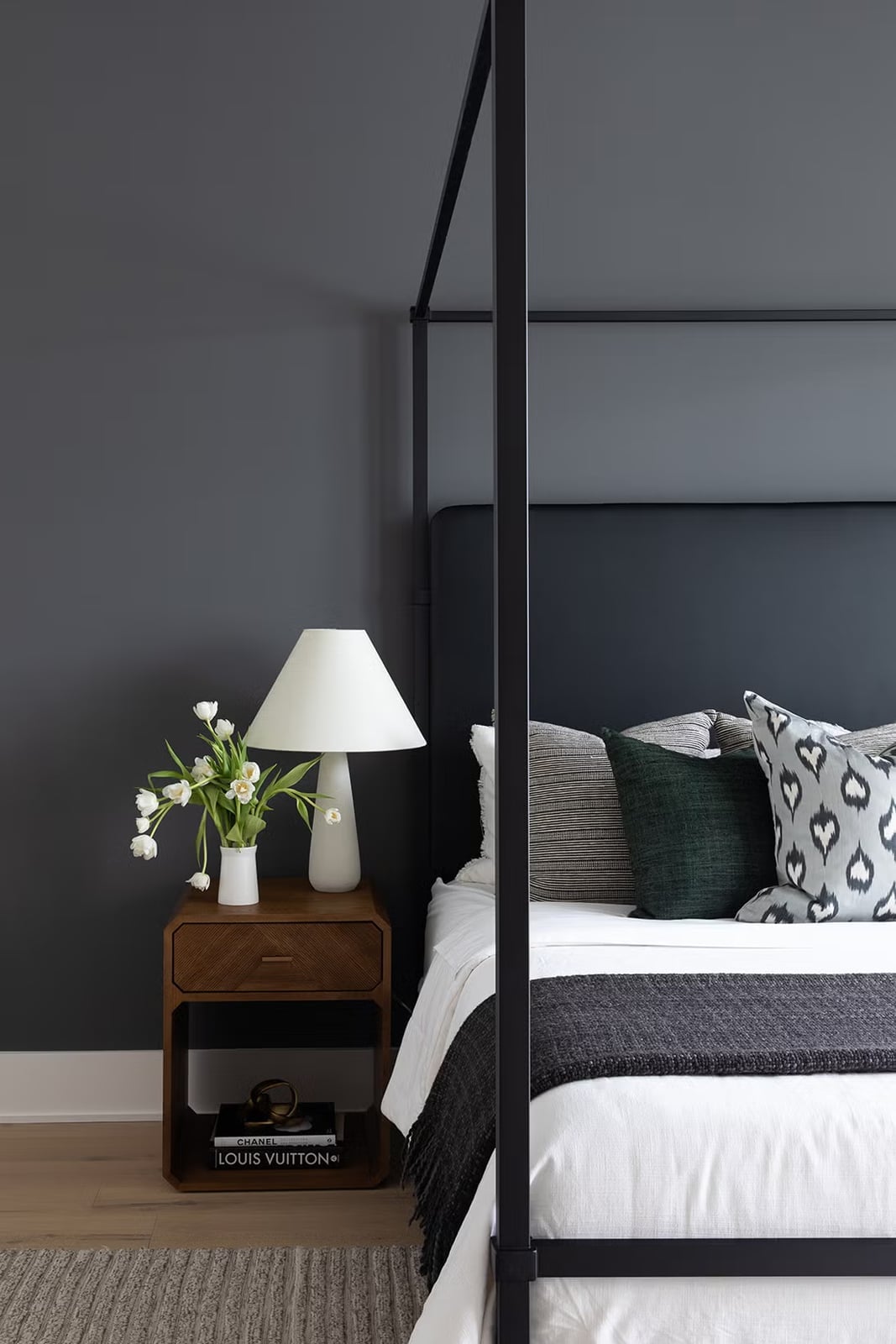
A charcoal four-poster bed frame defines the room without needing much else. The dark gray metal structure sits against a lighter wall, with a single nightstand and table lamp beside it. The palette stays narrow, with charcoal, white, and a touch of green from a ceramic object. Soft lamp light and ambient room light add warmth. The minimalist approach works because the four-poster is the only large object, so the room feels spacious even if the footprint is average. What breaks the look is adding a second visual anchor, like a tall dresser or a patterned rug, so let the frame carry the weight.
29 / 32Eclectic Bedroom Styling Variation, Indoor
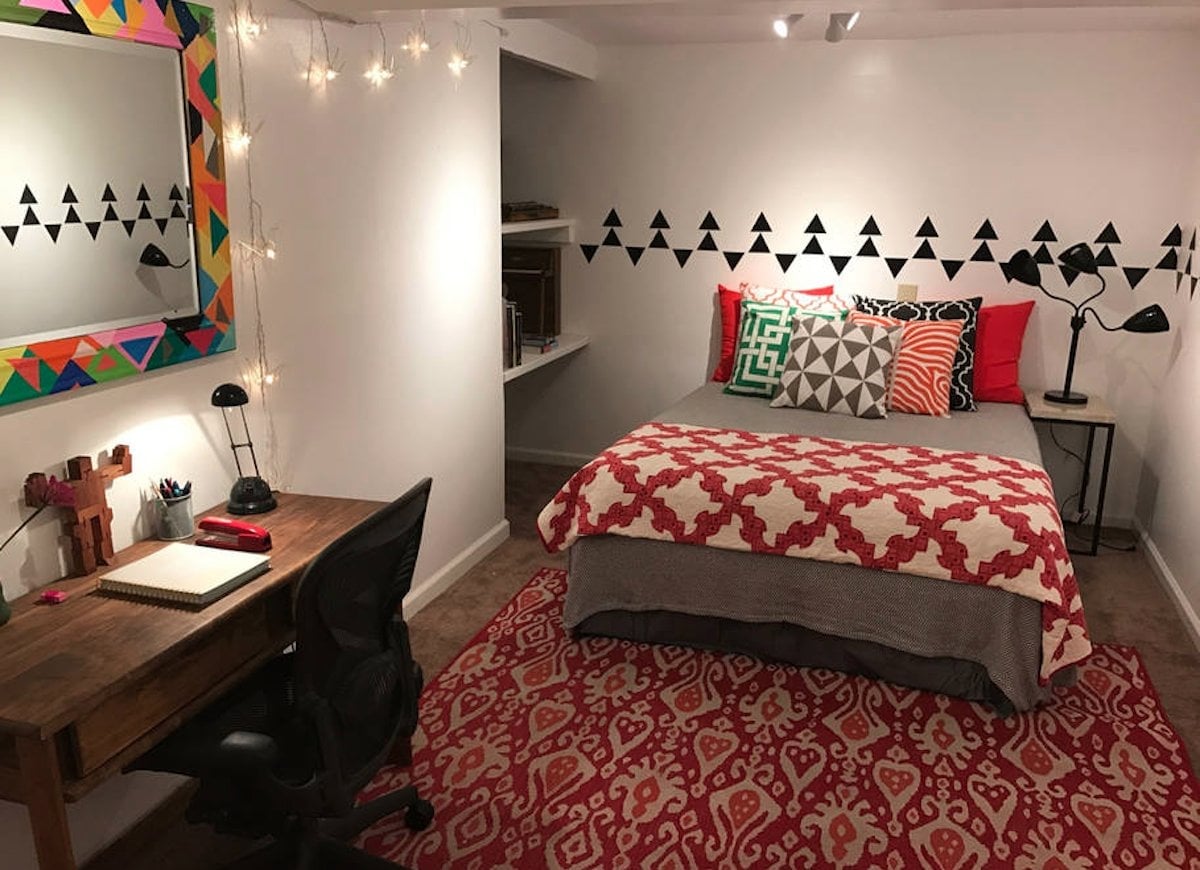
Geometric wall decals in gray, red, white, and black turn a compact bedroom into a layered space without permanent changes. The decals sit behind the bed, while a desk and chair occupy the other side of the room. Overhead spots and a desk lamp provide task and ambient light separately, which matters when one area is for sleeping and the other for work. The palette repeats the decal colors in small doses: red on the mirror frame, black on the chair, gray on the carpet. What breaks the eclectic balance is letting any one color take over more than half the room, so keep the walls mostly neutral and let the decals do the talking.
30 / 32Modern Bedroom Materials
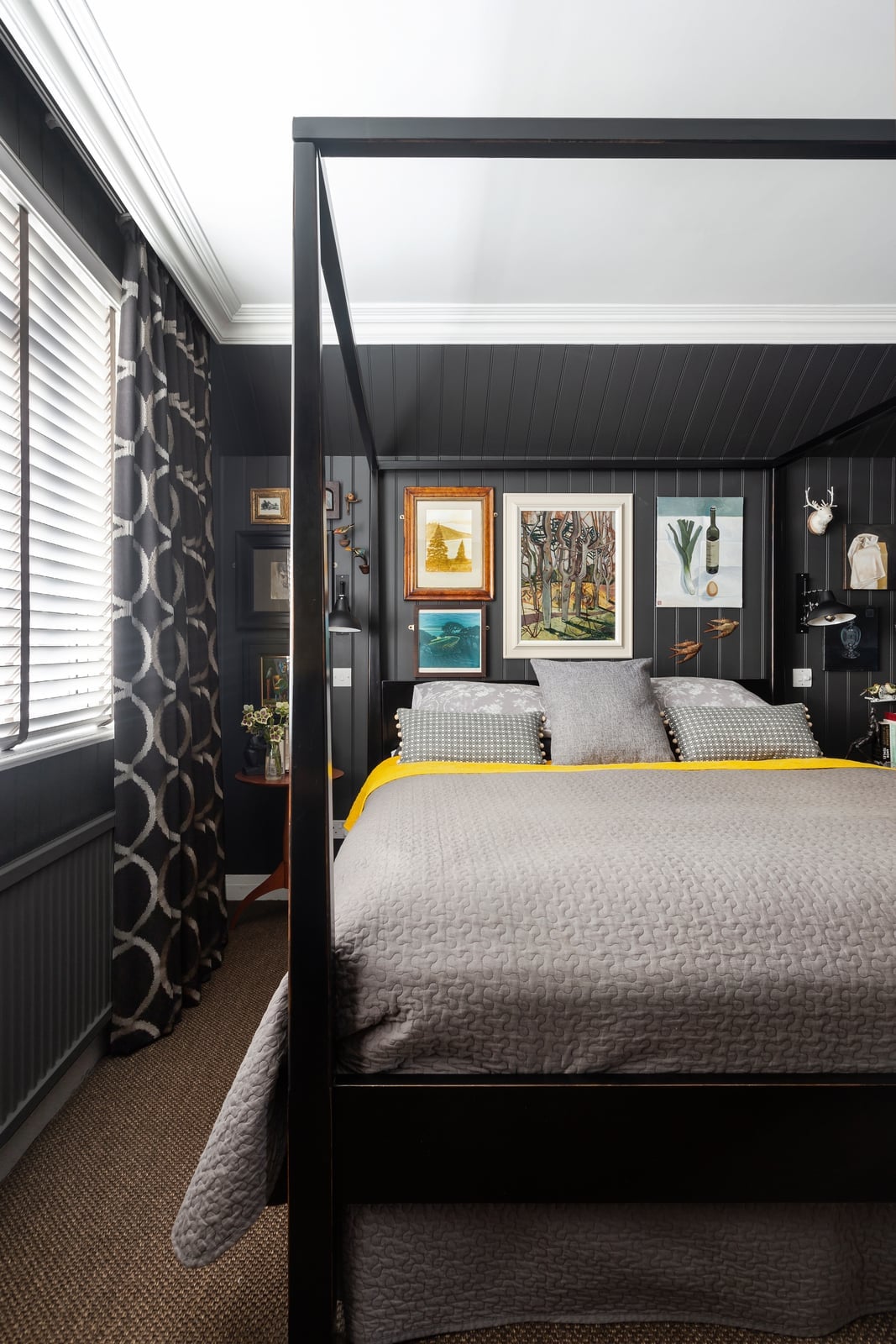
Dark beadboard walls are a natural fit for a modern bedroom that wants texture without wallpaper. Here they wrap a compact room behind a four-poster bed, with yellow curtains and gray bedding adding contrast. The beadboard runs vertically, which draws the eye upward and makes the ceiling feel higher. Metal and wood in the bed frame keep the look industrial but warm.
A palette of dark gray, yellow, and gray works because the beadboard provides a consistent backdrop while the curtains and artwork supply the only saturated color. Natural light and ambient fixtures keep the dark walls from closing in. What breaks the effect is adding a second textured wall treatment, so let the beadboard stand alone and keep the other walls painted in a matching gray.
31 / 32Modern Rustic Bedroom Lighting
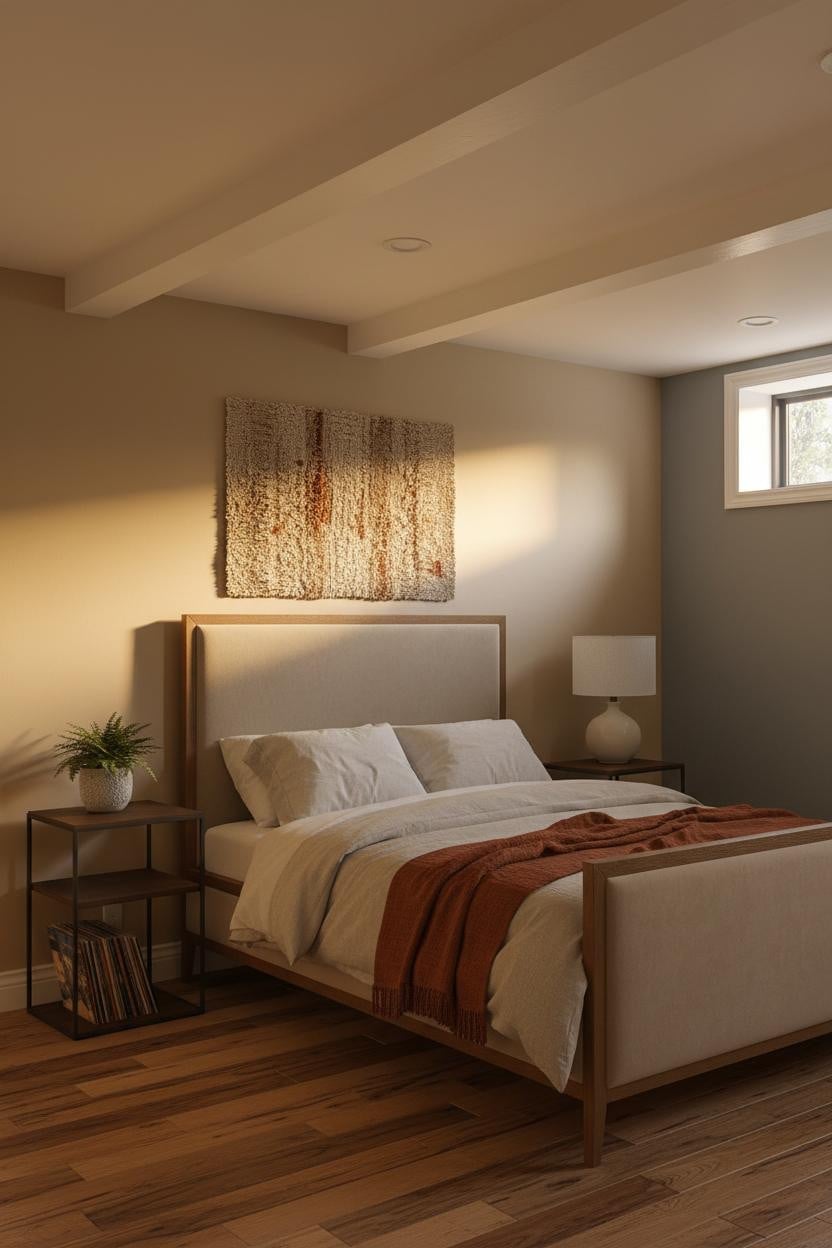
A picture light aimed at the wall art does more than show off the piece. In a room with a platform bed centered between two nightstands and a floor lamp in the corner, that focused glow keeps the eye moving across the room rather than stopping at one hot spot. The beige, brown, rust and gray palette stays grounded, so the light reads as warmth, not glare. A simple swap for a rental: use a plug-in picture light with a cord cover painted to match the wall.
32 / 32Final Thoughts
A basement bedroom is one of those spaces that rewards a thoughtful approach. Start with the bones: good lighting, a light or dark palette that suits the light levels, and furniture that fits the ceiling height. Add texture and storage to make it feel like a real room, not an afterthought. The best part is that many of these fixes are about rearranging what you already own or swapping out a few key pieces. Take one idea at a time, see how the room responds, and adjust from there. The goal is a space that feels like a natural part of the home, not a compromise.