An area rug can redefine a room without a single nail or paintbrush. It adds texture, anchors furniture, and can pull together colors that otherwise feel adrift. Whether you are starting from scratch or swapping out a tired piece, the right rug changes how a space lives.
This roundup covers 31 area rug ideas for 2027, from bold prints to quiet neutrals, each one letting the rug do the talking. You will see how pattern, texture, and placement shift the feel of a room, no matter your style or budget.
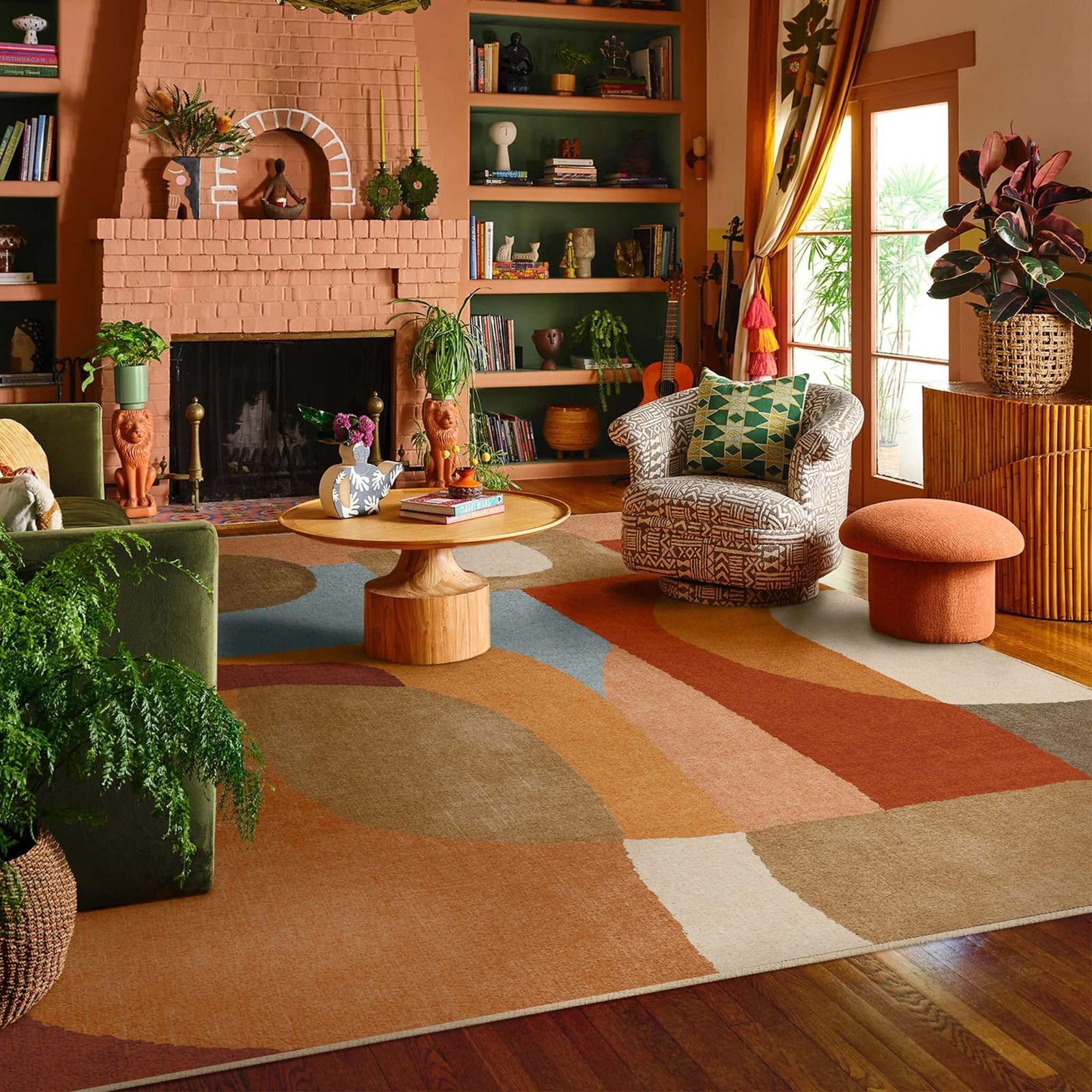
01 / 32Eclectic Living Room Anchored by an Abstract Geometric Rug
Orange, brown, blue, green, and cream all land on one abstract geometric rug without the room feeling busy. The key is that the rug pulls colors from the brick fireplace, the woven rattan, and the fabric on the swivel chair, so nothing looks borrowed from another house. A seating area with a sofa, ottoman, and coffee table sits on top, and the fireplace becomes the natural focal point. In an eclectic room, let the rug be the color map.
02 / 32Bold Green Leopard Print Rug for an Eclectic Statement
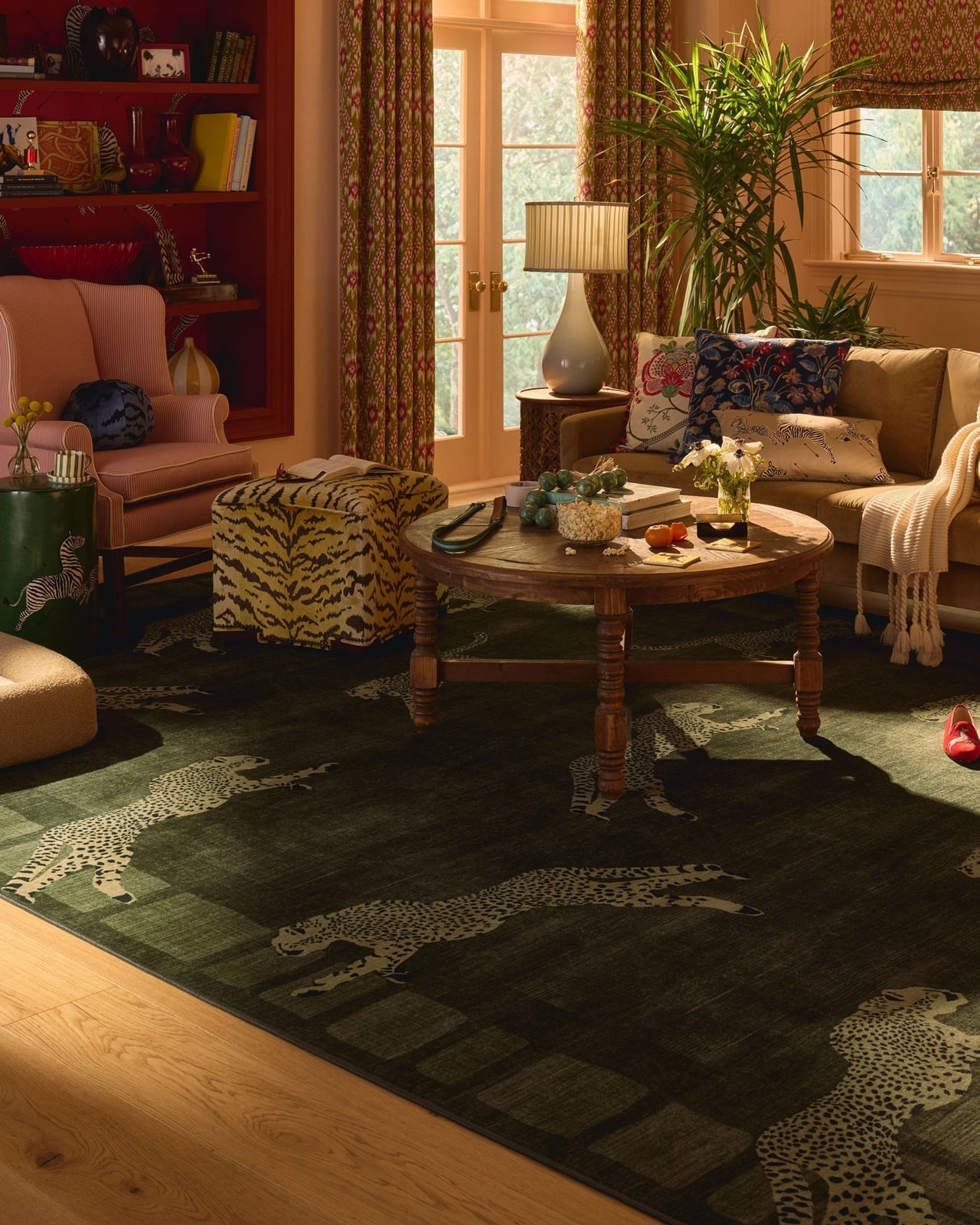
A green leopard print rug can either work or fall flat, and here it succeeds because the surrounding room stays neutral. The cream and brown in the sofa and armchair let the rug be the loudest element, and natural daylight keeps the green from going murky. The palette trick is to treat the rug as the pattern source, then repeat only its neutral tones in the upholstery and curtains. That way the leopard print looks deliberate, not accidental.
03 / 32Natural Style Living Room with Diamond Jute Rug
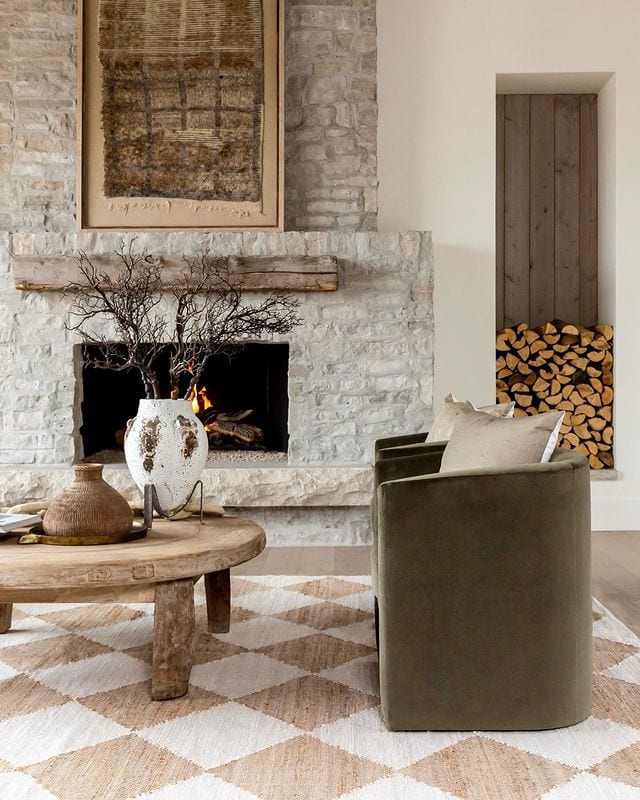
Can a jute rug feel soft underfoot without sacrificing its natural texture? A diamond-patterned jute rug in cream and beige sits under a coffee table and a green velvet chair, and the contrast between rough jute and smooth velvet is what makes the room interesting. The stone fireplace and wood floors already lean rustic, so the rug adds warmth without competing.
The green velvet chair is the one piece that could feel too formal, but the jute’s earthy texture pulls it back. In a natural-style room, mixing a coarse rug with a plush chair gives you the best of both textures.
04 / 32Mid-Century Modern Living Room with Earthy Geometric Rug
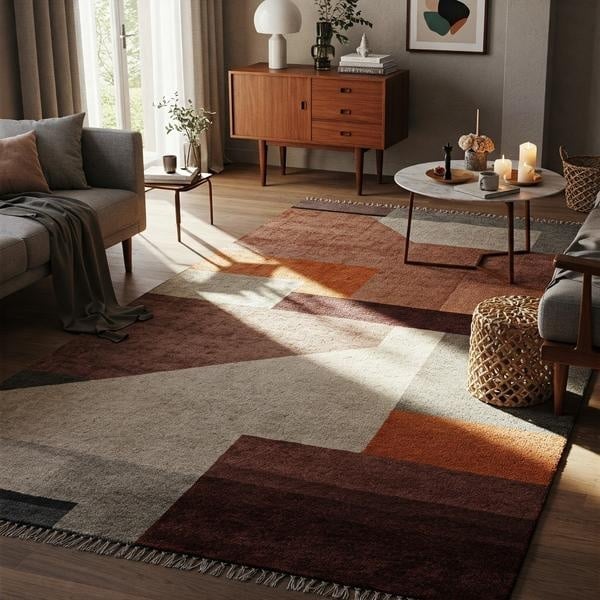
A geometric rug in brown, rust, cream, and grey sits under the sofa and coffee table, and the pattern echoes the clean lines of the mid-century cabinet and stool. Natural daylight from the window hits the rug’s rust tones, while the ambient lamps soften the grey. In a mid-century modern room, the rug should match the furniture’s geometry, not fight it.
05 / 32Modern Rustic Living Room with Distressed Geometric Rug
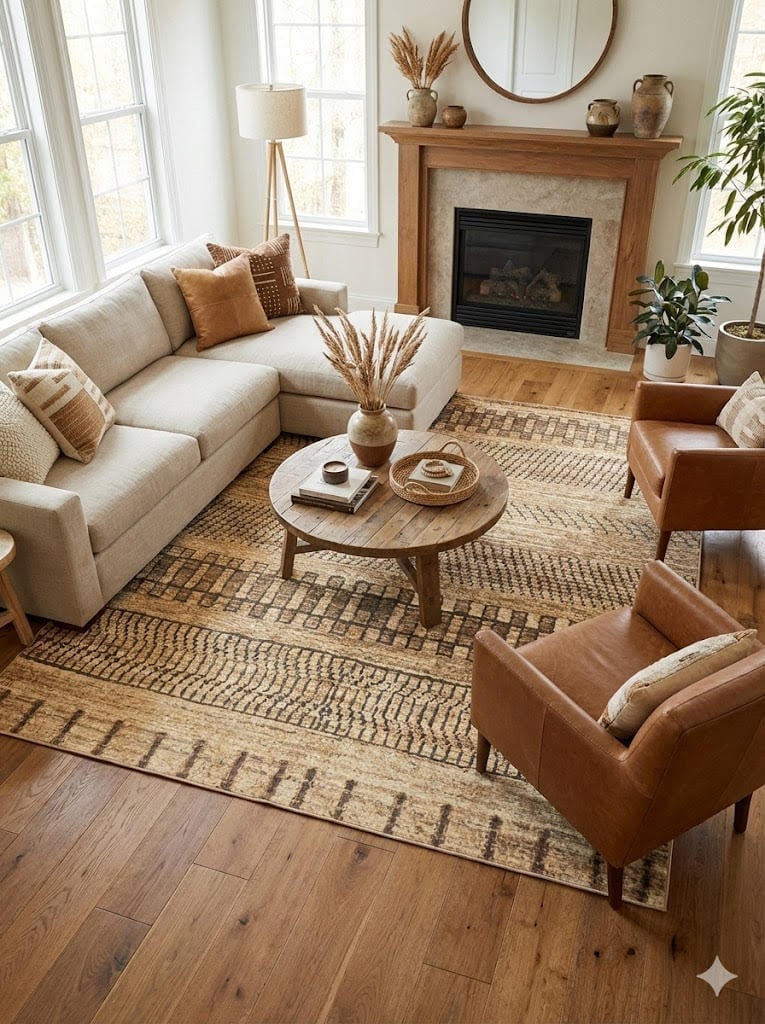
In a modern rustic living room, let the rug set the color story, then pull everything else from it. A distressed geometric rug in beige, brown, and cream sits under a sectional sofa and a round coffee table, flanked by two leather chairs. The leather and woven textiles in the room already lean warm, so the rug’s worn-in pattern keeps the space from feeling too polished. The floor lamp adds a soft glow, but the rug defines the palette.
06 / 32Minimalist Living Room Defined by a Black and White Geometric Rug
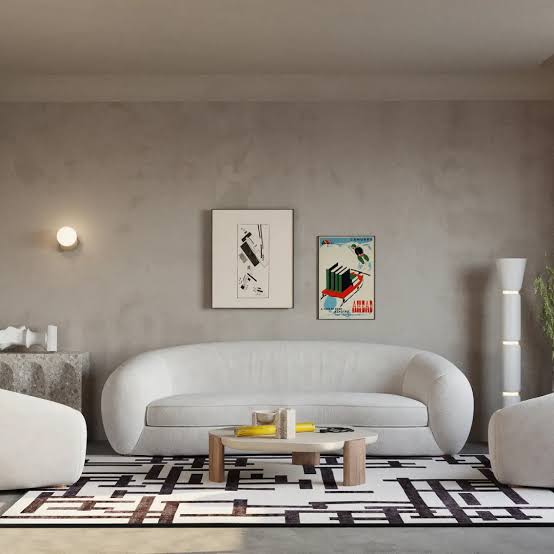
A high-contrast geometric rug can do the work of a whole gallery wall without hanging a single nail. In this open-plan living room, the black and white pattern pulls the seating area into a clear zone, with the curved sofa, armchairs, and coffee table arranged around it. The rug reads as the anchor, so the surrounding area stays pared back. Wood tones on the floor and a grey fabric sofa keep the look from turning stark. If you are renting and cannot paint, a graphic rug is a renter-safe swap for permanent contrast. Swap a solid neutral rug for this kind of pattern and the room gets its structure from the floor up.
07 / 32Boho Living Room Hero: Large Oriental Rug
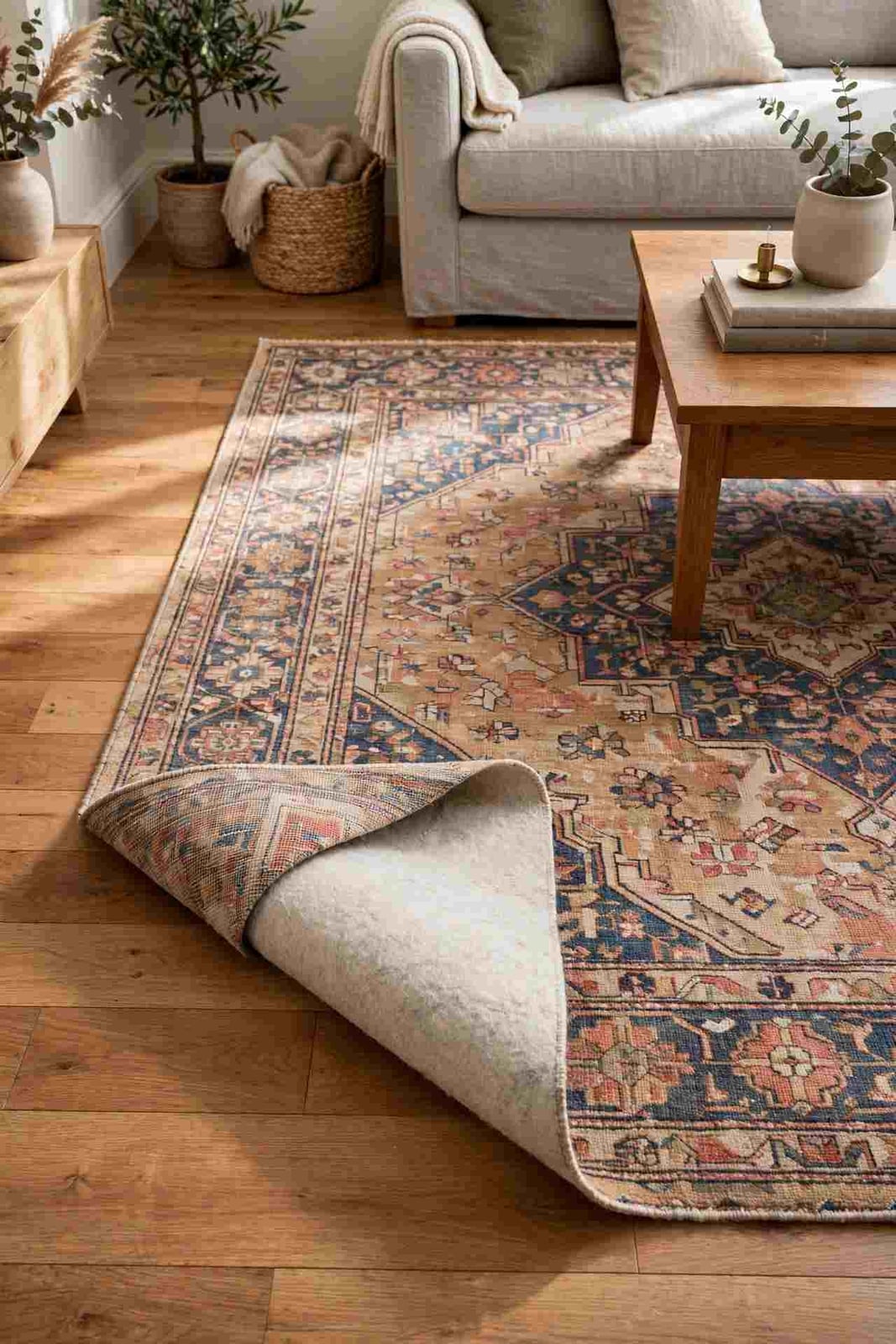
A large oriental rug with a tan, blue, rust, and cream palette sets the tone in a boho living room without needing much else. The rug sits central, with a sofa and coffee table arranged around it, and the folded corner suggests it is a woven piece with some weight. The layered colors pick up the wood tones and linen upholstery nearby. If you want to change the room’s mood, switching out this one piece shifts the whole palette. A single rug can act as the color story for the entire space.
08 / 32Modern Open-Plan Space Featuring a Plush Cream Rug
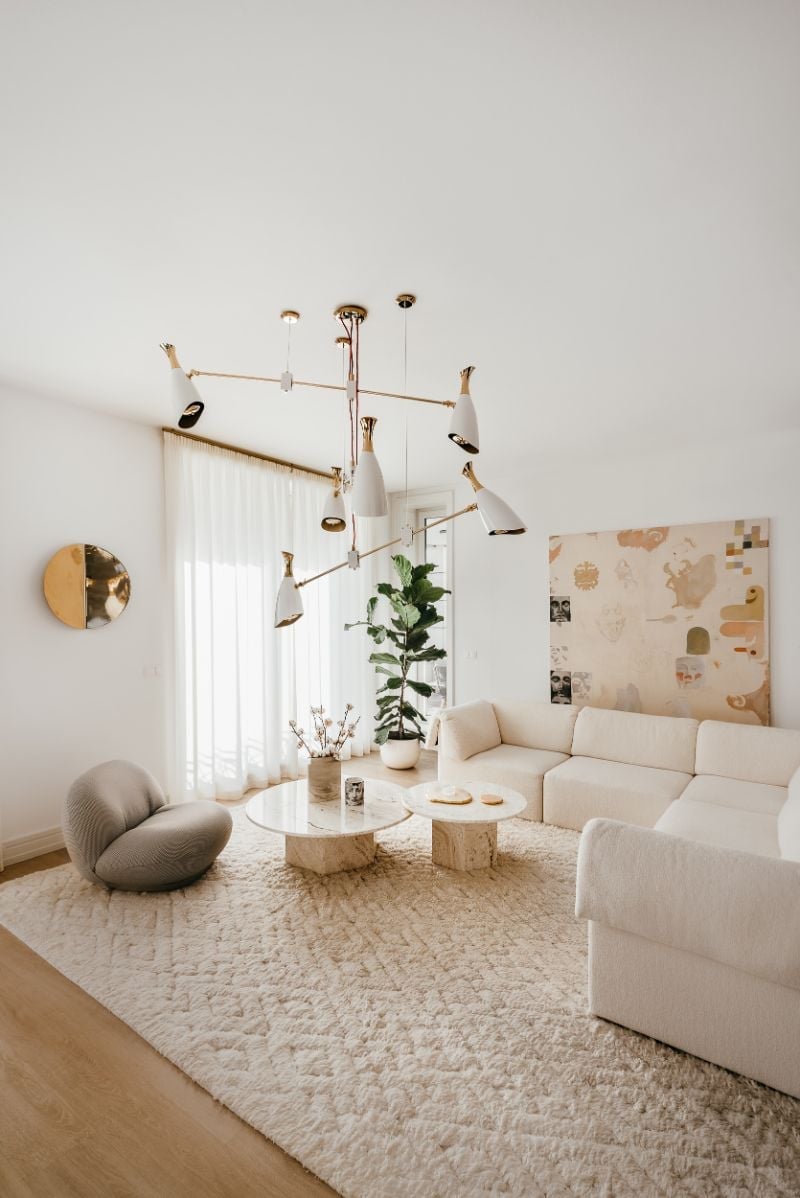
A thick, textured plush cream rug in an open-plan room softens the hard surfaces around it. The rug covers a large central area, with a modular sofa and marble coffee tables set on top, and the soft ambient light from a sculptural ceiling fixture hits the pile evenly. Cream, white, beige, and gold accents keep the palette cohesive. A plush rug in a high-traffic open plan works best when the fibers are dense enough to hold their shape. The texture adds warmth that flat-weave rugs cannot match, making the space feel finished without extra layers.
09 / 32Modern Farmhouse Hallway Runner for Definition
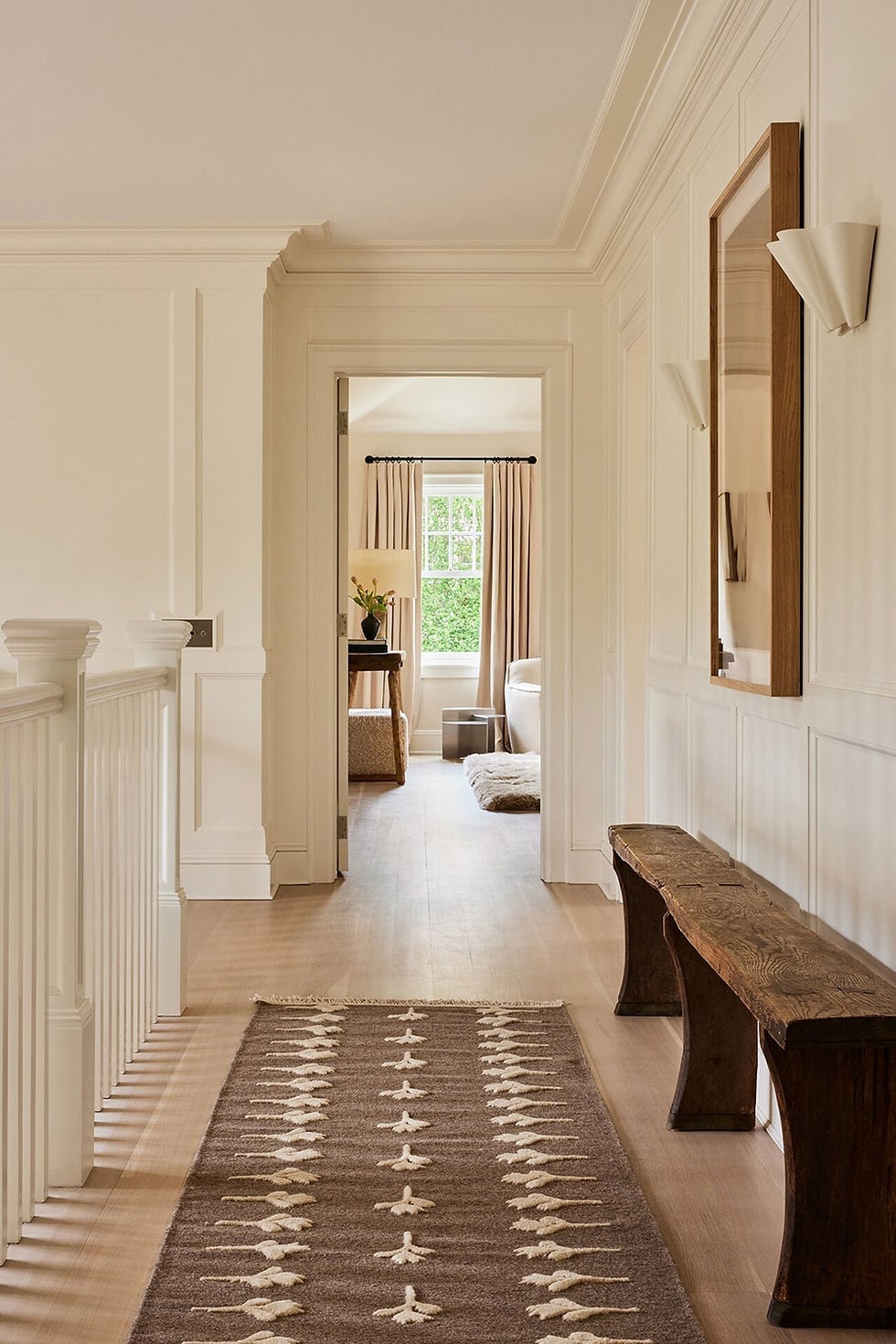
How do you make a long hallway feel like a room rather than a passage? A geometric runner rug defines the path and gives the eye a place to land. In this modern farmhouse hallway, the brown and cream woven runner sits on wood flooring between white walls, with a wooden bench and wall sconces flanking it. The runner breaks up the length of the hall and adds a layer of pattern without clutter. A runner that reaches close to the walls on each side keeps the walkway from feeling too narrow. The geometric pattern also hides daily foot traffic better than a solid.
10 / 32Japandi Living Room with Neutral Geometric Rug
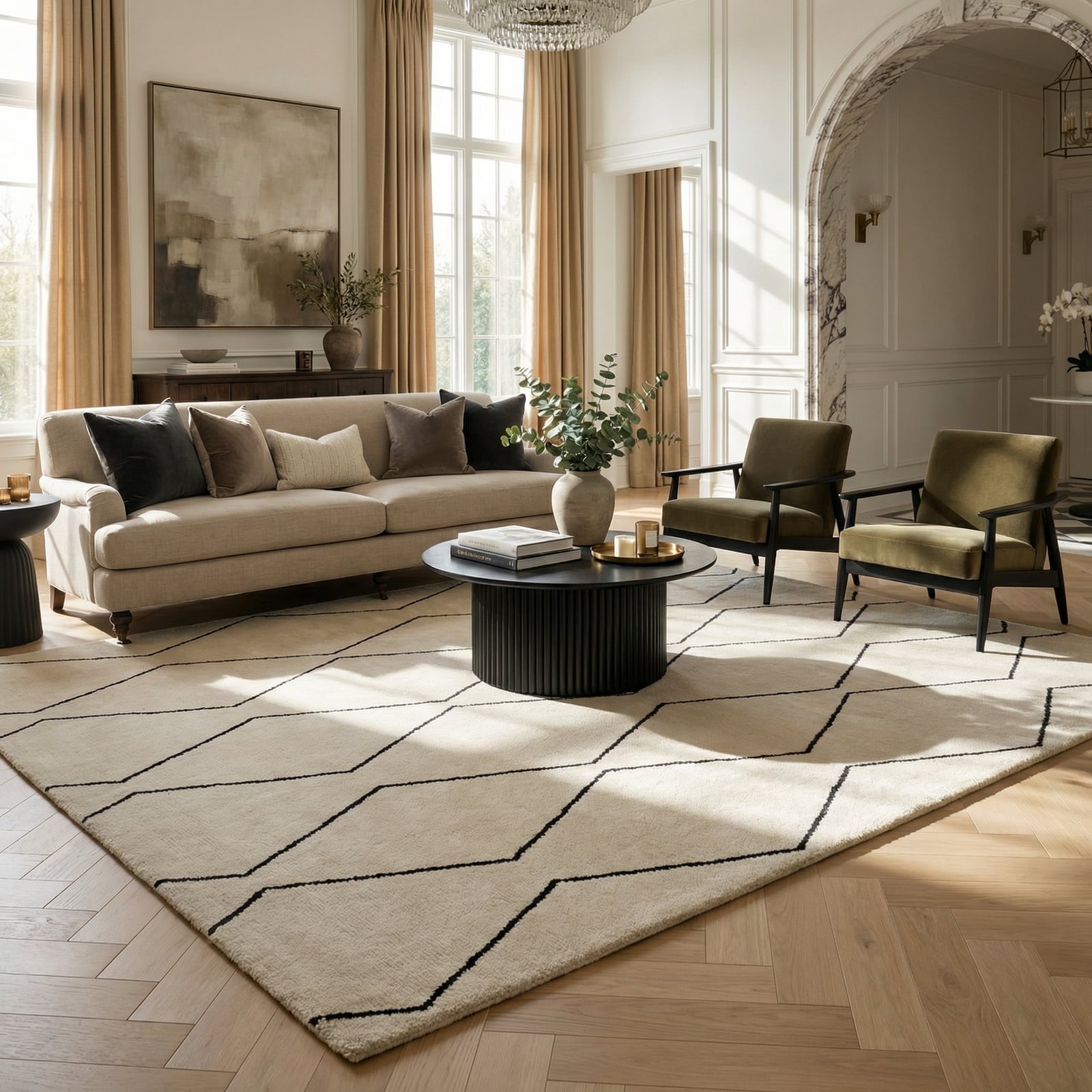
A neutral geometric rug in cream and black ties the seating area together without competing with the japandi materials around it. The rug sits centered under a sofa and coffee table, with wood, fabric, and stone finishes in the room. The pattern is subtle enough to blend with the natural light and layered lighting, but it still gives the floor a clear anchor. A neutral palette like this keeps the room calm while the geometric lines add the only real structure. The rug becomes the quiet spine of the layout.
11 / 32Spacious Living Room with a Large Neutral Patterned Rug
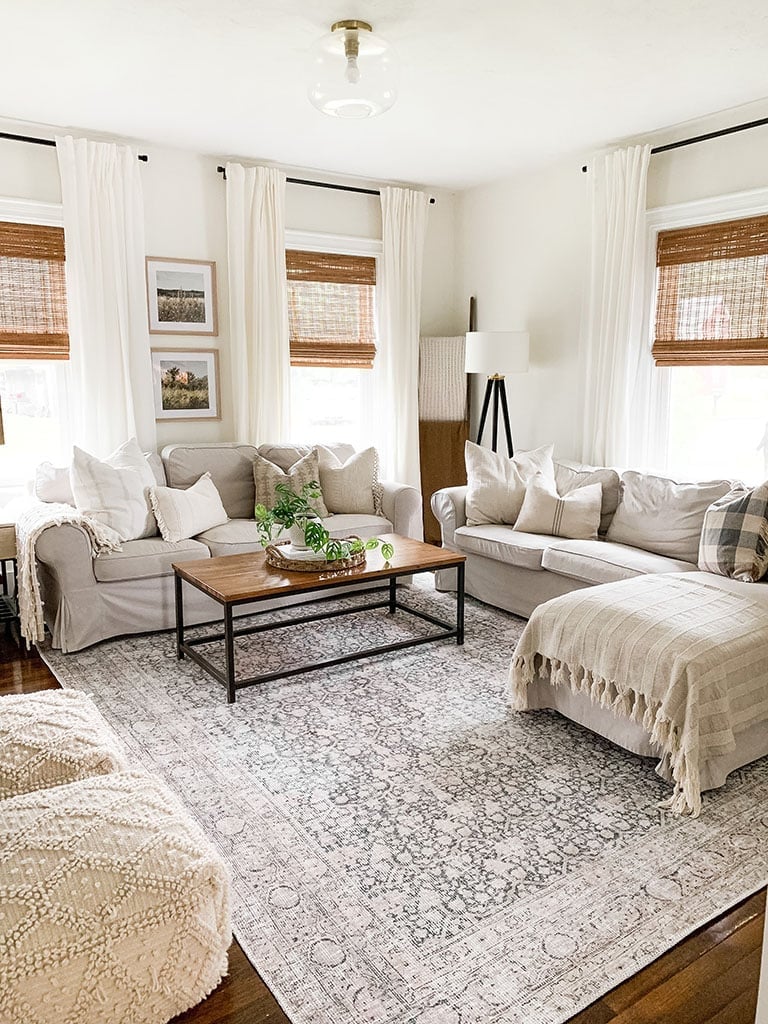
A large neutral patterned rug works best when it sets the boundaries for your seating arrangement. In a roomy modern farmhouse space, a grey beige and brown rug sits under the sofas and coffee table, pulling the seating area into one defined zone. The linen upholstery and wood tones around it stay quiet, letting the rug’s subtle pattern add texture without competing. That approach makes the room feel anchored rather than scattered, which is the whole point of using a rug as a layout tool.
12 / 32Modern Coastal Living Room with Plush Textured Rug
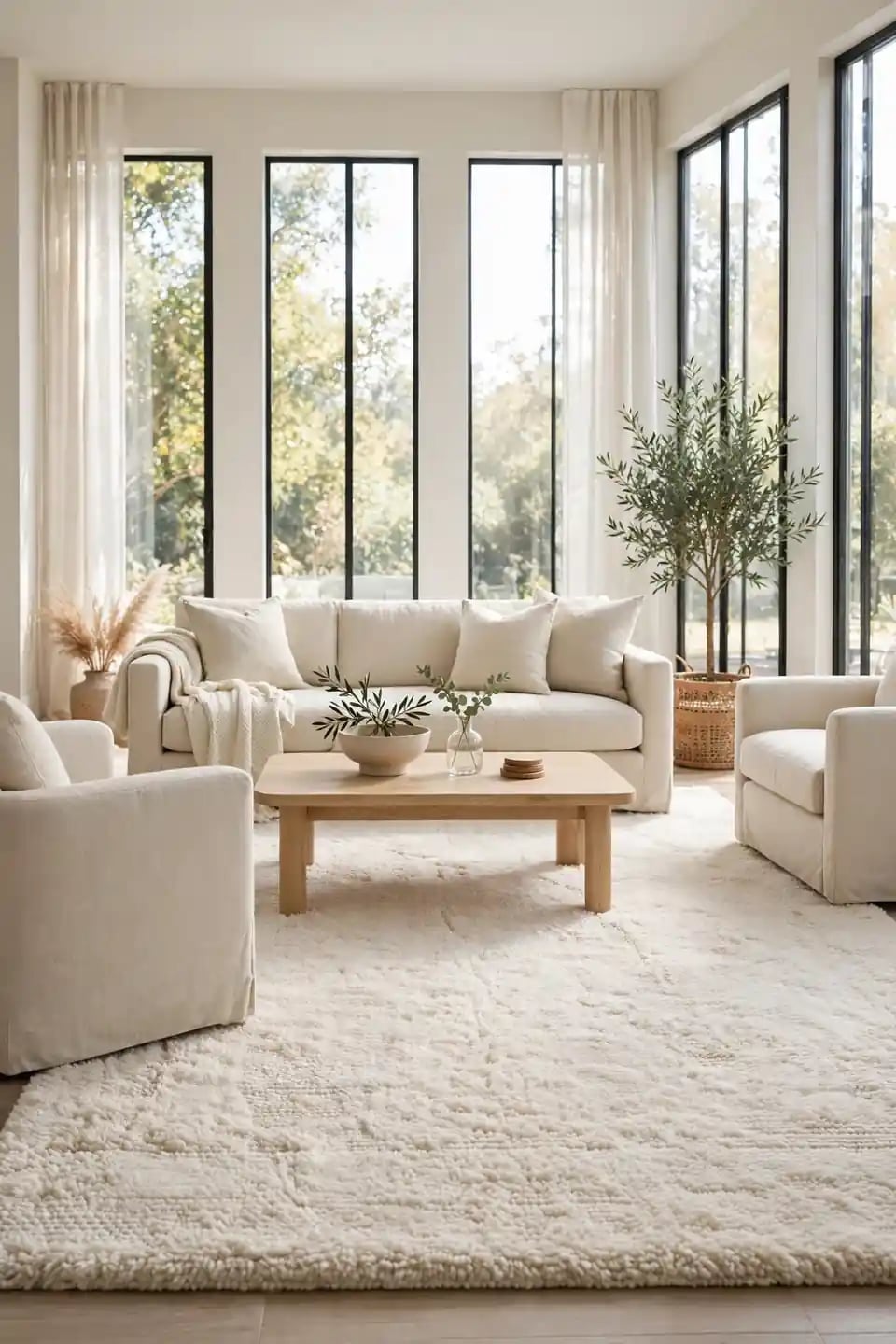
A plush cream rug might seem like a risky choice for a high-traffic room, but in a modern coastal living room with abundant natural light, it softens the whole space. The thick texture contrasts with the smooth linen sofas and the bare wood of the coffee table, adding a layer of comfort that a flat weave cannot match. The cream and beige palette keeps things calm, while the natural green from a plant ties the rug to the coastal feel without introducing a new color. If you worry about upkeep, a rug like this works best in a room where shoes come off at the door.
That texture does more than feel good underfoot. The rug anchors a large seating area, so the whole setup looks intentional and arranged with care.
13 / 32Traditional Living Room Centered Around a Distressed Rug
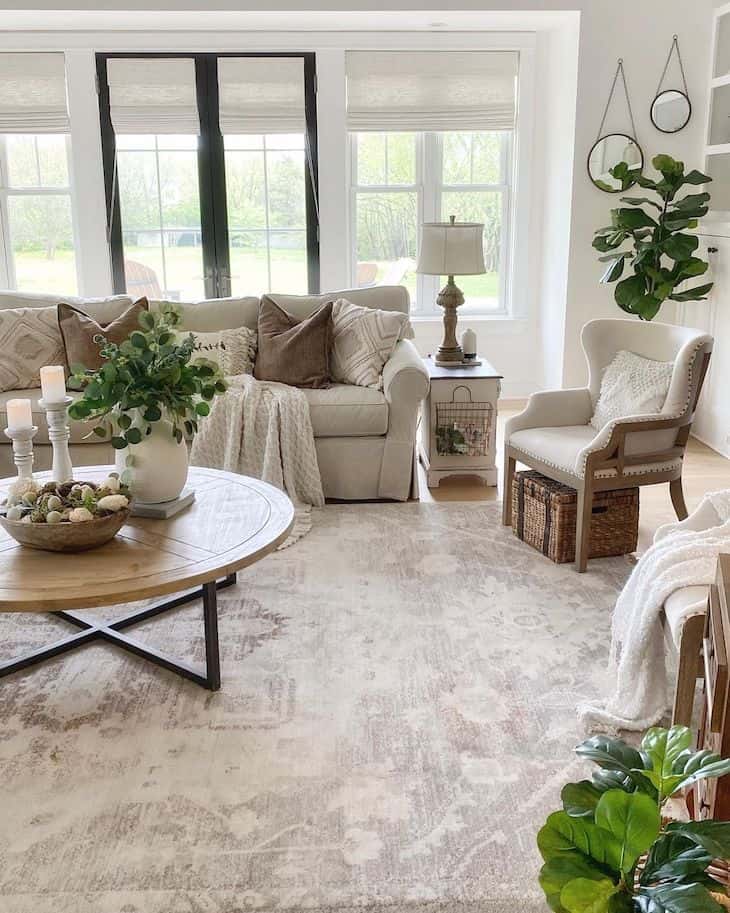
A distressed rug brings pattern without the sharp contrast of a new geometric print. In a traditional living room with beige walls and wood furniture, a cream and brown rug with a faded pattern sits under the seating area, softening the transition between the seating area and the floor. The worn look gives the room a settled, unstaged feel.
14 / 32Boho Open-Plan Living/Dining with Vibrant Geometric Rug
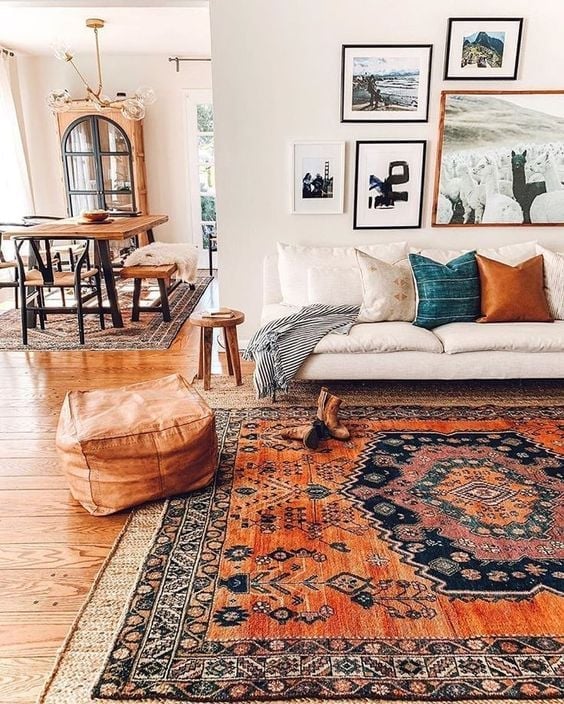
This rug does the work of a room divider without building a wall. In an open-plan space, a large geometric rug in orange navy and cream defines the living area, separating it from the dining zone beyond. The jute border keeps the bold pattern from feeling too loud, while the leather ottoman and wood dining set echo the warm tones. Natural light from windows and an overhead fixture keeps the colors from overwhelming the room. If your open floor plan feels like one big echo chamber, a rug like this gives each zone its own identity.
15 / 32Farmhouse Living Room Defined by a Textured Geometric Rug
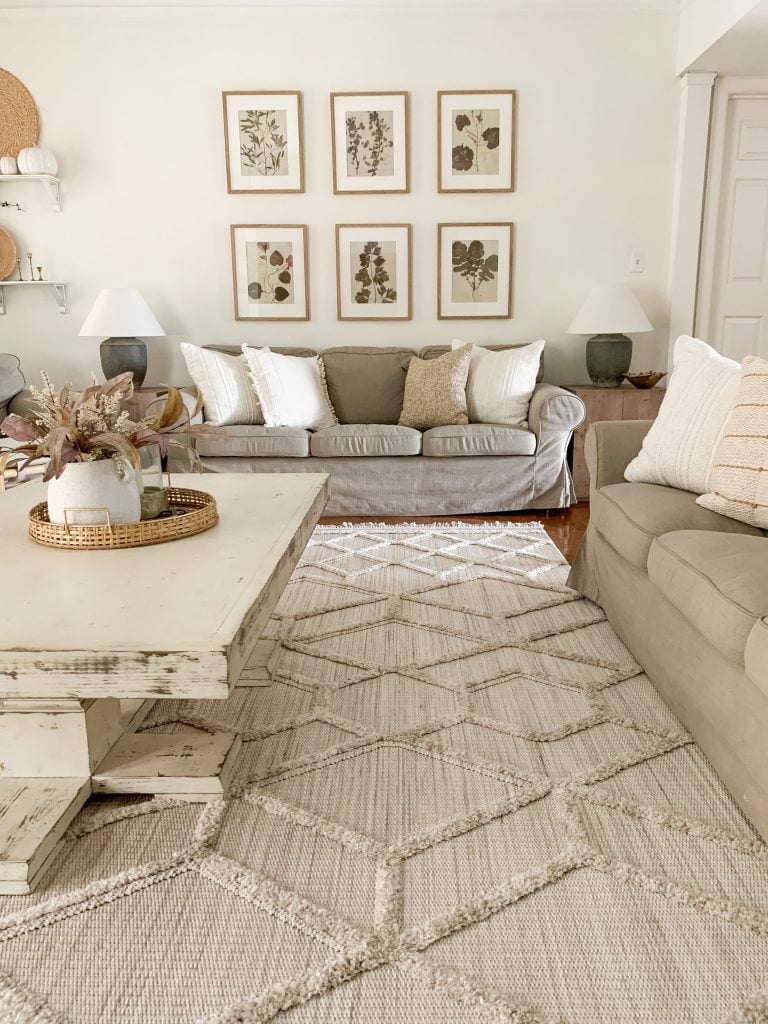
A textured geometric rug adds visual weight to a farmhouse living room without relying on color. In this roomy space, a beige and cream rug with a raised pattern sits under the sofa and coffee table, giving the seating area a clear boundary. The linen sofa and wood coffee table stay neutral, so the rug’s texture becomes the main event. That texture also hides the kind of daily wear that shows up fast on a flat weave.
Framed art on the wall picks up the same warm browns, tying the rug to the rest of the room. The natural daylight and lamps keep the space bright enough that the rug’s pattern reads clearly without feeling busy. If your farmhouse room leans too beige, a textured rug adds interest without breaking the neutral palette you already have.
16 / 32Modern Organic Living Room with Light-Toned Area Rug, Close-Up Take
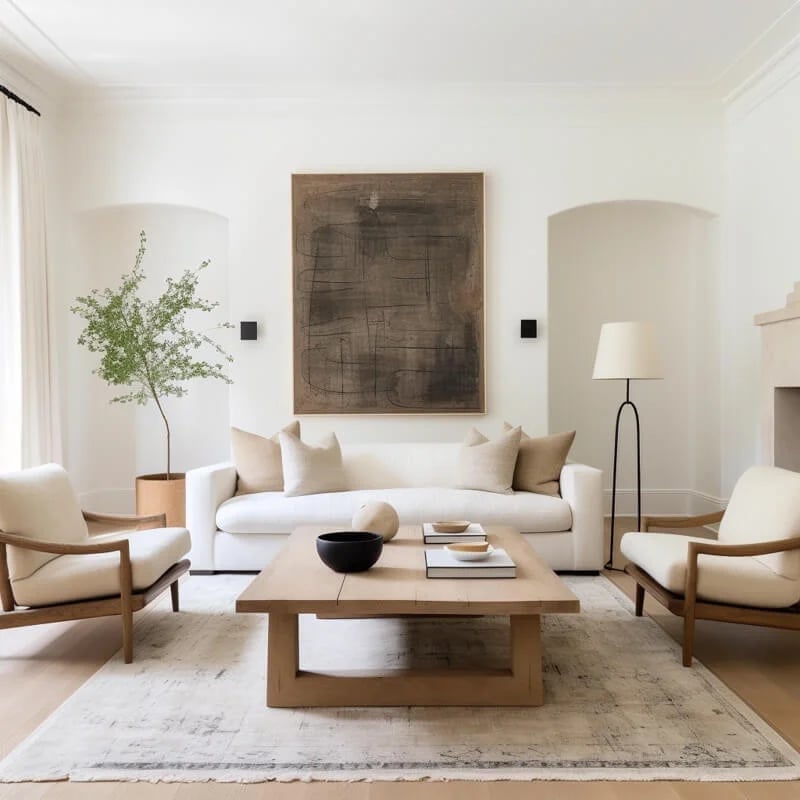
A light-toned area rug in a modern organic living room balances the clean lines of the space. The cream and white palette of the rug echoes the plaster walls and the off-white upholstery on the sofa and armchairs, while the wood floor and furniture add warmth. A large abstract artwork above the sofa provides the only real contrast, so the room feels calm without being blank. For layout, the rug is centered in the seating area, with all four legs of the sofa resting on it. That anchor keeps the open plan from feeling bare.
17 / 32Transitional Bathroom Runner on Patterned Tiles, Close-Up Take
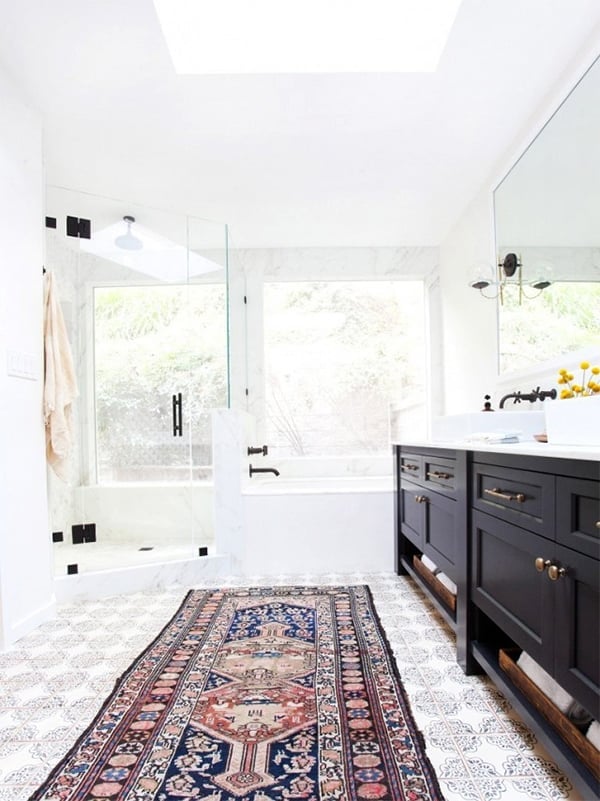
A practical rule for a rental bathroom with patterned tile is to let a runner soften the visual noise rather than compete with it. This transitional bathroom has black and white geometric tile on the floor, a marble-topped vanity, and a glass shower enclosure. The runner rug in black, white, blue, red, and cream sits on top of the tile, breaking up the pattern without covering it entirely. The traditional motif and woven fabric contrast with the hard stone and glass surfaces. If you rent, a runner like this adds pattern you can roll up and take with you. It also keeps your feet off cold tile on winter mornings, which is a bonus you do not get from paint or peel-and-stick.
18 / 32Boho Outdoor Patio with Floral Area Rug and Natural Daylight
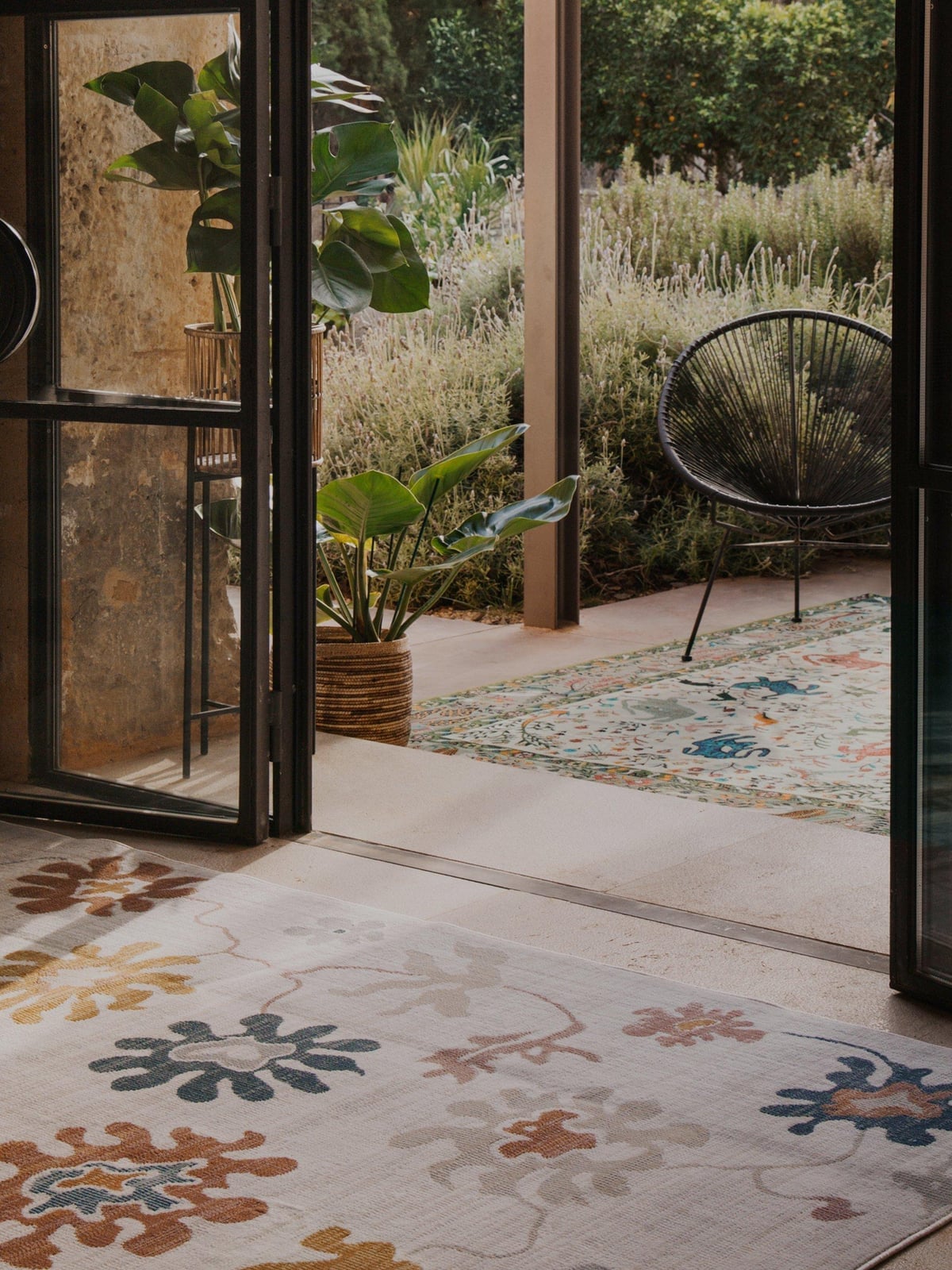
A floral outdoor rug might feel like a safer choice for a screened porch than an open patio, but it holds up in full sun if you pick the right material. This boho patio uses a cream, blue, rust, and yellow floral rug on concrete, with a single chair and potted plants as the only other pieces. The floral pattern reads as organic against the plants, while the muted palette keeps it from looking like a picnic blanket.
The key is the rug material itself. Outdoor rugs are typically polypropylene or a similar synthetic that resists mildew and fades more slowly than natural fiber. For upkeep, hose it down and let it dry in the sun. Check your USDA zone before leaving it out year-round, since freeze-thaw cycles can break down even outdoor-grade backing over time.
19 / 32Farmhouse Living Room with Intricate Blue and Cream Rug, Close-Up Take
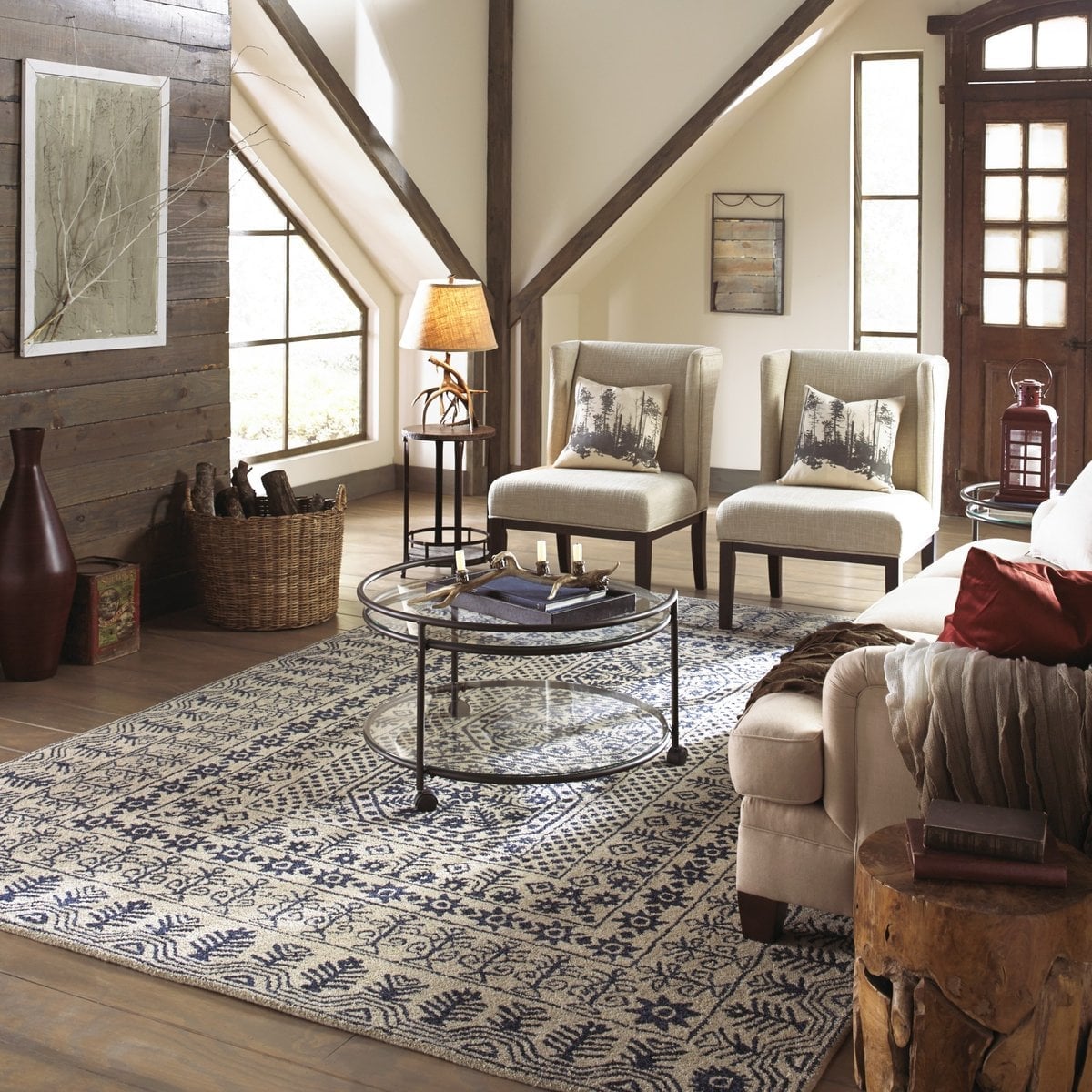
An intricate blue and cream rug can hold a farmhouse living room together without a single other pattern in sight. The woven rug sits under a glass coffee table and two armchairs, with natural light from windows and a table lamp hitting the blue tones just enough to keep them from fading into the cream background. The palette stays to cream, blue, and wood tones, so the rug does the pattern work for the whole room. This is one look that proves an ornate rug can feel clean when the surrounding pieces stay simple.
20 / 32Modern Living Room with a Subtly Textured Beige Rug, Close-Up Take
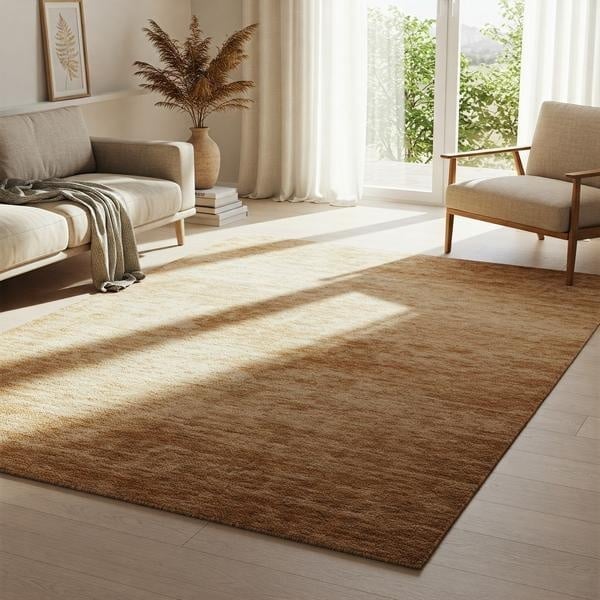
A beige rug with subtle texture does not have to be boring; it just has to work for the room it is in. In this modern open-plan living room, the rug sits under the seating area, with strong natural daylight hitting the surface and making the low-profile weave visible. The palette stays to beige, cream, and tan, with the wood and fabric furniture reading as the warm counterpoint to the rug’s quiet surface. For a modern room that already has clean lines and neutral tones, a textured rug adds the one layer of depth that keeps the space from feeling flat. That is one idea worth trying if your room needs a soft landing for the eye.
21 / 32Boho Hallway Runner with Diamond Pattern and Tassels
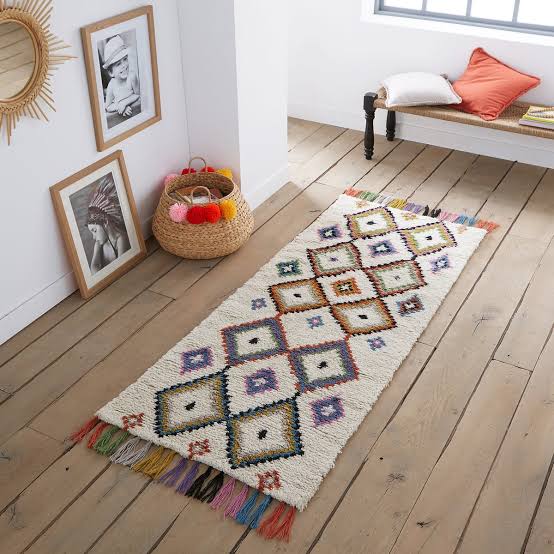
A narrow hallway needs a runner that brings the eye along the floor without making the space feel smaller. A diamond pattern and colorful tassels on each end give a woven fabric runner plenty of personality. The cream and multi-color palette keeps it neutral enough to work with a wooden floor and a nearby bench or basket. In element mode, the runner is the main event, so the rest of the decor stays simple: framed art on the wall and a single basket for storage. This setup gives a hallway a finished look without adding clutter.
For layout, a runner that leaves a few inches of bare floor on each side makes a narrow hallway feel wider than it is. The diamond pattern adds visual movement, which helps disguise a long, straight walkway. The tassels give the ends a soft, finished edge.
22 / 32Transitional Open-Plan Living Room with Grey Patterned Rug
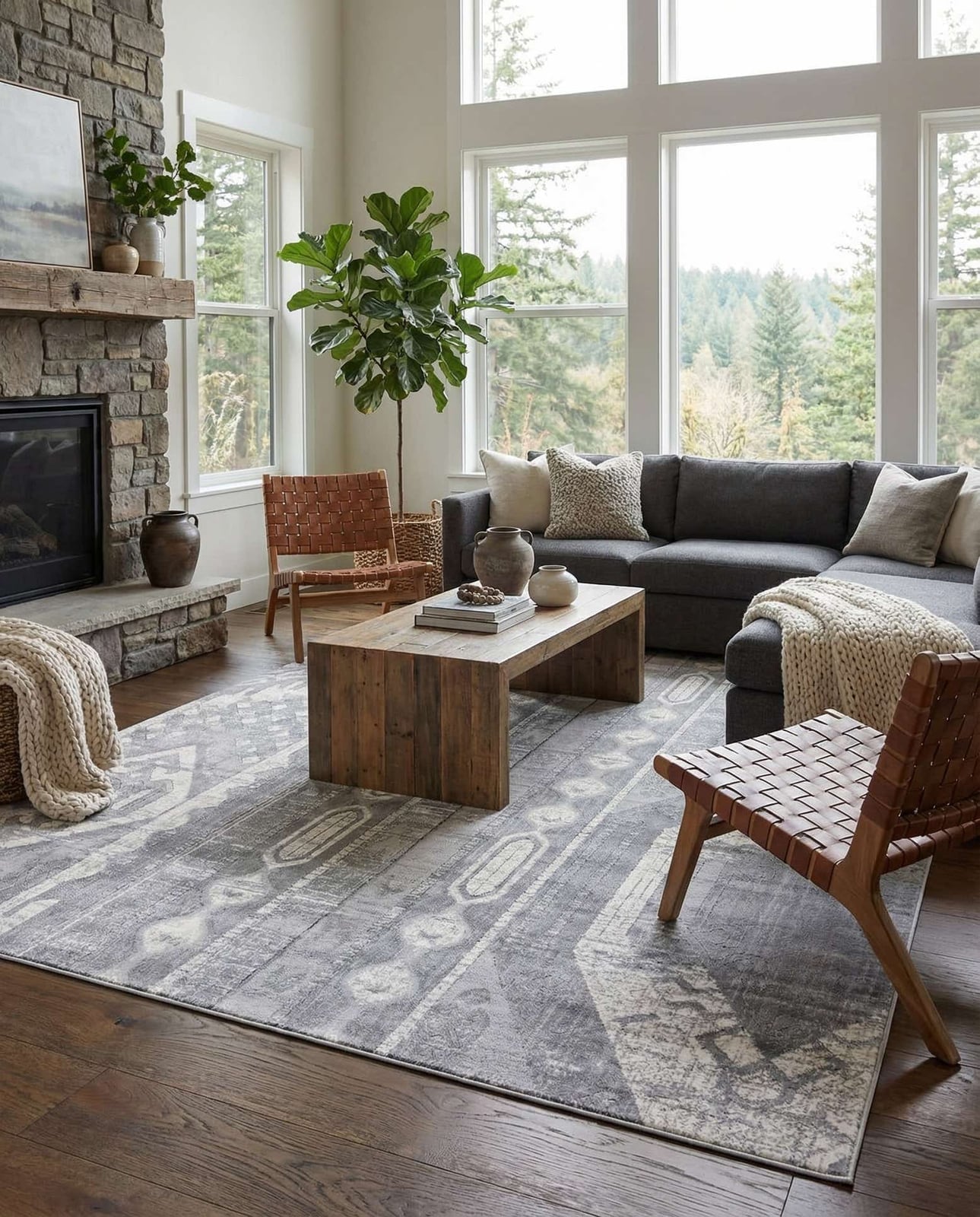
A large grey patterned rug sits at the center of an open plan living room, with a sectional sofa and armchairs arranged around it. The rug pulls together the seating area, while the fireplace and a tall plant anchor the far end of the room. Abundant natural light from large windows keeps the grey, cream, and beige palette from feeling heavy. For palette, the rug ties the room together: the grey echoes the stone fireplace, and the cream picks up the floor. This makes the open plan feel cohesive.
23 / 32Traditional Galley Kitchen Runner for Color and Pattern
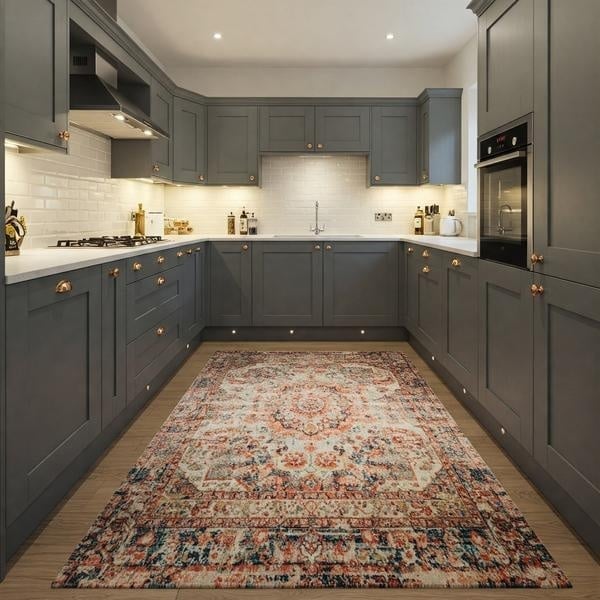
A galley kitchen benefits from a runner that adds color and pattern without getting in the way. An ornate rug in grey, coral, blue, and cream runs down the aisle between grey cabinetry and the oven. The woven fabric sits on tile, so it stays put underfoot. For materials, a flat-weave rug works best in a kitchen because it does not snag on cabinet doors and handles spills better than a thick pile. Under-cabinet and overhead lighting keep the runner visible without casting shadows.
24 / 32Farmhouse Bedroom with Ornate Cream, Rust, and Navy Rug
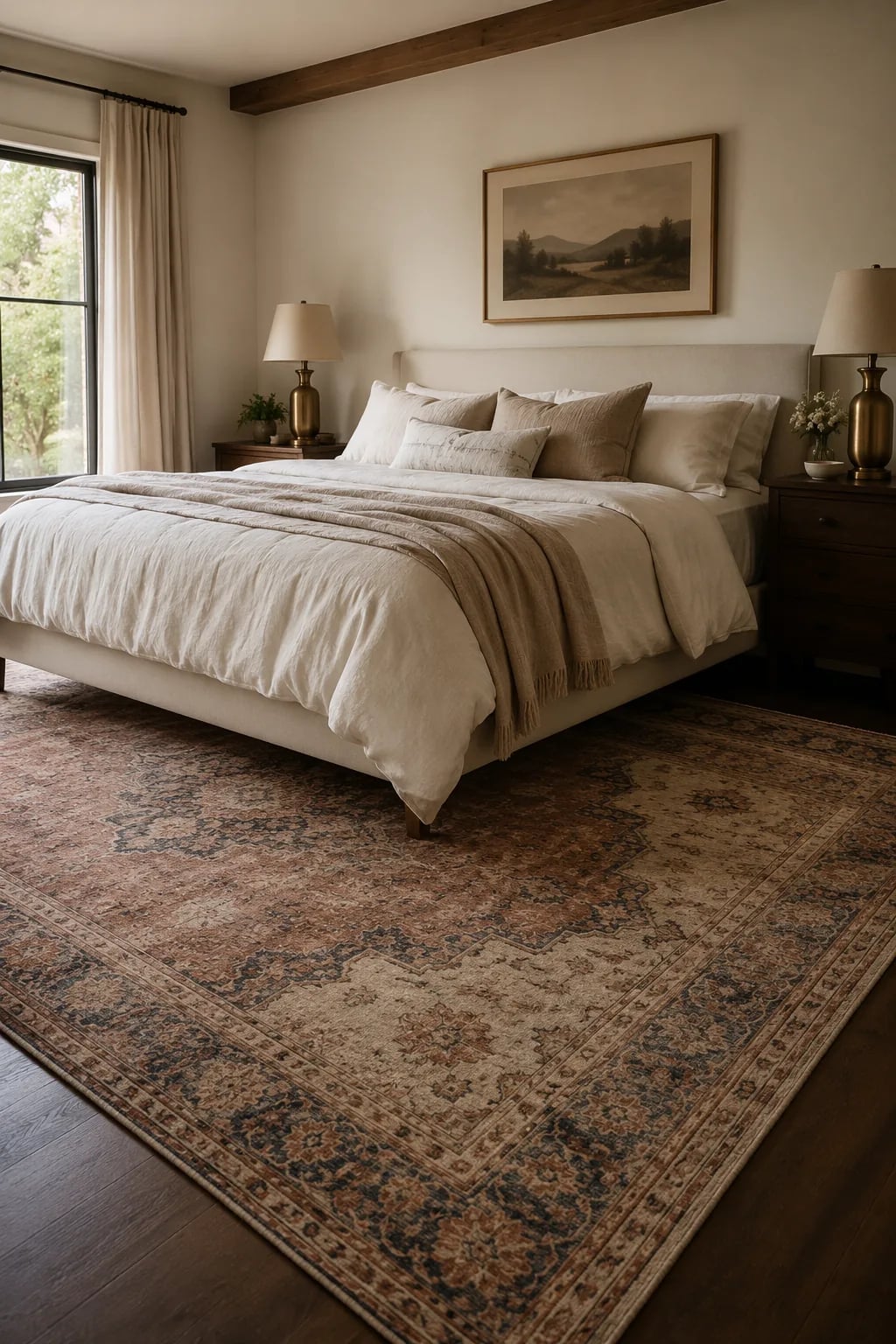
A farmhouse bedroom with a plain linen bed and simple nightstands can feel flat. Adding an ornate rug in cream, rust, and navy changes that. The distressed pattern gives the rug a worn-in look that fits the farmhouse style. The rug sits under the bed, with enough extending past the sides to land on when you get up.
For lighting, a patterned rug like this works best when it gets both natural daylight and warm bedside lamps. The cream and rust tones pick up the daylight, while the navy appears deeper under the lamps. This keeps the rug from looking washed out at noon or too dark at night.
25 / 32Glamorous Dining Room with Gold and Cream Abstract Rug
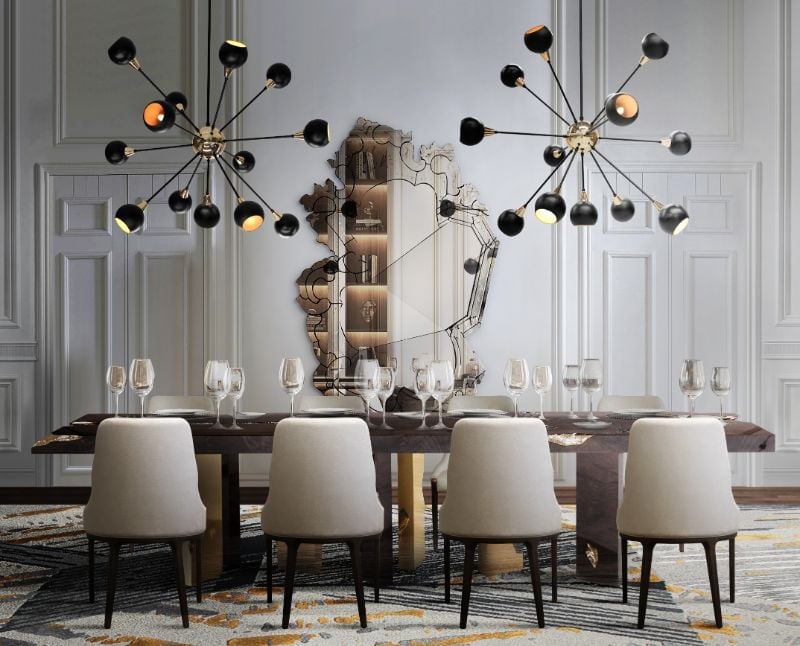
A dining room with a marble table, velvet chairs, and metallic accents calls for a rug that holds its own. An abstract rug in gold, black, cream, and grey does that. The gold picks up the metallic accents, while the cream and grey keep the room from looking too warm. For styling variation, the abstract pattern contrasts with the ornate mirror on the wall. This stops the room from feeling like a period set and gives it a modern edge.
26 / 32Rustic Bedroom Accent with Small Tribal Rug
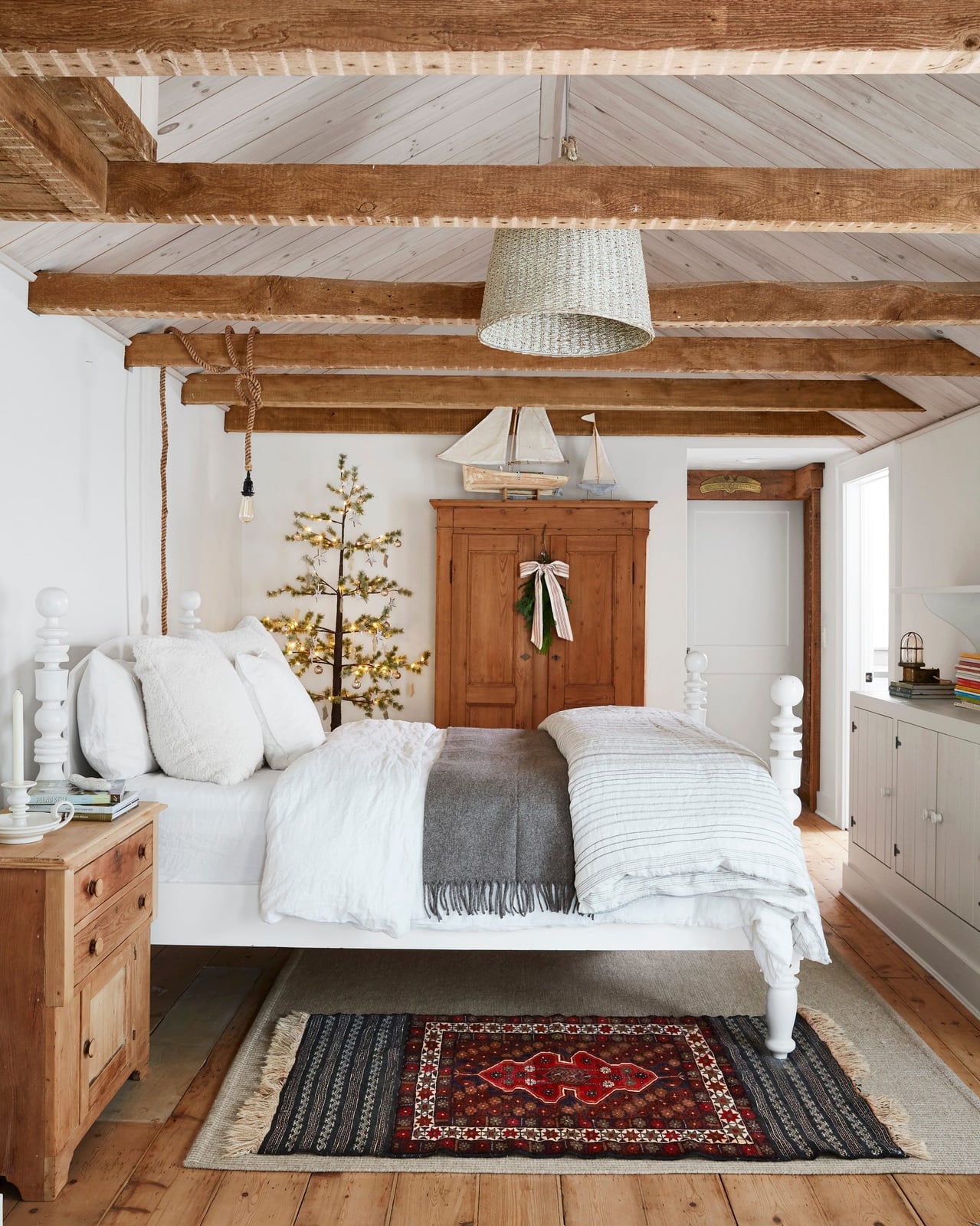
A small rug at the foot of the bed is a low-commitment way to test pattern in a rustic bedroom. This compact version brings in red, black and cream against wood tones and white bedding, with the tribal motif adding character without taking over the room. The scale works because the rug sits as an accent rather than the main anchor, allowing the bed and a wooden cabinet to hold the visual weight. For a similar effect, match the rug’s palette to existing warm wood or neutral linens so it feels intentional rather than random.
27 / 32Modern Bedroom with Light Grey Patterned Rug Extending from Bed
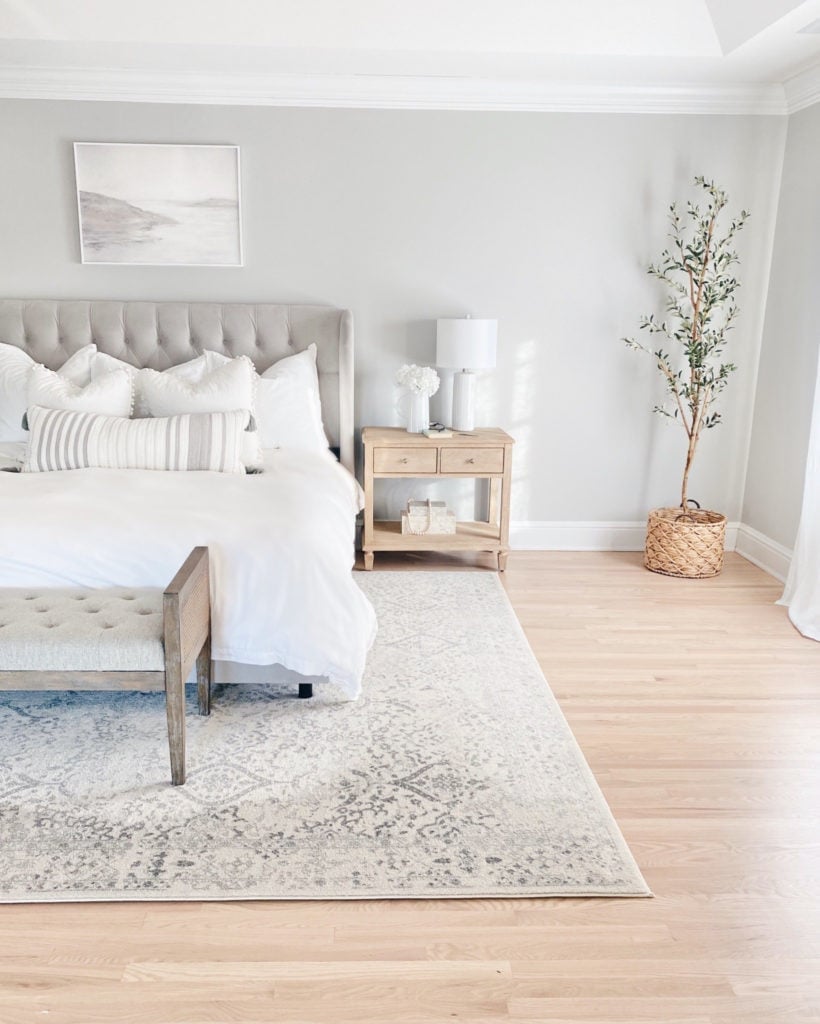
A practical rule for a modern bedroom is to let the rug extend past the bed to define the sleeping zone without covering the whole floor. This light grey patterned rug runs from under the bed out toward a bench, creating a clear path for the feet in the morning. The neutral palette of grey, white and natural wood keeps the room airy, while the subtle pattern adds visual texture that a solid rug would miss.
For renters, this layout works with a rug that sits partially under the bed rather than wall to wall. You get the anchoring effect without a permanent installation. A basket-weave plant holder beside the bed echoes the natural materials and keeps the look cohesive.
28 / 32Modern Luxury Bedroom with Geometric Rug Under Bed
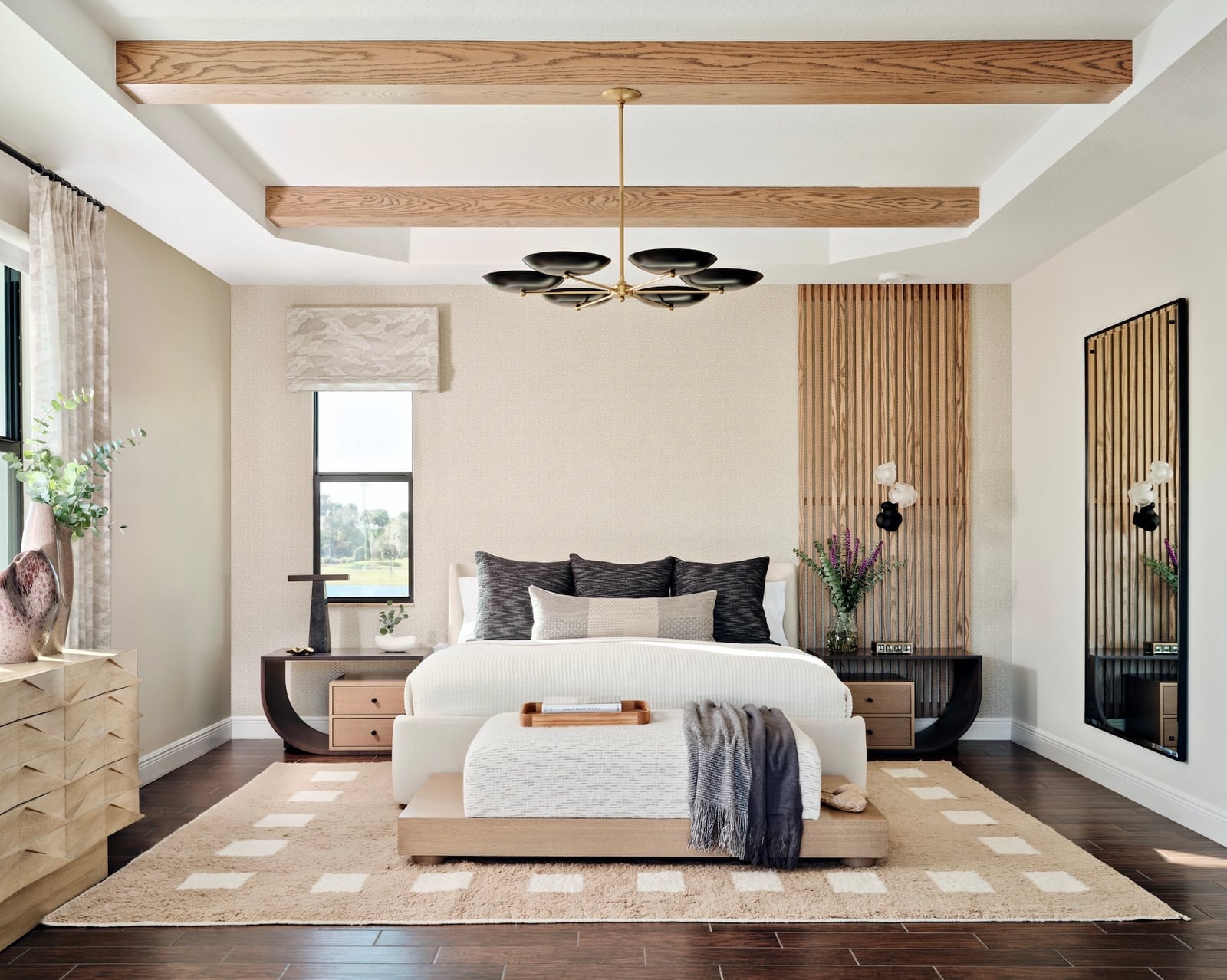
A geometric patterned rug in beige, cream and wood tones sits under both the bed and an ottoman, tying the two pieces together in a modern luxury bedroom. The pattern adds structure to the soft palette, while the chandelier overhead brings a formal counterpoint to the natural daylight. Choosing a rug with a low pile and repeating motif means it can handle the weight of the bed legs and ottoman without flattening unevenly over time.
29 / 32Minimalist Bedroom Vignette Featuring a Natural Jute Rug
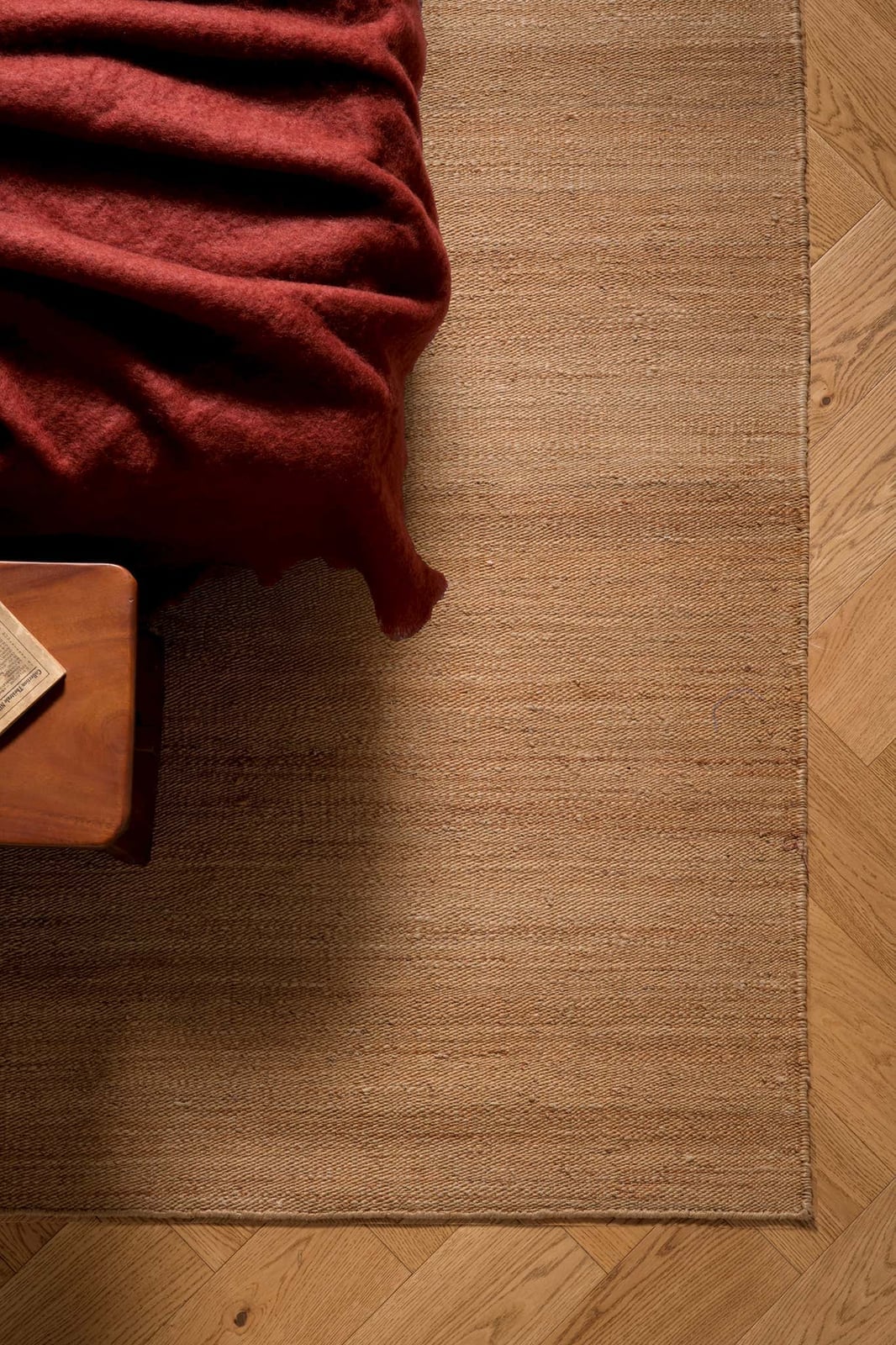
The texture of a jute rug stands out in a minimalist bedroom precisely because the other pieces stay neutral. This tan jute rug sits under one corner of the bed, with a wooden side table and a red wool blanket adding the only real color. The natural fiber feels warm and grounded against the wood floor. In a vignette like this, the rug does not need to fill the room; a compact size keeps the look balanced. Jute holds up well in low-traffic spots, and its organic feel suits a palette of tan and wood tones without competing with them.
30 / 32Traditional Entryway Runner for a Welcoming Statement
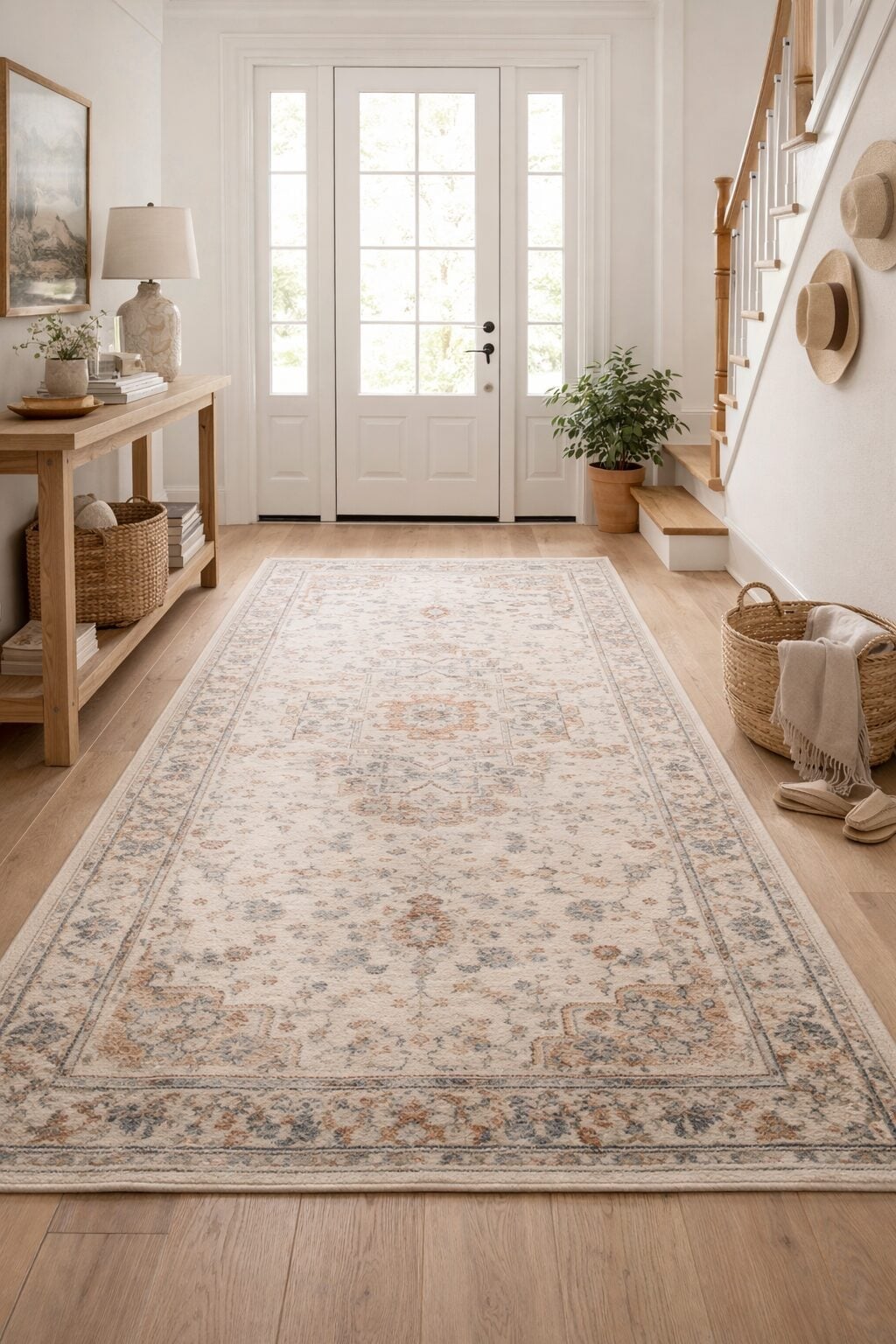
A long hallway calls for a runner that can handle both foot traffic and visual impact, not just a narrow strip that disappears into the floor. This ornate runner in cream, blue and orange brings color and pattern to a traditional entryway, leading the eye from the front door past a console table and baskets toward the stairs. The wood floor and wicker baskets keep the runner from feeling too formal for a daily entry.
For layout, the runner should leave a few inches of floor visible on each side so the hallway looks balanced. The width of the runner matters more than its length in a narrow space; a too-wide runner can make the hallway feel cramped. A door and an overhead fixture keep the pattern visible without relying on a single source.
31 / 32Modern Living Room with a Striking Yellow and Grey Striped Rug
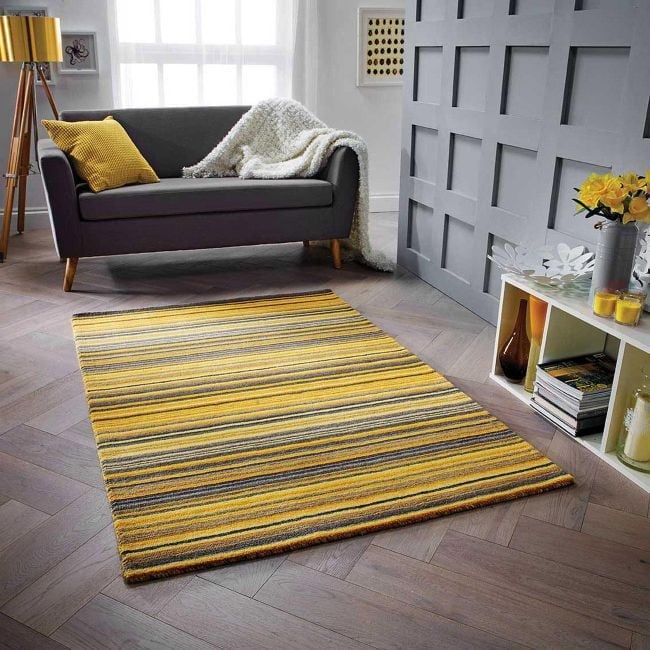
A yellow and grey striped rug can set the whole palette for a room. In this modern living room, the rug’s bold horizontal lines pull the eye across the seating area, anchoring the sofa and introducing a shot of warmth against the white walls and grey upholstery. The yellow reads as the accent color, so other pieces, a floor lamp and a simple shelving unit, stay neutral. The trick is letting the rug lead: keep surrounding furniture low-contrast so the stripes stay the main event. This is 31 look that proves a single patterned piece can define a whole space.
32 / 32Final Thoughts
The right rug pulls a room together more than any other single decor piece. It adds warmth, defines zones, and brings pattern where walls stay quiet. When choosing, think about traffic, upkeep, and how the rug sits with your furniture. A flatweave works for high-use spots; a plush pile suits low-traffic rooms. Check your climate for natural fibers like jute, which can shrink or mildew in damp areas. The best rug is one that feels right underfoot and makes you want to stay in the room a little longer.