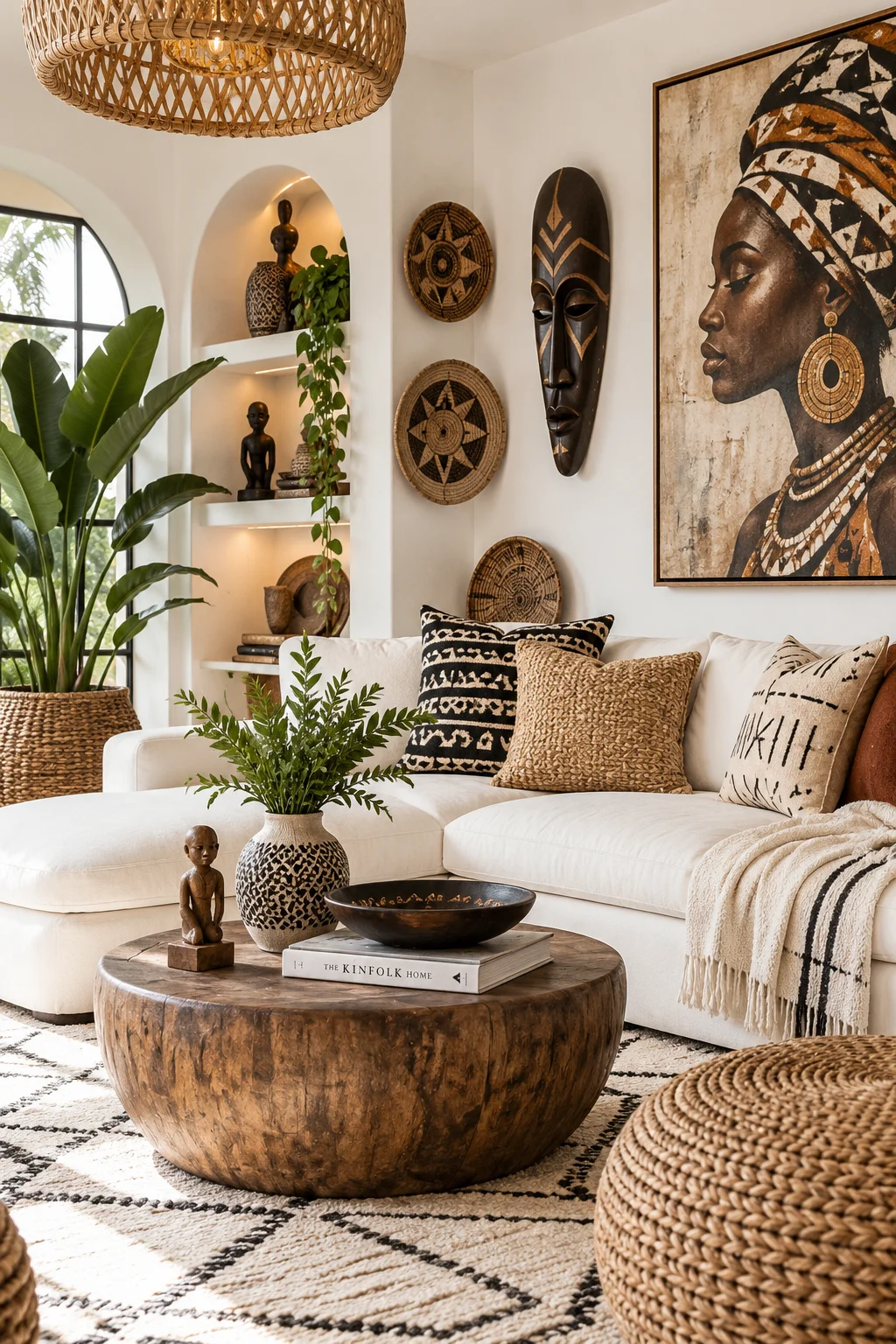
Afrohemian living room ideas bring together rich cultural influences, natural textures, expressive patterns, and relaxed modern comfort. I love how this style can feel warm and personal without following a rigid decorating formula. Woven accents, earthy tones, sculptural décor, patterned textiles, and African-inspired artwork can instantly give a living room more character. From light and airy spaces to deeper, moodier interiors, there are so many ways to interpret the Afrohemian aesthetic. In this collection, I’m exploring beautiful living rooms that show how furniture, artwork, textures, and color can work together to create a distinctive atmosphere. If you’re looking for inspiration for your own space, these Afrohemian living room ideas offer plenty of practical and stylish details to consider.
Moody Navy Sofa Living Room With African-Inspired Portrait Art
The first living room immediately creates a rich, intimate atmosphere with a deep navy tufted sofa positioned against a gray textured wall. Two large framed portraits with warm golden backgrounds become the main focal point, while patterned cushions, mustard-gold pillows, and a colorful textile running along the sofa introduce additional layers. I also notice a substantial wooden coffee table with a naturally textured surface, a patterned rug beneath it, and woven lighting and accessories that soften the darker palette.
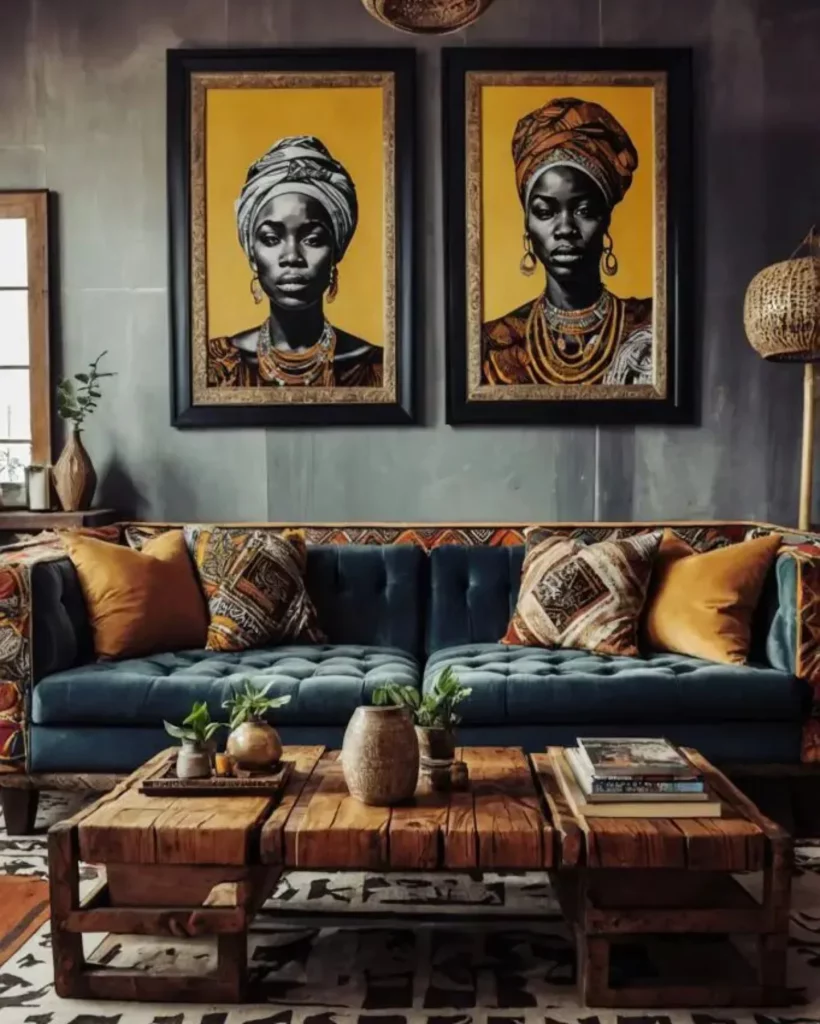
I think the arrangement works particularly well because the large sofa provides a calm visual base for the more expressive artwork and textiles. The coffee table adds substantial surface space without looking delicate, while the combination of square and patterned cushions makes the seating feel inviting. The darker colors also give the room a cozy quality, while the golden artwork keeps the composition from becoming visually flat.
From my perspective, the most effective idea here is using a restrained background to make decorative pieces stand out. If I wanted to recreate this feeling, I would begin with one deep upholstery color and then repeat two or three tones from the artwork throughout the cushions and accessories. Keeping the strongest patterns concentrated around the sofa and wall also makes the room feel intentionally styled rather than overcrowded.
Calm Cream Sofa With Graphic Textiles and a Statement Wall Hanging
The third room has a softer, more understated Afrohemian character. A cream sofa is layered with cushions in black, white, beige, and earthy patterned textiles, while a large rectangular woven wall hanging occupies much of the wall above it. Dark sculptural objects sit behind the sofa, and a substantial dark wooden coffee table provides contrast in the foreground. The room also includes a textured floor covering and several rounded ceramic or wooden accessories that reinforce the handcrafted feeling.
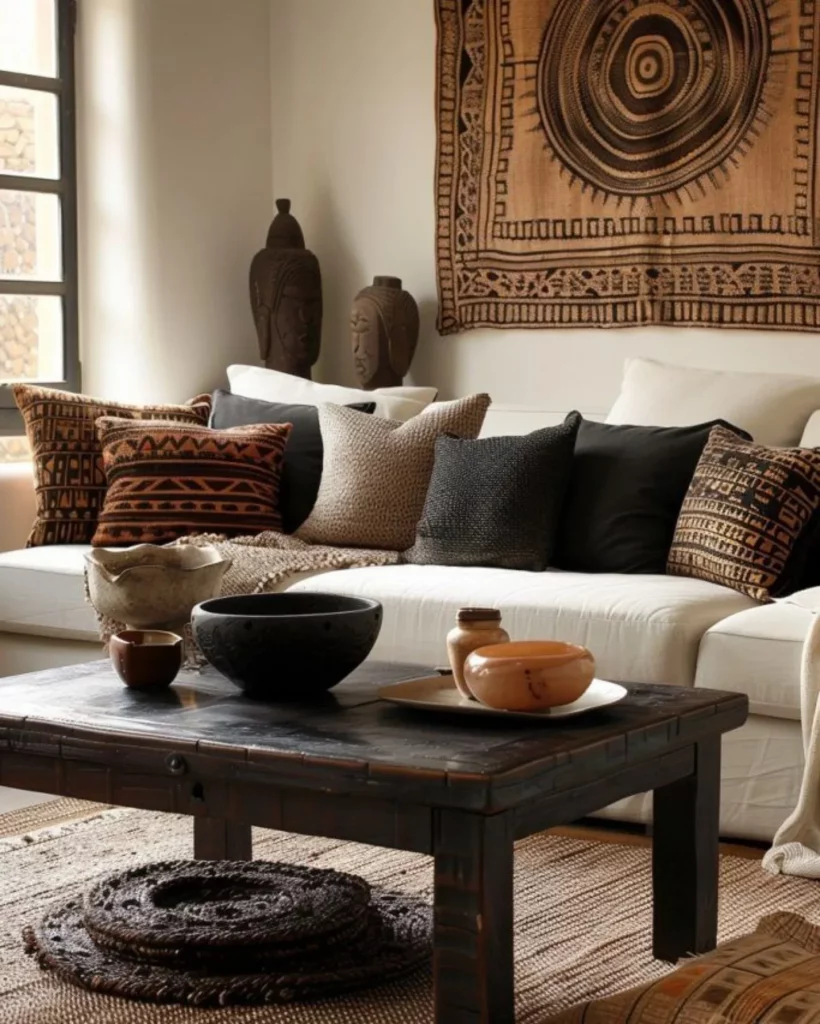
I find the balance between light and dark especially successful here. The pale sofa and walls keep the room visually open, while the black cushions, dark coffee table, and decorative objects provide definition. The coffee table is also broad enough to hold several bowls and accessories while leaving plenty of space around the seating area.
My favorite takeaway from this photograph is the way pattern is concentrated rather than scattered everywhere. I would use one large textile as the primary wall statement and then repeat its colors through smaller cushions and accessories. That approach makes a collection of different textures feel cohesive and is particularly practical when working with neutral furniture.
Mid-Century-Inspired Afrohemian Living Room With Graphic Wall Art
This living room combines cream upholstered furniture with warm wood frames and graphic artwork. A white sofa sits along the main wall, accompanied by wood-framed lounge chairs and two round coffee tables with different finishes. The walls are a warm beige, while the artwork includes bold black geometric shapes and a vertically striped composition. A large patterned rug spreads across the seating area and introduces additional geometric detail.
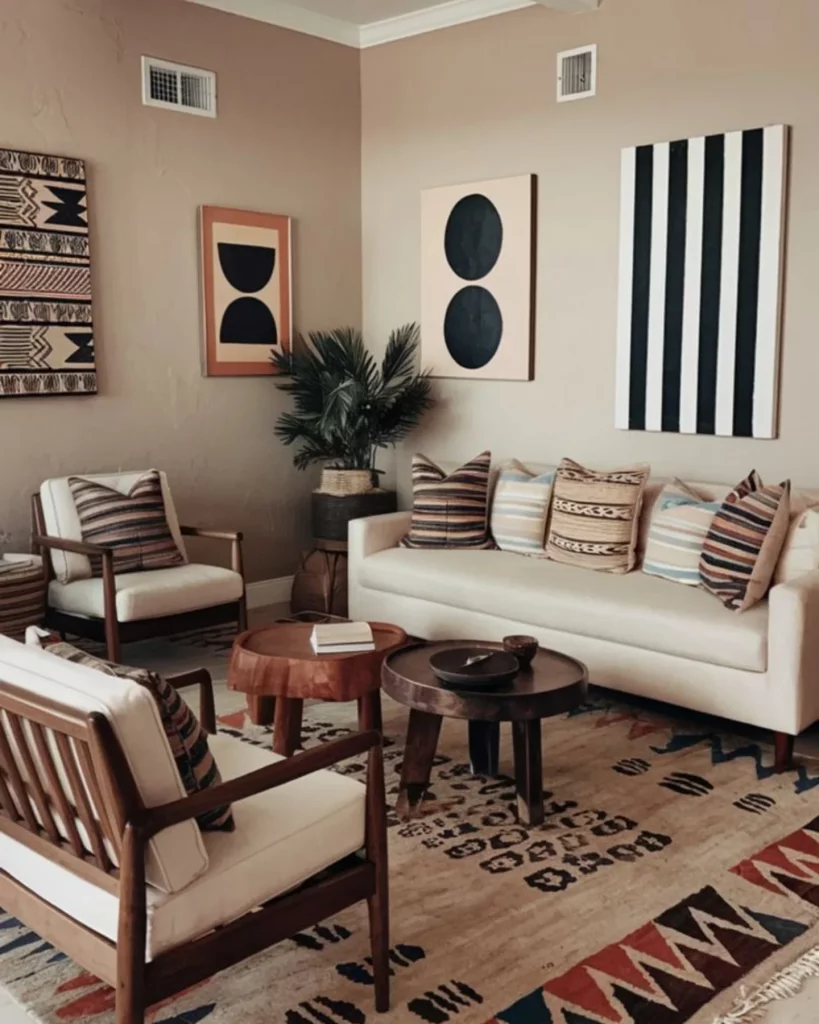
I like the way the furniture is arranged to encourage conversation rather than simply facing a single focal point. The separate chairs help create a more flexible seating group, while the round tables make movement around the room easier. The large rug visually gathers the sofa, chairs, and tables into one defined zone, which is especially useful in a larger living room.
For me, this image shows that Afrohemian style can work beautifully with a more restrained furniture silhouette. I would focus on clean-lined upholstered pieces and warm wood, then introduce cultural-inspired character through cushions, rugs, and wall art. The result feels collected and expressive while still maintaining a comfortable everyday layout.
Warm Terracotta Living Room With Woven Mirrors and Patterned Walls
The fifth interior is much warmer and more decorative, with a terracotta-colored patterned accent wall dominating the room. Several round woven pieces and mirrors are arranged across the wall, creating a layered focal point above a cream sofa. The seating is decorated with patterned cushions and a textured throw, while a woven pendant light, large leafy greenery, ceramic vessels, and a patterned rug add further depth. A simple wooden coffee table keeps the center of the room functional and grounded.
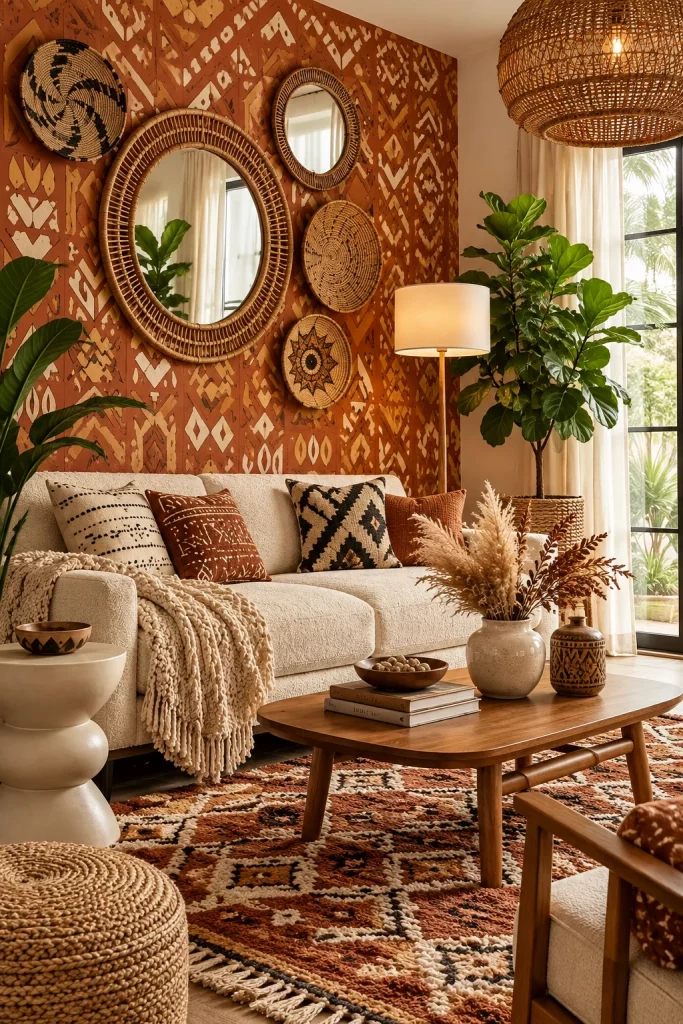
I think the composition works because the strong wall pattern is balanced by the relatively calm cream sofa. The mirrors introduce reflective surfaces that help vary the wall arrangement, while the circular woven pieces repeat the rounded forms of the pendant and other accessories. The large rug also gives the seating arrangement a clear visual foundation.
If I were recreating this room, I would treat the patterned wall as the main statement and avoid competing with it through too many unrelated decorative colors. Repeating terracotta, cream, natural brown, and black in smaller pieces would create the same connected feeling. The combination of mirrors and woven wall décor is particularly useful when I want a wall to feel richly decorated without depending on one oversized artwork alone.
Leather Sectional Living Room With Tribal-Inspired Patterns and Woven Décor
This living room has a strong earthy palette built around a large brown leather sectional. The sofa is surrounded by cushions with black, cream, brown, and geometric patterns, while a large portrait occupies the center of the wall. Several circular woven pieces surround the artwork, and a large patterned floor covering creates contrast beneath a carved round coffee table. A woven pendant light, tall decorative vessel, and woven pouf complete the room.
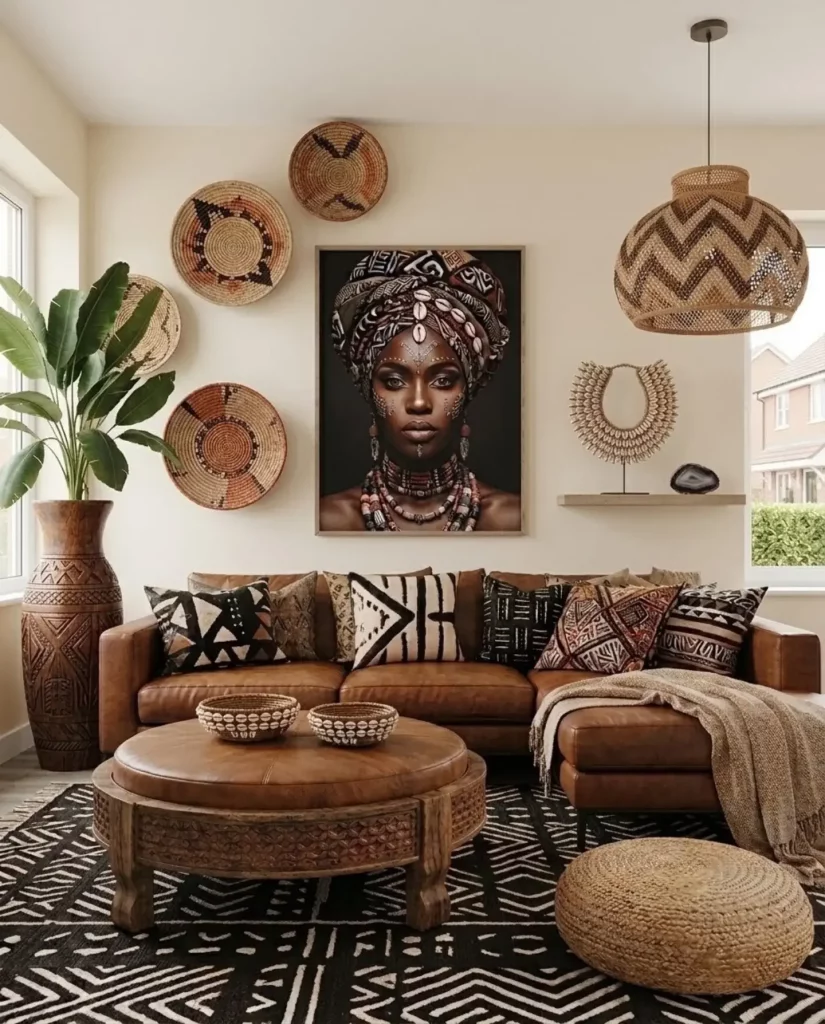
The leather sectional gives the room a substantial, comfortable foundation, while the patterned cushions prevent the large seating piece from looking visually plain. I also like the circular coffee table because its shape contrasts with the angular sofa and patterned rug. The wall arrangement provides a strong focal point without requiring additional large furniture pieces.
From my experience with layered interiors, a large sectional can easily dominate a room, so I like the strategy of surrounding it with varied textures and smaller decorative forms. Here, the combination of leather, woven materials, patterned textiles, and carved surfaces gives the room depth. I would keep the largest furniture pieces in simple shapes and use accessories to introduce the strongest Afrohemian character.
Contemporary Olive Green Living Room With Sculptural Ceiling Fan
The seventh image presents a much more contemporary interpretation of Afrohemian style. A large olive-green sectional wraps around a low wooden coffee table, creating a spacious seating zone in the center of the room. A large black-and-white organic patterned rug spreads across the light wood floor, while floor-to-ceiling curtains frame expansive windows. A sculptural wood-toned ceiling fan becomes an architectural feature overhead, and an arched opening connects the living room with another area.
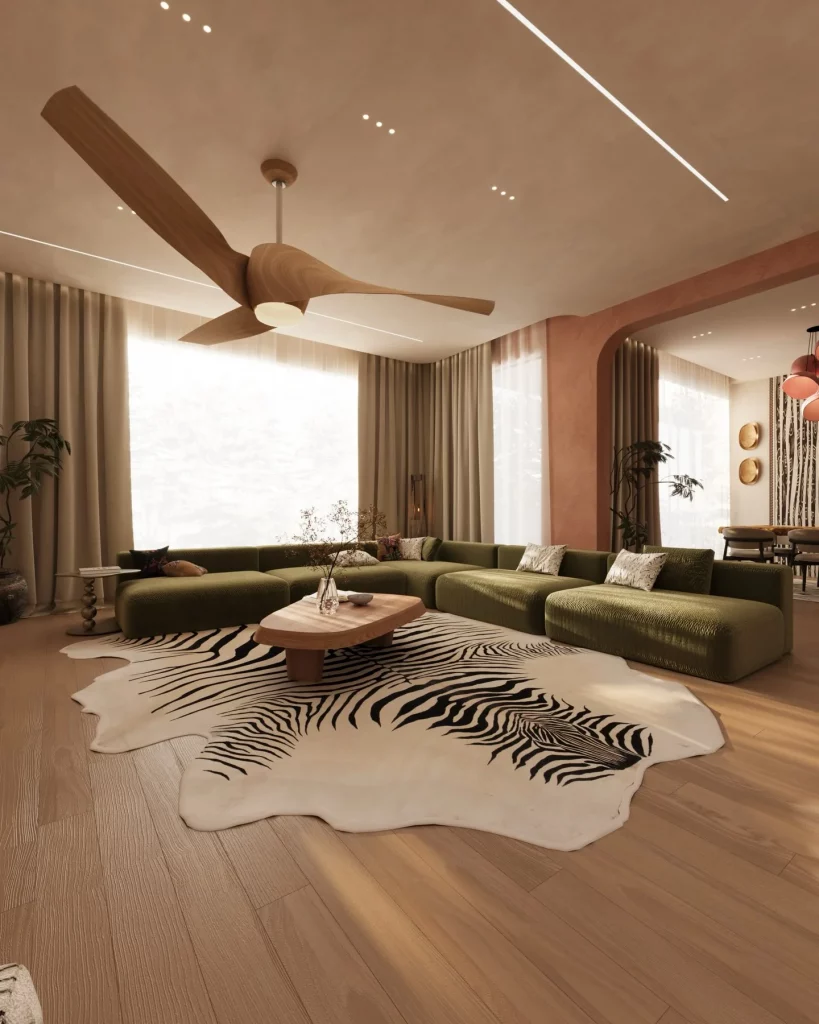
I find the open arrangement particularly effective because the room has generous circulation around the sectional and coffee table. The low furniture keeps sightlines open, while the oversized rug visually defines the seating area. The contrast between the olive upholstery, pale wood floor, neutral curtains, and graphic rug creates interest without requiring a large collection of accessories.
For me, this photograph demonstrates how Afrohemian influence can be interpreted through shape and pattern rather than through a heavily decorated room. I would choose one expressive rug, a sculptural lighting or ceiling element, and a restrained earthy upholstery color. That combination can preserve the contemporary architecture while still giving the room a distinctive character.
Rust Wallpaper Living Room With Rattan Seating and Layered Textures
The eighth room feels warm and collected, with patterned rust-colored wallpaper covering the main wall behind a camel-toned sofa. Open wooden shelves display woven baskets and decorative objects, while a colorful abstract artwork provides a strong focal point above the sofa. Rattan-framed chairs sit nearby, and a large round textured rug defines the seating area. Natural woven materials, wooden furniture, greenery, and a bright window create a comfortable balance between richness and light.
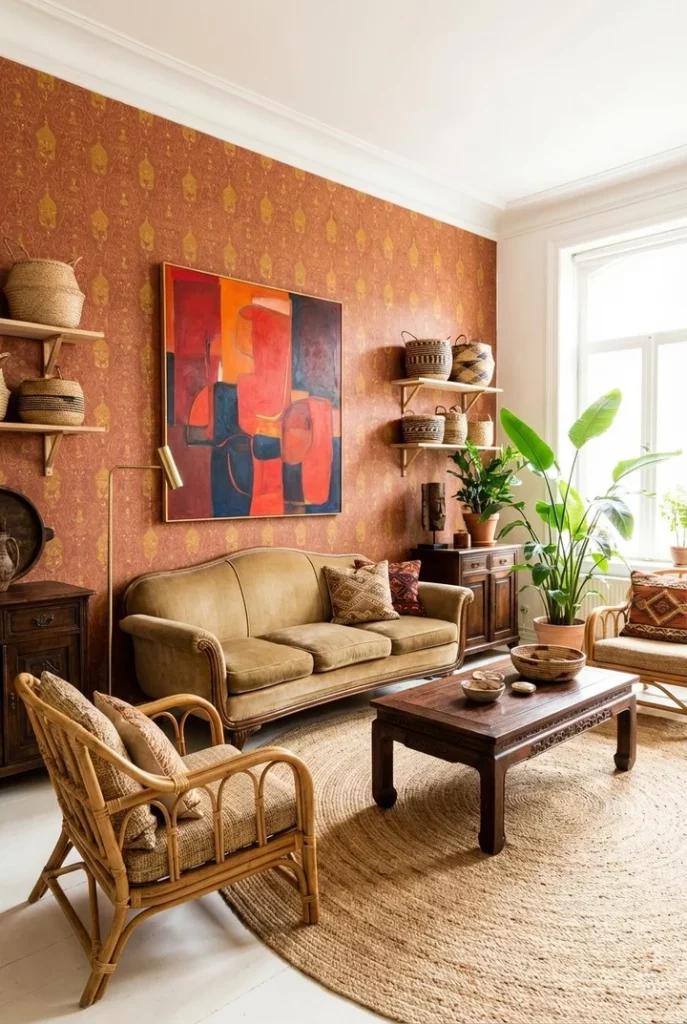
I like how the room uses several different materials without losing its sense of order. The sofa provides a solid visual center, the rattan chairs add lighter lines, and the shelves offer practical display space. The large rug helps connect the different seating pieces, while the open shelving gives the wall a useful function rather than treating it only as a decorative backdrop.
I would take inspiration from the way the colors are repeated throughout the room. The rust wall, warm upholstery, wood, and woven materials all belong to the same earthy family, while the artwork introduces stronger color in a controlled way. For me, this is a good approach when I want a room to feel richly decorated but still harmonious.
Terracotta Afrohemian Living Room With Colorful Textiles and Basket Wall Art
The ninth living room is full of warm terracotta tones, layered patterns, and colorful accents. A deep orange sofa sits against the warm wall, surrounded by cushions in earthy shades with blue and geometric details. Several decorative woven baskets are arranged in clusters on the walls, while a blue patterned chair adds a contrasting accent. A round carved coffee table, patterned rugs, a beaded doorway treatment, and abundant greenery make the room feel collected and highly textured.
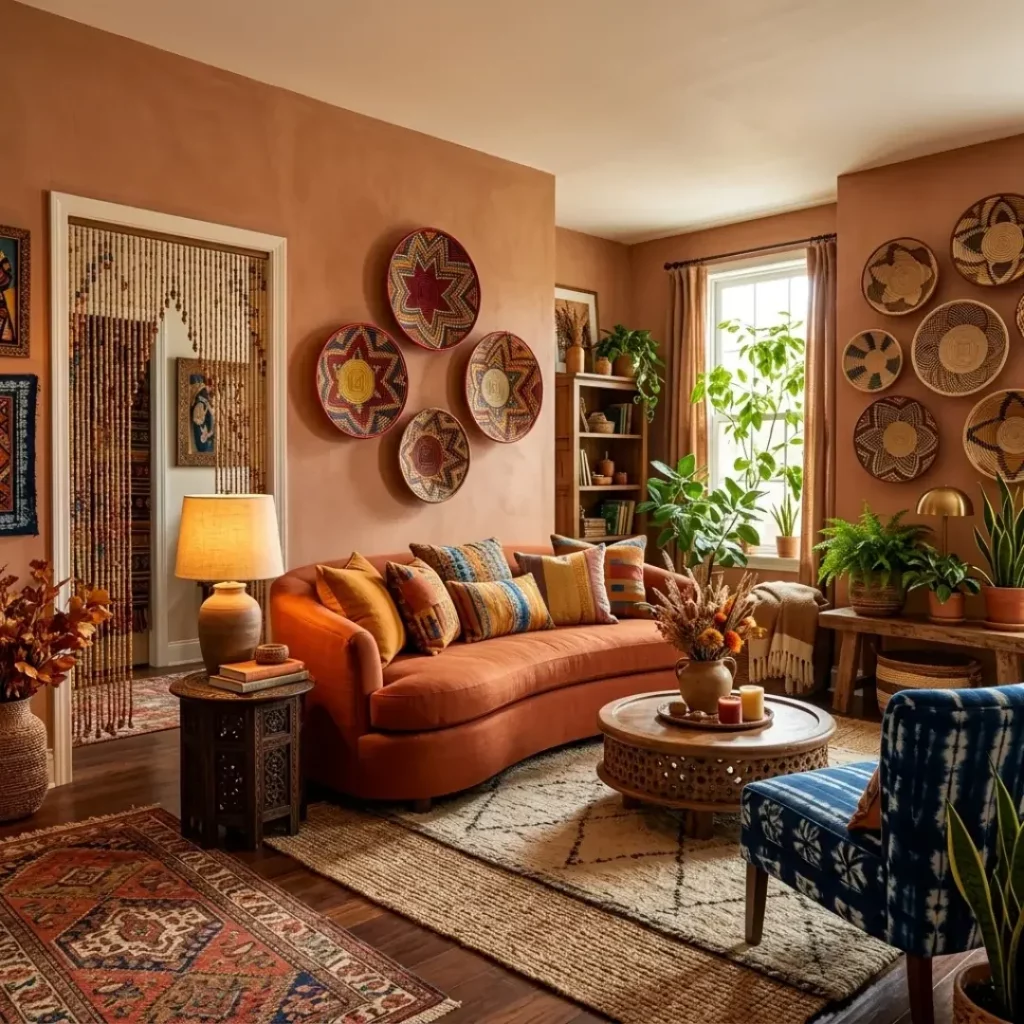
The seating arrangement feels comfortable and social because the sofa and accent chair face into the central coffee table. I especially like the way the circular coffee table echoes the round wall baskets, creating repetition across different parts of the room. The layered rugs also help define the seating zone and bring together the warm colors used throughout the interior.
For me, this image is a reminder that an expressive Afrohemian room can handle several patterns when there is a consistent color story. I would choose a dominant earthy shade first, then repeat a secondary color such as blue through cushions or one statement chair. Grouping similar woven wall pieces together also creates a stronger visual impact than scattering them randomly around the room.
Vaulted Afrohemian Living Room With Moss Wall and Arched Windows
The final room has a completely different architectural feeling, with a high vaulted ceiling, exposed wood beams, tall arched windows, and a stone floor. A cream sofa faces a substantial wooden coffee table, while a large green textured wall runs beside the windows. Woven pendant lights hang from the ceiling, and framed botanical artwork forms a gallery arrangement on the opposite wall. Natural baskets, neutral textiles, earthy cushions, and abundant greenery complete the relaxed setting.
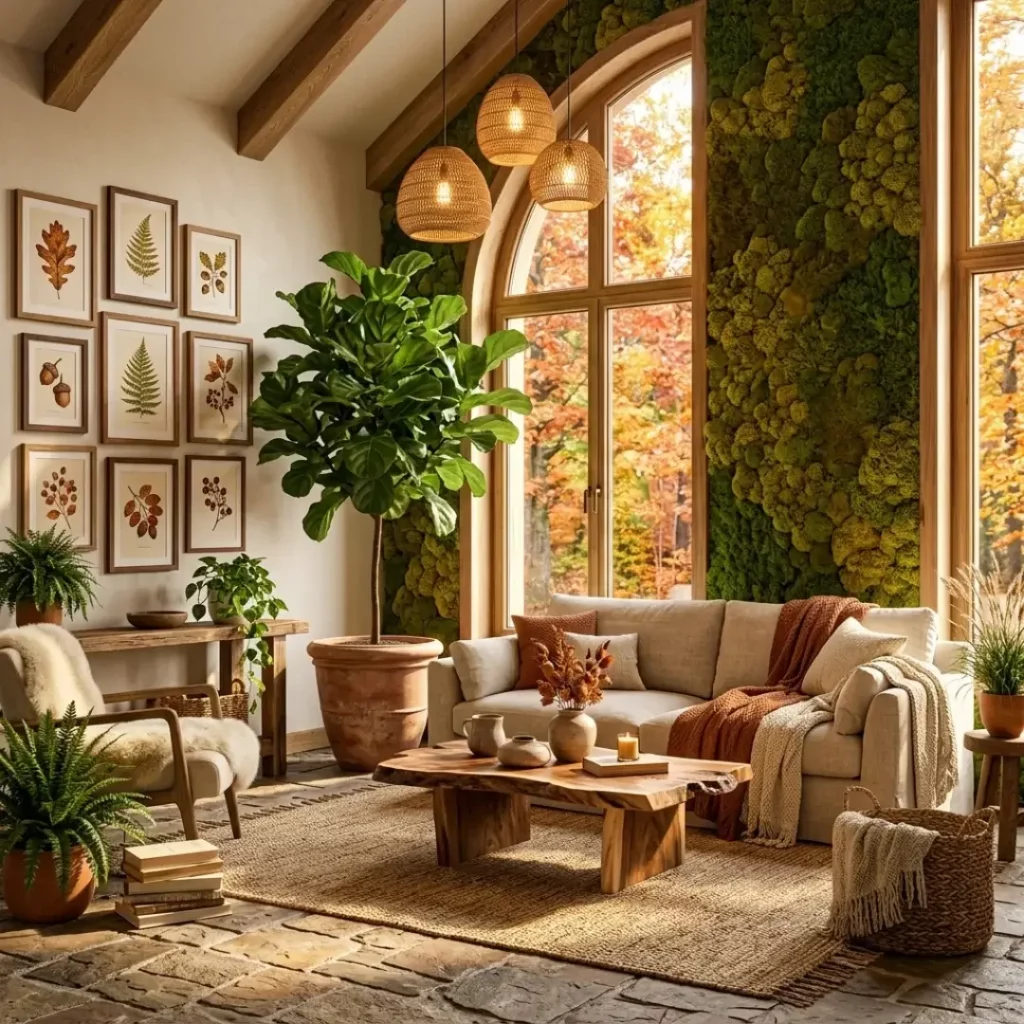
I think the furniture works especially well with the architecture because the low coffee table and soft sofa allow the tall windows and vaulted ceiling to remain visually important. The large rug defines the seating area over the stone floor, while the woven lighting brings warmth downward into the expansive room. The textured green wall also adds a strong vertical element beside the windows without making the seating area feel crowded.
What I take from this photograph is the importance of responding to the architecture instead of trying to hide it. With a high ceiling and large windows, I would allow the room’s proportions to remain visible and use substantial furniture and oversized lighting to create balance. The combination of stone, wood, woven materials, soft upholstery, and greenery also shows how an Afrohemian interior can feel connected to its natural surroundings while remaining comfortable and modern.
Airy White Living Room With Woven Details and African-Inspired Art
This room takes Afrohemian style in a much lighter direction. A large white sectional fills the main seating area, while a round, heavily textured wooden coffee table anchors the center. Above and beside the sofa are woven circular pieces, a sculptural mask, and a large portrait, creating an expressive gallery arrangement against the white walls. A large woven pendant hangs overhead, while greenery, woven containers, patterned cushions, and a black-and-white rug introduce texture without making the room feel heavy.
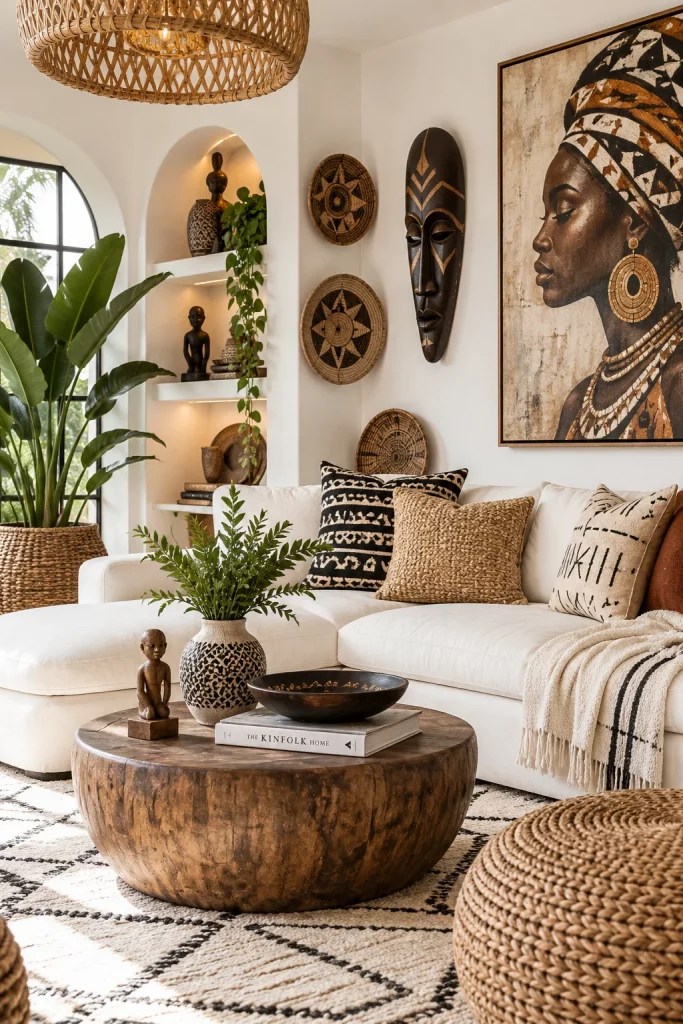
I like how the white upholstery gives all the natural textures room to breathe. The rounded coffee table and woven pouf soften the straight lines of the sectional, while the wall arrangement creates visual interest at eye level. The open shelving beside the seating area is also practical because it provides space for displaying decorative objects without taking attention away from the main artwork.
For me, this is a useful example of how to create a warm room without relying on a dark color scheme. I would keep the larger furniture pieces simple and let woven materials, graphic textiles, sculptural objects, and artwork provide the personality. The repeated black, cream, and natural brown tones also help the many different decorative elements feel connected.
Warm Textured Afrohemian Living Room With Sculptural Details
The first living room immediately draws me in with its warm cream walls, exposed dark wood ceiling beams, arched shelving, and large woven pendant light. A curved cream sectional fills the center of the room, layered with rust, brown, cream, and black patterned cushions. I also notice a substantial round wood coffee table, a woven rug, a low woven lounge chair, carved masks, decorative bowls, ceramic vessels, and tall leafy greenery. The combination creates a richly textured room where almost every surface contributes to the warm Afrohemian atmosphere.
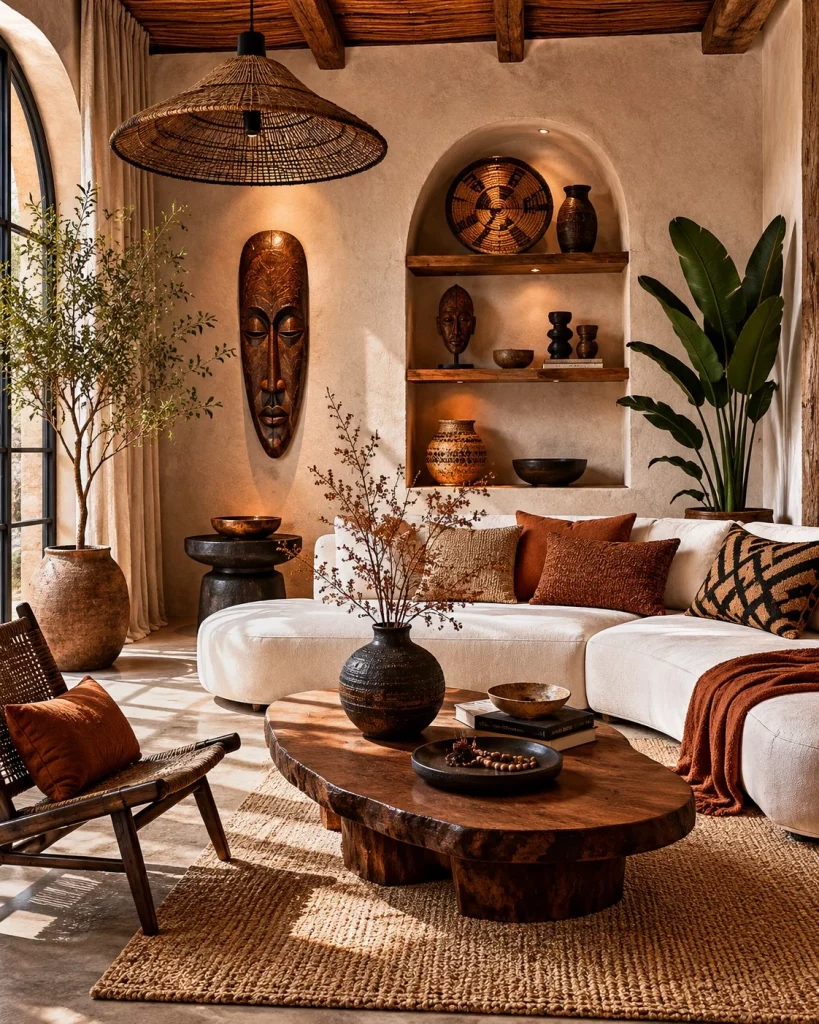
I particularly like how the furniture is arranged around the large coffee table rather than pushed against the walls. The generous sectional provides plenty of seating, while the round table softens the strong horizontal lines of the sofa and shelving. The built-in arched niche is another practical feature because it provides display space without taking up additional floor area. I also find the layered lighting effective: natural light enters from the tall window while the pendant and small shelf lights create a softer atmosphere.
From my perspective, this is a great example of how to make a neutral living room feel expressive without relying on an overwhelming number of colors. The palette stays close to cream, brown, black, and terracotta, while texture does much of the visual work. I would pay particular attention to the combination of woven lighting, textured upholstery, carved decorative pieces, and the chunky rug because these elements give the room depth while maintaining a cohesive appearance.
One detail I would preserve is the balance between open space and decoration. The room contains many accessories, but the main seating area still feels comfortable and usable. For a similar result, I would concentrate statement pieces in a few carefully chosen areas rather than covering every available surface.
Contemporary Afrohemian Living Room With Rust Velvet Seating
The second room takes a more contemporary direction, with a deep rust-colored sofa positioned against a dark textured wall. A large framed portrait hangs above it, while patterned cushions introduce black, cream, and animal-inspired geometric motifs. A substantial dark round coffee table sits in front of the sofa, and a tall window fills the room with daylight. The herringbone wood floor adds another layer of pattern, while a rust-colored upholstered piece in the foreground is draped with a black-and-cream patterned textile.
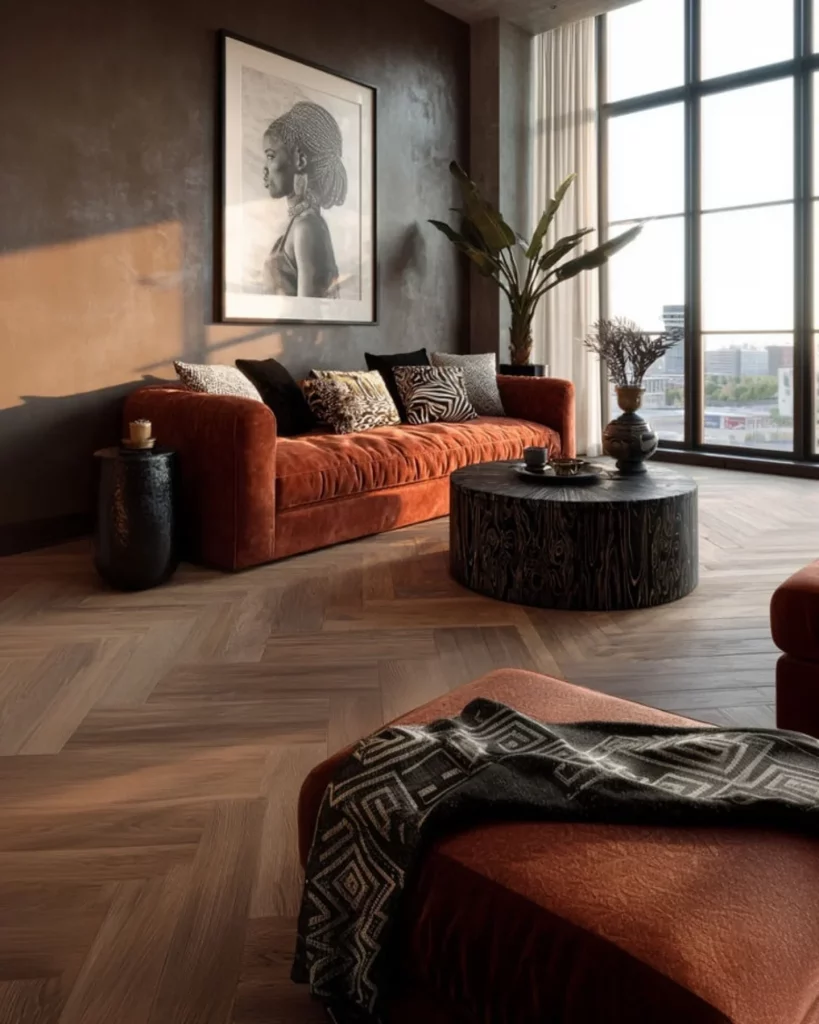
I like the stronger contrast here because the dark wall gives the rust sofa a defined focal point. The seating remains visually simple, allowing the artwork and cushions to provide most of the decorative character. The round coffee table also works particularly well with the straight lines of the flooring and the rectangular artwork, giving the composition a softer central shape.
For me, this image demonstrates how Afrohemian style can work beautifully in a modern apartment or urban home. Instead of filling the room with numerous decorative objects, the design relies on a few strong elements: the rust upholstery, large artwork, patterned textiles, greenery, and dark wood furniture. I would use this approach when I wanted the room to feel sophisticated and expressive while still maintaining a relatively uncluttered layout.
The large windows are another important part of the design because they keep the darker palette from feeling visually heavy. If I were recreating this atmosphere, I would preserve the generous window treatment and natural daylight while using warm upholstery and graphic textiles to create the same sense of depth.
Moody Afrohemian Living Room With Statement Portrait
The third living room has a distinctly dramatic visual character, centered around a large portrait on a nearly black wall. A light cream sectional curves through the seating area, while rust and brown cushions connect the sofa to the artwork. A large dark marble coffee table anchors the foreground, and a substantial textured rug defines the seating zone. Near the window, a large sculptural tree-like arrangement adds height, while an elegant arched architectural opening frames part of the room.
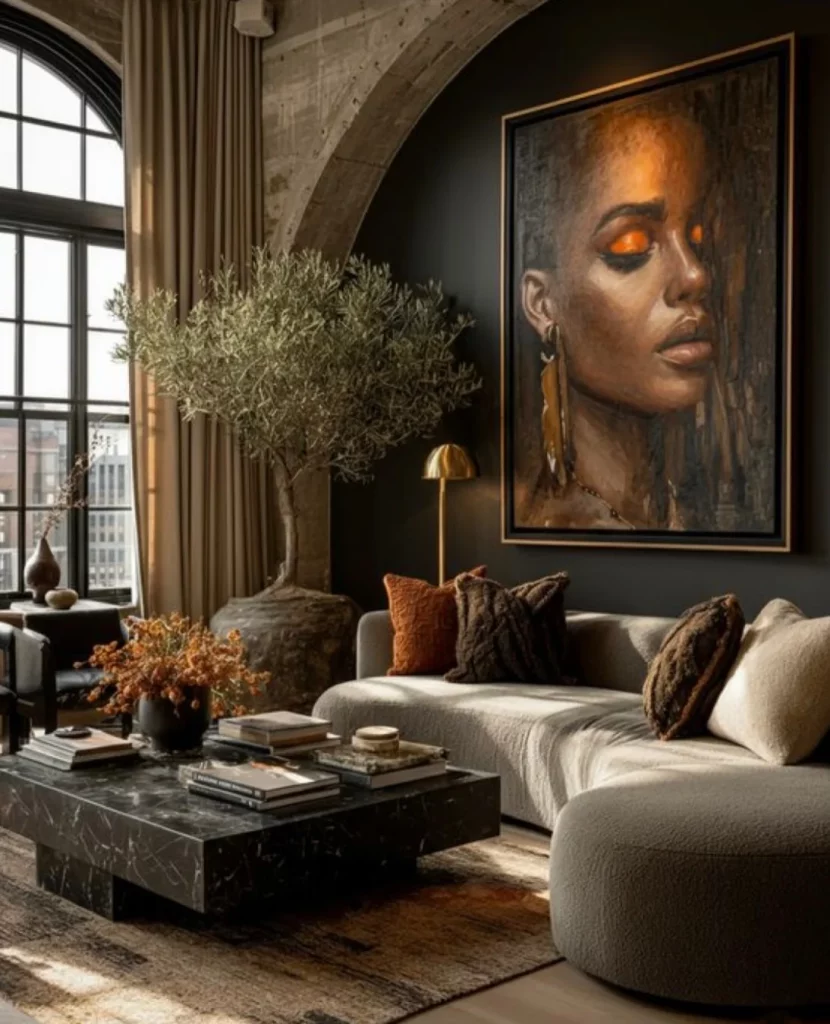
I think the contrast between the pale sofa and dark wall is what makes this room so successful. The sectional feels soft and inviting against the deeper background, while the marble table introduces a harder, more polished surface. The arrangement also leaves enough breathing room around the main furniture pieces, so the room feels substantial without appearing crowded.
What I particularly notice is how the artwork becomes part of the color story rather than simply functioning as wall decoration. Its warm brown and orange tones echo the cushions and other accessories, creating a visual connection between the wall and seating area. I would use the same principle when decorating: instead of matching every accessory, I would repeat a few colors from the main artwork throughout the room.
The large window is especially valuable here because it balances the darker wall treatment. In my experience, a moody room benefits from strong natural light, and this photograph shows why. I would also keep the floor and major upholstery relatively calm when using such a strong wall color and statement artwork.
Layered Afrohemian Living Room With Rich Textile Accents
The fourth image presents a lighter living room centered around a large cream sectional covered with an abundant collection of patterned cushions. The wall behind the sofa is decorated with an oversized collection of carved and patterned panels, while sculptural figures stand near the window. Brown, rust, tan, black, and muted blue appear throughout the textiles and artwork. A small glowing decorative object sits on the coffee table, adding a warm accent against the pale upholstery.
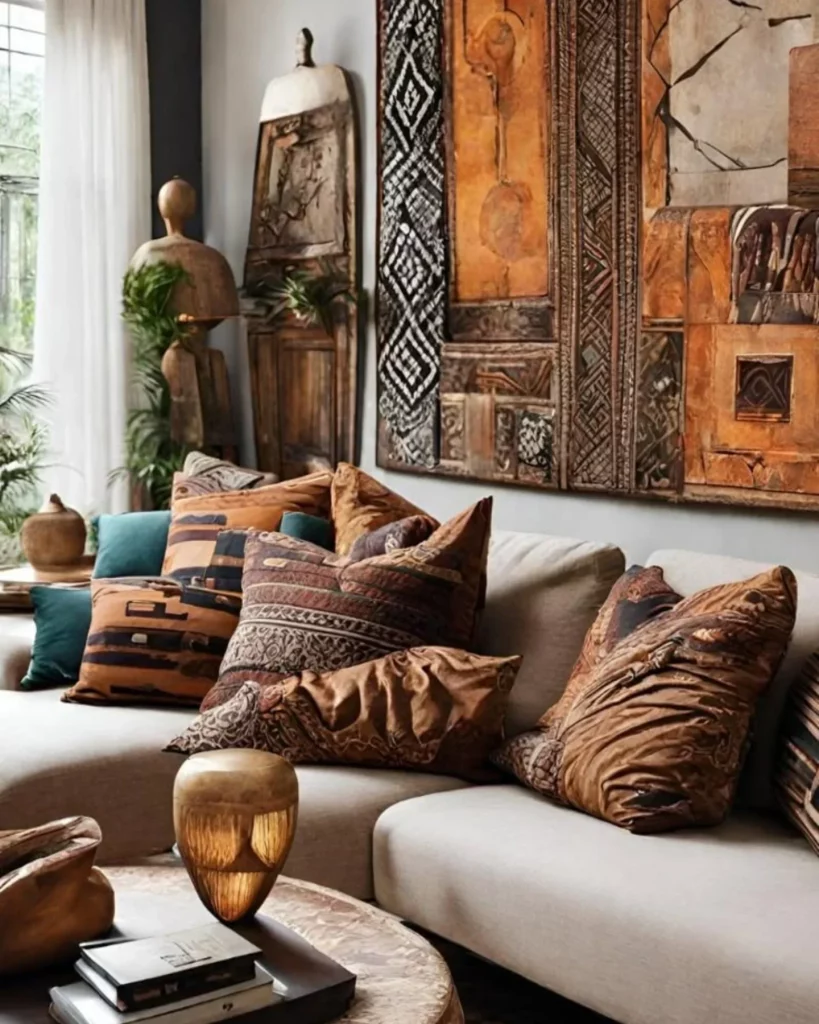
I love the way the cushions create a layered, collected appearance without changing the simple shape of the sectional. The sofa itself acts as a quiet foundation, while the patterned textiles provide most of the personality. The large wall arrangement also gives the room a strong focal point and visually connects with the cushions through repeated earthy tones and geometric motifs.
This is an especially useful idea for anyone who already owns a neutral sofa. I would not necessarily replace the furniture to achieve this look. Instead, I would focus on introducing patterned cushions and a few substantial wall pieces that share related colors. The photograph shows how much impact textiles and wall décor can have when the basic furniture remains understated.
I also appreciate the mixture of horizontal and vertical elements. The long sofa and low coffee table establish a horizontal rhythm, while the tall sculptures and large wall panels draw the eye upward. That balance keeps the room from feeling flat and makes the relatively simple furniture arrangement much more interesting.
Minimal Warm Living Room With Organic Afrohemian Influences
The fifth living room is much calmer, using a restrained palette of cream, warm beige, natural wood, and muted olive green. A large television is mounted above a long low wood console, while a large sculptural ceiling fan becomes an unexpected focal point overhead. A rounded wood coffee table sits over a black-and-white patterned rug, and a deep olive sectional occupies the foreground. Simple ceramics, a tall indoor tree, and a sculptural wall figure complete the composition.
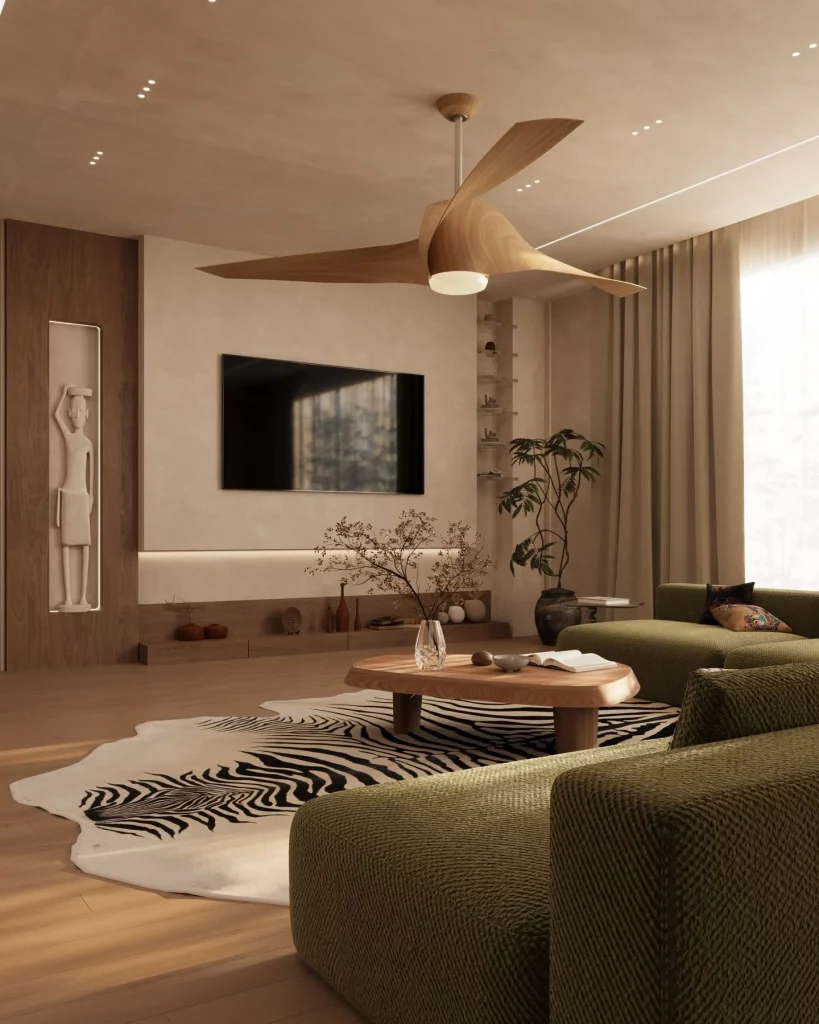
I find this version particularly interesting because the Afrohemian influence is expressed through selected details rather than through an abundance of decoration. The patterned rug introduces graphic contrast, while the sculptural figure and natural wood furniture add visual interest. At the same time, the open floor area and uncluttered surfaces keep the room feeling modern and relaxed.
The furniture layout is also very practical. The large sectional creates a generous seating area oriented toward the television, while the coffee table remains accessible from several sides. The long console provides a visually quiet surface beneath the screen, and the built-in shelving beside it makes use of an otherwise narrow vertical area.
If I were taking inspiration from this room, I would focus on restraint. The photograph shows that an Afrohemian living room does not have to be densely decorated. A few recognizable textures, a strong graphic rug, sculptural furniture, natural wood, and carefully positioned greenery can create the atmosphere while leaving plenty of visual breathing room.
Earthy Afrohemian Living Room With Patterned Textiles
The sixth image feels especially warm and intimate, with terracotta-toned walls, exposed ceiling beams, and a cream sofa surrounded by richly patterned cushions. A large patterned textile hangs above the sofa, while a collection of round woven pieces decorates the adjacent wall. The room also includes a carved side table, patterned armchair, woven pendant, dark coffee table, plants, and a doorway framed with a beaded curtain.
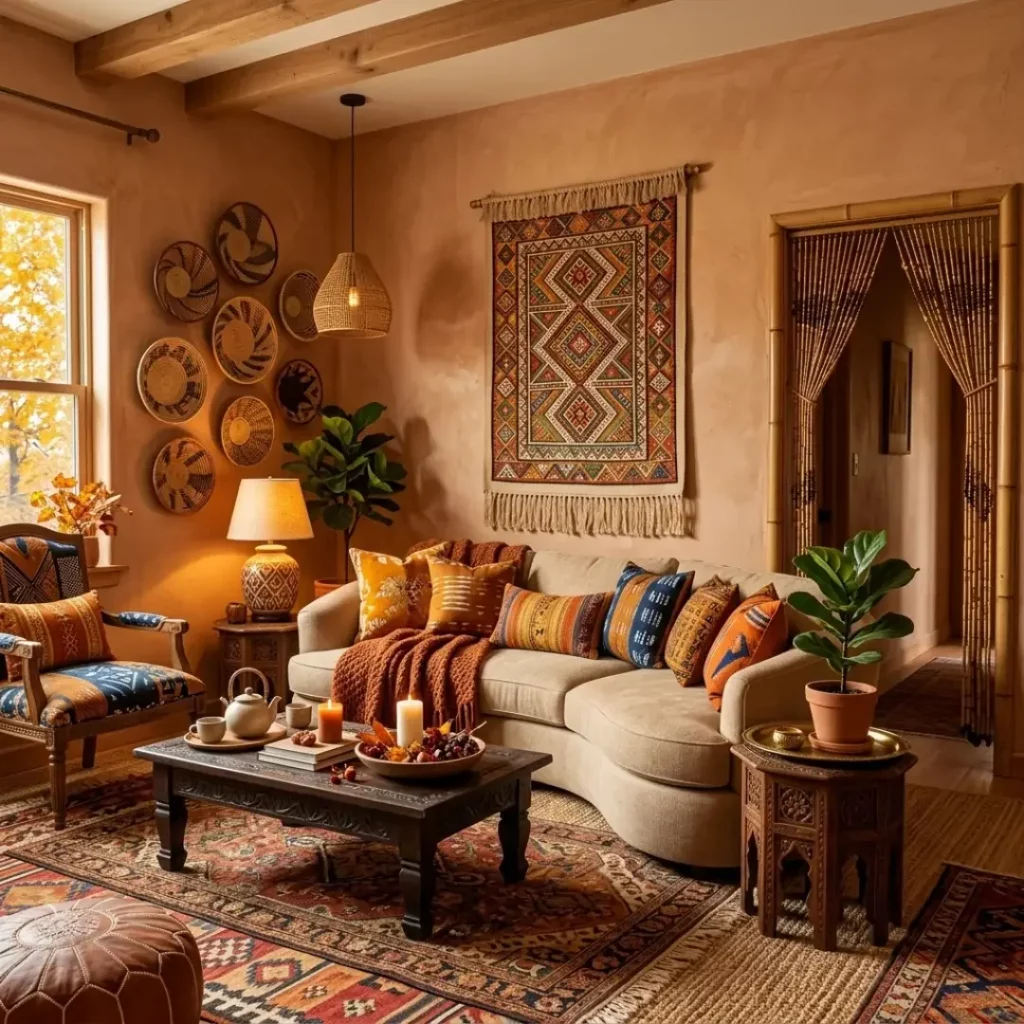
I like how the room uses repeated patterns without making the composition feel accidental. The wall textile, cushions, rug, armchair upholstery, and smaller decorative pieces all contribute different patterns, but they stay within a closely related earthy palette. The cream sofa provides an important visual pause between these stronger details and keeps the room comfortable rather than visually overwhelming.
The layout feels particularly welcoming because the seating surrounds the coffee table and creates several places to sit. The side table beside the sofa adds useful surface space, while the patterned armchair creates a separate seating position without visually breaking away from the main arrangement. Even the beaded doorway contributes to the overall character while clearly separating the living room from the adjacent space.
For me, this image is a reminder that pattern works best when there is some repetition in color or scale. I would choose a dominant earthy palette first and then introduce patterns gradually. The photograph shows that the result can feel layered and expressive while still appearing intentional.
Elegant Neutral Afrohemian Living Room With Curved Seating
The seventh room presents a much more refined interpretation of Afrohemian design. A large curved cream sofa occupies the center, paired with two small round wood coffee tables and a deep burgundy curved armchair. A large geometric rug spreads beneath the seating arrangement, while a framed artwork featuring three stylized figures becomes the main focal point on the wall. Soft beige walls, long curtains, a tall palm, and a sculptural chandelier complete the room.
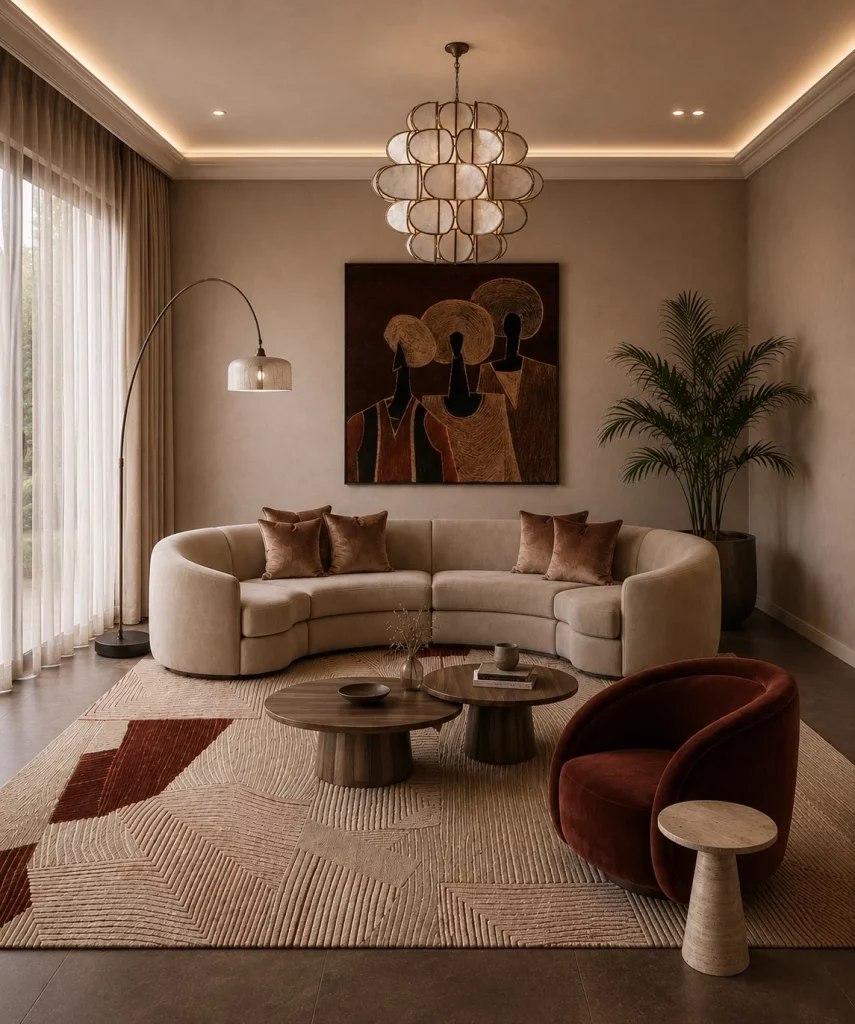
I particularly like the curved furniture arrangement because it makes the room feel conversational and relaxed. Instead of relying on a rectangular sofa and one central table, the designer has created several rounded forms that echo one another. The rug also helps unify the seating area and gives the furniture a clearly defined zone within the larger room.
The restrained palette makes the artwork and burgundy chair stand out beautifully. I would describe this as a good example of using one deeper accent color rather than many competing shades. The small coffee tables are also practical because their separate sizes make it easy to place books, drinks, or decorative objects while keeping the central area visually open.
What I take from this image is the importance of shape. Afrohemian interiors can incorporate expressive patterns and cultural-inspired artwork, but they can also be interpreted through sculptural silhouettes and natural-looking textures. I would use rounded furniture when I wanted a living room to feel softer and more welcoming without adding more decorative objects.
Light Afrohemian Living Room With Woven and Botanical Details
The eighth image is bright and airy, with a large cream sectional positioned beneath framed artwork and carved masks. A substantial woven pendant hangs above the seating area, while open shelves display additional decorative objects. Tall palms and broad-leaf greenery fill the corners, and a large textured rug stretches beneath the sofa. Black, cream, tan, and warm brown appear throughout the cushions, wall décor, baskets, and throw.
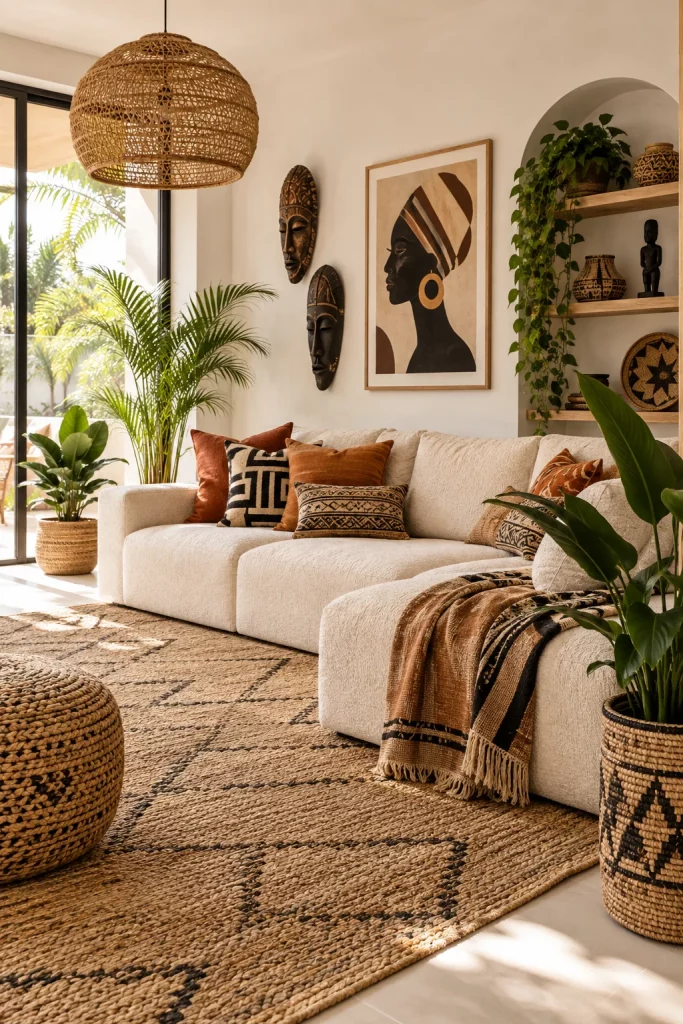
I like the way the room combines a very light foundation with darker graphic details. The cream sofa and pale walls allow the black-and-brown patterns to remain clearly visible without making the room feel heavy. The open shelving also adds vertical interest and gives the decorative pieces a dedicated display area instead of scattering them throughout the room.
The plants contribute another important layer because their height and broad leaves soften the more structured shapes of the artwork and shelving. The woven pendant and basket-like planters repeat the natural texture found in the rug and textiles, creating continuity across the room. From a practical standpoint, the large sectional provides substantial seating while the open floor around it keeps circulation comfortable.
I would take a particularly simple lesson from this room: start with a neutral foundation and build character through texture. The combination of woven lighting, patterned cushions, carved wall pieces, natural-looking planters, and a textured rug creates plenty of visual interest without requiring a complicated furniture arrangement.
Bold Black and Brown Afrohemian Living Room With Graphic Pattern
The ninth living room takes the strongest contrast in the collection, pairing a black textured wall with a caramel-brown sofa. A large portrait occupies the center of the wall, surrounded by woven wall plates and a carved mask. The room also features a dramatic patterned pendant, a black-and-white graphic rug, patterned cushions, a carved round coffee table, woven seating, and several large leafy plants.
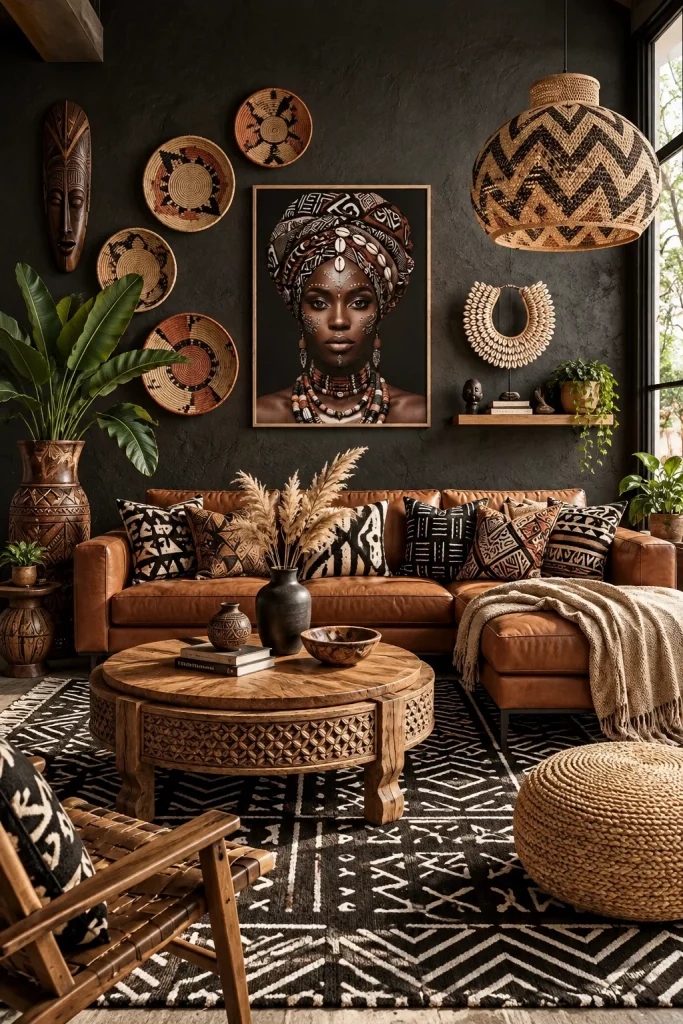
For me, the most striking feature is the relationship between the dark wall and warm leather-like sofa. The contrast gives the room a strong foundation, while the black-and-white rug and cushions repeat the darkness in smaller areas. This prevents the black wall from appearing disconnected from the rest of the room and creates a balanced visual rhythm.
The round coffee table works especially well because its substantial shape provides a calm center among so many graphic patterns. I also like the mix of seating styles, with the main sofa complemented by a woven chair and rounded woven ottoman. These pieces provide different textures while maintaining a consistent earthy color story.
If I were recreating this atmosphere, I would introduce the darkest color through one major architectural or wall element and then repeat it through smaller accessories. That is what makes this image feel cohesive to me. The patterned rug, cushions, pendant, artwork, and wall pieces all support the same visual language rather than competing for attention.
Soft Neutral Afrohemian Living Room With Sculptural Artwork
The final image returns to a lighter and quieter palette, featuring a large cream sectional against a warm plaster-like wall. Two large framed artworks hang above the seating, one featuring an abstract architectural composition and another with a dark geometric pattern. A low dark wood coffee table sits in front of the sofa, while a textured neutral rug covers most of the seating area. A rounded dark ottoman, sculptural vessels, a table lamp, and tall dried arrangements complete the room.
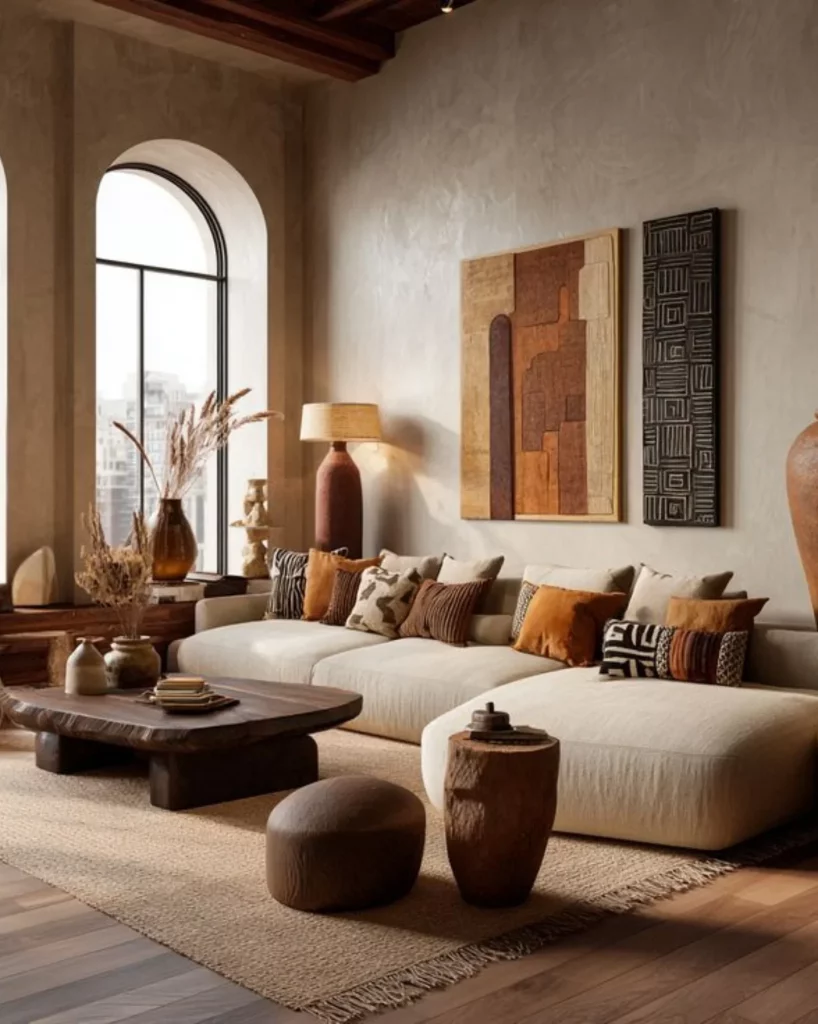
I find this room particularly successful because it feels spacious and calm while still carrying plenty of Afrohemian character. The cream sectional creates a generous visual foundation, while the artwork introduces muted terracotta, brown, black, and beige accents. The dark wood coffee table and smaller sculptural objects reinforce those deeper tones without overwhelming the room.
The furniture arrangement also feels easy to live with. The sectional provides multiple seating positions, while the low coffee table remains centrally accessible. The neutral rug defines the seating area and adds softness beneath the furniture, and the small ottoman can function as an additional seat or casual surface. I especially like the way the artwork adds personality without requiring a large collection of accessories.
For my own decorating approach, this is a good reminder that an Afrohemian living room can be understated. I would focus on a few expressive artworks, natural-looking textures, sculptural objects, and a warm neutral foundation rather than trying to reproduce every element from more heavily decorated examples. The result can still feel distinctive, inviting, and deeply personal.
Warm Afrohemian Living Room With Layered Natural Textures
The first living room immediately draws me in with its warm, earthy palette and generous mix of textures. I see a cream boucle-style armchair opposite a rich brown leather sofa, a large round wooden coffee table, and a dark wood cabinet with woven cane-style door fronts. The walls are decorated with a large portrait artwork, circular woven wall pieces, and a sculptural mask, while patterned cushions bring black, cream, brown, and ochre tones into the seating area. A large woven pendant hangs overhead, and several tall leafy plants add height around the room. The floor is softened by a large textured rug, while ceramic vessels, books, candles, and small sculptural objects complete the layered styling.
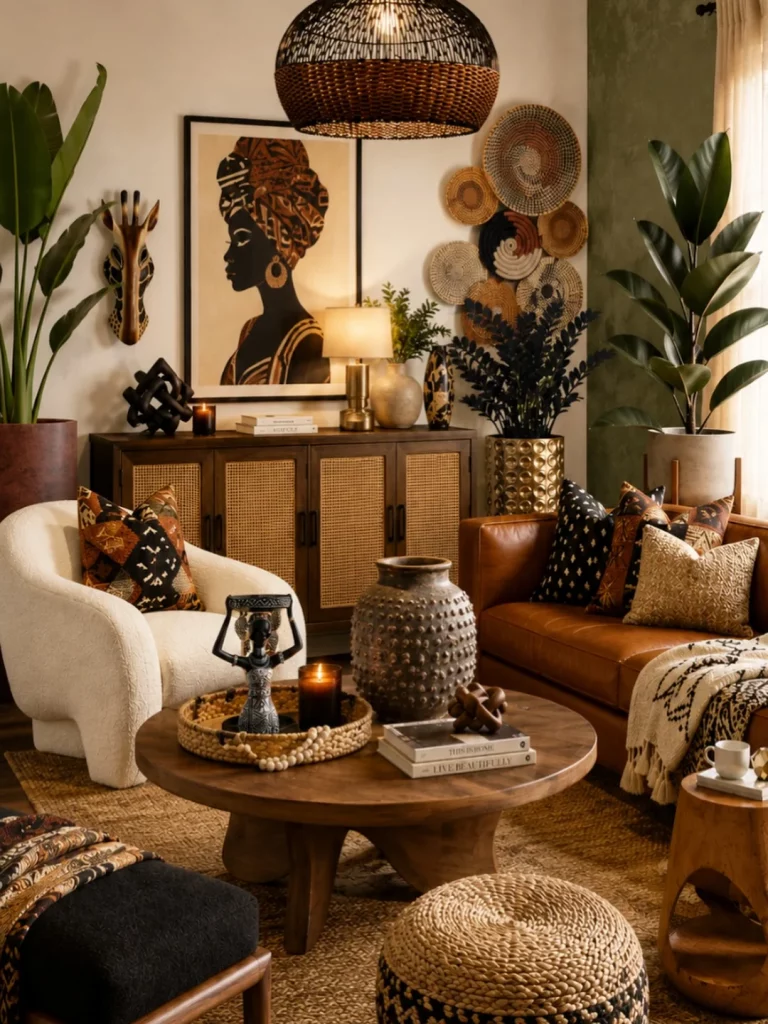
I like how the furniture creates several comfortable places to sit without making the room feel disconnected. The round coffee table visually softens the stronger rectangular shapes of the cabinet and sofa, while the large rug helps unite the seating arrangement. The cabinet also provides practical enclosed storage while its woven fronts contribute another layer of texture. The combination of leather, upholstery, woven surfaces, ceramics, and wood gives the room depth, so the space feels collected rather than dependent on one decorative feature.
From my perspective, the strongest lesson here is to build an Afrohemian room through repetition rather than matching everything. The same warm brown and black tones appear across the artwork, cushions, furniture, baskets, and accessories, which makes the varied pieces feel intentional. I would start with a neutral seating foundation and then repeat two or three accent colors throughout the room. The woven pendant is another particularly effective detail because it adds texture above eye level and creates a warm focal point.
Relaxed Cream Living Room With African-Inspired Patterns
This room takes a lighter approach, with a large cream sofa positioned beneath warm-toned artwork and next to a patterned wood cabinet. I can see a substantial round wooden coffee table in the center, a woven pendant above it, and a large patterned area rug extending underneath the seating. Terracotta, mustard, black, and cream cushions introduce color without overpowering the neutral sofa. Open shelving in the background displays books, baskets, pottery, and small decorative pieces, while a large leafy plant stands beside the window. The framed artwork and patterned cabinet give the room a strong visual identity while the cream upholstery keeps the overall atmosphere relaxed.
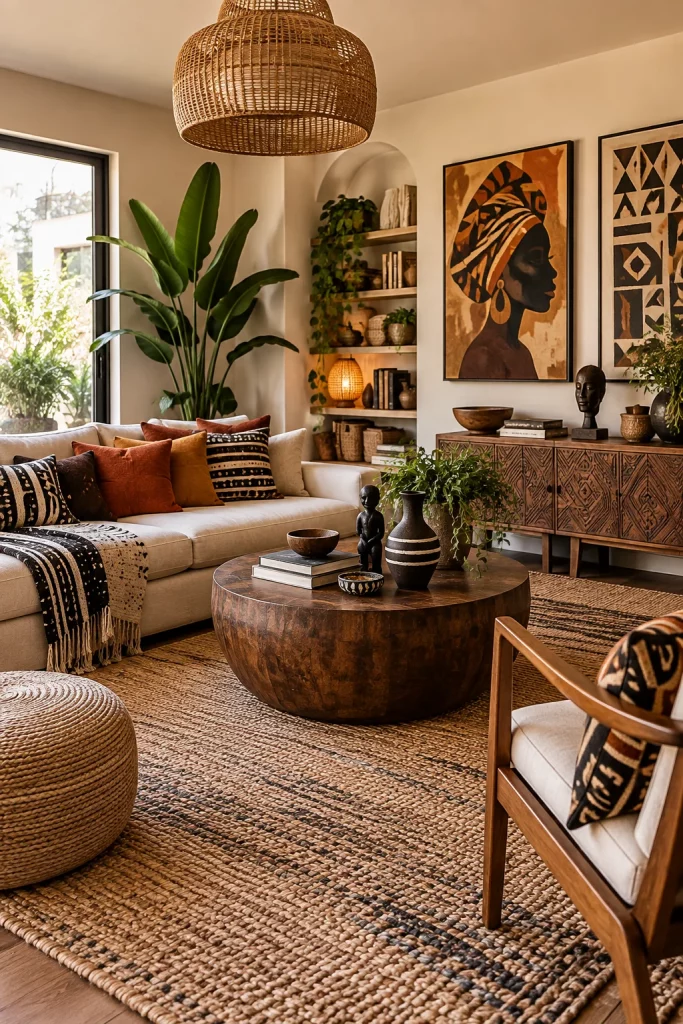
I particularly like the way the open shelving works with the enclosed cabinet. The shelving provides space for displaying the objects that are visible in the photograph, while the cabinet keeps the lower part of the room visually substantial. The round coffee table gives the seating arrangement an easy conversational center, and the large rug makes the entire composition feel grounded. The cream sofa also provides a calm backdrop for the patterned cushions and throw, allowing the textiles to become decorative accents rather than overwhelming the room.
If I were recreating this atmosphere, I would pay close attention to the balance between pattern and solid color. The room works because the sofa, walls, and major upholstery pieces remain relatively quiet while the cushions, artwork, rug, and cabinet carry more visual detail. I also like the use of a woven pendant as a bridge between the natural textures on the floor and the decorative pieces placed throughout the room. Keeping the larger furniture simple makes it easier to change the accent textiles later.
Afrohemian Loft Living Room With Exposed Brick
The third space introduces a completely different architectural character through its exposed brick walls and tall industrial-style windows. I see a rust-colored sofa surrounded by patterned cushions, a carved rectangular coffee table, and a large woven rug defining the seating area. Several dark masks and geometric artworks are arranged across the brick wall, creating a strong gallery-like focal point. Tall sheer curtains soften the large windows, while a woven pendant and table lamp provide warm illumination. A leather pouf sits to one side, and woven baskets and natural-looking decorative pieces add texture around the room.
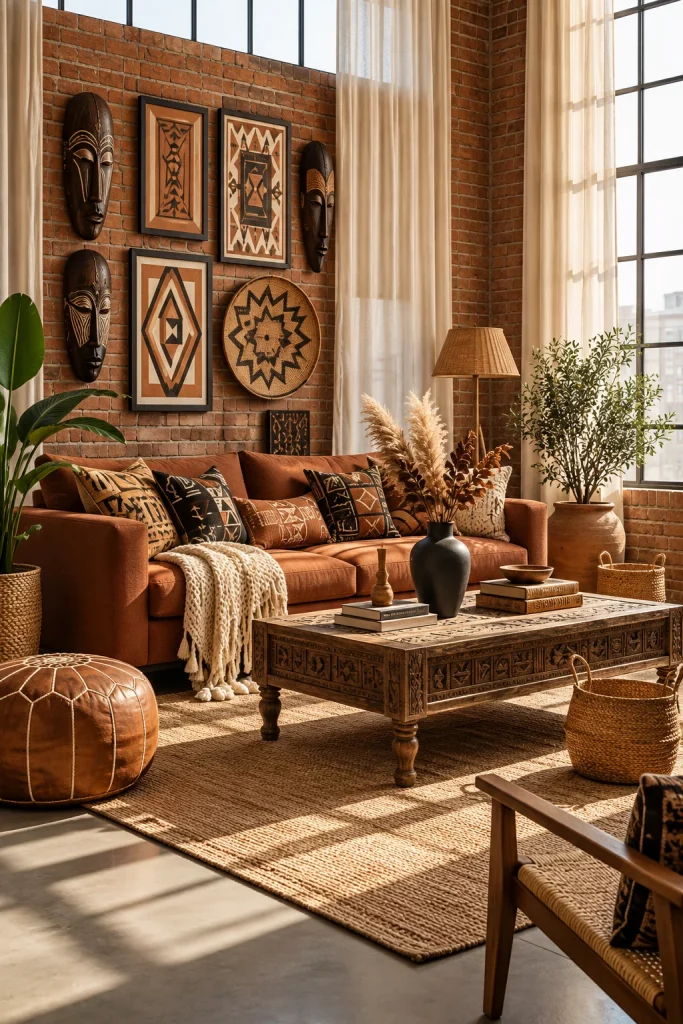
For me, the most successful feature is the contrast between the hard brick surfaces and the softer furnishings. The sofa and textiles make the space comfortable, while the rug introduces warmth underfoot and visually separates the sitting area from the surrounding floor. The carved coffee table is substantial enough to anchor the seating arrangement, and its decorative surface connects naturally with the patterned artwork on the wall. The tall windows also bring in considerable light, preventing the darker brick and artwork from making the room feel visually heavy.
I would use this photograph as inspiration for anyone who has a room with a strong architectural feature they do not want to hide. Instead of competing with the brick, the furniture and artwork complement it through similar earthy tones. The key is to allow one architectural element to remain prominent while using textiles and furnishings to make the room more comfortable. The combination of rust, brown, cream, black, and natural woven tones provides a cohesive palette without requiring identical patterns.
Terracotta Afrohemian Living Room With Geometric Artwork
Here, the deep terracotta wall immediately establishes the mood of the room. A white sofa sits against the richly colored wall, accented by orange and patterned cushions. Above it are two large framed geometric artworks, while a long carved cabinet stretches across the wall beneath them. Several ceramic vessels in brown, black, and neutral tones are arranged along the cabinet, creating a simple decorative line. A tall leafy plant occupies the corner, and the wooden coffee table carries a few understated objects. The result is a warm, intimate living room where the wall color and textiles do most of the visual work.
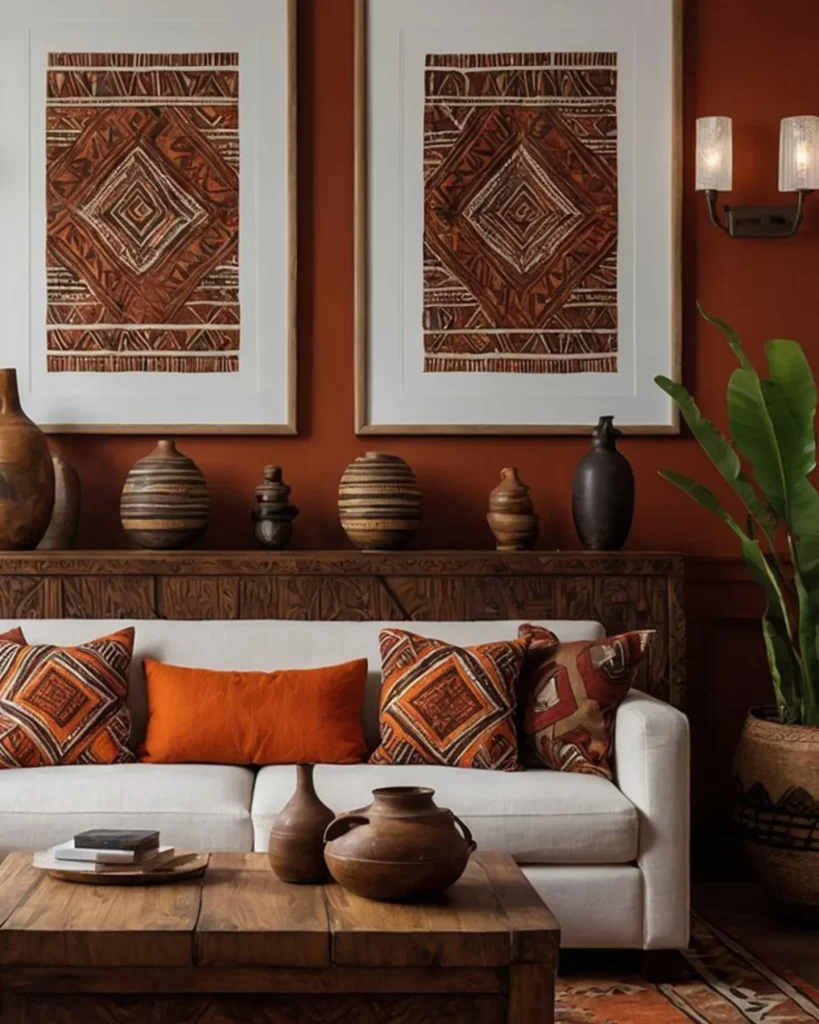
I like the restraint in this arrangement. Rather than filling every available surface, the room uses a relatively small selection of objects and allows the terracotta wall to remain visible. The white sofa provides strong contrast against the darker background, while the patterned cushions connect the seating to the artwork above. The long cabinet also gives the room a useful horizontal element, and its carved front adds interest without needing additional wall decoration.
For me, this image is a good reminder that Afrohemian style does not always require a large number of accessories. A strong wall color, a few meaningful artworks, patterned cushions, and tactile furniture can be enough to establish the character. If I were adapting this idea, I would choose one warm wall tone and repeat it subtly in the cushions or artwork. The ceramic vessels are also a useful styling lesson because their varied shapes create interest while their earthy colors keep the composition cohesive.
Moody Afrohemian Living Room With Charcoal Sofa
The fifth living room feels more subdued, with a dark charcoal sofa positioned between two windows and warm beige walls surrounding it. I see several patterned cushions on the sofa, dark wooden stools beside it, and a glass-topped coffee table filled with stacked books and ceramic vessels. African-inspired masks and sculptural wall pieces are arranged around the windows, while a large woven pendant hangs overhead. A patterned rug stretches across the floor, and a folded textured throw appears in the foreground. Warm table and floor lighting adds a soft glow to the darker furniture and decorative pieces.
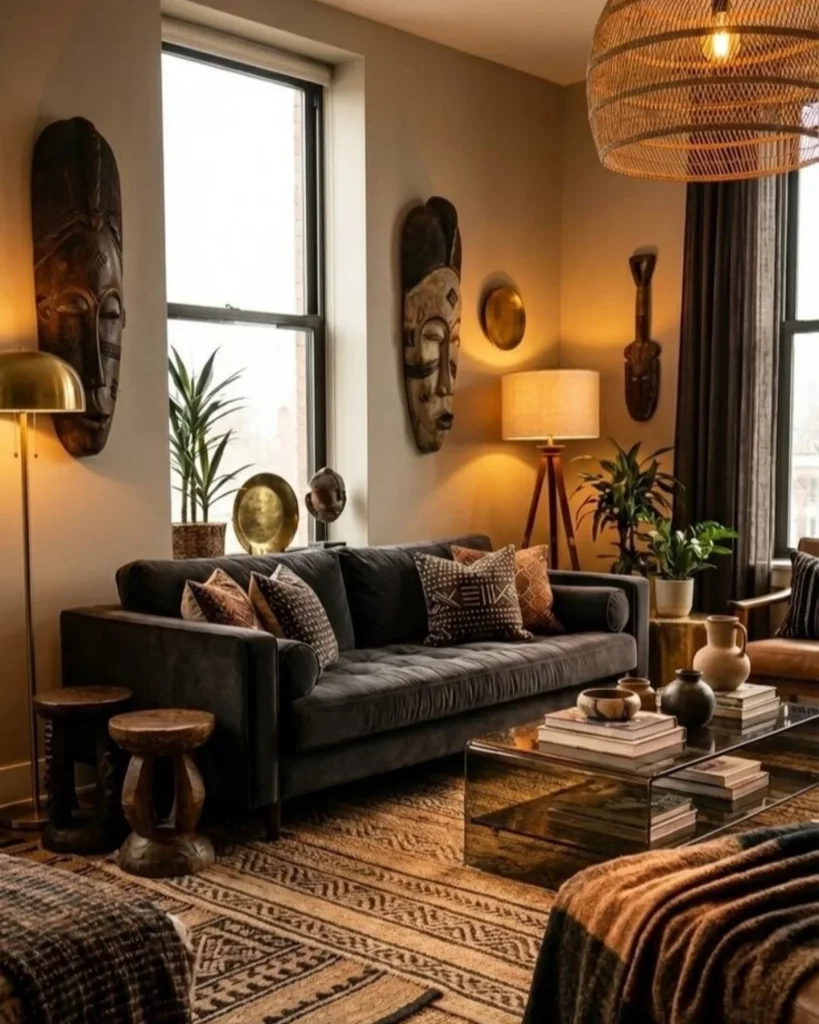
The layout feels particularly comfortable because the main sofa faces the coffee table directly, creating a clear central zone for conversation. The transparent coffee table keeps the middle of the room visually open despite the darker sofa and substantial rug. I also like how the wall-mounted pieces occupy the vertical space around the windows without blocking the natural light. The small stools provide useful occasional surfaces while adding sculptural wooden shapes beside the sofa.
I would approach a darker Afrohemian room by keeping the surrounding colors warm rather than introducing too many competing shades. This photograph shows how charcoal upholstery can work beautifully with tan, brown, black, and muted patterned textiles. The woven pendant is especially useful because its open construction allows the light to filter through, making the ceiling fixture decorative even when the room is softly illuminated. I would also keep the artwork arrangement intentional, as the pieces here create visual interest without covering every section of wall.
Contemporary Afrohemian Living Room With Dark Walls
The sixth room has a darker, contemporary character, with deep charcoal walls surrounding a brown leather sectional. A large woven pendant hangs over the seating area, while a collection of circular woven wall pieces is arranged above a low media cabinet. The room also contains several patterned cushions, a large black-and-cream geometric rug, and a tall decorative plant in a textured vessel. The round coffee table is positioned in front of the sofa, and woven seating pieces add additional texture around the perimeter. Large windows provide daylight and views of the residential surroundings.
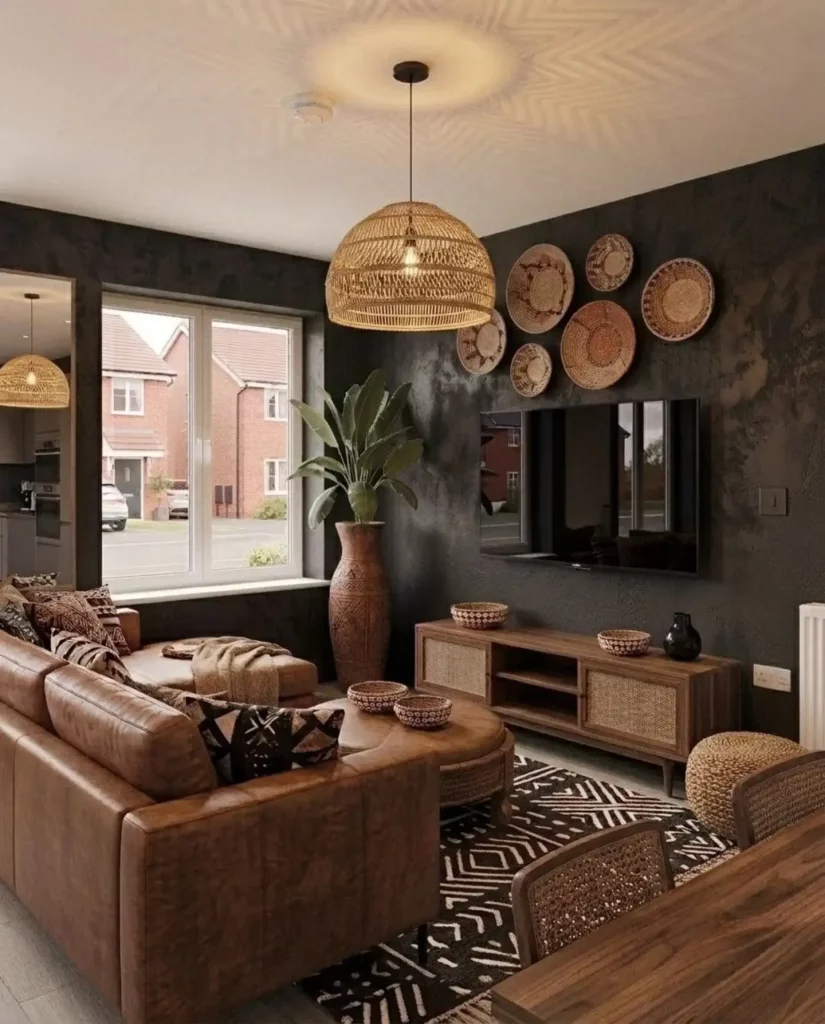
I like the way the dark walls make the lighter woven elements stand out. The circular wall arrangement introduces a softer shape against the dark rectangular background, while the leather sectional provides plenty of seating without requiring multiple separate sofas. The geometric rug gives the floor a strong pattern, but the neutral brown and cream palette keeps it connected to the rest of the room. The media cabinet also provides a practical low storage and display surface without becoming the dominant element.
In my experience, darker wall colors can make natural materials especially effective because woven pieces become more noticeable against them. This photograph demonstrates that principle clearly. If I were recreating the look, I would keep the major furniture pieces in warm brown and use cream, black, and natural woven accents to create contrast. The circular wall décor is another idea I would borrow because using several pieces of different sizes creates a curated arrangement while maintaining a simple overall shape.
Light Afrohemian Living Room With Oversized Artwork
This bright living room combines a large cream sectional with a substantial round wooden coffee table and an oversized patterned ottoman in the foreground. A large portrait-style artwork dominates the wall behind the sofa, accompanied by narrow sculptural masks and a long patterned cabinet. Tall leafy plants fill the corner beside an arched doorway, while a large woven pendant occupies the upper portion of the room. Patterned black, cream, and brown cushions are distributed across the sofa, and a large textured rug covers most of the seating area. Natural daylight enters through the tall opening on the left, creating a warm and relaxed atmosphere.
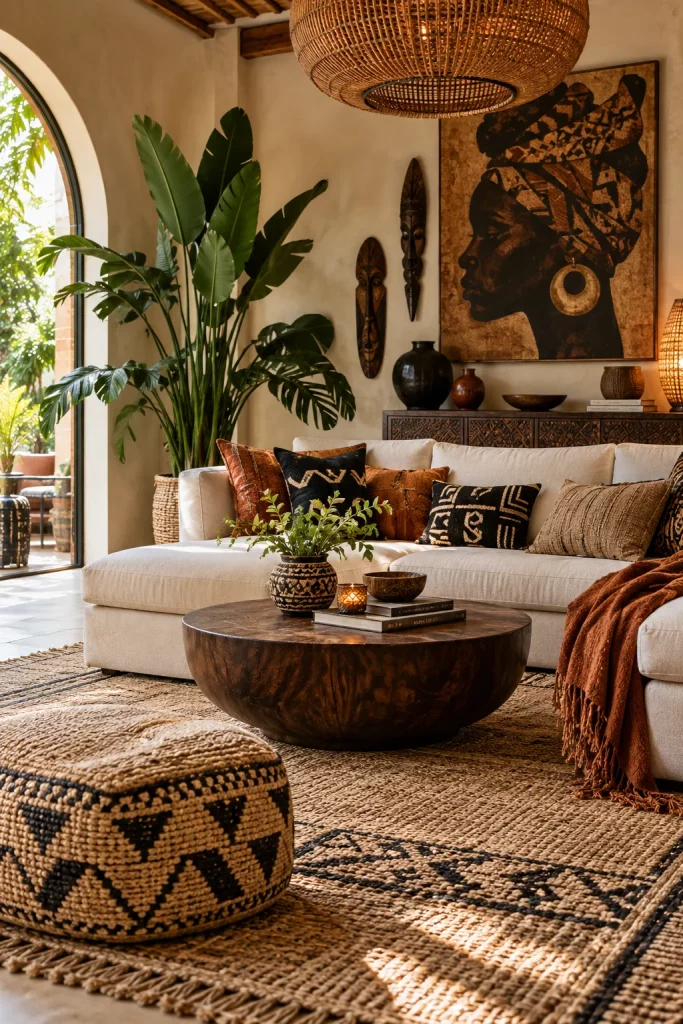
The proportions are what make this room particularly effective for me. The large sectional comfortably fills the main seating zone, while the oversized coffee table gives the room a strong center. The artwork is large enough to balance the substantial sofa rather than disappearing behind it, and the tall plant adds another vertical element near the doorway. The woven ottoman provides additional seating or a place to rest the feet while reinforcing the room’s tactile character.
I would use this room as an example of how to work with large-scale pieces without making a space feel crowded. The secret is leaving enough visual breathing room around them. The neutral upholstery allows the artwork and patterned cushions to stand out, while the wood and woven surfaces keep the palette warm. I also like the way the pendant, plant, artwork, and doorway create a vertical rhythm that draws the eye upward and makes the room feel spacious.
Airy Afrohemian Living Room With Exposed Ceiling Beams
The eighth image shows an expansive, light-filled living room with exposed timber ceiling beams and a high pitched ceiling. Two white sofas and a matching white armchair form a generous seating arrangement around a large rectangular wooden coffee table. Two woven round ottomans sit in front of the sofas, while a large neutral rug covers the main floor area. A large framed botanical artwork hangs behind the sofa, flanked by narrow sculptural wall pieces. Built-in shelving displays ceramics and small decorative objects, and tall leafy greenery occupies the corners. A large woven pendant hangs centrally beneath the exposed beams.
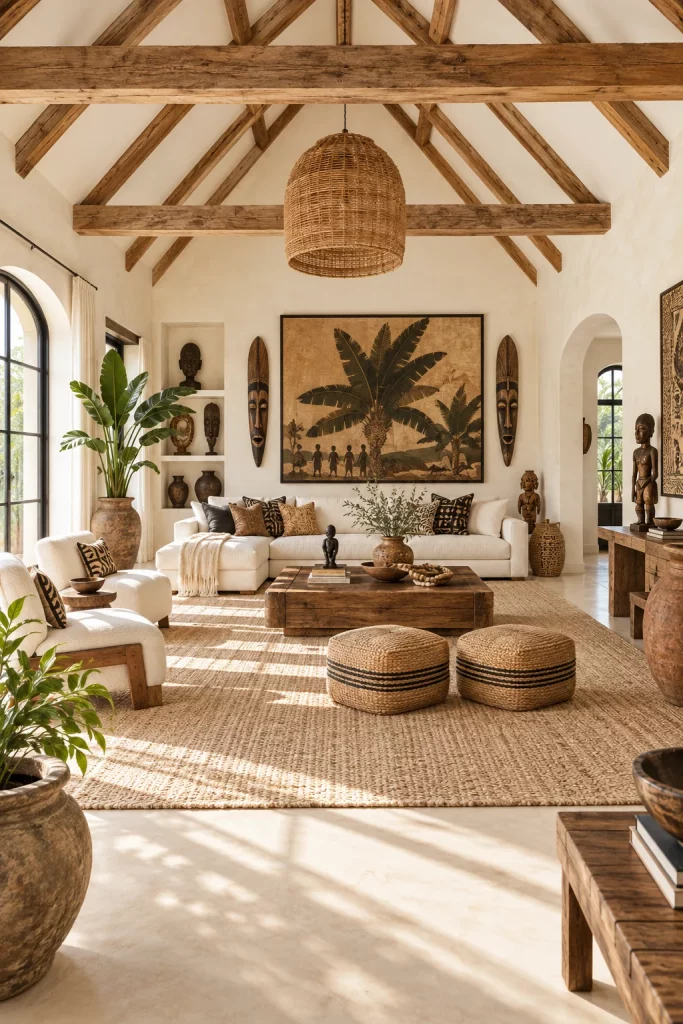
I love how the furniture arrangement takes advantage of the room’s generous proportions without filling every corner. The coffee table is large enough to serve the multiple seating pieces, while the ottomans provide flexible places to sit or rest feet. The white upholstery reflects the abundant natural light and keeps the room visually calm. Meanwhile, the timber ceiling beams, woven pendant, large artwork, pottery, and patterned cushions prevent the pale furniture from feeling plain.
For me, this image shows how an Afrohemian aesthetic can remain remarkably light and contemporary. Instead of relying on a dark palette, the room uses texture and cultural-inspired artwork to create character. If I were adapting this idea to another large room, I would keep the major upholstery light and introduce warmth through wood, woven pieces, patterned textiles, and carefully selected artwork. The exposed beams also demonstrate how existing architectural features can become part of the decorative language rather than being treated as something separate.
Elegant Dark Brown Afrohemian Living Room With Sculptural Lighting
This room takes the palette in a richer direction, with a deep brown sofa centered against a warm neutral wall. Three sculptural woven pendant lights hang above the seating area, creating an unusual layered lighting arrangement. A large framed artwork with earthy reddish-brown tones forms the main focal point behind the sofa, while a tall dark floor lamp stands on the left. A large palm-like plant occupies the opposite corner, and a cream curved armchair sits in the foreground beside a small dark side table. The round wooden coffee table has a distinctive sculptural base, while the striped neutral rug extends across the entire seating area.
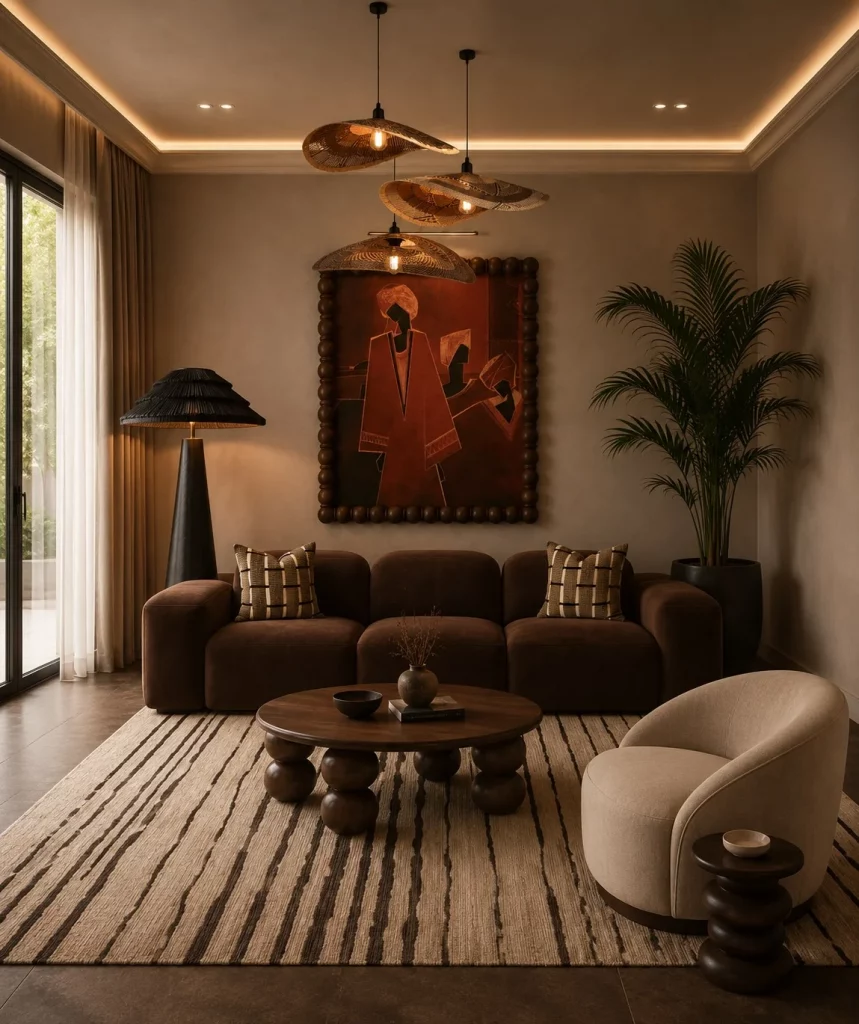
I find the seating arrangement very balanced because the sofa provides a strong horizontal anchor while the curved chair and round coffee table introduce softer forms. The striped rug adds pattern without competing directly with the artwork, and the three pendant lights create a strong focal point overhead. The dark furniture is softened by the cream chair and neutral rug, which prevents the room from becoming visually monochromatic. Every major element has enough space around it to remain easy to appreciate.
My favorite lesson from this photograph is the use of repetition with variation. The three pendant lights share a similar woven material and shape but are arranged at different heights, creating movement above the room. I would apply the same principle with accessories: choose a related material or color and vary the shape or scale. The result feels collected and intentional while avoiding the overly coordinated appearance that can make an interior feel less personal.
Pattern-Rich Afrohemian Living Room With Carved Wall Masks
The final room presents a warm cream sofa against a pale wall decorated with several carved masks, a large circular woven wall piece, and framed artwork. The seating is layered with black, cream, and terracotta patterned cushions, plus a rich rust-colored throw. A substantial rectangular wooden coffee table sits in front of the sofa, styled with ceramic vessels, books, bowls, and a small potted arrangement. A large leafy plant fills the area beside the window, while a woven pendant hangs above. The floor is covered with a textured neutral rug, and a patterned woven ottoman occupies the foreground.
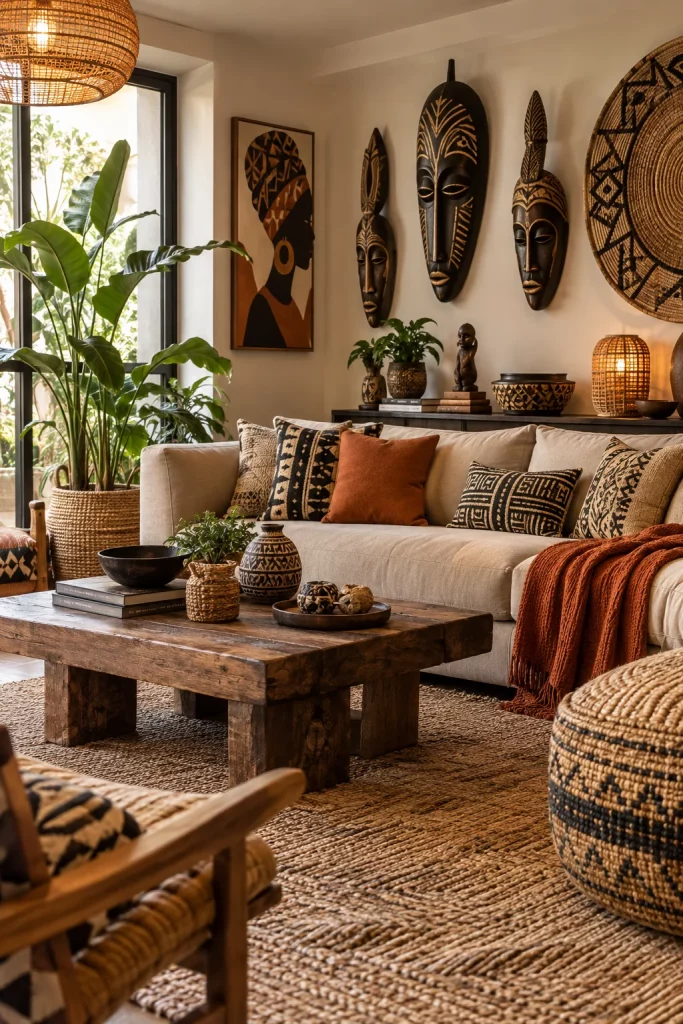
I like how the room achieves a strong visual identity without relying on a single focal object. The masks create an expressive gallery wall, the patterned cushions bring detail to the sofa, and the large coffee table gives the seating arrangement a practical center. The woven ottoman adds another place to sit while echoing the texture of the pendant and rug. The neutral sofa and walls are important here because they give the many decorative elements enough space to stand out individually.
From my perspective, this is a great example of how to layer an Afrohemian room thoughtfully. I would begin with the neutral sofa and textured rug, then introduce patterned cushions and a few substantial decorative pieces rather than many small accessories. The artwork and masks should have enough surrounding space to remain visually distinct, and the repeated black, cream, brown, and terracotta tones help connect everything. I also like the way the greenery softens the arrangement and brings another natural texture into the composition.
Warm Afrohemian Living Room With Woven Lighting and Patterned Textiles
The first living room immediately draws me in with its warm clay-toned walls, exposed wood ceiling, large woven pendant lights, and generous curved sectional sofa. I notice an impressive collection of sculptural masks and framed patterned artwork arranged across the main wall, while large leafy greenery fills the corners near the tall window. The round patterned rug anchors the seating area, and a substantial live-edge wood coffee table sits at the center with pottery, candles, books, and small decorative pieces. The combination of black, cream, brown, and terracotta creates a beautifully grounded atmosphere.
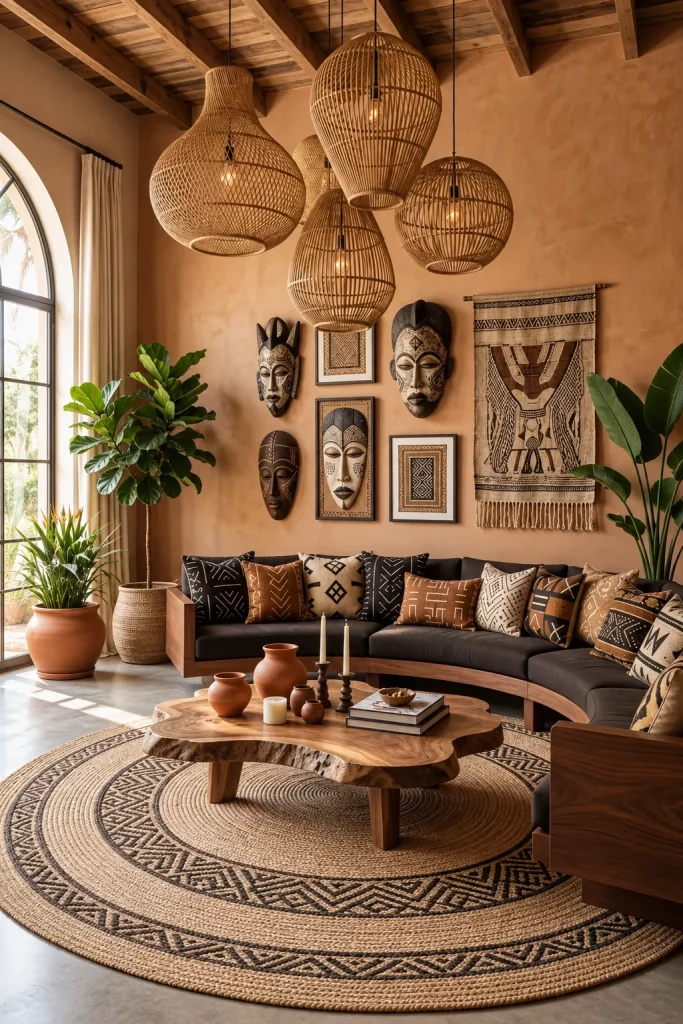
I like how the room uses repetition to make such a large collection of details feel cohesive. The woven pendant lights echo the texture of the rug, baskets, and decorative objects, while the repeated geometric motifs on the cushions and wall pieces create visual continuity. The curved sectional makes the room feel naturally social, and the large coffee table provides enough surface area for both decoration and everyday use. Even with many accessories, the arrangement remains centered around a clear seating zone.
From my perspective, this is a great example of how to approach Afrohemian decorating without relying on a single statement piece. I would start with a warm wall color and substantial seating, then build the character gradually through textiles, artwork, woven lighting, and pottery. The important lesson I take from this room is to repeat a small group of colors and patterns rather than introducing unrelated accents.
Moody Afrohemian Living Room With Navy Walls and Carved Details
This living room takes Afrohemian style in a darker direction, with deep navy walls contrasting against warm wood, woven pendant lights, and abundant greenery. The large sectional sofa is upholstered in dark blue and arranged around a substantial round wood coffee table. Above the console, a large carved wall panel becomes the central focal point, while additional carved pieces decorate the surrounding walls. The patterned ceiling adds another layer of texture, and the tall windows bring daylight into the otherwise intimate room.
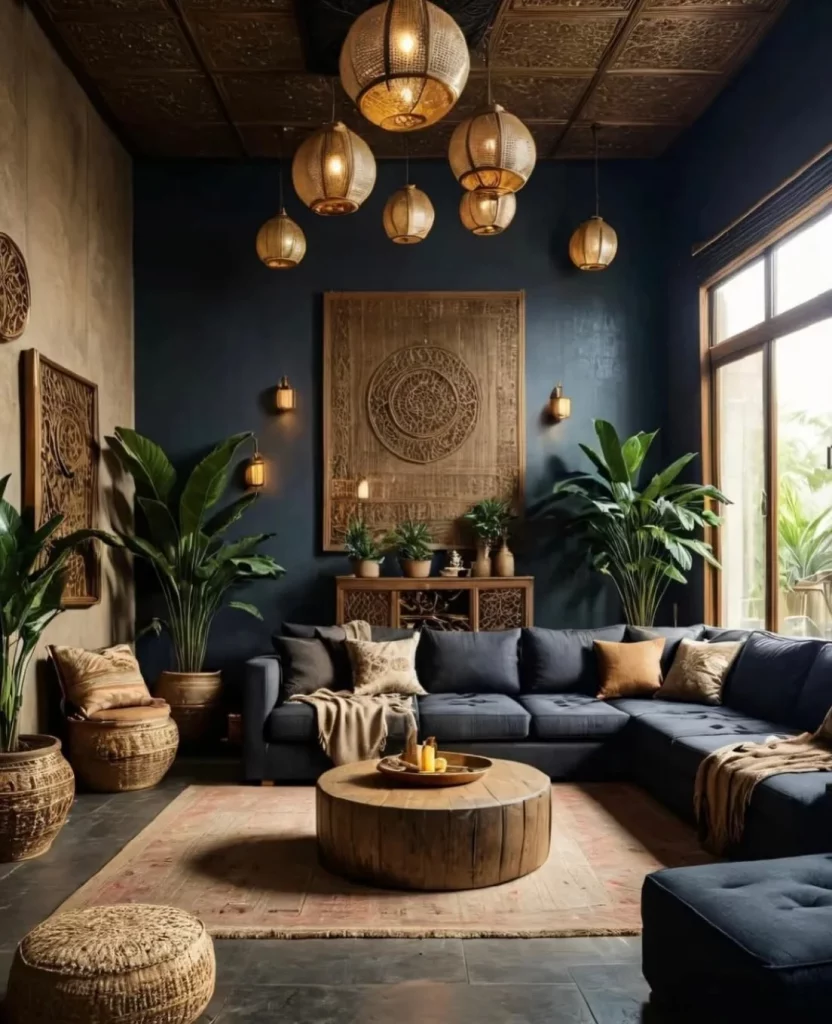
I particularly like the balance between the dark surfaces and the lighter natural materials. The woven lights glow warmly against the navy background, while the wooden furniture prevents the room from feeling visually cold. The sectional creates a comfortable conversational arrangement, and the round coffee table softens the strong horizontal and vertical lines throughout the space. Large leafy plants also introduce height and contrast without competing with the wall artwork.
For a similar effect, I would treat the dark wall color as the foundation rather than trying to brighten every surface. In my experience, deep colors can actually make natural textures stand out more strongly when they are paired with warm lighting and wood. I would also keep the decorative palette controlled, as this room shows how a few large sculptural pieces can have more impact than covering every available wall.
Terracotta Afrohemian Living Room With Cream Sofa and Sculptural Wood Table
Here I see a warmer and more contemporary interpretation of Afrohemian style. A large cream sectional sits against a rich terracotta accent wall, with a striking portrait artwork above a carved wooden console. A massive woven pendant hangs over the seating area, while a large leafy plant fills the space beside the window. The round wood coffee table has a strongly sculptural form, and patterned cushions in black, cream, and terracotta connect the sofa to the rest of the room.
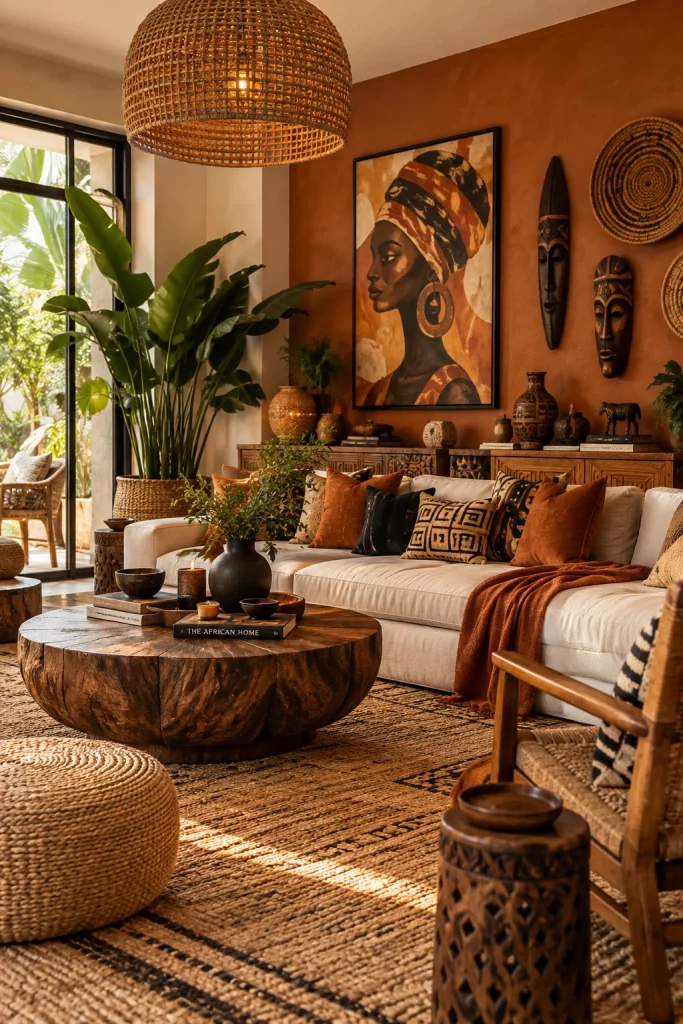
The arrangement works particularly well because the substantial furniture pieces are balanced by the open space around them. The cream sofa provides a calm visual base against the saturated wall, while the large coffee table introduces another strong natural texture without making the seating area feel crowded. I also like the way the patterned rug quietly reinforces the colors already present in the artwork and cushions.
I would use this photograph as inspiration for anyone who wants Afrohemian character without filling the room with accessories. For me, the key is choosing a few oversized elements that establish the mood: one strong wall color, one substantial artwork, a sculptural table, and a large woven light. Everything else can remain relatively simple so those elements have room to breathe.
Vibrant Orange Afrohemian Lounge With Patterned Cushions
This room feels especially energetic because the orange upholstered sectional becomes the central feature against warm neutral walls and dramatic patterned details. A large window framed by orange curtains brings natural light into the space, while tall leafy plants occupy both sides of the seating area. Decorative masks, patterned wall pieces, woven lighting, carved objects, and geometric textiles reinforce the Afrohemian theme throughout the room. A dark round coffee table sits in front of the sofa, surrounded by a collection of patterned floor textiles.
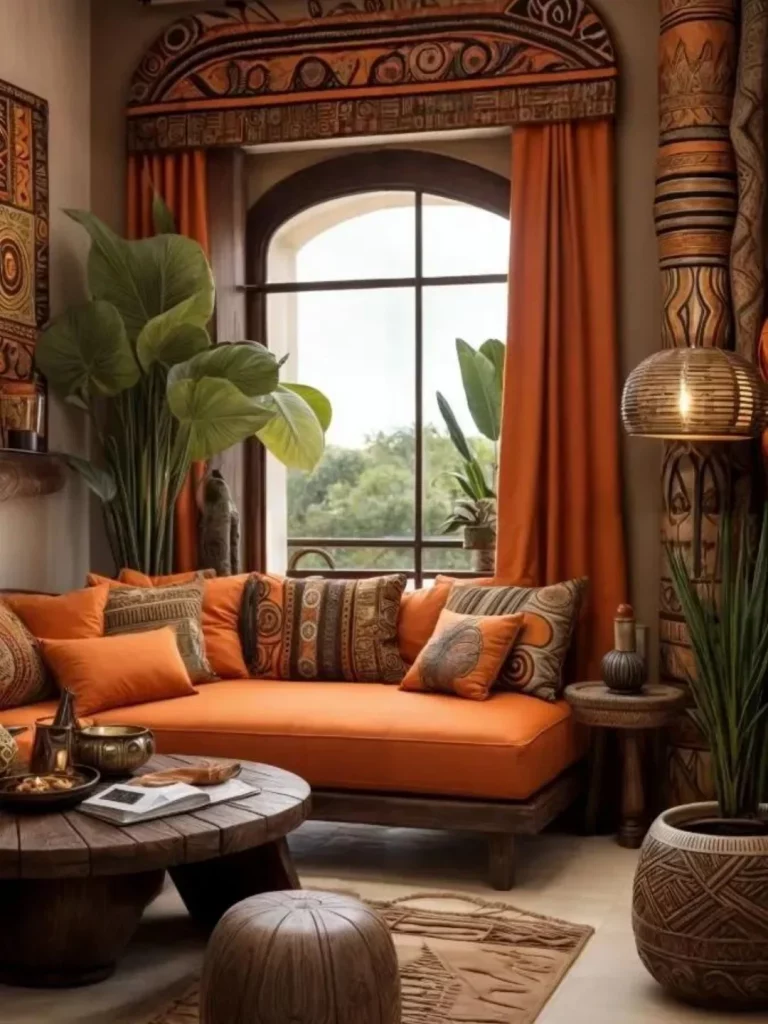
I like how the orange is repeated rather than used in only one location. The sofa, curtains, cushions, and smaller decorative elements create a consistent visual rhythm, while the dark wood and neutral surfaces prevent the room from becoming overwhelming. The generous seating arrangement also makes this feel like a space designed for relaxing and gathering rather than simply displaying décor.
When I look at a room this expressive, I think the most useful takeaway is to choose one dominant accent color and let it appear in several places. That approach makes a bold palette feel intentional. I would also allow the wall artwork and textiles to remain varied, because the room gains much of its personality from the mix of geometric and organic-looking patterns.
Terracotta and Cream Afrohemian Living Room With Graphic Wall Art
This living room presents a more polished and structured interpretation of the same aesthetic. A white sectional sofa sits against a deep terracotta wall, with two matching framed geometric artworks positioned above a carved wooden console. The console displays a selection of rounded ceramic vessels in different shapes and finishes. A large leafy plant occupies the right side of the composition, while the coffee table and patterned cushions introduce additional warm brown and orange tones.
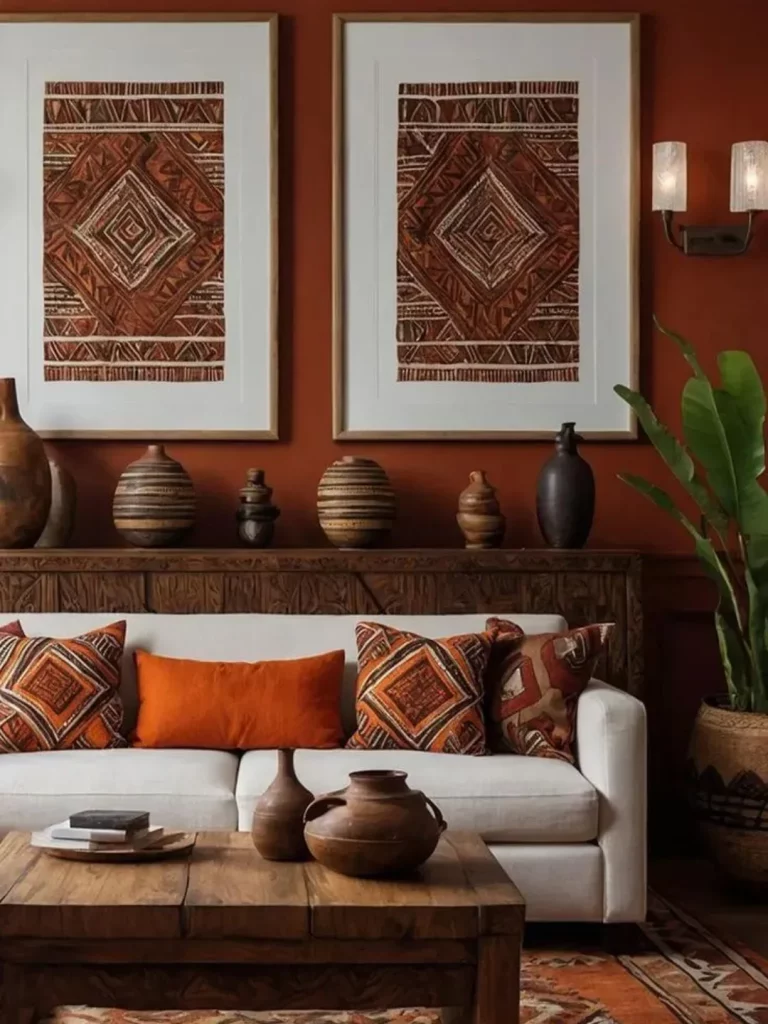
I find the symmetry particularly effective here. The two framed artworks create a strong visual pair, while the long console provides a horizontal foundation beneath them. The white sofa gives the room plenty of visual breathing space, and the orange cushion in the center adds a simple focal point that connects with the terracotta wall. The arrangement feels organized without becoming overly formal.
For my own decorating approach, I would take this image as proof that Afrohemian interiors do not have to be heavily layered to feel distinctive. A restrained palette of terracotta, white, brown, and black can be enough when the shapes and patterns are carefully selected. I especially like the idea of using matching artwork above a console when I want a wall to feel finished without filling it with many individual pieces.
Earthy Afrohemian Living Room With Orange Sofa and Large Round Wall Art
This space returns to a richer, more dramatic palette, with an orange sofa positioned beneath an oversized circular wall piece. The walls are warm brown, and carved masks and elongated decorative pieces surround the main artwork. A large textured coffee table occupies the foreground, while patterned cushions create contrast against the solid orange upholstery. Natural-looking pendant shades hang above the seating area, and greenery appears around the edges of the room.
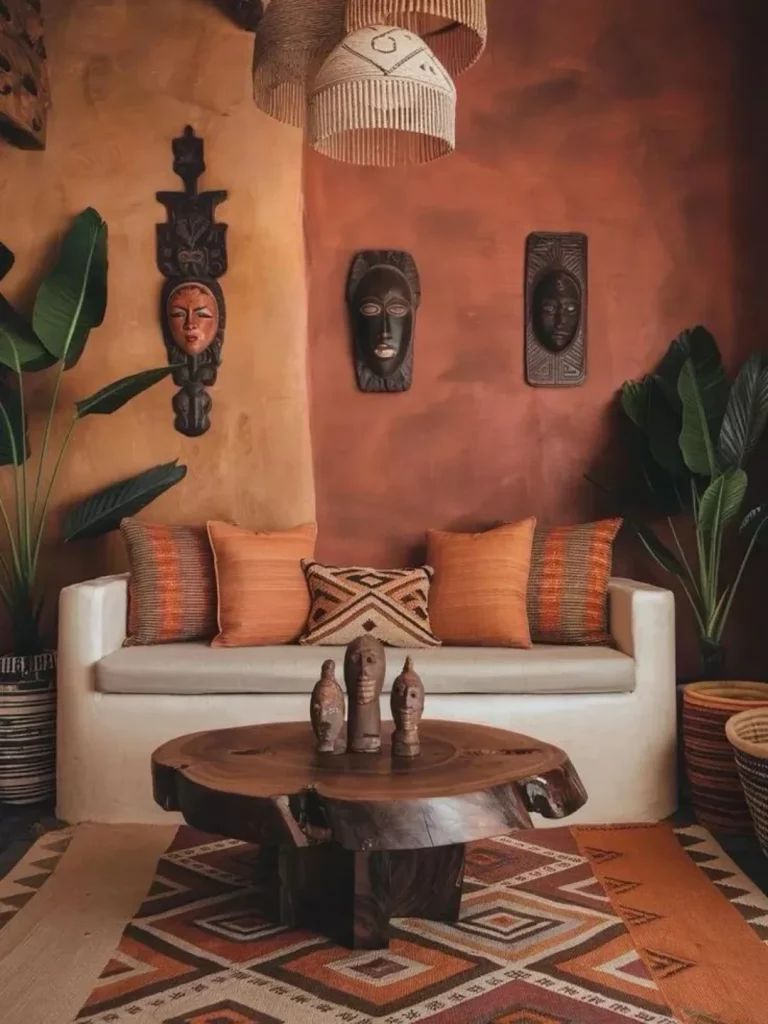
The oversized circular wall decoration gives the entire seating arrangement a clear center of attention. I like how the sofa repeats the warm orange tones already found throughout the room while the black-and-cream patterned cushions create definition. The low coffee table keeps the center visually open, and its broad surface provides a practical place for the small decorative vessels shown in the photograph.
I would approach a room like this by choosing the largest artwork or wall object first and allowing the rest of the room to respond to it. In my experience, an oversized focal point can make a living room feel more intentional because it immediately establishes the visual hierarchy. The smaller masks and objects work because they support that main feature rather than competing with it.
Light Afrohemian Living Room With White Seating and Geometric Patterns
This photograph offers one of the lightest interpretations in the collection. A large white sectional with black framing sits in front of a wall with illuminated open shelves displaying numerous ceramic vessels and sculptural objects. Two large geometric artworks hang above the shelves, while several woven pendant lights descend near the tall black-framed window. A patterned black, white, and terracotta rug adds definition beneath the seating area, and a large ceramic vessel filled with dried stems stands prominently beside the window.
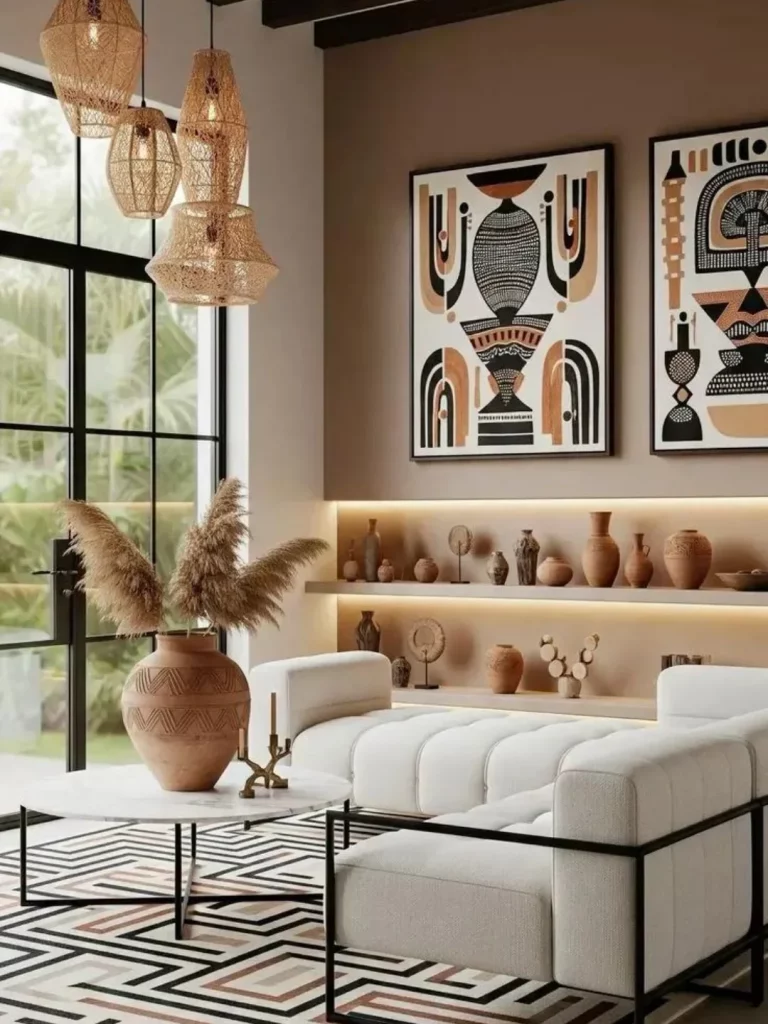
I like the way the darker graphic elements give structure to an otherwise very light room. The black window frames, furniture details, artwork, and rug pattern create a visual outline around the pale sofa and walls. Meanwhile, the shelves provide a practical display zone that keeps the decorative collection organized instead of scattering individual pieces across the room.
This image is especially useful for anyone who wants Afrohemian style but prefers a brighter overall interior. I would keep the larger furniture pieces neutral and introduce character through artwork, ceramics, textiles, and lighting. The restrained palette makes the geometric patterns especially noticeable, which shows that a room does not need deep wall colors to achieve a strong visual identity.
Soft Neutral Afrohemian Living Room With Black and White Textiles
This living room has a much quieter atmosphere, built around cream walls, pale upholstered seating, warm wood, and black-and-white patterned cushions. Several narrow windows bring in natural light, while a large framed artwork featuring a profile portrait creates the strongest focal point on the right wall. A textured wall hanging appears opposite it, and a large ceramic vessel stands near the seating area. The simple wooden coffee table and neutral rug keep the composition calm.
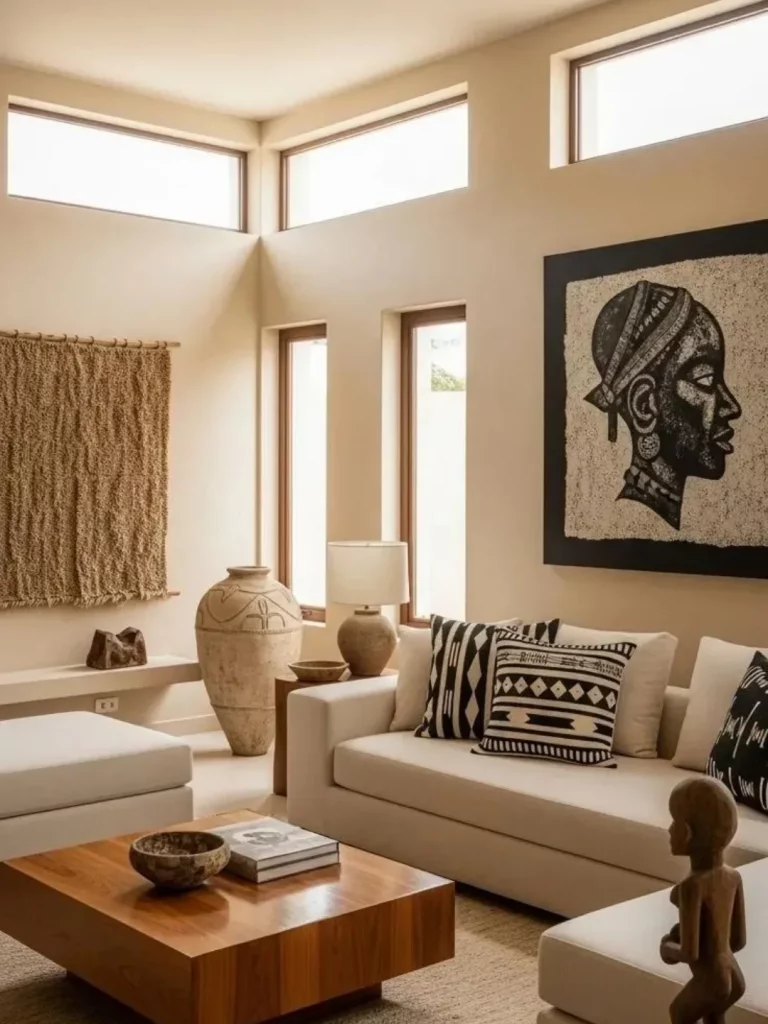
I appreciate how the room uses pattern selectively. The black-and-white cushions immediately draw attention without overpowering the pale furniture, while the artwork provides a larger graphic element on the wall. The low wooden coffee table introduces warmth and a natural surface, and the large ceramic vessel adds height near the corner. Everything feels spacious because there is enough empty wall and floor area between the individual pieces.
For me, this is a useful example of a softer Afrohemian palette. If I wanted a similar look, I would begin with cream upholstery and walls, then add only a few highly recognizable patterned pieces. The result would feel connected to the style while remaining understated enough for someone who prefers a quieter living room.
Black and Terracotta Afrohemian Living Room With Oversized Circular Artwork
This room makes a strong statement with an orange sofa placed beneath a very large circular black-and-cream wall artwork. The surrounding walls and architectural details are warm brown, while additional masks and carved objects create a layered backdrop. The sofa is decorated with several patterned cushions, and a large low rounded coffee table fills the foreground. A geometric black-and-white rug adds contrast beneath the furniture.
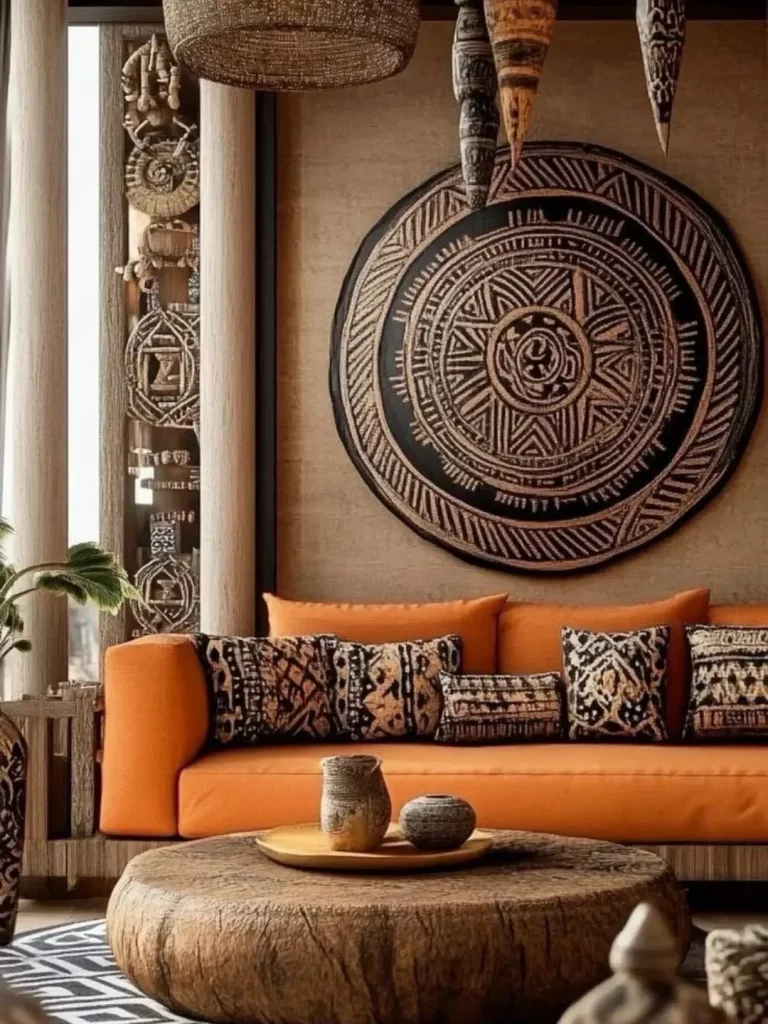
The visual impact comes from the relationship between the oversized wall piece and the long orange sofa. I like how the circular artwork breaks up the vertical wall and immediately defines the seating zone. The coffee table repeats the rounded form, while the patterned cushions and rug introduce smaller-scale geometry. Together, these shapes create a room that feels cohesive without relying on identical patterns.
I would be careful not to add too many competing focal points to a room like this. The photograph already has one unmistakable centerpiece, so I would let the remaining décor reinforce its colors and shapes. This is one of my favorite approaches for a bold living room: choose one large-scale statement feature and make the rest of the room support it.
Modern Afrohemian Living Room With Wood Fireplace Wall
The final room presents a more contemporary interpretation, with pale upholstered sofas arranged around a rounded coffee table and a large fireplace wall finished in horizontal wood panels. A carved wooden console sits beneath the television, while open shelving and patterned decorative screens add texture nearby. Several round wall pieces and geometric artwork appear along the opposite wall, and a large patterned area rug connects the seating arrangement.
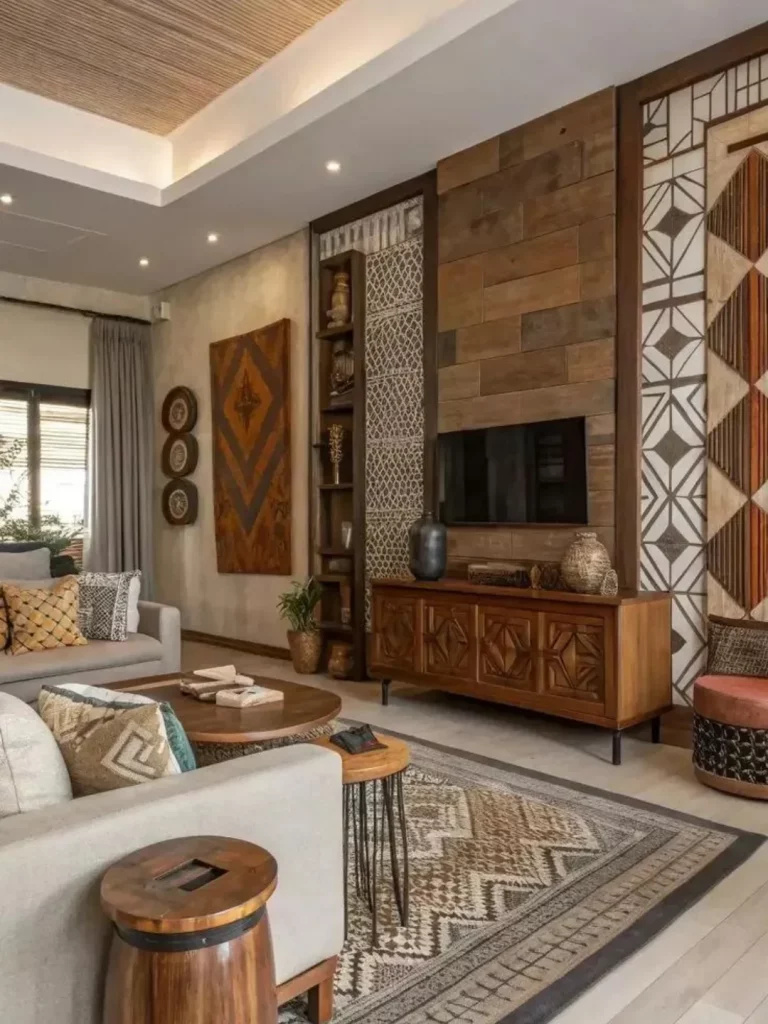
I like the way this room combines clean-lined contemporary furniture with the carved, patterned, and natural-looking details associated with Afrohemian interiors. The fireplace wall creates a substantial architectural focal point, while the patterned rug adds softness and visual interest across the floor. The coffee tables are arranged within easy reach of the seating, making the room feel designed for everyday use rather than simply styled for photography.
What I take from this image is that Afrohemian style can work beautifully in a modern living room when the decorative elements are edited carefully. I would keep the main furniture relatively simple and allow carved panels, patterned textiles, wall art, and sculptural accessories to introduce personality. The result can feel current while still having the warmth and visual depth that make this decorating approach so appealing.
Afrohemian living room ideas offer a beautiful way to combine cultural-inspired details, natural textures, expressive patterns, and everyday comfort. I love how each space can feel completely personal, whether the palette is light and neutral, warm and earthy, or rich and dramatic. Start with comfortable furniture, then layer in woven accents, patterned textiles, artwork, and sculptural accessories that reflect your style. Which Afrohemian living room idea is your favorite? Leave a comment and share the look you’d love to bring into your home.