
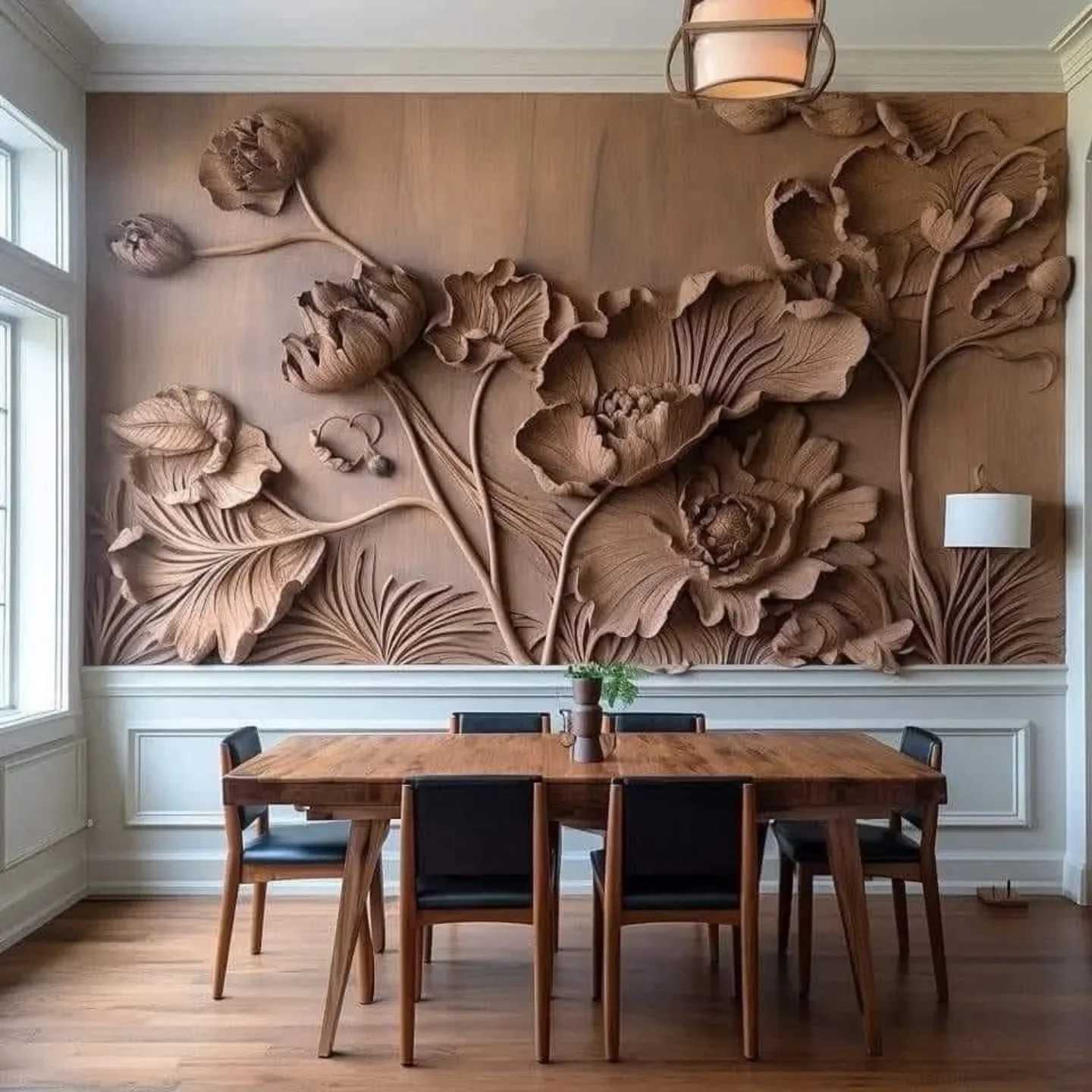
Walls can completely transform the character of a modern home when they are treated as an opportunity for creativity rather than simply a background. In this collection of Creative Wall Decor Ideas For Modern Homes, I explore striking ways to use sculptural details, oversized artwork, illuminated features, decorative shelving, mirrors, and personalized displays. Which wall treatment can turn an ordinary room into a memorable space without overwhelming the rest of the interior? How can lighting, texture, color, and carefully chosen decor work together to create a sophisticated focal point? I especially love ideas that combine beauty with practical functions such as storage, display, or integrated entertainment. Let’s explore these inspiring interiors and discover creative wall decor ideas that can give a modern home a more distinctive and personal feel.
A Sculptural Circular Headboard With Integrated Lighting
The bedroom immediately draws my attention to the enormous circular wall feature behind the bed. A soft beige-gray upholstered headboard sits beneath it, while the oversized circular form has subtle segmented detailing and a continuous warm illuminated edge. Matching white nightstands and table lamps frame the bed symmetrically, while white bedding and darker gray-blue accent pillows create a restrained color palette. I love how the rounded bed base echoes the circular wall element and makes the entire composition feel intentionally connected.
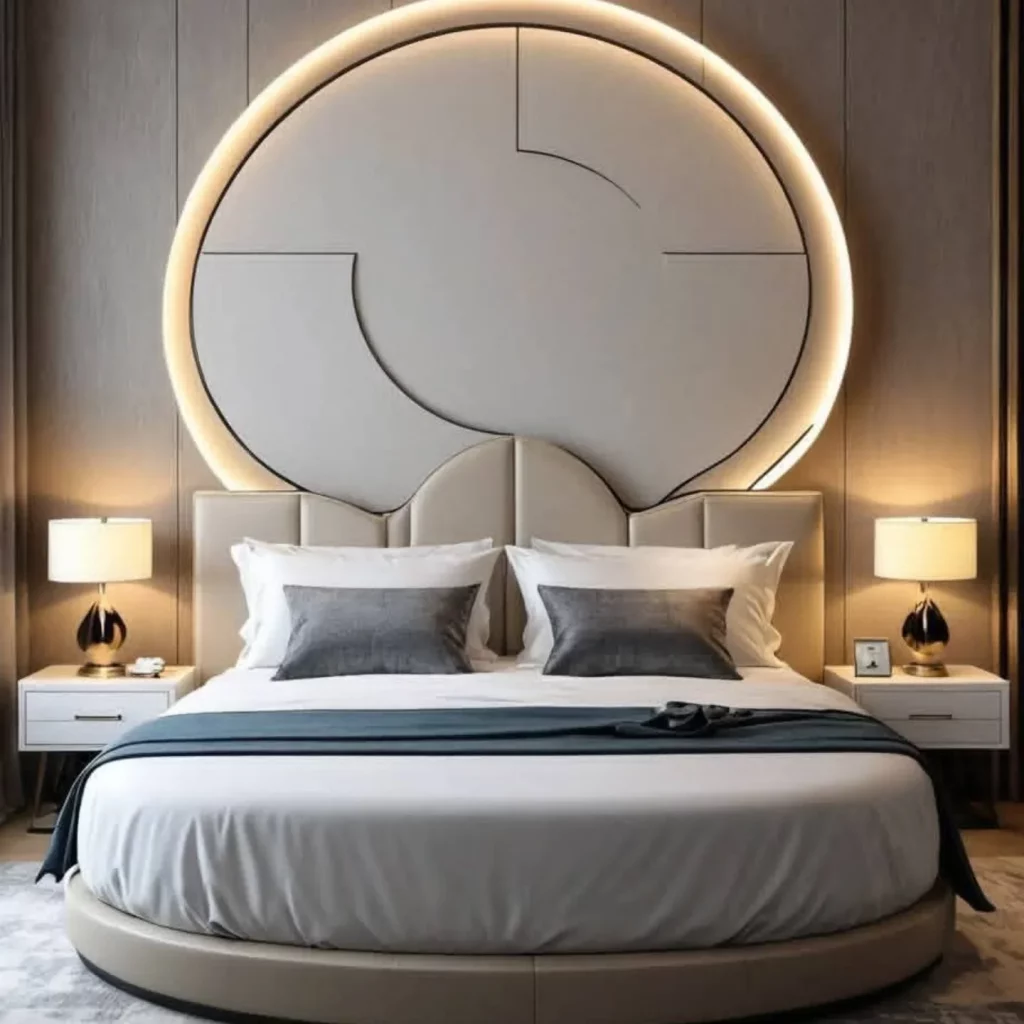
What makes this wall decor particularly effective is the way it combines decoration with architecture. Instead of adding several small pieces to the wall, the design creates one dominant focal point that visually anchors the bed. The integrated lighting adds depth and gives the bedroom a softer evening atmosphere, while the symmetrical furniture arrangement keeps the large statement feature from feeling overwhelming.
I would use this image as inspiration when I want a bedroom wall to feel custom-designed rather than simply decorated. The key is to repeat the curves of the main feature somewhere else in the room, as shown here with the rounded bed base. I also like the restrained palette because it allows the sculptural wall treatment and lighting to remain the stars of the room.
Metallic Tree Artwork Framing a Sophisticated Seating Area
This elegant seating area uses a large sculptural tree artwork as the main wall feature. The artwork stretches across several large wall panels behind a curved sofa and two rounded lounge chairs, with warm metallic branches and textured clusters creating a dimensional effect. Large windows on both sides bring in daylight and views of the surrounding city, while the neutral upholstery and decorative round coffee table keep the composition sophisticated. I particularly like the way the artwork fills the wall without making the seating area feel crowded.
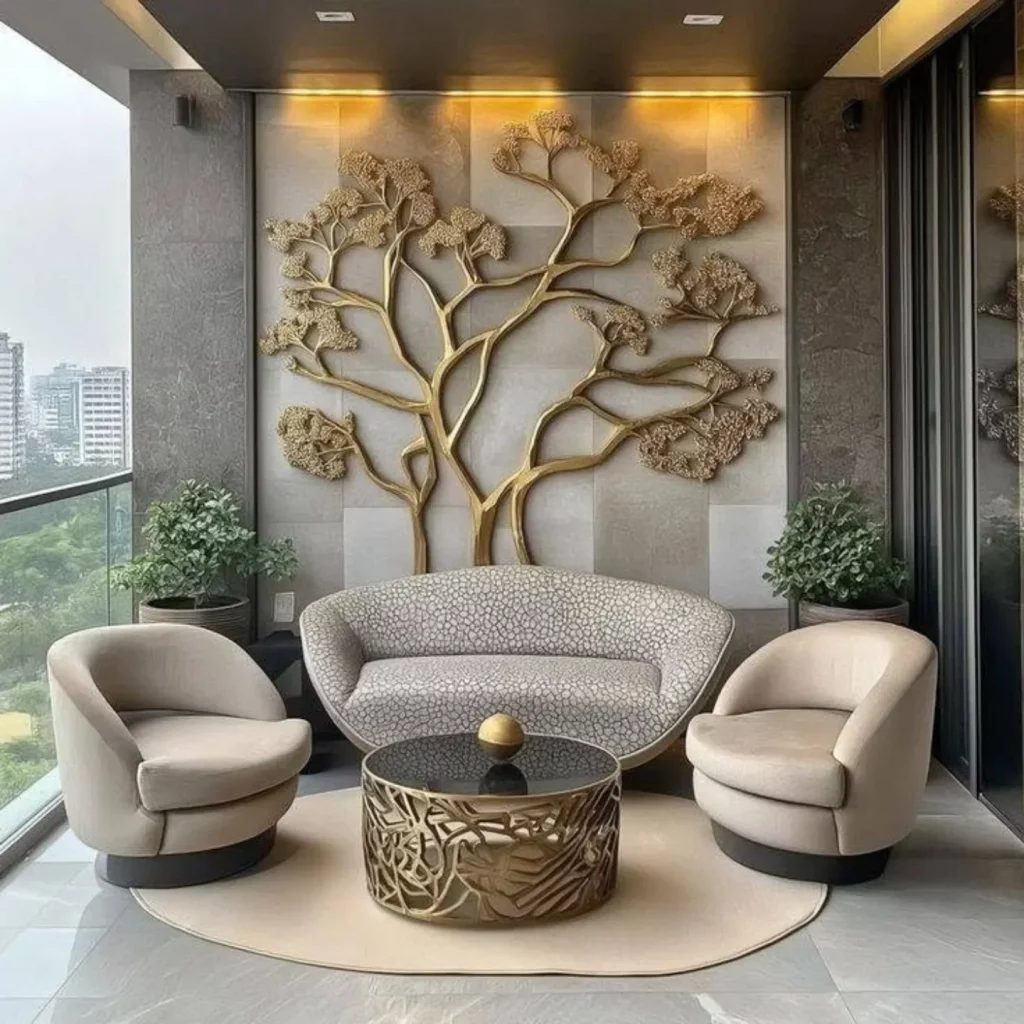
The scale of the wall decoration is what makes this arrangement work so well for me. A smaller artwork would probably disappear behind the generous seating, whereas this large composition visually connects the entire furniture group. The curved forms of the sofa and chairs also soften the strong vertical lines of the wall panels and windows.
If I were recreating this idea, I would pay close attention to proportion before choosing the artwork. The photograph shows how a large decorative piece can define a seating zone in an open room without requiring additional furniture. The limited neutral palette also allows the metallic detailing to stand out naturally and gives the wall a strong visual presence.
A Geometric Illuminated Niche With a Sculptural Ganesha
Here, the wall becomes a dramatic architectural backdrop for a centered Ganesha sculpture. The entire feature wall is composed of geometric panels with angular lines, and warm LED strips trace selected edges to emphasize the pattern. In the middle, a recessed arched niche frames the seated metallic sculpture, while a floating shelf beneath it creates a clear display platform. I find the combination of geometric surfaces, warm illumination, and the centered sculptural element especially striking.
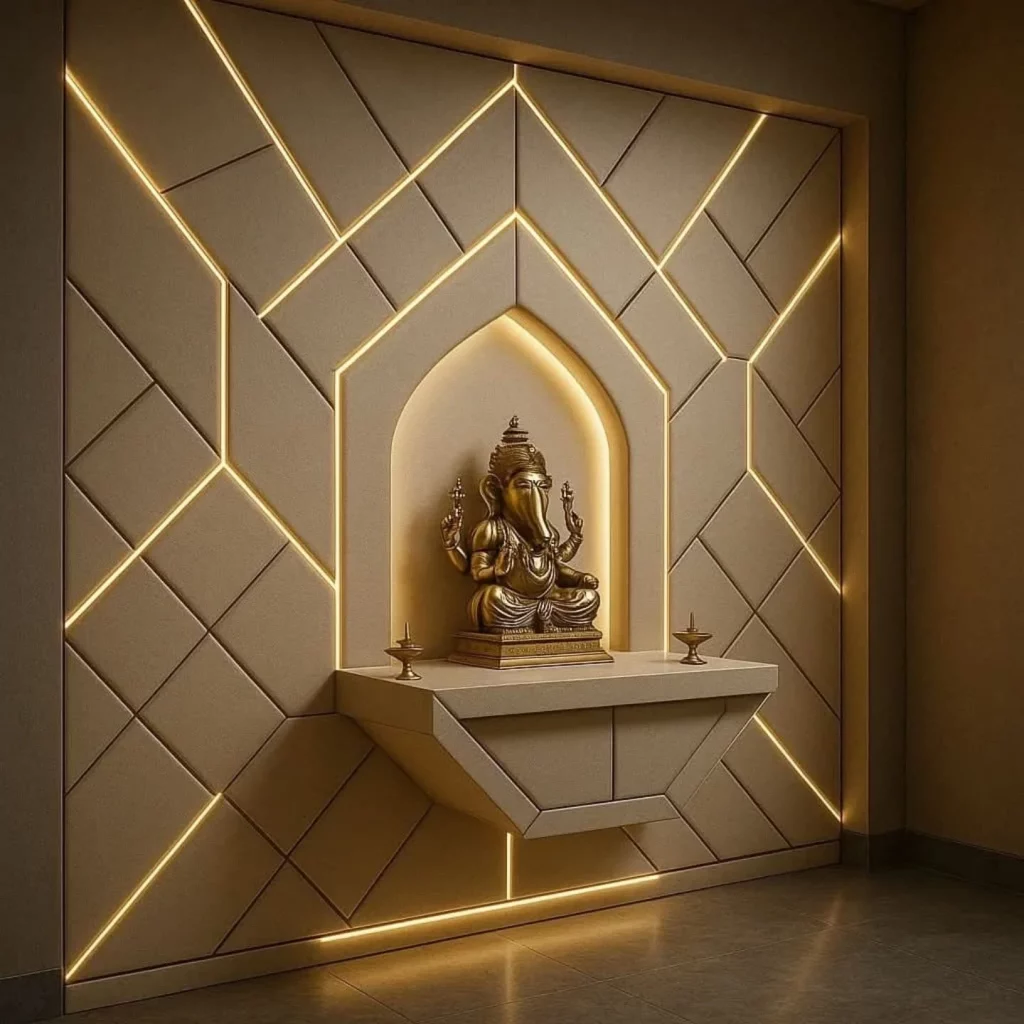
The design works because everything is organized around one visual focal point. The geometric wall pattern provides texture and structure without competing with the central sculpture, while the illuminated niche separates the display from the surrounding wall. The floating shelf also gives the arrangement a practical horizontal base and keeps the decorative composition visually clean.
For me, this is a strong example of how lighting can transform ordinary wall paneling into something much more expressive. I would plan the niche, shelf, and lighting as one composition rather than treating them as separate additions. The warm illumination shown here also demonstrates how carefully positioned light can emphasize depth and make a wall feature feel almost architectural.
Dark Entertainment Wall With Curved Illuminated Shelves
This living room takes a completely different approach, using a dark wall as the backdrop for a long built-in entertainment arrangement. A television is positioned centrally, while curved shelves with warm illuminated interiors extend across the wall above and around it. A long low cabinet runs beneath the television, creating generous visual storage, and additional open shelving appears farther along the wall. The dark surface contrasts beautifully with the warm lighting and the lighter flooring, while the curved shelving introduces softness into the otherwise linear composition.
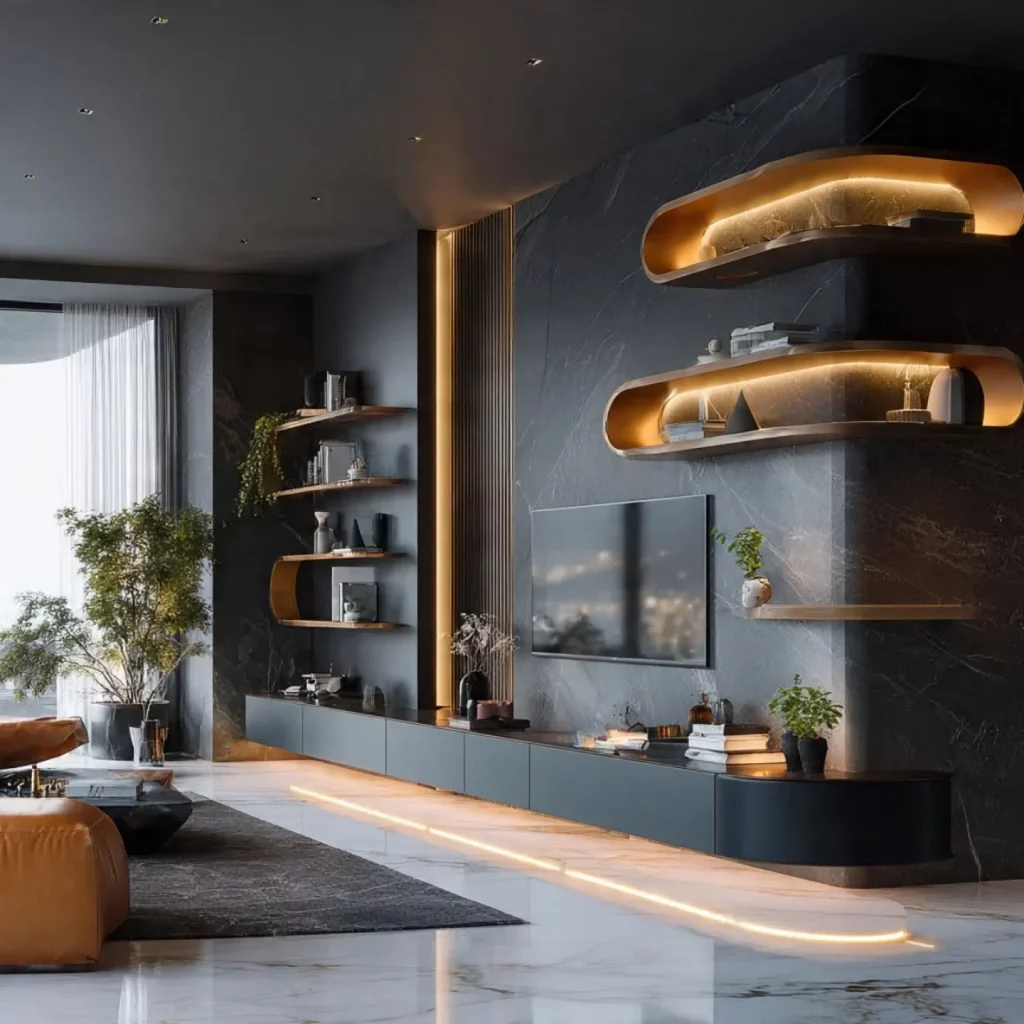
I like how the wall combines entertainment, display, and storage without breaking the visual flow of the room. The shelves provide space for books and decorative objects, while the lower cabinetry keeps the main horizontal line uncluttered. The warm lighting inside the curved shelves also makes the dark wall feel layered instead of flat.
This image inspires me to think about built-in wall decor as a complete furniture system. Rather than adding shelves randomly, I would establish a strong horizontal base and then introduce a few carefully shaped display areas above it. The photograph also shows how curved details can soften a large entertainment wall and make a modern composition feel more welcoming.
A Dramatic Krishna Shrine With Symmetrical Display Shelves
The fifth image presents a highly detailed spiritual display centered around a standing Krishna sculpture. The figure is positioned against a large illuminated circular relief, with an Om symbol above it and warm vertical lighting outlining the central wall section. Tall recessed shelving units frame both sides, displaying small framed images, vessels, lamps, and decorative objects. A marble-like counter forms the base, while cabinetry below provides a substantial foundation for the entire composition.
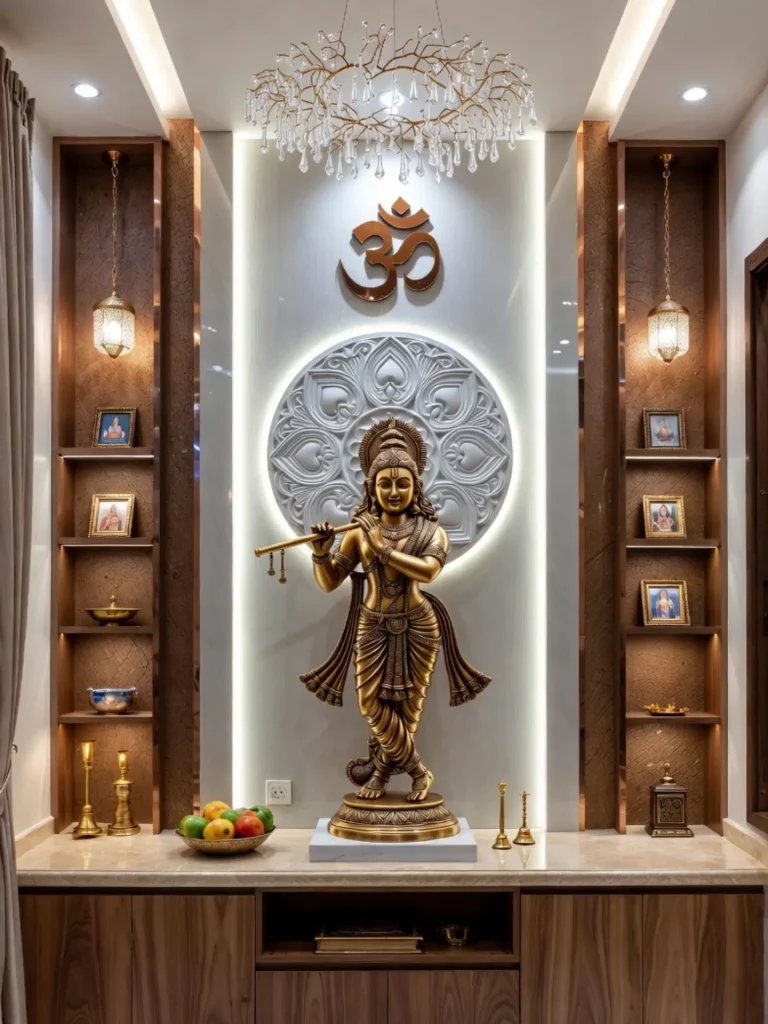
What I find most successful here is the strong symmetry. The central sculpture immediately becomes the focus, while the matching side shelves create visual balance and provide dedicated places for smaller objects. The lighting also creates a clear hierarchy, drawing attention toward the central display while keeping the surrounding details visible.
If I were designing a similar wall, I would approach it as a dedicated display zone rather than trying to combine it with unrelated decoration. The photograph shows how repetition in shelving and lighting can create order even when many individual objects are present. I also like the way the countertop and cabinetry visually ground the display and make the entire wall feel purposeful.
A Colorful Circular Bookshelf Wall With Built-In Display Niches
This cheerful living room features one of the most playful wall treatments in the collection. A large circular wall structure surrounds an arrangement of open box shelves in yellow, pink, white, and pale green, creating an almost graphic composition around a central mirror-like surface. The shelves hold books and small decorative objects, while a comfortable neutral sofa sits directly underneath. A tall floor lamp and a round side table complete the seating area, and daylight from the large window keeps the room feeling open.
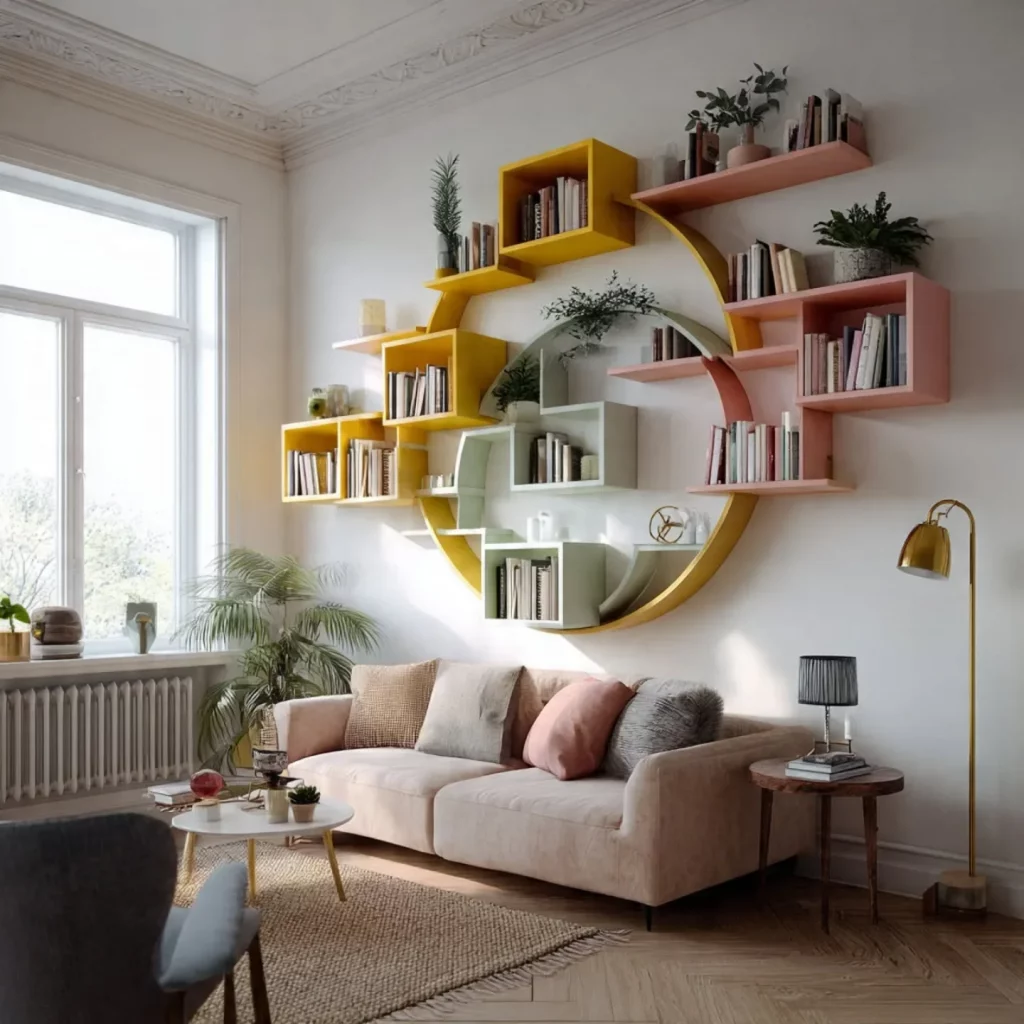
I love how the shelving turns ordinary storage into wall art. The different colors and geometric placements make the entire wall visually active, but the neutral sofa and pale surrounding walls prevent the composition from becoming too heavy. The shelves are also genuinely useful because they provide accessible storage for books and decorative pieces.
For me, this is a reminder that shelving does not have to be purely rectangular or purely functional in appearance. When I want a more expressive wall, I would consider combining open compartments with a larger geometric frame. The most important lesson from this photograph is balance: the colorful wall receives plenty of attention, while the furniture beneath it remains relatively simple.
Oversized Organic Relief Art As a Living Room Focal Point
This sophisticated living room centers on a large framed three-dimensional artwork made from irregular rounded forms. The artwork combines soft beige, cream, and taupe tones and is mounted against a dark paneled wall, creating a strong contrast. A light sofa sits to the left, a dark lounge chair occupies the right side, and a low round coffee table anchors the seating arrangement. Matching table lamps and restrained accessories reinforce the calm, carefully composed atmosphere.
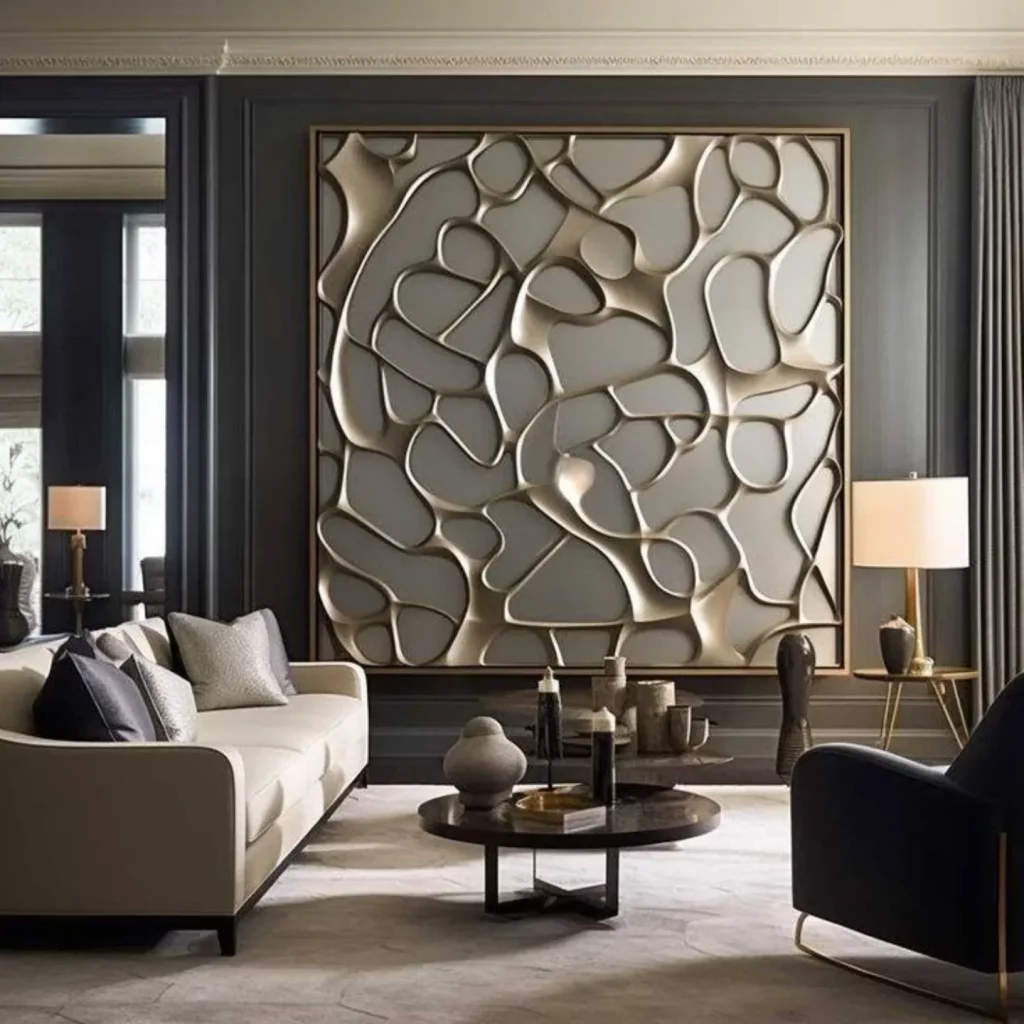
The oversized artwork works particularly well because it fills the wall while staying within the room’s neutral color palette. Its raised forms create shadows and depth, so the wall does not depend on strong colors to become visually interesting. I also like the way the dark surrounding wall frames the artwork almost like a gallery presentation.
When I look at this composition, I am reminded that texture can be just as powerful as color. If I wanted a sophisticated statement wall, I would consider a large dimensional artwork with subtle tonal variation rather than several smaller decorative pieces. The photograph also shows why a large artwork should relate to the scale of the furniture beneath it.
A Soft Floral Relief Wall Above a Ribbed Console
This elegant entry or sitting area features a large pale wall panel decorated with raised floral and leafy relief patterns. Warm concealed lighting runs along the sides and top of the feature, emphasizing the dimensional details without overwhelming them. Beneath it sits a long ribbed console with gold-toned handles and legs, styled with a few simple decorative vessels. Two rounded upholstered chairs and a circular coffee table complete the foreground, while a staircase and tall decorative arrangement are visible in the background.
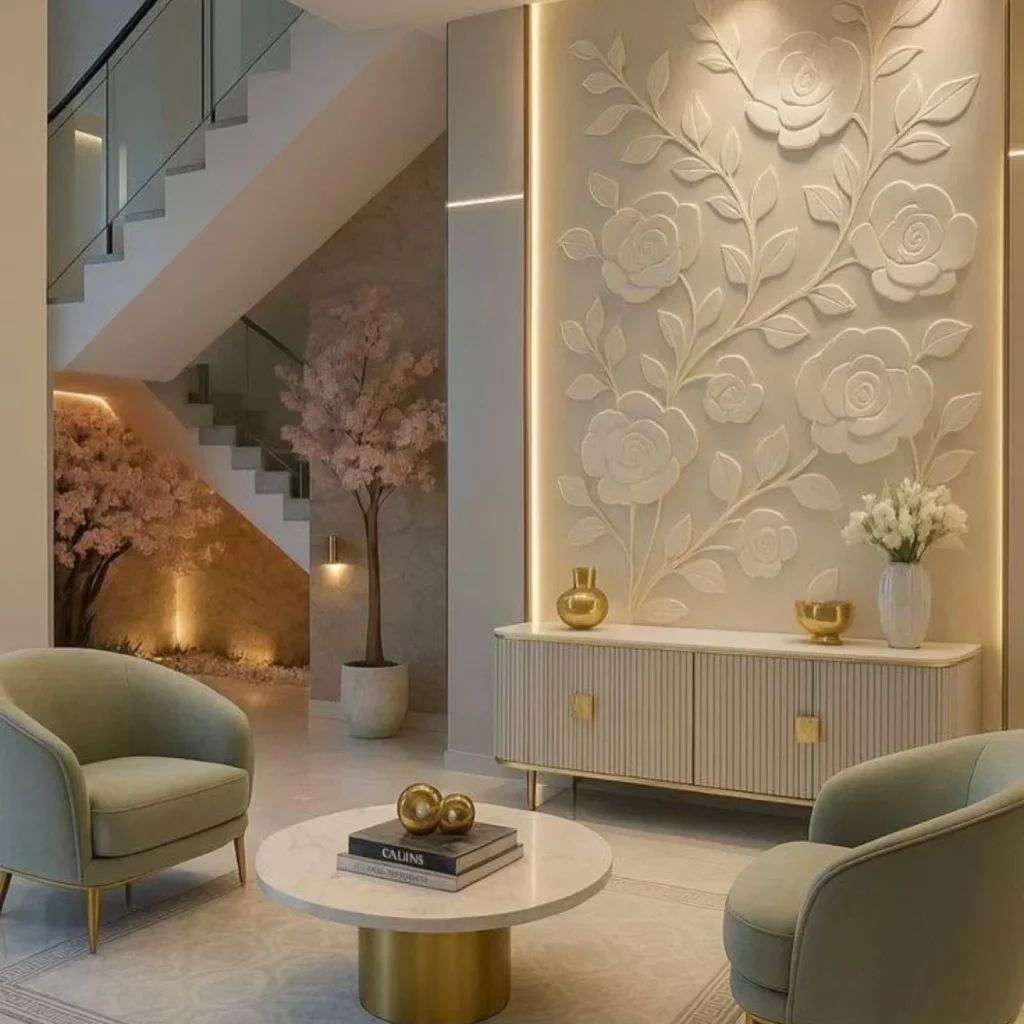
I like the subtle relationship between the wall relief and the furniture. The vertical texture of the console complements the dimensional wall, while the rounded chairs and coffee table repeat the softer curves found in the relief pattern. The warm lighting also makes the pale surface more noticeable by creating gentle shadows across the raised details.
This photograph would inspire me to use relief rather than color when I want a wall to become a focal point without dominating the room. I would keep the surrounding furniture relatively restrained, as shown here, so the texture remains visible. The integrated lighting is another detail I would consider because it helps reveal the craftsmanship of a dimensional wall surface.
An Ornate Silver Mirror Against a Deep Red Accent Wall
This image takes a much more dramatic decorative approach, placing an elaborate silver-framed mirror at the center of a deep red wall. The mirror has an intricate sculptural frame with curling ornamental details, while matching ornate candle-style wall fixtures flank it on both sides. Additional decorative vessels are positioned above the outer fixtures, creating a strongly symmetrical composition. The result is theatrical, formal, and highly decorative without requiring a large collection of separate artworks.
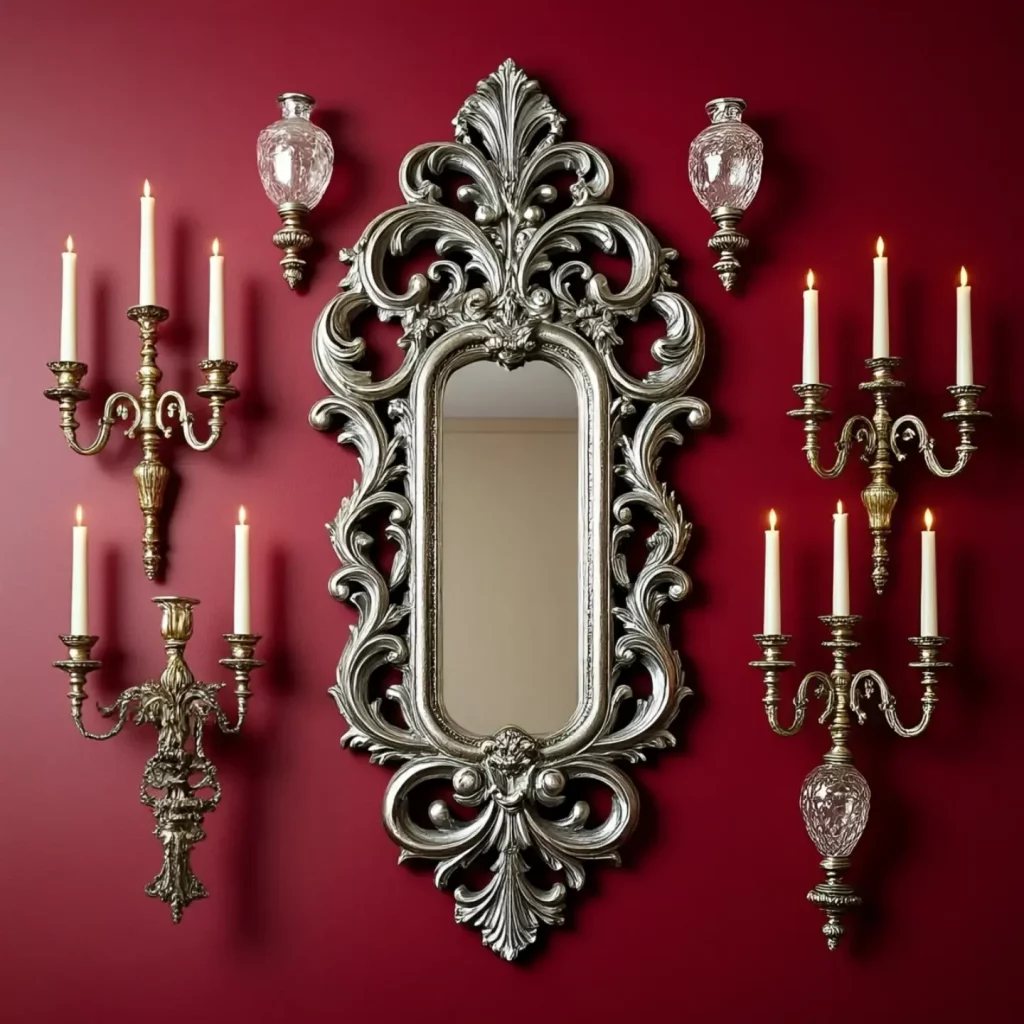
The symmetry is especially effective here because the central mirror provides a strong vertical anchor and the matching wall fixtures establish balance on either side. The reflective surface also breaks up the solid red background, while the metallic frame and fixtures introduce contrast and intricate texture. I think the arrangement works best because the wall is allowed to remain visually simple apart from the carefully coordinated decorative elements.
For me, this photograph is a great reminder that an ornate statement piece can work in a modern home when the composition is deliberate. If I wanted to recreate this effect, I would choose one dominant mirror and build the surrounding elements around its proportions rather than adding unrelated accessories. The deep wall color also demonstrates how a strong backdrop can make metallic decoration immediately noticeable.
An Illuminated TV Wall With a Curved Architectural Frame
The final image combines a television with a large rounded wall frame illuminated by warm LED lighting. The television sits at the center of the curved feature, while a long white media console beneath it includes illuminated compartments. Purple lighting appears in vertical recessed niches to the right and inside portions of the console, creating a colorful contrast with the warm yellow illumination around the television. Small decorative displays occupy recessed niches on both sides, while vertical wall slats add another layer of texture.
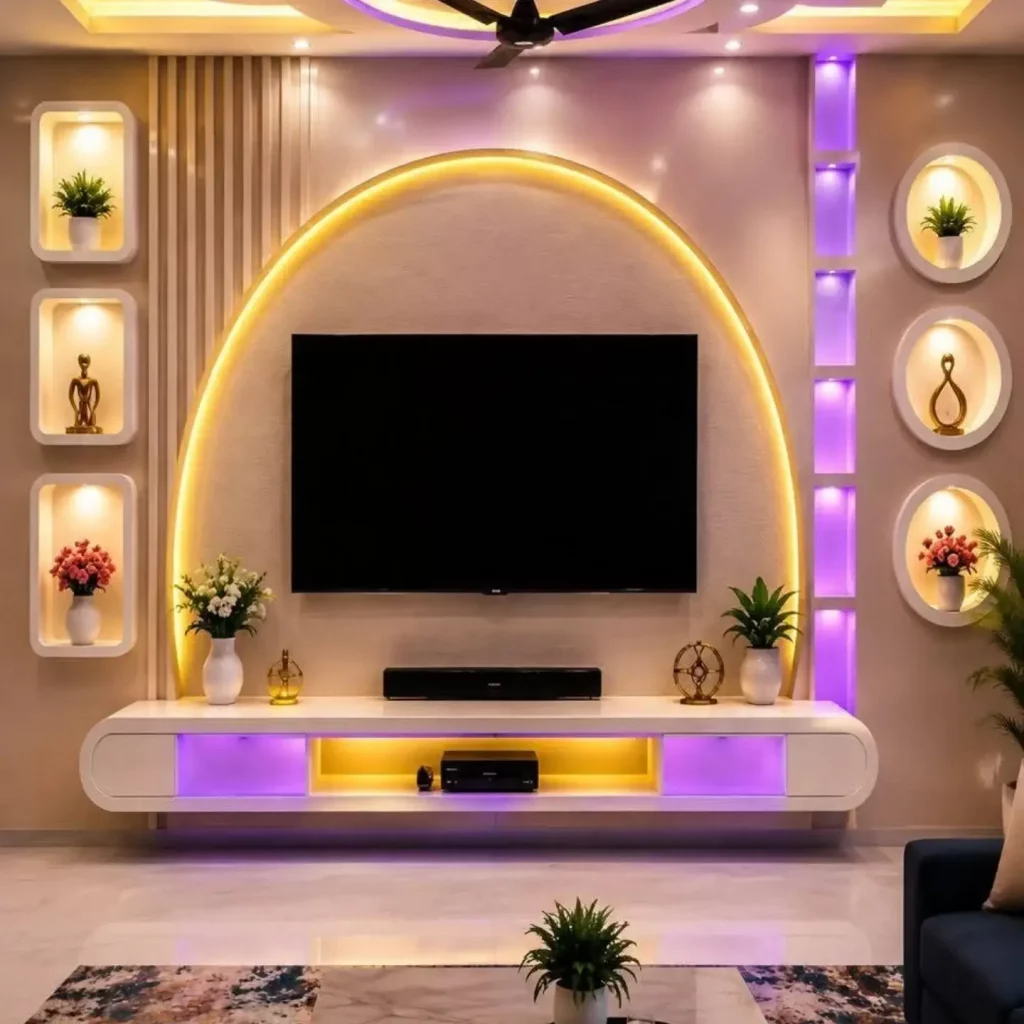
What works especially well for me is the way the television becomes part of the architecture rather than looking like an isolated black rectangle. The curved illuminated frame gives it a defined zone, while the console below provides a practical visual base. The combination of warm and purple lighting also allows the room’s atmosphere to change depending on the lighting effect being used.
I would take inspiration from this idea when designing an entertainment wall that needs to feel more decorative. Instead of relying solely on the television and console, I would consider creating a surrounding architectural frame and using recessed lighting to emphasize its shape. The photograph also shows how decorative niches can add personality while keeping the main wall composition organized.
Backlit Leaf Artwork for a Soft Statement Wall
The first room features a large light-colored wall panel with an oversized composition of sculptural leaves in beige, cream, taupe, and warm brown tones. The artwork is positioned toward the right side of the panel, while concealed lighting creates a soft golden glow around its edges. To the left, built-in shelving displays small decorative objects and books, adding another layer of detail without competing with the statement artwork. I love how restrained the palette keeps this large wall feature feeling calm and sophisticated.
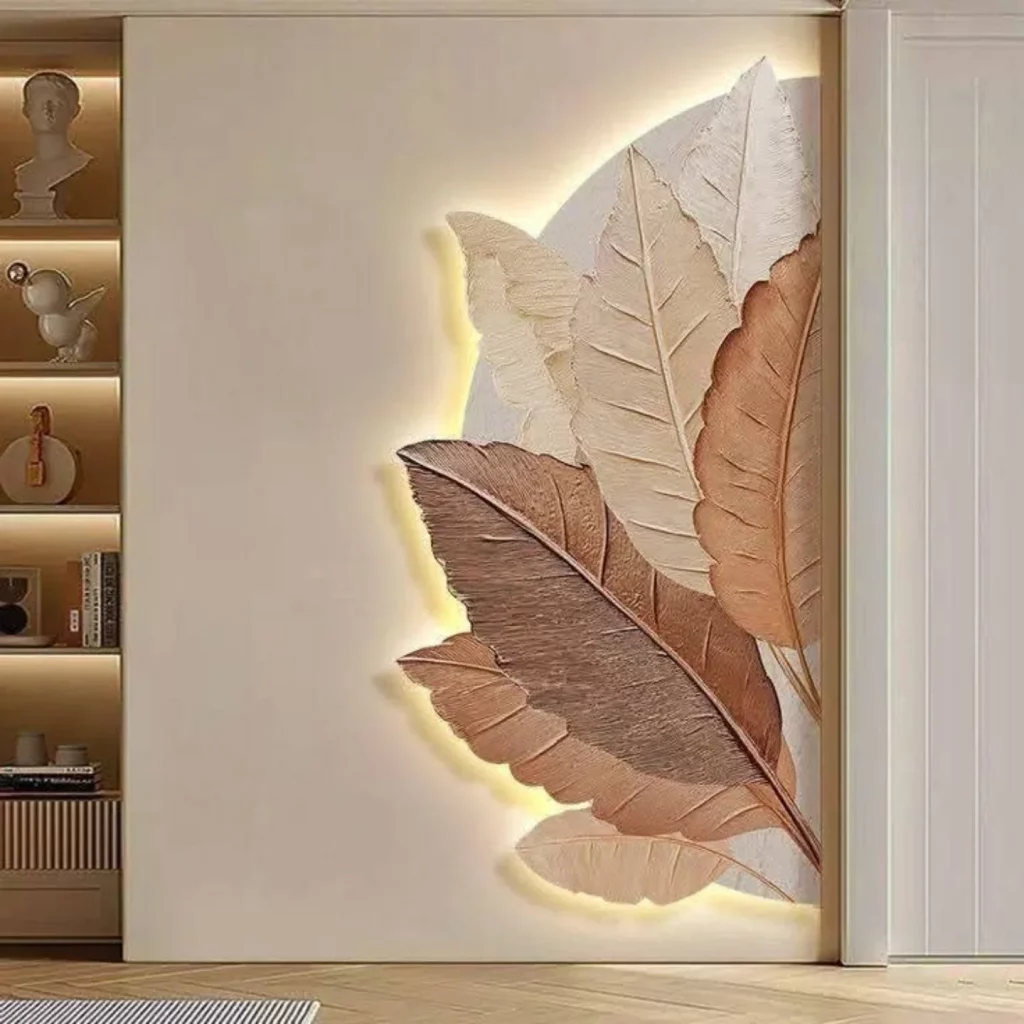
The backlighting is what gives this wall decor its strongest visual impact. Instead of relying only on the artwork itself, the illumination creates depth and gently separates the leaves from the pale background. The surrounding built-in shelving also makes the wall more useful, providing a place for display and storage while maintaining a cohesive architectural appearance.
For a similar look, I would focus on one oversized wall feature rather than filling every available surface with small decorations. A large sculptural artwork can become the focal point, while warm integrated lighting can emphasize its shape after dark. Keeping the surrounding colors close to the artwork helps the lighting and texture remain the main attraction.
Warm Modern Living Room With Sculptural Wall Decor
This spacious living room uses a warm neutral palette throughout, with several large cream-colored sofas arranged around a substantial rectangular wood coffee table. Behind the seating area, the wall is decorated with large organic sculptural pieces in earthy tones, while tall leafy greenery adds height and contrast. The ceiling and surrounding surfaces continue the soft beige palette, creating a visually continuous interior. I particularly notice how the large-scale wall pieces balance the generous proportions of the furniture.
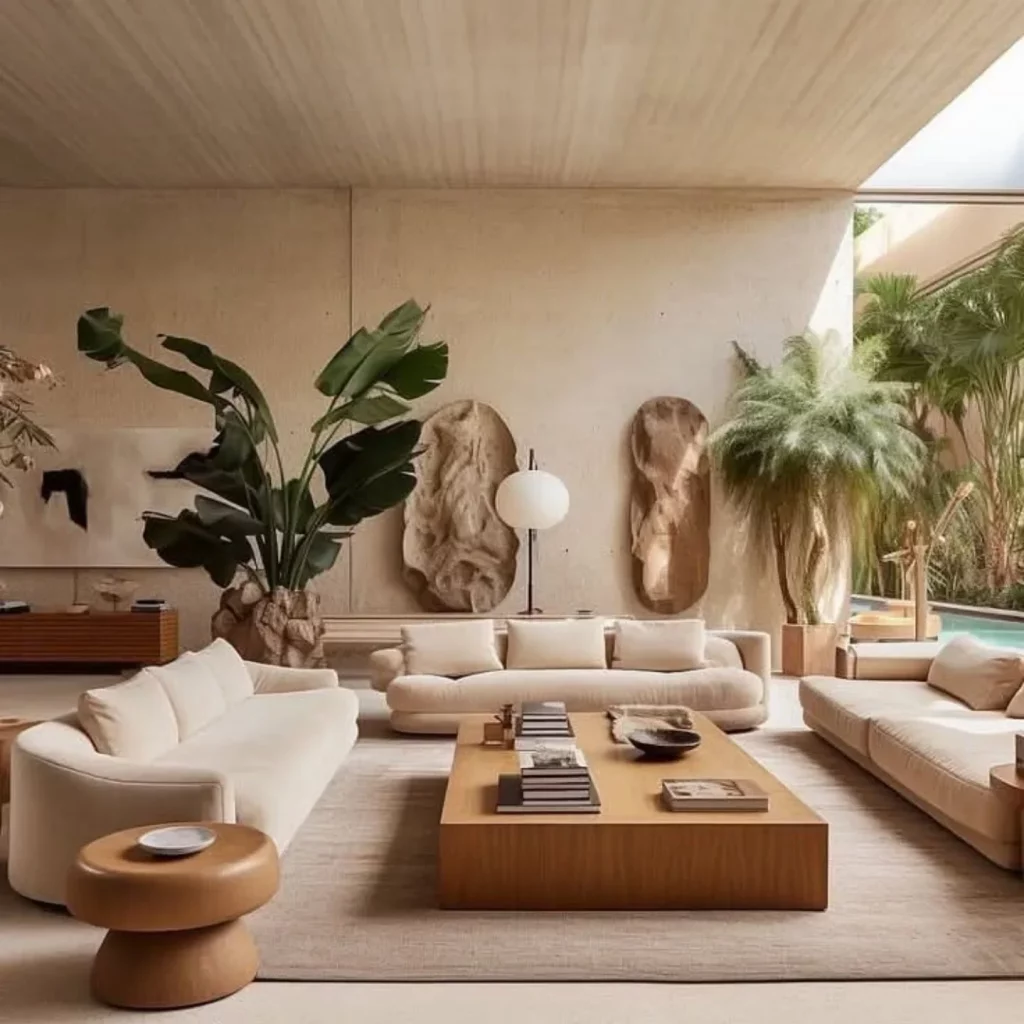
The artwork works well because it has enough scale to hold its own against the oversized seating. The arrangement does not depend on numerous small accessories; instead, a few substantial pieces create a strong focal area behind the sofa. The open connection to the outdoor space also allows the interior and exterior views to contribute to the overall atmosphere.
I would use this approach when a large living room wall feels empty but I do not want to cover it with a busy gallery arrangement. Large sculptural artwork can introduce texture and personality while keeping the room visually composed. In a space with generous furniture, I would also pay attention to scale so that the wall decor does not disappear behind the seating.
Dark Slatted Wall With Layered Shelving and Artwork
This wall combines dark vertical slats with three long floating shelves, creating a strong architectural backdrop. The shelves hold framed botanical-style artwork, books, vessels, small decorative objects, and natural-looking arrangements, while a woven hanging chair adds another textured element below. Warm integrated lighting underneath the shelves highlights the display and creates a cozy glow against the dark wall. I like the contrast between the deep backdrop, lighter artwork, metallic accents, and woven textures.
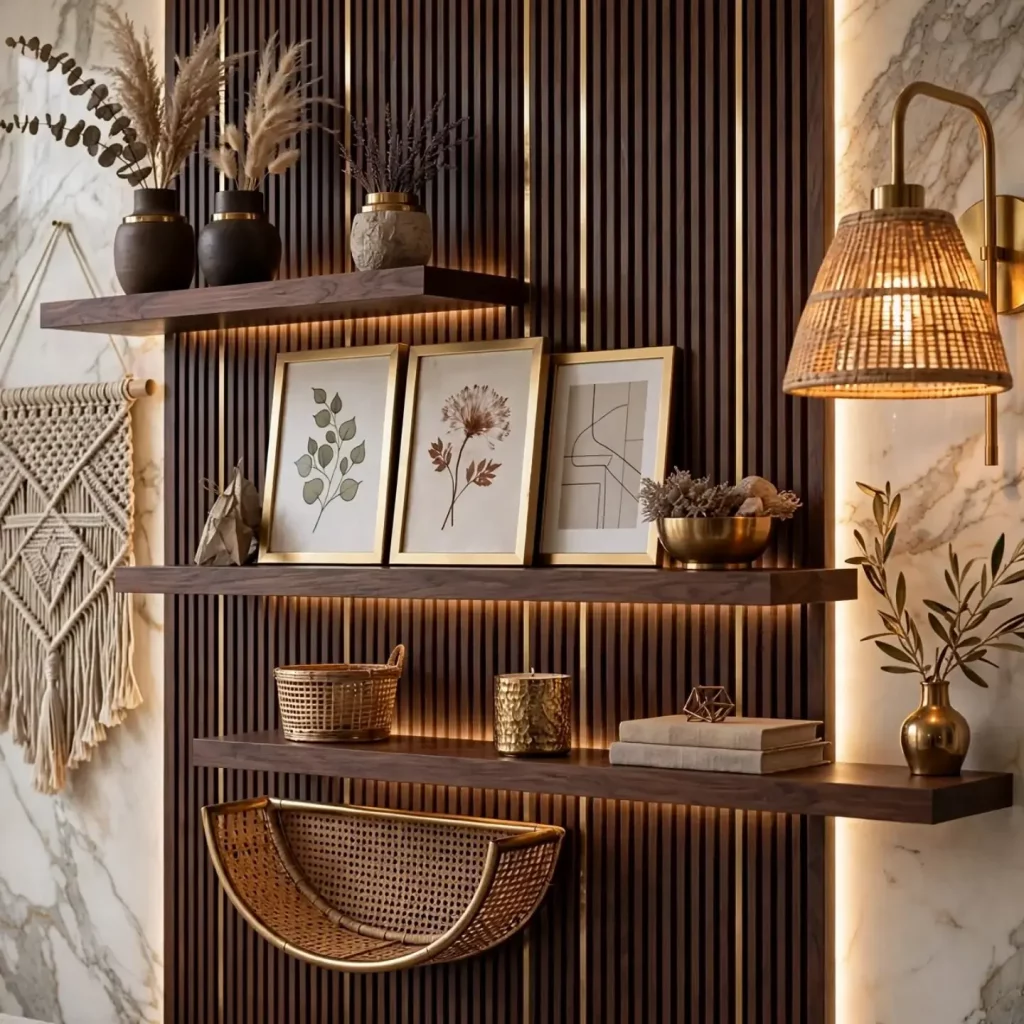
The shelving makes this wall especially functional because it turns decoration into an organized display system. Different objects are grouped across several levels, giving the eye plenty to discover without making the composition feel completely random. The integrated lighting also separates each shelf visually and makes the displayed pieces more noticeable.
For my own decorating approach, I would treat shelves like a small curated collection rather than filling every inch. Mixing framed artwork with books, vessels, and objects of different heights creates rhythm and keeps the arrangement interesting. The vertical slatted backdrop also shows how a textured wall treatment can provide structure even before the decorative accessories are added.
Elegant TV Wall With Illuminated Shelves
The fourth image shows a sophisticated TV wall built around a large marble-look rectangular panel. The television is centered on the panel, while vertical textured wall detailing extends along one side. Floating shelves above and beside the television are illuminated with warm recessed lighting and decorated with small sculptural objects. A long low cabinet runs beneath the television, combining closed storage with open illuminated compartments, while full-height curtains frame the nearby window.
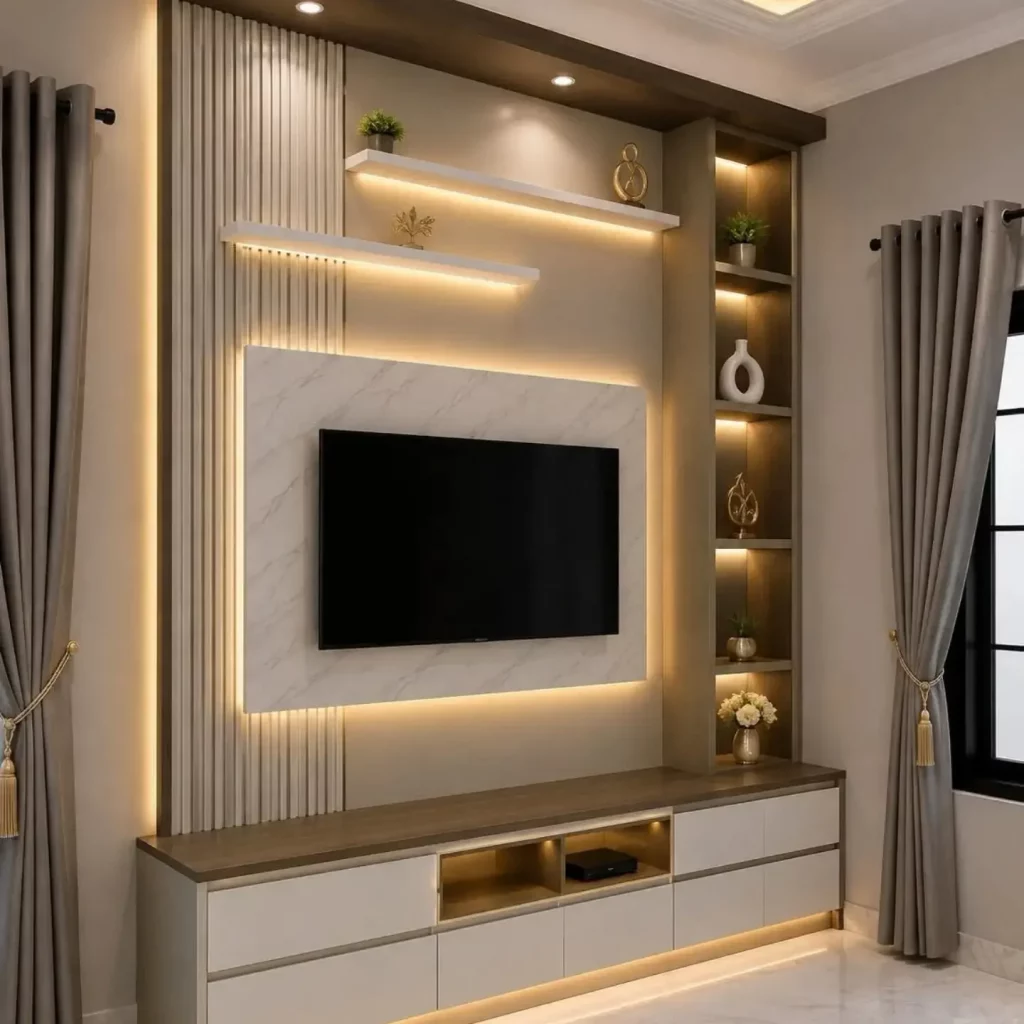
I find this arrangement successful because the television is integrated into a larger composition instead of sitting alone on an empty wall. The low cabinet provides practical storage, while the illuminated shelves give the wall visual balance and a place for carefully selected accessories. The repeated warm lighting around the shelves, panel, and lower cabinet also creates continuity throughout the installation.
If I were recreating this idea, I would plan the wall around the television first and then build the storage and display areas around it. Keeping the decorative objects relatively small allows the large central screen and marble-look panel to remain visually dominant. Warm integrated lighting is another detail I would prioritize because it adds depth without requiring additional floor or table lamps.
Textile Wall Hanging Above a Cozy Bed
This bedroom uses a soft beige palette with a large upholstered bed positioned against a textured wall. Above the headboard hangs a wide woven wall piece composed of three connected panels with geometric patterns and long fringe. The bed is layered with numerous textured pillows and neutral bedding, while a woven floor lamp and a brown upholstered armchair add warmth on the right side. A patterned area rug introduces deeper blue, rust, cream, and brown tones near the foot of the bed.
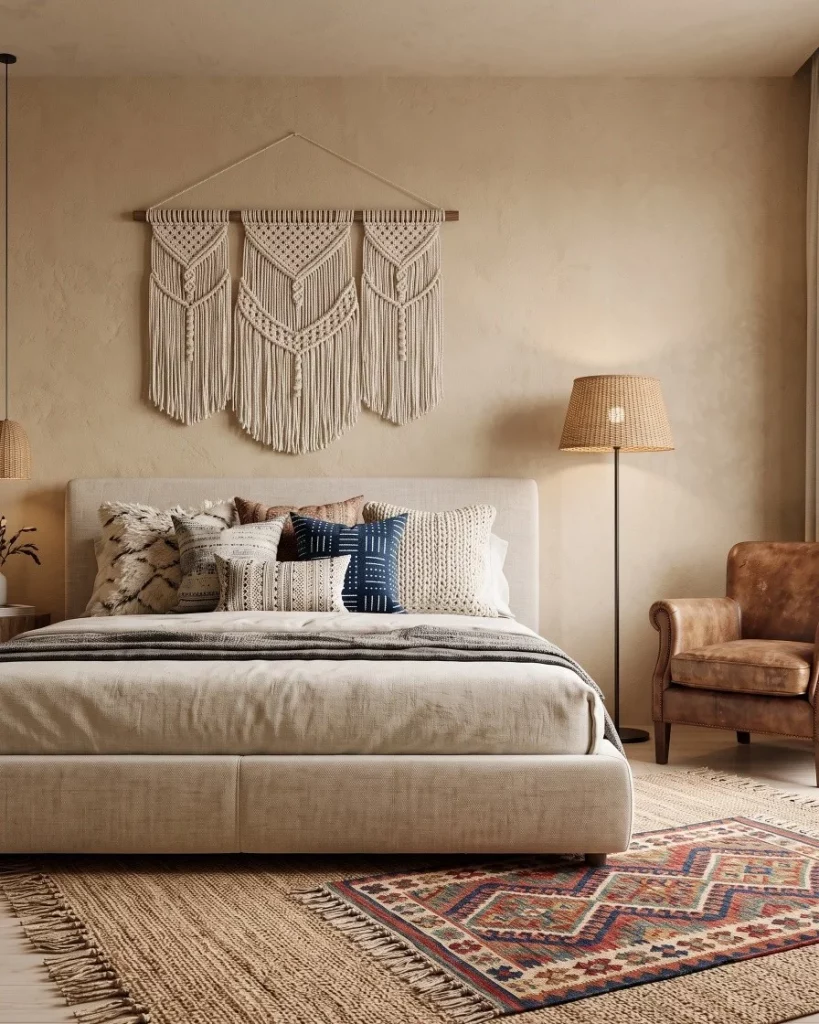
The wall hanging works especially well here because its texture contrasts with the smooth upholstered bed while staying within the room’s warm neutral palette. Its horizontal arrangement visually fills the space above the headboard and gives the bed a clearly defined focal point. I also like how the rug and pillows repeat some of the tactile qualities seen in the wall decor.
For a similar bedroom, I would choose one substantial textile piece above the bed rather than several small frames. Woven wall decor can make a large blank wall feel softer and more personal, especially when the bedding already uses layered fabrics. I would also keep the surrounding accessories restrained so the wall hanging remains clearly connected to the bed rather than becoming just another background detail.
Oversized Floral Artwork as a Soft Color Accent
A large framed floral artwork becomes the central feature of this pale interior wall. The artwork contains oversized sculptural-looking flowers in soft pink, cream, pale yellow, and muted blue-green shades, all contained within a simple light frame. The surrounding space is deliberately understated, with a pale wall and glimpses of built-in cabinetry and adjacent rooms. I like how the artwork introduces color without overwhelming the otherwise quiet interior.
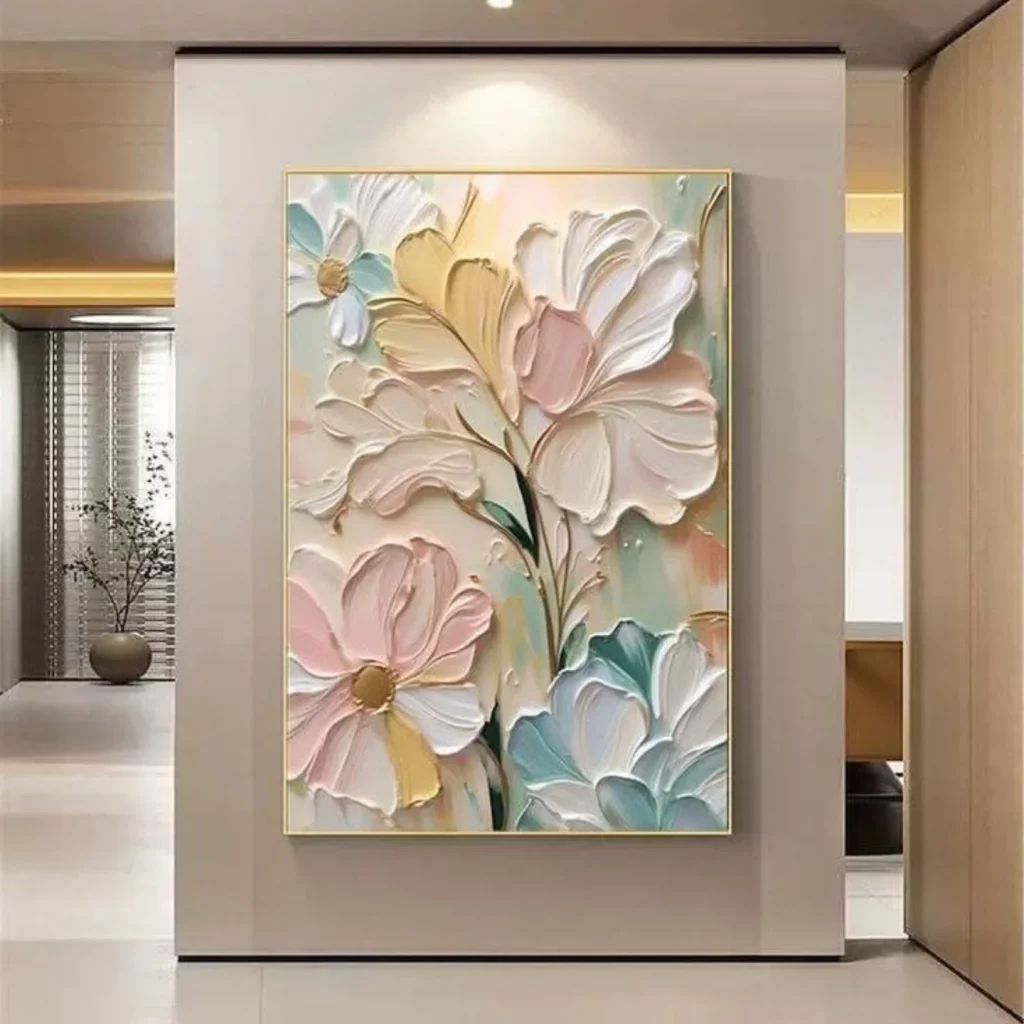
The scale of the artwork is important because the wall is broad and visually open. A smaller picture could easily disappear against this surface, while this large vertical piece creates an immediate focal point. The varied pastel tones also offer several subtle color references that could be repeated through small accessories elsewhere in the room.
When I use statement artwork in a neutral interior, I prefer letting the picture provide most of the personality rather than surrounding it with too many competing decorations. Here, the simplicity of the wall allows the artwork to be appreciated almost like a gallery piece. A large framed canvas is also a practical solution when I want a dramatic transformation without changing the architecture of the room.
Colorful Floral Wall Decor for a Playful Display
This image takes a completely different approach, covering a pale wall with rows of colorful handmade-looking floral decorations. Pink, red, blue, purple, yellow, and orange blooms are arranged vertically with green leaves and long purple trailing elements. Below the wall display sits a white console decorated with glass vases, books, candles, a bowl, and a basket containing colorful objects. The result is cheerful, highly decorative, and intentionally expressive.
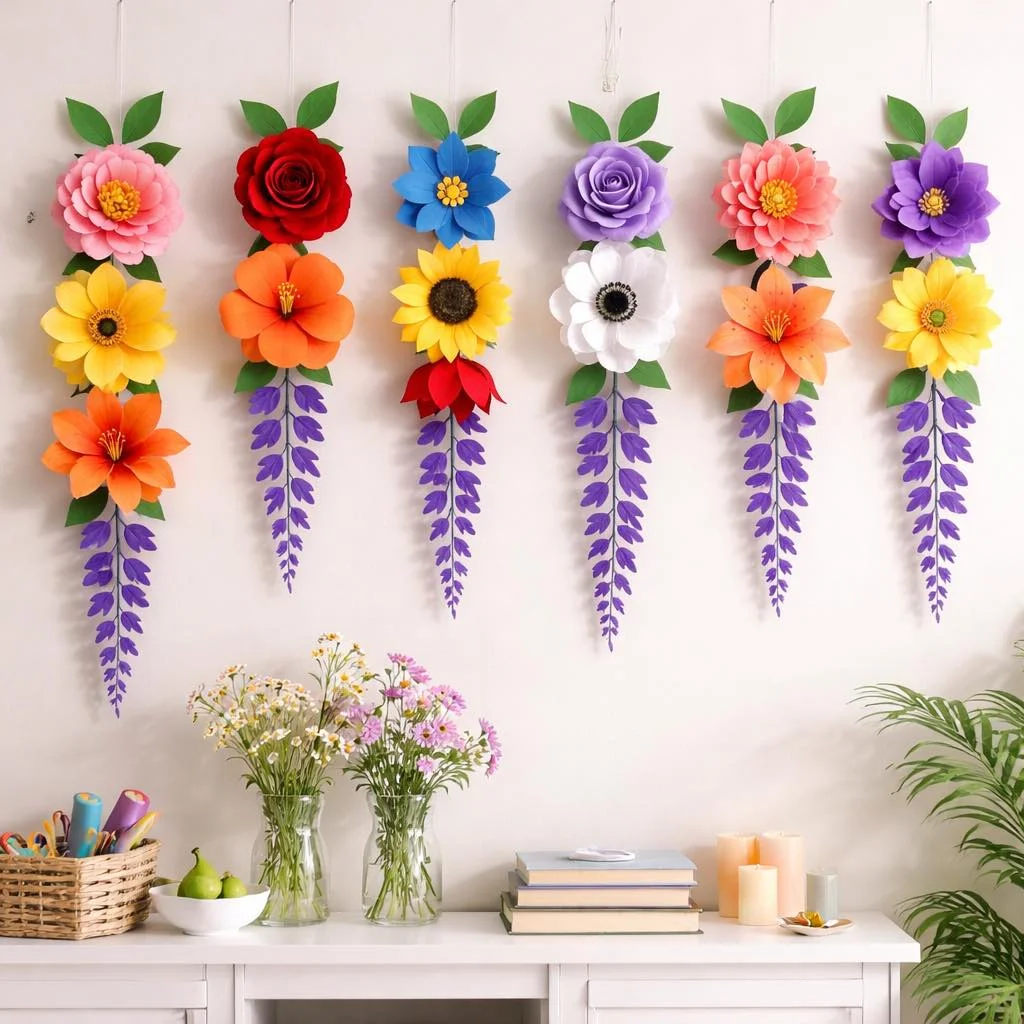
What makes this arrangement work is its repetition. Similar floral forms appear across the wall, but the colors and combinations vary enough to prevent the display from looking completely uniform. The white background acts as a neutral canvas, allowing the saturated decorations to remain the primary visual feature while the console grounds the composition.
I would approach a display like this as a collection rather than trying to create perfect symmetry. Repeating a similar shape or material gives the wall consistency, while changing colors and placement adds personality. The console underneath is also useful because it creates a visual base for the wall arrangement and provides additional space for small decorative pieces.
Curved Wood Wall Feature Framing a Modern Bedroom
The eighth image presents a modern bedroom with a low-profile wood bed framed by a dramatic curved wood slat installation behind the headboard. Greenery-like wall elements appear along both sides of the central panel, while a simple light artwork hangs in the middle. The bed is dressed in muted green bedding, and compact bedside tables with small lamps sit on either side. Beyond the bed, a large opening provides a view toward an outdoor water feature and surrounding greenery.
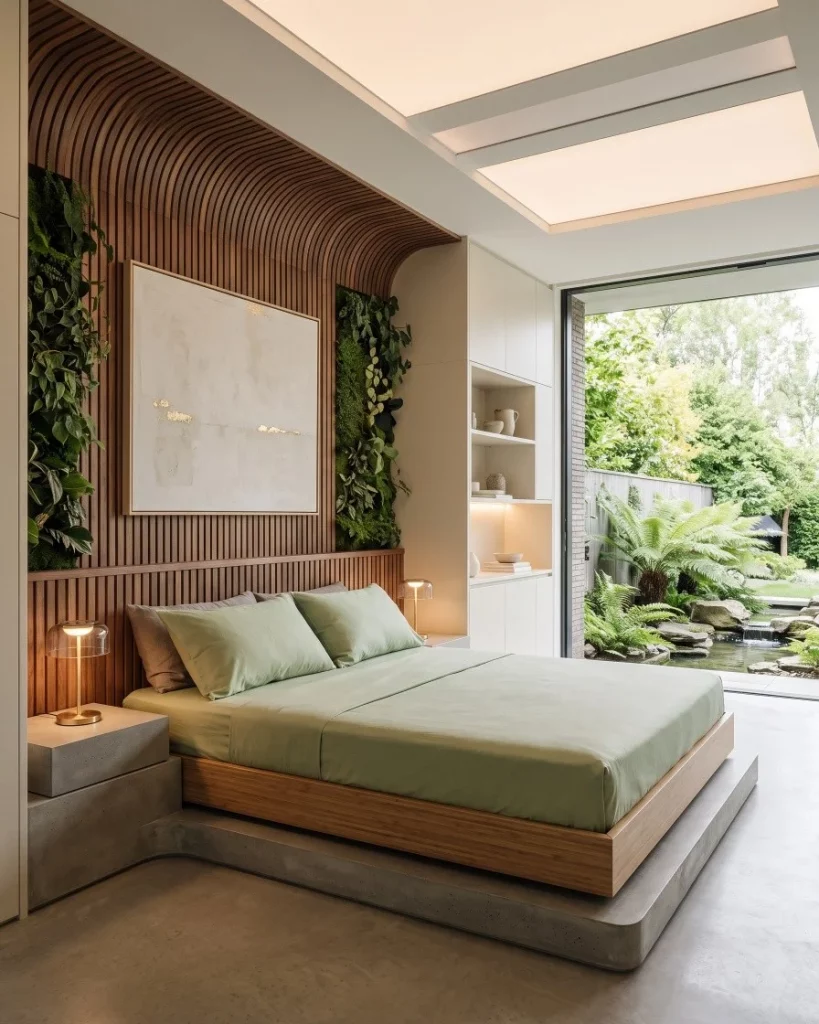
The curved wall treatment is particularly effective because it gives the bedroom a strong architectural identity. Instead of decorating the wall with many separate objects, the wall itself becomes the main feature, while the central artwork adds a quieter focal point. The muted green bedding visually connects with the greenery surrounding the wall and the outdoor view, helping the bedroom feel cohesive.
From my perspective, this is a good example of how wall decor can become part of the architecture. If I wanted to recreate the effect without such a large installation, I would concentrate on one defined feature behind the headboard and repeat one or two colors already visible in the room. The simplicity of the bedding and bedside styling is important because it allows the curved wall to remain the star.
Ornate Wood Media Console With Patterned Wall Backdrop
This richly decorated media area features a large television positioned above an elaborate dark wood console with carved panel details. Behind it, an intricate patterned wall covering creates a dense decorative backdrop, while a large circular metallic wall piece is centered above the television. Deep red upholstered seating appears at the sides and foreground, and decorative vessels with pale blooms frame the console. The overall composition is layered, formal, and visually rich.
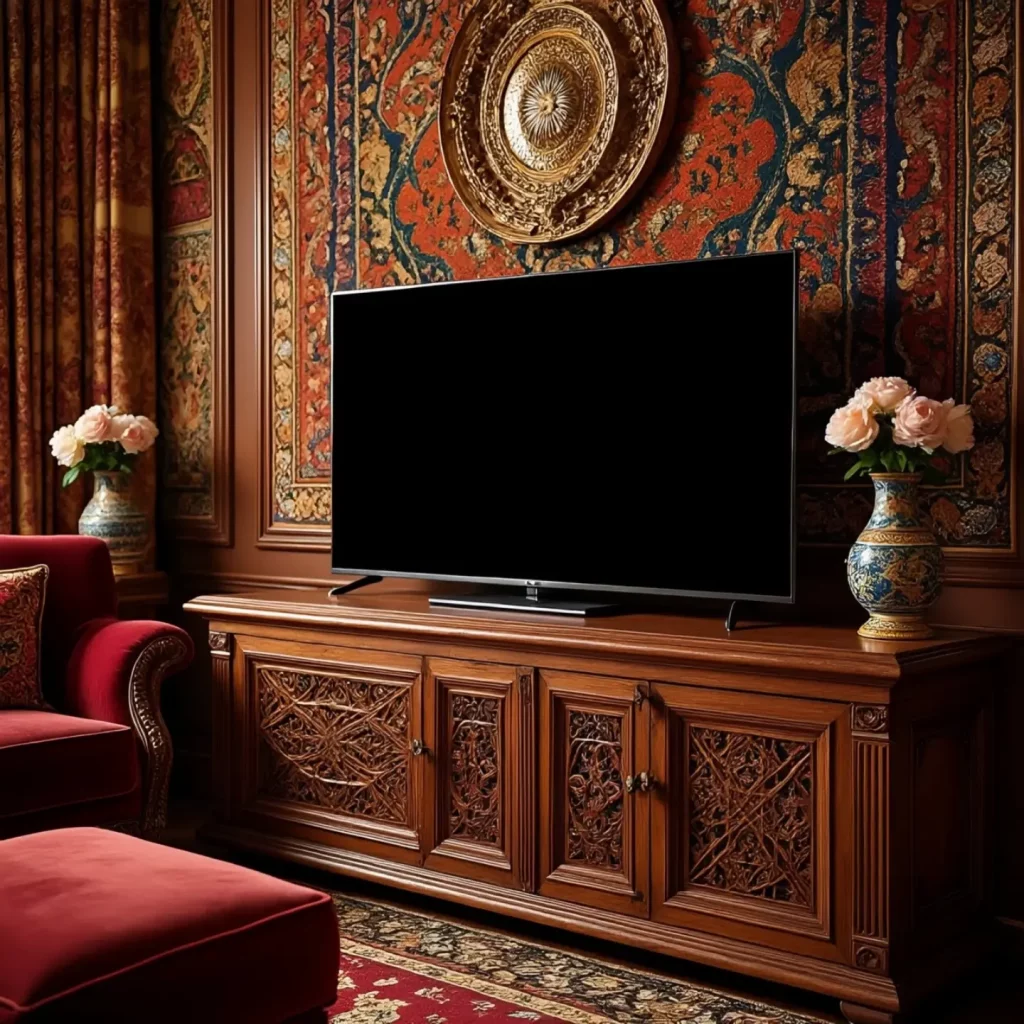
The wall works because the television is incorporated into a much larger decorative arrangement. The patterned backdrop provides visual depth, while the circular piece above the screen creates a strong vertical extension that draws the eye upward. The carved console then anchors the entire arrangement at floor level, giving the wall a clear top-to-bottom structure.
I would use this kind of statement wall when the goal is to create a room with a strong decorative personality. The key lesson I take from the image is that several highly detailed elements can work together when they share related colors and materials. Rather than adding more accessories, I would allow the existing patterned surface, artwork, console, and seating to provide enough visual interest on their own.
Moody Bedroom With Crescent Wall Art and Pendant Lights
The final image shows a sophisticated bedroom centered around a deep blue upholstered headboard against a charcoal-gray wall. Above the bed is a large illuminated crescent-shaped wall piece, while two round pendant lights hang symmetrically on either side. The bed is dressed in white and gray bedding with a dark throw across the lower section, and simple white nightstands flank the bed. I love the contrast between the dark wall, blue headboard, pale bedding, and warm glow from the crescent feature.
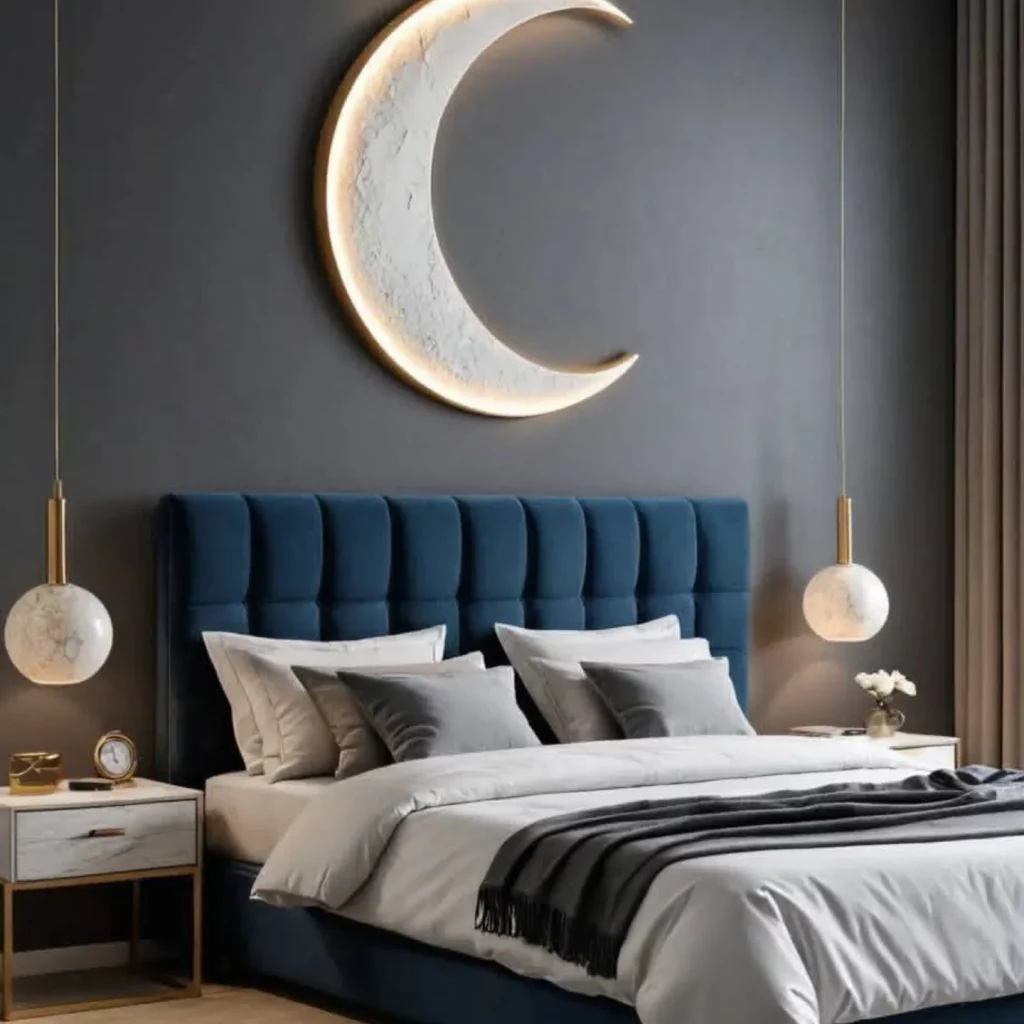
The composition feels balanced because the crescent artwork establishes a focal point above the headboard while the two pendant lights create symmetry around the bed. The restrained palette also prevents the wall decor from feeling overly complicated. Every major element has a clear position, so the room feels polished while still retaining a cozy nighttime atmosphere.
For a similar effect, I would begin with one distinctive piece of wall art and then use lighting to emphasize it. The crescent shape shown here provides both decoration and illumination, making it especially effective after sunset. I would keep the bedding and bedside surfaces relatively simple, as this allows the statement wall and pendant lights to remain the defining features of the bedroom.
Ornate Floral Wall Relief for an Elegant Dining Room
The dining room immediately draws my attention to the large decorative wall relief behind the table. The cream-colored wall is framed with substantial molding and detailed corner ornamentation, while an intricate floral composition spreads across the central panel. Softly colored roses, leaves, and branches create a dimensional effect that almost looks sculpted directly into the wall. Dark paneled sections on both sides add contrast, and matching wall lamps provide warm pools of light around the artwork. In front of it, a rectangular dining table is surrounded by upholstered chairs with dark frames, creating a formal and carefully balanced composition.
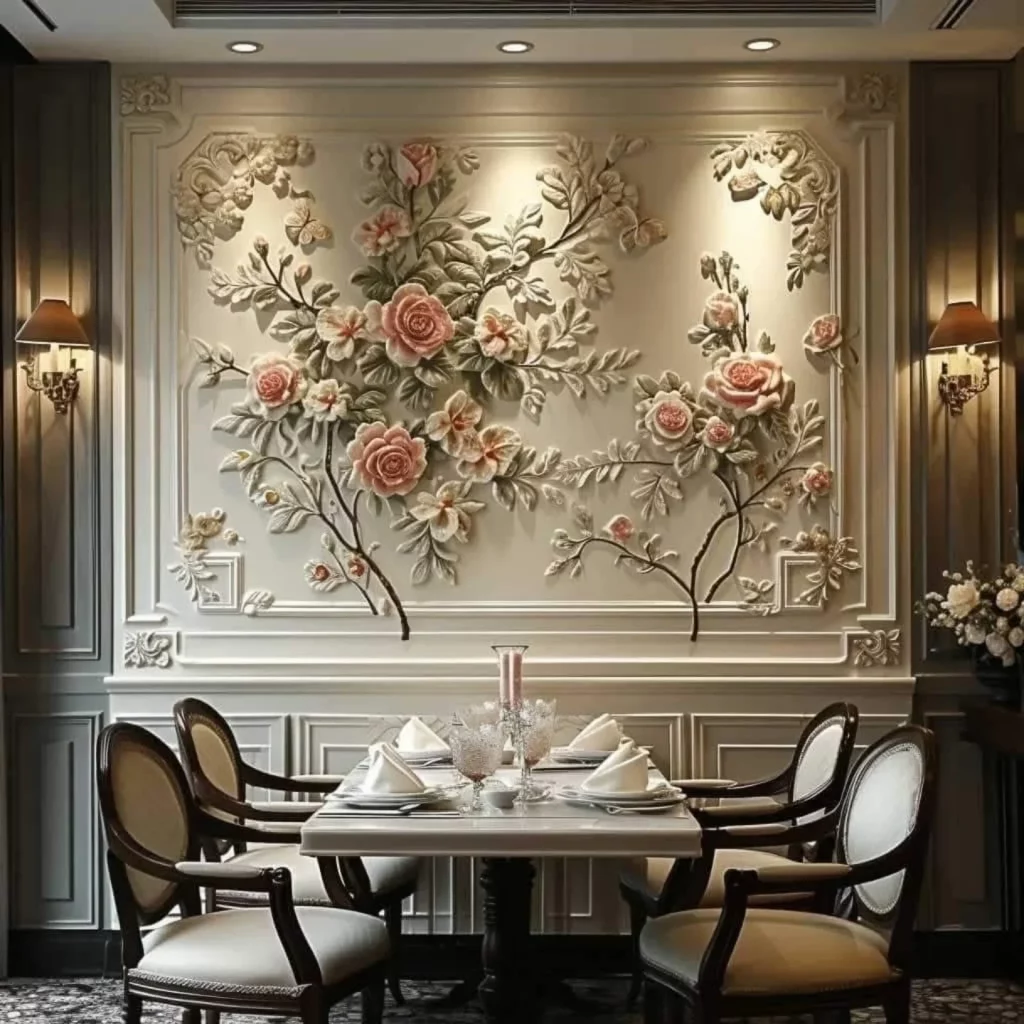
I think the strongest feature here is the way the wall decoration is integrated with the architecture instead of simply being hung on the wall. The raised floral design occupies a large central area, giving the dining room a natural focal point without requiring a collection of smaller accessories. The symmetrical lighting also helps emphasize the relief after dark. I like how the table remains relatively restrained because the wall already provides so much visual interest.
For me, this image is a good reminder that a large-scale wall treatment can completely define a dining room. When using an elaborate relief, I would keep the surrounding furniture visually controlled so the architectural detail remains easy to appreciate. The repeated cream tones also demonstrate how a substantial decorative element can remain sophisticated when its colors relate closely to the wall itself.
A similar approach could work particularly well on one main dining-room wall. I would pay close attention to proportion and make sure the decorative composition fits comfortably within the wall molding, as it does here. Warm directional lighting would also be worth considering because the shadows created by raised details are an important part of what makes this wall treatment visually successful.
Sculptural Wave Shelving in a Light Modern Interior
This image takes wall decoration in a completely different direction with an unusual white sculptural shelving system. The shelving consists of broad flowing curves that form several open compartments, creating an almost continuous wave across the wall. A large window beside it fills the space with natural light, emphasizing the clean white finish and soft shadows. Books, small decorative objects, and a few compact potted specimens are arranged inside the openings, while simple vessels stand near the window.
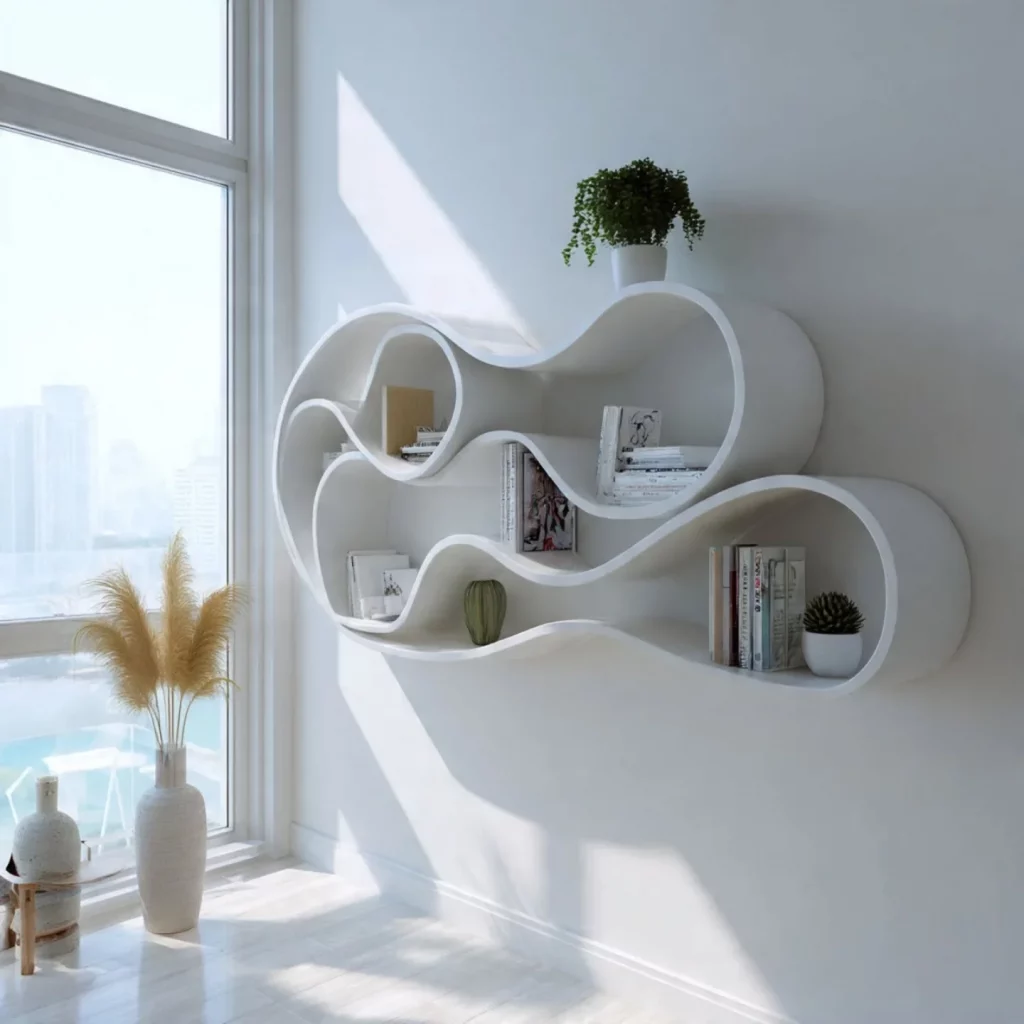
I love how this shelving combines decoration and storage in one architectural element. Instead of adding conventional rectangular shelves to an otherwise plain wall, the designer has made the shelving itself the artwork. The open compartments provide practical space for books and small objects while leaving plenty of wall visible around the structure. Because everything is kept in a restrained palette, the unusual silhouette remains the main attraction.
From my perspective, this is a particularly useful idea for someone who wants wall decor to have a practical purpose. I would use a sculptural shelf like this to display only a limited number of meaningful objects rather than filling every opening. The image shows how books and small decorative pieces can be distributed across the curves so the shelving feels styled rather than cluttered.
The natural light is another important part of the effect. I would place a similar sculptural shelving feature where daylight can emphasize its contours and create changing shadows throughout the day. Keeping the display relatively minimal would preserve the airy quality visible in this room.
Oversized Floral Artwork Above a Deep Burgundy Console
Here, a large floral painting creates a dramatic focal point against a dark wall. The artwork features oversized blooms in deep burgundy, muted coral, pale cream, and dark green tones, with the flowers filling almost the entire vertical composition. Beneath it sits a streamlined burgundy console with two drawers and a slim gold-colored metal frame. A small arrangement in a dark vase and a shallow decorative dish sit on top, while a pair of shoes is positioned beneath the console. A tall wall light hangs to the left, adding another layer of illumination.
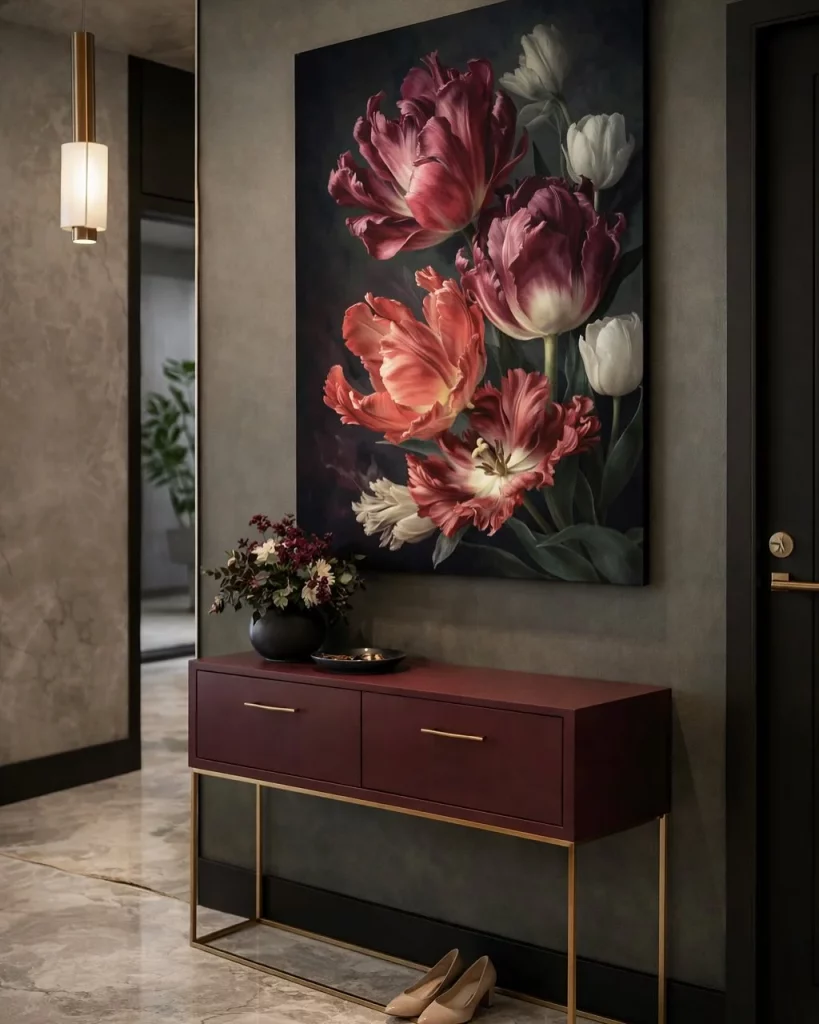
I like the strong relationship between the painting and the console because the burgundy tones are repeated without making the arrangement look overly coordinated. The console has a relatively simple shape, allowing the artwork to remain the star. Its raised frame also leaves visual space underneath, which helps the furniture feel lighter against the dark wall. The limited number of objects on the console keeps the composition easy to read.
In my experience, oversized artwork works particularly well when the surrounding furniture does not compete with it. This photograph demonstrates why I would rather use one substantial image than several small pieces when the goal is to create a clear focal point. The painting also introduces several colors into the space, giving the darker surroundings more depth without requiring numerous additional decorative accessories.
If I were recreating this look, I would start with the artwork and select the console afterward. The image shows how useful it can be to repeat one of the artwork’s stronger colors in a nearby piece of furniture. I would also preserve some open space around the painting so its scale remains impressive rather than visually crowded.
Geometric Wood and Gray TV Wall With Integrated Lighting
This living room uses the TV wall as a major architectural feature. A large television sits in the center of a wall composed of gray panels and diagonal sections of light wood. The wood forms strong angular shapes that cross the darker surface, while slim illuminated lines emphasize several of the transitions. Small open display boxes are arranged asymmetrically around the television, and a long low console runs underneath it. A few books, vessels, framed pieces, and other small objects are distributed along the shelves and console.
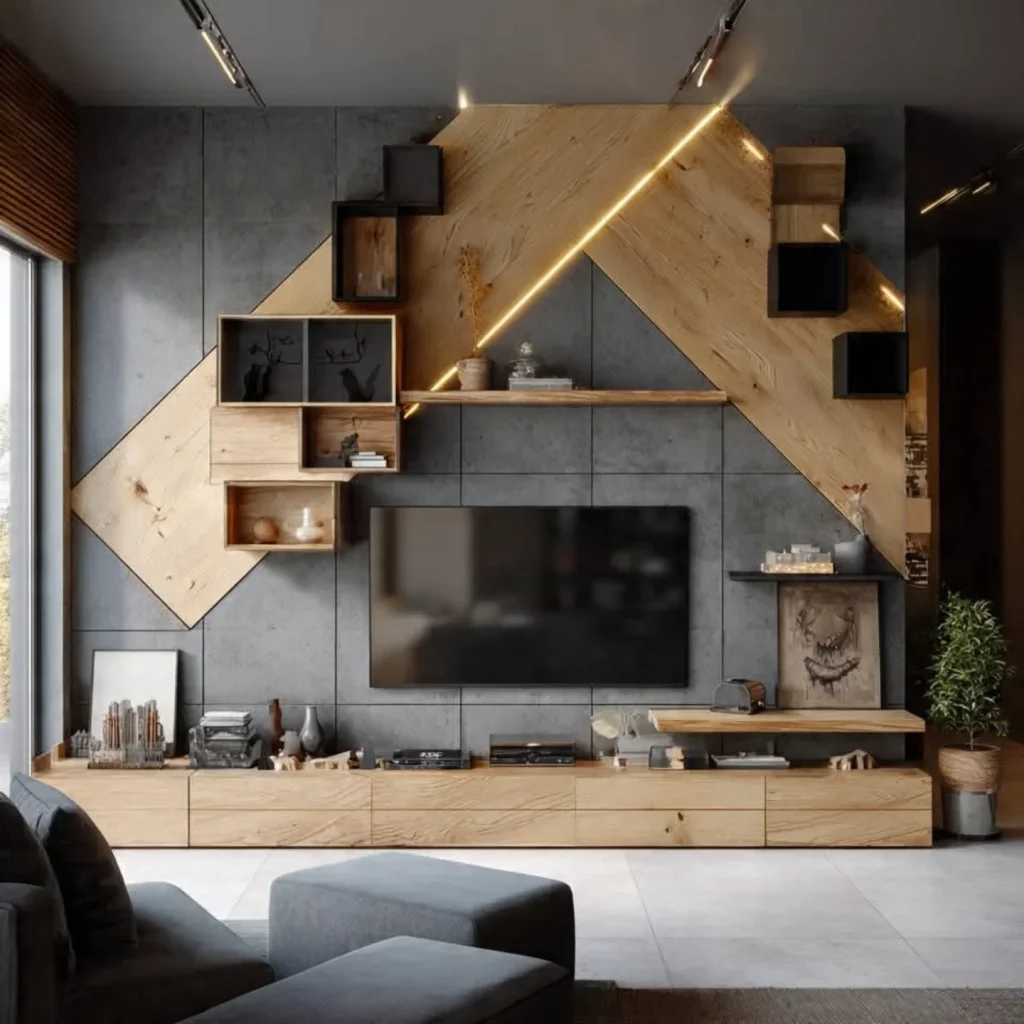
What works especially well for me is the combination of practical media storage with decorative geometry. The television is visually integrated into the composition rather than placed against an empty wall. The low console provides a long horizontal base, while the diagonal wood sections introduce movement and prevent the large wall from feeling flat. The illuminated lines further emphasize the geometry without needing a separate decorative centerpiece.
I would take inspiration from this image when designing a contemporary entertainment wall where the television needs to remain functional but should not dominate the room. The open compartments offer opportunities for personal objects, while the long console gives the wall a sense of visual stability. I also like the restrained gray-and-wood combination because the materials provide contrast through texture and shape rather than relying on a large number of colors.
For a similar result, I would plan the position of the television first and build the decorative geometry around it. The photograph shows how effective it can be to use lighting selectively along architectural lines. I would keep the open shelves edited and intentional, because the geometric wall already supplies plenty of visual information.
Organic Sculptural TV Wall With Curved Architectural Layers
This interior takes sculptural wall design even further. The television is positioned within a large central curved form that appears to project forward from a wall of narrow vertical wood slats. Around it, irregular organic shapes create a network of framed sections, while warm concealed lighting traces some of the curves. A long wood-toned console sits beneath the television, and a large potted tree-like plant occupies the left side of the composition. The result is a highly dimensional wall with a combination of smooth surfaces, repeated vertical lines, curves, and warm illumination.
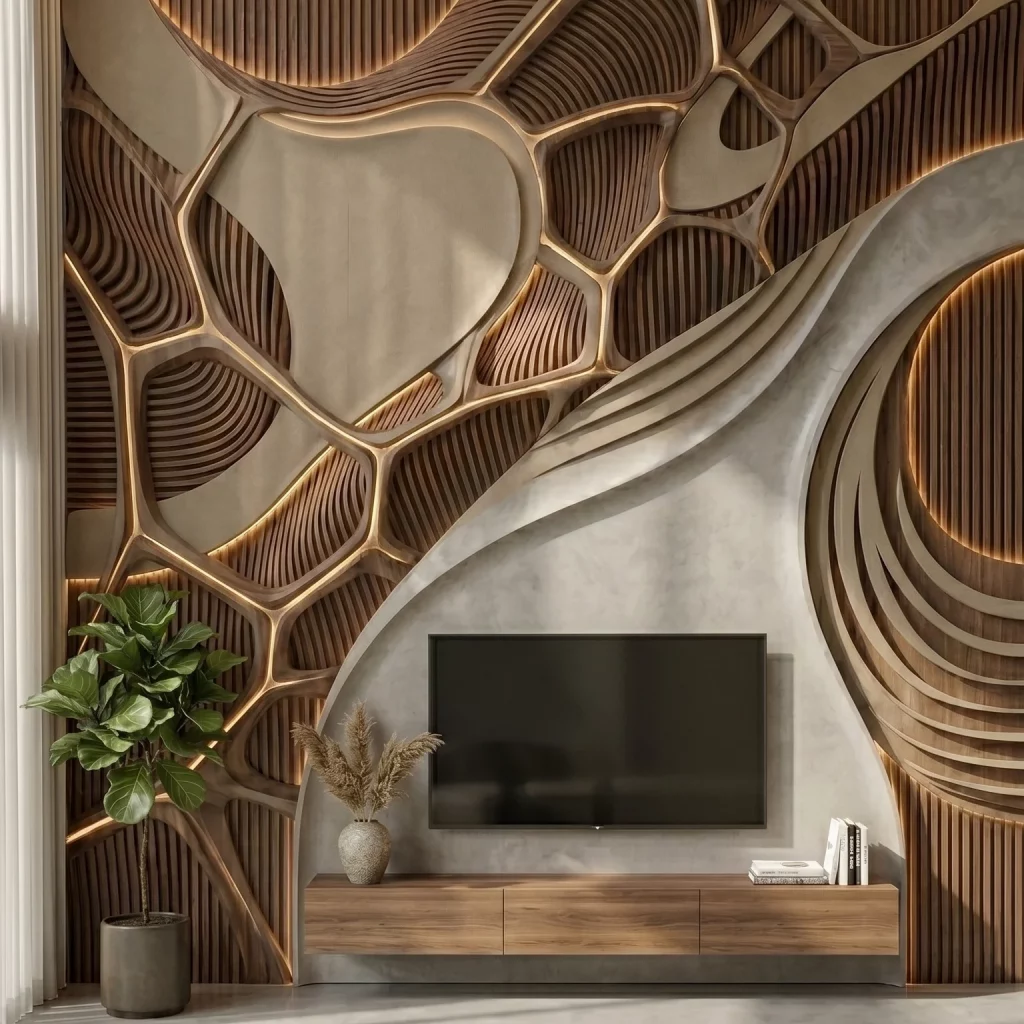
I find the layering especially interesting because the wall has depth even before any accessories are added. The television sits inside the central sculptural area, making it feel like part of the architecture. The console below provides a simple horizontal counterpoint to all the flowing shapes above it. I also like how the plant introduces another organic form that relates naturally to the curved wall treatment.
This image shows me that a feature wall does not necessarily need artwork or shelves to become decorative. The construction itself can provide the visual interest. When I look at this composition, I would think carefully about how different surface textures interact and how concealed lighting can reveal those changes after dark.
If I were adapting this idea to another modern room, I would concentrate on one major sculptural composition rather than combining several competing feature walls. The photograph demonstrates the value of repetition: the vertical lines, curved forms, warm lighting, and wood tones all appear in different parts of the same wall. That consistency is what makes such a complex treatment feel intentional.
Textured Floral Headboard Wall in a Moody Bedroom
The bedroom shown here centers on an impressive sculptural wall treatment featuring large pale calla-like flowers and elongated leaves. The relief rises behind a tall upholstered headboard, with the lower part of the wall transitioning into a deep charcoal-colored surface. Warm concealed lighting runs horizontally behind the upper portion of the headboard area, softly illuminating the sculptural forms. Matching dark bedside tables and pendant-style lights frame the bed, while gray bedding and pillows continue the restrained palette.
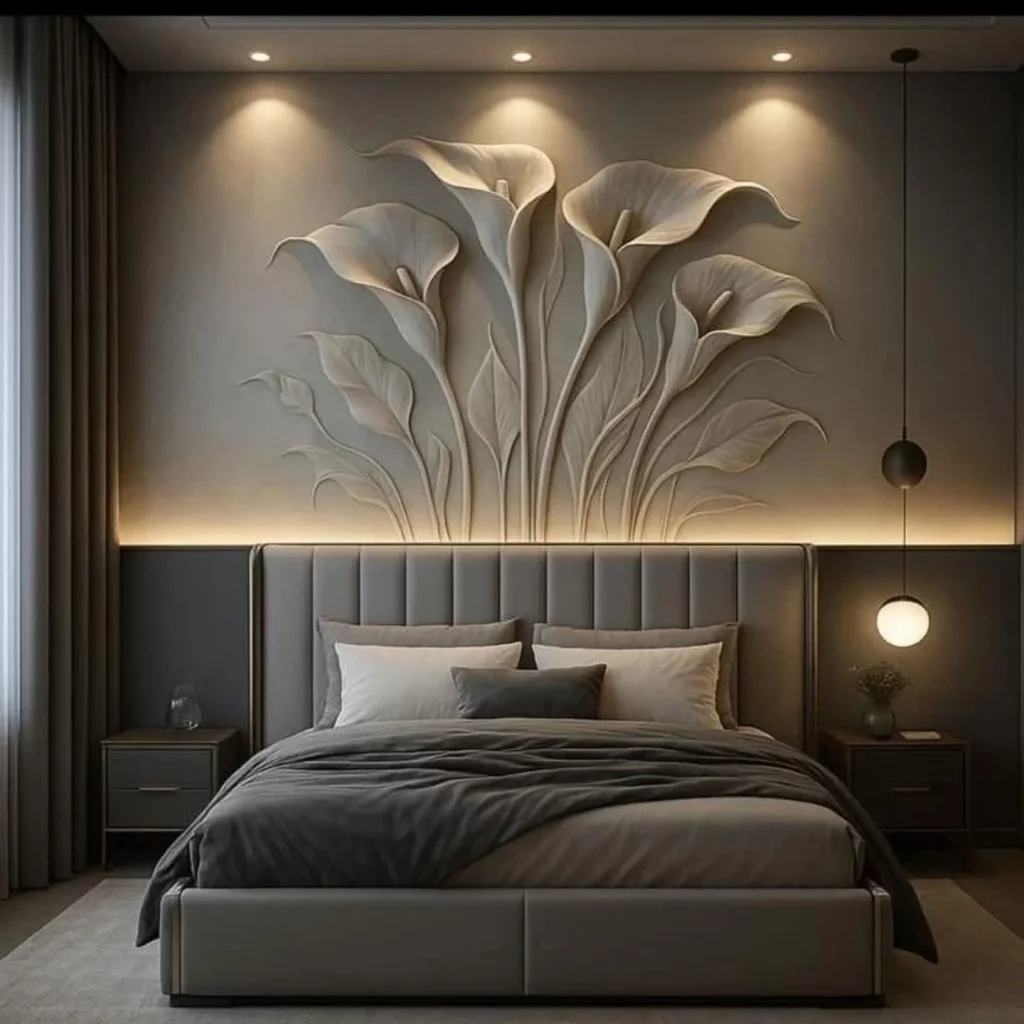
I like how the wall treatment is directly connected to the bed rather than competing with it. The headboard creates a strong horizontal base, while the sculptural flowers rise above it and give the wall height. Because the relief stays close to the neutral color of the wall, its shadows and contours become more important than color. The soft lighting makes those contours particularly noticeable.
For me, this is an excellent example of using texture instead of multiple decorative objects to create atmosphere. A bedroom benefits from visual calm, and the image achieves that through a limited palette and one large-scale focal feature. The bedside lighting also feels appropriately controlled, providing illumination without taking attention away from the wall.
I would recreate this concept by choosing one substantial sculptural feature behind the bed and allowing it to occupy most of the visual focus. The image also suggests how effective concealed lighting can be when placed where it gently grazes a textured surface. Rather than adding more decoration, I would let the relief, headboard, and carefully controlled lighting carry the design.
Botanical Wall Panels in a Contemporary Bathroom
This bathroom combines practical fixtures with extensive decorative wall treatment. A freestanding white bathtub sits in the center, positioned against a wall decorated with botanical imagery in green, terracotta, and warm neutral tones. Matching floating vanities with white vessel sinks appear on both sides, each accompanied by a large mirror. Black fixtures provide crisp contrast, while the floor features a highly detailed patterned surface with circular decorative motifs. Warm lighting throughout the room gives the bathroom a comfortable atmosphere.
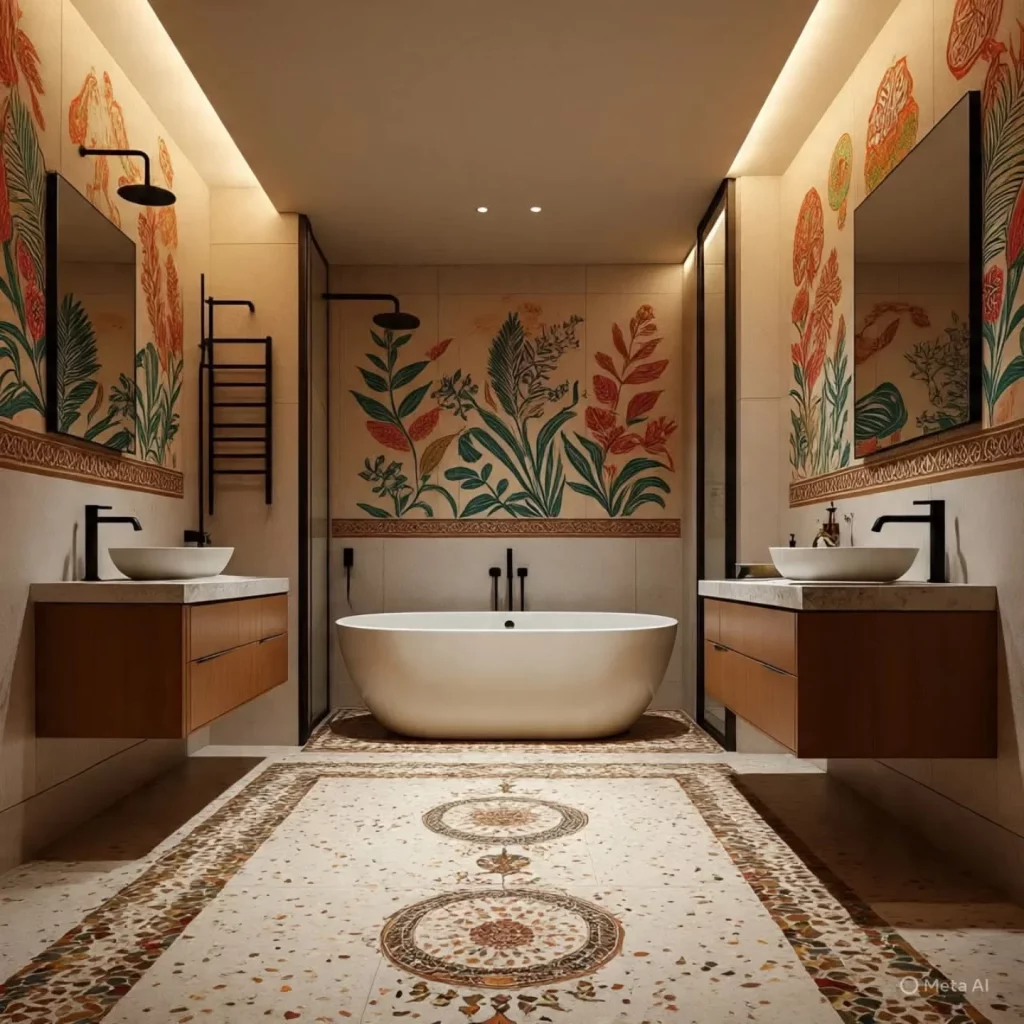
What I find particularly successful is the symmetry of the layout. The two vanities and mirrors frame the central bathtub, while the decorative wall behind the tub acts as the visual endpoint of the room. The artwork extends across multiple surfaces, giving the bathroom a cohesive identity rather than treating each wall independently. The patterned floor reinforces the decorative character without changing the basic functional arrangement.
I would take from this image the idea that a bathroom can be treated with the same attention to wall decoration as a dining room or living room. The combination of botanical imagery, repeated borders, mirrors, and black fixtures creates a clear visual language. At the same time, the bathtub remains unobstructed and easy to appreciate because the surrounding surfaces provide the decoration.
For a similar approach, I would establish one central visual feature and use symmetry to organize the rest of the room around it. The photograph also shows why repeating colors between the wall artwork and floor can help a richly decorated bathroom feel connected. I would avoid adding unnecessary wall accessories when the existing panels already provide such a strong statement.
Carved Floral Wall Panel Above a Warm Wood Dining Table
This dining room features an enormous monochromatic floral relief covering most of the main wall. The sculpted flowers, leaves, and stems appear in a warm wood-like tone that closely relates to the dining table below. The wall treatment is framed by pale molding, creating a transition between the elaborate central panel and the simpler surrounding architecture. A long rectangular table with a natural wood appearance is paired with dark-backed chairs, while a simple central arrangement sits on the tabletop.
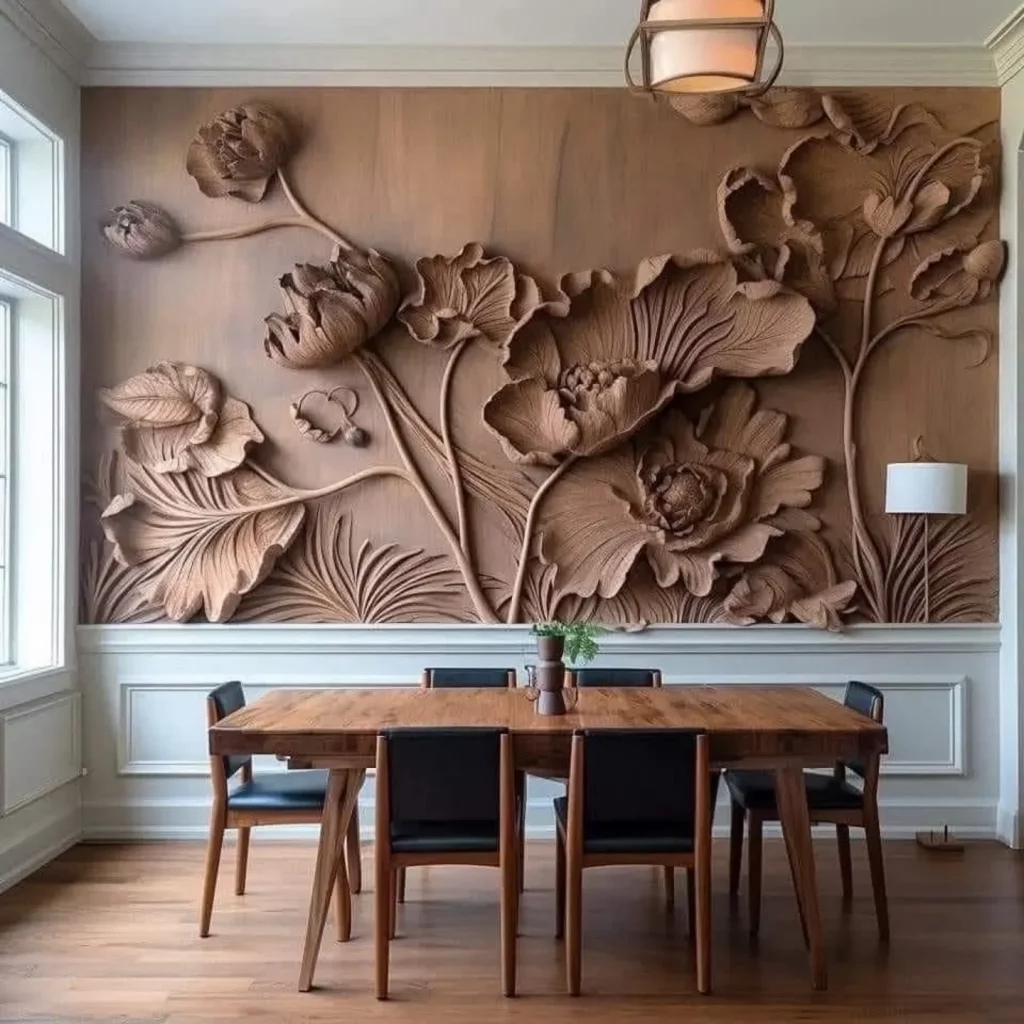
I particularly like the tonal relationship between the wall relief and the dining table. The decoration is elaborate in shape, but the restrained color palette prevents it from feeling disconnected from the furniture. The dark chair backs provide contrast and help define the dining area against the lighter wall. Because the decorative panel occupies the entire central wall, only a few tabletop accessories are necessary.
From my perspective, this room demonstrates the power of repeating a material or tone across different surfaces. The wall treatment and table visually communicate with each other, creating continuity from top to bottom. I also appreciate that the surrounding architecture remains comparatively quiet, allowing the carved floral panel to stay clearly visible.
If I were using this idea in a home, I would treat the large wall relief as the starting point for the dining room palette. The furniture could then echo one of its dominant tones without becoming an exact match. I would also maintain the generous open area around the table, because the relief needs enough visual breathing room to retain its impact.
Expressive Abstract Wall Mural Behind a Contemporary Sofa
This living room uses a large abstract wall mural as its defining decorative element. The artwork covers a substantial vertical section behind a light upholstered sofa and features sweeping dark outlines, pale peach and cream areas, and muted blue-gray forms. The composition has a hand-drawn, flowing quality that gives the wall a strong artistic personality. To the left, a tall glass display unit holds small objects, while a table beside the sofa supports a large leafy arrangement.
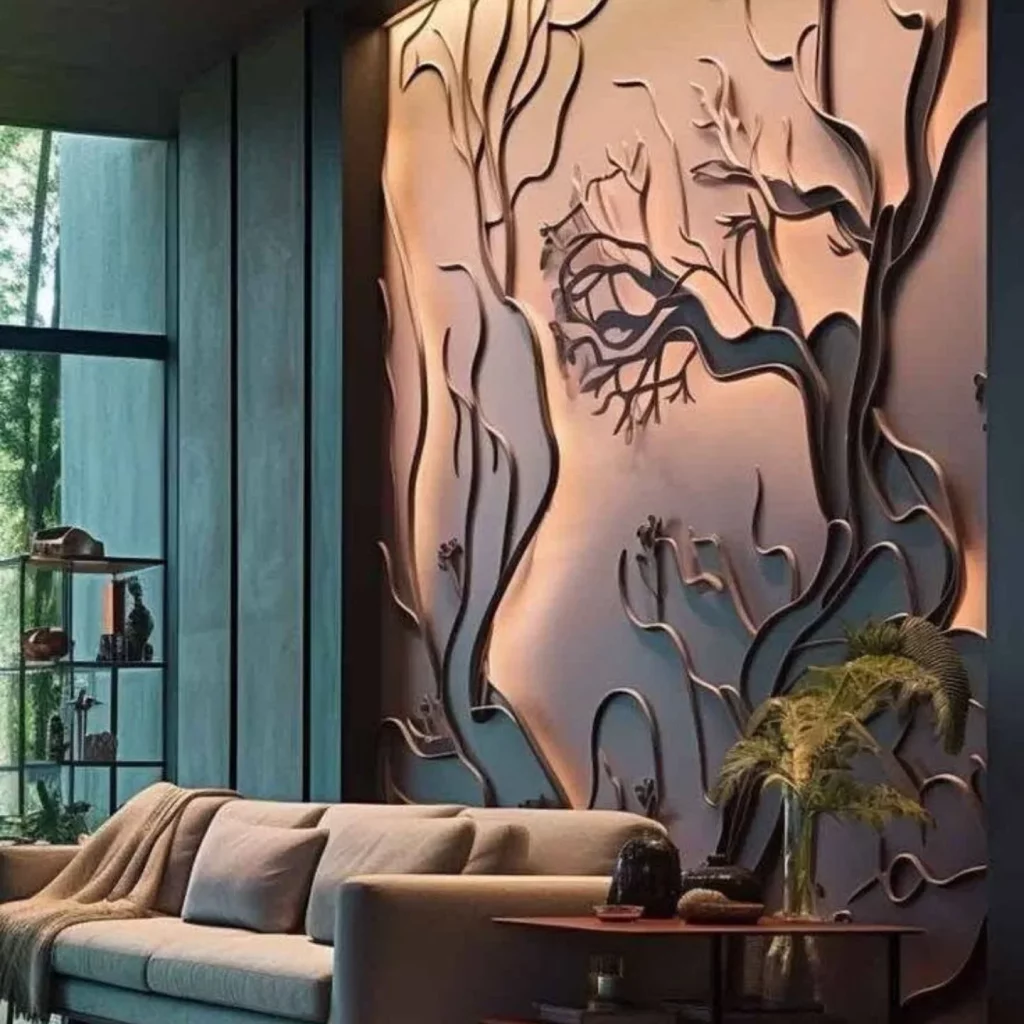
I like the way the mural transforms what could otherwise be a simple seating area into a visually distinctive room. The sofa has a relatively calm shape and neutral upholstery, so the artwork can command attention without creating too much competition. The glass shelving also remains visually light, allowing the mural to continue across the wall without being interrupted by a bulky storage piece.
For me, the main lesson here is that an oversized mural can establish a room’s personality almost instantly. I would use furniture with quieter silhouettes around such a strong wall because the artwork already provides movement and expressive lines. The photograph also shows how a few carefully placed accessories can connect the artwork to the rest of the room without copying every detail.
To achieve a similar effect, I would select the mural before choosing the smaller decorative pieces. The visible blue-gray, cream, and warm tones provide enough inspiration for the surrounding furnishings. I would also keep the artwork concentrated on one major wall so it remains the room’s defining visual feature.
Classic Paneled Wall With an Ornate Gold Mirror
The final image presents a more traditional interpretation of decorative wall design. The wall is divided into multiple framed panels with intricate ornamental details, and a large vertically oriented mirror occupies the center. Its elaborate gold-toned frame echoes the decorative motifs throughout the wall. Matching wall sconces flank the mirror, while tall curtains frame the windows on both sides. Below, the polished wood floor is arranged in a herringbone pattern, completing the formal composition.
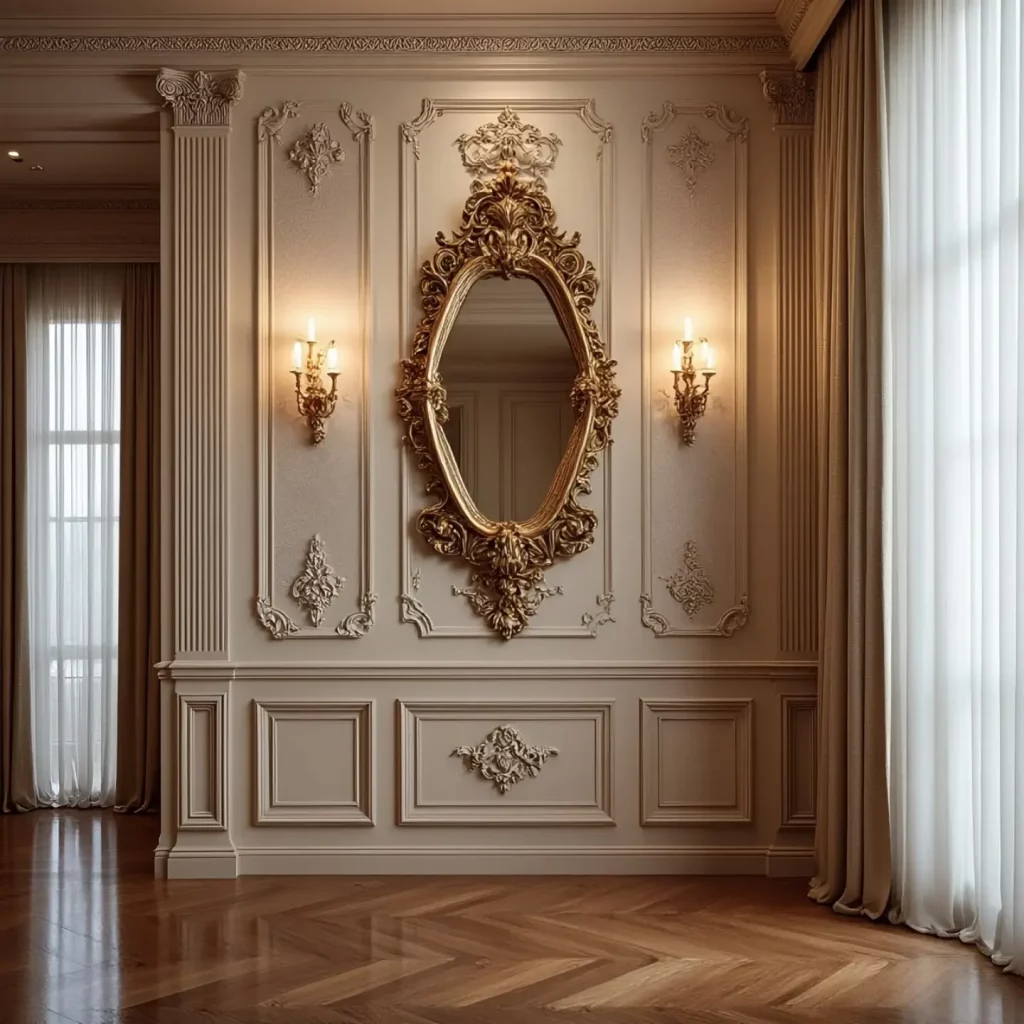
What I find most effective here is the symmetry. The mirror is positioned precisely in the central panel, with matching lighting on either side creating balance. The surrounding molding gives the wall architectural depth, while the reflective surface of the mirror adds another dimension to the room. Even without a large amount of furniture, the wall feels complete because the architectural detailing, mirror, and lighting work together as one composition.
In my view, this is a useful example of how traditional wall detailing can still feel highly intentional in a contemporary home when it is carefully proportioned. The mirror provides both decoration and a practical reflective surface, while the sconces add focused illumination. I especially like the relationship between the vertical wall panels and the tall curtains because both emphasize the height of the room.
If I were recreating this atmosphere, I would begin by establishing the central axis and then build the paneling and lighting symmetrically around it. The image shows how much impact can come from a few coordinated architectural elements rather than a large collection of accessories. I would also allow the floor and curtains to remain visible so they continue the elegant vertical and geometric rhythm established by the wall.
Ornate Wood Wall With a Statement TV Console
The first room immediately draws my attention to its elaborate carved wood walls and matching ceiling details. A large flat-screen television sits on a substantial wooden console with multiple carved drawer and cabinet fronts, while a patterned area rug stretches across the warm wood floor. Two upholstered armchairs in a deep golden-brown tone frame the seating area, and a tall window with heavy curtains brings natural light into the room. I also notice decorative wall lighting and a small arrangement beside the television, adding warm accents to the richly detailed setting.
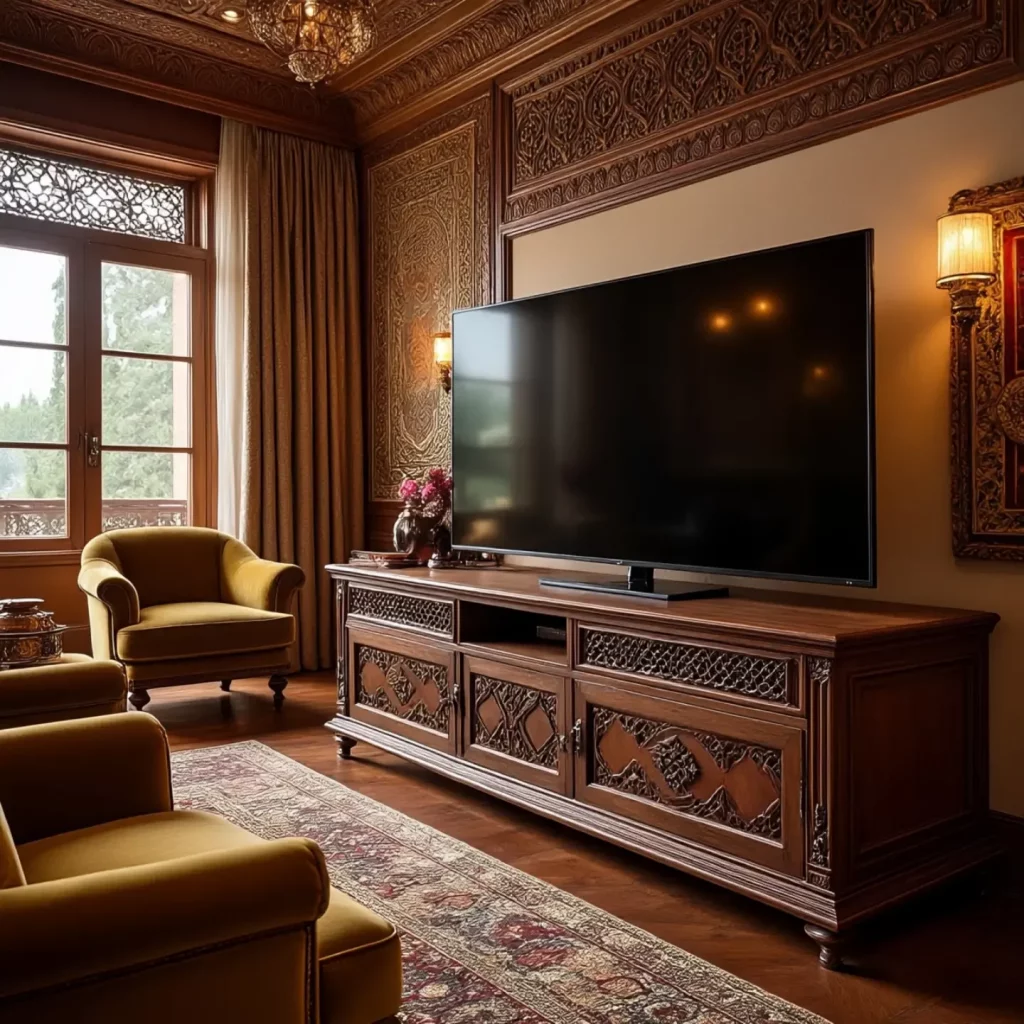
What works particularly well here is the way the television is integrated into an already highly decorative wall. Instead of competing with the carved surfaces, the simple black screen provides visual contrast, while the long console anchors the entire wall horizontally. I like the generous storage built into the console because it gives the entertainment area a practical foundation without introducing another separate piece of furniture.
From my perspective, this is a strong example of letting one architectural feature define the atmosphere of an entire room. When a wall already has this much texture and craftsmanship, I would keep the surrounding accessories restrained so the carving remains the main attraction. The warm upholstery, wood tones, and soft lighting shown here also demonstrate how a consistent palette can make a richly decorated space feel cohesive rather than visually disconnected.
Decorative Art Above a Refined Entryway Console
The second image presents a much lighter and more restrained approach to wall decor. A large framed artwork with an intricate blue, cream, and golden pattern becomes the focal point above a narrow black console table with fluted detailing and slim metallic legs. The console is styled with a ceramic vase, stacked books, a small bowl, a sculptural object, and a diffuser, while a vertical wall light illuminates the composition from the side. I particularly notice the architectural wall molding around the artwork, which gives the display a polished and structured appearance.
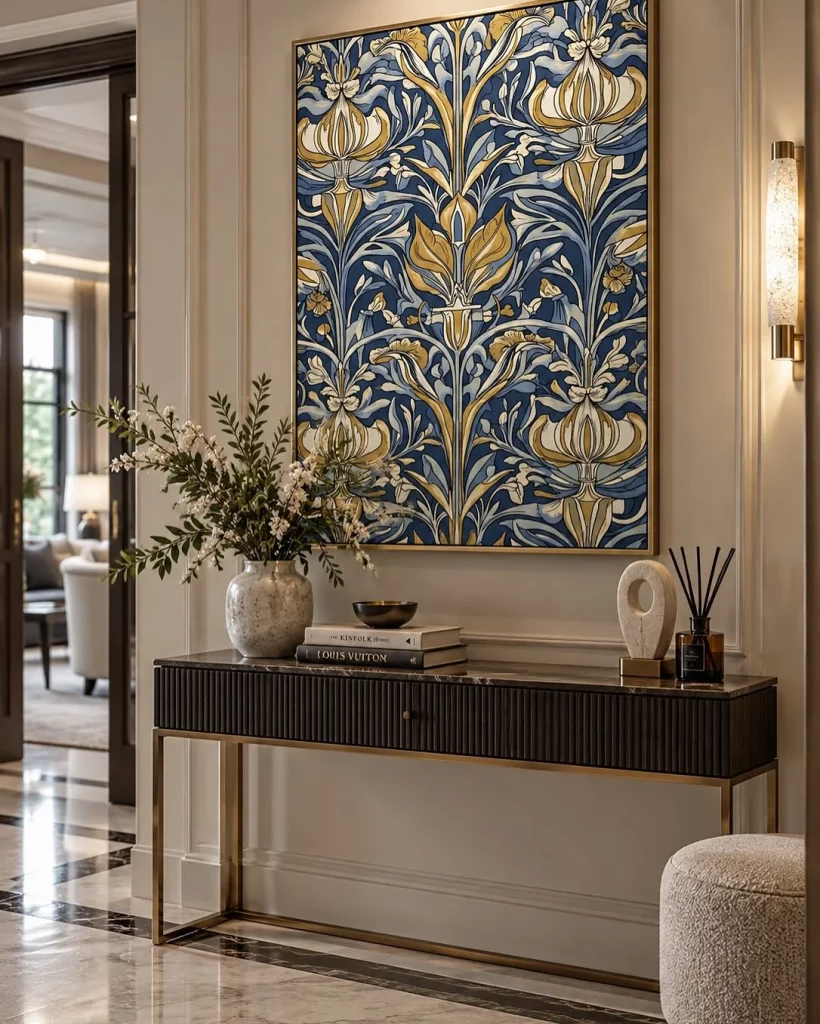
I like how the proportions of the artwork relate to the console beneath it. The large vertical composition fills the wall without requiring several smaller pieces, making the arrangement feel intentional and uncluttered. The console itself provides a useful surface for a few carefully selected objects, while its slim profile keeps the passageway visually open and practical.
For me, this image is a good reminder that one substantial artwork can completely transform a transitional space. I would use a similar approach when decorating a hallway or entry area where there is enough wall height for a strong vertical focal point but limited floor space. The combination of patterned artwork, architectural molding, sculptural accessories, and focused lighting creates interest through layers rather than through an excessive number of decorations.
Illuminated Wall Shelves With Decorative Greenery
The third image takes wall decor in a more functional direction with a symmetrical arrangement of dark wooden box shelves. Several shelves are mounted on both sides of a central vertical arrangement of trailing greenery, and each illuminated compartment contains a small potted plant or leafy arrangement. Warm lighting is installed inside the shelves, creating a soft glow against the darker wood. The repeated rectangular shapes form a strong geometric pattern, while the greenery introduces a contrasting organic element through the center of the composition.
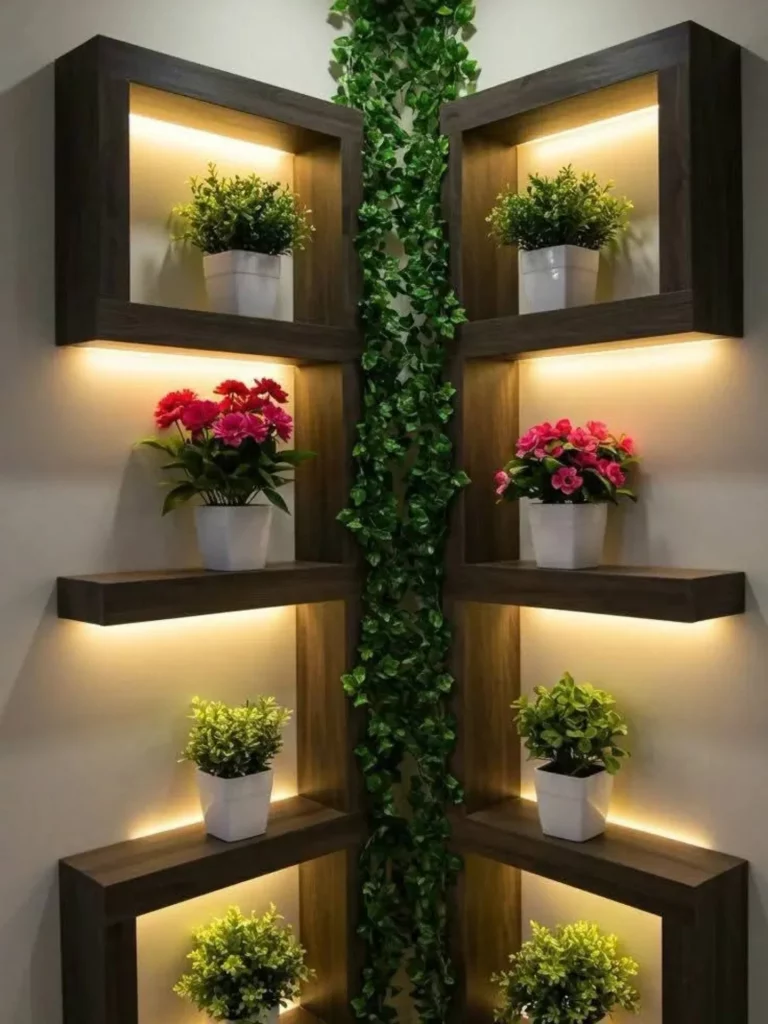
I think the strongest feature here is the combination of symmetry and repetition. Every shelf follows the same basic format, so the wall feels organized even though it contains multiple decorative objects. The built-in illumination also gives the shelves a practical visual advantage because the objects remain noticeable in the evening rather than disappearing into the darker wood.
From my experience, illuminated shelving can be especially effective when a wall needs both decoration and additional display space. I would keep the objects within each compartment relatively simple, as shown here, because the repeated structure already provides plenty of visual activity. The central vertical greenery also demonstrates how a single continuous element can connect separate shelves and make an otherwise rigid arrangement feel softer.
Creative wall decor can give a modern home personality, depth, and a strong visual focal point without requiring a complete redesign. From sculptural wall features and dimensional artwork to illuminated niches, decorative shelving, mirrors, and statement entertainment walls, there are countless ways to make an empty wall feel intentional. I especially love how the ideas in this collection combine style with practical elements such as lighting, storage, and display space. Choose the details that reflect your taste, and let your walls become an expressive part of your interior.