Spanish home style has a way of feeling both timeless and lived-in, with white stucco walls, warm terracotta floors, and arched openings that let light move through the space. This collection of 25 looks covers the full range, from a Mediterranean modern living room with a vaulted ceiling to a courtyard with a plunge pool and lush planting.
Whether you are drawn to a cozy pink sofa with a garden view or a grand facade lit at dusk, you will find practical ideas on palette, materials, layout, and lighting that define the aesthetic without overcomplicating it.
01 / 26Mediterranean Modern Living Room Layout
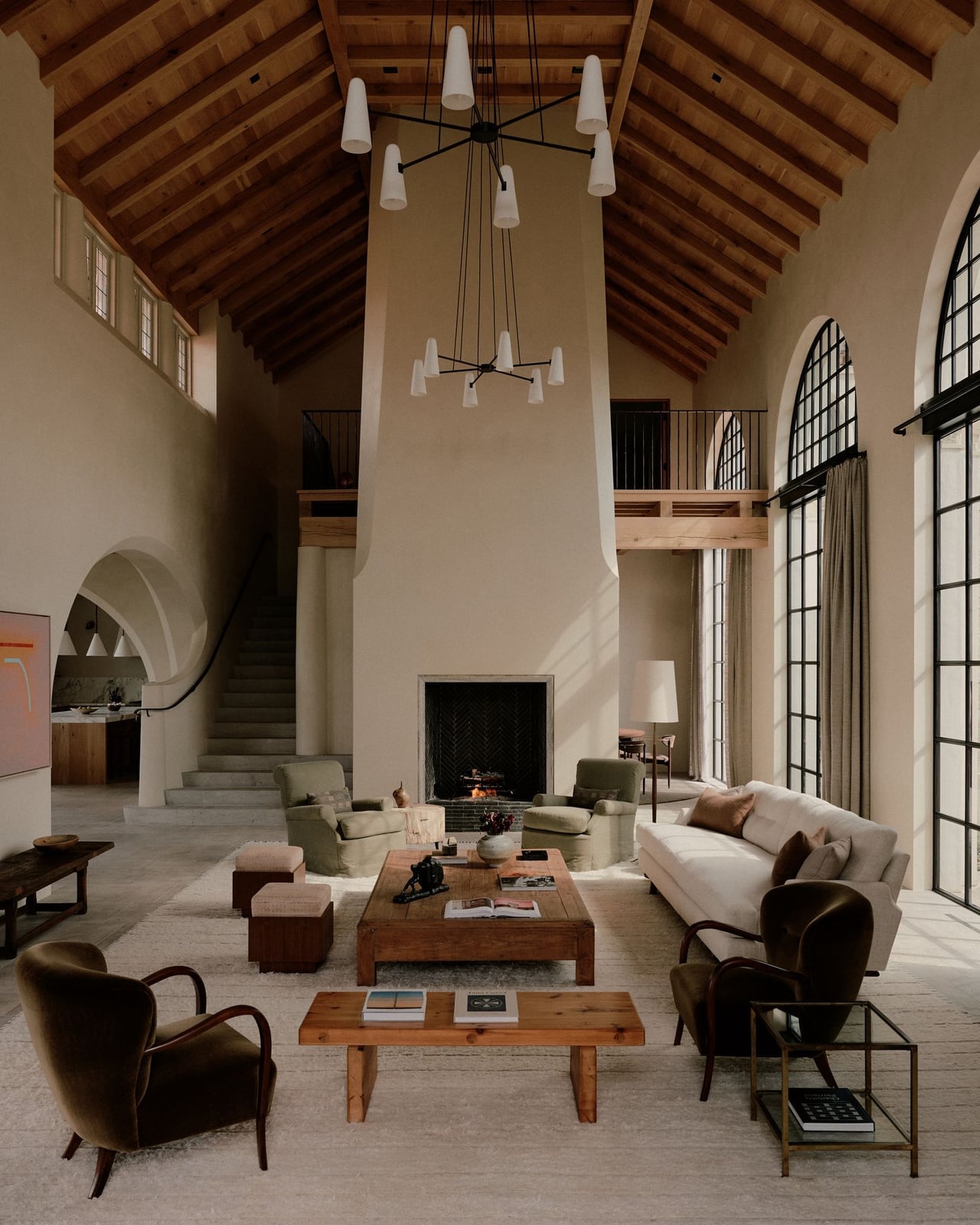
A vaulted wood ceiling draws the eye up, but the real anchor in this open plan living room is the fireplace. The seating cluster, a large sectional and armchairs, wraps around it, making the hearth the natural center for conversation. Cream walls and olive green accents keep the look calm, while the plaster, stone, and velvet mix adds texture. The layout works because the seating doesn’t compete with the ceiling; it stays low and grounded, letting the architecture lead.
02 / 26Cozy Spanish Mediterranean Living Room Palette
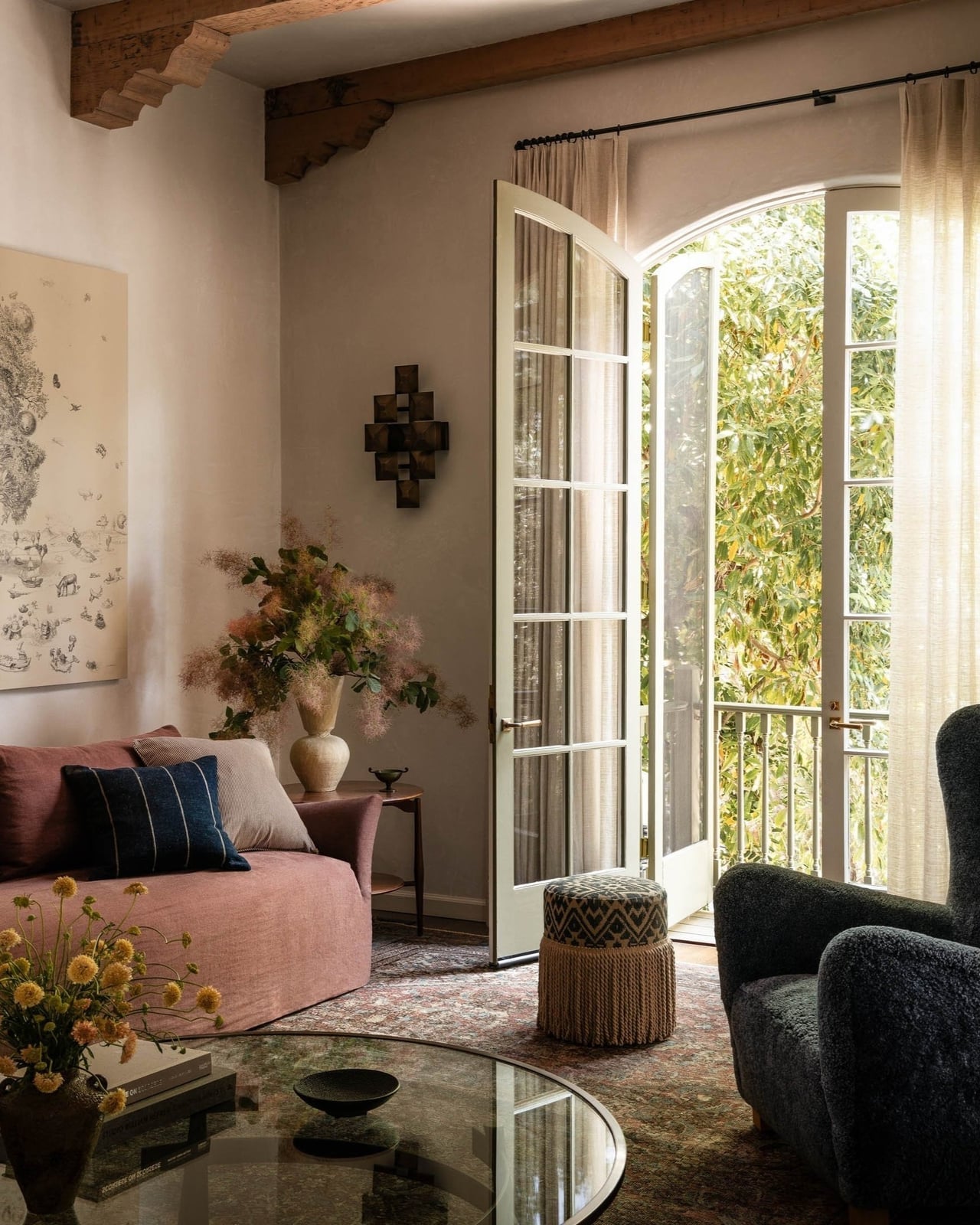
This palette leans into contrast without losing warmth. A muted pink sofa sits against a navy armchair, with cream walls and green from the garden beyond the french doors tying it together. The patterned ottoman introduces a darker note that stops the pink from reading as too sweet. What defines the look is the ratio: one bold color per main piece, then neutrals to balance. What breaks it would be adding a third bright hue. The navy and pink need their quiet backdrop to feel intentional.
03 / 26Spanish Modern Living Room Materials
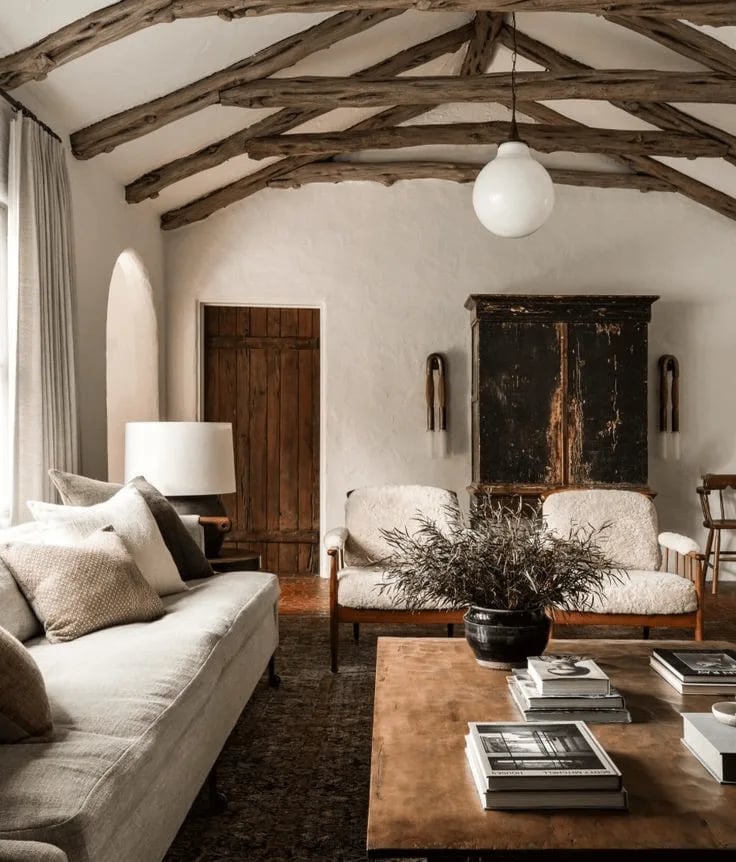
The material mix makes a cozy room feel modern without going cold. A linen sofa keeps the seating area light and breathable, while textured armchairs add a plush, tactile counterpoint. The dark wood cabinet and beamed ceiling bring warmth, and the plaster walls provide a smooth, neutral backdrop. Natural light softens the whole scene, and the pendant light adds a focused glow for evenings. The balance between rough and smooth is key: wood beams feel rustic against the linen’s crispness, and the plaster keeps everything from feeling heavy. A room like this works because the materials do the work, not the patterns.
04 / 26Spanish Colonial Exterior Lighting
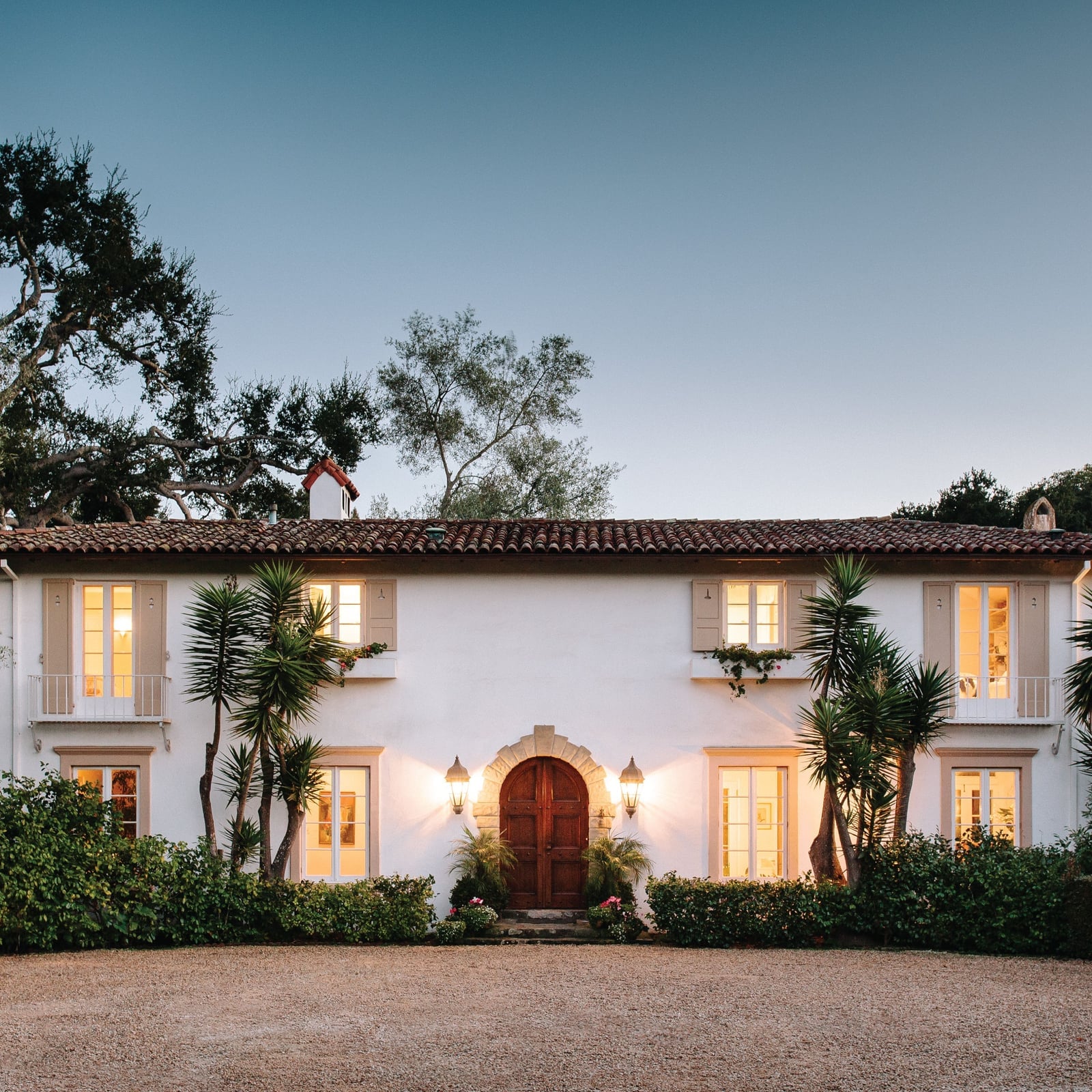
The arched wooden door is the focal point, and the evening lighting makes sure of it. Exterior lamps cast a warm glow that highlights the door’s grain and the white stucco walls around it. The terracotta tile roof and green shutters recede into the dusk, so the entry reads as a clear, welcoming threshold. Place lights on both sides of the door rather than above. It spreads the light evenly across the arch and avoids shadows that flatten the detail.
05 / 26Spanish Mediterranean Estate Scale and Proportion
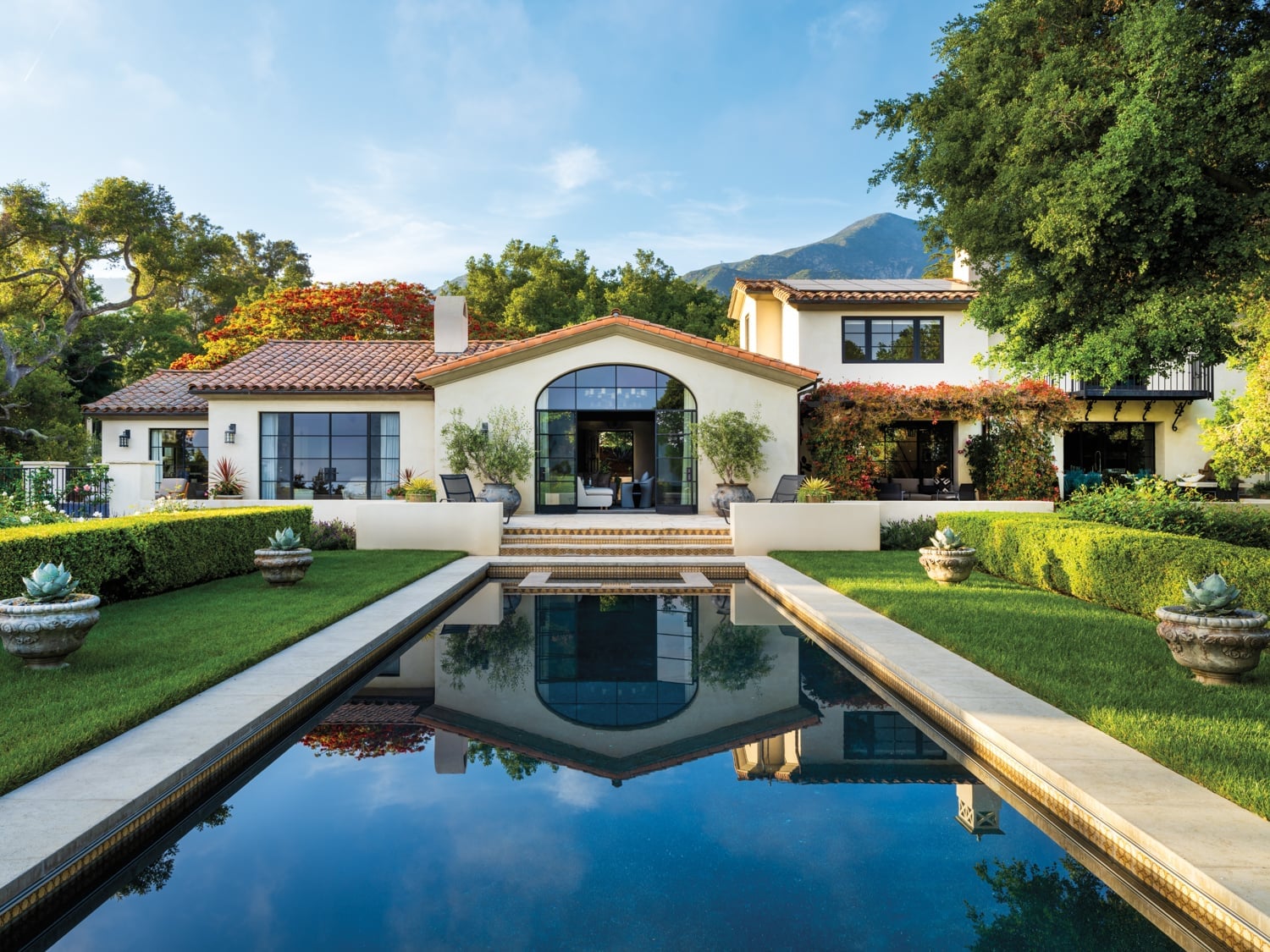
A practical rule for an outdoor space this expansive: let the hardscape define the lines. The long rectangular pool runs parallel to the house, with manicured hedges framing it on both sides. The symmetry creates a calm, formal feel, and the white stucco walls and terracotta accents keep the palette grounded. The arched windows on the facade echo the pool’s clean shape, tying the whole view together. When the garden is this large, the trick is to repeat one or two shapes, here, the rectangle, so the eye has a clear path to follow.
06 / 26Spanish Mediterranean Home Exterior Styling Variation
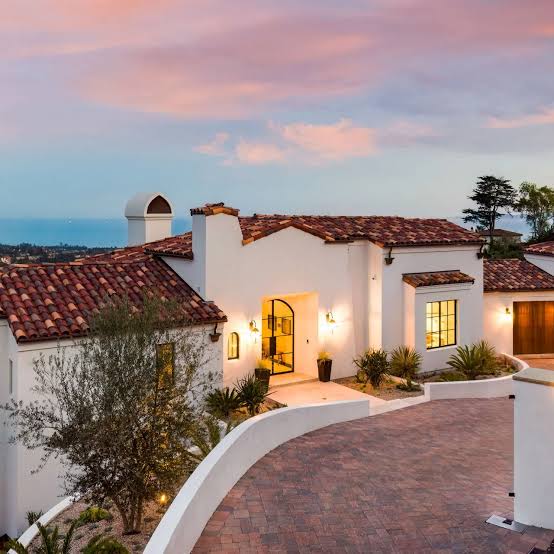
A white stucco facade reads one way in full sun and another at sunset. When the sky turns pink, the warm terracotta roof and wood details catch the last light, and the arched entryway becomes the focal point. The curved wall and tiled roof keep the Spanish bones, but the palette shifts: white stays neutral while the pink sky and warm lamps add a soft contrast. What defines this look is the ratio of cool white to warm earth tones, with the sky acting as the wildcard. To break the formality, swap a heavy front door for a painted wood version and let the driveway curve guide the eye instead of a straight path.
07 / 26Modern Spanish Living Room Storage
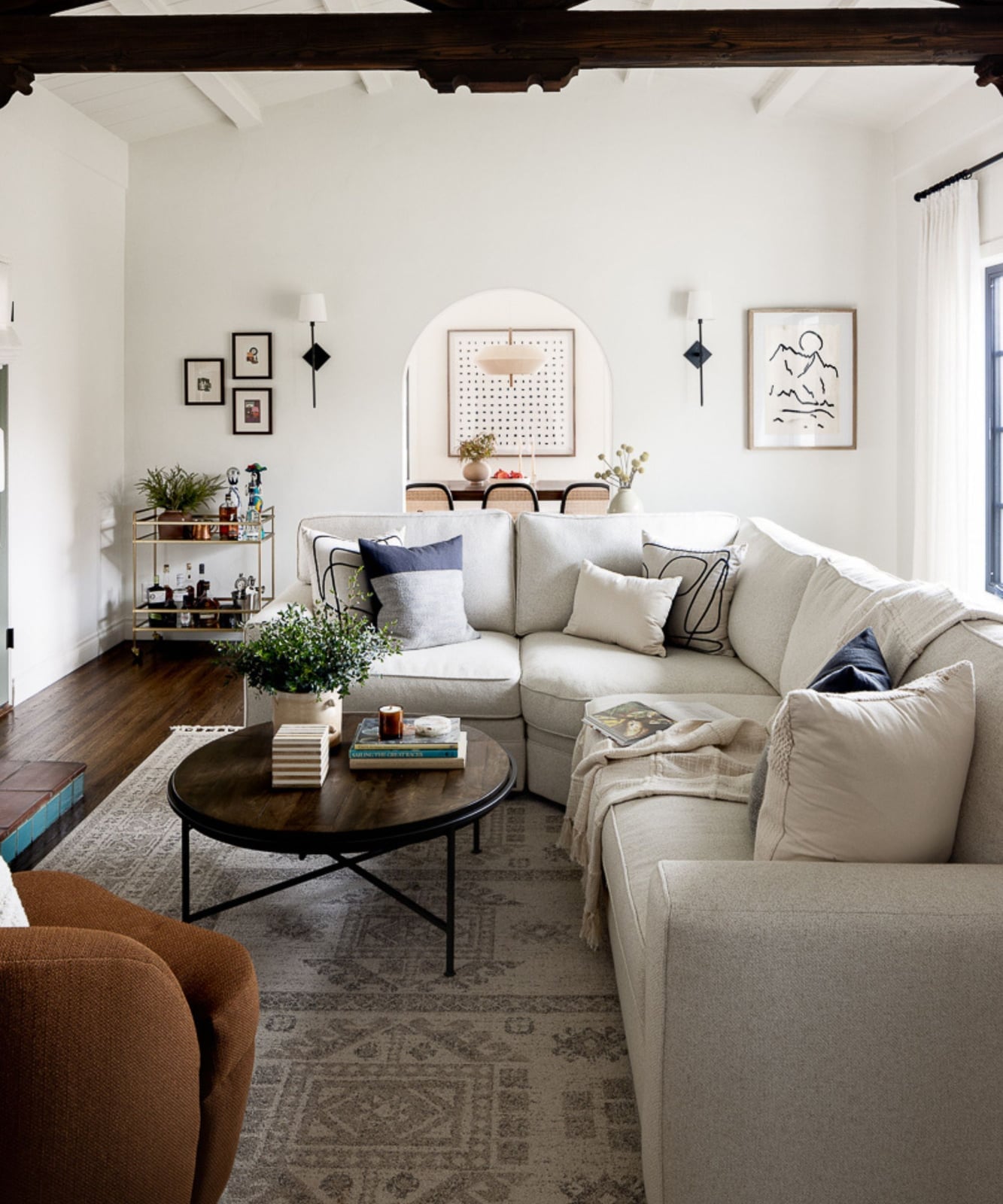
The large sectional anchors the room, but the arched interior doorway does the real work. It frames the view and creates a natural division without a wall. A round coffee table keeps the layout open, and the bar cart on casters adds storage that moves. Wall sconces free up floor space, so the room stays airy. The trick is letting the architecture hold the storage: the arch offers a shelf alternative, and the fireplace mantel (if you have one) can double as a display ledge.
08 / 26Mediterranean Courtyard Layout
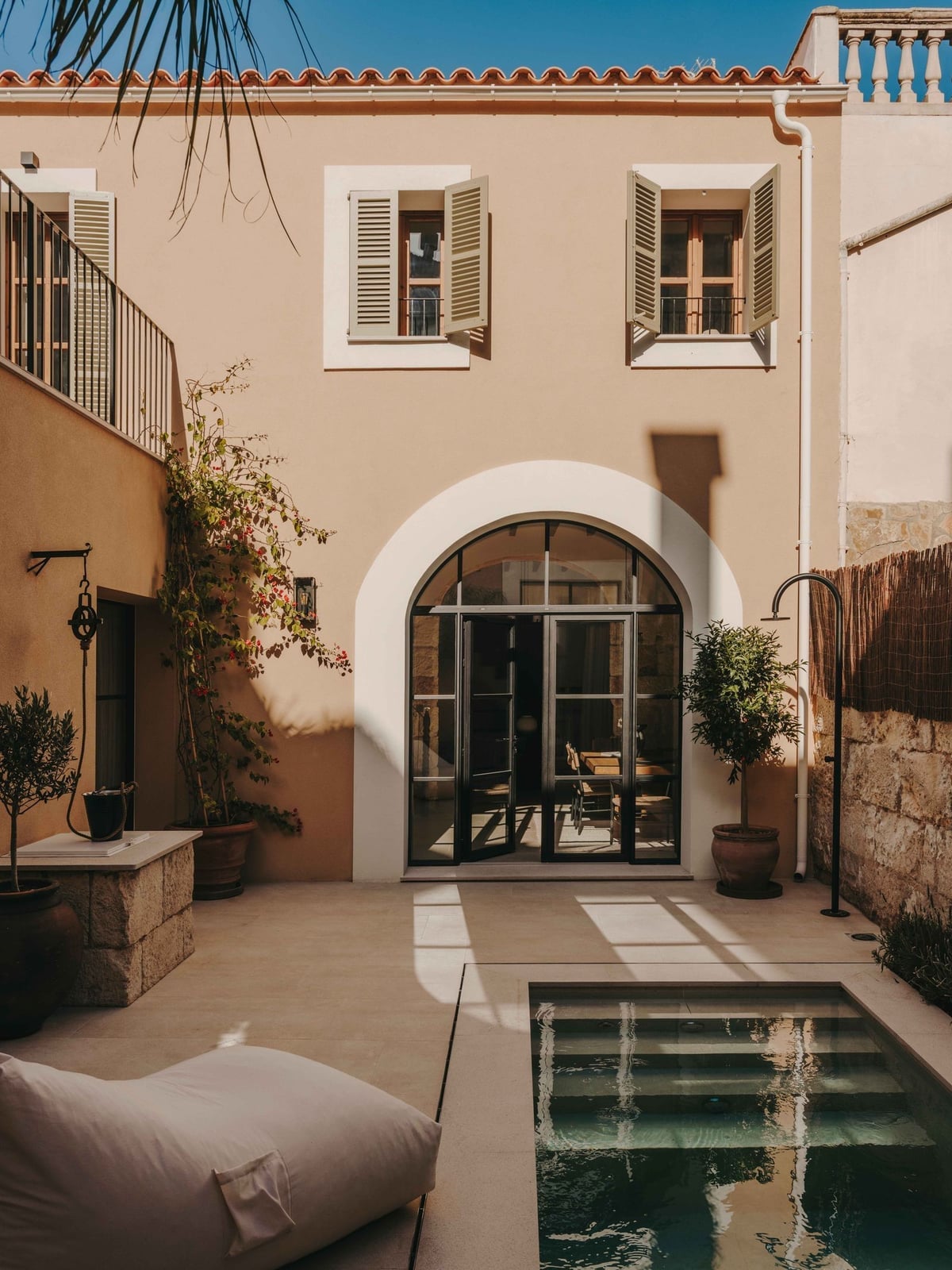
This courtyard reads as an outdoor room, not a leftover space. The arched glass doors anchor one side, and the small pool sits low to avoid blocking the view. Terracotta and cream tones keep the palette calm, while potted plants add green without clutter. The layout works because the walkways lead the eye through the space, and the strong shadows from the midday sun define the edges. A courtyard like this needs a clear center: here, the pool acts as the quiet focal point, and the arched doorway frames the transition back inside.
09 / 26Spanish Mediterranean Courtyard Materials
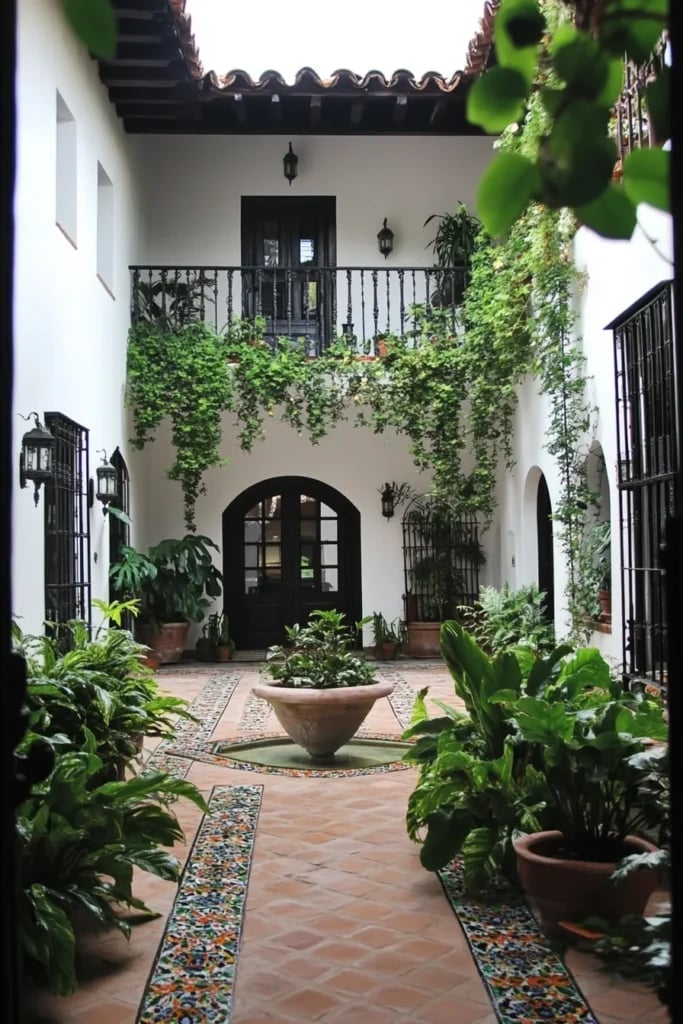
What makes a courtyard feel lived-in rather than staged? The materials. Here, the central fountain is the hero, but the real texture comes from the plaster walls, the wrought iron details, and the stone underfoot. The white plaster catches the daylight and softens the shadows, while the terracotta pots and mosaic tile accents add color without shouting. Lush plants hang and climb, breaking up the hard surfaces. The style works because the ratio of soft plaster to hard stone favors the plaster, and the green breaks the rule of too much earth tone. To vary the look, swap the fountain for a large planted urn and let the greenery lead.
10 / 26Spanish Revival Dining Nook Scale and Proportion
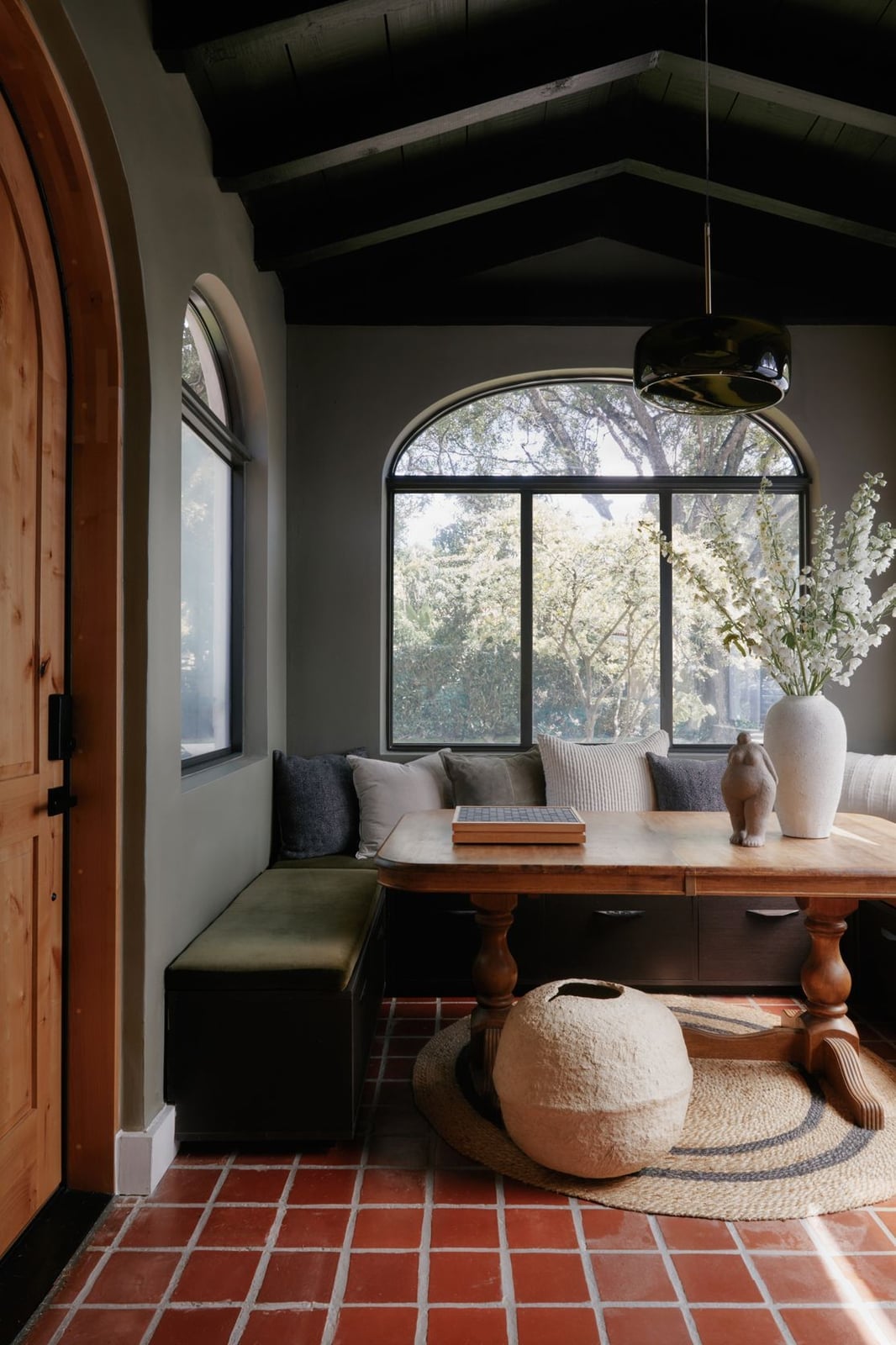
The built-in banquette fits the arched window so the table stays centered without crowding the room. The charcoal and olive green palette looks tailored, and the wood tones add warmth. A pendant light hangs low enough to define the table but high enough to clear the view through the arch. In a compact nook, the banquette saves space because it removes the need for chair clearance behind each seat. The arched window also pulls the eye outward, making the nook feel larger than it is.
11 / 26Spanish Galley Kitchen Palette
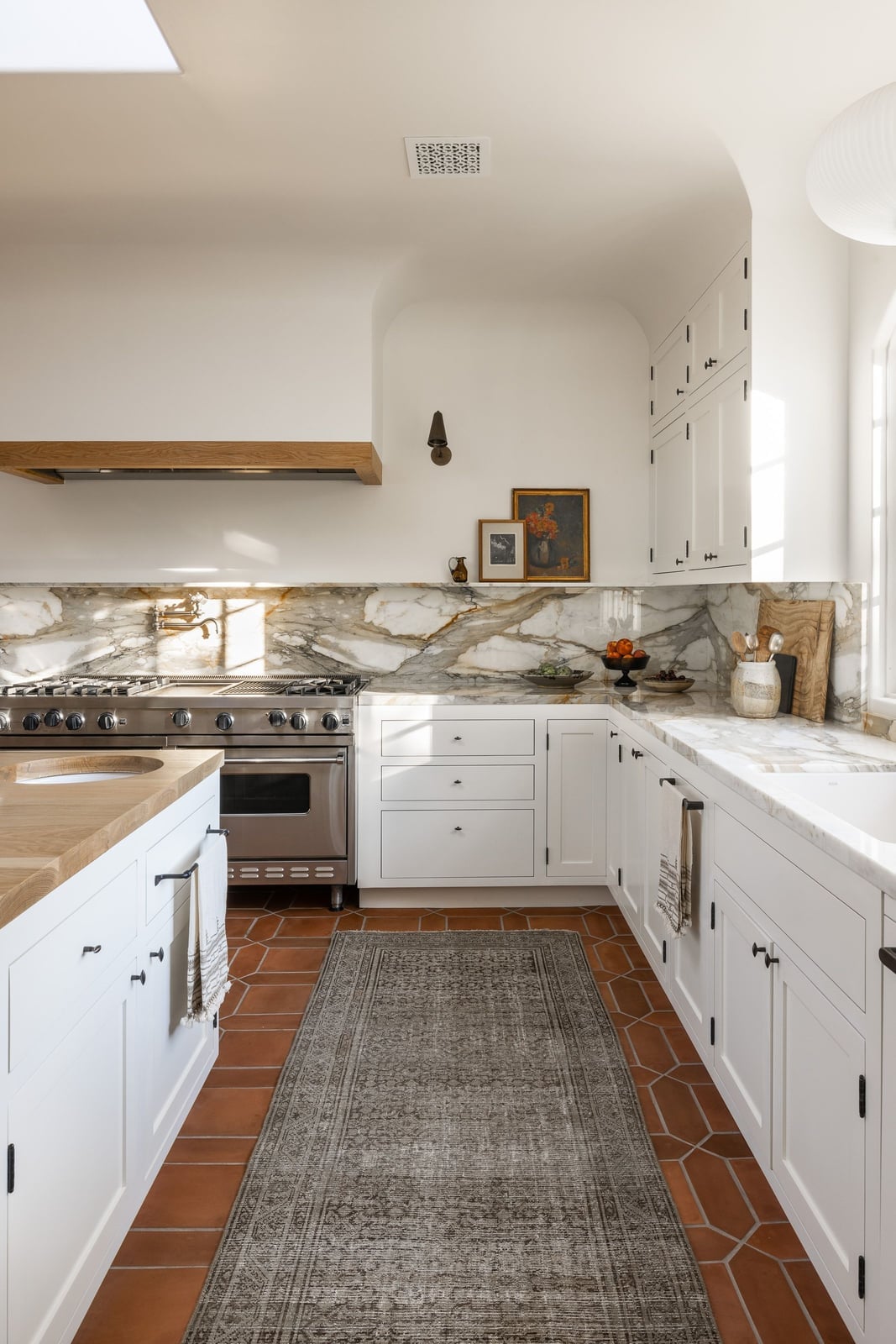
A marble backsplash in a galley kitchen works best when it becomes the focal point. The white marble here runs from counter to upper cabinets, drawing the eye down the length of the room and adding a polished contrast to the terracotta floor tiles. White cabinetry keeps the palette clean, while a wooden countertop warms the marble’s cool surface. Stainless steel appliances fit the scheme without competing. For a compact kitchen, a single dramatic material in high contrast to the flooring gives the space a clear focal point without needing extra pattern or color.
12 / 26Spanish Revival Exterior Facade Lighting
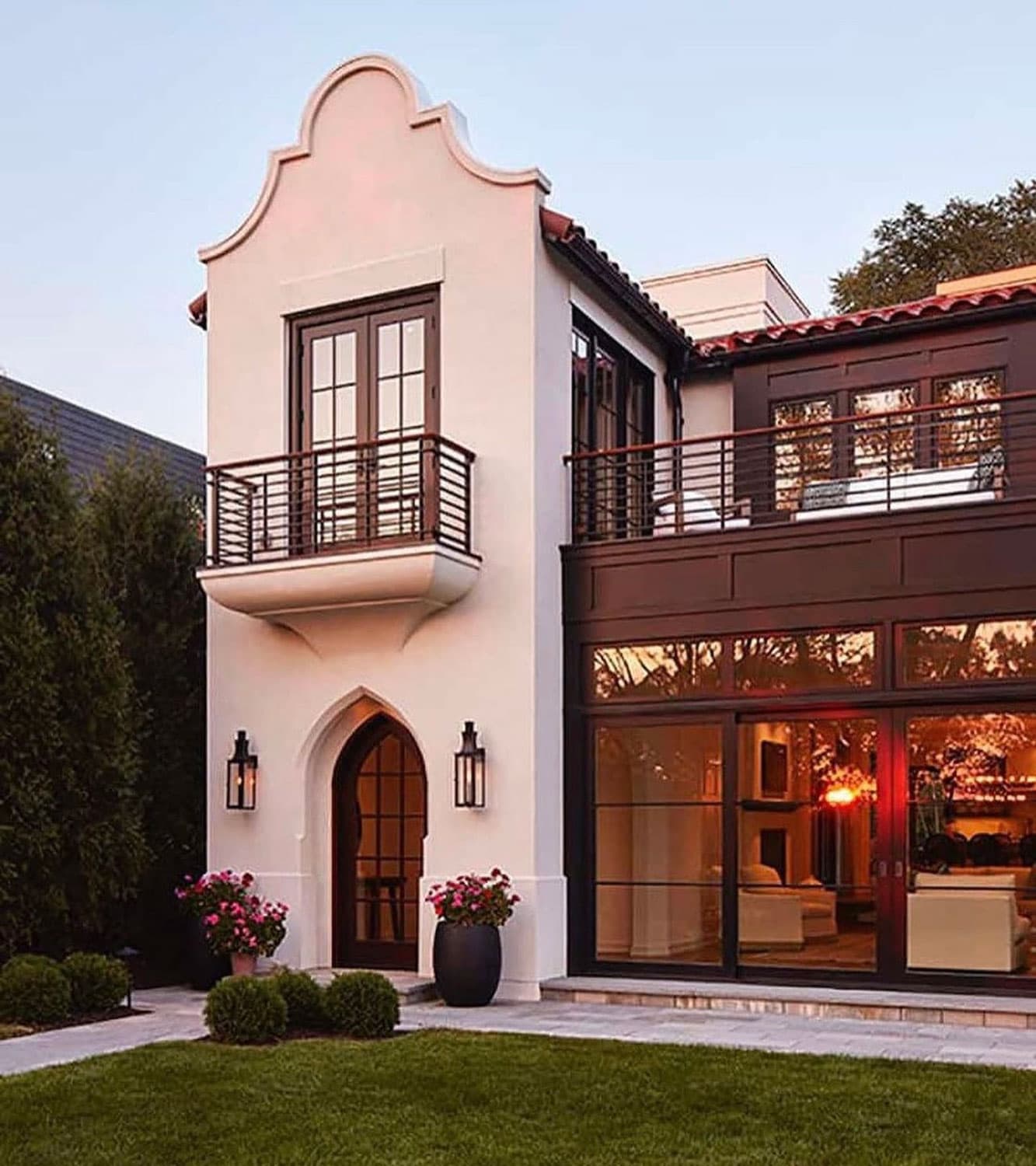
While many Spanish revival facades rely on bright floodlights at night, a softer approach reads better with the style’s architectural details. At dusk, the cream stucco and terracotta tile roof recede slightly, and warm light from inside the large windows becomes the main source of glow. The arched entryway stays in shadow, which emphasizes its shape rather than washing it out.
Balconies and the multi-level facade gain depth when lit from within rather than from below. The dark brown trim and metal balcony rails catch the low ambient light, so the house feels lived-in even from the street. If you have large windows, let them do the lighting work at night instead of adding fixtures that compete with them.
13 / 26Spanish Revival Front Porch Materials
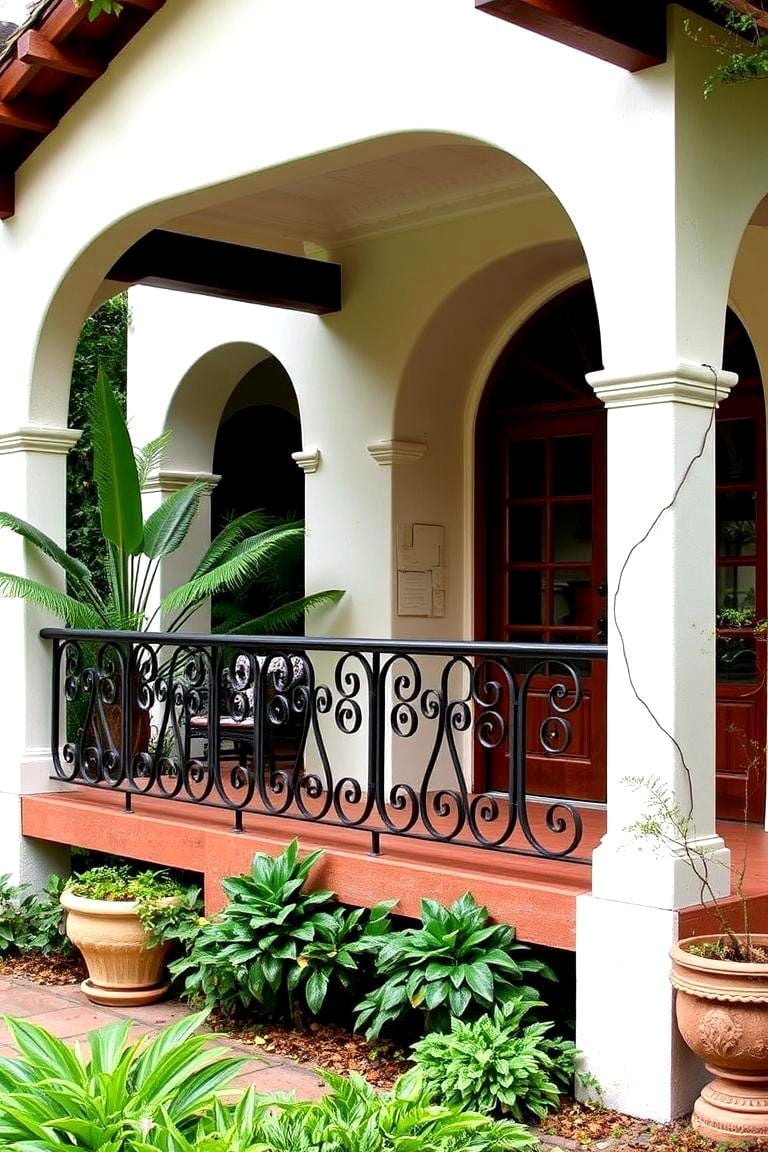
The arched columns and ornate wrought iron railing on this covered front porch create a layered entrance where each material has room to read. Cream stucco columns frame the dark wood door, while the iron railing adds an intricate but airy barrier between the porch steps and the tile floor. Potted plants soften the hard edges of the stucco and iron. For a compact porch, keeping the palette to three materials stucco, wood, and iron prevents the entry from feeling busy while still giving each detail its own presence.
14 / 26Spanish Modern Patio Layout
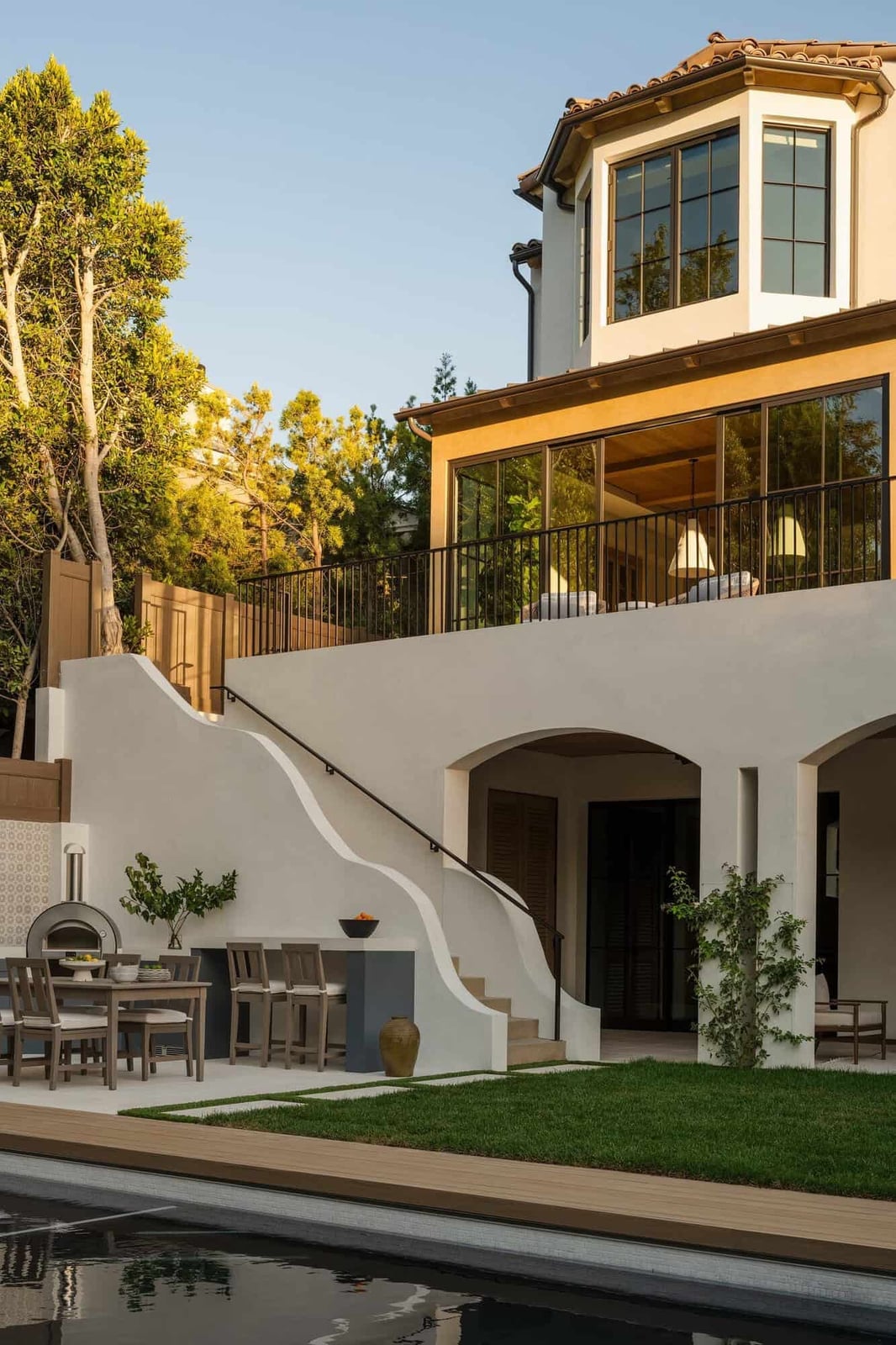
A sweeping curved staircase does more than connect levels it sets the whole patio layout in motion. On this multi-level patio, the white stucco stairs lead the eye from the dining area down to the pool, making the transition between zones feel intentional rather than abrupt. Wood tones on the outdoor furniture and bar stools echo the staircase railing, while green plants break up the white surfaces. Pendant lights hung above the dining table define that zone without blocking the view of the pool. When a patio has a strong architectural feature like a curved staircase, keep the furniture layout simple so the structure stays central.
15 / 26Mediterranean Dining Room Materials
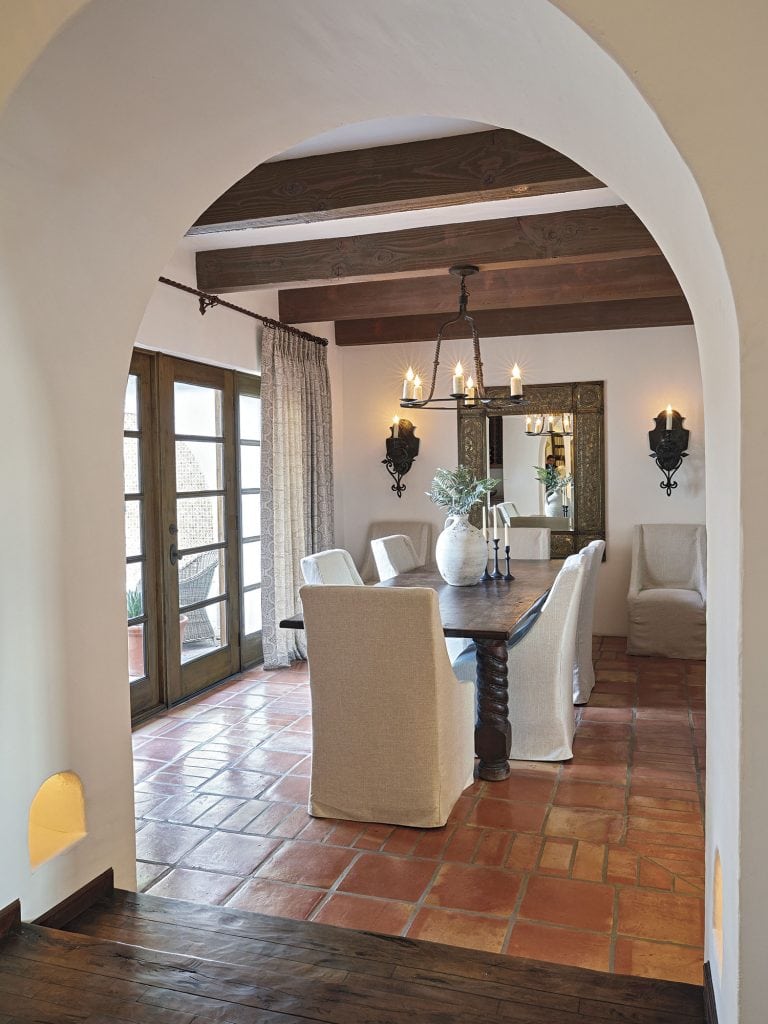
A terracotta tile floor anchors a Mediterranean dining room because it brings warmth and texture without needing an area rug. Here the tiles run wall to wall, grounding the carved wood table and the slipcovered chairs in cream linen. The dark wood of the table and the wrought iron chandelier above create a vertical line that balances the broad horizontal plane of the floor.
Natural light from doors on one side mixes with the wall sconces, softening the iron’s heaviness. The room feels roomy partly because the floor treatment is consistent no visual breaks. If you want a dining room that feels substantial but not dark, let the floor set the tone and keep the walls and upholstery light.
16 / 26Open Plan Modern Spanish Living Area Lighting
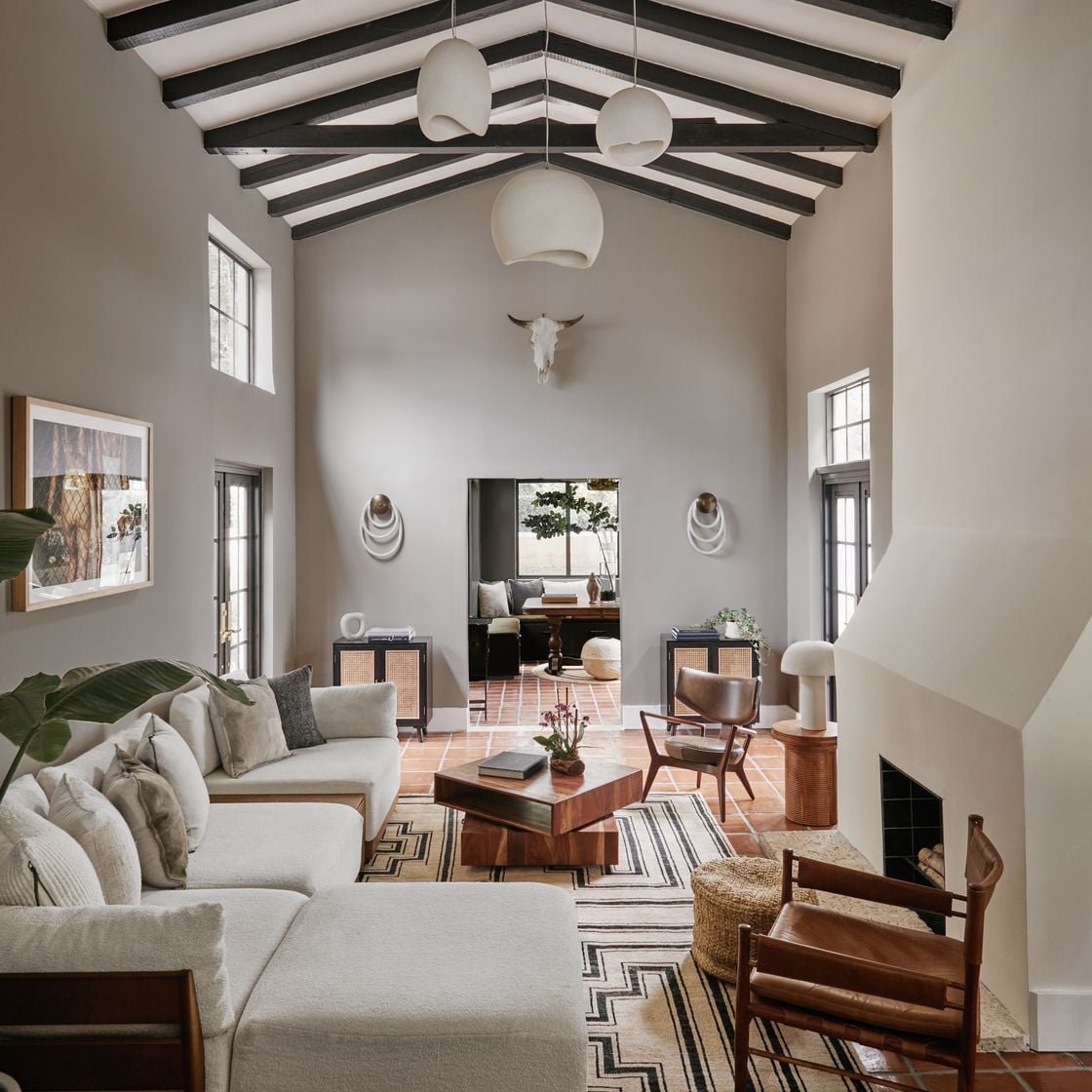
A high vaulted ceiling with exposed beams can make a living room feel vast, but the right layout keeps it grounded. Here, the large sectional sofa anchors the open plan space, while the wooden coffee table and leather armchair add warmth without clutter. The fireplace acts as a natural focal point, balancing the room’s scale. This style works because the neutral palette, with terracotta and black accents, ties the furniture together for a cohesive look.
17 / 26Spanish Colonial Front Entrance Styling Variation
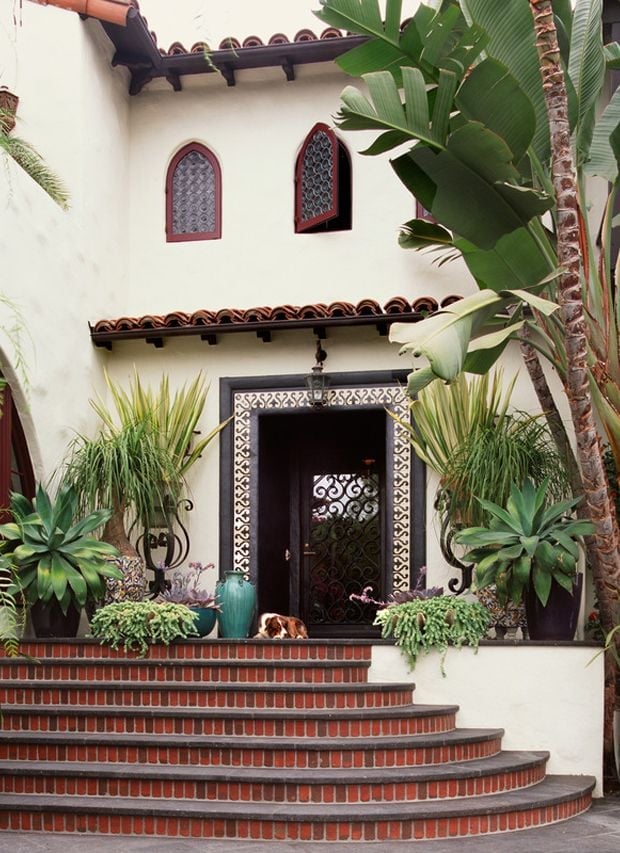
Let the architecture lead, then add soft layers. This Spanish colonial entryway uses tiered steps and an ornate tiled doorway surround. The white stucco and terracotta steps keep the look classic, while potted plants in green add life. For a renter-friendly swap, try a large urn with a drought-tolerant plant instead of built-in landscaping. The key is keeping the palette simple so the tile pattern stands out.
18 / 26Spanish Revival Exterior Facade Palette, Outdoor
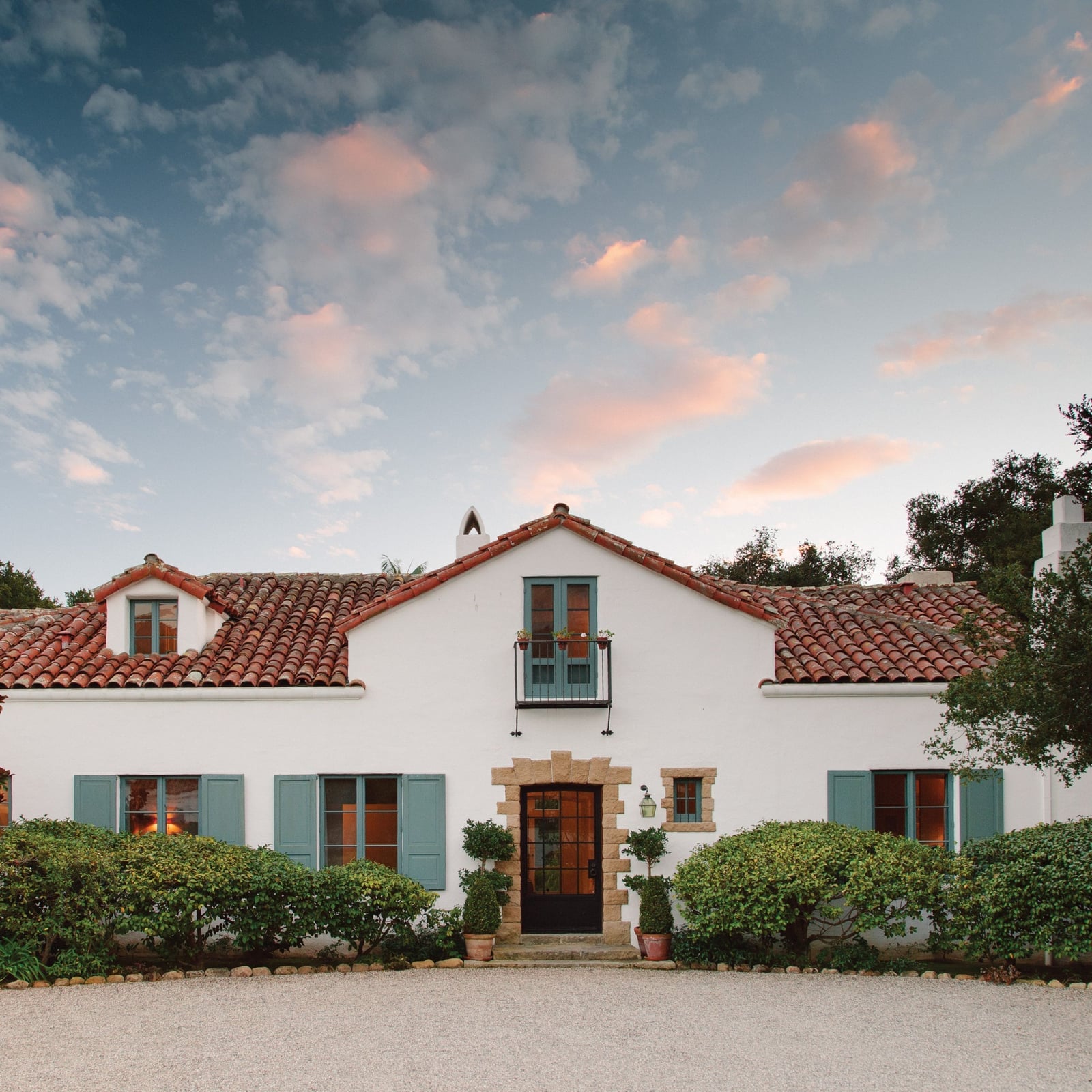
Where a minimalist facade might rely on clean lines, a Spanish Revival exterior leans into texture and contrast. Here, the white stucco walls and terracotta roof set a warm base, while the blue shutters add a deliberate pop of color. The arched stone doorway, framed by wrought iron details, becomes the focal point at dusk when exterior lights cast a soft glow.
What defines this palette is the ratio of light to dark. The white and terracotta cover about seventy percent of the facade, with blue and stone making up the rest. This balance keeps the look grounded. The blue shutters break the warmth just enough to keep the house from feeling too rustic, giving it a crisp, lived-in character.
19 / 26Andalusian Courtyard Scale and Proportion
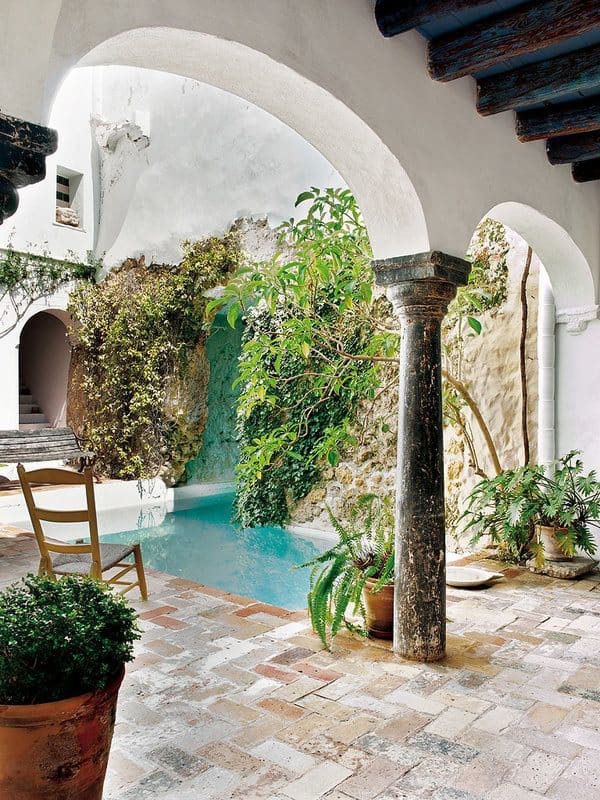
A small pool set within stone walls creates an intimate courtyard that feels larger than its actual footprint. The key is the contrast: lush greenery cascading over the stone softens the hard edges, while terracotta pots and arched openings add rhythm. The blue water and white plaster walls keep the palette cool against the warm terracotta. For this scale, every element earns its place, so the space becomes a calm retreat.
20 / 26Spanish Modern Entryway Materials
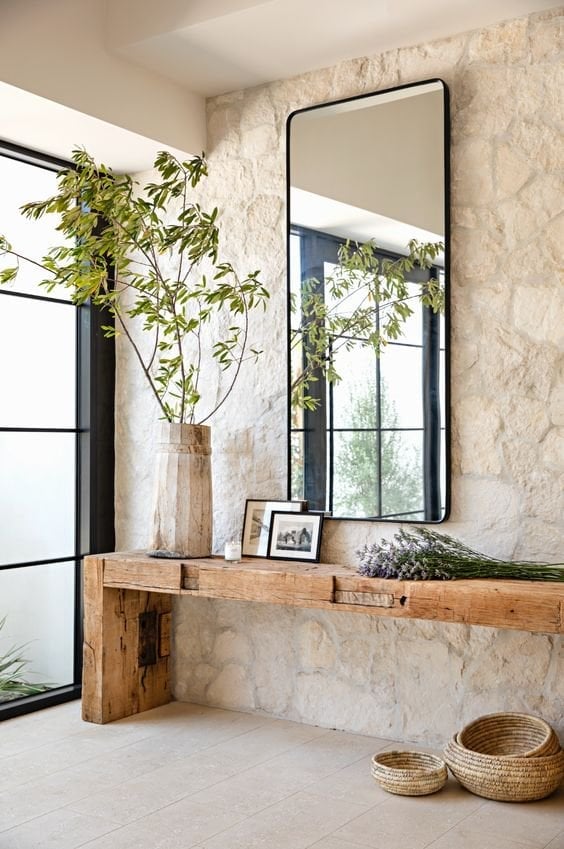
This entryway gets the proportions right. The reclaimed wood console table sits against a textured stone wall, with a tall black mirror above it that opens up the compact space. Woven baskets add storage without breaking the clean lines, and natural light keeps the wood tones and green accents from feeling heavy. The mix of stone, wood, and glass creates a layered look that is warm but not ornate, perfect for a modern Spanish home where texture does the talking.
21 / 26Mediterranean Patio Lighting With Round Table
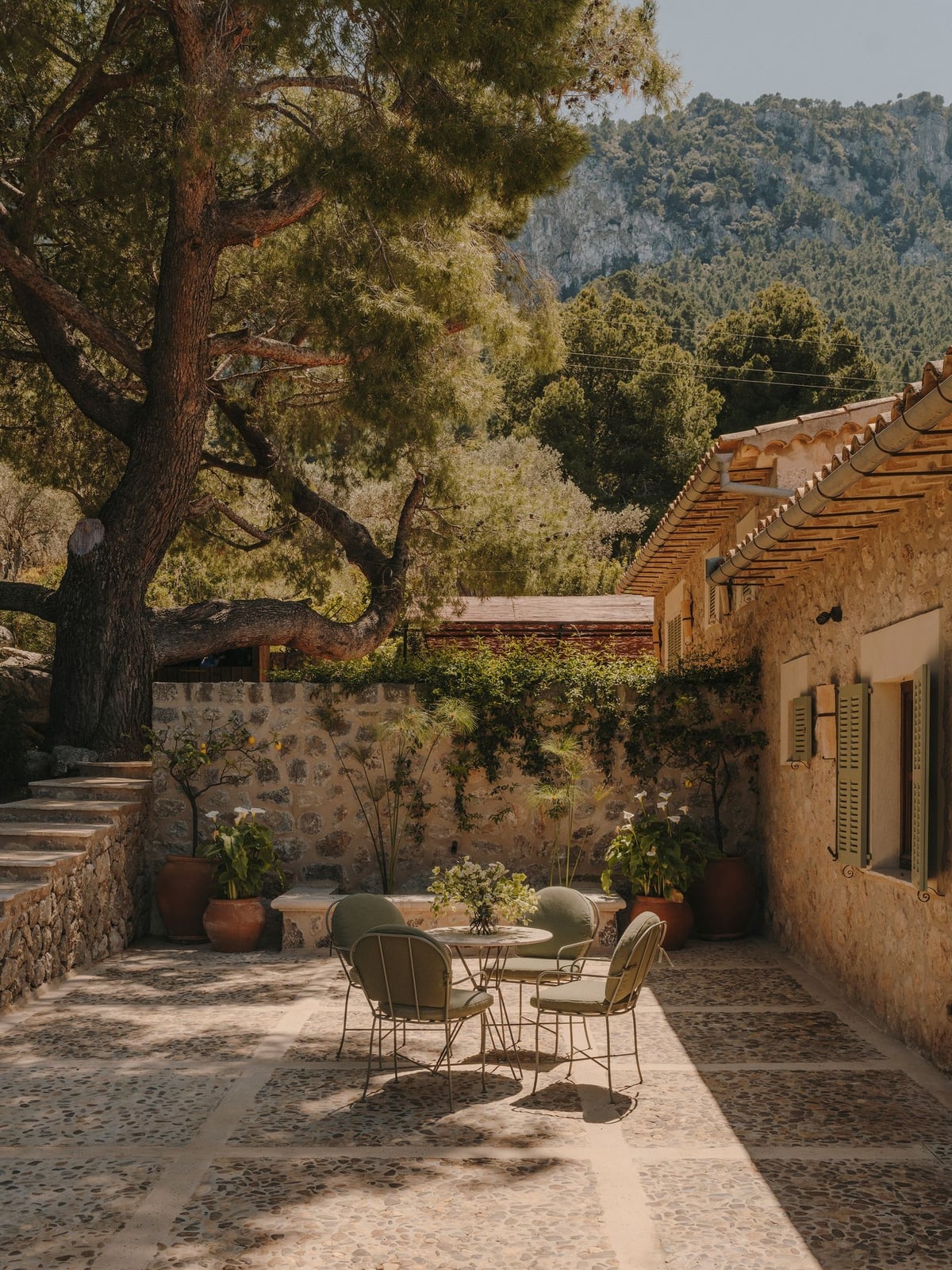
Let the existing hardscape set the layout before you add furniture. The round table and four chairs sit at the center of the patio, with the textured stone wall behind them acting as a natural backdrop. Potted plants in terracotta containers soften the edges of the stone without blocking the view of the yard. Dappled sunlight filters through overhead greenery, which keeps the seating area bright but not harsh. The green chairs and terracotta tones echo the palette in the tile and stone, so the whole patio feels like one cohesive space. The layout works because the furniture does not fight the stone wall; it lets the texture lead.
22 / 26Grand Spanish Mediterranean Facade Scale and Proportion, Close-Up Take
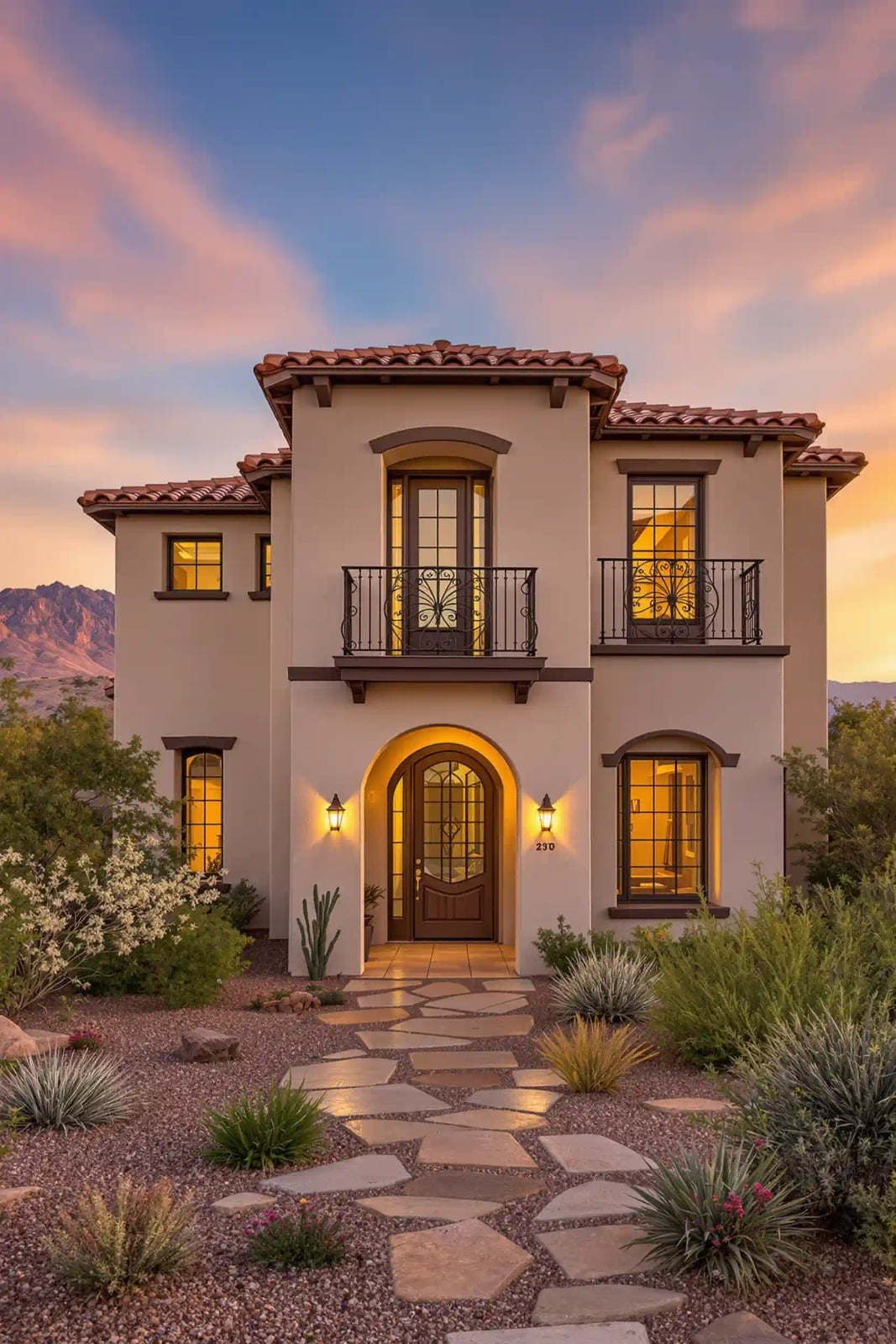
The beige stucco facade and warm yellow accents catch the last light of dusk, when the terracotta roof tiles and the ornate arched doorway become the main draw. Balconies above the entry add vertical rhythm, and the stone pathway draws the eye from the street toward the heavy wooden door. Warm exterior lights set into the stucco highlight the arched entryway without washing out the texture of the stone and wood. The warm neutral palette keeps the architecture monumental but not cold.
23 / 26Spanish Bohemian Living Room Materials With Large Sectional Sofa
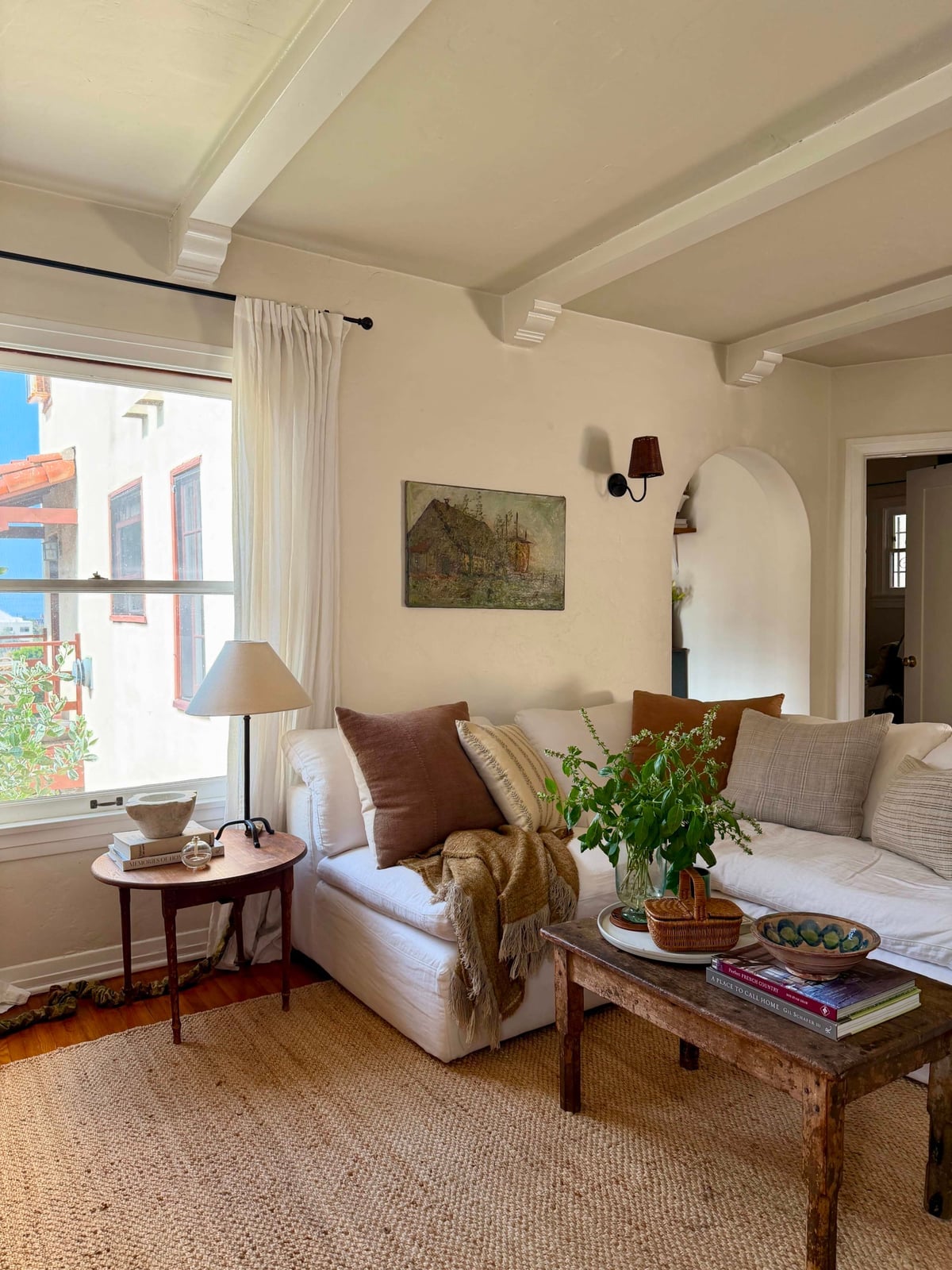
In a Spanish bohemian living room, let the textiles and wood finishes carry the warmth, not the wall color. The large sectional sofa in cream linen keeps the seating area airy, while the jute rug underneath adds texture without competing with the rustic wooden coffee table. Brown and rust accents in the throw pillows and pottery echo the wood tone, and the plaster walls stay neutral to let those layers show. The wall sconces provide ambient light that softens the edges of the room, so the mix of linen, jute, and wood feels curated instead of chaotic.
24 / 26Spanish Rustic Entryway Styling Variation With Double Doors
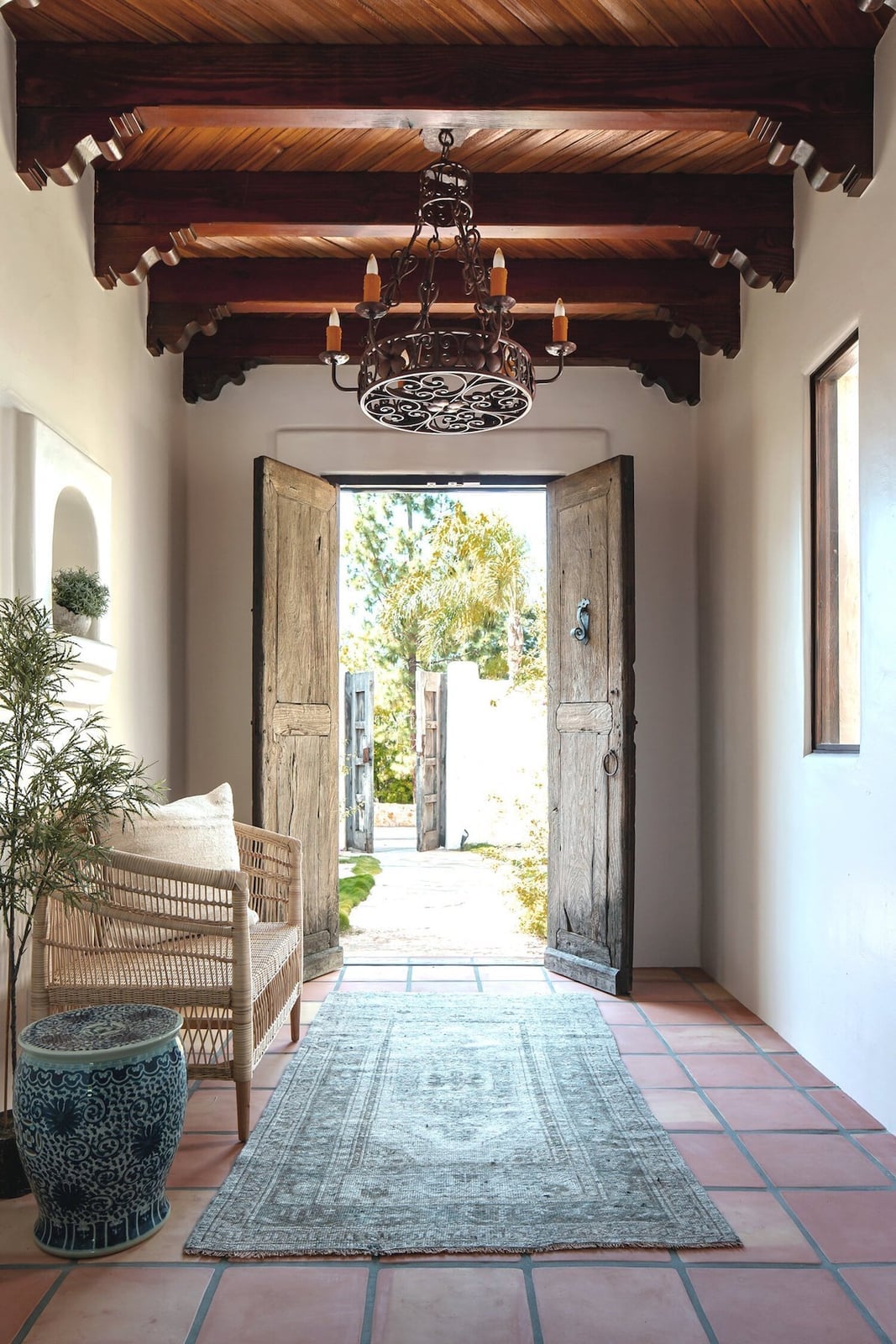
Where a sleek Spanish modern entryway might use a single bench and a mirror, a rustic take layers instead. The large wooden double doors set the tone, and the patterned rug underfoot adds warmth. A wicker chair and ceramic stool provide casual seating, while the chandelier above the hallway defines the vertical space. The doors keep the neutral palette from feeling too heavy. The blue accents in the rug and ceramic pieces break up the wood tones and give the entryway a collected, not coordinated, look.
25 / 26Large Spanish Revival Home Palette With House Facade
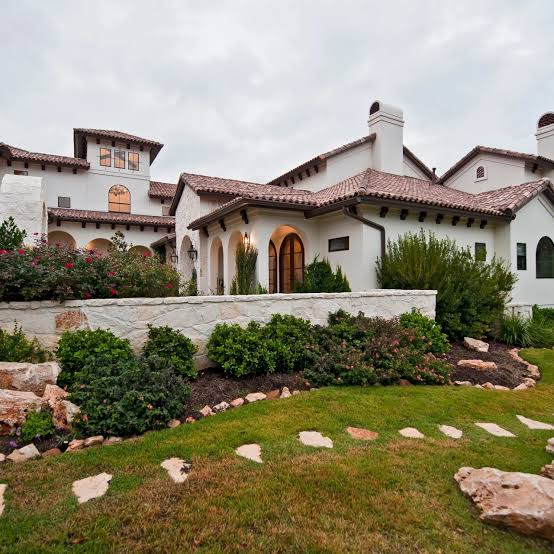
A white stucco facade against a terracotta tiled roof is the defining palette for Spanish Revival, but the stone wall and green landscaping are what keep it from reading as a simple beach house. The arched windows break up the white expanse, and the wood details on the door add warmth. The balance of cool stone and warm terracotta gives the exterior a grounded, timeless feel.
26 / 26Final Thoughts
Spanish home style works because it relies on a few consistent moves: white stucco as a neutral backdrop, terracotta or stone underfoot, and arches that frame views and connect rooms. The palette stays warm but can shift, as seen with the pink sofa or blue shutters, while materials like linen, wrought iron, and reclaimed wood add texture without shouting. Lighting at dusk softens the hard edges of stucco and stone, and outdoor spaces like courtyards and patios extend the living area. Keep the layout simple, let the architecture lead, and you will get an aesthetic Spanish home that feels settled rather than decorated.