The aesthetic Japanese apartment is less about a specific style and more about how a small space can feel calm, ordered, and full of light. Think low furniture, natural materials, and screens that divide a room without closing it off.
This roundup of 22 looks shows how the same ideas adapt to different layouts, from open-plan studios to compact bedrooms with tatami and shoji screens. You will get practical takeaways on zoning, storage, and lighting that you can apply whether you rent or own, and whether your space is a true studio or just one room that needs to do more.
01 / 23Japandi Living Area with Expansive Natural Light and Greenery
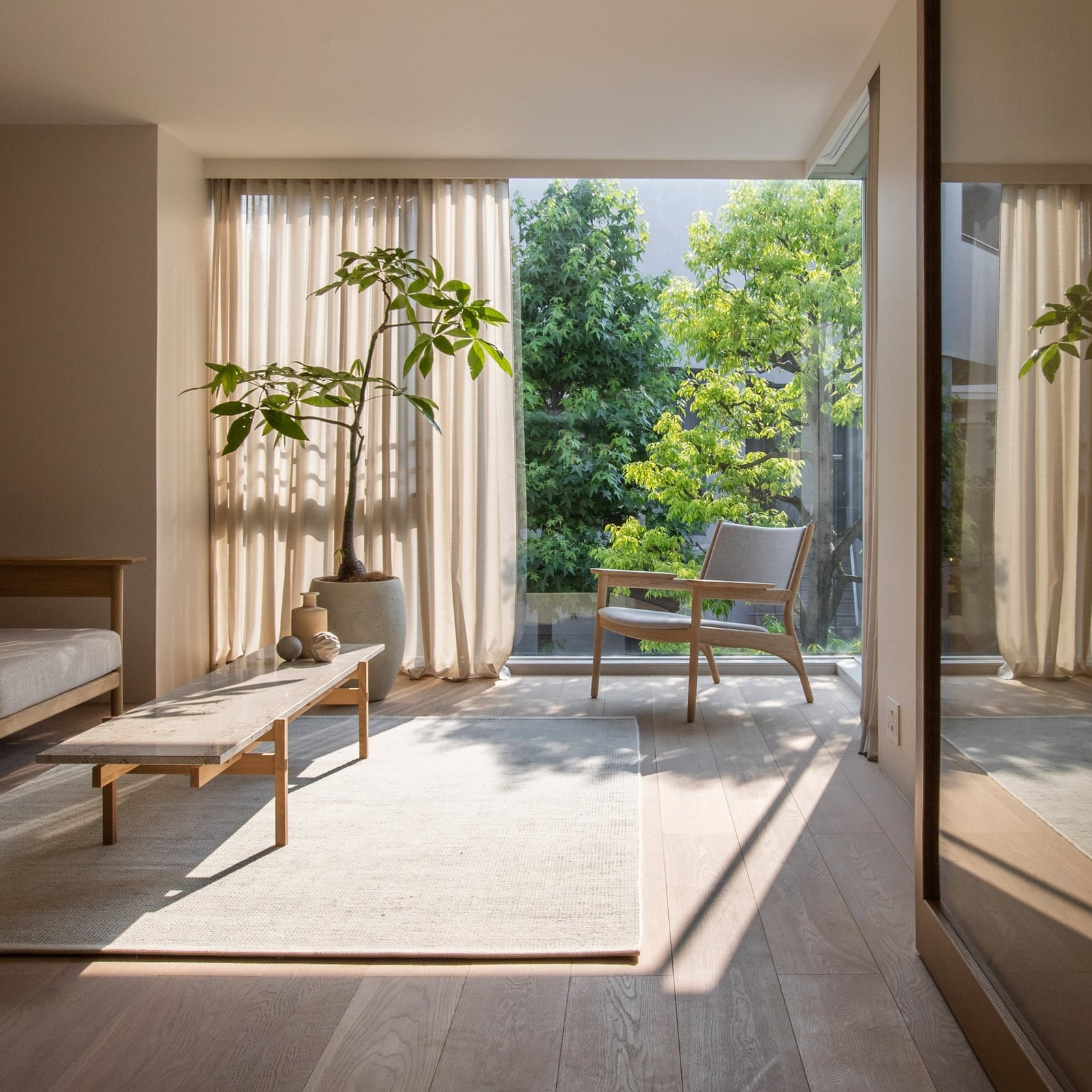
A large window anchors this Japandi living area, pulling the outdoors in with a view that stretches beyond the frame. The neutral palette of wood tones and soft linen keeps the space calm, while a low coffee table and a single armchair leave the layout open and airy. Natural light does the work here, landing on the stone and wood surfaces without needing a single lamp. Let the window set the pace. If the light changes through the day, arrange seating to follow it rather than fighting the shadows.
02 / 23Open-Plan Studio with Exposed Wooden Beams and Natural Light
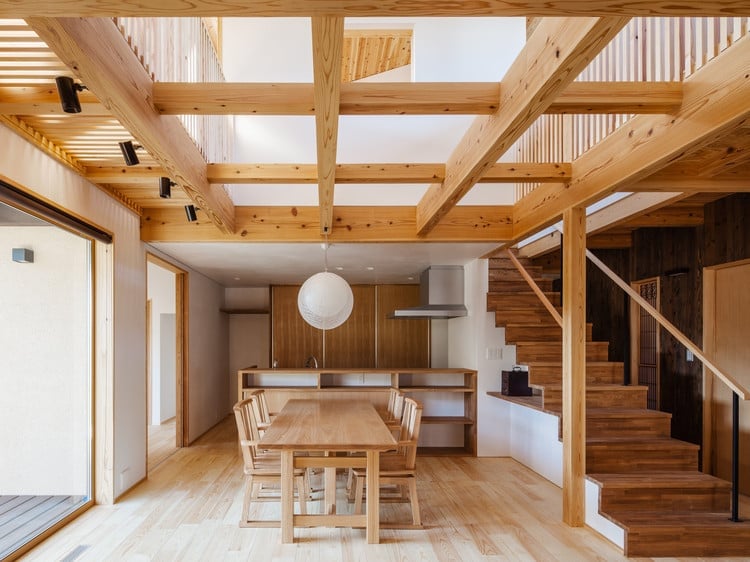
Exposed wooden beams make this open-plan studio feel like it has a ceiling worth looking at. The natural wood and white palette keeps the eye moving upward, while concrete and glass add a modern edge that stops the look from turning rustic. Bright natural light pours in through large windows and bounces off the pale walls, with recessed lights standing in when the sun drops. The dining set sits near the kitchen, a practical layout that keeps the open staircase from blocking the flow. A studio that uses its beams as a feature rather than a leftover detail.
03 / 23Minimalist Japanese Studio with Shoji Screens and Built-in Storage
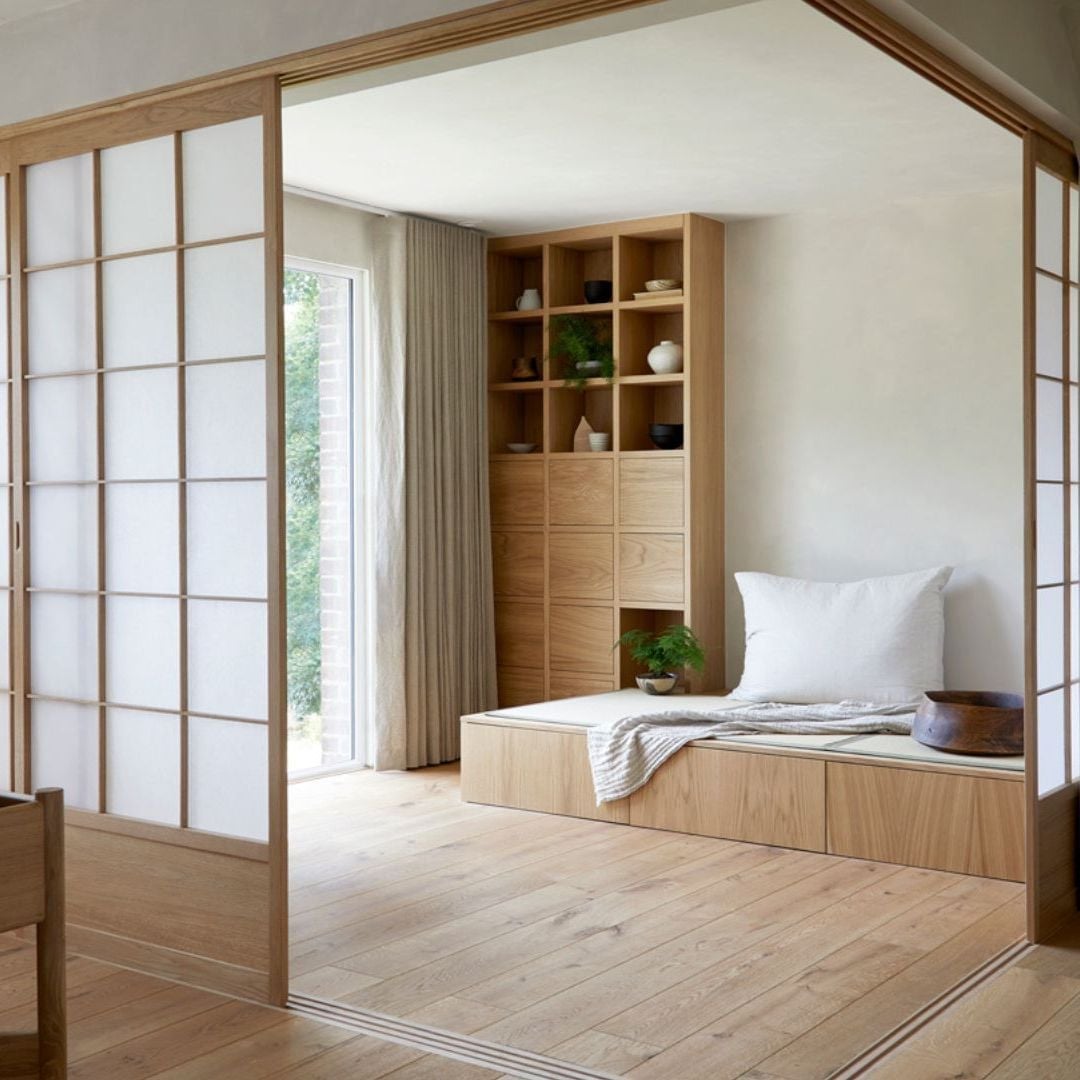
How do you store everything in a studio without making it look like a closet? Built-in shelving and a bench with a cushion provide ample storage, while shoji screen doors slide closed to hide the rest. The natural wood, white, and beige palette is complemented by tatami and linen adding texture without clutter. A window brings in soft natural light that filters through the paper screens, keeping the room bright but never harsh. The trick is integrated storage that reads as architecture, not furniture. When every shelf has a place, the room breathes.
04 / 23Japandi Living Area with Integrated Wood Shelving and Platform Bed
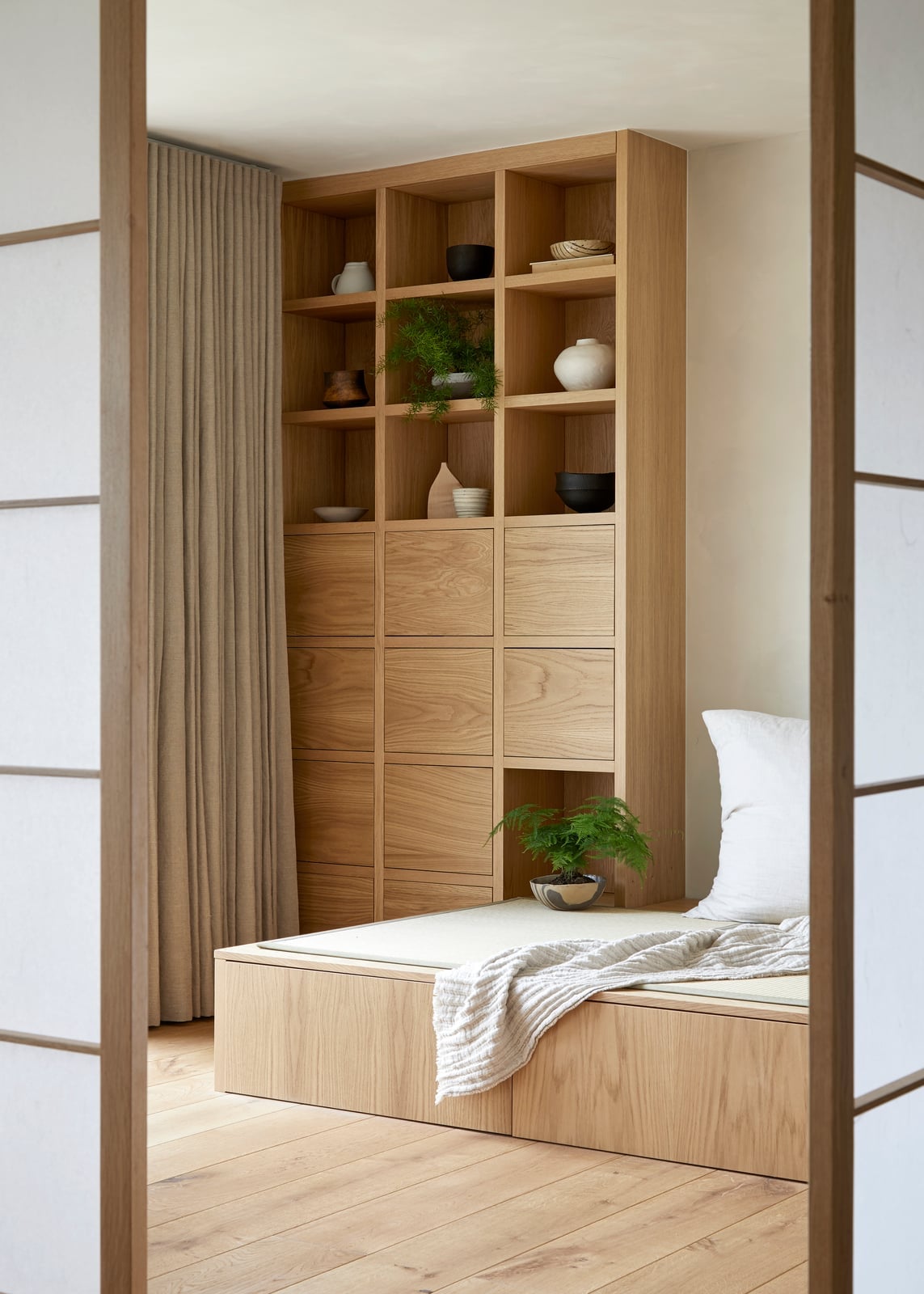
A single wooden shelving unit does double duty in this Japandi living area, holding books and decor while visually separating the sleeping zone from the living space. The low platform bed stays tucked behind it, keeping the layout clean without a wall. Light wood and linen keep the palette neutral, and soft natural light lands on the shelves without glare. Integrated storage that works as a room divider saves square footage and keeps the sightlines open.
05 / 23Open-Plan Japanese Studio with Large Windows and Neutral Palette
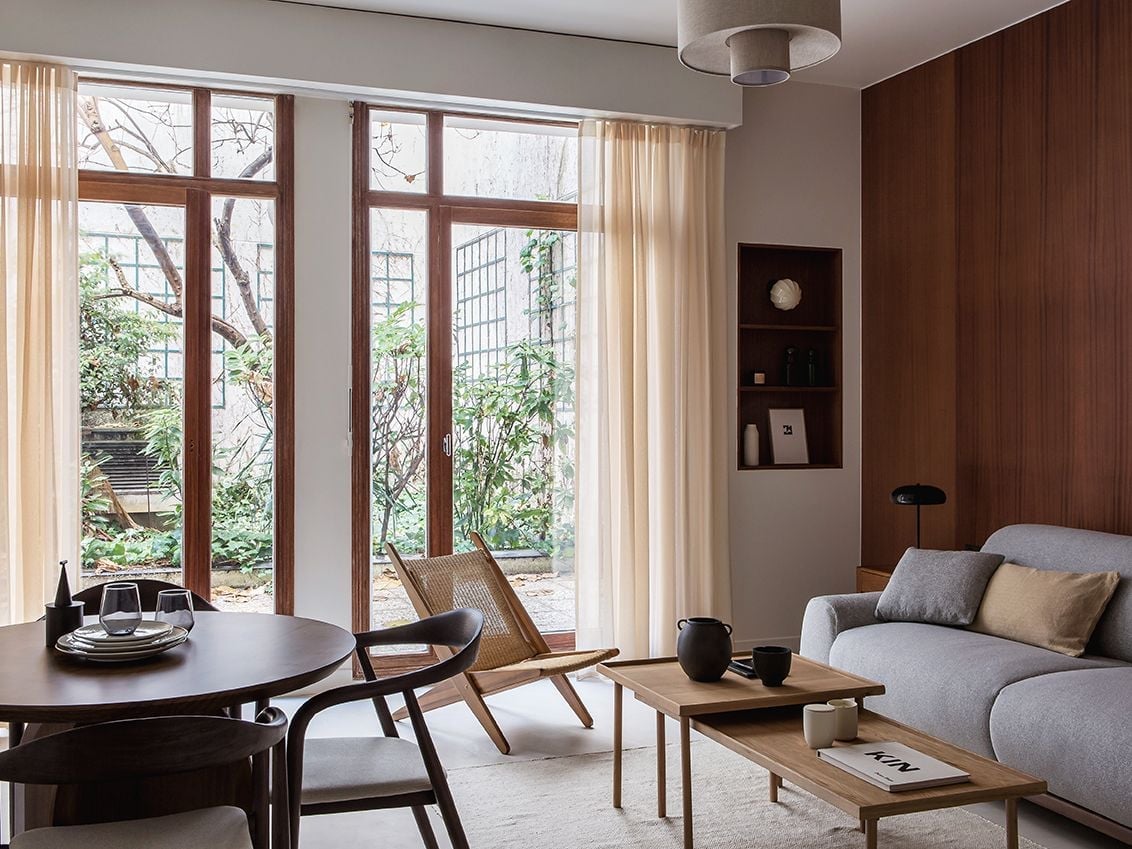
In an open plan studio, let the largest window decide where the dining area goes. Here, a round table and lounge chairs sit right in the light, while the sofa and low coffee table settle back into the room. The cream, wood tones, and linen palette keeps everything connected, so the eye travels from the sofa to the table without a visual bump. Large windows overlook a garden, and ambient ceiling light takes over when the sun goes. The palette zones the space without a single partition.
06 / 23Tranquil Japanese Studio with Shoji Screens and Tatami Elements
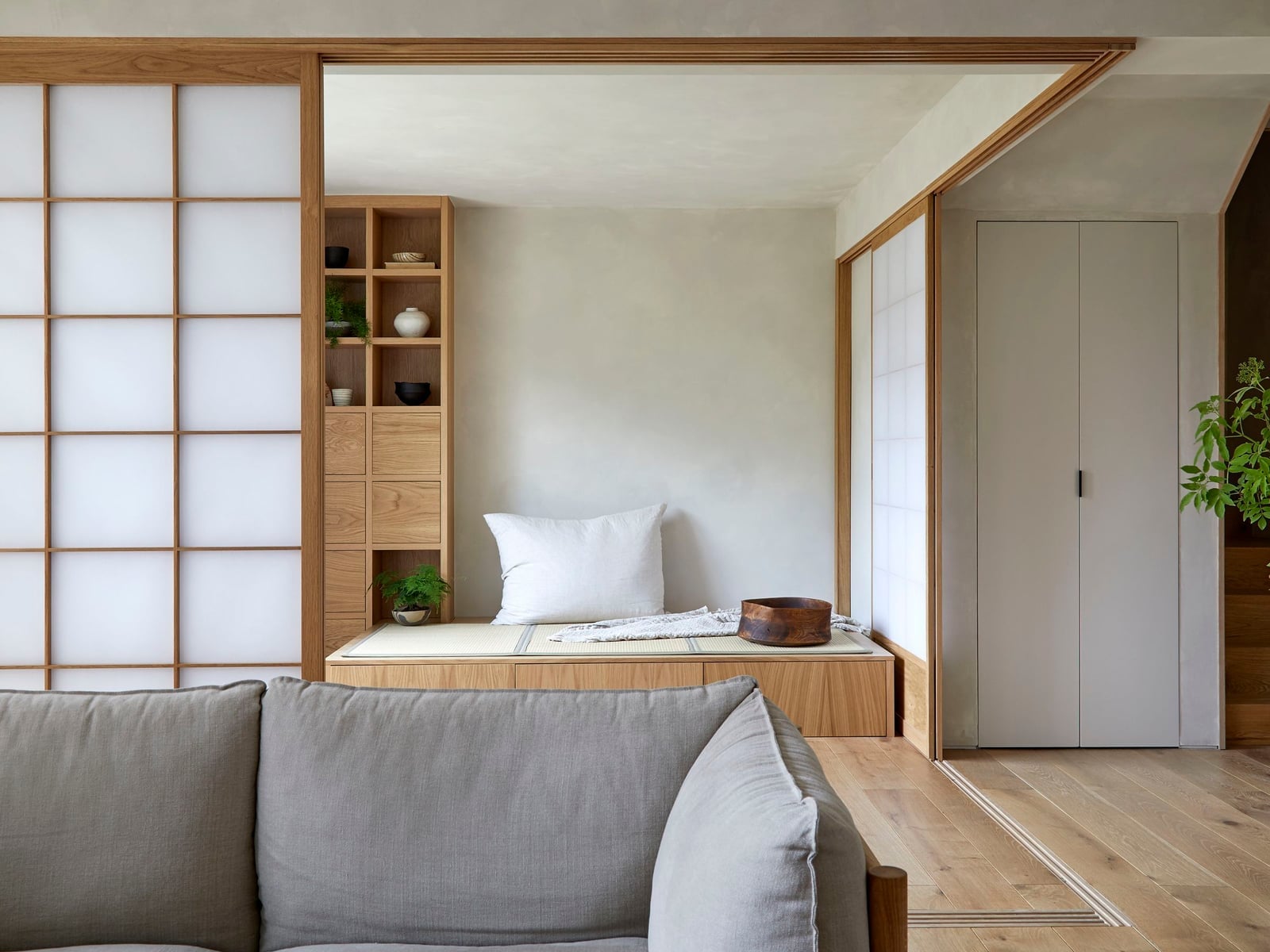
A full-on tatami renovation might not be in the cards for a rental, but this studio proves you can borrow its quiet energy without ripping up the floors. The built-in bench and shelving unit in natural wood offers plenty of storage and a place to sit, while the shoji screen doors filter daylight into a soft glow. A beige linen cushion on the bench and a simple tatami mat on the floor bring in texture without overwhelming the room. The palette stays in natural wood, white, and beige, which is easy to match with existing furniture. For a renter, a freestanding shoji screen or a tatami-style rug can achieve a similar effect without any permanent changes.
07 / 23Compact Japanese Bedroom with Futon and Shoji Screen
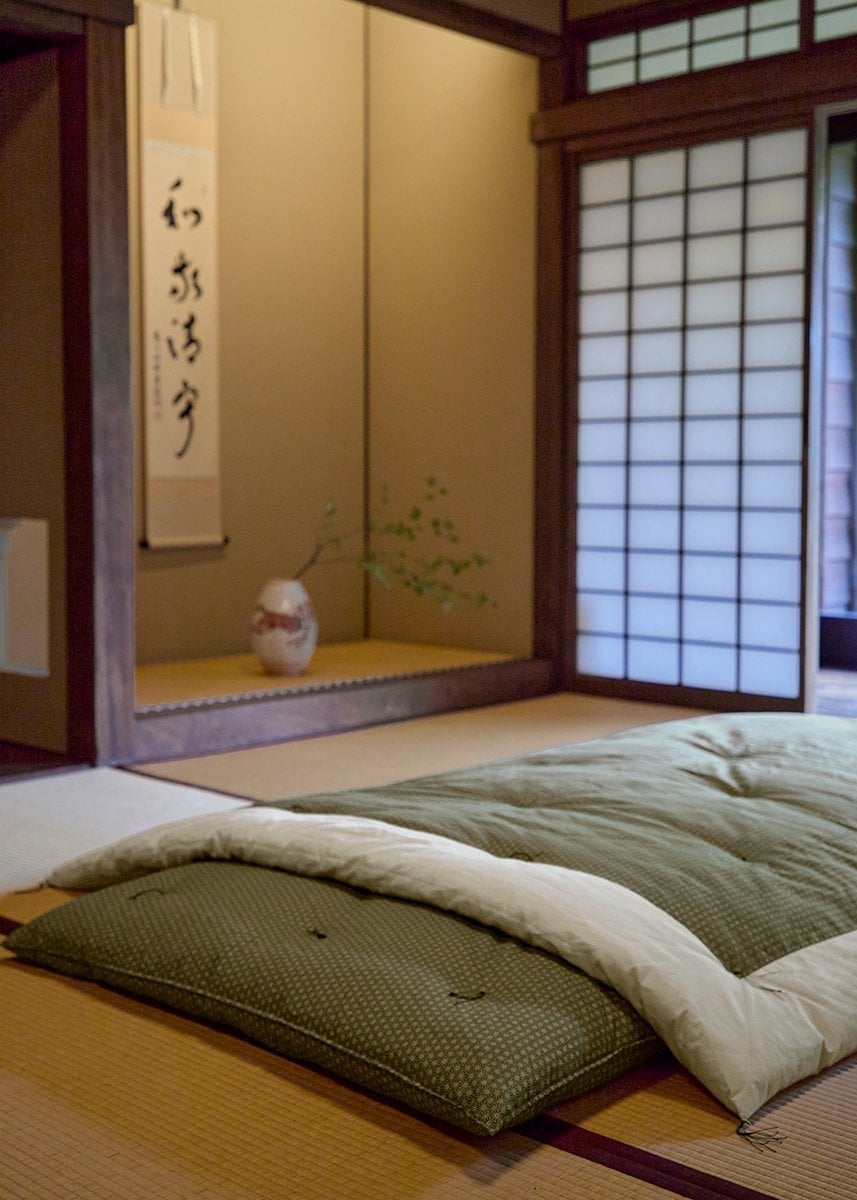
The futon bedding sits directly on the tatami floor, keeping the room feeling airy despite its compact size. A shoji screen at the window softens the incoming natural light, and a simple scroll adds a focal point without cluttering the wall. The low profile of the futon is what makes this arrangement work: it leaves visual space above, so the room reads as larger than it is. If you try this layout, keep the pillow and bedding layers low and flat to preserve that sense of openness.
08 / 23Spacious Open-Plan Studio with Modern Japandi Living and Dining
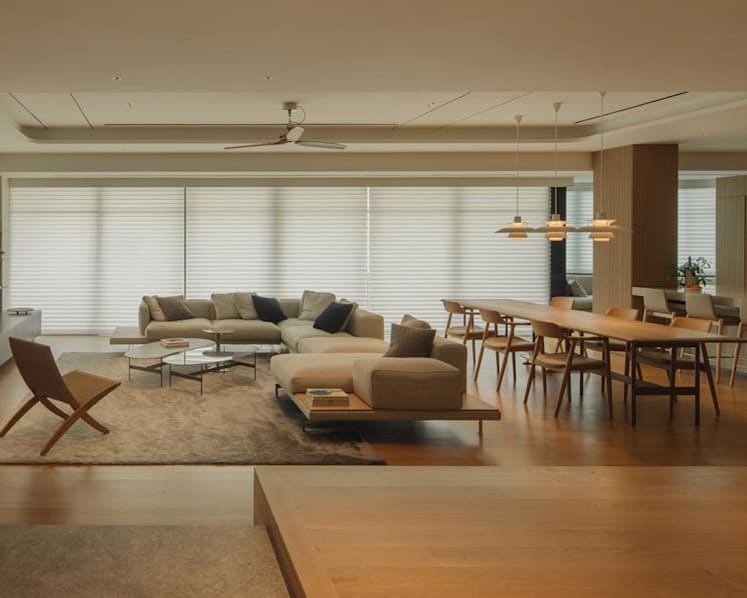
This open-plan layout manages both living and dining without feeling crowded. A large sectional sofa defines the living zone, while a long wooden dining table with matching chairs anchors the dining area. Low coffee tables in front of the sofa keep the line of sight clear, and pendant lights above the dining table mark that zone distinctly. The neutral beige palette and wood tones tie both areas together. The trick is in the furniture height: keeping the sofa and coffee table low prevents the living area from visually blocking the dining space beyond.
09 / 23Serene Japanese Bedroom with Large Shoji Screen and Natural Light
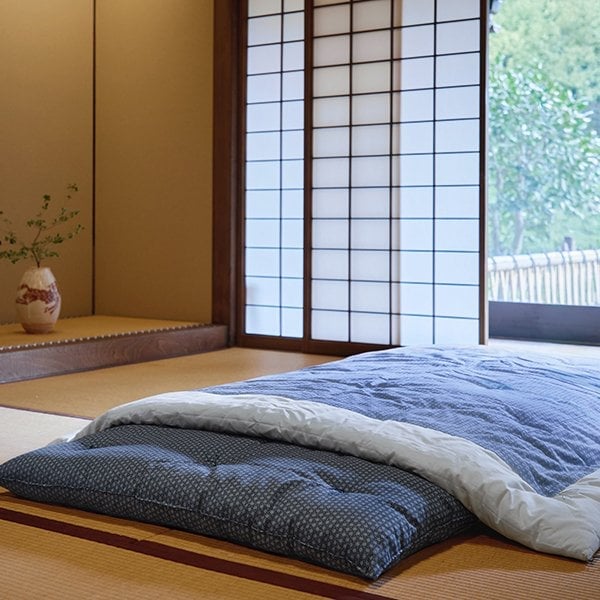
Does a shoji screen actually make a bedroom feel more restful, or is it just a look? In this case, the large shoji screen acts like a diffuser for the daylight, turning harsh sun into a soft, even light that fills the room. The futon on the tatami floor and the neutral beige and blue palette keep the space calm. The paper panels of the shoji screen are delicate, so they work best in a low-traffic bedroom where they won’t get bumped. If you have a window that faces direct sun, a shoji-style panel or even a paper shade can create that same gentle glow without needing a full renovation.
10 / 23Japandi Studio Living Area with Shoji Screen and Bamboo Accents
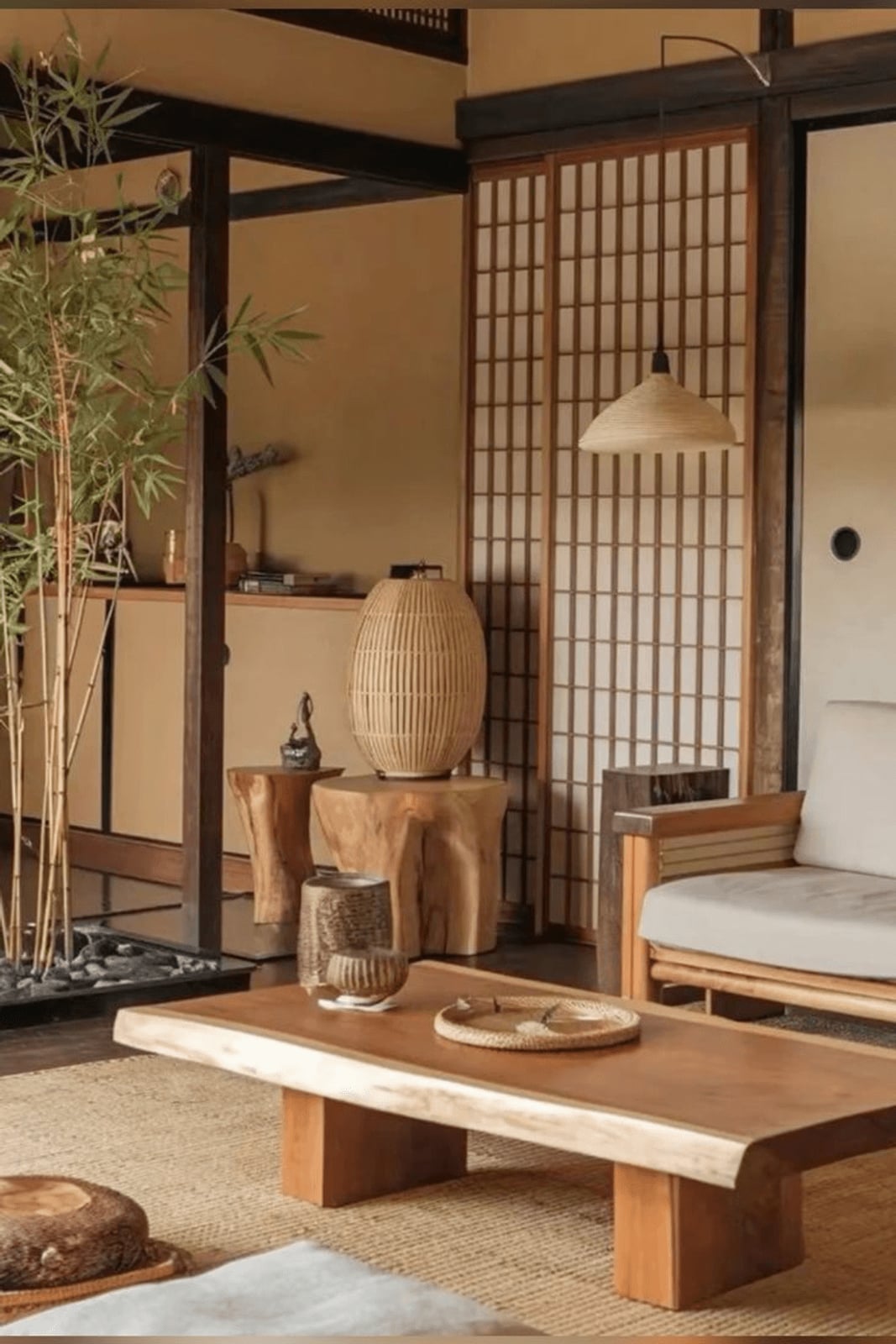
A shoji screen here does triple duty: it adds privacy, filters light, and sets the japandi tone without any paint or wallpaper. The room relies on a neutral palette of beige and wood tones, with a rattan coffee table and a bamboo plant bringing in natural texture. A simple linen sofa and a pendant lamp complete the look. The screen breaks up the open plan just enough to define the living area, but it doesn’t block the flow of the room. For a similar effect, try a folding room divider with paper or fabric panels.
11 / 23Minimalist Japandi Bedroom with Low Platform Bed and Paper Pendant
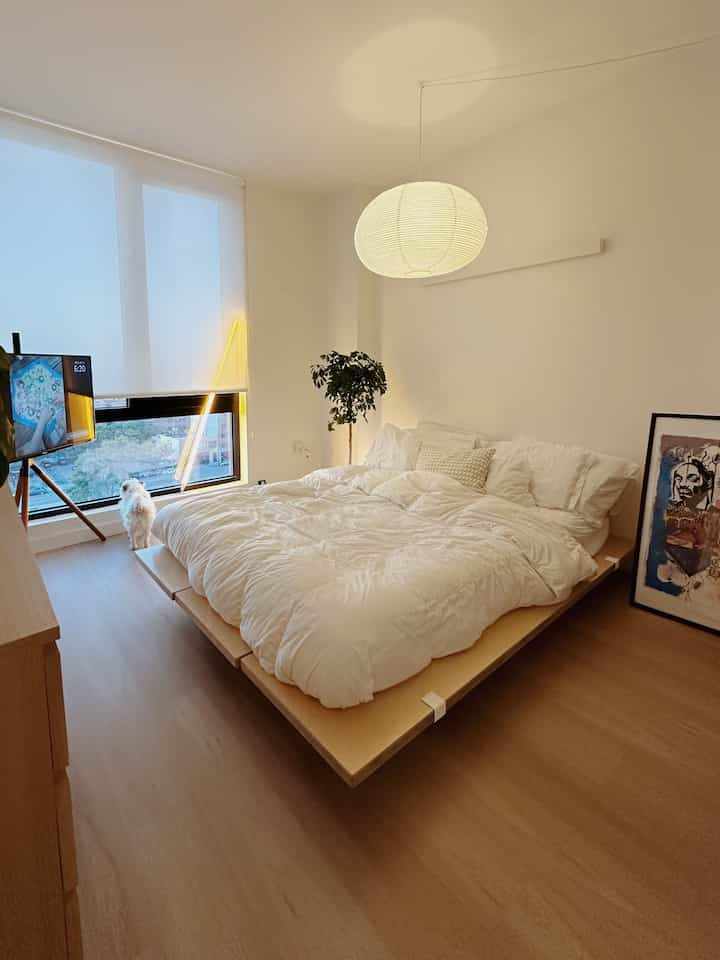
A low platform bed anchors the bedroom by staying close to the floor, which keeps the vertical space open and the eye moving through the room. The wood frame and neutral bedding set a calm base, while a paper pendant light hangs overhead to soften the light without taking up visual space. A single plant adds life without clutter. The layout principle is simple: keep the largest piece low, and let everything else follow that horizontal line.
12 / 23Multi-Level Japandi Studio with Raised Wooden Platform and Low Seating
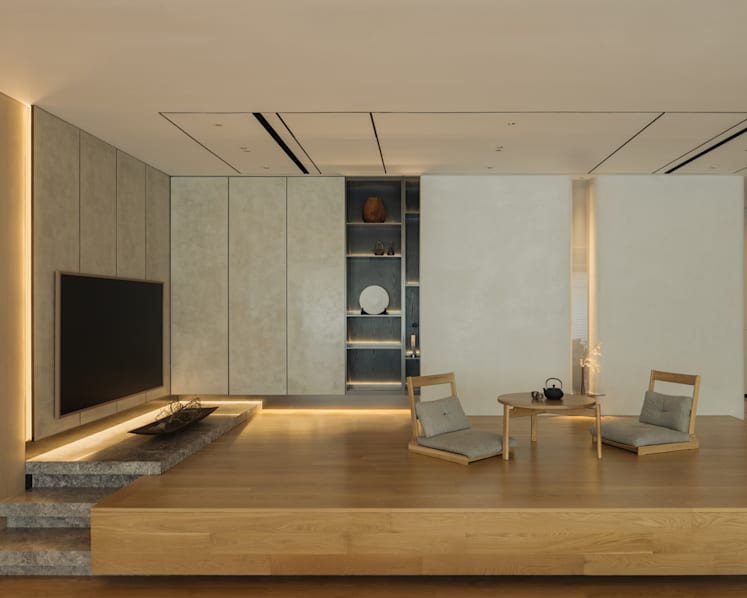
A multi-level layout avoids a flat one-zone studio by using a raised wooden platform to separate the living area. Low seating on the platform, paired with a round table and display shelves, keeps the eye grounded while the platform itself defines the zone without walls. The palette stays neutral with wood tones and stone grey, so the change in level does the work.
Soft ambient lighting and recessed lights keep the ceiling clean and the platform as the focus. The result is a natural division. For a rental, a low platform can be a freestanding frame instead of a built-in, giving you the same visual separation without permanent changes.
13 / 23Japanese Living Area with Tatami Floor, Shoji Screens, and Book
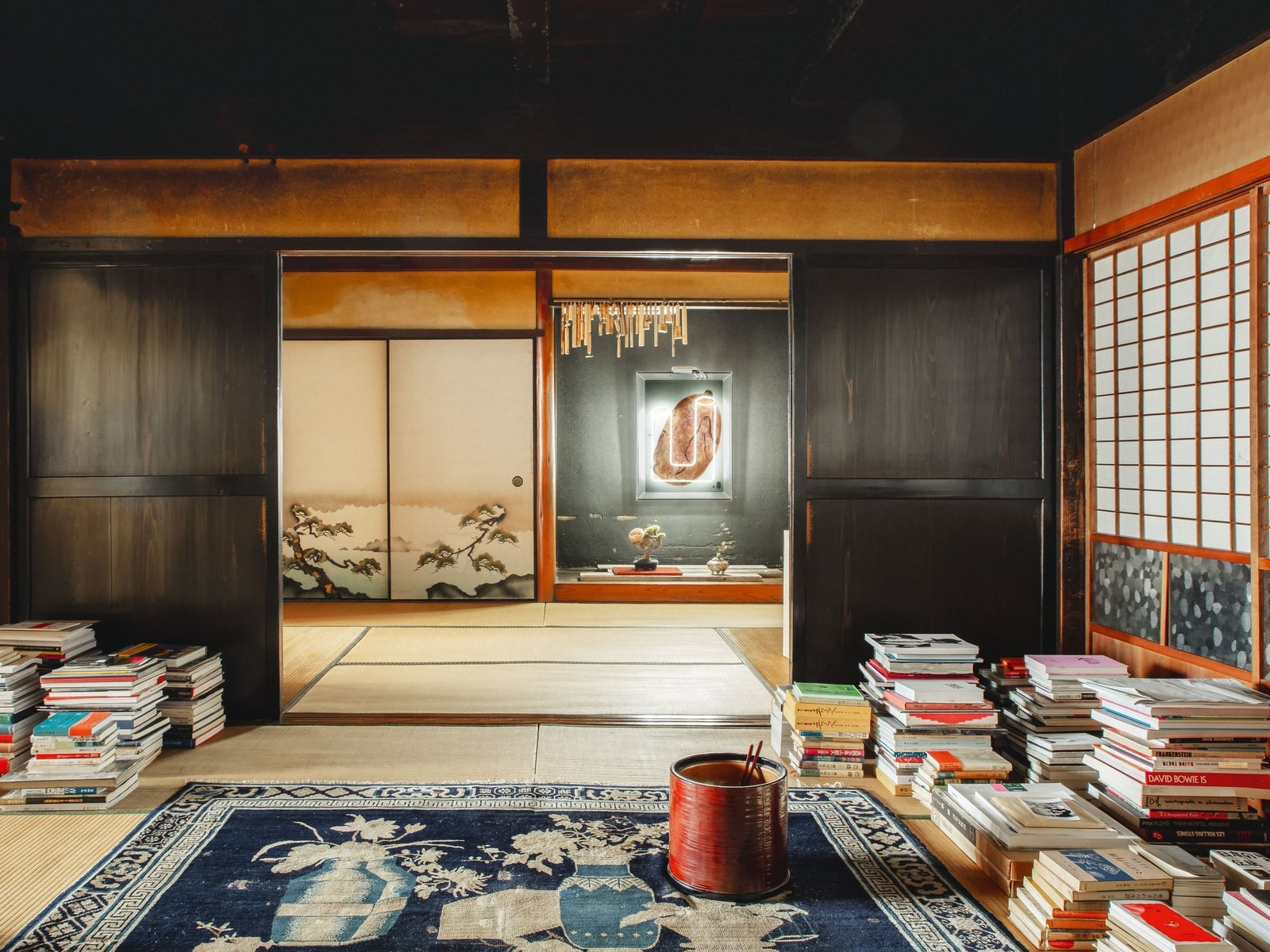
Books stacked along the walls create a natural storage system that doubles as texture. The tatami floor and shoji screens provide the soft, light backdrop, while the blue rug and red vase add small punches of color. The stacks of books break up the wall plane and add height without needing tall furniture.
14 / 23Spacious Studio Apartment with Integrated Wood Storage and Open Plan
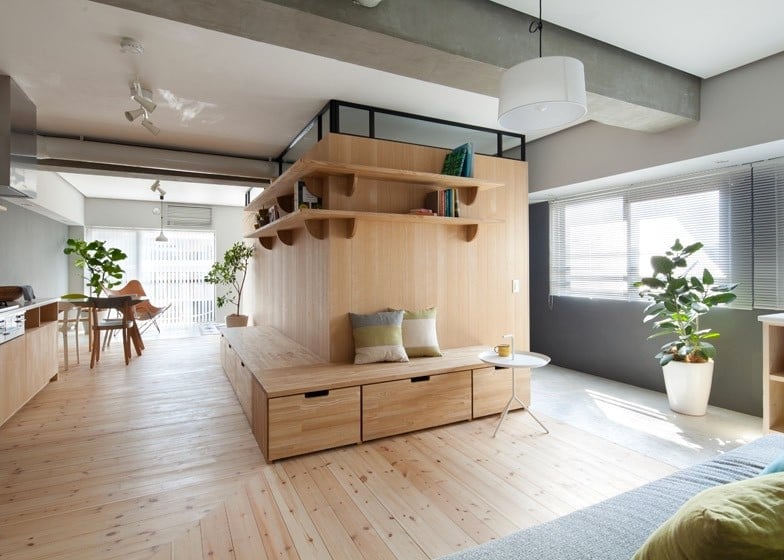
This studio uses a long integrated wood storage bench to handle the bulk of the clutter, leaving the open plan free for living. The bench runs along one wall, offering both seating and a place for baskets or bins, while a separate shelving unit above keeps daily items within reach. A sofa and dining table sit in their own zones without bumping into each other. Large windows keep the wood tones warm and the concrete and white surfaces bright. The layout trick is to concentrate storage along one axis, so the floor plan stays clear.
15 / 23Japanese Minimalist Living Room with Tatami Mat and Zen Garden View
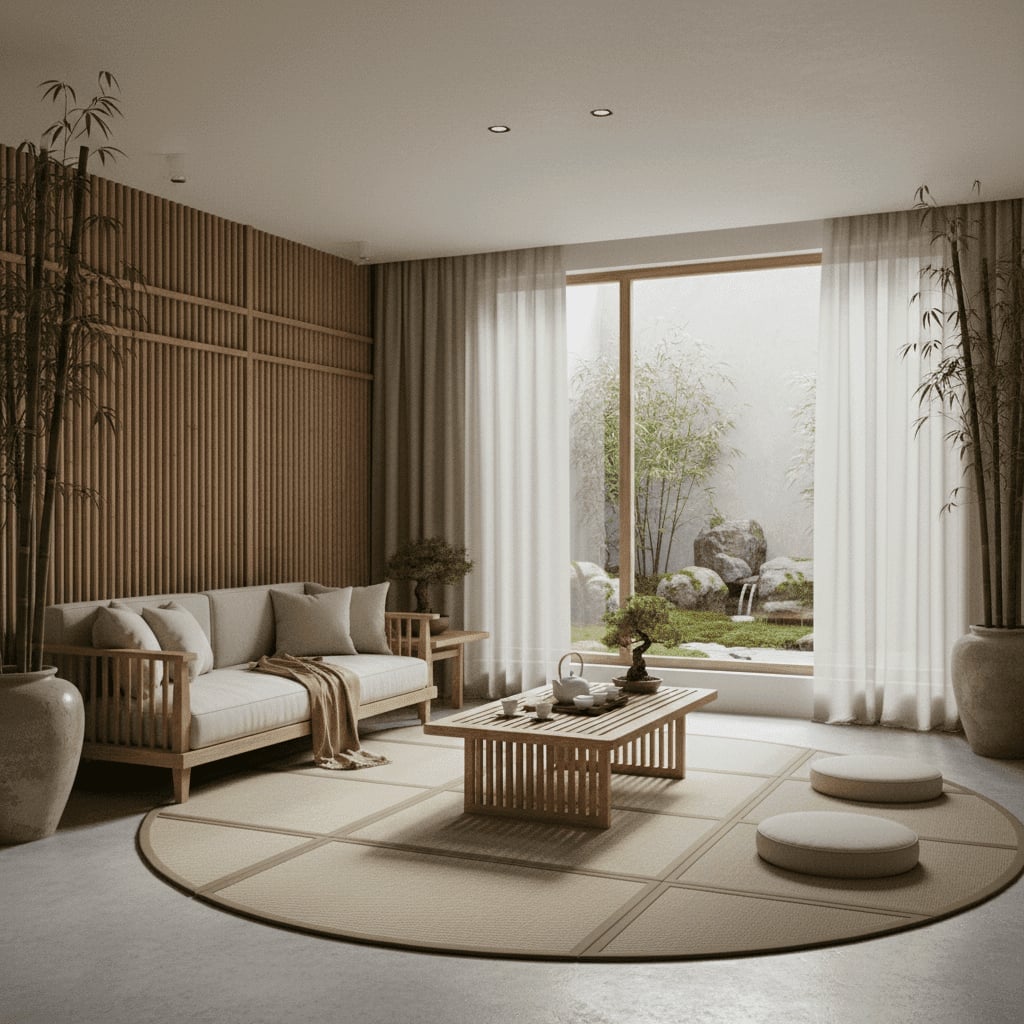
A low wooden sofa and round cushions face the view of a zen garden, making the window the main event. Beige, green, and wood tones keep the room quiet, so the eye goes straight to the greenery outside. A tatami mat underfoot adds texture and a traditional feel.
The bamboo plants reinforce the connection to the outdoors without blocking the light. The palette works because it stays within a narrow range of warm neutrals and soft greens. The one break: the stone elements on the coffee table and the garden path add a cooler note that prevents the room from feeling too sweet.
16 / 23Japanese Living Area with Sunken Table and Floor Chairs
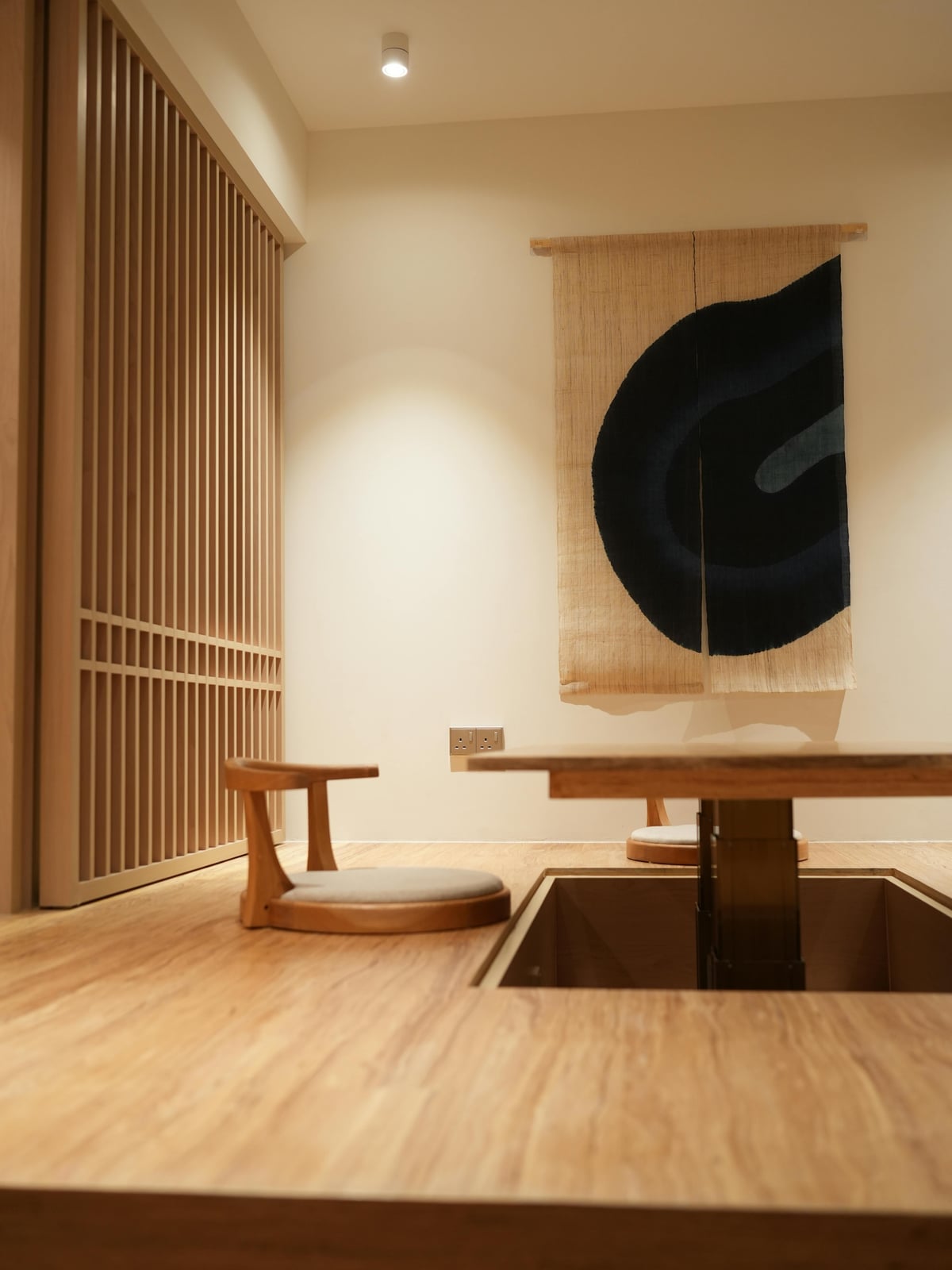
A sunken table changes how a living area lives. Instead of a regular dining setup with legs and a standard seat height, this room uses a low table set into the floor with floor chairs around it. The recessed design keeps the sightline clean and makes the conversation area feel intentional. Wood tones, beige fabric on the chairs, and a slatted screen keep the palette calm. A piece of textile art adds dark blue without breaking the minimalist feel. The scale of the table relative to the open-plan room means it anchors the space without dominating it.
17 / 23Minimalist Bedroom with Low Platform Bed and Ambient Backlighting
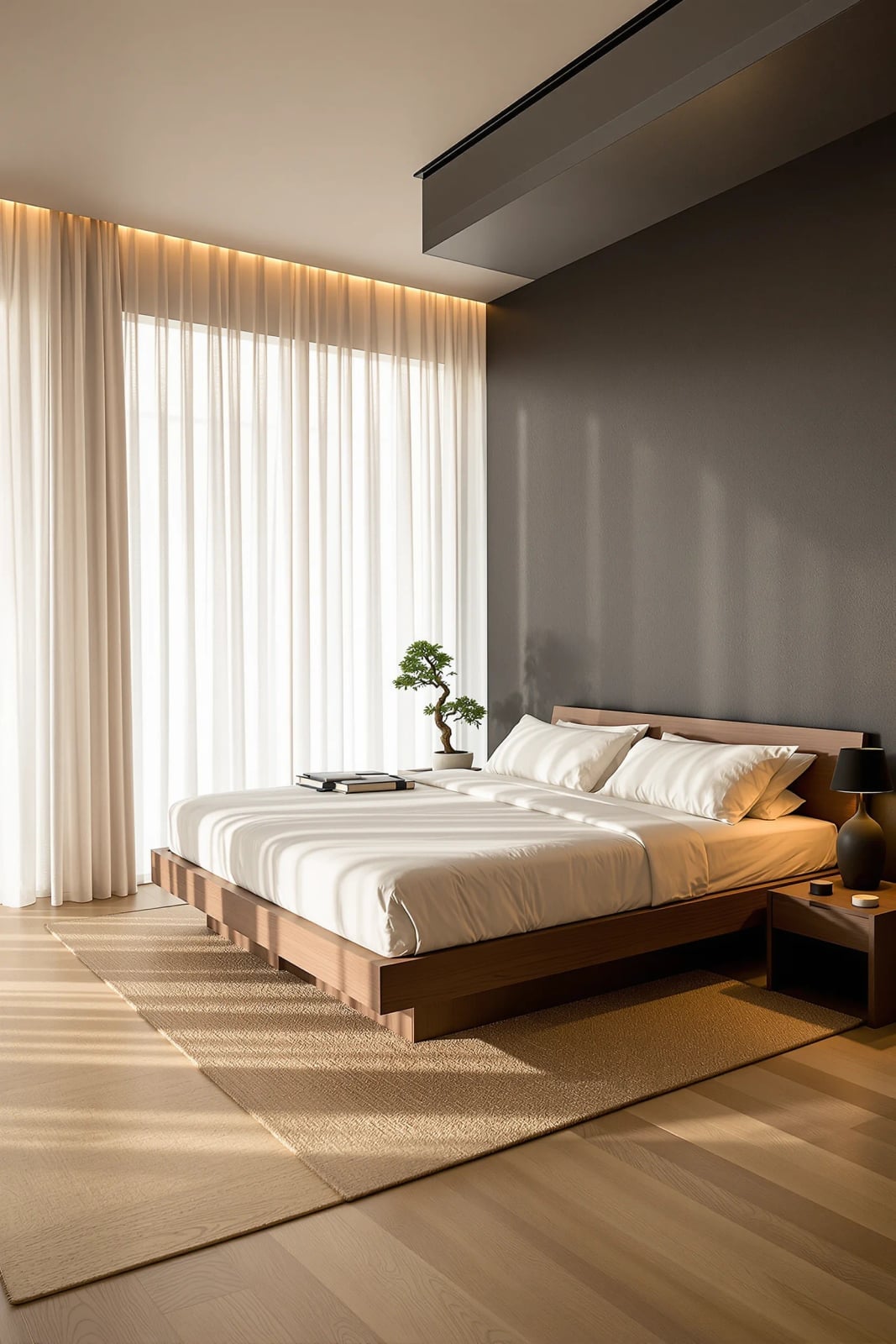
Light sources should be low and indirect for a calm bedroom. This room uses a low platform bed with ambient backlighting behind the headboard, which softens the transition from daytime to evening. Sheer curtains filter natural light during the day, while the backlighting creates a gentle glow at night. The palette uses wood tones, white, and grey, with a small bonsai tree on the bedside table as the only decorative element. For renters, a plug-in LED strip behind the bed frame achieves a similar effect without wiring changes.
18 / 23Studio Apartment with Light Wood Partition for Zoned Bedroom
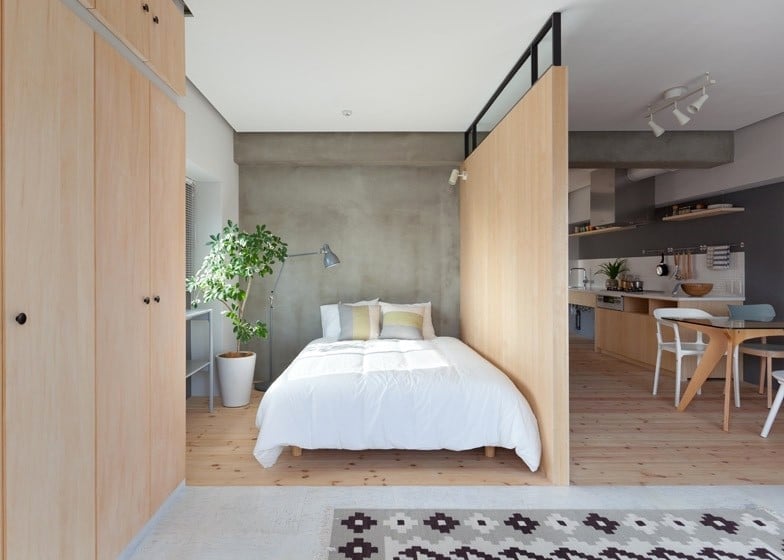
A full wall can make a studio feel cramped, but a solid partition has its own drawbacks. A light wood partition hits the middle ground. It separates the sleeping area from the kitchen and dining zone without blocking daylight or making the layout feel closed off. Behind the partition, the bed sits in a defined nook; in front, the kitchen counter and dining table keep the open-plan flow. The light wood matches the concrete and grey palette, so the divider reads as part of the architecture rather than an add-on. For renters, a freestanding shoji screen or a curtain track can create a similar zone without permanent installation.
19 / 23Serene Minimalist Bedroom with Platform Bed and Bonsai Tree
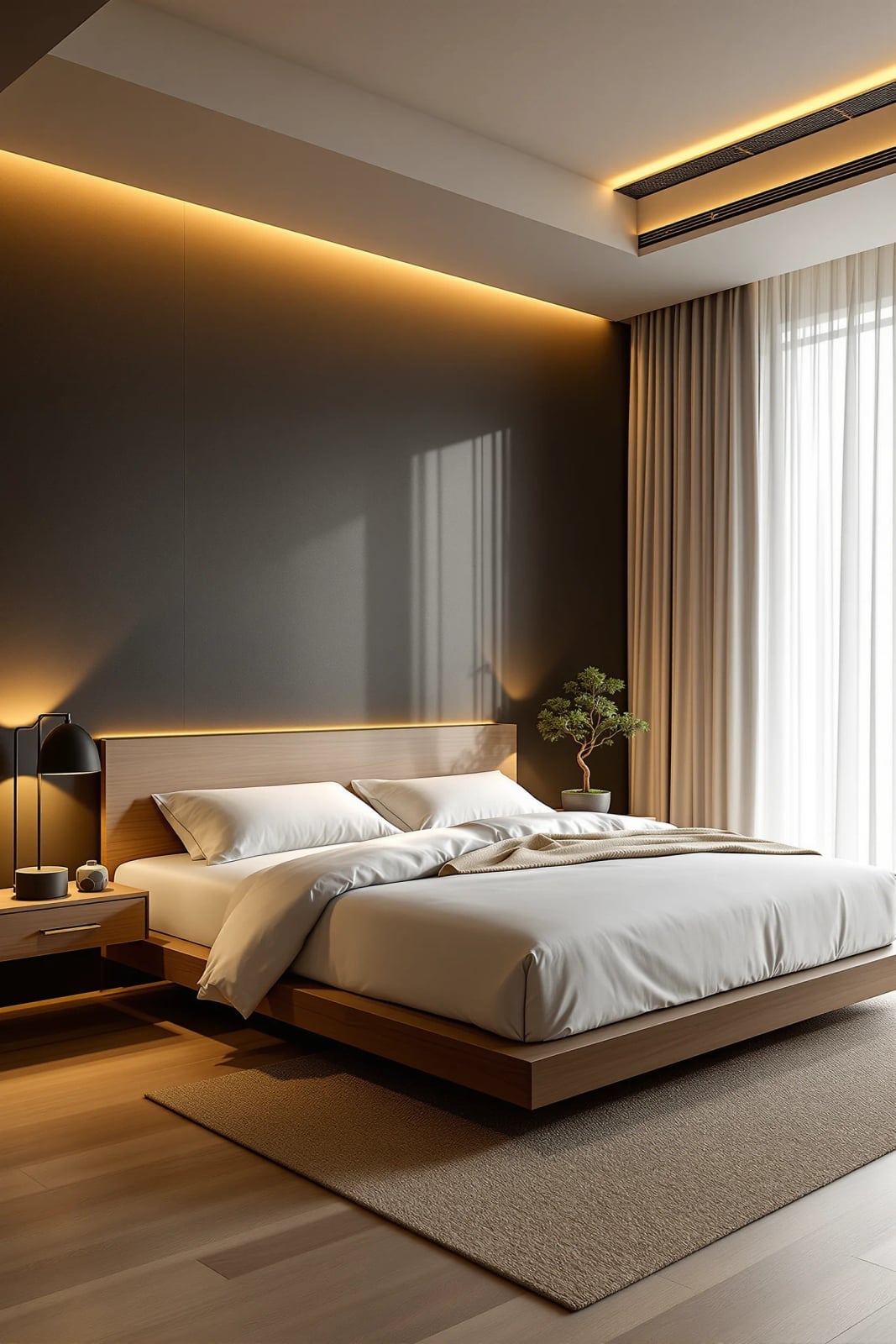
The low platform bed sits centered in the room, its backlit headboard adding a soft glow without taking up floor space. Sheer curtains on the window keep the natural light diffused, and the bonsai tree on the bedside table introduces a living element that does not clutter. The wood tones, white, and grey palette stays consistent, with the tree as the only green note. This setup works because the bed is the hero element, and everything else steps back. A roomy layout helps, but even in a smaller space, keeping the floor clear around the bed maintains the same calm.
20 / 23Japanese Minimalist Living Space with Integrated Shelf Lighting
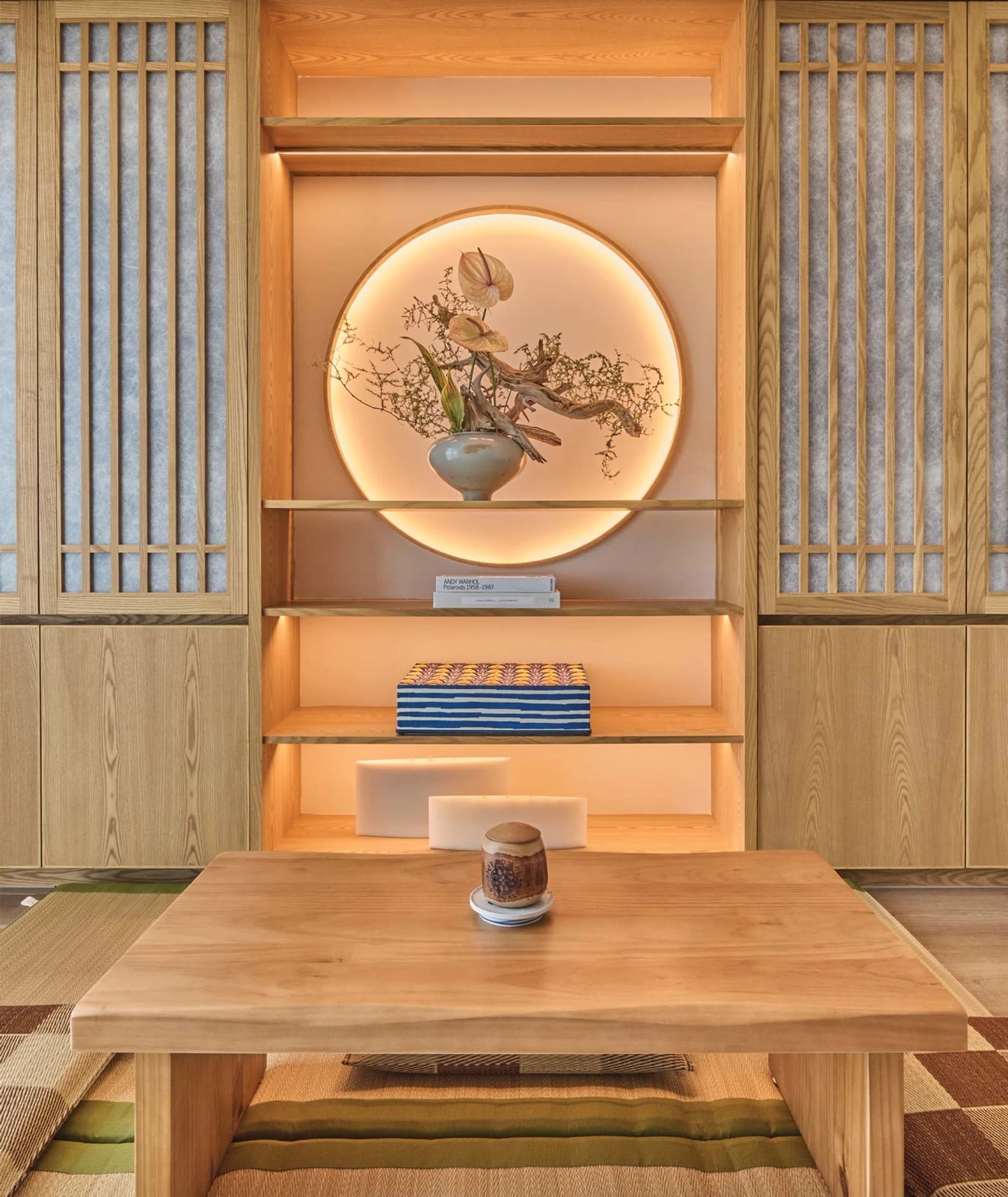
This living space uses integrated shelf lighting to define the room without adding floor lamps or pendants. The wooden shelving unit surrounds a low wooden table on a tatami mat, with a circular illuminated art display as a focal point. The peach and blue accents break up the light wood and white palette just enough to keep the space from feeling sterile. The shelf lighting works as both task light for the table and ambient light for the room. For a similar effect, battery-operated puck lights on existing shelves can add the same glow without hardwiring.
21 / 23Calm Living Room with Japanese Landscape Art and White Sofa
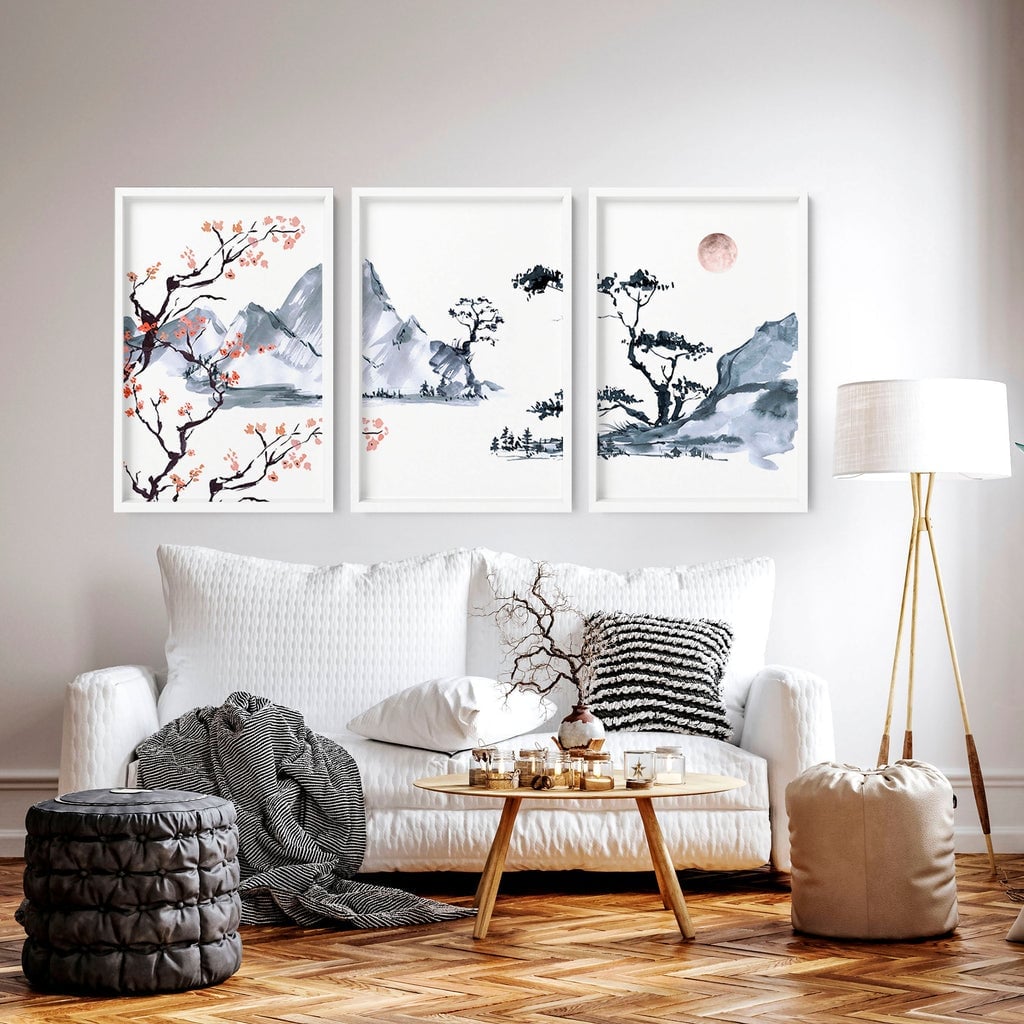
Hang a triptych landscape piece so it becomes the focal point of the wall. A white sofa placed directly below the artwork creates a clean visual anchor, while a neutral palette of soft blue and muted pink in the art keeps the look cohesive. A floor lamp adds ambient light. This setup works well for a roomy living area where you want a focal point that does not rely on a TV or a large piece of furniture. The symmetrical placement of the art panels gives the wall a balanced, intentional feel. If you rent and cannot paint, a large triptych like this is a renter-safe swap for an accent wall. The palette stays in the Japanese-inspired zone: calm, restrained, and connected to nature through color alone.
22 / 23Compact Japandi Living Area with Minimalist Coffee Table Decor
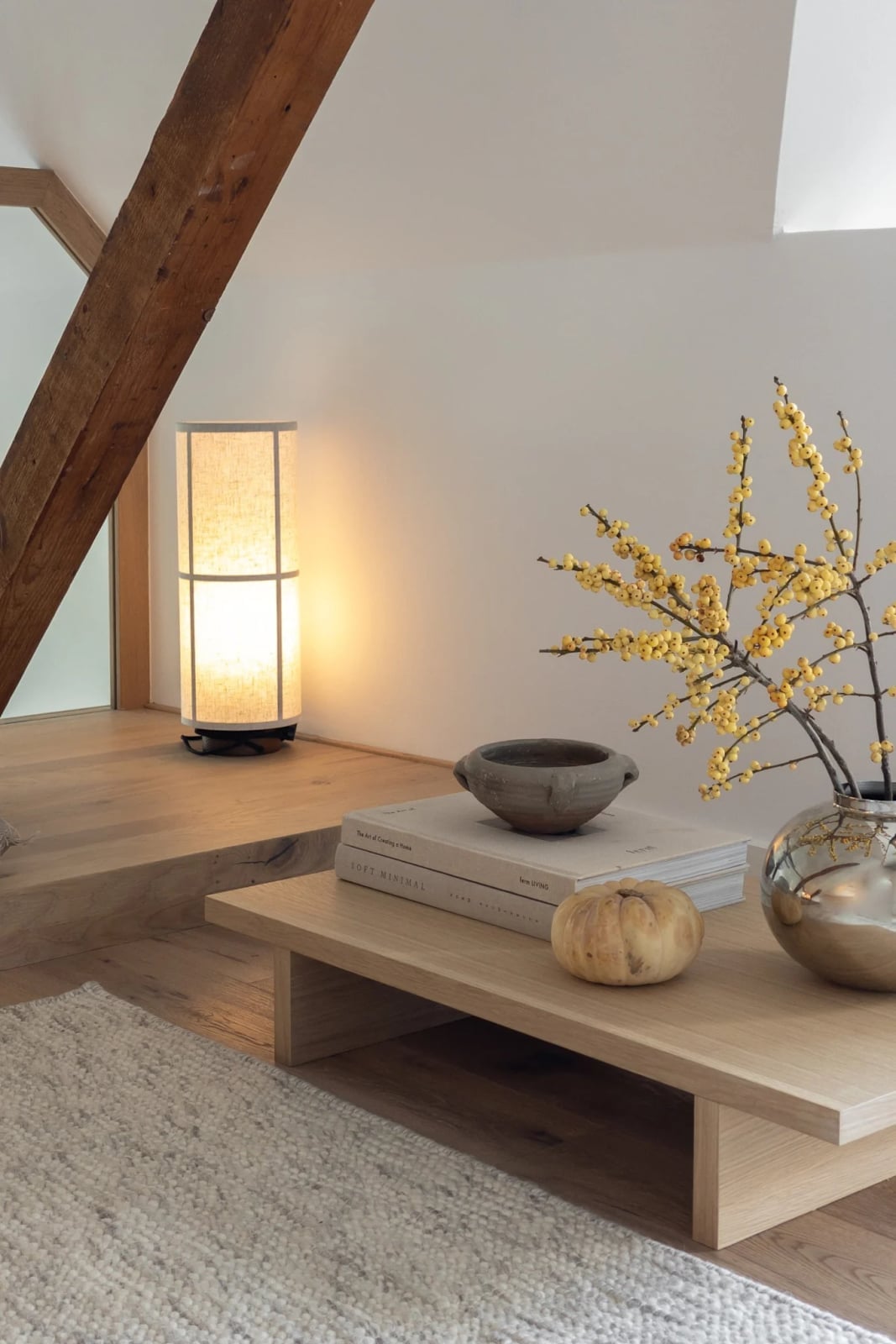
A low wooden coffee table holds just three objects: a ceramic bowl, a small vase, and a table lamp with a paper shade. That restraint is the point. In a compact Japandi living area, the ratio of empty surface to objects on the coffee table maintains a calm, uncluttered look. Side natural light and the warm glow of the lamp soften the contrast between the natural wood, white, and grey palette. A single yellow accent in the vase or bowl breaks the neutrality without breaking the calm.
23 / 23Final Thoughts
Making a studio apartment feel spacious and serene comes down to a few repeatable moves. Let in as much natural light as possible, stick to a neutral palette with wood accents, and use screens or low furniture to define zones without walls. Tatami mats, shoji screens, and platform beds do double duty as storage and style. The best part? None of it requires a full renovation. Start with one change, like swapping a solid door for a shoji screen or adding a single bonsai, and see how the room settles. Japanese aesthetics work because they subtract the unnecessary, not because they add the expensive.