
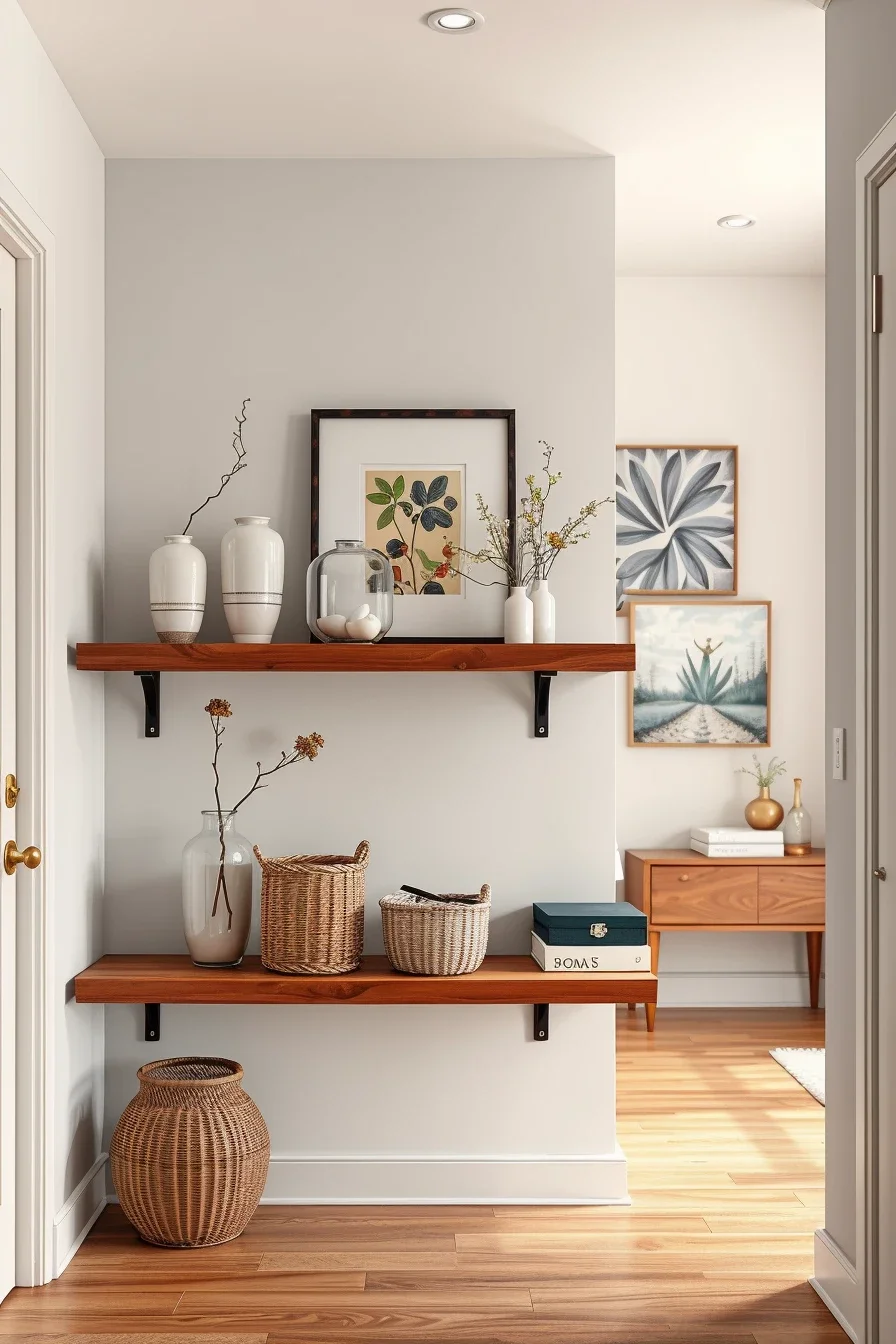
A well-organized entrance sets the tone for the rest of your home while making everyday routines easier and more efficient. Functional home entrance organization storage ideas help maximize every inch of space, whether you have a spacious foyer or a compact entryway. Thoughtful storage solutions can keep shoes, coats, bags, keys, and other daily essentials neatly arranged and always within reach. By combining practical furniture, smart layouts, and versatile organizers, you can reduce clutter without sacrificing style. The right organization system also creates a welcoming first impression for guests while making your home feel calmer and more functional. In this guide, you’ll discover creative and practical ideas to transform your entrance into an organized, attractive, and highly efficient space.
Smart Entryway Storage Solutions That Reduce Daily Clutter
I always believe that the entrance sets the tone for the entire home, which is why I prioritize storage that keeps everyday clutter under control. Instead of allowing shoes, backpacks, jackets, and mail to accumulate near the front door, I create clearly defined storage zones where every item has a permanent place. This approach makes the space feel open, welcoming, and much easier to maintain throughout the week. A neutral color palette, durable flooring, and layered lighting help the entryway remain bright while emphasizing both comfort and functionality.
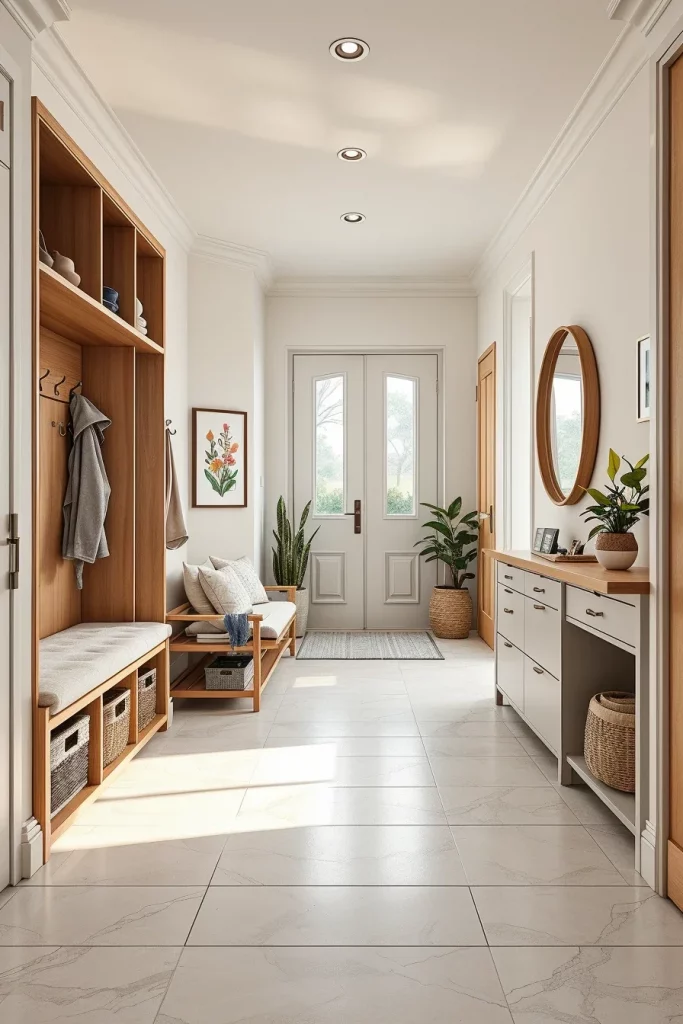
When designing this type of entryway, I like combining a storage cabinet, wall hooks, a slim bench, a tray for keys, and a compact organizer for mail. Each element serves a specific purpose without making the room appear crowded. Closed cabinets hide visual clutter, while open shelving allows quick access to frequently used items. I also recommend adding a washable rug that protects the flooring from dirt and moisture while creating a comfortable transition into the home.
From my experience, designers at Martha Stewart Living often emphasize creating dedicated drop zones near the entrance because they reduce daily stress and improve household organization. I have found this advice especially useful in busy family homes where multiple people come and go throughout the day. Small organizational habits become much easier to maintain when the furniture naturally supports them.
To complete this space, I would also include a charging drawer or charging station for phones, smart watches, and wireless earbuds. Keeping everyday electronics organized near the entrance prevents forgotten devices when leaving the house.
Built-In Cabinets for a Clean and Organized Entrance
Built-in cabinets remain one of my favorite investments because they maximize every available inch while creating a seamless architectural appearance. Unlike freestanding furniture, custom cabinetry blends into the walls, making even modest entryways feel larger and more refined. I appreciate how these cabinets hide seasonal clothing, shoes, umbrellas, cleaning supplies, and other necessities behind clean, uninterrupted surfaces.
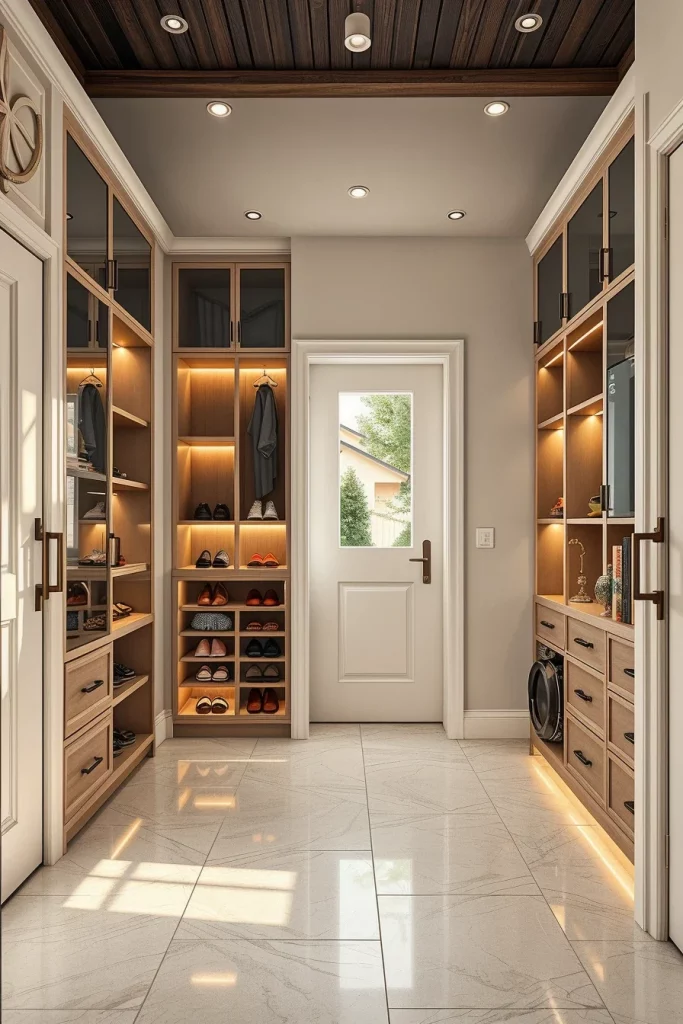
Inside the cabinets, I prefer adjustable shelving, pull-out baskets, dedicated shoe compartments, vertical dividers for trays, and concealed hooks for jackets. Soft-close doors keep the entrance quiet while integrated lighting makes it easier to find belongings during early mornings or late evenings. If ceiling height allows, I extend cabinetry all the way up to utilize storage that would otherwise remain unused.
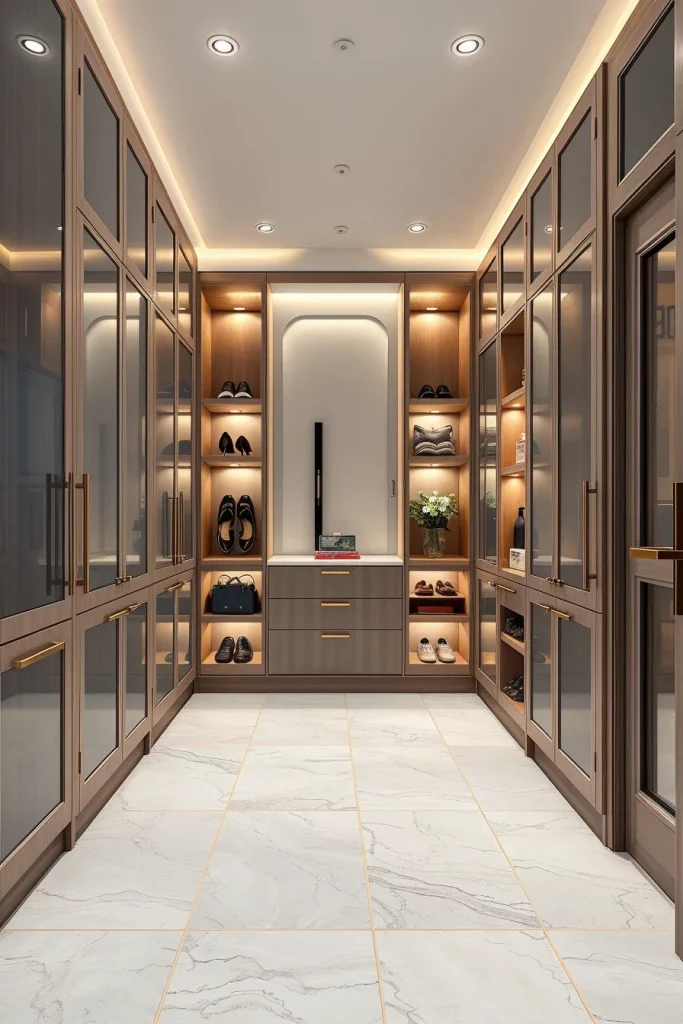
Many interior designers featured by Architectural Digest recommend custom built-ins because they provide long-term functionality while increasing the visual value of a home. I agree with this recommendation because well-designed cabinetry reduces visible clutter and allows the entrance to maintain a calm, organized appearance regardless of daily activity.
I also recommend including one cabinet section specifically designed for seasonal storage, allowing winter accessories, sports equipment, or travel items to remain neatly stored until needed.
Stylish Shoe Storage Ideas for Busy Households
In my opinion, shoe storage has the greatest impact on maintaining an organized entrance because footwear often becomes the first source of visible clutter. I prefer solutions that keep shoes protected, accessible, and completely off the floor. A carefully planned storage system helps preserve flooring while making the entrance appear significantly cleaner throughout the day.
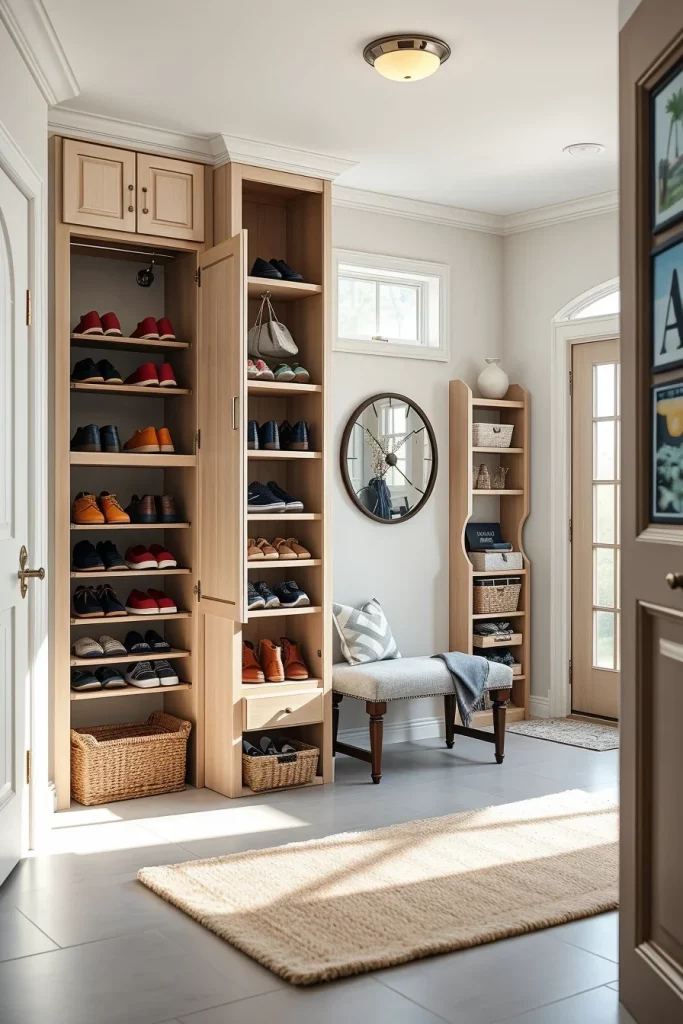
I usually combine tilt-out shoe cabinets, ventilated drawers, open shelves for frequently worn shoes, and deeper compartments for boots. Families with children often benefit from assigning each household member an individual section, making organization much easier to maintain. Labels, removable trays, and washable liners further simplify cleaning while protecting cabinetry from dirt and moisture.
Personally, I appreciate recommendations frequently shared by Better Homes & Gardens that encourage selecting shoe storage based on daily routines instead of simply maximizing capacity. I have found that organizing footwear by frequency of use creates a more practical system than arranging everything by style or color.
One addition I often suggest is a small waterproof tray positioned near the entrance during rainy or snowy seasons. It protects flooring while allowing wet footwear to dry without creating unnecessary mess.
Wall-Mounted Hooks for Coats, Bags, and Accessories
Wall-mounted hooks are among the simplest yet most effective organizational features I regularly include in entryway designs. They utilize unused vertical wall space while keeping coats, handbags, backpacks, scarves, hats, and umbrellas easily accessible. Even in narrow entrances, a thoughtfully arranged hook system significantly improves daily convenience without occupying valuable floor area.
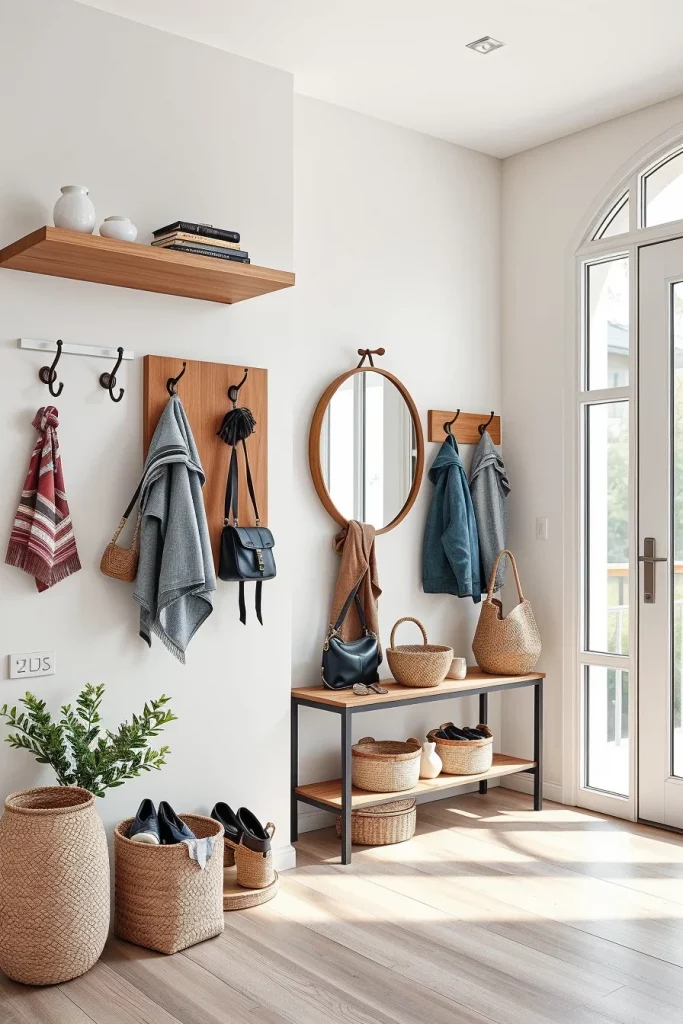
I typically install hooks at multiple heights to accommodate every member of the household. Durable metal hooks, a decorative wood backboard, floating shelves above, and a narrow catch-all ledge create an attractive combination that feels intentional rather than purely functional. Positioning hooks near the entrance encourages family members to immediately store belongings instead of leaving them throughout the home.
Based on my experience, organizing experts frequently recommend assigning specific hooks to each family member because consistent routines reduce clutter over time. I have seen this simple adjustment dramatically improve organization in both large and small households.
For additional convenience, I like incorporating a small mirror beside the hook area. It provides a final appearance check before leaving while reflecting more natural light throughout the entrance.
Entryway Benches With Hidden Storage Compartments
Whenever I design a practical entrance, I almost always include a storage bench because it combines seating with concealed organization. Having a comfortable place to sit while putting on shoes makes everyday routines more convenient, while hidden compartments keep seasonal accessories out of sight. This combination works equally well in spacious foyers and compact apartment entrances.
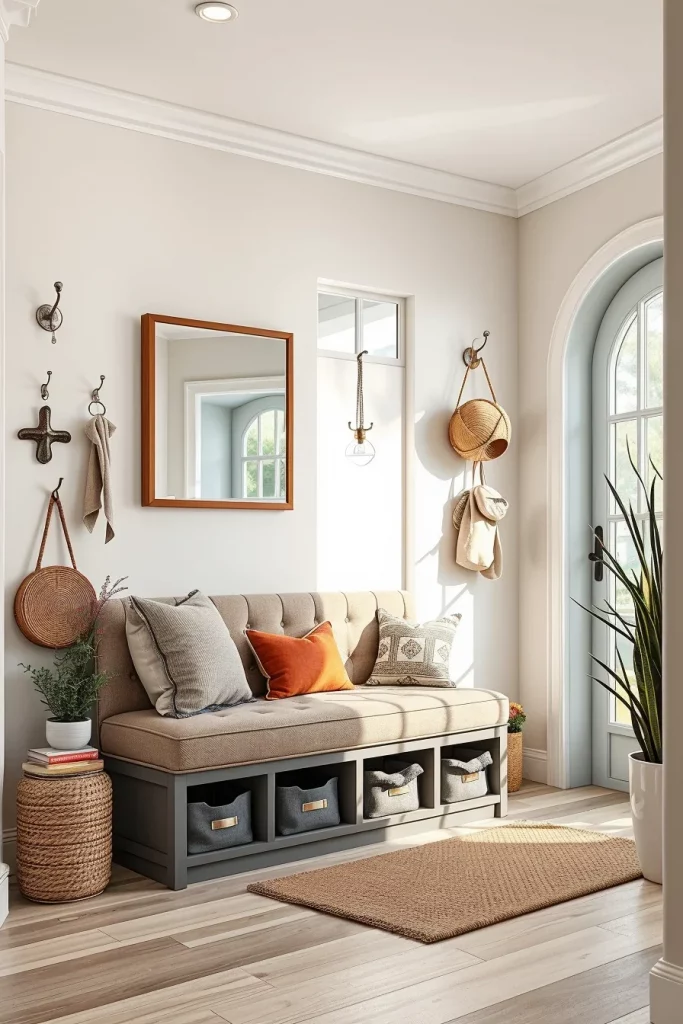
I usually choose benches with lift-up lids or pull-out drawers that store shoes, blankets, reusable shopping bags, pet supplies, or outdoor accessories. Upholstered seating adds comfort, while durable performance fabrics stand up well to everyday use. Pairing the bench with wall hooks, baskets, and soft lighting creates a welcoming entrance that feels organized without appearing overly designed.
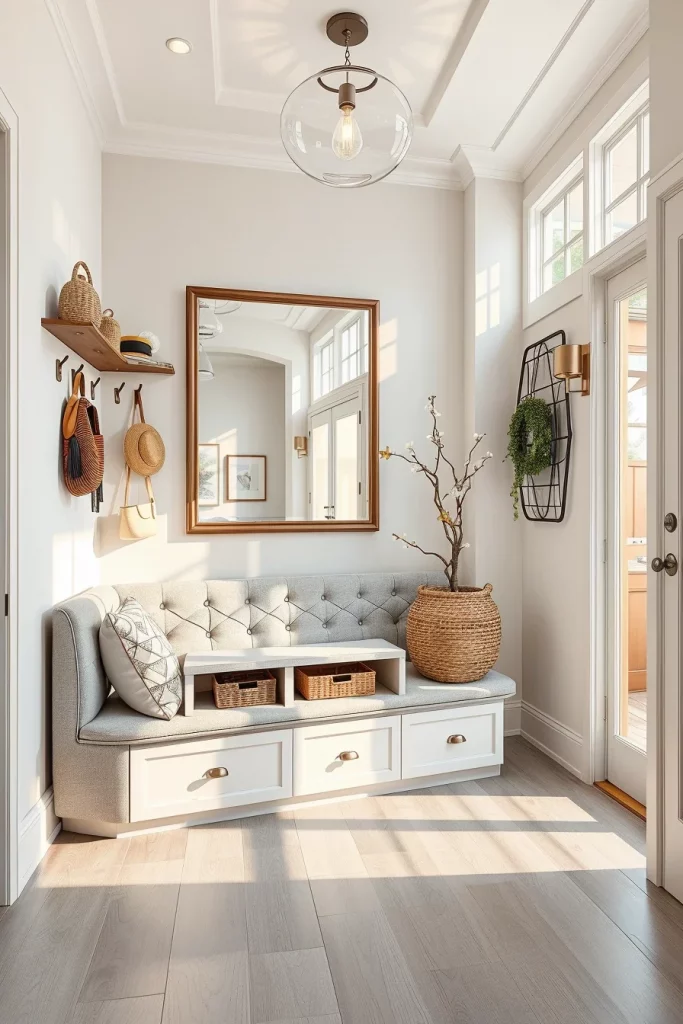
I appreciate advice shared by HGTV designers who often recommend selecting multifunctional furniture for smaller entryways. In my own experience, combining seating and storage into one piece of furniture frees valuable floor space while simplifying everyday organization.
To make this area even more practical, I suggest placing a durable indoor-outdoor rug beneath the bench. It helps define the entrance visually, protects the flooring, and makes cleaning much easier during every season.
Slim Console Tables With Practical Storage Features
I often recommend a slim console table because it adds both elegance and functionality without taking up valuable floor space. Even in a narrow entrance, a well-designed console provides a convenient surface for everyday essentials while maintaining an open, airy atmosphere. I like selecting models with clean lines, warm neutral finishes, and durable materials that complement the rest of the home. The result is an entryway that feels thoughtfully organized rather than overcrowded.
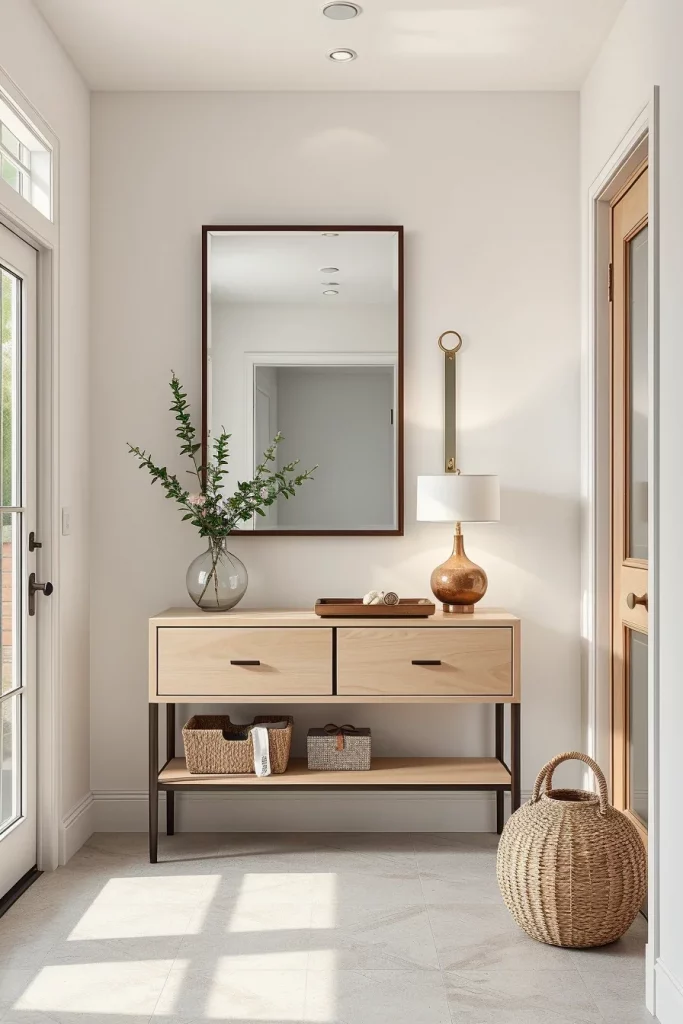
When choosing a console table, I look for practical features such as drawers, lower shelves, hidden compartments, and cable management for charging devices. A tray for keys, a decorative bowl for loose change, a small table lamp, and a framed mirror above the console complete the arrangement while keeping the surface uncluttered. I also appreciate furniture with rounded corners because it improves movement through compact spaces and creates a softer overall appearance.
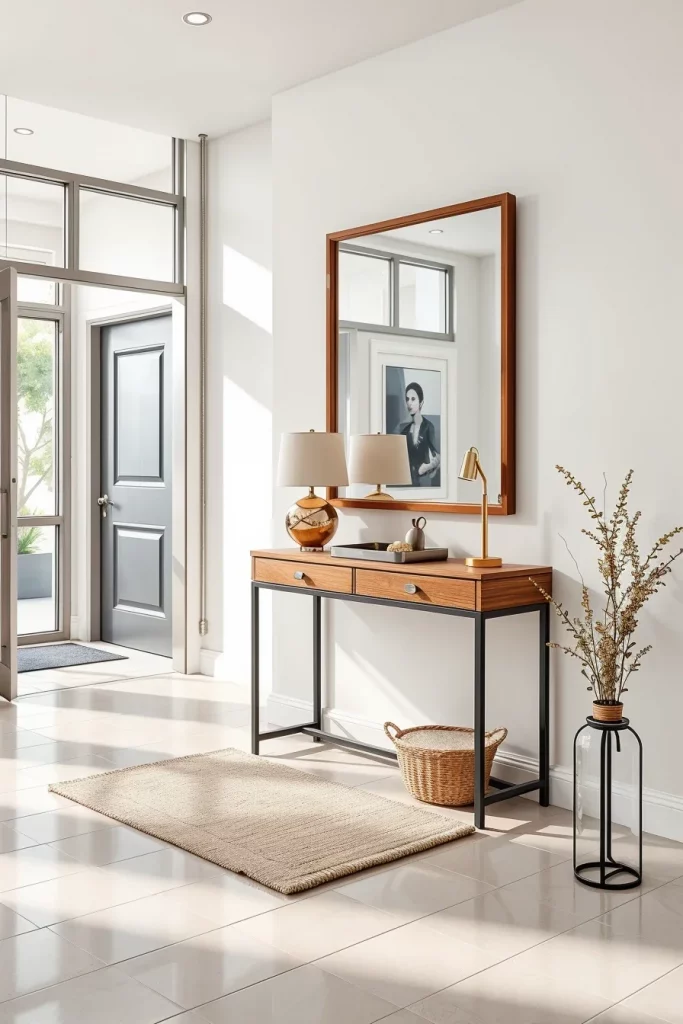
I have noticed that many designers featured by House Beautiful recommend selecting furniture that performs more than one function, especially in transitional spaces like entryways. I agree with this approach because a slim console can serve as storage, a decorative focal point, and a convenient landing place for daily necessities without overwhelming the room.
If I wanted to improve this setup further, I would add a small drawer organizer inside the console to separate keys, sunglasses, wallets, chargers, and other frequently used accessories. This simple addition prevents drawers from becoming cluttered over time.
Floating Shelves for Decorative and Functional Organization
Floating shelves are one of my favorite ways to maximize vertical space while maintaining a clean, contemporary look. Because they do not occupy floor space, they work especially well in compact entrances where every inch matters. I use them to display decorative accents while also providing practical storage for items that are needed throughout the week. Proper spacing between shelves keeps the arrangement balanced and prevents the wall from feeling crowded.
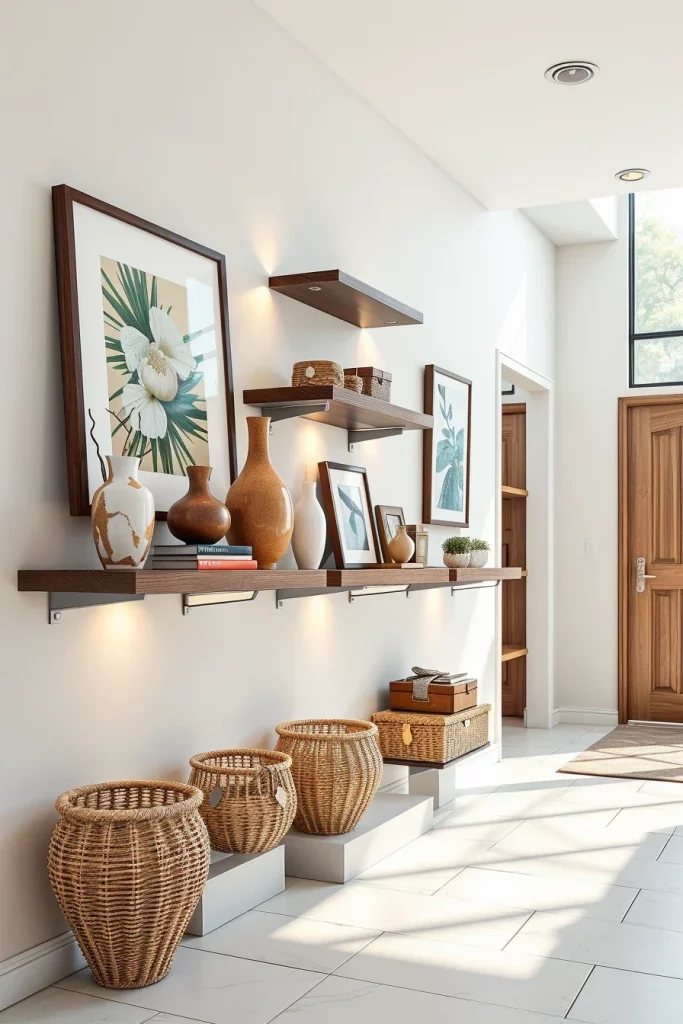
I typically style floating shelves with woven baskets, decorative storage boxes, framed artwork, ceramic vases, small trays, books, and attractive containers for everyday essentials. The key is combining functional storage with carefully selected décor so the shelves contribute to the overall design rather than creating visual clutter. I also prefer installing shelves with concealed brackets for a seamless architectural appearance.
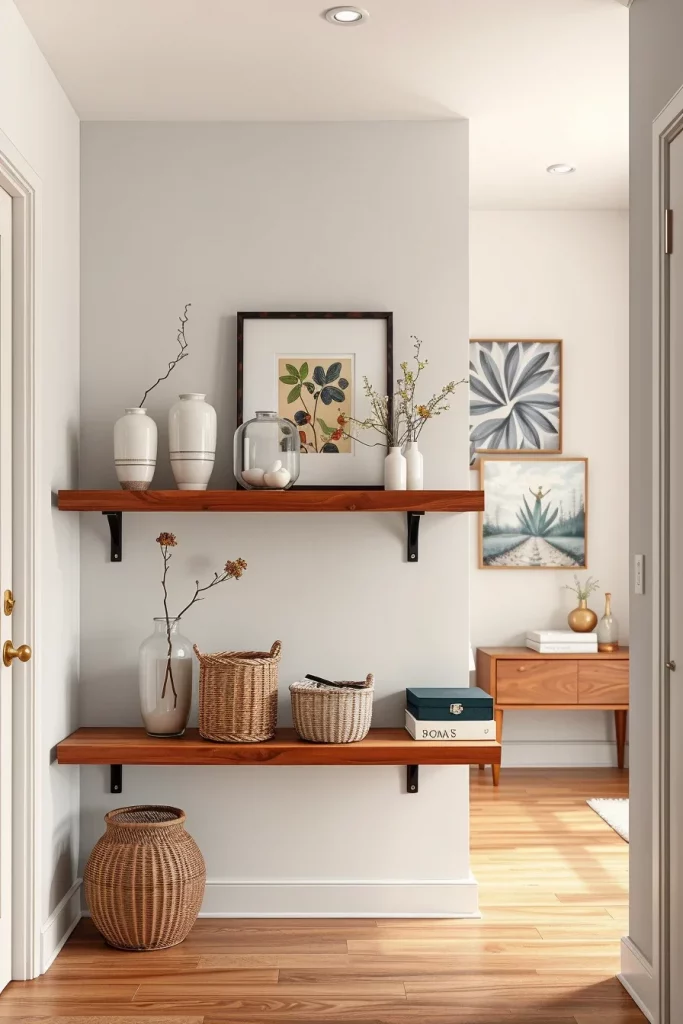
From my experience, interior designers frequently emphasize that decorative storage should remain intentional and restrained. I have found that limiting the number of displayed objects makes the entire entrance appear larger, calmer, and easier to maintain while still reflecting the homeowner’s personality.
To make the shelves even more useful, I recommend incorporating integrated LED lighting beneath each shelf. Soft lighting highlights decorative pieces while improving visibility during evening hours.
Storage Baskets That Keep Everyday Essentials Within Reach
Storage baskets are one of the simplest organizational tools I regularly incorporate into entryway designs because they combine flexibility with attractive texture. Instead of leaving scarves, gloves, pet accessories, reusable shopping bags, or sports equipment scattered throughout the entrance, I assign each category its own basket. This system allows everyone in the household to quickly locate what they need while maintaining an organized appearance.
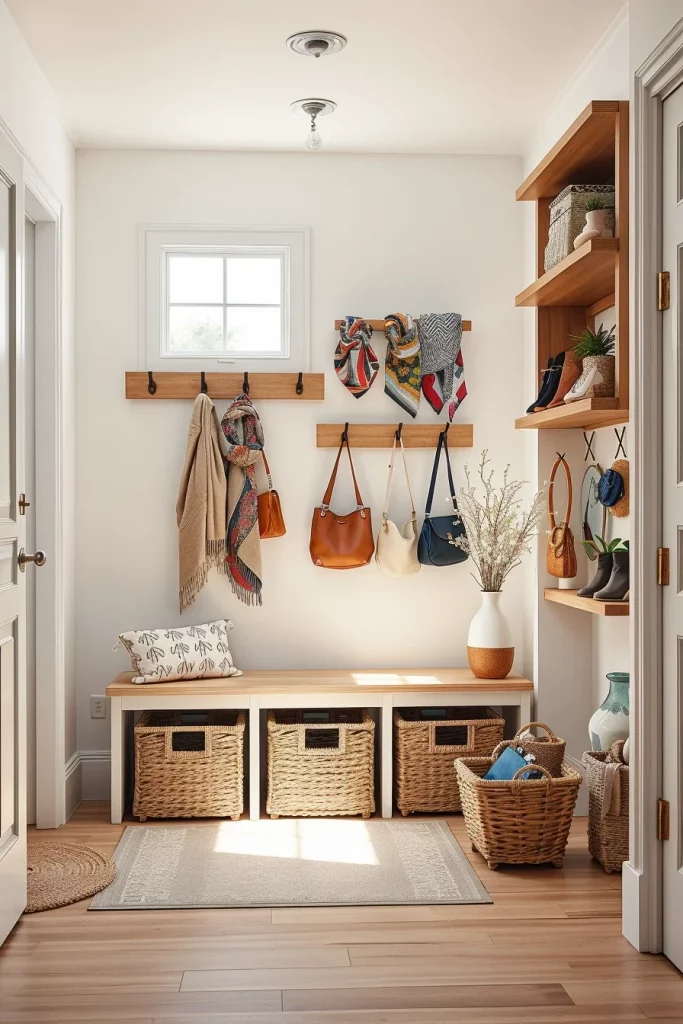
I usually choose woven baskets, fabric bins, or durable containers that coordinate with the overall color palette of the entrance. Placing baskets beneath a bench, inside open shelving, or under a console table makes excellent use of otherwise unused space. Labels can also be added for larger households to simplify daily routines and encourage everyone to return items to their proper location.
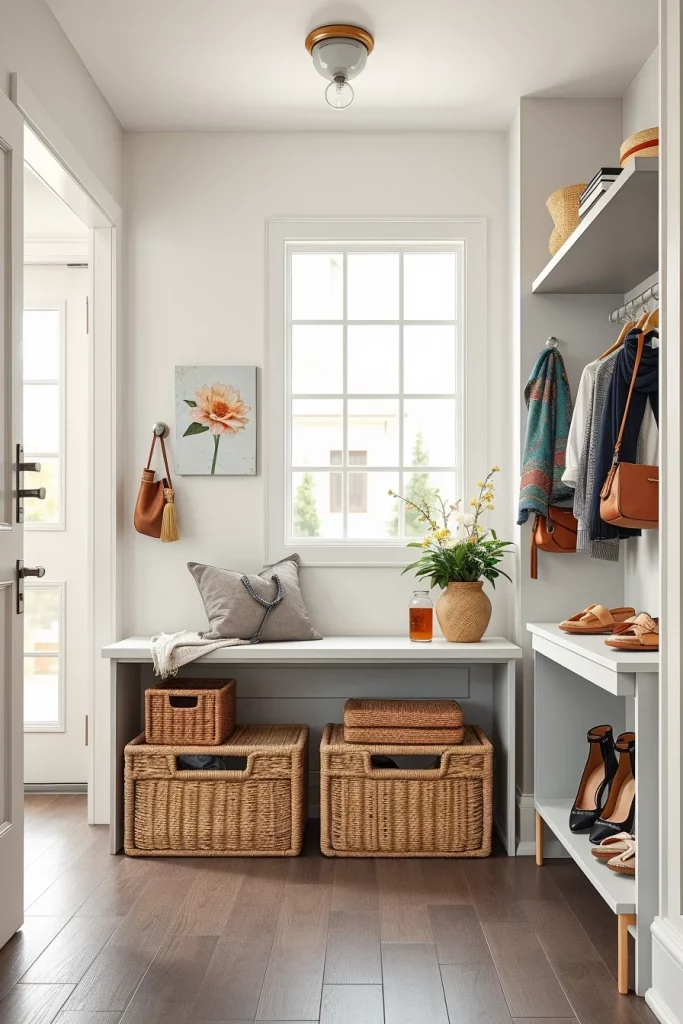
Personally, I appreciate organizational advice from Better Homes & Gardens, which often recommends using portable storage containers because they are easy to rearrange as household needs change. I have found baskets particularly useful because they adapt to changing seasons without requiring major furniture updates.
For even greater functionality, I would include one larger basket dedicated to outgoing items such as packages, library books, or returns that need to leave the house. This prevents forgotten errands and helps maintain daily organization.
Vertical Storage Ideas for Small Home Entrances
Whenever I work with a compact entrance, I immediately look upward for storage opportunities. Vertical organization allows small spaces to function much like larger ones by utilizing wall height instead of valuable floor area. Tall cabinets, stacked shelving, hanging organizers, and elevated storage create impressive capacity while preserving comfortable circulation through the entrance. This strategy is especially effective in apartments and narrow hallways where every square foot matters.
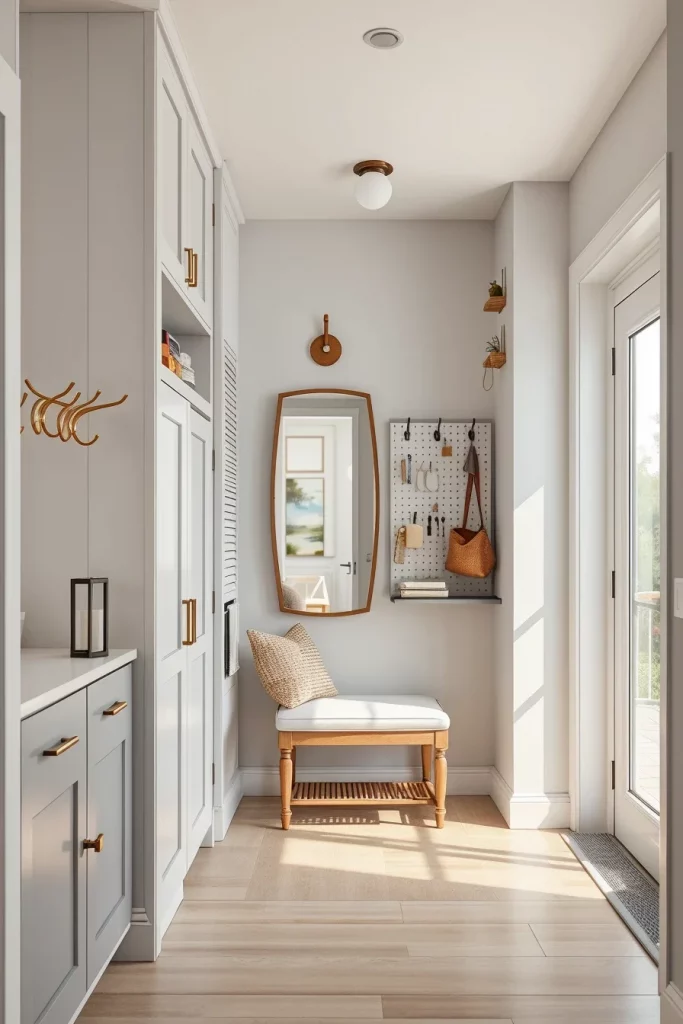
I like combining full-height storage cabinets, floating shelves, pegboards, wall organizers, narrow cubbies, and overhead compartments to maximize every available surface. Hooks positioned at different heights accommodate adults and children alike, while upper shelves safely store seasonal belongings that are only needed occasionally. Large mirrors also contribute by reflecting natural light and creating the visual illusion of a more spacious entrance.
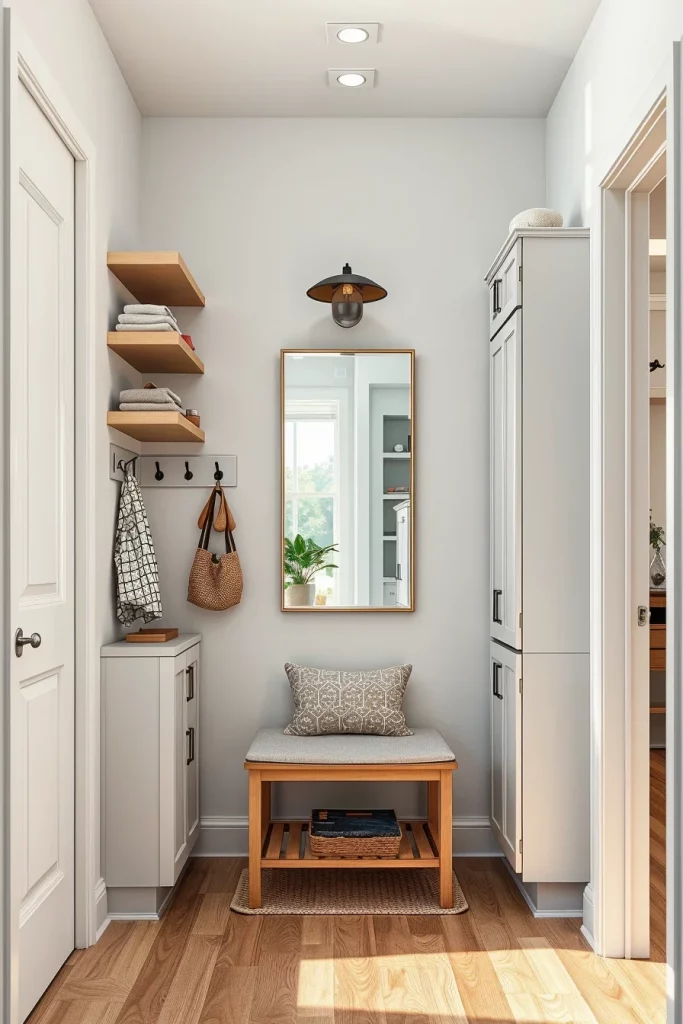
According to recommendations frequently shared by professional organizers through The Spruce, making full use of vertical wall space is one of the most effective ways to improve organization in smaller homes. I completely agree because thoughtful vertical planning dramatically increases storage capacity without compromising comfort or aesthetics.
I would also recommend incorporating a folding step stool that can be stored discreetly inside a cabinet. It makes upper storage easily accessible while encouraging homeowners to fully utilize their highest shelving.
Organizing Keys, Mail, and Daily Essentials Efficiently
The first thing I focus on when designing an entryway is creating a dedicated landing zone for everyday essentials. Instead of allowing keys, wallets, sunglasses, mail, and reusable shopping bags to accumulate on random surfaces, I prefer assigning every item a permanent location. This immediately reduces visual clutter and makes leaving the house much less stressful. Even a narrow hallway can accommodate a slim console table or floating shelf that keeps necessities within easy reach while maintaining a clean appearance.
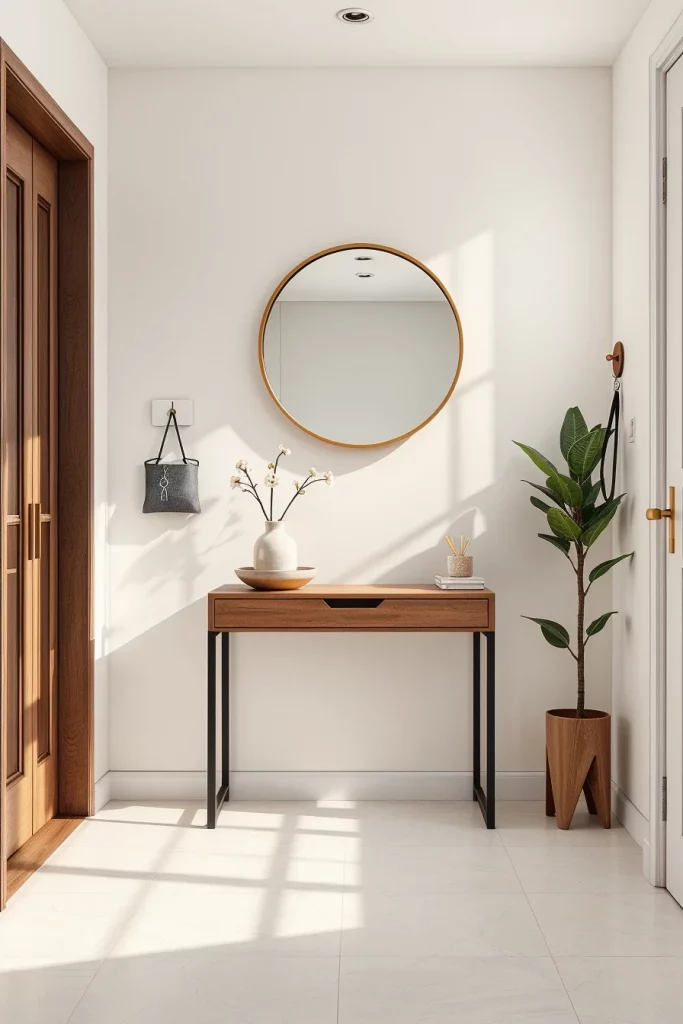
I usually combine a floating shelf with decorative trays, a small catchall bowl, wall hooks, and compact mail organizers. A drawer inside a console table is perfect for storing charging cables, spare keys, pens, or pet accessories that would otherwise create unnecessary clutter. Above the console, I often install a mirror because it reflects light, visually enlarges the entrance, and provides one final opportunity to check my appearance before heading outside. The combination of vertical storage and concealed compartments makes this system practical without overwhelming the space.
From my experience, consistency matters more than expensive furniture. Designers featured by HGTV and Better Homes & Gardens frequently recommend establishing a daily drop zone because organized routines naturally reduce clutter over time. I have found this advice extremely practical because everyone in the household quickly develops the habit of returning items to the same location.
If I wanted to improve this area even further, I would add a discreet charging station inside one drawer for phones, smart watches, and wireless earbuds. Hidden power management keeps countertops tidy while ensuring devices are always fully charged before leaving home.
Space-Saving Closet Ideas Near the Front Door
Whenever I work with a compact entrance, I look for opportunities to maximize vertical storage before increasing the room’s footprint. A full-height storage closet near the front door can completely transform daily organization without making the hallway feel crowded. Floor-to-ceiling cabinetry creates a streamlined appearance while hiding coats, shoes, umbrellas, sports equipment, and seasonal accessories behind simple doors.
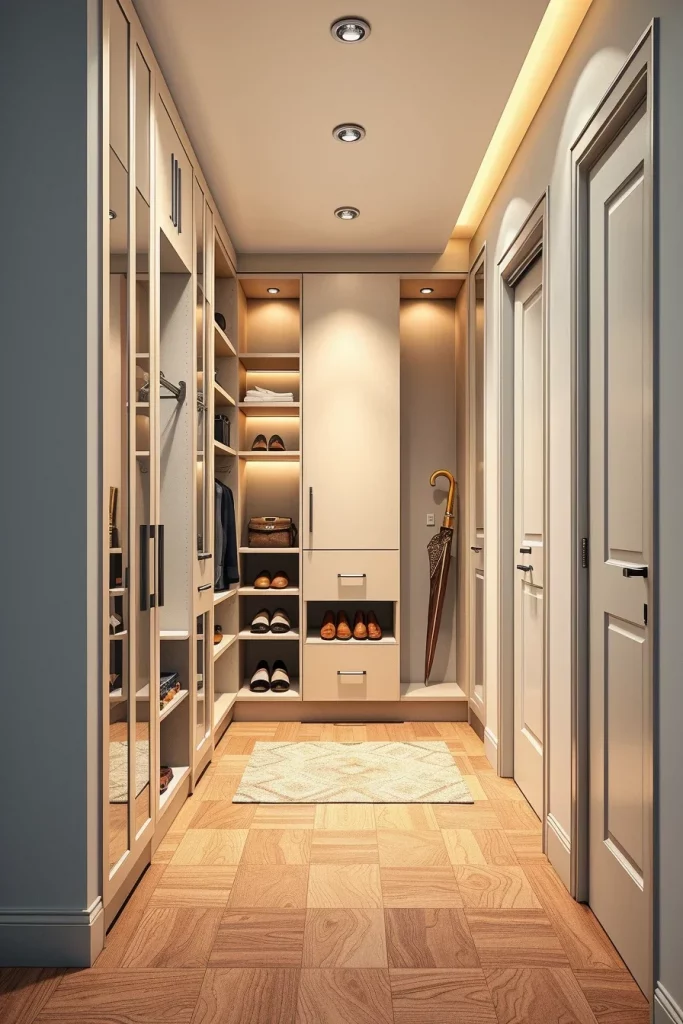
Inside the closet, I like combining adjustable shelving, pull-out baskets, shoe racks, double hanging rods, and upper storage compartments. Every family has different needs, so flexible shelving makes future adjustments easy. I also recommend installing soft-close doors and integrated lighting, which improve both convenience and accessibility. Even narrow closets become surprisingly functional when every inch is planned carefully.
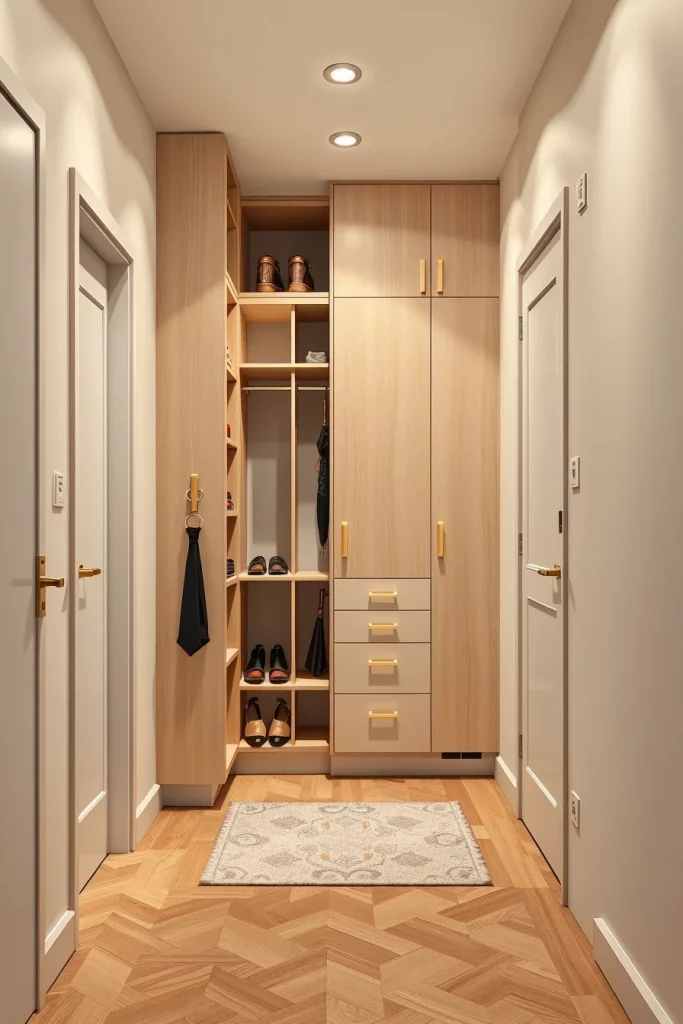
Personally, I believe concealed storage is one of the easiest ways to make an entrance appear larger and calmer. Architectural Digest has highlighted the importance of customized storage that adapts to changing household routines rather than relying on decorative pieces alone. I completely agree because hidden organization reduces visual noise while still keeping everything accessible.
One feature I often recommend adding is a pull-out vertical compartment for umbrellas, reusable bags, and cleaning tools. These narrow spaces are frequently overlooked but significantly improve storage efficiency without requiring additional floor space.
Family-Friendly Entryway Storage Systems
Families need an entryway that supports busy schedules rather than creating additional stress. I like dividing the entrance into personalized storage zones so every family member has a designated place for shoes, backpacks, jackets, and everyday accessories. Individual cubbies simplify morning routines and encourage children to participate in keeping the space organized.
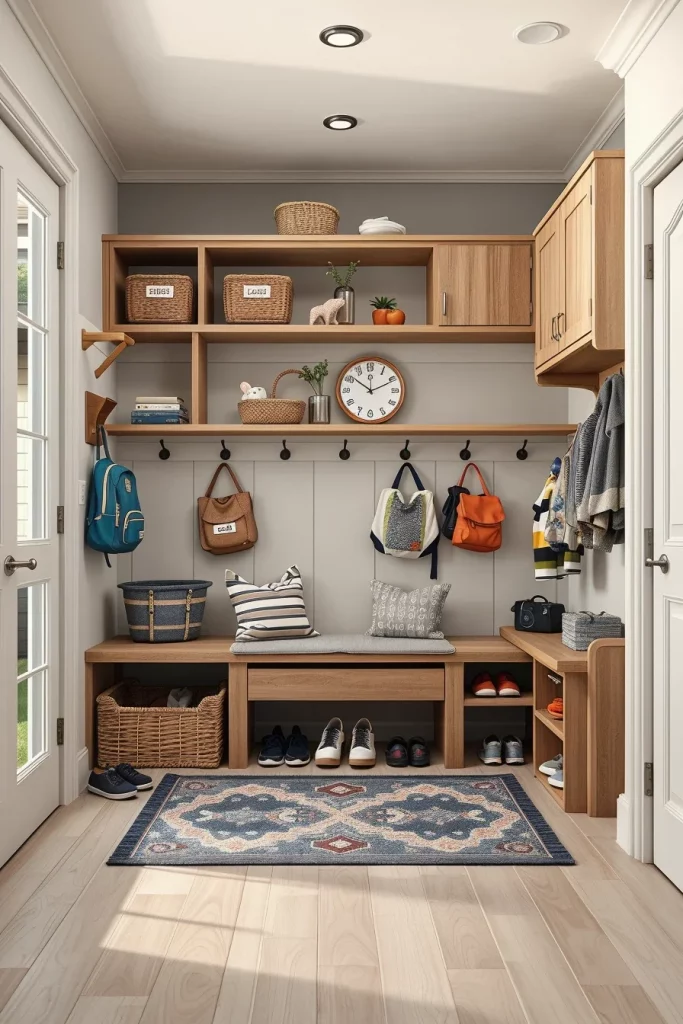
A practical family storage system usually includes sturdy lower cubbies, durable hooks installed at child-friendly heights, overhead cabinets, labeled baskets, and a comfortable storage bench. I also recommend placing washable mats beneath the bench to collect dirt and moisture brought in from outside. Durable materials such as high-quality laminates and easy-to-clean painted finishes make maintenance much simpler throughout the year.
From my perspective, labels are one of the most effective organizational tools for larger households. The Home Edit organization experts often emphasize assigning every item a specific home instead of relying on memory alone. I have found this principle especially useful because it reduces confusion and makes cleaning significantly faster for everyone.
To make this setup even more efficient, I would include a small family planning board or magnetic calendar near the entrance. Keeping reminders, shopping lists, and weekly schedules close to the exit helps everyone stay organized before leaving the house.
Mudroom-Inspired Storage Ideas for Home Entrances
Even if a home does not include a dedicated mudroom, I often borrow many of its organizational principles. A mudroom-inspired entrance focuses on containing outdoor gear before it spreads throughout the house. By creating clearly defined storage zones, I can keep coats, boots, umbrellas, pet supplies, and sports equipment neatly organized immediately after entering.
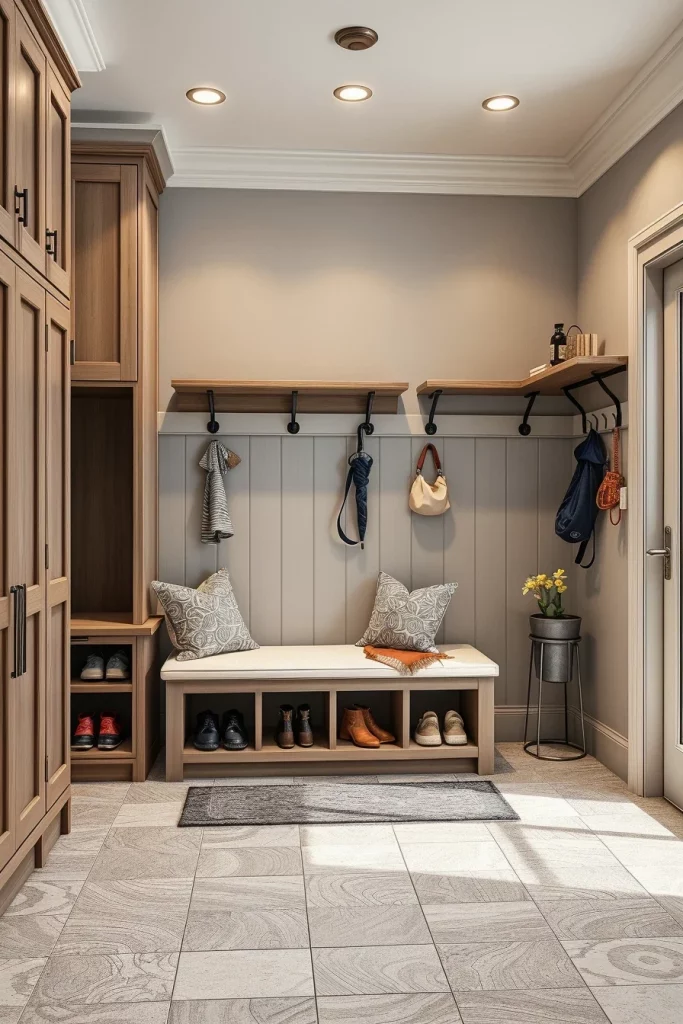
My preferred layout combines a built-in bench with hidden storage underneath, tall cabinets for outerwear, open hooks for frequently used jackets, overhead shelving for seasonal items, and durable flooring that resists moisture and dirt. I also appreciate adding ventilated shoe compartments that improve airflow and help footwear dry more quickly after rainy or snowy weather.
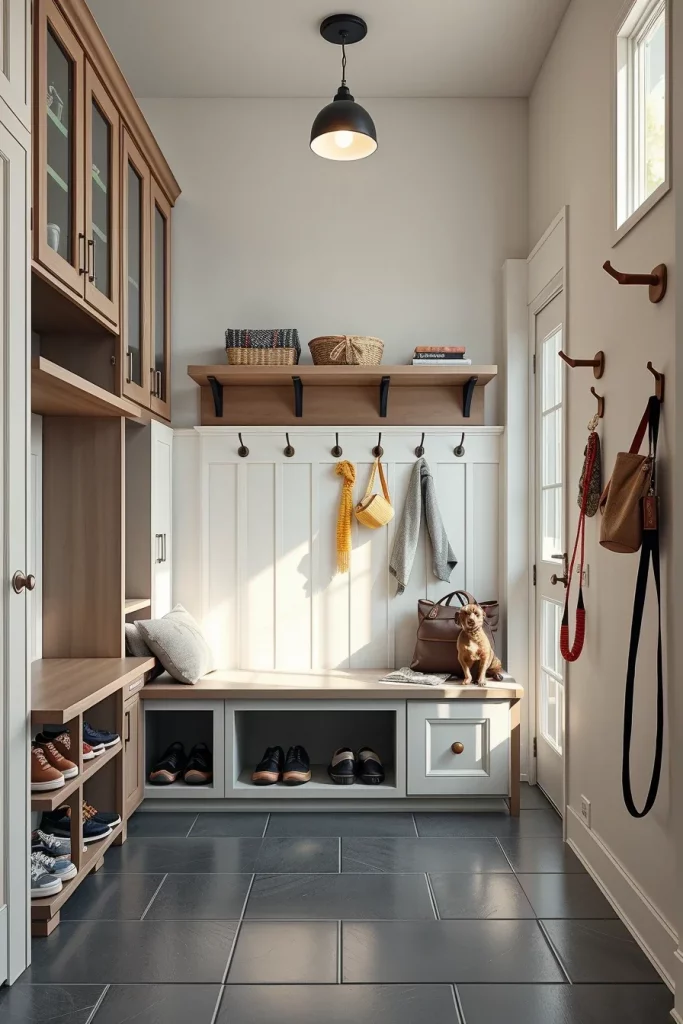
Personally, I find that durable finishes are just as important as attractive design. Better Homes & Gardens frequently recommends selecting materials that withstand heavy daily use while remaining easy to clean. I follow the same philosophy because a functional entrance should remain beautiful without requiring constant maintenance.
If space allows, I would also incorporate a compact utility cabinet for pet leashes, cleaning supplies, reusable grocery bags, and portable vacuum accessories. This keeps frequently needed household items conveniently accessible without cluttering visible storage.
Open Storage Concepts for Easy Daily Access
Open storage works exceptionally well when daily convenience is the highest priority. I enjoy designing entryways where frequently used items remain visible yet carefully organized. Open shelving creates an airy appearance while making it easier to grab shoes, handbags, jackets, or baskets during busy mornings. The key is maintaining balance so the display feels intentional rather than cluttered.
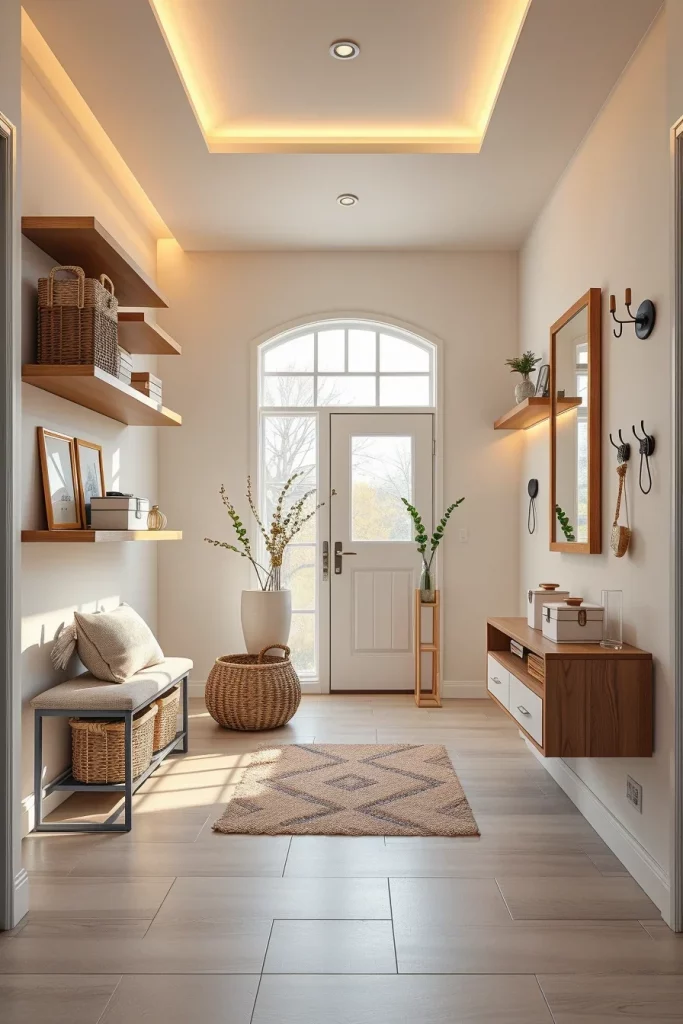
I usually combine floating shelves, decorative woven baskets, sturdy wall hooks, a slim storage bench, and a simple console table. Decorative boxes help conceal smaller accessories, while coordinated baskets maintain visual consistency. A large mirror and carefully selected lighting complete the arrangement, making the entrance appear brighter and more spacious without requiring additional square footage.
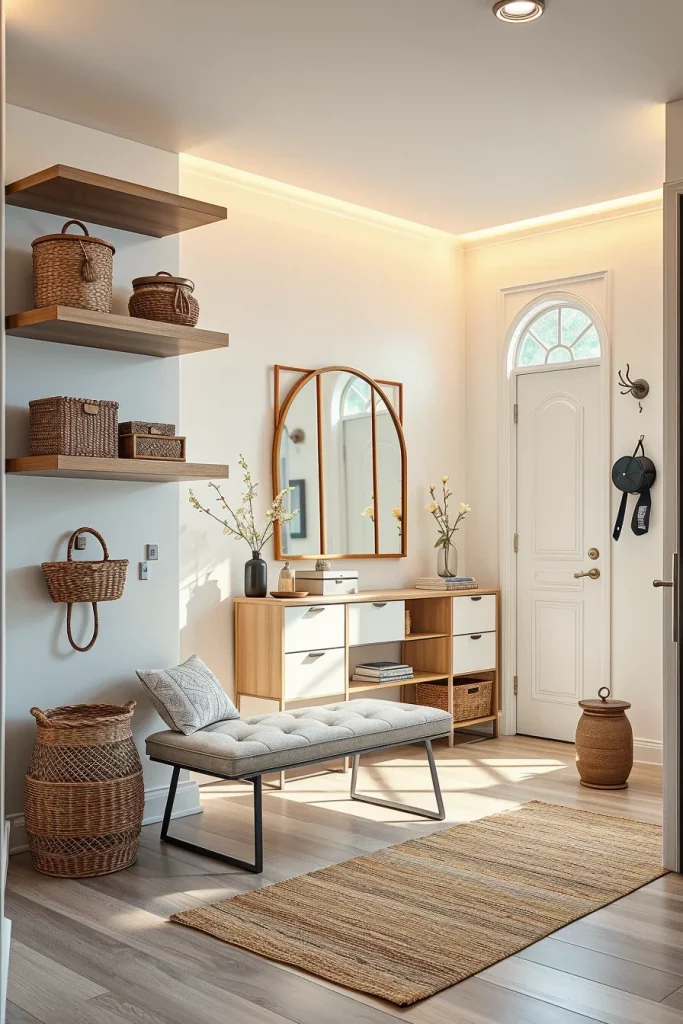
From my experience, open storage succeeds only when homeowners commit to regular organization. HGTV designers often recommend limiting visible accessories to everyday necessities while storing less frequently used items elsewhere. I completely agree because restrained styling allows practical storage to become part of the overall interior design instead of appearing messy.
One additional feature I like including is subtle LED shelf lighting. It improves visibility during early mornings and evenings while adding warmth that makes the entrance feel welcoming throughout the day.
Closed Storage Cabinets for a Tidy Appearance
Whenever I want an entryway to feel calm and visually organized, I choose closed storage cabinets instead of leaving everything on display. Cabinet doors instantly hide shoes, seasonal accessories, bags, and miscellaneous household items that can quickly create visual clutter. This approach works especially well in open-concept homes where the entrance is visible from the living room, allowing the entire space to maintain a clean and cohesive appearance. I find that a simple, streamlined design always creates a more welcoming first impression.
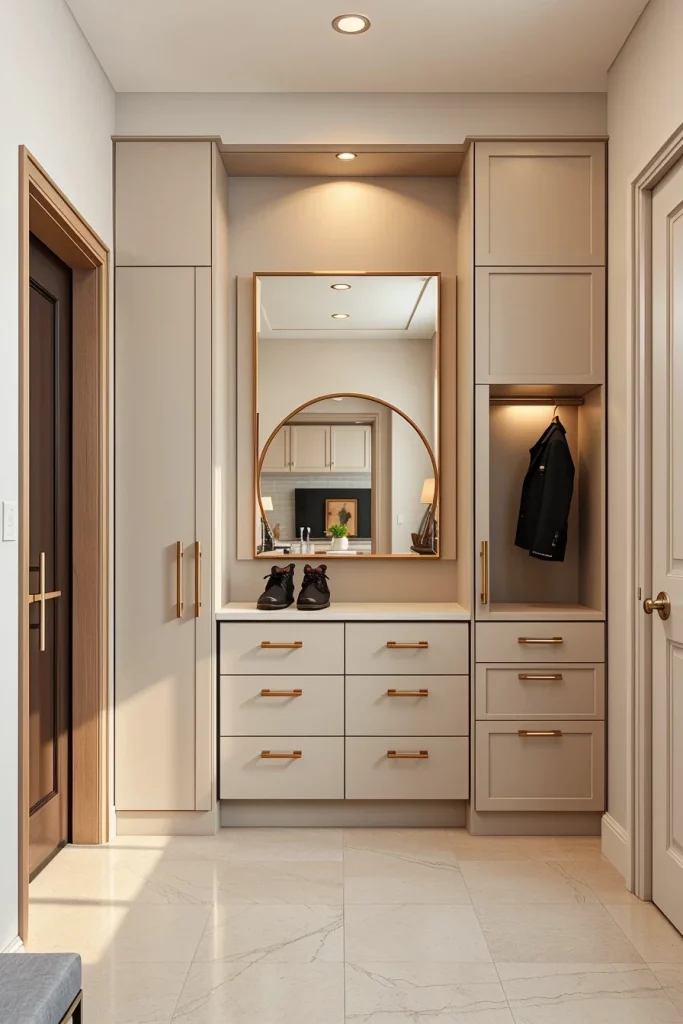
I usually select floor-to-ceiling cabinets with adjustable shelves, concealed shoe compartments, pull-out drawers, and integrated hanging space for coats. Soft-close hinges improve everyday comfort while protecting the cabinetry over time. Matte finishes, minimal hardware, and neutral colors help the storage blend seamlessly into the surrounding interior. Inside the cabinets, I like using baskets and storage bins to separate gloves, scarves, hats, pet supplies, and reusable shopping bags, making everything easy to locate without sacrificing organization.
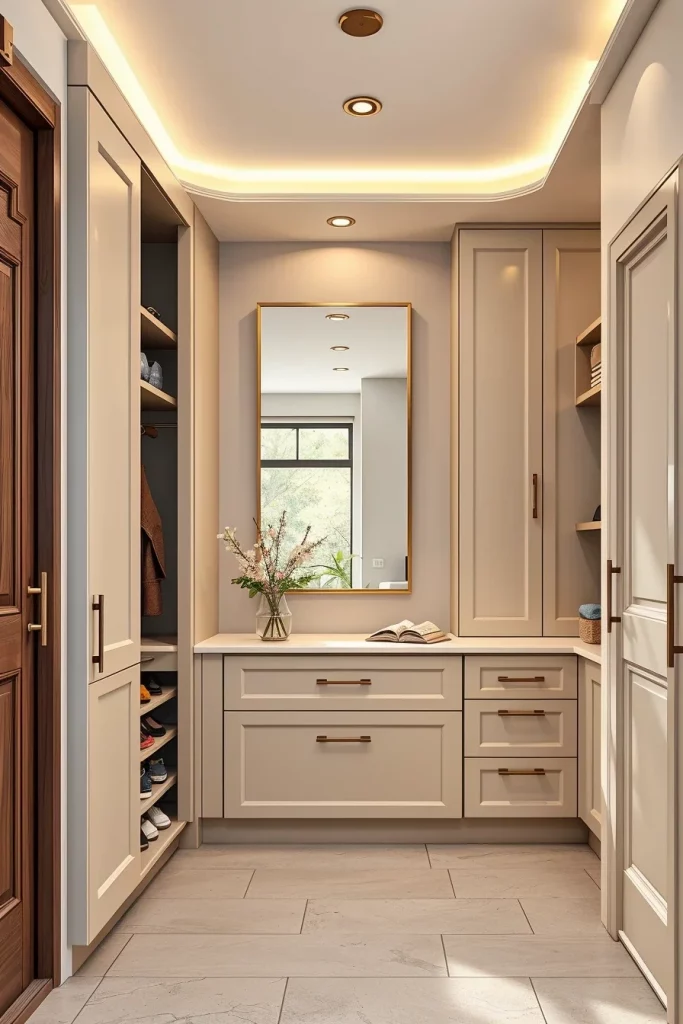
In my experience, hidden storage creates a sense of order that open shelving cannot always achieve. Designers from House Beautiful often recommend combining concealed storage with just a few decorative elements to prevent an entryway from feeling sterile. I completely agree because a single mirror, framed artwork, or ceramic vase can soften the space while maintaining an uncluttered look.
If I were expanding this design, I would include interior LED lighting that activates automatically when the cabinet doors open. This small feature makes finding everyday items much easier, especially during early mornings or evenings.
Seasonal Storage Rotation for Entryway Organization
One of the most effective habits I have developed is rotating entryway storage according to the seasons. Keeping only frequently used items near the entrance prevents overcrowding and makes the entire space function more efficiently. Heavy winter coats, snow boots, and thick scarves should not compete for space with lightweight summer jackets and sandals. By updating storage throughout the year, I maintain an entryway that always feels organized and purposeful.
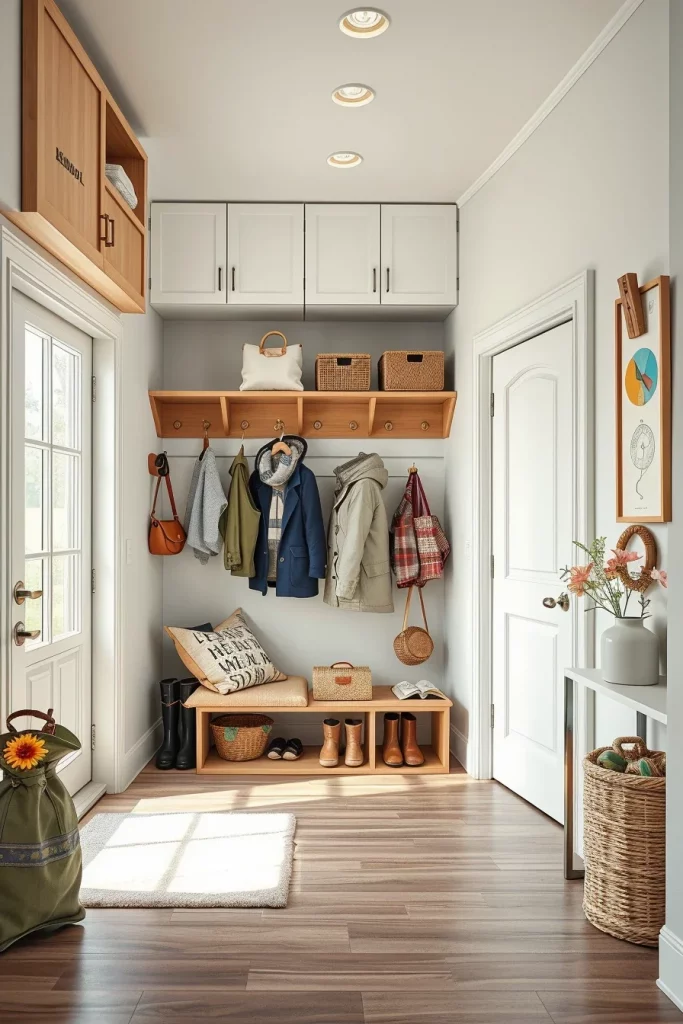
I organize seasonal belongings using labeled storage bins placed on upper shelves, inside nearby closets, or in dedicated storage rooms. Frequently used footwear remains easily accessible, while off-season items are stored neatly until needed again. Vacuum storage bags are especially useful for bulky winter clothing because they reduce storage volume significantly. I also recommend using moisture-resistant containers to protect fabrics and accessories during long-term storage.
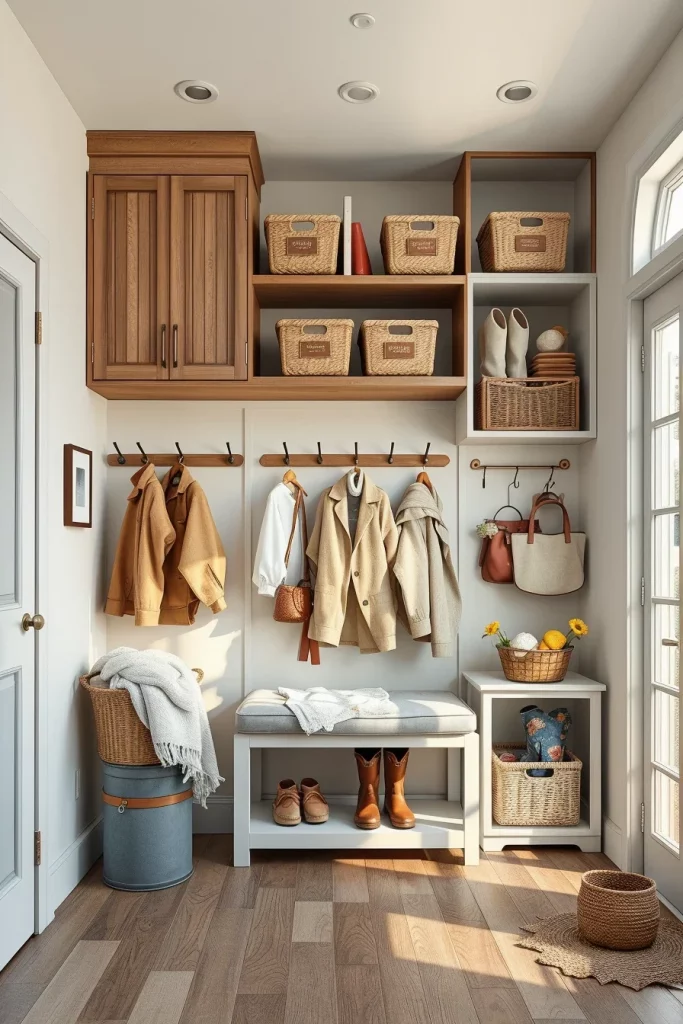
Personally, I believe seasonal organization saves both time and space throughout the year. Organization experts from The Spruce frequently recommend reviewing household storage every season instead of allowing unnecessary items to accumulate indefinitely. I have followed this practice for years, and it consistently keeps my entrance more functional and easier to maintain.
To make seasonal rotation even more efficient, I would keep a small inventory label inside each storage container. This eliminates unnecessary searching and allows every family member to locate seasonal items quickly.
Labeling and Categorizing Entryway Storage Zones
An organized entrance becomes much easier to maintain when every storage area has a clearly defined purpose. I always divide the space into dedicated zones for shoes, outerwear, bags, mail, pet supplies, and daily accessories. This simple organizational strategy prevents items from migrating throughout the house and encourages every family member to return belongings to the correct location after use.
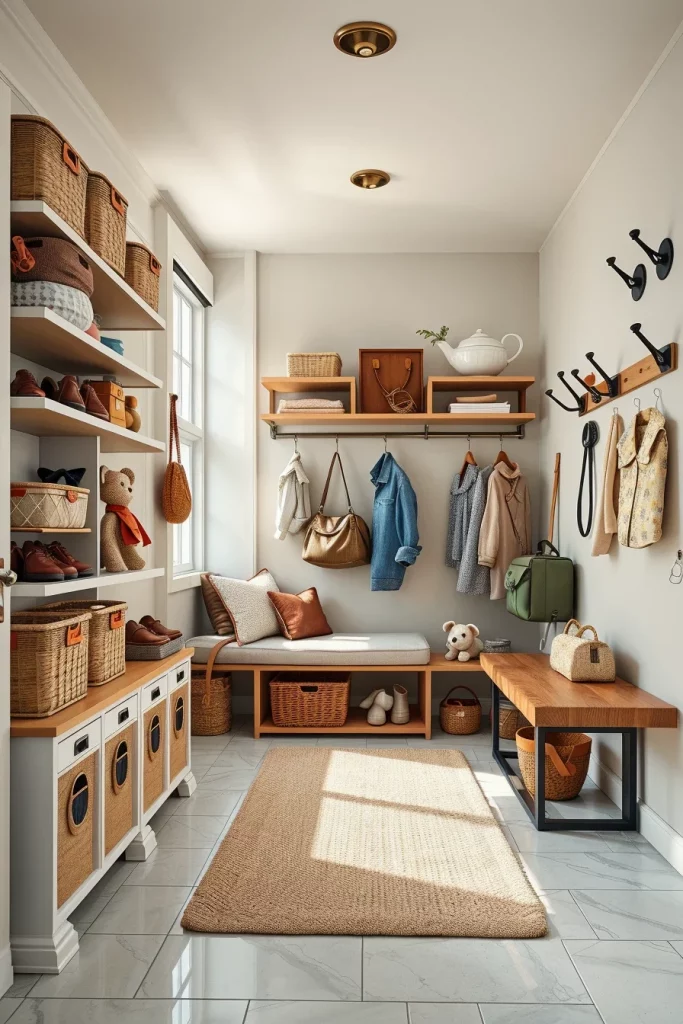
I like using discreet labels on baskets, storage bins, shelves, and drawers to create a consistent organizational system. Matching containers improve the appearance of the entryway while making categories easy to recognize at a glance. I also recommend color-coding storage for larger households, allowing each family member to identify their personal storage space without confusion. Durable labels made from acrylic, wood, or printed vinyl maintain a polished appearance for years.
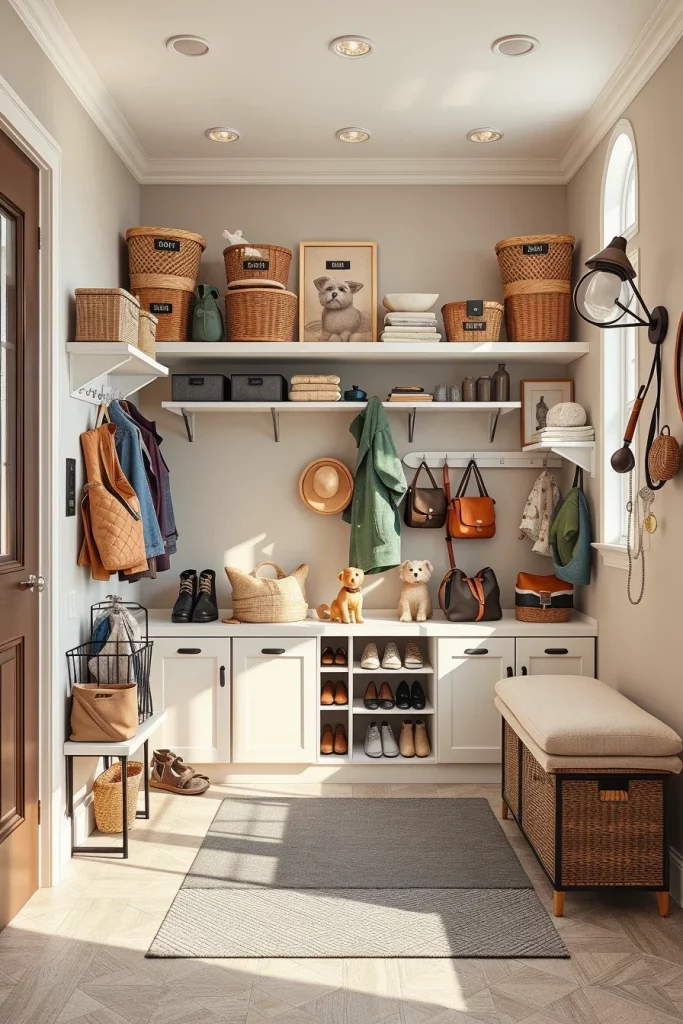
From my perspective, labeling is not only useful for children but also for adults with busy daily routines. Professional organizers from The Home Edit consistently emphasize that visible systems are easier to maintain because they remove guesswork from everyday organization. I have found this principle especially valuable in active households where multiple people use the entrance throughout the day.
If additional organization is needed, I would incorporate a small donation basket for items that are no longer used. Regularly removing unnecessary belongings prevents storage systems from becoming overcrowded over time.
Maximizing Corner Space With Clever Storage Solutions
Corners are often overlooked when planning an entryway, yet they offer valuable storage opportunities without reducing walking space. Whenever I design a compact entrance, I carefully evaluate unused corners for furniture that can increase storage while maintaining an open layout. Even a small corner can become highly functional with the right combination of shelving and vertical organization.
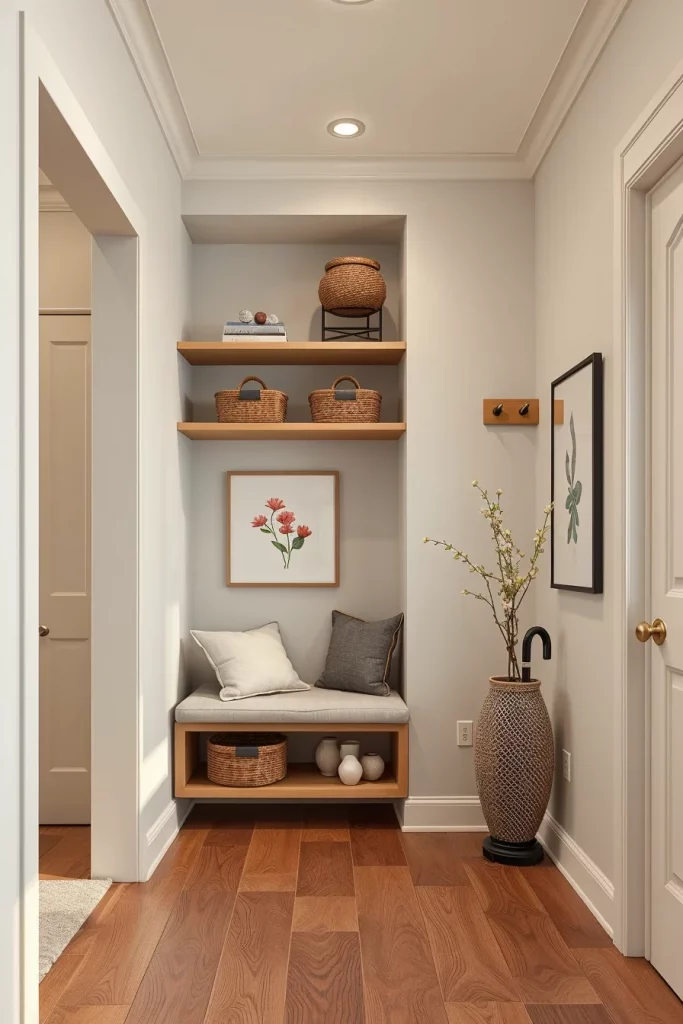
I often install corner shelving units, triangular floating shelves, slim corner cabinets, or compact benches with hidden storage beneath the seat. Decorative baskets fit neatly into corner shelves while keeping gloves, hats, umbrellas, and pet accessories organized. Tall corner cabinets make excellent use of vertical space without visually dominating the room, especially when finished in colors that complement the surrounding walls.
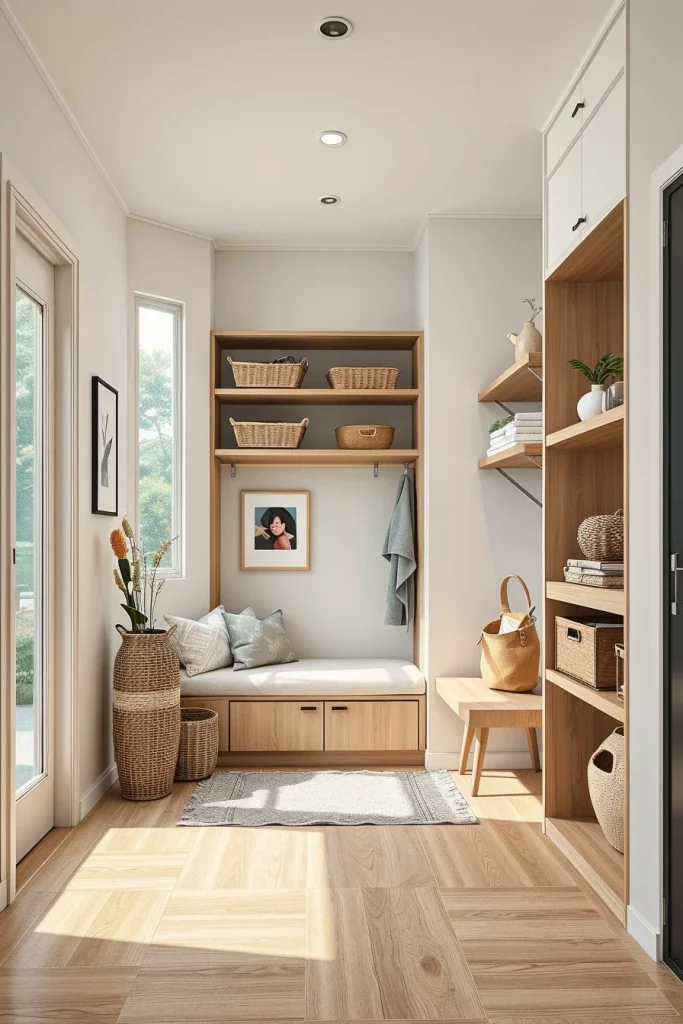
In my own projects, I have found that corner storage works best when it remains proportional to the size of the entrance. Interior designers featured by Better Homes & Gardens frequently recommend utilizing overlooked architectural spaces before adding larger furniture pieces. I follow this same approach because it maximizes functionality while preserving comfortable circulation throughout the room.
To complete this layout, I would add a narrow corner plant stand, sculptural floor lamp, or decorative umbrella holder. These finishing details make the corner feel intentional while preserving the practical storage benefits.
Entryway Organization Ideas for Apartments
Living in an apartment often means working with limited square footage, so I always focus on maximizing every inch of the entrance without making it feel crowded. A clean layout with a narrow storage bench, wall-mounted hooks, and floating shelves instantly creates order while maintaining an open appearance. I like using light finishes and simple materials because they make compact entryways appear larger while still offering plenty of practical storage for everyday essentials.
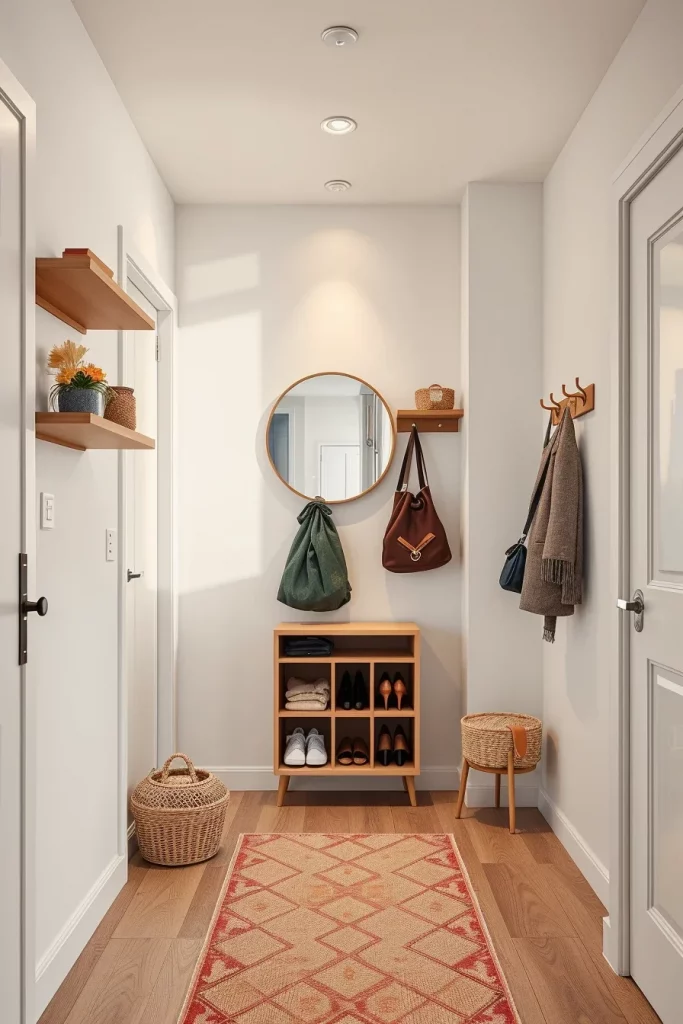
I usually recommend a slim shoe cabinet with a flip-down design because it stores multiple pairs without taking valuable floor space. Above it, I install sturdy wall hooks for jackets, backpacks, umbrellas, and reusable shopping bags. A floating shelf with decorative baskets provides a convenient place for keys, wallets, sunglasses, and mail. Adding a mirror above the storage not only makes the space feel brighter but also provides one final check before leaving home.
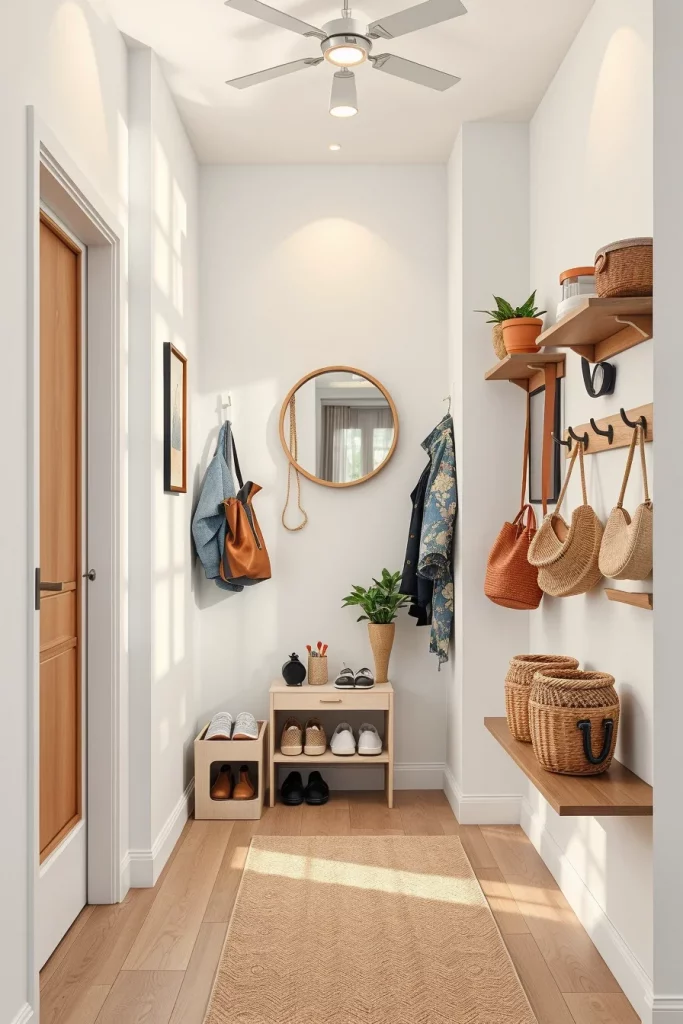
From my experience, apartment entrances benefit most from consistent routines rather than simply adding more storage. Designers from HGTV frequently emphasize creating designated zones for daily essentials, and I completely agree with that approach. When every item has a permanent location, maintaining an organized entrance becomes much easier and requires very little effort throughout the week.
To complete this space, I would also include a washable runner rug, a compact tray for small accessories, and concealed cable management if charging devices are kept near the entrance. These small additions improve both functionality and visual organization.
Minimalist Storage Designs for Modern Home Entrances
A minimalist entrance focuses on keeping only what is necessary while maintaining a calm and welcoming atmosphere. I prefer clean architectural lines, hidden storage, and a restrained color palette that allows the space to feel peaceful rather than busy. This approach works especially well for homeowners who want their entrance to blend seamlessly with modern interior design.
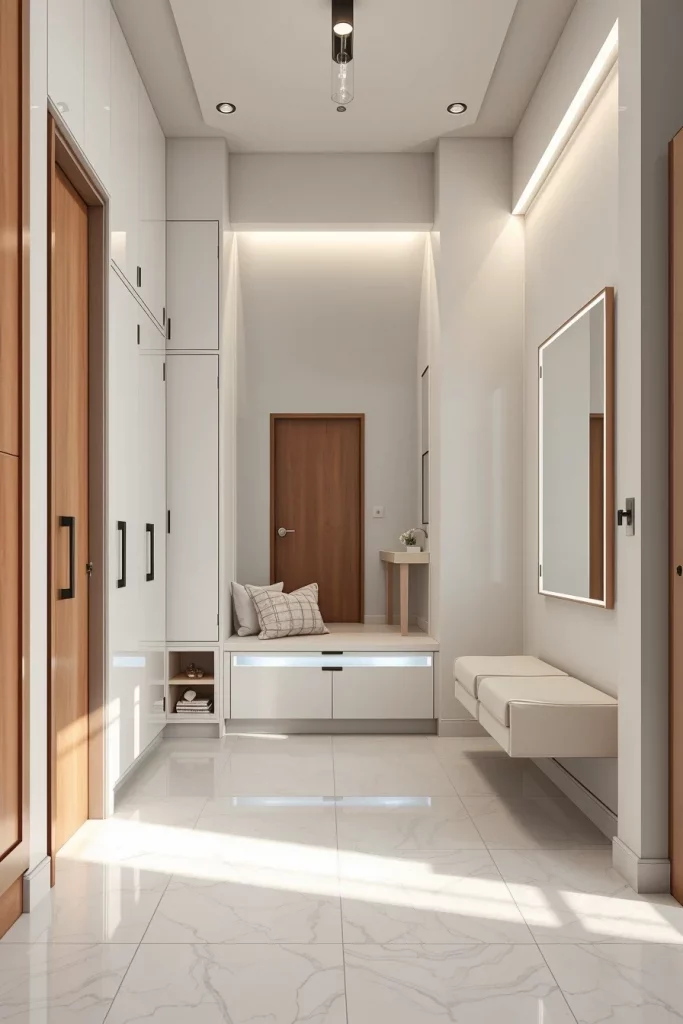
I often choose handle-free cabinets with push-to-open doors because they eliminate visual clutter while hiding shoes, seasonal accessories, pet supplies, and household essentials. A built-in bench with concealed compartments provides seating while offering additional storage underneath. Integrated LED lighting beneath floating cabinets improves visibility and gives the entrance a sophisticated appearance during both day and evening.
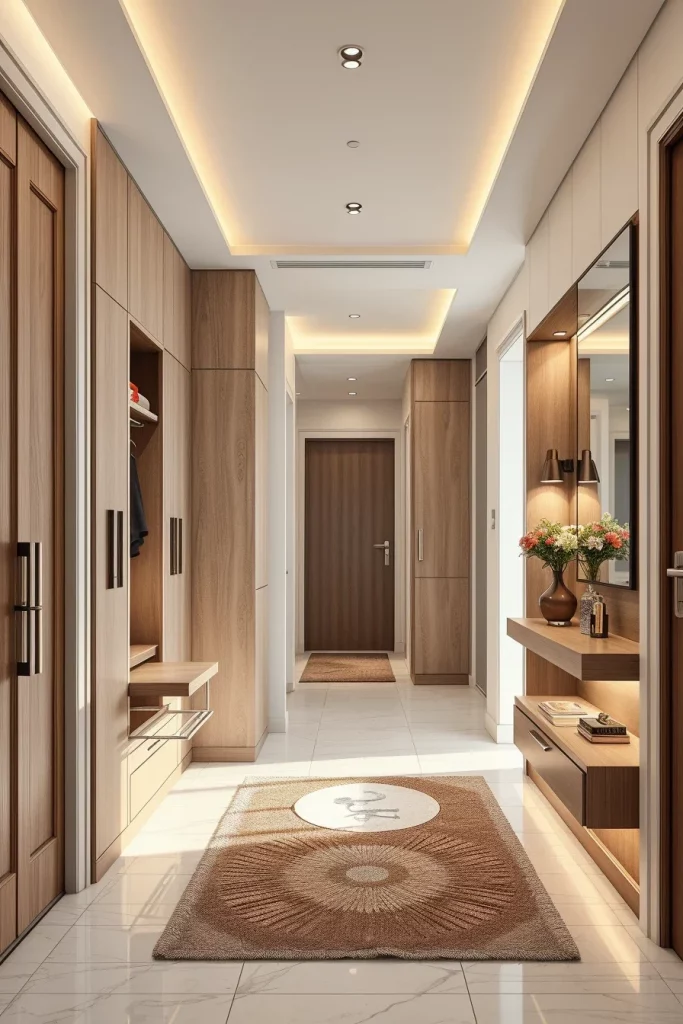
Personally, I have found that minimalist interiors remain organized much longer because fewer visible items naturally encourage better habits. Architectural Digest has highlighted the importance of concealed storage in modern homes, and I have noticed the same benefit in practical everyday living. Instead of displaying every accessory, I prefer carefully selecting only one or two decorative pieces that complement the overall design.
If space allows, I would also add a tall concealed cabinet for seasonal coats, luggage, or cleaning supplies. This keeps less frequently used items out of sight while preserving the clean appearance that defines minimalist design.
Decorative Storage Accessories That Add Function
Practical storage does not have to look purely utilitarian. I enjoy combining decorative accessories with functional organization because they make the entrance feel warm, inviting, and personalized without sacrificing efficiency. Carefully selected decorative elements can organize everyday belongings while contributing to the overall design of the home.
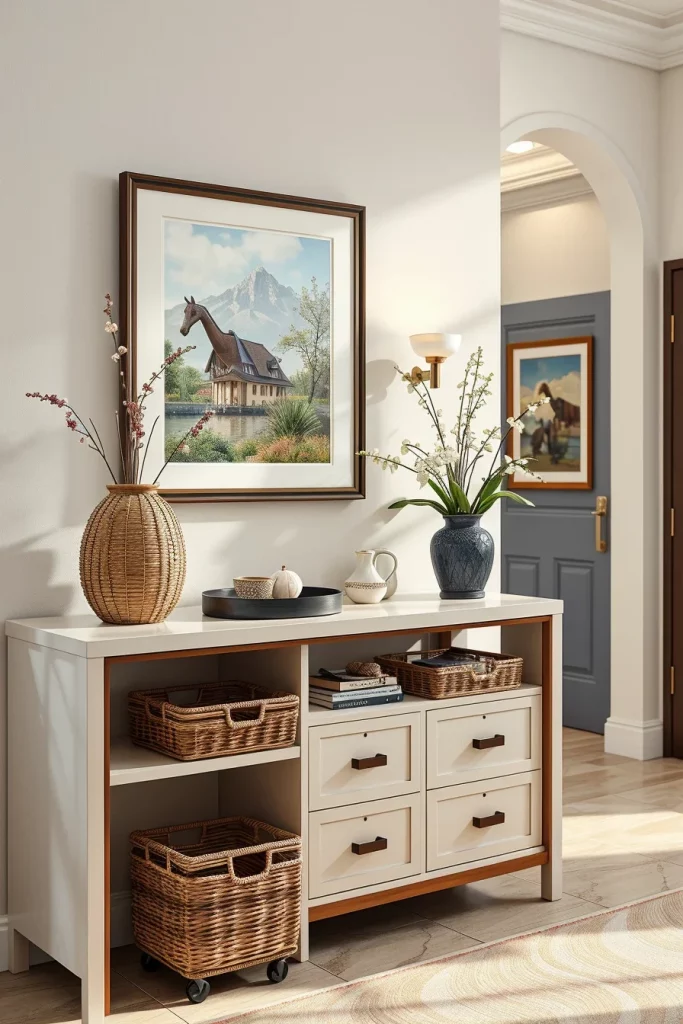
I frequently incorporate woven baskets, decorative trays, ceramic bowls, framed artwork, and stylish umbrella stands that serve both practical and visual purposes. Storage baskets neatly contain hats, gloves, scarves, and pet accessories, while decorative trays organize keys and loose items that often create clutter. A stylish console table with drawers provides hidden storage while displaying a table lamp or sculptural vase that enhances the welcoming atmosphere.
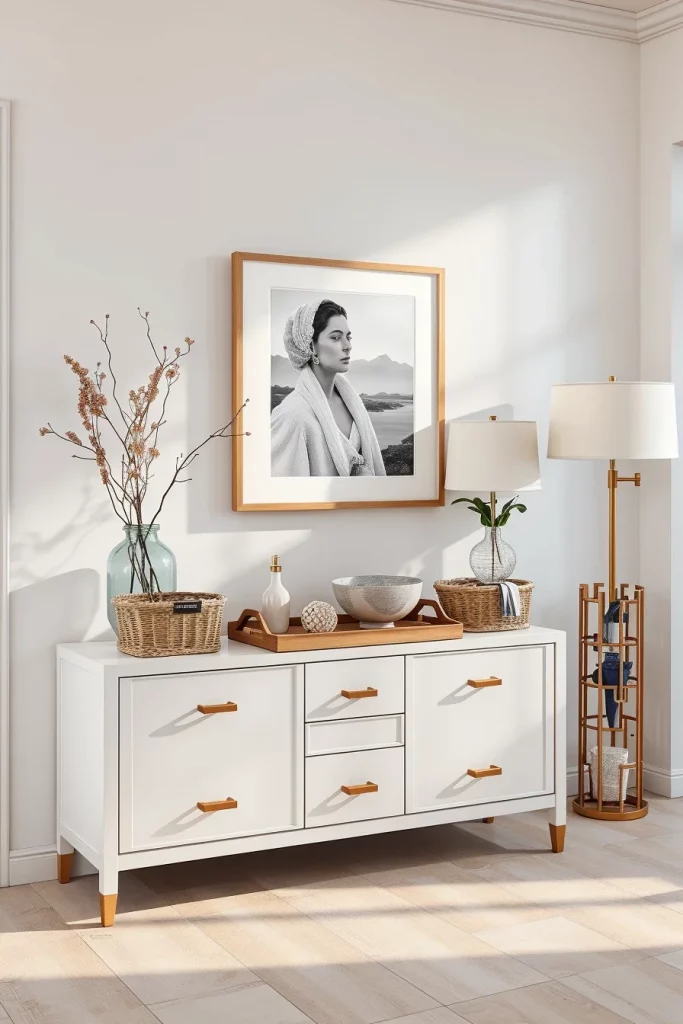
From my perspective, balance is the most important principle when decorating an entrance. Better Homes & Gardens often recommends mixing decorative pieces with useful storage, and I believe this creates a space that feels intentional rather than overdesigned. Decorative accessories should always support organization instead of competing with it.
I would also consider adding labeled storage containers inside drawers or baskets. Although they remain hidden from view, labels simplify daily routines and make it easier for every family member to return items to their proper place.
Common Entryway Organization Mistakes to Avoid
Even beautifully designed entrances can become disorganized when common planning mistakes are overlooked. I often see homeowners purchasing attractive furniture before evaluating their actual storage needs. Instead, I begin by identifying which everyday items enter the home most frequently and then design storage specifically for those belongings.
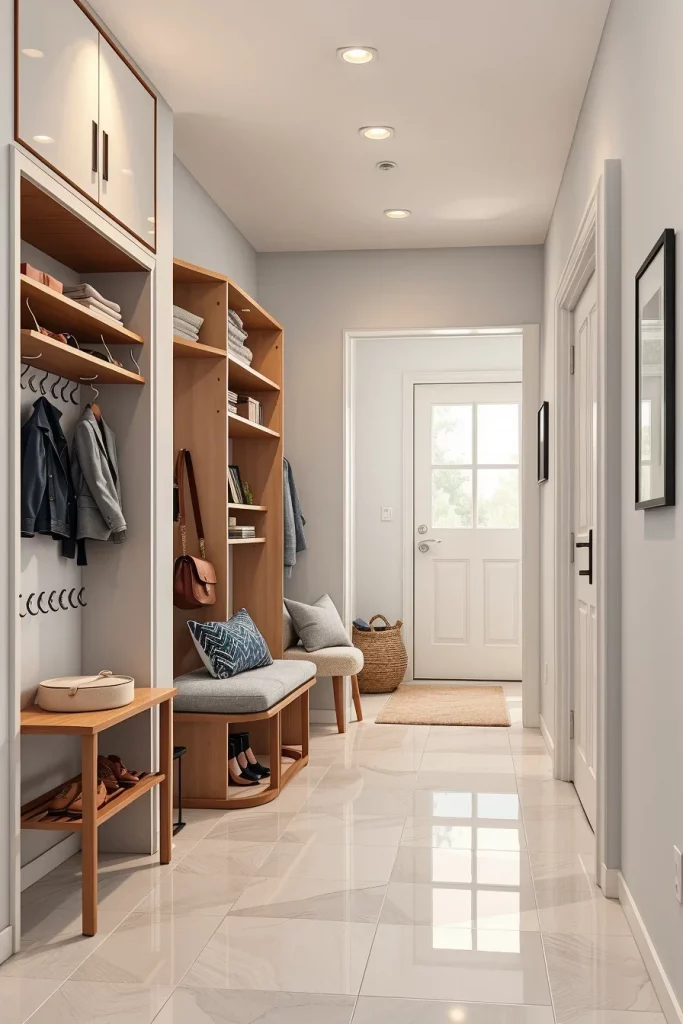
One of the biggest mistakes is relying solely on open storage. While hooks and open shelves are convenient, they can quickly become overcrowded with coats, bags, shoes, and miscellaneous accessories. I recommend balancing open storage with closed cabinets to maintain a tidy appearance. Another mistake is selecting oversized furniture that restricts movement and makes the entrance feel cramped.
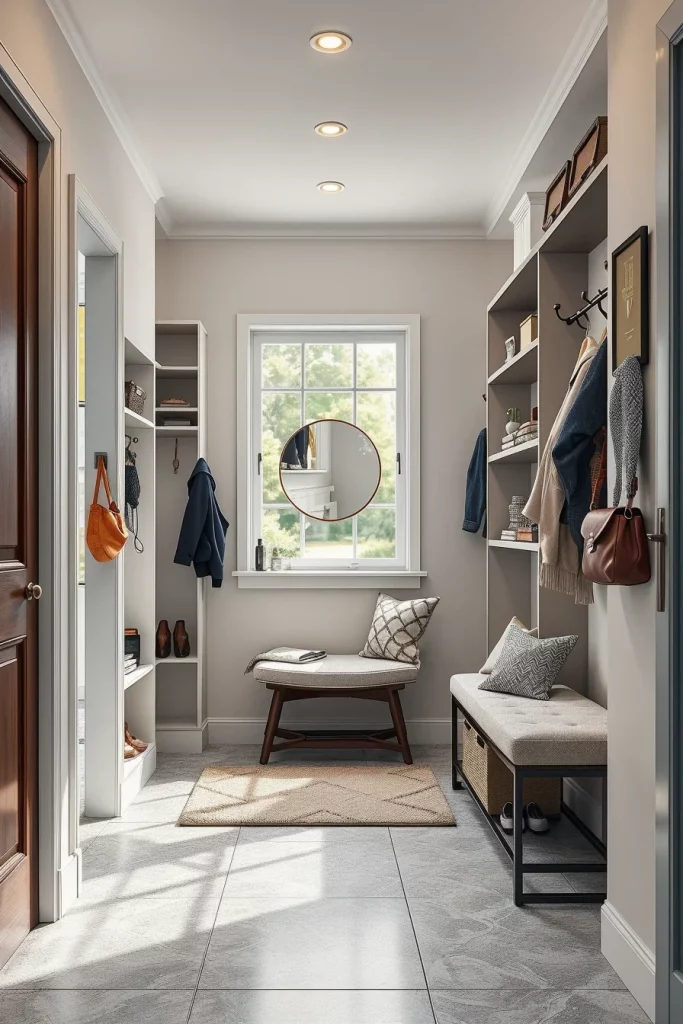
In my experience, organization systems remain successful only when they are easy to maintain every day. Professional organizers frequently recommend reducing unnecessary possessions before investing in new storage solutions, and I completely support this philosophy. Simplifying what enters the home often solves more problems than purchasing additional organizers.
I also recommend reviewing the entrance every season. Removing unused footwear, expired mail, worn accessories, and unnecessary decorations prevents clutter from gradually returning and keeps the entrance efficient throughout the year.
Creating a Functional Home Entrance That Stays Organized Year-Round
A truly functional entrance adapts to changing seasons while remaining practical throughout the year. I design entryways that can easily transition from storing winter coats and boots to accommodating lightweight jackets, sports equipment, umbrellas, and travel accessories. Flexible storage ensures that the entrance continues serving the family’s changing needs without constant rearrangement.
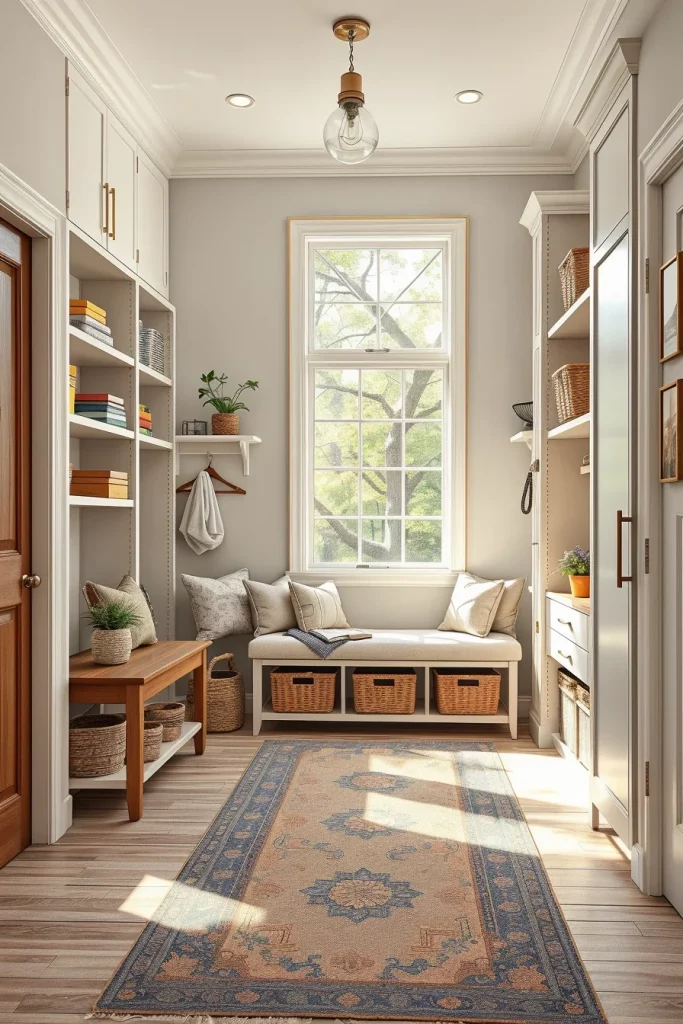
I like using adjustable shelving, modular storage units, movable baskets, and multifunctional benches that can evolve as storage requirements change. Seasonal bins stored inside cabinets allow winter accessories to be swapped with summer essentials within minutes. Durable flooring, washable rugs, and moisture-resistant storage materials also help maintain a clean and attractive entrance despite changing weather conditions.
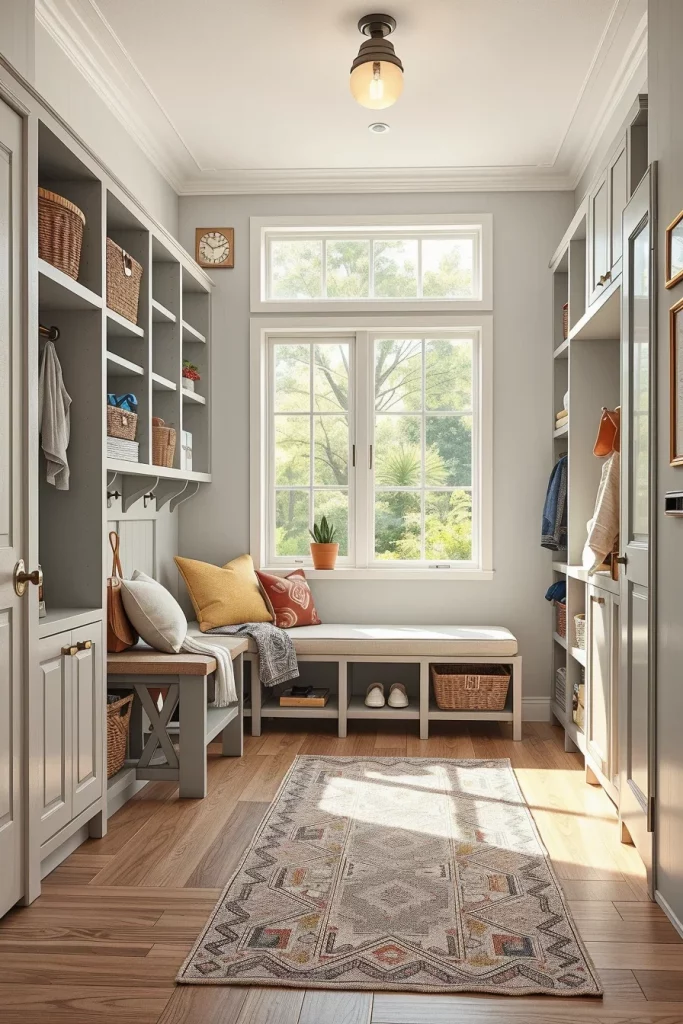
Personally, I believe long-term organization depends more on adaptability than perfection. Many professional designers featured by The Spruce encourage creating flexible storage systems that grow with household routines, and I have found this advice especially valuable for busy families. Small adjustments throughout the year prevent major organizational problems from developing.
To further improve year-round functionality, I would include a small donation basket for items that are no longer needed, along with a maintenance schedule for reviewing seasonal storage every few months. These simple habits keep the entrance organized without requiring extensive effort.
A well-organized entrance creates a positive first impression every single day. I hope these ideas inspire you to rethink your own space and discover solutions that fit your lifestyle. If you have your own favorite entryway organization tips or storage ideas, feel free to share them in the comments—I would love to hear what works best in your home.