
When I think about a child’s bedroom, I picture a space that feels playful, cozy, and completely their own. Cute design ideas can turn even a simple room into a little world where kids can sleep, play, read, and let their imaginations run wild. I love combining charming details with practical furniture so the room feels special without becoming overwhelming. Soft colors, whimsical accents, creative storage, and fun bedding can all add personality while keeping the space comfortable. Whether you are decorating a nursery, a shared kids’ room, or a bedroom for a growing child, there are plenty of ways to make the design feel fresh and inviting. Here are some cute children’s bedroom ideas that I would happily use as inspiration for creating a room that feels both adorable and functional.
Soft White Bedroom With Upholstered Elegance
The first bedroom has an exceptionally soft white and cream palette, with an upholstered bed featuring a tall rectangular headboard and matching upholstered footboard. I notice the detailed nailhead-style trim around the bed, white bedding layered with several pillows, and a long upholstered bench positioned at the foot. Mirrored bedside tables, table lamps, framed wall art, round mirrors, a white chandelier, and a plush white rug add to the polished appearance, while the warm wood floor keeps the room from feeling completely monochromatic.
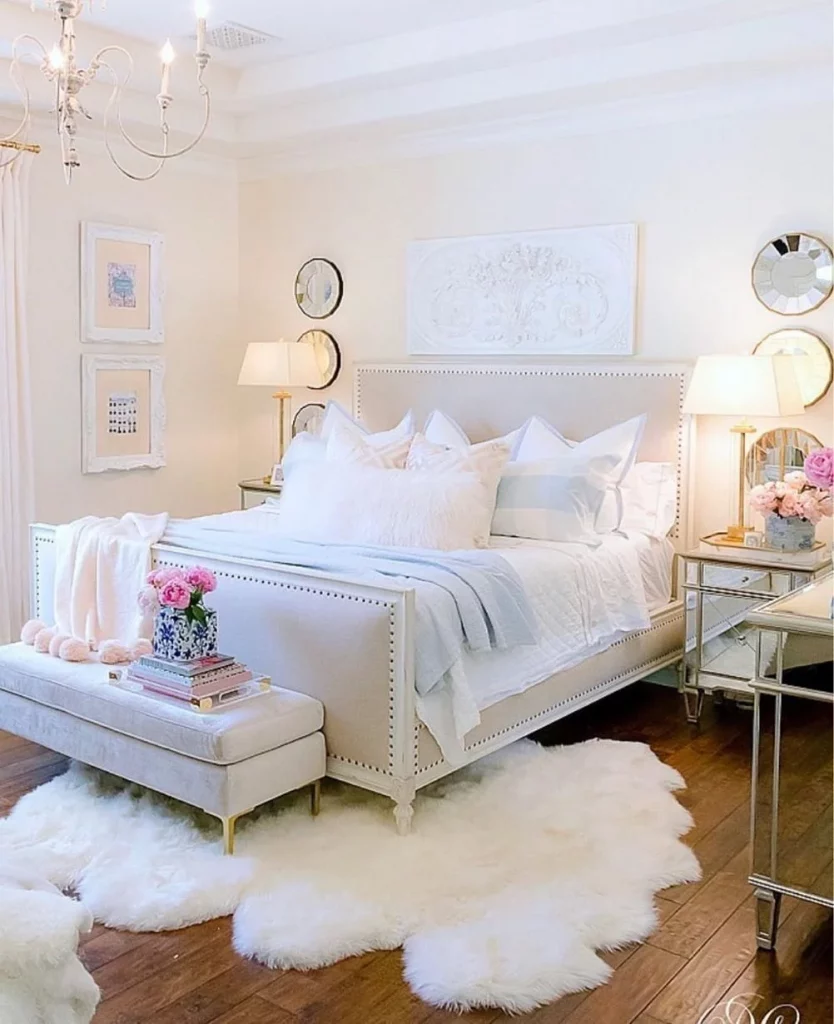
I like the way the furniture is arranged around the bed without making the room feel crowded. The bench creates a useful place to sit or place books, while the bedside tables provide convenient surfaces beside the bed. The large rug also helps define the sleeping area and adds softness over the wood flooring. Even though the room is highly decorative, the restrained color palette keeps the different details visually connected.
From my perspective, this is a good example of making a child’s bedroom feel calm and special without relying on an overwhelming number of colors. The easiest way to capture a similar feeling would be to begin with white or cream upholstered furniture, then layer matching bedding, soft lighting, and a few carefully selected decorative pieces. I would keep the accessories coordinated rather than filling every available surface, because the spacious feeling is one of the strongest qualities visible here.
Pink Daybed With Built-In Display Storage
This bedroom takes a much more playful approach, with pale pink walls, a pink upholstered daybed, and a large white built-in shelving structure surrounding the bed. The shelves display books, stuffed animals, small decorative objects, and framed pieces, while the bed itself is covered with pink bedding and an assortment of patterned and decorative pillows. A white chair, small stool, floor rug, window treatment, and compact side table complete the room.
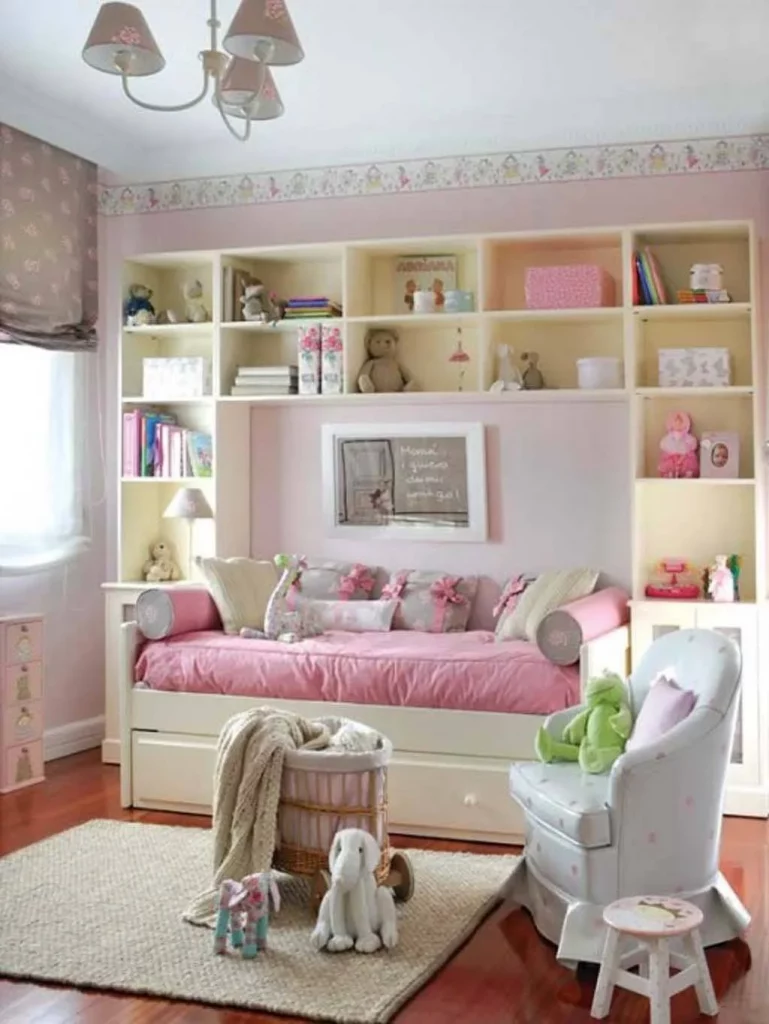
What stands out to me most is the way the shelving frames the bed and turns the sleeping area into the visual center of the room. The lower portion of the bed provides additional storage, while the surrounding open shelves make favorite books and toys easy to see and reach. I also like the balance between the white shelving and pink upholstery because the white keeps the room from becoming visually too heavy.
I would take inspiration from this idea when working with a child’s room that needs both personality and organization. Instead of treating storage as something separate from the design, I like how this room makes it part of the furniture arrangement. Keeping the most attractive books and favorite toys on display while using the lower storage for less decorative items can help maintain a similarly neat appearance.
Dreamy Mauve Bedroom With Canopy Bed
The third room creates a cozy, imaginative atmosphere with mauve-colored walls, a large canopy over the bed, and a combination of pink, white, and gray accents. Small star decorations cover the wall, while cloud-shaped shelves hold tiny decorative pieces and framed objects. A white desk with a pink lamp sits against the wall, and a comfortable chair, round crocheted rug, plush toys, and a small toy stroller make the space feel designed for both quiet activities and imaginative play.
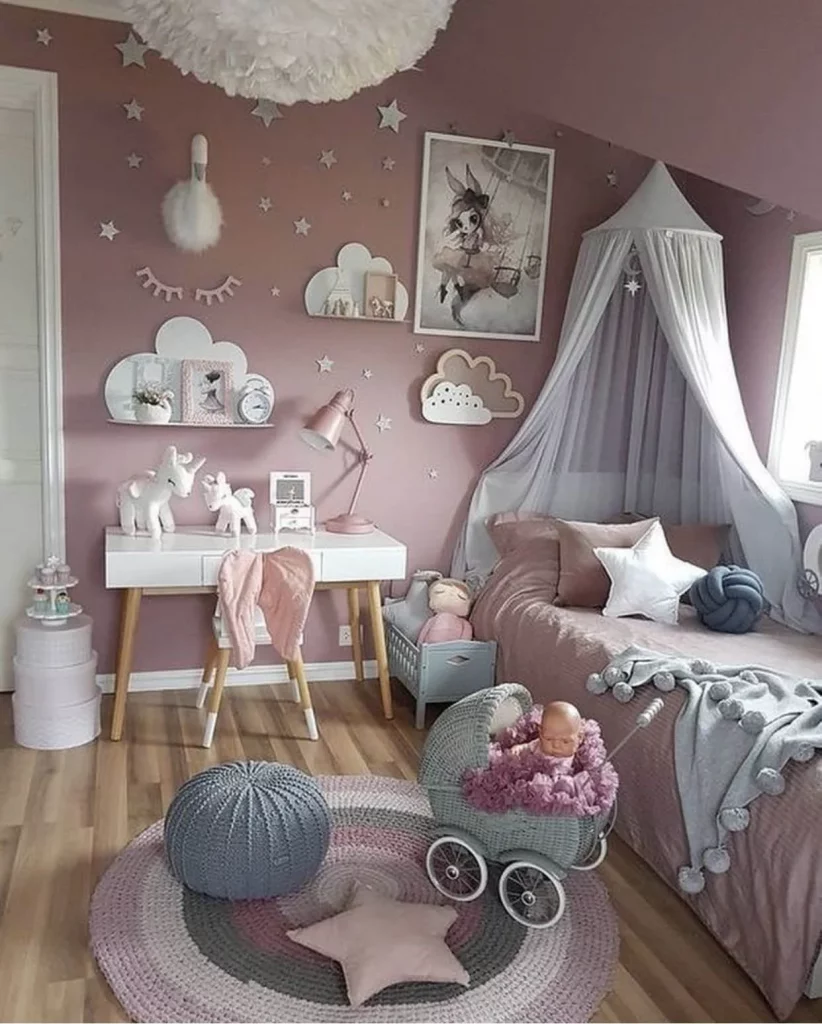
I think the canopy is particularly effective because it immediately gives the bed its own little world. The desk is positioned separately, so sleeping and creative activities have their own areas within the same room. The shelves also use the wall vertically, leaving more floor space available for play. The mixture of soft textiles and rounded decorative shapes makes the room feel especially inviting.
For me, this photograph shows how a single feature can establish the personality of an entire children’s bedroom. If I wanted a similar result, I would start with one strong focal point, such as the canopy, and repeat a few of its colors in the bedding, accessories, and artwork. The wall decorations can then be kept relatively simple, allowing the bed and play area to remain the main focus.
Compact Loft Bed With a Cozy Lower Nook
This room makes excellent use of vertical space with a white loft-style bed positioned above a lower sleeping or lounging area. The walls are painted a soft dusty pink, while white cabinetry and furniture create a light framework around the two levels. The lower area has pink bedding, cushions, a paneled white wall section, stuffed animals, and a string of round lights. A small desk and chairs occupy the foreground, creating a practical study area.
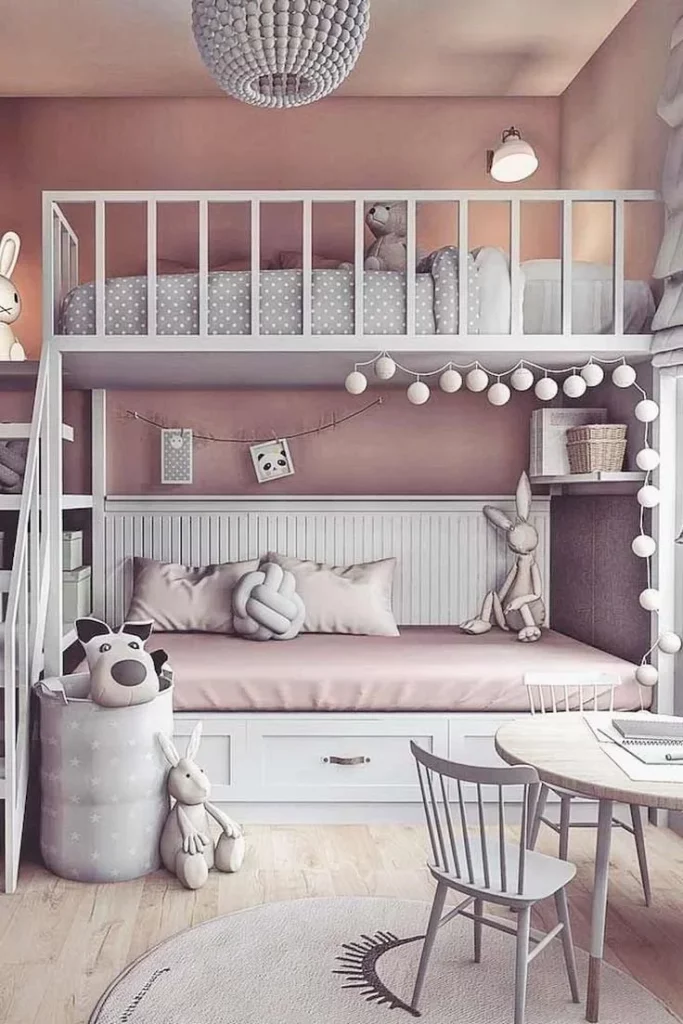
I really like how much function is packed into this relatively compact arrangement. The raised bed uses the vertical dimension of the room, while the space beneath becomes another comfortable sleeping or resting zone. Storage is integrated into the structure, and the desk provides a separate place for schoolwork or drawing. The round lights add a gentle decorative touch without taking up floor space.
This is one of the ideas I would consider most useful for a shared or space-conscious children’s bedroom. A loft arrangement can make it possible to create distinct zones without requiring a larger floor plan. I would also pay attention to keeping the pathways around the furniture open, because the success of this layout comes from fitting several functions together while still leaving a clear central area.
Hanging Bed In A Whimsical Blue Bedroom
The fifth bedroom has a striking blue-gray color scheme and an unusually creative suspended bed. The mattress platform hangs from ropes extending from the ceiling, while the bed is styled with muted pink bedding and several pillows. Cloud-shaped wall decorations, bird figures, a tall open shelving unit filled with toys, and soft lighting reinforce the dreamy atmosphere. The room also includes a patterned screen, a desk area, and several decorative objects arranged throughout the space.
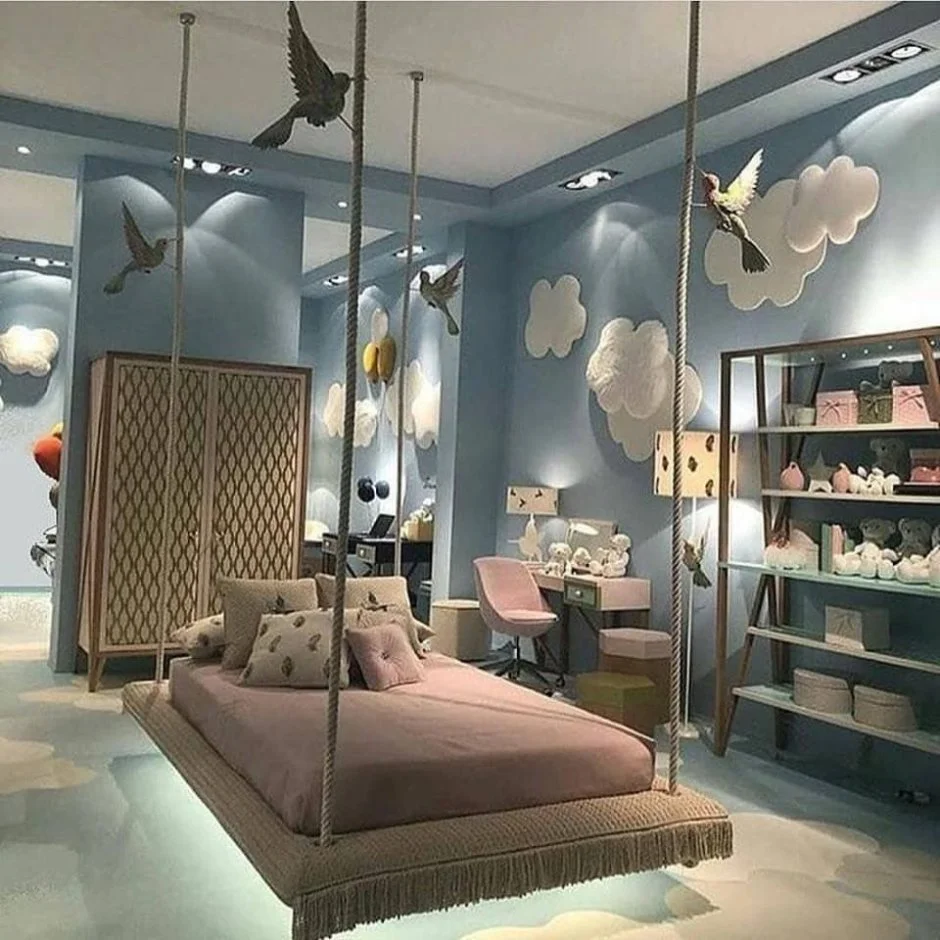
The hanging bed is clearly the centerpiece, and I like how the rest of the room supports that idea without competing with it. The cool wall color creates a calm background for the warmer pink bedding, while the open shelving makes the collection of toys visible and accessible. The suspended design also gives the sleeping area an almost storybook quality that makes the room feel highly personalized.
From my perspective, this is a good example of using one unconventional furniture feature to make a child’s bedroom memorable. The important lesson is that the surrounding décor does not need to be equally dramatic. A restrained palette and repeated cloud and sky-inspired details allow the unusual bed to remain the focal point. Any real-world suspended sleeping arrangement would, of course, need to be professionally installed and securely engineered, but visually the idea shows how creative furniture can transform a room.
Blue And Pink Reading Corner With Layered Details
This bedroom corner combines dusty blue and muted pink walls with a comfortable white loveseat, a round crocheted rug, and a small blue crocheted cushion on the floor. Large decorative paper flowers fill one corner, while shelves hold framed artwork, small objects, and children’s accessories. A tall leaning shelf, a full-length mirror, star decorations, a plush swan, and a soft ceiling light add plenty of personality without changing the relaxed character of the room.
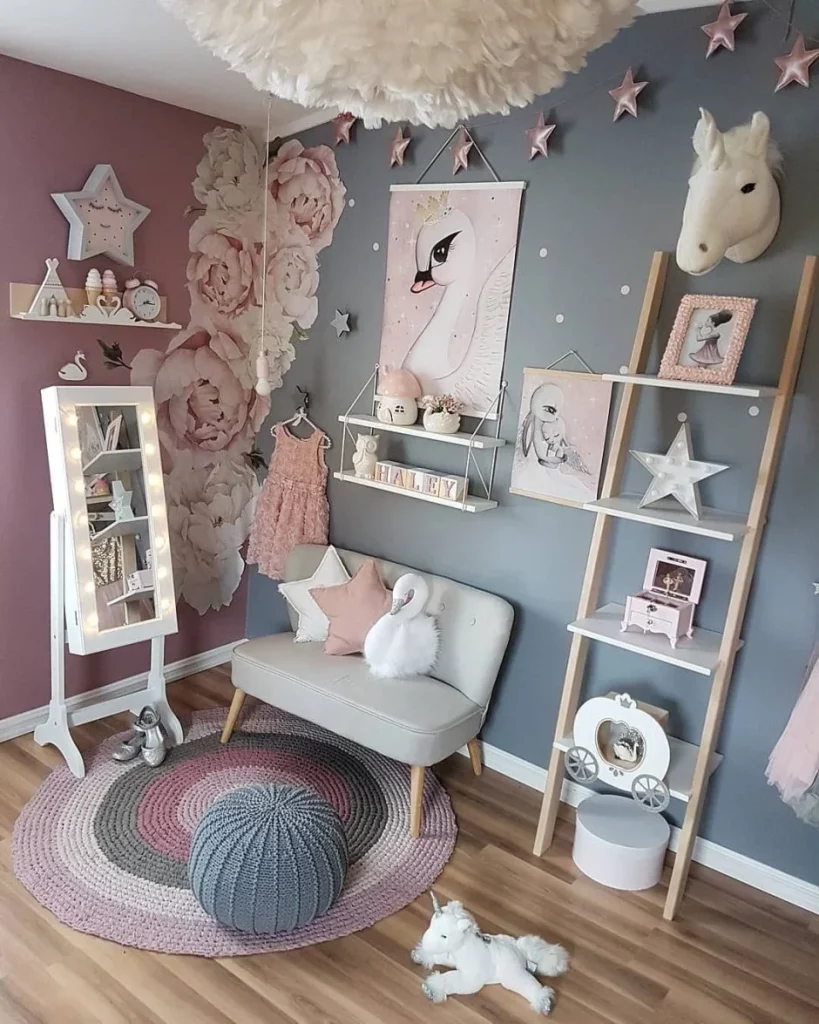
I like the way this space feels more like a small personal lounge than a traditional bedroom corner. The loveseat gives the child a comfortable place to sit, read, or relax, while the round rug visually anchors the furniture. The leaning shelf uses vertical space for display, and the wall-mounted shelves keep smaller objects organized and visible. The combination of blue, dusty pink, white, and gray creates a soft contrast.
For me, the strongest decorating idea here is the creation of a dedicated cozy corner. A child does not need every part of a bedroom to serve the same purpose, and a small seating area can make the room feel more versatile. I would choose a few meaningful decorative pieces rather than trying to reproduce every accessory shown, because the room works partly because its details feel collected around a clear seating area.
Gray Canopy Retreat With Soft Star Accents
The seventh bedroom has a soothing gray and white palette with a large fabric canopy positioned over the bed. The canopy falls from a peaked top and surrounds the sleeping area, where white bedding and pale pink and gray cushions create a soft layered look. The gray paneled walls are decorated with butterflies, stars, balloons, and other small accents, while white shelving displays toys and accessories. A white rocking toy, plush rabbit, and textured throw add to the comfortable atmosphere.
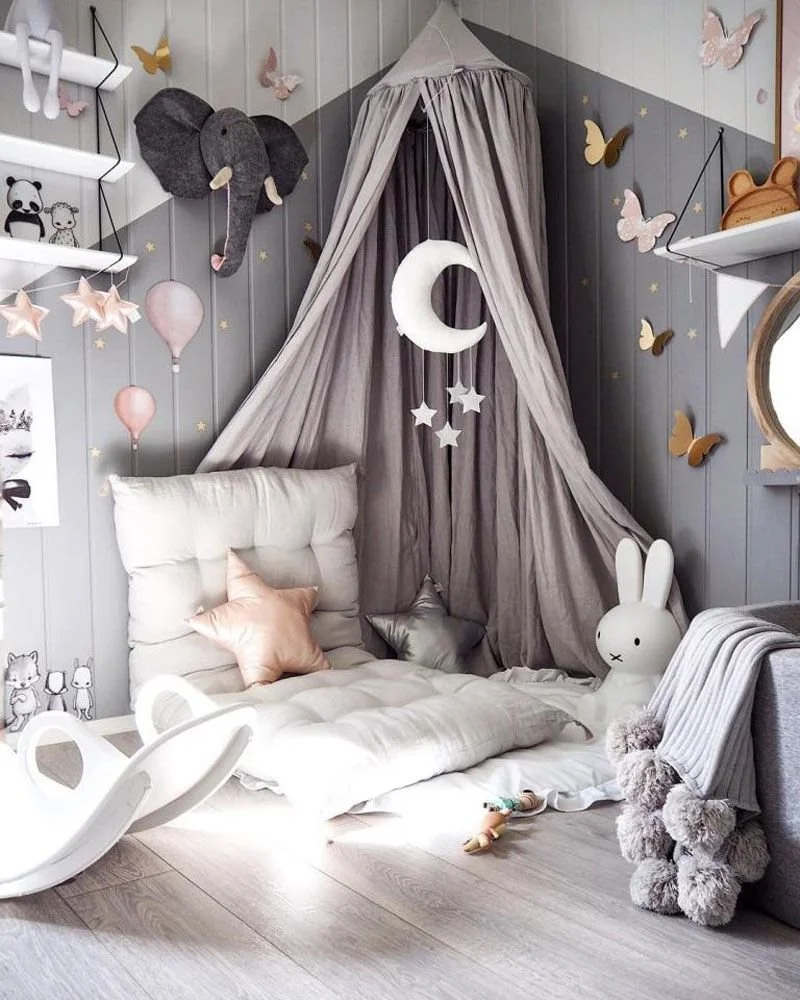
I find the canopy especially effective here because it adds height and creates a defined sleeping zone without requiring a large piece of furniture. The gray walls provide a quiet backdrop for the white bedding and pastel accessories, while the open shelves make the room’s storage and display areas easy to understand. The floor remains relatively open, which gives the child space to move around and play.
If I were recreating this feeling, I would focus first on the calm gray-and-white foundation and then add a few soft pastel accents. The canopy does most of the decorative work, so there is no need to overcrowd the walls. I also like the use of different textures, from the canopy fabric to the knitted-looking throw and crocheted floor pieces, because these details make the neutral palette feel warmer.
Window Bench With Built-In Hidden Storage
This room uses a large corner window as the main feature, creating a bright built-in seating area beneath the glass. The bench consists of several cushioned sections in dark gray, with white storage bases underneath that have perforated-style fronts. Two pale yellow pillows add a small amount of color, while a gray stuffed toy sits on the seat. A small wall-mounted shelf filled with books and a toy stands nearby, and dark blue Roman shades frame the windows.
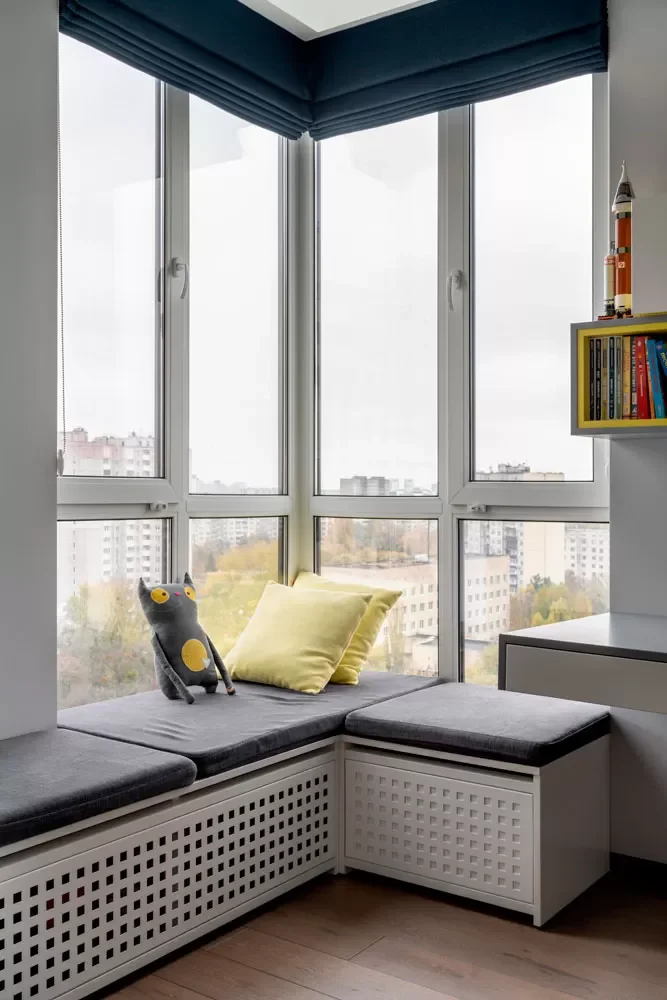
What I appreciate most here is the practical combination of seating and storage. The bench takes advantage of an otherwise difficult corner while the cabinets beneath provide concealed space for belongings. The large windows bring plenty of natural light to the area, making it a natural place for reading or relaxing. The simple palette also keeps the attention on the view and the generous window wall.
This is one of the most useful ideas in the collection for a room where floor space is limited. I would always look for opportunities to turn unused corners into functional zones, and this design demonstrates that a window area can become much more than a place for curtains. A similar setup could work beautifully as a reading nook, provided the seating remains comfortable and the storage is easy for the child to access.
Playful Transport-Themed Bedroom With Graphic Wall Art
The ninth bedroom has a much more contemporary and graphic appearance. A large wall mural features simplified cars, trucks, roads, trees, clouds, and playful lettering in mostly gray, black, white, and yellow. A padded bed sits directly in front of the mural, dressed in neutral bedding and gray throws. Tall shelving fills the side of the room, while a curved chair and desk area appear near the window. A stuffed panda sits beside the bed.
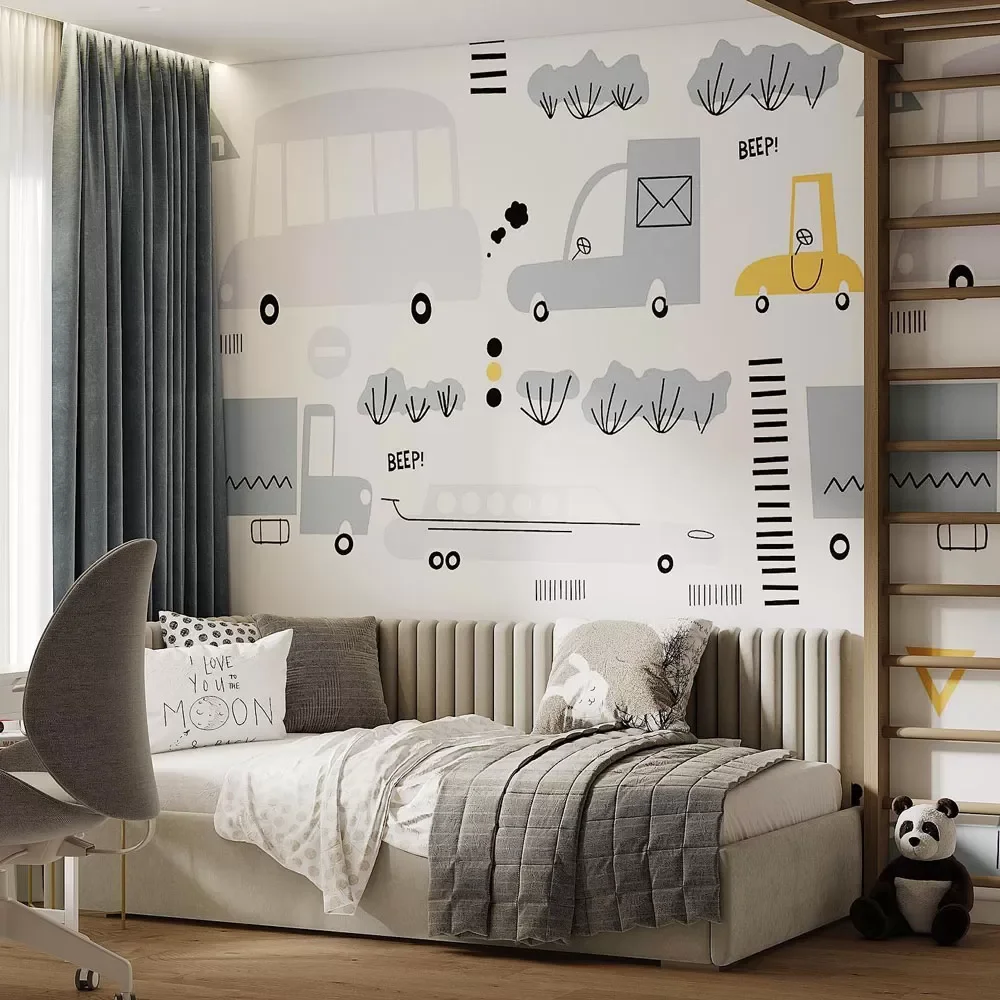
I like the way the mural gives the entire room a clear theme without requiring every piece of furniture to match it. The neutral bed and textiles allow the wall artwork to remain the strongest visual element, while the small yellow details echo the mural. The vertical shelving also provides useful storage without taking attention away from the graphic wall.
For me, this is a strong example of letting one large decorative surface do most of the creative work. Instead of adding many themed objects throughout the room, I would use a large wall illustration and keep the furniture relatively restrained. That approach makes it easier to update the room later as the child’s interests change, because the basic furniture and neutral textiles can remain useful even if the wall treatment is eventually replaced.
Colorful Loft Bunk With Playful Built-In Steps
The final bedroom features a compact bunk arrangement with the upper bed positioned above a lower sleeping area. The furniture combines pale gray, white, orange, and yellow details, while the lower bed is dressed in olive green bedding decorated with large flower-shaped accents. A vivid green textured rug covers much of the floor, and the wall treatment features a plaid pattern with a decorative border of teddy bears near the ceiling. Storage compartments are built into the steps leading to the upper level.
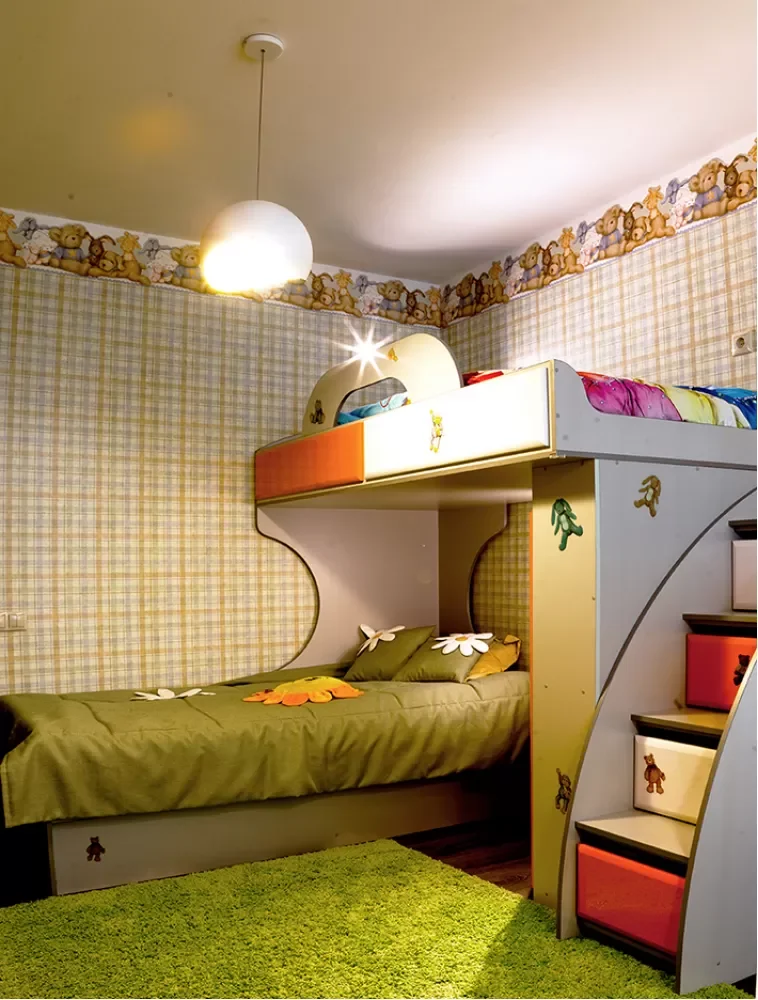
I think the strongest quality of this room is its efficient use of vertical space. The bunk structure creates two sleeping levels while the integrated steps double as storage. The lower bed remains visually distinct because of its green bedding, and the large rug provides a soft play surface in the center of the room. The plaid walls and teddy bear border give the room a distinctly playful character.
From my perspective, this design demonstrates how color can be used to make a compact children’s room feel cheerful and energetic. The key is that the strongest colors are concentrated in specific areas rather than appearing everywhere equally. I would also take inspiration from the built-in storage steps, because combining circulation and storage is particularly valuable in a child’s bedroom where every bit of usable space matters.
Modern Explorer’s Bedroom With a World Map Accent
I love how this first bedroom combines a clean modern layout with details that immediately suggest curiosity and exploration. A large world map covers the main wall behind a dark upholstered bed, while a desk stretches beneath the wide window at the back of the room. Two white swivel chairs create a practical study area, and a small model airplane hangs near the window. The black-and-white striped rug adds a strong graphic element across the pale wood floor, while a sculptural wire storage display brings extra visual interest to the wall.
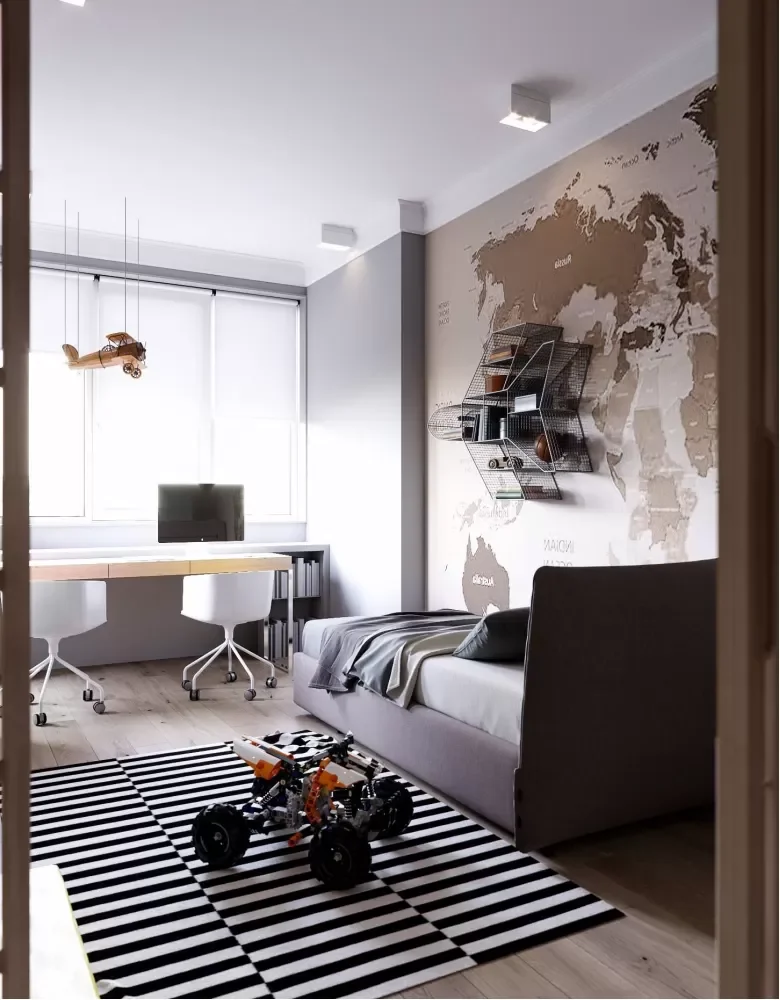
The layout works particularly well because the sleeping and study zones are clearly separated without making the room feel divided. The desk takes advantage of the natural light, while the low shelving beside it provides accessible storage. I also like the contrast between the restrained gray, white, and dark tones and the playful toys and airplane, which keeps the room feeling appropriate for a child without becoming overly themed.
From my perspective, this is a great example of designing a children’s room around interests rather than covering every surface with decorations. The map creates a strong focal point on its own, so the rest of the room can stay relatively simple. If I were recreating this look, I would keep the furniture similarly streamlined and let one large educational or imaginative wall feature carry most of the personality.
Colorful Bunk Room With Built-In Toy Display
This room feels much more playful, with a vivid lime-green shelving wall framing a compact sleeping area. The shelves are filled with toys, figures, vehicles, and small objects, while the bunk bed sits inside a recessed section finished in pale wood. A deep blue border surrounds the sleeping nook, and colorful children’s chairs and a small round table occupy the foreground. The combination of blue, green, yellow, and other bright accents gives the room an energetic, cheerful character.
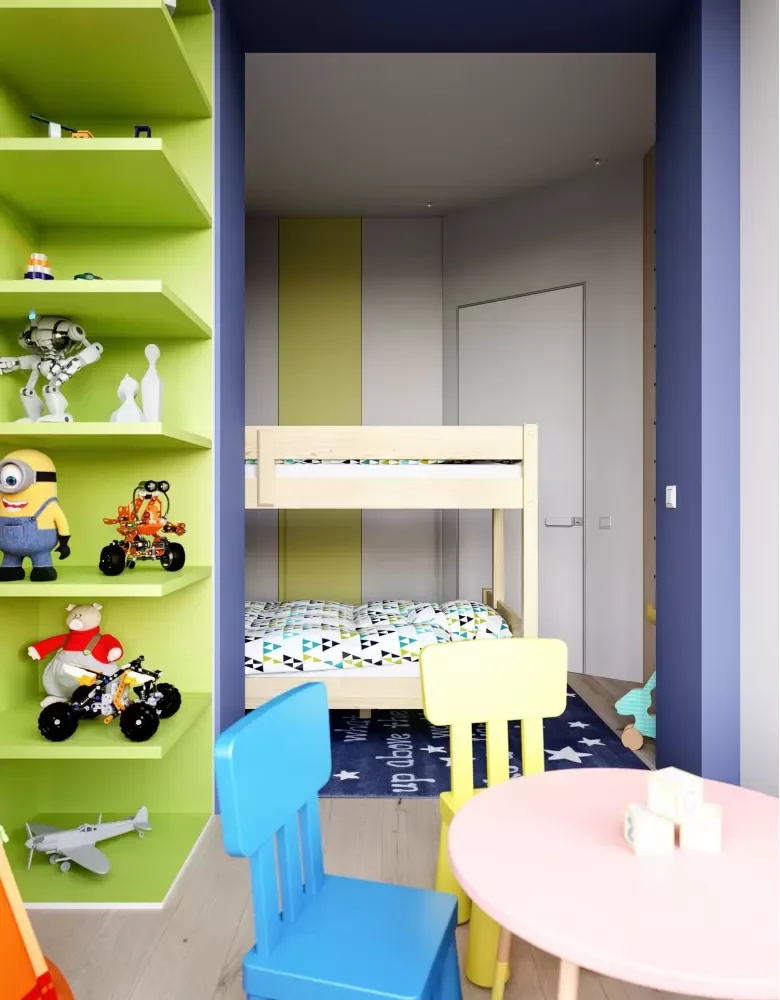
What stands out to me most is how effectively the storage has been integrated into the room’s visual design. Instead of hiding the toys completely, the open shelving turns them into part of the decoration. The bunk bed also makes efficient use of vertical space, leaving more room for the play area in front. I find this especially practical for a child who wants easy access to favorite toys and collectibles.
For a similar result, I would start with one dominant shelving color and one contrasting color around the sleeping area rather than introducing many unrelated shades. The open shelves work best when the displayed items are grouped naturally, as they are here. I also like the idea of keeping the central floor area relatively open so the room can change function throughout the day.
Playful Green Bedroom With Integrated Gym and Study Zone
Here, the room combines sleeping, studying, storage, and physical play in a surprisingly cohesive arrangement. A raised sleeping area with an integrated wardrobe and staircase occupies the left side, while an orange-accented desk sits beneath the large windows. A wall-mounted climbing and exercise structure stands between these zones, complete with a ladder, rings, and hanging elements. A large textured green rug covers much of the floor, and green window shades with white floral motifs reinforce the cheerful color scheme.
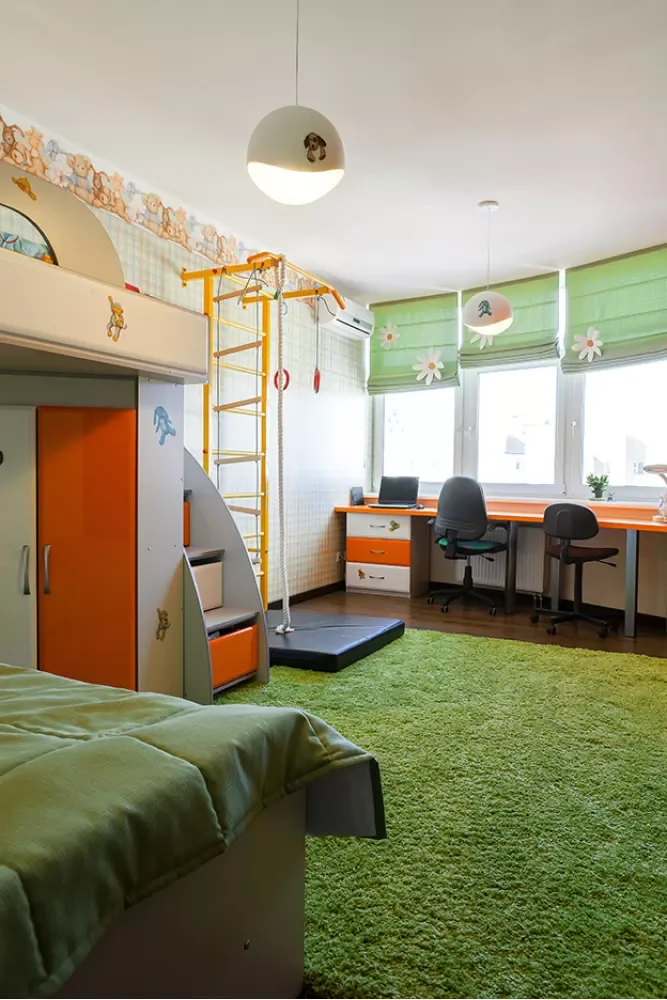
I think this arrangement works because every major activity has a dedicated place. The elevated bed keeps the sleeping zone compact, while the area underneath is used for storage and access. The desk benefits from the generous window wall, and the exercise structure gives the child an active feature without taking over the entire room. The large rug also visually connects the different zones and provides a comfortable surface for play.
What I would take from this design is the importance of using vertical space when a child’s room needs to accommodate several activities. The raised bed creates opportunities for storage and organization below, while the wall-mounted equipment uses otherwise unused space. I would keep the rest of the furniture fairly practical, just as shown here, so the room can handle plenty of activity without feeling crowded.
Loft Bed With Stair Storage and a Cozy Play Corner
This bedroom uses a loft-style bed to create a compact but highly functional children’s space. The pale blue upholstered bed sits beneath a raised sleeping structure, with broad built-in steps leading upward on the left. Open compartments beneath the bed hold books and toys, while a small tent creates a separate play corner near the windows. Soft blue curtains cover the window wall, and a round rug with a playful animal illustration adds a gentle decorative touch to the warm wood floor.
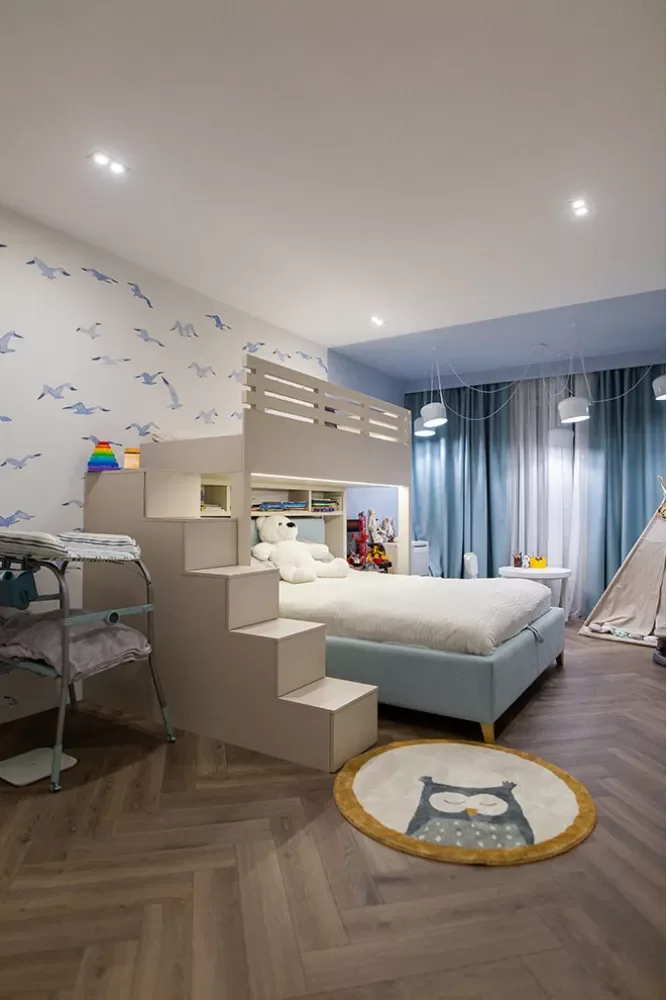
I especially like the staircase because it does more than provide access to the upper sleeping area. Its solid, stepped construction becomes part of the furniture arrangement and creates additional storage opportunities. The open shelving under the bed keeps favorite items visible, while the tent gives the room another small-scale zone for imaginative play. The combination makes the bedroom feel thoughtfully planned rather than simply filled with children’s furniture.
For me, this is a strong example of how one substantial piece of furniture can solve several design problems at once. If space is limited, a raised bed with integrated steps and storage can free up valuable floor area for play. I would also preserve the soft blue and warm wood combination because it gives the room a relaxed feeling while still looking distinctly designed for a child.
Soft Contemporary Room With Sculptural Bed and Green Art
This room takes a much softer approach to children’s design. A rounded upholstered bed in a muted beige tone sits against a wall of vertical textured panels, while a large oval artwork featuring a layered green mountain-like form becomes the focal point above it. The bedding mixes pale neutrals with muted green, and a small curved side table sits beside the bed. Contemporary pendant lights hang overhead, while a large window with sheer curtains brings in plenty of daylight.
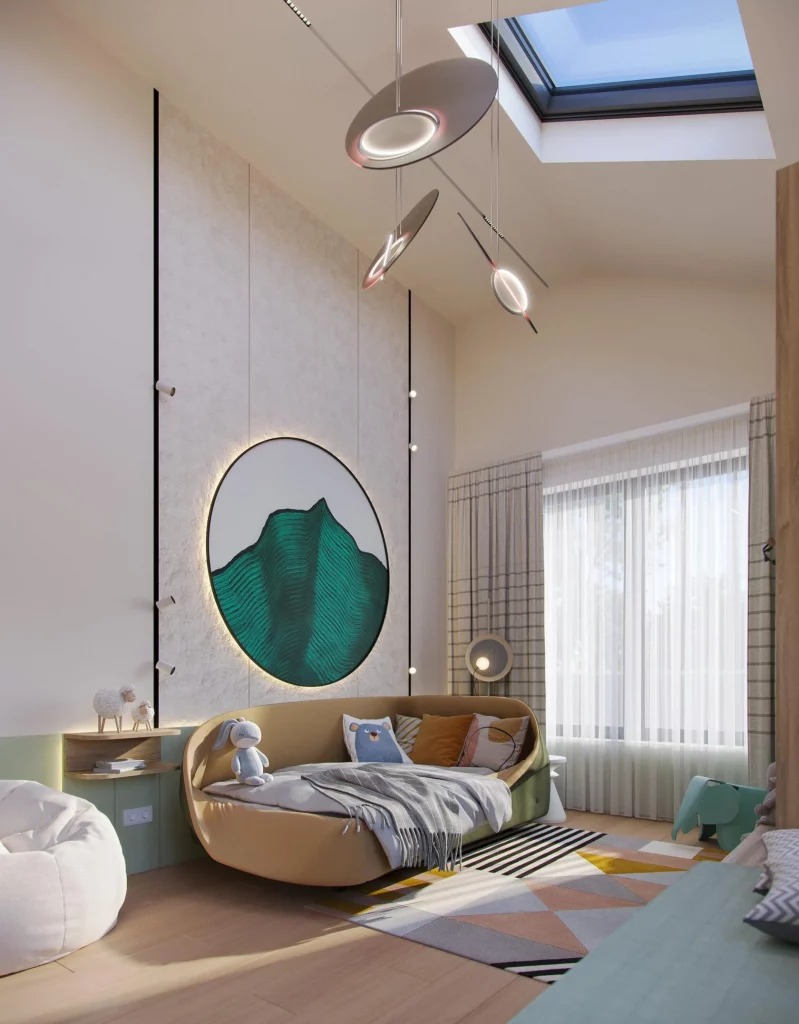
The rounded shapes are what make this bedroom feel especially welcoming to me. The curved bed, oval wall artwork, circular lighting elements, and softly shaped furniture create a consistent visual language throughout the space. Nothing appears overly complicated, yet the room still has plenty of character. The generous window also helps the muted palette feel light and open.
I would use this image as inspiration for anyone who wants a child’s room that can feel sophisticated without becoming too adult. Instead of relying on a large number of small decorations, the design uses shape, texture, and a few carefully chosen accents. The muted green bedding also demonstrates how a gentle color can add personality while keeping the overall atmosphere calm and comfortable.
Bold Blue Bedroom With Graphic Abstract Wall Art
This bedroom makes a much stronger visual statement through its intense blue wall mural filled with overlapping circles and abstract shapes. A low orange bed frame and large rounded orange headboard create a striking contrast with the blue bedding and wall. Two slim black pendant lights hang above the bed, while a small teal side table adds another strong color beside it. The pale wardrobe at the side provides a quieter visual counterpoint to the colorful focal wall.
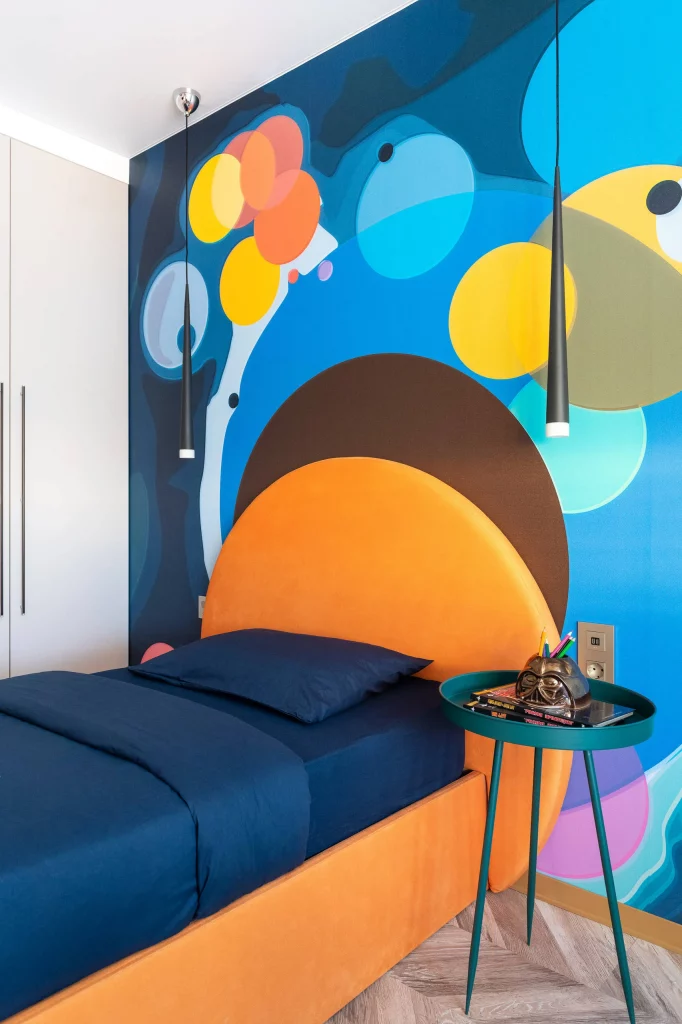
I think the room works because the boldest colors are concentrated around the bed, making the sleeping area the obvious centerpiece. The orange and blue relationship creates energy, while the simple bedding keeps the composition from becoming even busier. I also like the use of rounded forms in the mural, headboard, and side table, because they soften the intensity of the palette.
If I were recreating this idea, I would follow the same principle of letting one wall do most of the decorative work. The rest of the furniture can remain simple and functional, as shown here. This approach is particularly useful when a child loves color because it allows the room to feel expressive without requiring every piece of furniture to be equally colorful.
Dreamy Canopy Bedroom in a Soft Neutral Palette
This bedroom creates a very gentle atmosphere with an almost entirely pale palette. A low floor-level bed sits beneath a large white canopy that drapes down around the sleeping area, creating a cozy enclosed feeling. Soft toys and cushions are arranged on the bed, while a pale open shelving unit with house-shaped detailing stands along the right wall. A large round rug occupies the foreground, and the window area brings in soft natural light.
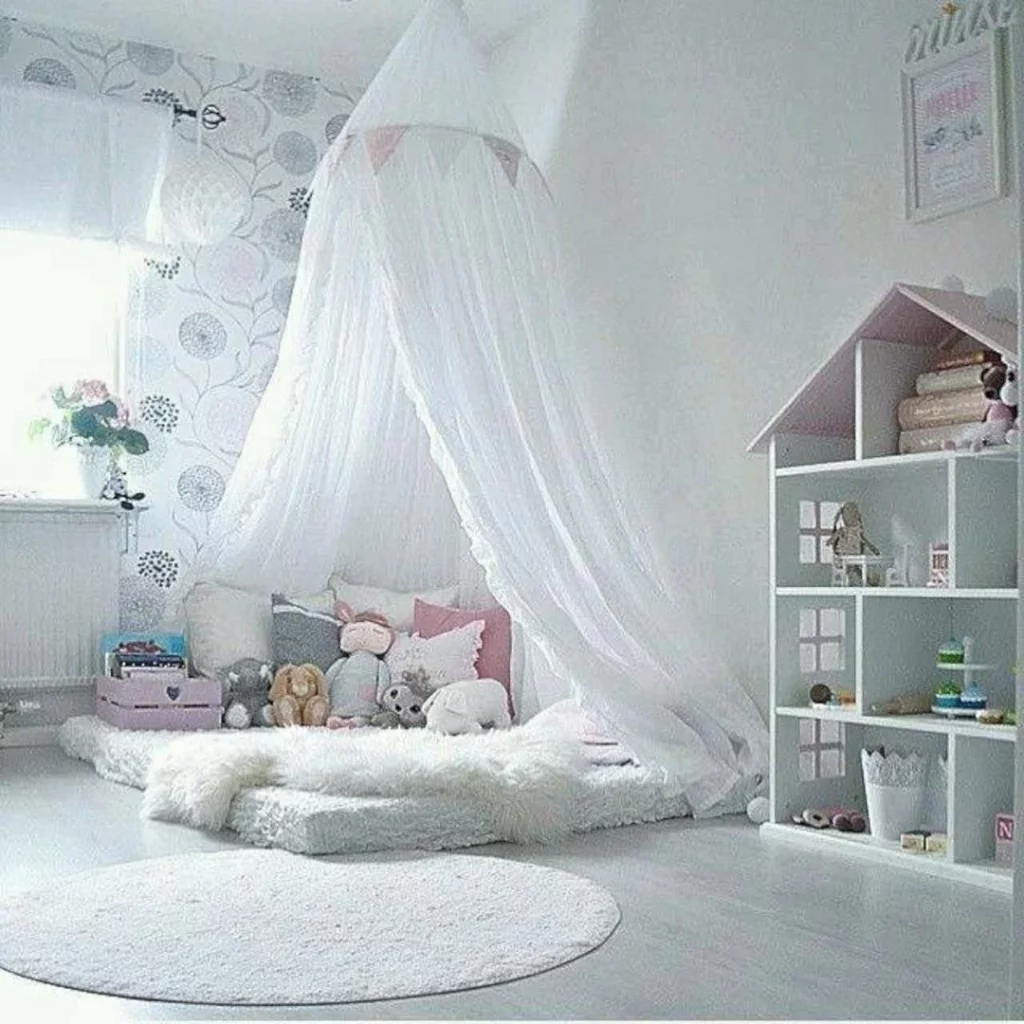
The simplicity of the room is what makes the canopy feel so effective. Because the surrounding furniture and surfaces remain light and understated, the fabric enclosure becomes the main feature without competing with other decorations. The open shelving also adds practical storage while maintaining the airy appearance of the room. I find the low sleeping arrangement particularly approachable for a young child because everything feels close to the floor and easy to access.
For a similar look, I would keep the palette restrained and concentrate on softness through textiles, cushions, and the canopy itself. The house-shaped shelving adds a playful detail without overwhelming the room. To me, this is a good reminder that a cute children’s bedroom does not have to rely on strong colors; texture and scale can create just as much personality.
Superhero Bedroom With Oversized Spider-Man Wall Illustration
This bedroom is built around one unmistakable focal feature: an enormous line-art Spider-Man illustration covering the main wall behind the bed. The artwork is drawn in a single reddish tone against a pale background, while the upholstered bed and matching chaise-like extension repeat that warm color below. Gray bedding and a patterned area rug balance the stronger tones, and a compact bedside unit with a round lamp keeps the furniture arrangement practical.
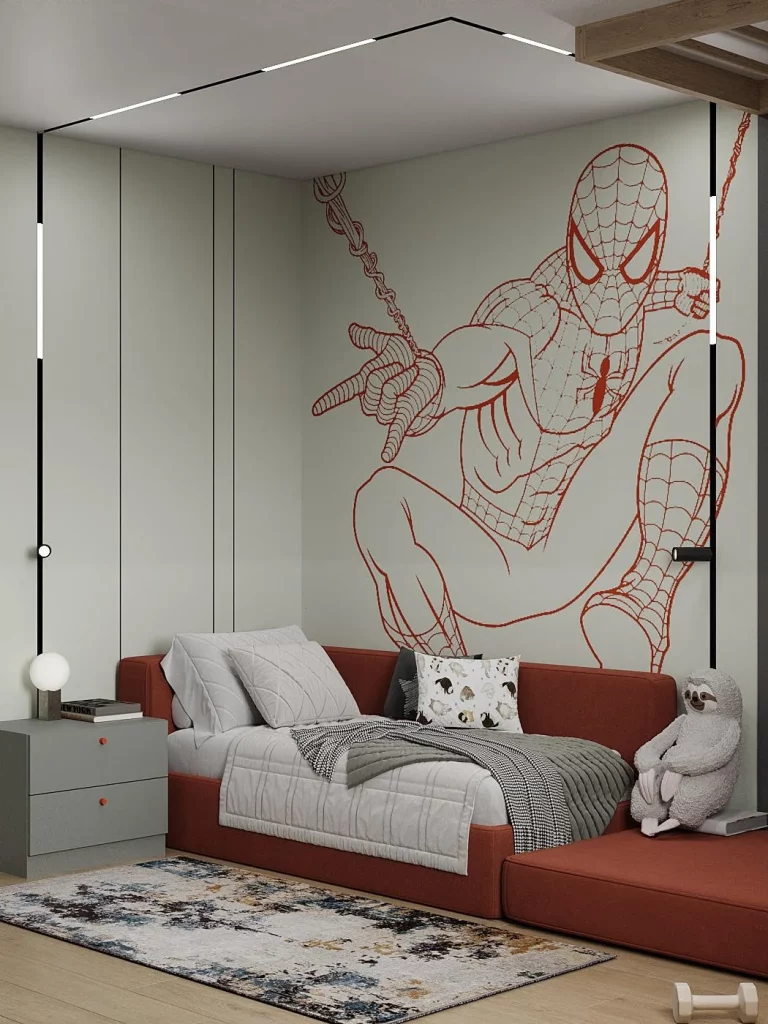
I like how the room handles a strong character theme without covering every surface with matching merchandise. The oversized wall illustration provides all the visual impact the room needs, while the furniture remains relatively contemporary. The large upholstered bed also creates a comfortable-looking sleeping area, and the extended seating section gives the child an additional place to sit or relax.
This is one of my favorite approaches to a themed children’s room because the design can feel more cohesive than a collection of separate character accessories. If the child eventually develops a different interest, the rest of the room can remain useful while the wall treatment becomes the element that changes. I would keep the surrounding colors neutral and let the oversized artwork remain the star.
Soft Woodland-Inspired Bedroom With Curved Upholstery
This bedroom feels calm and contemporary, with a large upholstered bed running along the back wall beneath a vertical ribbed feature wall. A softly illustrated fox appears on the wall to the left, while circular wall lights and a sculptural ceiling fixture add gentle curves above. The bedding combines pale neutrals with muted sage green, and several plush toys sit comfortably on the bed. A small rounded side table and pale furniture continue the understated aesthetic.
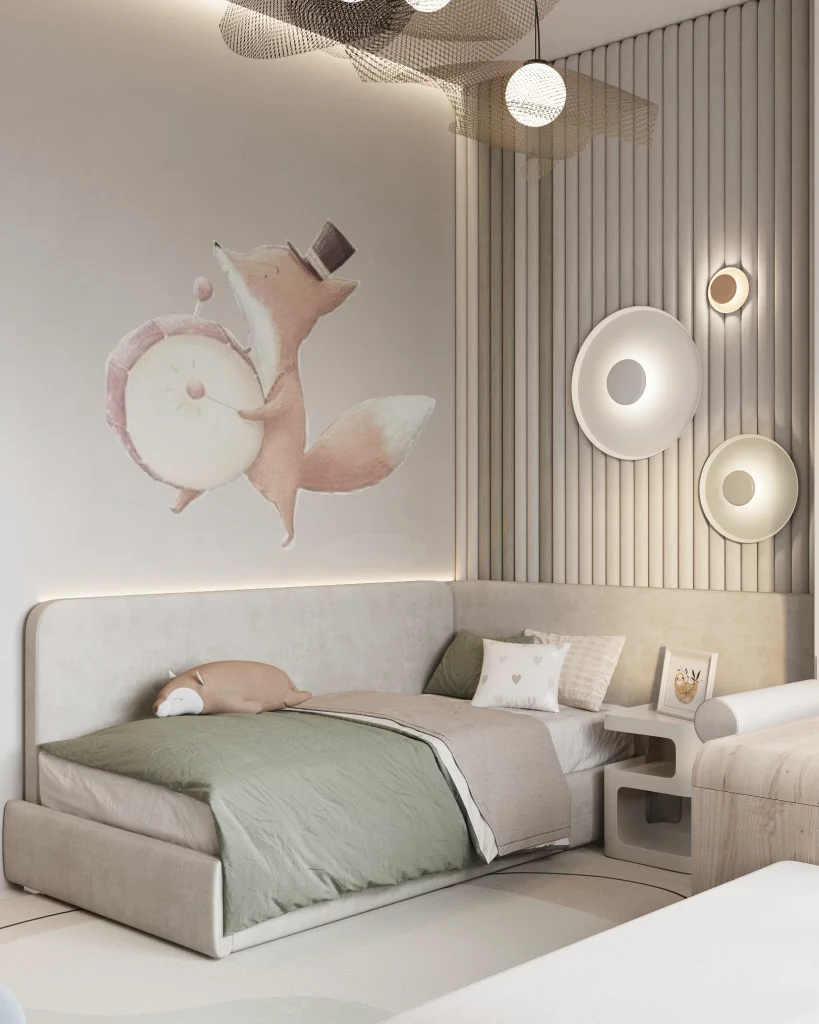
The room works particularly well because the shapes and colors repeat without becoming predictable. The curved headboard, circular lights, rounded side table, and soft toy forms all contribute to a gentle visual rhythm. The ribbed wall treatment adds texture behind the bed, while the restrained palette allows the green bedding and fox artwork to stand out naturally.
Personally, I would keep this kind of room flexible as the child grows. The main furniture has a timeless appearance, while the artwork, bedding, and toys can easily change. I also like the way the design uses a few recognizable playful details instead of turning the entire room into a theme. That gives the bedroom a cute quality while maintaining a polished overall appearance.
Space-Themed Study and Sleep Zone With Built-In Storage
The final room embraces a full space theme with a deep blue mural showing stars, planets, a rocket, and orbital lines across the main wall. A white floating desk sits in front of the mural, accompanied by a sculptural blue chair, while several box shelves display books and small decorative objects. Low white cabinetry runs beneath the television, and a built-in bench or storage area extends along the window side with neatly stacked cushions.
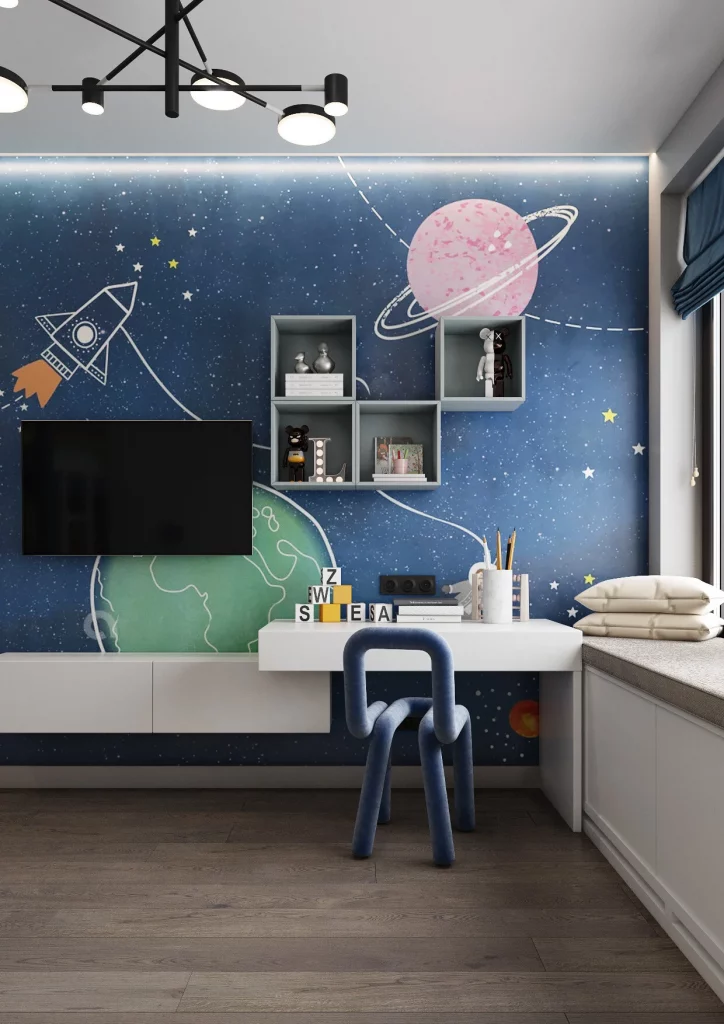
I find the zoning especially successful because the wall mural connects the entire room visually while the furniture stays simple. The desk creates a dedicated study spot without blocking the artwork, and the floating design keeps the floor underneath visually open. The combination of white storage with the dark blue wall also gives the room a strong contrast while allowing the illustrated planets and stars to remain the focus.
For me, this image shows how a child’s interests can become the foundation of a complete room design. A large mural can establish the mood instantly, while practical furniture provides the everyday functionality. I would follow the same strategy by choosing a strong theme for one major surface and then using simple storage, seating, and bedding around it so the room remains useful as well as fun.
Playful Pink Loft Nook With Zebra-Patterned Flooring
The first room immediately stands out for its energetic pink and purple palette and its clever use of a raised architectural area. A curtained opening creates a cozy lower nook with two simple shelves, while a purple upholstered chair sits in front of them. A matching pink ottoman occupies the foreground, and the floor is covered with alternating pink and black-and-white zebra-patterned squares. White cabinetry and a staircase on the right keep the room visually light despite the strong colors.
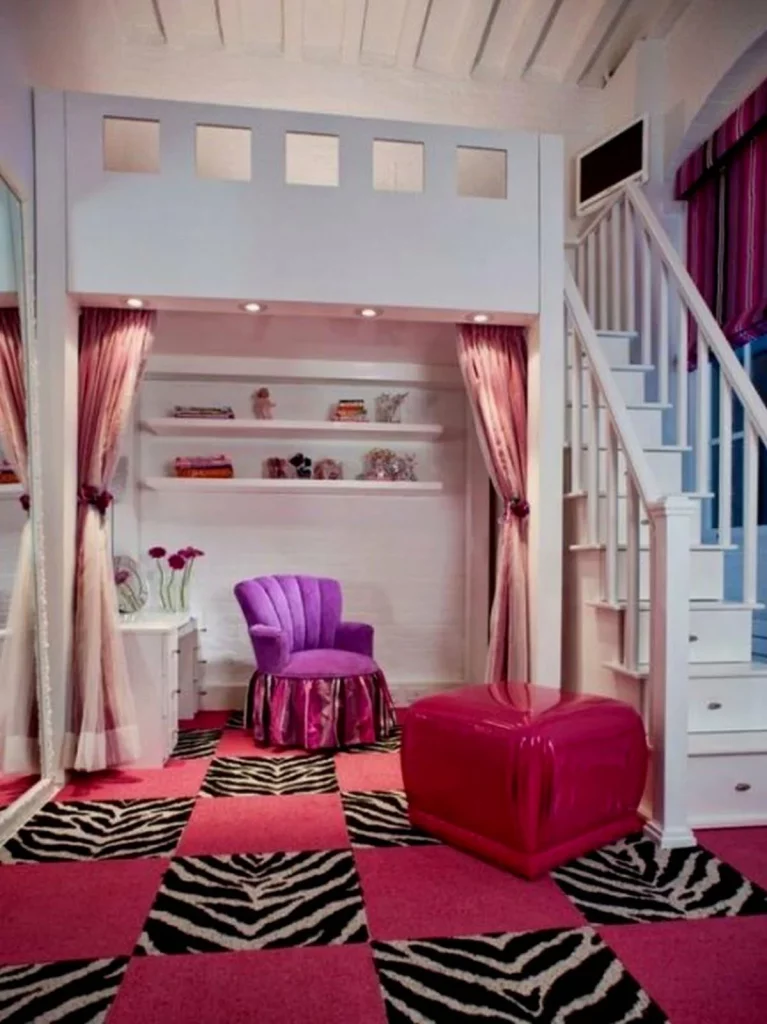
I like how the curtained nook gives the room a separate little zone without completely closing it off. The shelves provide a place for the small decorative objects and books already visible in the space, while the chair makes the alcove feel more like a dedicated retreat. The ottoman adds another comfortable seating surface, and the patterned floor creates a strong visual rhythm that ties the pink elements together.
From my perspective, the best lesson here is that a child’s room does not need complicated furniture to feel special. The architecture itself becomes part of the design, and the curtains soften what could otherwise feel like a very structured built-in area. If I were recreating this look, I would keep the strongest color concentrated in a few major pieces and let the white walls and cabinetry provide visual breathing room.
One detail I particularly enjoy is the way the curtains frame the shelves almost like a little stage. That makes an ordinary storage nook feel much more imaginative while still keeping the design functional for everyday use.
Dreamy Pink Unicorn Bedroom With a Canopy Bed
This bedroom has a soft pink backdrop covered with tiny stars, framed artwork, shelves, and whimsical animal decorations. The main focal point is a bed surrounded by a draped canopy in muted pink fabric. A cream-colored upholstered loveseat sits opposite the bed, while two wooden storage boxes on wheels occupy the center of the room. A round layered rug defines this seating and play area, and the room is finished with plush toys, decorative pillows, and a small bedside table.
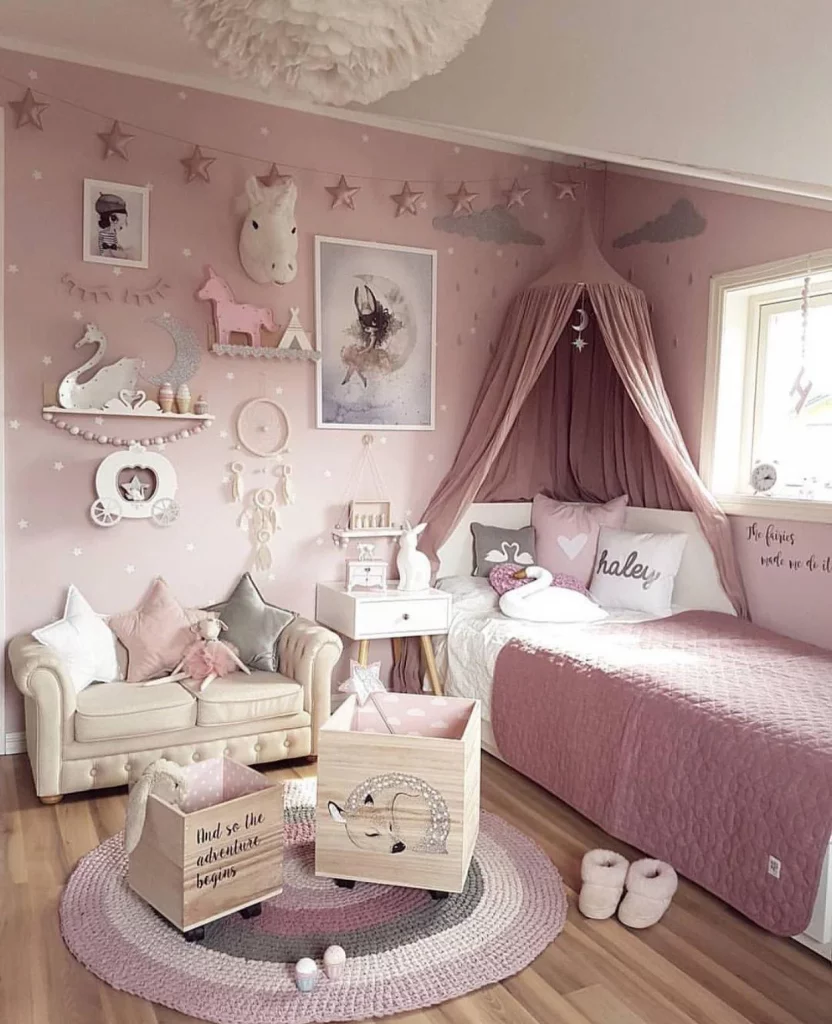
I love how the furniture is arranged to create several useful zones within one bedroom. The bed feels private and cozy because of the canopy, while the loveseat gives the child another place to sit and relax. The wheeled storage boxes are especially practical because they can hold toys while remaining easy to move around the room. The round rug visually connects the central pieces and makes the open floor feel intentional.
The decorating works because the room repeats the same soft pink and cream tones across different surfaces instead of relying on one large decorative feature. From my experience following children’s room trends, this kind of coordinated palette makes a highly themed bedroom feel more cohesive. The wall shelves also keep the decorations visible without taking up valuable floor space.
If I were adding a finishing touch, I would preserve the same restrained palette rather than introducing another strong color. The existing combination of pink, cream, white, and small touches of gray already gives the room a gentle storybook quality without overwhelming the space.
Soft Green and Blue Bedroom Framed by an Elegant Arch
The third room takes a much calmer approach, with pale green walls, white trim, light flooring, and a large arched opening leading into the sleeping area. Inside the arch, the bed has a soft blue headboard and matching blue furniture, while pale pink canopy curtains frame it from above. Tall windows on the right are dressed with long pale pink curtains. A blue console table, a small upholstered seating area, a patterned rug, and a contemporary chandelier complete the visible space.
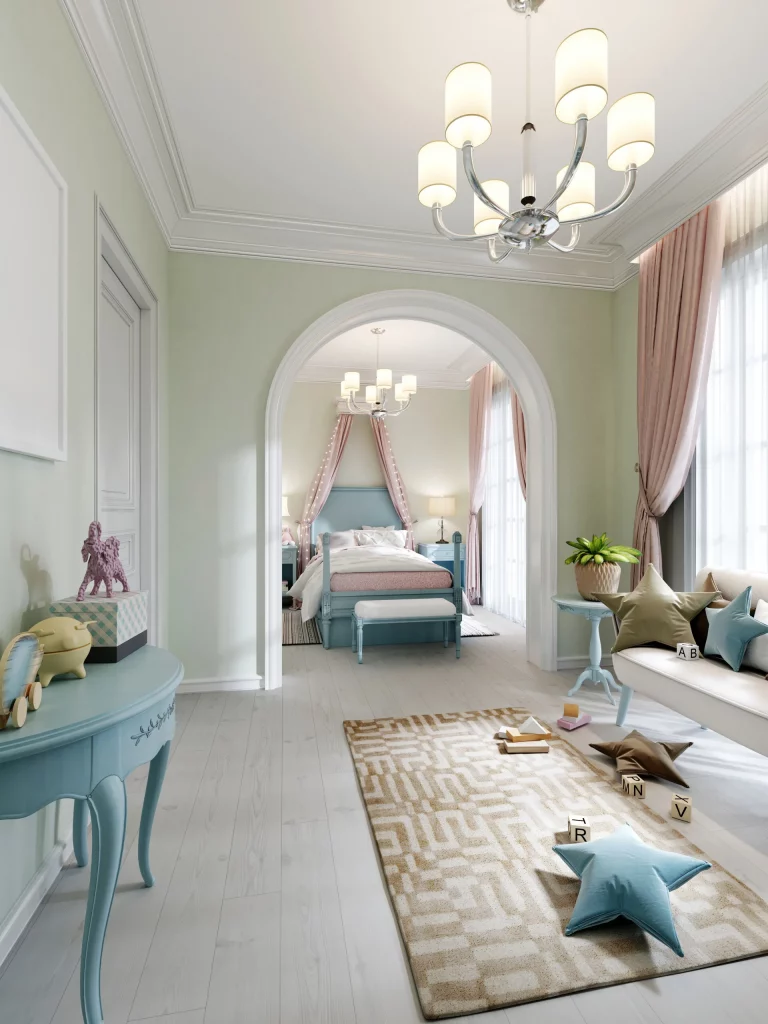
What makes this layout so appealing to me is the architectural separation created by the arch. Instead of using a solid wall, the design visually distinguishes the bedroom area while preserving a feeling of openness. The blue furniture gives the sleeping space definition, while the pink curtains create a gentle connection between the two areas. The large rug also helps organize the otherwise spacious floor.
I think this is a particularly useful idea for families who want a children’s bedroom to feel polished rather than overly themed. The pale green, blue, pink, and white combination feels youthful but not tied to a single character or trend. The decorative molding and chandelier add structure, while the toys and cushions keep the room from feeling too formal.
For me, the most interesting detail is the repeated use of arches and curved forms. The large doorway softens the geometry of the room, and the rounded console and chandelier echo that feeling. If I wanted to recreate the atmosphere, I would focus first on creating a gentle color relationship between the walls, bedding, curtains, and furniture rather than trying to copy every accessory.
Whimsical Unicorn Mural With a Built-In Daybed
This bedroom centers around a large hand-painted-style unicorn mural surrounded by flowers and leafy details. The bed is positioned directly beneath it and has a substantial wooden frame with built-in drawers underneath. Pale pink and gray bedding continues the soft color scheme, while a small open shelving unit sits beside the bed. A hammock-style hanging chair appears near the window, and the room has dark gray flooring that creates contrast with the lighter furniture and walls.
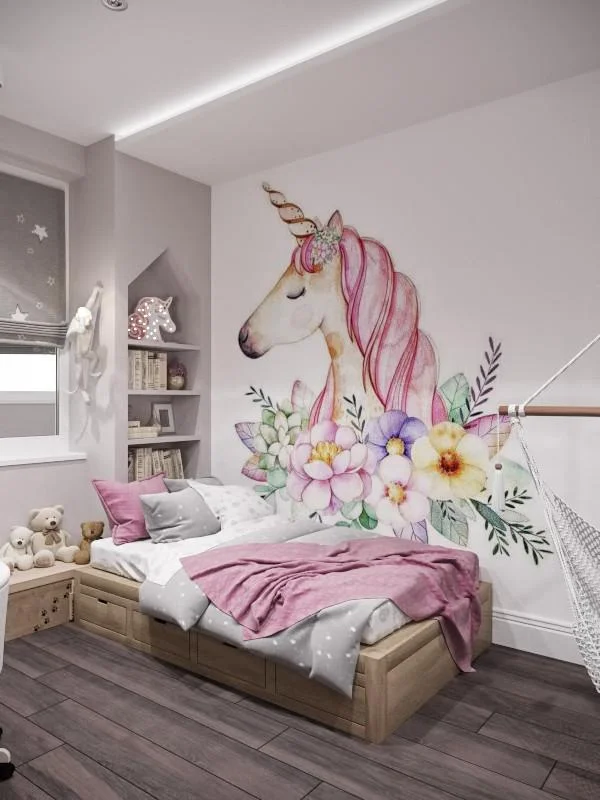
I like how the mural becomes the primary decorative feature while the furniture remains relatively simple. Because the bed itself has storage drawers underneath, the room gains useful capacity without requiring a separate large storage unit. The open shelving beside the bed also keeps a few books and small objects accessible without crowding the sleeping area.
The contrast between the pale mural and the darker floor gives the room more depth than an entirely pastel scheme would have. In my experience, this is a smart way to use a large children’s wall graphic: let the artwork provide the personality and keep the surrounding furniture comparatively quiet. The result feels playful but still visually organized.
If I were refining this room, I would keep the wall surrounding the mural as uncluttered as it is shown. The artwork already carries a lot of visual information, so adding many more decorations could compete with the central unicorn illustration. The simple bedding and practical bed frame are exactly what allow the mural to remain the star.
Modern Gray Bedroom With a Playful Character Light
This room shows a much more contemporary interpretation of a child’s bedroom. A large gray upholstered sofa or daybed occupies the center, surrounded by patterned cushions in gray and white. Behind it, a dark vertical slatted partition contrasts with the lighter wall. On the left, built-in shelving features a series of rounded niches. A playful illuminated character decoration with an orange polka-dot bow adds the strongest pop of personality, while a large geometric gray rug grounds the seating area.
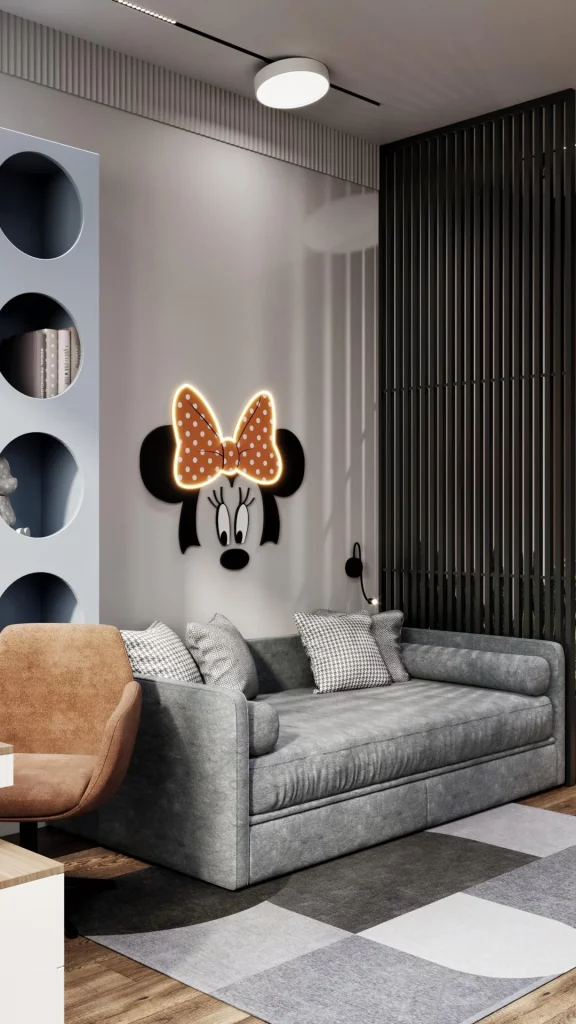
I appreciate the balance between the mature gray furniture and the playful wall decoration. The sofa-like bed provides a substantial, comfortable-looking place to sit or rest, while the patterned cushions introduce texture without adding many colors. The vertical slatted feature gives the back wall a strong architectural presence, and the rounded shelving niches provide a useful display area.
For me, this room demonstrates how a child’s bedroom can incorporate contemporary design without becoming too serious. The neutral foundation allows a single playful element to stand out clearly. I also like the way the geometric rug repeats the gray palette, creating a visual bridge between the floor, seating, and walls.
If I were adapting this idea, I would keep the neutral base and choose one distinctive decorative feature with a strong personality. That approach makes it easier to update the room later because the main furniture does not depend on a specific theme.
Serene House-Shaped Bed With Cloud-Like Ceiling Decor
This bedroom has an exceptionally soft and airy appearance, with a house-shaped bed structure in a pale neutral tone and a padded geometric headboard. Above the room hang several large, delicate wire-like cloud forms at different heights, accompanied by small star decorations. A simple floating cabinet sits beside the bed, with a white desk and chair near the window. The pale flooring is arranged in a distinctive chevron pattern, and a large plush bird-shaped toy rests near the bed.
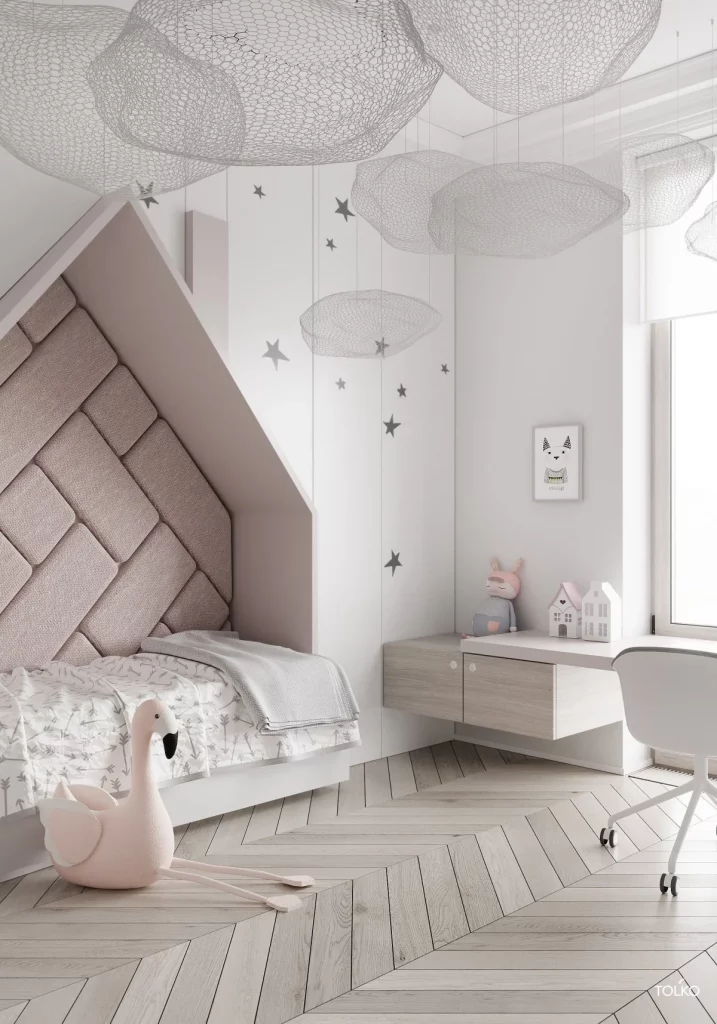
I find the combination of the house-shaped bed and suspended cloud forms especially charming because both features reinforce the same imaginative idea without using a lot of color. The floating cabinet keeps the floor clear, while the desk takes advantage of the bright area near the window. The restrained palette also allows the unusual ceiling decorations and padded headboard to remain noticeable.
The flooring is another detail that deserves attention. Its directional pattern adds interest to an otherwise very pale room, but the light finish prevents it from dominating. In my view, this is a good example of using texture and pattern instead of strong color to give a child’s room character.
I would preserve the calmness of this design by resisting the urge to fill every available surface with toys or decorations. The room already has several memorable elements, and leaving generous open space helps each one remain visible. The overall effect feels imaginative while still being remarkably peaceful.
Sunny Yellow Accent Wall With a Cozy Reading Display
This room introduces a warm yellow vertical accent panel that extends from the floor toward the ceiling and visually separates the child’s area from a study space beyond it. A narrow white shelf attached to the yellow section displays children’s books and small stuffed figures. A large plush lamb sits on a small wooden wheeled toy, while children’s drawings and artwork are displayed on the adjacent white wall. In the background, a white desk, chair, and broad window create a bright study area.
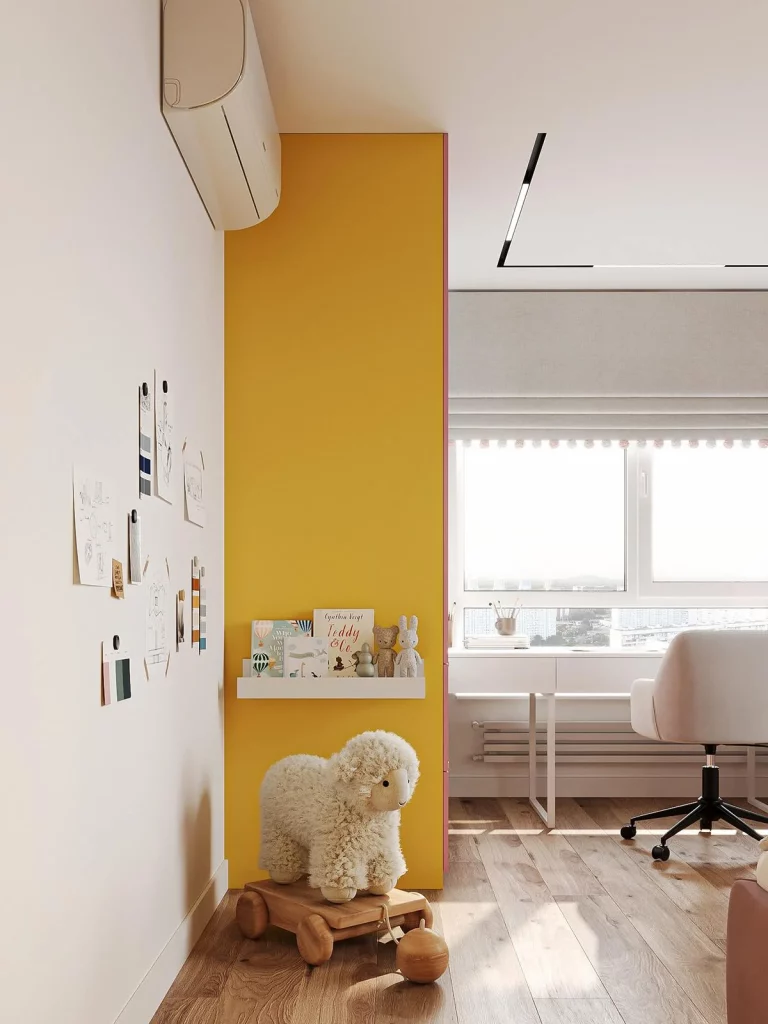
What I like most here is how the yellow panel gives a relatively simple room a strong focal point without covering every wall in color. The narrow shelf makes use of the vertical space while keeping books and toys easy to see. The artwork displayed on the neighboring wall also gives the room a personal quality and makes the child’s own creations part of the decor.
The layout works especially well because the visible study area is positioned close to the window, where the room receives abundant natural light. The open floor between the display area and desk keeps the space feeling flexible rather than crowded. The wooden toy beneath the plush lamb adds a small warm detail that relates naturally to the flooring.
From my perspective, this is one of the easiest ideas in the collection to adapt. A single painted architectural panel can create a clear focal point without requiring a full room makeover. I would use the same principle with any favorite color, keeping the surrounding walls simple so children’s books, drawings, and toys can provide the changing details.
Soft Pink Bedroom With a Statement Giraffe and Cloud Lights
This bedroom combines white furniture with pale pink bedding, curtains, and small decorative accents. The bed has a classic paneled white frame and is dressed with a soft pink comforter and patterned pillows. A large giraffe figure stands beside the bed, immediately becoming one of the room’s most recognizable features. Three fluffy white pendant decorations hang above the room, while a small white shelving unit, bedside table, lamp, and storage basket complete the arrangement.
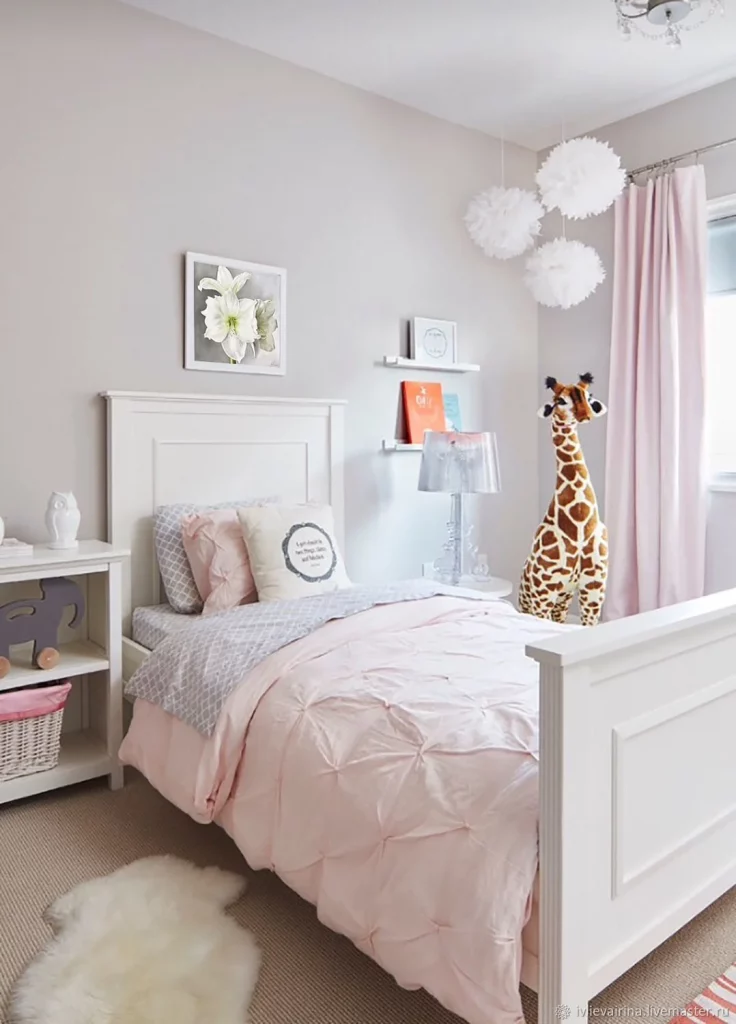
I like how the room uses a very simple base and then adds personality through a few oversized details. The giraffe creates a strong focal point without requiring a busy wall treatment, while the fluffy hanging lights give the ceiling area more visual interest. The white furniture keeps everything feeling cohesive, and the pink curtains and bedding provide just enough color.
The furniture arrangement is practical because the bed, bedside surface, shelving, and storage basket all have clearly defined roles. The open shelving keeps books and objects accessible, while the small table beside the bed provides a convenient place for the lamp and other necessities visible in the photograph.
If I were recreating this look, I would follow the same principle of choosing a few memorable accessories instead of decorating every surface. The oversized giraffe and ceiling decorations already give the bedroom a playful identity, while the neutral furniture makes the room feel comfortable and easy to maintain visually.
Sweet Twin Bedroom With Matching Unicorn Beds
This shared children’s bedroom features two matching white beds positioned on opposite sides of a central white storage unit. Each bed has a whimsical unicorn-inspired headboard with closed eyes and a small decorative horn. The wall behind the beds is divided into soft pastel blue and pink house-like shapes, creating a different backdrop for each sleeping area. Coordinated pillows add blue, pink, white, and patterned accents, while floating shelves above the central cabinet display small decorations.
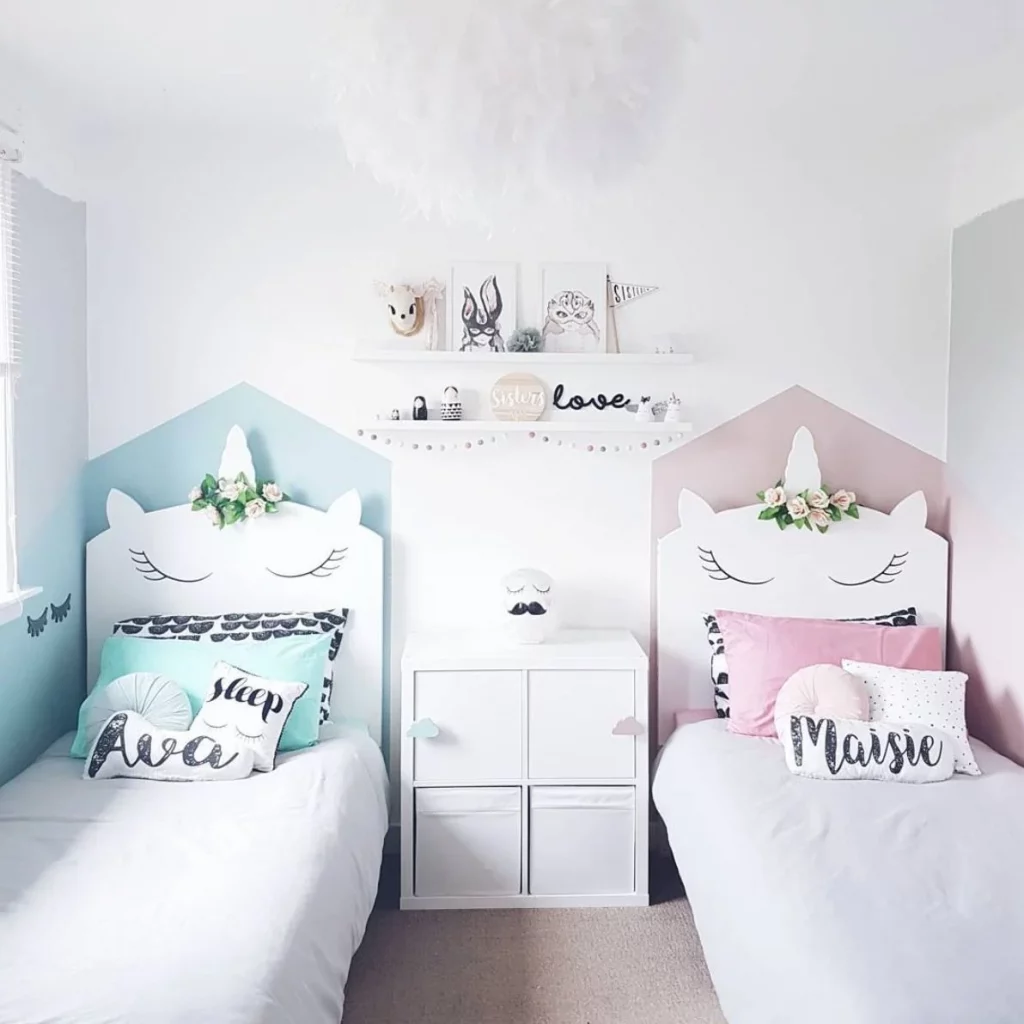
I think this is a particularly successful example of designing a shared room because the two sides feel individual while still belonging together. The central storage unit creates a natural divider between the beds, and the different pastel wall colors give each side its own identity. Matching headboards and similar bedding keep the overall room balanced.
The storage placement is also useful because it fills the gap between the beds instead of leaving an awkward unused space. The shelves above provide additional display capacity without taking up floor area. From a practical standpoint, the symmetrical arrangement makes the room feel orderly and gives both children an equally defined place.
For me, the most charming idea is the use of coordinated but not identical colors. Rather than making everything exactly the same, the room gives one side a soft blue emphasis and the other a soft pink emphasis. That is an easy approach to remember when designing a bedroom for siblings with slightly different preferences.
Bright White Bedroom With a Practical Storage Bed
The final room has the lightest and simplest appearance in the collection. A white bed with several built-in drawers occupies the right side, while a small white desk and pale blue chair sit near the large window. A narrow storage unit beside the bed includes a pink drawer or bin, and white floating shelves display books and small objects above it. The room uses pale walls, light flooring, white curtains, and a small patterned rug, with a few pink accents adding softness.
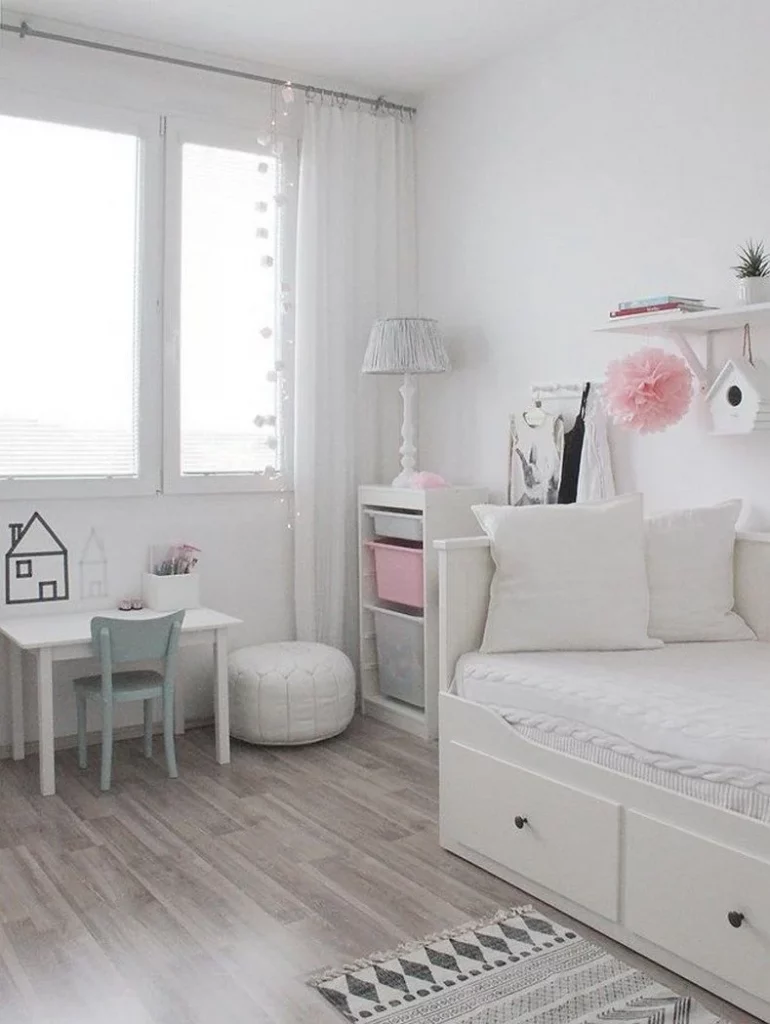
I really like the calm simplicity of this room because the furniture does not compete with the natural light. The drawers built into the bed make excellent use of otherwise unused space, while the compact desk creates a dedicated place for drawing, reading, or schoolwork. The open shelves provide display space without making the room feel visually heavy.
The restrained color scheme also gives the bedroom flexibility. White forms the foundation, while pale blue and pink appear in small, easily changeable details. In my experience, this kind of setup can work particularly well when you want a child’s bedroom to feel fresh and organized but still leave plenty of room for the child’s personality to evolve.
Playful House-Shaped Storage in a Lavender Children’s Room
The first room immediately catches my attention with its soft lavender walls and charming house-shaped shelving units. Two large shelving structures are designed like little houses, with open compartments filled with books, toys, baskets, and colorful children’s items. A small desk runs along the window, accompanied by white chairs, while a whimsical sheep-shaped stool stands on a road-patterned play rug. Cloud-shaped wall decorations, framed pictures, and small toys complete the playful atmosphere.
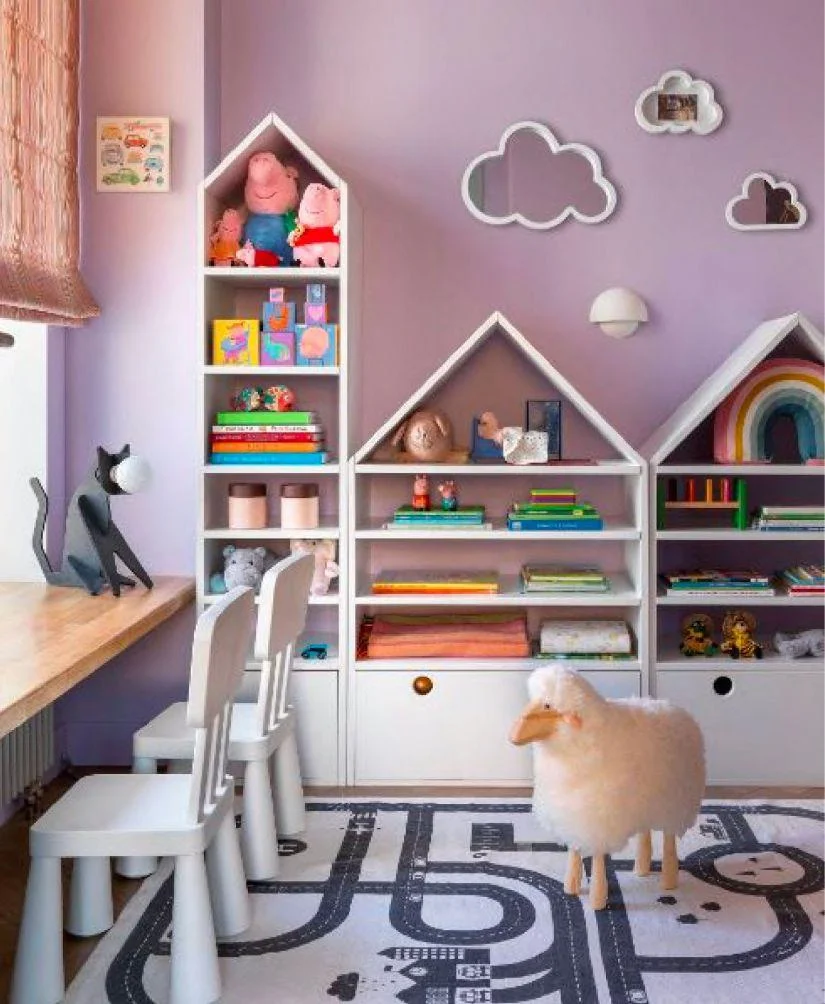
I like how the storage becomes part of the room’s decoration instead of simply being something practical placed against the wall. The house silhouettes create a strong visual feature while the open shelves make books and toys easy for a child to see and reach. The desk by the window also makes good use of the available wall area, creating a compact place for drawing, reading, or schoolwork. The patterned rug adds another activity-friendly surface without taking attention away from the storage.
From my perspective, this is a great example of making functional furniture feel playful. If I were recreating this look, I would pay particular attention to the balance between open shelves and enclosed storage because the image shows how both can coexist neatly. Keeping frequently used books and toys on accessible shelves while using the lower compartments for less decorative items would help preserve the organized appearance.
Soft Green Study Room With House-Shaped Shelving
This bedroom has a much calmer feeling, built around pale green cabinetry, light wood details, and white surfaces. The most distinctive feature is the house-shaped shelving surrounding a small desk, with integrated lighting illuminating the shelves. A large blackboard panel shaped like a house contains a simple giraffe drawing, while white wardrobes provide substantial closed storage on the opposite side. A small gray elephant toy sits on a round rug, and wooden flooring keeps the room feeling warm.
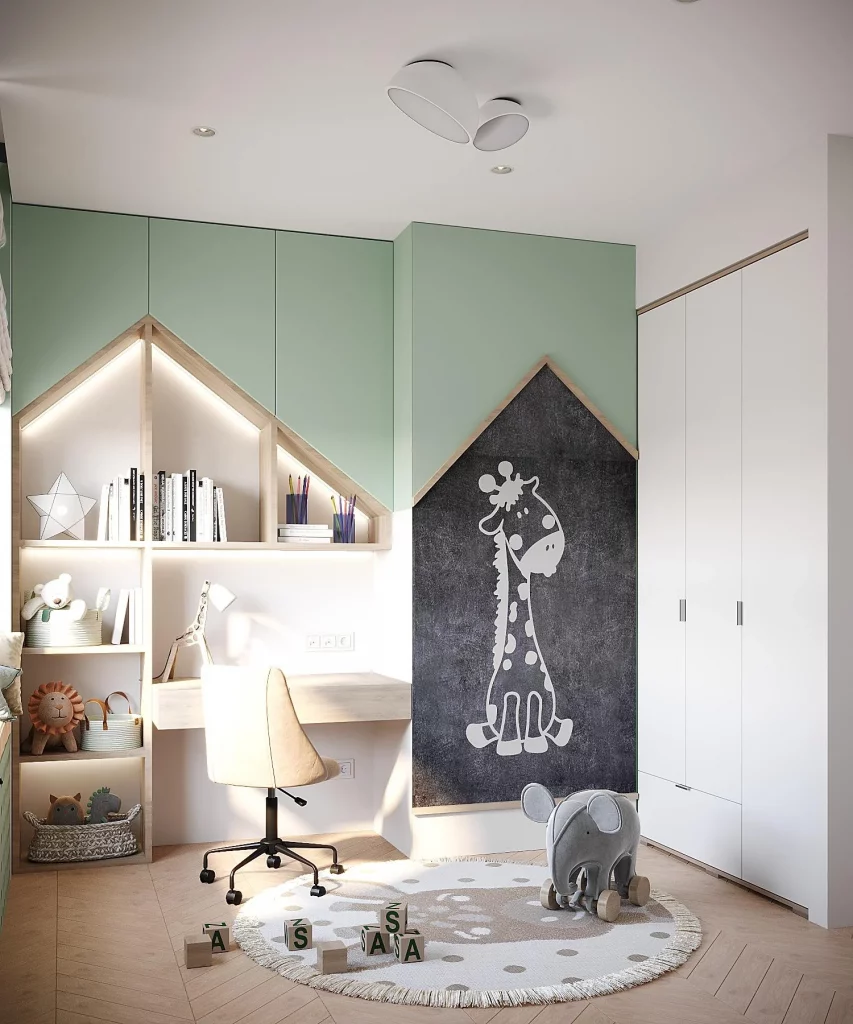
For me, the strength of this room is its combination of study space and storage in one compact composition. The shelves above and beside the desk keep books, stationery, and toys within reach without overwhelming the room. Closed wardrobes provide a useful visual counterbalance, so not everything has to remain on display. The integrated lighting under the shelving is also practical because it adds focused illumination directly where a child may sit and work.
I especially like the restrained color scheme because the playful elements are allowed to stand out without making the room feel visually busy. The house-shaped blackboard is another clever detail that gives the child a dedicated place for drawing. In a similar room, I would keep the furniture simple and let one or two imaginative architectural details, such as these house forms, provide the personality.
Blush Pink Reading Nook With Soft Storage
The third room takes a distinctly softer approach, with pale pink upholstery, blush curtains, and wallpaper decorated with small flamingos. A compact sofa occupies the main area, while a tall open shelving unit displays stuffed animals, baskets, dolls, and small decorative pieces. Beside it, a tall white storage unit includes drawers and closed compartments. A sculptural chandelier with numerous glass elements hangs overhead, adding an elegant focal point to the room.
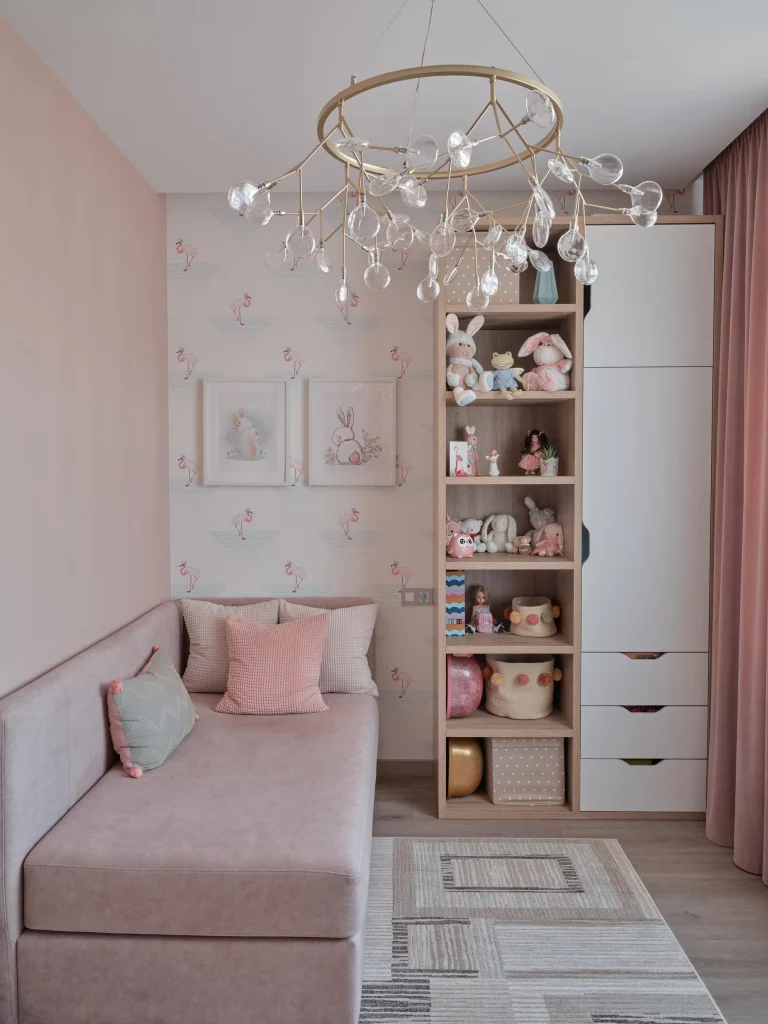
I find the combination of open and closed storage particularly successful here. The open shelving makes the collection of toys feel intentional and accessible, while the drawers and concealed compartments provide space for belongings that do not need to remain visible. The sofa also gives the room a comfortable place for reading or relaxing without requiring a conventional bed-centered layout in the visible portion of the photograph.
The gentle pink palette works because it is repeated across several elements rather than being concentrated in one area. I would use the same principle when recreating this atmosphere: choose a soft base color and repeat it through upholstery, textiles, or curtains instead of introducing many unrelated shades. The patterned wallpaper then adds character while maintaining the room’s delicate mood.
Blue Dinosaur Bedroom With a House-Frame Bed
This room feels much more adventurous, with a blue and green dinosaur mural covering the main wall behind a distinctive house-frame bed. The bed has a white structure with a pitched roof shape, while the bedding repeats the dinosaur theme in shades of blue and green. A black chalkboard wall is positioned behind the room’s circulation area and is filled with children’s drawings. White built-in storage runs along the side walls, and the pale floor keeps the space visually open.
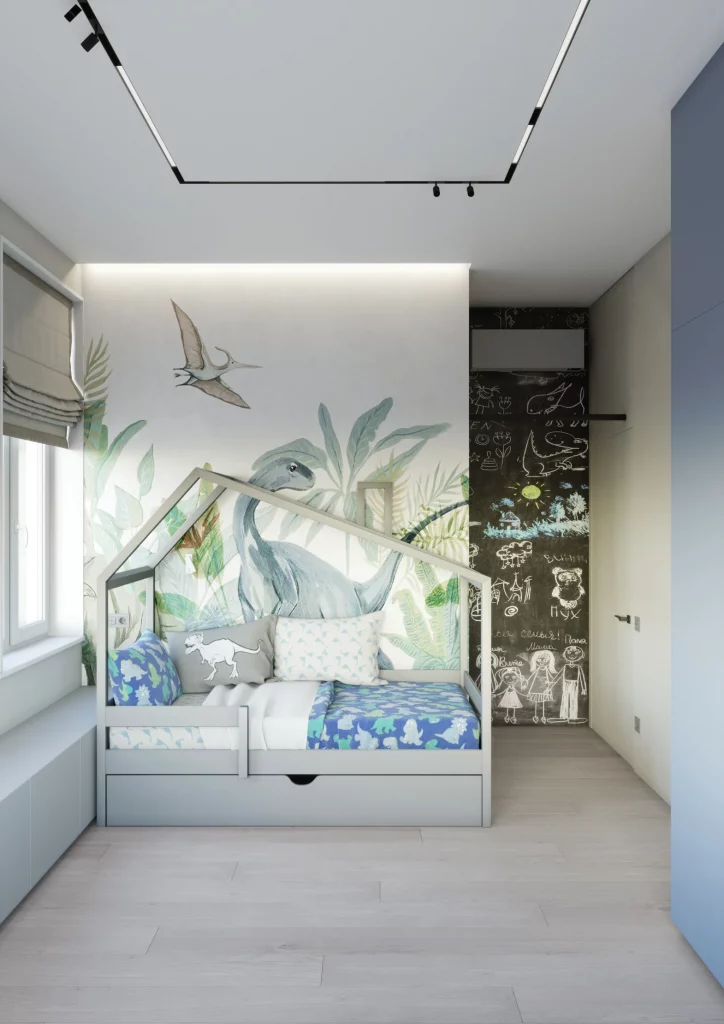
What I like most is how the bed becomes part of the room’s theme without relying on excessive furniture. The house frame creates an immediate sense of a little private world, while the mural provides the storytelling element behind it. The drawers built into the lower portion of the bed also make the furniture more practical by providing storage without using additional floor space.
From my experience looking at children’s interiors, a strong wall mural can do a lot of the decorative work by itself. Here, the dinosaur imagery is supported by matching bedding rather than repeated across every possible surface. That restraint keeps the room cohesive. I would follow the same approach by choosing one main story element and using only a few supporting details to connect the rest of the room to it.
Cozy Penguin Play Corner With Built-In Wardrobes
The fifth image creates a cozy little play zone with a neutral fabric teepee positioned on a round rug. Several penguin toys gather around it, while whale illustrations and clouds decorate the wall behind the tent. On the opposite side, a large built-in wardrobe features vertically striped doors and an open shelving section filled with books and small decorative objects. The warm wood flooring adds contrast to the pale walls and soft textiles.
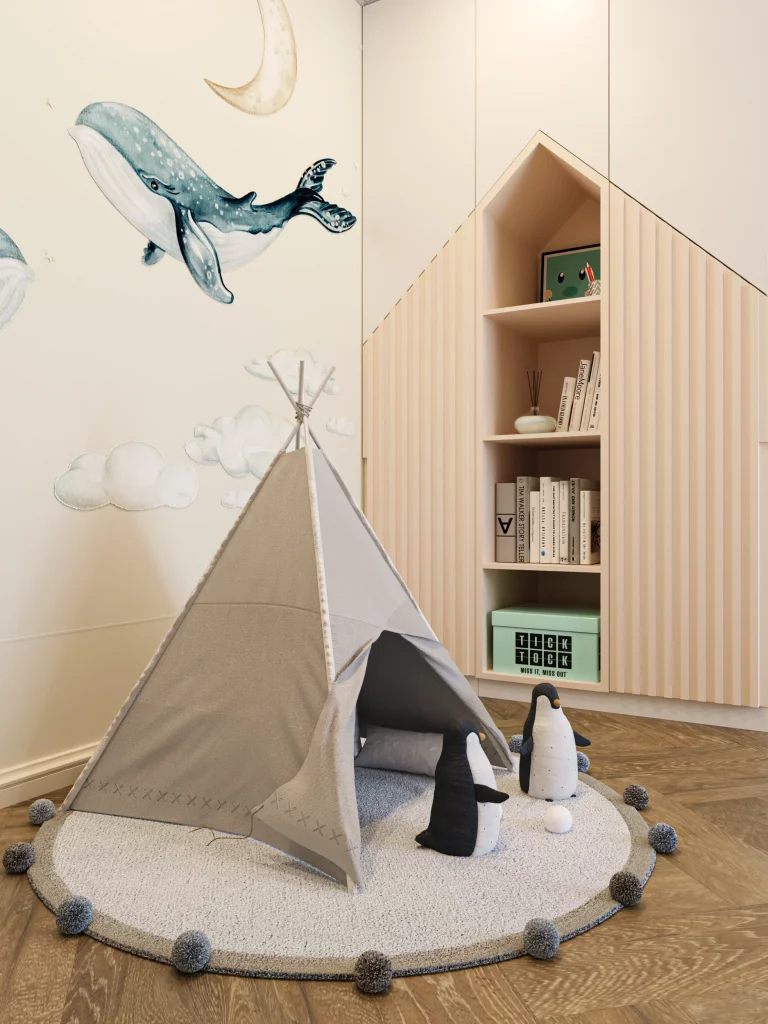
I love how clearly this room separates imaginative play from storage. The teepee creates an obvious destination for quiet play, while the built-in cabinetry keeps the rest of the room visually tidy. The circular rug also helps define the play area without requiring walls or additional furniture. Because the storage reaches upward, the room uses its vertical space efficiently while leaving a generous amount of floor area available.
For me, this is a good reminder that a children’s room does not need an elaborate collection of furniture to feel special. One dedicated play feature can completely change how a space functions. If I were adapting this idea, I would keep the surrounding furniture relatively simple and allow the play tent and wall artwork to remain the main visual focus.
Muted Green Children’s Room With Sculptural Storage
This bedroom introduces a sophisticated muted green palette through the shelving unit, trim, and lower wall details. A large illustrated mural covers the main wall and shows a tree with branches, leaves, and small birds. A compact green shelving cabinet provides open display space and lower closed storage, while a large woven basket holds teddy bears nearby. The white door is framed with a repeated rounded green detail that gives the entrance an especially distinctive appearance.
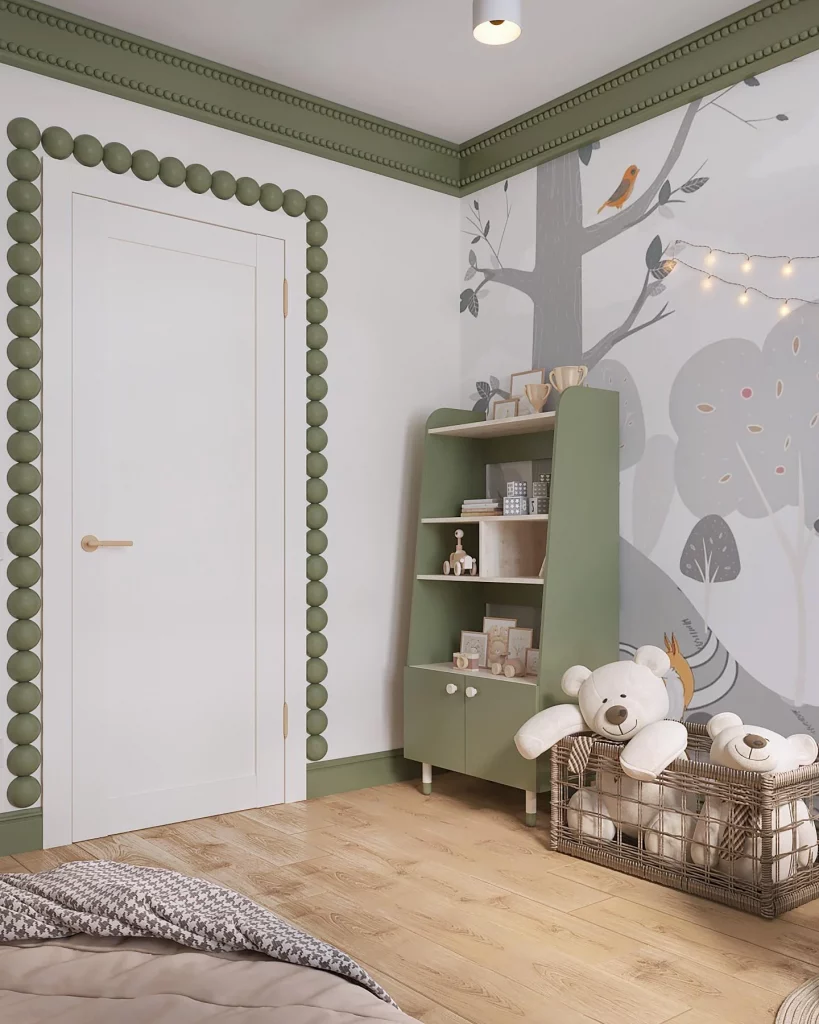
I think the most successful feature here is the way the green color appears in several architectural and furniture details. Instead of treating the shelving as an isolated piece, the same tone visually connects it with the trim and door surround. The storage unit also provides a useful combination of display shelving and concealed space, while the large basket makes the stuffed toys easy to gather in one place.
The mural gives the room a strong identity without making the space feel crowded. I would take inspiration from the limited palette if I wanted a similarly calm children’s bedroom: select one muted color, repeat it in architectural details and furniture, and then allow the wall illustration to provide the visual story. The result feels playful but considerably more restrained than a room filled with many competing colors.
Magical Outer Space Bedroom With a Curved Bed
This room takes the imagination in a completely different direction with a dramatic outer-space mural covering the walls. The scene includes astronauts, planets, stars, clouds, and a large moon, creating a dark blue backdrop around a soft gray upholstered bed. The bed has rounded edges and a curved silhouette that complements the playful theme. A large circular rug occupies the foreground, while contemporary ring-shaped lighting adds another distinctive detail overhead.
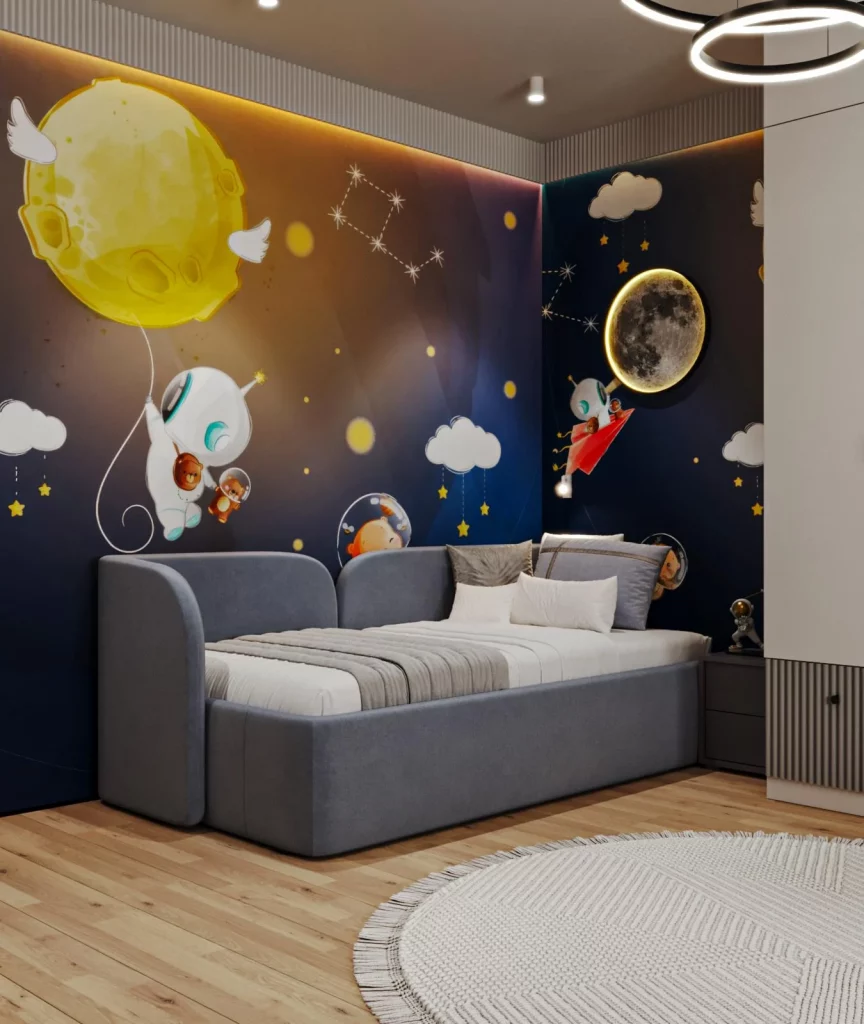
I like the contrast between the dark mural and the quieter furniture. The gray bed and neutral bedding prevent the room from becoming visually overwhelming, while the illustrated wall remains the main attraction. The rounded shape of the bed also softens the stronger imagery around it, making the sleeping area feel cozy rather than overly themed.
In my view, this is a useful example of how to handle a very bold children’s wall treatment. Instead of matching every piece of furniture to the space theme, the room uses relatively simple furnishings and lets the mural tell the story. I would use that same strategy when working with a large illustrated wall: keep the major furniture pieces visually calm so the child has an imaginative focal point without the entire room competing for attention.
Elegant Pink Study Corner With a Playful House Wardrobe
The eighth room combines pale pink and cream tones with a particularly charming wardrobe designed to resemble a tall little house. The cabinet includes multiple small window-shaped details and open shelving on the side, while a narrow desk sits beside a rounded vertical wall panel. A plush sheep-shaped stool stands in the center of the room, and the large windows are covered with light, sheer curtains that allow plenty of daylight to enter.
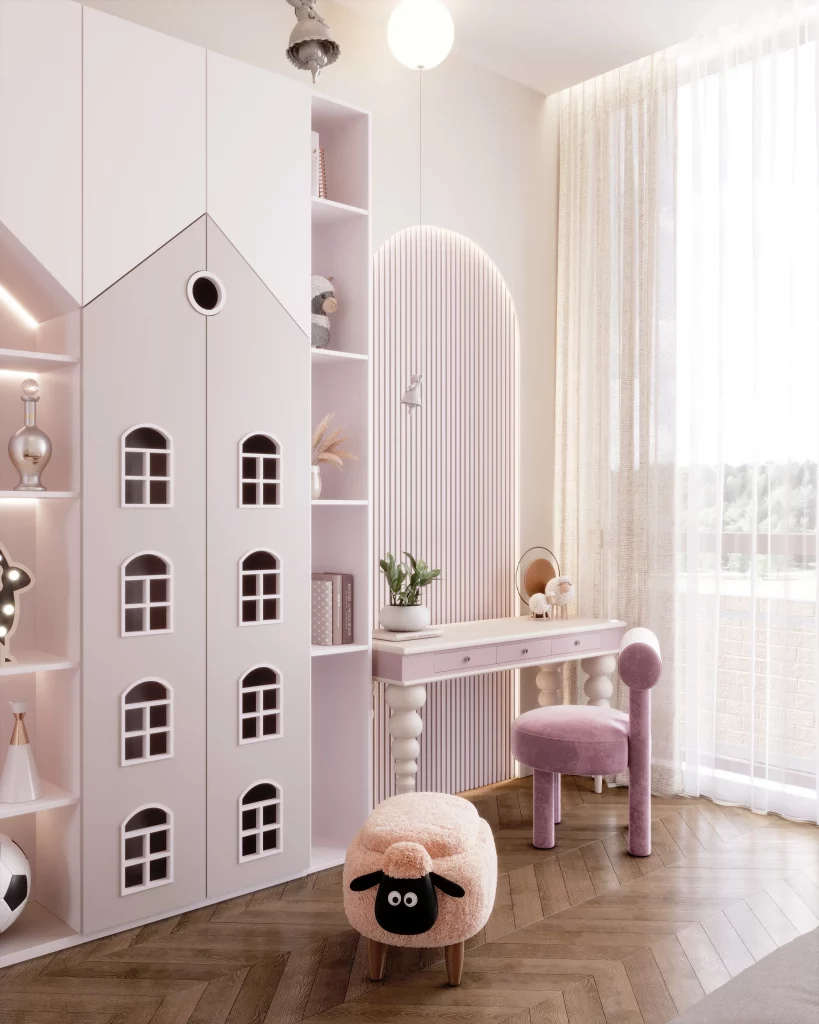
The room works well because the larger furniture pieces have been given playful silhouettes while maintaining a relatively soft color palette. The house-shaped wardrobe provides substantial storage without looking like a conventional cabinet, and the side shelving keeps selected belongings visible. The small desk creates a dedicated activity area without taking up too much of the room.
I particularly like the way the natural light supports the pale palette. The sheer curtains keep the window visually light, while the wood-toned flooring introduces warmth beneath the soft furniture. If I were recreating this look, I would prioritize the relationship between the large storage piece and the work area because together they create a practical little zone without making the room feel crowded.
Gentle Jungle-Themed Bedroom With Animal Illustrations
This bedroom uses an extensive illustrated jungle mural as its defining feature. The wall depicts giraffes, elephants, a leopard, a sloth, birds, palm trees, and layered foliage in a soft palette of muted greens, warm browns, and pale neutrals. A simple white bed sits directly against the mural, while a small white table and chair occupy the opposite side. A large spotted stuffed leopard rests on the round rug in front of the bed.
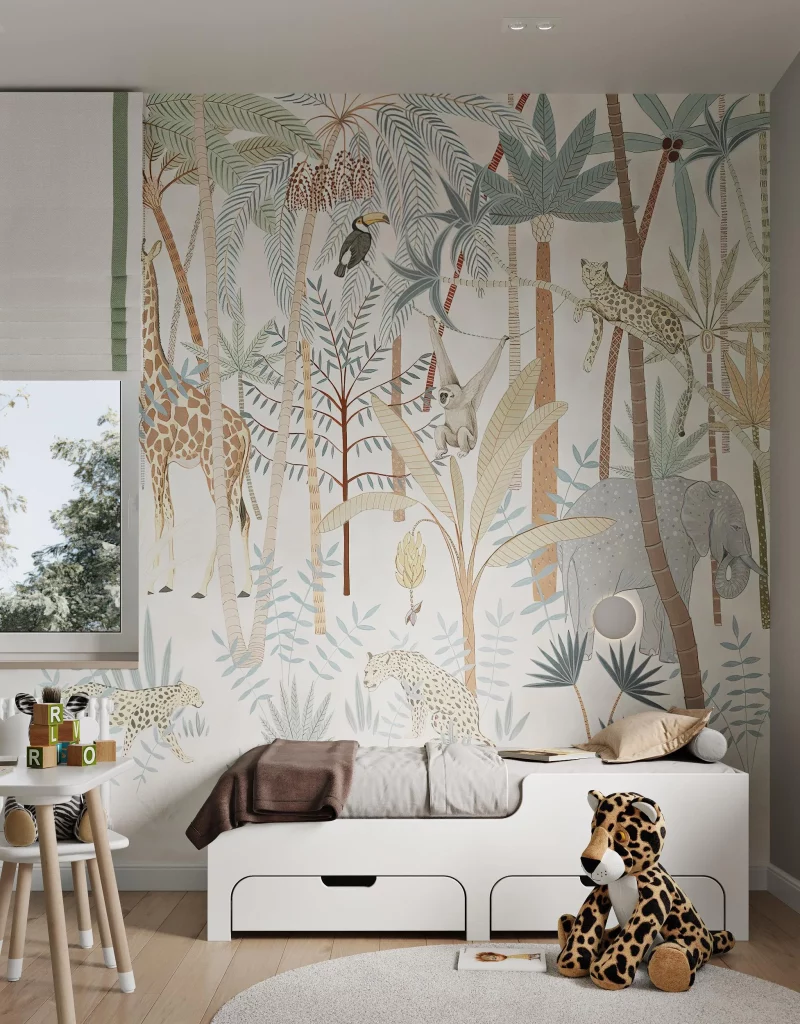
I think the simple furniture is exactly what allows the mural to work so effectively. The white bed provides a quiet visual base, while the mural supplies nearly all of the room’s personality. The small table gives the child a place for activities, and the low furniture keeps the room feeling open rather than overloaded.
When I look at this design, I am reminded that a detailed mural does not necessarily need a lot of matching accessories. The illustration already contains many layers of visual information, so repeating the same theme throughout every object could easily become excessive. I would instead choose simple furniture and a small number of related pieces, as shown here, so the wall remains the star.
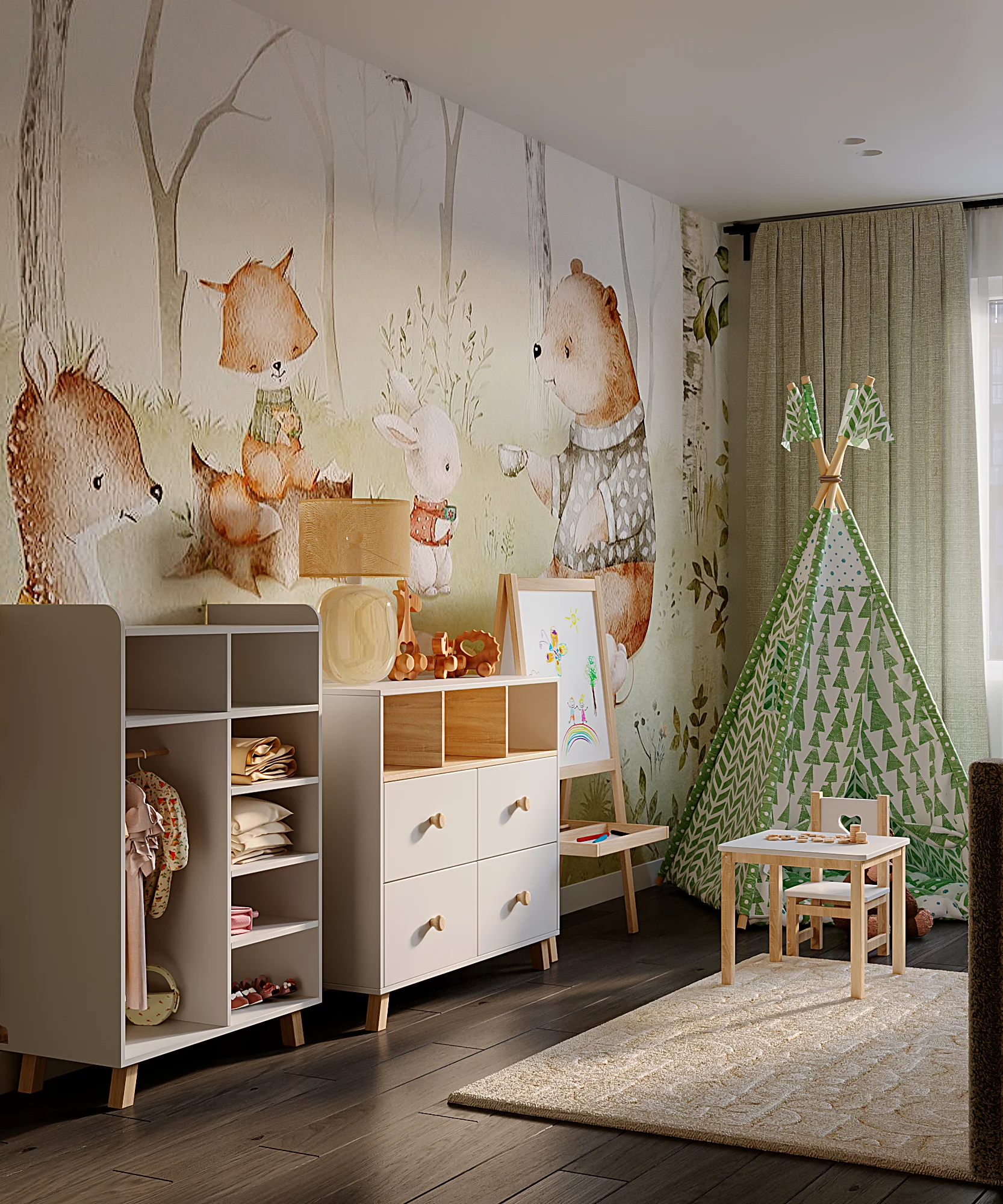
Woodland Storybook Bedroom With a Play Tent
The final room creates a warm woodland-inspired setting with a large illustrated mural featuring friendly animals gathered among trees. The furniture is predominantly light and neutral, including a low storage cabinet, open shelving, and a small easel. A green patterned play tent occupies the corner beside the window, while a small children’s table provides another dedicated activity area. The darker flooring contrasts with the pale furniture and soft rug, giving the room a cozy grounded feeling.
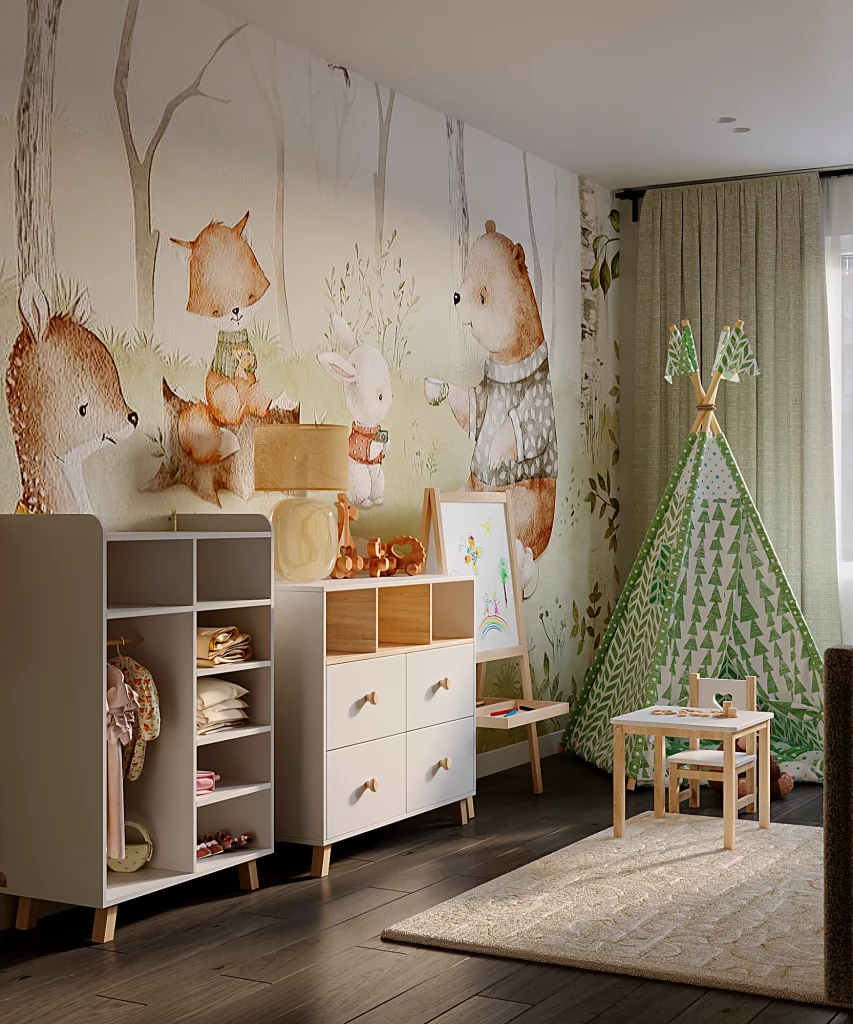
For me, this room succeeds because it combines imaginative play with practical organization. The open shelving and drawers provide different types of storage, while the easel and small table make creative activities easy to accommodate. The tent establishes a separate play destination, and because it sits near the window, the area also benefits from the available natural light.
I like how the woodland mural connects all these elements without requiring the furniture itself to follow a complicated theme. The neutral storage pieces allow the illustrated wall and green tent to provide the strongest visual accents. If I were taking inspiration from this room, I would focus on creating distinct little zones for storage, drawing, and imaginative play while keeping the larger furniture pieces simple enough to adapt as the child grows.
Looking across all ten rooms, I see how many different ways there are to create a cute children’s bedroom without sacrificing practicality. House-shaped storage, imaginative murals, dedicated reading and play corners, accessible shelving, and integrated desks all show that the most successful children’s spaces combine personality with everyday function. I especially love how each room uses a different visual story while keeping the furniture purposeful. Which of these children’s bedroom design ideas is your favorite? Leave a comment and share the room you would most love to recreate.
A cute children’s bedroom should feel cheerful, comfortable, and personal rather than overly decorated. I love the idea of mixing playful details with practical pieces that can grow with a child and still feel beautiful over time. From cozy bedding and charming wall accents to clever storage and little reading corners, even small touches can completely change the mood of the room. The best designs leave enough space for imagination while making everyday routines easier. Most importantly, the room should reflect the child’s personality and give them a space where they genuinely enjoy spending time.