
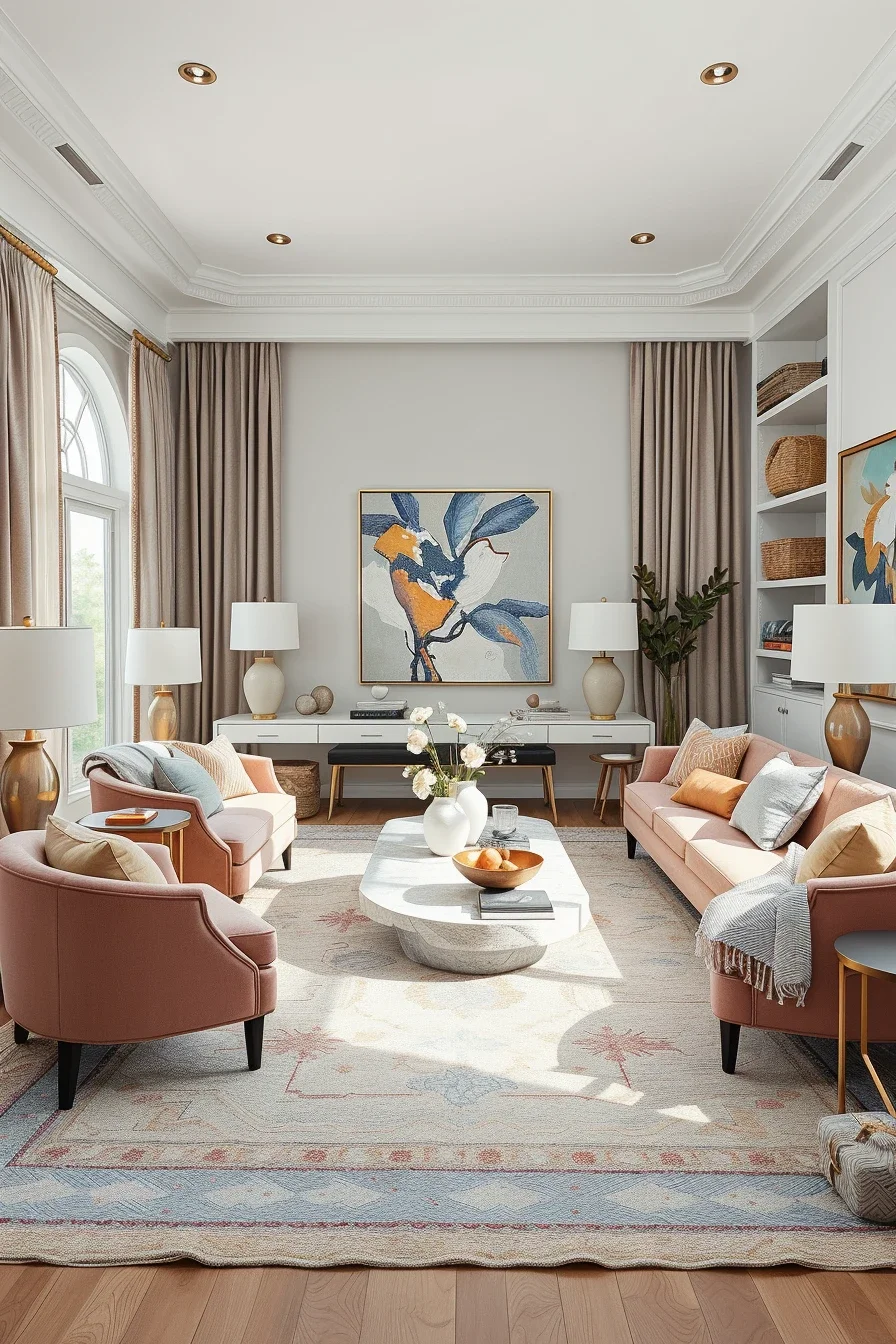
White living room trends continue to evolve with fresh color pairings, layered textures, and timeless design choices that create spaces full of warmth and personality. While crisp white remains the foundation, today’s interiors embrace complementary shades that add depth, contrast, and visual interest without overwhelming the room. From calming sage green and cozy beige to dramatic navy blue and rich burgundy, the right color combination can completely transform the atmosphere. Thoughtfully selected furniture, lighting, textiles, and decorative accents help each palette feel cohesive and inviting. Whether you prefer a minimalist aesthetic or a more layered and sophisticated look, white offers endless versatility for every style of home. This guide explores inspiring white living room trends and beautiful color combinations to help you design a bright, elegant, and comfortable living space.
White And Sage Green Living Room For A Calm Natural Atmosphere
I find that combining crisp white with soft sage green creates one of the most peaceful interiors available today. The white backdrop reflects natural light throughout the room, while sage introduces a gentle organic quality without becoming overwhelming. This combination works especially well in living rooms with large windows because daylight enhances every subtle variation in color. Layering different textures keeps the room from feeling flat while maintaining the clean appearance that defines modern interiors.
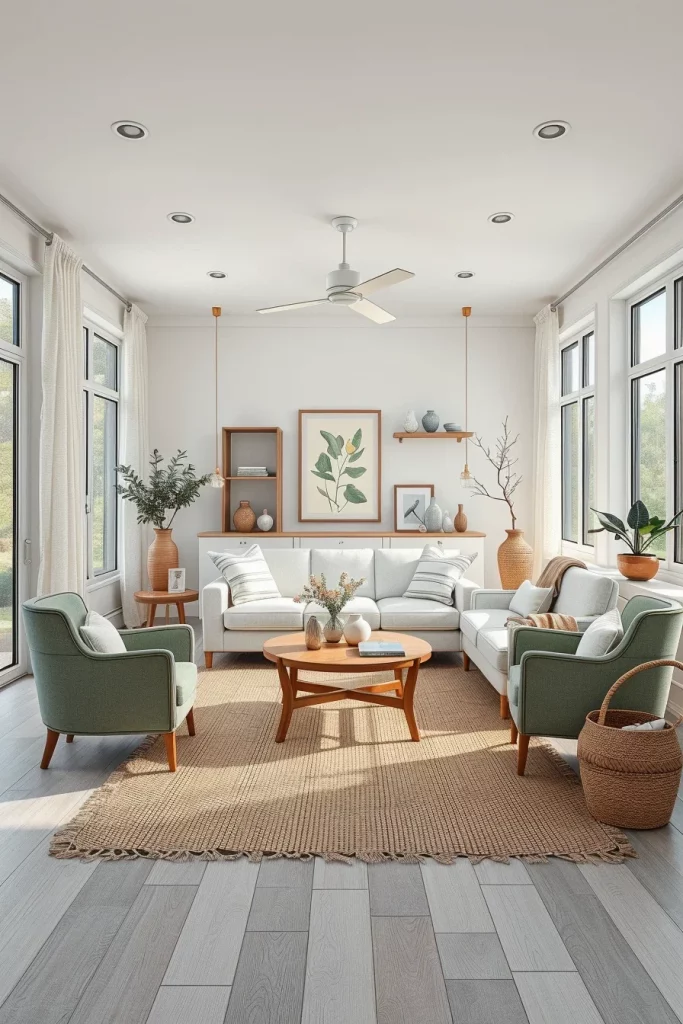
When I design a room in this palette, I start with a comfortable white sofa featuring clean lines and durable upholstery. Sage green accent chairs, textured cushions, and a large area rug introduce depth without dominating the room. A light oak coffee table, open shelving, ceramic vases, linen curtains, woven baskets, and soft ambient lighting create visual balance while preserving the airy atmosphere. Minimal artwork with botanical influences reinforces the connection to nature without distracting from the elegant simplicity.
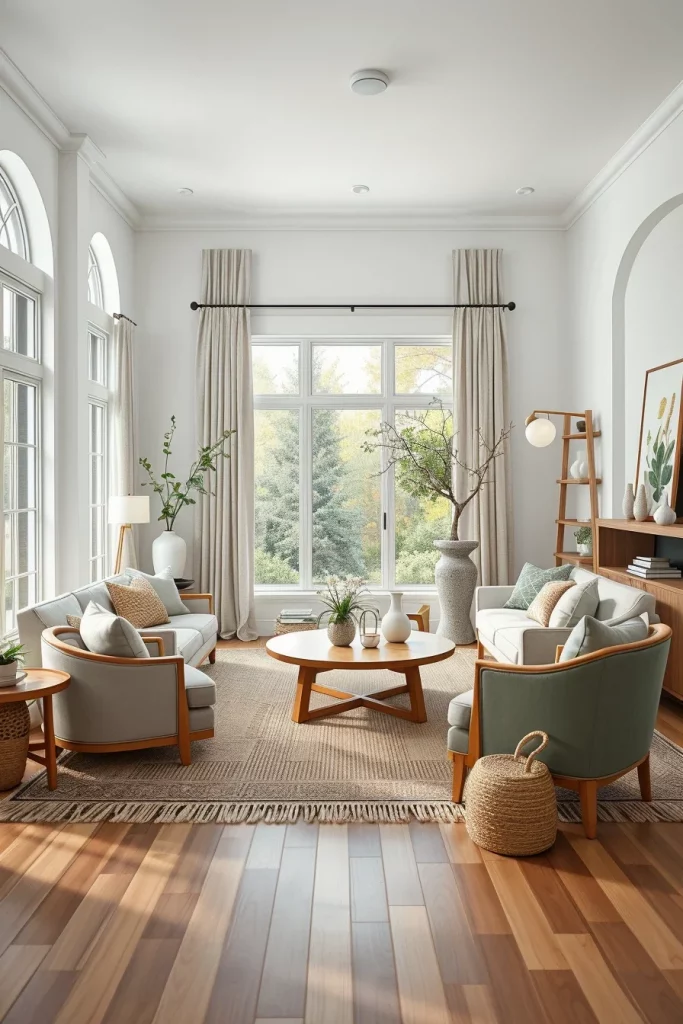
In my experience, this color combination remains attractive year after year because it is based on natural tones instead of short-lived trends. Designers frequently featured by Architectural Digest and House Beautiful recommend layering texture instead of adding excessive color, and I have found that approach consistently produces interiors that feel welcoming and sophisticated. Rather than filling every surface, I prefer allowing each carefully selected piece to stand out.
To complete this room, I would add oversized indoor trees, handcrafted pottery, natural woven accessories, a large textured throw, concealed storage solutions, and dimmable lighting that allows the atmosphere to change throughout the day.
White And Olive Green Living Room With Earthy Character
I enjoy using olive green because it introduces depth while preserving the elegance of a white interior. Unlike brighter greens, olive creates a grounded atmosphere that feels mature and relaxing. White walls prevent the darker accents from making the room feel enclosed, while carefully balanced natural materials help the entire design remain open and comfortable. This combination works beautifully in both spacious homes and compact living rooms.
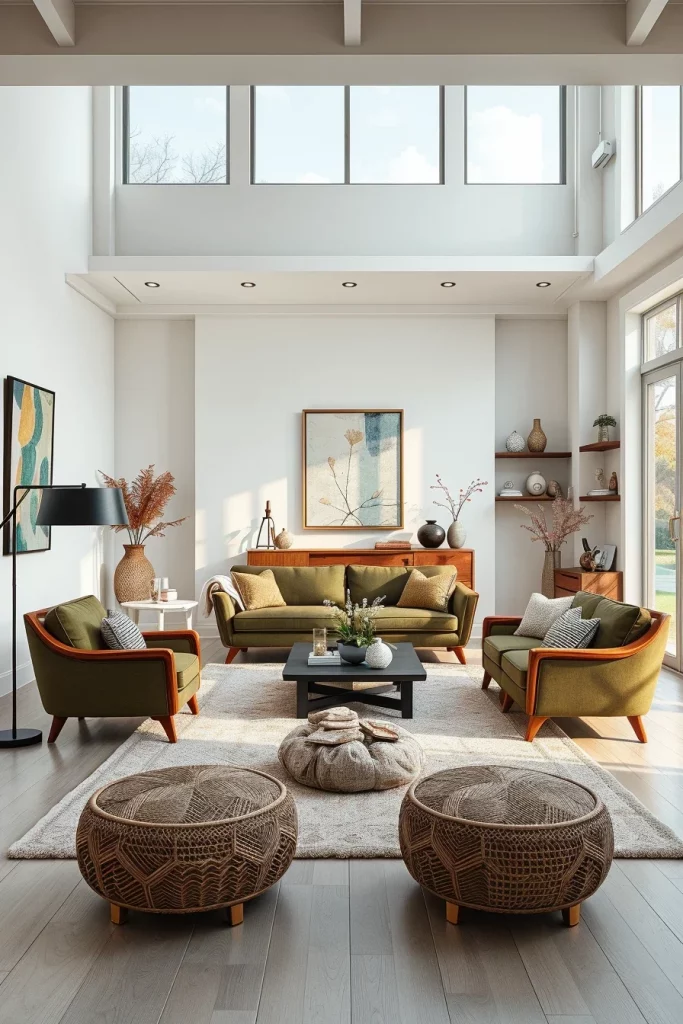
I typically combine a generously sized white sectional with olive accent chairs or a statement sofa. Layered linen cushions, textured throws, stone accessories, framed abstract artwork, and warm wood furniture provide additional character. Black metal floor lamps, floating shelves, ceramic table lamps, and woven poufs introduce subtle contrast while maintaining a cohesive modern aesthetic. Every furniture choice contributes both function and visual harmony.
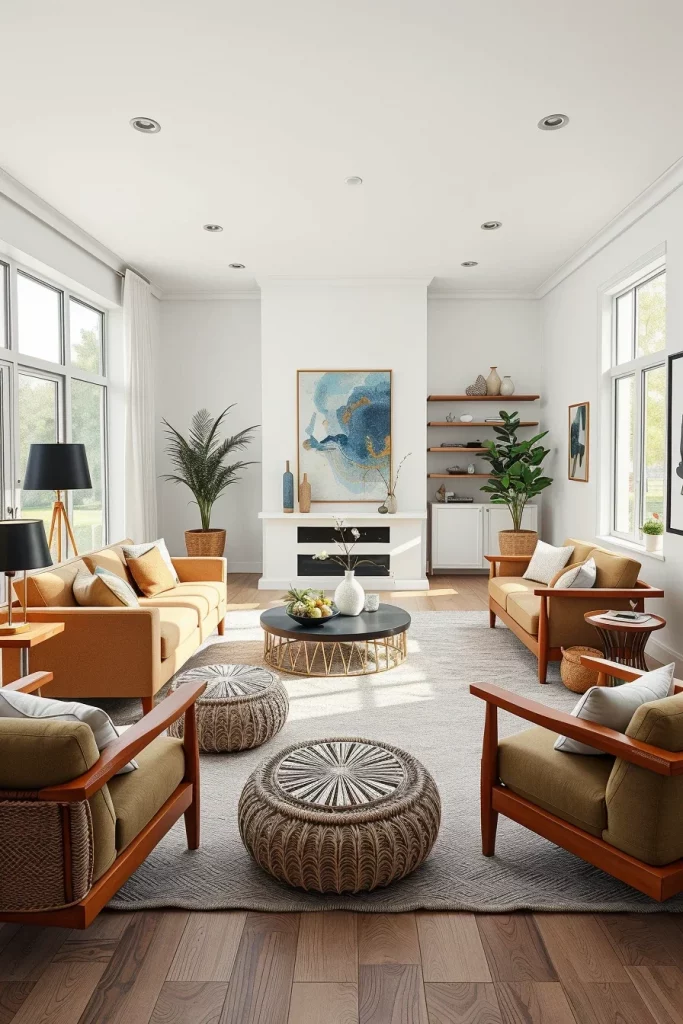
Personally, I appreciate how olive green develops a timeless appearance rather than following seasonal color trends. Interior designers frequently recommend using earthy greens as accent colors because they pair effortlessly with natural finishes and white architectural elements. I have noticed that clients often find this palette relaxing even after living with it for many years.
I would also include oversized mirrors to maximize reflected light, concealed media storage, layered window treatments, decorative books, sculptural ceramics, and textured wall panels to create additional visual interest without overwhelming the calm environment.
White And Warm Beige Living Room For Cozy Everyday Elegance
Warm beige transforms an all-white living room into a comfortable retreat without sacrificing brightness. I like this combination because it softens the overall appearance while preserving the fresh feeling that white interiors naturally provide. The result is a living room that feels inviting throughout every season and accommodates a wide variety of decorating styles.
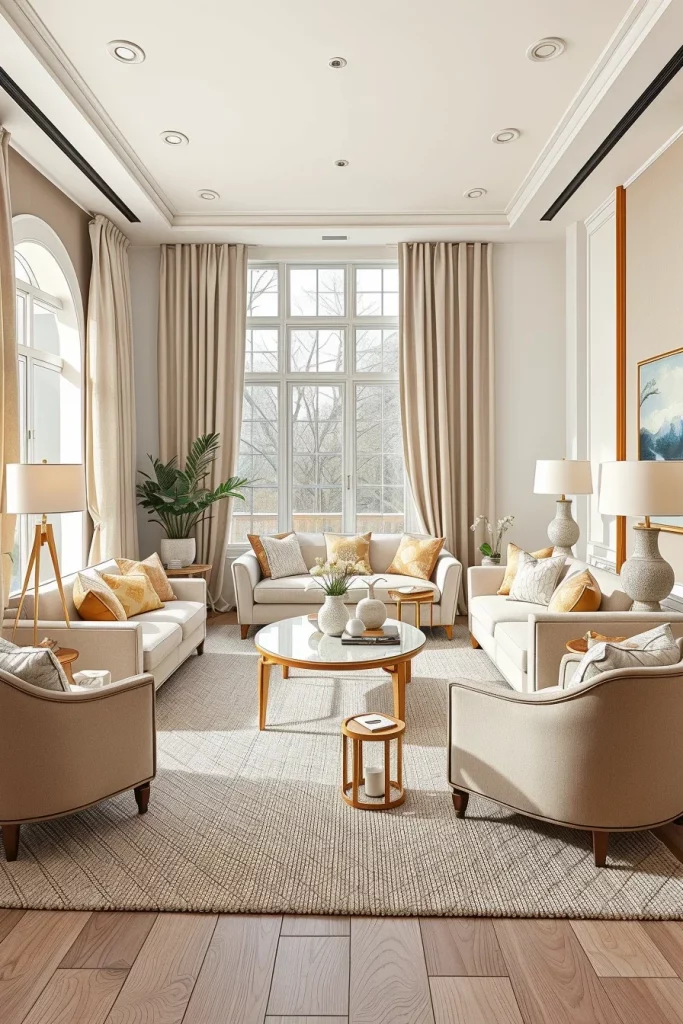
I usually begin with white walls and a generously proportioned white sofa before introducing beige through upholstered armchairs, ottomans, textured rugs, linen curtains, and decorative cushions. Light wood side tables, softly curved coffee tables, ceramic accessories, oversized table lamps, and carefully selected artwork complete the composition. The layered neutral palette creates visual richness even though the colors remain understated.
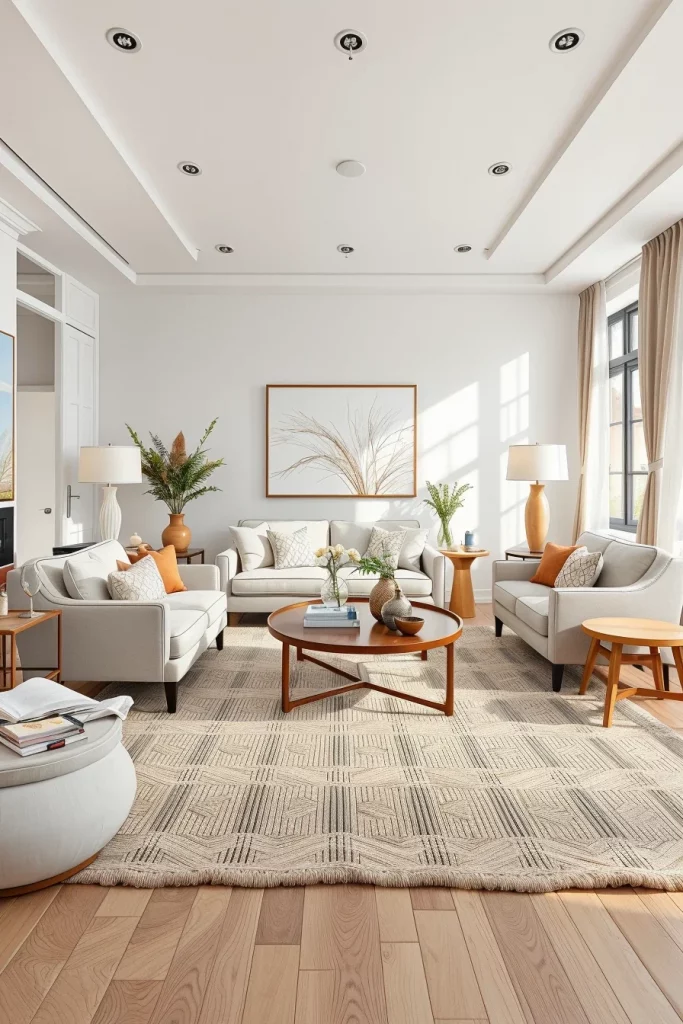
From my perspective, this combination offers one of the easiest ways to achieve lasting style. Better Homes & Gardens has frequently emphasized the importance of layering soft neutral textures instead of relying on bold colors, and I have consistently found that advice practical for everyday homes. The room feels elegant without appearing overly formal.
To enrich this design even further, I would add built-in shelving, textured wall finishes, oversized woven baskets, subtle metallic accents, large framed artwork, and additional indirect lighting to create warmth during the evening.
White And Greige Living Room With Soft Contemporary Style
Greige combines the best qualities of gray and beige, making it an ideal partner for white interiors. I appreciate how it introduces subtle contrast without disrupting the peaceful atmosphere. White ceilings, walls, and trim maintain brightness, while greige furniture and textiles create a refined contemporary appearance that feels sophisticated without becoming cold.
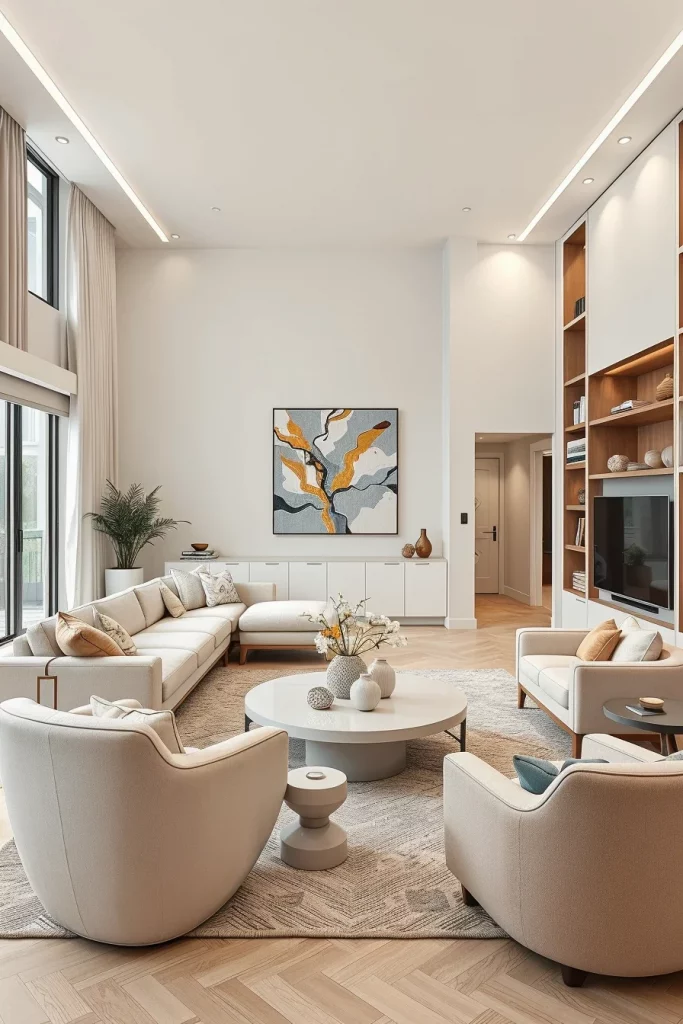
I prefer furnishing this space with a white modular sofa, greige lounge chairs, a sculptural coffee table, textured area rugs, floating cabinetry, and upholstered benches. Layered fabrics, matte ceramic accessories, glass decorative objects, oversized artwork, and integrated shelving contribute visual interest while maintaining clean architectural lines. Every element supports a balanced modern composition.
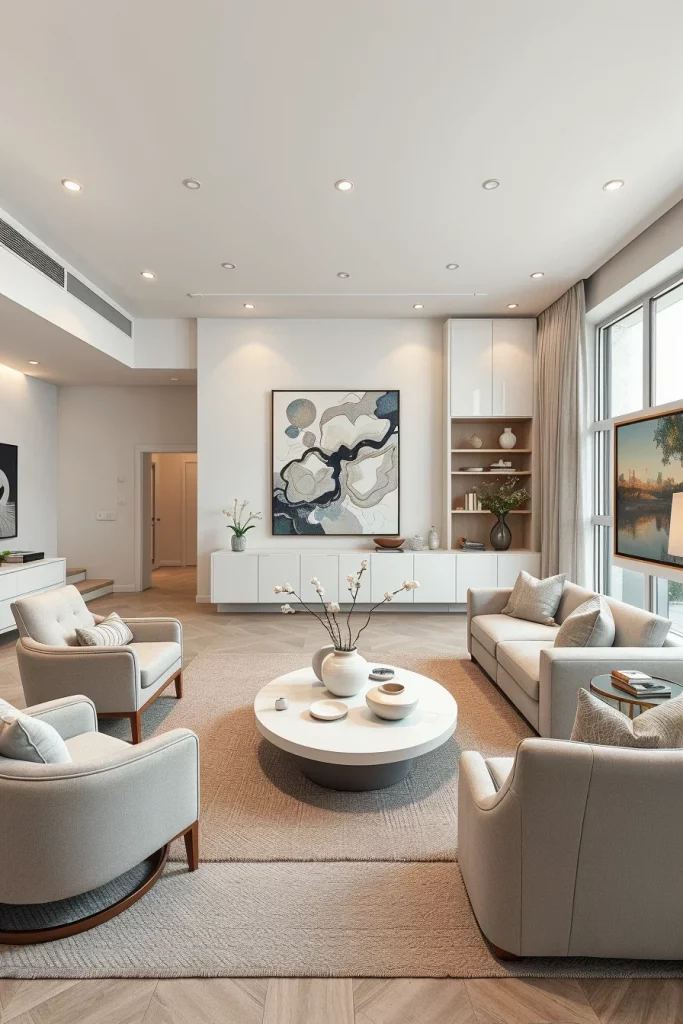
I often recommend this palette because it adapts easily as decorating preferences change over time. According to many professional designers featured in Elle Decor, flexible neutral foundations make seasonal updates simple while preserving the overall design investment. I have seen this approach work exceptionally well in family homes and open-concept interiors alike.
I would further improve this room by adding architectural ceiling details, concealed LED lighting, decorative niches, textured plaster walls, larger statement plants, and carefully selected accent pieces that reinforce the room’s quiet elegance.
White And Taupe Living Room That Balances Warmth And Sophistication
Taupe brings understated richness to a white living room while maintaining an elegant and relaxing atmosphere. I like using this pairing because it creates visual depth through subtle tonal variation instead of strong color contrast. Natural daylight enhances every surface, allowing the room to feel both luxurious and highly livable without appearing overly decorated.
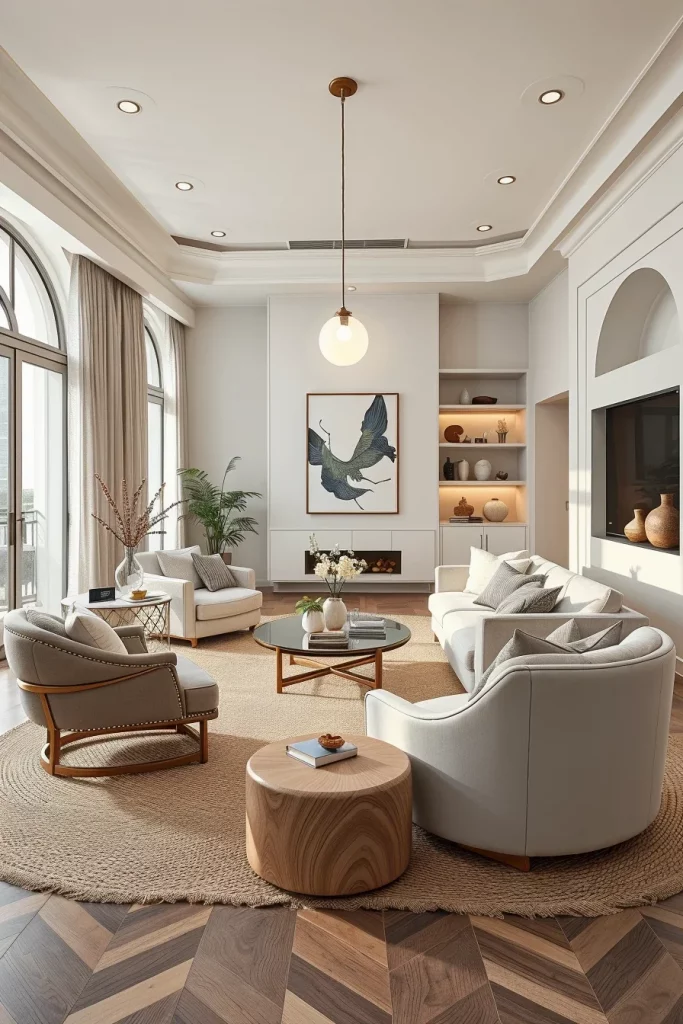
When designing this space, I usually select a white sofa complemented by taupe armchairs, layered neutral cushions, textured throws, a large woven rug, and sculptural coffee tables. Built-in shelving, stone accessories, ceramic vases, linen drapery, decorative trays, and softly curved accent furniture complete the arrangement. Carefully balanced proportions ensure every item contributes to the overall harmony instead of competing for attention.
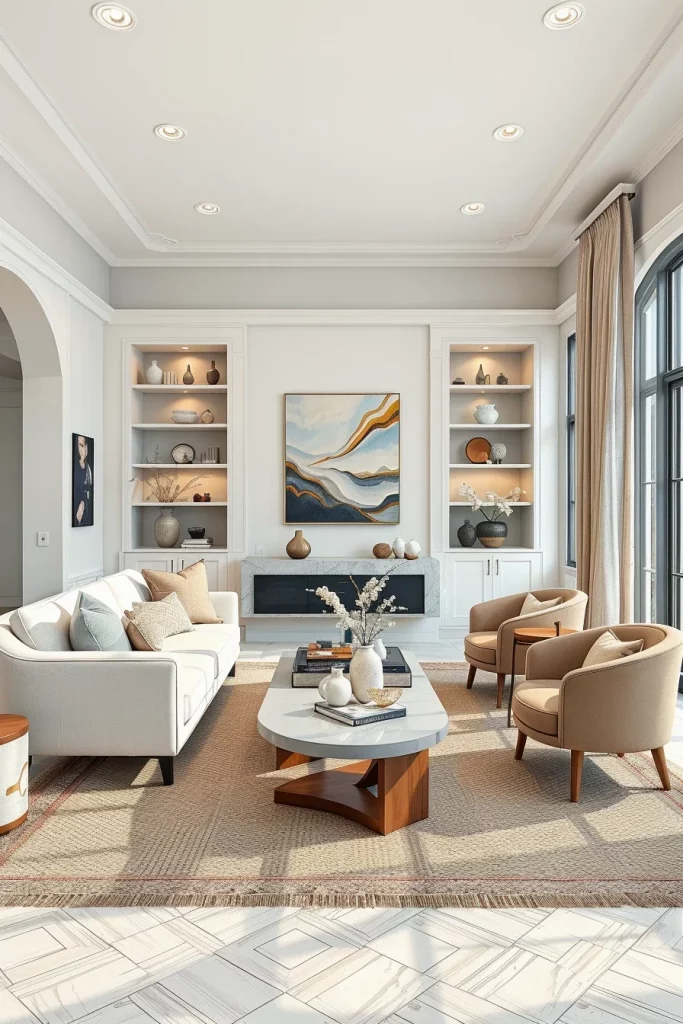
In my experience, taupe remains one of the most dependable neutral colors for long-term interior design. Designers regularly recommend combining multiple warm neutrals with varied textures rather than relying on dramatic color shifts, and I have found this strategy creates interiors that remain stylish for many years. The result always feels refined yet approachable.
To complete the room, I would include layered ambient lighting, oversized artwork, textured wall treatments, concealed storage furniture, decorative books, elegant floor lamps, and handcrafted accessories that introduce personality while preserving the timeless character of the design.
White And Sand Living Room Inspired By Relaxed Coastal Interiors
I like using sand tones alongside white because they create an effortlessly relaxed atmosphere without relying on obvious coastal decorations. White walls and ceilings maximize natural light, while soft sand-colored furnishings introduce warmth that feels subtle rather than overpowering. This combination works particularly well in open-concept homes where continuity between spaces is important. The overall design feels fresh, timeless, and suitable for everyday living while remaining elegant enough for entertaining guests.
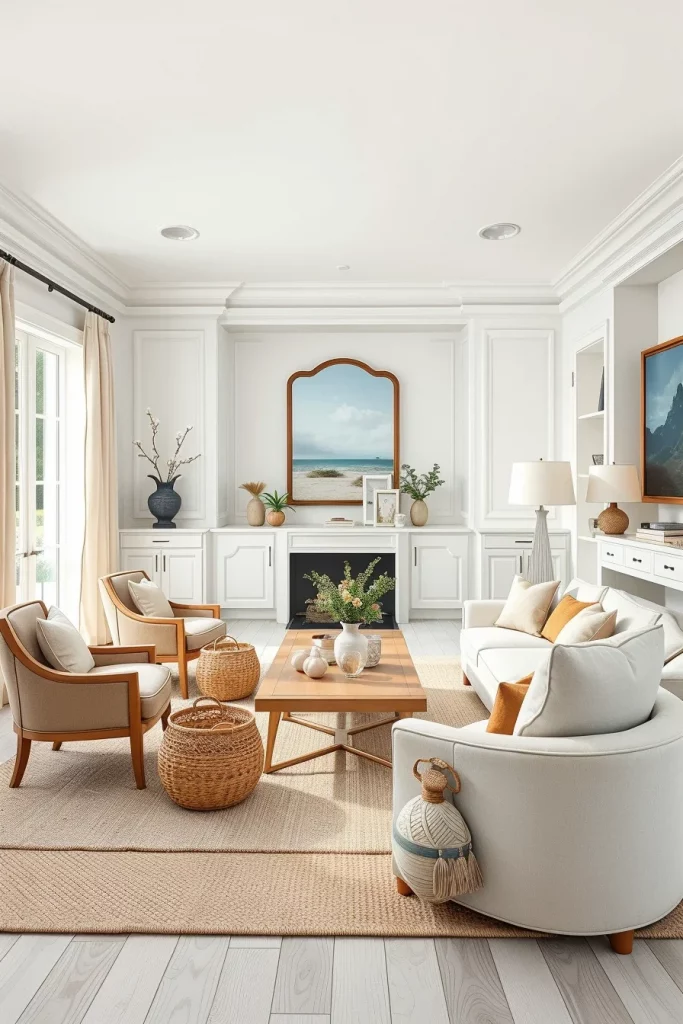
When I furnish this type of living room, I begin with a large white sofa paired with sand-colored accent chairs and a generously sized textured area rug. A light wood coffee table, rounded side tables, linen curtains, woven baskets, ceramic table lamps, and handcrafted decorative bowls create layers of visual interest. Neutral artwork, textured cushions, and soft throws help the room feel comfortable while maintaining a clean and uncluttered appearance. Every piece contributes to an atmosphere that is both practical and welcoming.
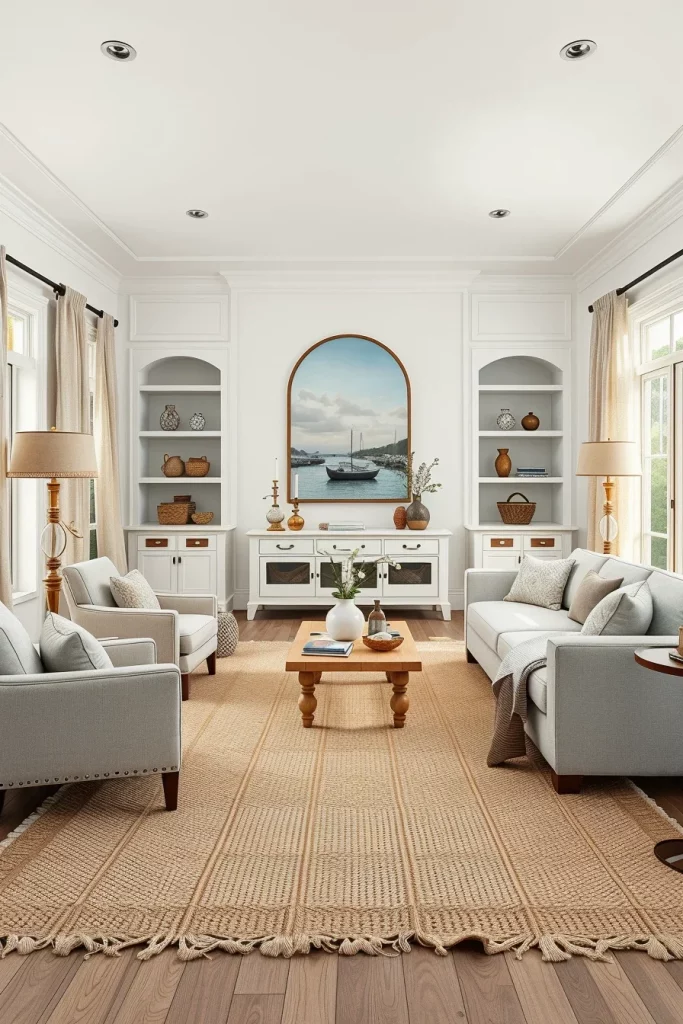
I appreciate how this palette creates a sense of quiet comfort without becoming predictable. Interior designers featured by Coastal Living often recommend combining natural textures with restrained color palettes instead of relying on themed décor, and I have found that advice produces interiors that remain attractive for many years. This approach allows the architecture and quality materials to become the focal point.
To complete this living room, I would add oversized mirrors to reflect daylight, built-in shelving, textured plaster walls, large ceramic floor vases, concealed storage cabinets, layered lighting, and a few handcrafted accessories that introduce personality without disrupting the calm aesthetic.
White And Terracotta Living Room With Rich Organic Contrast
Terracotta introduces warmth and character that immediately changes the mood of a white living room. I enjoy this combination because the earthy reddish tones create a beautiful contrast against crisp white surfaces without making the room feel heavy. The balance between cool brightness and warm natural color produces a welcoming interior that feels contemporary while maintaining timeless appeal. Plenty of daylight further enhances the richness of the terracotta accents throughout the space.
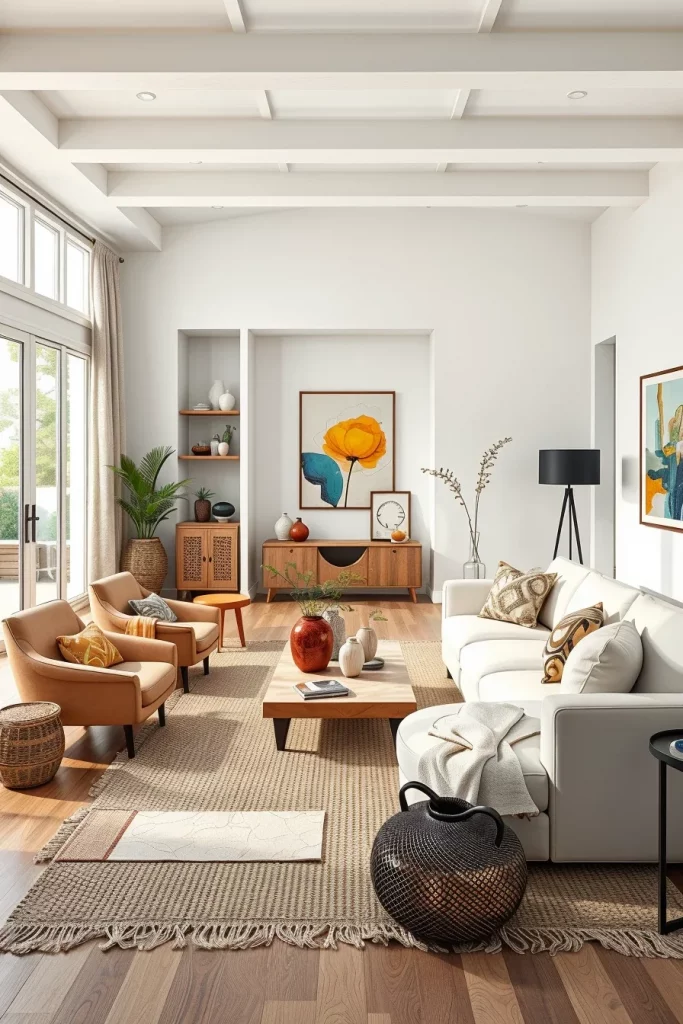
I usually begin with a white sectional sofa before incorporating terracotta through upholstered lounge chairs, decorative cushions, artwork, ceramic vases, and textured accessories. A travertine coffee table, light oak shelving, woven rugs, linen curtains, sculptural lighting, and black metal details provide additional depth. The layered combination of stone, fabric, and ceramics creates visual richness while maintaining an organized and uncluttered layout.
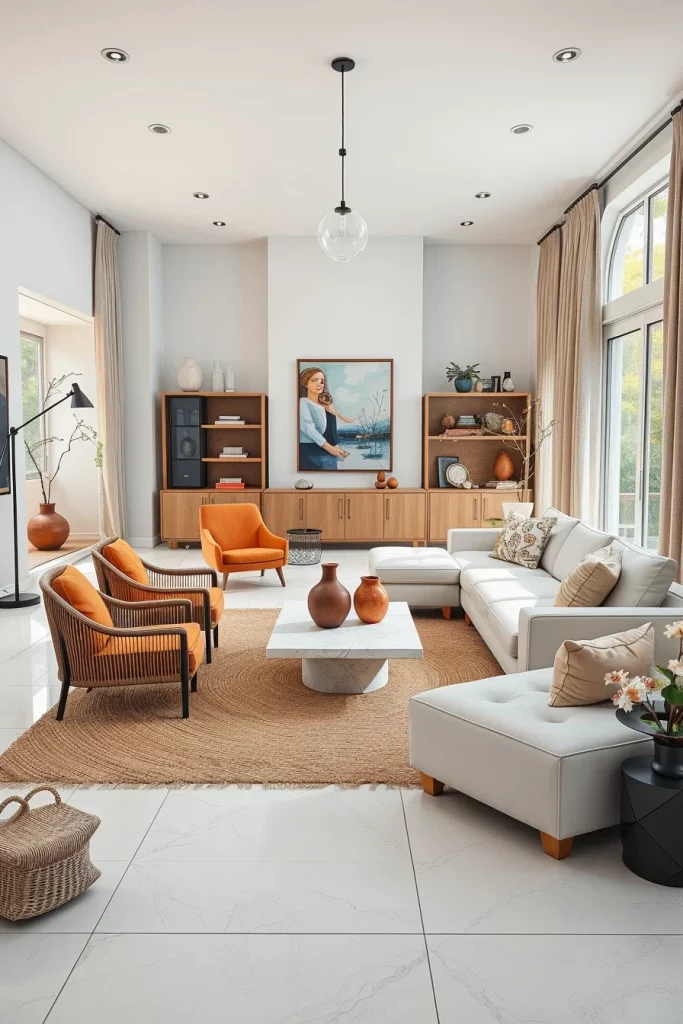
From my experience, terracotta works especially well because it adds personality without overwhelming the room. Designers at Architectural Digest frequently highlight earthy tones as an effective way to warm minimalist interiors, and I have consistently seen this recommendation produce inviting spaces that remain visually balanced. The warmth feels authentic instead of overly decorative.
I would finish this room by including recessed lighting, textured wall finishes, built-in cabinetry, decorative books, oversized artwork, handcrafted pottery, and a statement floor lamp that emphasizes the cozy atmosphere while preserving the room’s modern appearance.
White And Clay Living Room Featuring Warm Textured Finishes
Clay tones create a wonderfully soft and grounded atmosphere when combined with white. I find this palette especially appealing because it emphasizes texture as much as color. White architectural elements provide brightness, while clay-inspired finishes introduce warmth that feels understated and sophisticated. The overall effect is modern but comfortable, making the room suitable for both relaxing evenings and social gatherings.
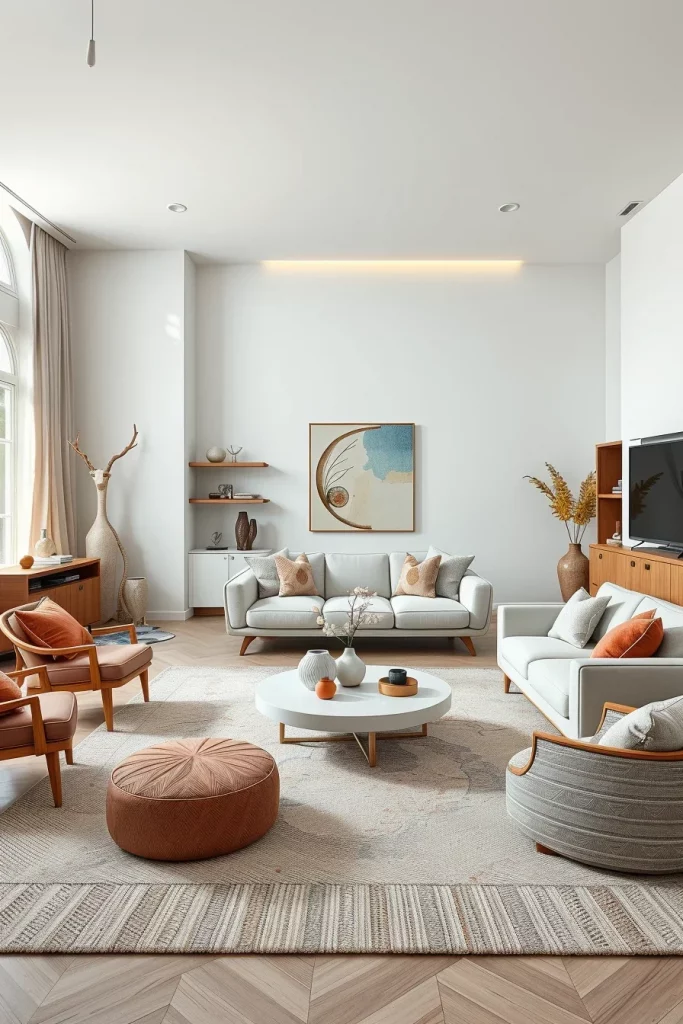
For furniture, I prefer a white upholstered sofa accompanied by clay-colored accent chairs, boucle ottomans, textured rugs, and rounded coffee tables. Plaster-inspired decorative objects, ceramic vessels, linen drapery, floating shelves, and warm wood cabinetry reinforce the earthy character of the design. Soft wall lighting, sculptural floor lamps, and carefully selected artwork create visual rhythm without distracting from the neutral palette.
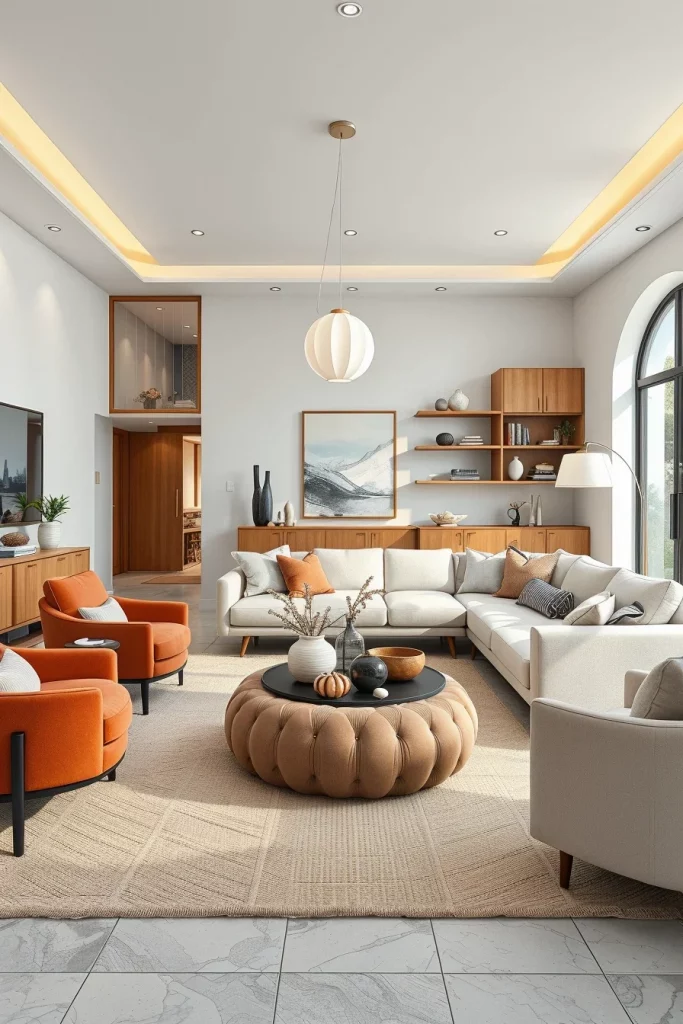
Personally, I believe textured finishes are what make this style stand out. House Beautiful has often emphasized that texture can be more important than color in neutral interiors, and I completely agree with that principle. When multiple tactile materials are layered thoughtfully, the room feels rich and inviting even with a restrained color scheme.
I would enhance this design by adding architectural wall niches, concealed storage, oversized textured artwork, handcrafted decorative objects, layered ambient lighting, and subtle stone surfaces that strengthen the connection between modern design and natural materials.
White And Caramel Living Room With Inviting Modern Layers
Caramel accents bring depth and warmth to a white living room without sacrificing its bright, open appearance. I enjoy this palette because the rich caramel tones create visual contrast while remaining soft enough to blend naturally with white surroundings. The result feels refined, comfortable, and suitable for a wide variety of architectural styles, from modern apartments to spacious family homes.
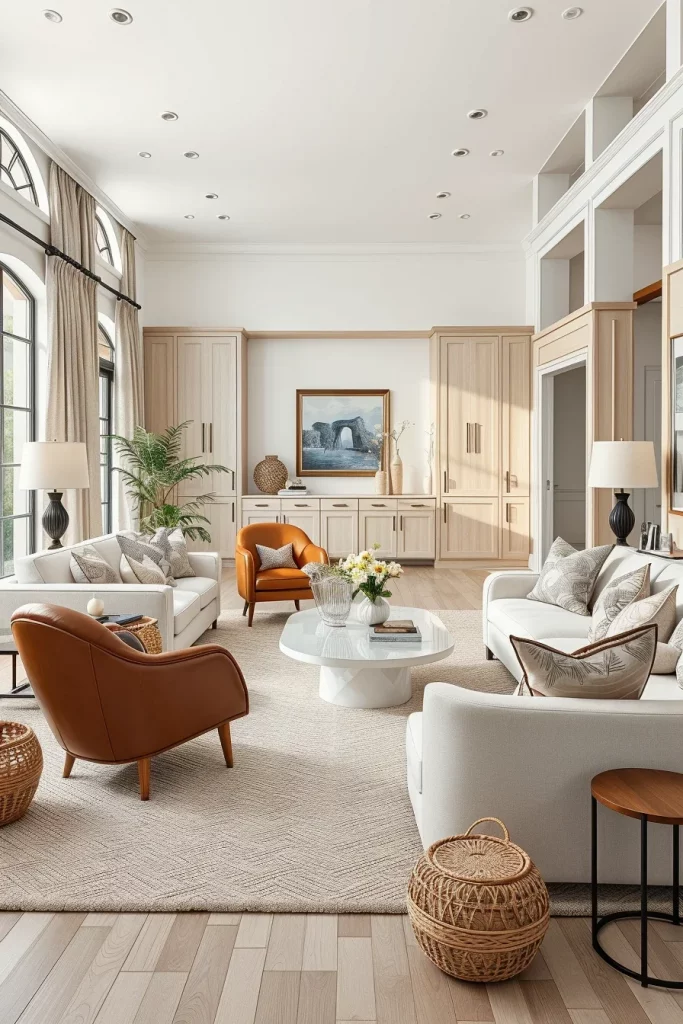
I usually furnish this room with a large white sofa complemented by caramel leather armchairs, a textured cream rug, sculptural coffee tables, and light wood cabinetry. Linen curtains, ceramic table lamps, woven storage baskets, neutral artwork, decorative trays, and layered cushions create a balanced composition filled with warmth. Black metal accents and glass accessories provide subtle definition without disrupting the overall harmony.
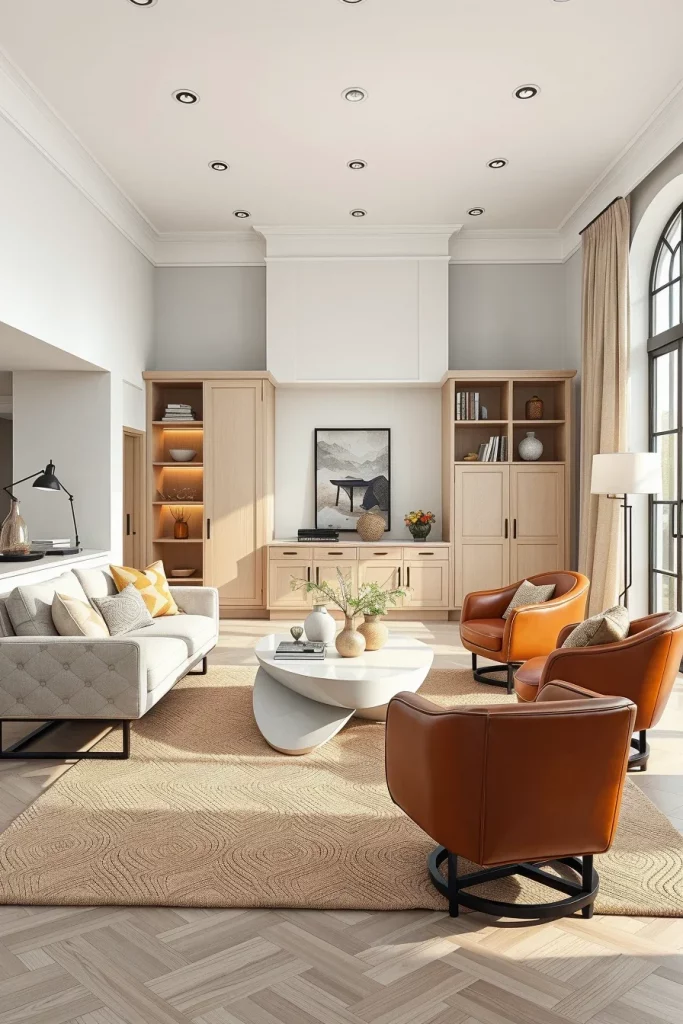
In my opinion, caramel is one of the easiest accent colors to incorporate because it works beautifully with nearly every neutral material. Interior designers frequently recommend investing in quality seating upholstered in timeless warm tones instead of chasing rapidly changing color trends, and I have found that strategy consistently creates interiors with lasting appeal. The combination remains elegant throughout every season.
To make this room even more functional, I would include integrated shelving, concealed media storage, oversized floor lamps, textured wall finishes, decorative books, handcrafted ceramics, and layered indirect lighting that highlights every carefully selected material.
White And Chocolate Brown Living Room For Bold Timeless Contrast
I find that pairing white with rich chocolate brown creates one of the most balanced and timeless living room designs. Bright white walls reflect natural light and keep the room feeling spacious, while deep brown accents introduce warmth and visual stability. This combination works beautifully in both contemporary and transitional interiors because it offers strong contrast without becoming overwhelming. I always recommend incorporating several layers of texture so the room feels inviting instead of overly formal.
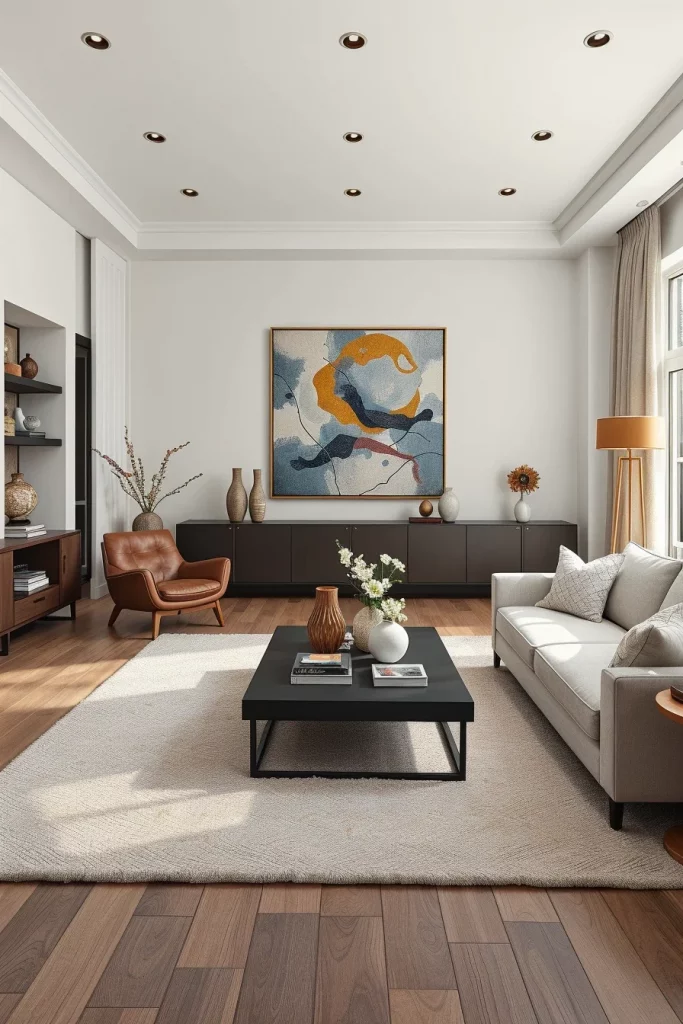
For furniture, I like choosing a large white sofa with soft performance fabric as the centerpiece. A chocolate brown leather lounge chair, a substantial coffee table with dark finishes, textured area rugs, linen curtains, ceramic vases, and warm metallic lighting create a cohesive composition. I also include floating shelves with carefully selected decorative objects, oversized artwork featuring neutral tones, and subtle black details that help define the overall design. Every element contributes to a living room that is practical while maintaining a sophisticated appearance.
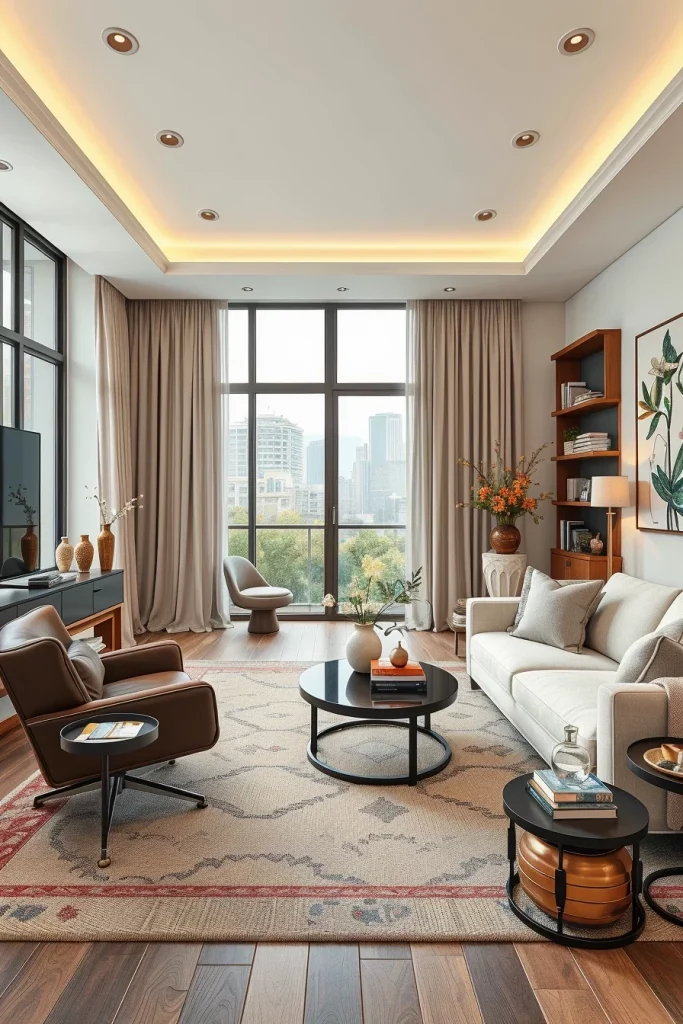
In my experience, designers frequently emphasize the importance of layering textures rather than relying only on color contrast. Publications such as Architectural Digest often highlight the combination of boucle fabrics, leather, stone, and natural fibers to create visual richness. I have found this advice especially effective because the room gains character without appearing cluttered or overly decorated.
To complete this space, I would add dimmable wall sconces, oversized greenery in elegant planters, decorative books, woven baskets for storage, and a large textured throw blanket. These finishing details soften the contrast while making the room feel lived in and comfortable.
White And Charcoal Gray Living Room With Refined Modern Depth
I often recommend charcoal gray as one of the strongest companions to white because it delivers modern sophistication without making the room feel dark. White walls establish a bright backdrop, while charcoal seating, feature walls, or decorative accents provide architectural depth. This combination feels especially appropriate for open-concept homes where a clean visual flow is important. I always aim to balance the darker tones with generous natural light and reflective surfaces.
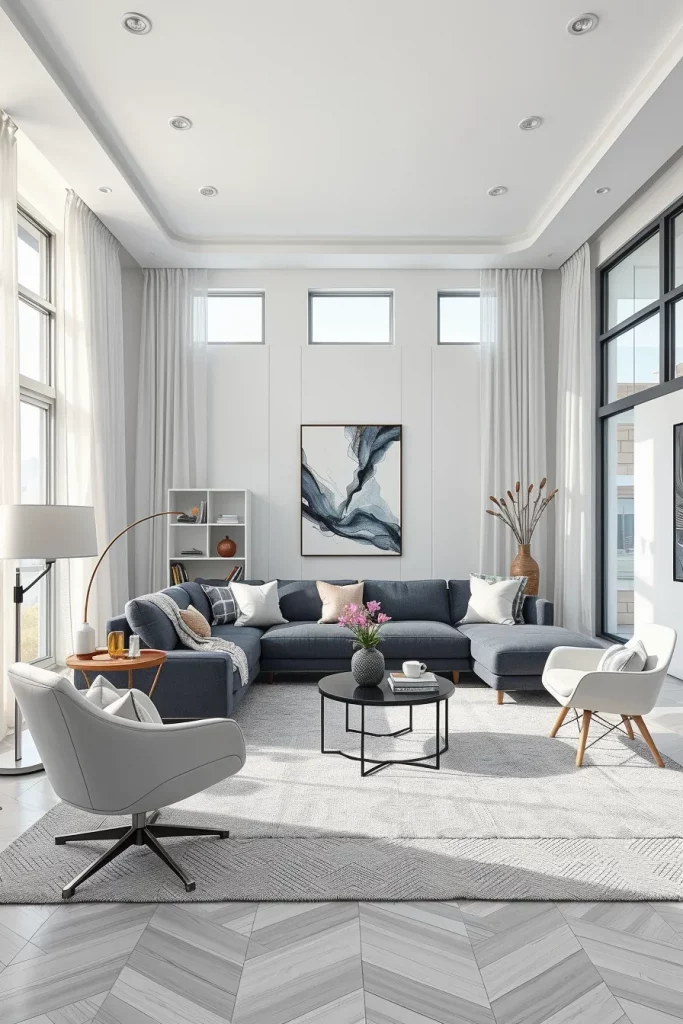
I prefer selecting a charcoal sectional sofa with clean lines, complemented by white accent chairs, a marble coffee table, matte black floor lamps, and minimalist shelving. Soft gray area rugs, textured cushions, glass accessories, and sculptural lighting fixtures help prevent the space from feeling too rigid. Large windows dressed with flowing white curtains allow sunlight to brighten every corner, making the darker furniture feel elegant instead of heavy.
Personally, I appreciate how this palette allows artwork to become a focal point. Interior designers featured in House Beautiful often recommend keeping the architectural finishes simple while investing in statement art and layered lighting. I agree because carefully chosen artwork immediately personalizes the room while preserving its contemporary character.
I would also include integrated shelving with concealed storage, subtle metallic accessories, and multiple light sources placed at different heights. These additions improve functionality while creating a comfortable atmosphere throughout the day and evening.
White And Soft Black Living Room That Creates Minimalist Drama
I believe soft black accents create dramatic visual impact without overwhelming an otherwise bright white living room. Instead of using pure black everywhere, I prefer softer black finishes that appear warmer and more refined. White ceilings, walls, and large upholstered furniture maintain an open feeling, while black architectural details provide definition and structure. This approach perfectly suits homeowners who appreciate minimalist interiors with strong visual contrast.
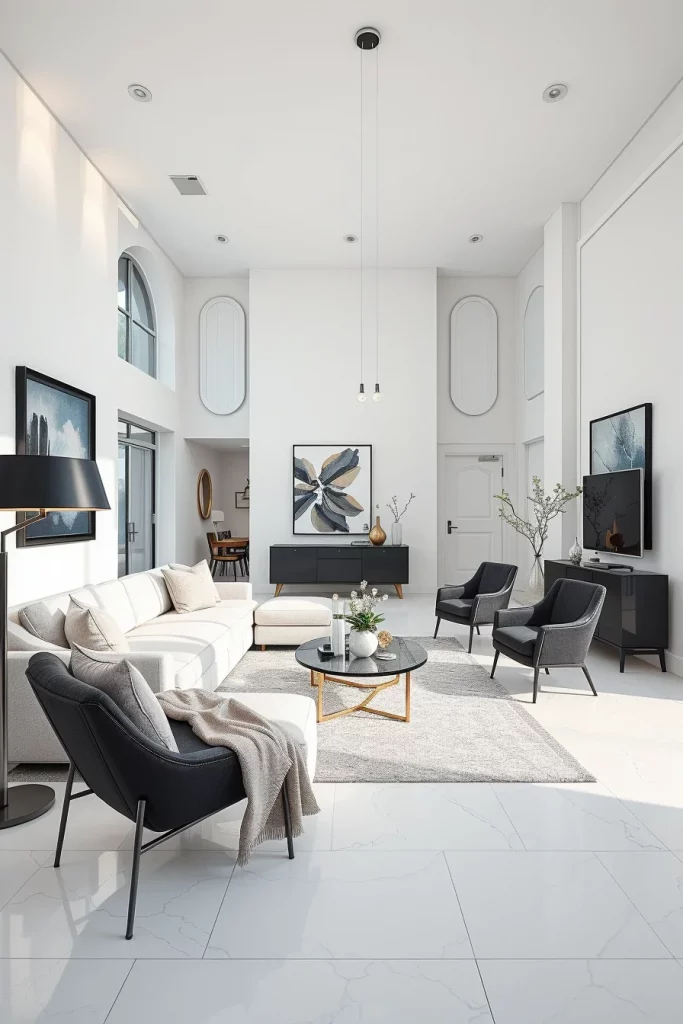
I typically include a white modular sofa, soft black accent chairs, a sleek media console, low-profile coffee tables, oversized mirrors with thin black frames, and carefully selected decorative ceramics. Layering boucle upholstery, linen cushions, textured rugs, and smoked glass accessories helps soften the monochromatic palette. I also recommend discreet LED lighting that highlights architectural features without dominating the overall design.
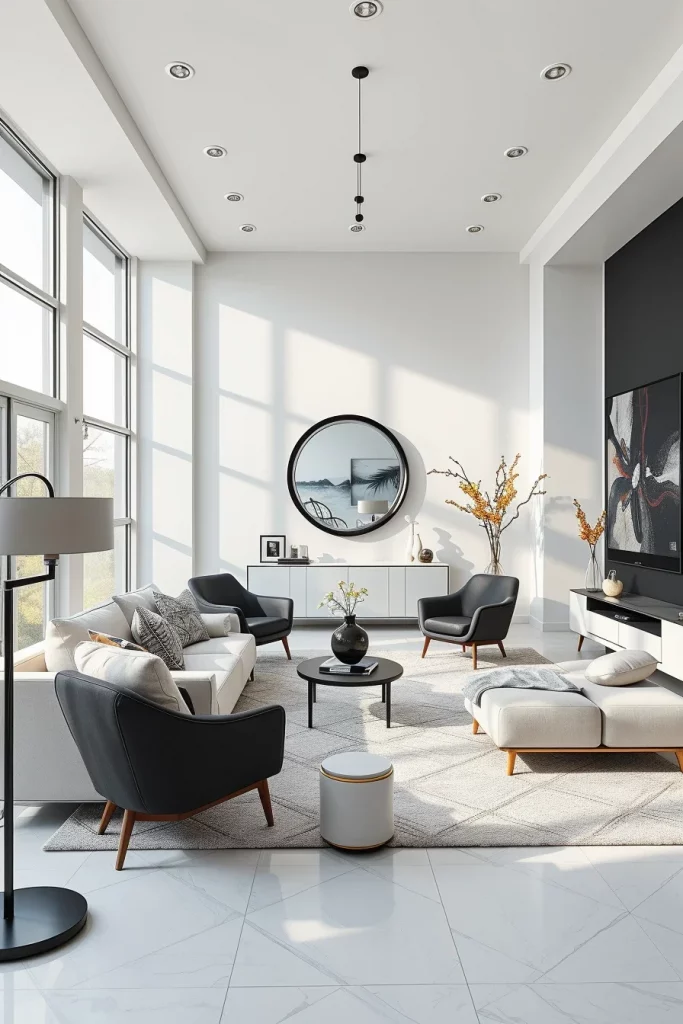
From my perspective, restraint is the key to making this combination successful. Many respected interior designers encourage limiting bold colors and allowing quality materials to become the primary decorative feature. I have found that this philosophy results in interiors that remain stylish for many years instead of following short-lived trends.
To enrich the room further, I would incorporate subtle wall molding, sculptural floor lamps, decorative trays, large abstract artwork, and concealed storage solutions that preserve the clean minimalist appearance.
White And Navy Blue Living Room With Classic Coastal Appeal
Whenever I want to introduce classic elegance without losing freshness, I choose navy blue alongside white. The combination immediately creates a sophisticated coastal atmosphere that feels polished rather than themed. White surfaces maximize brightness, while navy accents anchor the room and introduce rich visual depth. I find this palette particularly effective in homes with abundant natural light because the contrast appears crisp and inviting throughout the day.
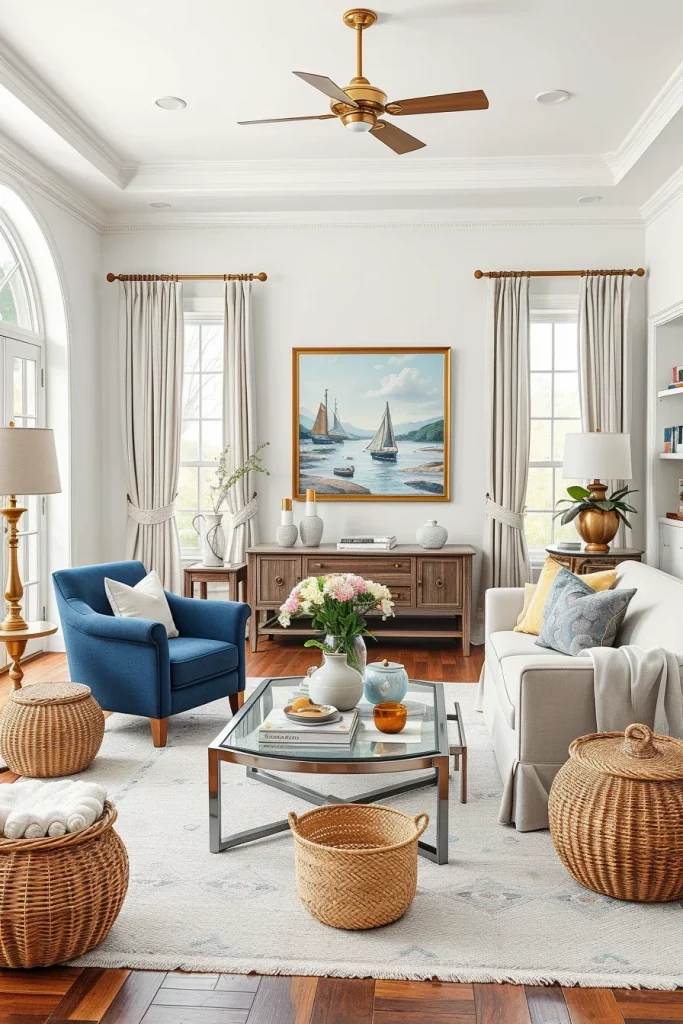
For furnishings, I recommend a white slipcovered sofa paired with navy accent chairs, a substantial coffee table, woven baskets, textured cushions, elegant table lamps, and layered curtains that soften the room. Brass accents, framed artwork inspired by coastal landscapes, decorative ceramics, and subtle striped textiles reinforce the timeless aesthetic without becoming overly literal. Every furnishing serves both decorative and practical purposes.
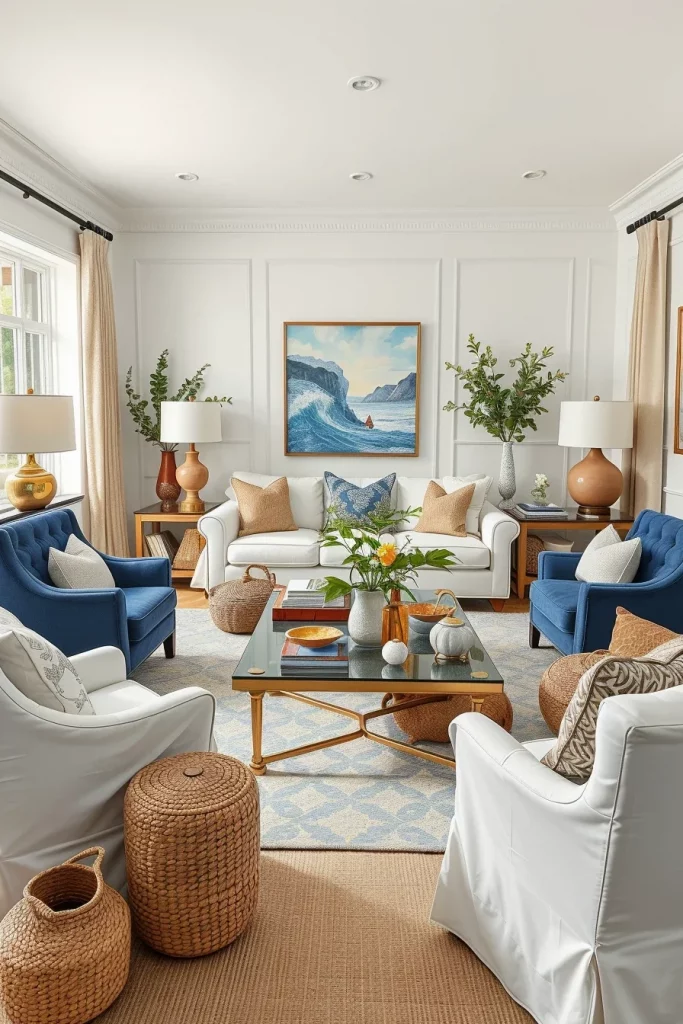
I appreciate advice from designers frequently featured by Better Homes & Gardens, who encourage mixing classic colors with contemporary furniture silhouettes to prevent coastal interiors from feeling dated. I have followed this principle successfully because it creates interiors that feel current while respecting traditional design influences.
I would finish this living room with oversized mirrors, comfortable reading corners, integrated bookshelves, decorative trays, and carefully selected accessories that maintain balance instead of overwhelming the clean color palette.
White And Dusty Blue Living Room For Airy Relaxed Comfort
I enjoy decorating with dusty blue because it introduces calmness while preserving the fresh appearance of a white living room. White walls, ceilings, and larger furniture pieces establish an open environment, while dusty blue textiles and accent furnishings create a soothing atmosphere suitable for everyday living. This combination feels effortlessly elegant and works particularly well in both family homes and smaller apartments where light is essential.
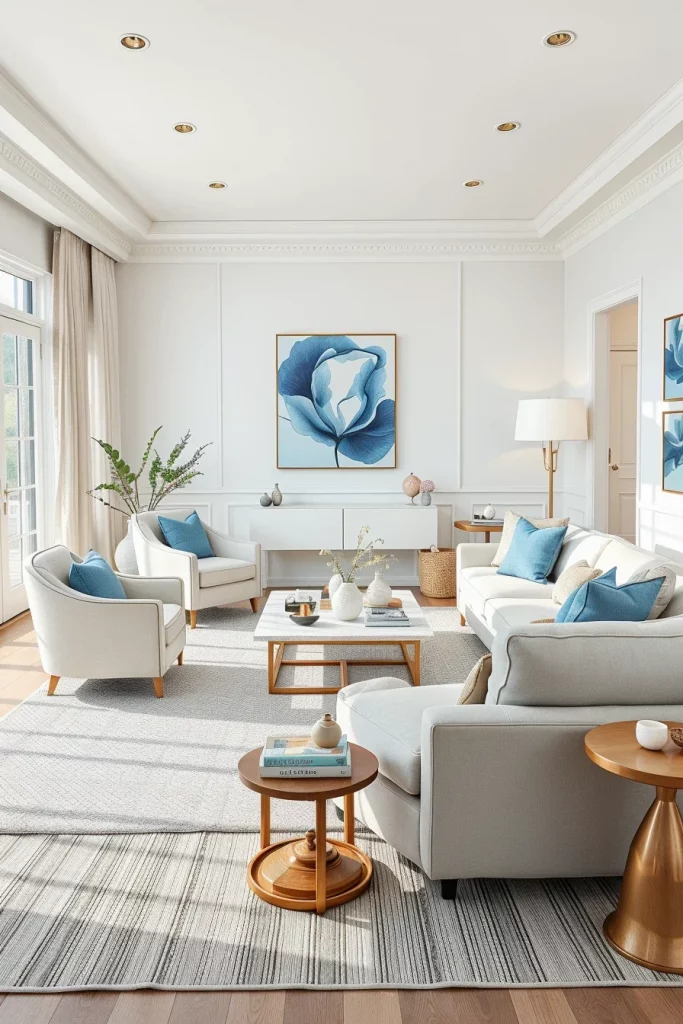
I usually select a white sectional sofa with dusty blue accent pillows, upholstered armchairs, light-toned coffee tables, textured area rugs, linen curtains, ceramic décor, and soft layered lighting. Glass vases, woven storage baskets, subtle metallic details, and oversized artwork featuring gentle blue tones help unify the room. Every decorative element contributes to comfort while maintaining a sophisticated overall appearance.
From my own experience, I have noticed that quieter color palettes encourage homeowners to invest more attention in texture and proportion. Designers often recommend combining several fabric types, including linen, boucle, and cotton, because these subtle variations create visual interest without introducing unnecessary colors. I consistently see this approach produce balanced and relaxing interiors.
I would complete this design by adding decorative books, elegant floor lamps, a comfortable reading chair, layered throws, and carefully selected indoor accessories that reinforce the calm, welcoming atmosphere.
White And Slate Blue Living Room With Elegant Contemporary Character
I often recommend slate blue for homeowners who want to introduce color without overwhelming a bright white living room. Slate blue has a refined quality that feels sophisticated and calming at the same time. White walls, ceilings, and large upholstered furniture allow the deeper blue-gray tone to stand out while preserving an open, airy atmosphere. I find this combination especially suitable for contemporary homes because it creates subtle contrast while remaining timeless and versatile.
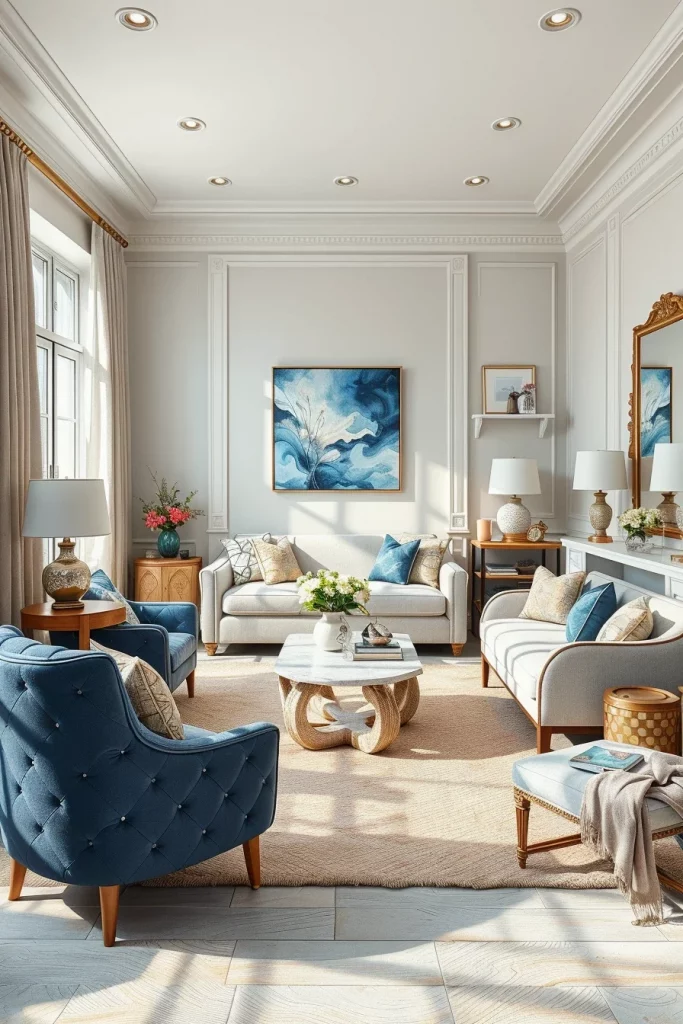
For the furnishings, I like combining a white sofa with slate blue accent chairs, a light stone coffee table, clean-lined side tables, and a textured neutral area rug. Linen curtains, ceramic table lamps, decorative bowls, and oversized abstract artwork featuring white and blue tones reinforce the color palette. I also include shelving with books, sculptural décor, and glass accessories to add personality without creating visual clutter. Every piece contributes to a balanced room that feels both stylish and highly functional.
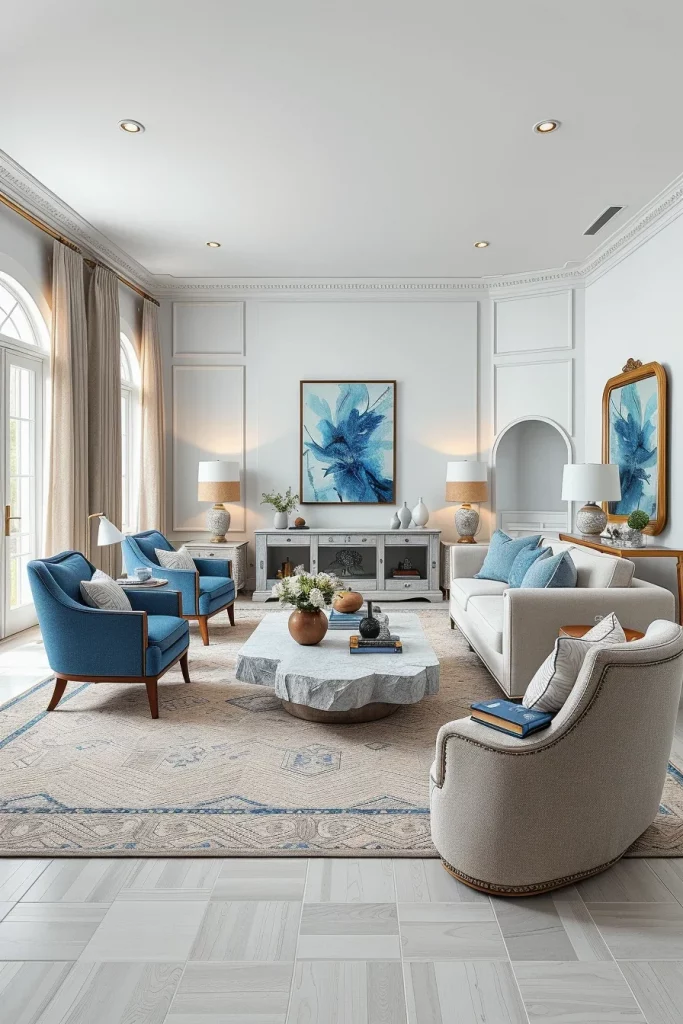
From my perspective, thoughtful layering is what makes this palette successful. Designers frequently featured by Elle Decor recommend introducing multiple shades within the same color family instead of relying on a single flat tone. I have found this approach creates greater depth while maintaining the calm atmosphere that many homeowners seek in a living room.
To complete this design, I would add a large statement mirror, textured throw blankets, woven storage baskets, dimmable lighting, and a few carefully selected decorative objects that make the room feel welcoming without distracting from its elegant simplicity.
White And Powder Blue Living Room That Feels Bright And Serene
Whenever I want a living room to feel effortlessly peaceful, I turn to powder blue accents paired with crisp white. This combination reflects light beautifully, making even compact spaces appear larger and brighter. White establishes the clean foundation, while powder blue softens the interior with gentle color that never feels overpowering. I especially enjoy using this palette in homes where relaxation and comfort are priorities.
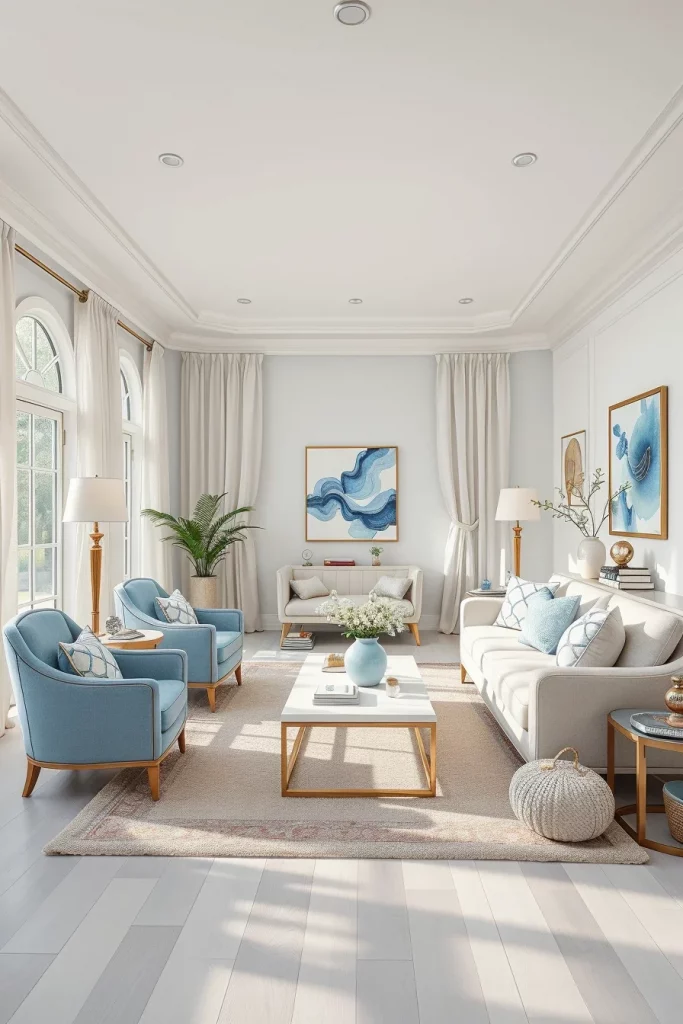
I usually begin with a generously sized white sofa, powder blue accent pillows, upholstered armchairs, and a light-toned coffee table. A plush neutral rug, sheer linen curtains, elegant table lamps, and soft ceramic accessories help create a cohesive design. I also recommend adding framed artwork with subtle watercolor tones, decorative trays, books, and textured fabrics to give the room visual interest while preserving its serene appearance.
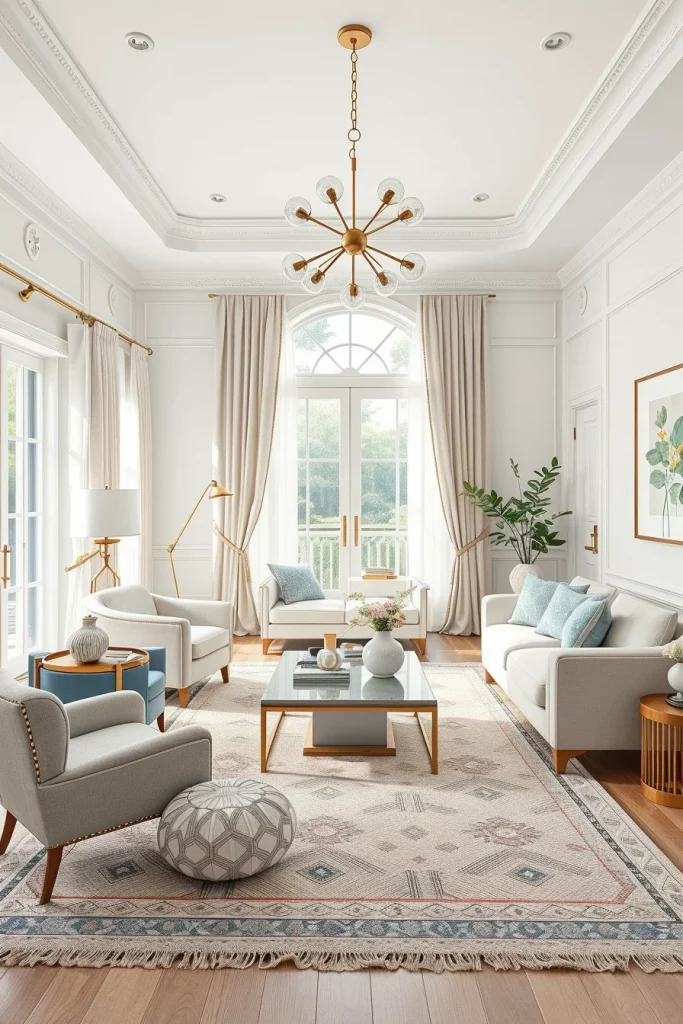
In my experience, soft color palettes perform best when paired with varied materials rather than excessive decoration. House & Garden has often highlighted the importance of combining fabrics, glass, ceramics, and natural textures to prevent minimalist interiors from feeling flat. I consistently find that this advice produces interiors that remain inviting throughout every season.
I would finish this living room with layered lighting, a comfortable reading nook, oversized decorative vases, and discreet storage furniture that keeps everyday essentials organized while maintaining the room’s clean aesthetic.
White And Muted Teal Living Room With Sophisticated Color Balance
Muted teal offers an elegant alternative to more traditional blue accents while preserving the brightness of a white living room. I appreciate how this understated color introduces personality without becoming overwhelming. White architectural elements allow muted teal furnishings and accessories to become refined focal points, creating an interior that feels current while remaining timeless. This palette works beautifully in both contemporary apartments and spacious family homes.
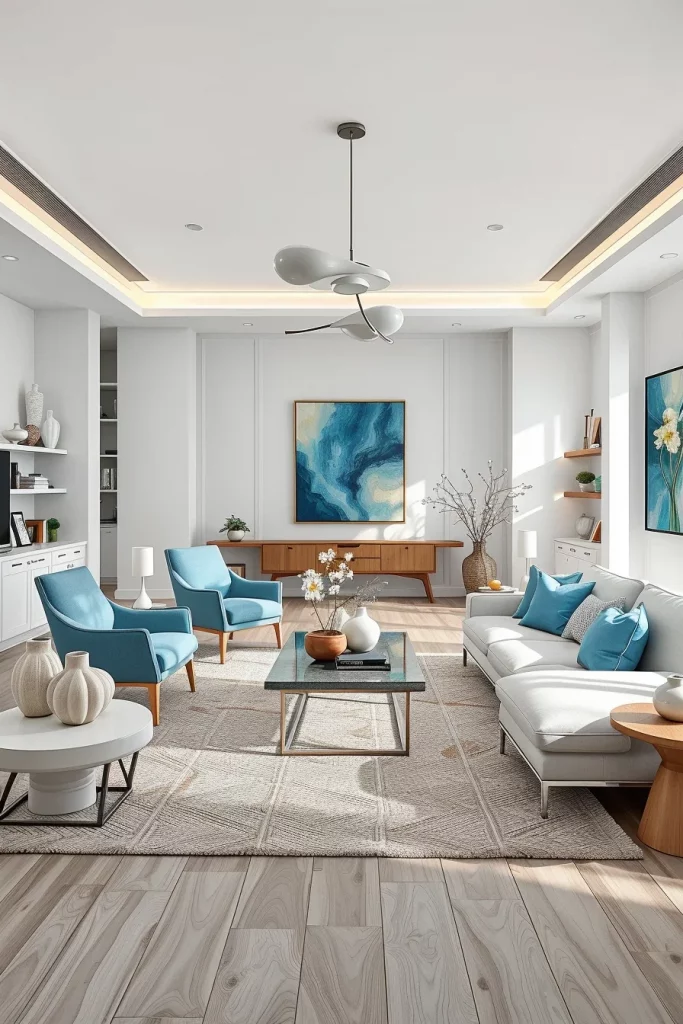
For furniture, I recommend a white sectional sofa accompanied by muted teal lounge chairs, a sleek coffee table, soft textured rugs, and modern shelving. Decorative cushions, ceramic vases, sculptural lighting, glass accessories, and oversized artwork featuring teal and neutral tones create a cohesive visual story. I also like incorporating subtle metallic finishes in lighting fixtures and side tables to introduce gentle sophistication without competing with the primary color palette.
Personally, I believe balance is essential when working with teal. Rather than distributing the color evenly throughout the room, I concentrate it in selected furniture and decorative accents. Many professional designers encourage using accent colors strategically instead of excessively, and I have found that this creates interiors that feel more refined and easier to update over time.
To enrich the overall design, I would add elegant floor lamps, decorative books, textured throws, concealed storage, and carefully selected accessories that complement the muted teal without overwhelming the clean white foundation.
White And Blush Pink Living Room For Soft Feminine Charm
A white and blush pink living room creates an inviting atmosphere that feels elegant rather than overly decorative. I enjoy this palette because blush pink introduces warmth while allowing white to maintain the room’s bright, spacious appearance. The combination works exceptionally well in modern interiors where subtle color is preferred over bold statements. I always focus on creating harmony through carefully selected furnishings and understated decorative details.
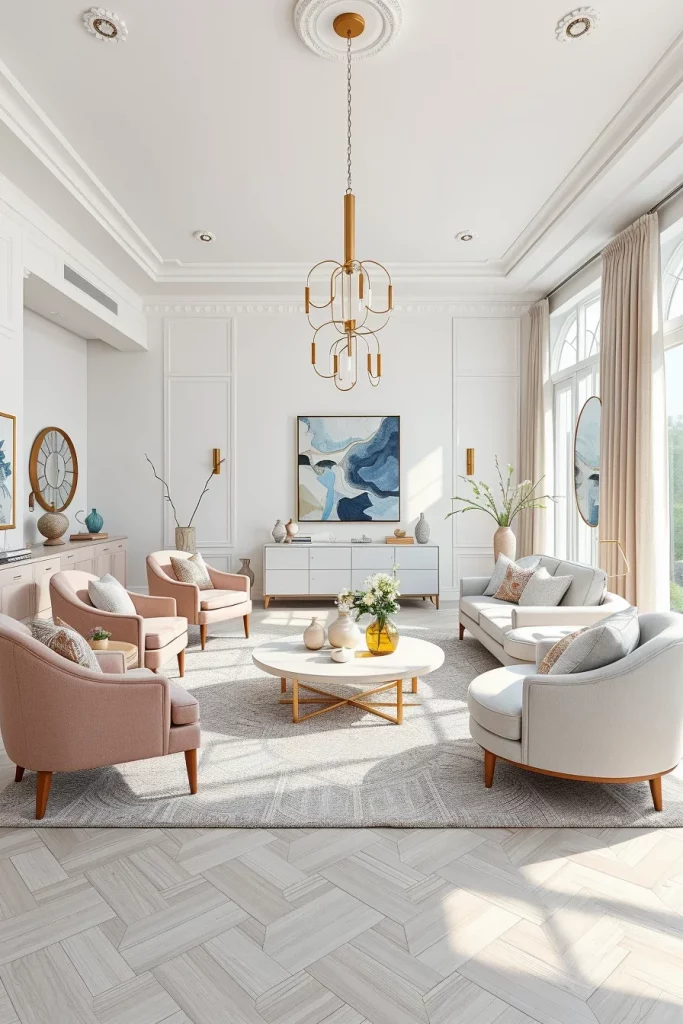
My preferred layout includes a white sofa, blush pink accent chairs, a round coffee table, soft textured rugs, linen curtains, and sculptural lighting fixtures. Decorative cushions, ceramic vases, abstract artwork, elegant side tables, and layered textiles help create depth while maintaining a light visual presence. I also recommend incorporating mirrors to reflect natural light and further enhance the room’s sense of openness.
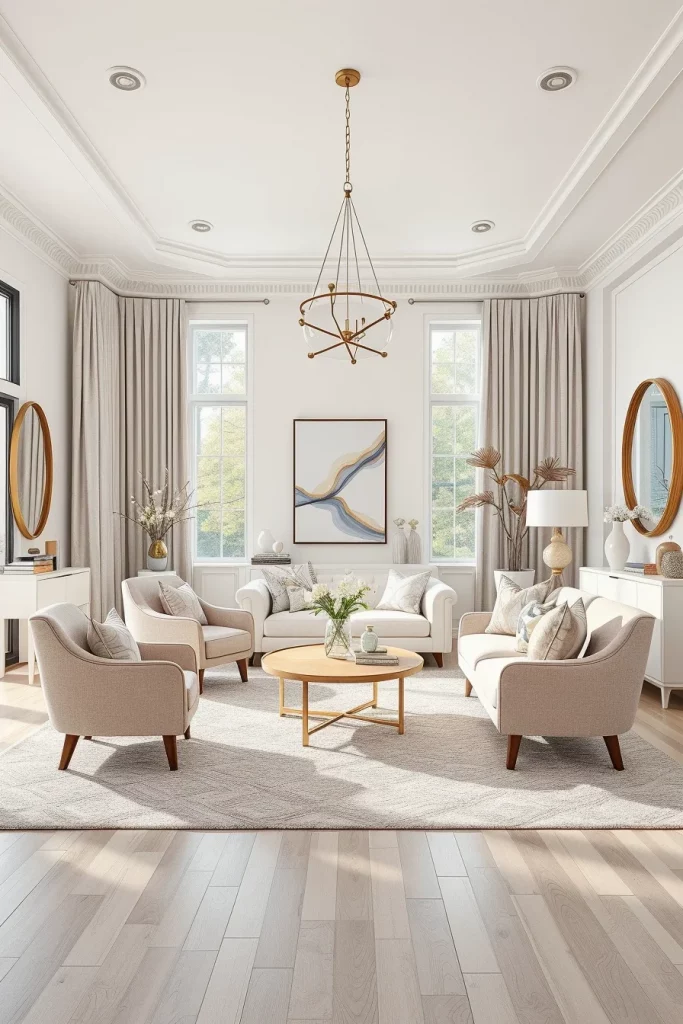
I have found that blush pink works best when treated as a supporting accent rather than the dominant feature. Interior designers regularly recommend limiting softer colors to furniture, textiles, and decorative accessories while keeping architectural surfaces neutral. I completely agree because this strategy keeps the interior sophisticated instead of overly thematic.
To complete the room, I would include fresh decorative branches, stylish storage baskets, scented candles, elegant coffee table books, and subtle metallic accessories that introduce refinement without distracting from the gentle color palette.
White And Dusty Rose Living Room With Refined Warm Accents
Dusty rose introduces warmth and maturity while preserving the timeless elegance of a white living room. Unlike brighter pink tones, dusty rose feels understated and sophisticated, making it suitable for both modern and transitional interiors. White walls and larger furniture pieces keep the room bright, while dusty rose textiles and decorative accents create a welcoming atmosphere that feels comfortable throughout the year.
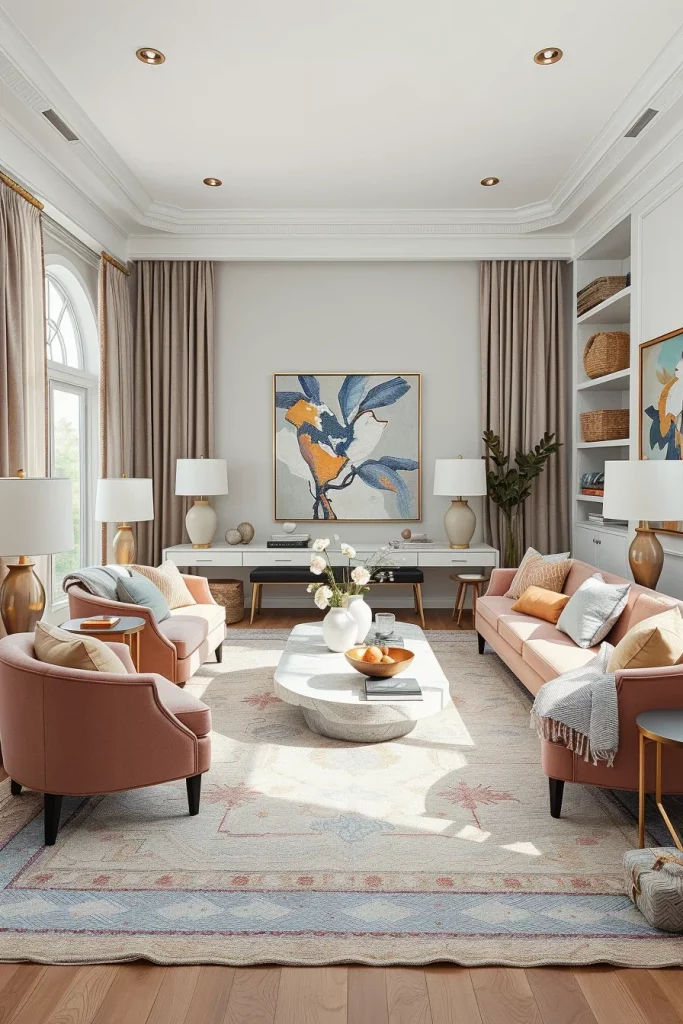
I prefer pairing a white sectional sofa with dusty rose armchairs, a light stone coffee table, textured area rugs, elegant table lamps, and soft linen curtains. Decorative pillows, ceramic vessels, sculptural décor, oversized artwork, and layered throws enrich the interior while maintaining visual balance. Carefully selected shelving with books and tasteful accessories provides additional personality without creating unnecessary clutter.
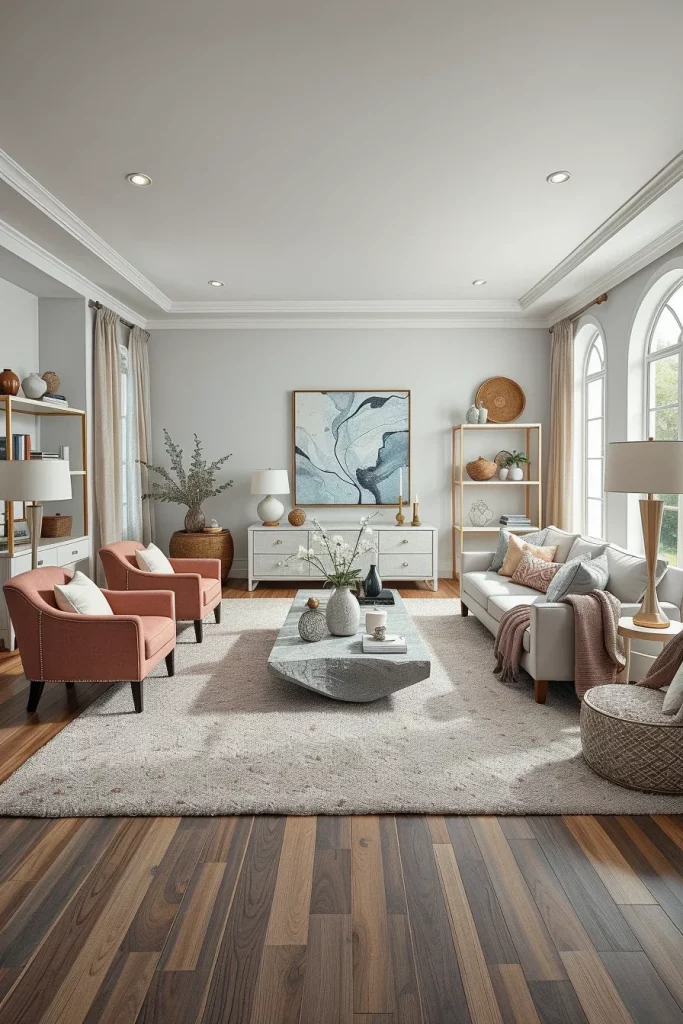
From my experience, timeless interiors are built through thoughtful proportions and quality materials rather than constantly changing trends. Publications such as Architectural Digest frequently emphasize investing in classic furniture while refreshing a room through textiles and accessories. I follow this philosophy because it allows homeowners to update their living spaces easily without major renovations.
I would complete this living room by adding statement lighting, decorative trays, woven baskets, comfortable accent seating, and subtle layered décor that enhances both functionality and everyday comfort.
White And Peach Living Room That Adds Gentle Warmth
I find that pairing crisp white with soft peach is one of the easiest ways to make a living room feel welcoming without sacrificing its fresh appearance. White walls create an open and airy backdrop, while peach accents introduce a delicate warmth that softens the space throughout the day. This combination works especially well in rooms with large windows because natural daylight enhances both colors, creating an inviting atmosphere from morning until evening.
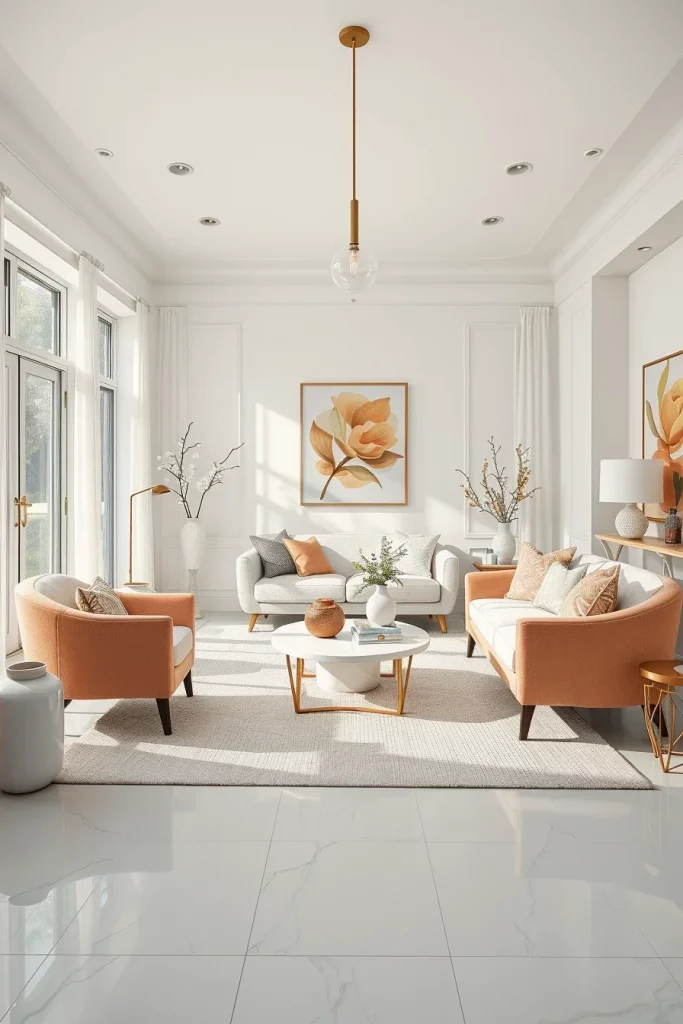
When I design a room like this, I begin with a comfortable white sofa featuring clean lines and textured upholstery. I usually pair it with a light oak coffee table, curved accent chairs in muted peach fabric, ivory curtains, a soft woven area rug, ceramic vases, linen cushions, and abstract artwork that blends white, cream, and peach tones. Matte black or brushed brass lighting fixtures provide subtle contrast without overwhelming the palette, while decorative books and sculptural accessories add personality.
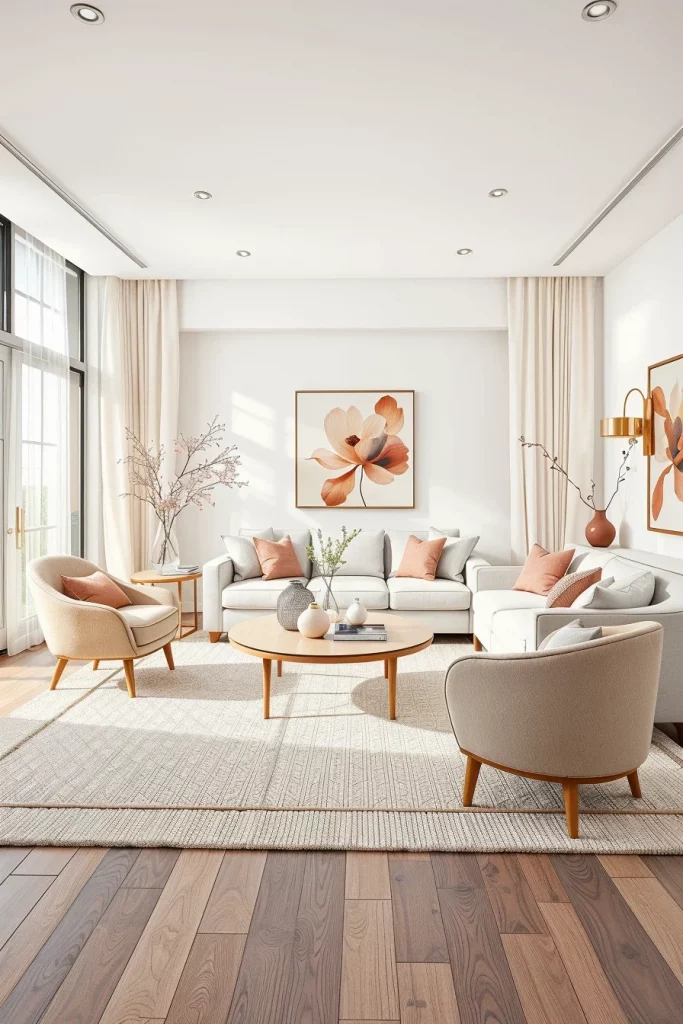
In my experience, designers frequently recommend adding warmth through texture rather than introducing too many colors. Advice shared by Architectural Digest and Better Homes & Gardens often highlights layered textiles, natural materials, and varied finishes as effective ways to prevent white interiors from feeling cold. I have found this advice especially valuable when decorating with soft peach accents because texture allows the room to remain visually interesting without becoming busy.
To complete this space, I would also include a large indoor tree in a simple planter, oversized artwork above the sofa, and several scented candles or ceramic decorative bowls to introduce additional visual layers while maintaining the calm aesthetic.
White And Butter Yellow Living Room With Cheerful Natural Light
A butter yellow accent instantly changes the mood of a white living room while preserving its light and elegant appearance. I enjoy using this color because it reflects sunlight beautifully and creates an uplifting atmosphere without becoming overpowering. The combination feels cheerful in every season and complements both contemporary and transitional interiors.
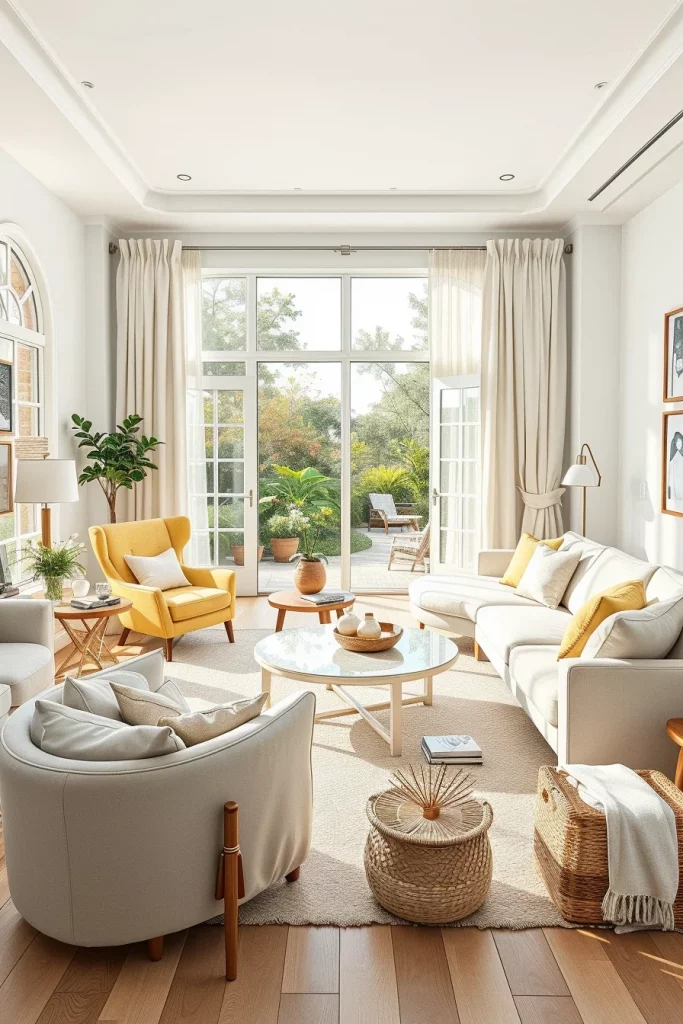
I normally start with white walls and a generously sized sectional sofa before introducing butter yellow through throw pillows, a soft armchair, decorative blankets, and carefully selected artwork. A round wood coffee table, boucle ottoman, open shelving, textured curtains, glass table lamps, woven baskets, and simple ceramic accessories help create balance. I also like incorporating pale wood flooring and subtle metallic accents to maintain visual harmony throughout the room.
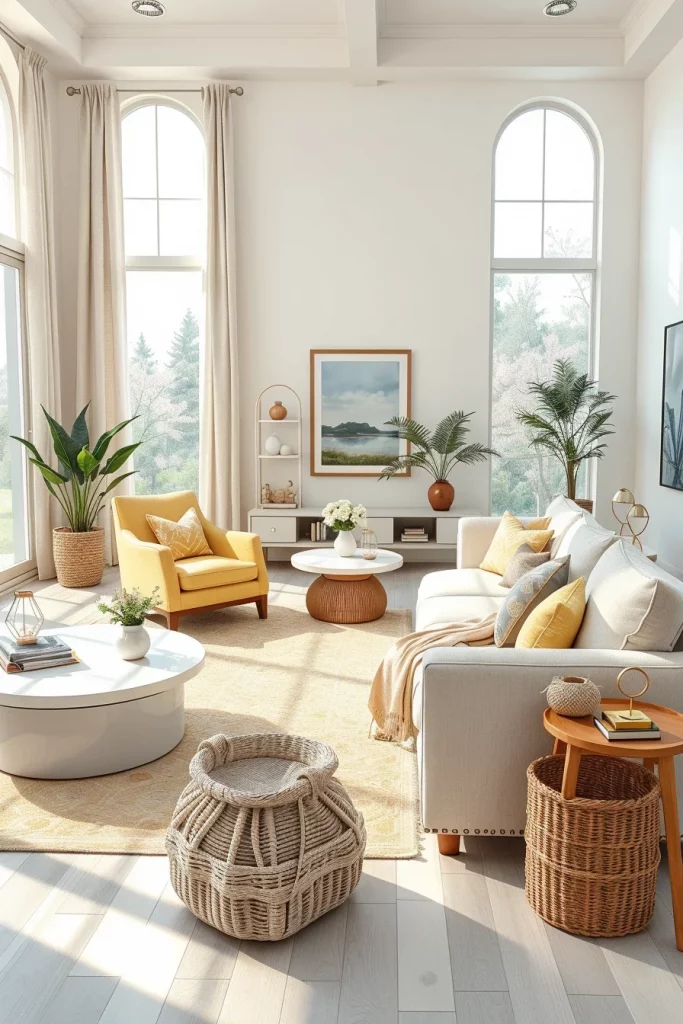
From my perspective, successful white interiors depend on maintaining consistency rather than filling every corner with decoration. Many American interior designers featured in House Beautiful recommend allowing natural light and quality furnishings to become the primary design elements instead of relying on excessive accessories. I agree with this approach because it keeps the room feeling open and timeless.
One feature I would not overlook is layered window treatments that combine sheer curtains with heavier drapes. This addition gives better control over daylight while adding another layer of softness that perfectly complements the butter yellow accents.
White And Mustard Yellow Living Room For Modern Vintage-Inspired Contrast
For homeowners who enjoy stronger visual contrast, mustard yellow introduces depth while allowing white to remain the dominant color. I appreciate this combination because it balances contemporary simplicity with subtle vintage inspiration, creating a room that feels sophisticated without appearing overly formal.
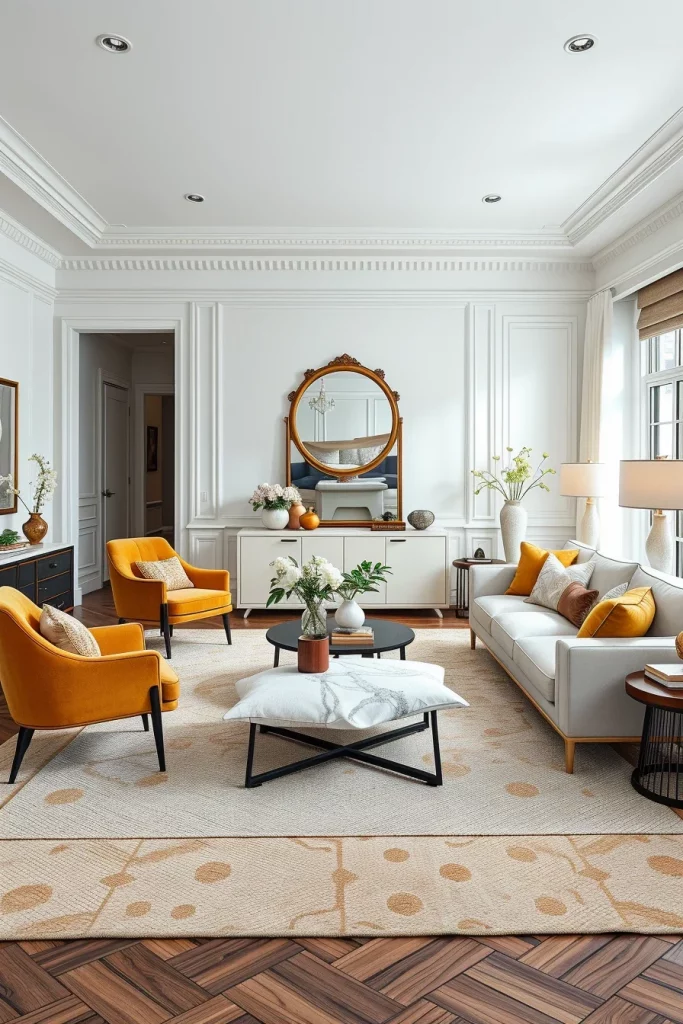
I typically anchor the room with a white modular sofa, then introduce mustard through velvet accent chairs, decorative cushions, framed artwork, and a textured throw. Walnut side tables, a sculptural coffee table, ribbed ceramic lamps, oversized mirrors, minimalist shelving, boucle stools, and a large neutral rug complete the furniture arrangement. Black metal details and warm wood finishes strengthen the contrast while maintaining a refined overall appearance.
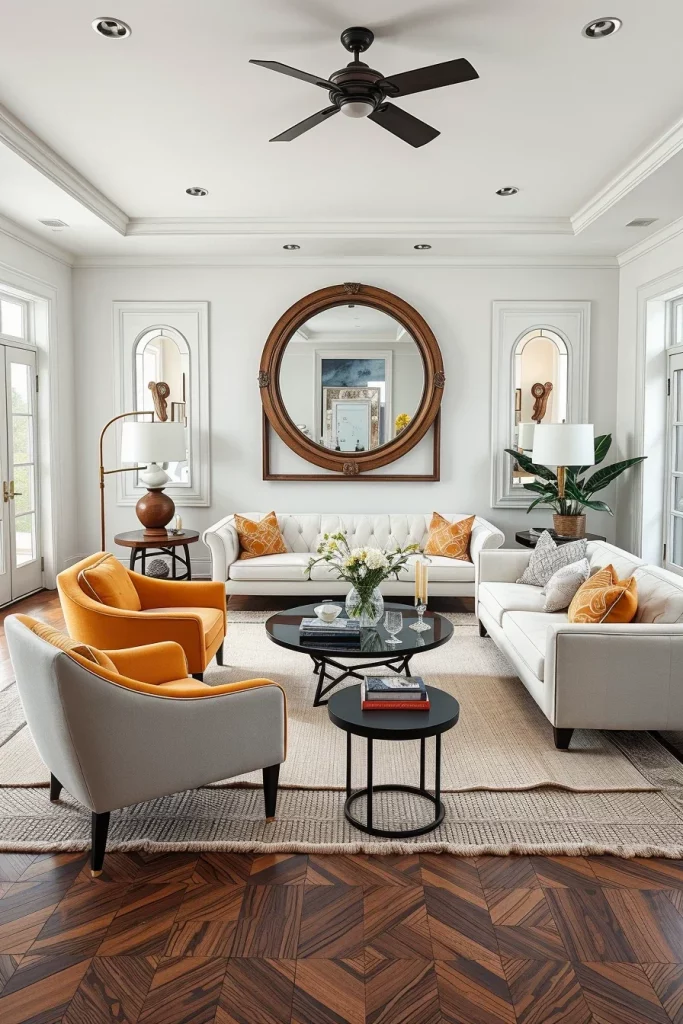
I have noticed that many respected interior publications encourage mixing one saturated accent color with a restrained neutral palette. This strategy allows statement pieces to stand out while keeping the room visually balanced. I often recommend following this principle because it prevents the mustard accents from overwhelming the bright foundation created by white surfaces.
If I wanted to enhance this design further, I would add subtle vintage-inspired decorative objects such as sculptural candle holders, handcrafted pottery, or framed black-and-white photography to reinforce the room’s timeless character.
White And Lavender Living Room With Delicate Relaxing Tones
Lavender creates one of the calmest interpretations of modern white living room design. I like using this palette because it introduces soft color without distracting from the peaceful atmosphere that many homeowners want in their main gathering space. White surfaces keep the room feeling spacious while lavender contributes quiet elegance.
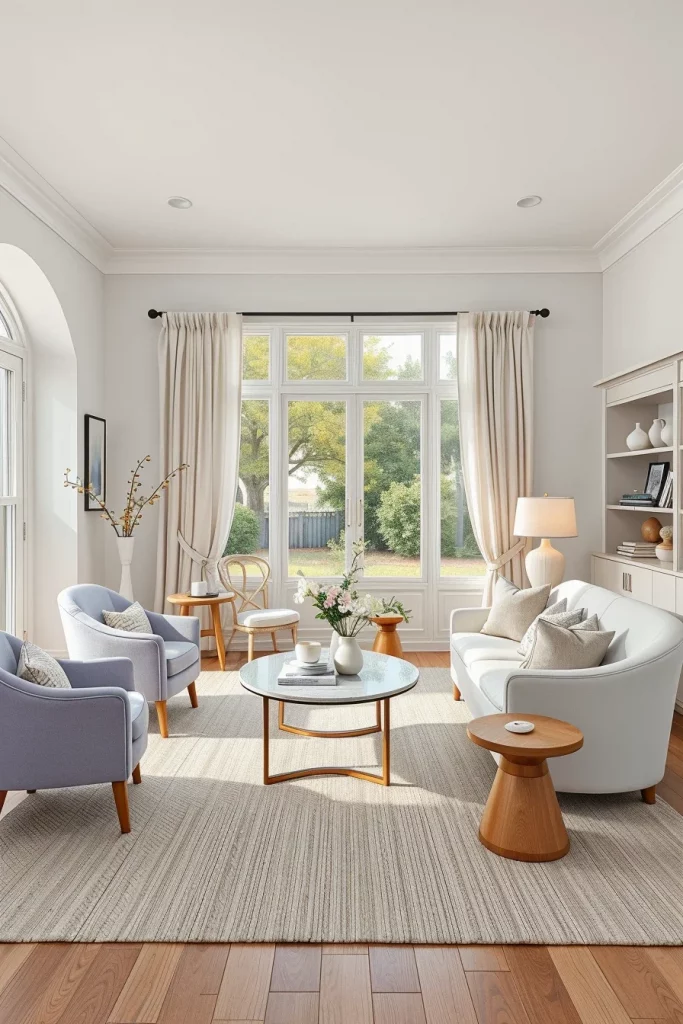
My preferred furniture arrangement includes a white sofa with rounded edges, lavender accent chairs, a marble coffee table, pale wood side tables, textured rugs, linen curtains, soft knit throws, ceramic table lamps, floating shelves, and understated artwork featuring muted lavender, cream, and gray tones. I also enjoy adding glass accessories that reflect daylight and make the entire room appear even brighter.
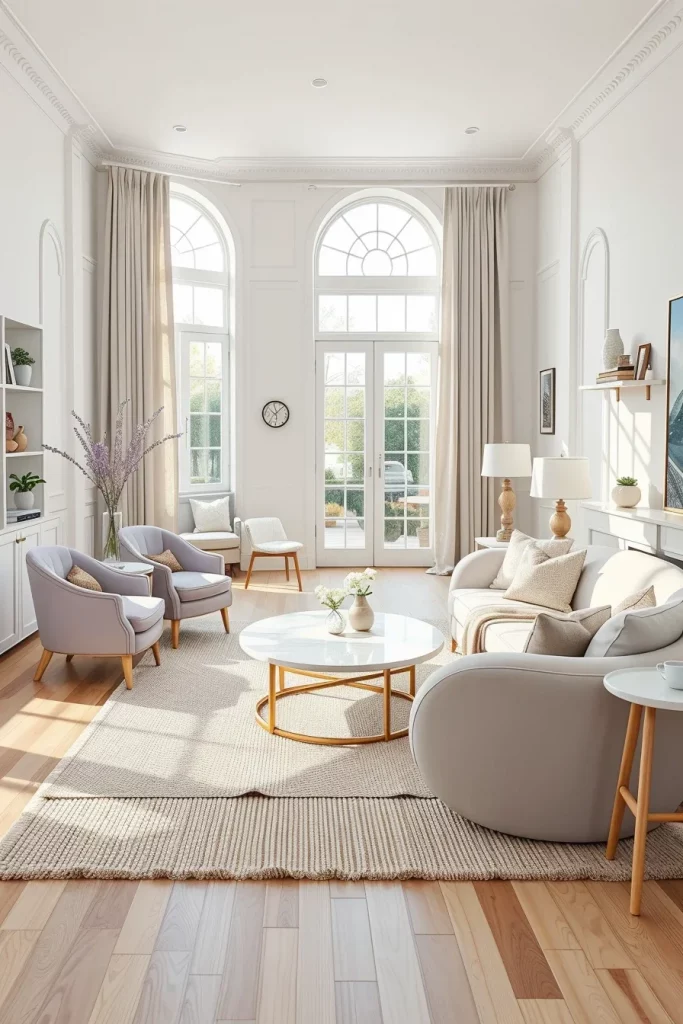
Personally, I believe this palette works best when every decorative element feels intentional. Designers frequently featured in Elle Decor recommend limiting the number of competing colors in tranquil interiors so that shape, texture, and lighting become equally important design features. I have consistently seen this approach produce rooms that remain relaxing for many years.
To strengthen this concept, I would include fresh seasonal branches in sculptural vases, elegant floor lighting beside the seating area, and subtle layered textiles that increase comfort while preserving the room’s minimalist appearance.
White And Plum Living Room That Feels Rich And Luxurious
Plum brings remarkable richness to a white living room while preserving a sophisticated contemporary style. I enjoy this pairing because deep plum accents create visual depth against bright white walls, resulting in a balanced room that feels elegant rather than heavy. This palette works particularly well in spacious living rooms where natural light prevents darker colors from dominating the space.
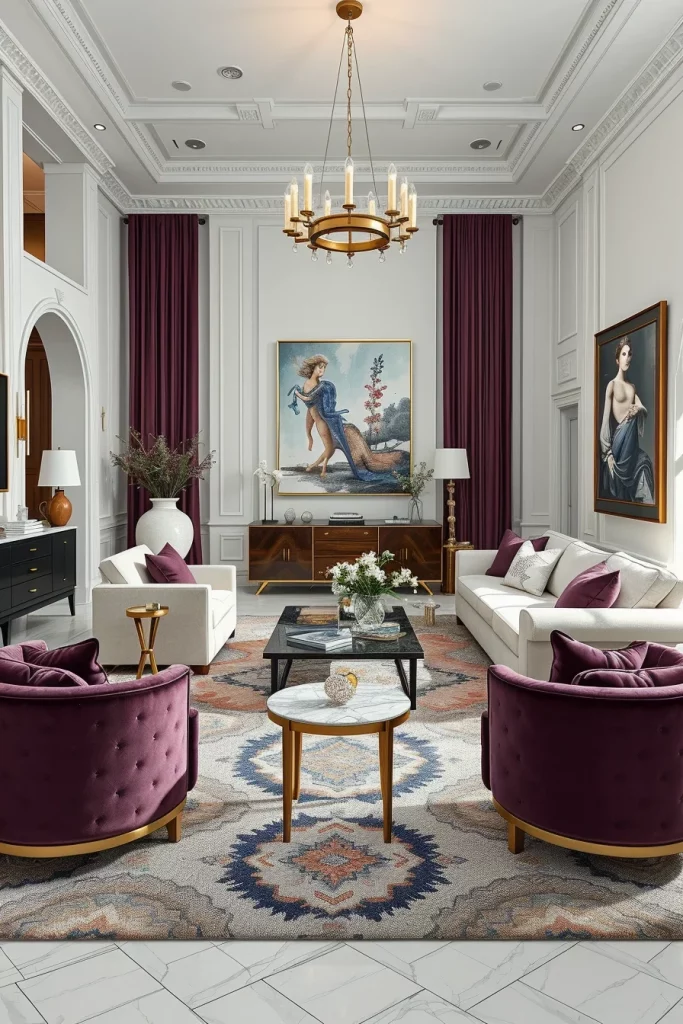
I usually begin with a large white sectional sofa and introduce plum through velvet lounge chairs, decorative cushions, luxurious curtains, and statement artwork. A marble coffee table, dark wood sideboards, brushed brass lighting, textured rugs, sculptural floor lamps, elegant shelving, and carefully selected decorative objects create an upscale appearance without excessive ornamentation. Layered fabrics, polished surfaces, and subtle metallic finishes complete the overall composition.
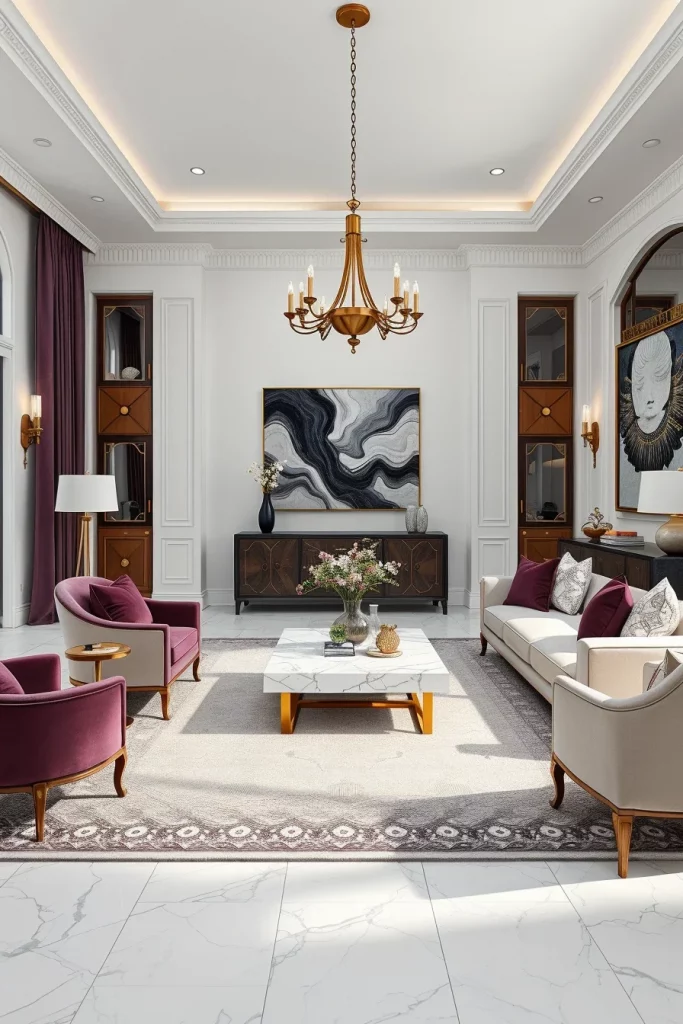
From my experience, luxurious interiors become more successful when expensive materials are balanced with comfortable furnishings instead of relying solely on dramatic decoration. Advice published by Architectural Digest often emphasizes quality craftsmanship, thoughtful lighting, and restrained styling over unnecessary excess. I find this philosophy especially effective when working with rich colors such as plum because it allows the room to feel refined instead of overwhelming.
I would finish this living room with oversized artwork, carefully curated coffee table books, elegant ceramic sculptures, and dimmable lighting that allows the rich plum accents to appear warm and inviting during the evening.
White And Burgundy Living Room With Sophisticated Statement Style
A white and burgundy living room offers a timeless combination that feels elegant without becoming overly formal. I like using burgundy as an accent because it introduces richness while allowing white walls, ceilings, and larger furniture pieces to keep the room feeling spacious. This pairing works especially well in contemporary homes where clean architectural lines can be softened with deep, luxurious color. During the day, natural light highlights the contrast, while in the evening, warm lighting creates a cozy and refined atmosphere.
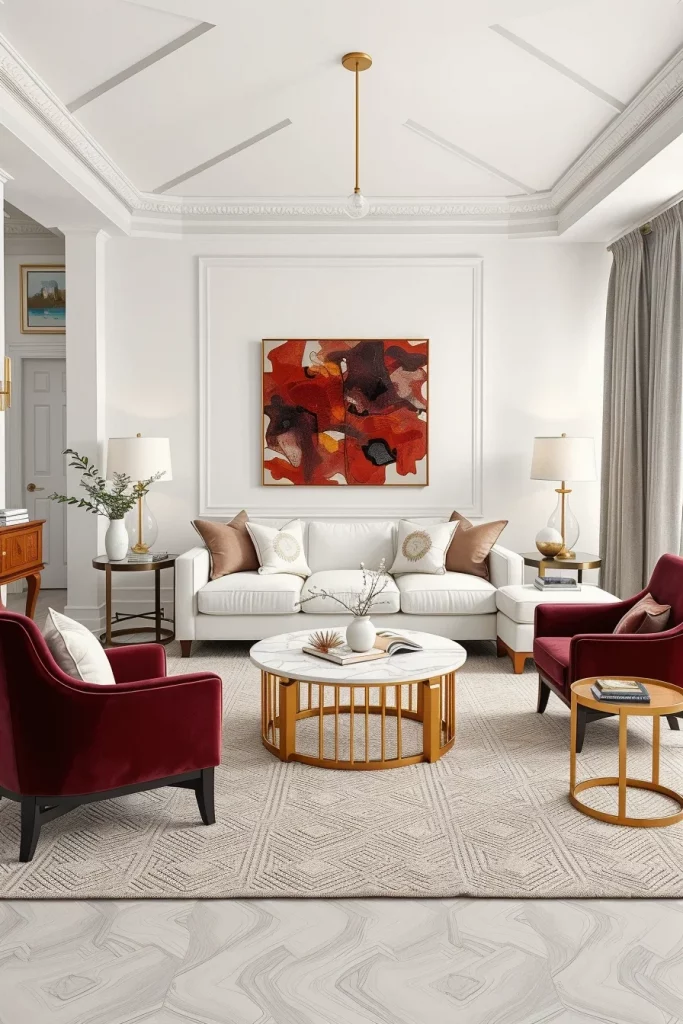
I usually begin with a white sofa featuring simple modern lines and then layer burgundy through velvet accent chairs, decorative pillows, artwork, and a textured throw blanket. A light stone or marble coffee table helps maintain brightness, while walnut side tables introduce warmth without overpowering the palette. I also include neutral area rugs, sculptural floor lamps, linen curtains, and brushed brass accessories to tie everything together. Decorative objects such as ceramic vases, books, and abstract sculptures complete the design without making it feel crowded.
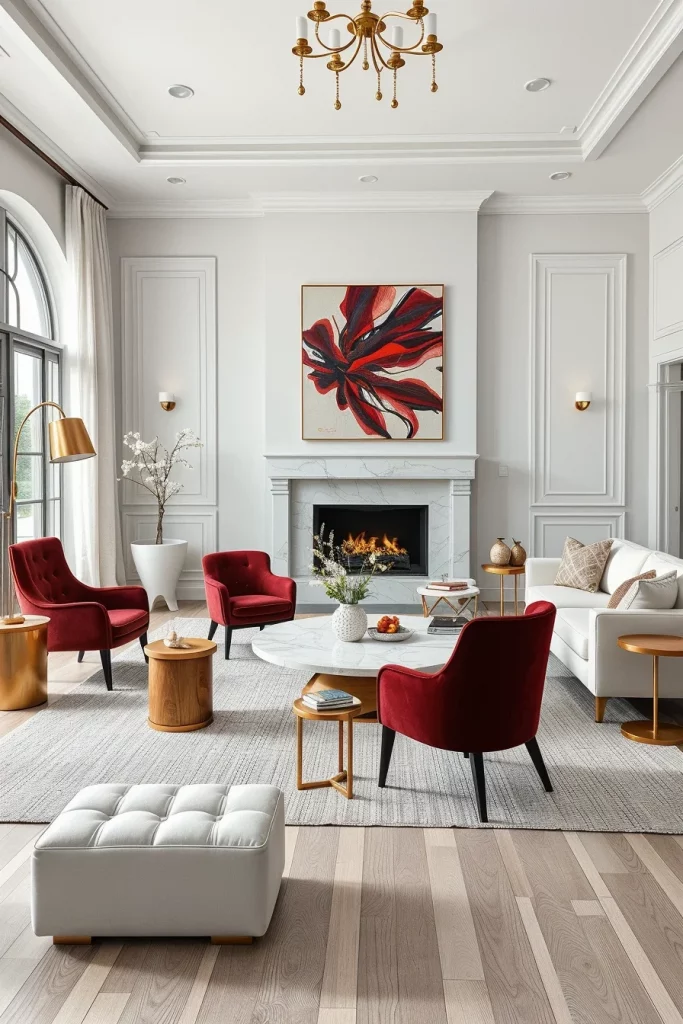
I have noticed that many designers featured by House Beautiful recommend using saturated colors sparingly in neutral interiors. I completely agree because carefully selected burgundy accents become focal points instead of competing with every other element. In my experience, this approach creates a living room that remains elegant for years rather than following a short-lived trend.
If I wanted to improve this design further, I would add oversized artwork featuring burgundy, cream, and soft gray tones, along with layered lighting that includes table lamps, floor lamps, and ceiling fixtures to create depth throughout the room.
Choosing Furniture That Complements White Living Room Trends
Selecting the right furniture is one of the most important decisions when designing a white living room. I always focus on pieces that combine comfort with clean silhouettes because they allow the bright palette to remain sophisticated instead of feeling empty. Modern white interiors benefit from furniture that feels inviting and functional while maintaining visual simplicity.
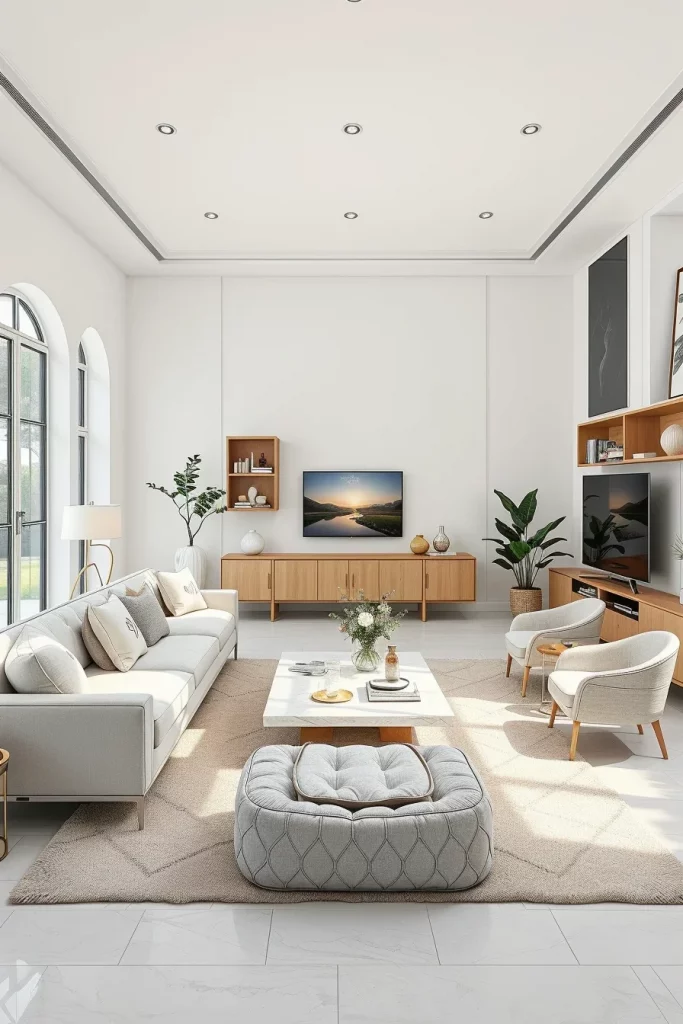
I typically recommend a generously sized white or cream sofa as the centerpiece, paired with curved accent chairs that soften the room’s geometry. A marble or light wood coffee table, streamlined media console, open shelving, and versatile side tables create practical storage without overwhelming the design. Upholstered ottomans, boucle benches, and minimalist bookcases also work beautifully because they introduce texture while remaining visually light. Every piece should contribute to both everyday comfort and overall balance.
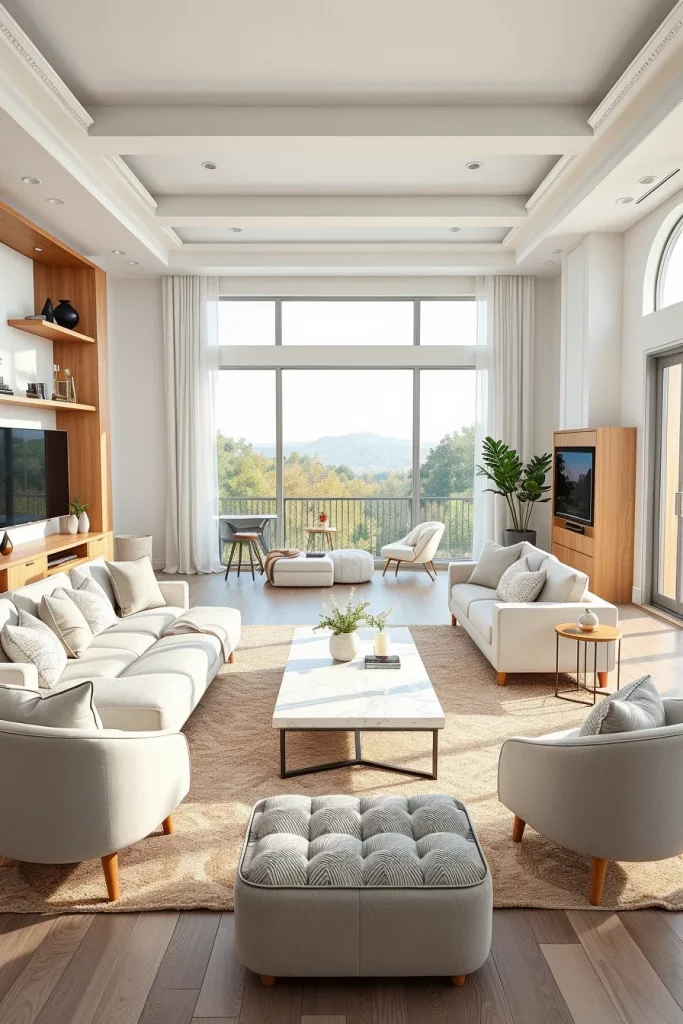
Personally, I believe investing in fewer but higher-quality furniture pieces produces far better results than filling a room with unnecessary items. Designers at Better Homes & Gardens often emphasize choosing timeless furniture with durable materials, and I have found this advice especially valuable when creating white interiors that need to remain attractive through changing decorating trends.
To make this furniture arrangement even more functional, I would include hidden storage inside ottomans, modular seating for flexible layouts, and adjustable side tables that can easily adapt to different activities and family needs.
Layering Textures To Make A White Living Room Feel Warm
One of the biggest misconceptions about white interiors is that they automatically feel cold. I have found that the secret lies in layering textures rather than introducing too many additional colors. When different materials interact, the room becomes visually rich while preserving its calm and cohesive appearance.
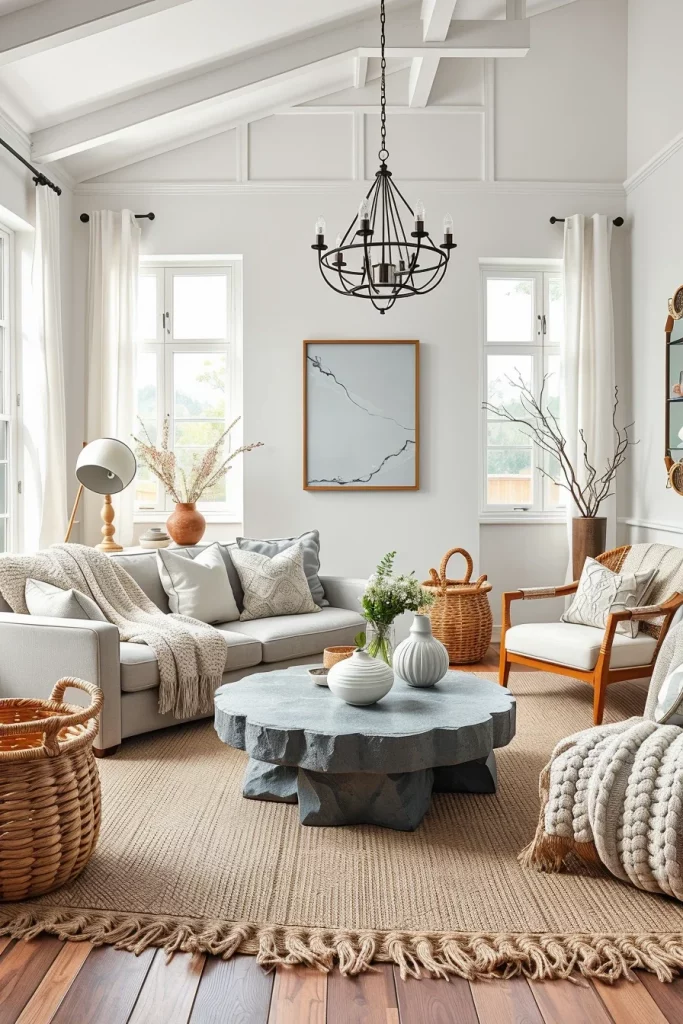
I like combining linen upholstery, boucle chairs, chunky knit blankets, woven baskets, natural fiber rugs, ribbed ceramic accessories, stone coffee tables, and soft cotton curtains. Mixing matte finishes with polished surfaces creates subtle contrast that catches natural light throughout the day. I also enjoy incorporating handcrafted decorative objects because slight variations in texture make the room feel authentic rather than overly perfect.
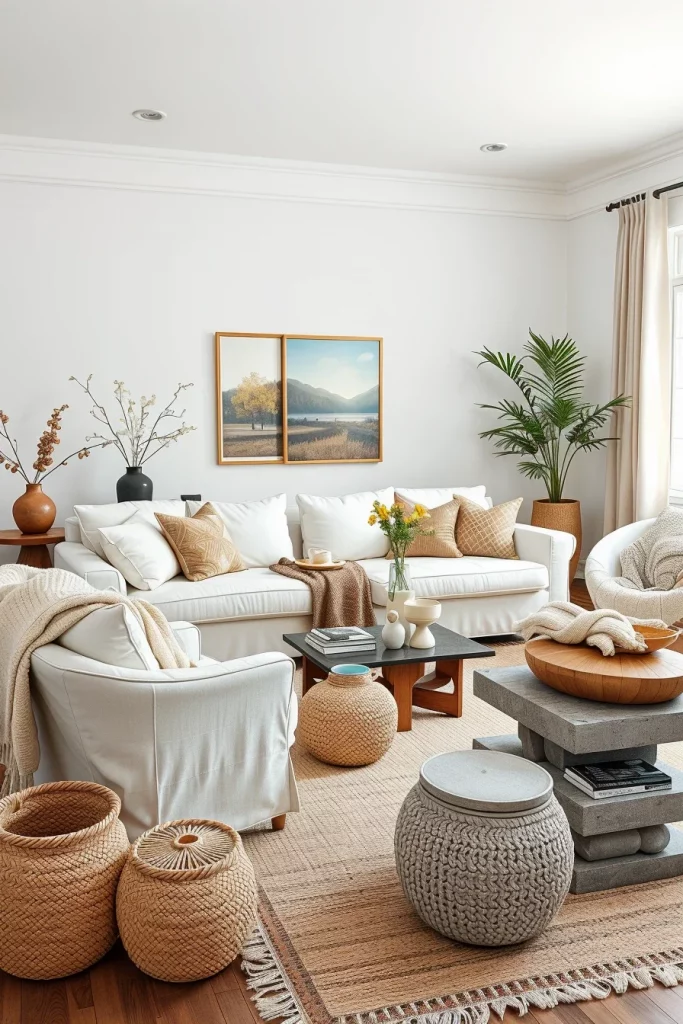
From my own experience, texture often has a greater impact than color. Elle Decor frequently highlights layered materials as one of the defining characteristics of successful contemporary interiors, and I have consistently seen how this principle transforms simple white rooms into spaces that feel welcoming and comfortable.
I would also recommend adding oversized cushions, textured wallpaper on one feature wall, woven storage boxes, and handcrafted pottery to introduce additional visual interest while maintaining the room’s peaceful atmosphere.
Lighting Ideas That Enhance White Living Room Trends
Lighting plays a major role in determining how white surfaces appear throughout the day. I always plan lighting carefully because even the most beautiful furniture can lose its impact if the room is poorly illuminated. White interiors benefit from multiple light sources that create warmth, depth, and visual balance.
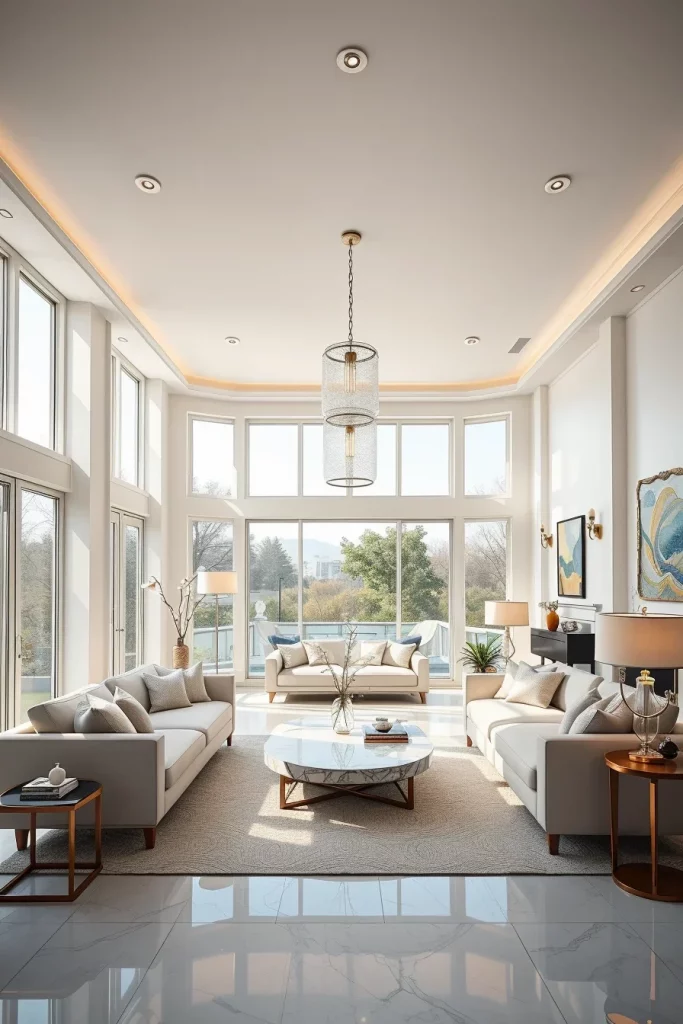
I usually combine recessed ceiling lighting with statement pendant fixtures, sculptural floor lamps, elegant table lamps, and discreet wall sconces. Dimmable LED bulbs allow the atmosphere to change from bright daytime functionality to soft evening comfort. Large windows remain essential whenever possible because natural daylight enhances every texture and decorative element within the room. Mirrors positioned opposite windows further increase brightness while making the living room appear larger.
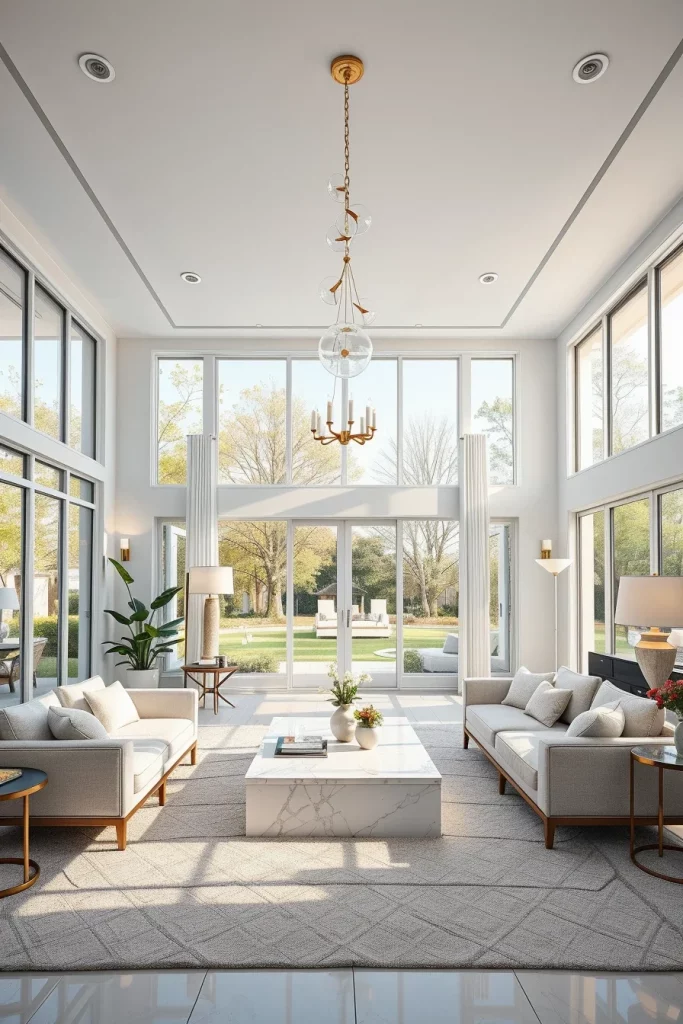
I appreciate the advice shared by Architectural Digest regarding layered lighting because it encourages homeowners to think beyond a single ceiling fixture. In my own projects, combining ambient, task, and accent lighting consistently produces more comfortable and visually dynamic interiors that remain enjoyable at every hour.
To complete the lighting plan, I would include smart lighting controls, warm color-temperature bulbs, and subtle cabinet or shelf lighting that highlights decorative collections without creating glare.
Styling Tips To Create A Beautiful White Living Room That Lasts
Creating a white living room that remains beautiful over time requires thoughtful styling instead of constant redecorating. I believe the most successful interiors evolve gradually while maintaining a consistent foundation. White offers incredible flexibility because seasonal accessories and personal collections can easily refresh the room without requiring major changes.
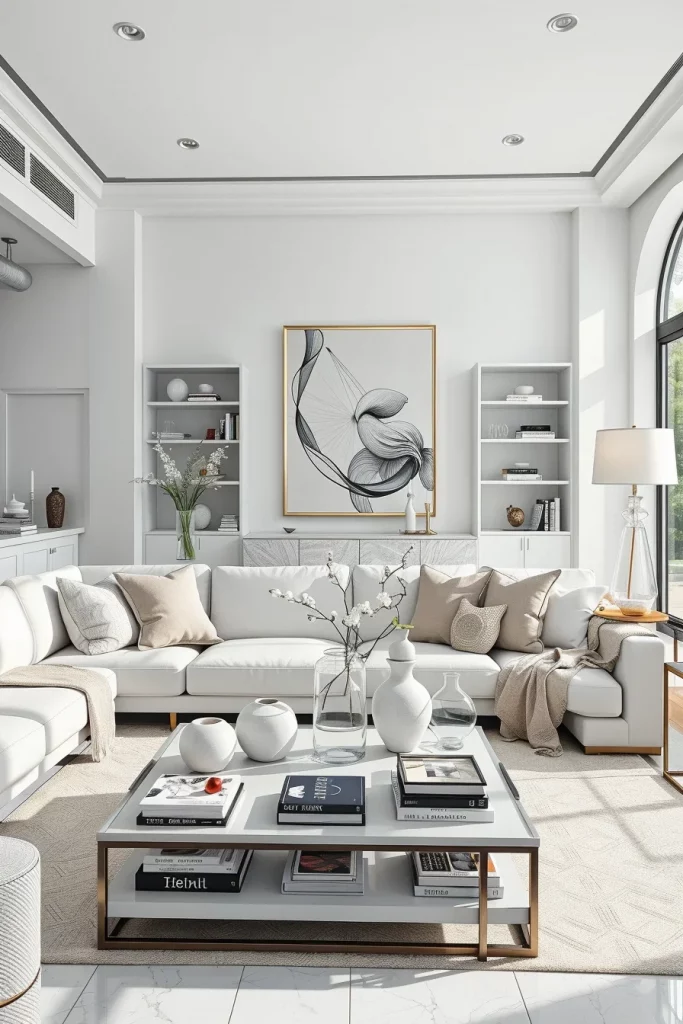
I prefer decorating with carefully selected accessories rather than large quantities of decor. Coffee table books, ceramic sculptures, elegant trays, textured cushions, linen throws, oversized artwork, glass vases, and understated greenery all contribute to a polished appearance. Maintaining generous open space between decorative elements allows each piece to stand out while preserving the clean character that defines modern white interiors.
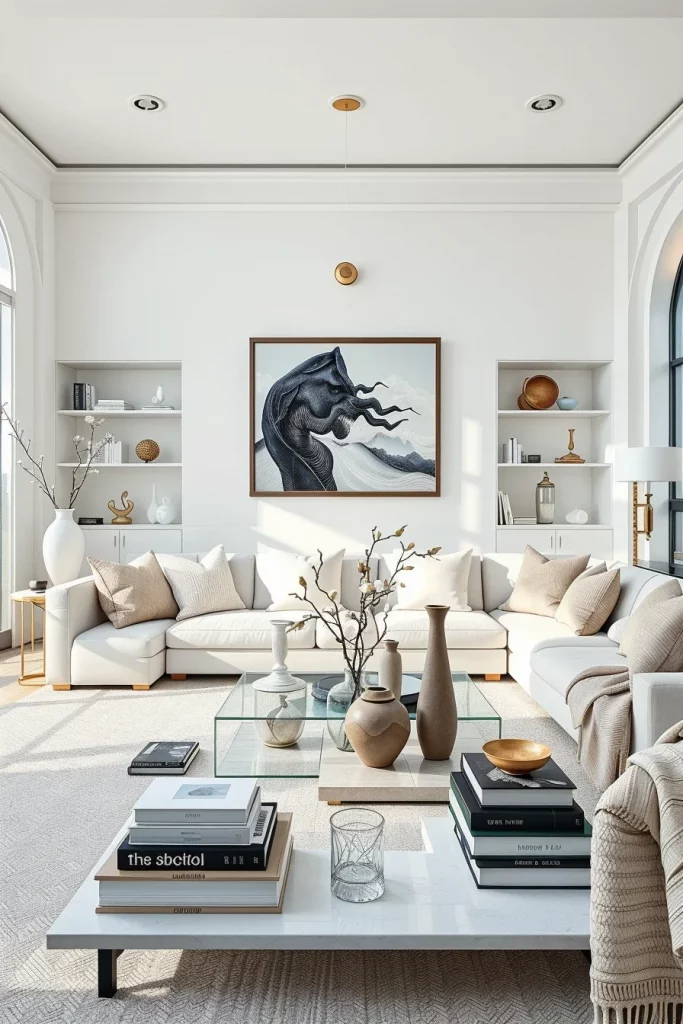
In my opinion, restraint is often the most valuable decorating skill. Many respected American designers recommend editing accessories regularly instead of continually adding new ones, and I have found this practice keeps white living rooms looking sophisticated rather than cluttered. A well-edited room also becomes easier to clean and more enjoyable to live in every day.
To ensure the design continues looking fresh for years, I would periodically update textiles, rotate decorative accessories, and introduce one or two seasonal accents while keeping the primary furniture and color palette unchanged.
White living room trends prove that a simple foundation can create endless design possibilities when paired with the right colors, textures, and furnishings. Whether you prefer soft neutrals, rich earthy tones, or bold accent shades, white provides the perfect backdrop for a timeless and inviting space. Use these ideas as inspiration to create a living room that reflects your personal style while remaining fresh, elegant, and comfortable for years to come.