
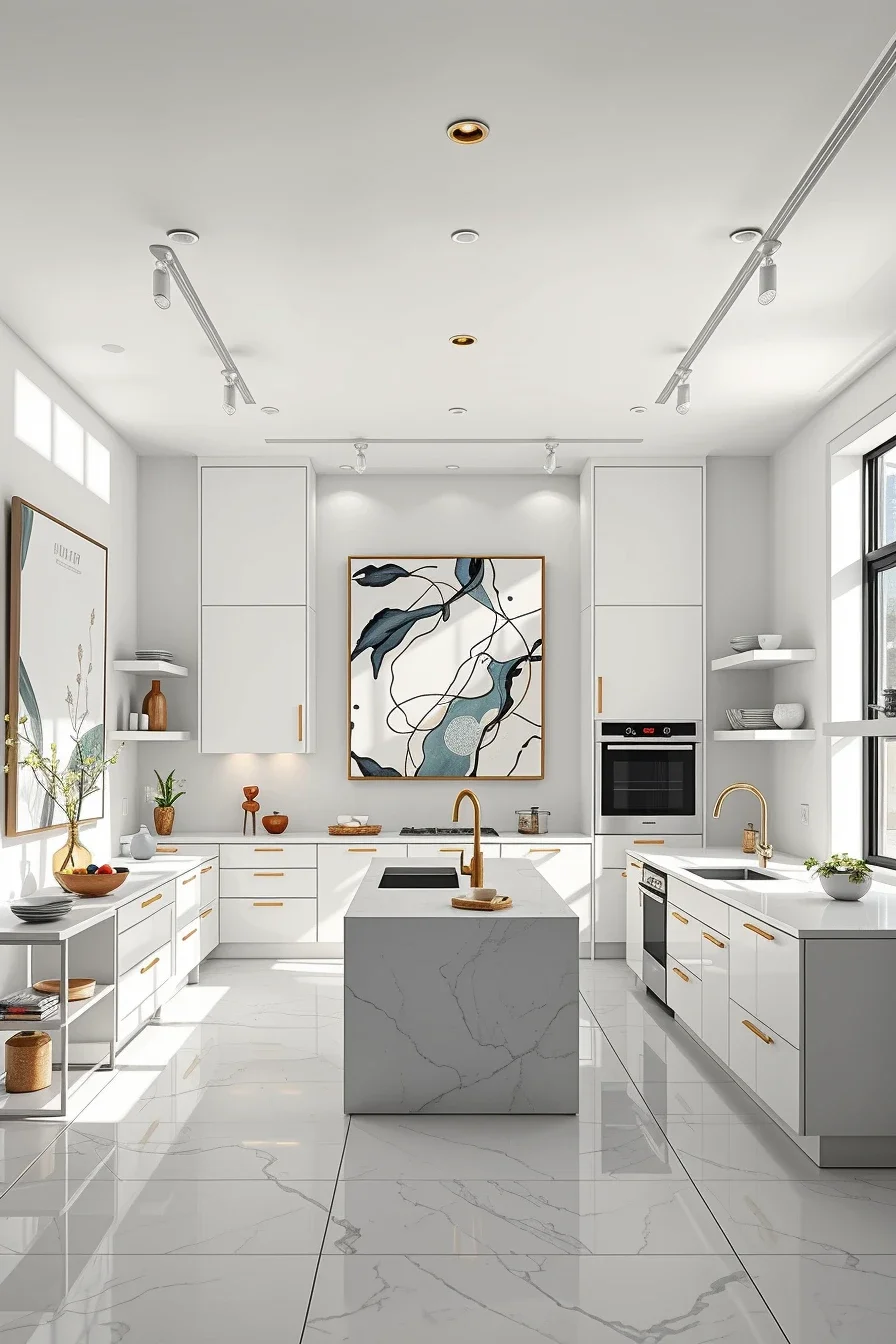
White kitchen trends continue to evolve with fresh ideas that combine timeless elegance and contemporary design. Today’s most inspiring spaces feature sculptural forms, curved islands, seamless cabinetry, and layered textures that make all-white interiors feel warm and inviting. Whether you’re planning a complete renovation or searching for simple ways to refresh your space, modern white kitchens offer endless design possibilities. From artistic lighting and statement stone surfaces to hidden storage and architectural details, every element contributes to a refined and functional kitchen. The latest trends focus on creating bright, open environments that balance beauty with everyday practicality. In this guide, you’ll discover inspiring white kitchen trends that can help you create a stylish space designed to remain beautiful for years to come.
White Kitchen Trends With Sculptural Curved Islands
One of my favorite directions in modern interior design is the growing popularity of sculptural curved islands. This approach perfectly represents today’s white kitchen trends because it softens the clean architectural lines that white kitchens are known for. Instead of relying on sharp corners, the island becomes an artistic centerpiece with rounded silhouettes that improve movement throughout the room. I find that these flowing forms instantly make large kitchens feel more welcoming while helping smaller spaces appear more open. Curved islands also encourage conversation since people naturally gather around their gentle contours.
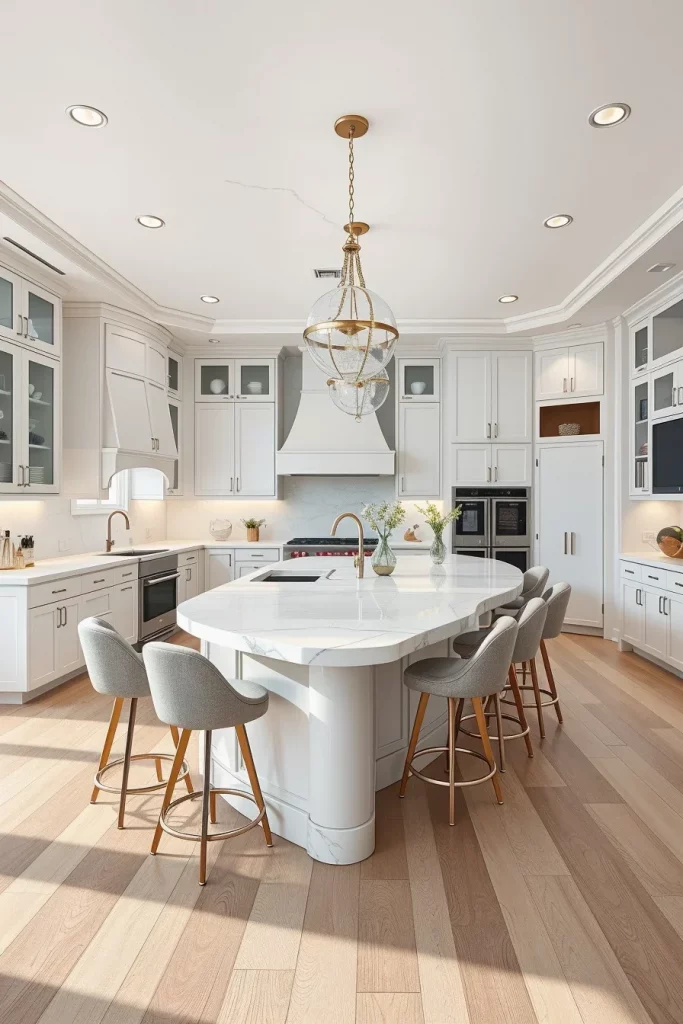
When I design a kitchen around a curved island, I pay close attention to every surrounding element. Flat-panel white cabinetry creates a calm backdrop that allows the island to stand out without overwhelming the room. Quartz or porcelain countertops with subtle veining add quiet sophistication, while integrated appliances preserve uninterrupted visual lines. Upholstered counter stools with rounded backs reinforce the soft geometry, and wide-plank flooring introduces warmth beneath the monochromatic palette. I also like incorporating concealed storage within the island so every side remains functional while maintaining its sculptural appearance.
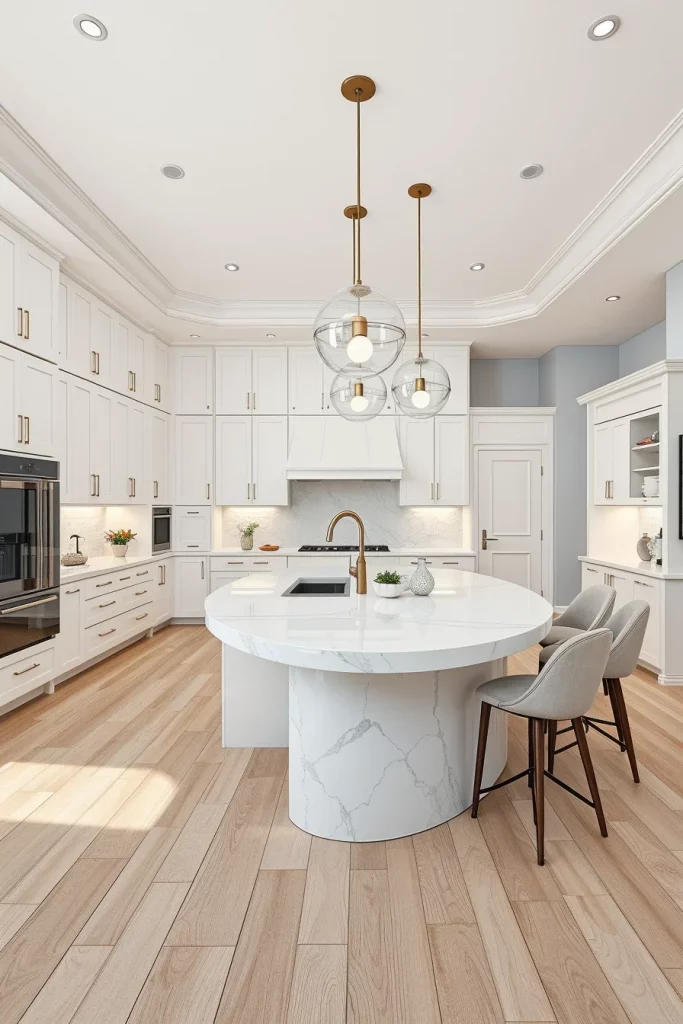
Many respected American designers, including those frequently featured by Architectural Digest and House Beautiful, emphasize balancing clean minimalism with organic shapes to make contemporary kitchens feel comfortable rather than sterile. I completely agree with this philosophy. In my experience, a curved island transforms an ordinary white kitchen into a memorable living space that remains timeless instead of following a temporary trend.
To complete this concept, I would include oversized pendant lighting with rounded forms, a minimalist faucet in brushed metal, hidden electrical outlets, and carefully selected decorative ceramics that echo the island’s soft curves without adding visual clutter.
Minimalist White Kitchens With Seamless Cabinetry
Among the strongest white kitchen trends, seamless cabinetry continues to define truly minimalist interiors. I appreciate this design because every cabinet blends together into one continuous architectural surface, allowing the room to feel calm and highly organized. Without visible hardware interrupting the composition, attention shifts toward proportion, natural light, and material quality. This simplicity creates an atmosphere that feels refined while remaining practical for everyday family life.
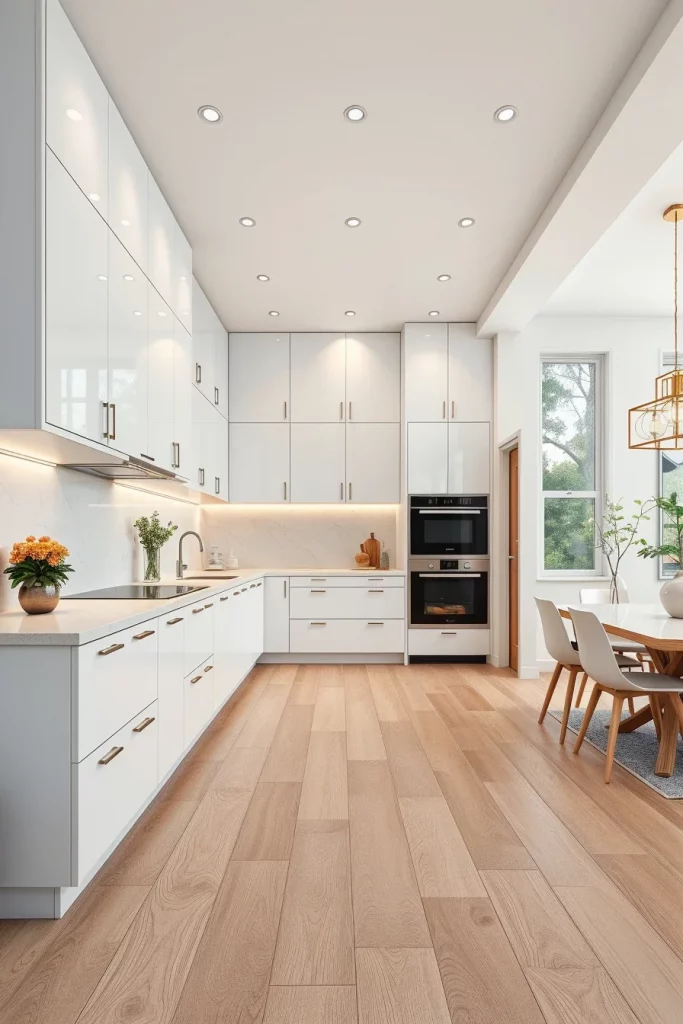
I usually recommend full-height handleless cabinets with integrated finger pulls or push-to-open mechanisms. Hidden refrigerators, concealed pantry doors, built-in ovens, and integrated dishwashers preserve the uninterrupted appearance. Large porcelain slabs for backsplashes reduce grout lines, while slim countertops maintain the sleek aesthetic. I often pair these elements with light oak flooring or subtle textured stone to introduce visual warmth without distracting from the crisp white palette. Minimal shelving ensures that only carefully selected accessories remain visible.
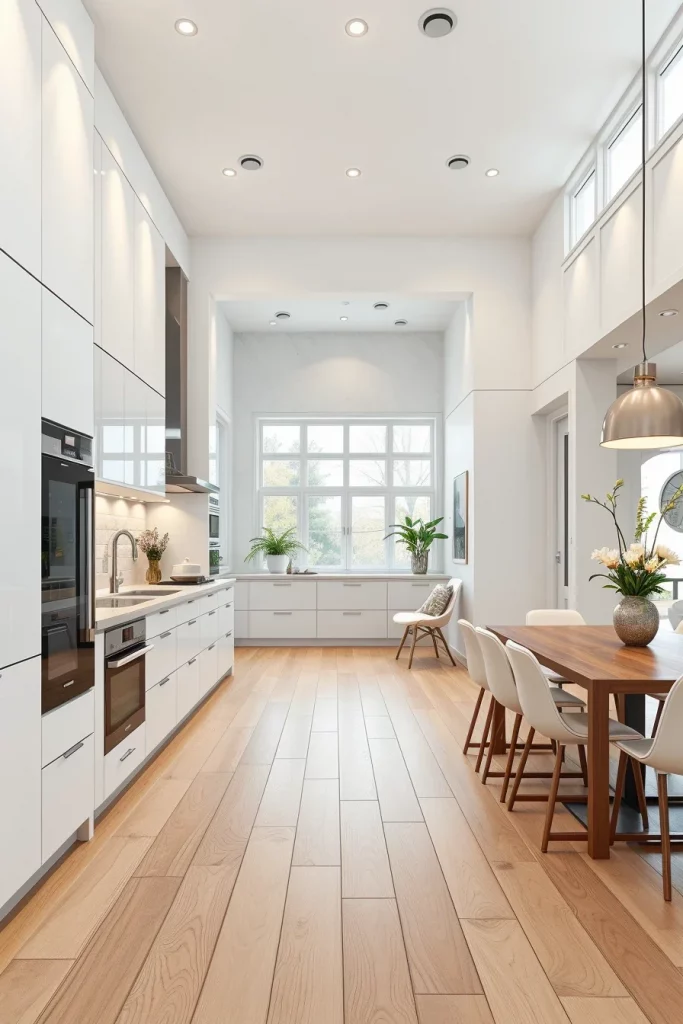
Personally, I have found that seamless cabinetry makes kitchens easier to maintain visually because everyday appliances disappear into the architecture. Design experts from Better Homes & Gardens often recommend reducing unnecessary visual noise in frequently used spaces, and I believe this advice is especially valuable in white kitchens where every detail naturally attracts attention.
To make this design even more functional, I would add interior drawer organizers, concealed recycling systems, soft-close hardware, under-cabinet LED lighting, and a walk-in pantry hidden behind matching cabinet fronts.
Layered White Color Palettes For Sophisticated Interiors
Many people assume that decorating with white means choosing only one shade, but the latest white kitchen trends prove the opposite. I prefer layering multiple white tones because this approach creates depth while maintaining an elegant appearance. Warm ivory, soft cream, crisp snow white, and gentle pearl finishes work together to produce subtle contrast that changes beautifully throughout the day as natural light shifts across the room.
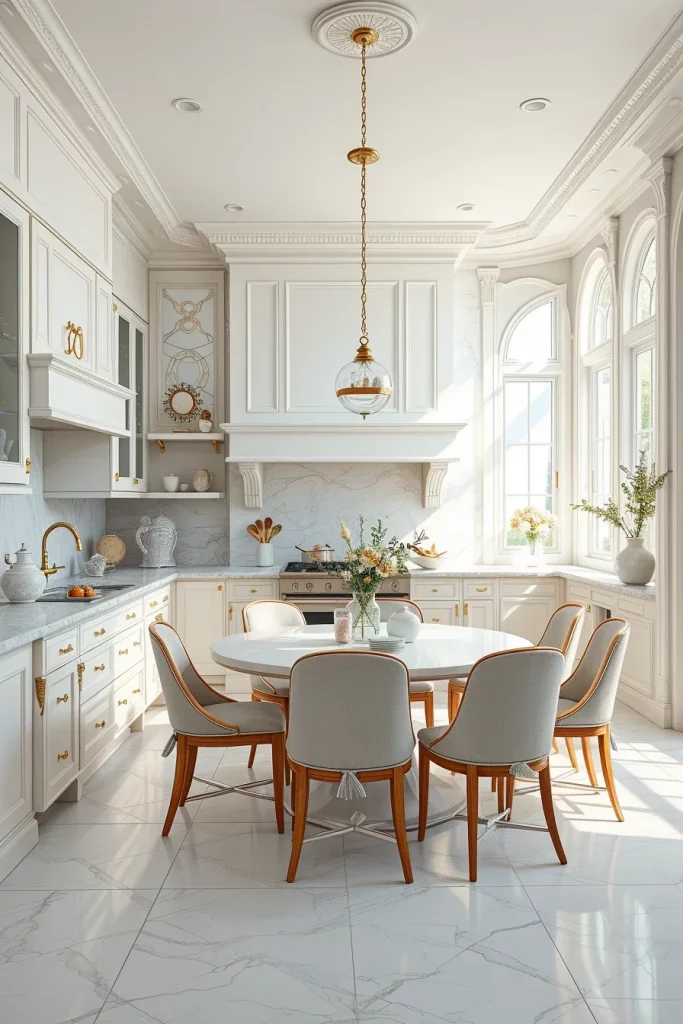
I like combining matte white cabinetry with satin-finish walls and lightly veined stone countertops. Soft white plaster walls introduce texture without changing the overall palette, while linen dining chairs and textured area rugs provide comfortable contrast. Decorative objects made from ceramic, marble, and frosted glass continue the layered effect. Even ceiling paint can differ slightly from cabinet finishes to create visual dimension without appearing obvious.
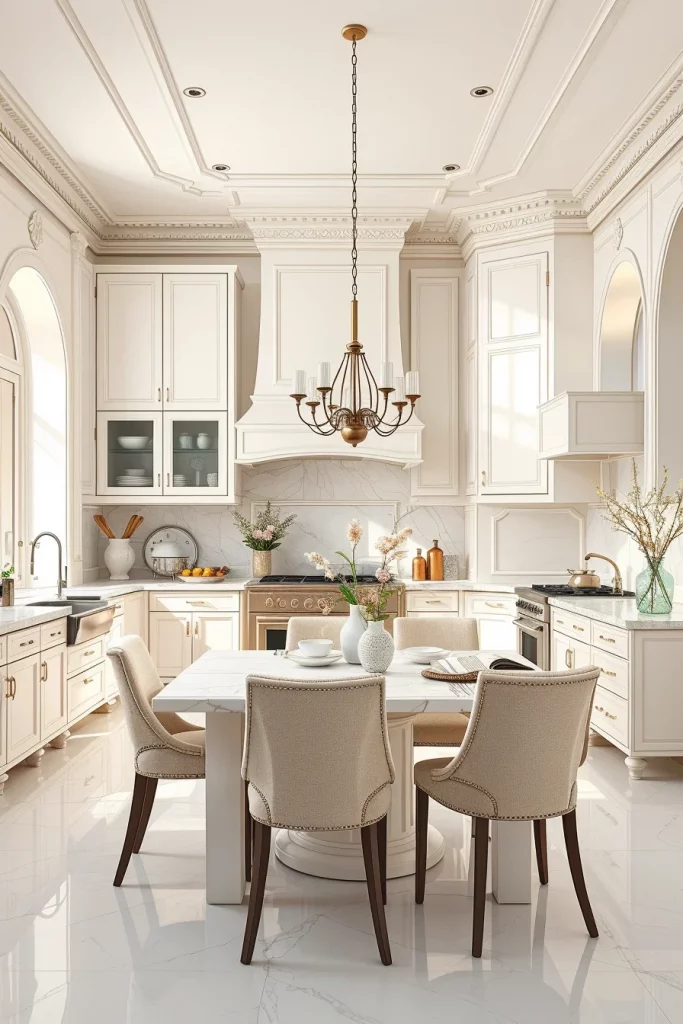
From my experience, layered whites make interiors feel significantly more sophisticated than using a single bright white everywhere. Designers regularly featured in Elle Decor often discuss the importance of tonal variation when working with neutral palettes, and I have consistently found this advice to produce richer, more inviting interiors.
I would finish this space with dimmable lighting, textured Roman shades, subtle metallic accents in brushed nickel, and carefully selected artwork featuring neutral abstract compositions that complement the layered palette.
Artistic White Kitchen Designs With Statement Lighting
Lighting has become one of the defining elements of modern white kitchen trends, and I believe artistic fixtures deserve to be treated as functional sculptures. Instead of serving only as illumination, statement lighting becomes the visual focal point that gives personality to an otherwise restrained white interior. Large pendants, sculptural chandeliers, and asymmetrical lighting installations add movement and sophistication while preserving the kitchen’s clean aesthetic.
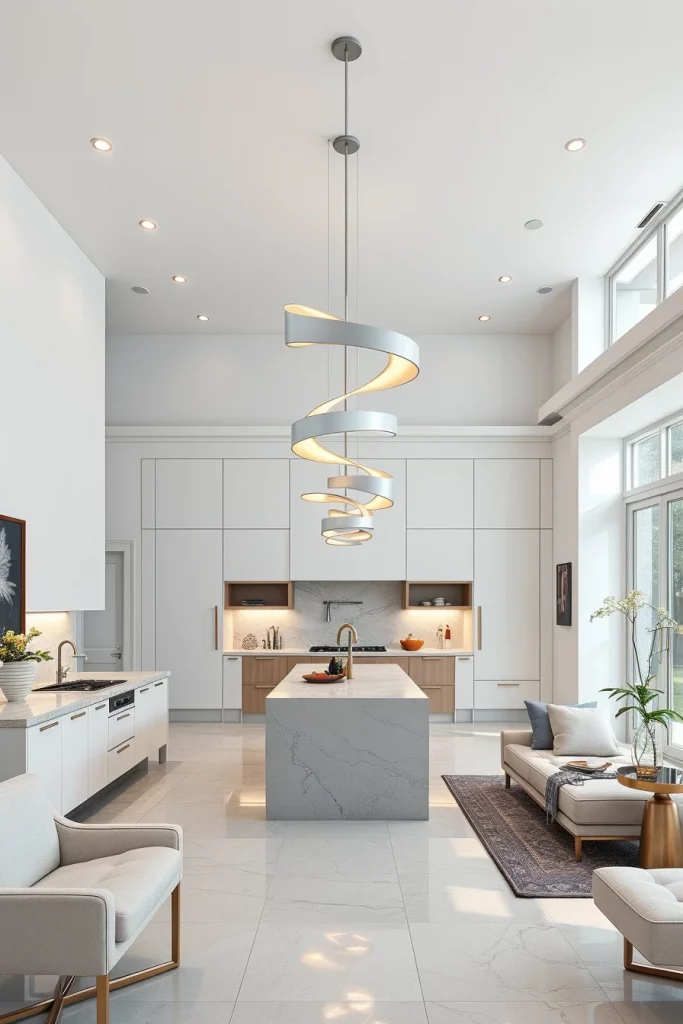
When selecting statement lighting, I always consider the proportions of the room first. Oversized globe pendants work beautifully above generous islands, while linear fixtures complement long kitchen layouts. Layered lighting is equally important, so I combine decorative fixtures with recessed ceiling lights, under-cabinet illumination, and discreet toe-kick lighting. This combination provides excellent task lighting while creating a welcoming atmosphere during evenings. Reflective finishes on countertops and backsplashes help distribute light evenly throughout the space.
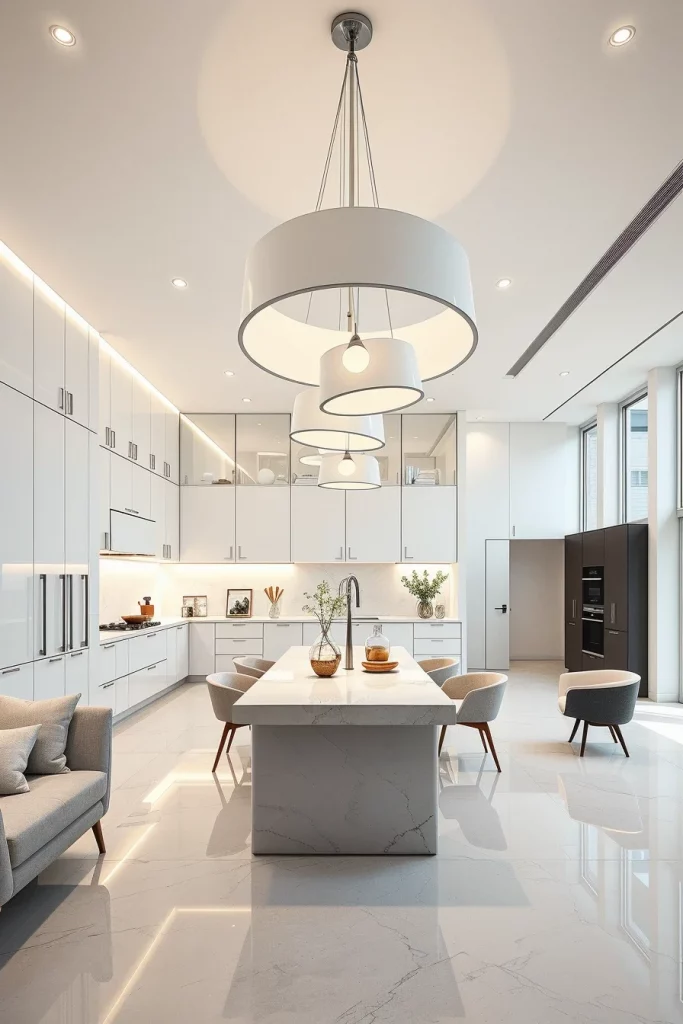
I have learned that investing in high-quality lighting dramatically changes how a white kitchen feels at every hour of the day. Interior designers interviewed by Architectural Digest frequently explain that lighting should be considered part of the architecture rather than an accessory, and I fully agree after seeing the difference thoughtful lighting makes in completed projects.
To elevate this design further, I would introduce smart lighting controls, dimmers for multiple lighting zones, decorative table lamps on open shelving, and subtle accent lighting inside glass display cabinets.
Floor-To-Ceiling White Cabinets For A Clean Look
One of the most practical white kitchen trends is extending cabinetry all the way to the ceiling. I recommend this solution because it creates a polished appearance while maximizing every inch of available storage. Full-height cabinetry emphasizes the vertical proportions of the room, making even average-sized kitchens appear taller and more spacious. At the same time, eliminating the empty space above cabinets prevents dust accumulation and creates a cleaner architectural finish.
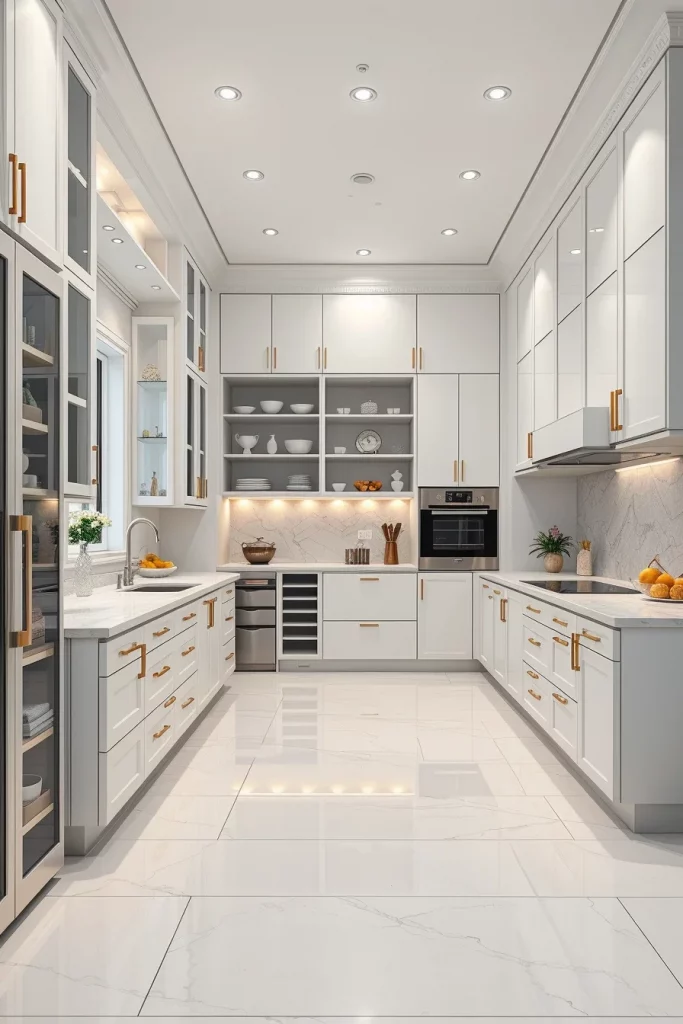
I usually divide these cabinets into practical storage zones. Frequently used cookware remains at comfortable heights, while seasonal items occupy the upper cabinets. Integrated pantry storage, concealed coffee stations, appliance garages, and pull-out shelving all contribute to better organization. Slim decorative niches can be incorporated without interrupting the continuous wall of cabinetry, providing space for elegant ceramics or carefully curated accessories. Large-format flooring and uninterrupted countertops reinforce the clean visual flow.
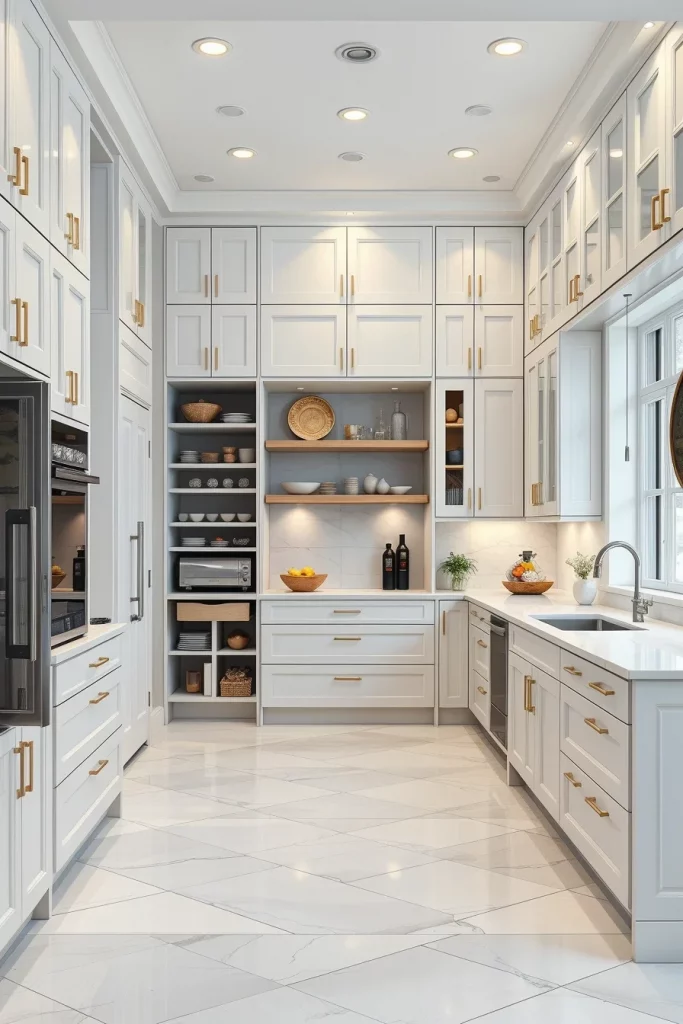
In my own projects, floor-to-ceiling cabinetry consistently delivers one of the greatest improvements in both appearance and functionality. Designers featured in House Beautiful often recommend maximizing vertical storage before expanding a kitchen’s footprint, and I believe this approach creates more efficient layouts while preserving a calm aesthetic.
I would complete this concept by incorporating integrated library ladders for taller kitchens, hidden ventilation systems, interior cabinet lighting, and matching ceiling moldings that create a seamless transition between cabinetry and architecture.
Curved Kitchen Islands That Transform White Spaces
Curved islands continue to reshape how I think about modern kitchen layouts because they introduce movement into spaces that might otherwise feel too linear. While classic rectangular islands remain practical, softly rounded silhouettes create a more inviting environment and encourage natural circulation throughout the room. In many of the latest white kitchen trends, the island becomes more than a work surface—it serves as a sculptural centerpiece that defines the entire kitchen. I especially appreciate how curved forms soften expansive white interiors, making them feel comfortable and timeless rather than overly formal.
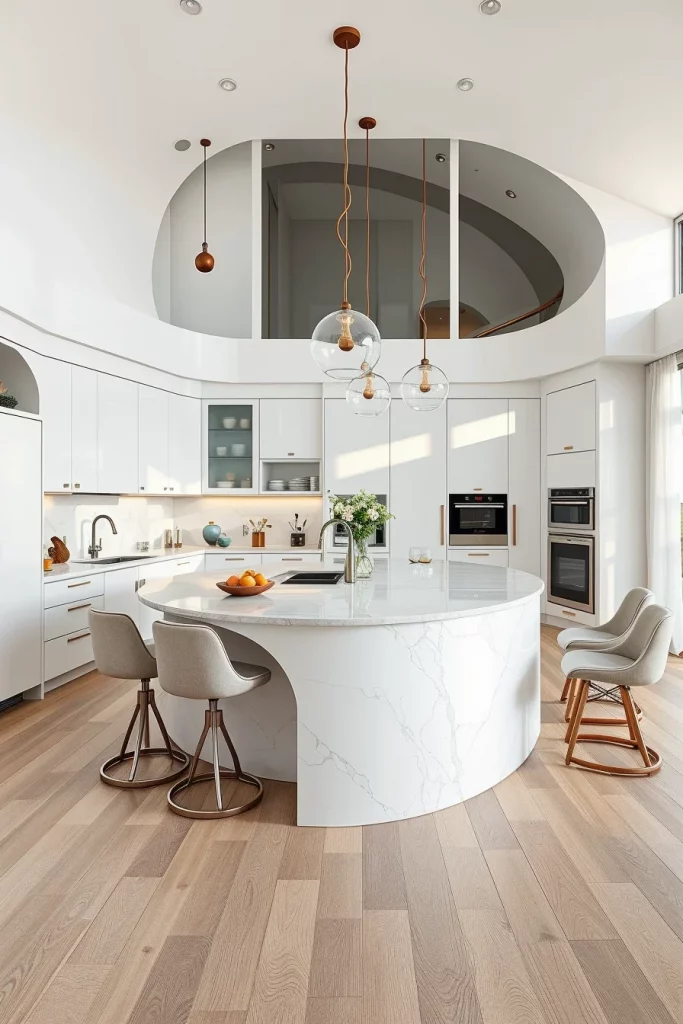
When planning this type of kitchen, I recommend pairing the island with smooth white cabinetry, seamless integrated appliances, and a durable quartz countertop that follows the same flowing shape. Upholstered bar stools with rounded backs reinforce the organic lines, while wide walkways around the island improve both safety and functionality. I also like adding hidden storage on every side of the island, allowing cookware, tableware, and small appliances to remain accessible without disrupting the clean appearance. Large-format flooring helps emphasize the graceful curves instead of competing with them.
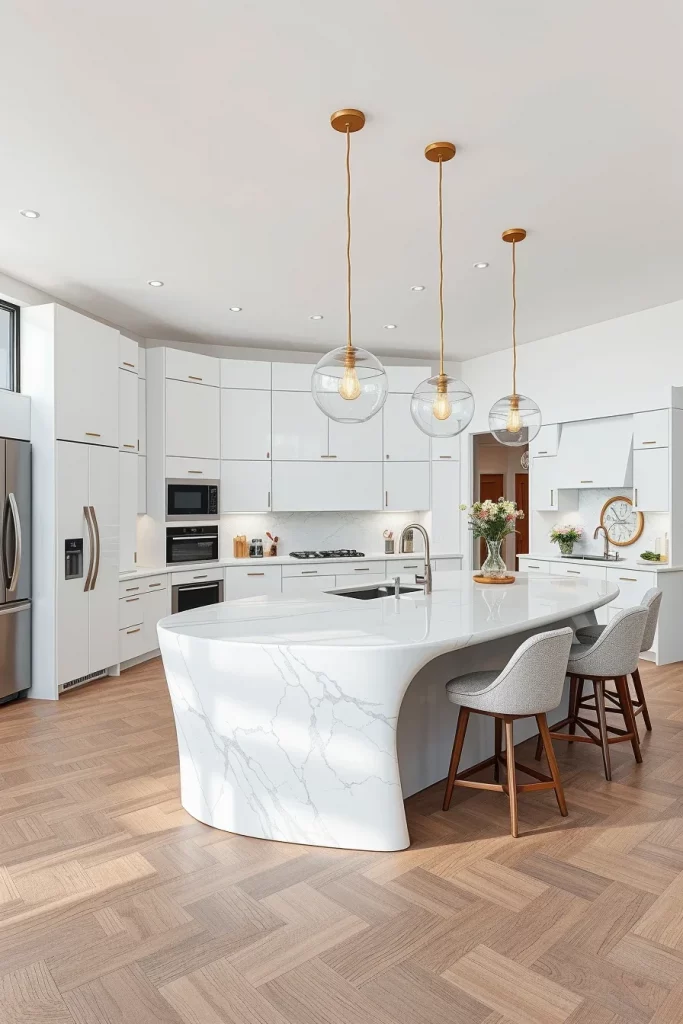
From my experience, homeowners often worry that curved islands reduce usable workspace, but careful planning solves this concern. Designers featured in Architectural Digest frequently note that thoughtful proportions matter more than strict geometry, and I have found this to be true in practice. A properly designed curved island can provide generous preparation space while significantly improving the visual flow of the room.
To complete this design, I would incorporate oversized pendant lights with rounded profiles, a built-in sink with an integrated drainboard, concealed power outlets, and a simple arrangement of handcrafted ceramic bowls that complements the island’s sculptural shape.
White Kitchens With Textured Stone Countertops
One of the easiest ways I create depth in an all-white kitchen is by introducing textured stone countertops. Instead of relying on bold colors, this approach allows natural materials to become the source of visual interest. Modern white kitchens increasingly feature quartzite, marble-inspired porcelain, or engineered quartz with subtle veining that enhances the room without overpowering it. These surfaces preserve the bright atmosphere while adding richness and sophistication.
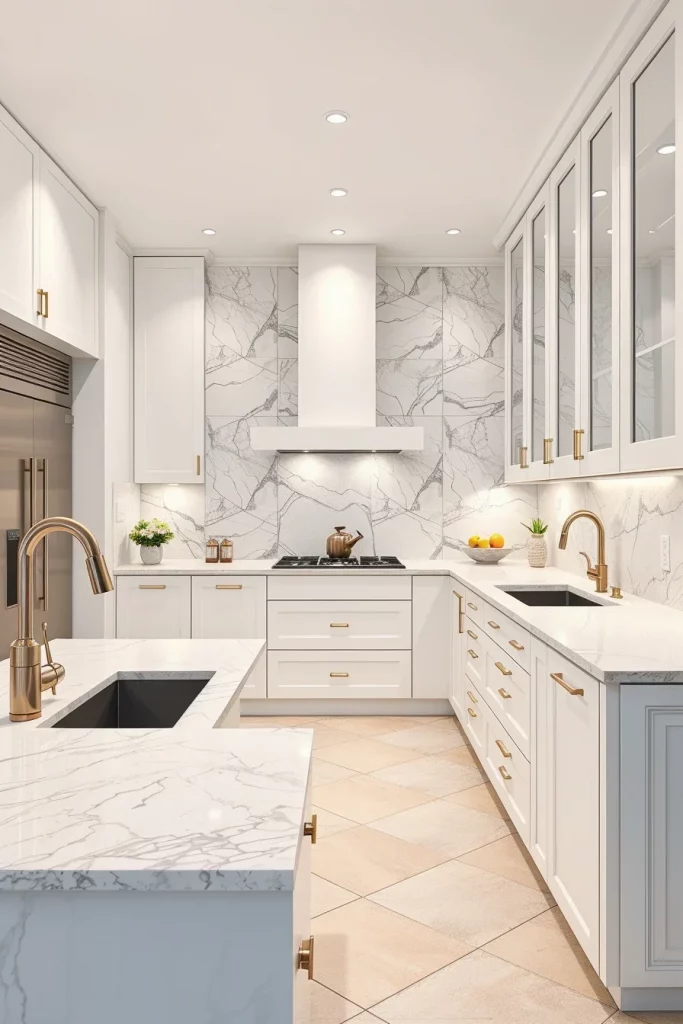
I usually coordinate textured countertops with slab backsplashes that continue the stone pattern vertically, creating a seamless transition between work surfaces and walls. Flat-panel cabinetry allows the stone to remain the visual highlight, while brushed metal fixtures introduce gentle contrast. I also recommend integrated sinks made from the same material whenever possible, since they create a continuous appearance that feels exceptionally refined. Decorative accessories should remain minimal so the stone becomes the natural focal point.
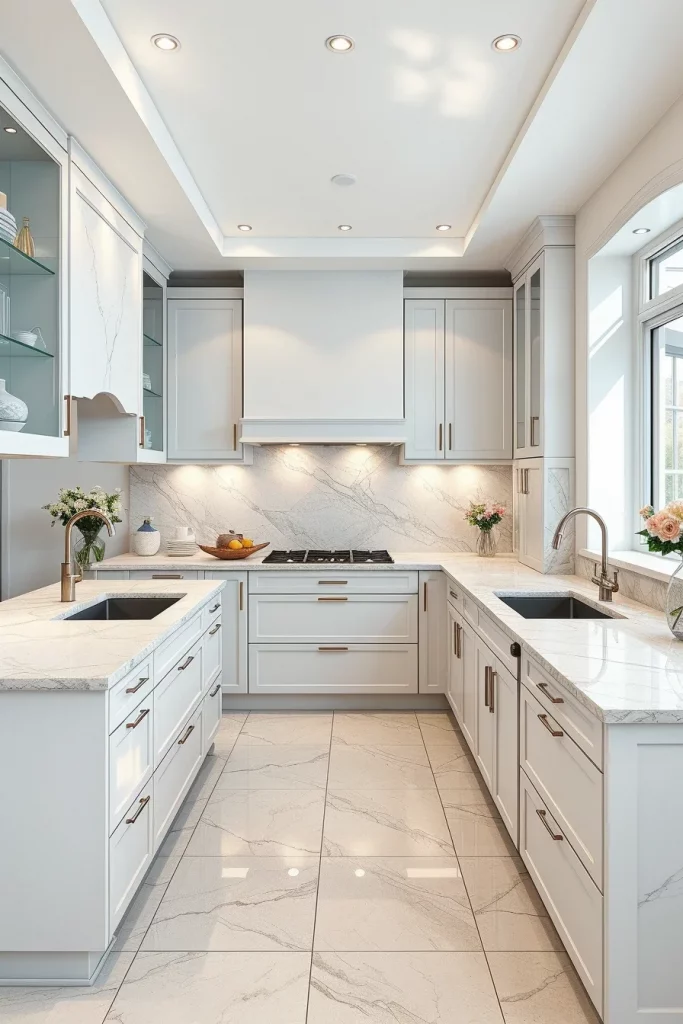
Personally, I believe textured stone gives white kitchens lasting character because every slab contains unique variations. Better Homes & Gardens has repeatedly highlighted the importance of mixing smooth and textured finishes to prevent monochromatic spaces from feeling flat, and I have consistently seen how effective this principle is in completed kitchens.
I would enhance this design further with under-cabinet lighting that highlights the stone’s natural pattern, matching window sills, oversized cutting boards made from natural materials, and subtle decorative objects that echo the countertop’s texture.
Sculptural Range Hoods As Modern Centerpieces
The range hood has evolved into one of the defining architectural elements in today’s white kitchens. Rather than hiding ventilation systems, I enjoy making them a focal point through sculptural forms and refined materials. A beautifully designed hood naturally draws the eye upward, adding balance to the room while emphasizing ceiling height. Within modern white interiors, this feature becomes a work of art without compromising functionality.
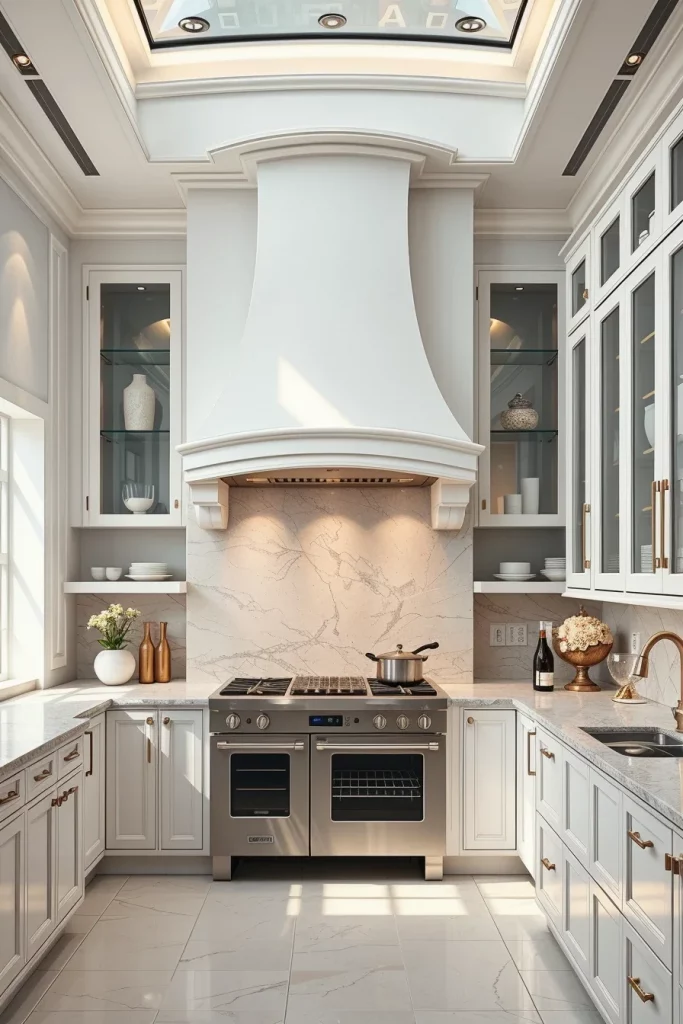
I often select custom plaster-finished hoods, gently curved silhouettes, or oversized minimalist forms that blend seamlessly into the surrounding architecture. White cabinetry extending to the ceiling creates visual continuity, while floating shelves on each side introduce warmth and display carefully selected ceramics. Beneath the hood, professional-grade cooking appliances maintain excellent performance while preserving the kitchen’s elegant aesthetic. Soft lighting above the cooking area further enhances the sculptural effect.
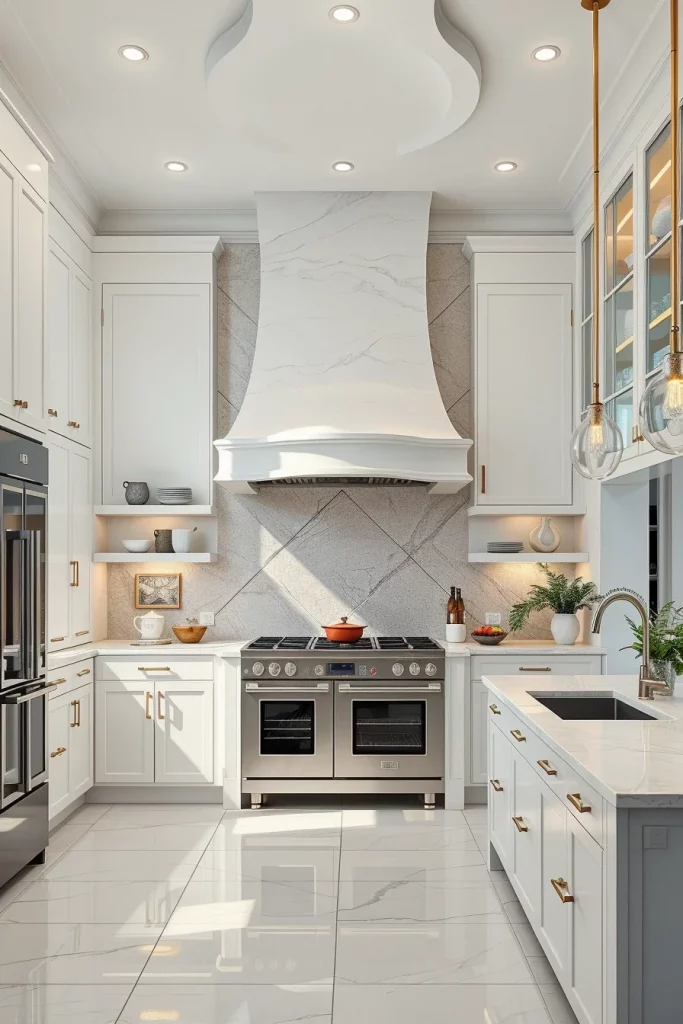
I have found that investing in a custom-designed range hood transforms the overall personality of the kitchen more than many homeowners expect. Designers featured in House Beautiful often describe the hood as the anchor of the cooking zone, and after seeing numerous completed projects, I completely agree with that perspective.
To finish this concept, I would add integrated ventilation controls, a durable stone backsplash extending behind the range, concealed spice storage, and decorative accessories that complement the hood’s architectural form without distracting from it.
Open Concept White Kitchens With Elegant Flow
Open-concept living remains one of the most influential directions in residential design, and white kitchens naturally support this layout by reflecting light throughout connected spaces. I appreciate how an open floor plan allows the kitchen to become part of everyday family life rather than feeling isolated. Carefully coordinated finishes help create a seamless transition between cooking, dining, and living areas while maintaining visual harmony.
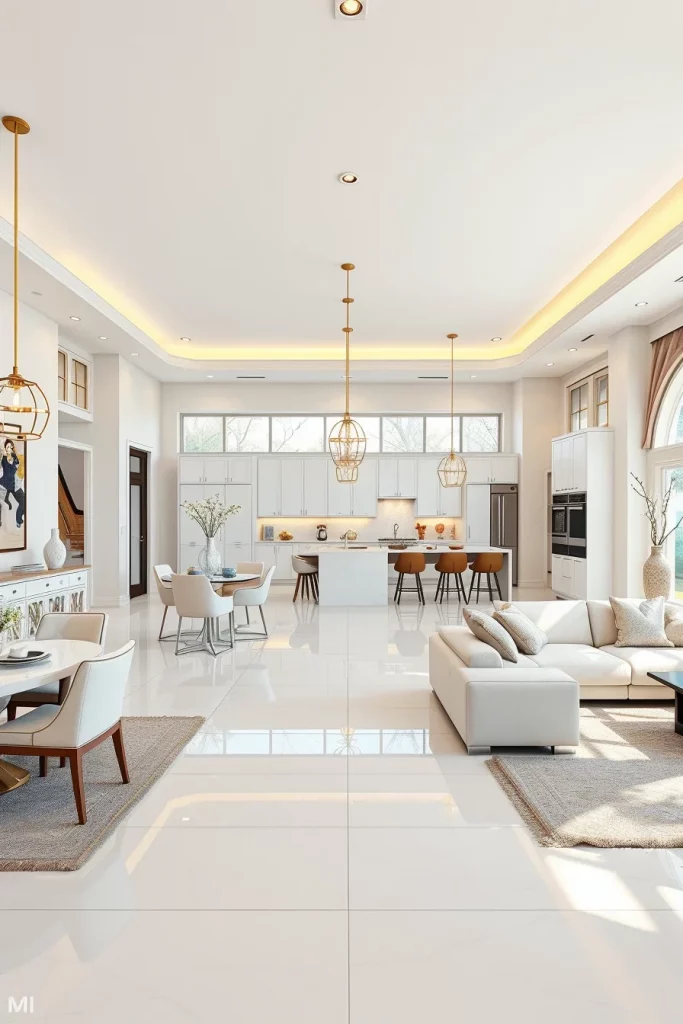
To achieve this effect, I prefer using consistent flooring across all connected spaces and repeating similar materials throughout the interior. A generous white island often serves as the transition point between the kitchen and living room, providing seating, storage, and workspace simultaneously. Built-in shelving, concealed appliances, and integrated lighting help maintain an uncluttered appearance even in busy households. Soft neutral furnishings in adjacent spaces reinforce the calm atmosphere established by the kitchen.
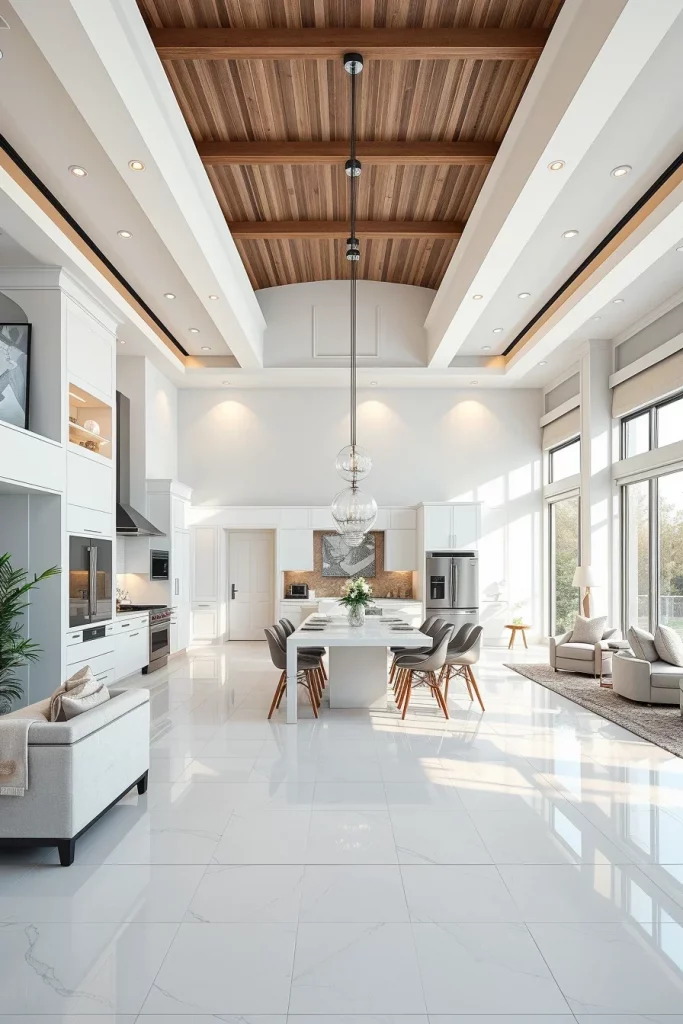
In my experience, successful open-concept kitchens depend on careful planning rather than simply removing walls. Elle Decor has frequently emphasized creating functional zones within open layouts, and I believe this advice produces interiors that remain organized while still feeling spacious and connected.
To complete this layout, I would include comfortable dining seating, layered lighting across each functional zone, discreet storage solutions, acoustic materials that reduce noise, and coordinated decorative accents that visually unite every part of the space.
White Kitchens Featuring Fluted Cabinet Details
Fluted surfaces have become one of my favorite ways to introduce texture into white kitchens without disrupting their minimalist character. Vertical grooves create subtle shadows that shift throughout the day, giving cabinetry depth and movement while preserving the clean monochromatic palette. This refined detail allows even simple cabinet designs to feel custom-made and architecturally sophisticated.
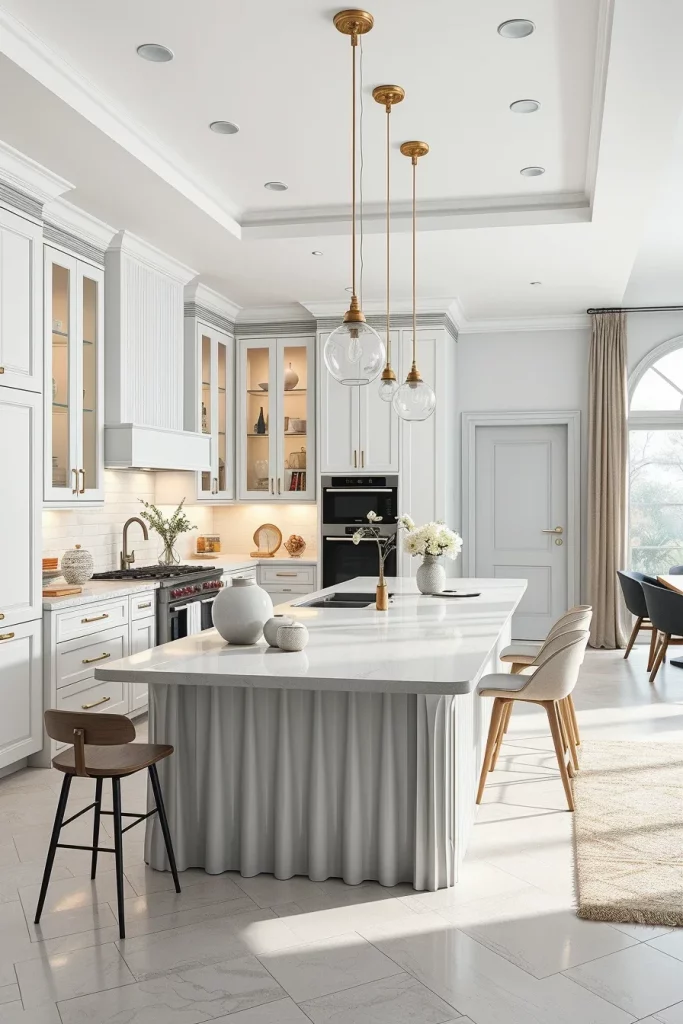
I often use fluted detailing on kitchen islands, pantry doors, or selected upper cabinets instead of applying it everywhere. This restrained approach keeps the design balanced while allowing smooth cabinet fronts to contrast beautifully with the textured surfaces. Stone countertops, integrated appliances, minimalist hardware, and elegant lighting complete the composition without competing for attention. Decorative objects remain intentionally limited so the craftsmanship of the cabinetry becomes the primary visual feature.
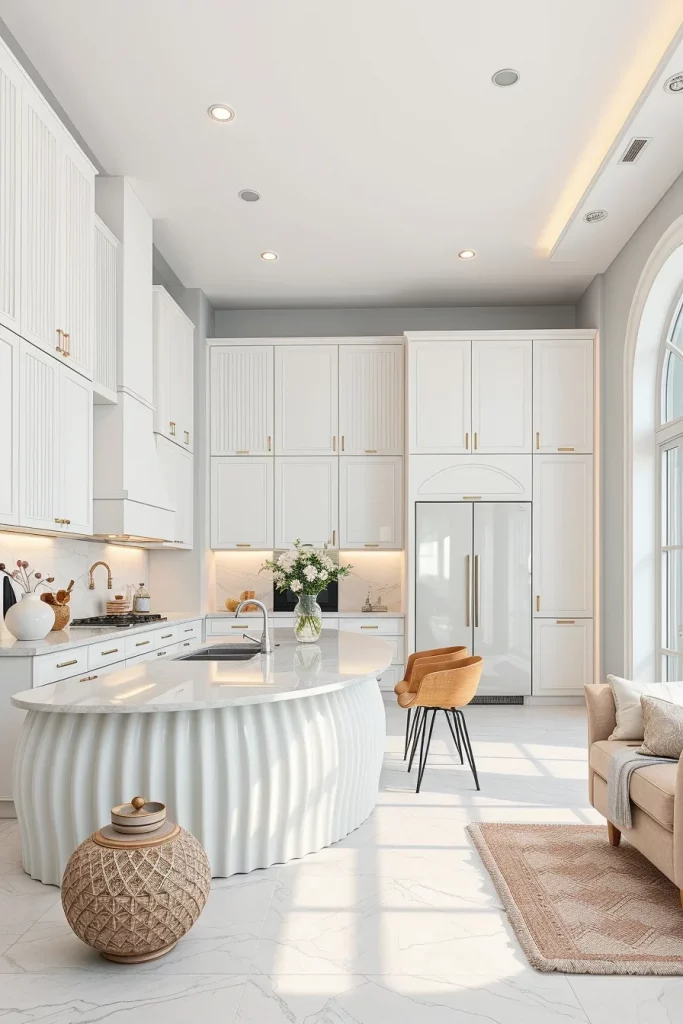
From my perspective, fluted cabinetry successfully combines contemporary simplicity with timeless craftsmanship. Interior designers regularly featured by Architectural Digest recommend mixing subtle textures instead of introducing excessive color, and I have found that this strategy creates interiors that remain visually interesting for many years.
To strengthen this design even further, I would incorporate concealed LED lighting that highlights the vertical grooves, matching fluted details on the island base, soft upholstered seating, oversized decorative ceramics, and natural fabrics that add warmth while preserving the refined aesthetic.
Contemporary White Kitchens With Hidden Storage Solutions
I have found that one of the biggest trends in modern white kitchens is the seamless integration of hidden storage. A clean white palette instantly feels larger and brighter, but the real magic happens when clutter disappears behind carefully designed cabinetry. Floor-to-ceiling cabinets with handleless fronts create uninterrupted lines, while concealed pantry doors blend perfectly into the walls. I like this approach because it creates a peaceful atmosphere where every element has a purpose without overwhelming the room visually.
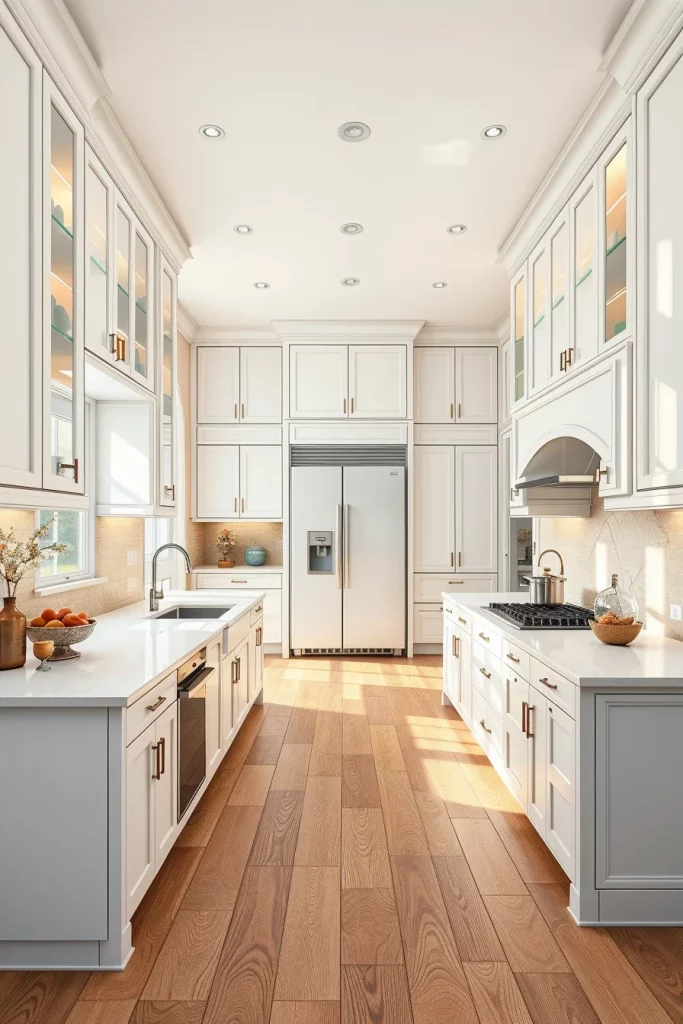
I always recommend including deep drawer organizers, pull-out pantry systems, appliance garages, and integrated recycling stations. These features make daily cooking much easier while maintaining the minimalist appearance that defines contemporary white kitchens. Large white quartz countertops, integrated refrigerators, hidden range hoods, and flush cabinet fronts all contribute to a polished design. Soft-close hardware and interior cabinet lighting improve functionality without changing the clean aesthetic.
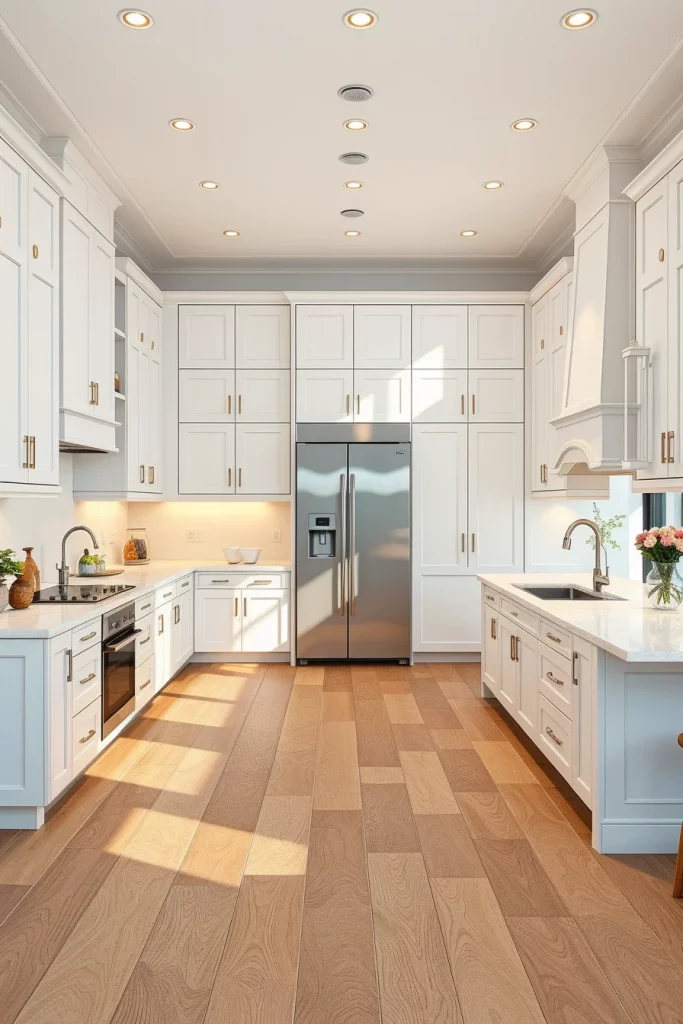
In my experience, many professional designers, including experts regularly featured in Architectural Digest, emphasize that excellent storage planning is just as important as choosing beautiful finishes. I completely agree because a thoughtfully organized kitchen remains attractive long after the initial renovation is complete. Hidden storage allows decorative pieces to stand out instead of competing with everyday clutter.
To complete this design, I would also include custom drawer dividers, concealed charging stations for small electronics, and integrated spice storage near the cooking area. These details improve efficiency while preserving the elegant simplicity that makes white kitchens so appealing.
Layered Lighting Ideas For Bright White Kitchens
Lighting completely changes the atmosphere of a white kitchen, and I believe layered lighting is essential for creating depth and comfort. Instead of relying on a single ceiling fixture, I prefer combining ambient, task, and accent lighting throughout the room. This approach prevents an all-white interior from looking flat while highlighting architectural details and work surfaces.
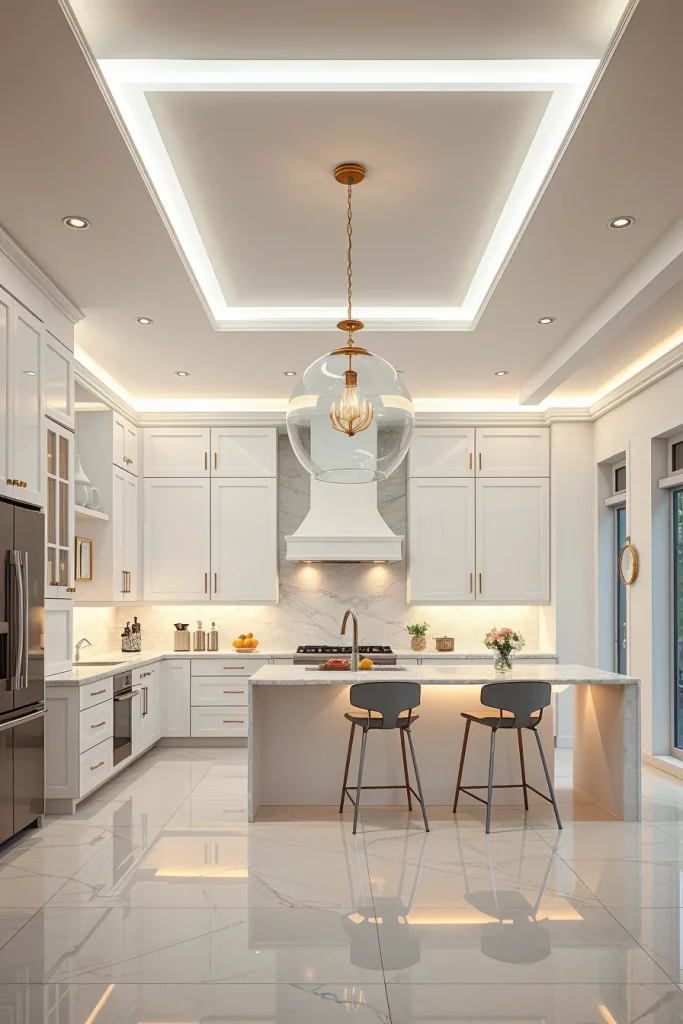
I usually recommend recessed ceiling lights for overall illumination, slim LED strips beneath upper cabinets for food preparation, and oversized pendant lights above the island. Glass pendants, brushed brass fixtures, or matte black accents create subtle contrast without distracting from the white color palette. Soft under-cabinet lighting also makes marble backsplashes and textured finishes appear richer during the evening.
Personally, I always test lighting temperatures before making final decisions. Many lighting specialists suggest using warm white LEDs between 2700K and 3000K because they soften white cabinetry while keeping colors natural. I have found that this recommendation creates a far more inviting kitchen than cooler lighting options.
I would also incorporate interior cabinet lighting and toe-kick LED strips along the base cabinets. These additions improve visibility at night while adding another sophisticated layer that enhances the overall design.
White Kitchens With Oversized Waterfall Islands
An oversized waterfall island has become one of my favorite focal points in modern white kitchens. The continuous countertop flowing down both sides creates a sculptural appearance while emphasizing clean architectural lines. In open-concept homes, the island naturally becomes the center of cooking, entertaining, and everyday family life.
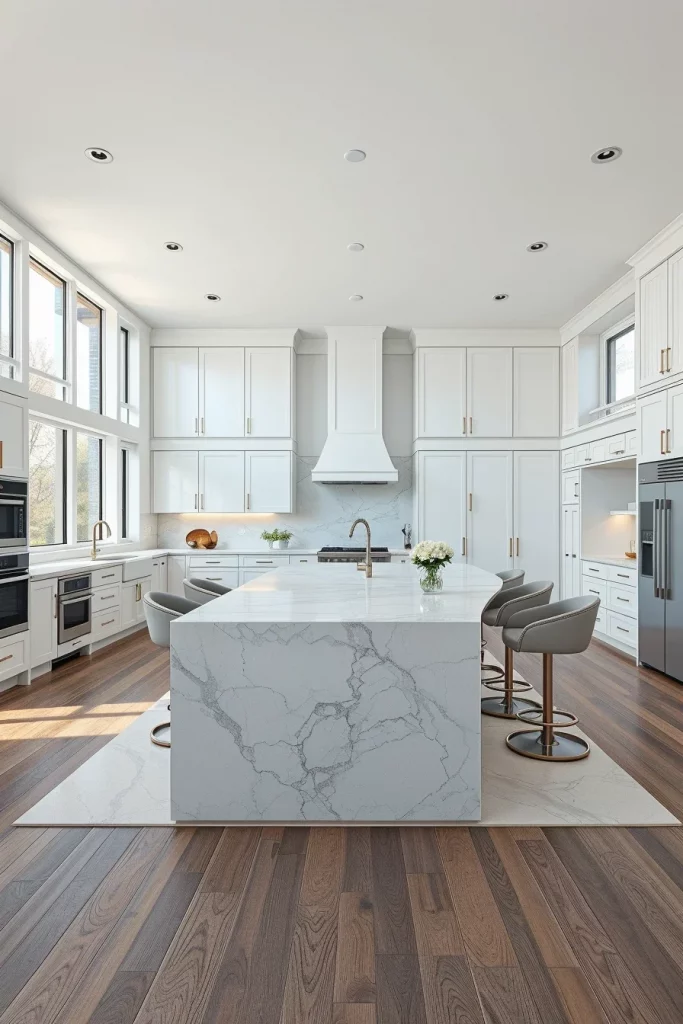
I recommend choosing durable quartz or porcelain surfaces that resist stains while maintaining a luxurious appearance. Comfortable counter stools with upholstered seats, integrated electrical outlets, hidden storage drawers, and generous seating transform the island into a multifunctional workspace. I also appreciate wide walkways around the island because they improve traffic flow and make the room feel even more spacious.
From my perspective, many designers featured by House Beautiful encourage homeowners to invest in larger islands whenever space allows because they significantly improve both functionality and resale value. I agree because a thoughtfully designed island supports meal preparation, casual dining, and social gatherings without sacrificing elegance.
I would complete this layout by adding built-in wine storage, discreet charging outlets, and carefully selected pendant lighting centered above the island. These finishing touches create balance while enhancing everyday usability.
Soft Organic Shapes In Modern White Kitchen Design
Modern white kitchens are gradually moving away from rigid straight lines, and I enjoy seeing more soft organic shapes introduced into contemporary interiors. Gentle curves create a welcoming atmosphere while balancing the crisp appearance of white cabinetry. Rounded edges make the kitchen feel more relaxed without reducing its sophisticated character.
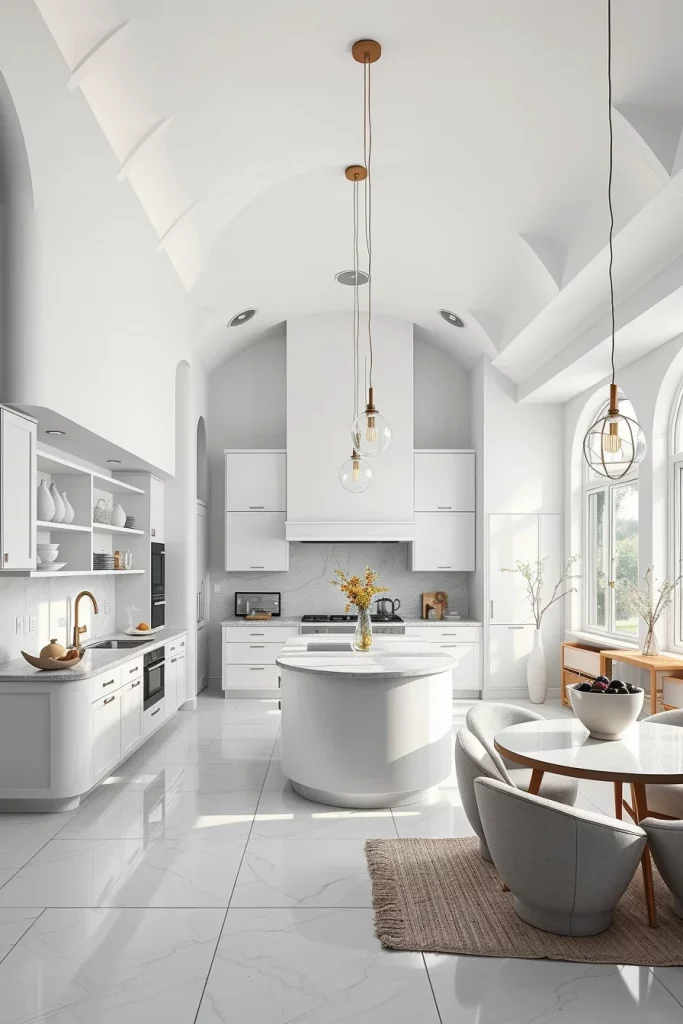
I often recommend curved kitchen islands, rounded breakfast seating, arched niches, circular pendant lights, and softly curved cabinet edges. These features work beautifully alongside smooth white cabinetry and natural stone countertops. Upholstered bar stools with rounded backs and sculptural lighting fixtures reinforce the organic theme while maintaining visual harmony throughout the room.
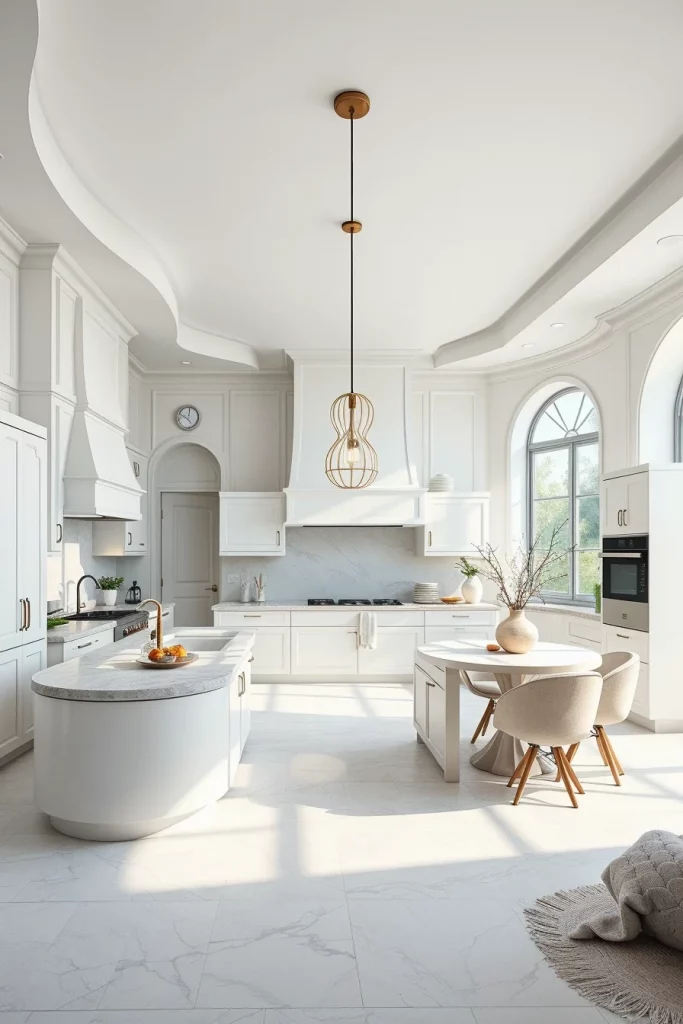
Personally, I appreciate how curved forms improve movement through the kitchen by eliminating sharp corners. Interior designers frequently discuss biophilic and organic-inspired design because softer forms help interiors feel calmer and more comfortable. I believe these subtle details have a surprisingly positive impact on everyday living.
To make this concept even stronger, I would introduce textured ceramics, gently rounded decorative bowls, and oversized vases with sculptural silhouettes. These accessories reinforce the organic aesthetic without overwhelming the clean white palette.
Matte White Finishes For A Refined Contemporary Style
Matte white finishes offer a sophisticated alternative to glossy cabinetry, and I often recommend them for homeowners who prefer understated elegance. Unlike reflective surfaces, matte finishes diffuse light gently, creating a calm and refined atmosphere. The result is a kitchen that feels modern, timeless, and exceptionally comfortable to spend time in.
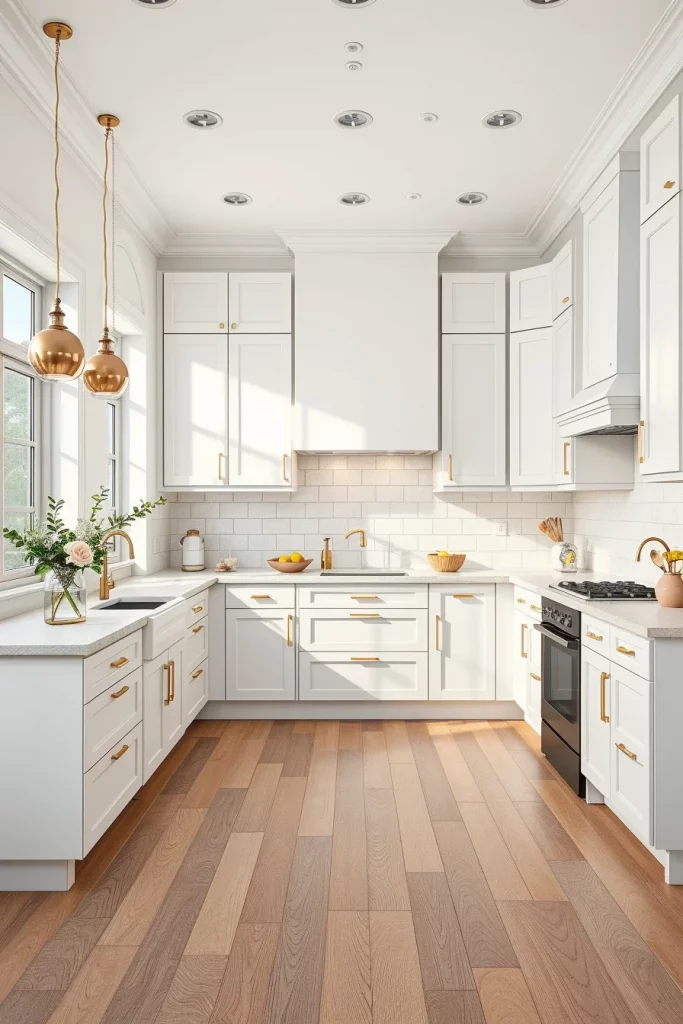
I like combining matte white cabinets with subtle stone countertops, integrated appliances, slim hardware, and large-format porcelain backsplashes. Brushed nickel or satin brass fixtures complement the soft finish beautifully, while natural oak accents introduce warmth without overpowering the monochromatic palette. Durable matte materials also help reduce visible fingerprints, making everyday maintenance easier.
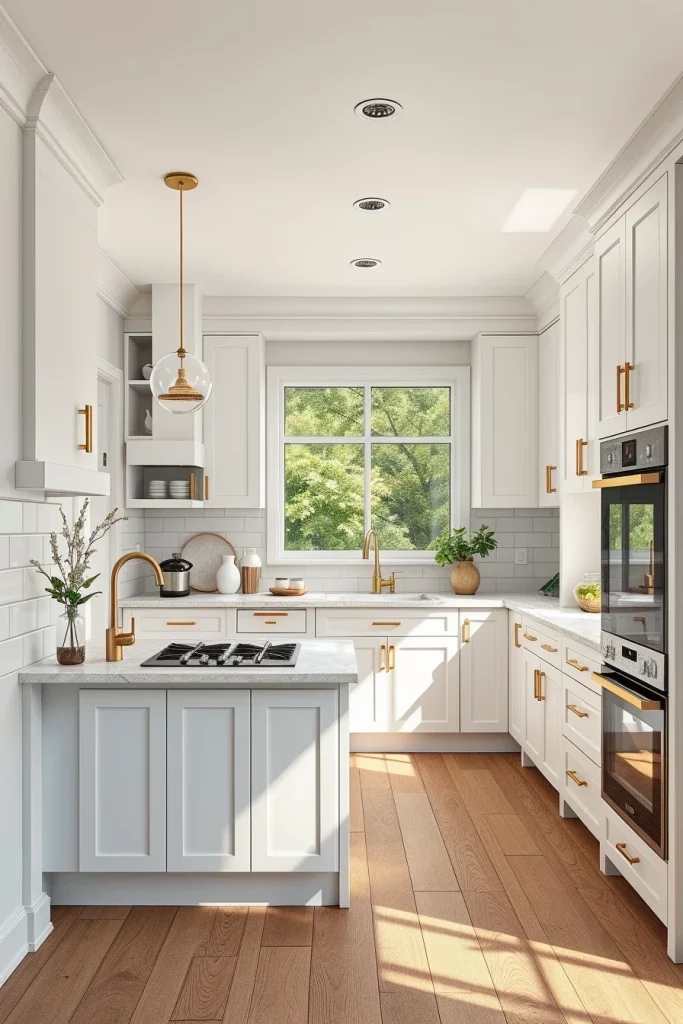
From my experience, understated finishes often age better than highly fashionable alternatives. Designers featured in Elle Decor regularly highlight matte cabinetry for its ability to create luxurious interiors without unnecessary visual noise. I find that this approach produces spaces that remain elegant through changing design trends.
I would finish this kitchen by incorporating soft linen window treatments, carefully selected decorative ceramics, and discreet open shelving for a few curated accessories. These additions make the room feel complete while preserving the refined contemporary character.
High Gloss White Kitchens With Reflective Surfaces
High gloss cabinetry continues to be a popular choice for homeowners who want a bright and contemporary kitchen with a polished appearance. I like using reflective finishes in spaces that need extra light because they bounce both natural and artificial light throughout the room. This makes even a moderately sized kitchen feel more open and visually expansive. When paired with simple architectural lines, glossy white surfaces create an elegant setting that feels fresh without becoming overwhelming.
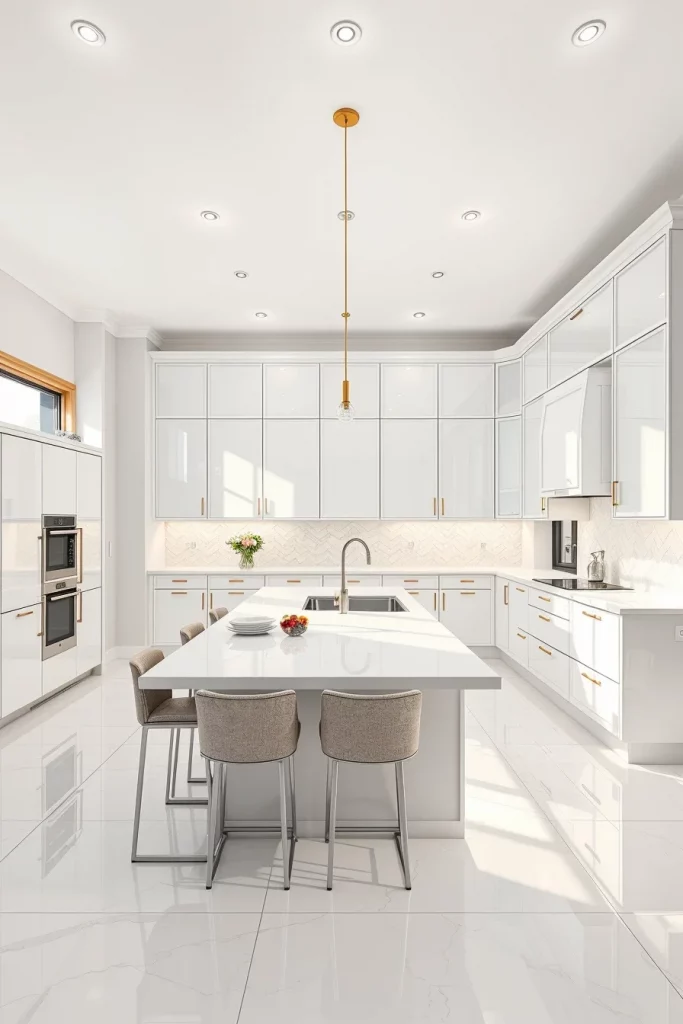
I recommend combining high gloss white cabinets with seamless integrated appliances, slim-profile hardware, white quartz countertops, and large porcelain floor tiles. A glossy backsplash or polished stone slab behind the cooktop reinforces the reflective quality of the room, while large windows maximize daylight. To prevent the design from feeling too sterile, I like introducing upholstered counter stools, textured dining chairs, and a few carefully selected decorative accessories in soft neutral tones.
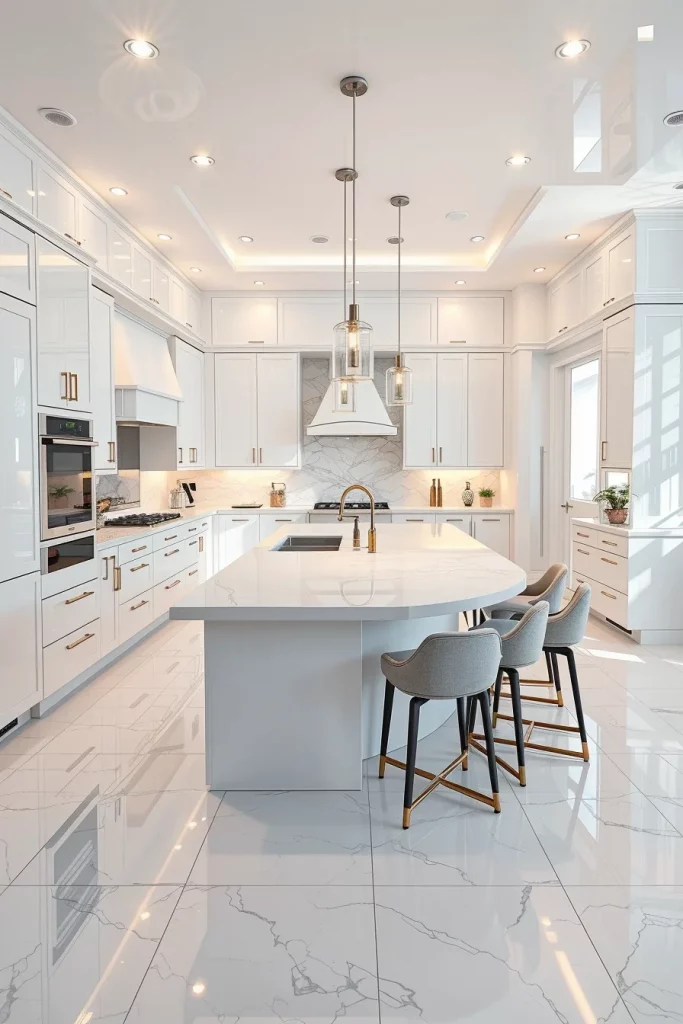
From my experience, balance is the key to making glossy finishes successful. Interior designers frequently featured in HGTV recommend mixing reflective surfaces with subtle textures to avoid an overly clinical appearance. I have found this advice especially useful because it creates visual interest while preserving the clean, modern aesthetic that homeowners often seek.
To complete this kitchen, I would add concealed LED lighting above the upper cabinets, integrated storage solutions, and oversized artwork with soft neutral colors. These finishing touches create warmth while maintaining the sophisticated character of the glossy white design.
White Kitchens With Dramatic Marble Veining
Few materials make a stronger statement in a white kitchen than marble with bold natural veining. I enjoy using dramatic stone patterns because they introduce movement and personality without relying on bold colors. Whether the marble appears on countertops, backsplashes, or waterfall islands, it immediately becomes the visual centerpiece while allowing the surrounding white cabinetry to remain timeless.
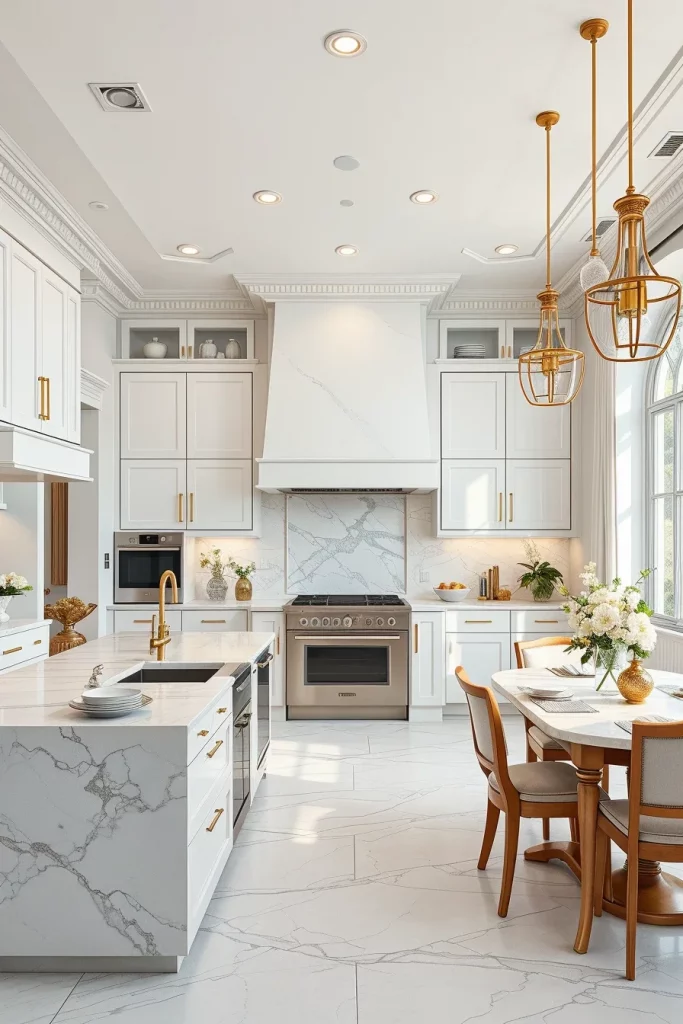
I usually pair marble surfaces with flat-panel white cabinets, integrated appliances, brushed brass fixtures, and simple pendant lighting. Keeping the remaining materials understated allows the natural beauty of the stone to take center stage. Comfortable seating, hidden storage, and carefully selected decorative objects maintain both functionality and elegance. I also prefer large stone slabs with minimal seams because they create a more luxurious appearance.
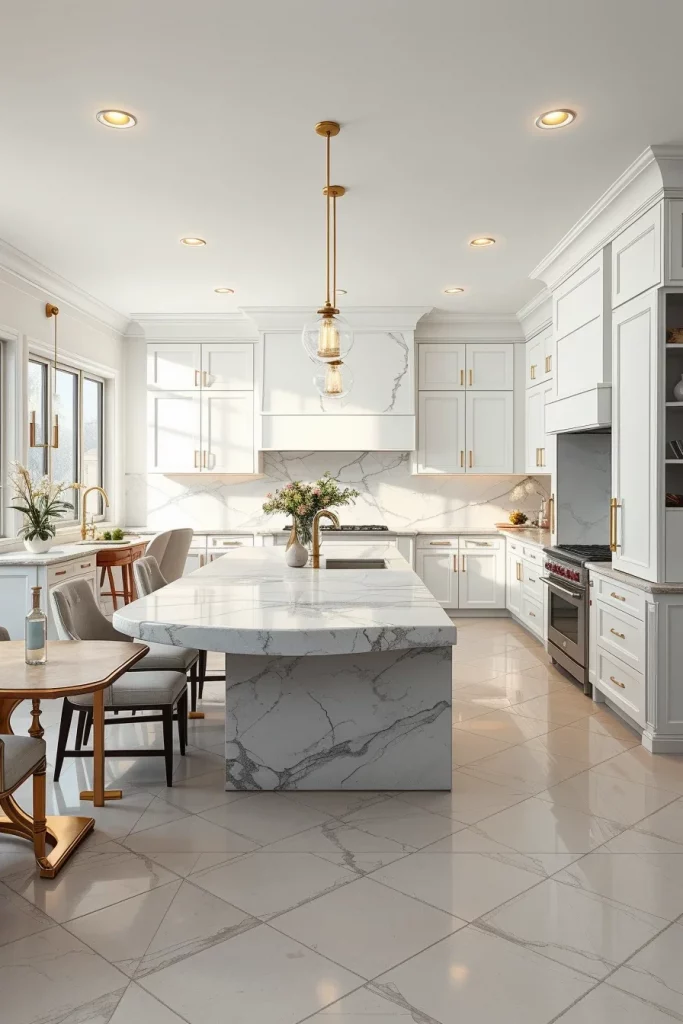
Personally, I believe investing in high-quality stone is worthwhile when it serves as the primary decorative feature. Architectural Digest regularly highlights natural stone as one of the most enduring materials in luxury kitchen design, and I agree because every slab offers a unique pattern that cannot be replicated.
I would further enhance this kitchen by adding under-cabinet lighting that highlights the marble veining during the evening. A matching marble shelf or window sill would also reinforce the continuity of the design without making the room feel excessive.
Elegant White Kitchens Featuring Curved Breakfast Bars
Curved breakfast bars bring softness and comfort into modern white kitchens while encouraging conversation and casual dining. I appreciate how a gently rounded countertop naturally improves circulation around the island and makes the kitchen feel more welcoming. The curved silhouette also introduces architectural interest without requiring complicated decorative details.
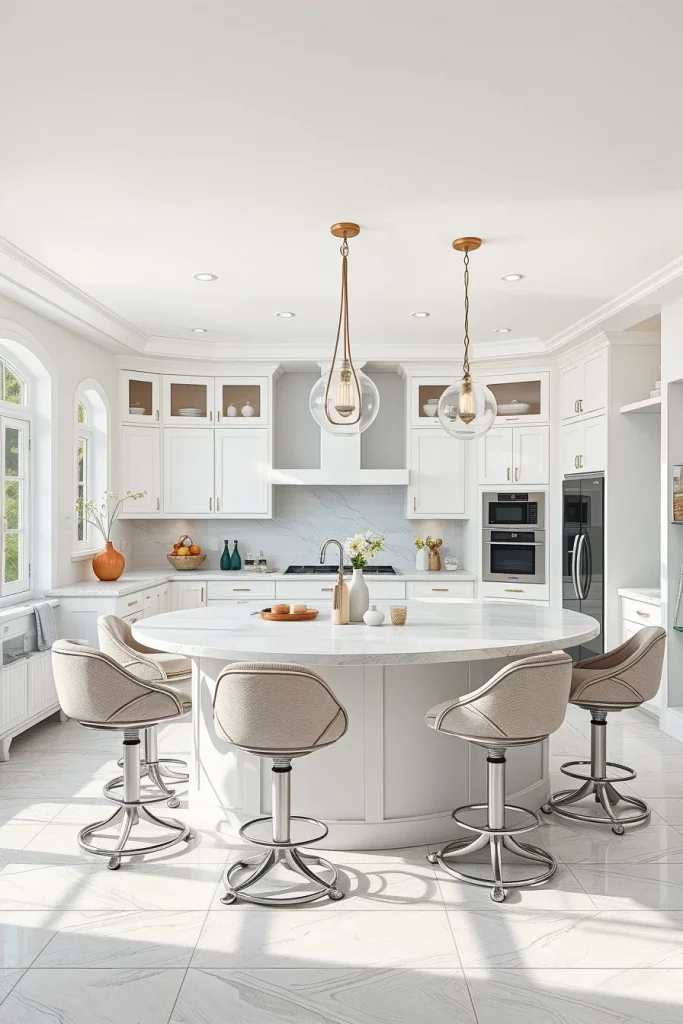
For this layout, I recommend pairing the breakfast bar with upholstered swivel stools, white cabinetry, integrated storage, and a durable quartz countertop that follows the curved profile seamlessly. Rounded pendant lights, textured area rugs, and sculptural decorative bowls help reinforce the flowing design language throughout the space. Hidden electrical outlets and built-in shelving beneath the seating area add practical value without interrupting the clean appearance.
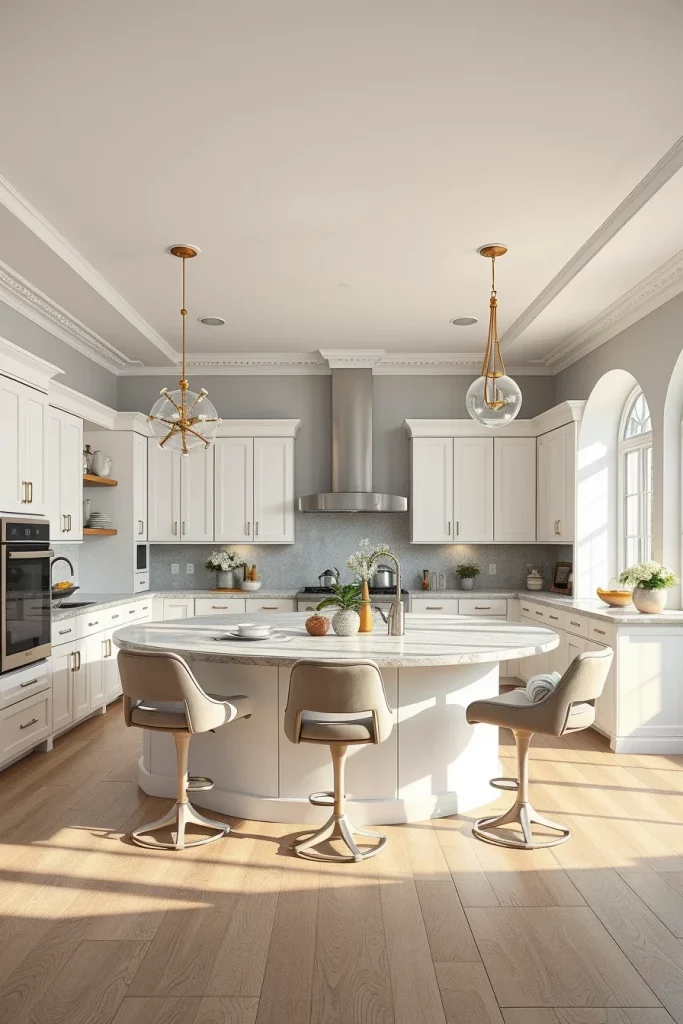
In my opinion, curved furniture creates a more inviting atmosphere than rigid rectangular forms. Many contemporary designers have embraced softer silhouettes in recent years because they help modern interiors feel more comfortable and approachable. I have noticed that families naturally gather around curved seating areas, making them ideal for everyday living.
To strengthen this concept, I would include a nearby coffee station, concealed storage for small appliances, and layered lighting that highlights the elegant curve of the breakfast bar during both daytime and evening use.
Sculptural Open Shelving In White Kitchen Designs
Open shelving has evolved from simple storage into an architectural design feature, and I enjoy using sculptural shelving to add personality to white kitchens. Instead of filling every wall with upper cabinets, thoughtfully designed shelves create opportunities to display carefully selected objects while making the room feel lighter and more open. The key is maintaining a curated appearance rather than overcrowding the shelves.
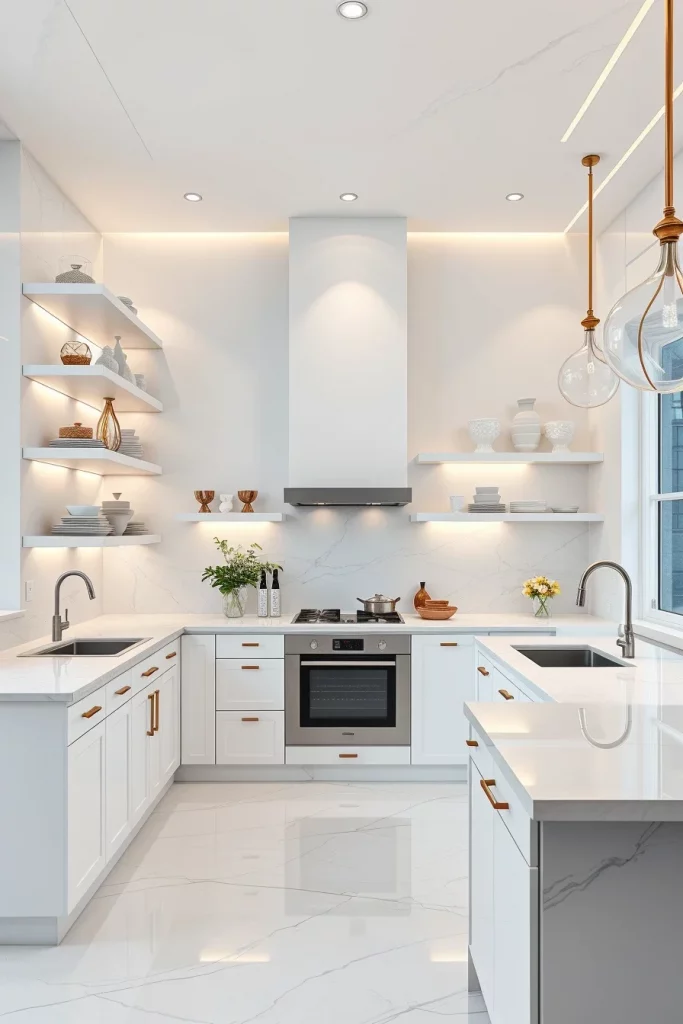
I recommend floating shelves with thick profiles, softly rounded edges, or custom geometric shapes that complement the kitchen’s architecture. Decorative ceramics, glassware, cookbooks, handmade bowls, and subtle artwork create visual interest while remaining functional. White cabinetry below the shelves keeps the overall composition balanced, while integrated lighting beneath each shelf highlights displayed objects without becoming distracting.
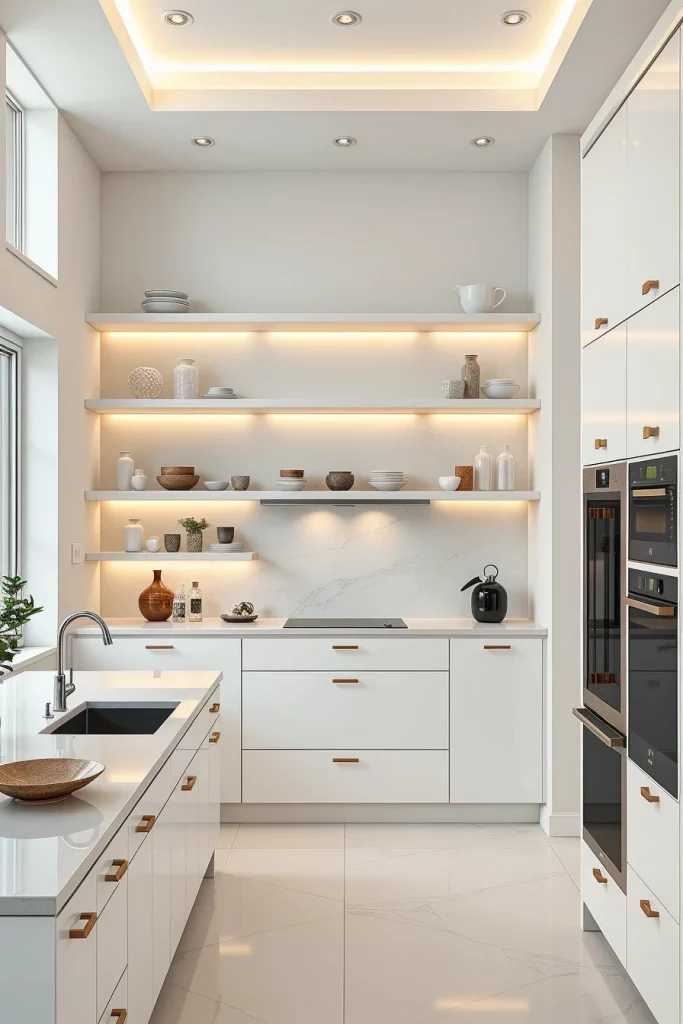
From my perspective, restraint is essential when styling open shelving. Designers featured in Elle Decor often emphasize displaying fewer, higher-quality items instead of filling every available space. I have followed this principle in many interiors, and it consistently produces a more refined and timeless result.
To complete this section of the kitchen, I would include concealed storage inside lower cabinets for everyday items that do not need to remain visible. This balance between display and hidden organization preserves both beauty and practicality.
White Kitchens With Warm Neutral Accents
A completely white kitchen becomes even more inviting when warm neutral accents are introduced thoughtfully throughout the space. I enjoy combining crisp white cabinetry with soft beige, sand, taupe, and creamy tones because these colors create depth without taking attention away from the overall design. The result feels calm, sophisticated, and suitable for a wide variety of architectural styles.
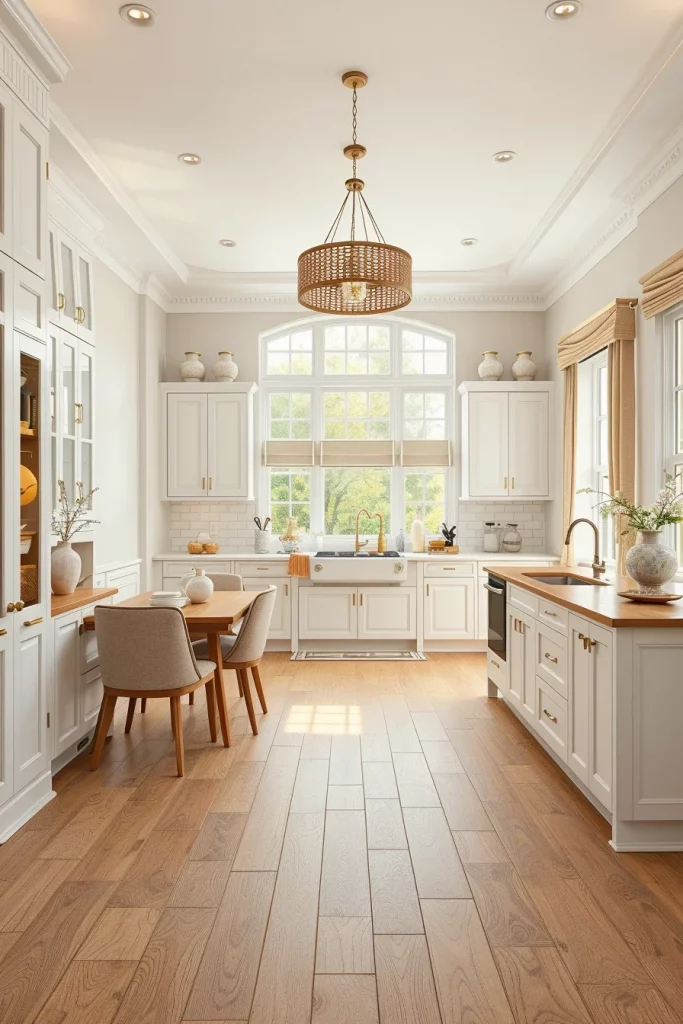
I often recommend upholstered dining chairs in warm neutral fabrics, natural stone countertops with subtle beige veining, woven pendant lights, textured area rugs, and decorative ceramics in earthy shades. Light oak flooring or ceiling beams also complement white cabinetry beautifully while introducing visual warmth. Linen window treatments and soft upholstery complete the relaxed atmosphere without competing with the clean white palette.
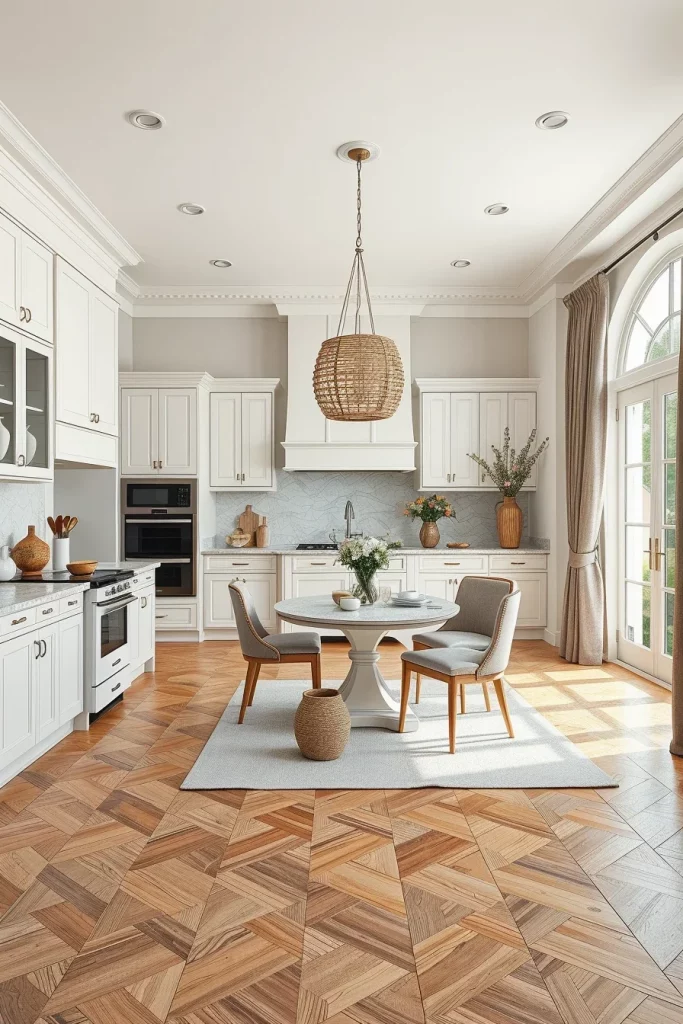
Personally, I believe neutral layering is one of the easiest ways to make a white kitchen feel timeless. House Beautiful has frequently highlighted the importance of combining texture with restrained color palettes, and I have consistently found that approach creates interiors that remain attractive for many years instead of following short-lived trends.
I would finish this kitchen with fresh seasonal fruit displayed in stone bowls, textured serving trays, and subtle artwork featuring neutral landscapes. These finishing details add personality while preserving the elegant simplicity that defines modern white kitchen design.
Modern White Kitchens With Mixed Textures
I believe one of the biggest reasons white kitchen trends continue to dominate modern interiors is their ability to showcase texture instead of relying on color. Rather than filling the room with decorative accents, I prefer combining smooth matte cabinetry, softly veined stone, ribbed wall panels, brushed plaster finishes, and natural linen details to create visual depth. The result is a kitchen that feels calm, sophisticated, and welcoming without overwhelming the space. Layering textures also allows every surface to catch natural light differently throughout the day, giving the room subtle movement.
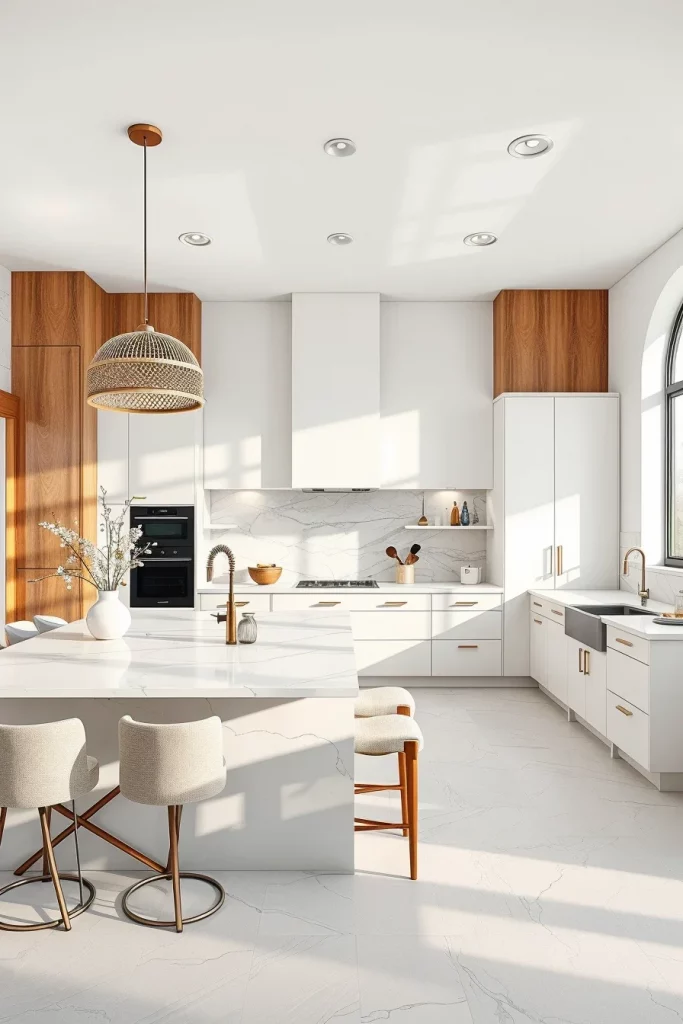
When I design a kitchen like this, I carefully balance every material. Flat-panel white cabinets create a clean backdrop, while a waterfall quartz island becomes the visual centerpiece. Fluted wood accents on the island or pantry doors add warmth without overpowering the white palette. Upholstered counter stools, textured ceramic vases, oversized cutting boards, and woven pendant shades soften the clean architectural lines. I also like incorporating large-format porcelain backsplashes because they minimize grout lines and reinforce the seamless appearance that modern kitchens are known for.
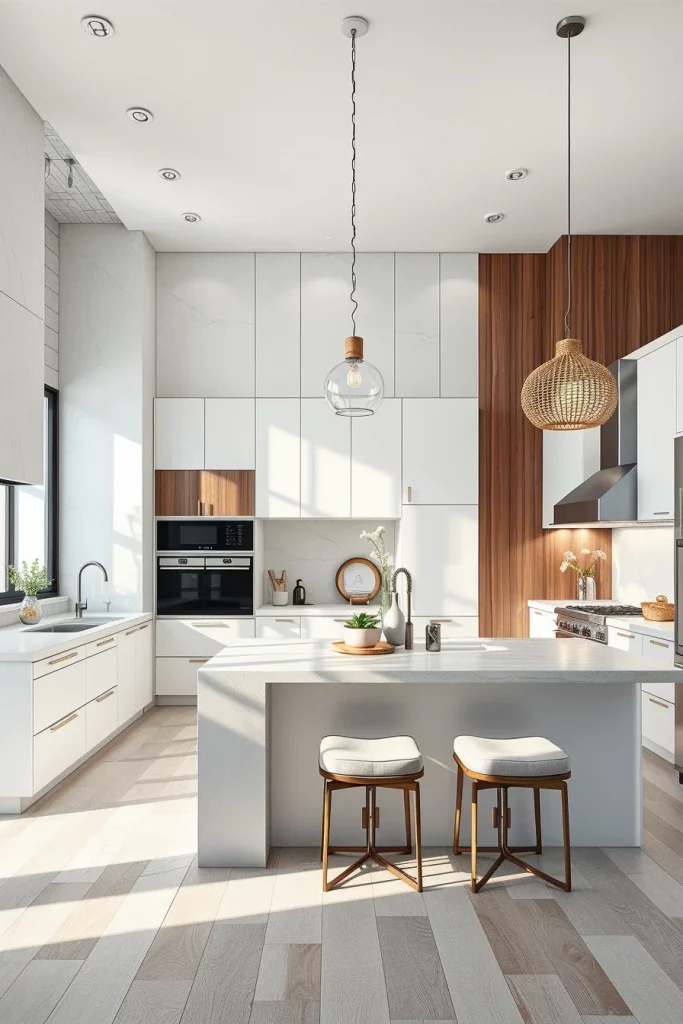
I often recommend following the approach promoted by Architectural Digest and House Beautiful, where designers emphasize layering materials instead of introducing excessive colors. In my experience, this strategy makes a white kitchen feel far more luxurious while remaining timeless. I find that combining matte, polished, and tactile finishes creates interest that lasts much longer than following short-lived color trends.
To complete this design, I would also include concealed LED lighting beneath upper cabinets, integrated appliances, and a few handcrafted accessories with organic shapes. These finishing touches help every texture stand out while maintaining the uncluttered aesthetic that defines today’s most elegant white kitchens.
Artistic Ceiling Designs For White Kitchens
I often notice that homeowners focus on cabinetry while overlooking one of the largest design opportunities in the room—the ceiling. One of my favorite white kitchen trends is transforming the ceiling into an architectural feature that complements the clean white palette. Sculptural ceiling details immediately draw the eye upward, making the kitchen feel larger, brighter, and more thoughtfully designed. Whether the room has high or standard ceilings, creative detailing adds character without making the space feel busy.
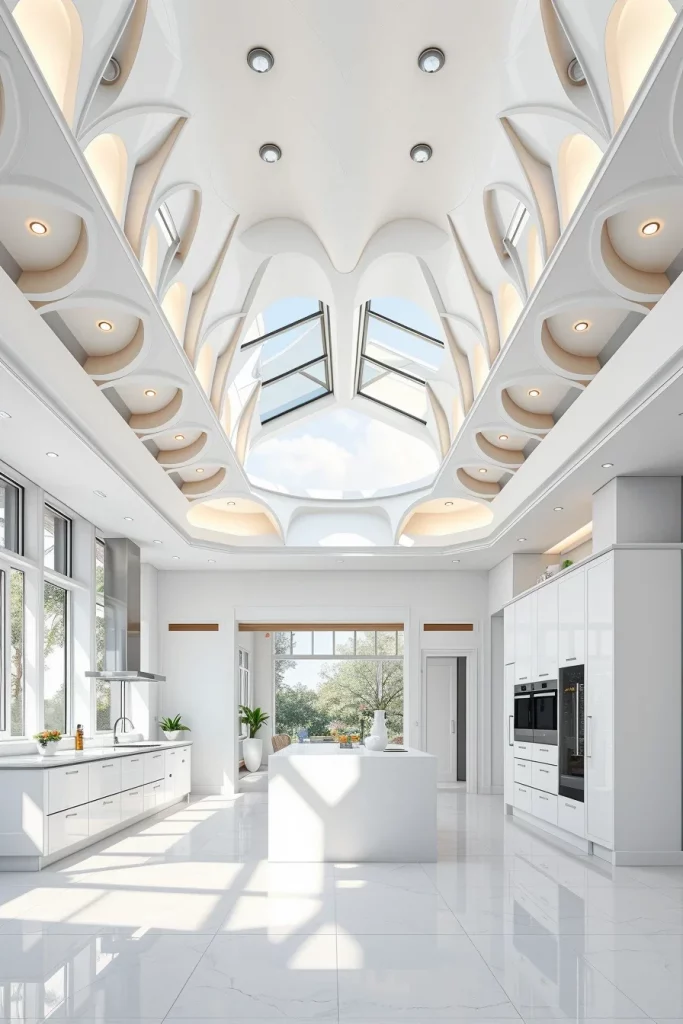
I like using recessed ceiling panels, curved plaster transitions, subtle geometric moldings, or softly illuminated ceiling coves that create indirect lighting. These details work beautifully with minimalist white cabinetry because they introduce depth without competing for attention. Linear recessed lighting, hidden LED strips, and carefully positioned skylights further enhance the architectural effect. When paired with large kitchen islands and continuous flooring, the entire room feels balanced and harmonious.
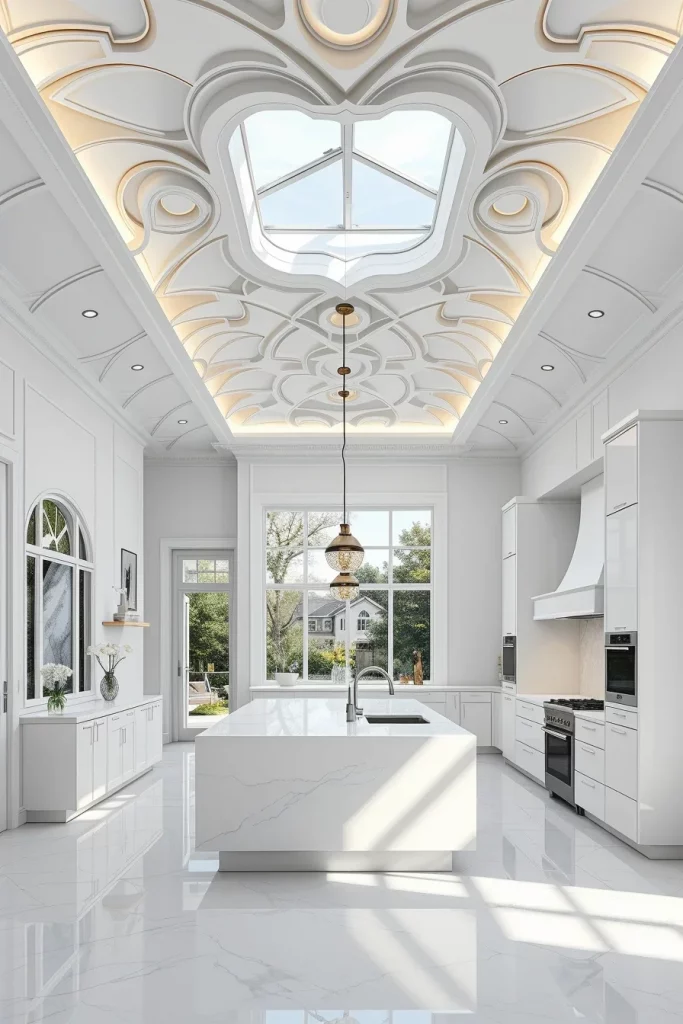
Many respected American interior designers frequently point out that every surface contributes to the overall experience of a room, including the ceiling. I completely agree with this philosophy because I have seen how even simple ceiling enhancements elevate an ordinary kitchen into a designer-inspired interior. Instead of relying on decorative clutter, architectural details create long-lasting elegance.
If I wanted to refine this concept even further, I would introduce discreet ceiling speakers, integrated ventilation, and carefully planned lighting zones that allow the atmosphere to shift from bright daytime cooking to warm evening entertaining.
White Kitchens With Statement Pendant Lighting
Whenever I walk into a beautiful white kitchen, the lighting is usually the first element that captures my attention. One of the strongest white kitchen trends today is using oversized pendant lighting as functional artwork. Against crisp white cabinetry, sculptural light fixtures become natural focal points while adding warmth, scale, and personality. They also help define gathering spaces around islands without interrupting the open layout.
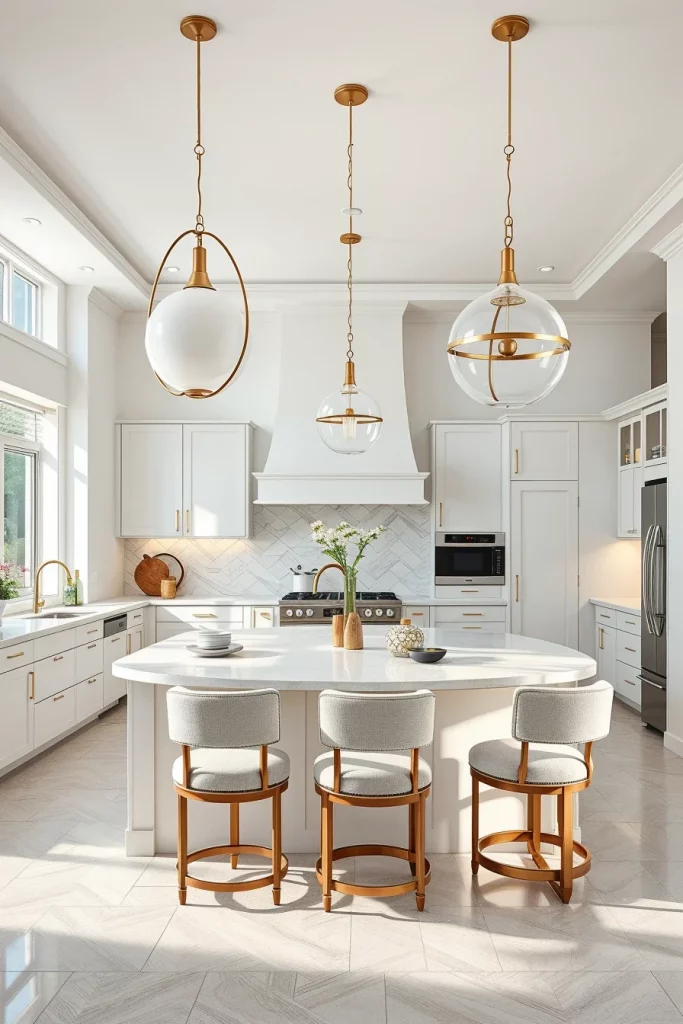
I usually recommend pendants made from frosted glass, hand-blown glass, natural stone, brushed brass, or sculptural metal finishes. Their forms should feel artistic rather than overly decorative. Beneath them, I pair generous waterfall islands with comfortable upholstered stools, integrated storage, and seamless induction cooktops. Decorative bowls, oversized branches, and carefully selected ceramics complete the composition without making the countertops appear crowded.
Design publications such as Elle Decor often highlight lighting as one of the most influential investments in modern kitchen design. I completely understand why. In my own experience, replacing standard fixtures with sculptural pendants instantly changes the mood of the room while reinforcing the architectural style. Good lighting creates both beauty and functionality, making everyday activities much more enjoyable.
I would also recommend installing dimmable controls that allow different lighting scenes throughout the day. This flexibility ensures the kitchen remains practical for cooking while becoming an inviting social space in the evening.
Stylish White Kitchens Featuring Arched Architectural Details
Among today’s most elegant white kitchen trends, I especially appreciate the return of soft architectural curves. Arched doorways, curved niches, rounded pantry entrances, and gently shaped openings soften the clean geometry of modern kitchens while preserving a minimalist appearance. These subtle curves make the room feel more welcoming and create a sense of flow between connected living spaces.
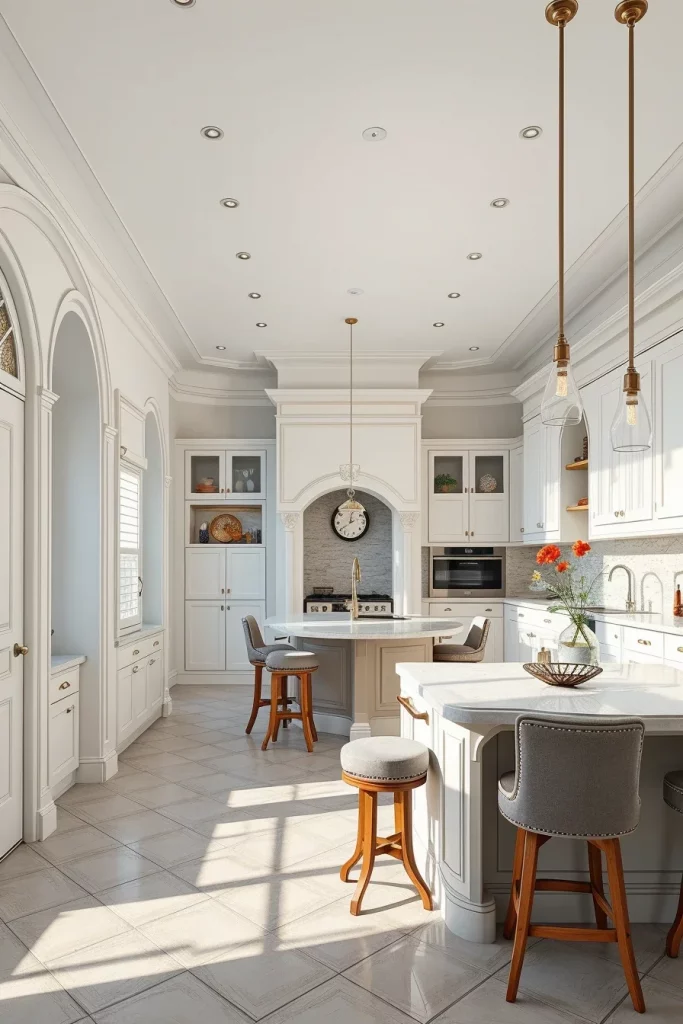
When designing this style, I like combining smooth white cabinetry with gently rounded island corners, curved open shelving, integrated appliance panels, and full-height stone backsplashes. Decorative niches displaying ceramics or cookbooks become natural focal points without overwhelming the design. Soft fabrics on bar stools and rounded dining chairs reinforce the architectural language established throughout the room.
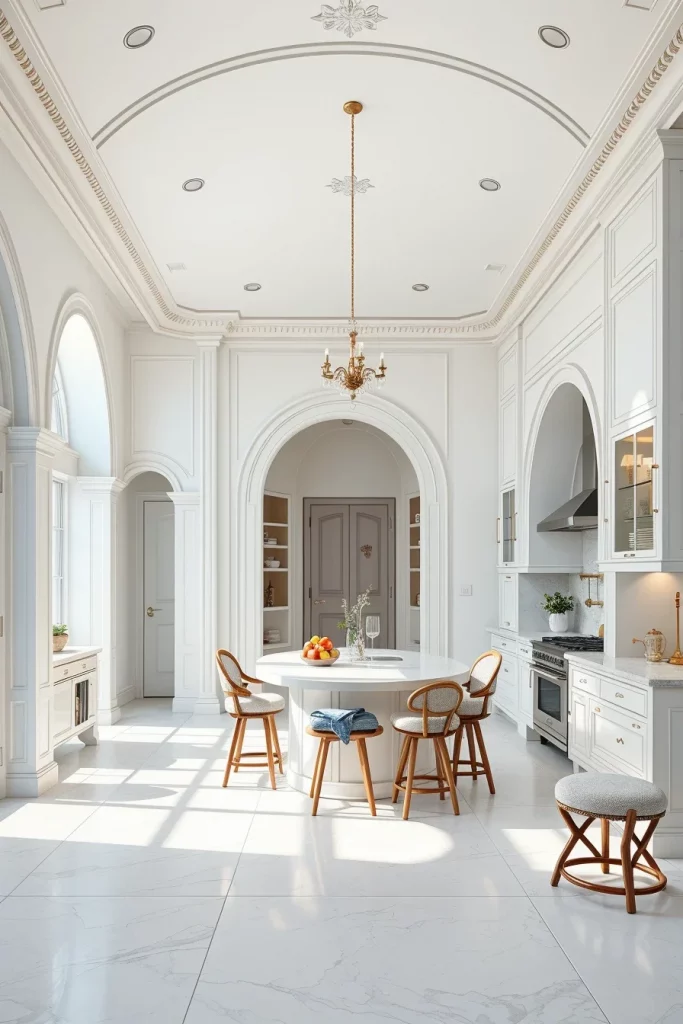
I have noticed that many contemporary designers are reintroducing arches because they balance minimalism with warmth. In my opinion, this combination creates interiors that remain fashionable for many years rather than following temporary design movements. Curved architecture also photographs beautifully by creating softer shadows and more dynamic perspectives.
To strengthen this design even more, I would include concealed interior lighting within niches and use continuous flooring throughout adjacent rooms to emphasize the graceful transitions created by each arch.
Contemporary White Kitchens With Large Picture Windows
Natural light has always been one of the most valuable design elements, which is why I consider oversized picture windows one of the defining white kitchen trends today. Large uninterrupted glass panels flood white interiors with daylight, making every surface appear brighter while visually expanding the room. The changing outdoor scenery also becomes part of the interior, adding color and seasonal interest without additional decoration.
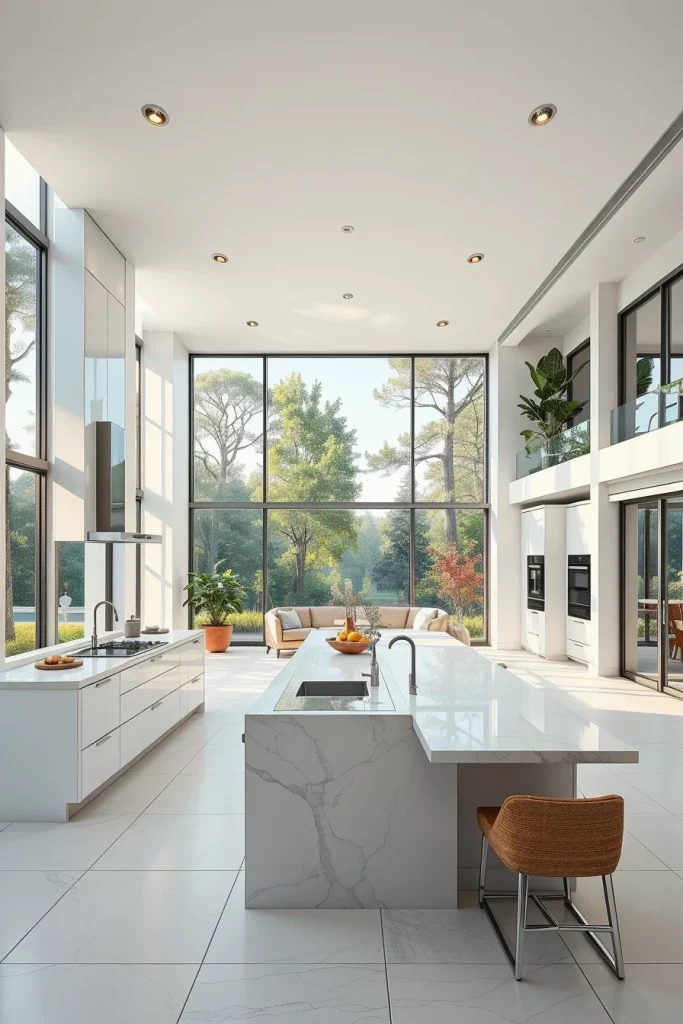
I usually position the main kitchen island so it faces the view, allowing cooking and entertaining to feel connected with the outdoors. Slim window frames preserve clean sightlines, while integrated cabinetry keeps visual distractions to a minimum. I often combine this layout with quartz countertops, hidden storage, minimalist shelving, comfortable upholstered seating, and simple decorative objects that never compete with the landscape beyond the glass.
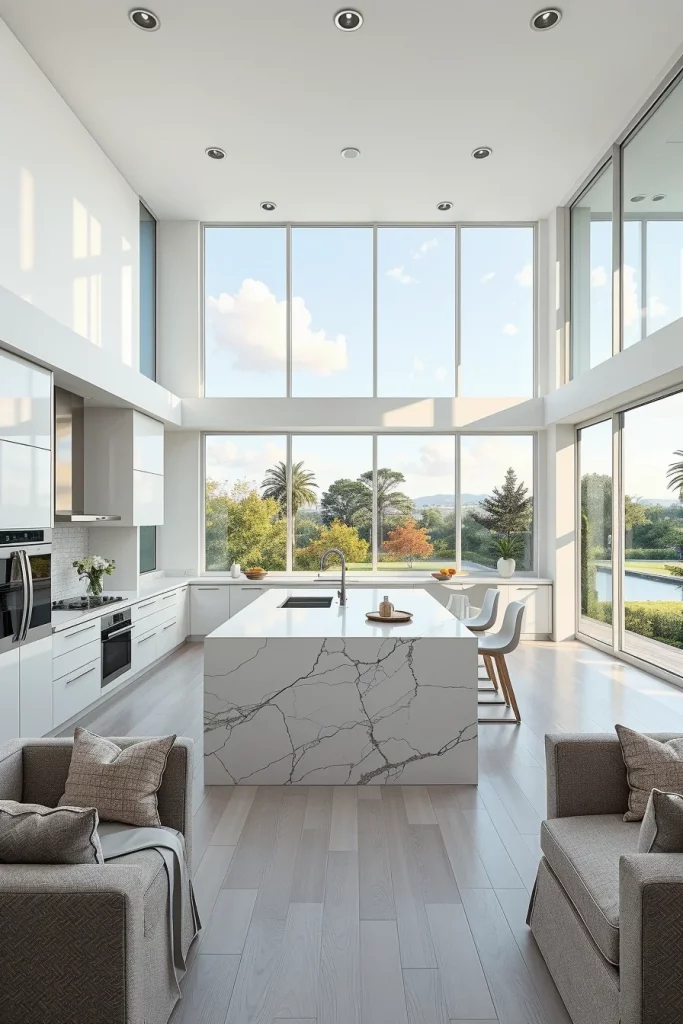
I personally find that kitchens designed around natural light always feel healthier and more enjoyable to spend time in. Many professional designers also encourage maximizing daylight because it enhances both the appearance of materials and the overall comfort of the space. In my experience, few design decisions have a greater long-term impact than investing in larger windows whenever the architecture allows.
If I were completing this kitchen, I would also include automated window treatments, discreet indoor lighting for evening use, and carefully planned outdoor landscaping so the view remains attractive throughout every season.
Curved Seating Ideas For White Kitchen Islands
I have found that one of the most refreshing developments in white kitchen trends is the growing use of curved seating around kitchen islands. Gentle curves immediately soften the crisp lines of white cabinetry and make the kitchen feel more inviting. Instead of creating a strictly functional workspace, curved seating encourages conversation and allows family members or guests to comfortably gather while meals are being prepared. The flowing shapes also improve movement around the island, making the room feel more open.
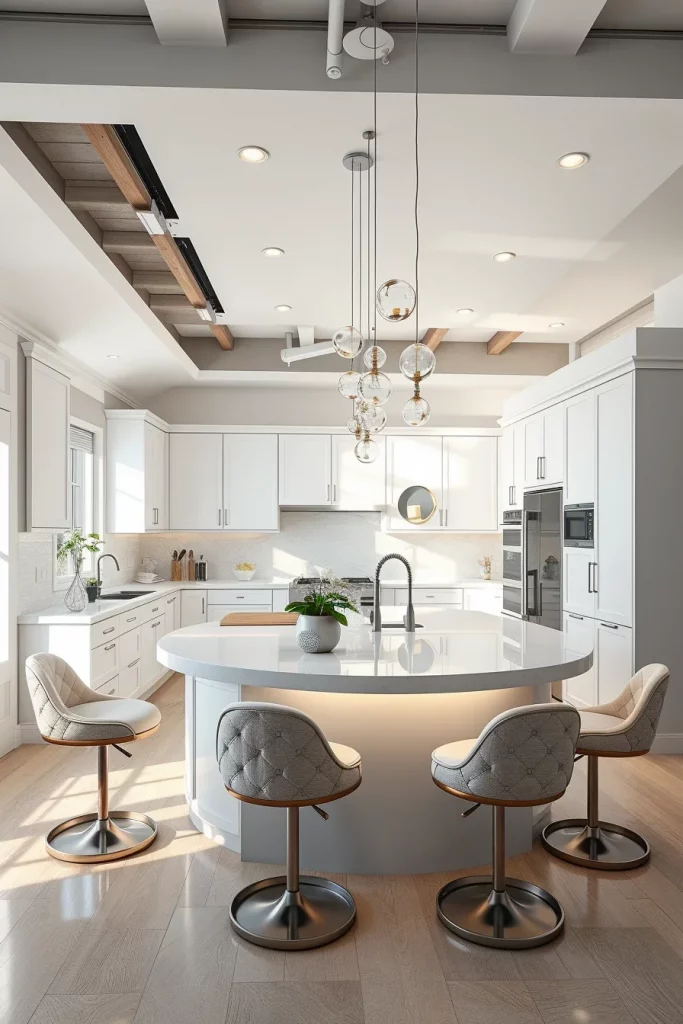
When I design this layout, I usually pair a generously sized white island with upholstered curved stools featuring supportive backs and slim metal or wood bases. The island itself often includes rounded corners, waterfall quartz sides, and concealed storage to maintain a clean appearance. I also like incorporating integrated charging stations, hidden outlets, and subtle under-island lighting to increase functionality without interrupting the minimalist design. Decorative bowls, sculptural fruit displays, and handcrafted ceramics add personality while preserving the calm white palette.
In my experience, curved furniture creates a more relaxed atmosphere than sharp geometric seating. Many contemporary designers have embraced softer forms throughout the home because they make interiors feel comfortable while still appearing sophisticated. I appreciate this approach because it balances visual elegance with everyday practicality, especially in kitchens that serve as the heart of the home.
To make this concept even stronger, I would include a matching curved dining table nearby or repeat rounded forms in lighting fixtures and decorative accessories. These details create visual continuity throughout the entire kitchen.
White Kitchens Inspired By Gallery Style Interiors
Among today’s most sophisticated white kitchen trends, gallery-inspired interiors stand out for their clean composition and artistic simplicity. I enjoy treating the kitchen almost like an exhibition space where every material, piece of furniture, and decorative object has a purpose. White surfaces become the perfect backdrop for carefully selected artwork, sculptural accessories, and architectural details without making the room feel crowded.
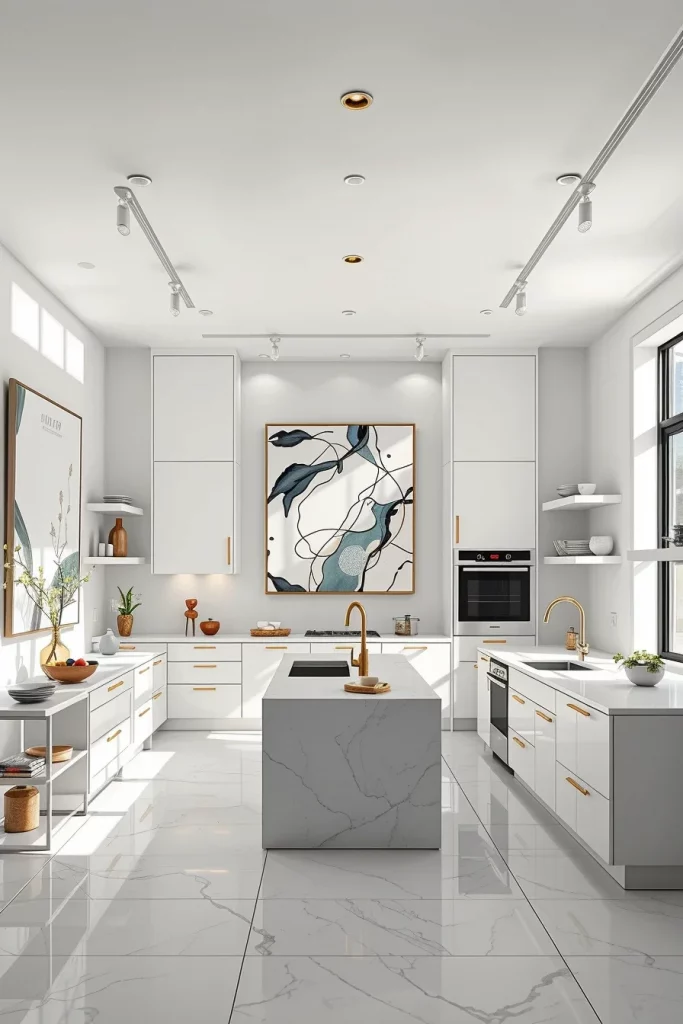
I usually begin with seamless white cabinetry that blends into the walls, allowing statement elements to receive more attention. Oversized abstract artwork, sculptural pendant lighting, minimalist shelving, and handcrafted ceramics create subtle focal points throughout the room. Large islands with waterfall countertops remain free from unnecessary clutter, while integrated appliances preserve the gallery-like atmosphere. Hidden storage ensures everyday items stay out of sight, maintaining the clean visual composition.
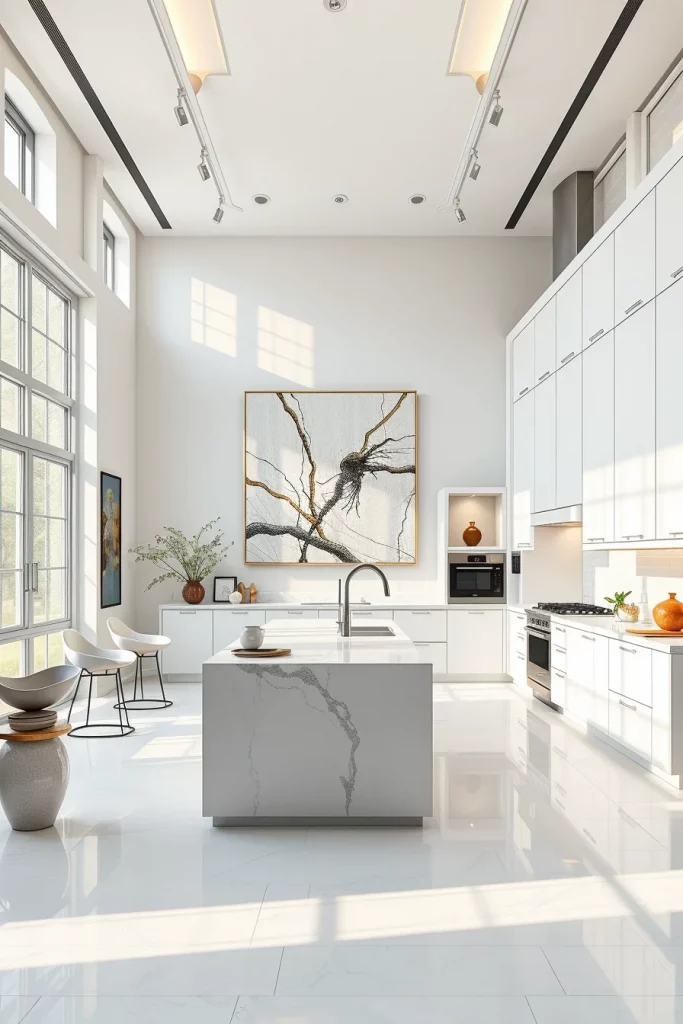
I have always admired how gallery-inspired interiors encourage thoughtful editing rather than excessive decorating. Publications like Architectural Digest frequently showcase homes where restraint creates more impact than abundance, and I completely agree with this philosophy. When every object has room to breathe, the kitchen feels calmer and significantly more refined.
To enhance this style further, I would incorporate museum-quality lighting that highlights artwork and textured surfaces without creating harsh shadows. A carefully selected oversized sculpture or artisan centerpiece could also become an unforgettable finishing touch.
Luxury-Inspired White Kitchens With Sculptural Furniture
One of the most exciting white kitchen trends today is the use of sculptural furniture that transforms an ordinary kitchen into a design statement. Rather than relying on decorative excess, I prefer selecting furniture with distinctive forms that function as both practical pieces and works of art. The clean white backdrop allows these sculptural elements to become the visual focus while preserving the room’s elegant simplicity.
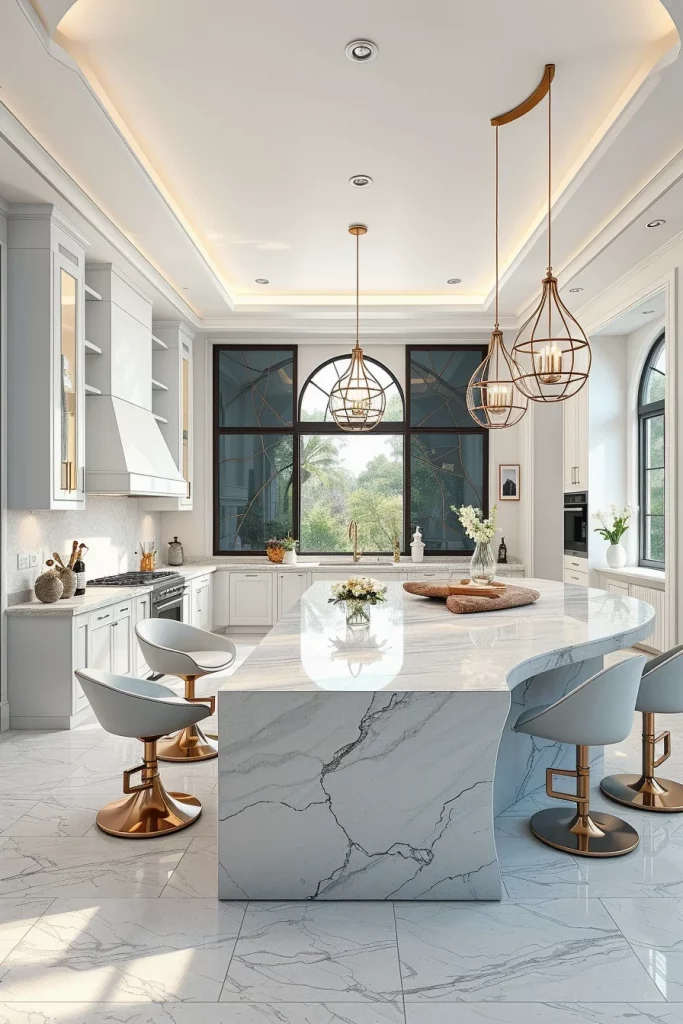
I often combine curved kitchen islands with organically shaped dining tables, statement bar stools, rounded dining chairs, and bold yet refined pendant lighting. Thick waterfall countertops, integrated cabinetry, and full-height storage walls maintain a cohesive appearance throughout the space. Soft fabrics, textured stone, brushed metal accents, and handcrafted decorative pieces introduce depth without distracting from the sculptural furniture itself. Every element works together to create a balanced and luxurious environment.
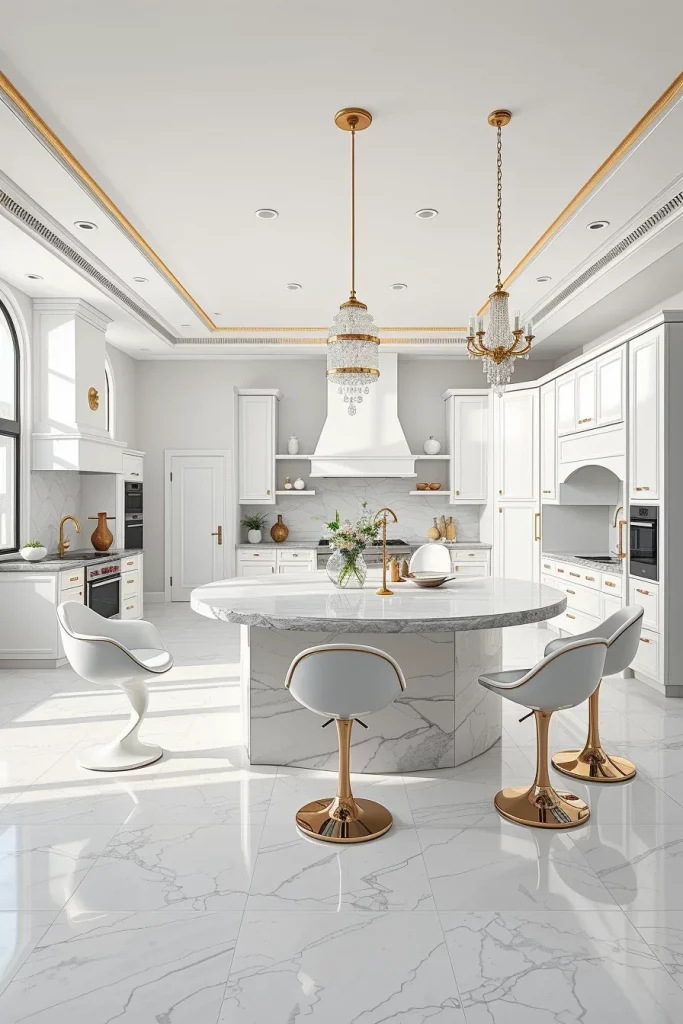
I believe sculptural furniture gives white kitchens a unique personality that lasts far beyond temporary trends. Many leading interior designers have demonstrated that investing in timeless furniture with artistic forms creates interiors that remain relevant for years. I have found that clients appreciate these pieces because they combine beauty with everyday functionality rather than serving as decoration alone.
If I were completing this kitchen, I would also introduce large-format artwork, custom cabinetry with invisible hardware, and layered lighting that highlights the furniture’s distinctive shapes from every angle.
Timeless White Kitchen Trends That Never Go Out Of Style
Whenever I think about enduring white kitchen trends, I always return to designs that prioritize quality materials, practical layouts, and understated elegance. While fashionable details may change from year to year, a thoughtfully planned white kitchen continues to feel fresh because it emphasizes balance instead of excess. Neutral surfaces also provide flexibility, allowing homeowners to update accessories without undergoing a complete renovation.
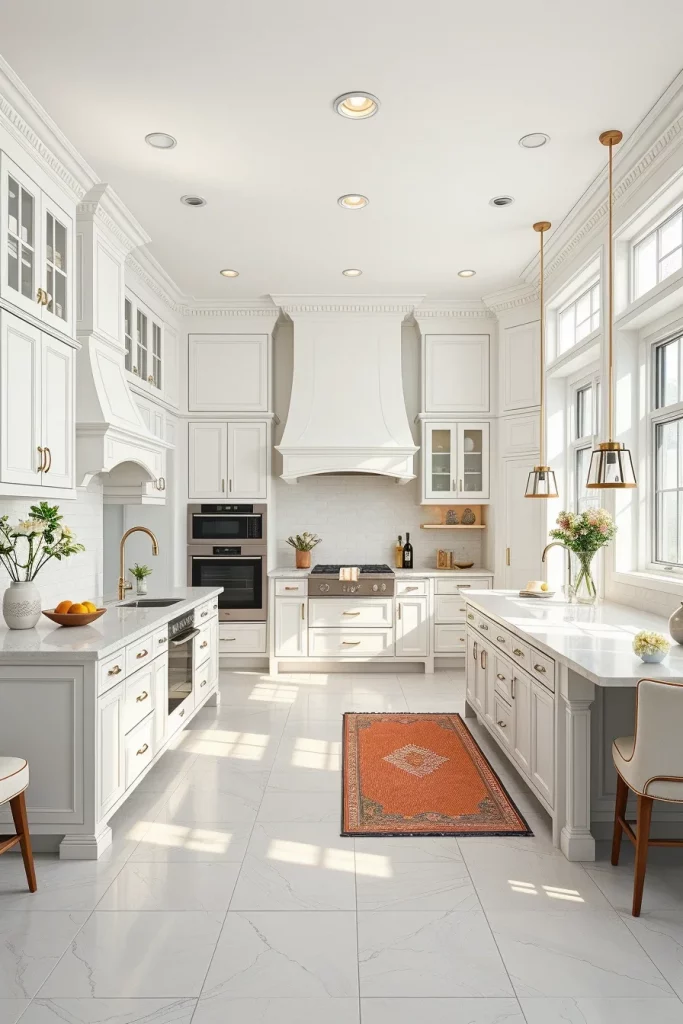
I generally recommend full-height white cabinetry, durable quartz or natural stone countertops, integrated appliances, classic shaker or flat-panel doors, generous storage solutions, and layered lighting. Comfortable seating, subtle decorative accessories, and carefully selected hardware complete the design without overwhelming the room. Every feature should contribute equally to beauty and daily usability, creating a kitchen that functions as well as it looks.
From my experience, timeless kitchens are the ones that resist unnecessary complexity. House Beautiful and other respected design publications frequently recommend investing in craftsmanship and durable materials rather than chasing short-lived design fads. I completely agree because long-lasting quality ultimately provides greater value and satisfaction over time.
To preserve the timeless character of this kitchen, I would also recommend choosing neutral flooring, concealed storage for small appliances, and flexible lighting systems that adapt to changing needs throughout the day.
The Best White Kitchen Trends To Inspire Your Next Remodel
After exploring today’s most inspiring white kitchen trends, I believe the best kitchens successfully combine elegance, comfort, and everyday practicality. White remains incredibly versatile because it works beautifully with sculptural furniture, textured materials, oversized windows, artistic ceilings, and thoughtful architectural details. The key is creating depth through design rather than relying solely on decorative accessories.
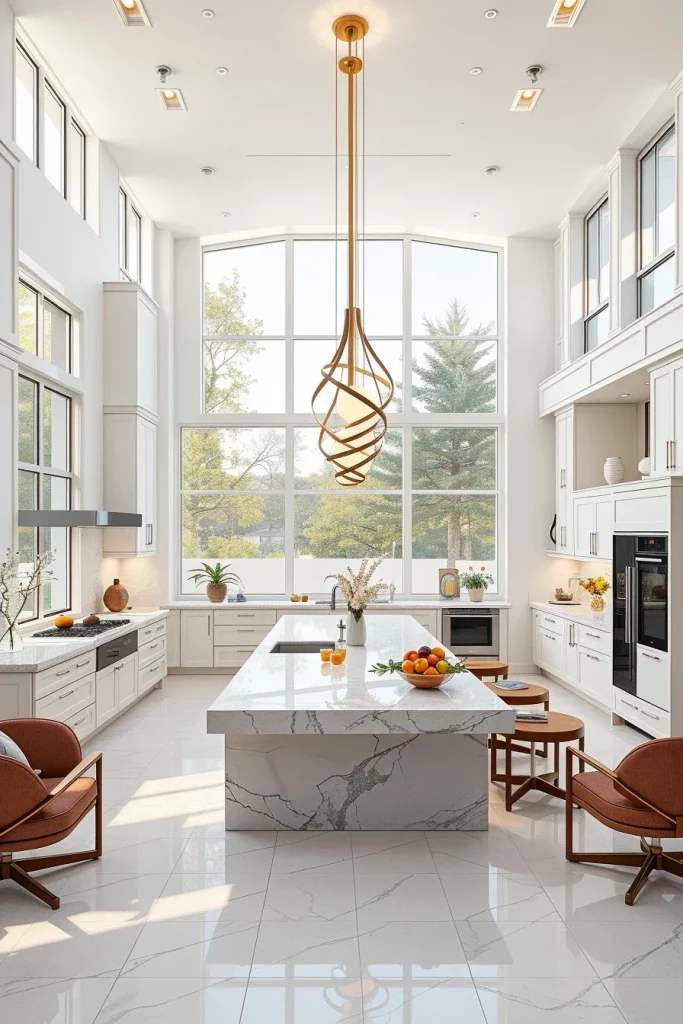
When planning a remodel, I focus first on the overall layout before selecting finishes and furniture. Spacious islands, integrated appliances, concealed storage, comfortable seating, layered lighting, and durable surfaces all contribute to a kitchen that performs exceptionally well for daily living. Every design decision should improve functionality while reinforcing the calm and cohesive aesthetic that makes white kitchens so appealing.
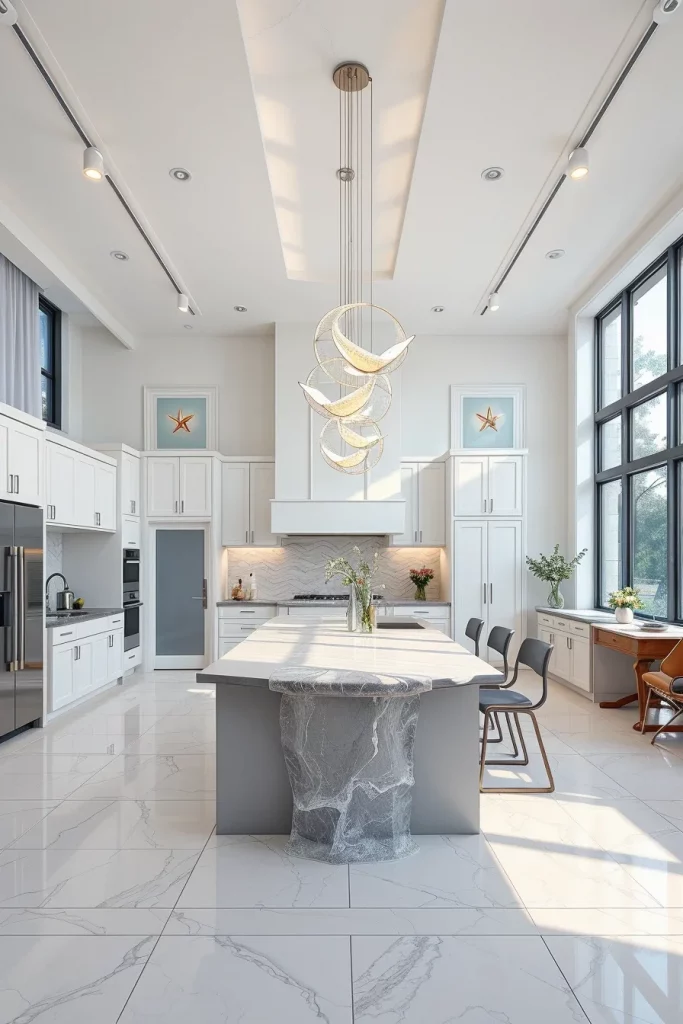
If I could offer one piece of advice, it would be to prioritize timeless quality over temporary trends. I have found that carefully selected materials and well-designed furniture continue to look beautiful long after popular styles evolve. Investing in craftsmanship creates a kitchen that remains enjoyable for many years while increasing the home’s overall appeal.
I would complete this remodel by adding personalized accessories, fresh seasonal styling, and carefully planned lighting scenes that allow the kitchen to transition effortlessly from busy mornings to relaxed evenings.
White kitchen trends continue to prove that a bright, timeless design can also feel modern, creative, and full of personality. By combining sculptural shapes, layered textures, elegant finishes, and thoughtful details, you can create a kitchen that is both beautiful and highly functional. Whether you prefer a minimalist aesthetic or a more artistic approach, these ideas offer plenty of inspiration for your next renovation. Choose the elements that reflect your style, and transform your white kitchen into a space you’ll enjoy every day.