
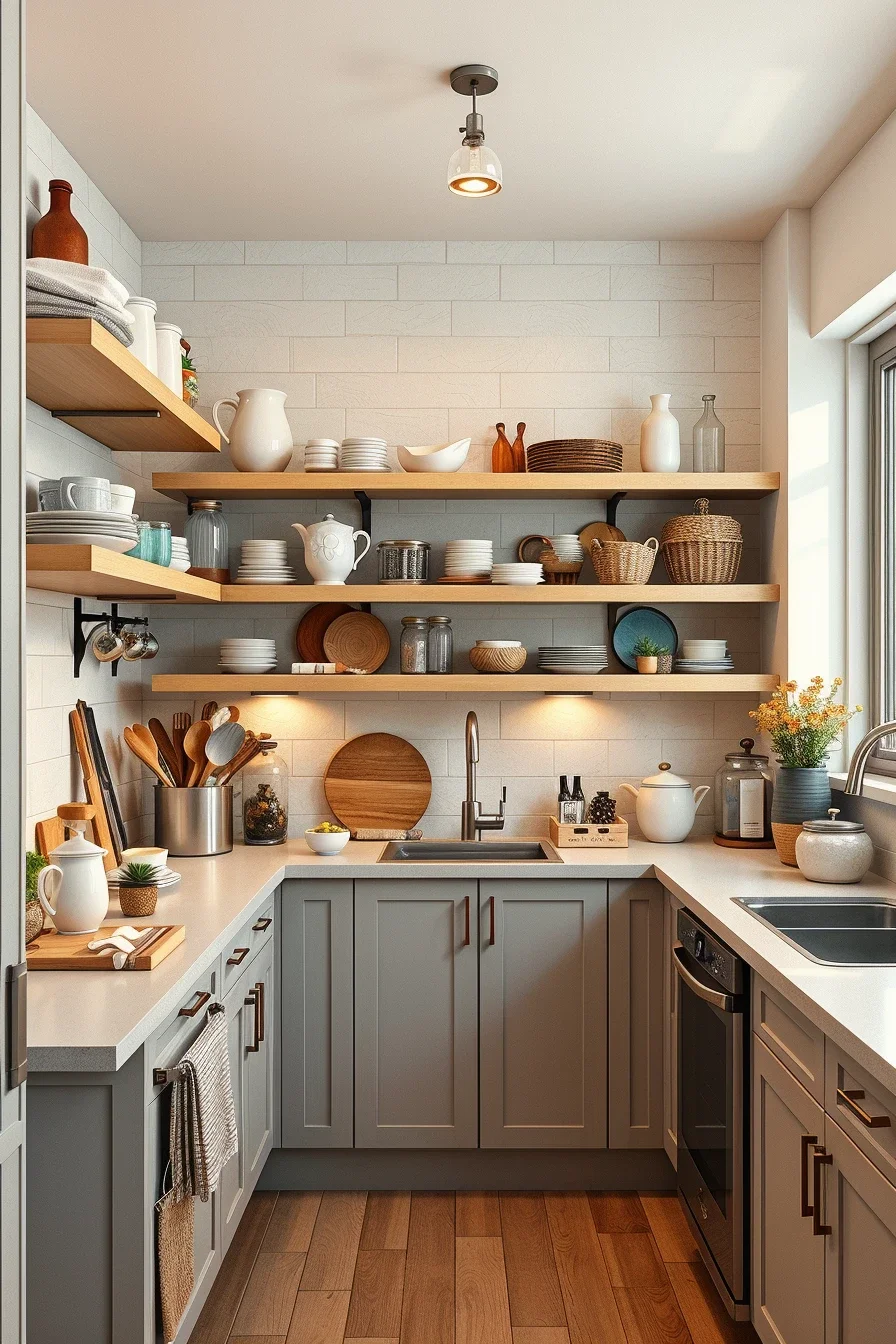
Tiny kitchen decor can completely transform a compact cooking space into a room that feels stylish, functional, and full of personality. The right combination of colors, storage, lighting, and decorative accents makes even the smallest kitchen feel thoughtfully designed. Creative layouts and sculptural details help maximize every inch while adding visual interest. From artistic backsplashes to clever built-in storage, modern ideas prove that limited space never has to limit great design. Whether you prefer a sleek contemporary look or a bold statement style, there are countless ways to create a kitchen that feels unique. This collection of inspiring tiny kitchen decor ideas will help you design a beautiful space that is both practical and unforgettable.
Tiny Kitchen Decor With Sculptural Open Shelving
When I design a tiny kitchen, I often begin with open shelving because it immediately changes how the room feels. Instead of relying on bulky upper cabinets, I prefer sculptural shelves with curved brackets, thick floating slabs, or asymmetrical layouts that become decorative features themselves. This approach keeps the walls visually lighter while giving everyday dishes, handmade ceramics, and carefully selected accessories a place to become part of the overall design. In a compact room, every visible element matters, so I treat shelving as functional architecture rather than simple storage.
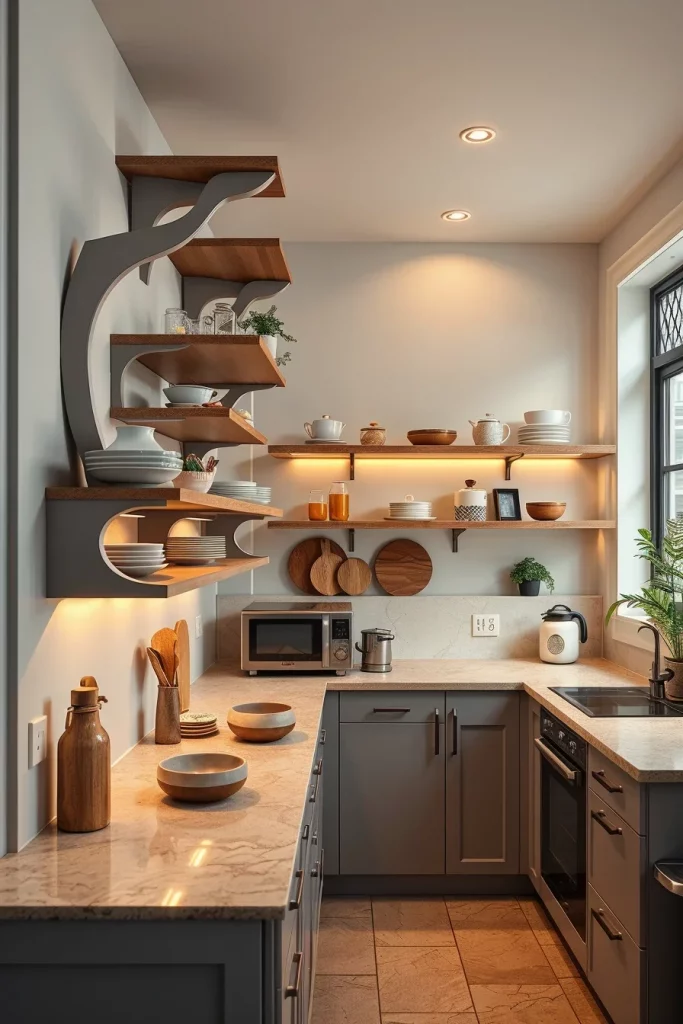
I like combining shelves with warm natural stone countertops, slim cabinets, integrated appliances, and a simple backsplash that allows the shelving to remain the focal point. Decorative bowls, textured glass containers, stacked cookbooks, wooden cutting boards, and matte ceramic vases create layers without making the kitchen appear crowded. Good lighting beneath each shelf improves visibility while highlighting decorative objects. I also recommend leaving empty space between accessories because negative space helps emphasize the sculptural quality of the installation.
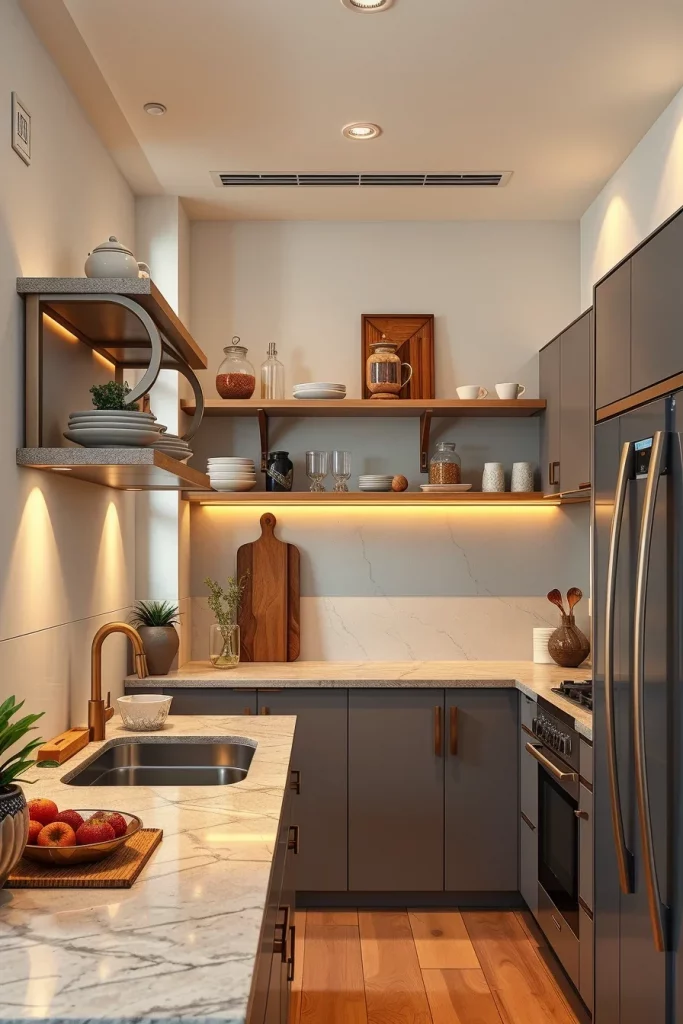
From my experience, restraint always creates a stronger result than filling every shelf. Designers featured by Architectural Digest frequently recommend displaying only the items you genuinely use or truly love, and I completely agree with that philosophy. A carefully edited display feels timeless while making daily cooking much more enjoyable.
I would complete this design with matching hardware, concealed LED shelf lighting, and a few handcrafted decorative pieces that reinforce the artistic personality of the kitchen without reducing its practical storage capacity.
Artistic Cabinet Fronts That Turn Storage Into A Focal Point
Cabinet fronts occupy a large visual area in a tiny kitchen, so I see them as an opportunity to introduce personality rather than hiding them behind plain surfaces. Fluted panels, carved geometric patterns, softly rounded edges, or subtle relief textures transform simple storage into an eye-catching feature. These details allow even a compact kitchen to feel like a thoughtfully designed interior instead of a purely functional workspace.
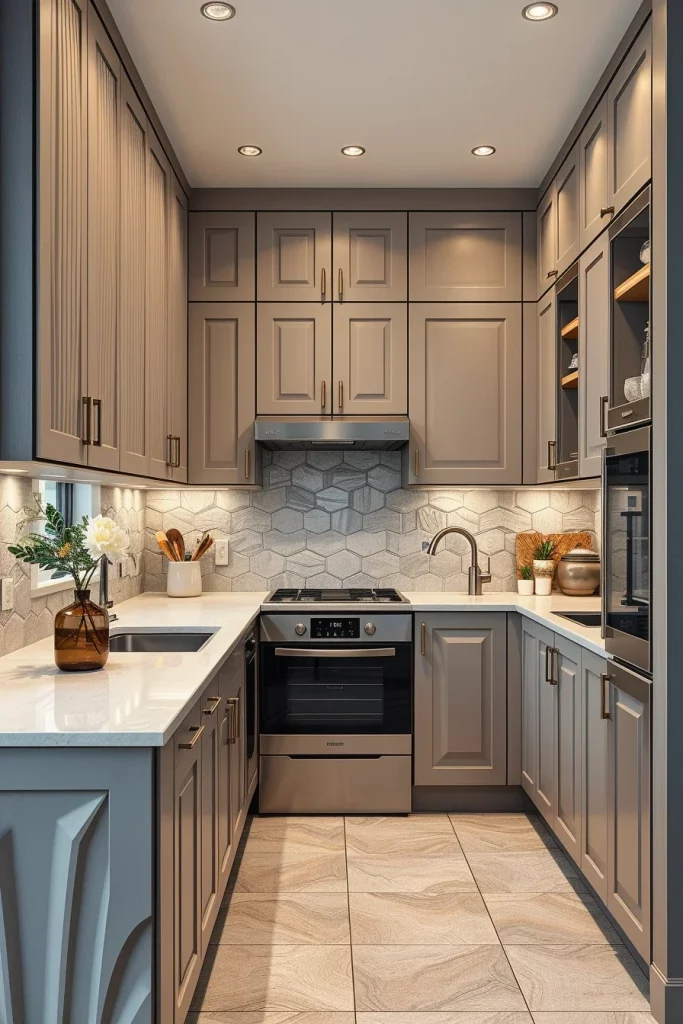
I usually pair decorative cabinet fronts with minimalist hardware, integrated refrigerators, quartz countertops, and understated flooring so the cabinetry remains the visual centerpiece. Soft matte finishes help showcase the texture without creating excessive reflections, while carefully selected metallic pulls add refinement. Glass-front accent cabinets can display beautiful tableware, balancing enclosed storage with decorative presentation.
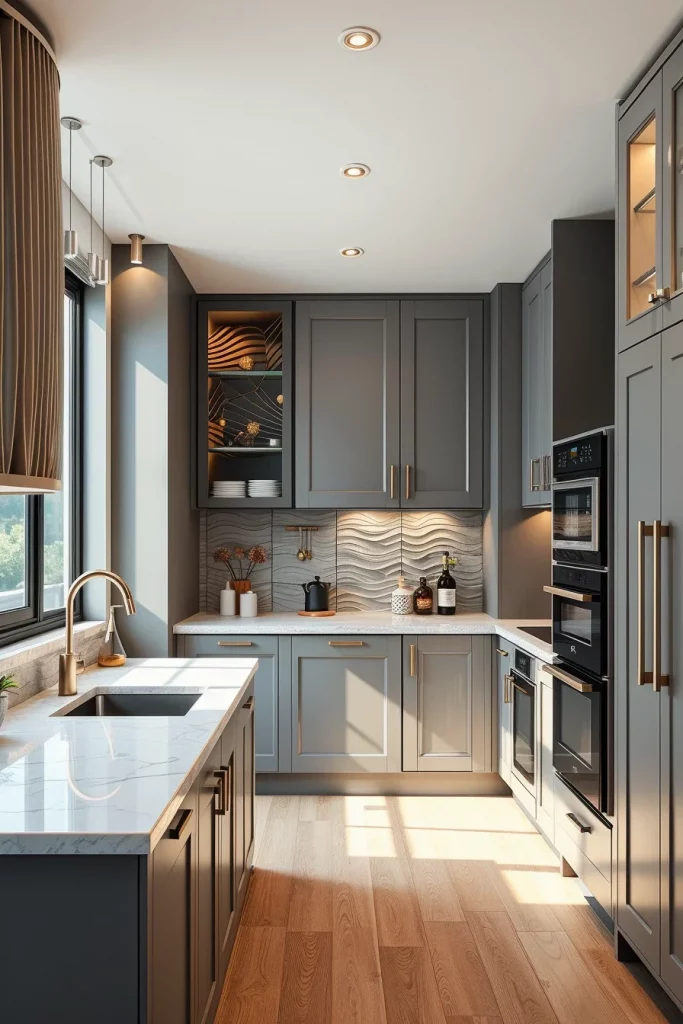
Personally, I appreciate cabinet designs that remain elegant for many years instead of following short-lived trends. Interior designers frequently emphasize investing in timeless craftsmanship rather than excessive ornamentation, and I have found that textured cabinet fronts age exceptionally well because they add depth without overwhelming a small room.
To strengthen this concept, I would also include soft interior cabinet lighting, premium drawer organizers, and coordinated decorative accessories that echo the cabinet textures throughout the kitchen.
Statement Color Palettes For A Stylish Tiny Kitchen
One of my favorite ways to transform a compact kitchen is through carefully selected color combinations. Instead of relying entirely on white, I enjoy creating contrast with deep charcoal, muted olive, warm clay, rich navy, soft mushroom, or sophisticated burgundy paired with lighter complementary tones. A thoughtfully balanced palette gives the room a stylish identity while preserving an open atmosphere.
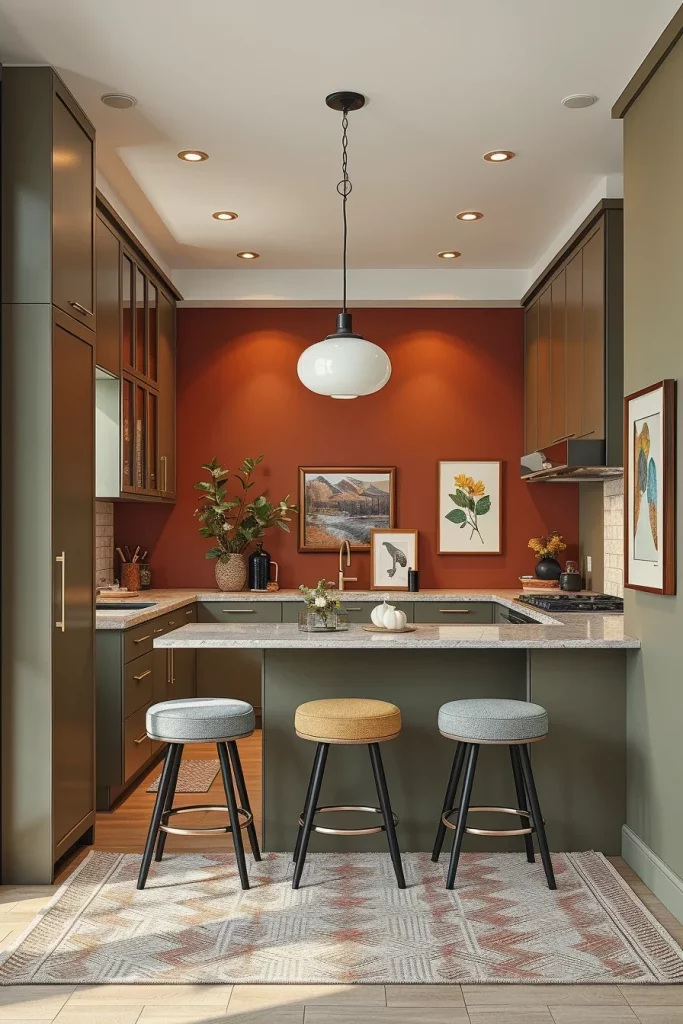
I prefer limiting the number of dominant colors and allowing cabinetry, walls, countertops, and decorative accents to work together as one composition. Upholstered stools, ceramic pendant lights, textured rugs, framed artwork, and carefully selected cookware can reinforce the chosen palette without introducing visual clutter. Small kitchens benefit from consistency because every surface contributes to the overall impression.
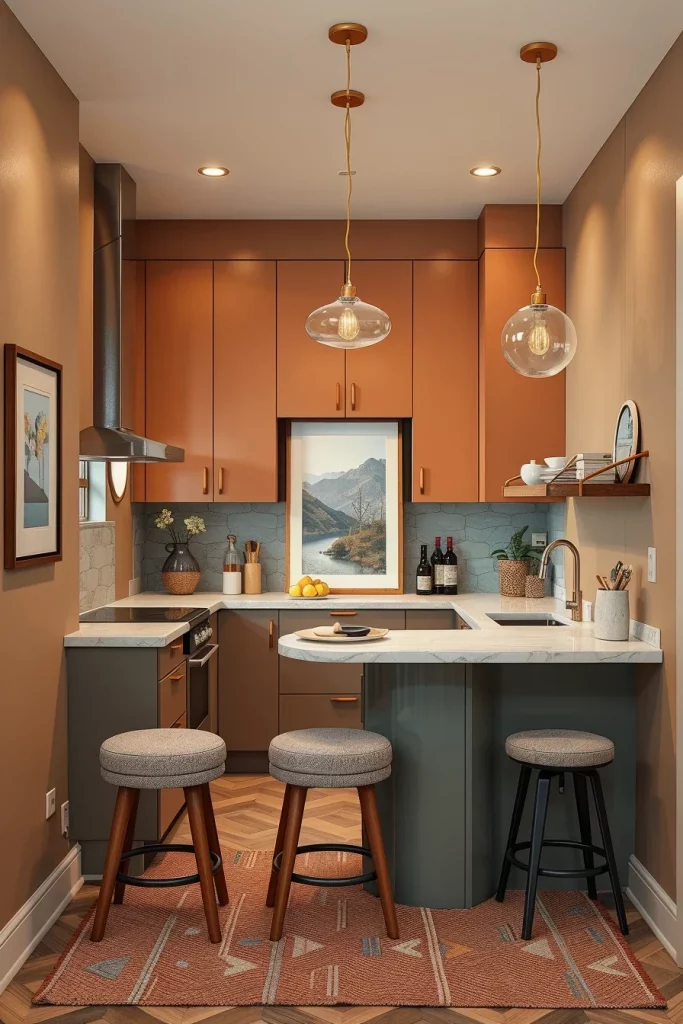
From my perspective, color should support daily living rather than compete for attention. Better Homes & Gardens has often highlighted the value of cohesive palettes in compact interiors, and I have found that limiting decorative colors produces a calmer, more refined environment that remains visually interesting over time.
To complete this design, I would introduce coordinated window treatments, decorative storage containers, fresh herbs in modern planters, and subtle metallic accents that connect every part of the room into one harmonious composition.
Curved Kitchen Islands Designed For Compact Spaces
Many people assume a tiny kitchen cannot accommodate an island, but I have discovered that compact curved islands often work better than rectangular ones. Rounded corners improve circulation, soften the overall appearance, and reduce the risk of bumping into sharp edges. The flowing silhouette immediately introduces a more unique and welcoming atmosphere while maintaining valuable workspace.
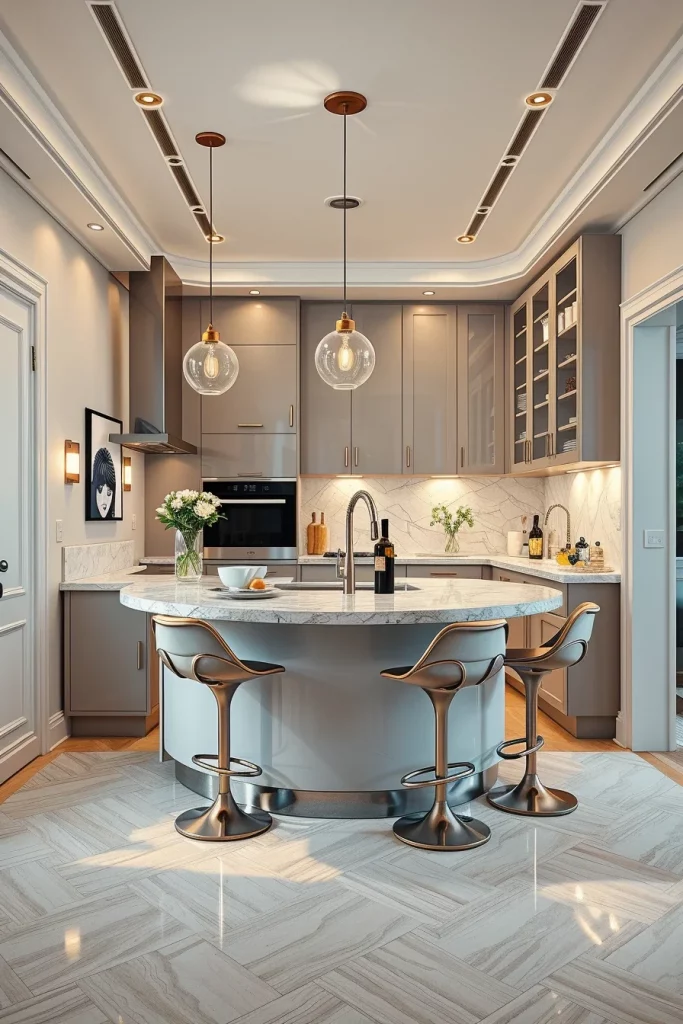
I like designing these islands with integrated storage, open display niches, hidden drawers, and slim overhangs that create casual seating. Rounded countertops in quartz or solid surface materials reinforce the organic form, while sculptural stools and discreet pendant lighting complete the arrangement. Every detail serves multiple purposes, which is essential in a limited footprint.
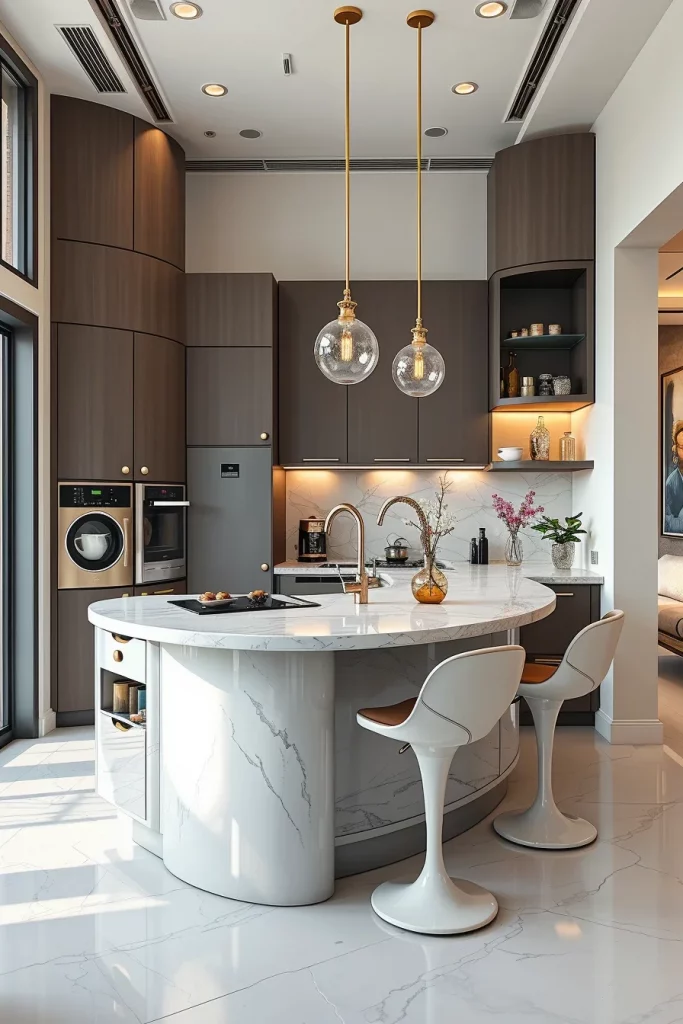
In my experience, curved furniture naturally encourages movement throughout the room and makes compact layouts feel less restrictive. Many contemporary kitchen designers have embraced softer forms because they improve both aesthetics and functionality, and I have consistently seen homeowners appreciate the comfortable flow they create.
I would enhance this concept by adding concealed electrical outlets, built-in recycling storage, and decorative shelving at the island ends for cookbooks and ceramics, making the island even more versatile without sacrificing elegance.
Floating Cabinets That Create An Airy Modern Look
Floating cabinetry is one of the most effective ways I have found to make a tiny kitchen appear larger. By lifting base cabinets slightly above the floor, the visible flooring extends beneath them, creating an illusion of greater depth. This subtle detail introduces a clean contemporary aesthetic while making the kitchen feel lighter and more open.
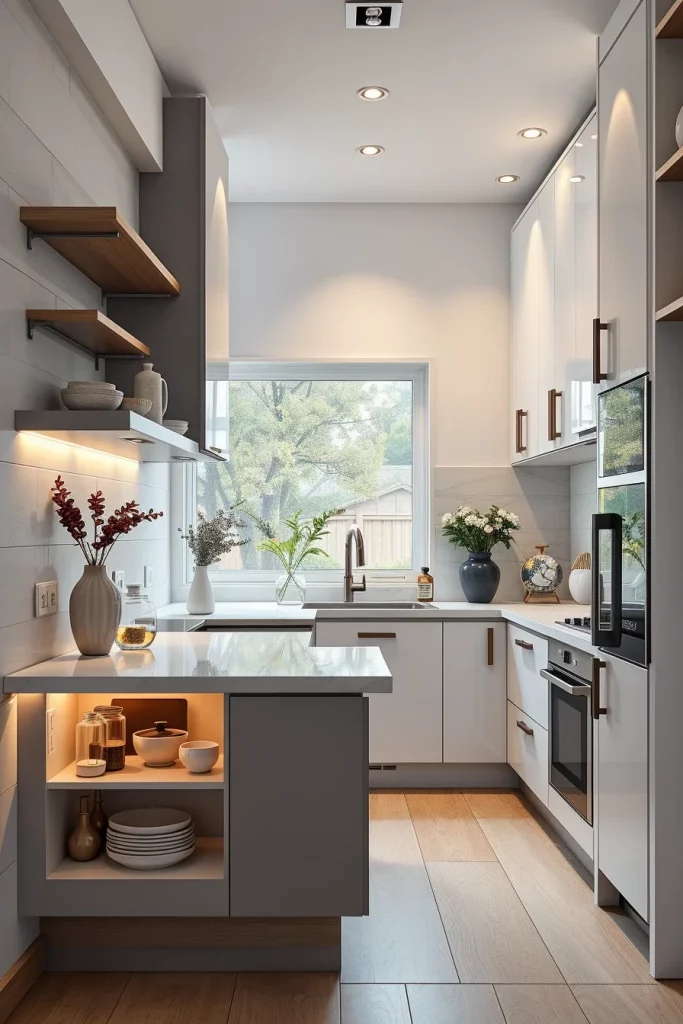
I usually combine floating cabinets with integrated toe-kick lighting, seamless countertops, full-height backsplashes, and handleless doors to reinforce the minimalist appearance. Decorative objects are kept intentionally simple, including sculptural bowls, elegant coffee equipment, and a few carefully selected ceramic pieces. Together these features create an unusual balance between practicality and visual sophistication.
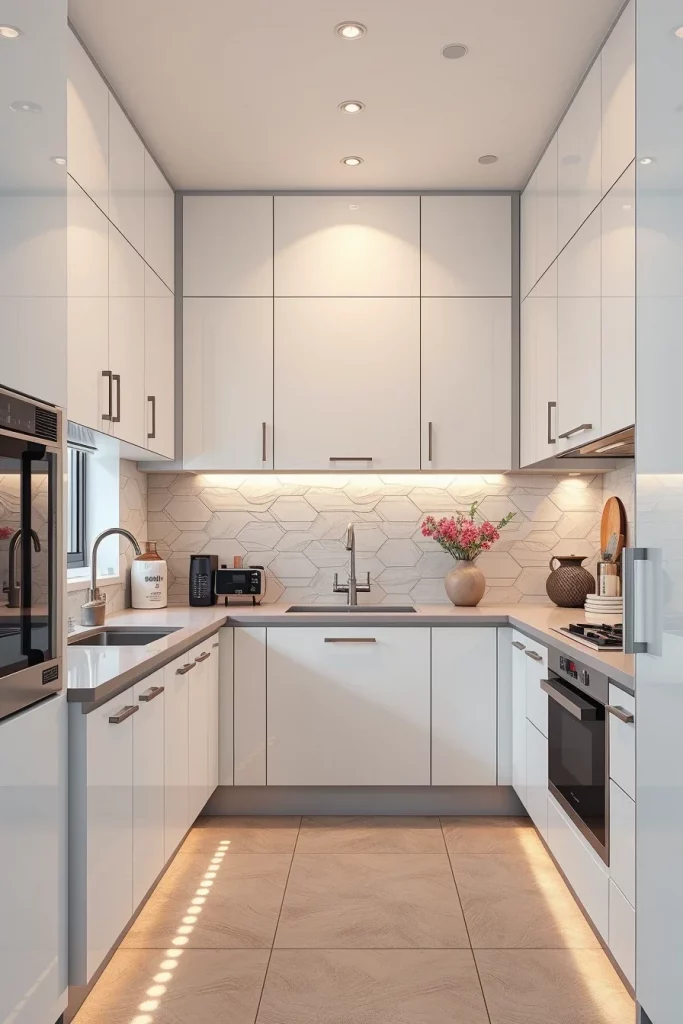
Personally, I appreciate how floating cabinetry simplifies both cleaning and maintenance while contributing to a refined architectural appearance. Contemporary interior specialists often recommend minimizing visual weight in compact kitchens, and I have repeatedly found that suspended cabinetry achieves exactly that effect without reducing storage.
I would finish this kitchen by incorporating hidden charging stations, integrated waste sorting systems, and coordinated lighting controls that enhance everyday convenience while preserving the clean modern aesthetic.
Ceiling-High Storage Ideas That Maximize Every Inch
Whenever I work with a tiny kitchen, I try to use the full height of the room instead of stopping cabinetry below the ceiling. Ceiling-high storage instantly makes the kitchen look custom-designed while providing valuable space for seasonal cookware, serving dishes, and pantry essentials. I also find that continuous cabinetry creates a cleaner architectural appearance because there is no empty gap collecting dust above the cabinets. In a compact room, this vertical approach allows every inch to contribute to both beauty and function.
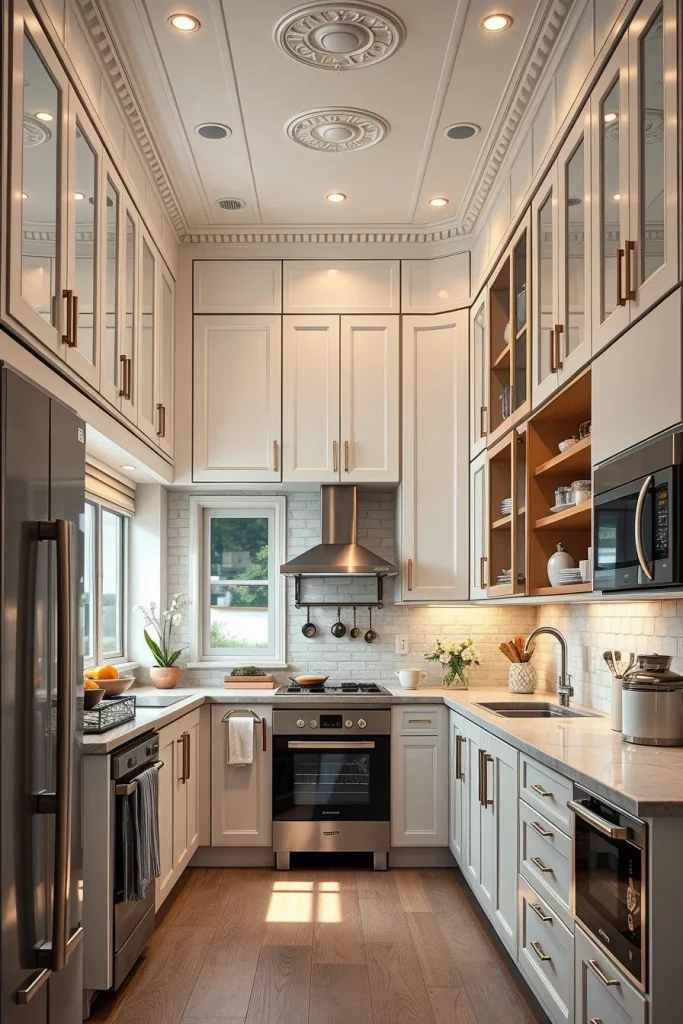
I usually divide the cabinetry into practical zones. Lower cabinets store everyday cookware, middle sections keep dishes and food within easy reach, while the upper compartments hold items that are only used occasionally. I like pairing tall cabinets with integrated appliances, slim pull-out pantry units, concealed organizers, and a matching range hood enclosure so the design feels seamless. A decorative ladder or stylish folding step stool can also become part of the decor while making upper storage easily accessible.
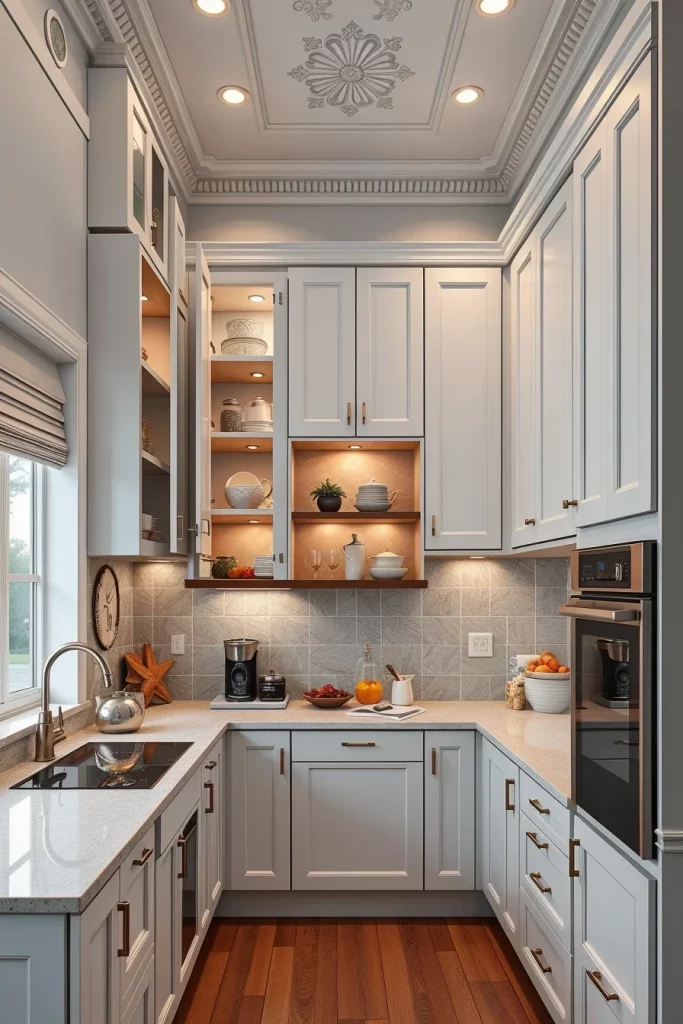
From my experience, professionally designed storage always feels less cluttered because every item has a dedicated place. Designers featured in House Beautiful often encourage homeowners to think vertically in small kitchens, and I have found this advice consistently improves both organization and visual balance. Rather than adding more furniture, I maximize the existing footprint with taller cabinetry that blends beautifully into the architecture.
To complete this layout, I would include interior cabinet lighting, pull-down shelving mechanisms for upper compartments, and decorative crown molding that visually connects the cabinetry with the ceiling while reinforcing the refined appearance.
Hidden Appliances For A Clean And Seamless Kitchen
One of the easiest ways I create a calm atmosphere in a tiny kitchen is by hiding as many appliances as possible. Integrated refrigerators, concealed dishwashers, built-in microwaves, and appliance garages help eliminate visual distractions and allow decorative materials to take center stage. I find that reducing visible appliances immediately makes even the smallest kitchen feel larger and more sophisticated.
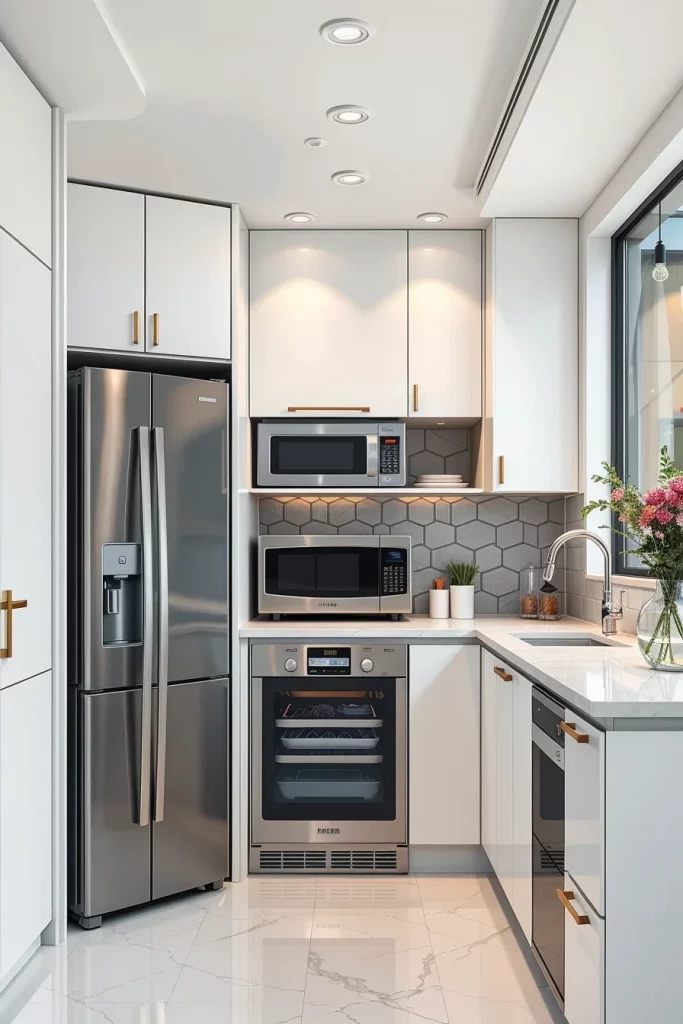
I like combining hidden appliances with flat-panel cabinetry, continuous countertops, integrated handles, and carefully planned storage compartments for coffee machines, toasters, and blenders. Pocket doors can hide small appliances while they are not in use, and pull-out shelves allow everything to remain easily accessible. This approach creates a workspace that looks organized throughout the day without sacrificing convenience.
Personally, I appreciate kitchens that feel peaceful instead of crowded with equipment. Many contemporary interior designers recommend integrating appliances whenever possible because uninterrupted cabinet lines produce a more luxurious appearance, especially in compact spaces. I have consistently noticed that clients enjoy cooking more when their kitchen feels visually calm and organized.
I would further improve this concept by adding hidden charging stations, built-in ventilation, concealed recycling bins, and smart storage inserts that keep every appliance organized without interrupting the elegant design.
Creative Backsplash Designs With Artistic Texture
The backsplash offers one of the best opportunities to introduce personality into a tiny kitchen without occupying valuable floor space. I enjoy selecting textured stone, handcrafted ceramic tiles, ribbed surfaces, or large-format slabs with subtle movement that become a work of art behind the countertops. These finishes bring depth and character while allowing the rest of the room to remain uncluttered. A thoughtfully chosen backsplash can become the defining feature of an artistic kitchen.
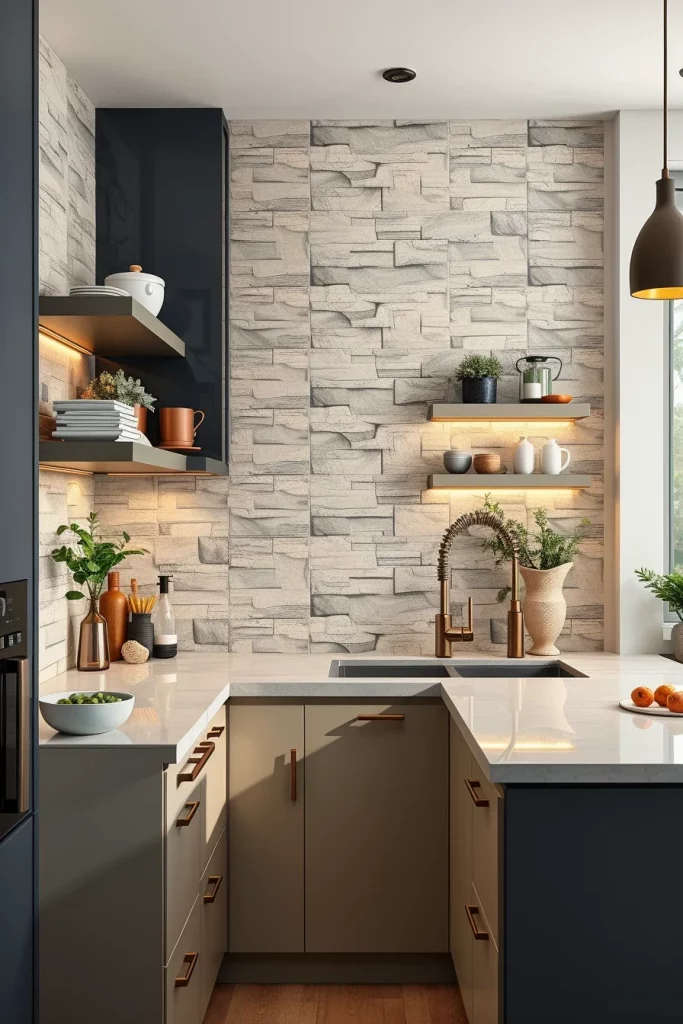
I usually coordinate the backsplash with understated cabinetry so the texture receives full attention. Floating shelves, integrated lighting, elegant faucets, and minimal accessories help maintain visual balance. Depending on the design, I may extend the backsplash to the ceiling behind open shelving or around a window to create a dramatic yet cohesive composition. The continuous surface strengthens the overall architecture of the room.
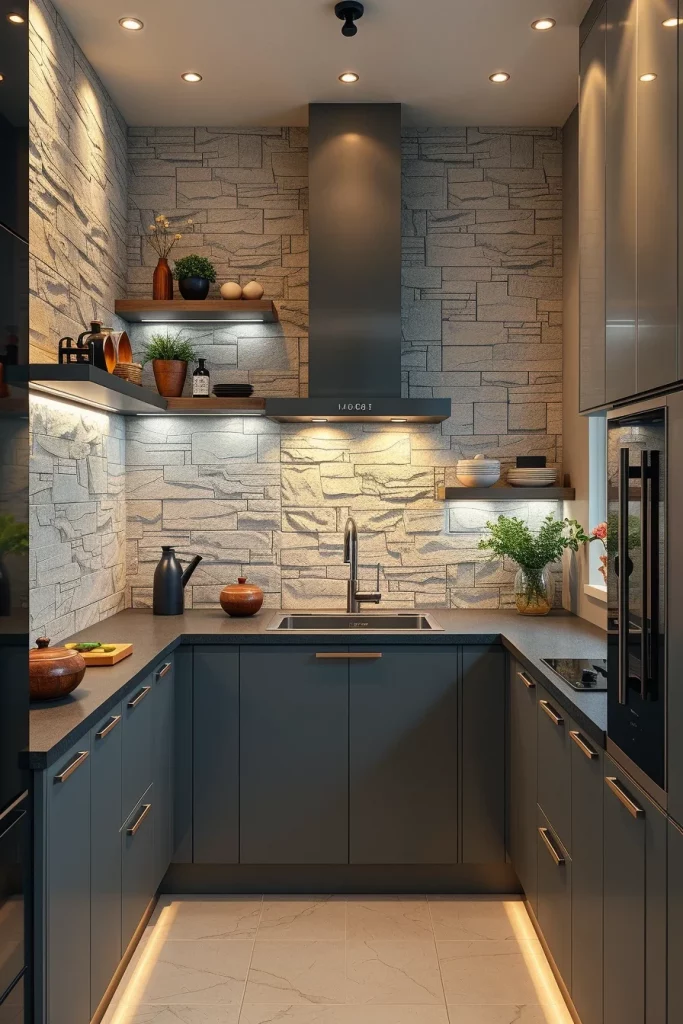
From my perspective, texture often creates more lasting visual interest than bold patterns. Interior designers regularly recommend using tactile materials to add richness without overwhelming small spaces, and I have found that softly textured finishes remain appealing for many years while complementing changing decor.
To finish this design, I would include under-cabinet LED lighting that emphasizes the surface texture, coordinated outlet covers, and carefully selected decorative accessories that echo the colors and materials of the backsplash.
Sculptural Lighting That Elevates Tiny Kitchen Decor
Lighting can completely transform the personality of a tiny kitchen, so I never treat it as an afterthought. Instead of installing ordinary fixtures, I prefer pendants with sculptural forms, organic silhouettes, or artistic geometric shapes that function as decorative centerpieces. A well-designed fixture adds elegance while drawing the eye upward, making the room feel taller and more dynamic.
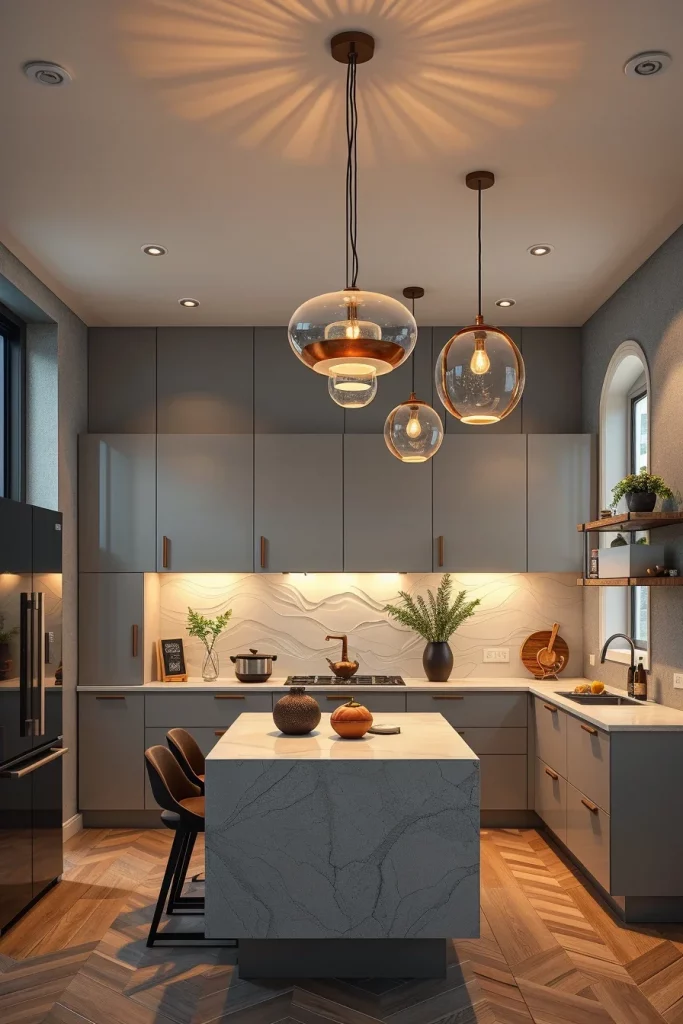
I typically layer several lighting sources throughout the kitchen. Sculptural pendant lights provide ambient illumination, under-cabinet LEDs improve food preparation, recessed ceiling fixtures brighten circulation areas, and subtle accent lighting highlights decorative shelves or textured walls. I also choose warm color temperatures because they create a welcoming atmosphere that complements modern finishes.
In my experience, beautiful lighting influences how every material appears throughout the day. Designers at Architectural Digest have often emphasized layering light instead of relying on a single fixture, and I completely agree because multiple light sources make compact kitchens feel more inviting, functional, and visually balanced.
To complete this concept, I would install dimmers, decorative wall sconces near dining areas, and smart lighting controls that allow the mood of the kitchen to change effortlessly from cooking to entertaining.
Minimalist Countertops With Bold Decorative Accents
I believe minimalist countertops are essential in a tiny kitchen because they allow the room to breathe while highlighting carefully selected decorative pieces. Instead of covering every surface with appliances and accessories, I intentionally leave generous open areas that emphasize the clean lines of the cabinetry. This creates a calm foundation where a few distinctive objects can stand out beautifully and reinforce the stylish character of the kitchen.
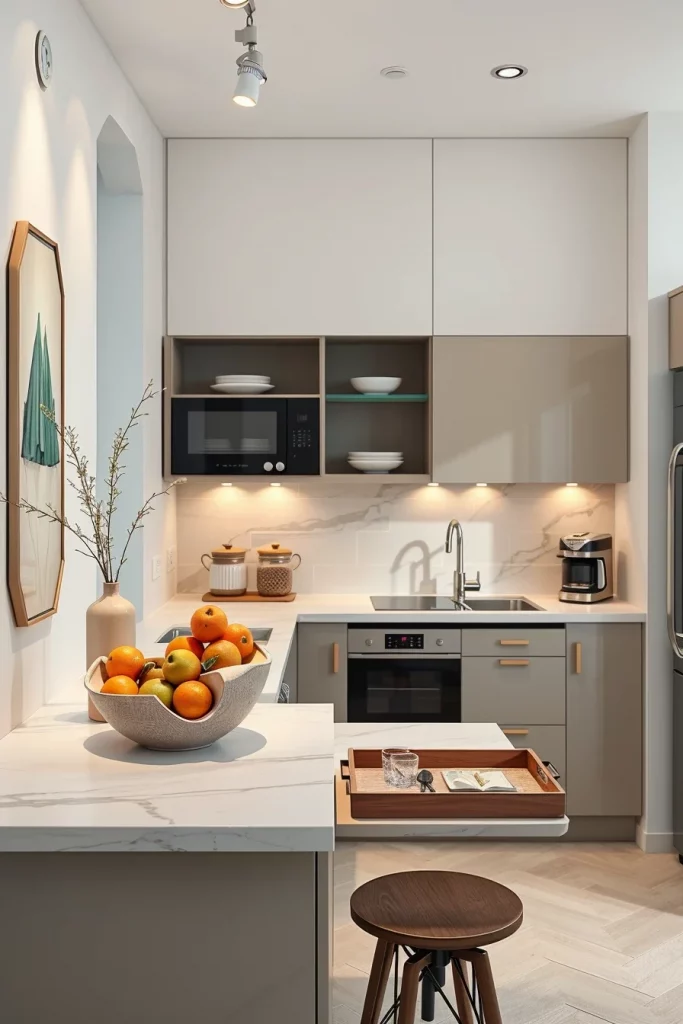
I normally limit countertop accessories to a sculptural fruit bowl, a handmade ceramic vase, an elegant coffee station, and a beautiful tray for oils and spices. High-quality materials such as quartz or porcelain provide durable work surfaces while reflecting natural light throughout the room. Coordinated hardware, decorative stools, and subtle artwork complete the composition without making the kitchen feel crowded.
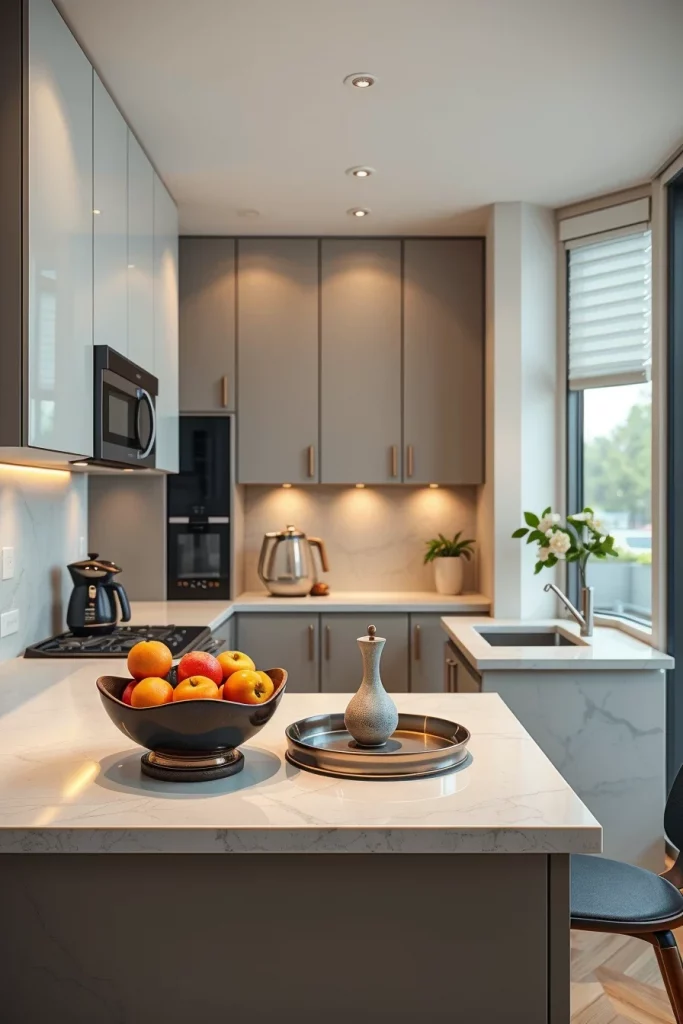
Personally, I have found that editing decorative objects produces a stronger visual impact than constantly adding more accessories. Many interior stylists recommend displaying only meaningful pieces, and I think this approach allows every decorative object to receive the attention it deserves while keeping the kitchen highly functional for everyday cooking.
To make this space even more practical, I would add concealed countertop outlets, integrated cutting board storage, and matching decorative containers that maintain the minimalist aesthetic while improving daily organization.
Unique Breakfast Nooks For Small Kitchen Layouts
A thoughtfully designed breakfast nook can completely change how I experience a tiny kitchen. Instead of treating every corner as leftover space, I like turning an unused alcove or window area into a welcoming dining spot that feels integrated with the rest of the room. Built-in seating makes the layout feel intentional while freeing valuable floor space for movement. A rounded table softens the geometry of compact kitchens, while layered lighting creates an inviting atmosphere throughout the day. This approach makes the kitchen feel larger because every inch serves a meaningful purpose without appearing crowded.
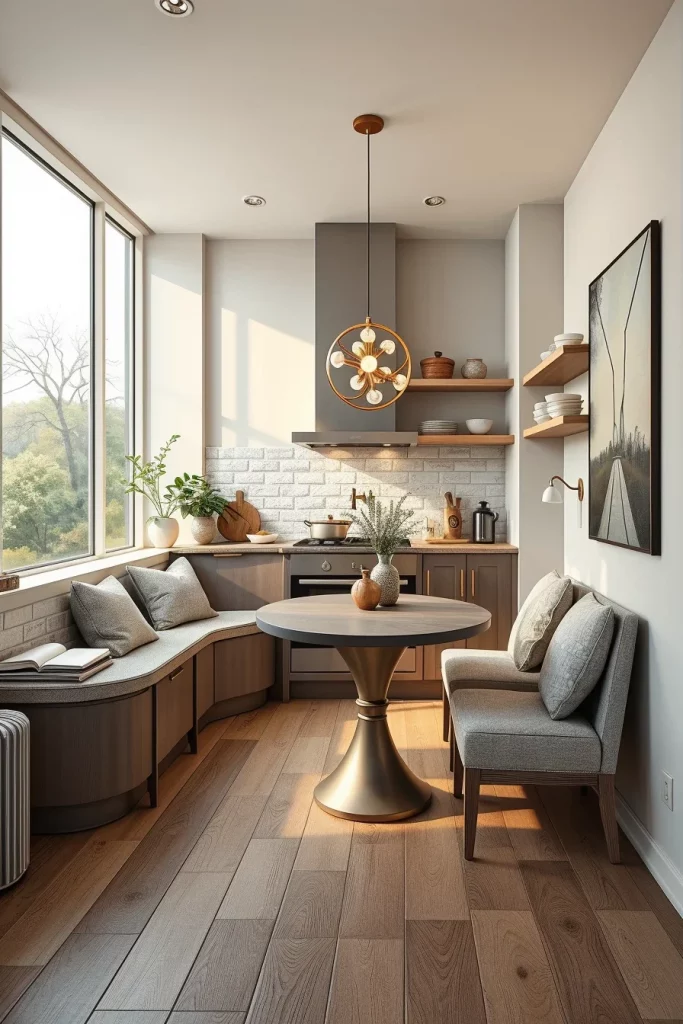
When I design a breakfast nook, I carefully choose furniture that balances comfort with scale. A custom storage bench keeps seasonal linens and cookware hidden while providing comfortable seating. Slim upholstered cushions add warmth without overwhelming the space. I also like incorporating a sculptural pendant light above the table to establish a focal point. Open shelving nearby keeps everyday dishes within reach, while textured fabrics, ceramic tableware, and understated decorative accessories create a welcoming environment. Every piece contributes to both beauty and functionality.
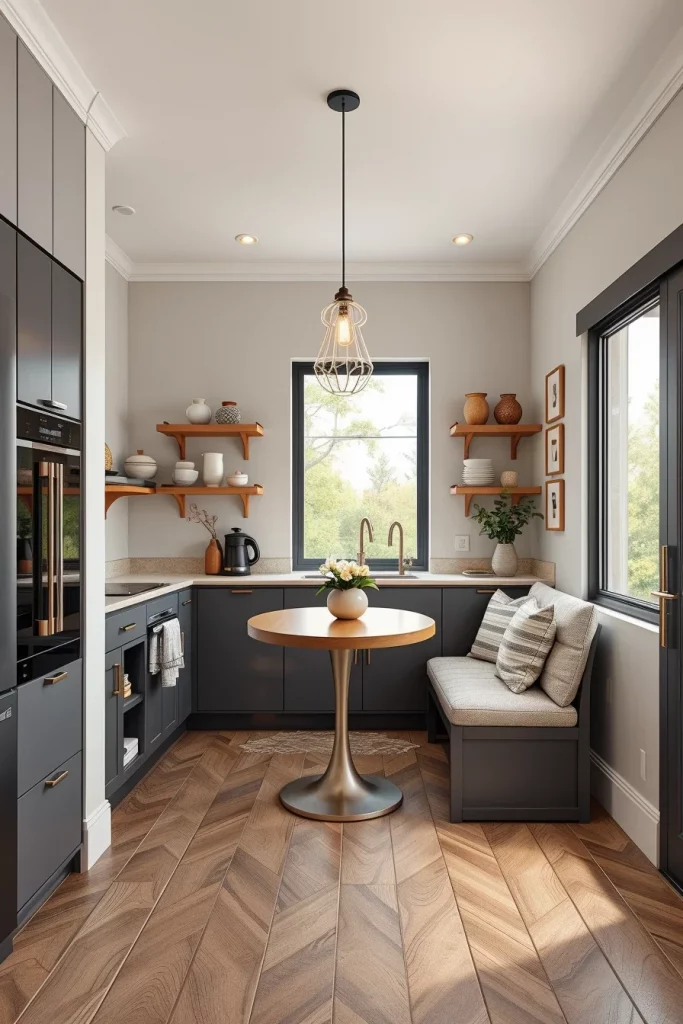
I often recommend looking at ideas shared by publications like Architectural Digest, which frequently highlights built-in seating as an effective way to maximize compact homes without sacrificing elegance. From my own experience, I find that breakfast nooks naturally encourage people to spend more time in the kitchen, making even busy mornings feel calmer and more enjoyable. A carefully styled seating area transforms the kitchen into more than just a workspace.
To complete this design, I would add integrated charging outlets near the seating, layered under-seat LED lighting, and custom cushions made from durable performance fabric. These finishing touches increase convenience while maintaining the polished appearance of the entire nook.
Stylish Glass Cabinets That Reflect Light Beautifully
Glass-front cabinets are one of my favorite ways to make a compact kitchen appear brighter and more spacious. Unlike solid cabinet doors, transparent or lightly fluted glass allows light to travel throughout the room, reducing the visual heaviness often found in small layouts. I prefer combining clear display areas with closed storage so the kitchen remains organized while still showcasing attractive everyday essentials. This simple change creates depth and gives the impression of a much larger interior.
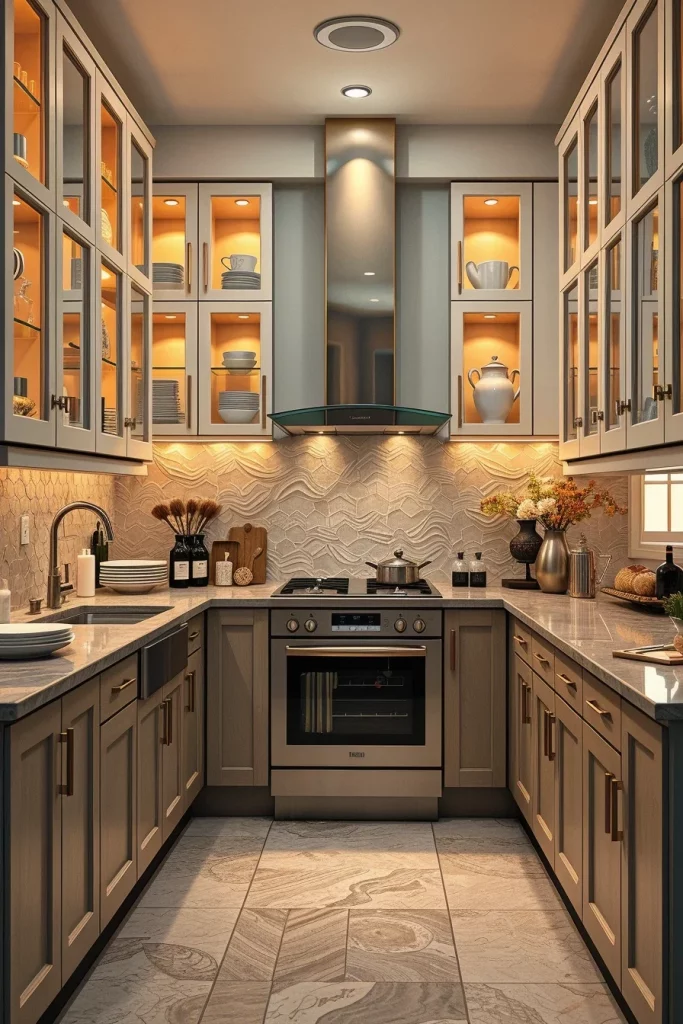
Inside the cabinets, I carefully arrange matching dishes, handcrafted bowls, glassware, and neutral ceramics to create a cohesive display rather than visual clutter. Warm interior cabinet lighting highlights these collections during the evening and adds subtle ambiance. Slim brass handles, minimalist hardware, and continuous cabinetry extending toward the ceiling help emphasize vertical space while maintaining a refined appearance. Every detail contributes to a clean, balanced composition.
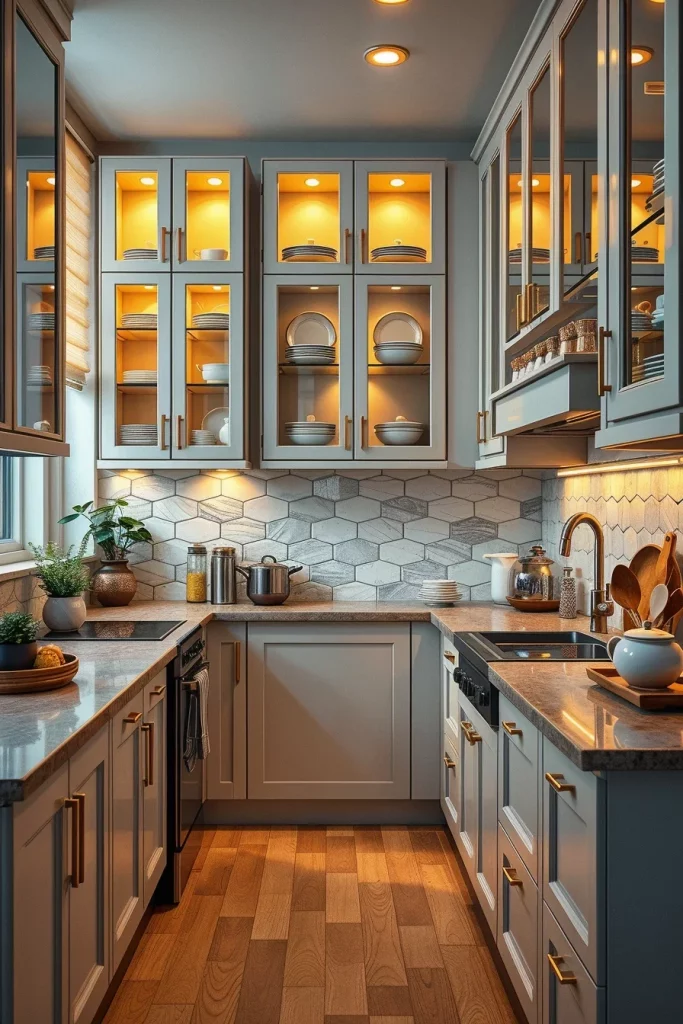
Personally, I believe glass cabinetry works best when it remains selective rather than covering every storage unit. House Beautiful has frequently emphasized the importance of displaying only carefully curated collections, and I completely agree with that philosophy. Limiting visible objects creates a calmer atmosphere while allowing favorite pieces to stand out naturally.
I would also include reflective backsplash materials, discreet under-cabinet lighting, and hidden organizational inserts inside lower cabinets. These additions improve daily functionality while preserving the bright, open feeling that glass cabinetry introduces.
Space-Saving Corner Solutions With Modern Appeal
Corners often become wasted space in compact kitchens, but I see them as opportunities for intelligent design. Instead of leaving difficult areas unused, I prefer incorporating custom corner storage that keeps frequently used items easily accessible. Curved cabinetry, rotating shelving systems, and streamlined layouts help eliminate awkward gaps while improving workflow between the sink, cooktop, and refrigerator. A well-designed corner makes the entire kitchen feel more efficient and visually connected.
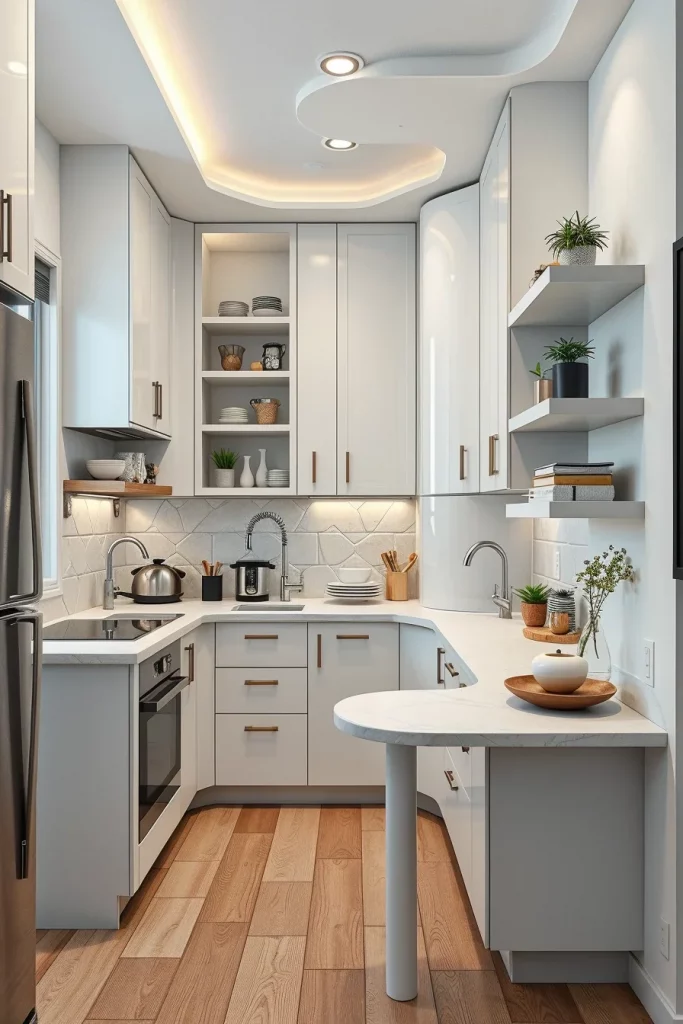
Furniture and storage accessories play an equally important role in maximizing these spaces. I like installing rotating carousel shelves, pull-out corner drawers, and custom inserts that organize cookware according to size and frequency of use. Rounded open shelves can display decorative bowls or cookbooks without making the kitchen feel crowded. Combining these storage features with continuous countertops creates an uninterrupted workspace that appears larger than its actual footprint.
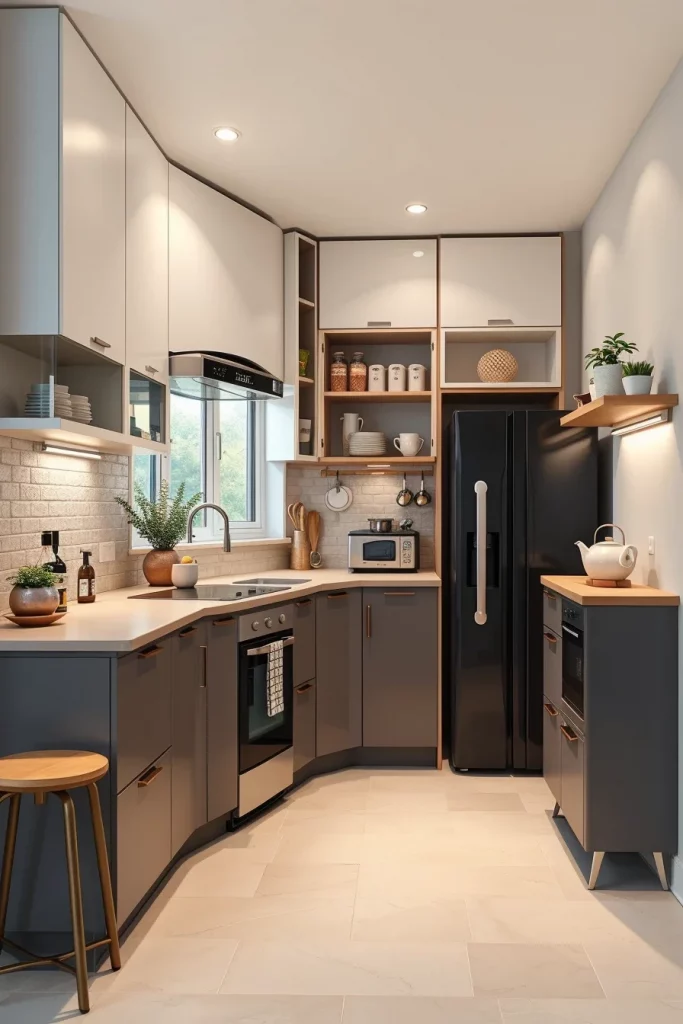
From my perspective, successful corner planning is less about adding more storage and more about making existing storage easier to use. Designers frequently featured by Better Homes & Gardens often recommend improving accessibility before increasing cabinet quantity, and I have found that advice extremely practical in everyday kitchens.
To enhance this concept even further, I would introduce integrated lighting inside deep corner cabinets, concealed recycling compartments, and durable countertop materials with softly rounded edges that improve both safety and visual flow.
Decorative Wall Niches That Blend Beauty And Storage
Decorative wall niches provide valuable storage without occupying precious floor space, making them one of my preferred design features in tiny kitchens. Instead of relying entirely on upper cabinets, I enjoy creating recessed shelving that becomes part of the architecture itself. These niches display carefully selected ceramics, spices, serving boards, or decorative objects while preserving an open and airy atmosphere. Because they sit flush with the wall, they add function without making the room feel smaller.
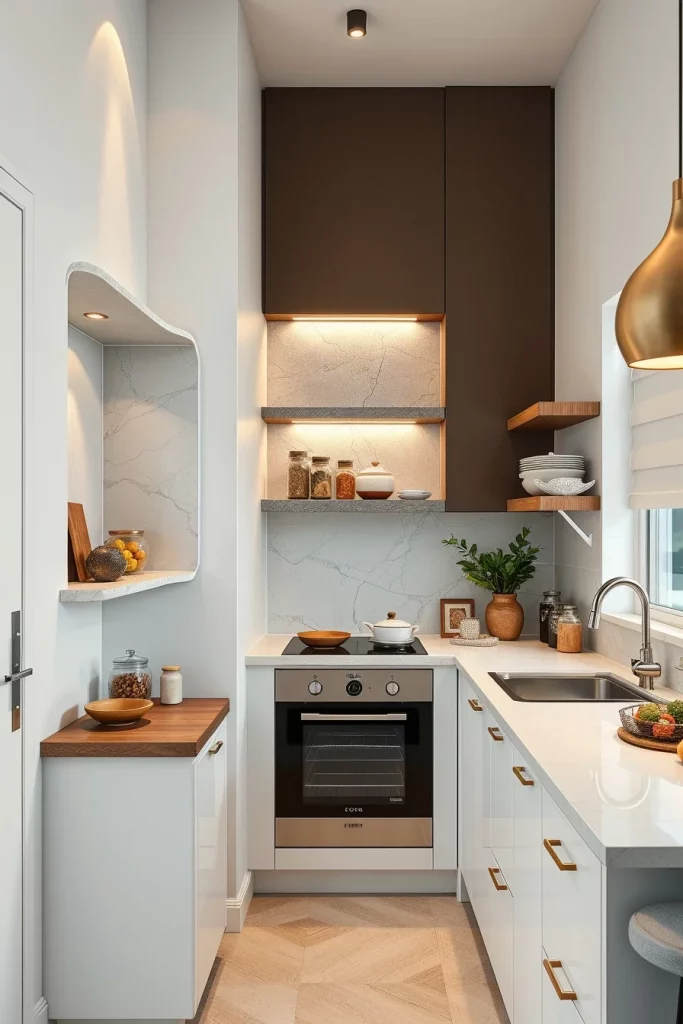
I usually style each niche with restraint so every object has room to breathe. Handmade pottery, stacked cookbooks, glass jars filled with pantry staples, and subtle integrated lighting create visual interest while maintaining order. Natural stone shelves or painted recessed surfaces can add depth without introducing unnecessary complexity. Every decorative element contributes to the overall composition while remaining practical for daily use.
Personally, I appreciate how wall niches encourage intentional decorating. Rather than filling every available surface, they inspire thoughtful curation. Interior designers featured by Elle Decor often emphasize negative space as an important element of modern interiors, and I find that principle especially valuable in compact kitchens where visual calm makes a significant difference.
To finish this feature, I would incorporate dimmable LED lighting, moisture-resistant shelf materials, and coordinated decorative accessories that complement the kitchen’s overall color palette while maintaining long-term durability.
Compact Kitchen Decor With Mixed Natural Textures
One of the easiest ways I create warmth in a tiny kitchen is by layering complementary textures instead of relying on excessive decoration. Mixing stone countertops, textured plaster walls, woven seating, linen window treatments, matte cabinetry, and handcrafted ceramics introduces depth without overwhelming the room. These materials create visual richness while allowing the overall design to remain clean, modern, and highly functional. Texture often becomes the element that gives small kitchens genuine personality.
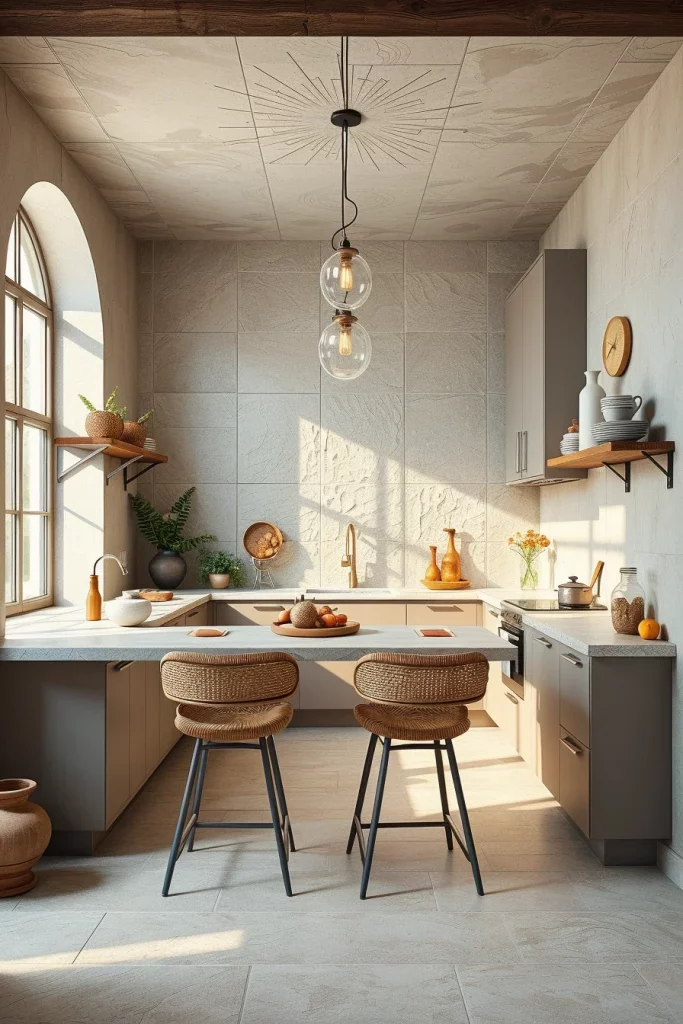
When selecting furniture and accessories, I focus on pieces that emphasize craftsmanship. A simple dining chair with woven details, handcrafted ceramic vases, textured bar stools, linen cushions, and understated decorative trays all contribute subtle variation. Matte finishes pair beautifully with lightly polished surfaces, creating balance throughout the room. I also like incorporating sculptural pendant lighting that complements these materials without competing for attention.
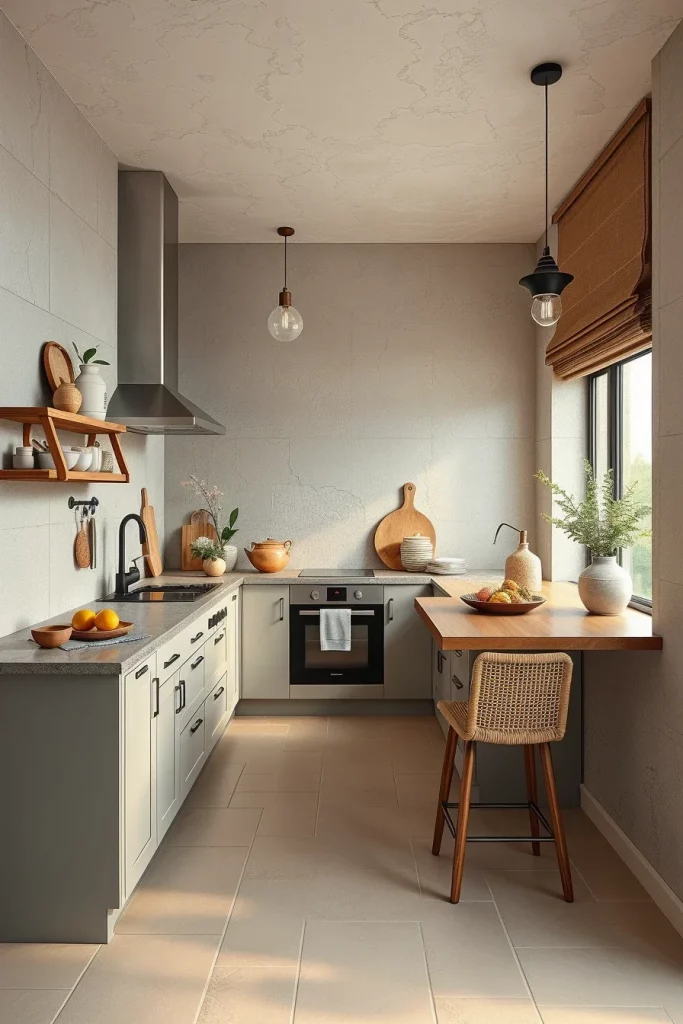
From my experience, combining textures works best when the color palette remains restrained. Many designers featured in Dwell recommend emphasizing material quality over excessive ornamentation, and I have consistently found that approach creates interiors that remain timeless rather than trend-driven.
I would complete this design with layered ambient lighting, carefully selected artwork, concealed storage solutions, and high-quality hardware that reinforces the sophisticated yet comfortable atmosphere of the entire kitchen.
Artistic Range Hood Designs That Become Centerpieces
A range hood does not have to disappear into the background, especially in a tiny kitchen where every design choice matters. I enjoy treating the hood as an architectural feature that immediately draws attention while still performing its essential function. A curved plaster hood, a sculptural metal form, or a custom stone-clad design can become the visual anchor of the room without overwhelming the limited space. This approach creates a creative and artistic focal point that makes the kitchen feel carefully designed rather than simply functional.
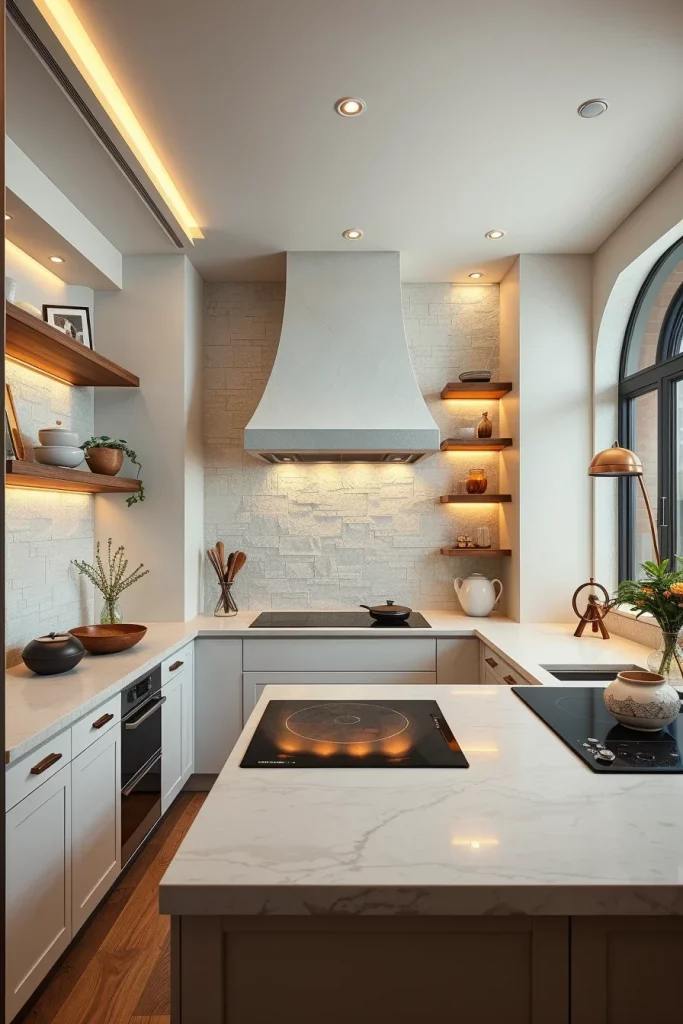
When selecting the surrounding elements, I prefer keeping the cabinetry clean and understated so the hood naturally becomes the centerpiece. A full-height backsplash in natural stone or large-format porcelain emphasizes the vertical lines, while integrated lighting highlights the texture of the hood itself. I often pair it with sleek induction cooking surfaces, hidden ventilation controls, floating shelves, and handcrafted accessories that reinforce the overall composition. Every piece contributes to a balanced design where beauty and practicality work together.
I have noticed that many interior designers featured by Architectural Digest showcase statement range hoods because they instantly give compact kitchens a custom appearance. In my own projects, I find this investment worthwhile since it transforms an ordinary cooking area into a memorable design feature that guests immediately notice without compromising everyday usability.
To complete this concept, I would include quiet high-performance ventilation, concealed storage around the hood, layered lighting, and heat-resistant finishes that ensure both durability and long-term visual appeal.
Tiny Kitchen Decor Featuring Oversized Statement Art
Many people assume large artwork belongs only in spacious homes, but I have found that oversized art can make a tiny kitchen feel surprisingly sophisticated. A single large painting or abstract print often creates a stronger visual impact than several smaller decorative pieces. Instead of making the room feel crowded, one carefully selected artwork introduces personality while maintaining visual simplicity. This is one of my favorite ways to create a stylish, unique, and unusual kitchen without adding unnecessary furniture.
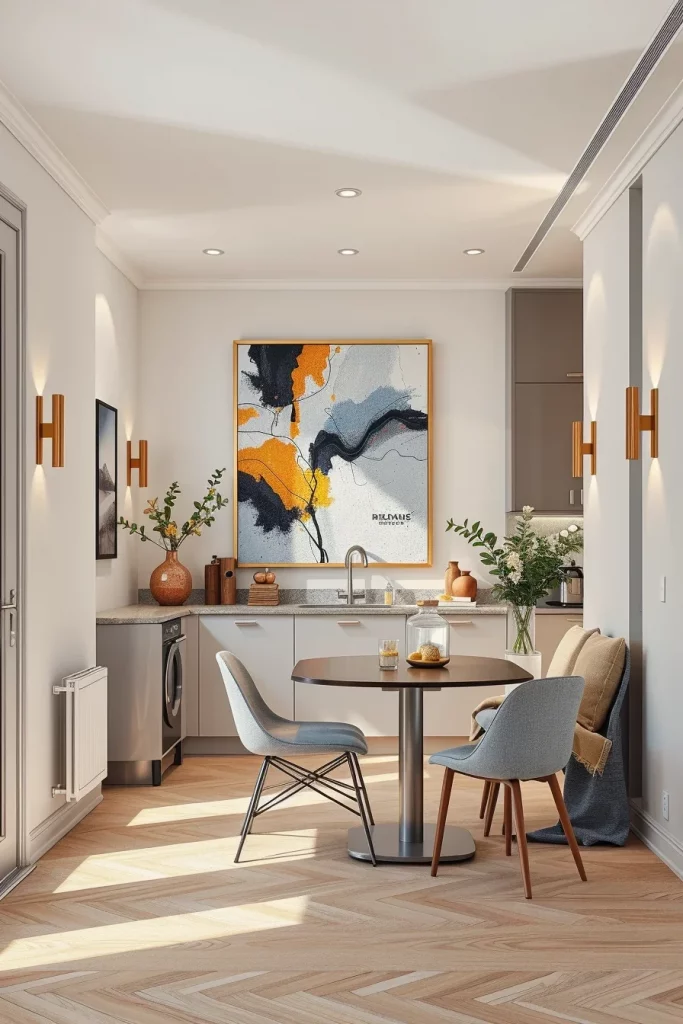
I like positioning statement art on the main wall opposite the cabinetry or above a compact dining area where it becomes the focal point. Slim frames, neutral color palettes, sculptural wall sconces, and minimal accessories allow the artwork to remain the center of attention. Nearby furniture should remain simple, with streamlined chairs, compact tables, and discreet storage ensuring the composition feels balanced rather than busy.
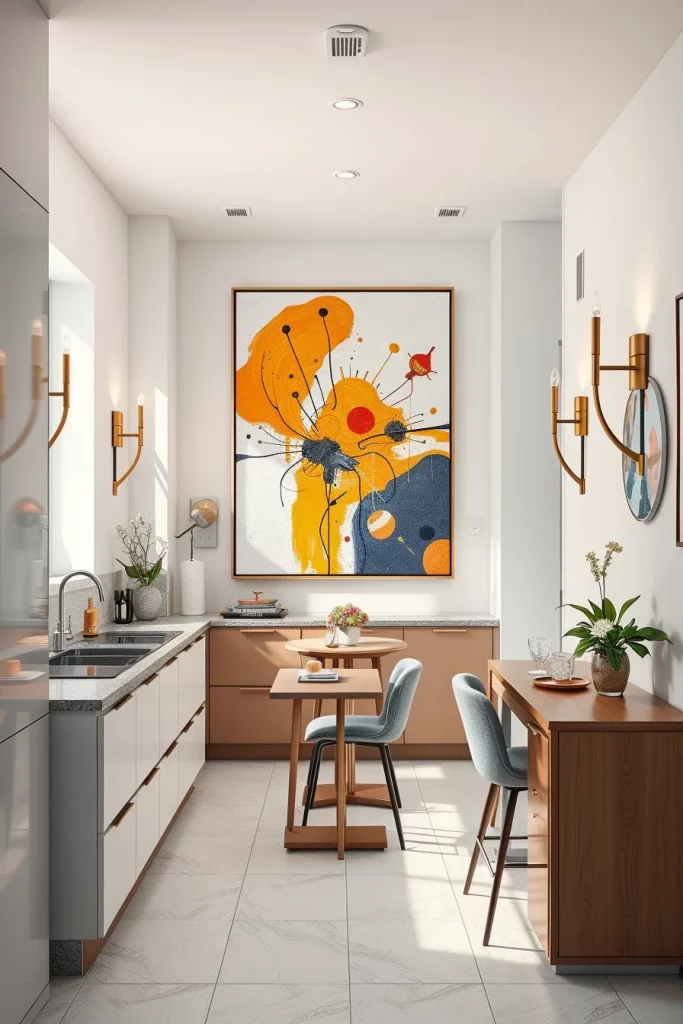
Personally, I believe artwork should reflect the homeowner’s personality instead of following short-lived trends. Designers frequently interviewed by Elle Decor recommend selecting pieces that create an emotional connection, and I completely agree. The right artwork gives even the smallest kitchen warmth, individuality, and lasting character that cannot be achieved through decoration alone.
I would also introduce museum-quality picture lighting, subtle decorative objects that complement the artwork, and carefully coordinated textiles that reinforce the chosen color palette throughout the entire room.
Creative Pantry Storage Hidden Inside Small Kitchens
Efficient pantry storage becomes even more valuable when working with limited square footage. Rather than dedicating an entire room to food storage, I like incorporating hidden pantry solutions directly into the cabinetry. Pull-out pantry towers, concealed vertical cabinets, toe-kick drawers, and integrated shelving allow me to organize groceries without sacrificing precious workspace. These creative storage ideas make the kitchen feel larger because everything has its own designated place.
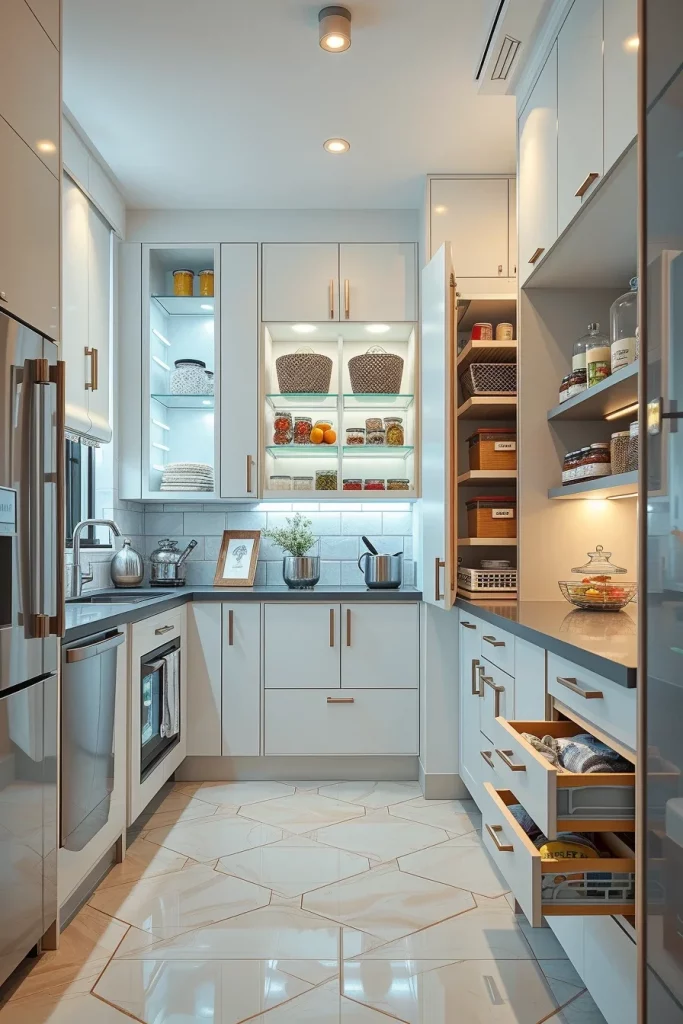
Inside the pantry, I organize ingredients using matching airtight containers, adjustable shelving, labeled baskets, and pull-out organizers that improve visibility. Full-extension drawers make it easy to reach items stored at the back, while vertical dividers neatly separate baking trays and cutting boards. I also appreciate built-in spice storage located near the cooking area to simplify meal preparation while reducing countertop clutter.
In my experience, organization is more important than simply increasing storage capacity. Better Homes & Gardens often recommends creating clearly defined storage zones based on daily routines, and I have found that advice extremely effective. When every item has a logical location, even the smallest kitchen becomes easier to maintain and significantly more enjoyable to use.
To improve this pantry system further, I would add automatic interior lighting, moisture-resistant shelving materials, hidden appliance storage, and adjustable organizers that can adapt as household needs change over time.
Elegant Metallic Accents For A Sophisticated Finish
Metallic finishes can elevate a compact kitchen when used thoughtfully and in moderation. Rather than covering every surface with reflective materials, I prefer introducing carefully selected accents that catch the light and add depth. Warm brass, brushed nickel, blackened steel, or soft bronze create subtle contrast against matte cabinetry while enhancing the room’s overall sophistication. These refined details help create a stylish atmosphere without overwhelming the compact layout.
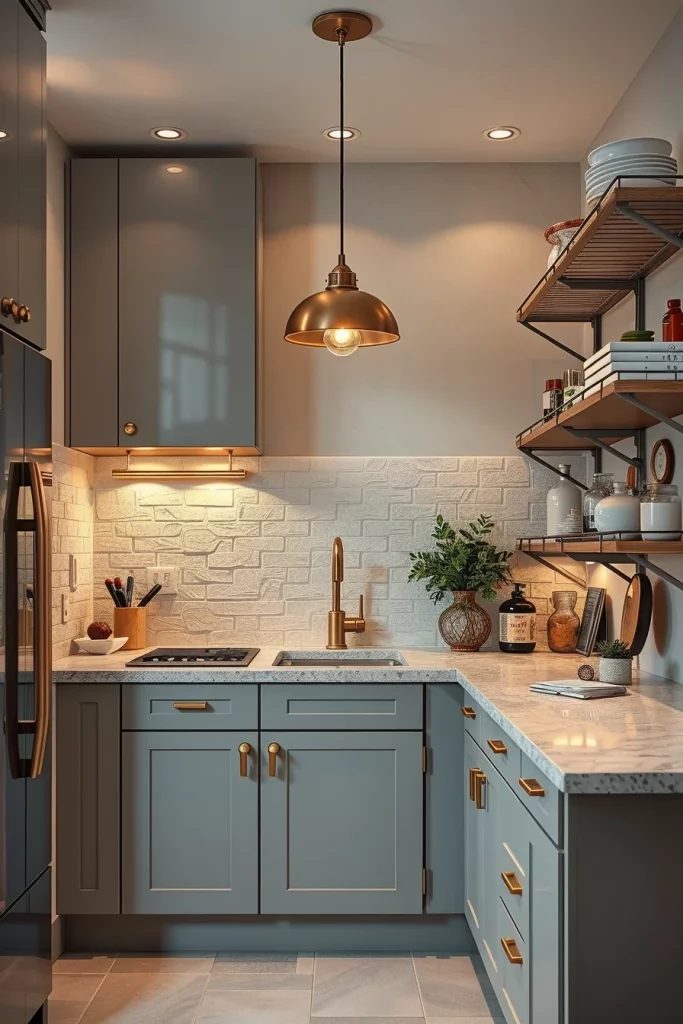
I usually incorporate metallic finishes through cabinet hardware, faucets, lighting fixtures, shelving brackets, and decorative accessories. Mixing two complementary finishes often creates a more layered appearance while maintaining visual harmony. Soft under-cabinet lighting reflects gently from these surfaces, producing warmth rather than excessive shine. Combined with stone countertops and textured cabinetry, metallic accents contribute elegance while remaining timeless.
I have found that restraint is essential when decorating with metals. House Beautiful regularly highlights the importance of repeating the same finish throughout a room to establish cohesion, and I agree with this approach because consistency makes compact interiors feel more intentional and professionally designed.
I would complete this design with integrated appliance panels, matching metallic trim around open shelving, layered lighting temperatures, and durable finishes that resist fingerprints while preserving their appearance for many years.
Multifunctional Dining Spaces Designed For Tiny Kitchens
In a tiny kitchen, I always look for ways to make one area serve multiple purposes. A dining space can become a breakfast area, remote workspace, food preparation station, and gathering place without feeling crowded. Fold-down tables, extendable surfaces, built-in banquettes, and movable seating allow the room to adapt throughout the day. This flexibility creates a unique kitchen that responds naturally to changing daily routines while remaining visually organized.
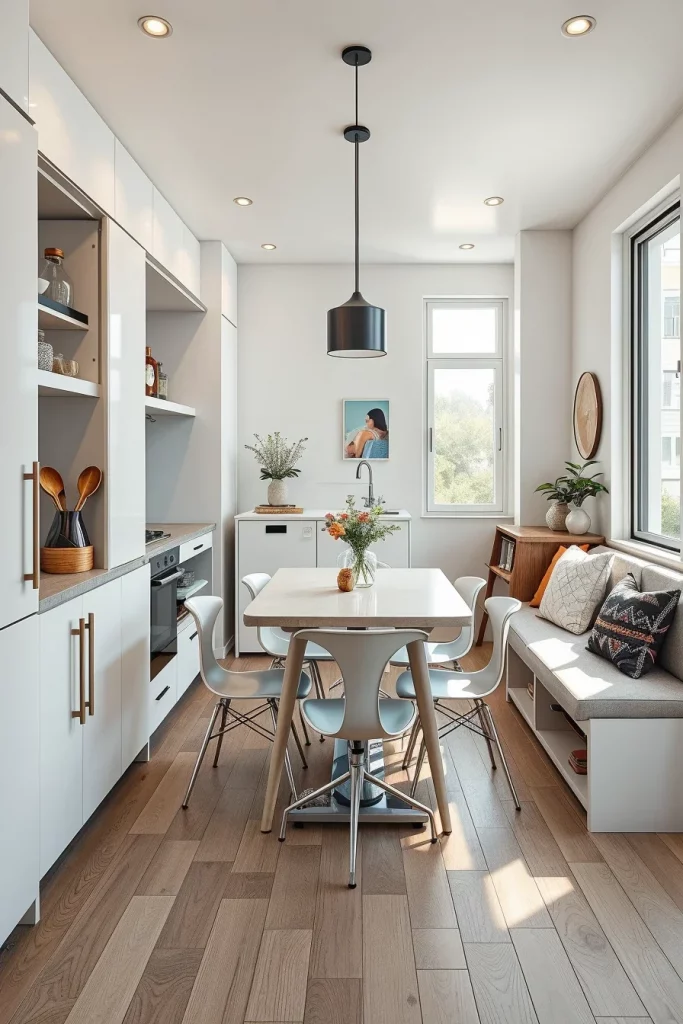
Furniture selection plays a major role in achieving this versatility. I prefer expandable tables with concealed storage, stackable chairs, upholstered benches with hidden compartments, and lightweight stools that can easily be relocated. Adjustable lighting above the table helps define the dining area, while nearby shelving provides convenient access to tableware and decorative objects. Every element supports multiple functions without sacrificing comfort or style.
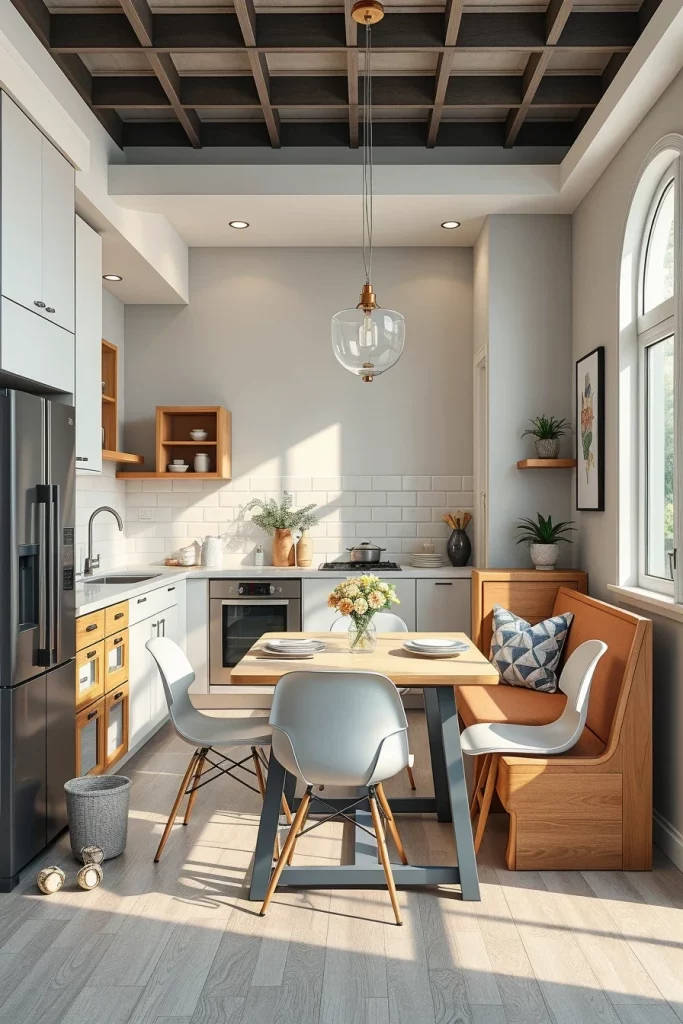
From my perspective, multifunctional furniture represents one of the smartest investments for compact living. Publications such as Dwell frequently feature adaptable interiors where furniture evolves alongside daily activities, and I have consistently found this philosophy practical for modern homes. The ability to transition effortlessly between cooking, dining, and working makes even the smallest kitchen feel remarkably capable.
To complete this layout, I would add integrated power outlets near the dining area, flexible lighting controls, washable upholstery fabrics, and concealed storage solutions that keep everyday essentials within easy reach while maintaining a clean and welcoming environment.
Stylish Window Treatments That Enhance Natural Light
When I decorate a tiny kitchen, I always begin with the windows because natural light has the greatest influence on how spacious the room feels. Instead of covering windows with heavy curtains, I prefer tailored Roman shades, woven light-filtering blinds, or airy linen panels that soften sunlight while maintaining privacy. These options make the kitchen feel brighter, cleaner, and visually larger without overwhelming the limited wall space. I also like selecting neutral fabrics with subtle texture so the window treatment contributes to the room’s overall design rather than competing with it.
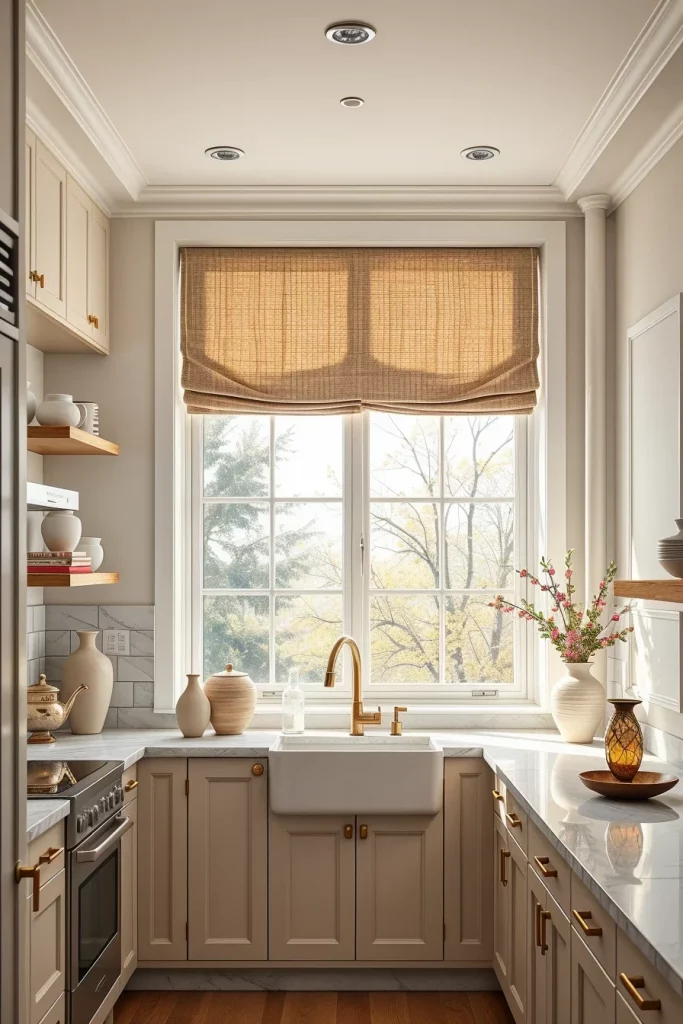
I usually coordinate the window treatments with the cabinetry, backsplash, and hardware to create a cohesive appearance. Slim black curtain rods, minimalist brass hardware, woven shades, floating shelves near the window, and compact dining furniture all work together beautifully. A simple windowsill can display ceramic vases, sculptural bowls, or a few carefully chosen decorative objects without blocking daylight. Every piece should support the room’s function while adding warmth and personality.
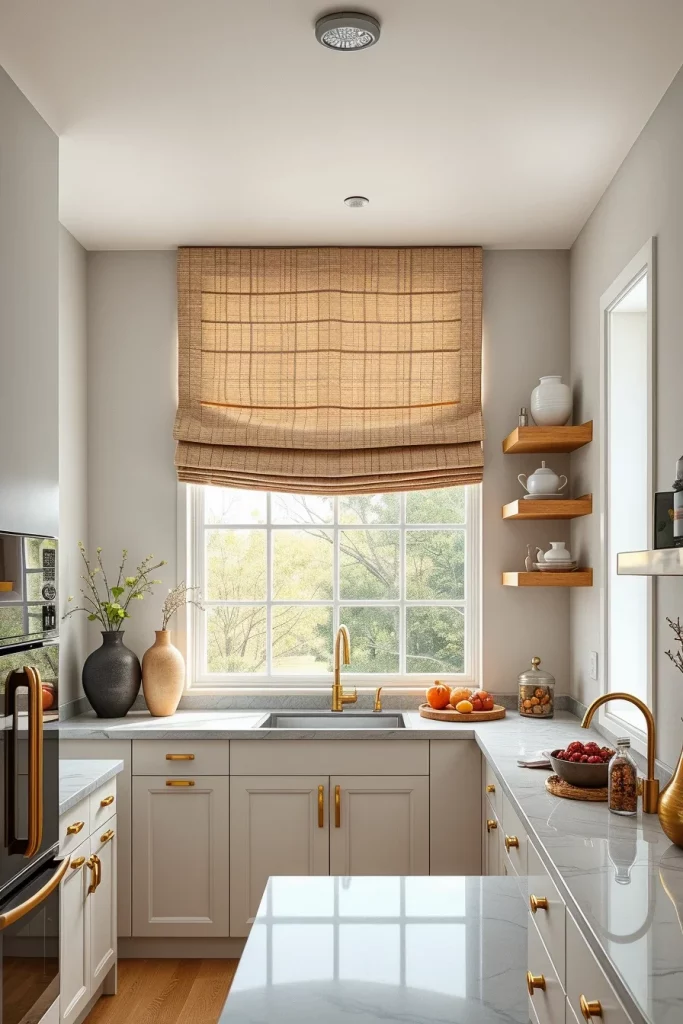
Many interior designers, including experts featured by Architectural Digest, often emphasize maximizing natural light in compact interiors because it visually expands the room. I completely agree with this advice because I’ve seen how replacing bulky curtains with refined window treatments instantly transforms even the smallest kitchen into a more welcoming space. In my experience, allowing daylight to become part of the design is one of the most valuable decorating decisions.
To complete this look, I would also include layered lighting for evenings, such as under-cabinet LED strips and a small sculptural pendant fixture that complements the daylight during the day while maintaining a cozy atmosphere after sunset.
Decorative Ceiling Features That Add Architectural Interest
I often find that homeowners overlook the ceiling, yet it offers valuable design opportunities in a compact kitchen. Decorative ceiling beams, shallow coffered details, painted ceiling panels, subtle wood slat accents, or modern geometric moldings naturally draw the eye upward and make the room appear taller. Even in a very small kitchen, carefully designed ceiling details create visual depth without occupying valuable floor space.
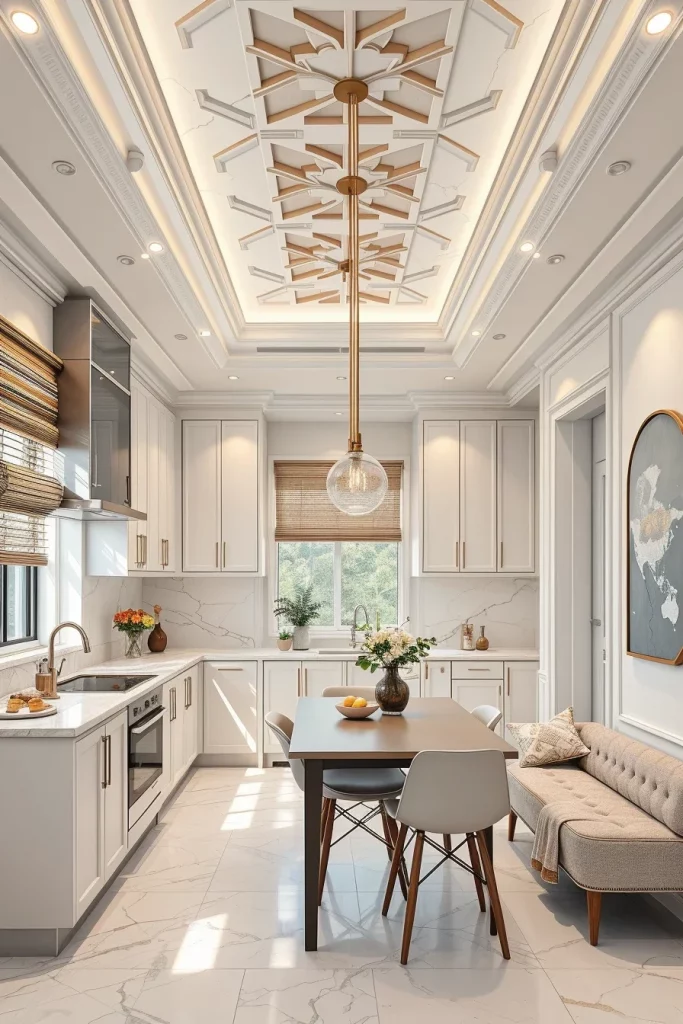
I like combining decorative ceilings with recessed lighting, slim pendant lights, flat-panel cabinetry, and streamlined furniture to maintain an uncluttered appearance. A softly textured ceiling finish paired with matte cabinets and clean countertops creates balance throughout the room. I also appreciate adding ceiling-mounted shelving over an island when ceiling height allows, making the architecture both beautiful and practical.
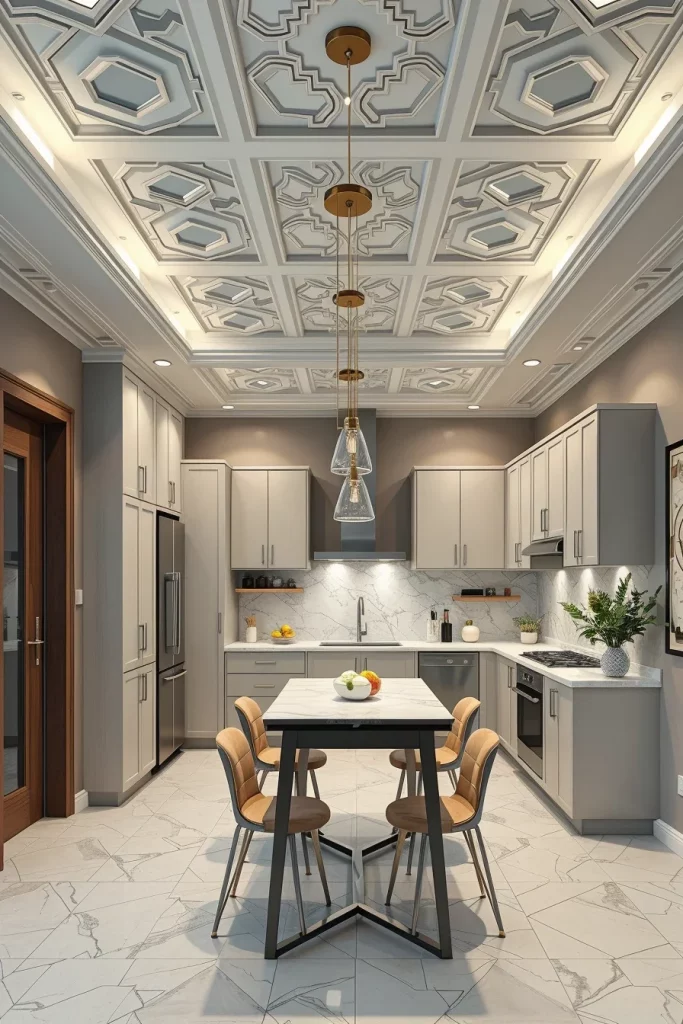
From my perspective, ceiling design is one of the easiest ways to introduce artistic character without overcrowding the kitchen. Publications like House Beautiful frequently highlight the importance of treating ceilings as the “fifth wall,” and I believe this approach works especially well in tiny kitchens where every visible surface contributes to the overall experience.
If I wanted to enhance this concept further, I would add dimmable architectural lighting that highlights the ceiling details during the evening, allowing the decorative elements to become part of the room’s atmosphere rather than simply structural features.
Sculptural Bar Stools For Compact Kitchen Seating
Whenever I include seating in a tiny kitchen, I prefer stools that function as decorative objects as well as practical furniture. Slim metal frames, curved wooden seats, molded acrylic designs, or upholstered stools with flowing silhouettes introduce sculptural elegance while taking up very little visual space. Their refined shapes create movement throughout the kitchen without making the room feel crowded.
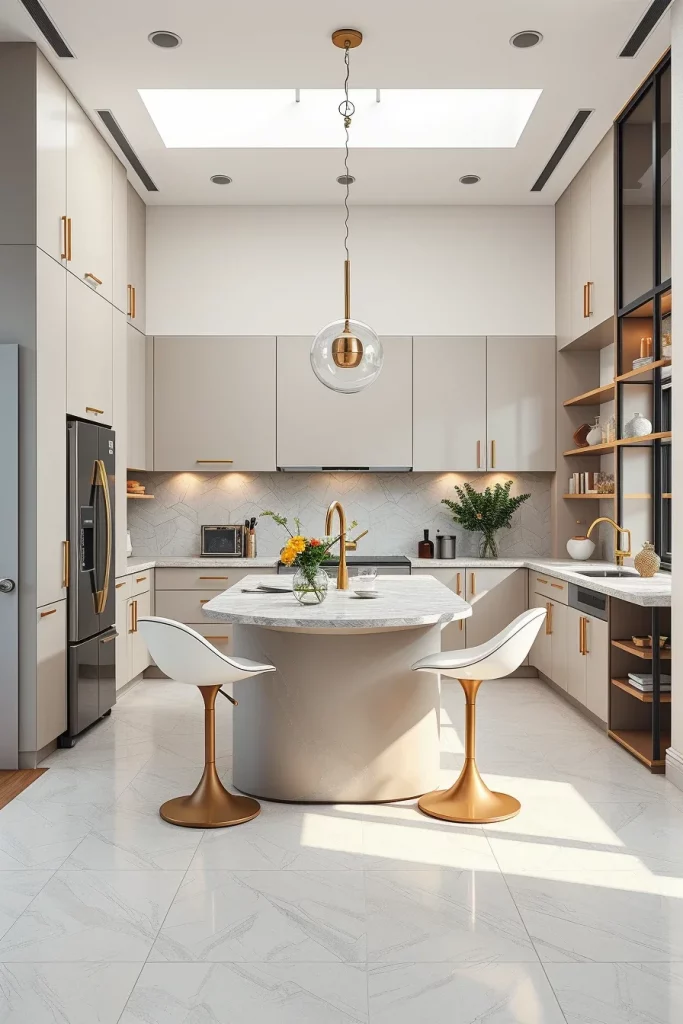
I usually position the stools beside a narrow peninsula or compact island with waterfall edges. Rounded corners improve circulation, while soft upholstery provides comfort during everyday meals. I also coordinate the stool finish with cabinet handles, faucets, open shelving brackets, and decorative accessories to establish consistency throughout the room. Small details such as textured fabrics or brushed metal finishes elevate the overall design considerably.
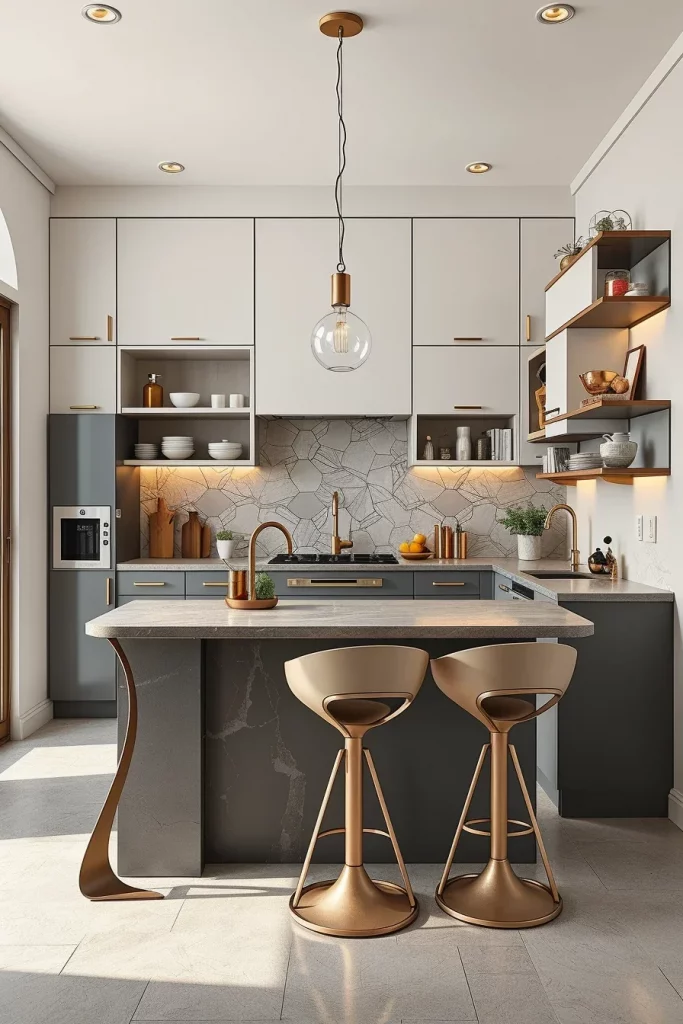
Personally, I believe furniture should always contribute to the visual story of a room. I often notice that well-designed seating becomes an instant conversation piece while remaining completely functional. Designers featured in Elle Decor regularly recommend investing in statement seating for smaller interiors because one beautiful furniture piece often has greater impact than multiple decorative accessories, and I have found this advice consistently useful.
To make the seating area even more inviting, I would introduce a compact pendant light above the island, a textured runner beneath nearby cabinetry, and carefully selected countertop decor that echoes the curves of the stools.
Unique Kitchen Decor Inspired By Organic Shapes
One of my favorite approaches to unique kitchen styling is introducing soft organic forms that contrast with traditional straight cabinetry. Rounded shelving, curved islands, circular mirrors, sculptural lighting, flowing cabinet pulls, and irregular ceramic accessories create a welcoming atmosphere that feels calm rather than rigid. Organic shapes naturally soften compact rooms while adding visual sophistication.
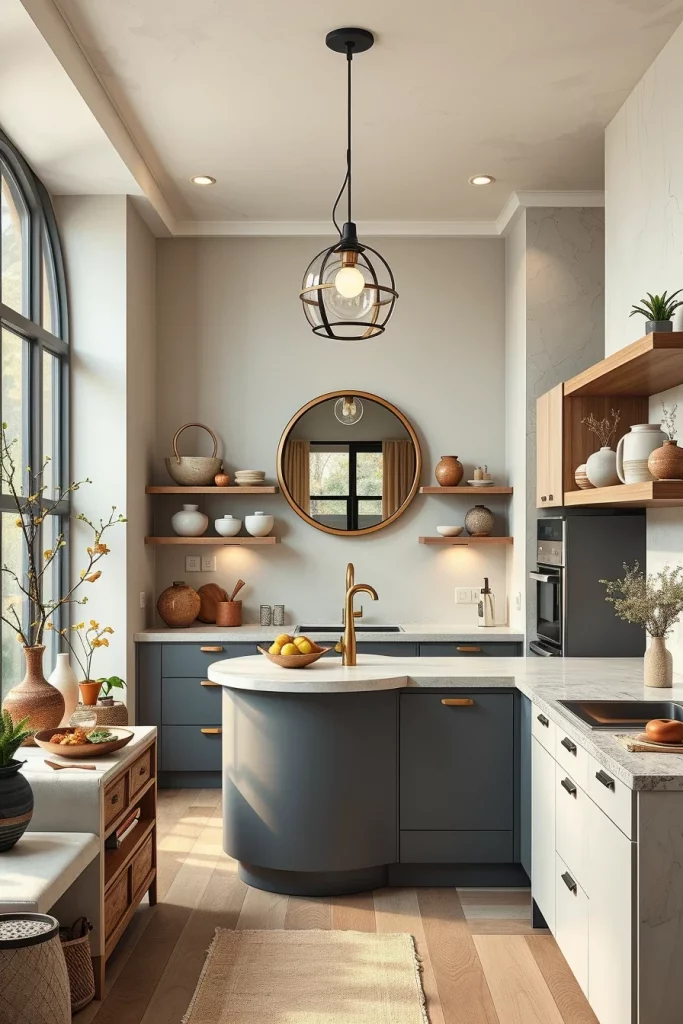
I enjoy pairing curved furniture with natural stone countertops, softly textured backsplashes, rounded cutting boards, handcrafted bowls, decorative vases, and minimalist open shelving. Even small decorative details such as curved cabinet hardware or oval trays contribute to a harmonious design language. I always try to repeat these shapes throughout the kitchen so the design feels intentional rather than random.
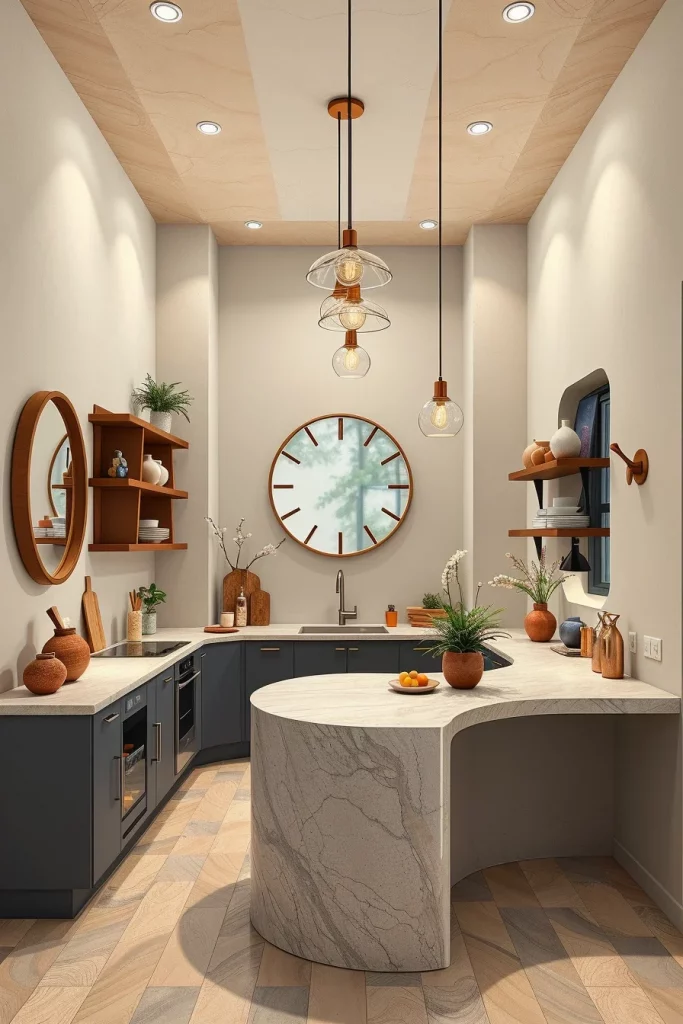
In my experience, repeating organic forms throughout a room creates balance without overwhelming the space. Designers frequently discuss biophilic-inspired interiors because softer forms often make compact rooms feel more comfortable and inviting. I appreciate this philosophy because it encourages thoughtful decorating instead of unnecessary excess.
I would complete this concept by incorporating subtle indirect lighting beneath floating shelves, allowing the curved silhouettes and decorative objects to cast soft shadows that further emphasize the room’s organic character.
Bold Monochromatic Tiny Kitchen Designs With Personality
A monochromatic palette can completely transform a small kitchen when used thoughtfully. I often recommend choosing one dominant color and layering different tones, finishes, and textures throughout the room. Deep charcoal, warm taupe, creamy white, muted olive, or rich navy can all produce a dramatic yet balanced interior. This approach creates a stylish and cohesive environment while preventing visual clutter.
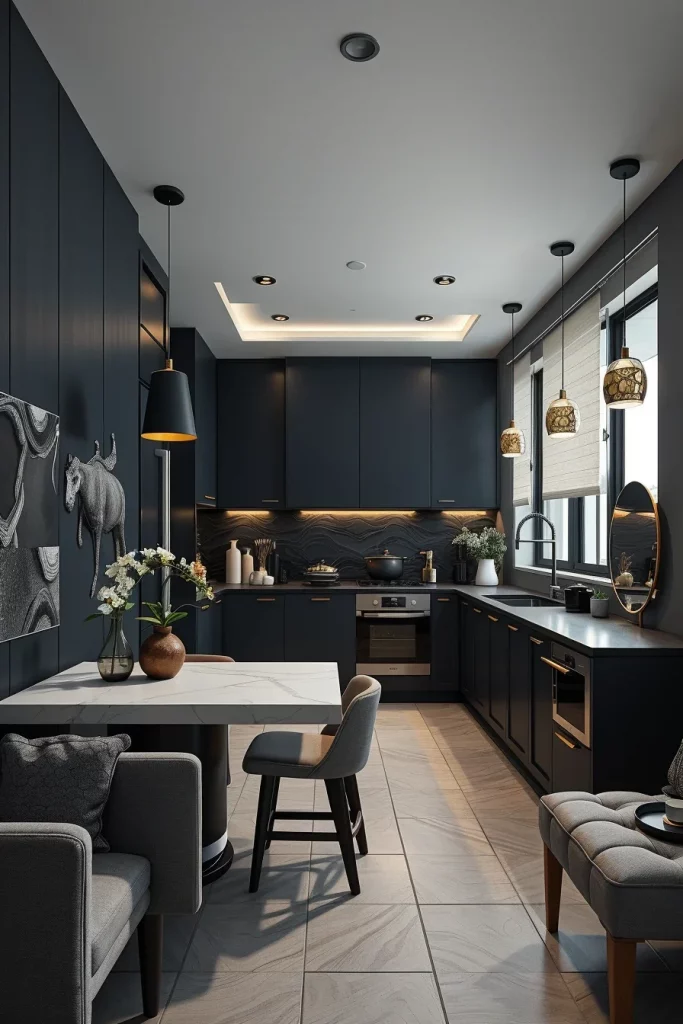
I combine flat-panel cabinetry, matching countertops, textured backsplashes, integrated appliances, sculptural lighting, minimalist hardware, and coordinated dining furniture within the same color family. Texture becomes especially important because it provides depth where color variation is intentionally limited. Matte finishes paired with polished accents keep the room dynamic without feeling busy.
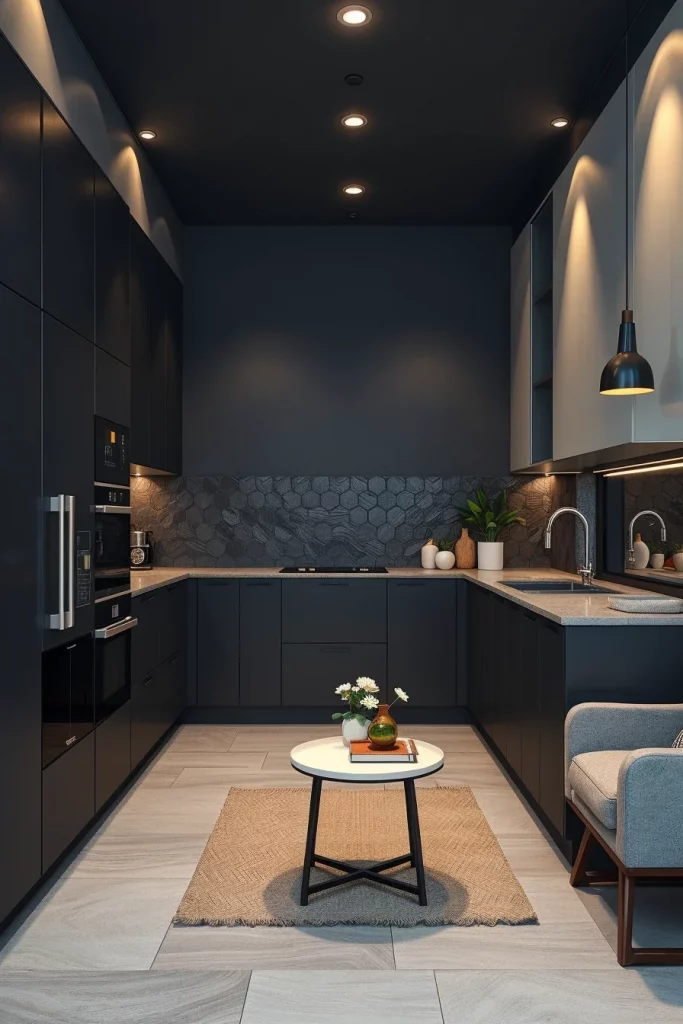
I personally enjoy monochromatic kitchens because they allow decorative details to stand out naturally. Better Homes & Gardens has often recommended layering materials instead of adding excessive colors, and I think this advice is especially valuable in tiny kitchens where visual simplicity contributes to a sense of openness. My favorite monochromatic interiors always feel elegant without becoming predictable.
To strengthen this design, I would introduce subtle accent lighting inside glass cabinets, display carefully selected ceramics, and include one statement artwork that complements the chosen color palette while maintaining the room’s cohesive appearance.
Artistic Tile Patterns That Define Small Kitchen Style
When I want a tiny kitchen to make a memorable impression, I often begin with the backsplash or flooring. Carefully selected tile patterns introduce an artistic focal point without requiring additional decorative clutter. I enjoy using oversized geometric layouts, elongated vertical tiles, hand-glazed ceramic finishes, or textured stone-look porcelain that reflects light beautifully. In a compact kitchen, a thoughtfully designed tile installation immediately adds personality while maintaining a clean and organized appearance.
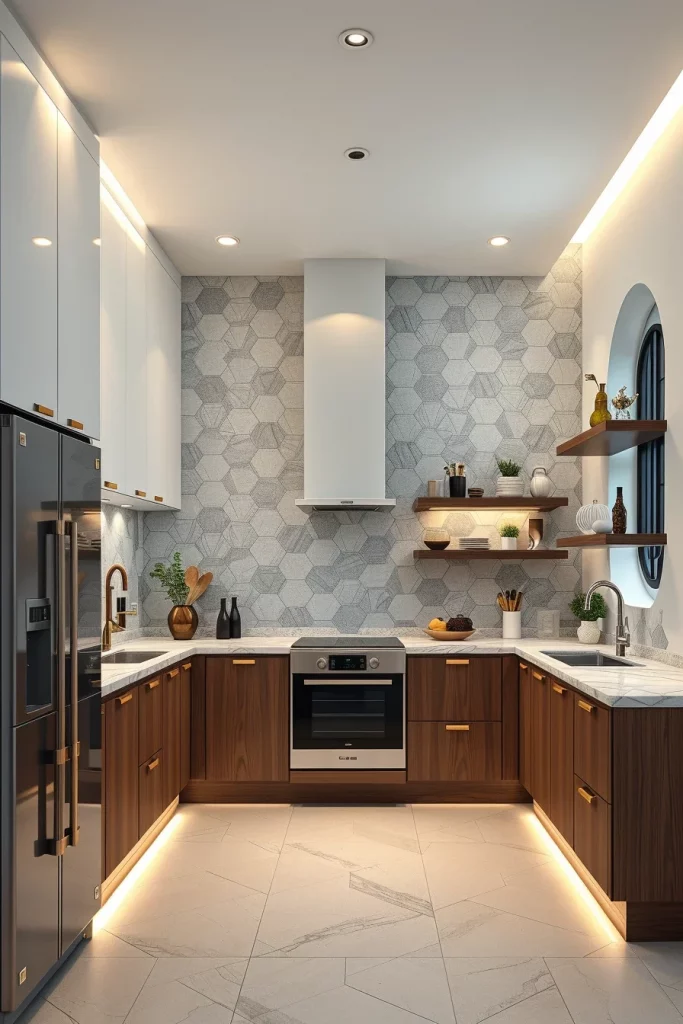
I usually pair statement tiles with simple cabinetry so the surfaces remain balanced rather than overwhelming. Flat cabinet doors, integrated appliances, slim floating shelves, understated hardware, and a seamless countertop allow the tile design to become the room’s centerpiece. I also prefer continuing the backsplash to the ceiling whenever possible because it visually increases height and creates a more custom appearance. Even subtle grout colors can dramatically influence the finished result by either emphasizing or softening the tile pattern.
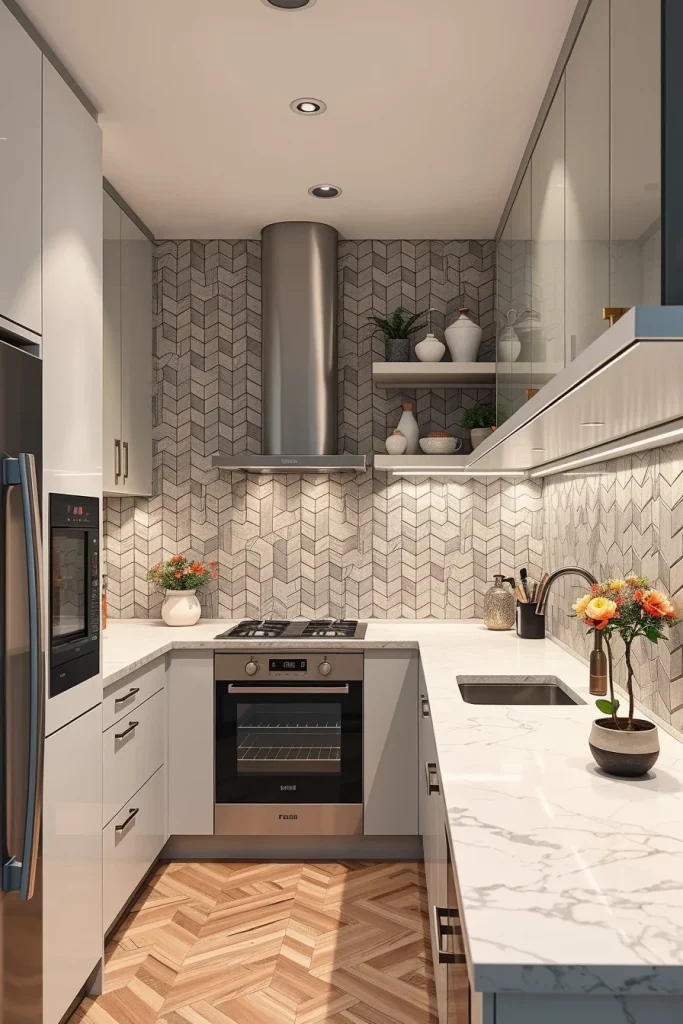
I have found that many designers featured in Domino and Architectural Digest recommend allowing one material to become the visual anchor in smaller interiors instead of introducing several competing patterns. I completely agree with this approach because it creates a polished look that remains timeless rather than busy. In my own projects, I consistently notice that beautiful tile work attracts attention without making the room feel crowded.
To finish this design, I would include under-cabinet lighting that highlights the tile texture, along with carefully selected decorative accessories in complementary colors that reinforce the overall design without distracting from the feature wall.
Creative Display Ideas For Everyday Kitchen Essentials
I believe everyday kitchen essentials should become part of the decoration instead of being hidden away whenever possible. Open shelving, elegant countertop organizers, sculptural cutting boards, ceramic canisters, glass jars, and carefully arranged cookware create a display that is both practical and visually appealing. A thoughtfully organized kitchen feels more spacious because every object has a clear purpose and intentional placement.
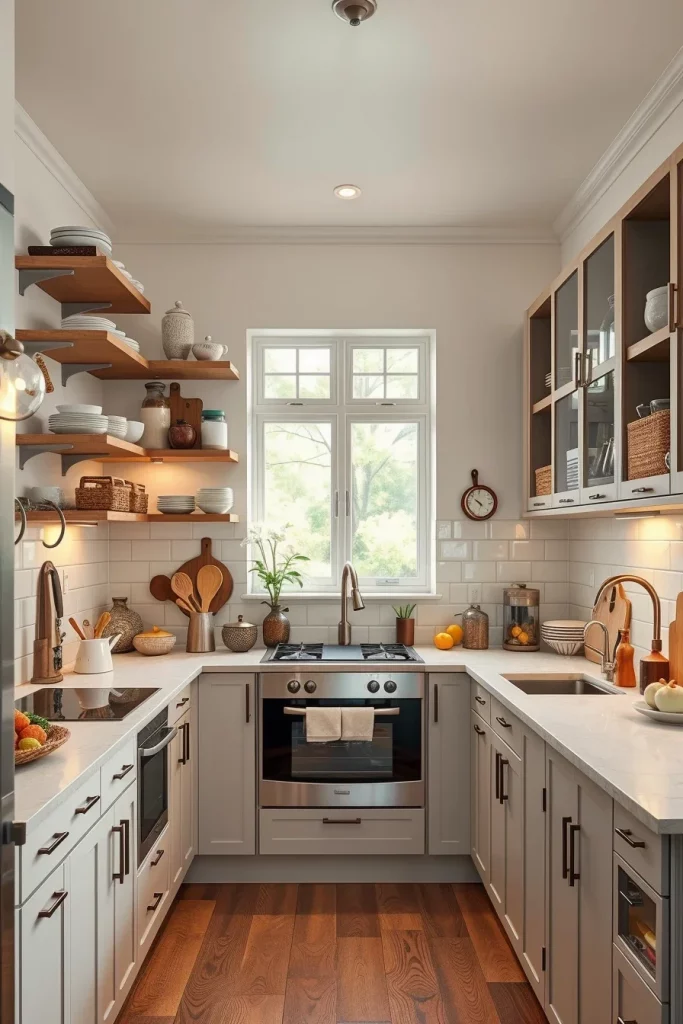
I like displaying frequently used dishes, handmade mugs, beautiful serving bowls, wooden utensils, spice jars with matching labels, and woven storage baskets on open shelves. These functional objects contribute warmth while keeping necessities within easy reach. To prevent visual clutter, I limit the color palette and group similar materials together so the shelves feel curated rather than crowded.
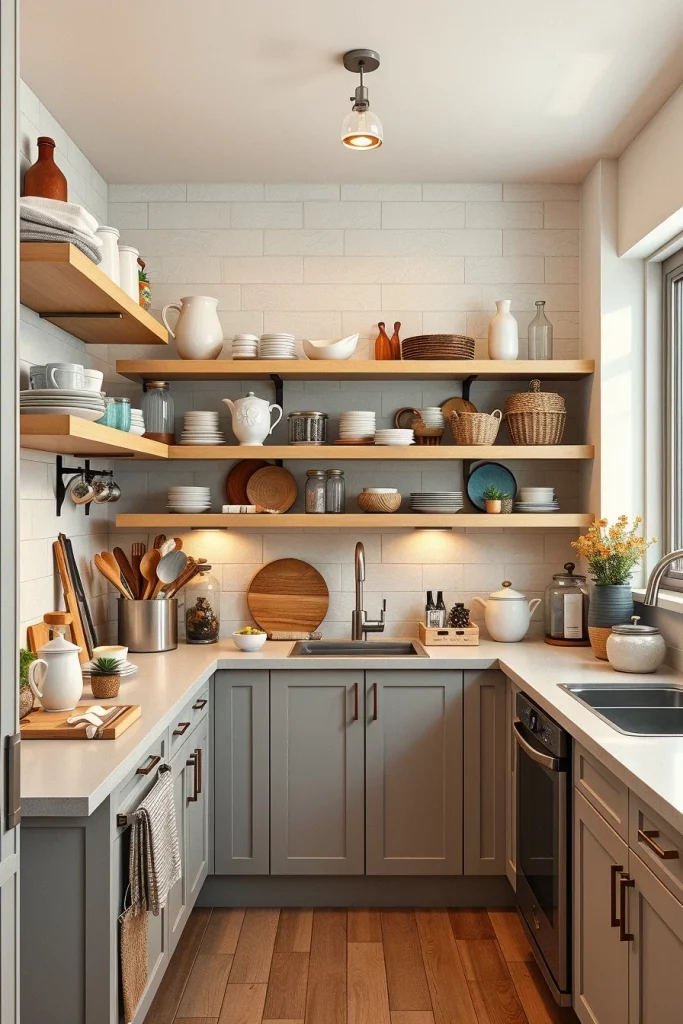
Personally, I have learned that editing decorative displays is just as important as creating them. Interior stylists often recommend leaving small areas of empty space between decorative groupings because negative space helps each object stand out. I find this advice especially valuable in tiny kitchens, where visual breathing room can completely change the atmosphere.
If I were completing this arrangement, I would also include subtle LED shelf lighting, framed artwork above the countertop, and a small decorative tray to organize oils and seasonings while adding another layer of refined detail.
Stylish Built-In Storage That Looks Custom Made
One of the smartest investments I can recommend for a compact kitchen is built-in storage designed specifically for the available space. Floor-to-ceiling cabinetry, hidden pull-out organizers, appliance garages, integrated pantry cabinets, and custom corner solutions make every inch work harder. I appreciate how these features allow a tiny kitchen to remain organized without sacrificing visual elegance.
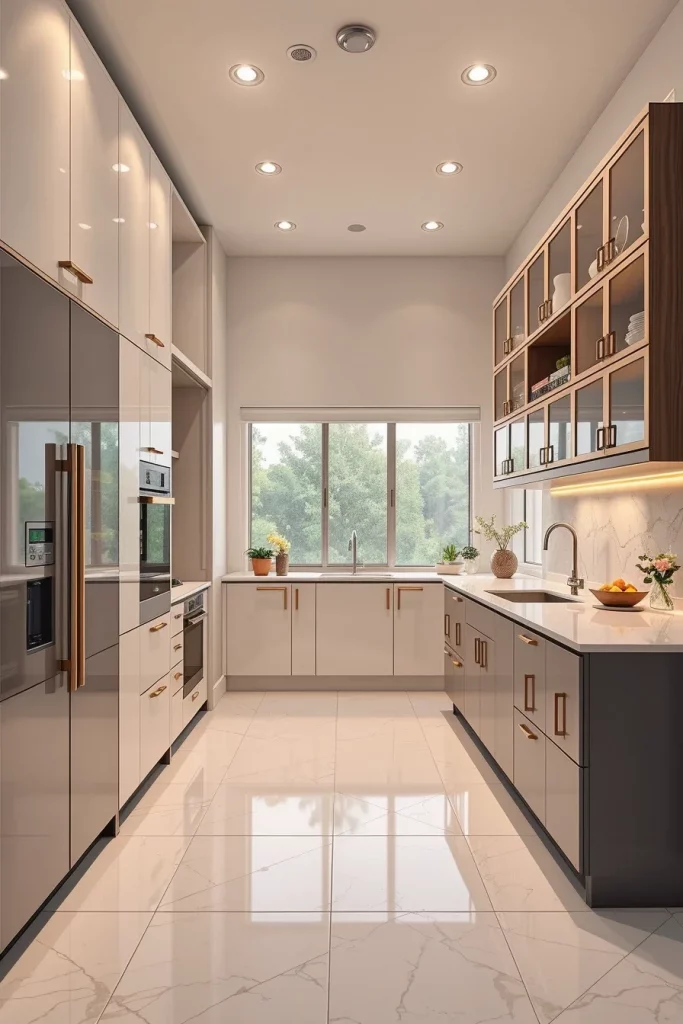
I like combining full-height cabinets with concealed storage behind matching doors, slim drawers for utensils, vertical dividers for baking trays, pull-out spice racks, and integrated recycling bins. Built-in seating with hidden compartments can also provide valuable storage while adding comfort to a breakfast nook. When every cabinet has a specific function, daily routines become noticeably easier.
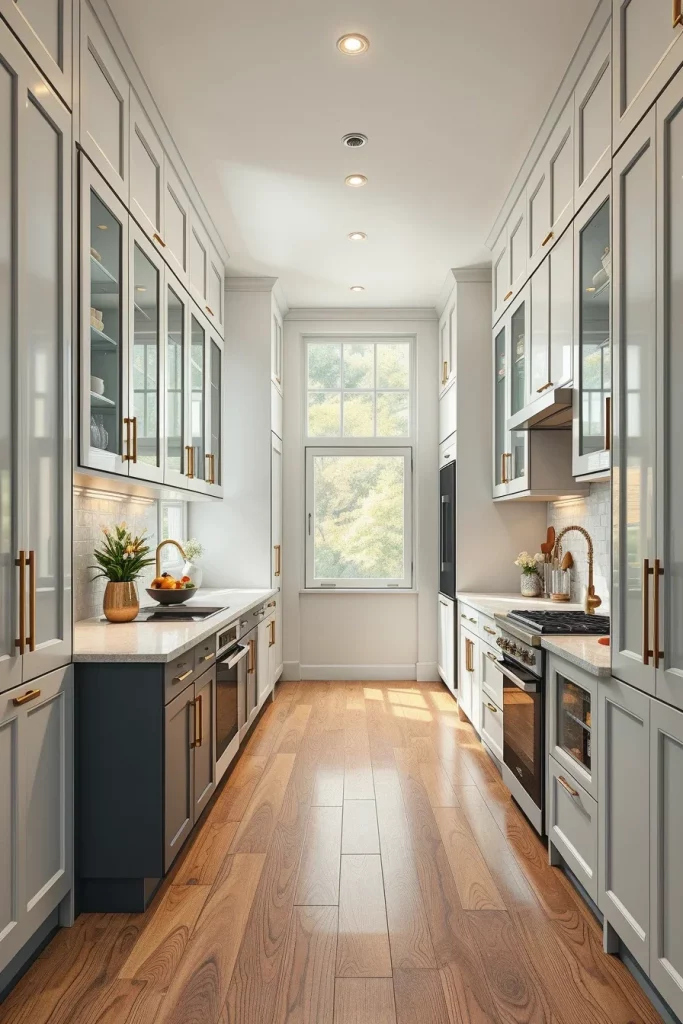
From my experience, custom-looking storage doesn’t always require a custom budget. Designers frequently recommend maximizing cabinet interiors before adding more furniture, and I think this advice helps homeowners prioritize practical improvements over unnecessary decoration. Well-planned storage supports beautiful design because it reduces countertop clutter and keeps the kitchen feeling calm.
I would complete this concept by adding interior cabinet lighting, soft-close hardware, and matching panel-ready appliances that blend seamlessly into the cabinetry, creating an uninterrupted and sophisticated appearance.
Tiny Kitchen Decor With Unexpected Luxury Details
Luxury in a tiny kitchen isn’t about excess; it’s about selecting details that elevate everyday experiences. I enjoy incorporating premium finishes through elegant hardware, natural stone surfaces, designer lighting, textured cabinetry, and handcrafted decorative accessories. These refined touches make even the smallest kitchen feel intentionally designed and exceptionally welcoming.
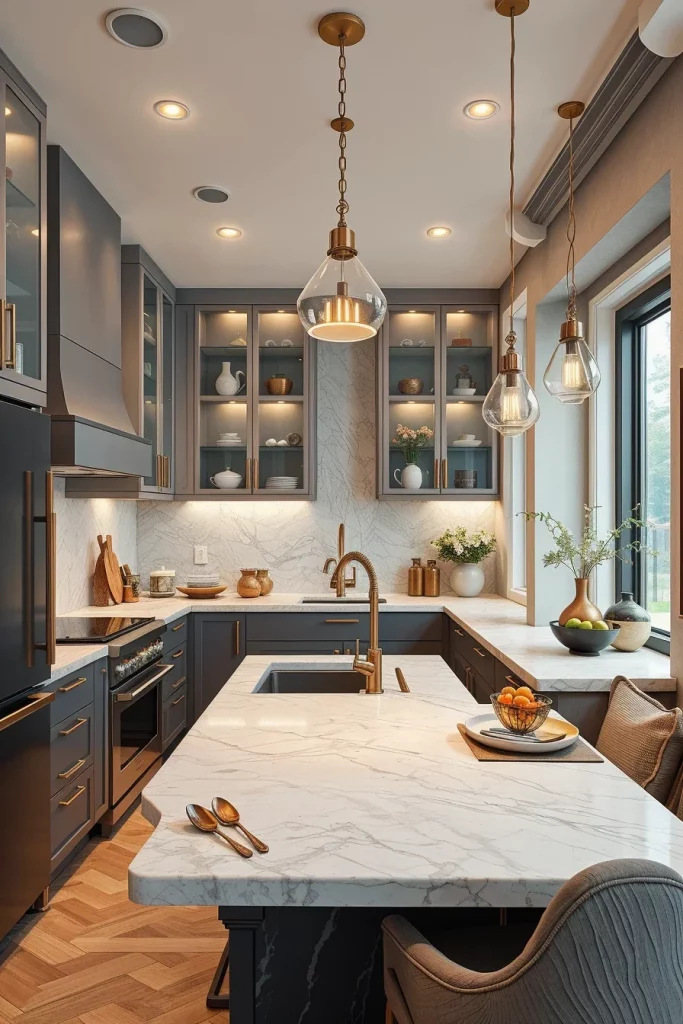
I often combine brushed brass fixtures, fluted glass cabinet doors, waterfall countertops, integrated lighting, upholstered seating, decorative trays, artisan ceramics, and carefully chosen artwork. Instead of filling every available surface, I focus on fewer pieces with higher quality and stronger visual impact. This approach creates an atmosphere that feels sophisticated without appearing crowded.
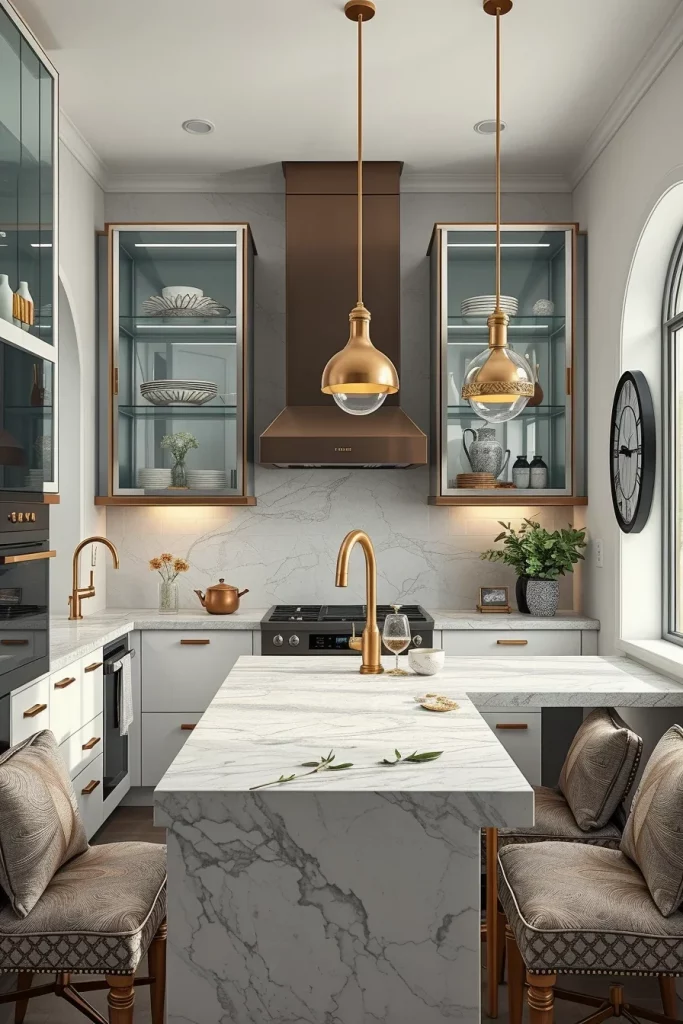
I have always admired how leading interior designers emphasize craftsmanship over quantity. Publications like House Beautiful regularly showcase compact kitchens where thoughtful materials create a luxurious impression despite limited square footage. I find that investing in one exceptional light fixture or countertop finish often delivers greater value than purchasing numerous decorative accessories.
To enrich this design even further, I would include layered ambient lighting, soft-close cabinetry throughout, and a distinctive faucet with an elegant silhouette that serves as both a functional fixture and a decorative centerpiece.
Inspiring Tiny Kitchen Decor Ideas That Combine Function And Art
My favorite compact kitchens are those that successfully combine everyday practicality with expressive design. I believe every element should serve a purpose while also contributing beauty to the room. A carefully selected color palette, sculptural furniture, textured finishes, thoughtful lighting, and curated decorative objects work together to create a kitchen that feels both efficient and inspiring. The result is a creative, stylish, and genuinely unusual space that reflects the homeowner’s personality.
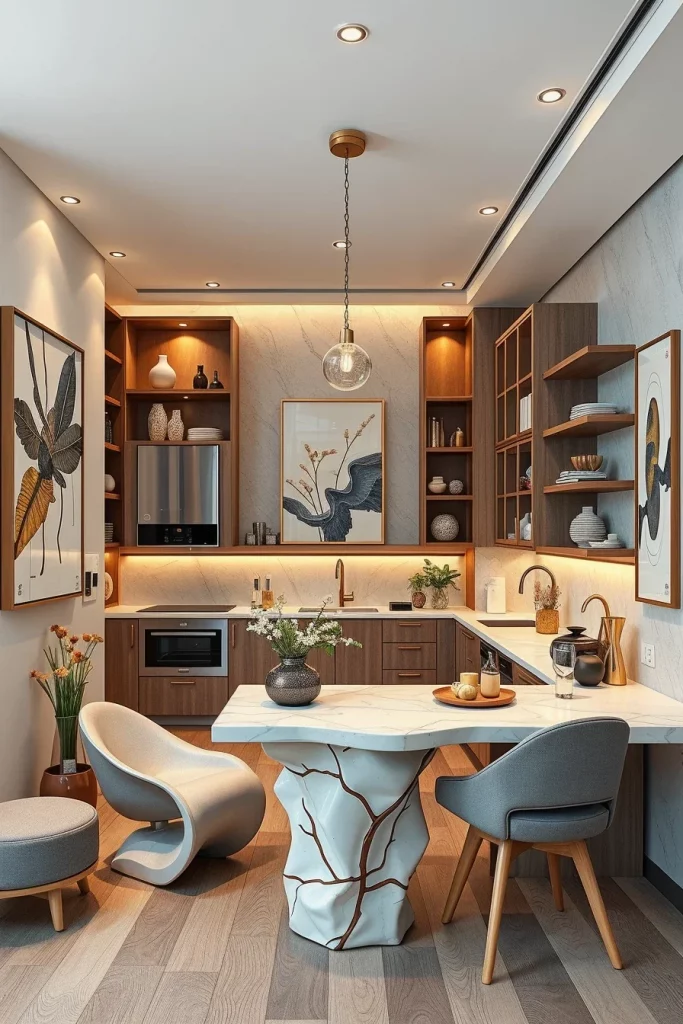
I like bringing together custom shelving, integrated storage, statement lighting, elegant bar stools, decorative ceramics, modern artwork, layered textures, and high-quality materials into one cohesive composition. Rather than treating decoration as an afterthought, I view every cabinet, chair, shelf, and accessory as part of the overall architectural design. This holistic approach makes even the smallest kitchen feel complete.
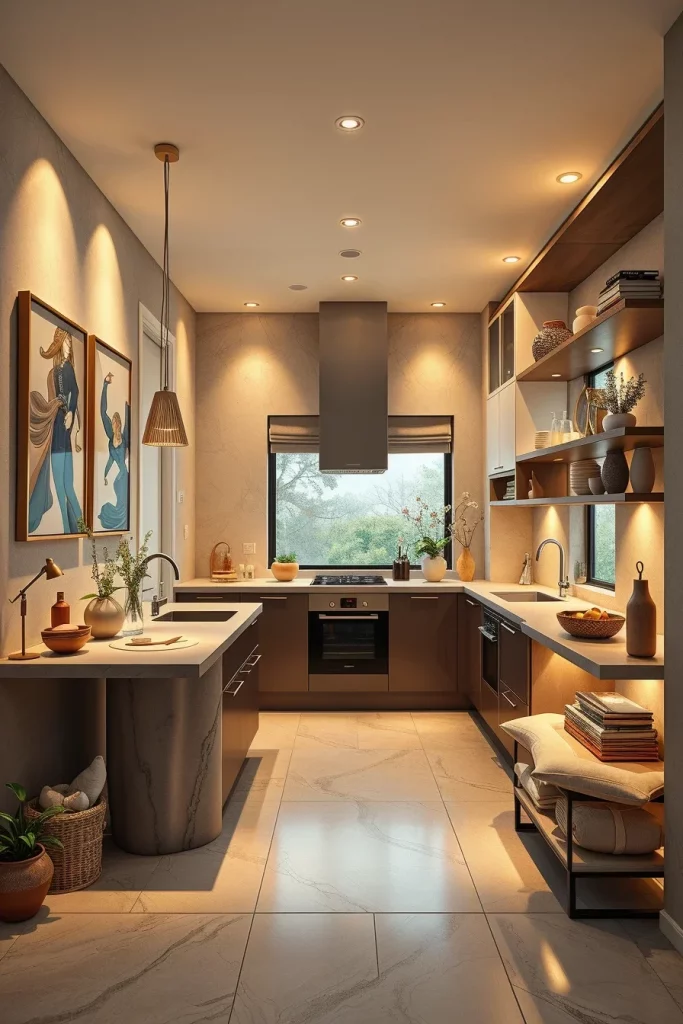
Looking back at the many compact kitchens I have studied and designed, I continue to believe that successful interiors balance beauty with practicality. Great design is rarely about having more space—it is about making intentional decisions that improve both appearance and everyday living. When every detail has purpose, a tiny kitchen becomes one of the most enjoyable rooms in the home.
If I wanted to perfect this space, I would finish it with carefully chosen greenery-free decorative sculptures, textured textiles, layered lighting, and one memorable statement piece that reflects the homeowner’s personal style while preserving the kitchen’s functional layout.
Decorating a small kitchen is all about making smart choices that combine beauty with everyday functionality. With creative storage, artistic details, and stylish finishes, even the tiniest kitchen can feel spacious, inviting, and full of character. Let these tiny kitchen decor ideas inspire you to create a space that reflects your personal style while making every square inch work beautifully.