
Creating a warm and elegant interior often starts with furniture that has character, comfort, and a sense of permanence. In this collection, I’m exploring timeless furniture inspiration that brings together graceful details, rich finishes, classic silhouettes, and inviting textures. From beautifully carved bedroom sets to substantial wood cabinetry and patterned upholstered seating, each space shows how furniture can define the mood of an entire room. I especially love how warm neutrals, deep wood tones, refined details, and thoughtfully chosen textiles create interiors that feel polished without becoming cold. These rooms also demonstrate that timeless design is not only about appearance but about choosing furniture that offers practical storage, comfortable seating, and lasting visual appeal. Let’s take a closer look at each space and discover the decorating ideas that make these interiors feel warm, elegant, and enduring.
Ornate Cream Bedroom Furniture With Classic Detailing
I immediately notice how this bedroom centers on a substantial cream-colored bed with an elaborately carved headboard and matching footboard. The same light finish appears on the tall wardrobe and two bedside tables, creating a coordinated furniture group. A large patterned area rug covers much of the floor, while beige walls, floor-length curtains, matching table lamps, and a crystal-style chandelier keep the room soft and refined. Above the bed, a framed landscape painting adds another layer of visual interest without competing with the furniture.
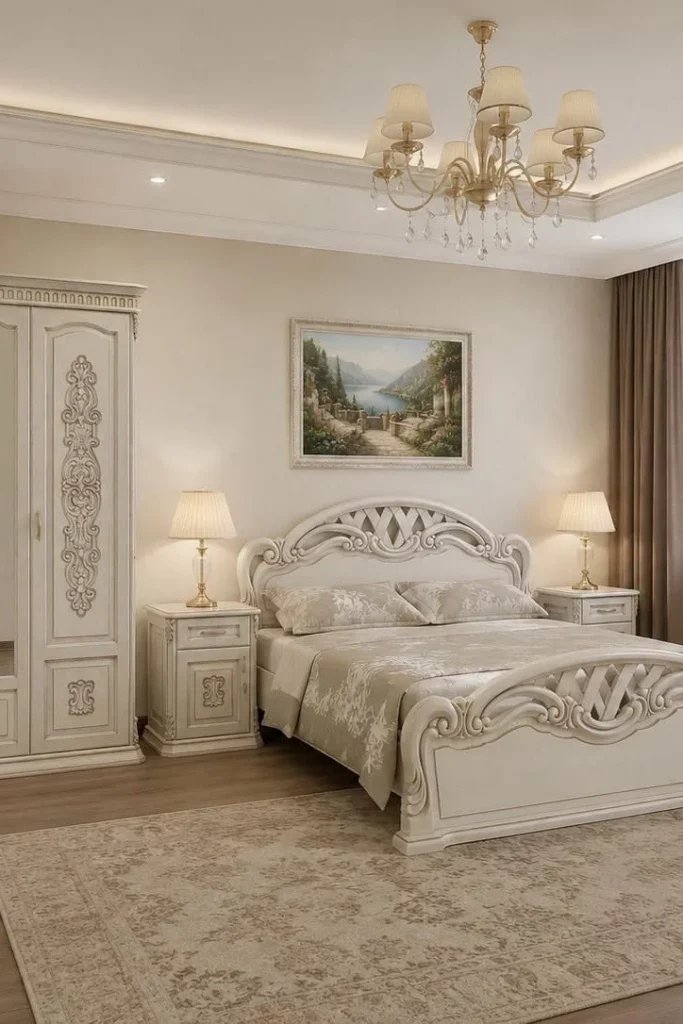
What makes this arrangement work for me is the strong sense of balance. The bed is clearly the focal point, but the wardrobe and bedside tables visually support it rather than making the room feel crowded. The enclosed wardrobe provides substantial storage, while the bedside tables offer convenient surfaces and drawers. I also like how the repeated cream finish prevents the ornate carvings from feeling visually disconnected from the rest of the room.
When I want an interior to feel timeless, I find that repeating one furniture finish across several important pieces is particularly effective. Here, the warm cream tone connects the bed, storage, and bedside furniture into one visual composition. The neutral walls and bedding give those carved details room to stand out, while the lamps provide symmetry and a practical source of evening light.
I would keep any finishing touches in this room restrained. The photograph already has plenty of decorative detail in the furniture, chandelier, rug, and artwork, so adding too many additional accessories could weaken the calm atmosphere. The strongest lesson here is to let a few substantial pieces establish the personality of the entire bedroom.
Dark Wood Cabinetry With Refined Paneling
This image focuses tightly on a dark wood cabinet with richly finished paneled doors and drawers. The cabinetry has pronounced molding, vertical decorative detailing, and brass-colored hardware that stands out against the deep brown surface. On top, a dark vase with leafy branches, stacked books, a small sculptural figure, and another decorative container create a carefully arranged display. Above it hangs a large framed abstract artwork, completing the sophisticated composition.
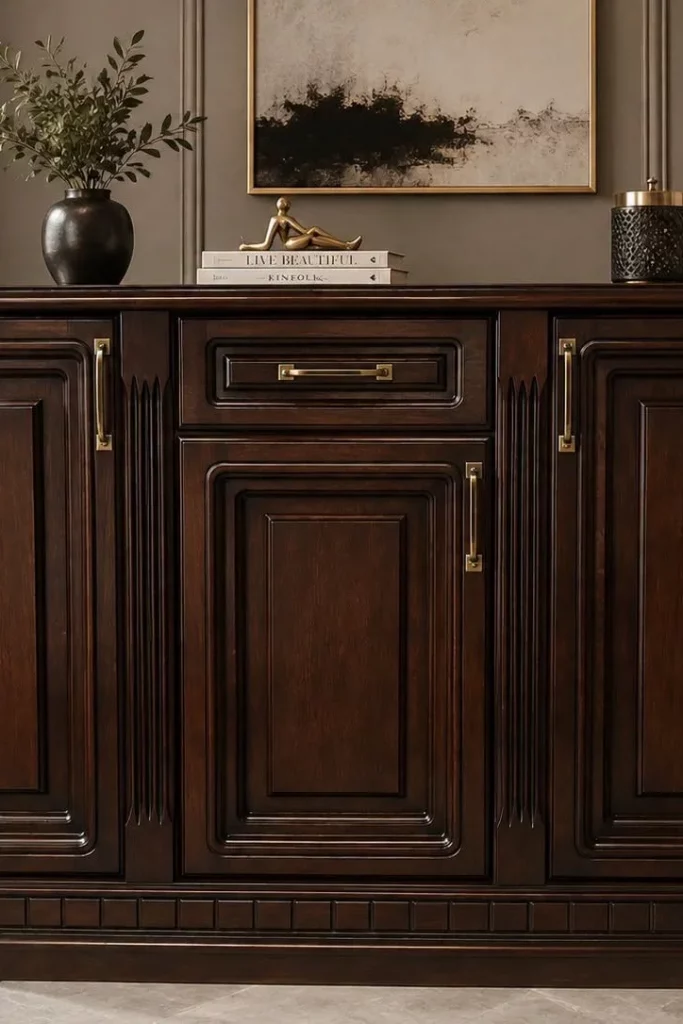
I like the visual weight this cabinet brings to the room. The dark finish immediately creates a grounded appearance, while the repeated rectangular panels give the furniture a strong sense of structure. At the same time, the brass hardware introduces a small amount of contrast and makes the drawers and doors feel more distinctive. The enclosed storage is also practical because it keeps the majority of belongings hidden behind solid fronts.
For me, this is a good example of how one substantial storage piece can become part of the room’s decoration rather than simply serving a functional purpose. The cabinet has enough architectural presence that it does not need an elaborate arrangement on top. A few carefully selected objects and a single large artwork are enough to complete it.
If I were recreating this feeling, I would pay close attention to the relationship between the furniture and the wall behind it. A dark cabinet has considerable visual presence, so giving it a relatively simple backdrop allows the paneling and finish to remain the stars. I would also keep decorative objects grouped rather than scattering many small pieces across the surface.
Soft Cream Bedroom Framed by an Arched Window
This bedroom has a lighter and more relaxed interpretation of the ornate furniture seen in the collection. The cream bed features an elaborately carved frame, while the headboard includes a padded, button-tufted center in a warm taupe shade. A matching cream bedside table sits beside it, topped with a pleated lamp. To the left, a tall arched window brings in natural light through full-length curtains, and a crystal-style chandelier adds a decorative focal point overhead.
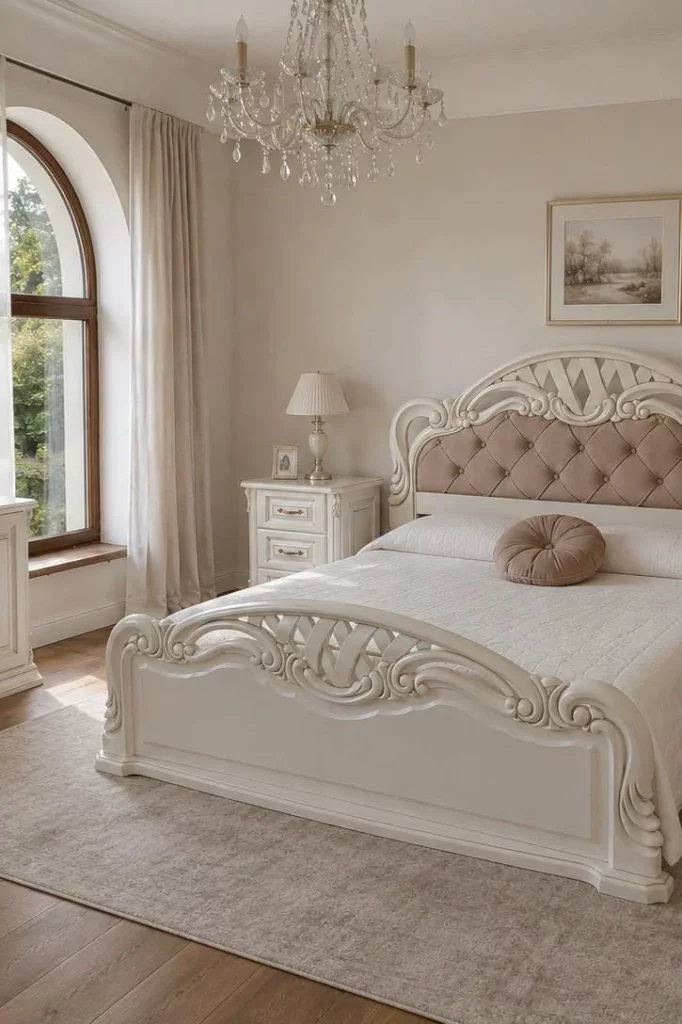
I find the mixture of upholstery and carved furniture especially appealing here. The padded headboard softens the more elaborate frame, while the neutral bedding keeps the overall composition quiet. The round accent cushion introduces another gentle shape, and the large rug visually separates the sleeping area from the surrounding wood floor.
The layout also demonstrates why symmetry is not always necessary for a bedroom to feel composed. The bed remains the main anchor, while the visible bedside furniture and window establish a pleasing sense of balance. The tall window contributes natural light and makes the room feel more open, while the curtains add softness around the architectural opening.
My favorite detail is the contrast between the sculptural furniture and the simplicity of the textiles. When furniture already carries elaborate carving, I prefer bedding and accessories that allow those details to remain visible. A similar look can be achieved by choosing one decorative furniture feature as the focal point and keeping the surrounding palette close in tone.
Compact White Desk With Integrated Drawer Storage
Here I see a simple white desk with a substantial drawer section on the right side. The desk has raised panel detailing, softly rounded trim, and three drawers fitted with dark horizontal handles. A white task lamp sits on the left, while a closed laptop, books, and a pencil container occupy the desktop. Behind it, a framed bulletin board adds a practical organizational element to the otherwise neutral wall.
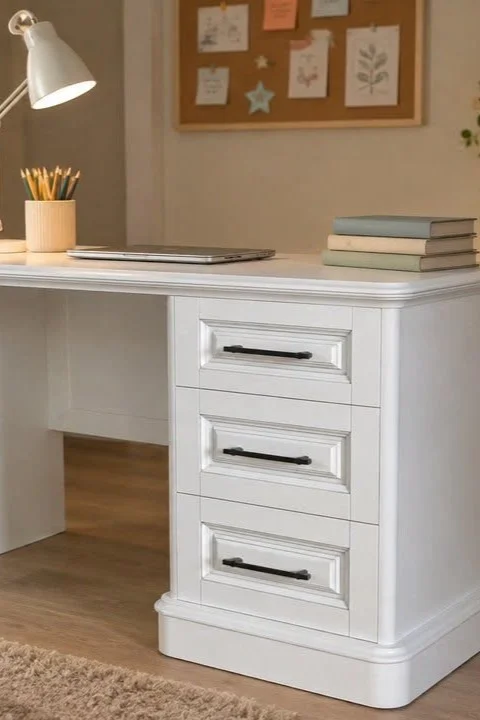
I appreciate how this piece combines a traditional furniture profile with a very practical working surface. The drawers provide accessible storage without requiring additional furniture, and the generous desktop leaves enough room for a laptop and everyday supplies. Because the desk is white, it also feels visually lighter than the darker cabinetry shown elsewhere in the collection.
The styling is particularly convincing because it looks used rather than staged only for appearance. The books, laptop, pencils, and notes suggest an actual working area. For me, that is an important part of timeless interiors: furniture should look beautiful while still making sense for everyday life.
If I were using a desk like this at home, I would preserve the relatively uncluttered surface. The photograph shows that only a handful of useful objects are needed to make the workspace feel complete. Keeping the drawers organized would also allow the desktop to remain calm even when the desk is used regularly.
Deep Burgundy Floral Seating With Traditional Character
This living area takes a much richer direction with an upholstered armchair and matching seating covered in a deep burgundy fabric patterned with gold floral motifs. The chair has generously padded arms and a rounded silhouette, while dark carved wood appears along the lower frame and arm details. Behind it, a matching sofa, dark cabinetry, a tall floor lamp, draped curtains, and a patterned rug create a layered room filled with warm tones.
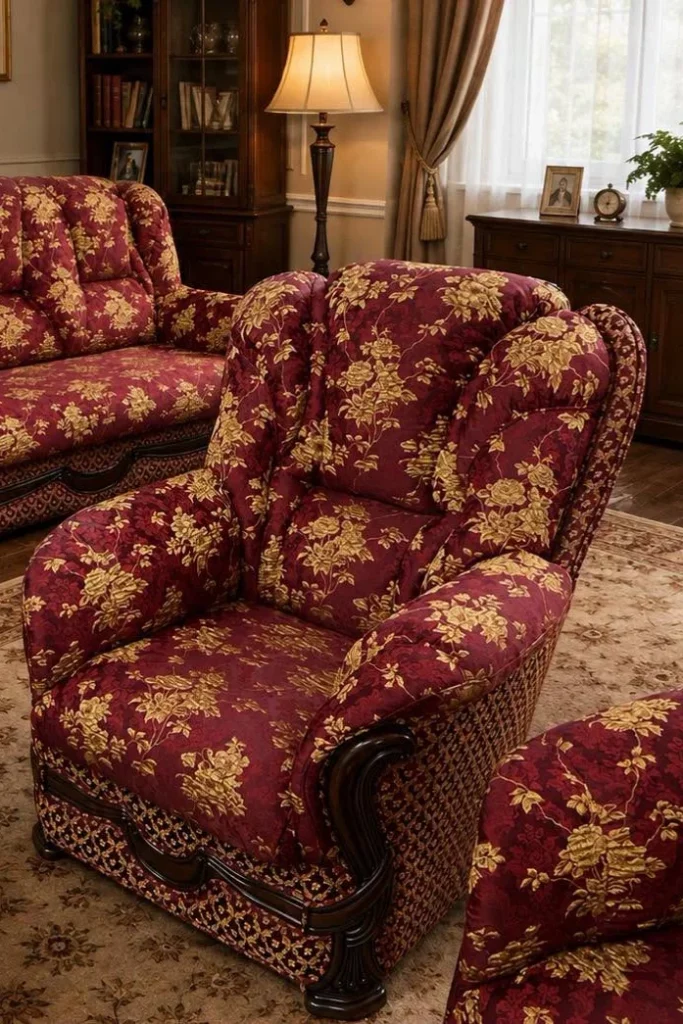
What stands out to me is the combination of upholstery and carved wood. The patterned fabric gives the seating a strong decorative identity, while the dark exposed framework visually defines its shape. Despite the elaborate appearance, the generous padding and deep proportions suggest a very comfortable place to sit.
The room works because the furniture is not isolated from its surroundings. The dark wood cabinetry echoes the dark chair details, while the burgundy upholstery connects visually with the warm, traditional atmosphere of the room. The floor lamp adds a practical lighting source beside the seating, making the arrangement feel suited to conversation or relaxed reading.
I would approach a room like this with confidence rather than trying to dilute its personality. When one piece has such a strong pattern, it can be tempting to introduce many competing accents. I think the photograph demonstrates the opposite: allowing the upholstery to dominate while keeping the surrounding furniture in related warm tones creates a much more coherent result.
Glass-Front Display Cabinet With Decorative Woodwork
This photograph showcases a large display cabinet finished in warm medium-brown wood. Its tall glass doors reveal neatly arranged dishes, glasses, and serving pieces, while decorative glazing patterns add another layer of detail to the doors. The lower section contains drawers and solid-front storage with ornate hardware. Beside it is a matching lower cabinet, and a large window with patterned sheer curtains fills the background with natural light.
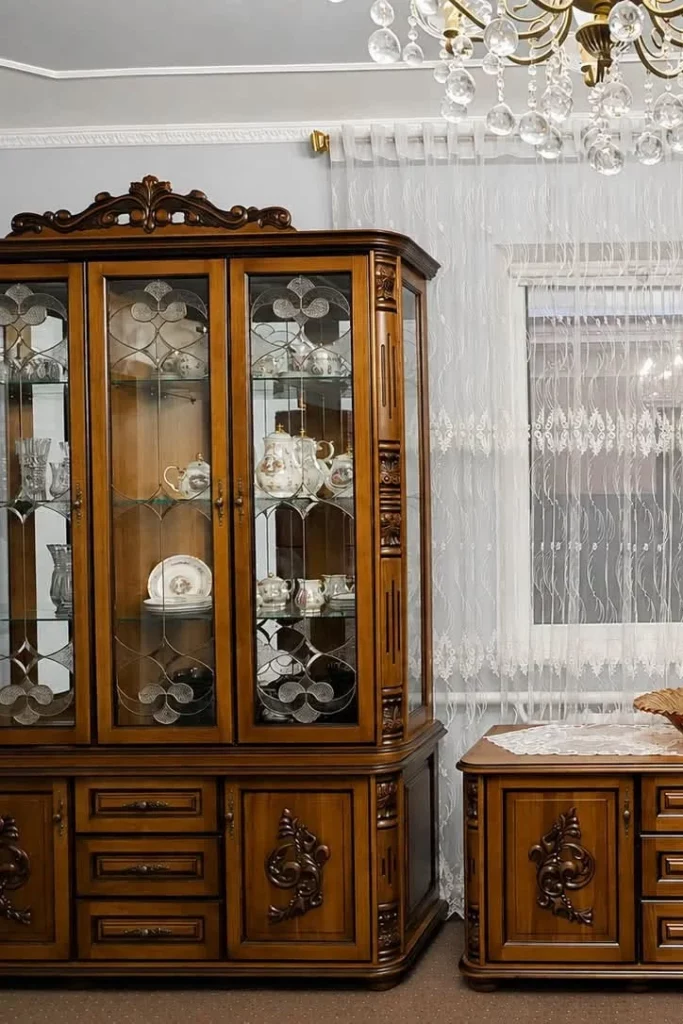
For me, this is an excellent example of storage becoming a visual feature. The glass doors allow the contents to be displayed while the lower cabinets conceal less decorative items. The vertical proportions also make the cabinet feel substantial without relying entirely on surface decoration. Its carved details and darker trim give it a strong furniture presence.
The combination of open visibility and enclosed storage is especially practical. Plates and glassware can be organized behind the glass while remaining easy to locate, and drawers provide additional hidden capacity. I also like the way the cabinet sits near the window rather than competing with it; the natural light helps reveal the contents and the wood finish.
When styling a display cabinet, I prefer to think of the shelves as a composition rather than filling every available space. The photograph already shows a curated selection of tableware, with enough empty glass space around individual pieces to keep them visible. That balance makes the furniture feel elegant instead of overloaded.
Traditional Wood Display Furniture In A Warm Sitting Room
This room combines a large traditional wooden display cabinet with a coordinated chest of drawers and a softly upholstered sofa. The cabinet features glass-front sections, carved columns, an arched central top, and multiple enclosed storage compartments below. The beige sofa and matching cushion provide a lighter contrast, while a patterned runner rug, framed artwork, sheer curtains, and a wood coffee table complete the composition.
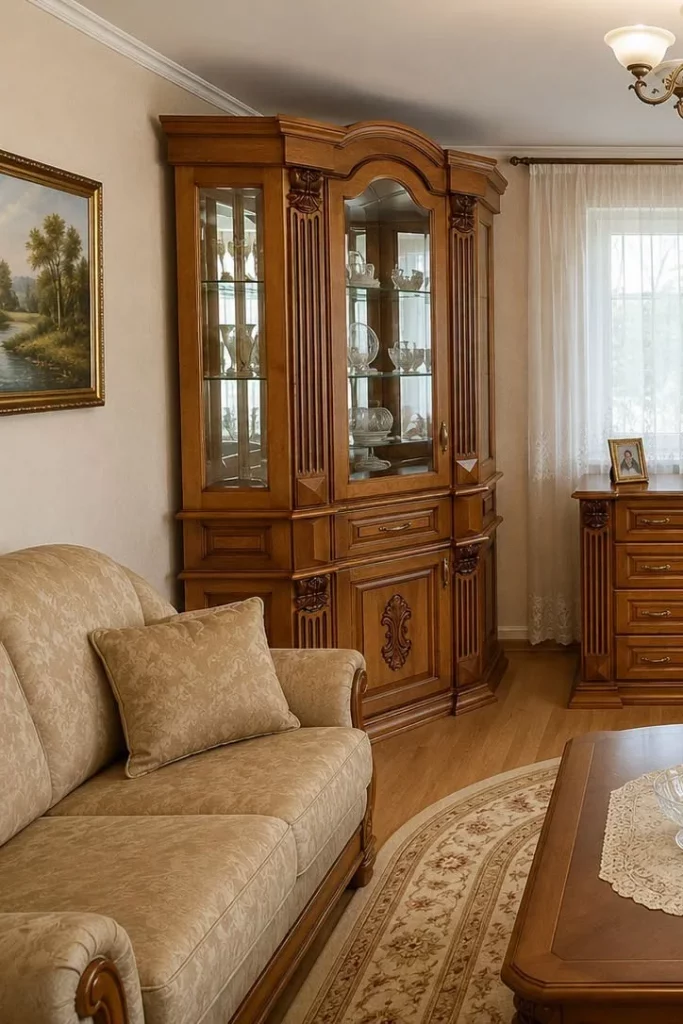
I like how the seating and cabinetry balance each other. The cabinet has considerable visual weight, but the pale upholstered sofa prevents the room from becoming dominated by dark wood. At the same time, the matching wood furniture creates continuity throughout the space, making the room feel intentionally furnished rather than assembled piece by piece.
The glass display sections provide a useful opportunity to keep decorative objects visible, while the lower cabinets handle items that do not need to be on display. The sofa introduces comfort and softness, and the coffee table provides a central surface within easy reach. Everything shown has a clear role, which is one reason the room feels functional as well as decorative.
For me, the strongest takeaway is the importance of repetition. The wood finish appears across several pieces, while the patterned rug and neutral upholstery bridge the darker and lighter elements. If I were creating a similar room, I would focus first on establishing those repeated tones before adding smaller decorative details.
Patterned Armchair Paired With a Dark Round Side Table
This intimate corner pairs a tall upholstered armchair with a dark round side table. The chair is covered in a beige patterned fabric with an intricate ornamental motif and a striped lower section, while its frame has a light finish. Beside it, the round table has a substantial pedestal base in dark wood tones. A glass vase filled with yellow and purple flowers sits on the tabletop beside a white cup and saucer, while dark cabinetry and deep red curtains appear in the background.
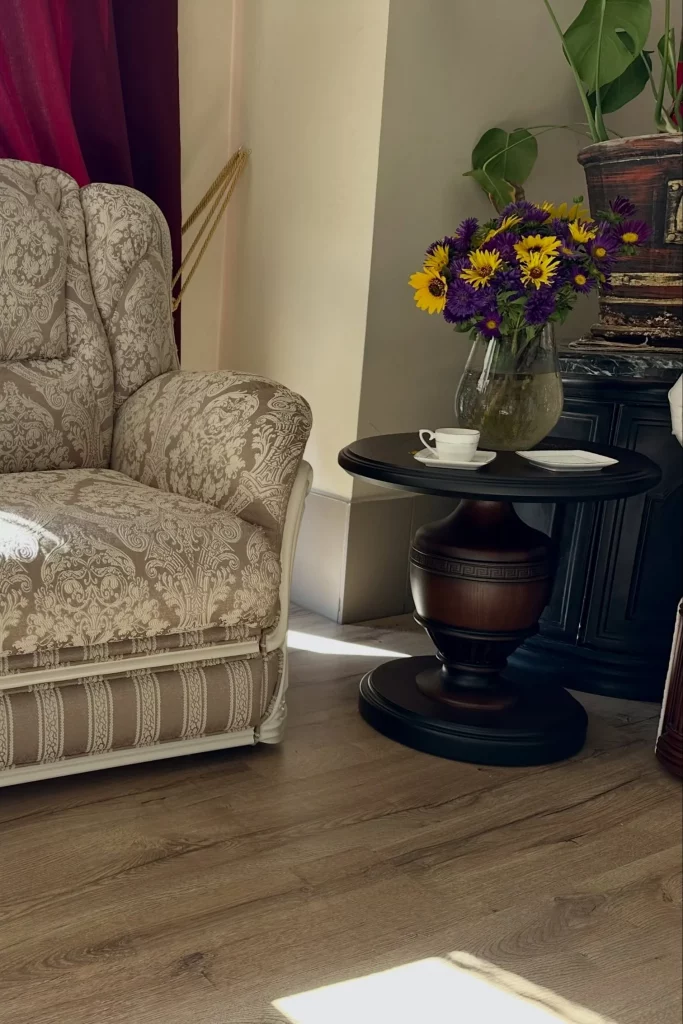
I find this arrangement especially interesting because of the contrast between the light chair and dark table. The chair’s patterned upholstery provides texture and visual detail, while the simple circular tabletop gives the composition a clear, functional center. The cup and saucer reinforce the impression that this is a genuine sitting corner rather than furniture arranged only for display.
The side table is particularly practical because its round shape makes it easy to position beside the chair without creating a sharp visual interruption. Its substantial pedestal also gives it enough presence to balance the large upholstered chair. The nearby cabinet provides additional visual depth, while the flowers bring a fresh burst of color into an otherwise muted arrangement.
I would use this photograph as inspiration for creating a dedicated reading or resting corner without adding unnecessary furniture. One comfortable chair and one appropriately scaled side table can be enough. I also like the idea of keeping the tabletop functional, as shown here, rather than covering it with decorative objects that would make the space less usable.
Large Mirrored Wardrobe With Coordinated Wood Storage
This bedroom features a large dark wood wardrobe with three mirrored central doors and solid paneled doors on either side. Decorative vertical detailing runs along the edges, and a matching chest of drawers stands to the right. Part of the bed is visible in the foreground, while a patterned area rug covers the floor. A chandelier, framed artwork, and a vase placed on the chest complete the room.
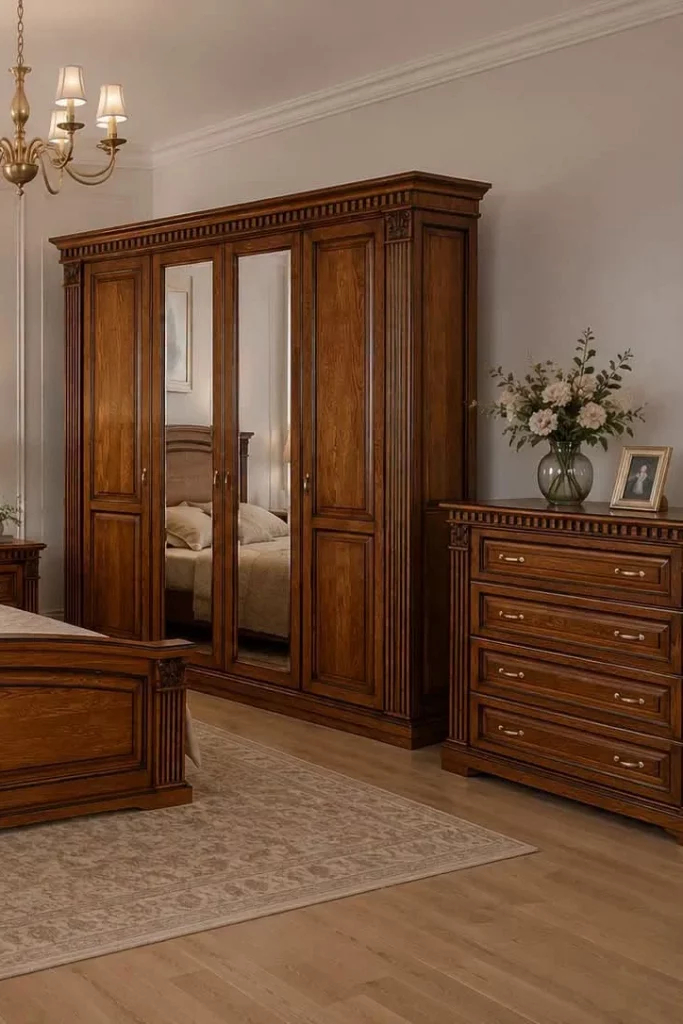
The mirrored wardrobe is the feature I notice first because it combines storage with reflection. The central mirrors break up the extensive wood surface and visually reflect the room, while the surrounding solid panels maintain the substantial character of the furniture. The matching chest makes the storage arrangement feel cohesive rather than piecemeal.
I think this is a particularly practical approach for a bedroom because the wardrobe provides extensive enclosed storage while the mirrors serve an everyday purpose. The tall proportions also make efficient use of vertical wall space. Meanwhile, the patterned rug softens the transition between the large furniture pieces and the wood floor.
From my perspective, the lesson here is that large storage furniture does not necessarily need to disappear into the background. When its proportions, finish, and hardware are thoughtfully chosen, it can become one of the room’s defining features. The mirrors are also a smart visual counterpoint to the darker wood and help keep the composition from feeling too heavy.
Elegant Cream Bed With Tufted Headboard And Layered Textiles
The final bedroom returns to a light cream palette, with an imposing bed framed by carved columns, decorative molding, and a padded button-tufted headboard in a soft beige tone. Matching bedside furniture flanks the bed, while layered pillows and a textured bedcover create a carefully coordinated sleeping area. A patterned rug lies beneath the bed, and the wall behind it features a large framed decorative panel with a subtle pattern. Matching lamps and long curtains reinforce the balanced composition.
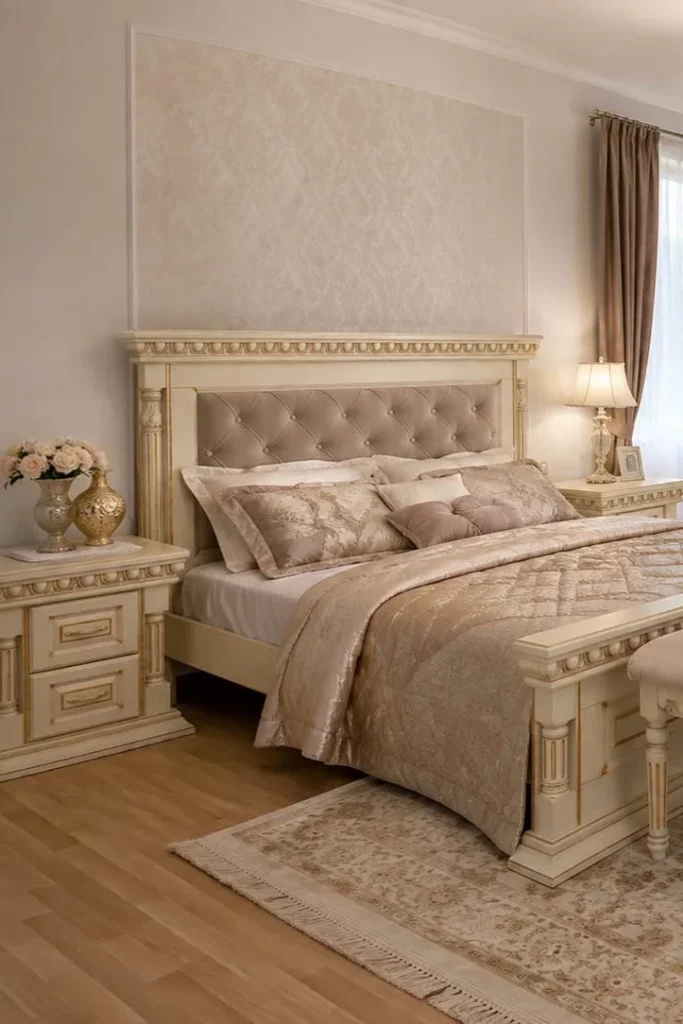
I love the way this room uses several variations of the same neutral family instead of relying on a single flat shade. The cream furniture, beige upholstery, patterned textiles, and warm wood floor create depth while remaining visually connected. The substantial bed frame gives the room its personality, while the symmetrical bedside tables and lamps make the arrangement feel orderly and composed.
Functionally, the design is equally convincing. The bedside cabinets provide accessible storage, the lamps offer practical illumination, and the layered bedding creates a comfortable-looking focal point. The rug adds softness beneath the bed and visually anchors the furniture, while the curtains frame the window without becoming the main attraction.
Carved Walnut Display Cabinet in a Classic Dining Room
I immediately notice how much character the large walnut-toned display cabinet brings to this dining room. Its tall proportions, glass-fronted doors, carved columns, decorative pediment, paneled lower storage, and rich brown finish make it the visual anchor of the space. A matching chest of drawers sits beside it, while a round dining table and carved dining chair are partially visible in the foreground. Soft curtains, sheer window panels, a floral arrangement, patterned table linen, and a traditional runner complete the warm setting. The chandelier above adds another classic detail without competing with the substantial cabinetry.
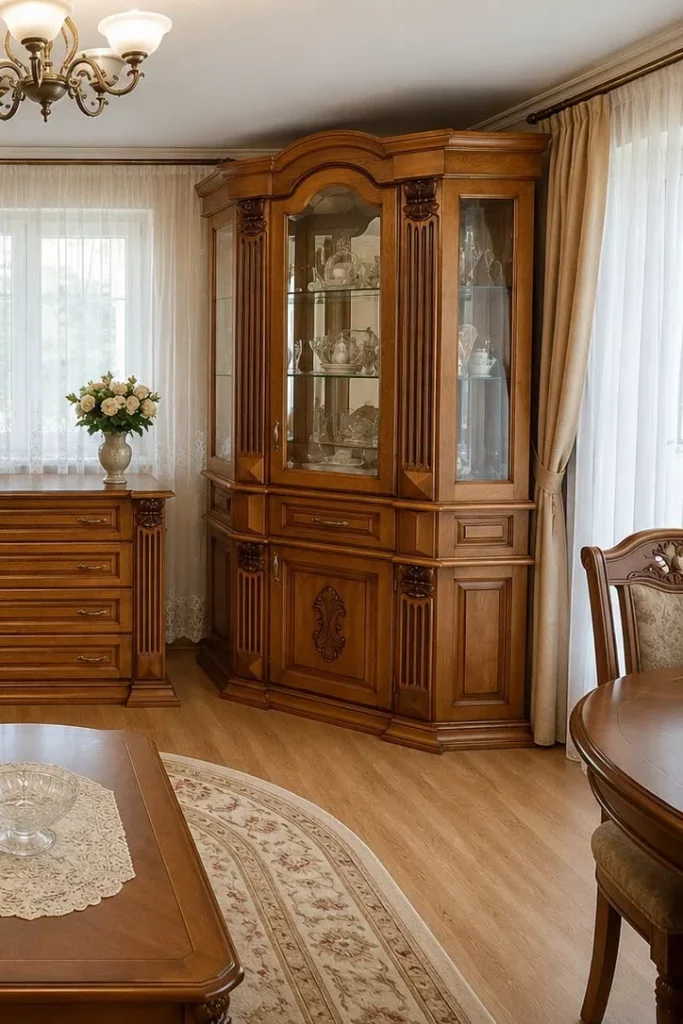
What works especially well here is the combination of open and closed storage. The glass sections allow the displayed dishes and glassware to become part of the room’s decoration, while the lower cabinets and drawers provide concealed space. I find this particularly effective in a dining room because the furniture can accommodate items used for entertaining while keeping less attractive necessities out of sight. The matching wood tones also create visual continuity across the room, making the different pieces feel like part of one carefully considered setting.
For me, this image is a good reminder that ornate furniture does not necessarily need a complicated surrounding scheme. The walls, curtains, and flooring remain relatively restrained, allowing the carved cabinet to take center stage. If I were recreating this feeling, I would choose one substantial statement piece first and let its proportions and finish guide the rest of the room rather than trying to make every object equally decorative.
Ivory Wardrobe Wall in a Soft Classic Bedroom
This bedroom has an entirely different mood, but the same emphasis on timeless furniture. I see a large ivory wardrobe stretching across much of the back wall, with several mirrored doors framed by paneled sections and decorative architectural detailing. A tufted upholstered bench stands at the foot of the bed, while the visible bed and dresser continue the pale palette. A large patterned area rug covers much of the wood floor, and floor-length curtains frame the window. The crystal chandelier adds a delicate focal point overhead.
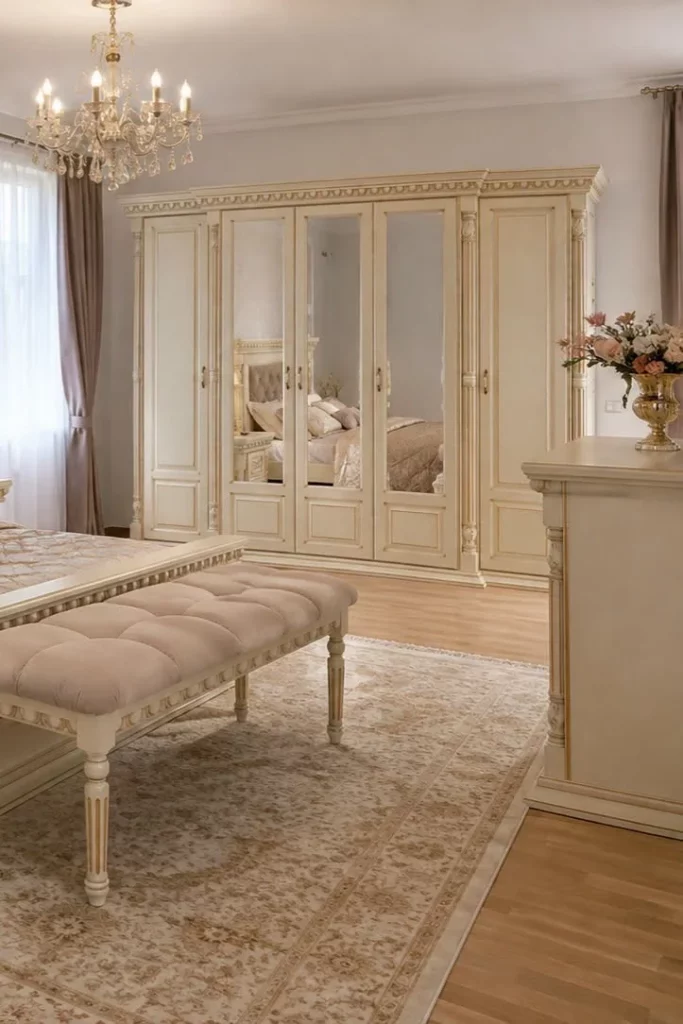
I like the way the wardrobe combines generous storage with a furniture-like appearance. Rather than looking purely utilitarian, its paneled doors, columns, trim, and mirrors give it the presence of a built-in architectural feature. The mirrors also reflect the bed and surrounding room, helping the large storage wall feel less visually heavy. The upholstered bench provides a practical place to sit while dressing and also introduces a softer texture between the bed and the rug.
In my experience, pale furniture can create an elegant bedroom particularly well when several surfaces share related tones rather than matching perfectly. Here, the ivory cabinetry, upholstered bench, bedding, curtains, and rug create a calm visual progression. I would keep that relationship in mind when choosing pieces for a similar room: the goal is not simply to buy light-colored furniture, but to build a layered palette where every large piece feels naturally connected to the next.
White Panelled Bed With Traditional Carved Details
I see a serene bedroom centered around a white bed with a gently curved headboard and matching curved footboard. The tall posts are finished with carved decorative details, while the surrounding wall is covered with simple rectangular panel molding. A white nightstand with a small table lamp sits beside the bed, and a tall white wardrobe is partially visible on the right. The bedding stays within a quiet white and soft beige palette, while a muted landscape painting provides the only noticeable artwork above the bed.
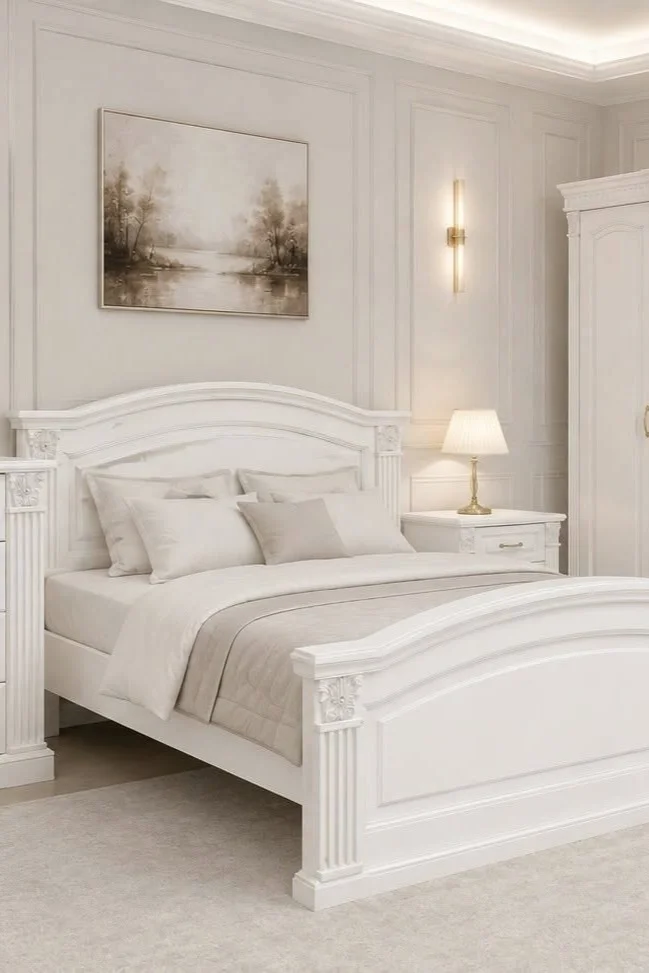
The furniture works because its traditional detailing is balanced by an exceptionally restrained color scheme. The curved bed introduces softness, while the vertical carved posts give it definition and visual weight. I also like the practical pairing of the nightstand and lamp, which creates a functional bedside zone without cluttering the composition. The carpet underfoot adds another quiet layer of softness and makes the predominantly white furniture feel more comfortable rather than overly formal.
If I were taking inspiration from this room, I would focus on silhouette before decoration. The curved edges, paneled surfaces, and carved accents already provide enough visual interest, so adding too many additional details could easily make the room feel busy. For me, the strongest lesson here is that classic furniture can look remarkably fresh when it is surrounded by plenty of visual breathing room.
Dark Wood China Cabinet With Fluted Columns
This single dark wood cabinet makes a strong impression against the pale walls of the room. I can see a tall, narrow glass-fronted display section filled with wine glasses, decorative vessels, and other glassware. Fluted vertical columns frame the cabinet, while carved details appear near the upper corners and along the substantial base. A small drawer adds practical storage. Beside it, a tall potted plant and framed artwork soften the composition, while a patterned rug extends across the floor.
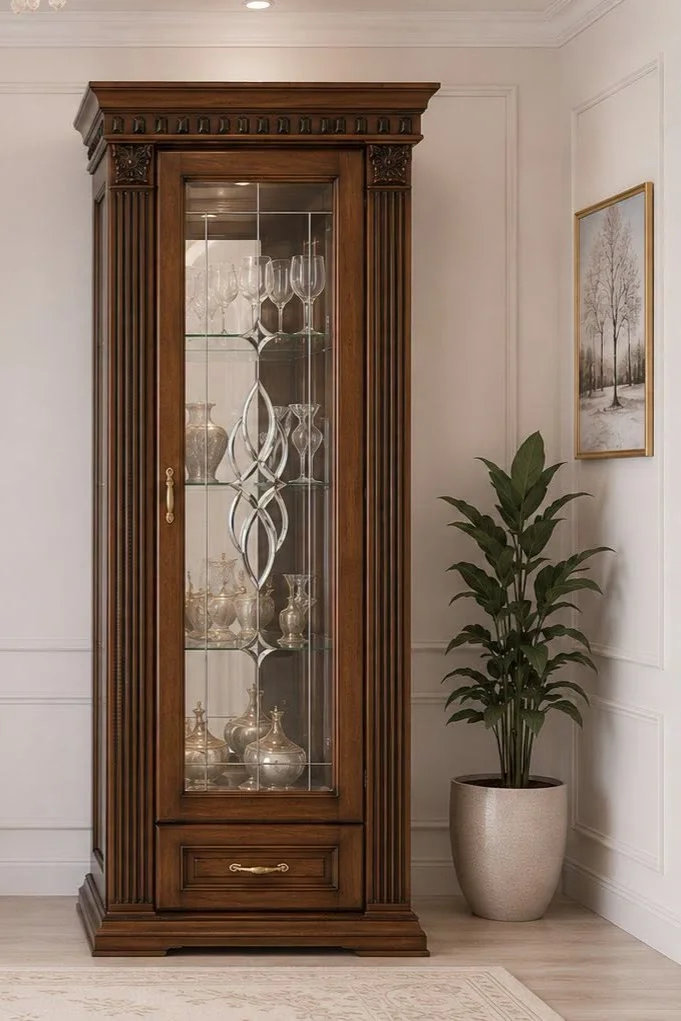
I particularly like the proportions of this piece because it demonstrates how one carefully chosen cabinet can create a focal point without occupying an entire wall. The glass door keeps the stored objects visible and gives the furniture a lighter appearance than a completely closed cabinet might have. At the same time, the dark wood provides a strong contrast against the pale wall, making the craftsmanship and vertical detailing immediately noticeable.
For me, this is an excellent example of using contrast to make traditional furniture feel intentional. If I were placing a similar cabinet in a room, I would give it enough surrounding space to be appreciated rather than crowding it with other large pieces. The plant and artwork shown here are also useful examples of restrained neighboring accents: they frame the cabinet without taking attention away from it.
Ornate Carved Bed Framed by Full-Height Curtains
Here, the bed becomes the unmistakable centerpiece. I see a large cream-colored bed with an elaborate carved headboard and matching footboard, both decorated with scrolling ornamental motifs. Two matching bedside cabinets flank the bed, while floor-to-ceiling curtains cover the broad window behind the arrangement. A traditional patterned rug extends beneath the bed, and a classic chandelier hangs centrally overhead. The coordinated cream, beige, and brown tones give the entire room a warm and formal appearance.
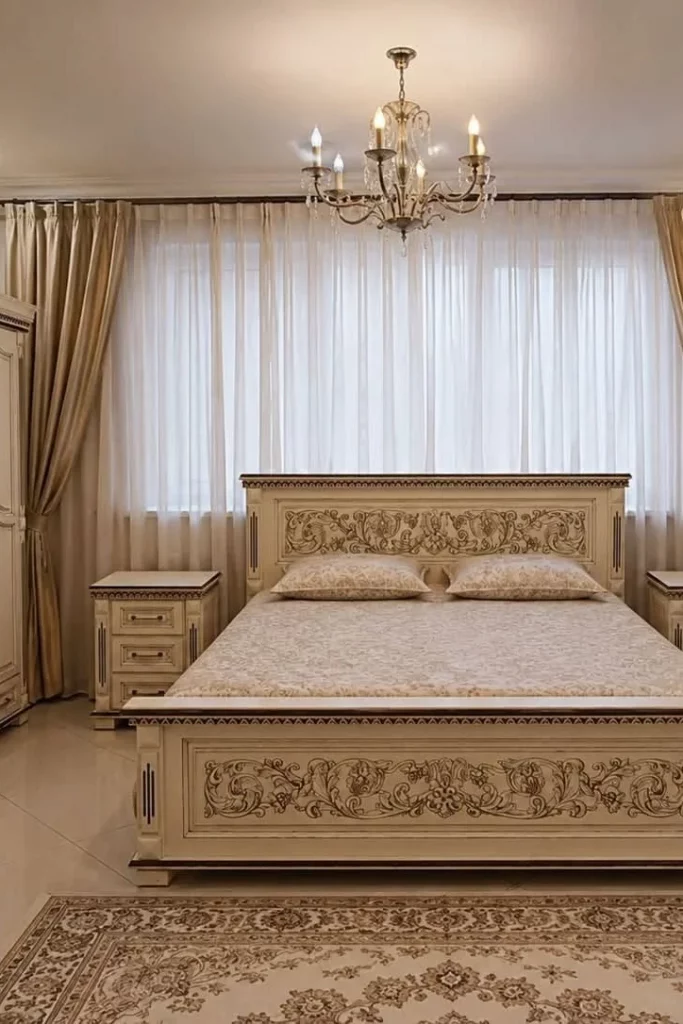
The symmetry is one of the strongest features I notice. The matching nightstands balance the bed, while the central chandelier reinforces the same visual axis. The broad upholstered-looking bedding and patterned pillows soften the substantial carved furniture, preventing the room from feeling entirely hard or architectural. I also like the way the curtains provide a full backdrop behind the bed, creating a sense of enclosure and making the furniture arrangement feel deliberately centered.
When I look at a room like this, I would resist the temptation to add more decorative furniture simply because there is available space. The bed already supplies an enormous amount of visual detail. Instead, I would let the carved furniture, curtains, rug, and lighting work together as the main composition. That approach keeps an ornate bedroom feeling coordinated rather than overloaded.
Elegant Cream Dresser With Curved Legs and Ornamental Fronts
This cream-colored dresser has an almost sculptural quality. I see three central drawers, two side cabinet doors, decorative carved panels, curved legs, ornamental edging, and a polished light-colored top. It sits directly in front of a large window framed by sheer curtains and heavier drapes with patterned vertical panels. A crystal chandelier hangs above, while a glass vase filled with pale flowers and a small framed photograph sit on the dresser. A large patterned rug stretches across the floor.
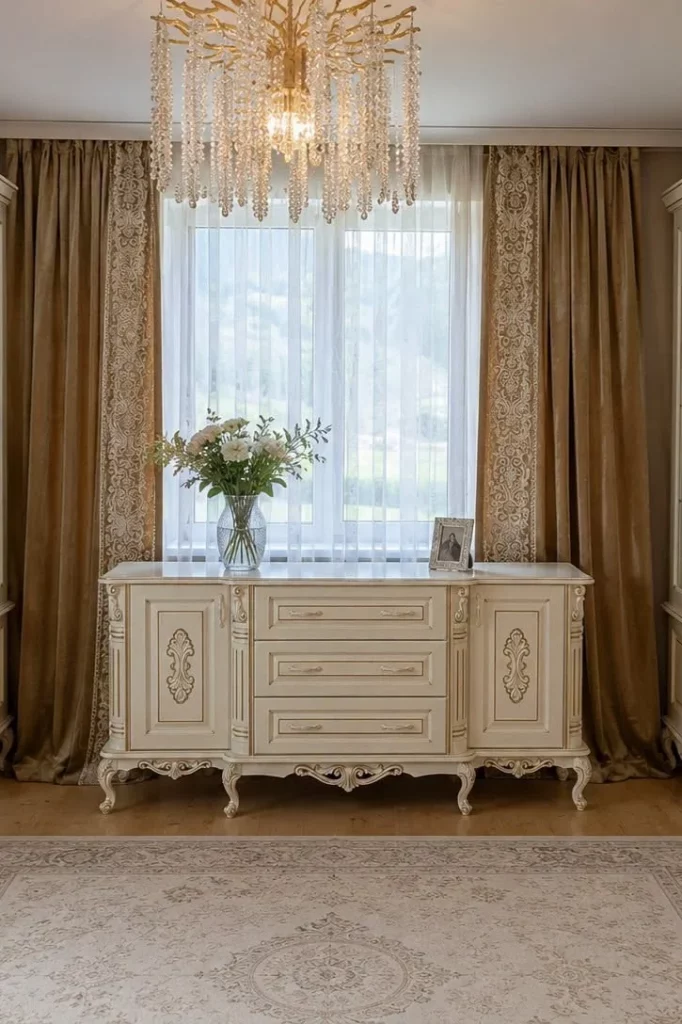
The dresser is both storage furniture and a decorative focal point. Its multiple drawers and side compartments provide practical organization, while the curved legs lift the body visually and make the substantial piece feel less heavy. I also appreciate the relationship between the dresser and the window: the light coming through the sheer curtains illuminates the pale finish and highlights the carved details across the front.
I would approach a piece like this as a statement rather than something that needs to be surrounded by many accessories. The photograph shows how just a few objects on top are enough to complete the arrangement. For me, the lesson is particularly useful when working with ornate furniture: keeping the surface relatively edited allows the craftsmanship of the furniture itself to remain visible.
Playful Nautical Bedroom With Ocean-Themed Wardrobe
This room introduces a much more playful interpretation of statement furniture. I see a substantial wooden bed with a curved footboard and details inspired by a boat, including a prominent wheel-like feature at the headboard. The bedding is blue and covered with an underwater motif. Across from the bed, sliding wardrobe doors display a vivid underwater scene filled with colorful fish, while open wooden shelving is visible at the side. Framed ocean-themed artwork appears on the pale wall.
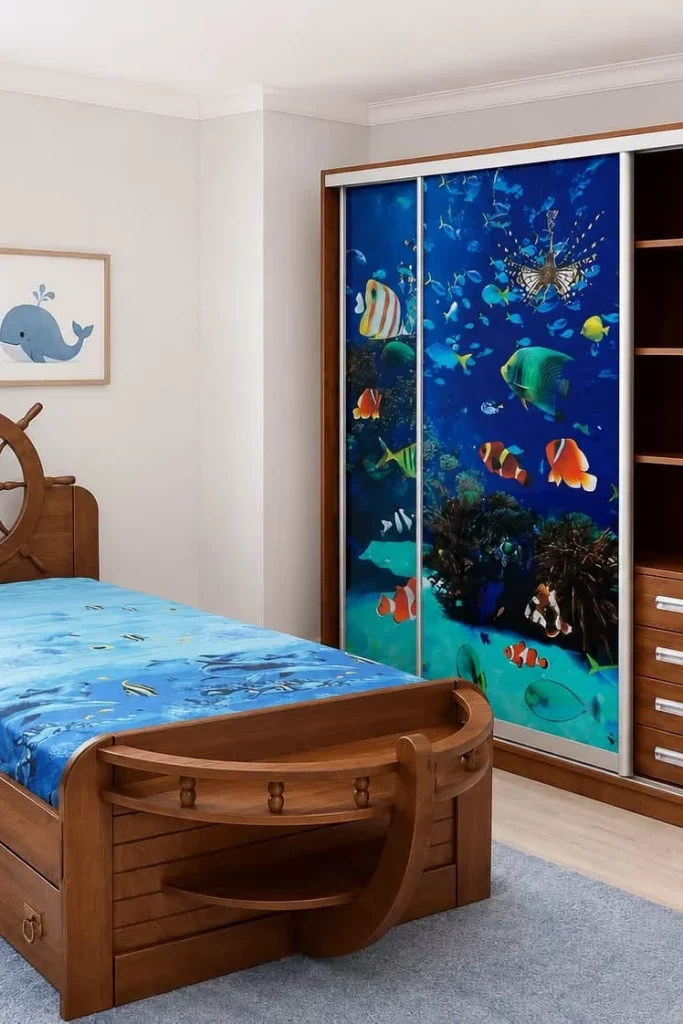
What I find especially effective is that the furniture itself carries the theme rather than relying on numerous separate decorations. The bed establishes the nautical character through its shape, while the wardrobe doors create an enormous visual backdrop with the underwater imagery. At the same time, the open shelving and sliding doors make the storage practical. The room therefore manages to be highly personalized while still keeping the basic furniture functions clear.
This image reminds me that timeless furniture does not always have to mean visually neutral furniture. A classic idea behind timeless design is choosing pieces that strongly support the way a room is meant to be used and enjoyed. In a child’s or themed bedroom, I would rather see the personality expressed through a cohesive furniture concept like this than through a collection of unrelated decorative objects.
Carved Wood Sideboard With Rich Decorative Detailing
This sideboard makes a dramatic statement through its warm natural wood finish and elaborate carved door panels. I see two large paneled doors with matching ornamental motifs, decorative metal handles, a shaped lower apron, and curved feet. Above it hangs a large dark artwork with gold-toned detailing in a substantial frame. The top is styled with framed photographs, decorative objects, a book, a lamp, and a large vase arrangement, creating a carefully composed display.
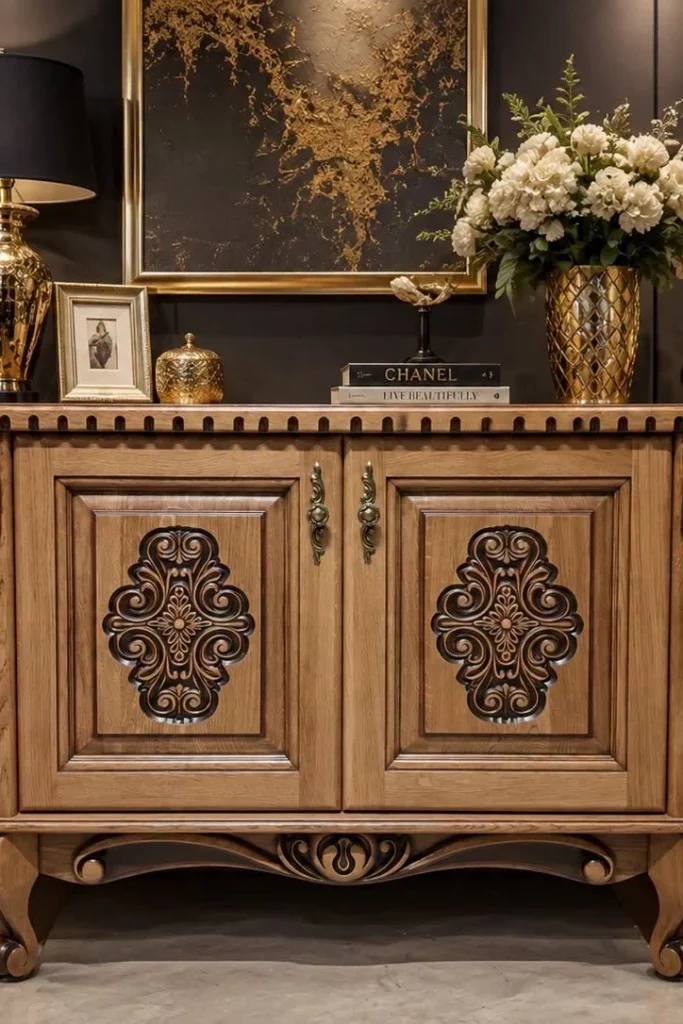
I like the way the sideboard provides a solid visual foundation for everything placed above it. Its broad surface offers enough room for a layered display, while the closed doors keep the storage itself discreet. The decorative doors and curved base also give what could otherwise be a simple storage cabinet much more furniture-like character. The dark wall behind the artwork creates a strong backdrop, allowing the warm wood and metallic details to stand out.
For me, the most useful takeaway is the importance of scale. The large artwork is appropriately substantial for the width of the sideboard, and the objects on top are grouped rather than scattered randomly. When I style a large cabinet, I would use the same principle: establish one dominant element, then add a small number of supporting pieces that relate to its proportions and finish.
Cream Dining Set With Gilded Carved Accents
This dining area is built around a rectangular cream-colored table with a smooth top and elaborately carved legs. Four upholstered dining chairs are visible, each with decorative gold-toned detailing along the upper frame and legs. The walls are finished in a soft neutral color with panel molding, while a large patterned rug anchors the dining set. A round vase filled with pale flowers sits in the center of the table, providing a simple focal point.
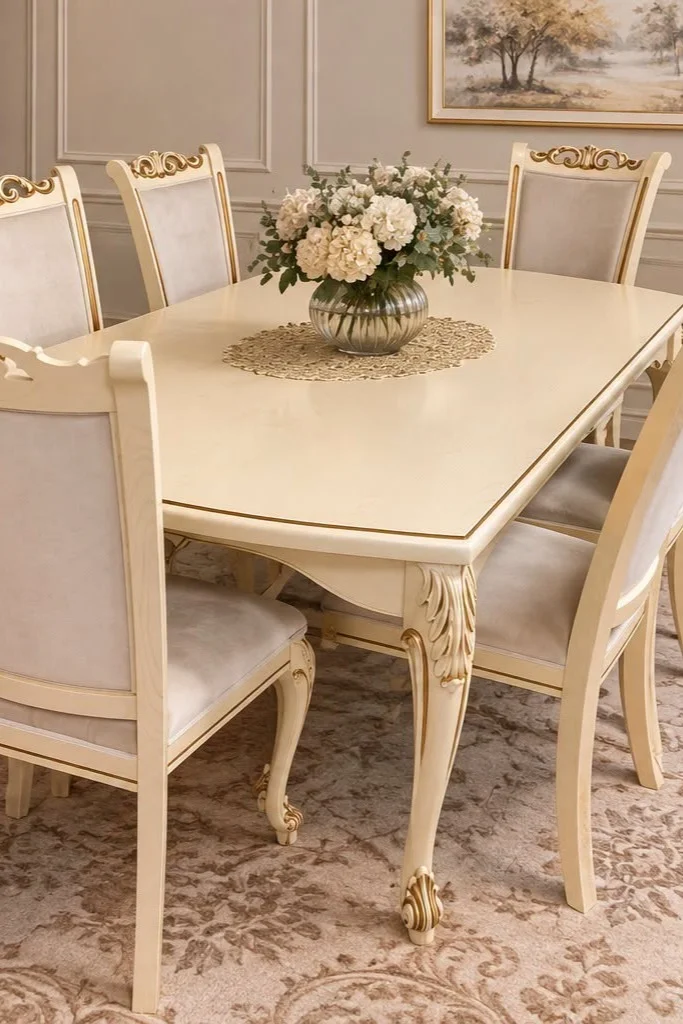
The chairs and table feel coordinated because their decorative details repeat the same visual language. I particularly notice the curved legs and carved accents, which soften the rectangular tabletop and straight chair backs. The upholstered chair panels also introduce a comfortable visual texture, making the dining set appear designed for lingering at the table rather than simply for occasional use.
If I were recreating this look, I would pay close attention to the relationship between the furniture and the rug. The rug shown here extends well beyond the table and chairs, giving the dining arrangement a defined zone. I also like the restrained centerpiece: the table already has plenty of detail, so one central arrangement is enough to finish the composition without obscuring the furniture.
Grand White Dining Table With Sculptural Pedestal Base
The final image takes ornate dining furniture to its most elaborate expression. I see a large white oval or softly rounded rectangular table supported by two substantial pedestal bases. Each base features layered carved forms, curved foliage-like detailing, and rounded ornamental elements. Matching cream upholstered chairs surround the table, while a crystal chandelier hangs overhead. The pale marble-look floor and neutral furnishings keep the setting light, while a patterned rug appears beneath part of the dining arrangement.
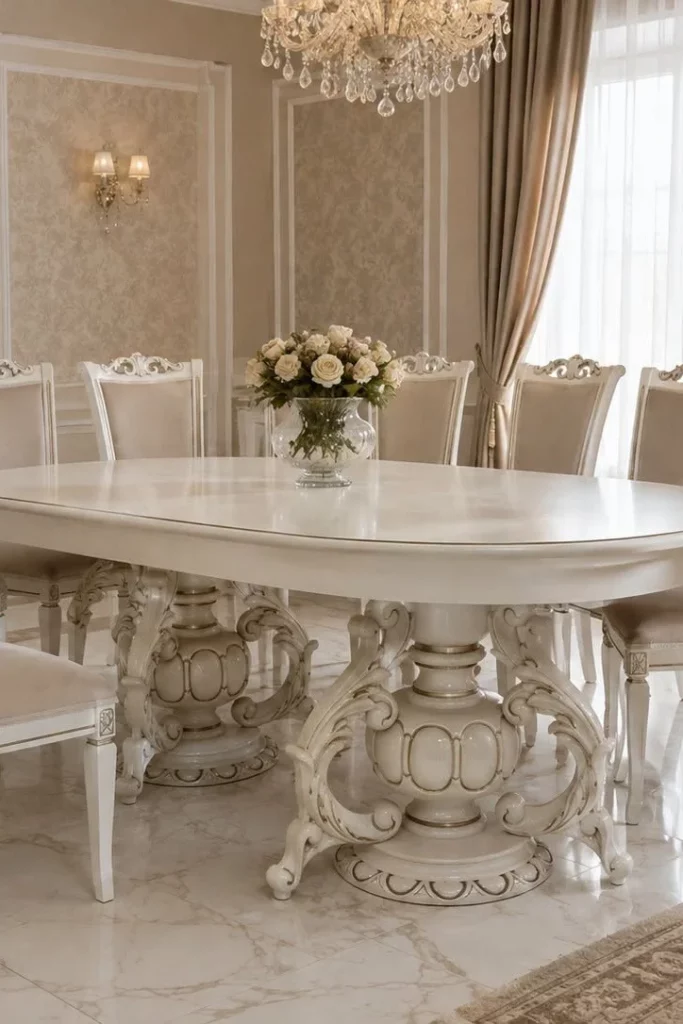
The pedestal construction gives this table an especially strong presence while leaving more open space beneath the tabletop than a traditional arrangement of four legs would. I also find the seating arrangement visually balanced because the chairs are kept relatively simple compared with the ornate table base. That contrast allows the sculptural support structure to remain the star without making the entire dining set equally elaborate.
For me, this photograph shows how a single piece of furniture can define an entire room’s personality. The table is not merely a surface for dining; its shape, carved base, and proportions establish the atmosphere around it. If I wanted to achieve a similar sense of elegance, I would start with one distinctive furniture piece and allow the surrounding elements to support its form rather than competing with it.
Ornate Cream Sofa With Sculpted Wood Details
The first living room immediately draws my attention to an elaborate cream sofa with an intricately carved frame and softly tufted upholstery. The backrest and arms are surrounded by curving decorative woodwork in a pale finish, while the seat is covered in a light fabric with gathered detailing along the front. Multiple cream and beige cushions create a layered arrangement, and the sofa is paired with a matching upholstered piece on the right. Behind it, a deep brown leather sofa and a dark green upholstered piece create additional visual depth. I also notice the patterned gray wall, wood-look flooring, and small framed artwork that complete the setting.
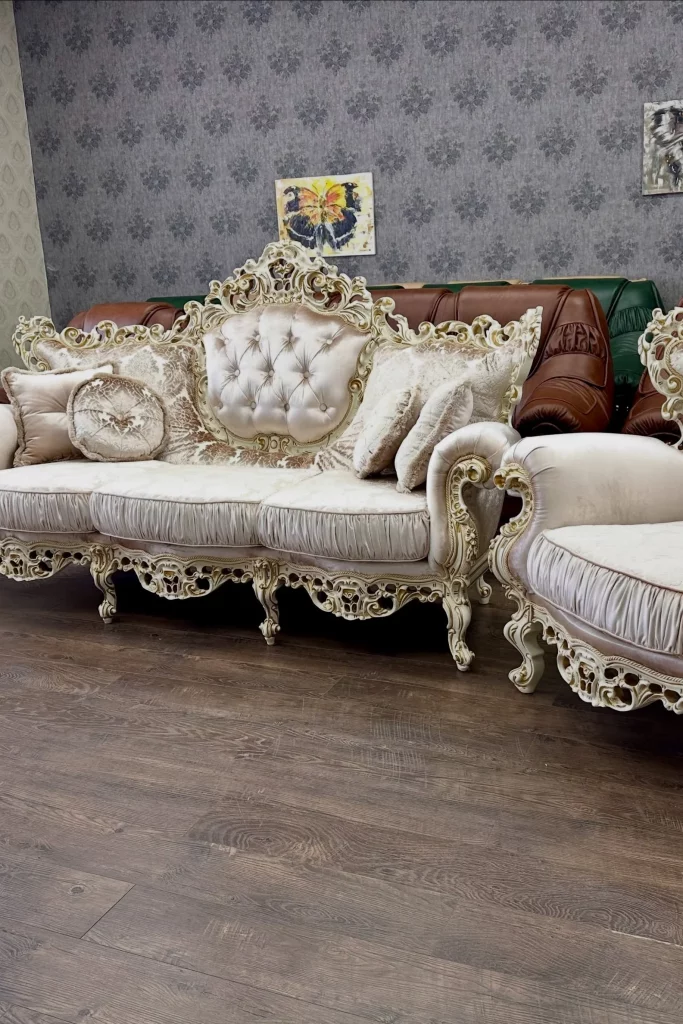
For me, the strongest feature is the way the sofa functions almost like a sculptural centerpiece. The ornate frame gives an otherwise soft, pale piece a defined silhouette, while the generous cushions make it look genuinely comfortable. The combination of cream upholstery with darker seating behind it creates contrast without relying on a large number of decorative objects. I also like how the open floor area in front of the furniture allows the elaborate sofa to remain the main focus.
When I want furniture like this to feel timeless rather than visually overwhelming, I find it helpful to let one substantial piece carry most of the decorative weight. Here, the carved sofa already provides plenty of character, so the restrained wall art and neutral cushions feel appropriate. I would keep surrounding accessories relatively edited and allow the furniture’s craftsmanship to remain visible.
Dark Carved Bedroom Furniture With Tufted Upholstery
This bedroom takes a much richer approach, with a large dark wood bed featuring elaborate carved ornamentation across the headboard and footboard. The upholstered center of the headboard is light beige and deeply button-tufted, creating a soft contrast against the dark wood. A matching carved wardrobe with mirrored doors stands to the left, accompanied by a dark bedside table and a small lamp. A crystal chandelier hangs above the room, while patterned beige wallpaper, a large area rug, and pale bedding soften the substantial furniture.
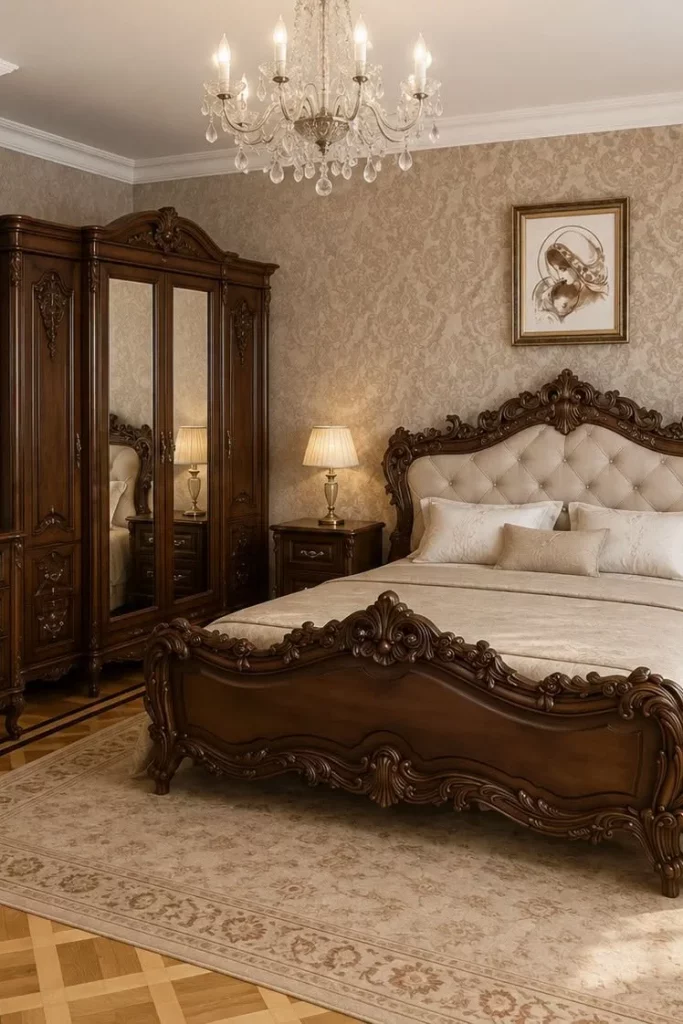
I find the symmetry and coordination especially effective here. The bed and wardrobe share the same dark wood finish and decorative language, which makes the furniture feel like a cohesive collection rather than unrelated pieces. The mirrored wardrobe doors also provide a practical function while visually breaking up the solid wooden surface. Meanwhile, the upholstered headboard introduces softness exactly where it is needed.
From my perspective, this room shows why traditional furniture can remain appealing when the color palette is kept controlled. The dark wood is balanced by beige upholstery, bedding, wallpaper, and carpeting, so the room feels warm rather than excessively heavy. If I were recreating this atmosphere, I would concentrate on matching the wood tones and repeating one or two neutral textiles throughout the space.
Classic Walnut Sideboard Framed by Display Cabinets
The third photograph focuses on a traditional walnut-toned sideboard positioned between two tall glass-front display cabinets. The sideboard has paneled doors, several drawers, decorative trim, and a polished wood surface. Above it hangs a framed landscape painting, while a glass vase filled with white flowers, several books, and framed photographs decorate the top. A round coffee table with an open book is partially visible in the foreground, and a patterned area rug connects the furniture visually.
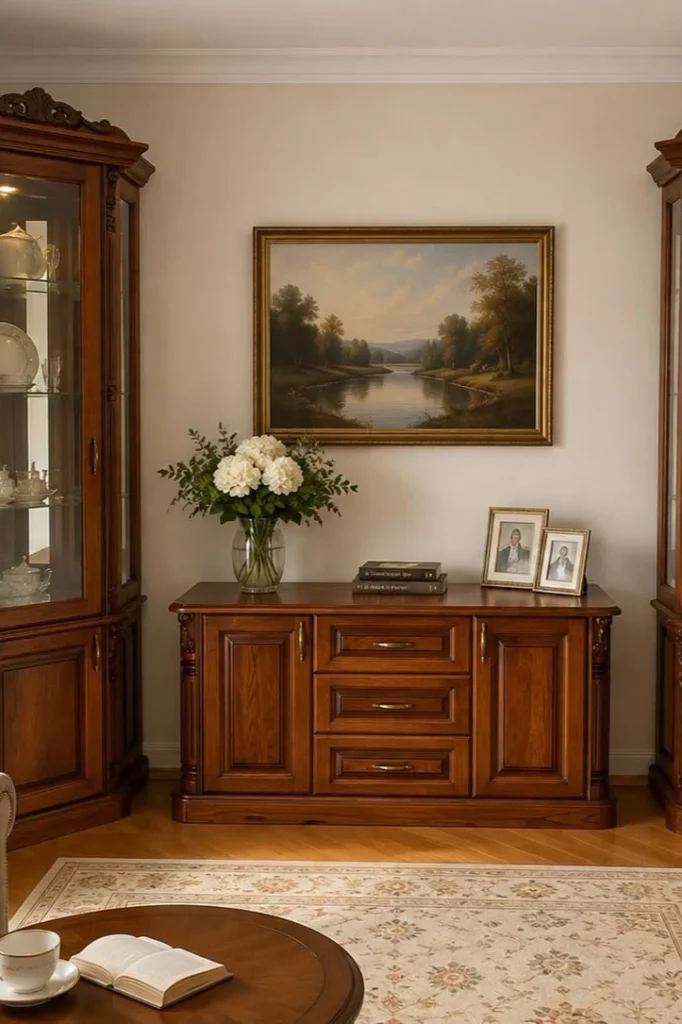
What works particularly well for me is the sideboard’s combination of storage and display space. The closed compartments keep everyday belongings out of sight, while the surface provides room for a few carefully selected objects. The surrounding glass cabinets extend the storage concept upward and provide a place to display china and other visible pieces. The arrangement also feels balanced because the landscape painting occupies the wall space directly above the central cabinet.
I would take this photograph as a reminder that a classic sideboard does not need excessive decoration to look finished. A single substantial artwork, a vase, books, and photographs are enough to give the composition personality. I also like the practical relationship between the furniture and the coffee table: the room feels arranged for everyday use rather than simply staged for appearance.
Cream Sideboard With Soft Floral Artwork
This image presents a lighter interpretation of classic furniture. A cream-colored sideboard has paneled doors, multiple drawers, decorative corner details, and a pale countertop. Above it hangs a framed painting filled with pink flowers, while a large arrangement of white flowers sits in a woven-looking vase on the surface. The surrounding cabinetry is also pale, creating a unified backdrop that allows the artwork and furniture details to stand out. The composition is symmetrical, calm, and softly illuminated.
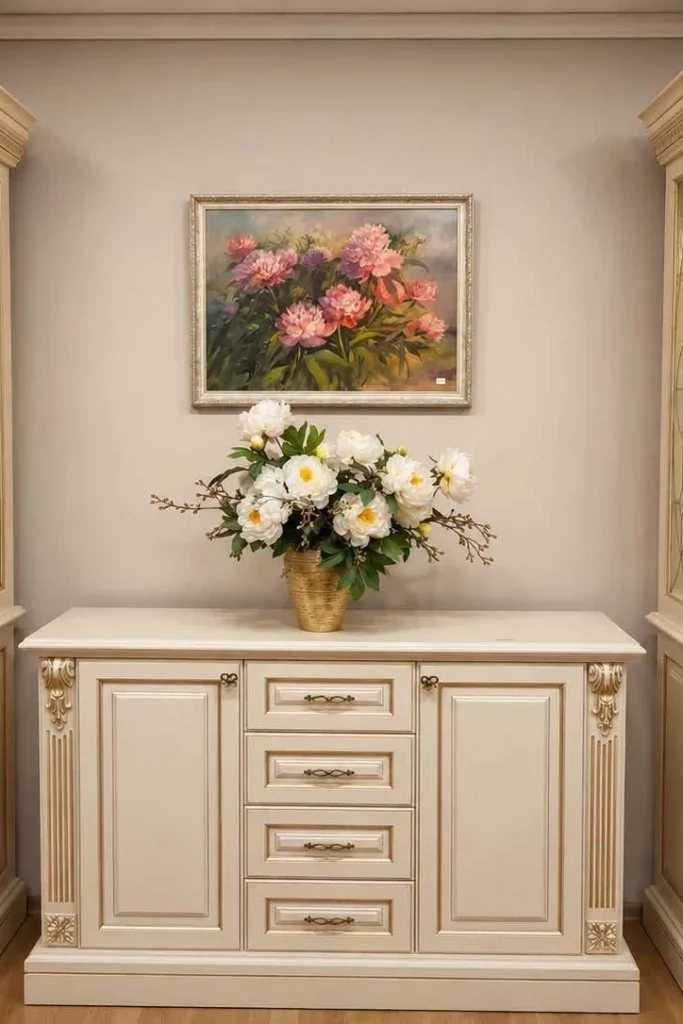
I particularly like how the sideboard combines decorative detailing with useful storage. The drawers and cupboards offer concealed space, while the broad top provides a convenient location for artwork-inspired styling. Because the furniture and walls remain light, the detailed construction does not make the room feel visually dense. The floral painting and white arrangement also reinforce the gentle character of the setting.
For me, this is a good example of how ornate furniture can be made to feel approachable through color. Instead of using a dark finish, the pale cabinet allows the carved accents and paneled surfaces to remain visible while keeping the overall impression soft. I would preserve that restraint by choosing only a few accessories and allowing plenty of visual space around the main piece.
Dark Wood Console With Built-In Desk Space
The fifth interior centers on a substantial dark wood furniture piece that combines drawers on both sides with an open central section resembling a compact desk or writing area. Decorative drawer pulls, paneled fronts, and carefully finished edges give the furniture a traditional appearance. Above it is a framed landscape artwork surrounded by wall molding, while books, an open book, a small decorative container, and a leafy arrangement occupy the surface. The warm wood contrasts beautifully with the light paneled wall behind it.
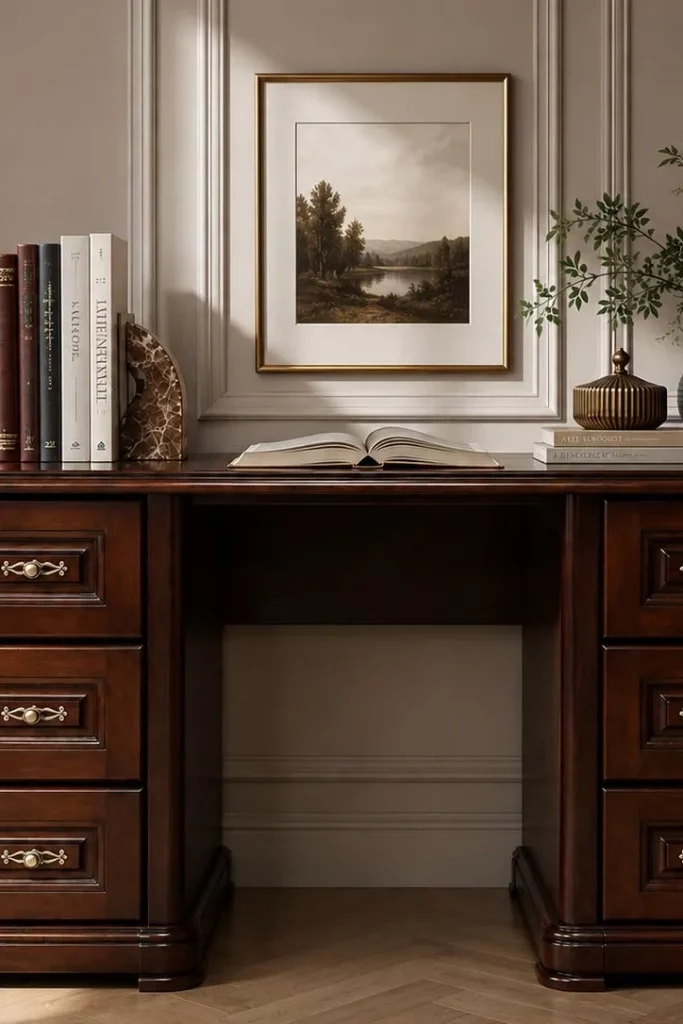
I find the central open section particularly practical because it creates a dedicated working or reading position without requiring a separate desk. The drawers on either side provide generous-looking storage, while the long surface offers room for useful objects and decoration. The furniture also makes excellent use of the wall because the framed artwork sits naturally above the central opening rather than competing with the cabinetry.
This is one of my favorite approaches in the collection because it proves that classic furniture can support modern everyday activities. I would use a similar piece in a study, bedroom, or quiet corner where storage and a compact work surface are both useful. Keeping the wall treatment and furniture in related neutral tones also helps the arrangement feel intentionally designed.
Curved Blue Upholstered Sectional With Carved Frame
The sixth photograph shows a generously sized sectional sofa with a curved arrangement and an ornate cream-colored carved base. Its upholstery combines muted blue with beige decorative patterning, while several round and square cushions introduce additional texture. The sofa sits against a pale wall finished with rectangular molding, and a framed landscape print hangs above it. A soft neutral carpet covers the floor, creating a comfortable-looking foundation for the substantial seating.
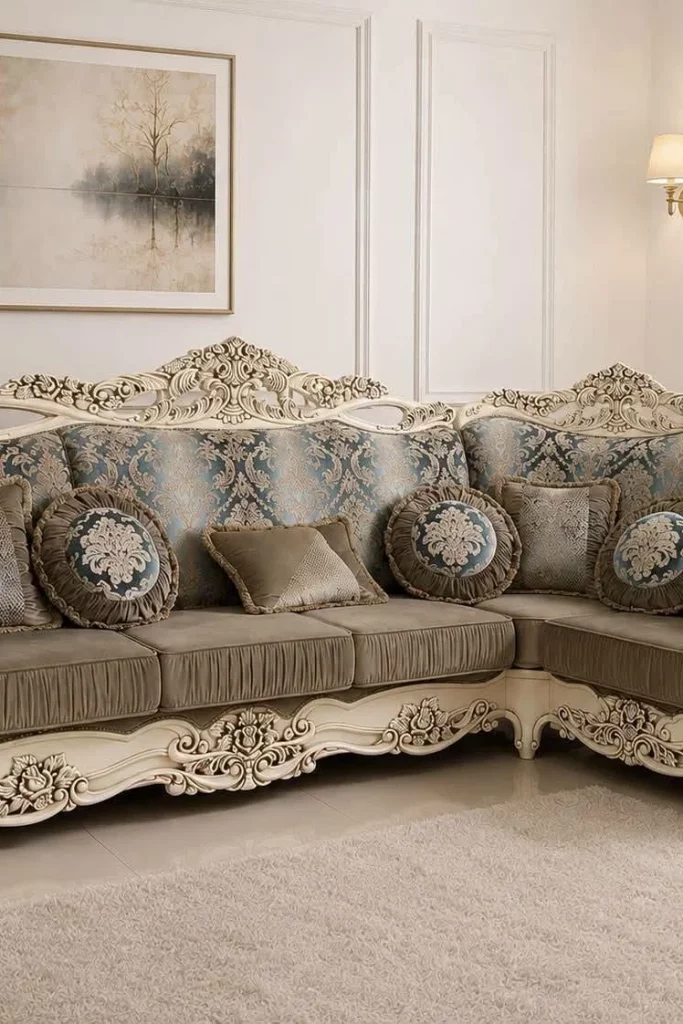
What I appreciate most here is the contrast between the formal carved frame and the relaxed sectional shape. The curved configuration makes the seating feel inviting and encourages conversation, while the generous number of cushions adds softness. The pale frame visually separates the ornate base from the darker upholstery, making the decorative details easier to appreciate.
In my experience, a large patterned sofa can become the dominant element very quickly, so I would follow the example shown here and keep the surrounding palette restrained. The light walls and neutral floor give the blue upholstery room to stand out without making the room feel crowded. The result is traditional in detail but comfortable in the way the seating is organized.
Rich Walnut Sideboard With Traditional Carved Fronts
This room features a dark walnut sideboard with multiple drawers and cabinet doors, all decorated with carved panels and polished hardware. The piece stands between two tall glass-front cabinets, creating a strong symmetrical arrangement. Above it hangs a traditional landscape painting in a gold-toned frame, while a vase with greenery, a small framed photograph, and a shallow decorative bowl sit on the sideboard. A patterned rug and warm wood flooring reinforce the room’s rich, traditional atmosphere.
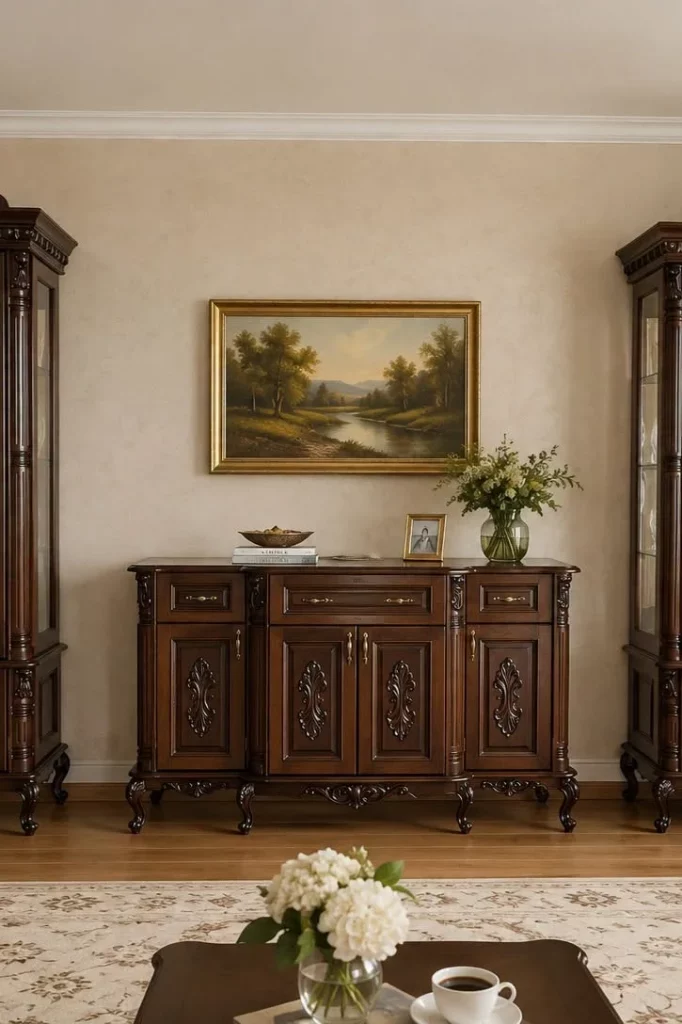
I like the way the sideboard anchors the entire wall without needing additional large furniture around it. Its substantial proportions make the central composition feel stable, while the matching cabinets on either side create a strong sense of order. The combination of closed storage below and glass display space above is also practical, particularly for a room where both storage and presentation matter.
If I were working with a similar dark wood collection, I would pay close attention to symmetry and spacing. The photograph demonstrates how repeated furniture forms can make an arrangement feel deliberate and calm. I would also keep the styling on the central surface relatively simple so the carved fronts and landscape artwork remain easy to appreciate.
Dark Traditional Dresser With Gold Hardware
The eighth image focuses closely on a broad dark wood dresser with six drawers and paneled detailing. Each drawer is finished with an ornate gold-toned handle, while decorative carved elements frame the outer edges. Above the dresser, a large framed botanical artwork is paired with a white vase of flowers, stacked books, a smaller framed print, and a small bowl. The light wall and pale flooring provide a gentle contrast to the deep furniture finish.
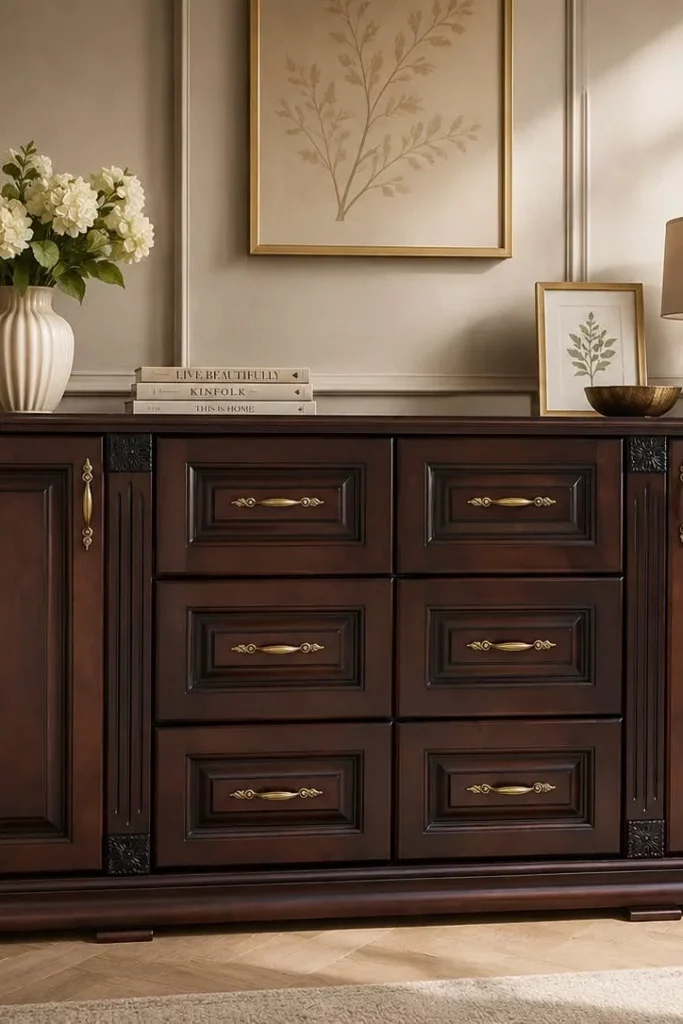
For me, the dresser succeeds because its visual weight is balanced by the lighter elements surrounding it. The dark wood gives the piece presence, while the pale wall and artwork prevent the composition from becoming too heavy. Six drawers also make this kind of furniture particularly useful for organizing clothing, linens, or other household items while maintaining a refined appearance.
I would keep the styling intentionally uncomplicated if I wanted to recreate this look. A few books, one larger piece of artwork, and a restrained arrangement on the surface are enough to make the dresser feel finished. The gold-toned hardware provides a subtle decorative accent, so there is no need to introduce many additional metallic details.
Cream Paneled Cabinet Against a Deep Blue Wall
The ninth photograph offers one of the strongest contrasts in the collection. A cream cabinet with deeply layered rectangular panels and decorative vertical details stands against a rich deep blue wall. Darker metal-toned handles emphasize the doors and drawers, while a long drawer stretches across the upper section. Above the cabinet is an abstract artwork combining deep blue, cream, and gold-toned areas. Small framed artwork, books, and decorative objects complete the surface.
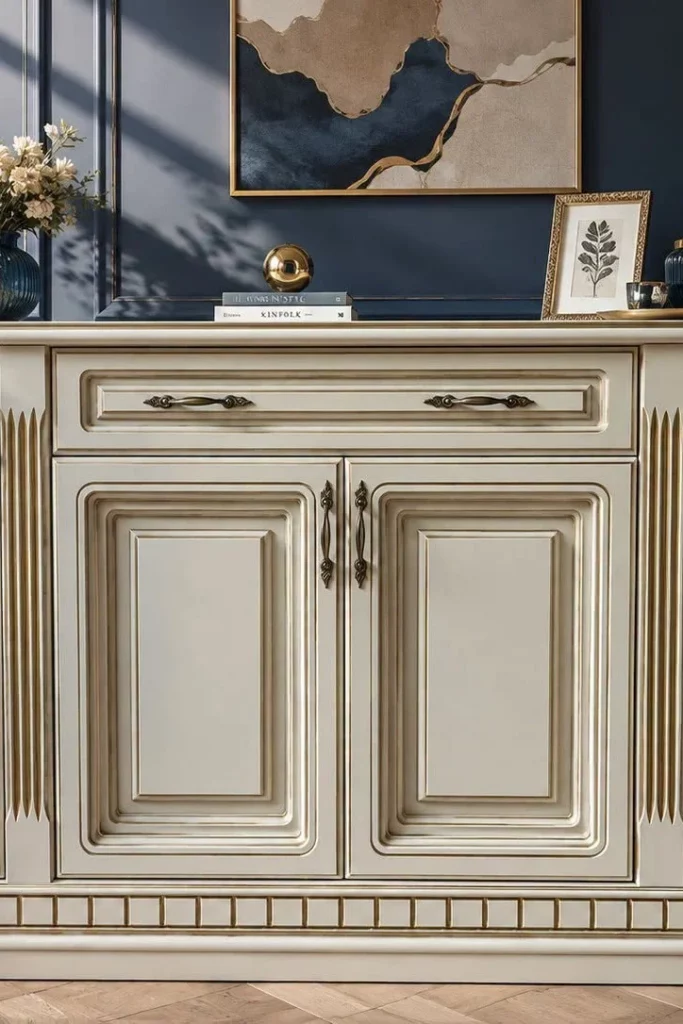
I love how the wall color changes the character of the pale furniture. The cabinet remains the main functional element, but the deep background gives its architectural detailing much more definition. The long upper drawer and two large lower doors also create a useful storage arrangement while maintaining a clean horizontal silhouette.
This photograph reminds me that timeless furniture does not have to be paired only with pale walls. A deep wall color can actually emphasize traditional craftsmanship and make lighter cabinetry look more distinctive. If I were adapting the idea, I would repeat one or two colors from the artwork elsewhere in the room so the contrast feels intentional and connected.
Carved Dark Wood Bed With Arched Headboard
The final bedroom features a large dark wood bed with an expressive curved headboard and matching carved details around the footboard. The central headboard is upholstered in warm brown material with tufting and a diamond pattern, while the bedding remains light and understated. A dark bedside table with a lamp sits beside the bed, and a tall arched window with simple curtains brings natural light into the room. A small framed artwork, a pale rug, and warm wood flooring complete the space.
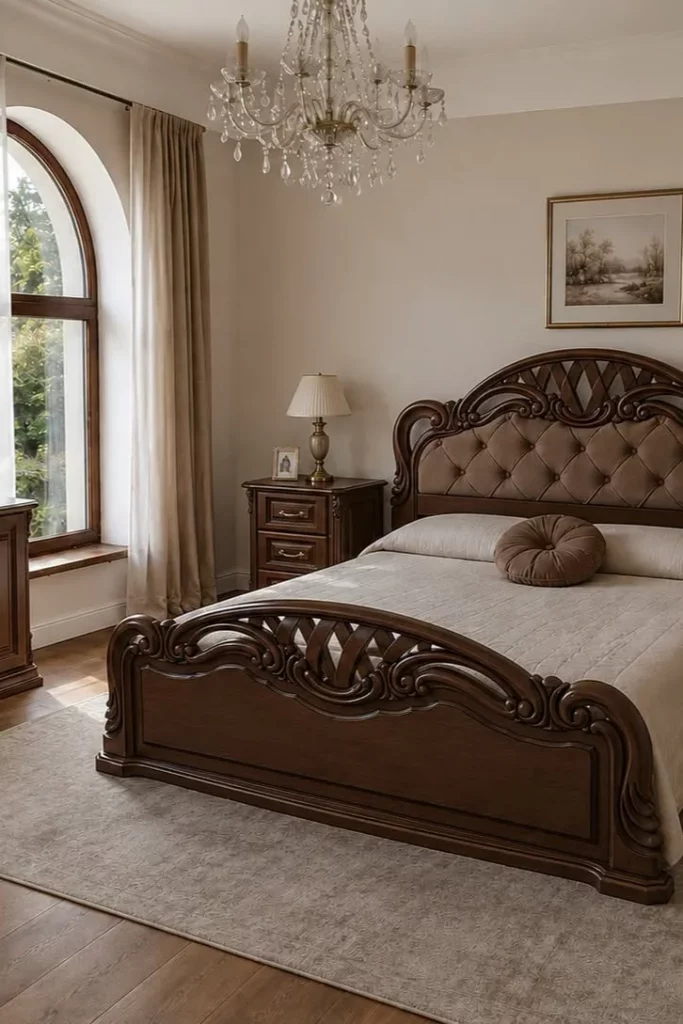
I find the balance between the impressive bed and the quieter surrounding elements especially successful. The bed has a strong decorative presence, but the light bedding, restrained artwork, and simple curtains prevent it from dominating every part of the room. The upholstered headboard also adds comfort and texture, making the elaborate frame feel more inviting.
For me, this is a particularly useful example of how to make statement furniture feel livable. Rather than competing with the bed, the rest of the room supports it with warm neutrals and uncomplicated accessories. I would preserve that balance by keeping the bedding relatively simple and allowing the craftsmanship of the bed to remain the defining feature.
Carved Dark Wood Bed With Sculptural Elephant Details
The first bedroom immediately draws my attention to its beautifully carved dark wood bed, where two sculptural elephant figures form the centerpiece of the headboard. I love how the deep brown finish contrasts with the cream bedding, beige pillows, and softly textured throw. Two framed landscape and wildlife artworks continue the natural theme above the bed, while a tall palm and table lamp add height and softness at the side. The result feels warm, richly detailed, and inviting without relying on a complicated room layout.
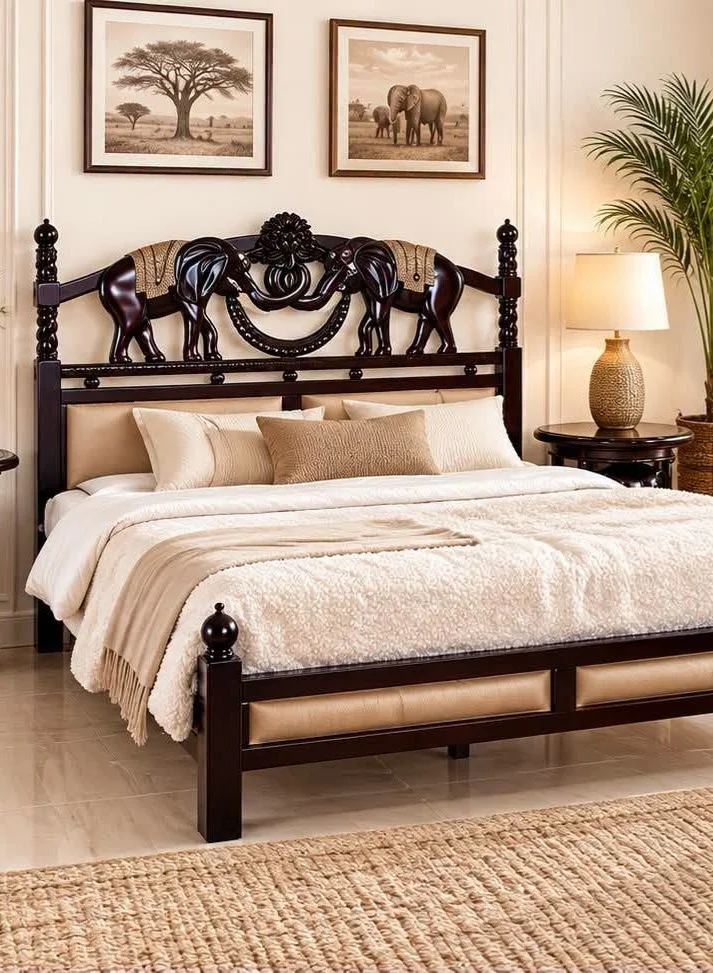
I think the bed works especially well because it combines function with a strong decorative identity. The substantial frame gives the room visual weight, while the upholstered-looking panels at the foot and the generous bedding make the furniture feel comfortable rather than purely ornamental. The matching dark wood side table and lamp create a useful bedside zone, and the large woven rug helps visually connect the bed with the surrounding floor.
For me, this is a good example of how one distinctive furniture piece can establish the personality of an entire room. Instead of filling the bedroom with many unrelated accessories, I would let an intricately carved bed remain the main focus and repeat its dark finish in just a few supporting pieces. Keeping the bedding in restrained cream and beige tones, as shown here, allows the craftsmanship of the furniture to remain visible.
Ornate Cream Cabinetry Framing a Classic Kitchen Range
This kitchen takes a much more architectural approach to timeless furniture, with cream-colored cabinetry surrounding a classic range and hood. I notice elaborate molding, fluted vertical details, framed cabinet doors, decorative carved accents, and a curved countertop edge on the left. The glossy rectangular backsplash provides a reflective surface behind the work area, while the darker countertop creates a subtle contrast against the pale cabinetry. Everything has a coordinated, traditional appearance.
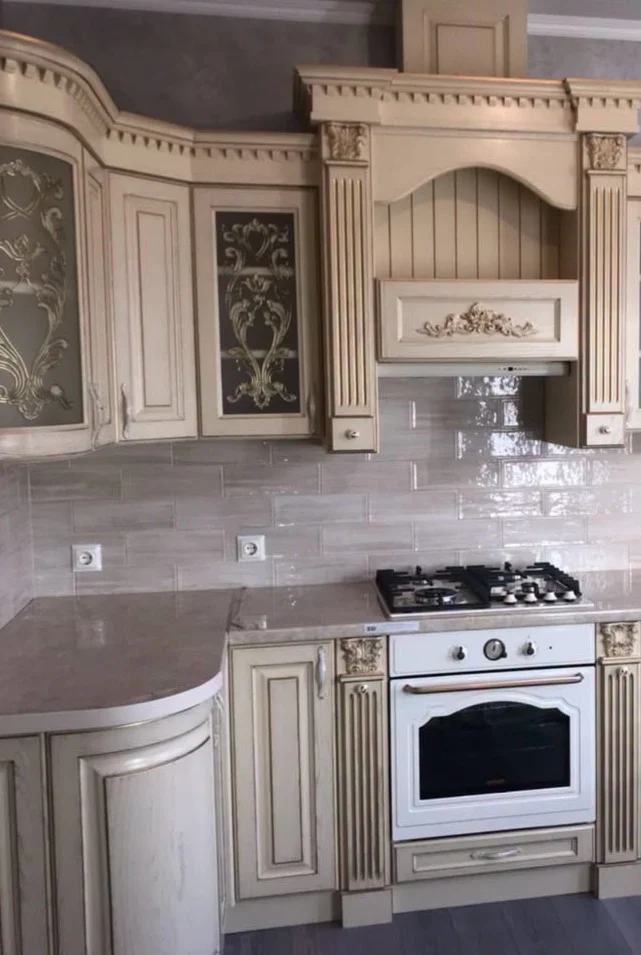
What works particularly well for me is the way the cabinetry gives the cooking area a strong sense of structure. The range sits centrally beneath an ornate hood, making it an obvious focal point, while the surrounding cupboards provide enclosed storage. The curved end of the counter softens the otherwise highly structured cabinetry and creates a more fluid transition into the rest of the kitchen.
I would take inspiration from this room by choosing cabinetry details carefully rather than adding ornament everywhere. The image shows how framed doors, molding, and a few carved elements can establish a classic character when they are repeated consistently. I also like the restrained cream and gray combination because it allows the cabinetry to feel elaborate without the room becoming visually chaotic.
Warm Wood Bedroom With a Curved Statement Headboard
Here I see a bedroom dominated by warm wood furniture, particularly a large bed with a gently curved headboard and footboard. Decorative dark metal scrollwork is incorporated into both pieces, adding contrast to the medium-brown wood. A matching tall dresser with an attached mirror occupies the right side, while a framed landscape painting hangs above the bed. The dark gray wall behind everything creates a dramatic backdrop for the warm furniture and softer bedding.
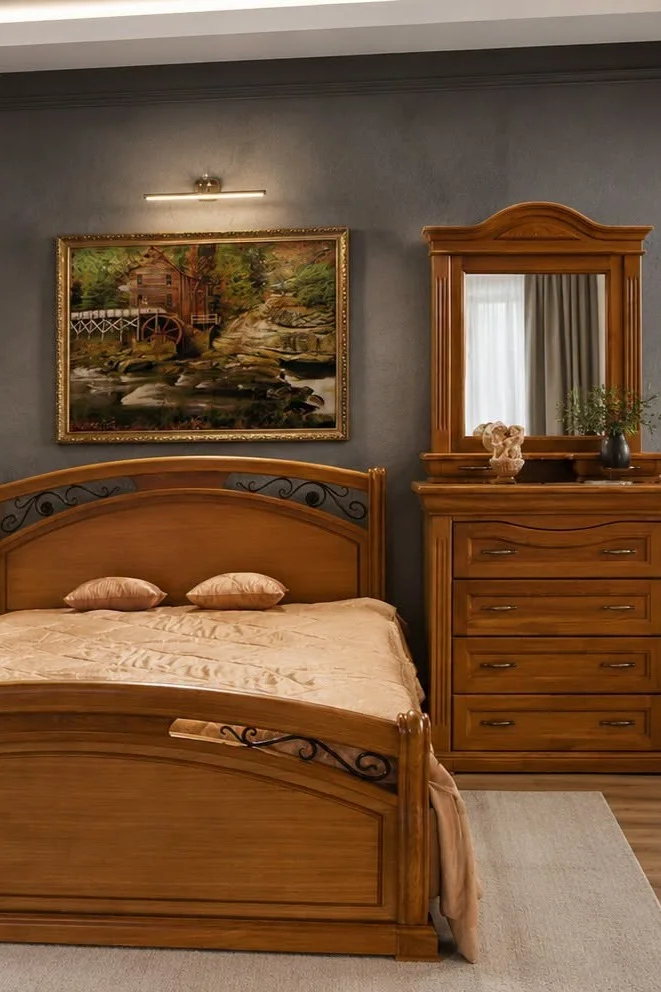
The matching furniture gives this bedroom a remarkably cohesive appearance. The dresser and mirror echo the proportions and finish of the bed, making the room feel intentionally furnished rather than assembled piece by piece. I also appreciate the generous closed storage provided by the dresser, because timeless furniture is most successful when its beauty is supported by everyday usefulness.
Personally, I would use this approach when I wanted a bedroom to feel substantial and established. A warm wood bedroom set can become the foundation of the space, while a darker wall behind it emphasizes the furniture’s shape and grain. I would keep the surrounding accessories relatively restrained, just as the image does, so the curved bed and coordinated storage remain the defining features.
Ivory Tufted Sofa With Elaborate Carved Woodwork
This living room centers on an ivory sofa with deep button tufting, rolled arms, and an exceptionally ornate carved wood frame. The frame has sweeping curves and intricate decorative details, while the matching coffee table repeats the carved wood language beneath a glass surface. A large framed landscape painting sits above the sofa, and the patterned rug reinforces the room’s traditional character. I find the combination of ivory upholstery and dark, richly finished wood particularly striking.
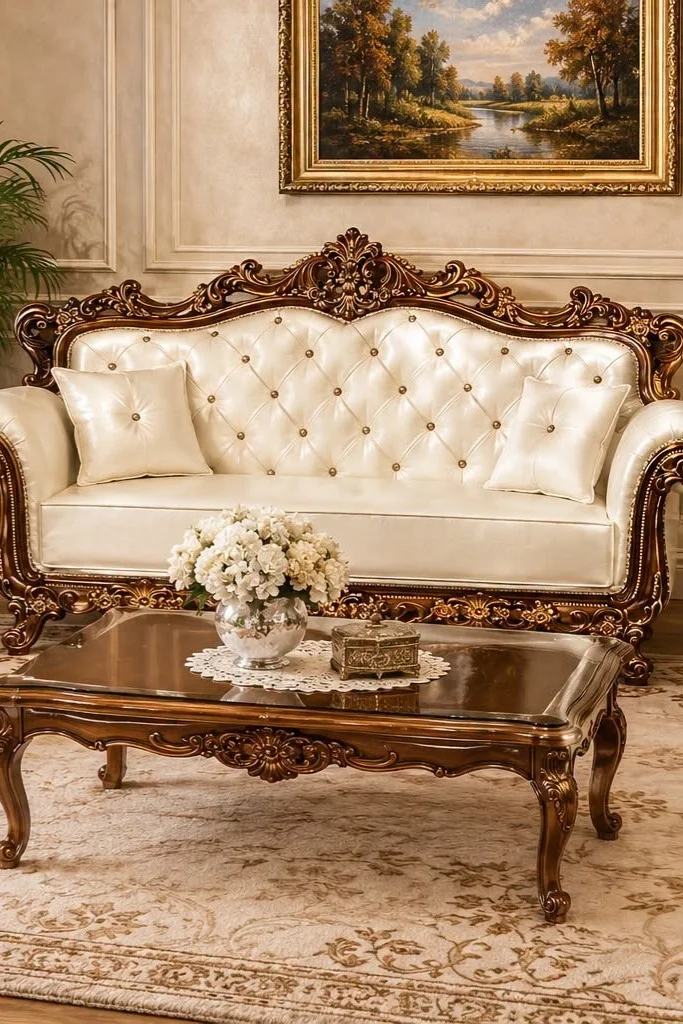
The sofa provides both a comfortable seating surface and an unmistakable visual focal point. Its pale upholstery keeps the large piece from feeling too heavy, while the carved frame gives it a furniture-like presence rather than making it disappear into the room. The glass-topped coffee table is also practical because it allows the elaborate base to remain visible while providing a usable surface for the vase and small decorative objects shown here.
I would approach a room like this by allowing the most detailed furniture pieces to lead the decorating decisions. There is no need to compete with an ornate sofa using numerous additional statement pieces. Instead, I would repeat its ivory and warm wood tones through upholstery, textiles, artwork, and smaller accessories, creating the same sense of continuity visible in this photograph.
Cream Display Cabinetry With Classic Decorative Detailing
The fifth image presents a large cream furniture composition with glass-fronted display cabinets, closed storage, drawers, carved feet, and decorative molding. Three central glass doors reveal neatly arranged objects and glassware, while the taller closed cupboards on either side provide concealed storage. A crystal chandelier hangs above, and the coffee table in front repeats the pale finish of the cabinetry. The dark wood floor creates a grounding contrast beneath all of the lighter furniture.
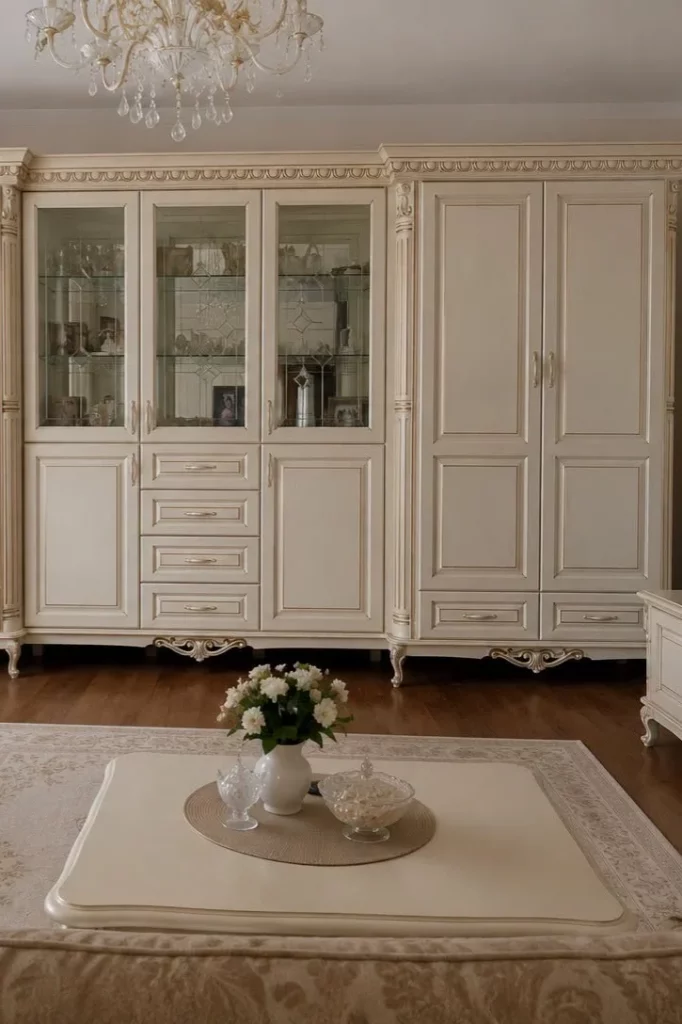
I particularly like the balance between display and hidden storage here. The glass doors make selected possessions part of the room’s decoration, while the solid cabinet doors keep less presentable items out of sight. The combination is practical because it allows storage to become an important part of the room without making every surface feel exposed.
This is the kind of furniture arrangement I would consider when a room needs substantial storage but I still want the result to feel elegant. Matching the cabinet finish to other large pieces, as shown, creates visual continuity. I would also resist overcrowding the glass sections; leaving some breathing room around displayed objects helps the cabinetry itself remain the star.
Traditional Wood Display Cabinet and Media Console
In this room, a tall traditional wood display cabinet stands beside a coordinated low media console. The cabinet has glass sides and doors that showcase neatly arranged glassware, while its substantial crown, columns, drawers, and lower cupboard give it a strong furniture presence. The matching console extends the same warm wood finish across the wall. Cream curtains, a framed landscape painting, and a patterned runner soften the composition.
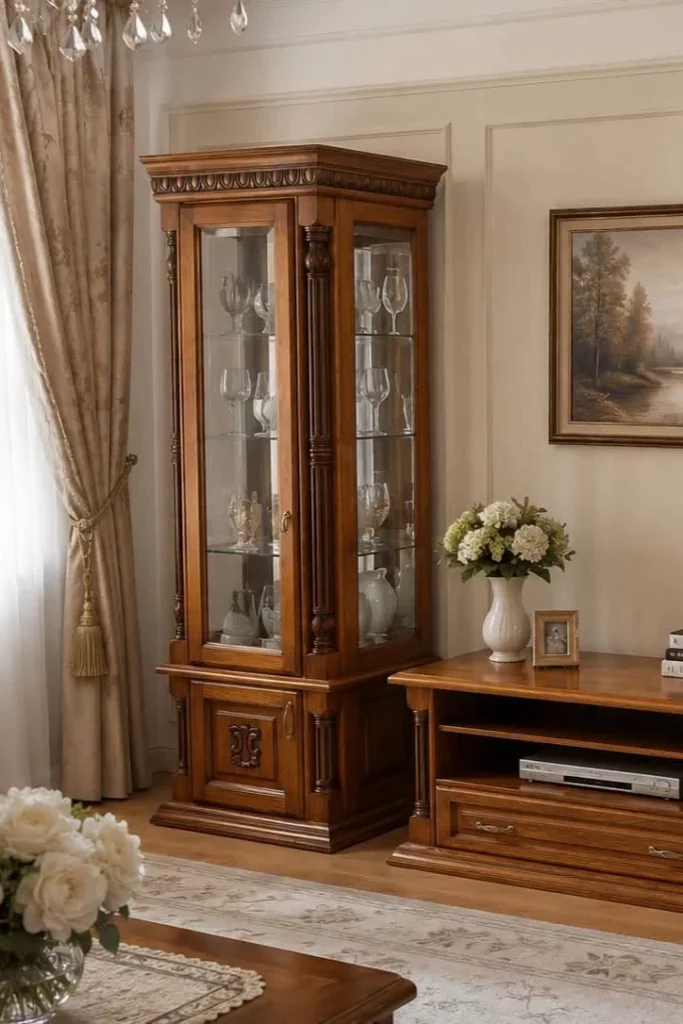
The pairing works because the two pieces provide different types of storage while maintaining a unified appearance. The tall cabinet uses vertical space efficiently for display, whereas the lower console offers broader storage and a practical surface. I also like how the glass cabinet introduces transparency, preventing the substantial wood furniture from feeling completely solid and visually closed.
For me, this image is a reminder that traditional furniture can still solve very modern organizational needs. When choosing pieces with strong profiles, I would coordinate their wood tones and proportions rather than trying to match every decorative detail. A tall cabinet can also make good use of an otherwise underutilized vertical area, while a lower console visually anchors the room.
Light Kitchen With a Practical Wooden Worktable
This kitchen feels especially welcoming because white framed cabinetry is paired with a large warm wood worktable positioned in the center. The table has turned legs and a lower shelf holding two woven baskets, while the surrounding cabinets provide additional enclosed storage. A white farmhouse-style sink sits beneath the window, dressed with simple white curtains. Soft under-cabinet lighting adds warmth across the countertop areas.
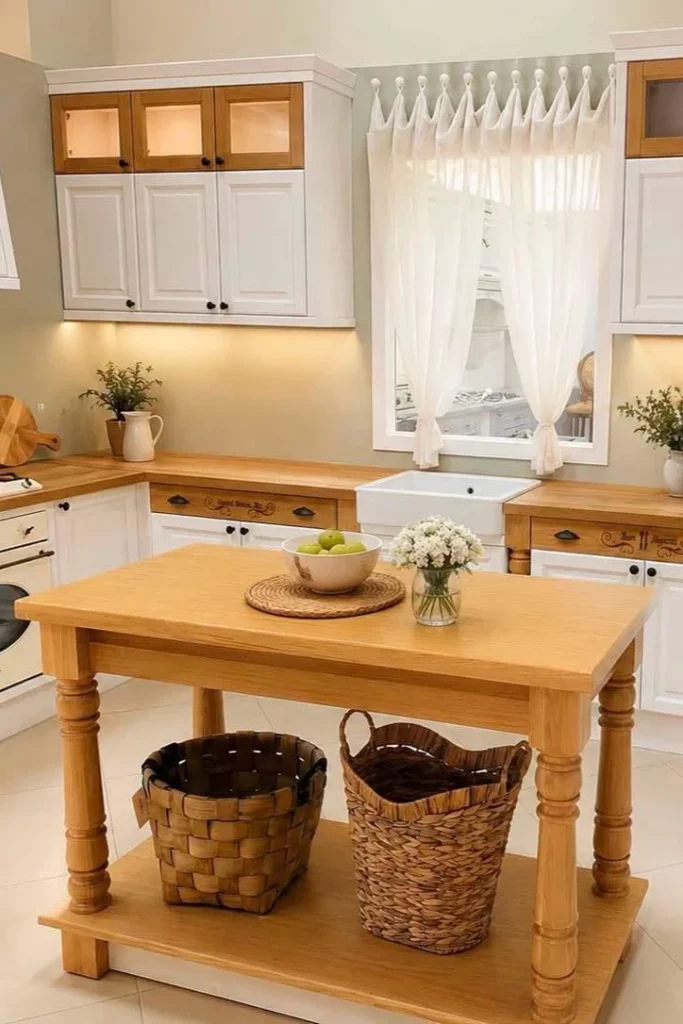
The central table is the feature I find most useful here. It creates a generous work surface while also offering accessible storage underneath, and its freestanding appearance keeps the kitchen from feeling overly fitted. The woven baskets make practical use of the lower shelf and add texture, while the pale cabinetry and flooring keep the overall room visually light.
I would borrow this idea for a kitchen where flexibility matters. A substantial freestanding table can serve several purposes without requiring a complicated island installation, and the lower shelf can accommodate baskets or other frequently used items. I also like the way the warm wood is repeated across the countertops, creating a clear connection between the central furniture and the surrounding cabinetry.
Colorful Patchwork Storage Bench With a Cushioned Top
This piece offers a completely different interpretation of timeless furniture. It is a substantial upholstered storage bench with a blue body, turned wooden feet, dark metal hardware, and a generously padded top made from colorful patterned fabric sections. The patchwork surface combines blue, red, yellow, gray, and patterned panels, giving the otherwise simple rectangular form considerable personality. It sits on a pale carpet, where its rounded upholstered edges create a soft contrast.
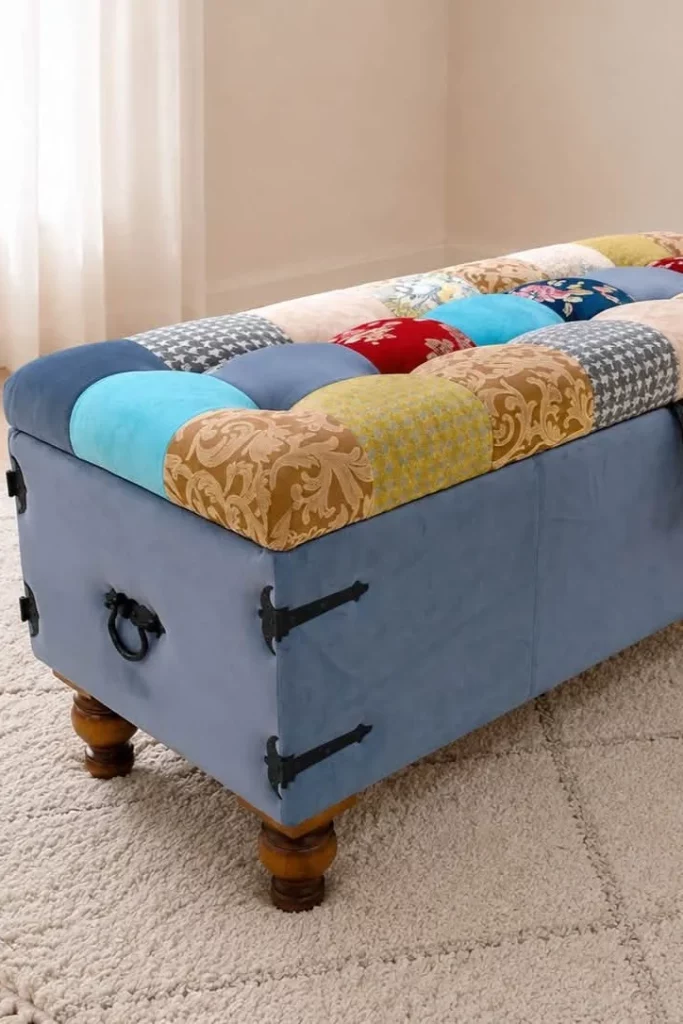
I like the practical combination of seating and storage represented by this piece. The hinged or accessible-looking construction and large body suggest generous internal capacity, while the padded top creates a comfortable place to sit. The hardware on the sides also reinforces the furniture’s substantial, utility-inspired construction without requiring additional decorative elements around it.
For me, this is an excellent reminder that timeless furniture does not have to mean visually restrained furniture. A classic bench shape can become much more personal through upholstery, color, and detailing. If I were recreating the idea, I would keep the form substantial and functional while choosing a coordinated collection of fabric patterns that reflects the colors already present in the room.
Elegant White Display Cabinet With Gold Accents
The ninth image shows an elegant white display cabinet paired with a matching low sideboard. Both pieces feature framed panels, curved decorative profiles, carved corner details, and gold-toned hardware. The tall cabinet has a glass front filled with neatly arranged wine glasses and decanters, while the sideboard provides closed storage and an open central area. A large abstract artwork hangs above it, and a vase with white flowers adds a simple focal point to the sideboard.
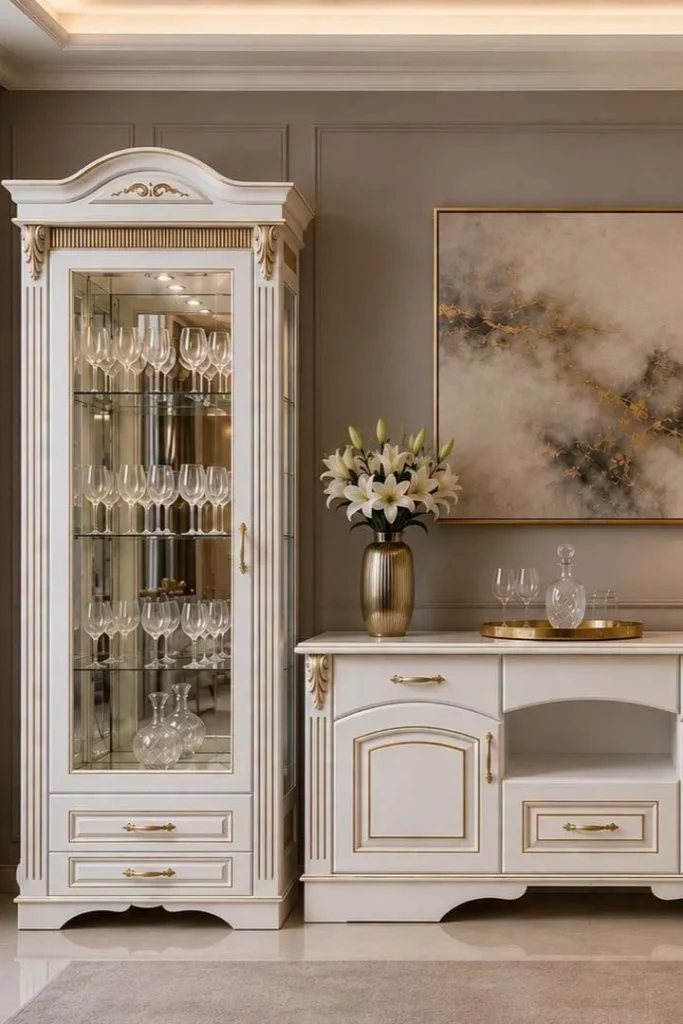
The arrangement is effective because the tall cabinet uses vertical space while the lower piece creates a balanced horizontal base. Glass shelving makes the displayed pieces visible and adds a lighter quality to the cabinet, while the enclosed compartments keep the composition organized. I also appreciate the subtle relationship between the gold accents, the framed artwork, and the decorative furniture details.
I would use a similar combination when I wanted storage to feel like part of the room’s furniture collection rather than an afterthought. The key, in my view, is consistency: the white finish, ornamental profiles, and gold details are repeated across both pieces. That repetition makes even highly decorative furniture feel coordinated and intentional.
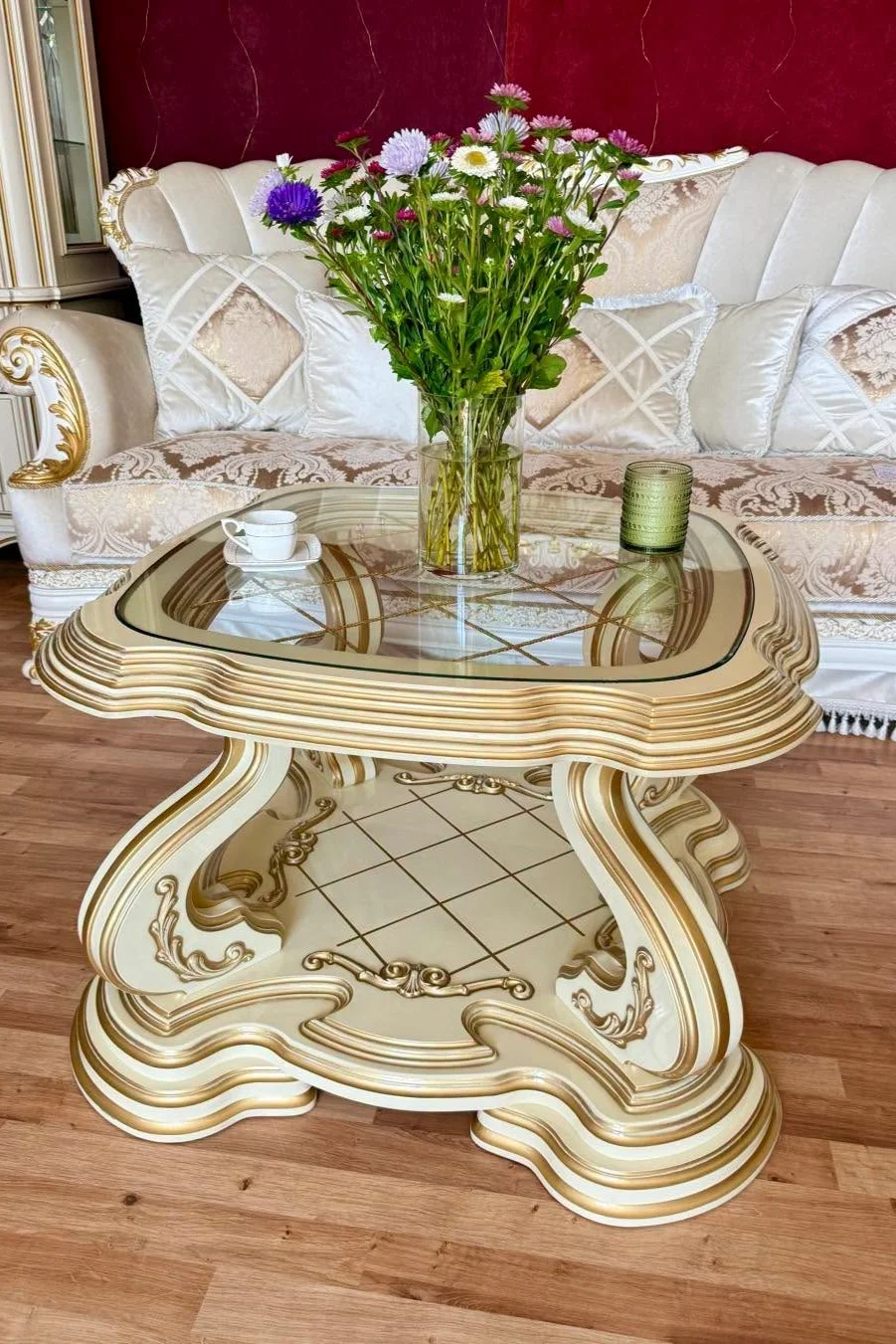
Ornate Cream and Gold Coffee Table as the Living Room Centerpiece
The final image places an exceptionally detailed cream and gold coffee table at the center of a traditional living room. Its layered, curved edges, decorative corners, sculptural legs, and patterned lower surface give it a strong presence beneath a glass tabletop. Behind it is an upholstered cream sofa with coordinated patterned cushions, while a deep red wall provides a rich backdrop. A large bouquet in a clear glass vase occupies the center of the table.
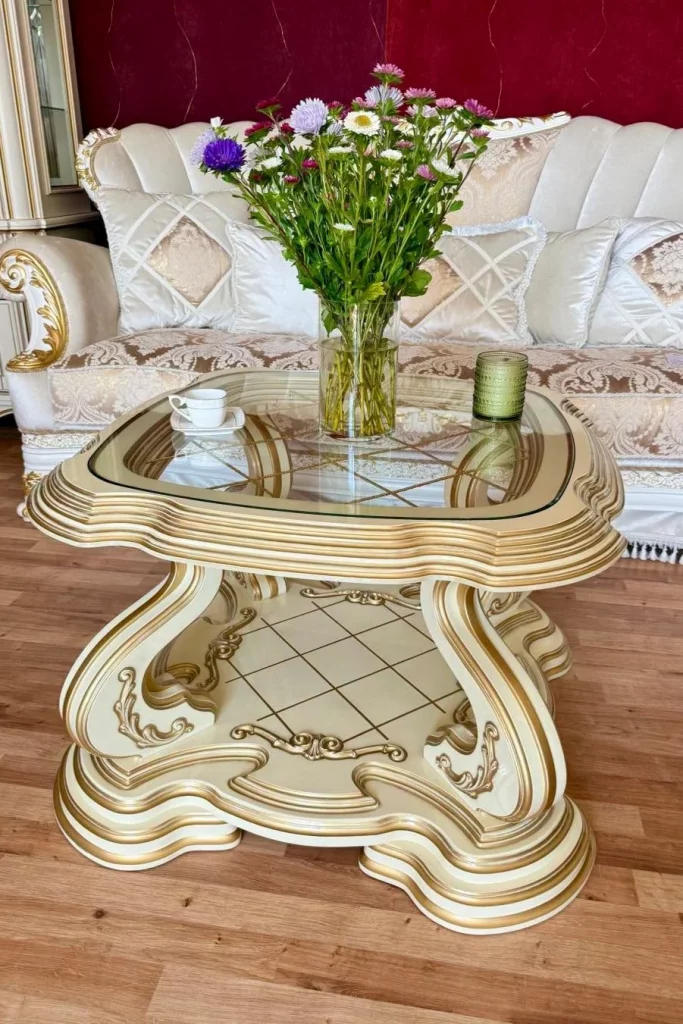
What makes this arrangement work for me is the deliberate relationship between the table and sofa. Both pieces use pale upholstery or finishes with decorative detailing, while the gold accents connect the furniture visually. The glass top also allows the elaborate construction underneath to remain visible, and the broad tabletop provides enough space for a central arrangement without overwhelming the seating area.
I would treat a table like this as a true centerpiece rather than trying to surround it with equally elaborate furniture. Its intricate silhouette already supplies plenty of visual interest, so the surrounding pieces can support it through related colors and materials. The image demonstrates how a single distinctive coffee table can give a familiar seating arrangement a much stronger identity while remaining useful for everyday living.
Carved Wood Armchair With Soft Cream Upholstery
The first image features a substantial armchair with a deep cream upholstered seat, back, and rounded arms set into an elaborate dark wood frame. I notice the carved floral and scrolling details along the base and front supports, while the upholstery is divided by carefully placed seams that emphasize the chair’s generous proportions. Behind it, a deep red curtain creates a rich backdrop, and a dark carved wooden piece of furniture is partially visible to the right. The pale upholstery and warm wood stand out beautifully against the darker surroundings.
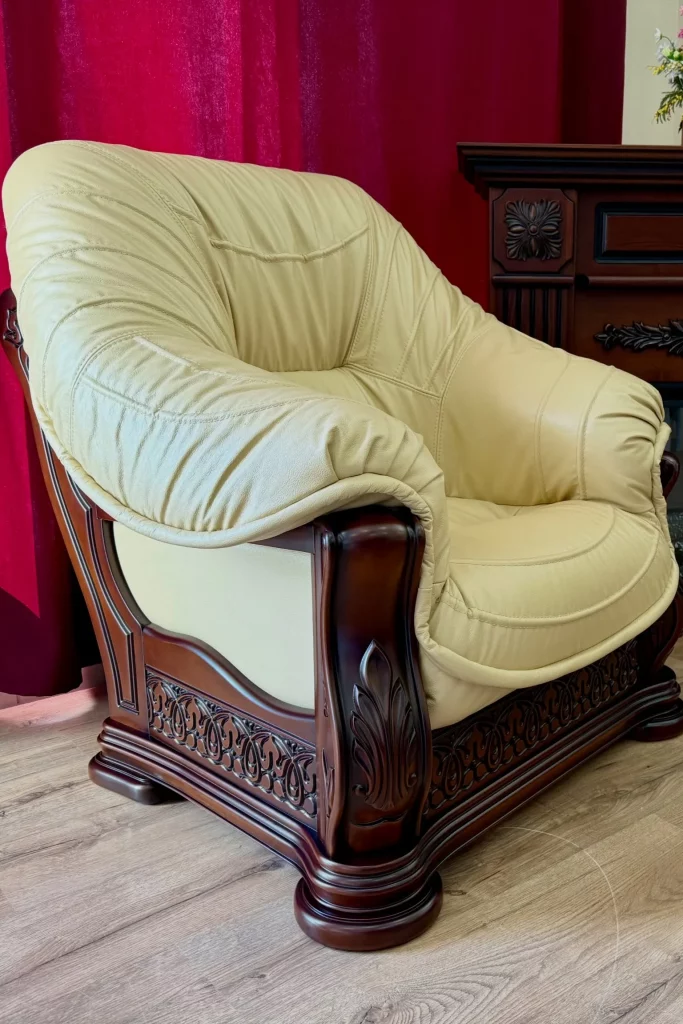
What works especially well for me is the contrast between softness and structure. The thick upholstered sections make the chair look exceptionally comfortable, while the carved frame gives it a strong visual presence. The broad arms and deep seat also suggest that this is furniture designed for relaxed sitting rather than simply decoration. I like how one substantial chair can become a defining feature of a room without requiring a complicated arrangement around it.
When I look at furniture like this, I think the key is to let its craftsmanship remain visible. I would avoid surrounding an ornate chair with too many competing details and instead give it enough visual space to be appreciated. The image also shows how cream upholstery can soften dark wood, making an imposing frame feel more approachable. For a similar look, I would begin with one carefully chosen statement chair and build the surrounding room around its existing wood and upholstery tones.
Patterned Upholstered Sofa With Sculpted Wood Trim
The second photograph shows a traditional upholstered sofa in a muted taupe and cream palette. Its seat, back cushions, and rounded arms are covered in an intricate symmetrical pattern, while the lower portion features a vertically striped fabric. Cream-colored carved wood frames the arms and base, creating a clear border between the patterned upholstery and the surrounding room. Natural light enters from the window at the left, while deep burgundy curtains appear behind the sofa and warm wood flooring grounds the composition.
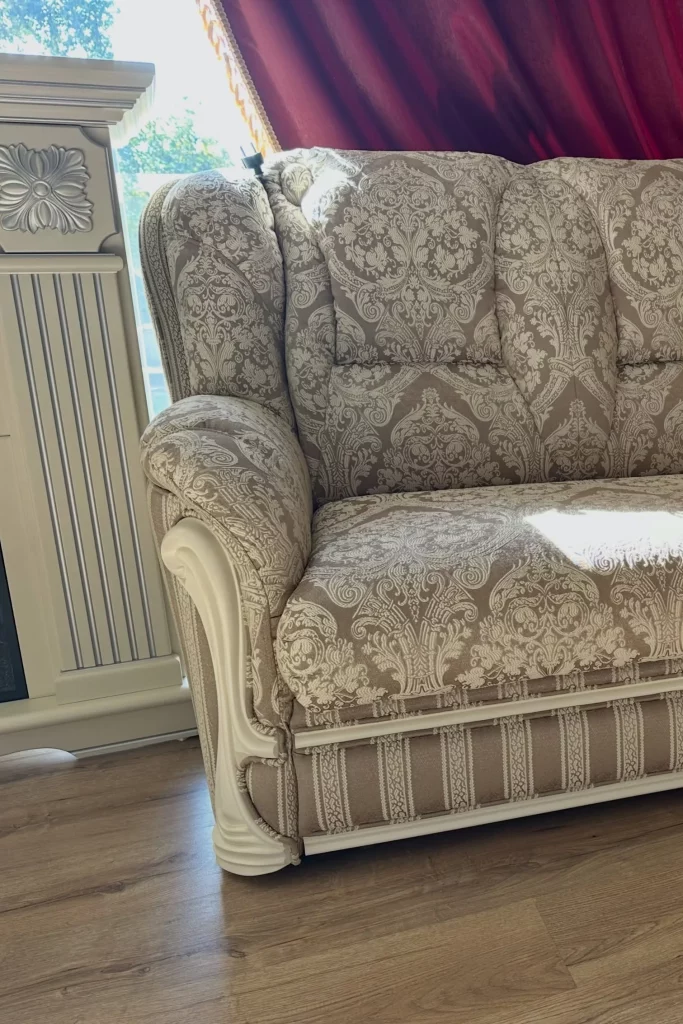
I particularly like the way the different fabric patterns are contained within one restrained color family. Although the upholstery is detailed, the taupe, beige, and cream tones prevent the sofa from feeling visually chaotic. The high, cushioned back and substantial arms also make comfort an obvious part of the design. The carved trim adds definition to the silhouette, allowing the sofa to feel decorative while remaining a practical piece for everyday seating.
For me, this image is a good reminder that patterned furniture does not have to dominate a room when its colors are closely related. If I wanted to achieve a similar effect, I would start with a sofa whose upholstery combines several patterns but maintains a consistent neutral palette. I would also pay attention to proportions: the generous shape shown here needs enough surrounding space so the carved edges and upholstered contours can be seen clearly rather than becoming lost among other furnishings.
Richly Finished Wooden Bedroom With Coordinated Furniture
The third image presents a warm bedroom centered around a large wooden bed with a curved decorative headboard and substantial matching footboard. The bed is accompanied by two wooden nightstands with drawers, each topped with a table lamp, creating a balanced arrangement on both sides. Cream bedding and pillows soften the deep brown wood, while a light patterned area rug covers much of the floor. Paneled walls, tall curtains, a framed landscape painting, and a traditional chandelier complete the carefully coordinated setting.
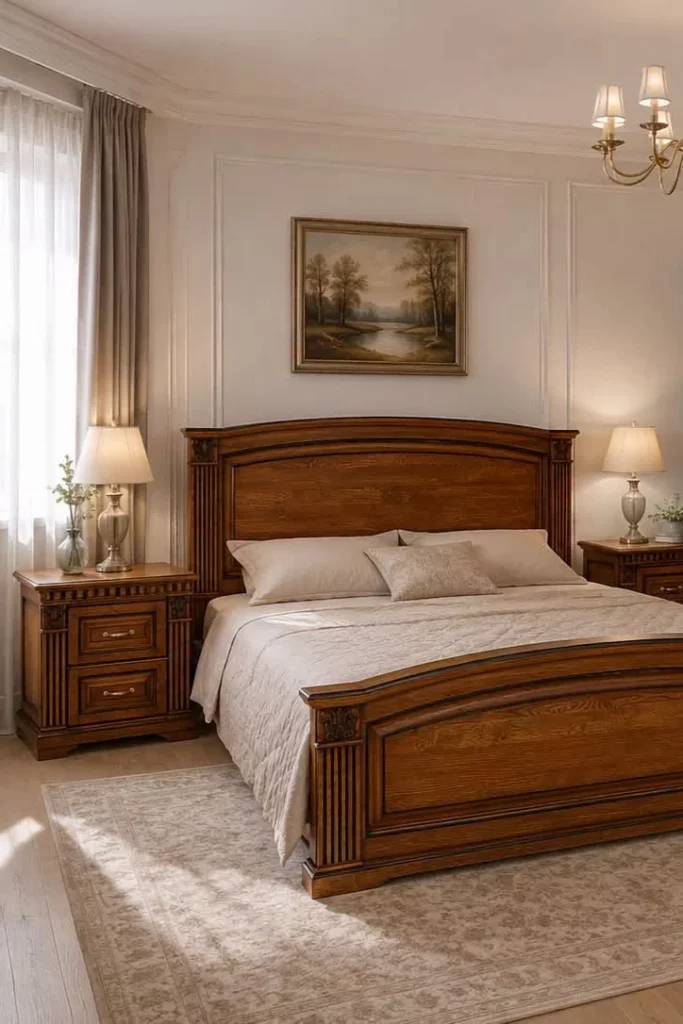
The strongest feature for me is the consistency of the furniture collection. The bed and nightstands share the same rich wood finish and decorative language, so the room immediately feels organized and cohesive. At the same time, the pale bedding, rug, walls, and curtains keep the darker furniture from making the bedroom feel visually heavy. The matching lamps also provide practical bedside lighting while reinforcing the symmetry of the layout.
I find this approach especially effective when the goal is a bedroom that feels settled rather than constantly changing. Instead of relying on numerous decorative objects, the room gains its character from substantial furniture, repeated finishes, and balanced placement. I would take the same approach by choosing a coordinated bed and bedside tables first, then using light textiles and a restrained selection of artwork and lighting to complement the wood. The result can feel elegant and personal while remaining comfortable enough for everyday life.
Timeless furniture proves that an elegant interior does not have to follow passing trends. I love how classic shapes, warm finishes, detailed craftsmanship, and comfortable textiles can make a room feel both sophisticated and welcoming. Whether you prefer ornate cream furniture, rich wood cabinetry, or beautifully patterned upholstery, the right pieces can give your home lasting character. I hope these ideas inspire you to choose furniture that feels beautiful today and remains appealing for years to come. Share in the comments which room or furniture idea was your favorite!