
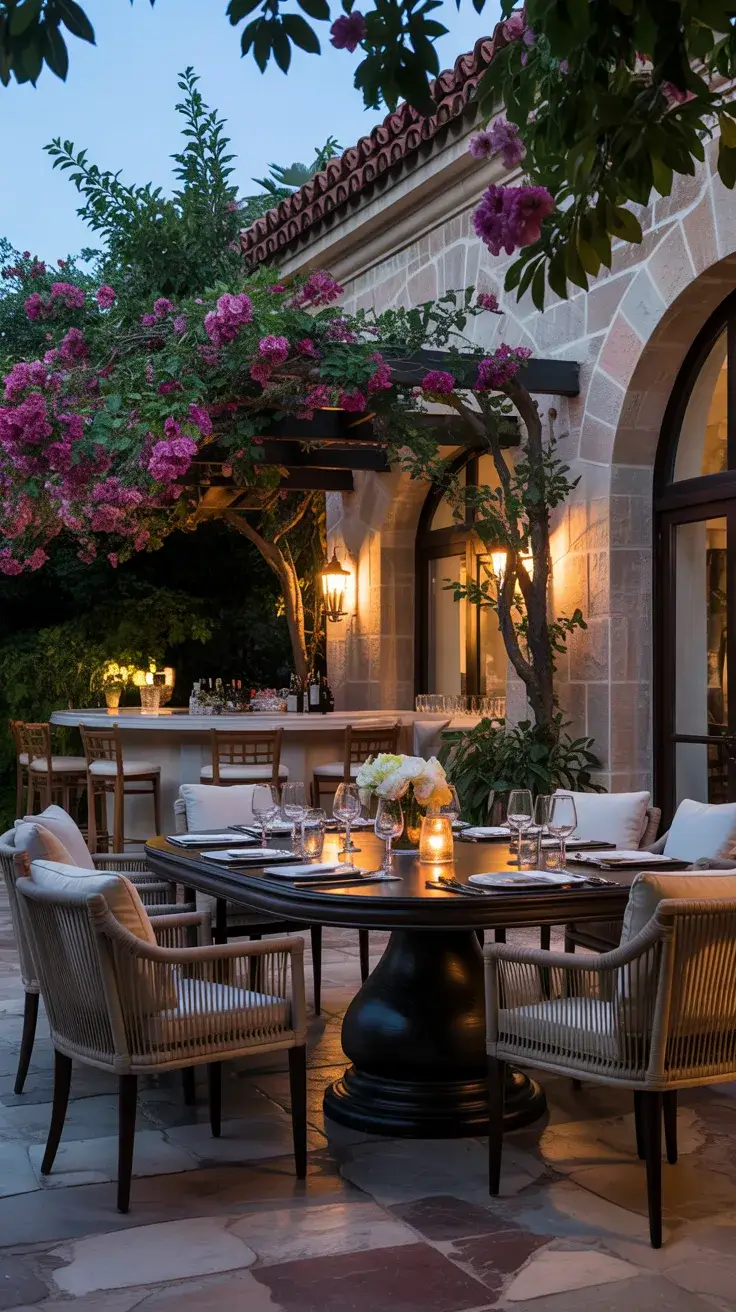
Outdoor dining area setup in 2026 is all about blending modern design with comfort, creativity, and a strong connection to nature. This year’s trends highlight curved silhouettes, sculptural furniture, and sleek layouts that transform patios and gardens into true design statements. Homeowners are moving beyond traditional tables and chairs, embracing artistic pieces that feel both functional and visually striking. Materials, lighting, and layouts are being reimagined to create immersive, stylish environments perfect for entertaining or relaxing outdoors. From compact balconies to expansive backyards, every space can be elevated with thoughtful, designer-inspired solutions. In this article, we explore the most innovative ideas shaping outdoor dining areas in 2026 and how to bring them into your own space.
Curved Furniture Trends Redefining Outdoor Dining Spaces
I’ve noticed that one of the most transformative trends in outdoor dining area setup 2026 is the shift toward curved, flowing forms. These shapes soften the space and create a welcoming, natural atmosphere that feels less rigid than traditional layouts. Curved furniture helps guide movement organically, making the dining area feel more open and sociable. I often recommend this approach when clients want a space that feels both contemporary and comfortable.
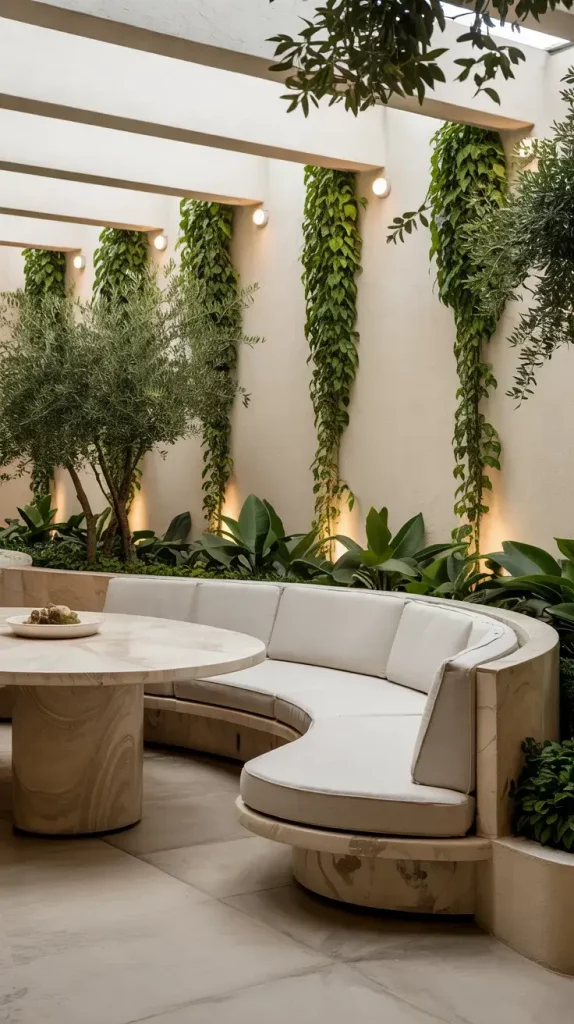
In my experience, incorporating rounded dining tables, crescent-shaped sofas, and arched pergolas immediately elevates the design. Materials like powder-coated metal, teak, and weather-resistant upholstery are essential to maintain durability while achieving that sleek aesthetic. I also find that curved benches or wraparound seating maximize space efficiency while encouraging conversation, which is crucial for outdoor dining.
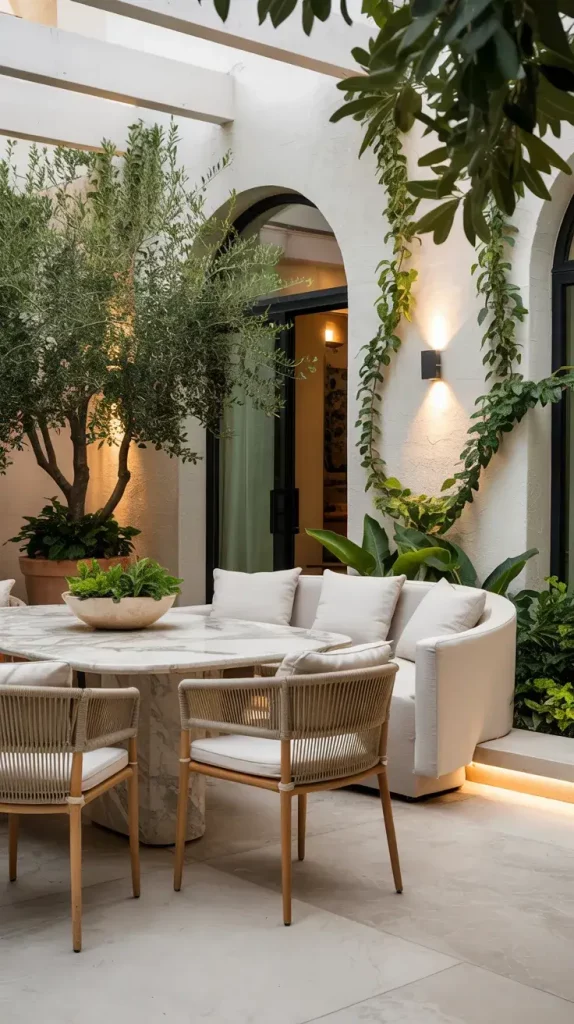
Personally, I believe this trend reflects a broader movement toward biophilic design. According to insights often highlighted by publications like Architectural Digest, organic shapes help reduce visual stress and make environments feel more relaxing. I’ve seen clients respond very positively to these designs, especially when paired with greenery and soft lighting.
To complete this section, I would add layered outdoor textiles such as curved-pattern rugs and cushions, as well as integrated planters that follow the same rounded geometry to reinforce the overall concept.
Sleek Minimalist Layouts For Modern Outdoor Dining Areas
When I design minimalist outdoor dining spaces, I focus on clarity, balance, and intentional simplicity. A sleek layout allows the architecture and surrounding landscape to shine, rather than competing with excessive decor. This approach works particularly well in smaller outdoor areas, where clutter can quickly overwhelm the space.
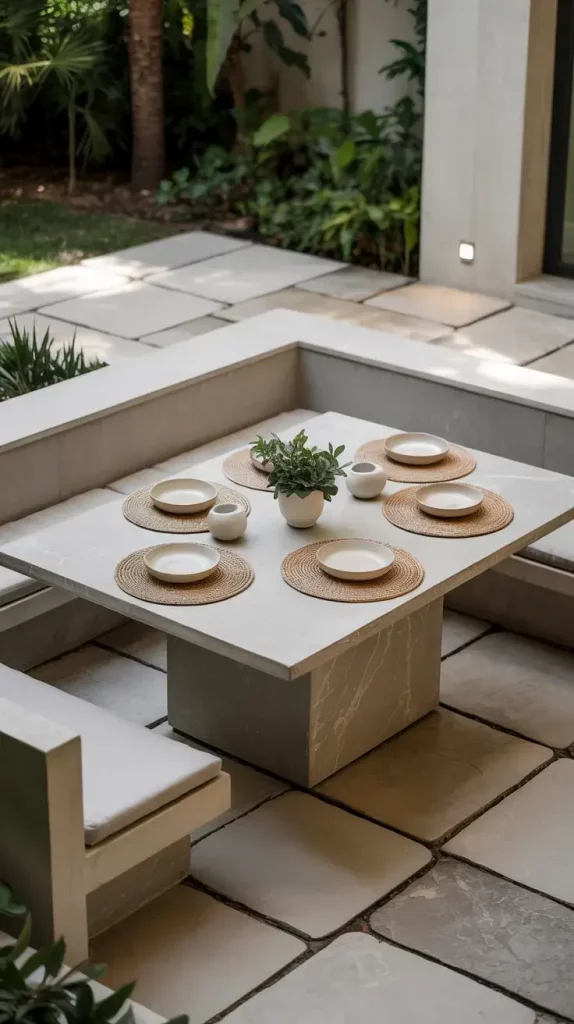
I typically select streamlined furniture with clean lines, such as rectangular dining tables with slim profiles and low-back chairs. Neutral palettes—think whites, greys, and muted earth tones—help maintain a calm and cohesive look. I also prioritize hidden storage and multifunctional elements, like benches with built-in compartments, to keep the area organized without sacrificing style.
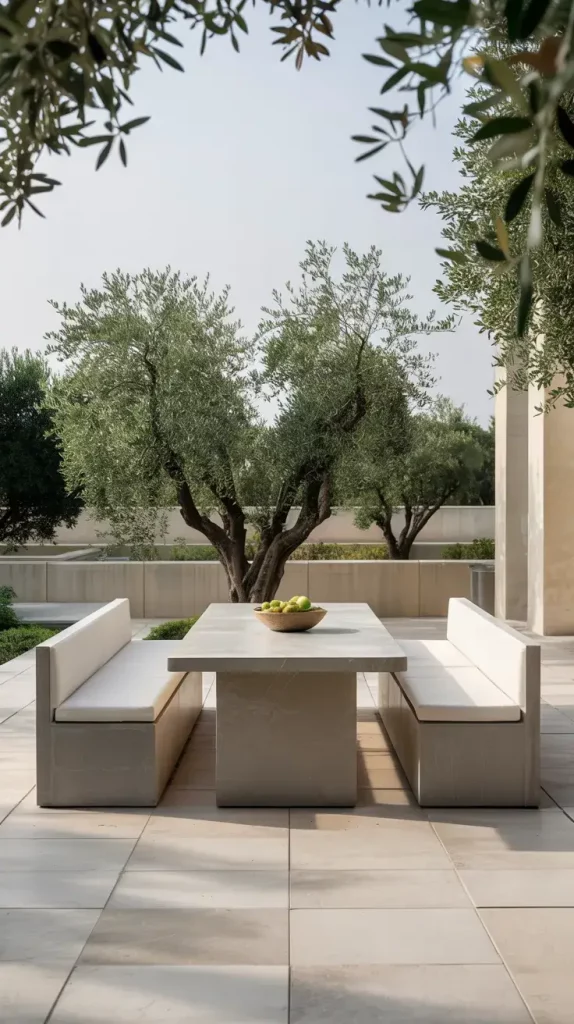
From my perspective, minimalist design is not about removing personality but refining it. I often draw inspiration from designers featured in Elle Decor, who emphasize quality over quantity. Investing in fewer, high-quality pieces ensures longevity and a polished finish that doesn’t go out of style.
To enhance this section further, I would include subtle zoning techniques, such as outdoor rugs or changes in flooring texture, to define the dining area without adding visual clutter.
Sculptural Dining Tables As Statement Centerpieces
In many of my projects, the dining table becomes the focal point of the entire outdoor setup. Sculptural tables, with bold bases or unexpected forms, act as functional art pieces that instantly draw attention. This is one of the most effective ways to create a designer outdoor dining area.
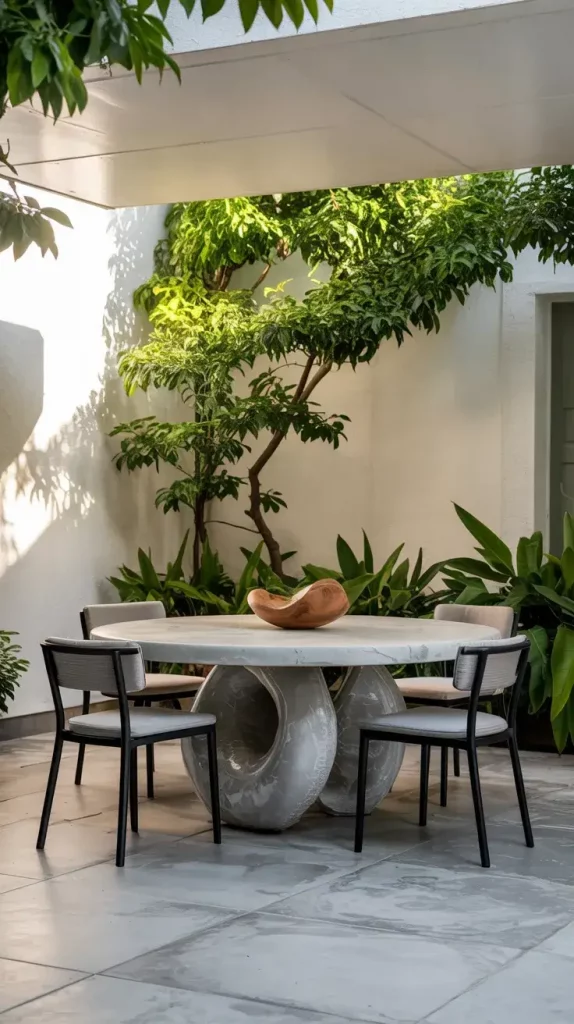
I often recommend tables made from materials like concrete, marble, or sustainably sourced wood with unique grain patterns. Pedestal bases, asymmetrical supports, or carved details can transform a simple table into a conversation starter. Pairing these tables with more understated seating helps maintain balance while letting the centerpiece shine.
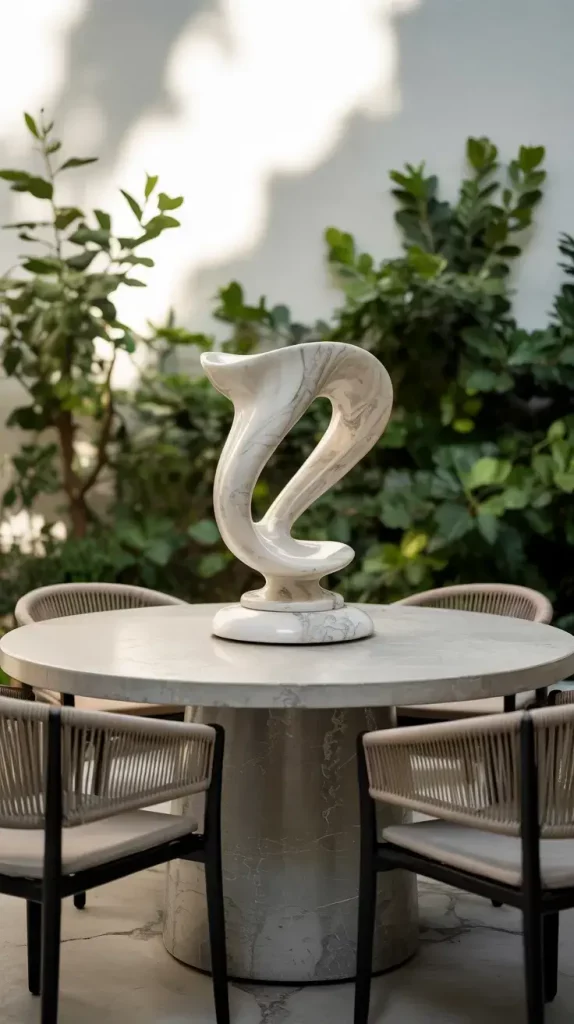
In my opinion, a statement table is worth the investment because it defines the character of the space. Many experts in interior and exterior design suggest that a strong focal point anchors the entire layout, making the design feel intentional and cohesive. I’ve seen this approach work particularly well in both large patios and compact terraces.
What I would add here is the importance of scale—ensuring the table size matches the space and seating capacity, as well as considering circulation space for comfort and usability.
Creative Seating Ideas With Organic Shapes And Flow
I’ve found that seating plays a crucial role in shaping the overall experience of an outdoor dining area. In 2026, creative seating solutions go beyond traditional chairs, incorporating fluid, organic shapes that enhance both comfort and aesthetics. These designs make the space feel more dynamic and inviting.
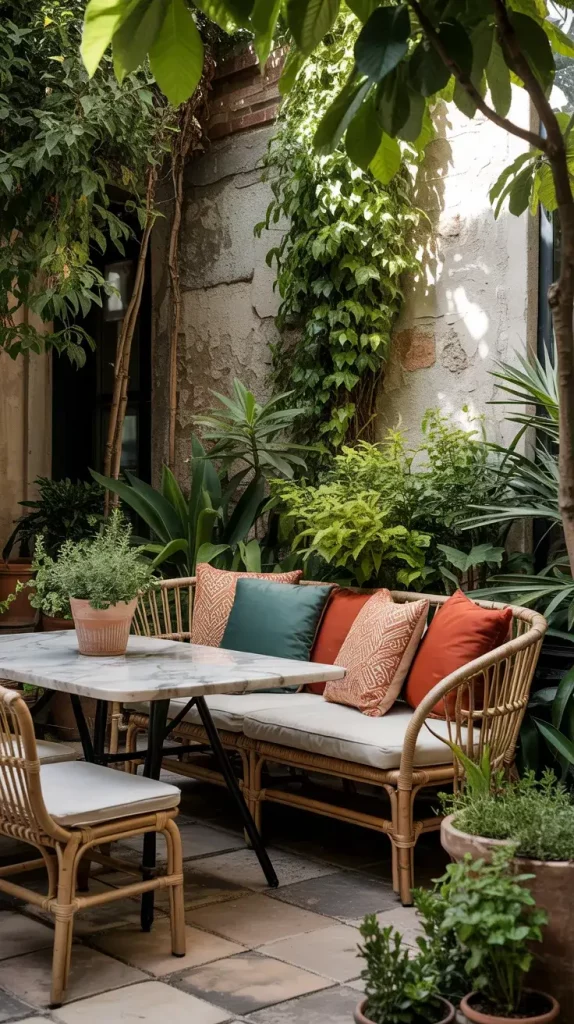
I like to mix different seating types, such as curved benches, lounge-style chairs, and even built-in seating integrated into landscaping. Materials like rattan, woven rope, and cushioned upholstery add texture and warmth. I also consider ergonomics carefully, ensuring that each seat supports relaxed, extended dining experiences.
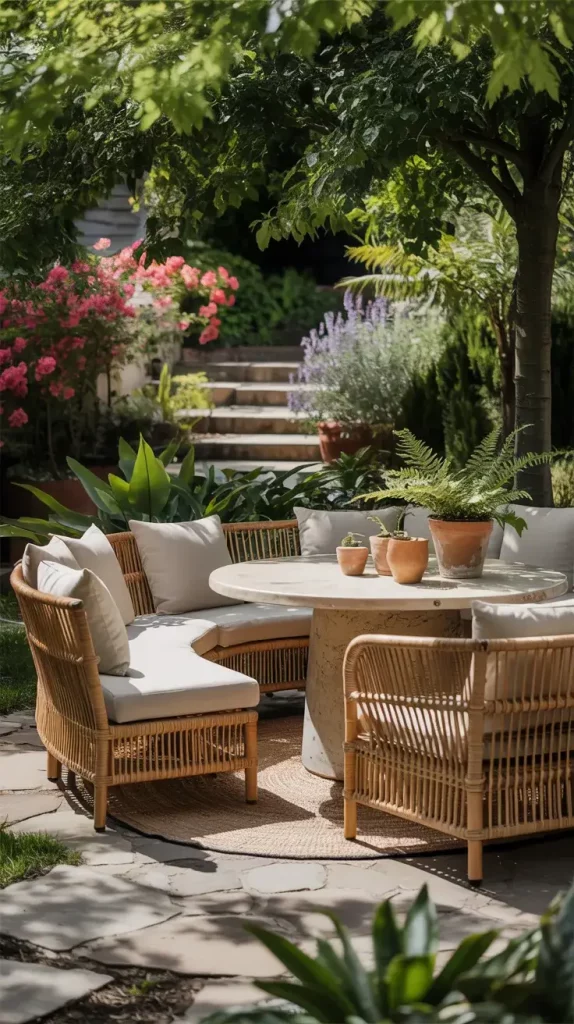
From my experience, flexible seating arrangements are especially valuable when hosting guests. Being able to rearrange elements easily allows the space to adapt to different occasions. Design experts often highlight the importance of versatility, and I fully agree with this approach.
To strengthen this section, I would suggest adding weather-resistant cushions and modular seating components that can be reconfigured depending on the number of guests.
Blending Indoor Elegance With Outdoor Dining Design
One of my favorite approaches is creating a seamless transition between indoor and outdoor spaces. This concept brings the sophistication of interior design into the outdoor environment, resulting in a truly stylish and cohesive look. It’s especially effective for homes with open-plan layouts or large sliding doors.
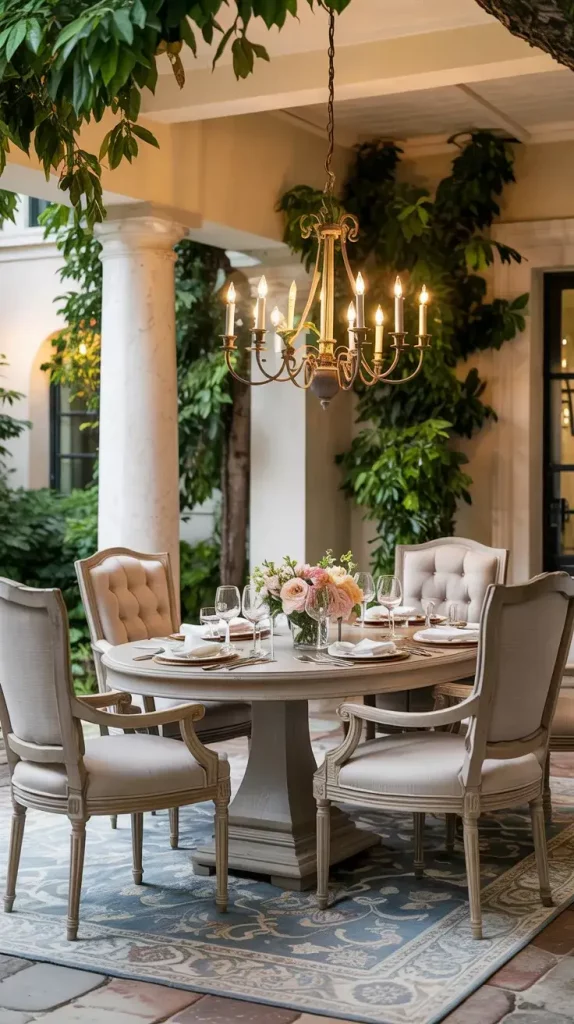
I usually incorporate elements such as outdoor rugs, upholstered dining chairs, and decorative accessories that mirror the interior style. Lighting fixtures, such as pendant lights or chandeliers designed for outdoor use, also help reinforce this connection. Consistency in color palettes and materials ensures that the two spaces feel unified.
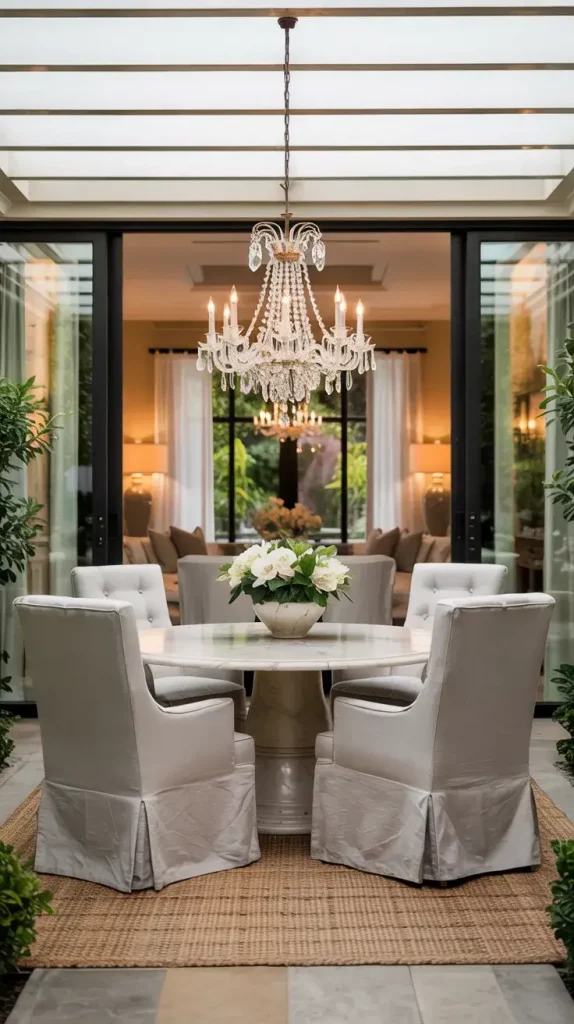
Personally, I see this trend as a natural evolution of modern living. As highlighted in many contemporary design discussions, outdoor spaces are now extensions of the home rather than separate areas. I always encourage clients to treat their outdoor dining area with the same attention to detail as their interior rooms.
To complete this section, I would include recommendations for weather-resistant fabrics and finishes that maintain an indoor look while withstanding outdoor conditions.
Designer Lighting Concepts For Atmospheric Outdoor Dining
I always consider lighting as one of the most powerful tools when designing a stylish and immersive outdoor dining area. In 2026, lighting is no longer just functional—it shapes the mood, highlights architectural features, and creates a layered visual experience. I focus on combining ambient, task, and accent lighting to ensure the space feels inviting both during early evenings and late-night gatherings.
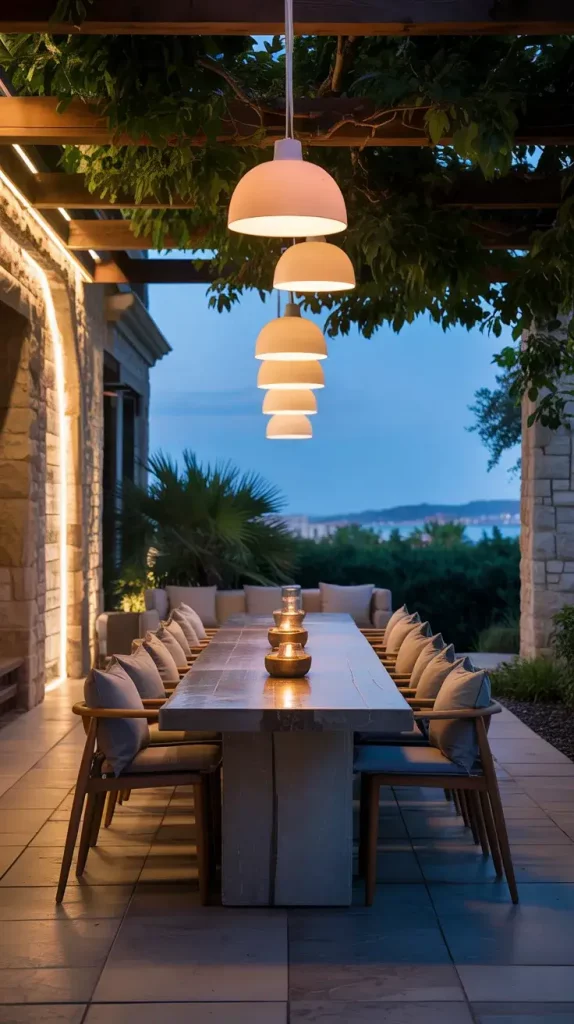
In my projects, I often integrate pendant lights over the dining table, LED strips under benches, and soft pathway lighting to define the layout. Materials like matte metal, glass, and weather-resistant finishes keep the fixtures both durable and elegant. I also find that dimmable lighting systems offer flexibility, allowing the atmosphere to shift from casual dining to more intimate settings effortlessly.
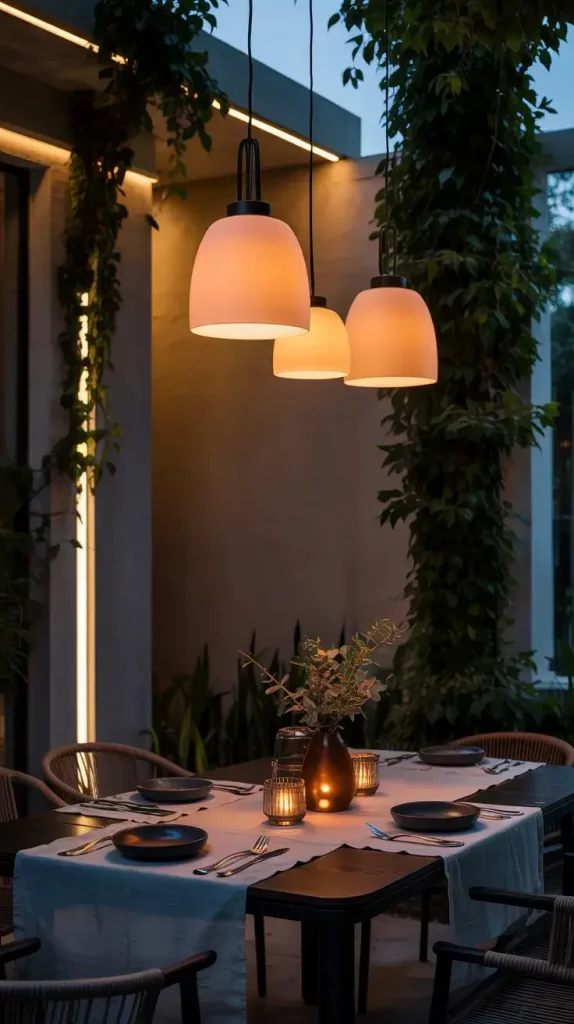
From my perspective, thoughtful lighting design elevates even the simplest outdoor setup into a designer experience. Many professionals featured in leading design media emphasize that lighting should be planned early in the process, not added as an afterthought. I’ve seen how strategic placement can completely transform how a space is perceived.
To enhance this section, I would include smart lighting systems that can be controlled via mobile apps, allowing users to customize brightness and color temperature depending on the occasion.
Innovative Materials Transforming Outdoor Dining Furniture
In recent years, I’ve observed a significant shift toward innovative materials that combine durability with refined aesthetics. These materials allow outdoor dining areas to maintain a sleek and modern appearance while withstanding various weather conditions. Choosing the right materials is essential for both longevity and visual appeal.
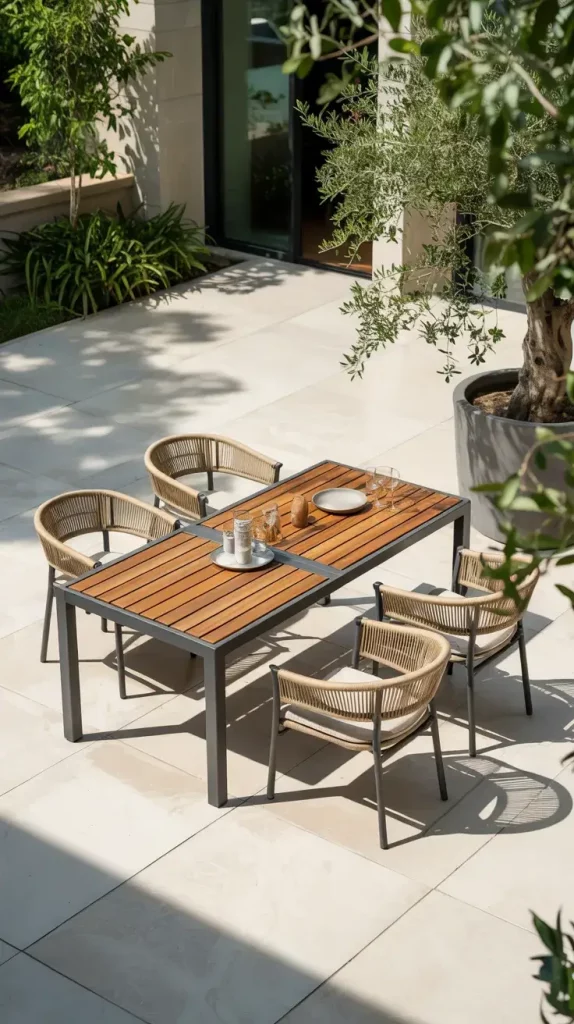
I frequently use materials such as powder-coated aluminum, high-performance composites, and sustainably treated wood. These options resist moisture, UV exposure, and temperature changes without compromising on style. I also appreciate the rise of eco-friendly materials, which align with the growing demand for sustainable design solutions.
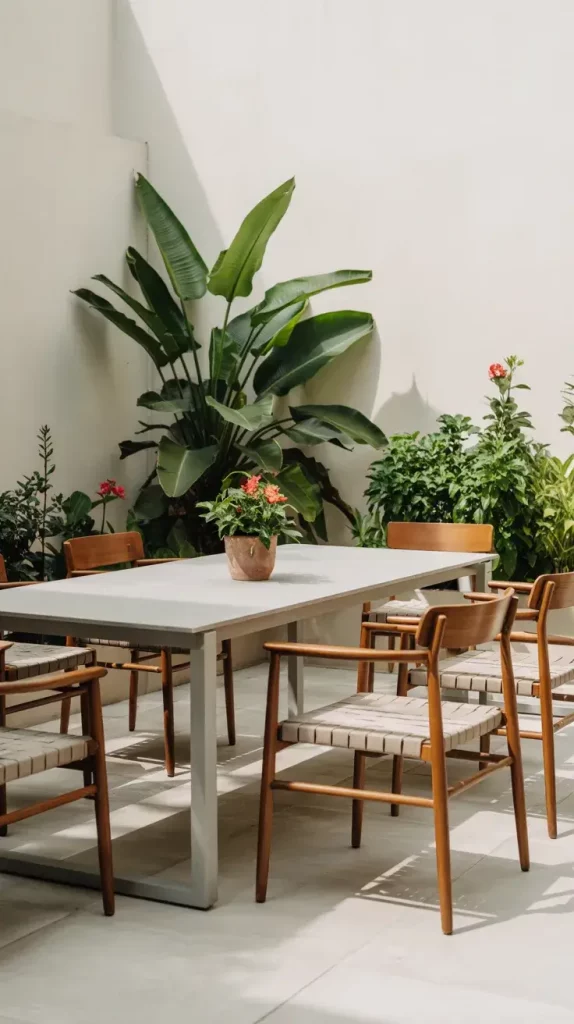
Personally, I believe that investing in quality materials reduces long-term maintenance and enhances the overall user experience. Many experts in the field highlight that material innovation is one of the key drivers of modern outdoor design trends, and I fully agree with this perspective based on my own work.
To complete this section, I would recommend incorporating material combinations—such as wood with metal accents—to create contrast and add visual depth to the dining area.
Unique Color Palettes For Stylish Outdoor Dining Areas
When developing a unique dining area, I pay close attention to color palettes, as they set the tone for the entire space. In 2026, outdoor dining areas are moving beyond neutral schemes toward more expressive yet balanced color combinations. The goal is to create a space that feels both cohesive and visually engaging.
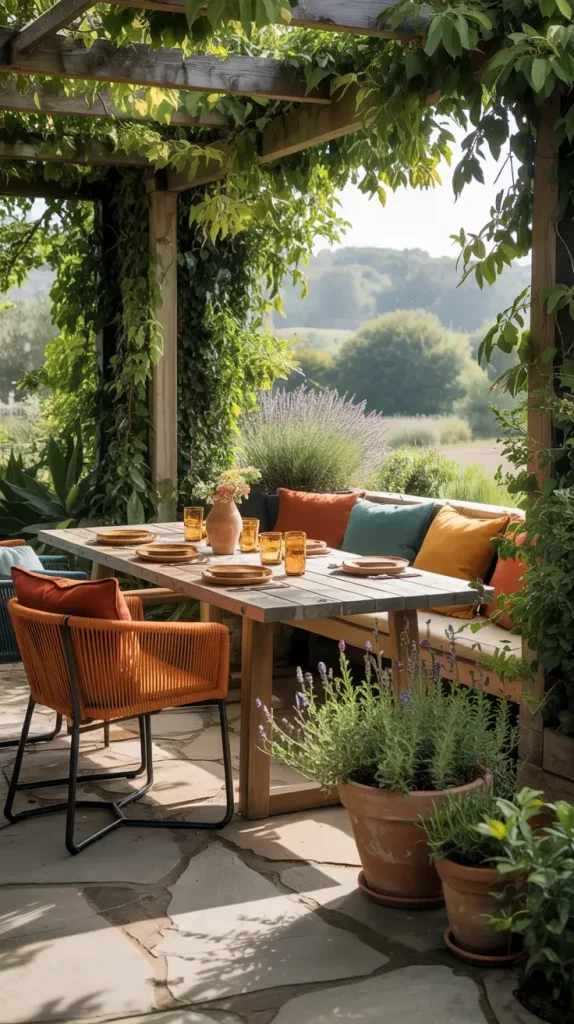
I often experiment with earthy tones like terracotta, olive green, and sand, paired with bold accents such as deep blue or charcoal. Textiles, cushions, and decorative accessories are excellent ways to introduce color without overwhelming the design. I also ensure that the chosen palette complements the surrounding natural environment.
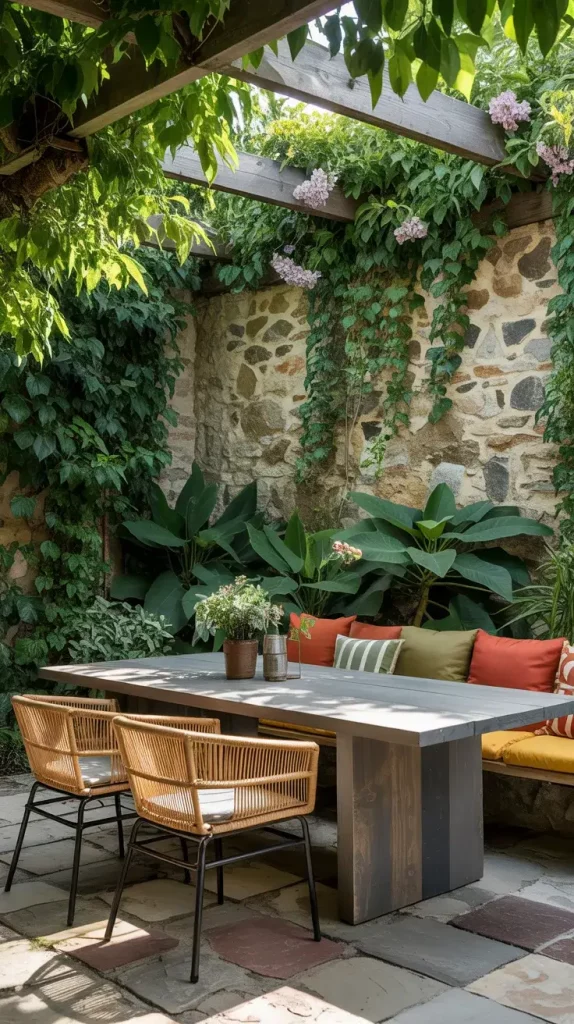
In my experience, color has a direct impact on how people feel in a space. Designers frequently emphasize the importance of harmony between built elements and nature, and I always aim to achieve this balance. A well-thought-out palette can make even a simple setup feel curated and intentional.
What I would add here is the use of seasonal accents—allowing the color scheme to evolve throughout the year with minimal effort by updating textiles and decor.
Functional Yet Artistic Outdoor Dining Layout Planning
I approach layout planning as both a practical and creative process. A well-designed outdoor dining area should not only look appealing but also function efficiently. In 2026, layouts are becoming more fluid, allowing for easy movement and adaptability while maintaining a strong visual identity.
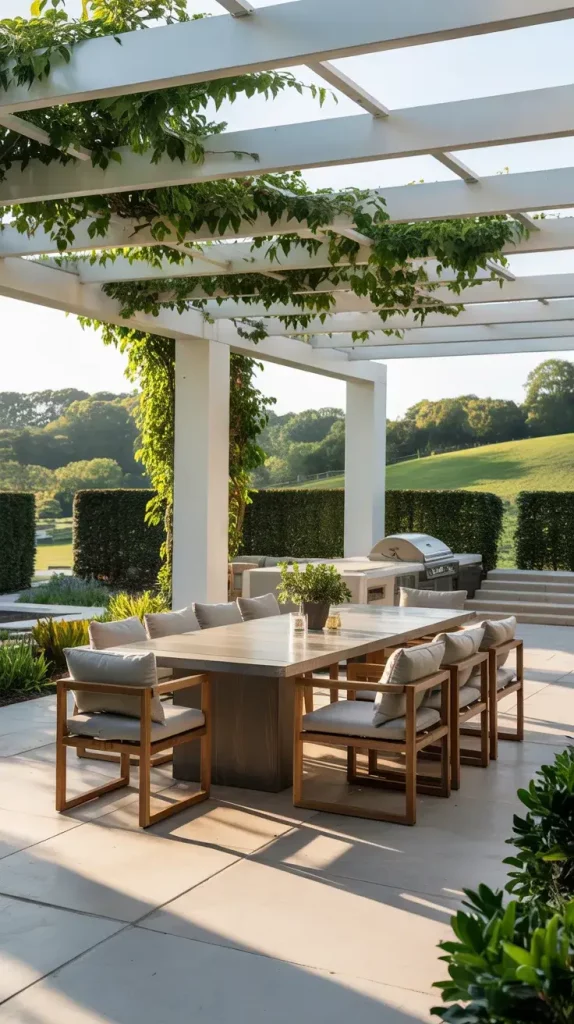
I usually start by defining zones—dining, lounging, and circulation paths. Proper spacing between furniture pieces ensures comfort and accessibility, especially when hosting guests. I also consider elements like shade structures, wind protection, and proximity to indoor kitchens to enhance usability.
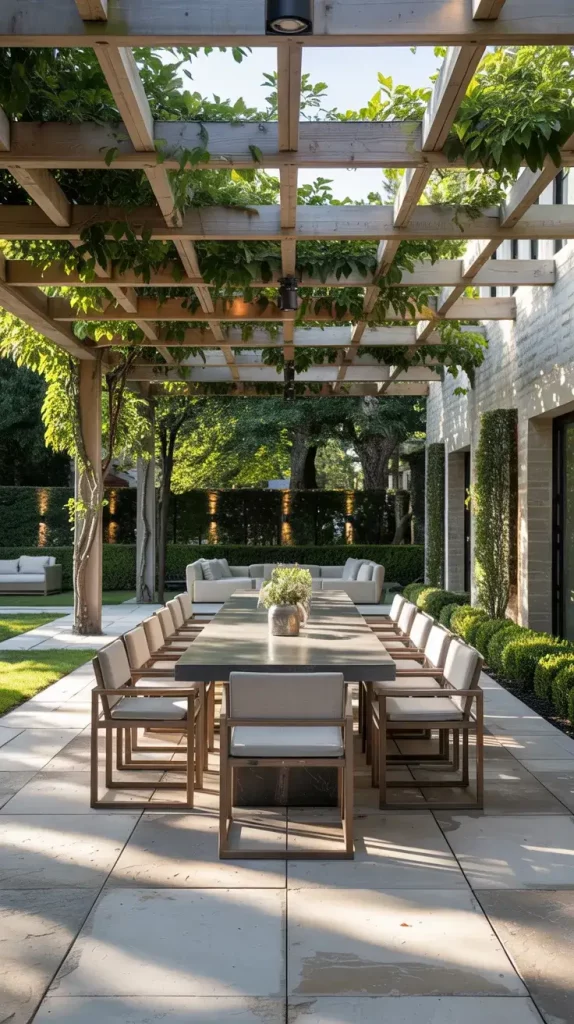
From my perspective, the best layouts are those that feel intuitive. I often refer to principles highlighted by professional designers, which emphasize that form should follow function. When the layout works seamlessly, the entire experience becomes more enjoyable.
To improve this section, I would include flexible design solutions such as modular furniture and movable partitions that allow the space to adapt to different occasions and group sizes.
Luxury Outdoor Dining Areas With High-End Designer Touches
Creating a luxury outdoor dining area is about combining comfort, elegance, and attention to detail. I focus on integrating high-end elements that elevate the space without making it feel overly formal. In 2026, luxury is defined by personalization and craftsmanship rather than excess.
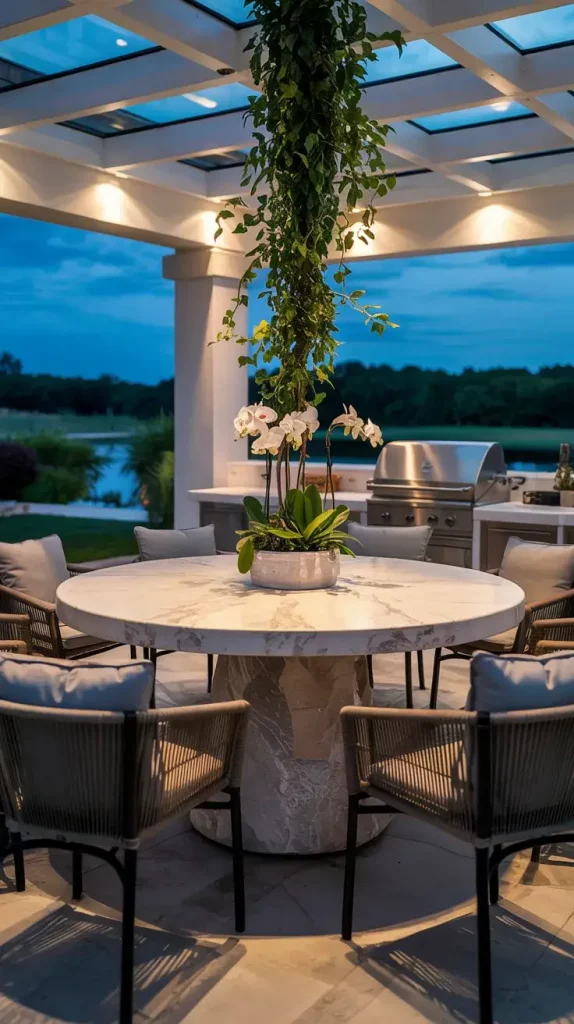
I often incorporate premium materials like natural stone, teak, and high-quality textiles, along with custom-built furniture pieces. Features such as outdoor kitchens, fire pits, and integrated sound systems enhance both functionality and ambiance. I also pay close attention to finishing details, such as table settings and decorative accents.
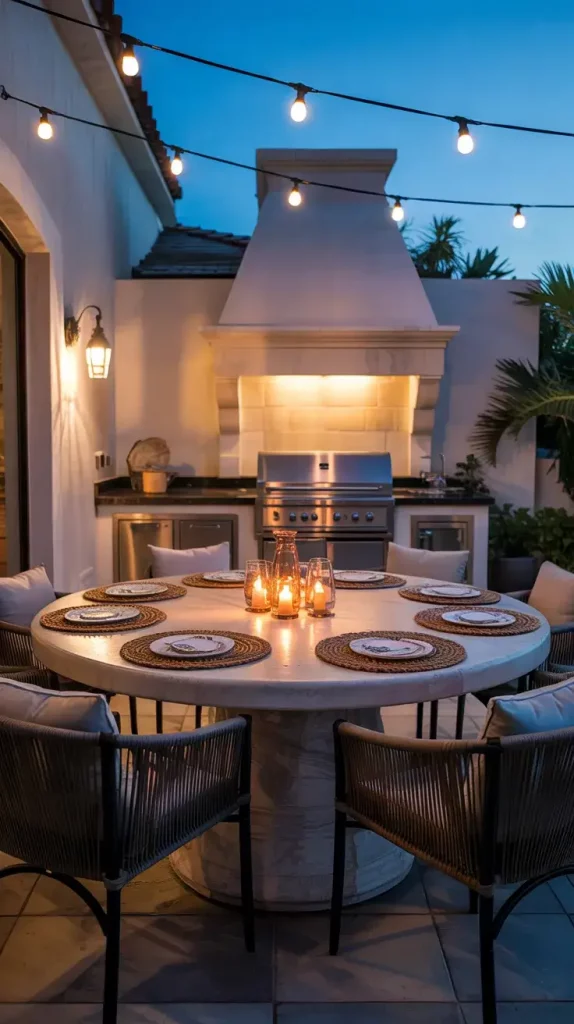
In my opinion, luxury design is about creating an experience. Many top designers emphasize that true luxury lies in comfort and usability, and I always keep this in mind when developing outdoor spaces. A well-designed area should feel effortless yet refined.
To complete this section, I would suggest adding bespoke elements, such as custom lighting fixtures or handcrafted decor pieces, to make the space truly one-of-a-kind.
Compact Outdoor Dining Solutions For Small Spaces
I often find that small outdoor areas can become the most stylish and efficient dining zones when designed thoughtfully. In compact spaces, every centimeter matters, so I focus on layouts that prioritize movement and comfort while maintaining a visually open feel. In 2026, I see a strong emphasis on sleek, space-saving arrangements that still feel designer and inviting, even on balconies or narrow patios. The key is to create a sense of airiness without sacrificing usability.
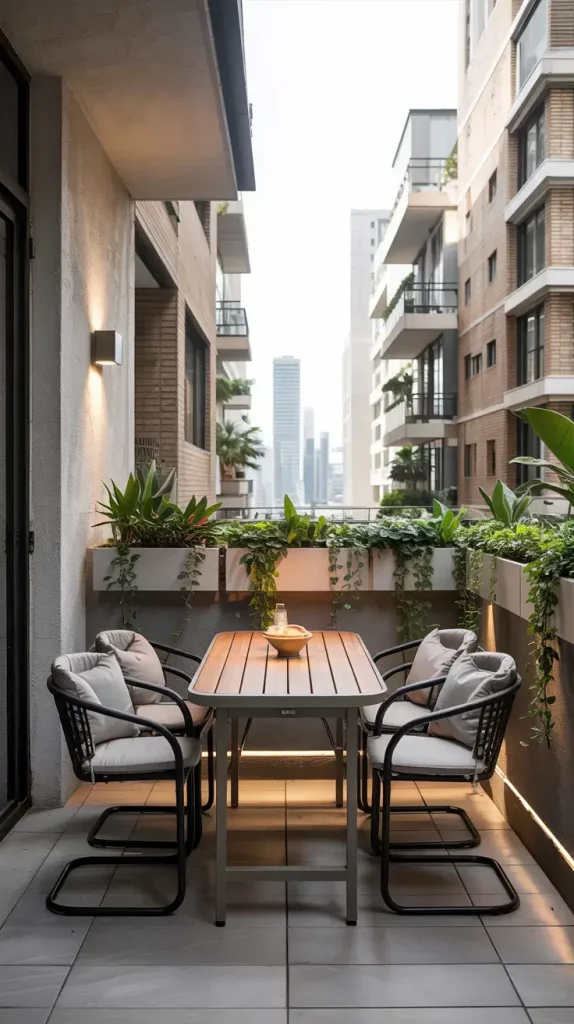
When selecting furniture, I recommend foldable tables, stackable chairs, and curved seating that softens tight layouts. Built-in benches with hidden storage are especially practical, as they maximize function without cluttering the area. I also prefer light-toned materials like aluminum, light wood, or rattan to visually expand the space. Adding vertical elements such as wall planters or slim shelving helps maintain a clean floor area while introducing greenery.
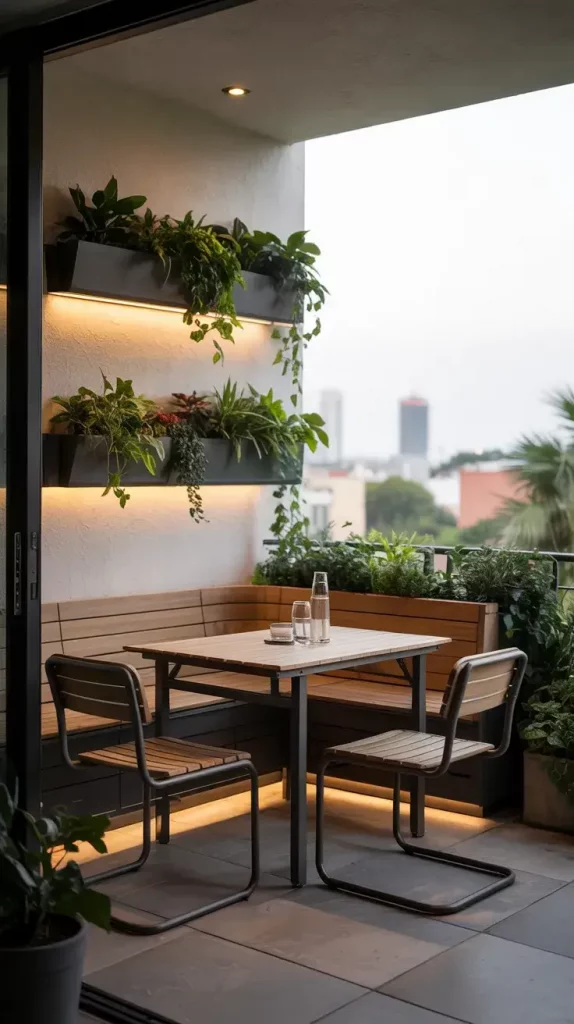
From my experience, small outdoor dining areas benefit greatly from intentional lighting and zoning. Designers like those featured in Architectural Digest often highlight the importance of layered lighting to create depth in compact environments. I personally like to use warm string lights combined with subtle wall sconces to make the area feel cozy yet refined.
I would also suggest adding multifunctional decor elements, such as mirrors to visually enlarge the space or modular furniture that can adapt to different occasions. What’s often missing in small setups is flexibility, so incorporating pieces that can transform easily is essential.
Open-Air Dining Concepts With Seamless Nature Integration
In my work, I’ve noticed that one of the most powerful trends in outdoor dining area setup 2026 is the seamless blending of dining spaces with nature. Open-air concepts allow the boundaries between indoor comfort and outdoor beauty to dissolve, creating a truly immersive experience. I always aim to position dining areas in a way that captures natural views, sunlight, and airflow.
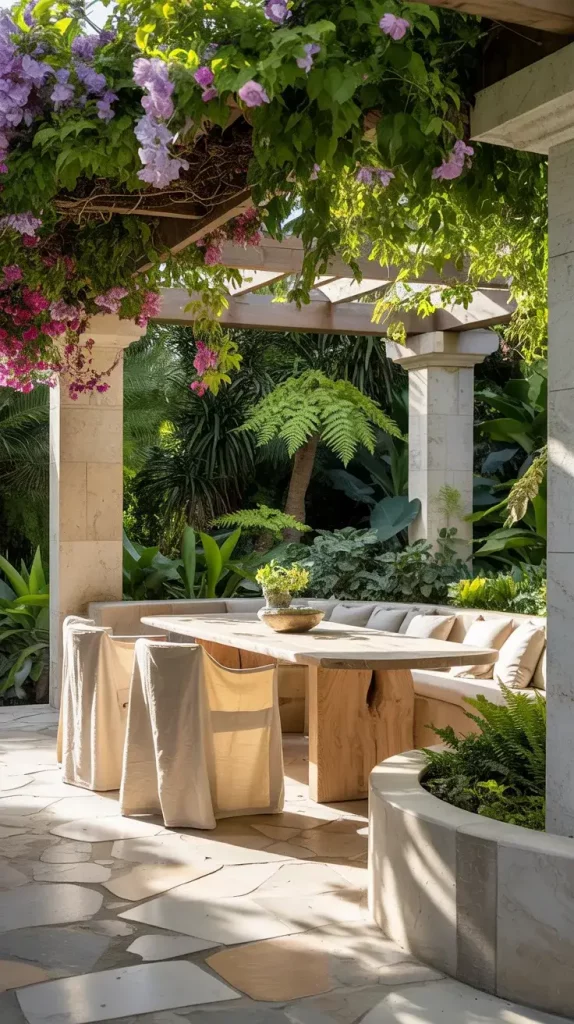
To achieve this, I select natural materials such as stone, teak wood, and linen fabrics that harmonize with the surrounding environment. Large curved tables paired with organic-shaped chairs enhance the flow of the space and echo natural forms. I also integrate greenery directly into the design through built-in planters, vertical gardens, or even trees growing through decking areas.
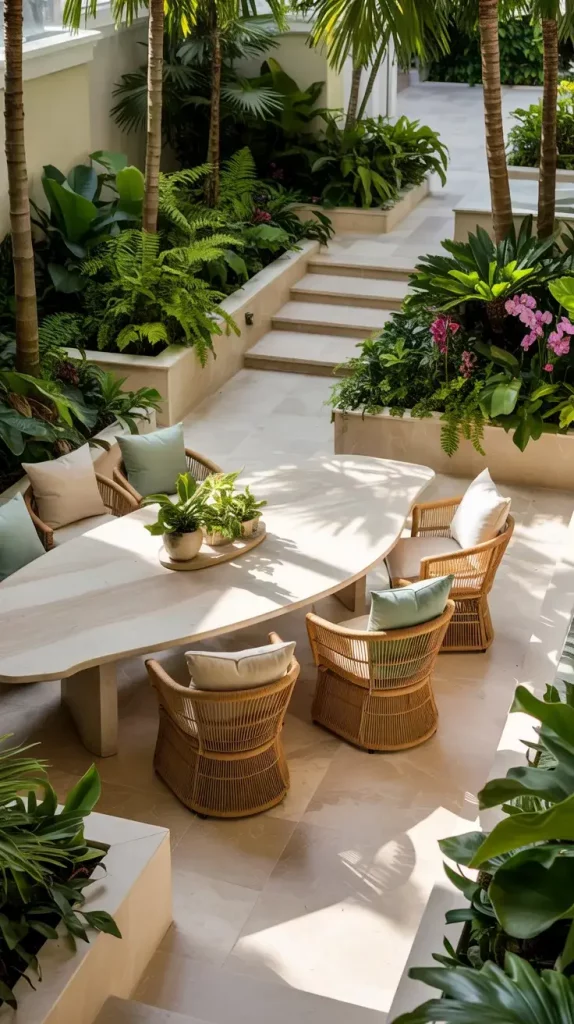
Personally, I believe that nature-integrated dining spaces promote relaxation and connection. According to design insights from Elle Decor, incorporating biophilic elements can significantly improve mood and well-being. I’ve found this to be true in my own projects, where clients often spend more time outdoors once the space feels like a natural extension of their home.
What I would add to elevate this concept further is the use of water features or subtle landscaping layers. Even a small fountain or a gravel pathway can enhance the sensory experience and make the space feel more complete.
Curved Benches And Built-In Seating Ideas
I’ve always appreciated how curved, built-in seating can transform an outdoor dining space into something truly unique and architectural. Unlike traditional layouts, curved benches create a sense of flow and encourage social interaction. In 2026, this approach is becoming a defining feature of designer outdoor spaces.
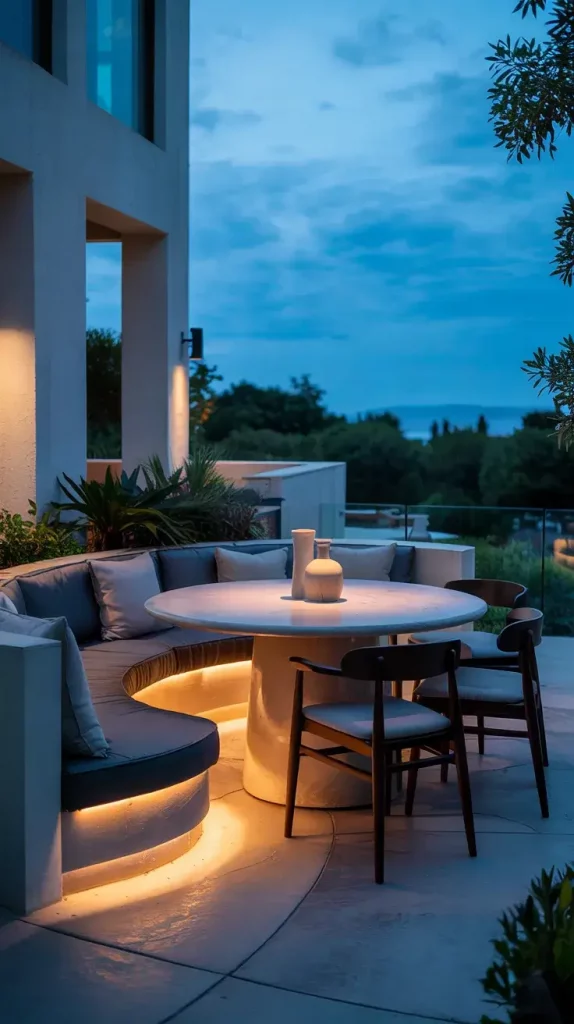
When designing built-in seating, I focus on materials that are both durable and visually appealing, such as concrete with soft cushions, natural wood, or composite finishes. Adding upholstered cushions in weather-resistant fabrics enhances comfort while maintaining a polished look. I also like to incorporate integrated lighting beneath the seating to create a subtle glow in the evening.
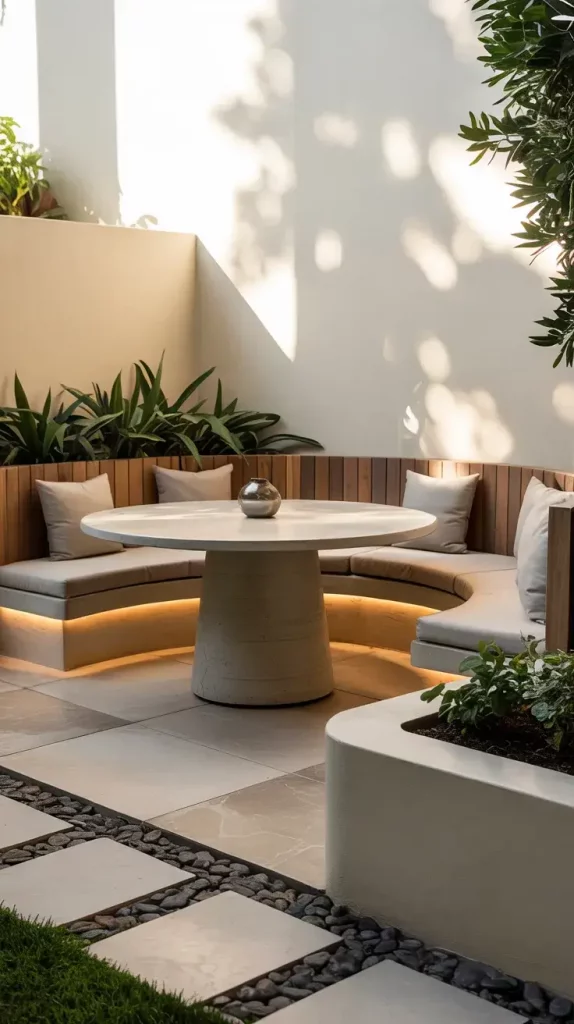
From my perspective, curved seating not only looks elegant but also maximizes seating capacity without overcrowding the area. Designers featured in Dwell often emphasize the importance of fluid forms in modern outdoor design, and I’ve found that this approach naturally draws people together.
I would also recommend incorporating storage within the seating or adding modular cushion systems that can be rearranged. This ensures the space remains practical while maintaining its visual appeal.
Statement Flooring Options For Outdoor Dining Zones
In my opinion, flooring is one of the most underestimated elements in an outdoor dining area setup 2026, yet it has the power to define the entire space. Statement flooring can anchor the dining zone and create a strong visual identity. I often use bold patterns or contrasting materials to highlight the dining area within a larger outdoor layout.
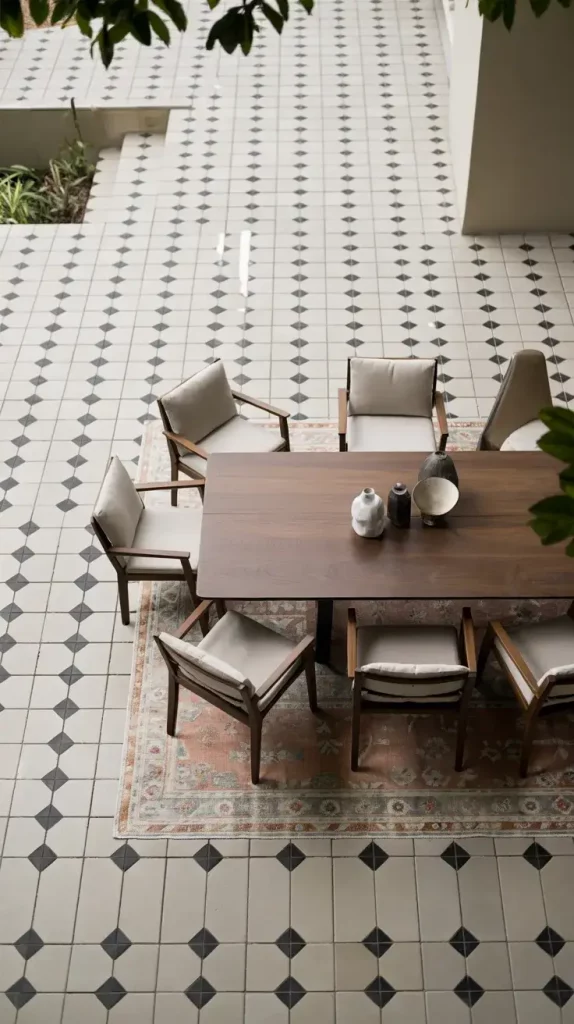
I prefer materials like patterned tiles, stamped concrete, or natural stone arranged in geometric layouts. These options not only provide durability but also add a creative and stylish foundation for the furniture. Pairing these floors with sleek dining tables and minimalist chairs creates a balanced composition that feels both modern and timeless.
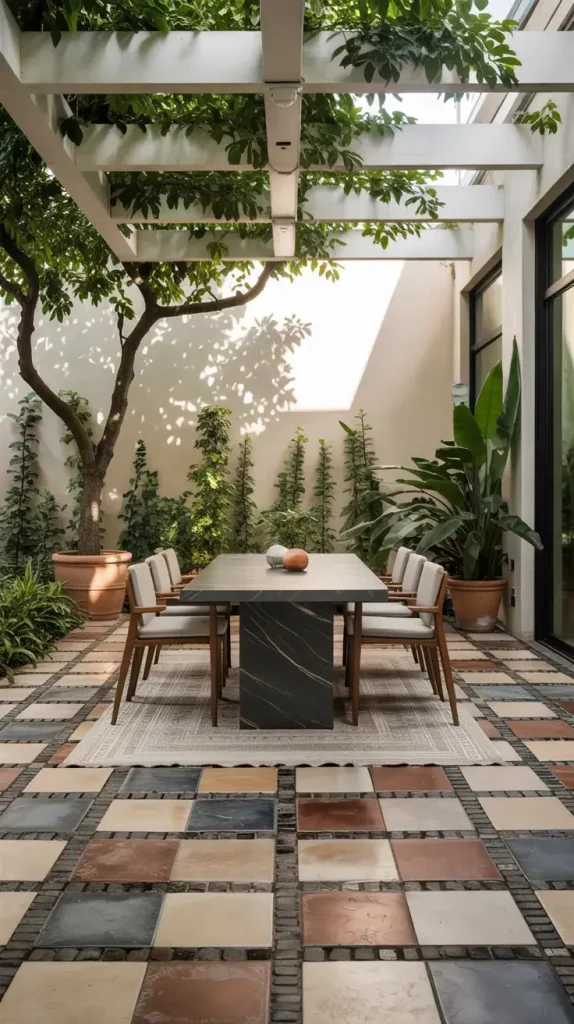
From my experience, incorporating texture and pattern underfoot adds depth and interest without overwhelming the space. Many professionals, including those featured in House Beautiful, recommend using outdoor rugs layered over hard surfaces to soften the look and improve comfort.
To enhance this section, I would suggest considering slip resistance and climate suitability when choosing materials. It’s important to ensure that the flooring remains safe and functional throughout different weather conditions.
Creative Shade Structures With Architectural Appeal
I’ve found that shade structures are no longer just functional elements but key design features in modern outdoor dining spaces. In 2026, they are becoming bold architectural statements that define the character of the area. Whether it’s a pergola, canopy, or tensile structure, I always approach shading as an opportunity to add visual interest.
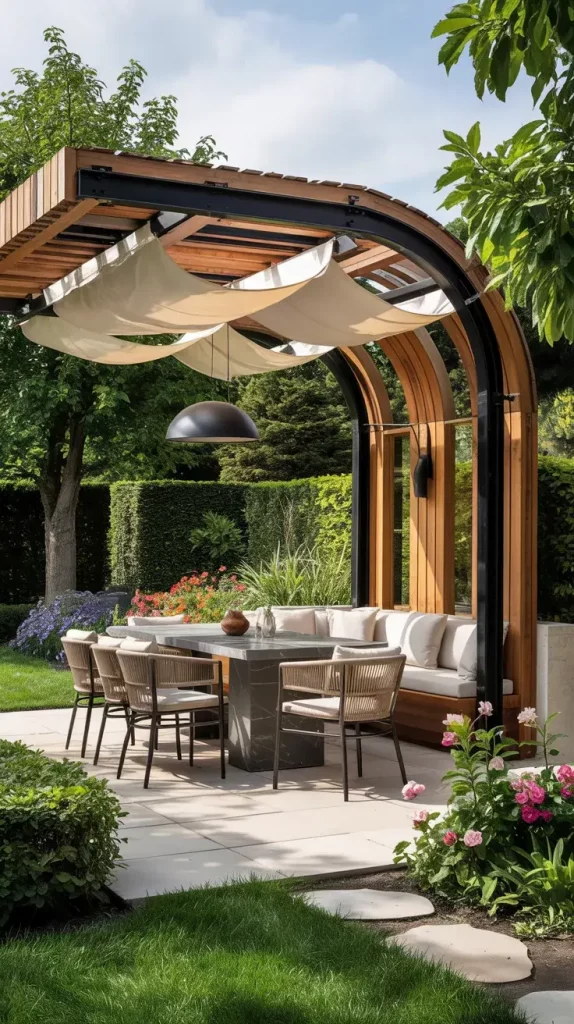
I like to use materials such as wood beams, metal frames, or fabric canopies that complement the overall design. Incorporating curved lines or asymmetrical shapes can make the structure feel more dynamic and designer. I also integrate lighting into these structures, such as pendant lights or LED strips, to enhance usability after sunset.
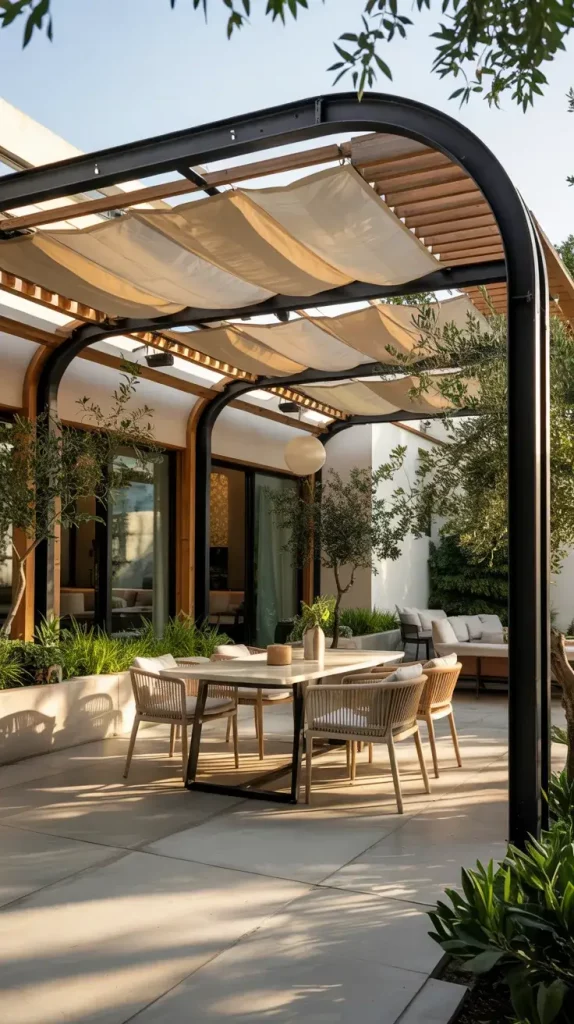
Personally, I believe that a well-designed shade structure can completely transform the atmosphere of an outdoor dining area. It provides comfort while also framing the space in a way that feels intentional and refined. Many top designers emphasize layering elements overhead to create depth, and I’ve seen how effective this can be in practice.
I would also add adjustable features, such as retractable canopies or movable panels, to increase flexibility. This allows the space to adapt to different weather conditions and user preferences, making it both practical and visually appealing.
Multi-Functional Outdoor Dining Furniture Designs
I often approach outdoor dining area setup 2026 with a strong focus on flexibility, especially when working with clients who want their space to serve multiple purposes. Multi-functional furniture allows the dining area to transition effortlessly between casual meals, entertaining guests, and even relaxation zones. I prioritize layouts where each piece contributes to both comfort and practicality without compromising the stylish and modern aesthetic.
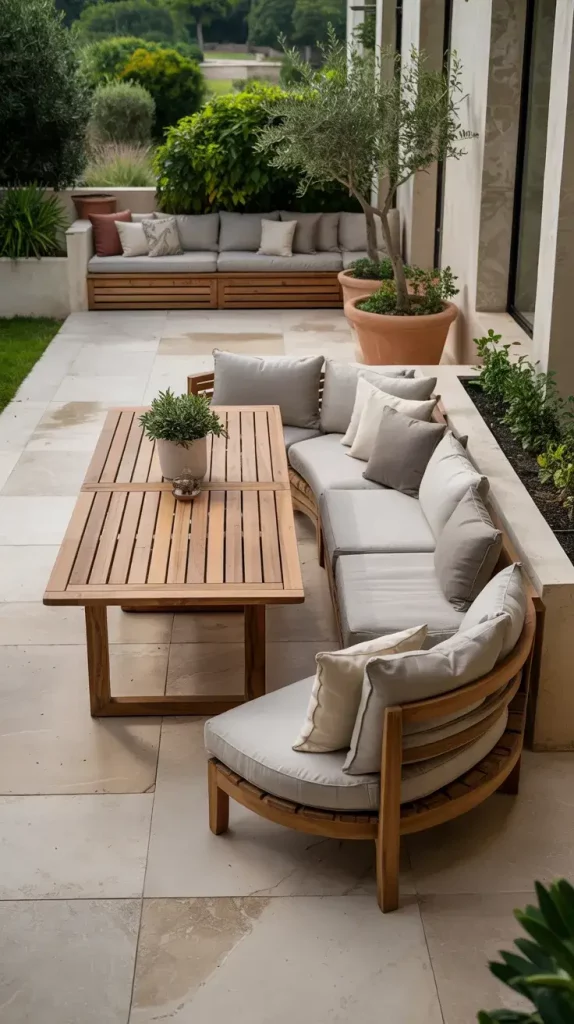
In my designs, I frequently include extendable dining tables, modular seating, and benches that double as storage units. Curved modular sofas can be rearranged depending on the occasion, while compact side tables with hidden compartments add subtle functionality. I also recommend materials that are durable and easy to maintain, such as powder-coated metal, treated wood, and high-performance outdoor fabrics, ensuring longevity without sacrificing design.
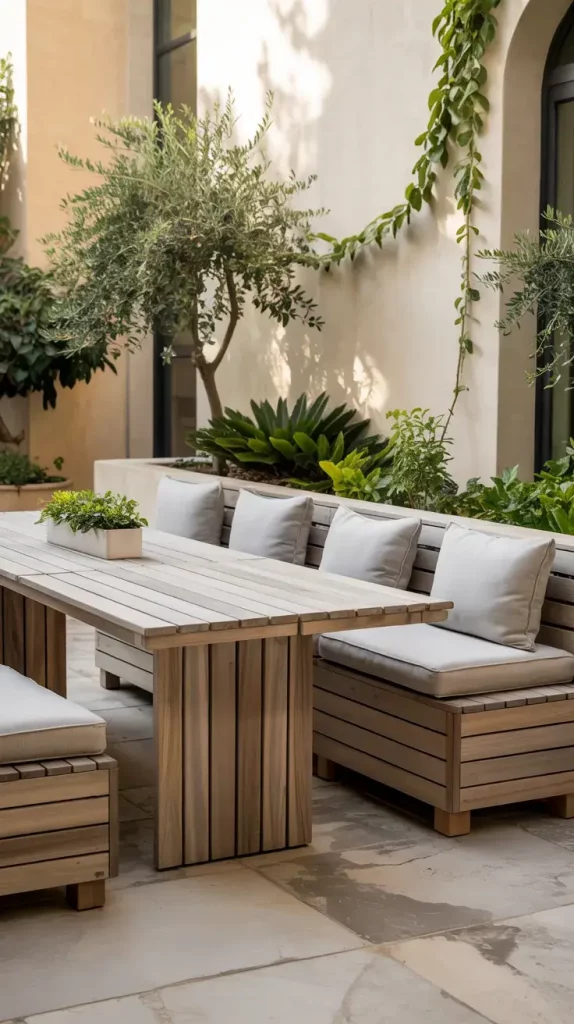
From my experience, investing in adaptable furniture significantly enhances how often the space is used. Many designers highlighted in publications like Veranda emphasize the importance of versatility in outdoor living, and I fully agree. I’ve seen how a single adjustable table can completely transform the usability of a dining area.
I would also suggest incorporating foldable or stackable elements that can be easily stored when not in use. What is often missing in these setups is mobility, so adding lightweight yet sturdy pieces can greatly improve convenience.
Mixing Textures For A Visually Dynamic Dining Experience
I believe that one of the easiest ways to elevate a designer outdoor dining space is by thoughtfully mixing textures. In 2026, creating depth through material contrast is essential for achieving a unique and visually engaging environment. I like to combine smooth, sleek finishes with more tactile surfaces to add richness without overwhelming the space.
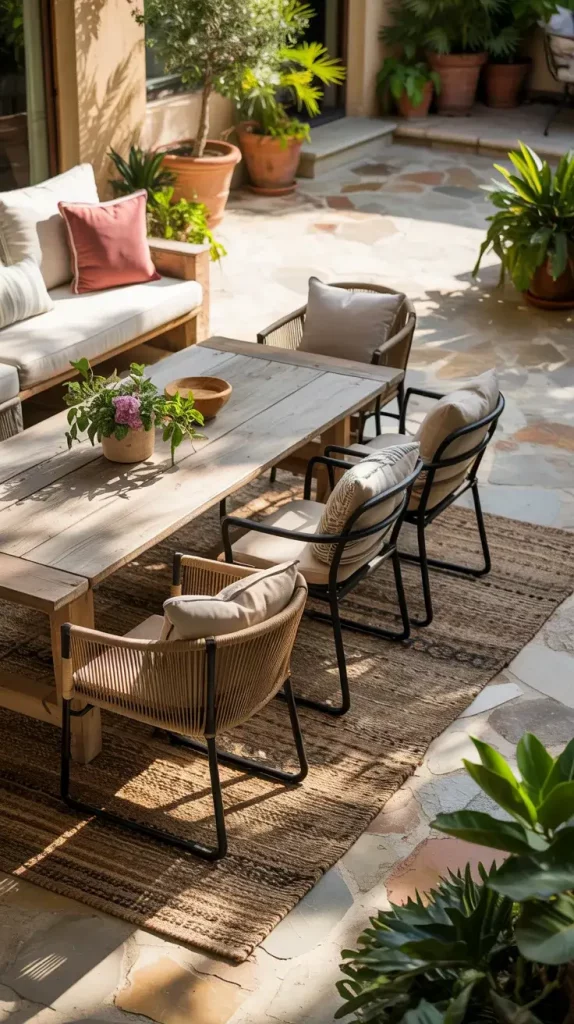
In practice, I pair materials such as natural wood tables with metal frames, woven chairs, stone flooring, and soft textile elements like cushions and outdoor rugs. Curved furniture pieces upholstered in textured fabrics help soften the overall look while maintaining a cohesive design. I also incorporate ceramics, glass, and greenery to create layers that feel intentional and balanced.
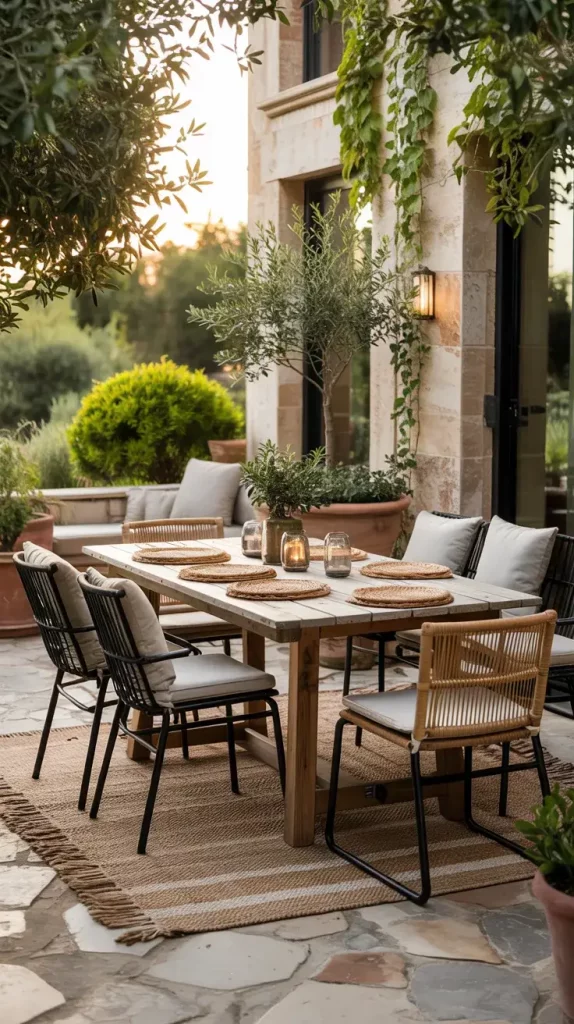
Personally, I find that texture mixing not only enhances aesthetics but also improves the sensory experience of the space. Designers featured in Elle Decor often emphasize layering as a key principle in both indoor and outdoor design, and I’ve applied this successfully in many projects.
To further develop this section, I would recommend paying attention to color harmony when combining textures. Without a cohesive palette, even the most beautiful materials can feel disconnected.
Outdoor Dining Areas Inspired By Modern Art And Sculpture
In my opinion, drawing inspiration from modern art is one of the most exciting directions for creative furniture and outdoor dining design. These spaces go beyond functionality and become expressive environments that reflect personality and artistic vision. I often use bold forms, unexpected shapes, and statement pieces to create a gallery-like atmosphere outdoors.
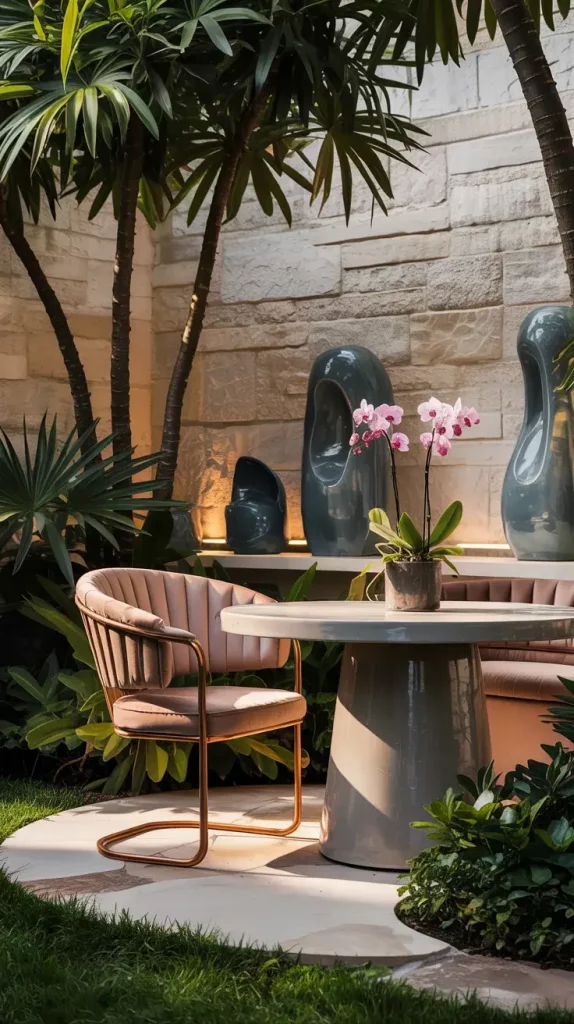
I like to incorporate sculptural tables, curved seating with unusual silhouettes, and artistic lighting fixtures that act as focal points. Materials such as polished concrete, metal, and glass help achieve a contemporary, designer look. Adding statement decor, like abstract sculptures or artistic planters, further enhances the visual impact.
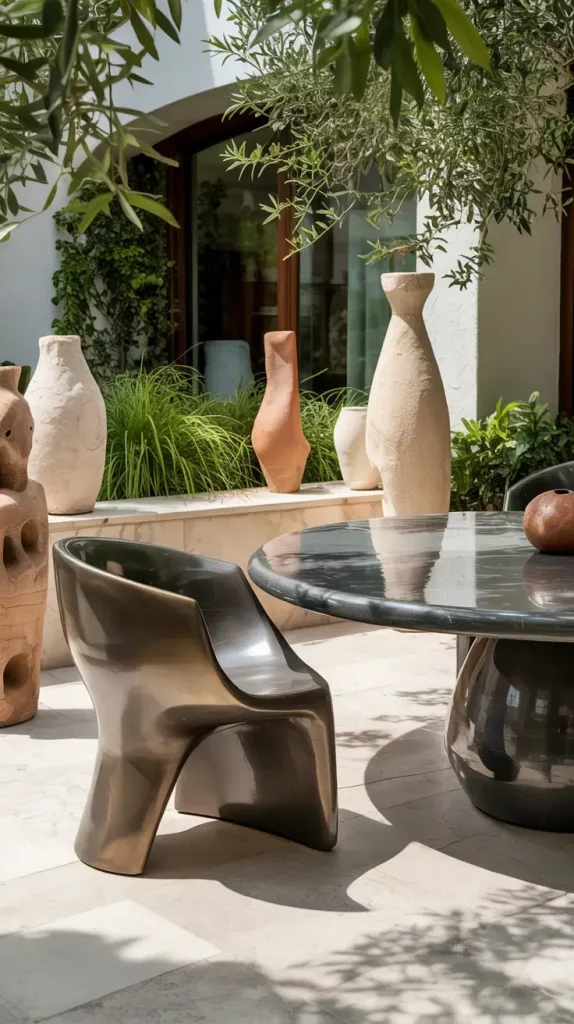
From my experience, these types of spaces resonate strongly with clients who want something truly unique. Publications like Dwell frequently showcase outdoor areas that blur the line between art and design, and I’ve found that even a single sculptural element can transform the entire setting.
I would also suggest balancing bold design with functional comfort. While artistic elements are important, the space should still feel inviting and practical for everyday use.
Smart Outdoor Dining Setups With Integrated Technology
As outdoor living continues to evolve, I’ve noticed that technology is becoming an essential part of the modern dining experience. In outdoor dining area setup 2026, smart features are seamlessly integrated to enhance comfort, convenience, and ambiance. I always aim to incorporate technology in a way that feels natural rather than intrusive.
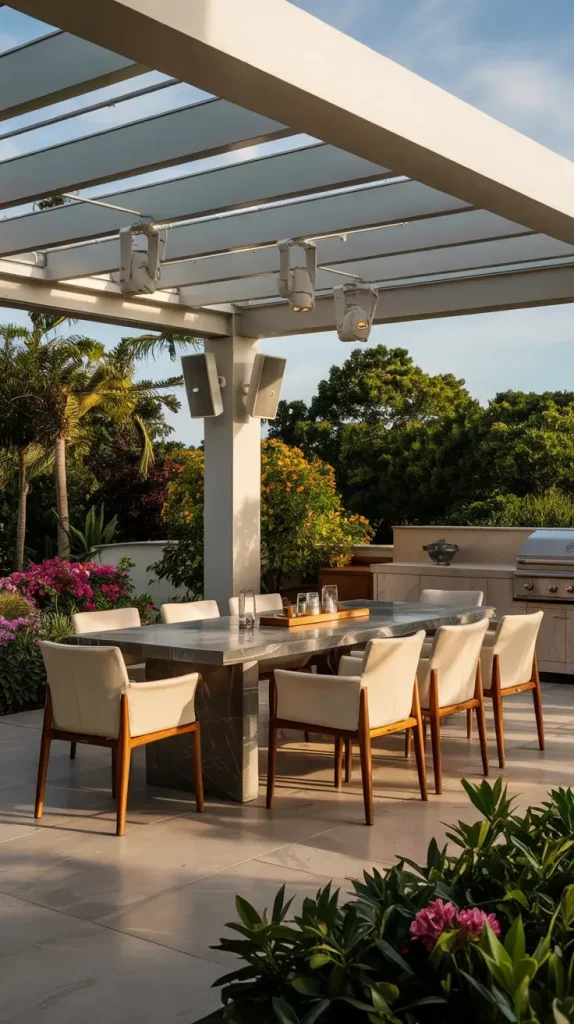
I often include built-in speakers, smart lighting systems, and weather-resistant charging stations. Dining tables with integrated lighting or heating elements are becoming increasingly popular, especially in cooler climates. I also recommend automated pergolas or shade systems that can be adjusted with a mobile app, adding both functionality and a sleek design element.
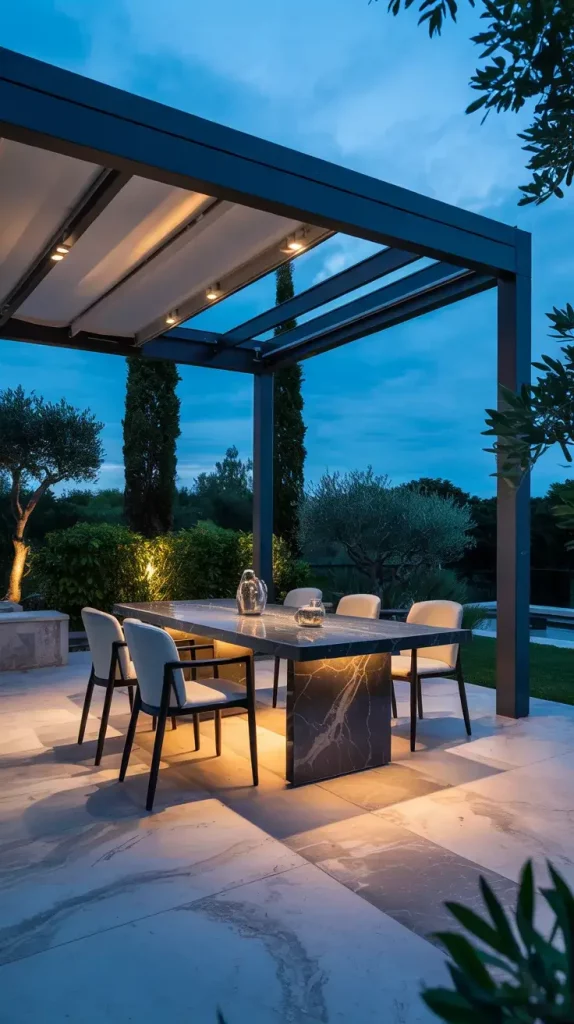
From my perspective, technology should simplify the user experience. Many experts in Architectural Digest highlight how smart outdoor solutions can extend usability throughout the year, and I’ve seen firsthand how these features make a significant difference.
To improve this setup, I would suggest ensuring all technology is properly weatherproofed and easy to maintain. Reliable connectivity and user-friendly controls are essential for a smooth experience.
Cozy Yet Stylish Outdoor Dining Ambience Ideas
Creating a cozy atmosphere is, in my view, the final step in designing a truly stylish outdoor dining space. Comfort and ambiance play a crucial role in how the area is experienced, especially during evening gatherings. I focus on layering elements that make the space feel warm, inviting, and effortlessly elegant.
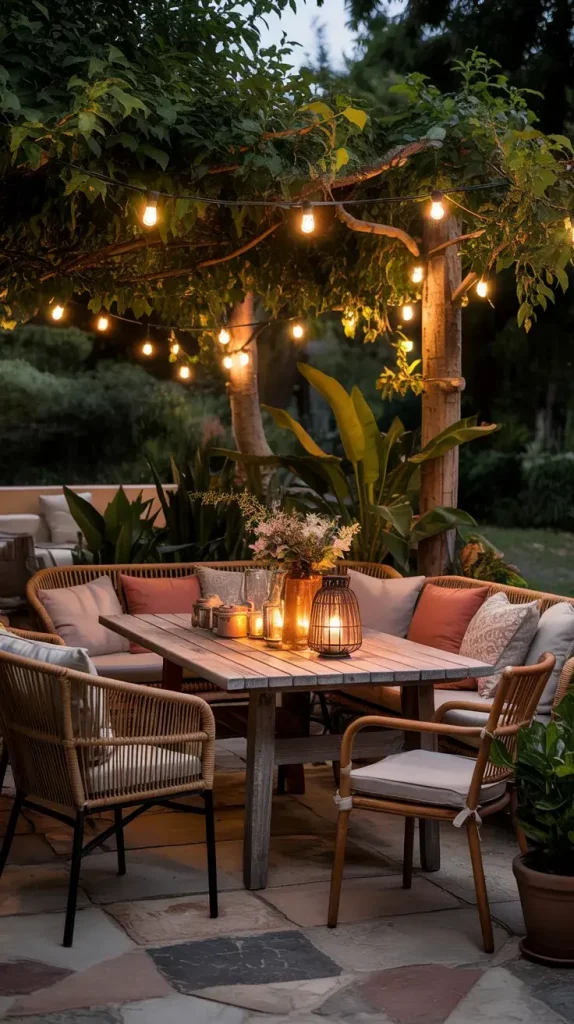
I like to use soft textiles such as cushions, throws, and outdoor rugs, combined with warm lighting from lanterns, candles, and string lights. Curved seating arrangements help create a more intimate setting, while natural materials like wood and rattan enhance the cozy feel. I also incorporate subtle decorative accents, such as table settings and greenery, to complete the look.
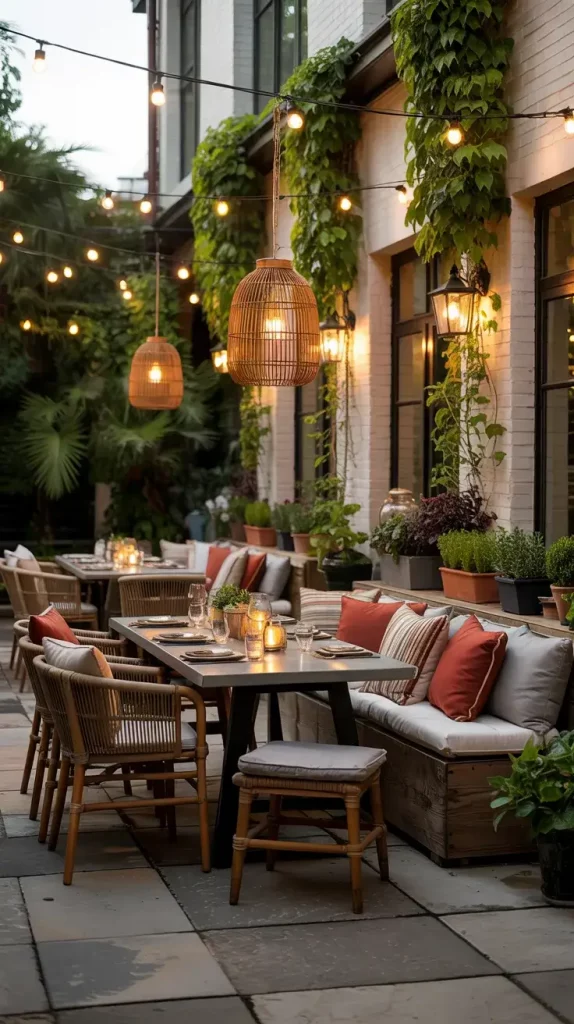
Personally, I believe that ambiance is what transforms a well-designed space into a memorable one. Many designers featured in House Beautiful emphasize the importance of lighting and texture in creating mood, and I always prioritize these elements in my projects.
I would also recommend adding seasonal accessories or adaptable decor to keep the space fresh throughout the year. Small updates can make a big difference in maintaining a welcoming and dynamic environment.
Sustainable And Eco-Friendly Outdoor Dining Designs
I focus on creating outdoor dining spaces that are both environmentally responsible and visually refined. In 2026, sustainability is no longer a trend but a necessity, and I see more homeowners embracing natural materials, energy-efficient lighting, and low-impact layouts. I design these spaces to blend seamlessly with the surrounding environment, ensuring that the dining area feels like a natural extension of the landscape rather than a separate installation.
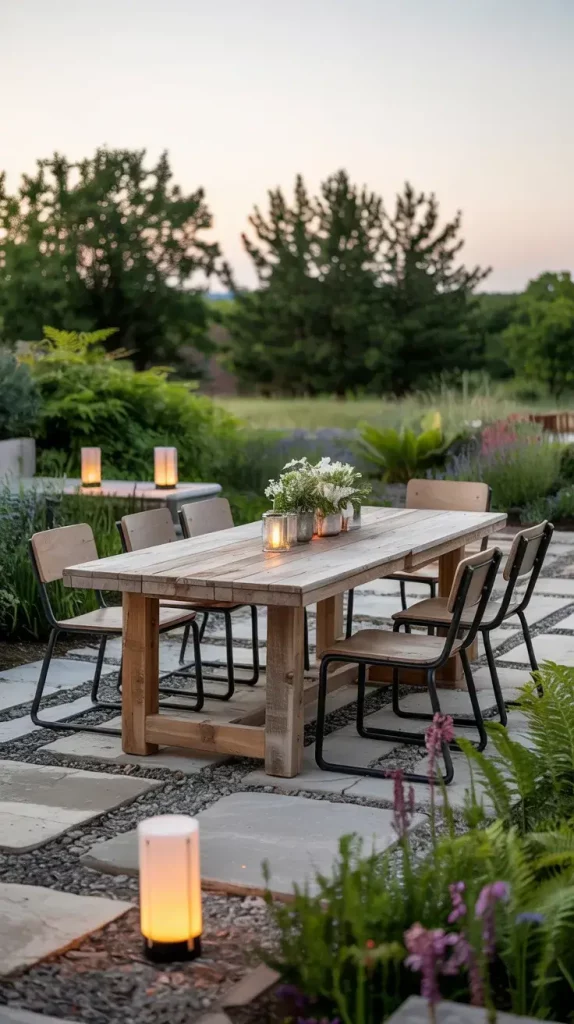
When selecting furniture, I prioritize reclaimed wood tables, recycled metal frames, and weather-resistant fabrics made from sustainable fibers. I also incorporate solar-powered lighting, modular seating, and permeable flooring such as gravel or eco-pavers. These choices not only reduce environmental impact but also enhance durability and long-term usability in outdoor conditions.
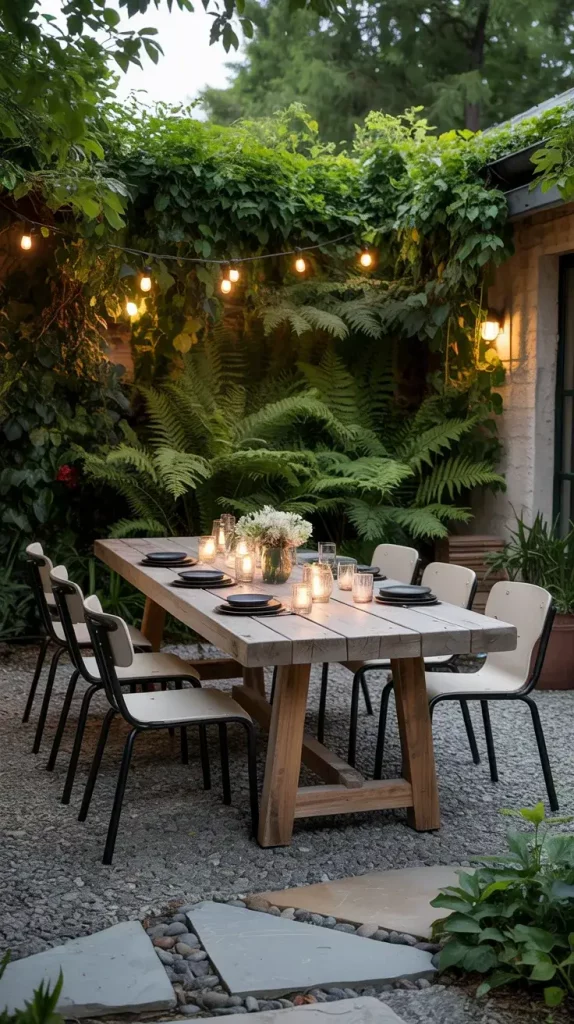
From my experience, following insights from publications like Architectural Digest, investing in fewer but higher-quality sustainable pieces creates a more cohesive and timeless result. I always recommend focusing on longevity rather than short-term trends, especially in outdoor environments where materials must withstand weather changes.
I would also add integrated composting solutions, rainwater collection systems for nearby greenery, and more native plant landscaping to fully complete the eco-friendly concept.
Seasonal Styling Ideas For Outdoor Dining Spaces
I design outdoor dining areas to adapt effortlessly to changing seasons, ensuring year-round usability and visual freshness. A well-planned setup allows for subtle transformations through textiles, lighting, and decorative accents, rather than complete redesigns. This approach keeps the space dynamic while maintaining a consistent structural base.
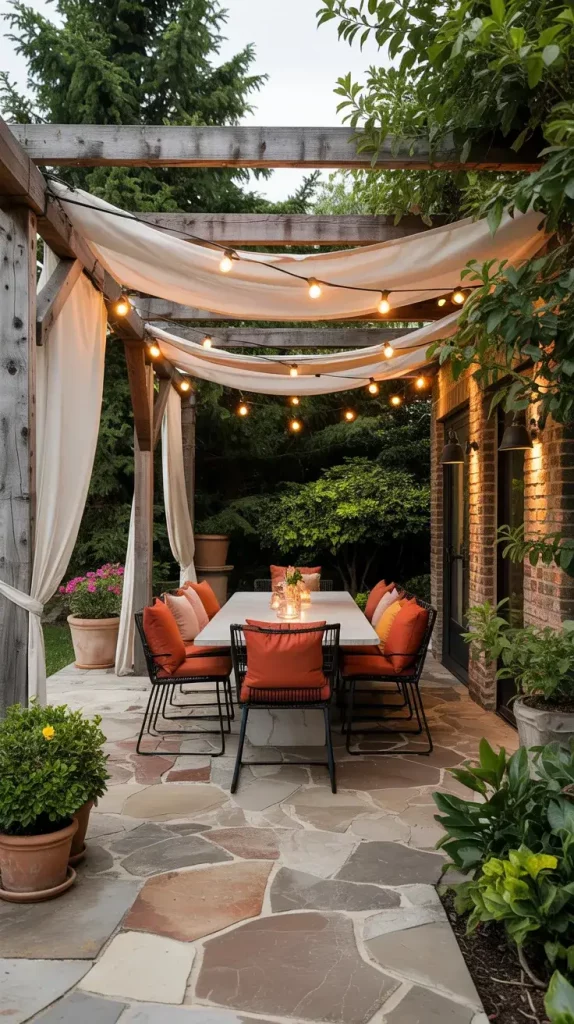
I incorporate interchangeable elements such as cushions, throws, table linens, and centerpieces that reflect seasonal palettes. In summer, I lean toward light fabrics and airy layouts, while in cooler months I introduce layered textures, warm lighting, and protective covers like pergolas or retractable awnings.
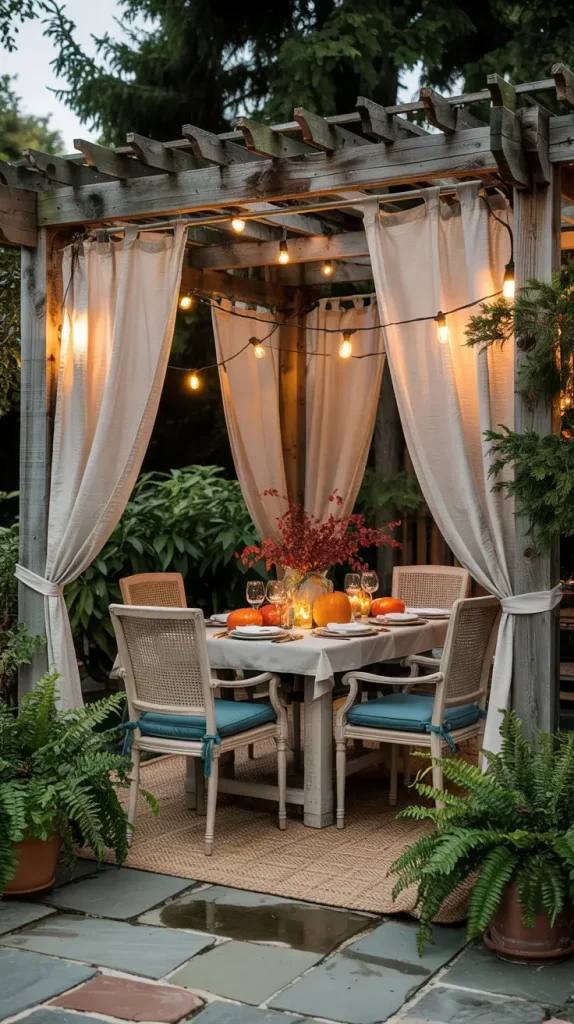
Personally, I find that seasonal adaptability enhances both comfort and emotional connection to the space. Inspired by recommendations from Elle Decor, I often advise layering lighting sources such as lanterns and string lights to create ambiance regardless of the time of year.
To improve this section, I would include built-in storage solutions for seasonal decor and modular furniture that can be easily rearranged or stored when not in use.
Designer Outdoor Dining For Entertaining Guests In Style
When I design outdoor dining areas specifically for entertaining, I focus on flow, seating capacity, and visual impact. The goal is to create a space that feels welcoming yet sophisticated, allowing guests to move comfortably while enjoying a cohesive and curated environment.
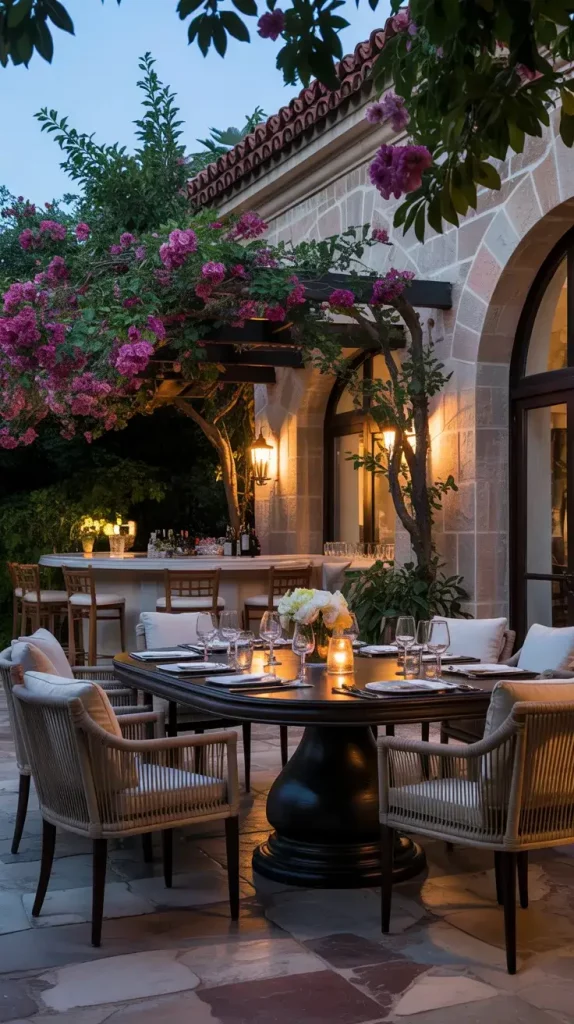
I typically include a large statement dining table, often with curved edges to soften the layout, paired with ergonomic chairs and accent seating. I also integrate outdoor bars, serving stations, and subtle zoning elements like rugs or lighting to define the dining area within a larger outdoor setting.
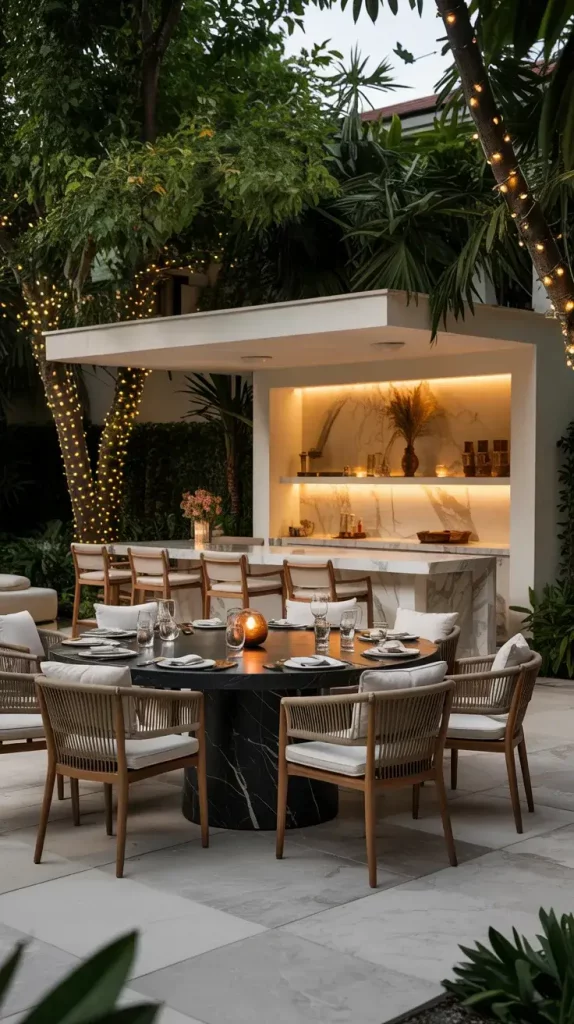
From my perspective, entertaining spaces should feel effortless. I often draw inspiration from design experts featured in House Beautiful, who emphasize the importance of balancing aesthetics with functionality. I always ensure there is adequate lighting, easy access to serving areas, and comfortable seating for extended gatherings.
I would enhance this setup by adding outdoor heating elements, built-in speakers, and flexible seating options to accommodate different group sizes and occasions.
Creative Centerpiece Ideas For Outdoor Dining Tables
I believe the centerpiece is the focal point of any dining table, especially in outdoor settings where it must complement both the furniture and the natural surroundings. In 2026, centerpieces are becoming more artistic and less traditional, often incorporating organic and sculptural elements.
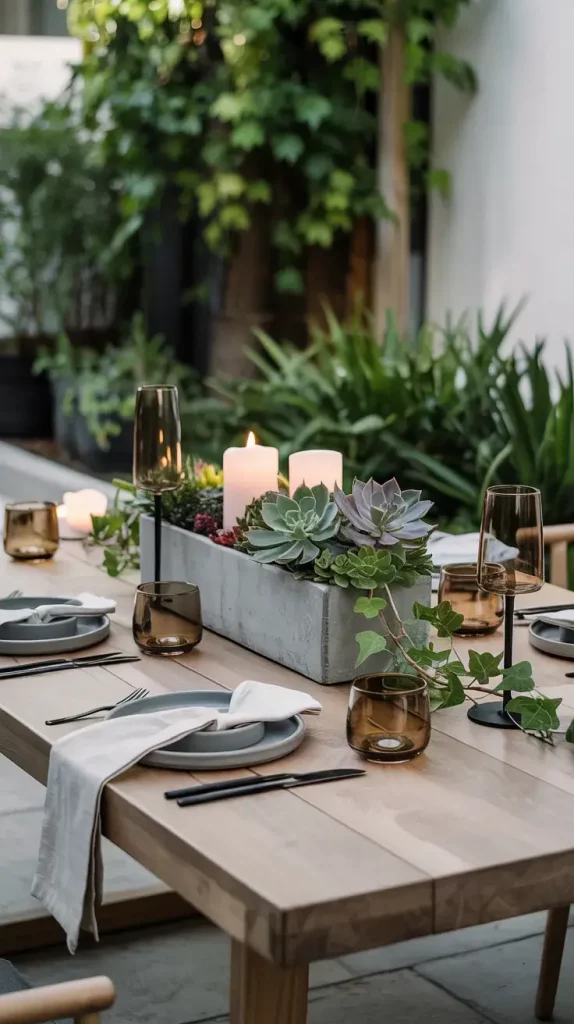
I use a mix of materials such as ceramic, glass, and natural wood to create layered compositions. Popular choices include low-profile arrangements with greenery, candles in varying heights, and artistic objects that reflect personal style. I also consider wind resistance and durability when selecting outdoor-appropriate decor.
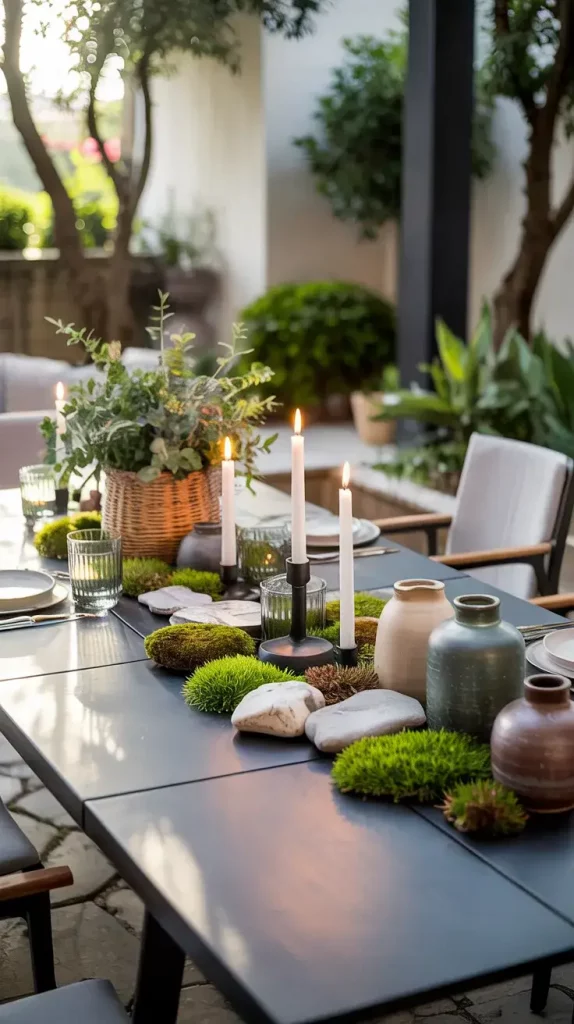
In my experience, simplicity often creates the strongest visual impact. Drawing from trends highlighted by Better Homes and Gardens, I recommend avoiding overly tall or obstructive centerpieces to maintain clear sightlines across the table.
To complete this section, I would include ideas for interchangeable centerpiece components that can be easily updated for different occasions or themes.
Curved Pergolas And Architectural Structures For Dining Areas
I see architectural elements as the backbone of a well-designed outdoor dining area. Curved pergolas and structures are particularly relevant in 2026, as they introduce softness and fluidity into outdoor layouts, contrasting with traditional rigid lines.
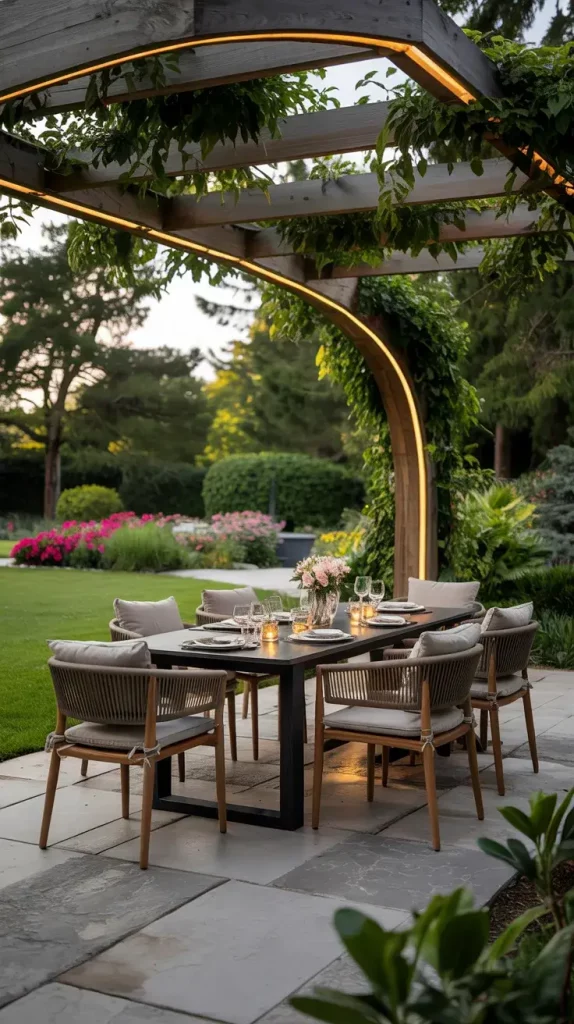
When designing these structures, I focus on materials like powder-coated metal, natural wood, or composite materials that offer both durability and aesthetic appeal. The curved forms create a sense of enclosure without feeling restrictive, making the dining area more intimate and visually distinctive.
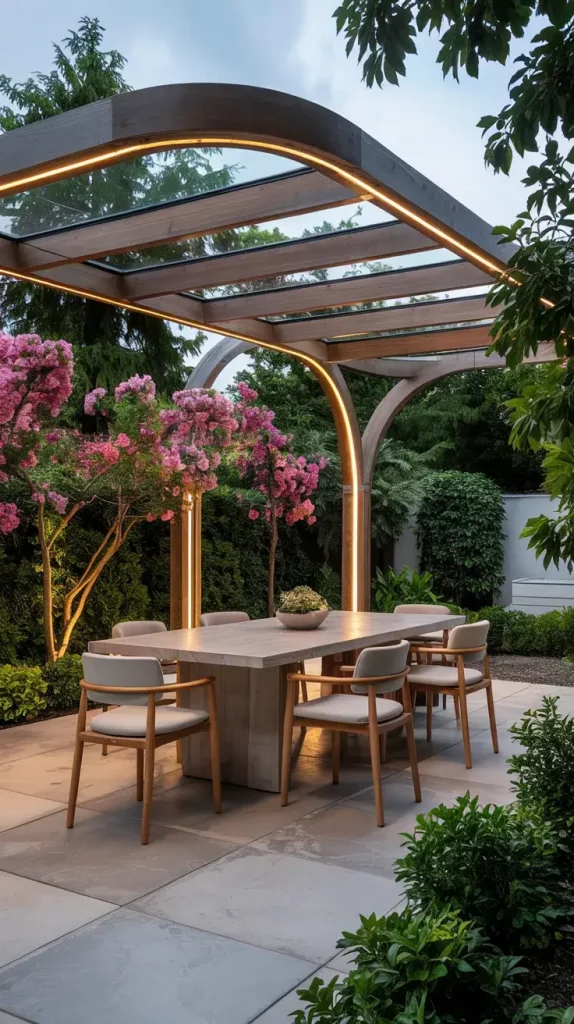
Personally, I find that incorporating sleek and stylish architectural lines elevates the entire space. Inspired by modern landscape architects, I often integrate lighting directly into the structure, such as recessed LEDs or hanging fixtures, to enhance both functionality and ambiance.
I would further develop this concept by adding retractable canopies, climbing plants for natural shading, and integrated heating elements to increase comfort across different weather conditions.
Mixing Vintage And Contemporary Outdoor Dining Styles
I often find that combining vintage and contemporary elements creates the most visually engaging outdoor dining spaces. This approach allows me to balance nostalgia with innovation, resulting in a setting that feels layered and thoughtfully curated. In 2026, this mix is especially relevant for those who want their outdoor dining area setup 2026 to stand out while still feeling personal and inviting.
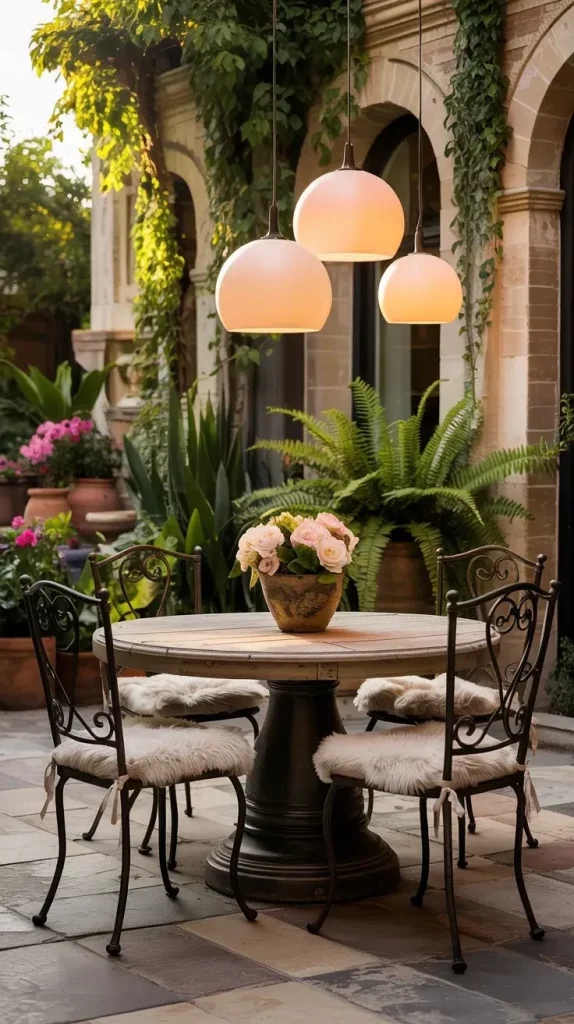
When I design such spaces, I pair antique wooden tables or wrought iron chairs with modern materials like concrete, glass, or powder-coated metal. I also incorporate creative furniture pieces with curved silhouettes to soften the contrast between old and new. Vintage lanterns, retro tableware, and aged textures work beautifully alongside sleek lighting and minimalistic accessories.
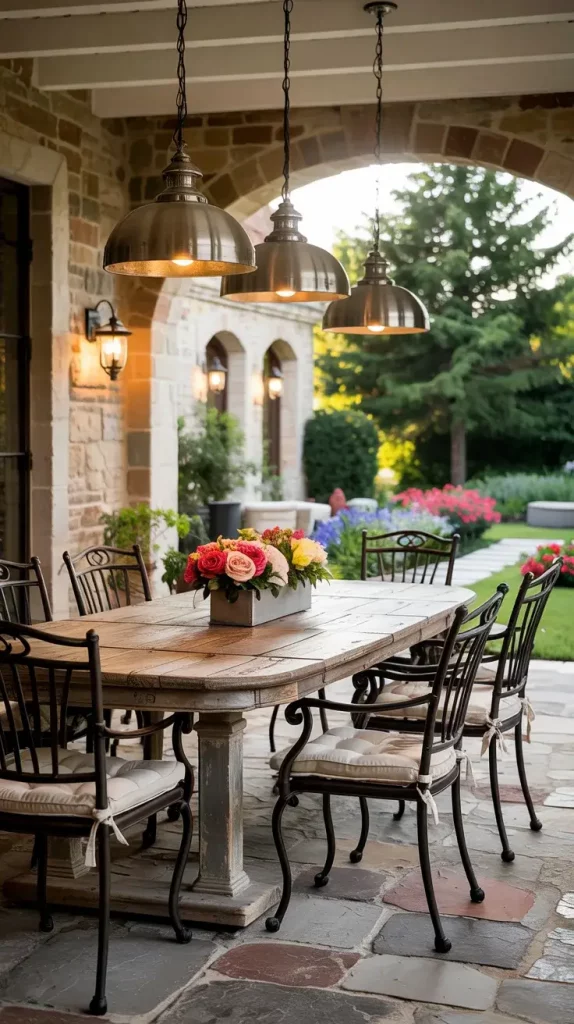
From my experience, the key to success is maintaining balance. I often follow guidance similar to what is shared in Domino Magazine, where mixing eras is encouraged but should always feel intentional rather than random. I aim to create harmony through color palettes and proportions so that no element feels out of place.
To enhance this concept further, I would include guidance on restoring vintage pieces for outdoor durability and selecting weather-resistant finishes that preserve their character.
Outdoor Dining Spaces With Water Features And Visual Interest
I design outdoor dining areas with water features to introduce a sense of calm and visual depth. The sound and movement of water create a relaxing atmosphere that enhances the overall dining experience, making the space feel more like a retreat than a simple patio.
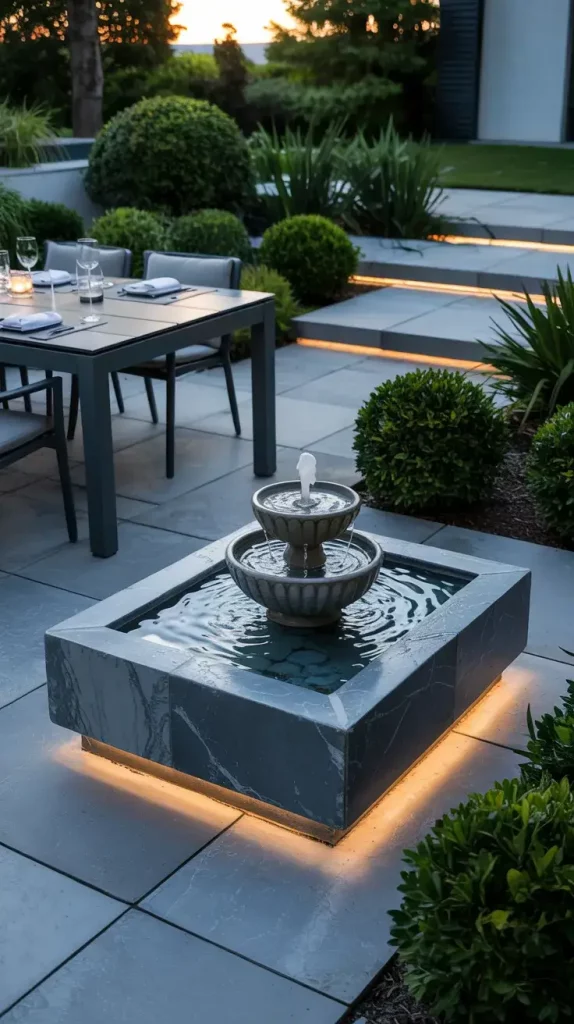
In my projects, I incorporate elements such as small fountains, reflecting pools, or wall-mounted water features positioned near the dining area. I combine these with sleek furniture, neutral palettes, and soft lighting to ensure the water feature remains the focal point without overwhelming the design.
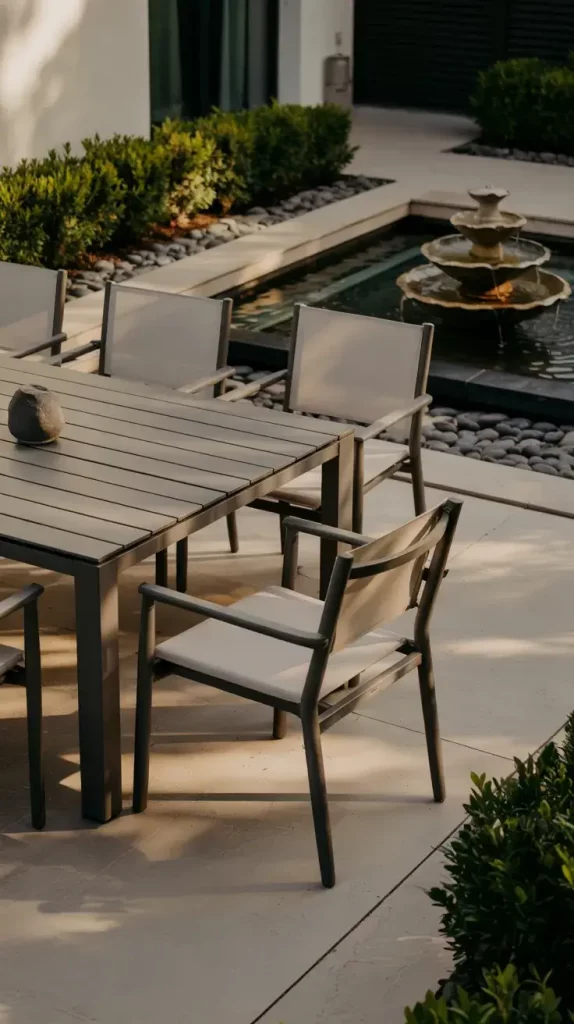
Personally, I find that water features elevate even the simplest setups. Drawing inspiration from landscape design principles often highlighted in publications like Dwell, I ensure that scale and placement are carefully considered so the feature complements rather than dominates the space.
I would also add integrated seating near the water element and subtle lighting within the feature to enhance its presence during evening use.
Personalized Outdoor Dining Areas With Artistic Details
I believe personalization is what transforms a well-designed outdoor dining area into a truly memorable space. Adding artistic elements allows me to reflect the homeowner’s personality while maintaining a cohesive and professional design approach.
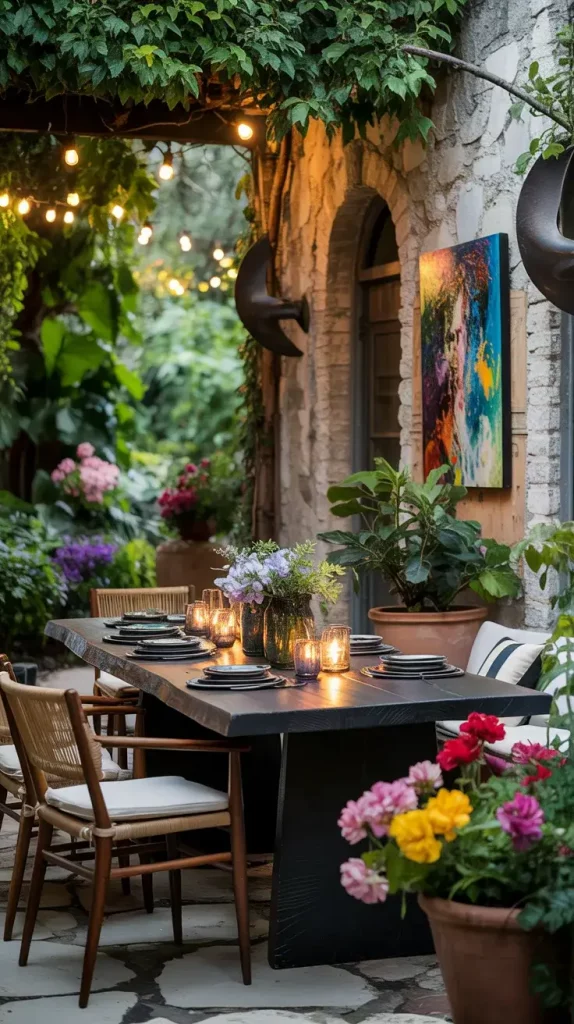
I incorporate custom artwork, sculptural decor, and handcrafted furniture pieces to create a distinctive look. This may include painted murals, artisan ceramics, or unique dining areas enhanced by stylish and creative furniture. Textiles and accessories also play a key role in reinforcing the overall aesthetic.
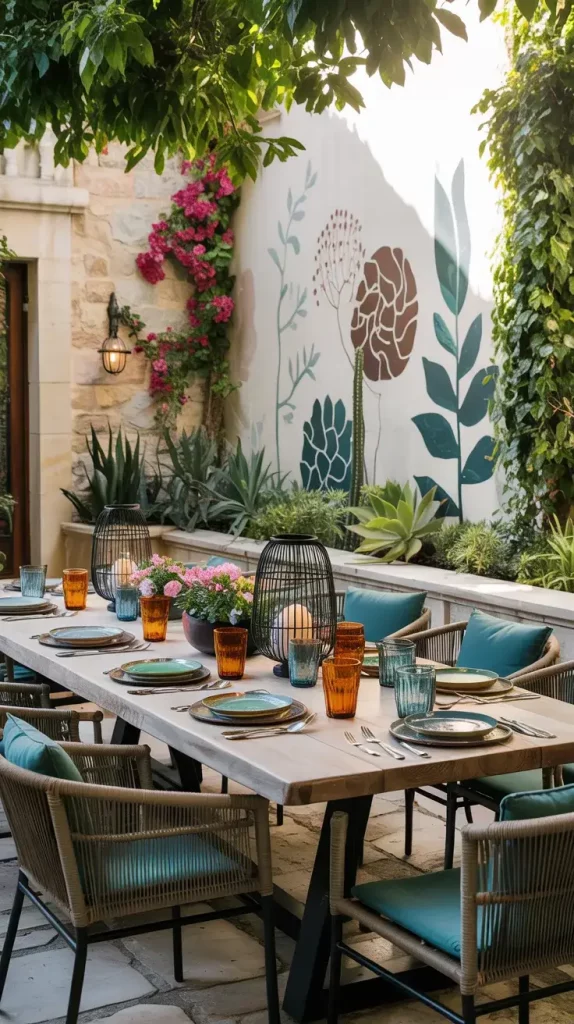
From my perspective, personalization should feel curated rather than cluttered. Inspired by insights from interior designers featured in Architectural Digest, I focus on selecting a few impactful pieces instead of overwhelming the space with too many decorative elements.
To complete this section, I would include suggestions for commissioning local artists or integrating DIY elements that align with the overall design vision.
Budget-Friendly Ways To Achieve A Designer Outdoor Dining Look
I understand that not every project comes with a large budget, but achieving a designer look is still entirely possible with thoughtful planning. I focus on maximizing visual impact through strategic choices rather than expensive investments.
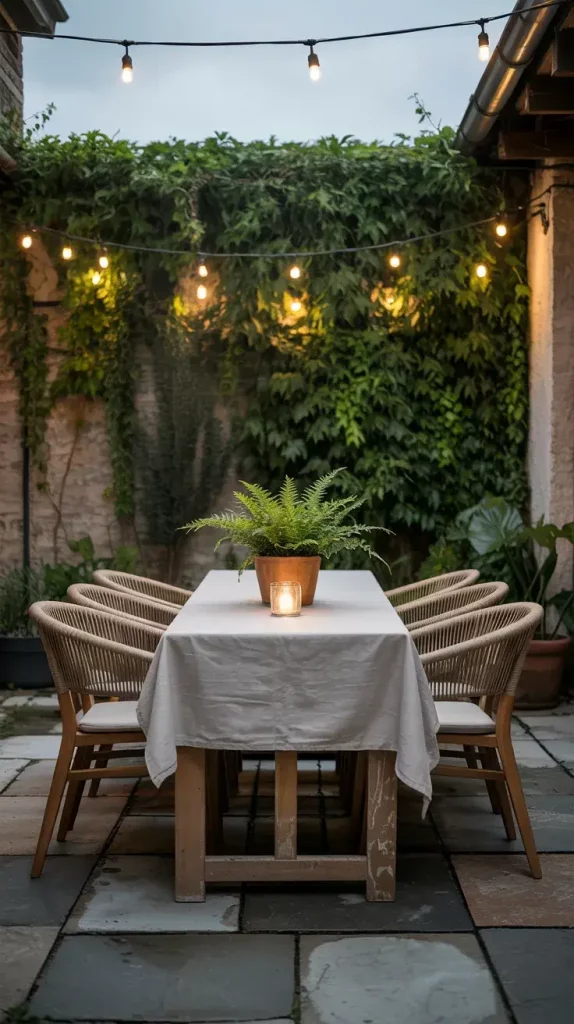
I recommend using affordable materials like treated wood, composite decking, and durable outdoor fabrics that mimic high-end finishes. I also incorporate modern and sleek furniture with simple lines, combined with statement lighting and well-chosen accessories to elevate the overall aesthetic.
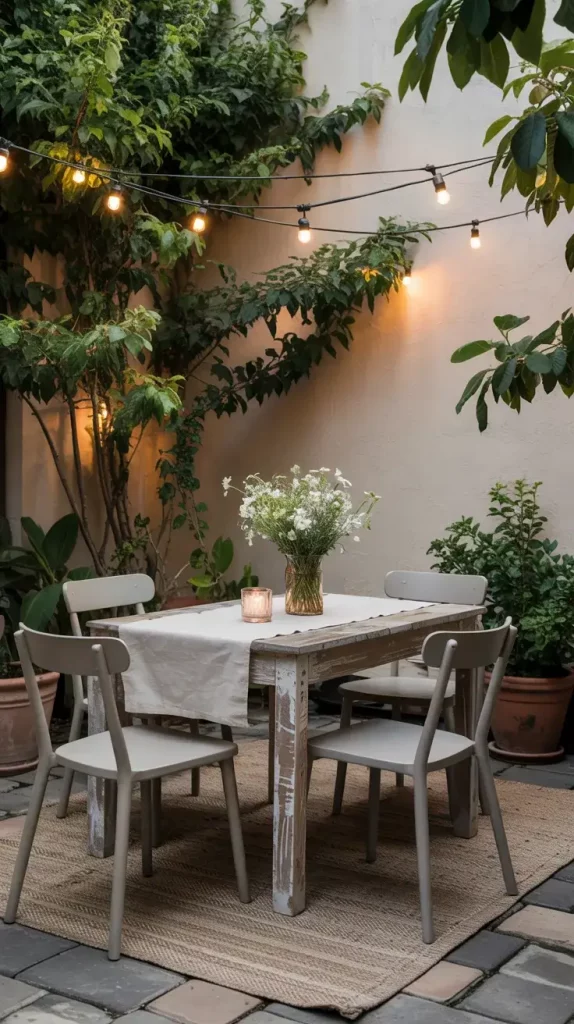
In my experience, layering is key. As often suggested in Better Homes and Gardens, combining textures, lighting, and greenery can dramatically enhance the perceived value of a space. I always encourage clients to invest in a few standout pieces while keeping the rest minimal and cohesive.
I would further improve this section by adding tips on sourcing second-hand furniture and repurposing existing items to reduce costs without sacrificing style.
Future Trends Shaping Outdoor Dining Area Setup Beyond 2026
Looking ahead, I see outdoor dining evolving into fully integrated living environments that combine technology, sustainability, and design innovation. The outdoor dining area setup 2026 is just the beginning of a more connected and immersive outdoor lifestyle.
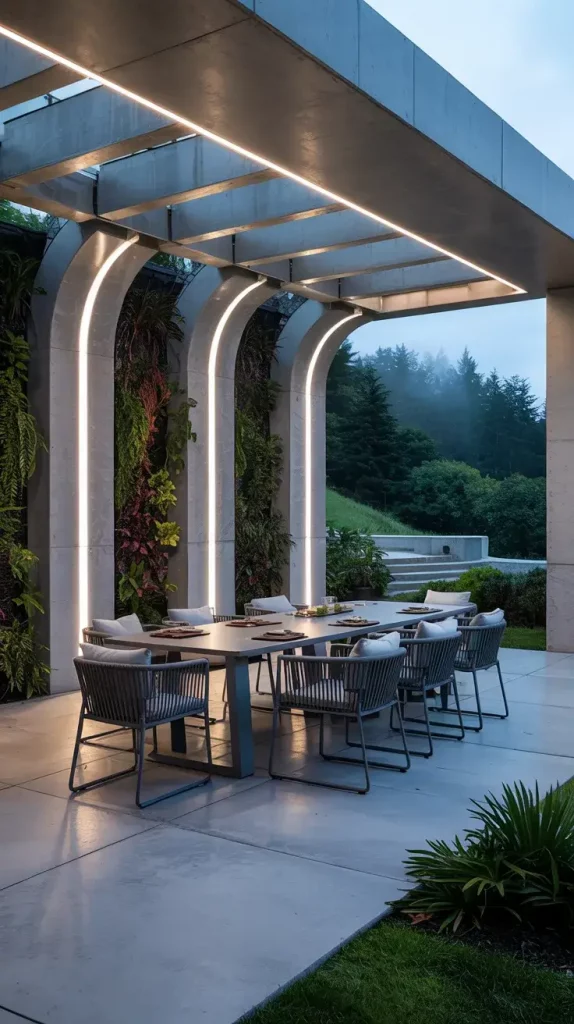
I anticipate increased use of smart lighting systems, weather-responsive furniture, and modular layouts that adapt to different needs. Materials will continue to evolve, with a strong emphasis on sustainability and durability, while curved and sleek forms will dominate furniture and architectural elements.
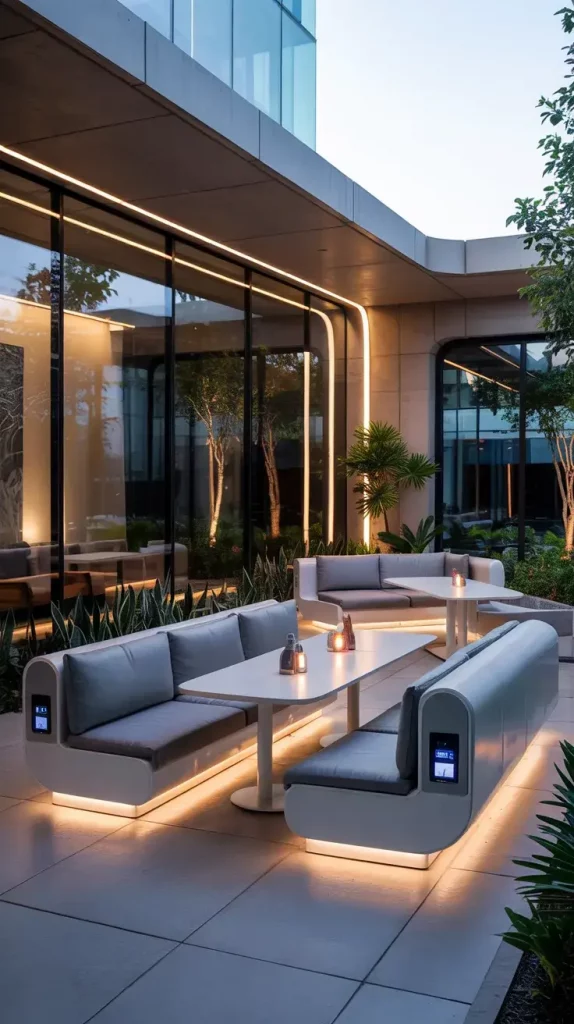
From my perspective, the future of outdoor dining is about flexibility and personalization. Influenced by forward-thinking designers and trends highlighted in Dezeen, I see spaces becoming more adaptable, allowing homeowners to easily transition between dining, lounging, and entertainment.
To expand this concept, I would include examples of emerging technologies such as integrated heating systems, outdoor kitchens with smart controls, and eco-friendly innovations that redefine how we use outdoor spaces.
Outdoor dining area setup in 2026 reflects a perfect balance of style, innovation, and personal expression. With curved forms, sleek materials, and creative layouts, these spaces go far beyond functionality to become true design experiences. Whether you prefer a luxurious statement setting or a compact, budget-friendly solution, the key lies in thoughtful details and cohesive aesthetics. By combining comfort with modern trends, any outdoor area can be transformed into a unique and inviting dining retreat. Ultimately, the future of outdoor dining is about creating spaces that feel as beautiful as they are livable.