
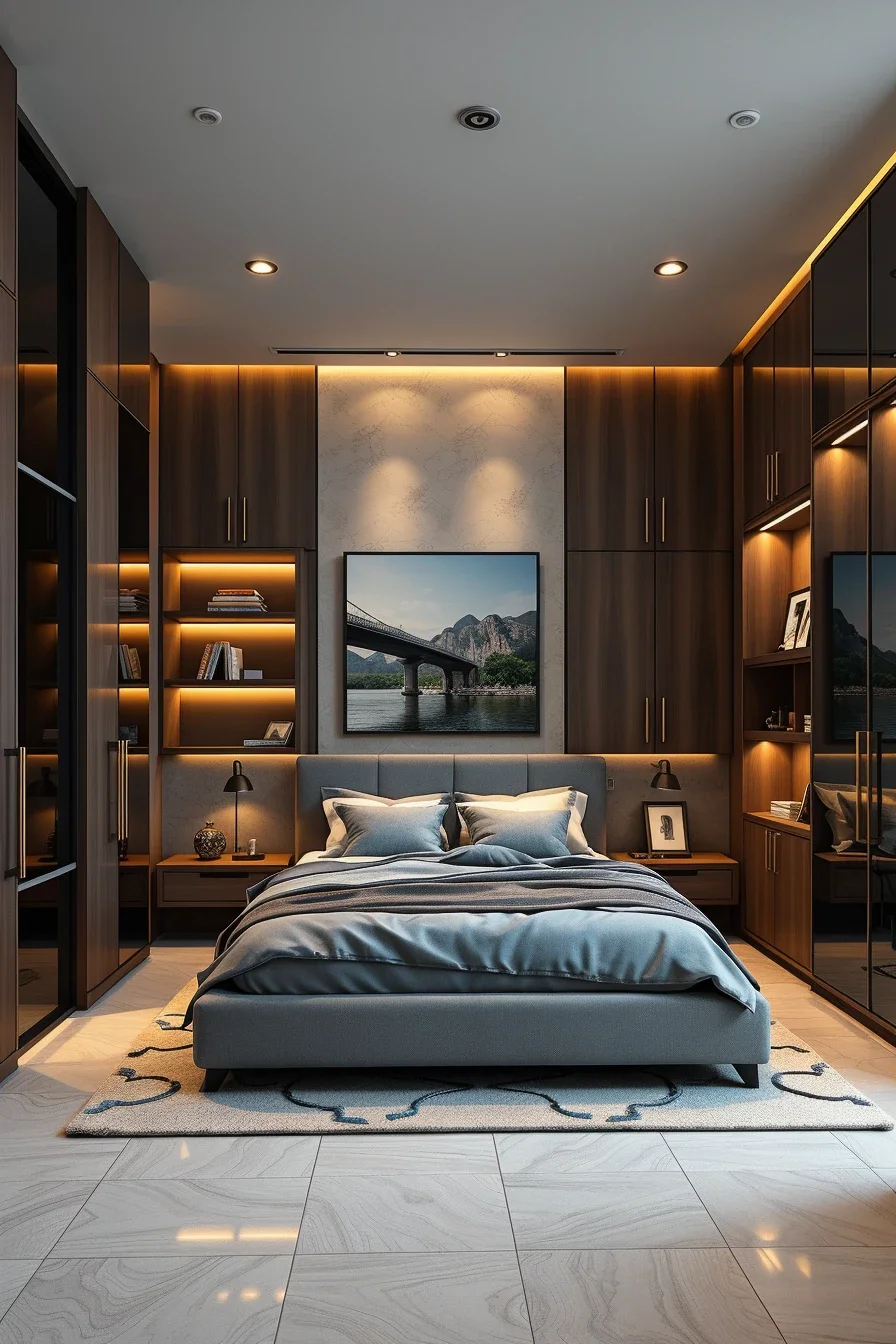
Your bedroom should be more than just a place to sleep—it should reflect your personality while providing comfort and style. Today’s modern bedroom decor ideas focus on clean lines, thoughtful textures, and carefully selected furnishings that create a calm and inviting atmosphere. Whether you prefer soft neutral palettes, bold accents, or minimalist interiors, there are countless ways to refresh your space without sacrificing functionality. From statement beds and layered lighting to smart storage solutions and decorative details, every design choice contributes to a cohesive look. This guide explores inspiring modern bedroom decor ideas that blend timeless elegance with today’s most popular interior trends. Use these ideas to create a bedroom that feels beautiful, practical, and uniquely your own.
Statement Beds That Define The Entire Room
A statement bed is often the first element I choose when designing a modern bedroom because it naturally becomes the centerpiece of the entire space. Instead of filling the room with excessive decoration, I prefer allowing one beautifully designed bed to establish the visual direction. Upholstered frames, curved silhouettes, oversized headboards, and premium fabrics immediately create an elegant atmosphere while keeping the room balanced and uncluttered. When the proportions are right, the bed anchors every other decorative element without overwhelming the space.
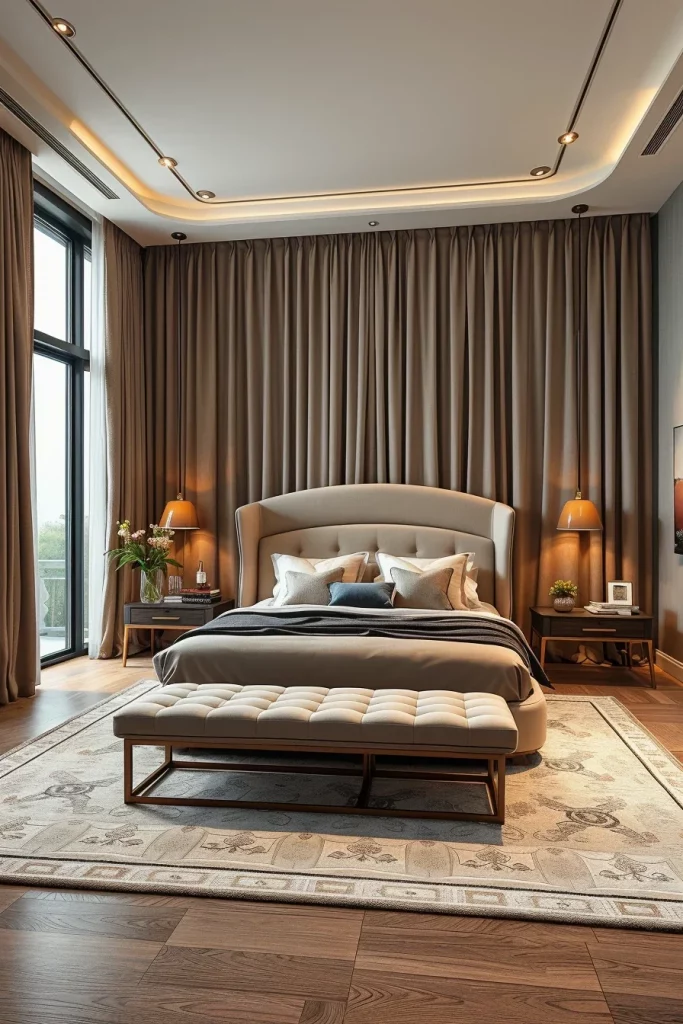
I usually combine the statement bed with simple nightstands, subtle wall décor, soft bedding, and minimal accessories so the focal point remains clear. A bench at the foot of the bed, textured throw blankets, oversized pillows, and carefully selected artwork all contribute to a layered yet clean appearance. Hidden storage beneath the bed can also improve functionality without changing the overall aesthetic. Every furniture piece should support the bed instead of competing with it.
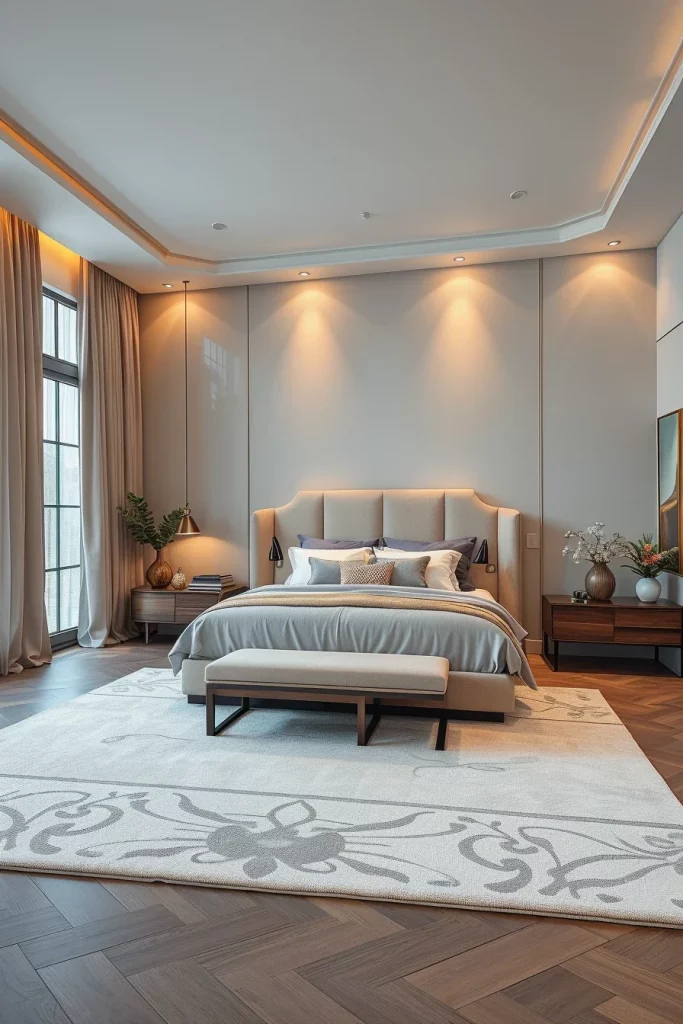
I often notice that leading American designers featured in Architectural Digest recommend investing in fewer but higher-quality furniture pieces instead of filling the room with unnecessary décor. I completely agree with this approach because one exceptional bed creates more visual impact than numerous decorative accessories.
To complete this design, I would also include large curtains extending from ceiling to floor, a generous area rug beneath the bed, and discreet accent lighting that highlights the shape of the headboard while making the room feel even more inviting.
Layered Neutral Color Palettes For A Timeless Look
Neutral colors remain one of my favorite foundations for modern bedrooms because they create a relaxing environment that never feels outdated. Rather than relying on a single shade, I layer warm whites, soft beige, creamy taupe, light gray, and muted stone tones throughout the room. These subtle transitions add depth while maintaining a calm visual flow that works throughout every season.
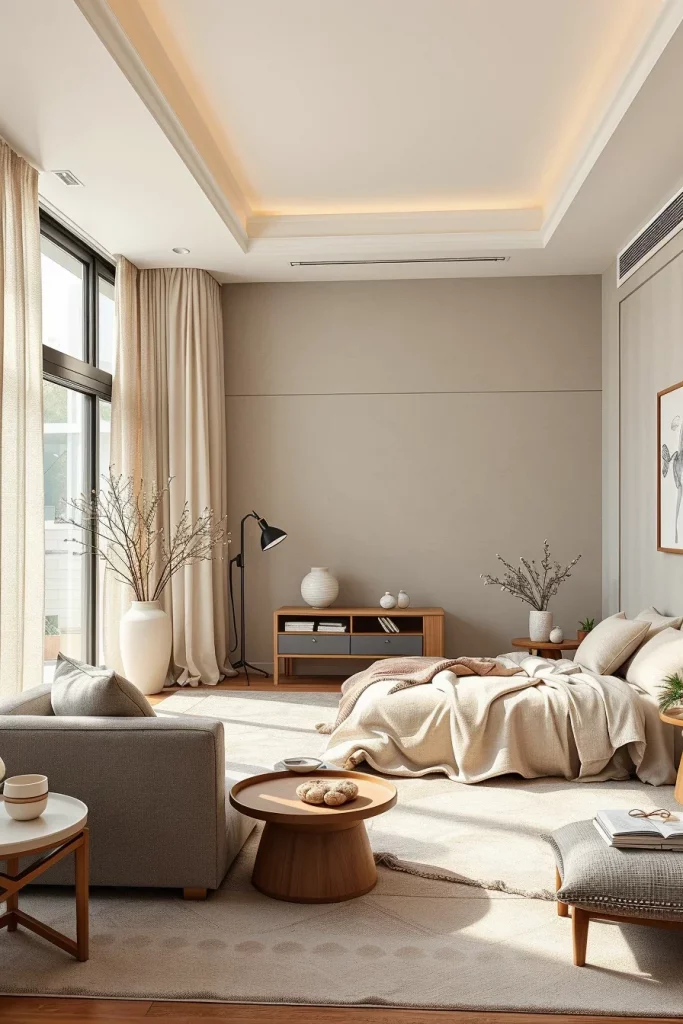
I prefer combining painted walls with textured fabrics, woven rugs, linen curtains, upholstered seating, and natural stone accessories. Mixing matte and soft-touch finishes keeps neutral interiors from appearing flat. Wood accents, ceramic décor, and brushed metal hardware introduce additional variation while preserving the clean appearance associated with contemporary interiors.
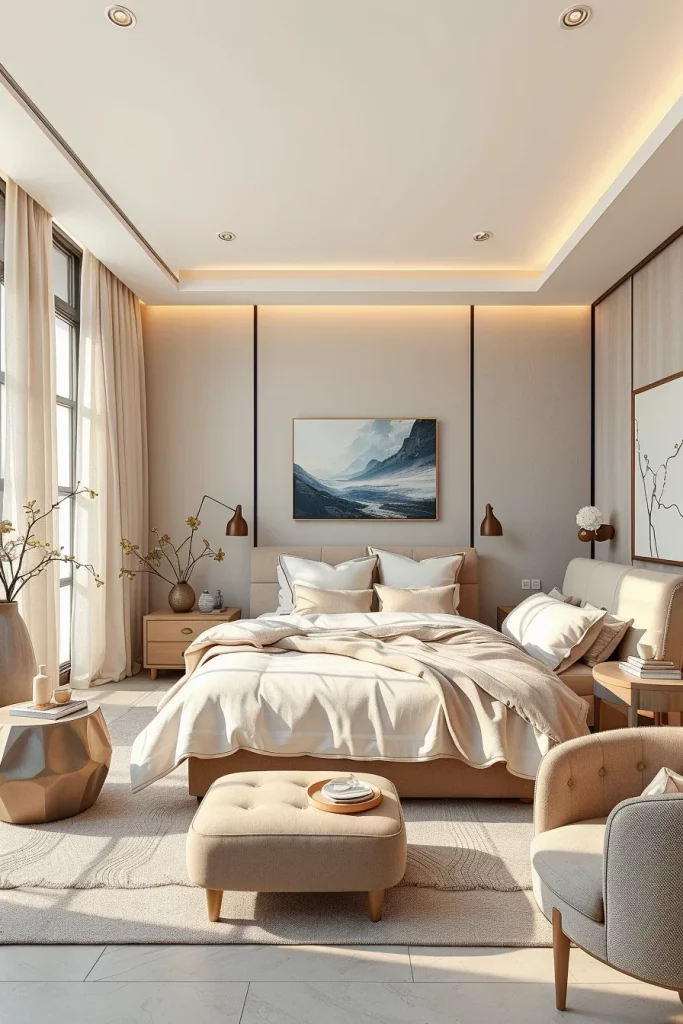
From my experience, neutral palettes make future decorating much easier because seasonal accessories can be changed without replacing major furniture. Interior designers frequently emphasize that texture becomes far more important when working with restrained color schemes, and I have consistently found this advice to be true.
To strengthen this concept, I would add oversized mirrors, decorative vases with sculptural forms, layered bedding in multiple neutral shades, and subtle wall art that reinforces the quiet sophistication of the room.
Floor-To-Ceiling Headboards With Elegant Texture
One design feature that immediately elevates a bedroom is a floor-to-ceiling headboard. I appreciate how it transforms an ordinary wall into an architectural statement while making the room appear taller and more luxurious. Upholstered panels with vertical channeling, soft boucle fabric, velvet, or textured woven materials introduce depth without requiring complicated decoration.
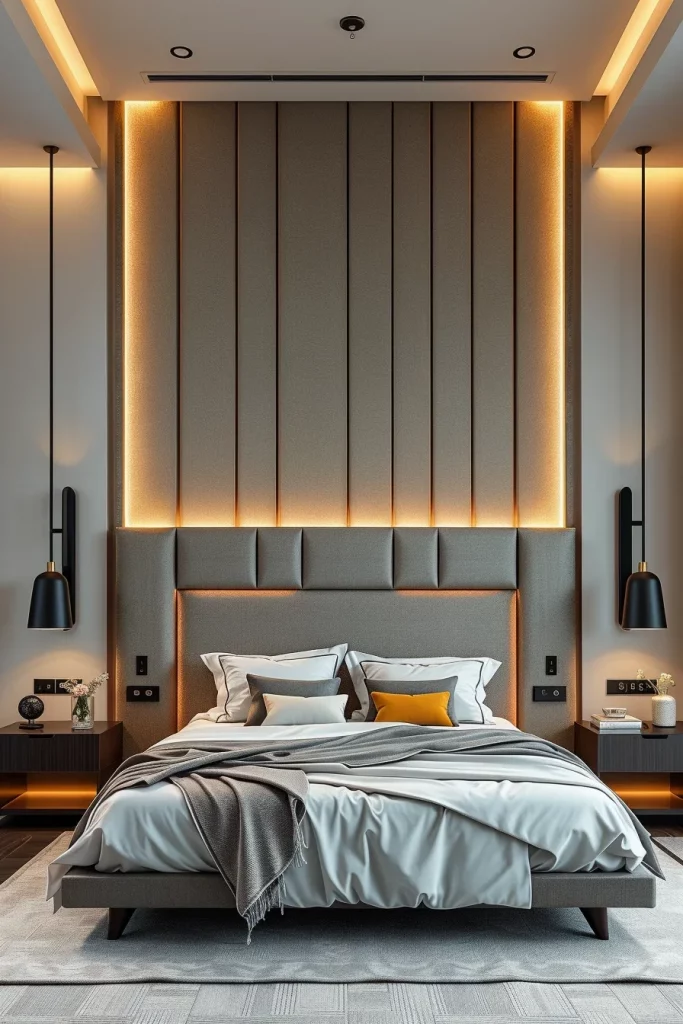
I usually coordinate the headboard with floating bedside tables, integrated reading lights, and discreet decorative shelving. The surrounding furniture remains simple because the textured wall already delivers substantial visual interest. Large bedding, oversized pillows, and minimal artwork help preserve a balanced composition while allowing the architectural feature to remain dominant.
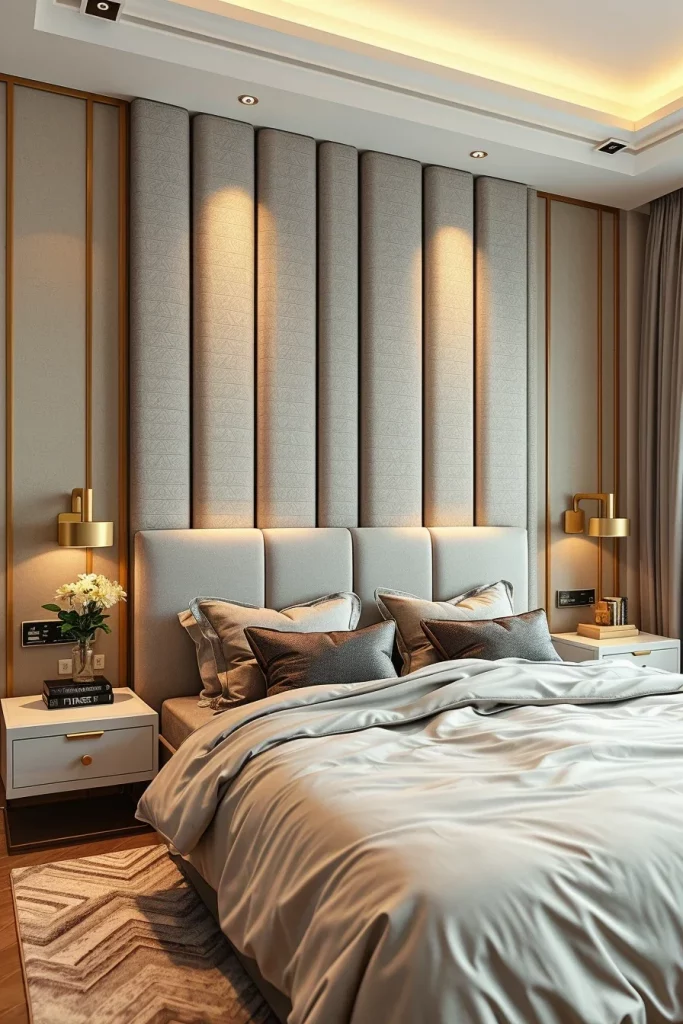
Many contemporary interior designers recommend emphasizing vertical lines to visually increase ceiling height, especially in bedrooms with average proportions. I have found this technique especially effective because it creates an elegant impression without requiring structural renovation.
I would also include concealed LED lighting behind the upholstered panels, ensuring the textured surface becomes even more noticeable during the evening while creating a soft ambient glow.
Cozy Lighting Ideas That Transform The Mood
Lighting is one of the most influential elements in bedroom design because it completely changes how the room feels throughout the day. I always begin by creating multiple lighting layers instead of relying on a single ceiling fixture. Warm ambient lighting, bedside reading lamps, indirect LED illumination, and decorative accent fixtures work together to create flexibility for every activity.
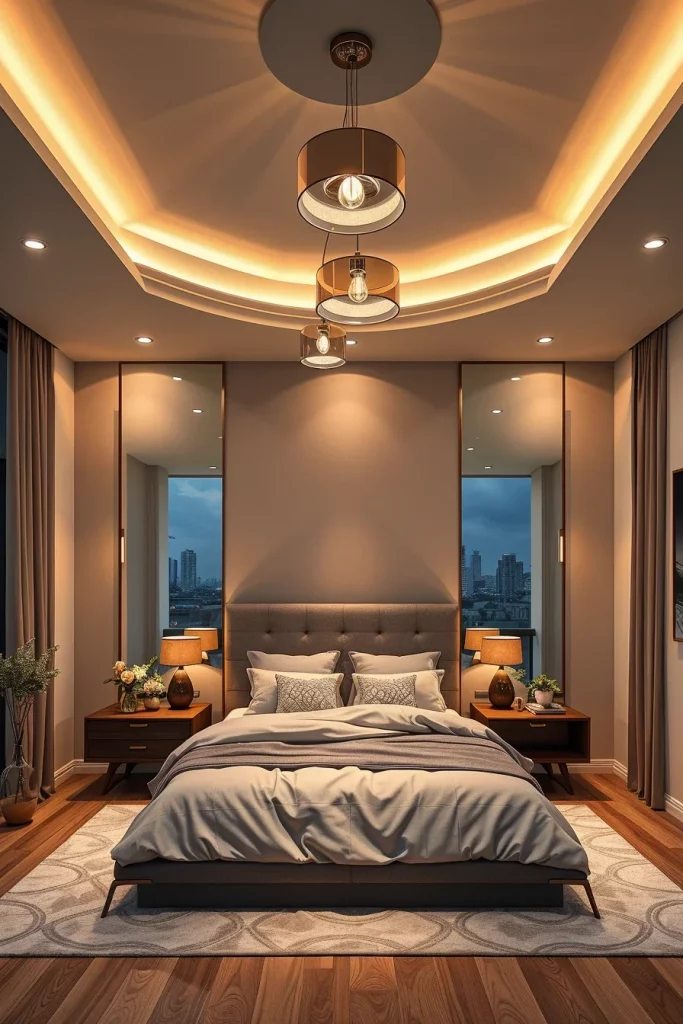
I like pairing dimmable ceiling lighting with wall sconces, bedside lamps, recessed ceiling lights, and concealed lighting beneath floating furniture. Smart lighting systems make it easy to adjust brightness depending on whether I am reading, relaxing, or preparing for sleep. Warm color temperatures also help create a more restful atmosphere.
Lighting specialists and sleep experts frequently recommend warmer evening lighting because cooler light may interfere with natural sleep cycles. I think this advice is especially valuable when designing a bedroom intended for everyday comfort rather than simple visual appeal.
To complete the lighting design, I would introduce soft fabric lampshades, integrated closet lighting, subtle illumination behind mirrors, and programmable lighting scenes that adapt automatically during different times of the day.
Floating Nightstands For A Clean Modern Layout
Floating nightstands immediately make a bedroom appear larger because they expose more visible floor area and create a lighter visual composition. I appreciate how they support minimalist interiors while still providing practical storage for everyday essentials. Clean horizontal lines contribute to a refined appearance that complements almost any modern bedroom style.
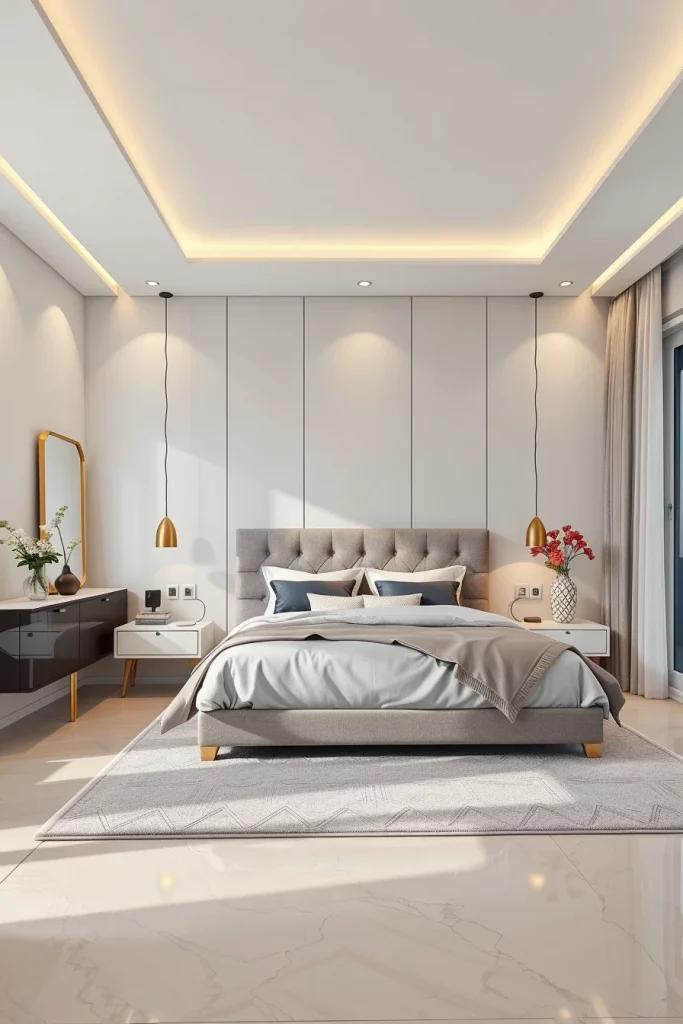
I generally pair floating nightstands with integrated drawers, concealed charging stations, slim table lamps, decorative trays, books, ceramic vases, and simple artwork positioned above them. Matching finishes between the nightstands, bed frame, and wardrobe help unify the entire room without creating unnecessary visual complexity.
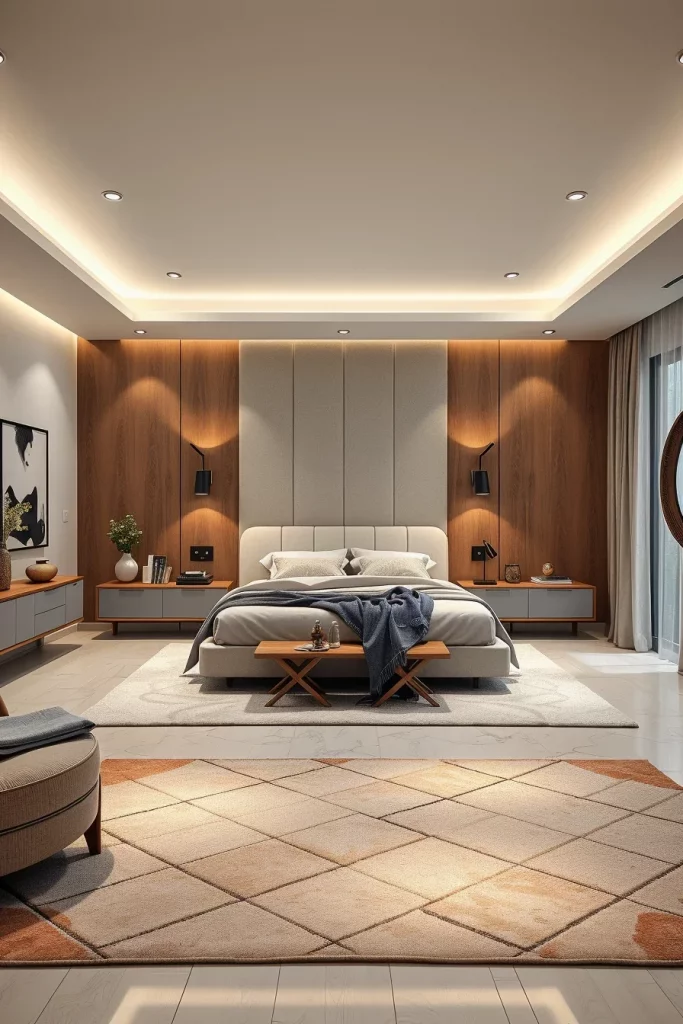
From my experience, floating furniture also simplifies cleaning since robotic vacuums and traditional cleaning tools can easily reach beneath the cabinets. Many contemporary designers continue recommending wall-mounted furniture because it combines practicality with sophisticated aesthetics.
To enhance this section further, I would add concealed cable management, built-in USB charging, soft-close hardware, and subtle under-cabinet LED lighting that gently illuminates the floor during nighttime.
Sculptural Pendant Lights As Bedroom Focal Points
Sculptural pendant lights have become one of my favorite ways to introduce personality into a modern bedroom without relying on excessive decoration. Rather than treating lighting as a purely functional feature, I like to use it as an artistic element that immediately draws attention. Soft organic shapes, geometric silhouettes, and oversized pendants create visual balance while emphasizing the height of the room. Even during the daytime, these fixtures become architectural features that elevate the entire interior.
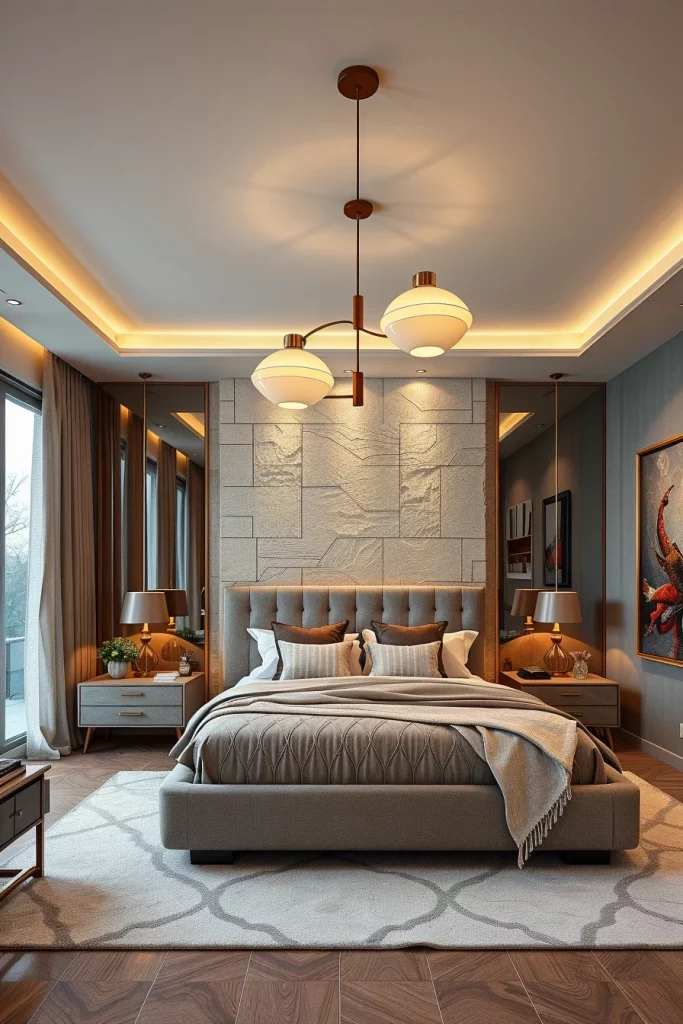
I usually install pendant lights above the nightstands instead of traditional table lamps. This keeps the bedside surfaces uncluttered while adding symmetry to the overall layout. I combine the lighting with upholstered beds, floating nightstands, textured walls, soft curtains, and carefully selected decorative accessories. Matte finishes in black, bronze, brushed brass, or soft white blend beautifully with contemporary furniture while maintaining a sophisticated appearance.
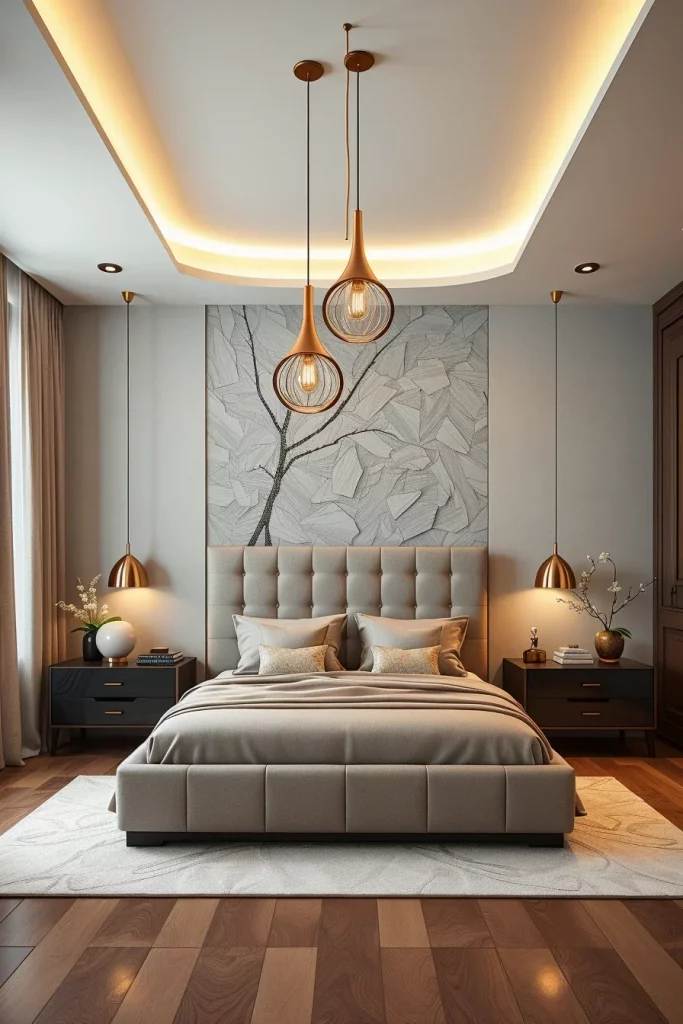
Many interior designers featured by Elle Decor and Architectural Digest highlight statement lighting as one of the easiest ways to personalize a modern bedroom. I agree because a thoughtfully selected pendant light can completely transform the atmosphere without requiring a major renovation or expensive redesign.
To make this concept even stronger, I would also add dimmable controls, layered ambient lighting, and decorative ceiling details that naturally frame the sculptural fixture while keeping the room warm and inviting.
Soft Linen Bedding For Everyday Comfort
Soft linen bedding is one of the simplest upgrades I recommend because it combines timeless style with exceptional comfort. I appreciate how natural linen develops more character over time while remaining breathable throughout every season. Instead of creating an overly formal appearance, linen gives the bedroom a relaxed elegance that perfectly complements modern interiors.
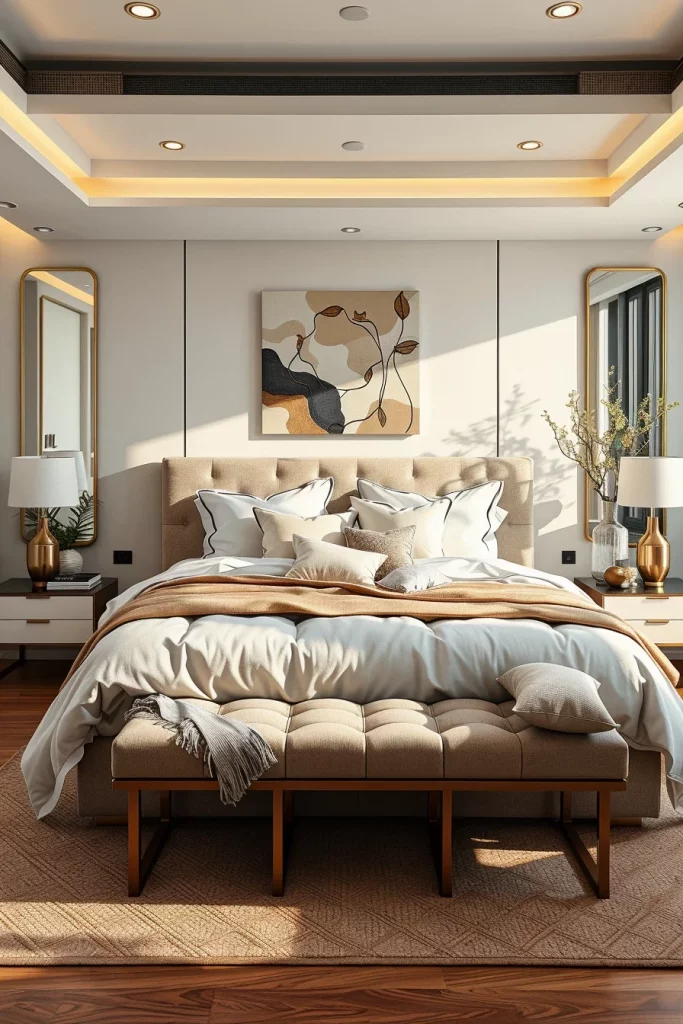
I prefer layering a linen duvet cover with matching pillowcases, oversized cushions, lightweight throws, and a textured blanket placed neatly across the foot of the bed. Neutral tones such as ivory, sand, warm gray, and oatmeal create a peaceful environment, while subtle variations in texture make the bed feel luxurious without appearing overly styled. High-quality bedding also improves everyday comfort, making the room feel welcoming from morning until night.
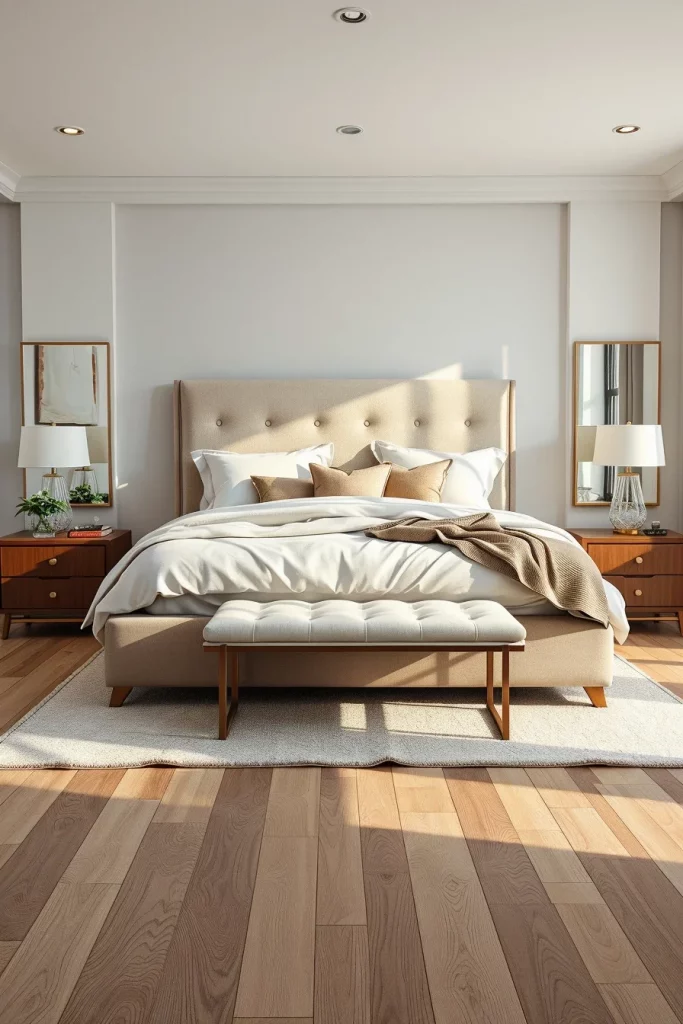
Sleep specialists often emphasize that breathable natural fabrics help regulate temperature more effectively than many synthetic alternatives. I have found that investing in quality bedding improves both the appearance of the bedroom and the overall sleeping experience, making it one of the most worthwhile décor upgrades.
I would complete this section by adding decorative euro pillows, a handcrafted throw, elegant bedside accessories, and a large upholstered bench that provides both storage and a convenient place to organize bedding.
Accent Walls With Contemporary Finishes
A contemporary accent wall can dramatically change the character of a bedroom while preserving the simplicity that defines modern design. I prefer finishes that add depth through texture instead of relying on bold colors. Wood slat panels, limewash paint, textured plaster, decorative wall panels, and oversized stone-look surfaces all create visual interest while maintaining a calm atmosphere.
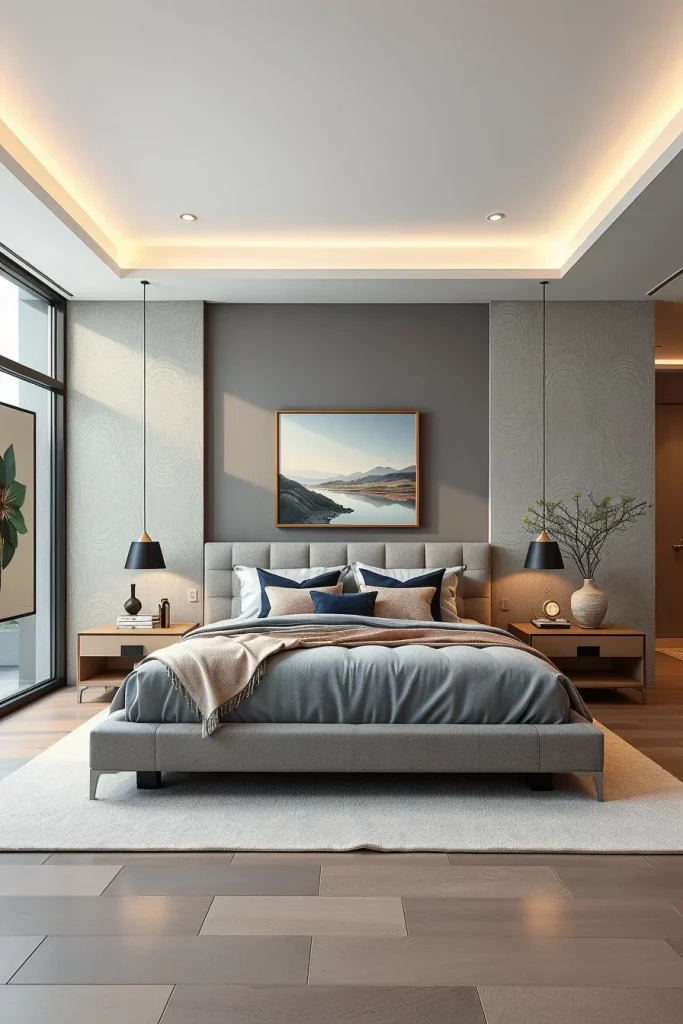
When designing around an accent wall, I keep the surrounding furniture intentionally restrained. An upholstered bed, floating nightstands, minimalist artwork, elegant lighting, and subtle decorative objects allow the wall to remain the visual centerpiece. I also pay close attention to proportion so the feature wall complements the room rather than overwhelming it.
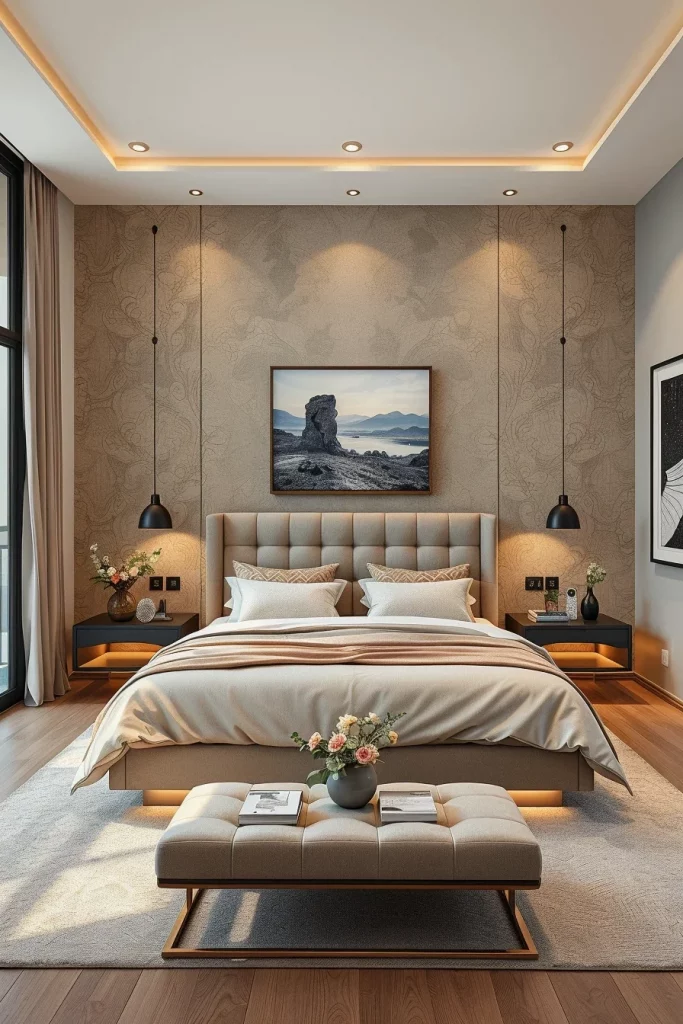
Many professional designers recommend emphasizing texture instead of excessive ornamentation in contemporary interiors. I have consistently seen that textured finishes create a more sophisticated appearance while remaining timeless enough to avoid frequent updates.
To enhance the overall design, I would incorporate concealed LED lighting, oversized artwork, integrated shelving, or decorative wall niches that highlight the architectural qualities of the accent wall.
Large Area Rugs That Add Warmth And Balance
A generously sized area rug is one of the finishing details that can completely transform a modern bedroom. I always recommend choosing a rug large enough to extend well beyond both sides of the bed because it visually anchors the furniture while adding softness underfoot. A properly sized rug creates balance, defines the sleeping area, and makes the room feel significantly more cohesive.
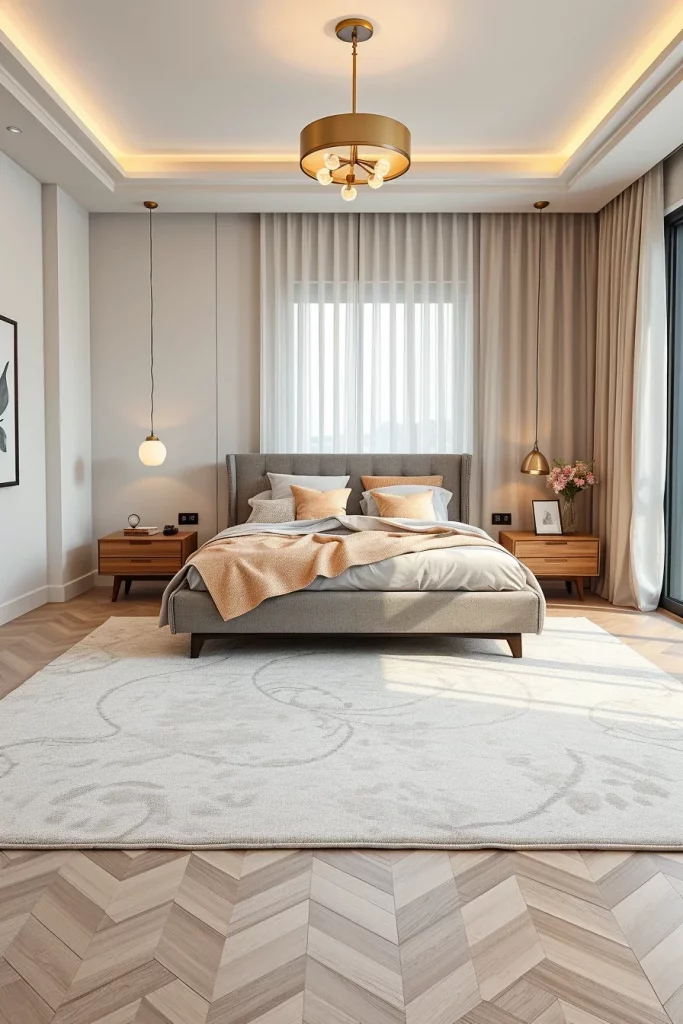
I usually select rugs with subtle textures, low patterns, or solid neutral colors that complement the bedding and surrounding furniture. Wool, wool blends, and premium synthetic fibers provide durability while maintaining a comfortable feel. The rug should extend beneath the bed, nightstands, and bench whenever possible to establish a unified layout throughout the room.
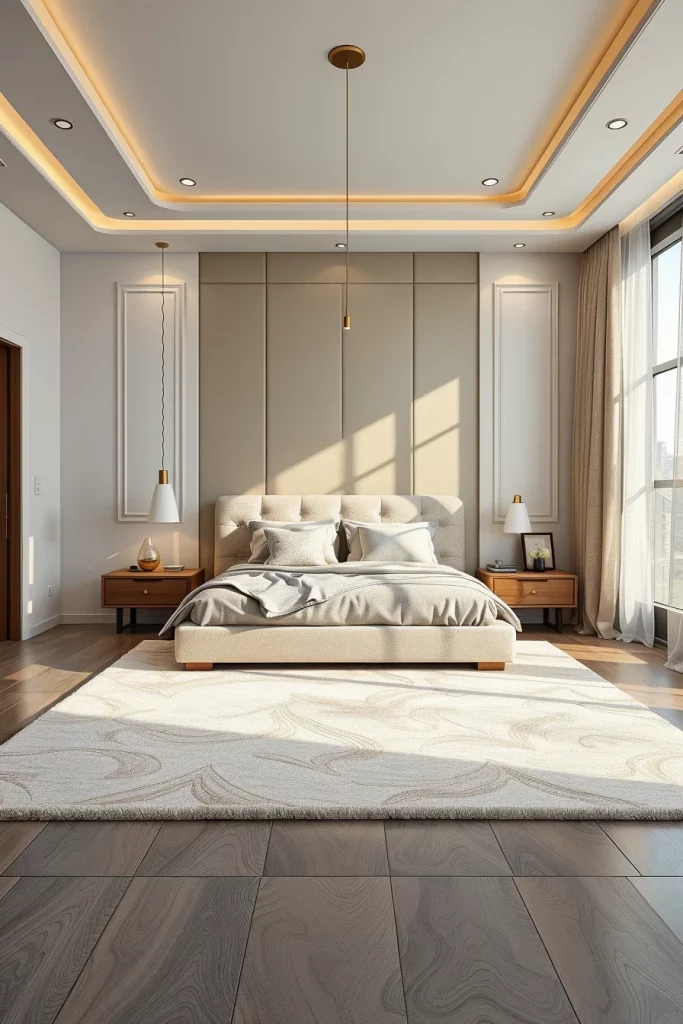
Interior designers frequently note that one oversized rug creates a more luxurious appearance than several smaller rugs scattered throughout the space. From my experience, this single decision can make the bedroom appear both larger and more carefully designed.
To complete this arrangement, I would introduce coordinated curtains, layered bedding, sculptural lighting, and decorative seating that reinforce the warm, welcoming atmosphere created by the large area rug.
Minimalist Artwork That Completes A Contemporary Bedroom
Minimalist artwork provides the finishing touch that ties every element of a modern bedroom together. I believe artwork should support the atmosphere rather than dominate it, so I usually choose oversized abstract pieces, monochromatic photography, textured canvases, or simple line art. These selections introduce personality while preserving the clean aesthetic that modern interiors are known for.
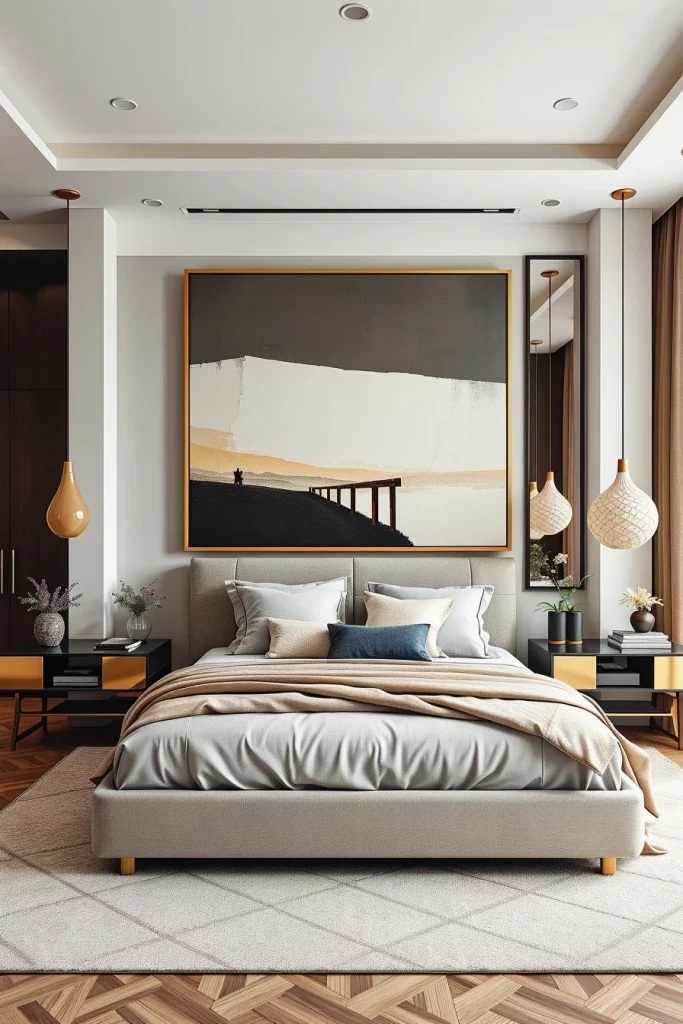
I carefully position artwork above the headboard, opposite the bed, or along adjacent walls where it naturally balances the furniture arrangement. Thin metal frames, floating canvas designs, and neutral color palettes coordinate beautifully with upholstered beds, elegant lighting, and contemporary accessories. Leaving generous wall space around each piece also allows the artwork to stand out without creating visual clutter.
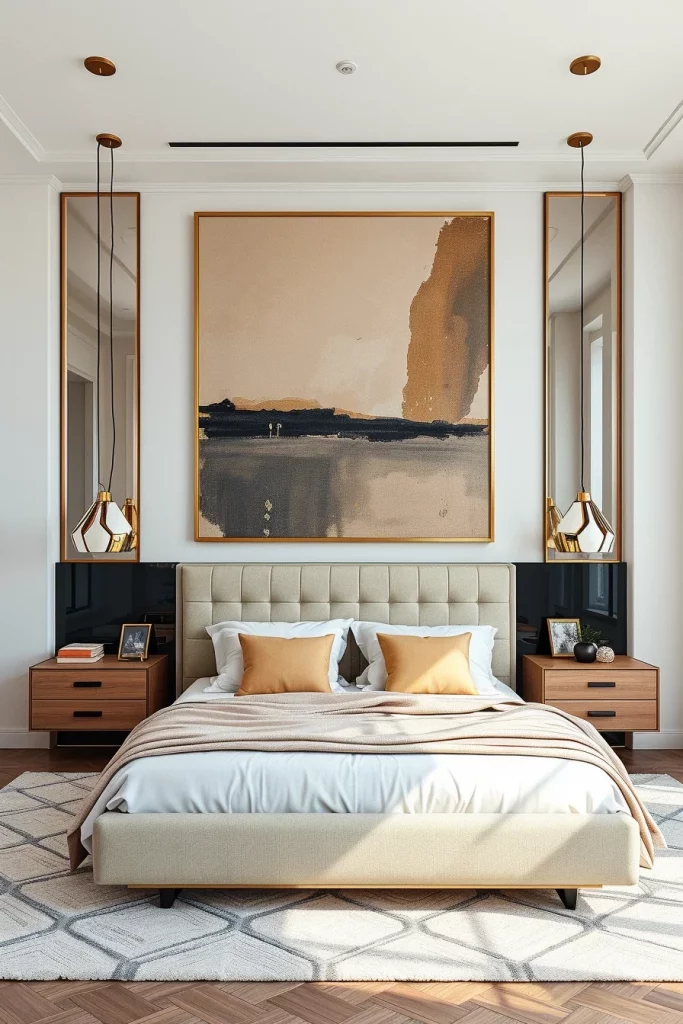
Many respected interior publications encourage homeowners to select artwork that reflects personal taste instead of following temporary trends. I share this perspective because meaningful pieces create interiors that remain enjoyable for years rather than a single decorating season.
I would also add sculptural ceramics, decorative books, elegant mirrors, and a few carefully chosen accessories that complement the artwork while maintaining the calm, sophisticated character of the bedroom.
Minimalist Furniture With Curved Silhouettes
When I design a modern bedroom, I often begin with furniture that features soft curved silhouettes because it immediately makes the room feel more welcoming. Rounded bed frames, curved nightstands, and gently shaped dressers reduce the harsh appearance created by sharp edges while maintaining a clean contemporary aesthetic. I find that this approach creates better visual flow and makes even compact bedrooms appear more spacious and comfortable.
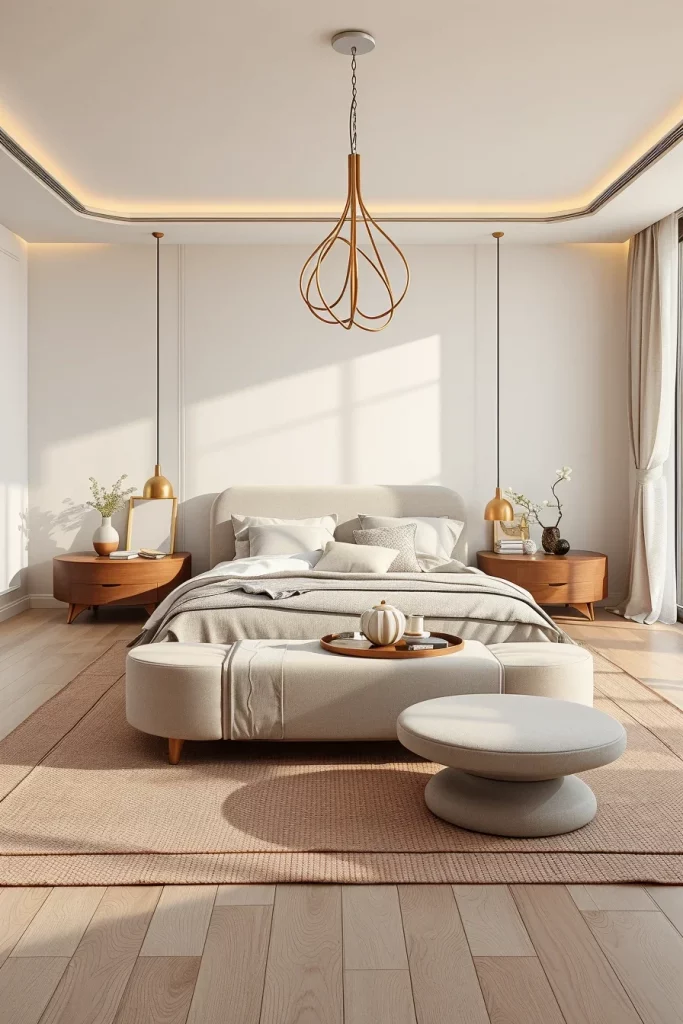
I usually recommend an upholstered platform bed with rounded corners, floating bedside tables, a low-profile dresser, and a curved bench placed at the foot of the bed. These pieces create balance while leaving generous walking space throughout the room. A sculptural pendant light, textured area rug, and subtle decorative accessories complete the design without overwhelming the minimalist concept.
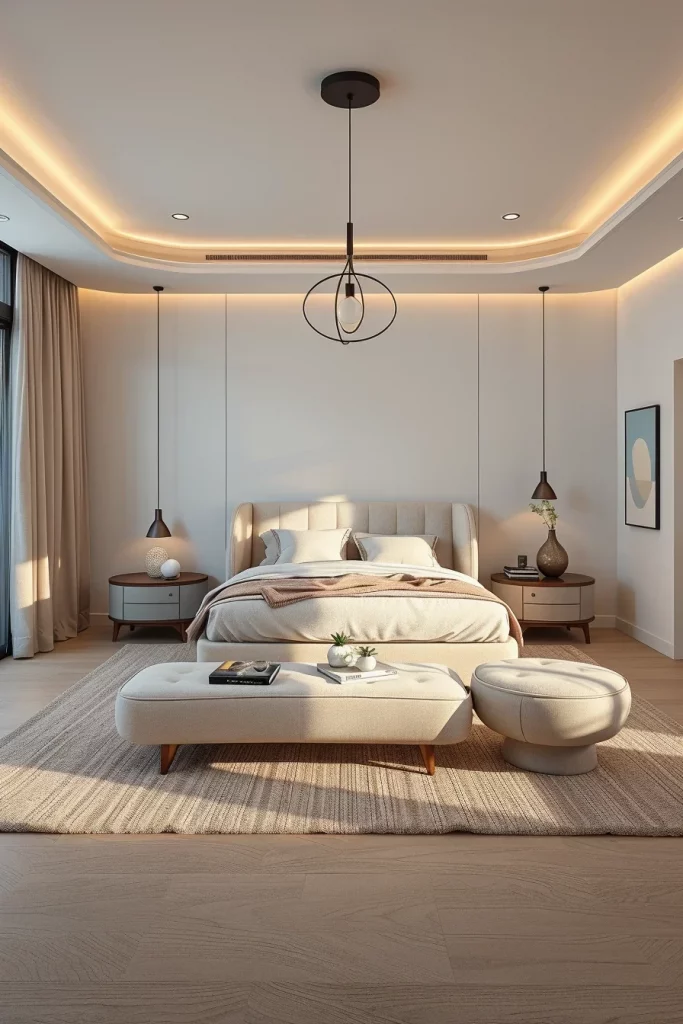
From my experience, many interior designers featured by Architectural Digest have emphasized that curved furniture helps soften modern interiors and introduces a sense of comfort without sacrificing sophistication. I have found this advice especially useful when decorating bedrooms because softness naturally supports a more relaxing atmosphere.
To complete this design, I would also add concealed LED lighting behind the headboard, linen bedding in neutral shades, a simple ceramic vase, and a large textured rug to introduce additional warmth while preserving the uncluttered appearance.
Floor Mirrors That Expand Visual Space
One of the easiest ways I improve a modern bedroom is by incorporating a large floor mirror that visually doubles the available space. A full-length mirror reflects natural light, brightens darker corners, and creates the illusion of greater depth. This solution works equally well in compact bedrooms and spacious primary suites.
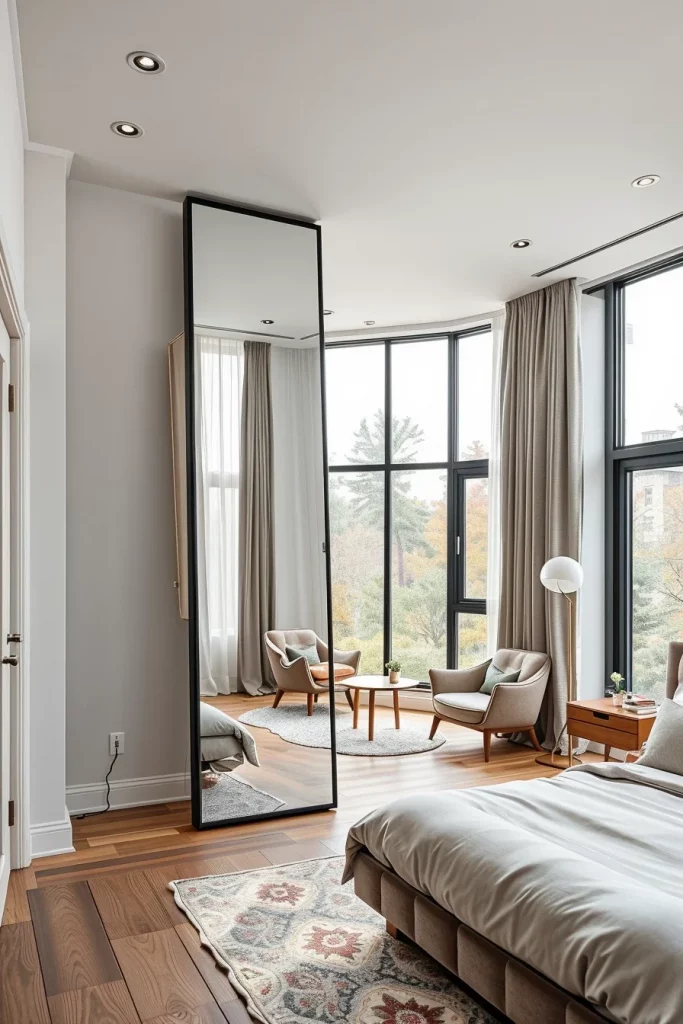
I prefer oversized mirrors with slim black, brushed metal, or natural wood frames positioned opposite a window whenever possible. Combined with layered curtains, modern lighting, and streamlined furniture, the reflection enhances every decorative detail without adding physical clutter. I also avoid placing too many decorative objects in front of the mirror so the reflection remains clean and calming.
Personally, I have noticed that designers frequently featured by House Beautiful recommend using oversized mirrors as functional design elements instead of treating them as simple accessories. I agree because they improve both practicality and visual balance at the same time.
I would finish this arrangement with a soft reading chair beside the mirror, a minimalist floor lamp, subtle artwork nearby, and coordinated textiles that maintain continuity throughout the room.
Built-In Storage Solutions For A Clutter-Free Bedroom
I believe that thoughtful storage is one of the foundations of every successful modern bedroom. Built-in wardrobes, custom shelving, and integrated cabinetry maximize every available inch while eliminating visual distractions. The result is a bedroom that feels calm, organized, and significantly more relaxing.
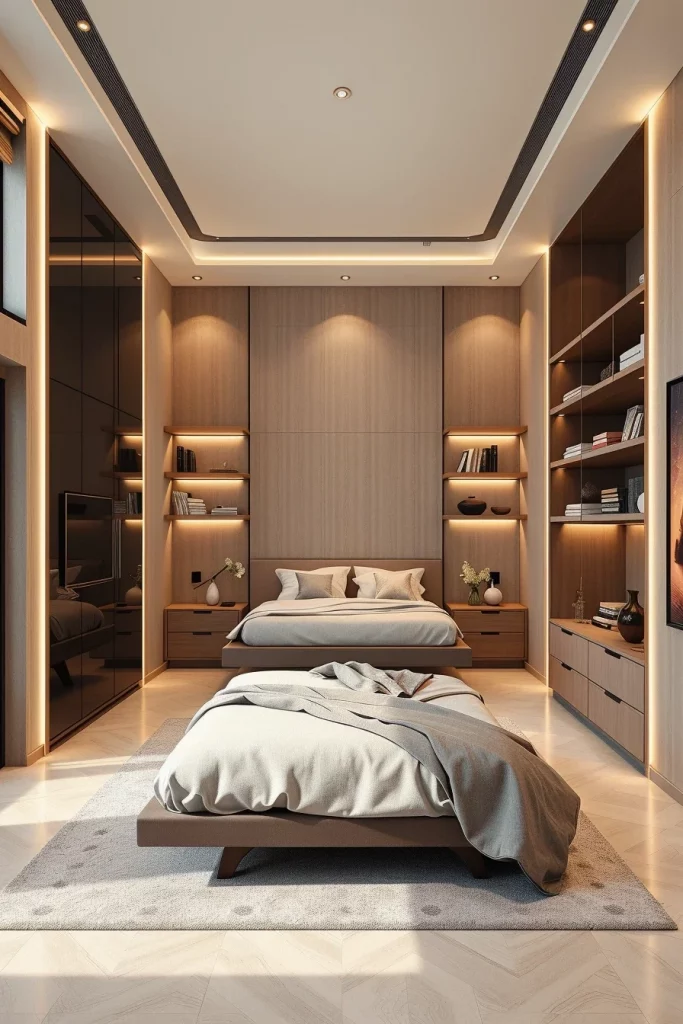
I usually incorporate floor-to-ceiling wardrobes with flat-panel doors, hidden drawer systems beneath the bed, floating shelves, and integrated bedside storage. These solutions keep clothing, books, electronics, and personal belongings neatly organized while preserving the simplicity that defines contemporary interiors. Push-to-open hardware further strengthens the clean appearance.
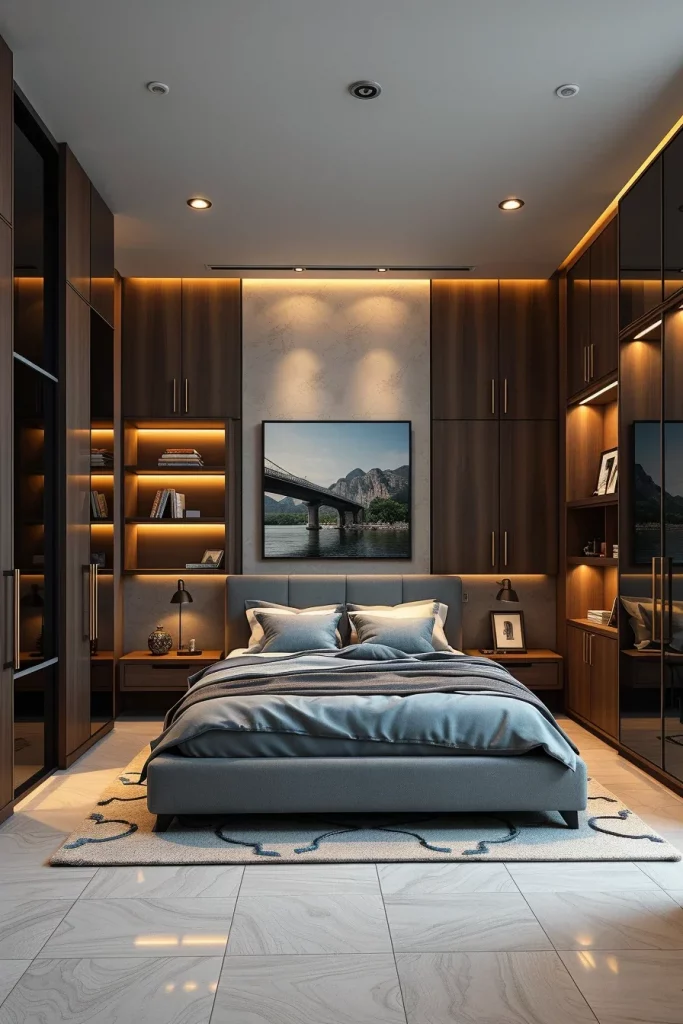
In my own projects, I have learned that organization contributes just as much to beautiful design as furniture selection. Professional organizers and interior experts often point out that reducing visible clutter improves both daily routines and overall comfort, and I have consistently found this to be true.
To complete this storage-focused bedroom, I would include integrated wardrobe lighting, labeled storage boxes, concealed charging stations, and decorative open shelving with only a few carefully selected accessories.
Natural Wood Accents In Modern Bedroom Decor
Natural wood introduces warmth that balances the sleek lines commonly found in modern interiors. I enjoy combining smooth architectural finishes with oak, walnut, or ash details because the contrast creates an inviting atmosphere without making the bedroom feel overly traditional. Wood also brings subtle texture that enriches minimalist spaces.
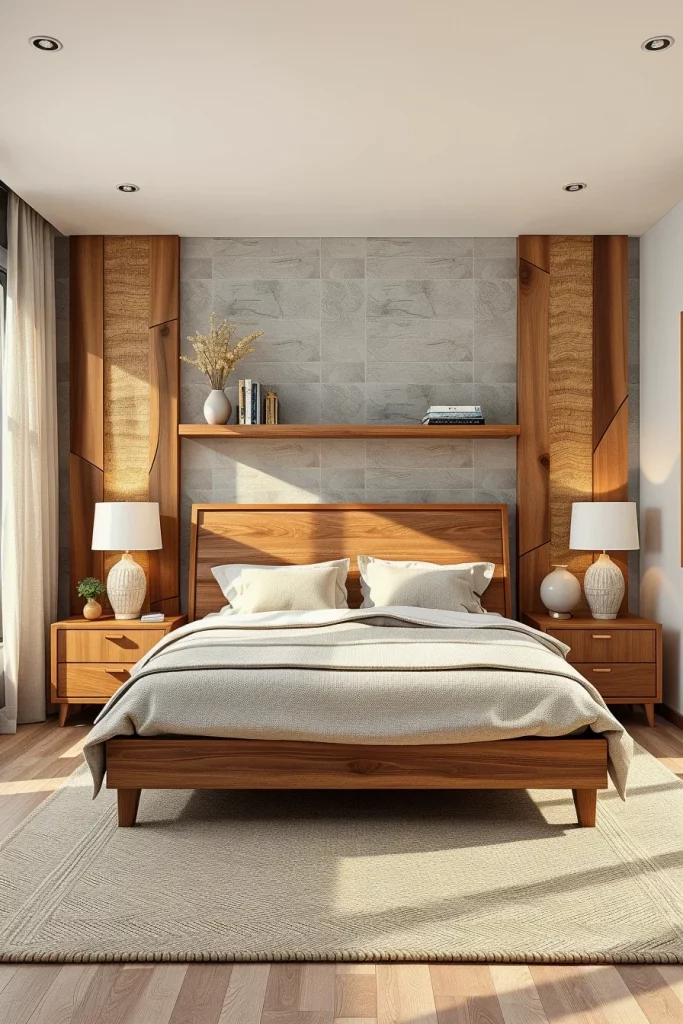
I often use a wooden headboard, matching nightstands, floating shelves, ceiling beams when appropriate, and decorative wood wall panels behind the bed. These elements pair beautifully with soft textiles, neutral bedding, matte finishes, and understated lighting. The result feels elegant, comfortable, and visually balanced.
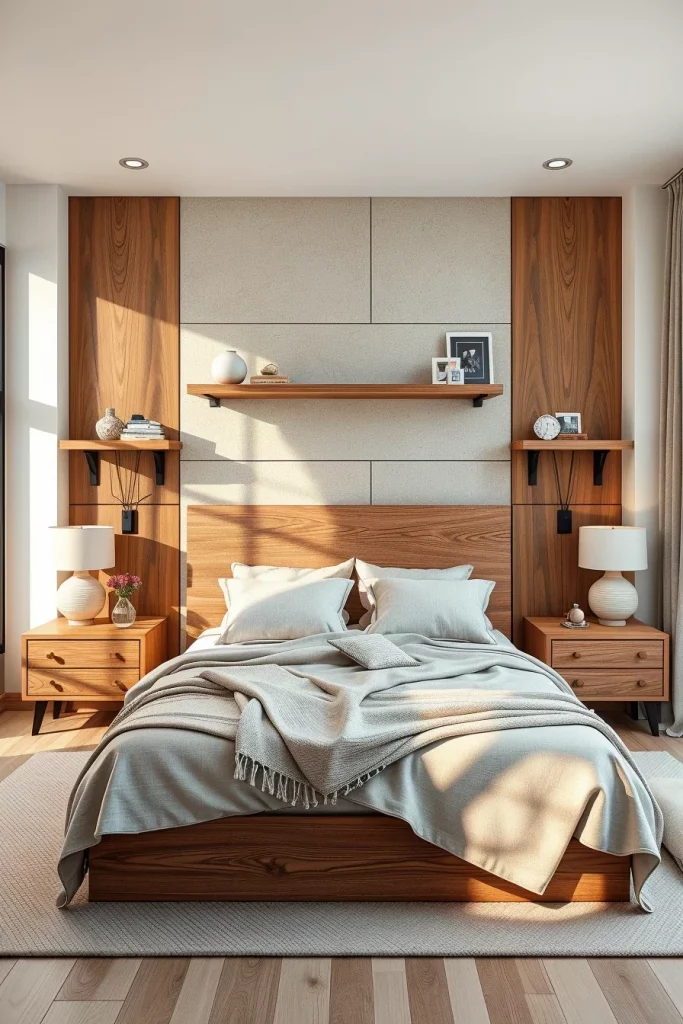
I have followed recommendations from respected designers who frequently emphasize mixing natural materials with contemporary forms to prevent modern interiors from feeling cold. In my experience, wood remains one of the most reliable materials for achieving that balance.
I would enhance this room further by adding woven baskets, ceramic table lamps, linen curtains, and a textured wool rug that complements the natural grain of the wood.
Black Details That Create Sophisticated Contrast
I often use black accents strategically because they introduce definition without dominating the bedroom. Small amounts of black create visual structure and make lighter colors appear brighter. This contrast gives the room a polished appearance while preserving a peaceful atmosphere suitable for rest.
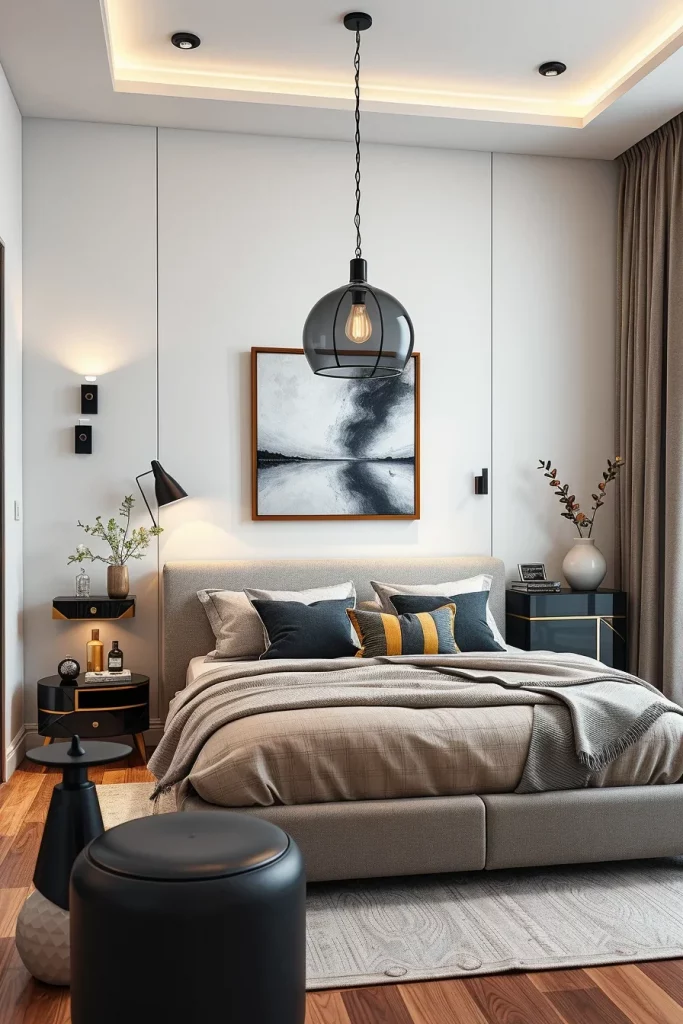
My preferred approach includes black wall sconces, slim picture frames, modern cabinet handles, curtain rods, pendant lighting, and a minimalist bed frame paired with soft neutral bedding. These carefully distributed accents tie the room together while maintaining harmony with lighter furniture and finishes.
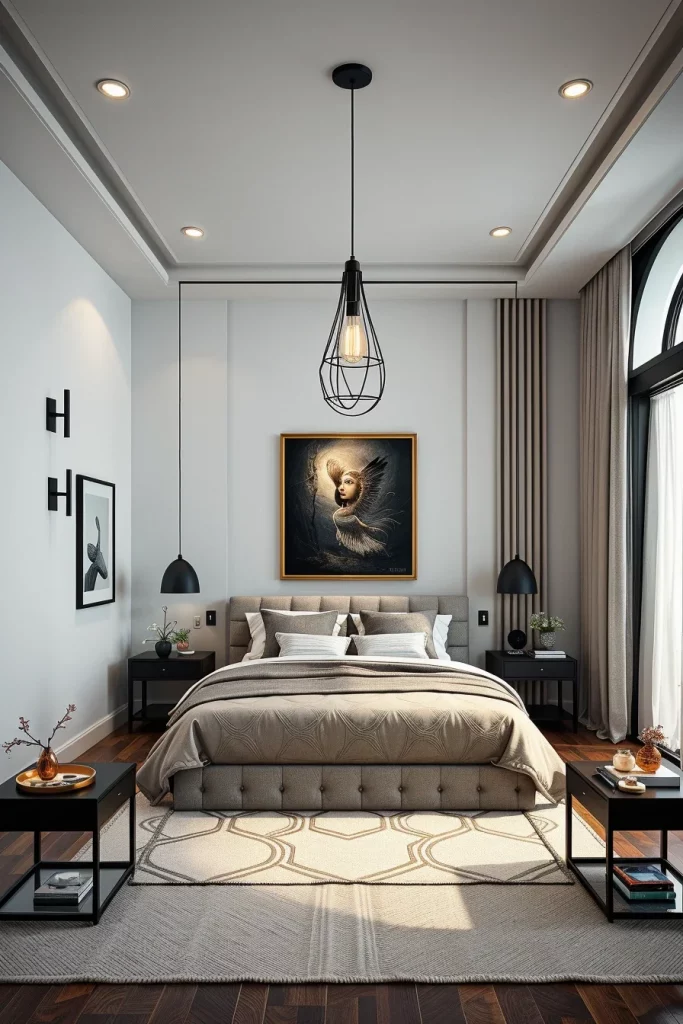
From my perspective, many contemporary designers successfully demonstrate that contrast should be intentional rather than excessive. I agree with this philosophy because restrained use of black keeps the room timeless instead of following short-lived trends.
To finish this design, I would incorporate subtle metallic accessories, layered ambient lighting, textured fabrics, and one statement artwork that echoes the black accents throughout the bedroom.
Contemporary Window Treatments For A Polished Finish
When I update a modern bedroom, I always pay close attention to the window treatments because they influence both the appearance of the room and its everyday comfort. Floor-to-ceiling curtains, streamlined roller shades, or layered drapery create a clean architectural look while helping regulate natural light throughout the day. I find that carefully selected window coverings make the bedroom feel more refined and cohesive without drawing unnecessary attention away from the overall design.
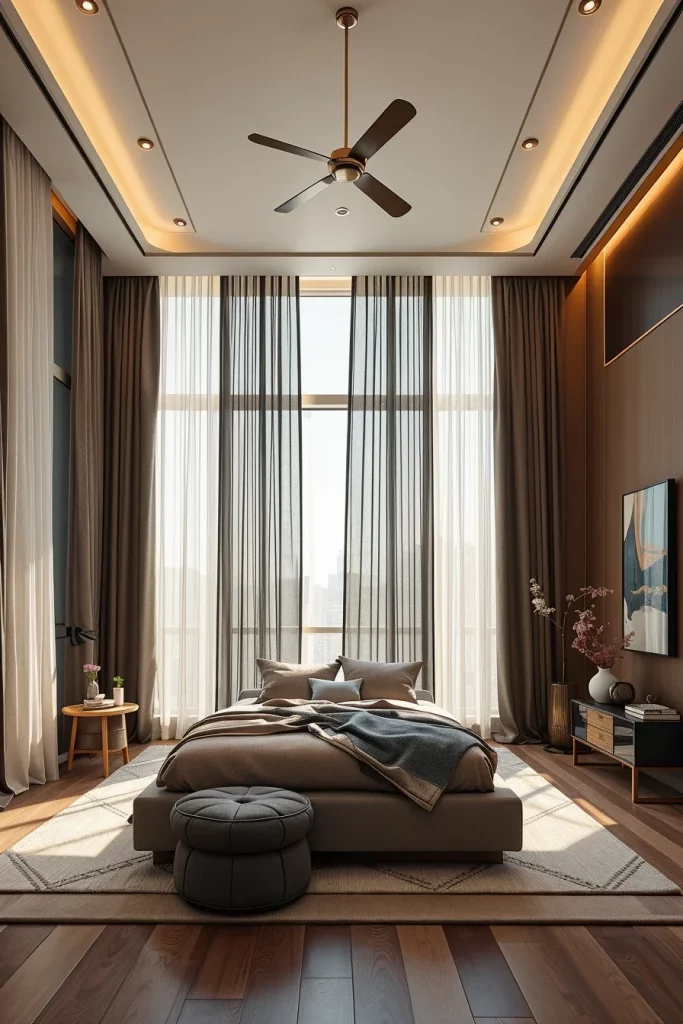
I usually combine sheer white curtains with blackout panels so the room remains bright during the day while offering complete privacy and darkness at night. Ceiling-mounted curtain tracks make the ceilings appear taller, and fabrics with soft texture add depth without introducing busy patterns. Neutral colors such as warm white, beige, soft gray, or taupe blend beautifully with modern furniture and create a relaxing atmosphere.
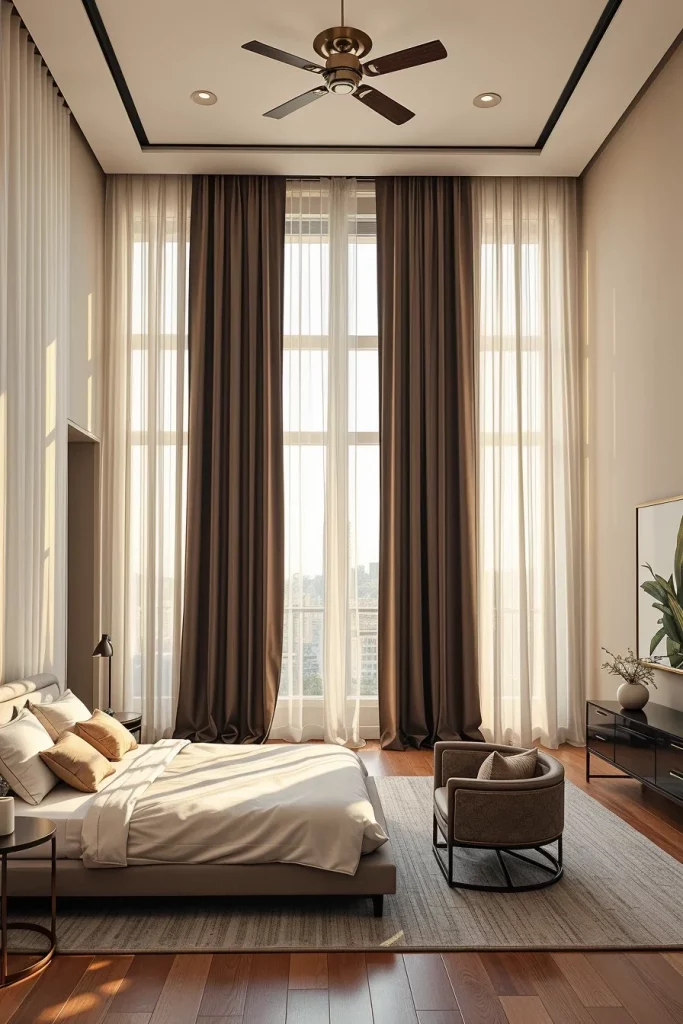
In my experience, designers frequently featured by Elle Decor recommend treating window coverings as an important design feature rather than an afterthought. I completely agree because properly selected curtains improve acoustics, soften natural light, and enhance the proportions of the room while maintaining a minimalist appearance.
To make this space feel even more complete, I would add discreet motorized curtain systems, layered ambient lighting near the windows, and simple decorative accessories that echo the color palette used throughout the bedroom.
Decorative Wall Art That Completes The Design
Wall art is one of the final elements I introduce because it gives personality to a modern bedroom without overwhelming the space. Instead of covering every wall, I prefer selecting one or two statement pieces that reinforce the room’s color palette and architectural style. Carefully chosen artwork creates a focal point while preserving the calm feeling that every bedroom should provide.
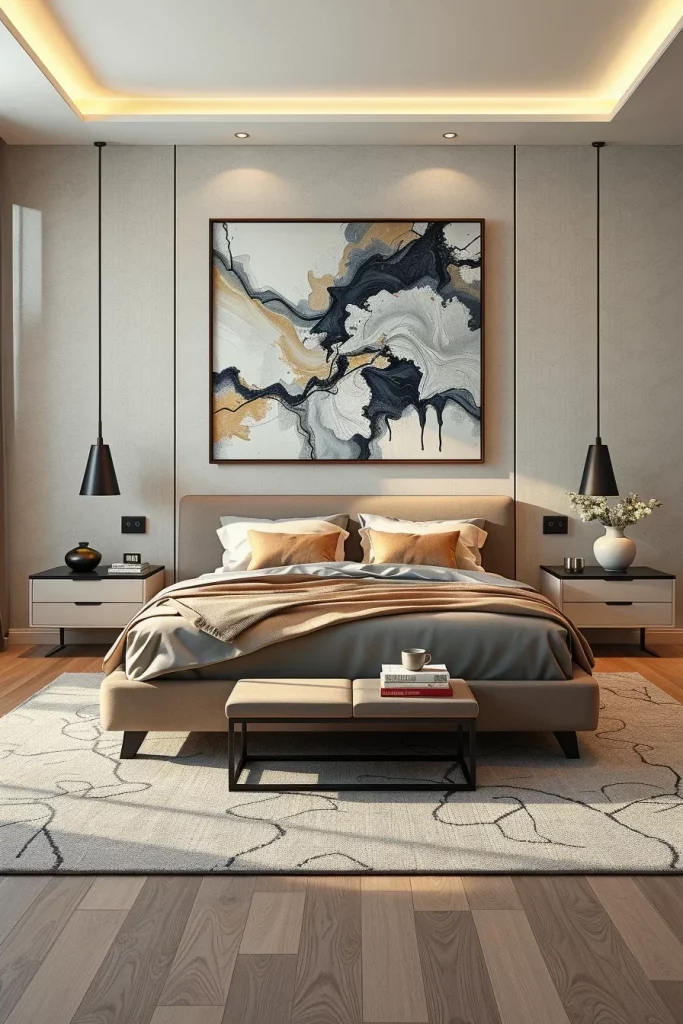
I often recommend oversized abstract paintings, minimalist black-and-white photography, textured canvas artwork, or sculptural wall panels positioned above the headboard. Slim frames, subtle lighting, and generous spacing around each piece allow the artwork to breathe while complementing the furniture instead of competing with it. This balanced approach makes the room feel thoughtfully curated.
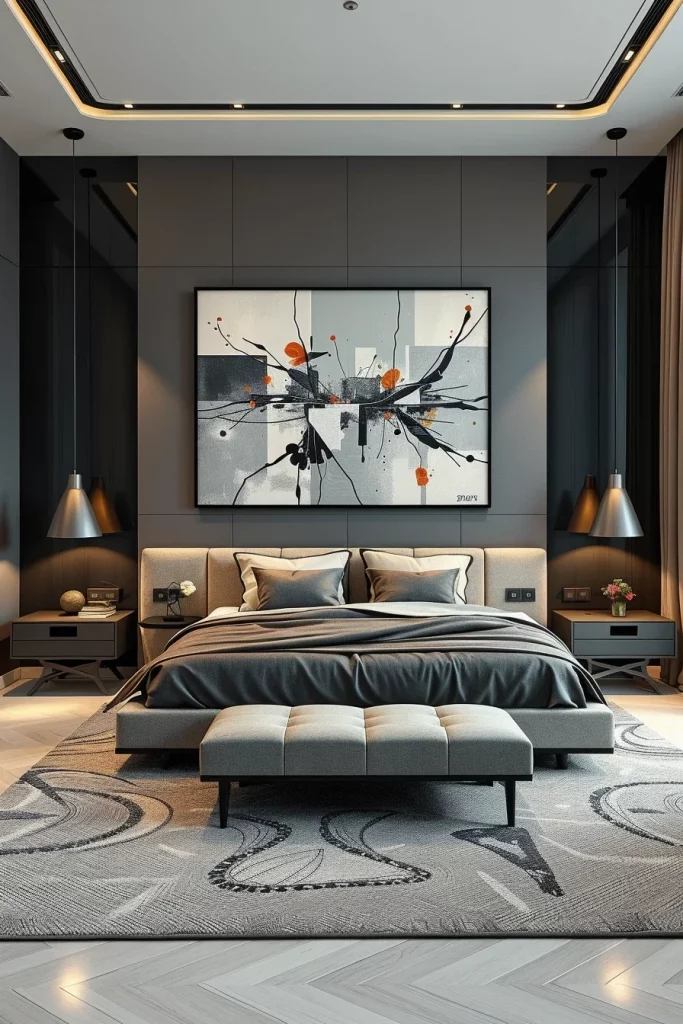
Personally, I have noticed that many respected interior designers encourage homeowners to choose artwork they genuinely enjoy rather than simply following trends. I think this advice is valuable because personal connection creates interiors that remain enjoyable for many years.
I would also include picture lighting, decorative molding where appropriate, and a consistent arrangement that aligns with the proportions of the bed and surrounding furniture.
Layered Throw Blankets And Designer Pillows
One of the simplest ways I create a luxurious modern bedroom is by layering textiles with different textures and subtle color variations. Even the cleanest contemporary room feels warmer when the bed is styled with carefully selected blankets and decorative pillows. I always aim for a balanced composition that feels inviting instead of excessive.
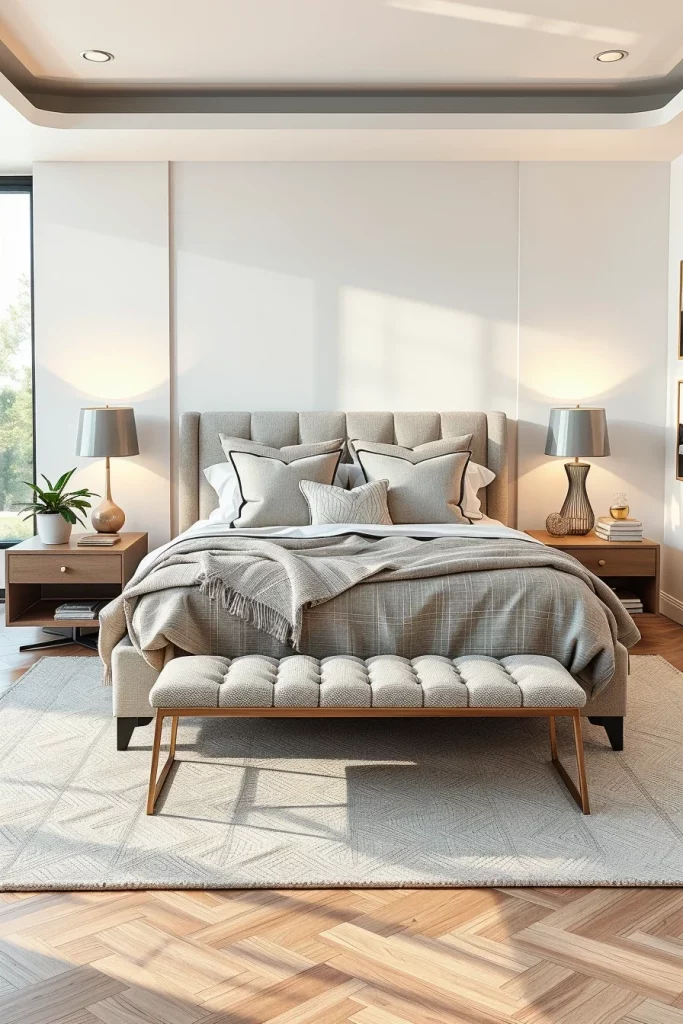
I typically begin with crisp bedding, followed by a textured quilt, a folded throw blanket placed across the foot of the bed, and several pillows in coordinated fabrics such as linen, velvet, boucle, or cotton. Mixing textures while keeping the palette restrained adds visual interest without making the bed appear cluttered. Decorative cushions in different sizes also introduce depth and softness.
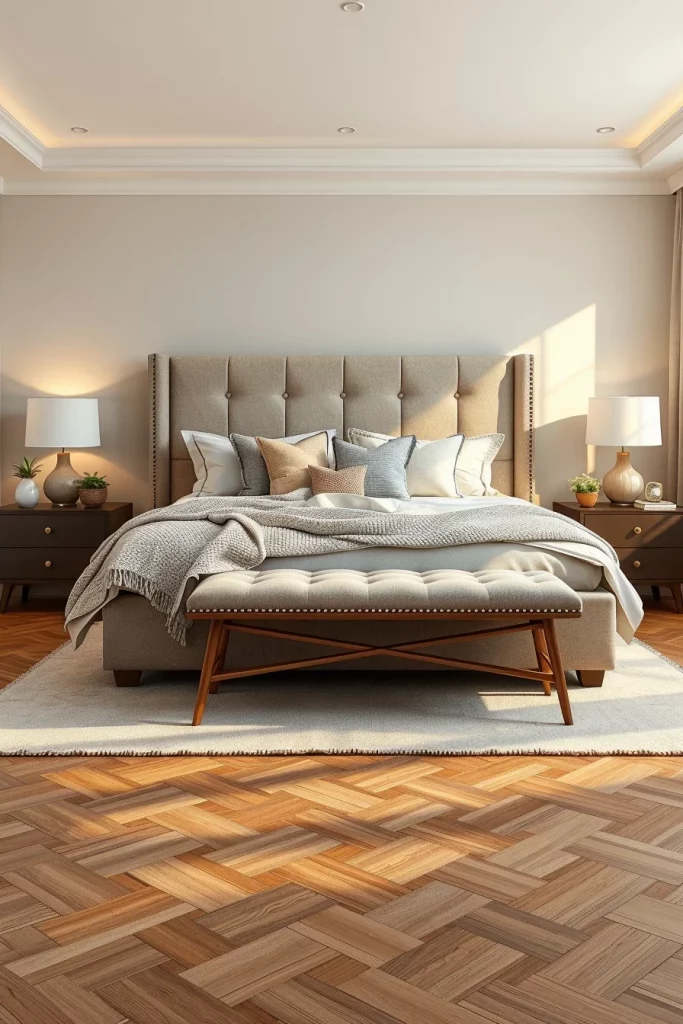
From my own experience, professionally styled bedrooms featured in leading design publications consistently rely on layered textiles to create comfort and sophistication. I appreciate this approach because it can refresh an existing bedroom without replacing major furniture pieces.
To complete this arrangement, I would add a plush area rug beside the bed, coordinated bedside lamps, and subtle decorative accessories that reinforce the bedroom’s calming atmosphere.
Indoor Greenery For A Fresh Bedroom Atmosphere
I enjoy incorporating indoor greenery because living plants introduce natural texture and freshness that beautifully complement modern interiors. Even a single carefully positioned plant can soften clean architectural lines while making the bedroom feel healthier and more inviting. I always choose species that are easy to maintain and appropriate for indoor conditions.
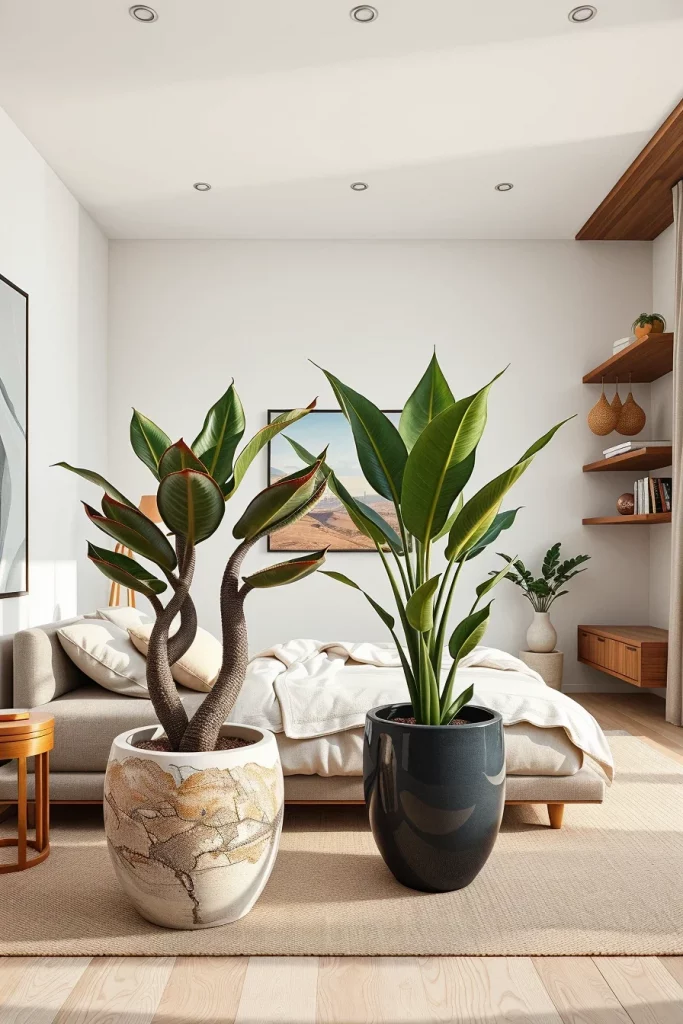
Some of my favorite choices include snake plants, ZZ plants, rubber plants, olive trees, and fiddle leaf figs placed in elegant ceramic or concrete planters. Smaller plants can be displayed on floating shelves or bedside tables, while taller varieties help define empty corners. Their organic shapes contrast naturally with streamlined furniture and simple decorative elements.
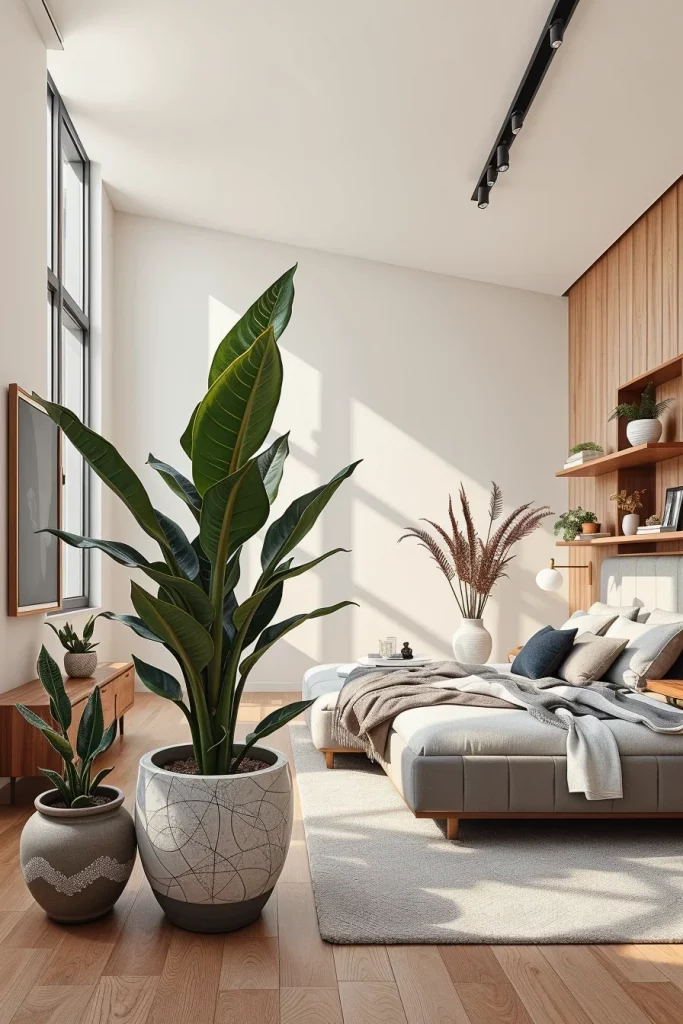
I have found that interior designers and wellness experts often recommend incorporating plants into living spaces because they visually connect interiors with nature and contribute to a calmer environment. In my experience, greenery consistently adds warmth without disrupting the minimalist aesthetic.
I would finish this design with woven baskets, natural fiber accessories, and carefully positioned accent lighting that highlights the foliage during the evening.
Modern Bedroom Seating Ideas For Extra Comfort
Whenever space allows, I like to include a dedicated seating area because it makes the bedroom more versatile and comfortable. A thoughtfully selected chair, bench, or compact loveseat creates a quiet place for reading, relaxing, or simply enjoying a peaceful moment away from the bed. This additional function transforms the bedroom into a complete personal retreat.
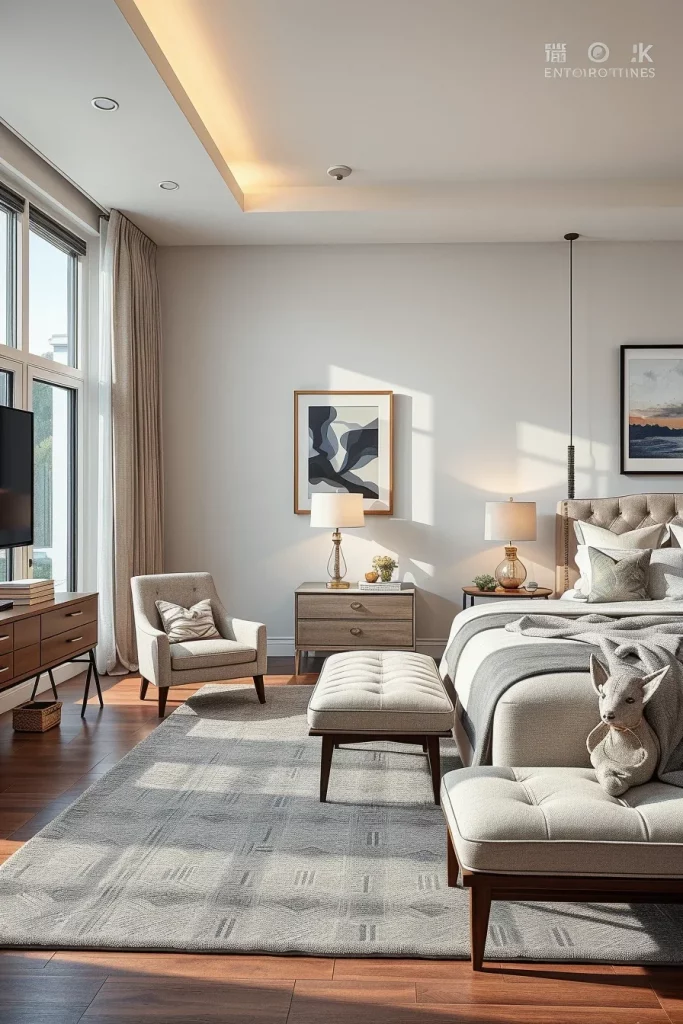
I often choose an upholstered accent chair with a small side table, a sculptural lounge chair, or a curved bench placed at the foot of the bed. These pieces should coordinate with the room’s materials and color palette while maintaining generous circulation space. A floor lamp, soft throw blanket, and decorative cushion complete the seating arrangement without making it feel crowded.
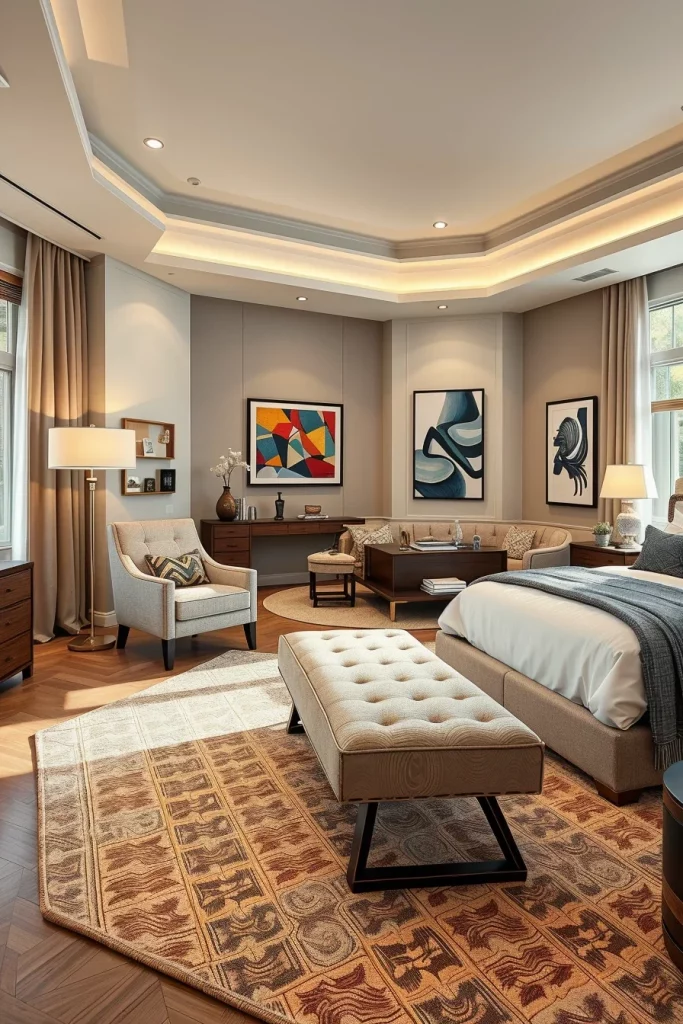
Personally, I believe that adding a seating area significantly increases the practicality of a modern bedroom. Many contemporary designers emphasize creating multifunctional spaces, and I have found this approach especially valuable for larger primary bedrooms where unused corners can become comfortable relaxation zones.
To complete this section, I would incorporate a textured area rug beneath the seating arrangement, layered lighting for reading, and a small decorative table that balances beauty with everyday functionality.
Glass And Metal Elements For A Refined Style
I often use glass and metal finishes when I want a bedroom to feel lighter without sacrificing sophistication. Clear glass bedside tables, smoked glass cabinet doors, slim black metal frames, and brushed brass accents help create visual openness while adding subtle contrast. Instead of overwhelming the room with decorative accessories, I focus on a few carefully selected materials that reflect natural light and make the entire bedroom appear more spacious and balanced.
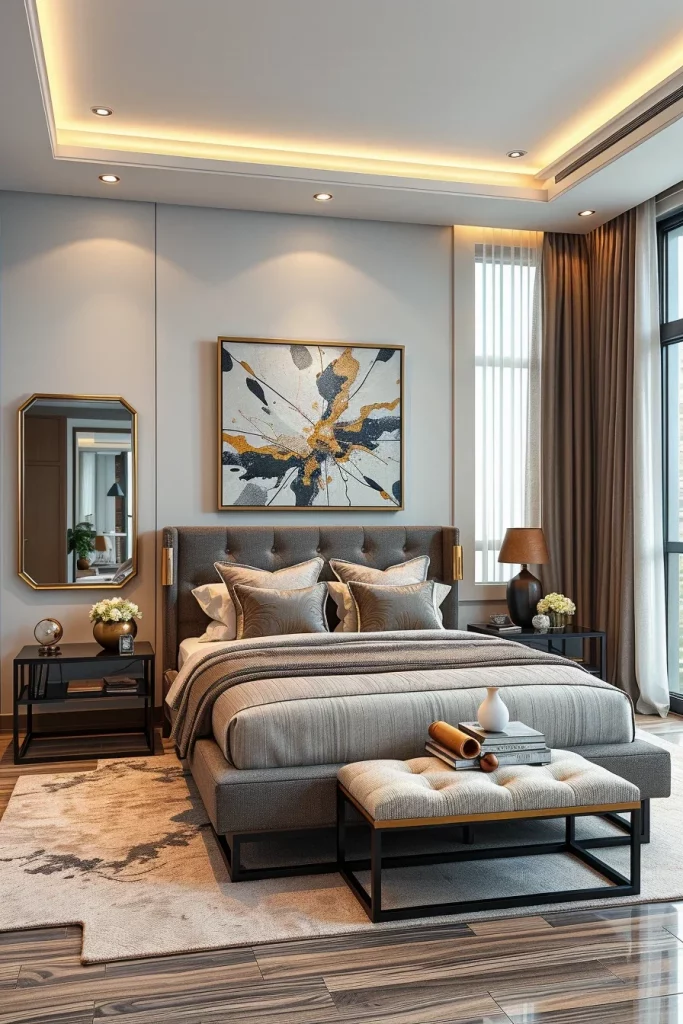
When selecting furniture, I combine an upholstered platform bed with minimalist metal nightstands, a glass pendant light, and a large frameless mirror. I also like incorporating wardrobes with tinted glass doors because they maintain a clean appearance while softening the overall composition. Decorative objects such as metallic table lamps, sculptural vases, and sleek drawer pulls add refinement without making the room feel busy.
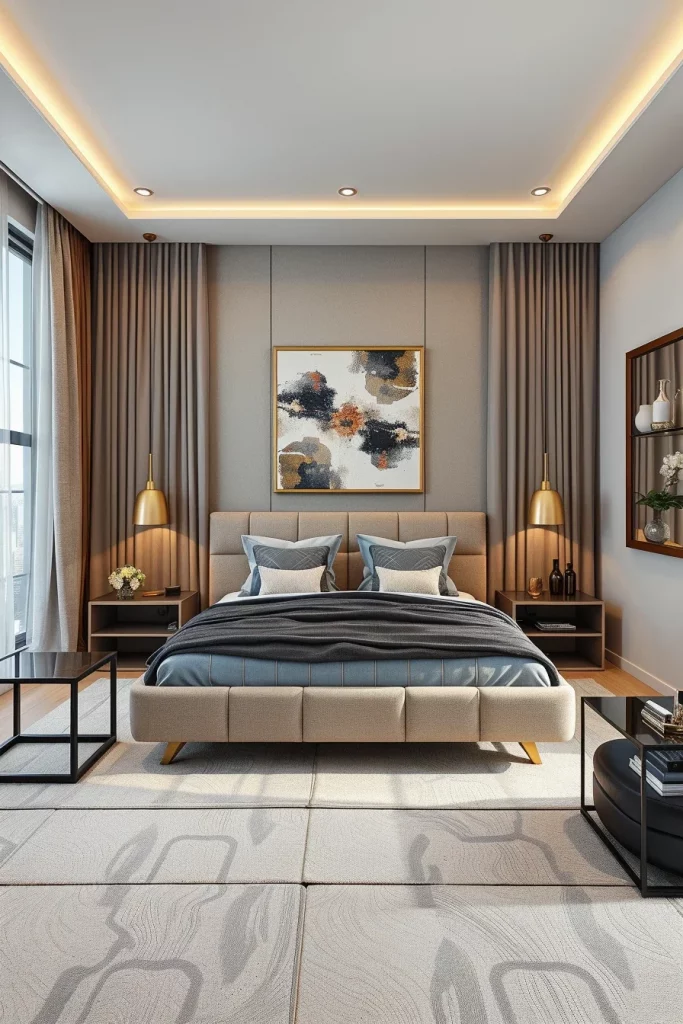
Many American interior designers recommend mixing warm metallic finishes with soft fabrics to prevent modern interiors from feeling cold. I have found this advice especially useful because linen bedding, textured throws, and soft rugs balance the reflective qualities of glass and metal. Publications such as Architectural Digest frequently highlight this combination as a timeless approach that remains elegant even as decorating trends evolve.
To complete this design, I would add layered ambient lighting, oversized curtains extending from ceiling to floor, and a large abstract artwork above the headboard. These finishing details help connect every element while giving the bedroom a polished designer appearance.
Smart Bedroom Technology With Seamless Design
I believe technology should improve comfort without becoming the center of attention. The most successful smart bedrooms hide advanced features behind clean architectural lines, allowing the room to remain peaceful while providing convenience. Integrated lighting, automated shades, wireless charging, and climate control systems all contribute to a comfortable daily routine without disrupting the minimalist atmosphere.
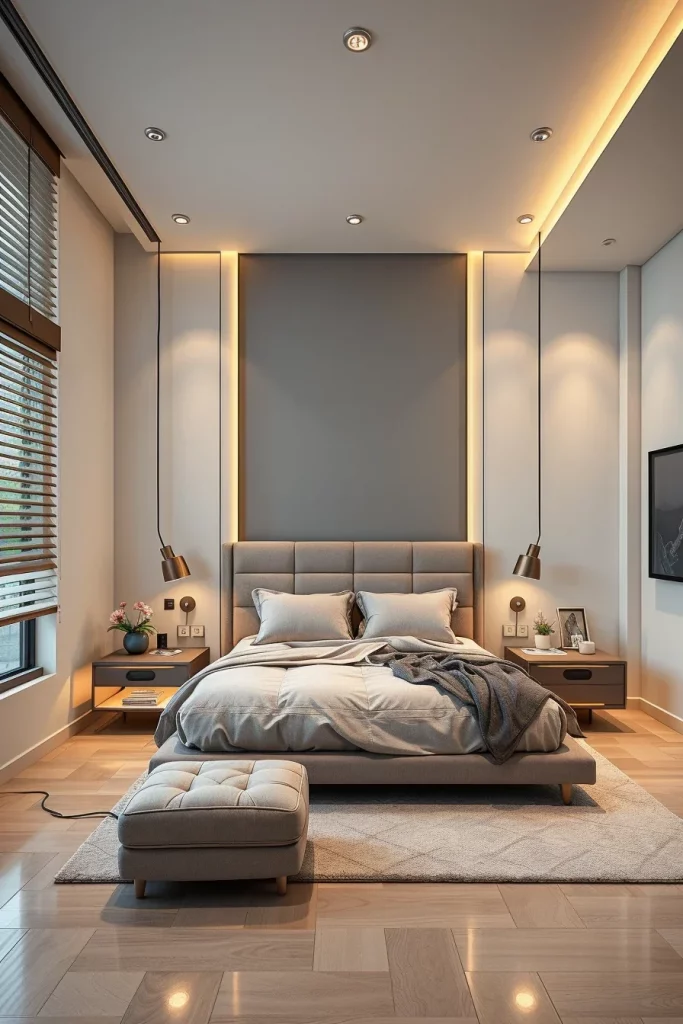
I usually recommend furniture that supports hidden technology, including floating nightstands with concealed charging stations, custom storage with cable management, and upholstered beds with integrated reading lights. Smart lighting scenes allow the room to transition naturally from morning brightness to relaxing evening illumination, while discreet speakers maintain the clean visual design.
From my experience, technology works best when every feature serves a practical purpose. Many experts featured in House Beautiful recommend choosing only the smart systems that genuinely improve everyday living instead of filling the room with unnecessary devices. I agree because thoughtful integration always looks more refined than visible gadgets scattered throughout the space.
I would also include hidden LED lighting beneath the bed frame, motion-activated wardrobe lighting, and programmable bedside controls that simplify nighttime routines while preserving the uncluttered appearance of the room.
Ceiling Design Ideas That Elevate The Space
The ceiling is often overlooked, yet I consider it one of the most effective surfaces for transforming a bedroom. A carefully designed ceiling adds architectural character and draws the eye upward, making the room feel larger and more sophisticated. Simple recessed details, soft curves, or subtle layered designs introduce depth without overwhelming the overall aesthetic.
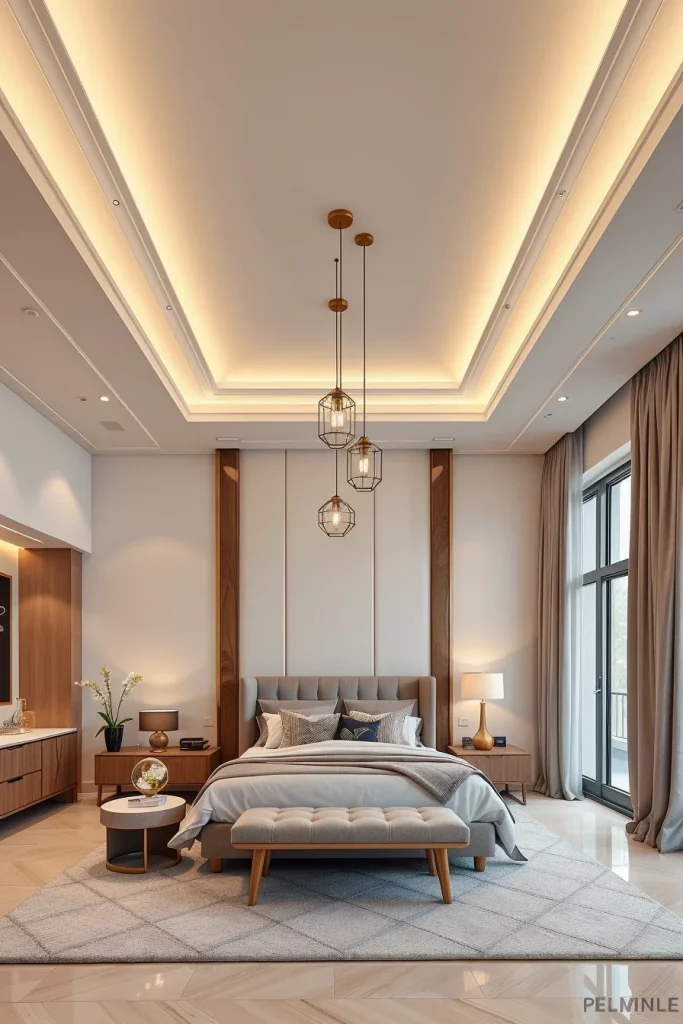
I like combining recessed LED lighting with clean ceiling lines that complement the proportions of the room. Slim ceiling beams, indirect cove lighting, and carefully positioned pendant fixtures create visual interest while maintaining a calm atmosphere. Every lighting element should contribute to both functionality and architectural beauty.
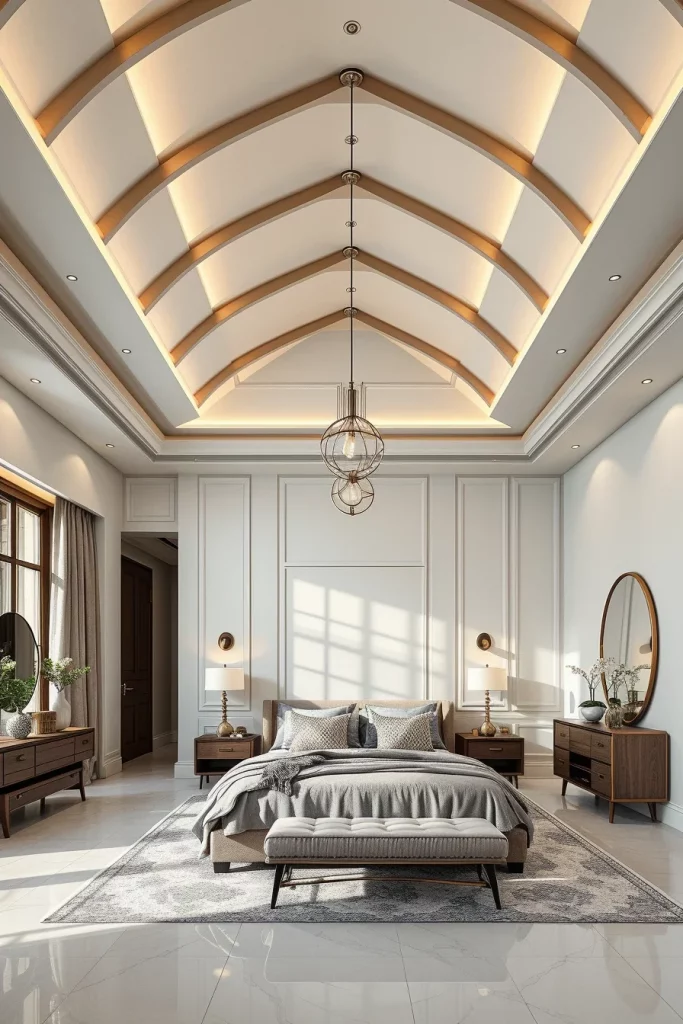
Personally, I have noticed that thoughtfully designed ceilings create a stronger sense of luxury than many expensive decorative accessories. Interior designers frequently emphasize that balanced lighting is essential because it enhances every material, color, and texture throughout the bedroom. I consistently see how this principle improves the finished result.
To complete this ceiling concept, I would add dimmable lighting controls, carefully centered fixtures above the bed, and ceiling finishes that subtly reflect natural daylight throughout the room.
Boutique Hotel Inspired Bedroom Styling
Whenever I want to create a relaxing retreat, I study the details that define exceptional boutique hotels. Their bedrooms feel welcoming because every piece serves a purpose while contributing to a carefully coordinated atmosphere. Rather than filling the room with excessive decoration, I focus on quality materials, thoughtful lighting, and balanced proportions that encourage rest.
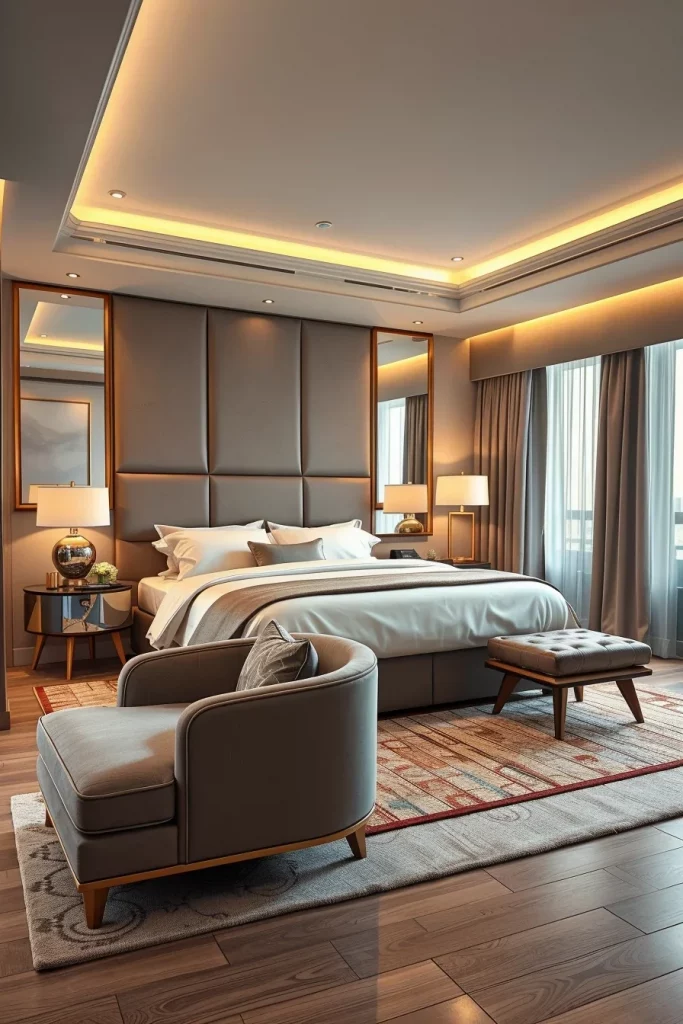
I usually begin with a generously upholstered bed, oversized headboard, premium bedding, matching nightstands, and elegant accent seating. Layered lighting, blackout curtains, decorative pillows, and textured throws help recreate the inviting comfort associated with luxury hospitality. Large area rugs also soften the room while defining the sleeping area.
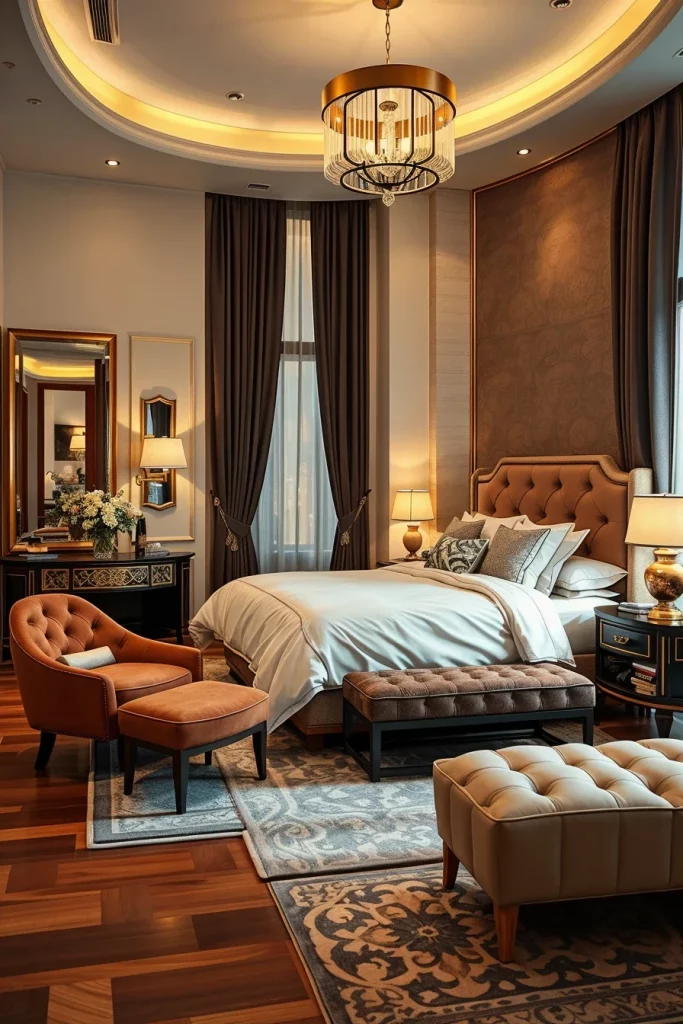
Many hospitality designers recommend investing in fewer but higher-quality furnishings, and I completely agree with this philosophy. Publications including Elle Decor often highlight boutique hotels that prioritize craftsmanship, comfort, and understated elegance instead of excessive ornamentation. I believe homeowners benefit from applying the same principles.
To make this bedroom feel even more complete, I would introduce a comfortable reading corner, curated artwork, a subtle fragrance diffuser, and carefully selected decorative accessories that reflect the homeowner’s personality without creating visual clutter.
Monochrome Bedroom Designs With Modern Appeal
A monochrome bedroom demonstrates that simplicity can still feel visually rich. I enjoy working with one dominant color while introducing subtle tonal differences that create depth throughout the space. Soft variations in gray, beige, taupe, charcoal, or warm white allow every architectural detail to stand out naturally without overwhelming the eye.
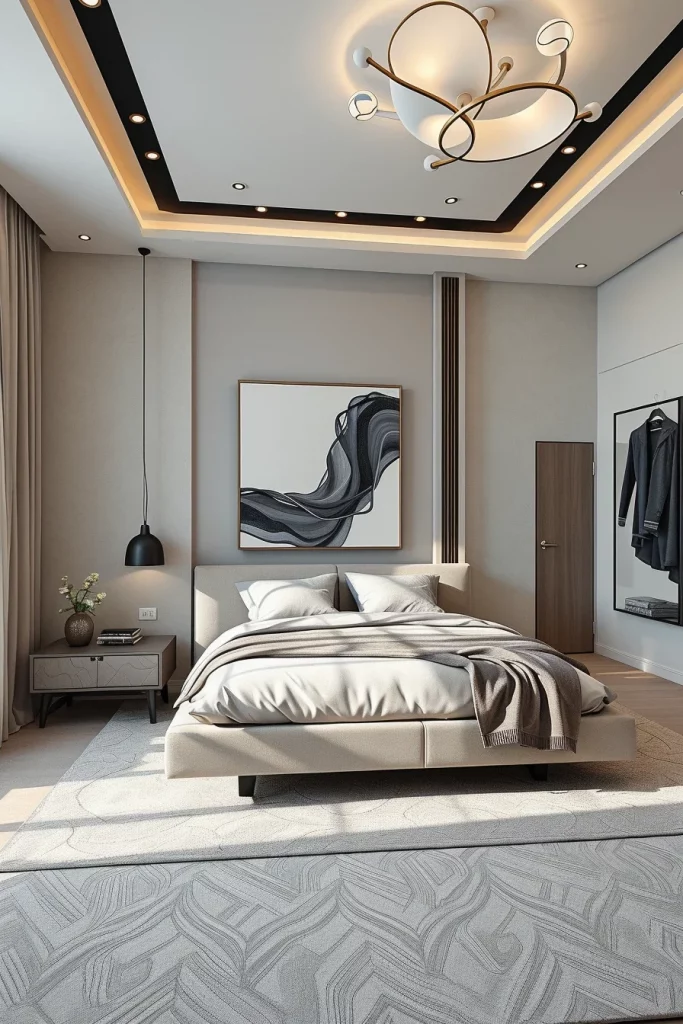
My preferred furniture includes a streamlined platform bed, floating nightstands, minimalist wardrobes, and clean-lined seating upholstered in coordinating fabrics. I combine matte finishes with polished accents, woven textiles, soft bedding, and sculptural lighting so the room feels layered despite the restrained color palette. Texture becomes the defining design element rather than bold color.
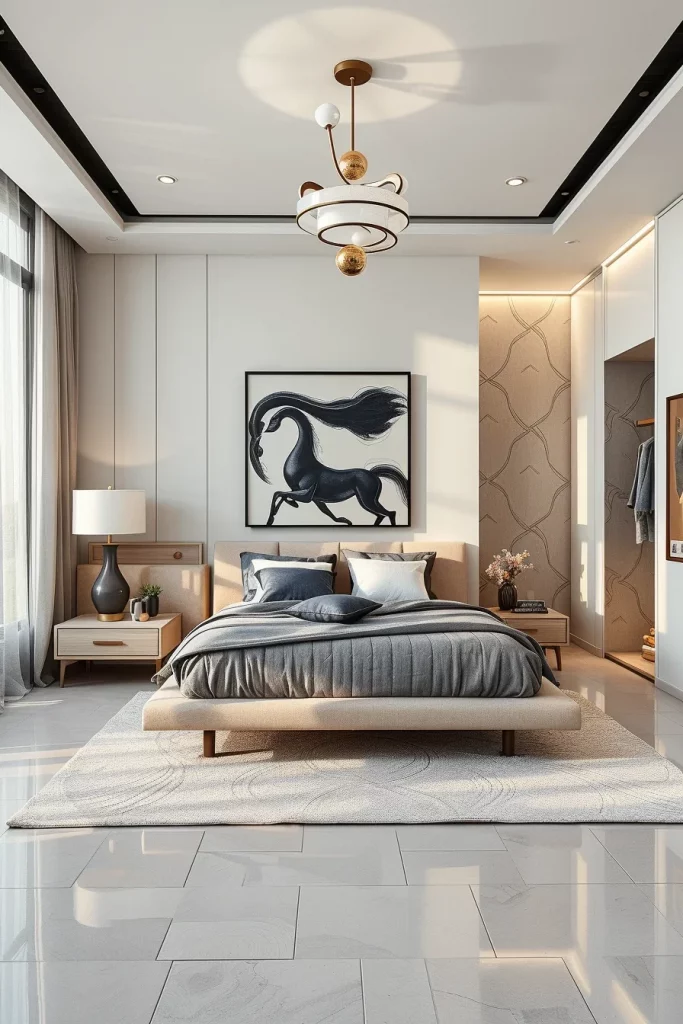
From my perspective, monochrome interiors remain timeless because they emphasize proportion, materials, and lighting instead of temporary trends. Designers featured by Architectural Digest frequently demonstrate that carefully balanced neutral palettes provide long-term flexibility as decorative preferences evolve over time.
To strengthen this design even further, I would add oversized artwork with tonal variation, floor-to-ceiling curtains, concealed storage solutions, and natural daylight layered with adjustable evening lighting to maintain visual warmth.
Warm Earth Tone Bedrooms With Contemporary Charm
I find that warm earth tones create one of the most inviting modern bedroom interiors. Shades of sand, clay, caramel, mushroom, taupe, and soft brown make the room feel calm while maintaining a contemporary appearance. Instead of relying on bold colors, I prefer layering warm neutrals that create depth and allow architectural features to stand out naturally. This approach makes the bedroom feel welcoming throughout every season.
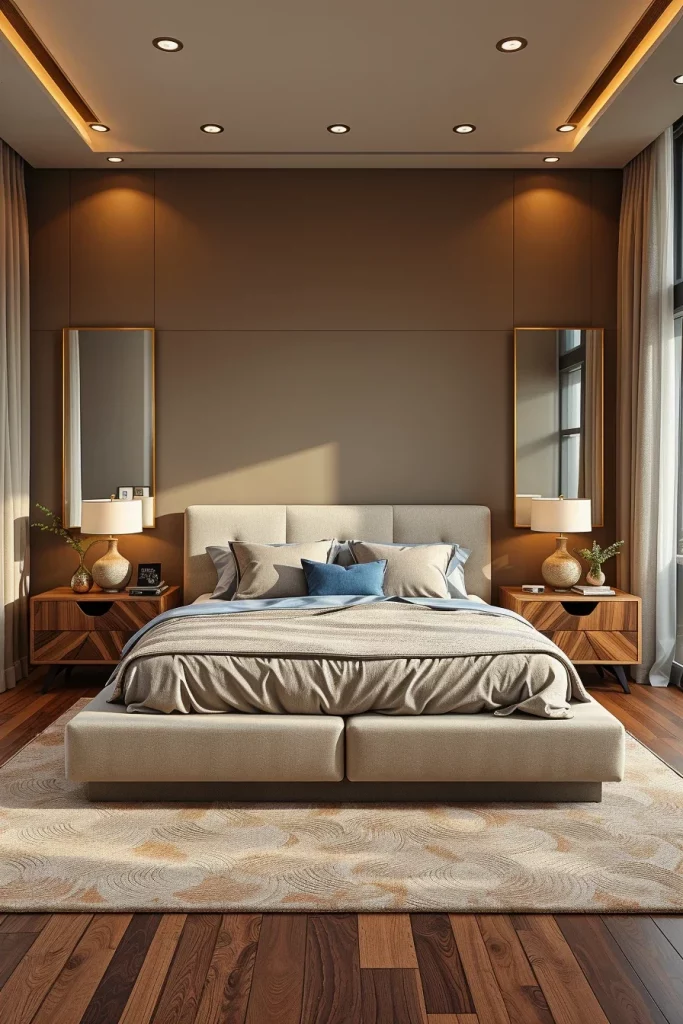
When selecting furniture, I usually begin with a low-profile upholstered bed in a warm neutral fabric, complemented by wood-inspired nightstands with clean silhouettes, a soft area rug, and simple ceramic accessories. Linen bedding in tonal colors, textured throw blankets, woven baskets, and matte lighting fixtures reinforce the relaxed atmosphere without overwhelming the space. Every element contributes to visual harmony while remaining practical for everyday living.
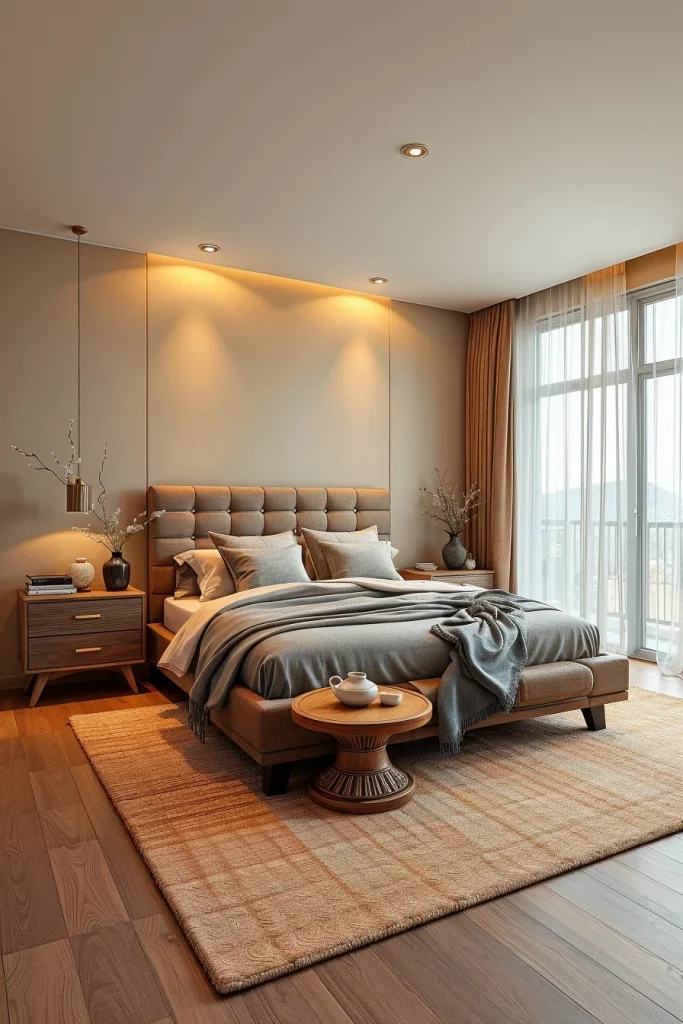
In my experience, designers frequently recommend incorporating natural textures alongside warm color palettes because they create visual balance and lasting comfort. Better Homes & Gardens has often emphasized that layered neutral tones remain timeless and adaptable as decorating preferences change. I appreciate this advice because it allows homeowners to update accessories without redesigning the entire bedroom.
To complete this room, I would add oversized artwork in muted tones, full-height curtains, subtle wall paneling behind the bed, and dimmable lighting that enhances the warmth of every surface during the evening.
Luxury Details That Make A Bedroom Feel Exclusive
Luxury is rarely about excess. I believe a truly exclusive bedroom is defined by thoughtful craftsmanship, premium materials, and careful attention to proportion. A balanced layout, generous circulation space, and elegant finishes instantly elevate the room without making it feel overly decorative. The result is sophisticated rather than extravagant.
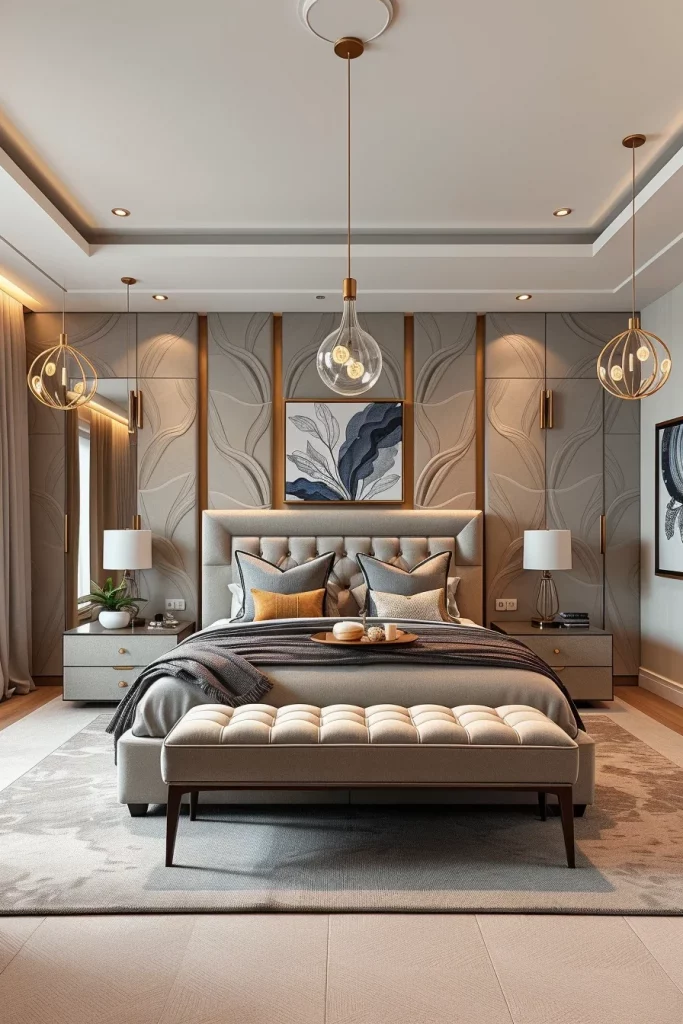
I like incorporating an oversized upholstered headboard, custom bedside tables, integrated wardrobes, premium bedding, sculptural pendant lighting, and carefully selected decorative accessories. Upholstered benches at the foot of the bed, concealed storage, and high-quality hardware all contribute to a polished appearance that feels intentionally designed from every angle.
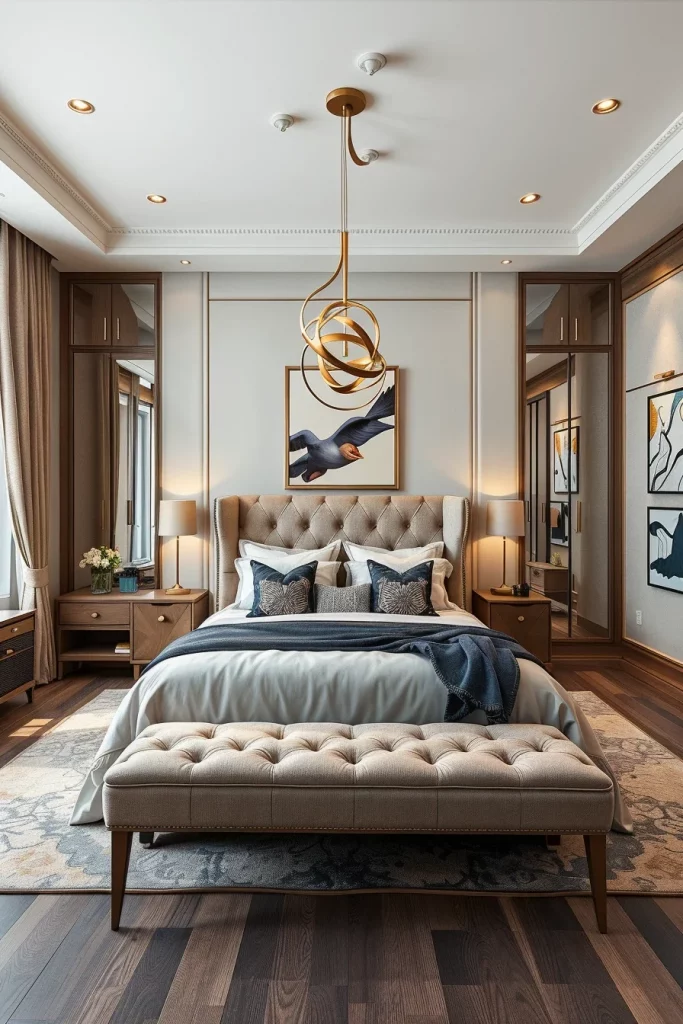
Personally, I focus on investing in pieces that improve both aesthetics and daily comfort. Interior designers featured by Elle Decor often recommend prioritizing craftsmanship over quantity, and I completely agree with that philosophy. Fewer exceptional pieces usually create a stronger impression than a room filled with unnecessary decorations.
I would also include layered lighting with separate reading, ambient, and accent illumination, custom window treatments, elegant wall art, and a carefully styled seating area to make the bedroom feel complete.
Mixing Textures For A Rich Designer Look
One of my favorite decorating techniques is combining multiple textures within a restrained color palette. Texture adds visual interest without requiring bright colors or complicated patterns. When different materials interact naturally, the bedroom feels richer, warmer, and considerably more sophisticated.
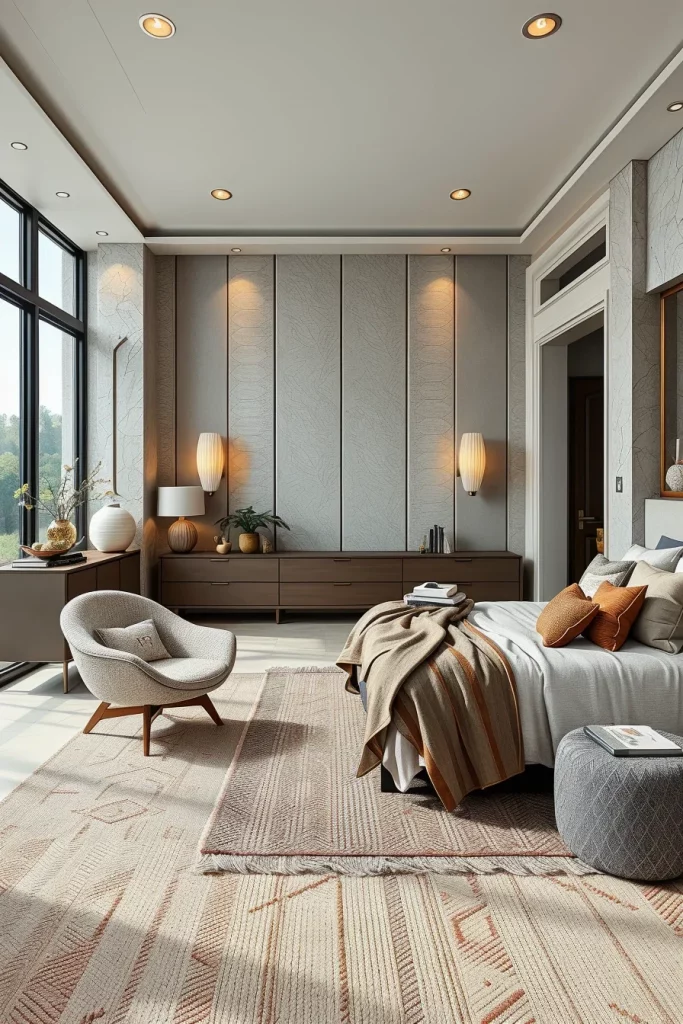
I often combine upholstered furniture with linen bedding, boucle accent chairs, woven rugs, smooth stone surfaces, ribbed glass lighting, matte cabinetry, and soft velvet cushions. These materials complement one another while creating subtle contrast that encourages the eye to explore every corner of the room. I always balance smooth finishes with tactile fabrics to prevent the design from feeling flat.
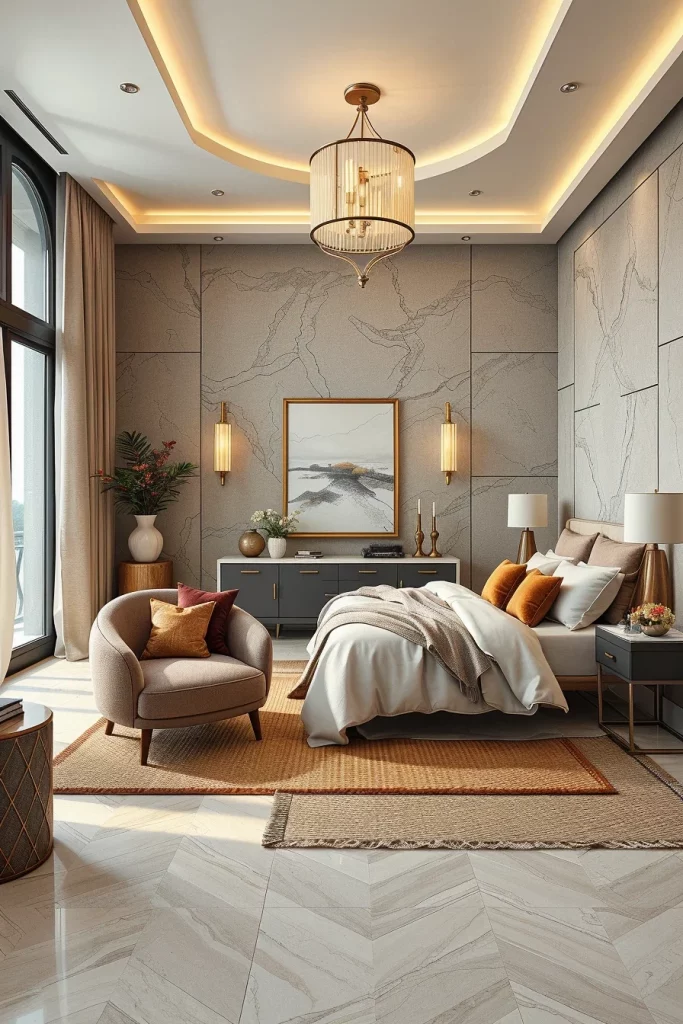
From my perspective, texture is one of the defining characteristics of exceptional contemporary interiors. Architectural Digest frequently showcases bedrooms where carefully layered materials become the primary decorative element rather than excessive ornamentation. I have found this approach consistently produces interiors that remain visually appealing for many years.
To strengthen this concept, I would introduce decorative wall panels, handcrafted ceramics, textured window treatments, and layered bedding with multiple fabric weights that create additional depth without cluttering the room.
Seasonal Bedroom Decor Updates Without Major Renovations
Refreshing a bedroom does not always require replacing furniture or renovating the space. I enjoy making seasonal updates because they allow the room to feel new while preserving the original design. Small decorative changes can completely transform the atmosphere with very little effort or expense.
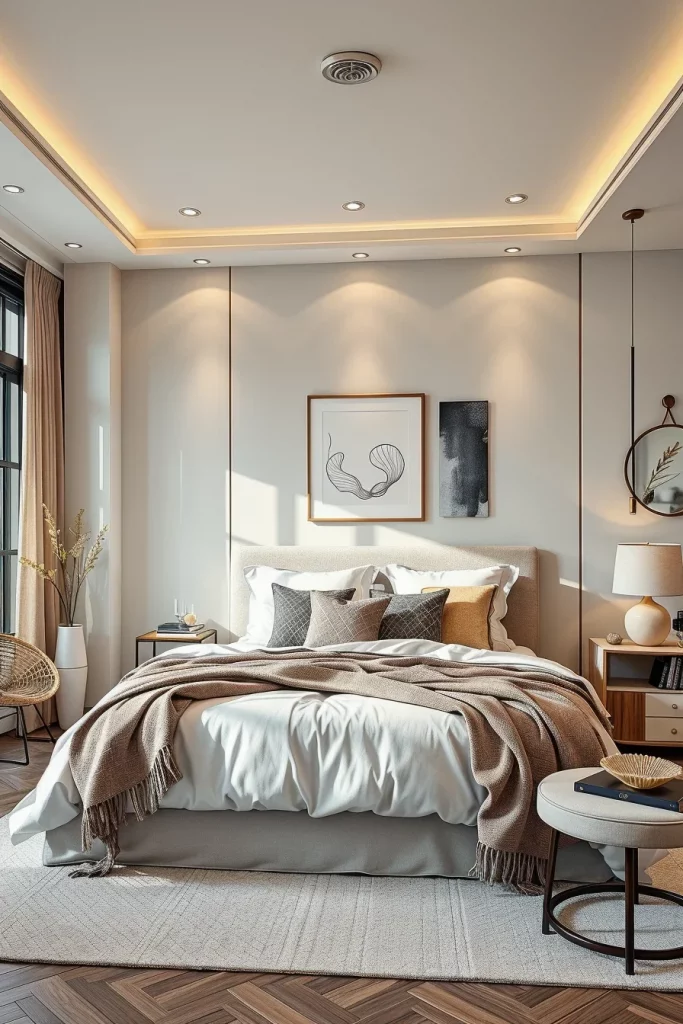
My seasonal updates usually include replacing bedding, decorative pillows, lightweight throws, area rugs, artwork, and tabletop accessories. During cooler months I introduce heavier fabrics and warmer colors, while spring and summer inspire lighter textiles, brighter natural light, and simplified decorative arrangements. These adjustments maintain visual freshness throughout the year.
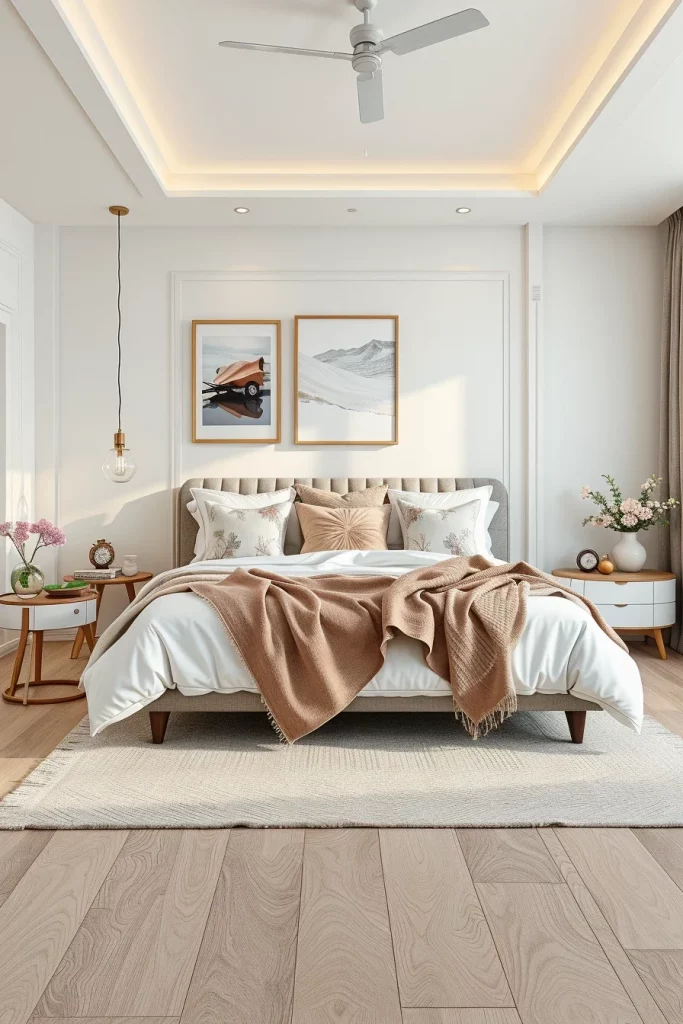
I have learned that rotating accessories instead of purchasing entirely new furniture is both practical and cost-effective. Many interior designers recommend investing in timeless foundational pieces while updating only the decorative layers seasonally. I believe this strategy creates a bedroom that evolves naturally without losing its identity.
To complete these seasonal updates, I would also refresh floral arrangements, decorative trays, bedside styling, scented candles, and accent lighting to reflect the mood of each season while maintaining the room’s contemporary character.
Common Bedroom Decorating Mistakes And How To Avoid Them
Even beautiful furniture cannot compensate for poor planning. I often see bedrooms that feel crowded, poorly lit, or visually disconnected because the overall design lacks balance. Avoiding common decorating mistakes is one of the easiest ways to create a bedroom that remains comfortable for years.
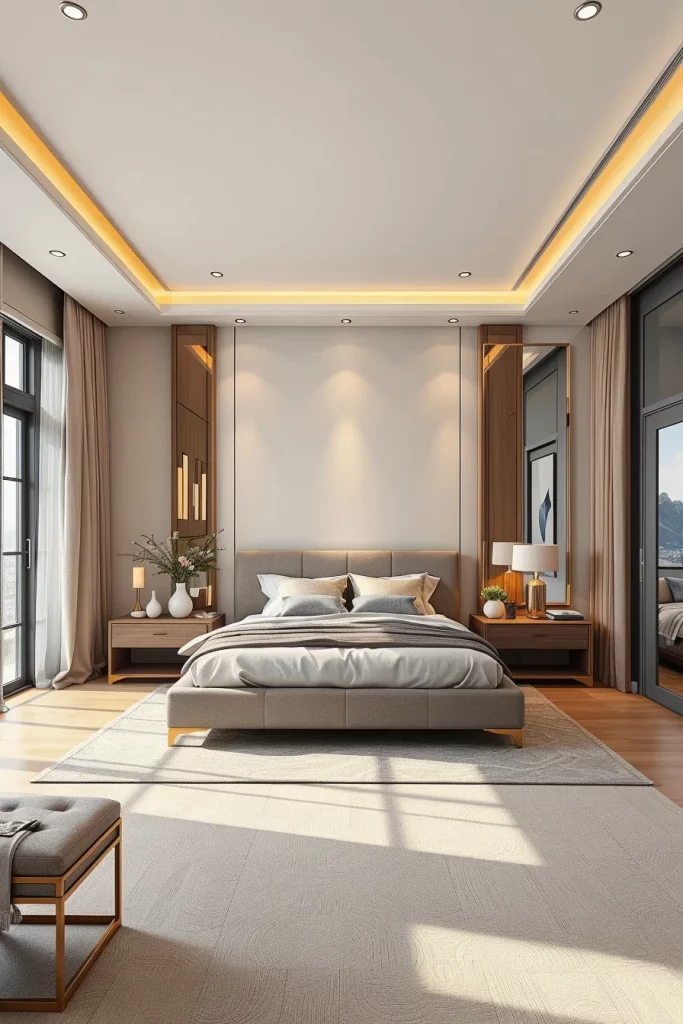
I recommend selecting appropriately scaled furniture, leaving sufficient walking space around the bed, using layered lighting instead of relying on a single ceiling fixture, and maintaining adequate storage to reduce visual clutter. Coordinating materials, finishes, and colors also helps every element feel intentional rather than random.
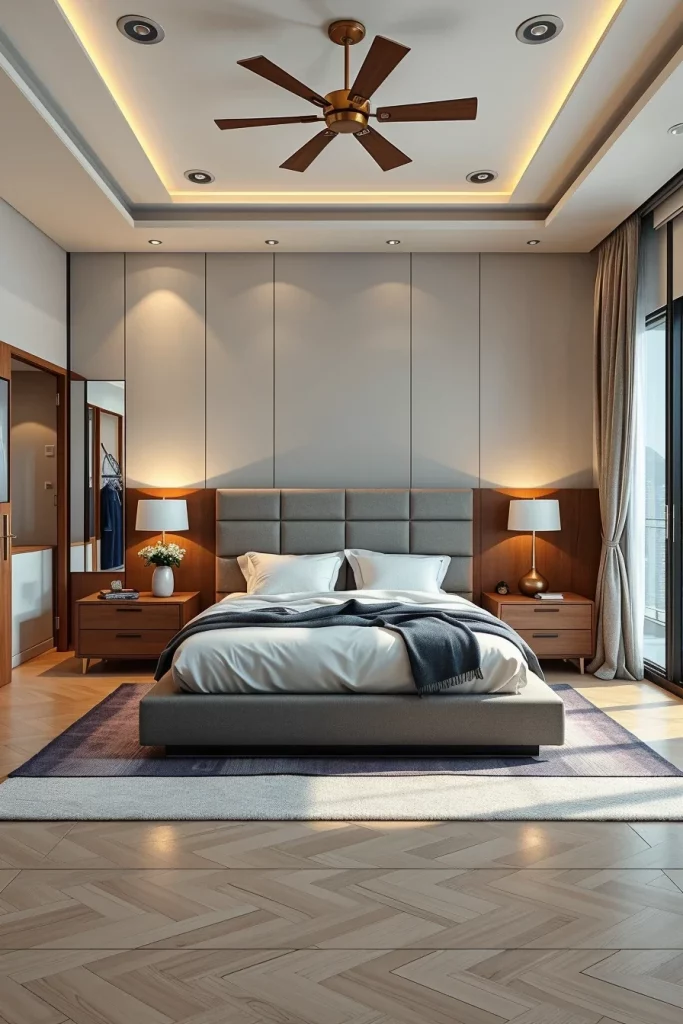
From my experience, the most successful bedrooms prioritize functionality before decoration. Designers featured by House Beautiful regularly emphasize planning furniture layouts before purchasing accessories, and I have consistently found this advice valuable in both small and spacious bedrooms. Practical decisions almost always lead to more beautiful interiors.
I would also ensure that artwork is properly scaled, curtains are mounted close to the ceiling, bedside tables match the height of the mattress, and lighting is adjustable for different daily activities.
Modern bedroom decor is all about creating a space that feels both stylish and comfortable while reflecting your personal taste. By combining thoughtful furniture choices, layered textures, balanced lighting, and timeless color palettes, you can design a bedroom that remains inviting for years to come. Let these modern bedroom decor ideas inspire you to transform your room into a relaxing retreat that is both functional and effortlessly beautiful.