
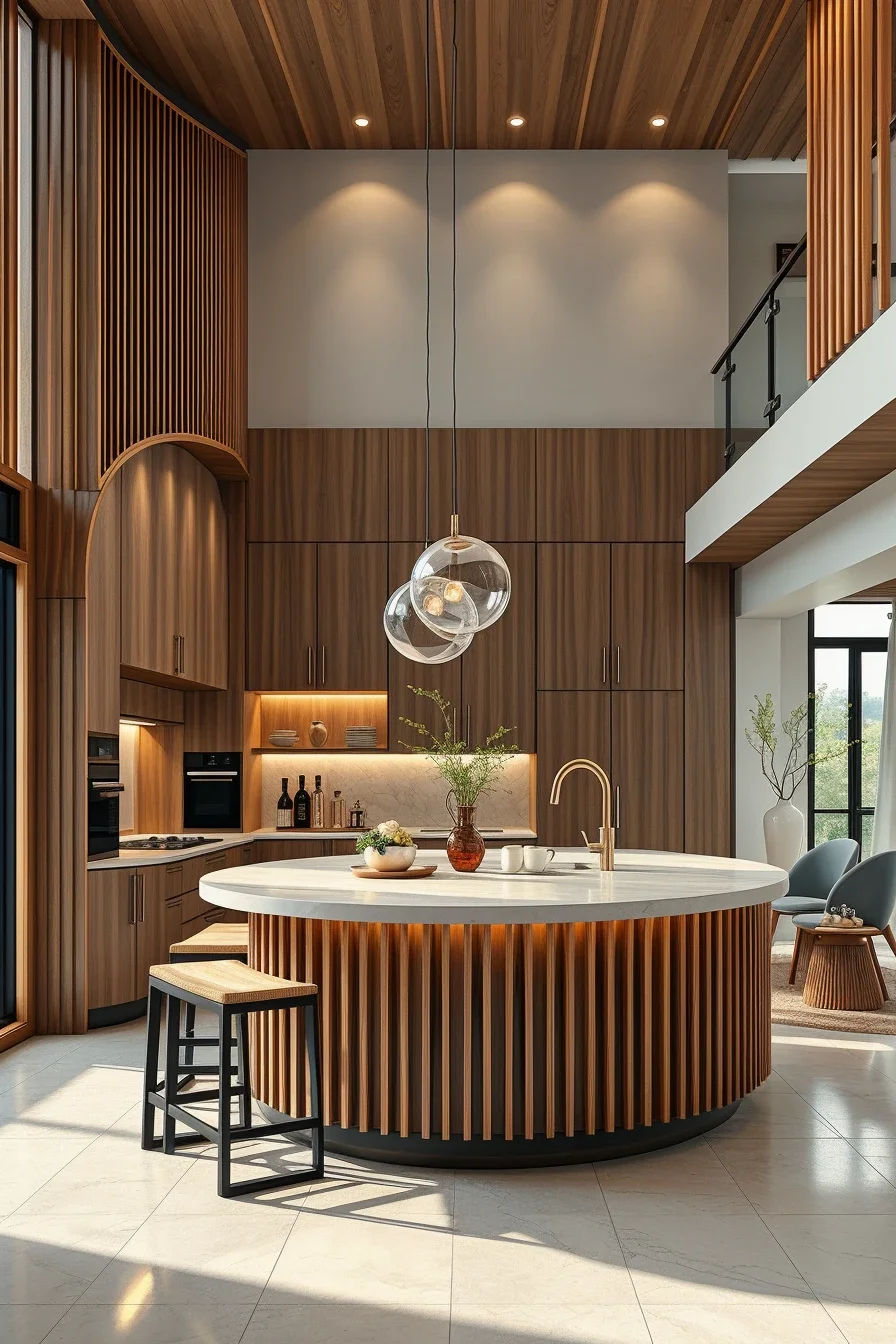
Elegant kitchen interior design ideas prove that a kitchen can be both functional and visually breathtaking, combining timeless beauty with modern comfort. From sculptural islands and graceful curved cabinetry to statement lighting and luxurious materials, every design choice contributes to a refined atmosphere. The most inspiring kitchens balance clean architecture with artistic details that create warmth and personality. Whether you prefer soft neutral palettes, dramatic stone surfaces, or seamless custom storage, there are countless ways to elevate your space. This collection of elegant kitchen interior design ideas highlights creative layouts, sophisticated finishes, and distinctive features that transform everyday cooking into an exceptional experience. Explore these inspiring concepts to discover how thoughtful design can create a kitchen that feels stylish, welcoming, and effortlessly timeless.
What Defines An Elegant Kitchen Interior Design
When I think about an elegant kitchen, I never focus on expensive materials alone. True elegance comes from balance, thoughtful proportions, refined finishes, and a layout that feels effortless to use every day. I always look for a harmonious combination of clean lines, soft curves, carefully selected colors, and quality craftsmanship. An elegant kitchen should feel calm rather than crowded, allowing every feature to contribute to a cohesive design. This approach naturally creates a stylish, creative, and unique environment that feels timeless instead of trend-driven.
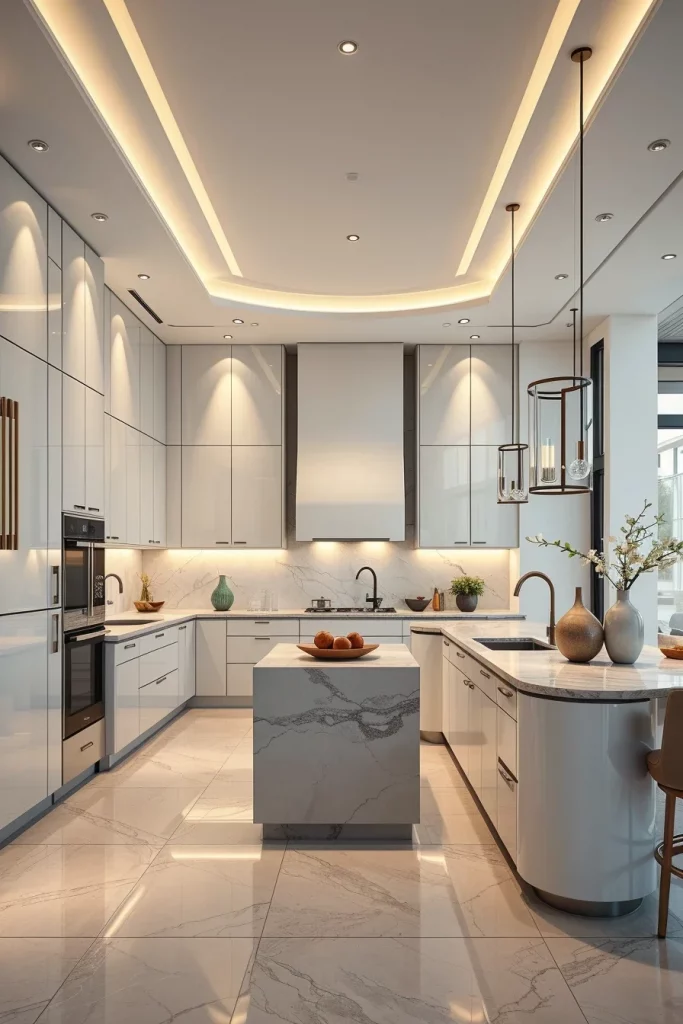
I pay close attention to cabinetry, countertops, flooring, lighting, and hardware because every element influences the overall impression. Flat-panel cabinets with subtle detailing, natural stone surfaces, integrated appliances, and carefully layered lighting all contribute to a sophisticated interior. I also like mixing matte and polished finishes to create visual depth without overwhelming the room. Comfortable seating, well-designed storage, and carefully chosen decorative accessories complete the space while maintaining a clean appearance.
I often return to advice shared by designers featured in Architectural Digest, who emphasize that timeless interiors rely more on proportion, material quality, and thoughtful editing than excessive decoration. I completely agree with this philosophy because every elegant kitchen I admire feels intentional rather than overdesigned. In my experience, removing unnecessary visual clutter always makes the room appear more refined.
If I wanted to improve this space even further, I would include layered ambient, task, and accent lighting together with carefully selected natural textures to make the kitchen feel warm throughout every season.
Sculptural Kitchen Islands That Become The Centerpiece
A sculptural kitchen island instantly transforms an ordinary room into a memorable space. I love using islands with bold silhouettes because they become functional workstations while also acting as architectural focal points. Rounded edges, thick waterfall countertops, and carefully balanced proportions create a sense of elegance that immediately attracts attention. These sculptural designs help establish a luxurious atmosphere without relying on excessive ornamentation.
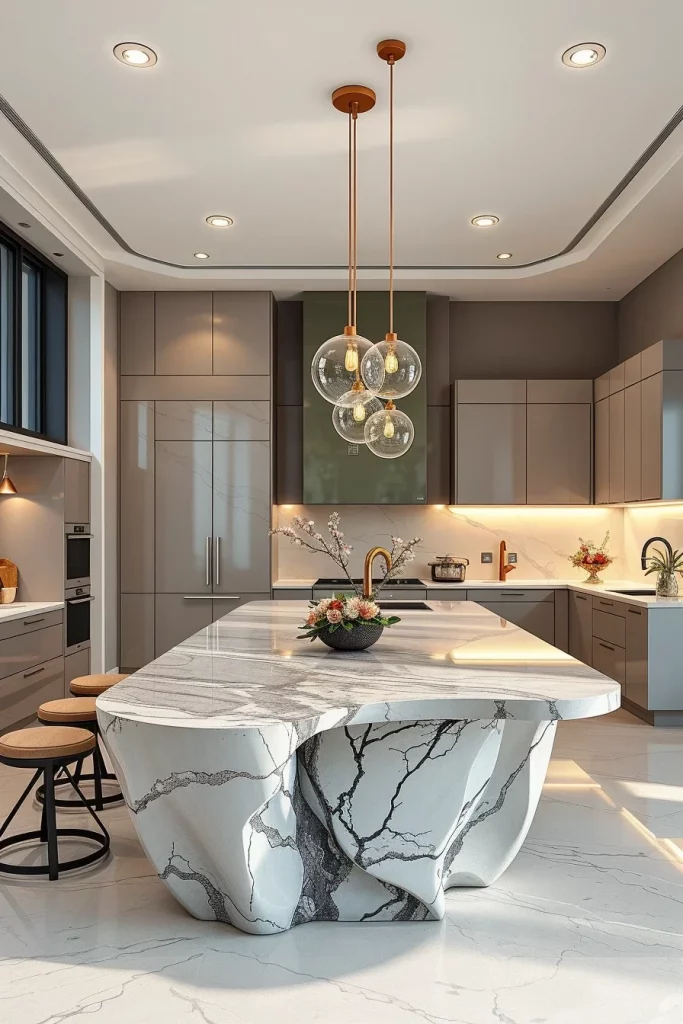
I usually recommend pairing the island with comfortable counter stools, concealed storage, integrated appliances, and generous preparation surfaces. Natural stone with dramatic veining, fluted details, curved corners, or monolithic forms all enhance the artistic quality of the design. Pendant lighting positioned directly above the island further emphasizes its importance while improving daily functionality.
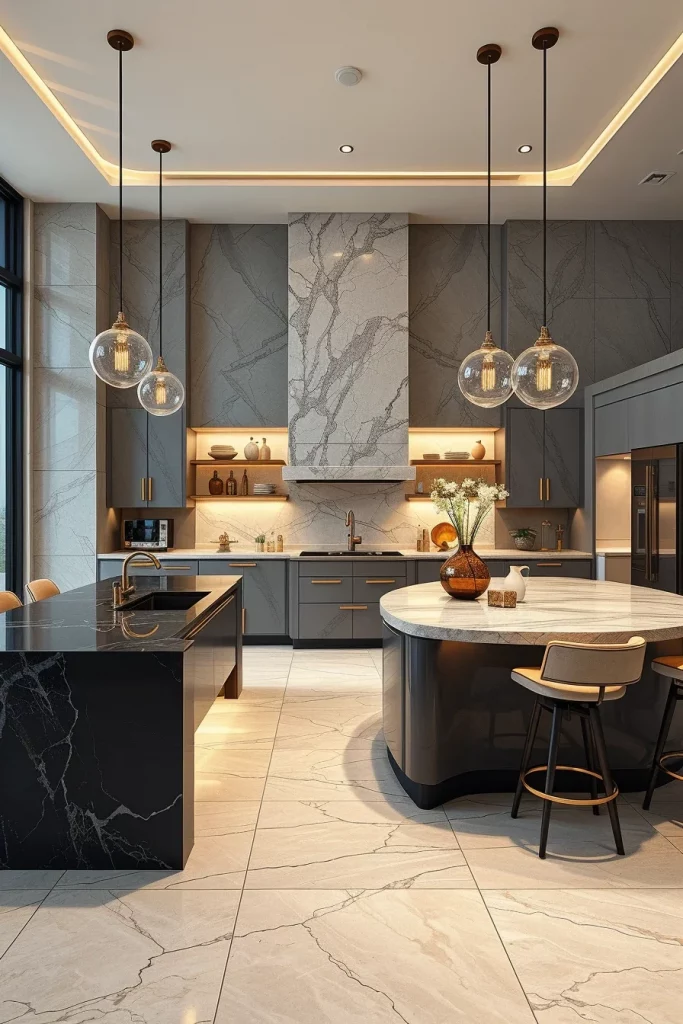
Personally, I believe the kitchen island deserves the largest investment because it serves multiple purposes every day. Designers frequently featured by House Beautiful often recommend making the island the visual anchor of an open-concept kitchen, and I have found this advice extremely practical in both large and compact homes.
To complete this design, I would incorporate discreet electrical outlets, additional hidden storage, and comfortable circulation space around every side of the island to maximize usability.
Curved Cabinetry For A Softer Elegant Look
Straight lines create order, but I have found that introducing gentle curves makes a kitchen feel significantly more welcoming. Curved cabinetry softens transitions between walls and walkways while adding movement to the overall composition. Instead of harsh corners, rounded cabinet ends create a graceful flow that immediately elevates the room. This approach feels especially effective in open layouts where every angle remains visible.
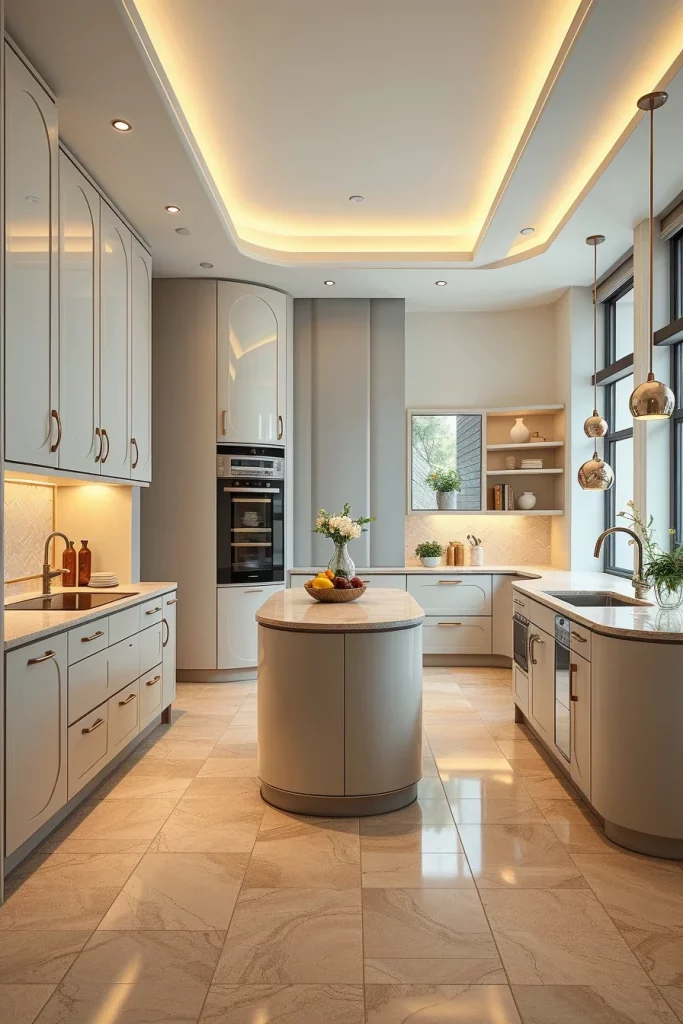
I like combining curved cabinets with integrated handles, seamless finishes, rounded pantry doors, and softly illuminated display niches. These features create visual continuity while improving comfort during everyday movement throughout the kitchen. Curved details also pair beautifully with rounded islands, arched doorways, and sculptural lighting fixtures.
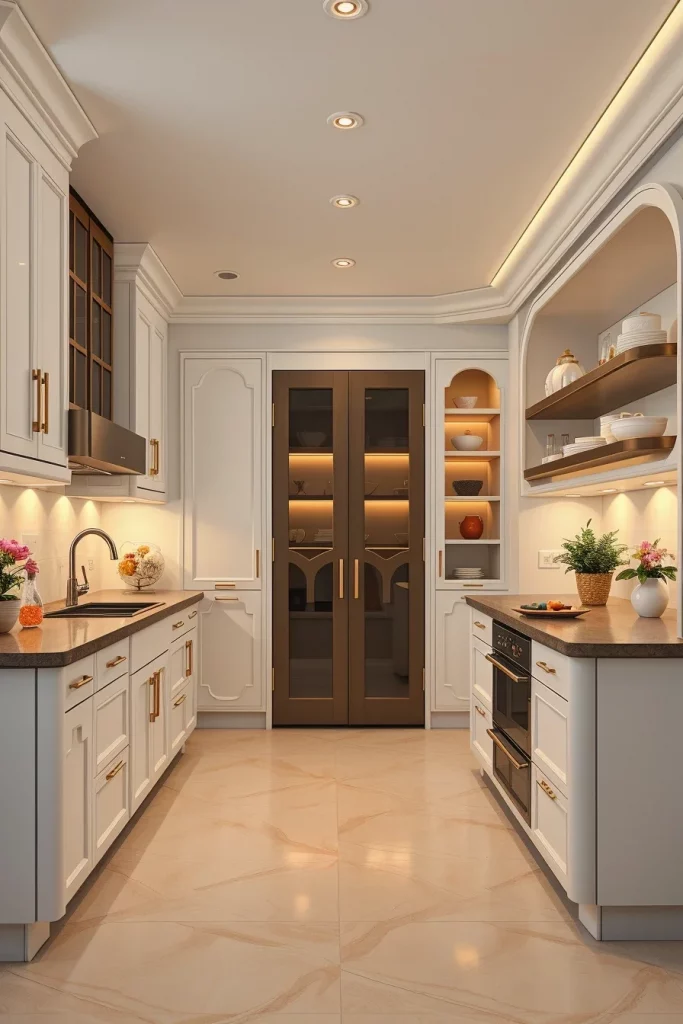
In my experience, curved cabinetry works best when balanced with simple materials and restrained color palettes. Designers frequently highlighted by Elle Decor have demonstrated that organic forms make contemporary interiors feel warmer and more inviting without compromising sophistication. I appreciate this philosophy because it prioritizes both aesthetics and practicality.
To make this design even more complete, I would add rounded floating shelves or curved glass display cabinets that continue the same flowing architectural language throughout the room.
Artistic Marble Surfaces With Dramatic Veining
Marble remains one of my favorite materials for creating an artistic and elegant kitchen. Rather than treating stone as a simple countertop, I prefer allowing dramatic veining to become an intentional design feature. Large uninterrupted slabs create visual continuity while adding natural movement that cannot be replicated by manufactured materials. Every slab is different, making each kitchen feel truly unique.
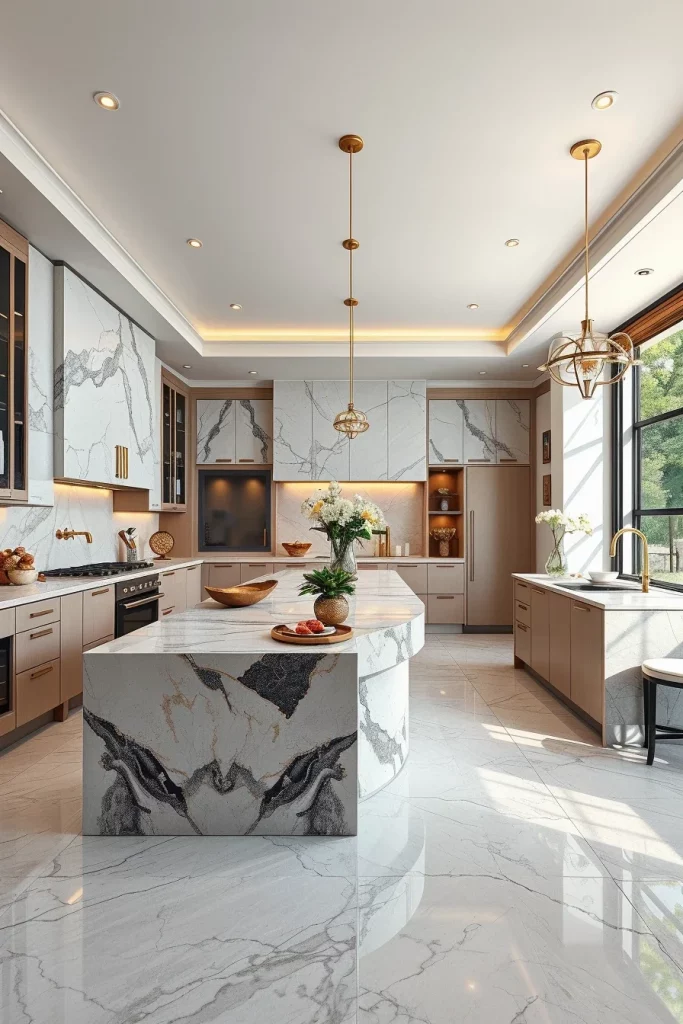
I often recommend extending marble across countertops, backsplashes, waterfall islands, and even shelving details for a cohesive appearance. Pairing expressive stone with understated cabinetry allows the natural patterns to become the focal point without overwhelming the room. Warm metallic fixtures, subtle lighting, and simple furnishings help maintain visual balance.
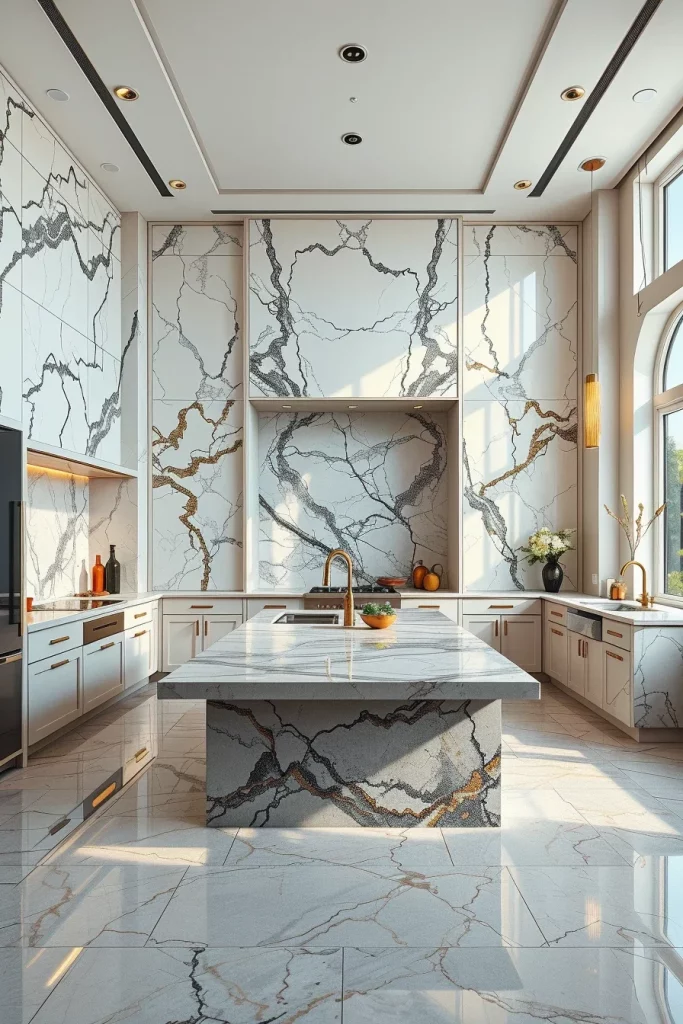
I have noticed that many respected American interior designers recommend selecting marble based on the overall composition instead of isolated samples. I completely agree because viewing the full slab allows the veining to be positioned intentionally, resulting in a much more refined final appearance.
If I were refining this kitchen further, I would include high-quality sealing, carefully planned lighting that enhances the natural veining, and coordinated decorative accessories that complement rather than compete with the stone.
Floor-To-Ceiling Cabinet Designs With Seamless Lines
Floor-to-ceiling cabinetry is one of the most effective ways I know to make a kitchen appear larger and more elegant. Continuous vertical lines naturally draw the eye upward, creating a sense of height while maximizing storage capacity. Instead of leaving unused space above upper cabinets, full-height cabinetry creates a seamless architectural appearance that feels custom-made for the room.
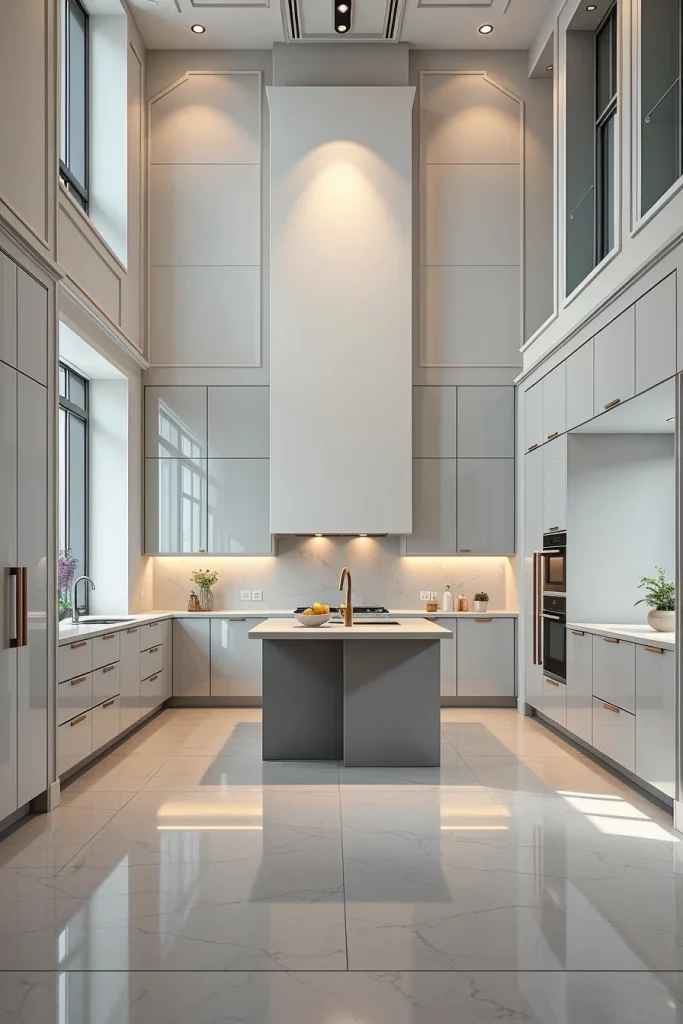
I prefer combining integrated appliances, concealed pantry storage, push-to-open doors, and consistent finishes throughout the cabinetry. This approach minimizes visual interruptions and creates a calm atmosphere that feels organized every day. Carefully planned interior storage systems ensure that every cabinet remains practical while maintaining a clean exterior.
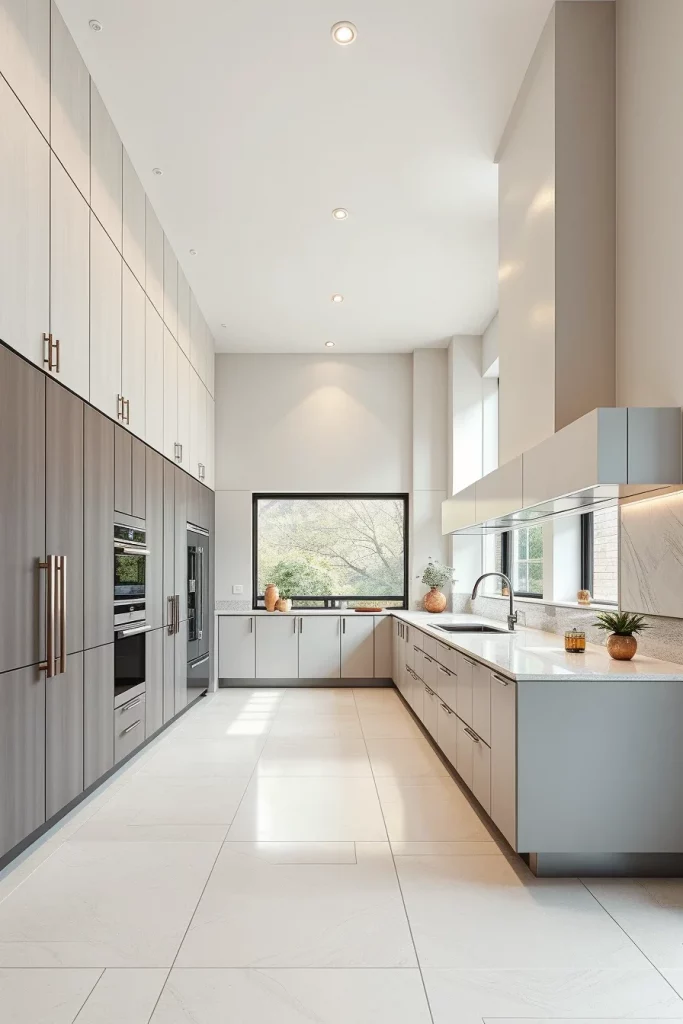
From my experience, well-designed full-height cabinetry reduces visual clutter more effectively than almost any decorative upgrade. Interior designers featured in Better Homes & Gardens frequently emphasize investing in efficient storage before adding decorative features, and I believe this advice creates kitchens that remain enjoyable to use for many years.
To complete this design, I would include discreet interior lighting, pull-out pantry systems, hidden recycling solutions, and beautifully organized storage accessories that maximize every inch of available space.
Statement Lighting That Doubles As Art
Lighting is one of the first details I notice in an elegant kitchen because it shapes the atmosphere long before anyone appreciates the cabinetry or finishes. Instead of choosing ordinary fixtures, I prefer statement lighting that feels like a piece of contemporary art. Oversized pendants, sculptural chandeliers, and layered lighting compositions create visual interest while defining the kitchen’s focal points. This approach allows the room to feel both functional and expressive without overwhelming the overall design.
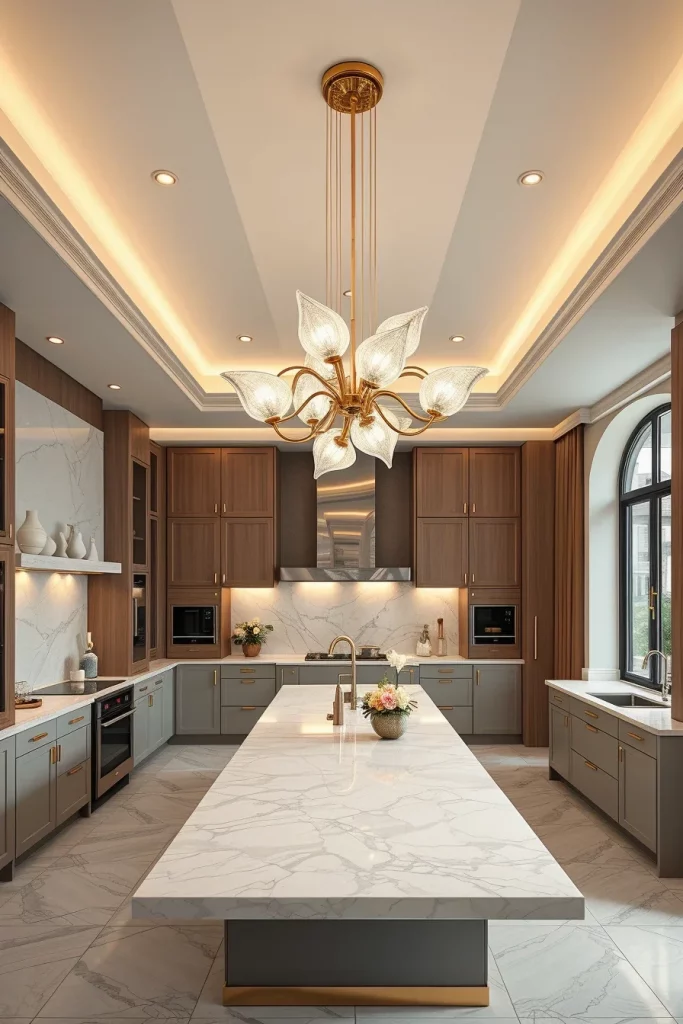
I like combining decorative pendant lights above the island with recessed ceiling lighting, under-cabinet illumination, and subtle accent lighting inside glass cabinets. This layered strategy ensures every work surface is practical while adding warmth throughout the space during the evening. Finishes such as brushed brass, matte black, smoked glass, or satin nickel complement elegant interiors without competing with other design elements. Carefully selecting the scale of each fixture helps maintain balance within the room.
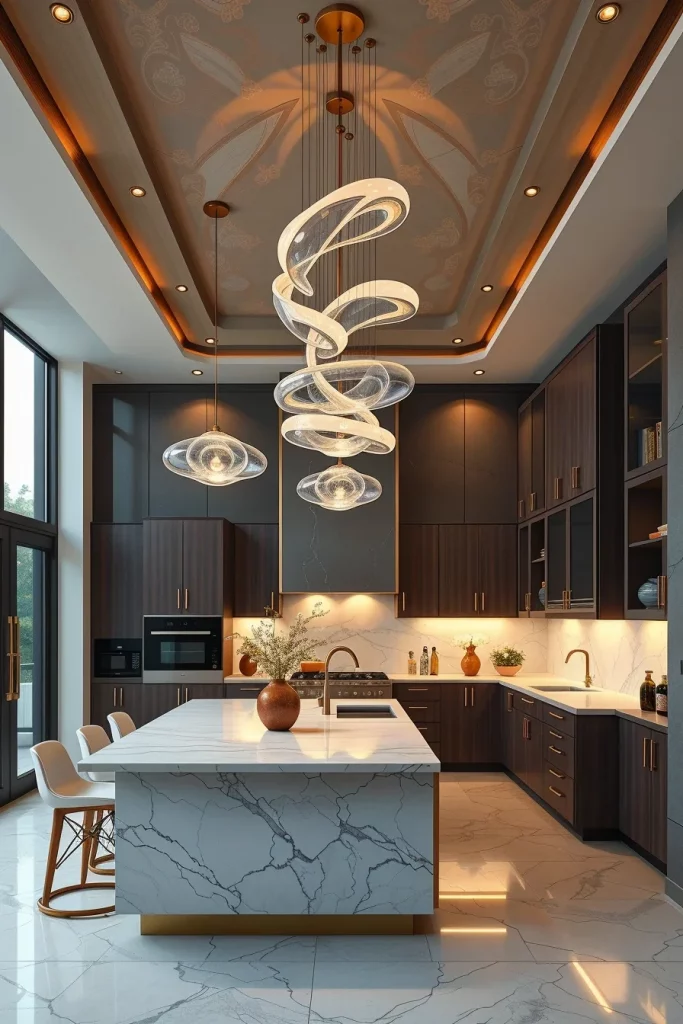
I have found that thoughtful lighting dramatically changes how materials such as marble, natural stone, and textured cabinetry appear throughout the day. Designers featured by Architectural Digest often recommend layering ambient, task, and accent lighting rather than depending on a single source, and I consistently see how effective this approach is in creating sophisticated interiors.
If I wanted to enhance this kitchen further, I would include dimmable controls and smart lighting scenes that adjust brightness for cooking, entertaining, or relaxing while highlighting the room’s architectural details.
Elegant Kitchens With Rounded Breakfast Bars
Rounded breakfast bars create a welcoming transition between the kitchen and surrounding living spaces. I appreciate how soft curves encourage conversation while making the room feel more relaxed and inviting. Unlike sharp corners, rounded forms improve movement around the kitchen and introduce a subtle architectural feature that immediately elevates the design. They naturally complement other curved elements while reinforcing an elegant atmosphere.
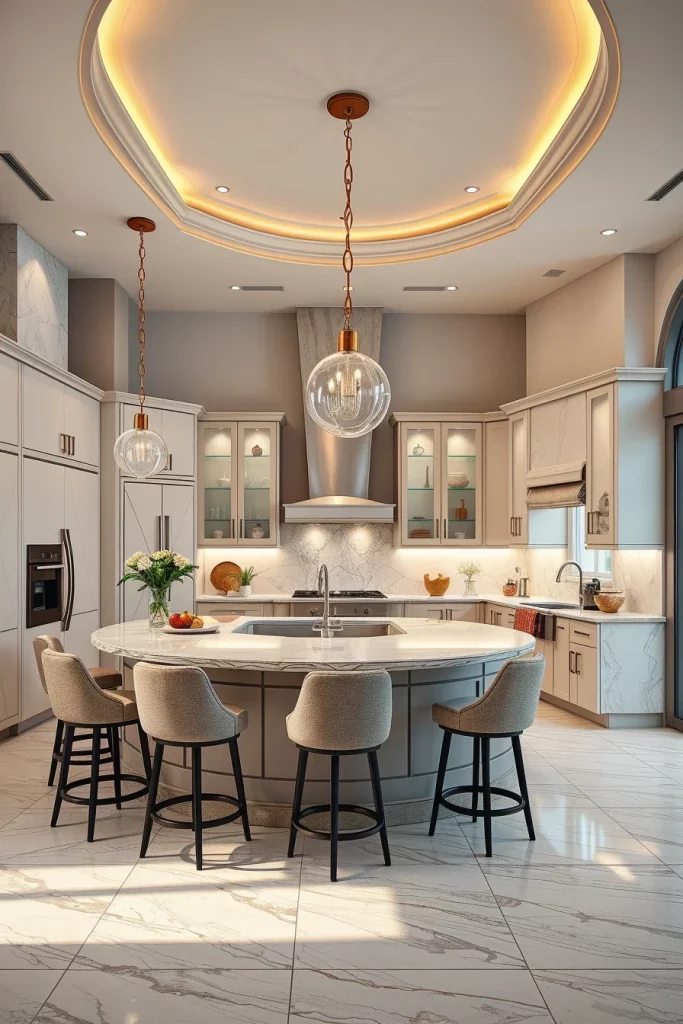
I usually pair a rounded breakfast bar with upholstered counter stools, a waterfall countertop, integrated storage, and subtle decorative lighting. Stone surfaces, fluted panel details, and carefully selected seating create a comfortable gathering place for casual meals, coffee breaks, or entertaining guests. I also prefer generous overhangs that provide comfortable legroom without disrupting the island’s proportions.
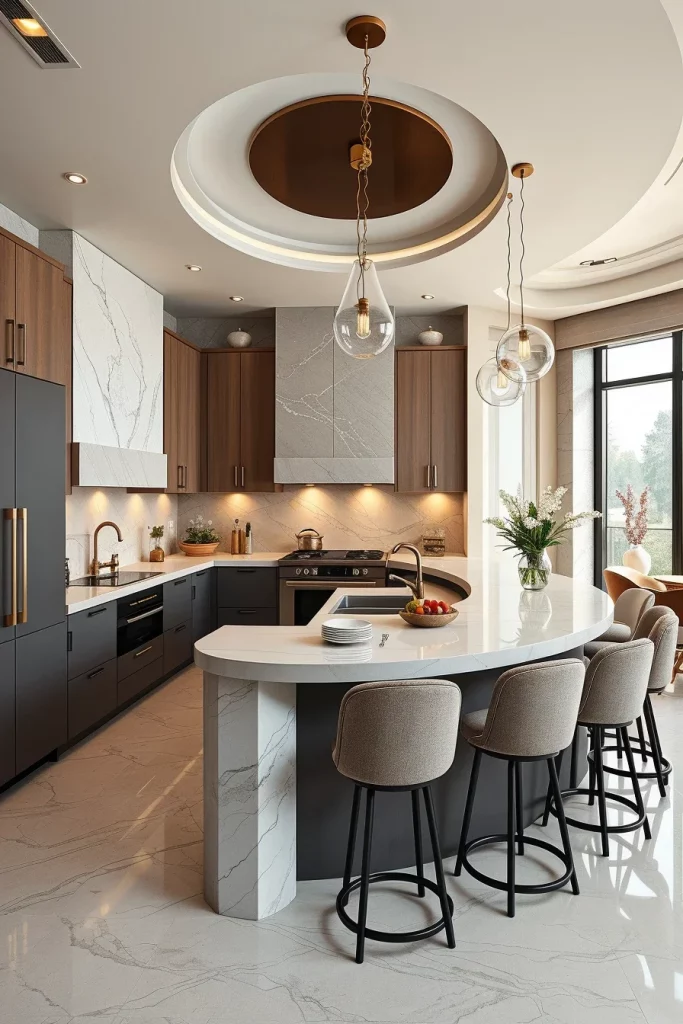
In my experience, breakfast bars become one of the most frequently used areas of the kitchen because they combine practicality with comfort. House Beautiful has highlighted how multifunctional gathering spaces improve everyday living, and I completely agree because these spaces naturally bring people together without requiring a formal dining setting.
To complete this design, I would include discreet charging outlets, comfortable seating heights, and durable countertop finishes that maintain their appearance despite daily use.
Sculpted Ceiling Designs That Elevate The Space
The ceiling is often overlooked, but I believe it plays a significant role in defining an elegant kitchen. A thoughtfully sculpted ceiling introduces depth, architectural interest, and visual balance that transform the room from ordinary to exceptional. Whether the design includes gentle curves, recessed details, or clean geometric forms, the ceiling becomes an extension of the overall composition rather than an empty surface above.
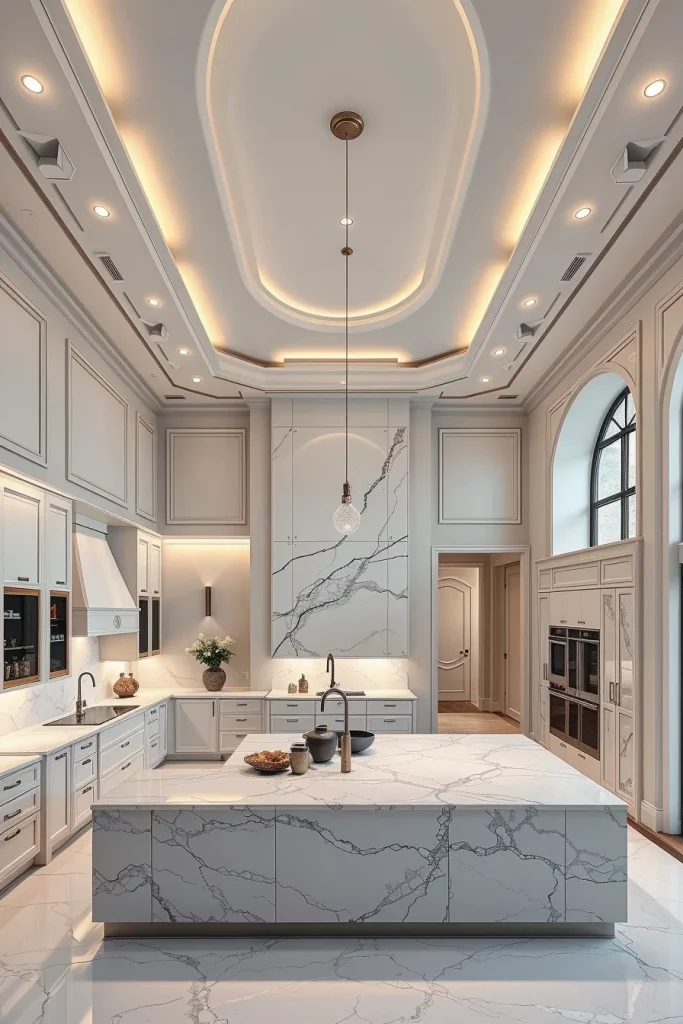
I enjoy combining recessed lighting, concealed LED strips, decorative ceiling beams, or subtle coffered elements with smooth finishes that complement the cabinetry below. Maintaining consistency between ceiling lines and the kitchen layout creates a unified appearance that feels professionally designed. High ceilings benefit particularly well from layered architectural detailing that emphasizes vertical space without appearing excessive.
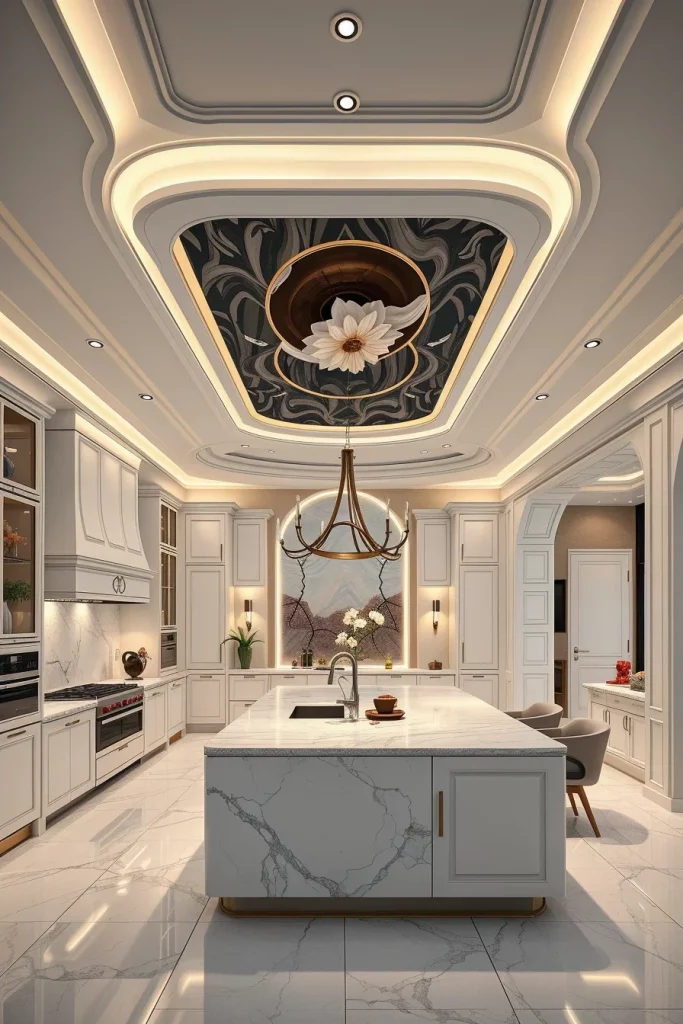
Personally, I have noticed that investing in ceiling design often has a greater visual impact than adding more decorative accessories. Interior designers featured by Elle Decor frequently discuss treating ceilings as the “fifth wall,” and I believe this philosophy helps create interiors that feel complete from every angle.
To enhance this feature further, I would incorporate carefully positioned indirect lighting that highlights the ceiling’s architectural forms while creating a warm evening ambiance.
Creative Backsplash Ideas With Artistic Texture
A backsplash offers much more than practical wall protection when it is designed thoughtfully. I enjoy using textured surfaces that introduce depth and personality while remaining consistent with the kitchen’s elegant aesthetic. Three-dimensional stone, handcrafted tiles, fluted panels, or subtly textured slabs create visual movement without overwhelming the surrounding finishes. These creative and artistic details give the kitchen a distinctive identity.
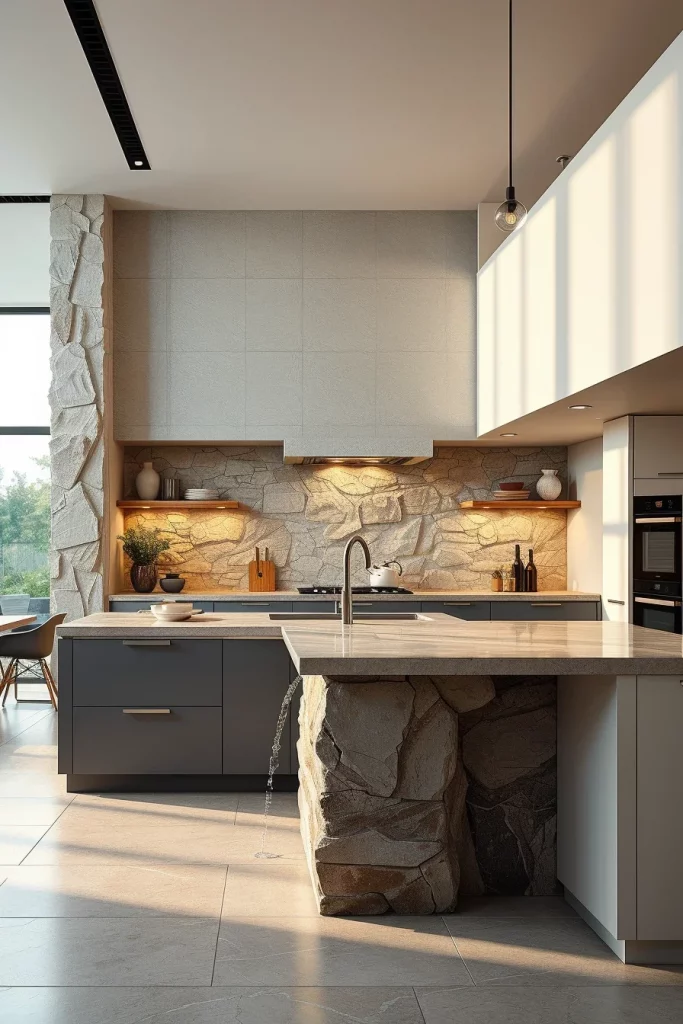
I often recommend extending the backsplash from the countertop to the ceiling behind open shelving or range areas. Continuous surfaces emphasize height while creating a luxurious appearance with fewer visual interruptions. Soft lighting directed toward textured materials enhances shadows and highlights, allowing every detail to become more noticeable throughout the day.
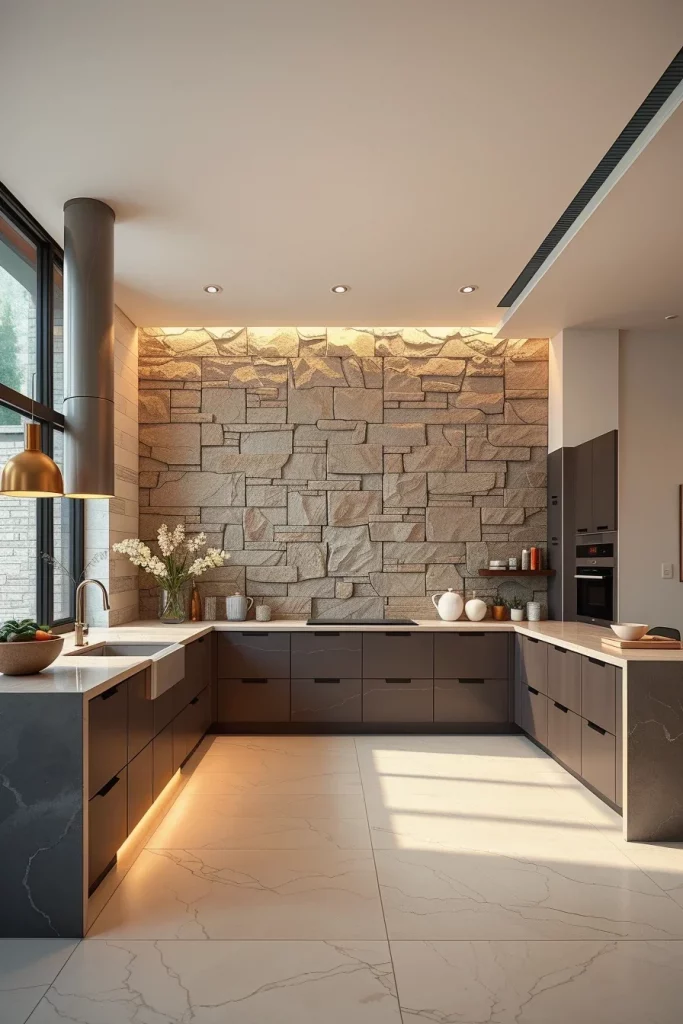
From my experience, restrained textures usually create a stronger impression than highly colorful patterns. Better Homes & Gardens has often emphasized selecting finishes that complement the entire room rather than competing with it, and I have consistently found this advice valuable when designing timeless kitchens.
If I were refining this kitchen further, I would integrate matching windowsills, shelf details, or niche surrounds using the same material to create greater continuity throughout the space.
Curved Open Shelving With Gallery Appeal
Curved open shelving introduces softness while providing an opportunity to display carefully selected decorative objects. I enjoy incorporating rounded shelves because they make storage feel lighter and more architectural than traditional rectangular units. Their flowing shape contributes to a stylish and unique composition that feels both modern and inviting. When styled thoughtfully, these shelves resemble a carefully curated gallery rather than ordinary storage.
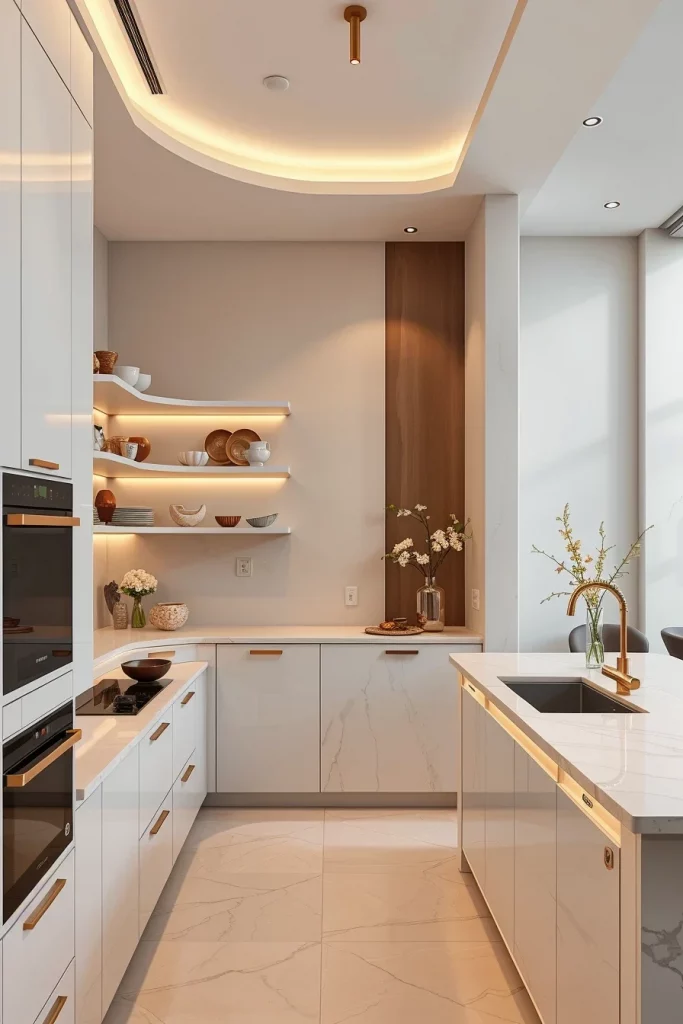
I like displaying handcrafted ceramics, glassware, cookbooks, sculptural bowls, and small decorative accessories while maintaining generous empty space between objects. Built-in lighting beneath each shelf subtly highlights every item and creates additional depth during the evening. Matching shelf finishes with surrounding cabinetry helps maintain visual continuity throughout the kitchen.
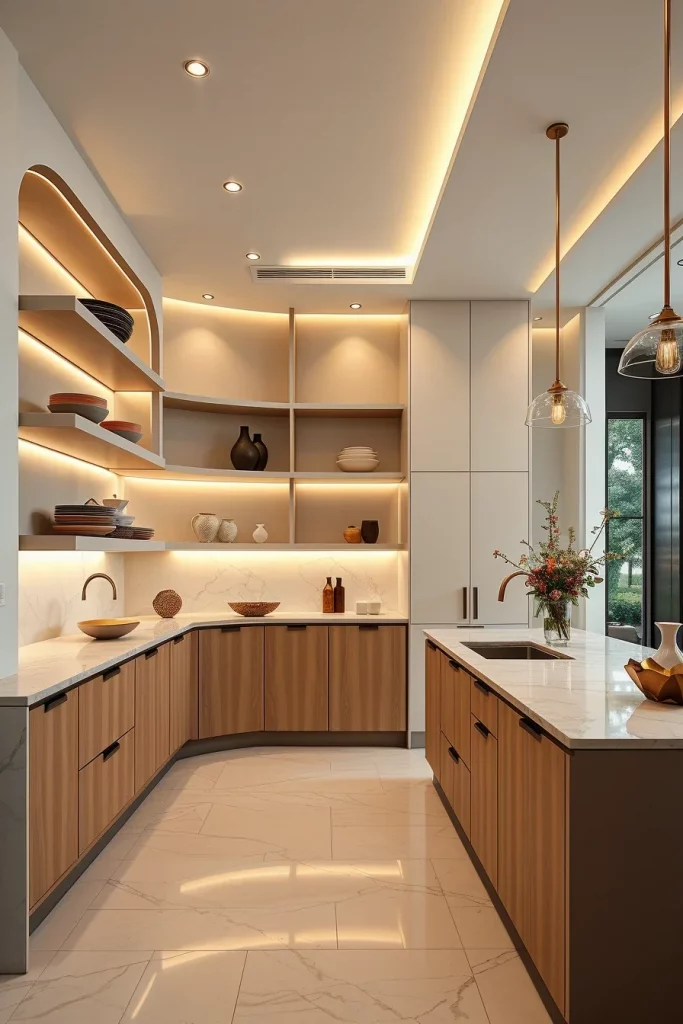
I believe open shelving succeeds only when it remains intentionally organized. Designers featured by Architectural Digest frequently encourage displaying fewer, higher-quality objects instead of filling every available surface, and I have found that this approach consistently creates a more elegant and timeless appearance.
To complete this area, I would include hidden support brackets, integrated lighting, and coordinated decorative accessories that reflect the kitchen’s overall material palette without introducing unnecessary visual clutter.
Elegant Neutral Color Palettes With Rich Depth
When I design an elegant kitchen, I always begin with a layered neutral palette instead of relying on a single shade. Soft ivory, warm taupe, creamy beige, muted greige, and deep charcoal accents create visual depth while keeping the room calm and sophisticated. I find that combining subtle tonal variations allows the entire kitchen to feel welcoming rather than flat. This approach works especially well in stylish interiors because the colors support architectural features instead of competing with them.
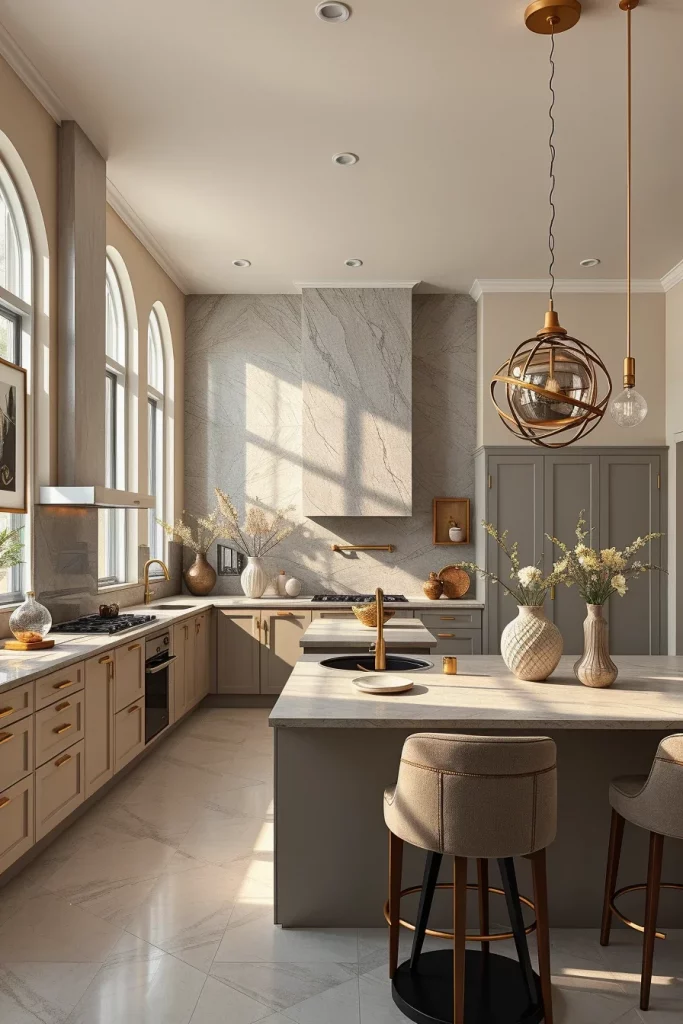
I like to pair matte cabinetry with natural stone countertops, satin-finished hardware, and textured backsplashes that introduce gentle contrast. Upholstered counter stools, elegant pendant lighting, oversized decorative bowls, and handcrafted ceramics make the room feel complete without overwhelming the design. Every surface contributes to a layered composition that feels both refined and highly functional for everyday cooking.
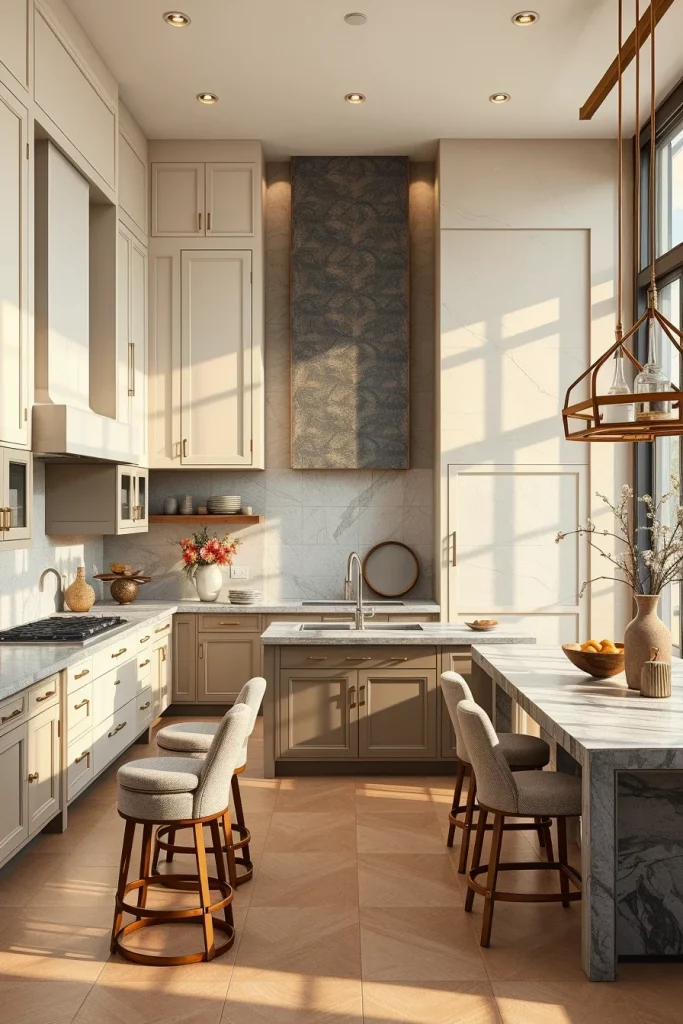
Personally, I believe timeless neutral kitchens remain beautiful longer than trend-driven color schemes. Designers frequently featured by Architectural Digest recommend layering texture instead of adding excessive color, and I have found that advice especially valuable when creating artistic kitchens that continue to feel current over time.
To complete this design, I would add carefully planned ambient, task, and accent lighting. Layered illumination reveals the subtle differences between finishes throughout the day and enhances the depth that makes neutral palettes feel luxurious.
Mixed Materials That Create A Sophisticated Interior
One of my favorite ways to create visual interest is by combining complementary materials that balance one another. Stone, glass, brushed metal, textured plaster, and natural wood-inspired finishes produce a rich composition without making the kitchen feel busy. I enjoy mixing smooth and textured surfaces because they create an elegant sense of movement throughout the room while maintaining a cohesive appearance.
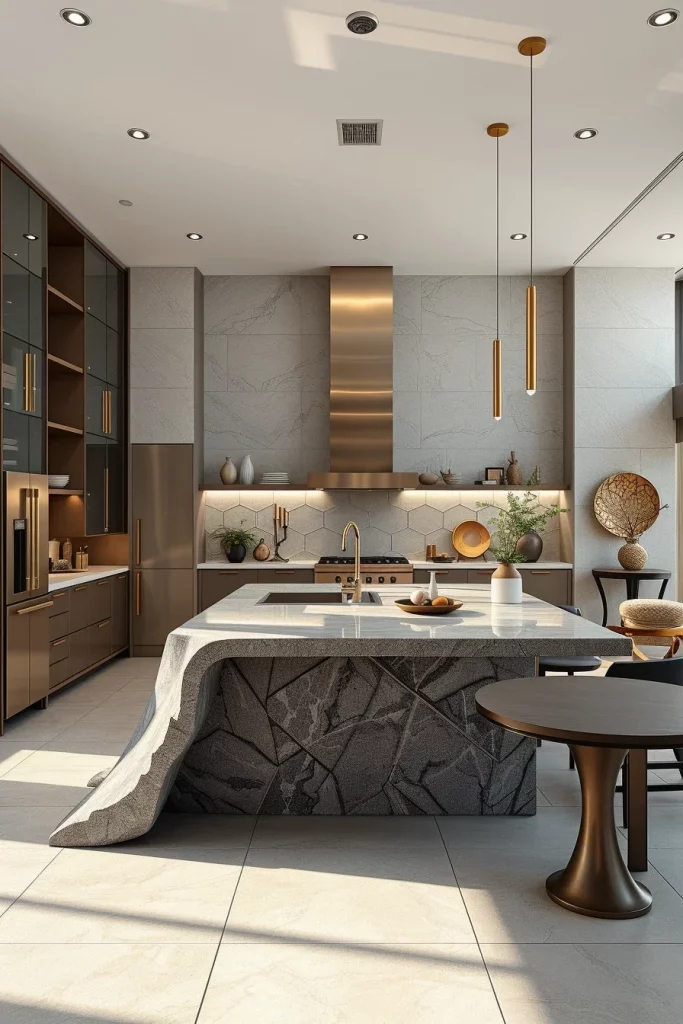
I often combine waterfall stone countertops with fluted cabinet fronts, glass display cabinets, sculptural pendant lighting, and sleek metal shelving details. A large island becomes even more impressive when surrounded by carefully selected materials that complement each other rather than compete for attention. The result feels creative, sophisticated, and highly personalized.
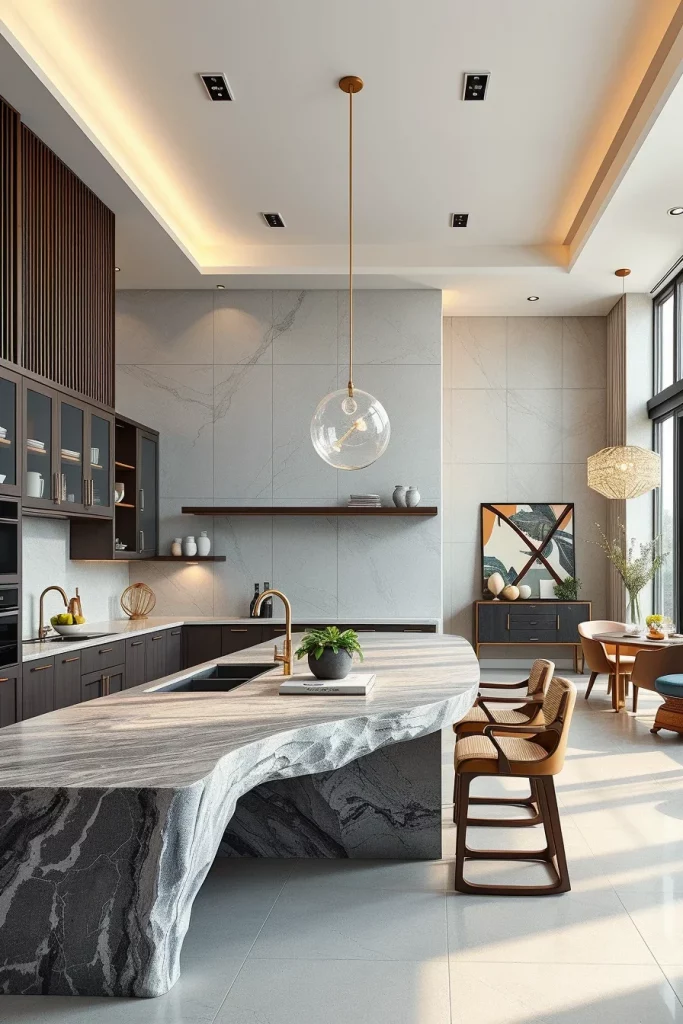
In my experience, thoughtful material combinations age much better than overly decorative finishes. Interior designers often emphasize limiting the number of dominant materials while focusing on exceptional quality, and I completely agree because this approach creates a more harmonious interior.
I would also include a consistent finish palette for cabinet hardware, faucets, and lighting fixtures. Keeping metal finishes coordinated helps unify the many textures throughout the kitchen while preserving an elegant overall appearance.
Hidden Storage Solutions For A Refined Appearance
I believe one of the defining characteristics of an elegant kitchen is the absence of visible clutter. Hidden storage allows countertops to remain clean while providing generous space for everyday essentials. Full-height cabinetry, concealed appliance garages, integrated pantry systems, and pull-out storage create an organized environment that immediately feels more luxurious.
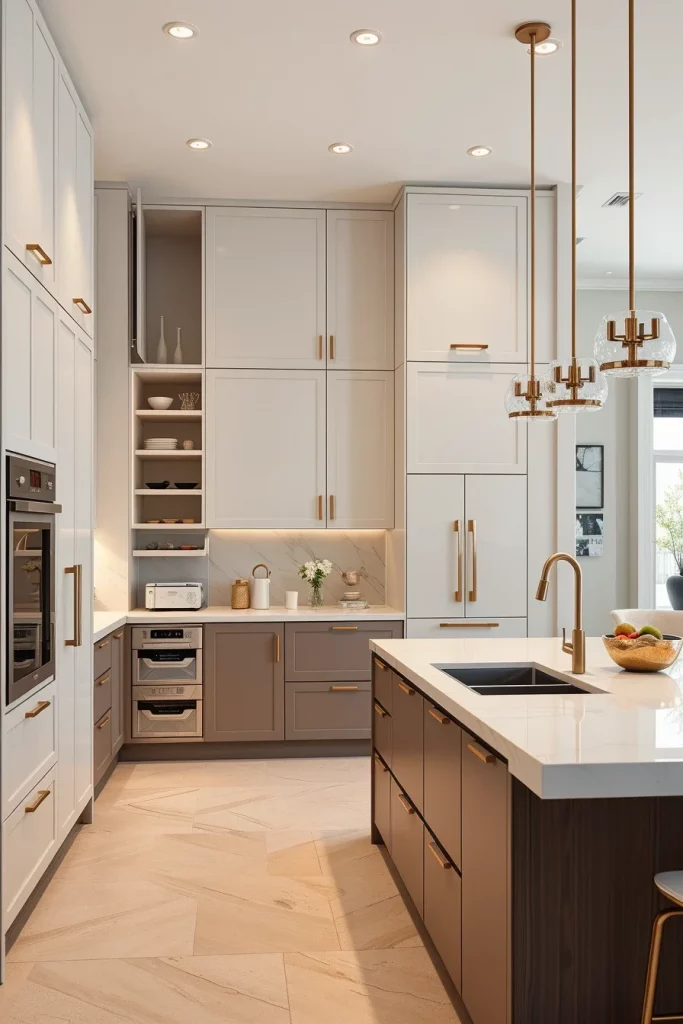
I frequently recommend deep drawers with custom organizers, concealed recycling bins, hidden spice storage, pull-out corner systems, and appliance cabinets with retractable doors. These features improve efficiency without interrupting the clean architectural lines of the room. Integrated storage allows every object to have its place while preserving a seamless visual flow.
From my perspective, a beautifully organized kitchen is just as important as beautiful finishes. Many professional organizers and kitchen designers encourage designing storage around daily habits instead of simply maximizing cabinet space, and I have consistently seen better long-term results using this philosophy.
To improve this layout even further, I would include interior cabinet lighting and adjustable shelving. These additions make hidden storage significantly easier to use while maintaining the refined appearance that defines elegant interiors.
Oversized Kitchen Islands With Sculptural Forms
A generously proportioned island often becomes the centerpiece of an elegant kitchen. Rather than treating it as a simple work surface, I prefer designing it as a sculptural architectural feature that anchors the entire space. Soft curves, rounded corners, dramatic waterfall edges, and carefully balanced proportions create an island that feels inviting from every angle.
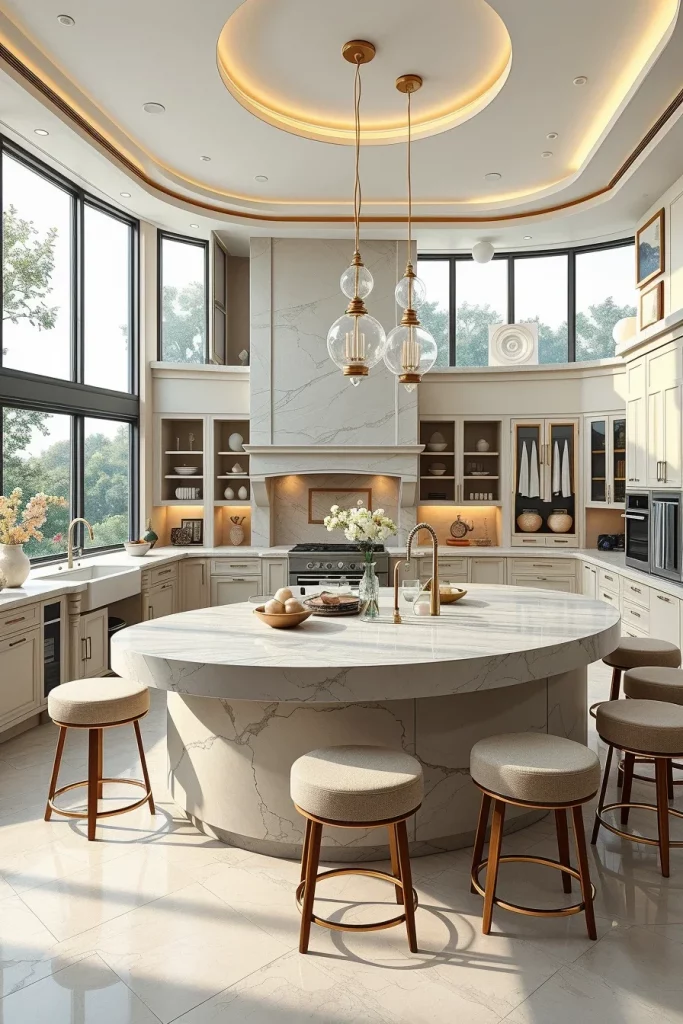
I usually combine premium stone countertops with curved base cabinetry, integrated seating, hidden storage, under-counter lighting, and comfortable upholstered stools. Decorative pendants suspended above the island reinforce its importance while creating a warm atmosphere for cooking, entertaining, and family gatherings. Every element contributes to a unique focal point that combines beauty with everyday practicality.
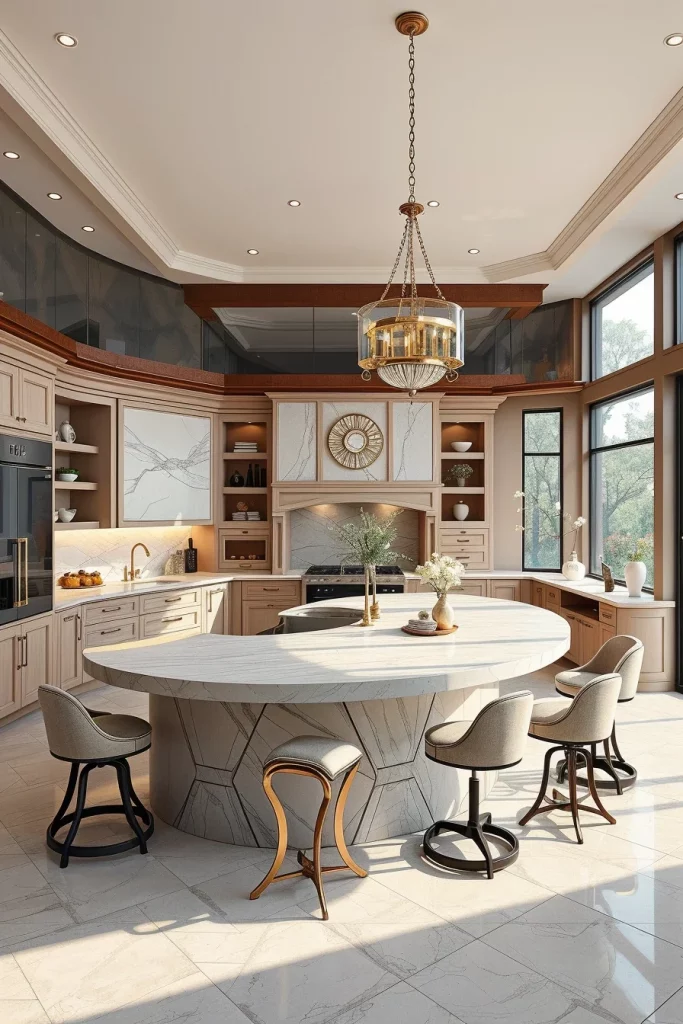
Personally, I appreciate islands that encourage people to gather naturally. Many contemporary interior designers recommend softening large kitchen forms with rounded geometry, and I have found that curved details improve both circulation and visual comfort within open-concept spaces.
I would complete this feature by incorporating discreet electrical outlets, charging stations, and integrated shelving for cookbooks or decorative accessories. These practical additions increase functionality without compromising the elegant appearance.
Elegant Glass Cabinet Designs For Display And Storage
Glass-front cabinetry introduces openness while allowing carefully selected objects to become part of the interior design. I enjoy using clear, ribbed, or lightly tinted glass because each option creates a different visual effect while maintaining a refined atmosphere. Properly styled display cabinets contribute an artistic quality without making the room appear overcrowded.
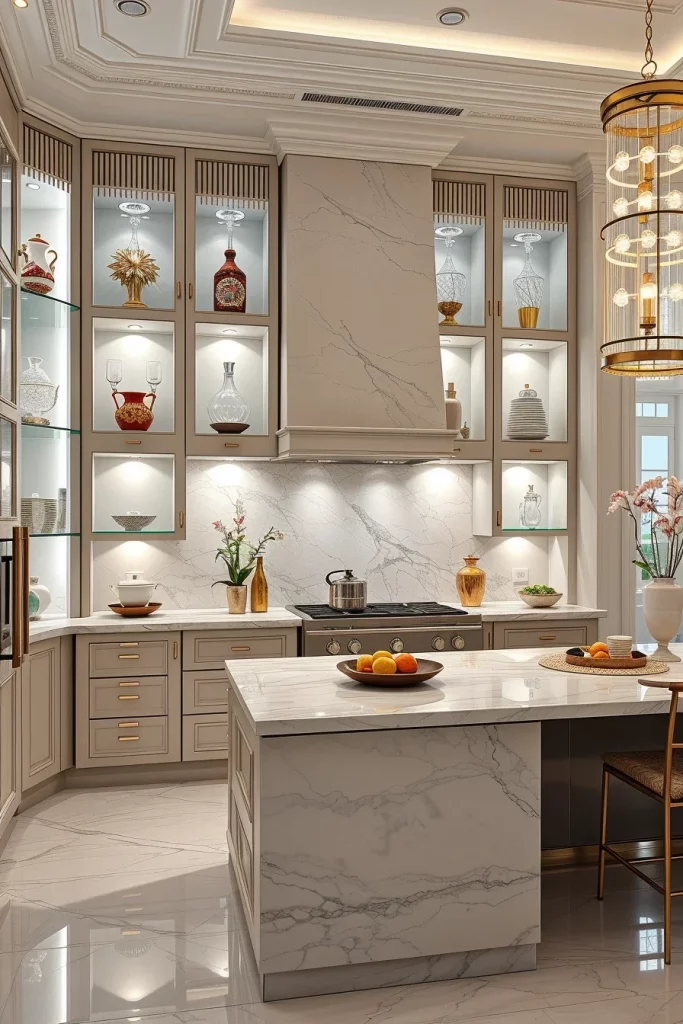
Inside these cabinets, I display coordinated dinnerware, crystal glassware, decorative ceramics, and sculptural serving pieces. Integrated LED lighting highlights each collection while adding warmth during the evening. Slim cabinet frames, elegant hardware, and balanced shelf arrangements help the display feel intentional rather than decorative for its own sake.
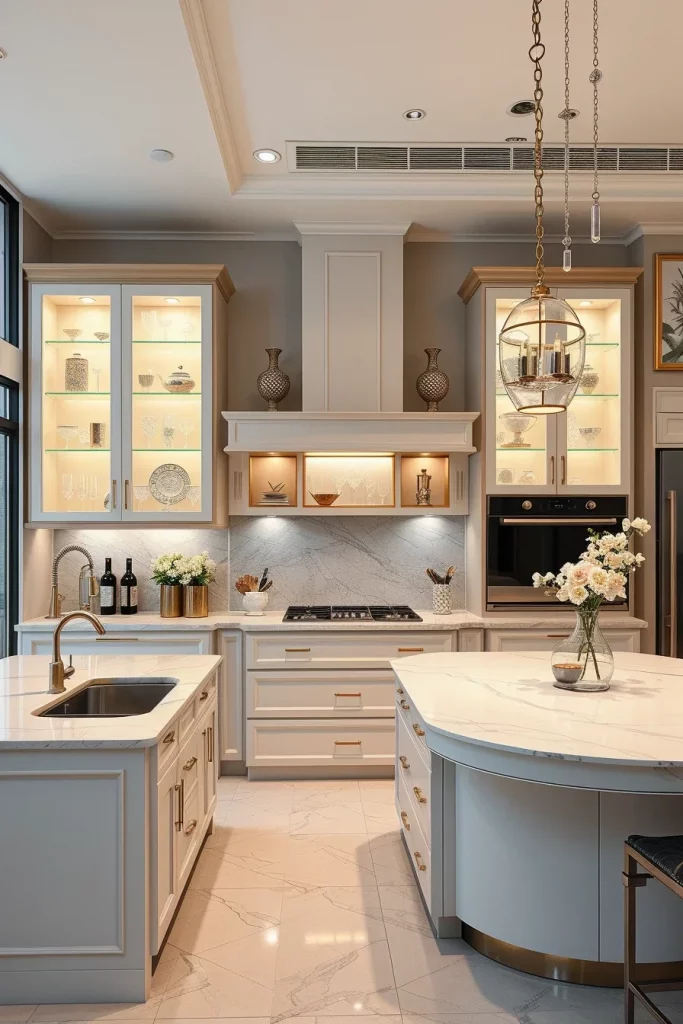
In my experience, displaying fewer high-quality pieces creates a stronger impression than filling every shelf. Design publications such as House Beautiful frequently emphasize restraint when styling glass cabinets, and I have found that carefully edited displays always look more sophisticated.
To make these cabinets even more practical, I would include adjustable glass shelving and dimmable interior lighting. This flexibility allows seasonal styling changes while preserving the polished appearance of the kitchen.
Architectural Wood Slat Details With Modern Curves
I often use architectural slat details to introduce rhythm and dimension into an elegant kitchen without making the space feel visually heavy. Vertical slats with gently rounded transitions soften the geometry of cabinetry and walls, creating a refined balance between structure and movement. When combined with curved forms, these details make the kitchen feel welcoming while adding subtle architectural character. I appreciate how this approach creates a creative focal point without relying on excessive decoration.
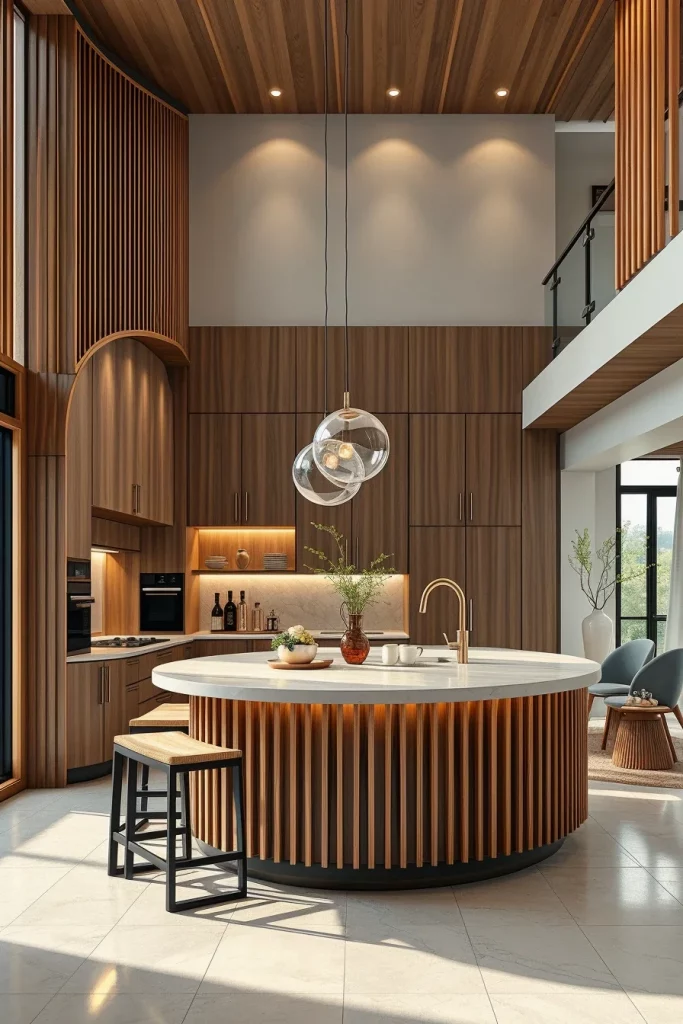
I like incorporating slatted island panels, curved cabinet ends, rounded ceiling features, and matching dining furniture to establish continuity throughout the room. Slim pendant lights, textured stone surfaces, concealed lighting, and carefully selected decorative objects complete the composition while allowing the architectural elements to remain the center of attention. Every component contributes to a layered interior that feels both elegant and practical.
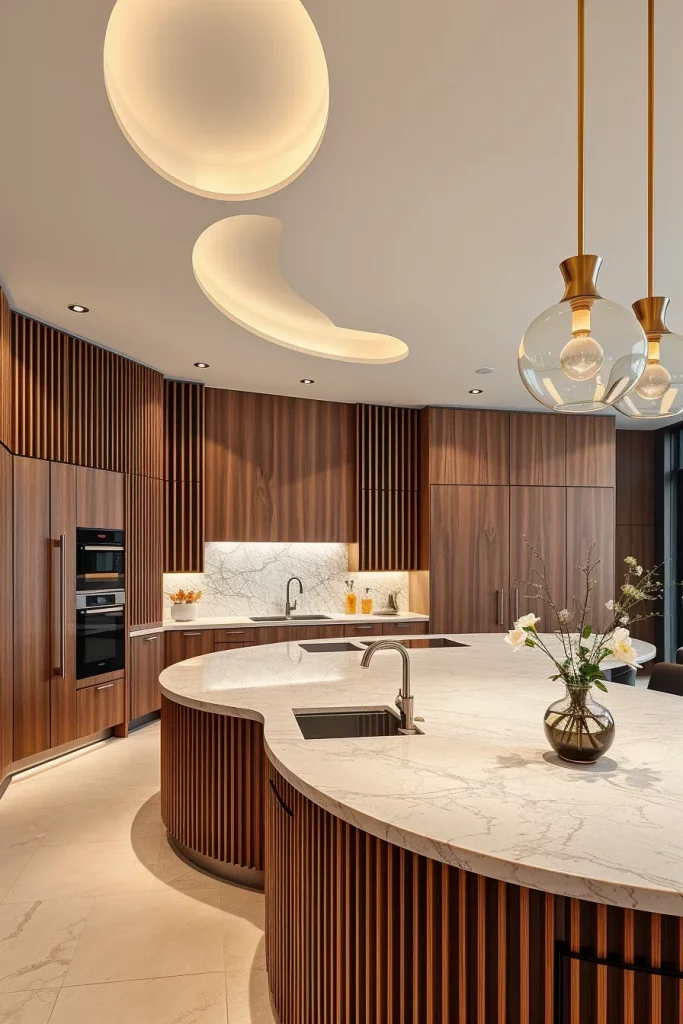
From my experience, architectural detailing should always enhance the room rather than dominate it. Designers featured in Elle Decor often recommend repeating one distinctive element throughout an interior instead of introducing many unrelated features. I find this advice especially valuable because it creates a calm, cohesive environment that remains visually interesting for years.
To complete this concept, I would include soft indirect lighting integrated between selected slats. This subtle illumination highlights texture during the evening and emphasizes the sculptural quality of the design.
Seamless Integrated Appliances For A Luxury Finish
One feature I consistently recommend in elegant kitchens is the use of fully integrated appliances. Concealed refrigerators, dishwashers, wine coolers, and ventilation systems allow cabinetry to become the visual focus while maintaining exceptional functionality. A seamless composition immediately creates a more sophisticated atmosphere because nothing interrupts the clean architectural lines of the room.
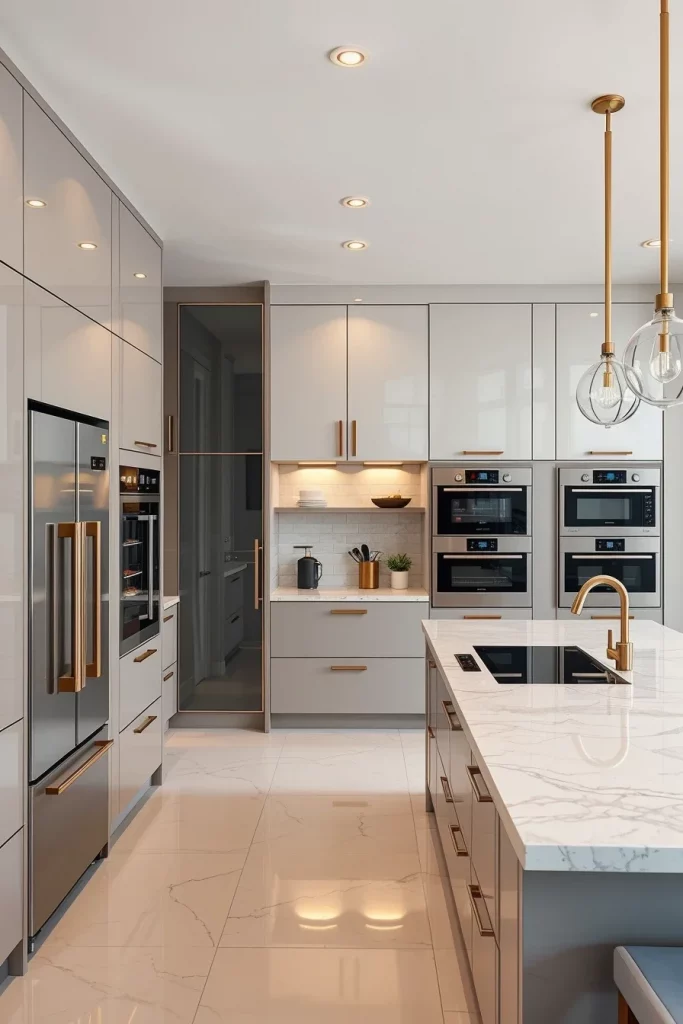
I prefer selecting appliances that disappear behind matching cabinet panels while combining them with handleless doors, hidden ventilation, integrated coffee stations, and built-in ovens positioned at a comfortable height. These choices improve workflow and make the kitchen feel intentionally designed rather than assembled from separate pieces. The result is a stylish environment where every element serves a purpose.
Personally, I believe integrated appliances represent one of the best long-term investments in kitchen design. Professional designers frequently emphasize visual simplicity when planning luxury interiors, and I have found that concealed appliances significantly improve the overall balance of the space while remaining highly practical for everyday use.
I would also recommend incorporating smart home technology that allows appliances to be controlled discreetly through mobile devices or voice assistants. This modern convenience complements the clean aesthetic without introducing unnecessary visual distractions.
Elegant Kitchen Windows That Fill The Space With Natural Light
Natural light has the ability to transform every finish and material within a kitchen. I always consider window placement one of the most important design decisions because daylight enhances textures, softens colors, and makes the entire room feel larger. Expansive windows also strengthen the connection between the kitchen and the surrounding landscape, creating a more relaxing atmosphere throughout the day.
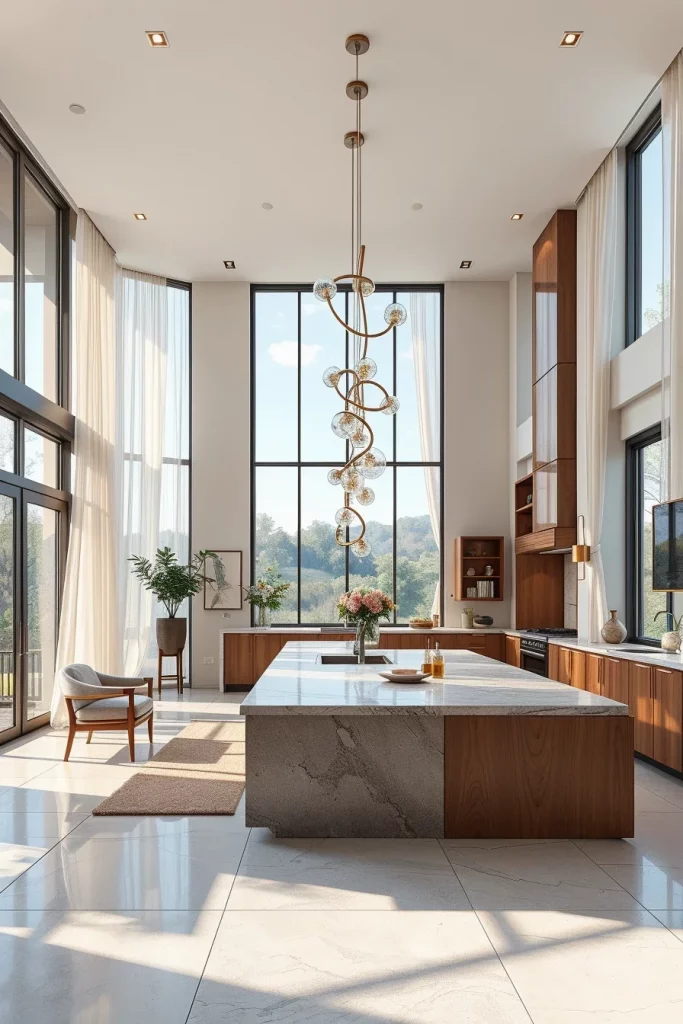
I enjoy pairing floor-to-ceiling windows or oversized picture windows with slim window frames, light window treatments, reflective stone surfaces, and carefully positioned dining areas. Natural light reveals subtle details in cabinetry, countertops, and decorative accessories while reducing the need for artificial lighting during daytime hours. The entire interior feels brighter without losing its elegant character.
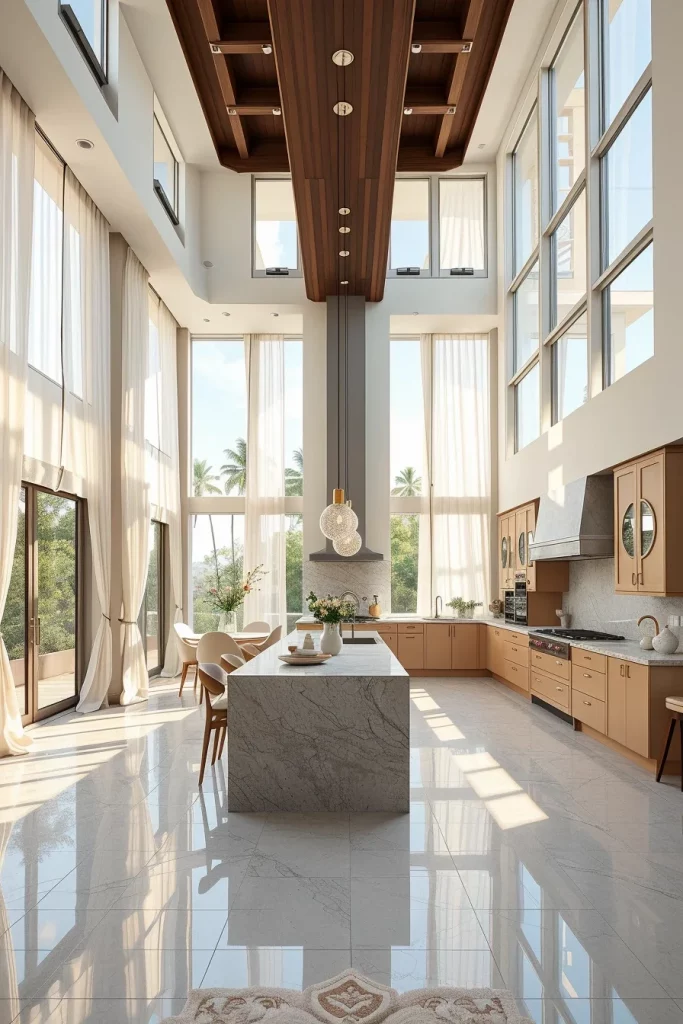
In my opinion, the best kitchens are designed around natural light instead of treating windows as secondary features. Better Homes & Gardens has repeatedly highlighted the importance of daylight in creating welcoming interiors, and I completely agree because well-lit spaces always appear more comfortable and inviting.
To maximize this feature, I would include layered window treatments that provide privacy without blocking daylight. Motorized sheer shades offer flexibility while preserving the sophisticated appearance of the room.
Curved Dining Areas Connected To The Kitchen
I enjoy designing dining spaces that flow naturally from the kitchen through the use of rounded furniture and gentle architectural transitions. A curved dining area encourages conversation while making the open layout feel softer and more connected. Instead of creating a strict separation between cooking and dining zones, I prefer allowing both areas to function as one harmonious environment.
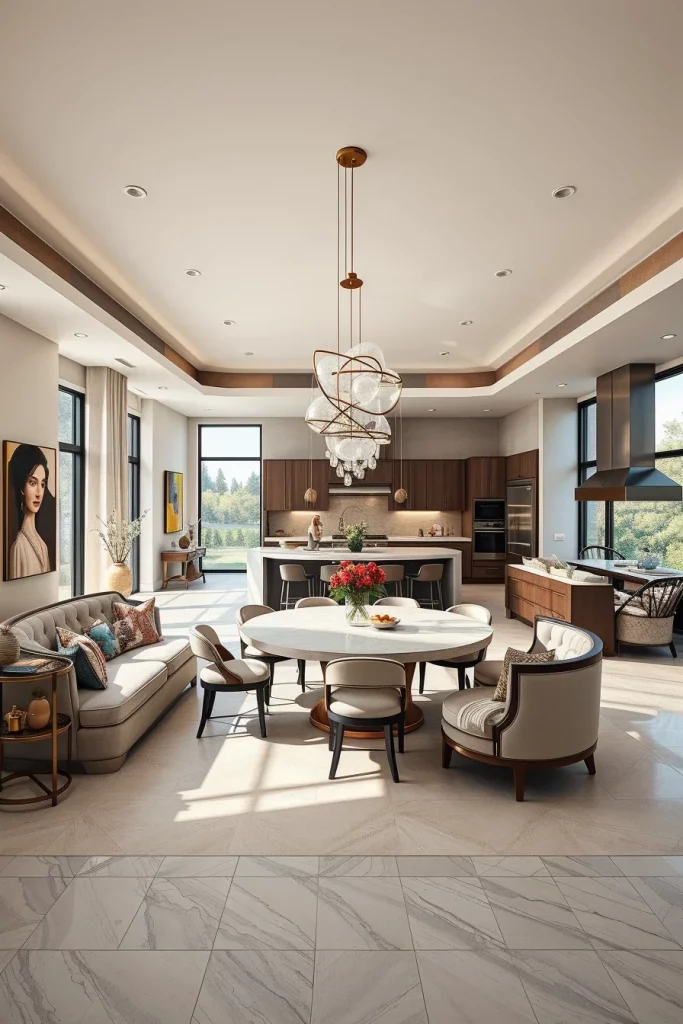
I typically combine a rounded dining table with upholstered chairs, sculptural lighting, built-in banquette seating, curved cabinetry, and decorative shelving that echoes the shapes used throughout the kitchen. Soft fabrics, elegant table settings, and carefully selected artwork reinforce the feeling of comfort while maintaining a refined atmosphere. Together, these elements create a unique and highly functional entertaining space.
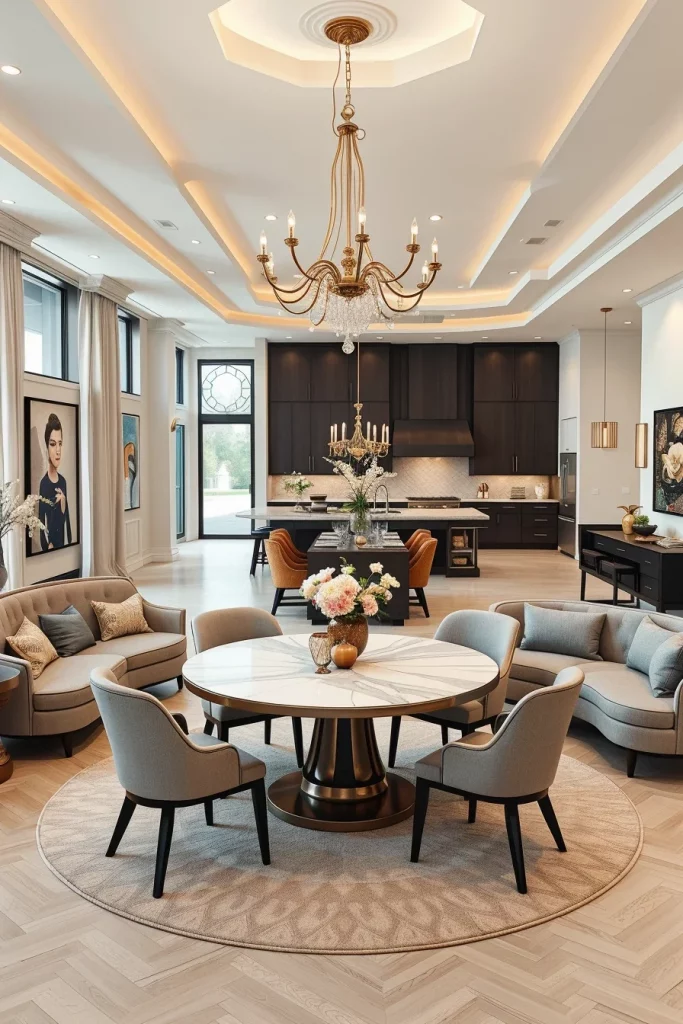
From my perspective, curved layouts improve movement throughout the room and reduce the rigid appearance often associated with modern kitchens. Many contemporary designers have embraced rounded furniture because it creates a more welcoming environment for everyday living, and I have seen how effectively this approach transforms open-concept interiors.
To enhance this dining area further, I would introduce a large textured area rug beneath the table. It helps define the dining zone while adding warmth and improving acoustic comfort without disrupting the visual flow.
Statement Stone Range Hoods As Artistic Features
A beautifully crafted stone range hood can become the defining feature of an elegant kitchen. Rather than hiding the cooking area, I prefer turning it into an artistic centerpiece that anchors the entire room. Sculpted natural stone, graceful curves, and carefully proportioned forms create a dramatic focal point while maintaining timeless sophistication.
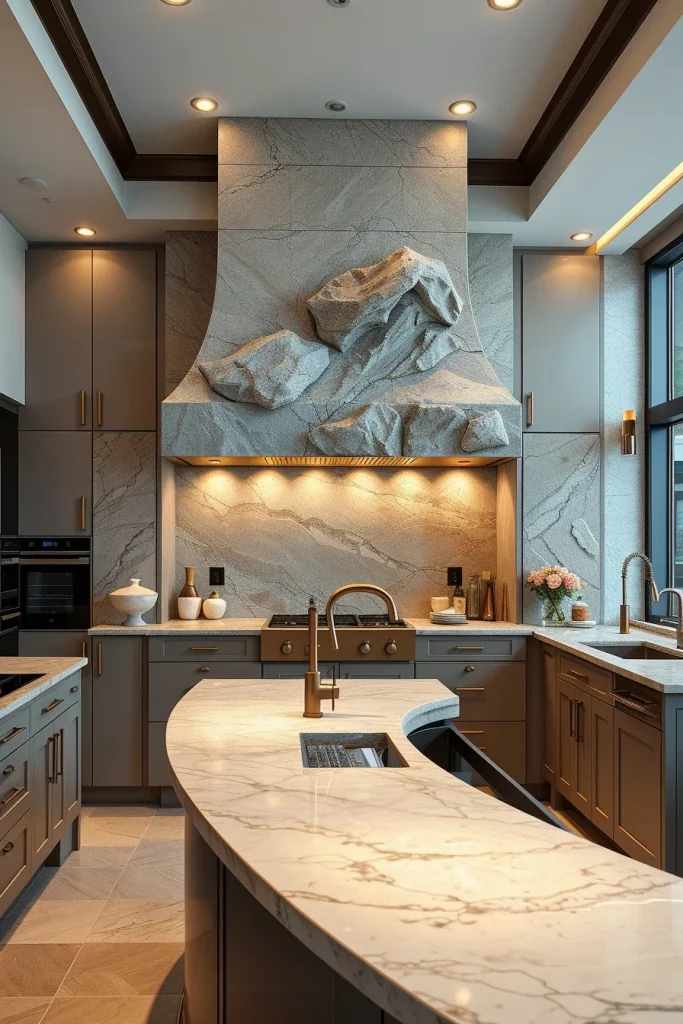
I often pair a statement range hood with matching stone backsplashes, waterfall countertops, integrated shelving, elegant cabinetry, and understated decorative accessories. Balanced lighting ensures the natural veining of the stone becomes a prominent visual feature without overwhelming the surrounding finishes. Every design decision contributes to a kitchen that feels luxurious yet comfortable enough for everyday use.
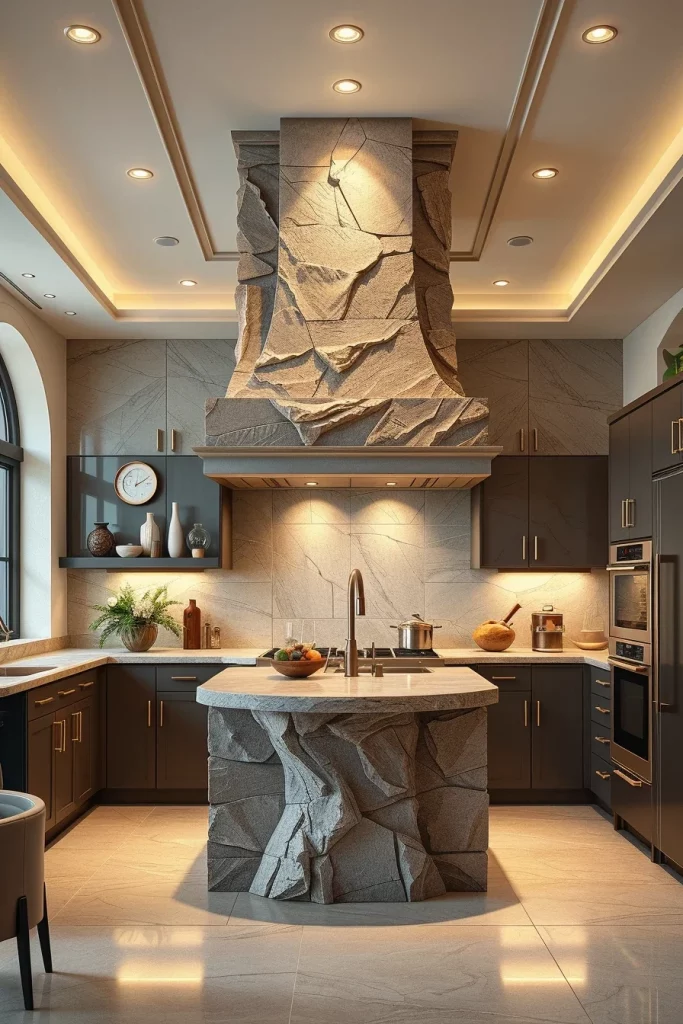
Personally, I appreciate statement range hoods because they combine craftsmanship with functionality. Architectural Digest has showcased numerous kitchens where sculptural stone hoods become the central architectural element, and I believe this approach works especially well when the remaining materials are intentionally restrained.
To complete this design, I would include concealed ventilation, under-cabinet task lighting, and coordinated stone details throughout the kitchen. These additions strengthen the visual continuity while ensuring the feature remains both practical and visually striking.
Layered Lighting For A Warm Elegant Atmosphere
I have found that layered lighting is one of the easiest ways to create an elegant kitchen that feels inviting from morning until late evening. Instead of depending on a single ceiling fixture, I combine ambient, task, and accent lighting to build depth throughout the room. This approach highlights architectural details, softens shadows, and allows every area of the kitchen to feel comfortable for cooking, dining, and entertaining. When paired with curved cabinetry or artistic ceiling details, layered lighting creates a welcoming atmosphere that immediately feels refined.
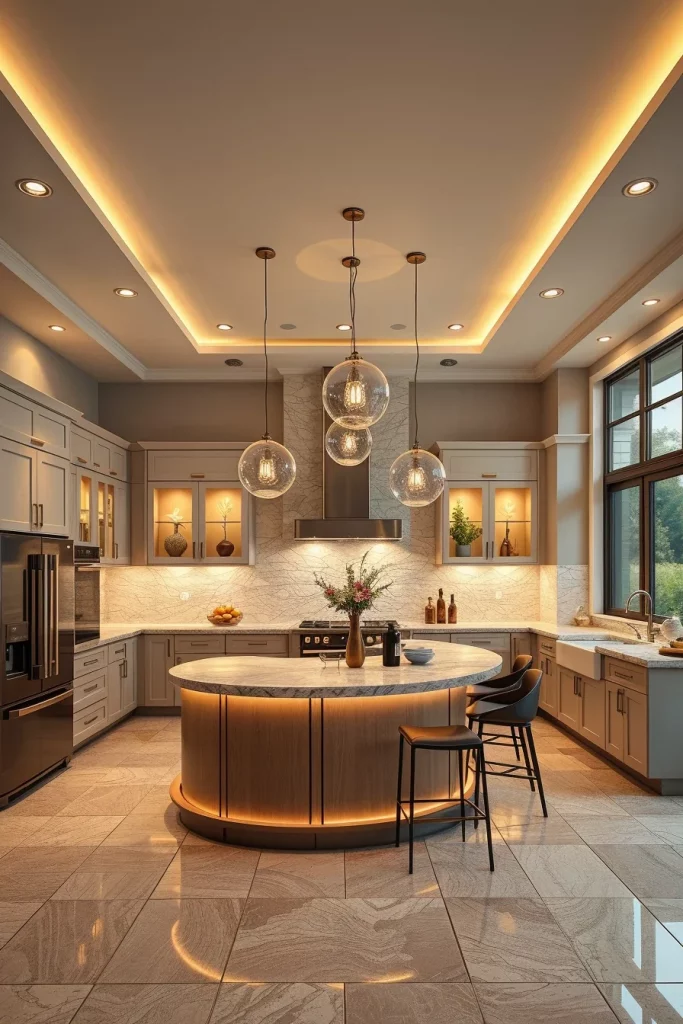
I usually recommend combining recessed ceiling lights with elegant pendant fixtures above the island and subtle LED strips beneath upper cabinets. Decorative sconces near open shelving and softly illuminated display cabinets help showcase beautiful tableware without overwhelming the room. Warm lighting temperatures complement natural stone countertops, textured backsplashes, and soft cabinet finishes, while dimmers allow the brightness to change depending on the occasion. Every lighting source serves a practical purpose while contributing to a balanced visual composition.
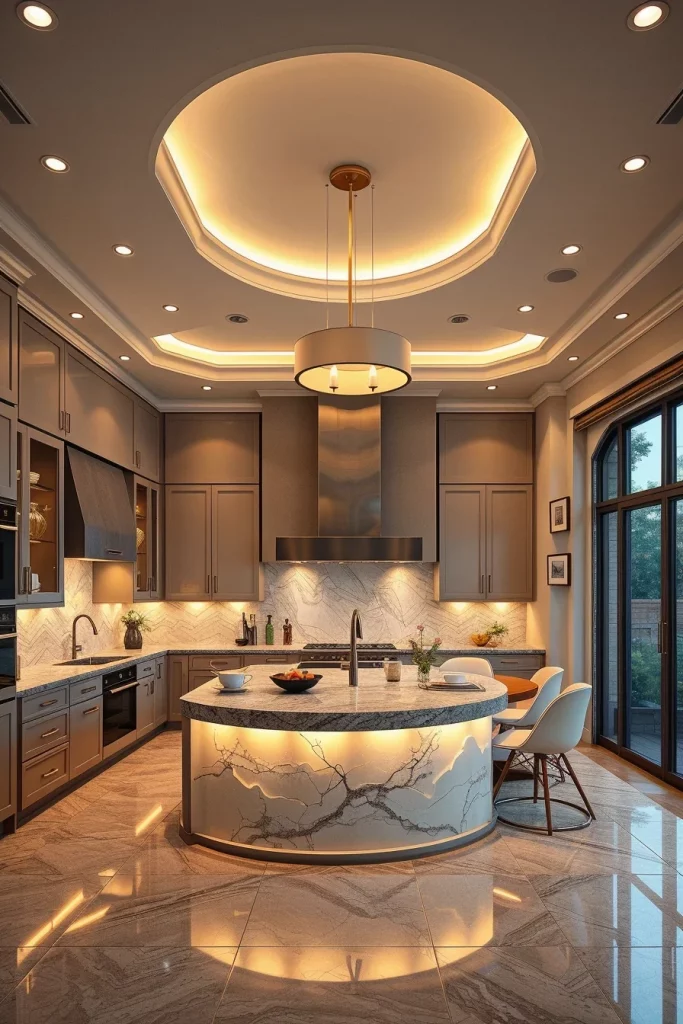
From my experience, many professional designers emphasize lighting as one of the most valuable investments in any renovation. Publications such as Architectural Digest frequently highlight layered lighting because it improves both functionality and atmosphere without requiring dramatic structural changes. I have consistently noticed that even a simple kitchen appears significantly more elegant after the lighting has been carefully planned.
If I wanted to enhance this design further, I would include decorative lighting inside glass-front cabinets and along the toe-kick beneath the lower cabinetry. These subtle additions create depth during the evening while making the entire kitchen appear larger and more luxurious.
Sculptural Bar Stools That Add Designer Character
Whenever I design an elegant kitchen with an island, I pay close attention to the seating because it often becomes the focal point of the room. Sculptural bar stools introduce personality while maintaining a sophisticated appearance. Their flowing silhouettes and carefully proportioned forms bring movement into the space, making the entire kitchen feel more dynamic without becoming visually busy.
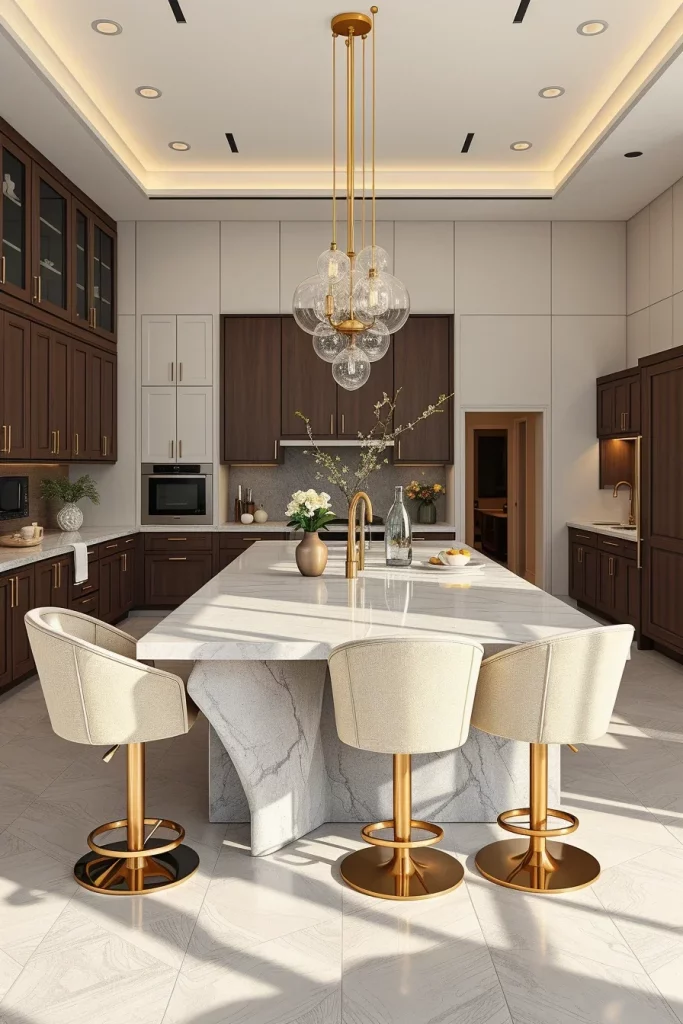
I like selecting stools with upholstered seats, gently rounded backs, slim metal frames, and premium finishes that complement the cabinetry. Soft fabrics, leather upholstery, brushed brass footrests, and elegant wood detailing all contribute to a balanced composition. The height should perfectly match the island while allowing enough clearance for comfortable seating. I also prefer stools with supportive backs because they encourage family and guests to remain comfortably seated during meals and conversations.
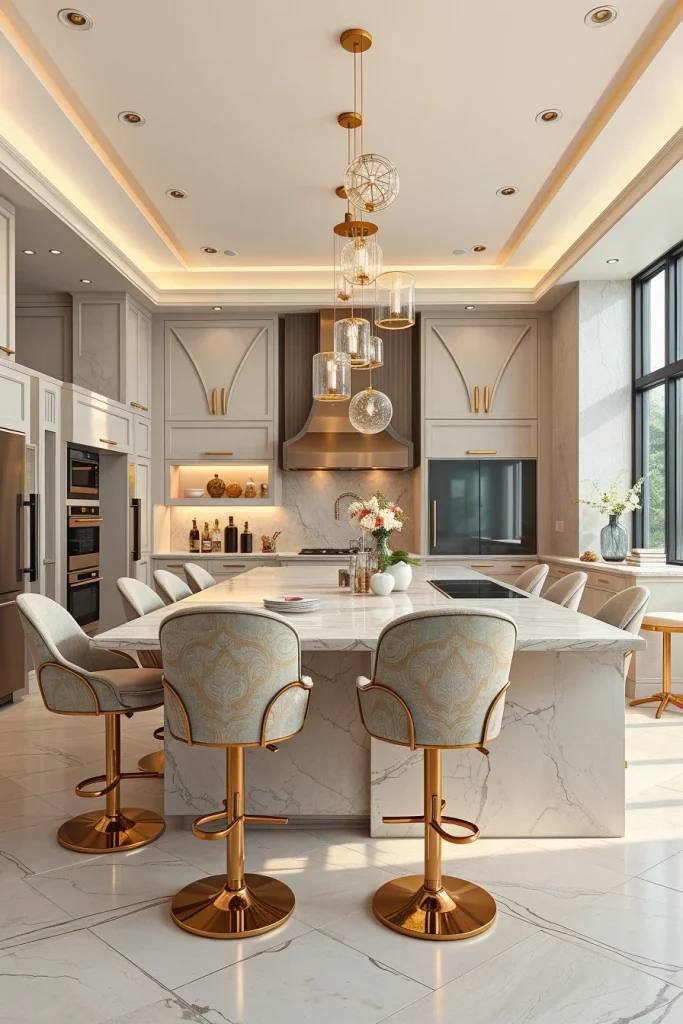
Personally, I believe statement seating has the power to elevate an ordinary kitchen into a professionally designed interior. Interior designers featured in House Beautiful often recommend investing in fewer but higher-quality furniture pieces that combine comfort with long-term durability. I have found this advice especially valuable when choosing furniture that receives daily use.
To complete this section, I would also add a carefully selected area rug beneath the nearby dining zone and decorative pendant lighting positioned directly above the island. Together, these elements visually anchor the seating area and strengthen the overall composition.
Elegant Black And White Kitchens With Contemporary Style
One of my favorite interpretations of elegant kitchen interior design ideas combines black and white finishes with contemporary architecture. This timeless color palette creates contrast while allowing premium materials, refined textures, and clean lines to become the center of attention. The result feels sophisticated rather than trendy, making it suitable for both modern and transitional homes.
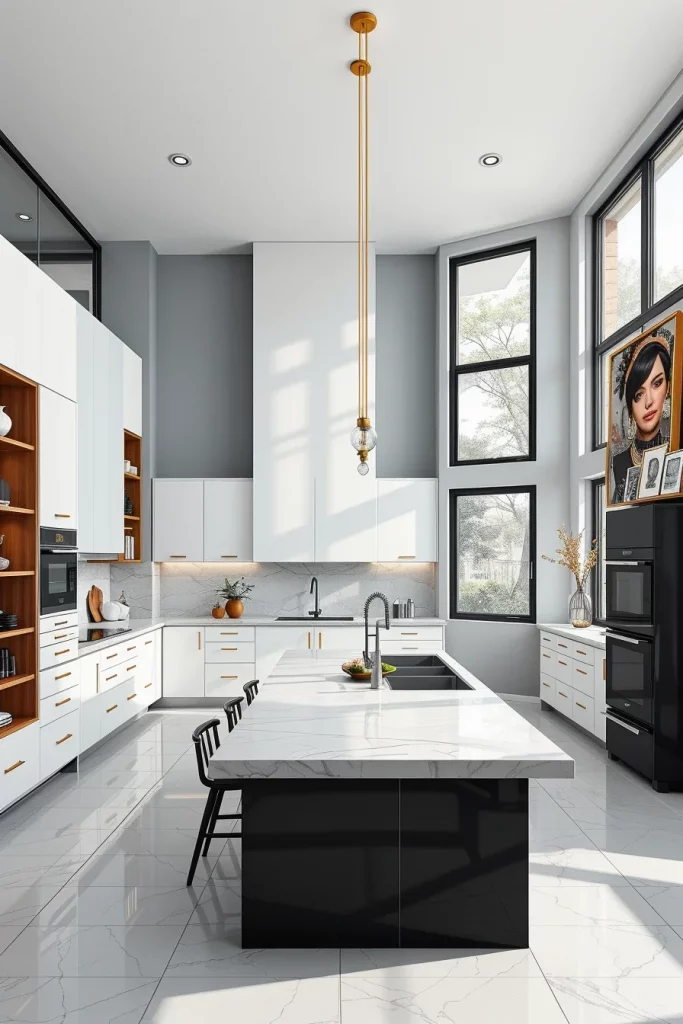
I typically combine white cabinetry with black islands, matte hardware, quartz countertops, integrated appliances, and minimalist shelving. To soften the contrast, I introduce warm wood accents, textured stone backsplashes, and comfortable upholstered seating. Large windows maximize daylight, preventing darker elements from making the room feel enclosed. Carefully selected decorative objects maintain visual interest without creating clutter.
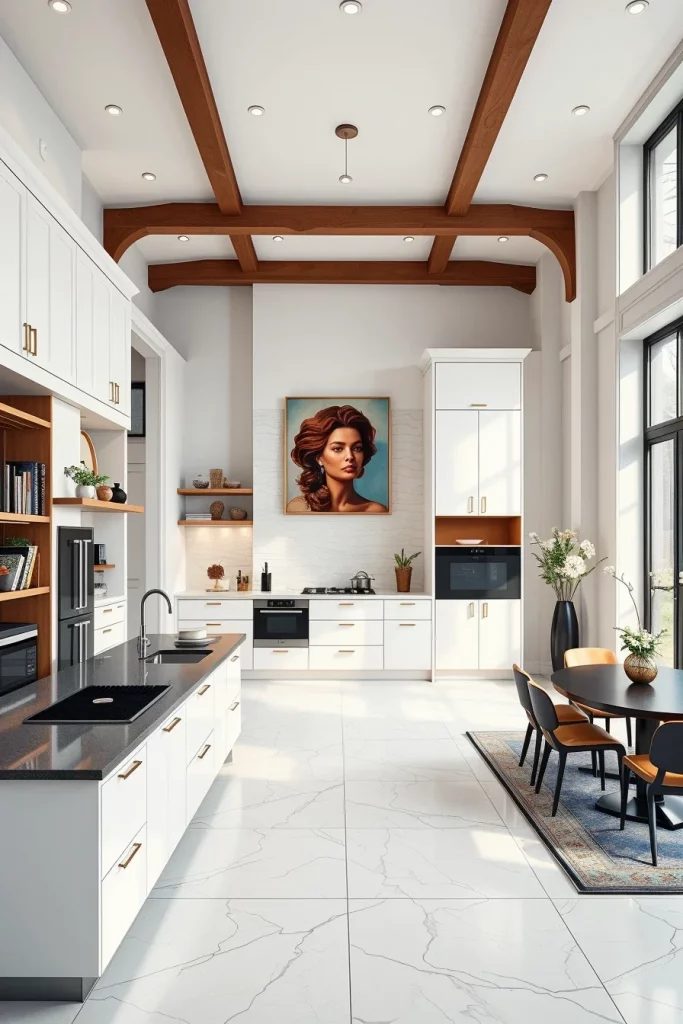
In my opinion, restraint is what makes this style successful. Rather than filling every surface with accessories, I focus on quality materials and intentional styling. Many designers featured by Elle Decor recommend limiting decorative objects so that architectural features and craftsmanship remain the primary visual focus. I have found this approach consistently produces elegant, timeless interiors.
I would complete this space with oversized artwork, fresh greenery placed strategically around the room, and concealed storage solutions that maintain clean visual lines while supporting everyday organization.
Soft Organic Shapes That Transform Modern Kitchens
I enjoy incorporating curved forms because they immediately soften the structured geometry that often dominates modern kitchens. Rounded islands, arched doorways, softly shaped cabinetry, and flowing furniture silhouettes create a welcoming environment that feels comfortable without losing sophistication. These unique shapes help establish a calming atmosphere while adding memorable architectural character.
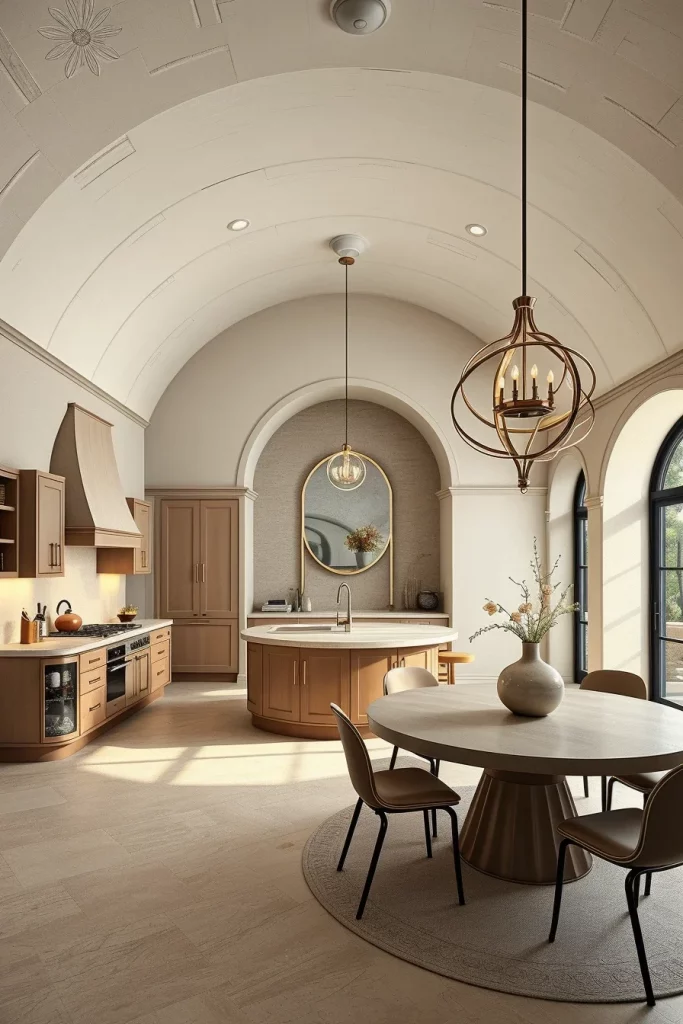
For furnishings, I often choose rounded dining chairs, oval tables, gently curved islands, circular pendant lights, and subtly arched shelving niches. Textured stone, smooth plaster finishes, and natural materials complement these flowing forms beautifully. Even cabinet handles with rounded profiles contribute to the overall harmony while improving everyday usability.
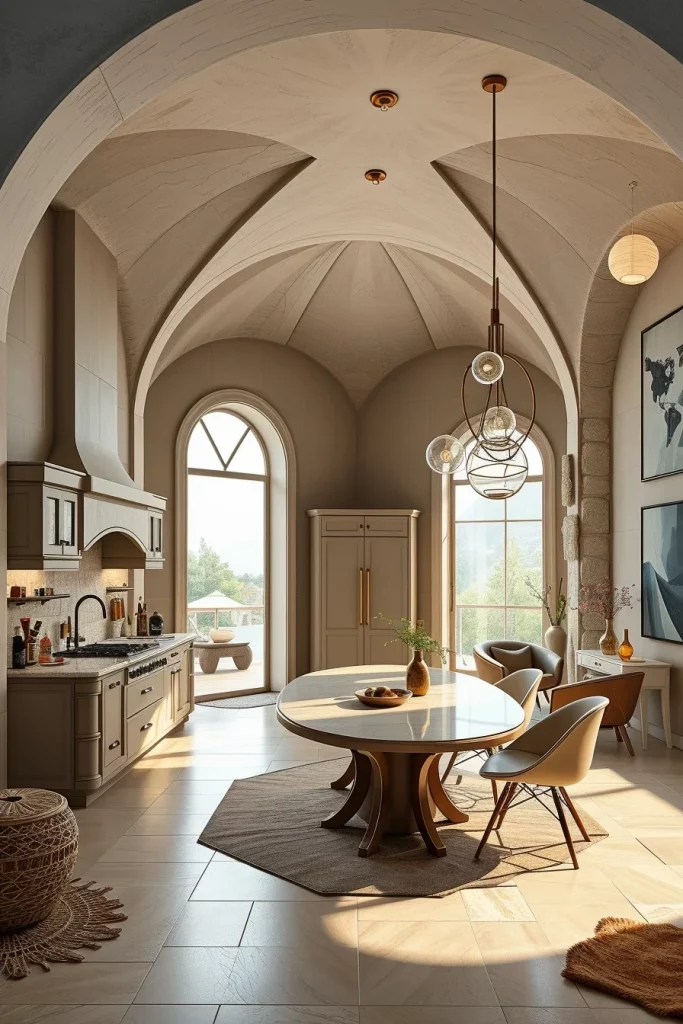
From my perspective, organic forms create kitchens that remain visually interesting for many years because they are based on timeless proportions rather than temporary trends. I frequently notice that homeowners appreciate how these softer lines make larger kitchens feel more intimate while helping smaller rooms appear more open and comfortable.
To strengthen this design, I would introduce custom window treatments, oversized ceramic vases, and a carefully selected neutral color palette that reinforces the graceful movement created by the architectural curves.
Metallic Accents That Add Refined Sophistication
Metallic details provide an elegant finishing layer that enhances almost every kitchen style. I prefer using them thoughtfully rather than excessively, allowing each finish to complement the surrounding materials instead of competing for attention. Brushed brass, warm bronze, satin nickel, and blackened steel all contribute different personalities while maintaining an elevated appearance.
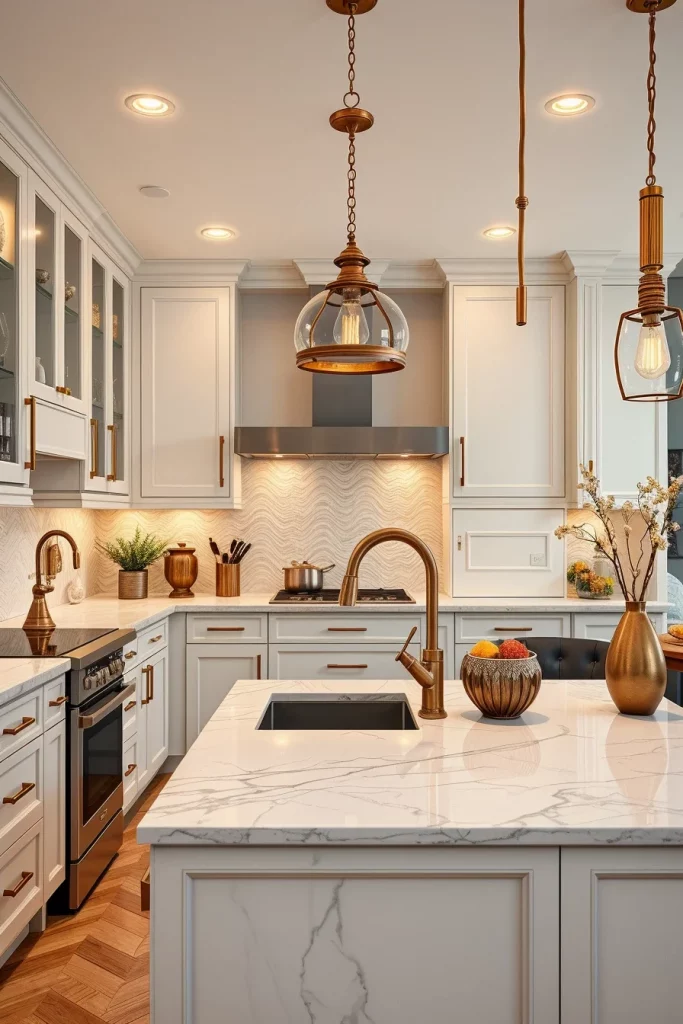
I usually coordinate cabinet hardware, faucets, pendant lighting, appliance trims, shelving brackets, and decorative accessories within the same finish family. Mixing too many metals often reduces visual harmony, so I focus on consistency throughout the room. Metallic surfaces also reflect light beautifully, helping brighten darker corners while emphasizing premium materials such as marble, quartz, and textured stone.
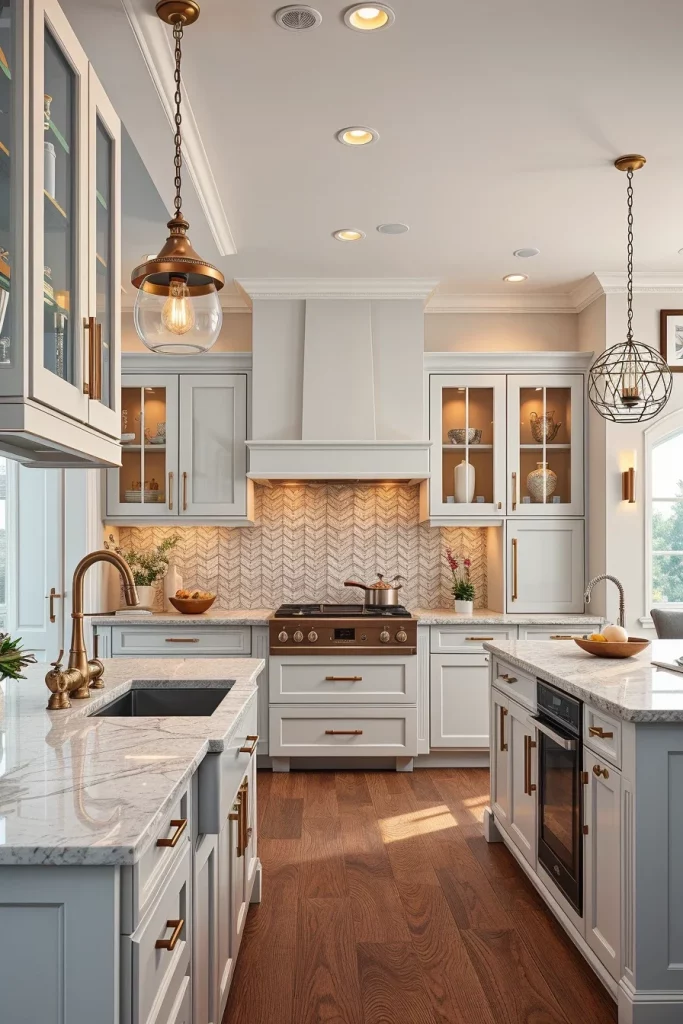
I have learned that subtle details often leave the strongest impression. Many respected interior designers recommend repeating the same finish throughout the space to create cohesion, and I have consistently seen how this strategy makes kitchens feel professionally designed rather than randomly assembled.
If I were refining this kitchen further, I would include decorative mirrors, metallic-framed artwork, elegant serving trays, and carefully selected table accessories that reinforce the chosen finish while maintaining balance throughout the entire interior.
Custom Pantry Designs That Blend Beauty And Function
I always believe that a beautifully designed pantry is one of the most valuable additions to an elegant kitchen. A custom pantry keeps everyday essentials organized while allowing the main kitchen to remain uncluttered and visually calm. Whether the pantry is hidden behind matching cabinet doors or displayed with glass-front storage, it should feel like a natural extension of the kitchen rather than a separate utility space. Thoughtful organization also makes daily cooking more efficient while supporting a polished and timeless interior.
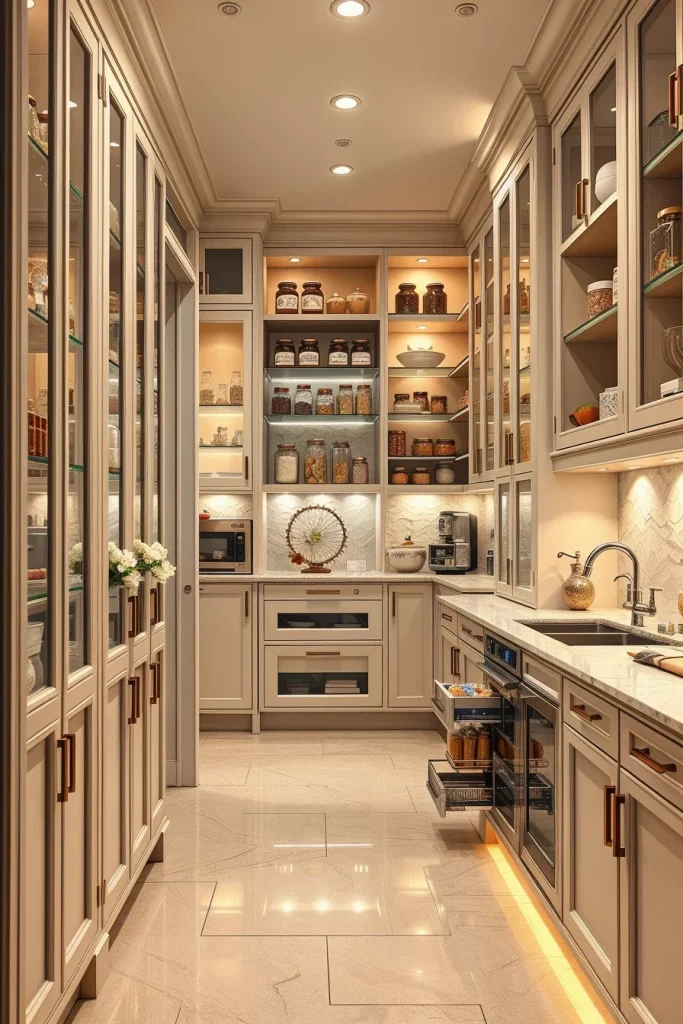
I prefer combining floor-to-ceiling cabinetry with adjustable shelving, deep pull-out drawers, dedicated spice storage, and integrated baskets for fresh produce. Small appliance garages keep countertops clear, while built-in lighting improves visibility inside every shelf. Decorative storage containers, matching glass jars, and labeled organizers help create a clean appearance that feels both practical and elegant. I also recommend including a compact countertop for preparing coffee or organizing groceries before they enter the main kitchen.
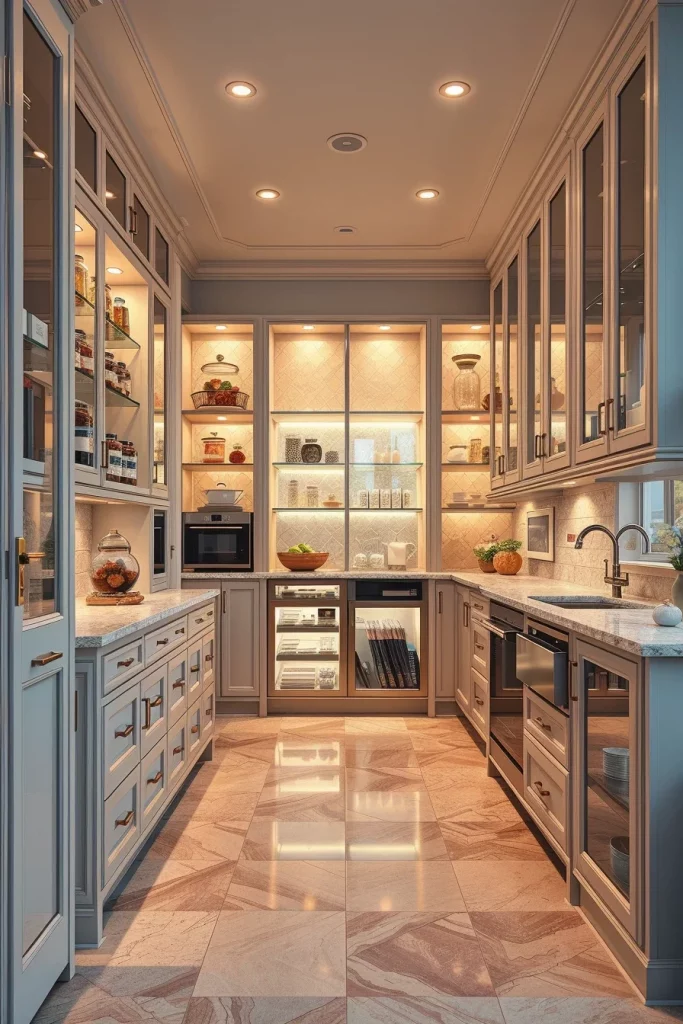
From my experience, the most successful pantry designs balance functionality with visual consistency. Designers frequently featured by Better Homes & Gardens recommend treating the pantry with the same attention to materials and finishes as the primary kitchen. I completely agree because every connected space contributes to the overall impression of quality and craftsmanship.
To complete this pantry, I would add hidden electrical outlets for small appliances, soft-close hardware throughout, and decorative interior finishes that coordinate with the rest of the kitchen while making storage feel intentional rather than purely functional.
Elegant Open-Concept Kitchens With Flowing Curves
Open-concept layouts continue to define modern homes, and I enjoy designing them with flowing transitions instead of rigid divisions. Soft architectural curves help separate cooking, dining, and living zones without interrupting the openness of the space. These creative layouts encourage natural movement while making the kitchen feel welcoming for both everyday family life and entertaining guests. Carefully planned circulation ensures every area remains functional while preserving an elegant atmosphere.
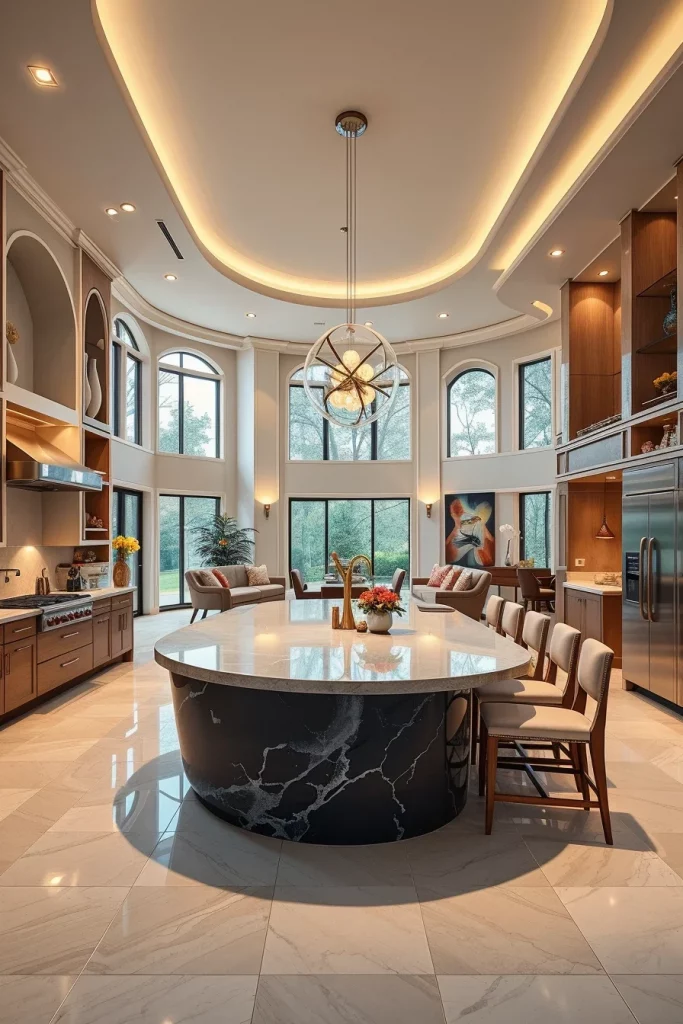
I often incorporate curved kitchen islands, rounded ceiling details, softly shaped built-in shelving, and furniture with organic silhouettes to create visual continuity. Comfortable lounge seating positioned near the kitchen encourages conversation, while coordinated finishes connect each area seamlessly. Large windows and carefully planned lighting strengthen the feeling of openness by allowing natural and artificial light to travel throughout the space.
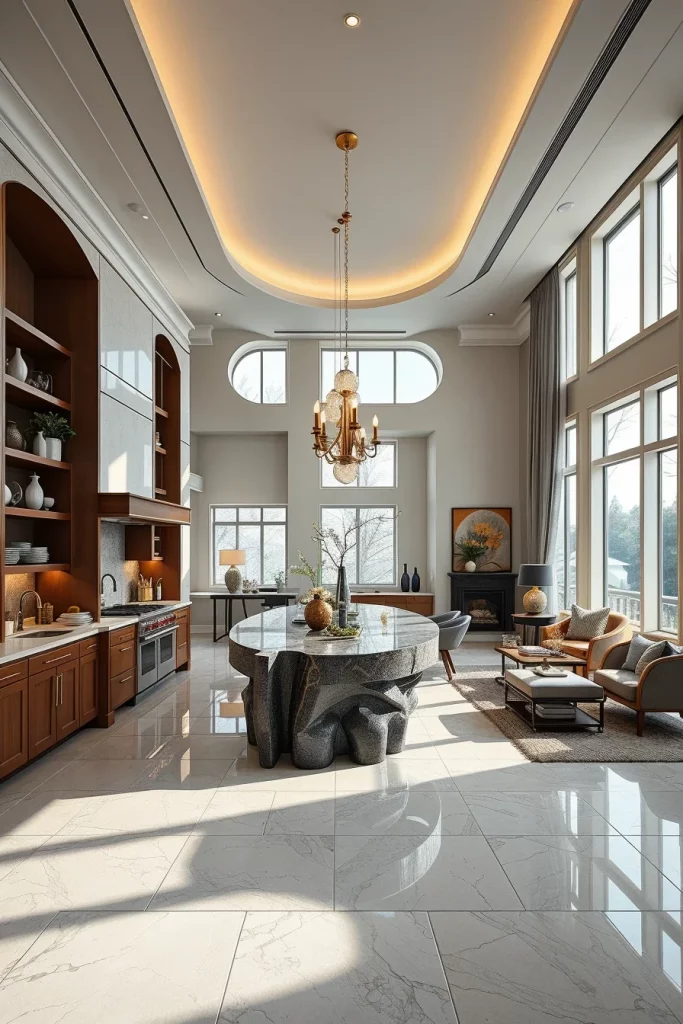
I have found that open kitchens work best when every design decision supports a cohesive visual language. Interior designers frequently recommend repeating shapes, finishes, and colors throughout connected spaces to maintain harmony, and I have seen this approach produce interiors that feel calm rather than fragmented.
If I wanted to enhance this concept further, I would introduce custom ceiling treatments, integrated sound systems, and subtle room dividers made from decorative slatted panels or sculptural shelving to define zones without sacrificing openness.
Designer Finishing Touches That Complete An Elegant Kitchen
Even the most impressive kitchen can feel incomplete without carefully selected finishing touches. I see these final details as the elements that transform a beautiful room into one with genuine personality. Decorative accessories should enhance the architecture rather than compete with it, allowing the kitchen to remain sophisticated while reflecting the homeowner’s style. Small refinements often have a greater impact than large decorative statements.
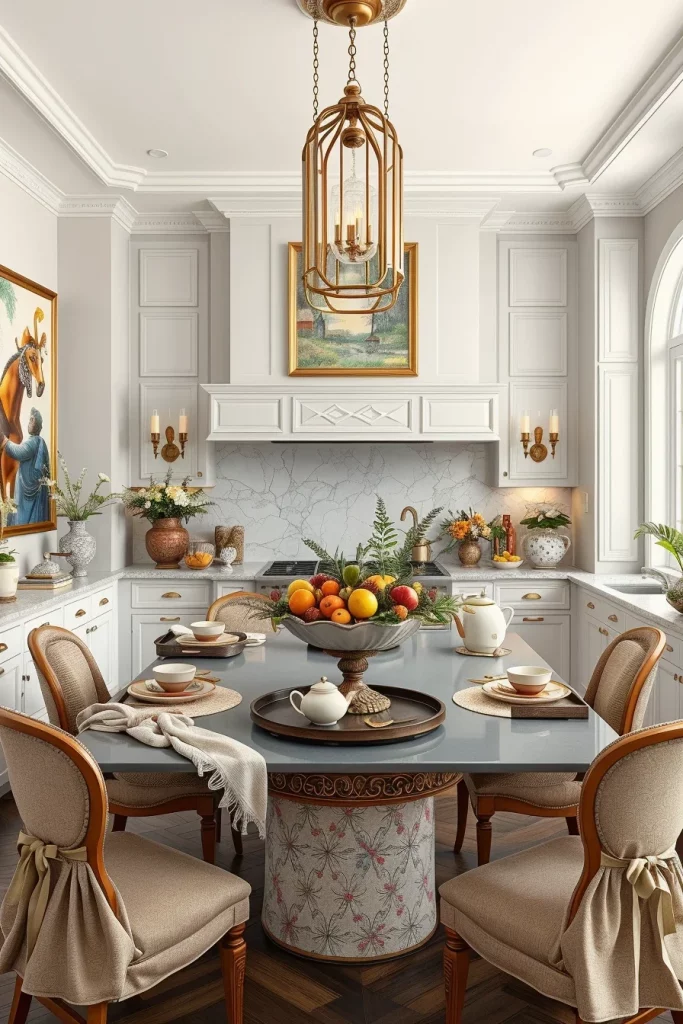
I like incorporating handcrafted ceramic bowls, oversized artwork, elegant trays, textured linens, decorative cutting boards, premium cookware displayed on open shelves, and carefully selected vases. Coordinated hardware, refined window treatments, and understated decorative objects create visual balance throughout the room. Fresh seasonal fruit, quality wooden utensils, and sculptural centerpieces add warmth while preserving a clean appearance.
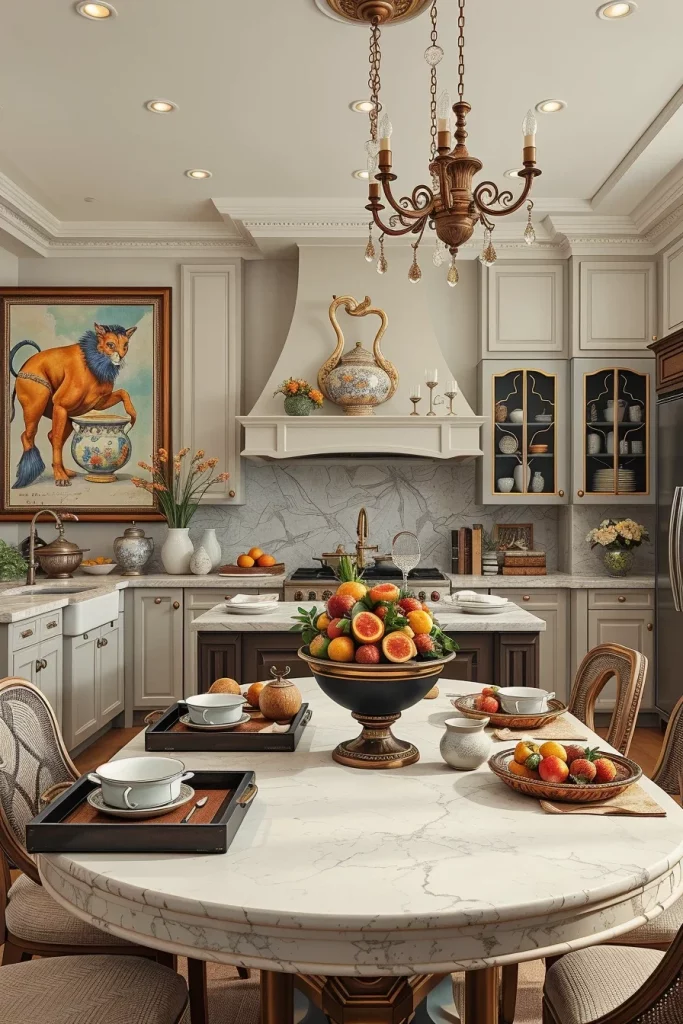
Personally, I have learned that editing decorative elements is just as important as selecting them. Many respected interior stylists recommend displaying fewer accessories of higher quality rather than filling every available surface. I consistently find that this approach allows the craftsmanship of the cabinetry, countertops, and architectural details to remain the primary focus.
To complete this space, I would introduce subtle fragrances through fresh herbs or elegant candles, coordinated dining accessories, and a curated collection of decorative objects that can be updated seasonally without changing the overall design.
Elegant Kitchen Interior Design Ideas For Every Home Style
I believe elegance can be achieved in almost any home regardless of its architectural style. Instead of following temporary trends, I focus on creating balanced interiors that respect the character of the home while introducing artistic, stylish, and unique details. Whether the kitchen belongs to a city apartment, a suburban family home, or a countryside residence, thoughtful planning creates a sophisticated environment that feels authentic.
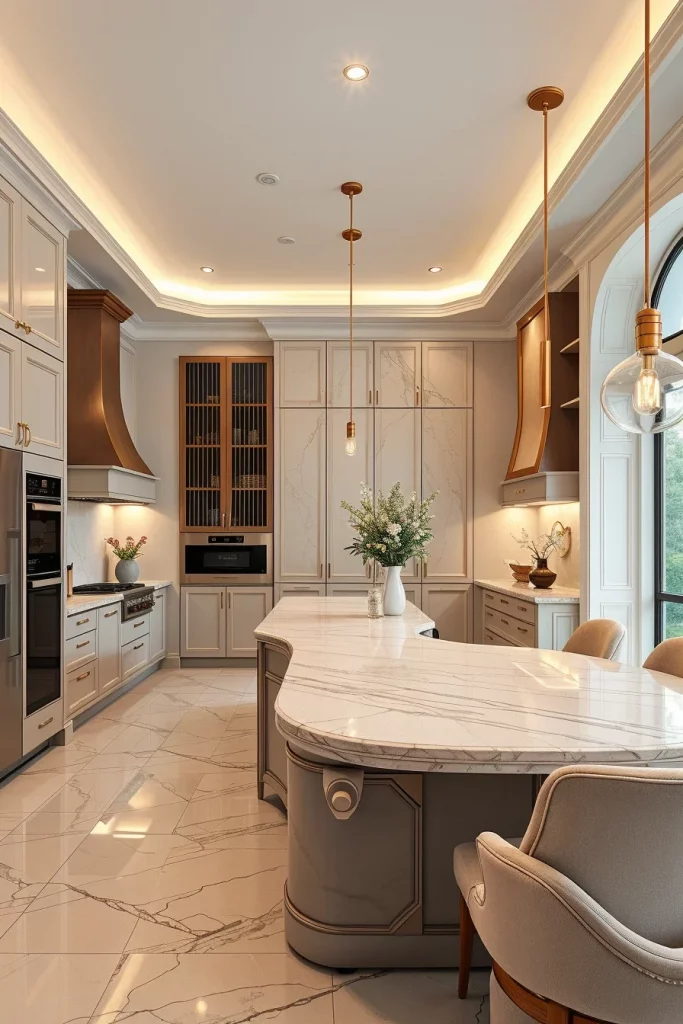
For contemporary homes, I recommend clean cabinetry, integrated appliances, and sculptural lighting. Transitional interiors benefit from decorative moldings, natural stone, and elegant furniture with soft curves. Traditional homes can incorporate refined cabinetry, timeless hardware, and carefully selected textures that modernize the space without removing its original charm. Regardless of style, quality materials and thoughtful proportions remain essential.
From my perspective, flexibility is one of the greatest strengths of elegant design. Rather than copying a showroom, I prefer adapting ideas to suit the architecture, daily routines, and personal preferences of each homeowner. This approach creates kitchens that remain comfortable, functional, and visually appealing long after trends have changed.
To strengthen any kitchen style, I would also include layered lighting, concealed storage, durable countertop materials, and a carefully coordinated palette that ties every design element together while maintaining visual harmony.
Creating A Timeless Elegant Kitchen That Never Goes Out Of Style
Whenever I design an elegant kitchen, I think beyond current trends and focus on choices that will remain attractive for decades. Timeless kitchens rely on thoughtful proportions, durable materials, balanced color palettes, and quality craftsmanship instead of short-lived fashions. By combining functionality with understated sophistication, the space continues to feel fresh even as design preferences evolve. This approach creates a kitchen that grows with the home rather than requiring constant updates.
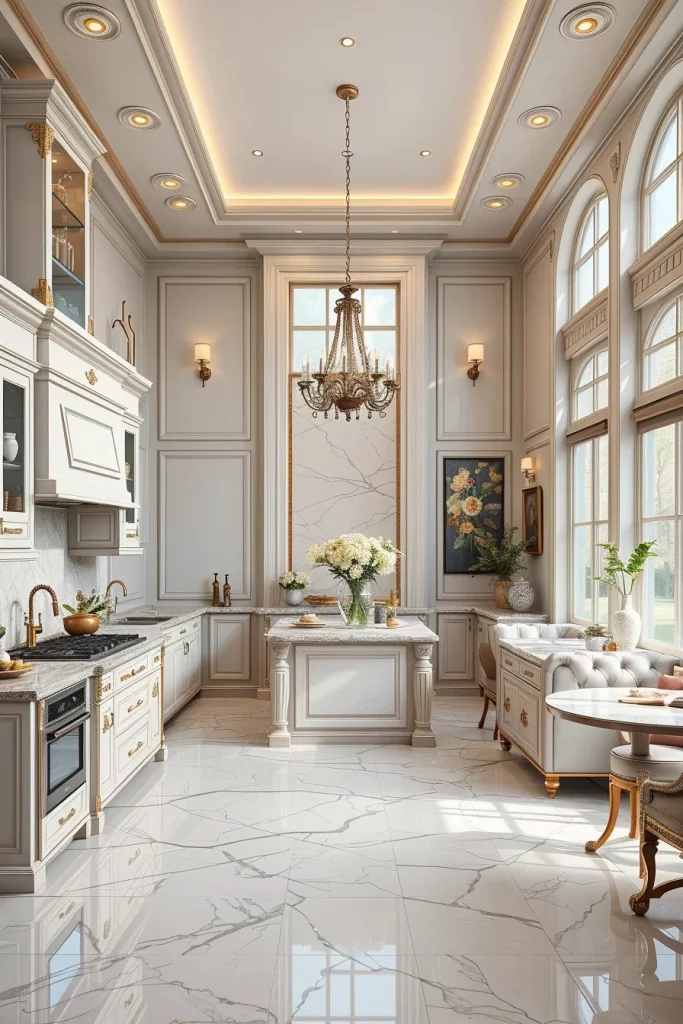
I usually recommend investing in custom cabinetry, premium countertops, high-quality flooring, integrated appliances, classic lighting, and furniture with graceful silhouettes. Neutral colors provide flexibility for future decorative changes, while carefully selected textures introduce warmth and visual interest. Hidden storage solutions, durable finishes, and practical layouts ensure the kitchen performs as beautifully as it looks throughout everyday life.
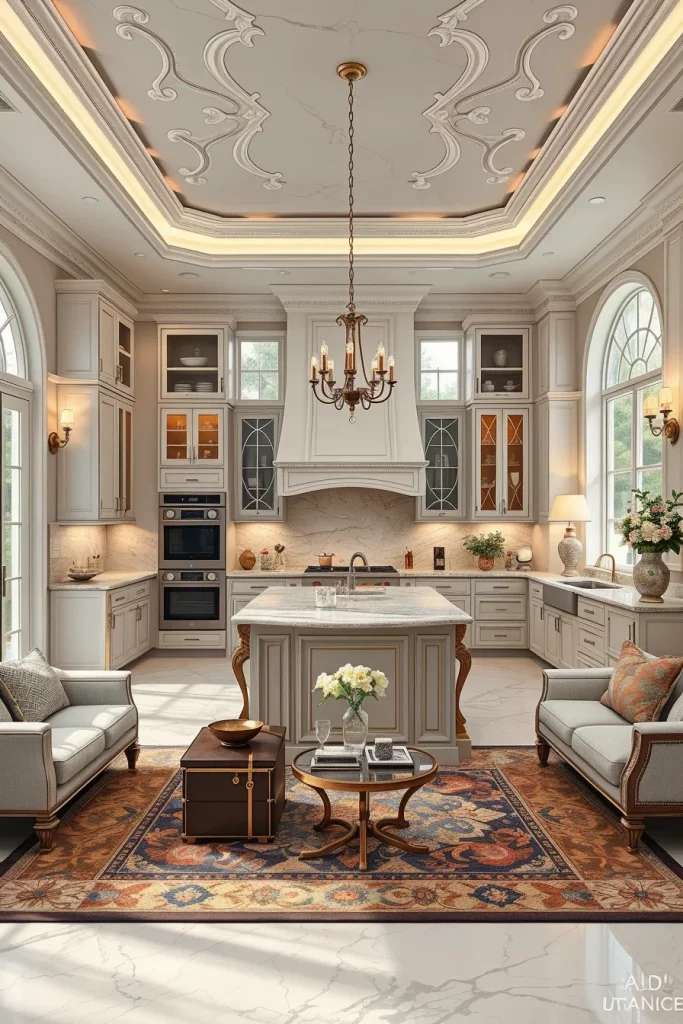
In my experience, timeless elegance comes from consistency rather than excess. Many respected designers emphasize selecting fewer materials of exceptional quality instead of combining numerous competing finishes. I have found that this philosophy creates interiors that remain sophisticated year after year while requiring only minimal decorative updates.
If I were adding the final layer to this kitchen, I would include meaningful artwork, carefully chosen accessories, comfortable seating, and subtle seasonal accents that refresh the space without changing its timeless character.
Elegant kitchen interior design ideas are all about blending beauty, functionality, and timeless style into one cohesive space. Whether you choose sculptural details, curved elements, luxurious finishes, or understated elegance, each design can reflect your personal taste while enhancing everyday living. Let these inspiring ideas guide you toward creating a kitchen that feels sophisticated, welcoming, and designed to stand the test of time.