
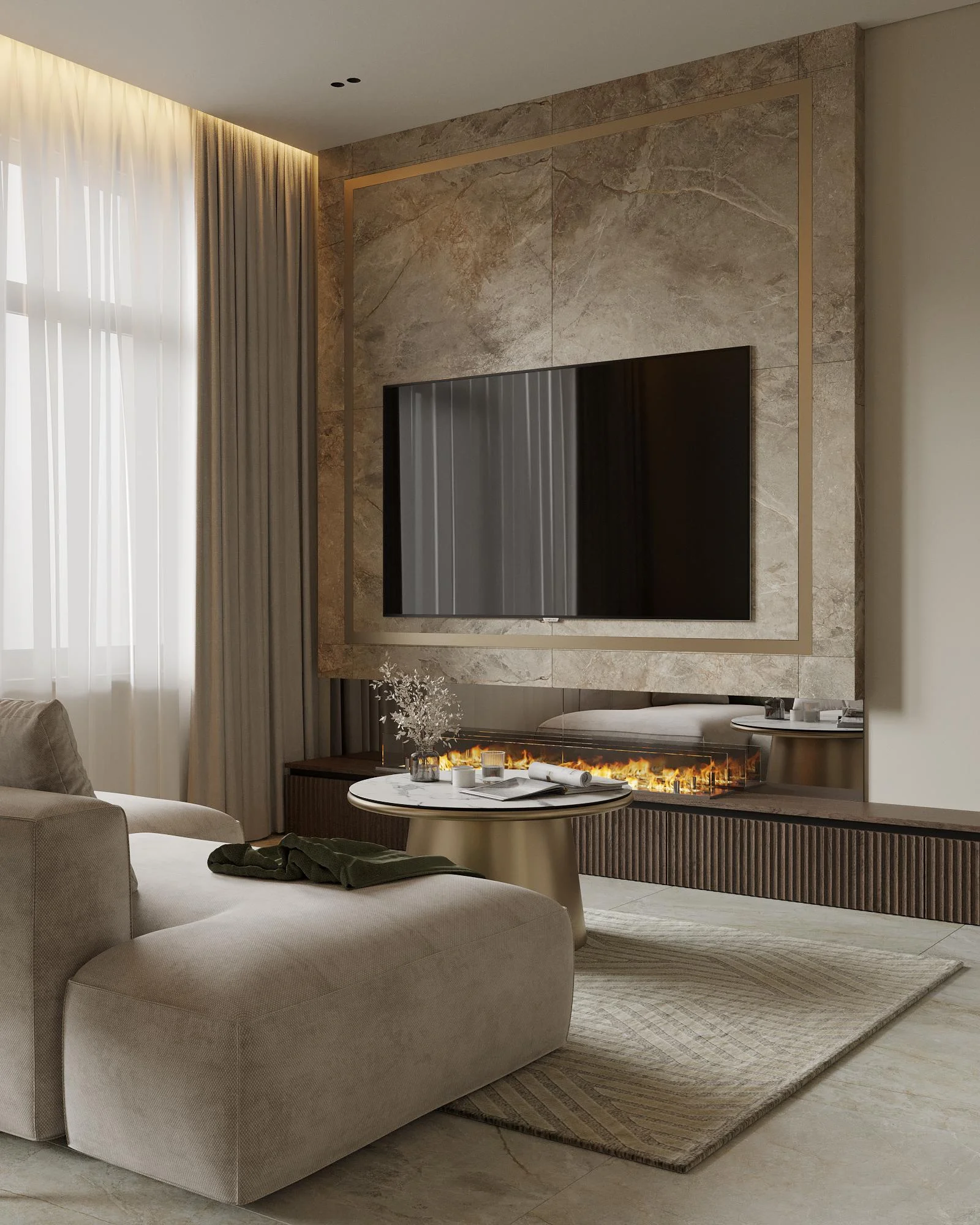
A fireplace can instantly make a living room feel warmer, more inviting, and full of character. I love how the right fireplace design can become the natural focal point while complementing the furniture, architecture, and overall mood of the space. From rustic stone and classic brick surrounds to sleek contemporary designs, there are countless ways to create an elegant fireplace that feels perfectly at home. In this collection, I’m exploring beautiful fireplace interiors that show how different materials, layouts, colors, and decorative details can transform a living room. Each design offers practical inspiration for creating a comfortable space that feels both stylish and welcoming. Whether you prefer a traditional retreat or a modern statement fireplace, these ideas can help you find an approach that suits your own home.
Modern Corner Fireplace Framed by Expansive Windows
I see this room as a beautiful example of how a fireplace can share attention with a spectacular outdoor view. Floor-to-ceiling windows wrap around the seating area, revealing a snowy forest beyond, while a tall, dark freestanding fireplace rises beside the glass. A deep purple lounge chair, a small round side table, a white throw, and a colorful cushion create a comfortable reading corner, while books are arranged on the low coffee table in the foreground. The wood-toned ceiling adds warmth to the otherwise crisp, contemporary space.
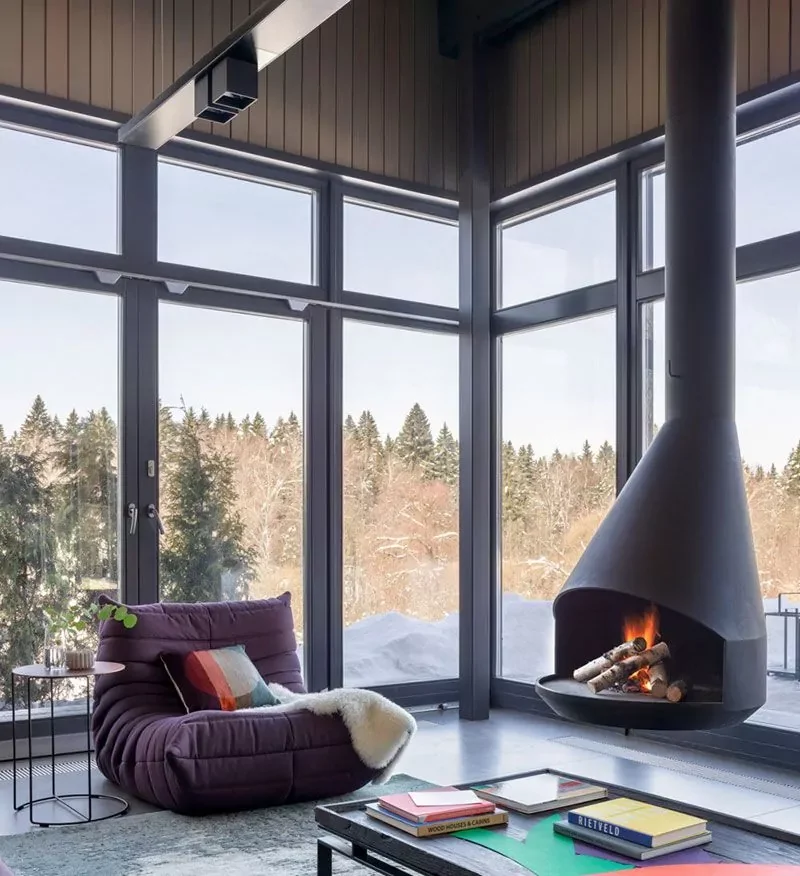
What works particularly well for me is the balance between the dramatic architecture and the relatively simple furniture arrangement. The fireplace has a strong sculptural silhouette, but the chair and soft textiles make the room feel relaxed rather than formal. I also like the way the fireplace faces into the living area while the windows keep the room visually open. The result is a space where the fire, the forest view, and the seating area all contribute to the feeling of comfort.
When I look at a room like this, I would resist adding too many decorative pieces. The architecture already provides plenty of visual interest, so I would keep the furniture purposeful and allow the fireplace to remain clearly visible. A generously sized lounge chair, a soft throw, a compact side table, and a few books can create much of the same inviting effect without competing with the view.
Classic Brick Fireplace With Layered Traditional Comfort
Here I see a much more traditional living room centered around a substantial brick fireplace with a broad, rustic-looking mantel. The white painted wall behind it provides a light backdrop for framed artwork, decorative branches, antlers, and several objects arranged across the mantel. A green upholstered armchair sits to one side, while another patterned chair occupies the opposite side. In front, a round wooden coffee table and a patterned area rug reinforce the cozy, collected feeling, with the fire providing a warm focal point.
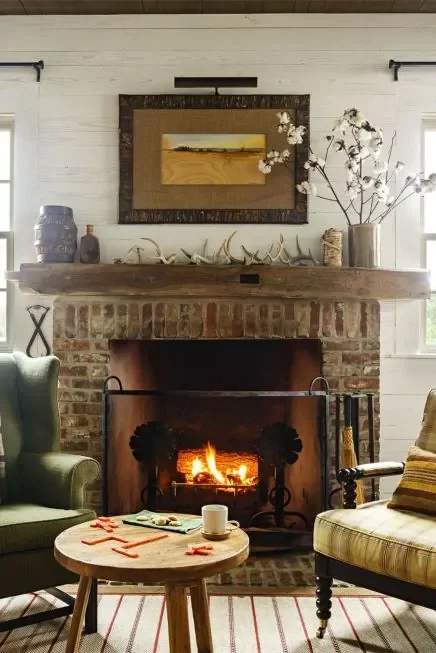
I find the seating arrangement especially successful because the chairs are positioned to create an intimate conversation area around the fireplace. The different upholstery patterns add personality without making the room feel chaotic, while the wooden table introduces another natural texture. The mantel is also used effectively: instead of leaving the brick fireplace visually bare, the artwork and small decorative objects give the wall a finished, lived-in appearance.
For a similar look, I would start with the fireplace surround and let its brickwork determine the mood of the room. From my perspective, traditional rooms benefit from repetition of natural materials, so wood, woven textiles, patterned upholstery, and brick can work together particularly well. I would also keep mantel styling varied in height, as shown here, so the arrangement feels collected rather than overly symmetrical.
Bright Stone Fireplace With Integrated Log Storage
This bright open-plan room takes a very different approach, pairing a large pale stone fireplace with a white ceiling and exposed natural wood beams. The fireplace rises dramatically toward the ceiling, and a tall recessed section beside it is filled neatly with stacked firewood. A large light-colored sectional wraps around a low rounded coffee table, while the kitchen and island remain visible in the background. Patterned pillows and a chunky knitted throw add softness to the otherwise clean architectural setting.
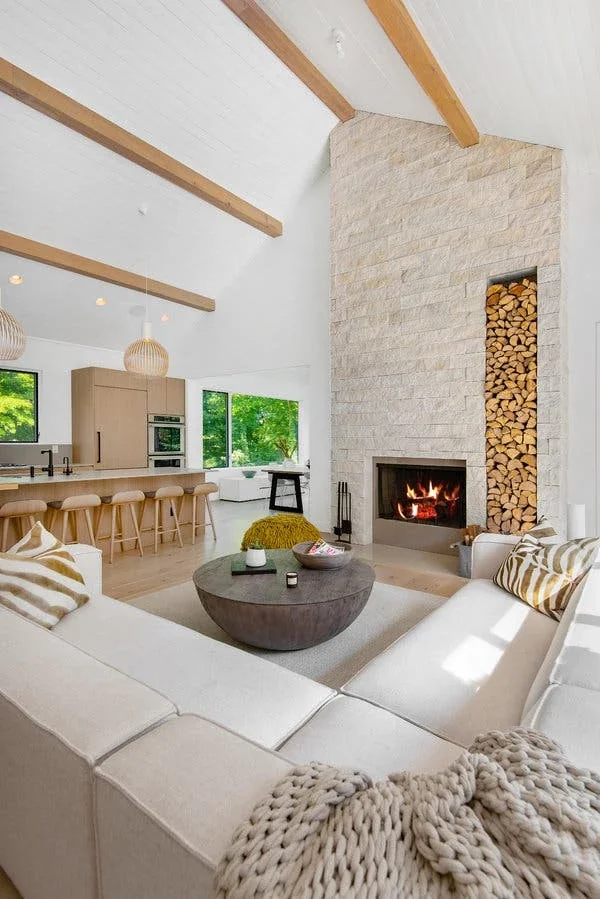
I particularly like the practical connection between the fireplace and its integrated wood storage. The firewood becomes part of the composition instead of something that needs to be hidden elsewhere, giving the tall fireplace wall additional texture and visual rhythm. The oversized sectional also suits the room well because it provides plenty of seating while reinforcing the relaxed character of the open space. The neutral upholstery keeps the architecture and natural materials in focus.
If I were recreating this feeling, I would pay close attention to scale. A large fireplace needs enough surrounding volume to feel intentional, and this image shows how a high ceiling and substantial sectional can make that possible. I would also treat firewood storage as part of the design rather than an afterthought when the architecture allows it. Keeping the surrounding furnishings restrained would help preserve the airy quality seen here.
Sculptural Orange Light Fixture Above a Sleek Fireplace
In this interior, the fireplace is built into a simple central wall with a wide metallic surround and a dark firebox. What immediately catches my eye, though, is the striking sculptural orange ceiling fixture suspended directly above it. Large windows on both sides bring in daylight and greenery, while a white sofa with orange cushions appears in the background. In the foreground, a dark dining table holds a green bowl filled with red fruit, creating a subtle connection with the warm orange tones overhead.
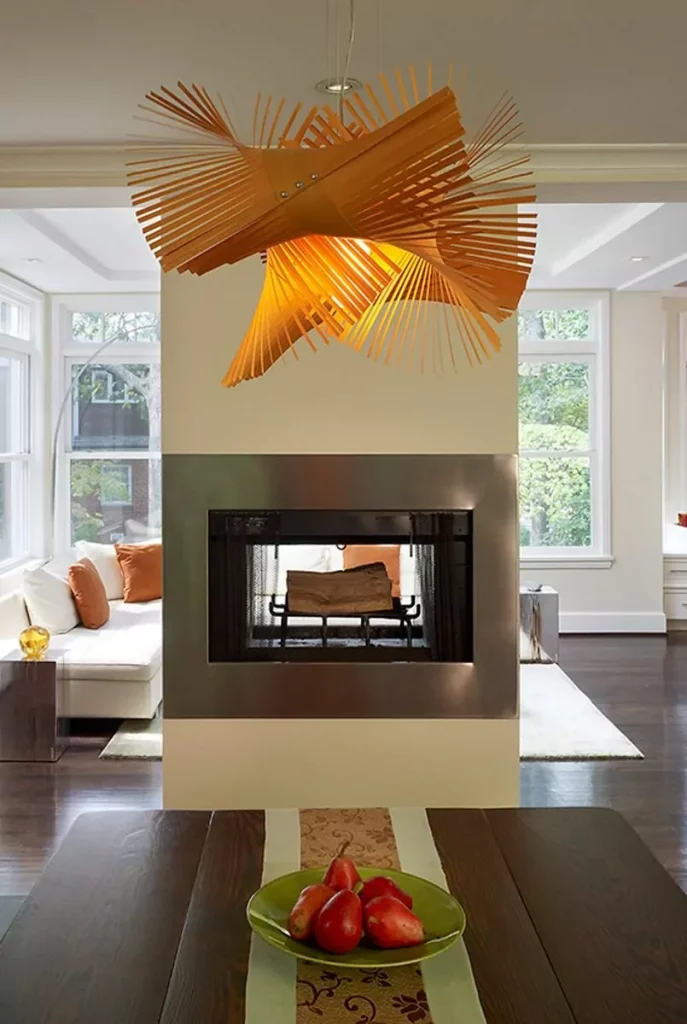
The strength of this room comes from the contrast between restraint and statement-making design. The fireplace itself has clean, uncomplicated lines, allowing the dramatic light fixture to take a leading decorative role. I also like the way the orange cushions echo the fixture without overwhelming the room. The dark floor and dining table provide grounding, while the large windows prevent the composition from feeling heavy.
I would take this as a reminder that an elegant fireplace does not always need an elaborate mantel. When the surround is simple, another carefully chosen architectural or decorative feature can provide the personality. In my own approach, I would keep the objects immediately around a minimalist fireplace limited and instead look for one strong element, such as the sculptural lighting shown here, to establish the room’s character.
Warm Brick Fireplace With Rich Wood Mantel
This fireplace has a distinctly traditional appearance, with reddish-brown brick extending around a dark electric-style firebox and a substantial carved wooden mantel. Above it, a recessed wood-paneled section holds several candleholders, while the surrounding walls continue the warm wood-and-brick palette. The mantel and hearth are both generously proportioned, giving the fireplace a strong architectural presence. Soft lighting from the adjacent rooms adds to the warm atmosphere.
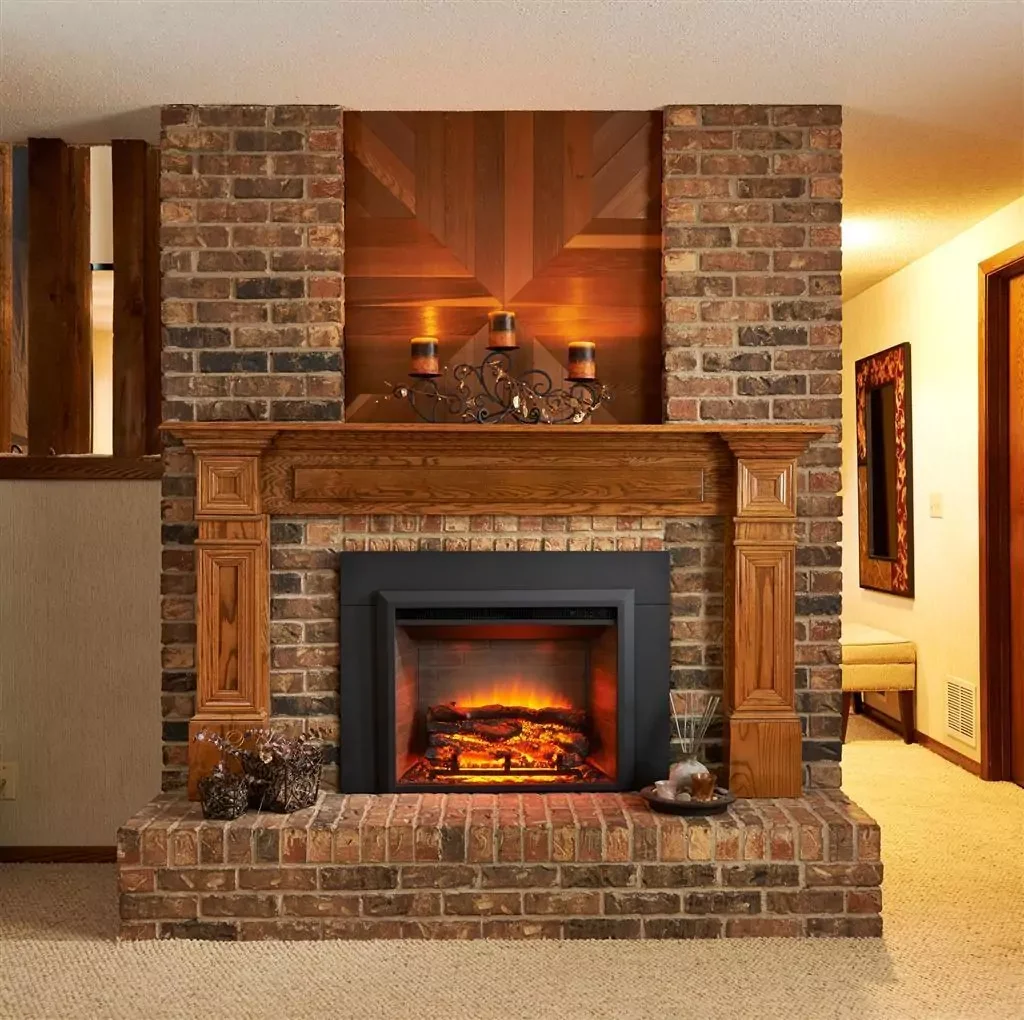
For me, the appeal of this design is its layered use of warm materials. The brick creates a textured backdrop, while the carved wood introduces a more refined decorative element. The black firebox provides contrast and makes the glowing logs immediately noticeable. I also like the way the fireplace projects from the wall, making it feel like a substantial architectural feature rather than simply an appliance placed within the room.
If I wanted to achieve a comparable traditional effect, I would concentrate on giving the fireplace surround enough visual weight. The combination of brick and substantial wood shown here already supplies considerable character, so additional decoration could remain relatively restrained. Candleholders or a small collection of objects on the mantel can complement the fireplace while preserving its strong, classic identity.
Traditional Fireplace Surrounded by Patterned Seating
This inviting room places a pale fireplace at the center of a traditional sitting area. A dark wooden mantel sits above the opening, with framed artwork, plants, and small lamps arranged around it. Two upholstered armchairs flank the fireplace, each featuring an intricate pattern, while a large ottoman occupies the center of the room. A richly patterned red area rug connects the seating pieces, and tall windows on both sides fill the space with natural light.
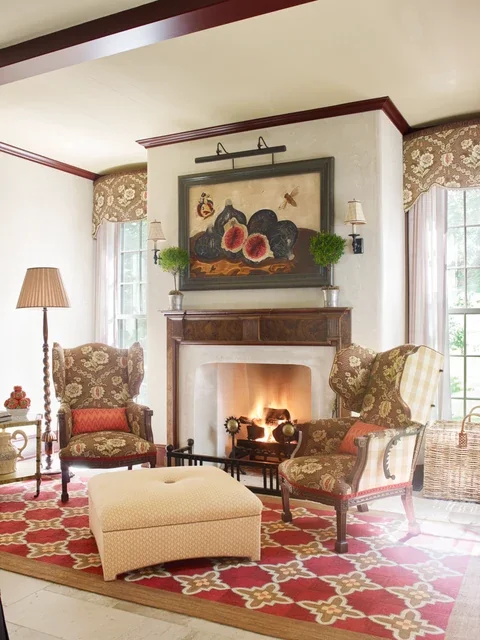
I think the room succeeds because the fireplace is treated as part of a complete seating arrangement rather than an isolated feature. The armchairs face inward toward the central ottoman, creating a comfortable setting for conversation. The rug adds color and defines the seating zone, while the fireplace provides a calm vertical center between the windows. The combination feels traditional, comfortable, and intentionally decorated.
For me, this image is a good example of why patterned furnishings can work beautifully around a simple fireplace. The key is giving the patterns a common visual relationship through the rug and surrounding colors. I would also keep the center of the room relatively open, as the ottoman does here, so the furniture remains comfortable to use without making the fireplace feel crowded.
Wood-Framed Fireplace With Dramatic Skull Artwork
This living room has a much moodier and more masculine character, with the fireplace surrounded by rich wood paneling and trim. Above the dark fireplace opening hangs a large artwork depicting two skulls, creating an intentionally dramatic focal point. A deep blue sofa fills the right side of the room, while a patterned upholstered chair sits opposite it. A glass vase with dried botanical stems rests on the coffee table, and metallic table legs add a subtle contemporary touch.
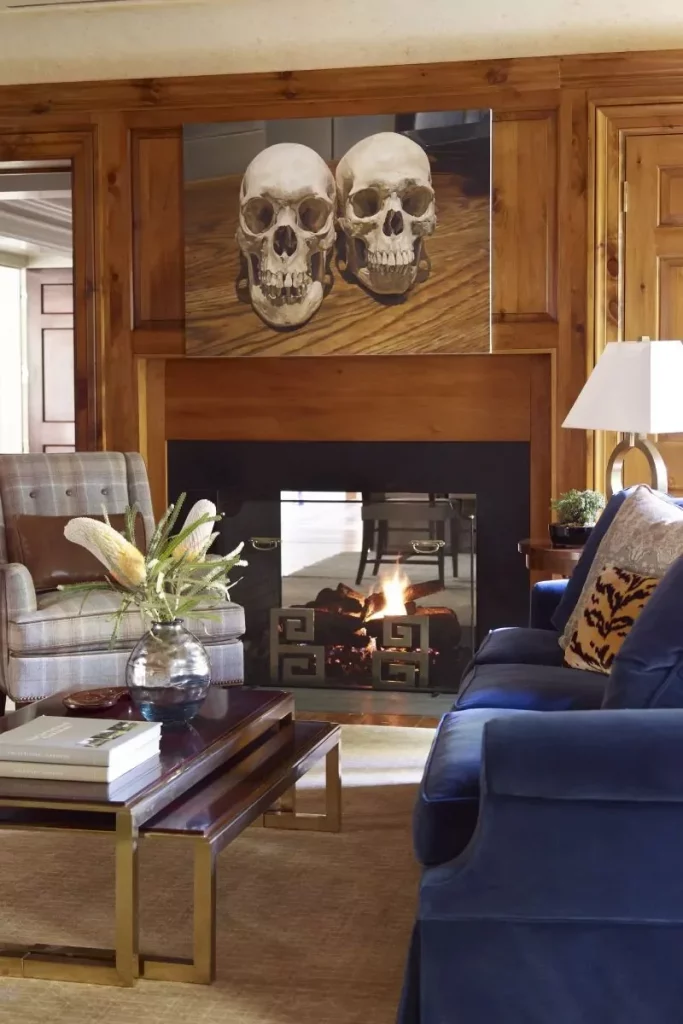
What I find interesting is how the unusual artwork becomes part of the fireplace composition instead of competing with it. The dark firebox, wood surround, blue upholstery, and skull artwork all create a strong, dramatic palette. At the same time, the botanical arrangement and lighter upholstery on the chair soften the scene. The seating faces toward the fireplace, maintaining its role as the visual center of the room.
I would approach a room like this by allowing one unconventional artwork to make the statement. The fireplace already has substantial wood detailing, so adding numerous competing decorations could easily make the space feel overly busy. Instead, I would use the surrounding furniture and accessories to echo the existing dark, warm, and earthy character while keeping the main artwork clearly visible.
Rustic Stone Fireplace in a Log-Cabin Living Room
This interior embraces rustic architecture from floor to ceiling. The fireplace is constructed from irregular natural stone and rises between exposed wooden beams, while the surrounding walls feature prominent horizontal logs. Two gray upholstered sofas and chairs form a seating arrangement around a dark rectangular coffee table. Above the fireplace, a large woven spherical light fixture provides a striking contrast to the rough stone and timber, while a green cabinet adds a small burst of color in the background.
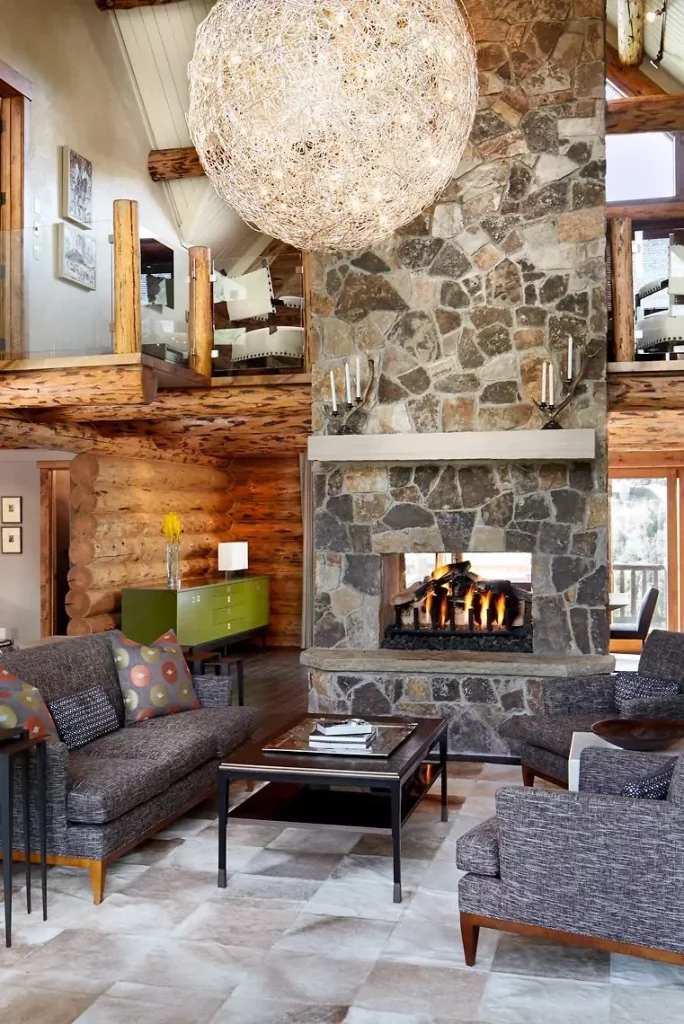
I love how every major surface reinforces the rustic atmosphere without making the room feel old-fashioned. The irregular stone gives the fireplace a natural, substantial presence, while the log walls and beams repeat the same sense of texture. The more tailored gray seating and simple dark coffee table keep the room usable and balanced. The oversized light fixture is especially effective because its delicate, open texture contrasts with the heavy fireplace masonry.
In a rustic room, I would focus on working with the existing architecture rather than trying to disguise it. The fireplace shown here does not need elaborate decoration because the stone itself is expressive. Comfortable upholstered seating can provide the softness needed to balance hard masonry, while a restrained coffee table and carefully selected lighting keep the room practical and visually coherent.
Symmetrical Gray Fireplace With Elegant Built-In Shelving
This living room presents a much more symmetrical interpretation of the fireplace wall. A gray built-in shelving system frames the fireplace on both sides, with books and decorative objects arranged across the shelves. Above the mantel is a large circular gold-toned decorative piece, while a chandelier made from numerous white globe lights hangs overhead. Two dark armchairs with light striped cushions face inward, and a curved glass coffee table sits between them.
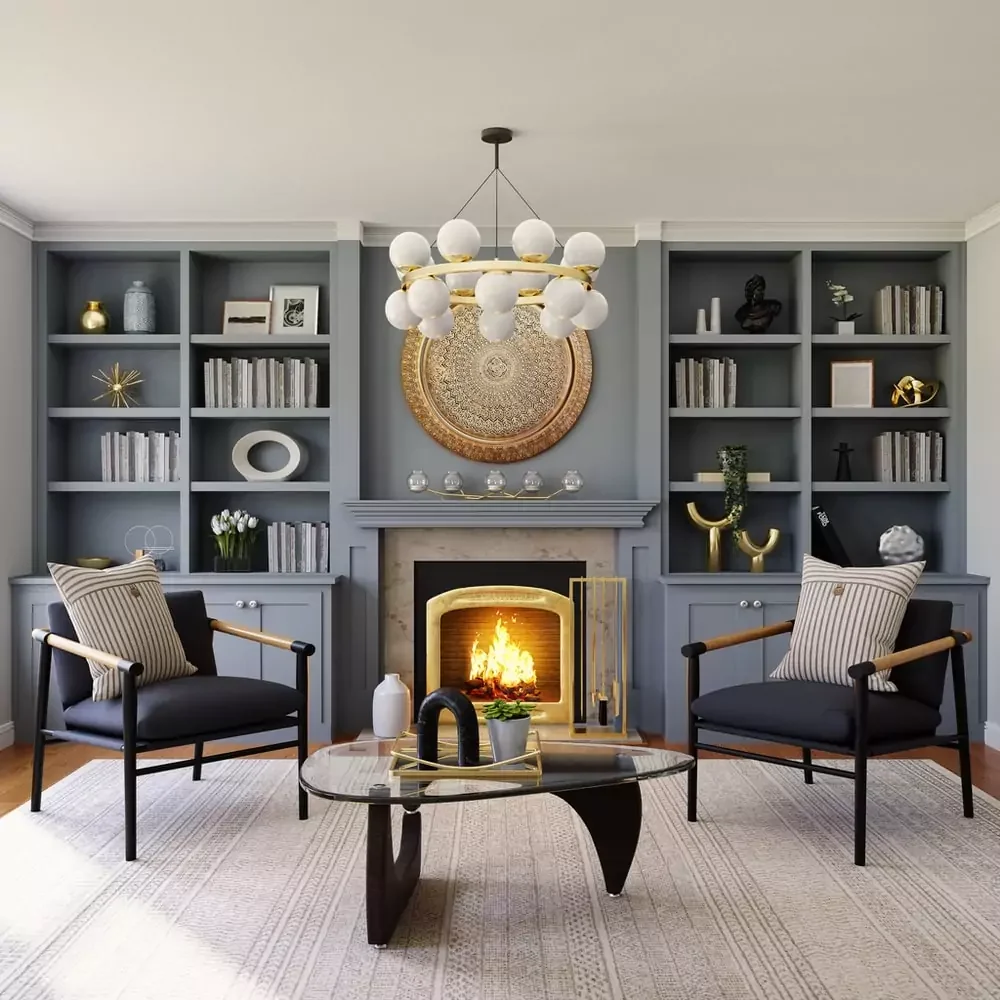
The symmetry is what makes this room feel especially polished to me. The matching shelving units, paired chairs, and centered fireplace establish a strong sense of order, while the gold circular artwork introduces a warm focal accent against the gray cabinetry. The transparent coffee table also helps preserve the visual openness of the seating area. Meanwhile, the built-ins provide practical storage and display space without taking attention away from the fireplace.
I would recommend this type of arrangement when a room benefits from a calm, organized appearance. Matching elements on either side of a fireplace can make an entire wall feel intentionally designed, but I would still vary the smaller objects placed on the shelves so the composition does not become too rigid. The restrained palette shown here makes it easier for the fireplace, artwork, books, and lighting to work together.
Contemporary Gray Fireplace Wall With Blue Lounge Seating
The final room takes a distinctly contemporary approach, featuring a large textured gray fireplace wall that extends almost to the ceiling. A long horizontal fireplace opening sits below a wall-mounted television, creating a combined entertainment and fire feature. Warm wooden ceiling beams contrast with the cool gray surface, while a deep blue tufted lounge sofa occupies the foreground. A round light-colored coffee table and patterned rug add softer shapes and textures around the seating area.
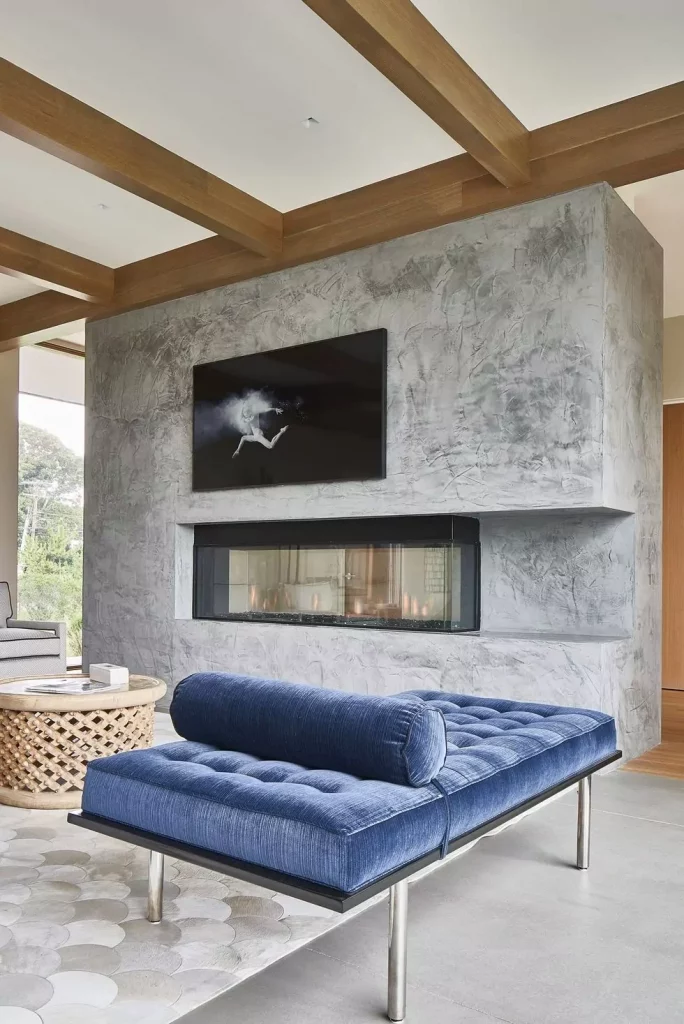
I like the way the fireplace wall gives this large room a clear architectural center. Its textured surface adds depth without relying on decorative accessories, while the long horizontal firebox emphasizes the width of the wall. The blue sofa introduces a strong but sophisticated color contrast, and its low, generously cushioned form makes the seating area feel relaxed. The wooden ceiling beams also help prevent the predominantly gray interior from feeling too cold.
For a similar design, I would think carefully about proportion before choosing the fireplace surround or television placement. A long, low firebox works particularly well when it is integrated into a substantial wall, as shown here. I would also use furniture with enough visual presence to balance that wall rather than selecting pieces that disappear against it. The combination of textured gray, warm wood, and deep blue is a particularly effective way to create a contemporary room that still feels welcoming.
Statement Stone Fireplace Framed by Sculptural Lighting
The first living room immediately draws my attention with its dramatic stone fireplace wall and unusually expressive ceiling light fixtures. The fireplace is surrounded by a large slab of richly patterned stone in warm gray and taupe tones, creating a strong architectural focal point. Two rounded brown armchairs sit opposite one another in the foreground, while a small dark stone table occupies the space between them. A pale rug, light wood flooring, a cream upholstered chair, and a low coffee table covered with art books soften the substantial fireplace wall and make the room feel sophisticated without becoming overly formal.
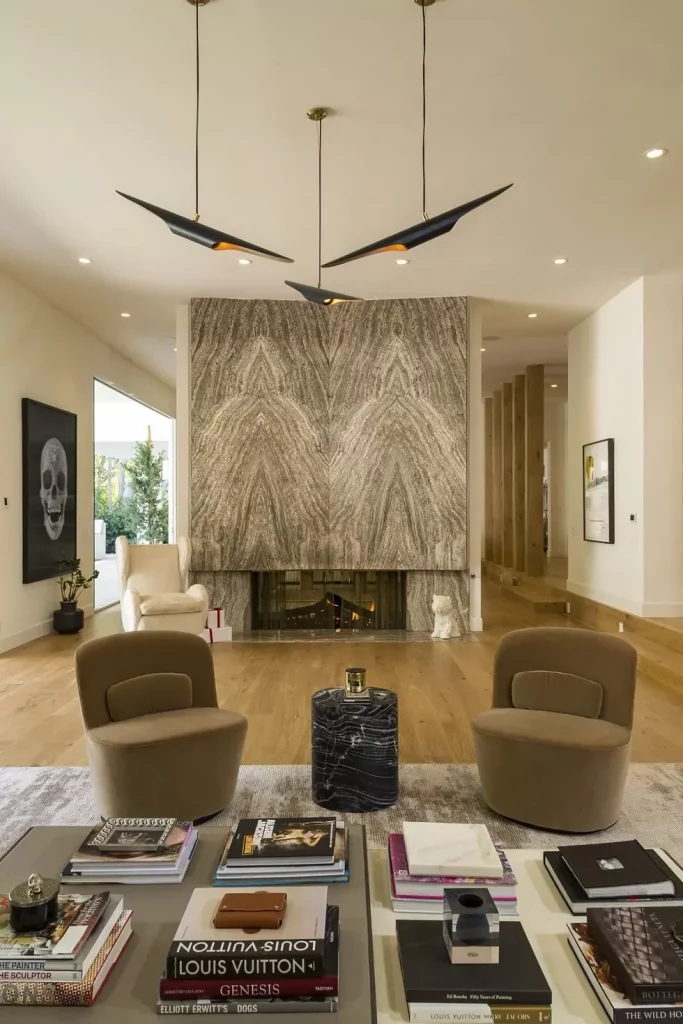
What works particularly well for me is the balance between the fireplace’s visual weight and the lighter elements around it. The large stone surface could easily dominate the entire room, but the warm wood floor and neutral upholstered seating keep the composition comfortable. I also like the way the seating faces inward rather than being arranged exclusively toward the fireplace, creating a more conversational atmosphere. The sculptural pendant lights add another strong visual feature overhead without competing directly with the fireplace.
From my perspective, this is a good example of letting one architectural material carry the personality of a room. If I wanted to achieve a similar effect, I would start by choosing one expressive stone surface and allowing it to remain relatively uninterrupted. Then I would surround it with simple furniture in complementary neutral shades. The art books, small decorative objects, and restrained accessories shown here demonstrate how carefully selected details can make a sophisticated room feel personal rather than staged.
Classic Marble Fireplace With Warm Traditional Detailing
This fireplace takes a completely different direction, with a traditional composition built around warm brown marble, pale stone, and a glossy beige-toned wall. The mantel has a substantial horizontal shelf, while two decorative sculptural figures stand symmetrically on either side of a small ornamental wall accent. The fireplace opening itself is dark and framed with light stone, and the surrounding hearth continues the warm marble treatment. Stone cladding rises along the adjacent walls and staircase, while framed artwork adds a more traditional decorative layer.
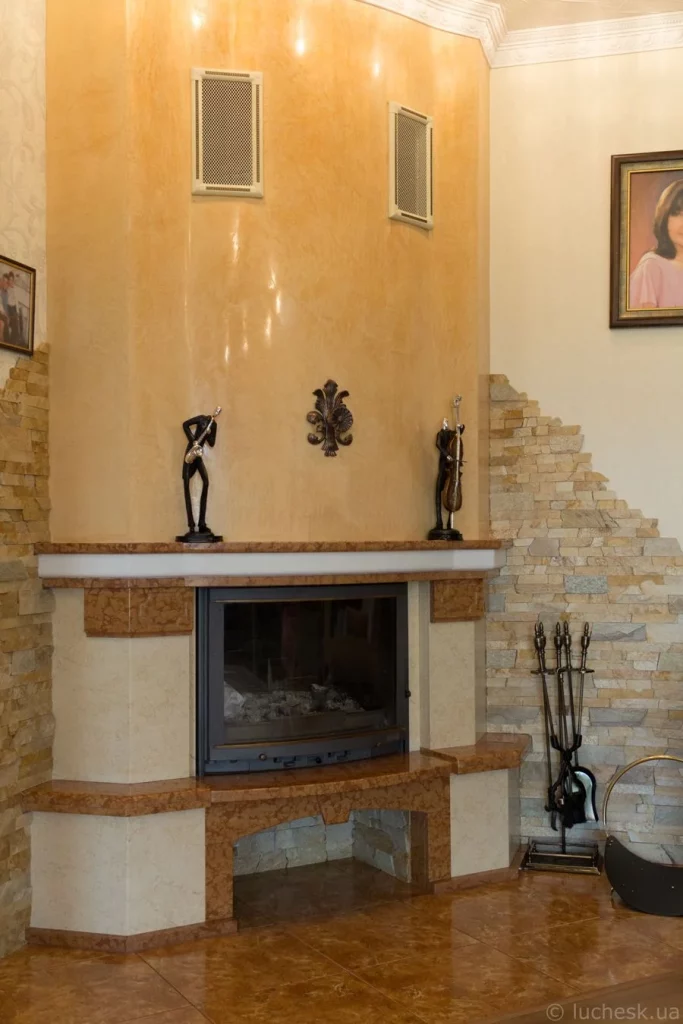
I like the sense of symmetry in this room because the fireplace is clearly designed as the center of the composition. The matching sculptural pieces on the mantel establish visual balance, while the broad shelf provides a natural place for decoration without requiring additional furniture. The stepped stonework around the fireplace and along the staircase also connects the architectural elements rather than making the fireplace appear like an isolated feature.
For me, this image shows how a classic fireplace can feel substantial without relying on a huge amount of decoration. The key is consistency: the warm marble tones appear across the hearth and trim, while the pale surrounding stone prevents the room from becoming too dark. If I were recreating this approach, I would pay close attention to proportion and symmetry before adding accessories. The fireplace already has plenty of character, so I would keep the decorative arrangement controlled and let the materials provide most of the visual interest.
Minimalist Double-Sided Fireplace With a Clean White Surround
Here, the fireplace becomes part of a minimalist architectural wall rather than a traditional mantel arrangement. A crisp white rectangular structure projects into the room, enclosing a black fireplace opening with an active wood fire. The fireplace appears open toward more than one area, visually connecting the foreground with the seating space behind it. A dark sofa with pale cushions sits in the background, while the surrounding room is almost entirely white, with pale flooring and a very limited decorative palette.
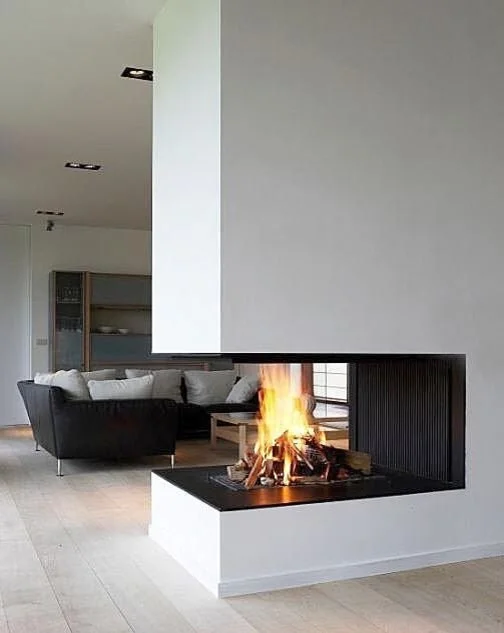
I find the simplicity especially effective because there is almost nothing competing with the fire. The clean white volume gives the fireplace a sculptural quality, while the black opening creates a sharp contrast that makes the flames immediately noticeable. The positioning also seems practical because the fireplace helps define separate areas without visually closing them off completely. Instead of using furniture or a full-height partition to divide the room, the fireplace itself performs that architectural role.
When I look at minimalist interiors like this, I am reminded that restraint can be more impactful than decoration. I would approach a similar design by keeping the fireplace surround extremely simple and allowing the proportions of the structure to become the main feature. The dark seating shown behind it also demonstrates how a small amount of contrast can keep an otherwise pale room from feeling flat. I would resist adding unnecessary accessories around the fireplace because its architectural form already provides enough interest.
Rustic Stone Fireplace in a Cozy Mountain-Style Retreat
The fifth room has a distinctly warm and rustic character, with a large stone fireplace extending almost to the ceiling beneath exposed wooden roof beams. The irregular stonework ranges from pale beige to deeper brown and gray shades, giving the fireplace a natural, textured appearance. A colorful framed artwork hangs above the fire, while a large window beside the seating area reveals a snowy landscape outside. A comfortable chaise-style seat, layered cushions, blankets, and a substantial upholstered piece create a relaxed setting around the fire.
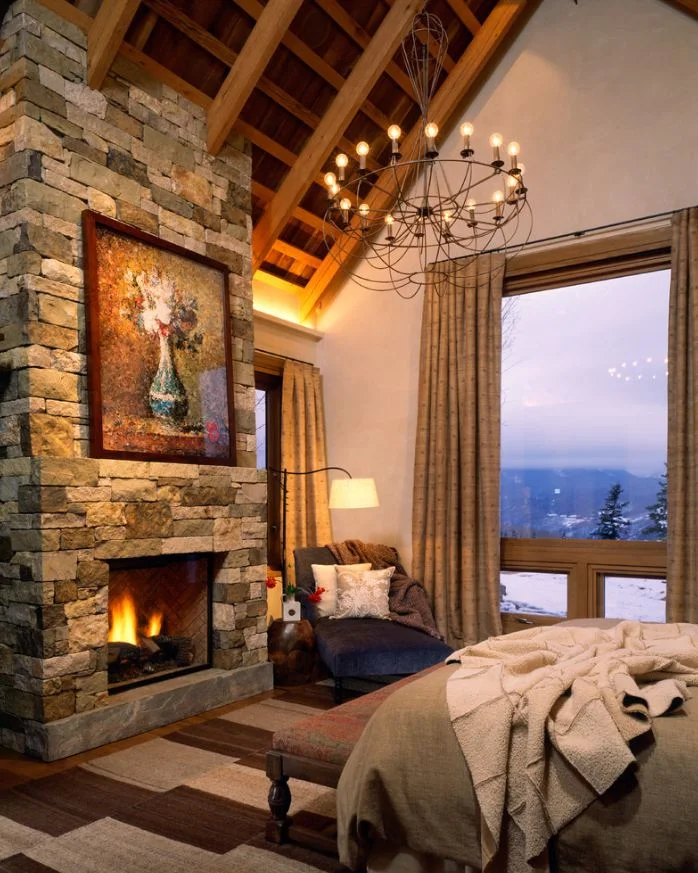
I especially like how the fireplace connects the interior with the natural landscape outside. The stone, timber ceiling, warm artwork, and visible snow all reinforce the feeling of a retreat designed for cozy evenings. The tall fireplace wall also gives the room vertical emphasis, while the generous seating arrangement makes the space feel intended for lingering rather than simply passing through. Even the chandelier contributes to the atmosphere by introducing a decorative focal point that complements the exposed structure overhead.
If I were trying to reproduce this feeling, I would focus less on copying individual objects and more on combining tactile materials. Rough stone, visible timber, soft upholstery, blankets, and layered textiles create the warmth that makes this room successful. I would also preserve a clear visual relationship between the fireplace and a nearby window whenever the architecture allows it. In this image, the outdoor view is almost part of the room’s decoration, and that makes the fireplace feel even more connected to its surroundings.
Symmetrical Stone Fireplace With Built-In Seating Niches
This living room centers on a tall stone fireplace that rises dramatically toward the ceiling. The fireplace surround is constructed from rectangular pieces of varied natural-looking stone in beige, gray, and brown shades. On both sides, recessed seating niches contain cushions and framed artwork, creating a symmetrical arrangement. Two light-colored sofas face the fireplace across a rectangular wooden coffee table, while a patterned area rug defines the seating zone and adds another layer of traditional warmth.
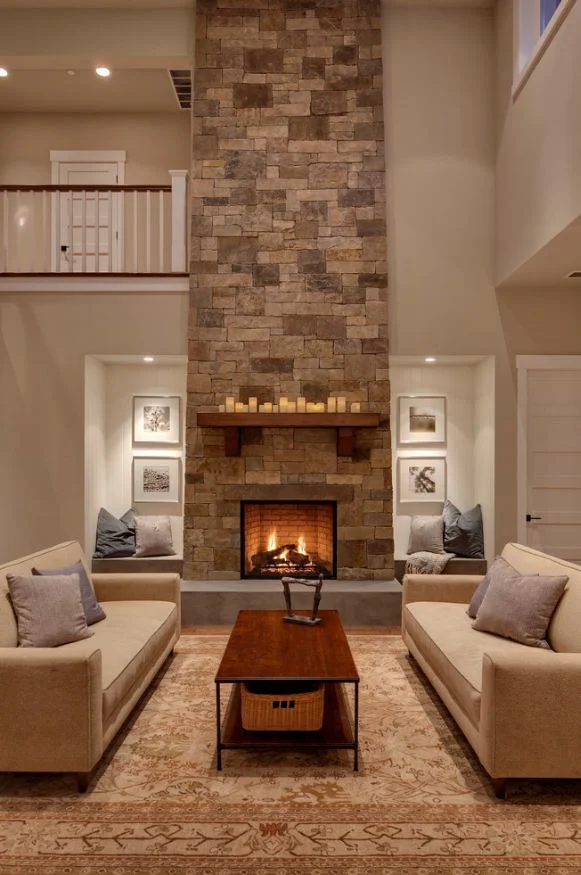
The symmetry is what makes this arrangement particularly successful to me. The fireplace sits exactly at the center, while the two recessed niches and matching seating arrangement reinforce that central axis. Rather than leaving the side walls empty, the niches turn otherwise awkward spaces into useful decorative areas. The coffee table sits comfortably between the sofas and fireplace, creating a practical arrangement for conversation while keeping the fire visually accessible from the seating.
I think this is a useful lesson in how built-in architecture can make a large living room feel more organized. If I were designing a similar space, I would consider using recessed areas beside a fireplace for cushions, artwork, or other small-scale features rather than filling the room with freestanding furniture. The varied stone also provides enough texture that the rest of the room can remain relatively calm. A patterned rug and warm wood table are sufficient to make the arrangement inviting without overwhelming the fireplace wall.
Dark Marble Fireplace Wall With a Contemporary Entertainment Center
This room takes a dramatic contemporary approach by combining a large black television with an electric fireplace beneath it. The entire wall is finished in dark, heavily veined stone, creating a rich backdrop that makes the glossy television almost disappear into the composition. Below it, a long wood-toned cabinet provides storage and incorporates the fireplace into its center. Vertical ribbed detailing across the lower cabinetry adds texture, while a deep burgundy round ottoman and patterned rug introduce softness and color.
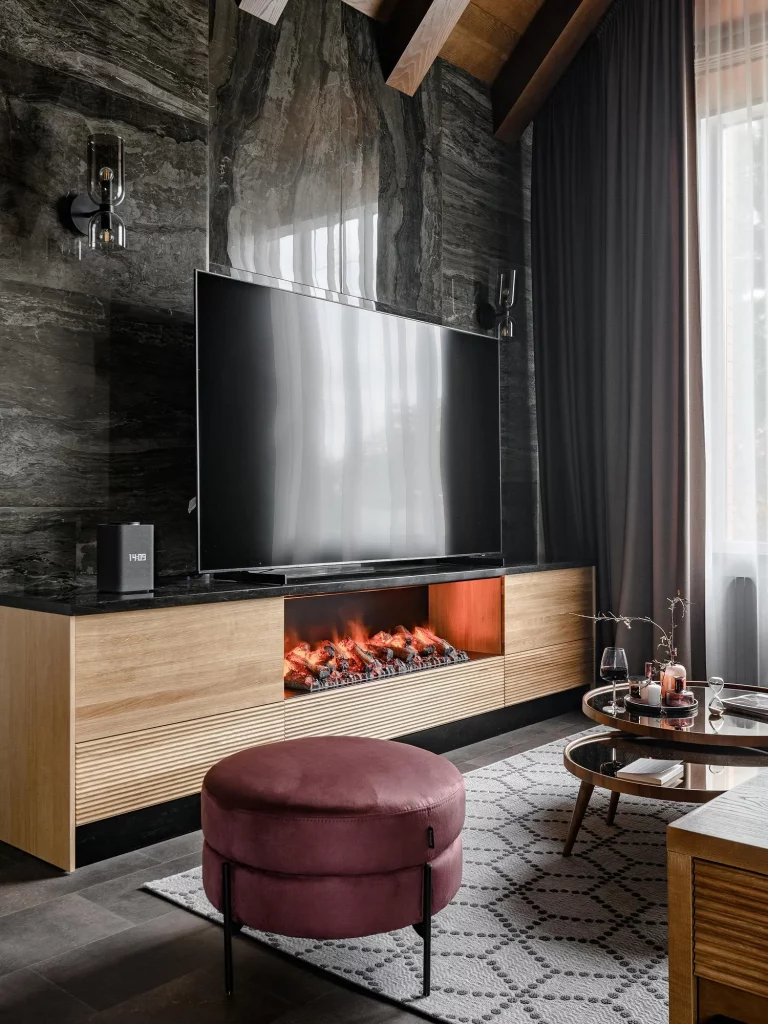
I like the practical combination of entertainment and fireplace functions here because everything is concentrated along one carefully designed wall. The television is positioned directly above the fire, while the long cabinet creates a visual base and provides enclosed storage. The surrounding dark stone gives the entire arrangement a unified appearance, so the television does not feel like a separate technological object placed into an otherwise decorative room. The warm wood cabinetry also keeps the composition from becoming excessively cold.
For my taste, this is one of the more successful ways to integrate a television into a fireplace wall when a contemporary look is the goal. I would repeat the principle of using one continuous material or visual language around both elements instead of treating the TV and fireplace as unrelated features. The burgundy ottoman shown here is also a good reminder that a predominantly dark room benefits from one softer, warmer accent. I would keep additional decoration selective so the strong stone surface remains visible.
Refined White Fireplace With Integrated Television and Shelving
This living room combines a white classical-style fireplace with a wall-mounted television and built-in shelving on both sides. The fireplace surround features layered molding and a substantial mantel, while the television sits neatly above it on the smooth white section of wall. Tall wood-toned cabinetry frames the composition, with open shelves displaying books, small vessels, and decorative objects. A large white seating piece occupies the foreground, and two round dark coffee tables create a relaxed central arrangement.
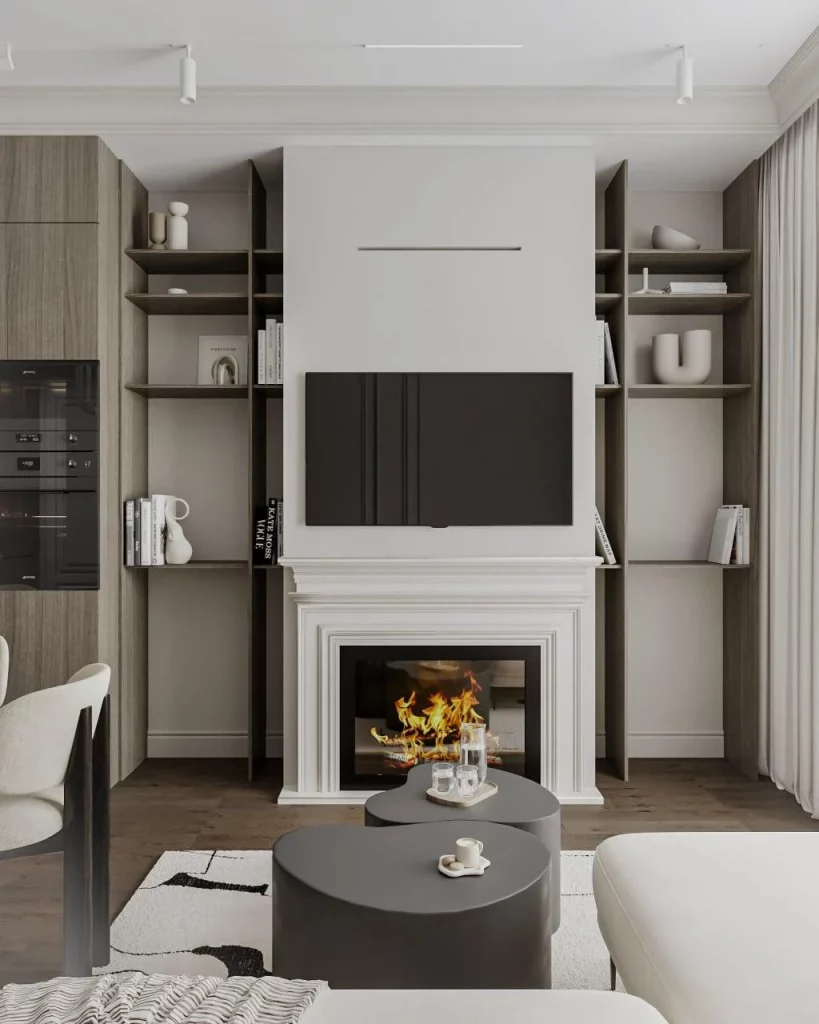
What I find appealing is the way traditional architectural detailing has been combined with contemporary functionality. The molded fireplace surround gives the wall a classic character, while the flat television and streamlined shelving keep it practical for modern living. The open shelves also prevent the cabinetry from feeling too heavy because they provide spaces for small decorative objects and books. The neutral palette of white, gray, and wood creates a calm backdrop where the fireplace remains the visual center.
In my experience, this kind of combination works particularly well when a room needs both character and everyday entertainment features. I would make the fireplace surround the architectural anchor and then use cabinetry to visually frame it, as shown here. Keeping the shelves lightly styled is important; the image uses books and a few sculptural pieces without filling every available space. That approach allows the built-ins to contribute to the design while still maintaining an uncluttered appearance.
Framed Stone Fireplace Wall With a Long Linear Fire Feature
The final living room presents a sophisticated interpretation of the fireplace wall, with a large stone-clad surface surrounding a wall-mounted television and a long, horizontal fire feature below it. A rectangular metallic-looking border frames the main stone panel, giving the composition a subtle architectural outline. Beneath the fireplace, a long dark wood-toned cabinet runs across the wall and features vertical ribbed detailing. A round coffee table, neutral upholstered seating, sheer curtains, and a softly patterned rug create a calm and elegant foreground.
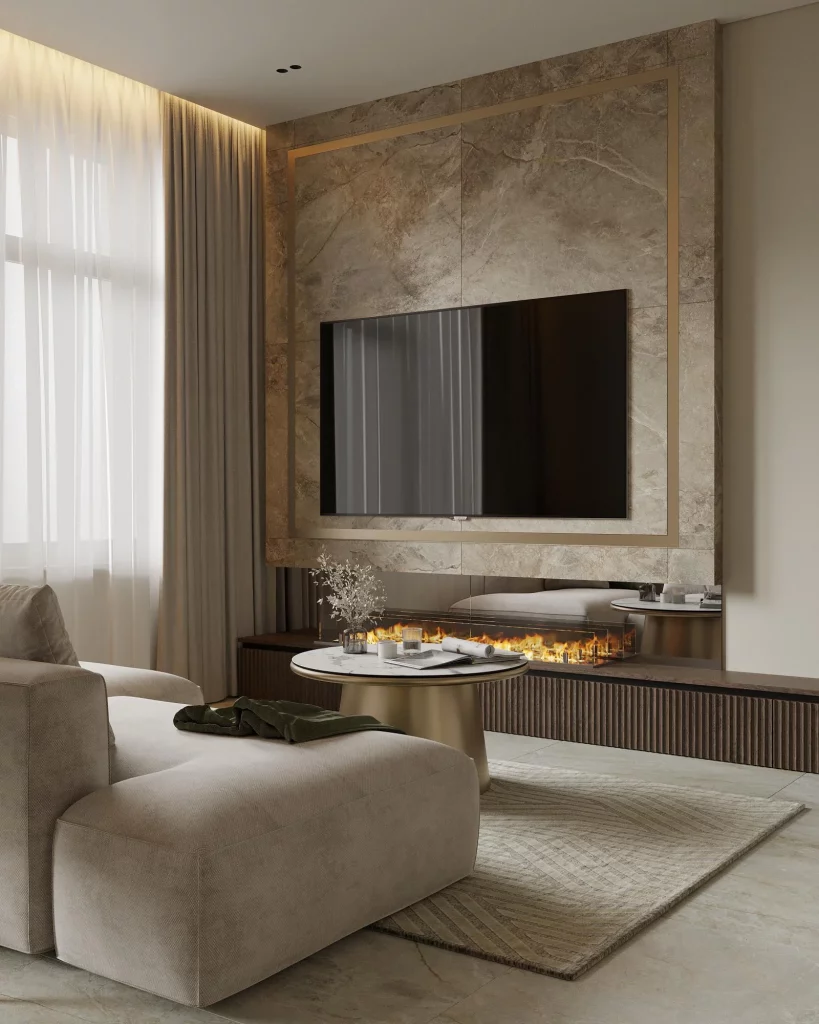
I particularly like the proportions of this design because the long fireplace echoes the horizontal cabinet below while contrasting with the large rectangular television above. The result feels balanced rather than top-heavy. The stone wall supplies texture and depth, while the narrow linear flames introduce warmth without requiring a traditional mantel. The furniture remains soft and understated, which allows the architectural wall to remain the dominant feature without making the living room feel cold.
If I were taking inspiration from this room, I would focus on proportion, repetition, and restraint. The stone, framed panel, television, linear fireplace, and ribbed cabinetry each have a distinct shape, but they work together because their lines are carefully aligned. I also appreciate the neutral upholstery and simple round table in the foreground because they soften the geometry. For a similar elegant atmosphere, I would allow the fireplace wall to make the statement and use comfortable, quiet furnishings around it rather than competing decorative pieces.
Warm Contemporary Fireplace With Stone and Wood Accents
I see a sophisticated living room built around a long, low fireplace installation that combines a pale veined stone surface with warm textured walls and natural wood. A large black television is mounted beside the fireplace, while a floating wooden media console stretches across the wall underneath. The restrained beige, cream, tan, and brown palette gives the room a calm appearance, while the brass-toned linear ceiling fixture adds a subtle decorative element. A herringbone wood floor continues the warm character of the space, and the partially visible upholstered seating and nested coffee tables make the room feel comfortable without appearing crowded.
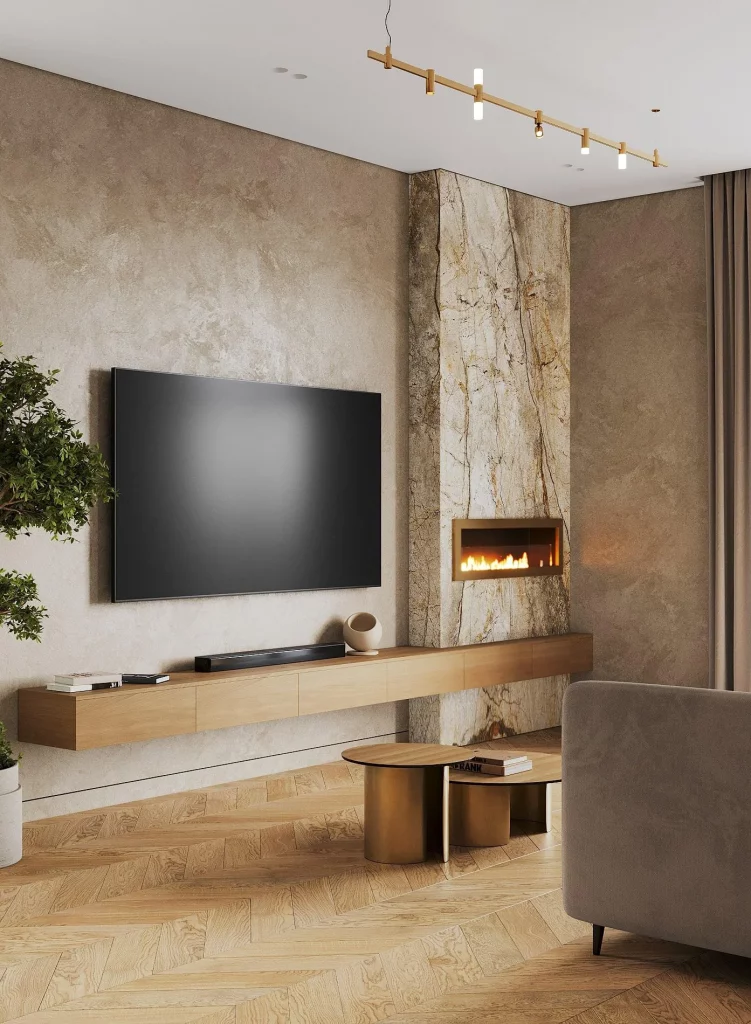
What works particularly well for me is the way the fireplace is integrated into the overall media wall rather than treated as an isolated feature. The floating console provides useful storage while keeping the floor visually open, and the combination of wood and stone prevents the large wall from feeling too cold. The fireplace itself is relatively compact, but the tall stone surround gives it visual importance and draws the eye upward.
I would take inspiration from this room if I wanted a contemporary fireplace that still felt warm and livable. In my experience, combining one expressive natural surface with quieter surrounding finishes is an effective way to create sophistication without overwhelming a room. The key is to repeat existing tones, as this interior does with its wood floor, wooden console, neutral upholstery, and warm stone.
Soft Botanical Fireplace Wall With Vertical Wood Slats
Here the fireplace wall feels much lighter and more decorative. I see a black television mounted above a long, narrow linear fireplace, with pale wall surfaces surrounding the installation. Narrow vertical slats create texture around the television and fireplace, while a delicate botanical mural spreads across the adjacent wall. A simple white console-like base supports the fireplace, and a round white coffee table, pale rug, glass vases, and muted flowers continue the airy palette. The overall room feels quiet, soft, and slightly romantic.
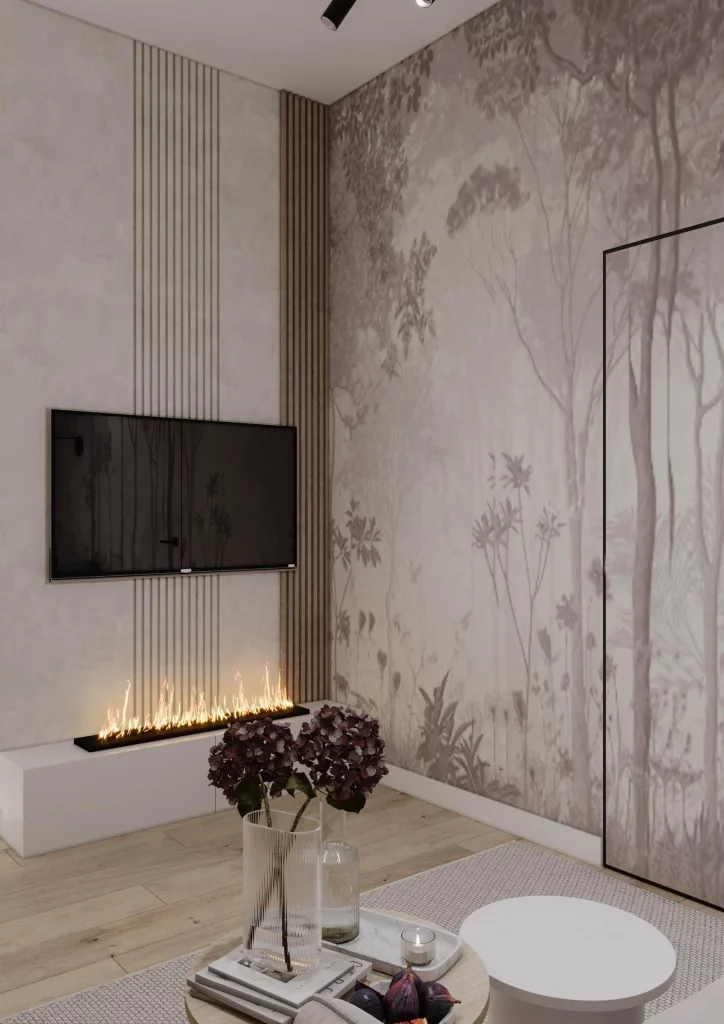
The strength of this design is the balance between pattern and simplicity. The botanical wall is the most expressive surface, so the television and fireplace remain visually simple rather than competing with it. I also like the vertical slats because they add architectural rhythm without introducing another strong color or complicated pattern.
I would use this image as inspiration for anyone who wants a fireplace to feel elegant without making the room heavy. In my view, a long linear fireplace is especially effective with a delicate wall treatment because its horizontal shape provides a calm counterpoint to the vertical lines and botanical forms. Keeping the surrounding furniture rounded and understated also helps maintain the relaxed atmosphere.
Natural Stone Fireplace With Refined Golden Details
This room has a completely different character, centered on a substantial natural stone wall with an irregular, heavily textured surface. A contemporary rectangular fireplace opening sits within the stone, framed by a pale geometric surround and a warm metallic panel. Built-in shelving rises along the left side and holds books and small decorative objects. On the right, a hanging circular chair sits beside a window with wooden blinds, while a low rounded golden coffee table and textured cream seating add softness in front of the fireplace.
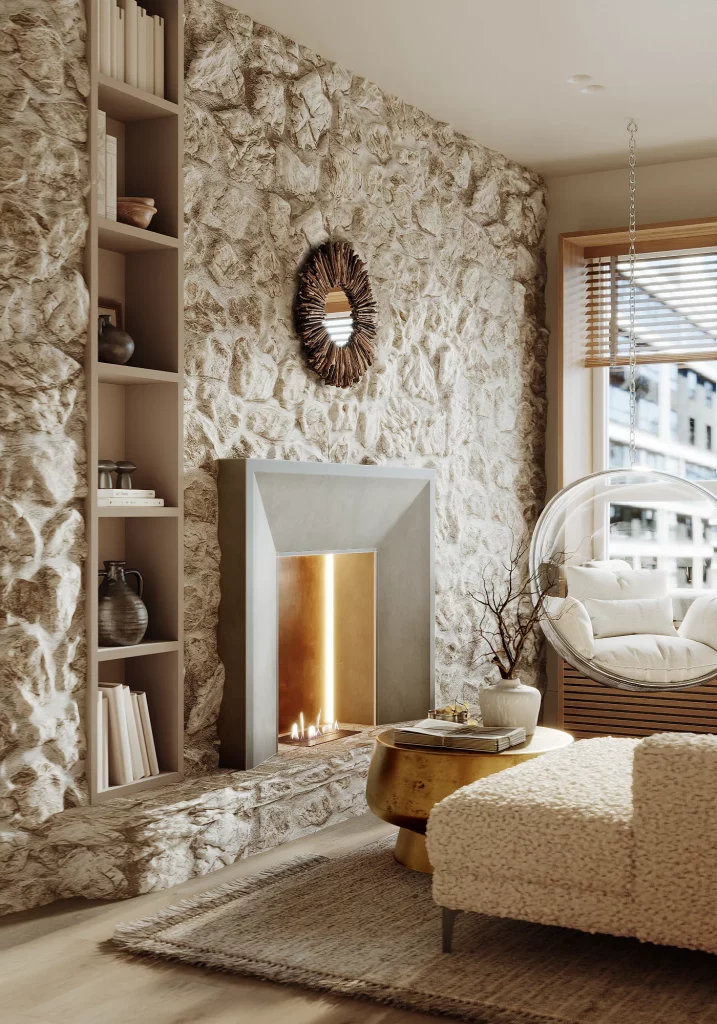
I think the stone wall is what gives this interior its memorable identity. Its rough surface contrasts beautifully with the smooth fireplace surround, metallic insert, rounded coffee table, and soft upholstery. The shelving is another practical detail I appreciate because it uses the side of the fireplace wall without distracting from its central role.
When I look at a design like this, I am reminded that a dramatic material does not necessarily require dramatic decoration. I would let a natural stone fireplace remain the star and choose furniture with simple silhouettes around it. The warm metallic detail shown here provides just enough contrast to make the fireplace feel polished while preserving the earthy quality of the stone.
Classic River-Stone Fireplace With Warm Traditional Styling
This traditional living room features a substantial fireplace constructed from rounded natural stones in varied beige, gray, and muted reddish tones. The stones continue upward into a triangular chimney breast, while a broad reddish stone mantel and hearth frame the traditional fireplace opening. Warm yellow walls, polished wood flooring, a wooden coffee table, leather seating, and a tall leafy plant create a distinctly cozy atmosphere. The active fire immediately becomes the visual center of the room.
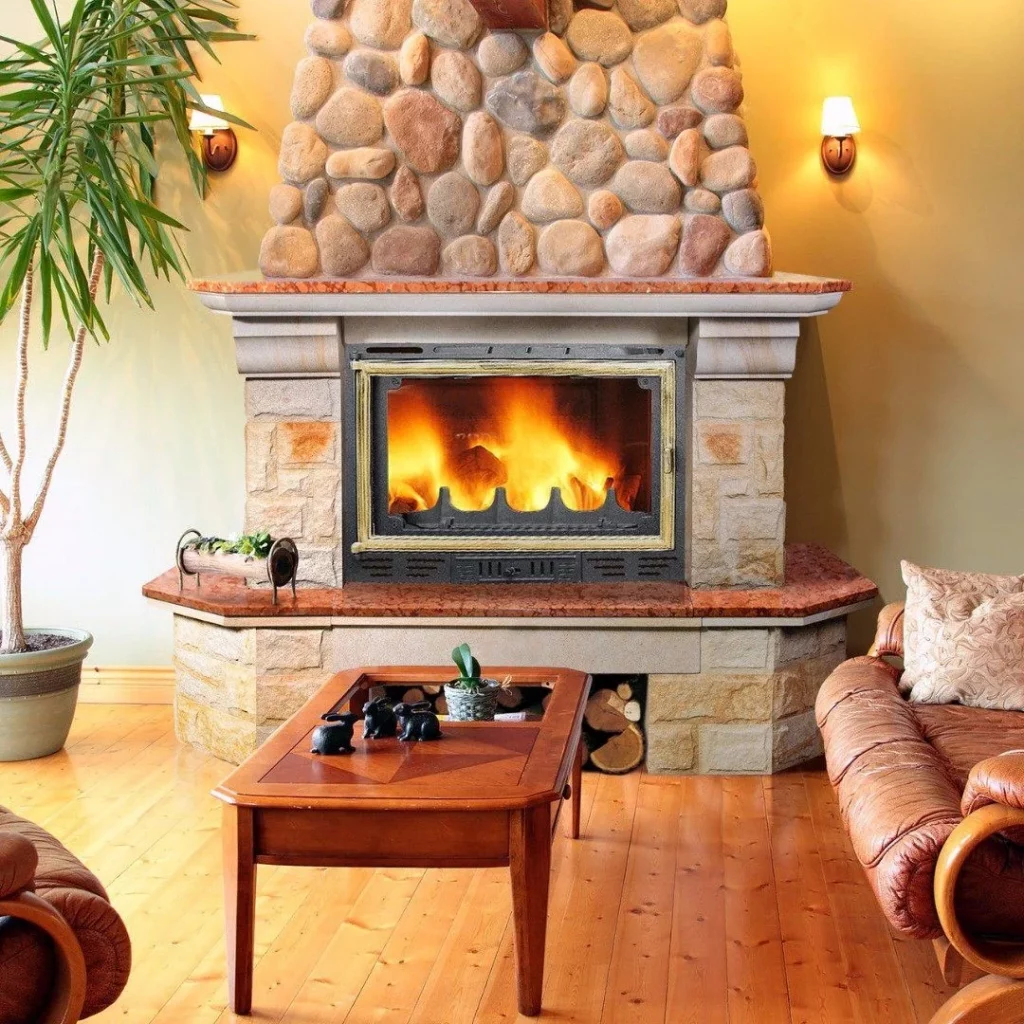
For me, the appeal comes from how consistently the materials repeat throughout the space. The wood floor, wooden table, leather sofas, stone fireplace, and warm wall color all belong to the same earthy visual family. The generous mantel and raised hearth also give the fireplace a strong architectural presence, making it feel like a permanent gathering point rather than simply a heating feature.
I would choose this type of fireplace when the goal is a genuinely rustic and welcoming room rather than a minimalist interior. The irregular stones already provide plenty of texture, so I would avoid adding too many competing decorative elements. The image shows how a few familiar pieces of furniture can be enough when the architecture itself provides such a strong focal point.
Rustic Stone Fireplace Framed by Exposed Wooden Beams
This interior feels especially intimate, with a large rustic stone fireplace occupying the center of the room beneath a dramatic arched stone opening. A round dark-framed mirror hangs above the substantial mantel, accompanied by framed artwork, candles, and small decorative objects. Exposed wooden ceiling beams reinforce the rustic character, while upholstered armchairs flank the fireplace. Warm firelight reflects across the wooden floor and nearby surfaces, creating a particularly inviting evening atmosphere.
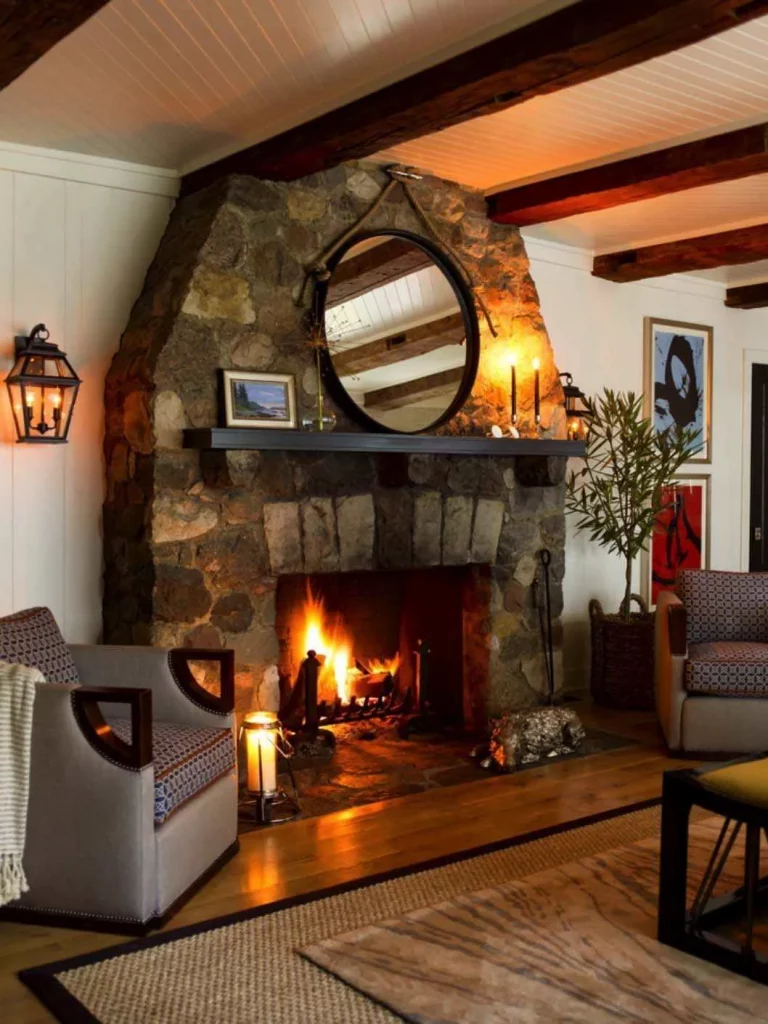
I like the sense of symmetry created by the fireplace and the two chairs, even though the stonework itself is irregular. The substantial mantel provides a useful display surface, while the mirror adds another layer of visual interest without competing with the fire. The surrounding seating is positioned close enough to make the fireplace feel like the natural center of conversation.
This is the kind of fireplace I would use as inspiration for a traditional country or lodge-inspired living room. The most important lesson for me is to embrace the existing texture rather than trying to make rustic materials look perfectly uniform. Rough stone, exposed beams, warm wood, and soft upholstery work together precisely because each surface has its own character.
Layered Stone Fireplace With Rich Wood Built-Ins
This living room combines a broad stacked-stone fireplace with extensive dark wood built-in cabinetry on both sides. A wooden mantel crosses the stone surround, and a decorative model sailboat, books, and lantern-style objects are arranged above it. An antler-shaped chandelier hangs prominently overhead, while traditional upholstered armchairs and an ottoman create a comfortable seating area in front. The palette is dominated by earthy browns, deep wood tones, muted green upholstery, and warm firelight.
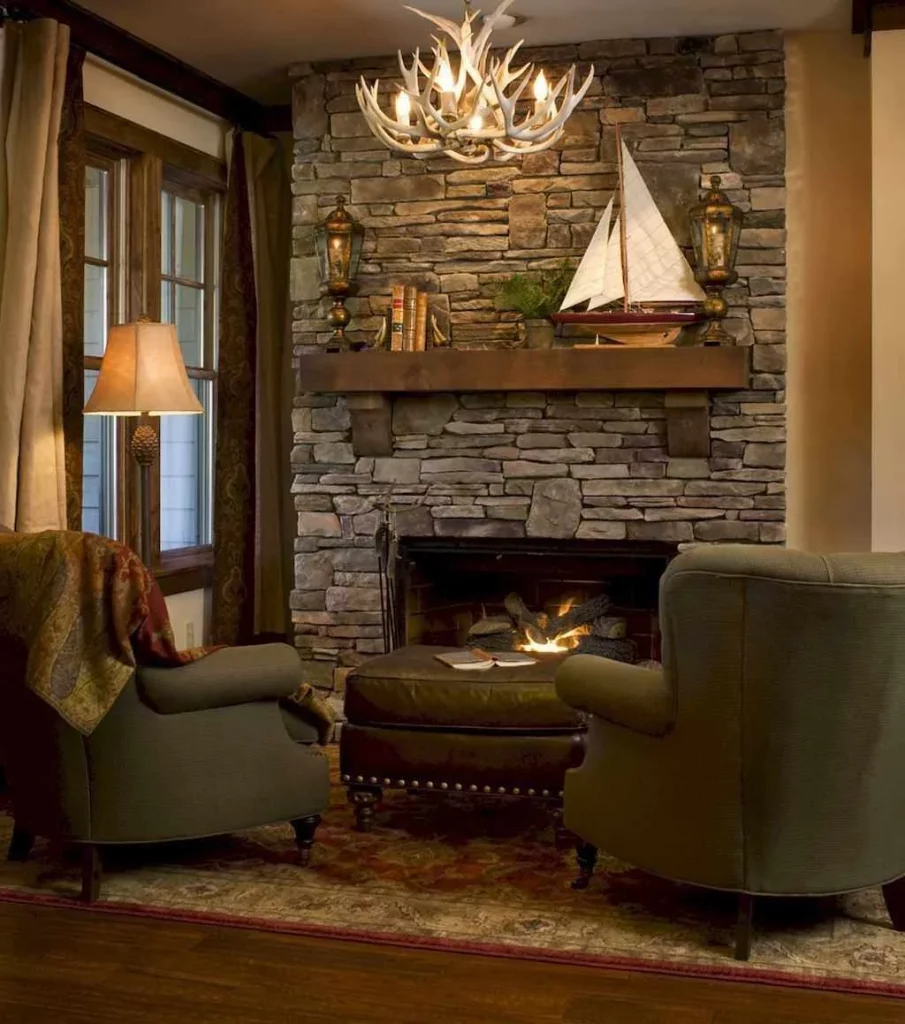
I find the built-ins particularly effective because they make the fireplace wall feel like a complete architectural feature. The shelves provide space for books and display pieces, while the surrounding cabinetry adds visual weight and symmetry. At the same time, the stone keeps the large composition from becoming too formal or furniture-like.
If I were drawing inspiration from this room, I would focus on the relationship between the stone and wood rather than copying every decorative detail. The fireplace already has considerable visual texture, so the surrounding materials need to feel equally substantial. I also like the use of a few recognizable objects on the mantel because they make the space feel collected and personal.
Traditional Cream Mantel in a Cozy Bedroom Retreat
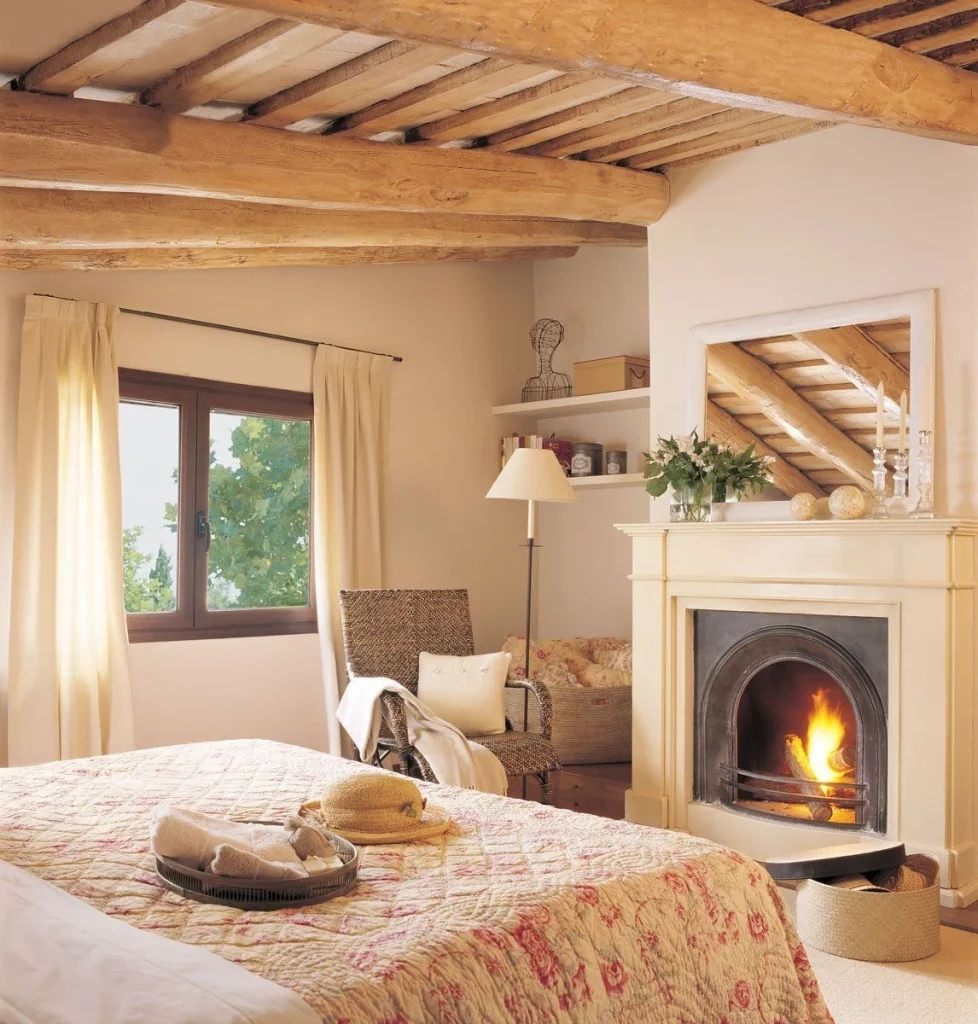
This photograph moves the fireplace into a bedroom, where a traditional cream-colored mantel stands beside a large bed. The fireplace has a dark arched inner surround and a visible fire, while the pale mantel and walls create a soft backdrop. Exposed wooden ceiling beams bring warmth and rustic character overhead, and a wooden-framed window with light curtains allows natural light into the room. A floral quilt, woven seating, open shelves, and understated accessories complete the relaxed country-inspired setting.
I love the way the fireplace changes the character of this bedroom without dominating it. The bed remains the largest furnishing, but the fireplace creates a second focal point and gives the room an intimate, restful quality. The pale mantel also works beautifully with the light walls and bedding, while the dark fireplace opening provides just enough contrast.
For me, this is a reminder that a fireplace can be especially effective in a bedroom when its materials are kept visually gentle. I would keep the surrounding palette soft and allow architectural details such as the beams and mantel to provide most of the character. The room demonstrates how traditional elements can feel comfortable and understated rather than overly formal.
Elegant Corner Fireplace With a Soft Neutral Palette
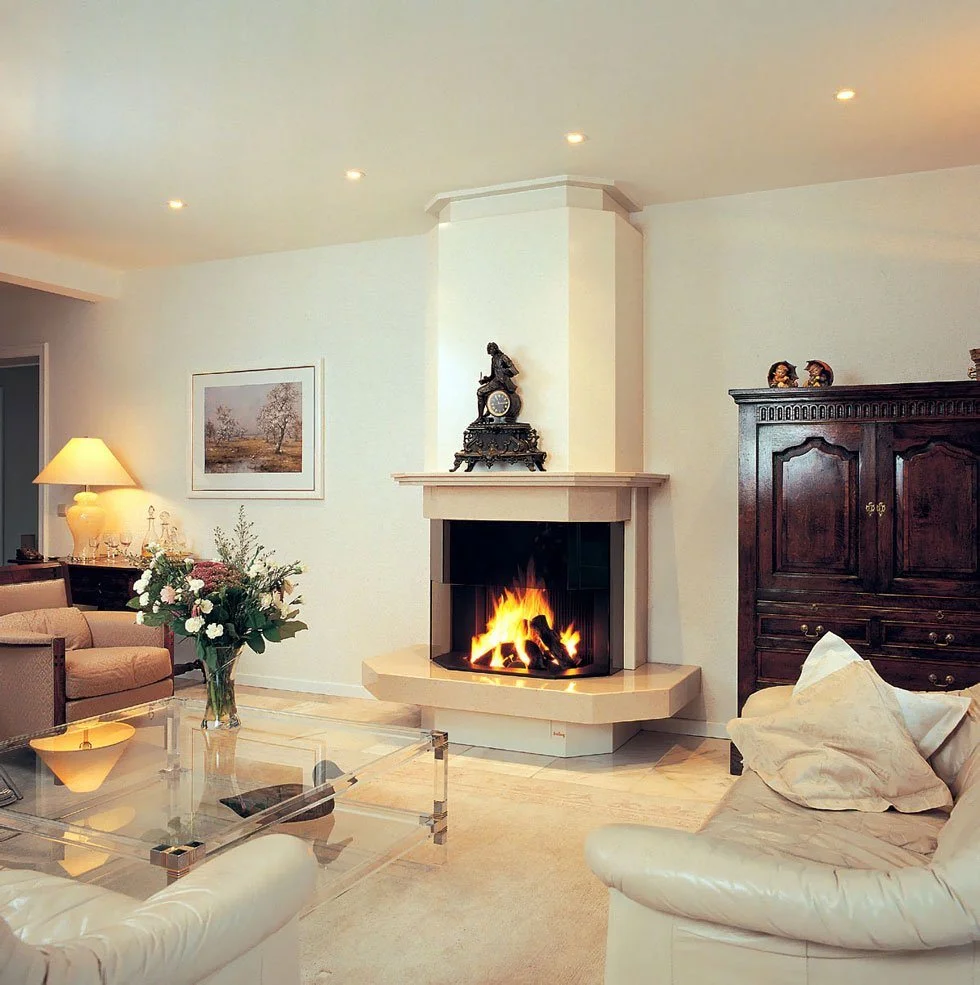
This spacious traditional living room centers on a pale fireplace with a broad mantel and projecting hearth. The fireplace is set into a softly shaped chimney breast, and a dark decorative clock provides contrast above the mantel. Cream-colored seating surrounds the room, while a glass coffee table and large floral arrangement add a refined touch. A substantial dark wooden cabinet stands to the right, creating a strong contrast against the pale walls, fireplace, and upholstered furniture.
What stands out to me is the restrained elegance of the composition. The fireplace has enough molding and architectural presence to feel traditional, but its pale finish keeps it from becoming visually heavy. The glass coffee table also helps preserve an open feeling because it does not interrupt the view across the seating area.
I would consider this approach particularly useful in a larger traditional room where the fireplace needs to feel important without becoming rustic. The dark clock and cabinet provide controlled contrast, while the light seating keeps the overall room balanced. In my experience, this kind of limited contrast often makes classic interiors feel more polished and timeless.
Classic Stone Fireplace With Traditional Built-In Cabinetry
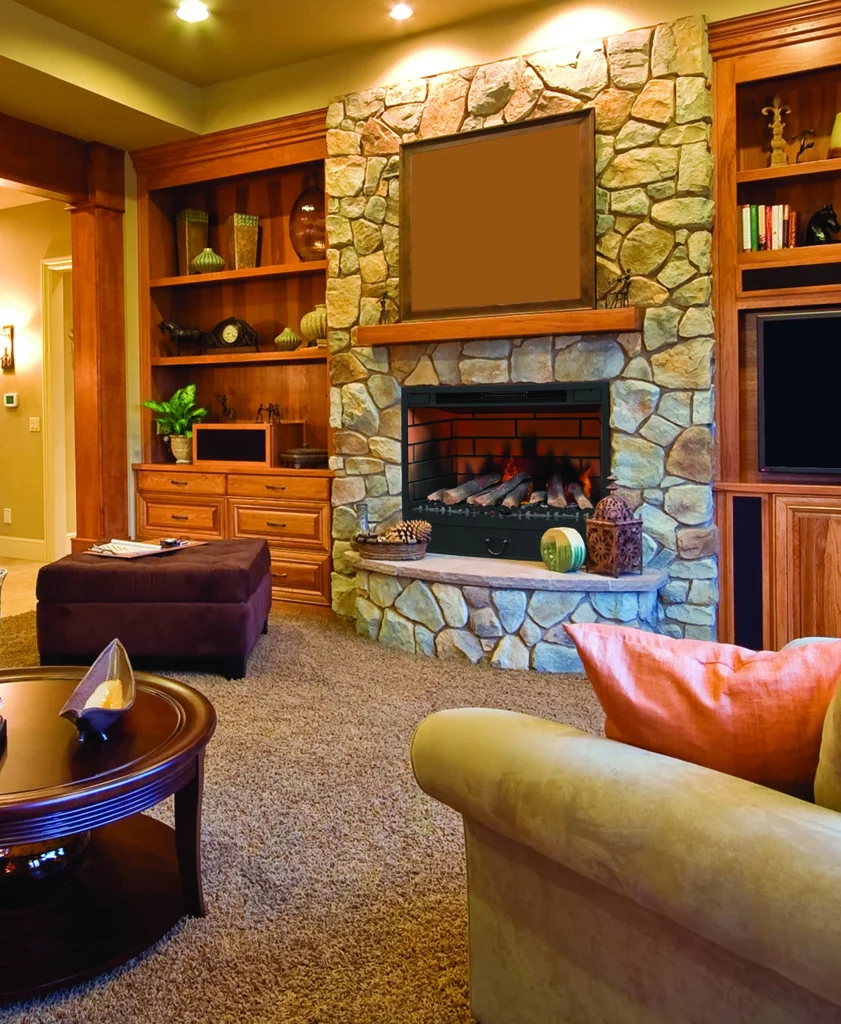
The final room presents a classic stone fireplace surrounded by extensive warm wooden cabinetry and shelving. The fireplace has a broad stone surround and a traditional wooden mantel, with a framed rectangular feature mounted above it. Built-in shelves on both sides hold books and decorative objects, while the furniture consists of upholstered seating, a large ottoman, and a dark wooden coffee table. Warm recessed lighting and the visible fire add a distinctly cozy glow to the otherwise traditional interior.
I think the built-in cabinetry is the strongest practical feature here because it turns the fireplace wall into a complete storage and display zone. The shelves break up the woodwork and provide space for smaller objects, while the substantial stone surround gives the center of the wall a clear focal point. The seating arrangement also keeps attention directed toward the fireplace, making it feel like a genuine gathering space.
If I wanted to recreate this traditional look, I would start with the relationship between the stone and the wood rather than with decorative accessories. The image shows that a fireplace can feel elegant simply through strong materials, balanced proportions, and thoughtful built-in storage. I would keep the display relatively edited so the architecture remains the main attraction.
Classic White Brick Fireplace Framed by Rich Wood
The first room immediately feels warm and established, with a white-painted brick fireplace standing prominently between dark wood cabinetry and a window dressed in patterned brown curtains. I especially like the contrast between the crisp brickwork and the deep, traditional wood tones throughout the room. A round dark coffee table sits in front of the fireplace, while upholstered seating in earthy beige and brown tones creates a relaxed arrangement around it. The lit fire adds another layer of warmth, and the patterned ceiling, wooden beams, decorative clock, table lamp, books, and greenery give the space a collected, lived-in character.
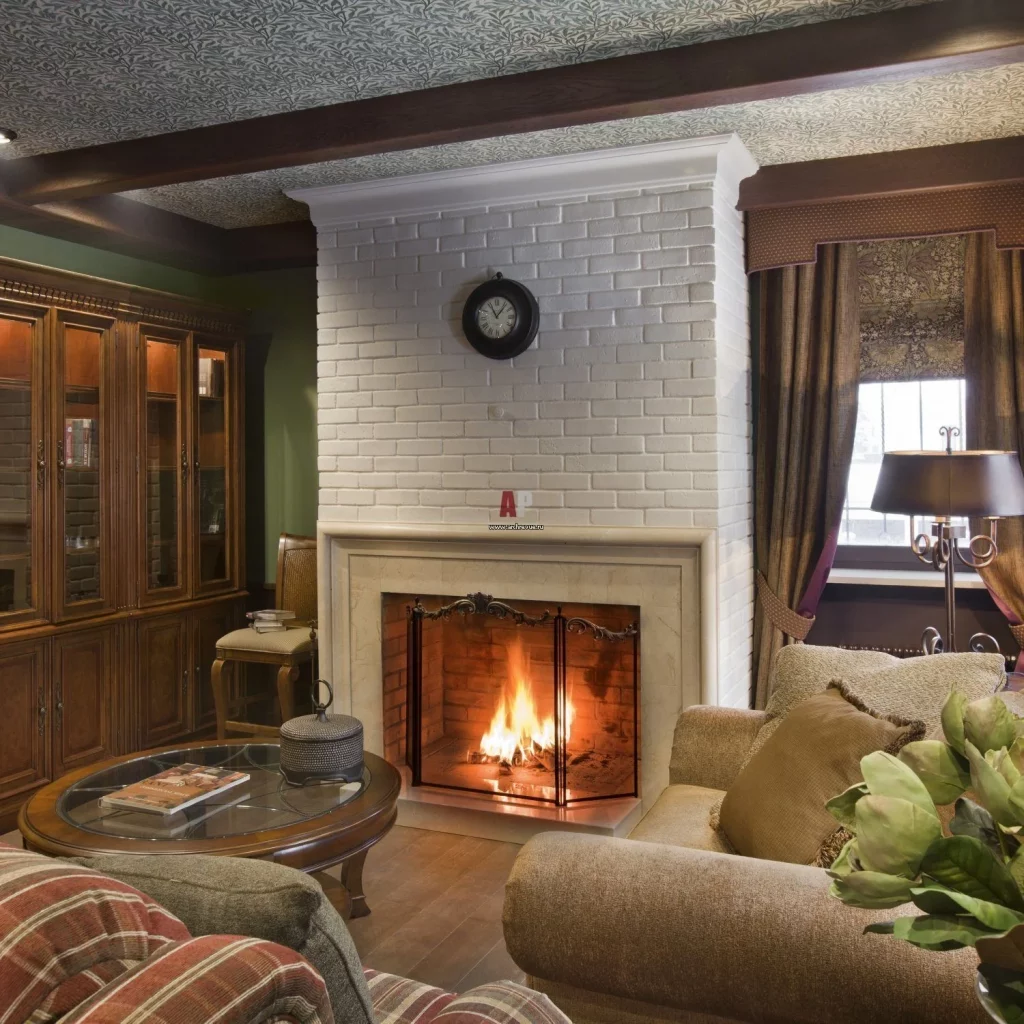
I find the layout successful because the fireplace clearly functions as the room’s focal point without making the seating feel secondary. The chairs and sofa-like seating face toward the fire, creating an obvious place to gather, while the coffee table provides a practical center for books and everyday objects. The tall wooden cabinetry adds substantial storage along one side of the room, and its darker finish balances the bright fireplace surround. Even the window treatment contributes to the composition by repeating the room’s brown and warm neutral palette.
From my perspective, this is a good example of how a traditional fireplace can feel elegant without becoming overly formal. If I were recreating this atmosphere, I would pay close attention to the relationship between the fireplace and the surrounding woodwork rather than treating the fireplace as an isolated feature. The combination of painted brick, natural-looking wood tones, textured upholstery, and warm lighting creates depth because there is plenty of variation in both color and texture.
I would keep additional decorating fairly restrained in a room like this because there is already so much visual interest. The existing clock, books, lamp, patterned fabrics, and greenery provide enough personality. What I particularly appreciate is that the fireplace does not need an elaborate mantel display to make an impression; the brick surface and glowing fire already provide the strongest decorative element.
Bright Brick Fireplace With a Simple Mountain-Inspired Feel
The second interior takes a noticeably lighter and more relaxed direction. I see a compact brick fireplace with a dark framed opening, topped by a simple wooden mantel, against a mostly white wall. A large black upholstered lounge chair occupies the foreground, while a tall wooden ladder-style shelving unit fills the left side and holds books and a few small objects. On the right, a pair of skis leans against the wall beside a wooden door, reinforcing the casual alpine character of the room. Natural wood appears repeatedly in the shelving, door, floor, and fireplace mantel, while strong daylight brightens the entire space.
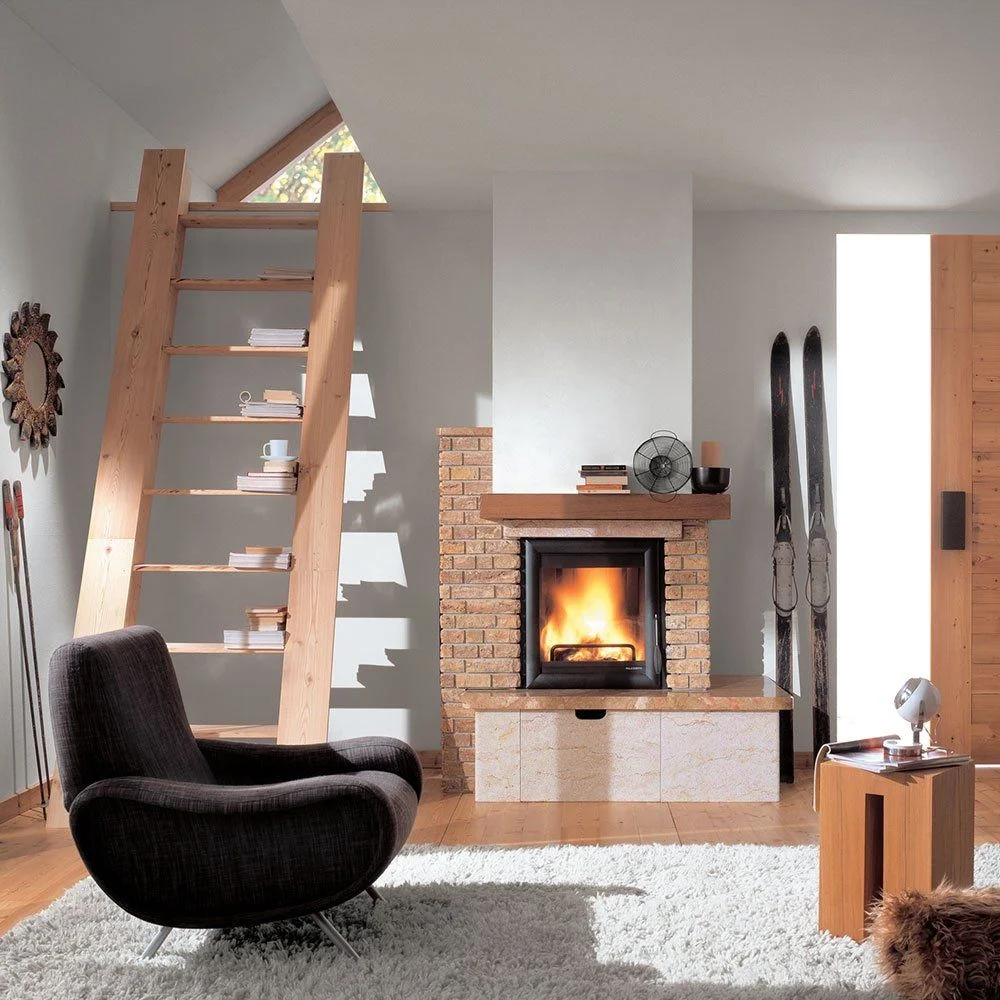
What works particularly well for me is the balance between the pale architecture and the darker individual pieces. The black chair gives the room a strong visual counterweight, while the warm wood keeps the predominantly white setting from feeling cold. The ladder shelf is especially effective because it provides vertical storage without looking bulky. I also like how the skis are displayed openly rather than hidden away; in this particular setting, they become part of the room’s personality while remaining practical equipment.
I would use this image as inspiration for anyone who wants a fireplace to feel welcoming without building an elaborate traditional surround. The fireplace itself is relatively simple, yet the combination of exposed brick, wood, and natural light gives it plenty of character. In my experience, a restrained fireplace design often benefits from allowing the surrounding materials to do the decorative work. Here, the wooden shelf, flooring, door, and mantel create enough warmth that the white walls can remain uncomplicated.
If I were refining this look, I would preserve the open feeling rather than filling every available surface. The small books and objects on the shelf are enough to make it feel personal, and the uncluttered wall above the fireplace keeps attention on the fire. The result is an interior that feels functional and comfortable, with a relaxed quality that suits the simple architecture.
Streamlined Fireplace Set Into a Warm Neutral Wall
The third room demonstrates a much more minimalist interpretation of a welcoming fireplace. The fireplace is built directly into a smooth warm beige wall and surrounded by a substantial dark rectangular frame. The fire creates a strong horizontal focal point, while two simple framed artworks hang above it. I notice a light wood floor extending through the room, a pale textured rug, a low round table with a dark surface, and neutral upholstered seating visible in the foreground. Floating dark shelves appear in the adjoining space, and natural stone can be seen farther back, adding subtle texture to the otherwise clean interior.
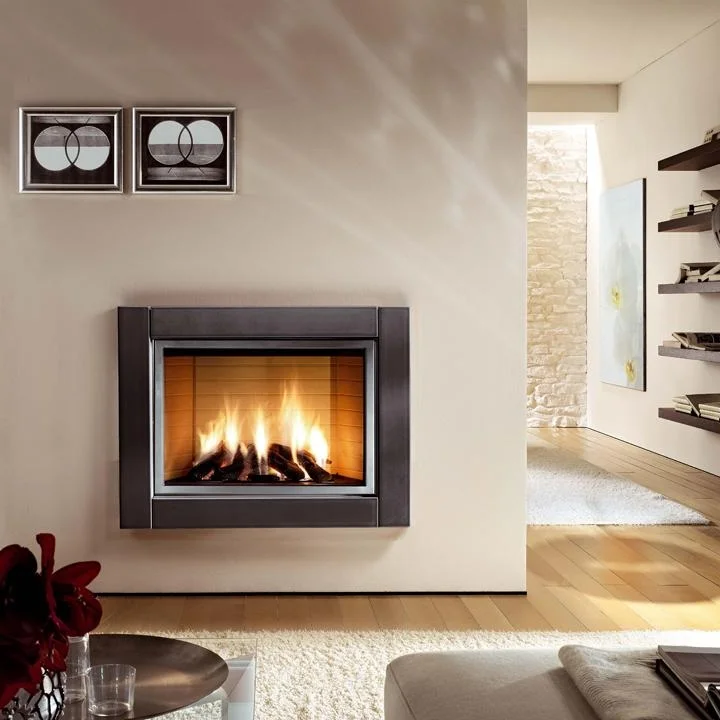
I like the simplicity of this arrangement because the fireplace has visual weight without requiring a traditional mantel. The dark surround gives definition to the opening and creates a clear contrast against the lighter wall. At the same time, the neutral furnishings and pale flooring prevent the fireplace from feeling too heavy. The open shelving in the adjacent area provides useful storage and display space while maintaining the streamlined character of the interior.
For me, this photograph is a useful reminder that elegance does not always come from ornamentation. A clean fireplace surround can look sophisticated when its proportions relate well to the wall and the surrounding furniture. I would also take inspiration from the limited color palette here: warm beige, light wood, dark accents, and soft neutrals create a calm background that allows the flames to become the main source of visual movement.
I would resist adding a large collection of accessories around this fireplace because the design depends on its clean lines. The two framed pieces above it already provide a controlled decorative element, while the adjoining shelves introduce personality without competing with the fire. Keeping the surrounding area visually quiet would preserve the contemporary character that makes this fireplace feel elegant.
Elegant White Mantel With Built-In Shelving
The fourth living room offers the most decorative interpretation of the collection, with a large white fireplace surround occupying the center of a wall flanked by built-in shelving. The fireplace is framed by layered white molding and a dark inset opening, creating a strong contrast against the bright surround. Above it, a recessed decorative panel holds a circular natural-toned wreath, while vases filled with dried branches, yellow flowers, small decorative pieces, and books are arranged across the mantel. The surrounding shelves hold rows of books and woven baskets, and sunlight falls across the white surfaces and dark wood floor.
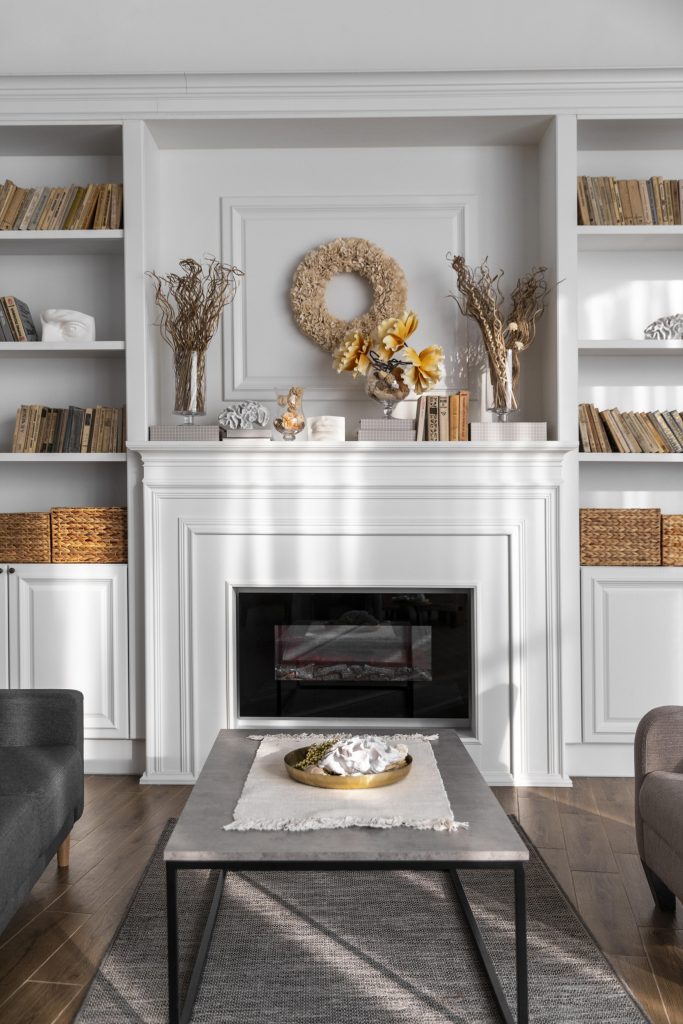
I find the built-in storage particularly effective because it gives the fireplace wall a sense of symmetry and purpose. Books occupy much of the open shelving, while woven baskets introduce texture and practical concealed storage. The mantel display is arranged across a broad surface, but the objects remain visually connected through their natural, neutral, and warm tones. The dark opening of the fireplace also anchors all that white, preventing the wall from becoming visually flat.
If I were studying this room for decorating ideas, I would focus on the repetition of shapes and materials. The rectangular architectural molding is echoed by the shelving and fireplace opening, while the round wreath and decorative dish on the coffee table introduce softer forms. I also like the contrast between the crisp white built-ins and the textured baskets, dried branches, flowers, and wooden floor. These small variations are what keep a predominantly white room from looking sterile.
The main lesson I would take from this design is that a fireplace wall can combine display, storage, and architectural character in one composition. Rather than decorating the room with unrelated accents, I would build on the elements already visible here: books, baskets, natural textures, simple floral arrangements, and restrained neutral accessories. That approach keeps the fireplace as the centerpiece while making the entire wall feel intentional and useful.
Modern Minimalist Fireplace
Cozy Traditional Fireplace
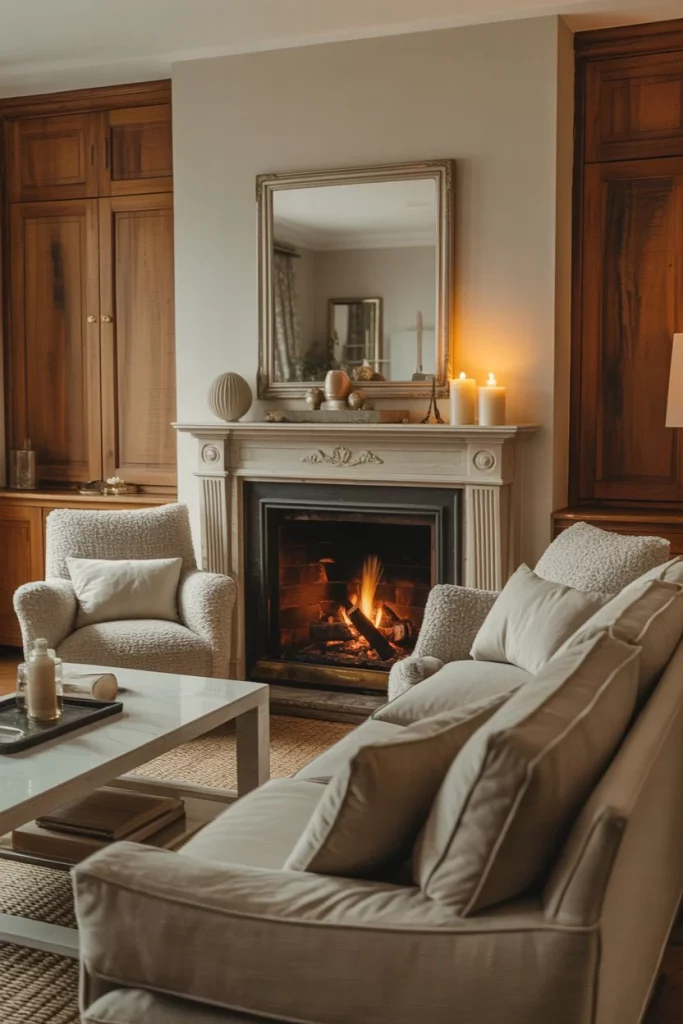
Contemporary Stone Fireplace
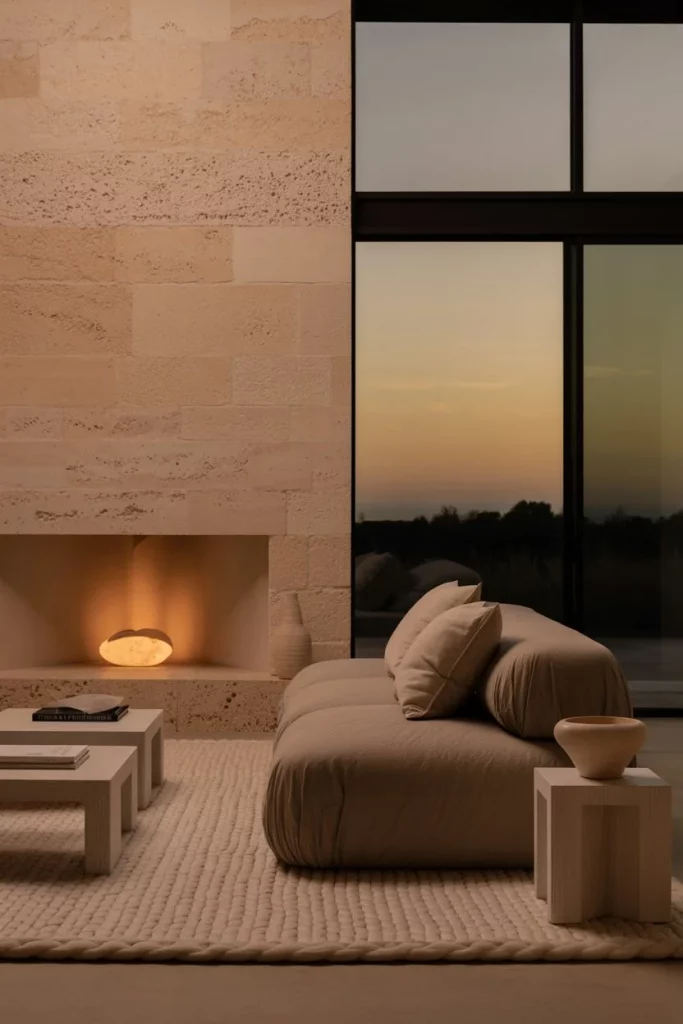
Rustic Luxury Fireplace
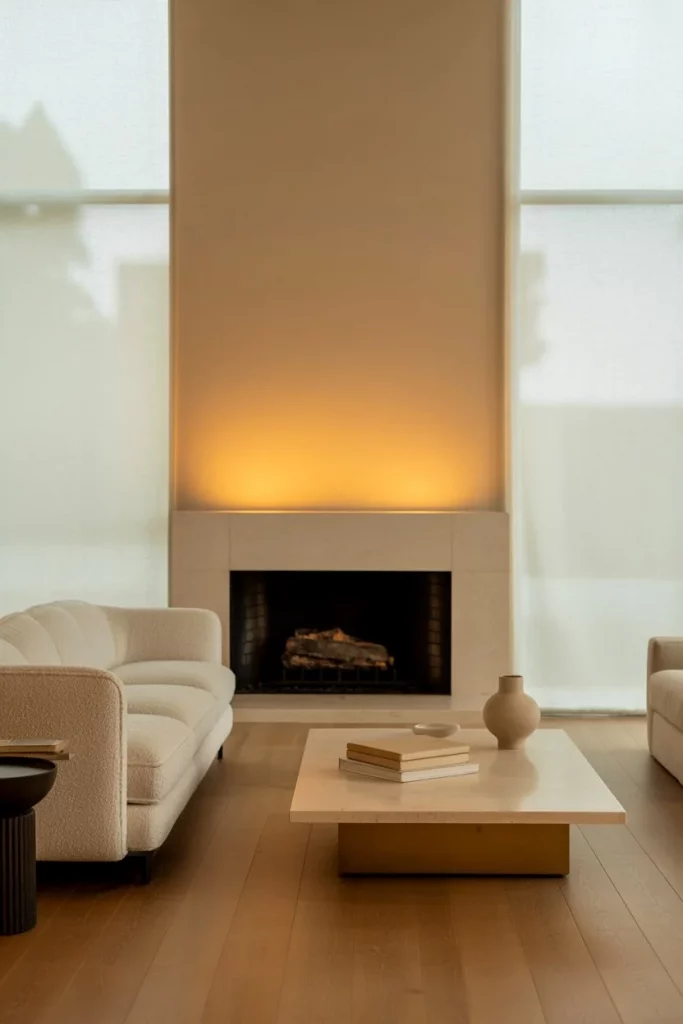
An elegant fireplace can completely transform the atmosphere of a living room, making it feel warmer, more comfortable, and inviting. I love how these designs show that everything from rustic stone and traditional brick to sleek modern finishes can create a beautiful focal point. The key is choosing a fireplace style that works naturally with the room’s furniture, colors, textures, and architecture. Which of these elegant fireplace ideas is your favorite? Leave a comment and share the design you would love to bring into your own living room.