
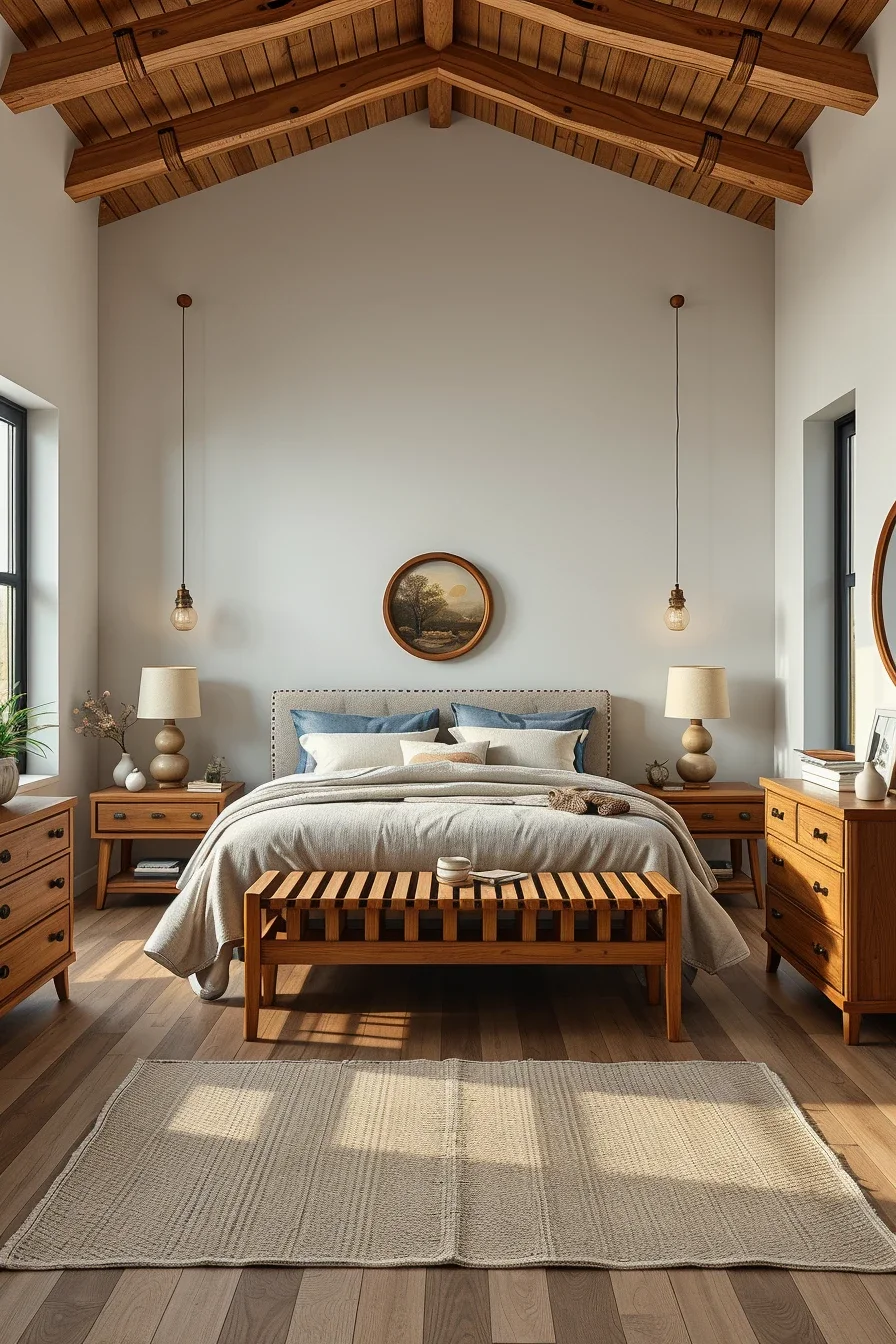
Your bedroom should feel like a peaceful retreat that reflects your personality and everyday lifestyle. Exploring aesthetic bedroom decorating ideas for home is a wonderful way to create a space that feels stylish, comfortable, and inviting without sacrificing functionality. From soothing color palettes and layered textiles to thoughtful lighting and decorative accents, every detail contributes to the overall atmosphere. Whether you prefer a minimalist look, a cozy modern vibe, or a timeless design, there are countless ways to personalize your bedroom. Small updates, such as adding artwork, improving storage, or introducing new textures, can make a remarkable difference. This guide shares inspiring ideas to help you design an aesthetic bedroom that feels beautiful, relaxing, and uniquely yours.
Create A Calm Neutral Color Palette
I always begin an aesthetic bedroom with a calm neutral color palette because it instantly creates a relaxing atmosphere that never feels overwhelming. Soft shades of warm white, ivory, beige, greige, sand, taupe, and light mushroom establish a timeless foundation while allowing natural light to bounce throughout the room. Instead of relying on bold colors, I prefer subtle variations in tone that add depth without distracting from the peaceful feeling of the space. This approach makes the room feel larger, brighter, and much more welcoming throughout every season.
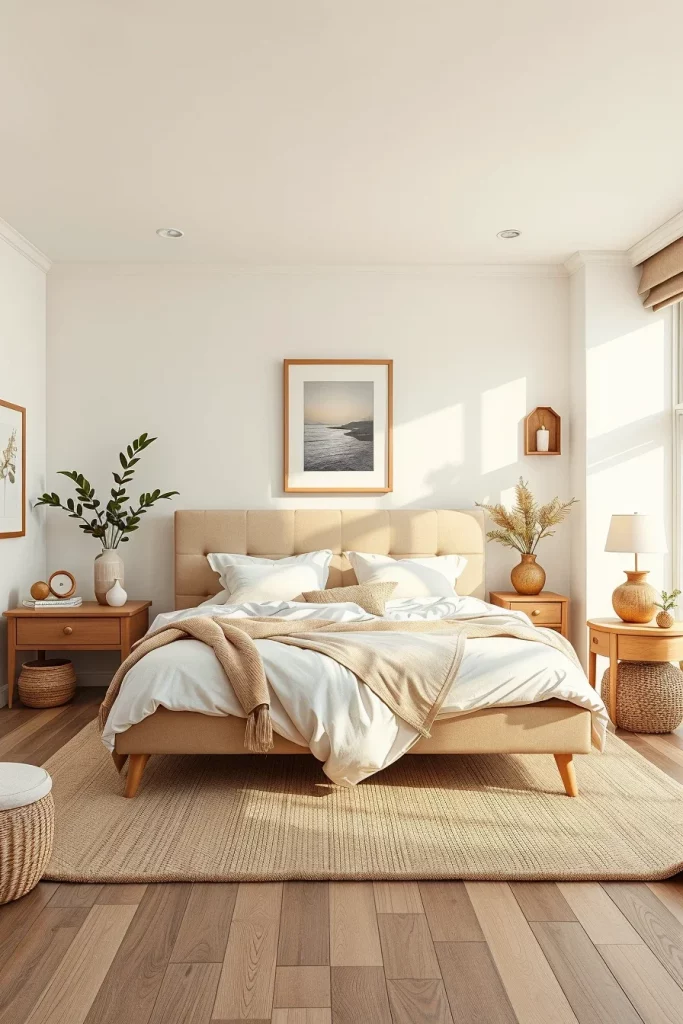
When selecting furniture, I look for pieces that naturally complement the neutral palette. An upholstered bed in cream fabric, matching bedside tables with clean lines, a soft area rug, a simple dresser, and ceramic decorative accessories create visual harmony. I also include linen bedding, woven baskets, framed minimalist artwork, and matte finishes that reinforce the calm aesthetic. Every piece should contribute to the room instead of competing for attention.
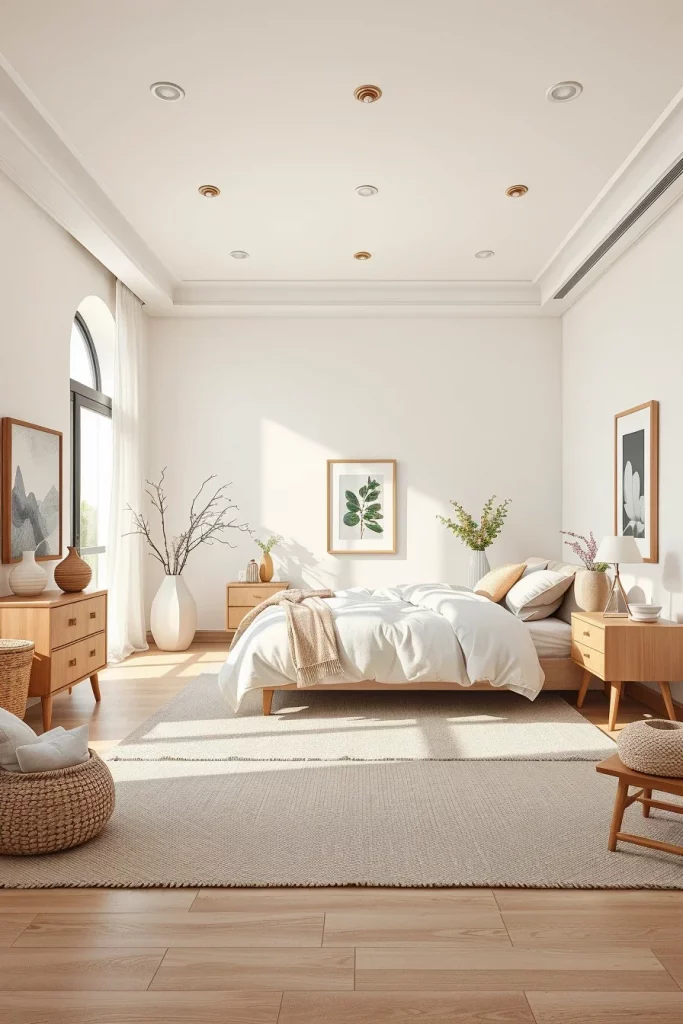
Personally, I find that neutral bedrooms remain visually appealing for many years because they are incredibly versatile. Designers frequently featured by Architectural Digest recommend building a room around timeless colors before introducing small decorative accents that can easily be updated. I have found this advice especially useful because it allows seasonal changes without requiring a complete redesign.
I would also include one or two living elements, such as a simple olive tree or a large ceramic vase with dried branches, to soften the room naturally while maintaining the overall minimalist aesthetic.
Layer Soft Bedding For A Cozy Atmosphere
Layering bedding is one of the easiest ways I create a bedroom that feels luxurious without becoming overly decorated. Instead of using only a comforter, I combine breathable sheets, a quilt, a textured duvet, lightweight blankets, and decorative pillows to create visual depth. This layered approach makes the bed appear inviting while adding softness that immediately enhances the overall bedroom aesthetic.
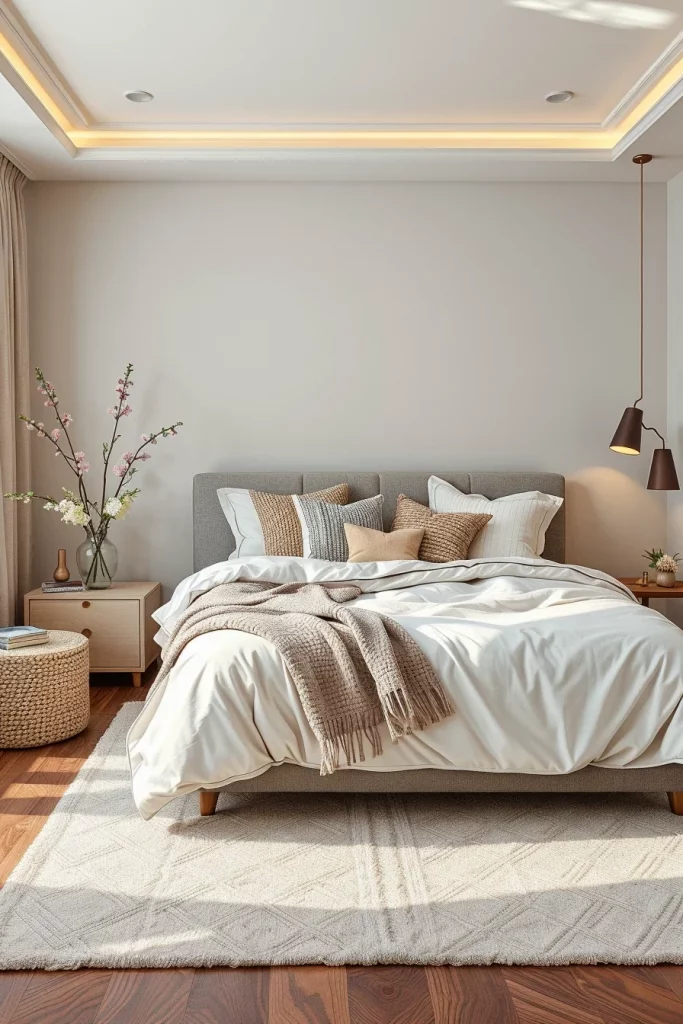
I usually begin with high-quality cotton or linen sheets before adding a plush duvet in a neutral tone. A knitted throw blanket folded across the foot of the bed introduces texture, while several pillows in different fabrics create balance without clutter. I also pay attention to fabric quality because natural materials tend to look better over time while remaining comfortable throughout the year.
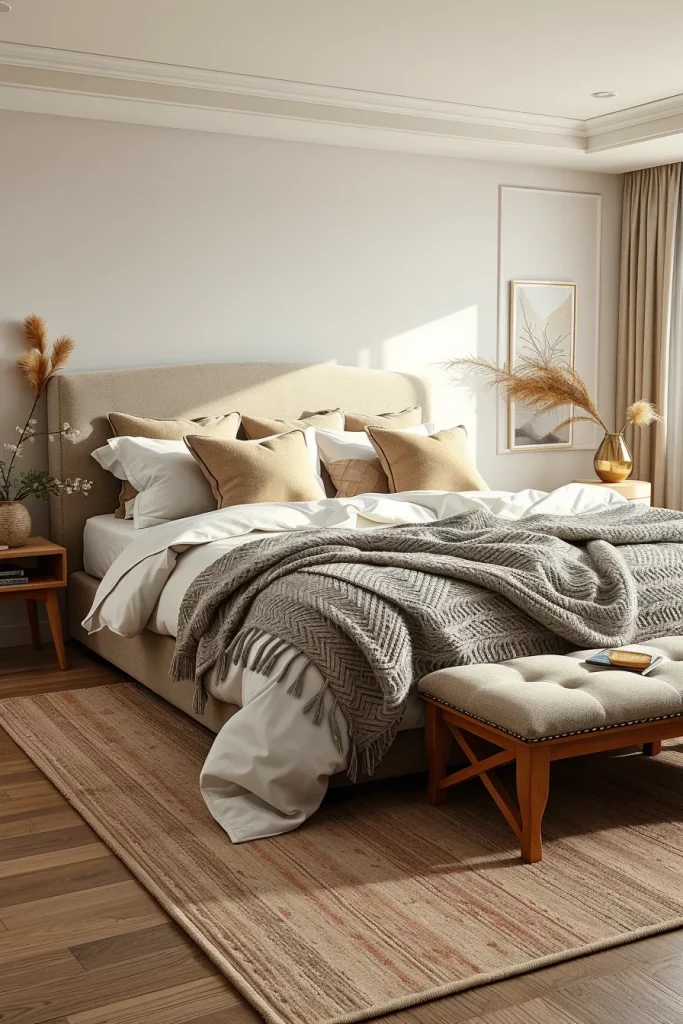
In my experience, comfort should never be sacrificed for appearance. Better Homes & Gardens often highlights that combining multiple textures creates interest without relying on excessive decoration, and I completely agree. Carefully selected bedding becomes the focal point of the bedroom while making everyday routines feel much more enjoyable.
To complete this section, I would add a storage bench at the foot of the bed to organize extra blankets while contributing additional style and functionality.
Add A Statement Headboard As A Focal Point
A statement headboard immediately gives the bedroom a strong visual anchor without requiring dramatic decoration elsewhere. I often choose oversized upholstered headboards because they introduce softness while making the bed feel more luxurious. Whether the design features vertical channel tufting, subtle curves, or a simple rectangular silhouette, the headboard naturally becomes the centerpiece of the room.
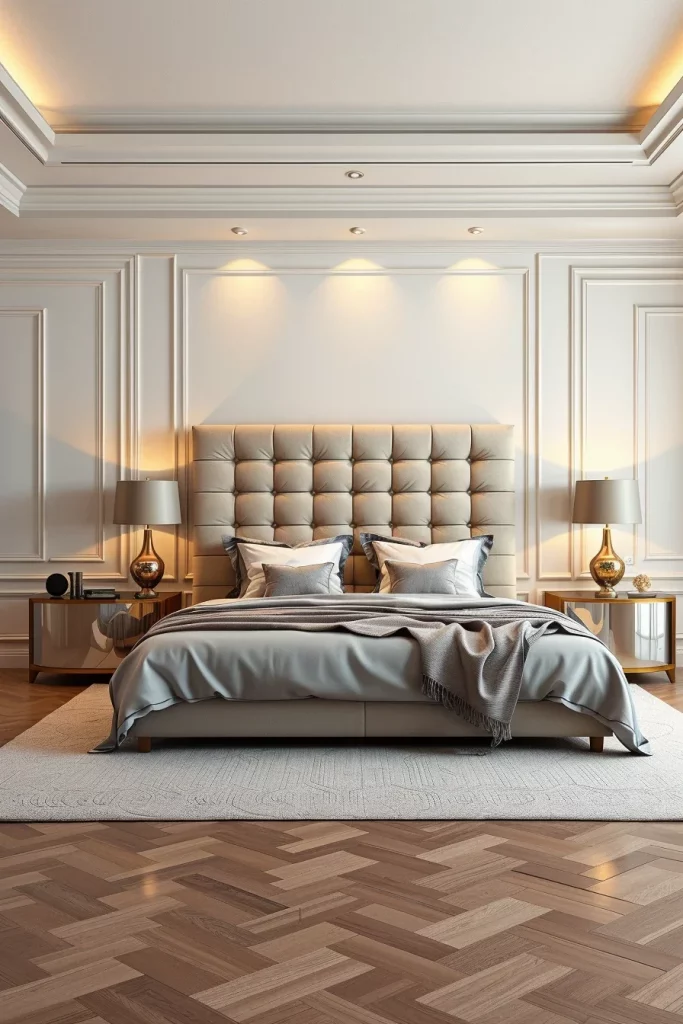
Around the bed, I prefer symmetrical furniture arrangements that enhance the focal point rather than competing with it. Matching nightstands, elegant table lamps, minimal wall décor, and coordinated bedding create a balanced composition. The remaining furniture should stay understated so the headboard receives the attention it deserves without overwhelming the overall design.
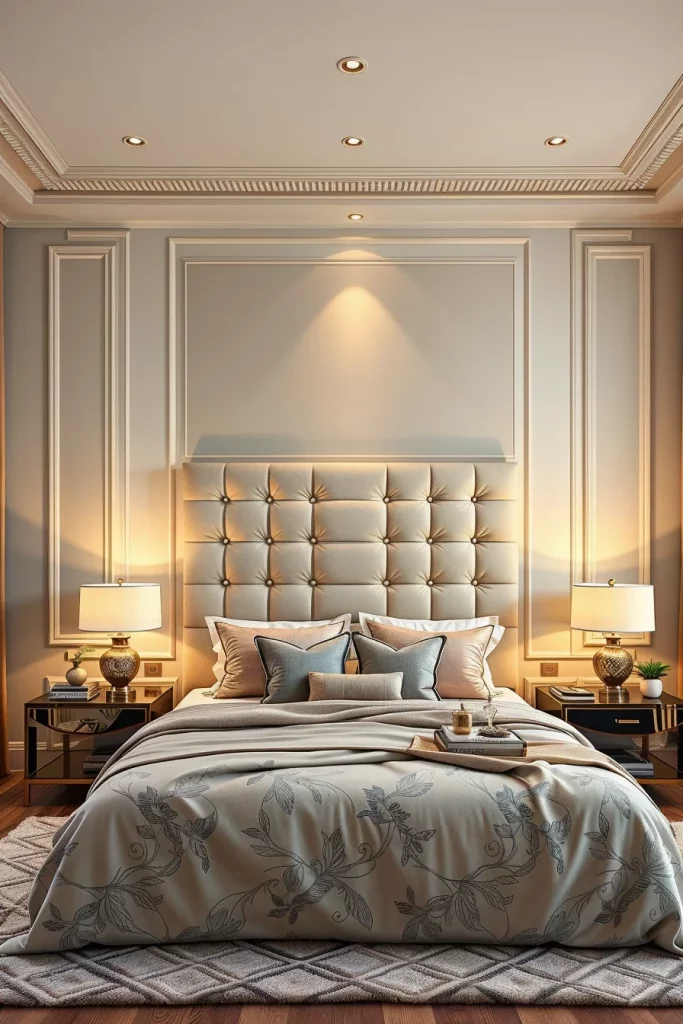
From my perspective, investing in a quality headboard is worthwhile because it transforms even the simplest bedroom into a thoughtfully designed space. Interior designers featured by House Beautiful frequently recommend selecting one statement element instead of filling a room with numerous decorative pieces, and I have found that strategy consistently produces more refined interiors.
I would also consider installing subtle wall molding behind the headboard to introduce architectural interest while preserving the clean aesthetic.
Style Floating Nightstands For A Minimal Look
Floating nightstands are one of my favorite solutions for creating a modern aesthetic bedroom because they keep the floor visually open and make even compact spaces feel larger. Their clean appearance contributes to a minimalist environment while still providing practical storage for daily essentials. The uninterrupted flooring also makes cleaning much easier, which is an added advantage.
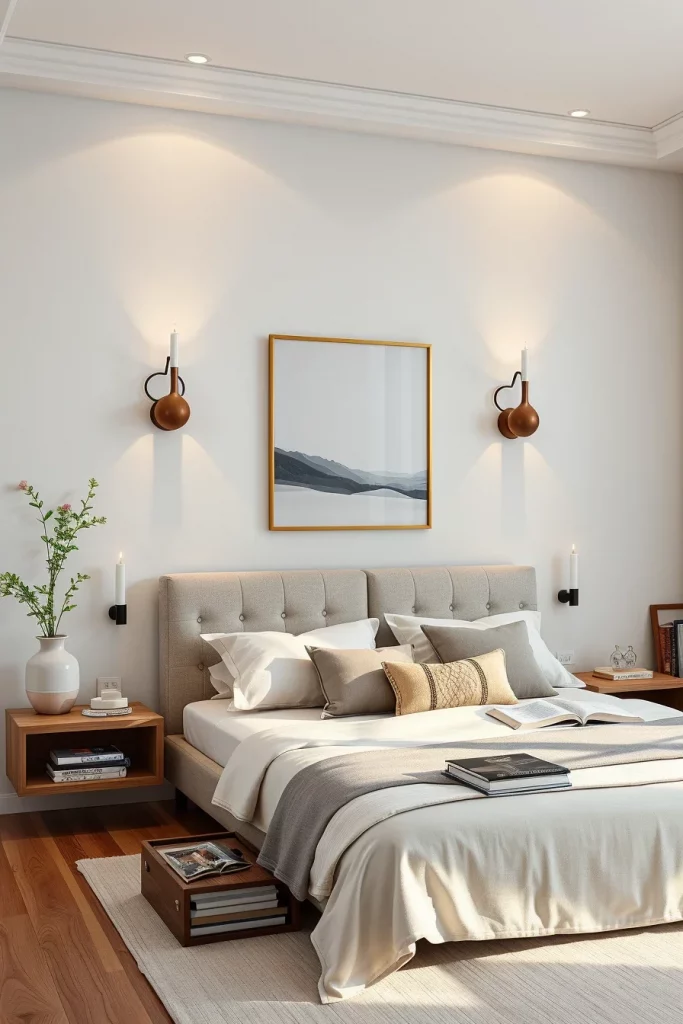
I usually pair floating nightstands with wall-mounted sconces or small pendant lights instead of traditional table lamps. Decorative styling remains simple, often including a ceramic vase, one or two books, a scented candle, and a small decorative tray. Hidden drawers help eliminate clutter while preserving the streamlined appearance that defines modern bedroom design.
I appreciate how floating furniture creates a lighter visual impression throughout the room. Many contemporary interior designers recommend reducing visual weight wherever possible, especially in smaller bedrooms, and floating nightstands are an excellent example of this principle in practice.
Adding concealed charging outlets inside the drawers would further improve convenience while keeping cords completely out of sight.
Decorate With Warm Ambient Lighting
Lighting has a remarkable influence on how a bedroom feels, which is why I always prioritize warm ambient illumination instead of relying on a single ceiling fixture. Multiple light sources create a softer atmosphere that encourages relaxation while highlighting architectural details and decorative textures. Warm lighting also enhances neutral color palettes by making them appear richer and more inviting during the evening.
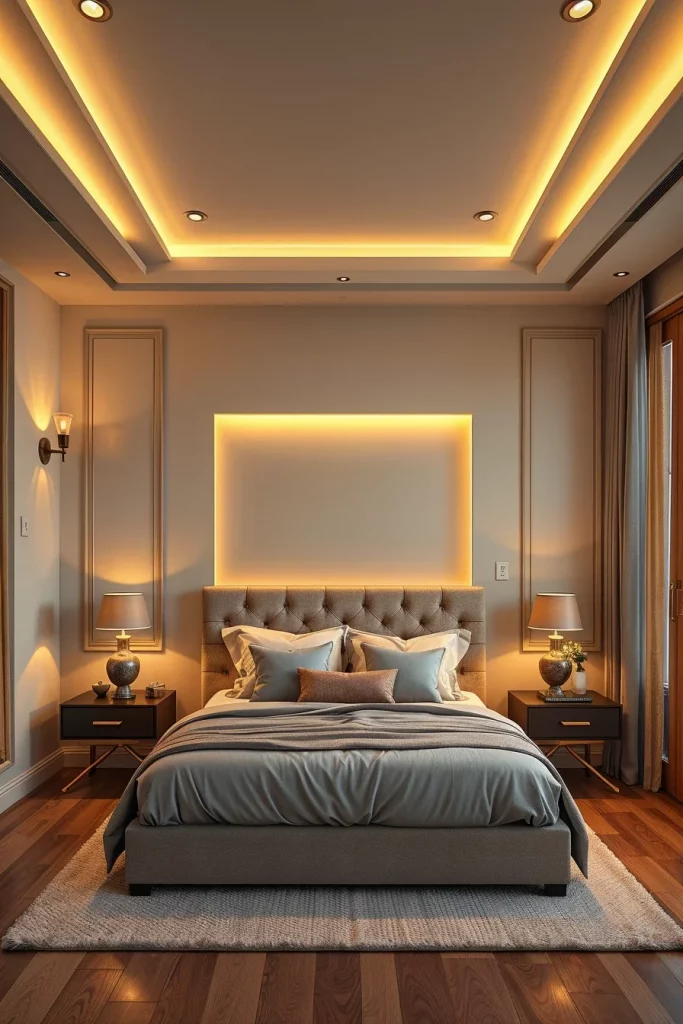
I like combining ceiling lighting with bedside lamps, wall sconces, LED accent lighting behind the headboard, and small decorative table lamps. Dimmable bulbs allow the brightness to change depending on the activity, whether reading, relaxing, or preparing for sleep. Glass, linen, and matte metal fixtures all contribute to a sophisticated layered lighting scheme without overwhelming the room.
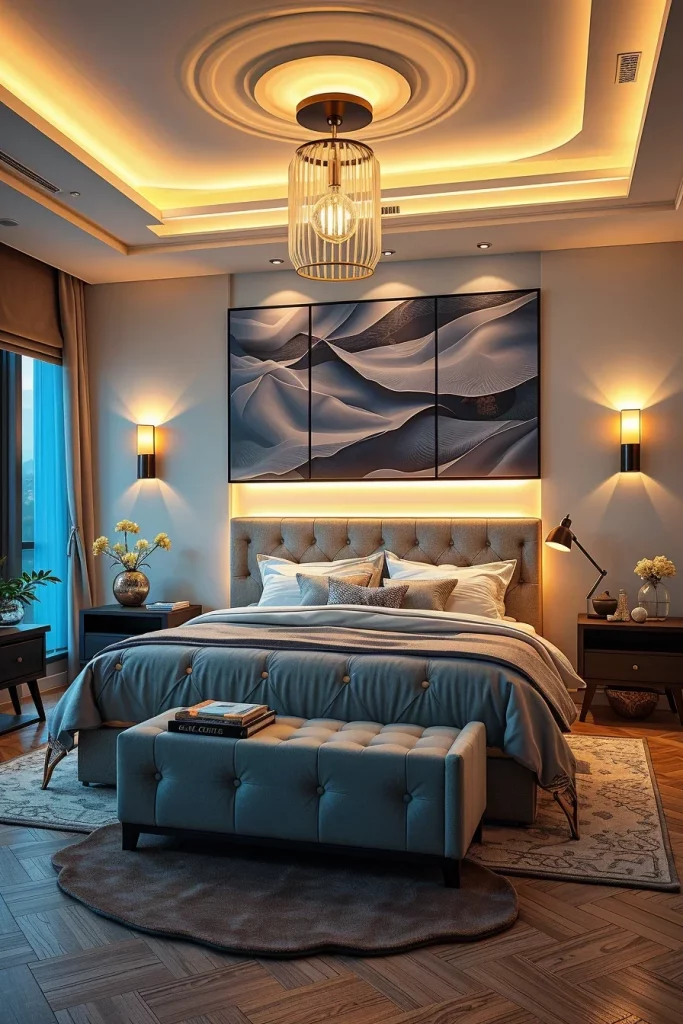
In my experience, lighting is often underestimated even though it dramatically changes the perception of every decorative element. Designers frequently interviewed by Elle Decor emphasize layering light sources rather than increasing brightness alone, and I have seen how this simple adjustment transforms the entire atmosphere of a bedroom.
For an even more complete design, I would include discreet smart lighting controls that allow brightness and color temperature to adjust automatically throughout the day.
Display Oversized Wall Art For Visual Interest
I often use oversized wall art to give an aesthetic bedroom a strong visual identity without overcrowding the space with smaller decorative pieces. A large artwork above the bed immediately draws the eye and creates a balanced composition that feels intentional and sophisticated. Abstract paintings, minimalist landscapes, soft botanical prints, or textured canvas artwork work especially well because they complement a calm bedroom rather than dominate it. Choosing artwork that echoes the room’s color palette helps maintain a peaceful atmosphere while introducing personality.
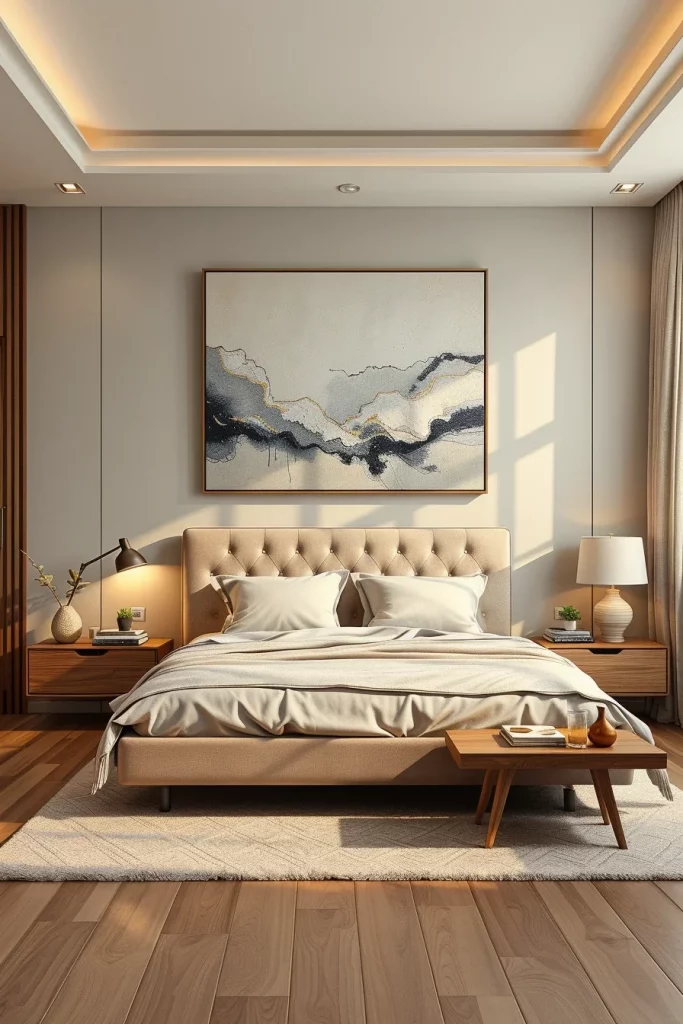
When styling the room, I pair the oversized artwork with an upholstered bed, floating nightstands, neutral bedding, and understated decorative accessories. I avoid adding multiple competing wall decorations because a single large piece usually has a greater impact than several smaller frames. Soft wall colors, natural wood furniture, and warm lighting allow the artwork to become the centerpiece while maintaining a cohesive aesthetic throughout the room.
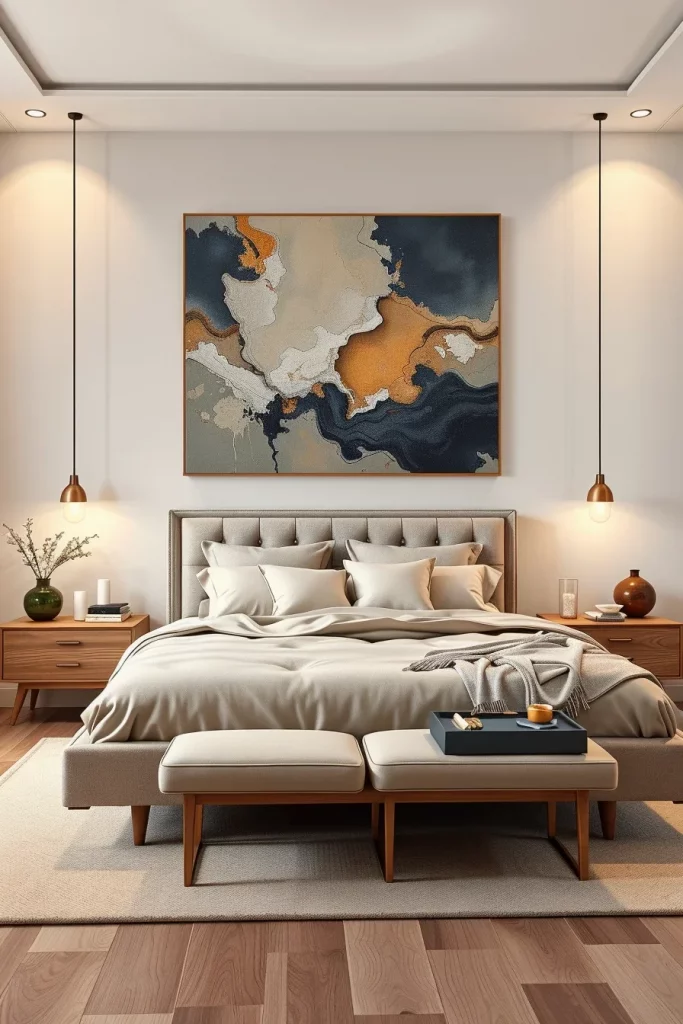
From my experience, oversized artwork makes even an average-sized bedroom feel professionally designed. Interior designers featured by Elle Decor often recommend using large-scale art to create a luxurious feeling without relying on excessive furniture or accessories. I have found that this approach creates an elegant focal point while keeping the room visually calm.
To complete this design, I would include subtle picture lighting above the artwork to highlight its texture and create an inviting evening atmosphere.
Mix Textures With Throws And Decorative Pillows
Texture plays a significant role in creating an inviting bedroom, especially when working with a neutral color palette. I like combining smooth cotton, soft linen, chunky knit throws, velvet cushions, boucle fabrics, and woven accents because they add depth without introducing unnecessary color. Even when every item shares similar tones, the variety of materials makes the bedroom feel rich and layered.
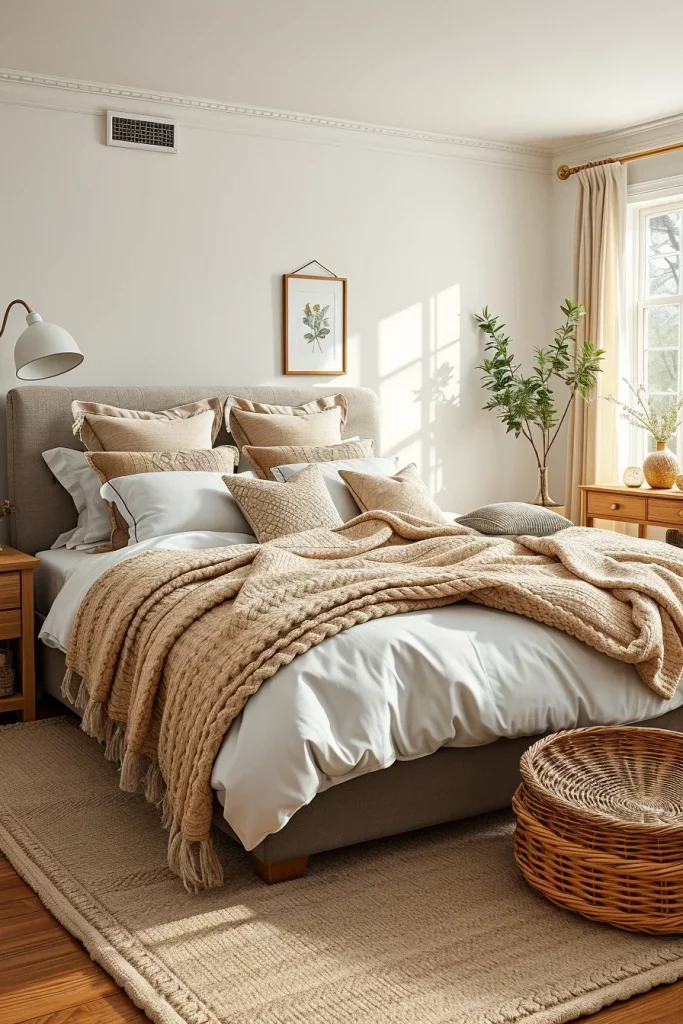
I usually begin with simple bedding before adding decorative pillows in different sizes and textures. A knitted throw casually placed across the foot of the bed softens the overall appearance, while boucle accent cushions and linen pillowcases create subtle contrast. Nearby, I include a woven storage basket, a soft area rug, and ceramic accessories that continue the layered aesthetic throughout the room.
Personally, I believe texture is what separates a beautiful bedroom from one that feels unfinished. Better Homes & Gardens frequently highlights the importance of layering fabrics to create warmth and comfort, and I completely agree. The room becomes visually interesting without requiring bold colors or excessive decoration.
I would also introduce one upholstered accent chair or bench with a contrasting fabric to extend the layered design beyond the bed itself.
Choose Elegant Curtains To Frame Natural Light
Natural light is one of the most valuable features in any bedroom, so I always choose curtains that enhance rather than block it. Floor-to-ceiling curtains in linen or lightweight woven fabrics soften incoming sunlight while creating the illusion of higher ceilings. Neutral colors such as ivory, oatmeal, soft beige, or warm white complement almost every decorating style and maintain the calm atmosphere that defines an aesthetic bedroom.
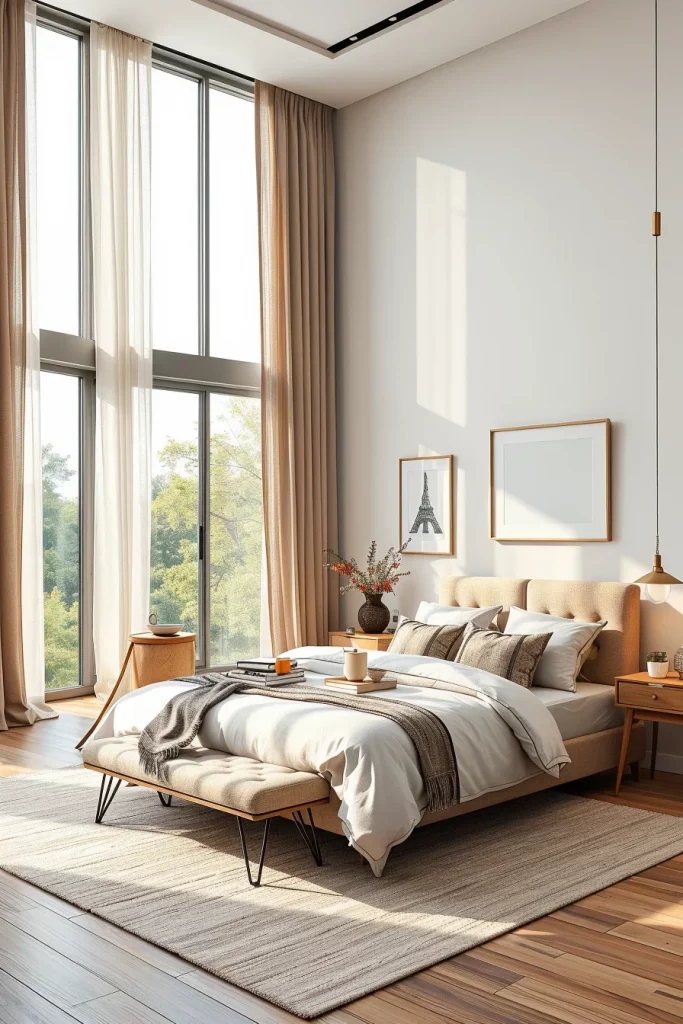
I prefer hanging curtain rods close to the ceiling and extending them beyond the window frame. This simple technique allows more natural light to enter the room when the curtains are open while making the windows appear larger. Paired with light wood furniture, an upholstered bed, layered bedding, and warm lighting, elegant curtains contribute to a bright yet comfortable environment.
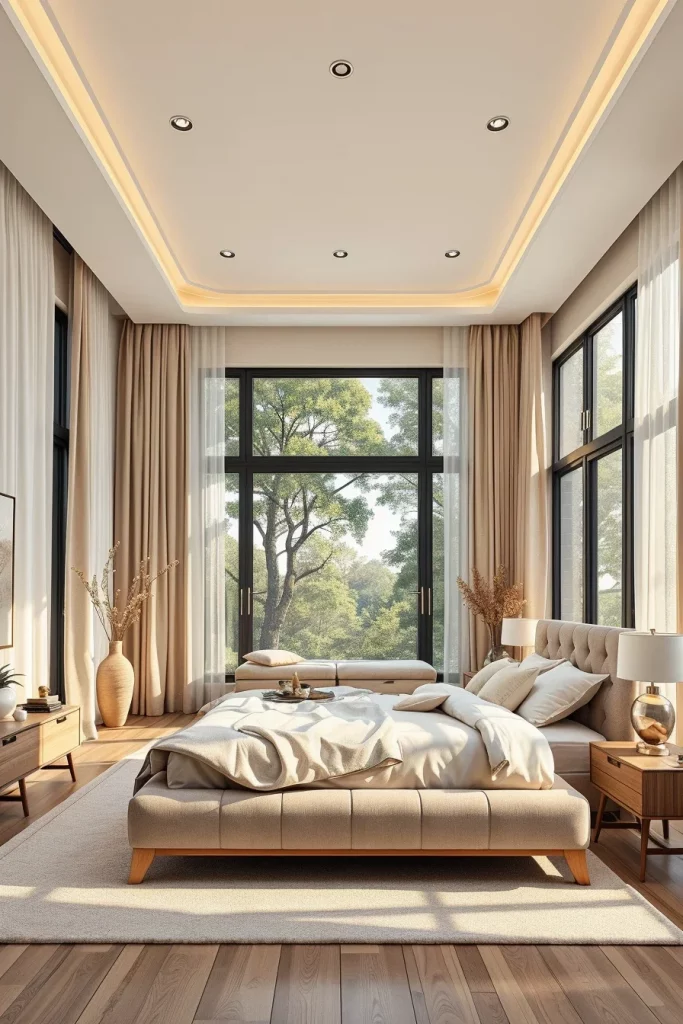
In my own decorating projects, I have consistently found that window treatments dramatically influence the overall appearance of the room. House Beautiful often recommends investing in custom-length curtains because they create cleaner proportions and elevate the entire interior, even when the remaining furnishings are relatively simple.
To make this section even more functional, I would add sheer inner curtains behind the main drapes to provide daytime privacy while preserving abundant natural light.
Incorporate Natural Wood Accents Throughout The Room
Natural wood introduces warmth that perfectly balances soft neutral colors and clean contemporary lines. I like using light oak, ash, walnut, or whitewashed wood because these finishes add organic character without making the bedroom feel heavy. Wood also brings subtle texture that complements fabric upholstery, woven accessories, and ceramic decorative pieces beautifully.
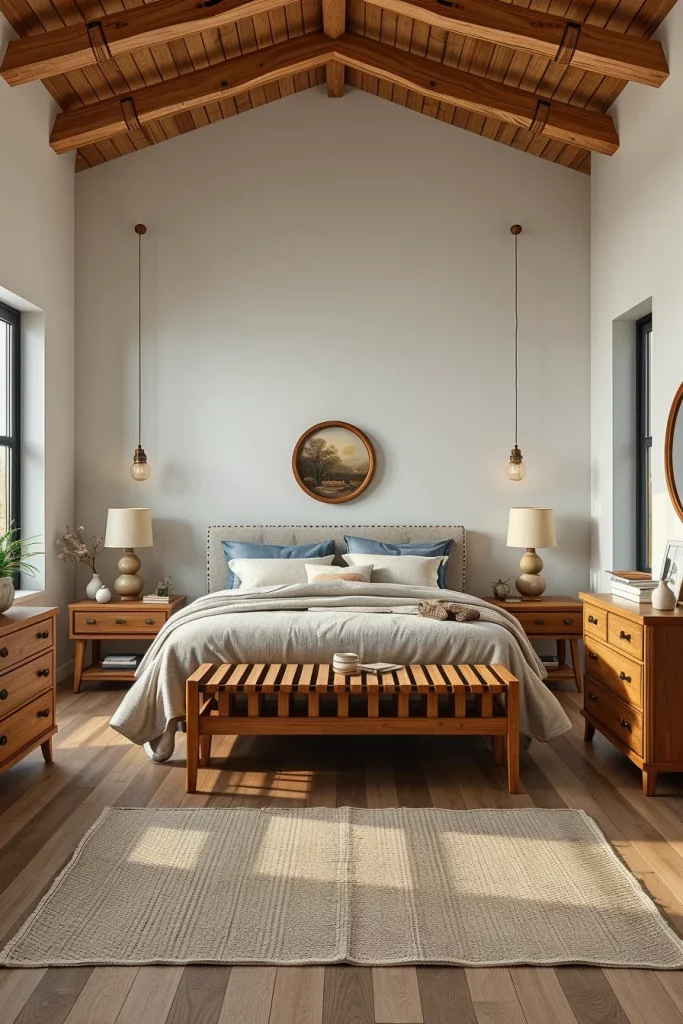
I often select wooden bedside tables, dressers, benches, shelving, and picture frames to establish consistency throughout the room. Even small accents such as wooden lamps, trays, stools, or decorative bowls reinforce the natural aesthetic. Combined with linen bedding, soft rugs, and matte finishes, wood creates a timeless bedroom that feels welcoming in every season.
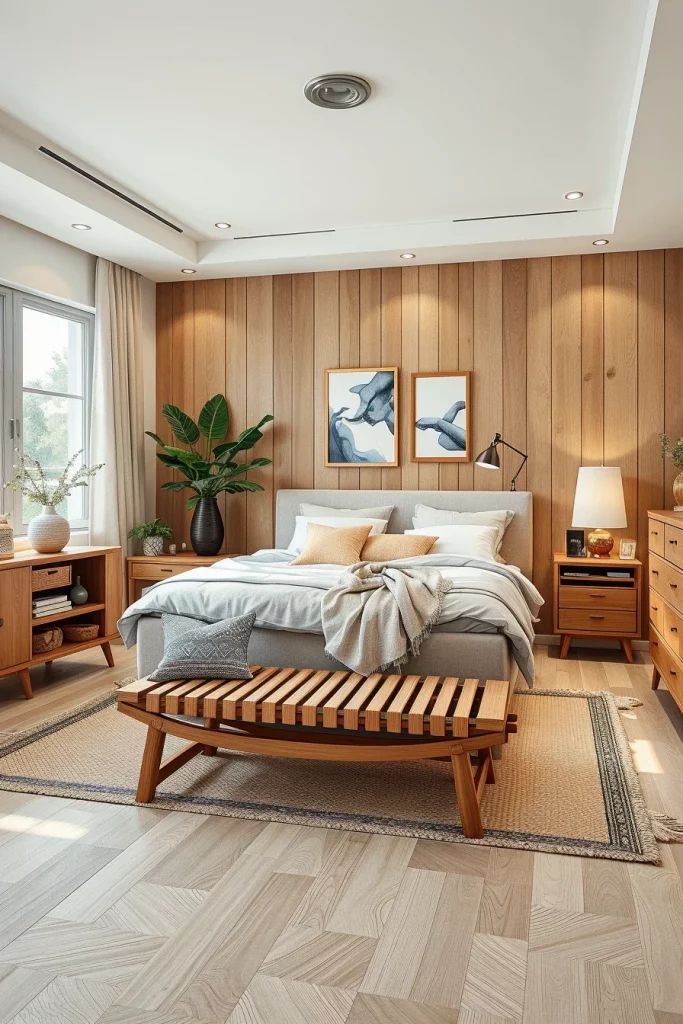
Personally, I appreciate how natural materials age gracefully over time. Architectural Digest regularly features interiors where wood serves as the foundation for calm contemporary spaces, and I have found that this approach creates rooms that remain stylish for many years instead of following short-lived trends.
I would also include a slatted wooden bench at the foot of the bed to introduce additional warmth while providing practical seating and storage.
Design A Functional Reading Corner
A dedicated reading corner transforms a bedroom into a relaxing retreat beyond simply being a place to sleep. Even a small unused corner can become a comfortable personal space when thoughtfully furnished. I prefer positioning the reading area near a window whenever possible so natural daylight enhances the experience during the day, while layered lighting provides comfort during the evening.
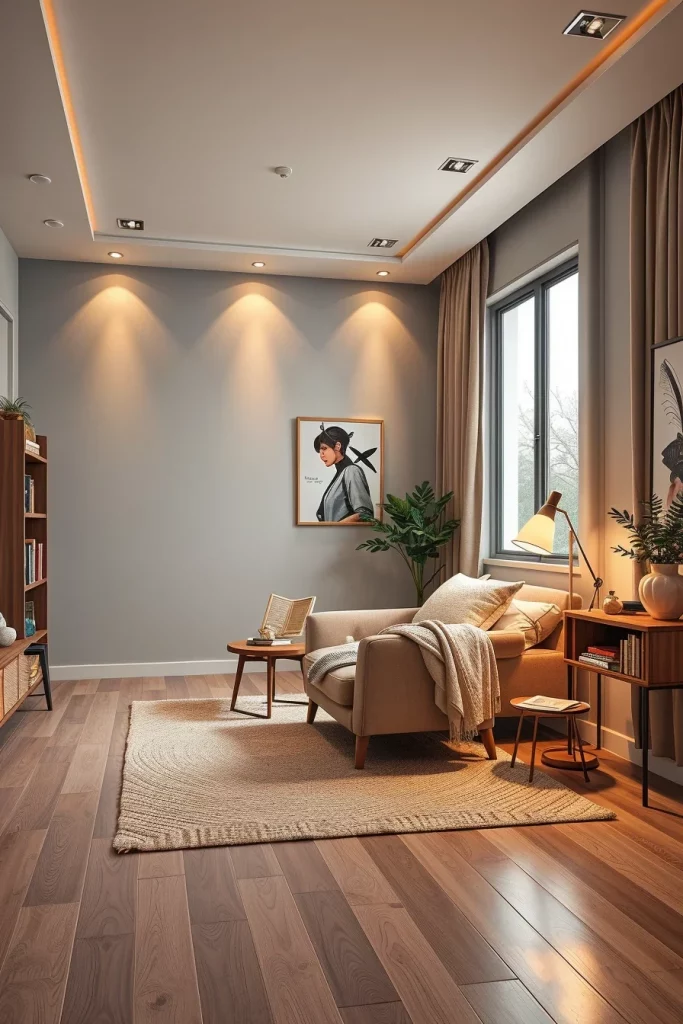
My ideal reading corner includes a comfortable upholstered armchair, a small side table, a floor lamp with warm lighting, a soft throw blanket, and a compact bookshelf or floating shelves. A textured area rug helps define the zone, while a ceramic vase, candles, and a few carefully selected decorative objects complete the arrangement without creating clutter.
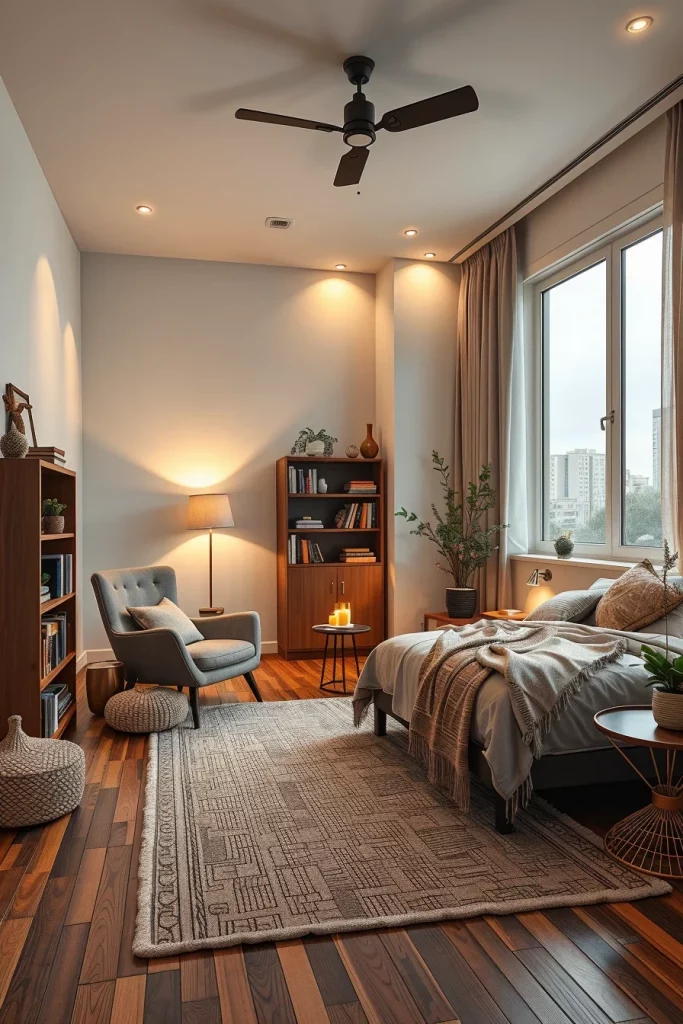
I find that creating a separate relaxation zone encourages people to spend more time enjoying their bedroom instead of using it only for sleeping. Interior designers frequently recommend establishing purposeful areas within larger bedrooms, and I have seen how even a modest reading corner makes the entire room feel more luxurious and thoughtfully planned.
If I wanted to improve this area further, I would add a small ottoman for additional comfort and concealed storage for books, blankets, or magazines.
Use Large Area Rugs To Define The Space
I always consider a large area rug one of the easiest ways to make a bedroom feel complete. Instead of allowing furniture to visually float across the floor, a generously sized rug creates a clear foundation that ties every decorative element together. I prefer rugs with subtle textures, soft neutral tones, or gentle geometric patterns because they provide warmth without overwhelming the room. This simple addition instantly makes the bedroom feel more intentional and visually balanced.
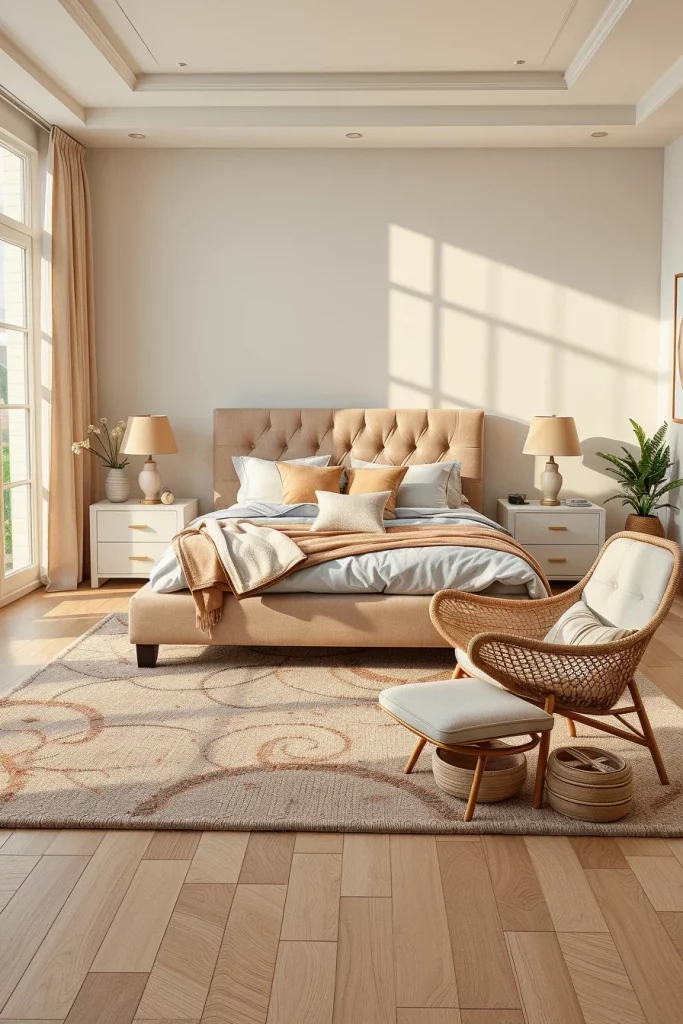
When I decorate a bedroom, I place the rug beneath the bed so that it extends well beyond both sides and the foot of the bed. This layout allows nightstands, an upholstered bed frame, and even a small reading chair to feel connected as one cohesive arrangement. Soft bedding, linen curtains, warm bedside lighting, woven baskets, ceramic table lamps, and a textured throw blanket all contribute to a comfortable atmosphere while complementing the rug instead of competing with it.
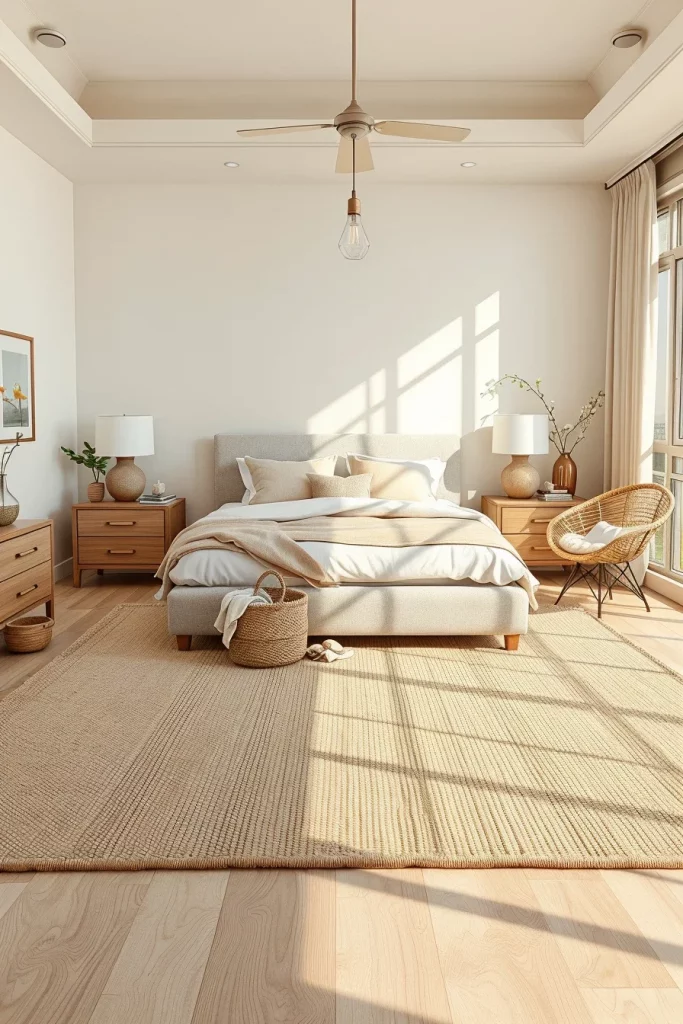
In my experience, designers featured by Architectural Digest often recommend layering textures instead of relying on bold colors to create visual interest. I follow the same principle by combining natural fabrics, soft upholstery, and carefully selected accessories. The result feels sophisticated, calming, and suitable for everyday living without becoming overly decorative.
To complete this design, I would also add a small round side table with fresh flowers or candles beside a cozy accent chair. These finishing details help the room feel lived in while maintaining an elegant aesthetic.
Introduce Soft Greenery For A Fresh Feeling
I believe greenery brings life into a bedroom more naturally than almost any decorative accessory. A few carefully placed plants soften clean architectural lines while adding subtle color and texture. Even in minimalist interiors, greenery creates a welcoming atmosphere that makes the room feel healthier, brighter, and more relaxing.
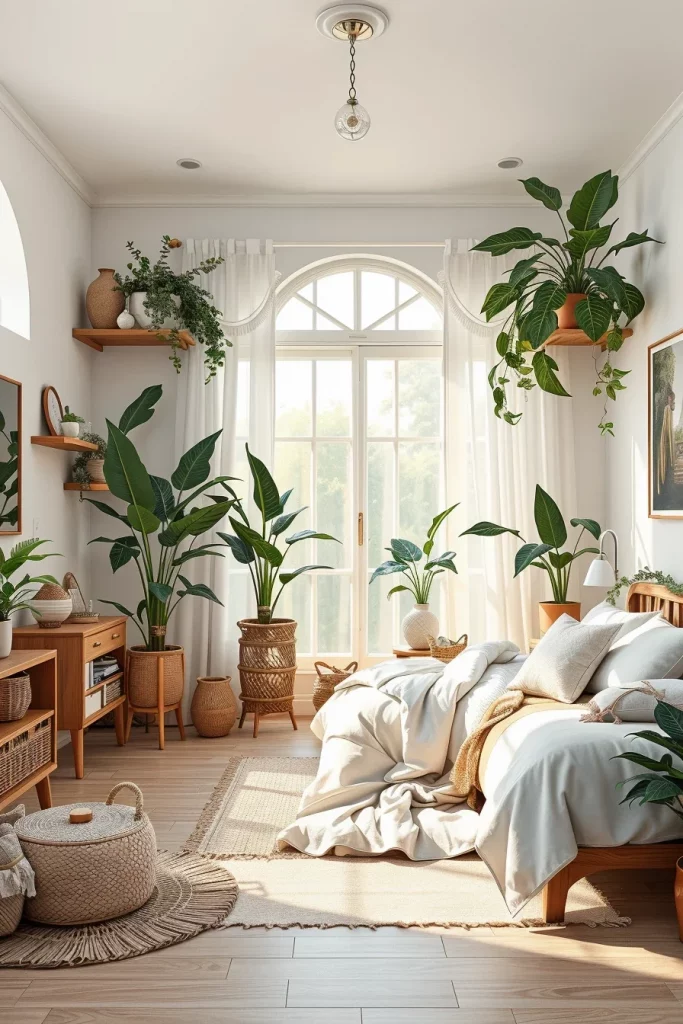
I usually combine one larger floor plant with several smaller plants placed on floating shelves, dressers, or window sills. Simple ceramic planters, natural wood stands, linen curtains, light oak furniture, white bedding, woven storage baskets, and warm lighting create an environment where every decorative element complements the plants rather than distracting from them. The entire room feels balanced and visually refreshing.
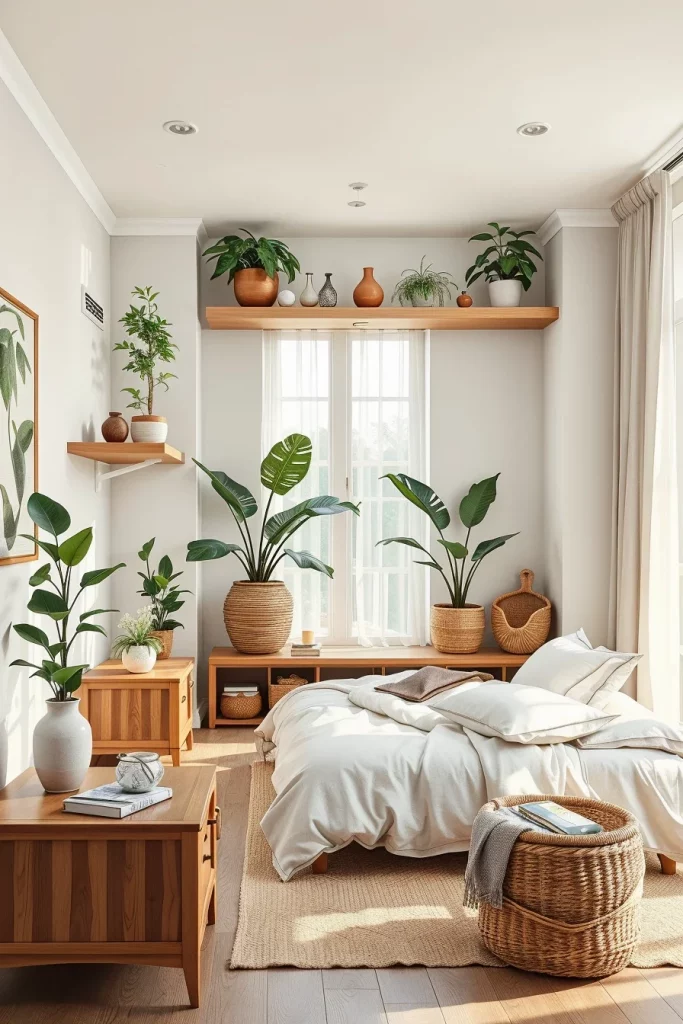
Personally, I appreciate recommendations from Better Homes & Gardens, which frequently suggest choosing easy-care indoor plants that thrive in bedrooms with indirect sunlight. I have found that varieties like snake plants, pothos, and ZZ plants require very little maintenance while providing year-round beauty.
If I wanted to elevate this arrangement even further, I would include botanical artwork or subtle green decorative pillows to repeat the color palette throughout the room without making it feel overly themed.
Decorate With A Stylish Full-Length Mirror
Whenever I want to make a bedroom appear larger, brighter, and more refined, I install a full-length mirror. Besides its practical purpose, a well-positioned mirror reflects natural light throughout the room, making even smaller bedrooms feel more open. I especially enjoy placing mirrors where they capture beautiful views from nearby windows.
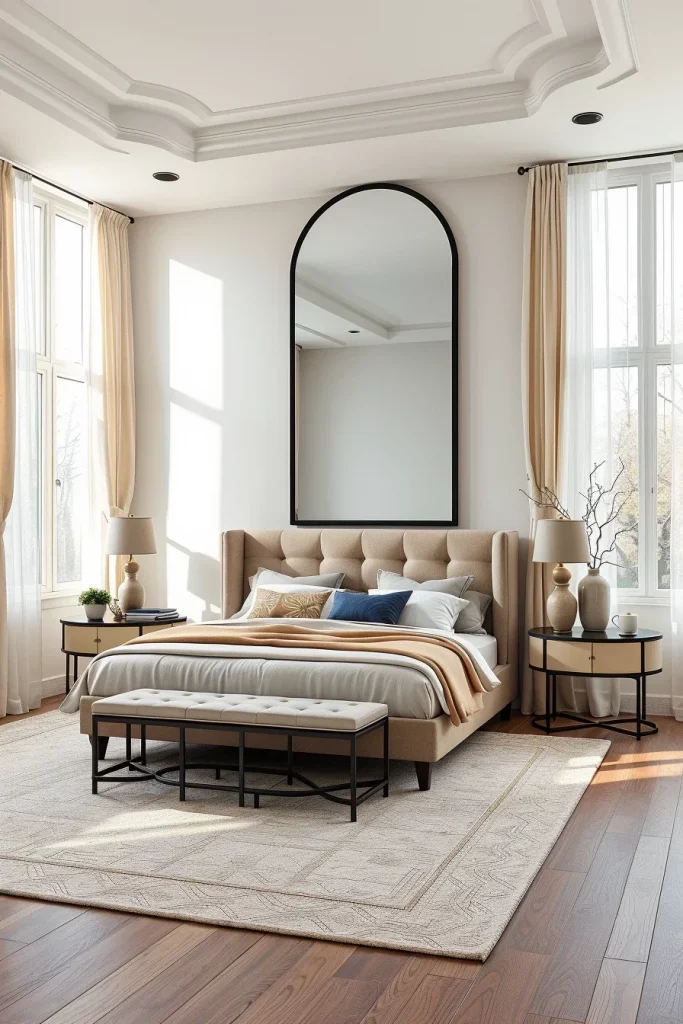
For the best visual effect, I prefer slim black metal frames, soft arched mirrors, or minimalist wood frames depending on the overall decorating style. A comfortable upholstered bed, matching nightstands, textured bedding, elegant table lamps, sheer curtains, decorative vases, and a neutral area rug all work together with the mirror to create a sophisticated composition. Every piece contributes without drawing excessive attention.
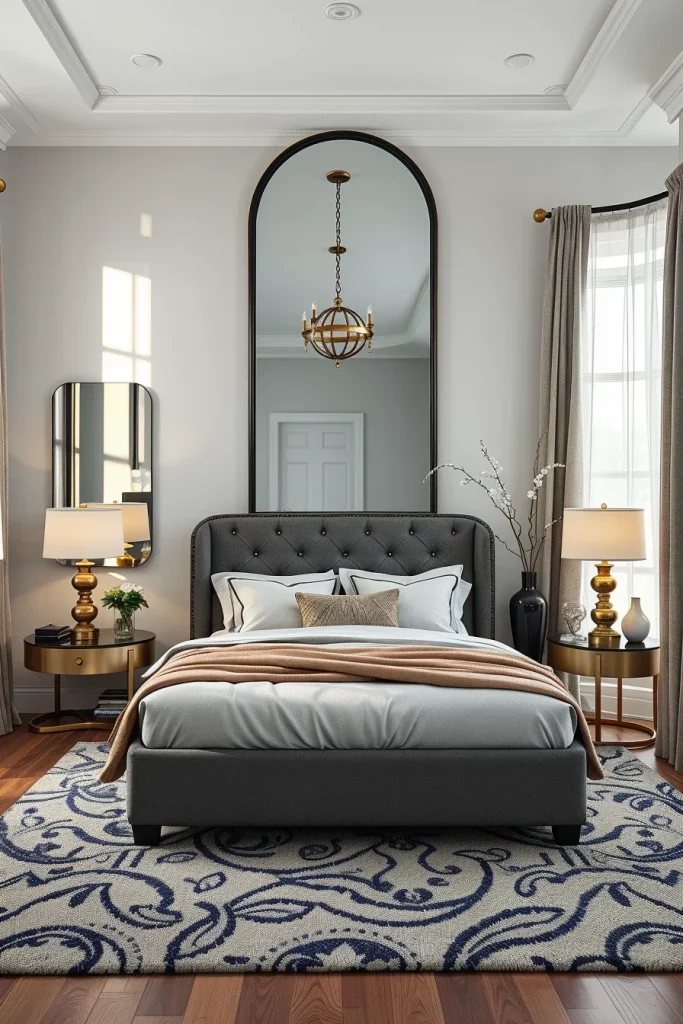
I have noticed that many professional interior designers recommend selecting mirrors that visually connect with surrounding furniture instead of treating them as separate accessories. Following this advice helps the entire bedroom maintain a harmonious appearance while avoiding unnecessary visual clutter.
One addition I would consider is placing a stylish ottoman or woven stool beside the mirror. Besides enhancing the composition, it provides practical seating while getting dressed each morning.
Create A Beautiful Gallery Wall Above The Bed
One of my favorite ways to personalize a bedroom is by designing a carefully planned gallery wall above the bed. Instead of filling the wall with a single oversized picture, multiple coordinated artworks create depth, personality, and visual rhythm. I prefer artwork with soft color palettes that complement the overall bedroom rather than dominate it.
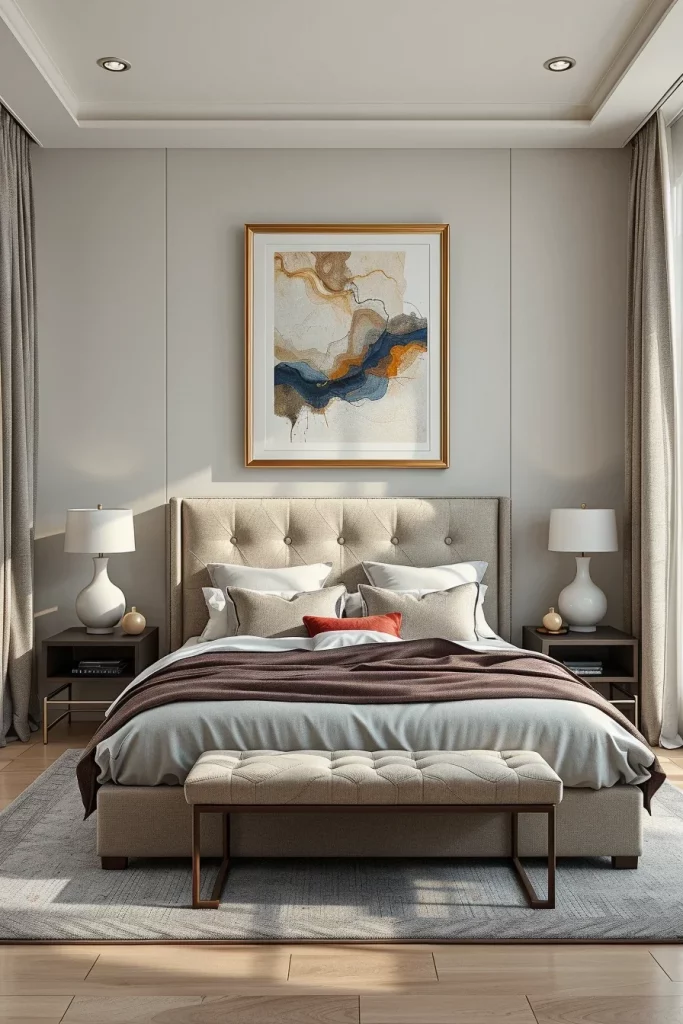
I usually mix framed photography, abstract prints, subtle landscape art, and minimalist illustrations while maintaining consistent frame finishes throughout the arrangement. Combined with an upholstered headboard, crisp white bedding, layered pillows, floating bedside tables, ceramic lamps, textured curtains, and decorative books, the gallery wall becomes a focal point that feels elegant rather than overwhelming.
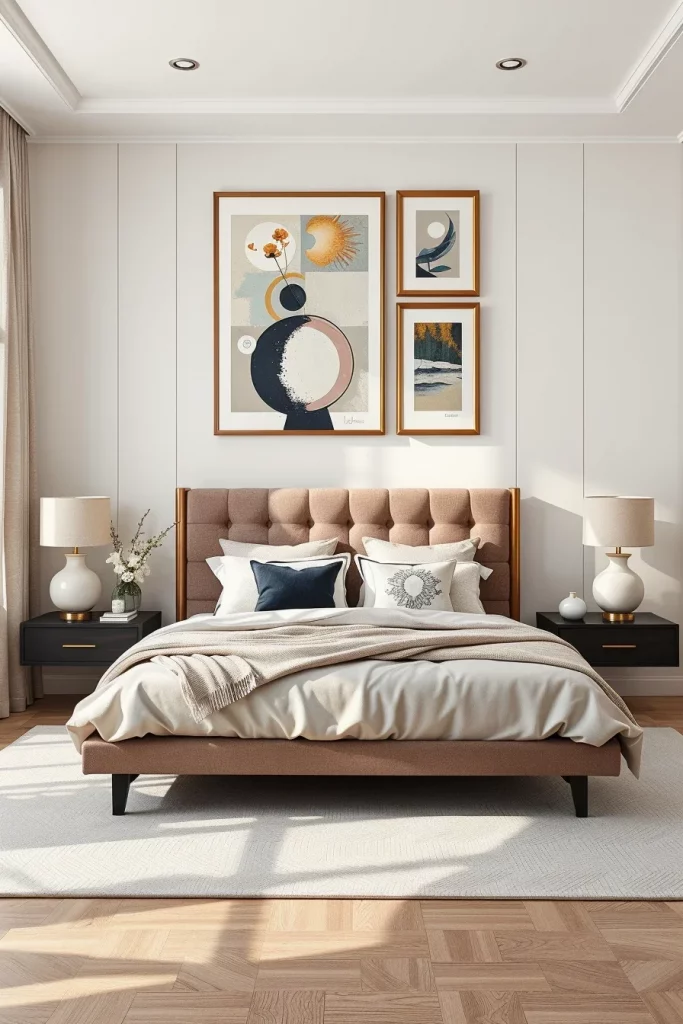
Personally, I find that galleries featured by House Beautiful frequently demonstrate how spacing between frames is just as important as the artwork itself. Leaving consistent gaps creates a polished appearance that immediately elevates the room.
To finish the composition, I would add picture lighting or adjustable wall sconces above the artwork. Gentle illumination highlights the display during the evening while creating a warm and inviting atmosphere.
Organize Open Shelving With Decorative Objects
Open shelving allows me to combine storage with decoration in a way that feels organized instead of crowded. Rather than displaying everything I own, I carefully select decorative objects that contribute to the overall style of the bedroom. Thoughtfully arranged shelves make the room feel curated and highly personal.
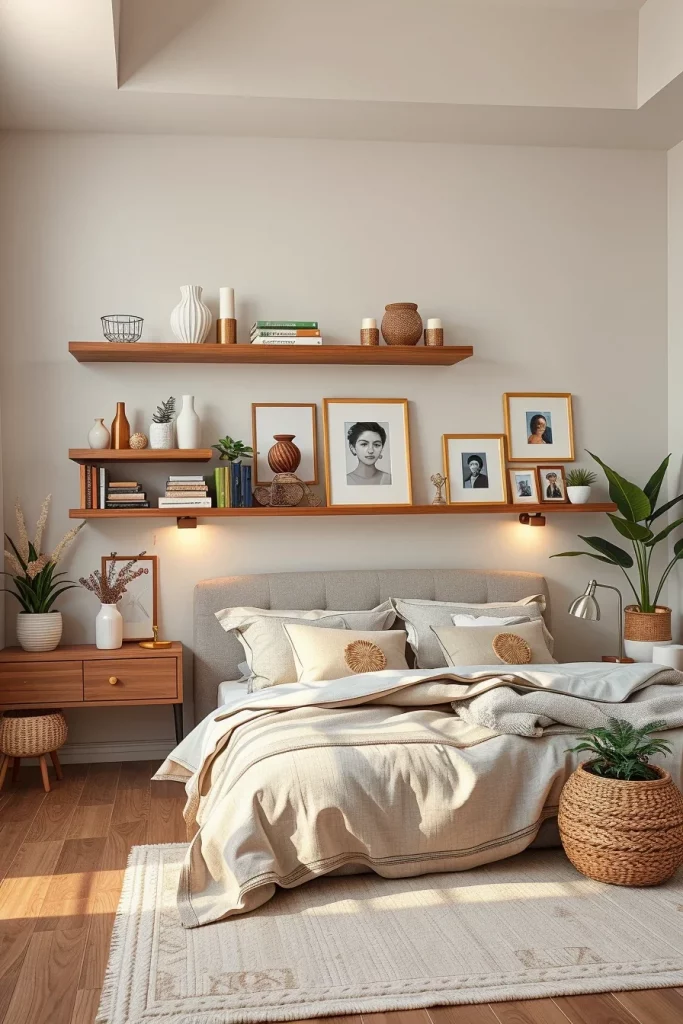
I like combining hardcover books, ceramic sculptures, framed photographs, woven baskets, scented candles, decorative boxes, small indoor plants, textured vases, and handcrafted accessories. Surrounding these shelves with soft bedding, warm lighting, comfortable seating, and neutral finishes ensures the decorative elements enhance the room without creating visual clutter.
From my experience, the most successful shelving displays balance empty space with decorative items. Interior designers often emphasize that negative space allows individual objects to stand out, making the overall arrangement appear more refined and intentional.
One finishing touch I would recommend is adding discreet LED shelf lighting. It softly highlights decorative collections during the evening while giving the entire bedroom a sophisticated hotel-inspired ambiance.
Select A Chic Bench For The Foot Of The Bed
I often find that the area at the foot of the bed is overlooked, yet it offers an excellent opportunity to make the bedroom feel more complete. A stylish bench adds visual balance while making the room more practical for everyday use. Whether the bedroom follows a minimalist, contemporary, or transitional aesthetic, the right bench creates a finished appearance without taking up unnecessary space. I prefer clean silhouettes with soft upholstery because they blend beautifully into almost any color palette.
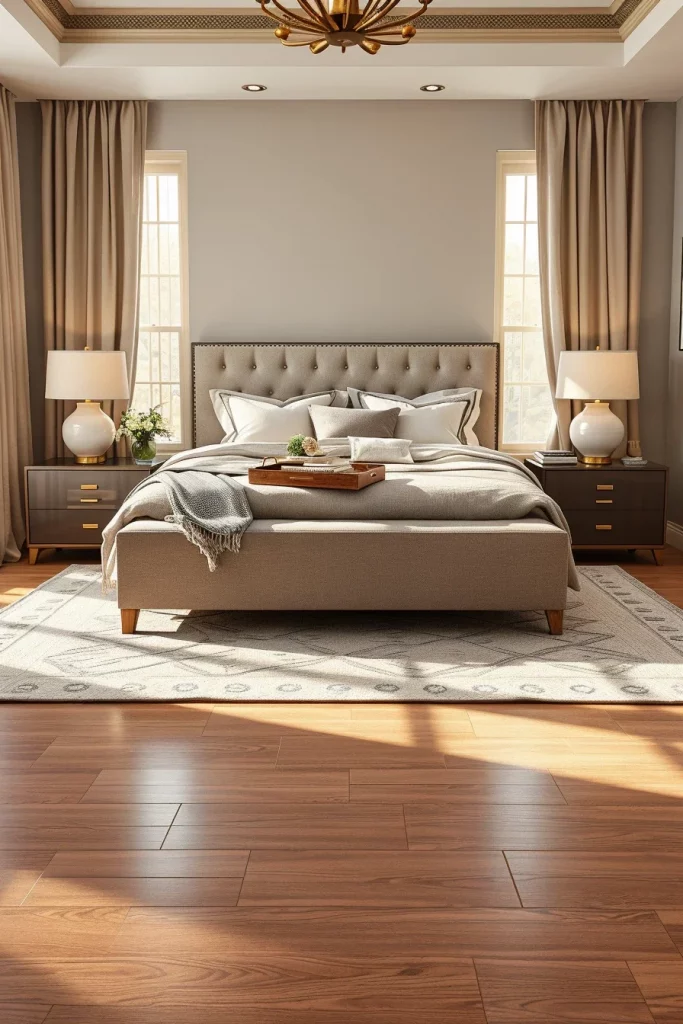
When choosing a bench, I usually look for one with textured fabric, rounded edges, or a sleek wooden base that complements the bed frame. It becomes the perfect place for folded blankets, decorative pillows, or a favorite throw after making the bed each morning. Nearby, matching nightstands, elegant table lamps, layered bedding, soft curtains, and a large area rug all contribute to a cohesive design that feels thoughtfully arranged rather than crowded. The bench also serves as convenient seating while dressing or organizing clothing.
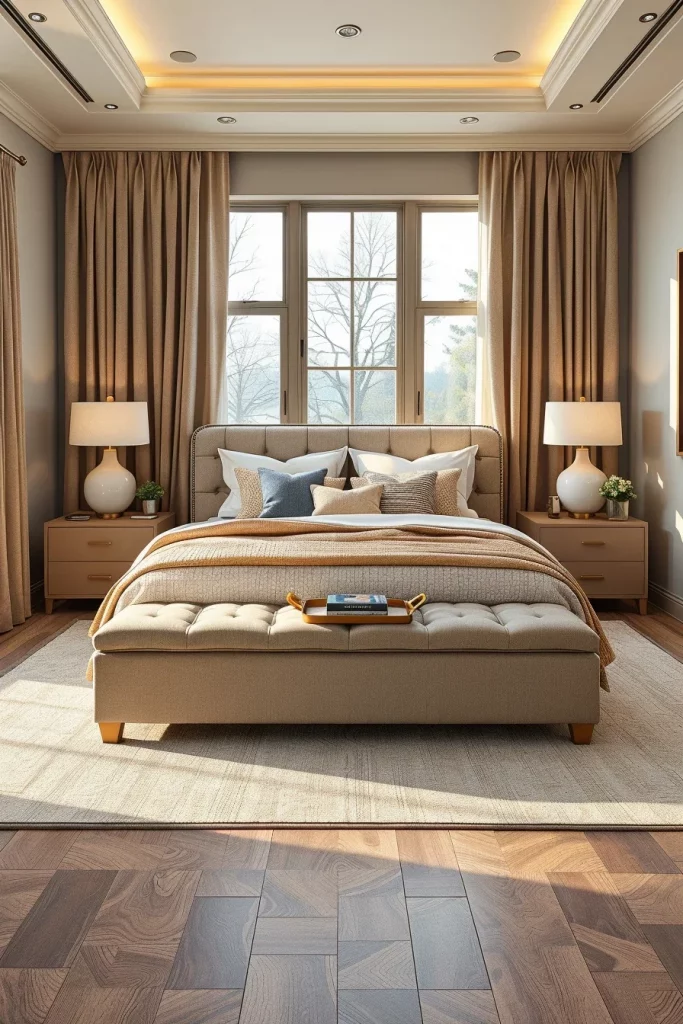
I appreciate that designers featured in Elle Decor often recommend selecting multifunctional furniture for bedrooms, especially when space is limited. A storage bench, for example, offers hidden space for extra bedding while maintaining a refined appearance. I have found this approach especially useful because it combines beauty with practical organization.
To make this arrangement even more inviting, I would add a decorative tray with books or a small folded blanket on top of the bench. These subtle finishing touches make the furniture feel intentionally styled while remaining functional.
Highlight Architectural Details With Subtle Decor
Every bedroom has architectural features worth celebrating, even if they appear simple at first glance. I like drawing attention to ceiling beams, alcoves, arched windows, built-in niches, or decorative molding by using understated decor instead of overwhelming the space. Allowing these structural details to become part of the design creates a bedroom that feels timeless and sophisticated.
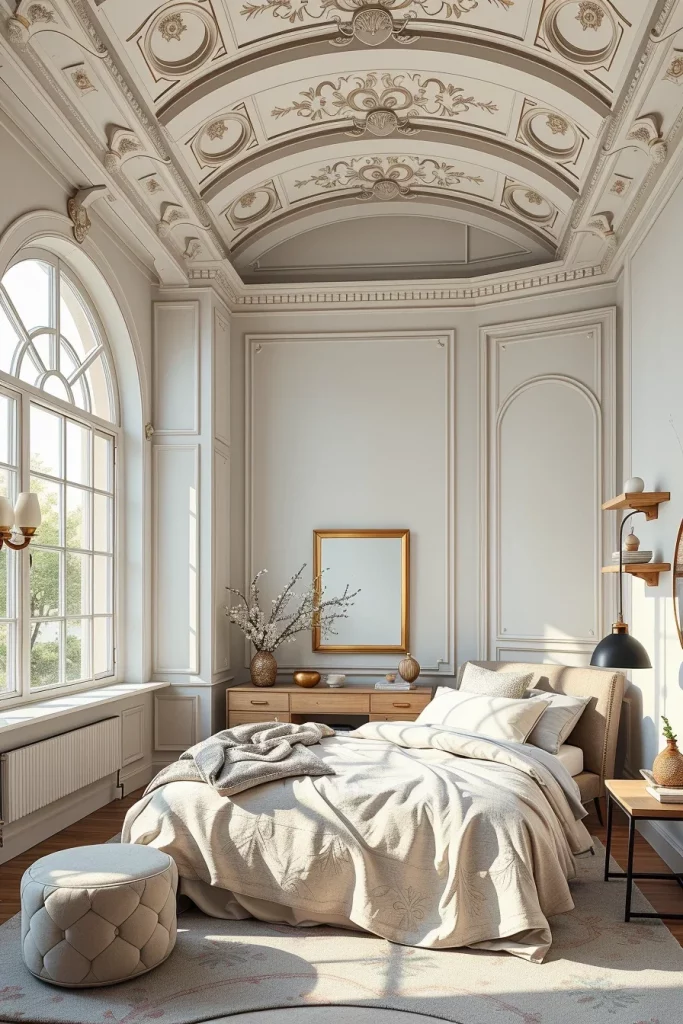
Rather than filling every wall with accessories, I carefully select decorative elements that enhance existing architecture. Soft wall sconces, elegant curtains, neutral artwork, linen bedding, sculptural ceramic vases, floating shelves, and understated furniture all help direct attention toward the room’s natural lines. A restrained decorating approach allows each architectural feature to stand out while maintaining a calm atmosphere.
Personally, I have learned that restraint often produces more elegant interiors than excessive decoration. Many designers emphasize that highlighting existing craftsmanship gives a room greater character than simply adding more accessories, and I completely agree with that philosophy when decorating bedrooms.
One addition I would recommend is installing warm indirect lighting that gently washes across architectural surfaces during the evening. This subtle effect enhances texture while creating a relaxing ambiance before bedtime.
Blend Modern And Vintage Decorative Accents
One of my favorite decorating techniques is combining modern furniture with carefully selected vintage accents. The contrast creates personality without making the bedroom feel outdated. Instead of designing a room that looks like a showroom, I prefer spaces that tell a subtle story through thoughtfully chosen decorative pieces collected over time.
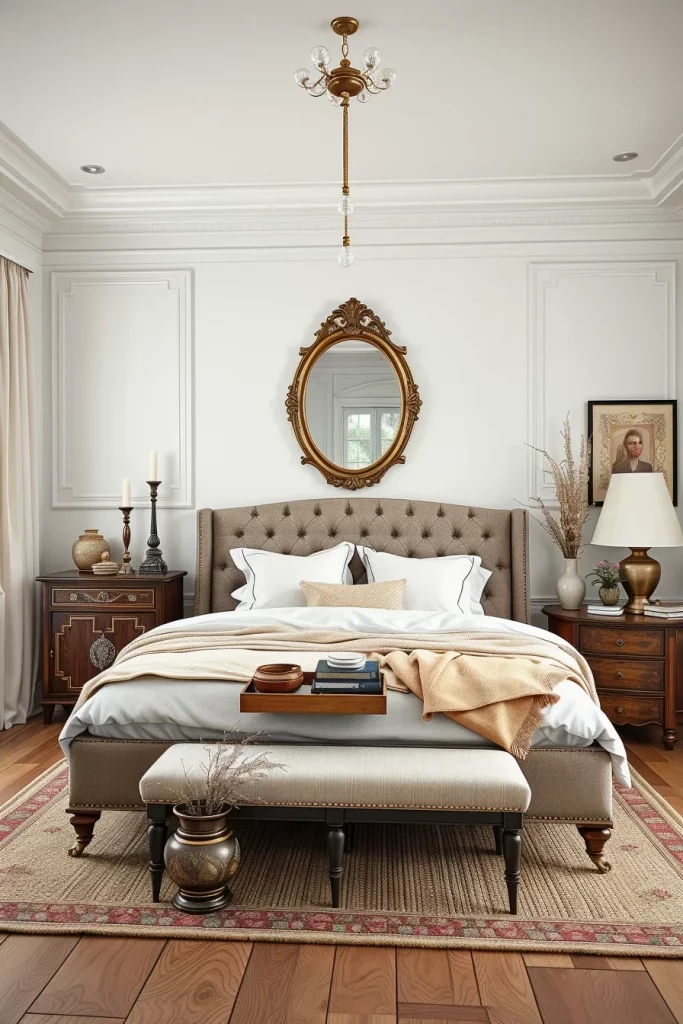
I usually begin with contemporary essentials such as an upholstered platform bed, sleek nightstands, and minimalist lighting. I then introduce vintage mirrors, antique picture frames, handcrafted ceramics, brass candlesticks, woven textiles, or an heirloom wooden chest. Crisp white bedding, soft curtains, textured rugs, and simple wall colors allow both modern and vintage elements to coexist harmoniously without competing for attention.
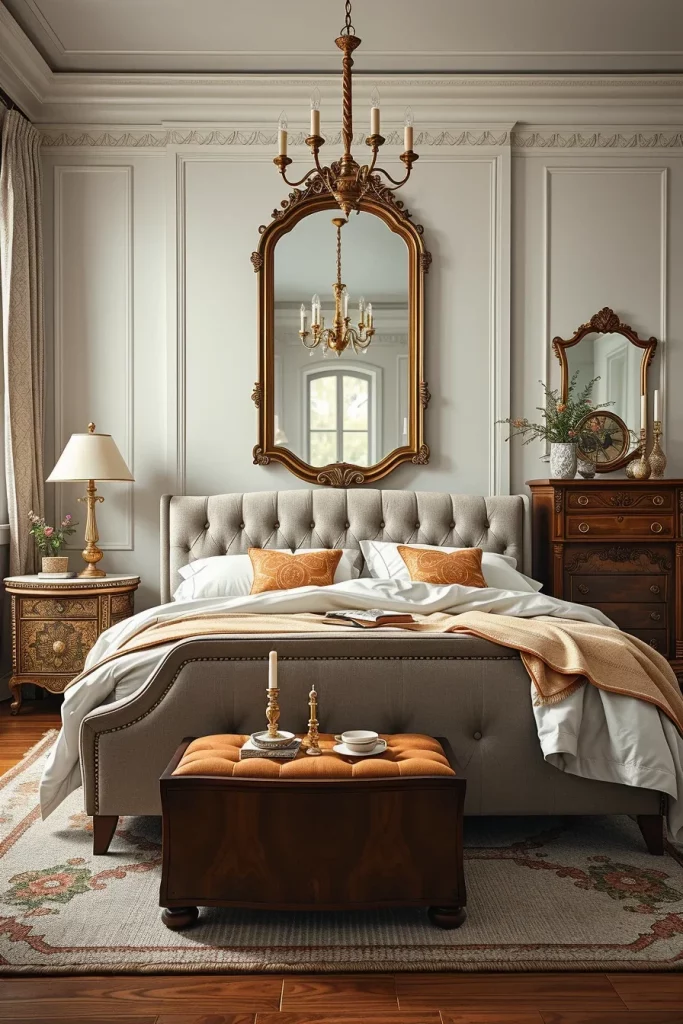
I have always admired how interior designers balance old and new by repeating colors, materials, or shapes throughout the room. This approach prevents vintage pieces from feeling disconnected while giving the bedroom warmth and individuality that purely modern interiors sometimes lack.
To strengthen this design, I would include one statement vintage chair or side table that becomes a conversation piece while maintaining the overall balance of the room.
Maximize Small Bedroom Spaces With Smart Styling
Decorating a small bedroom successfully is less about reducing furniture and more about making every item work efficiently. I always focus on creating visual openness through thoughtful layouts, light colors, and multifunctional pieces. Even compact bedrooms can feel spacious when every design decision serves a clear purpose.
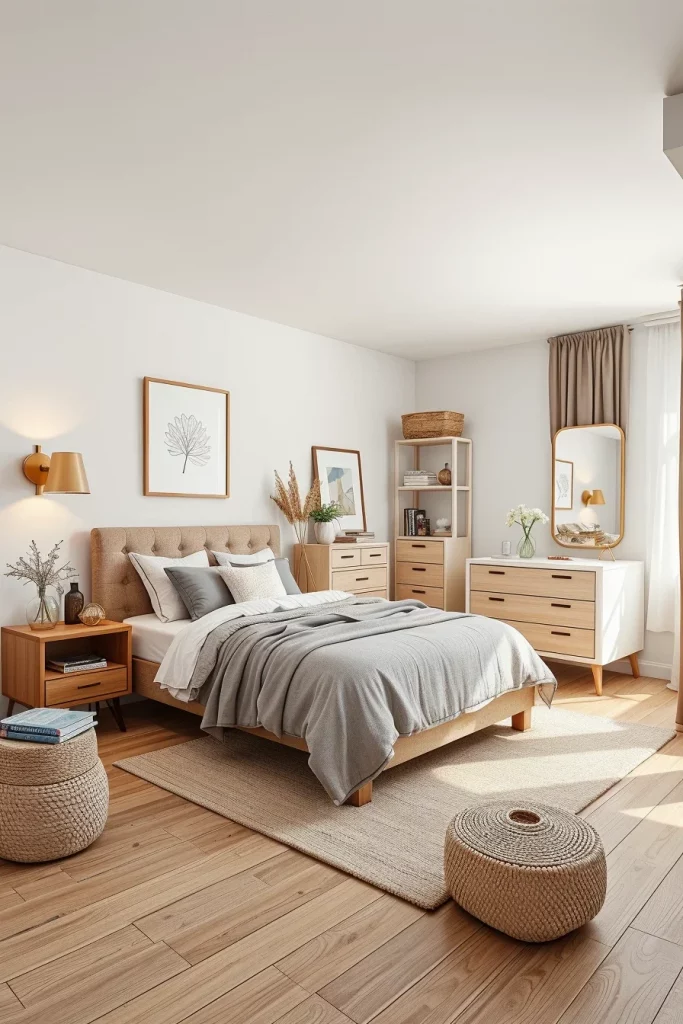
I prefer beds with built-in storage, floating nightstands, wall-mounted lighting, slim dressers, and mirrors that reflect natural light. Vertical shelving, neutral bedding, soft textured curtains, compact seating, and concealed storage baskets help keep the room organized without sacrificing style. Every decorative object earns its place, resulting in a bedroom that feels uncluttered yet welcoming.
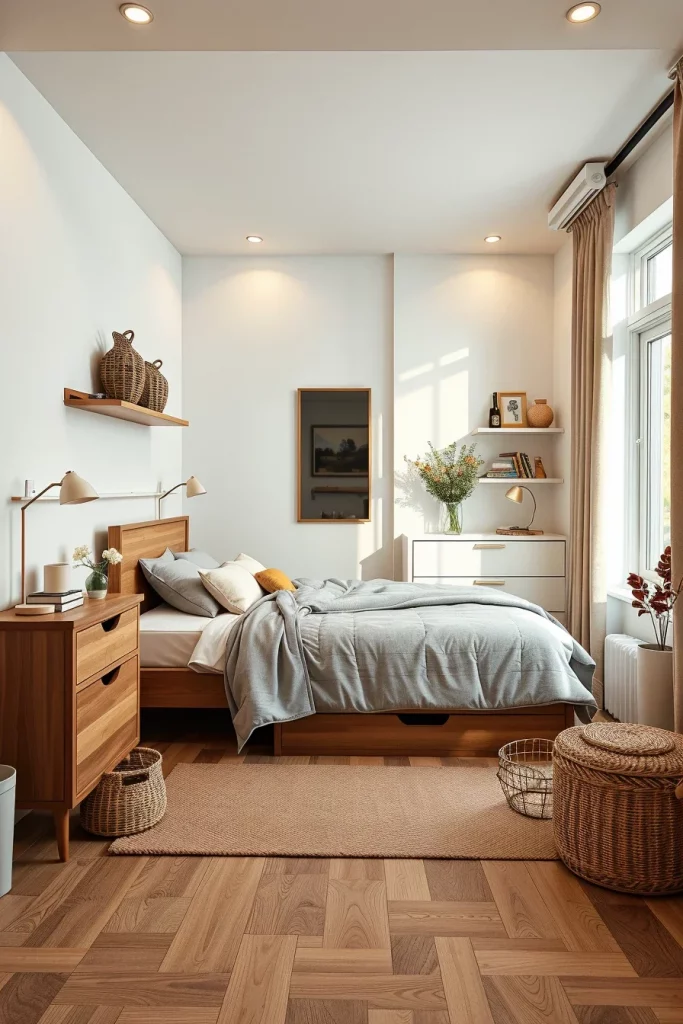
From my experience, many professional organizers recommend minimizing unnecessary decorative accessories in smaller rooms. I follow this advice because reducing visual clutter allows architectural lines, quality furniture, and carefully chosen decor to become the focus instead of overwhelming the space.
If I wanted to improve this layout further, I would incorporate custom storage above the bed or around the wardrobe to maximize every available inch while maintaining a clean aesthetic.
Add Elegant Wall Paneling For Extra Character
Wall paneling is one of the most effective ways I know to add depth and sophistication without relying on bold colors or excessive decoration. Whether using classic picture molding, vertical slats, or contemporary geometric panels, this architectural detail transforms plain walls into elegant focal points. It immediately gives the bedroom a custom-designed appearance.
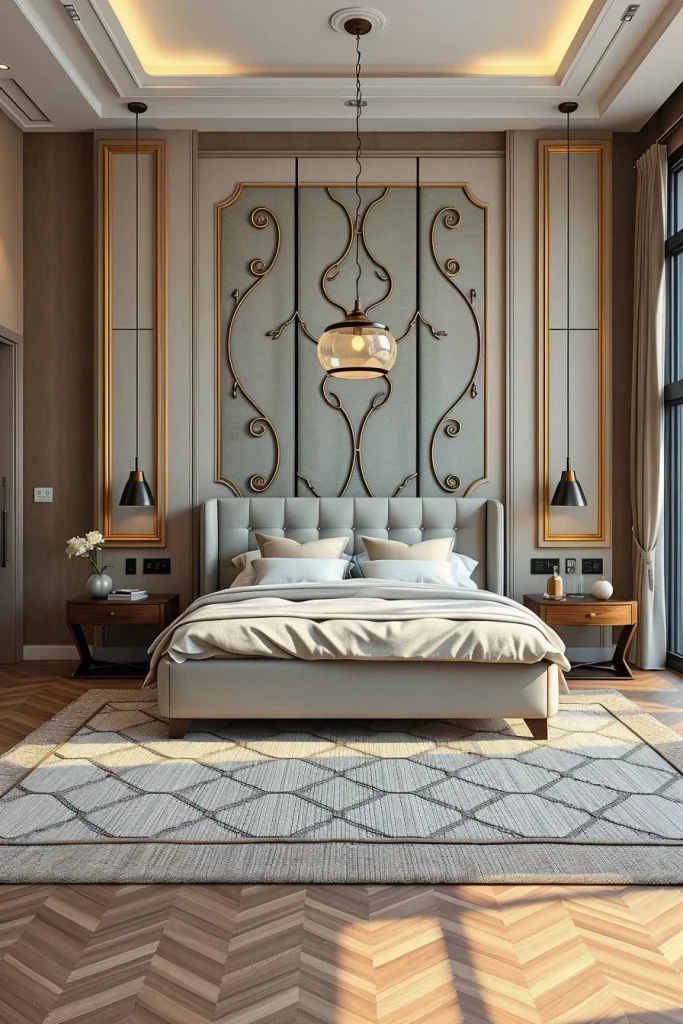
I usually pair wall paneling with upholstered beds, luxurious linen bedding, simple bedside tables, modern pendant lights, textured rugs, and understated artwork. Soft neutral paint emphasizes the shadows and depth created by the paneling, while carefully selected furniture keeps the room balanced rather than overly formal. The combination feels refined, welcoming, and timeless.
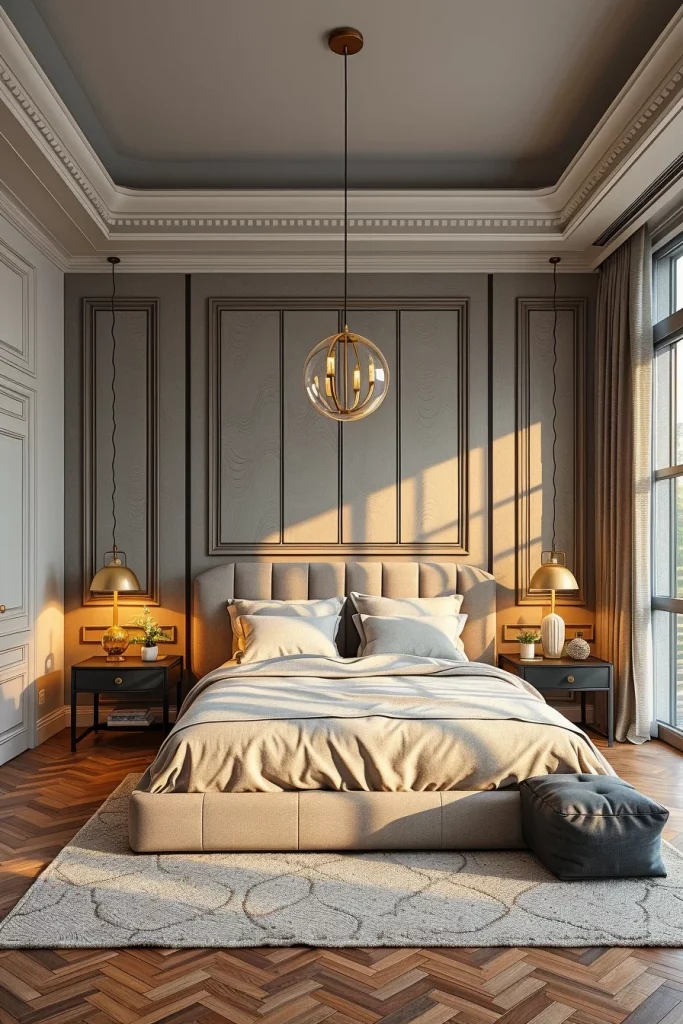
Personally, I enjoy incorporating wall paneling because it creates visual interest even when the decorative palette remains intentionally simple. Many interior designers recommend investing in architectural details before purchasing additional accessories, and I believe this approach results in a more enduring design.
To complete the space, I would install dimmable wall sconces that softly illuminate the paneling during the evening. The gentle lighting highlights every architectural detail while making the bedroom feel warm, elegant, and inviting.
Decorate With Soft Earth Tone Accessories
I always begin an aesthetic bedroom by introducing soft earth tones because they instantly make the room feel warm, balanced, and welcoming. Shades like warm beige, clay, sand, taupe, caramel, olive, and muted terracotta create a soothing backdrop without overwhelming the space. Rather than filling the room with bold colors, I prefer layering subtle natural shades that make every decorative piece feel intentional. This approach allows the bedroom to remain visually calm while still looking modern and sophisticated.
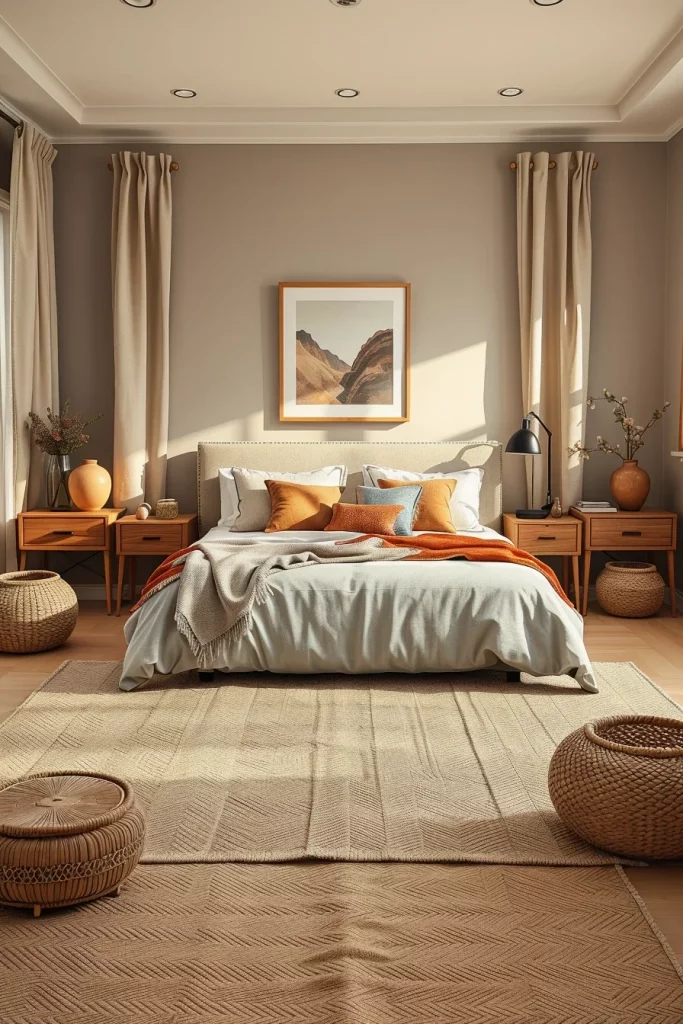
I like combining textured throw blankets, linen pillows, ceramic vases, woven baskets, framed artwork, and neutral curtains to build visual depth. A soft upholstered bed paired with oak nightstands, a cozy area rug, and simple decorative objects creates an inviting atmosphere without clutter. I also recommend incorporating natural fabrics such as cotton, linen, and wool because they soften the room while adding gentle texture. Every accessory should complement the palette rather than compete for attention.
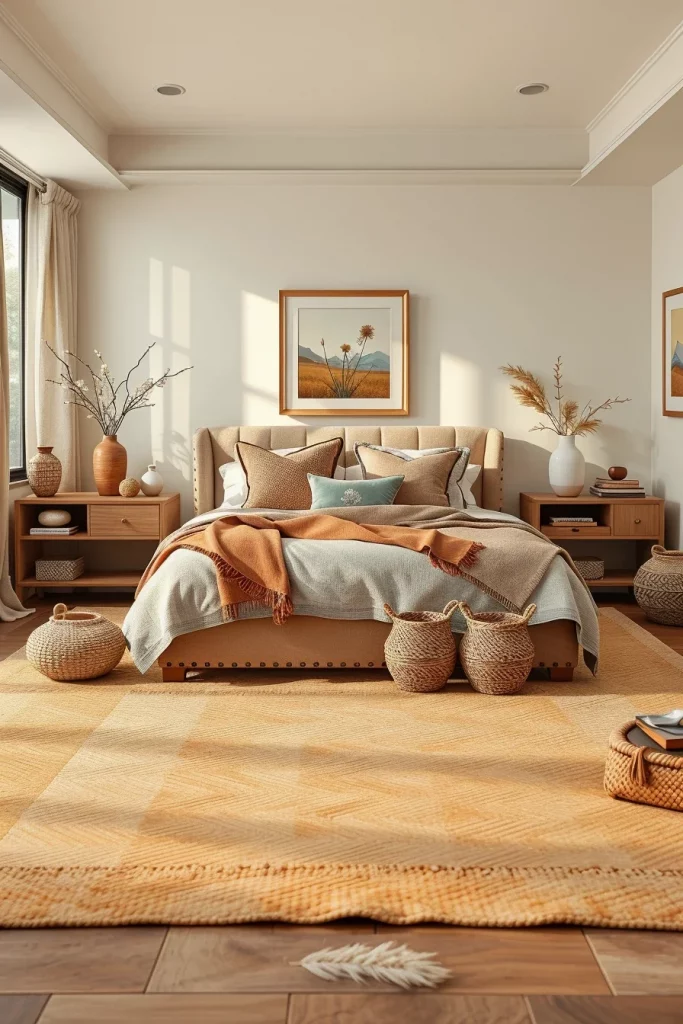
From my experience, some of the best-designed bedrooms featured by Architectural Digest and House Beautiful rely on restrained color palettes instead of excessive decoration. I have found that keeping accessories within a cohesive range of earthy tones makes the room feel more expensive and relaxing over time. Instead of constantly replacing décor, I simply rotate a few seasonal accents while maintaining the same harmonious foundation.
To complete this section, I would also add subtle scented candles, a handcrafted decorative tray, textured artwork, and a few books with neutral covers. These finishing details help the bedroom feel thoughtfully styled while maintaining the calm aesthetic that defines the overall design.
Create A Hotel-Inspired Bedroom Experience
Whenever I want a bedroom to feel luxurious without becoming overly decorative, I take inspiration from boutique hotels. A clean layout, layered bedding, soft lighting, and uncluttered surfaces immediately create a peaceful environment that encourages relaxation. I focus on comfort first because a truly beautiful bedroom should always feel inviting as well as visually appealing. The overall atmosphere should encourage rest from the moment someone enters the room.
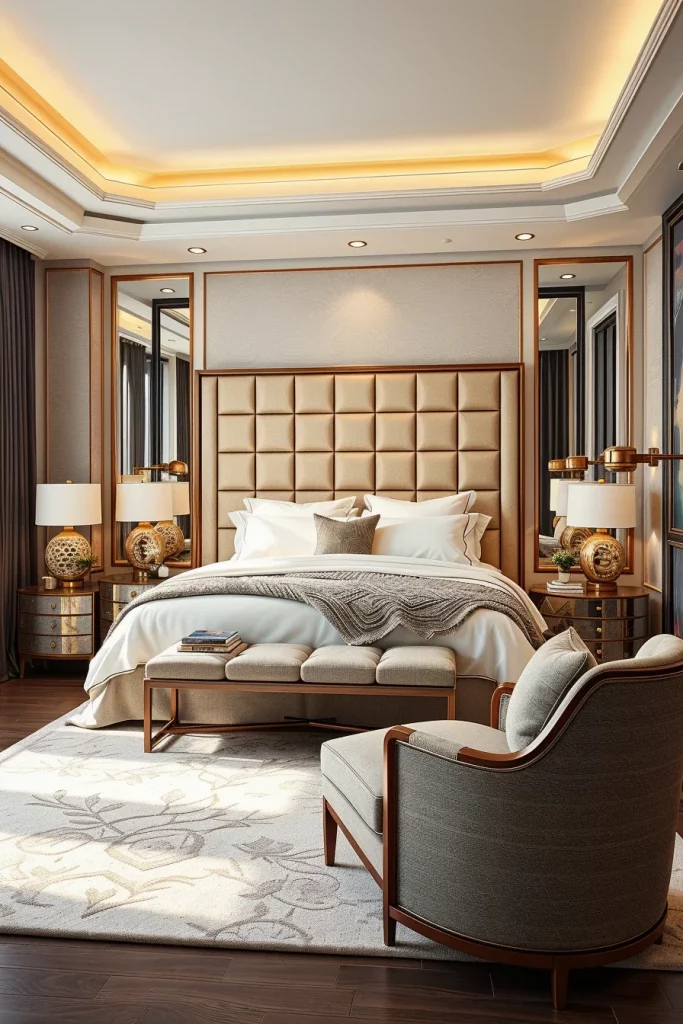
I recommend investing in quality bedding with crisp white sheets, a plush duvet, decorative pillows, and a soft knitted throw at the foot of the bed. Matching bedside tables with elegant lamps create symmetry, while a padded headboard adds comfort and visual presence. I also like incorporating blackout curtains, a comfortable reading chair, and a textured area rug beneath the bed to increase the feeling of luxury without overwhelming the room.
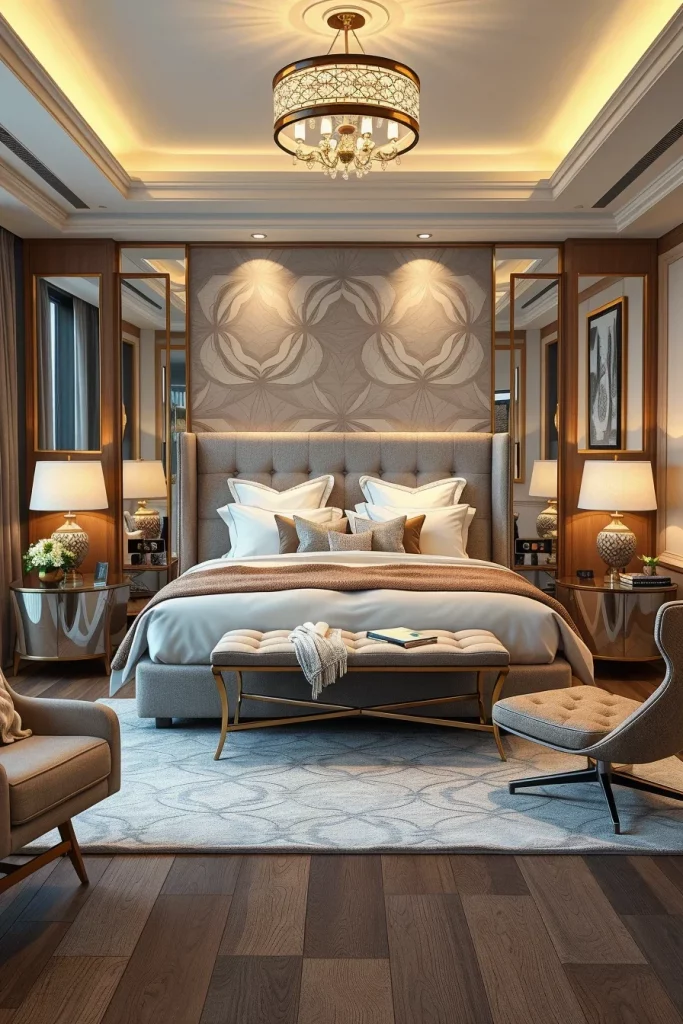
Many interior designers featured by Elle Decor emphasize that luxury comes from layering textures instead of adding unnecessary decorations. I completely agree with this philosophy because I have noticed that even a modest bedroom feels significantly more refined when every textile feels comfortable and coordinated. Small improvements often have a much greater impact than expensive statement pieces.
I would also include a decorative bench at the end of the bed, fresh flowers on the nightstand, and subtle ambient lighting with dimmable bulbs. These additions complete the hotel-inspired atmosphere while keeping the room functional for everyday living.
Style A Vanity Corner With Functional Elegance
I believe every aesthetic bedroom benefits from a thoughtfully designed vanity corner, even if space is limited. A dedicated area for daily routines adds organization while becoming an attractive focal point within the room. Instead of treating the vanity as purely functional, I style it as part of the bedroom’s overall design so that it enhances both beauty and practicality.
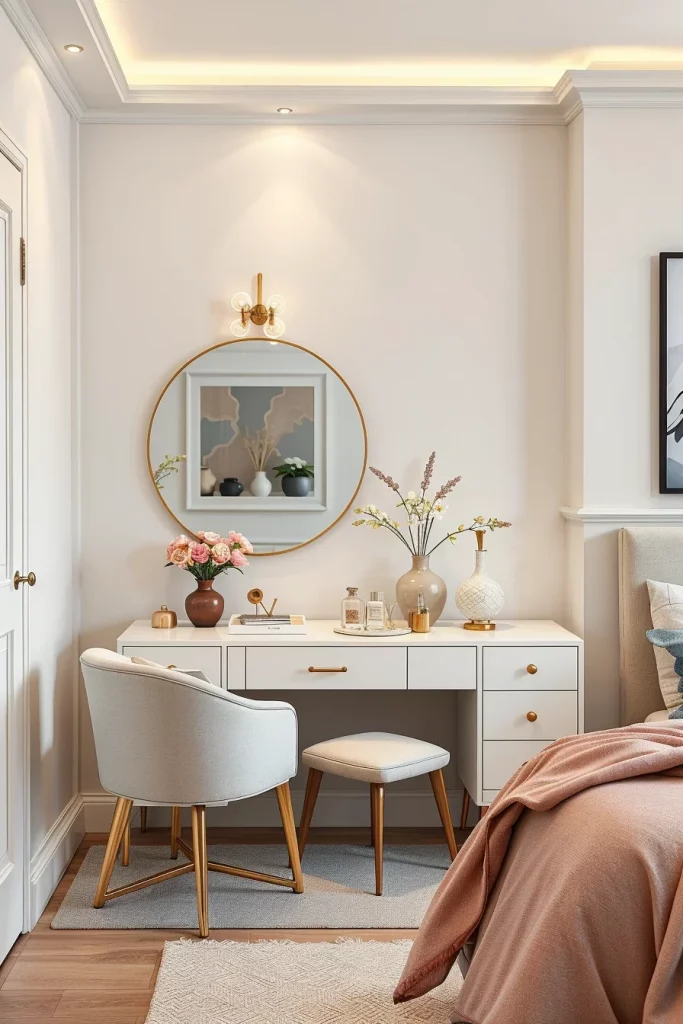
I usually choose a simple vanity table with clean lines, a comfortable upholstered chair, and a large mirror that reflects natural light throughout the room. Decorative trays organize perfumes, jewelry, skincare products, and candles while preventing visual clutter. A small table lamp adds warmth during evening routines, while fresh flowers or a ceramic vase introduce softness without occupying too much space.
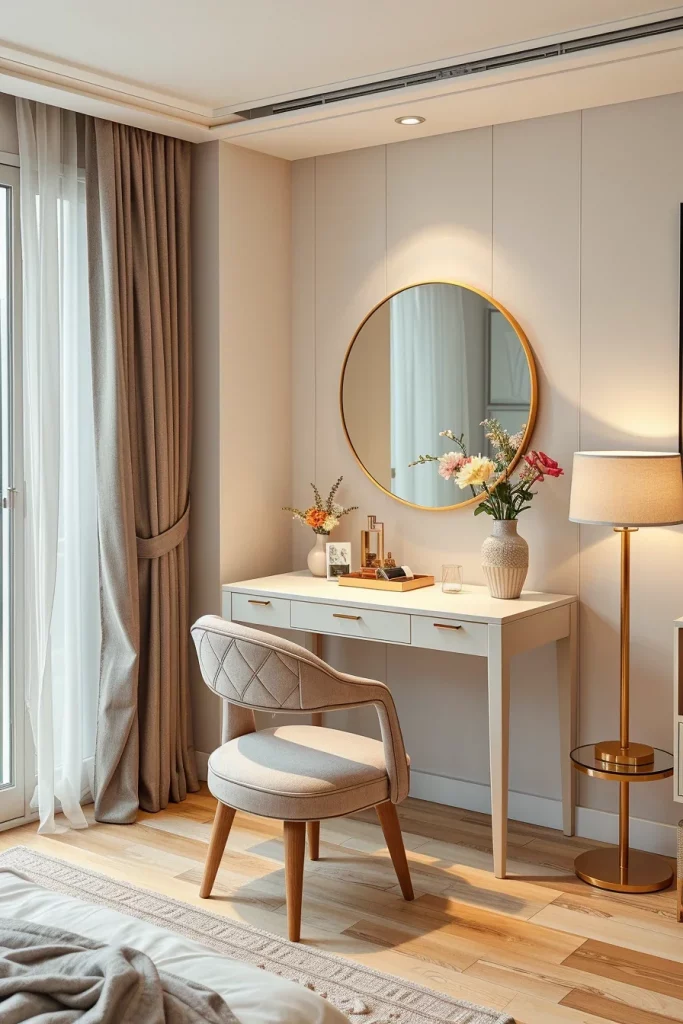
Personally, I appreciate how professional designers often recommend keeping vanity surfaces mostly clear. I have found this advice extremely useful because displaying only a few carefully selected accessories creates a much more sophisticated appearance than filling every available surface. Maintaining negative space allows each decorative object to stand out naturally.
To make the vanity corner even more complete, I would include a small drawer organizer, a stylish stool that easily slides underneath the table, and discreet storage for everyday essentials. These practical additions help preserve the elegant appearance while making the space easier to use every day.
Personalize The Space With Meaningful Decorative Pieces
I always encourage adding personal decorative elements because they transform a beautiful bedroom into a meaningful living space. Rather than filling shelves with generic decorations, I prefer displaying carefully selected pieces that reflect personal memories, interests, and experiences. This approach gives the bedroom warmth and individuality without sacrificing its refined aesthetic.
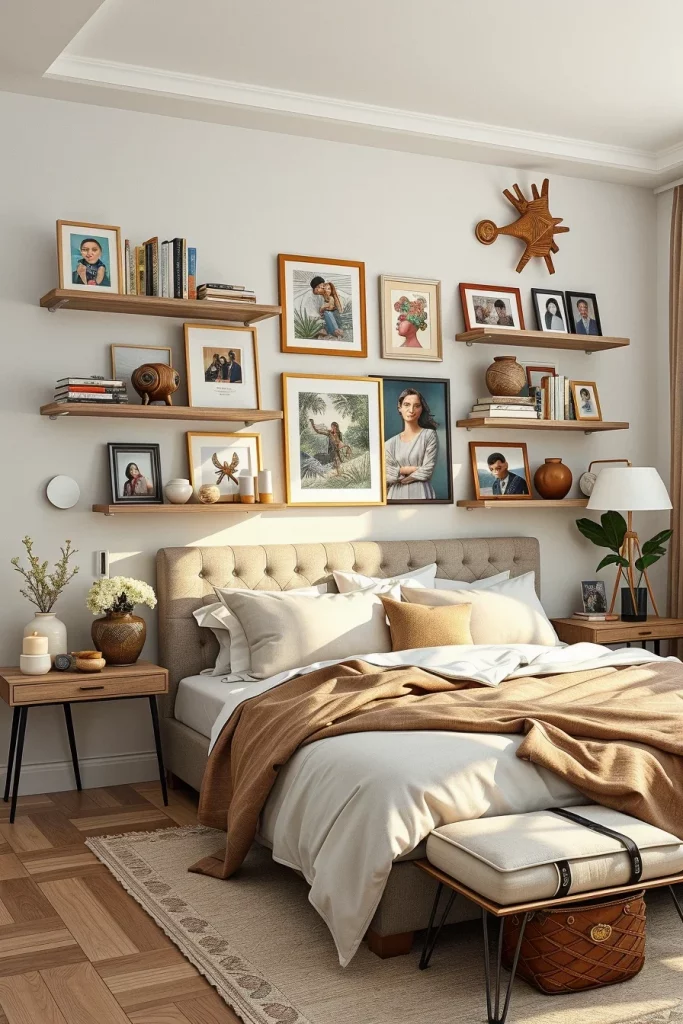
I like mixing framed family photographs, travel souvenirs, handmade ceramics, favorite books, sculptural objects, and artwork that complements the room’s color palette. Floating shelves, a decorative console, or open bedside shelving provide opportunities to display these meaningful pieces without creating unnecessary clutter. Choosing cohesive frames and materials helps maintain visual consistency throughout the bedroom.
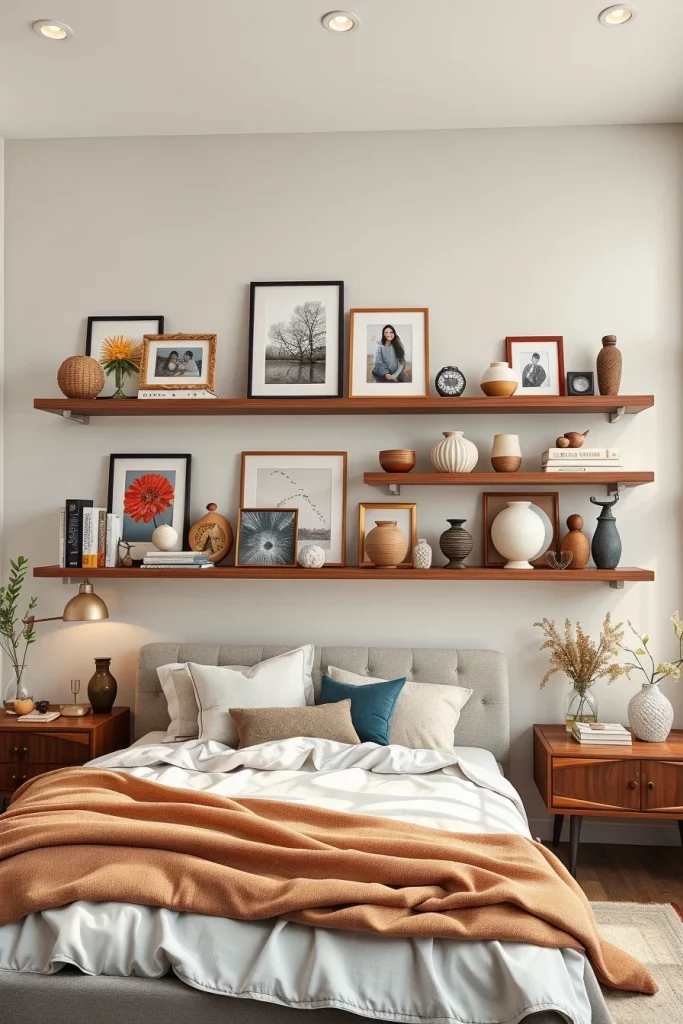
Over the years, I have realized that the most memorable interiors are those that tell a story about the people who live there. Better Homes & Gardens frequently highlights the importance of decorating with meaningful objects instead of following every temporary trend, and I completely agree with that philosophy. A personal collection always creates more lasting appeal than purely fashionable décor.
I would also leave some intentionally empty space around decorative collections. Allowing individual pieces to breathe creates a more curated appearance and prevents the bedroom from feeling crowded or visually overwhelming.
Choose Beautiful Ceiling Lighting To Elevate The Room
I consider ceiling lighting one of the most important decorative features in any aesthetic bedroom because it influences both the atmosphere and the overall perception of the space. A thoughtfully selected light fixture becomes an architectural focal point while providing comfortable illumination throughout the room. Instead of relying on a single bright ceiling light, I prefer creating multiple layers of warm lighting that work together.
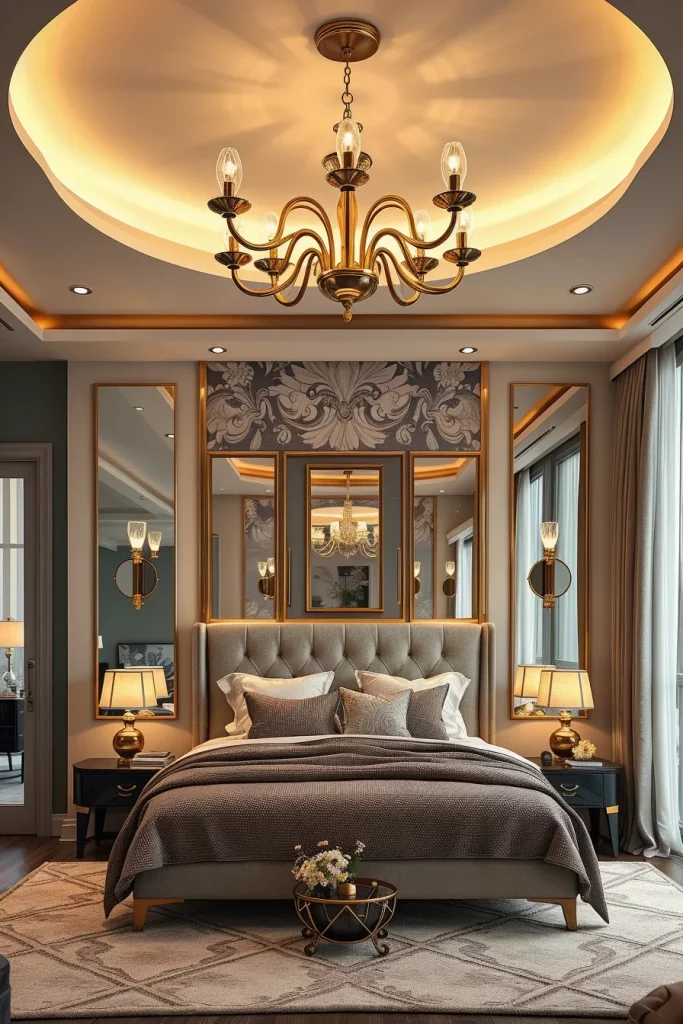
My preferred combination includes an elegant pendant light or chandelier, bedside table lamps, discreet wall sconces, and soft LED accent lighting behind the headboard or inside shelving. Warm color temperatures make the bedroom feel significantly more relaxing than cool white lighting. I also recommend installing dimmers so the brightness can easily be adjusted for reading, relaxing, or preparing for sleep.
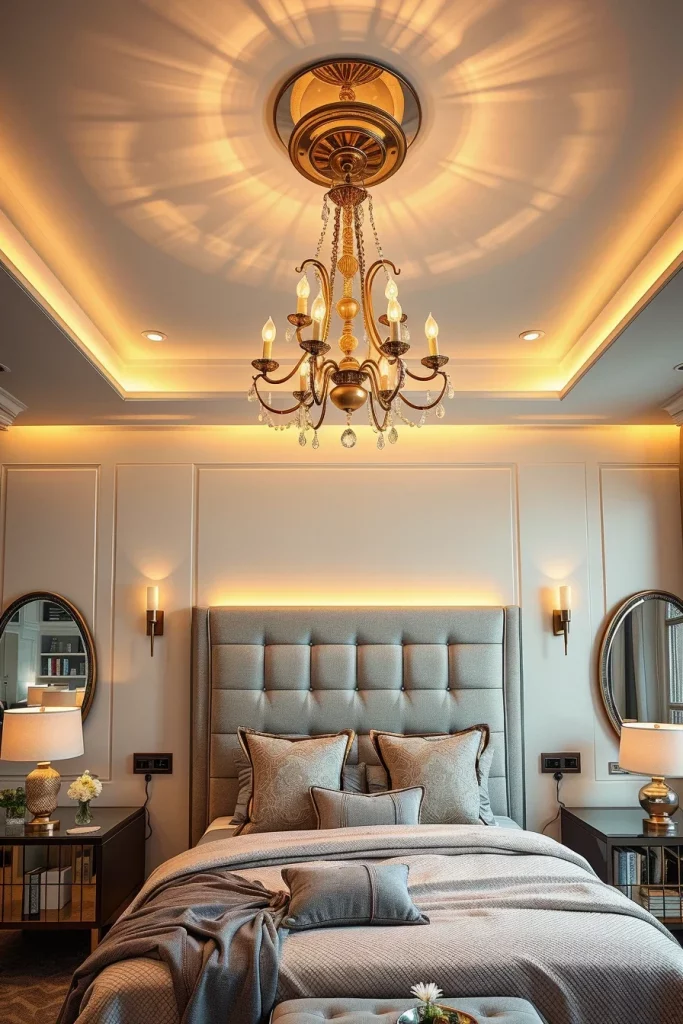
From my own experience, lighting is often the element that completely changes how expensive a bedroom feels. Interior designers consistently emphasize layering ambient, task, and accent lighting, and I have found this recommendation to be one of the most effective upgrades for almost any bedroom regardless of its size.
To complete the lighting design, I would include decorative candles, reflective mirrors that distribute light naturally, and metallic accents that subtly enhance the glow throughout the room without creating glare.
Arrange Decorative Storage That Complements The Design
I believe storage should contribute to the beauty of a bedroom instead of simply hiding clutter. An aesthetic bedroom feels calm because everything has a designated place, yet the storage itself becomes part of the overall design. I prefer selecting furniture that combines clean lines with practical functionality so the room remains organized without looking overly minimal or crowded. Decorative storage helps maintain visual balance while allowing everyday essentials to stay within easy reach.
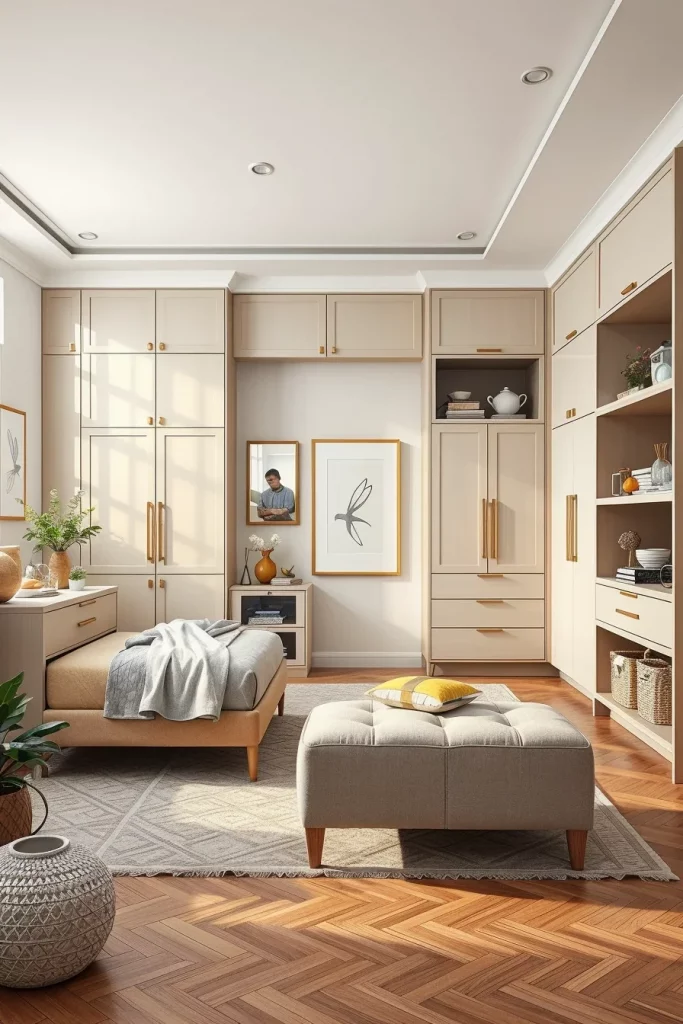
I often incorporate matching bedside cabinets, a sleek dresser, woven baskets, decorative storage boxes, floating shelves, and an upholstered storage bench at the foot of the bed. Built-in wardrobes with simple doors create a seamless appearance, while open shelving provides space for books, candles, ceramic objects, and framed artwork. I also like using decorative trays to organize smaller accessories on dressers and nightstands because they make the surfaces look intentional rather than busy.
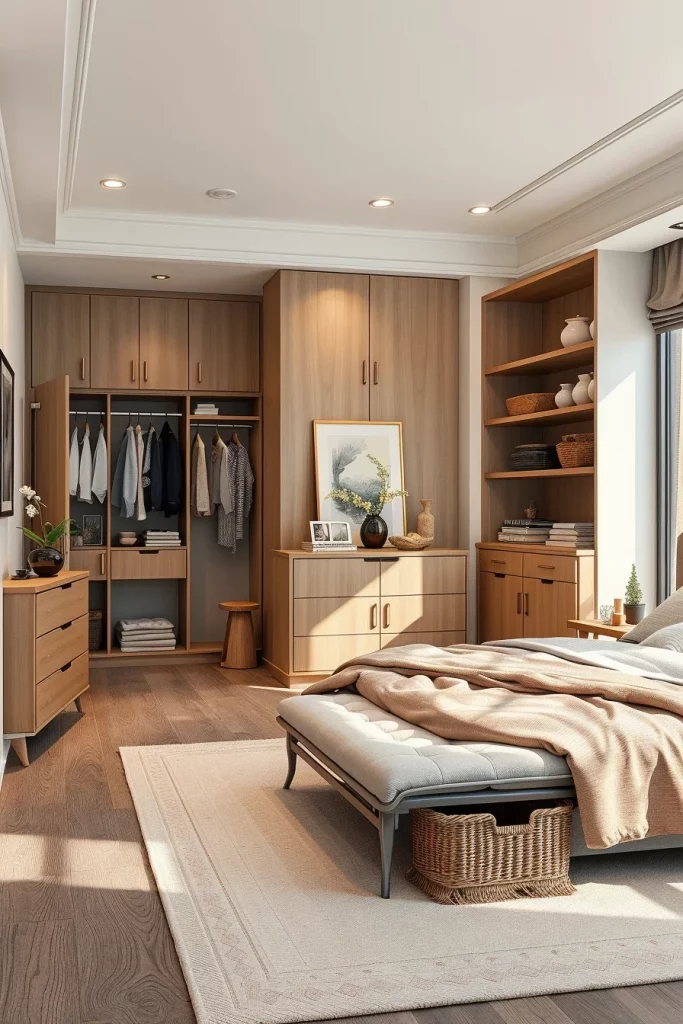
From my experience, one of the easiest ways to improve a bedroom is to reduce visible clutter. Interior designers frequently emphasize that thoughtful storage solutions allow decorative pieces to stand out instead of competing with everyday items. I have found that investing in beautiful storage furniture creates a room that feels both functional and relaxing for years.
To make this design even more complete, I would add matching storage containers inside drawers, attractive fabric bins on open shelves, and concealed cable management for lamps and charging devices. These details keep the room visually clean without sacrificing convenience.
Refresh The Bedroom With Seasonal Decorative Updates
I enjoy giving a bedroom a fresh appearance throughout the year without completely redesigning the space. Seasonal decorating allows me to introduce new textures, colors, and accessories while maintaining the room’s original aesthetic. Rather than replacing furniture, I simply update decorative elements that reflect the atmosphere of each season. This keeps the bedroom feeling current while preserving its timeless foundation.
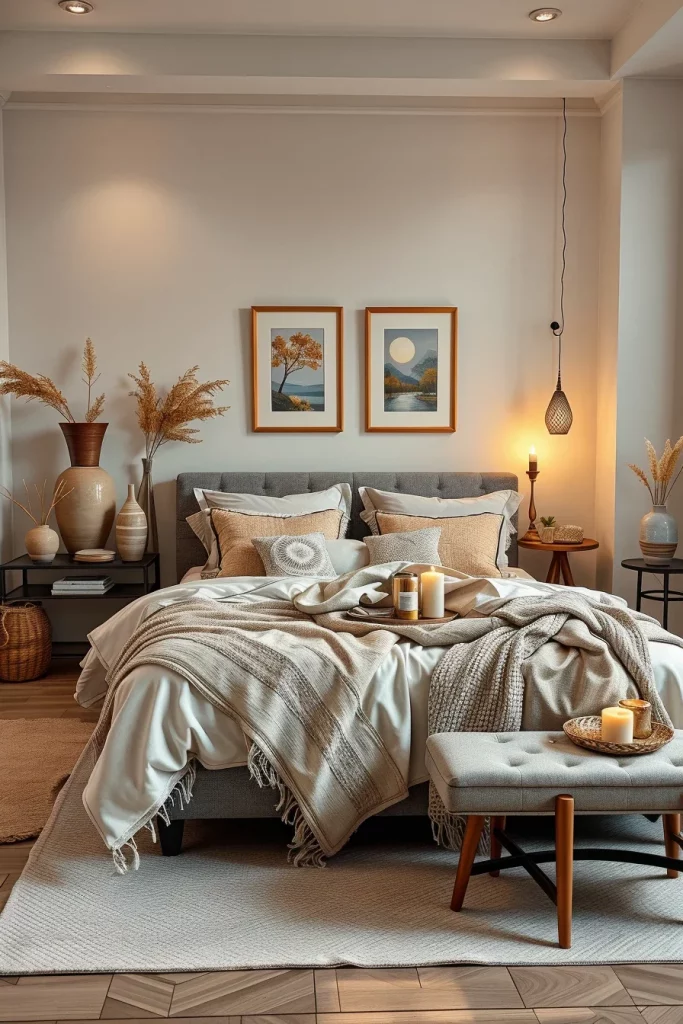
I usually rotate throw blankets, pillow covers, artwork, candles, decorative branches, lightweight curtains, and bedding. During warmer months I prefer airy linen fabrics and lighter neutral tones, while autumn and winter inspire me to add knitted textiles, richer earth tones, velvet cushions, and warm ambient lighting. Small seasonal accents create noticeable visual interest without requiring a significant investment.
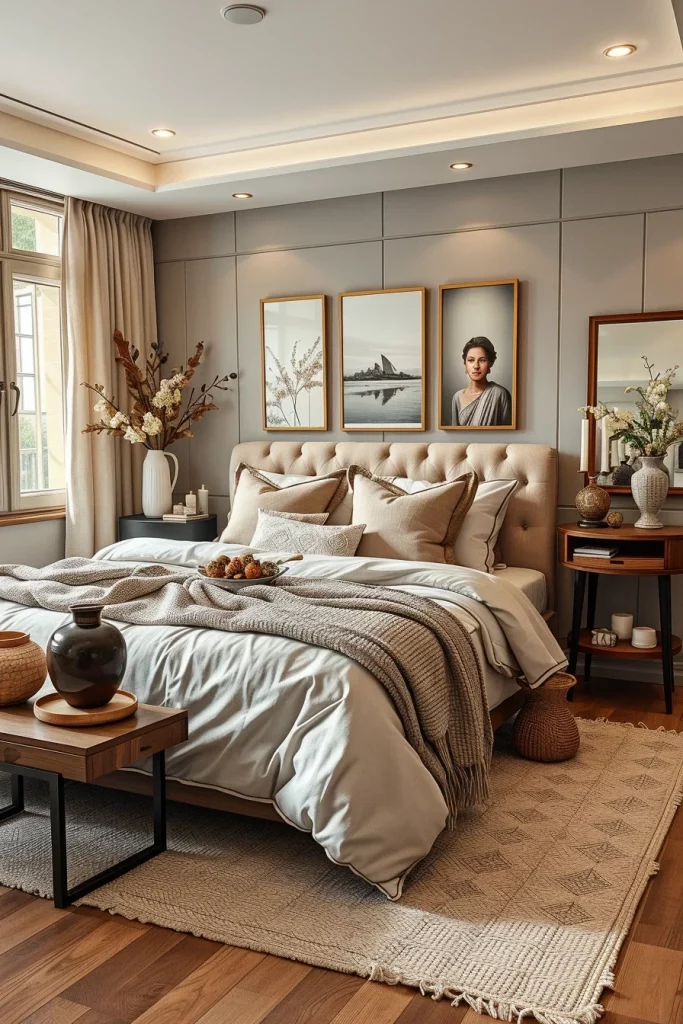
I appreciate how many professional designers recommend building a neutral foundation before introducing seasonal accents. I completely agree because this approach allows decorative updates to feel natural instead of disconnected from the overall design. Over the years, I have realized that changing only a few carefully selected accessories often makes the bedroom feel completely refreshed.
I would also include a decorative tray for seasonal candles, fresh flowers during spring, textured ceramic vases, and a rotating collection of framed prints. These additions help celebrate each season while preserving the calm atmosphere of the bedroom.
Balance Symmetry For A Harmonious Interior
Whenever I design an aesthetic bedroom, I pay close attention to symmetry because it creates an immediate sense of order and relaxation. Balanced layouts naturally guide the eye across the room and make the entire space feel more comfortable. Although perfect symmetry is not always possible, repeating important elements on both sides of the bed produces a timeless appearance that never feels outdated.
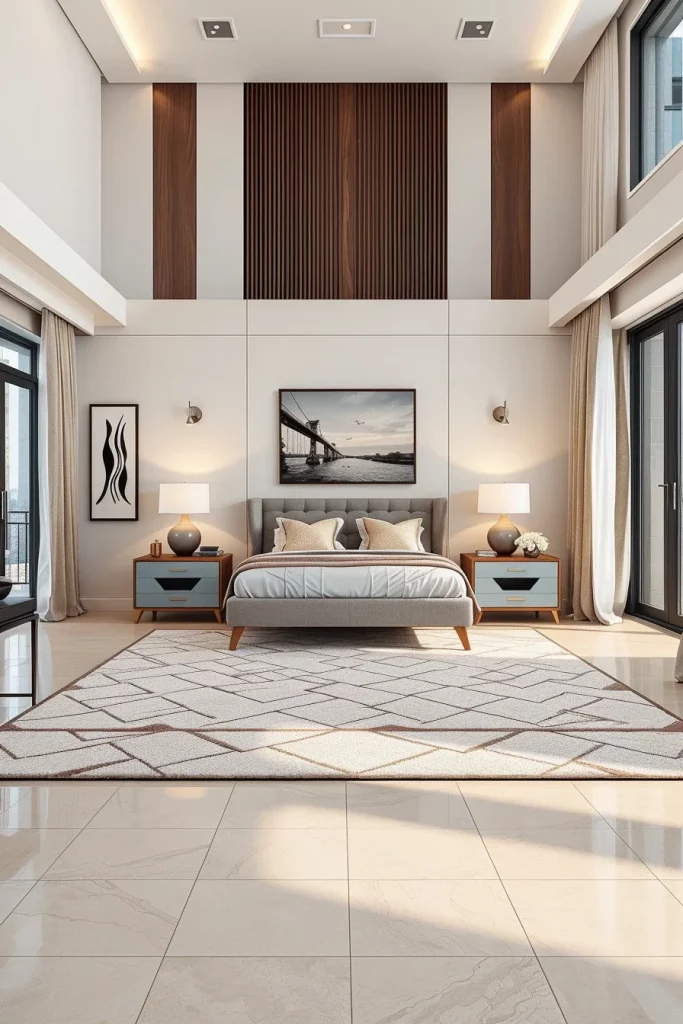
I usually begin with a centered bed, identical bedside tables, matching table lamps, coordinated artwork, and evenly positioned decorative accessories. A large upholstered headboard anchors the room, while a centered area rug defines the sleeping zone. I also like repeating materials such as wood, fabric, ceramic, and metal throughout the room to create subtle visual consistency without making the design feel repetitive.
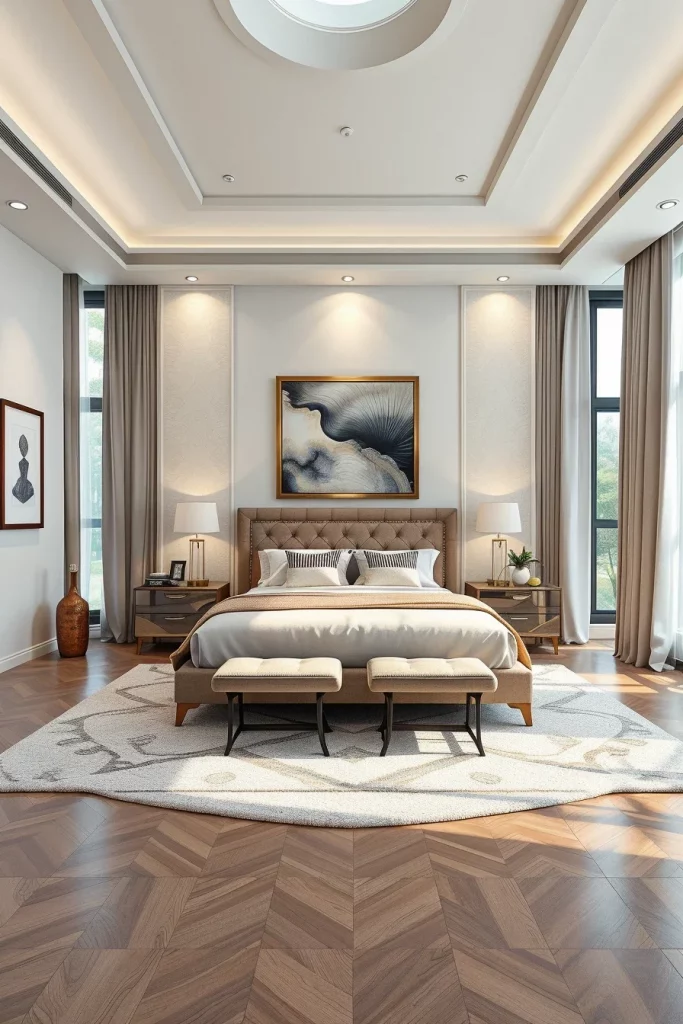
Personally, I have found that symmetrical bedrooms often appear larger and more organized than asymmetrical layouts, even when they contain the same furniture. Many experienced interior designers recommend establishing balance before adding decorative accents, and I have consistently achieved better results by following that advice. Once the foundation feels balanced, every decorative object appears more intentional.
To refine this design even further, I would add matching wall sconces, coordinated decorative cushions, and carefully aligned artwork above the headboard. These details reinforce the sense of harmony while maintaining an elegant and inviting atmosphere.
Incorporate Artistic Details For A Curated Look
I always encourage adding artistic details because they give a bedroom personality without overwhelming the space. Carefully selected artwork, sculptural décor, and handcrafted accessories create visual interest while reflecting individual style. Instead of filling every wall or shelf, I focus on choosing fewer, higher-quality pieces that contribute to a curated and sophisticated environment.
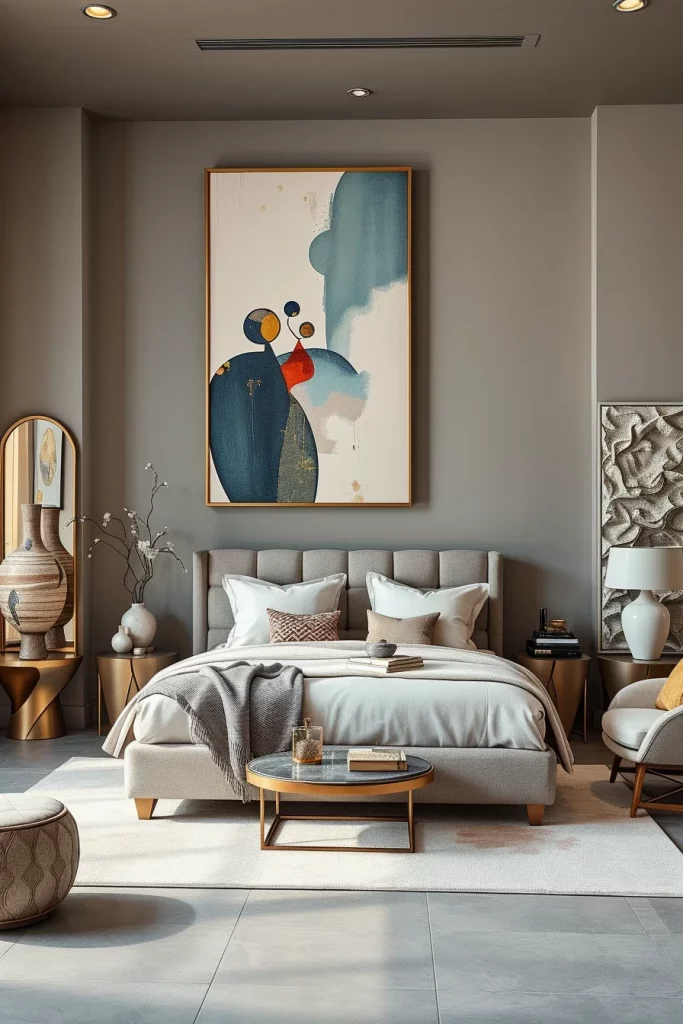
I like incorporating oversized framed artwork above the bed, abstract sculptures, handcrafted ceramic vases, textured wall panels, decorative coffee table books, and unique mirrors. These elements work beautifully alongside upholstered furniture, soft textiles, and neutral color palettes because they provide contrast without disrupting the room’s calm atmosphere. Mixing different materials also adds depth while maintaining a cohesive appearance.
In my experience, artistic details often become the most memorable features of a bedroom. Publications such as Architectural Digest frequently showcase interiors where artwork serves as the defining design element rather than simply filling empty walls. I appreciate this philosophy because meaningful artistic pieces continue to inspire long after temporary decorating trends disappear.
I would complete this look by adding discreet picture lighting, handcrafted pottery, and a statement sculpture placed on a dresser or console. These finishing touches elevate the bedroom while preserving its refined aesthetic.
Complete The Bedroom With Timeless Finishing Touches
I believe the final decorative details are what transform a well-designed bedroom into a truly memorable space. Once the furniture, lighting, and color palette are established, I focus on adding subtle finishing touches that make the room feel polished and complete. These carefully chosen elements enhance comfort without distracting from the overall design.
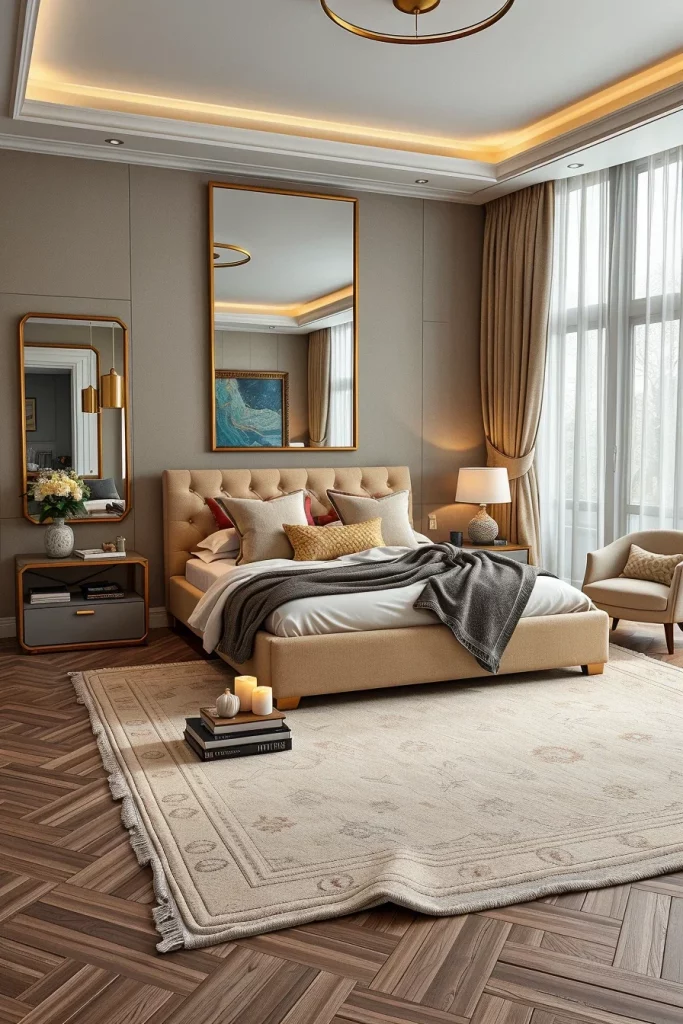
I often include a large area rug extending beneath the bed, elegant curtains that reach the floor, decorative cushions, textured throws, fresh greenery, scented candles, books, ceramic accessories, and a beautiful full-length mirror. Coordinating hardware finishes, matching picture frames, and thoughtfully arranged decorative objects create visual continuity throughout the room. Every item should feel intentional and contribute to the overall atmosphere.
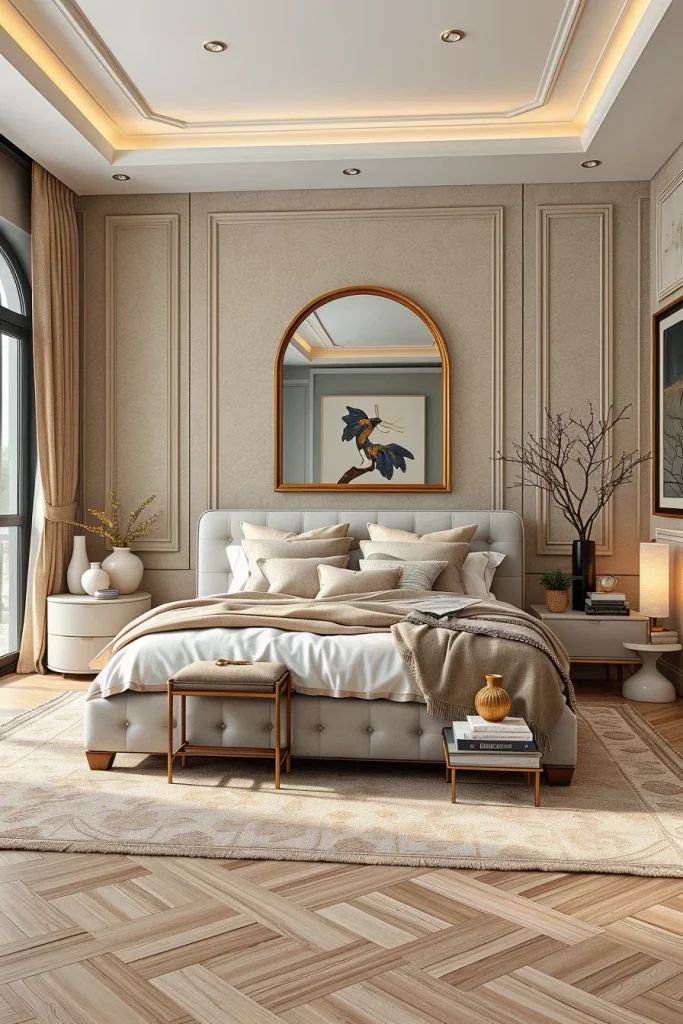
From my perspective, timeless bedrooms avoid excessive decoration in favor of thoughtful composition. I have learned that quality materials, balanced proportions, and meaningful decorative objects continue to look beautiful year after year. Rather than chasing every new trend, I prefer creating interiors that remain comfortable, elegant, and functional over time.
I would also include a subtle fragrance, soft background lighting for the evening, and a carefully styled bedside surface with only a few favorite decorative objects. These small finishing details make the bedroom feel welcoming every single day.
Creating a beautiful bedroom is all about combining comfort, functionality, and personal style in a way that feels authentic to you. With these aesthetic bedroom decorating ideas for home, you can transform any space into a relaxing retreat that reflects your taste and supports your daily routine. Start with the ideas that inspire you most, layer in meaningful details, and enjoy a bedroom that feels both timeless and welcoming.