
A cozy bedroom should feel like a personal retreat where comfort, warmth, and calm come together naturally. I love how the right combination of soft bedding, layered textures, warm lighting, and soothing colors can completely transform the atmosphere of a room. Whether you prefer deep, moody tones, gentle neutrals, elegant blush shades, or rich natural finishes, there are plenty of ways to make a bedroom feel more inviting. Thoughtful furniture placement and practical storage can also help the space stay uncluttered while keeping everything comfortable and functional. In this collection, I’m exploring beautiful bedroom ideas that show how different materials, lighting choices, wall treatments, and textiles can create a relaxing mood. Which of these cozy bedroom ideas would make you want to stay in bed a little longer?
Dark Contemporary Bedroom With a Stone-Effect Wall
I immediately notice the sophisticated combination of deep gray surfaces, dark cabinetry, and soft gray bedding in this bedroom. The bed sits beside a compact floating nightstand, while a large mirrored surface visually extends the space on the left. Above the nightstand, a slim pendant light hangs against the gray wall, and the wall itself has subtle stone-like veining that adds texture without overwhelming the room. A small vase with muted decorative stems, a book, and restrained accessories keep the bedside area simple.
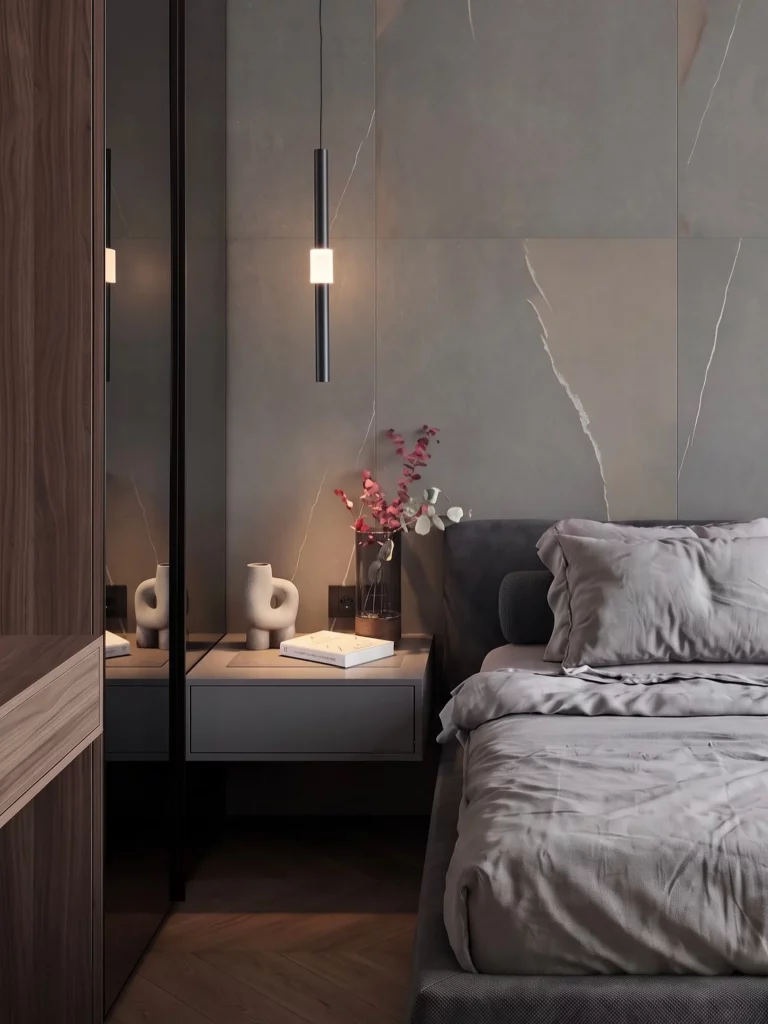
What makes this arrangement work for me is the controlled palette and strong sense of order. The built-in-looking dark storage along the left side provides a practical place to keep belongings while the mirror helps prevent the darker finishes from making the room feel enclosed. The floating nightstand also leaves the floor visually open, which is particularly useful when I want a bedroom to feel streamlined rather than crowded.
I would recreate this mood by choosing several closely related gray and charcoal tones instead of introducing too many contrasting colors. The narrow pendant is also a great lesson in bedroom lighting: it provides illumination exactly where it is useful without taking up nightstand space. I like how the restrained styling lets the wall finish and bedding do most of the visual work.
Soft Bedroom With Oversized Tree-Patterned Wallpaper
This bedroom takes a completely different approach, using a large-scale tree pattern across the main wall behind the upholstered bed. The wallpaper combines pale tones with brown detailing, while the bed, bedding, and layered pillows stay soft and neutral. Floor-length curtains frame the bright window, and two sculptural wall lights add a decorative touch beside the bed. The air-conditioning unit is also visibly integrated high on the wall without interrupting the main composition.
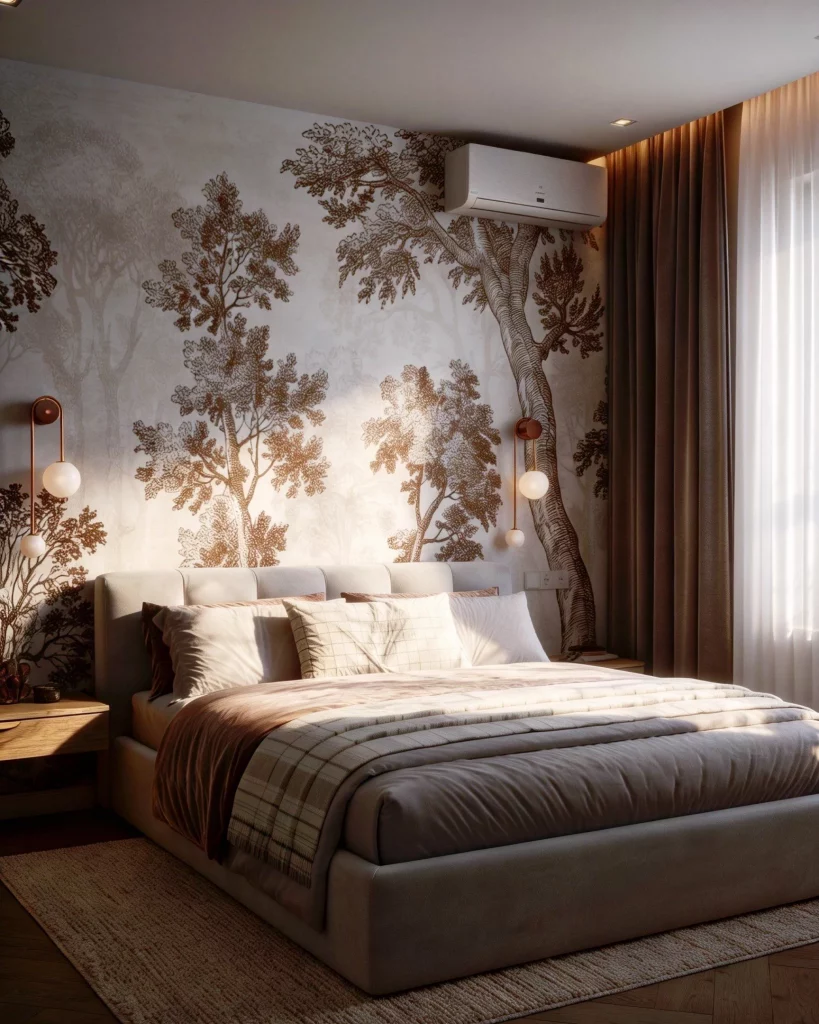
For me, the strength of this room comes from letting one wall carry the personality of the space while everything else remains comparatively quiet. The upholstered bed has a simple silhouette, so it does not compete with the detailed wallpaper. The layered bedding and plaid throw introduce additional texture, making the bed look inviting without adding unnecessary visual clutter.
If I were taking inspiration from this room, I would start with the feature wall rather than trying to decorate every surface. A large-scale pattern can establish the mood immediately, while neutral upholstery and bedding prevent the bedroom from becoming visually busy. I also like the placement of the lighting on either side of the bed because it creates symmetry and provides a practical reading-light solution.
Warm Modern Bedroom With Sculptural Bed and Layered Lighting
The third bedroom feels modern and intimate, with a generously upholstered bed positioned in front of a dark wall treatment. Behind the bed, vertical panels frame a textured illuminated section that becomes the main focal point. Floor-to-ceiling dark surfaces continue around the room, while glass doors or partitions appear on the opposite side. The large pale rug, light bedding, rounded bed frame, and softly curved bench at the foot of the bed introduce a much gentler contrast.
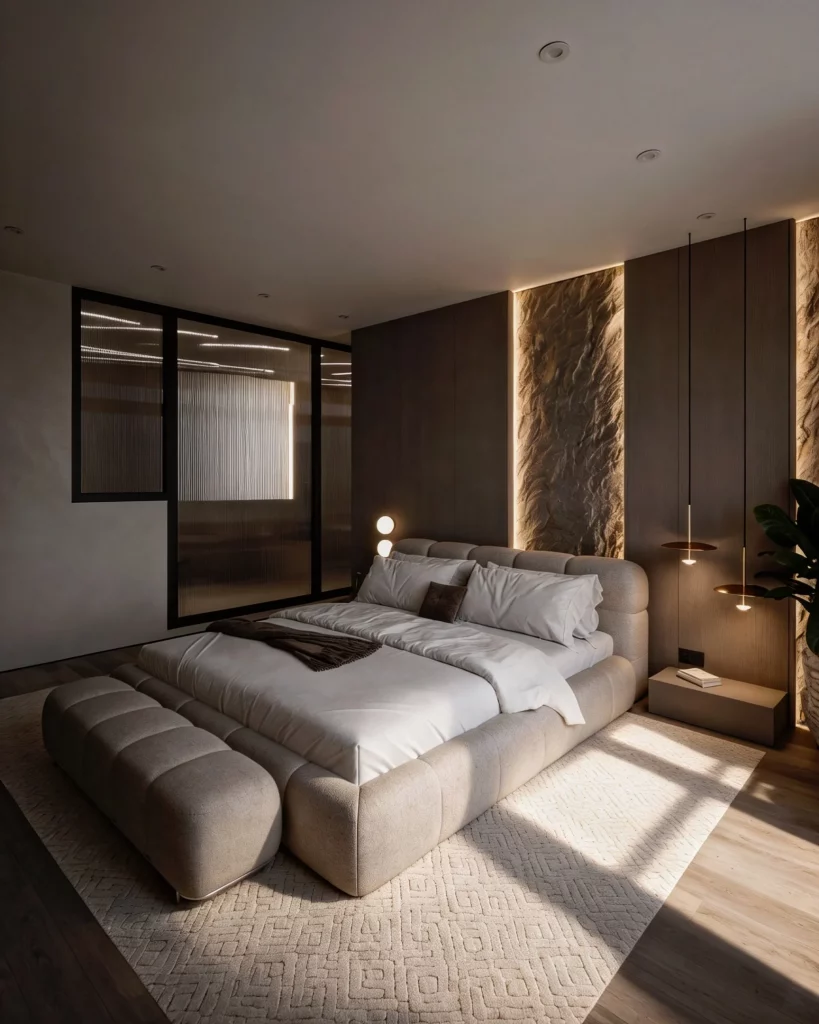
I particularly like the way the lighting changes the character of this room. The illuminated textured wall adds depth behind the bed, while small pendant fixtures provide focused pools of light near the bedside. At the same time, daylight entering from the right brings out the contrast between the dark wall and pale textiles. The result feels layered without relying on lots of decorative objects.
For me, this is a useful example of how a darker bedroom can still feel comfortable. The secret is visible in the photograph: soft upholstery, rounded forms, a large tactile rug, and light bedding offset the deeper architectural finishes. If I wanted to achieve a similar atmosphere, I would concentrate on combining contrasting textures rather than simply adding more decoration.
Calm Neutral Bedroom With a Marble-Effect Feature Wall
This bedroom is centered around a wide pale feature wall with subtle sweeping veining that resembles marble. A horizontal slatted section runs behind the upholstered headboard, with a line of concealed lighting creating a gentle glow along its upper edge. Two slim black pendant lights hang symmetrically over the bedside areas, while matching light-toned nightstands frame the bed. A large mirror on the right reflects part of the room and helps emphasize the generous proportions.
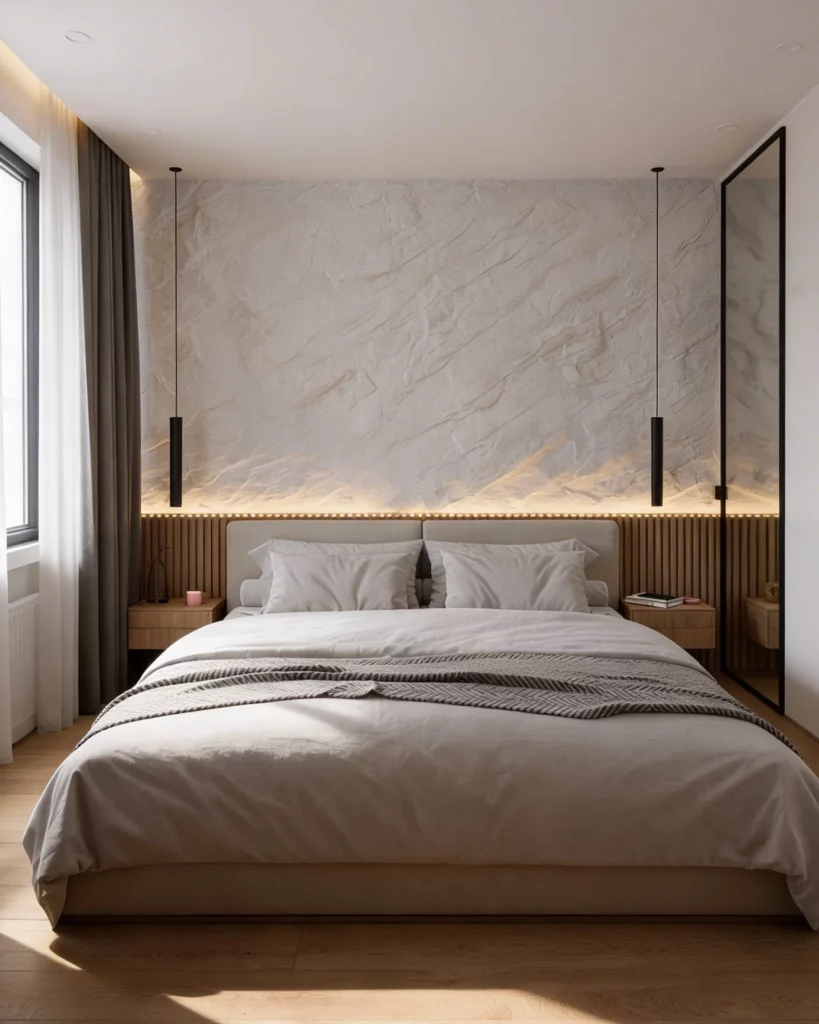
I find the symmetry especially appealing here because it makes the room feel immediately organized and restful. The centered bed anchors the composition, while the matching pendants and nightstands create visual balance. The pale bedding and upholstered headboard keep the focus on the feature wall, while the rug and light flooring add softness underfoot.
This design shows me how a relatively simple bedroom can feel carefully considered through proportion alone. Instead of adding numerous accessories, I would focus on getting the width of the bed, bedside furniture, lighting, and feature wall to relate to one another. The concealed lighting is another detail I would borrow because it adds atmosphere while remaining visually discreet.
Compact Neutral Bedroom With Full-Width Built-In Storage
Here, the bed occupies the center of a compact bedroom, while an entire wall behind it is used for streamlined built-in storage. The cabinetry has simple flat fronts in a warm neutral tone, with a narrow open shelving section at one side for books and small objects. The upholstered bed sits against a partial vertical-panel wall, and a light-colored chair is positioned nearby. Soft bedding, a striped throw, and a small round wall light complete the composition.
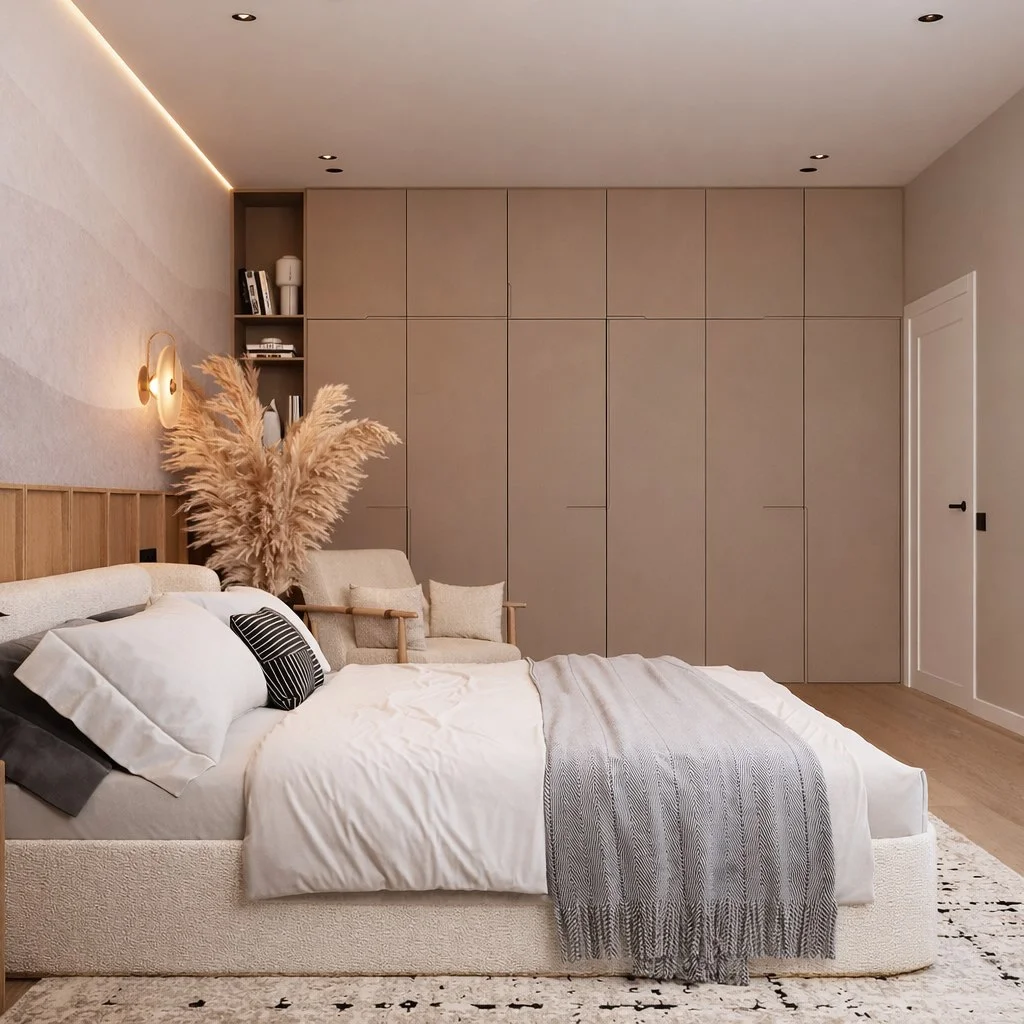
I think this is one of the most practical approaches in the collection because the storage is integrated directly into the architecture of the room. Keeping the cabinetry in a color close to the surrounding finishes makes such a large storage wall feel less imposing. At the same time, the open shelving breaks up the solid run of doors and provides a place for a few personal items.
If I were planning a similar bedroom, I would take advantage of every available wall rather than filling the floor with separate storage furniture. The simple cabinetry also demonstrates why consistent finishes can make a compact room feel calmer. I like the restrained combination of white bedding, warm neutrals, and a small amount of black detailing because it keeps the room visually grounded.
Textured Panel Bedroom With Mustard Accent Bedding
This bedroom features a soft upholstered bed positioned directly against a wall of framed textured panels. The panels have a natural-looking grain and create a strong architectural backdrop without covering the entire room in a single flat finish. White bedding forms the base, while mustard-colored quilted fabric adds a warm accent across the bed. A geometric artwork hangs on the adjacent wall, and small rounded wall lights sit symmetrically beside the headboard.
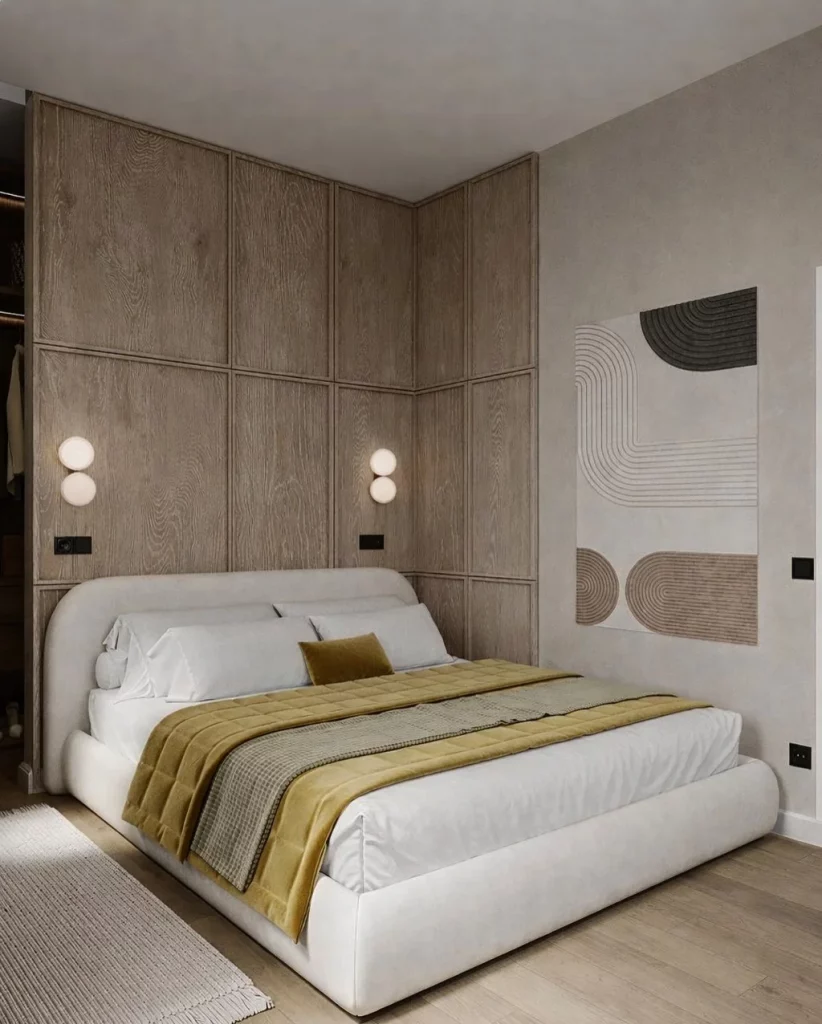
The warm accent color is especially effective because it appears in controlled amounts rather than dominating the room. I also like the contrast between the pale upholstered bed and the deeper tones of the wall panels. The bedside lighting is compact and decorative, leaving the nightstands free from bulky lamps or unnecessary objects.
For me, this image is a good reminder that a cozy bedroom does not need a complicated color scheme. I would choose one stronger accent and repeat it selectively through bedding or a small cushion, while keeping the main furniture neutral. The framed wall treatment also gives the room character and dimension without requiring a large collection of wall décor.
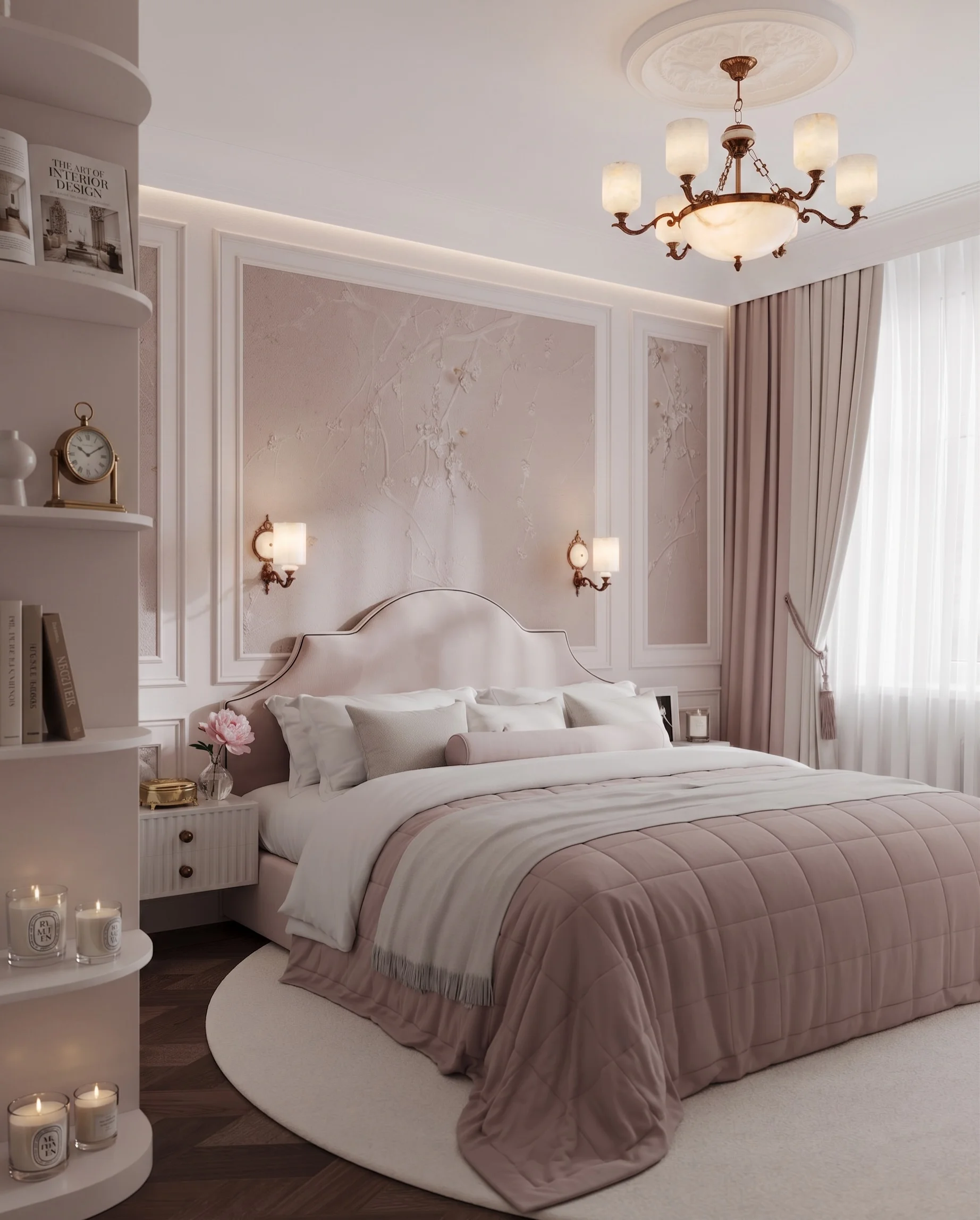
Elegant Blush Bedroom With Classic Wall Framing
This bedroom creates a much softer atmosphere through pale blush and cream tones. The bed has a curved upholstered headboard, while the wall behind it is divided into elegant framed panels with subtle textured surfaces. Matching wall sconces sit on either side of the bed, and a traditional multi-light chandelier hangs from the ceiling. Floor-length curtains frame the large window, while curved shelving on the left displays books and small decorative objects.
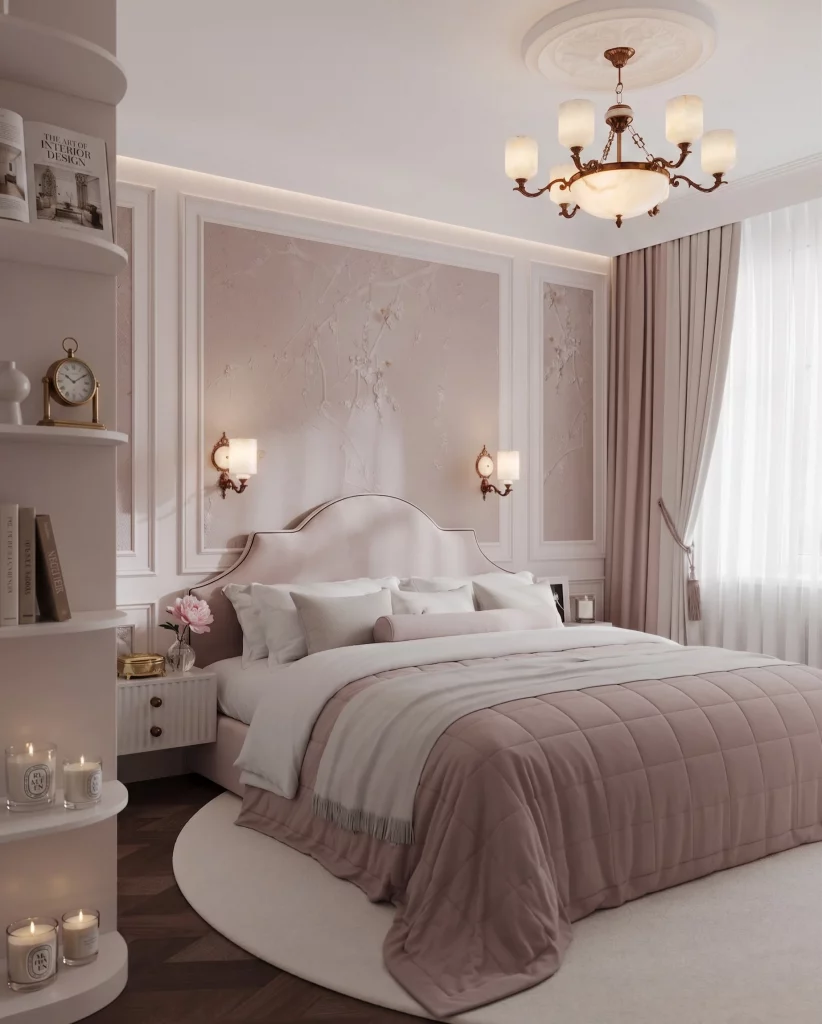
I love how the repeated curves make this room feel gentle and cohesive. The rounded headboard, circular ceiling detail, curved shelving, and softly shaped rug all relate to one another without looking overly coordinated. The layered bedding also keeps the bed inviting, with several pillows and a pale quilt adding dimension to the otherwise restrained palette.
If I wanted to recreate this feeling, I would focus on shape as much as color. A curved headboard or softly rounded piece of furniture can instantly change the character of a bedroom, especially when paired with simple wall framing. The lighting is equally important here: the chandelier establishes a decorative focal point, while the bedside sconces provide a much more intimate scale.
Moody Burgundy Bedroom With Statement Circular Artwork
This bedroom introduces a deep burgundy wall behind a simple upholstered bed, creating a noticeably moodier atmosphere. Dark built-in cabinetry occupies the left side, while a large circular artwork featuring botanical linework hangs above the bed. Two small pendant lights frame the bed, and a compact desk and chair sit along the right side. The bedding combines cream, gray, and dark tones, while a patterned rug extends beneath the bed.
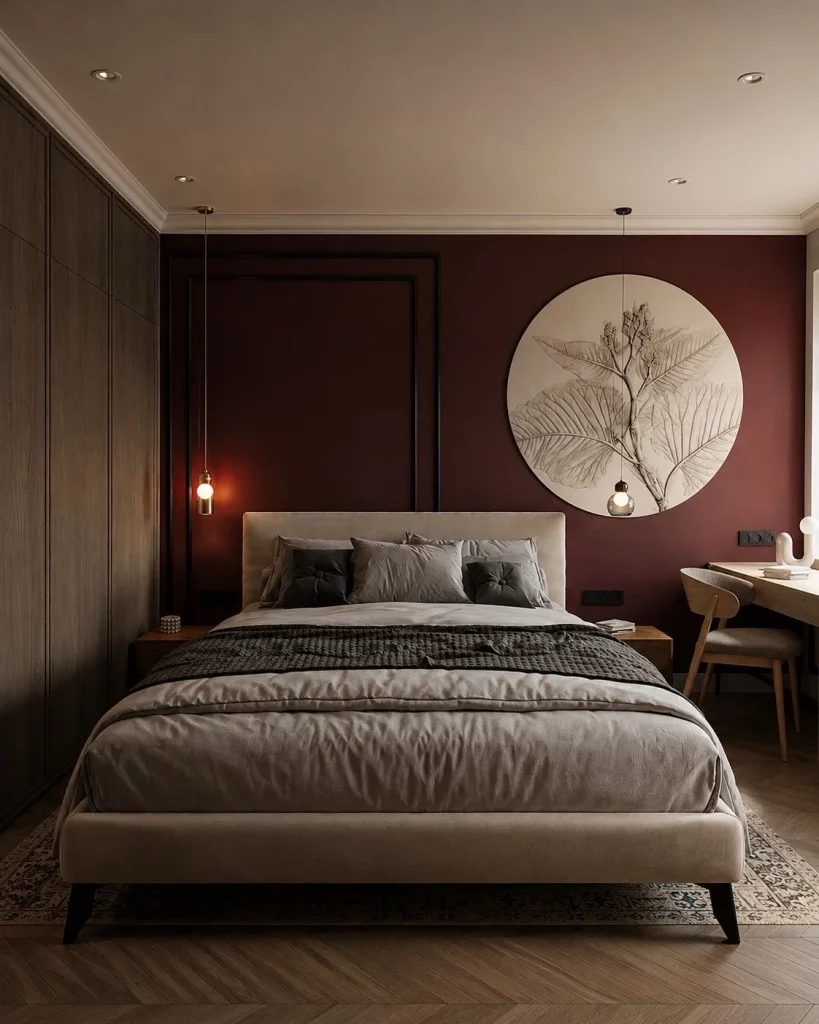
For me, the room works because the deep wall color is balanced by the light upholstered bed and lighter bedding. The large circular artwork also breaks up the solid wall and introduces a softer visual shape. Rather than competing with it, the small pendant lights remain understated and emphasize the central bed area.
This is the kind of bedroom where I would pay close attention to lighting before choosing the wall color. A deep shade can create a cocooning atmosphere, but the image shows how important the warm pendant lighting and lighter furnishings are to maintaining balance. I also like the compact desk because it gives the room another useful function without disturbing the main sleeping area.
Deep Green Bedroom With Tall Windows and Soft Gray Bedding
This bedroom pairs a deep green wall with a tall upholstered headboard in a darker gray tone. Two framed abstract artworks hang above the bed, while light wooden nightstands provide a simple contrast on either side. Large windows fill the right side of the room, framed by full-length curtains and sheer panels that allow daylight to enter. A small floor lamp stands beside a comfortable chair in the corner, creating a quiet secondary seating area.
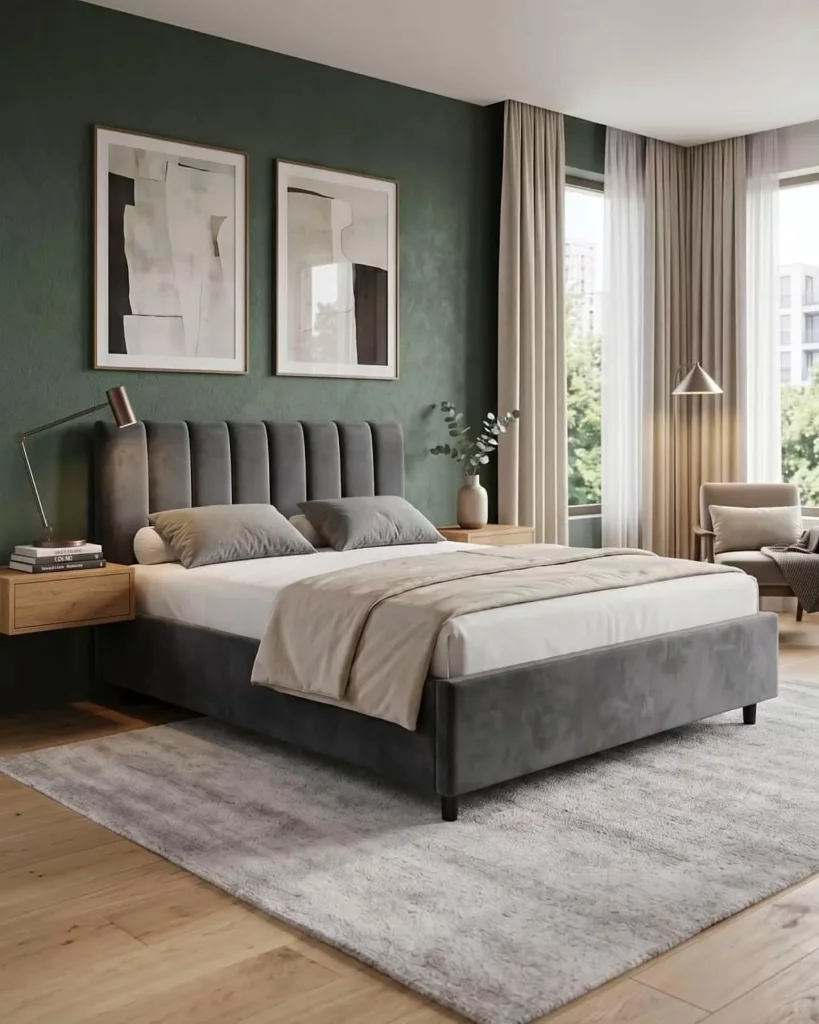
I find the balance between the dark wall and abundant natural light particularly successful. The room does not rely entirely on artificial lighting because the large windows bring in plenty of daylight, while the curtains soften the brightness. The neutral bedding and rug also create a calm transition between the dark green wall and the lighter floor.
If I were working with a strong wall color like this, I would keep the larger textiles relatively restrained, just as shown here. The framed artwork adds personality without covering the entire wall, and the matching nightstands keep the sleeping zone symmetrical. I also appreciate the chair near the window because it creates a natural place to sit without taking attention away from the bed.
Light Taupe Bedroom With Upholstered Headboard and Storage Wall
The final bedroom combines a light taupe wall with decorative panel molding, a tufted upholstered headboard, and a large bank of pale built-in wardrobes. A framed botanical artwork hangs above the bed, while small wall sconces provide bedside illumination. At the foot of the bed, a pale upholstered bench adds another seating surface, and the room is finished with a large neutral rug and warm flooring.
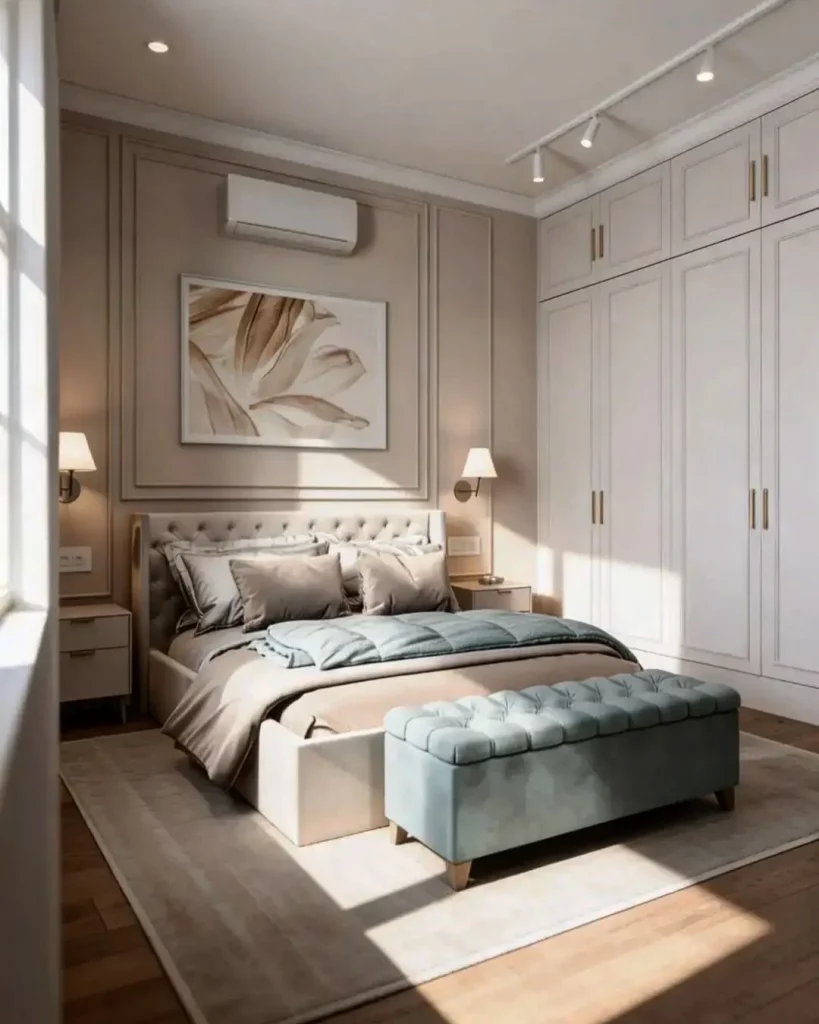
What stands out to me is how much storage has been incorporated without making the bedroom feel heavy. The tall wardrobe fronts are visually consistent and provide substantial concealed storage, while the open floor area around the bed keeps the room comfortable to move through. The tufted headboard and bench add softness, while the neutral palette allows the architectural details to remain visible.
I would take this image as inspiration for creating a calm bedroom where organization is part of the design rather than something added afterward. Built-in storage can be especially useful when the bedroom needs to accommodate clothing and everyday belongings without several separate cabinets. The combination of pale upholstery, simple artwork, soft lighting, and restrained panel detailing also shows how a room can feel warm and finished without becoming overcrowded.
Soft Upholstery and Layered Lighting for a Serene Bedroom
The first bedroom immediately creates a warm, sophisticated atmosphere with a large upholstered bed in a soft beige tone, crisp white bedding, and a taupe throw layered casually across the foot. I love the contrast between the dark vertical wall slats on one side and the textured gray wall behind the bed. A muted green artwork adds a subtle color accent, while the sculptural ceiling chandelier becomes a major focal point above the bed. On the right, a floating vanity or console with vertical illuminated panels introduces another layer of light, and a small patterned ottoman sits nearby.
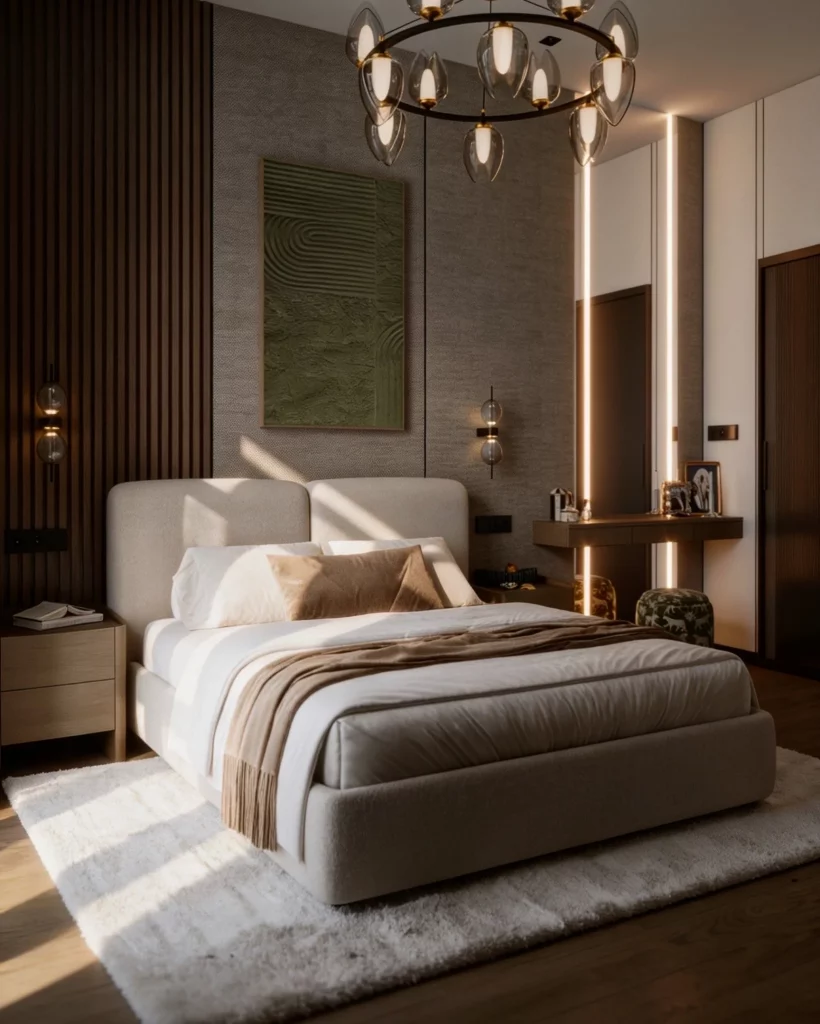
What works especially well for me is the combination of different lighting sources. The chandelier provides a decorative centerpiece, while the illuminated vertical strips create a softer glow around the vanity area. The upholstered bed also helps visually soften the room, balancing the darker wall treatment without making the space feel stark. The large rug underneath the bed adds another tactile layer and visually defines the sleeping zone against the wood floor.
I would take a similar approach when creating a relaxing bedroom of my own: start with one comfortable upholstered bed, then build the atmosphere through layers of texture and lighting rather than filling the room with accessories. I particularly like the way the neutral bedding allows the architectural wall treatments and lighting to do the visual work. Keeping the palette controlled also makes the room feel composed even though several different textures are being used.
Warm Terracotta Bed With a Practical Bedroom Workspace
This bedroom takes a warmer direction with a terracotta-colored upholstered bed featuring vertical channel detailing across both the headboard and footboard. The bed is styled with white bedding, muted green and pale pink pillows, and patterned rust-colored cushions that echo the warm upholstery.
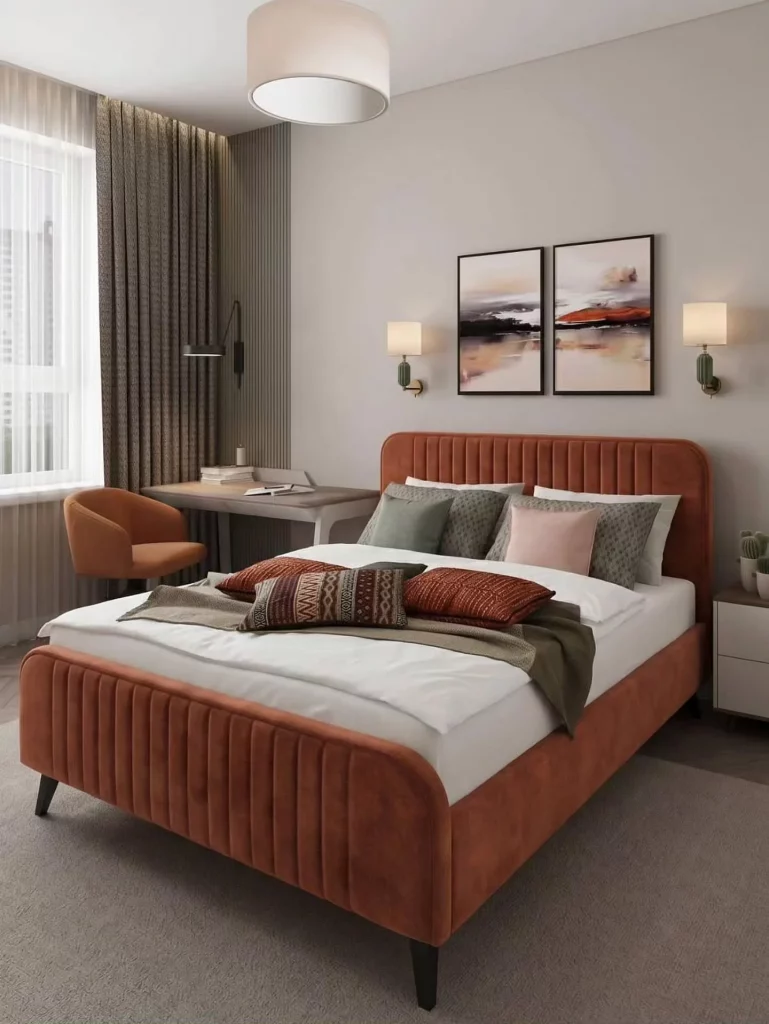
I like how the desk is integrated into the bedroom without competing with the bed. The workspace occupies the area beside the window, where natural light can support daytime activities, while the sleeping area remains visually centered. The repeated terracotta tones also help connect the bed, cushions, and chair, creating a cohesive color story without making every element identical. The bedside tables remain relatively simple, allowing the upholstered bed to remain the main feature.
For me, this is a useful example of how a bedroom can perform more than one function without looking crowded. If I were recreating this idea, I would keep the desk visually light and place it near a natural light source, just as shown here. I would also repeat one or two colors from the main furniture in smaller textiles, because this makes the overall room feel intentional without requiring a large amount of decoration.
Playful Pattern and Rich Color in a Character-Filled Bedroom
This bedroom has a much more expressive personality, combining a black-and-white striped upholstered bed with dusty pink bedding, burgundy textiles, and a green patterned bolster pillow. The wall behind the bed is finished in a warm neutral tone and framed with dark reddish-brown trim. A framed artwork featuring a spotted animal sits directly above the headboard, while matching pendant lights hang on both sides of the bed. Dark wood cabinetry with glass doors is visible on the left, adding another strong architectural detail.
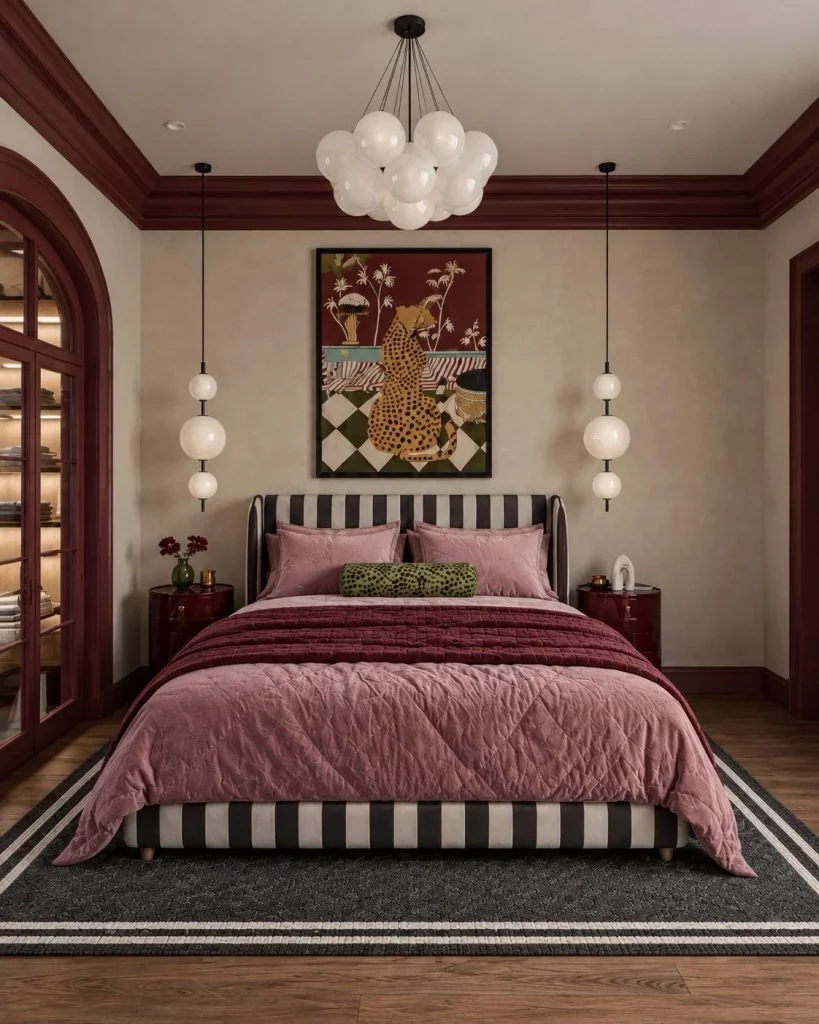
The room works because the patterns are repeated in controlled areas rather than scattered randomly. The stripes of the bed connect visually with the dark trim and the patterned rug, while the burgundy and pink bedding creates a softer contrast against the black-and-white foundation. I also like the symmetrical placement of the bedside tables and pendant lights, because that structure gives the more playful decorative elements a sense of order.
When I look at a bedroom like this, I am reminded that a cozy room does not have to be quiet in terms of color or pattern. The key is giving stronger elements enough visual space to breathe. I would keep the bed as the central anchor and use a limited number of coordinated patterns around it, just as this room does. The result feels expressive while still maintaining a clear composition.
Moody Charcoal Bedroom With Crisp Black and White Contrast
The fourth bedroom uses a deep charcoal wall as its defining feature. A tall black upholstered headboard with vertical channel detailing sits against the dark backdrop, while crisp white bedding creates a strong contrast. Black and white framed line drawings are arranged above the bed, and a small round mirror hangs to the right. Two compact bedside tables provide practical surfaces, while a simple lamp, books, and a small decorative object add understated details. A large green-leafed indoor plant stands in the corner beside the bed.
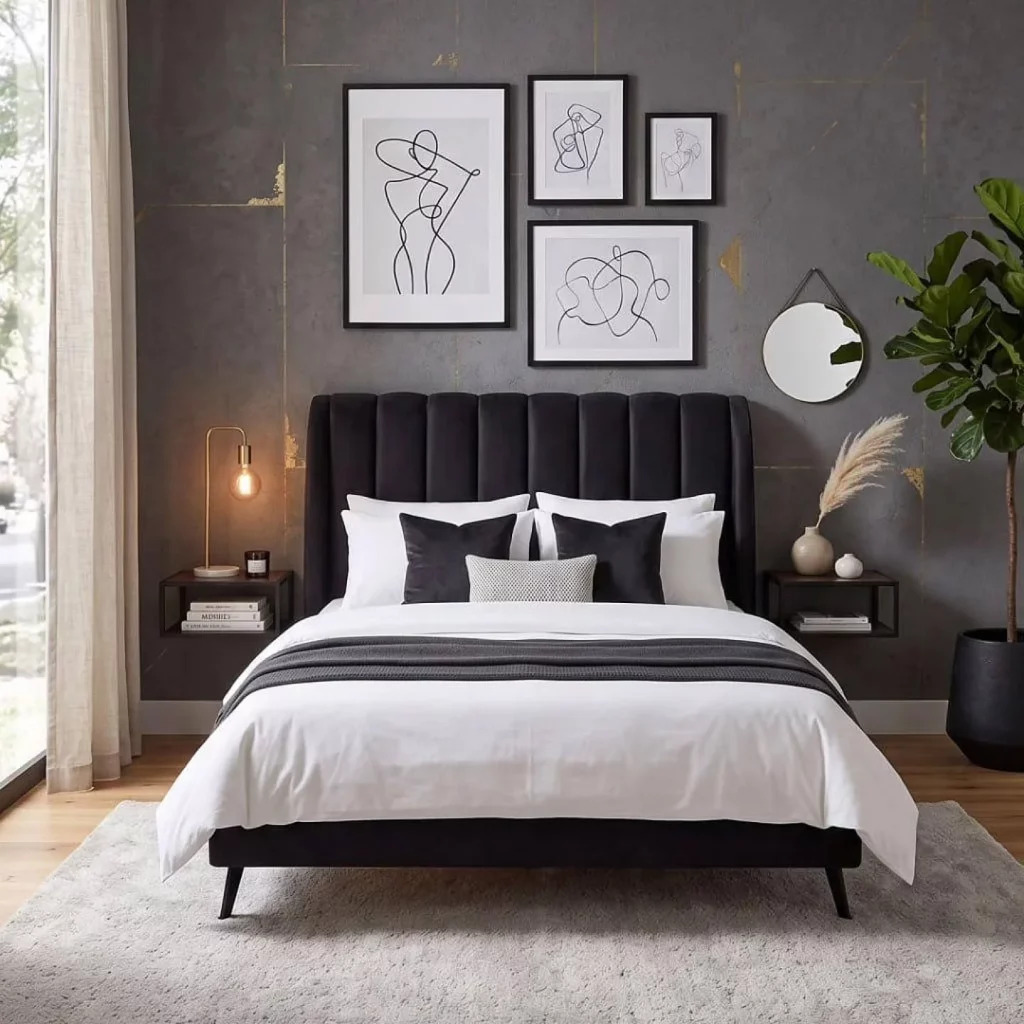
I particularly like the way the dark wall makes the white bedding feel even cleaner and brighter. The tall headboard adds softness and height without introducing another strong color, while the artwork continues the black-and-white palette. The open space around the bed also prevents the darker finish from making the room feel visually compressed. A light rug underneath the bed provides another bright surface and softens the transition to the wood floor.
For my own decorating, I would consider this approach when I wanted a bedroom to feel intimate without relying on lots of decorative accessories. A dark wall can become the backdrop for simple artwork and pale bedding, creating plenty of contrast with relatively few elements. I also like the practical restraint of the bedside styling here: the room feels considered rather than overloaded.
Deep Tones and Window Light for a Cocoon-Like Bedroom
This bedroom takes a darker and more intimate approach, with a deep upholstered bed positioned in front of a large window. The bedding is layered in soft cream and beige tones, with several pillows arranged against the headboard and a dark throw placed across the lower part of the bed. Floor-length dark curtains surround the window, while sheer curtains allow daylight to filter through. Two warm pendant lights hang near the bed, and a large floor lamp is visible on the left side.
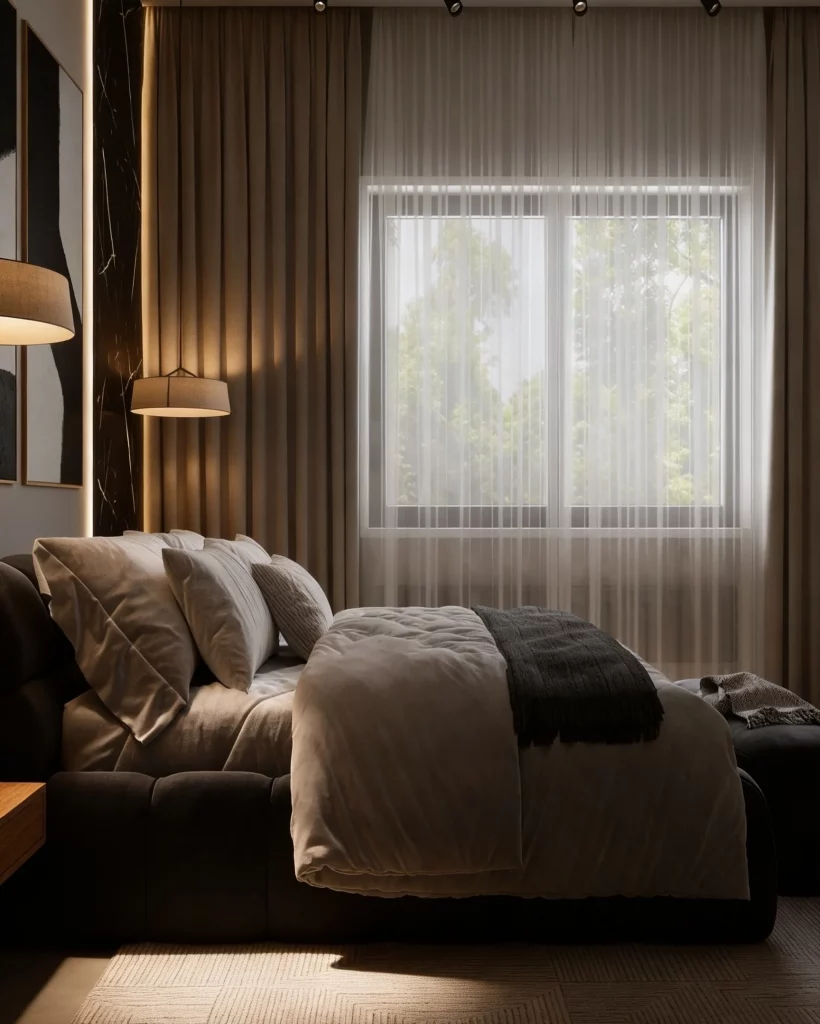
The contrast between the darker surroundings and the natural light coming through the window is what makes this room especially atmospheric. I like the way the bedding remains light enough to catch the daylight, while the dark curtains and bed frame create a cozy enclosure. The layered textiles also give the bed a relaxed, comfortable appearance rather than making it look overly formal.
I would use this image as inspiration for anyone who wants a bedroom that feels particularly restful at night but still receives plenty of daylight during the day. In my experience, combining sheer and heavier window treatments gives much more flexibility than relying on one layer alone. Here, the curtains also visually frame the window and make it feel like an intentional part of the bedroom composition.
Walnut Wall Panels With Classic White and Navy Bedding
The sixth bedroom is centered around a dramatic full-height wood-paneled wall behind the bed. The rich brown surface provides a strong backdrop for crisp white bedding edged with dark navy piping. Two large white pillows with navy borders sit in front of darker navy pillows, creating a very controlled color combination. A dark bedside table and table lamp sit to the left, while a pale textured rug extends across the floor beneath the bed.
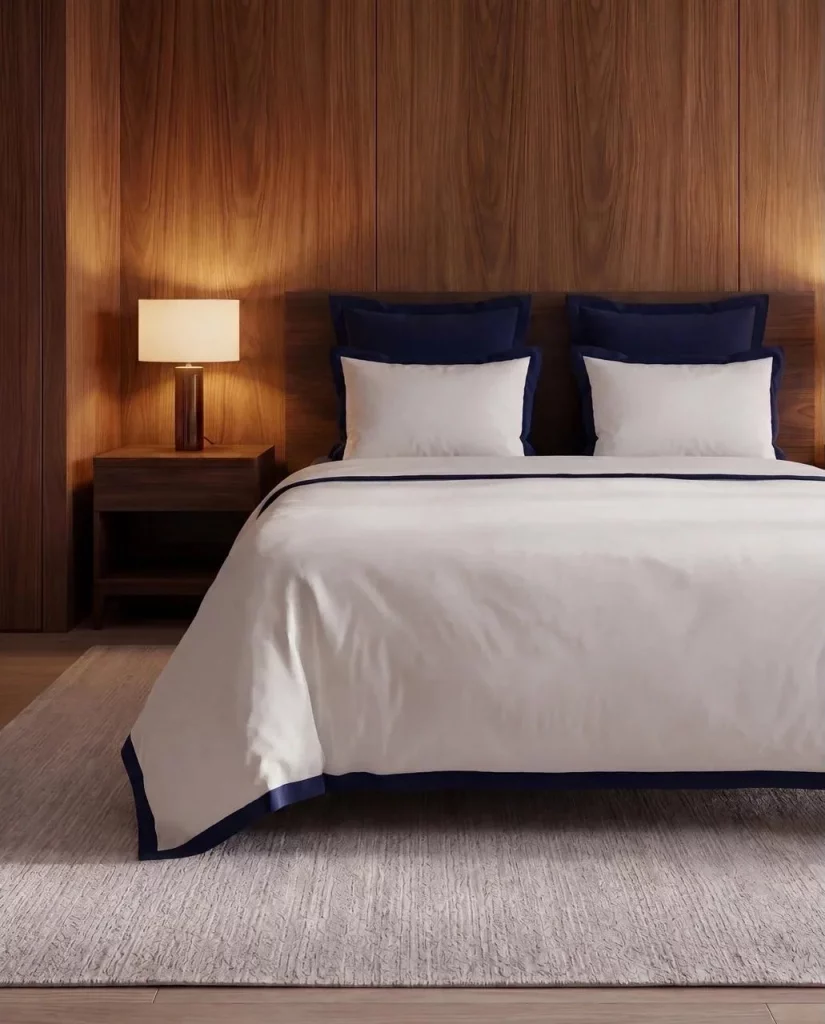
I like how little decoration is needed because the wall itself supplies so much visual character. The vertical wood panels establish rhythm across the room, while the navy accents provide definition against the white bedding. The simple bedside lamp introduces a warm point of light and prevents the composition from feeling too stark. The large rug also softens the visual weight of the wood wall and grounds the bed.
For me, this is a good example of letting one architectural surface become the star. Rather than adding multiple decorative pieces, I would keep the bedding relatively simple and use one secondary color, as shown with the navy edging. That approach makes the bedroom feel polished while still preserving the sense of comfort that comes from the soft textiles.
Modern Gray Bedroom With Integrated Storage and Ambient Lighting
This bedroom combines gray, warm wood, and black details in a distinctly contemporary composition. The bed has a low wooden frame with a gray upholstered headboard, while a large built-in wardrobe occupies the left side of the room. The wardrobe doors have a gray finish with geometric linear details and black handles. Behind the bed, warm concealed lighting outlines the wall, while a framed abstract artwork hangs above the headboard. A small bedside table, decorative lamp, and hanging pendant lights complete the arrangement.
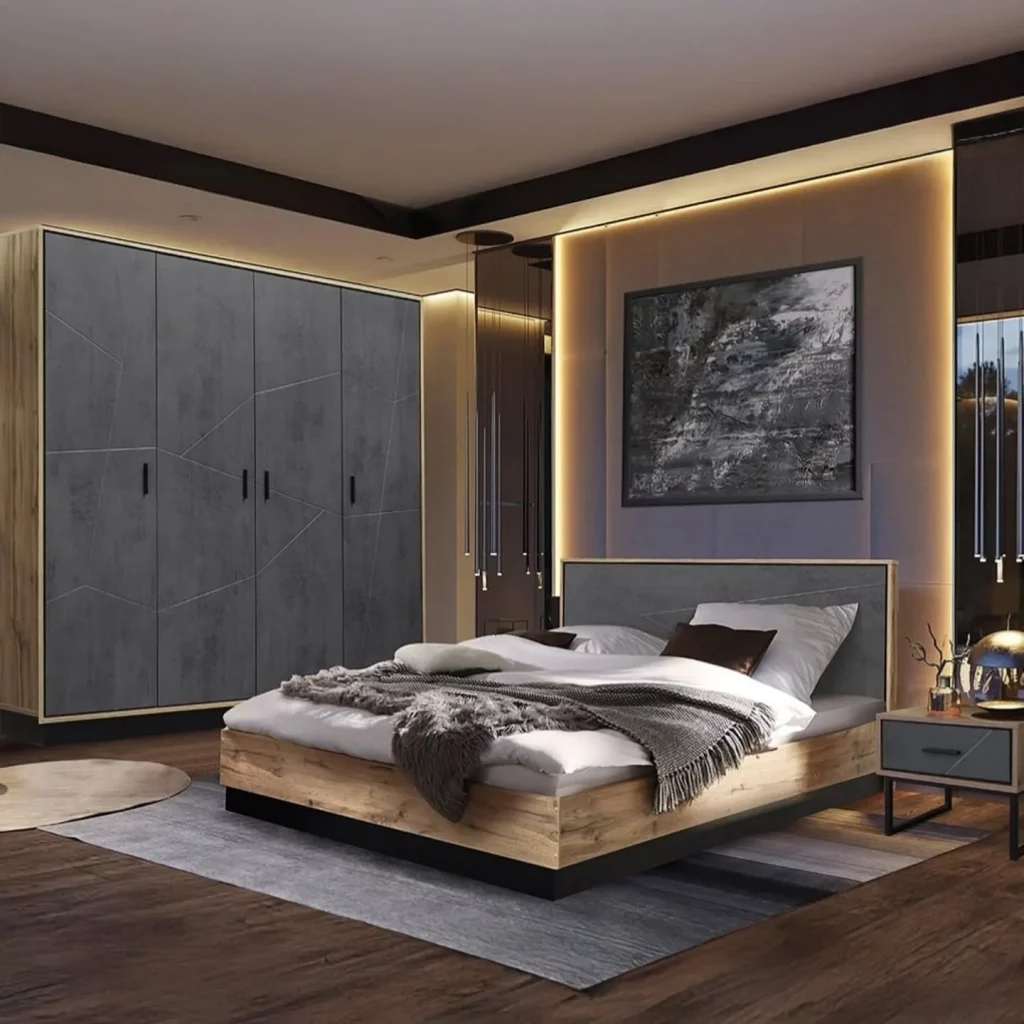
The strongest practical feature for me is the generous built-in storage visible along the left wall. Because the wardrobe extends across a large section of the room, it provides substantial enclosed storage without introducing several separate cabinets. The warm lighting around the bed also creates a softer atmosphere against the gray surfaces, while the low bed keeps the room visually streamlined.
I would borrow the principle of combining storage with architectural lighting if I were designing a modern bedroom. The room demonstrates how practical storage does not have to dominate the visual composition when its finish is coordinated with the surrounding palette. I also like the balance between hard surfaces, such as the wardrobe and floor, and the softer bedding and upholstered headboard.
Ornate Cream Bedroom With Sculptural Wall Detailing
This bedroom has a completely different character, centered around an elaborate cream-colored decorative wall behind the bed. Raised ornamental details frame the wall, with a large circular decorative motif positioned behind the upholstered headboard. The bed itself has a curved shape and is dressed in cream bedding with taupe and gray accents. A crystal-like chandelier hangs overhead, while two delicate pendant lights descend beside the bed. A small round table with a flower arrangement sits on the right, next to a tall white radiator.
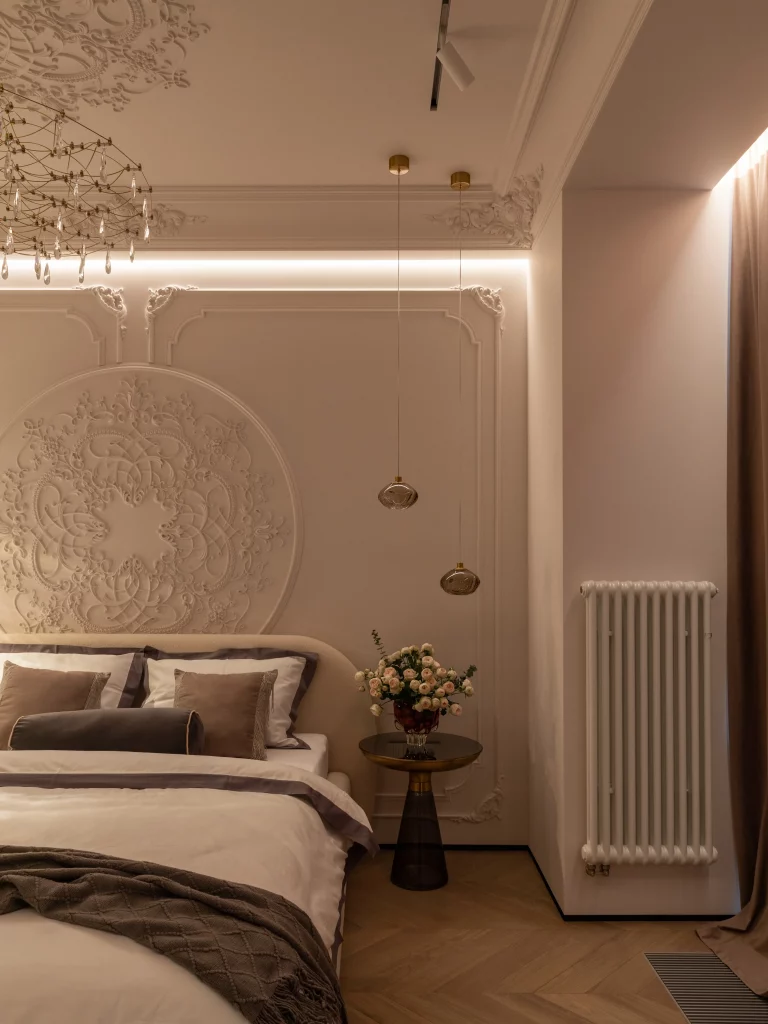
I find the restrained color palette especially effective because it allows the wall detailing to remain the primary visual focus. The cream upholstery, bedding, walls, and decorative molding create continuity, while the darker throw and table base introduce enough contrast to keep the room from appearing flat. The lighting is also layered carefully, with the chandelier, pendant lights, and concealed illumination along the wall contributing different levels of brightness.
If I were working with an ornate architectural feature like this, I would avoid competing with it through excessive accessories. The photograph shows how a limited palette can make intricate detailing feel sophisticated rather than overwhelming. I would also preserve the open floor area around the bed, because the generous spacing gives the decorative wall and curved bed enough room to stand out.
Botanical-Inspired Wallpaper With a Sculptural Burgundy Bed
This bedroom makes the wall behind the bed the main visual statement with a large patterned wallpaper featuring white cranes, branches, and red-toned blossoms against a pale blue background. A deep burgundy upholstered bed has a rounded, sculptural headboard and matching base. Blue-and-white striped pillows and a coordinating throw connect with the cooler tones in the wallpaper, while a striped upholstered chair sits near the window. A curved chandelier with multiple round globes hangs above the bed.
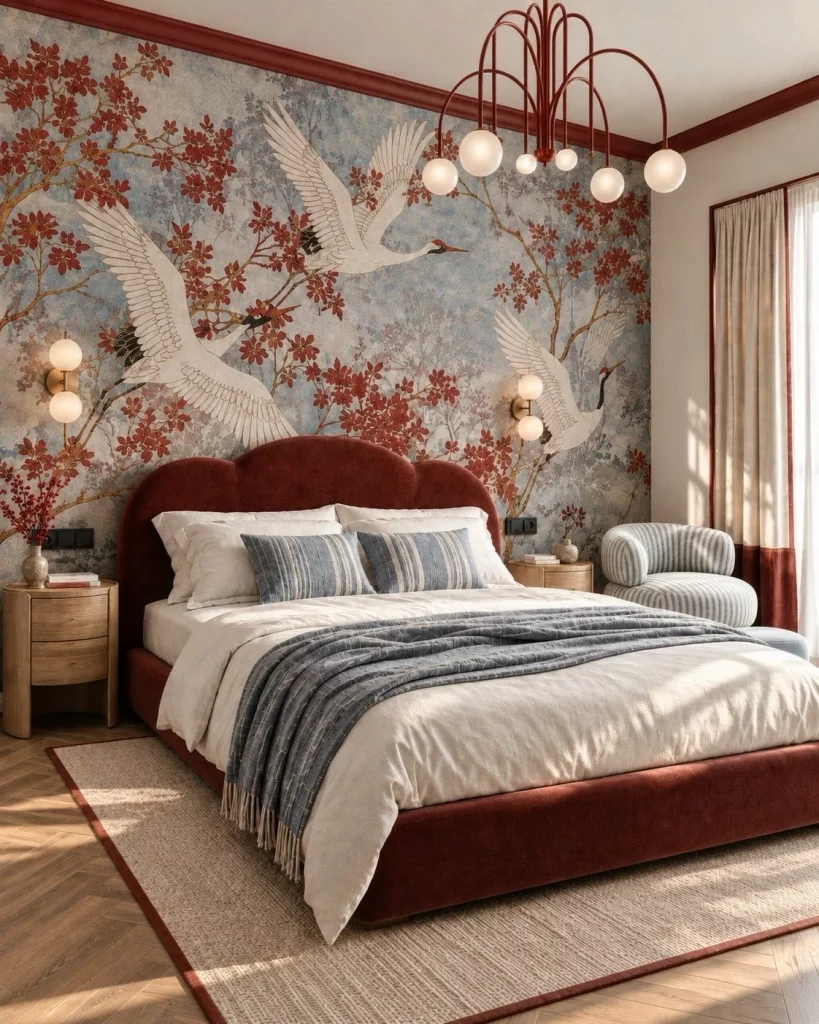
What I like here is the way the bedding does not attempt to compete with the wallpaper. Instead, the blue stripes and burgundy textiles pick up colors already visible in the wall design. The rounded forms of the headboard, chair, bedside tables, and chandelier also create a softer visual rhythm that balances the detailed wallpaper. Natural light from the window helps reveal the pattern without making the room feel too dark.
For me, this image is a reminder that a patterned wall can actually make decorating easier when its colors provide a ready-made palette. I would choose two or three tones from the wallpaper and repeat them in the bedding or furniture rather than introducing unrelated colors. Keeping the larger furniture shapes relatively simple also allows the wallpaper to remain the focal point.
Soft Neutral Bedroom With Mirrored Panels and Elegant Lighting
The final bedroom returns to a calm neutral palette with a large upholstered bed in a warm cream tone. The headboard has a gently curved silhouette, while the bedding combines white and taupe layers with a fringed taupe throw across the foot. Behind the bed, tall mirrored panels and narrow vertical wall detailing create depth and reflect the room. Beige curtains frame the large window on the right, and a sculptural chandelier hangs above the bed. Small pendant lights and a simple white bedside unit complete the arrangement.
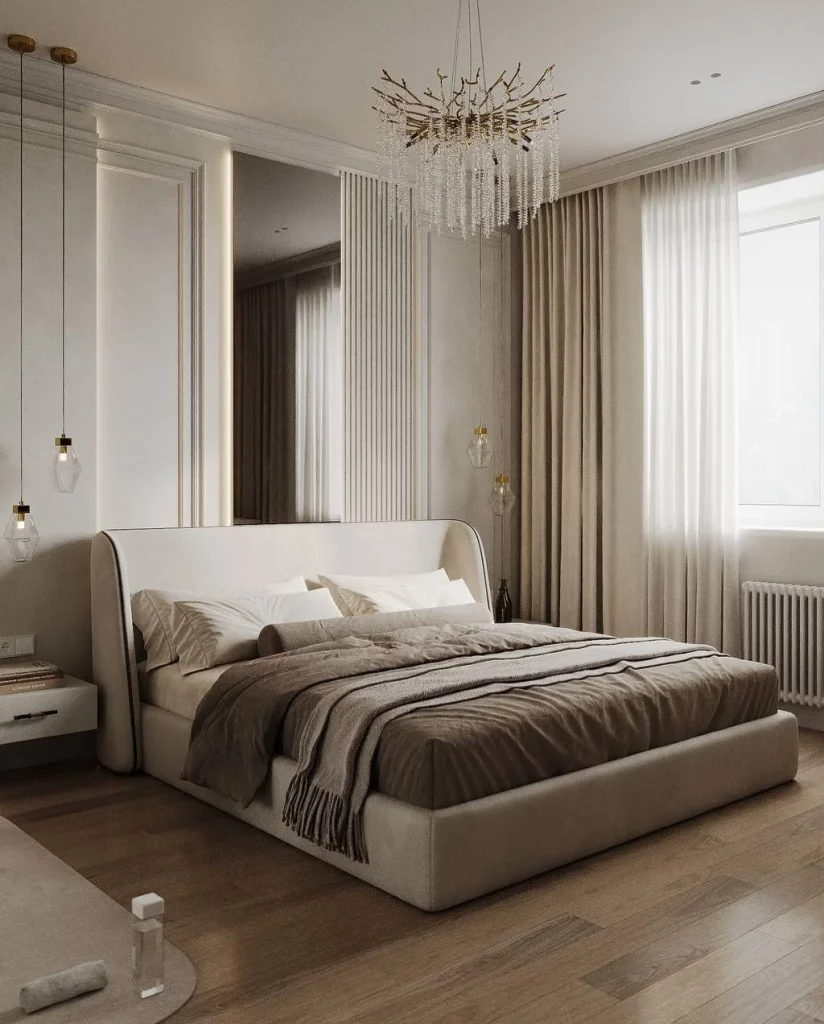
I love how the reflective wall elements make this bedroom feel more spacious without relying on a strong color contrast. The upholstered bed and layered bedding keep the room soft, while the vertical detailing adds structure to the wall behind it. The chandelier introduces a decorative focal point overhead, and the long curtains emphasize the height of the window and give the space a finished appearance.
If I were recreating this atmosphere, I would focus on tonal layering rather than adding lots of contrasting colors. Different shades of cream, beige, taupe, and white can create plenty of depth when they appear through upholstery, bedding, curtains, flooring, and wall treatments. The image also shows why lighting matters so much in a neutral bedroom: the chandelier and pendant fixtures add visual interest even when the color palette remains deliberately restrained.
Moody Bedroom With Sculptural Crane Wall Art
The first bedroom immediately creates a strong, intimate atmosphere with a large dark wall featuring an elaborate crane mural behind the bed. I love how the patterned upholstered bed echoes the deep brown and warm beige tones of the wall, while crisp white bedding provides a clean visual break. The decorative wall molding on the pale side wall adds another layer of detail, and the circular pendant light introduces a soft glow above the bed. Matching wall sconces, a textured rug, and small bedside tables complete the composition without taking attention away from the dramatic backdrop.
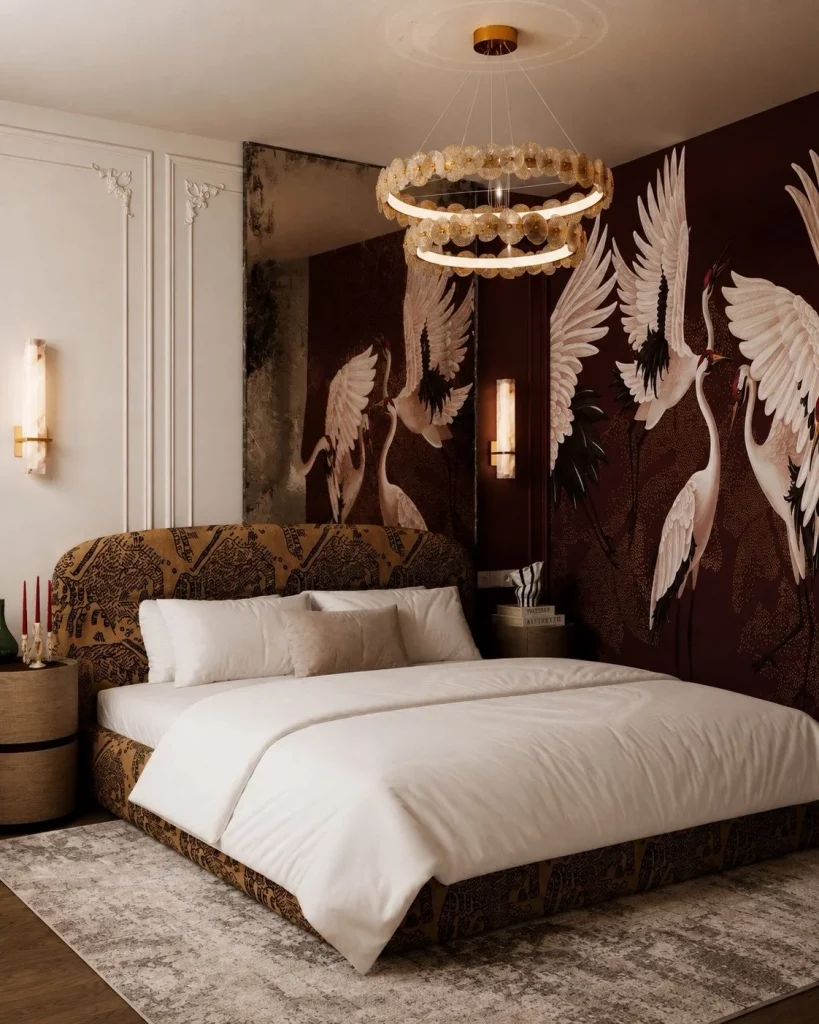
What works especially well for me is the contrast between the richly decorated background and the simple white bedding. The bed remains the comfortable center of the room because the linens are visually quiet, while the wall behind it carries most of the decorative interest. The upholstered frame also softens the stronger visual elements around it, making the bedroom feel inviting rather than severe. I would use this approach when I wanted one major design feature to define the entire bedroom without filling every surface with accessories.
I also like the way the lighting is layered directly around the sleeping area. The pendant creates a focal point overhead, while the wall sconces provide smaller pools of illumination at the sides. In my experience, bedrooms feel much more relaxing when lighting is distributed rather than coming from a single central source. If I were recreating this look, I would keep the bedding similarly simple and let one expressive wall treatment establish the mood.
Plum-Toned Bedroom With Mirrored Wall Panels
The second bedroom takes a completely different approach, using deep plum and near-black tones across the feature wall while keeping the bed itself soft and pale. A large upholstered headboard sits against the dark background, and mirrored panels visually extend the wall while reflecting the curved window area and curtains. The dark velvet-looking pillows and rounded bench at the foot of the bed reinforce the rich palette. Above, a crystal-style chandelier adds sparkle, while recessed lighting and softly illuminated wall details prevent the darker colors from feeling too heavy.
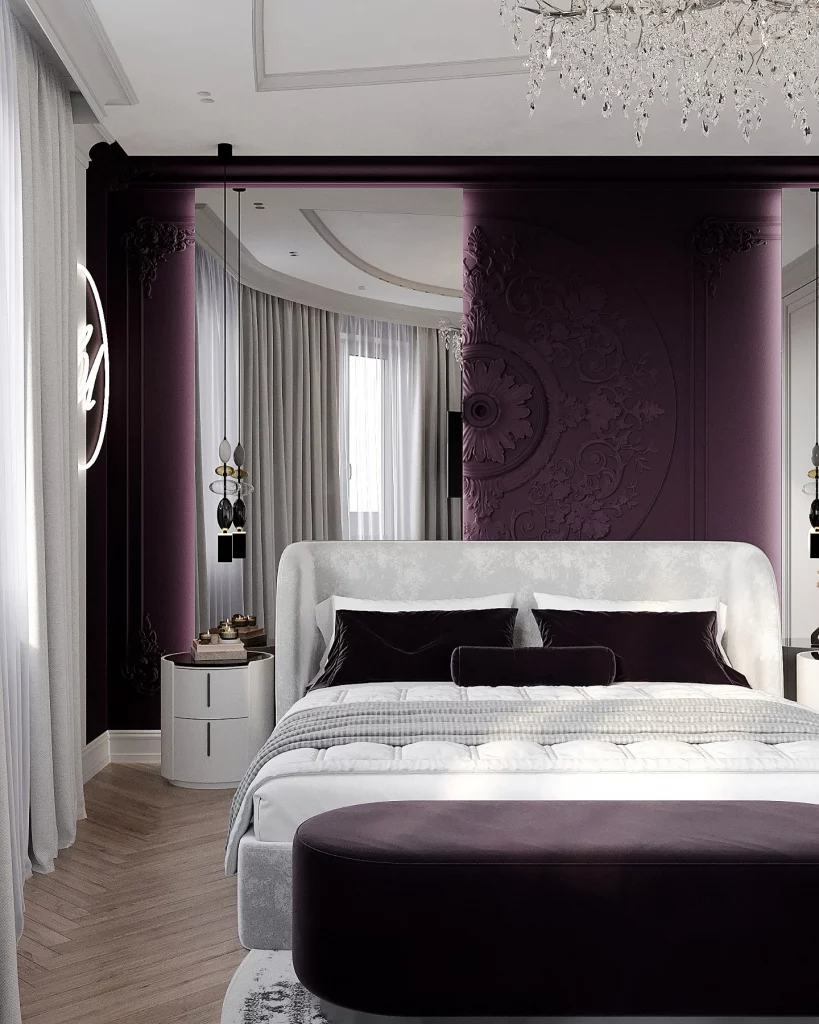
I find the contrast particularly effective because the room uses dark colors in large areas but balances them with white upholstery and bedding. The rounded shapes of the headboard and bench also soften the architectural lines of the wall panels. The mirrors are practical visually because they make the room feel more expansive while reflecting existing light and architectural details. This is a useful technique when working with a deep color palette: instead of adding more decoration, I would use reflective surfaces and pale upholstery to create balance.
For me, the strongest lesson here is that a dark bedroom does not have to feel closed in. The combination of mirrors, pale textiles, a white ceiling, and generous window coverings keeps the composition visually open. I would also pay attention to the repetition of curved forms, because the rounded headboard and bench create a softer rhythm than straight furniture would. If I wanted to recreate the atmosphere, I would focus on a deep wall color, one large upholstered bed, reflective panels, and carefully controlled lighting rather than adding many small decorative objects.
Mustard Upholstered Headboard With Navy Accents
The third bedroom feels warmer and more energetic through its mustard-colored upholstered headboard, coordinated bedding, and deep navy curtain. The headboard rises high behind the bed in a series of tall vertical upholstered sections, creating a strong architectural feature. Several pillows combine mustard, navy, and geometric patterns, while a gray upholstered bed base grounds the arrangement. On the opposite side, a large mirror reflects the room and a television area, and the slim black bedside table introduces a simple contemporary contrast.
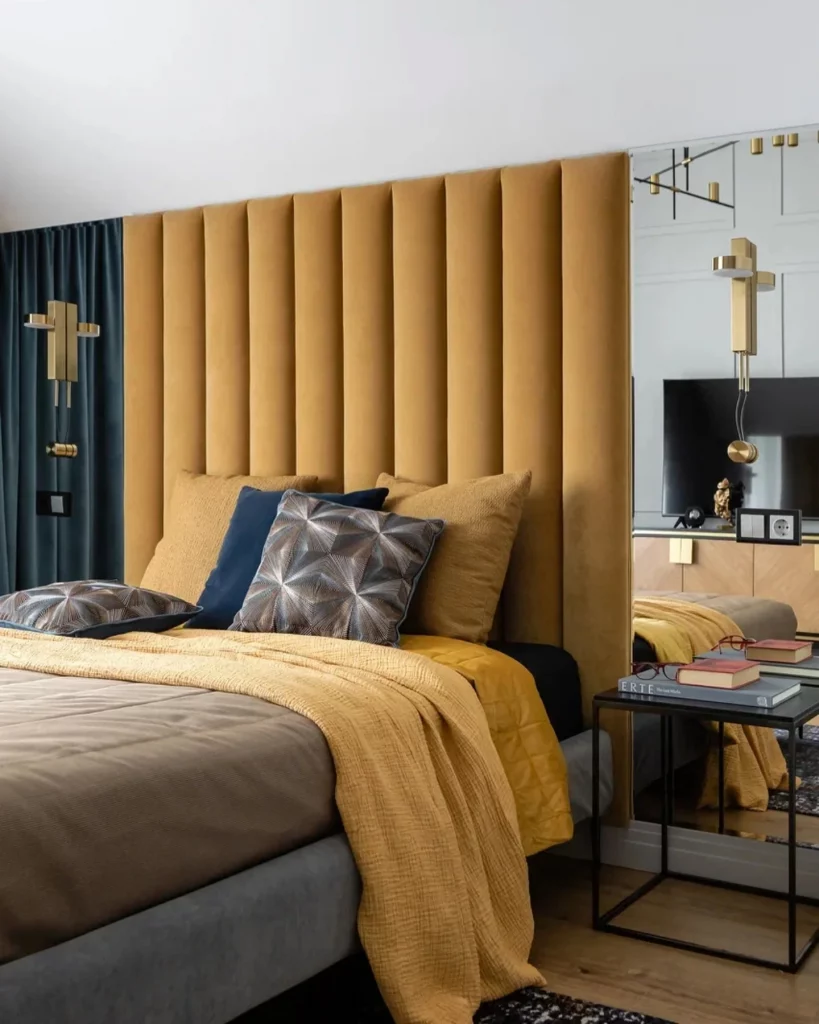
I like how the tall headboard gives the bedroom a clear focal point without requiring artwork above the bed. The vertical sections visually emphasize the height of the wall, while the mustard color adds warmth to the otherwise restrained gray and navy palette. The mixture of plain textiles and patterned pillows also gives the bed some depth without making it look cluttered. For a similar effect, I would choose one strong upholstery color for the headboard and repeat it selectively through the bedding rather than matching every element exactly.
The mirror is another practical detail I would borrow from this room. Positioned beside the bed, it reflects the surrounding space and helps connect the sleeping area with the opposite side of the room. The black metal bedside table has a lightweight appearance, which keeps the area around the bed from becoming visually dense. I think this combination works particularly well for someone who wants a cozy bedroom but still prefers a structured, contemporary look.
Black-Framed Glass Divider for an Open Bedroom
The fourth image focuses on a bedroom separated from the surrounding space by a large black-framed glass partition. Through the grid of glass panels, I can see the bed dressed in blue bedding and a dark upholstered base, while a pale floor continues throughout the visible area. A simple green potted tree stands beside the partition, adding a natural visual element without competing with the architecture. The black framework creates a strong graphic outline and clearly defines the sleeping zone while allowing the room beyond to remain visible.
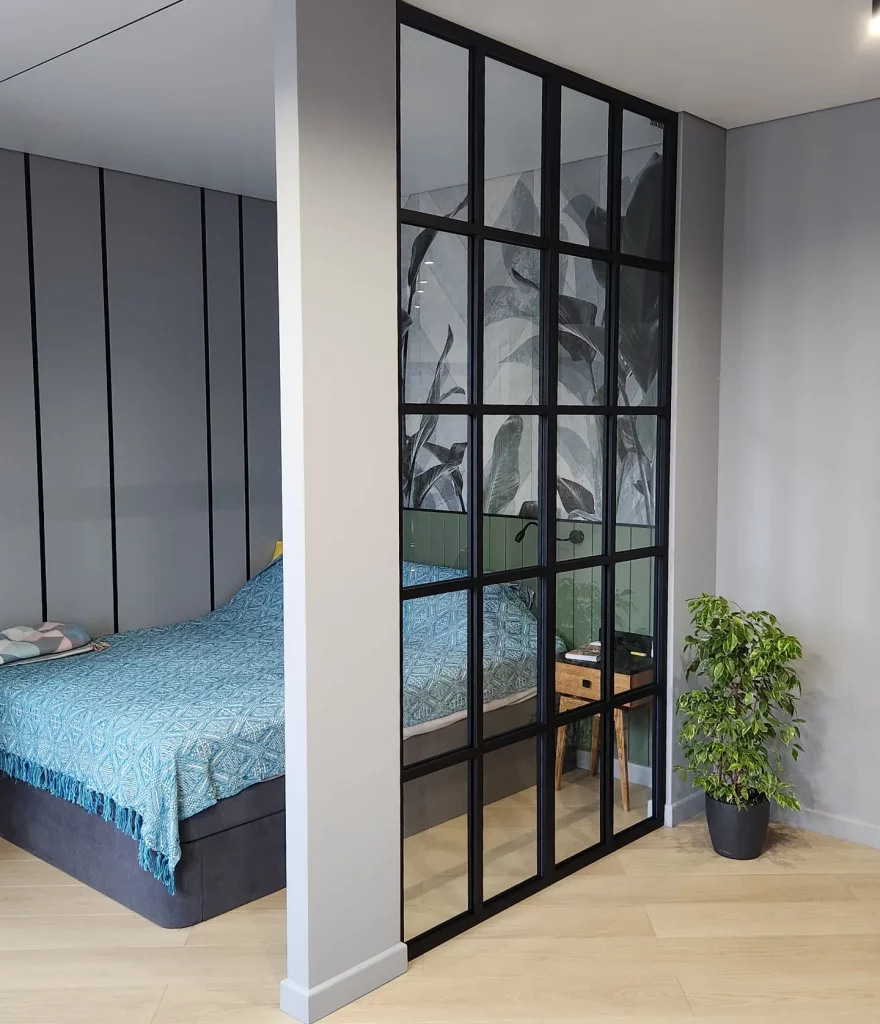
What I find most practical here is the way the glass divider creates separation without completely closing off the bedroom. Natural light and visual continuity can pass through the panels, while the bed still feels like its own defined area. This type of arrangement can be especially useful in a larger open-plan room where I want the sleeping zone to have some distinction without building a solid wall. The strong black framing also gives the simple interior a clear architectural feature.
I would approach this idea by keeping the furniture and bedding relatively restrained, as shown here, so the partition remains the main visual statement. The blue bedding provides enough color to make the bedroom recognizable through the glass without overwhelming the space. I also like the pale flooring because it visually connects both sides of the partition. For me, this is a good example of how one architectural feature can provide both function and character at the same time.
Soft Neutral Bedroom With Layered White Bedding
The fifth bedroom takes a quieter approach with a warm neutral upholstered headboard, white bedding, beige curtains, and dark wood bedside furniture. The bed is layered with multiple white pillows and a textured beige throw, while a softly upholstered bench sits at the foot. A large neutral artwork hangs above the headboard, and matching wall lamps provide gentle illumination on both sides. The overall palette stays close to cream, beige, white, and warm brown, creating a calm composition with subtle variations in texture.
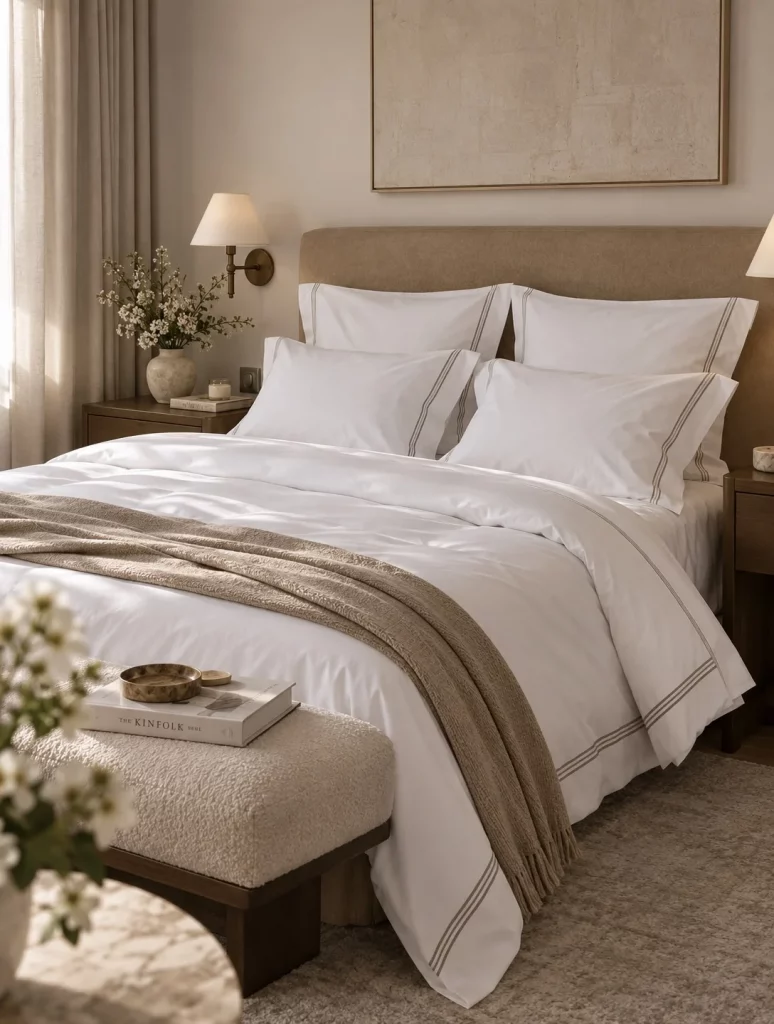
I especially like the way this bedroom relies on layering instead of strong color contrasts. The piping on the white pillows introduces a delicate linear detail, while the throw and upholstered bench add tactile variation. The dark bedside tables give the pale palette enough definition to keep it from looking flat. This is the kind of bedroom I would recommend when the goal is a peaceful visual environment where the bed itself feels exceptionally inviting.
The arrangement also shows how small details can make a neutral room feel finished. The wall lamps are positioned conveniently beside the bed, while the artwork provides a simple visual anchor above the headboard. The layered bedding creates depth without requiring many decorative objects. If I were recreating this look, I would concentrate on different shades of warm neutrals and combine smooth bedding with visibly textured fabrics so the room still feels interesting when the color palette remains restrained.
Blue Striped Headboard With Curved Details
The sixth bedroom introduces more personality through a softly curved headboard upholstered in blue-and-white vertical stripes. The headboard has an unusual scalloped upper edge outlined in a darker tone, giving the bed a distinctive silhouette. White bedding keeps the center of the room calm, while a deep red accent pillow and matching details around the room create a small but noticeable contrast. The pale paneled walls, framed horse artwork, sculptural pendant, and two wall sconces give the space a carefully composed decorative character.
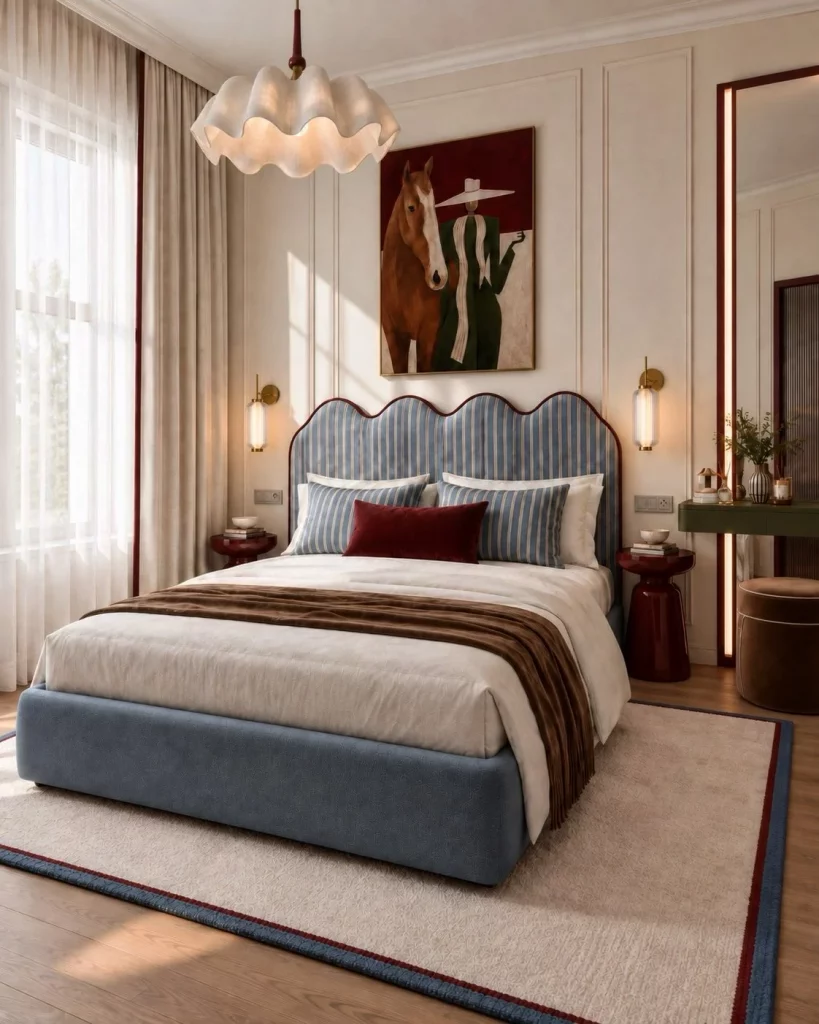
For me, the most interesting feature is the combination of straight vertical stripes with the curved outline of the headboard. That contrast makes the bed feel custom and visually memorable. The striped pillows repeat the headboard pattern, creating continuity, while the dark red accent is used sparingly rather than spread across the entire room. I think this is a smart way to introduce a stronger color without allowing it to dominate the bedroom.
The furniture arrangement also feels balanced, with matching bedside tables positioned on either side of the bed and a console area visible to the right. The large rug frames the bed and visually separates the sleeping area from the surrounding wood floor. I would take inspiration from this room by choosing one patterned focal element and repeating its colors in only a few carefully selected accessories. That keeps the bedroom expressive while preserving a sense of order.
Light Gray Bedroom With Vertical Channel Upholstery
The seventh bedroom uses a soft gray upholstered bed with vertical channel detailing across both the headboard and footboard. White bedding forms the central layer, while muted green-blue bedding and a warm brown throw add subtle color. Two compact wood bedside tables sit on either side of the bed, each paired with a simple white table lamp. A large abstract artwork hangs above the headboard, and a tall window on the right brings daylight into the room while providing a view of greenery outside.
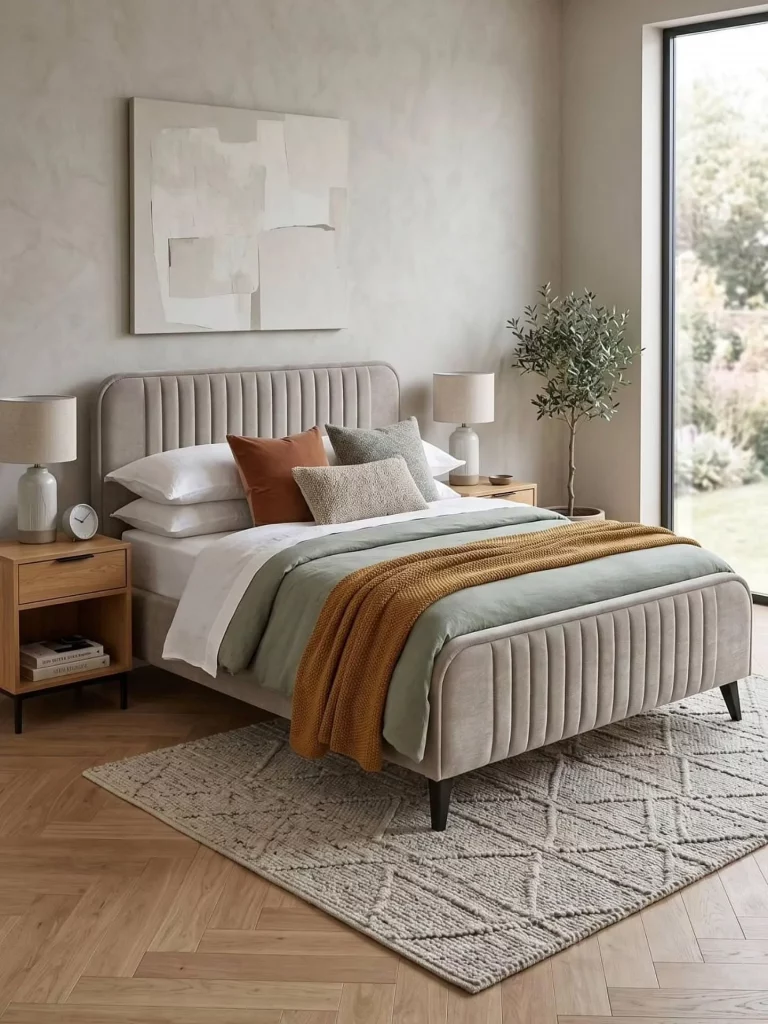
I like how the vertical upholstery gives this relatively simple bedroom a sense of structure. The channels add texture without introducing a busy pattern, while the pale gray upholstery blends naturally with the walls and rug. The warm wood bedside tables provide contrast and make the room feel less monochromatic. For me, this is a particularly approachable formula because it combines a neutral foundation with only a few muted accent colors.
The practical layout is equally appealing. Both sides of the bed have accessible surfaces and lighting, while the rug extends generously beneath the bed to create a softer landing around the sleeping area. The large window provides a strong source of natural light, and the simple furniture arrangement keeps the room open. I would recreate this look by prioritizing comfortable upholstery, symmetrical bedside functionality, and a limited palette of soft neutrals with one or two restrained accent shades.
Dark Paneled Headboard With Warm Accent Lighting
The eighth bedroom moves into a deeper palette, combining charcoal wall panels with a warm brown upholstered bed and gray bedding. The headboard wall is made from tall vertical panels, each separated by narrow lines, and integrated lighting creates a warm glow along the upper edge. Slim wall lights sit within the composition on either side of the bed. A black radiator and dark curtains reinforce the deeper tones, while a small table and vase with reddish branches provide a concentrated accent near the window.
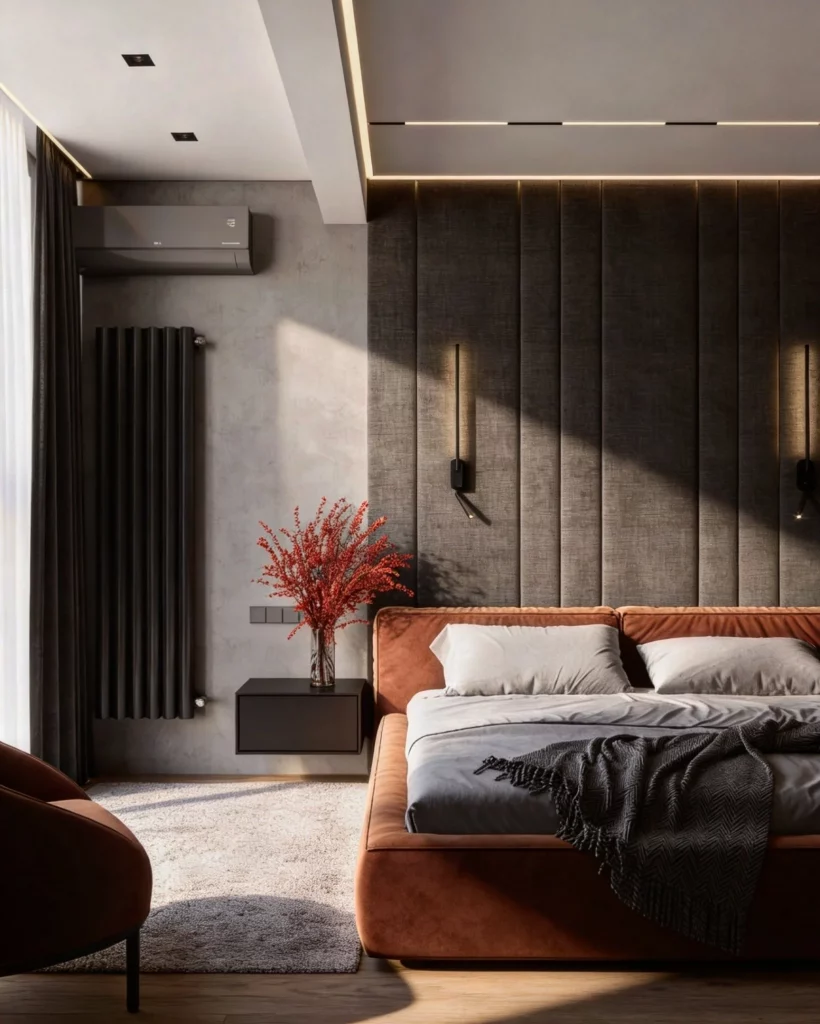
I think the success of this bedroom comes from the controlled relationship between dark surfaces and warm lighting. Instead of relying on pale walls to make the space feel comfortable, the design uses illumination to soften the darker materials. The upholstered bed adds another layer of softness, while the gray bedding prevents the brown upholstery from becoming too dominant. This is a useful reminder that warmth can come from lighting and texture as much as from wall color.
The vertical wall panels also give the bedroom a strong sense of order. Their repetition creates a backdrop that feels intentional, while the narrow sconces introduce light without taking up much visual space. I would use a similar approach in a bedroom where I wanted a darker atmosphere but still wanted it to feel comfortable at night. The key, in my view, is to pair deeper surfaces with warm illumination and tactile bedding rather than relying on darkness alone.
Warm Wood Bedroom With a Textured Feature Wall
The ninth bedroom combines warm wood tones with a pale textured wall behind the bed. The bed itself has a dark wood frame and a wide headboard integrated into the wall composition, with a narrow horizontal wood strip running across the upper section. White bedding keeps the sleeping area fresh and uncluttered, while a subtly patterned accent pillow adds texture. Built-in-looking shelving and cabinetry appear on the right side, and small wall lights provide illumination beside the bed.
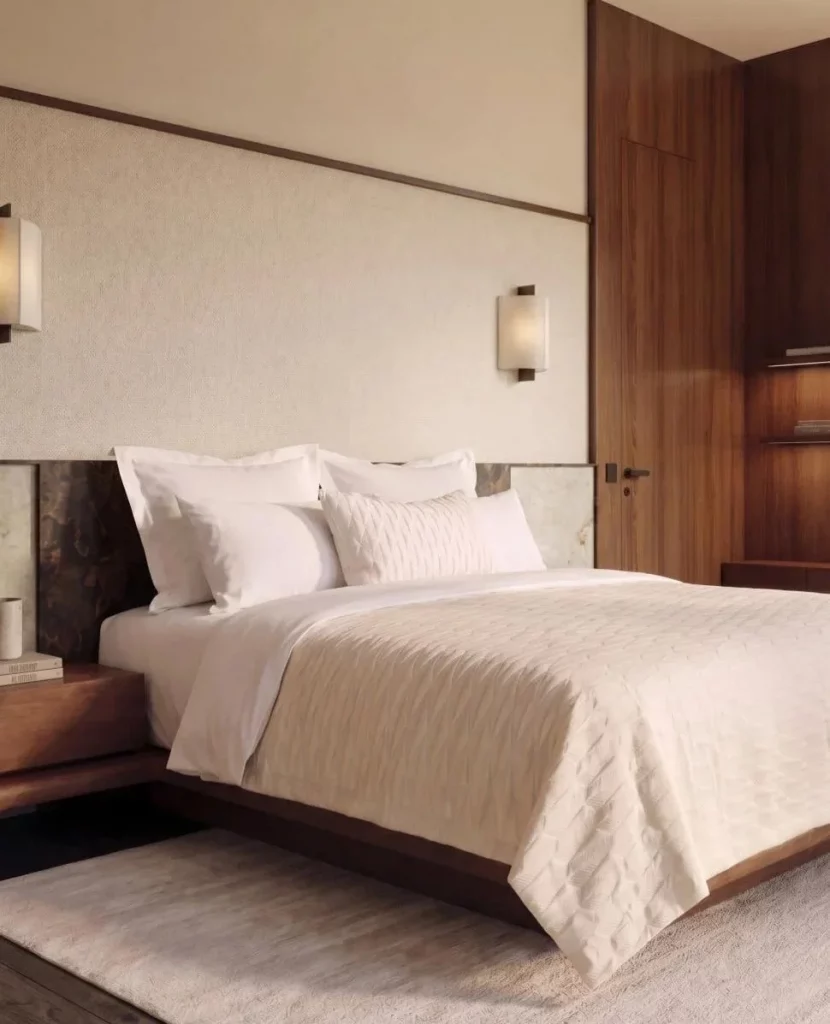
I find this room appealing because the wood is used selectively rather than covering every visible surface. The vertical wood cabinetry on the right creates warmth and storage, while the pale wall behind the bed keeps the sleeping area visually light. The dark frame gives the bed a grounded appearance, and the neutral rug continues the calm palette across the floor. For me, this is a strong example of how contrasting wood tones can create depth without requiring a complicated decorative scheme.
The bed placement also makes the feature wall feel purposeful. The horizontal division behind the pillows gives the large wall some visual structure, while the wall lights provide practical bedside illumination. I would take this idea into a modern bedroom by combining one substantial wood element with a lighter textured surface rather than introducing wood everywhere. The result can feel warm and sophisticated while remaining visually calm.
White Upholstered Bed With Minimal Line Art
The final bedroom returns to a very light palette, with a large white upholstered bed featuring vertical channel details across its tall rounded headboard. The bedding is predominantly white, with a soft gray throw casually draped over the foot and two small textured accent pillows. Black-framed side tables and slim lamps create subtle contrast, while three simple line-art pieces hang above the bed. A large window and sheer curtains bring daylight into the room, and a pale rug extends around the bed.
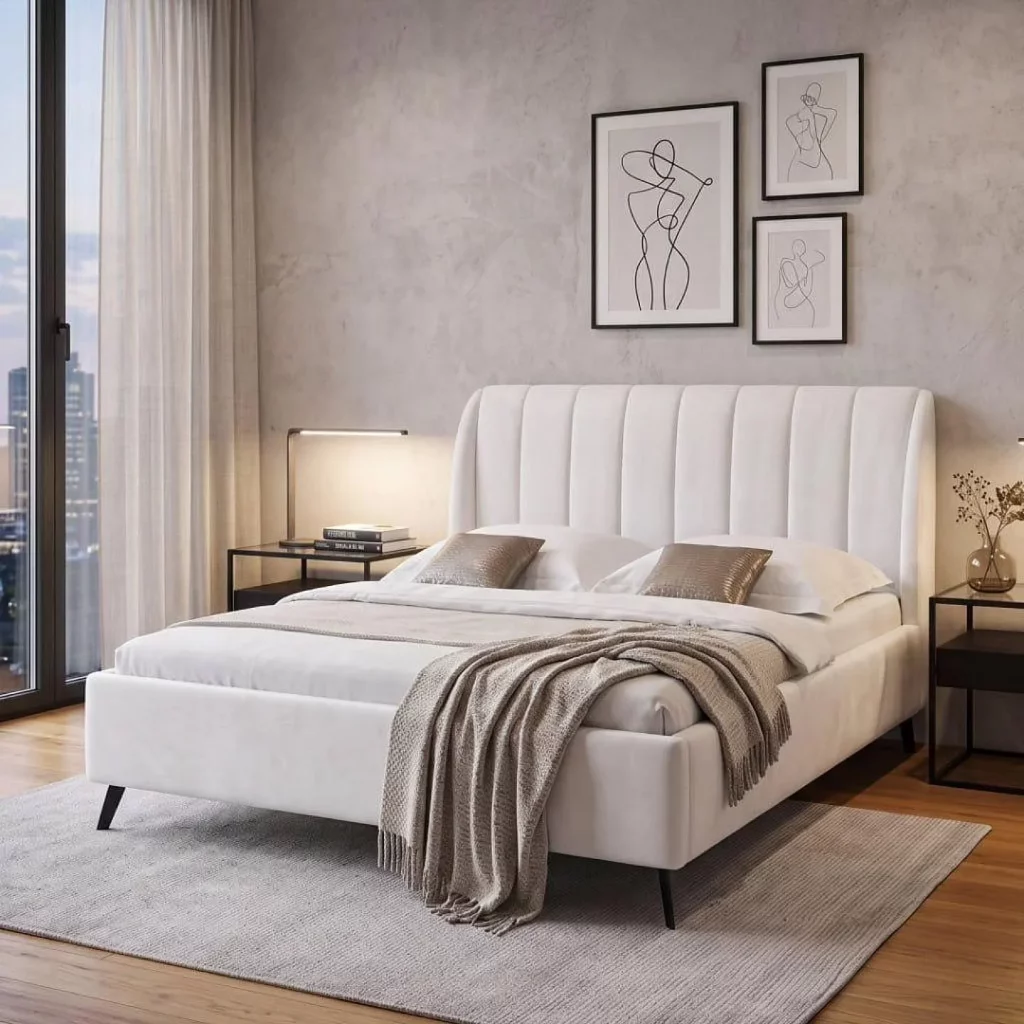
What I like most about this design is its restraint. The white upholstery gives the bed a soft, substantial presence, but the room avoids looking overly decorated because the artwork, side tables, and accessories are kept simple. The gray throw introduces just enough texture and tonal variation to prevent the bed from becoming completely uniform. I would use this kind of composition when I wanted a bedroom that feels clean and restful while still having enough detail to feel thoughtfully designed.
The furniture arrangement is also easy to understand and live with. Matching bedside tables provide practical surfaces on both sides of the bed, while the lamps make the sleeping area functional after dark. The artwork above the headboard adds personality without competing with the strong shape of the upholstered bed. If I were recreating this room, I would keep the foundation light and focus on subtle differences in texture, line, and proportion rather than adding more color.
Warm Wood Nightstand With a Rich Textured Accent Wall
I love how this bedroom immediately creates a cocooning feeling with a richly textured accent wall in deep brown, charcoal, and muted warm tones. The bed is partially visible with a substantial upholstered headboard, crisp white pillows, and layered cream and white bedding. Beside it, a warm wood nightstand provides a practical surface and a closed drawer, while a ribbed terracotta-toned vase filled with dark foliage adds texture. A sculptural pendant hangs above, and full-length cream curtains with a narrow dark trim soften the nearby doorway and window area.
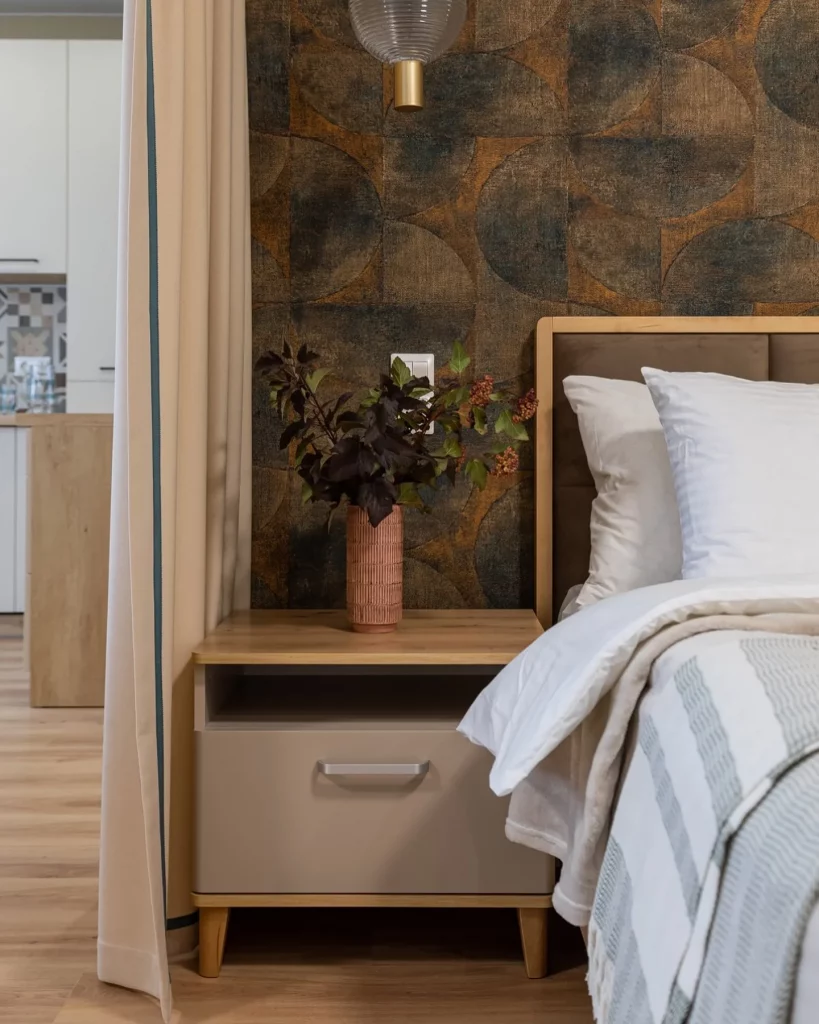
What makes this arrangement work for me is the balance between the expressive wall and the restrained bedding. The strong pattern stays concentrated behind the bed, while the white and cream textiles prevent the space from feeling visually heavy. I also like the open shelf beneath the nightstand drawer because it adds useful storage without making the furniture look bulky. The combination of wood, fabric, textured wall finishes, and ceramic-like accessories gives the room plenty of visual depth.
When I look at a bedroom like this, I would start with one substantial surface that establishes the mood rather than trying to decorate every wall. The accent wall already does most of the visual work, so the surrounding pieces can remain simple and functional. I would also pay attention to the relationship between the nightstand and the bed: keeping the bedside surface at a comfortable height makes the room feel intentional while keeping everyday essentials within easy reach.
Soft Layered Lighting Around an Upholstered Statement Bed
This bedroom takes a more architectural approach to coziness, combining a large cream upholstered bed with warm wood wall panels and softly illuminated recessed detailing. The bed has a wide horizontal headboard, crisp light bedding, and deep brown pillows that introduce a richer contrast. Two black pendant lights hang at different heights along the wood-paneled side, while small black wall sconces sit beside the bed. Above the headboard, an abstract artwork brings together earthy brown, cream, black, and reddish tones.
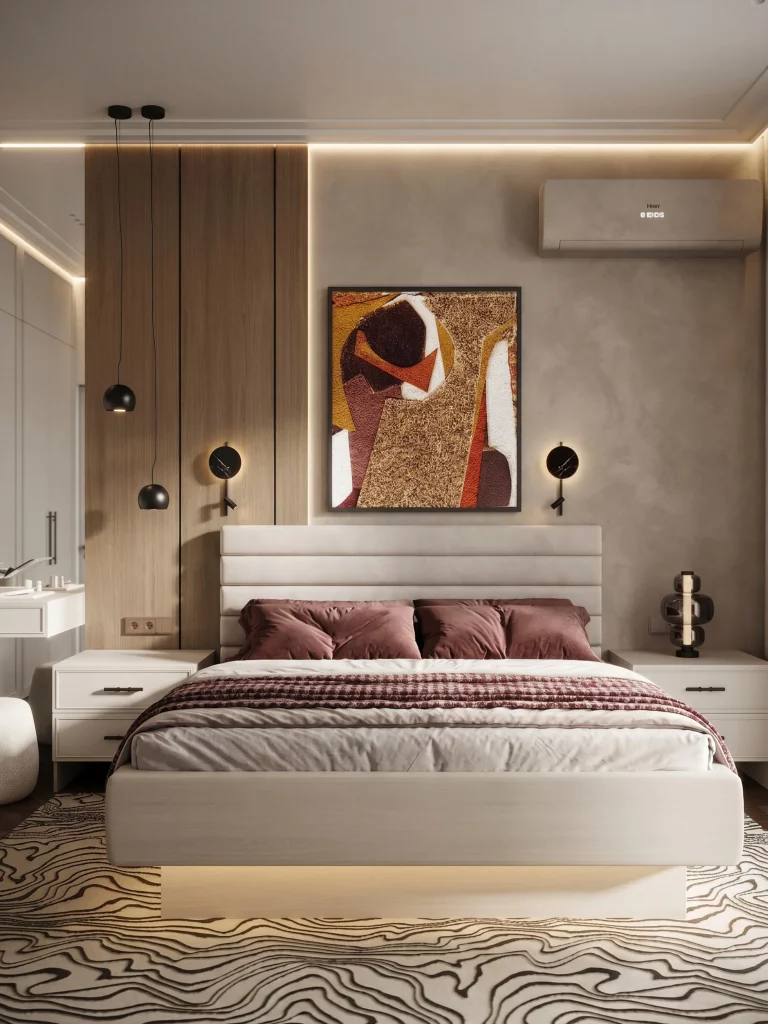
I find the lighting especially effective here because several sources work together rather than relying on one central fixture. The concealed illumination around the wall creates a gentle glow, while the pendants and bedside sconces provide more focused points of light. The symmetrical placement of the nightstands and lighting also gives the bed a strong visual center. Even the patterned area rug contributes to the atmosphere by adding movement underneath an otherwise streamlined furniture arrangement.
For my own bedroom planning, I would take inspiration from the layered lighting first. A bedroom feels much more relaxing when the lighting can shift from functional to soft and atmospheric in the evening. I also like the way the darker pillows and throw relate to the artwork instead of introducing unrelated colors. That kind of repetition is an easy decorating technique: choose a few tones from one visible feature and echo them through textiles or accessories already suited to the room.
Serene Blue Upholstery With Floor-to-Ceiling Curtains
Here, the bedroom feels calm and spacious through a restrained palette of soft blue, white, gray, and natural wood. The upholstered bed has a tall vertically channeled blue-gray headboard and a matching upholstered base, while white bedding keeps the center of the room fresh and light. A blue throw and coordinating accent pillow repeat the bed’s color. Beside the bed are simple wood nightstands with small lamps, and floor-to-ceiling gray curtains frame a tall window overlooking a cityscape. A large pale rug anchors the bed against the warm wood floor.

I particularly like how the upholstery creates softness without relying on a lot of decorative objects. The tall headboard gives the bed a strong presence, while the vertical channels visually emphasize the height of the room. The large rug adds another tactile layer and creates a comfortable transition between the bed and the wood flooring. The curtains also make the window feel taller and more substantial, while their muted gray tone works naturally with the blue upholstery.
From a decorating perspective, I would use this room as an example of how a limited color palette can still feel layered. Instead of adding numerous patterns, the design relies on differences in texture, proportion, and tone. If I wanted to recreate the feeling shown here, I would keep the main bedding light, choose one soft accent color for the upholstered pieces and throw, and allow the curtains and rug to provide subtle variation around the bed.
Soft Neutral Bedroom With Abstract Moon-Inspired Artwork
The final bedroom takes a sophisticated neutral direction, with a padded cream bed positioned against a textured taupe wall. Two framed abstract artworks sit above the bed, each featuring a curved dark brushstroke that creates a balanced pair. A dark wood-paneled section on the right introduces contrast and frames a large round mirror, while two hanging pendant lights provide warm metallic accents. The bed is dressed in white and taupe bedding with a striped throw and a small rectangular lumbar cushion, and a round upholstered stool sits near the mirror.
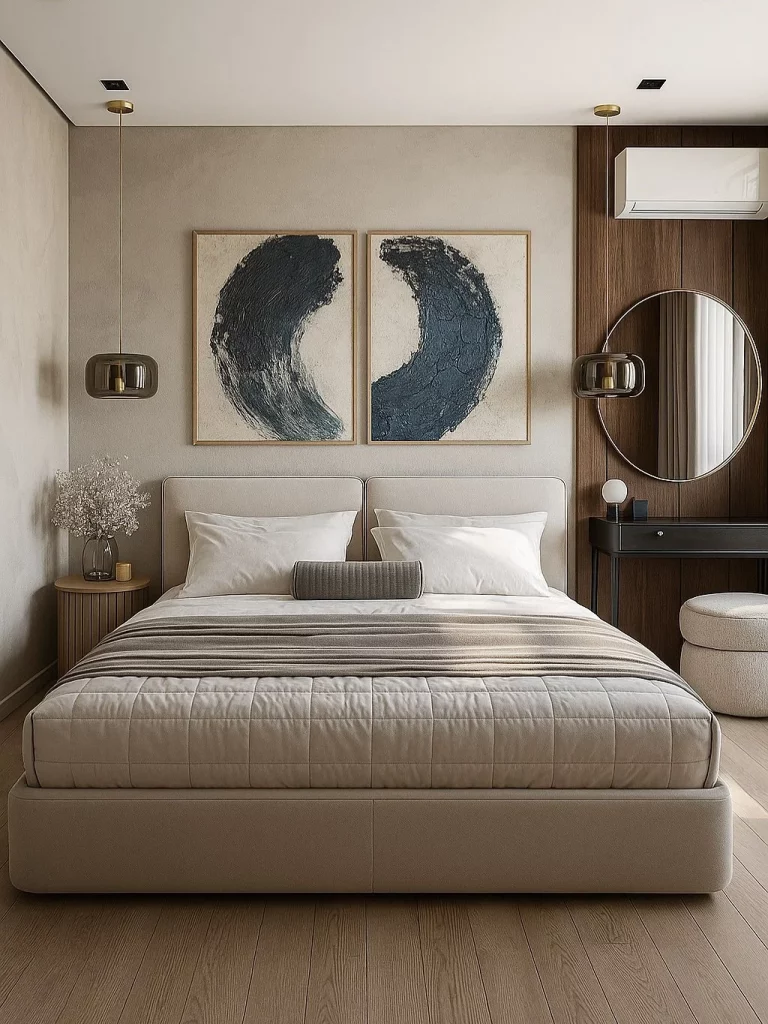
What stands out to me is the way the room combines softness with structure. The padded bed has a substantial, comfortable appearance, but its simple silhouette keeps the room from feeling heavy. The paired artwork creates symmetry without looking overly formal, while the dark wood section adds depth to an otherwise pale palette. I also like the practical combination of the mirror and upholstered stool because it creates a useful dressing area without requiring a large piece of furniture.
I would approach a bedroom like this by keeping the foundation quiet and allowing a few carefully selected elements to provide character. The curved artwork, round mirror, rounded stool, and softly padded bed create subtle repetition in shape, which helps the room feel cohesive. For me, this is a useful reminder that coziness can come from proportion and texture as much as from color. A restrained palette can feel warm when the bedding, upholstery, wall finish, and lighting all have enough variation to keep the space interesting.
Creating a warm and relaxing bedroom is all about finding the right balance between comfort, texture, lighting, and personal style. I love how even simple changes, from softer bedding to thoughtful lighting or a beautiful feature wall, can make a bedroom feel more inviting. These cozy bedroom ideas show that you don’t need a complicated design to create a space that feels peaceful and comfortable. Choose the colors, textures, and furniture that make you feel most at home, and let your bedroom become a true retreat. Which idea was your favorite? Share it in the comments!