
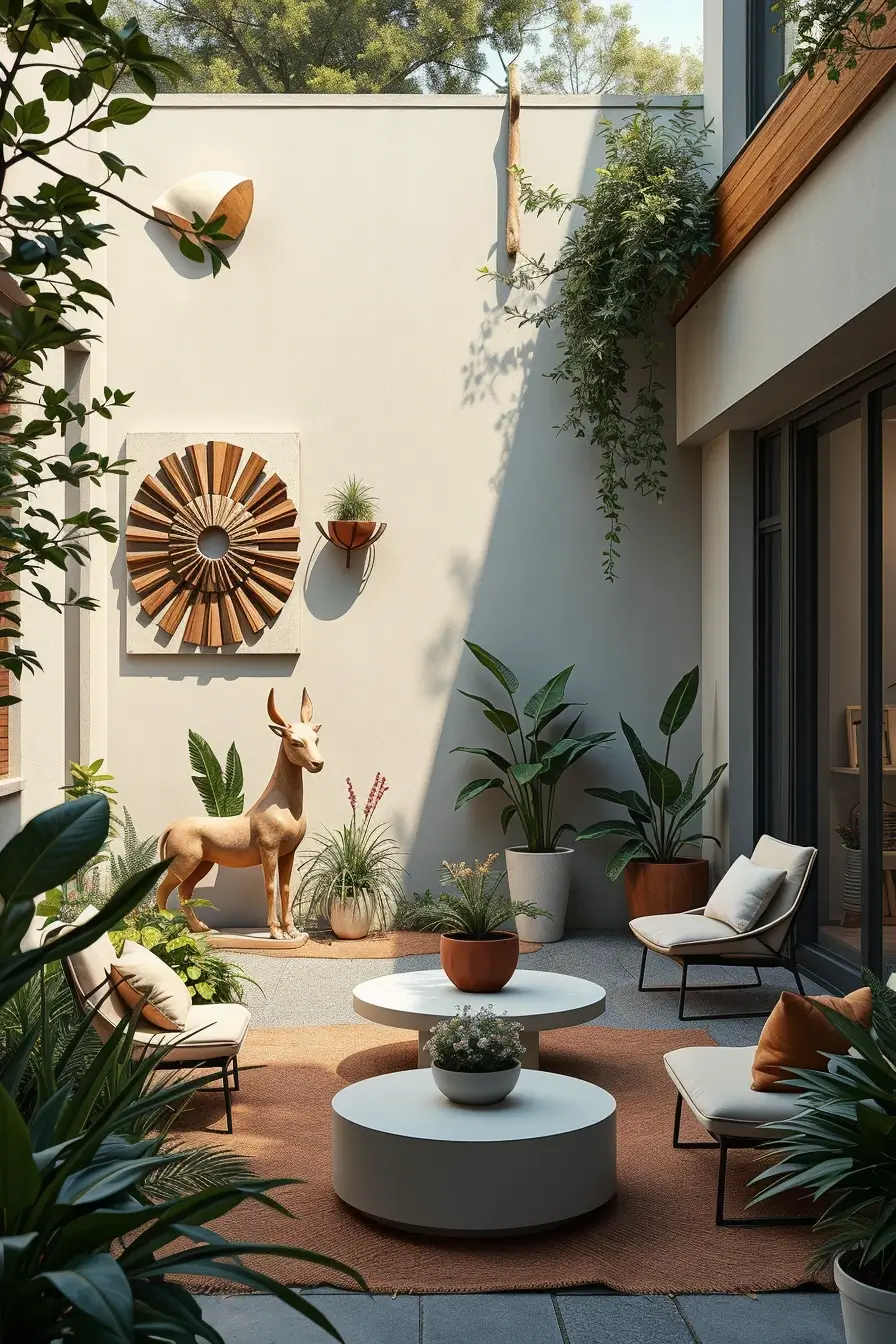
Small courtyard gardens in 2026 are redefining what it means to live beautifully in limited outdoor space. No longer seen as secondary or purely functional, these compact gardens are becoming thoughtfully designed extensions of the home—places where creativity, comfort, and personal style meet. With a growing focus on intentional living, homeowners and designers are transforming small courtyards into visually striking, cozy retreats that feel both private and inspiring.
In 2026, the emphasis is on unique layouts, layered greenery, smart use of materials, and a seamless blend of indoor and outdoor living. From sculptural plants and statement surfaces to atmospheric lighting and carefully chosen furniture, small courtyard gardens are designed to feel curated rather than crowded. This article explores the most creative, stylish, and unconventional ideas shaping small courtyard gardens in 2026, offering inspiration for turning even the smallest outdoor space into a truly special design feature.
The New Era Of Small Courtyard Gardens In 2026
I see the new era of small courtyard gardens in 2026 as a shift toward intentional outdoor design that mirrors interior planning. These spaces are no longer decorative gaps between walls but fully functional outdoor rooms. I approach courtyard layouts as micro-environments where circulation, privacy, and visual balance matter just as much as indoors. Materials are chosen for longevity and texture, while layouts prioritize ease of movement and everyday usability.
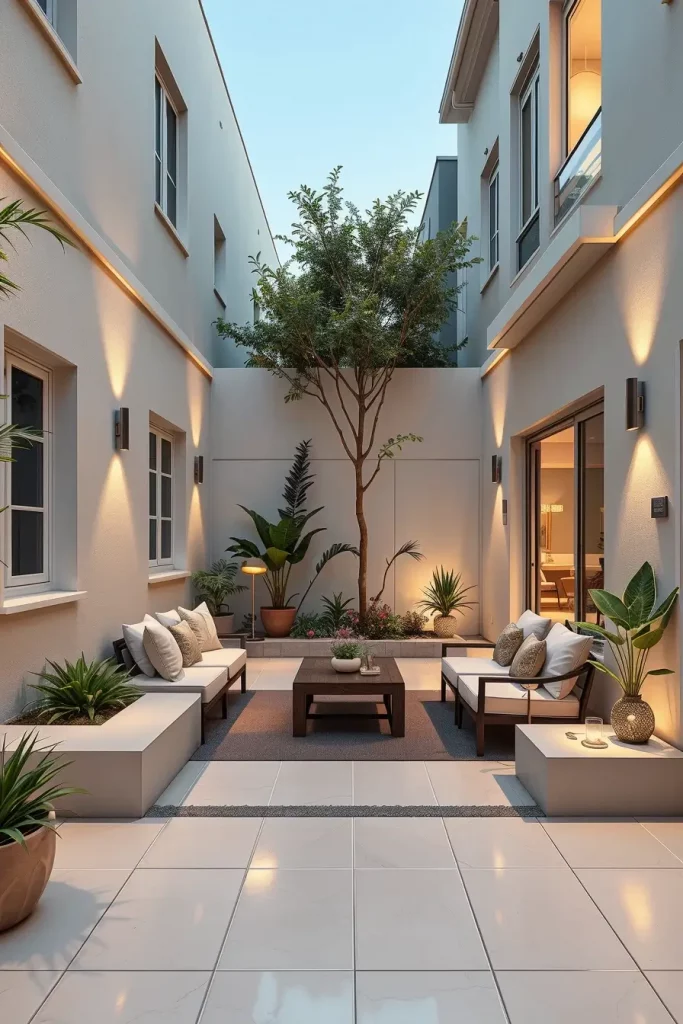
When designing these courtyards, I rely on compact seating zones, built-in benches, modular planters, and subtle zoning through flooring changes. Low-profile outdoor sofas, slim coffee tables, and integrated storage help avoid clutter while keeping the space adaptable. Hardscape elements like porcelain pavers or concrete tiles create a clean base that visually enlarges the courtyard and supports modern outdoor living.
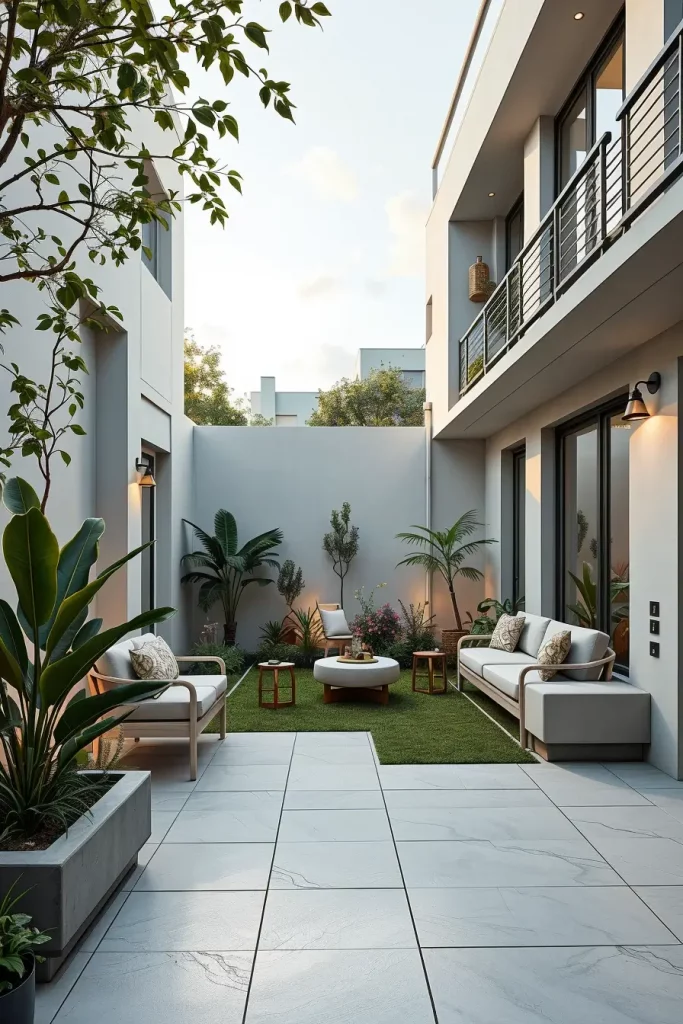
From my experience, the most successful 2026 courtyard gardens borrow strategies from interior design. Landscape architects frequently emphasize continuity between indoor and outdoor spaces, a principle highlighted by designers featured in Architectural Digest and Dwell. I consistently apply this advice by matching color palettes and finishes between the courtyard and adjacent rooms, which makes the garden feel intentional rather than secondary.
What I would add to this section is smart environmental planning. Shade solutions such as retractable canopies, adjustable louvers, or strategically placed trees are essential in 2026 courtyards, ensuring comfort throughout the day and extending the usable hours of the space.
Why Small Courtyard Gardens Are Defining Modern Outdoor Living
I believe small courtyard gardens are defining modern outdoor living because they respond directly to urban density and lifestyle changes. In many homes, courtyards are the most accessible outdoor area, making their design critical. I treat these spaces as daily-use environments where people relax, work remotely, or entertain on a small scale. The goal is to maximize comfort without overwhelming the limited footprint.
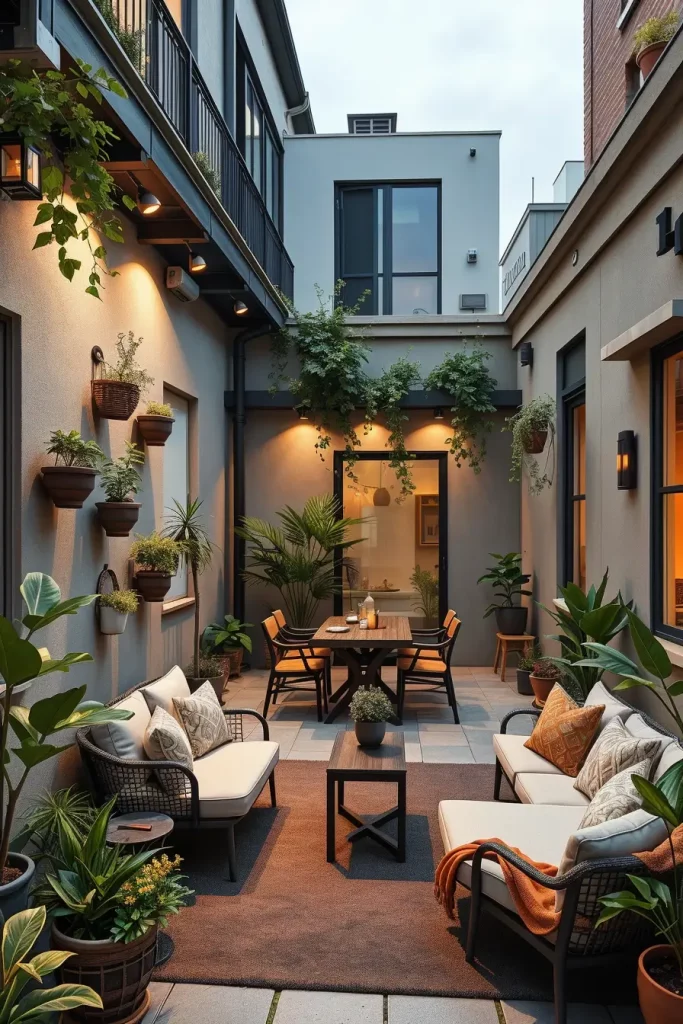
Furniture selection plays a central role here. I recommend weather-resistant lounge chairs, compact dining sets, and multifunctional ottomans that double as storage. Vertical elements such as wall-mounted planters or trellises add greenery without consuming floor space, while soft outdoor lighting creates ambiance after sunset and increases usability.
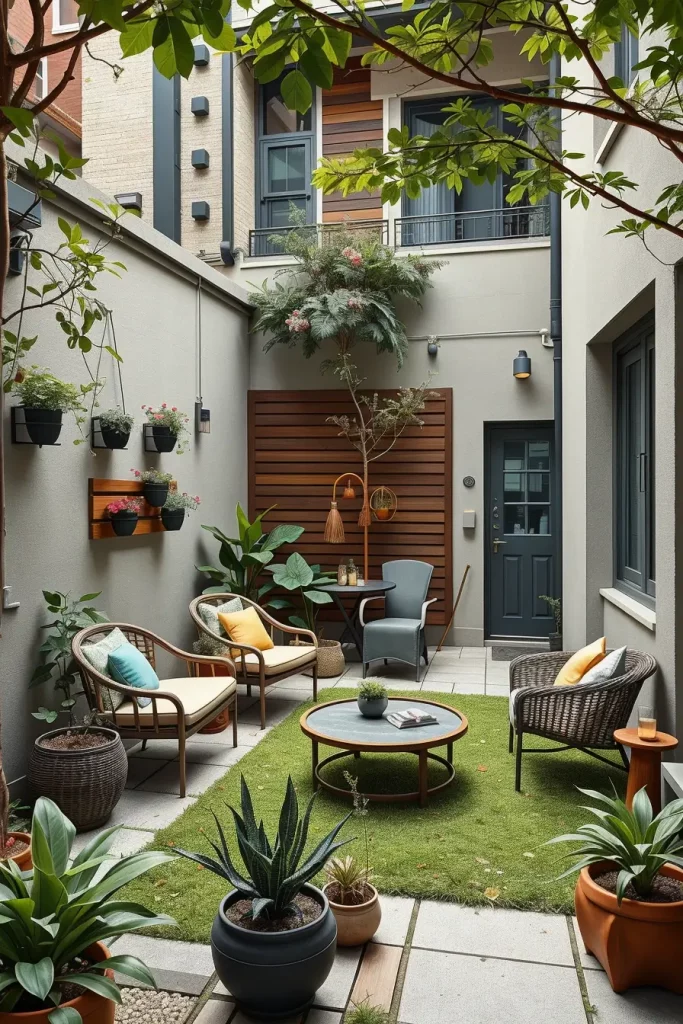
In my own projects, I’ve noticed that homeowners use their courtyards more frequently when the space feels visually calm and easy to maintain. Designers from publications like House Beautiful often stress the importance of low-maintenance planting and durable finishes, advice I fully support. A courtyard that demands minimal upkeep is far more likely to become part of daily life.
What is often missing in these gardens is acoustic comfort. I always suggest adding water features or textured walls to soften sound reflections, especially in enclosed courtyards surrounded by hard surfaces.
Creative Design Concepts For Small Courtyard Gardens
When I work with creative design concepts for small courtyard gardens, I focus on visual storytelling. These spaces allow for experimentation with geometry, textures, and focal points that might feel too bold indoors. I design courtyards as curated scenes where every element contributes to a cohesive atmosphere rather than competing for attention.
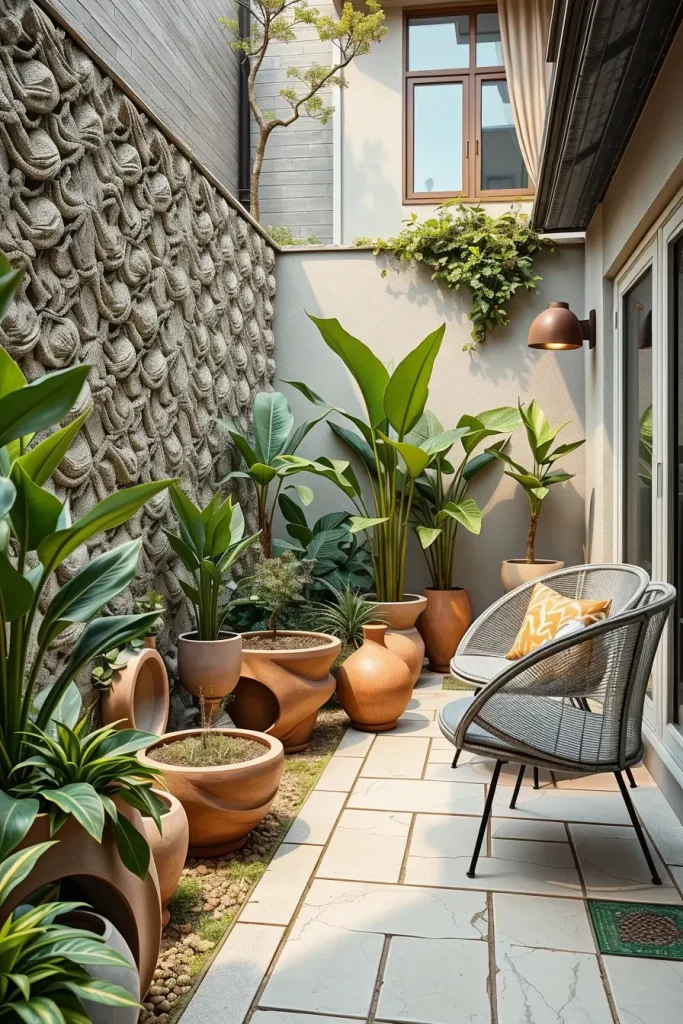
Key design elements include sculptural planters, layered paving patterns, and accent walls with textured finishes. I often include a single standout piece such as a statement chair or custom fire bowl to anchor the design. These elements create visual interest while maintaining balance and scale appropriate for a compact area.
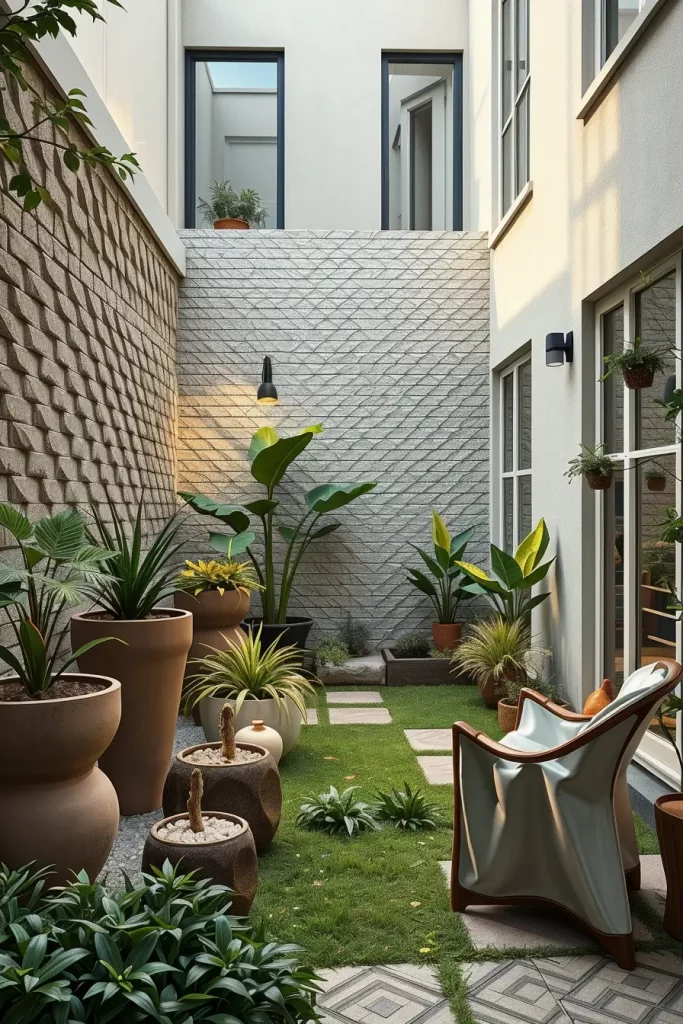
From my perspective, creativity works best when grounded in restraint. Landscape designers frequently featured in Dezeen emphasize editing rather than adding more, and I agree completely. A courtyard becomes memorable not because it is full, but because it is intentional and well-composed.
To strengthen this section, I would add guidance on color usage. Limiting the palette to two or three complementary tones helps maintain visual clarity while still allowing creative expression through form and texture.
Stylish Small Courtyard Gardens With A Contemporary Edge
I define stylish small courtyard gardens in 2026 by their clean lines, refined materials, and understated elegance. Contemporary courtyards avoid excess ornamentation and instead rely on proportion, finish quality, and thoughtful detailing. I design these spaces to feel current without becoming trend-driven or disposable.
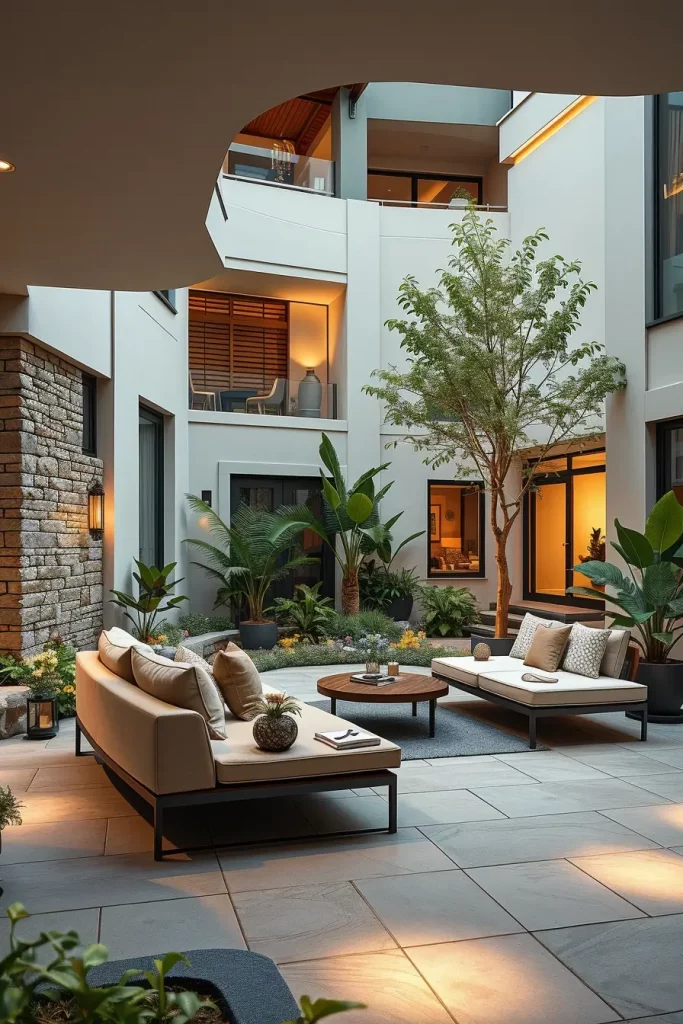
Furniture in these courtyards is typically low-slung and minimal, featuring aluminum frames, neutral cushions, and natural accents like wood or stone. Integrated lighting, such as recessed floor lights or slim wall sconces, reinforces the contemporary look while enhancing safety and ambiance. Every piece earns its place through both function and aesthetics.
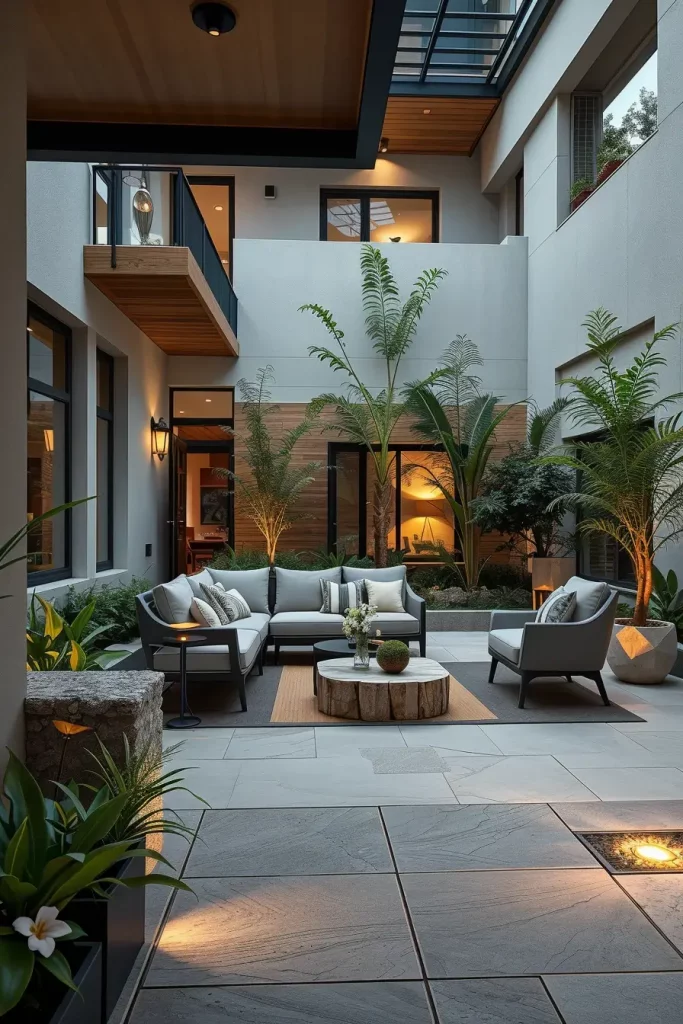
In my experience, style is closely tied to coherence. Designers interviewed by Interior Design Magazine often highlight the importance of consistency across materials and forms. I follow this advice by repeating shapes and finishes throughout the courtyard to create a calm, polished environment.
What I would add here is attention to sightlines. Ensuring that key views from inside the home align with focal points in the courtyard greatly enhances the overall sense of style and sophistication.
Cozy Small Courtyard Gardens That Feel Like A Private Retreat
When designing cozy small courtyard gardens, I prioritize enclosure, softness, and comfort. A courtyard should feel like a retreat from the surrounding environment, especially in urban settings. I use layered planting, textured surfaces, and warm lighting to create an atmosphere that invites relaxation and lingering.
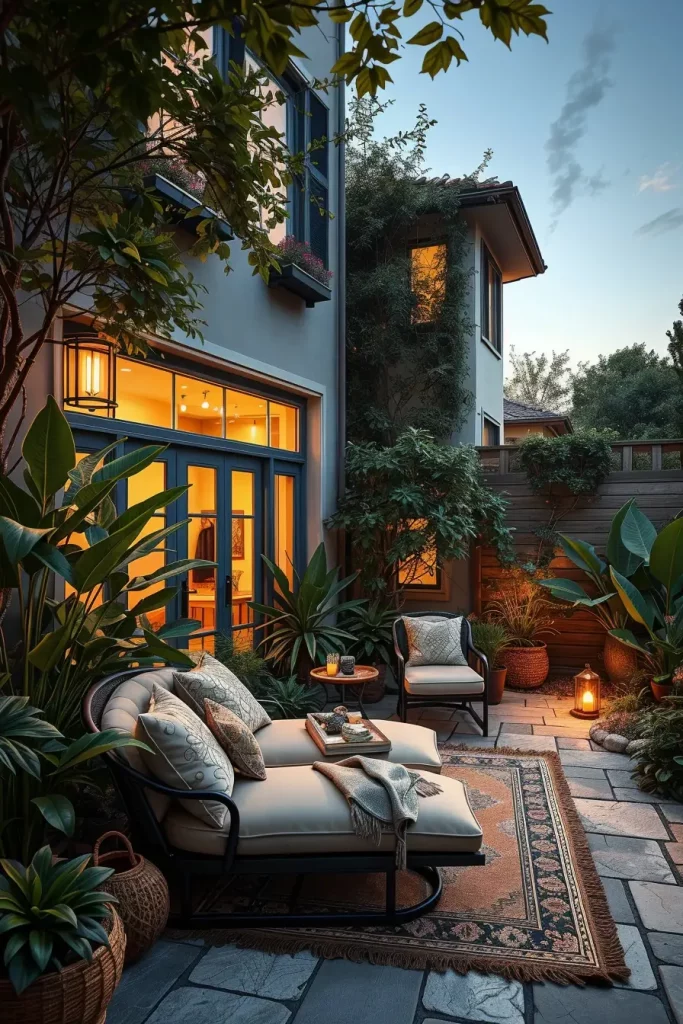
Furniture choices focus on comfort, including cushioned lounge seating, outdoor rugs, and side tables within easy reach. I often incorporate soft elements such as throw pillows and fabric shades to counterbalance hard surfaces. These details make the courtyard feel lived-in rather than purely decorative.
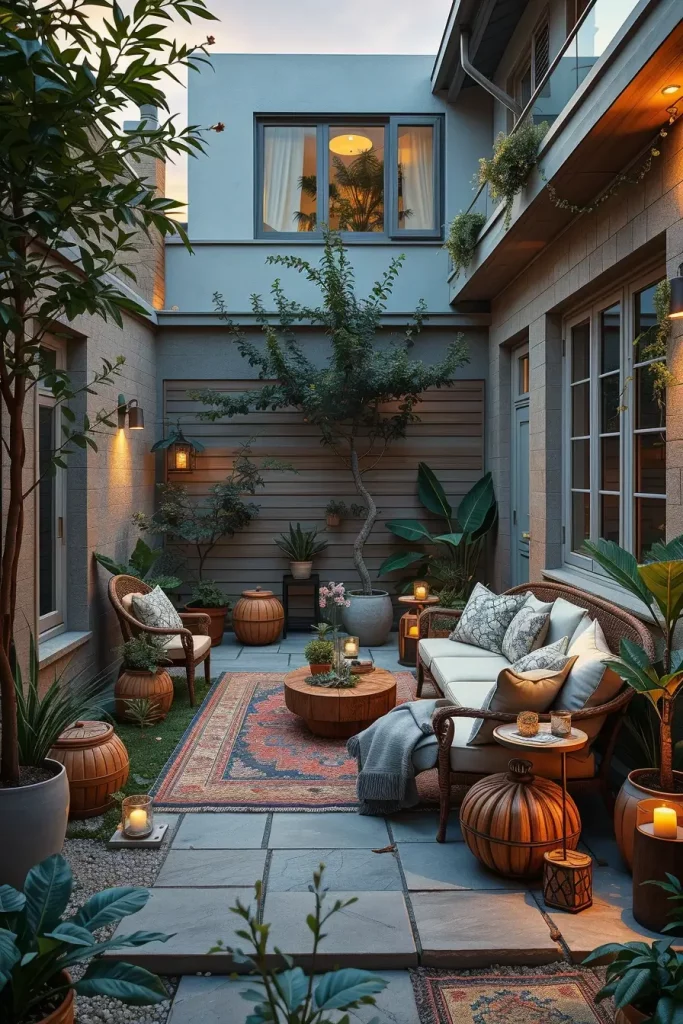
Personally, I find that coziness comes from sensory balance. Landscape designers writing for Garden Design Magazine often note the importance of combining tactile materials with gentle lighting, and I consistently see better results when these principles are applied. A cozy courtyard encourages slower moments and deeper connection to the space.
To complete this type of garden, I recommend adding subtle personal touches such as lanterns or small sculptural accents. These elements enhance the feeling of privacy and make the courtyard feel truly personal.
Unusual Small Courtyard Gardens With Unexpected Layouts
When I design unusual small courtyard gardens, I deliberately move away from predictable symmetry and standard zoning. In 2026, unexpected layouts are becoming a defining feature, especially in compact courtyards where creativity compensates for limited space. I often rethink circulation paths, introduce diagonal lines, or divide the courtyard into asymmetrical zones to create visual intrigue and a sense of discovery.
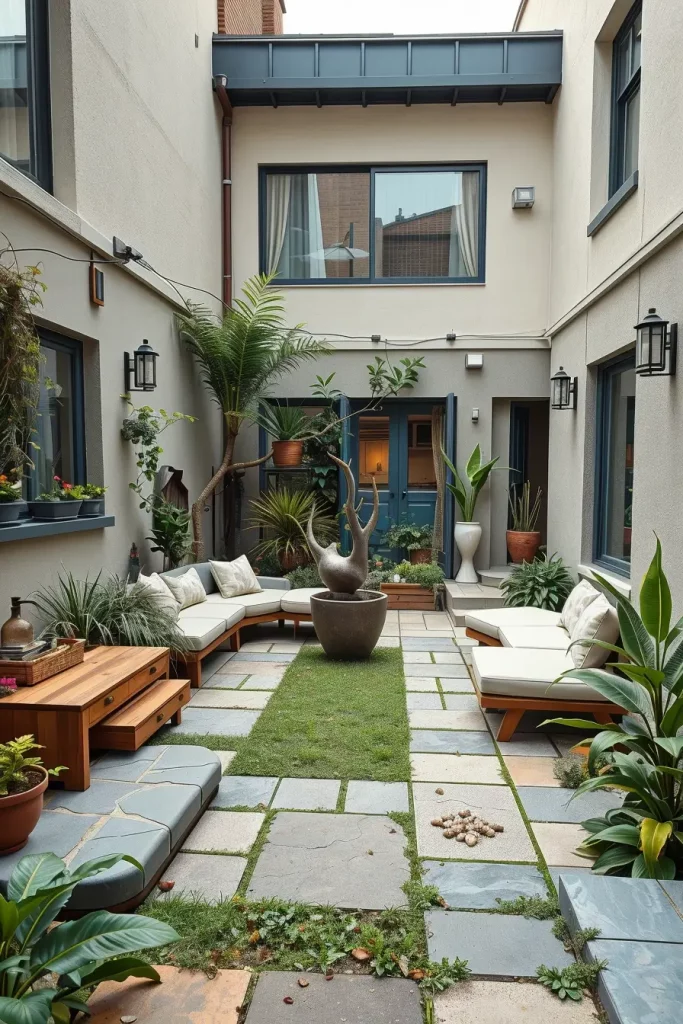
Furniture and structural elements play a critical role in these layouts. I may position seating at unconventional angles, use stepped platforms instead of flat surfaces, or incorporate curved benches that soften rigid boundaries. Custom planters, raised levels, and mixed flooring materials help guide movement and visually separate functions without adding walls or barriers.
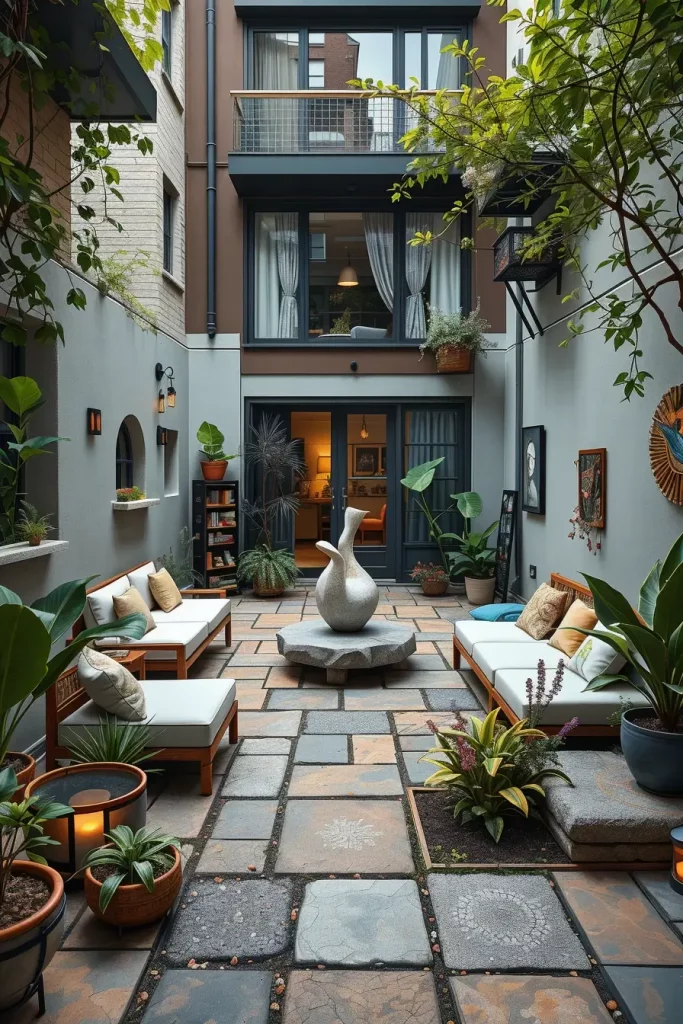
From my professional experience, unusual layouts work best when anchored by a strong focal point. Designers featured in Landscape Architecture Magazine frequently emphasize that even the most unconventional designs need a clear visual anchor. I apply this principle consistently, whether it’s a sculptural tree, a fire feature, or a textured wall that grounds the entire composition.
What I would add to these courtyards is careful lighting planning. Highlighting unconventional angles and pathways with directional lighting ensures the layout remains readable and inviting after dark rather than confusing or impractical.
Designer Small Courtyard Gardens Inspired By Luxury Spaces
Designer small courtyard gardens in 2026 draw heavily from luxury hospitality and high-end residential design. I approach these spaces with the same attention to detail found in boutique hotels or private resorts, focusing on material quality, proportion, and refined finishes. Even in a small footprint, the courtyard should communicate intention and exclusivity.
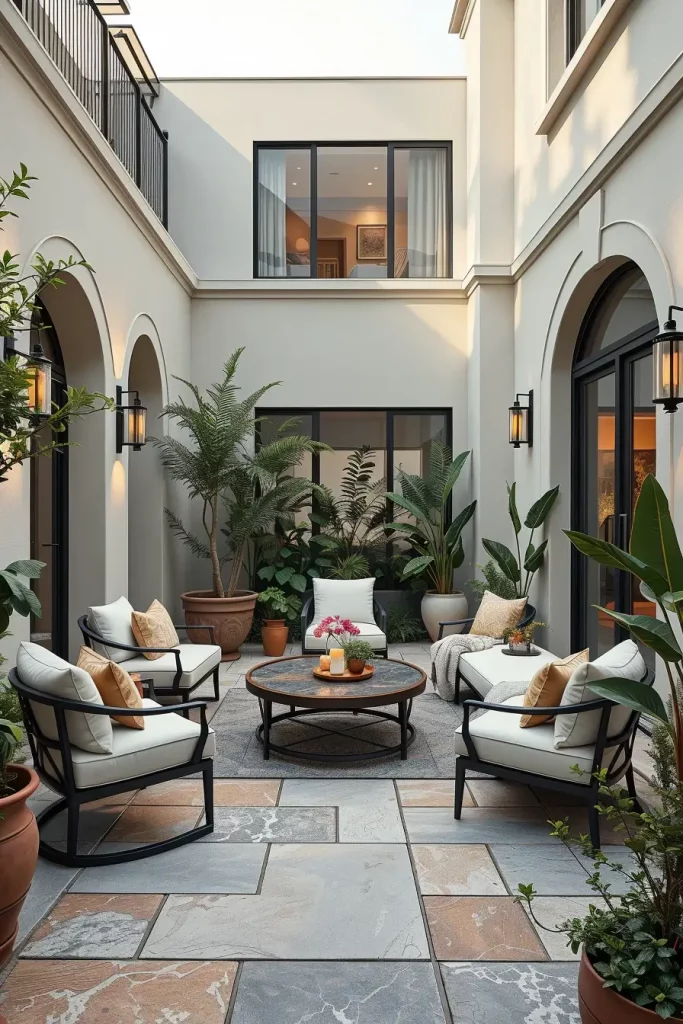
Furniture selection is deliberate and restrained. I prioritize premium outdoor sofas, sculptural lounge chairs, and custom-built elements that feel tailored to the space. Natural stone, wood accents, and high-quality textiles elevate the overall atmosphere while maintaining durability for outdoor use. Each piece is chosen not just for appearance but for how it contributes to the spatial flow.
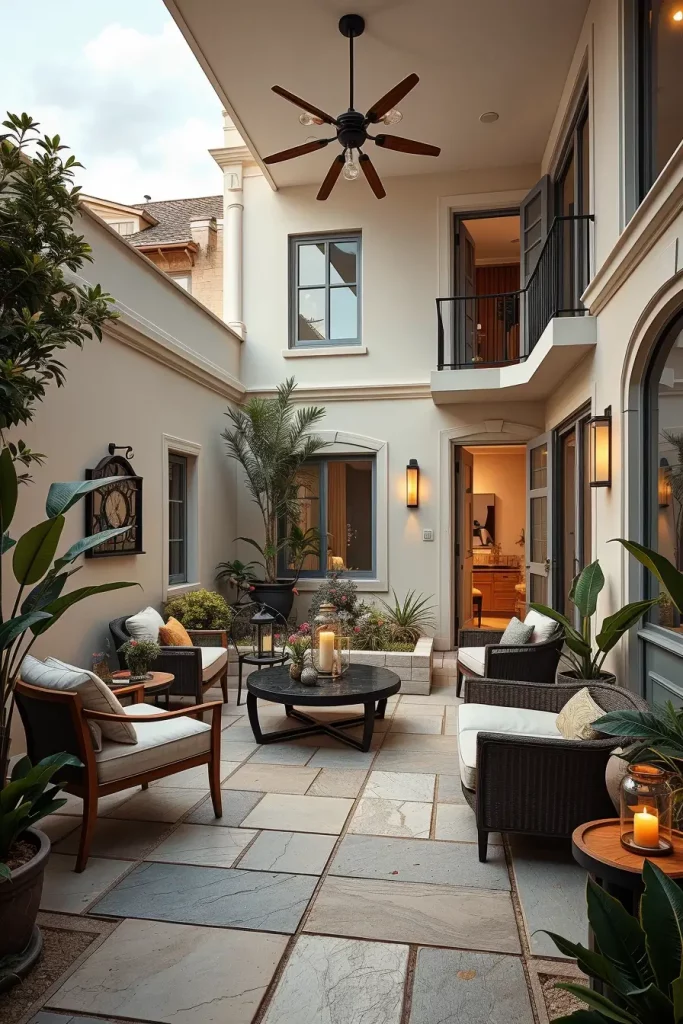
In my own work, I often reference insights from designers showcased in publications like Elle Decor, who consistently note that luxury is about restraint rather than excess. I’ve found that fewer, better-designed elements create a stronger impression than overcrowding a small courtyard with decorative objects.
To complete this type of garden, I recommend incorporating subtle branding elements such as custom lighting fixtures or bespoke planters. These details reinforce the designer quality without overwhelming the space.
Unique Small Courtyard Gardens That Break Traditional Rules
Unique small courtyard gardens challenge traditional expectations of what an outdoor space should look like. I intentionally break familiar rules by blending indoor and outdoor elements, rethinking material use, or redefining how greenery is displayed. In 2026, uniqueness often comes from confidence in design choices rather than novelty for its own sake.
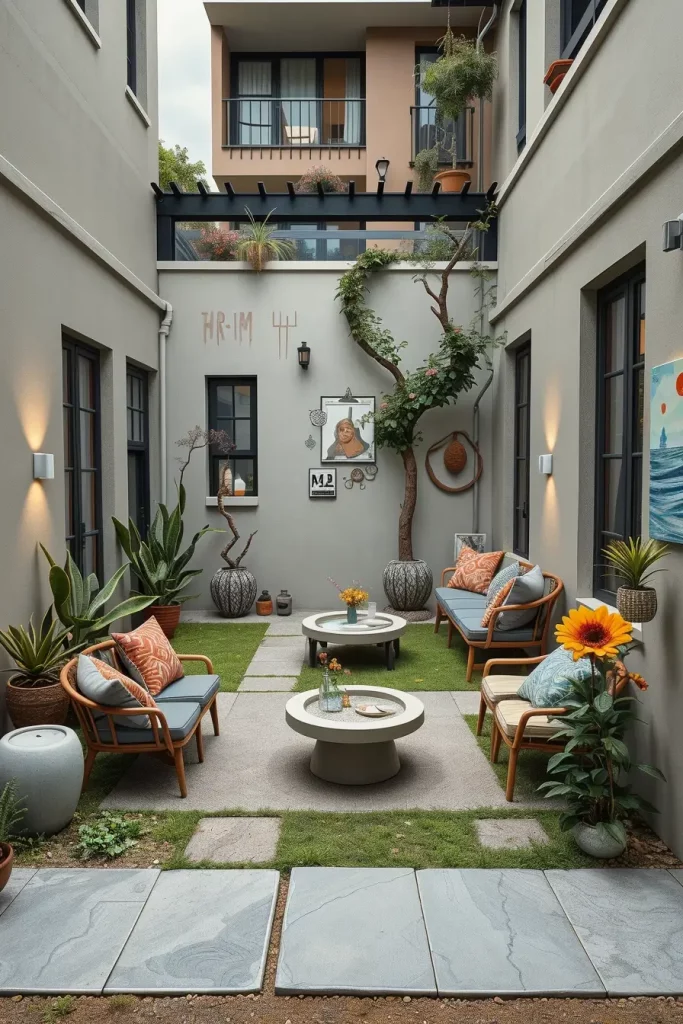
I frequently introduce unexpected materials such as textured concrete walls paired with soft planting or indoor-style furniture adapted for outdoor use. Modular seating, movable planters, and adaptable lighting systems allow the courtyard to change function depending on the occasion, making it both flexible and distinctive.
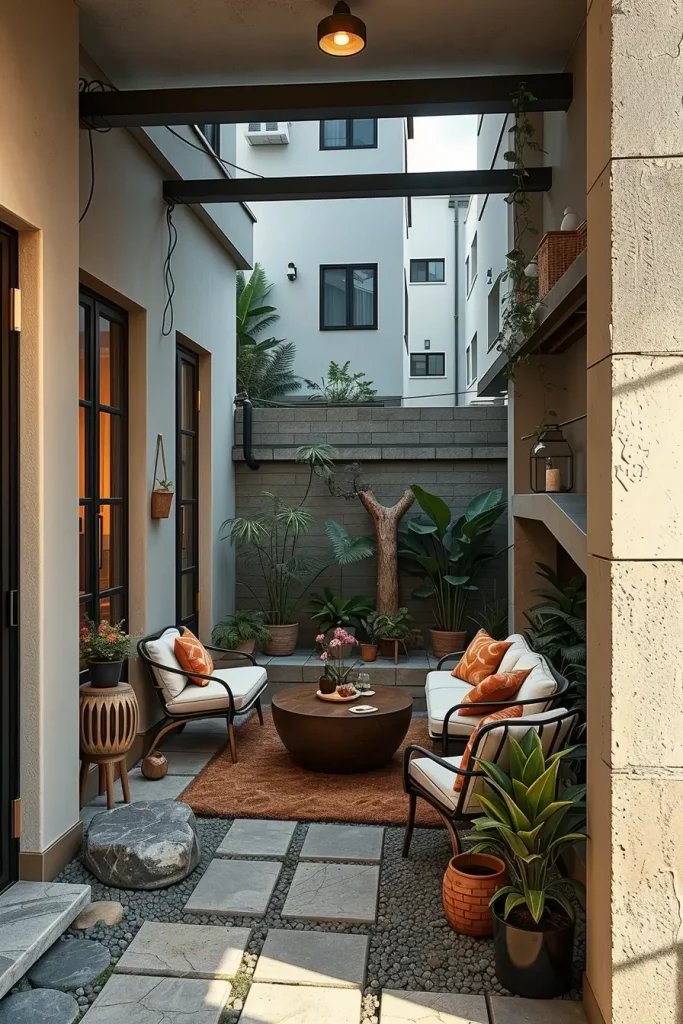
From my perspective, the most successful unique courtyards still prioritize comfort and usability. Designers writing for Dwell often stress that innovation should enhance daily life rather than complicate it. I apply this principle by ensuring that even unconventional designs remain intuitive and comfortable.
What I would add here is personalization. Custom artwork, bespoke planters, or tailor-made furniture pieces help reinforce the idea that the courtyard reflects the owner’s identity rather than following a preset formula.
Minimalist Small Courtyard Gardens With Maximum Impact
Minimalist small courtyard gardens in 2026 prove that simplicity can be powerful. I focus on clarity, balance, and negative space, allowing the courtyard to breathe visually despite its compact size. Minimalism helps eliminate distractions and highlights the architectural qualities of the surrounding structure.
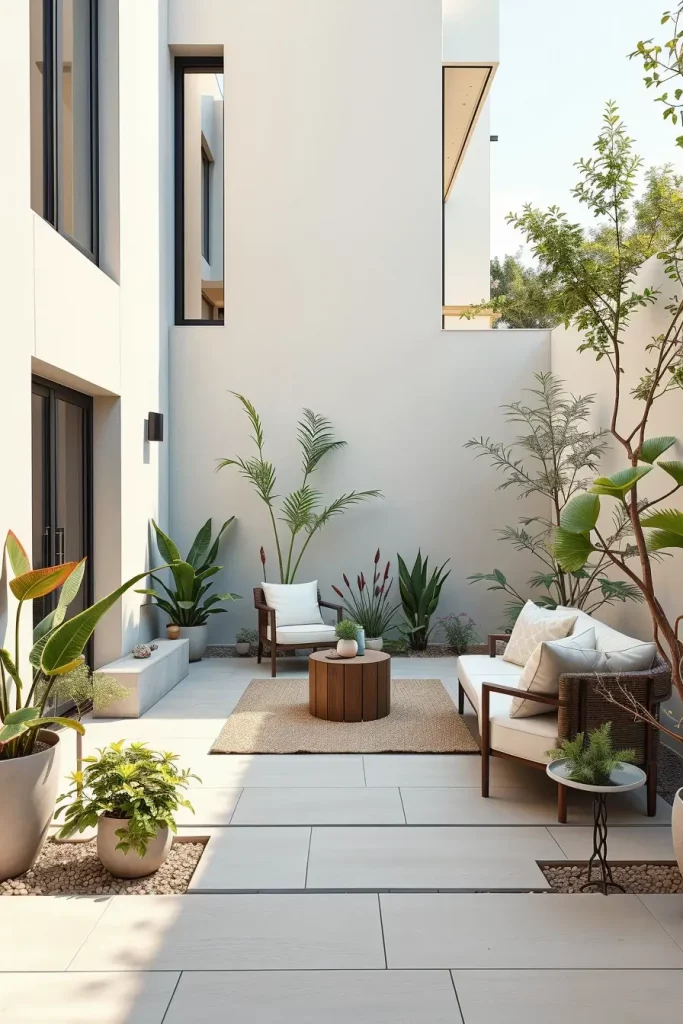
Furniture is kept to a minimum and chosen for clean lines and neutral tones. A single bench, a compact table, or a pair of streamlined chairs is often enough. I pair these with restrained planting, typically using one or two plant species to maintain visual consistency and reduce maintenance.
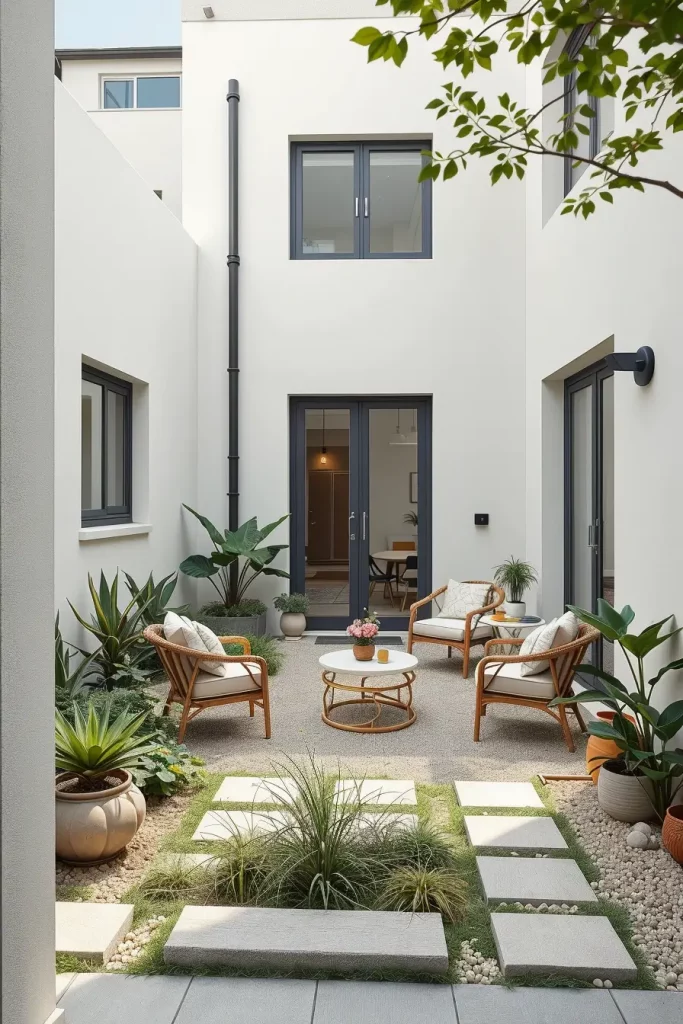
In my experience, minimalist courtyards feel more expansive and calming. Designers frequently cited in Architectural Digest emphasize that reducing visual noise enhances spatial perception, especially in small environments. I’ve consistently seen minimalist designs outperform more crowded layouts in terms of long-term satisfaction.
To strengthen minimalist courtyards, I recommend investing in high-quality materials. When there are fewer elements, craftsmanship and finish quality become even more important and should never be compromised.
Layered Planting Ideas For Small Courtyard Gardens
Layered planting is one of the most effective strategies I use in small courtyard gardens to add depth and richness without overwhelming the space. In 2026, thoughtful planting design focuses on vertical layering rather than sheer volume. I structure plantings in tiers to create visual interest and improve spatial perception.
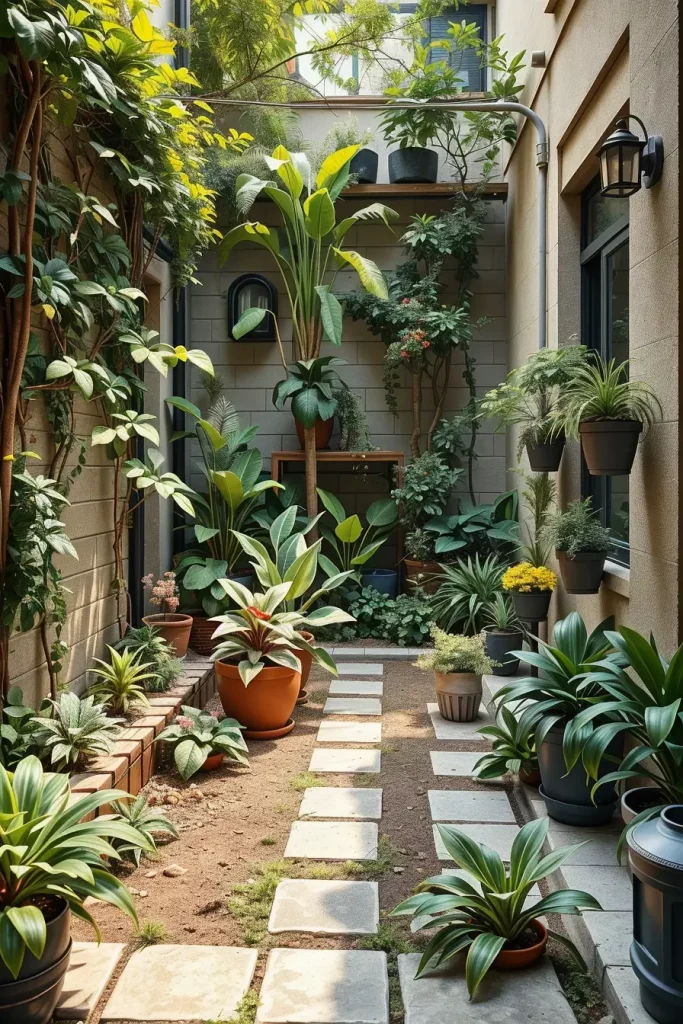
I typically combine ground-level plants, mid-height shrubs, and vertical greenery such as climbers or wall-mounted planters. This approach maximizes greenery while preserving usable floor space. Containers are selected for consistency in material and color to maintain cohesion across the courtyard.
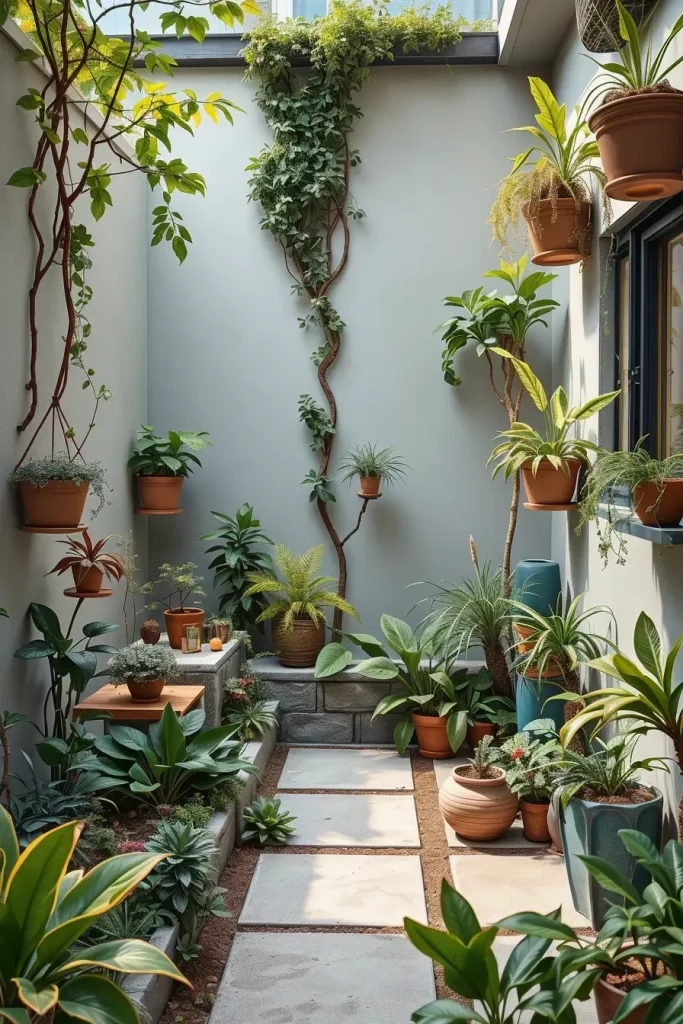
From my professional standpoint, layered planting also improves microclimate comfort. Landscape experts writing for Better Homes and Gardens often highlight the role of layered greenery in cooling outdoor spaces and enhancing privacy. I’ve found these benefits particularly valuable in enclosed courtyards.
What I would add to layered planting designs is seasonal planning. Selecting plants with staggered blooming periods ensures that the courtyard remains visually engaging throughout the year rather than peaking only once.
Statement Flooring Ideas For Small Courtyard Gardens
I always begin the design of small courtyard gardens by considering the flooring, because it sets the visual foundation and defines how the space is perceived. In 2026, statement flooring is not just decorative but functional, helping visually expand compact courtyards while supporting daily outdoor use. I focus on materials that withstand weather changes, feel comfortable underfoot, and visually connect indoor and outdoor living areas.
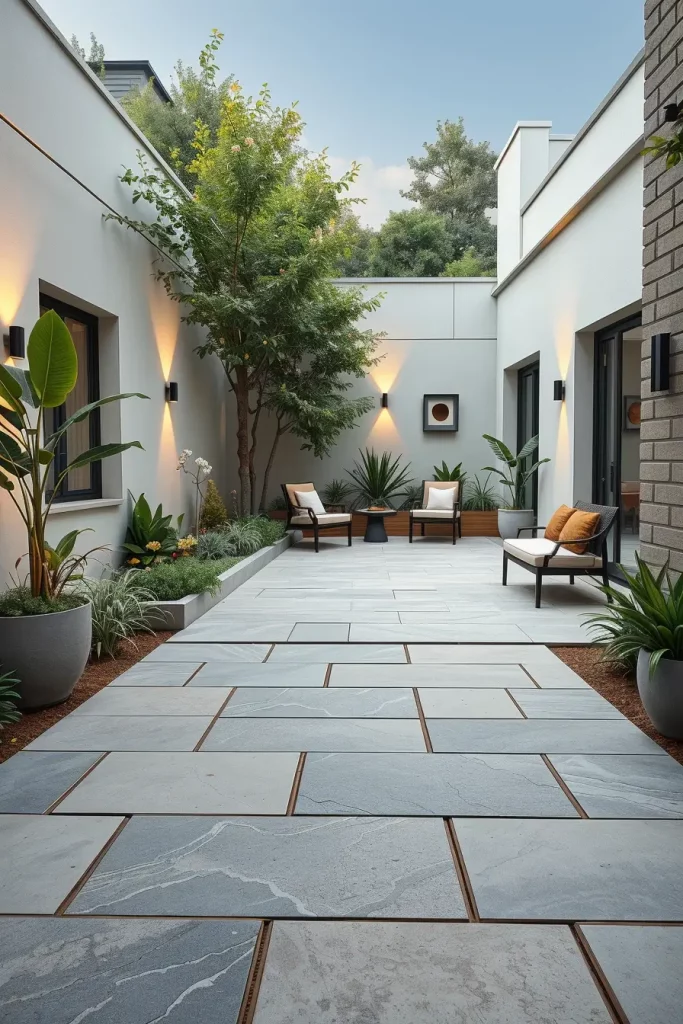
For this type of courtyard, I typically use large-format porcelain tiles, textured concrete slabs, or natural stone with minimal grout lines. These choices reduce visual clutter and create a calm, stylish base. I often integrate subtle patterns or tonal variations to add depth without overwhelming the space. Raised decking zones can also define seating or dining areas while improving drainage and comfort.
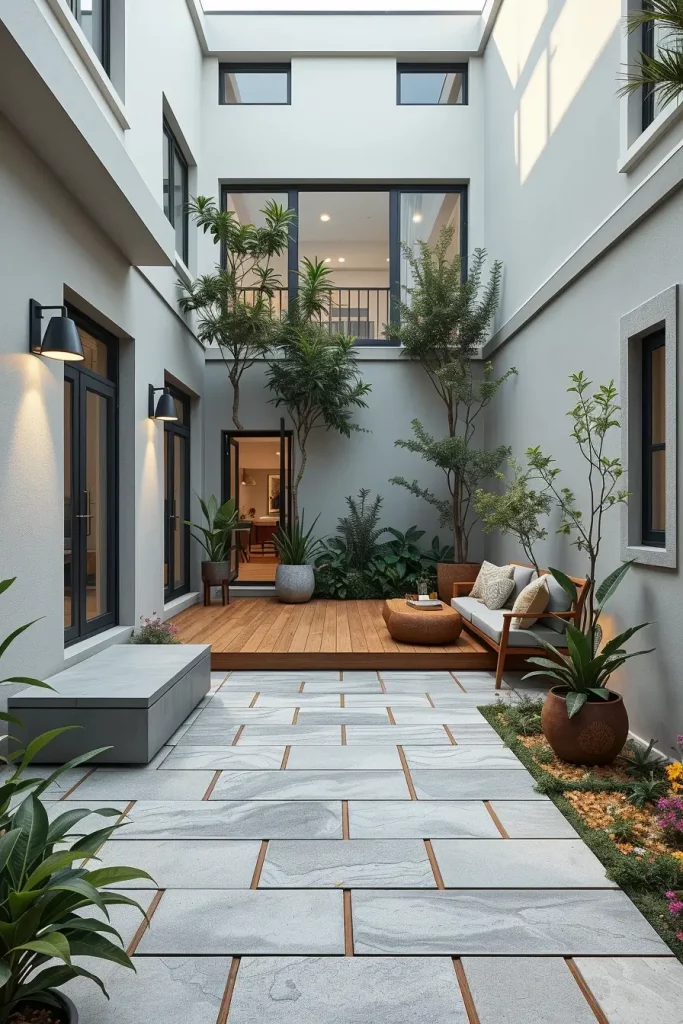
From my experience, designers featured in Architectural Digest frequently emphasize flooring as a way to guide movement and zoning in small outdoor spaces. I agree with this approach and have seen firsthand how a strong flooring choice makes even the most unusual courtyard feel intentional and balanced.
To enhance this section further, I would add discreet floor-integrated drainage solutions and low-profile edging details to ensure longevity and a polished, designer finish that supports everyday use.
Vertical Garden Solutions For Small Courtyard Spaces
When ground space is limited, I rely heavily on vertical garden systems to maximize greenery without sacrificing functionality. Vertical planting is one of the most creative and unique solutions shaping small courtyard gardens in 2026, allowing walls to become living design elements rather than empty boundaries.
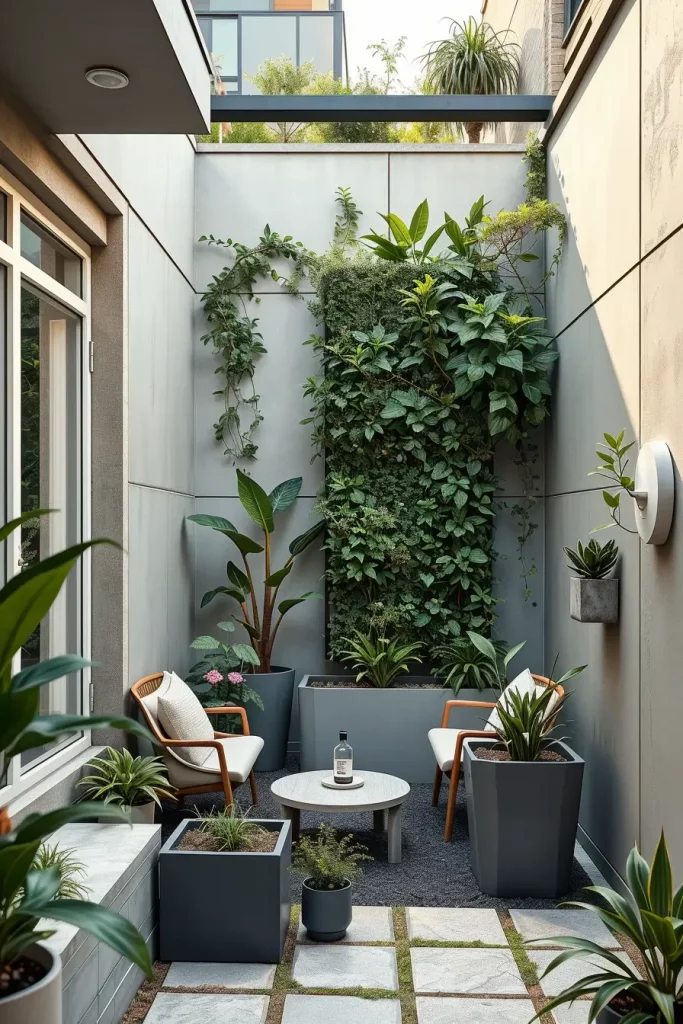
I usually incorporate modular green wall panels, slim trellis systems, or custom metal frames with climbing plants. These elements soften hard surfaces while improving privacy and acoustics. I select plant varieties based on sunlight exposure, prioritizing low-maintenance species that thrive in compact environments.
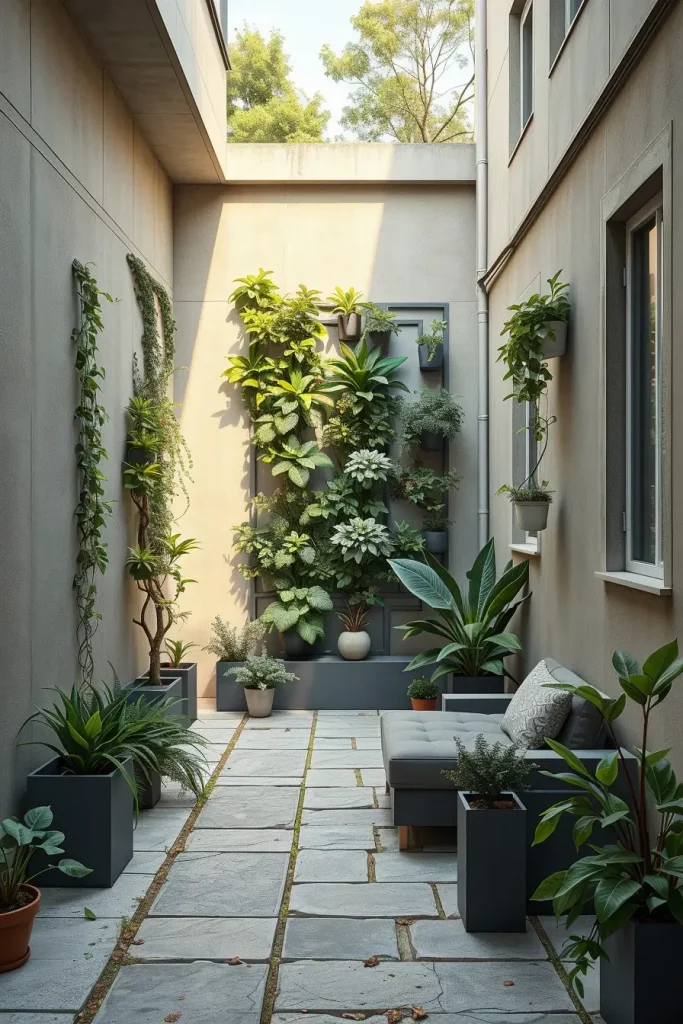
In my professional opinion, vertical gardens align perfectly with guidance from landscape designers featured in Dwell, who stress layering greenery at different heights to create visual richness in small spaces. I have applied this principle repeatedly and found it essential for creating a cozy, immersive courtyard atmosphere.
What could enhance this section further is the integration of automated drip irrigation and hidden support structures, ensuring the vertical garden remains healthy and visually clean year-round.
Modern Furniture Choices For Small Courtyard Gardens
Furniture selection is critical in small courtyard gardens, as every piece must earn its place. In 2026, I focus on streamlined silhouettes and multifunctional designs that support both relaxation and social use without crowding the space.
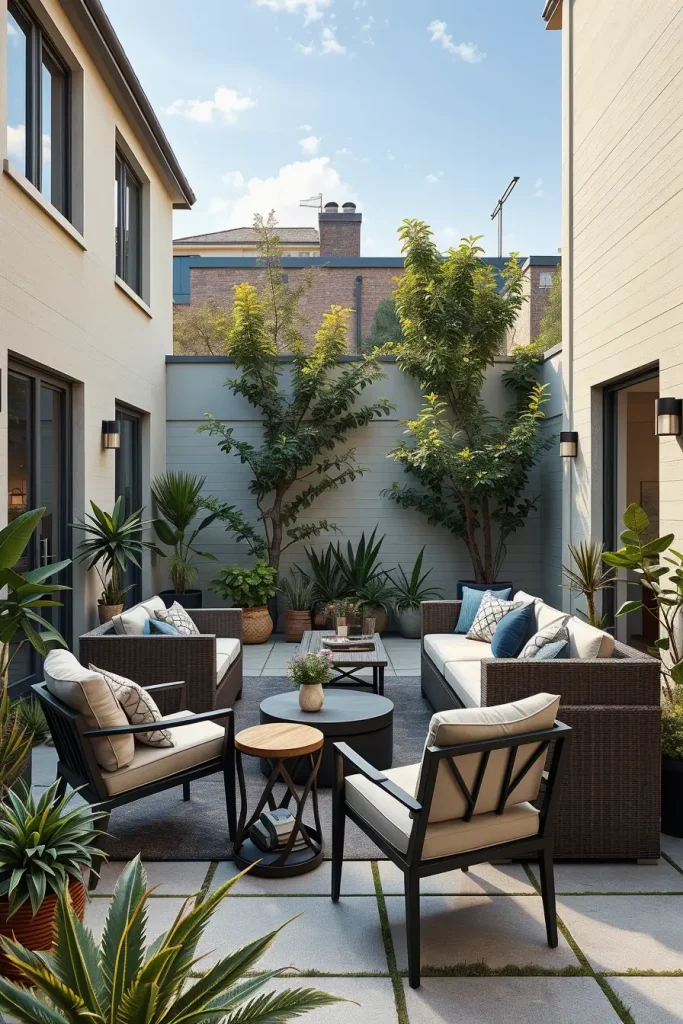
I prefer modular seating, slim-profile lounge chairs, and compact dining sets made from weather-resistant materials such as powder-coated aluminum or treated wood. Built-in benches with hidden storage are particularly effective, combining seating with practical space-saving solutions.
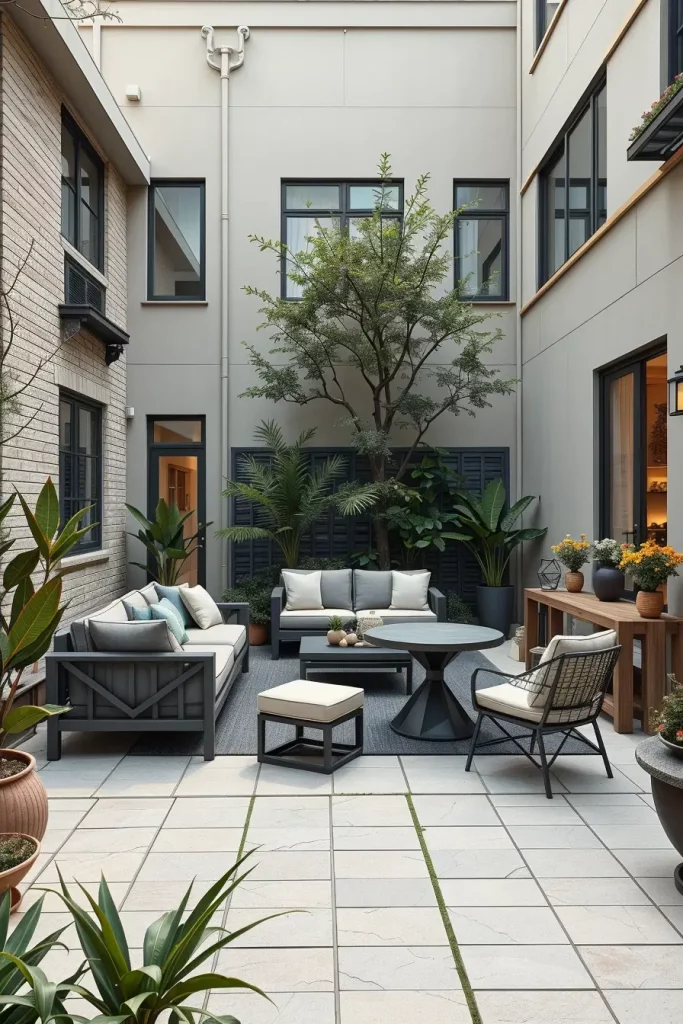
From my own projects, I’ve learned that designers often recommend fewer but higher-quality pieces, a philosophy echoed by Better Homes and Gardens. I fully support this approach, as it creates a stylish and intentional environment rather than a cluttered one.
To complete this section, I would add advice on furniture layout planning, including circulation paths and spacing recommendations to maintain comfort and ease of movement.
Lighting Trends Shaping Small Courtyard Gardens In 2026
Lighting plays a transformative role in how small courtyard gardens function after sunset. I approach lighting design as both a practical necessity and an opportunity to enhance mood and spatial depth, especially in compact outdoor areas.
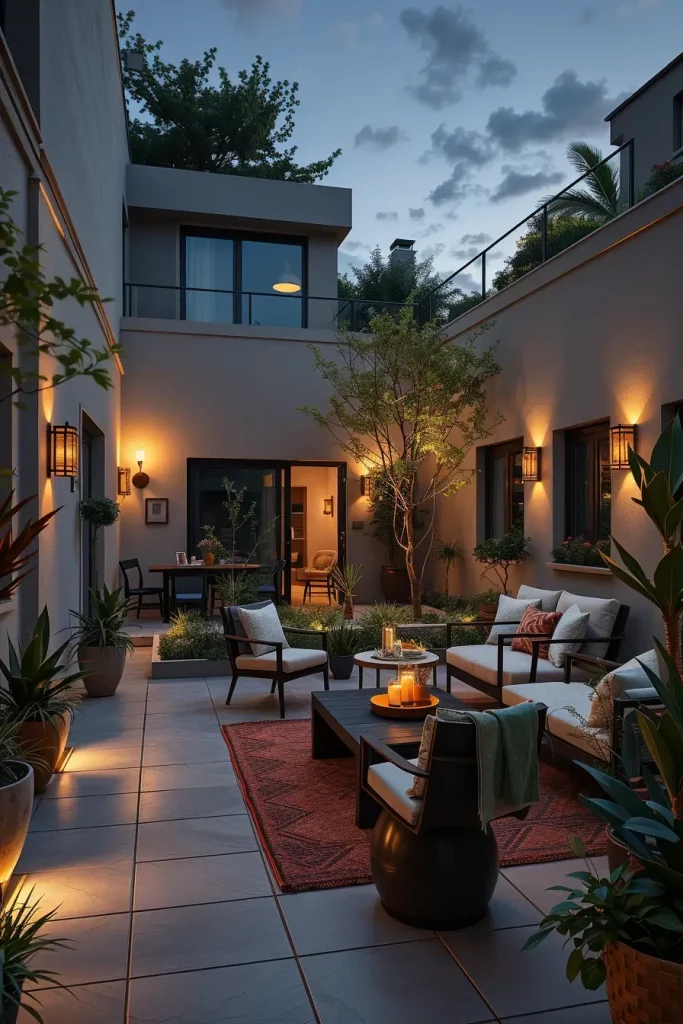
I typically combine layered lighting elements such as wall-mounted sconces, recessed floor lights, and soft LED strip lighting under seating or planters. This approach highlights architectural features while maintaining a warm, cozy ambiance. Solar-powered fixtures are increasingly popular for their efficiency and clean installation.
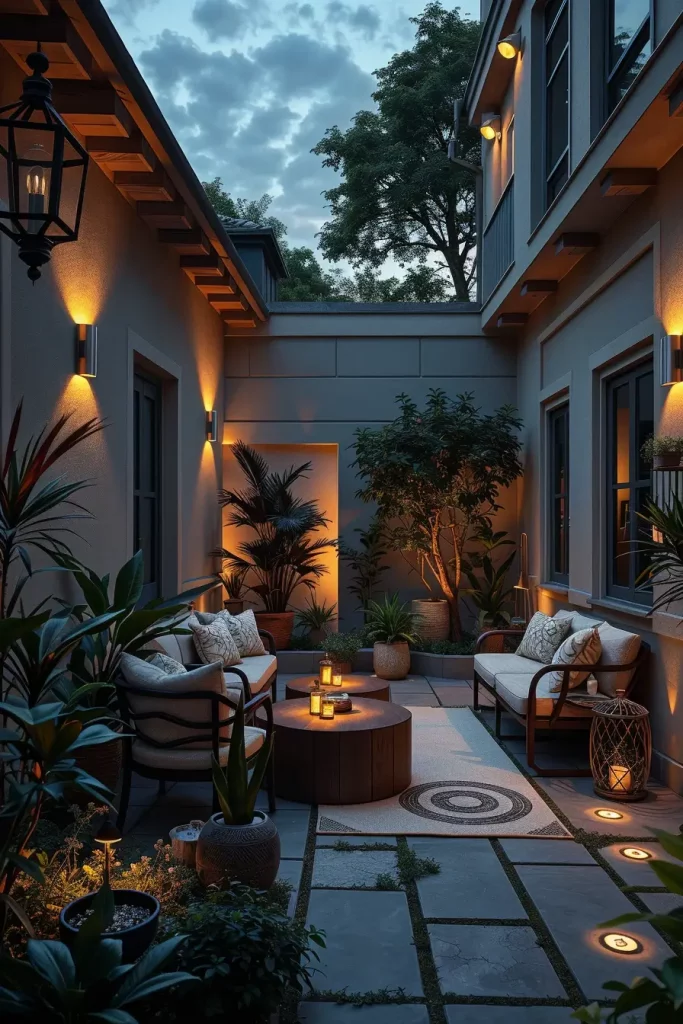
Based on insights shared by lighting designers in Interior Design Magazine, subtle, indirect lighting is key to avoiding visual overload in small spaces. I’ve applied this advice consistently and seen how it elevates the courtyard into a refined evening retreat.
This section could be strengthened by adding smart lighting controls that allow users to adjust brightness and scenes depending on the time of day or occasion.
Color Palettes That Elevate Small Courtyard Gardens
Color selection is one of the most powerful tools I use to visually expand small courtyard gardens. In 2026, I lean toward restrained palettes that feel modern yet inviting, helping the space remain calm and cohesive.
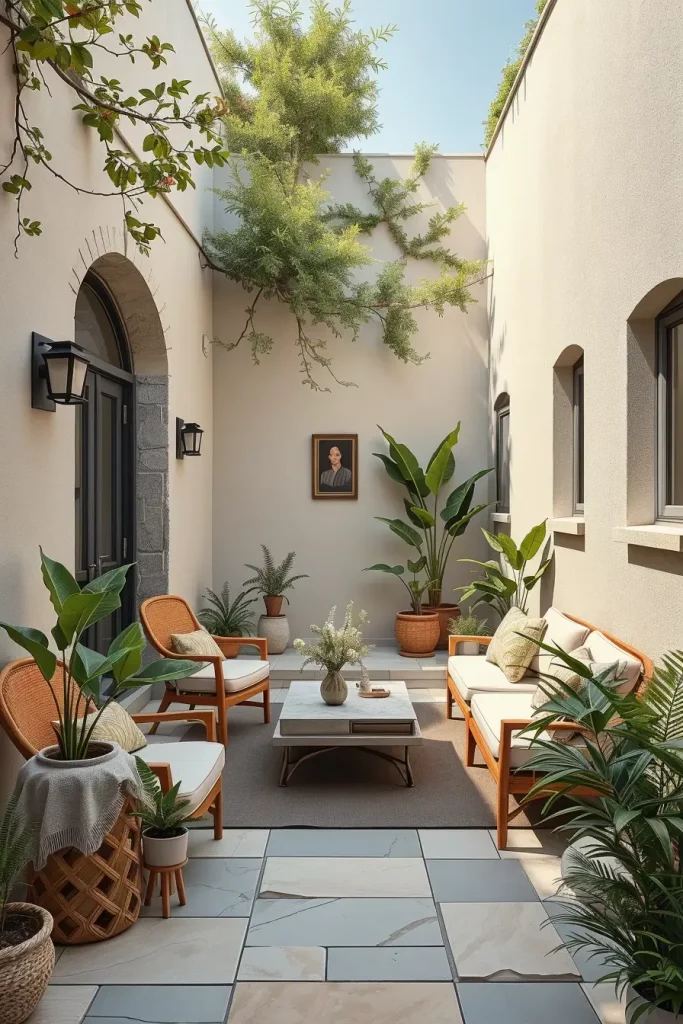
I often work with neutral bases such as soft gray, warm beige, or muted stone tones, accented by greenery and subtle color pops through cushions or planters. This strategy keeps the courtyard feeling designer and adaptable across seasons.
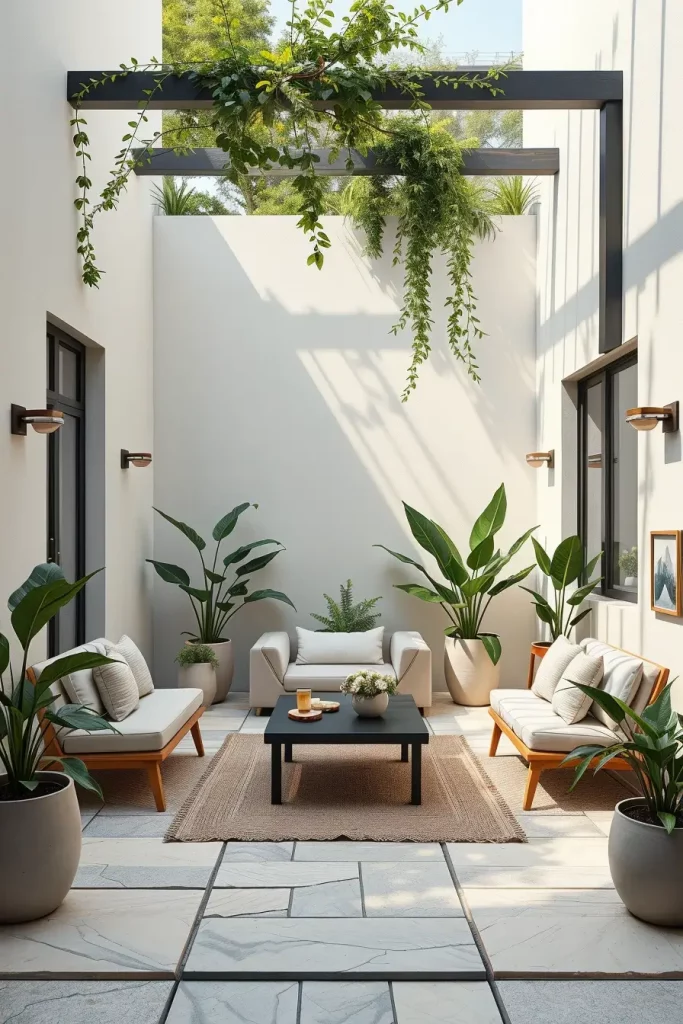
From my experience, color experts cited in Elle Decor emphasize consistency between materials and finishes to avoid fragmentation. I’ve found this advice invaluable when creating unique outdoor spaces that feel thoughtfully curated.
To complete this section, I would introduce guidance on seasonal color updates through accessories rather than permanent elements, ensuring long-term flexibility.
Nature-Inspired Textures In Small Courtyard Garden Design
When I design small courtyard gardens, I pay close attention to texture because it adds depth without occupying physical space. In 2026, nature-inspired textures help create cozy and stylish courtyards that feel grounded and calming, even in urban settings. I focus on surfaces that reference natural elements while maintaining a modern aesthetic.
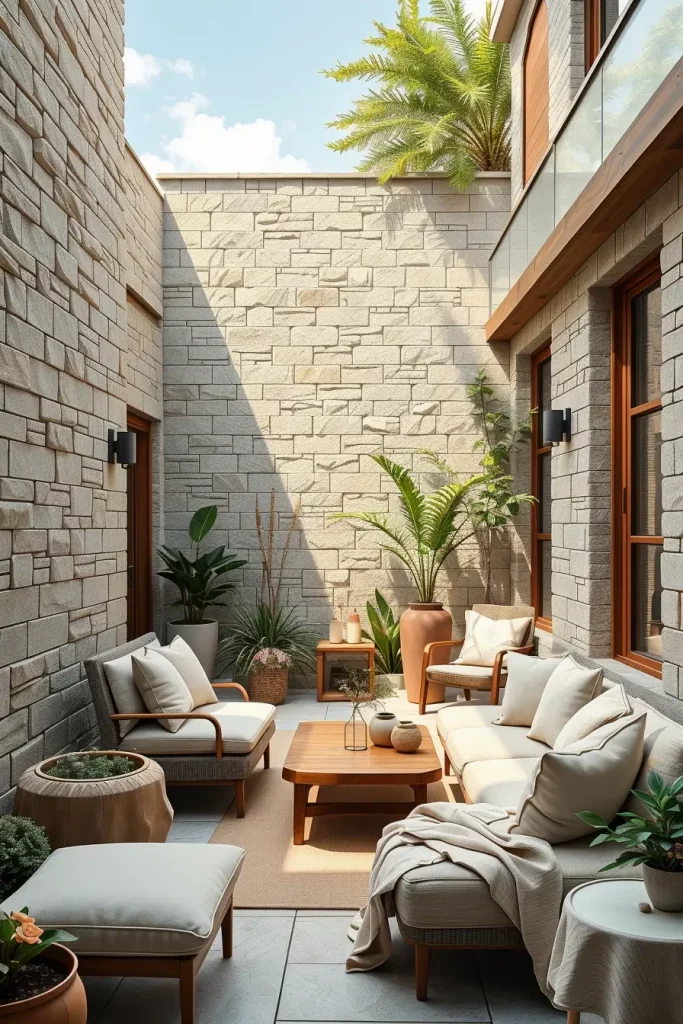
I typically combine textured stone walls, warm wood finishes, and tactile outdoor fabrics. Rough stone or concrete walls balance smooth flooring, while wooden accents soften the overall look. I often introduce textured planters or sculptural surfaces to subtly enrich the visual experience without clutter.
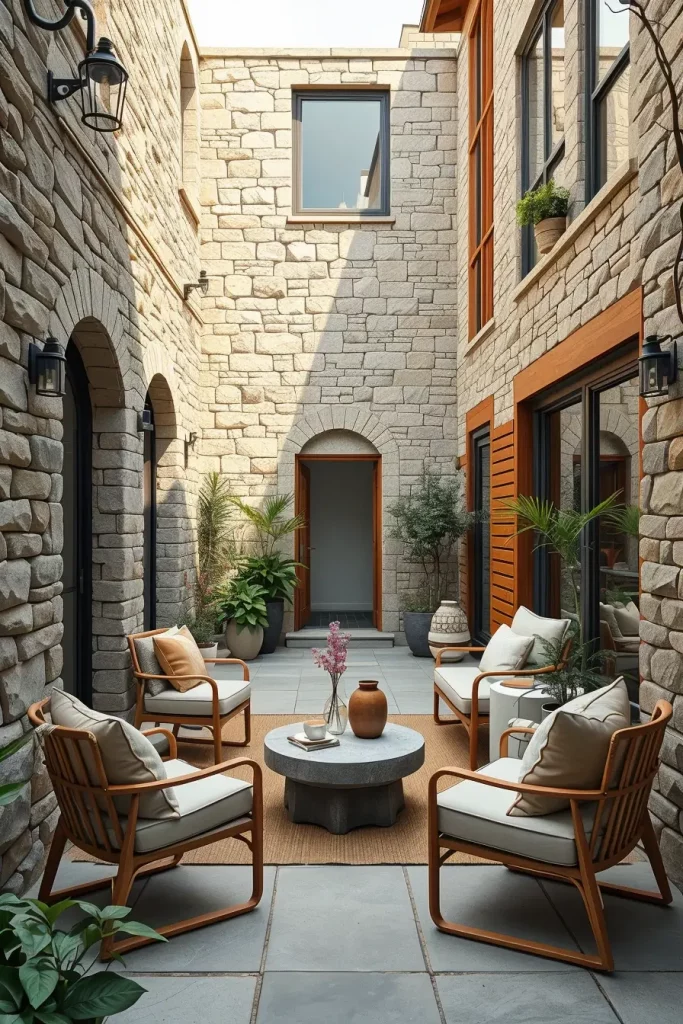
From my professional experience, designers featured in Dezeen emphasize contrast as a key principle in compact outdoor spaces. I’ve applied this consistently and found that layered textures make unique courtyard gardens feel more immersive and thoughtfully designed.
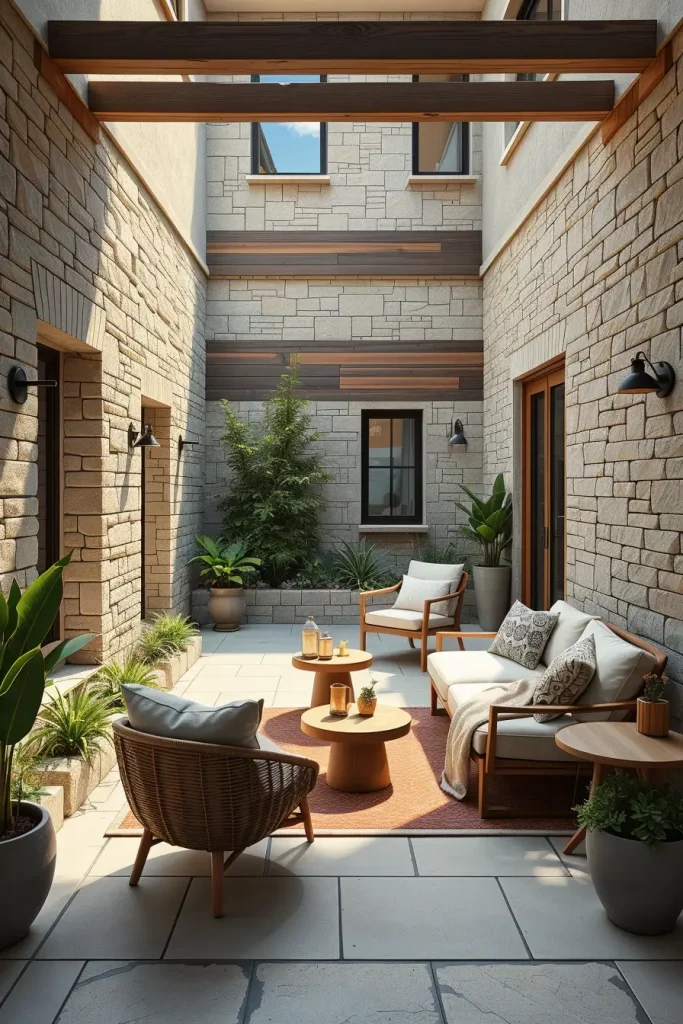
To complete this section, I would add guidance on weather-resistant coatings and sealants that preserve natural textures while ensuring durability in changing climates.
Artistic Features That Define Designer Courtyard Gardens
Artistic elements are essential when shaping designer small courtyard gardens, especially when space is limited. I see art as a way to express personality while maintaining balance and restraint. In 2026, curated artistic features are used sparingly but intentionally.
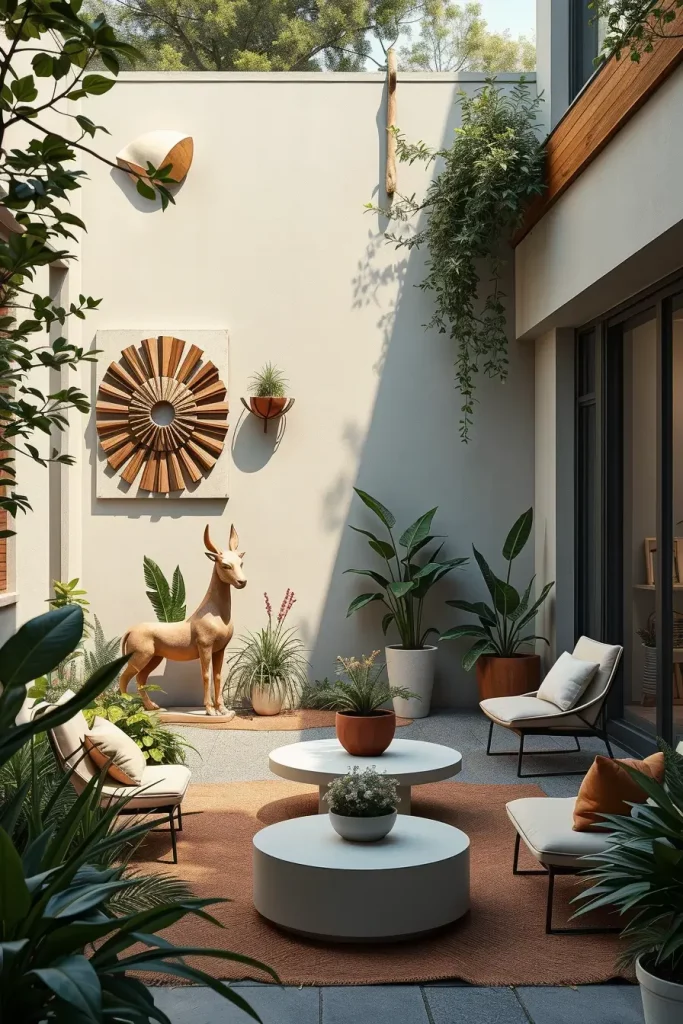
I often incorporate sculptural planters, wall-mounted art panels, or statement ceramic pieces designed for outdoor use. These elements act as focal points and help establish a creative narrative within the courtyard. I ensure that scale and placement support the overall layout rather than dominate it.
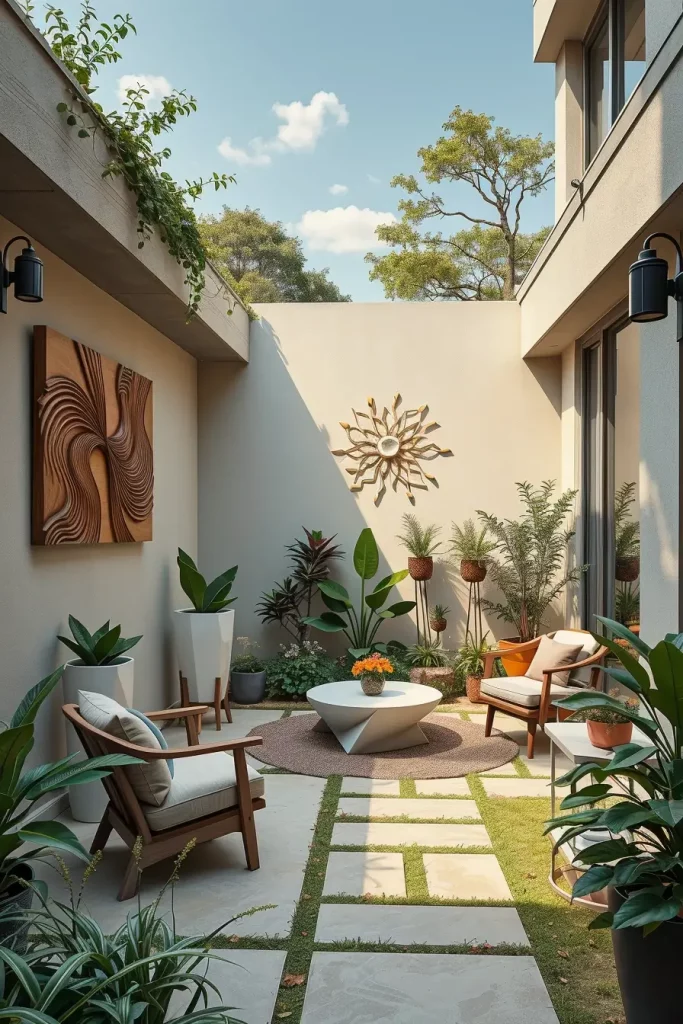
In my experience, landscape architects highlighted in The New York Times often recommend treating outdoor art like indoor décor, with careful attention to proportion. I fully agree, as this approach keeps courtyards visually refined and unusual without feeling overstyled.
This section could be enhanced by adding advice on rotating seasonal art pieces to refresh the courtyard without permanent changes.
Water Elements In Small Courtyard Gardens Without Overcrowding
Water features can dramatically elevate small courtyard gardens when handled thoughtfully. I approach water design with restraint, focusing on sound and movement rather than scale. In 2026, minimal water elements offer tranquility without sacrificing space.
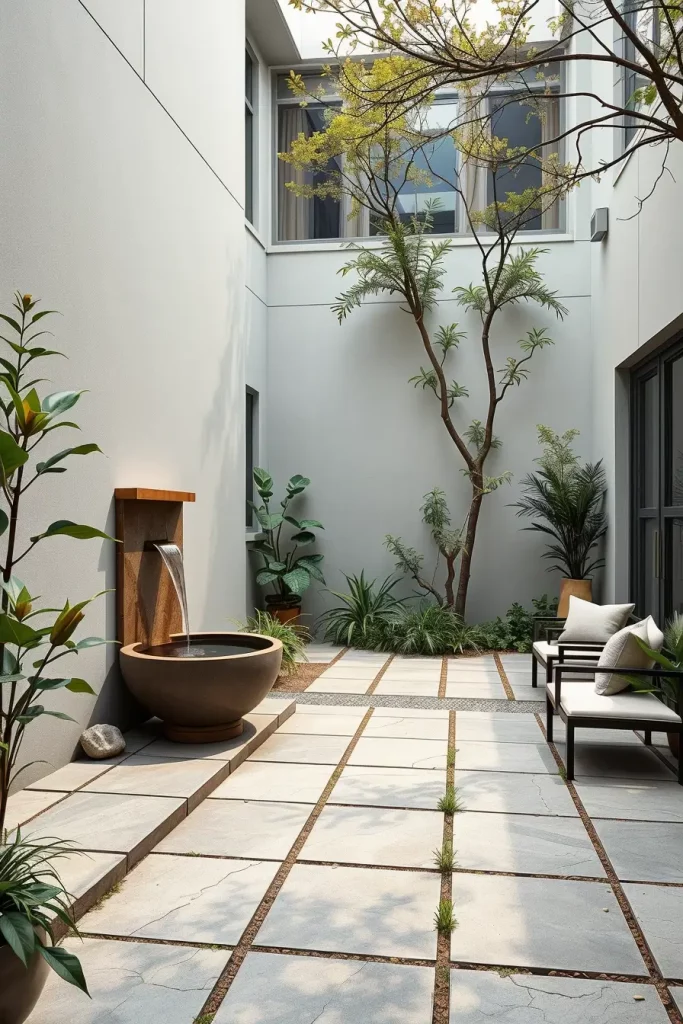
I usually select slim wall-mounted fountains, reflective water bowls, or narrow linear water channels. These designs provide gentle sound and visual interest while preserving open floor area. I place them where they can be enjoyed from seating zones without obstructing circulation.
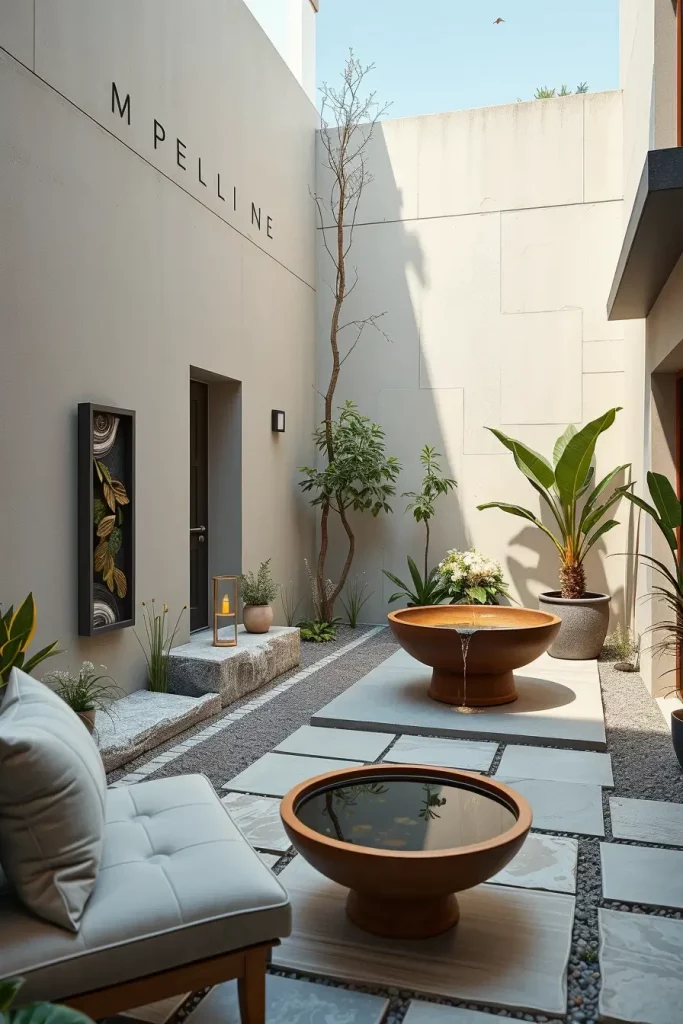
Based on my experience and insights shared by Garden Design Magazine, subtle water features are most effective in compact spaces. I’ve seen how even a small element can transform a courtyard into a cozy, restorative retreat.
To complete this section, I would recommend incorporating concealed filtration systems to maintain a clean appearance and reduce maintenance.
Sustainable Ideas For Small Courtyard Gardens In 2026
Sustainability is no longer optional in small courtyard gardens, and in 2026, it plays a central role in design decisions. I prioritize eco-conscious solutions that enhance comfort while minimizing environmental impact, without compromising on stylish aesthetics.
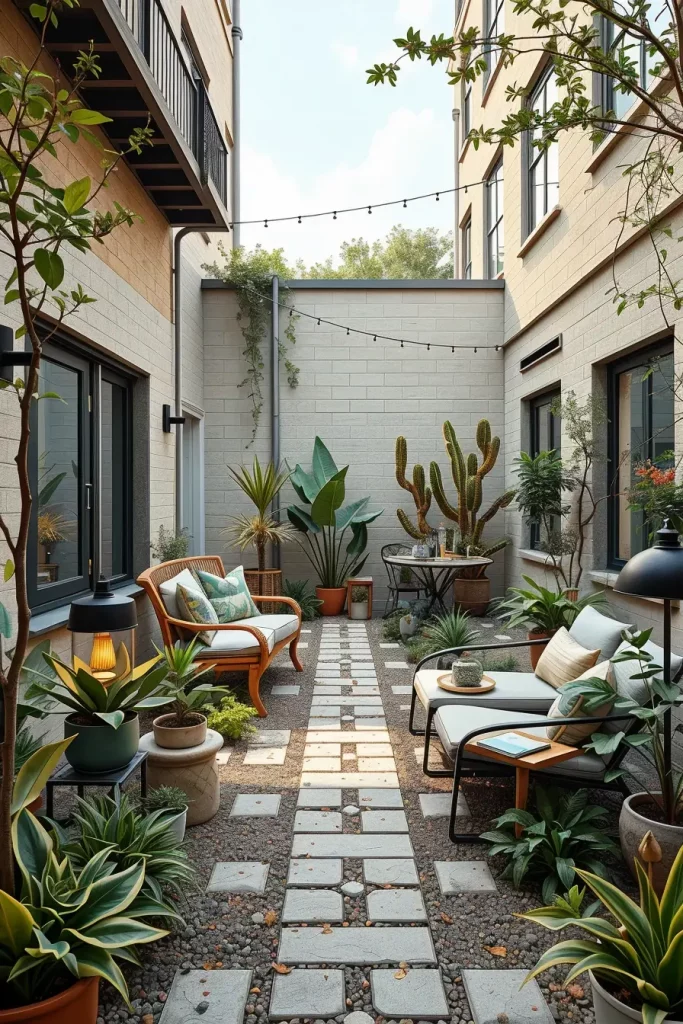
I regularly use permeable paving, recycled materials, and drought-tolerant planting schemes. Solar-powered lighting and rainwater collection systems are integrated discreetly to support daily use. These elements allow courtyards to function efficiently and responsibly.
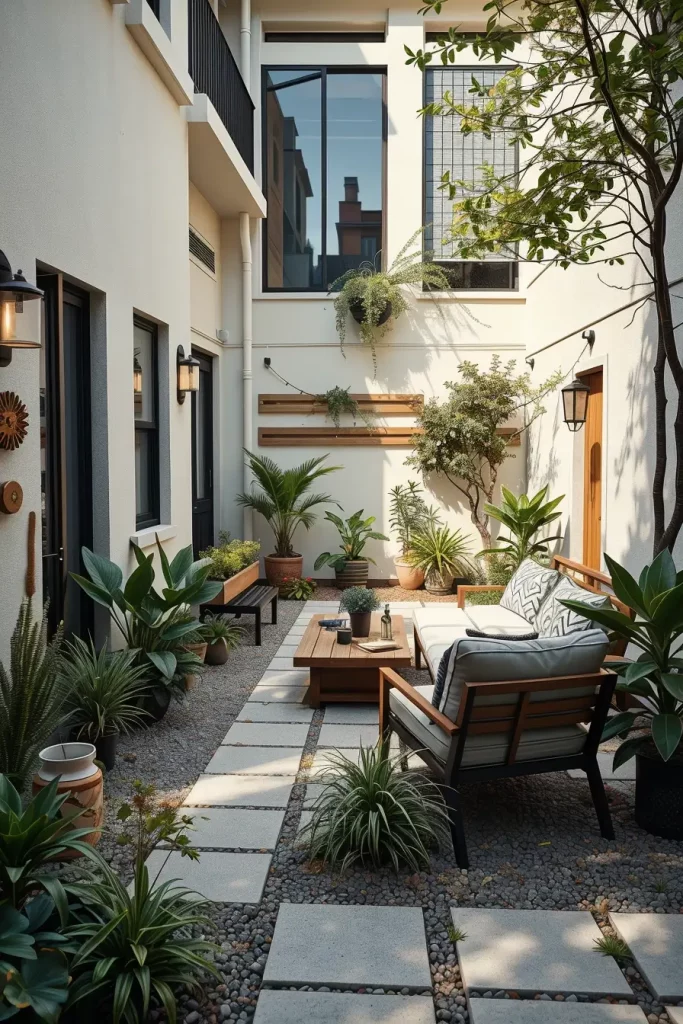
From my professional standpoint, sustainability experts cited in Forbes Home stress that small spaces are ideal testing grounds for green innovation. I’ve applied this mindset and found it results in unique courtyards that align with modern values.
This section would benefit from adding recommendations for native plant selection based on regional climate conditions to further reduce resource consumption.
Cozy Seating Zones For Small Courtyard Gardens
Creating seating zones is one of my favorite aspects of designing small courtyard gardens, as it defines how the space is lived in. In 2026, seating is designed to feel intimate, flexible, and deeply cozy, even within limited dimensions.
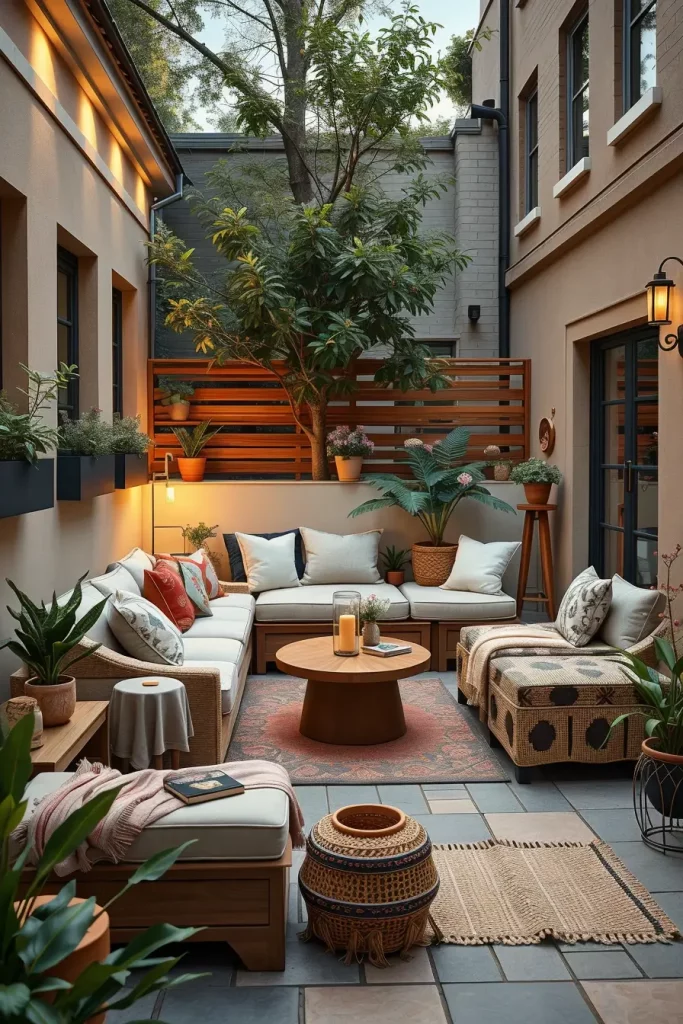
I usually design compact seating arrangements using built-in benches, corner seating, or modular sofas paired with small side tables. Soft outdoor cushions and layered textiles add comfort while reinforcing a designer look. Placement is carefully planned to encourage relaxation without blocking views or pathways.
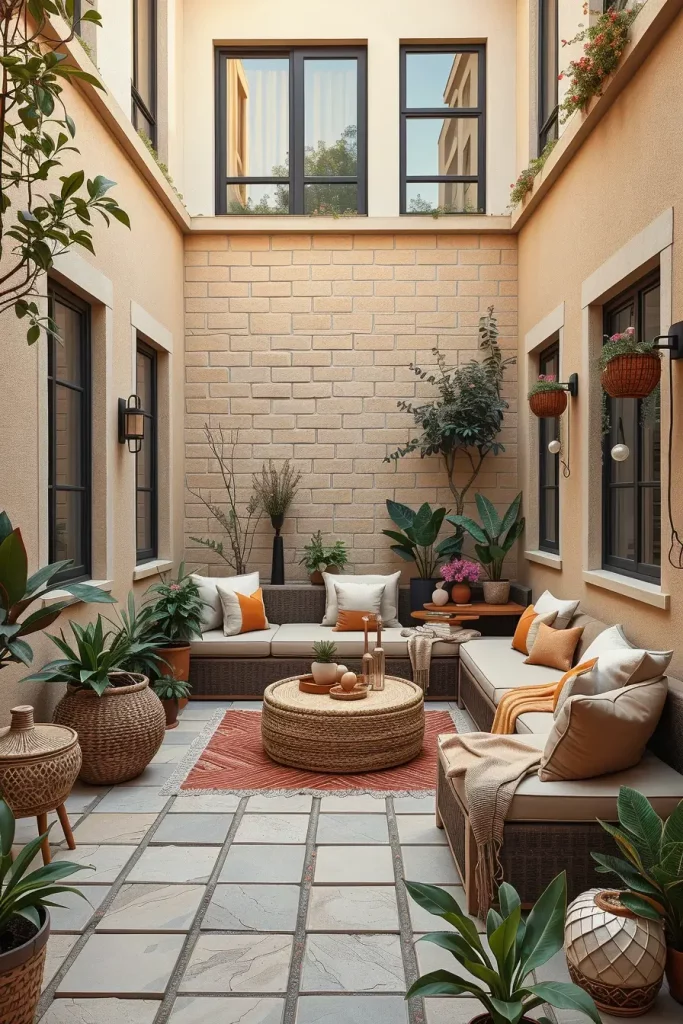
In my experience, outdoor living experts from Better Homes and Gardens emphasize zoning as key to usability. I agree, as thoughtful seating layouts consistently improve how clients engage with their courtyards.
To enhance this section, I would add guidance on integrating portable shade solutions, such as adjustable umbrellas or light pergola structures, to increase comfort throughout the day.
Seasonal Styling Ideas For Small Courtyard Gardens
I see seasonal styling as one of the most practical ways to keep small courtyard gardens feeling fresh throughout the year. In compact spaces, every visual change has a strong impact, so I focus on adaptable layouts that allow easy transitions between seasons. In 2026, this approach emphasizes flexibility, layered textures, and color shifts that respond to weather without requiring a full redesign. Seasonal styling also helps maintain comfort and usability in both warm and cooler months.
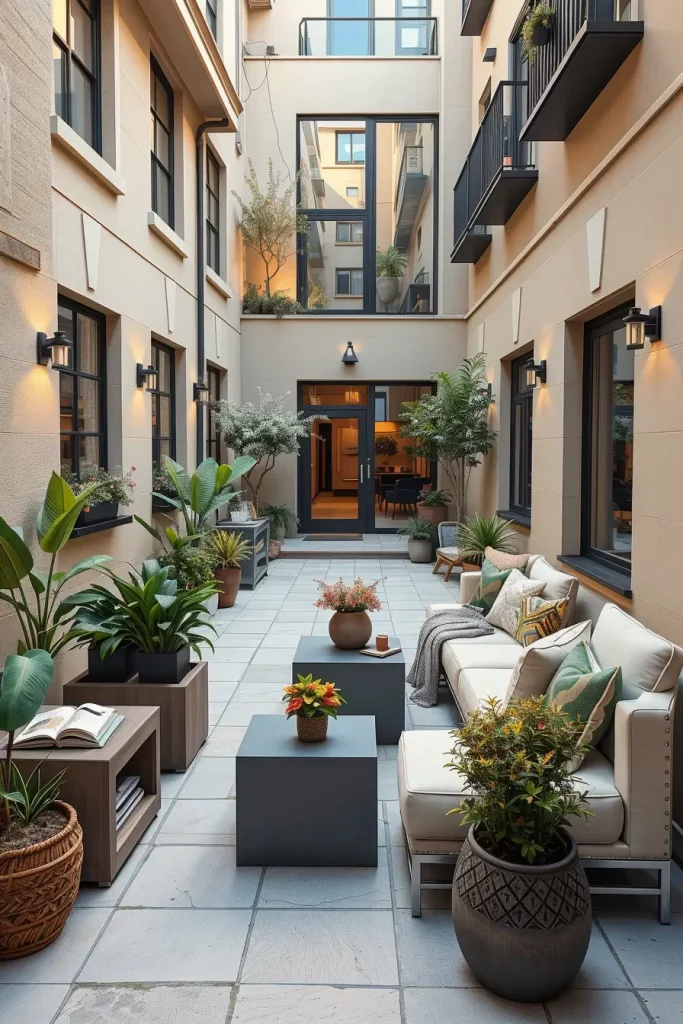
From my experience, lightweight modular furniture is essential, such as slim-profile outdoor chairs, compact benches with storage, and movable side tables. I recommend weather-resistant cushions in neutral base tones, paired with seasonal accent textiles like throws or outdoor rugs that can be swapped out easily. Planters with interchangeable inserts allow me to rotate plants or decorative grasses depending on the season, keeping the courtyard visually dynamic without overcrowding it.
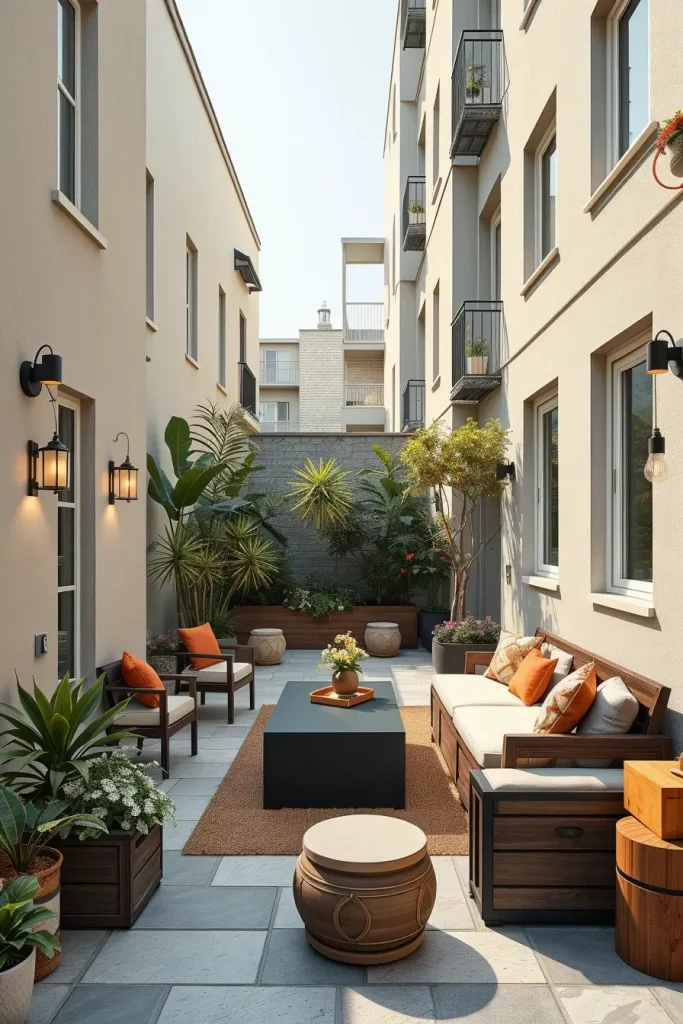
I have found that designers featured in Architectural Digest often stress the importance of repetition and restraint in small outdoor spaces, and I fully agree. By keeping the core design consistent and only changing accents, the courtyard remains visually calm and intentional. Personally, I always advise clients to plan seasonal updates at the design stage, rather than treating them as an afterthought.
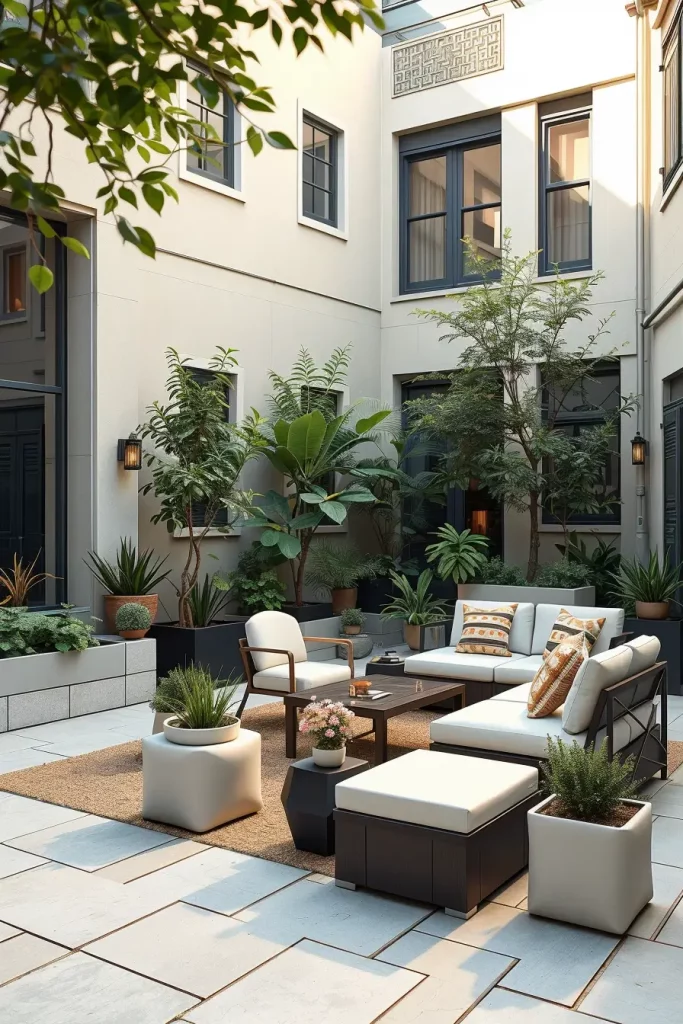
To complete this section, I would add a small dedicated storage solution, such as a slim outdoor cabinet or built-in bench storage, to house seasonal cushions, lanterns, and accessories. This keeps the courtyard uncluttered while supporting year-round styling changes.
Blending Indoor And Outdoor Living In Small Courtyard Gardens
Blending indoor and outdoor living is one of the defining features of small courtyard gardens in 2026. I approach this by treating the courtyard as an outdoor room rather than a separate zone. Consistent flooring materials, aligned sightlines, and similar color palettes help visually connect interior and exterior spaces, making even the smallest courtyard feel intentional and expansive.
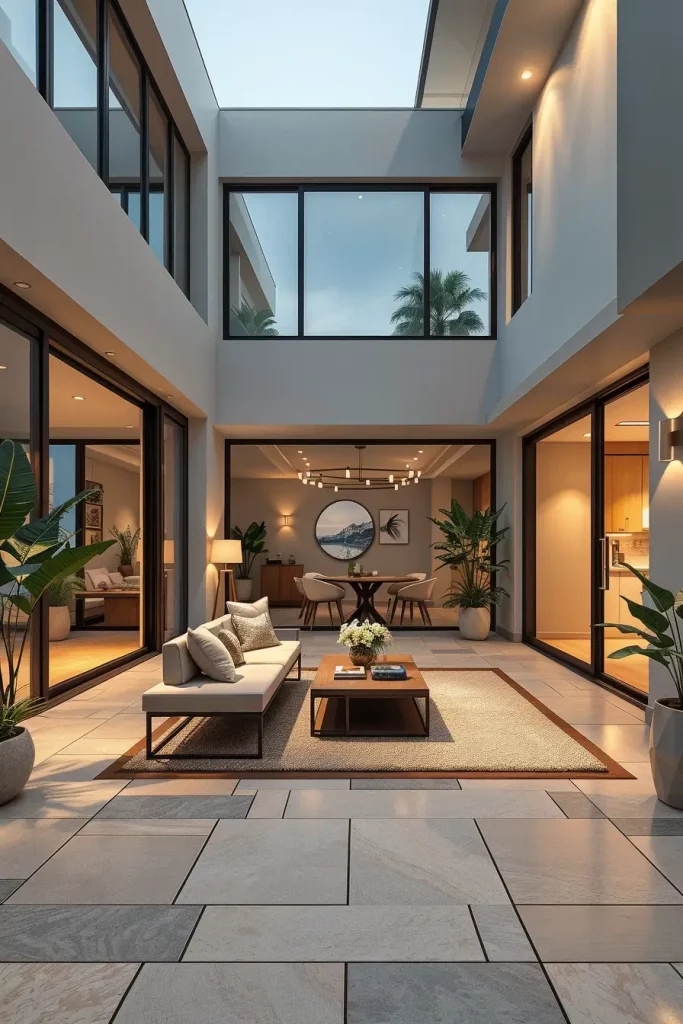
In practice, I rely on furniture that mirrors indoor comfort, such as outdoor sofas with deep seating, low-profile coffee tables, and soft ambient lighting. Sliding glass doors or full-height windows are key design elements, as they allow natural light to flow freely while maintaining a seamless transition. I often recommend outdoor-rated fabrics that closely resemble indoor upholstery for visual continuity.
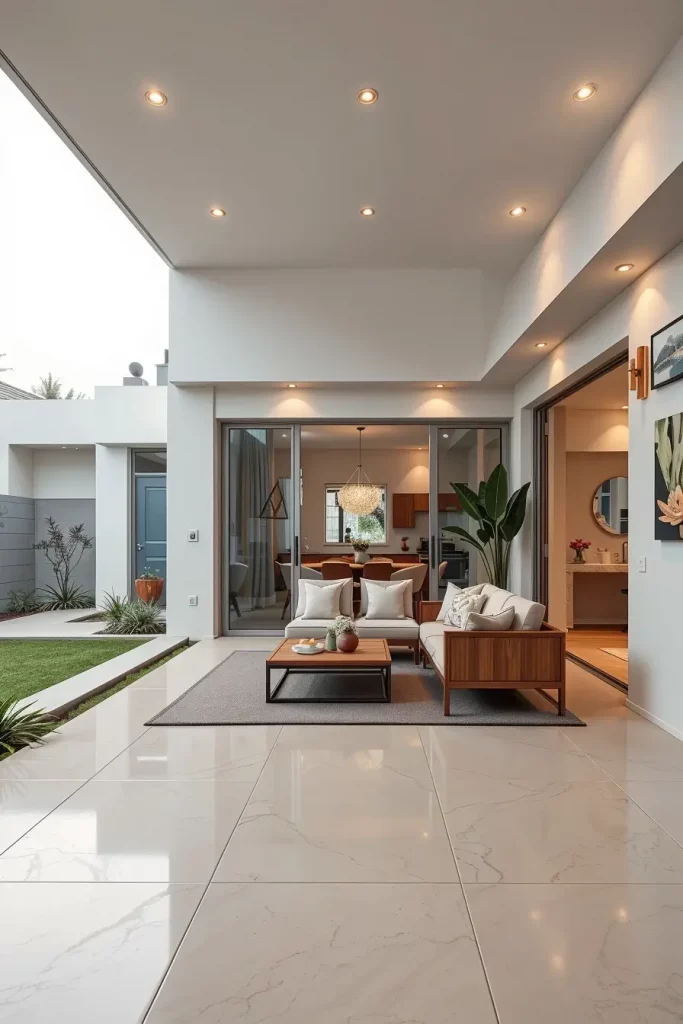
From my professional experience, interior designers like Nate Berkus have highlighted the emotional value of continuity between indoor and outdoor spaces. I have seen firsthand how this approach increases daily use of courtyards, especially in urban homes where outdoor space is limited. When designed well, the courtyard becomes a natural extension of daily life rather than a rarely used feature.
What I would add here is integrated climate control, such as retractable awnings or subtle outdoor heaters, to ensure the courtyard remains comfortable throughout more months of the year. This addition reinforces the indoor-outdoor connection and improves long-term usability.
Creative Privacy Solutions For Small Courtyard Spaces
Privacy is one of the most common challenges in small courtyard gardens, especially in dense urban environments. I approach privacy creatively, focusing on solutions that feel intentional rather than defensive. In 2026, privacy design favors layered elements that provide screening while still allowing light, airflow, and visual interest.
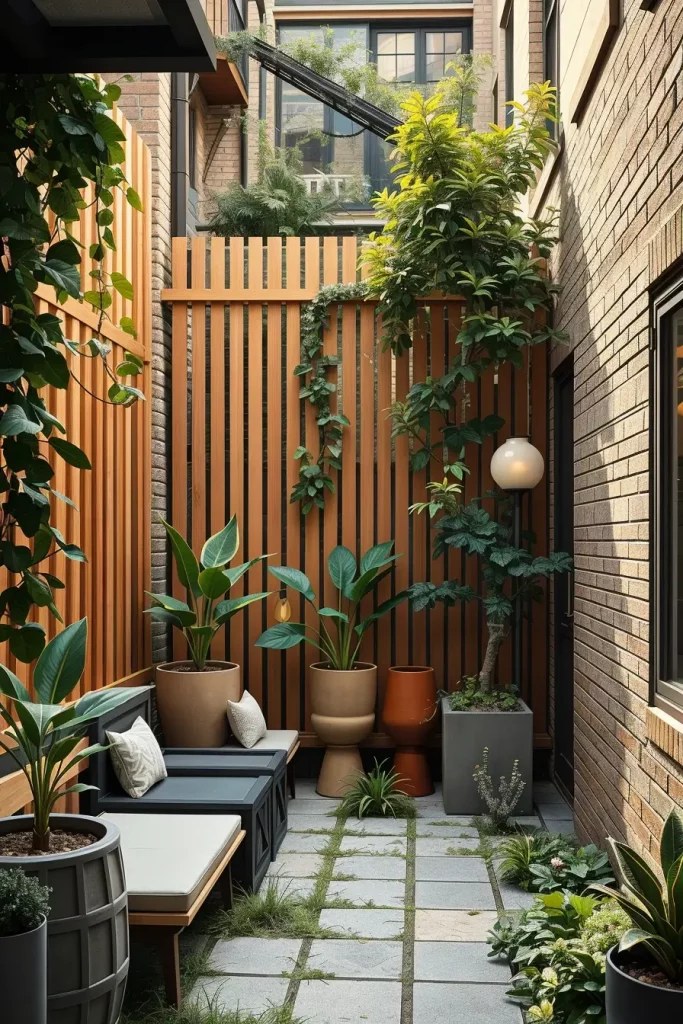
I typically combine vertical elements like slim pergolas, decorative screens, and tall planters with natural materials. Slatted wood panels, metal laser-cut screens, and climbing plants work together to soften boundaries. Furniture placement also plays a role, as seating can be oriented away from sightlines without making the space feel closed off.
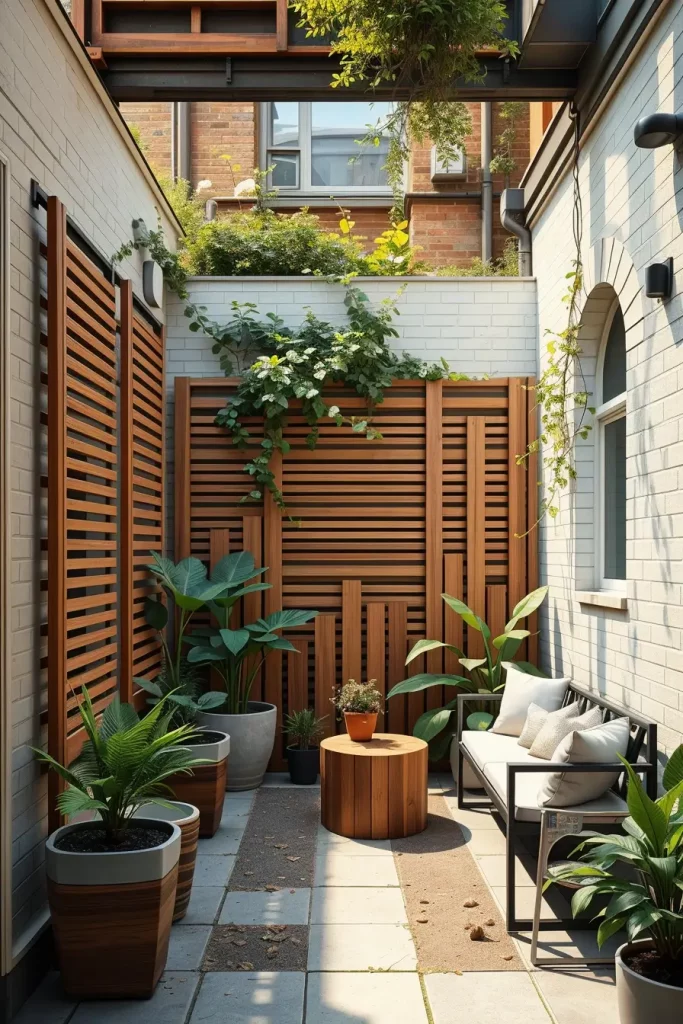
I often reference advice from landscape designers featured in Garden Design Magazine, who emphasize using partial screening instead of solid barriers. In my own projects, this approach has proven more successful in maintaining openness while still creating a sense of retreat. A courtyard should feel protected, not boxed in.
To enhance this section, I would add adjustable elements such as movable screens or sliding panels. These allow privacy levels to change depending on time of day or activity, making the courtyard more adaptable and user-focused.
Compact Fire Features For Small Courtyard Gardens
Compact fire features have become a defining element of stylish and cozy small courtyard gardens in 2026. I see fire as both a functional and emotional centerpiece, providing warmth, ambiance, and a natural gathering point. In limited spaces, the key is choosing designs that offer impact without overwhelming the layout.
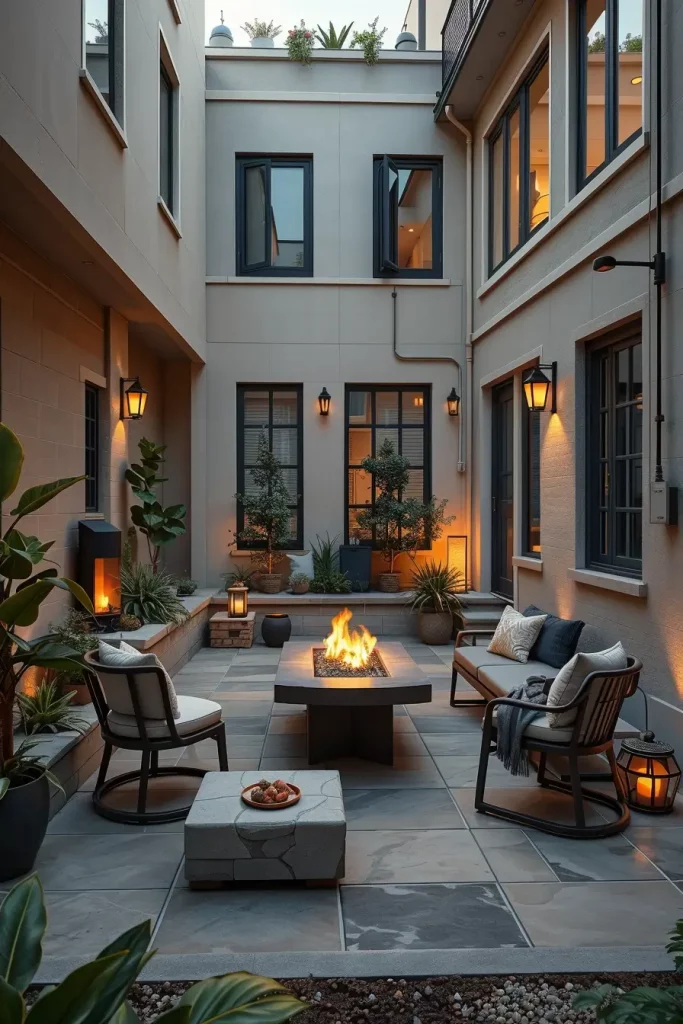
I usually recommend slim gas fire tables, wall-mounted ethanol fireplaces, or recessed fire bowls built into seating structures. These options maintain clear circulation paths while adding visual depth. Materials like concrete, stone, or matte metal integrate well with modern courtyard aesthetics and remain durable over time.
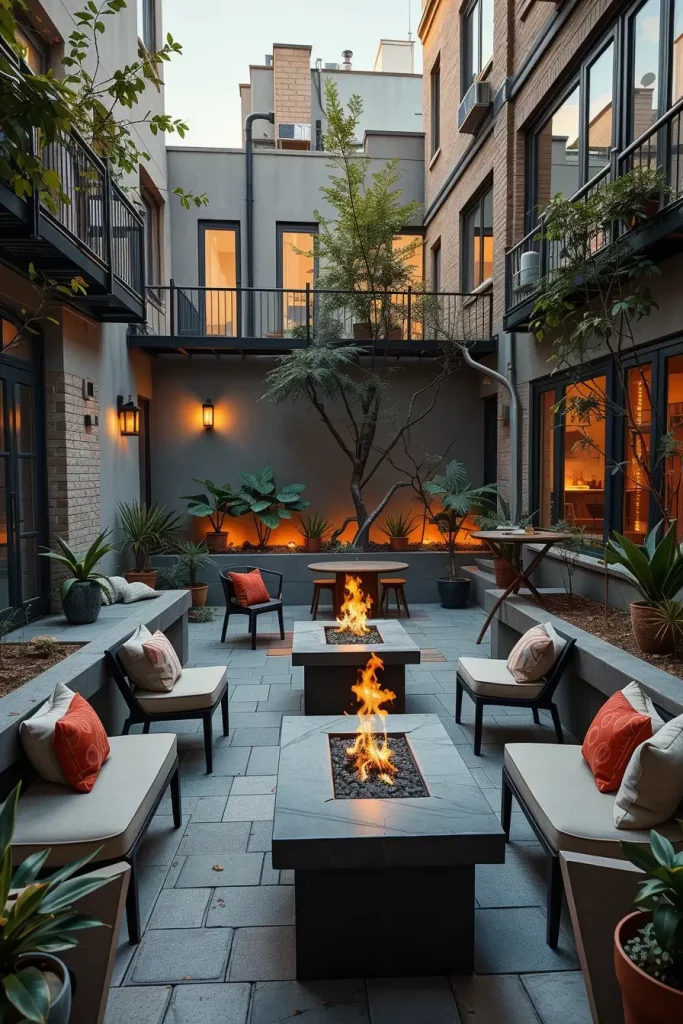
From my experience, designers featured in Dwell often highlight fire as a tool for extending outdoor usability into cooler evenings. I have personally observed how even a small flame feature transforms a courtyard into a social hub, encouraging longer stays and more frequent use.
What I would add here is integrated safety and storage planning, including concealed gas access or heat-resistant surfaces nearby. These details ensure that the fire feature remains both practical and visually clean within a compact environment.
Soft Landscaping Ideas For Relaxing Courtyard Gardens
Soft landscaping plays a crucial role in making unique small courtyard gardens feel calm and inviting. I focus on balancing hard surfaces with greenery to soften visual edges and improve the overall atmosphere. In 2026, this approach emphasizes low-maintenance plants and layered textures rather than dense planting.
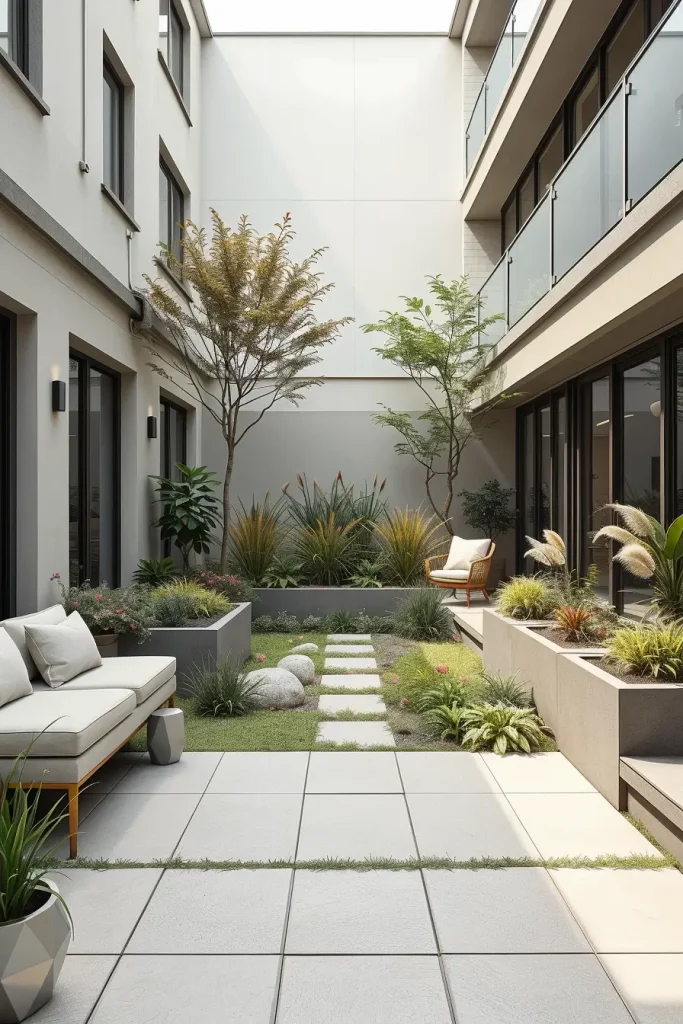
I typically use a combination of ground-level greenery, raised planters, and vertical planting to create depth. Grasses, evergreen shrubs, and compact trees work well in courtyards because they provide structure without constant upkeep. I also incorporate seating integrated into planters to maximize space efficiency.
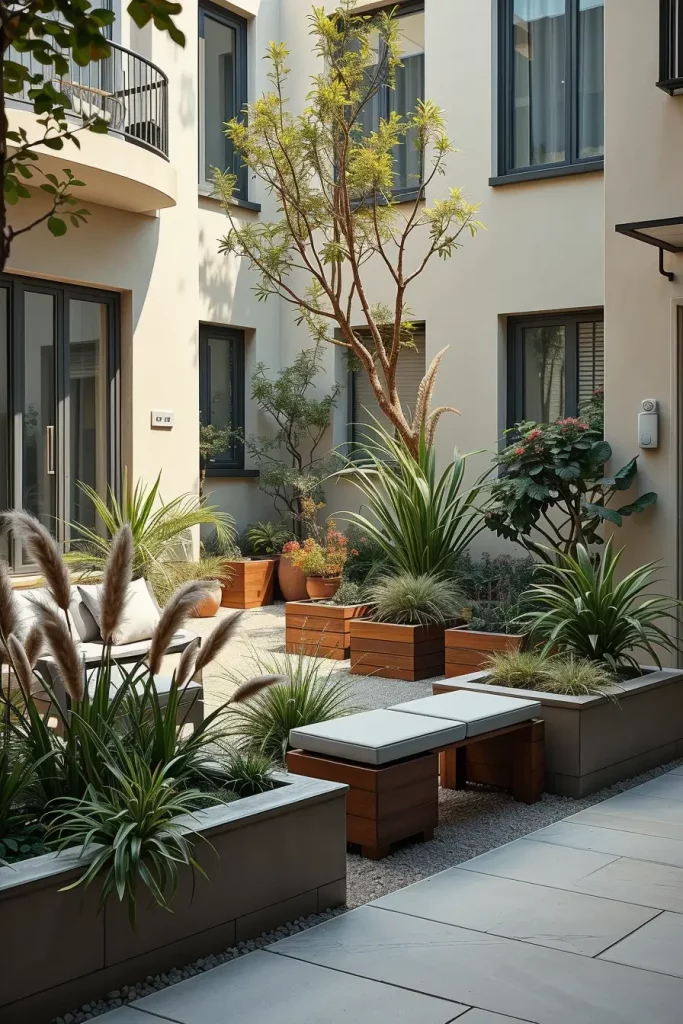
Based on my experience and insights from landscape architects published in Better Homes and Gardens, natural movement and texture are essential for relaxation. I have seen how subtle plant motion and varied leaf shapes contribute to a more soothing environment, even in very small courtyards.
To complete this section, I would add a simple irrigation or self-watering system. This ensures plant health while reducing maintenance demands, making the courtyard more sustainable and stress-free over time.
Bold Statement Plants For Small Courtyard Gardens
When working with small courtyard gardens, I often rely on bold statement plants to create immediate visual impact without overcrowding the space. In 2026, this approach is especially effective because compact courtyards benefit from a few strong focal points rather than many small decorative elements. I focus on plants with architectural forms, strong silhouettes, or distinctive foliage that naturally draw the eye and anchor the overall design.
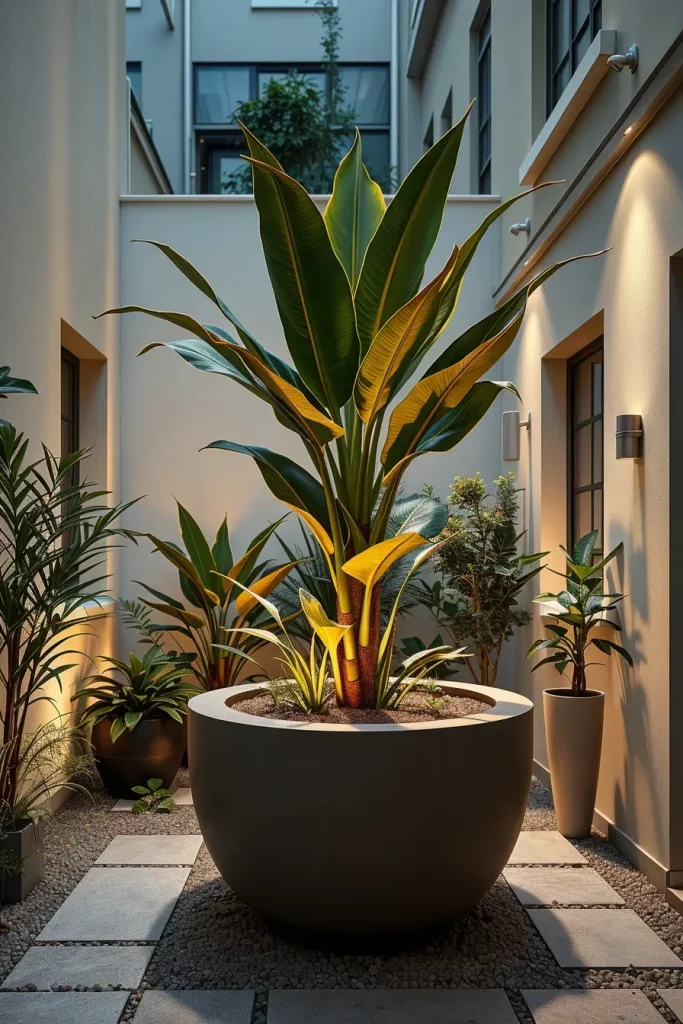
From a practical standpoint, I choose statement plants that thrive in containers and controlled environments. Tall palms, sculptural olive trees, or large-leaf tropical varieties work well when placed in oversized, minimal planters. I also consider how plant height and spread interact with walls and furniture, ensuring that greenery enhances the space rather than limiting movement or light.
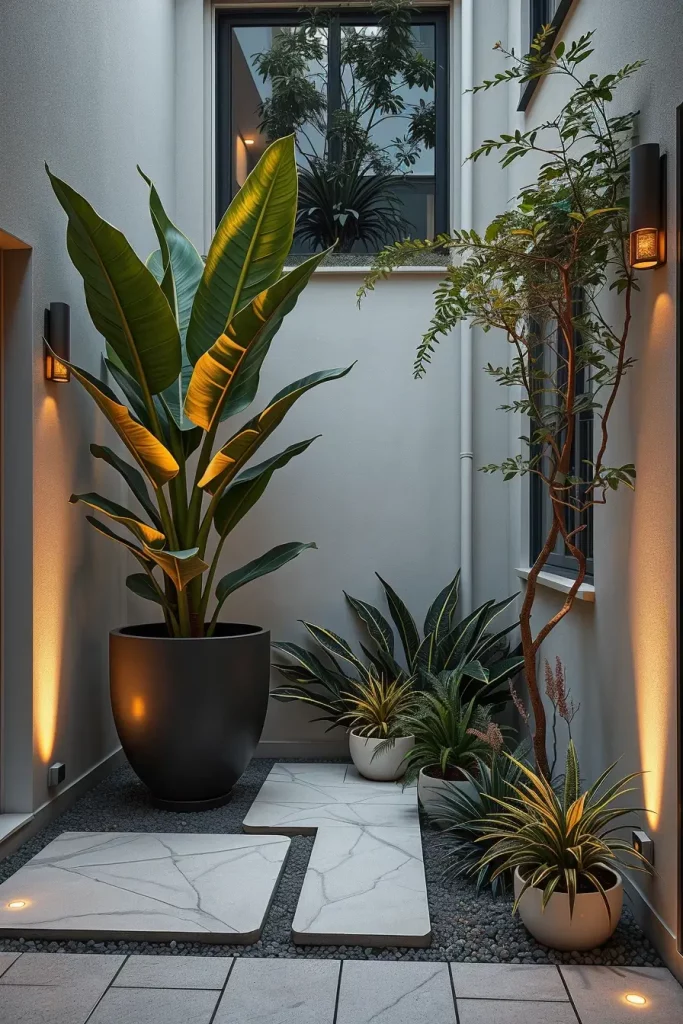
In my professional experience, landscape designers frequently emphasize restraint, and publications like Gardenista support this philosophy. I have personally seen how one carefully chosen plant can define the entire mood of a courtyard. A bold plant creates a sense of intention and elevates the space into something more designer and curated.
What I would add to this section is subtle uplighting focused on the statement plant. This highlights its form at night and adds depth, making the courtyard feel layered and thoughtfully designed after sunset.
Courtyard Gardens Designed For Entertaining In Small Spaces
Designing small courtyard gardens for entertaining requires a balance between openness and intimacy. I approach this by planning clear zones that support social interaction without making the space feel crowded. In 2026, entertaining-focused courtyards prioritize adaptability, allowing the space to shift easily between everyday use and gatherings.
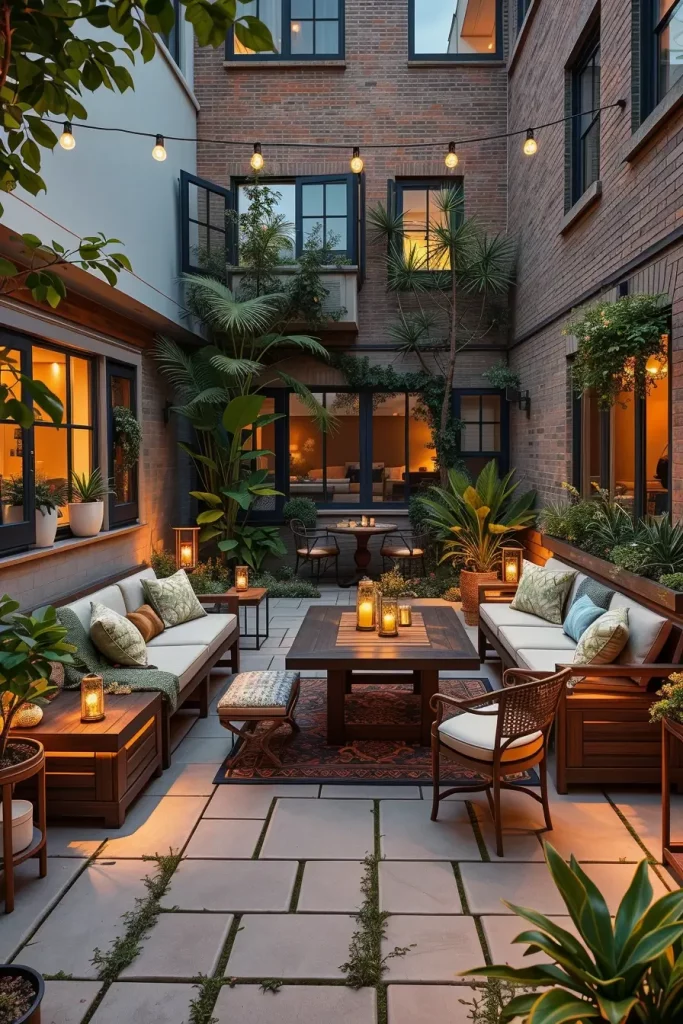
Furniture selection is critical here. I typically use compact sectional seating, stackable chairs, and extendable tables that can be adjusted based on the number of guests. Built-in benches along walls help maximize seating while preserving floor space. Lighting also plays a key role, as layered illumination creates atmosphere without overpowering the courtyard.
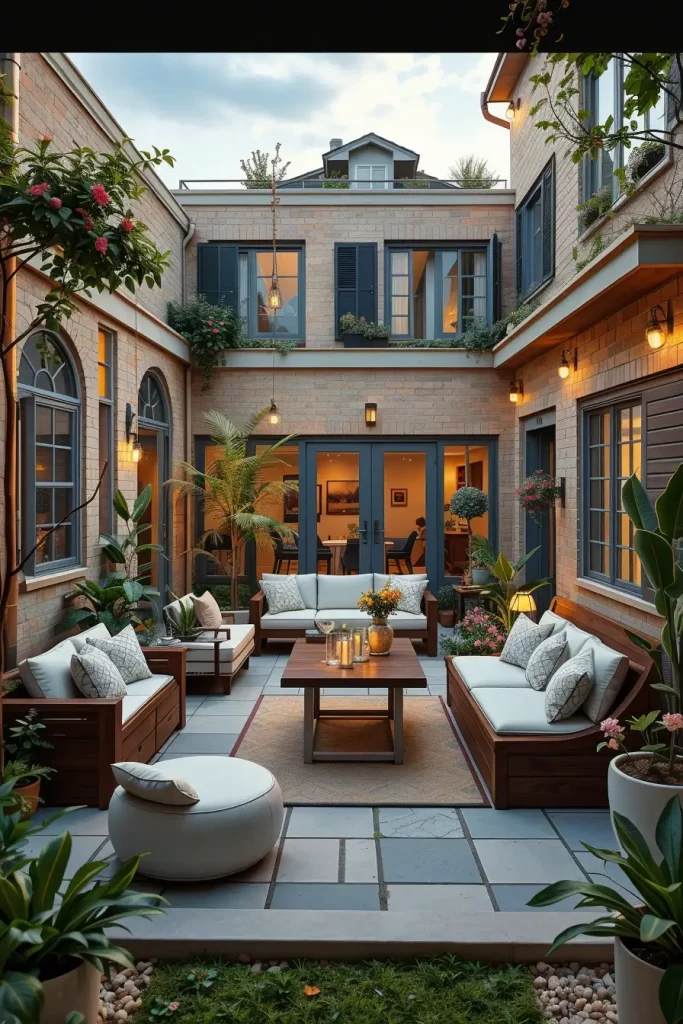
From my own experience, designers featured in Elle Decor often recommend prioritizing comfort over capacity in small entertaining spaces. I fully agree with this perspective. I have found that guests stay longer and engage more when seating feels intentional and relaxed, even if the group size is modest.
To enhance this section, I would add discreet power access or outdoor-rated outlets. This supports ambient lighting, music, or heating elements, making the courtyard more functional for hosting throughout different times of day.
Smart Design Tricks For Making Small Courtyard Gardens Feel Bigger
Making small courtyard gardens feel larger is one of the most important design challenges I address. In 2026, smart spatial strategies focus on visual continuity, vertical emphasis, and controlled simplicity. I rely on design tricks that expand perception rather than physical boundaries.
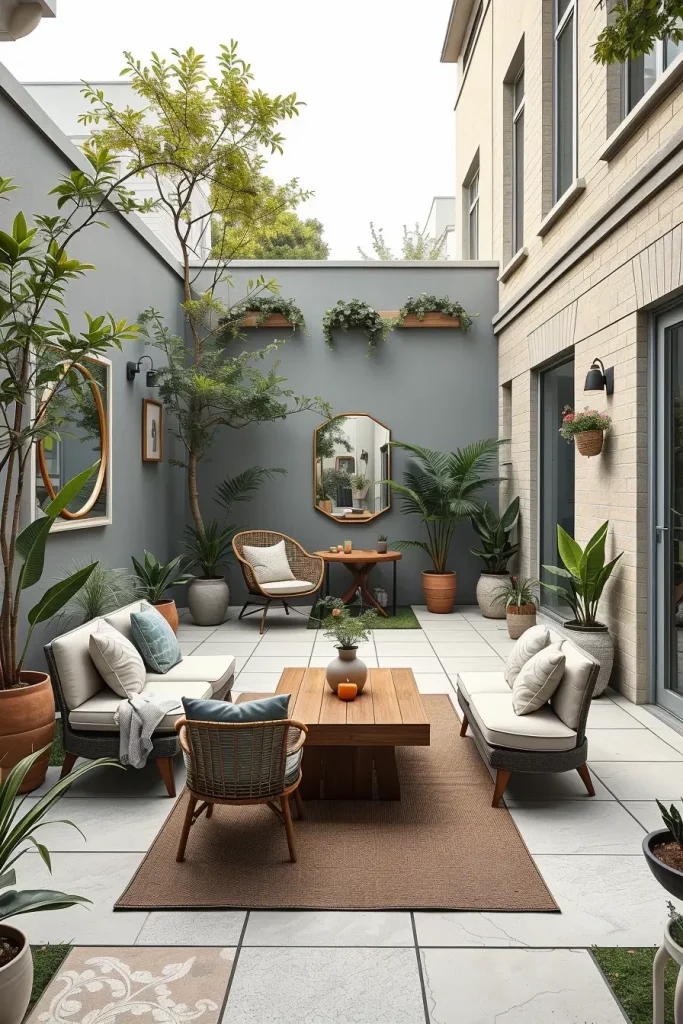
I frequently use large-format paving, consistent material palettes, and wall-mounted features to reduce visual clutter. Mirrors designed for outdoor use can reflect light and greenery, subtly extending the sense of space. Furniture with open frames or floating designs also helps maintain visual lightness.
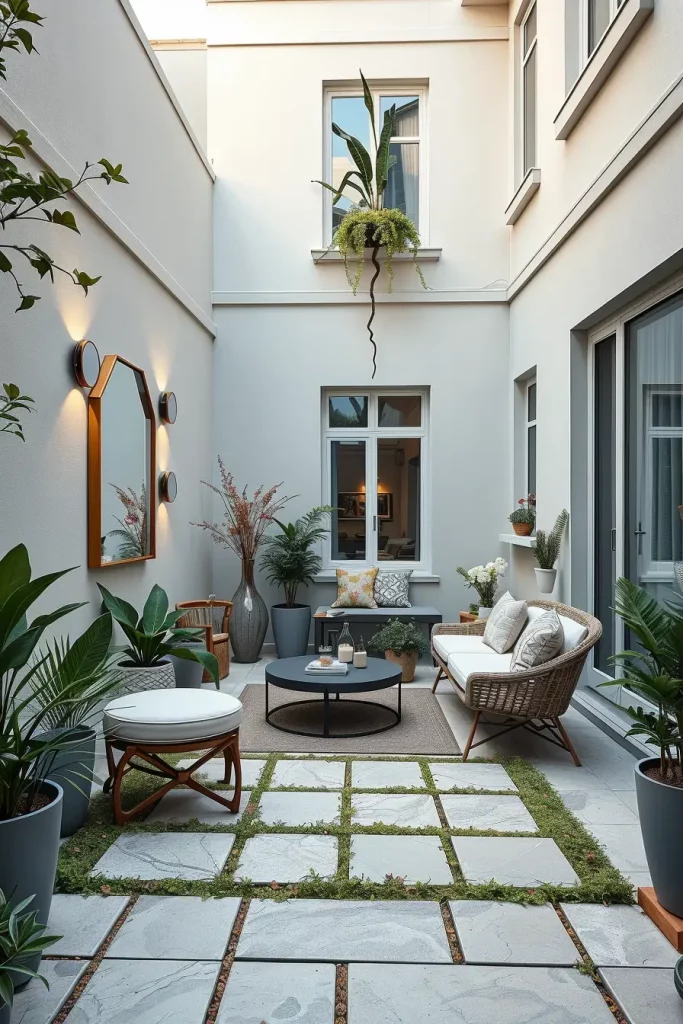
From my professional viewpoint, many architects writing for Dezeen emphasize the importance of uninterrupted sightlines. I have applied this advice in multiple projects, and it consistently results in courtyards that feel more open and breathable, even within tight dimensions.
What I would add to this section is careful consideration of color temperature in lighting. Cooler tones can visually recede walls at night, enhancing the illusion of depth without altering the physical layout.
Timeless Design Choices For Small Courtyard Gardens
Timeless design is especially valuable in small courtyard gardens, where trends can quickly overwhelm limited space. I focus on elements that age gracefully and remain relevant beyond seasonal or short-term styles. In 2026, timeless courtyards emphasize proportion, material quality, and thoughtful restraint.
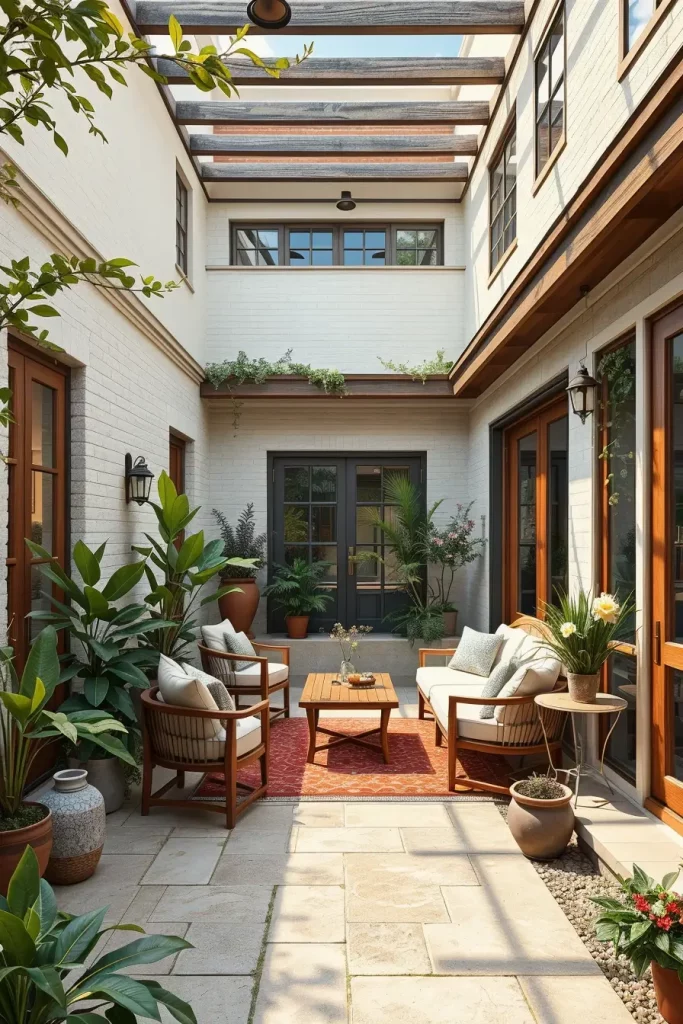
I often specify natural stone, wood, and neutral-toned metals for hardscape and furniture. These materials develop character over time and adapt well to evolving decor. Simple furniture silhouettes and classic planting schemes ensure that the courtyard remains visually calm and adaptable.
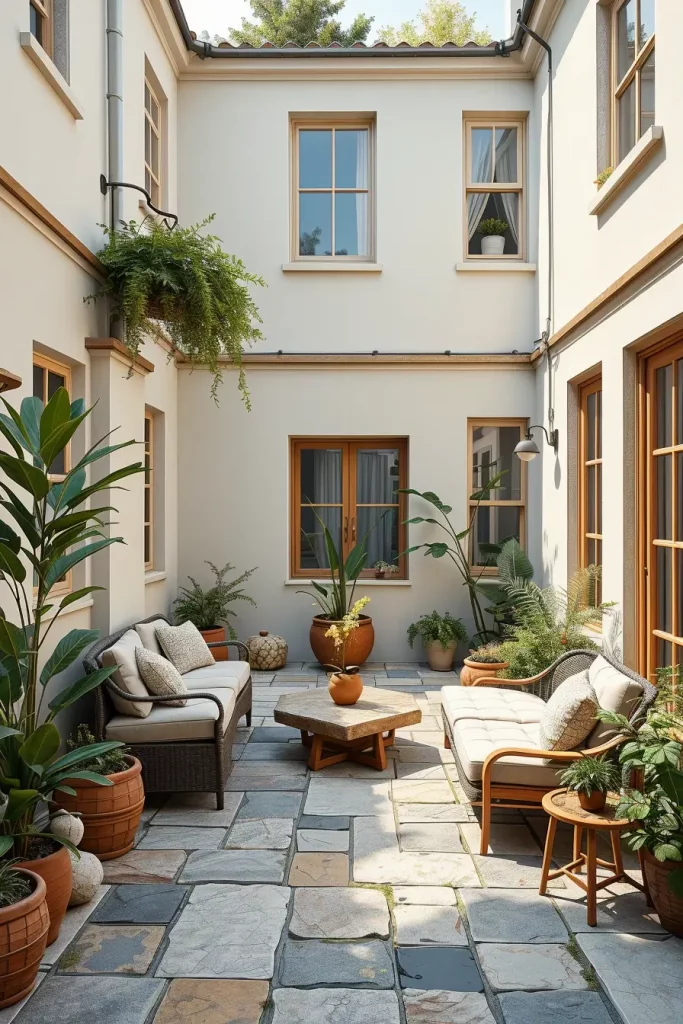
Based on my experience and insights from interior designers featured in House Beautiful, timeless spaces succeed because they prioritize comfort and function over novelty. I have seen how clients appreciate courtyards that feel grounded and familiar rather than trend-driven.
To strengthen this section, I would add a long-term maintenance plan, ensuring materials and plants are cared for properly. This protects the initial investment and preserves the courtyard’s appeal over many years.
The Future Of Small Courtyard Gardens Beyond 2026
Looking beyond 2026, I see small courtyard gardens becoming even more creative, unusual, and technologically integrated. These spaces will continue to evolve as essential parts of the home, offering privacy, wellness, and connection to nature within dense living environments.
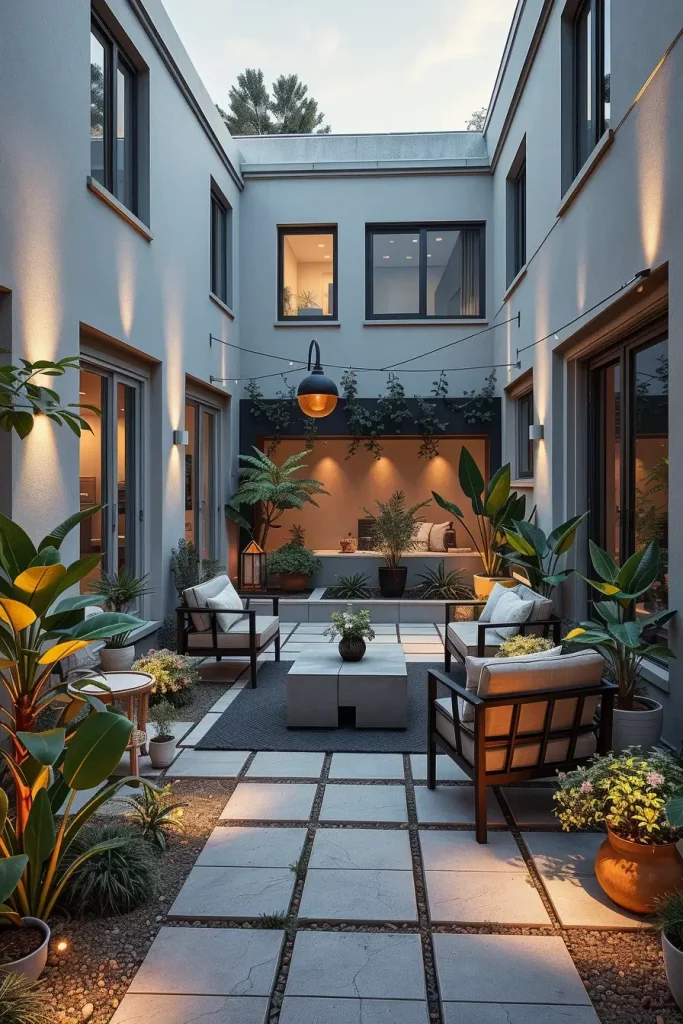
I expect future courtyards to incorporate smart irrigation, adaptive lighting, and modular furniture systems that respond to changing needs. Sustainable materials and low-impact landscaping will play a larger role, supporting long-term environmental responsibility without sacrificing style.
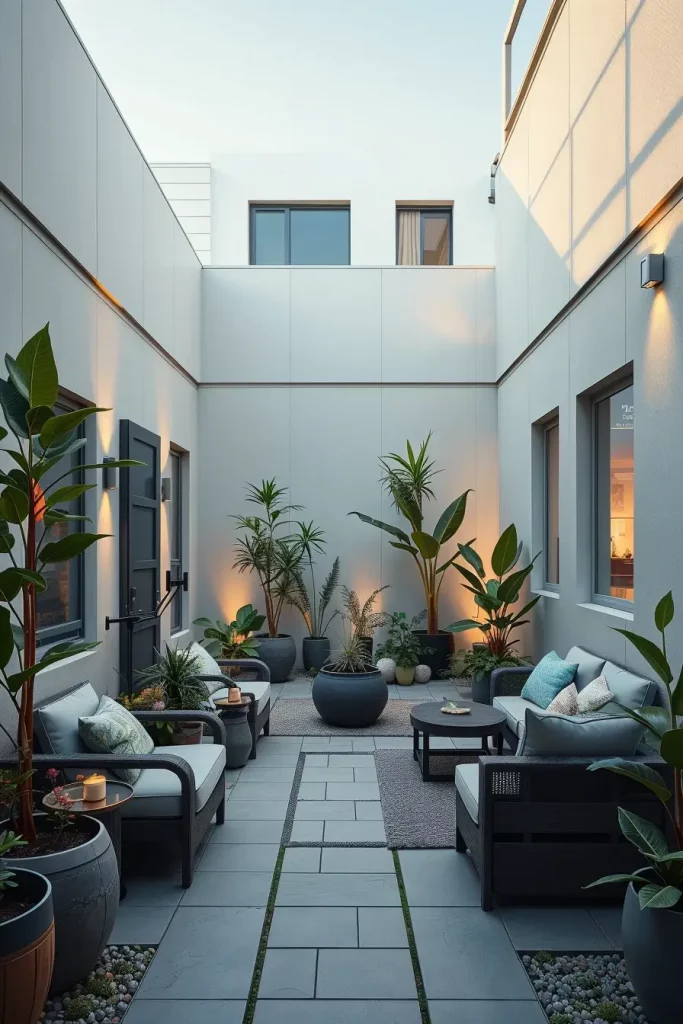
From my perspective, publications like The New York Times have highlighted a growing cultural shift toward outdoor wellness spaces. I have personally observed how clients increasingly view courtyards as places for mental restoration rather than decoration alone, reinforcing their long-term importance.
What I would add here is greater integration of sensory elements such as sound and scent. Subtle water features or aromatic plants can enhance the experience and support the evolving role of courtyards as personal retreats.
Small courtyard gardens in 2026 prove that limited space can still deliver powerful design impact. Through creative layouts, thoughtful details, and a focus on comfort and individuality, these compact outdoor areas become stylish retreats that reflect modern living. With the right balance of greenery, materials, and atmosphere, a small courtyard garden can feel unique, inviting, and effortlessly timeless—showing that great design is never about size, but about intention.