
61 Indoor – Outdoor Living Room 2026: Stylish Designer Spaces With Seamless Indoor–Outdoor Flow

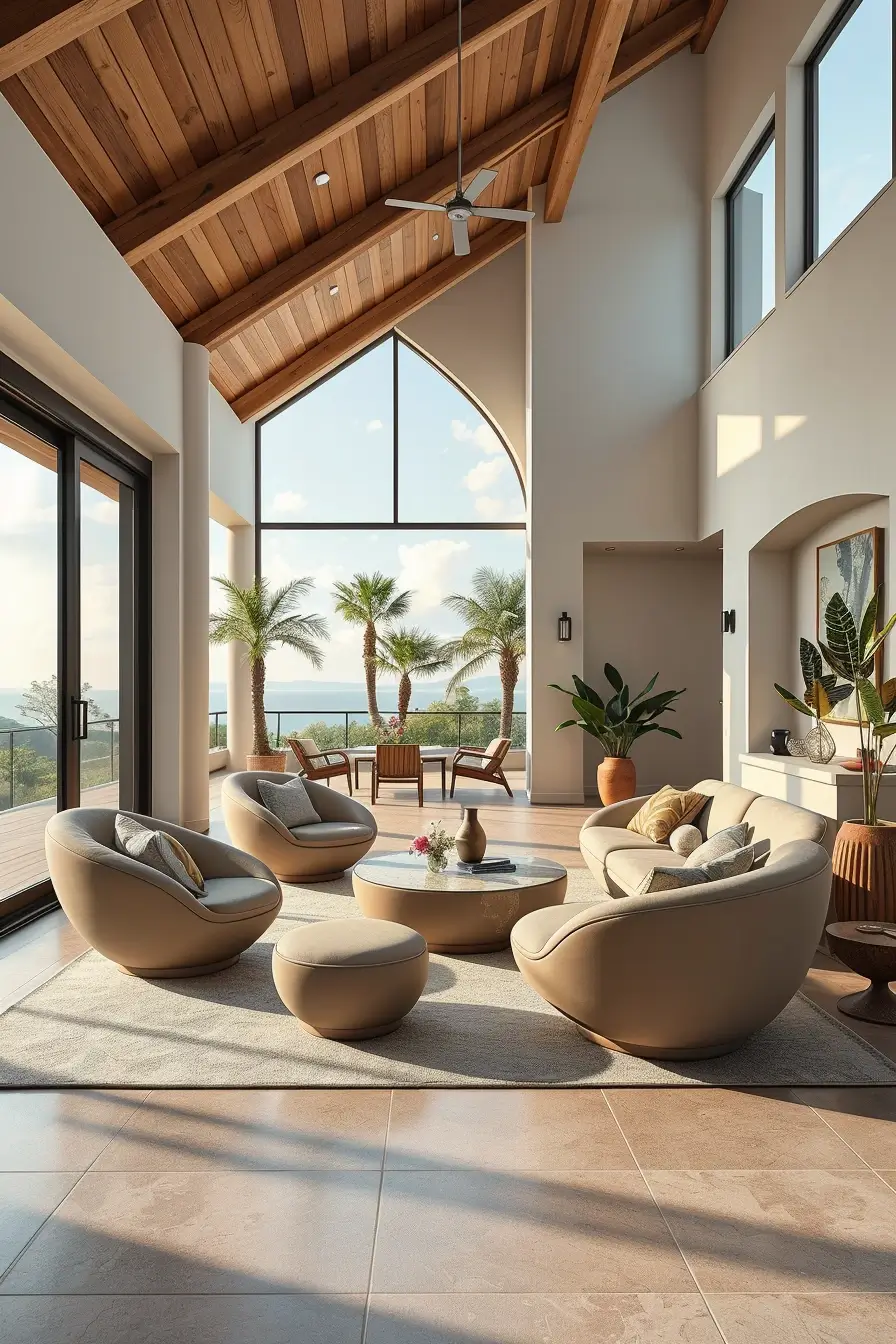
The indoor–outdoor living room of 2026 is no longer just a design trend — it is a new way of experiencing space, comfort, and modern living. In the coming year, living rooms are evolving into fluid environments where interior and exterior merge effortlessly, creating open, light-filled spaces that feel both luxurious and natural. Architectural boundaries dissolve through expansive glass walls, curved layouts, and seamless transitions that invite the outdoors in while maintaining a refined indoor atmosphere.
What defines the indoor–outdoor living room in 2026 is its focus on designer individuality and sculptural elegance. Streamlined sofas, oval coffee tables, and organically shaped lounge chairs take center stage, transforming furniture into functional art. Natural materials, innovative textures, and soft neutral palettes are elevated with bold accents and thoughtful lighting, resulting in spaces that feel modern, stylish, and deeply personal. This article explores the most creative, unique, and forward-thinking indoor–outdoor living room ideas of 2026, showcasing how design, architecture, and furniture come together to redefine contemporary living.
Defining The 2026 Indoor–Outdoor Living Room Aesthetic
I see the 2026 indoor–outdoor living room aesthetic as a thoughtful balance between architectural clarity and emotional comfort. This design approach emphasizes openness, visual flow, and a continuous dialogue between interior and exterior zones. Large openings, unified flooring materials, and carefully planned sightlines allow the living room to extend naturally toward terraces, gardens, or courtyards, making daily life feel less confined and more connected to the outdoors.
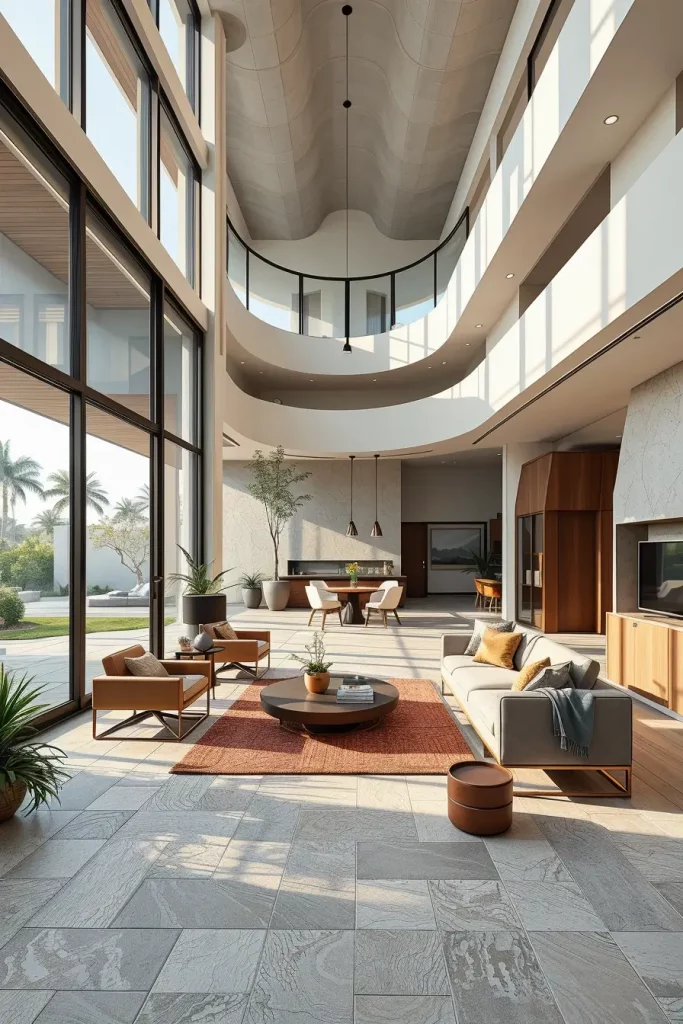
When I design these spaces, I focus on a cohesive material palette that works in both environments. Stone, microcement, engineered wood, and high-performance textiles help maintain consistency while ensuring durability. Furniture is selected to support both relaxation and social interaction, with proportions that feel generous but never overwhelming in open-plan settings.
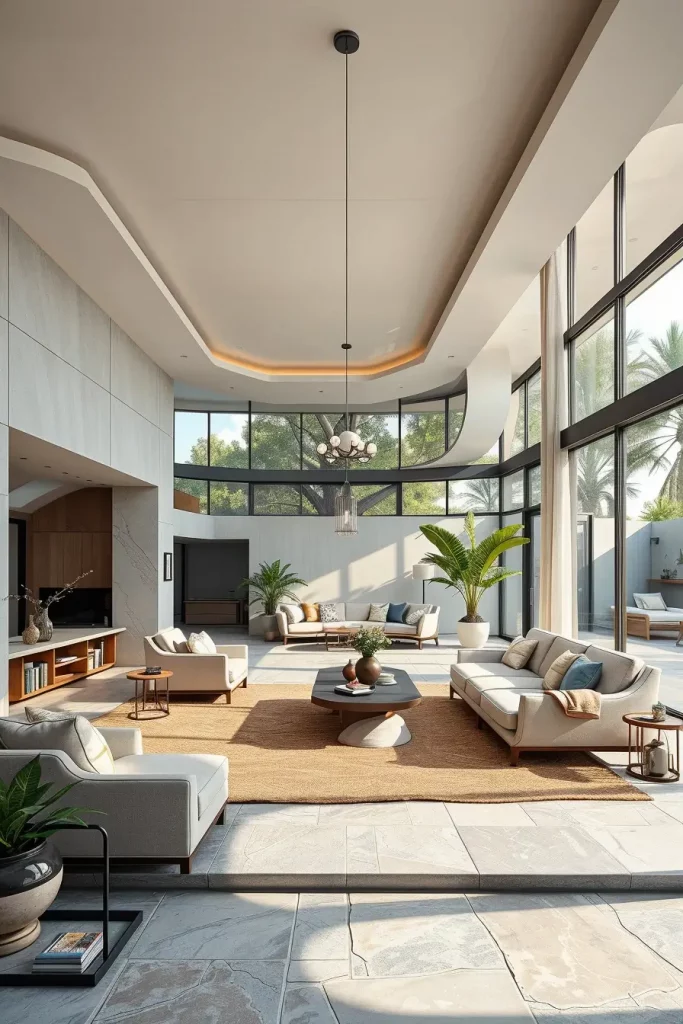
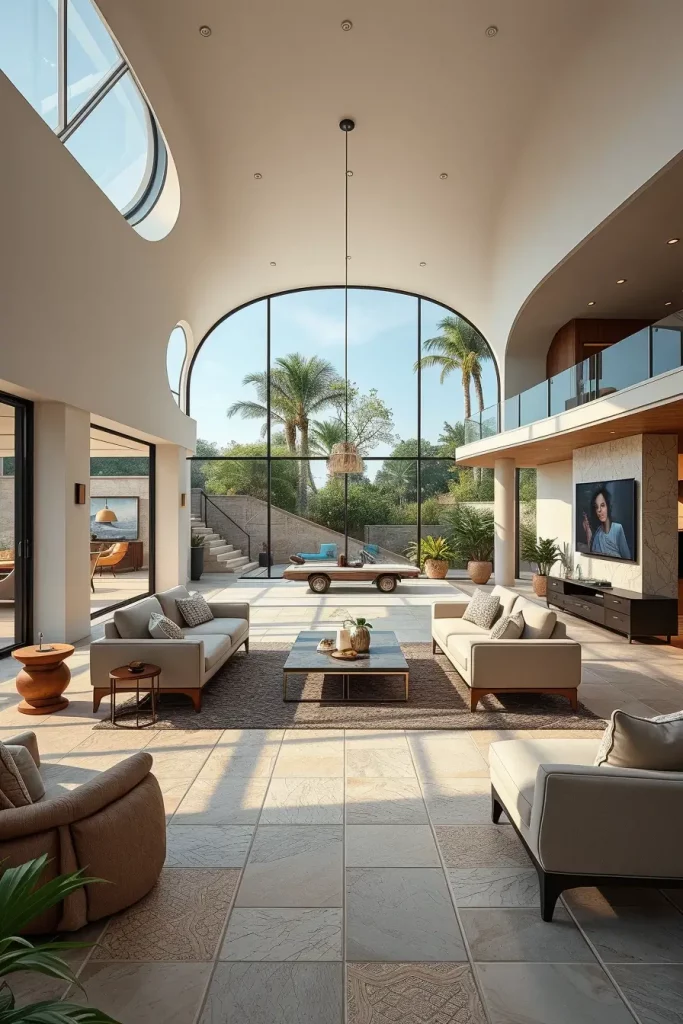
From my professional perspective, this aesthetic reflects a broader shift highlighted by publications like Architectural Digest, which note that homeowners now prioritize adaptable, wellness-driven spaces. I find that defining the aesthetic early helps avoid fragmented design decisions and ensures the living room feels intentional rather than transitional.
Seamless Transitions Between Interior And Exterior Spaces
In 2026, seamless transitions are no longer optional, they are foundational. I design indoor–outdoor living rooms where thresholds almost disappear, using retractable glass walls, pivot doors, or floor-to-ceiling sliding panels. These solutions improve ventilation, daylight access, and usability, especially in homes designed for entertaining or multigenerational living.
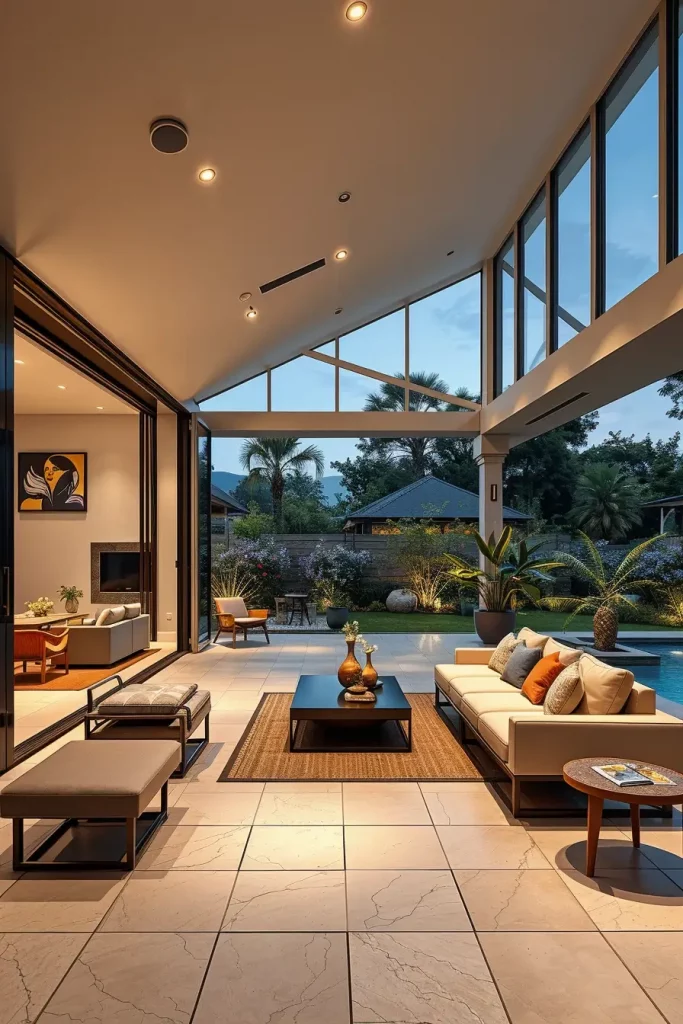
I carefully select door systems with slim profiles and concealed tracks to preserve visual continuity. Flooring often extends from inside to outside with minimal level changes, which improves accessibility and reinforces the feeling of one unified space. Outdoor rugs, weather-resistant sofas, and integrated lighting further blur the line between interior and exterior living zones.
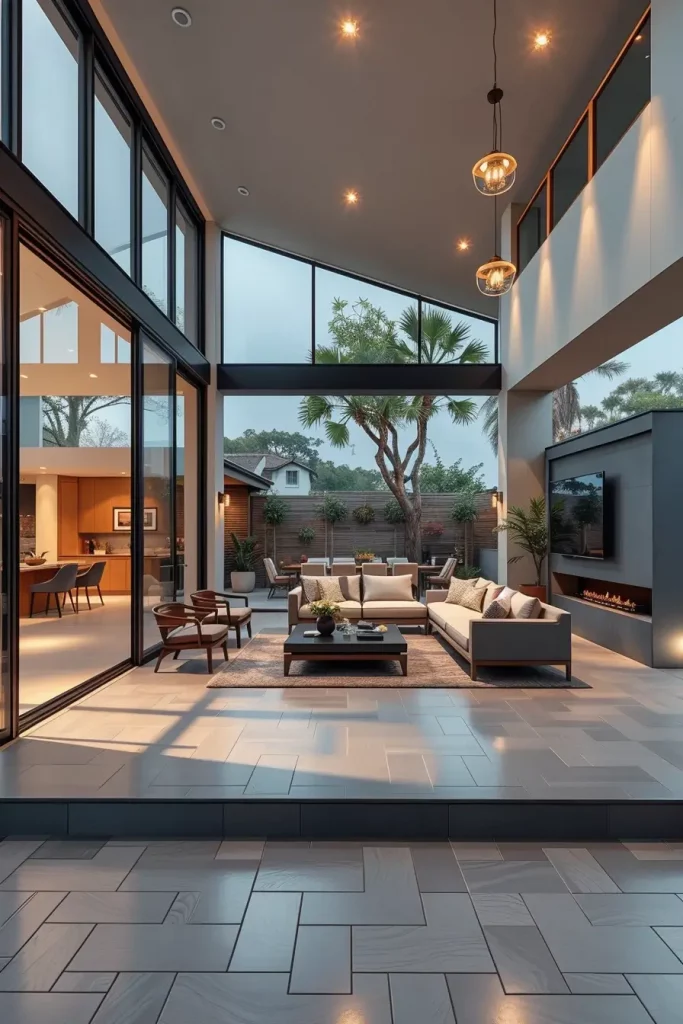
Based on my experience and guidance from US-based design studios like Olson Kundig, successful transitions rely on precision detailing rather than decoration. When done correctly, these spaces function effortlessly year-round and adapt easily to changing seasons and lifestyles.
Curved Architecture As A Signature Of 2026 Living Rooms
Curved architecture is one of the most defining elements I associate with indoor–outdoor living rooms in 2026. Soft, flowing walls and rounded openings replace rigid angles, creating a sense of movement and calm. These curves guide circulation naturally between indoor seating areas and outdoor lounges, improving both comfort and spatial logic.
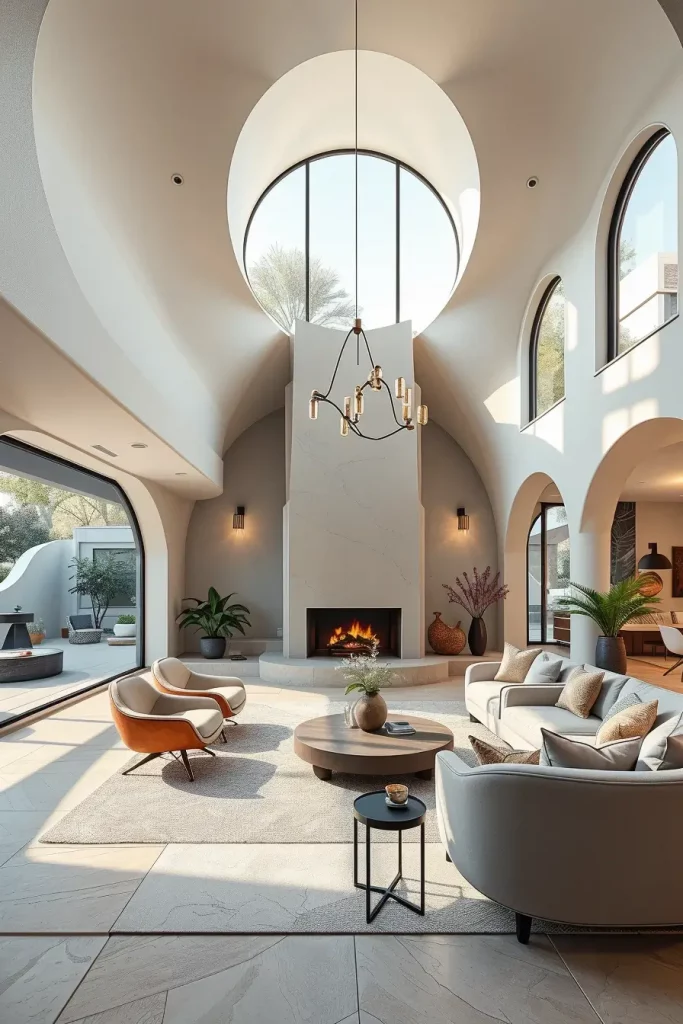
I often integrate curved glass panels, rounded ceiling transitions, and sculptural structural elements to enhance this effect. Built-in benches, curved fireplaces, and arched transitions not only add visual interest but also improve ergonomics by supporting relaxed postures and informal gatherings.
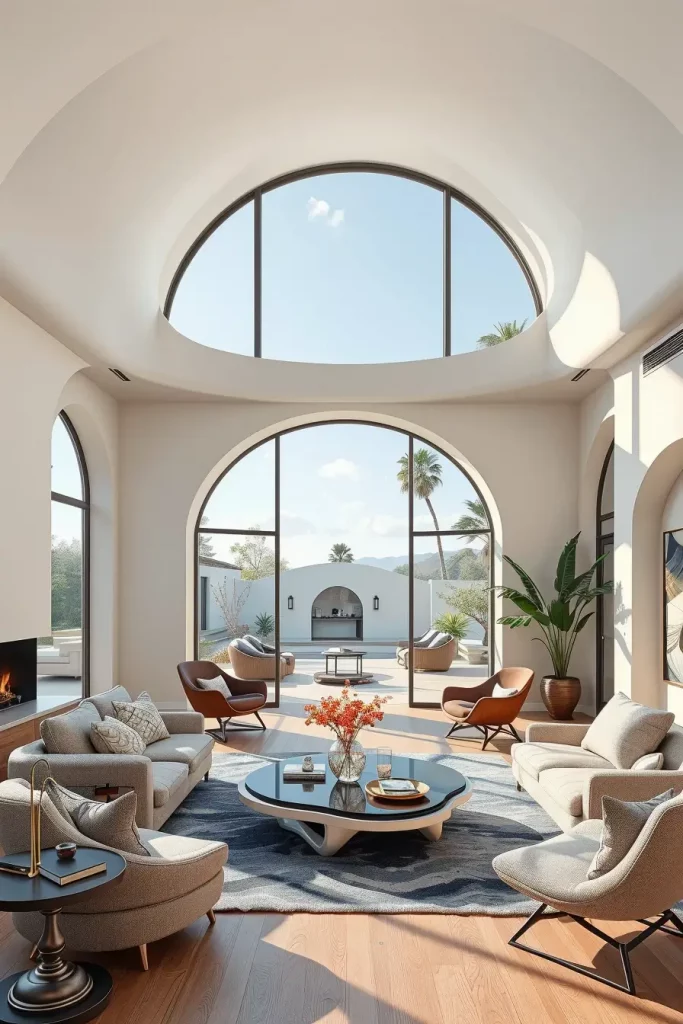
In my opinion, this approach aligns with insights from Dezeen and Interior Design Magazine, which highlight biophilic and human-centered forms as key trends. Curved architecture feels more intuitive and welcoming, especially when paired with natural light and outdoor views.
Oval And Streamlined Layouts For Fluid Living Spaces
Oval and streamlined layouts help indoor–outdoor living rooms feel intuitive and adaptable. I use these layouts to eliminate visual obstacles and create natural zones without physical barriers. Seating arrangements flow around central focal points like fireplaces, coffee tables, or outdoor vistas, encouraging conversation and movement.
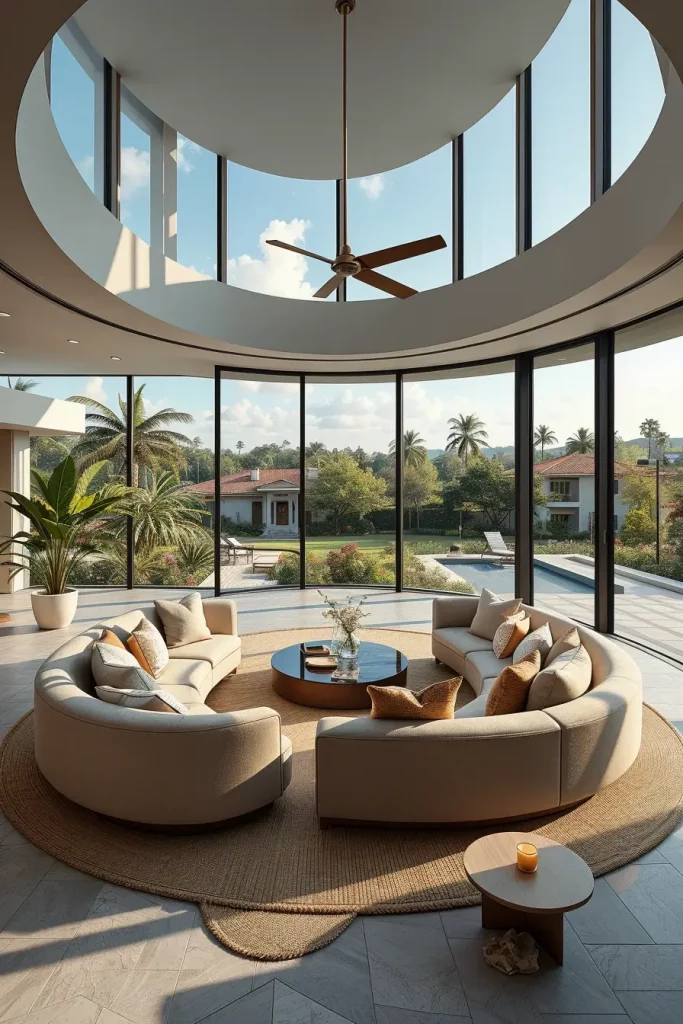
Furniture placement is critical here. I favor oval rugs, rounded sectionals, and low-profile tables that reinforce the geometry of the space. These choices prevent harsh visual interruptions and allow the eye to travel smoothly from interior to exterior, enhancing the overall sense of openness.
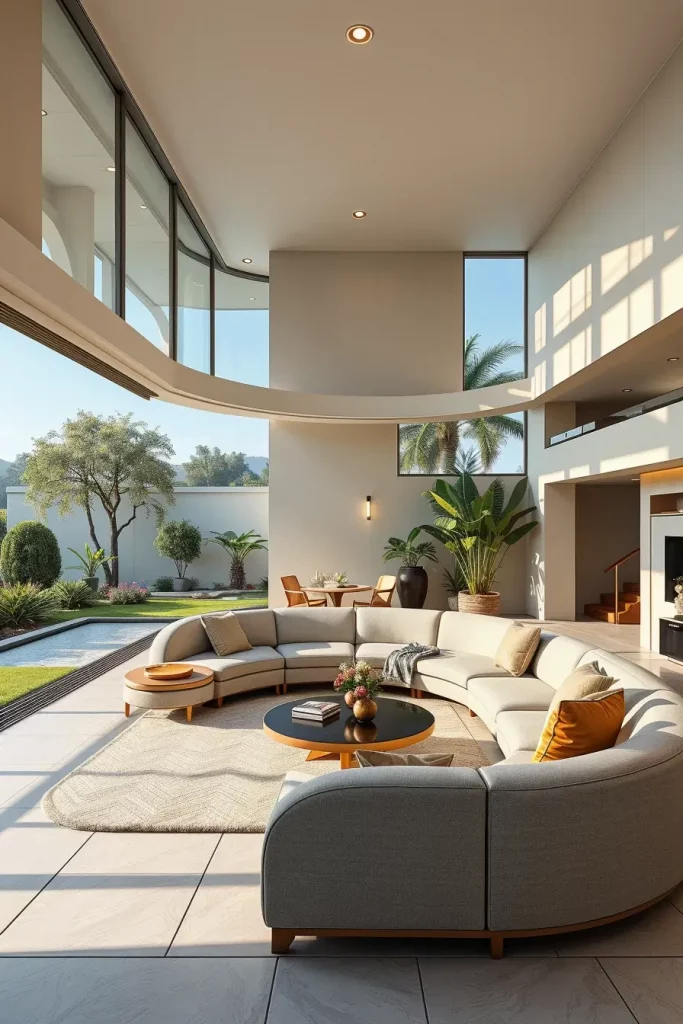
From my experience, streamlined layouts perform exceptionally well in homes where indoor and outdoor spaces are used simultaneously. Designers featured in Dwell often emphasize that fluid layouts support modern lifestyles by accommodating work, relaxation, and socializing within a single cohesive environment.
Designer Furniture Shaping Indoor–Outdoor Living Rooms
Designer furniture plays a decisive role in shaping indoor–outdoor living rooms in 2026. I approach furniture selection as an architectural tool rather than an afterthought. Pieces are chosen for their sculptural quality, comfort, and ability to withstand changing environmental conditions while maintaining a refined appearance.
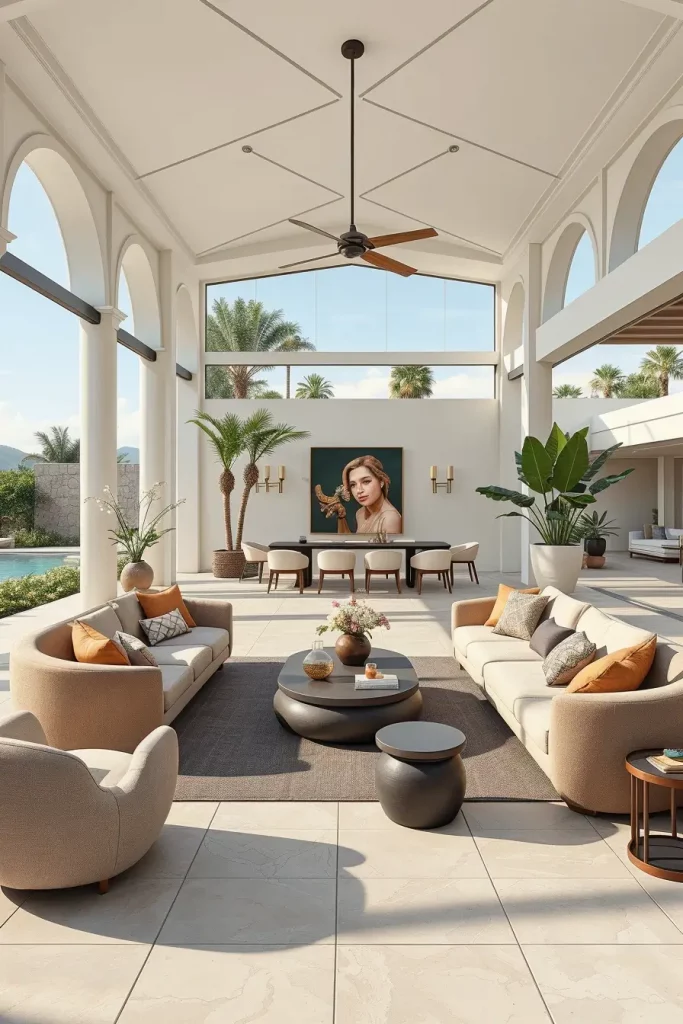
I prioritize sofas, tables, and storage elements with organic silhouettes, tactile finishes, and modular flexibility. Upholstery designed for dual use, along with stone or composite bases, ensures longevity and visual harmony across indoor and outdoor zones. Each piece contributes to a layered yet uncluttered composition.
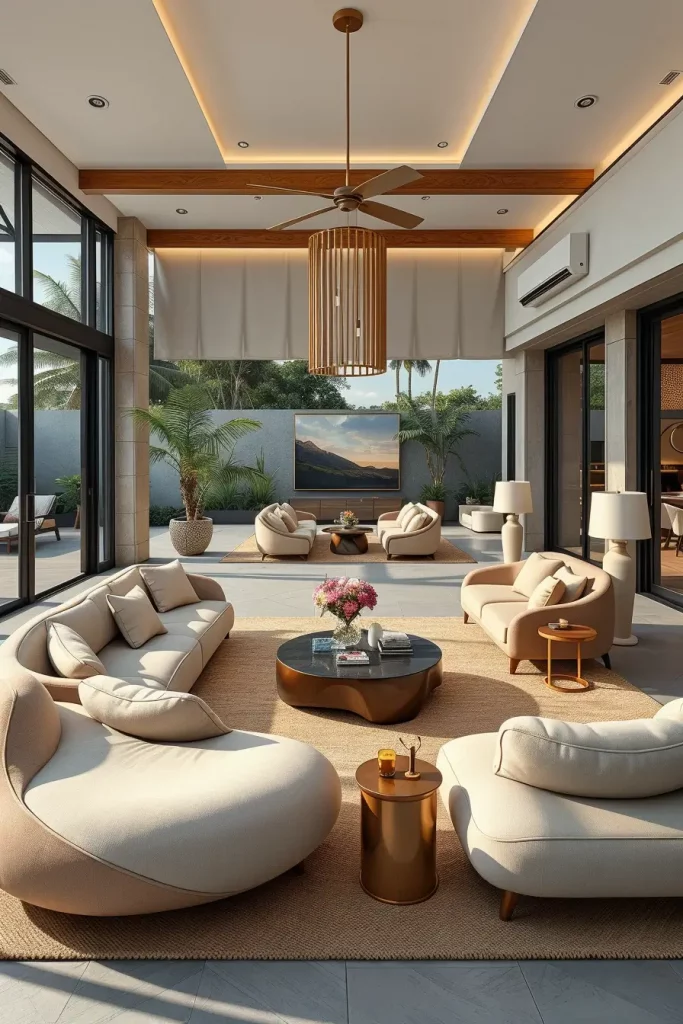
In my professional view, investing in well-designed furniture elevates the entire space. Brands frequently featured in Elle Decor emphasize that timeless forms and high-quality materials reduce the need for constant updates, making these living rooms both sustainable and enduring.
Sculptural Sofas Designed For Indoor–Outdoor Use
When I think about indoor–outdoor living rooms in 2026, sculptural sofas immediately come to mind as a defining element. These sofas are no longer simple seating solutions; they act as visual anchors that unify interior and exterior zones. Their flowing, curved forms help soften architectural lines and support the overall idea of openness while remaining highly functional for everyday use.
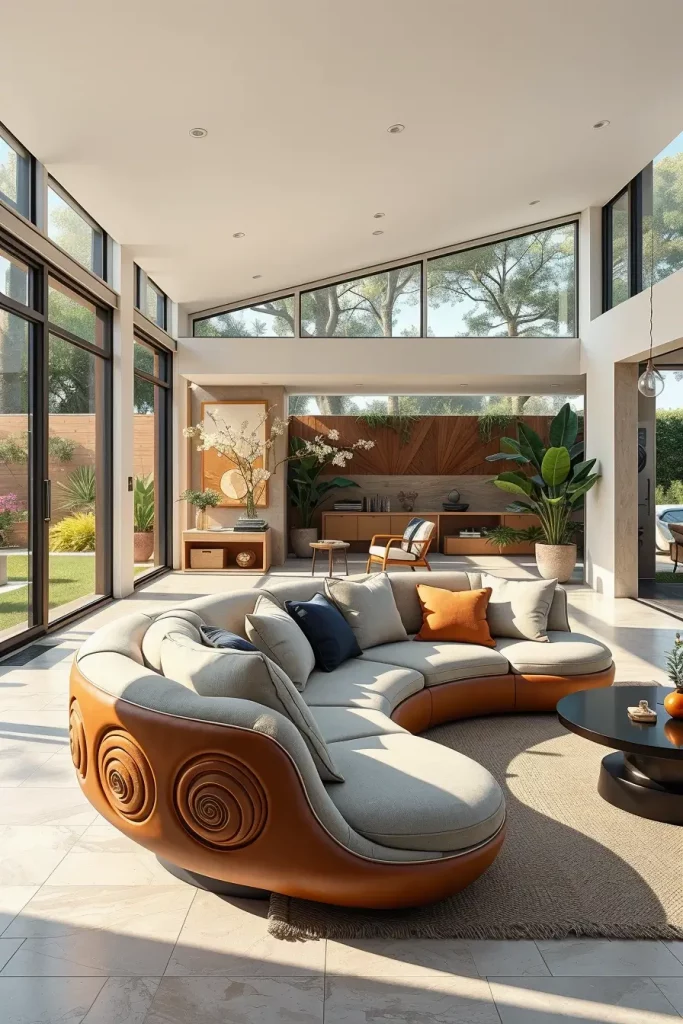
I choose sculptural sofas with rounded backs, integrated chaise elements, and weather-resistant upholstery that performs equally well indoors and outdoors. Materials such as performance fabrics, molded foam bases, and powder-coated frames ensure durability without compromising aesthetics. These pieces are designed to be viewed from all angles, which is essential in open-plan layouts where furniture is visible from multiple perspectives.
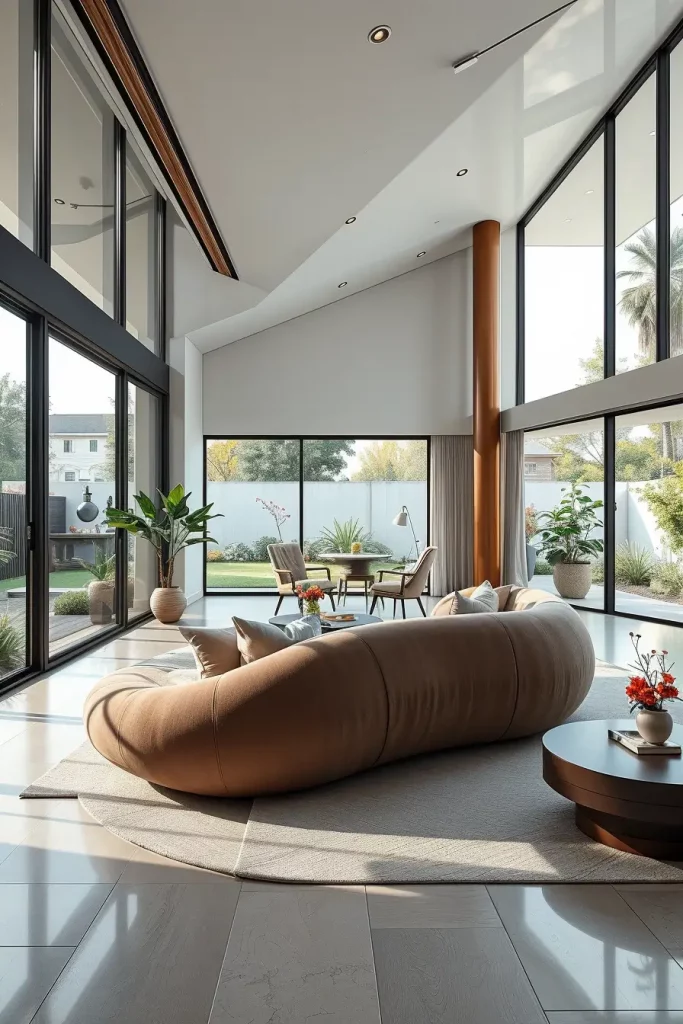
From my experience, designers featured in Interior Design Magazine often emphasize that sculptural seating encourages slower, more relaxed living. I agree with this approach, as these sofas invite people to linger, converse, and truly use the space as intended rather than treating it as a transitional zone.
In this section, what could be further added is a focus on integrated side tables or built-in lighting within sofa designs, which would enhance both functionality and visual cohesion in large indoor–outdoor living rooms.
Modular Seating Concepts For Flexible Living Areas
Modular seating is one of the most practical solutions I rely on when designing indoor–outdoor living rooms for 2026. These concepts allow spaces to adapt effortlessly to different scenarios, from quiet evenings to larger social gatherings. The flexibility of rearranging modules supports the evolving way people use their living environments.
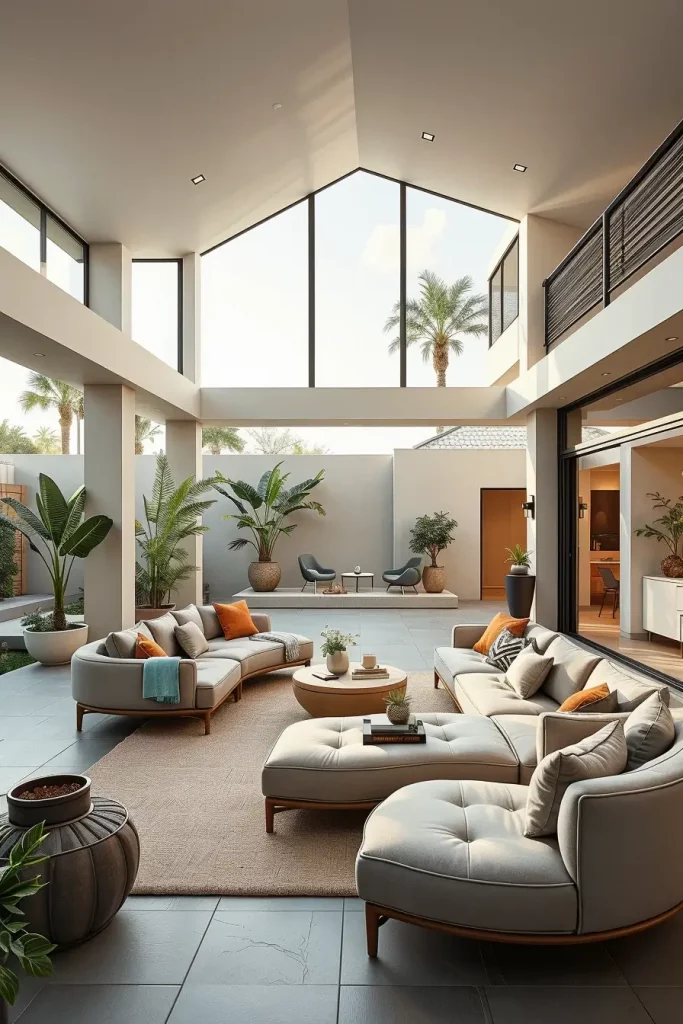
I prefer modular systems with curved or softly angled sections that can be reconfigured without disrupting the visual flow of the room. Individual modules often include armless seats, corner units, and ottomans that work both as seating and surfaces. High-quality connectors and weighted bases ensure stability, even when layouts change frequently.
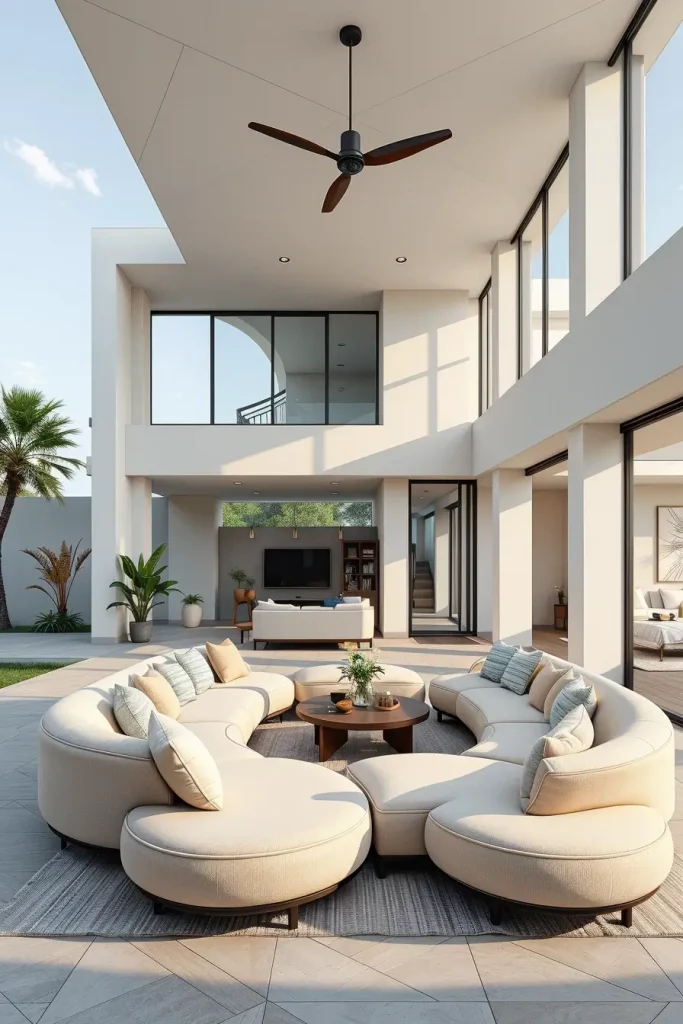
In my professional opinion, modular seating aligns perfectly with insights from Dwell, which highlights adaptability as a core principle of future-ready interiors. I find that clients appreciate the long-term value of furniture that grows and changes with their lifestyle.
What is sometimes missing in modular setups is integrated storage within seating elements, which could further improve functionality without adding visual clutter.
Low-Profile Furniture That Enhances Visual Continuity
Low-profile furniture plays a critical role in maintaining visual continuity between indoor and outdoor living spaces. In 2026, I use lower seating heights and streamlined silhouettes to keep sightlines open and uninterrupted. This approach makes the entire living room feel more expansive and connected to the surrounding environment.
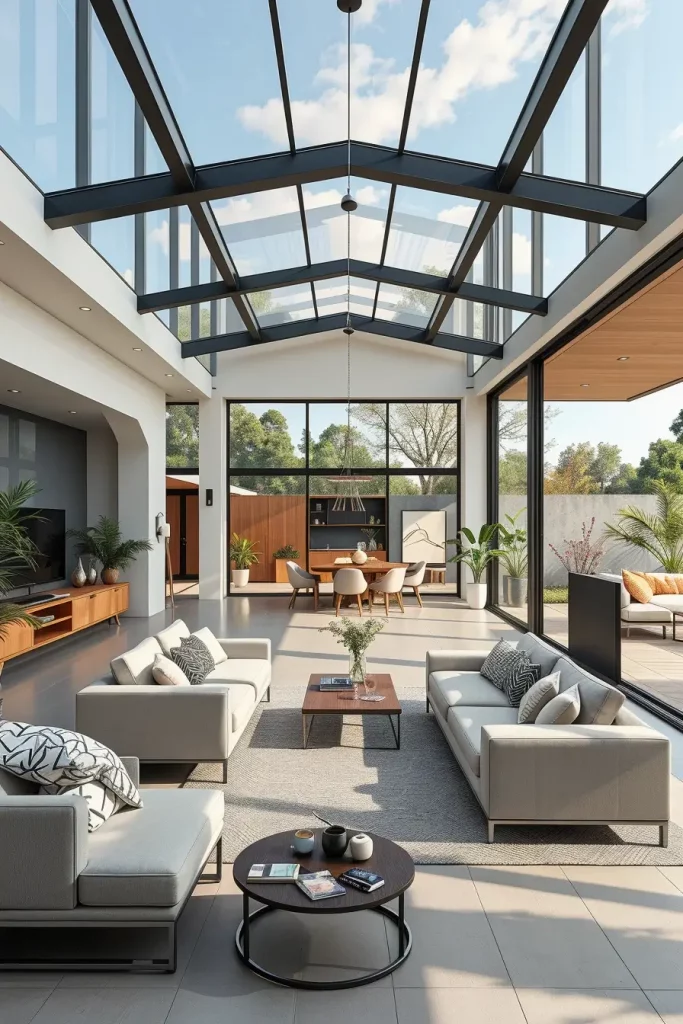
I select sofas, lounge chairs, and tables with reduced visual weight, often featuring slim bases and recessed legs. These elements prevent furniture from dominating the space and allow architectural features, views, and natural light to remain the focal points. Low-profile designs also pair well with curved layouts, reinforcing the sense of flow.
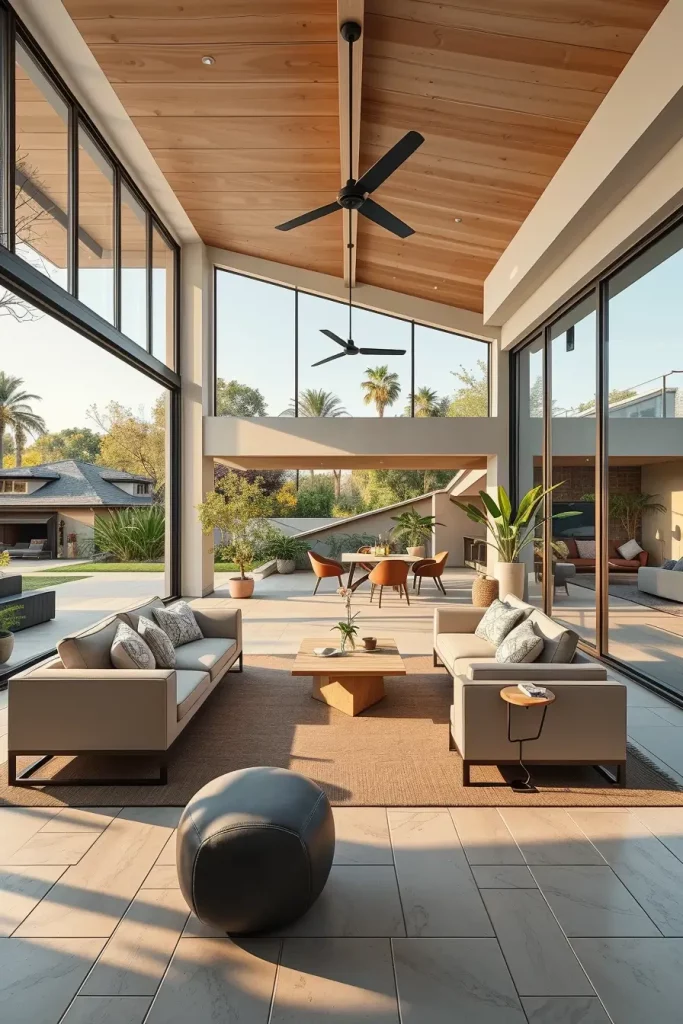
Based on my experience and recommendations from Architectural Digest, lowering the visual mass of furniture is especially effective in homes with large glazing systems. It enhances the indoor–outdoor connection while maintaining comfort and usability.
To strengthen this concept further, incorporating low integrated platforms or sunken seating zones would add depth and architectural interest to the living room design.
Statement Lounge Chairs With Organic Silhouettes
Statement lounge chairs with organic silhouettes are essential accents in indoor–outdoor living rooms of 2026. I use these pieces to introduce personality and sculptural interest without overwhelming the space. Their soft curves and enveloping forms contrast beautifully with expansive glazing and open layouts.
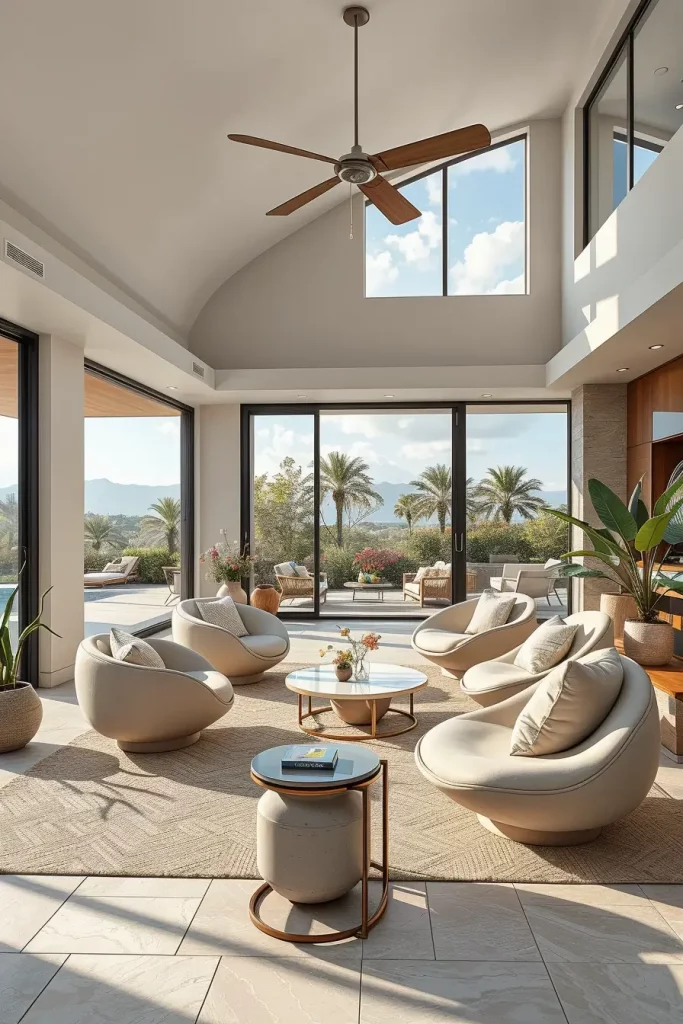
I look for lounge chairs crafted from molded composites, bent wood, or upholstered shells that support both comfort and durability. Positioned near glass walls or transitional zones, these chairs serve as visual pauses that invite relaxation while reinforcing the overall design language of curved and streamlined forms.
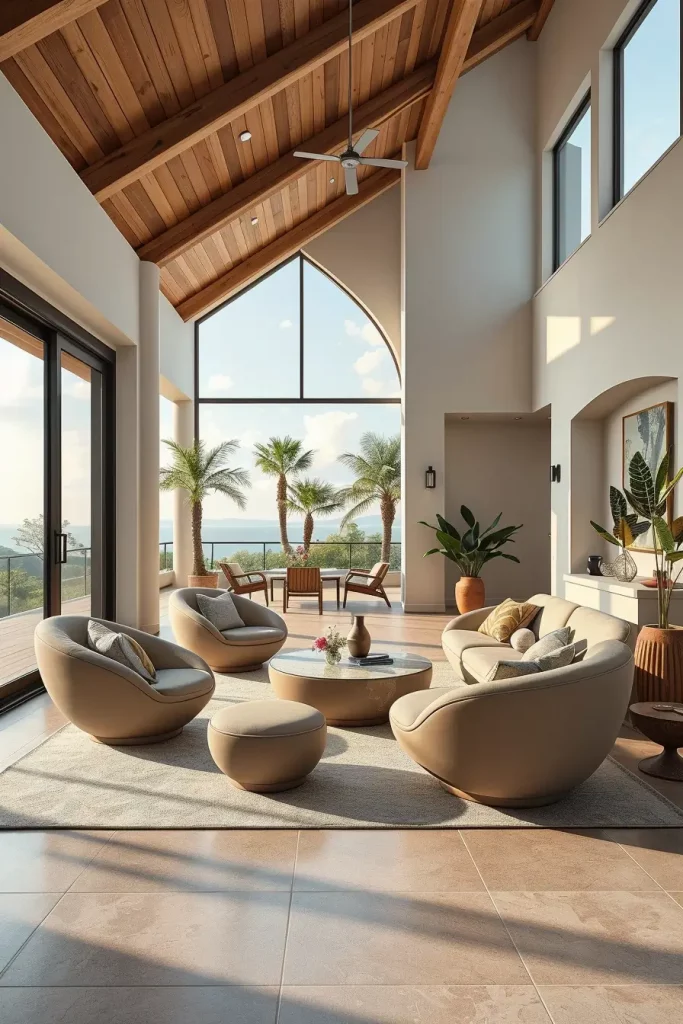
From my perspective, designers frequently cited in Elle Decor stress the importance of statement pieces that feel timeless rather than trendy. I share this view, as organic lounge chairs tend to age gracefully and remain relevant as interiors evolve.
An additional layer that could enhance this section is the thoughtful use of accent lighting to highlight these chairs as focal points during evening hours.
Creative Coffee Tables Blending Art And Function
Creative coffee tables are where art and function truly intersect in indoor–outdoor living rooms of 2026. I see them as central elements that ground seating arrangements while adding sculptural character. Their forms often echo the curved architecture and oval layouts found throughout the space.
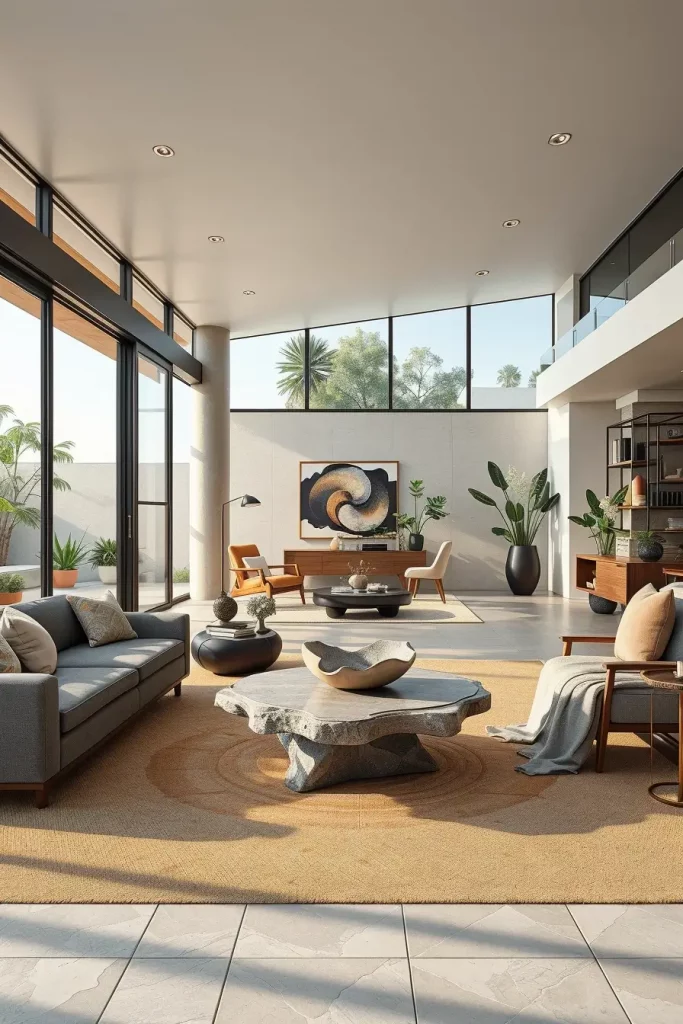
I favor coffee tables made from stone, terrazzo, cast glass, or composite materials that can withstand temperature changes and humidity. Many designs feature asymmetrical shapes or layered surfaces, allowing them to function both as practical surfaces and visual statements within the living room.
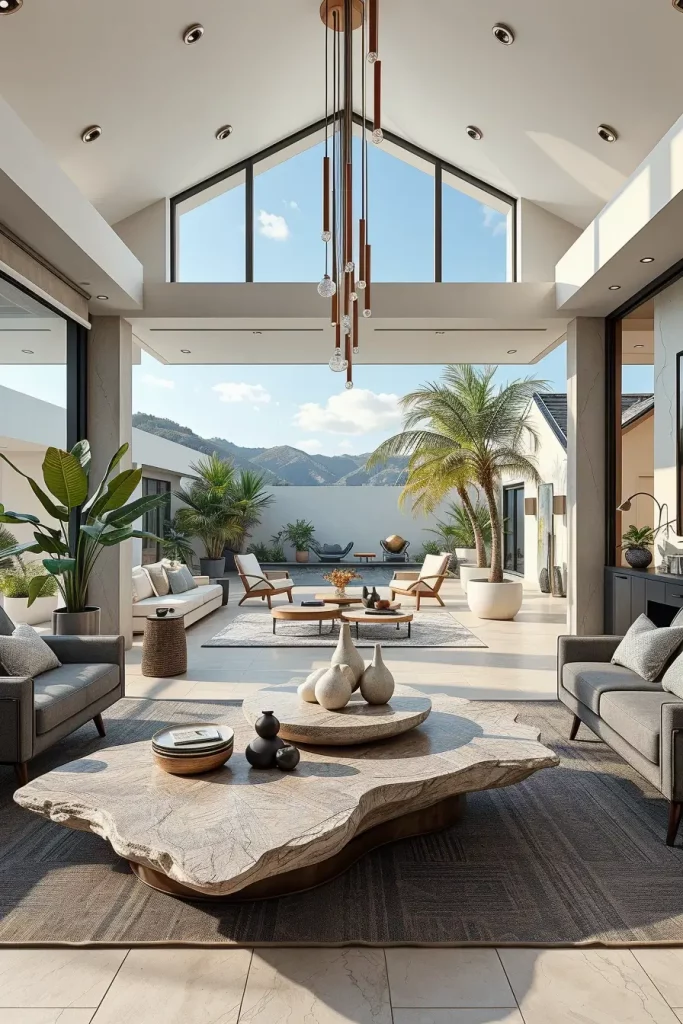
In my experience, design experts from Dezeen often highlight multifunctional furniture as a response to open-plan living. I find that coffee tables designed with integrated storage or modular components significantly enhance usability without detracting from aesthetics.
What could further elevate this element is the integration of subtle texture contrasts, such as combining matte and polished finishes, to add depth while maintaining a cohesive design language.
Materials That Blur The Line Between Indoors And Outdoors
I see 2026 as a year where materials become the primary connector between interior and exterior living rooms. The goal is not contrast but continuity. When the same textures, finishes, and surfaces appear both inside and outside, the space feels larger and more fluid. I focus on materials that are durable enough for outdoor exposure yet refined enough for interior comfort, creating a practical and visually cohesive environment.
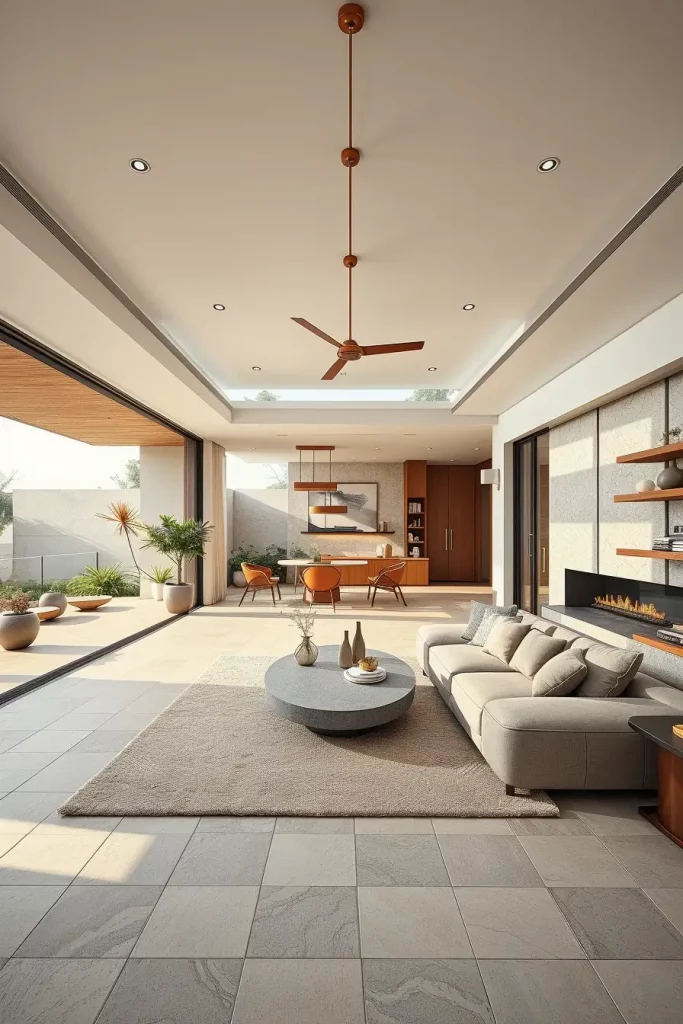
In these spaces, I prioritize large-format porcelain, engineered stone, and weather-resistant wood composites that extend from the living room floor to the terrace. Curved sectional sofas with performance upholstery, rounded coffee tables in stone or resin, and streamlined shelving units help soften transitions. Every piece is chosen for tactile comfort and long-term performance, ensuring the design remains functional without sacrificing elegance.
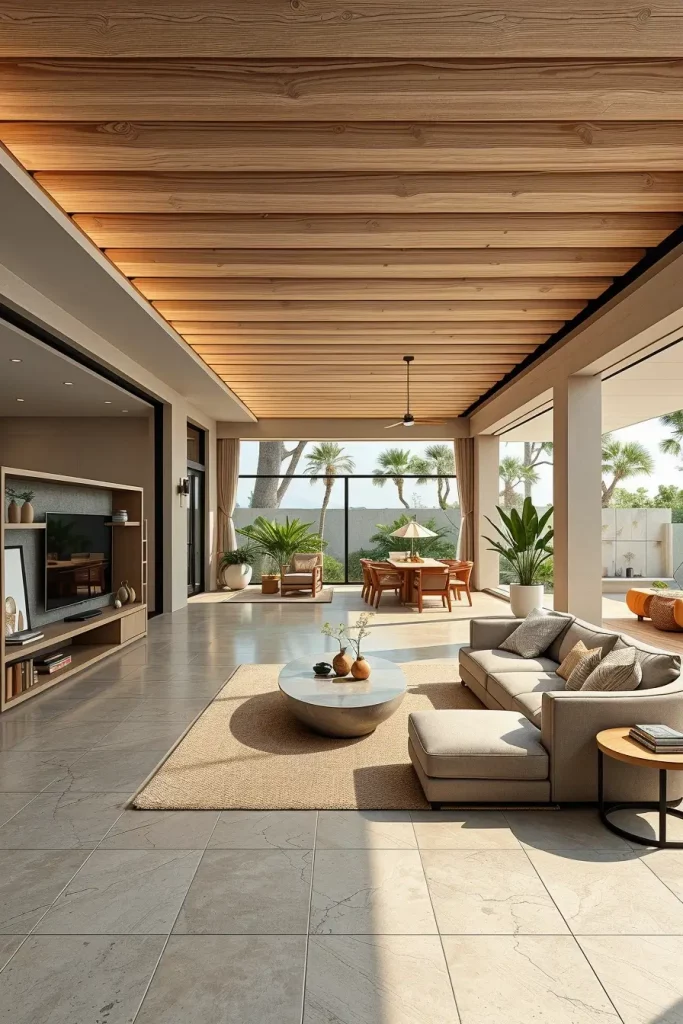
From my experience, designers featured in Architectural Digest and Dezeen emphasize that material continuity is one of the most effective ways to achieve timeless indoor-outdoor design. I agree with this approach because it avoids visual clutter and allows architectural elements to take the lead. A calm, unified material palette makes even bold, sculptural furniture feel intentional rather than excessive.
What I would add here is a stronger focus on acoustic materials that work both indoors and outdoors. In 2026, sound comfort is becoming just as important as visual comfort, especially in open-plan living rooms connected to nature.
Natural Stone And Textured Surfaces In 2026 Designs
Natural stone plays a central role in indoor-outdoor living room 2026 concepts because it brings authenticity and permanence to modern spaces. I use stone not as decoration but as a structural and visual anchor that grounds the design. Textured surfaces add depth while remaining neutral enough to support evolving furniture and decor trends.
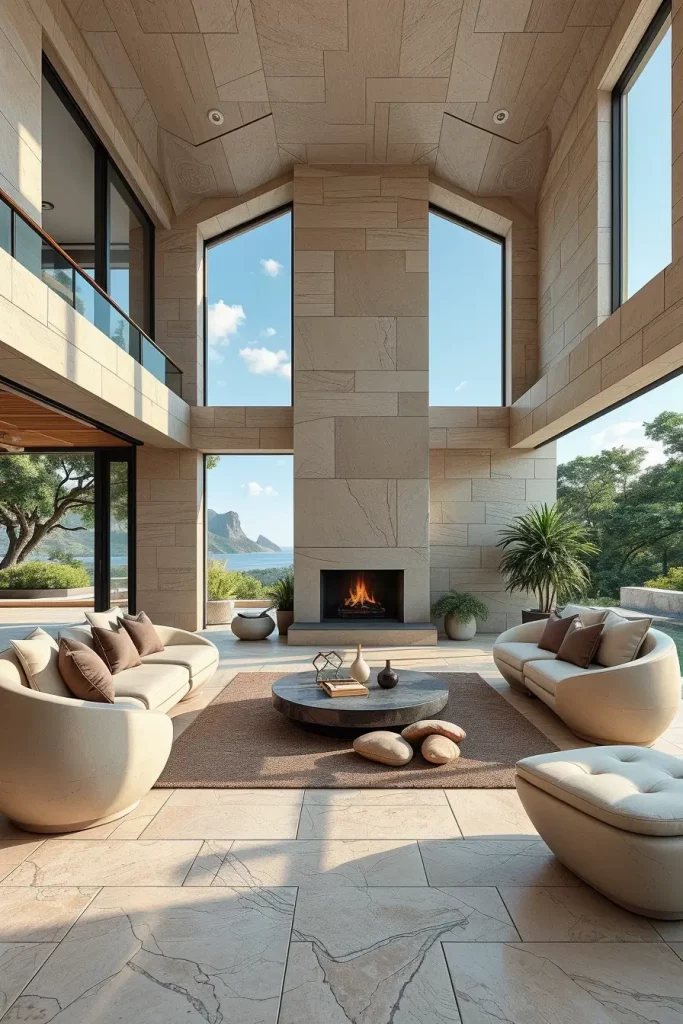
In practice, I integrate travertine feature walls, honed limestone floors, and sculptural stone fireplaces that visually connect indoor seating areas with outdoor lounges. Oval stone coffee tables, curved stone benches, and integrated planters reinforce organic flow. These elements work together to create a tactile experience that feels intentional and calming.
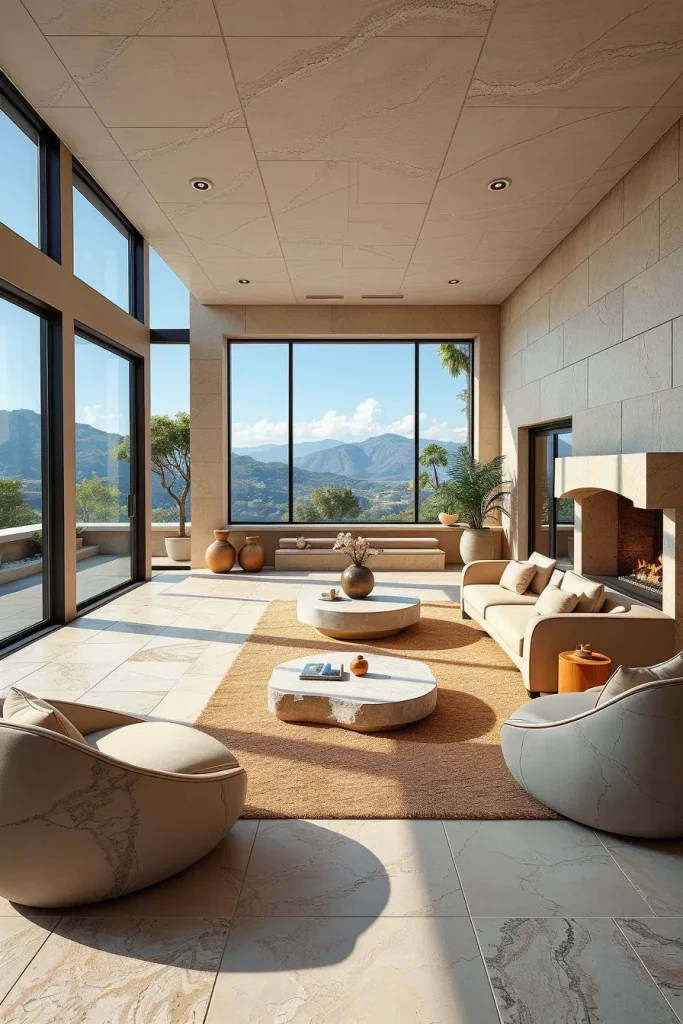
I often reference guidance from designers like Kelly Wearstler, who advocates for expressive but restrained use of natural materials. In my own projects, I have seen how textured stone surfaces age gracefully and enhance the sense of luxury without feeling excessive. They also pair exceptionally well with designer furniture that emphasizes soft curves and sculptural forms.
What could enhance this section further is the integration of heated stone surfaces for year-round usability. This detail elevates both comfort and practicality, especially in transitional climates.
Sustainable Luxury Materials For Modern Living Rooms
Sustainability in 2026 is no longer separate from luxury; it defines it. I approach modern indoor-outdoor living rooms with a mindset that prioritizes responsible sourcing and long-term performance. Sustainable materials now meet the aesthetic expectations of high-end design without compromise.
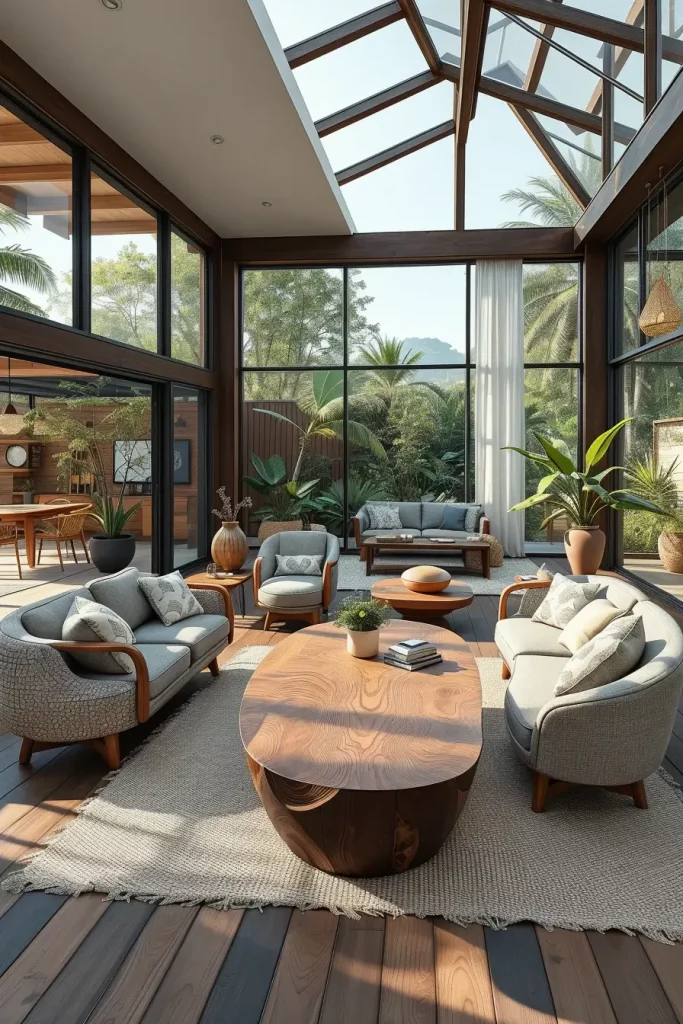
I incorporate FSC-certified woods, recycled aluminum furniture frames, low-carbon concrete, and eco-certified textiles. Curved sofas upholstered in recycled performance fabric, oval dining tables made from reclaimed wood, and modular seating systems allow flexibility while supporting environmental goals. These choices ensure that sustainability enhances, rather than limits, design expression.
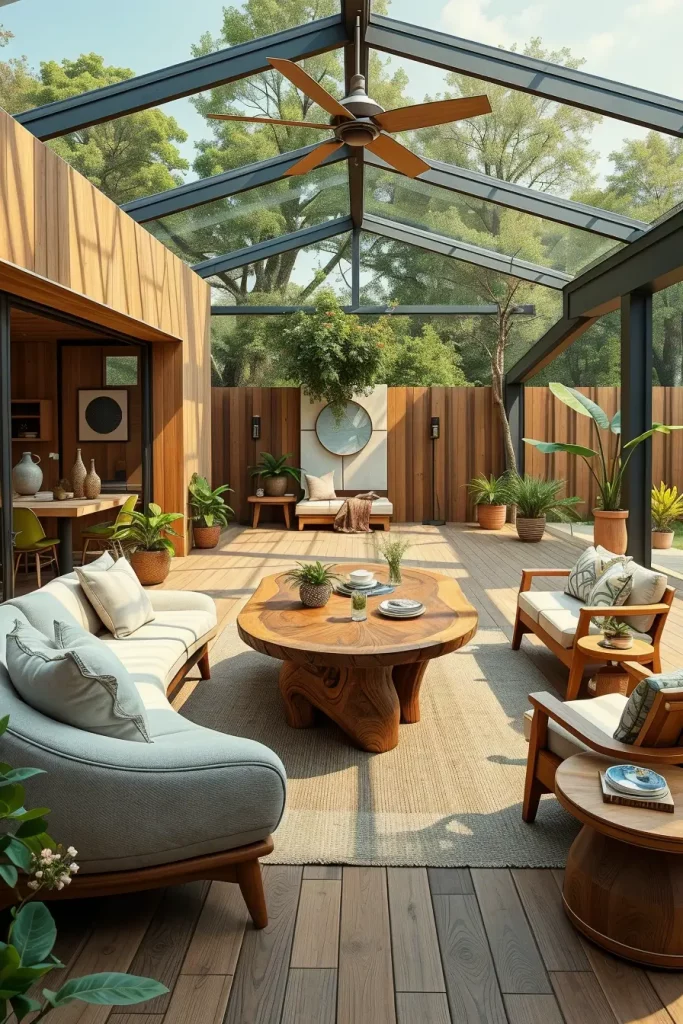
From my perspective, publications like Interior Design Magazine highlight that sustainable materials are becoming the default choice for premium projects. I find this shift empowering because it allows designers to create stylish, designer, and environmentally responsible spaces simultaneously. Clients increasingly appreciate knowing that beauty and ethics coexist.
To strengthen this concept further, I would include visible storytelling elements such as material origin plaques or integrated digital displays explaining sustainable choices. These details add educational value without disrupting the visual flow.
Indoor–Outdoor Living Rooms With Panoramic Openings
Panoramic openings are essential to defining unique indoor-outdoor living rooms in 2026. I design these spaces to fully dissolve boundaries, allowing light, air, and landscape to become part of the interior experience. The focus is on proportion, alignment, and ease of movement rather than dramatic gestures.
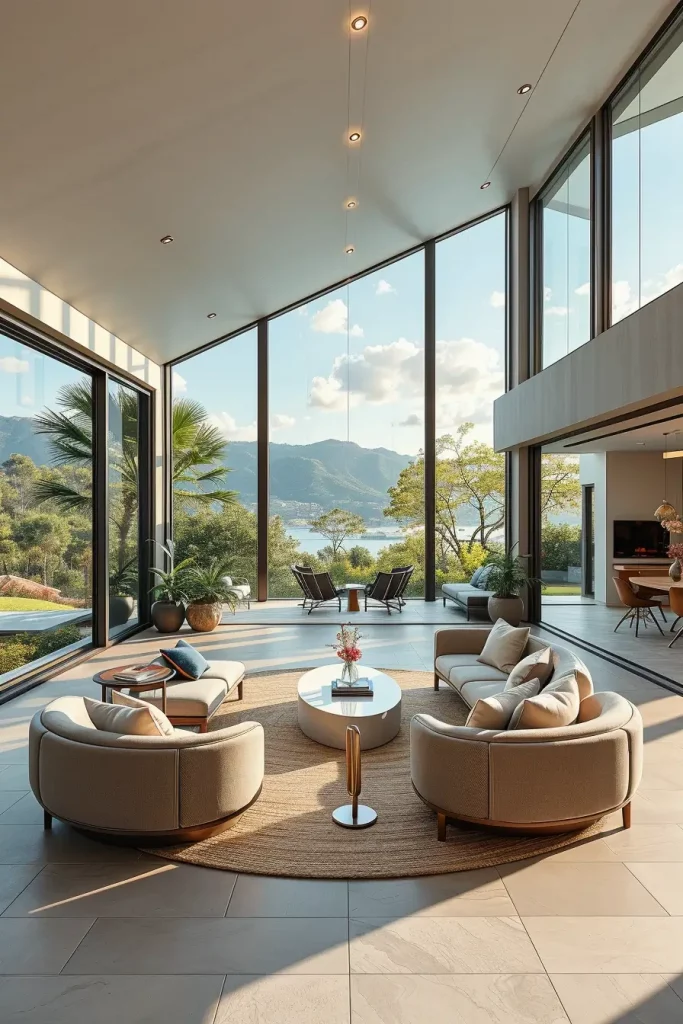
Furniture placement is critical here. I rely on low-profile, curved seating arranged to face both indoor focal points and outdoor views. Streamlined lounge chairs, oval rugs, and minimal media units maintain openness. Outdoor furniture mirrors indoor forms, creating visual rhythm across the threshold.
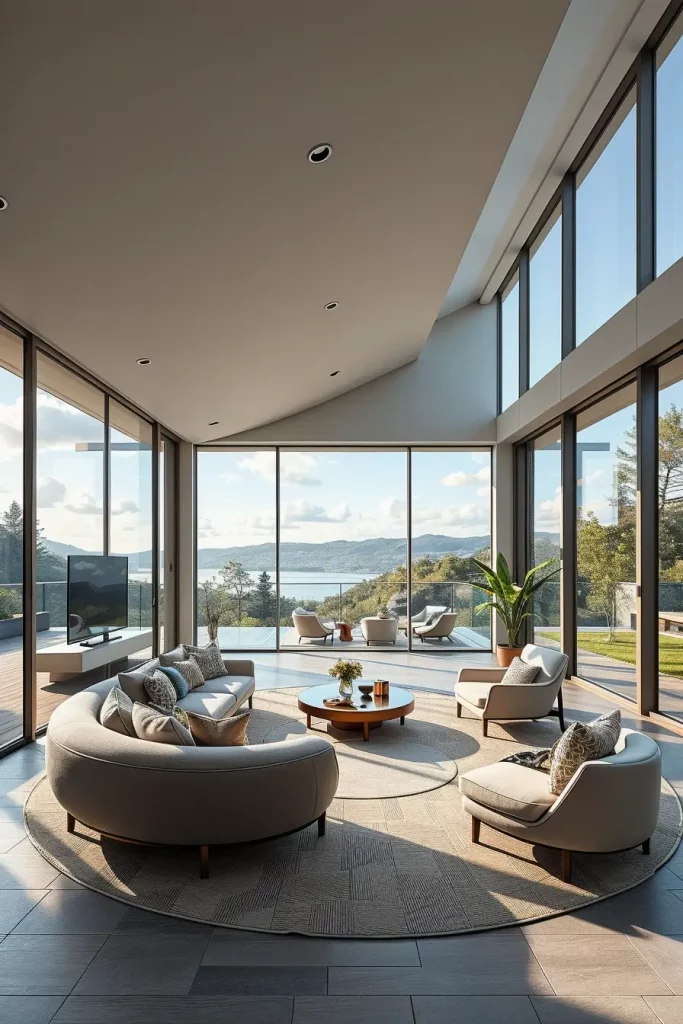
In my work, I follow principles often discussed by Dwell Magazine, which emphasizes framing views as living artwork. I have found that when panoramic openings are carefully proportioned, the room feels calm and intentional rather than exposed or overwhelming.
What is often missing in these designs is integrated shading technology. I would recommend automated louvers or smart glass systems to maintain comfort throughout the day without disrupting the aesthetic.
Frameless Glass Walls As A Core Design Element
Frameless glass walls represent the most refined expression of indoor-outdoor living room 2026 design. I see them not as architectural features but as invisible connectors that redefine how space is perceived. When executed correctly, they allow uninterrupted visual flow while preserving insulation and security.
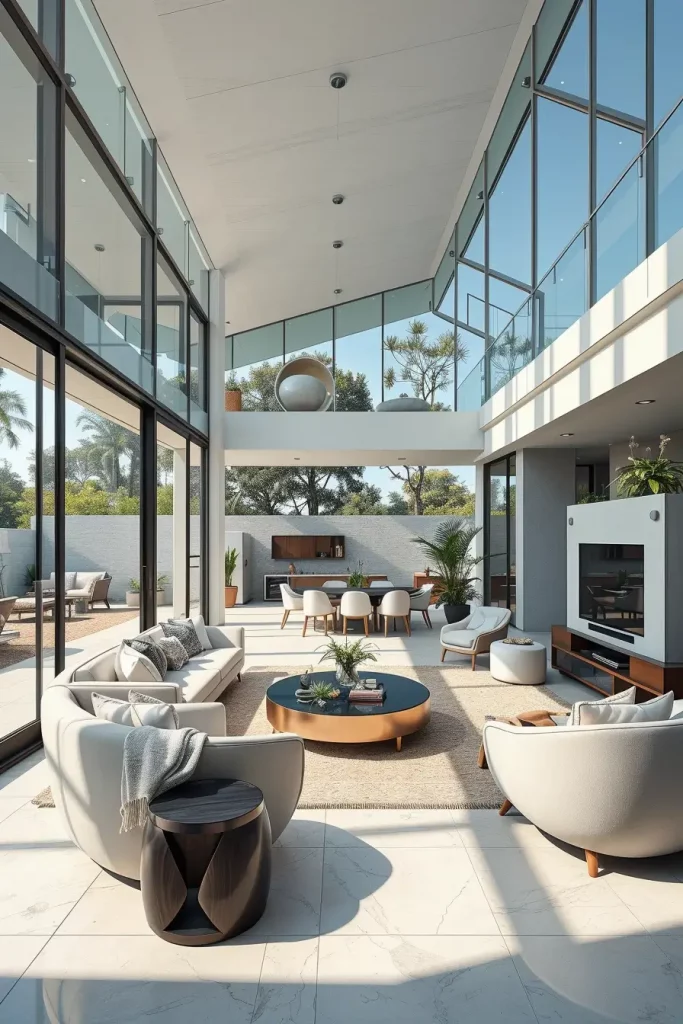
I pair frameless glass systems with sculptural furniture that complements transparency rather than competing with it. Curved sofas, oval accent chairs, and streamlined consoles in neutral tones ensure that reflections and views remain unobstructed. The absence of heavy frames keeps the focus on form, light, and movement.
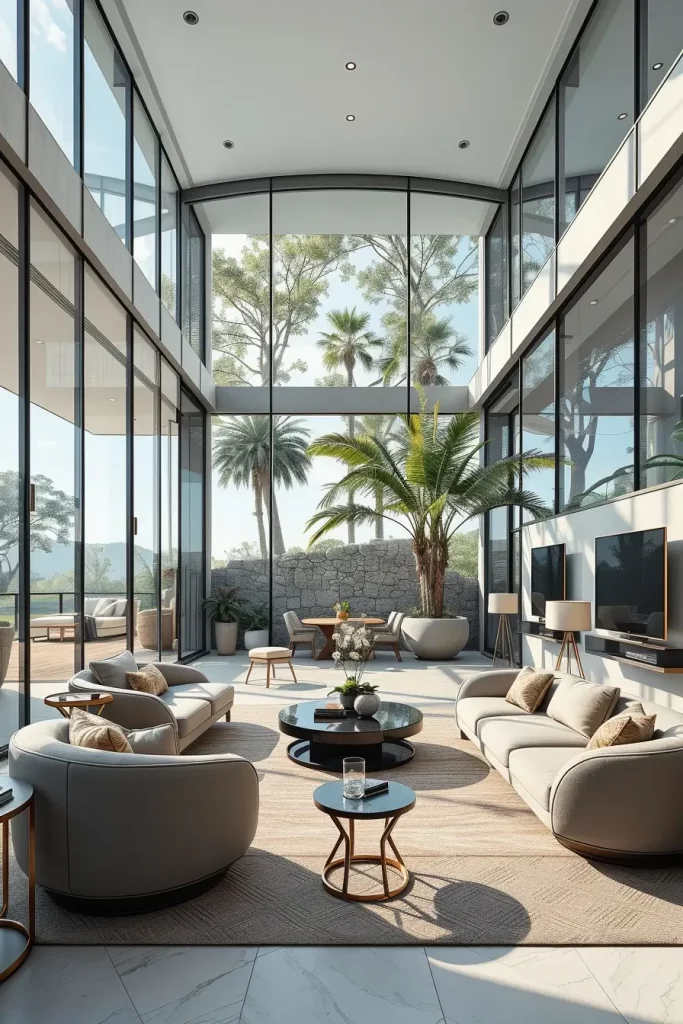
Based on insights from leading US architects featured in Dezeen, frameless systems perform best when combined with minimal detailing elsewhere. I fully support this philosophy because it lets craftsmanship speak quietly but confidently. In my experience, these walls elevate even modest spaces into high-end environments.
To complete this section, I would add integrated floor tracks with concealed drainage solutions. This detail improves functionality while maintaining the clean visual language expected in 2026 designs.
Sliding And Folding Door Systems For Maximum Openness
In indoor-outdoor living room 2026 projects, I consider sliding and folding door systems essential for flexibility and daily comfort. These systems allow the living room to transform instantly from a protected interior into an open, social space connected to the outdoors. I focus on solutions that feel light to operate while remaining structurally solid and thermally efficient, which is crucial for long-term usability.
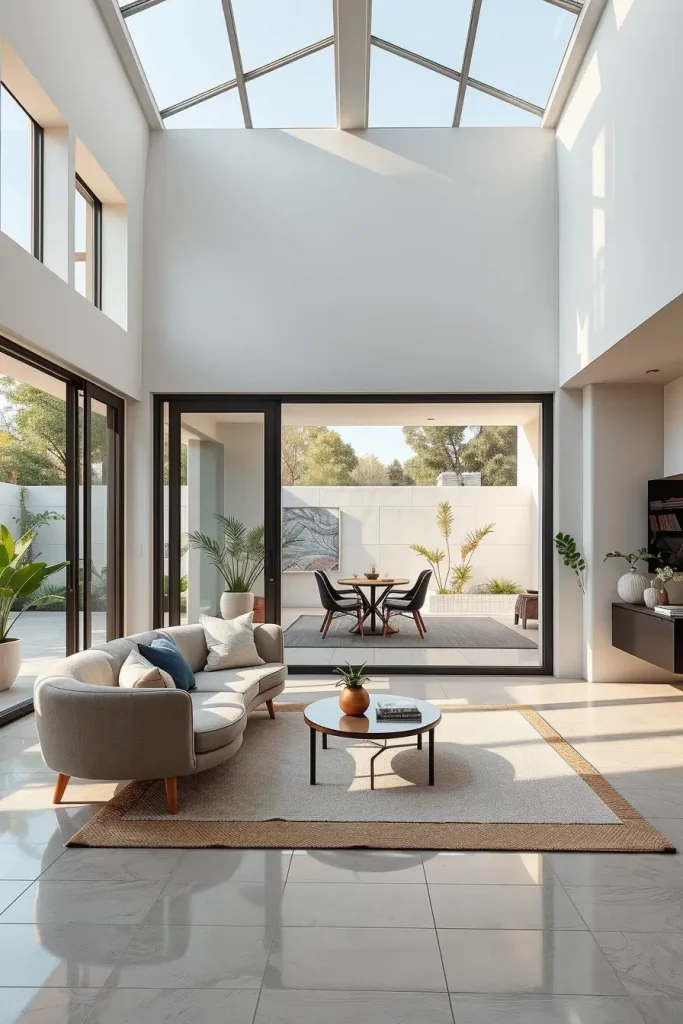
From a design perspective, I prefer slim-profile aluminum or composite door systems with soft-close mechanisms. I combine them with curved, streamlined, and oval furniture, such as modular sofas and rounded lounge chairs, to maintain fluid movement when doors are fully opened. Low, horizontal furniture proportions prevent visual blockage and keep sightlines clean.
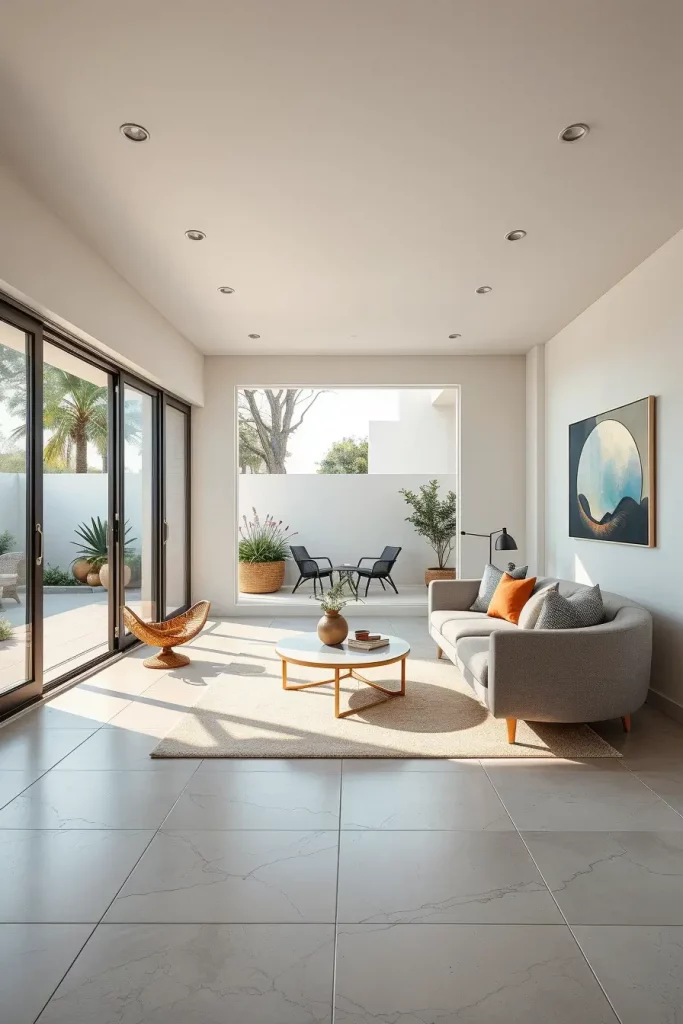
In my professional opinion, brands often highlighted by Architectural Digest emphasize that the best sliding systems are those you barely notice. I share this view because the goal is not to showcase technology but to support a stylish, designer, and effortless lifestyle. When these doors disappear into wall pockets, the room feels architecturally complete rather than mechanically complex.
What I would add to this section is integrated insect screens and thermal curtains concealed within ceiling tracks. These details improve comfort without interrupting the modern aesthetic.
Lighting Concepts That Unite Indoor And Outdoor Areas
Lighting plays a defining role in modern indoor-outdoor living rooms, especially in 2026 when spaces are expected to function from morning to late evening. I design lighting schemes that visually connect interior and exterior zones rather than treating them as separate environments. Consistency in color temperature and fixture style is key to achieving this unity.
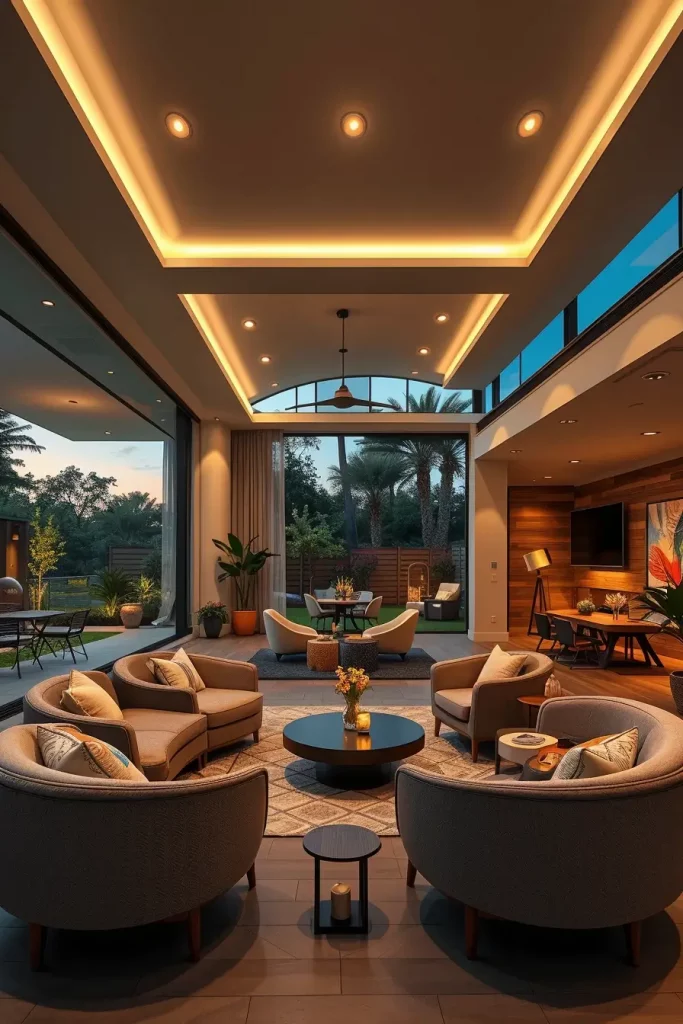
I use recessed ceiling lights indoors and continue the same rhythm outdoors with flush-mounted fixtures and subtle floor lighting. Furniture placement is always considered alongside lighting, ensuring curved sofas, oval tables, and sculptural seating are softly illuminated without harsh contrasts. The goal is comfort, clarity, and visual balance.
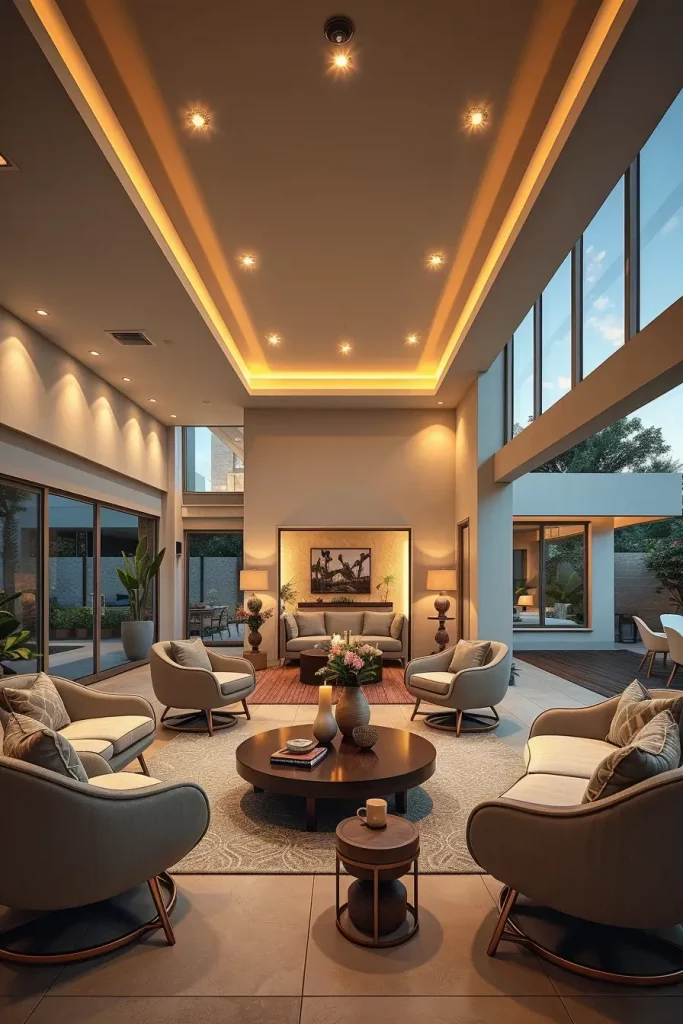
Based on insights from Interior Design Magazine, cohesive lighting design significantly improves how open-plan spaces are perceived after sunset. From my experience, unified lighting reduces the feeling of fragmentation and makes the living room feel expansive and calm, even when fully enclosed.
To enhance this concept further, I would include smart lighting controls that adjust automatically based on daylight and occupancy. This feature supports both energy efficiency and user comfort.
Sculptural Lighting Fixtures For Evening Ambience
Sculptural lighting has become one of the most expressive elements in unique indoor-outdoor living rooms of 2026. I treat lighting fixtures as functional art that adds personality without overwhelming the space. These fixtures help define zones while reinforcing the designer identity of the room.
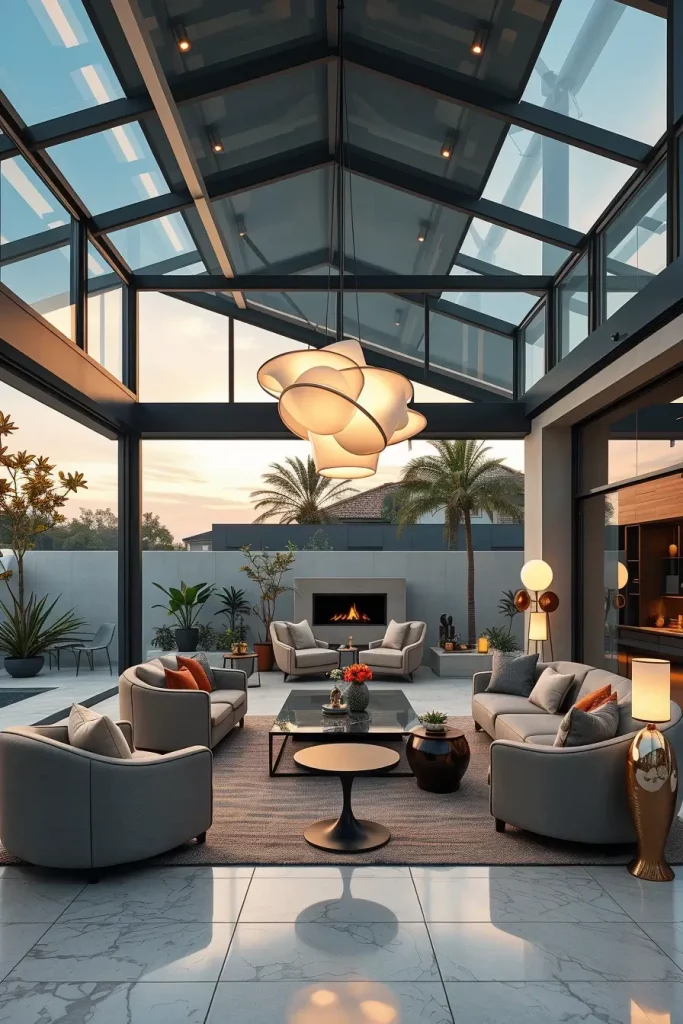
I often select oversized pendant lights with organic curves, asymmetrical floor lamps, or integrated LED sculptures positioned near seating areas. These pieces pair beautifully with designer furniture, especially rounded sofas and fluid lounge chairs, creating a cohesive visual language. Materials such as brushed metal, glass, and stone add depth without excess shine.
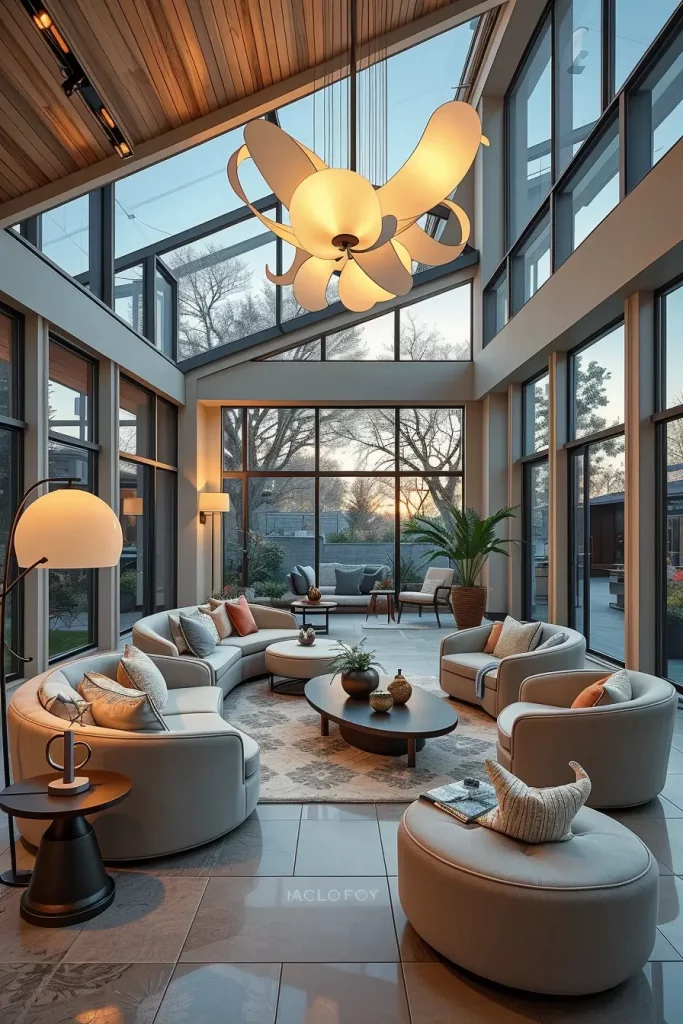
From my perspective, designers frequently featured in Dezeen highlight sculptural lighting as a focal point rather than an accent. I agree with this approach because a well-chosen fixture can anchor the entire room and elevate both indoor and outdoor areas simultaneously.
What I would add here is dimming capability and warm color temperatures specifically tuned for evening use. This ensures that sculptural fixtures remain comfortable, not just visually striking.
Layered Lighting For Day-To-Night Living Rooms
Layered lighting is essential for creating adaptable indoor-outdoor living room 2026 environments. I design layers that support different activities throughout the day, from quiet mornings to social evenings. This approach ensures the space feels intentional rather than over-lit or flat.
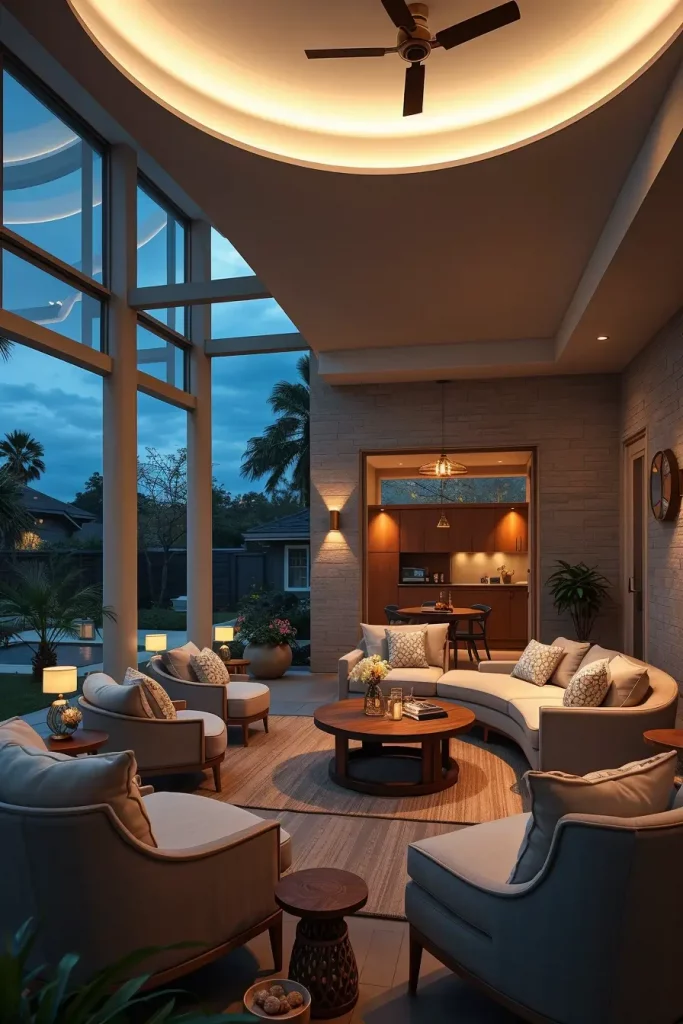
In practice, I combine ambient lighting with task lighting and accent illumination. Floor lamps near curved seating, subtle wall washers highlighting textured surfaces, and integrated lighting within shelving or furniture create depth. Each layer supports the architecture and furniture rather than competing with them.
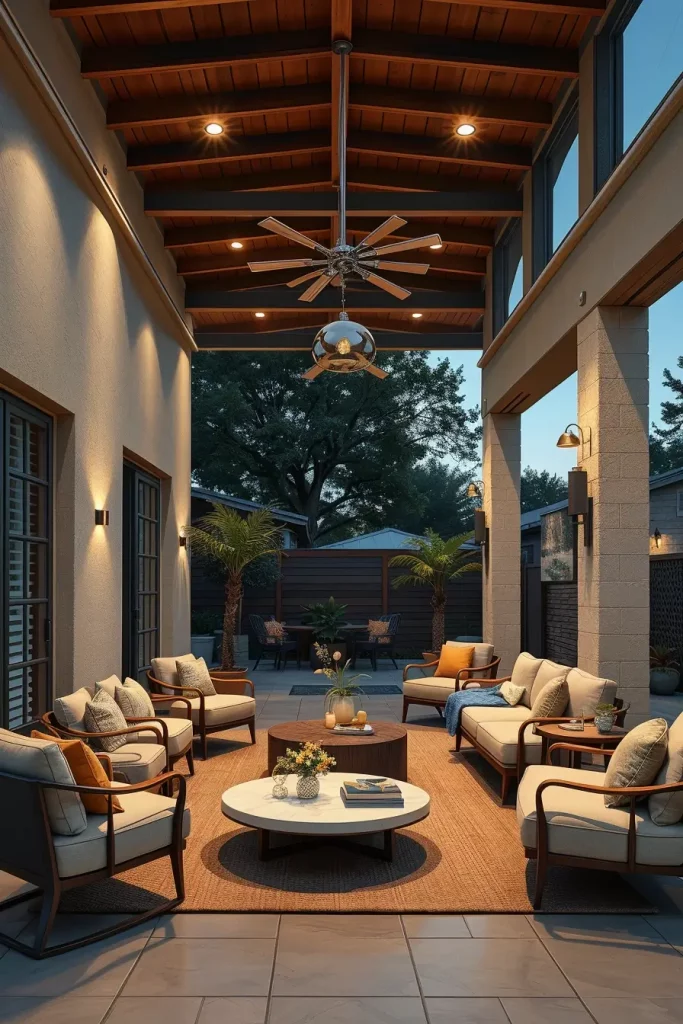
From my experience, US-based designers often emphasize that layered lighting improves emotional comfort as much as visual quality. I have seen firsthand how properly layered schemes reduce eye strain and enhance relaxation, especially in open spaces connected to outdoor terraces.
To complete this section, I would recommend incorporating outdoor-rated accent lights that mirror indoor fixtures. This reinforces visual continuity after dark and strengthens the indoor-outdoor connection.
Neutral And Earthy Color Palettes With Designer Accents
Color selection defines the emotional tone of stylish indoor-outdoor living rooms in 2026. I rely on neutral and earthy palettes to create calm, adaptable backdrops that allow architecture, furniture, and views to take center stage. These tones support longevity and design flexibility.
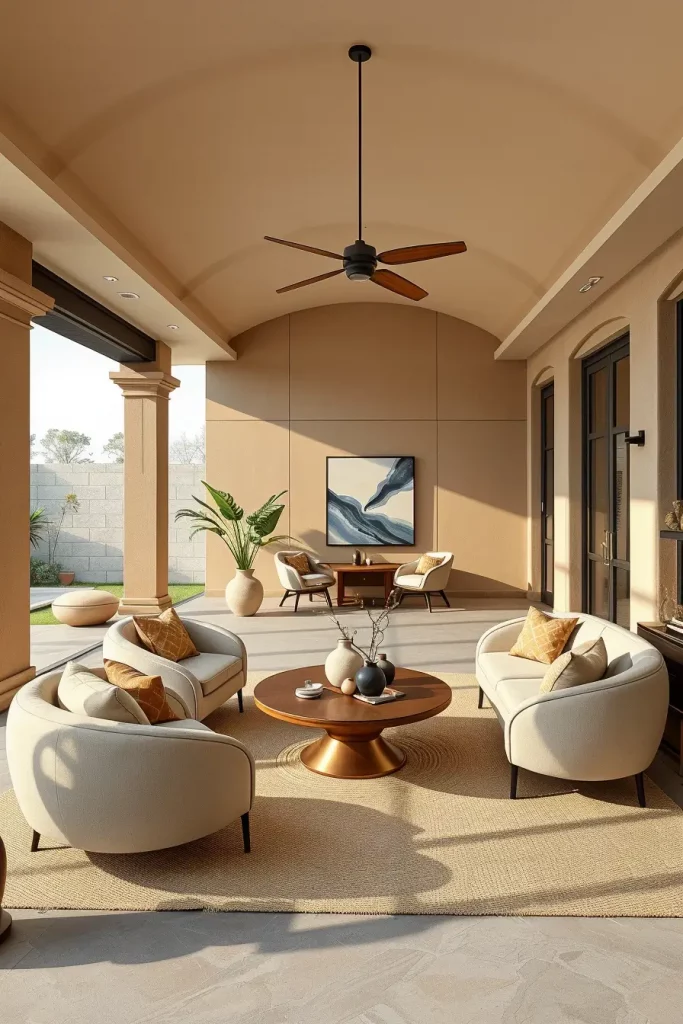
I use warm whites, soft beiges, stone grays, and muted greens as base colors. Designer accents appear through unique, modern furniture pieces, sculptural lighting, and carefully selected textiles. Curved sofas, oval tables, and streamlined cabinetry stand out naturally against restrained backgrounds.
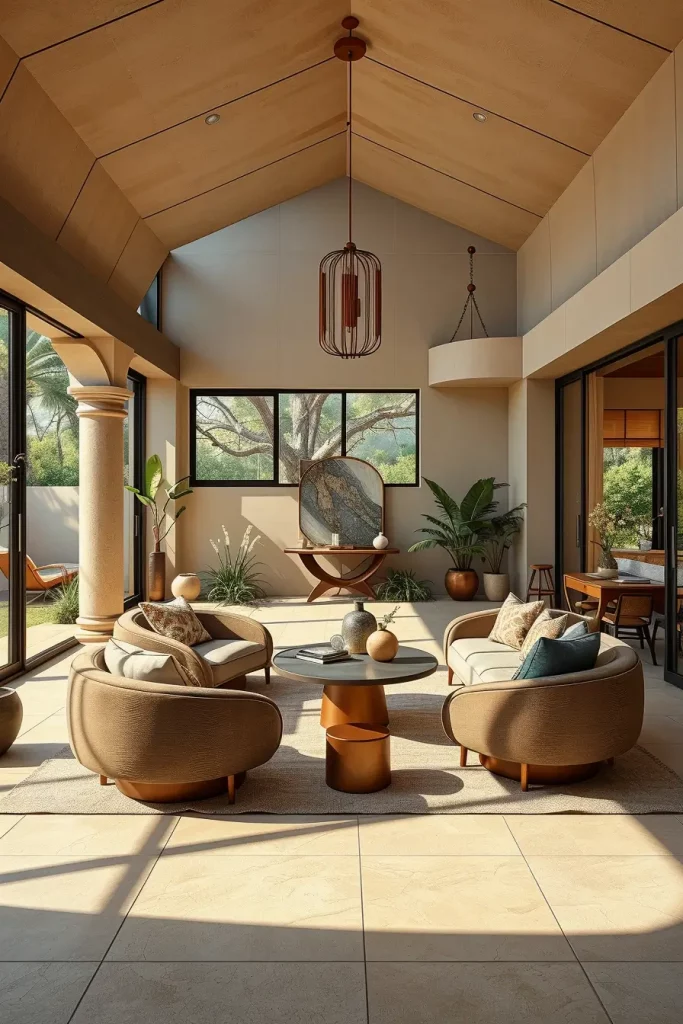
In my opinion, publications like Dwell consistently show that neutral palettes age better and adapt more easily to changing trends. I agree because these colors enhance natural light and make transitions between indoors and outdoors feel seamless rather than forced.
What I would add here is subtle contrast through texture rather than color. Layering materials such as stone, fabric, and metal keeps the palette refined while avoiding monotony.
Bold Statement Colors In Modern Indoor–Outdoor Spaces
I see bold color as one of the defining tools in indoor–outdoor living rooms 2026, especially when the space connects seamlessly to terraces, patios, or gardens. Statement colors are no longer accents but architectural elements that guide movement between inside and outside. Deep terracotta, warm olive, mineral blue, and muted coral are increasingly used to visually anchor open-plan living rooms while still feeling natural and breathable.
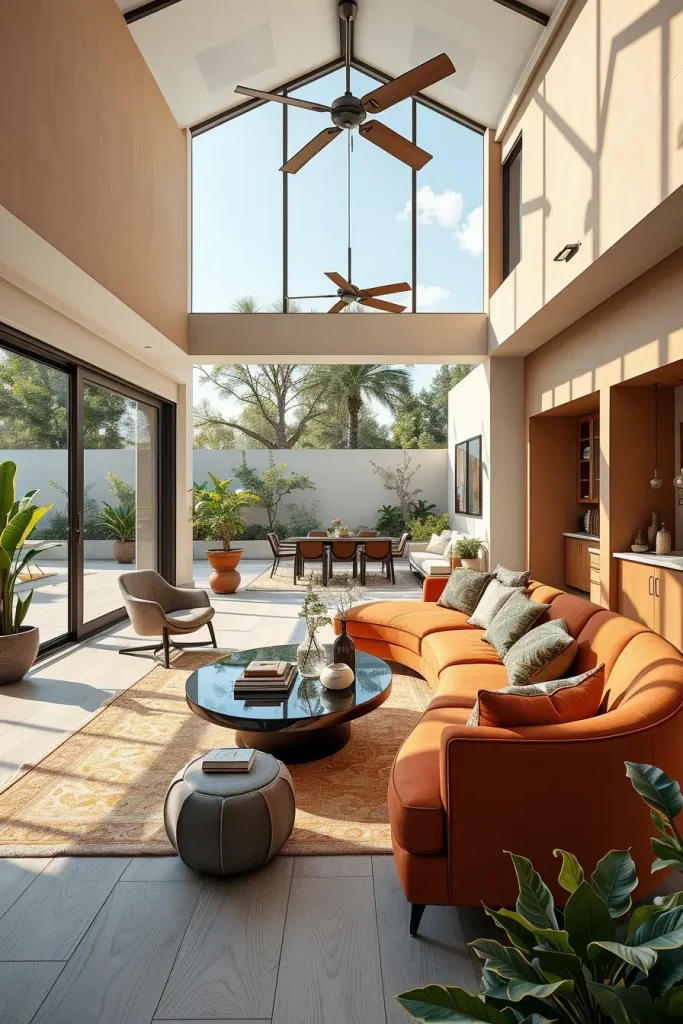
In my work, I recommend integrating color through curved sectional sofas, sculptural lounge chairs, and oval coffee tables finished in matte lacquer or textured stone. These pieces help soften the transition between hard exterior surfaces and softer interior zones. Wall finishes, ceiling panels, and even sliding glass frames can be color-treated to create continuity across boundaries without overwhelming the space.
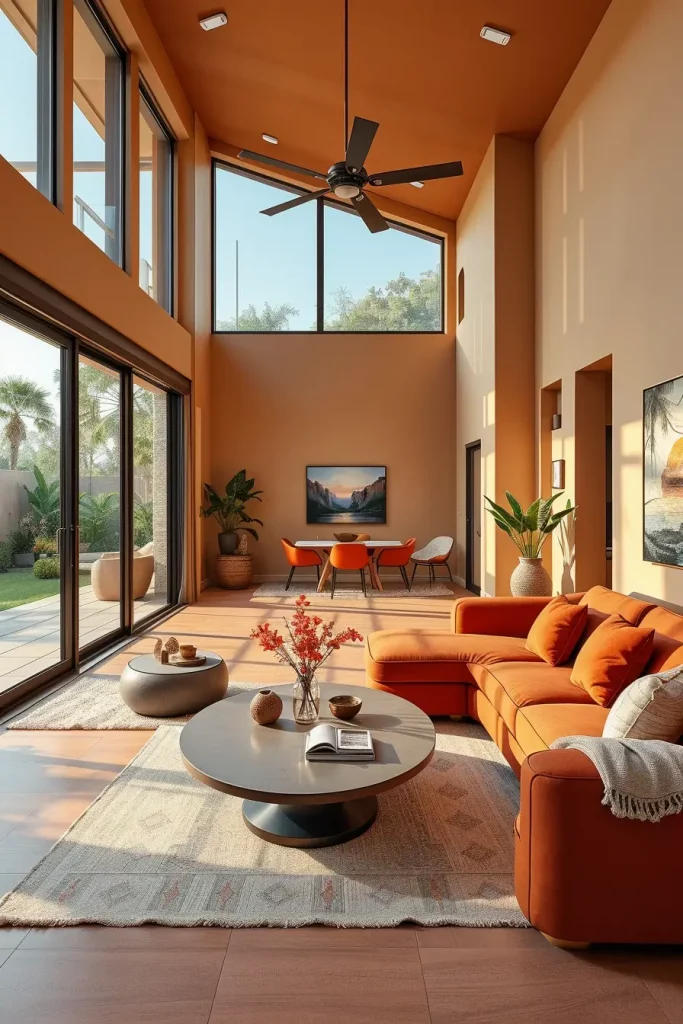
From my experience and supported by insights from Architectural Digest, bold colors work best when paired with natural light and organic materials. I personally favor colors that shift subtly throughout the day, reacting to sunlight and shadow. This dynamic quality makes the living room feel alive rather than static.
What I would still add here is layered lighting designed specifically to enhance color depth at night, including concealed LED lines and warm indirect illumination that maintains visual harmony after sunset.
Textiles Designed For Comfort And Outdoor Durability
In 2026, textiles play a critical role in making indoor–outdoor living rooms feel livable rather than transitional. I approach these spaces as full-time living environments, which means fabrics must balance comfort, durability, and visual refinement. Weather-resistant textiles are now soft, tactile, and visually indistinguishable from indoor-only fabrics.
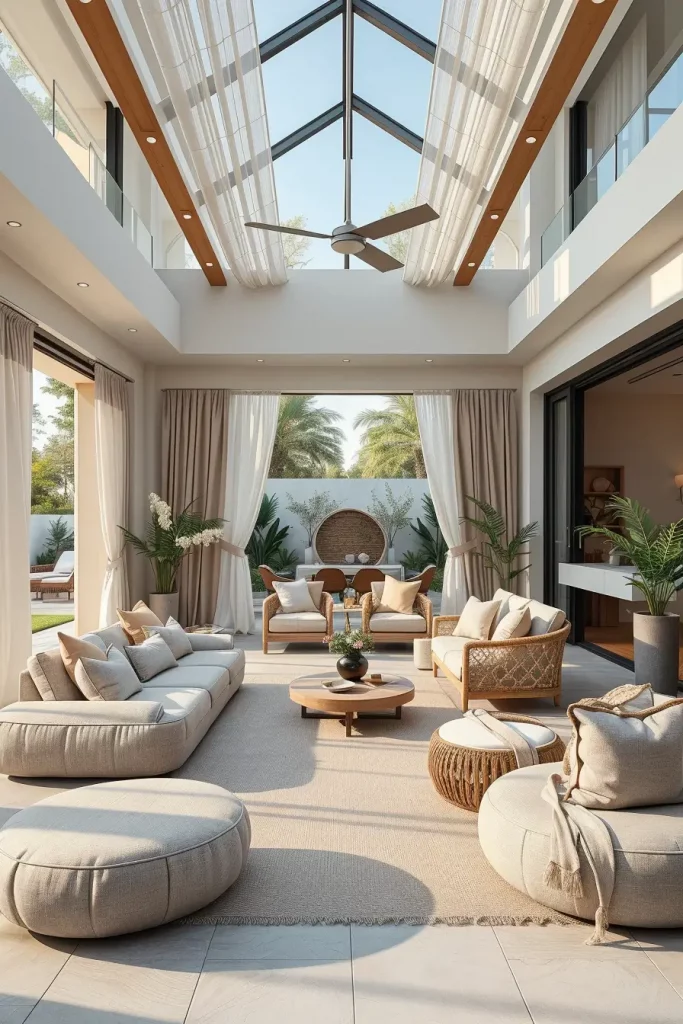
I intentionally select modular sofas with removable cushions, upholstered in advanced performance fabrics, paired with rounded poufs and sculptural armchairs. These pieces allow flexibility while maintaining a cohesive aesthetic. Drapery panels, outdoor-grade curtains, and upholstered wall elements further enhance acoustic comfort and visual softness.
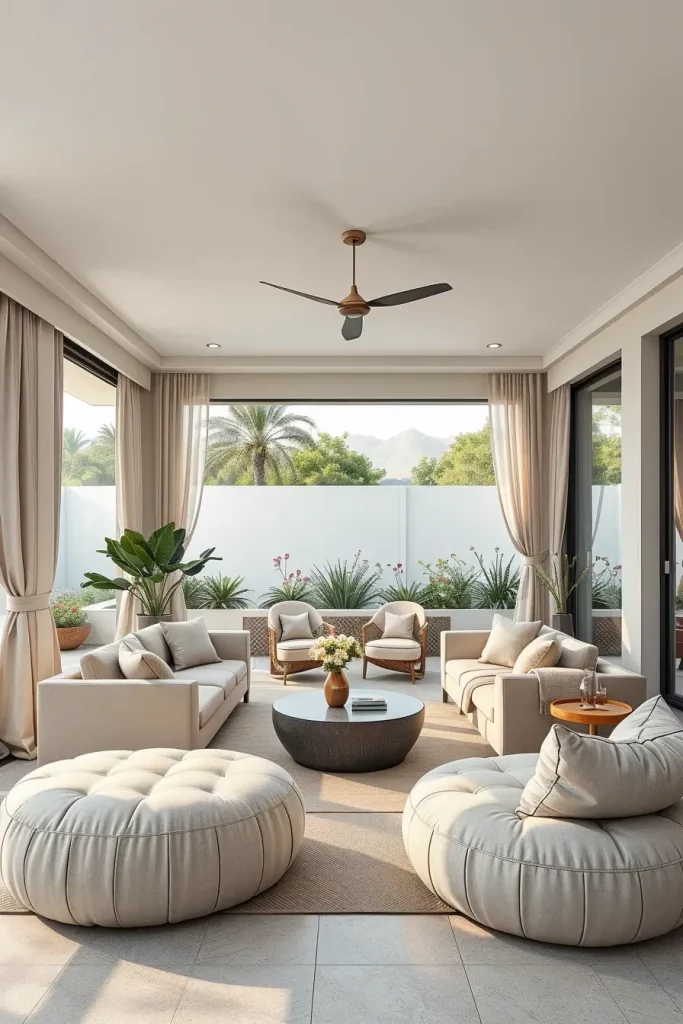
Based on my professional experience and guidance from designers featured in Dezeen, textiles are most successful when layered thoughtfully. I avoid excessive pattern and instead focus on texture, weave, and tonal depth. This approach keeps the space calm while still rich in detail.
What I would enhance in this section is the inclusion of seasonal textile rotation, allowing homeowners to subtly refresh the living room atmosphere without changing the core design.
Indoor–Outdoor Rugs As Visual Anchors
I consider rugs essential in defining zones within open indoor–outdoor living rooms. In 2026, rugs are no longer decorative extras but spatial tools that visually anchor furniture groupings and guide circulation. When the living room opens directly to an exterior lounge, a continuous rug strategy reinforces cohesion.
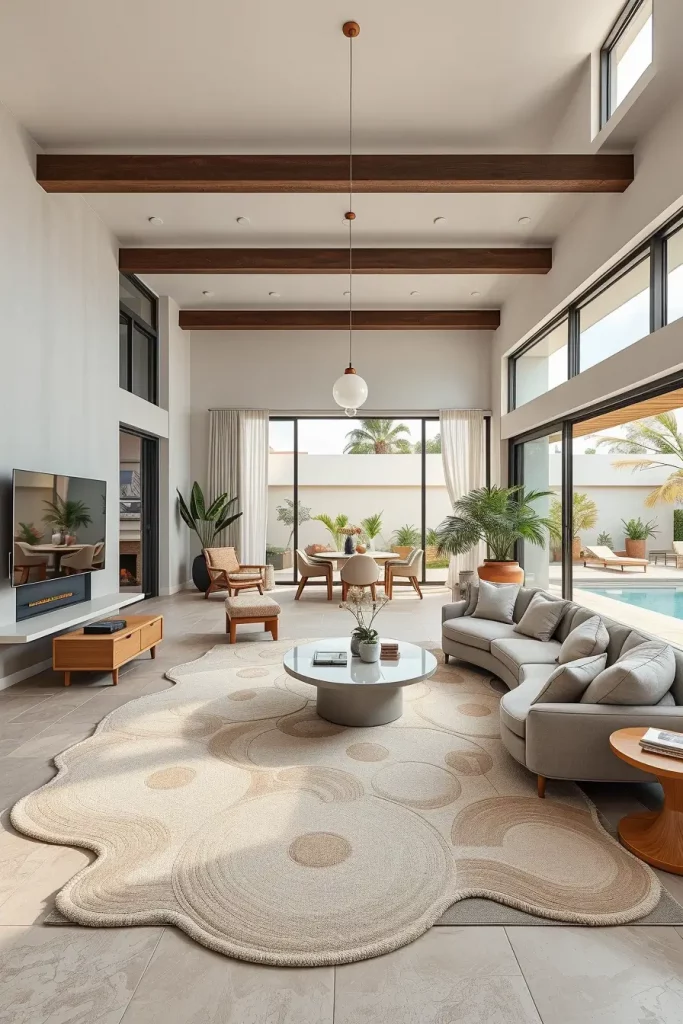
I typically choose large-format rugs with organic shapes or softened geometric patterns, placed beneath curved sofas and oval coffee tables. These rugs visually ground the furniture while protecting flooring and improving comfort underfoot. Materials like recycled fibers and advanced synthetics allow for durability without sacrificing elegance.
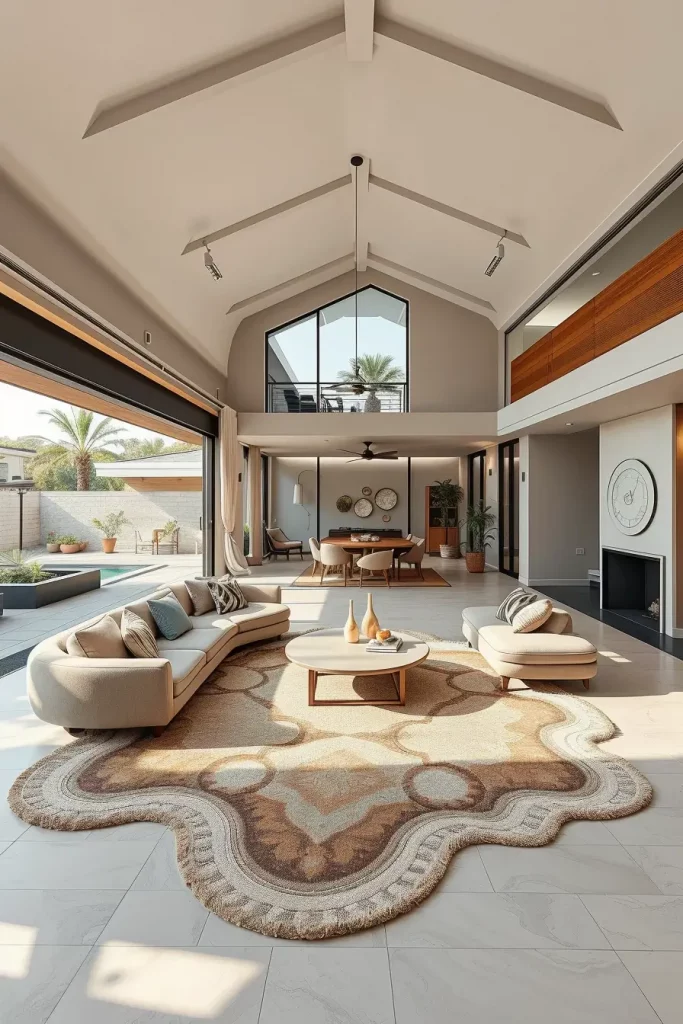
From my perspective, echoed by recommendations from Interior Design Magazine, rugs should echo architectural lines rather than compete with them. I personally prefer rugs that mirror the curves of furniture, reinforcing a fluid spatial rhythm across interior and exterior zones.
What I would still add is a consideration for drainage-friendly rug placement near exterior thresholds to ensure longevity and easy maintenance.
Greenery Integrated Into Living Room Architecture
In indoor–outdoor living rooms 2026, greenery is no longer decorative but architectural. I design living rooms where plants are integrated into walls, floor recesses, and ceiling structures, creating a seamless dialogue between built form and nature. This approach improves air quality, visual comfort, and emotional well-being.
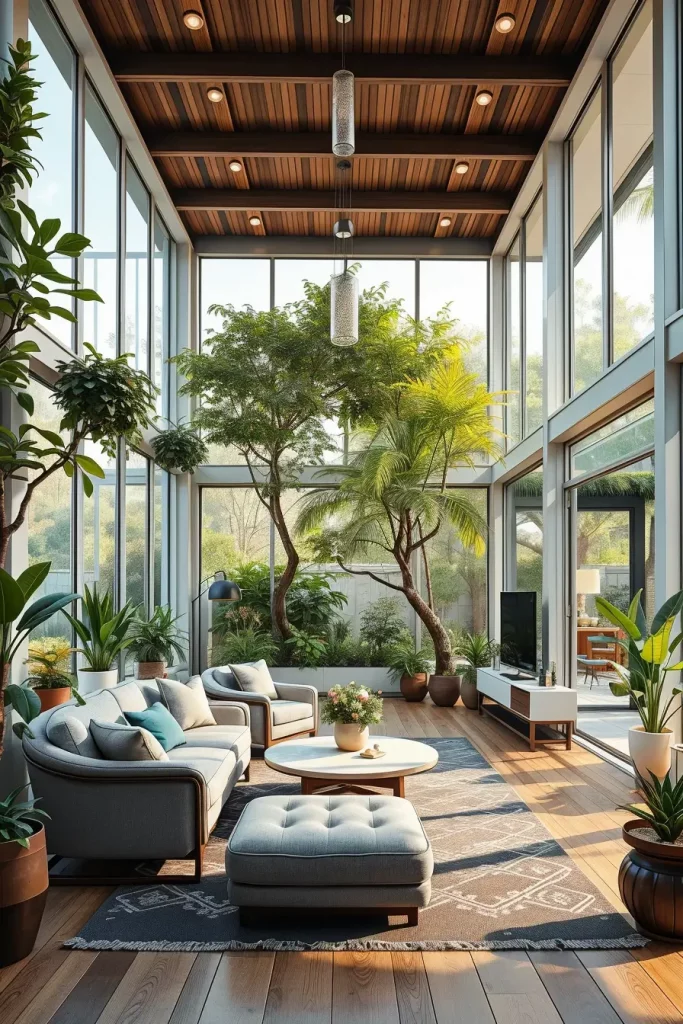
I intentionally incorporate built-in planters, low-profile indoor trees, and vertical green walls positioned near seating zones. These elements soften hard edges and visually extend the living room into the surrounding landscape. Furniture placement always respects plant growth and natural light patterns.
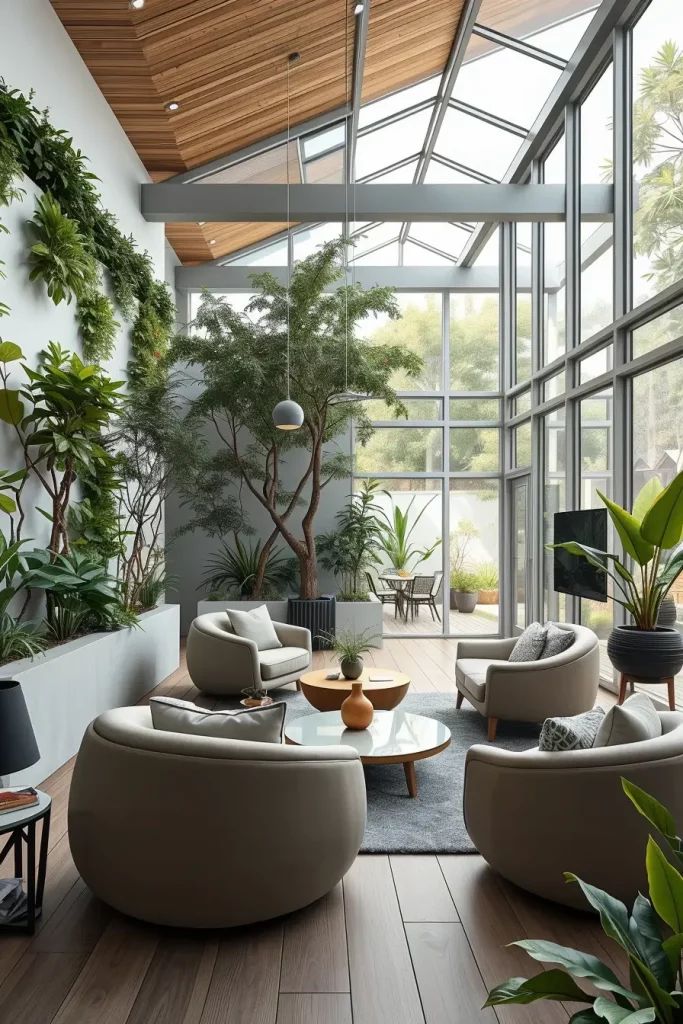
Drawing from my experience and insights shared by designers at Dwell, greenery works best when treated as a design partner rather than an afterthought. I personally find that integrated planting enhances spatial flow and encourages slower, more mindful living.
What I would add here is a smart irrigation and lighting system specifically calibrated for interior plant health, ensuring sustainability without added maintenance burden.
Water Features Enhancing Indoor–Outdoor Living Rooms
Water elements are becoming a defining luxury in modern indoor–outdoor living rooms of 2026, not for extravagance but for sensory balance. I view water as a calming counterpoint to architectural precision, especially in open-plan environments exposed to light and air.
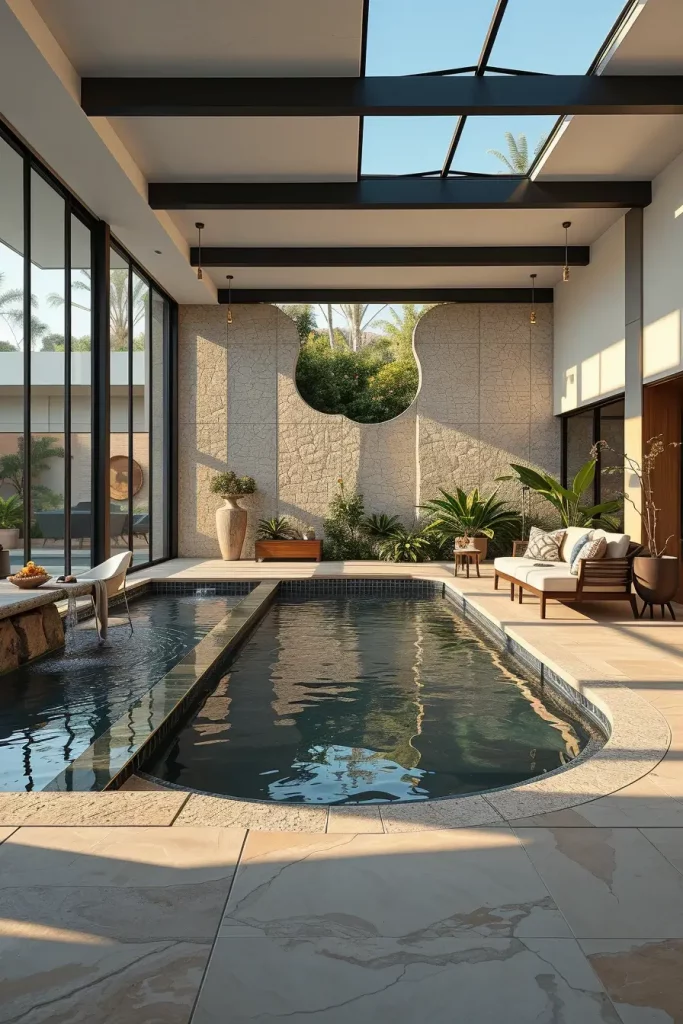
I incorporate shallow reflective pools, linear water channels, or minimalist fountains positioned near glass walls or transitional thresholds. These features visually extend the living room outward while subtly masking exterior noise. Furniture is arranged to allow views and auditory access to the water without obstructing movement.
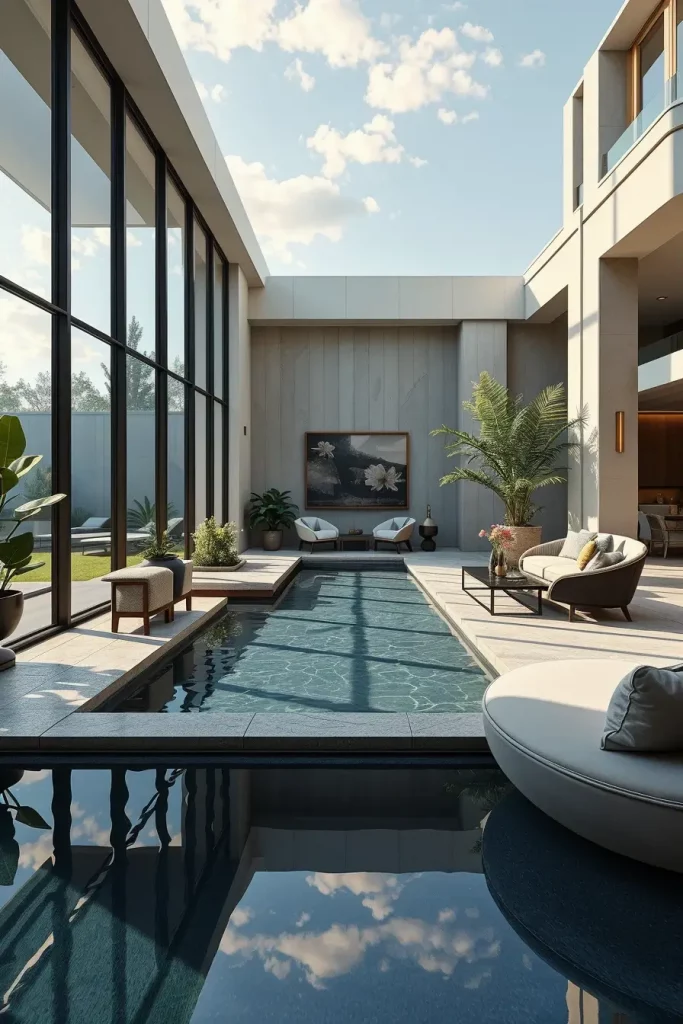
From my professional experience and supported by trends reported in Architectural Digest, water features enhance both property value and daily comfort. I personally recommend designs with minimal splash and concealed filtration to maintain a refined atmosphere.
What I would still add is temperature-controlled water elements for year-round usability, ensuring the feature remains functional in varying climates.
Minimalist Fireplaces For Indoor–Outdoor Comfort
In indoor–outdoor living rooms 2026, fireplaces are no longer dominant focal points but refined architectural elements that enhance comfort without disrupting openness. I design fireplaces to visually connect interior seating areas with exterior lounges, often placing them along shared walls or transitional zones. This approach allows warmth and atmosphere to flow naturally between spaces.
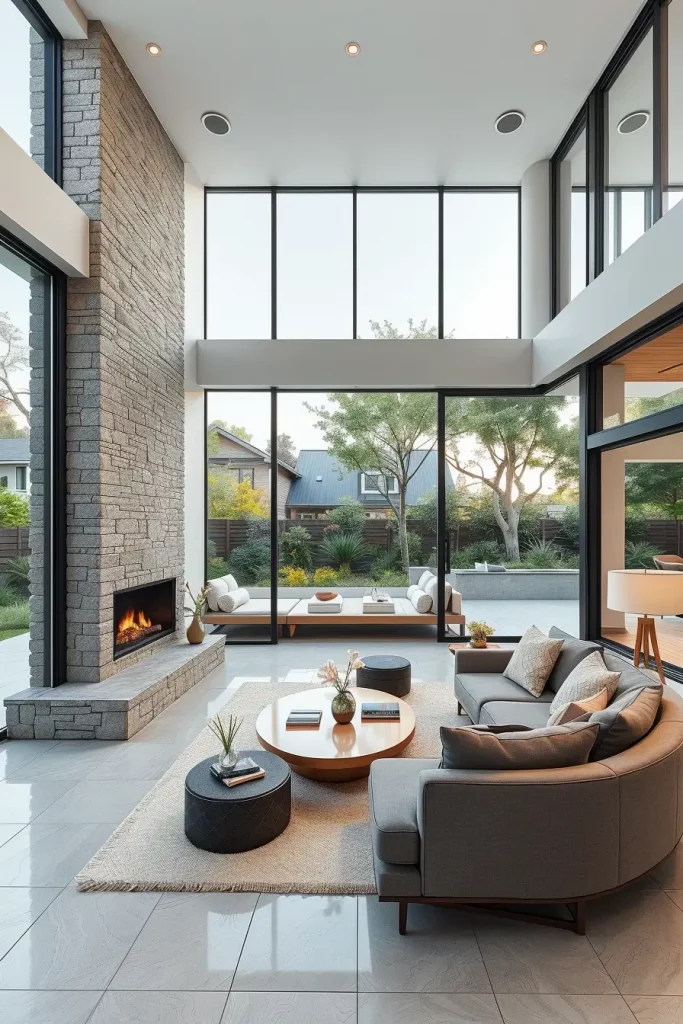
I usually specify linear gas fireplaces or bioethanol models with frameless glass and stone or concrete surrounds. Curved hearths and elongated fire lines pair beautifully with oval sofas and streamlined lounge chairs. These fireplaces provide visual warmth while maintaining a clean, modern aesthetic that aligns with contemporary indoor–outdoor living.
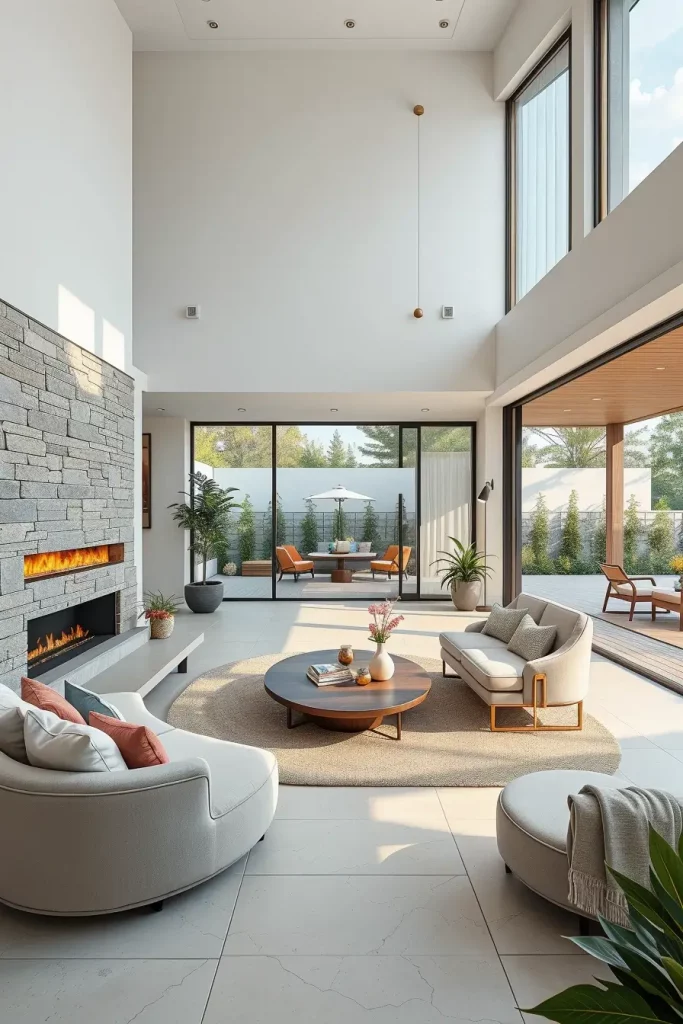
From my experience and supported by guidance from designers featured in Architectural Digest, minimalist fireplaces succeed when proportion and placement are carefully considered. I personally recommend avoiding heavy mantels and instead integrating the fireplace into the wall plane to preserve architectural clarity.
What I would add to this section is outdoor-rated fire controls and integrated seating nearby, ensuring the fireplace remains functional and inviting throughout the year.
Technology And Smart Features In 2026 Living Rooms
Technology in modern indoor–outdoor living rooms 2026 is designed to disappear into the architecture rather than dominate it. I focus on systems that enhance comfort, climate control, and ambiance while remaining visually unobtrusive. Smart technology allows these open spaces to adapt instantly to changing weather and lifestyle needs.
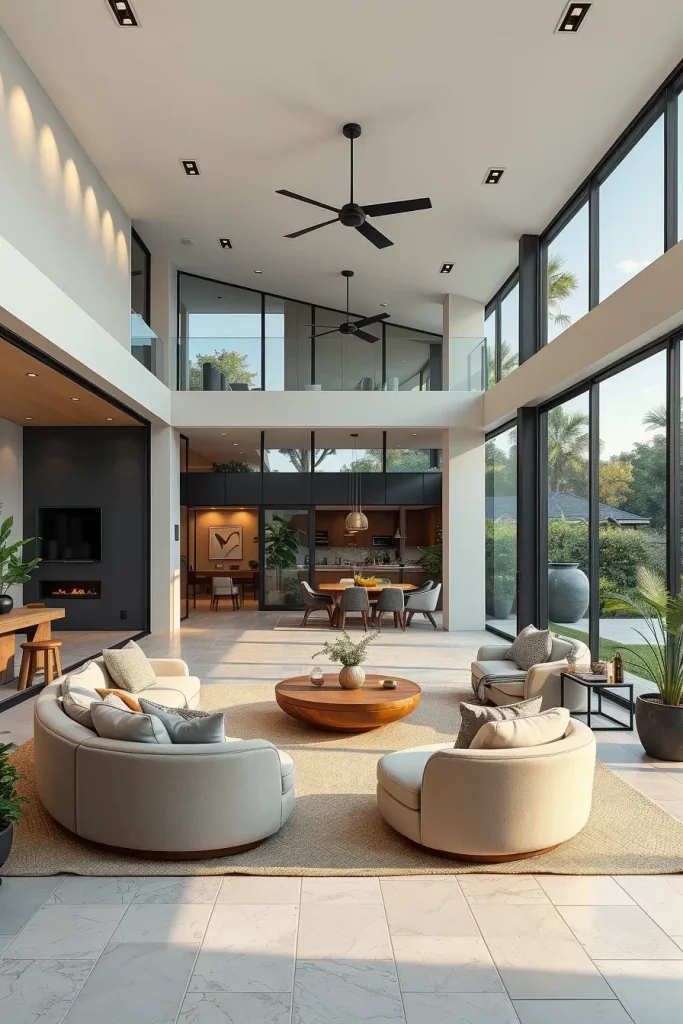
I integrate automated sliding glass walls, smart shading systems, and climate-responsive ventilation. Furniture layouts often accommodate hidden charging stations, built-in speakers, and discreet control panels. These elements support daily living without cluttering the visual flow of the room.
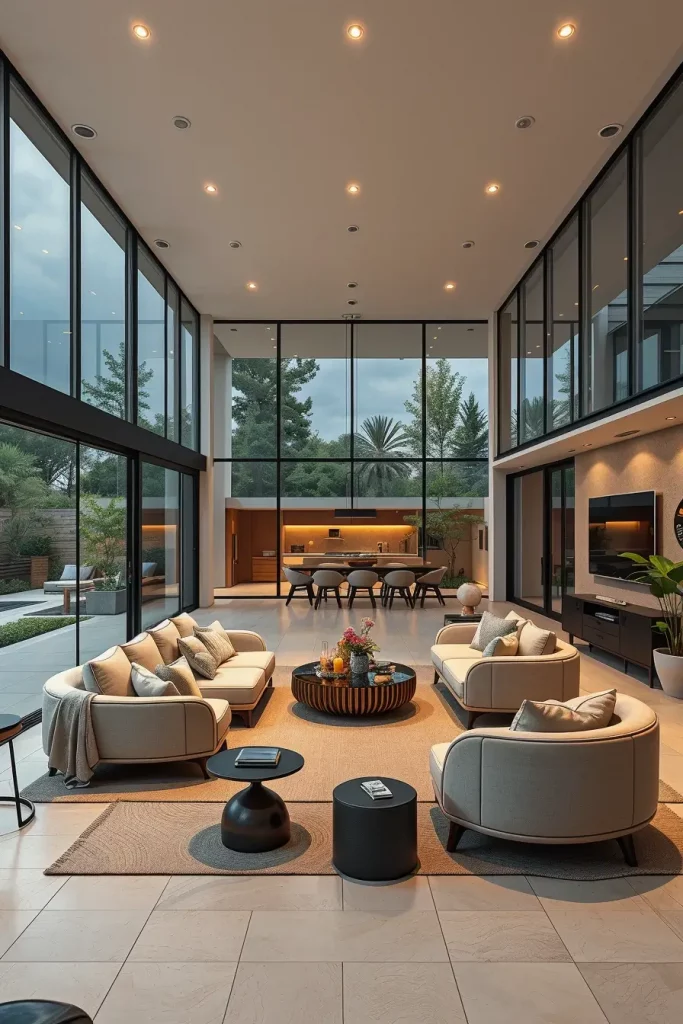
Based on my professional practice and insights from industry leaders featured in Wired and Dezeen, the best smart living rooms prioritize user experience over novelty. I personally favor intuitive systems that respond seamlessly without constant manual input.
What I would still add here is voice-controlled environmental zoning, allowing different areas of the living room to adjust independently depending on use and time of day.
Personalized Designer Details That Define Unique Spaces
Personalization is central to creating unique indoor–outdoor living rooms of 2026, and I treat these spaces as reflections of the homeowner’s lifestyle rather than generic design statements. Custom details bring emotional depth to open-plan environments that might otherwise feel overly minimal.
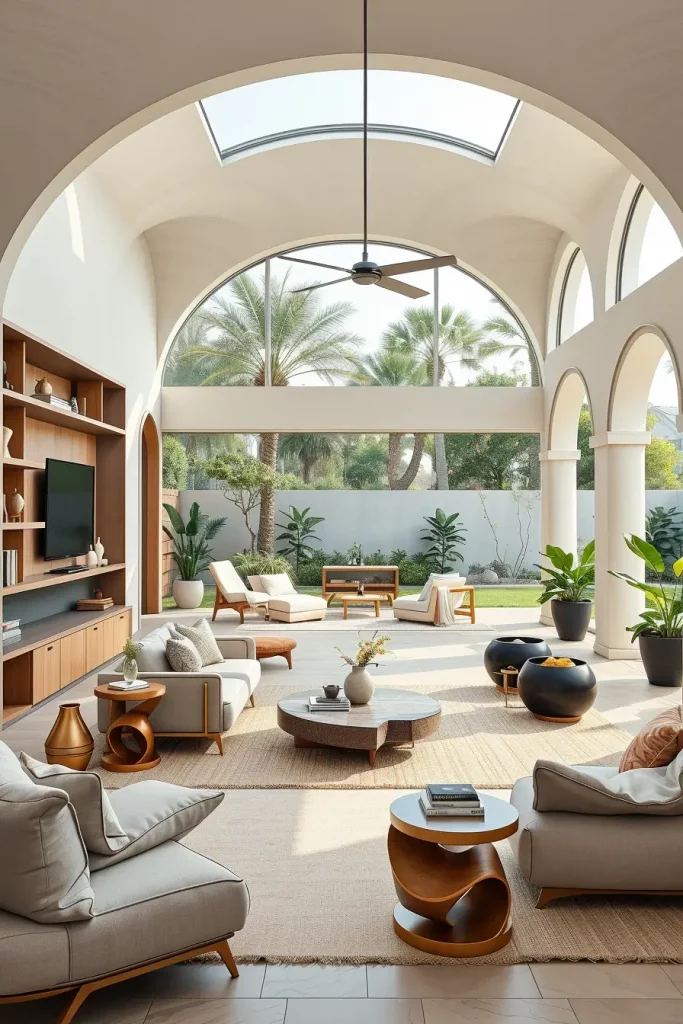
I often incorporate bespoke furniture pieces, custom stone finishes, or hand-crafted wood elements that echo the curves and flow of the architecture. Sculptural side tables, custom shelving, and tailored upholstery choices ensure the living room feels intentional and expressive.
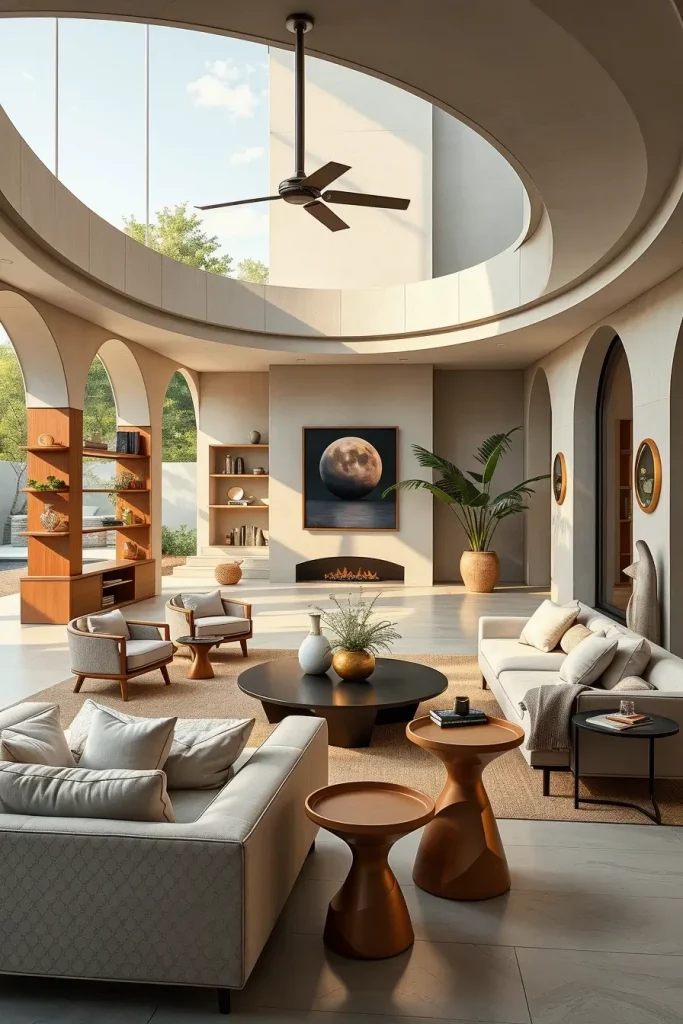
From my experience and advice shared by designers in Interior Design Magazine, personalization should feel integrated rather than decorative. I personally believe that subtle custom details have more impact than overt luxury elements.
What I would add to this section is collaboration with local artisans, allowing truly one-of-a-kind features that enhance both aesthetic value and authenticity.
Artistic Accessories For Indoor–Outdoor Living Rooms
Accessories in indoor–outdoor living rooms 2026 serve a dual purpose: aesthetic refinement and spatial balance. I select artistic elements that enhance the architecture without competing with natural surroundings. Accessories are curated carefully to maintain openness and visual calm.
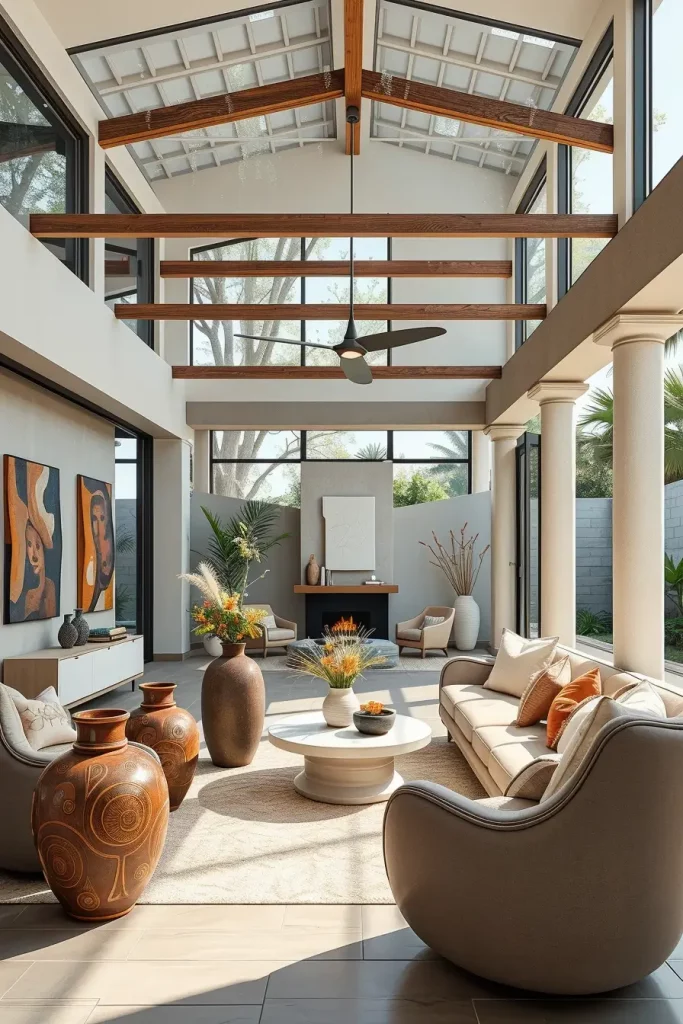
I incorporate sculptural ceramics, oversized vases, low-profile art pieces, and weather-resistant sculptures positioned near thresholds. These objects help visually link interior and exterior zones while reinforcing the overall design language. Furniture placement always allows accessories to feel intentional rather than scattered.
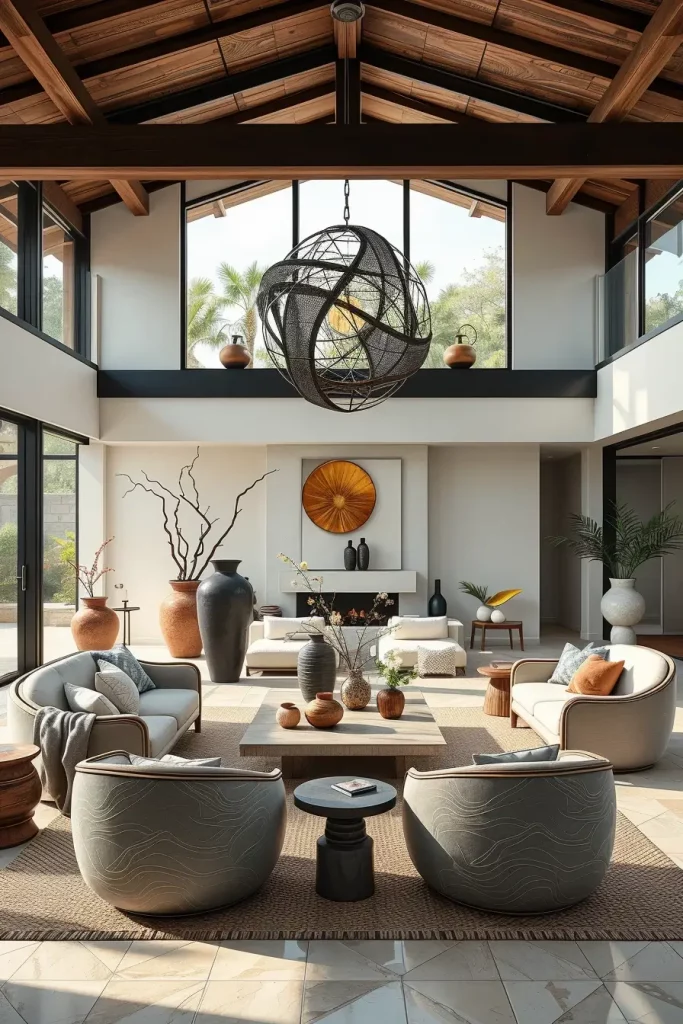
Drawing from my professional experience and recommendations from Elle Decor, accessories are most effective when used sparingly. I personally focus on scale and material quality rather than quantity to maintain a refined atmosphere.
What I would still add is integrated lighting for accessories, subtly highlighting forms during evening hours without overwhelming the space.
Future-Proof Indoor–Outdoor Living Room Design Ideas
Future-proofing is essential when designing indoor–outdoor living rooms 2026, as these spaces must evolve with changing lifestyles and environmental conditions. I approach future-proofing through flexible layouts, durable materials, and adaptable architectural features.
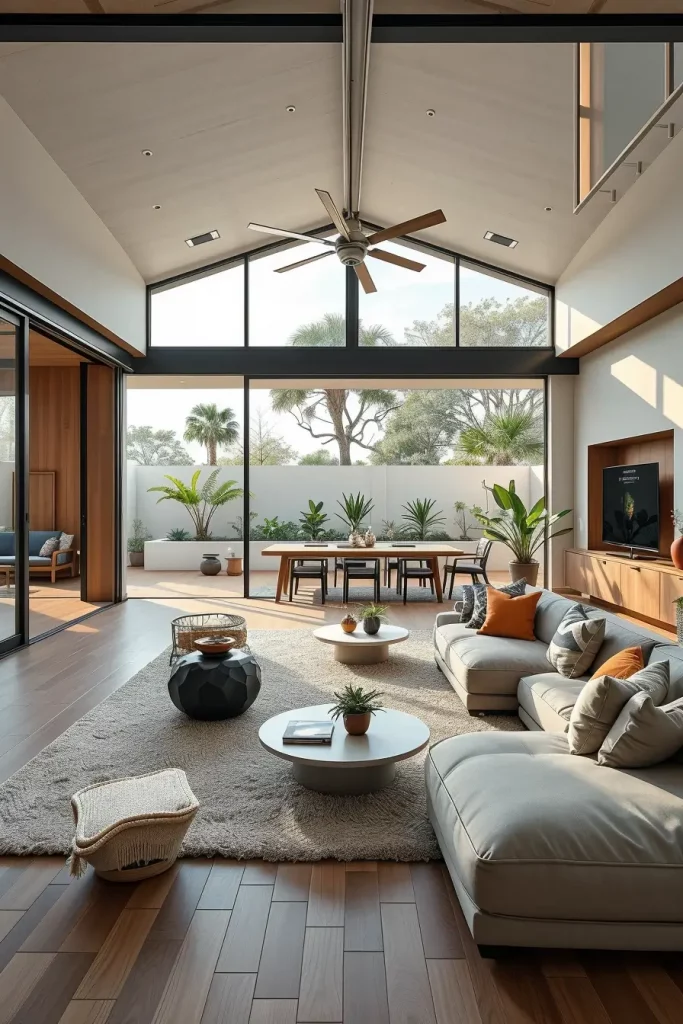
I prioritize modular furniture, movable partitions, and neutral foundational finishes that can accommodate future updates. Sliding walls, adjustable shading, and reconfigurable seating ensure the living room remains functional as needs shift over time.
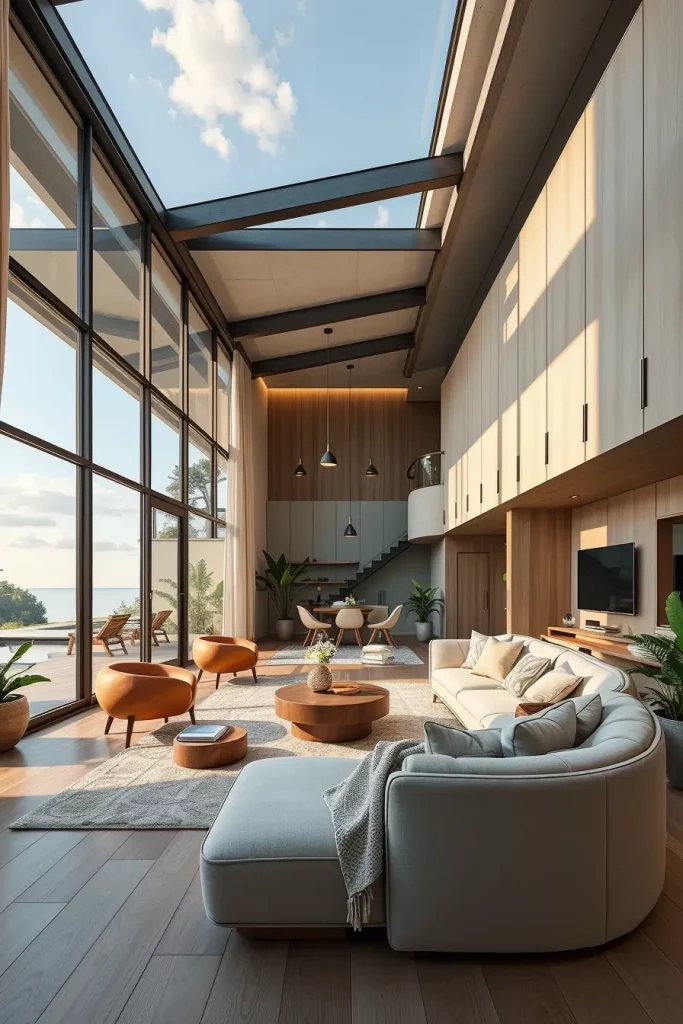
From my experience and supported by long-term design strategies discussed in Dwell, flexibility is the true luxury of modern living rooms. I personally advise clients to invest in quality structure first, allowing decorative elements to evolve naturally.
What I would add here is planning for future energy-efficient upgrades, ensuring the living room remains sustainable and technologically relevant.
The indoor–outdoor living room of 2026 represents a refined balance between architecture, nature, and modern design. With sculptural furniture, curved forms, and seamless transitions, these spaces redefine how we live, relax, and connect with our surroundings. More than a visual statement, the 2026 indoor–outdoor living room is a personalized, future-focused environment where comfort meets creativity and indoor and outdoor living become one effortless experience.