
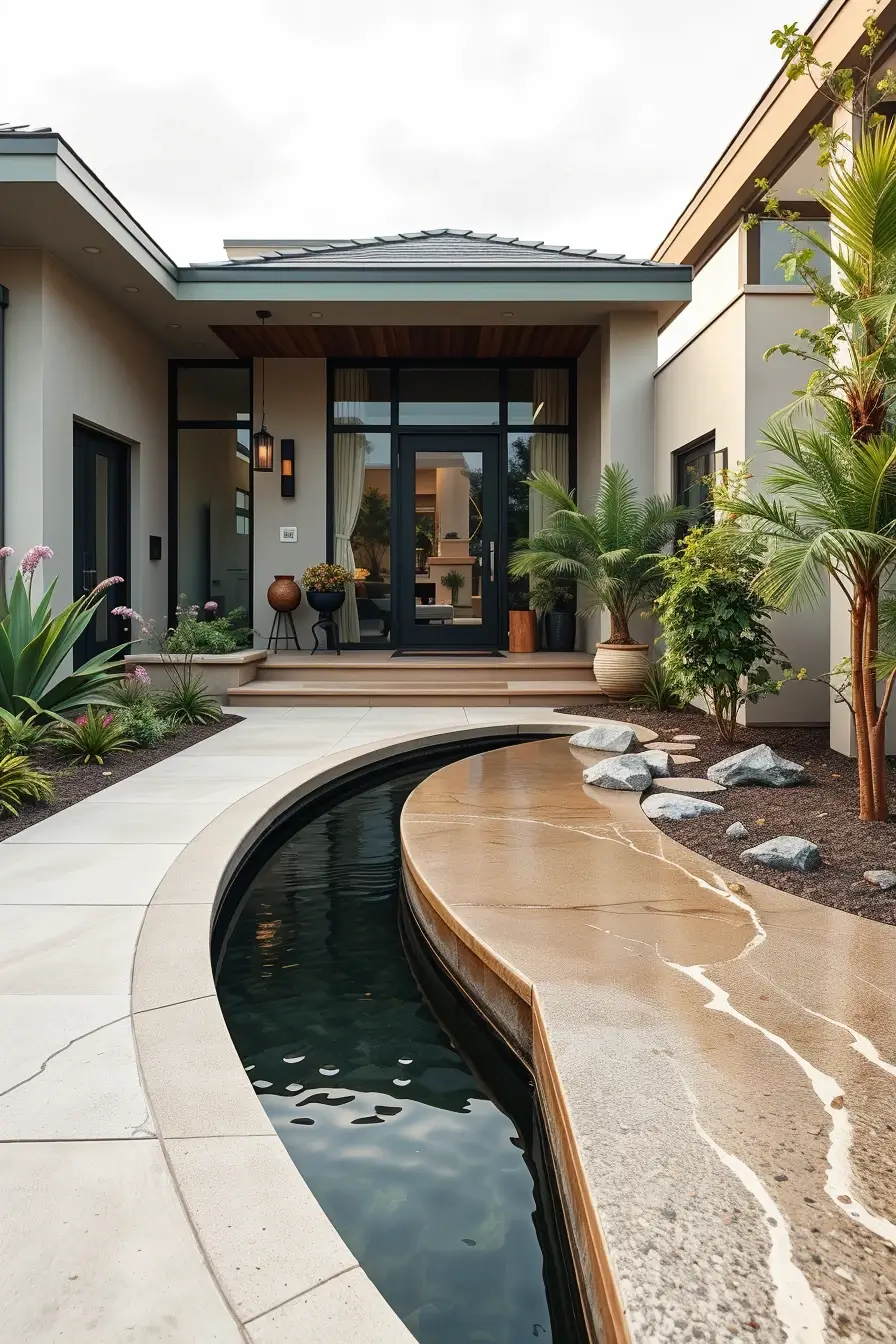
Front yard landscaping in 2026 is no longer just about neat lawns and familiar shrubs—it’s about creating a bold first impression that reflects personal style, architectural vision, and modern design thinking. As homes become more expressive, front yards are evolving into curated outdoor spaces where creativity, structure, and nature work together. From sculptural greenery and striking pathways to artistic materials and intentional layouts, today’s front yard is designed to be seen, experienced, and remembered.
This new era of front yard landscaping embraces originality and thoughtful design. Unusual forms, layered textures, innovative lighting, and carefully selected plants transform traditional entrances into statement landscapes. In 2026, the front yard becomes an extension of the home’s identity—stylish, unique, and forward-thinking—setting the tone for what lies beyond the front door.
The Evolution Of Front Yard Landscaping In 2026
In 2026, I see front yard landscaping evolving into a carefully curated extension of the home’s architecture rather than a decorative afterthought. The focus has shifted toward long-term functionality, low-maintenance planning, and visual storytelling. Front yards now serve as transitional spaces that connect the street to the home while expressing a clear design language that feels modern and intentional.
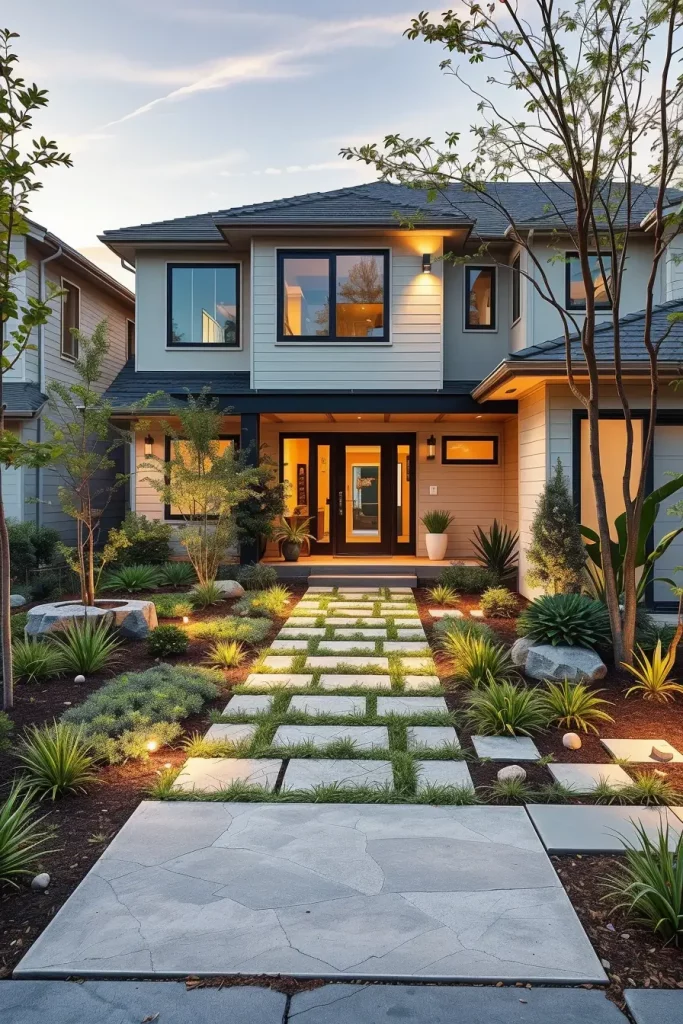
When I design or analyze these landscapes, I pay close attention to hardscape layouts, integrated lighting, and structured planting zones. Elements such as wide entry walkways, built-in seating, subtle retaining walls, and defined plant borders are no longer optional — they help organize the space and guide movement naturally. Every surface and material is chosen to support both durability and aesthetics.
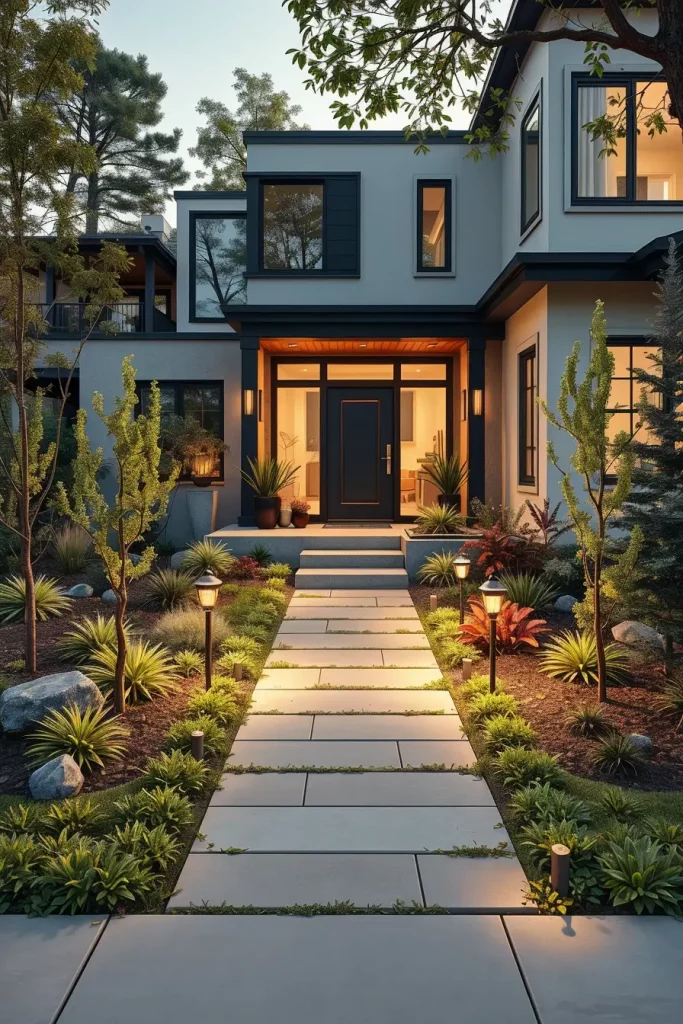
From my experience, this shift aligns with what leading landscape architects featured in Architectural Digest and Dwell have emphasized in recent years: front yards must balance sustainability, design clarity, and visual restraint. I personally believe this evolution allows homeowners to invest in landscapes that age well and remain relevant beyond short-term trends.
What is often missing in early planning is a clear hierarchy of spaces. I recommend adding zoning through changes in elevation, material transitions, or lighting layers to make the front yard feel intentional and complete rather than flat or decorative.
Architectural Front Yards With Strong Visual Identity
Architectural front yards in 2026 are designed to visually reinforce the home’s structure rather than compete with it. I approach these spaces by treating the landscape as a frame that enhances lines, proportions, and symmetry. Clean geometry, strong axes, and deliberate alignment with the façade create a powerful first impression.
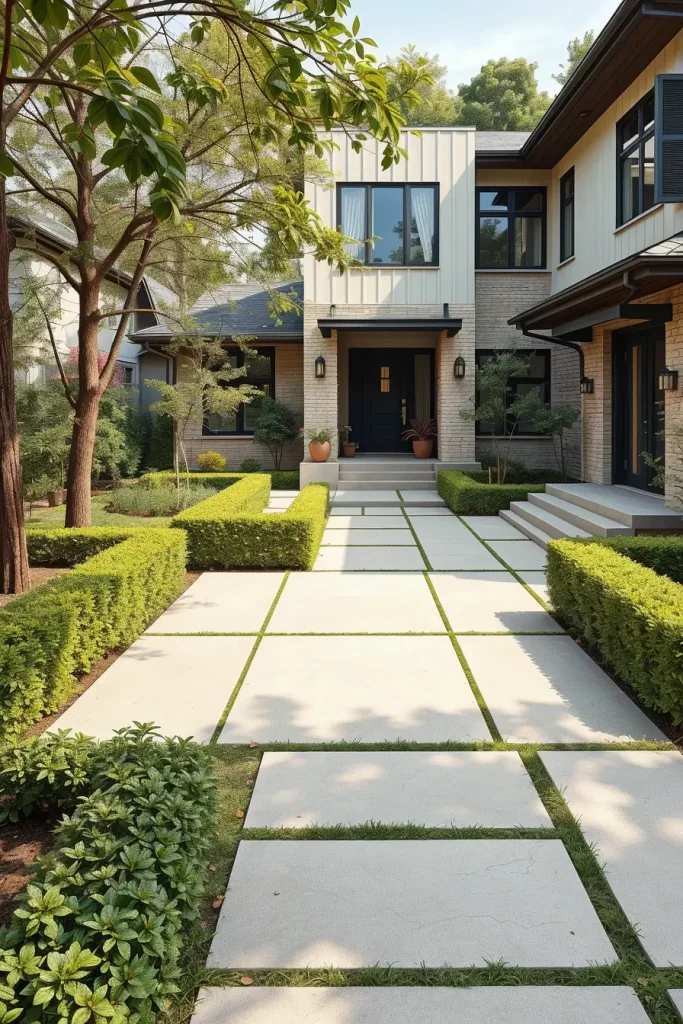
Key design elements often include linear pathways, structured hedges, monolithic planters, and minimal water features. I find that using the same materials as the home’s exterior — such as concrete, stone, or metal accents — creates cohesion. These elements are not decorative extras; they visually anchor the house to the site.
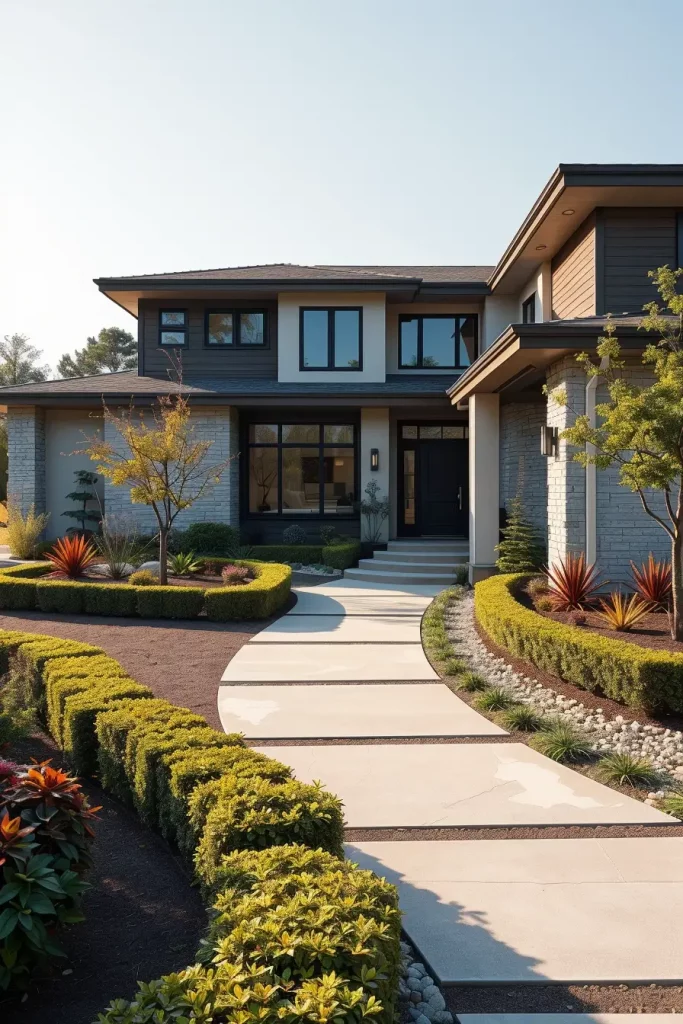
In my own work, I have seen how a strong visual identity increases perceived property value and timelessness. Publications like Dezeen frequently highlight projects where the front yard acts as a visual extension of architecture, and I fully agree with this approach. A strong identity reduces visual noise and creates confidence in the design.
To strengthen this section further, I would add architectural lighting that highlights structural lines at night. This detail is often overlooked but is essential for maintaining the design’s impact after sunset.
Minimalist Front Yard Landscaping With Artistic Impact
Minimalist front yard landscaping in 2026 is about restraint with purpose. I focus on reducing elements while increasing their visual weight. Open space, negative space, and simplicity allow each component to stand out, creating an artistic effect without overwhelming the viewer.
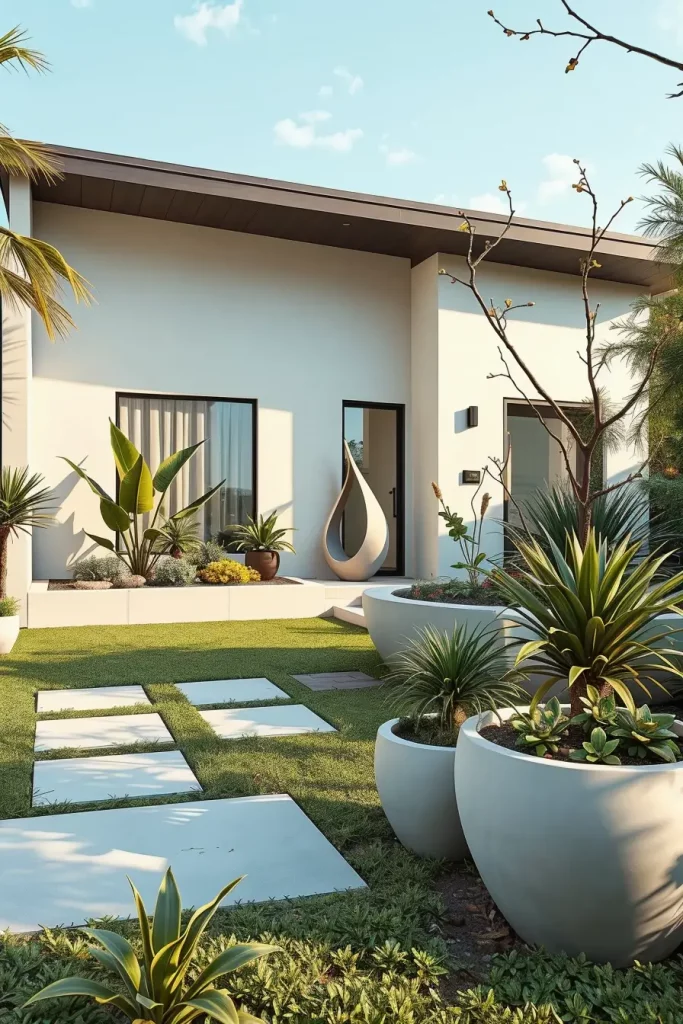
Typical components include a limited plant palette, oversized planters, smooth concrete surfaces, and sculptural focal points. I intentionally avoid excessive ornamentation and instead rely on form, texture, and proportion. Each item earns its place by contributing to balance and clarity.
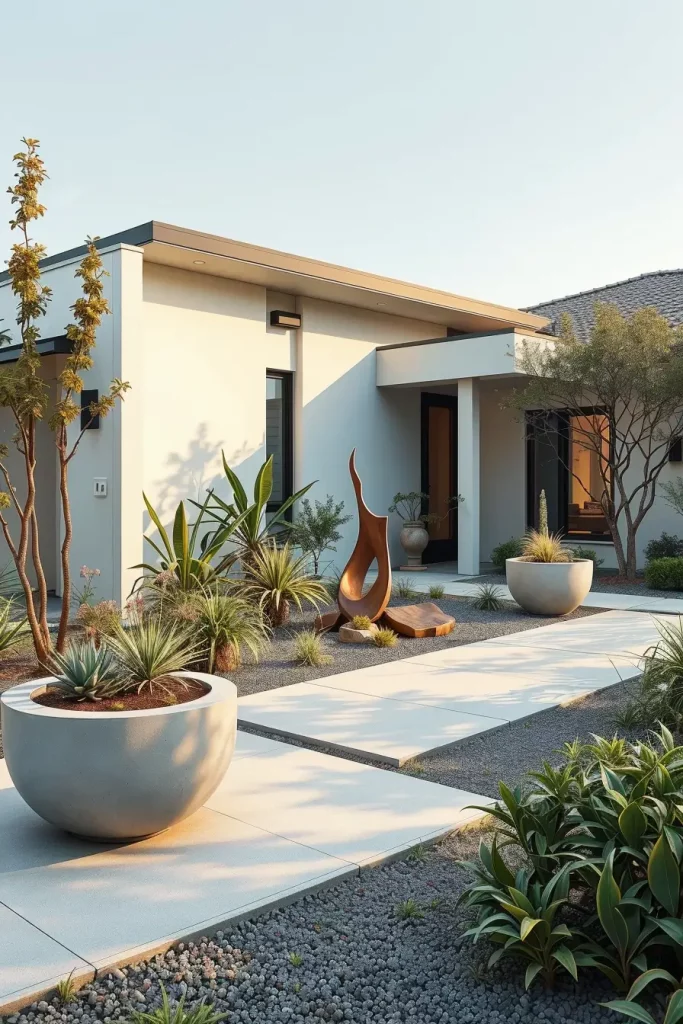
From my perspective, minimalist landscapes are among the most difficult to design well, because every mistake is visible. Landscape designers featured in The New York Times have noted that minimalism requires discipline, and I strongly agree. When executed correctly, it feels calm, confident, and highly refined.
To elevate this concept further, I would recommend incorporating one bold artistic element, such as a sculptural tree or statement stone, to anchor the composition and prevent the space from feeling empty.
Sculptural Greenery As A Design Statement
In 2026, sculptural greenery has become a defining feature of designer front yard landscaping. I see plants not just as soft fillers but as architectural forms. Carefully pruned trees, topiary shapes, and structural shrubs act as living sculptures that bring rhythm and movement to the space.
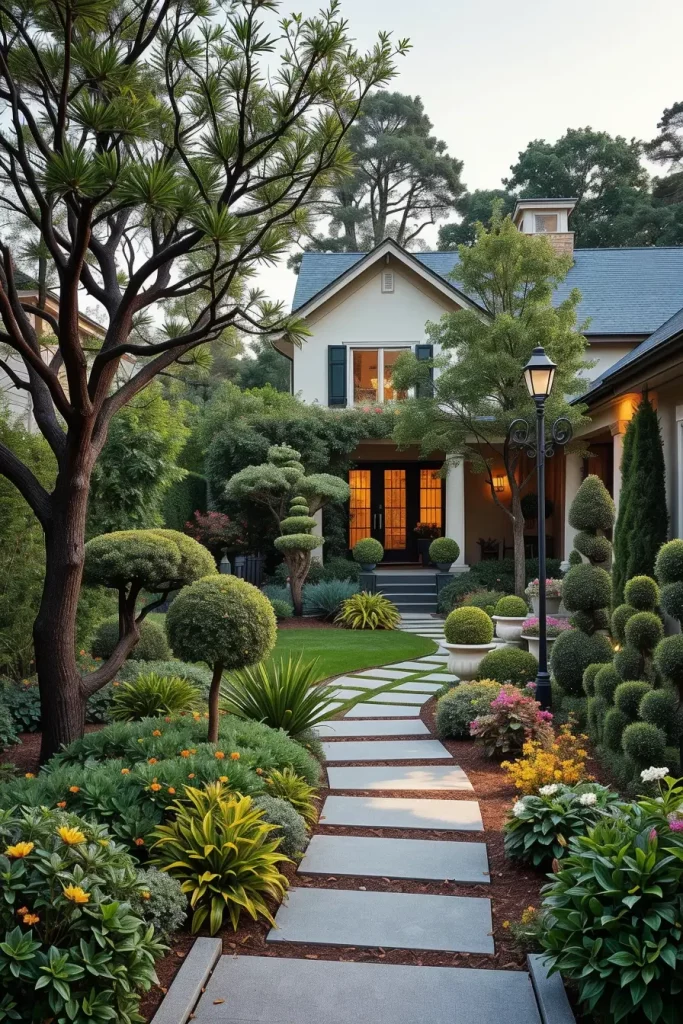
Common choices include cloud-pruned evergreens, multi-trunk trees, and ornamental grasses arranged in deliberate groupings. I select greenery based on shape, scale, and seasonal consistency, ensuring that the landscape remains visually strong year-round.
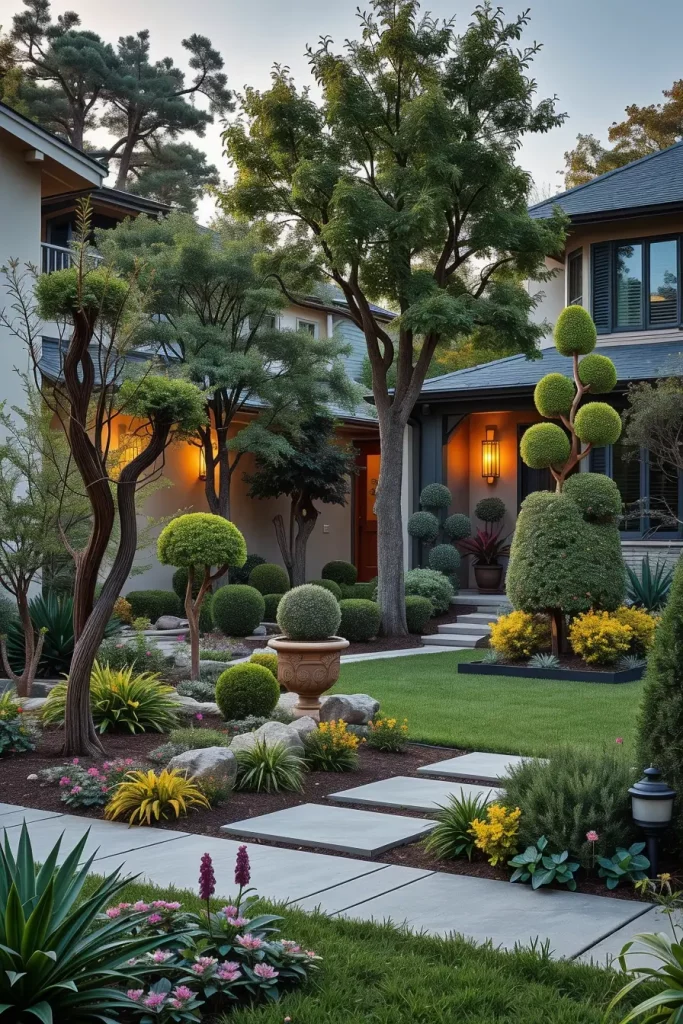
In my experience, this approach aligns with insights from landscape professionals published in Garden Design Magazine, who emphasize form-driven planting over seasonal color trends. I personally value sculptural greenery because it combines natural beauty with long-term structure.
What could further enhance this section is the addition of integrated lighting at the base of sculptural plants. This detail dramatically increases depth and visual drama during evening hours.
Curved Pathways For A Modern And Dynamic Look
Curved pathways are a key element of unusual front yard landscaping in 2026. I use curves to soften modern architecture and introduce a sense of movement and discovery. Unlike rigid straight paths, curved walkways guide visitors naturally and create a more engaging experience.
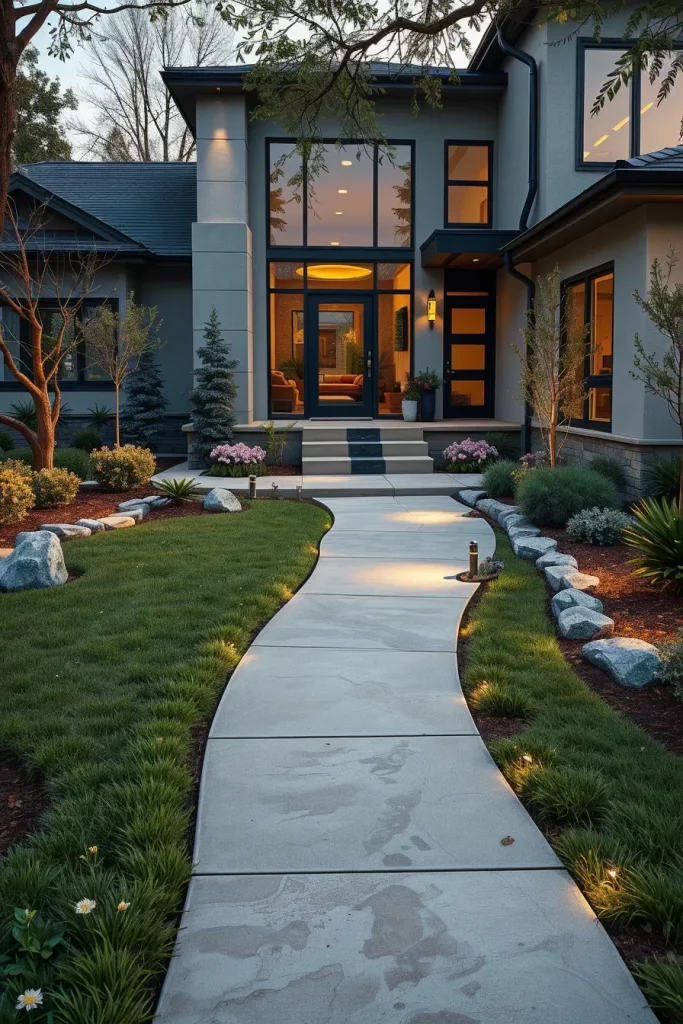
Materials such as poured concrete, stone pavers, or textured slabs work best when paired with gentle curves. I often design these paths alongside layered planting beds or low walls, allowing the pathway to feel integrated rather than imposed on the landscape.
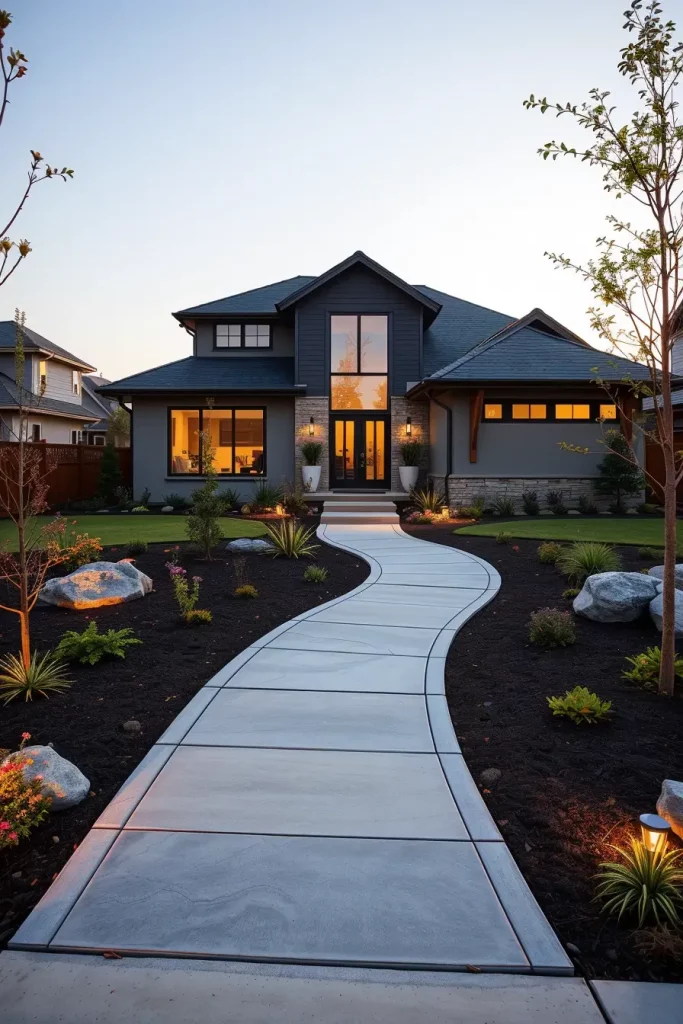
From my professional perspective, curved pathways are especially effective in suburban settings where homes benefit from visual softness. Designers featured in Better Homes and Gardens frequently highlight how curves improve flow, and I have consistently seen positive results from this approach.
To complete this idea, I would suggest adding subtle ground lighting along the curves to enhance safety and emphasize the pathway’s shape at night.
Designer Front Yard Landscaping With Layered Textures
In front yard landscaping 2026, layered textures play a central role in creating depth and visual richness without overcrowding the space. I approach this concept by combining contrasting surfaces and materials in a controlled way, allowing each layer to support the overall composition. Texture becomes a design language that guides the eye from the sidewalk to the entry.
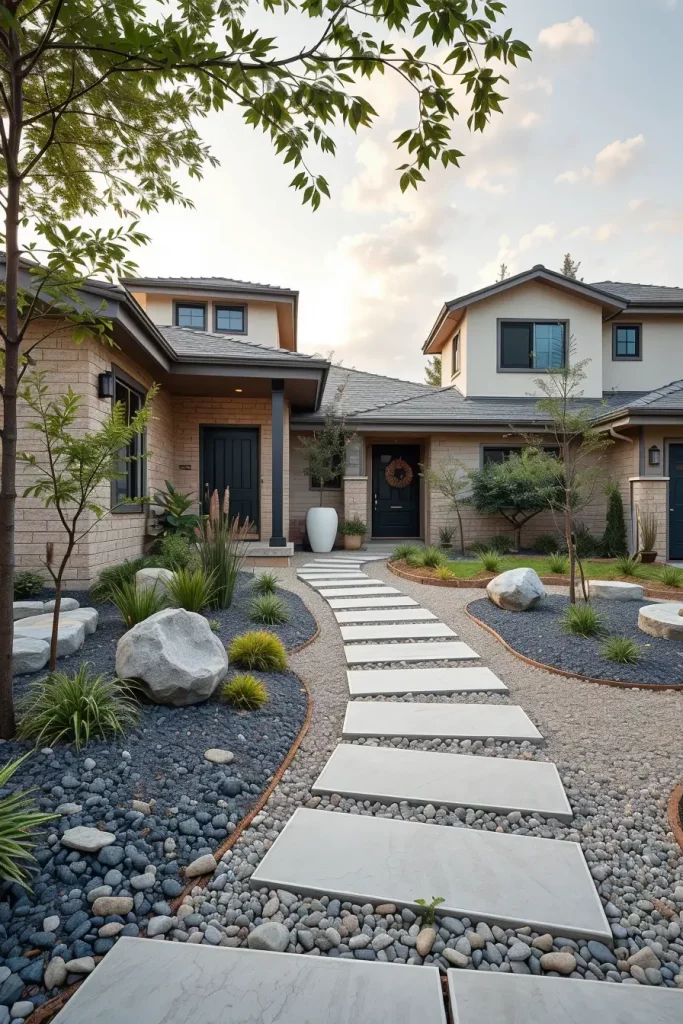
I typically work with a mix of gravel, natural stone, smooth concrete, and structured greenery. Low ground covers, ornamental grasses, and textured paving materials help establish subtle transitions between zones. Each element is selected not only for appearance but also for how it interacts with light and shadow throughout the day.
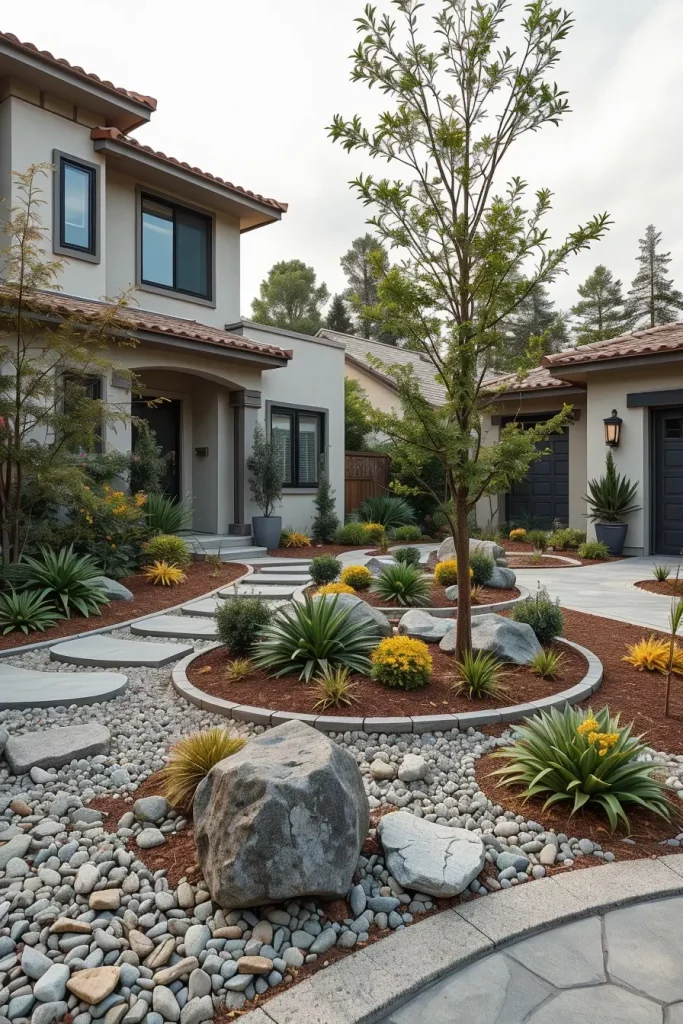
From my professional experience, layered textures are what separate designer front yard landscaping from basic installations. Publications like Landscape Architecture Magazine consistently highlight texture as a key tool for timeless outdoor design, and I rely on this principle to achieve sophistication without excess.
To strengthen this approach further, I recommend adding vertical texture through walls, screens, or raised planters. This additional layer often completes the composition and makes the front yard feel fully resolved.
Creative Use Of Stone And Concrete In Front Yards
Stone and concrete have become defining materials in creative and stylish front yard landscaping for 2026. I see these materials as foundational elements that establish permanence and structure. When used thoughtfully, they create a clean, modern base that supports more expressive design features.
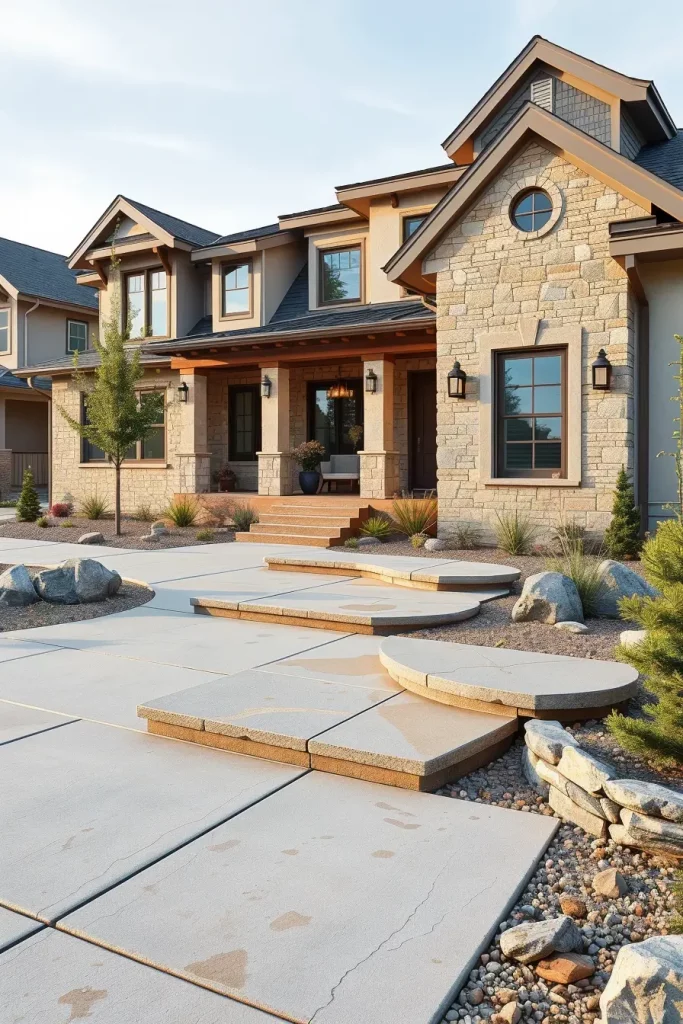
I often combine large-format concrete slabs with natural stone accents to balance precision and warmth. Retaining walls, entry steps, and sculptural borders made from these materials help define circulation and seating areas while maintaining a cohesive look across the yard.
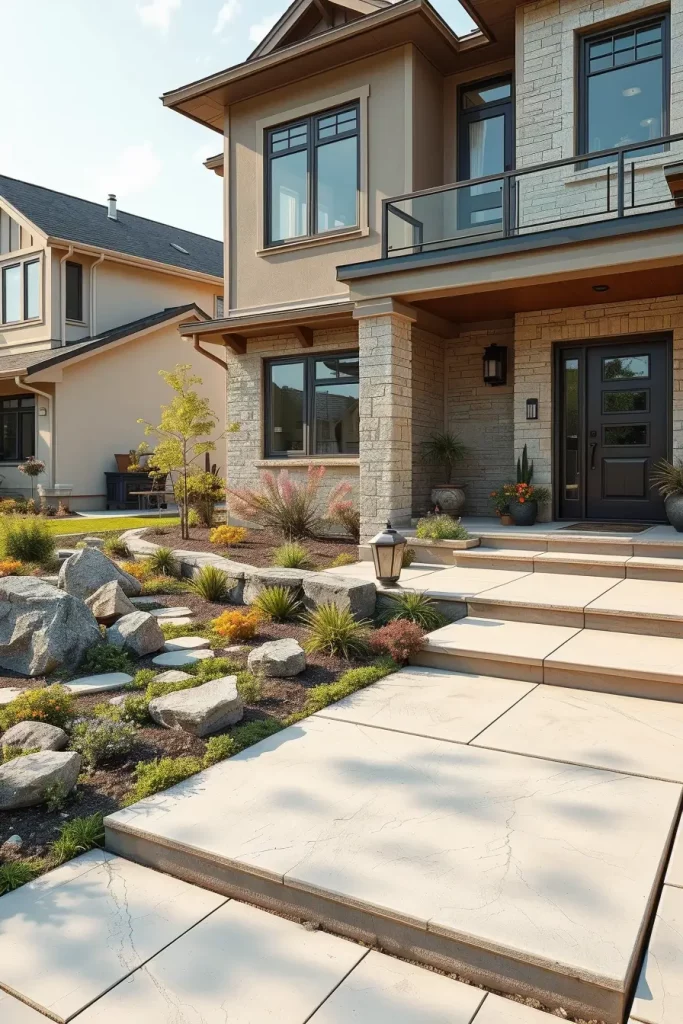
In my opinion, stone and concrete are most effective when their natural textures are allowed to remain visible. Designers featured in Dezeen frequently emphasize honesty of materials, and I share that belief. Over-finishing or excessive decoration weakens their architectural strength.
What is sometimes missing in these designs is softness. I recommend integrating greenery between stone and concrete surfaces to prevent the space from feeling overly rigid or cold.
Statement Entry Landscaping That Frames The Home
A statement entry is one of the most impactful elements of unique front yard landscaping in 2026. I design these areas to visually frame the home, drawing attention to the entrance while maintaining harmony with the surrounding landscape. The goal is to create a welcoming focal point that feels intentional and refined.
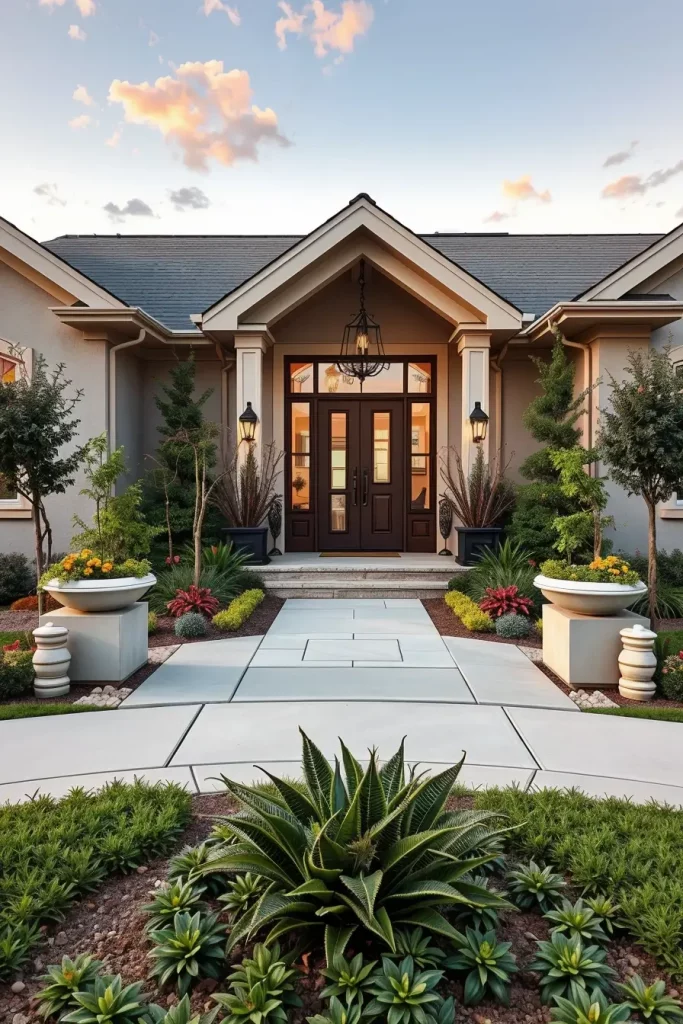
This often includes symmetrical planting, bold planters, accent trees, or a clearly defined pathway leading directly to the front door. I carefully consider scale here, ensuring that elements are proportionate to the home’s façade and do not overwhelm it.
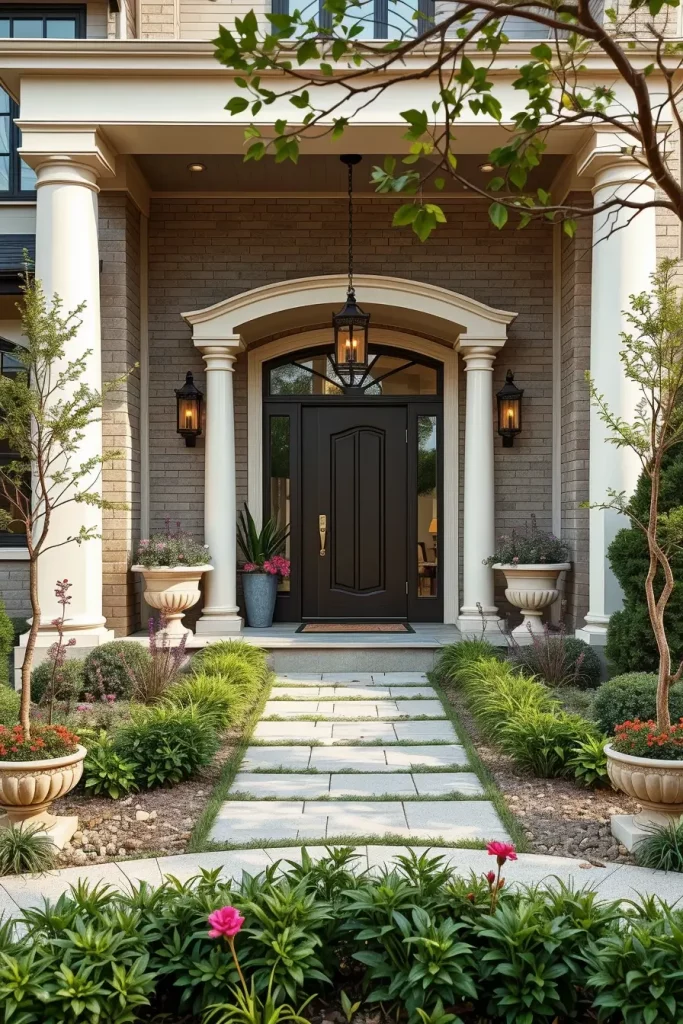
From my experience, a well-framed entry significantly enhances curb appeal and usability. Experts featured in Better Homes and Gardens consistently note that clear entry definition improves both aesthetics and navigation, and I see this proven in real projects.
To elevate this concept further, I suggest incorporating layered lighting around the entry to highlight architectural details and improve nighttime visibility.
Unique Front Yard Landscaping With Mixed Materials
Mixing materials is a hallmark of unusual and designer front yard landscaping in 2026. I approach this strategy with intention, ensuring that contrasts feel curated rather than chaotic. The right combination of materials adds personality and depth to the space.
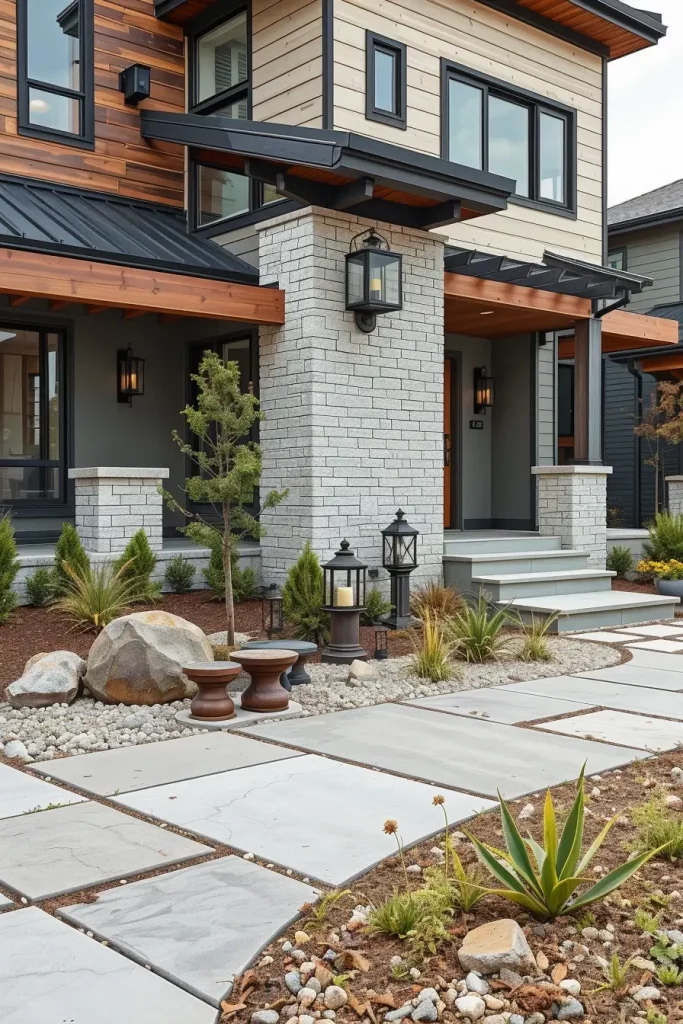
Common pairings include wood with concrete, stone with metal, or gravel with large pavers. I select materials based on durability, color harmony, and tactile contrast. Each material has a role, whether structural, decorative, or transitional.
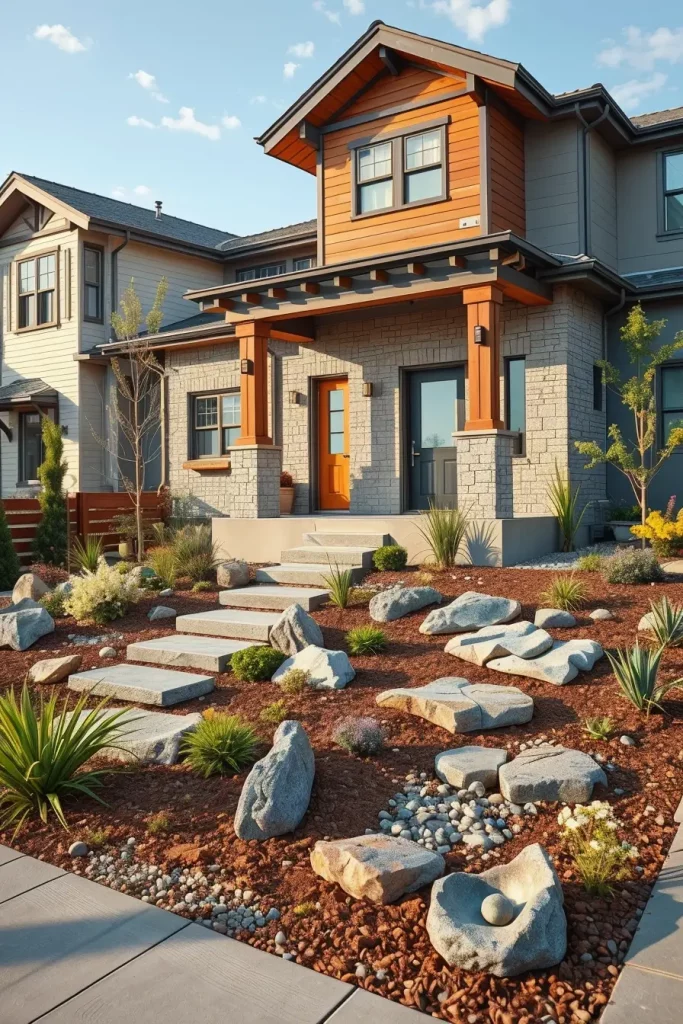
In my professional view, mixed materials work best when one material acts as the dominant base and others support it. This principle is frequently discussed in Dwell, and I apply it consistently to maintain visual balance and longevity.
To complete this type of design, I would add subtle repetition of materials throughout the yard. This helps unify the composition and prevents the space from feeling fragmented.
Artistic Plant Compositions For A Bold First Impression
Artistic plant compositions are central to front yard landscaping 2026, especially when the goal is a bold and memorable first impression. I treat plant placement as a form of visual art, focusing on rhythm, scale, and contrast rather than traditional symmetry.
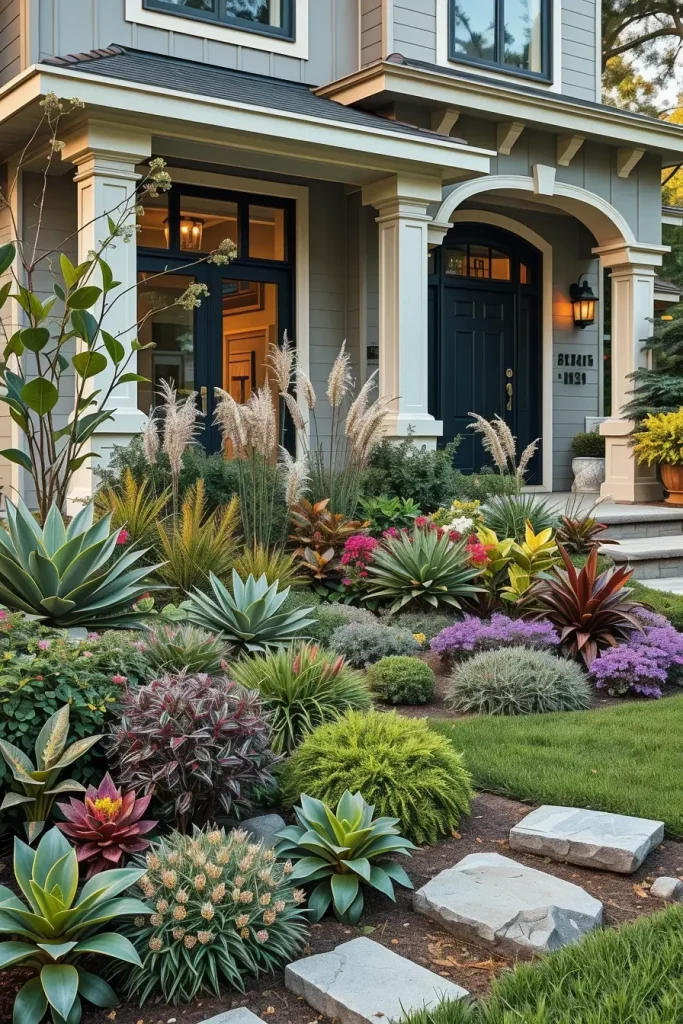
I often use unexpected groupings of plants with varied heights, leaf shapes, and tones. Architectural plants, layered shrubs, and ground covers work together to create movement and structure while remaining low maintenance and climate appropriate.
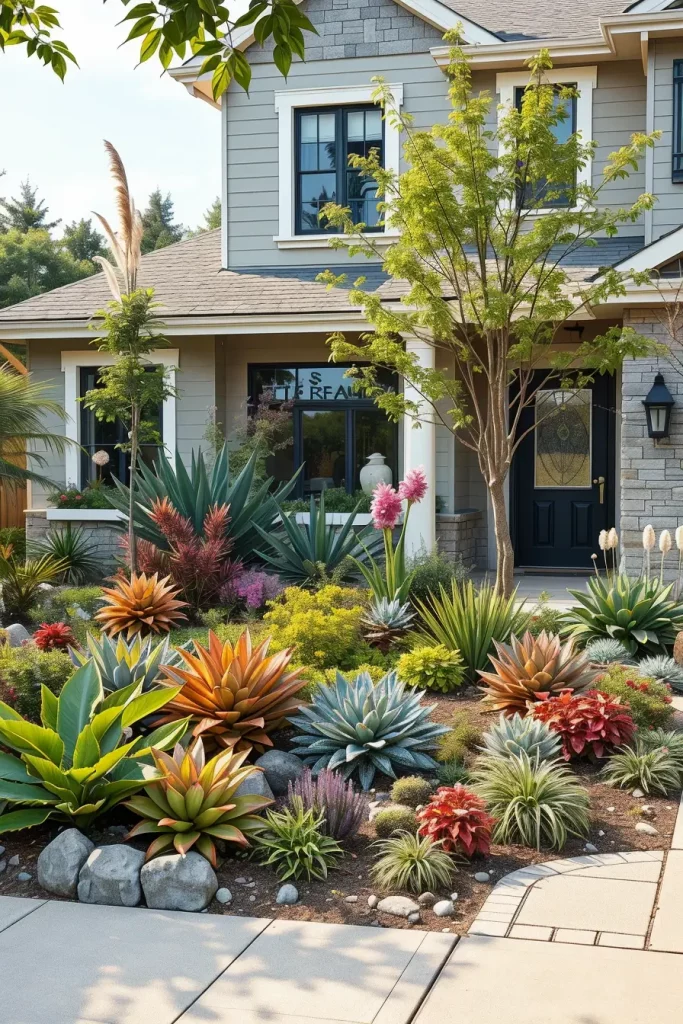
From my experience, this approach reflects a broader shift in landscape design toward expressive planting. Garden Design Magazine frequently highlights bold compositions as a future-forward trend, and I see them resonating strongly with modern homeowners.
To enhance this section, I would recommend seasonal accents that subtly change the composition throughout the year without altering its core structure.
Front Yard Landscaping With Floating Walkways
I see floating walkways as one of the most expressive elements shaping front yard landscaping 2026, especially for homeowners who want a bold yet refined first impression. These walkways appear visually suspended above gravel, grass, or water features, creating a sense of lightness and architectural intention. From a practical standpoint, they guide movement clearly while protecting surrounding planting areas from foot traffic, which makes them both functional and visually striking.
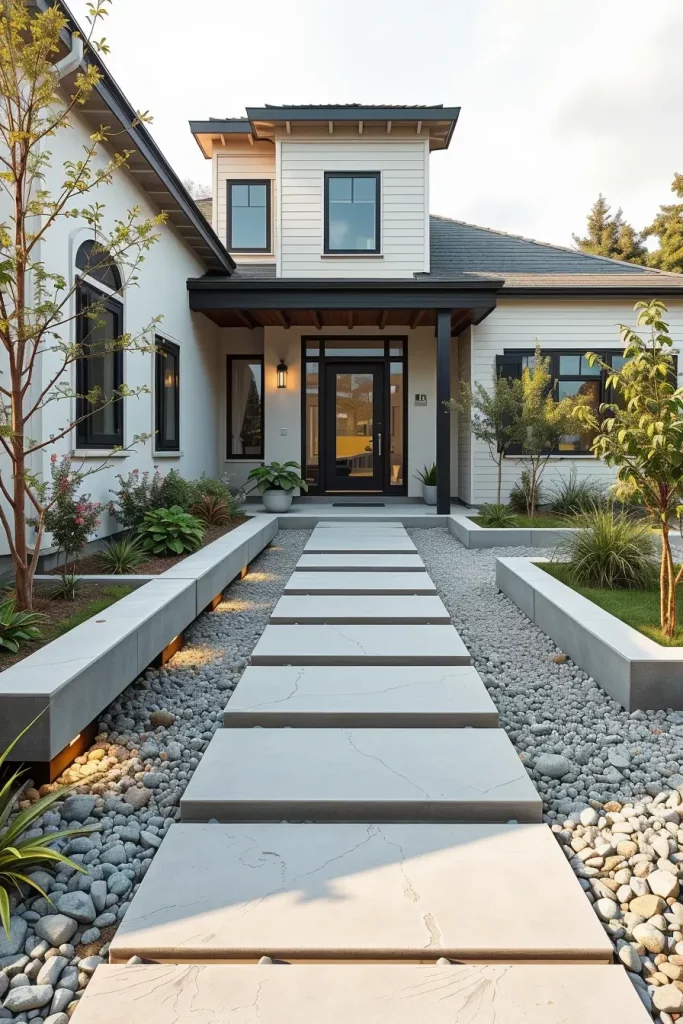
In my projects, I typically use large-format concrete slabs, natural stone, or composite panels with concealed supports. I pair them with low ground lighting, fine gravel beds, or shallow reflecting pools beneath to enhance the floating effect. Minimalist handrails, if needed, are kept subtle to avoid disrupting the clean lines. This approach allows the walkway to act as a sculptural feature rather than just a path.
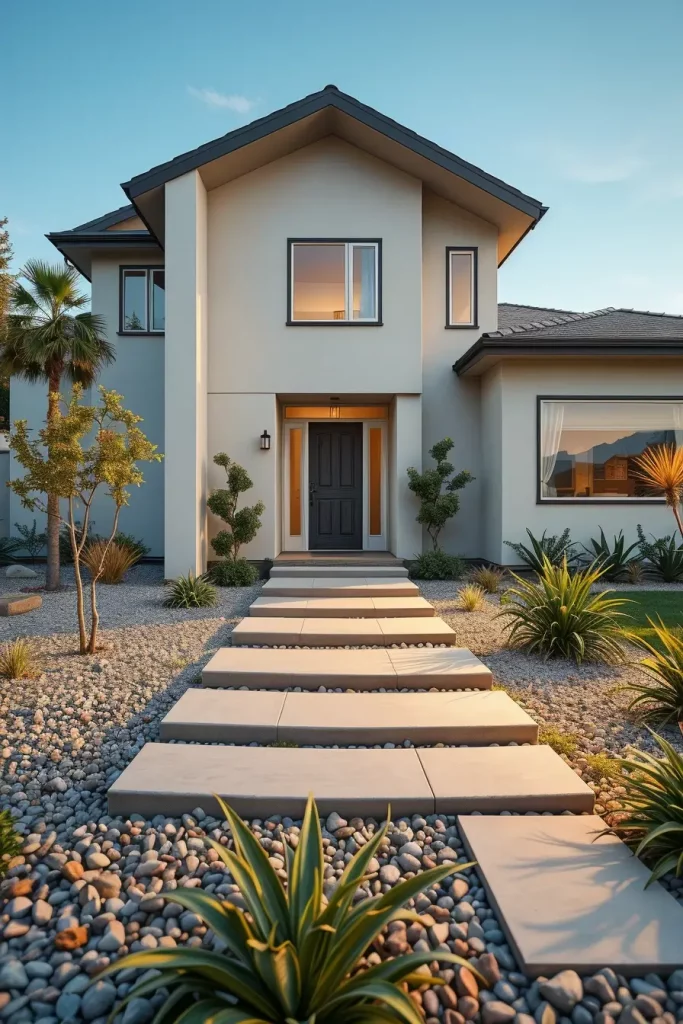
From my experience, floating walkways work best when the surrounding landscape is intentionally restrained. Landscape architects featured in Architectural Digest often emphasize negative space as a design tool, and I fully agree. Letting the walkway breathe visually is what elevates it from a trend to a lasting design statement.
What I would add to this concept is integrated drainage planning beneath the slabs and seasonal surface treatments to prevent slipping, especially in colder or rainy climates. These details ensure the design remains safe and durable without compromising its visual impact.
Unusual Front Yard Designs Inspired By Gallery Spaces
Gallery-inspired front yards are becoming a defining feature of designer front yard landscaping in 2026. I approach these spaces as curated outdoor exhibitions, where each element is intentional and visually balanced. The goal is not abundance, but clarity, allowing the front yard to feel like a calm, contemplative entry rather than a decorative overload.
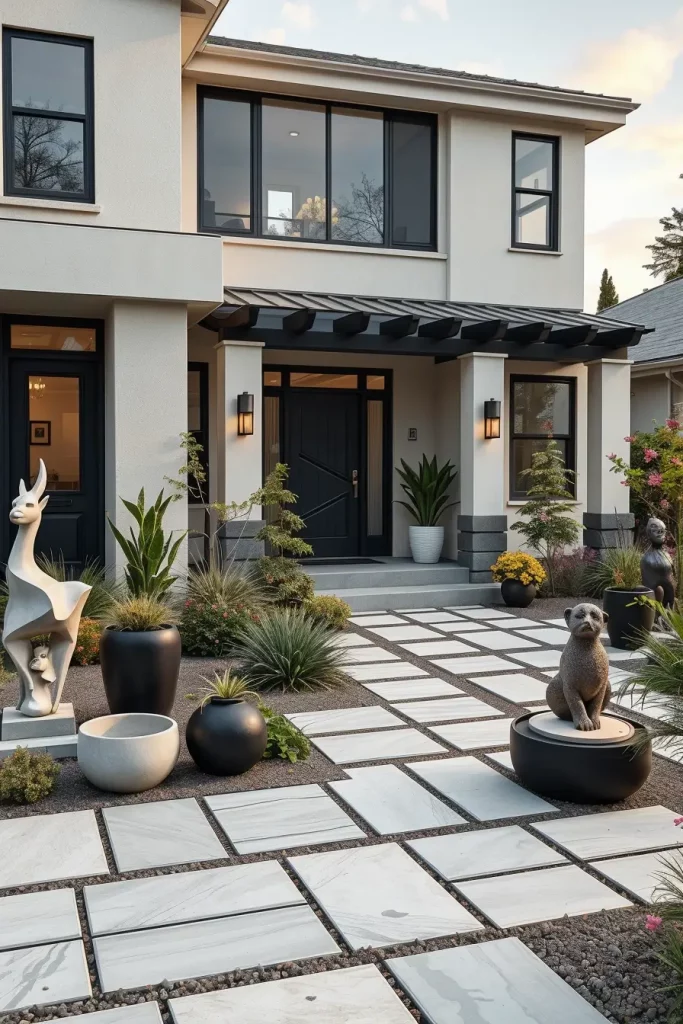
I typically include sculptural planters, monochrome paving, and a limited palette of materials such as concrete, steel, and stone. Outdoor art pieces, custom benches, or statement trees function as focal points, much like installations in a gallery. Clean sightlines and controlled symmetry help reinforce this concept while maintaining approachability.
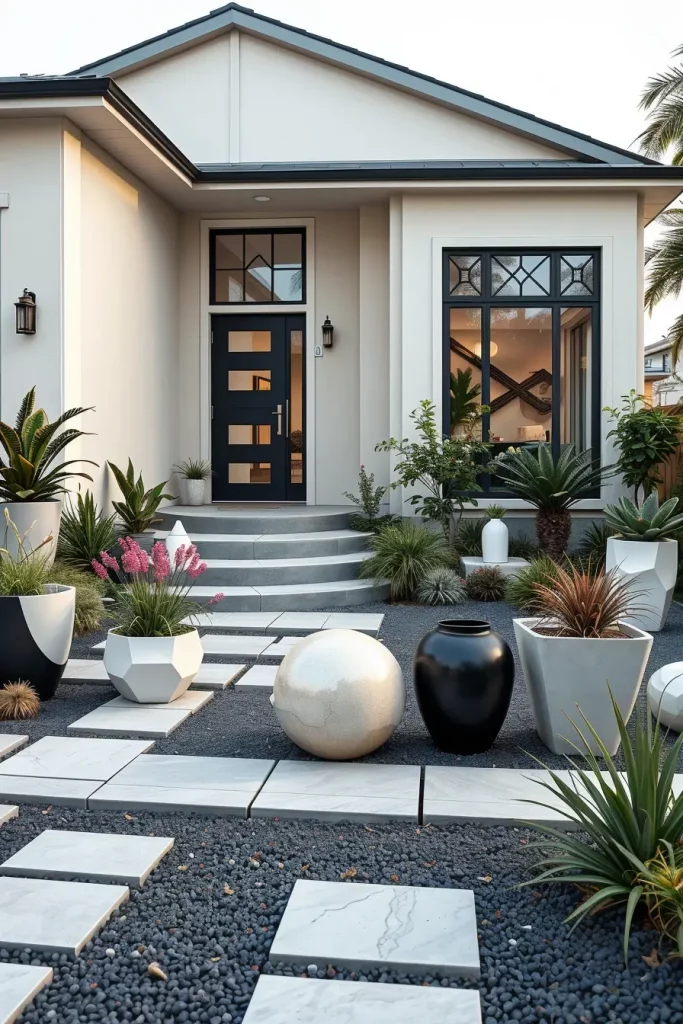
Personally, I’ve found that homeowners are initially hesitant about minimal planting, but often grow to appreciate how these spaces age gracefully. Design professionals from Dwell frequently highlight that restraint allows architecture to speak louder, and I’ve seen firsthand how this approach enhances property value and curb appeal.
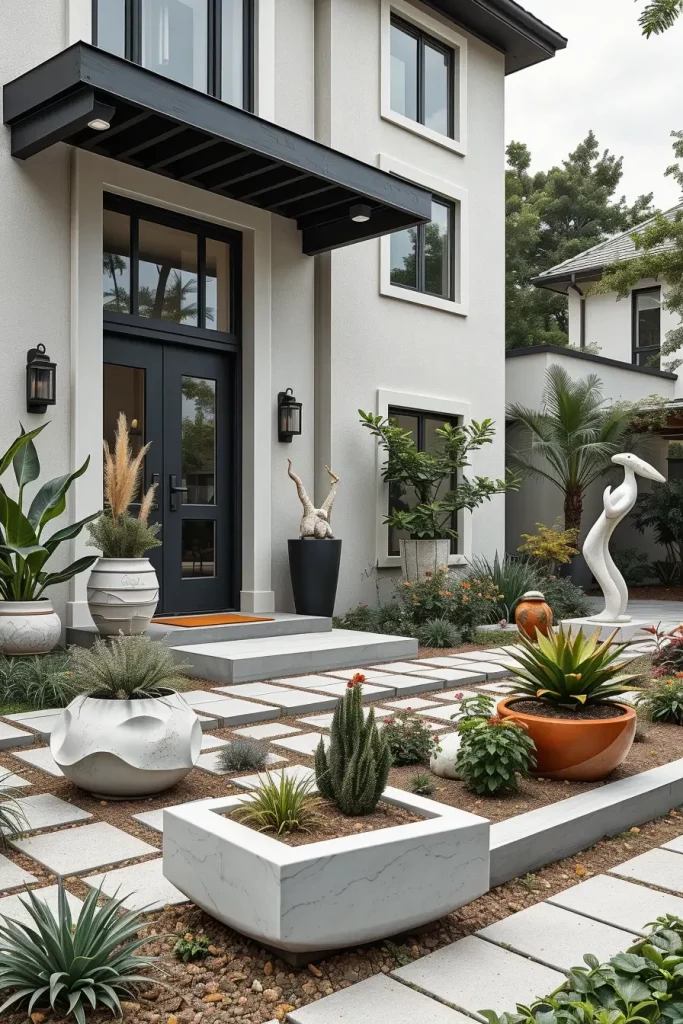
To complete this type of landscape, I would recommend adding discreet signage lighting or subtle ground-level spotlights to emphasize key elements at night. This reinforces the gallery atmosphere while keeping the space practical and inviting after sunset.
Modern Lighting Concepts For Front Yard Landscaping
Lighting plays a critical role in how front yards function and feel, especially in front yard landscaping 2026, where evenings are treated as an extension of living space. I design lighting plans that enhance depth, improve safety, and highlight architectural and natural features without overwhelming the eye.
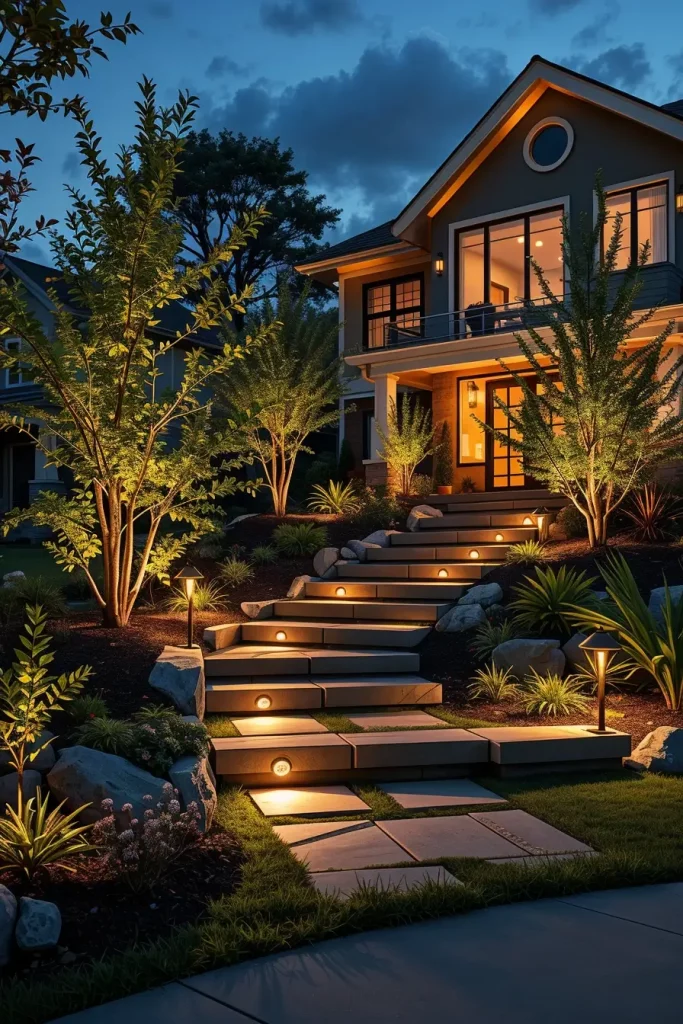
I rely on layered lighting strategies, combining path lights, uplights for trees or façades, and integrated LED strips along steps or walls. Smart lighting systems allow homeowners to adjust brightness and tone depending on season or occasion. Warm temperatures are my preference, as they create a welcoming atmosphere while maintaining modern elegance.
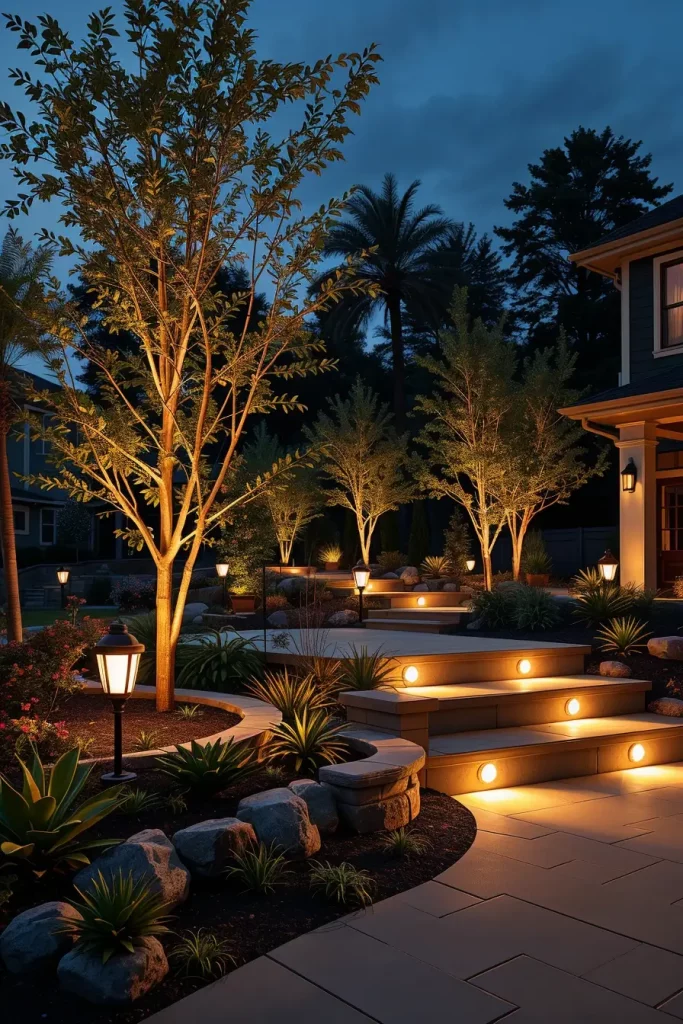
In my professional opinion, lighting is where many front yards either succeed or fail. Experts from the American Society of Landscape Architects consistently stress that good lighting should guide, not dominate, and I’ve found that subtlety always wins in the long term.
What’s often missing in front yard lighting designs is proper zoning. I recommend separating functional lighting from accent lighting so each serves its purpose clearly without visual clutter or excessive energy use.
Sustainable Yet Stylish Front Yard Landscaping Ideas
Sustainability is no longer optional in creative front yard landscaping, and in 2026 it is seamlessly blended with high design. I focus on solutions that reduce water use, support local ecosystems, and still look intentional and refined. Sustainable design today is about smart choices, not visual compromise.
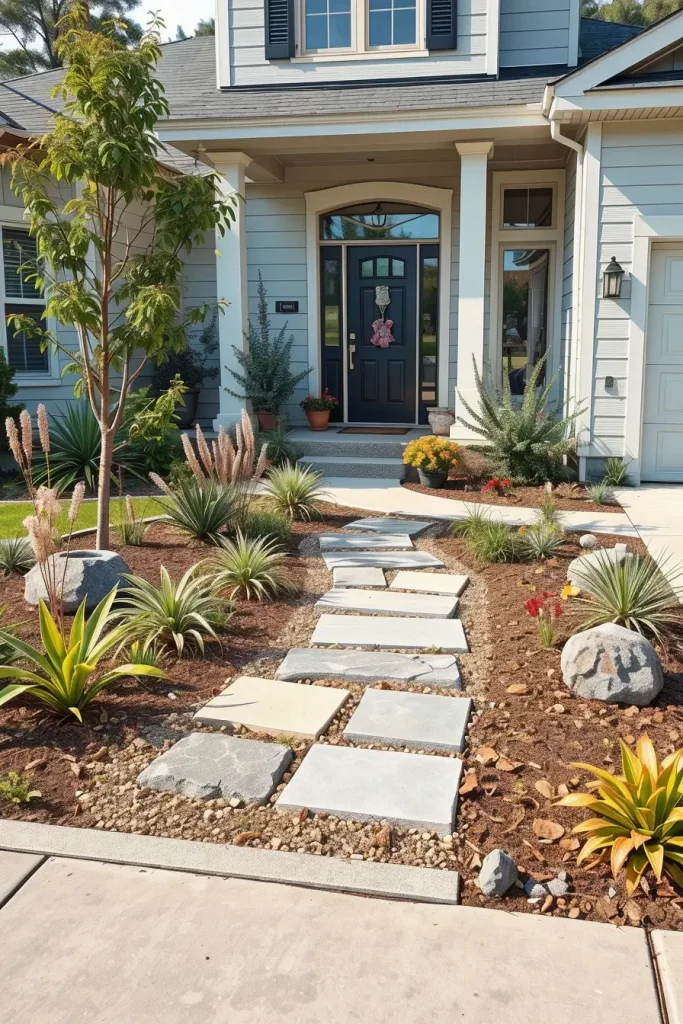
I often incorporate native plants, permeable paving, and drought-resistant ground covers. Recycled materials, such as reclaimed stone or eco-friendly composites, add character while aligning with environmental goals. Rain gardens and bioswales also serve as design features rather than hidden utilities.
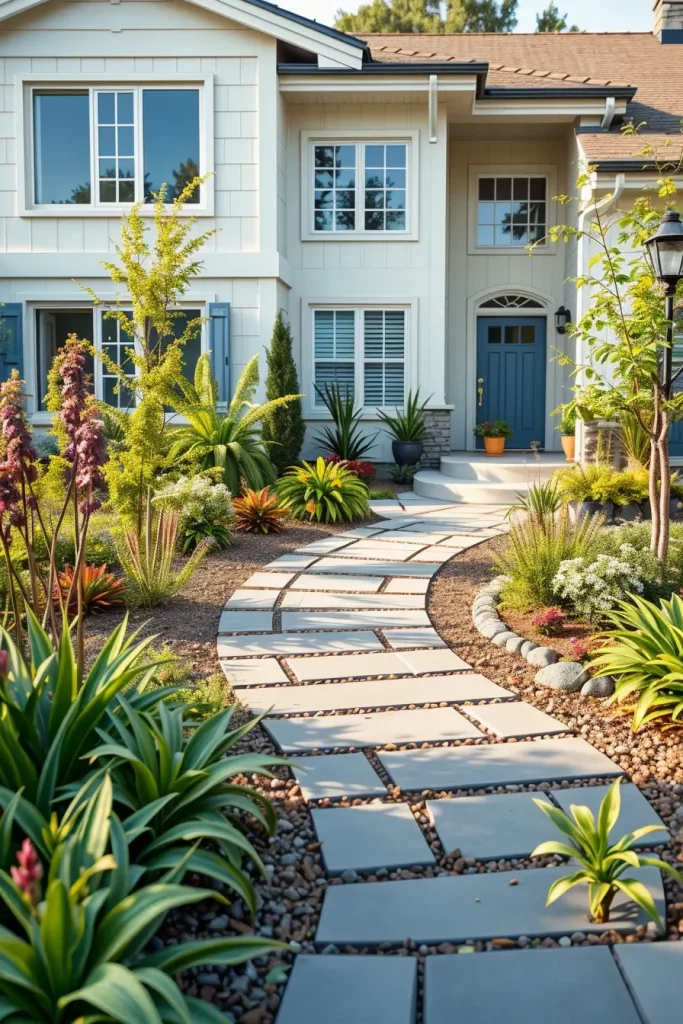
From my experience, clients are increasingly proud of visible sustainability. Publications like Garden Design Magazine note that eco-conscious landscapes are now seen as luxury features, and I completely agree. A well-designed sustainable yard feels thoughtful and forward-looking.
To enhance this approach further, I recommend adding discreet educational elements, such as small plaques or digital irrigation controls, so homeowners can actively engage with and optimize their landscape’s performance.
Designer Front Yards With Asymmetrical Layouts
Asymmetry is defining unusual and unique front yard landscaping trends for 2026, allowing spaces to feel more dynamic and expressive. I use asymmetrical layouts to guide the eye naturally across the yard, creating movement and visual interest without relying on traditional symmetry.
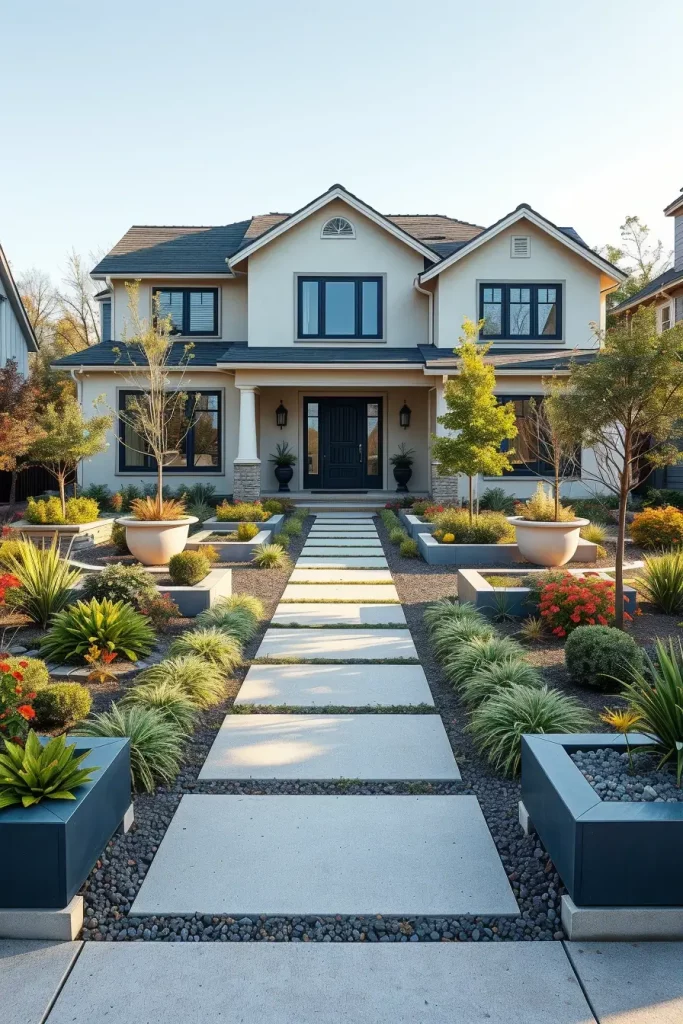
In practice, this means offset walkways, irregular planter placement, and varied plant heights. I balance these elements with consistent materials or color palettes so the design feels intentional rather than chaotic. Statement trees or sculptural features often anchor one side of the layout.
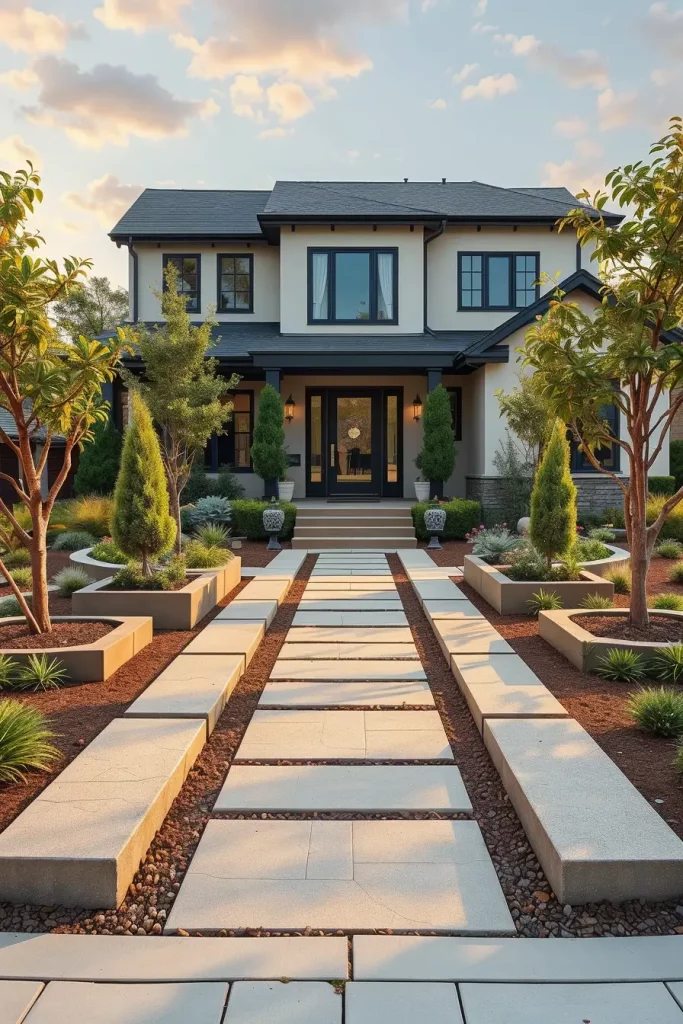
Personally, I find asymmetry more adaptable to modern architecture and irregular lot shapes. Designers featured in Dezeen often highlight asymmetry as a tool for humanizing modern spaces, and I’ve seen it make front yards feel more welcoming and less rigid.
What I would add to asymmetrical designs is a strong visual anchor, such as a focal lighting element or bold plant grouping, to ensure the layout feels cohesive and grounded.
Front Yard Landscaping That Blends Nature And Architecture
In front yard landscaping 2026, one of the strongest design directions I work with is the seamless integration of landscape elements with architectural forms. Rather than treating the yard as decoration around a house, I approach it as an extension of the building itself. This creates a cohesive visual language where materials, lines, and proportions echo the architecture and reinforce the home’s identity.
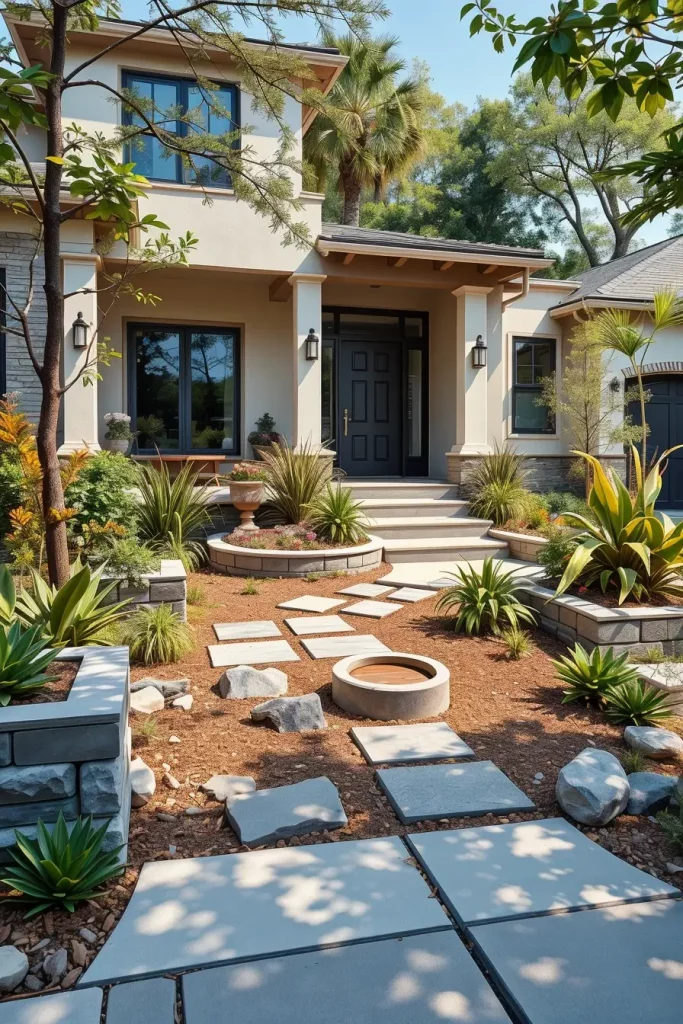
I often repeat façade materials such as stone, concrete, wood slats, or metal panels within the landscape design. Built-in planters, retaining walls, and benches mirror architectural geometry, while planting is used to soften transitions rather than dominate them. Trees are positioned to frame sightlines, not block them, ensuring that architecture remains the focal point.
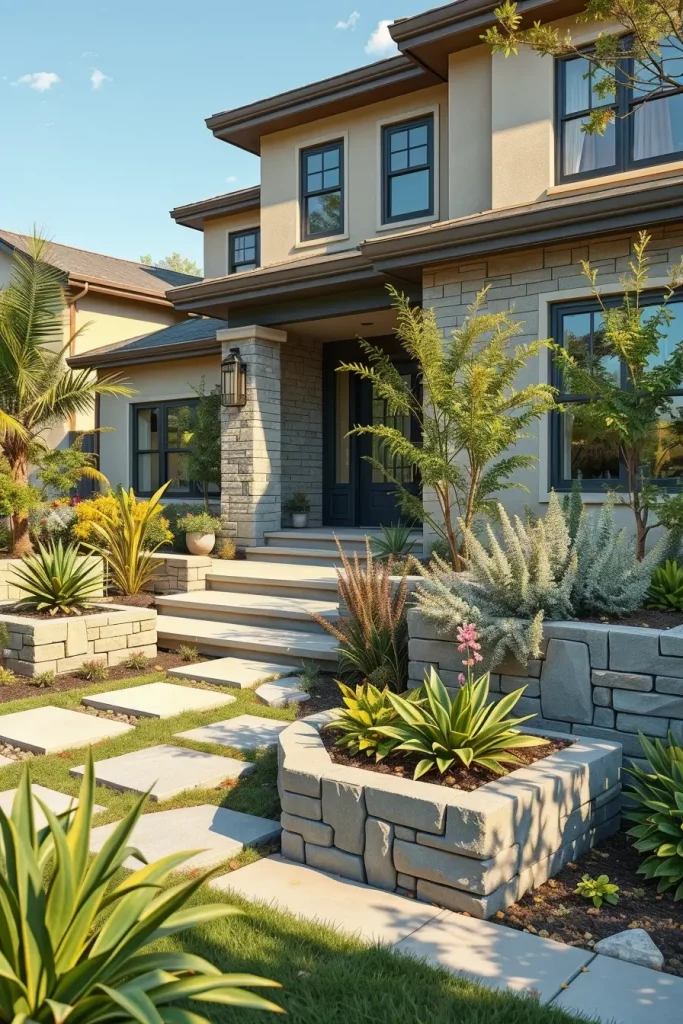
From my experience, this approach aligns closely with recommendations from architects featured in Dezeen and Architectural Digest, who emphasize continuity between structure and site. When nature and architecture speak the same design language, the front yard feels intentional, calm, and timeless rather than trend-driven.
What is often missing in these landscapes is thoughtful aging strategy. I recommend planning for plant maturity and material patina from the beginning so the design improves over time instead of becoming visually cluttered.
Creative Front Yard Landscaping With Water Features
Water features are evolving rapidly within creative and designer front yard landscaping, shifting away from ornate fountains toward minimal, architectural expressions. I use water strategically to introduce movement, sound, and reflection without overwhelming the space or increasing maintenance unnecessarily.
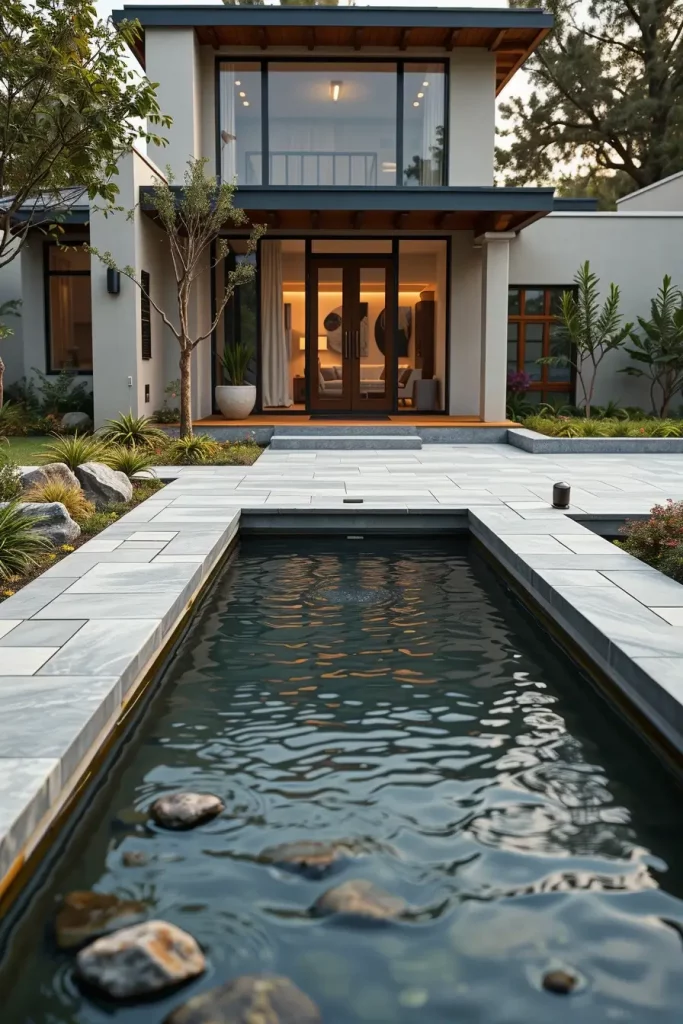
In my designs, I favor shallow reflecting pools, linear water channels, or compact wall-integrated waterfalls. These elements are often paired with stone, concrete, or dark metal finishes to maintain a modern aesthetic. When positioned near entry paths or focal points, water features subtly guide visitors while enhancing sensory experience.
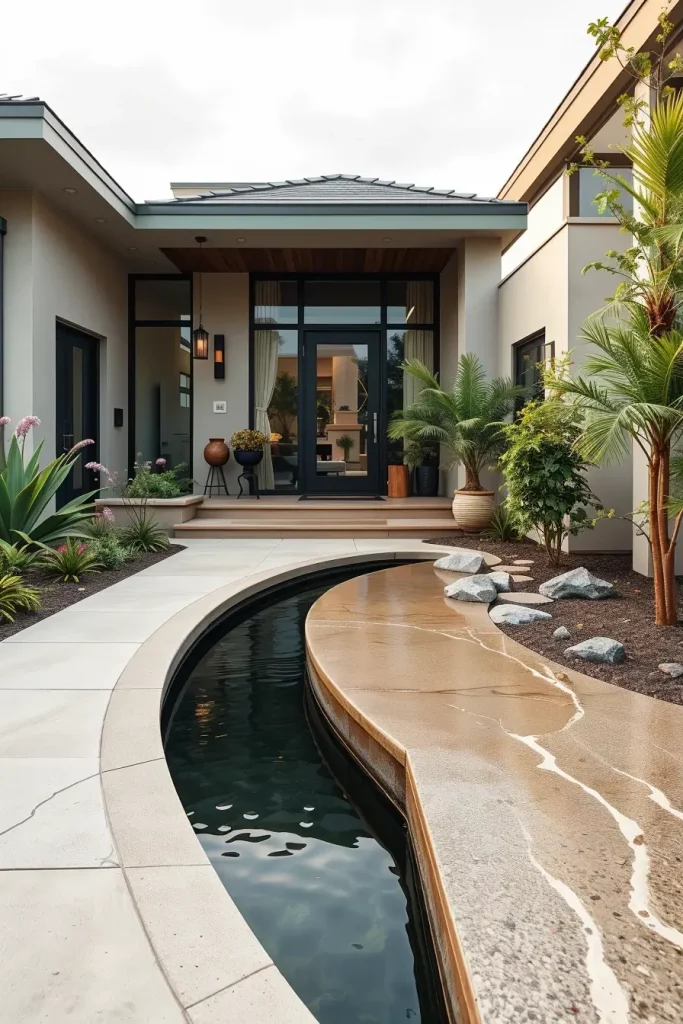
Personally, I’ve found that clients appreciate water most when it feels calm and intentional. Landscape designers cited by Garden Design Magazine frequently recommend restrained water use, and I agree that simplicity ensures longevity and ease of care.
To elevate this concept further, I suggest incorporating recirculating systems with hidden filtration and integrating lighting beneath or alongside water surfaces for nighttime impact.
High-Contrast Color Palettes In Front Yard Design
High-contrast palettes are defining stylish and unusual front yard landscaping in 2026, offering a bold alternative to traditional neutral gardens. I use contrast to emphasize form, structure, and depth, especially in modern and contemporary homes where strong visual statements are welcome.
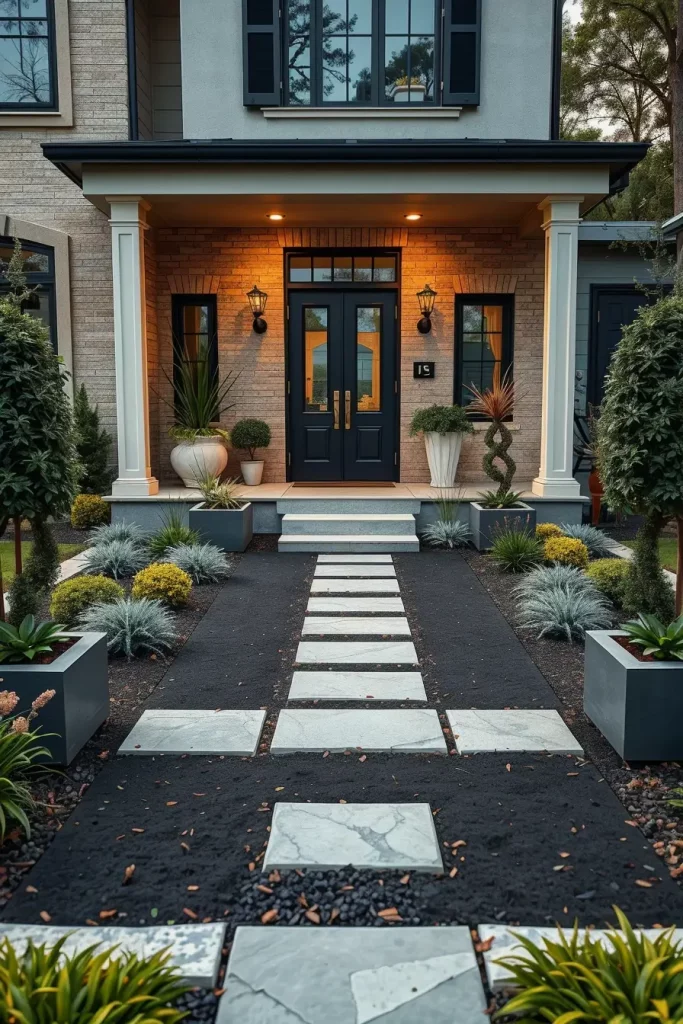
Typically, I pair dark paving or charcoal planters with light stone, pale concrete, or crisp architectural elements. Plant choices follow the same logic, using deep green foliage against lighter backgrounds or silver-toned plants against dark surfaces. This approach keeps the design sharp and visually engaging year-round.
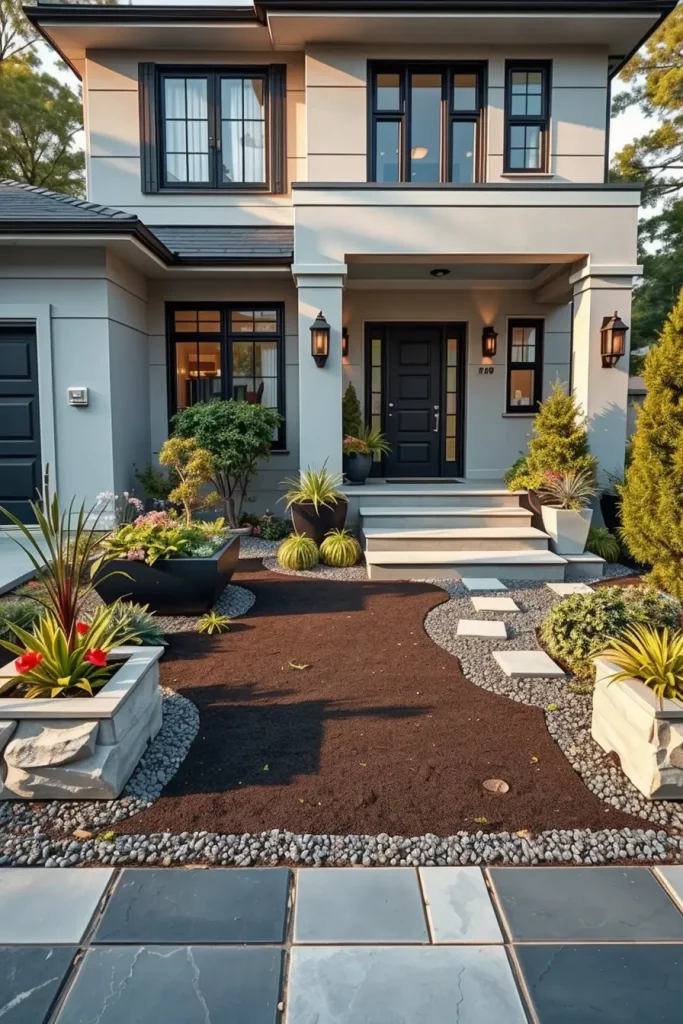
From my professional perspective, contrast is most effective when controlled. Designers featured in Dwell often stress that limiting the palette prevents visual fatigue, and I’ve seen how disciplined color choices elevate even small front yards.
What I would add here is seasonal flexibility. Including evergreen structure alongside seasonal accent plants allows the contrast to remain effective regardless of climate or time of year.
Front Yard Landscaping With Elevated Planters And Levels
Elevation is a powerful tool in unique front yard landscaping, especially for properties with slopes or limited square footage. I use raised planters and tiered levels to create depth, organize space, and improve drainage while adding architectural interest.
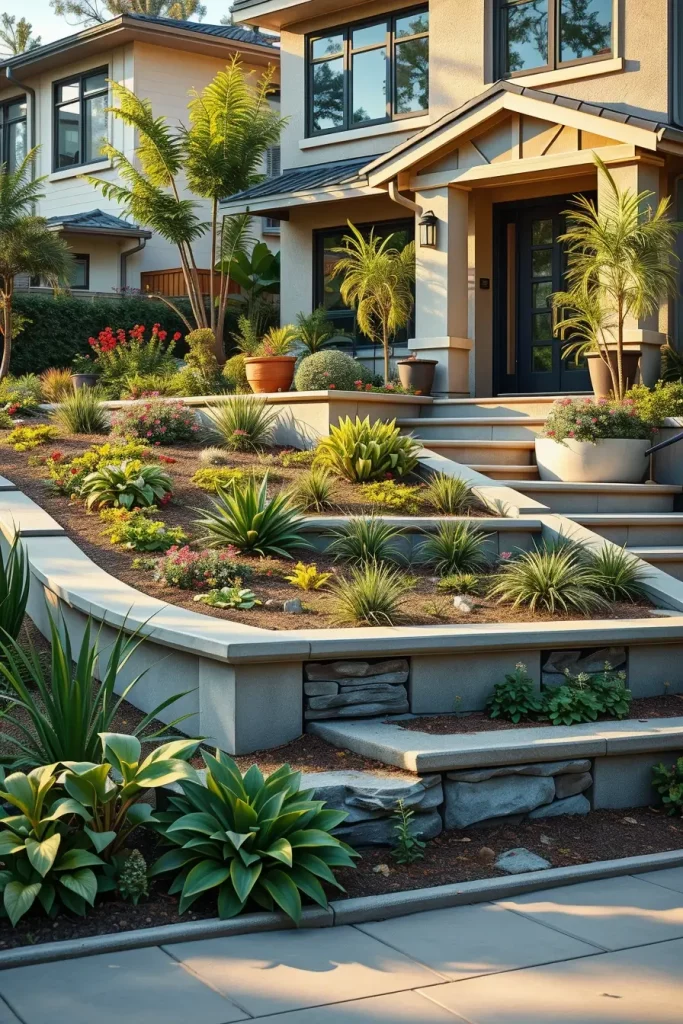
In practice, I design stepped planter systems using concrete, stone, or metal edging. These levels allow for varied plant heights and textures, making the yard feel more dynamic. Integrated seating or low retaining walls often double as functional features, maximizing usability without clutter.
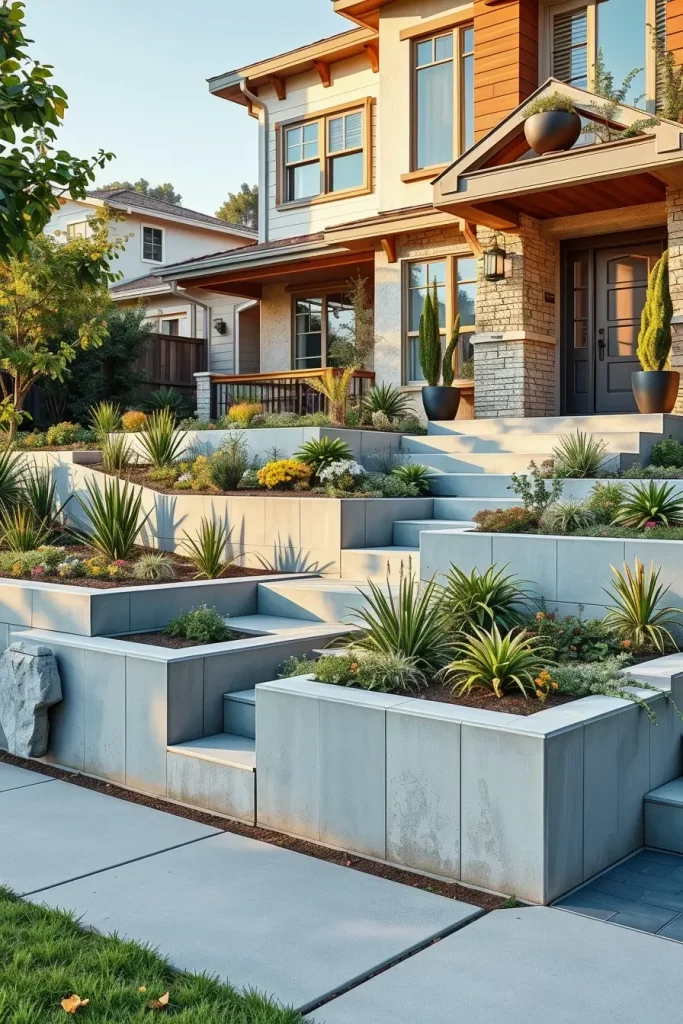
In my experience, elevated designs are particularly effective in urban settings. Landscape professionals from the American Society of Landscape Architects frequently highlight verticality as a solution for small lots, and I’ve found it enhances both aesthetics and functionality.
To complete this approach, I recommend integrating subtle lighting within planter edges and ensuring proper soil depth and irrigation planning for long-term plant health.
Unique Driveway And Front Yard Integration Ideas
Driveways are no longer purely utilitarian in front yard landscaping 2026. I treat them as integral design elements that visually connect the home, landscape, and street. When done correctly, driveway integration enhances curb appeal rather than detracting from it.
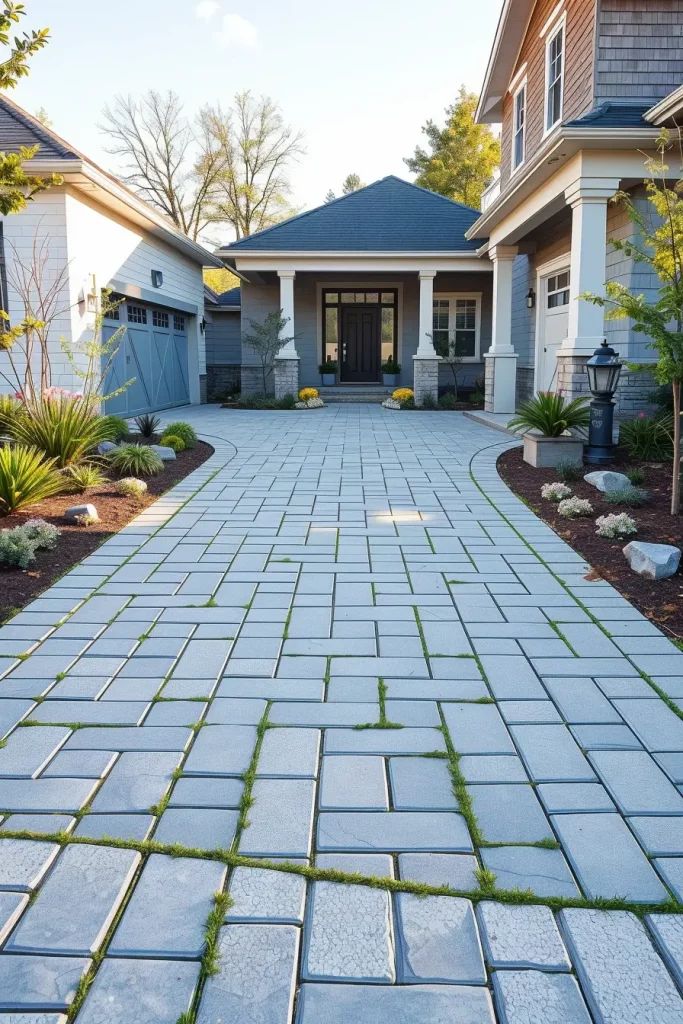
I often use permeable pavers, textured concrete, or stone strips that align with walkway materials. Green joints filled with grass or ground cover soften hard surfaces, while driveway edges are framed with low plantings or sculptural lighting. This creates continuity instead of separation.
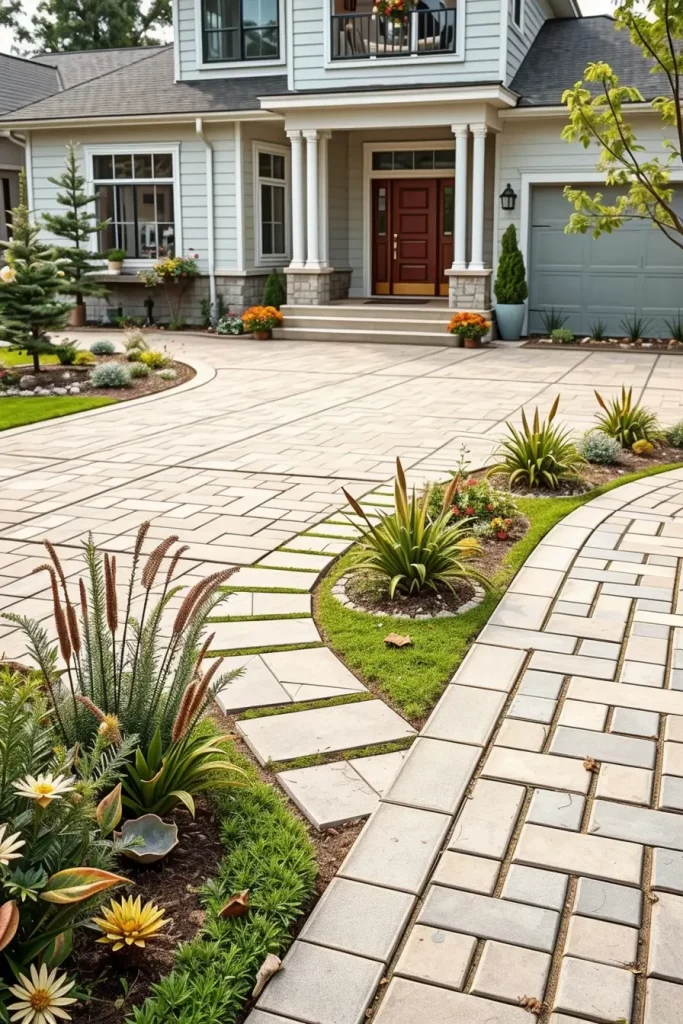
From my perspective, the most successful designs are those where the driveway feels intentional, not hidden. Experts featured in Better Homes and Gardens note that visible, well-designed driveways improve overall composition, and I consistently see this reflected in client satisfaction.
What’s often missing is visual hierarchy. I recommend clearly defining pedestrian and vehicle paths through material changes or subtle elevation shifts to ensure safety and clarity without signage or barriers.
Front Yard Landscaping Focused On Outdoor Art
I see outdoor art becoming a central design anchor in front yard landscaping 2026, not as decoration but as structure. Sculptural elements, artistic walls, and curated installations help define zones, guide movement, and create a strong visual narrative from the street. This approach is especially effective for homeowners who want a designer and unique front yard landscaping concept that feels intentional rather than ornamental.
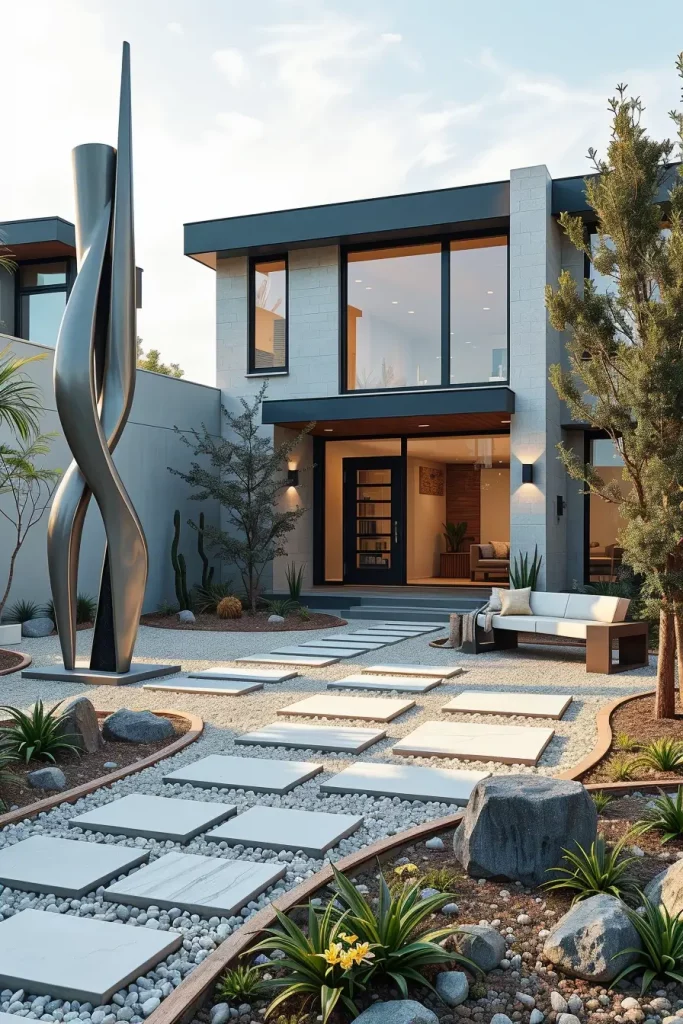
I typically integrate large-scale metal sculptures, stone art panels, or concrete installations paired with low-profile plantings and minimalist hardscaping. Each artistic element needs breathing room, so I rely on open gravel beds, clean lawn edges, and controlled lighting to avoid visual clutter. Benches made from stone or wood often double as functional art, reinforcing the idea that every piece serves both form and purpose.
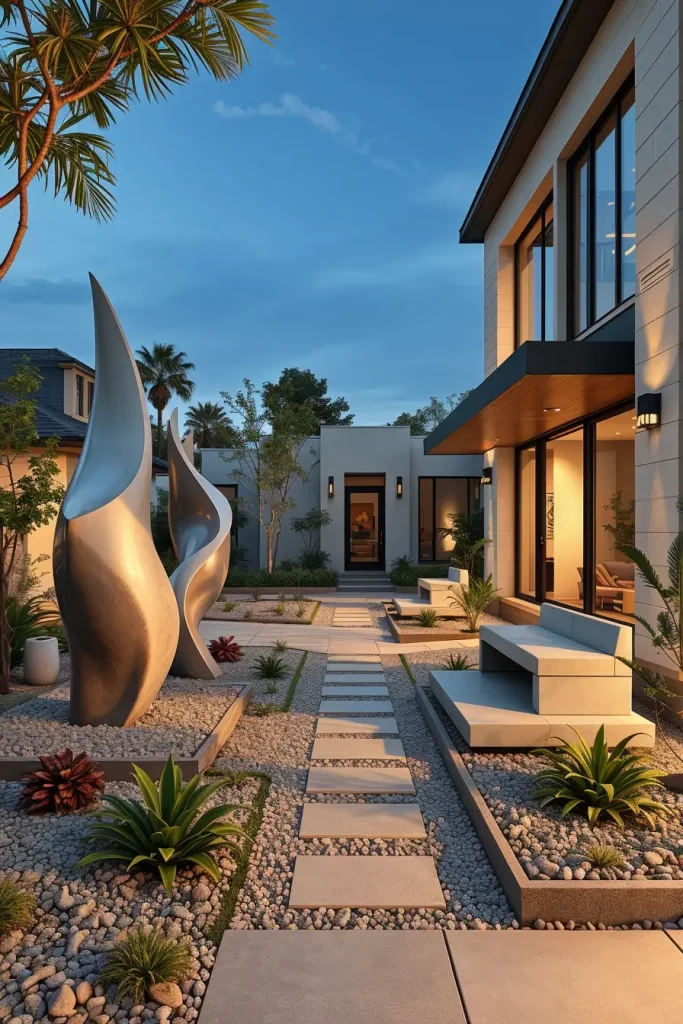
From my experience, this approach aligns with advice frequently shared by Landscape Architecture Magazine, which emphasizes that outdoor art should be site-specific and contextual rather than decorative. I’ve found that when art is designed into the landscape from the start, it feels timeless rather than trendy, which is exactly what modern homeowners are looking for.
What I would add to this section is a stronger collaboration between local artists and landscape designers. Custom-made pieces rooted in regional culture elevate the front yard from a design statement to a personal story.
Stylish Front Yard Landscaping With Native Plants
In front yard landscaping 2026, native plants are no longer just an eco-conscious choice, they are a stylish design tool. I use them to create layered, resilient landscapes that feel natural yet carefully composed. Native species adapt better to local climates, which means lower maintenance without sacrificing visual appeal.
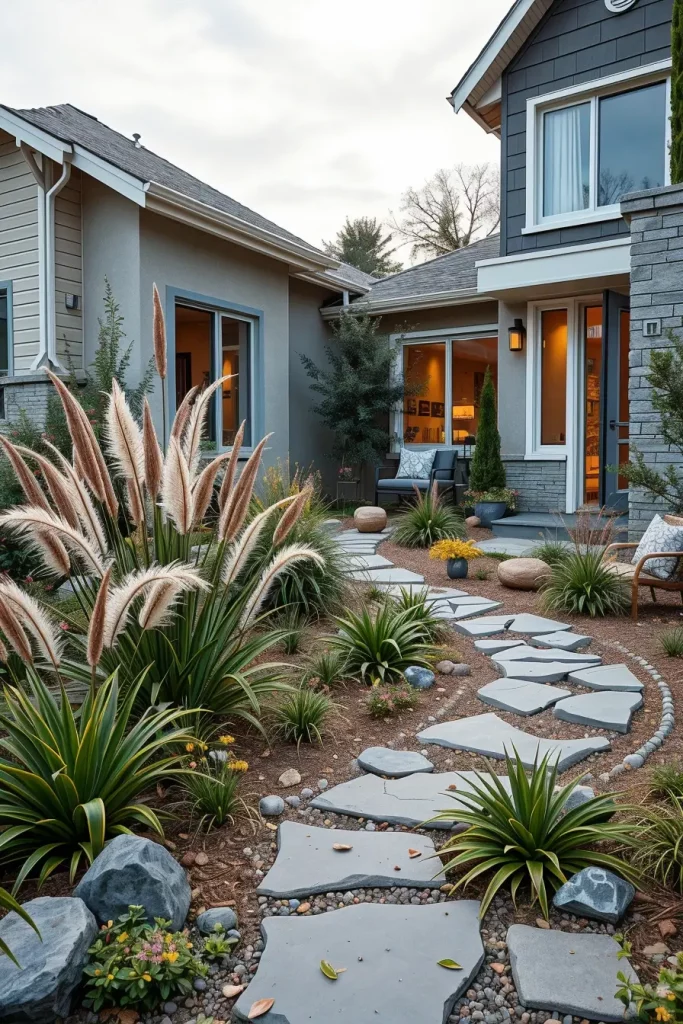
I focus on ornamental grasses, flowering perennials, and structured shrubs that provide year-round interest. These are paired with natural stone paths, permeable pavers, and subtle seating areas to keep the layout practical. I always select plants with varied textures and heights to maintain a creative and dynamic composition throughout the seasons.
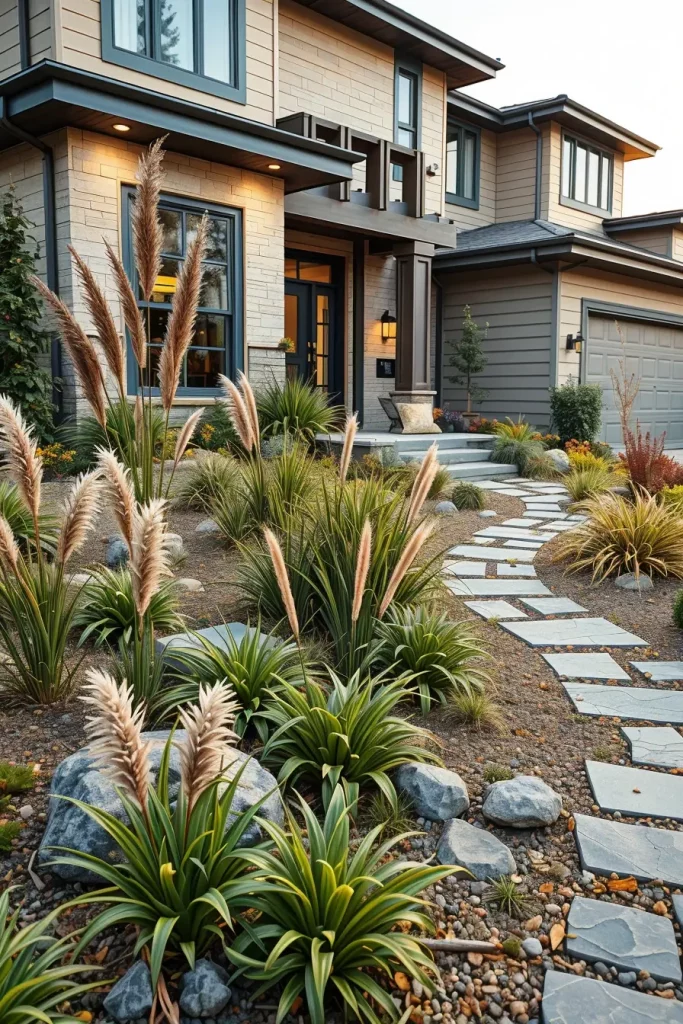
Personally, I’ve seen clients become more confident in native landscaping after publications like Architectural Digest highlighted how contemporary designers are redefining sustainability as luxury. When done correctly, native plant gardens look intentional, curated, and undeniably modern.
What I often add is interpretive signage or subtle plant labeling near pathways. This not only educates visitors but reinforces the thoughtful, designer-driven nature of the landscape.
Futuristic Front Yard Landscaping Trends For 2026
Futuristic design plays a defining role in front yard landscaping 2026, particularly through smart technology and bold geometry. I approach this style by blending clean architectural lines with innovative materials that reflect a forward-thinking mindset while remaining functional.
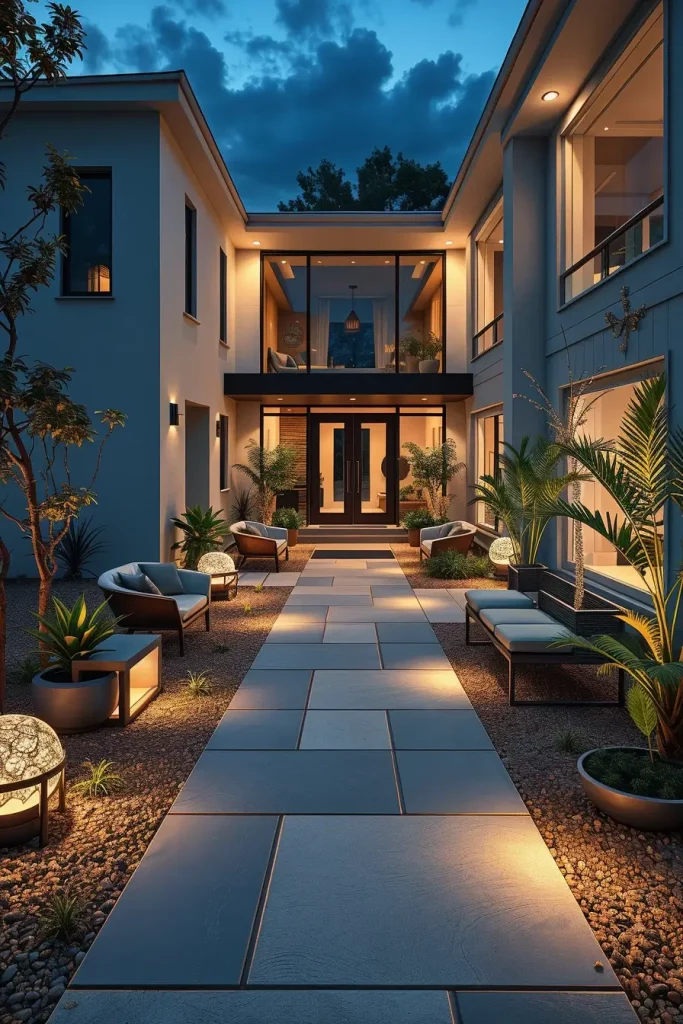
I typically incorporate LED-integrated walkways, automated irrigation systems, and modular seating with hidden storage. Materials like polished concrete, corten steel, and glass accents help reinforce the futuristic feel. The key is balance, technology should enhance the experience, not dominate it.
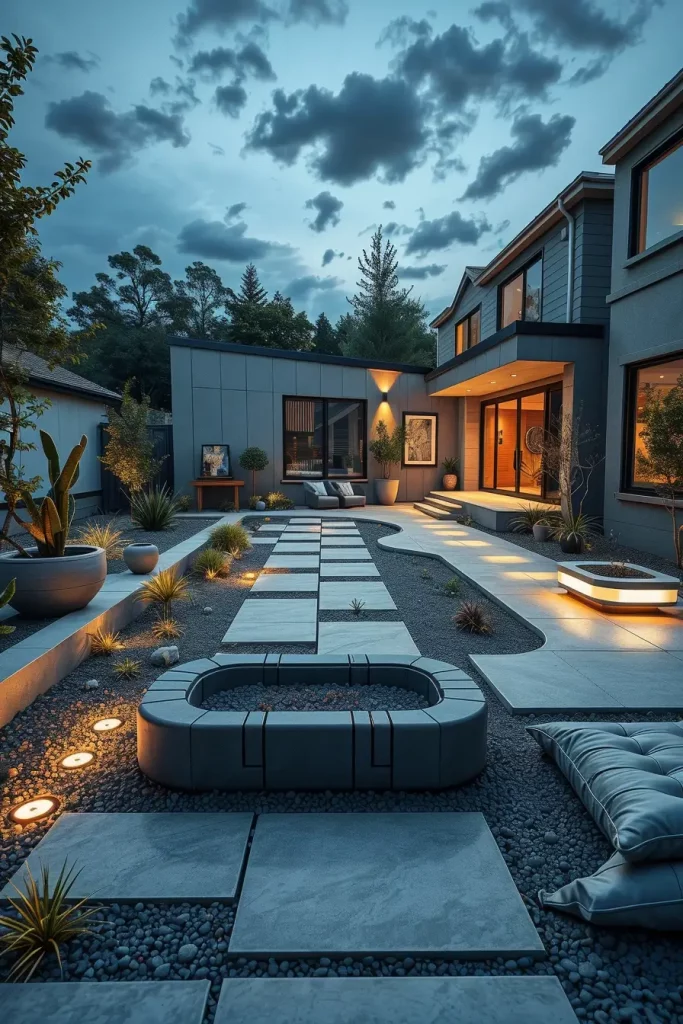
From my professional perspective, this aligns with trends discussed by Dezeen, where outdoor spaces are increasingly treated as extensions of smart homes. I’ve found that homeowners appreciate how these elements simplify maintenance while making a strong designer statement.
To strengthen this section, I would introduce adaptive lighting systems that respond to weather or time of day, adding another layer of intelligent interaction to the landscape.
Creative Front Yard Landscaping For Small Spaces
Small front yards are where creative thinking matters most in front yard landscaping 2026. I treat limited space as an opportunity to focus on detail, proportion, and multifunctional design rather than scale. A compact front yard can still feel bold, unusual, and highly personalized.
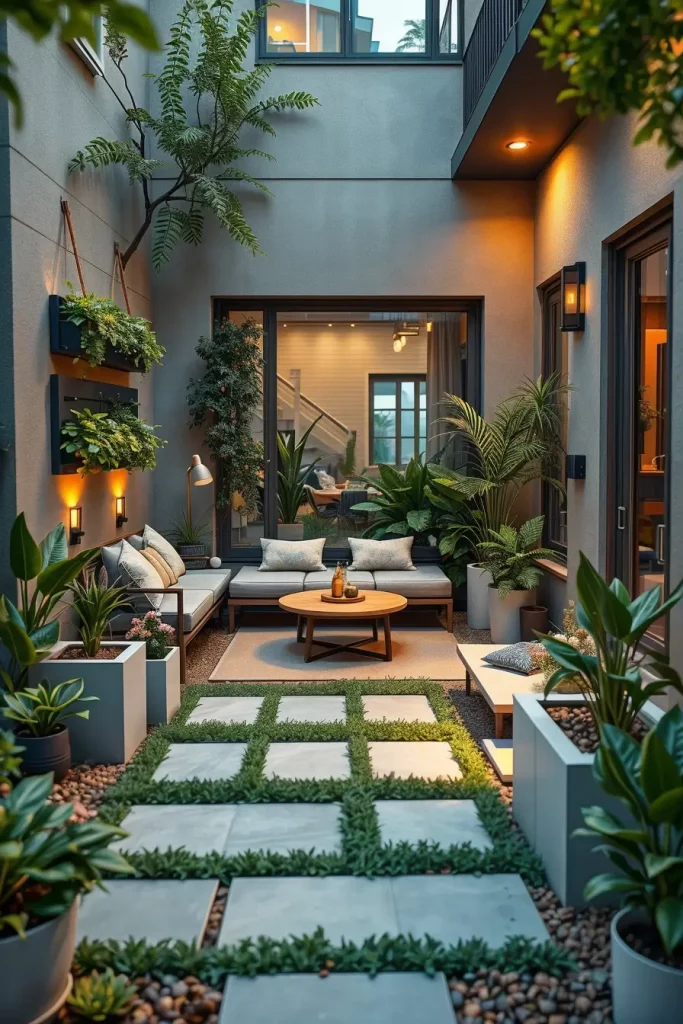
I rely on vertical gardens, floating steps, slim planters, and built-in seating to maximize usability. Materials with reflective surfaces or light tones help visually expand the area, while layered lighting creates depth. Every element must earn its place, so clutter is carefully avoided.
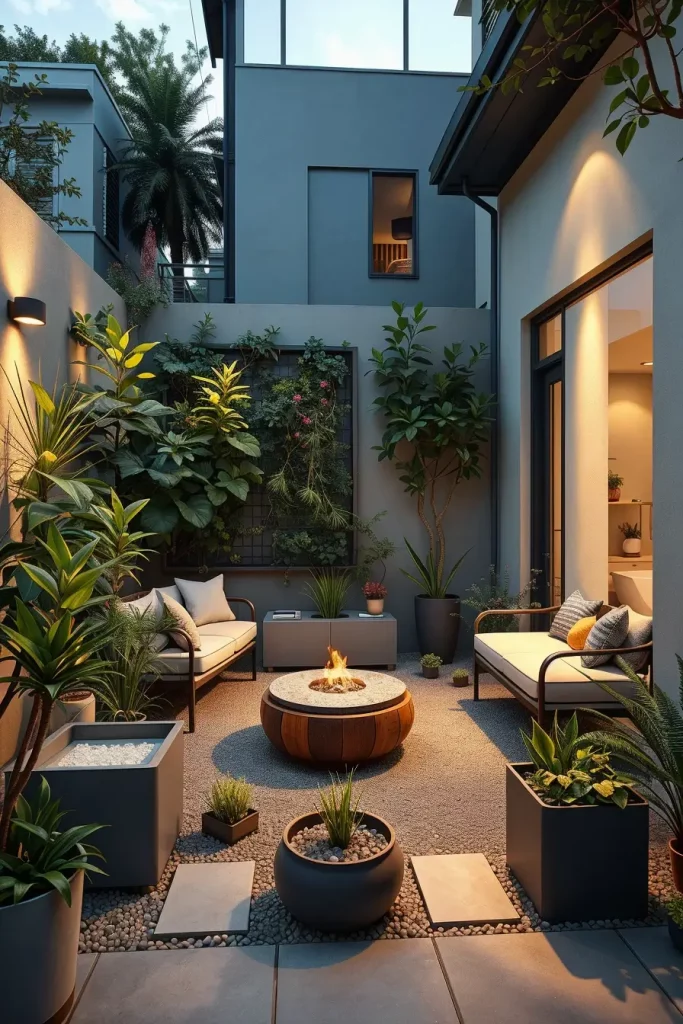
In my experience, designers featured in Better Homes and Gardens consistently emphasize restraint in small landscapes. I agree completely, less but better is the guiding principle. When every element is intentional, small front yards often feel more sophisticated than larger ones.
What I would add here is movable furniture or modular planters that allow seasonal flexibility without permanent structural changes.
Designer Front Yard Ideas With Statement Trees
Statement trees are becoming a defining feature of designer front yard landscaping in 2026. I use them as living sculptures that anchor the entire design and immediately establish identity. A single well-chosen tree can replace multiple decorative elements while offering shade and scale.
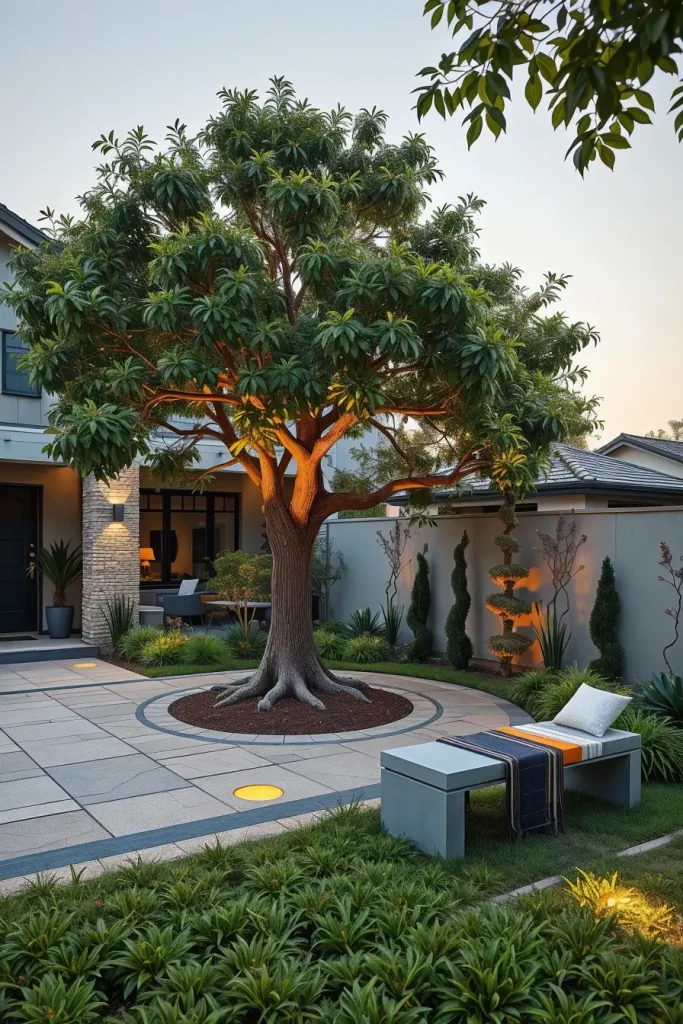
I often select sculptural species like olive trees, Japanese maples, or multi-trunk natives, positioning them centrally or along visual axes. Surrounding them with minimal ground cover, integrated seating, or circular paving helps highlight their form without distraction.
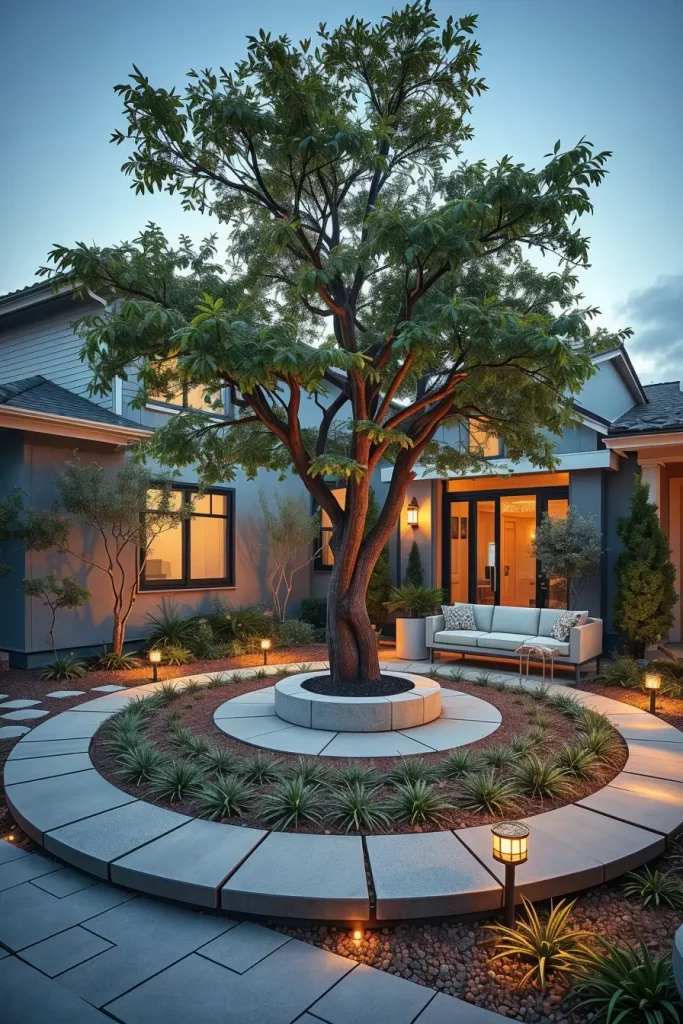
Personally, I’ve seen how this approach resonates with principles shared by the American Society of Landscape Architects, which emphasizes tree-centered design for long-term value and environmental impact. Clients consistently respond to the calm, confident presence a statement tree brings.
To complete this concept, I would recommend adding uplighting specifically calibrated to highlight the tree’s structure at night, reinforcing its role as the focal point.
Front Yard Landscaping With Soft Geometry And Flow
In front yard landscaping 2026, I increasingly rely on soft geometry to create landscapes that feel calm, intuitive, and visually cohesive. Instead of rigid straight lines, I design with gentle curves that guide movement naturally from sidewalk to entry. This approach makes the front yard feel welcoming while still maintaining a stylish and designer presence.
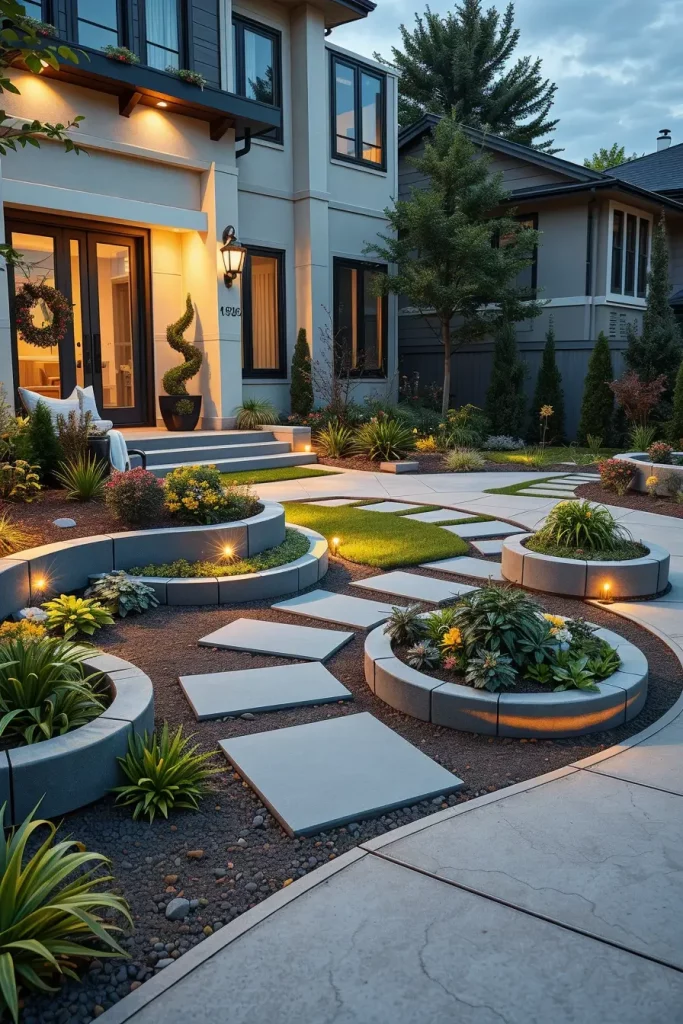
I use curved pathways, rounded planters, and organically shaped lawn areas combined with smooth stone or poured concrete surfaces. Low seating walls, subtle steps, and layered planting reinforce flow and continuity. Each element works together to reduce visual tension and create a sense of rhythm throughout the space.
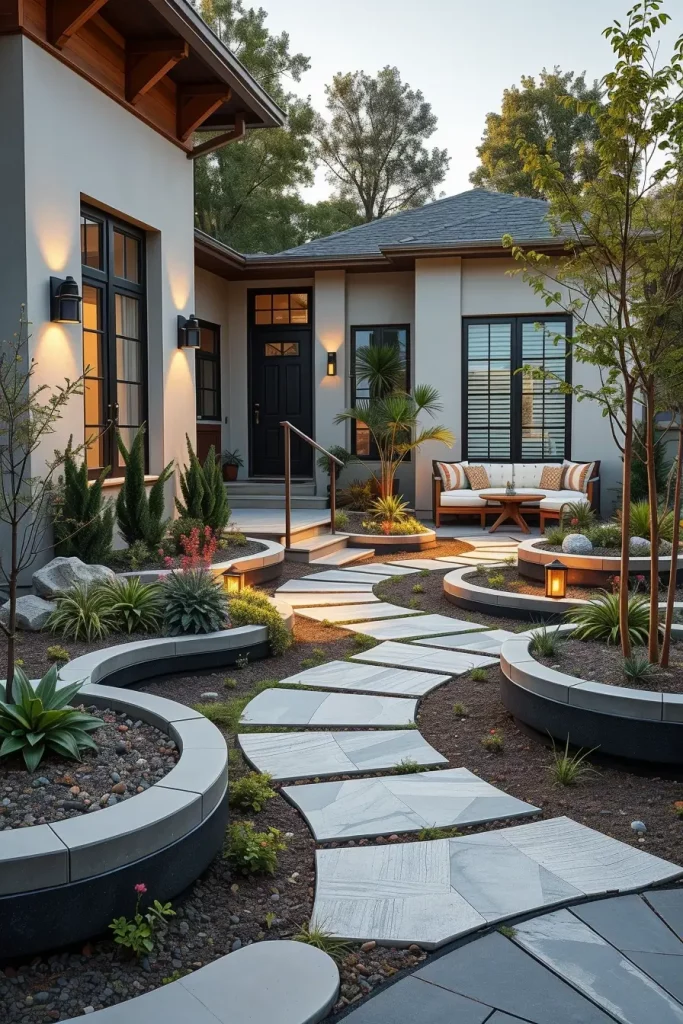
From my professional experience, this design philosophy reflects guidance often shared by landscape architects featured in Dwell, who emphasize human-centered movement in outdoor spaces. I’ve noticed that homeowners feel more emotionally connected to front yards designed this way because they subconsciously feel easier to navigate.
What I would add to strengthen this concept is transitional lighting that follows the curves of the layout, reinforcing movement at night while preserving the softness of the design.
Unique Front Yard Concepts Using Gravel And Ground Cover
Gravel and ground cover are key materials in unique front yard landscaping for 2026, especially when water efficiency and visual clarity are priorities. I treat these materials as design surfaces rather than fillers, using them to define zones and highlight architectural features.
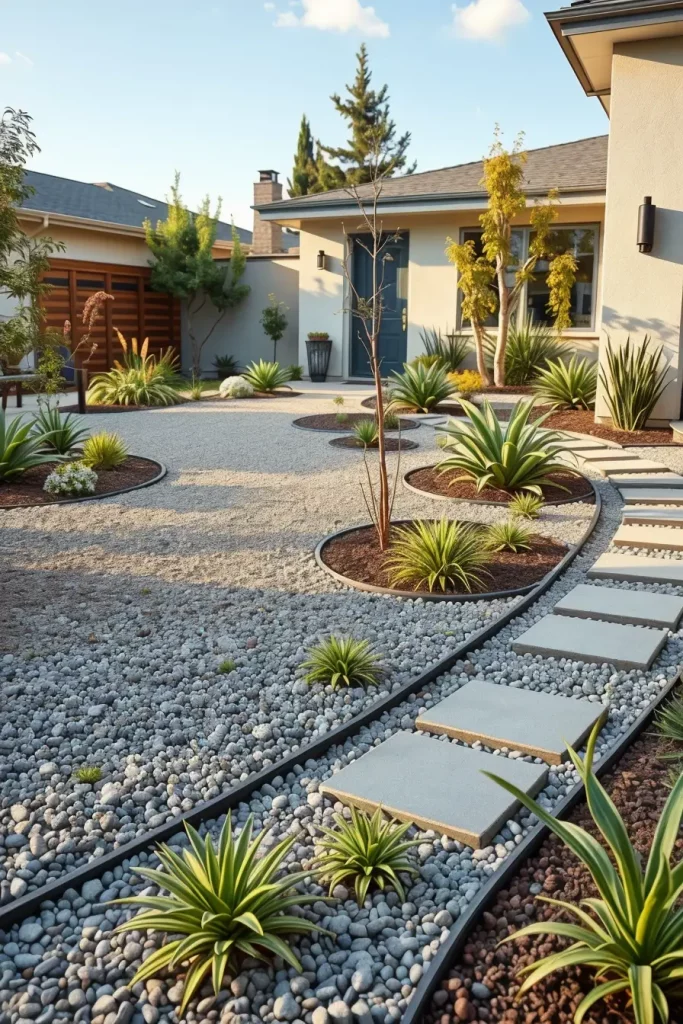
I typically combine fine gravel paths with creeping ground covers, low succulents, or native grasses. Steel or stone edging keeps the layout crisp, while stepping stones or concrete slabs provide functional circulation. This combination allows for a creative and unusual front yard that remains low-maintenance and visually refined.
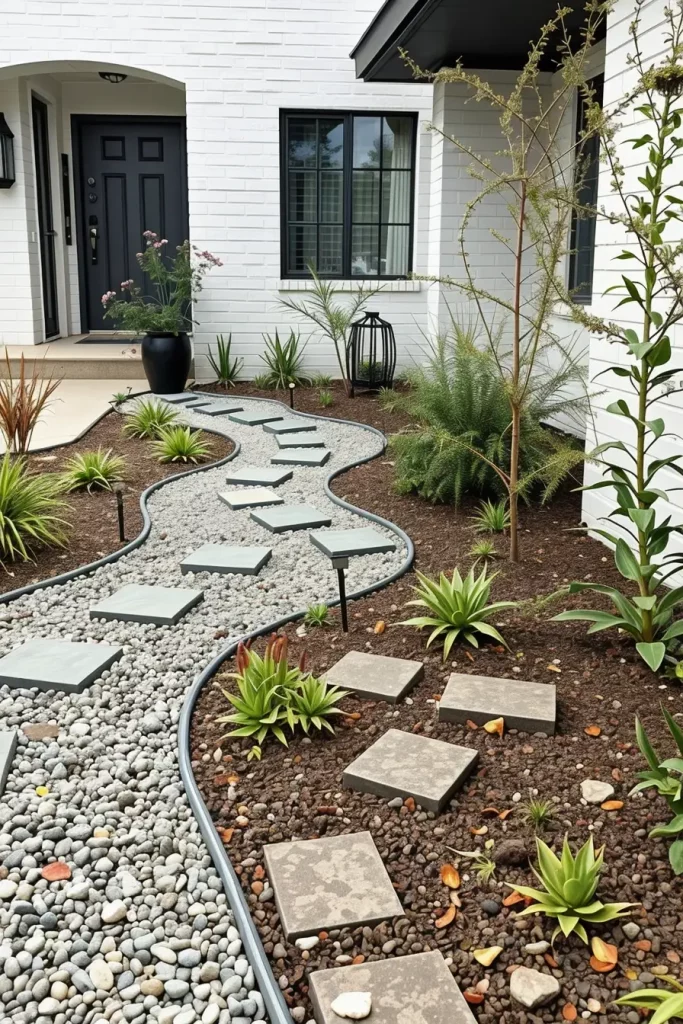
In my own projects, I’ve seen this approach validated by trends reported in Garden Design Magazine, where designers stress the importance of texture over traditional lawns. Gravel landscapes age beautifully and adapt well to modern lifestyles.
To enhance this section further, I would incorporate subtle elevation changes or sculpted mounds to add dimension and prevent flatness.
Front Yard Landscaping Designed For Day And Night Appeal
Designing for both day and night is essential in front yard landscaping 2026, especially for homeowners who value atmosphere and security. I plan landscapes that transition seamlessly between natural daylight beauty and intentional nighttime drama.
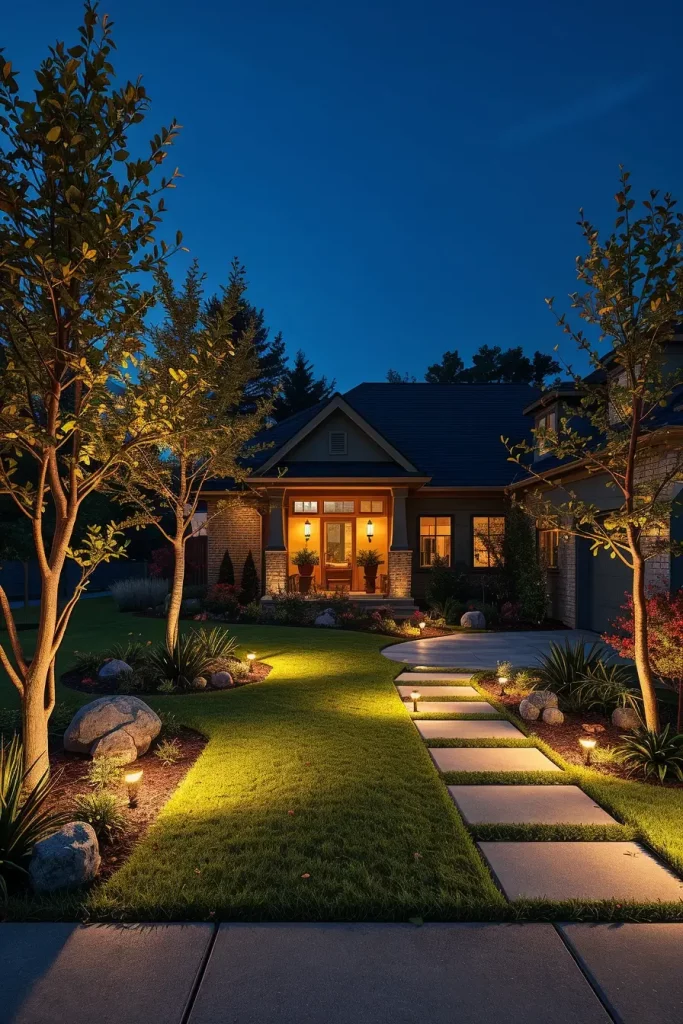
I integrate layered lighting including pathway lights, uplighting for trees, and concealed LEDs within steps or seating. During the day, plant textures and materials take priority, while at night, light reveals form and depth. This dual-purpose approach ensures the front yard feels complete at all hours.
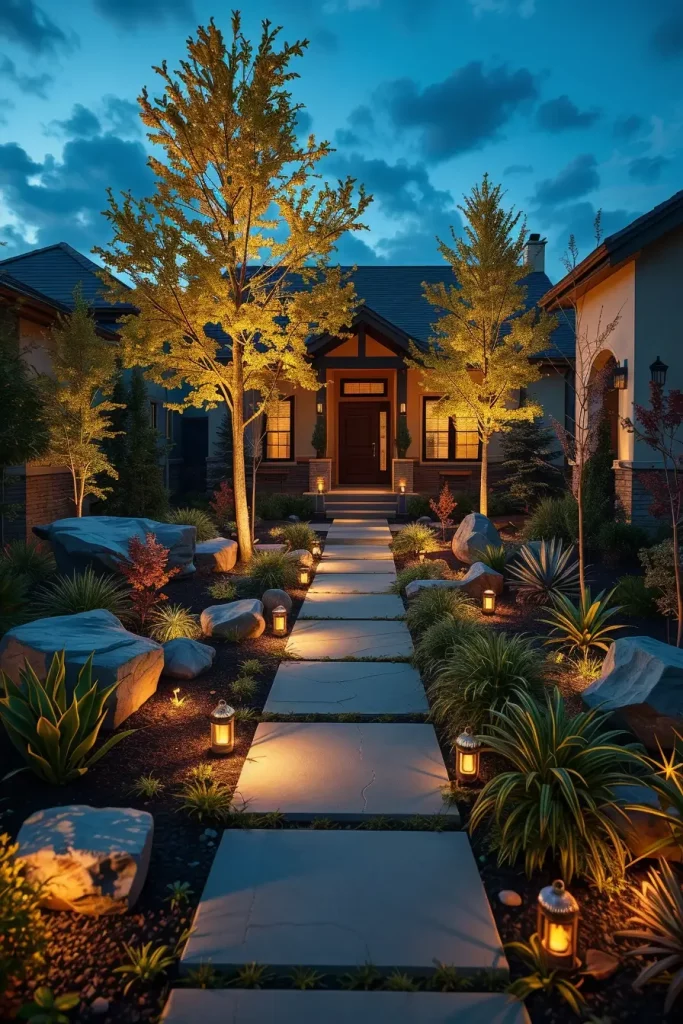
From my experience, lighting designers featured in Architectural Lighting Magazine consistently emphasize restraint and precision. I follow this philosophy closely, avoiding over-illumination and focusing instead on balance and hierarchy.
What I would add here is smart lighting control that allows homeowners to adjust intensity and mood depending on occasion or season.
Bold Front Yard Landscaping That Breaks Traditional Rules
Boldness defines some of the most memorable front yard landscaping 2026 projects I’ve worked on. Breaking traditional rules means challenging symmetry, mixing materials unexpectedly, and embracing contrast without chaos. This is where designer thinking truly stands out.
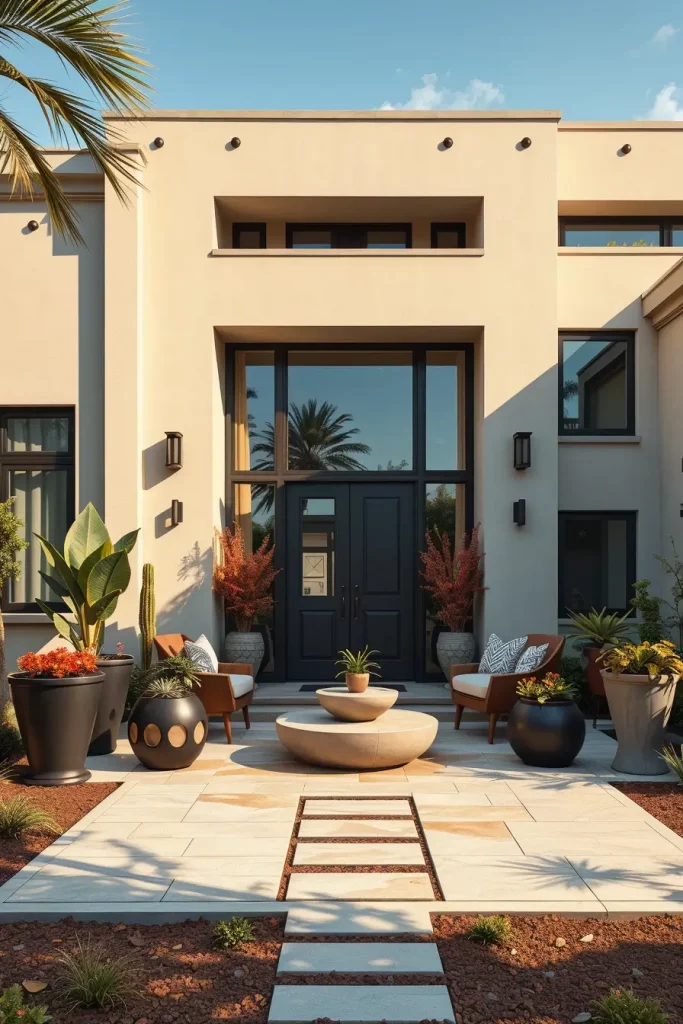
I often pair dark paving with light planting, asymmetrical layouts with strong focal points, or oversized planters with minimalist lawns. Sculptural furniture, unconventional fencing, or color-accented hardscaping all contribute to a creative and unusual aesthetic.
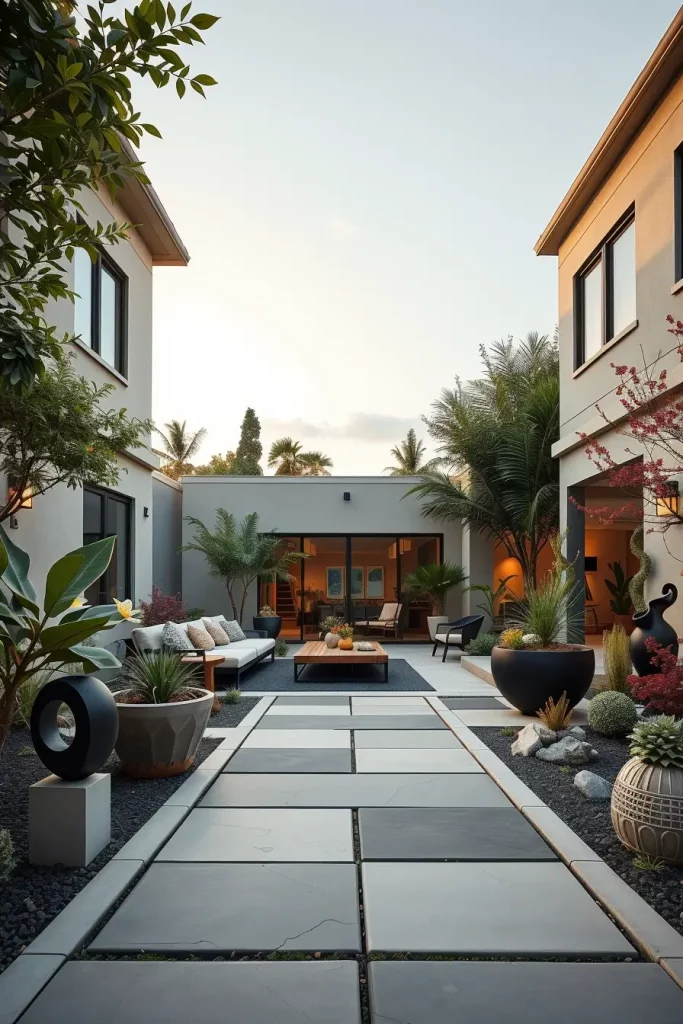
Personally, I’ve seen how this approach resonates with homeowners inspired by projects published in Dezeen and The New York Times design section. When executed thoughtfully, bold landscapes feel confident rather than aggressive.
To complete this idea, I would recommend testing bold elements through temporary installations before committing permanently.
The Future Of Creative Front Yard Landscaping Beyond 2026
Looking beyond front yard landscaping 2026, I see creativity becoming increasingly personal and adaptive. Front yards will function as flexible outdoor rooms rather than static displays, reflecting lifestyle changes and environmental awareness.
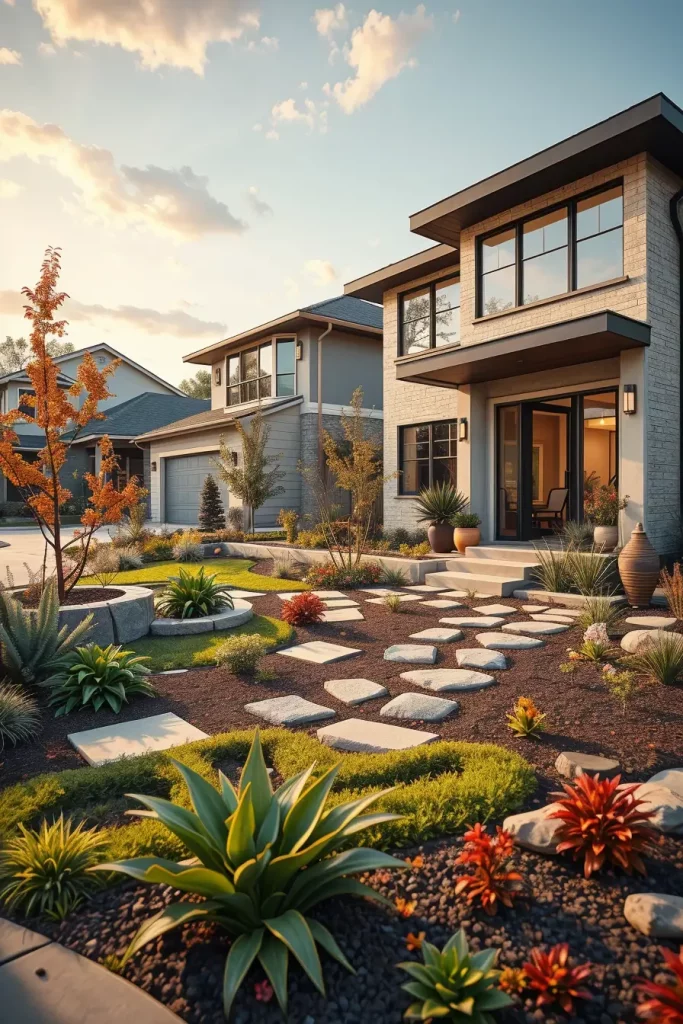
I anticipate more modular elements, adaptable planting systems, and hybrid hardscape solutions that evolve over time. Materials will prioritize longevity, while layouts will allow for easy updates without full redesigns. This future-facing approach keeps front yards relevant and expressive.
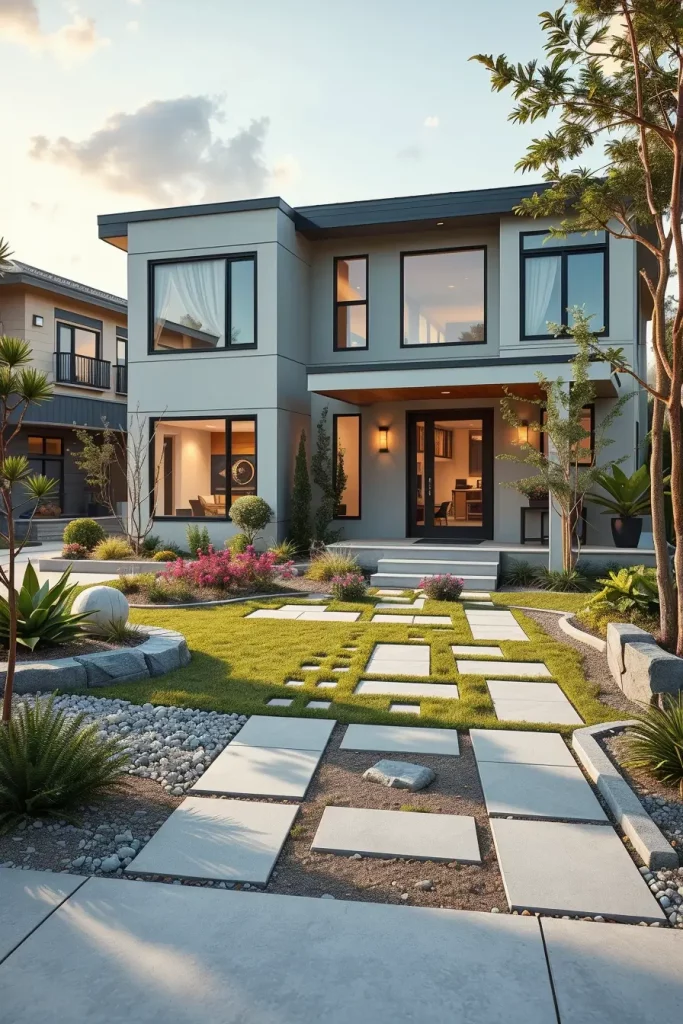
From my professional standpoint, this aligns with broader design forecasts shared by the American Society of Landscape Architects, which predict a shift toward resilience and customization. I believe the most successful landscapes will be those designed to grow and change with their owners.
What I would add is stronger integration between architecture and landscape design from the earliest planning stages to ensure cohesive long-term results.
Front yard landscaping in 2026 is defined by creativity, confidence, and individuality. It moves beyond traditional designs to embrace bold layouts, artistic elements, and thoughtful details that turn the front yard into a true design statement. By combining style, innovation, and a strong connection to architecture, modern front yard landscapes create lasting impressions and elevate the overall character of the home. As design continues to evolve, the front yard becomes not just an entrance, but a reflection of vision, personality, and modern outdoor living.