
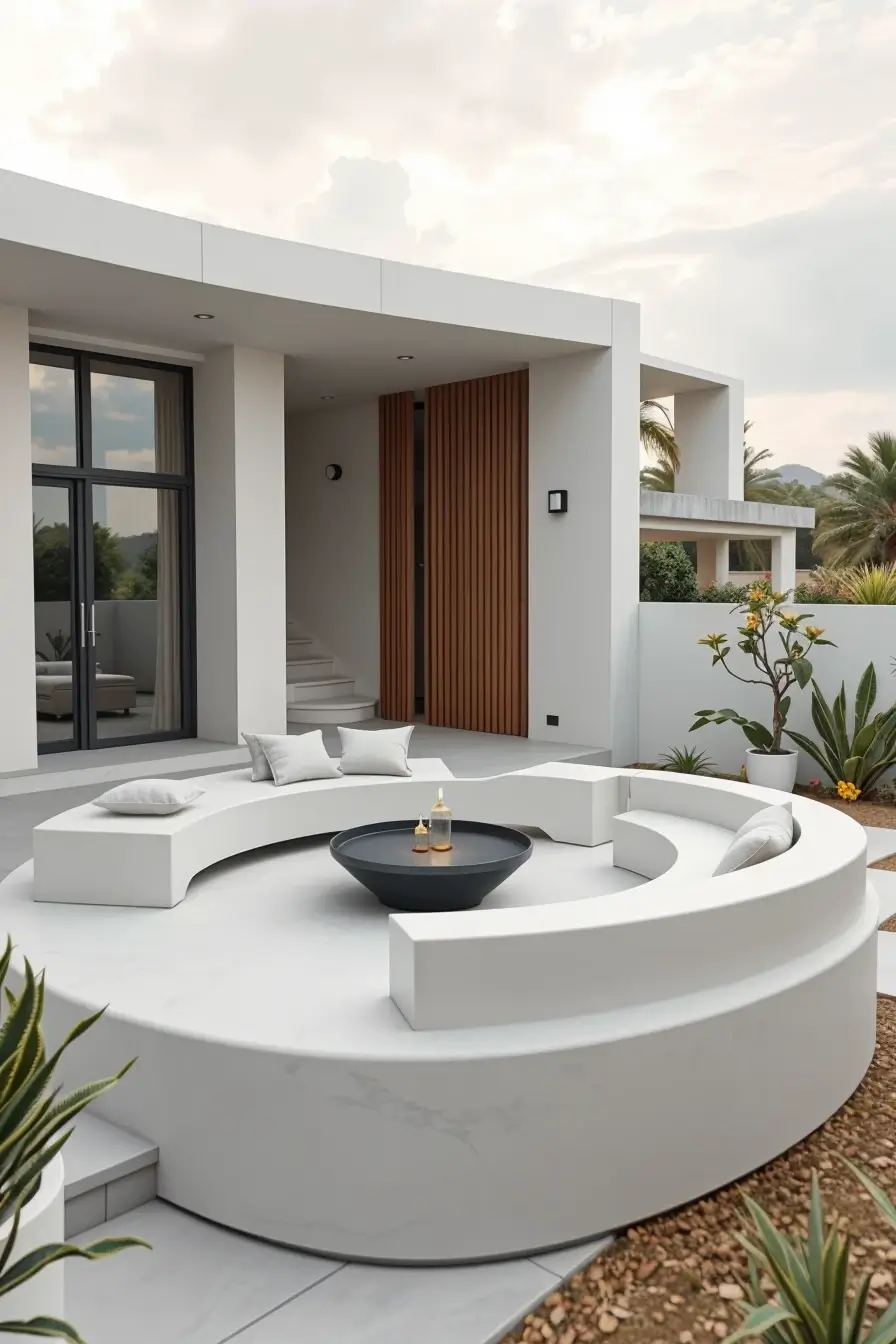
Terrace design ideas 2026 are moving far beyond traditional outdoor layouts, transforming terraces into expressive architectural spaces that feel as intentional and artistic as interior rooms. In 2026, terraces are no longer just functional extensions of the home—they become sculptural environments defined by fluid forms, bold geometry, and carefully curated design details. Curved lines, oval platforms, and streamlined silhouettes replace rigid angles, creating outdoor spaces that feel soft, modern, and visually dynamic.
This new generation of terrace design embraces creativity and individuality. Designers are experimenting with artistic structures, custom-built elements, and unique spatial compositions that turn terraces into statement features. From sculptural seating and flowing floor patterns to integrated lighting and organic architectural shapes, every element contributes to a cohesive and immersive outdoor experience. Whether minimalist or luxurious, elevated or compact, terrace design in 2026 focuses on originality, harmony, and a strong visual identity—offering fresh inspiration for creating outdoor spaces that feel modern, expressive, and unmistakably contemporary.
Sculptural Terrace Concepts Defining Outdoor Design In 2026
I see sculptural terrace concepts in 2026 as a natural extension of interior architecture into the outdoors. These terraces rely on fluid shapes, layered levels, and intentional negative space to create environments that feel curated rather than simply furnished. From a practical standpoint, sculptural layouts help guide movement, define zones for dining or relaxation, and improve how people interact with the space throughout the day.
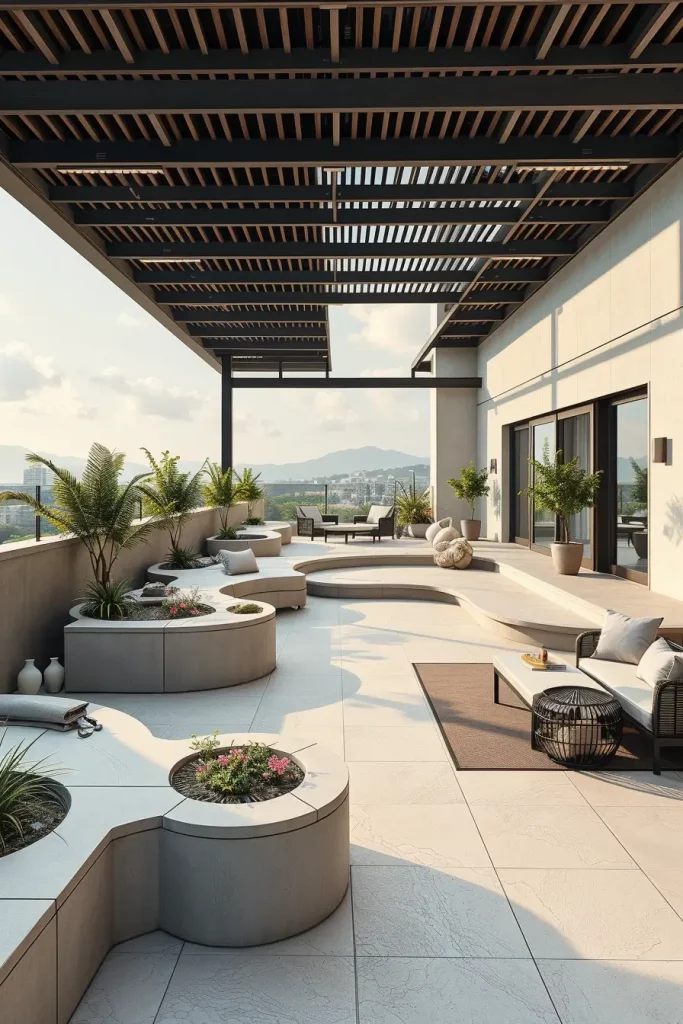
When I design or analyze such terraces, I focus on built-in seating, curved concrete or stone platforms, and integrated planters that act as both structure and decor. Sculptural loungers, rounded outdoor sofas, and low-profile tables are essential because they echo the architectural language of the terrace itself. Materials like cast concrete, smooth porcelain slabs, and composite wood work well because they allow seamless transitions and durable finishes.
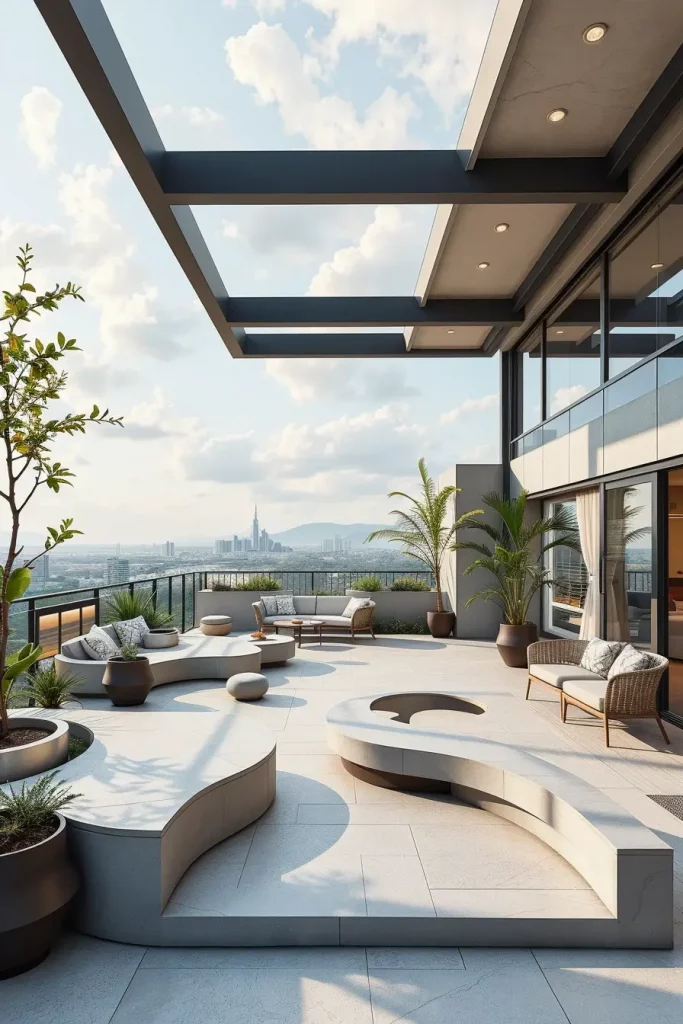
From my experience, leading designers featured in Architectural Digest often emphasize that sculptural outdoor spaces should feel intentional but not overwhelming. I agree with this approach and recommend limiting the palette to a few cohesive materials so the form remains the main visual focus rather than excessive decoration.
What I would add to this concept is subtle integrated lighting within the sculptural elements. Recessed LED lines or softly illuminated edges enhance the three-dimensional quality of the terrace after sunset and improve usability at night.
Curved Terrace Layouts With Fluid Architectural Lines
Curved terrace layouts stand out in 2026 because they soften outdoor environments and make spaces feel more welcoming. I find that fluid architectural lines help terraces adapt better to irregular building shapes and natural landscapes, which increases both comfort and visual harmony. These layouts are especially effective for urban rooftops or hillside homes.
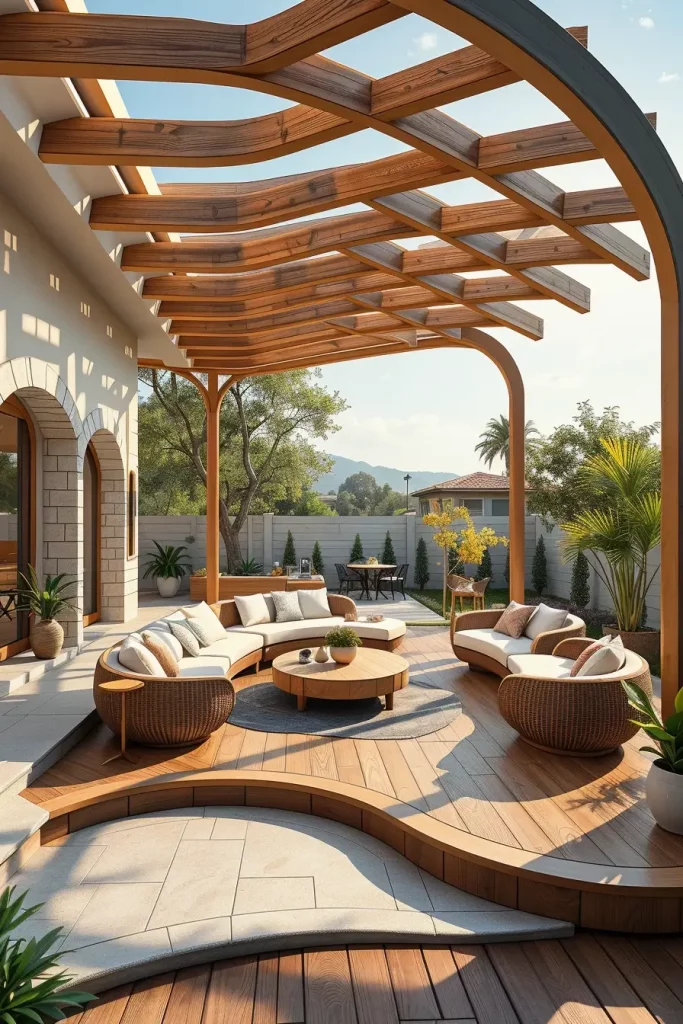
In these designs, I prioritize curved sectional seating, rounded pergola frames, and organically shaped decking patterns. Each element serves a purpose: curved seating encourages conversation, while flowing pathways improve circulation. Low, circular coffee tables and gently arched shade structures reinforce the continuity of the design.
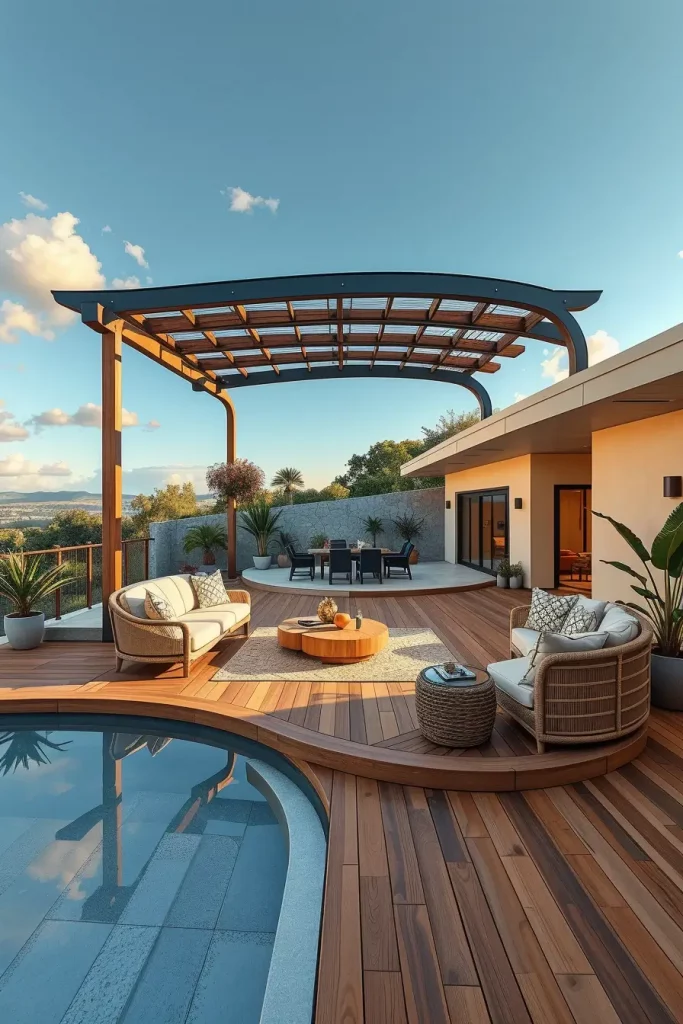
In my professional opinion, this approach aligns with recommendations from Dezeen, where designers stress the importance of movement and flow in contemporary outdoor spaces. I have seen firsthand how curved layouts feel less restrictive and more relaxing than traditional linear arrangements.
To complete this type of terrace, I would add flexible modular furniture that can be rearranged without breaking the curved visual rhythm, ensuring the space remains adaptable for different gatherings.
Oval And Circular Terraces As Statement Outdoor Features
Oval and circular terraces in 2026 function as architectural statements rather than secondary outdoor areas. I view these shapes as ideal for creating a strong focal point, especially in gardens or rooftop environments. Their symmetry supports balanced layouts and clear zoning without the need for partitions.
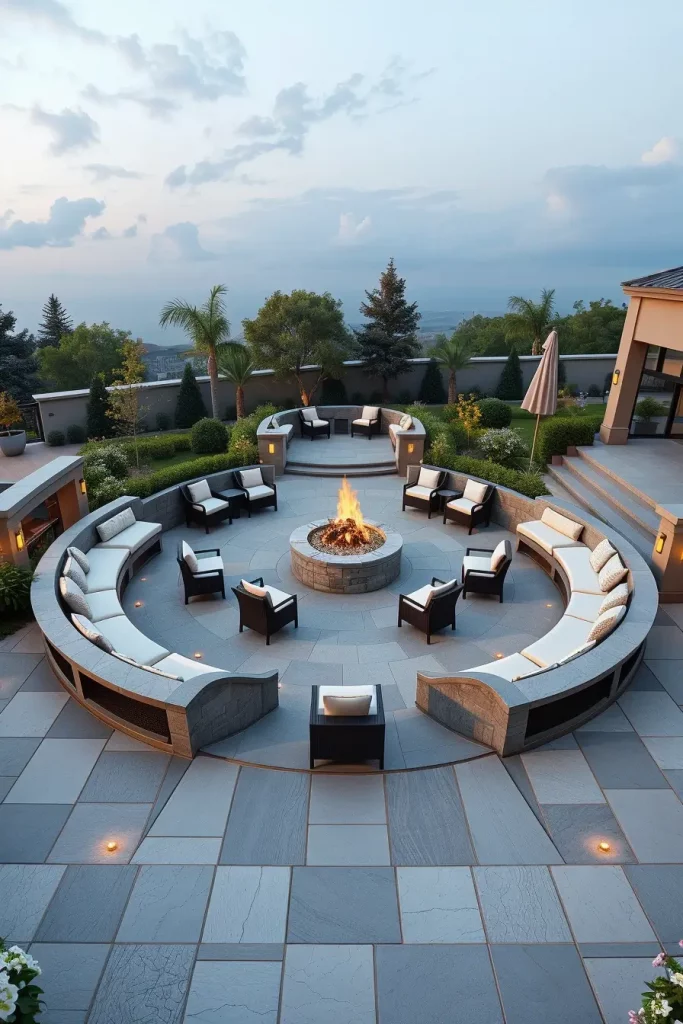
Furniture selection is critical here. I recommend circular dining tables, wraparound benches, and radial seating arrangements that follow the terrace’s geometry. Fire pits or water features placed at the center enhance functionality while reinforcing the shape. Materials should remain consistent to avoid visual fragmentation.
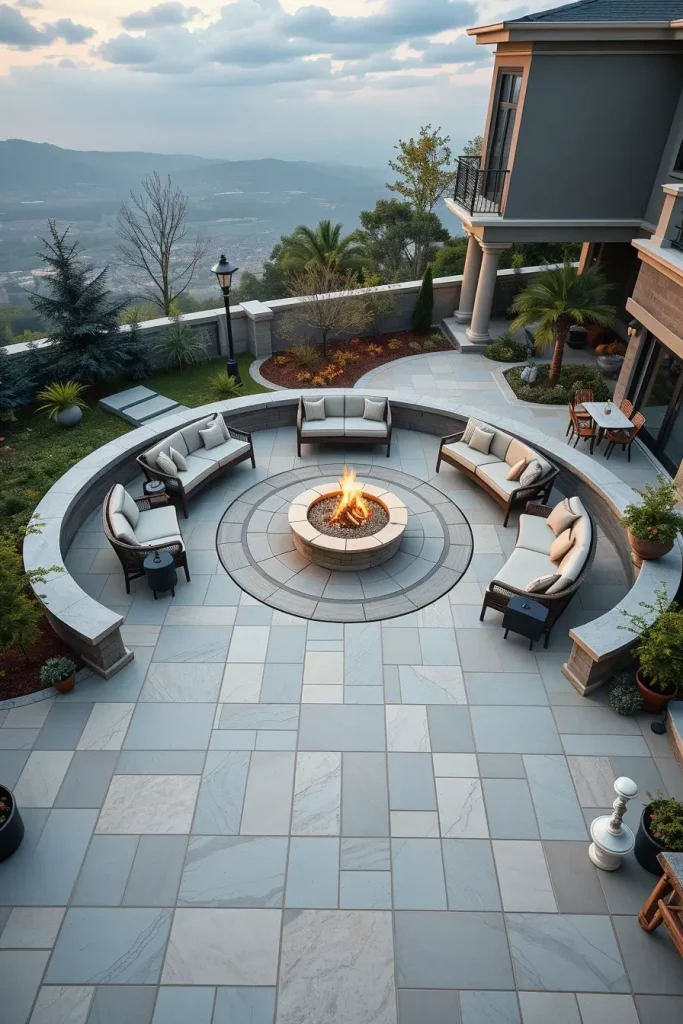
From my perspective, many US-based landscape architects, including those highlighted in Dwell, emphasize that circular outdoor spaces promote social interaction. I have observed that people naturally gather and linger longer in these environments due to their inclusive layout.
What is often missing in oval terrace designs is sufficient shade planning. I would include custom circular canopies or curved pergolas to ensure comfort throughout different seasons.
Streamlined Terrace Designs Inspired By Modern Architecture
Streamlined terrace designs in 2026 reflect the influence of contemporary architecture with clean edges softened by subtle curves. I focus on simplicity, efficiency, and visual clarity when evaluating these terraces. The goal is to create an outdoor space that feels calm, organized, and visually connected to the building.
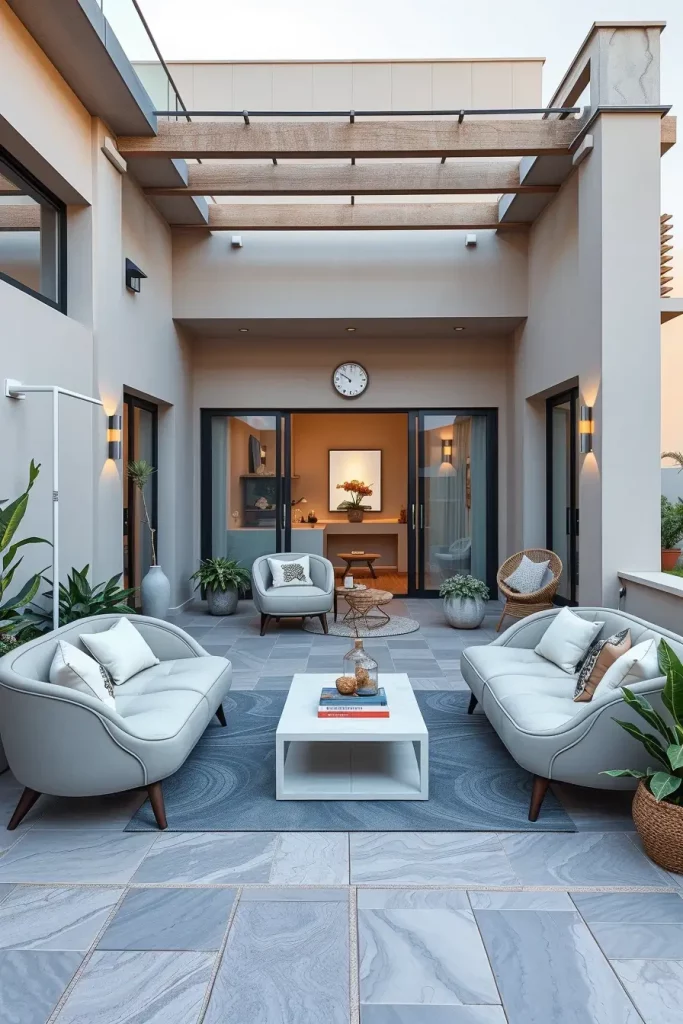
I typically see low-profile furniture, linear benches with rounded corners, and integrated storage solutions in these terraces. Each piece is chosen to minimize visual clutter while maximizing usability. Smooth surfaces, hidden fasteners, and neutral tones help maintain a cohesive look.
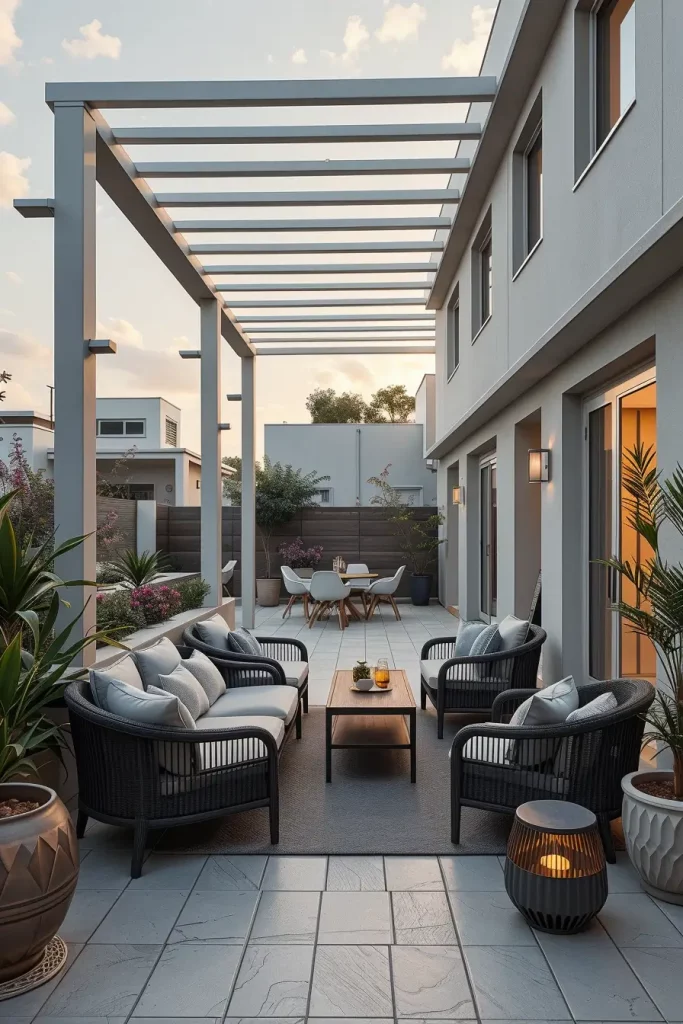
In my experience, design publications like Interior Design Magazine highlight the importance of restraint in modern outdoor spaces. I agree and believe that streamlined terraces succeed when every element has a clear function and purpose.
To enhance these designs further, I would add discreet technology such as integrated outdoor speakers or hidden heating elements to improve comfort without compromising aesthetics.
Artistic Terraces That Blur The Line Between Design And Sculpture
Artistic terraces in 2026 challenge traditional ideas of outdoor living by treating the entire space as a functional artwork. I see these terraces as ideal for homeowners who want their outdoor area to express creativity and individuality while remaining practical.
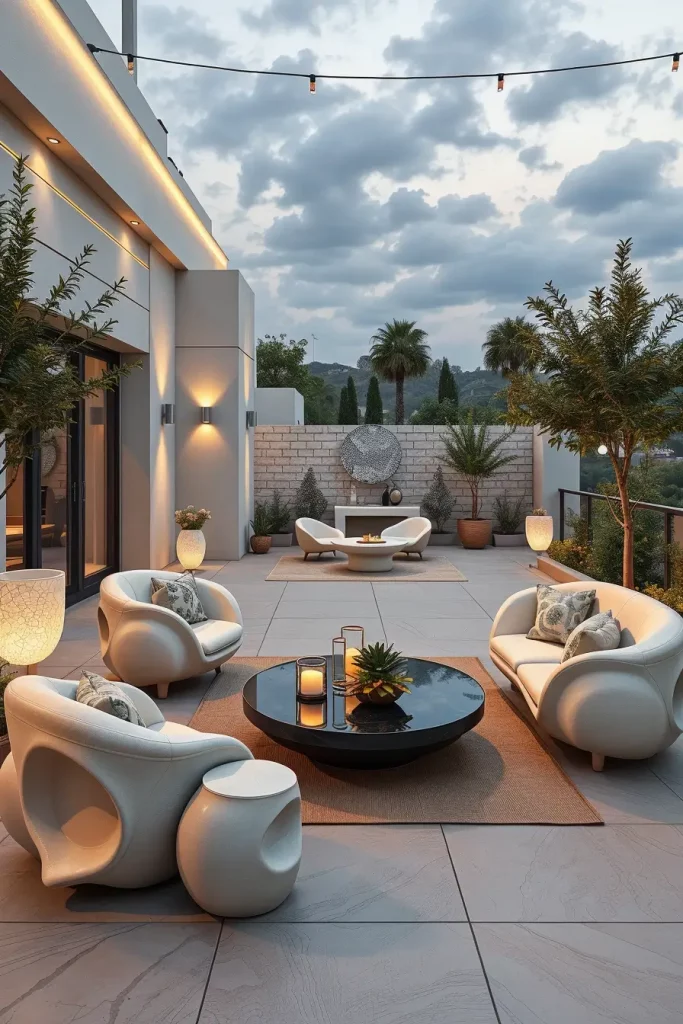
Furniture in these terraces often doubles as art. I include sculptural chairs, custom-designed tables, and statement lighting pieces that serve both aesthetic and functional roles. Textured surfaces and unexpected forms create visual interest without sacrificing comfort.
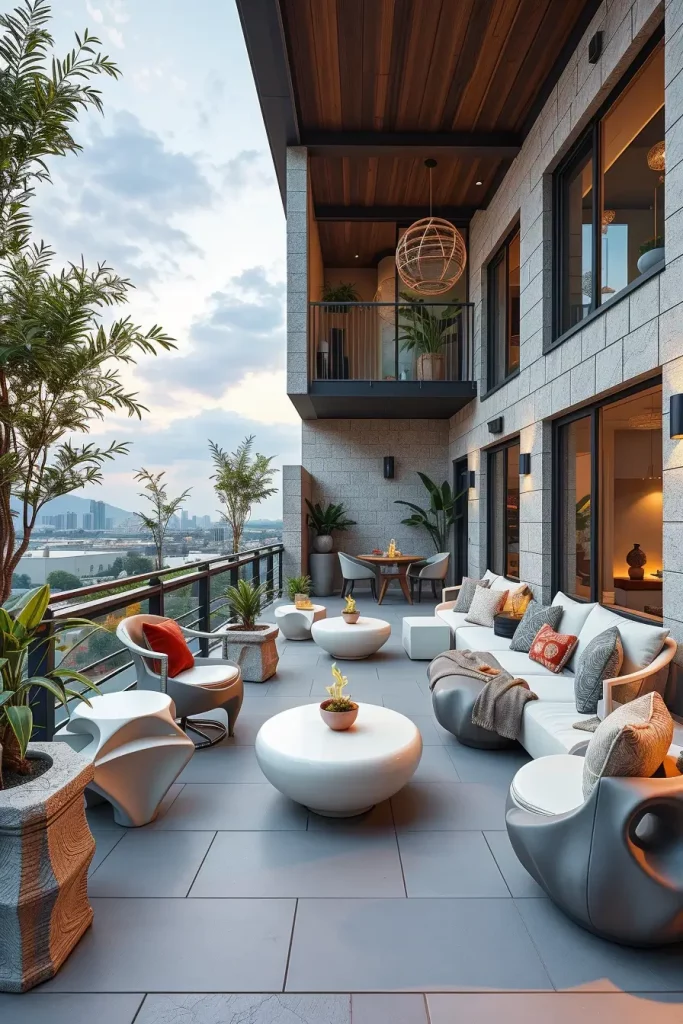
From my point of view, many designers featured in Design Milk stress that outdoor art should be interactive rather than purely decorative. I support this philosophy and encourage designs that invite people to sit, move, and engage with the space.
What I would add here is a stronger connection to natural elements such as water or greenery, integrated in artistic ways, to ground the sculptural design and prevent it from feeling too abstract.
Designer Terraces With Bold Architectural Identity
I approach designer terraces with bold architectural identity as outdoor spaces that clearly reflect the vision of the architect or homeowner. In 2026, these terraces are no longer neutral backgrounds but expressive extensions of the building’s form. Strong silhouettes, confident curves, and intentional asymmetry make these terraces visually powerful while still remaining practical for everyday use.
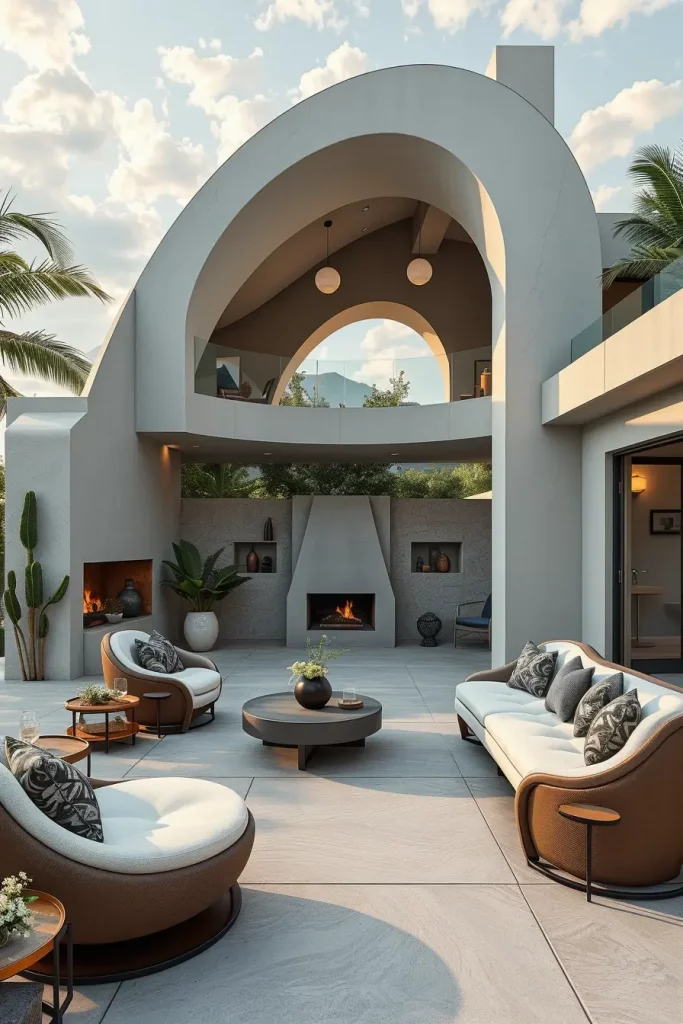
In such designs, I deliberately choose furniture that feels custom rather than mass-produced. Sculptural lounge chairs, bespoke dining tables with curved bases, and architectural outdoor kitchens reinforce the identity of the space. Materials like polished concrete, stone, and metal accents are selected to echo the main structure and ensure durability without visual noise.
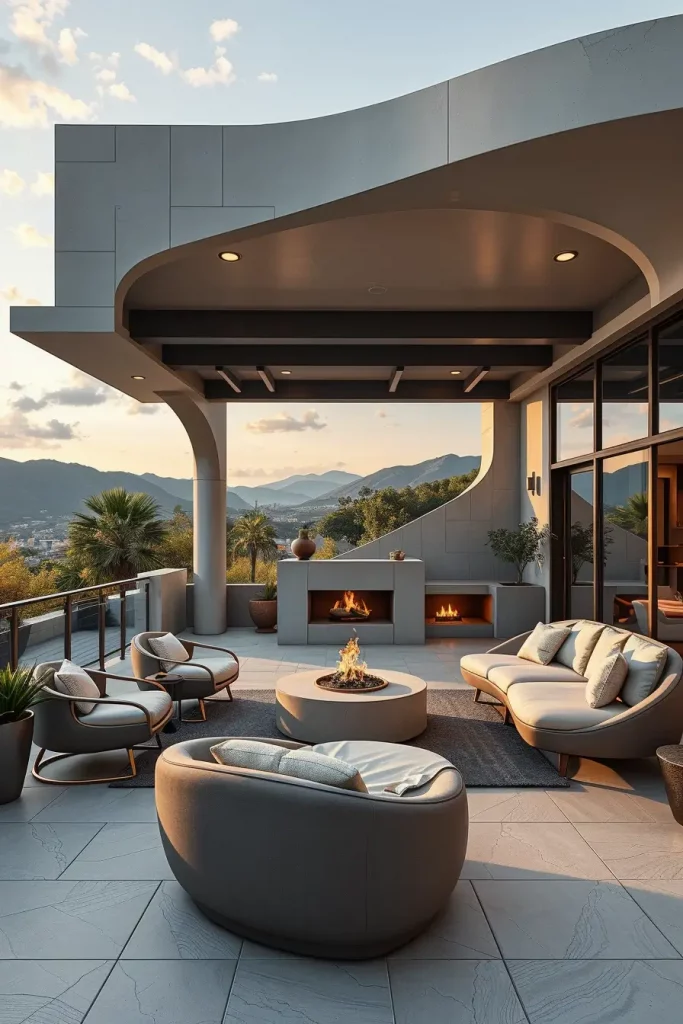
From my professional perspective, designers frequently highlighted in Architectural Digest note that bold outdoor architecture works best when furniture is treated as part of the structure. I fully agree and have seen how terraces gain cohesion when furniture and architecture speak the same design language.
What I would add here is a clearer hierarchy of focal points. A statement wall, outdoor fireplace, or dramatic curved canopy helps anchor the space and prevents the design from feeling visually scattered.
Unique Terrace Shapes That Break Traditional Geometry
Unique terrace shapes in 2026 intentionally move away from rectangles and right angles. I see these terraces as ideal solutions for irregular plots or homeowners seeking a truly distinctive outdoor experience. Nontraditional geometry allows better adaptation to views, sunlight, and movement patterns.
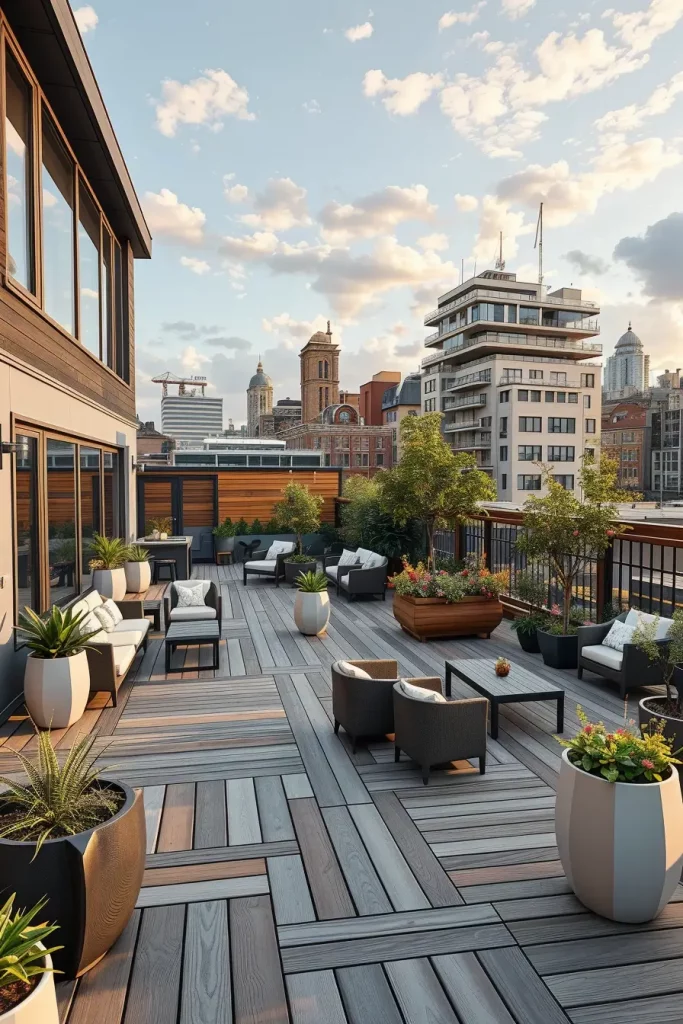
In these spaces, I favor modular furniture that can adapt to unconventional layouts. Curved benches, asymmetrical sofas, and flexible side tables ensure comfort without forcing rigid alignment. Flooring patterns often follow the terrace outline, reinforcing the custom nature of the design.
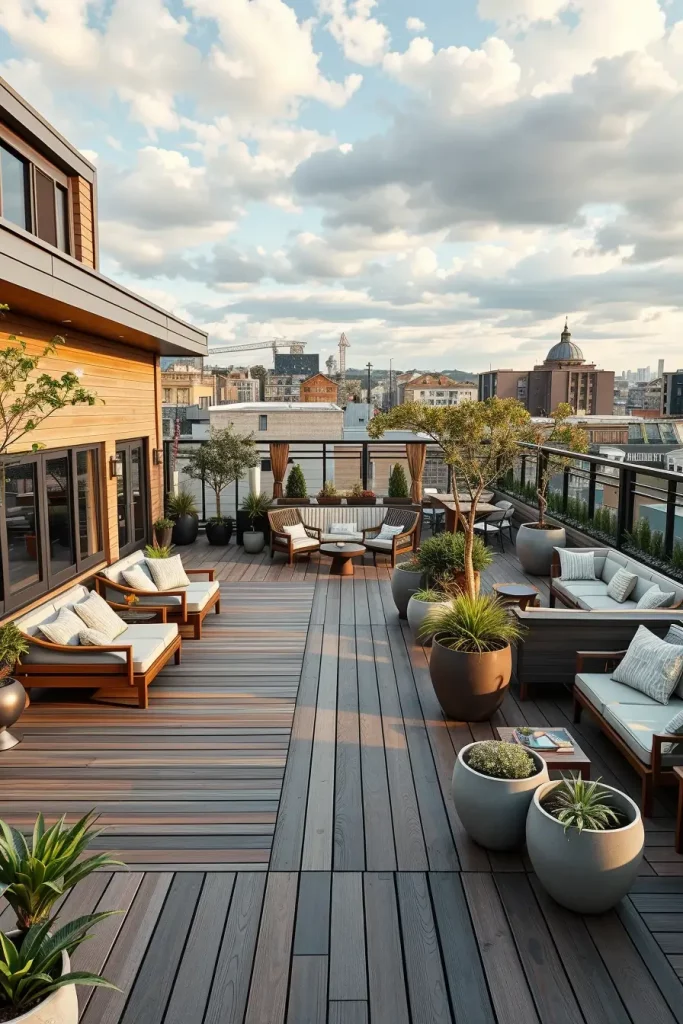
In my experience, landscape architects featured in Dwell often emphasize that breaking geometry should still respect ergonomics. I share this view and always prioritize seating depth, circulation width, and accessibility even in the most unconventional layouts.
To strengthen this concept, I would add clear visual zoning using lighting or subtle level changes to help users intuitively understand how to use the space.
Contemporary Terraces With Organic Flow And Movement
Contemporary terraces with organic flow focus on how people move through and interact with outdoor spaces. I see these terraces as fluid environments where transitions feel natural rather than forced. In 2026, this approach supports both relaxation and social interaction.
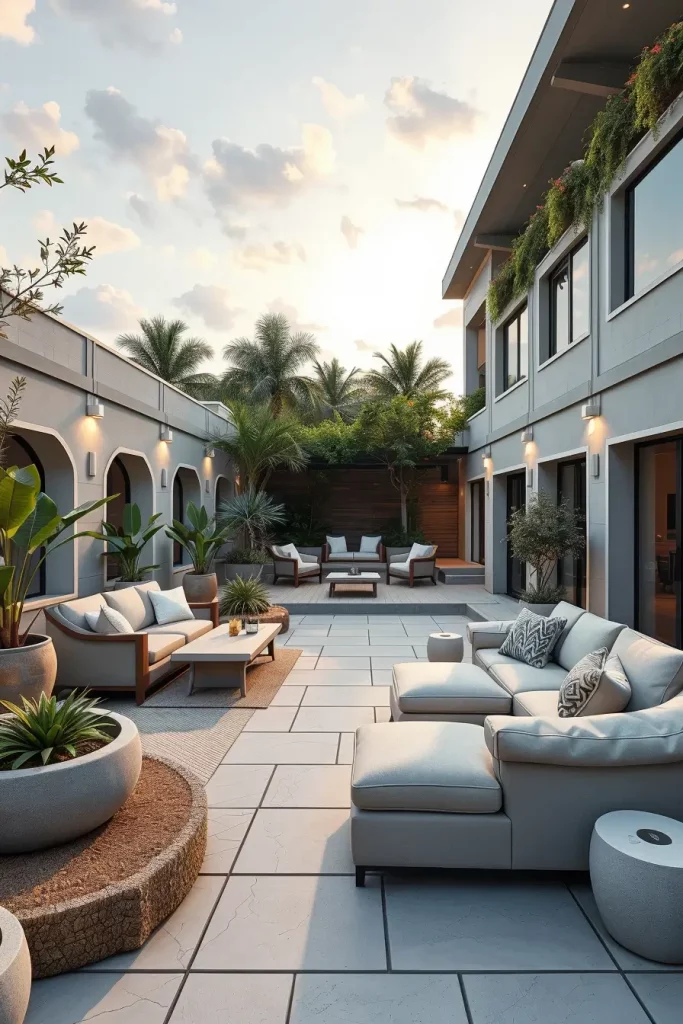
Furniture in these terraces follows soft lines and continuous forms. I include curved sectional sofas, rounded coffee tables, and gently shaped planters that guide movement. Pathways and seating arrangements are designed to avoid sharp interruptions, creating a calm and intuitive experience.
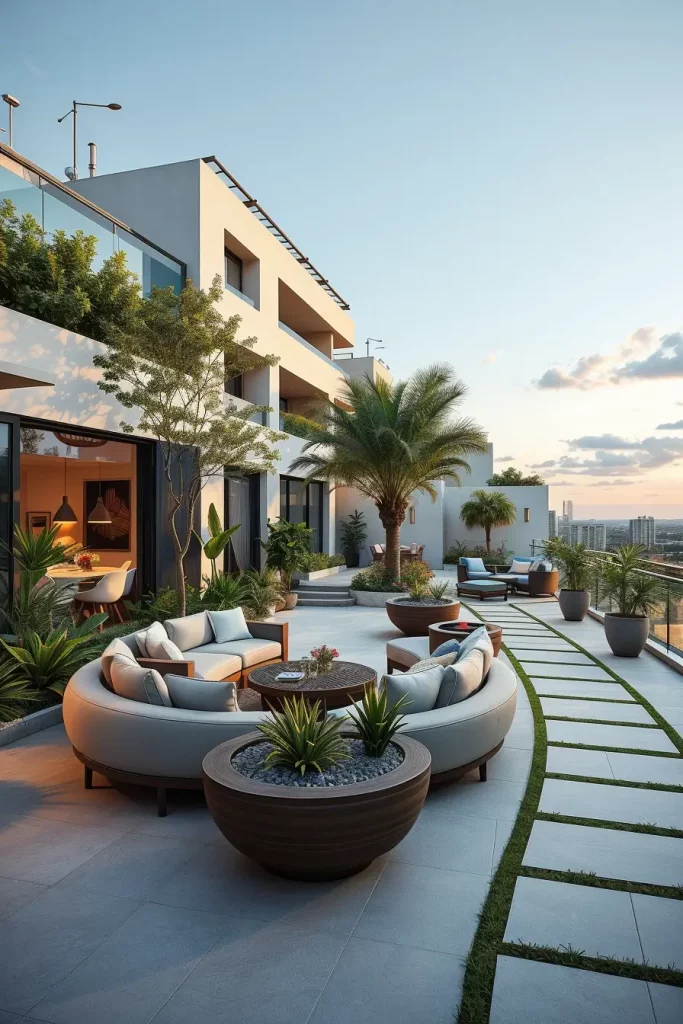
From my professional standpoint, many US designers writing for Interior Design Magazine highlight movement as a core principle of modern outdoor planning. I’ve applied this logic in practice and consistently see improved usability and comfort.
What I would add to these terraces is adaptive shading, such as curved retractable canopies, to maintain flow while responding to changing weather conditions.
Minimalist Sculptural Terraces With Clean Visual Impact
Minimalist sculptural terraces in 2026 prove that strong design does not require excess. I view these terraces as carefully edited spaces where every element earns its place. Clean forms and restrained palettes create powerful visual impact without clutter.
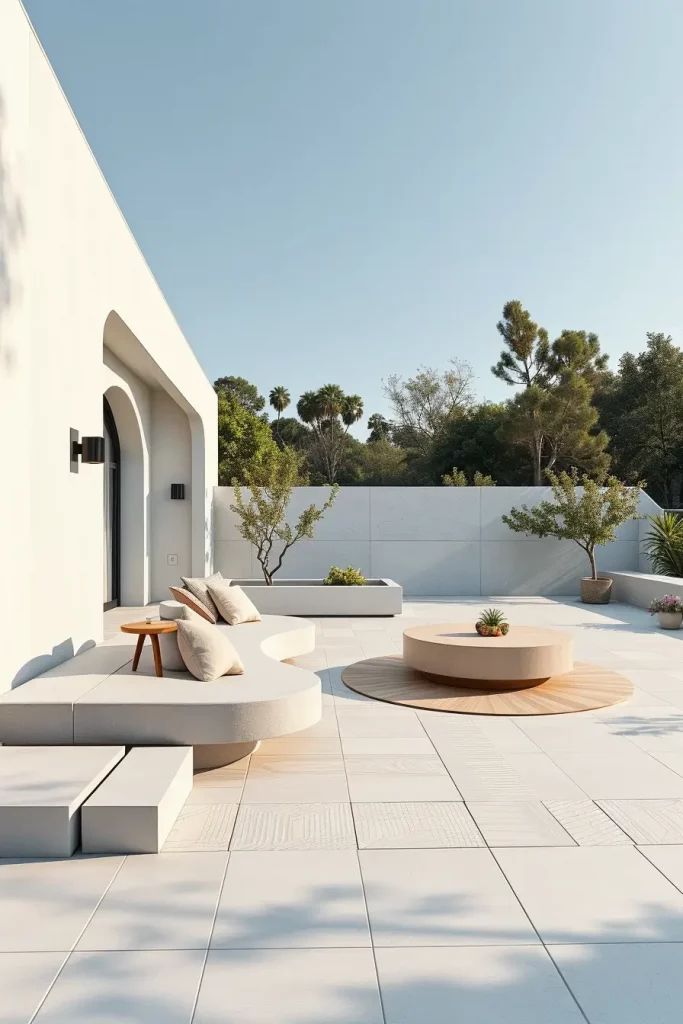
I select furniture with simple silhouettes and subtle curves, such as monolithic benches, low-profile loungers, and integrated tables. Materials are limited but refined, often combining concrete, smooth stone, and high-quality composites for longevity and cohesion.
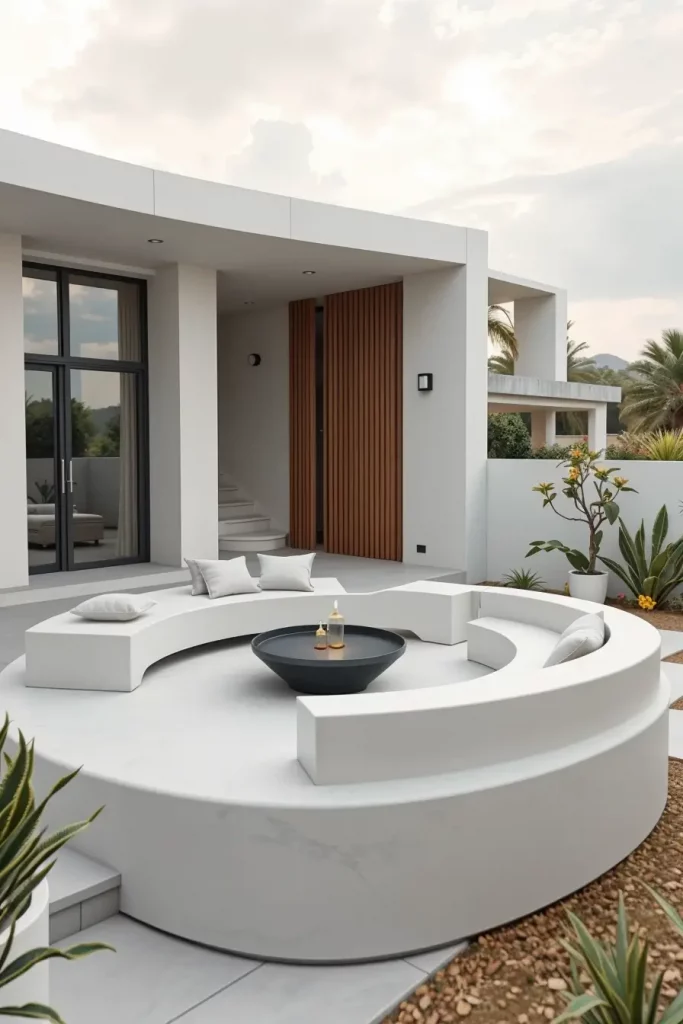
In my opinion, designers featured in Dezeen often stress that minimalism succeeds through precision. I fully support this and recommend investing in fewer but higher-quality elements rather than filling the space unnecessarily.
To complete this concept, I would introduce one sculptural focal piece, such as a curved seating element or art-inspired fire feature, to prevent the terrace from feeling too austere.
Futuristic Terrace Designs With Soft Curves And Smooth Surfaces
Futuristic terrace designs in 2026 emphasize innovation, comfort, and visual fluidity. I see these terraces as forward-looking spaces that combine advanced materials with human-centered design. Soft curves and smooth surfaces dominate, creating an almost seamless outdoor environment.
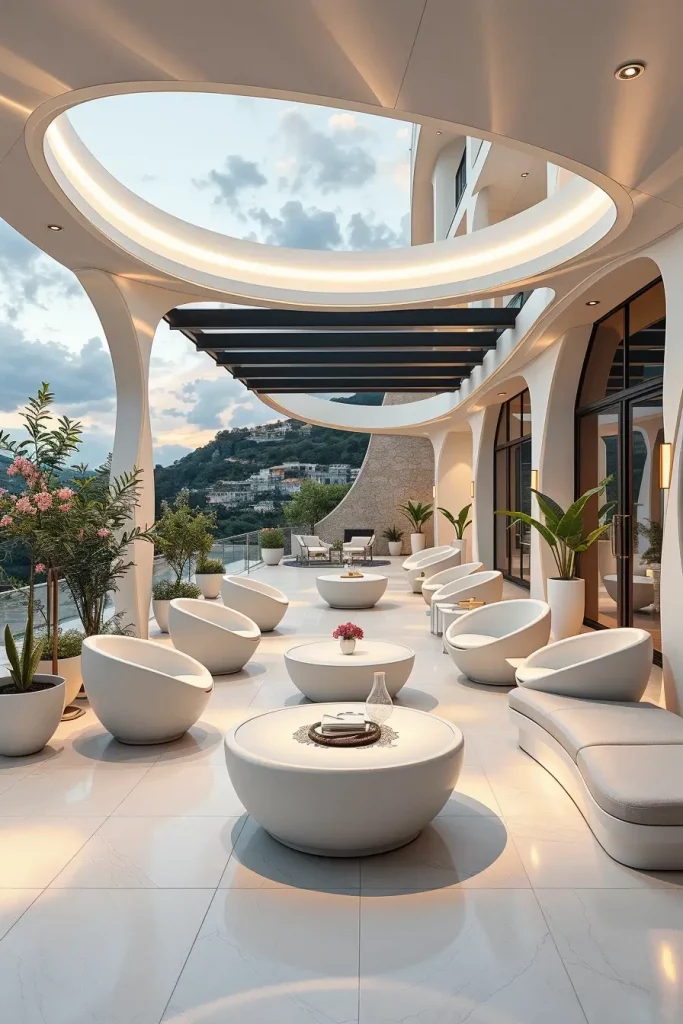
Furniture here often features molded forms, integrated lighting, and hidden technology. I include curved loungers, floating benches, and smart outdoor tables that enhance usability while maintaining a sleek appearance. Surfaces are easy to maintain and designed for long-term performance.
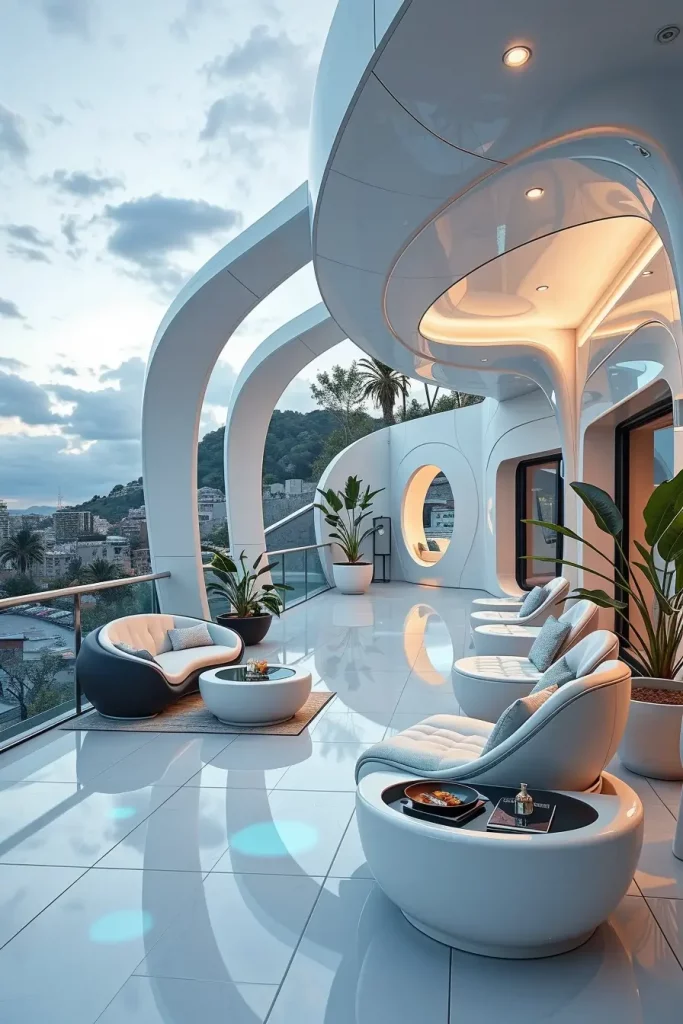
From my experience, futurist concepts discussed in design media like Design Milk highlight the importance of blending technology subtly into outdoor spaces. I agree and believe technology should enhance comfort without drawing attention to itself.
What I would add to futuristic terraces is smart environmental control, such as automated lighting and climate-responsive shading, to make the space truly adaptable.
Luxury Terraces Featuring Custom Sculptural Elements
I see luxury terraces in 2026 evolving into highly personalized outdoor environments where sculptural elements are not decorative extras but central design features. These terraces are designed as functional outdoor rooms, often attached to penthouses or private villas, where every curve and form serves both comfort and visual harmony. The practicality lies in how these sculptural elements define zones for lounging, dining, and relaxation without relying on traditional walls or partitions.
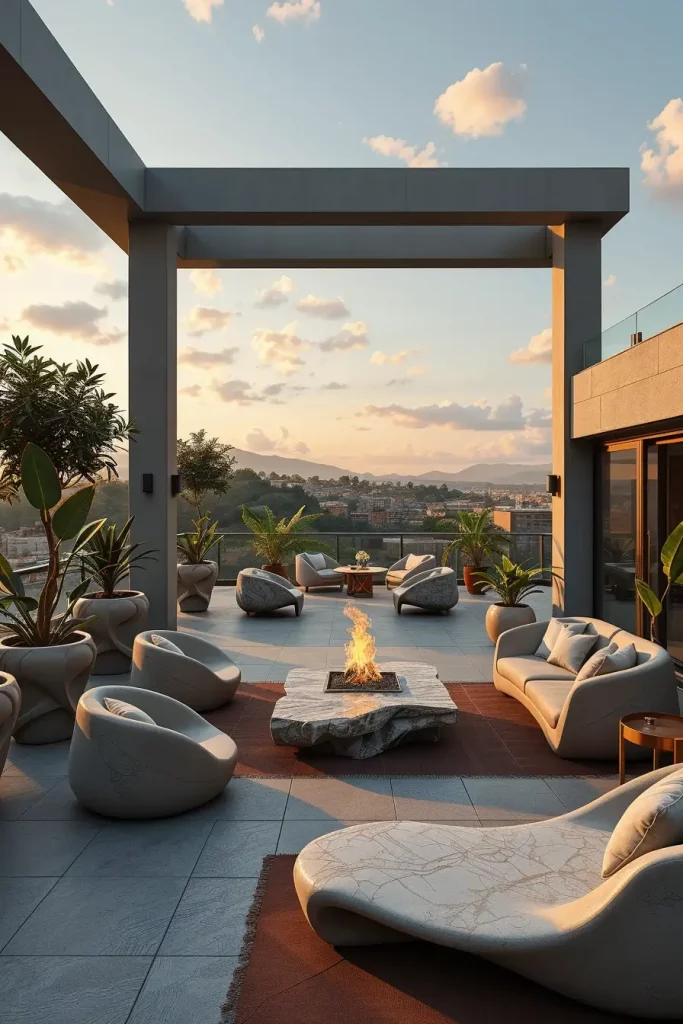
In my work, I often incorporate custom-made sculptural planters, curved seating platforms, and integrated fire features crafted from stone, concrete, or composite materials. These elements anchor the space visually while remaining durable for outdoor use. Low-profile modular sofas with rounded silhouettes, monolithic side tables, and bespoke outdoor rugs with abstract contours all contribute to a cohesive design that feels intentional rather than decorative.
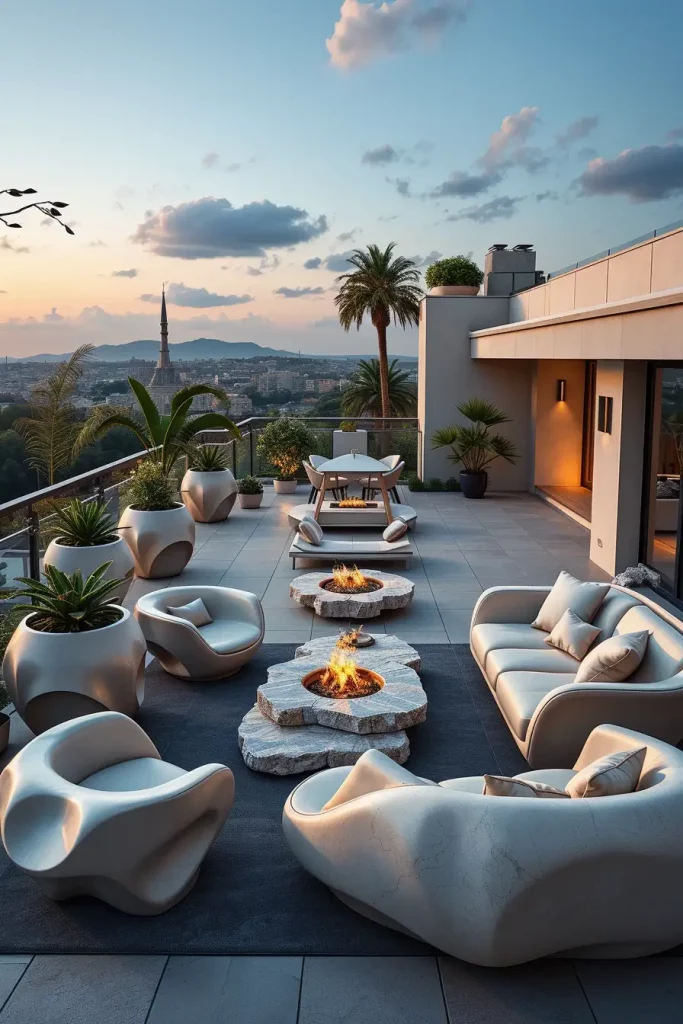
From my perspective, this approach reflects what leading US-based designers featured in Architectural Digest have emphasized recently: outdoor spaces should feel as curated as interiors. I agree with this philosophy because sculptural elements elevate terraces from simple leisure zones into meaningful extensions of the home. When executed carefully, luxury terraces become timeless rather than trend-driven.
What I would still add to this type of terrace is subtle integrated technology, such as concealed outdoor heating or sound systems embedded within sculptural forms. These additions preserve the artistic integrity of the space while enhancing year-round usability.
Architectural Terraces With Statement Structural Forms
Architectural terraces with strong structural forms are becoming a defining feature of Terrace design ideas 2026, especially in urban environments. I approach these terraces as architectural compositions, where the structure itself becomes the design language. Curved concrete slabs, cantilevered platforms, and oval framing elements help create terraces that feel grounded yet visually dynamic.
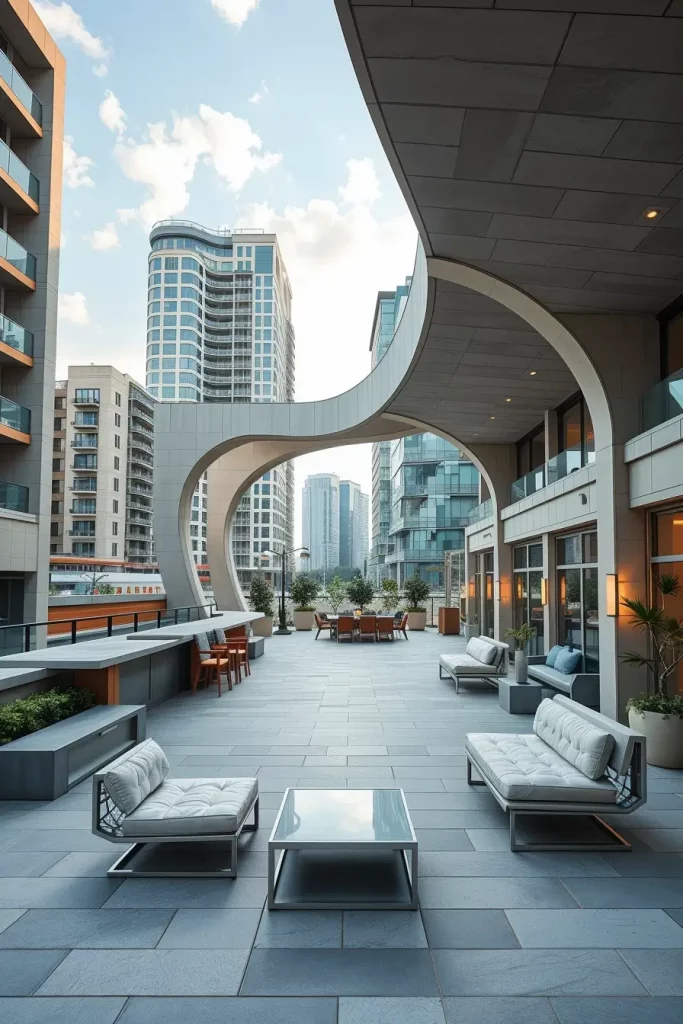
In these spaces, I prioritize furniture that complements the architecture rather than competes with it. Streamlined chaise lounges, low-profile dining tables with rounded edges, and built-in benches echo the terrace’s structural rhythm. Materials such as brushed metal, textured stone, and engineered wood are selected for longevity and coherence with the architectural framework.
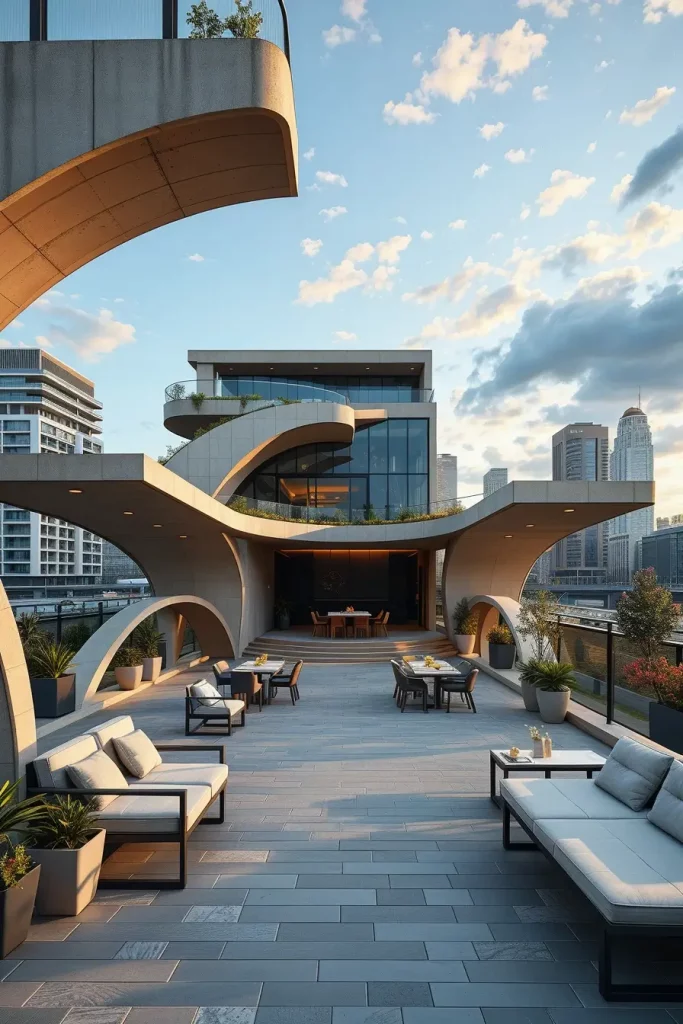
Personally, I find that statement structures give terraces a sense of permanence and identity. Publications like Dezeen often highlight how strong architectural gestures outdoors can increase both property value and spatial clarity. I’ve seen firsthand how these terraces feel more intuitive to use because the structure naturally guides movement and interaction.
To complete this type of terrace, I would recommend adding architectural lighting integrated directly into structural edges. This enhances safety, highlights form after dark, and reinforces the sculptural quality of the design.
Creative Terrace Concepts Designed As Outdoor Art Pieces
When I design terraces as outdoor art pieces, I treat the entire space as a single creative composition. These creative and artistic terraces focus on fluid layouts, unexpected proportions, and expressive materials that blur the line between functional design and sculpture. The practicality lies in thoughtful zoning, ensuring that each artistic gesture still supports daily use.
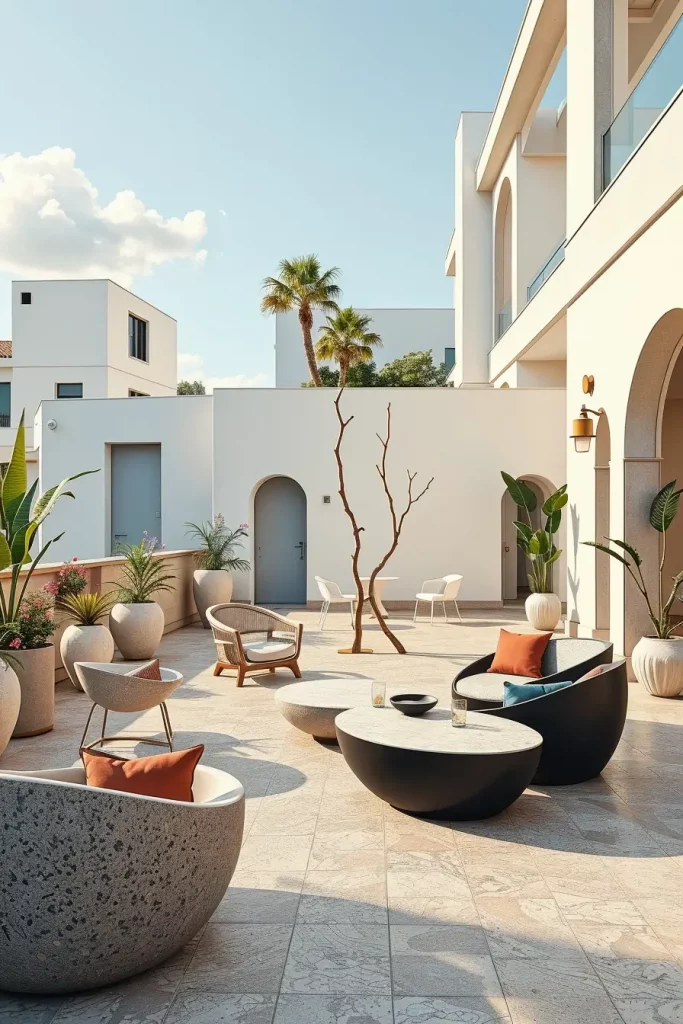
Furniture in these terraces often includes custom curved sofas, asymmetrical lounge chairs, and statement tables with sculpted bases. I select finishes like terrazzo, molded resin, or smooth concrete to reinforce the artistic narrative. Accessories are minimal but intentional, often limited to a few oversized planters or abstract outdoor sculptures.
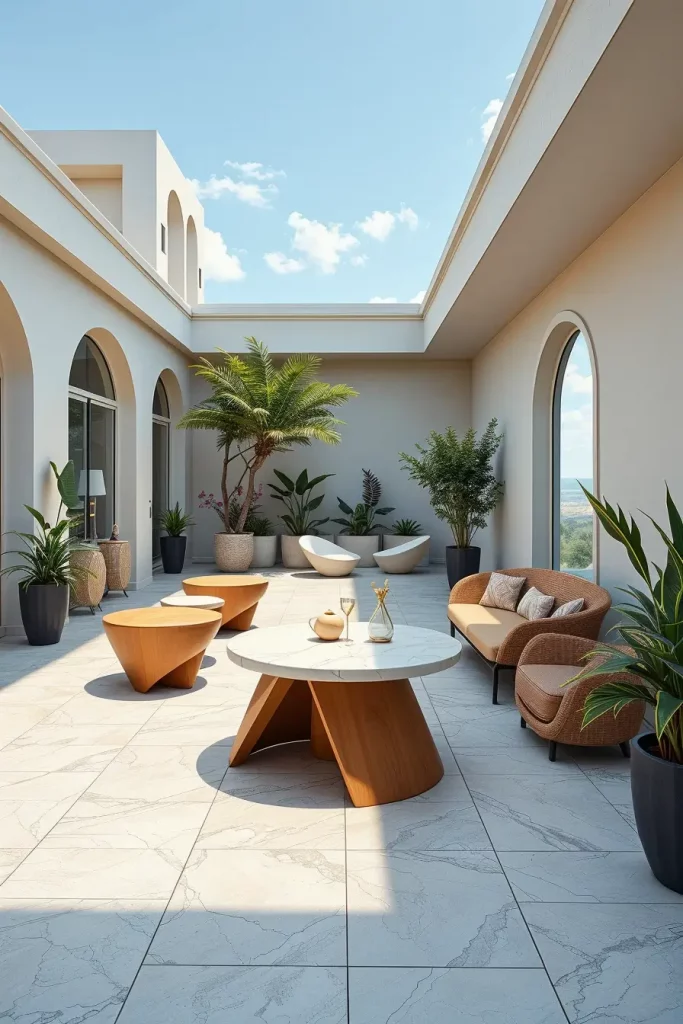
In my experience, these terraces resonate strongly with clients who value individuality. Design leaders from platforms like Design Milk frequently emphasize that outdoor spaces are ideal for experimentation, and I agree. Terraces offer freedom to explore bolder ideas without overwhelming interior spaces.
What I would add here is a stronger connection to the surrounding view or skyline through strategic furniture orientation. Aligning artistic forms with sightlines enhances both the aesthetic and emotional impact of the terrace.
Modern Terraces With Seamless Indoor-Outdoor Transitions
Seamless indoor-outdoor terraces remain one of the most practical and modern solutions for 2026, especially in homes with large sliding or pivot doors. I design these terraces to function as visual and spatial extensions of interior living areas, using consistent materials, color palettes, and flowing forms to maintain continuity.
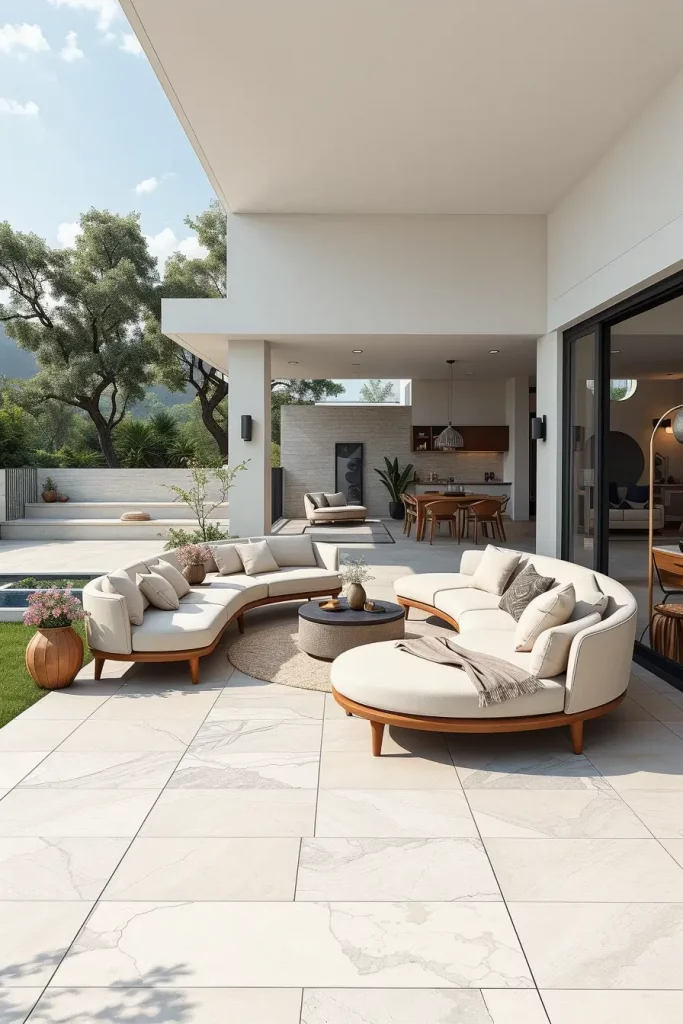
Furniture selection is critical here. I typically use outdoor sofas that mirror indoor silhouettes, curved dining chairs, and streamlined coffee tables that feel familiar yet weather-resistant. Flooring often continues from inside to outside, using large-format tiles or composite decking with soft, organic edges.
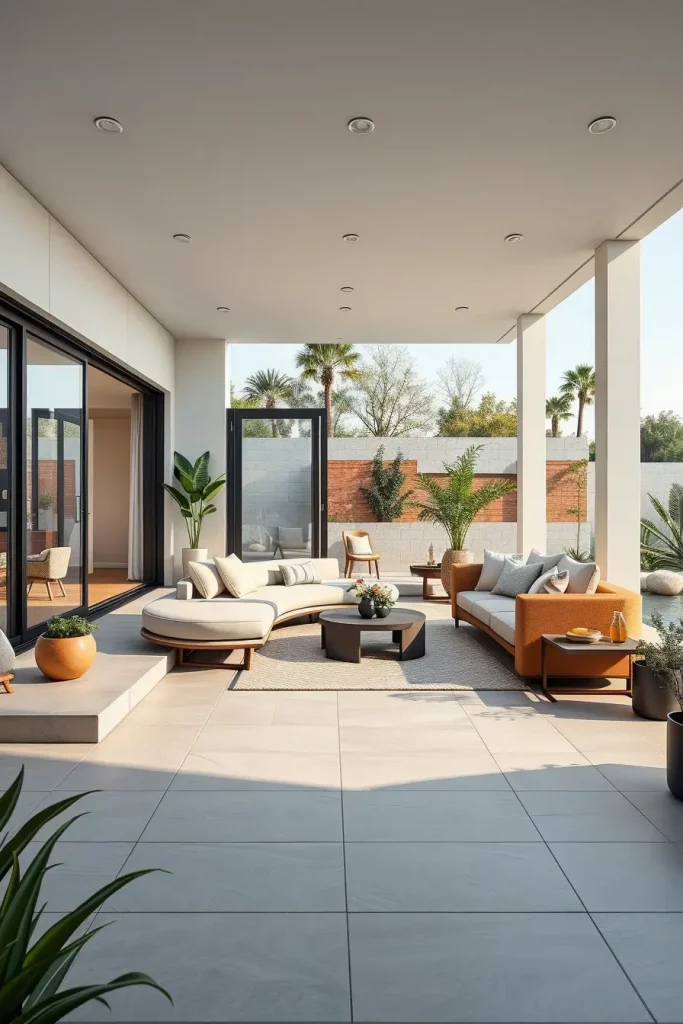
From my professional standpoint, this approach aligns with recommendations from US interior design firms such as Studio McGee, who often stress the importance of visual flow. I’ve noticed that clients use these terraces more frequently because they feel like natural living spaces rather than separate outdoor zones.
To enhance this concept further, I would introduce flexible shading solutions, such as retractable canopies or sculptural pergolas, to ensure comfort throughout different seasons without disrupting the seamless design.
Elevated Terrace Designs With Floating And Curved Platforms
Elevated terraces with floating and curved platforms represent some of the most unique terraces I’ve worked on. These designs rely on layered levels and soft elevation changes to create depth without visual heaviness. The curved platforms guide movement intuitively and help define functional zones without rigid separations.
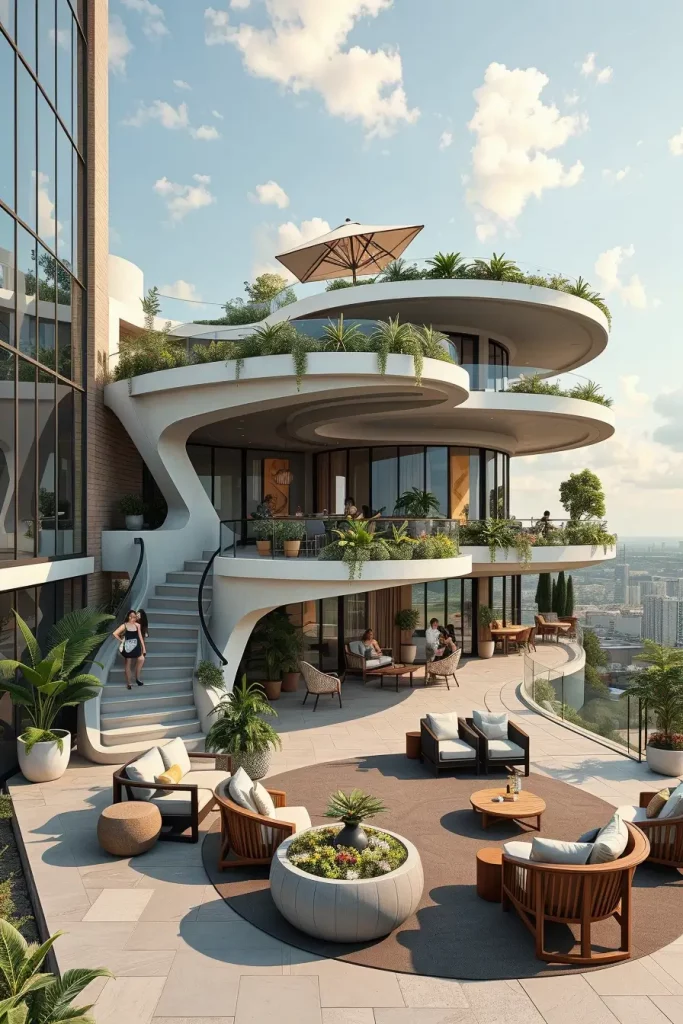
In these spaces, I incorporate built-in seating along curved edges, low tables integrated into platforms, and lightweight lounge furniture that maintains openness. Materials such as engineered wood, textured concrete, and stone composites are chosen for structural reliability and sculptural appeal.
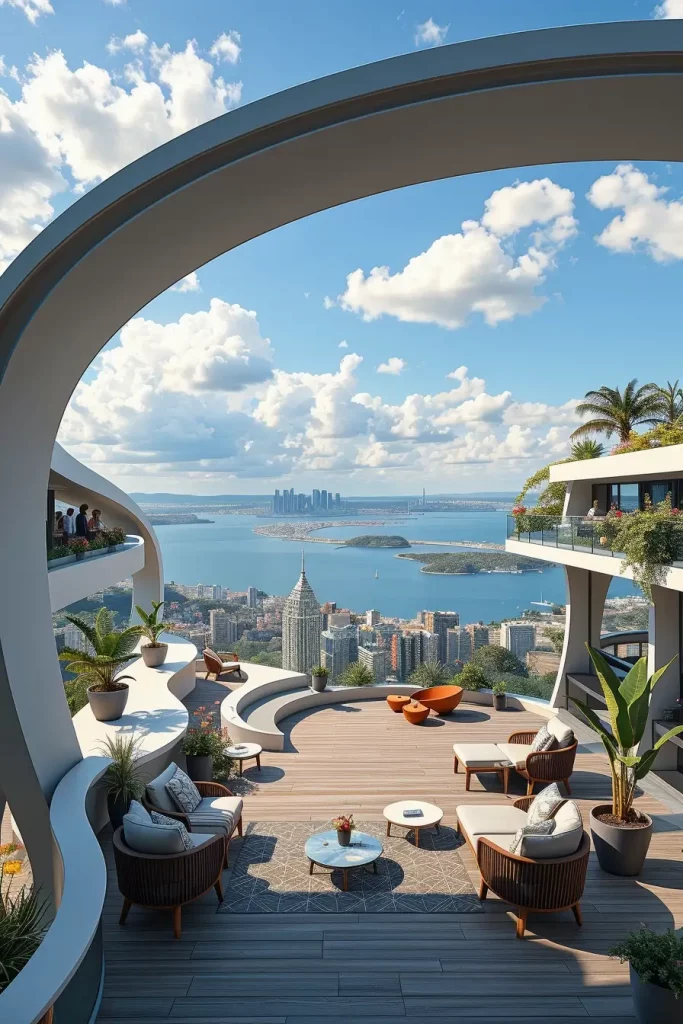
I personally appreciate how floating platforms introduce a sense of calm and sophistication. According to recent features in Dwell magazine, elevation changes outdoors can improve spatial perception and comfort, which aligns with my own observations in real projects.
What I would still add is subtle greenery integrated directly into platform edges. This softens the architecture, improves microclimate comfort, and enhances the overall sculptural effect without cluttering the terrace.
Terraces With Sculptural Seating And Integrated Design
When I design terraces with sculptural seating, I focus on creating forms that serve as both furniture and architectural elements. In Terrace design ideas 2026, seating is no longer an afterthought but a core part of the spatial composition. Curved benches, flowing lounge forms, and integrated seating walls help organize the terrace while maintaining openness and visual continuity.
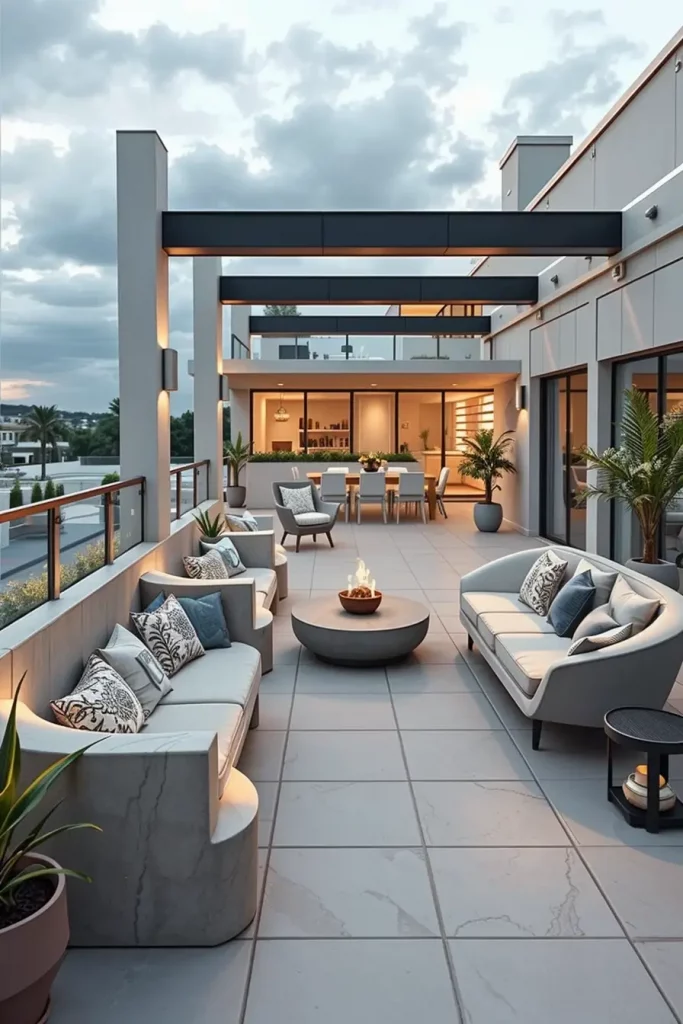
I typically use built-in seating made from concrete, stone, or composite materials, softened with custom cushions designed specifically for curved shapes. Freestanding sculptural lounge chairs and modular seating systems allow flexibility while preserving the artistic intent. Each seating element is positioned to support conversation, relaxation, or views, making the terrace functional without clutter.
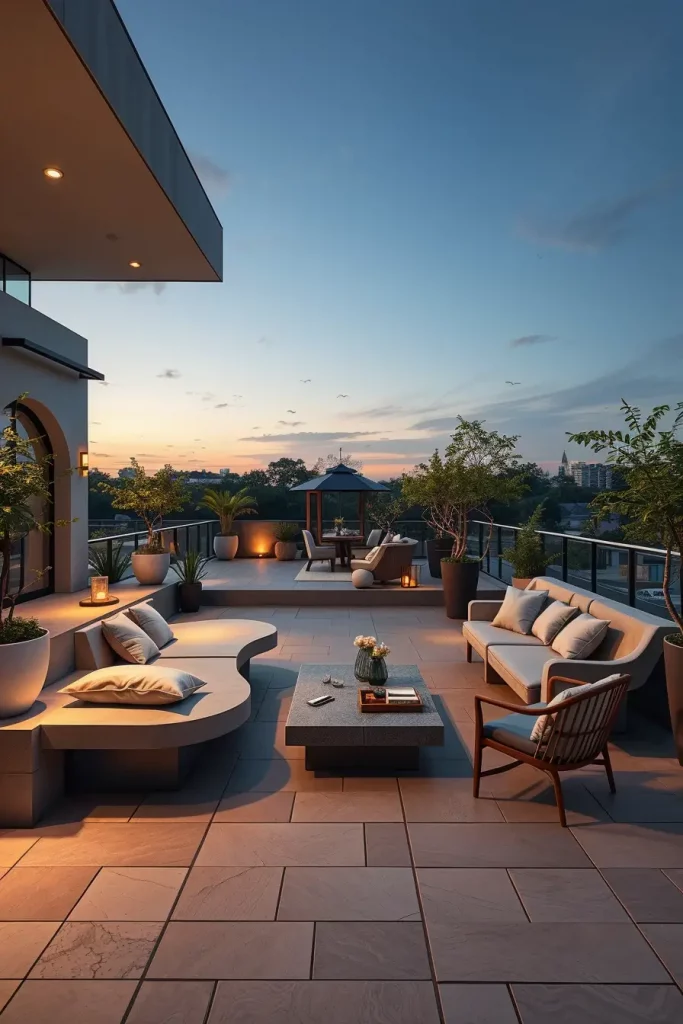
From my experience, integrated seating significantly improves usability and longevity. Many US-based landscape architects, including those featured in Landscape Architecture Magazine, emphasize that built-in solutions reduce maintenance and visually unify outdoor spaces. I’ve seen clients appreciate how these terraces feel intentional and effortless rather than over-furnished.
What I would still add here is discreet storage integrated beneath seating platforms. This keeps the terrace visually clean while providing space for cushions, throws, or outdoor accessories.
Artistic Terrace Flooring With Flowing And Abstract Patterns
Artistic flooring is one of the most impactful ways to introduce creative and artistic expression into a terrace. In 2026, I see flooring becoming a canvas, using flowing lines and abstract patterns to guide movement and define zones naturally. These designs are not only visually engaging but also practical, as they subtly organize space without physical barriers.
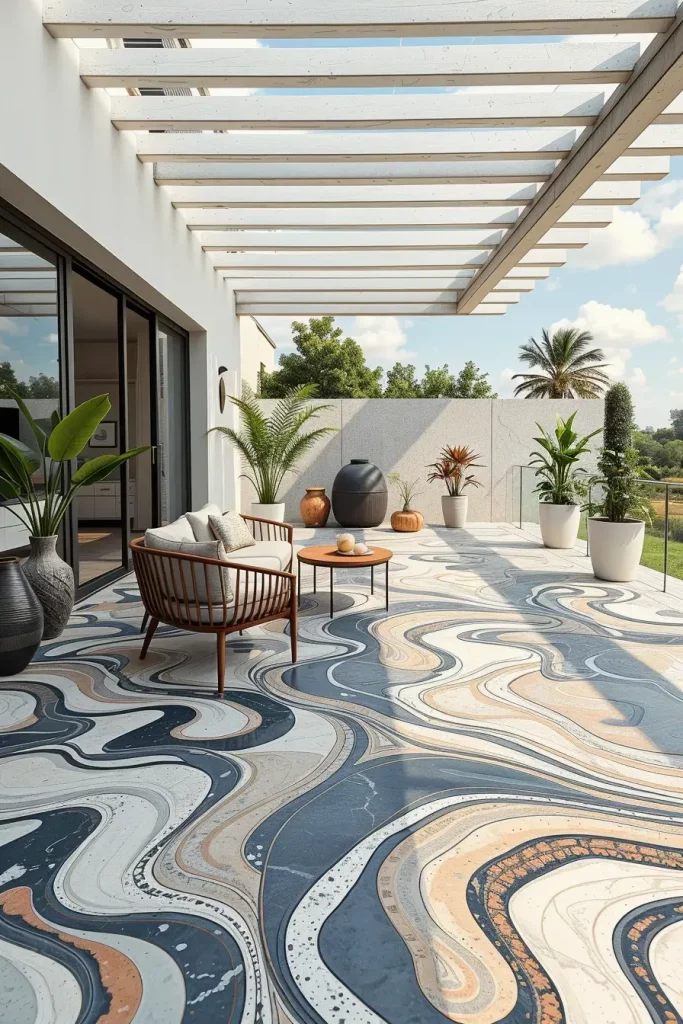
In my projects, I often work with large-format tiles, terrazzo, or poured concrete floors with custom inlays. Curved patterns, tonal gradients, and organic shapes add depth while remaining understated. Flooring choices are always paired with furniture placement to ensure comfort and visual balance across the entire terrace.
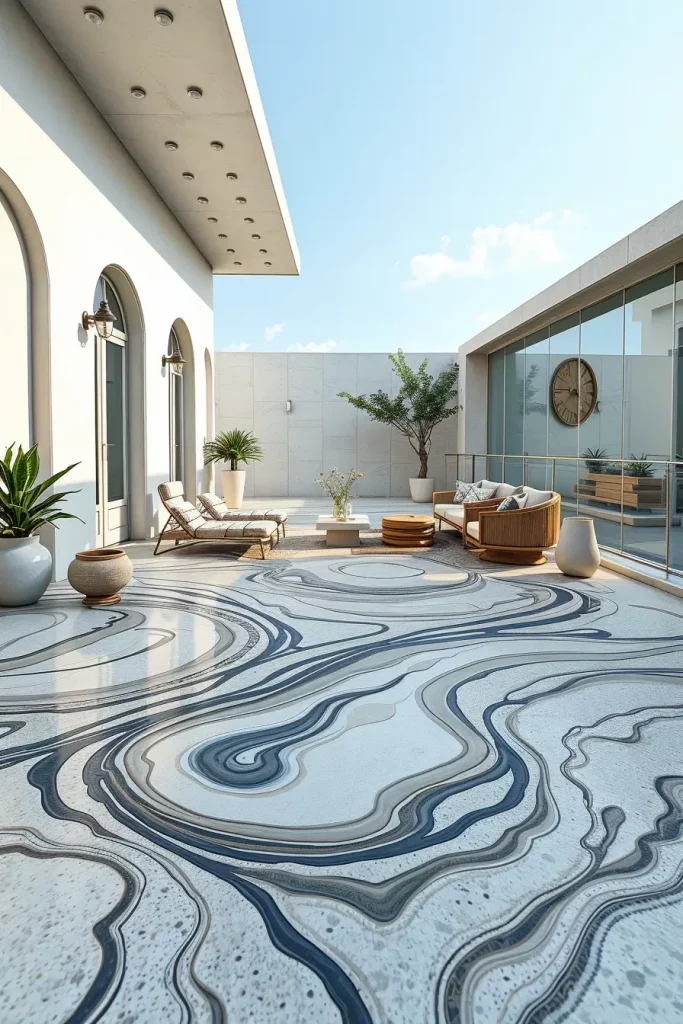
Personally, I believe flooring sets the emotional tone of an outdoor space. Design publications like Interior Design Magazine have highlighted how patterned outdoor flooring enhances spatial perception. I agree, as I’ve noticed how clients instantly connect with terraces where the floor design feels intentional and expressive.
To complete this concept, I would add subtle floor-integrated lighting that follows the abstract lines. This enhances safety at night and reinforces the sculptural quality of the flooring design.
Innovative Terrace Railings With Curved And Transparent Forms
Innovative railings are essential for modern, streamlined terraces, especially in elevated or urban settings. I approach railings as design features rather than purely functional elements. Curved glass, transparent panels, and softly contoured metal frames help maintain openness while ensuring safety.
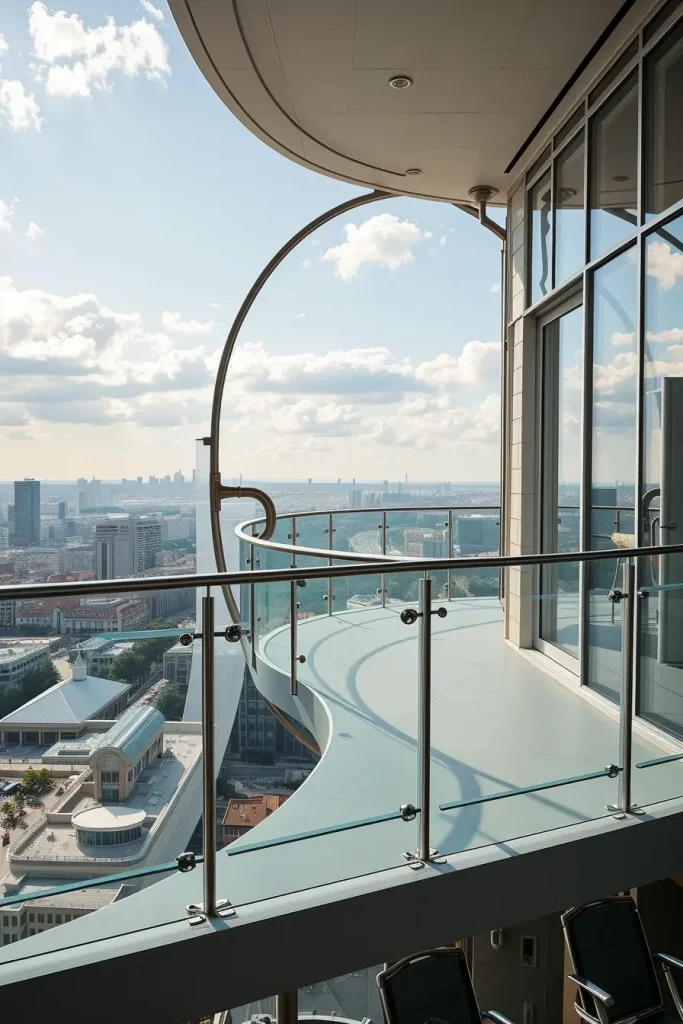
In practice, I often specify laminated glass railings with rounded edges or metal rail systems shaped into gentle arcs. These choices preserve views and complement sculptural terrace layouts. Minimal handrails, integrated lighting, and seamless fixings prevent visual interruption and support a clean aesthetic.
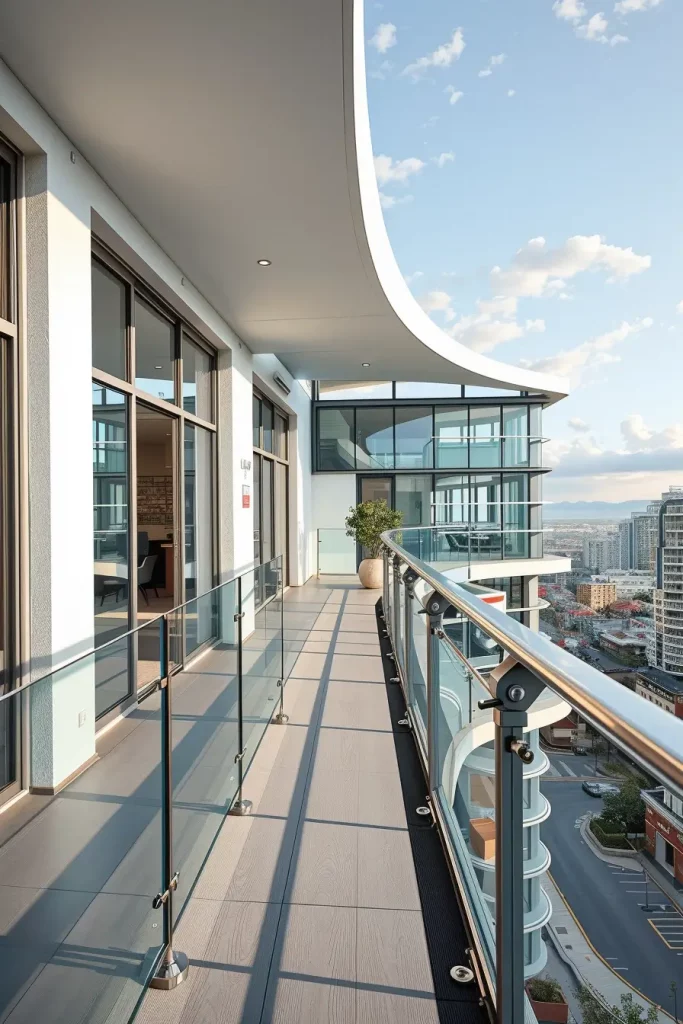
From my professional point of view, transparent railings significantly improve how a terrace feels emotionally. Architects frequently featured in ArchDaily note that visual continuity is key to outdoor comfort, and I’ve consistently observed this in completed projects. Clients feel more connected to their surroundings without sacrificing security.
What I would still add is smart glass or subtly tinted panels where privacy is required. This allows flexibility without compromising the overall design language.
Sculptural Pergolas And Canopies For Modern Terraces
Pergolas and canopies in Terrace design ideas 2026 evolve into sculptural structures that define space while offering comfort. I design these elements as architectural forms with curved beams, oval frames, or flowing silhouettes that echo the terrace’s overall design language.
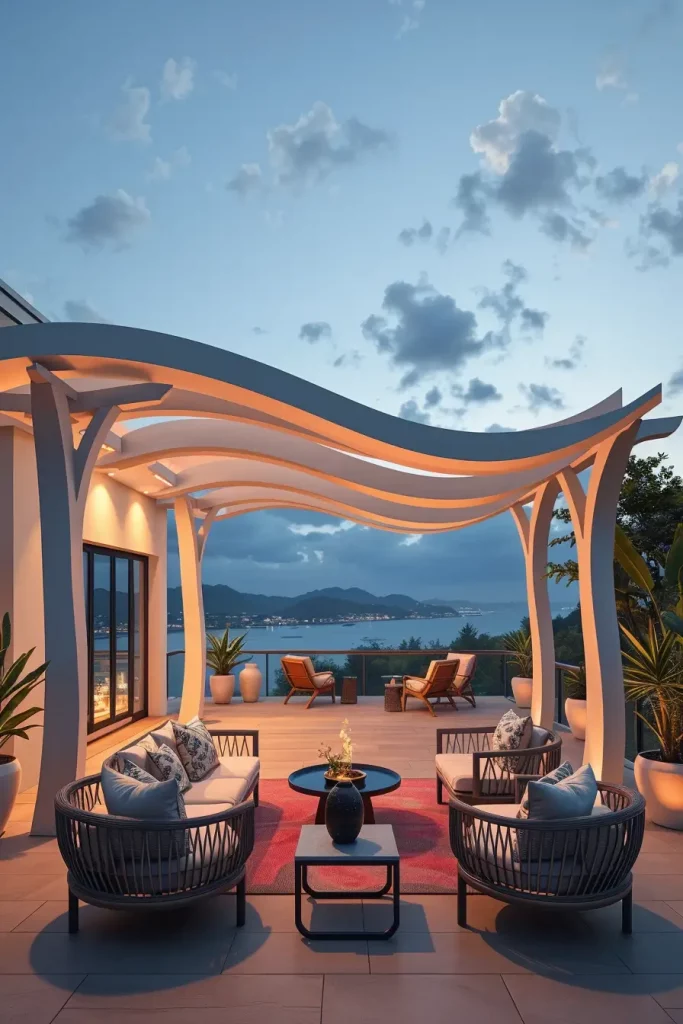
I typically use aluminum, engineered wood, or composite materials shaped into soft curves. Retractable fabric panels, adjustable louvers, or integrated greenery provide shade without heaviness. These pergolas often serve as focal points, anchoring dining or lounge areas visually and functionally.
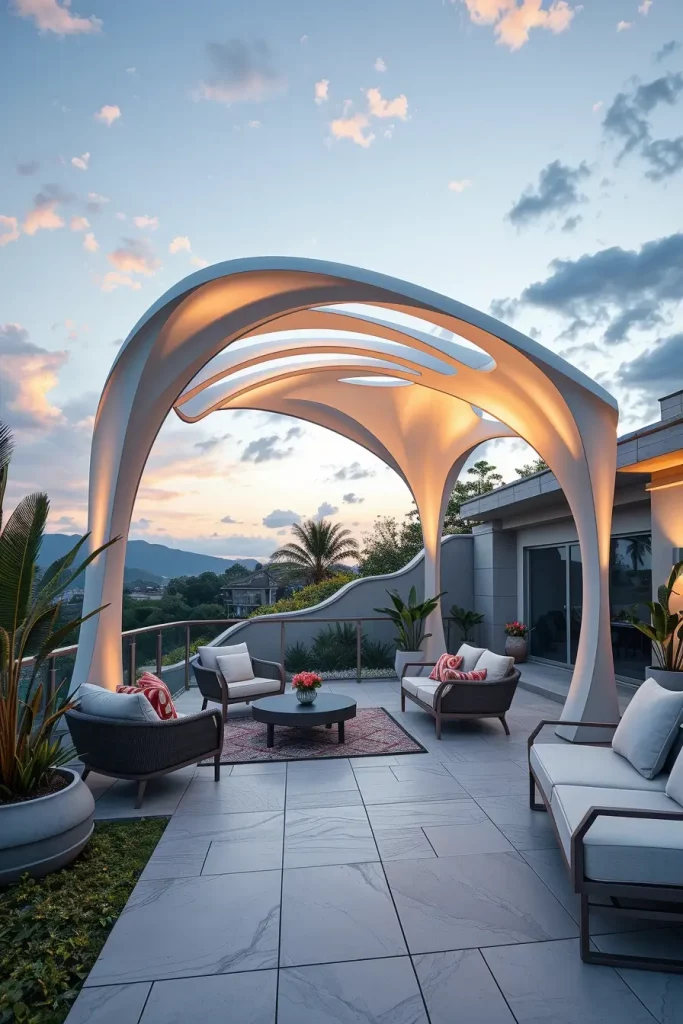
In my experience, sculptural shading solutions significantly increase terrace usability throughout the year. Design experts from publications like House Beautiful emphasize adaptable outdoor structures, and I fully agree. A well-designed pergola transforms a terrace into a true outdoor room.
To enhance this section further, I would integrate subtle lighting or misting systems into the pergola structure. These features improve comfort while maintaining a refined, uncluttered appearance.
Statement Lighting Ideas For Artistic Terrace Spaces
Lighting plays a defining role in artistic terraces, especially after sunset. I approach lighting design as an extension of the terrace’s sculptural identity, using it to highlight curves, textures, and architectural features rather than simply illuminate the space.
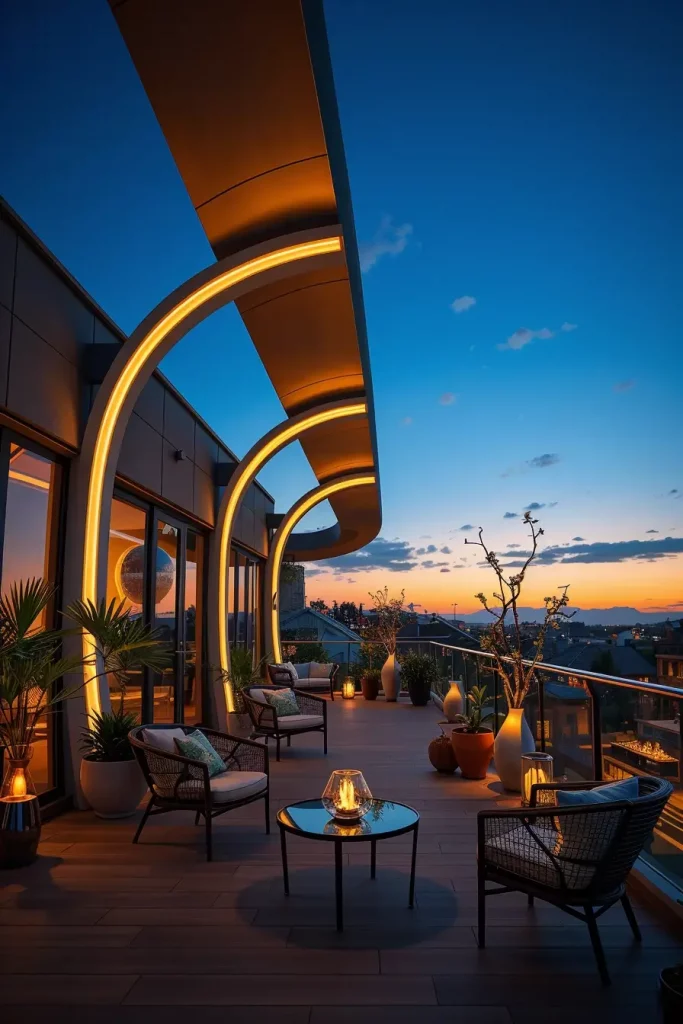
In my designs, I favor concealed LED strips along curved edges, sculptural floor lamps, and pendant lights designed specifically for outdoor use. Warm, diffused lighting creates atmosphere, while directional lights accent key design elements such as seating, flooring patterns, or pergolas.
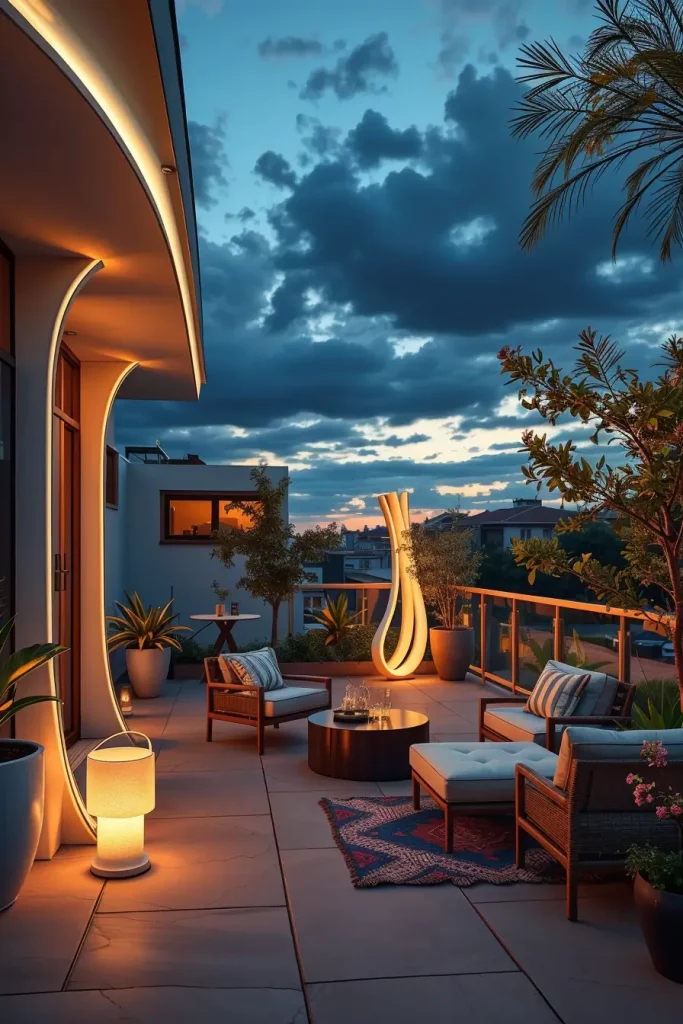
From my perspective, thoughtful lighting elevates terraces from functional to experiential. US lighting designers often stress that layered lighting improves both safety and mood, and I’ve seen how it transforms terraces into evening destinations rather than daytime-only spaces.
What I would still add is smart lighting control that allows users to adjust intensity and scenes easily. This flexibility supports different moods, from intimate evenings to social gatherings, without altering the physical design.
Terraces Designed Around Curved Fire And Water Features
I see terraces with curved fire and water features as one of the most expressive directions in terrace design ideas 2026. These spaces are built around balance and movement, where fire pits, water basins, and soft architectural lines create a calm yet dramatic atmosphere. From a practical point of view, curved elements guide circulation naturally and make the terrace feel cohesive rather than fragmented.
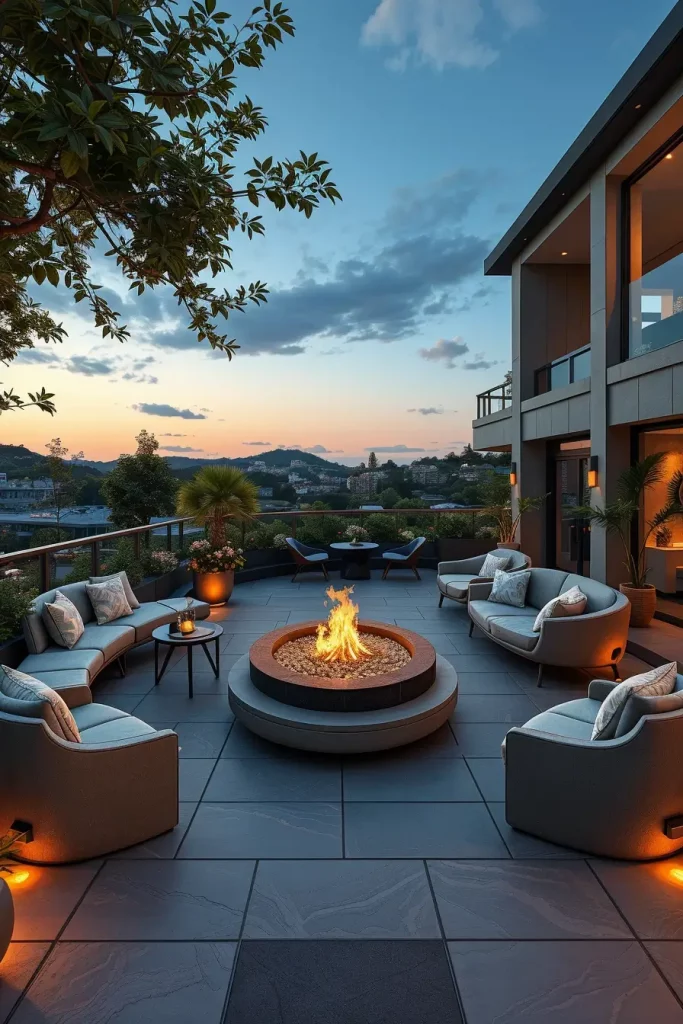
In my work, I focus on integrated fire bowls, oval reflecting pools, and built-in seating that follows the same curved geometry. Low-profile sofas with rounded backs, sculptural stone benches, and seamless concrete surfaces support the flow of the design. I include these elements because they visually soften the space and improve safety by eliminating sharp corners in outdoor environments.
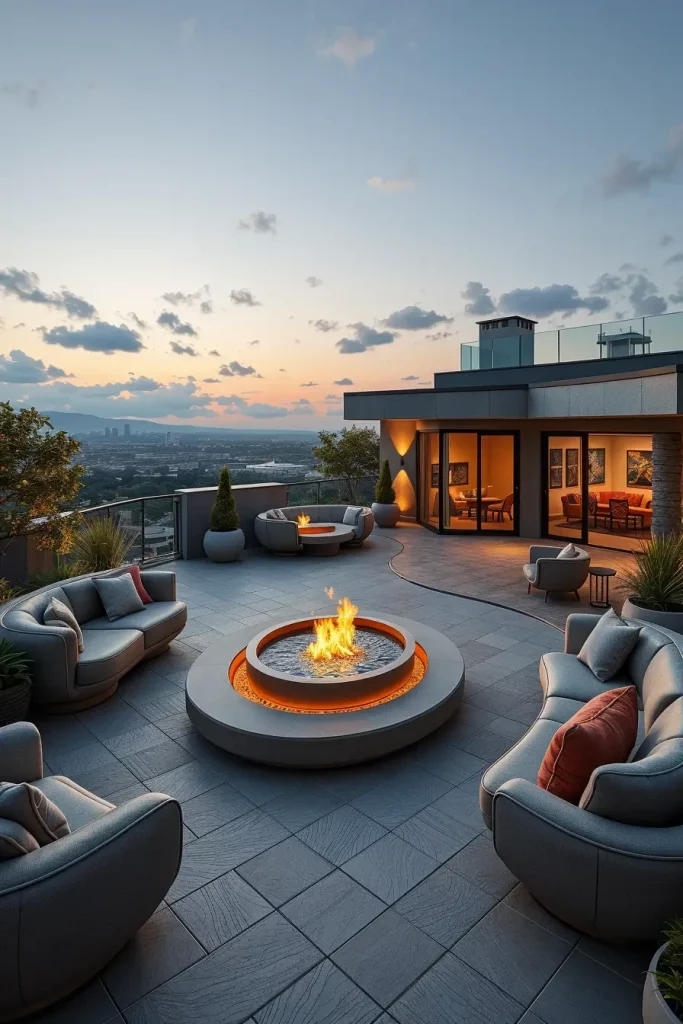
From my experience, designers featured in Architectural Digest often emphasize fire and water as emotional anchors in outdoor design, and I fully agree with that approach. When I apply it correctly, the terrace becomes a place people naturally gather, relax, and stay longer without feeling overstimulated.
What I would add to this type of terrace is subtle integrated lighting under seating edges and along water lines. In my opinion, this is essential to fully activate the design at night and enhance the sculptural quality of the curves.
Nature-Inspired Sculptural Terraces With Organic Shapes
Nature-inspired terraces with organic forms are a clear reflection of artistic and sculptural designs shaping outdoor living in 2026. I design these terraces to echo natural landscapes, using flowing layouts that feel intuitive and grounded. These spaces work well for both residential and hospitality projects because they create a strong emotional connection with the outdoors.
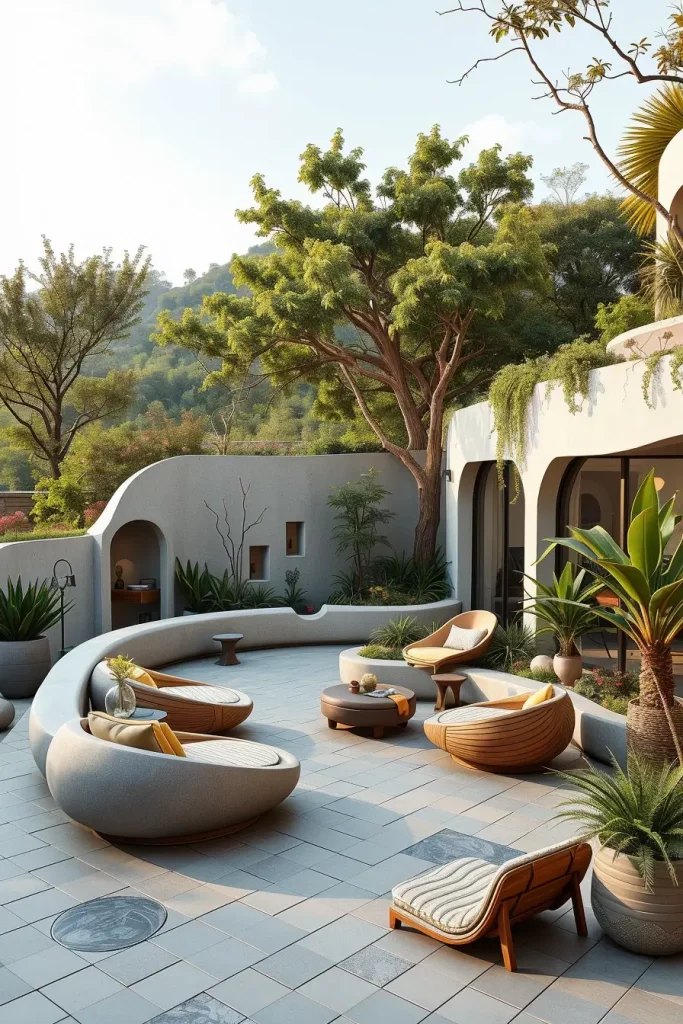
I usually specify curved planters, irregular stone paving, and custom furniture with oval or free-form silhouettes. Wooden lounge chairs with rounded frames, organic stone tables, and layered greenery are included because they visually blend architecture with nature rather than competing with it.
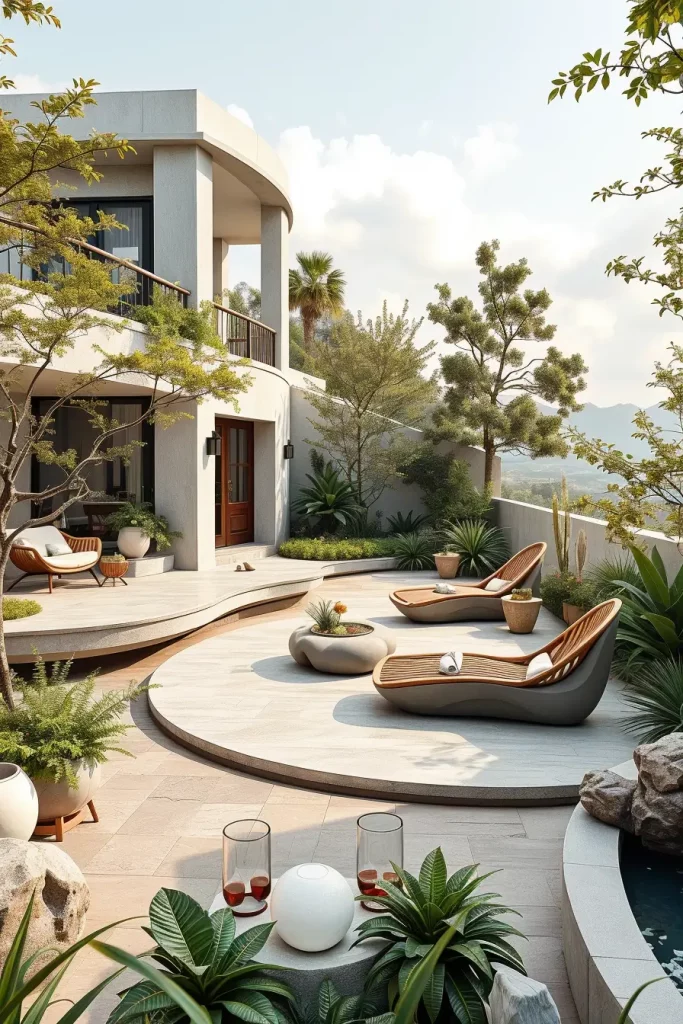
In my professional opinion, this approach aligns with recommendations from American design studios frequently cited by Dezeen, where organic geometry is used to reduce visual stress. I have seen clients respond very positively to terraces that feel natural rather than rigid or overly engineered.
To strengthen this concept further, I would add a multi-level planting strategy using native plants. This enhances sustainability while reinforcing the idea of a living, evolving terrace design.
Monochrome Designer Terraces With Bold Form And Texture
Monochrome terraces are becoming increasingly popular among clients seeking modern, designer, and unique terraces with strong visual identity. I approach these designs by focusing on form, shadow, and texture rather than color variation. This makes the terrace look refined and intentional, even in compact spaces.
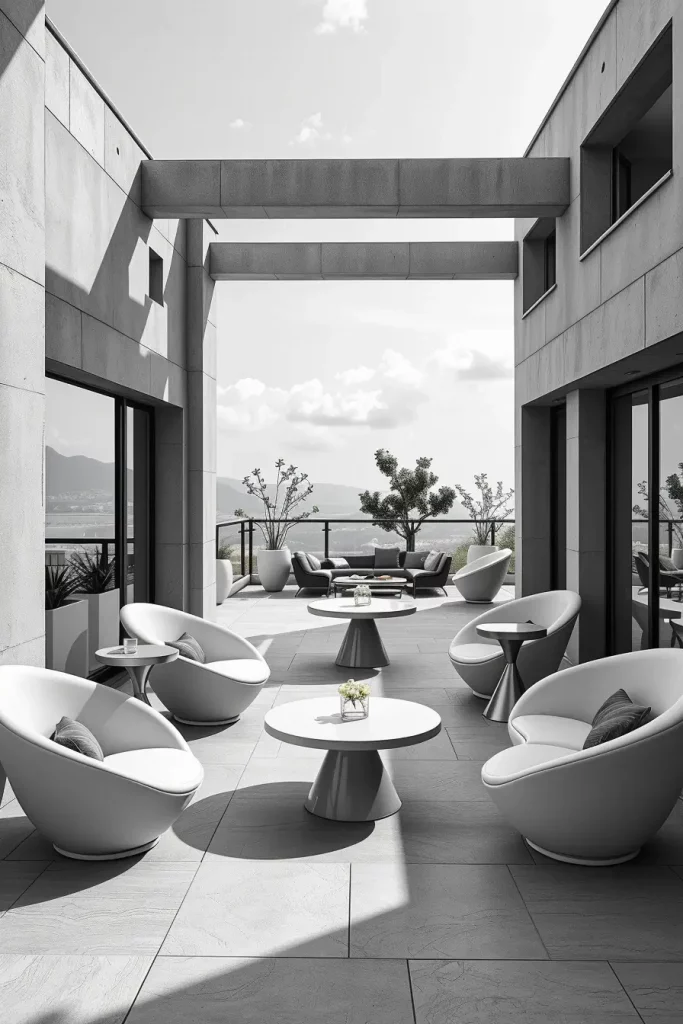
I typically use curved concrete seating, sculptural metal furniture, and textured wall finishes in a single color palette. Items such as rounded lounge chairs, oval coffee tables, and seamless flooring are essential because they allow the shape and material quality to stand out without distraction.
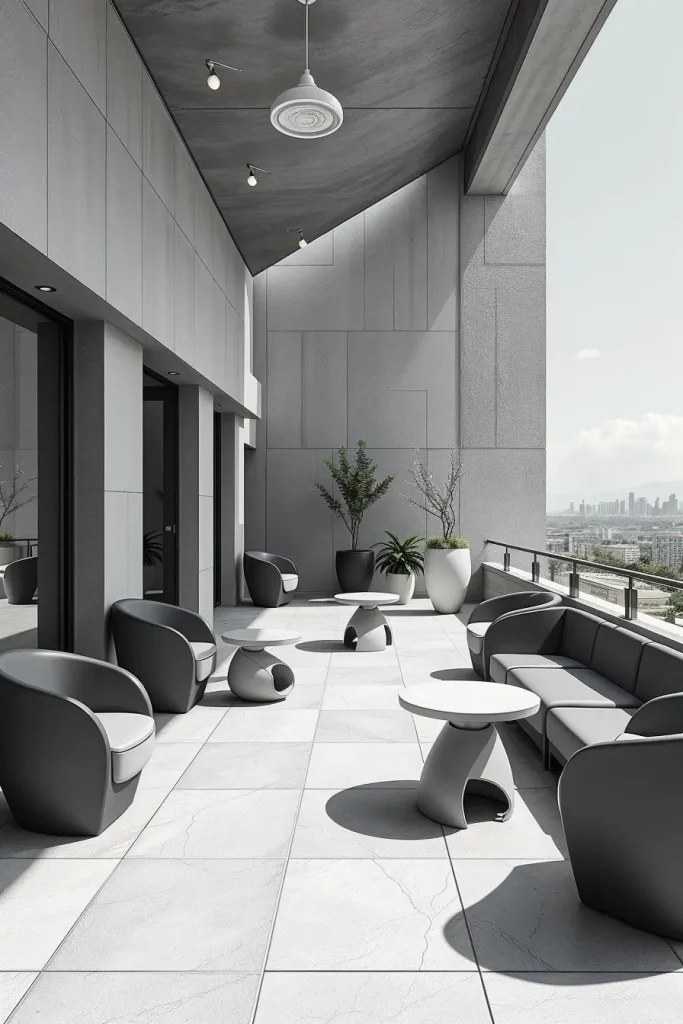
From my experience, interior designers in the US often mention that monochrome spaces photograph better and age more gracefully. I find this especially true for terraces, where sunlight and shadows become part of the design language.
What I usually recommend adding is tactile contrast through fabrics or natural stone accents. This prevents the space from feeling flat while keeping the monochrome concept intact.
Architectural Roof Terraces With Sculptural Identity
Architectural roof terraces in 2026 are no longer simple outdoor extensions but fully realized sculptural designs. I design these spaces as outdoor rooms with a strong architectural presence, often using curved parapets and flowing layouts to soften the skyline environment.
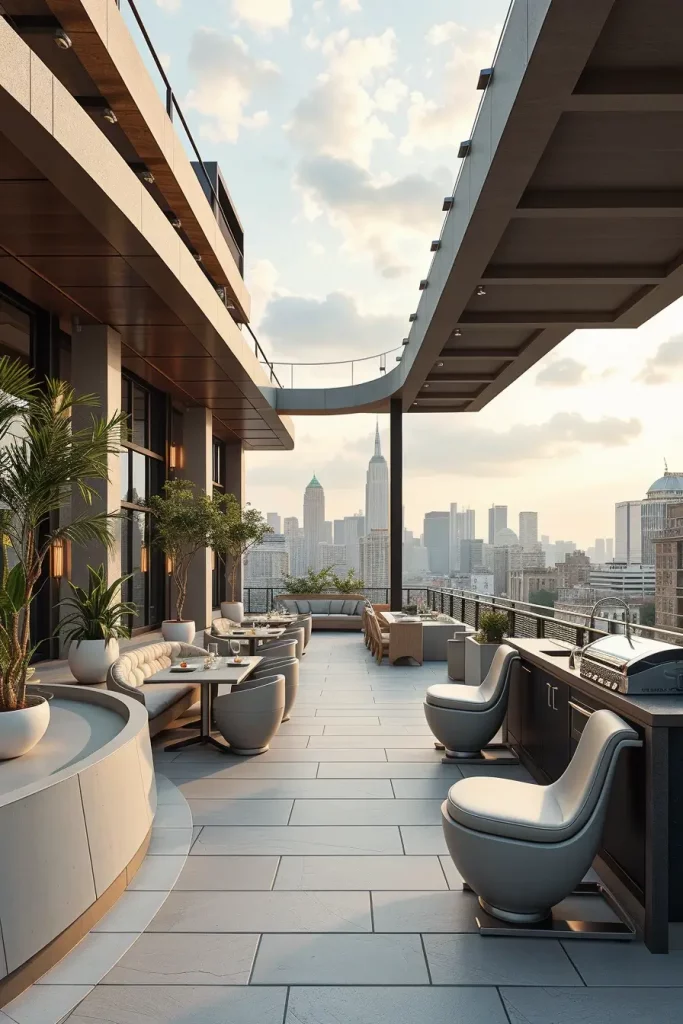
Furniture selection is critical here. I rely on built-in curved seating, streamlined outdoor kitchens, and custom lighting structures. These elements are included because they maximize usable space while reinforcing the terrace as a designed architectural feature rather than an afterthought.
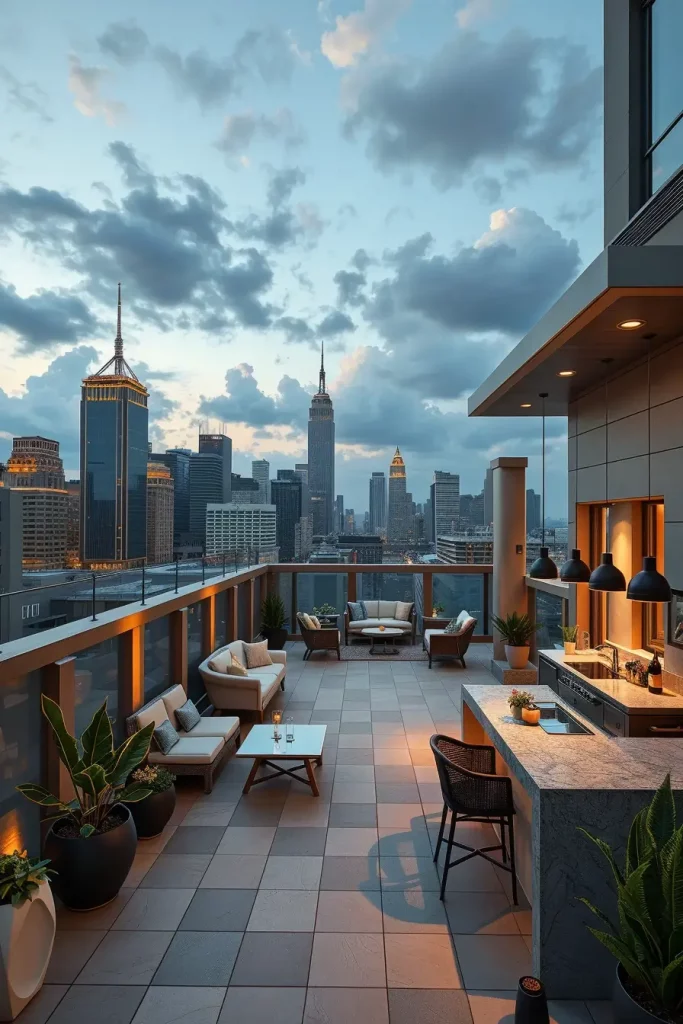
Personally, I have noticed that well-known US architects often emphasize cohesion between building form and rooftop design. When I follow this principle, the terrace feels like a natural continuation of the architecture instead of a separate layer.
To complete this type of terrace, I would integrate wind protection elements with curved glass or sculpted metal screens. This improves comfort without compromising the visual impact.
Small Terraces Transformed With Creative Curved Design
Small terraces benefit greatly from creative, curved, and streamlined solutions. In 2026, I see compact spaces transformed into highly functional and stylish outdoor zones by eliminating straight lines that visually break the area. Curves help small terraces feel more open and fluid.
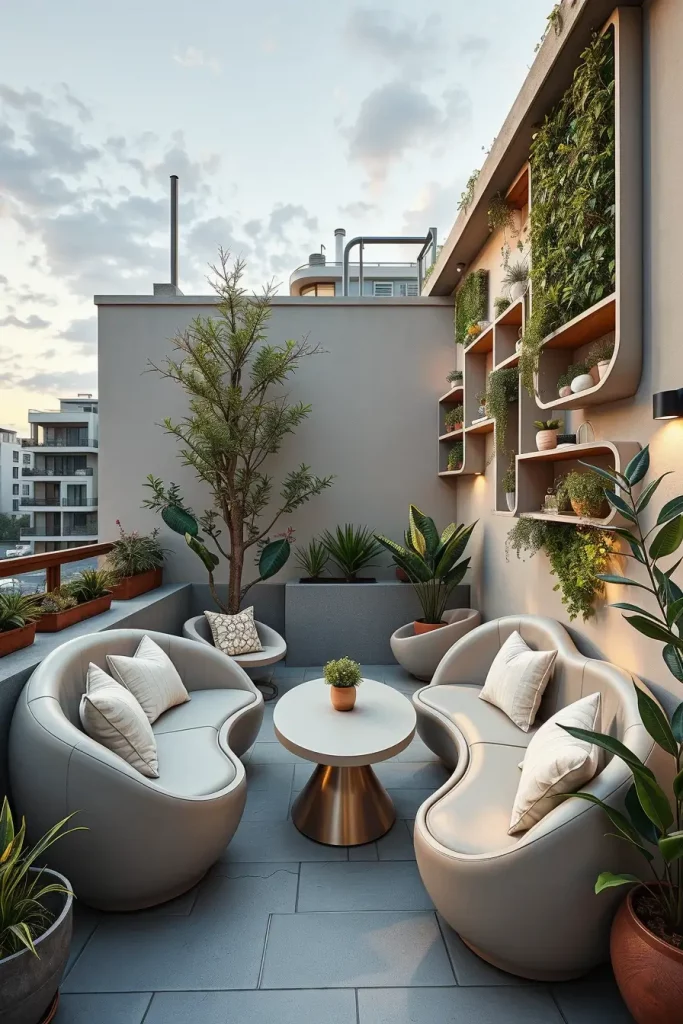
I often design custom curved benches with hidden storage, oval tables, and wall-mounted sculptural shelves. These pieces are included because they save space while adding a strong design statement, which is essential in small terraces.
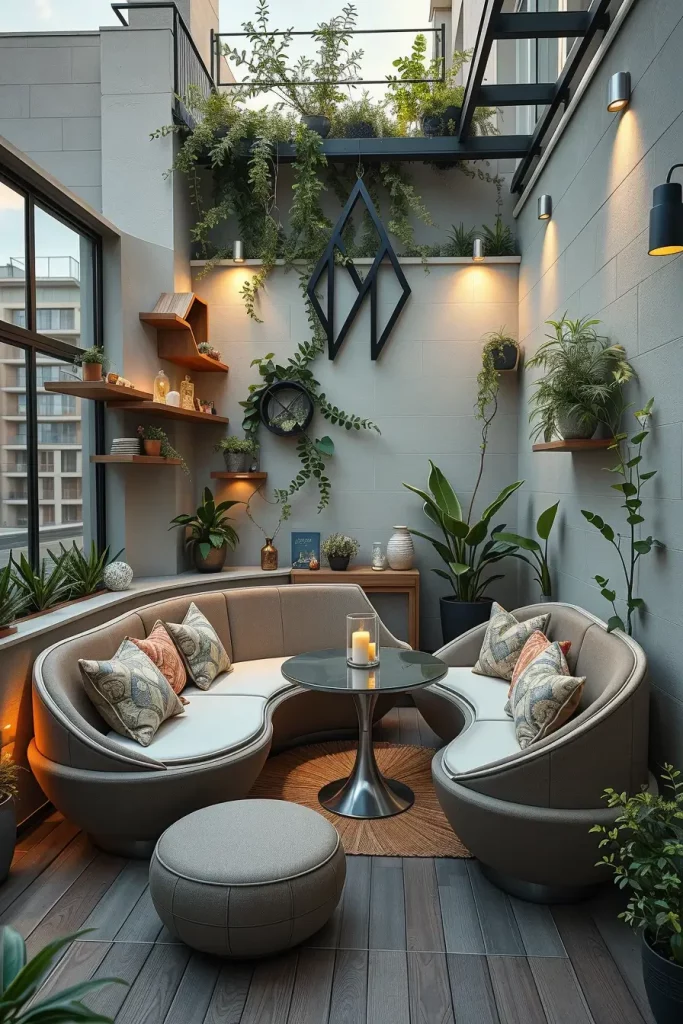
From my experience, many designers featured in US lifestyle magazines recommend multifunctional furniture for small outdoor areas. I apply this advice consistently, and it always improves both usability and aesthetics.
What I would still add is vertical lighting and greenery following curved lines. This draws the eye upward and visually expands the terrace beyond its physical limits.
Ultra-Modern Terraces With Smooth Seamless Surfaces
When I design ultra-modern terraces for 2026, I focus on continuity and precision. Smooth, seamless surfaces allow the terrace to feel visually calm and architecturally refined, which is essential for modern, designer, and streamlined outdoor spaces. These terraces are practical because they are easy to maintain while visually expanding the space by removing unnecessary visual breaks.
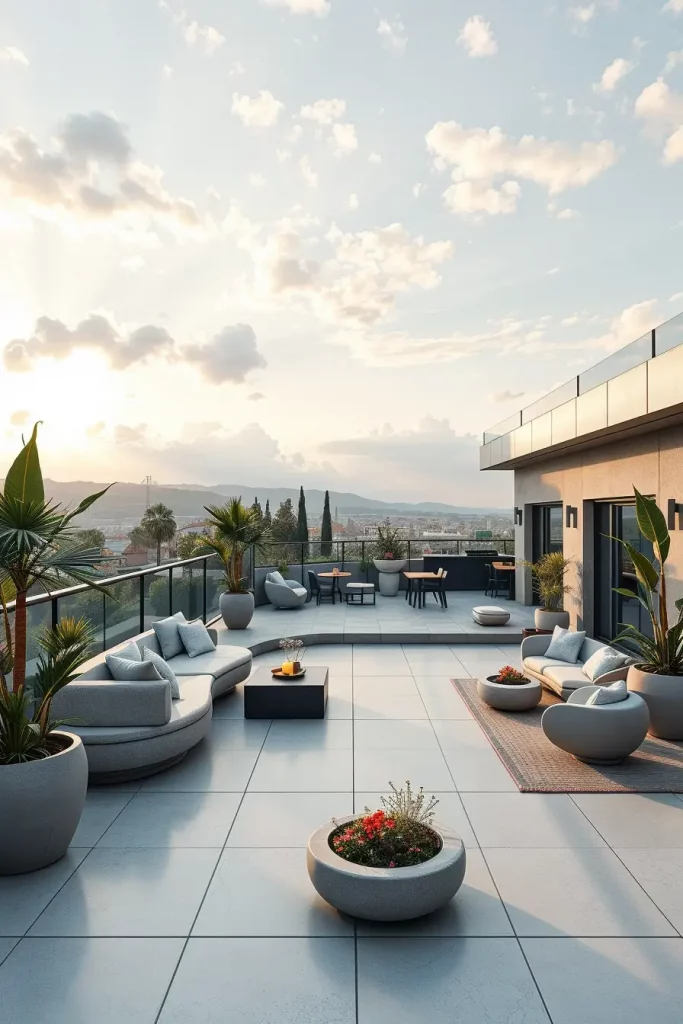
In my projects, I rely on poured concrete floors, seamless resin coatings, and integrated seating that appears to grow out of the surface itself. Curved loungers, low modular sofas, and built-in planters are included because they reinforce the uninterrupted flow of the design and eliminate clutter. Every element has a clear function and a sculptural presence.
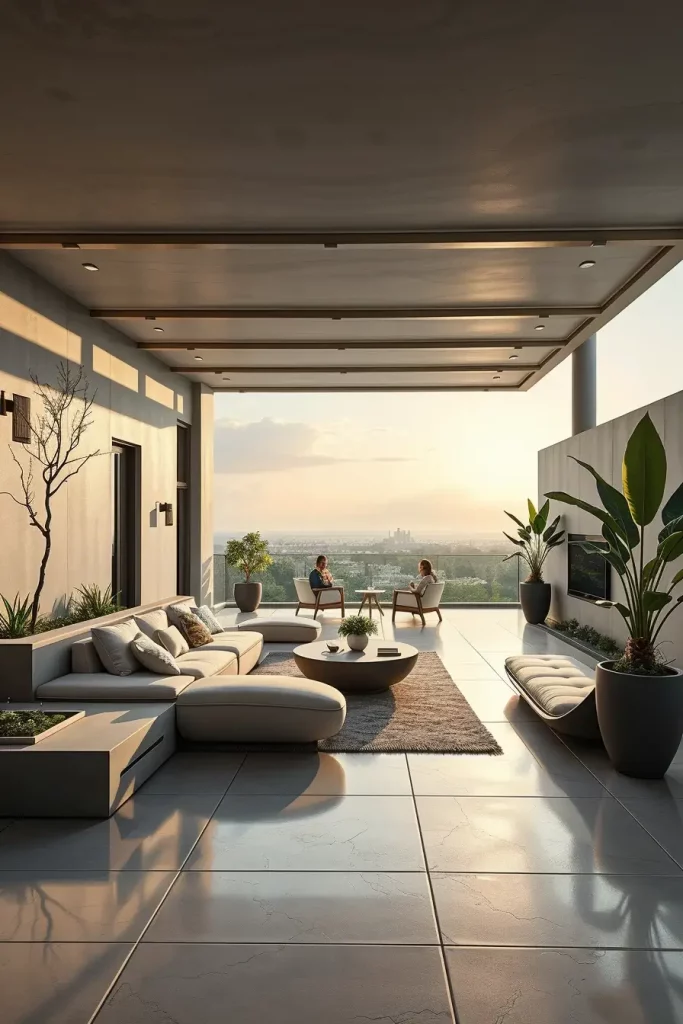
From my professional perspective, many US-based architects writing for Design Milk highlight seamless materials as a key trend in contemporary outdoor living. I agree with this approach because it creates terraces that feel timeless rather than trend-driven.
To elevate this concept further, I would add subtle material contrasts such as matte and satin finishes within the same color family. This adds depth while preserving the seamless aesthetic.
Custom-Built Terraces Designed As One-Of-A-Kind Creations
Custom-built terraces represent the peak of unique terraces and designer outdoor living in 2026. I treat these projects as bespoke architectural compositions, where every curve, level, and material is tailored to the client and the site. This approach ensures both functional efficiency and strong visual identity.
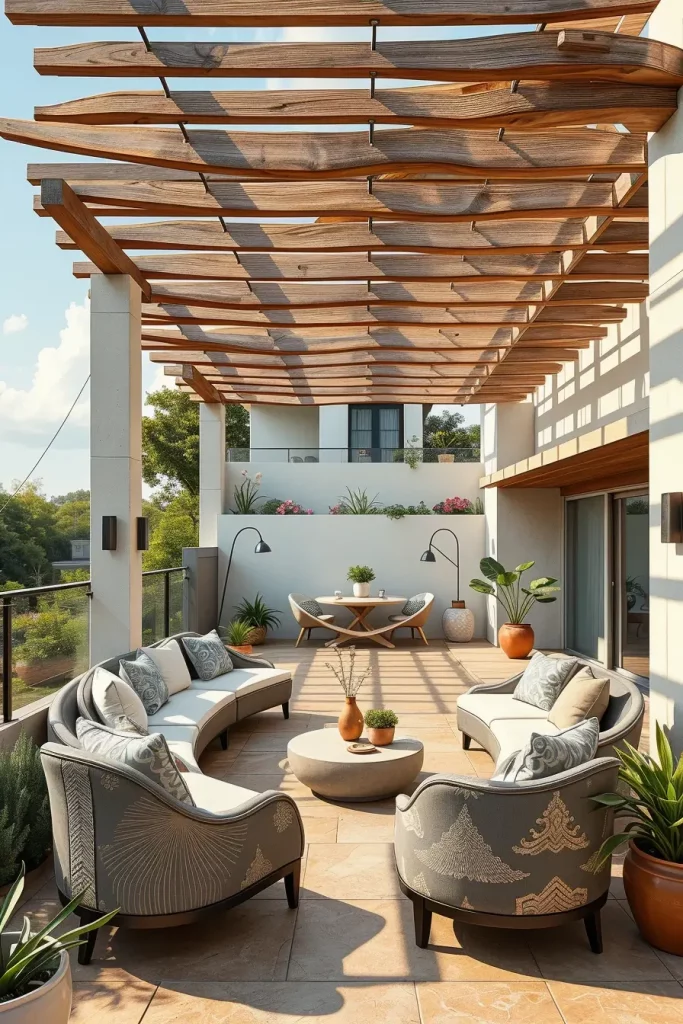
I usually specify custom curved seating, sculptural pergolas, and one-off furniture pieces designed specifically for the terrace layout. These elements are included because standard furniture rarely aligns perfectly with organic or oval terrace geometry. Custom solutions allow the design to feel intentional and cohesive.
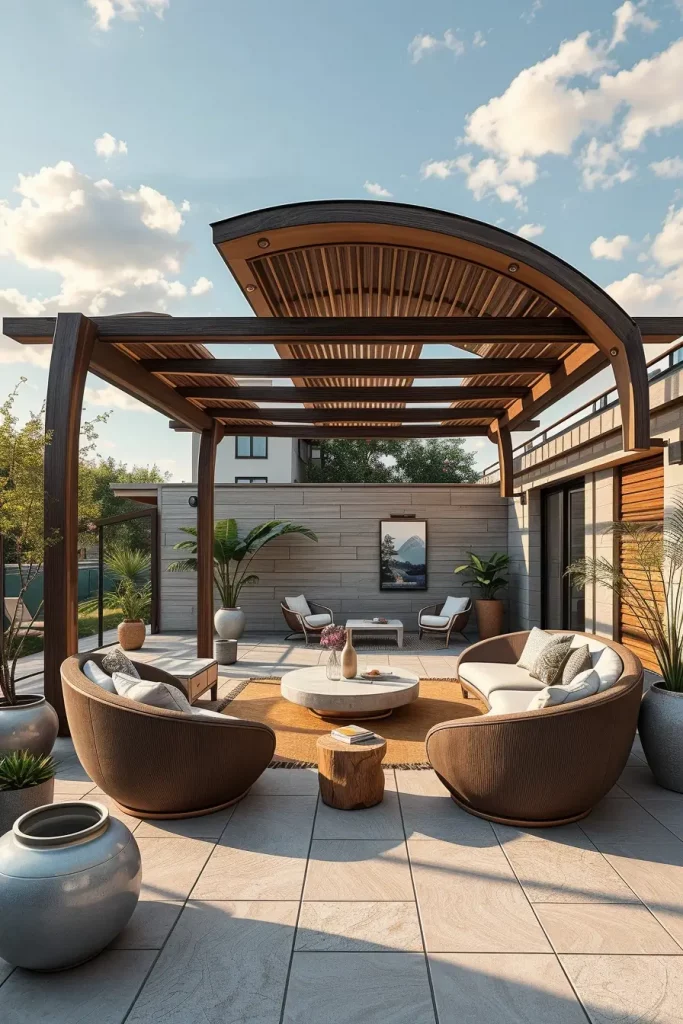
In my experience, high-end US design studios often stress the importance of personalization in outdoor spaces, especially in publications like Elle Decor. I see firsthand how custom terraces create stronger emotional connections for users compared to generic layouts.
What I would still add to these terraces is a flexible zoning strategy, allowing areas to adapt for dining, lounging, or entertaining without compromising the original design concept.
Statement Furniture As The Centerpiece Of Terrace Design
In many stylish and artistic terrace designs for 2026, statement furniture becomes the focal point rather than an accessory. I design the terrace around one or two sculptural furniture pieces that define the space and guide movement. This strategy works especially well in terraces with minimal architectural elements.
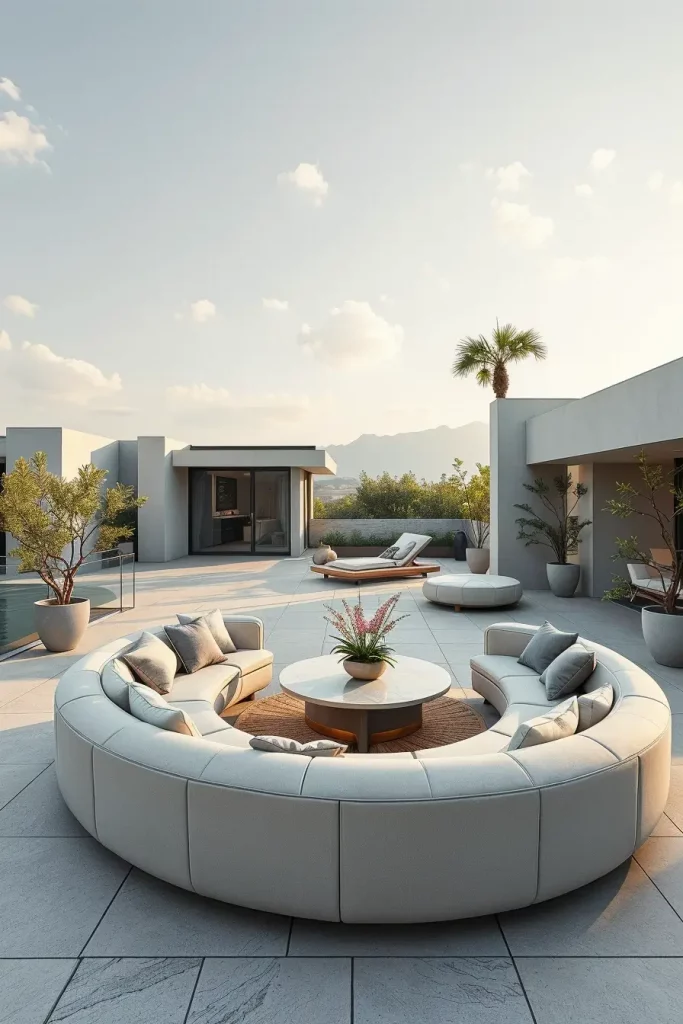
I often select oversized curved sofas, oval daybeds, or sculptural lounge chairs made from modern outdoor materials. These pieces are included because they function as both seating and visual anchors, eliminating the need for excessive decor.
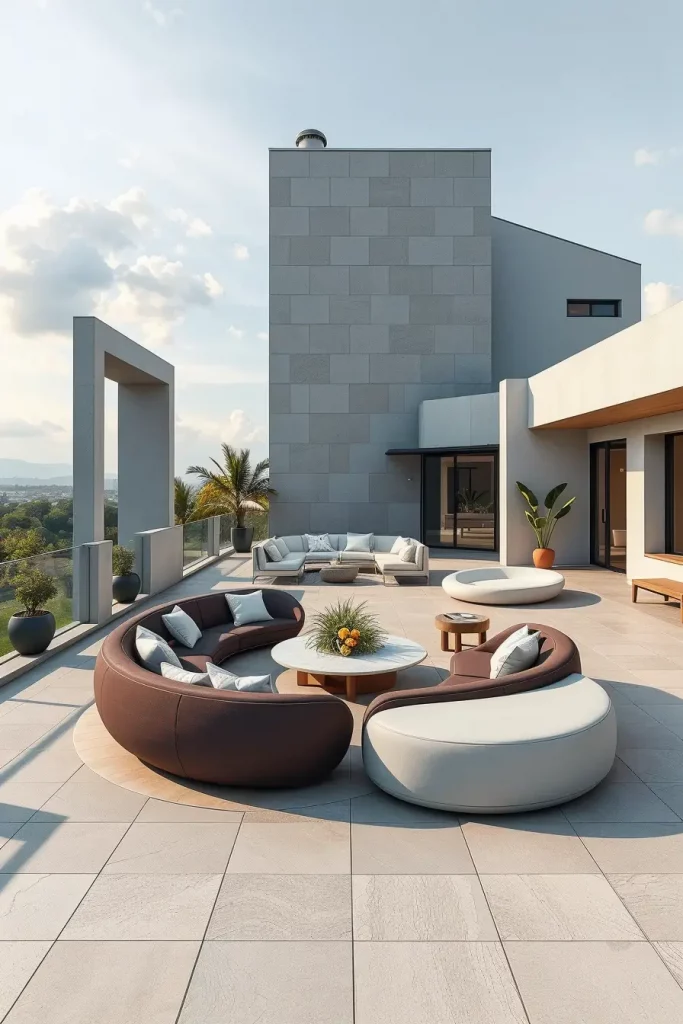
From my professional observation, US designers frequently emphasize quality over quantity in outdoor furniture selection. I follow this principle because a single well-designed piece often has more impact than multiple standard items.
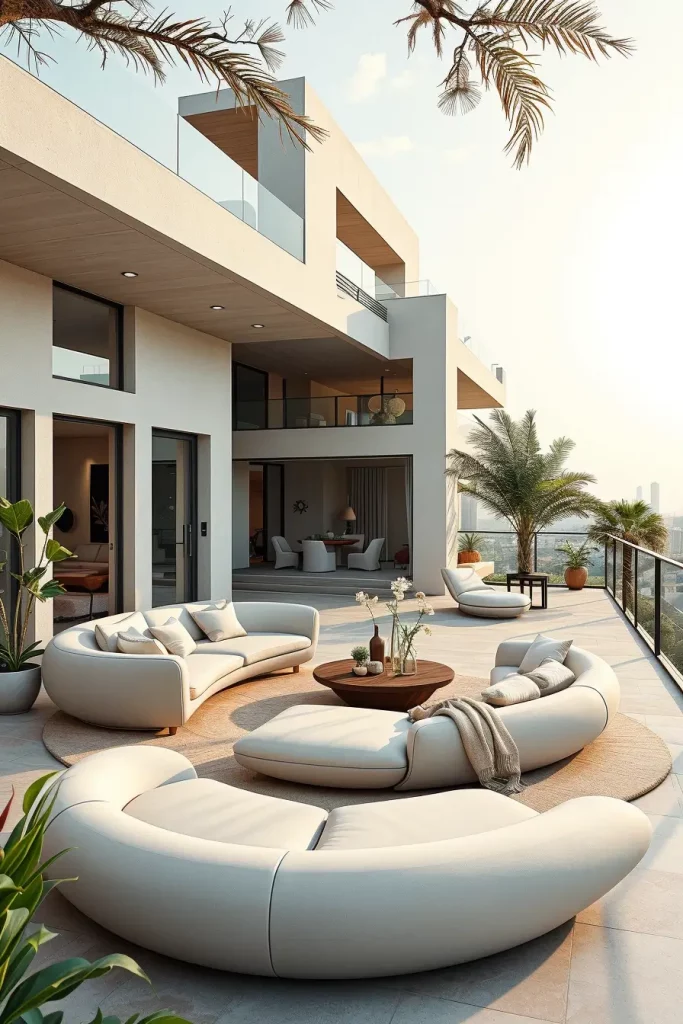
To complete this type of terrace, I recommend adding restrained accessories such as integrated side tables or low-profile lighting that supports, rather than competes with, the statement furniture.
The Future Of Terrace Design: Artistic Outdoor Living In 2026
Looking ahead, I see terrace design ideas 2026 moving firmly toward creative, sculptural designs that blur the line between architecture and art. Terraces are no longer secondary spaces but central environments for daily life, relaxation, and social interaction.
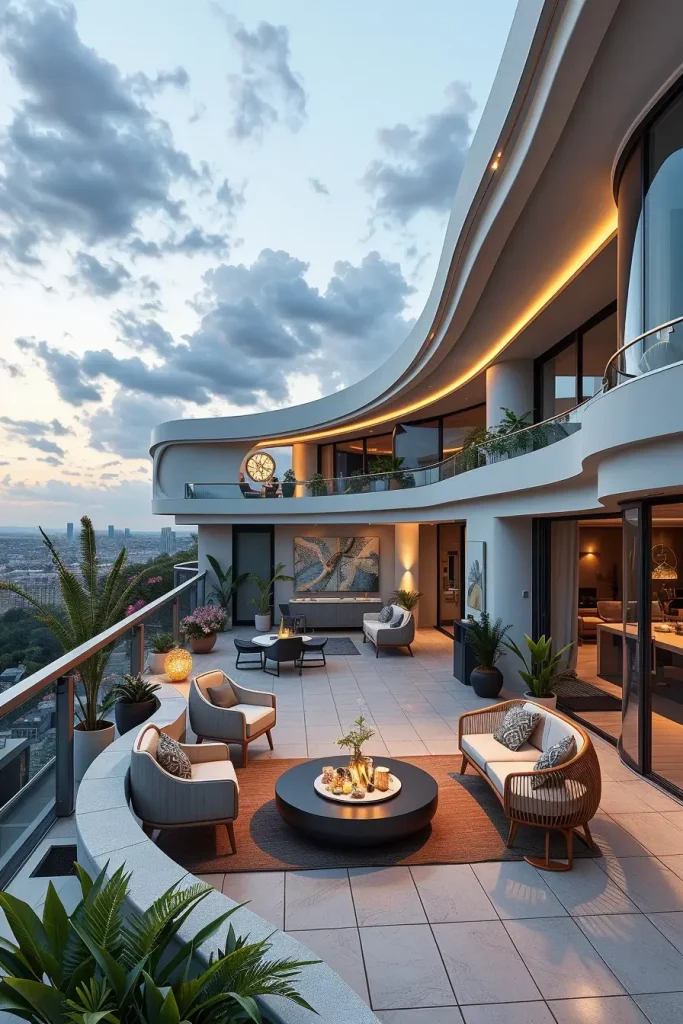
In future-focused terraces, I combine curved layouts, modular furniture, and innovative materials that support flexible use. Streamlined seating systems, sculptural shading elements, and integrated technology are included because they reflect how people actually live and entertain outdoors today.
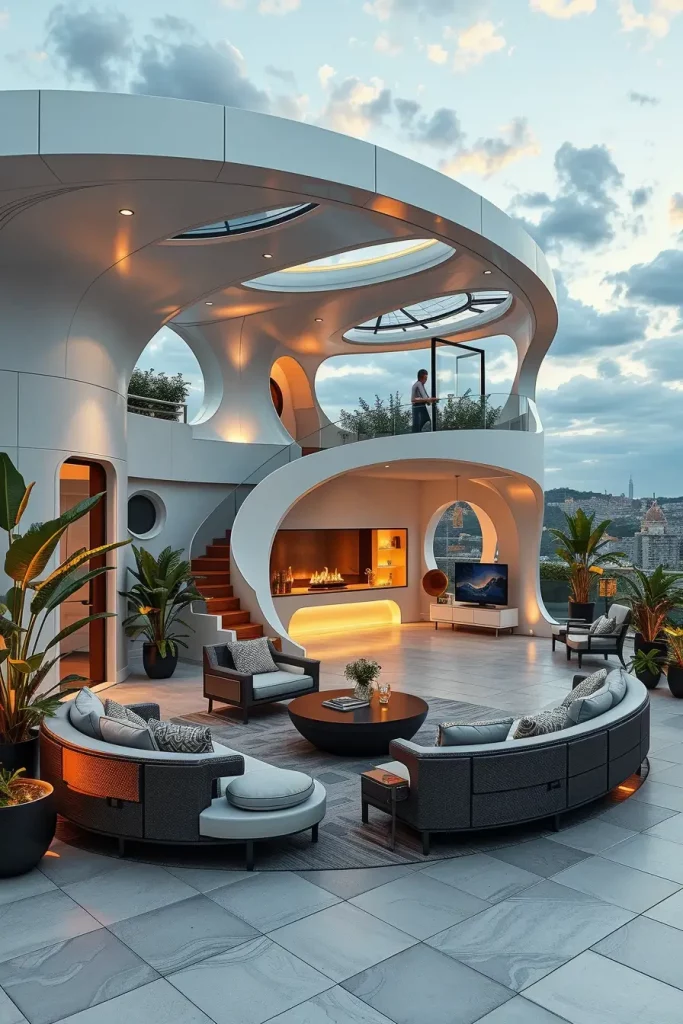
From my experience and industry insights shared by leading US design media, outdoor spaces are becoming as thoughtfully designed as interiors. I believe terraces will increasingly reflect personal identity and lifestyle rather than following rigid design rules.
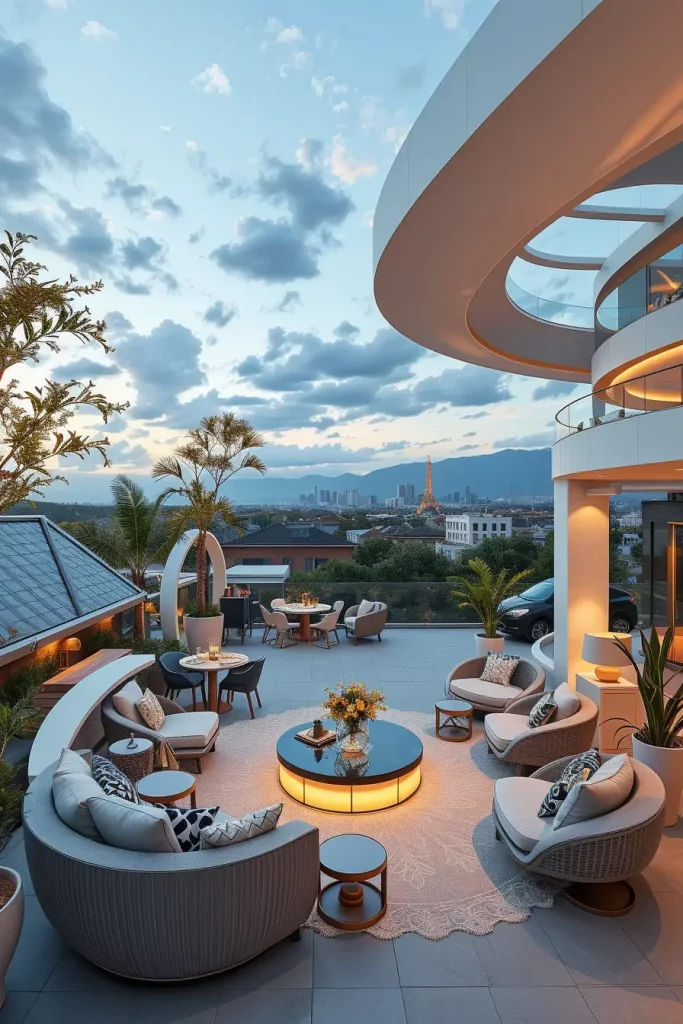
What I consider essential for the future is adaptability. Terraces should evolve with changing needs, seasons, and technologies while maintaining their artistic and architectural integrity.
Terrace design ideas 2026 redefine outdoor living as an art form, where architecture, creativity, and functionality come together in sculptural harmony. Curved shapes, streamlined structures, and artistic details turn terraces into unique, expressive spaces that reflect a modern lifestyle. As design continues to evolve, terraces become more than outdoor areas—they become thoughtfully designed extensions of the home, offering inspiration, individuality, and a bold vision for the future of contemporary outdoor design.