
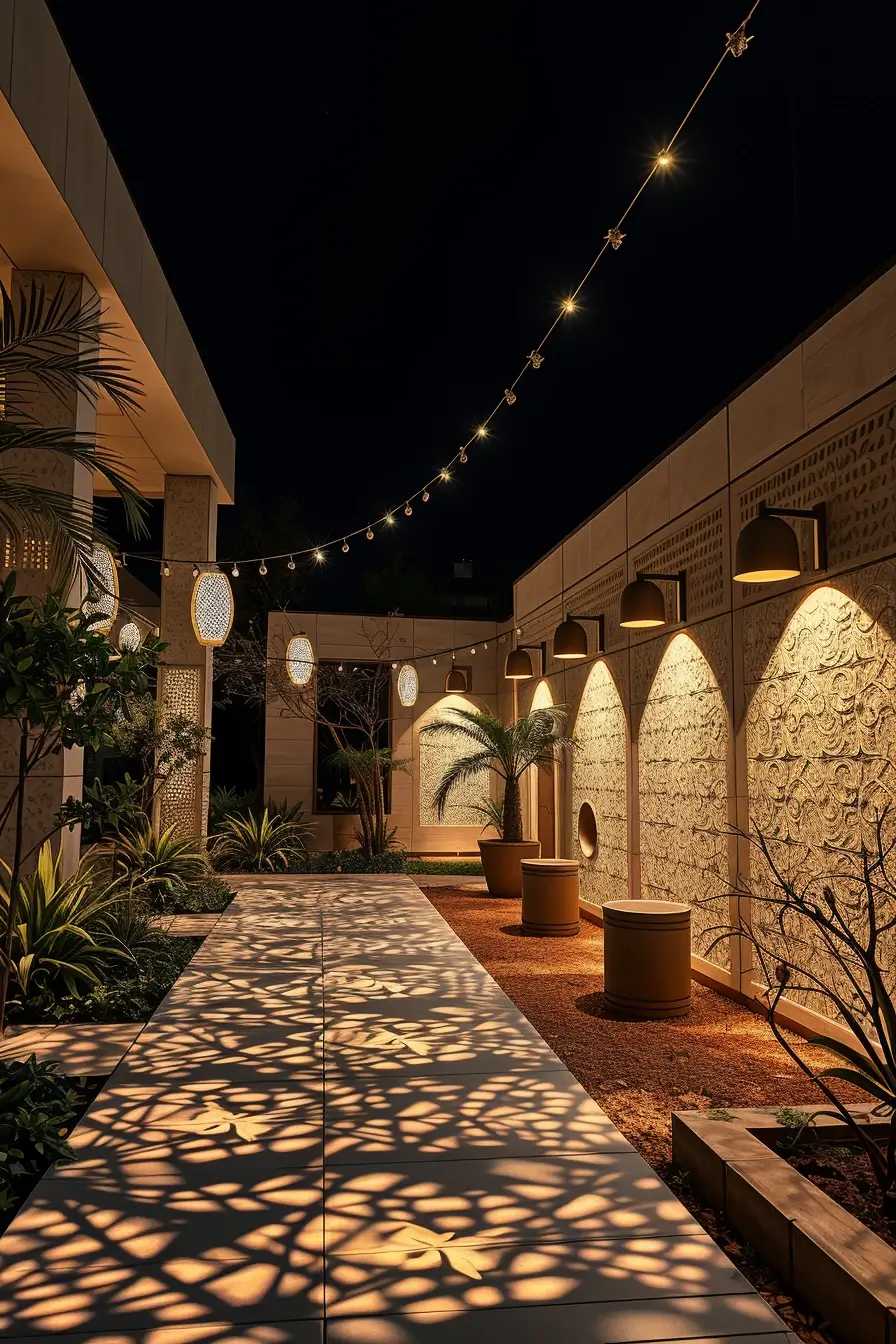
Outdoor lighting ideas 2026 are redefining the way exterior spaces are experienced after sunset, turning gardens, terraces, and pathways into expressive design statements rather than purely functional zones. In 2026, outdoor lighting moves beyond traditional fixtures and predictable layouts, embracing sculptural forms, artistic installations, and designer-led concepts that blur the line between lighting and art. Light becomes a tool for storytelling, shaping atmosphere, highlighting architecture, and creating immersive nighttime landscapes.
This new generation of outdoor lighting ideas focuses on uniqueness and creativity, with bold silhouettes, unconventional materials, and dynamic compositions that transform outdoor areas into visually striking environments. Multicolored lighting, interactive effects, and carefully layered illumination allow homeowners and designers to personalize outdoor spaces and adapt them to different moods, seasons, and occasions. Whether subtle and ambient or dramatic and expressive, outdoor lighting in 2026 is about intention, individuality, and innovation, offering endless inspiration for those looking to elevate their exterior design with light.
The Future Of Outdoor Lighting Design In 2026
In 2026, outdoor lighting design moves beyond basic illumination and becomes a defining architectural layer of exterior spaces. I approach lighting as part of the spatial composition, where fixtures interact with landscape lines, seating zones, and circulation paths. Practicality remains essential, but lighting now plays a role in mood-setting, visual hierarchy, and nighttime identity for the home. Thoughtful placement ensures safety while enhancing depth and dimension across patios, gardens, and outdoor living rooms.
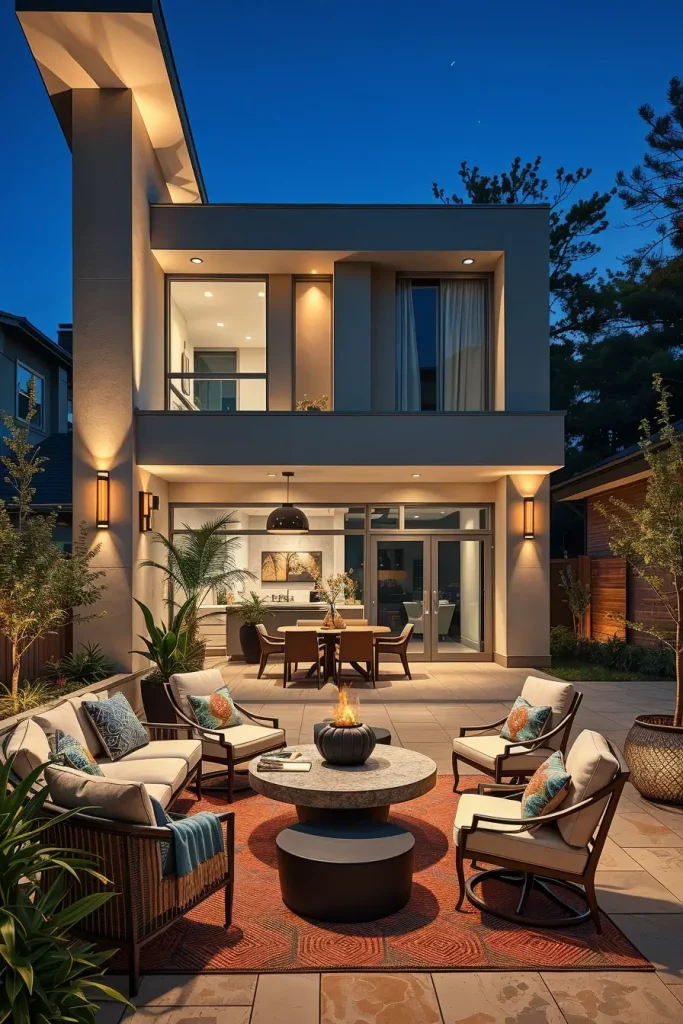
From my experience, integrated lighting elements such as recessed ground lights, concealed wall fixtures, and sculptural freestanding lamps work best when planned alongside outdoor furniture layouts. Low-profile loungers, modular sofas, dining tables, and planters benefit from soft yet intentional illumination that avoids glare. Materials like stone, concrete, wood, and metal reflect light differently, and I always account for this interaction when selecting fixture finishes and color temperatures.
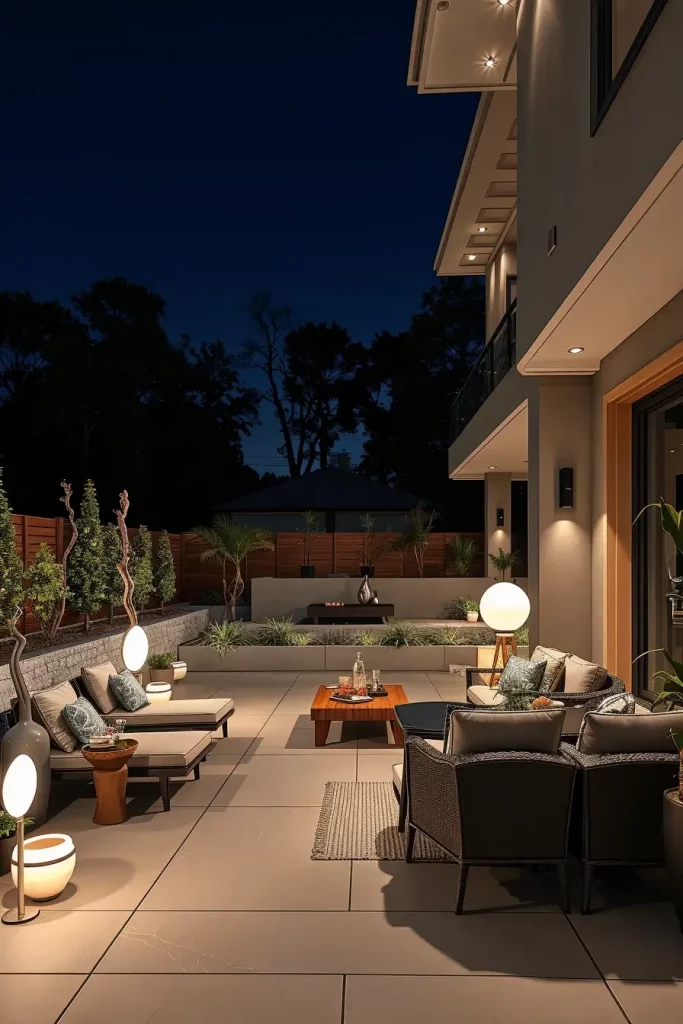
Professionals from publications like Architectural Digest and Dezeen frequently highlight that future-focused outdoor lighting prioritizes adaptability and visual storytelling. I fully agree with this perspective, as flexible systems allow homeowners to change lighting scenes for entertaining, relaxation, or quiet evenings outdoors. In my own projects, layered lighting consistently delivers the most refined and comfortable results.
To strengthen this section, I would add a brief mention of smart control systems and zoning strategies, as they are essential for managing modern outdoor lighting environments efficiently.
Sculptural Outdoor Lighting As Functional Garden Art
Sculptural outdoor lighting in 2026 functions as garden art while delivering reliable illumination. I treat these fixtures as focal points that anchor outdoor compositions during the day and come alive after sunset. Their practical role is to illuminate pathways, seating areas, or planting beds, but their visual presence defines the character of the landscape. Placement is intentional, often aligning with sightlines from interior spaces.
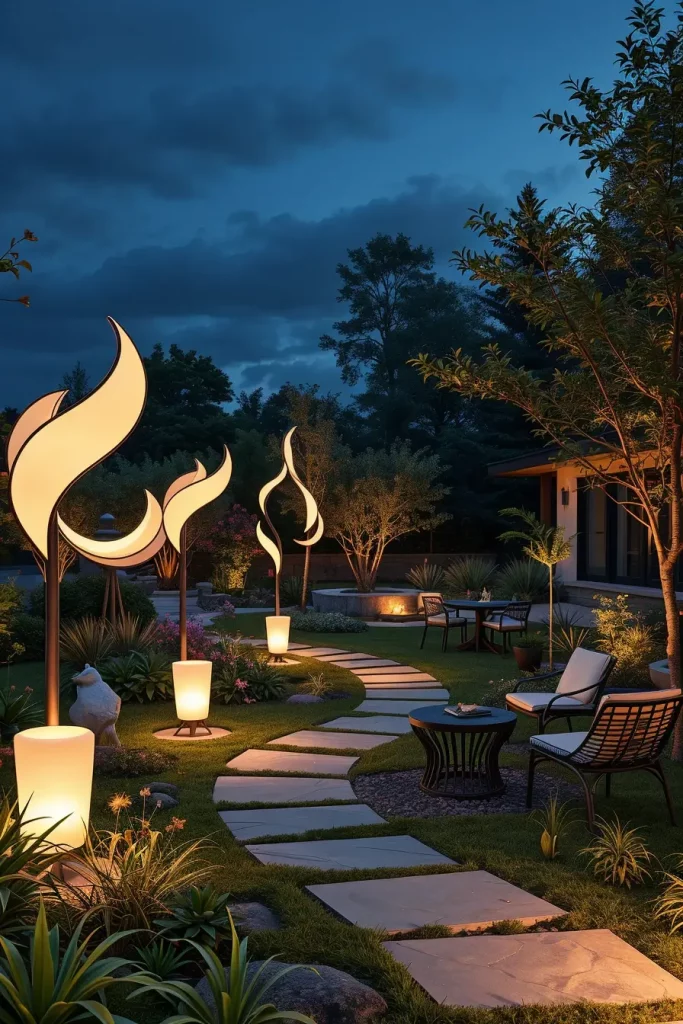
I prefer sculptural lights crafted from metal, resin, or stone-like composites, often paired with minimalist outdoor furniture and natural landscaping. Benches, lounge chairs, and dining sets are positioned to visually relate to these forms, creating a balanced outdoor scene. The lighting itself becomes a vertical or organic element that complements trees, shrubs, and architectural features.
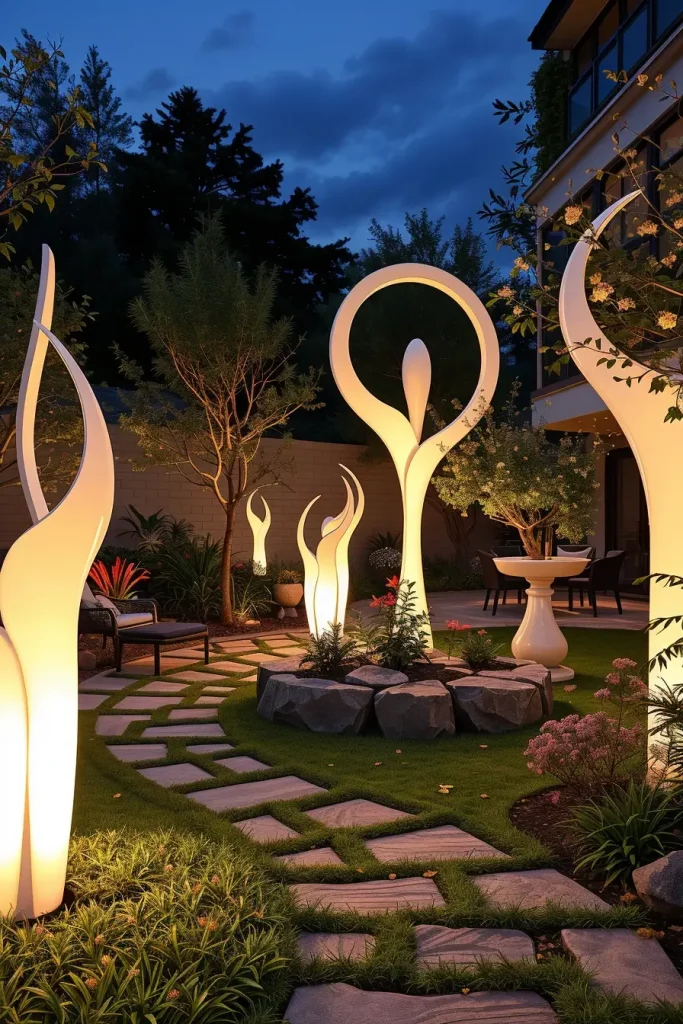
In my experience, homeowners respond strongly to lighting that feels curated rather than utilitarian. Designers such as Kelly Wearstler have long emphasized the importance of artistic statement pieces, and that philosophy now extends fully into outdoor environments. Sculptural lighting allows outdoor spaces to feel intentional and expressive without overwhelming the design.
What could be added here is guidance on scale selection, as choosing the correct size is critical to ensure sculptural lights enhance rather than dominate the garden.
Artistic Pathway Lighting With Statement Forms
Artistic pathway lighting in 2026 transforms simple circulation routes into curated visual journeys. I focus on guiding movement through light while adding rhythm and interest along walkways. These fixtures improve safety while also establishing a clear nighttime narrative for the landscape. The goal is to illuminate without flattening the space.
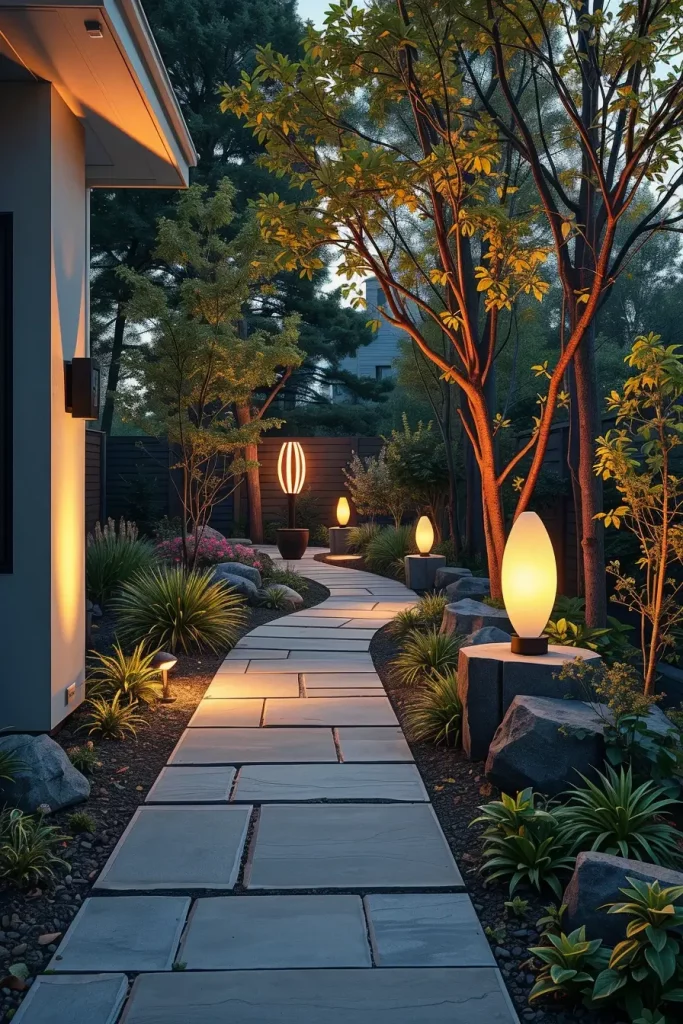
Statement pathway lights often feature bold silhouettes, asymmetrical shapes, or layered light diffusion. I pair them with clean paving materials, subtle ground textures, and surrounding greenery to allow the lighting forms to stand out. Nearby elements like low seating walls, outdoor steps, or water features benefit from this structured illumination.
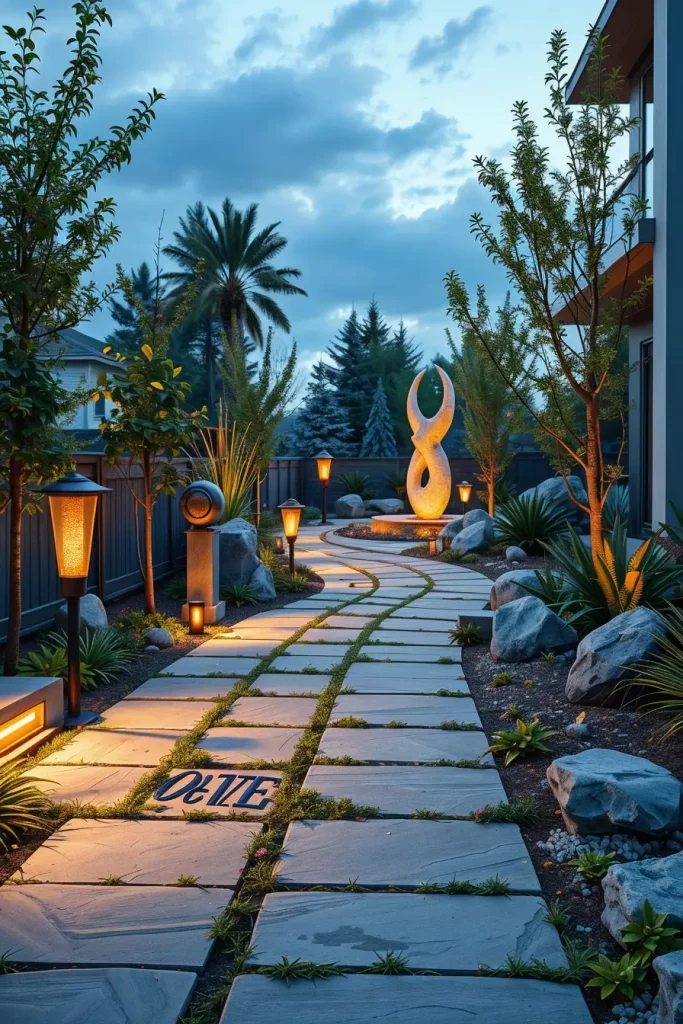
From my professional standpoint, well-designed pathway lighting encourages exploration and enhances the perceived size of outdoor areas. Landscape architects frequently note that consistent spacing and varied heights improve visual flow, and I’ve found this approach highly effective in residential projects.
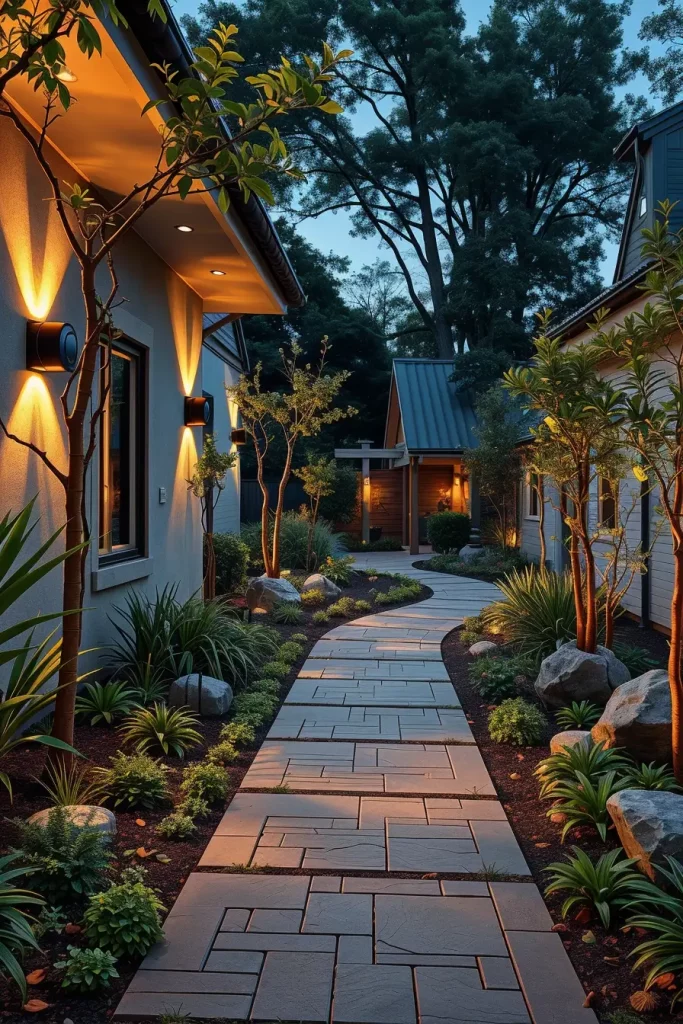
To complete this section, I would include recommendations on spacing intervals and beam angles to avoid visual clutter while maintaining adequate visibility.
Designer Outdoor Lighting That Redefines Exterior Spaces
Designer outdoor lighting in 2026 elevates exterior areas to the same design standard as interiors. I see lighting fixtures acting as intentional design statements rather than afterthoughts. These solutions redefine patios, terraces, and courtyards by shaping atmosphere and defining zones through light.
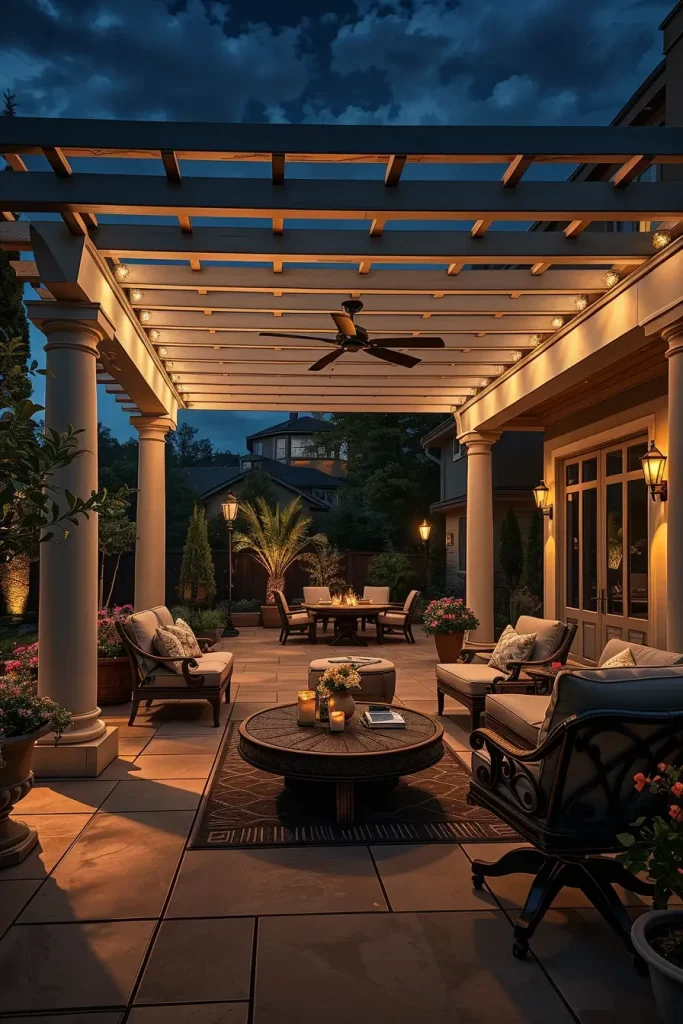
I often combine designer lighting with contemporary outdoor furniture, such as sculptural sofas, streamlined dining sets, and architectural pergolas. Finishes like matte black, brushed bronze, and soft metallics work particularly well when paired with textured stone or wood surfaces. Lighting placement reinforces seating layouts and architectural lines.
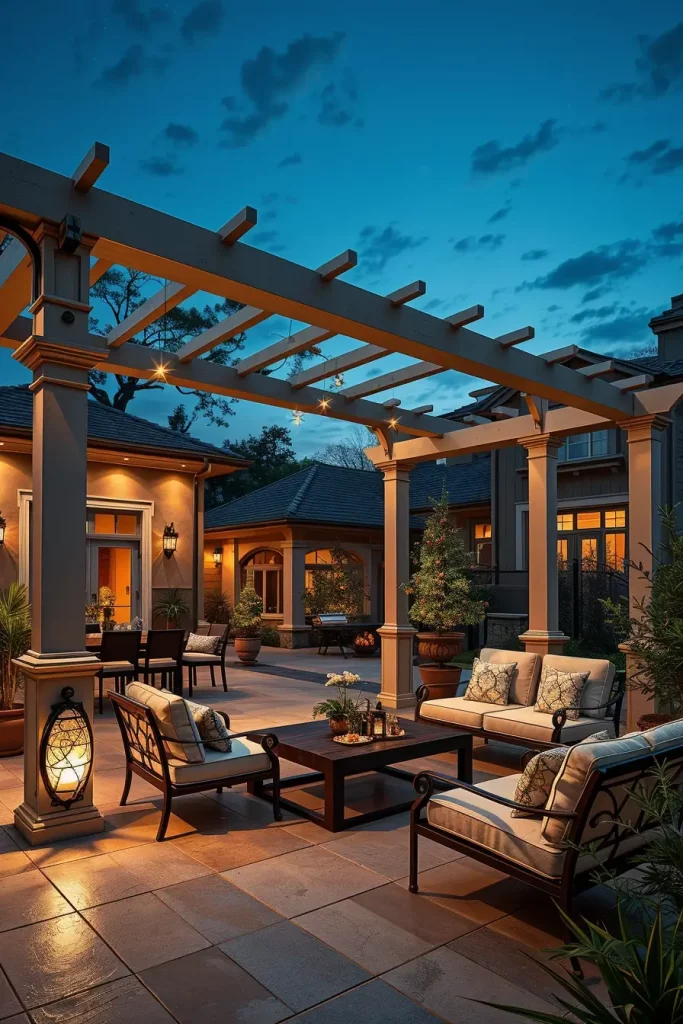
In my experience, investing in designer lighting produces a noticeable improvement in both usability and aesthetic cohesion. Industry experts regularly emphasize that exterior spaces should mirror interior design values, and I apply that principle consistently when selecting lighting collections.
An addition that would enhance this section is a short discussion on weather-resistant materials and long-term durability for high-end fixtures.
Unique Outdoor Lighting Ideas Inspired By Modern Art
Modern art-inspired outdoor lighting introduces expressive forms and unconventional compositions into exterior design. I use these ideas to challenge traditional expectations and create memorable outdoor environments. Functionality remains essential, but visual impact plays an equally important role.
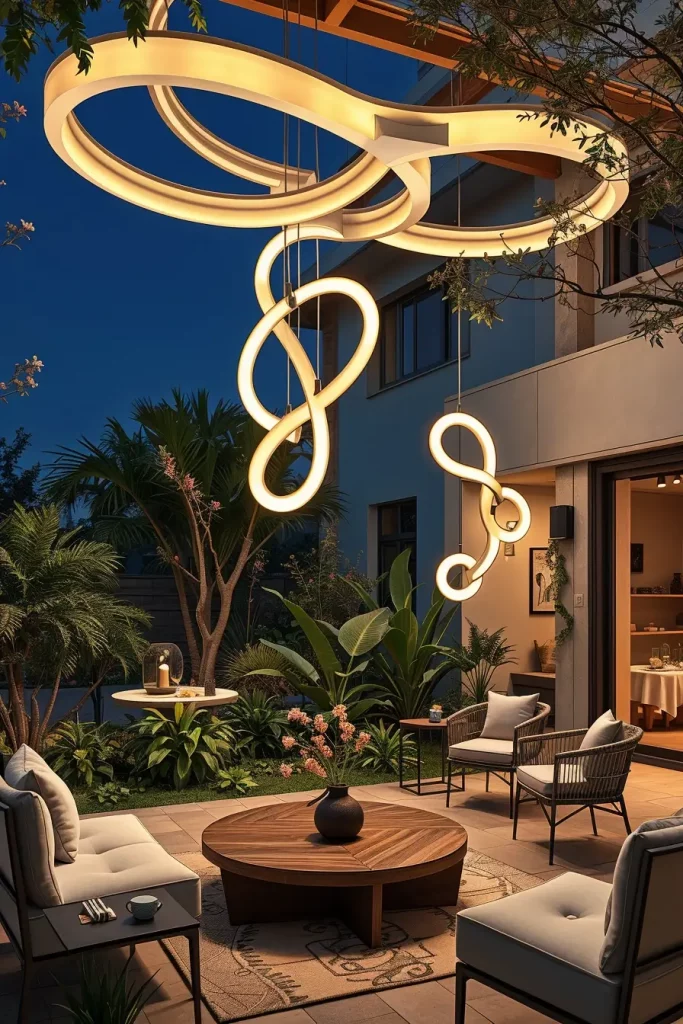
These lighting pieces often resemble abstract sculptures, geometric installations, or kinetic forms. I integrate them with minimalist landscaping, open seating areas, and neutral-toned outdoor furniture to let the lighting take center stage. The surrounding space acts as a gallery-like backdrop.
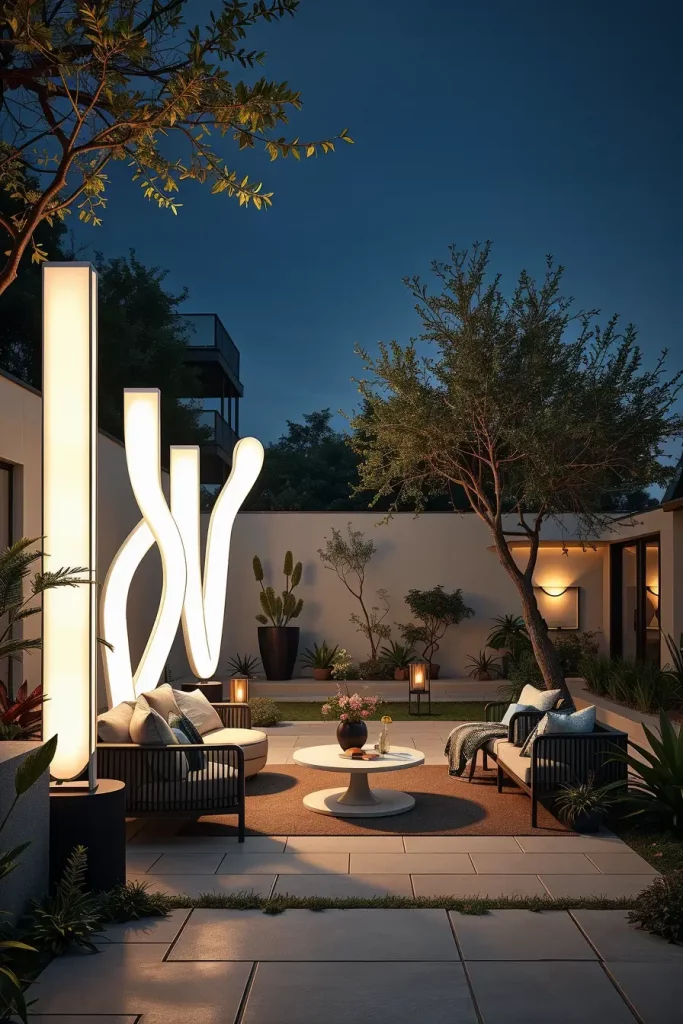
Personally, I find that art-inspired lighting resonates with homeowners who value individuality. Museums and contemporary art spaces increasingly influence residential design, and outdoor lighting is a natural extension of that trend. I’ve seen these installations spark conversation and emotional connection.
To expand this section, I would add advice on balancing artistic lighting with understated ambient sources to maintain comfort and usability.
Multicolored Outdoor Lighting For Expressive Night Landscapes
Multicolored outdoor lighting in 2026 allows homeowners to shape emotional experiences through color. I use color strategically to highlight architectural features, landscape elements, or social zones without overwhelming the space. The key is controlled application rather than constant saturation.
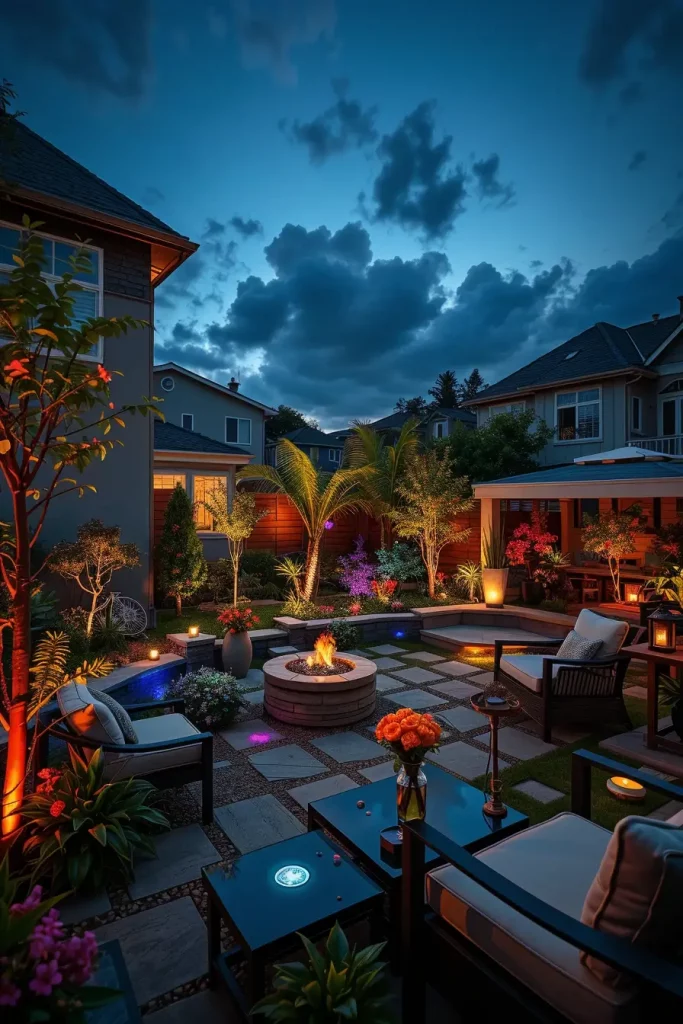
Color-changing fixtures work well when paired with neutral outdoor furniture, stone patios, and simple planting schemes. I often reserve color for accent walls, trees, or water features, while keeping seating and dining areas softly lit in warm tones. This balance maintains visual comfort.
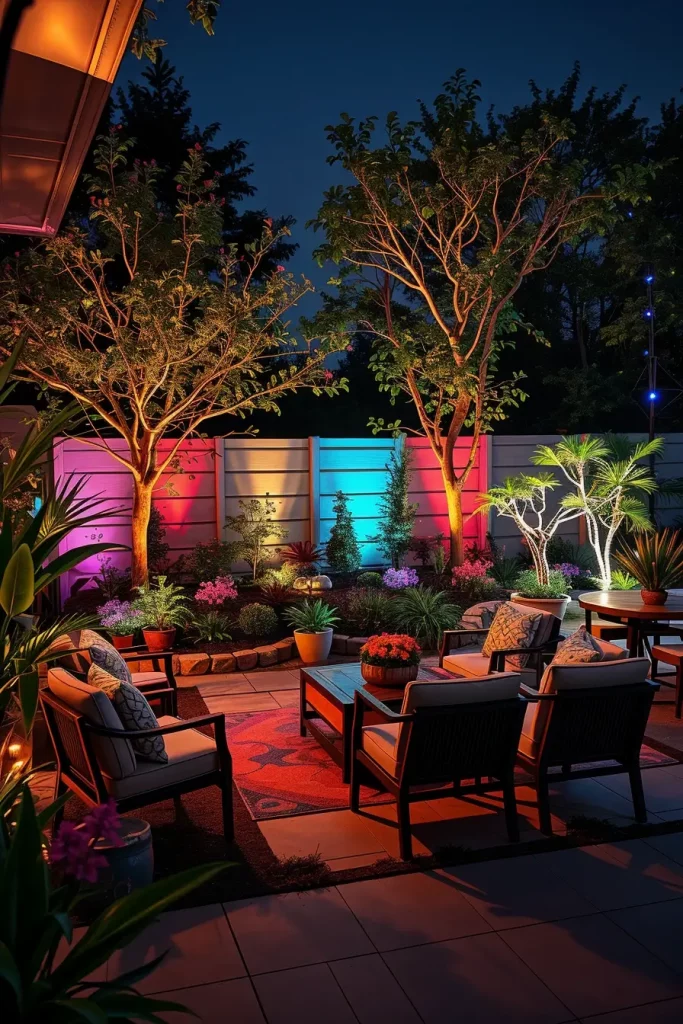
From my professional perspective, respected lighting designers often advise using color as an accent rather than a foundation. I follow this guidance closely, as it ensures flexibility and avoids visual fatigue. Proper programming allows the same space to feel calm or vibrant depending on the occasion.
What could be added here is a brief overview of color temperature psychology and how different hues influence mood outdoors.
Architectural Outdoor Lighting That Highlights Form And Structure
Architectural outdoor lighting focuses on revealing structure, texture, and geometry after dark. I approach this method by emphasizing building lines, columns, walls, and outdoor architectural elements. The result is a refined nighttime presence that feels intentional and cohesive.
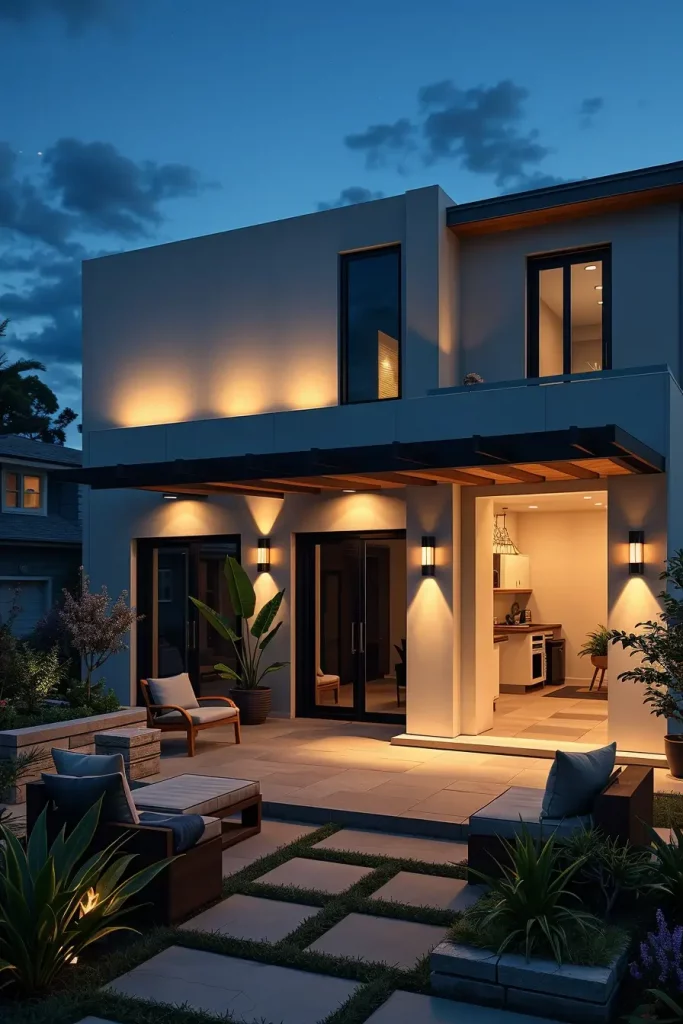
Linear lights, wall washers, and recessed fixtures work alongside structured outdoor furniture and built-in features. I align lighting with pergolas, steps, and seating platforms to reinforce architectural order. This approach enhances both aesthetics and wayfinding.
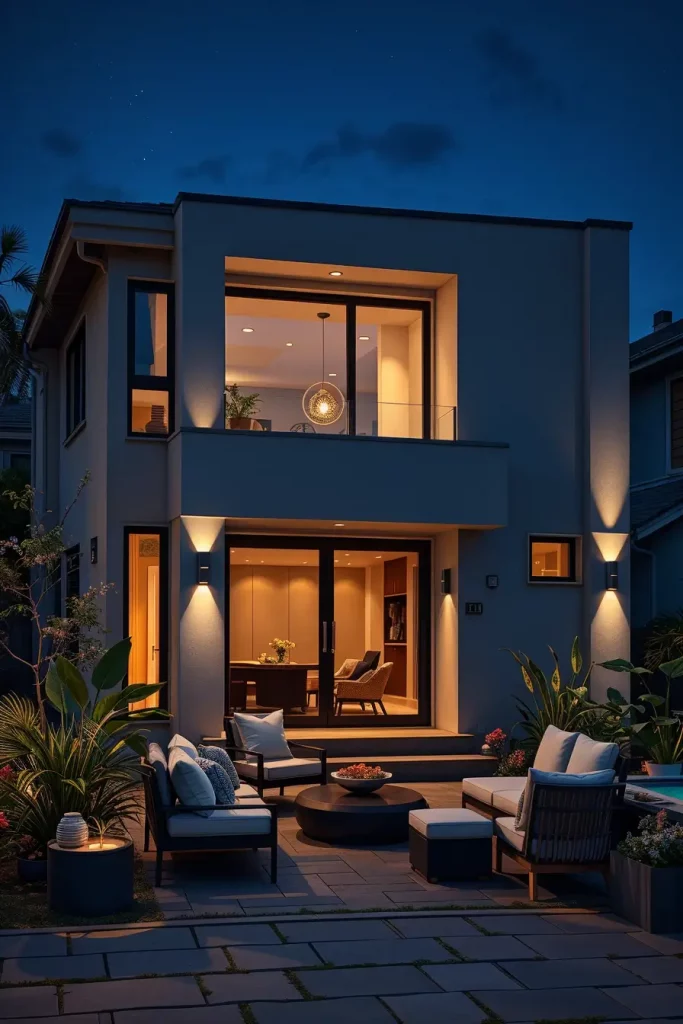
In my experience, architectural lighting brings clarity and elegance to exterior spaces. Leading architecture publications consistently highlight the value of lighting in defining form, and I’ve seen firsthand how subtle illumination can dramatically elevate a home’s exterior.
To strengthen this section, I would include notes on glare control and fixture concealment to preserve clean visual lines.
Futuristic Outdoor Lighting Concepts For Contemporary Homes
Futuristic outdoor lighting in 2026 focuses on innovation, precision, and seamless integration with contemporary architecture. I design these lighting concepts to feel almost invisible during the day and strikingly present at night. Their usefulness lies in providing efficient illumination while reinforcing a forward-looking aesthetic that complements modern homes and outdoor layouts.
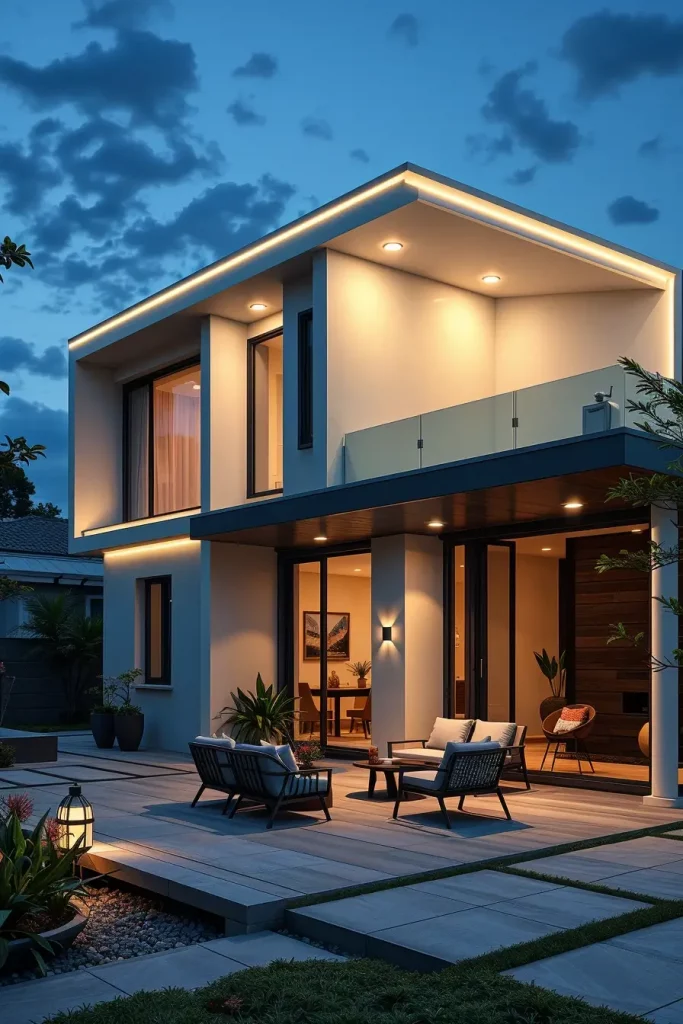
These concepts often rely on linear LED systems, recessed fixtures, and minimal-profile lighting elements integrated into walls, stairs, and terraces. I pair them with modular outdoor furniture, low-profile seating, and architectural materials like concrete, glass, and steel. Every element works together to create a cohesive and technologically advanced exterior environment.
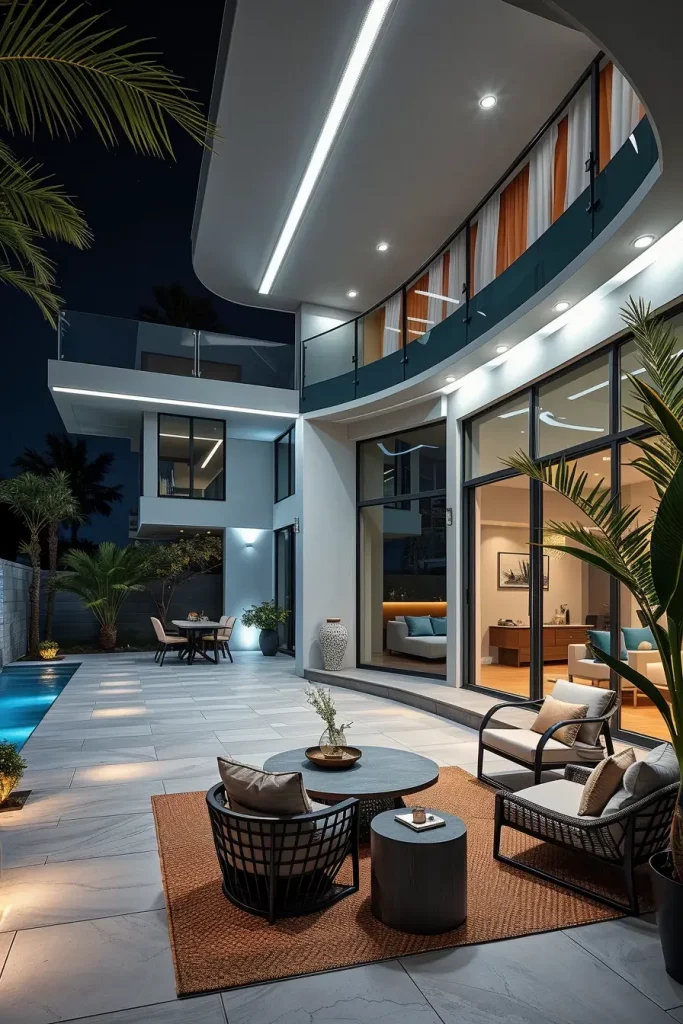
From my professional experience, futuristic lighting appeals to homeowners who value clarity and control. Many US-based design studios emphasize restraint and precision when working with futuristic elements, and I apply the same principle to avoid visual overload. The result is an outdoor space that feels intelligent, calm, and refined.
To enhance this section, I would add recommendations on integrating lighting with home automation systems for maximum flexibility and long-term usability.
Minimalist Sculptural Lighting For Clean Outdoor Aesthetics
Minimalist sculptural lighting balances simplicity with strong visual presence. In my projects, I use these designs to maintain clean outdoor aesthetics while still offering a distinct artistic element. The practicality comes from focused illumination that avoids unnecessary brightness and visual noise.
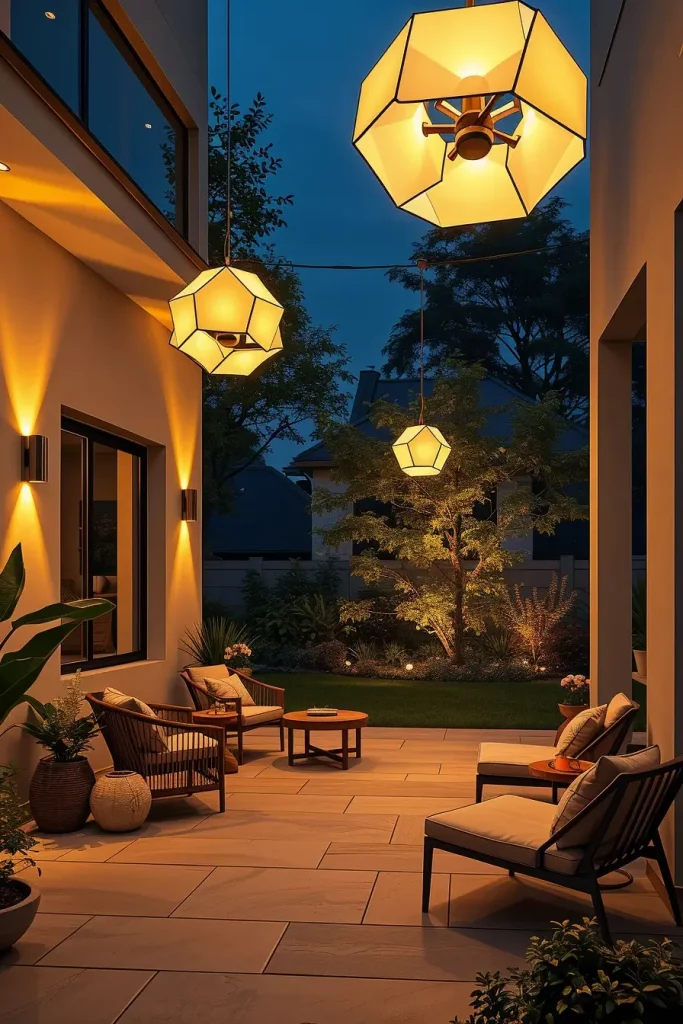
These lighting fixtures typically feature simple geometries, smooth surfaces, and neutral finishes. I combine them with streamlined outdoor furniture, uncluttered patios, and restrained landscaping. The lighting becomes a subtle yet intentional accent rather than the dominant feature of the space.
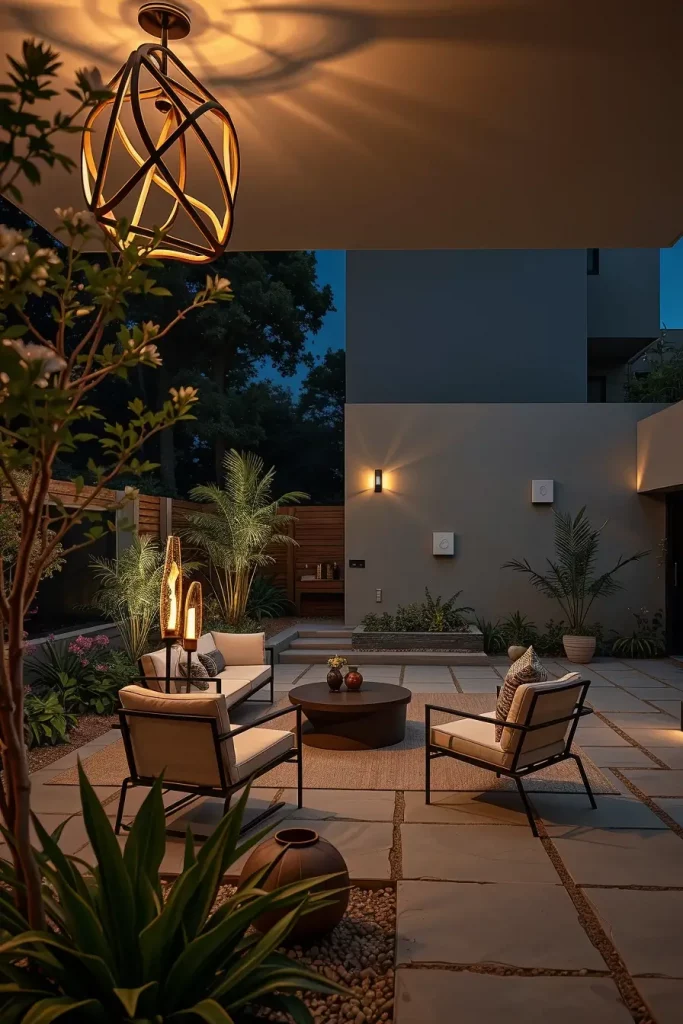
Personally, I appreciate how minimalist lighting creates a sense of calm and order outdoors. Design professionals often note that reducing visual complexity enhances comfort, and I consistently see positive results when applying this approach to outdoor environments.
What could be added here is guidance on selecting appropriate light output levels to maintain balance without sacrificing functionality.
Organic-Shaped Outdoor Lights Inspired By Nature
Organic-shaped outdoor lighting draws inspiration from natural forms such as stones, branches, and flowing curves. I use these designs to soften modern outdoor spaces and create a visual connection between architecture and landscape. Their practicality lies in blending seamlessly into garden settings while still providing effective illumination.
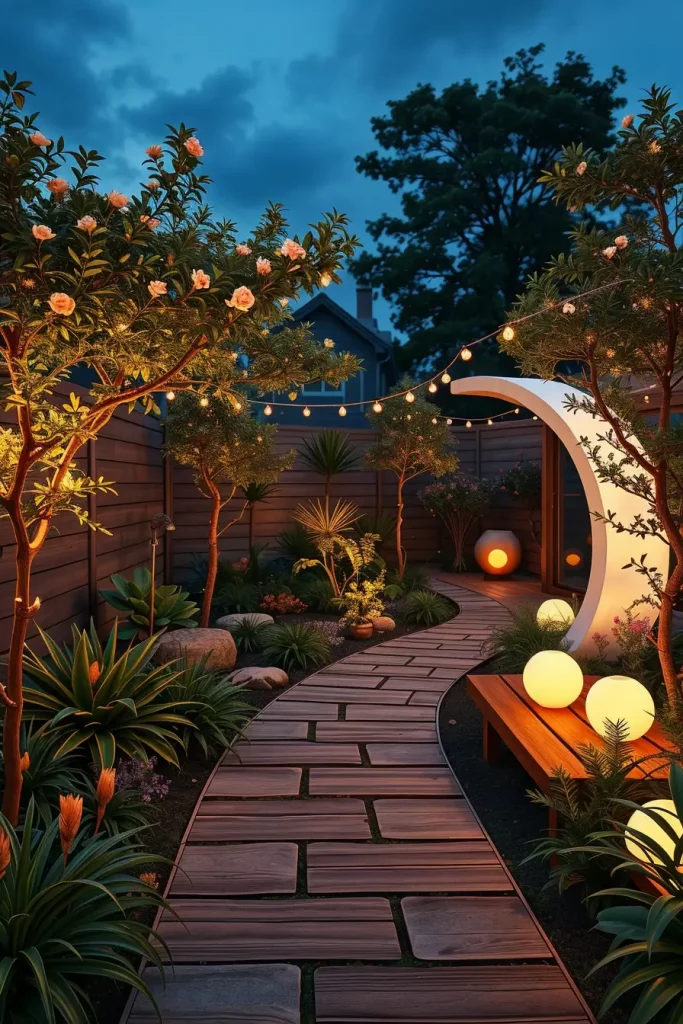
These fixtures work particularly well alongside natural materials like wood decking, stone pathways, and planted borders. I often position them near lounge seating, garden edges, or water features to enhance the overall sensory experience. Their shapes feel intuitive and calming rather than rigid or technical.
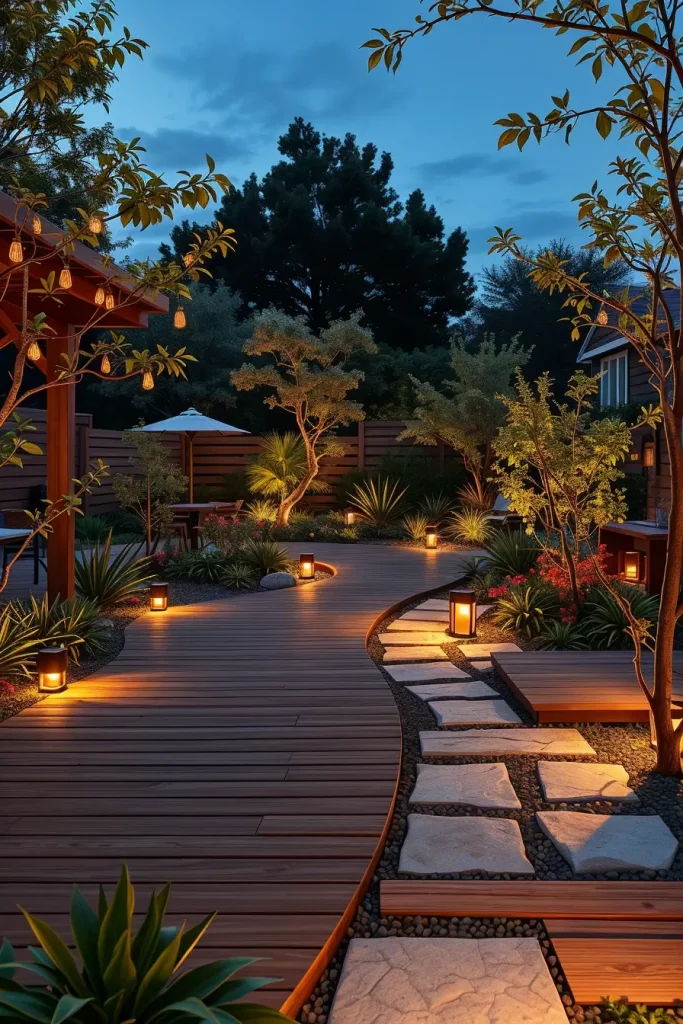
From my experience, nature-inspired lighting resonates strongly with homeowners seeking harmony between built and natural elements. Landscape designers frequently emphasize biomorphic forms, and I find this approach especially effective in residential gardens.
To complete this section, I would include advice on placement strategies to ensure organic fixtures feel intentional rather than random.
Interactive Outdoor Lighting Designs With Dynamic Effects
Interactive outdoor lighting introduces movement, responsiveness, and adaptability into exterior spaces. In 2026, I see these designs becoming more accessible and refined. Their usefulness lies in adjusting light based on motion, time, or user input, enhancing both safety and engagement.
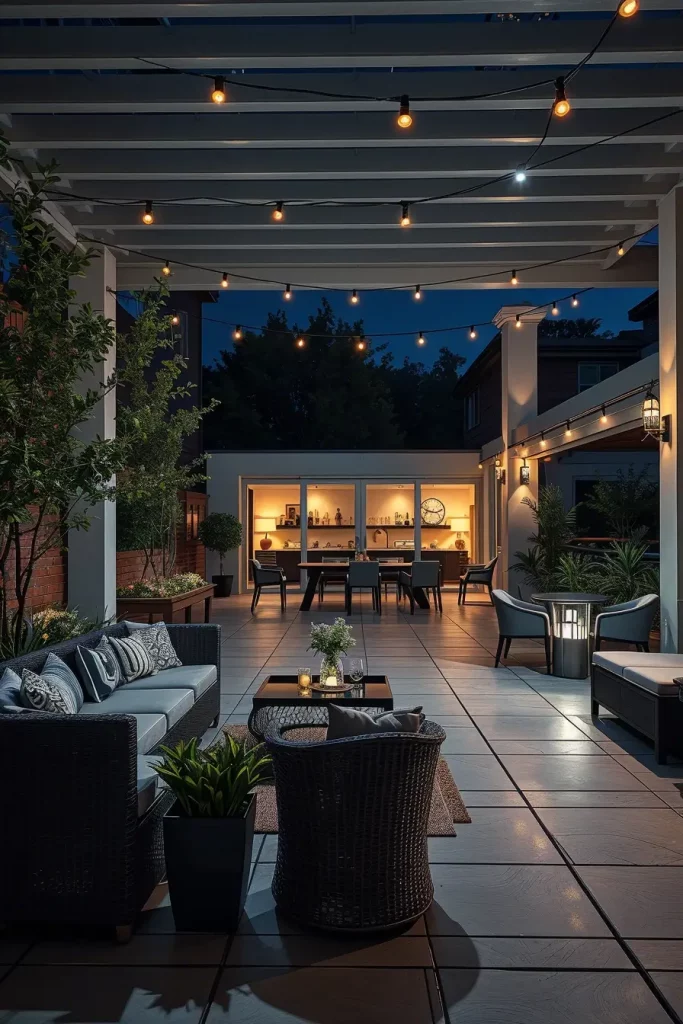
These systems often include sensors, programmable LEDs, and responsive controls integrated into pathways, patios, and seating areas. I pair them with flexible outdoor furniture arrangements and open layouts that encourage interaction. The lighting responds naturally to how the space is used.
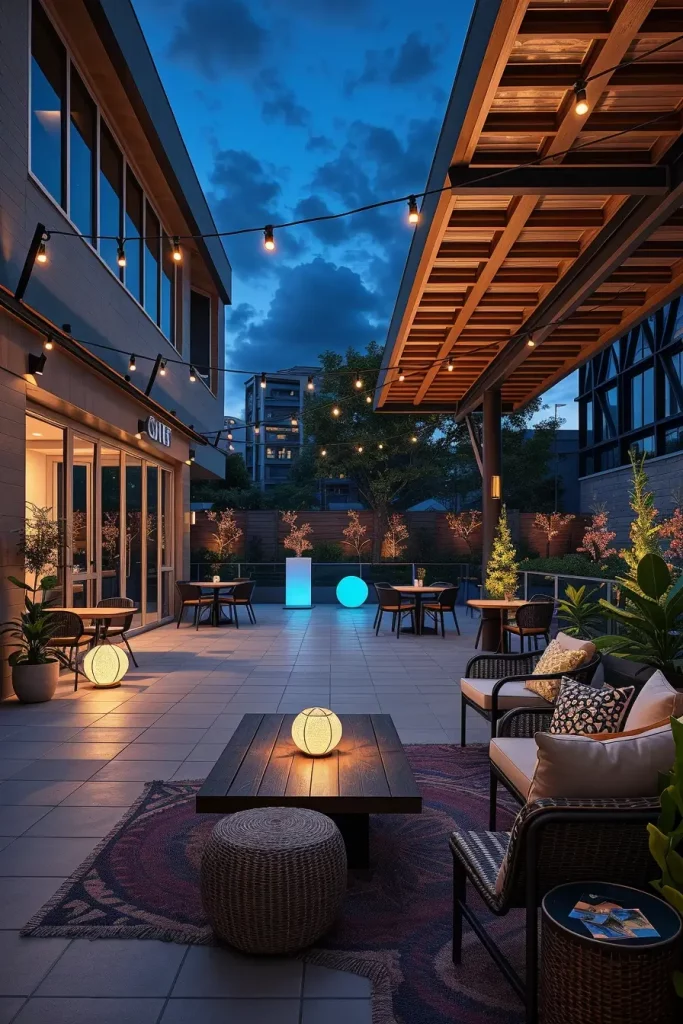
In my professional view, interactive lighting adds a layer of intelligence without sacrificing comfort. Technology-focused design publications often highlight the importance of intuitive user experiences, and I fully support that approach when implementing dynamic outdoor lighting.
An additional element that could strengthen this section is guidance on avoiding excessive animation to maintain a refined atmosphere.
Statement Lighting Installations For Gardens And Courtyards
Statement lighting installations act as visual anchors within gardens and courtyards. I use them to define central areas and establish a strong nighttime identity for outdoor spaces. Their practicality includes both ambient illumination and visual orientation within larger landscapes.
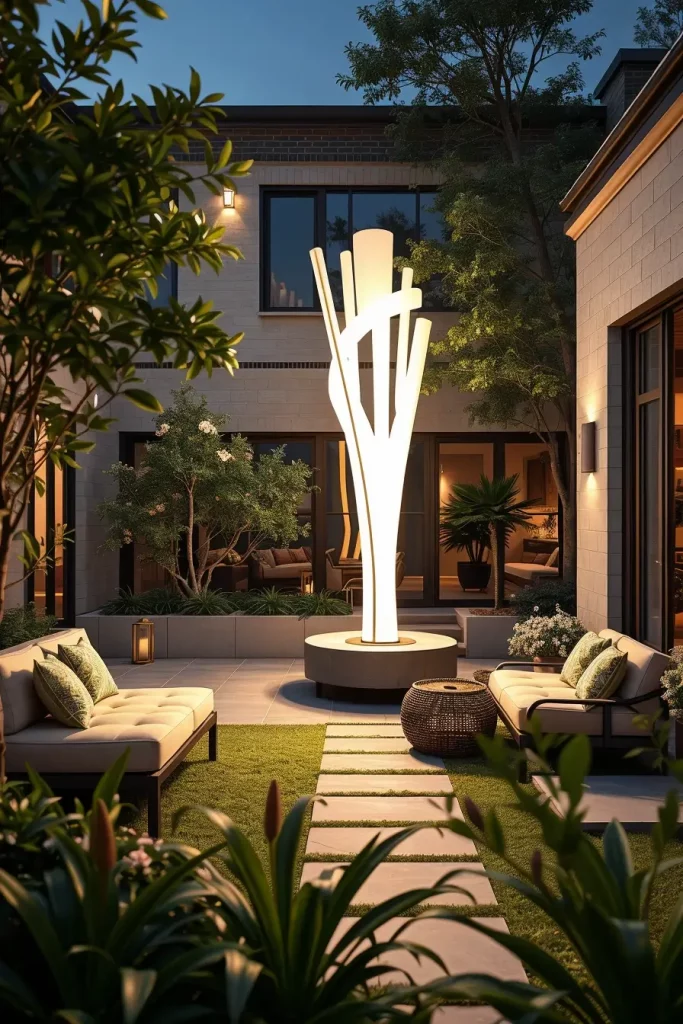
These installations often feature large-scale fixtures, clustered lighting elements, or custom-designed forms. I integrate them with courtyard seating, dining areas, and surrounding greenery to ensure the lighting feels connected rather than isolated. Material choice and scale are critical to success.
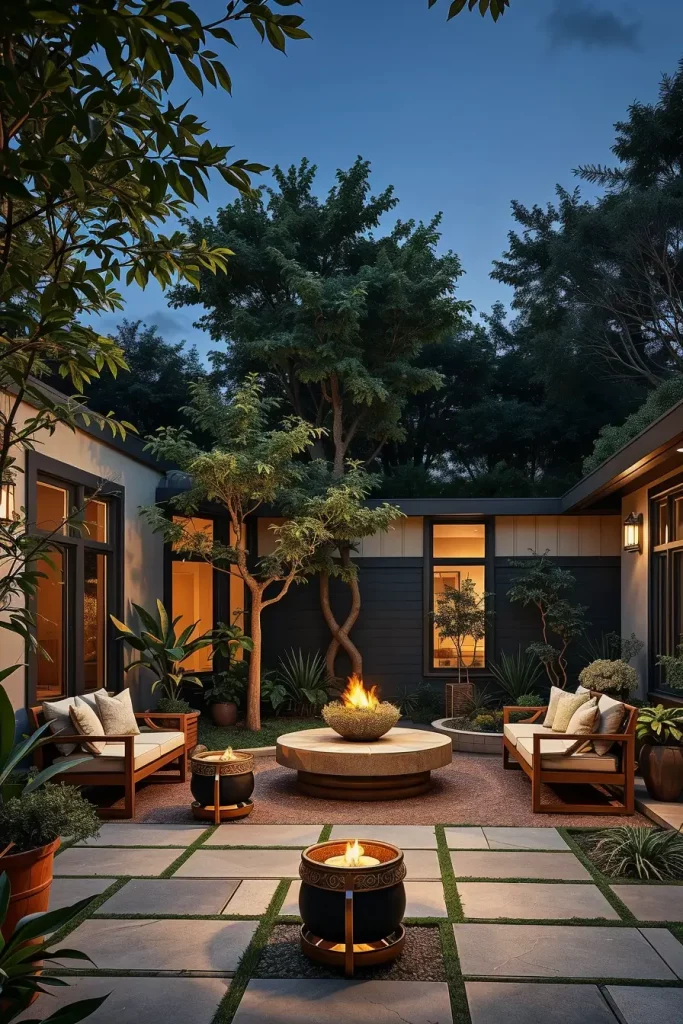
Based on my experience, statement lighting works best when supported by subtle secondary lighting. Designers frequently advise layering light to avoid harsh contrasts, and I consistently apply this principle in garden-focused projects.
What could be added here is a discussion on commissioning custom pieces versus selecting ready-made statement fixtures.
Creative Outdoor Lighting Ideas Using Light As Art
Using light as art transforms outdoor spaces into experiential environments. I approach these ideas by prioritizing emotional impact alongside functionality. The lighting itself becomes the artwork, shaping perception and atmosphere after dark.
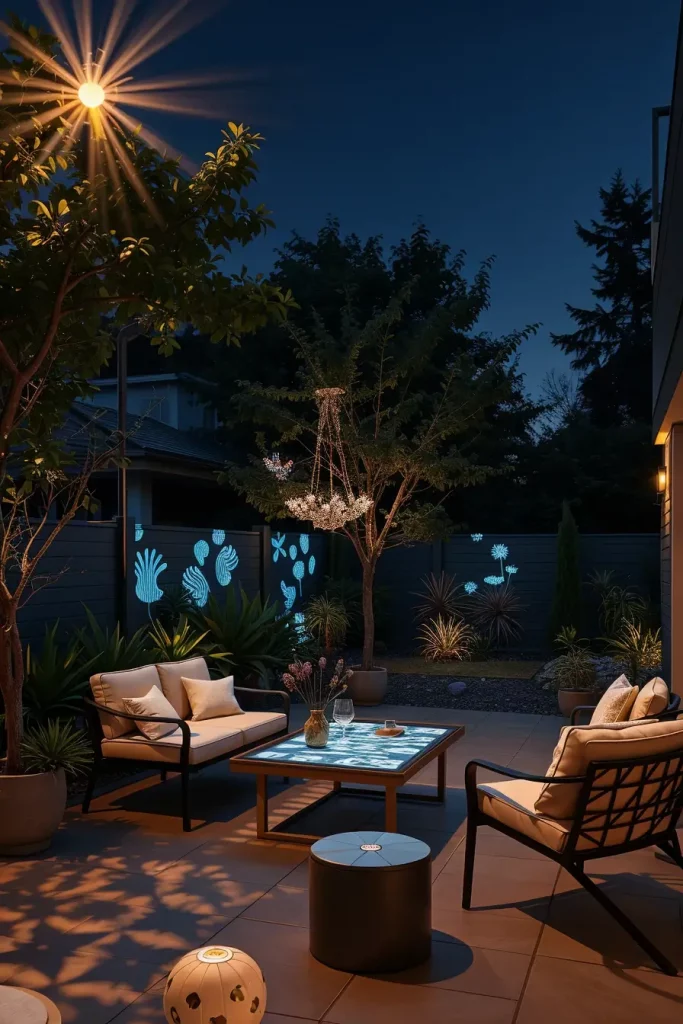
These designs may include projected patterns, layered light effects, or installations that interact with surfaces and textures. I complement them with simple outdoor furniture and restrained landscaping to prevent visual competition. The surrounding space acts as a canvas for the light.
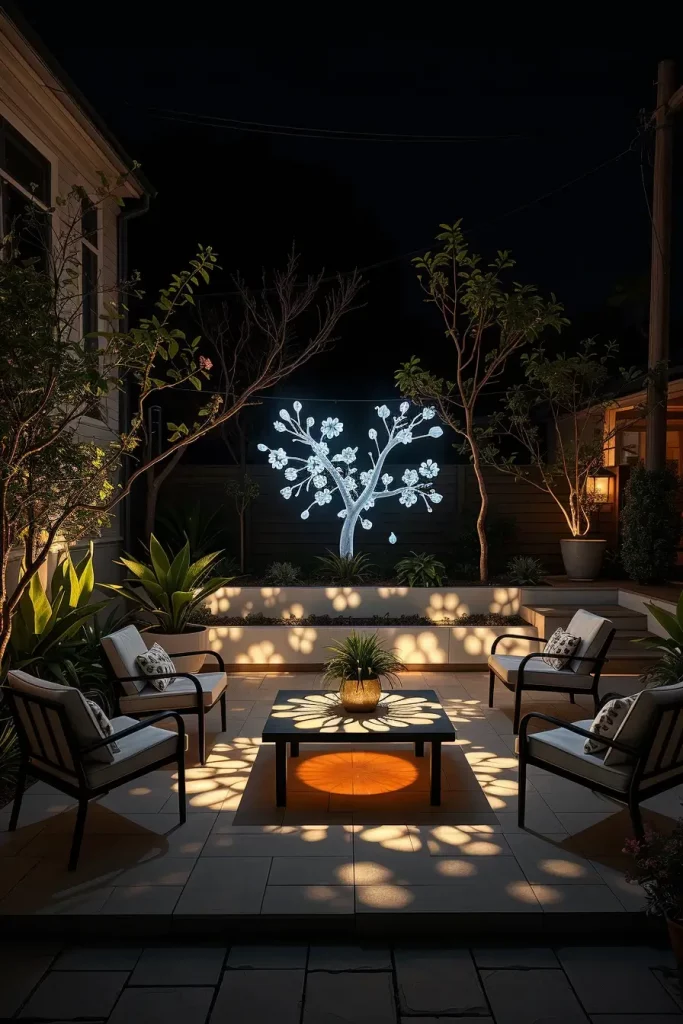
In my opinion, light-as-art concepts are most successful when they remain purposeful. Many respected designers emphasize storytelling through lighting, and I align with that philosophy by ensuring each installation has a clear intent.
To expand this section, I would suggest including guidance on maintaining these installations to preserve their visual clarity over time.
Color-Changing LED Outdoor Lighting Trends For 2026
Color-changing LED lighting continues to evolve as a defining trend for 2026. I use these systems to offer flexibility and personalization without compromising design integrity. Their practicality lies in allowing one outdoor space to serve multiple moods and occasions.
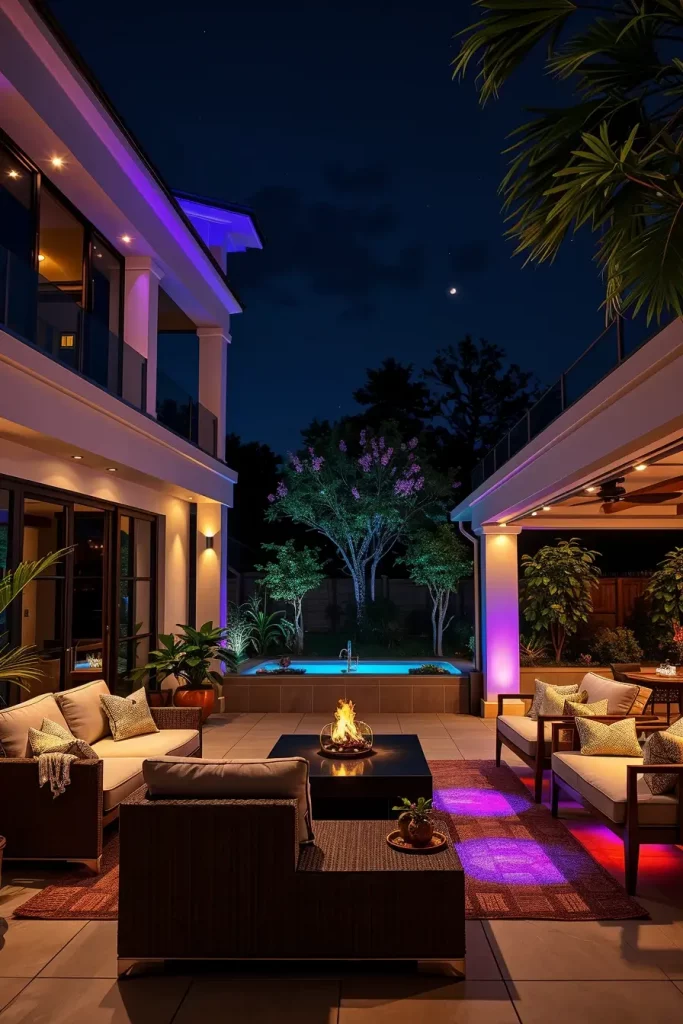
These fixtures integrate seamlessly with modern outdoor furniture, architectural elements, and landscape features. I typically assign color-changing effects to accent zones while maintaining warm white lighting for primary seating and dining areas. This approach preserves comfort while allowing expression.
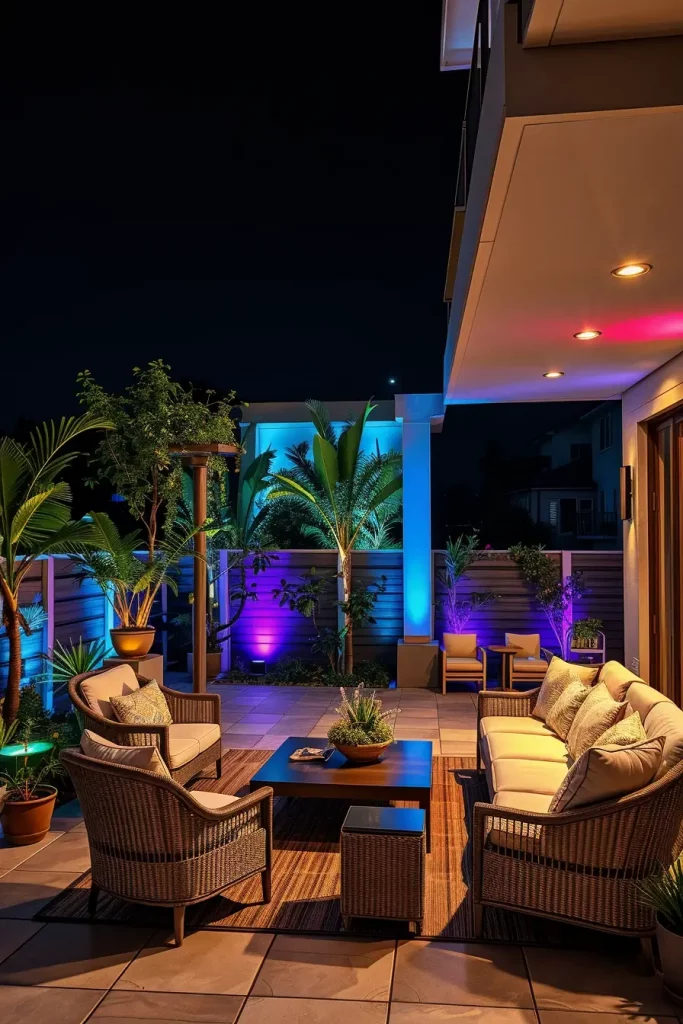
From my professional experience, controlled color application delivers the best results. Industry experts often stress moderation, and I follow that guidance to ensure longevity and visual harmony in outdoor designs.
What could be added here is advice on programming presets for everyday use versus special events.
Sculptural Wall-Mounted Outdoor Lighting With Artistic Impact
I approach sculptural wall-mounted outdoor lighting as both a functional necessity and a visual anchor. In modern outdoor environments, walls often remain underutilized, yet they provide the perfect vertical canvas for artistic lighting. Sculptural fixtures help define circulation paths, enhance safety after dark, and visually organize outdoor seating or dining areas without relying on excessive ground lighting.
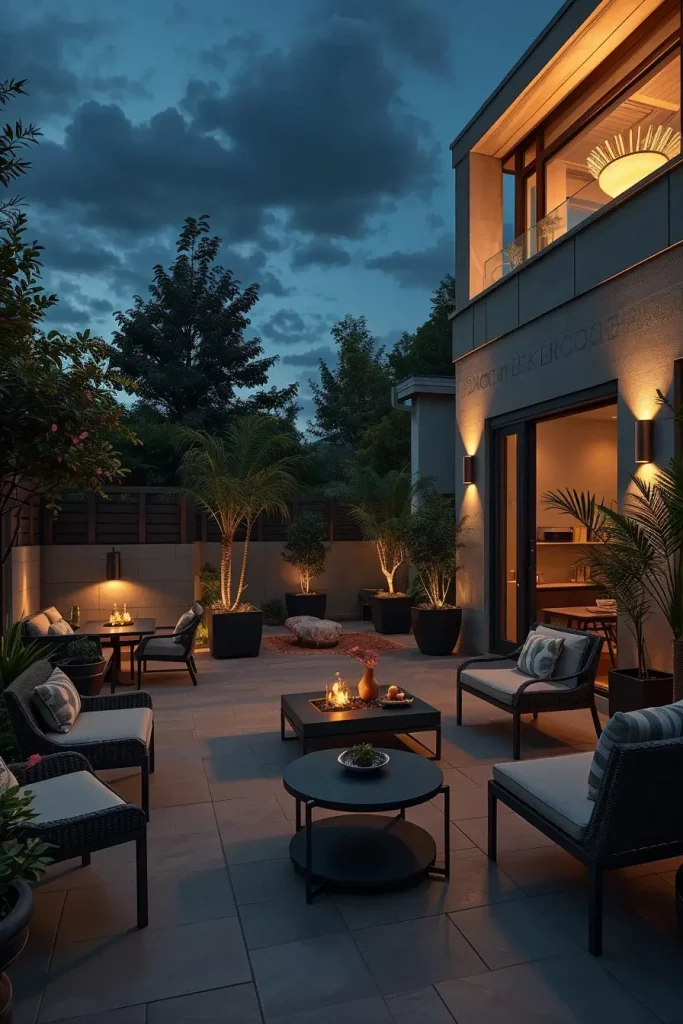
In my projects, I prioritize fixtures made from architectural metals, textured concrete, or molded composites that resist weathering while offering strong visual presence. These wall-mounted forms often interact with surrounding materials such as stone, wood cladding, or smooth plaster, creating contrast. I find that integrating adjustable LED modules allows precise control of light direction, ensuring the lighting enhances the space without overwhelming it.
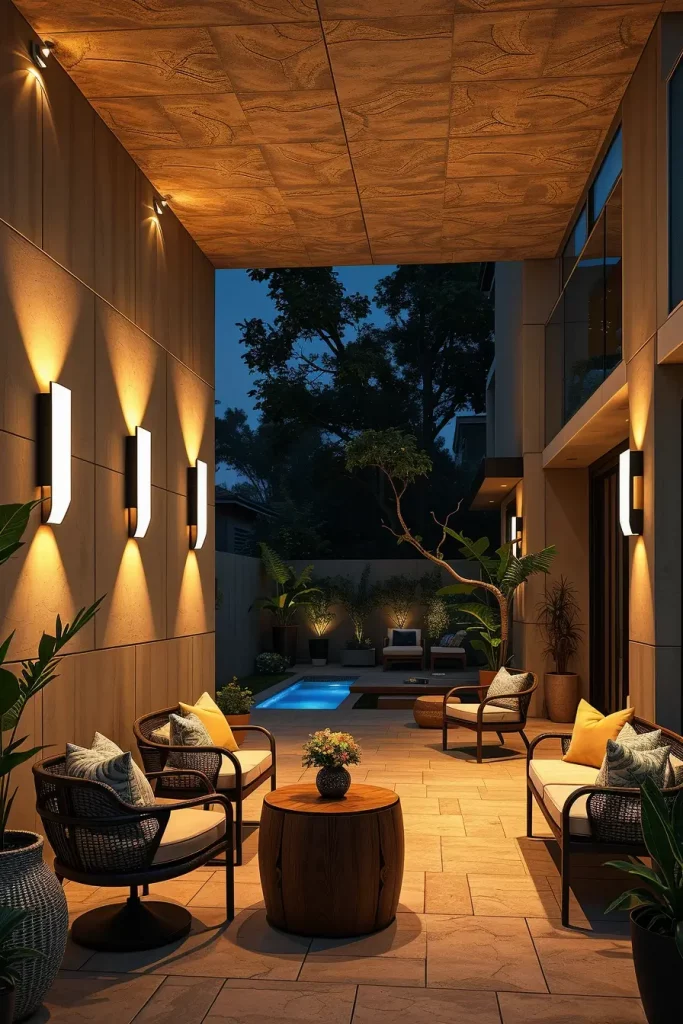
From experience, I’ve noticed that clients respond positively to lighting that feels intentional and artistic. Designers featured in Architectural Digest frequently emphasize that sculptural lighting should complement architecture rather than compete with it, a principle I apply consistently. When done well, these fixtures become recognizable design signatures rather than background elements.
What is often missing in these installations is layered control. I recommend adding smart dimming systems and warm-to-neutral temperature tuning so the lighting can shift from functional brightness to subtle ambiance depending on use and time of day.
Unusual Outdoor Lighting Designs That Break Traditional Rules
Unusual outdoor lighting allows me to challenge predictable layouts and rethink how light defines space. Instead of symmetry and repetition, I focus on asymmetrical placement and unexpected orientations that create visual curiosity while still supporting movement and safety in outdoor zones.
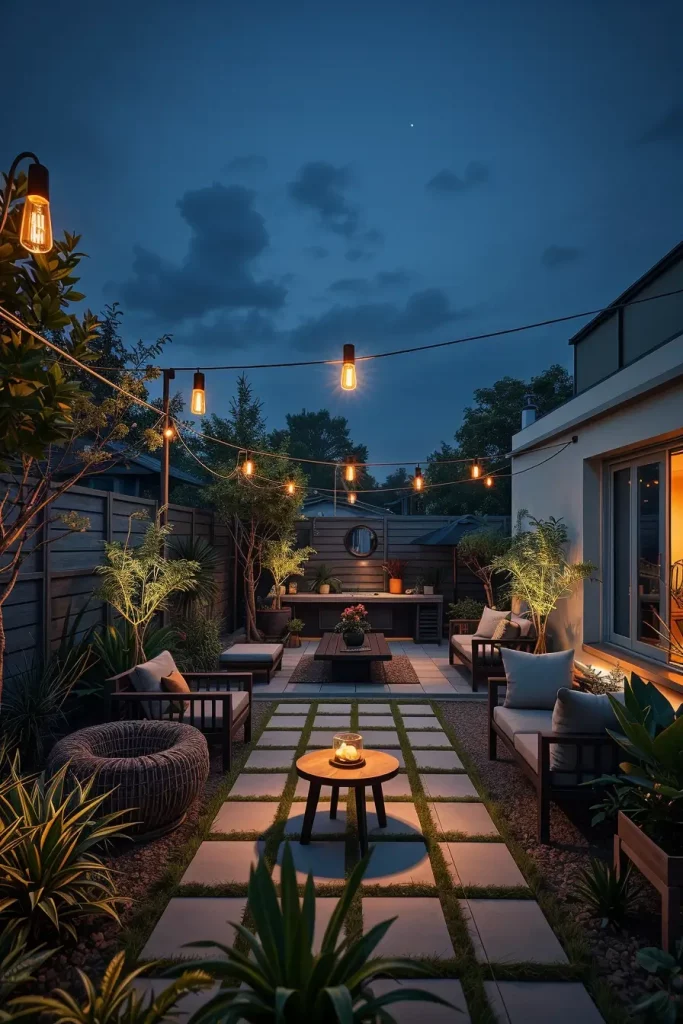
I often include lighting elements that appear suspended, tilted, or integrated into architectural voids. These designs work especially well in minimalist outdoor settings where furniture lines are clean and materials are restrained. By breaking traditional lighting rules, the fixtures themselves become focal points rather than passive accessories.
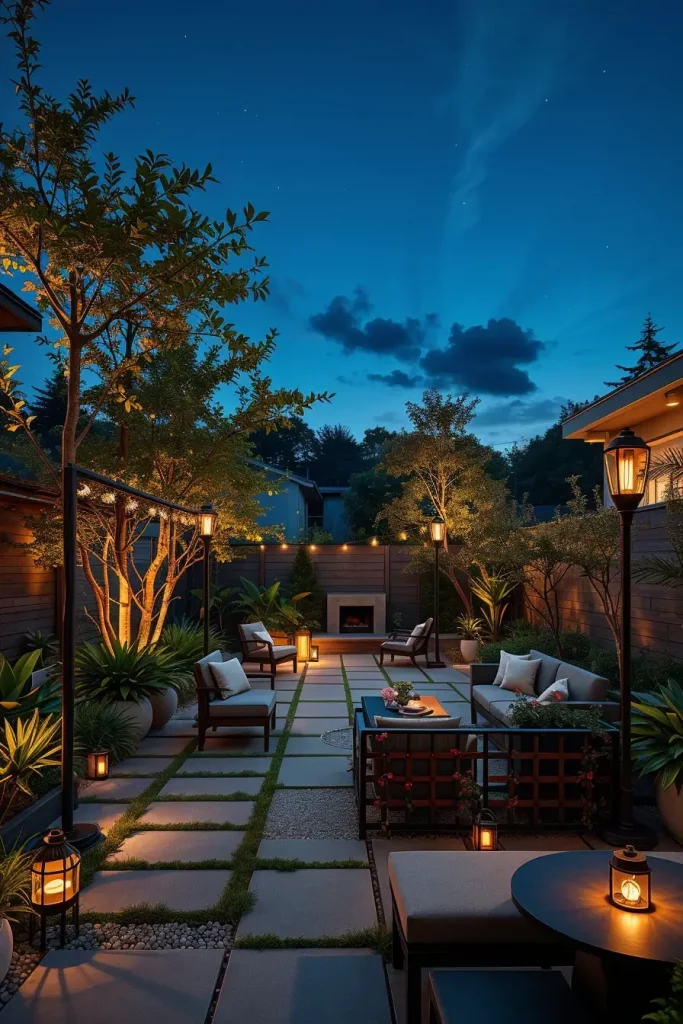
In my professional opinion, this approach aligns with trends discussed by Dezeen, where designers advocate for lighting as spatial experimentation rather than pure illumination. I’ve seen these designs encourage guests to slow down and engage more thoughtfully with outdoor environments.
To enhance these concepts further, I recommend pairing unusual lighting with subtle pathway illumination to ensure usability remains uncompromised while the artistic statement remains intact.
Designer Bollard Lighting With Unique Silhouettes
Designer bollard lighting has evolved far beyond basic pathway markers. In 2026, I use bollards as sculptural elements that guide movement while reinforcing the overall aesthetic language of the outdoor space. Their vertical presence adds rhythm and structure, especially in gardens and terraces.
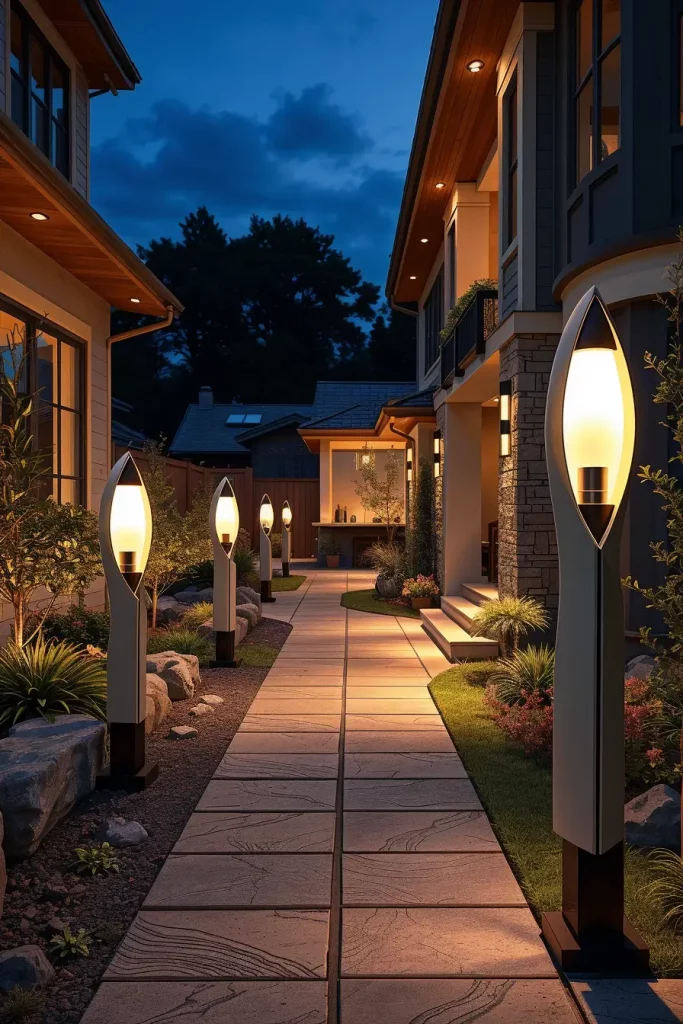
I prefer bollards with distinctive silhouettes, such as tapered forms, curved profiles, or perforated surfaces that cast patterned light. Materials like anodized aluminum, corten steel, or matte-finished composites help these fixtures feel refined and durable. Positioned strategically, they define zones without visually cluttering the landscape.
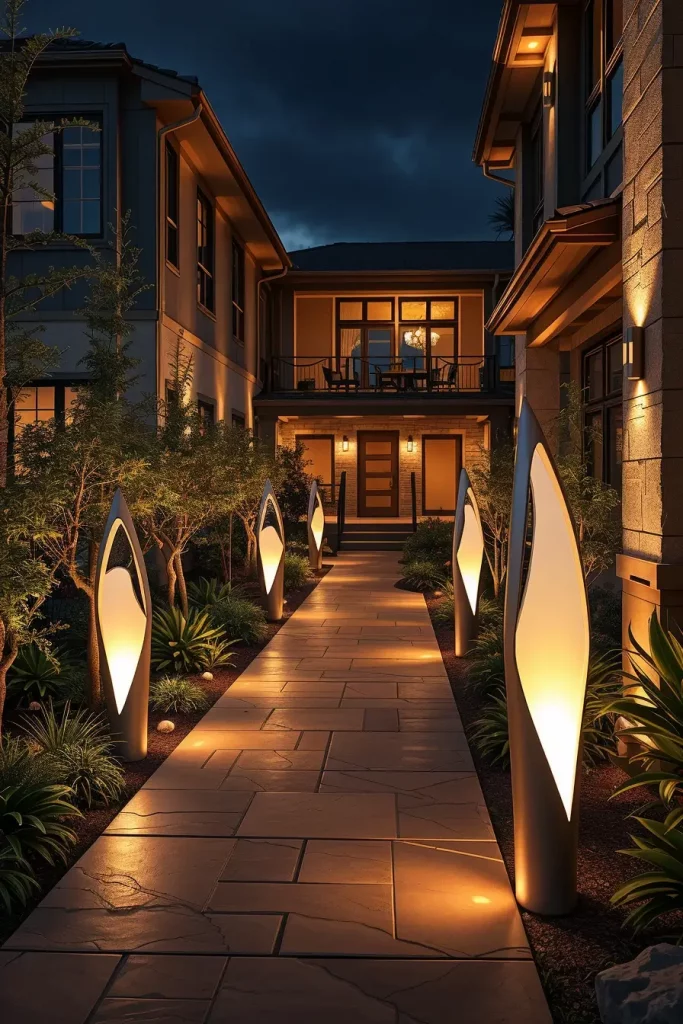
From my experience, well-designed bollard lighting enhances perceived depth and scale, a technique frequently highlighted by landscape architects in publications like Landscape Architecture Magazine. Clients appreciate how these fixtures subtly elevate the space without drawing attention to themselves during the day.
What is often overlooked is spacing and height variation. I advise mixing bollard heights and adjusting distances to avoid monotonous repetition and achieve a more dynamic visual flow.
Layered Outdoor Lighting Concepts For Visual Depth
Layered outdoor lighting is essential for creating depth and dimension. I approach this concept by combining ambient, task, and accent lighting to ensure outdoor spaces feel intentional rather than flat after sunset.
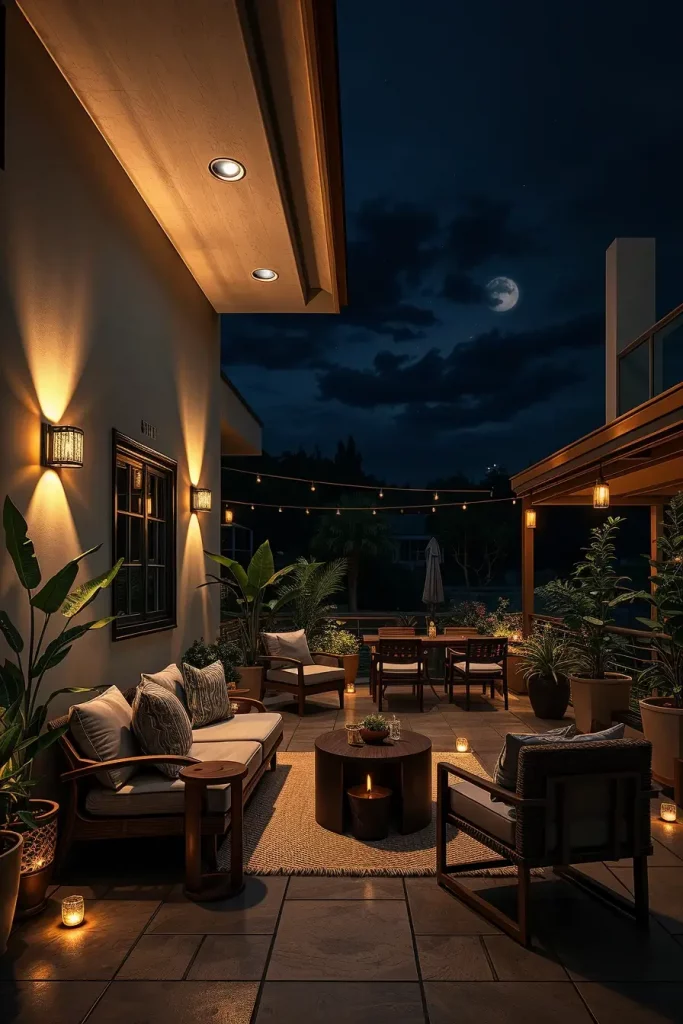
In practice, this means integrating overhead fixtures, wall-mounted lights, and ground-level illumination around furniture, steps, and architectural features. Each layer serves a distinct purpose, from general visibility to highlighting textures and materials.
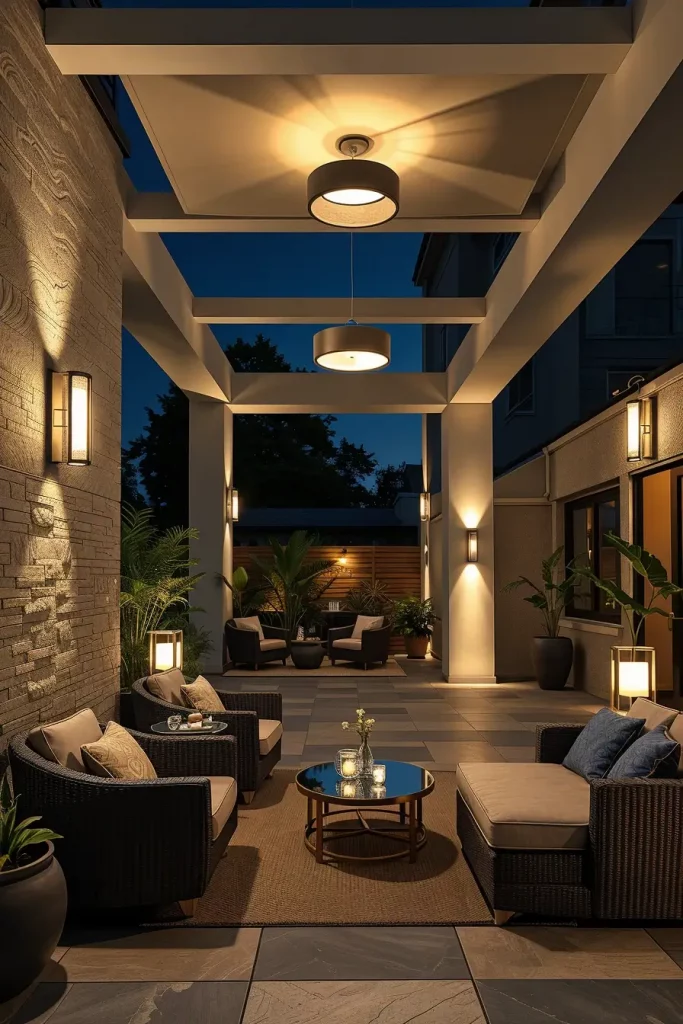
Based on my experience, layered lighting is one of the most effective ways to achieve a balanced atmosphere. Experts from the American Lighting Association often emphasize that no single fixture should dominate a space, a guideline I consistently follow.
To complete these designs, I recommend adding lighting controls that allow users to activate different layers independently, adapting the environment for dining, relaxation, or entertaining.
Ambient Outdoor Lighting With Soft Multicolor Glows
Ambient outdoor lighting with subtle multicolor tones introduces emotional nuance without overwhelming the senses. I use this approach sparingly, focusing on soft transitions rather than bold color saturation.
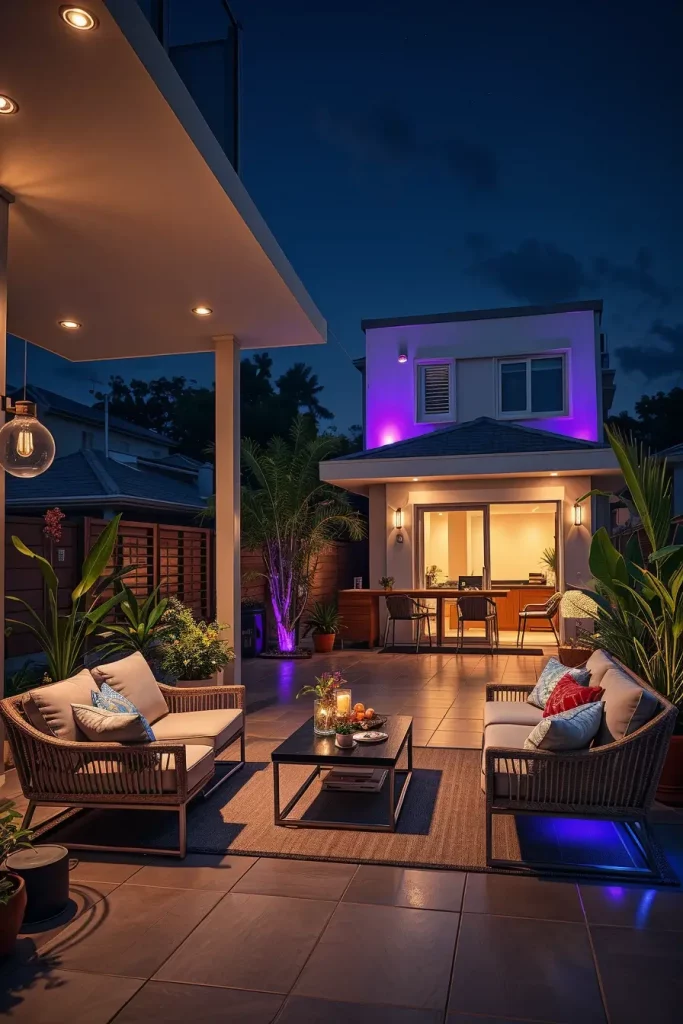
Typically, I integrate RGBW LED systems into indirect lighting elements such as recessed channels, planter edges, or architectural coves. These systems allow gentle shifts between warm whites and muted colors, supporting mood changes throughout the evening.
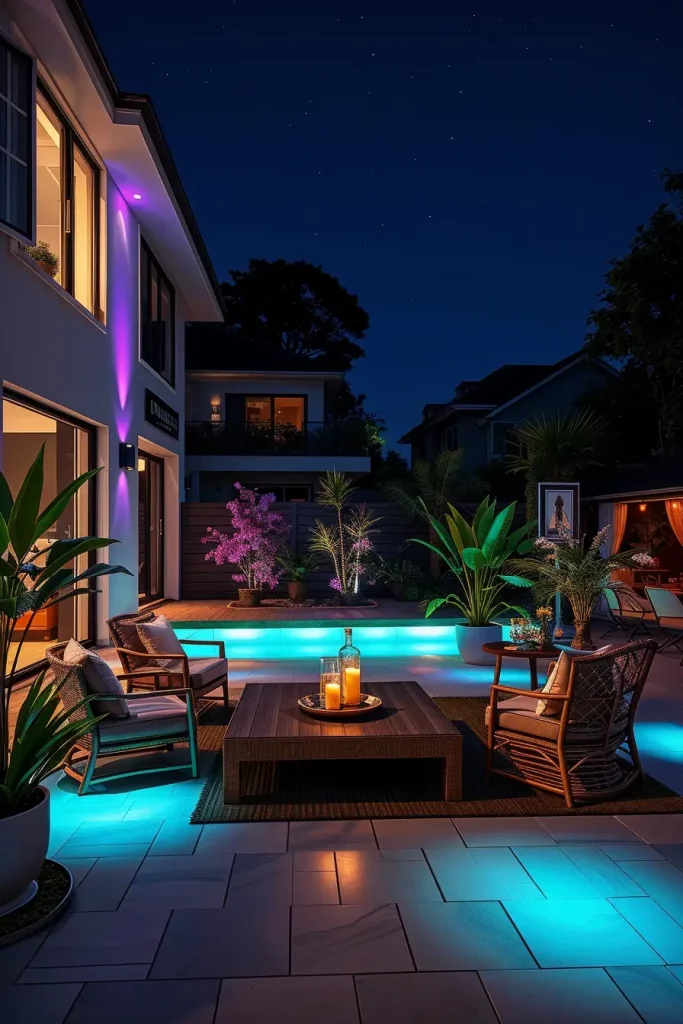
In my opinion, when used thoughtfully, colored lighting enhances relaxation and social interaction. Interior and landscape designers featured in House Beautiful often note that restrained color use can elevate spaces without appearing theatrical, a principle I fully endorse.
What’s often missing is proper calibration. I always recommend professional programming to ensure colors remain harmonious and do not distort surrounding materials or finishes.
Outdoor Lighting Ideas For Highlighting Sculptures And Art Pieces
Highlighting outdoor art requires precision and restraint. I approach this by treating lighting as a framing device that enhances form, texture, and shadow without distracting from the artwork itself.
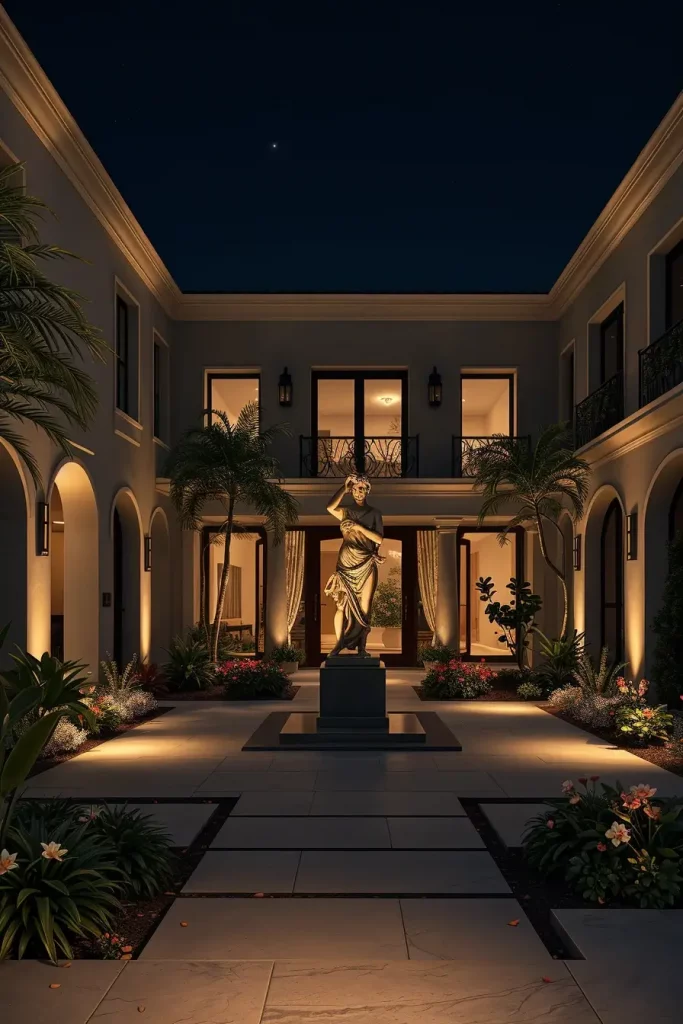
I typically use narrow-beam spotlights, adjustable uplights, or concealed fixtures positioned at calculated angles. These lights emphasize contours and materials while maintaining visual comfort for viewers moving through the space.
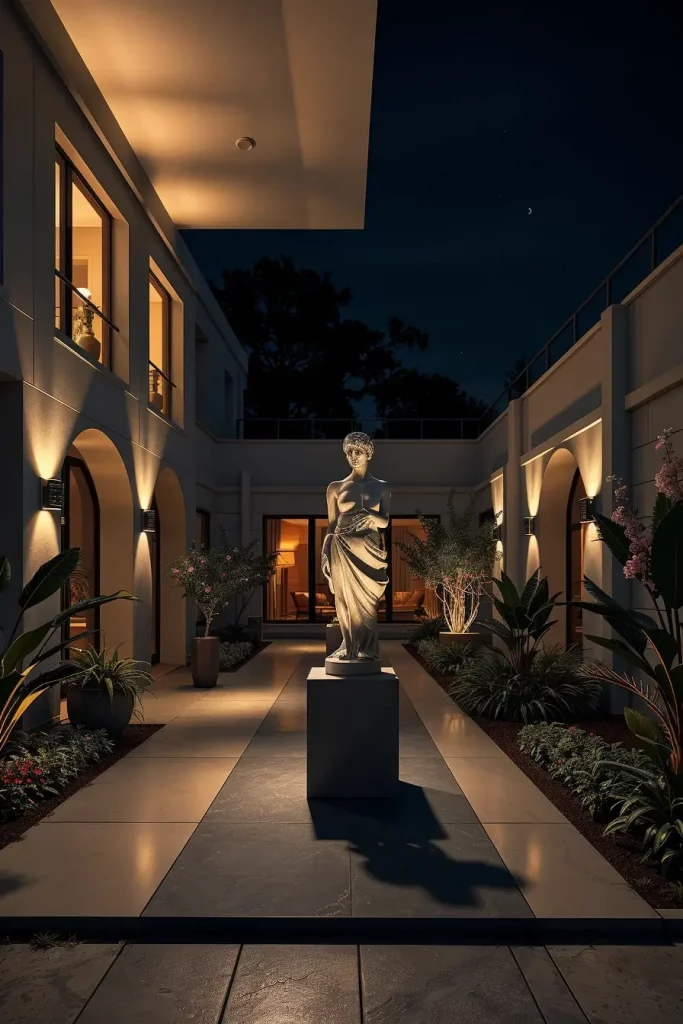
From my experience, this technique mirrors gallery lighting principles, a method frequently referenced by museum lighting consultants in the US. Applying these standards outdoors elevates sculptures and installations to focal points worthy of attention.
To improve these setups, I suggest incorporating glare control accessories and dedicated lighting circuits so artworks can be illuminated independently from general outdoor lighting.
Statement Pendant Lighting For Covered Outdoor Areas
Statement pendant lighting transforms covered patios and pergolas into fully realized outdoor rooms. I view these fixtures as anchors that visually ground seating or dining areas while providing practical illumination.
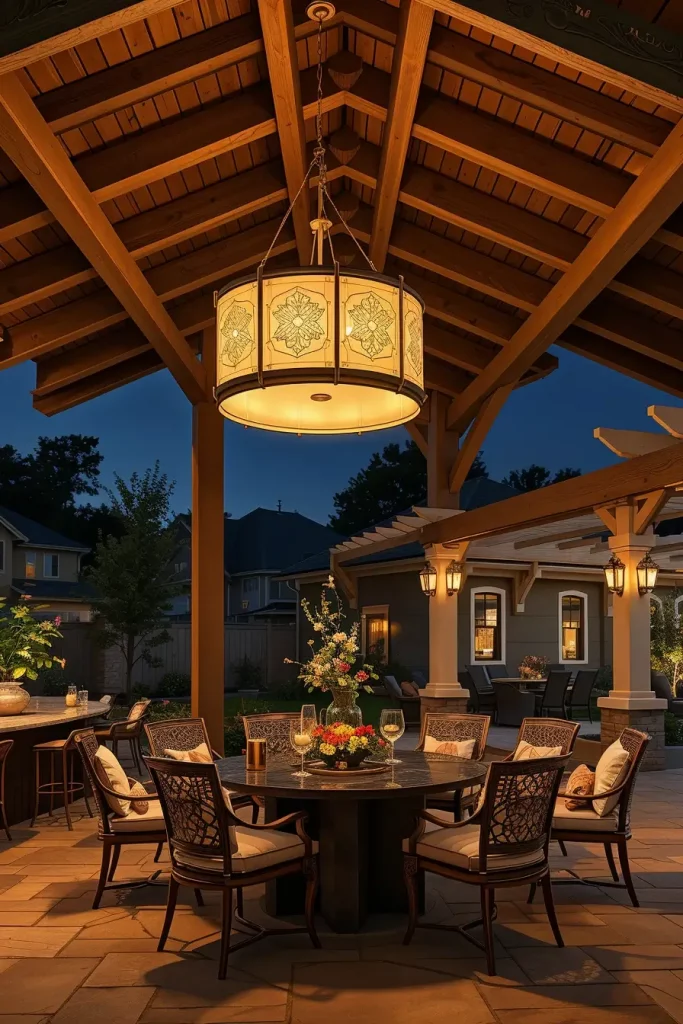
I often select oversized pendants with weather-resistant finishes, diffused shades, and integrated LED technology. When paired with outdoor furniture and textured flooring, these pendants help define the space as an extension of the interior.
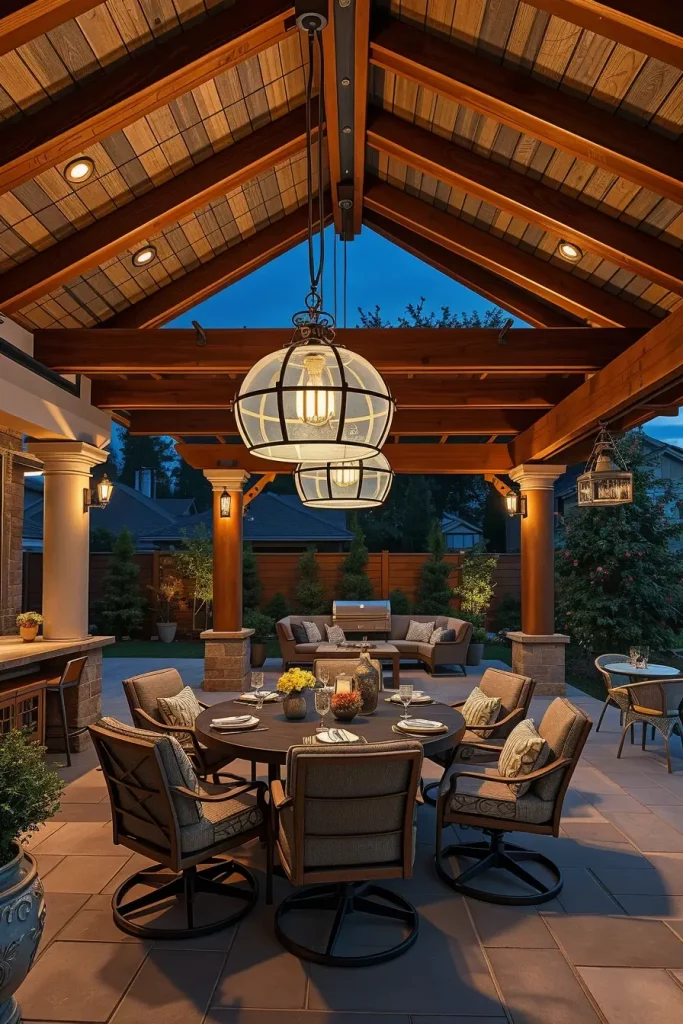
In my professional view, designers from Elle Decor frequently emphasize scale and proportion when choosing statement lighting, advice I apply consistently. A well-sized pendant creates intimacy without overwhelming the structure.
What should be added to these spaces is layered support lighting, such as wall sconces or floor lights, ensuring functionality even when the pendant is dimmed for ambiance.
Experimental Outdoor Lighting Forms For Avant-Garde Spaces
When designing avant-garde outdoor environments, I treat experimental lighting forms as catalysts for spatial expression. These concepts prioritize emotion and originality while still respecting the functional needs of outdoor living. In 2026, experimental lighting allows outdoor areas to feel curated rather than conventional.
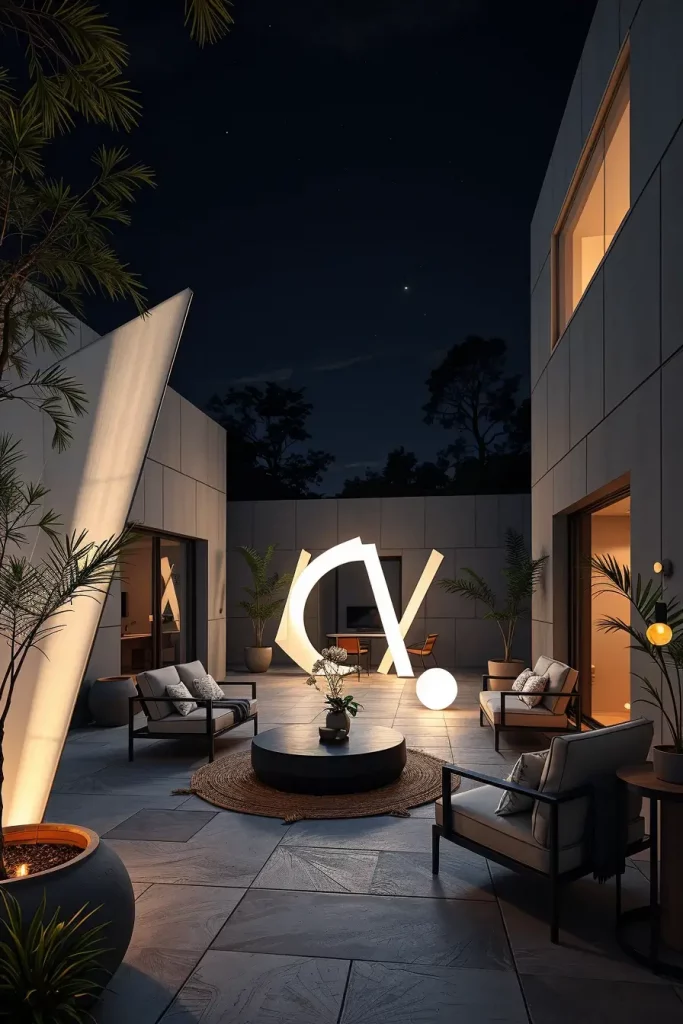
I often incorporate abstract geometries, irregular shapes, or modular lighting systems that can be reconfigured. These pieces pair well with restrained outdoor furniture and architectural surfaces, ensuring the lighting remains the primary visual statement. Materials such as translucent polymers or matte metals help soften bold forms.
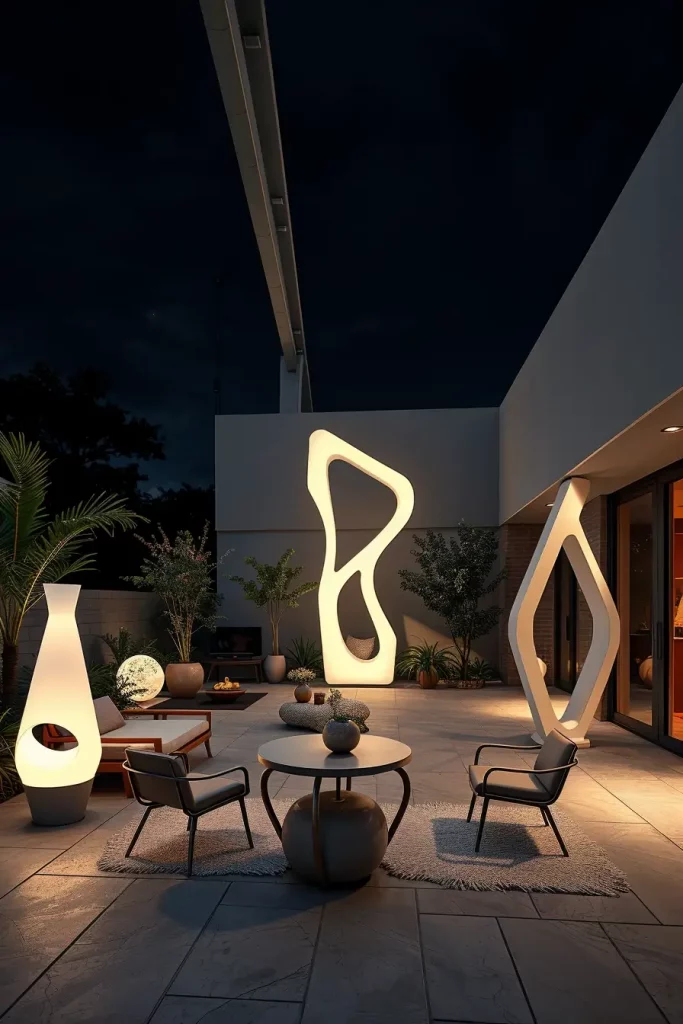
From my professional experience, experimental lighting resonates most when paired with intentional negative space. Designers featured in Wallpaper magazine frequently emphasize restraint as the key to making avant-garde design approachable, a principle I apply consistently.
What is often missing is context lighting. I recommend subtle background illumination to support navigation and comfort while experimental fixtures take center stage visually.
Designer Floor Lighting That Transforms Outdoor Surfaces
Designer floor lighting allows me to redefine how outdoor surfaces are perceived after dark. Rather than treating floors as neutral backdrops, I use integrated lighting to enhance textures, guide movement, and subtly reshape spatial boundaries.
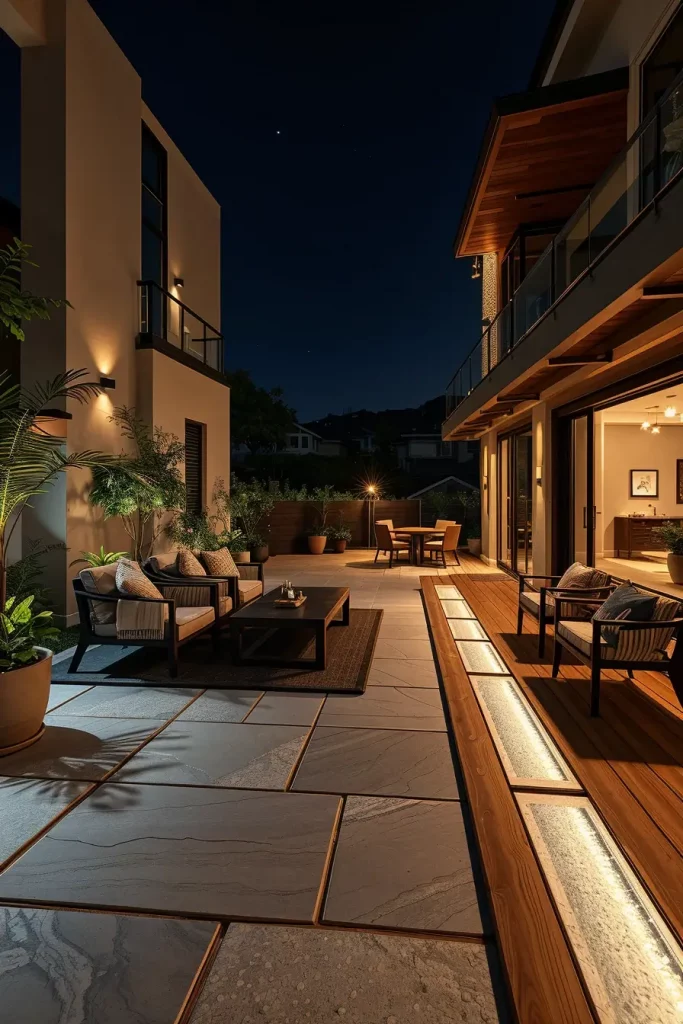
I typically specify recessed floor luminaires, linear LED strips, or concealed edge lighting embedded within stone, wood decking, or concrete. These elements work harmoniously with outdoor seating and architectural features while remaining unobtrusive during daylight hours.
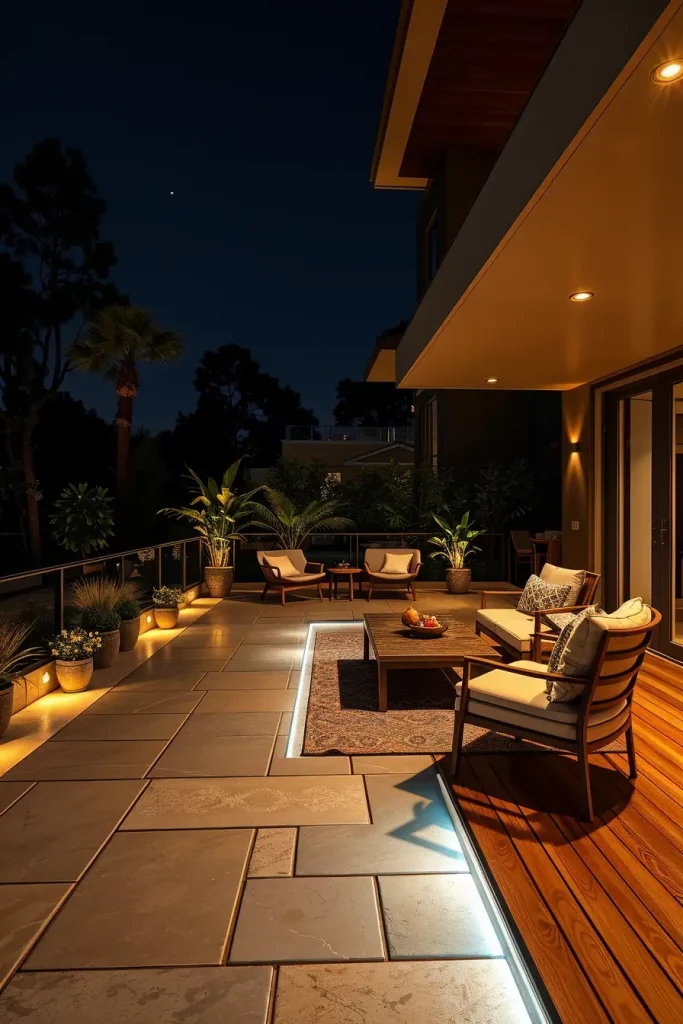
In my experience, floor lighting improves safety without compromising aesthetics. According to lighting specialists cited by the Illuminating Engineering Society, low-level illumination is one of the most effective ways to balance visual comfort and functionality outdoors.
To elevate these designs further, I advise incorporating anti-glare lenses and precise beam control to prevent visual fatigue while preserving the intended artistic effect.
Light And Shadow Play In Artistic Outdoor Lighting Design
The intentional manipulation of light and shadow is one of the most powerful tools in artistic outdoor lighting. I approach this concept by allowing darkness to play an active role rather than attempting to eliminate it entirely.
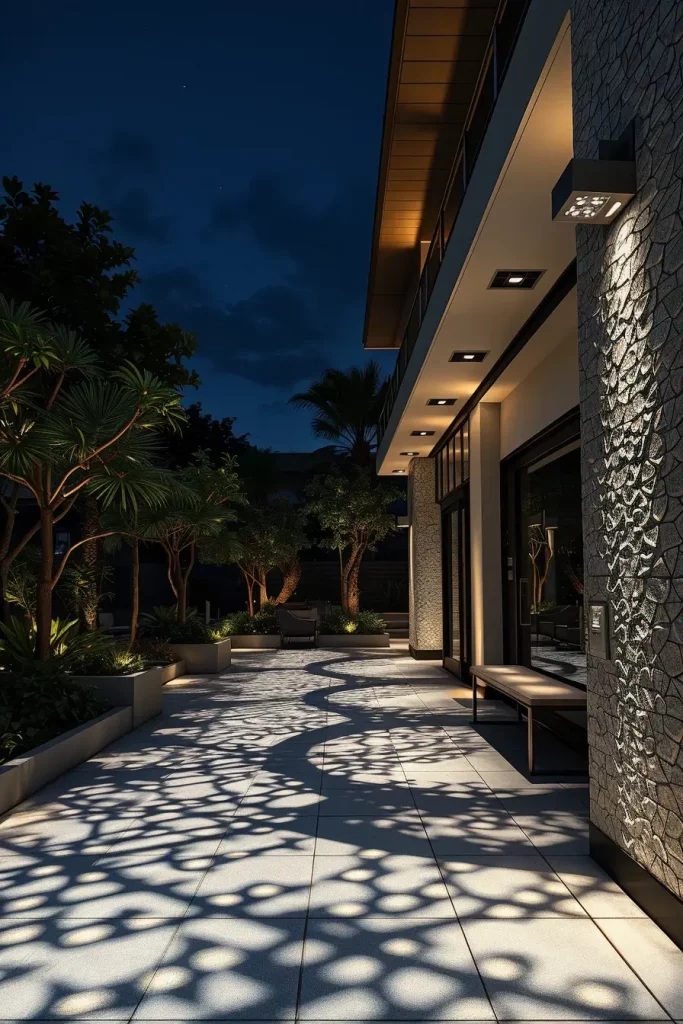
I select fixtures with perforated housings, textured lenses, or directional beams that cast layered shadows across walls, floors, and landscape elements. These effects add depth and movement, particularly when paired with architectural surfaces or sculptural greenery.
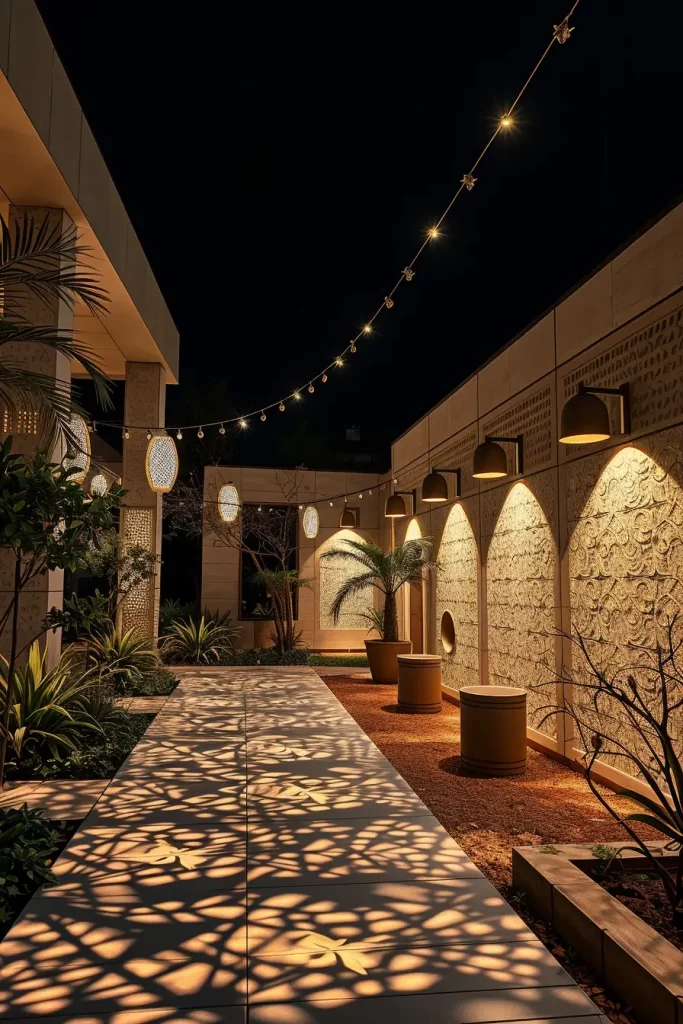
From my perspective, this technique mirrors theatrical lighting strategies often referenced by professionals in Lighting Design magazine. I have found that clients appreciate how shadow enhances atmosphere without increasing brightness.
What is often missing in these designs is consistency. I recommend maintaining a cohesive shadow language across the space to avoid visual fragmentation.
Unique Outdoor Lighting Ideas For Modern Terraces
Modern terraces benefit greatly from lighting that supports both social interaction and visual calm. I design terrace lighting to balance openness with intimacy, ensuring the space feels welcoming without appearing overly staged.
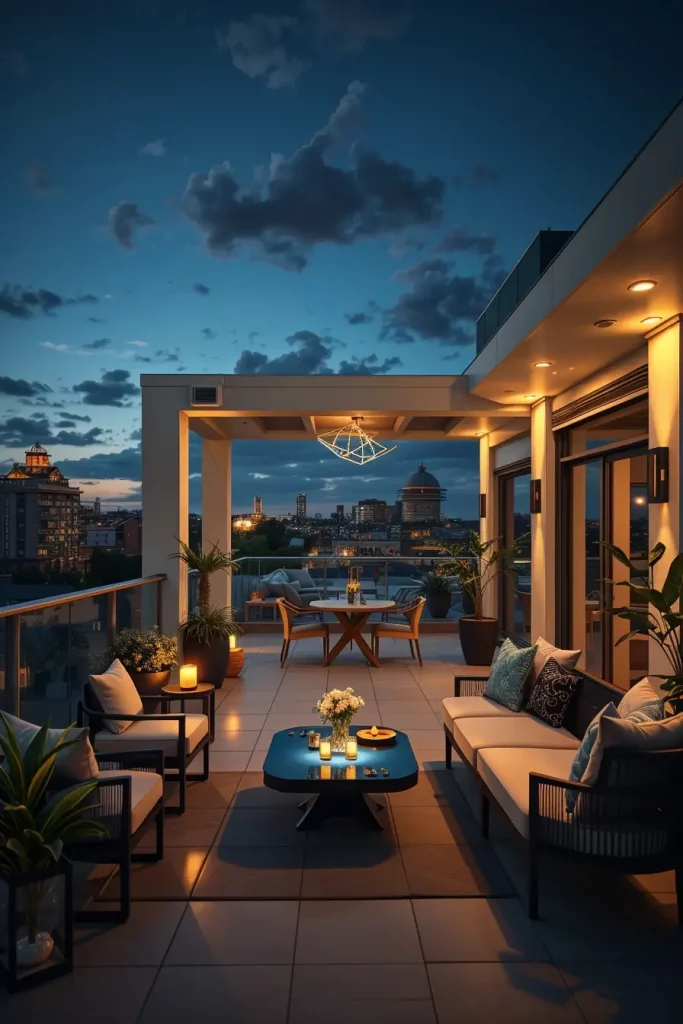
I integrate low-profile fixtures, concealed strip lighting, and sculptural accents that complement contemporary outdoor furniture. Materials such as stone, glass, and metal reflect light subtly, enhancing the terrace’s architectural character.
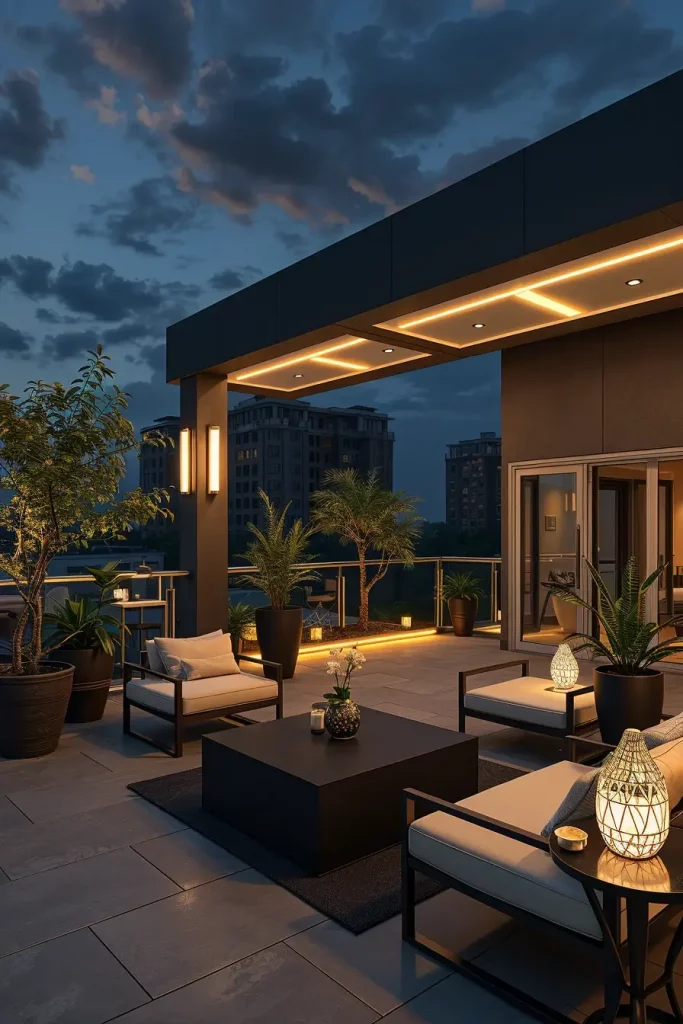
In my experience, modern terrace lighting works best when it adapts to multiple uses. Design experts from Dwell often highlight flexibility as a defining feature of successful outdoor environments, a philosophy I strongly support.
To complete these spaces, I suggest adding adjustable lighting scenes that allow users to shift from entertaining to relaxation with minimal effort.
Custom-Made Outdoor Lighting As Personalized Design Statements
Custom-made outdoor lighting allows me to translate personal identity into physical form. These bespoke solutions ensure that lighting aligns precisely with architectural intent and the client’s lifestyle.
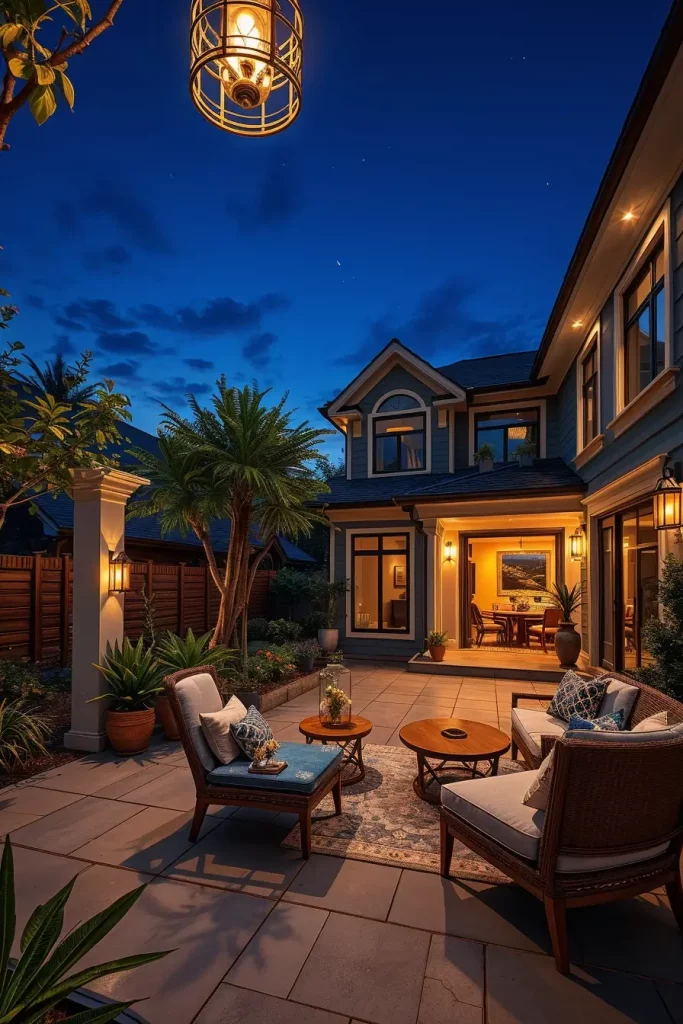
I often collaborate with fabricators to develop fixtures tailored in scale, material, and finish. These pieces integrate seamlessly with outdoor furniture, water features, or structural elements, reinforcing a cohesive design narrative.
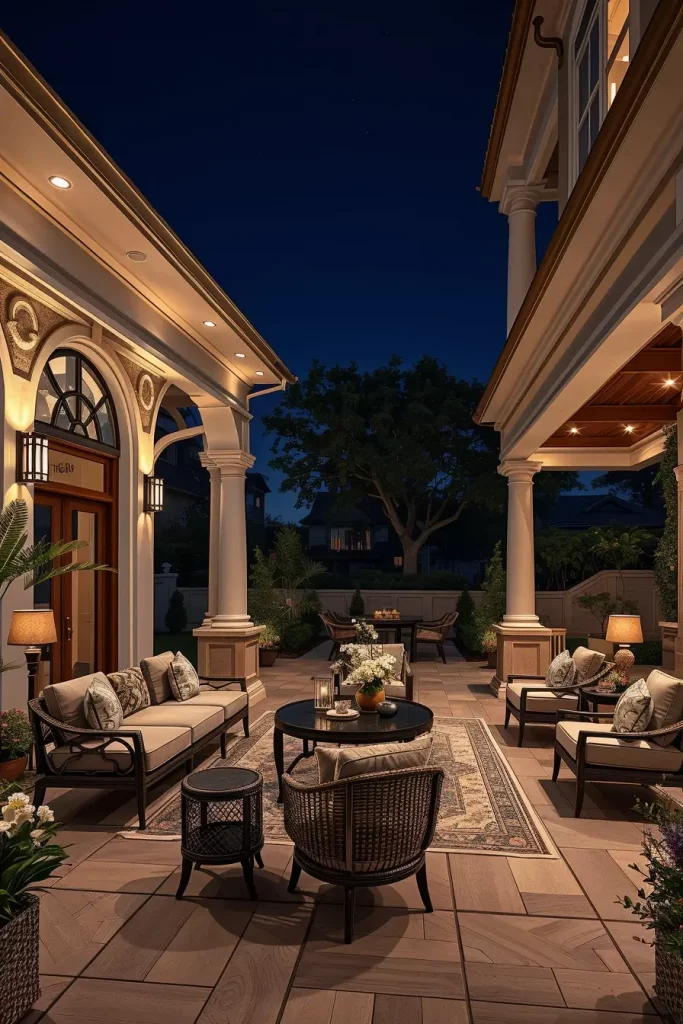
From my professional standpoint, custom lighting creates emotional value that off-the-shelf products cannot replicate. Publications like Interior Design Magazine frequently emphasize customization as a marker of high-quality design.
What should be added to these projects is long-term maintenance planning. I always recommend selecting components that can be serviced or updated without altering the original design.
Sustainable Yet Artistic Outdoor Lighting Innovations
Sustainability and artistic expression are no longer opposing goals in outdoor lighting design. I integrate eco-conscious solutions that maintain visual sophistication while reducing environmental impact.
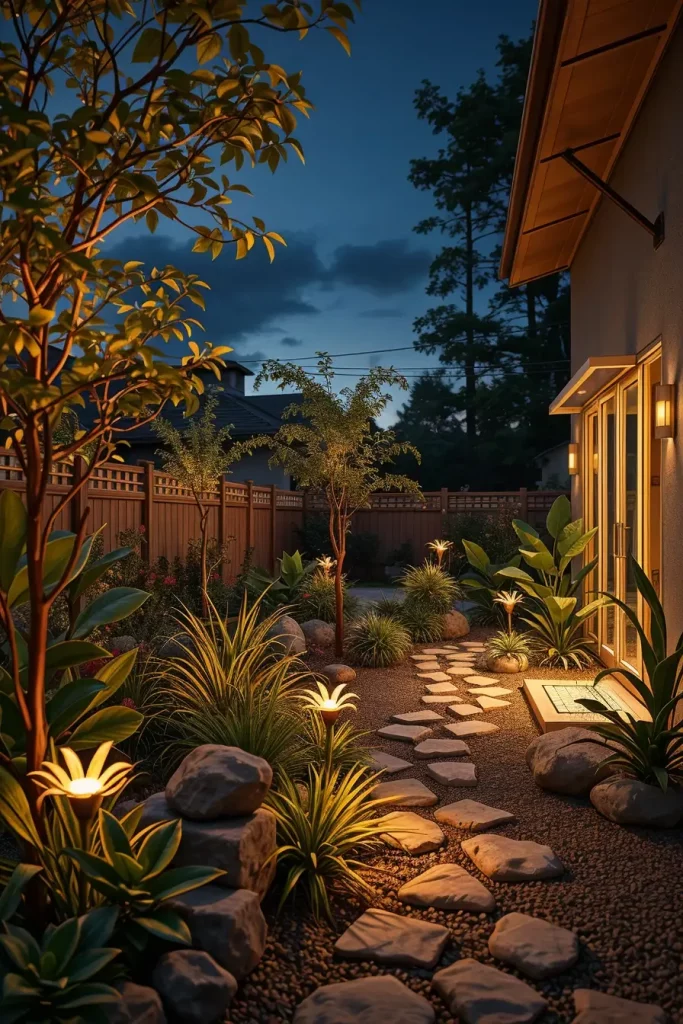
Solar-powered fixtures, low-energy LEDs, and recyclable materials are key components of my approach. These elements blend seamlessly into modern outdoor environments when paired with thoughtful placement and refined forms.
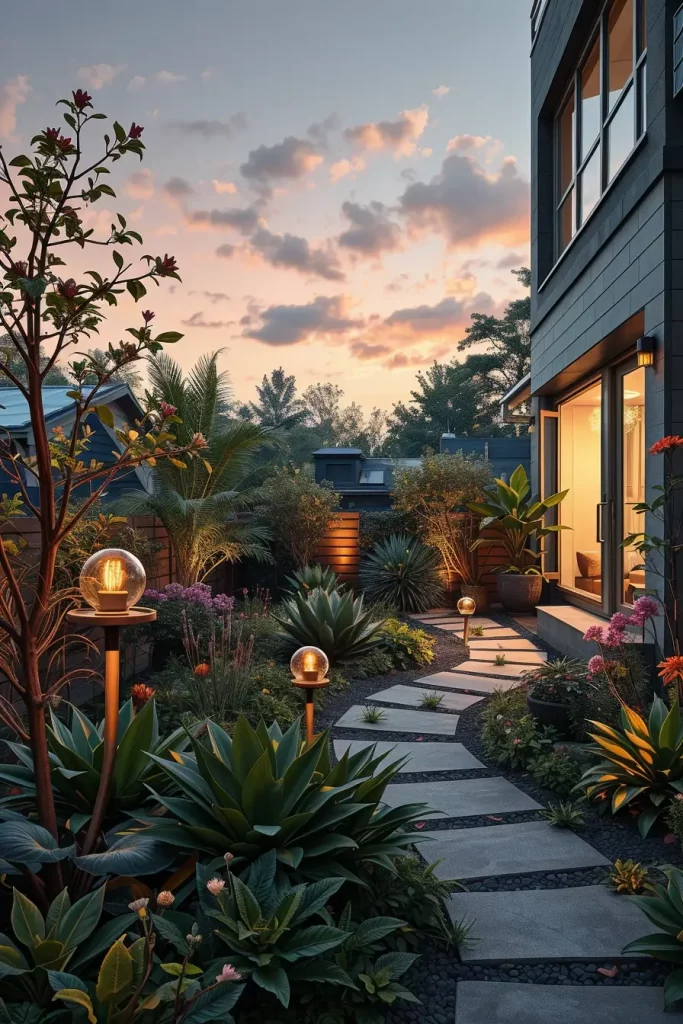
In my experience, sustainable lighting appeals to clients who value longevity and responsibility. Industry discussions from the American Society of Landscape Architects consistently highlight the growing importance of environmentally sensitive lighting strategies.
To strengthen these designs, I recommend incorporating smart controls that optimize energy use based on occupancy and ambient light conditions.
Large-Scale Sculptural Lighting For Luxury Outdoor Spaces
Large-scale sculptural lighting defines luxury outdoor spaces by creating unforgettable visual moments. I use these installations to anchor expansive terraces, courtyards, or garden layouts.
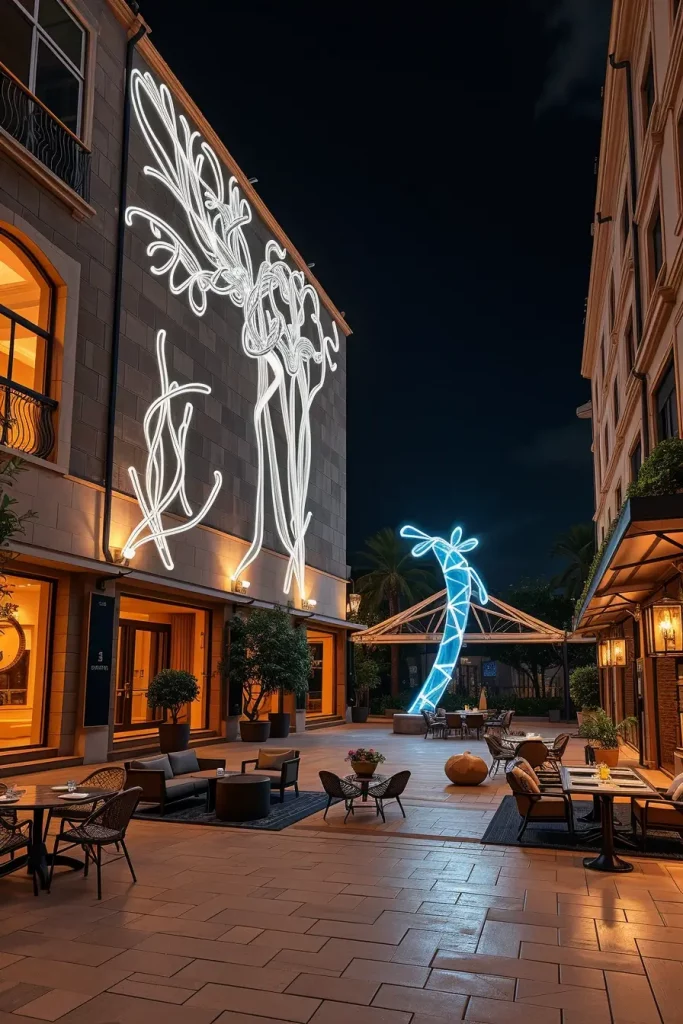
These fixtures often feature bold proportions, integrated lighting technology, and durable finishes suited for long-term exposure. When positioned strategically, they complement outdoor furniture arrangements and architectural sightlines.
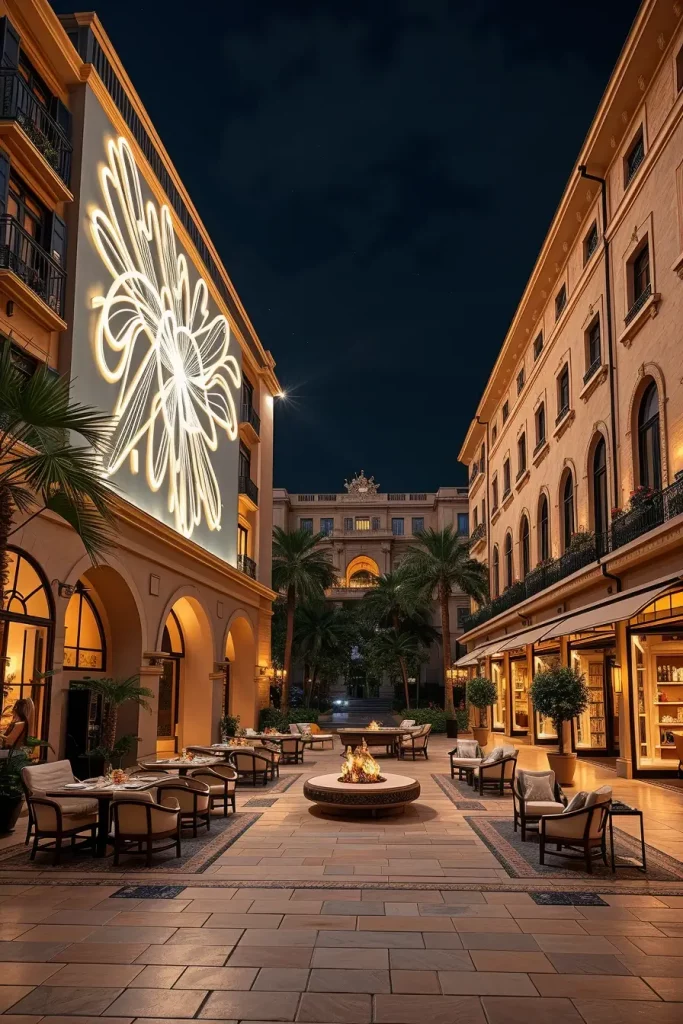
From my perspective, luxury lighting succeeds when it balances drama with restraint. Designers featured in Forbes Home frequently stress that scale should enhance, not overpower, the environment, a principle I apply carefully.
What is often missing is supporting illumination. I recommend pairing sculptural lighting with subtle secondary fixtures to maintain functionality without diluting the statement.
Outdoor lighting ideas for 2026 show that light is no longer just a necessity but a powerful design tool. By combining function, artistry, and innovation, exterior spaces can become expressive, comfortable, and visually compelling after dark. I invite you to share your thoughts, experiences, or favorite lighting ideas in the comments and join the conversation.