
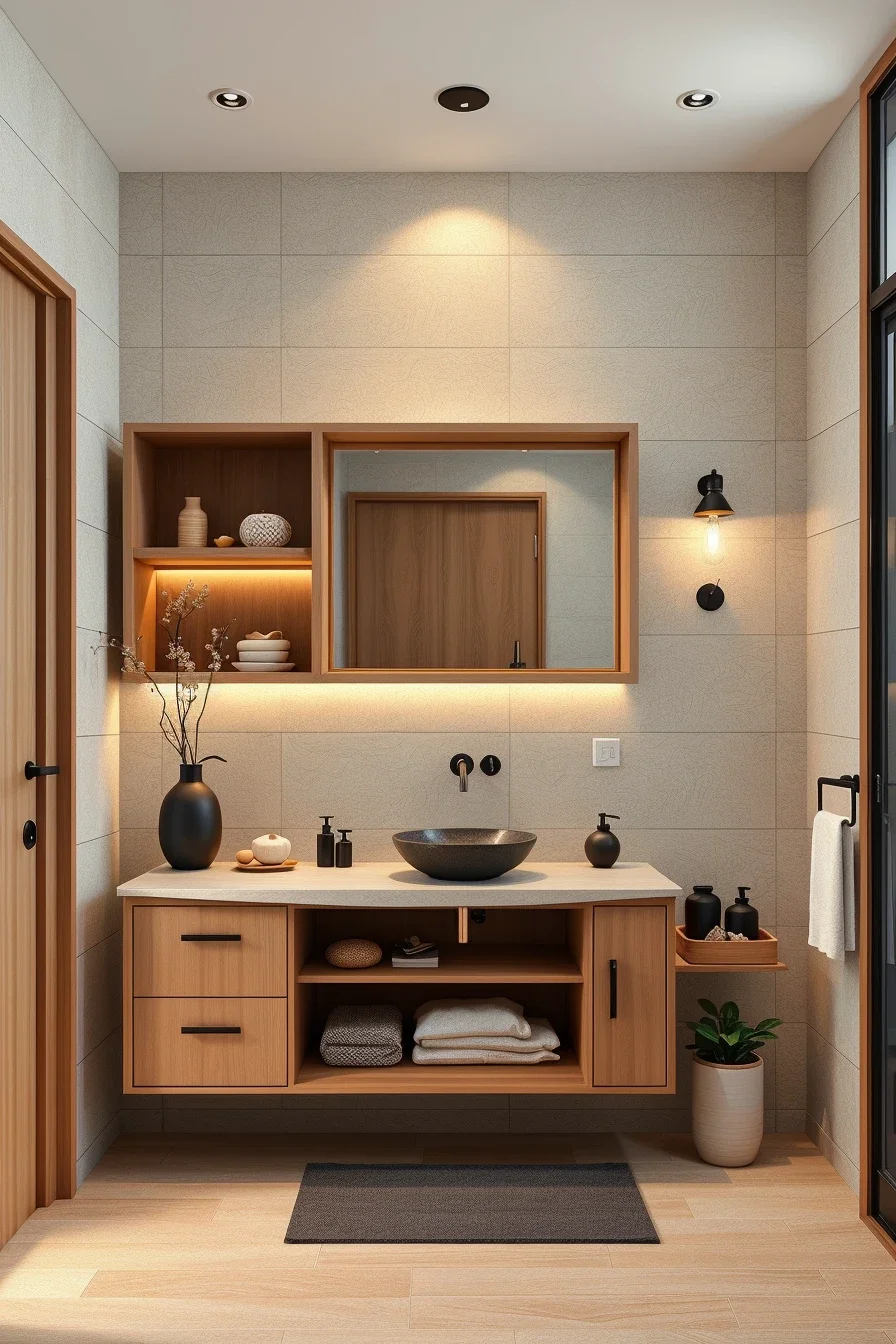
Minimalist bathroom aesthetics have become a leading trend in modern interior design, offering a perfect balance of simplicity, functionality, and elegance. By focusing on clean lines, uncluttered spaces, and carefully selected materials, minimalist bathrooms create a calming environment that feels both luxurious and timeless. Neutral color palettes, natural textures, and streamlined fixtures work together to enhance the sense of openness and serenity. Whether you prefer a warm organic style, a sleek contemporary look, or a Japandi-inspired retreat, minimalist design can transform any bathroom into a peaceful sanctuary. Thoughtful details such as floating vanities, frameless glass showers, and hidden storage solutions help maintain a refined and clutter-free appearance. In this article, you’ll discover inspiring minimalist bathroom aesthetics that combine creativity, comfort, and modern sophistication.
Serene All-White Minimalist Bathroom Retreat
I find that an all-white bathroom remains one of the most timeless approaches to minimalist bathroom aesthetics. Crisp white walls, large-format porcelain tiles, and a seamless layout create a peaceful atmosphere that feels bright and spacious. Natural daylight becomes a major design feature in this type of interior, reflecting off surfaces and enhancing the sense of cleanliness and calm. This approach works especially well in both small and large bathrooms because it visually expands the space while maintaining a refined appearance.
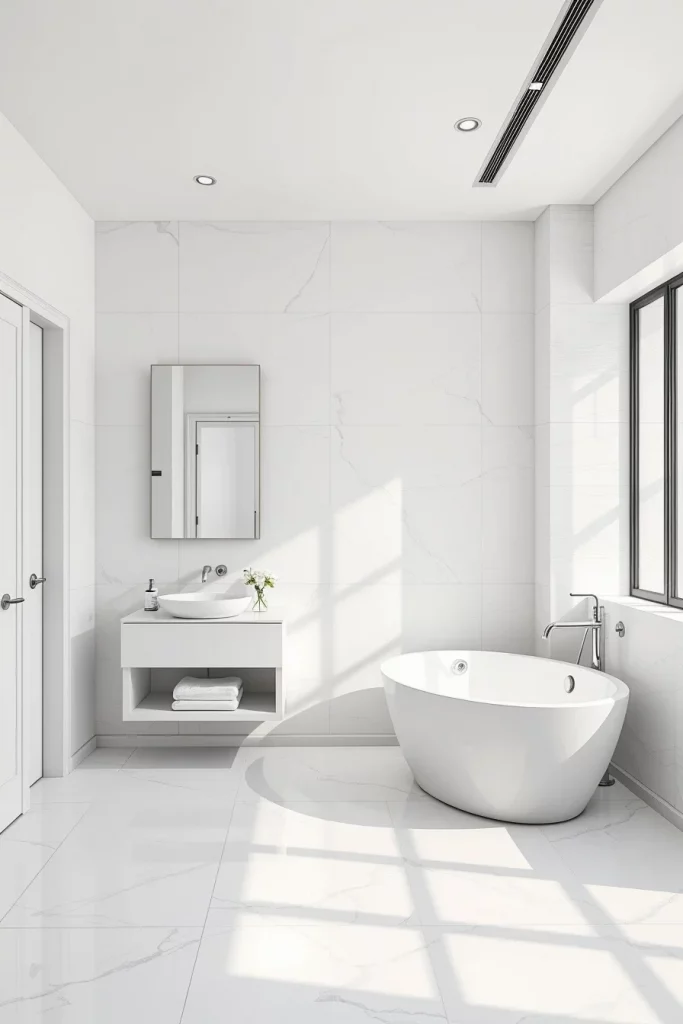
When designing an all-white bathroom, I prefer incorporating a floating vanity with a matte white finish, a frameless mirror, and integrated storage compartments. These elements help reduce visual clutter while maintaining everyday functionality. White countertops, concealed hardware, and a minimalist freestanding bathtub contribute to a cohesive and sophisticated environment. Soft textiles such as white cotton towels and a subtle textured bath mat add comfort without disrupting the clean aesthetic.
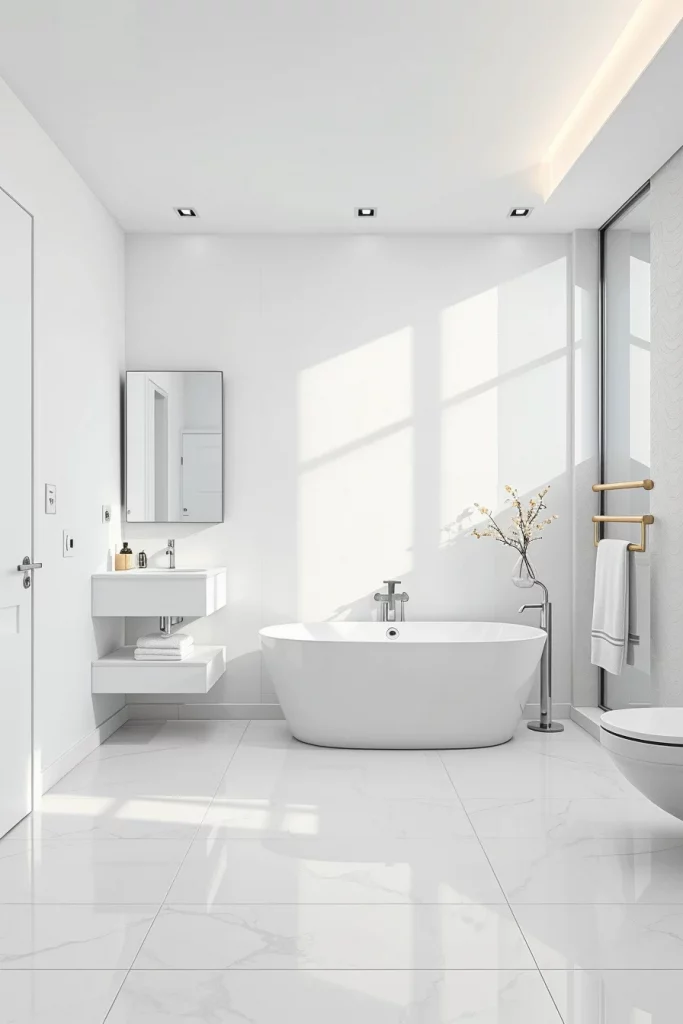
In my experience, the key to preventing an all-white bathroom from feeling sterile is introducing subtle variations in texture. Many interior designers featured in leading design publications recommend combining glossy and matte surfaces to add depth. I often use textured ceramic wall tiles or lightly veined stone surfaces to create visual interest while preserving the minimalist look.
To complete this design, I would add a few carefully selected accessories such as a small ceramic vase, a sculptural soap dispenser, and a hidden LED lighting system. These finishing touches enhance the atmosphere without compromising the simplicity that defines successful minimalist bathrooms.
Warm Beige Minimalist Bathroom With Organic Textures
A warm beige palette creates a welcoming interpretation of the minimalist aesthetic while maintaining the simplicity that defines minimalist interiors. I often recommend this style for homeowners who want a bathroom that feels relaxing and connected to nature. Soft beige walls, creamy stone surfaces, and natural textures work together to establish a tranquil environment that feels comfortable throughout the year.
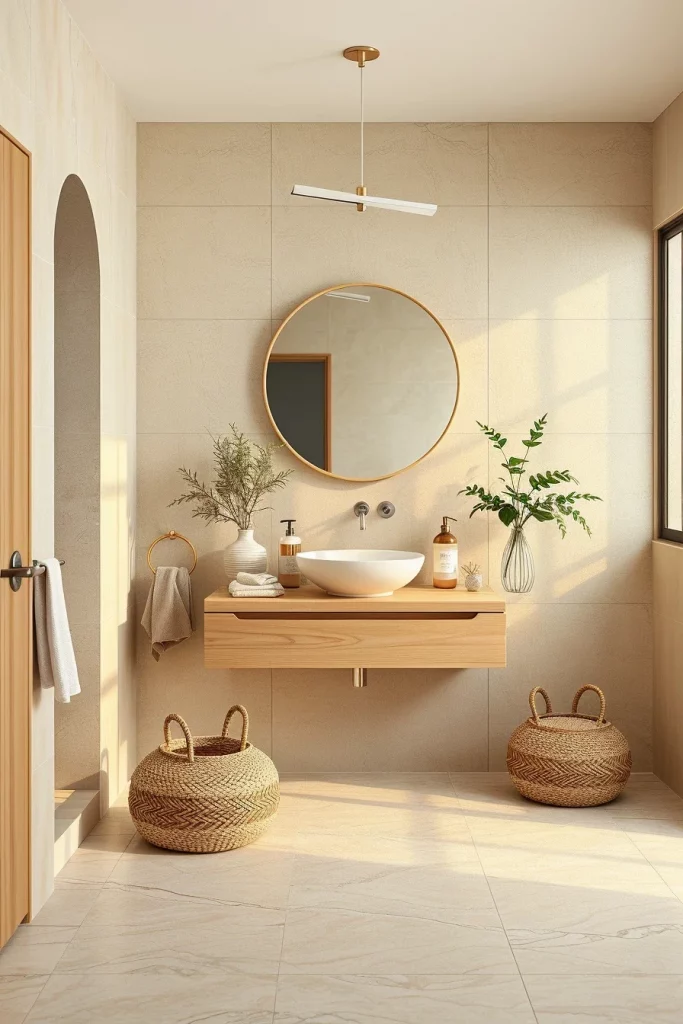
I like incorporating organic materials such as travertine countertops, textured plaster walls, and woven storage baskets. A floating vanity crafted from light oak complements the beige color palette while adding warmth and character. Rounded mirrors, simple ceramic sinks, and matte fixtures help soften the overall design and contribute to a more inviting atmosphere.
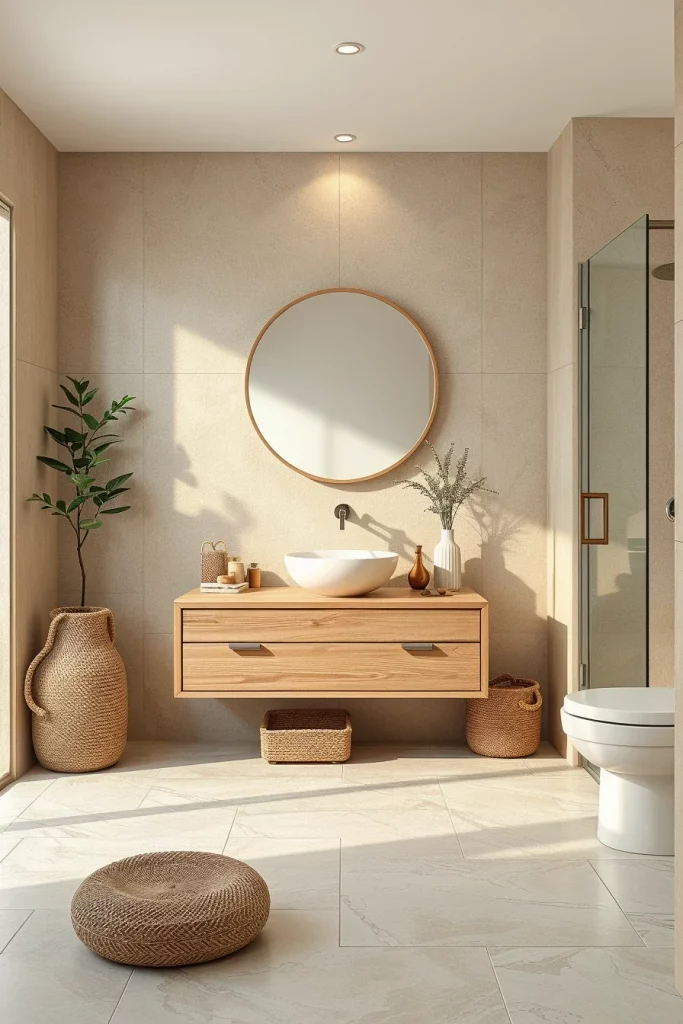
From my perspective, organic textures are what make this bathroom style stand out. Many professional designers emphasize the importance of layering natural materials rather than relying solely on color. I often combine stone, wood, linen, and handmade ceramics to create a balanced composition that feels authentic and sophisticated.
I would also include subtle greenery such as a potted olive tree or eucalyptus arrangement. These natural elements reinforce the connection to nature and elevate the overall visual appeal without overwhelming the room.
Floating Vanity Designs For A Clean Minimalist Look
One of the most effective features in modern minimalist bathrooms is the floating vanity. By lifting cabinetry off the floor, the room immediately feels more open and spacious. I often use floating vanities in projects where maximizing visual space is a priority, particularly in smaller bathrooms that benefit from a lighter appearance.
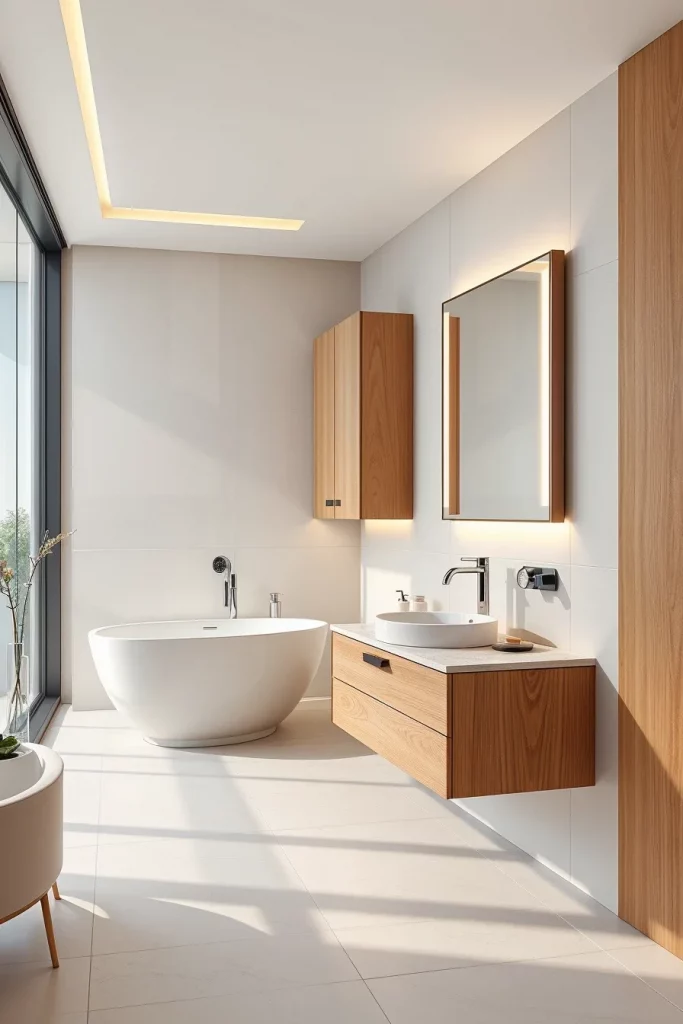
For optimal functionality, I prefer vanities with handle-free drawers, integrated sinks, and hidden organizational systems. Materials such as natural oak, matte lacquer, and engineered stone provide durability while maintaining a sleek profile. Under-vanity LED lighting enhances the floating effect and introduces a subtle sense of luxury.
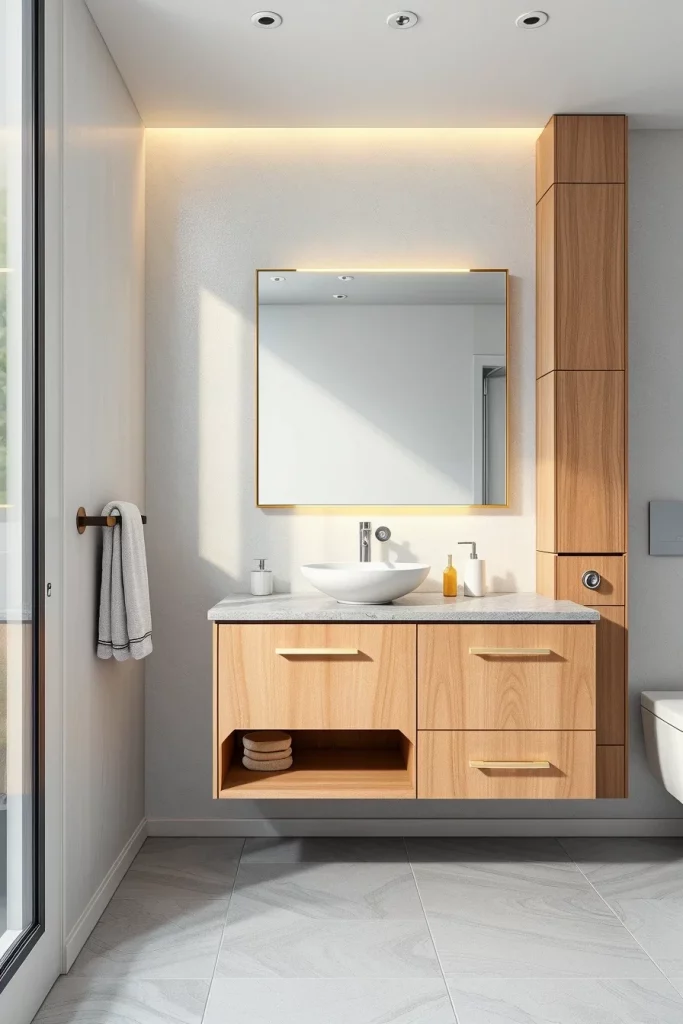
In my opinion, a floating vanity succeeds because it combines aesthetics with practicality. Design experts frequently highlight the importance of reducing visual weight in contemporary bathrooms, and floating furniture accomplishes this beautifully. The open floor area beneath the vanity also makes cleaning easier and contributes to a more hygienic environment.
To strengthen the design, I would pair the vanity with a large frameless mirror and wall-mounted faucets. These additions emphasize clean lines and support the overall minimalist composition.
Floor-To-Ceiling Stone Walls In Minimalist Bathrooms
Floor-to-ceiling stone walls introduce a sense of luxury while preserving the restraint associated with minimalist bathroom aesthetics. I find that natural stone creates an impressive visual statement without requiring excessive decoration. Large stone slabs with subtle veining provide texture, depth, and sophistication while maintaining a calm atmosphere.
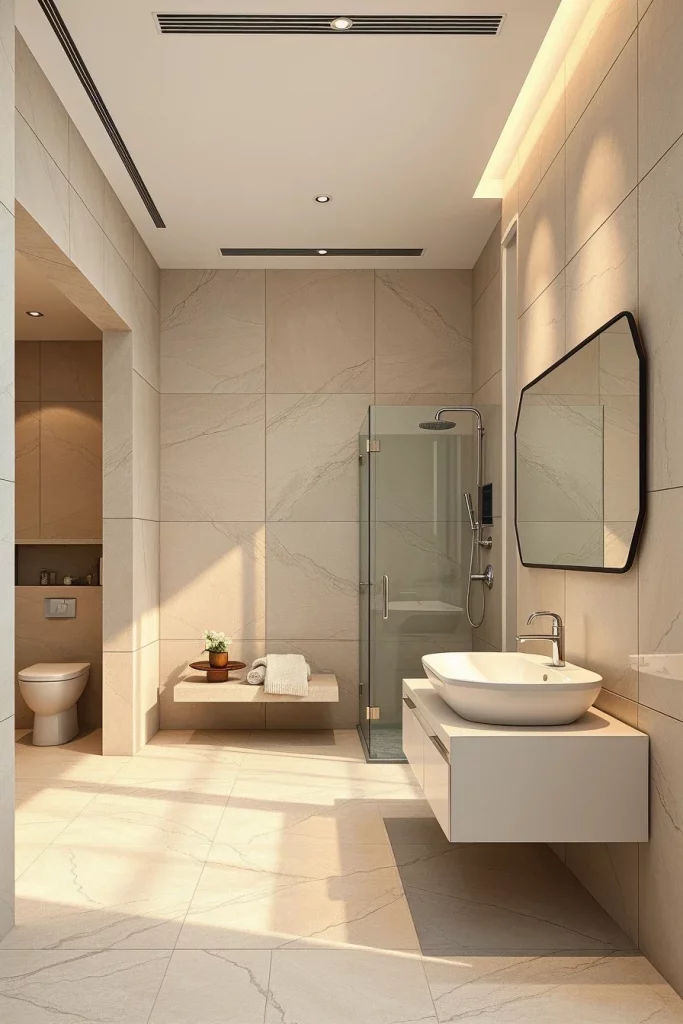
I typically recommend materials such as travertine, limestone, or lightly veined marble. These surfaces pair beautifully with minimalist fixtures, floating vanities, and frameless glass shower enclosures. By limiting the color palette to soft neutrals, the stone itself becomes the focal point of the room without appearing overwhelming.
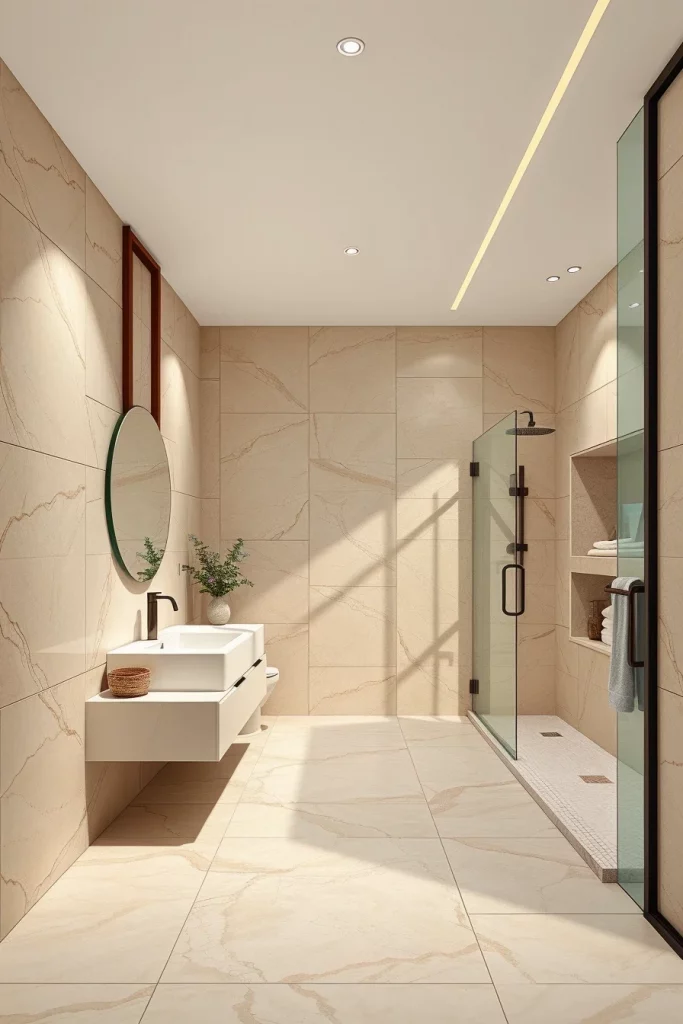
Personally, I appreciate how stone walls add permanence and durability to a bathroom design. Many respected interior designers suggest investing in high-quality natural materials because they age gracefully and remain visually appealing for years. This philosophy aligns perfectly with minimalist principles that prioritize quality over quantity.
For an even more refined result, I would incorporate recessed shelving carved directly into the stone wall. This solution maintains clean lines while providing practical storage for daily essentials.
Japandi-Inspired Minimalist Bathroom Aesthetics
Japandi design combines Japanese simplicity with Scandinavian warmth, making it one of the most compelling trends in modern minimalist bathrooms. I often recommend this style to homeowners seeking a balance between functionality, comfort, and understated beauty. Neutral colors, natural materials, and carefully curated furnishings create a space that feels peaceful and highly intentional.
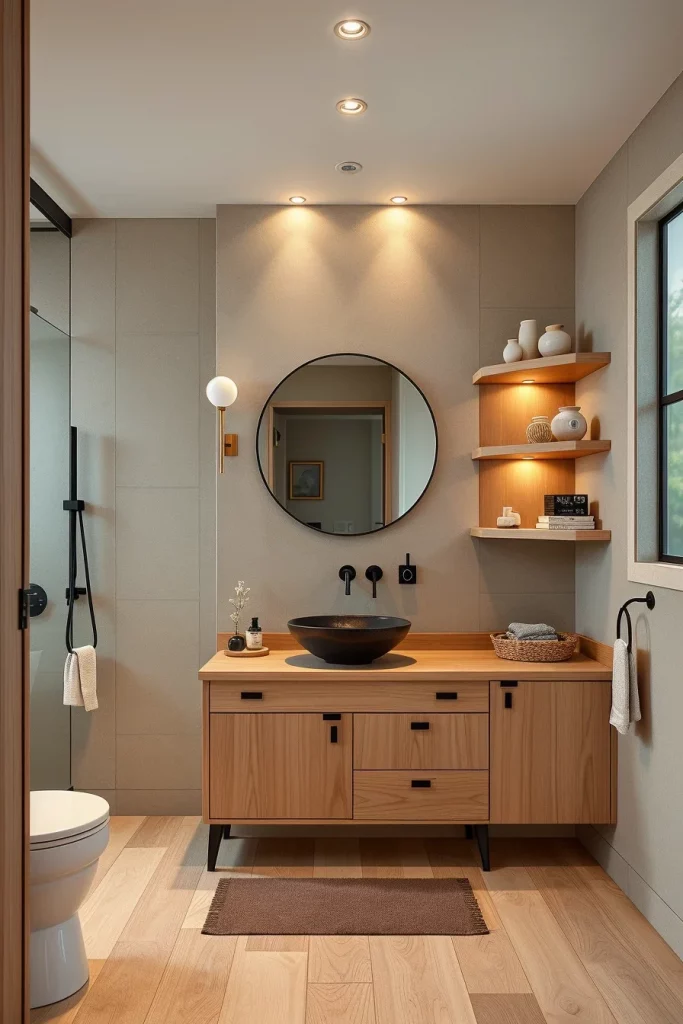
I usually incorporate light wood cabinetry, stone sinks, simple black fixtures, and handcrafted accessories. Open shelving is kept minimal and displays only essential items. Textural contrasts between wood, ceramic, and stone add visual interest while maintaining a calm and uncluttered environment.
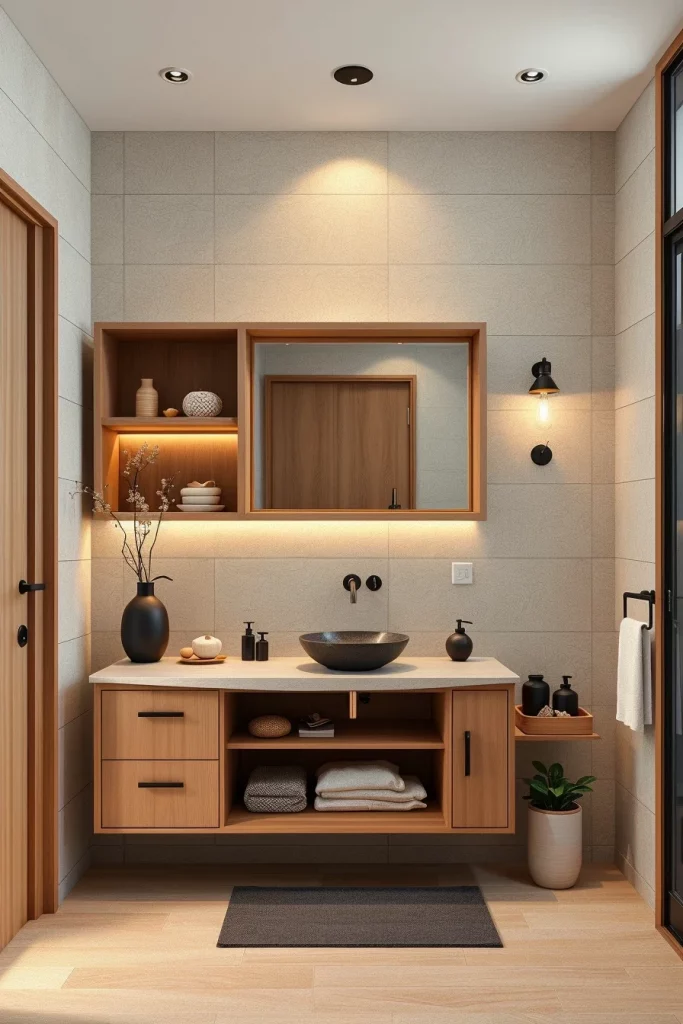
From my experience, Japandi bathrooms encourage a more mindful daily routine. Many design professionals praise this style for its focus on craftsmanship and simplicity. Rather than filling the room with decorative objects, I prefer selecting fewer but higher-quality elements that contribute to both beauty and functionality.
To complete the space, I would add soft ambient lighting and a small wooden stool near the bathtub. These subtle details reinforce the relaxing atmosphere and strengthen the connection between modern design and natural materials.
Soft Lighting Techniques For A Minimalist Bathroom Ambiance
I believe lighting is one of the most important yet often overlooked elements of successful minimalist bathroom aesthetics. Soft, layered lighting transforms a simple bathroom into a relaxing retreat while maintaining a clean and uncluttered appearance. Instead of relying on a single overhead fixture, I prefer combining ambient, task, and accent lighting to create a balanced environment that feels comfortable throughout the day and evening.
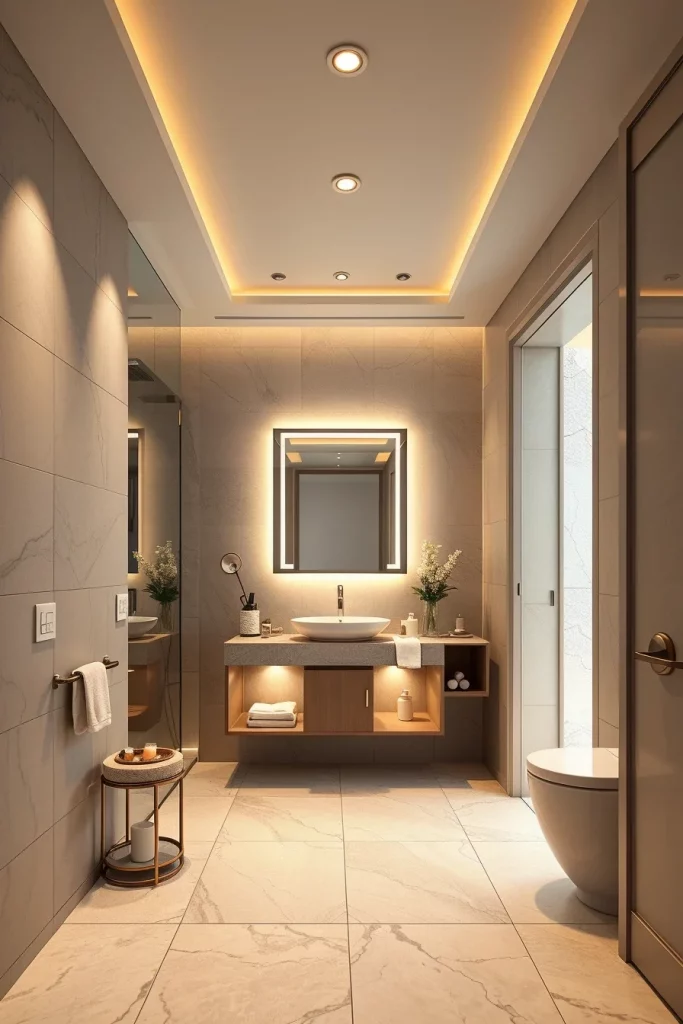
In my projects, I often use recessed ceiling lights, concealed LED strips beneath floating vanities, and backlit mirrors. These fixtures provide practical illumination without introducing visual clutter. Warm white light works particularly well in minimalist interiors because it softens hard surfaces such as stone, porcelain, and glass. Dimmable lighting systems also allow the atmosphere to adapt to different moods and daily routines.
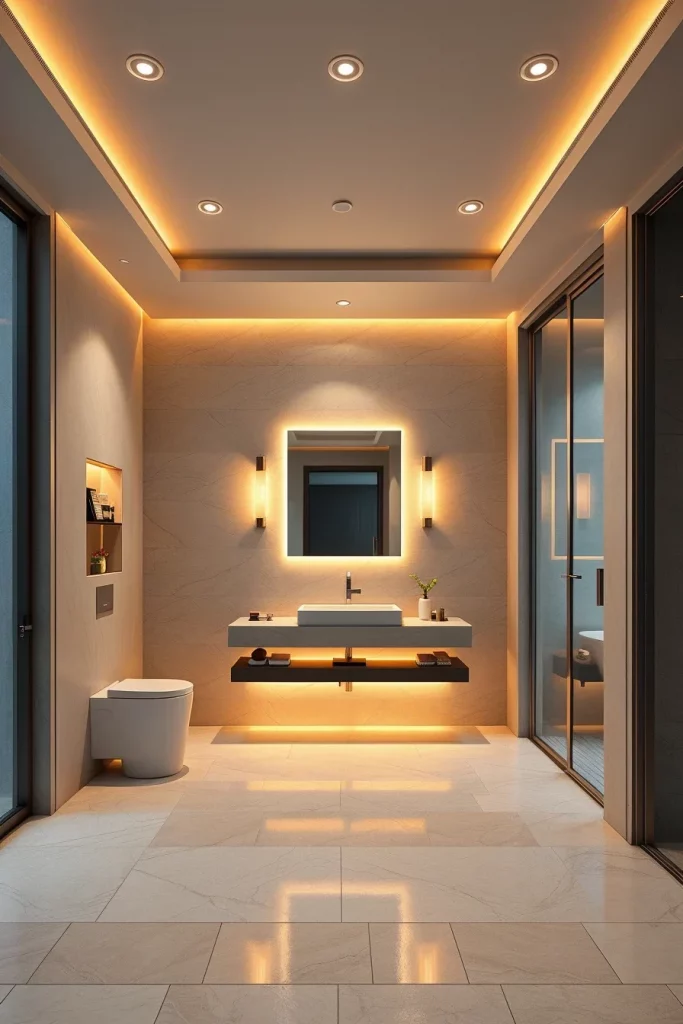
From my experience, many professional designers recommend treating lighting as an architectural feature rather than simply a necessity. I agree with this approach because strategically placed lighting highlights textures, enhances depth, and contributes to the overall sense of luxury. Even the most simple bathroom design can feel significantly more sophisticated when illuminated thoughtfully.
To complete this concept, I would incorporate discreet wall sconces or hidden cove lighting near the ceiling. These additions create a gentle glow that enhances the serene character of modern minimalist bathrooms.
Modern Black And White Minimalist Bathroom Concepts
A black and white palette offers a bold yet timeless interpretation of the minimalist aesthetic. I often recommend this design approach to homeowners who appreciate strong visual contrast while still valuing simplicity. Crisp white surfaces combined with carefully selected black accents create a dramatic but highly controlled interior that feels elegant and contemporary.
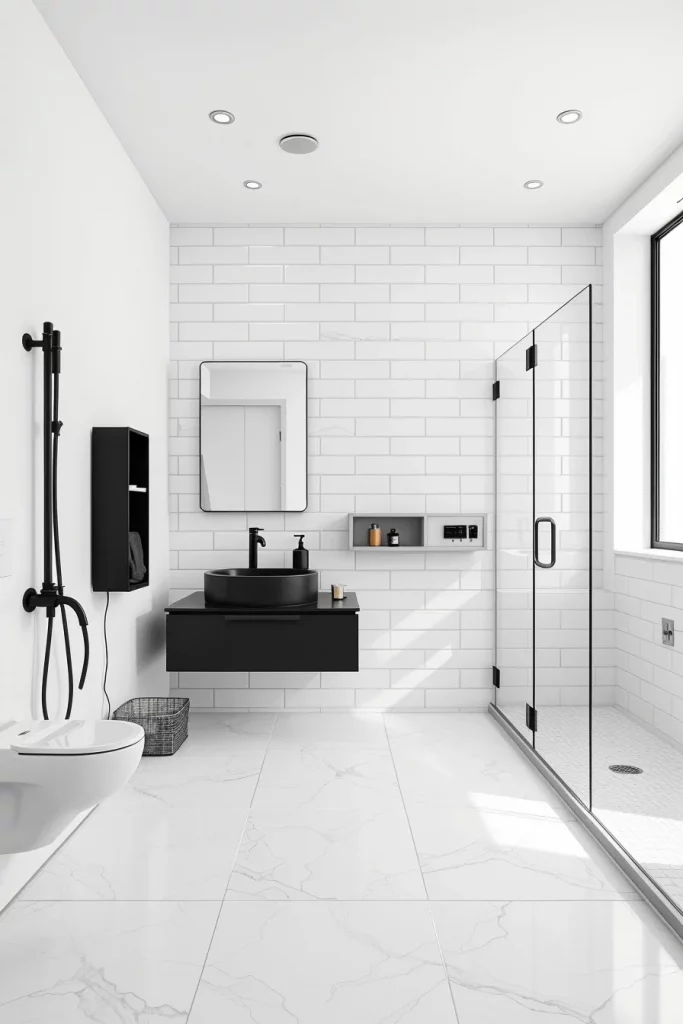
I typically include matte black faucets, black-framed mirrors, and sleek shower fixtures against white walls and flooring. A floating vanity in either black oak or matte white helps maintain balance within the design. Large-format tiles, frameless glass partitions, and integrated storage solutions preserve the clean lines that define minimalist interiors.
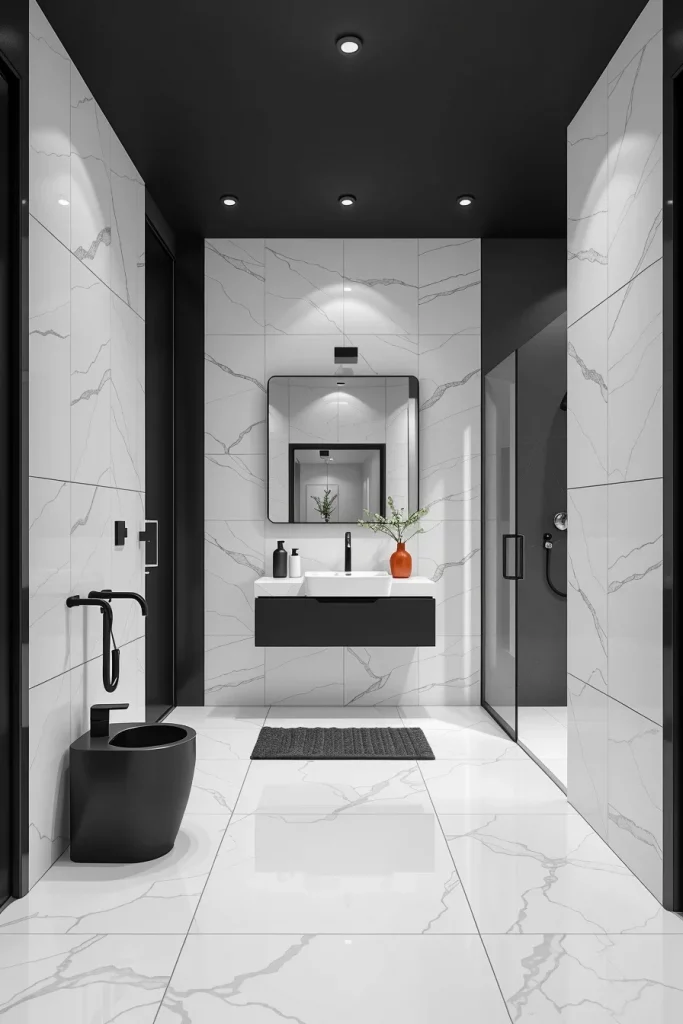
Personally, I find that restraint is especially important in black and white bathrooms. Rather than adding numerous decorative pieces, I focus on high-quality materials and precise detailing. Design publications frequently emphasize that contrast alone can provide enough visual interest, eliminating the need for excessive ornamentation.
I would also introduce subtle texture through stone surfaces, ribbed cabinetry, or textured wall finishes. These elements prevent the room from feeling flat while maintaining the sophisticated simplicity associated with modern minimalist bathroom aesthetics.
Compact Minimalist Bathrooms That Feel Spacious
Small bathrooms can benefit tremendously from minimalist design principles. I often find that removing unnecessary elements immediately improves both functionality and visual comfort. Through strategic planning, even a compact bathroom can feel open, airy, and highly efficient while preserving a stylish appearance.
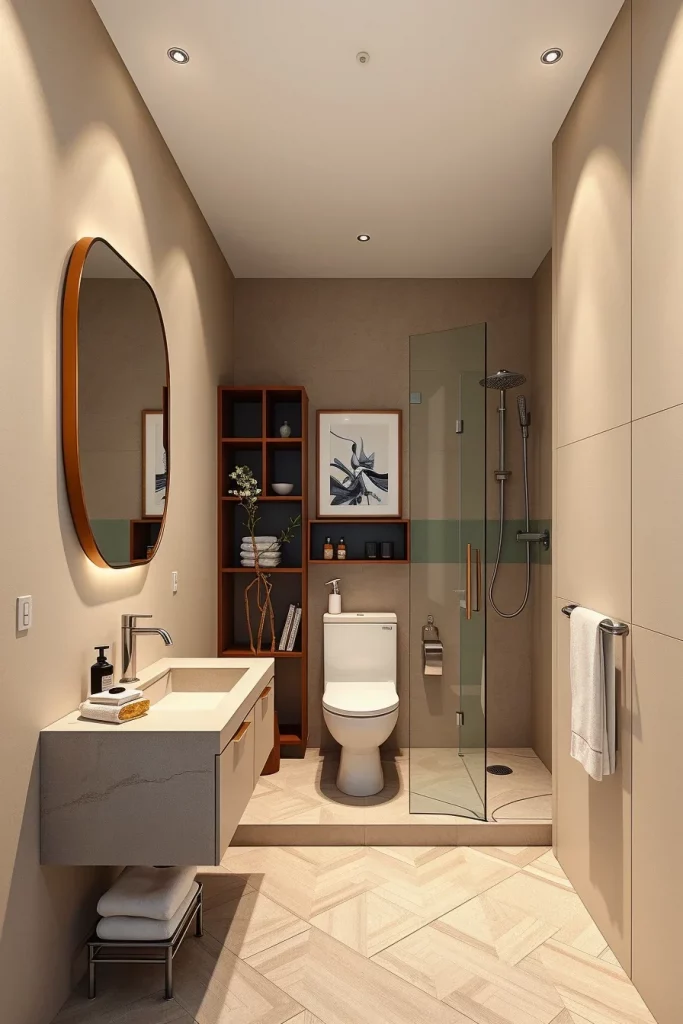
When designing smaller spaces, I prefer wall-mounted toilets, floating vanities, frameless shower enclosures, and large mirrors. These features reduce visual barriers and create a stronger sense of openness. Light color palettes, reflective materials, and integrated storage systems further enhance the perception of space while keeping everyday essentials organized.
In my experience, scale plays a critical role in compact bathrooms. Oversized fixtures can overwhelm the room, while carefully proportioned furniture creates a more harmonious environment. Many experienced interior designers advocate selecting fewer but better-designed pieces, and I find this advice particularly valuable in smaller spaces.
To maximize practicality, I would add recessed wall niches, mirrored storage cabinets, and concealed shelving. These solutions provide necessary storage without interrupting the clean aesthetic that defines successful minimalist bathrooms.
Frameless Glass Shower Designs For Seamless Elegance
Frameless glass showers are among the most effective features for creating a sophisticated minimalist bathroom. I appreciate how they allow the eye to move freely throughout the space, making the room appear larger and more cohesive. The absence of bulky frames supports the streamlined appearance that is central to minimalist bathroom aesthetics.
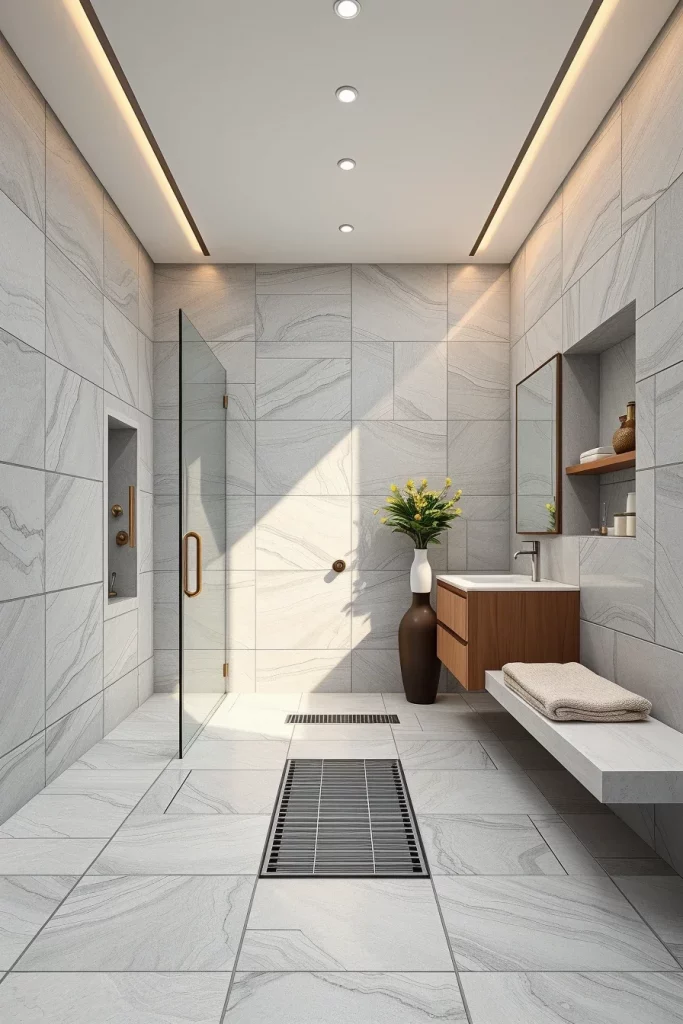
I often pair frameless glass enclosures with large-format stone tiles, linear drains, and wall-mounted fixtures. These elements contribute to a seamless design that feels modern and luxurious. Clear glass also allows architectural materials and beautiful tilework to remain fully visible, enhancing the overall visual impact of the room.
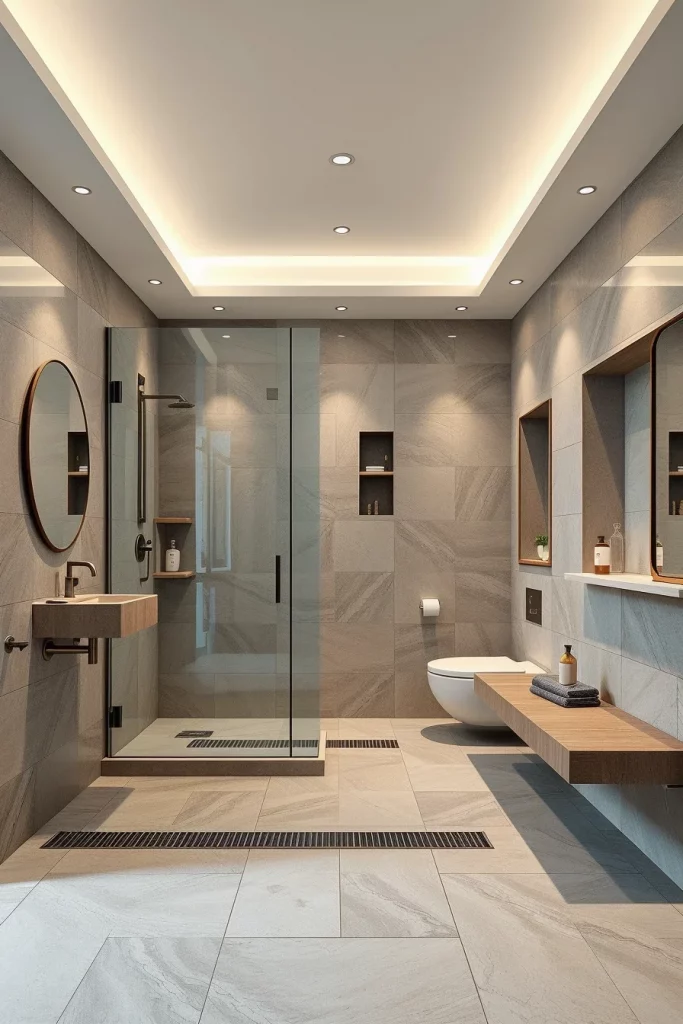
From my perspective, the simplicity of frameless glass aligns perfectly with minimalist principles. Many contemporary designers favor these shower systems because they prioritize openness and clarity over decorative complexity. I have found that they work equally well in both large spa-inspired bathrooms and compact urban interiors.
To elevate the design further, I would include a built-in shower bench and recessed storage niche. These practical additions maintain the clean appearance while improving comfort and functionality.
Natural Wood Accents In Minimalist Bathroom Interiors
Natural wood introduces warmth and character into modern minimalist bathrooms without compromising simplicity. I often use wood accents to balance cooler materials such as stone, porcelain, and glass. The result is a more inviting environment that feels comfortable, grounded, and visually appealing.
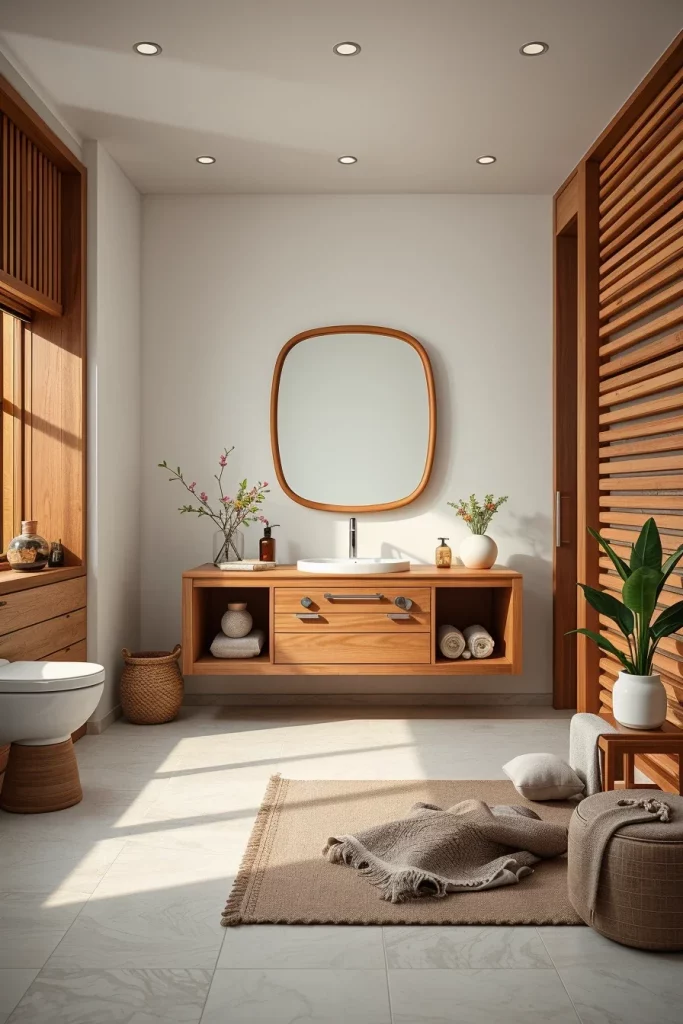
My preferred applications include floating oak vanities, wood-framed mirrors, slatted accent walls, and custom shelving. These features add texture and depth while preserving the uncluttered appearance associated with minimalist interiors. Lighter wood species work especially well because they maintain a bright and airy atmosphere.
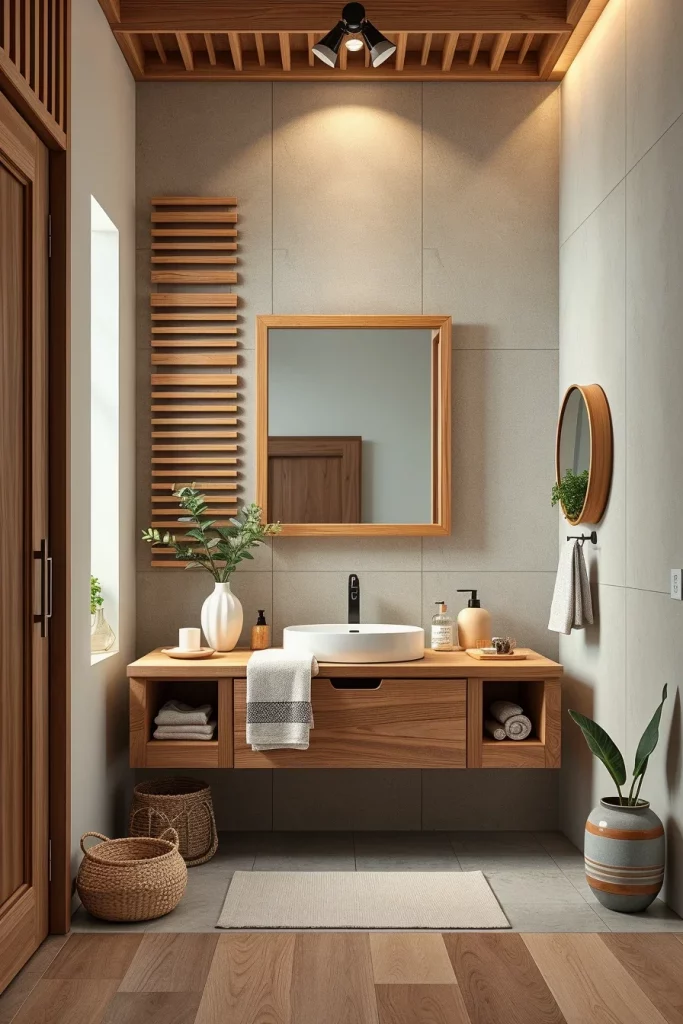
In my opinion, natural wood is one of the most effective ways to humanize minimalist spaces. Many respected designers encourage incorporating organic materials to prevent modern interiors from feeling overly sterile. I agree with this philosophy because wood adds warmth that cannot be replicated by synthetic materials.
To complete this style, I would add linen textiles, handcrafted ceramic accessories, and a few carefully chosen plants. These complementary elements reinforce the connection to nature and help create a bathroom that feels both elegant and relaxing.
Luxury Minimalist Bathrooms With Spa-Like Features
When I design luxury minimalist bathrooms, I focus on creating an atmosphere that feels peaceful, uncluttered, and restorative. One of the most effective approaches is combining clean architectural lines with high-end materials such as natural stone, porcelain slabs, and warm wood accents. A spa-like environment benefits from spacious layouts, frameless glass shower enclosures, floating vanities, and subtle ambient lighting. These elements contribute to timeless minimalist bathroom aesthetics while ensuring everyday practicality.
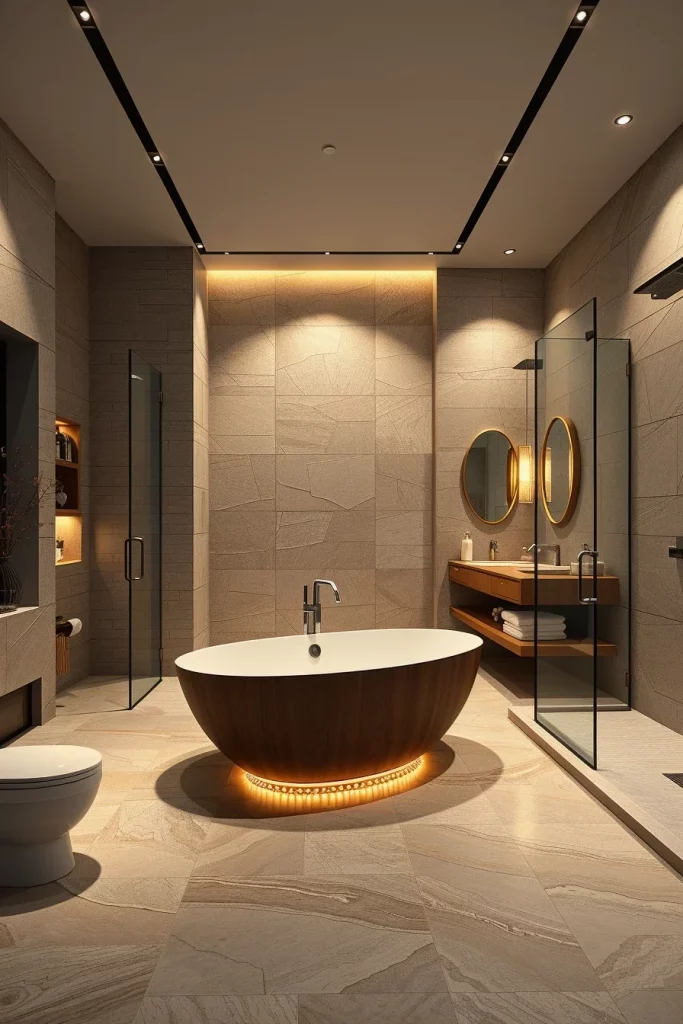
I often recommend incorporating a freestanding soaking tub, oversized walk-in shower, heated flooring, and integrated LED lighting. A floating vanity helps maintain visual openness, while concealed storage keeps countertops clear. Natural stone surfaces add texture without overwhelming the minimalist aesthetic. Soft neutral tones such as beige, ivory, and warm gray reinforce the relaxing atmosphere and support the sophisticated appearance expected in luxury minimalist spaces.
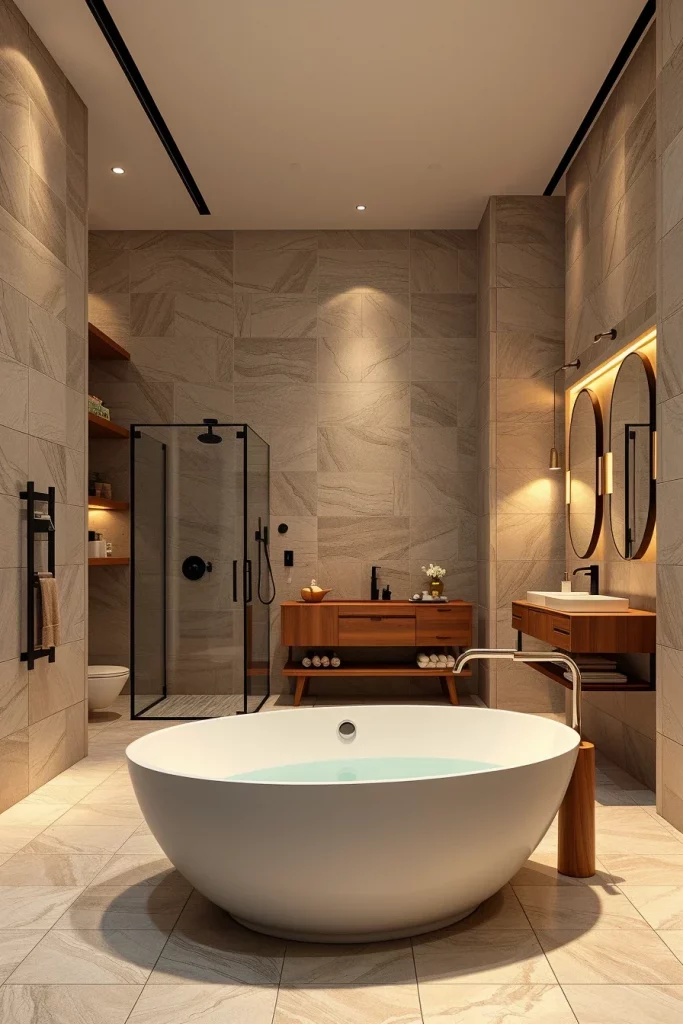
In my experience, many professional designers featured in leading interior design publications emphasize the importance of sensory comfort. Features such as rainfall showerheads, dimmable lighting, plush towels, and carefully selected natural materials elevate the experience without adding visual clutter. I find that luxury in minimalist bathrooms comes from quality rather than quantity.
To complete this design, I would add aromatherapy accessories, discreet wall niches for bath products, and layered lighting zones that can be adjusted throughout the day to enhance relaxation and functionality.
Curved Architectural Elements In Modern Minimalist Bathrooms
Curved forms introduce softness and visual interest into modern minimalist bathroom aesthetics. I often use rounded walls, arched doorways, curved shower partitions, and softly contoured ceilings to balance the straight lines typically found in minimalist interiors. These architectural details create a welcoming environment while preserving simplicity and spatial harmony.
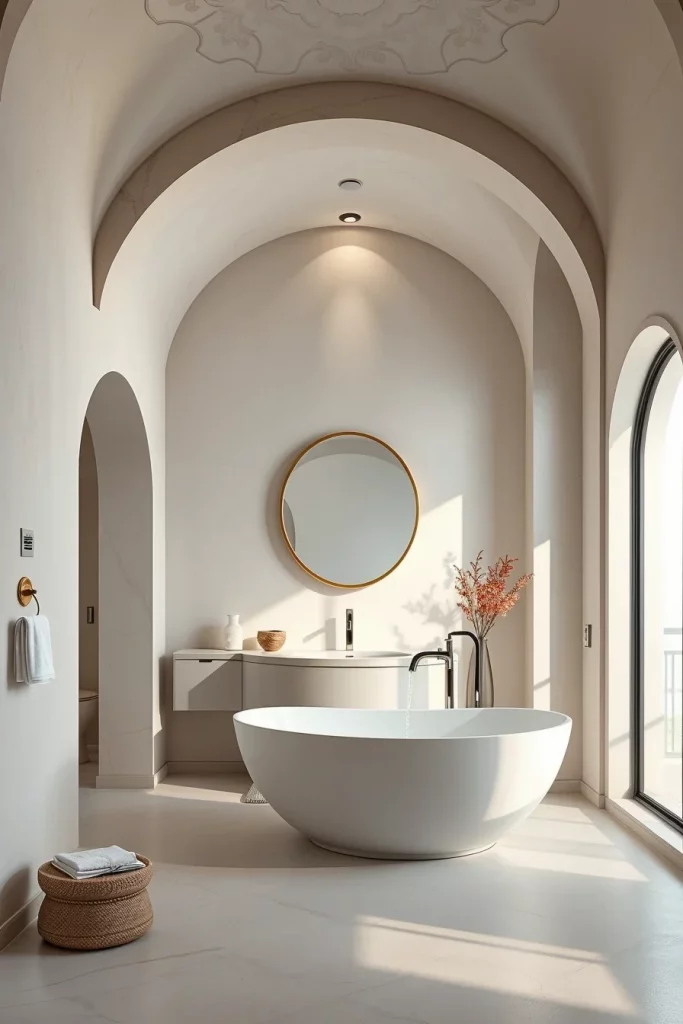
I like to pair curved architecture with floating vanities featuring rounded corners, oval mirrors, sculptural sinks, and curved bathtubs. These furnishings reinforce the design language and help establish cohesion throughout the room. Light-colored plaster finishes, seamless surfaces, and concealed fixtures allow the curves to become the focal point without overwhelming the space.
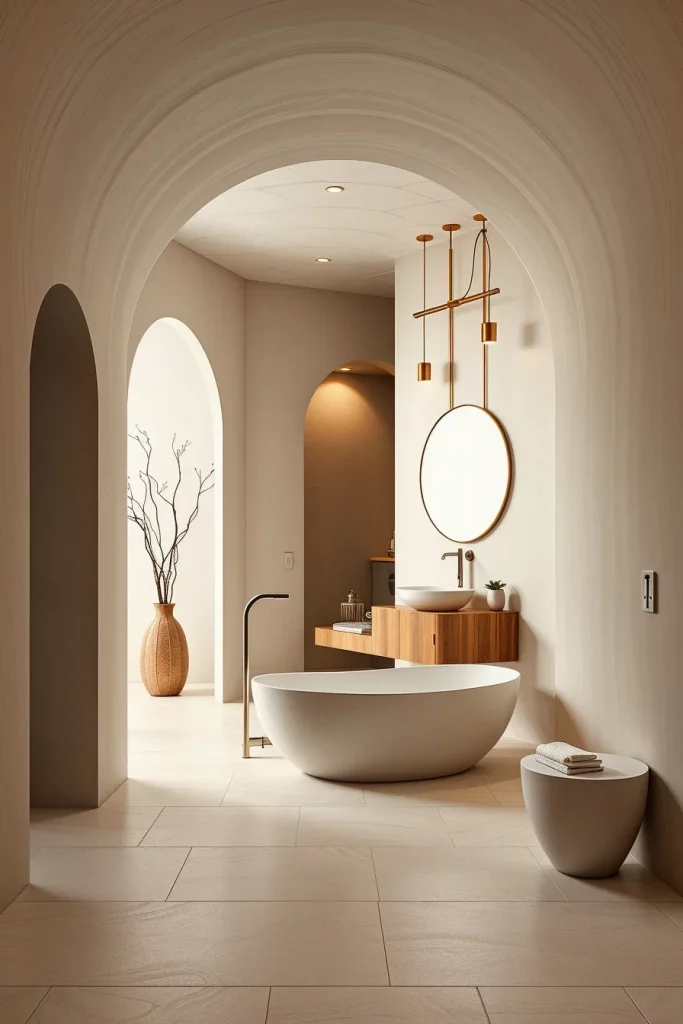
From my perspective, curved elements help minimalist bathrooms feel more inviting and less rigid. Many contemporary designers have embraced organic forms because they create a stronger connection between architecture and comfort. I have found that even subtle curves can significantly improve the visual flow of a bathroom.
To further enhance this concept, I would incorporate indirect cove lighting that follows the curved architecture, emphasizing the soft shapes and creating gentle shadows that enrich the overall design.
Concrete Finishes For Contemporary Minimalist Aesthetics
Concrete has become one of the most versatile materials in contemporary minimalist bathroom aesthetics. I appreciate its ability to provide texture, depth, and visual character while maintaining a restrained and sophisticated appearance. Concrete walls, floors, and countertops establish a clean backdrop that works exceptionally well in modern minimalist interiors.
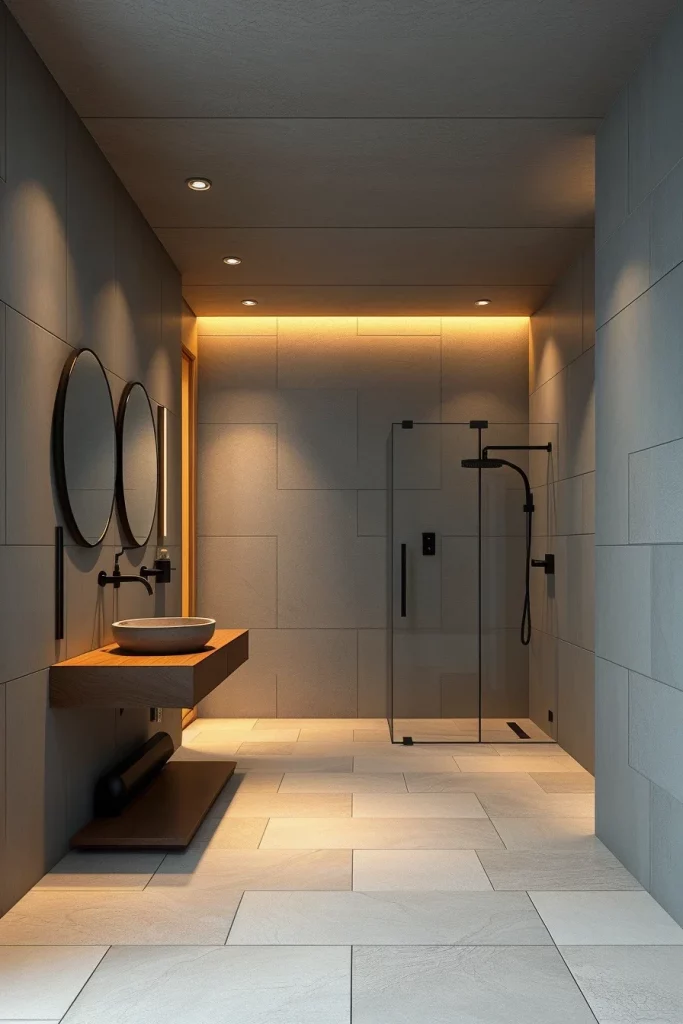
I often combine polished concrete surfaces with black fixtures, floating wood vanities, frameless glass shower panels, and simple geometric lighting. The contrast between raw concrete and natural wood creates balance and warmth. Built-in shelving and seamless concrete sinks contribute to the streamlined aesthetic while maximizing practicality.
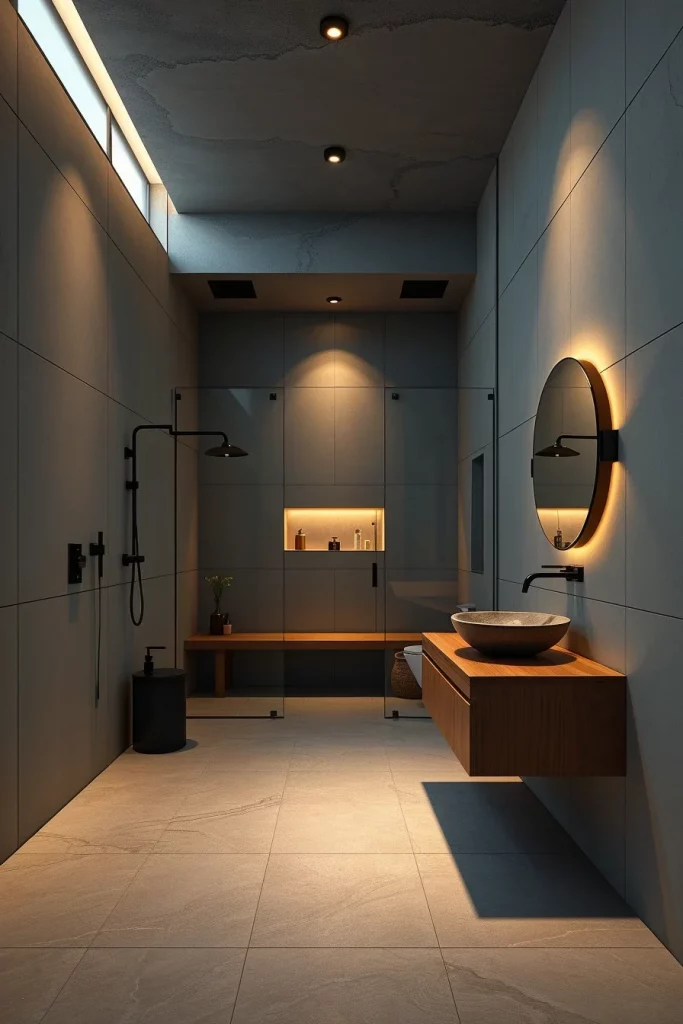
In my experience, concrete is particularly effective because it delivers visual texture without requiring excessive decoration. Many contemporary interior designers use concrete to achieve an industrial-inspired look that remains elegant and timeless. When properly sealed and maintained, it also performs exceptionally well in moisture-prone environments.
For added comfort, I would introduce subtle warm lighting, textured bath linens, and a few carefully selected natural accessories that soften the industrial character without compromising the minimalist design.
Minimalist Bathrooms With Hidden Storage Solutions
One of the defining characteristics of successful minimalist bathroom aesthetics is the absence of visible clutter. Hidden storage solutions allow me to maintain clean surfaces while ensuring that all essential items remain easily accessible. This approach creates a calm and organized environment that supports both functionality and visual simplicity.
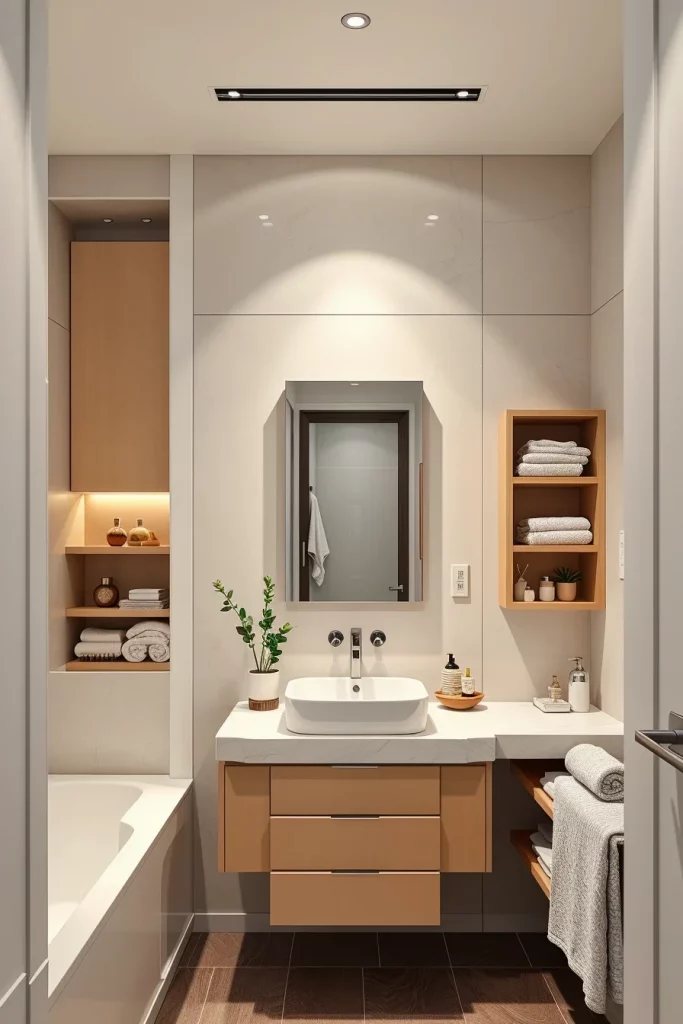
I frequently incorporate recessed medicine cabinets, concealed wall niches, under-vanity drawers, built-in shelving behind mirrors, and full-height storage cabinets integrated into the architecture. Push-to-open cabinetry eliminates the need for visible hardware, while floating vanities help preserve a spacious appearance. Every storage component is designed to blend seamlessly into the overall composition.
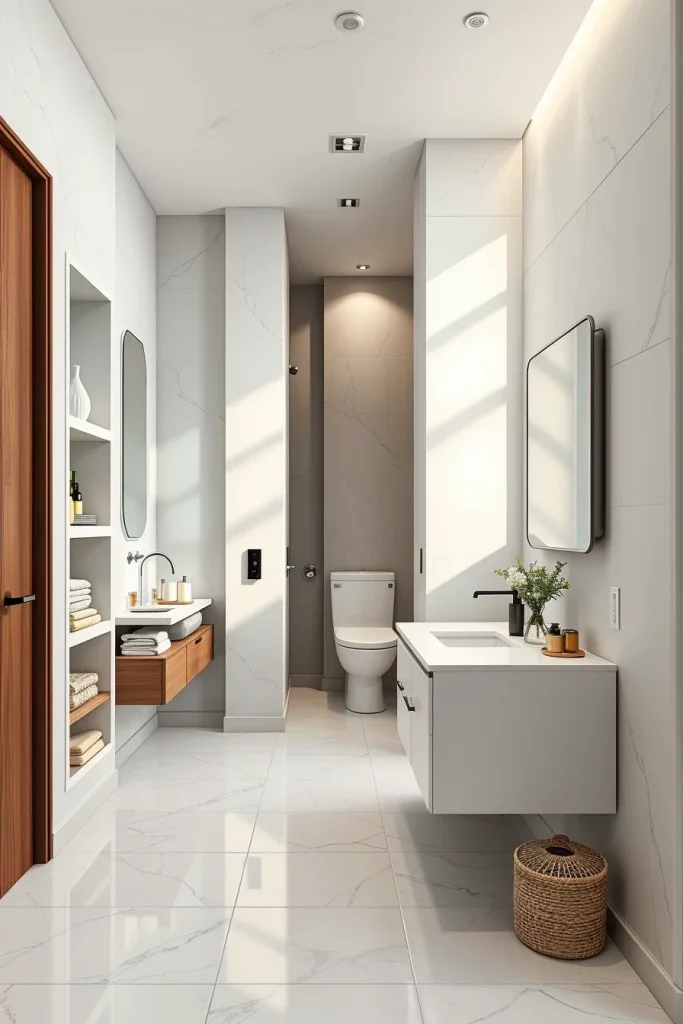
From my perspective, hidden storage is one of the most valuable investments in a minimalist bathroom. It allows homeowners to enjoy the benefits of simplicity without sacrificing convenience. Many professional organizers and interior designers emphasize that effective storage planning is essential for maintaining a clutter-free lifestyle.
I would also include dedicated compartments for toiletries, hair tools, cleaning supplies, and towels to ensure that every item has a designated place and contributes to long-term organization.
Monochromatic Color Schemes For Sophisticated Simplicity
Monochromatic palettes are a powerful tool for achieving refined minimalist bathroom aesthetics. I often select a single color family and use varying shades and textures to create visual depth without introducing unnecessary complexity. This approach produces a cohesive, elegant environment that feels both contemporary and timeless.
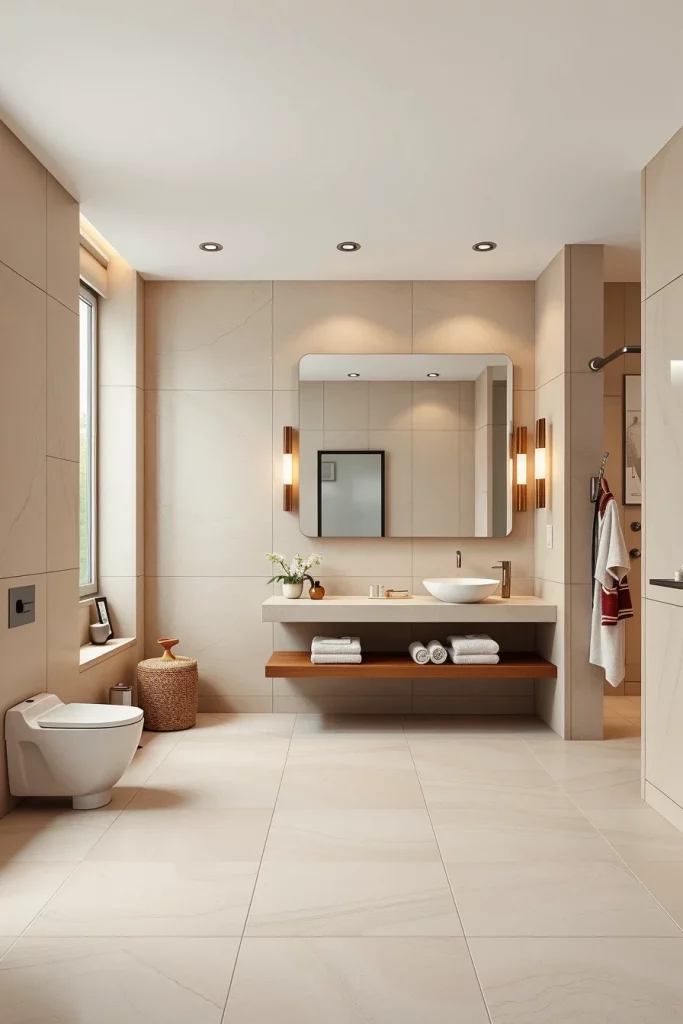
I frequently work with soft gray, warm beige, ivory, taupe, or charcoal palettes. Textured wall finishes, natural stone surfaces, matte cabinetry, and coordinating floor tiles add richness while maintaining harmony. Large-format tiles minimize grout lines and strengthen the seamless appearance that monochromatic designs require.
In my experience, monochromatic bathrooms create a sense of calm because the eye moves smoothly throughout the space. Many leading designers recommend focusing on texture rather than contrasting colors when designing minimalist interiors. This strategy allows subtle details to stand out while preserving simplicity.
To enrich the design further, I would add layered lighting, oversized mirrors, and carefully selected accessories in matching tones to enhance depth without disrupting the monochromatic composition.
High-End Marble Minimalist Bathroom Designs
I often recommend marble as one of the most effective materials for creating luxurious minimalist bathroom aesthetics. Large-format marble slabs instantly reduce visual clutter because they minimize grout lines while creating a seamless and sophisticated appearance. In this type of bathroom, I focus on clean architectural forms, open floor space, and carefully selected materials that allow the beauty of the stone to become the centerpiece of the room. Floor-to-ceiling marble surfaces create an elegant atmosphere while maintaining the simplicity that defines minimalist design.
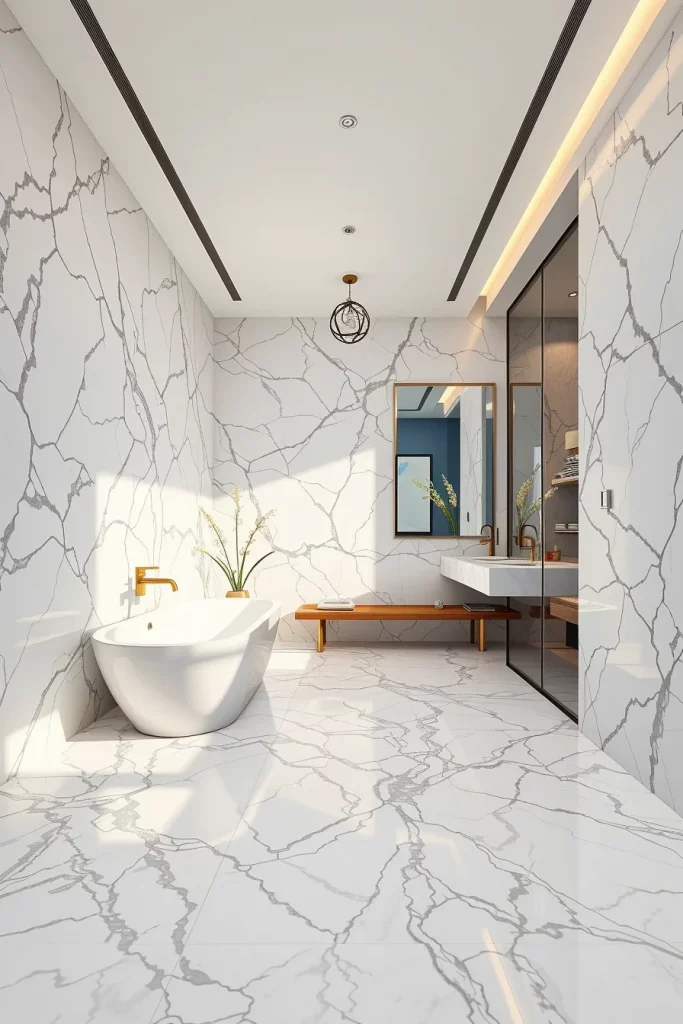
When designing this bathroom, I typically include a floating vanity with integrated storage, a frameless glass shower enclosure, wall-mounted faucets, and a freestanding bathtub. These elements preserve clean sightlines and contribute to a spacious feel. Hidden storage compartments help eliminate countertop clutter, while recessed lighting enhances the natural veining of the marble without overwhelming the design. Every furnishing serves both a practical and aesthetic purpose.
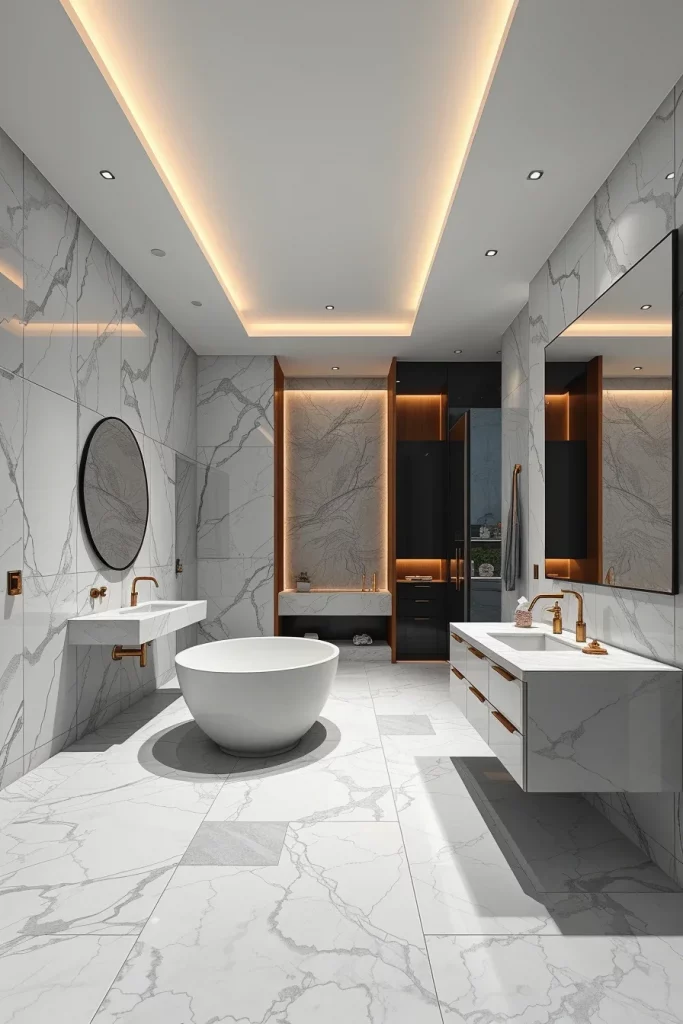
In my experience, many leading interior designers emphasize investing in fewer but higher-quality materials when creating a minimalist space. Marble is a perfect example because it provides visual richness without requiring excessive decoration. I find that combining marble with matte black or brushed nickel fixtures creates a modern and balanced appearance that feels timeless rather than trendy.
To complete this design, I would add under-vanity lighting, heated flooring, and oversized mirrors. These additions improve functionality while preserving the refined elegance of the overall concept.
Minimalist Wet Room Concepts For Modern Homes
A wet room is one of the most practical interpretations of minimalist bathroom aesthetics because it removes visual barriers and creates a completely open layout. I often use this concept in modern homes where homeowners want a streamlined and highly functional space. By integrating the shower area into the overall room design, the bathroom feels larger, brighter, and more connected.
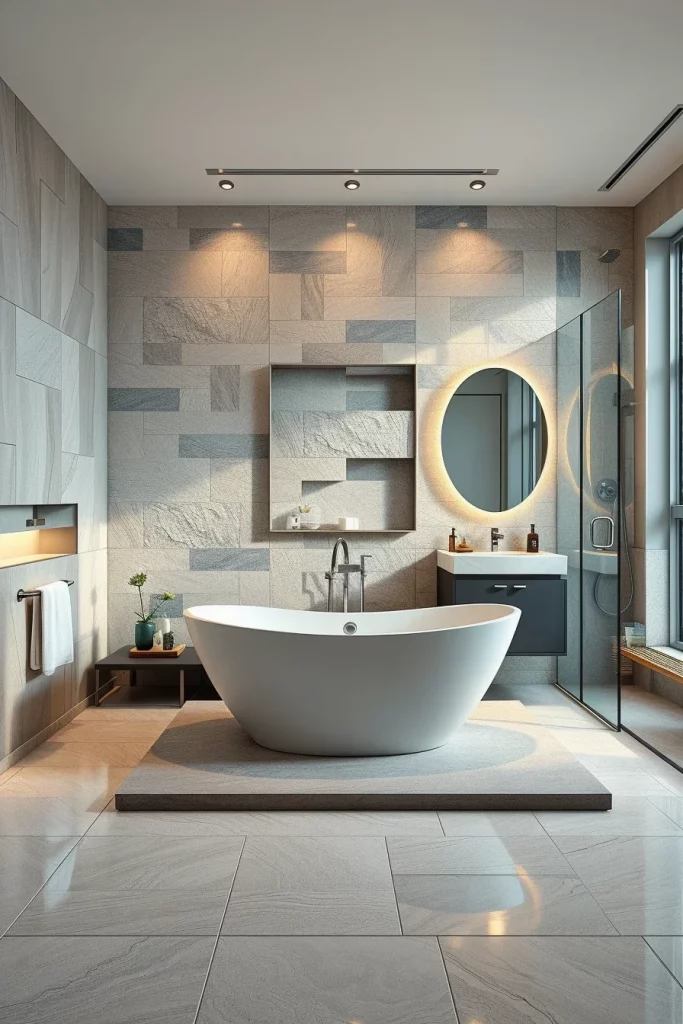
I usually incorporate large porcelain tiles, linear floor drains, floating vanities, frameless glass partitions, and wall-mounted toilets. These features contribute to easy maintenance and improve the overall visual flow. A built-in shower niche eliminates the need for bulky storage accessories, while subtle recessed lighting enhances the clean architectural lines throughout the room.
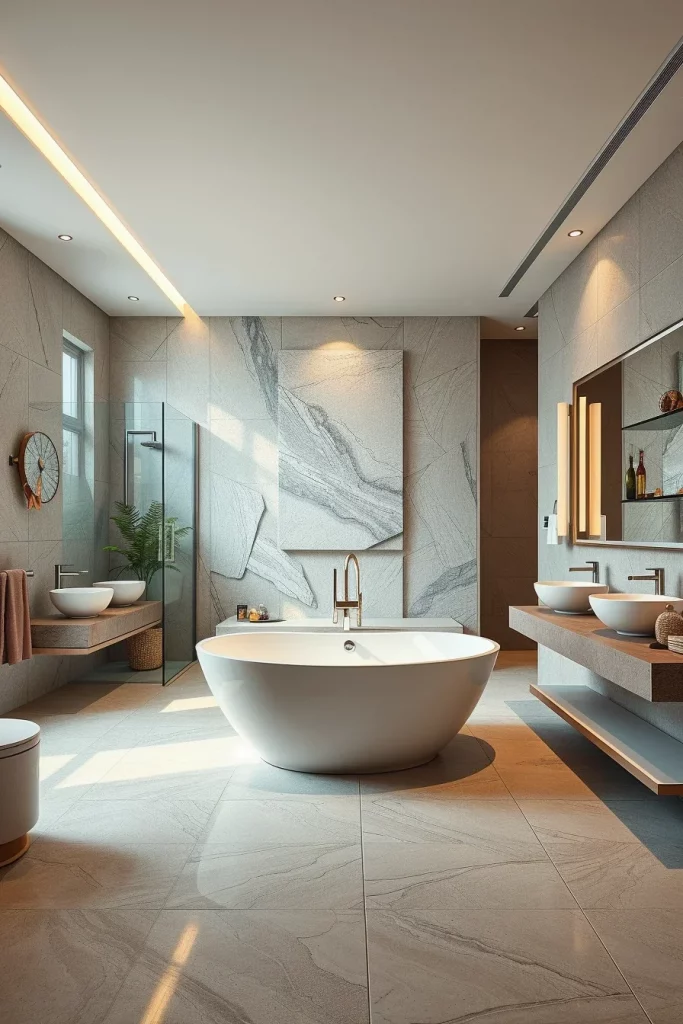
From my perspective, wet rooms work exceptionally well in both compact and spacious bathrooms. Design publications frequently highlight their accessibility benefits, but I also appreciate how they support a minimalist lifestyle by removing unnecessary visual elements. The result is a calm environment that feels both practical and luxurious.
If I wanted to enhance this concept further, I would add radiant floor heating and textured anti-slip flooring that matches the wall finishes. These details improve comfort without interrupting the minimalist aesthetic.
Creative Minimalist Bathrooms With Unique Geometric Details
One of my favorite approaches to minimalist bathroom aesthetics involves incorporating geometric elements that add personality without creating clutter. Geometric details can introduce visual interest while maintaining the clean simplicity that defines minimalist interiors. I often use subtle patterns and architectural shapes rather than decorative accessories to achieve this effect.
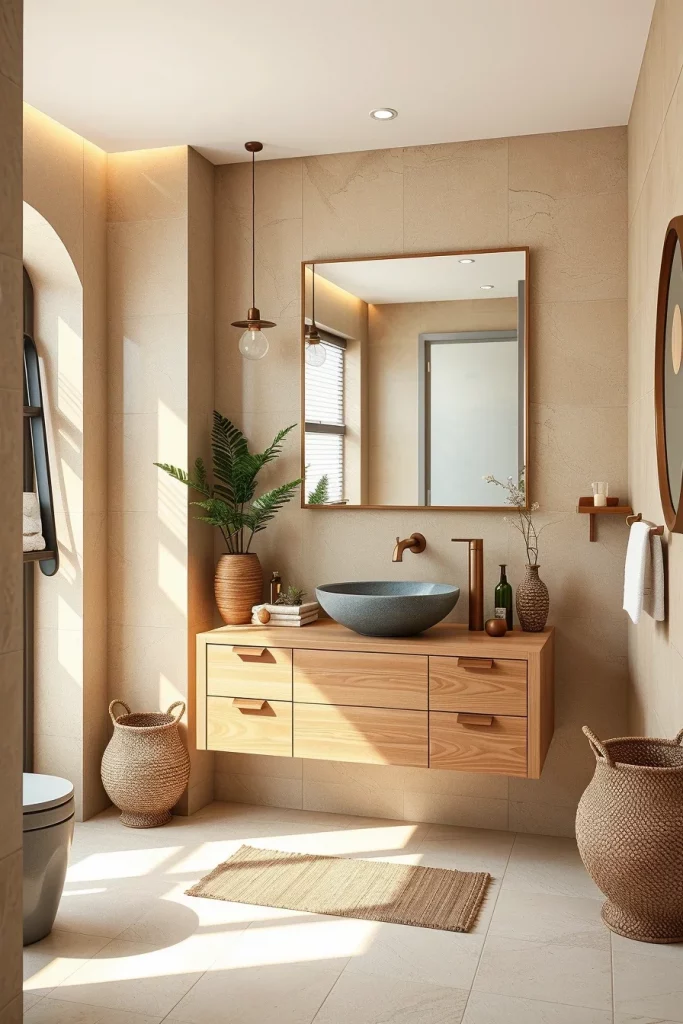
In these bathrooms, I typically select hexagonal floor tiles, geometric wall panels, angular mirrors, and custom vanity designs with crisp edges. Sculptural lighting fixtures can serve as artistic accents while remaining functional. The key is ensuring that every geometric element contributes to the overall design language instead of competing for attention.
I have found that geometric details work best when paired with restrained color palettes. Soft whites, warm grays, and natural stone surfaces allow the shapes themselves to become the focal point. Many contemporary designers use this strategy to create memorable interiors that still feel calm and uncluttered.
To further strengthen this design, I would include custom recessed shelving and carefully positioned indirect lighting. These additions highlight geometric forms while maintaining a clean and cohesive environment.
Earth-Tone Minimalist Bathroom Aesthetics For Cozy Sophistication
Earth-inspired palettes offer a softer interpretation of minimalist bathroom aesthetics while maintaining a sophisticated appearance. I often use warm beige, clay, taupe, sand, and muted brown tones to create bathrooms that feel welcoming and serene. These natural colors promote relaxation and provide a strong connection to organic materials.
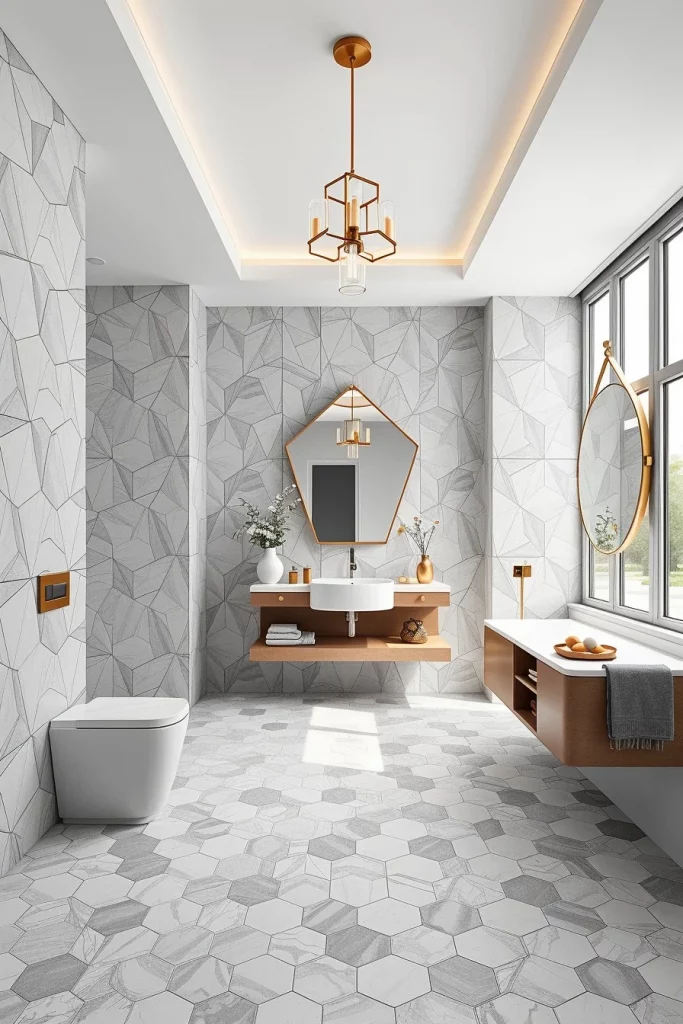
For furniture and fixtures, I typically choose floating wood vanities, stone sinks, textured ceramic accessories, and brushed bronze fixtures. Natural materials add depth and warmth without overwhelming the room. Large mirrors help maximize natural light, while simple linen textiles contribute softness and comfort.
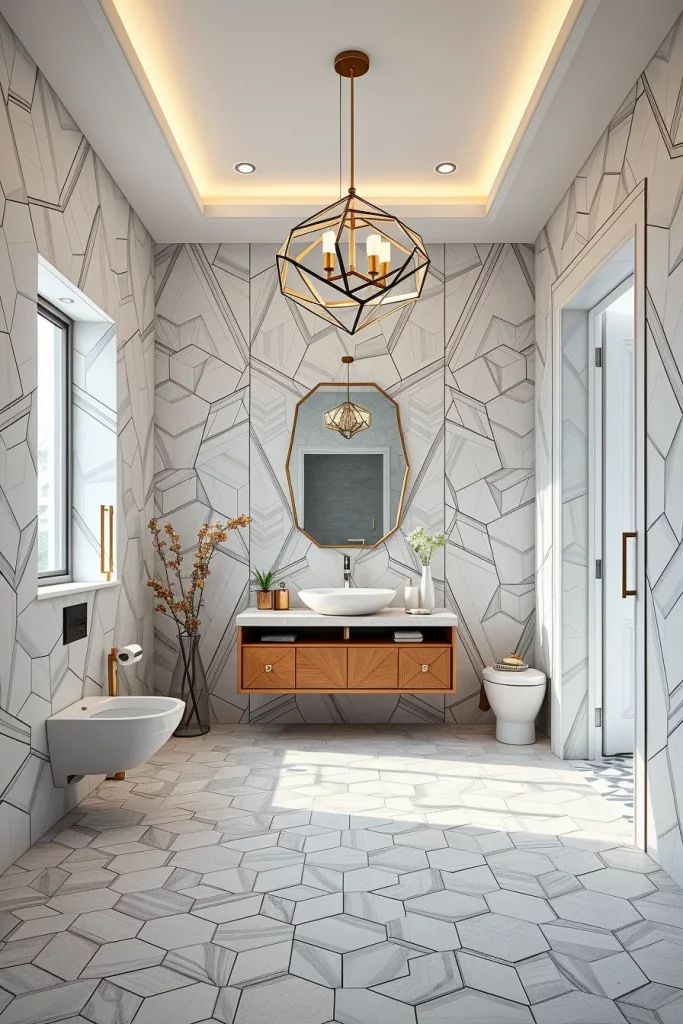
Personally, I find that earth-tone bathrooms age exceptionally well because they are rooted in timeless natural elements. Many interior design experts recommend incorporating organic textures to prevent minimalist spaces from feeling sterile. I agree with this approach because texture often becomes more important when color palettes remain restrained.
To complete the room, I would add subtle greenery, natural woven storage baskets, and layered lighting sources. These elements enhance the cozy atmosphere while preserving the clean and uncluttered aesthetic.
Minimalist Bathroom Decor With Artistic Focal Points
Minimalism does not mean eliminating character. In many projects, I create striking minimalist bathroom aesthetics by introducing a single artistic focal point. This approach allows the room to feel expressive without relying on excessive decoration. The focal point could be a sculptural bathtub, a statement stone wall, an oversized mirror, or a carefully selected piece of artwork.
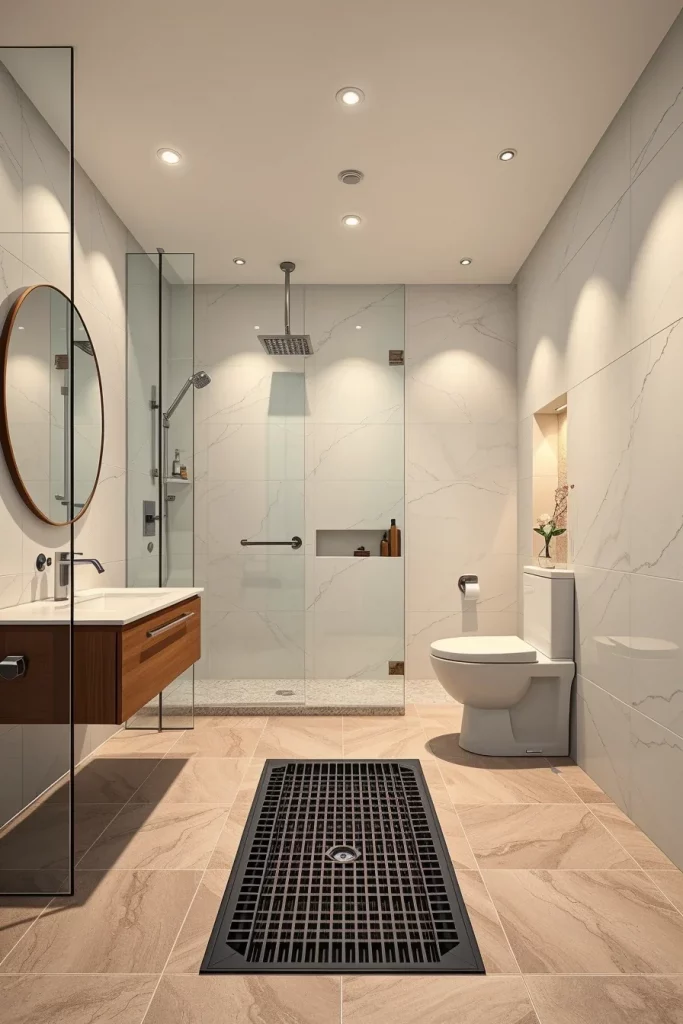
I usually keep surrounding elements intentionally simple. Clean-lined vanities, concealed storage, neutral finishes, and unobtrusive fixtures ensure that attention remains on the featured element. Proper lighting is especially important because it helps emphasize the focal point while enhancing the room’s overall ambiance.
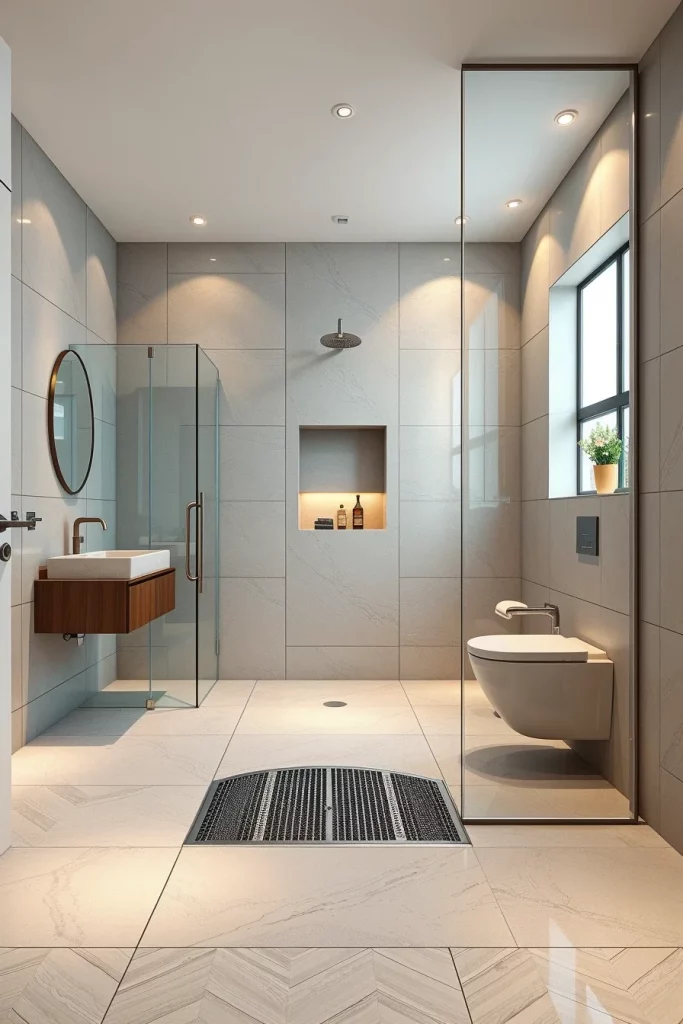
In my experience, one thoughtfully chosen statement feature often has a stronger impact than multiple decorative objects. Many luxury hospitality projects use this principle because it creates memorable spaces while maintaining visual calm. I frequently apply the same strategy in residential bathrooms to achieve a sophisticated result.
If additional refinement is needed, I would incorporate subtle accent lighting and custom detailing around the focal feature. These enhancements draw attention to the design centerpiece while preserving balance throughout the room.
Minimalist Bathroom Designs With Statement Bathtubs
When I want to create a memorable focal point in a minimalist bathroom, I often choose a statement bathtub as the centerpiece of the design. A carefully selected bathtub can elevate the entire room while preserving clean lines and simplicity. This approach supports sophisticated minimalist bathroom aesthetics by allowing one standout feature to define the space instead of relying on excessive decoration. The surrounding environment remains uncluttered, making the bathtub the natural visual anchor.
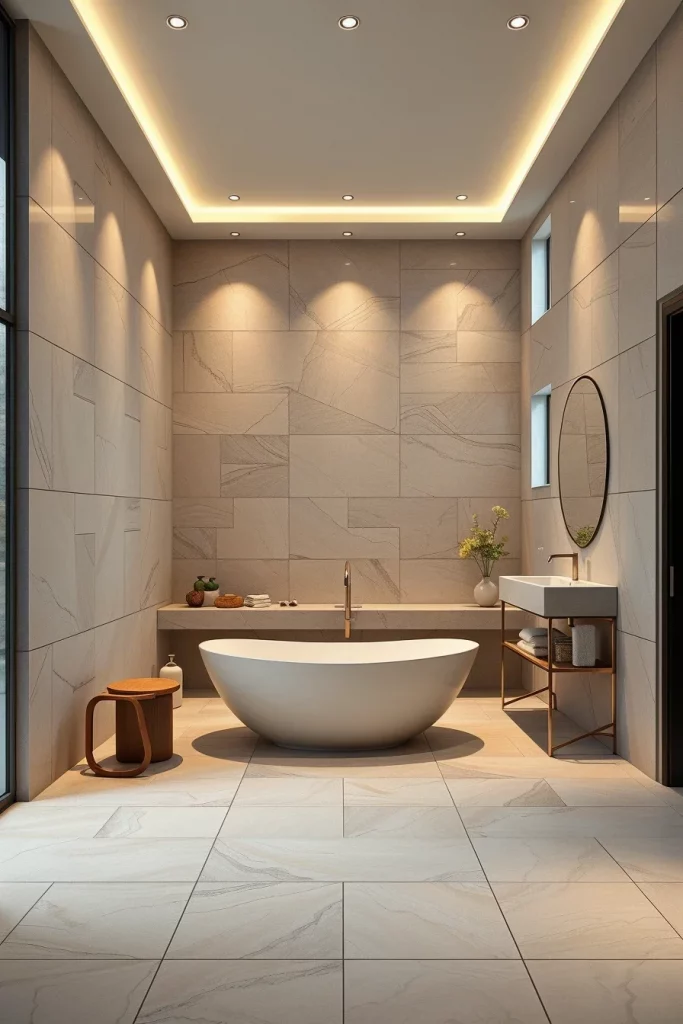
I typically recommend sculptural freestanding bathtubs with smooth silhouettes and premium finishes. Oval, asymmetrical, or organically shaped tubs work particularly well in contemporary interiors. To complement the bathtub, I use wall-mounted faucets, floating vanities, frameless glass partitions, and subtle lighting. Large-format floor tiles and seamless wall finishes help maintain visual continuity while emphasizing the elegance of the tub.
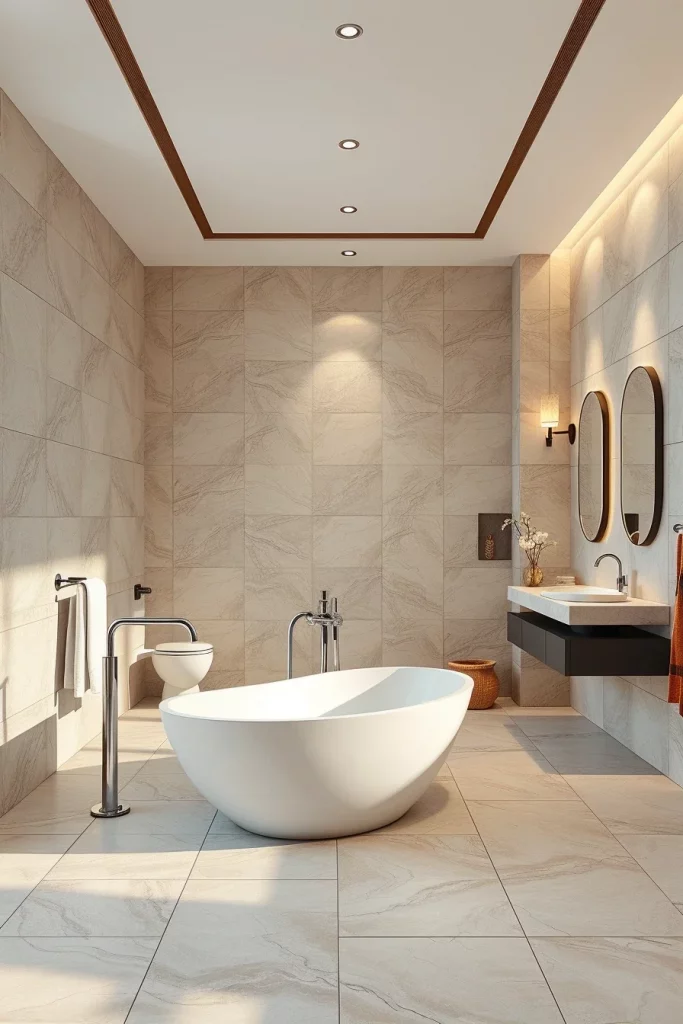
In my experience, statement bathtubs create a sense of luxury that immediately enhances the bathroom experience. Many respected interior designers suggest investing in one exceptional feature rather than filling a space with numerous decorative items. I find this philosophy aligns perfectly with minimalist design principles and creates a timeless result.
To complete the composition, I would add a small side table for bath essentials, soft ambient lighting, and carefully selected textiles that reinforce the relaxing atmosphere without distracting from the bathtub itself.
Scandinavian Minimalist Bathrooms Filled With Natural Light
Scandinavian-inspired interiors remain one of my favorite approaches to minimalist bathroom aesthetics because they combine simplicity, warmth, and functionality. Natural light plays a central role in these spaces, creating bright and welcoming environments that feel larger and more open. Large windows, skylights, and light-reflecting surfaces help maximize daylight while reducing the need for excessive artificial lighting.
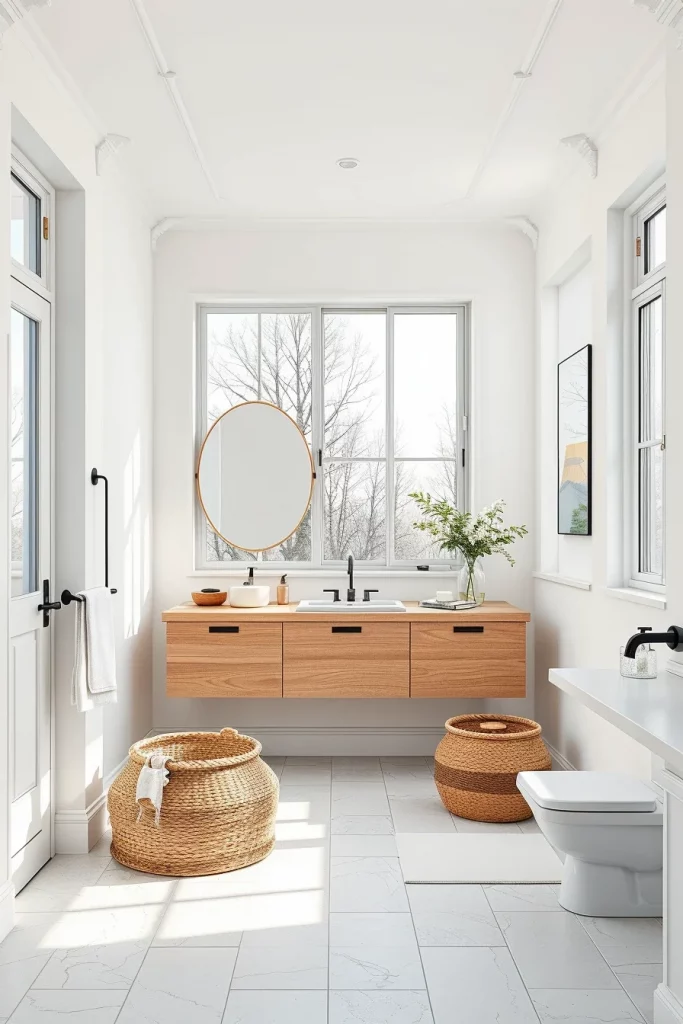
I often incorporate light oak vanities, white walls, pale stone surfaces, and simple black accents. These elements create visual contrast while maintaining a calm atmosphere. Open shelving, woven baskets, and natural textiles introduce subtle texture and warmth. Minimal hardware and streamlined fixtures contribute to the clean, practical appearance that defines Scandinavian design.
From my perspective, natural light is one of the most valuable design tools available. It enhances colors, highlights textures, and improves the overall mood of a space. Scandinavian designers have long embraced the idea that well-lit interiors feel healthier and more inviting, and I have consistently seen this principle succeed in modern bathrooms.
I would also include sheer window treatments, strategically positioned mirrors, and moisture-resistant wood finishes to maximize brightness and maintain the room’s natural character throughout the year.
Textured Tile Applications In Minimalist Bathroom Spaces
Texture is essential when designing minimalist interiors because it adds depth without creating visual clutter. In many of my projects, textured tiles become a subtle yet impactful feature that enhances minimalist bathroom aesthetics. Whether applied to a feature wall, shower enclosure, or vanity backdrop, textured surfaces introduce dimension while preserving simplicity.
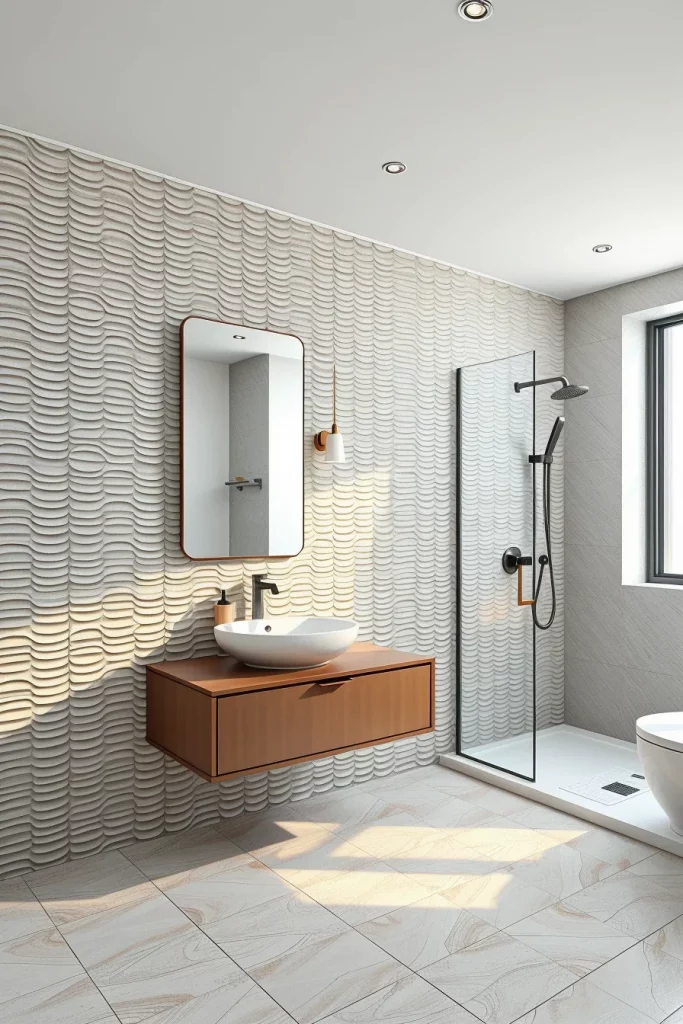
I often use fluted tiles, handmade ceramic tiles, stone-inspired porcelain, or three-dimensional geometric patterns. These materials create visual movement and interest while maintaining a restrained palette. Combined with floating vanities, frameless mirrors, and minimalist fixtures, textured tiles help create a balanced and sophisticated interior.
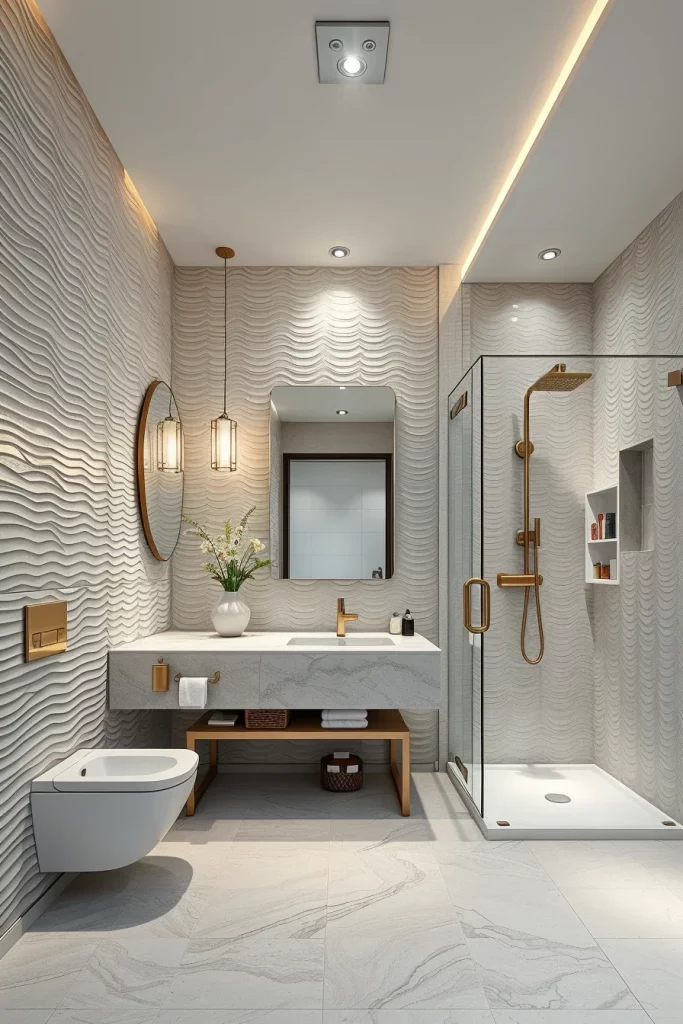
I have found that textured surfaces allow minimalist bathrooms to feel rich and layered without relying on bold colors or decorative accessories. Many contemporary design publications highlight texture as a key strategy for creating visually engaging minimalist spaces, and I completely agree with this approach.
To strengthen the design further, I would pair textured tiles with soft lighting that enhances shadows and highlights, allowing the material’s details to become more pronounced throughout the day.
Elegant Minimalist Bathrooms Featuring Large Mirrors
Large mirrors are among the most effective elements for enhancing minimalist bathroom aesthetics. I frequently use oversized mirrors to increase the perception of space, improve light distribution, and create a refined visual impact. In minimalist interiors, mirrors contribute both functionality and architectural interest without adding unnecessary complexity.
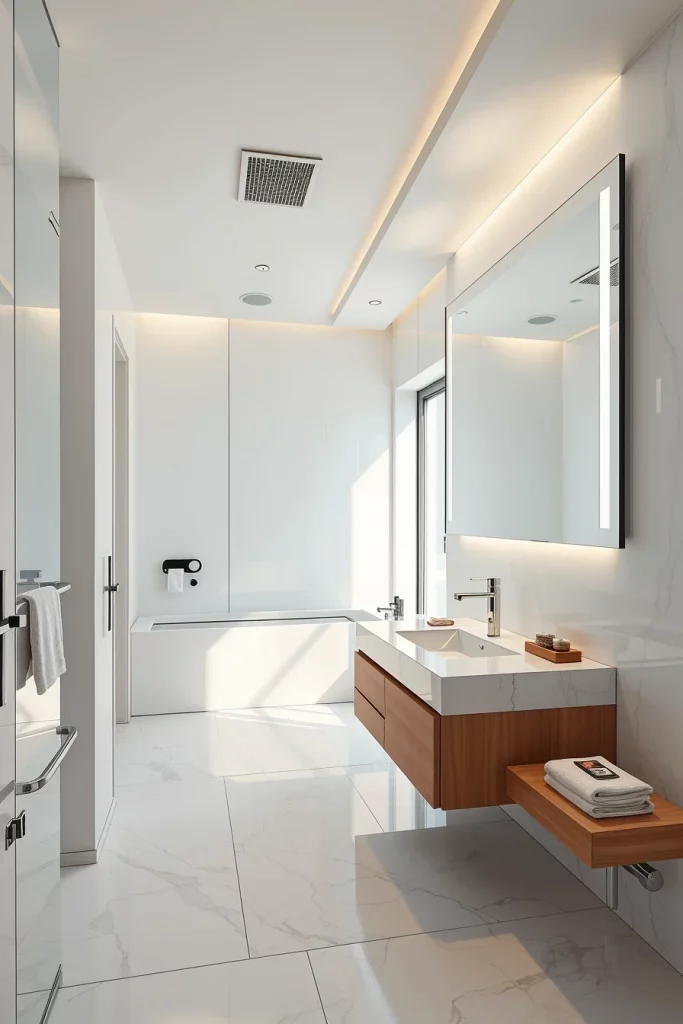
I typically select frameless mirrors or mirrors with ultra-thin metal frames to maintain a streamlined appearance. When paired with floating vanities, integrated lighting, and simple fixtures, large mirrors help establish a sense of openness and balance. They also reflect natural light, making smaller bathrooms feel significantly larger and brighter.
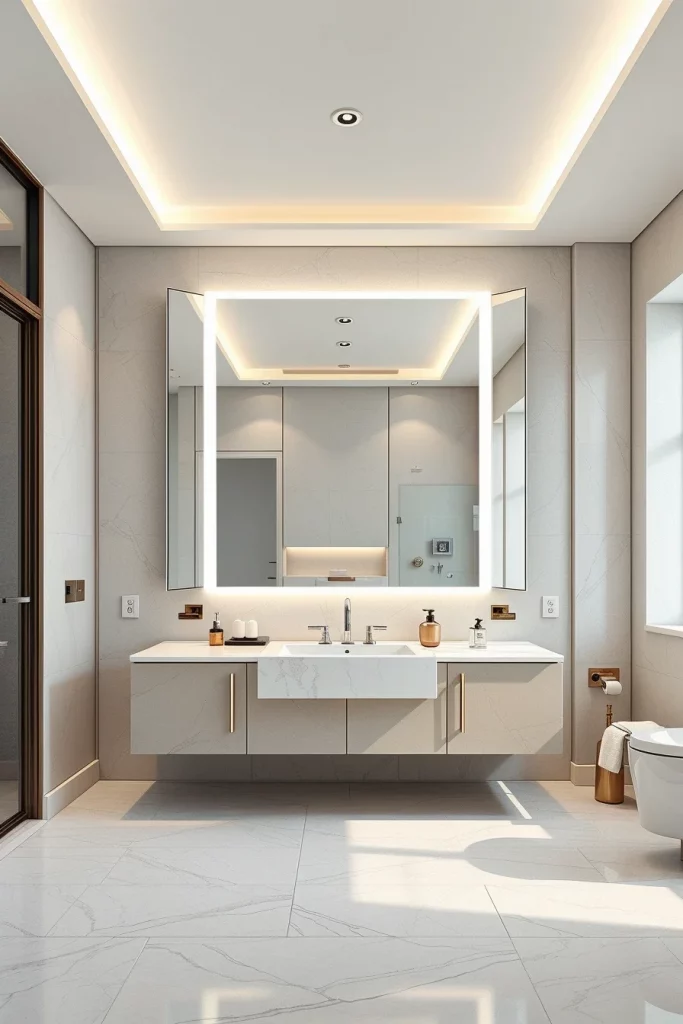
In my experience, oversized mirrors can transform the entire character of a bathroom. Many professional designers use mirrors strategically to emphasize architectural features and improve spatial flow. I often recommend extending mirrors across the full width of a vanity wall to maximize their visual effect.
To elevate the design further, I would incorporate backlit mirrors, concealed electrical outlets, and integrated storage solutions that maintain the room’s clean and uncluttered appearance.
Nature-Inspired Minimalist Bathrooms With Indoor Greenery
Nature-inspired interiors bring warmth and vitality to minimalist bathroom aesthetics while preserving simplicity and elegance. I enjoy incorporating indoor greenery because it softens architectural lines and introduces organic beauty into contemporary spaces. The combination of natural materials and living plants creates a calming environment that promotes relaxation and well-being.
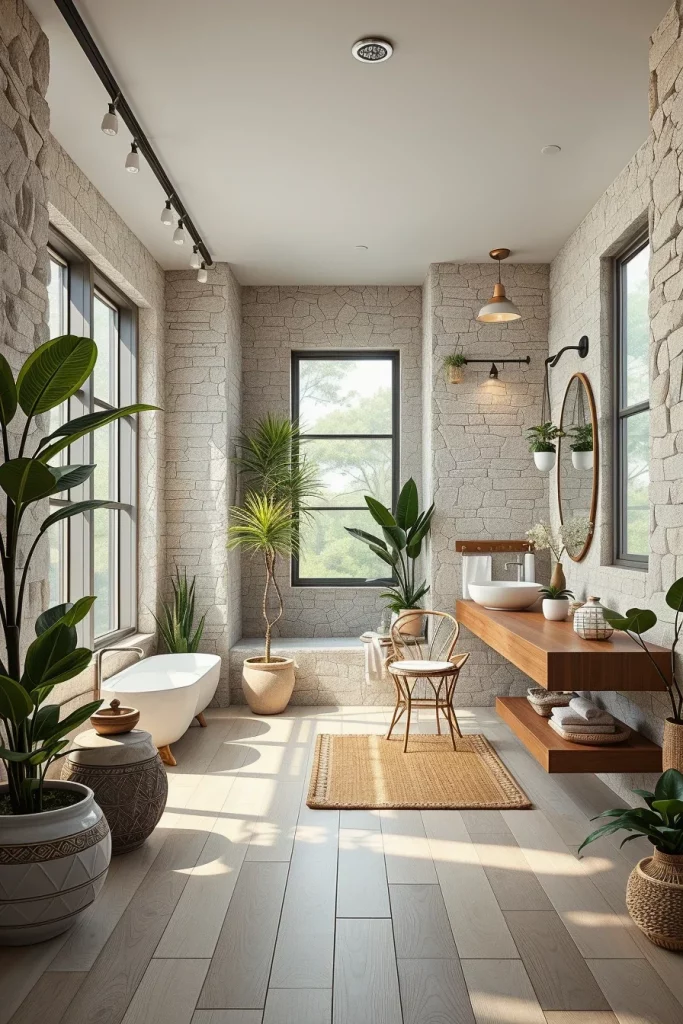
I often pair indoor plants with stone surfaces, wood vanities, neutral color palettes, and large windows. Popular choices include ferns, snake plants, pothos, and other humidity-tolerant species. These plants thrive in bathroom environments while adding color and texture without overwhelming the minimalist design. Simple ceramic planters and carefully positioned greenery maintain a clean visual composition.
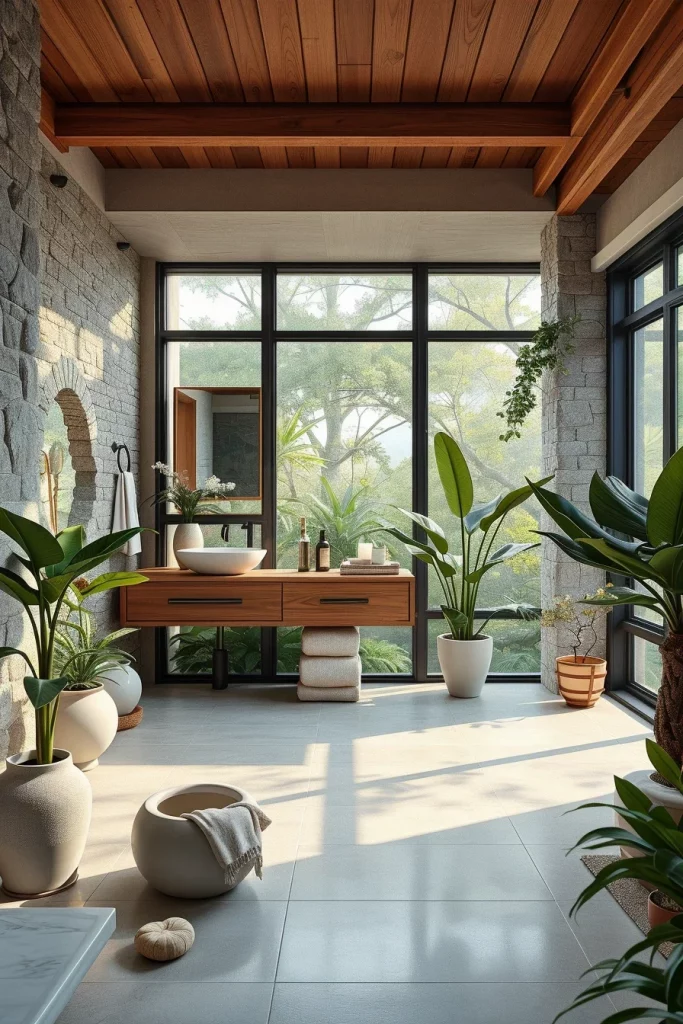
From my perspective, biophilic design principles have become increasingly important in modern interiors. Many designers and wellness-focused publications emphasize the positive impact that natural elements can have on mood and comfort. I have found that even a few thoughtfully placed plants can dramatically improve the atmosphere of a minimalist bathroom.
To complete this concept, I would introduce natural stone accessories, wooden stools, linen textiles, and large windows that strengthen the connection between the interior space and the natural world.
Seamless Built-In Shelving For Clutter-Free Beauty
One of the most effective ways I create organized and visually calm minimalist bathroom aesthetics is through seamless built-in shelving. Unlike freestanding storage units, recessed shelves become part of the architecture itself, preserving clean lines and maximizing usable space. This solution is especially valuable in modern bathrooms where maintaining an uncluttered appearance is a priority. By integrating storage directly into walls, I can keep everyday essentials accessible while preventing visual distractions.
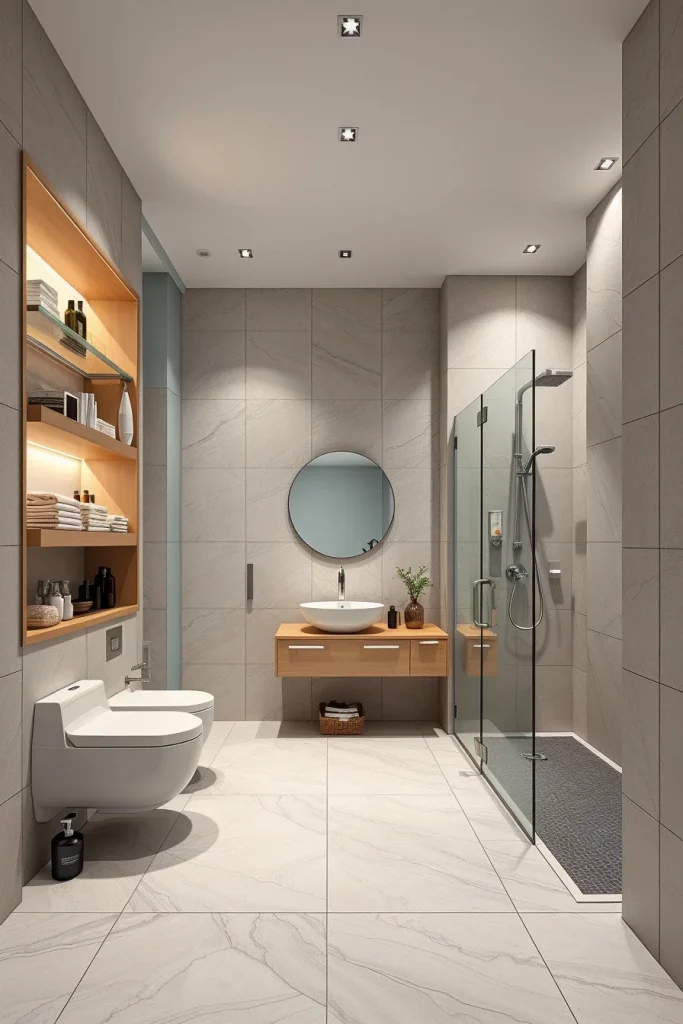
When designing built-in shelving, I typically match the shelf finish to the surrounding wall material to create a cohesive look. Stone, porcelain, microcement, and large-format tile surfaces work particularly well. I often include illuminated niches within shower areas, floating recessed shelves beside vanities, and concealed storage compartments for towels and toiletries. These elements combine practicality with understated elegance.
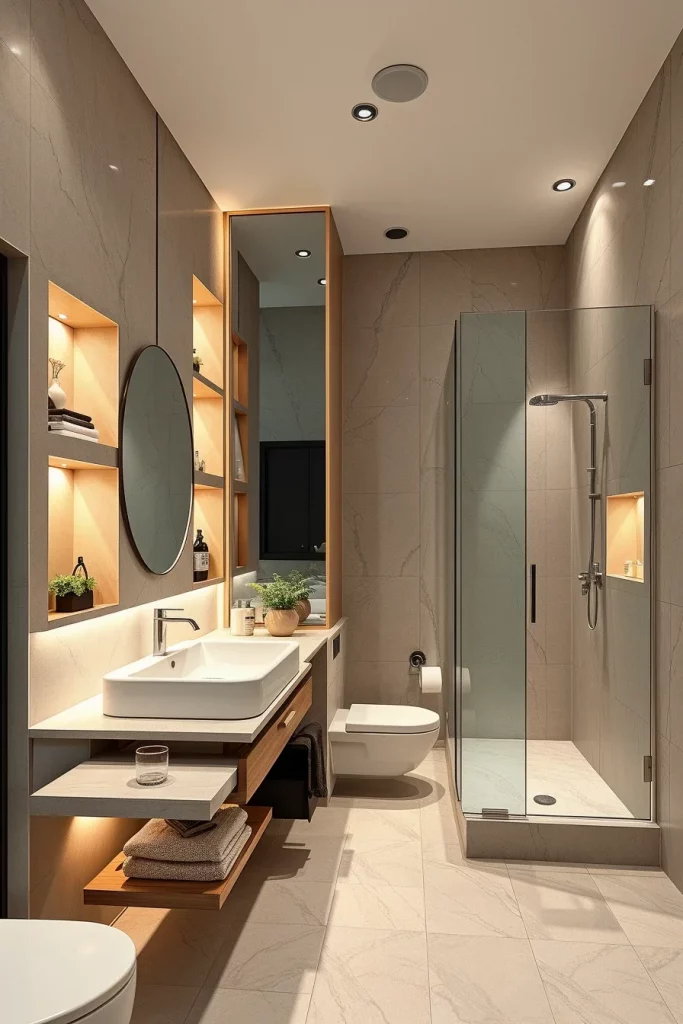
From my experience, integrated storage is one of the features homeowners appreciate most over time. Interior designers frequently emphasize that successful minimalism depends as much on hidden functionality as on appearance. I agree with this philosophy because beautiful bathrooms remain beautiful only when clutter is properly managed.
To further enhance this concept, I would incorporate custom LED lighting within shelving niches and designate separate storage zones for daily essentials, decorative objects, and linens. This approach improves organization while maintaining a polished appearance.
Boutique Hotel-Inspired Minimalist Bathroom Designs
Many homeowners are drawn to minimalist bathroom aesthetics because they want to recreate the relaxing atmosphere of luxury boutique hotels. I often design these bathrooms with a focus on comfort, elegance, and carefully curated details that elevate everyday routines. The goal is to create a personal retreat that feels sophisticated while remaining highly functional.
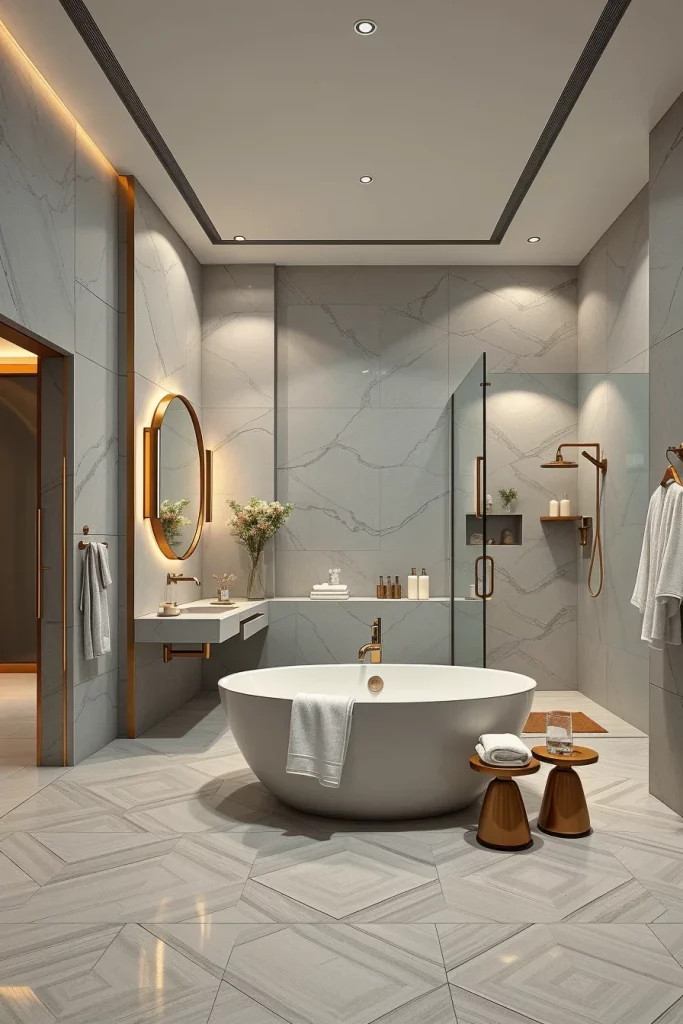
For furnishings and finishes, I usually select floating vanities, oversized mirrors, frameless showers, premium stone surfaces, plush towels, and elegant lighting fixtures. A freestanding bathtub often becomes a focal point, while concealed storage ensures that the room remains tidy. Layered lighting plays a critical role by allowing the space to transition from bright and practical during the day to warm and relaxing in the evening.
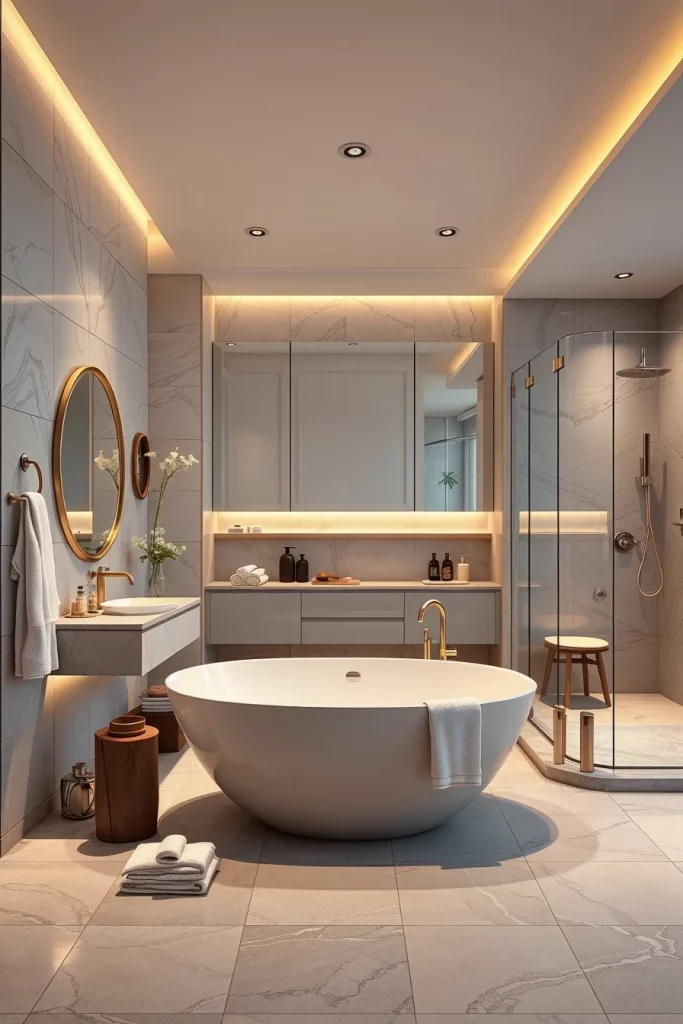
I have noticed that many successful boutique hotel bathrooms rely on restraint rather than excessive luxury. Instead of filling the room with decorative elements, they focus on quality materials and thoughtful details. I often apply the same principle in residential projects because it creates a timeless and welcoming environment.
To complete the hotel-inspired experience, I would add heated towel racks, integrated sound systems, and subtle fragrance elements. These features contribute to comfort while preserving the clean minimalist aesthetic.
Innovative Minimalist Bathrooms With Smart Technology Features
Technology can significantly enhance minimalist bathroom aesthetics when integrated thoughtfully into the design. I prefer solutions that improve convenience and efficiency without adding visual complexity. Smart technology allows bathrooms to remain clean and uncluttered while offering advanced functionality that supports modern lifestyles.
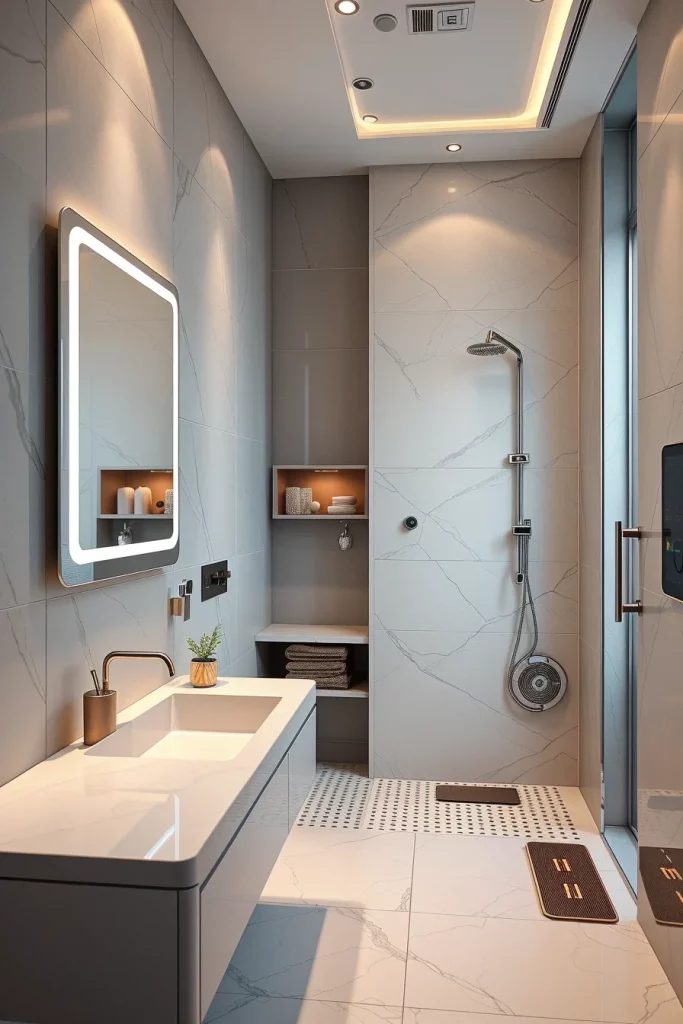
I often include touchless faucets, smart mirrors with integrated lighting, heated floors, programmable showers, automatic ventilation systems, and concealed speakers. These features improve the user experience while maintaining the simplicity of the overall design. Many smart devices are now designed with minimalist styling, making them easy to incorporate into contemporary interiors.
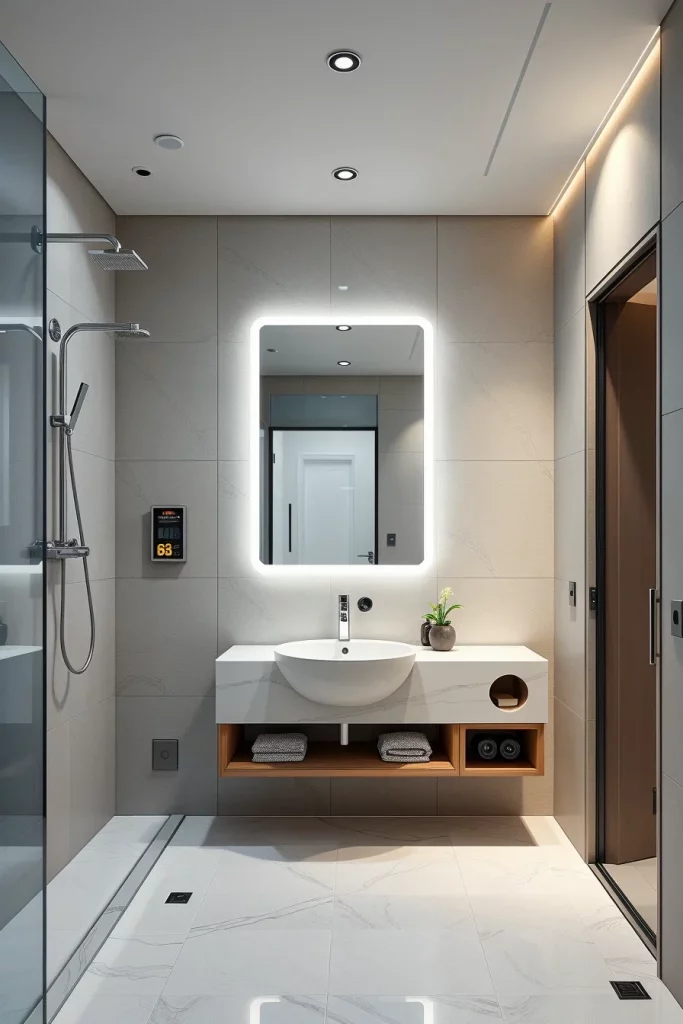
In my opinion, technology should remain nearly invisible within a minimalist space. The most successful installations are those that blend seamlessly into the architecture rather than drawing attention to themselves. I have found that homeowners particularly appreciate systems that enhance comfort and energy efficiency without requiring complex operation.
If I were refining this design further, I would include voice-controlled lighting scenes and water-saving smart fixtures. These additions support sustainability while complementing the streamlined aesthetic of the room.
Minimalist Bathroom Aesthetics Using Soft Neutral Palettes
Soft neutral color schemes remain one of the most popular approaches to minimalist bathroom aesthetics because they create a bright, calming, and versatile environment. I often use shades of ivory, warm white, light gray, greige, and soft beige to establish a peaceful atmosphere. These colors reflect natural light beautifully and help bathrooms feel larger than they actually are.
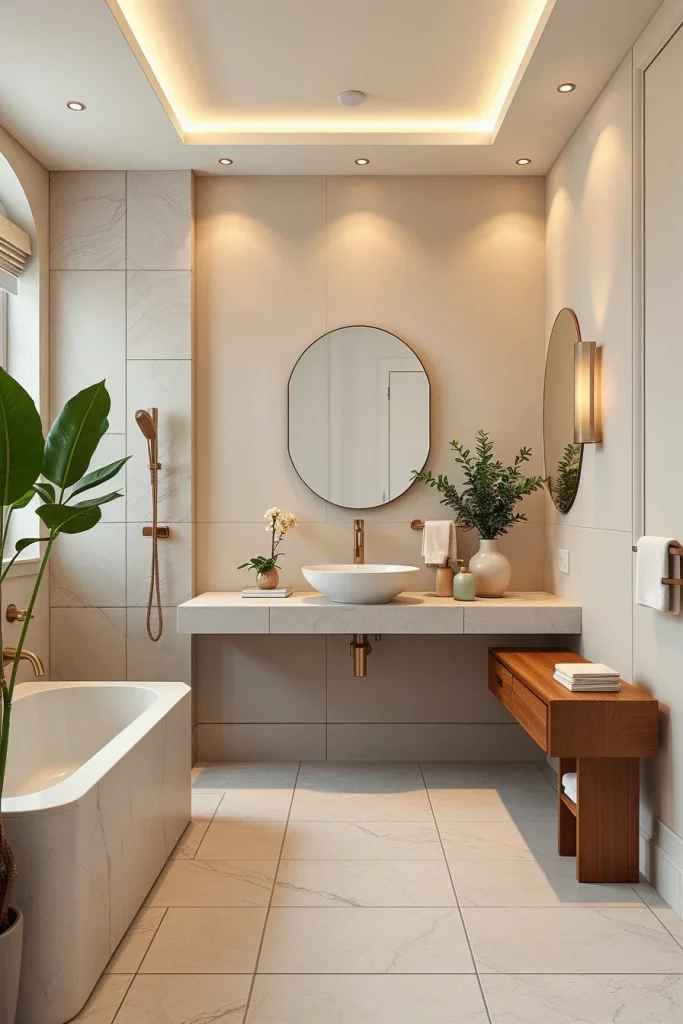
To support the palette, I typically incorporate floating vanities, natural stone countertops, simple mirrors, and understated fixtures. Textured finishes such as matte porcelain tiles, brushed metal hardware, and woven accessories add visual depth without disrupting the minimalist character of the space. Carefully selected materials ensure that the room remains interesting despite the restrained color scheme.
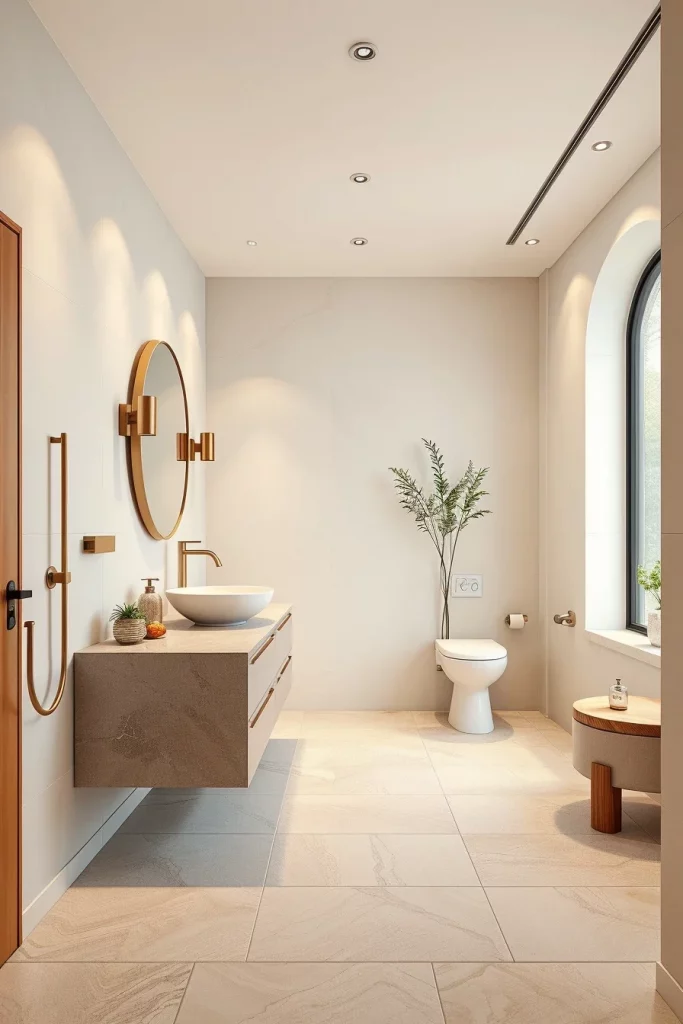
I have found that neutral palettes provide exceptional long-term value because they rarely go out of style. Many professional designers recommend focusing on texture and material quality when working with minimal color variation. This advice aligns closely with my own experience in creating balanced and inviting interiors.
To elevate this design, I would add soft indirect lighting and a few organic elements such as wood accents or small plants. These additions introduce warmth while maintaining visual harmony.
Timeless Minimalist Bathroom Designs That Never Go Out Of Style
The most successful minimalist bathroom aesthetics are those that remain elegant for decades rather than following short-lived trends. When designing timeless bathrooms, I prioritize proportion, functionality, quality materials, and architectural simplicity. These principles help create spaces that continue to feel relevant even as design fashions evolve.
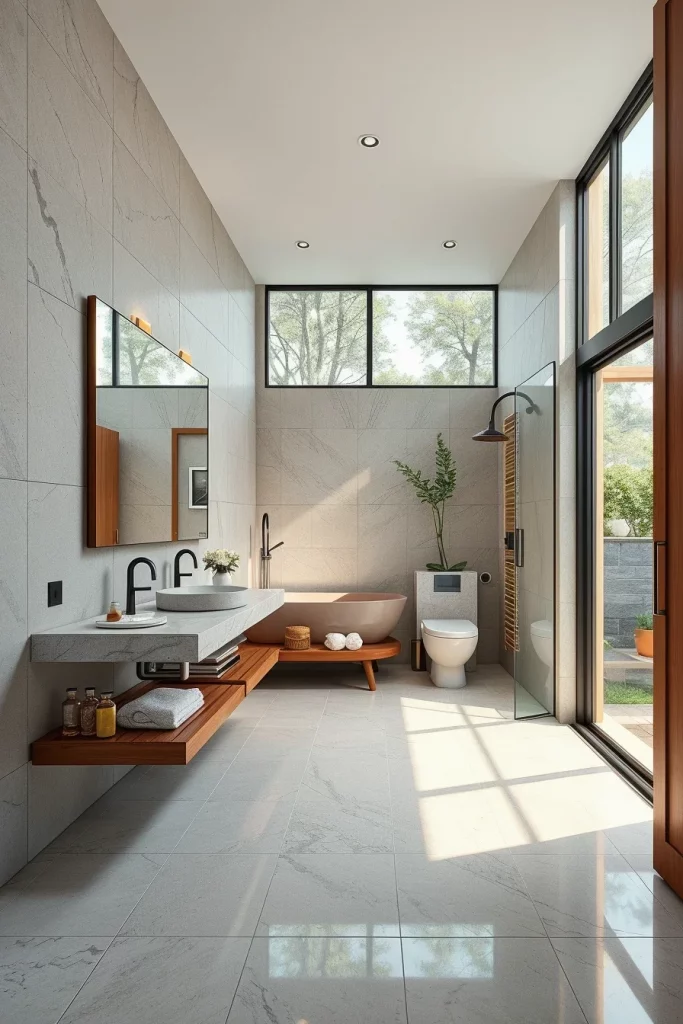
I usually rely on natural stone, porcelain, glass, wood accents, floating vanities, and neutral color palettes. Classic fixtures with clean lines provide lasting appeal, while concealed storage preserves organization. Large mirrors and generous natural lighting further contribute to a sense of openness and sophistication.
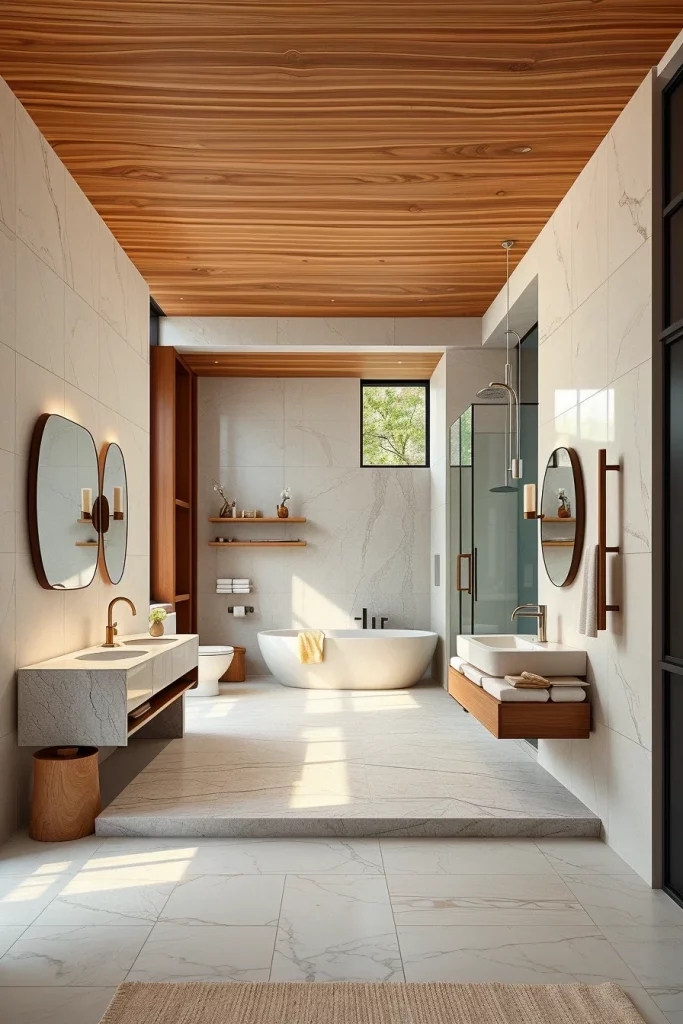
Throughout my work, I have observed that timeless bathrooms share a common characteristic: every element has a clear purpose. Rather than introducing trendy features that may quickly become outdated, I focus on durable materials and thoughtful planning. This approach consistently delivers beautiful and highly functional results.
If there is one final element I would recommend, it is investing in craftsmanship. High-quality installation, precise detailing, and durable finishes ensure that a minimalist bathroom remains attractive and practical for many years.
Minimalist bathroom aesthetics prove that simplicity can be both beautiful and highly functional. By combining clean lines, thoughtful layouts, natural materials, and a restrained color palette, these spaces create a sense of calm and sophistication. Whether you prefer modern, Scandinavian, Japandi, or spa-inspired designs, minimalist principles can help transform your bathroom into a relaxing retreat. Use these inspiring ideas to create a timeless space that feels elegant, organized, and effortlessly inviting every day.