
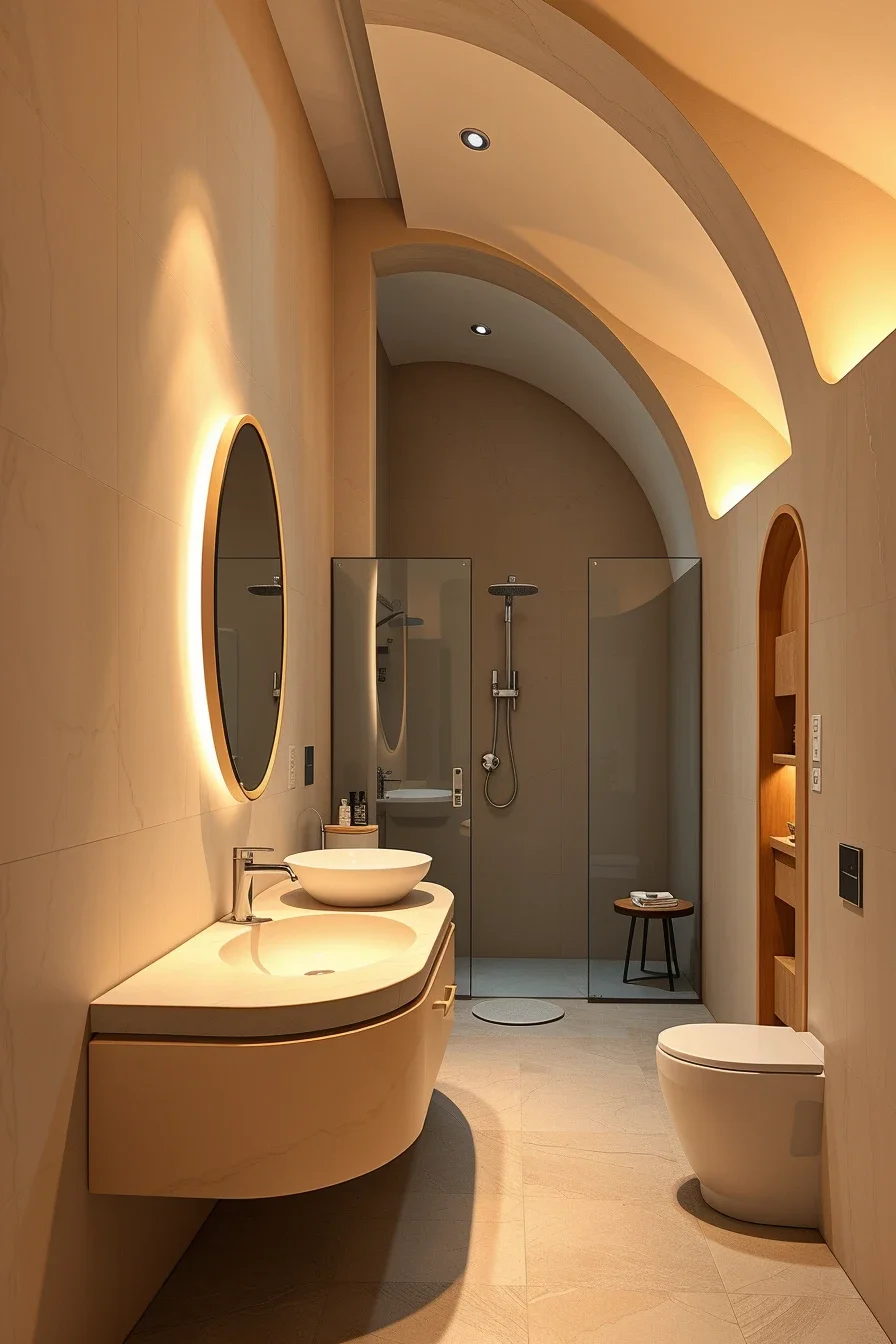
Minimalist bathroom interior design continues to be one of the most popular trends for creating calm, elegant, and highly functional spaces. By focusing on clean lines, clutter-free layouts, and carefully selected materials, minimalist bathrooms offer a sense of relaxation that feels both modern and timeless. From warm wood accents and natural stone finishes to sleek floating vanities and frameless glass showers, there are countless ways to personalize this refined design style. Minimalism is not about sacrificing comfort but rather enhancing it through thoughtful details and purposeful design choices. Whether you have a compact powder room or a spacious master bath, minimalist concepts can help maximize beauty and efficiency. In this collection of minimalist bathroom interior design inspiration, you’ll discover creative ideas that blend simplicity, luxury, and modern sophistication.
Minimalist Bathroom Interior Design Inspiration For Small Urban Spaces
When I design a minimalist bathroom for a small urban home, I focus on maximizing every square foot while maintaining a clean and uncluttered appearance. The foundation of this design is a simple layout that prioritizes movement and functionality. Wall-mounted fixtures, frameless glass shower enclosures, and concealed storage help the room feel larger than it actually is. Light finishes and reflective surfaces further enhance the sense of openness, making the bathroom feel airy and comfortable.
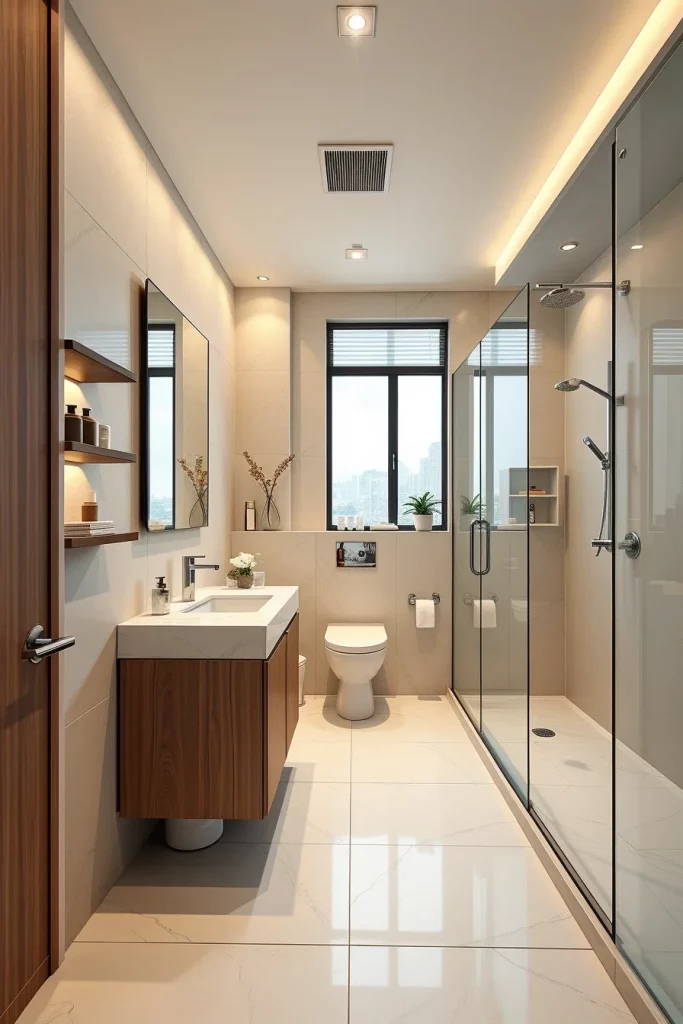
I typically include a floating vanity with integrated storage, a wall-mounted toilet, and a large mirror that visually expands the room. Compact fixtures prevent overcrowding while maintaining full functionality. Recessed shelving within the shower area provides practical storage without interrupting the minimalist aesthetic. Every element serves a purpose, reducing visual noise and creating a harmonious environment.
In my experience, successful small bathroom design depends on restraint. Many interior designers featured by design publications such as Architectural Digest emphasize that fewer but higher-quality elements often create a stronger visual impact than overcrowded layouts. I agree with this approach because it allows the room to feel both efficient and elegant.
I would also add layered lighting to this space. Combining recessed ceiling lights, vanity lighting, and subtle accent illumination improves functionality while enhancing the room’s architectural features and creating a welcoming atmosphere.
Serene All-White Minimalist Bathroom With Layered Textures
An all-white bathroom is one of the most timeless interpretations of minimalist bathroom interior design inspiration. Rather than relying on color, I create visual interest through texture and material variation. Soft matte surfaces, textured wall finishes, natural stone details, and subtle fabric elements help prevent the space from feeling sterile while maintaining a calm and cohesive appearance.
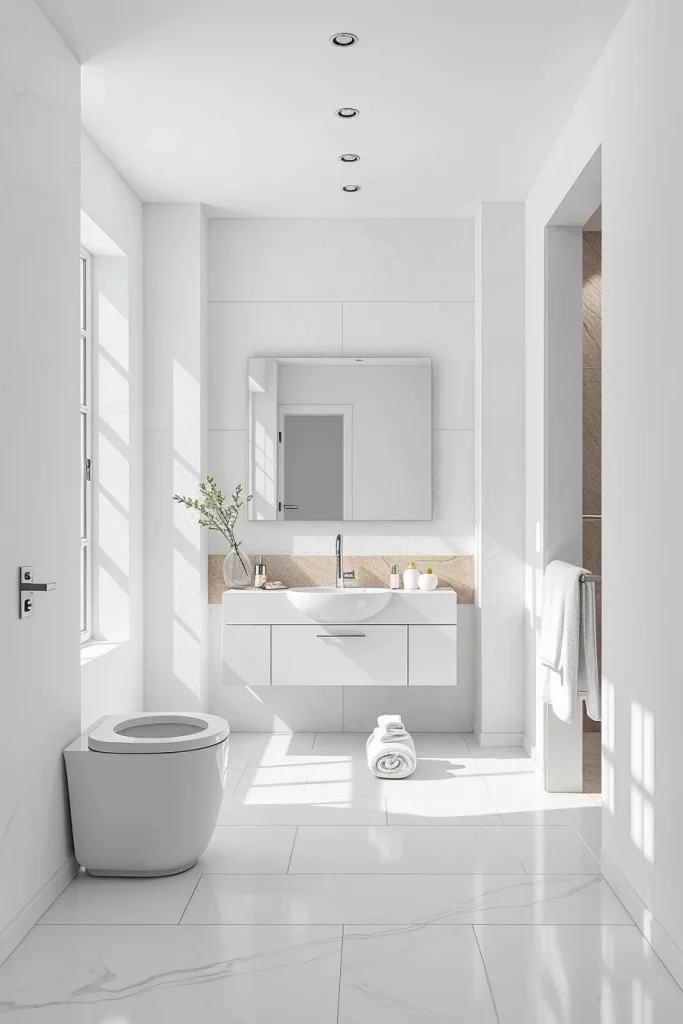
I like to combine white porcelain tiles, a floating white vanity, a frameless mirror, and brushed nickel fixtures. A textured stone feature wall or fluted vanity front introduces depth without disrupting the monochromatic palette. Plush white towels and a soft bath mat contribute warmth and comfort while supporting the minimalist aesthetic.
From my perspective, texture is what elevates an all-white bathroom from simple to sophisticated. Designers frequently recommend balancing smooth and tactile surfaces to create depth and visual richness. I have found that combining polished and matte finishes achieves this balance beautifully while preserving the room’s tranquil atmosphere.
To complete this design, I would include concealed storage solutions. Keeping personal items hidden maintains the clean visual lines that are essential to a successful minimalist space.
Warm Minimalist Bathroom Design Featuring Natural Wood Accents
One of my favorite approaches to minimalist design is introducing natural wood accents to soften the space. This concept combines clean architectural lines with organic materials, resulting in a bathroom that feels warm, inviting, and contemporary. Light oak, walnut, or ash finishes add character without overwhelming the minimalist framework.
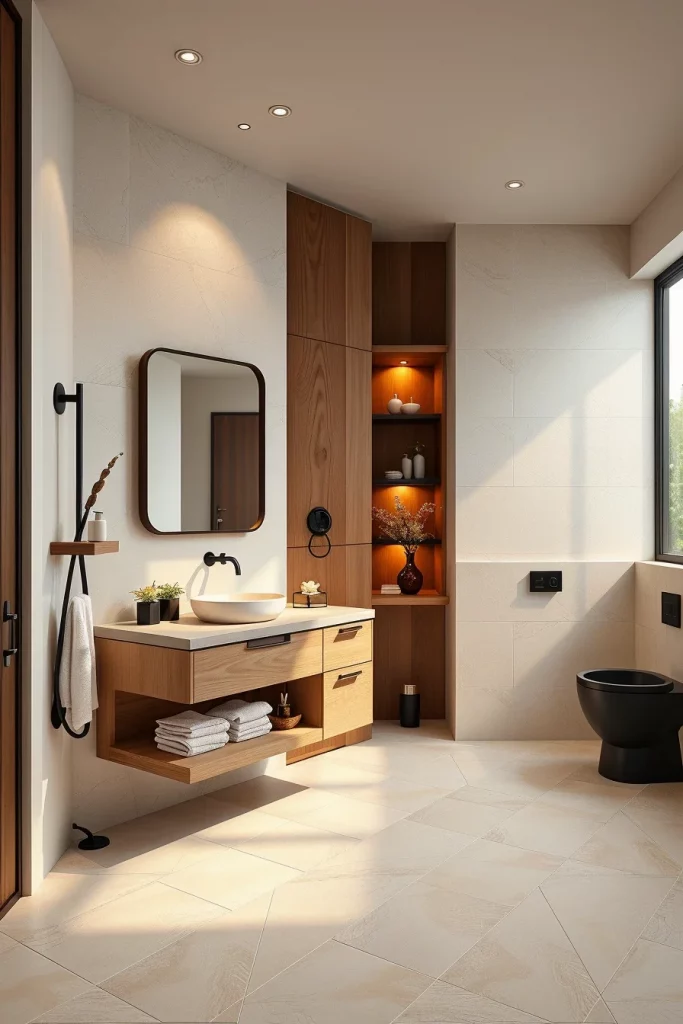
I often incorporate a floating wood vanity, open wooden shelving, and wood-framed mirrors. These elements work beautifully alongside neutral stone countertops, matte black fixtures, and large-format porcelain tiles. The natural grain patterns provide subtle visual interest while preserving the room’s uncluttered appearance.
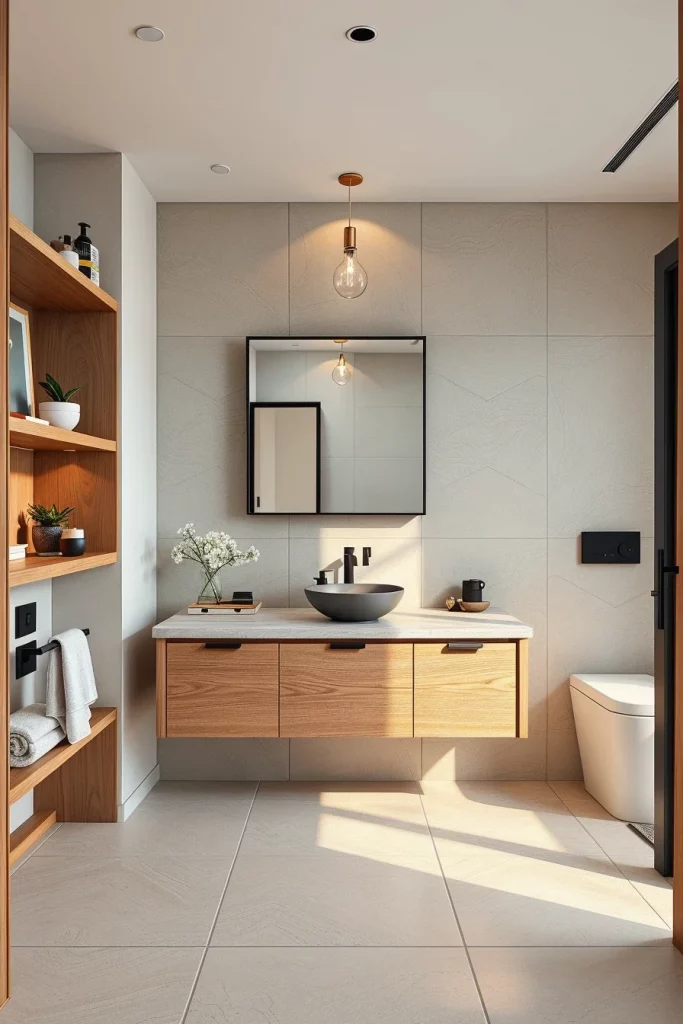
I appreciate how wood creates a connection between modern design and nature. Many contemporary designers recommend natural materials because they introduce warmth and authenticity to minimalist interiors. In my projects, wood accents consistently make bathrooms feel more comfortable and welcoming without compromising simplicity.
I would also consider adding under-vanity lighting. This subtle feature highlights the natural wood textures and contributes to a relaxing atmosphere during evening hours.
Japandi-Inspired Minimalist Bathroom With Organic Elements
Japandi design blends Scandinavian simplicity with Japanese craftsmanship, creating one of the most stylish and unique minimalist bathrooms available today. I focus on natural materials, balanced proportions, and a restrained color palette that promotes relaxation and mindfulness. The result is a bathroom that feels peaceful, functional, and deeply connected to nature.
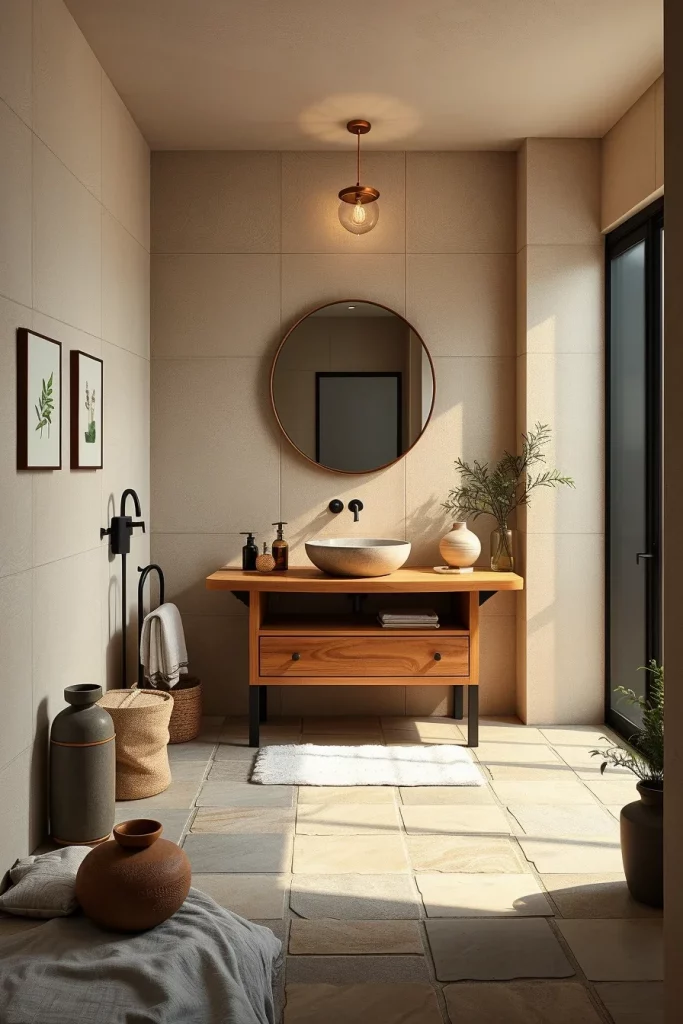
For this style, I typically use a floating wood vanity, stone vessel sink, minimalist black fixtures, and handcrafted ceramic accessories. Soft beige or greige wall finishes pair beautifully with natural wood surfaces and textured stone flooring. Simple open shelving allows decorative objects to remain purposeful and carefully curated.
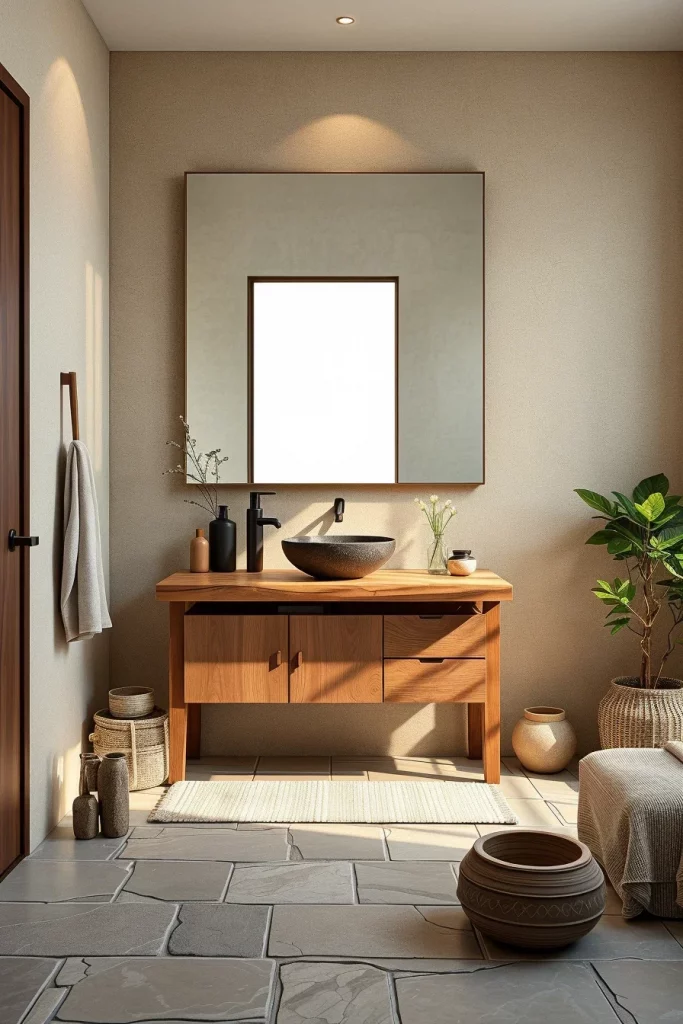
I personally admire how Japandi interiors emphasize quality over quantity. Design experts frequently highlight the importance of intentional living within Japandi spaces, and I find this philosophy particularly effective in bathroom design. Every object has a purpose, which naturally reduces clutter and promotes calmness.
To strengthen the organic character of this bathroom, I would introduce natural linen textiles and subtle greenery. These additions reinforce the connection to nature while maintaining the minimalist aesthetic.
Luxurious Minimalist Bathroom With Spa-Like Atmosphere
A spa-inspired bathroom proves that minimalist design can also feel luxurious. When creating this type of space, I focus on simplicity, comfort, and sensory experiences. Soft lighting, premium materials, and uncluttered surfaces establish an environment dedicated to relaxation and well-being. The design remains minimalist, yet every detail contributes to a sense of refinement.
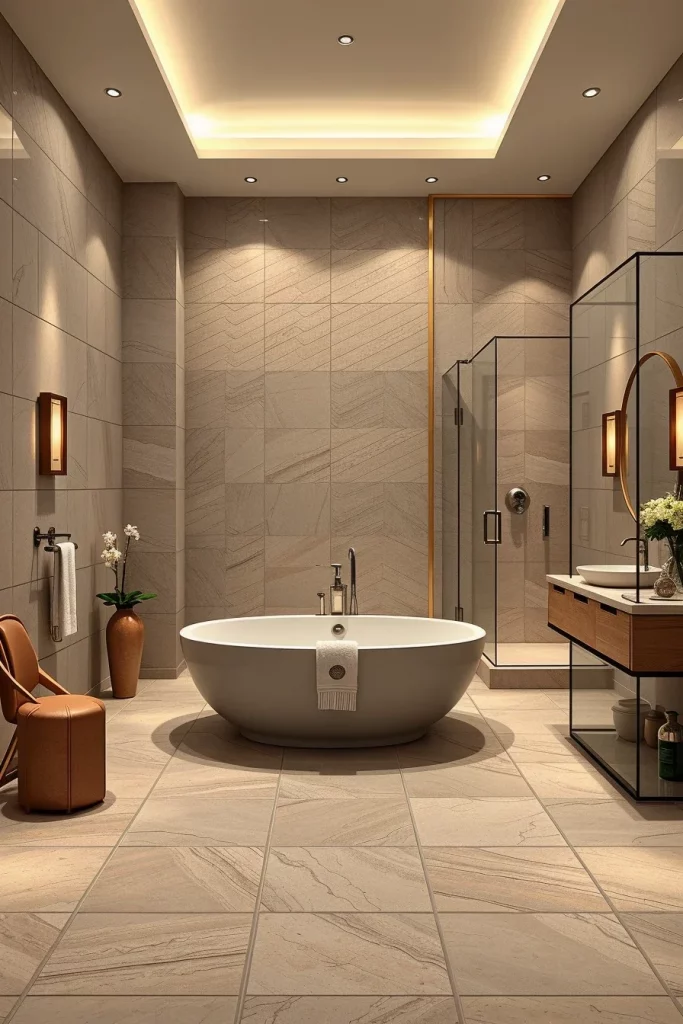
I usually include a freestanding soaking tub, large walk-in shower, floating vanity, and oversized stone tiles. Warm indirect lighting, natural stone surfaces, and elegant fixtures create a sophisticated atmosphere. Accessories remain minimal, with carefully selected towels, bath trays, and decorative accents enhancing the experience without creating clutter.
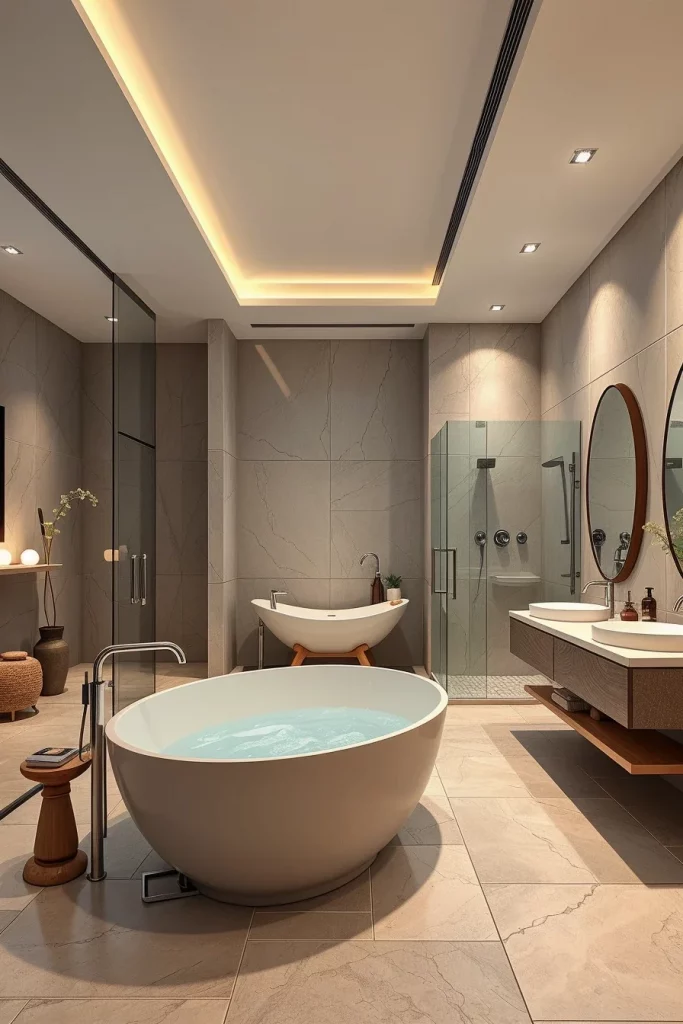
In my opinion, luxury within minimalist design comes from quality rather than excess. Publications such as Elle Decor often emphasize investing in superior materials and timeless finishes instead of adding unnecessary decorative elements. I strongly agree because these choices create lasting beauty and functionality.
I would also add integrated aromatherapy features or discreet speakers for calming music. These details elevate the spa experience while preserving the clean and uncluttered appearance of the room.
Contemporary Minimalist Bathroom With Floating Vanity Design
When I create a contemporary minimalist bathroom, the floating vanity often becomes the defining feature of the space. By lifting the vanity off the floor, I create a more open and spacious appearance while reinforcing the clean architectural lines associated with modern minimalist design. This approach works particularly well in both compact and larger bathrooms because it visually reduces bulk and improves the overall sense of flow.
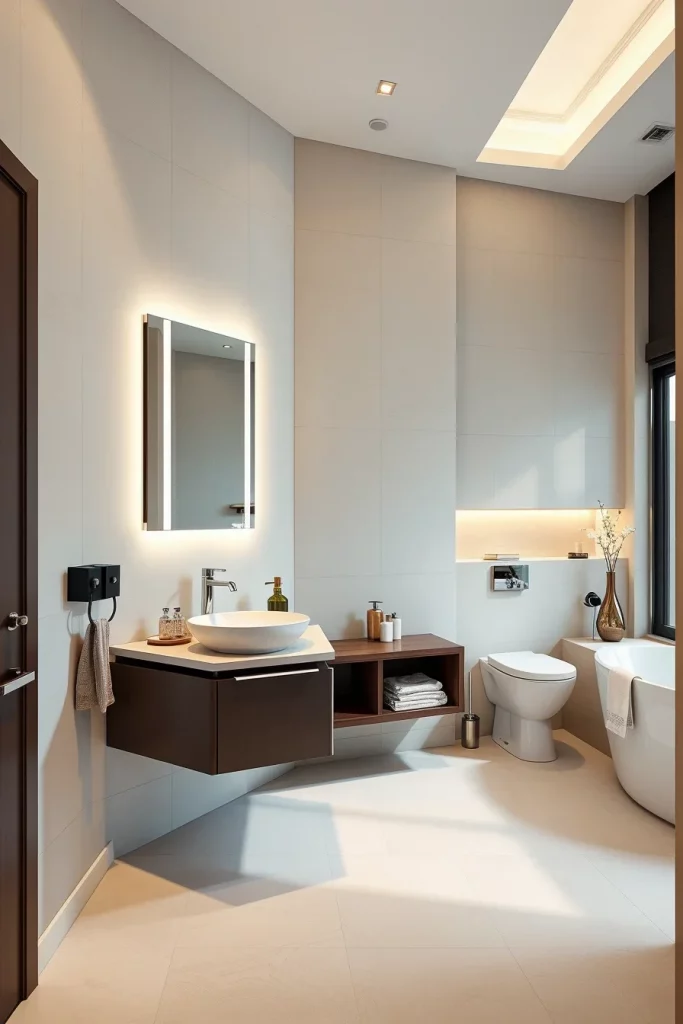
I usually select a floating vanity with handleless drawers, integrated sinks, and streamlined finishes. Paired with a large frameless mirror, wall-mounted faucets, and subtle under-cabinet lighting, the vanity becomes both practical and visually elegant. Storage remains concealed, helping maintain the uncluttered aesthetic that is essential in modern minimalist interiors. Neutral stone countertops and durable materials ensure long-term functionality while preserving a refined appearance.
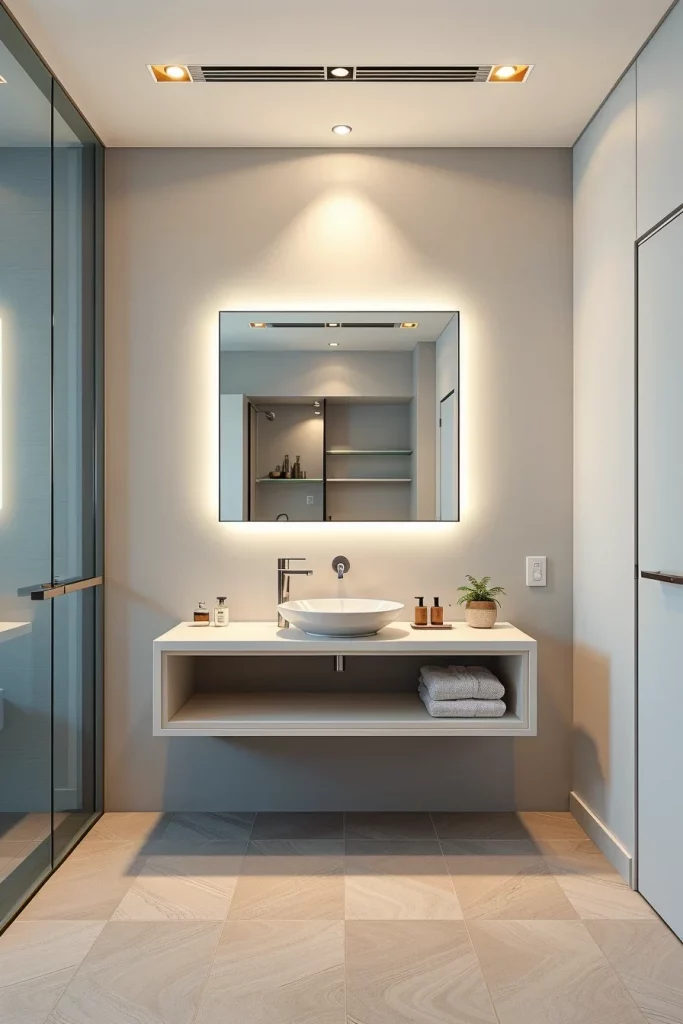
From my experience, floating vanities are among the most effective ways to modernize a bathroom without introducing unnecessary complexity. Many contemporary designers recommend wall-mounted furnishings because they create visual lightness and make cleaning significantly easier. I have consistently found that this simple adjustment can transform the entire perception of the room.
To further enhance this design, I would add recessed niches and coordinated storage accessories. These additions improve organization while maintaining the sleek, uninterrupted look that defines contemporary minimalism.
Elegant Minimalist Bathroom Using Soft Neutral Color Palettes
Soft neutral tones create some of the most creative and timeless minimalist bathroom environments. I often work with shades of beige, warm gray, ivory, taupe, and soft greige to establish a calming atmosphere that feels welcoming rather than stark. These colors provide flexibility while allowing architectural details and quality materials to take center stage.
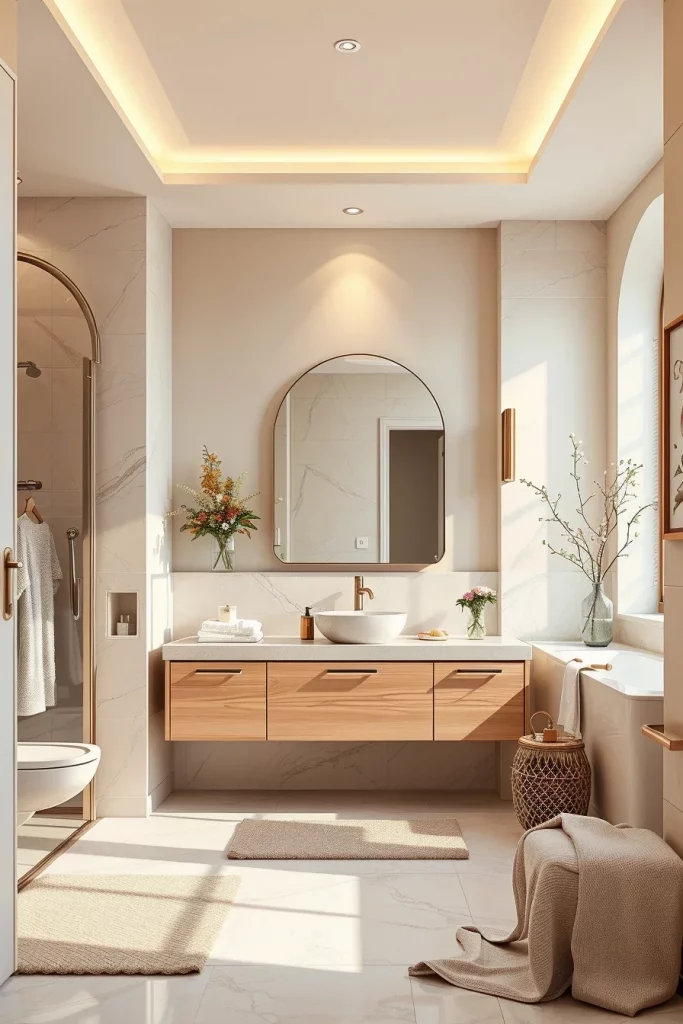
For this design, I typically combine a floating vanity in a light wood or painted finish with stone countertops, neutral wall tiles, and subtle metallic accents. Large mirrors, soft textiles, and carefully selected lighting fixtures enhance the warmth of the palette. The furniture and decorative elements remain simple, allowing the harmonious color scheme to become the defining characteristic of the room.
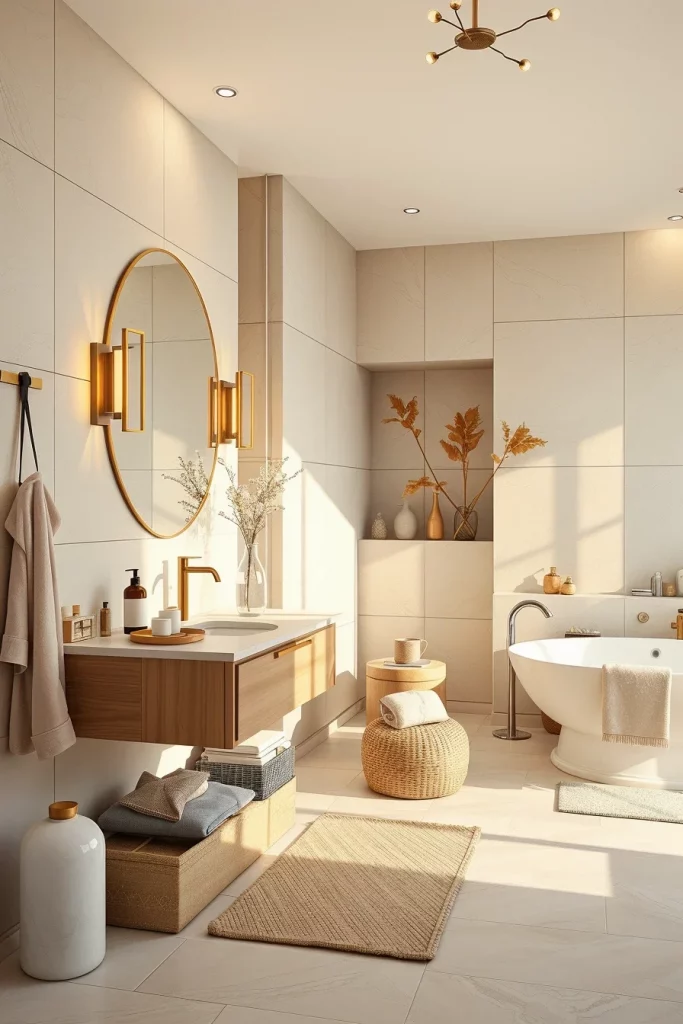
I appreciate how neutral palettes adapt to changing trends without requiring major renovations. Interior designers frequently emphasize the long-term value of neutral foundations because they provide versatility while maintaining sophistication. In my projects, these tones consistently create spaces that feel serene and effortlessly elegant.
I would also introduce layered textures through linen towels, textured ceramics, and matte finishes. These details prevent the room from feeling flat while preserving the minimalist aesthetic.
Black And White Minimalist Bathroom With Striking Contrast
A black and white minimalist bathroom offers a bold interpretation of simplicity. I use this approach when I want to create a dramatic visual statement while maintaining clean lines and uncluttered surfaces. The strong contrast between light and dark elements highlights architectural features and creates a highly sophisticated atmosphere.
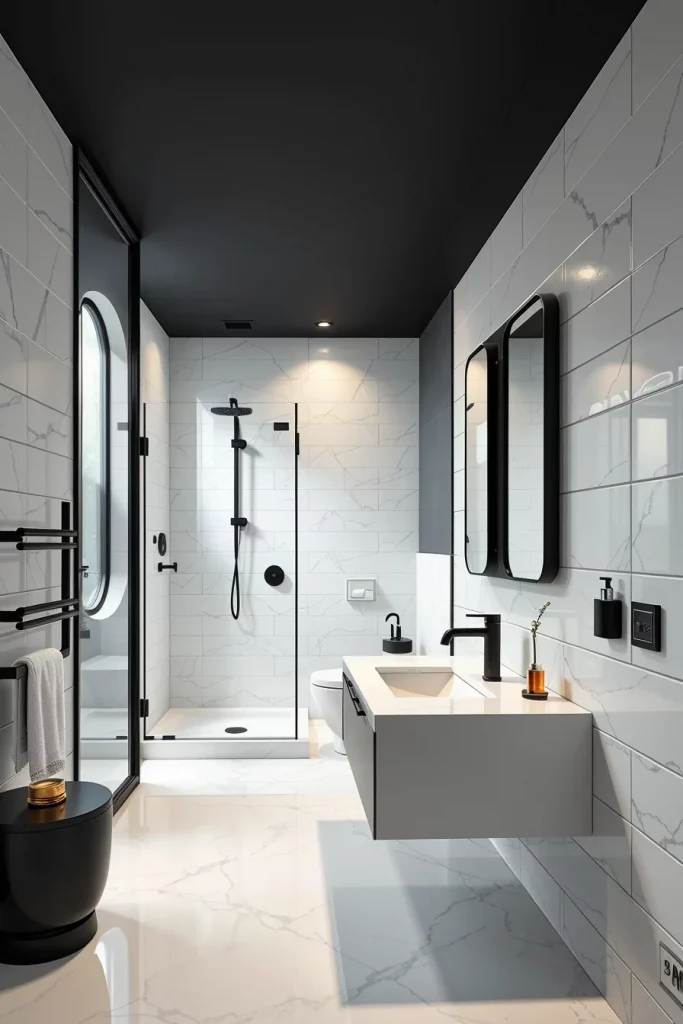
I often pair white walls and large-format tiles with matte black fixtures, black-framed mirrors, and sleek cabinetry. A floating vanity, frameless shower enclosure, and minimalist accessories keep the space balanced and functional. Strategic lighting ensures that darker elements feel intentional and elegant rather than overwhelming.
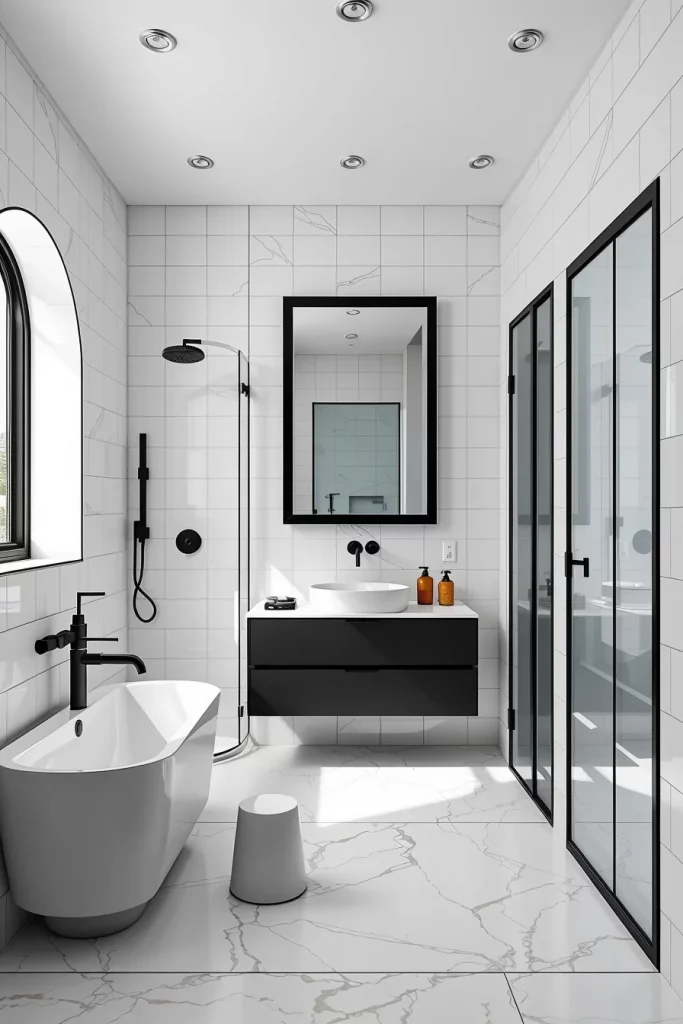
In my opinion, black and white bathrooms demonstrate how minimalist design can be both simple and visually powerful. Many contemporary design experts recommend limiting additional colors when working with strong contrasts, allowing the monochromatic palette to remain the focal point. I find this strategy highly effective because it reinforces clarity and cohesion throughout the space.
To soften the overall composition, I would incorporate subtle textures through stone surfaces, textured wall finishes, or natural wood accents. These additions introduce warmth without compromising the dramatic contrast.
Minimalist Bathroom Featuring Large Format Stone Tiles
Large format stone tiles are one of the most effective materials for creating stylish and unique minimalist bathrooms. Their expansive surface area reduces grout lines, resulting in a cleaner and more seamless appearance. I often use these tiles to visually enlarge the room while introducing natural texture and sophistication.
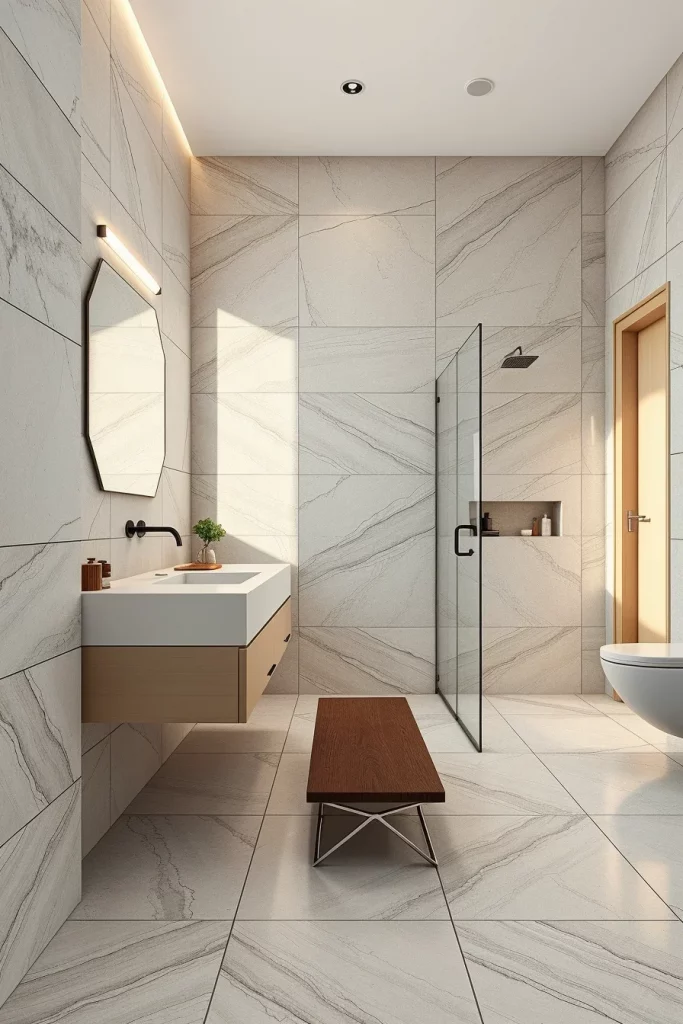
I typically select stone-look porcelain or natural stone tiles for floors and walls, creating continuity throughout the space. These surfaces pair beautifully with floating vanities, frameless glass showers, and integrated storage solutions. The subtle variations within the stone provide visual interest while maintaining the simplicity that defines minimalist design.
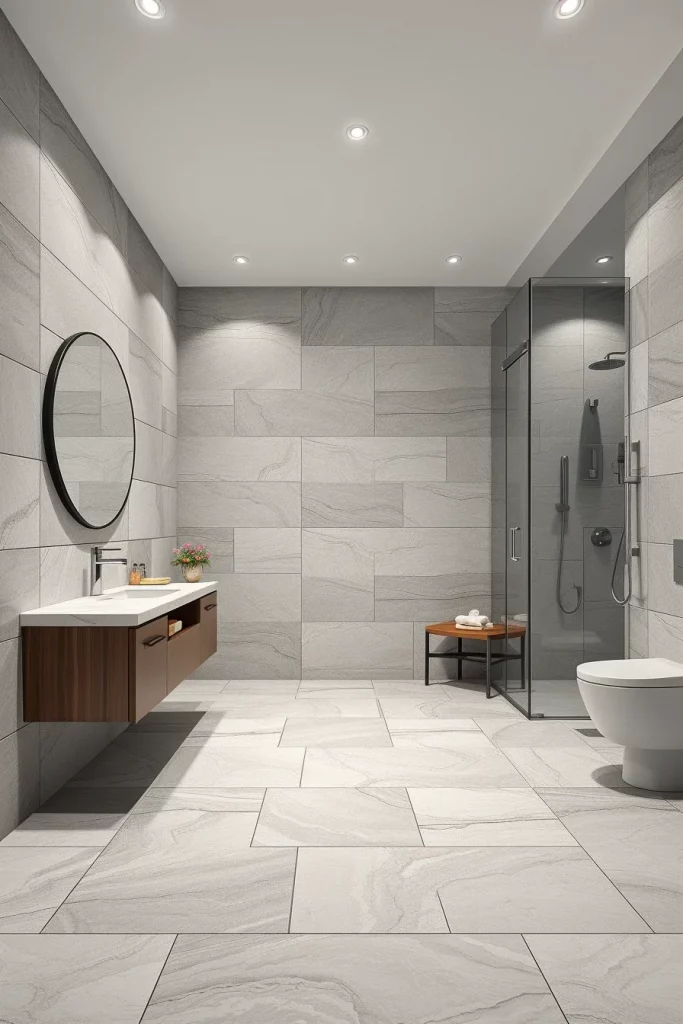
From my perspective, fewer visual interruptions create a stronger sense of calm. Many luxury bathroom designers favor large-format materials because they enhance both aesthetics and practicality. I have found that these surfaces contribute significantly to the spacious, high-end atmosphere that many homeowners seek.
I would also recommend incorporating concealed drainage systems and minimalist hardware. These details preserve the seamless visual flow while improving functionality and ease of maintenance.
Nature-Inspired Minimalist Bathroom With Indoor Greenery
A nature-inspired bathroom combines minimalist principles with the calming influence of plants and organic materials. I often use this concept to create spaces that feel refreshing, balanced, and connected to the outdoors. Carefully selected greenery introduces life and color without overwhelming the minimalist framework.
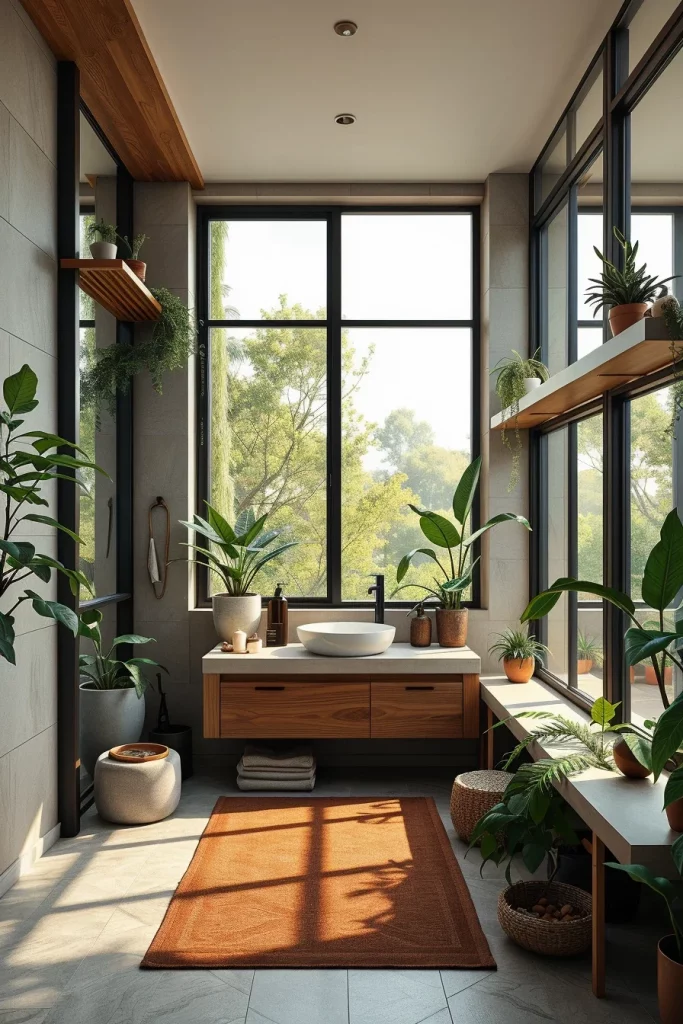
I usually combine natural wood vanities, stone surfaces, large windows, and indoor plants such as ferns, snake plants, or peace lilies. Floating shelves, neutral finishes, and simple decorative accessories maintain visual clarity while supporting the natural theme. The furniture remains functional and understated, allowing organic elements to become subtle focal points.
I personally enjoy how greenery transforms the atmosphere of a bathroom. Numerous design professionals emphasize the psychological benefits of incorporating natural elements into interior spaces, and I have observed that even a few well-placed plants can make a bathroom feel significantly more inviting and relaxing.
To complete this design, I would add natural daylight whenever possible. Skylights, frosted windows, or larger openings enhance plant health while strengthening the connection between the interior environment and nature.
Modern Minimalist Bathroom With Frameless Glass Shower Enclosure
I often recommend frameless glass shower enclosures when creating modern minimalist bathrooms because they visually expand the room and allow every design element to remain visible. This approach creates a clean, uninterrupted flow that makes even medium-sized bathrooms feel larger and brighter. Large-format porcelain tiles, neutral color palettes, and minimal decorative elements further reinforce the elegant simplicity of the space.
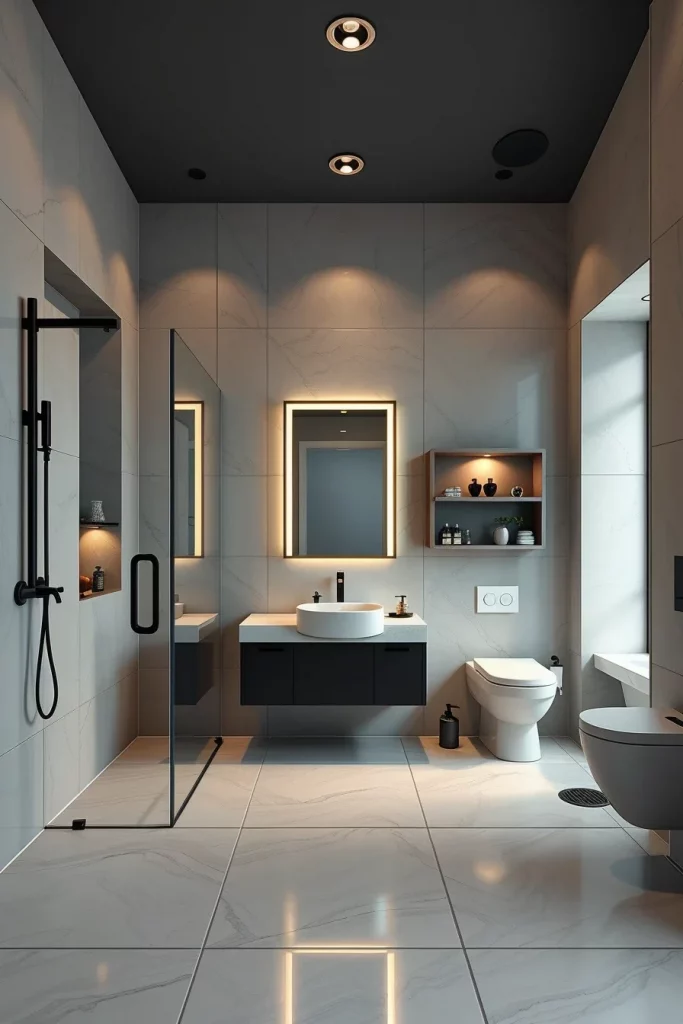
In this design, I prefer using a frameless glass shower enclosure paired with a floating vanity, wall-mounted faucet, recessed shelving, and a large backlit mirror. Each element contributes to a clutter-free appearance while maximizing functionality. The floating vanity creates visual openness, while integrated storage helps maintain the organized aesthetic that is essential in minimalist interiors.
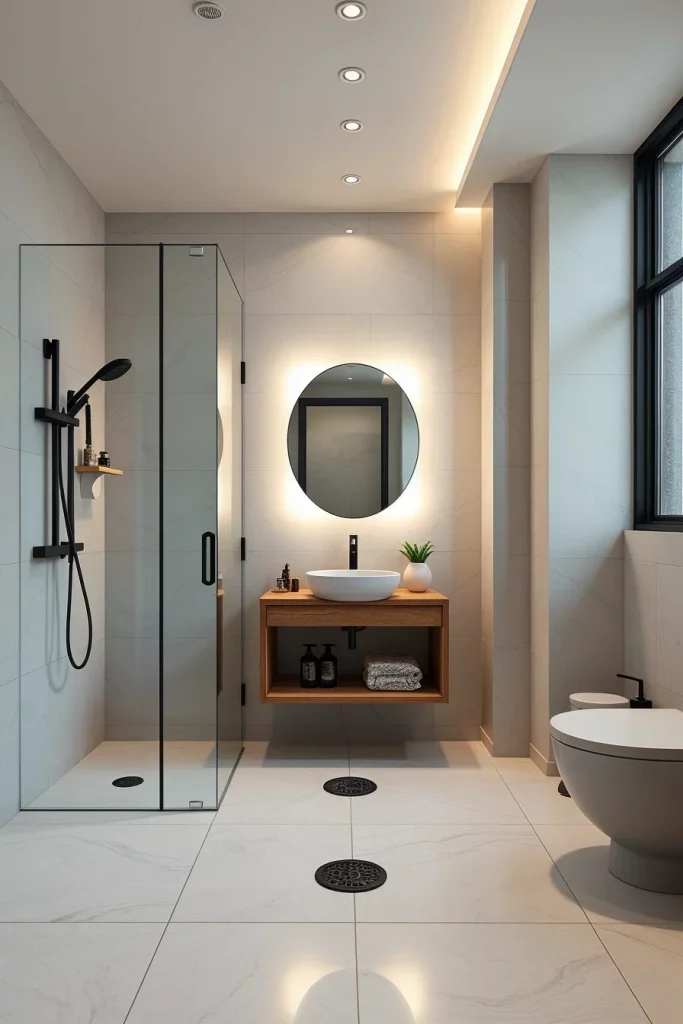
From my experience, lighting plays a major role in the success of this concept. Many interior designers featured in leading design publications emphasize layered lighting that combines ambient illumination with targeted task lighting around mirrors. I find that this combination enhances both comfort and the luxurious atmosphere of the room.
To complete this design, I would add heated flooring, concealed drainage systems, and high-quality matte black or brushed nickel fixtures. These details elevate the overall experience while preserving the simplicity that defines stylish minimalist design.
Scandinavian Minimalist Bathroom Filled With Natural Light
I find that Scandinavian-inspired bathrooms perfectly represent the balance between simplicity and comfort. The focus is on natural light, soft colors, and functional design, creating a bright and welcoming environment. Large windows, pale wood finishes, and white surfaces contribute to a calm atmosphere that feels timeless and refreshing.
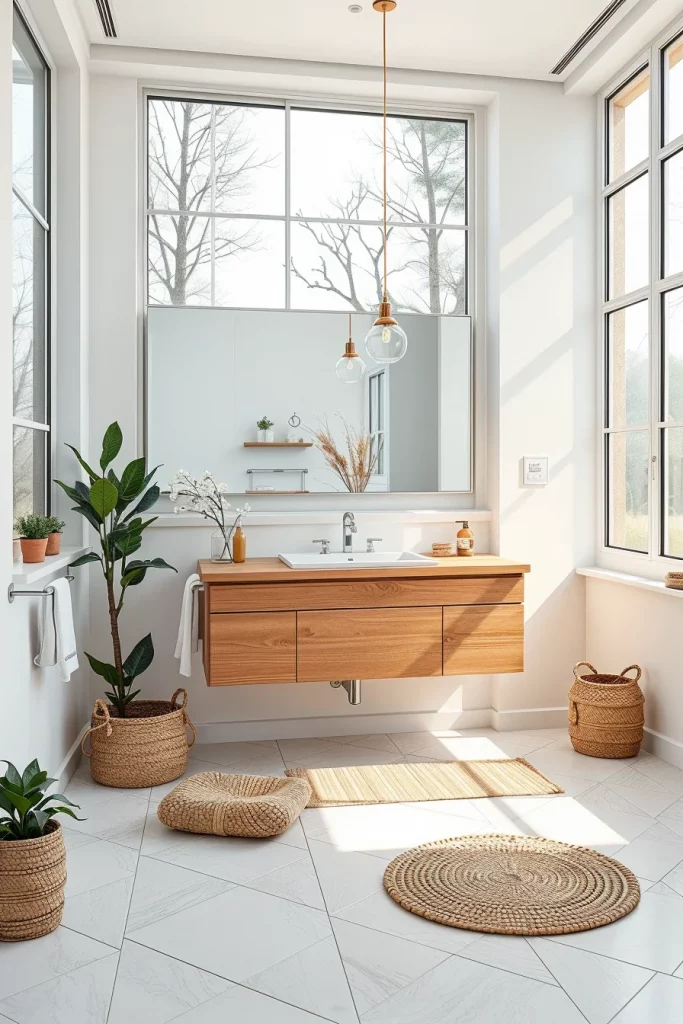
For furnishings and materials, I typically include a floating oak vanity, frameless mirror, simple ceramic sink, and light stone flooring. Natural textures prevent the room from feeling sterile while maintaining the clean aesthetic associated with minimalist interiors. Carefully selected accessories such as woven baskets and small plants add warmth without introducing visual clutter.
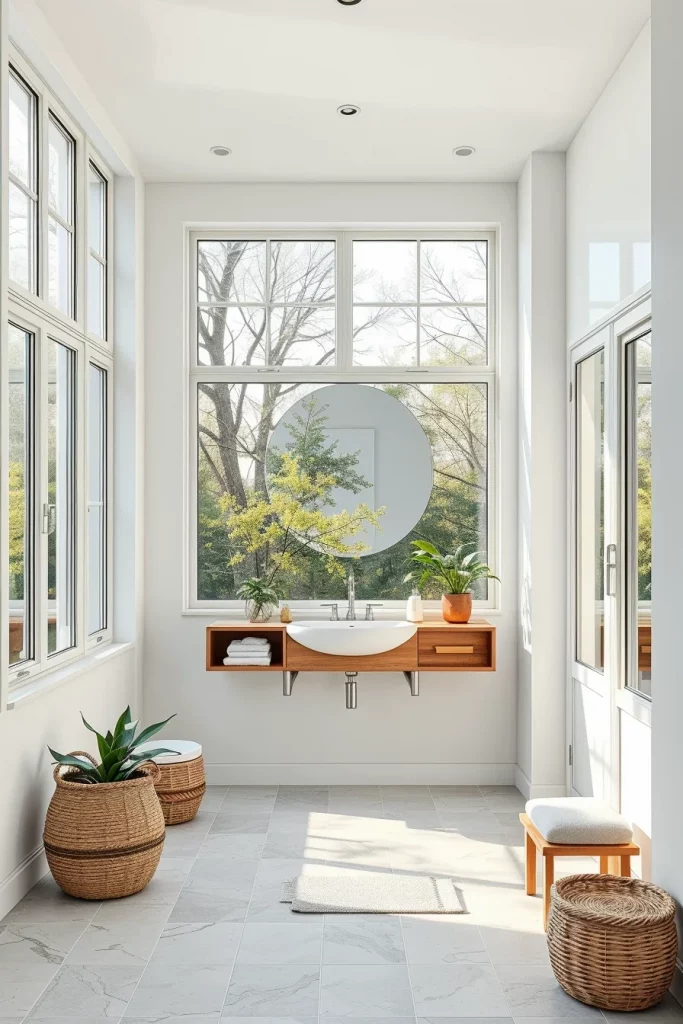
In my opinion, one of the greatest strengths of Scandinavian design is its ability to feel cozy while remaining highly practical. Many Nordic designers advocate for prioritizing natural materials and daylight, and I have consistently seen how these elements improve both the appearance and functionality of bathroom spaces.
I would also incorporate discreet storage cabinets and soft LED lighting for evening use. These additions ensure that the bathroom remains functional throughout the day while preserving its bright and inviting character.
Compact Minimalist Bathroom Ideas For Narrow Layouts
When working with narrow bathrooms, I focus on maximizing every inch of available space while maintaining visual openness. A compact minimalist layout can feel surprisingly spacious when the design emphasizes clean lines, reflective surfaces, and efficient planning. Light color schemes and continuous flooring help visually extend the room.
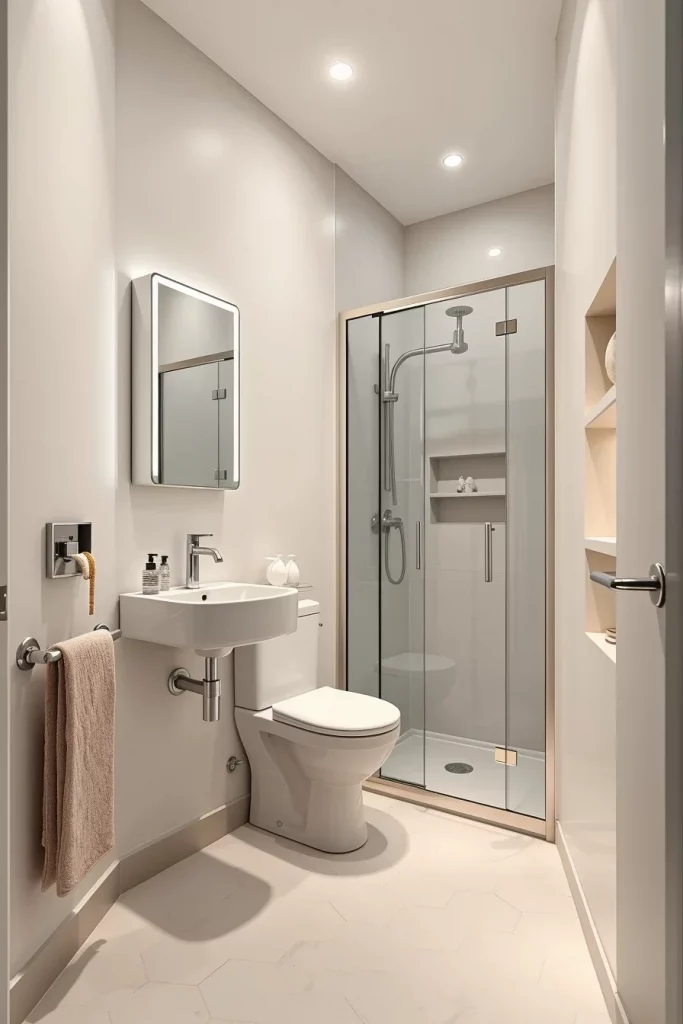
I often include wall-mounted toilets, slim floating vanities, mirrored cabinets, and walk-in showers with transparent glass panels. These elements reduce visual bulk and allow the eye to move freely throughout the space. Recessed niches inside the shower provide practical storage without consuming valuable floor area.
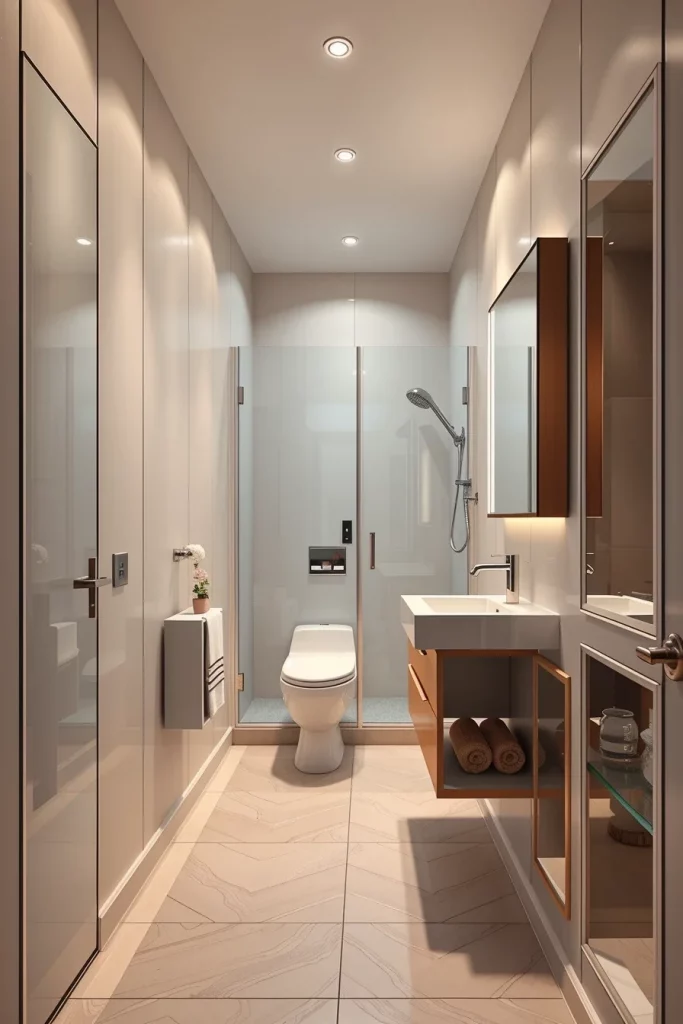
Based on my experience, proper scale is essential in compact bathrooms. Oversized furniture can quickly overwhelm the room, while carefully proportioned fixtures create balance and comfort. Many professional designers recommend prioritizing multifunctional elements, and I completely agree with this approach for smaller layouts.
To further enhance the design, I would add vertical storage solutions, concealed medicine cabinets, and integrated lighting within mirrors. These additions improve usability while supporting the minimalist aesthetic.
High-End Minimalist Bathroom With Custom Built-In Storage
A luxury minimalist bathroom often succeeds because every item has a designated place. I frequently use custom built-in storage to eliminate visible clutter and create an environment that feels sophisticated and highly organized. The result is a seamless interior where architectural features become the focal point.
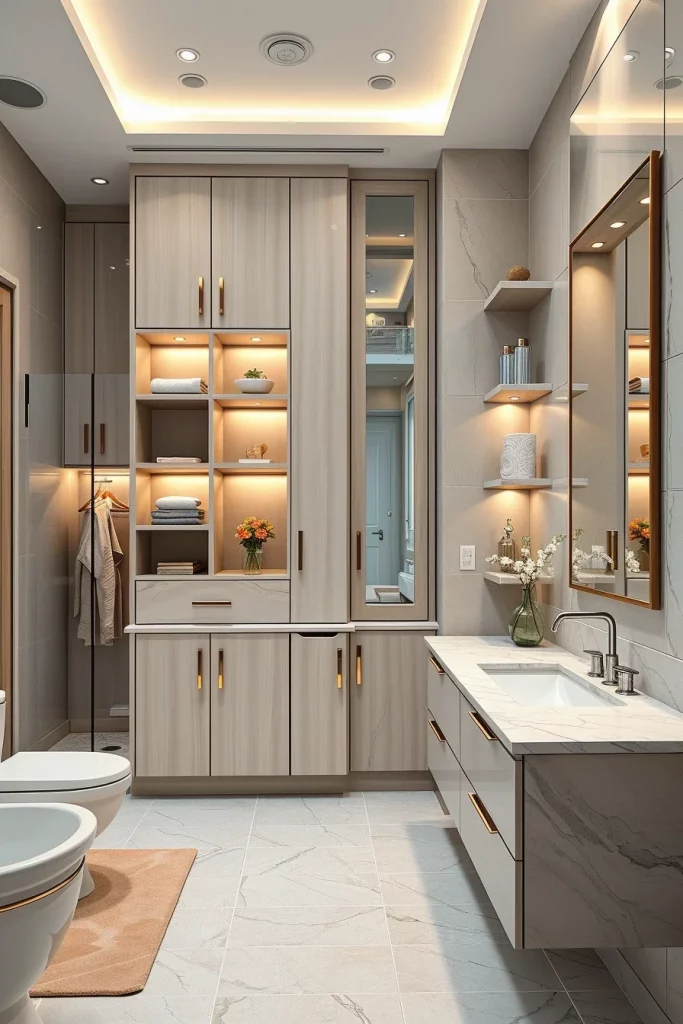
For this concept, I recommend floor-to-ceiling cabinetry with handleless fronts, recessed shelving, floating vanities, and integrated storage compartments. These elements maintain clean surfaces while providing generous storage capacity. Natural stone countertops and premium finishes add refinement without compromising simplicity.
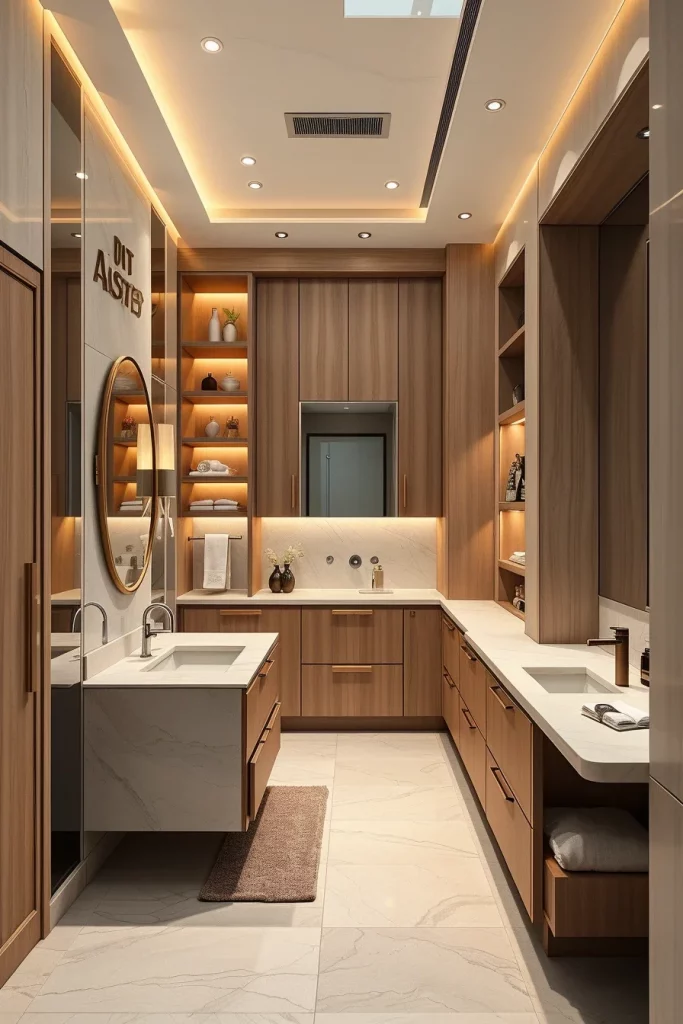
I believe custom storage is one of the most valuable investments in bathroom design. Many luxury interior designers emphasize the importance of concealed organization, and I have found that clients appreciate both the visual elegance and everyday convenience it provides. A well-organized space naturally feels more relaxing and luxurious.
To enhance this design further, I would include interior cabinet lighting, hidden laundry compartments, and integrated charging stations for grooming devices. These practical features support modern lifestyles while remaining discreet.
Minimalist Bathroom Design With Statement Freestanding Bathtub
A freestanding bathtub can serve as the centerpiece of a unique minimalist bathroom without disrupting the simplicity of the design. I often use this approach when creating spa-inspired interiors that prioritize relaxation and visual impact. The bathtub becomes a sculptural element that immediately draws attention while maintaining balance within the room.
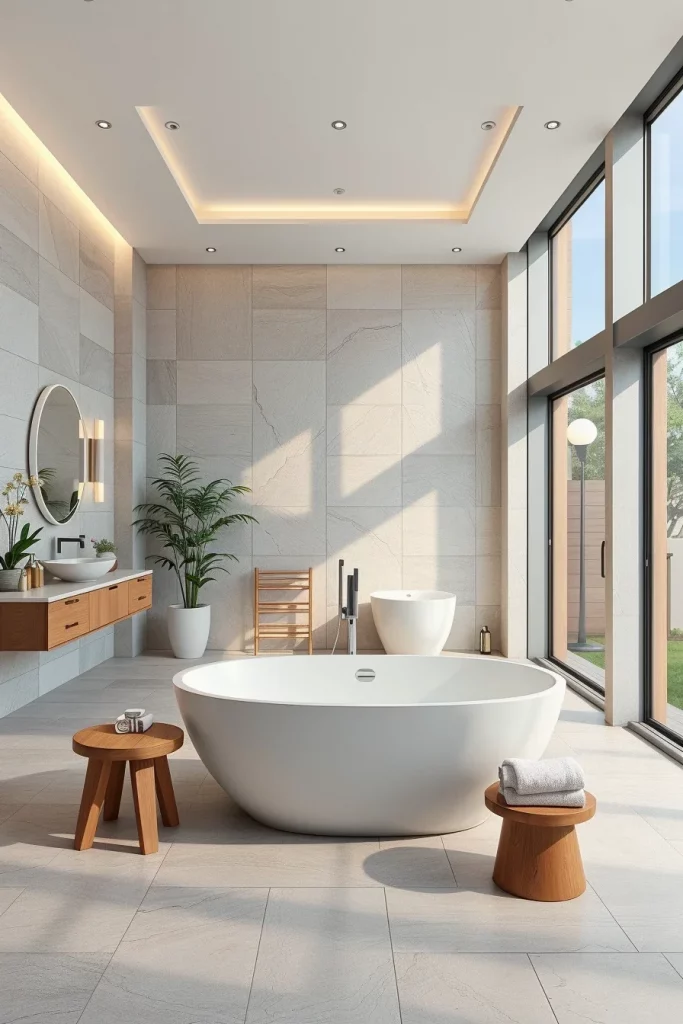
I typically pair a freestanding tub with large-format stone tiles, a floor-mounted faucet, a floating vanity, and oversized windows. The surrounding furnishings remain intentionally understated so that the bathtub can stand out as the primary design feature. Neutral colors and natural materials reinforce the serene atmosphere.
From my perspective, this design works best when restraint is exercised throughout the rest of the room. Many luxury hospitality designers use this principle to create memorable bathrooms in high-end resorts and private residences. I find that a carefully selected bathtub can transform a simple room into a sophisticated retreat.
To complete the composition, I would add soft indirect lighting, a small wooden stool, plush towels, and a subtle accent plant. These additions enhance comfort while preserving the clean and creative aesthetic.
Soft Beige Minimalist Bathroom For A Cozy And Relaxing Retreat
I often recommend soft beige color palettes for homeowners who want a minimalist bathroom that feels warm rather than stark. This approach creates a soothing retreat where subtle tones replace visual distractions. Beige walls, light stone surfaces, and soft textures work together to create a calm environment that promotes relaxation while maintaining a refined minimalist appearance.
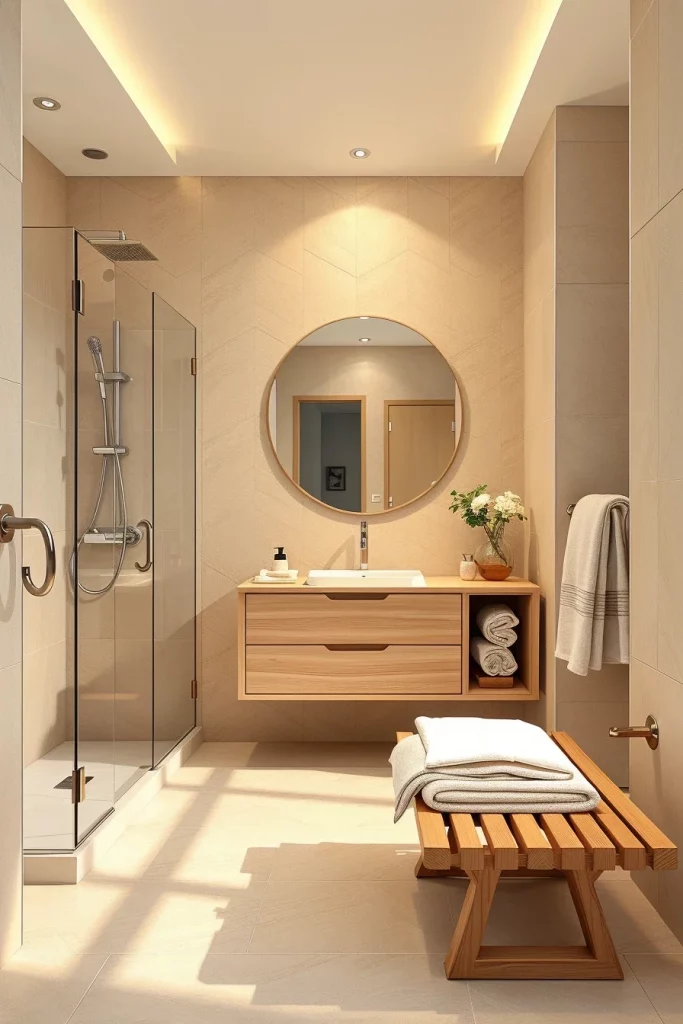
In this design, I typically include a floating vanity in light wood, beige porcelain tiles, a frameless shower enclosure, and a large round mirror. Soft linen towels, ceramic accessories, and understated lighting contribute to the welcoming atmosphere. Every element serves a purpose while helping the room feel comfortable and balanced.
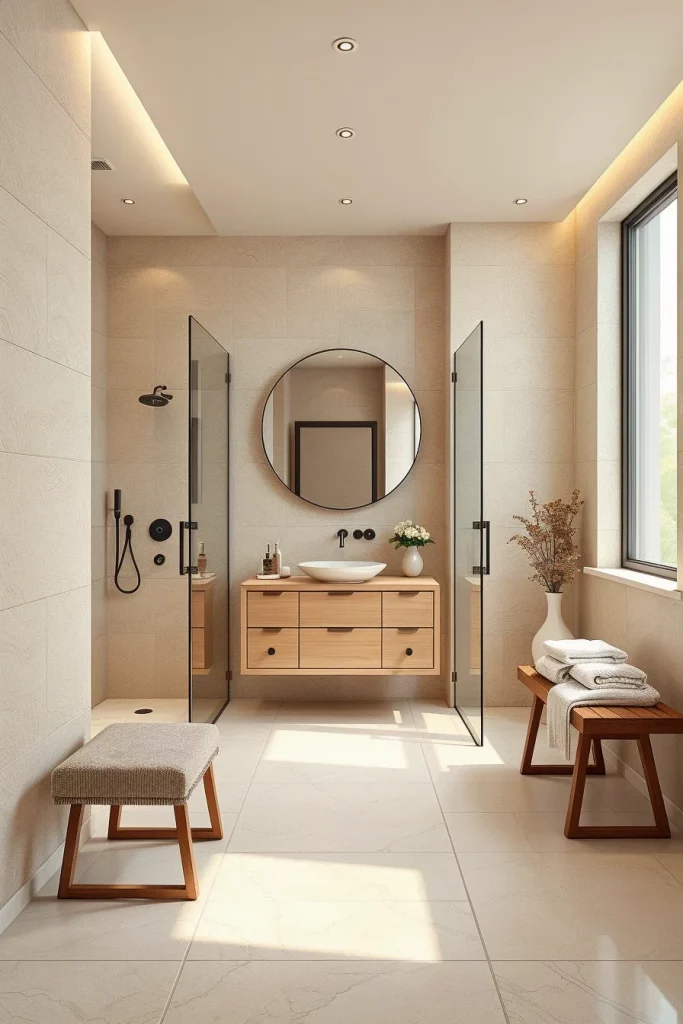
From my experience, beige is one of the most versatile colors in interior design because it complements a wide range of materials and finishes. Many designers featured in respected interior publications continue to use warm neutral palettes because they create timeless spaces that remain appealing for years. I find that beige minimalist bathrooms often feel more inviting than cooler monochromatic alternatives.
To complete this concept, I would add textured wall finishes, subtle accent lighting, and a small natural wood bench. These additions introduce depth and character without compromising the clean aesthetic of the room.
Creative Minimalist Bathroom Featuring Curved Architectural Details
One of the most interesting ways to introduce personality into a minimalist bathroom is through curved architectural forms. I find that soft arches and rounded edges create a more welcoming environment while preserving the simplicity that defines minimalist design. Curves add visual movement and make the space feel more organic and sophisticated.
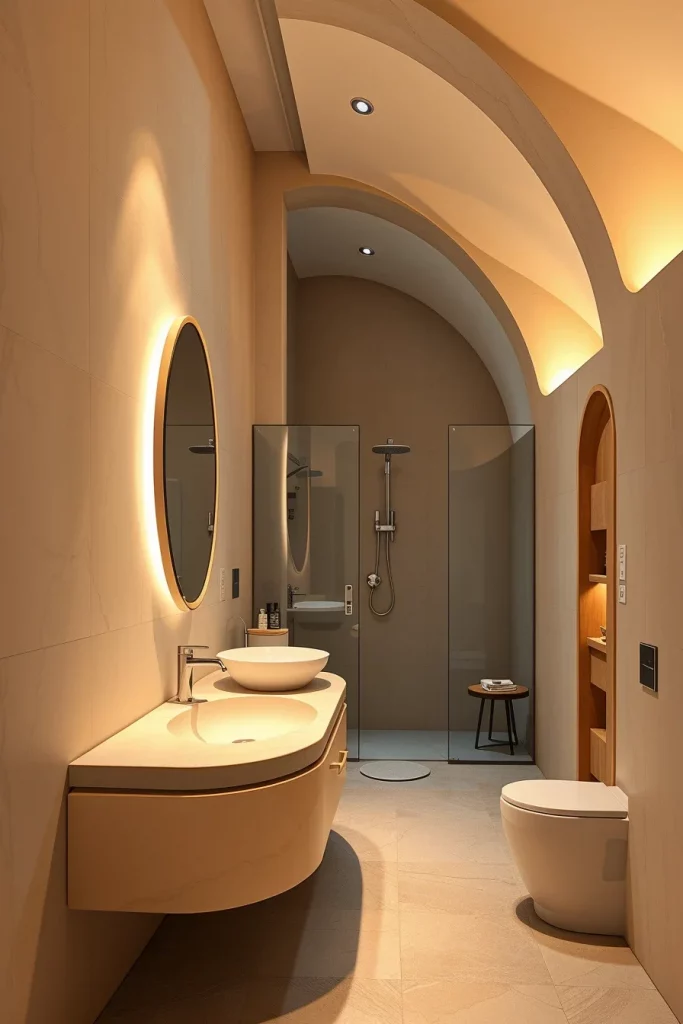
For this design, I often incorporate arched shower entrances, curved mirrors, rounded vanities, and sculptural sinks. Smooth plaster walls and seamless transitions between surfaces further enhance the flowing appearance of the room. These elements soften the geometry of the space while maintaining a highly organized and uncluttered aesthetic.
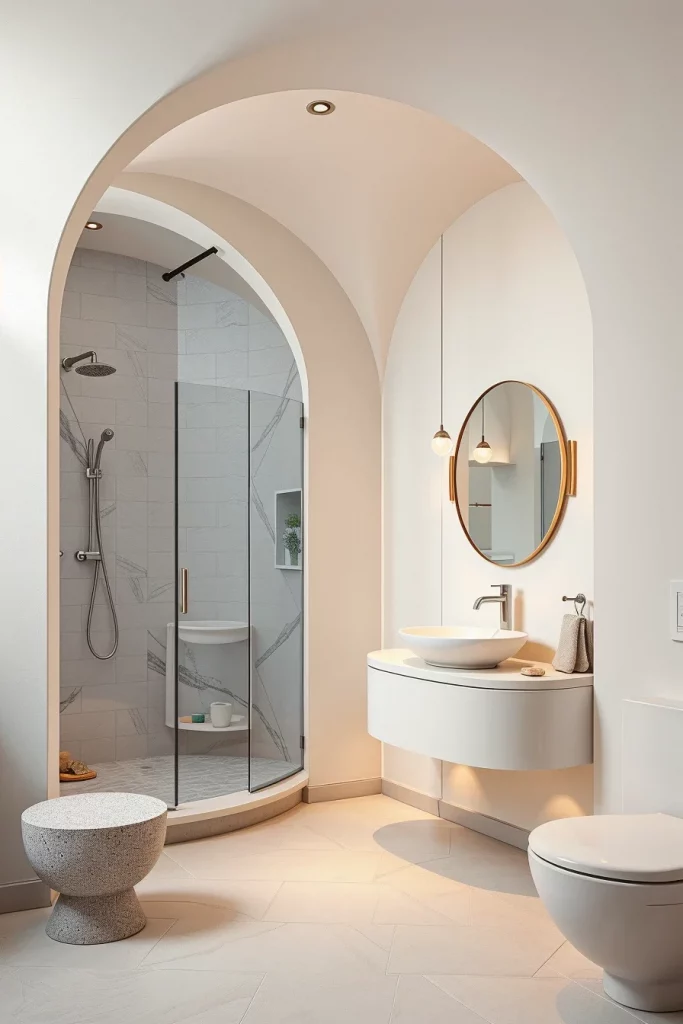
In my opinion, curved details represent one of the most exciting developments in contemporary bathroom design. Many leading designers have embraced organic shapes because they introduce elegance without relying on excessive decoration. I have noticed that clients are increasingly drawn to bathrooms that feel both artistic and functional.
I would also include concealed LED lighting that follows the curves of architectural elements. This feature highlights the unique shapes while creating a warm and relaxing atmosphere throughout the bathroom.
Minimalist Bathroom With Hidden Storage And Seamless Surfaces
I believe that hidden storage is one of the defining characteristics of a successful minimalist bathroom. By concealing everyday items behind integrated panels and seamless cabinetry, the room maintains a clean and peaceful appearance. This approach allows the architecture and materials to become the primary visual focus.
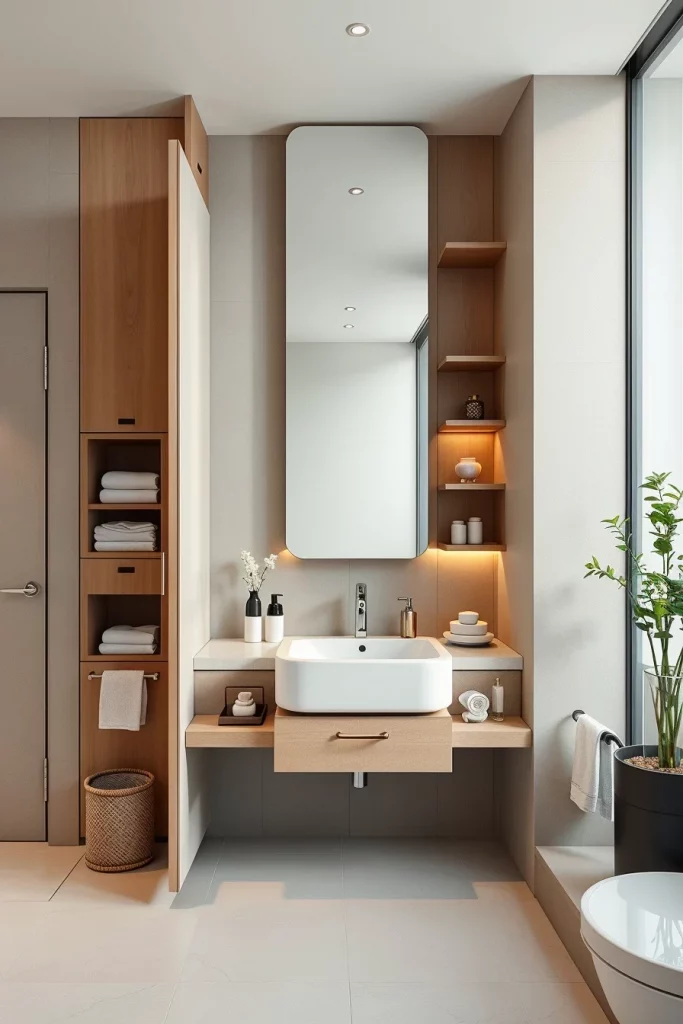
In this design, I typically use handleless cabinets, recessed medicine cabinets, hidden shelving, and integrated storage behind mirrors. Large seamless wall panels reduce visual interruptions and create a cohesive appearance throughout the room. Floating fixtures further contribute to the feeling of openness and simplicity.
From my experience, homeowners appreciate minimalist bathrooms most when organization becomes effortless. Design professionals frequently emphasize that beautiful interiors are easier to maintain when storage is thoughtfully planned. I completely agree because a clutter-free environment enhances both functionality and visual appeal.
To improve this concept even further, I would add concealed laundry hampers, hidden electrical outlets, and custom drawer organizers. These details support everyday convenience while preserving the seamless aesthetic.
Stylish Concrete Minimalist Bathroom With Modern Character
Concrete can transform a minimalist bathroom into a space filled with texture and architectural presence. I often use concrete-inspired finishes when creating interiors that feel contemporary, durable, and visually distinctive. The subtle variations in texture provide interest without introducing unnecessary decoration.
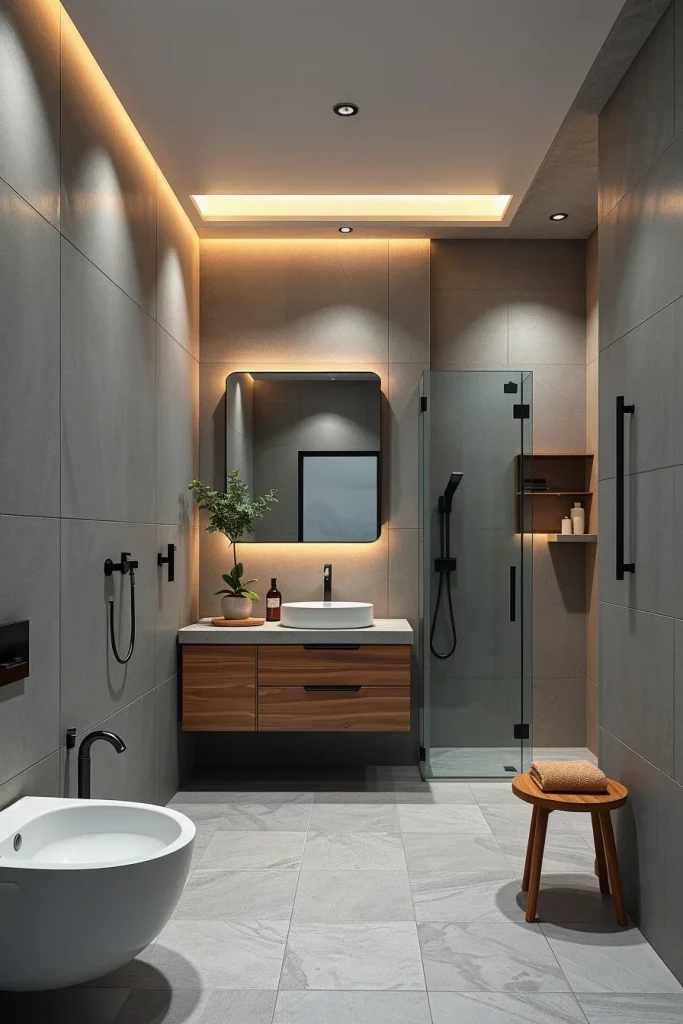
For this design, I recommend concrete walls or microcement finishes, a floating vanity, frameless glass shower panels, and matte black fixtures. These components work together to create a sophisticated environment with strong visual character. Natural wood accents can be introduced to soften the industrial qualities of the concrete surfaces.
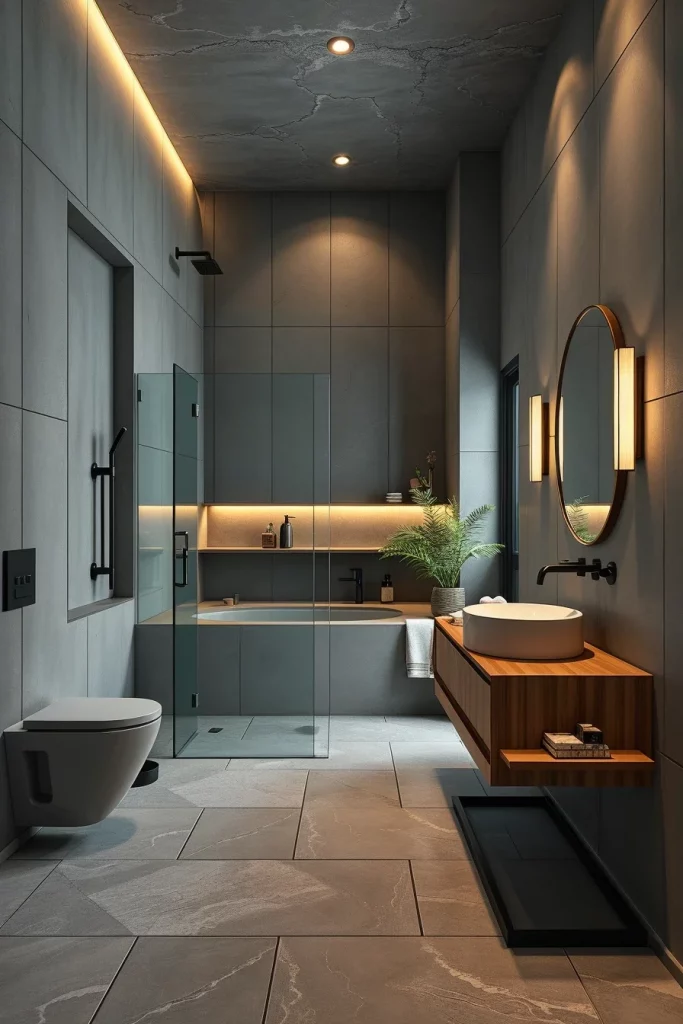
I have found that concrete bathrooms appeal to homeowners seeking a more unusual and modern interpretation of minimalism. Many contemporary architects use concrete because of its versatility and ability to create seamless surfaces. When balanced with warm materials, the result feels elegant rather than cold.
I would also include under-vanity lighting, heated flooring, and minimalist accessories in neutral tones. These additions enhance comfort while complementing the architectural nature of the design.
Minimalist Bathroom Design Inspired By Luxury Boutique Hotels
Luxury boutique hotels often provide some of the best inspiration for stylish and unique minimalist bathrooms. I admire how these spaces combine simplicity with carefully selected premium details that elevate the guest experience. The result is a bathroom that feels refined, comfortable, and memorable.
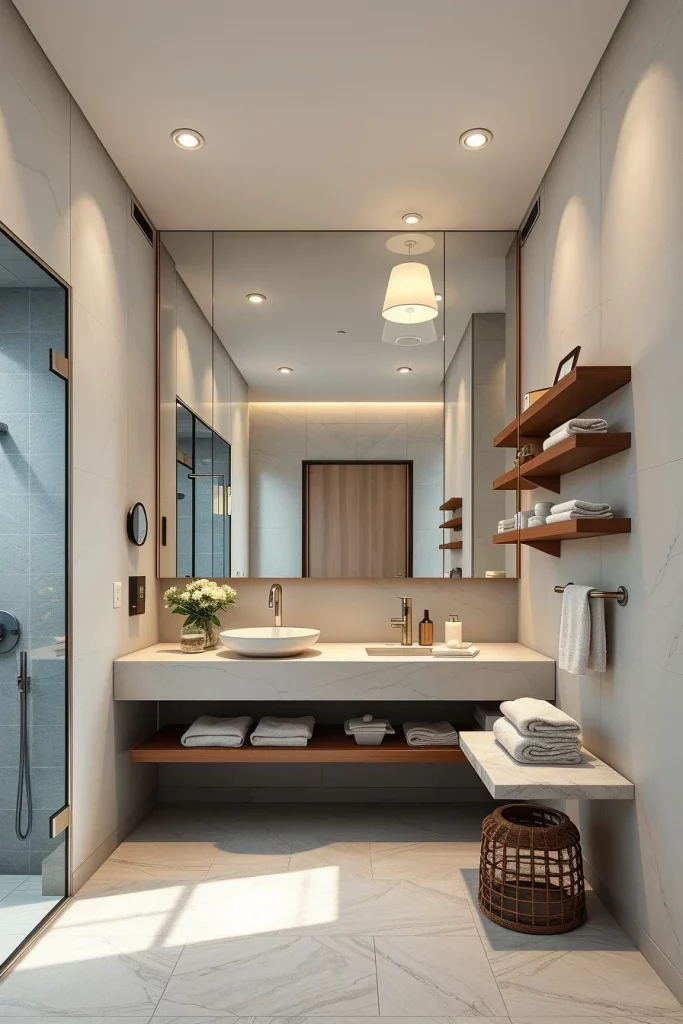
In this design, I typically include a floating vanity with stone countertops, oversized mirrors, frameless glass shower enclosures, premium fixtures, and elegant ambient lighting. High-quality materials are prioritized, while decorative elements remain restrained. Every feature contributes to a sense of understated luxury.
From my perspective, boutique hotel design succeeds because it focuses equally on aesthetics and comfort. Many hospitality designers emphasize sensory experiences, and I have found that thoughtful lighting, premium materials, and uncluttered layouts significantly improve how a bathroom feels. These principles translate exceptionally well into residential interiors.
To perfect this concept, I would add plush towels, integrated shelving, dimmable lighting, and subtle decorative accents such as a sculptural vase or carefully selected artwork. These finishing touches create a luxurious atmosphere while maintaining the minimalist philosophy.
Monochromatic Minimalist Bathroom With Sophisticated Simplicity
I find that a monochromatic bathroom is one of the most effective ways to achieve a calm and cohesive minimalist environment. By using varying shades of a single color, such as warm beige, soft gray, or crisp white, I can create depth without introducing visual clutter. This approach emphasizes architectural details, enhances the feeling of spaciousness, and establishes a serene atmosphere that supports relaxation. It is one of my favorite examples of modern and stylish minimalist design because it proves that simplicity can be visually engaging.
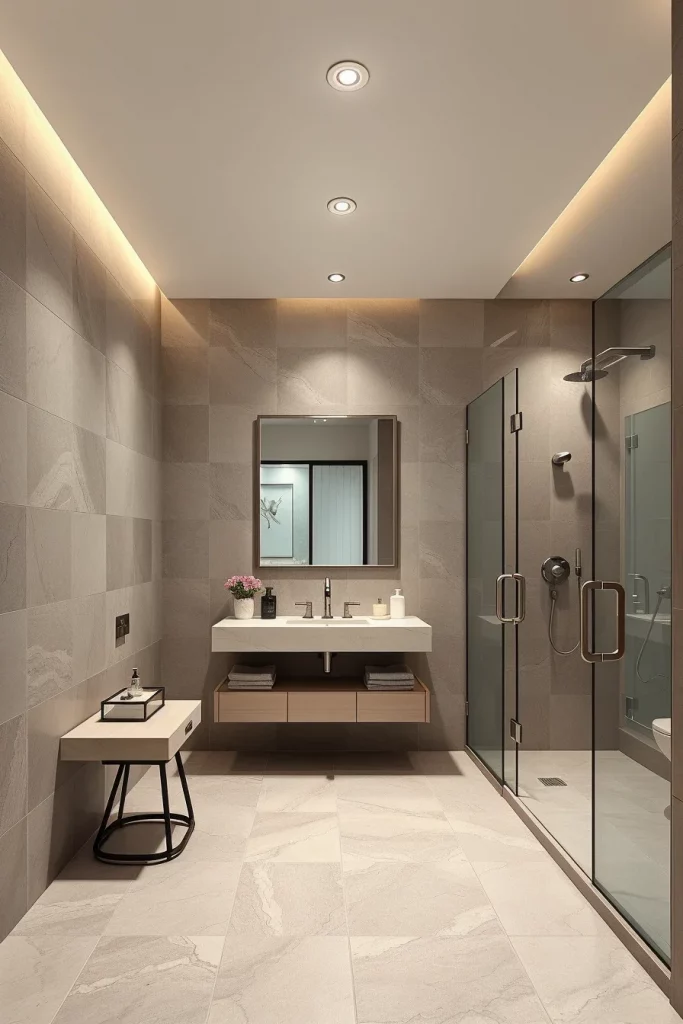
When designing this type of bathroom, I focus on a floating vanity with integrated storage, frameless glass shower enclosures, large-format wall tiles, and concealed hardware. Each element serves a practical purpose while maintaining a clean visual flow. Matte finishes, handleless cabinetry, and minimalist faucets contribute to the streamlined appearance. I also recommend incorporating subtle texture through stone surfaces, textured tiles, or microcement walls to prevent the monochromatic palette from feeling flat.
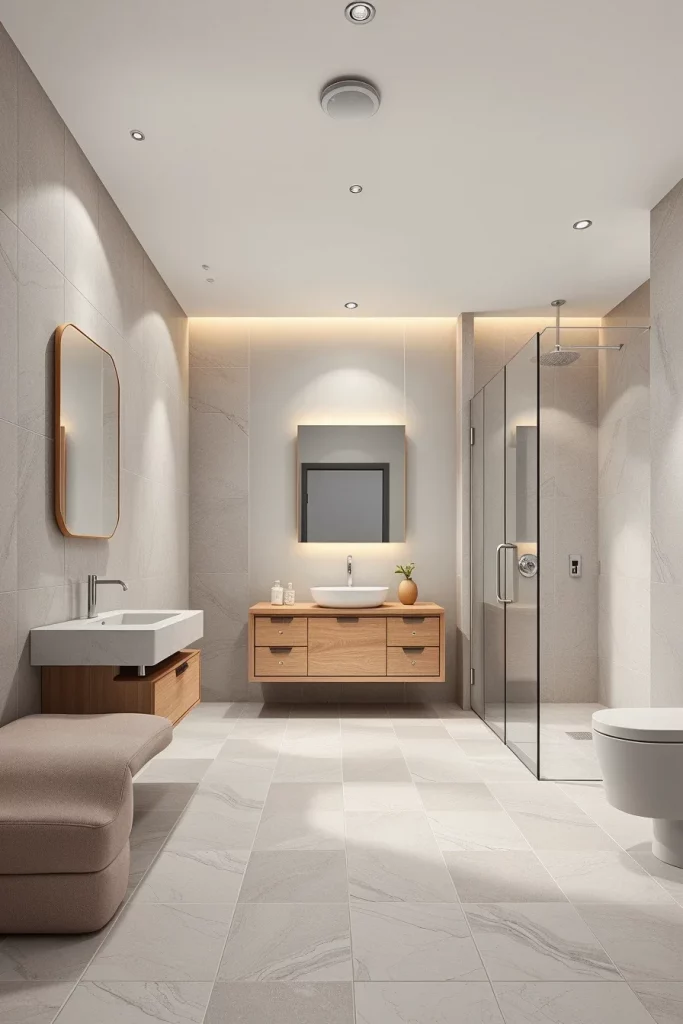
In my experience, many professional designers featured in leading interior publications emphasize the importance of layering textures when working with a limited color palette. I agree with this approach because it allows the room to feel sophisticated rather than sterile. A carefully selected combination of materials often creates more visual interest than introducing additional colors.
To complete this design, I would add a large frameless mirror and discreet ambient lighting. These additions enhance brightness, make the room feel larger, and reinforce the sophisticated simplicity that defines this minimalist concept.
Minimalist Bathroom Featuring Unique Backlit Mirror Concepts
I often recommend backlit mirrors when clients want a minimalist bathroom that feels distinctive without becoming overly decorative. The soft glow surrounding the mirror introduces visual interest while preserving clean lines and simplicity. This type of design creates a welcoming atmosphere and serves as both functional task lighting and architectural feature lighting. It is an excellent example of creative and unique minimalist bathroom styling.
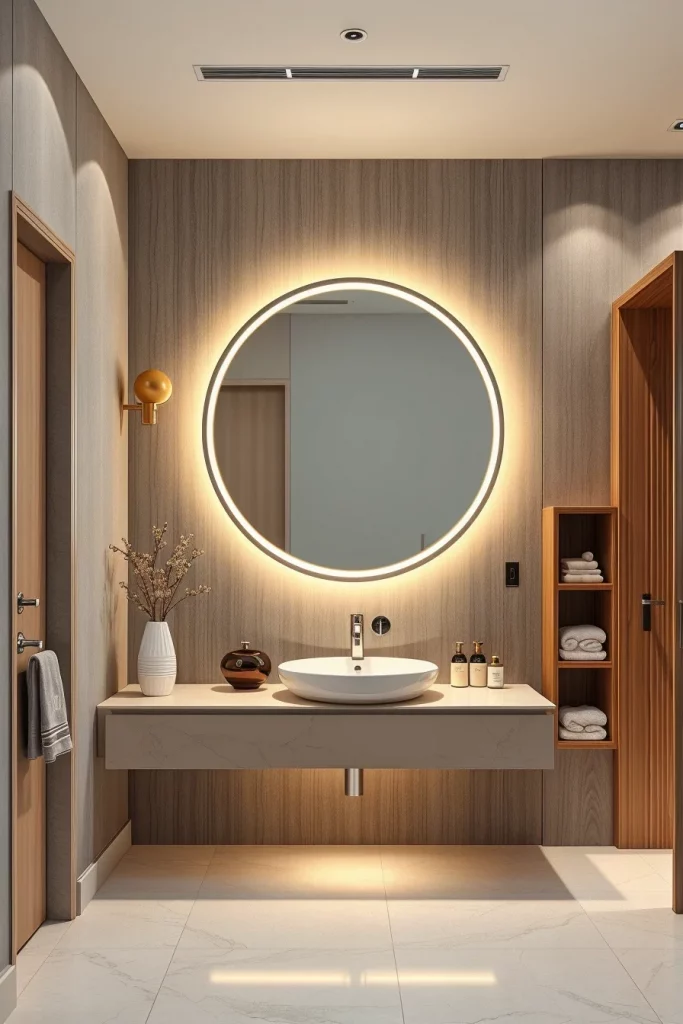
I typically pair a backlit mirror with a floating vanity, wall-mounted faucets, seamless countertops, and neutral-toned wall finishes. The mirror becomes the focal point of the room, eliminating the need for excessive decoration. I also prefer integrated storage solutions that keep toiletries hidden and maintain the uncluttered aesthetic essential to minimalist design.
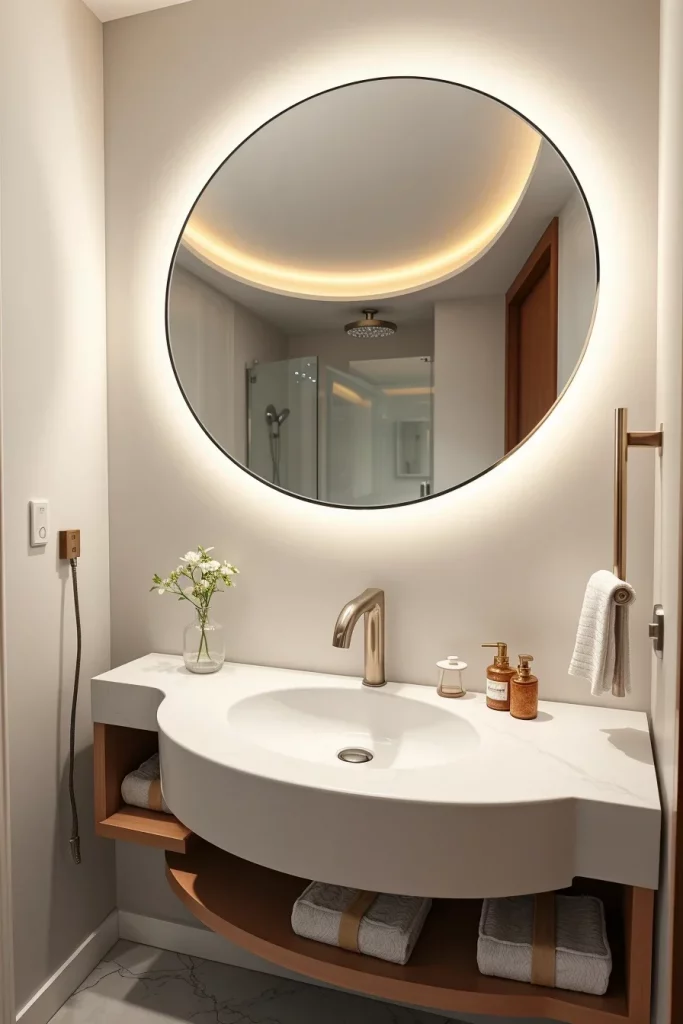
From my perspective, one of the greatest advantages of illuminated mirrors is their ability to improve everyday usability. The even light distribution reduces shadows during grooming routines and creates a luxurious hotel-inspired experience. Many contemporary designers favor this feature because it combines beauty and practicality in a single element.
If I wanted to enhance this concept further, I would include dimmable lighting controls and anti-fog technology. These additions improve comfort and functionality while maintaining the elegant simplicity of the space.
Sustainable Minimalist Bathroom With Eco-Friendly Materials
I believe sustainability and minimalism work exceptionally well together because both philosophies prioritize thoughtful choices and long-term value. A sustainable minimalist bathroom focuses on reducing waste, selecting environmentally responsible materials, and creating a timeless design that remains relevant for years. This approach results in a modern and highly practical bathroom that supports both personal comfort and environmental responsibility.
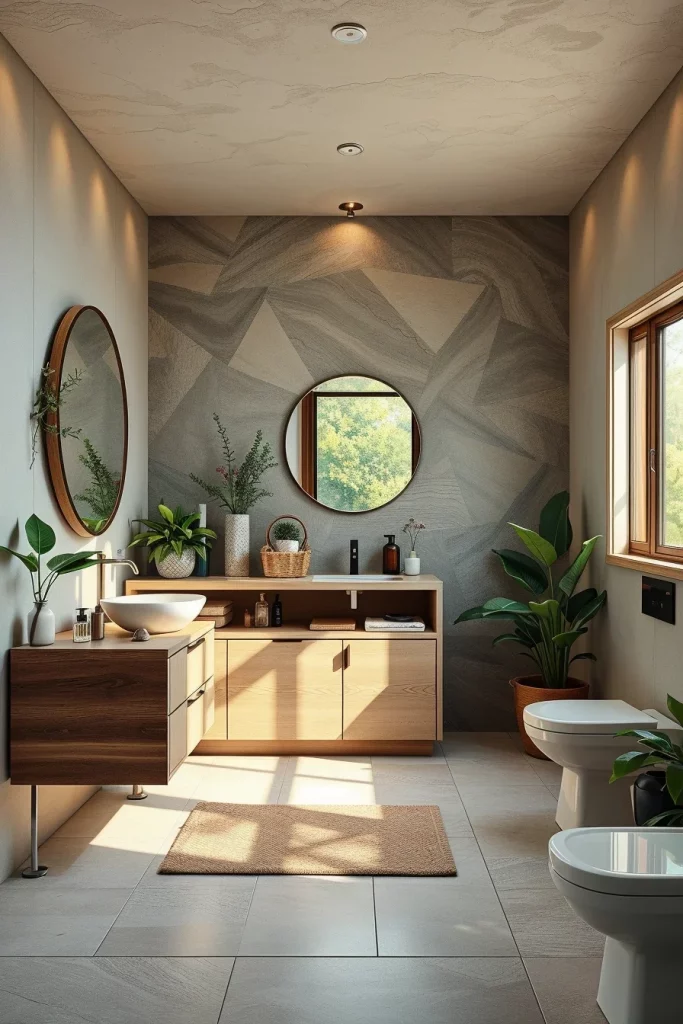
For this design, I often incorporate recycled wood vanities, water-saving fixtures, natural stone surfaces, low-VOC paints, and responsibly sourced materials. I also recommend energy-efficient LED lighting and dual-flush toilets. These elements contribute to environmental performance while preserving the clean and refined aesthetic associated with minimalist interiors.
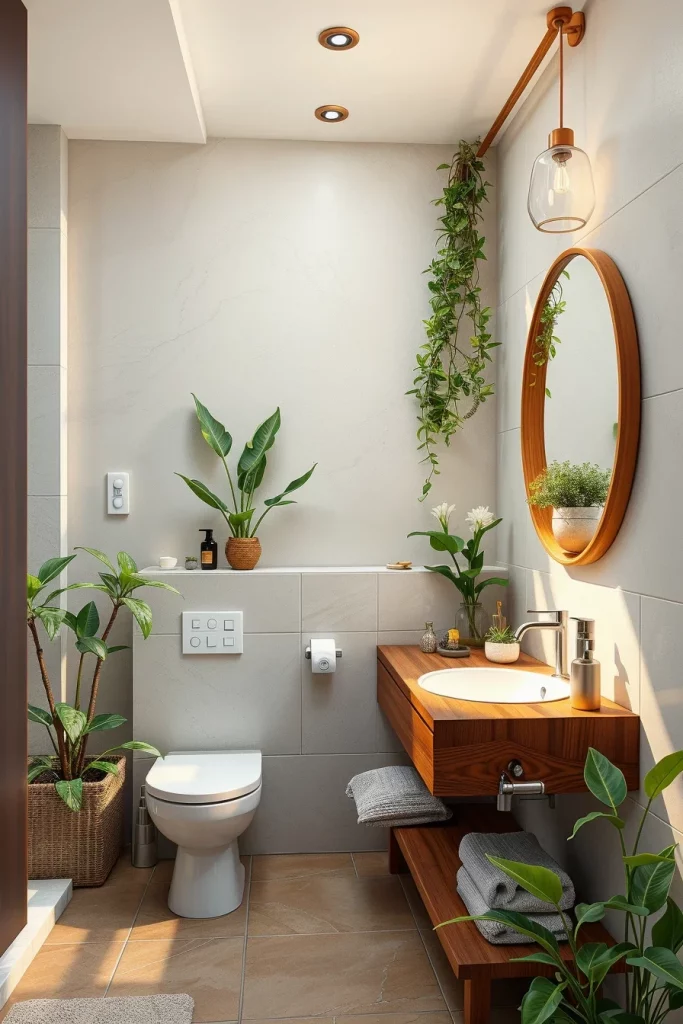
In my experience, sustainability is most successful when it is integrated seamlessly into the overall design rather than treated as a separate feature. Many respected interior experts encourage homeowners to invest in durable materials that age beautifully, and I fully support this recommendation because it reduces future replacements and maintenance requirements.
To make this bathroom even more effective, I would add natural ventilation solutions and indoor plants that thrive in humid conditions. These details improve air quality and strengthen the connection between the interior and the natural world.
Artistic Minimalist Bathroom With Sculptural Fixtures And Forms
I enjoy using sculptural elements in minimalist bathrooms because they introduce character while preserving simplicity. Rather than relying on decorative accessories, this design approach turns essential fixtures into works of art. Freestanding bathtubs, curved vanities, and architecturally inspired sinks create a striking yet balanced composition. This is one of the most unusual and visually memorable interpretations of minimalist bathroom design.
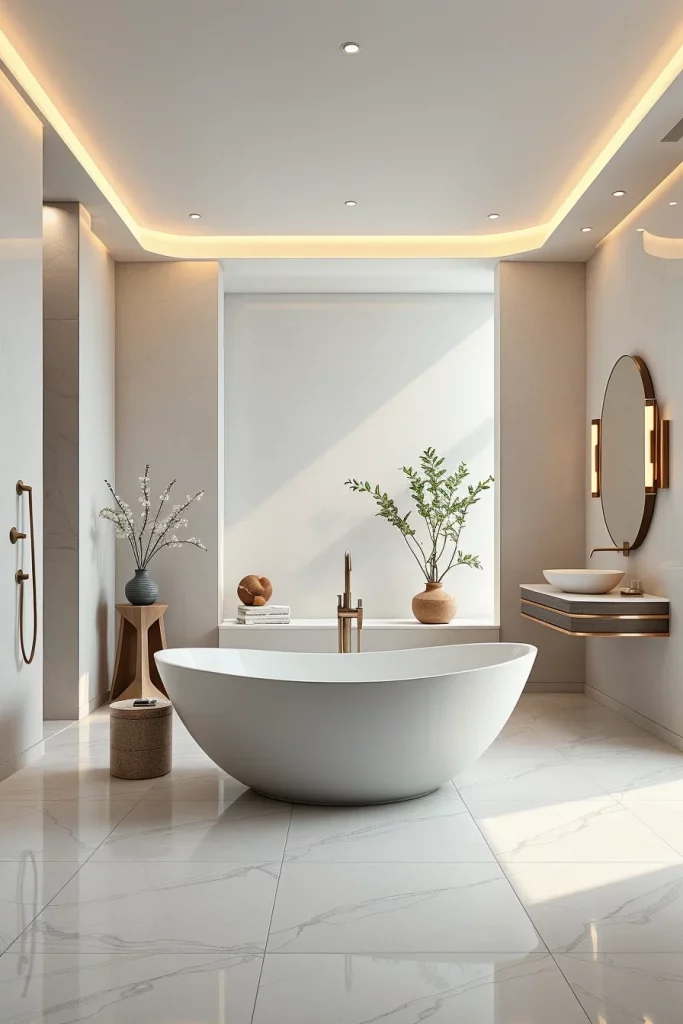
When selecting furnishings for this concept, I focus on statement pieces with elegant silhouettes and high-quality materials. A sculptural bathtub may serve as the centerpiece, while custom basins and minimalist lighting fixtures contribute additional visual interest. I typically keep the color palette restrained so the forms themselves remain the primary focus.
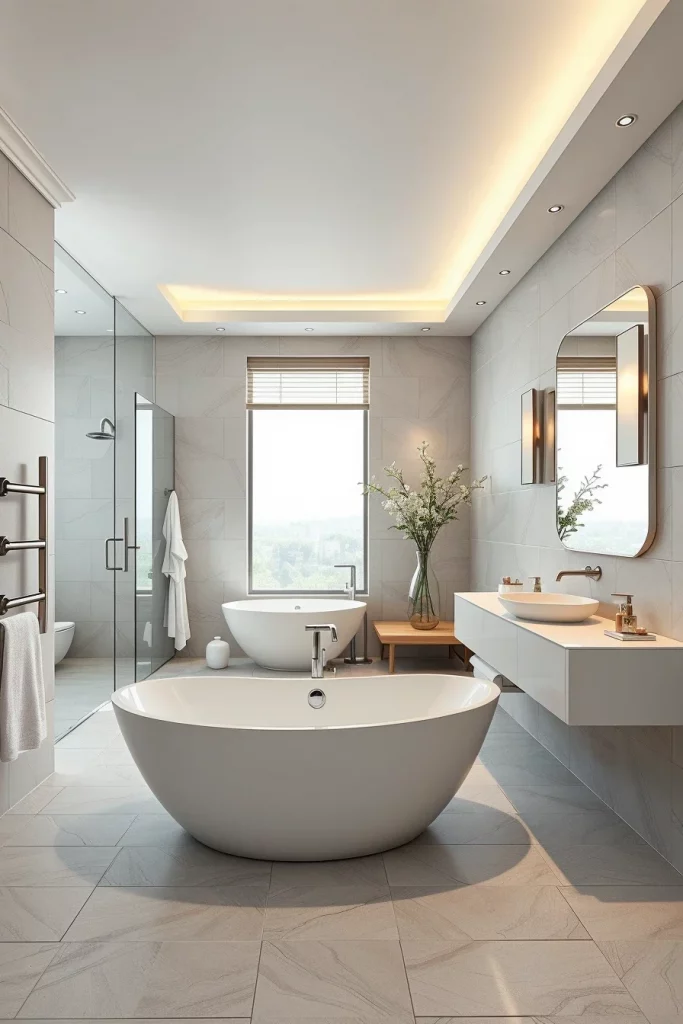
Personally, I appreciate how this design celebrates craftsmanship and attention to detail. The most successful examples demonstrate that minimalist interiors do not have to feel plain. Instead, they can showcase exceptional design through carefully chosen shapes and proportions.
To strengthen the artistic atmosphere, I would consider adding a textured feature wall or a single piece of contemporary artwork. These additions provide context for the sculptural elements without overwhelming the minimalist aesthetic.
Modern Minimalist Bathroom With Floor-To-Ceiling Tile Designs
I often use floor-to-ceiling tiles to create a seamless and visually expansive bathroom environment. This design strategy minimizes interruptions and allows the eye to move continuously throughout the room. The result is a polished, sophisticated space that feels larger and more cohesive. It is one of the most effective ways to achieve a stylish and modern minimalist bathroom.
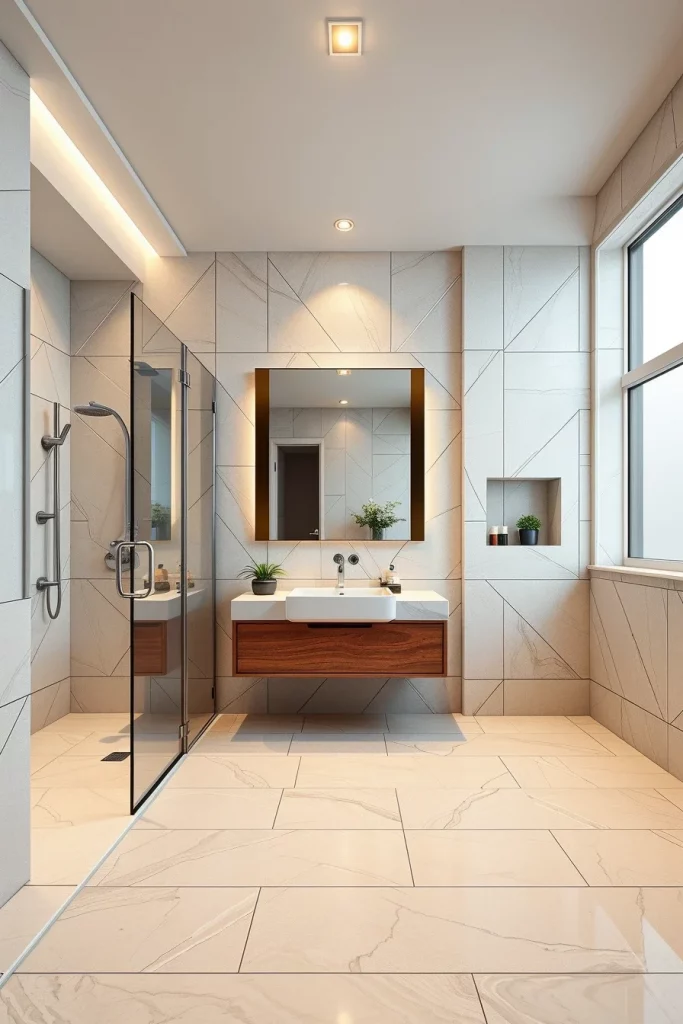
For this design, I typically select large-format porcelain or natural stone tiles with subtle veining or texture. Continuous wall surfaces, frameless glass partitions, floating storage units, and integrated lighting reinforce the uninterrupted aesthetic. The simplicity of the tile installation helps highlight the quality of the materials themselves.
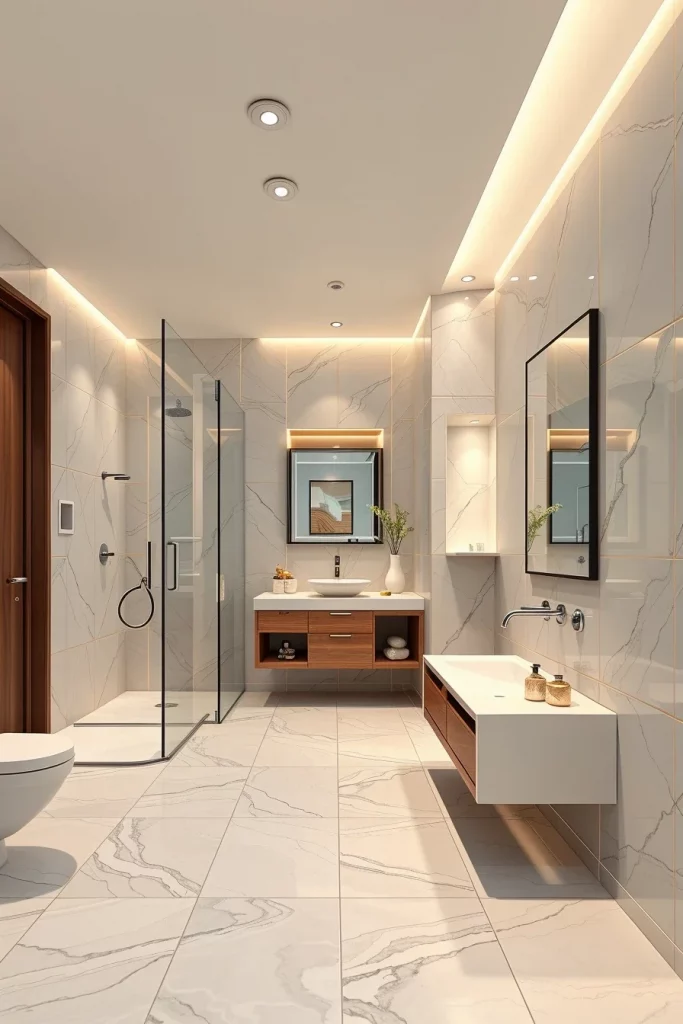
From my perspective, floor-to-ceiling tile applications are particularly valuable in smaller bathrooms because they visually expand the space. Many professional designers recommend limiting grout lines whenever possible, and I find that large-format tiles support this goal exceptionally well.
To elevate this design further, I would incorporate under-vanity lighting and a recessed shower niche finished in matching materials. These details enhance functionality while preserving the clean architectural appearance.
Desert-Inspired Minimalist Bathroom With Earthy Elegance
I find that desert-inspired minimalist bathrooms create a soothing atmosphere by combining natural warmth with understated sophistication. This design style embraces earthy colors such as sand, clay, terracotta, and warm beige, resulting in a space that feels both welcoming and refined. The simplicity of the layout allows the organic materials and muted palette to become the focal points. It is one of the most creative ways to bring nature into a minimalist bathroom while maintaining a clean and uncluttered appearance.
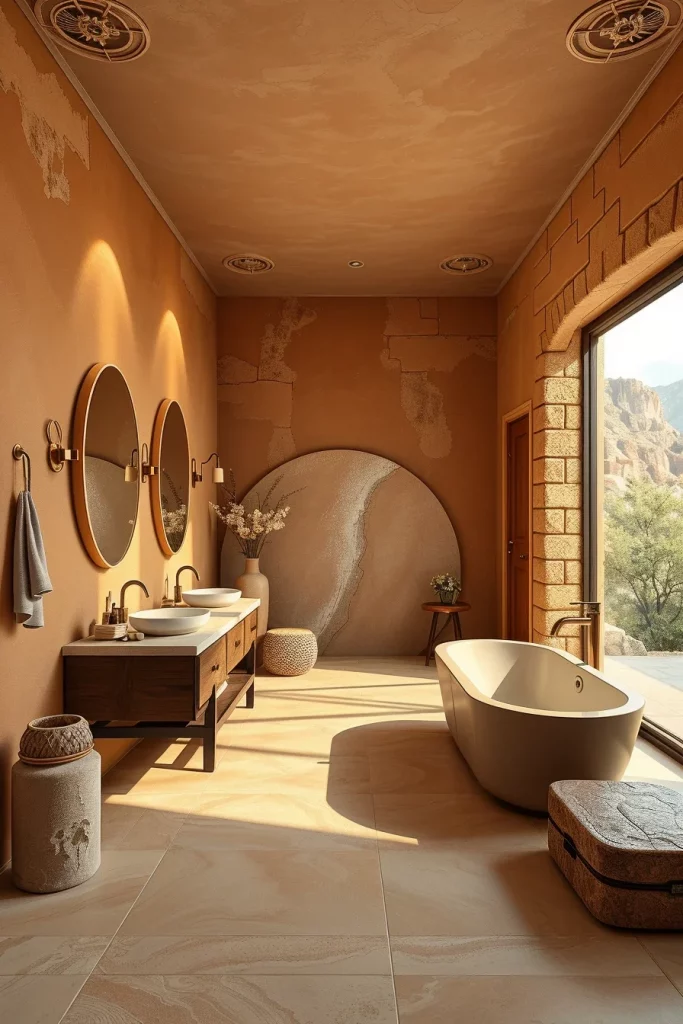
When designing this type of bathroom, I like to incorporate textured plaster walls, floating wood vanities, stone countertops, and large-format porcelain tiles in warm tones. A freestanding bathtub with soft curves complements the natural aesthetic, while matte black or brushed bronze fixtures add subtle contrast. Decorative elements are kept minimal, with perhaps a few ceramic vessels or dried botanical arrangements enhancing the desert-inspired theme.
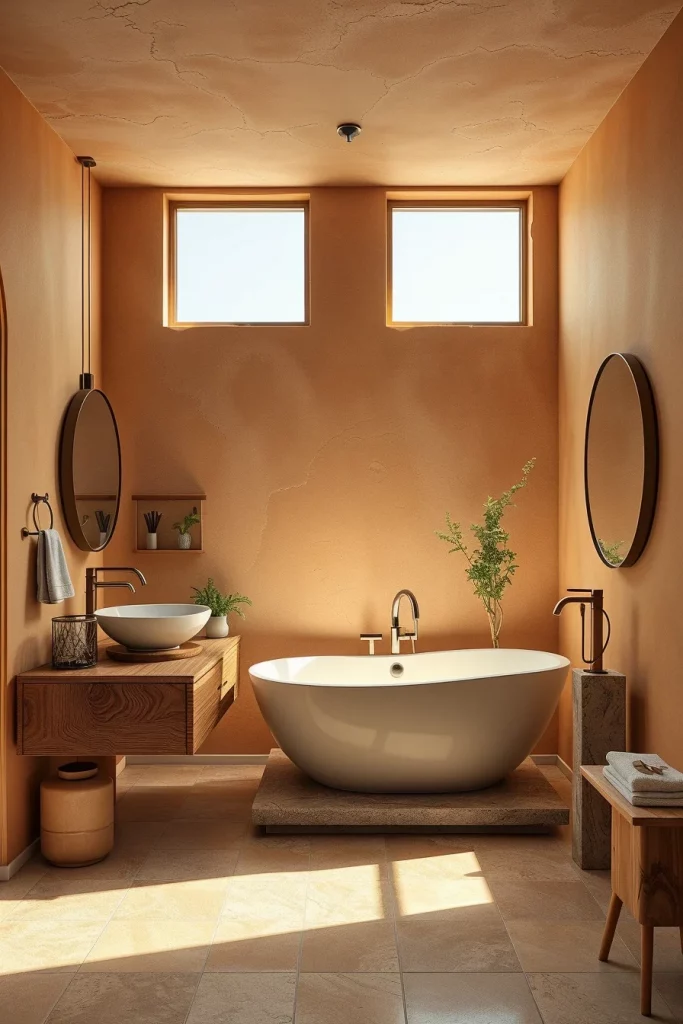
In my experience, the most successful desert-inspired bathrooms rely on restraint. Rather than filling the room with decorative accessories, I focus on material quality and texture. Many interior designers recommend using natural finishes that age gracefully, and I find this advice especially valuable in spaces inspired by the landscape.
To complete this concept, I would add skylights or large windows whenever possible. Natural sunlight enhances the earthy palette and strengthens the connection between the bathroom and the natural environment.
Minimalist Bathroom Showcasing Natural Stone And Organic Beauty
I often recommend natural stone as a primary design element because it introduces visual depth without compromising minimalist principles. Whether using marble, travertine, limestone, or slate, stone surfaces create a luxurious yet organic atmosphere. The unique patterns and textures found in natural materials ensure that every bathroom feels distinctive while remaining timeless and elegant.
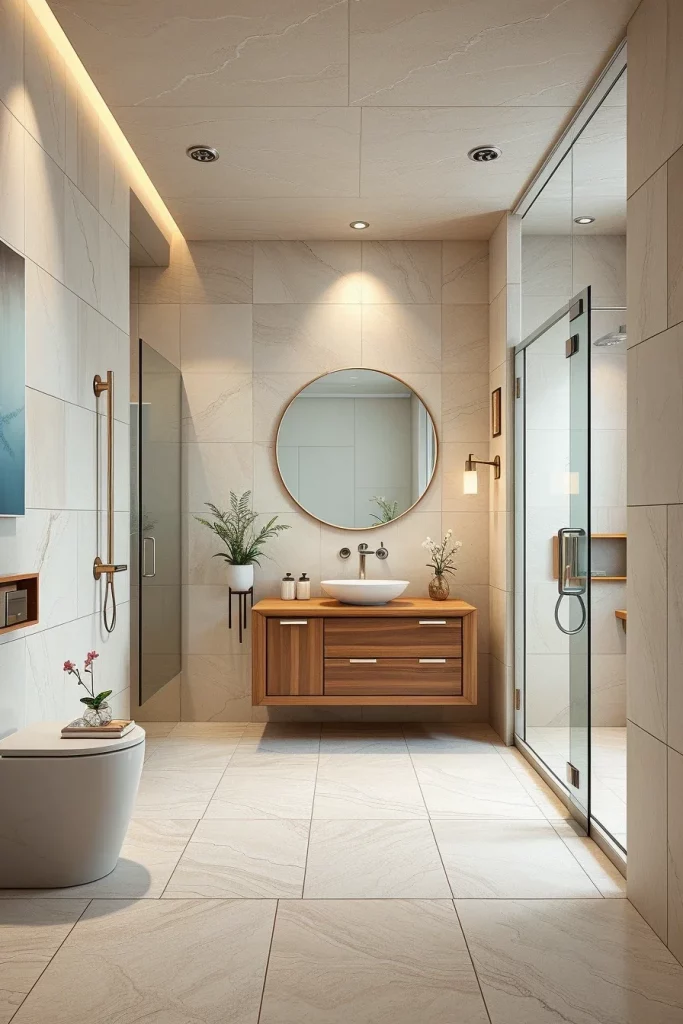
For this design, I typically select stone for feature walls, countertops, flooring, or shower surrounds. Floating vanities crafted from wood pair beautifully with stone surfaces, creating a balance between warmth and sophistication. Frameless glass partitions, recessed storage niches, and minimalist fixtures help maintain visual simplicity and allow the natural materials to take center stage.
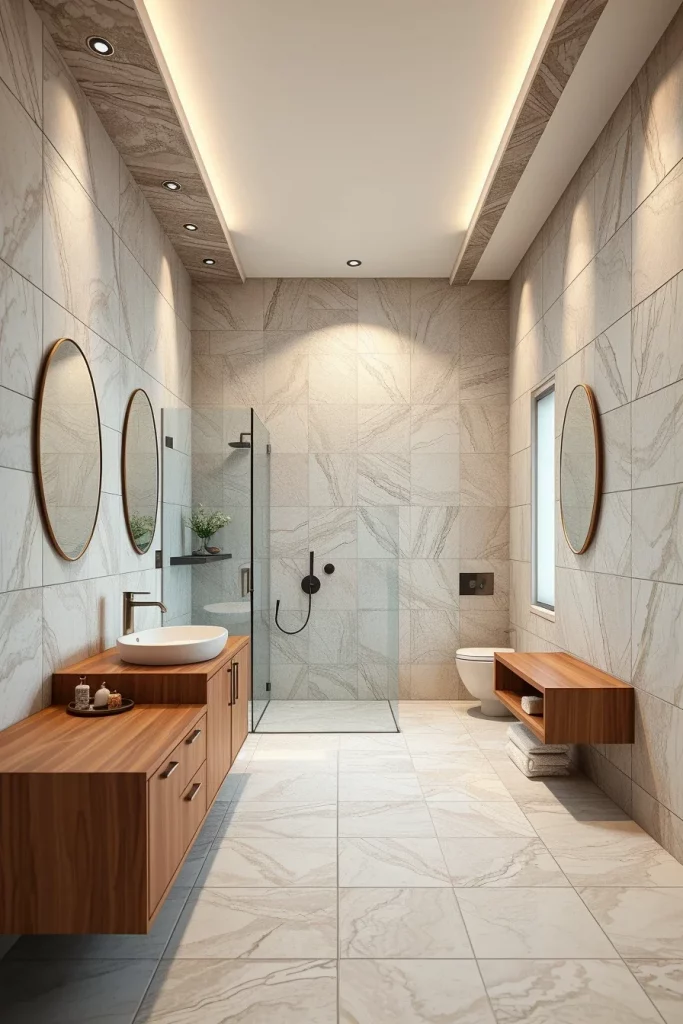
Personally, I appreciate how natural stone evolves over time. Minor variations and imperfections add authenticity and character that manufactured materials often struggle to replicate. Many respected design publications highlight natural stone as a lasting investment, and I agree because it rarely goes out of style.
If I were enhancing this bathroom further, I would introduce soft indirect lighting that emphasizes the texture and movement within the stone surfaces. This detail transforms the material into a subtle architectural feature.
Smart Minimalist Bathroom With Integrated Technology Features
I believe that technology can enhance minimalist bathrooms when it is integrated thoughtfully and discreetly. Smart features improve comfort, convenience, and efficiency while preserving the clean aesthetic that defines minimalist design. This approach represents a highly modern interpretation of the minimalist bathroom, combining innovation with simplicity.
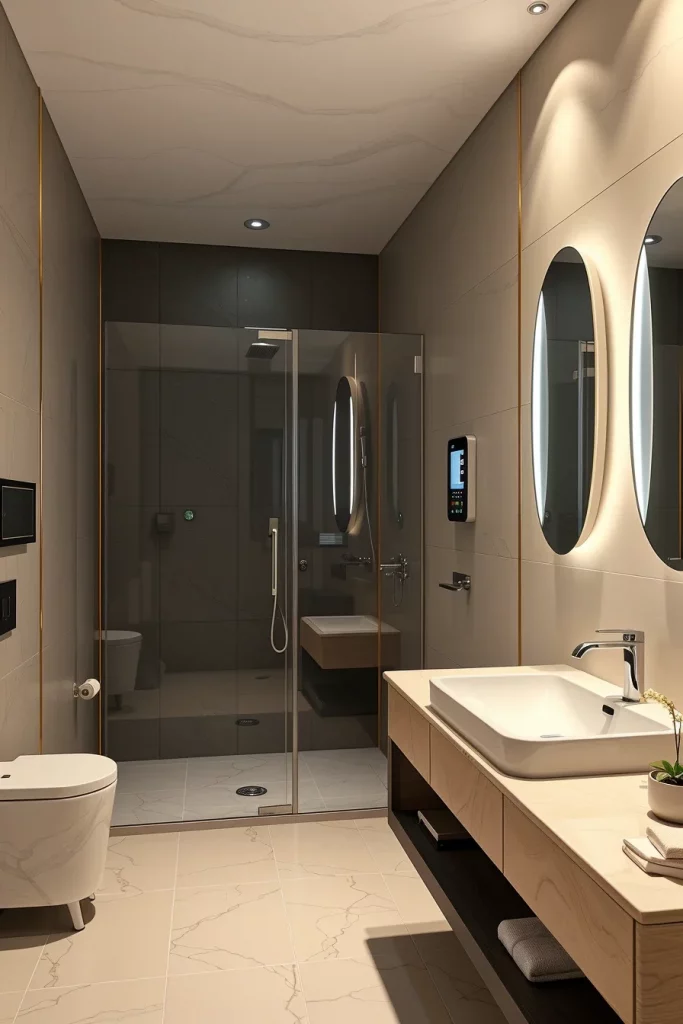
In these spaces, I often include touchless faucets, heated flooring, smart mirrors, programmable lighting systems, and digital shower controls. Concealed speakers and automatic ventilation systems can also improve the user experience without adding visual clutter. The key is ensuring that every technological feature serves a practical purpose while remaining visually unobtrusive.
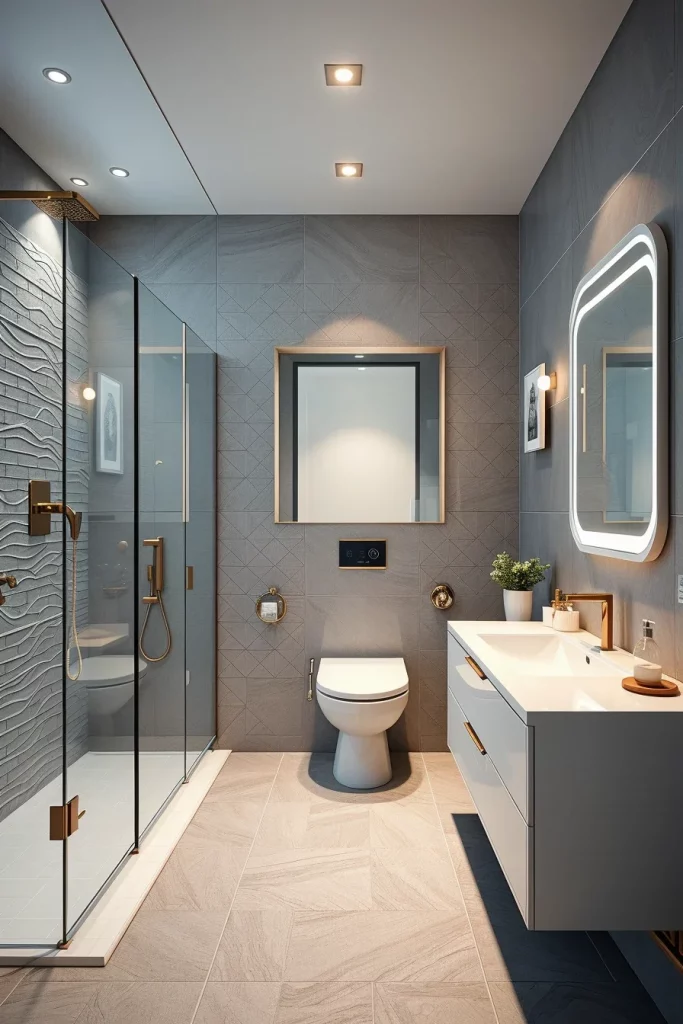
From my perspective, smart bathrooms should simplify daily routines rather than overwhelm users with unnecessary complexity. I find that the most effective designs focus on a few carefully selected technologies that genuinely improve comfort and functionality.
To make this bathroom even more efficient, I would add integrated charging stations within vanity drawers and smart water-monitoring systems. These features support convenience while encouraging responsible resource consumption.
Unique Minimalist Bathroom Designs With Architectural Lighting Effects
I consider lighting one of the most powerful tools in minimalist bathroom design. Architectural lighting can define surfaces, highlight textures, and create atmosphere without relying on excessive decoration. By carefully positioning light sources, I can transform a simple bathroom into a dramatic and memorable space. This is one of the most unique and visually striking approaches to minimalist interiors.
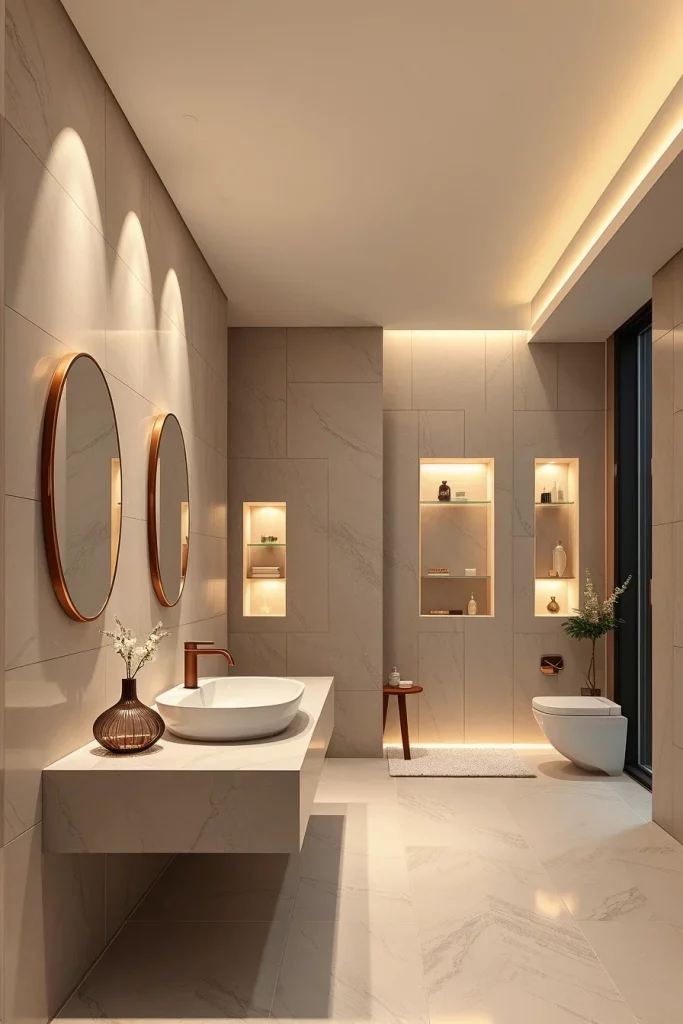
When designing with architectural lighting, I often incorporate recessed ceiling fixtures, concealed LED strips, illuminated niches, and wall-washing effects. These lighting techniques draw attention to key design elements while maintaining a clean and uncluttered environment. Floating vanities and sculptural fixtures become even more impactful when enhanced by carefully planned illumination.
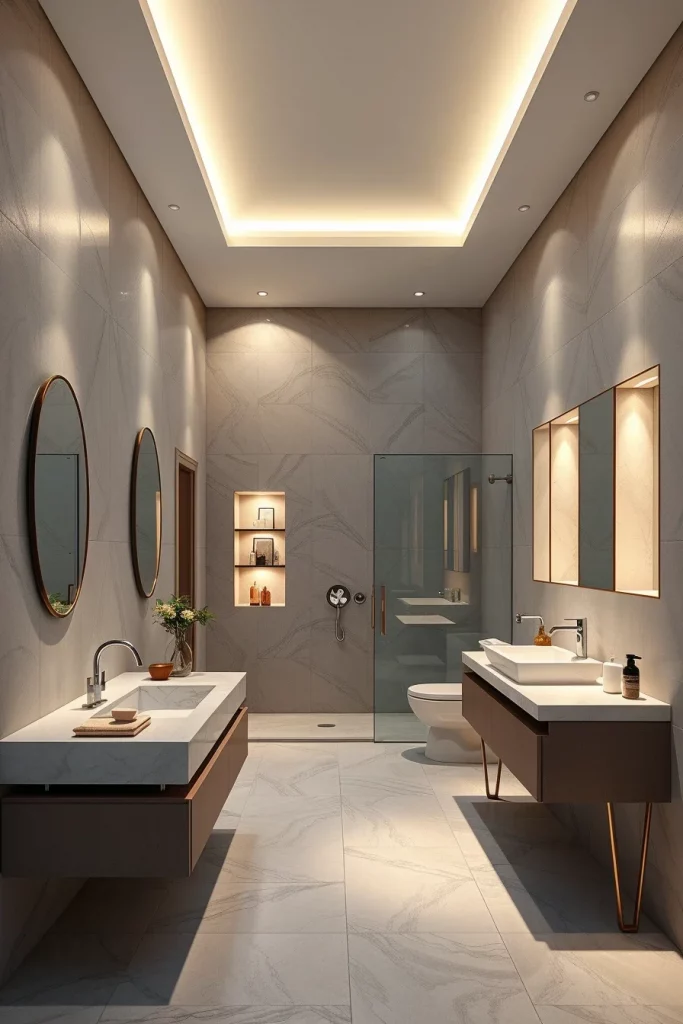
In my experience, layered lighting creates the greatest flexibility. Combining task lighting, ambient lighting, and accent lighting allows the room to adapt to different moods and daily activities. Many lighting specialists recommend avoiding harsh shadows, and I find that indirect illumination often delivers the most elegant results.
To strengthen this concept, I would introduce dimmable controls that allow users to customize the atmosphere throughout the day. This small addition significantly enhances comfort and usability.
Timeless Minimalist Bathroom Interior Design Inspiration For Modern Homes
I believe timeless minimalist bathrooms succeed because they focus on enduring principles rather than short-lived trends. Clean lines, high-quality materials, balanced proportions, and functional layouts create spaces that remain appealing for many years. This approach embodies the essence of stylish, modern, and creative bathroom design while ensuring long-term value.
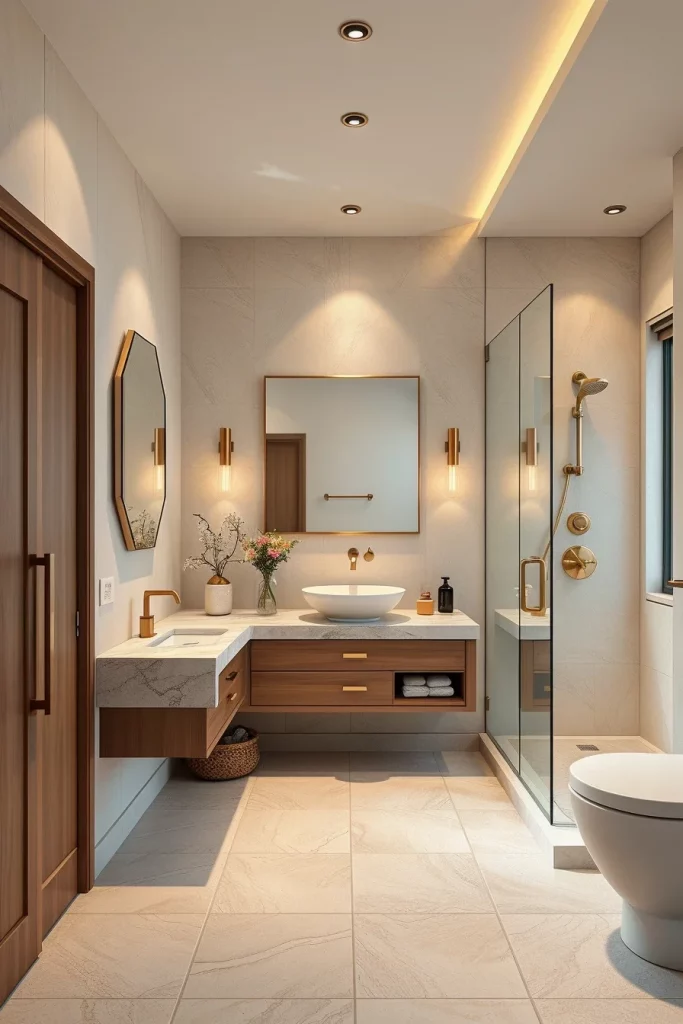
For this concept, I prefer neutral color palettes, floating vanities, elegant stone surfaces, frameless mirrors, and durable fixtures with simple forms. Every element contributes to a cohesive design language that feels sophisticated without becoming overly decorative. Storage solutions are integrated seamlessly to maintain organization and visual calm.
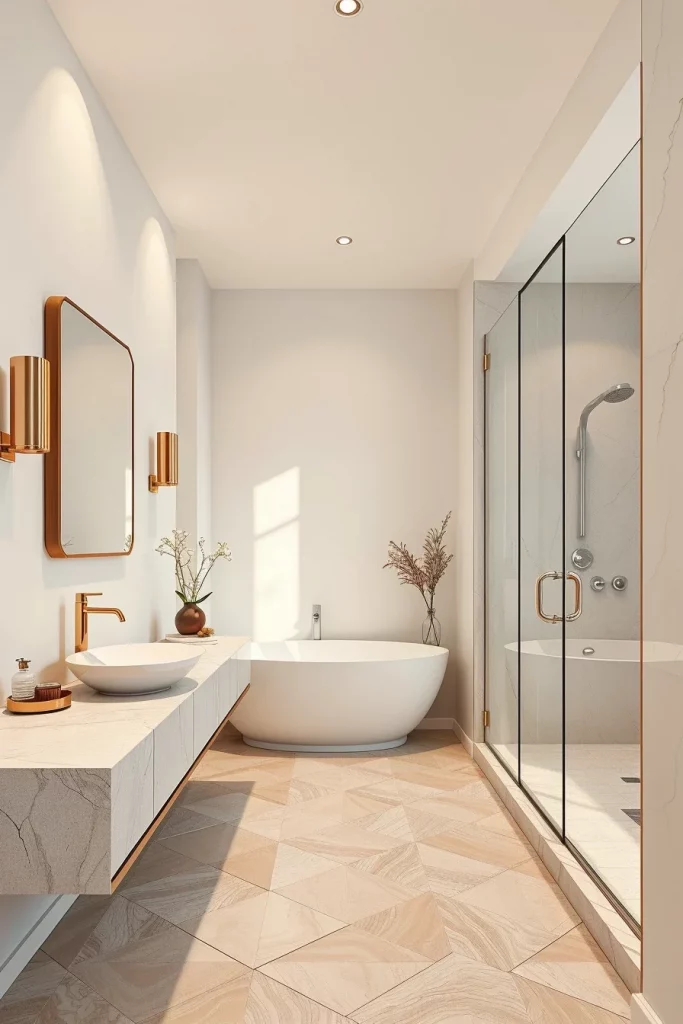
Personally, I have found that the most successful minimalist bathrooms are those that prioritize everyday usability alongside aesthetics. Timeless design is not simply about appearance; it is about creating a space that continues to function beautifully as needs evolve. This philosophy is frequently supported by leading interior designers who advocate investing in quality rather than chasing trends.
To perfect this design, I would add carefully selected accessories such as premium towels, a small plant, or handcrafted ceramic pieces. These subtle details provide warmth and personality while preserving the minimalist character of the room.
Minimalist bathroom interior design proves that simplicity can be both beautiful and luxurious. By combining clean aesthetics, functional layouts, and carefully chosen materials, you can create a space that feels calm, sophisticated, and inviting. Whether you prefer warm natural textures, modern architectural details, or spa-inspired elements, minimalist design offers endless possibilities for crafting a bathroom that is both practical and effortlessly stylish.